Dusky’s and In Love With Words

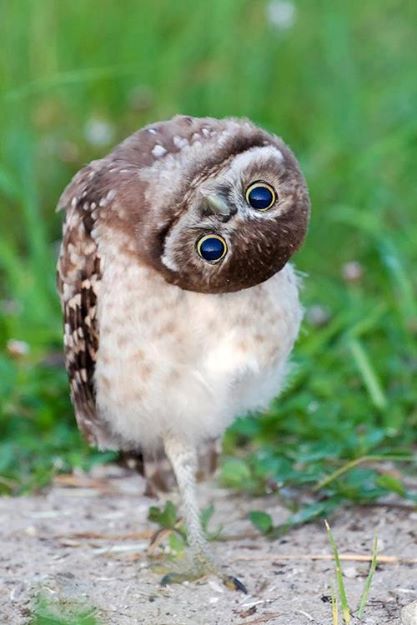
Burrowing Owl from Dusky's Wonders

Burrowing Owl from Dusky’s Wonders

And thou shalt love the Lord thy God with all thy heart, and with all thy soul, and with all thy mind, and with all thy strength: this is the first commandment. And the second is like, namely this, Thou shalt love thy neighbour as thyself. There is none other commandment greater than these. (Mark 12:30-31 KJV)

Wanted to share with you two blogs I follow.

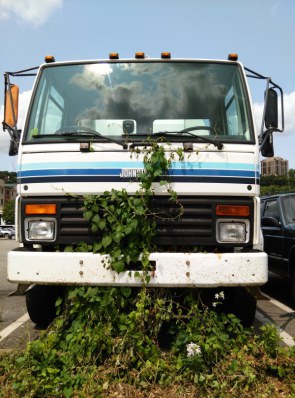
Sandra Conner’s, In Love With Words, had a neat post about a truck that  was crying. It is worth reading.

In Love With Words - Crying Truck and Virginia Creeper

In Love With Words – Crying Truck and Virginia Creeper

Virginia Creeper wasn’t beautiful and was generally considered a nuisance wherever she grew. But she had a kind heart, and when she heard sobbing out by the alley, she crawled over to investigate. She found Barney, the discarded garbage truck, soaking the ground with his tears……..

FRIDAY FICTIONEERS – 8/22/14 — ‘LOVE GROWS ON YOU’

I love it! Hope you do also.

*

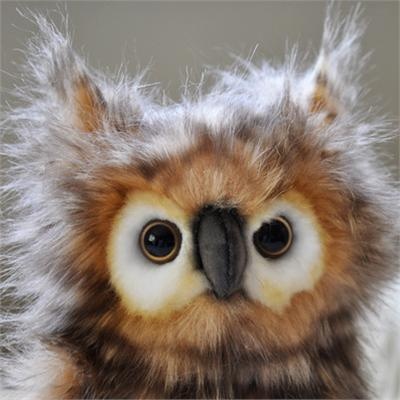
Owl from Dusky's Wonders

Owl from Dusky’s Wonders

Also Dusky’s Wonders released a new set of neat bird photos again today. Check those out.

I am still working on the IOC Version 4.3 Update. All the pages are completed and now I am working on the Indexes. Majority of the work is done. Stay tuned.

Birds of the World

*

Sunday Inspiration – Smiling

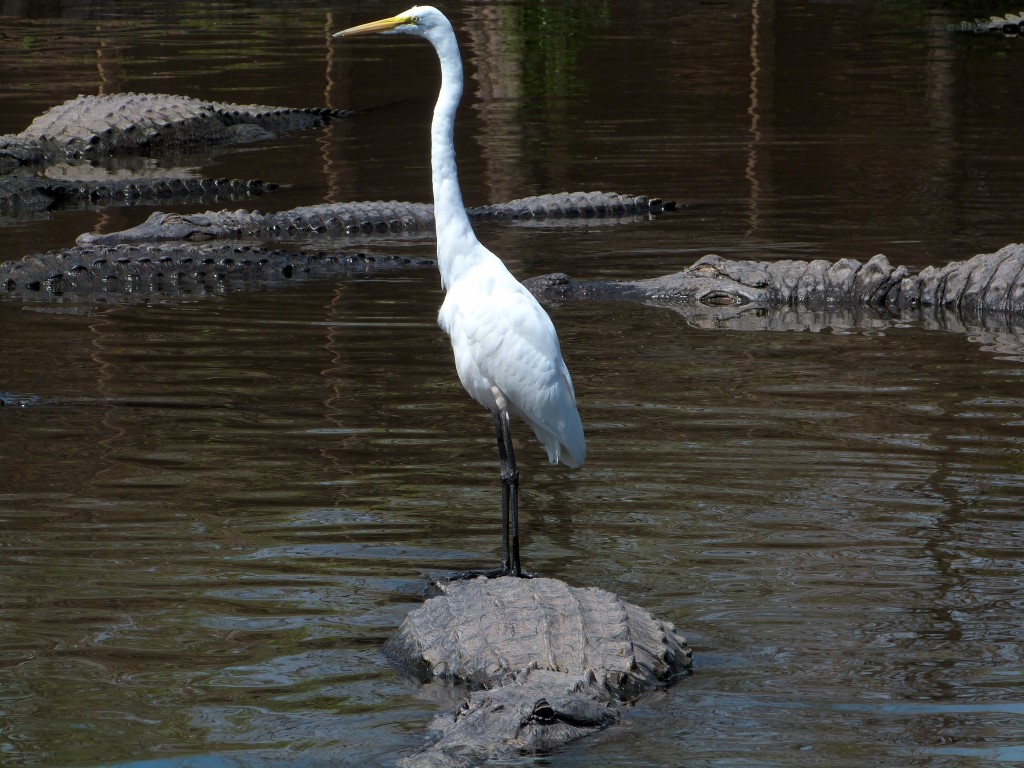
Gators at Gatorland - Great Egrets catching a ride

Gators at Gatorland – Great Egrets catching a ride

The LORD looks from heaven; He sees all the sons of men; (Psa 33:13)

The LORD looks down from heaven upon the children of men, To see if there are any who understand, who seek God. (Psa 14:2 NKJV)

Today’s Inspiration is just a collection of photos that have been used before. Most are on the lighter side. Some to make you smile, others just to help us enjoy the Lord’s critters. I especially enjoy the three ladies singing “Smile On Me Gracious Lord.”

I trust we all want the Lord to smile on us. Knowing the Lord as your personal Savior and accepting Him will definitely put a smile on His Face.

This slideshow requires JavaScript.

“Smile On Me Gracious Lord” – Special by Amy, Dakota and Christina

*

More Sunday Inspirations

Wordless Birds

*

(WordPress is having a problem at this time and adding new photos is too frustrating to bother with.)

*

Birds of the Bible – Peacocks in South Carolina

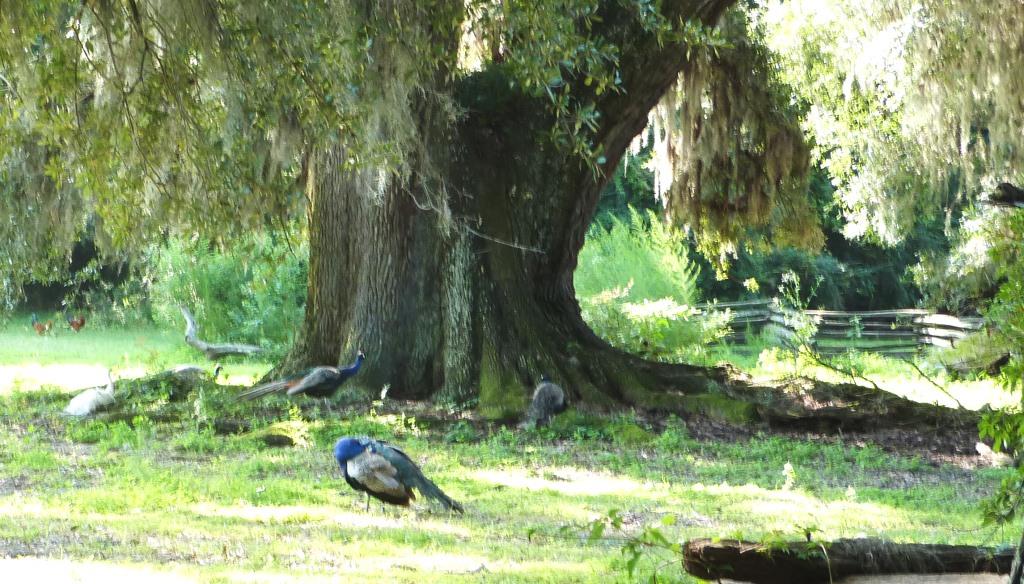
Peacocks at entrance to Magnolia Plantation

Peacocks at entrance to Magnolia Plantation


For the king had at sea a navy of Tharshish with the navy of Hiram: once in three years came the navy of Tharshish, bringing gold, and silver, ivory, and apes, and peacocks. (1 Kings 10:22)

We have just arrived home from a shortened vacation due to a health issue. We got as far as Charleston, S. C. before turning around and drifting back home.

We were able to visit a few places, the Magnolia Plantation, for one, in Charleston. We were greeted at the entrance by at least 6 or 7 Peacocks. Also at the Petting Zoo, they had two female Peafowl with very young peachicks. As far as I could tell, these were Indian Peafowl (Pavo cristatus). Peacocks are actually Peafowl and belong to the Pheasant & Allies Phasianidae Family.

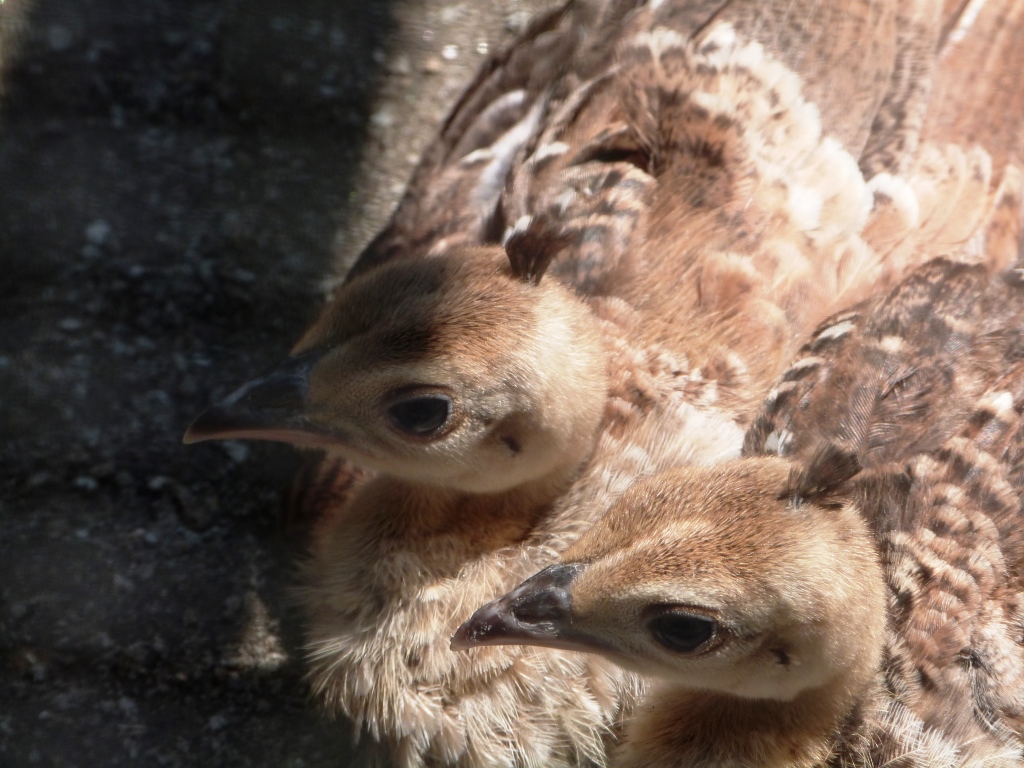
I have never seen peachicks before and thought it cute that they have the little tufts on their heads that will eventually grow those top feathers.

Peachicks at Magnolia Gardens by Lee

Peachicks at Magnolia Gardens by Lee

“First, the “Peacocks” are the males. The females are called “Peahens” and their chicks are called “Peachicks.”  Collectively the birds are called Peafowl. They all belong to the Phasianidae – Pheasants, Fowl & Allies Family.” (From Birds of the Bible – Peacocks II


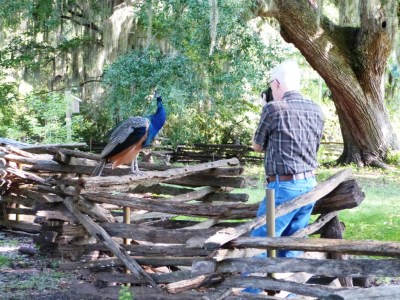
Dan photographing one of the Peacocks

Dan photographing one of the Peacocks

To find out more about Peacocks (Peafowl):

*

PS. Sorry about the quickly edited photos. I’ve had the blog on “auto-pilot” for over a week, but ran out of pre-scheduled blogs.

*

Did Dinosaurs Have Feathers? ~ From Acts & Facts

Dinosaur with Feathers ©WikiC

Dinosaur with Feathers ©WikiC

This month’s Acts & Facts from the Institute For Creation Research has an interesting article, Did Dinosaurs Have Feathers?. It is written by Frank Sherwin, M.A.

Someone was brave enough to hand out a “button reading “Dinosaurs are not birds”” at a Florida Symposium on Dinosaur Bird Evolution. Needless to say that opinion was in the minority there. Like the writer, I and the emphasis of this blog is that Birds were Created by the Lord. So were Dinosaurs. The problem is that the Bible says they were both created in the same six day period. (24 hour days)

Anyway his article is very good and you would enjoy reading it. The quote below is very good.

“God engineered exquisite flight feathers for lightweight aerodynamic efficiency. Using a microscope, one can see an amazing display of interlocking hooks and barbules—features absent from all dinosaur fossils so far described. When the bird preens with its bill, the zippering effect flattens feathers and snaps them into shape again. In order to preen, the feather-possessing creature must have a bill. Some dinosaurs had beaks, but none had bills. Furthermore, true bird fossils appeared before dinosaurs in the fossil record—a fact that those who promote the strange dinosaur-to-bird theory gloss right over!”

To read the whole article:

Did Dinosaurs Have Feathers?  

Click Here

*

Acts & Facts

Also in this issue:

The Limits of Variability

There is also an article  by James J. S. Johnson, J.D., Th.D.

*

So God created great sea creatures and every living thing that moves, with which the waters abounded, according to their kind, and every winged bird according to its kind. And God saw that it was good. And God blessed them, saying, “Be fruitful and multiply, and fill the waters in the seas, and let birds multiply on the earth.” So the evening and the morning were the fifth day. Then God said, “Let the earth bring forth the living creature according to its kind: cattle and creeping thing and beast of the earth, each according to its kind”; and it was so. And God made the beast of the earth according to its kind, cattle according to its kind, and everything that creeps on the earth according to its kind. And God saw that it was good. Then God said, “Let Us make man in Our image, according to Our likeness; let them have dominion over the fish of the sea, over the birds of the air, and over the cattle, over all the earth and over every creeping thing that creeps on the earth.” So God created man in His own image; in the image of God He created him; male and female He created them. Then God blessed them, and God said to them, “Be fruitful and multiply; fill the earth and subdue it; have dominion over the fish of the sea, over the birds of the air, and over every living thing that moves on the earth.” And God said, “See, I have given you every herb that yields seed which is on the face of all the earth, and every tree whose fruit yields seed; to you it shall be for food. Also, to every beast of the earth, to every bird of the air, and to everything that creeps on the earth, in which there is life, I have given every green herb for food”; and it was so. Then God saw everything that He had made, and indeed it was very good. So the evening and the morning were the sixth day. (Genesis 1:21-31 NKJV)

*

Universe: Life Anywhere Else?

Golden Eagle (Aquila chrysaetos) Flying ©WikiC

Golden Eagle (Aquila chrysaetos) Flying ©WikiC

Universe: Life Anywhere Else?

Golden Eagle ©PD

Golden Eagle ©PD

Hi again! This is Golden Eagle flying in to talk about some more important info for this journey of life! Last time we talked about the fact that the God of Creation, the Lord Jesus Christ, created birds on day number five. In fact, we have seven days each and every week. Where does that come from? In my previous flights I have come to realize that the moon goes around the Earth in a few days and we get a month. The Earth goes around the sun in 365 and a quarter days and we get a year. But, in all of my flying, I did not realize where the week came from. And then it dawned on me, the 7-day week comes from the fact that God created everything in a 7-day week. You guys know that seven on a roll of the dice is a LUCKY number. Did you know that in the biggest atoms there are seven electron shells and no more. I have flown over six continents; however, all together there are seven continents on the Earth. There are seven colors in the rainbow. The last book of the Bible, Revelation, is full of the number 7! It seems like seven is a number that represents completeness. Well, enough of the number seven. The point is, boys and girls, the Bible is packed full of very interesting and useful information for our journey of life.

Black Vulture Tree by Lee Myakka SP

Black Vulture Tree by Lee Myakka SP

I don’t like vultures very much. Whenever I fly over central Florida, I see black vultures and turkey vultures. I have heard some birders call turkey vultures – TVs. When you see a vulture soaring around with wings on a warm thermal in the Summer-time and you see mostly black with a little gray at the end of the wings, that’s a black vulture. Vultures have a keen sense of smell. If an animal dies, they can smell their next dinner meal. God has created them for a very specific purpose. They are God’s clean-up crew. They also help lower the spread of disease and bacteria! Usually people feed birds. Did you know that at least one time in history birds fed people?

Northern Raven (Corvus corax) by Kent Nickell

Northern Raven (Corvus corax) by Kent Nickell

Elijah, the prophet of God, was experiencing a drought in the land of Israel. And God told Elijah to “get thee hence, and turn thee eastward, and hide thyself by the brook Cherith, that is before Jordan. And it shall be, that thou shalt drink of the brook; and I have commanded the RAVENS TO FEED THEE there.” (I Kings 17: 3-4) “And the ravens brought him bread and flesh in the morning, and bread and flesh in the evening…” (I Kings 17: 6)

*

Yellow-headed and Red-winged Blackbirds: Living on the Inside or the Outside?

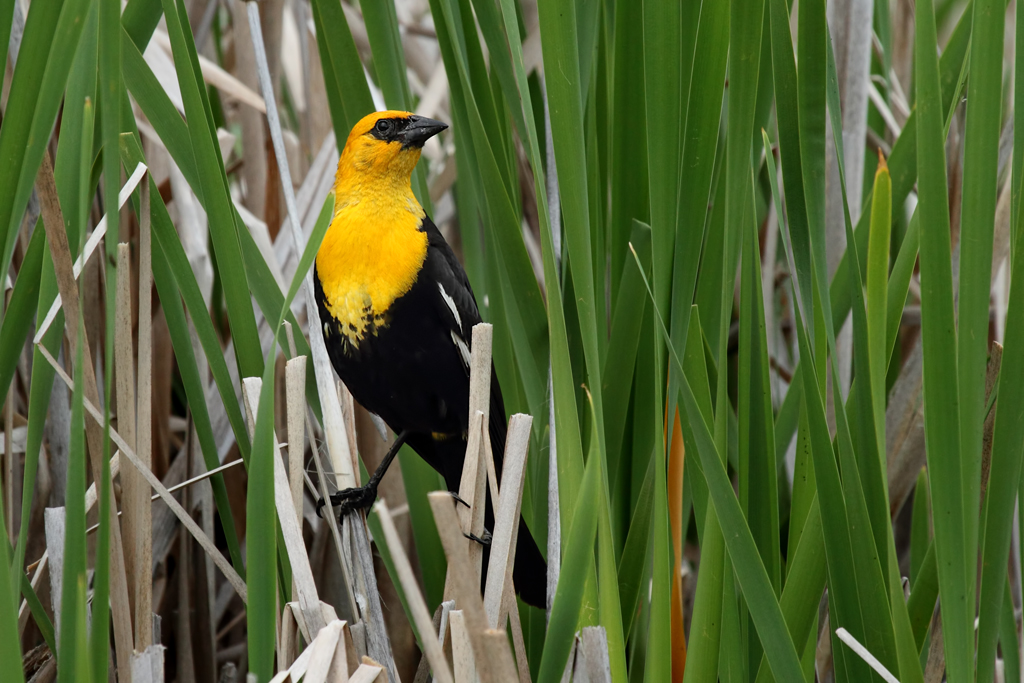
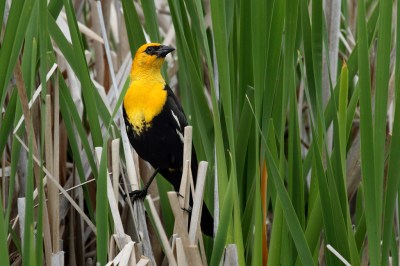
Yellow-headed Blackbird (Xanthocephalus xanthocephalus) ©WikiC Alan Vernon

Yellow-headed Blackbird (Xanthocephalus xanthocephalus) ©WikiC Alan Vernon

Draw nigh to God and He will draw nigh to you. (James 4:8)
Luzon Bleeding-heart by Dan

Orni-Theology

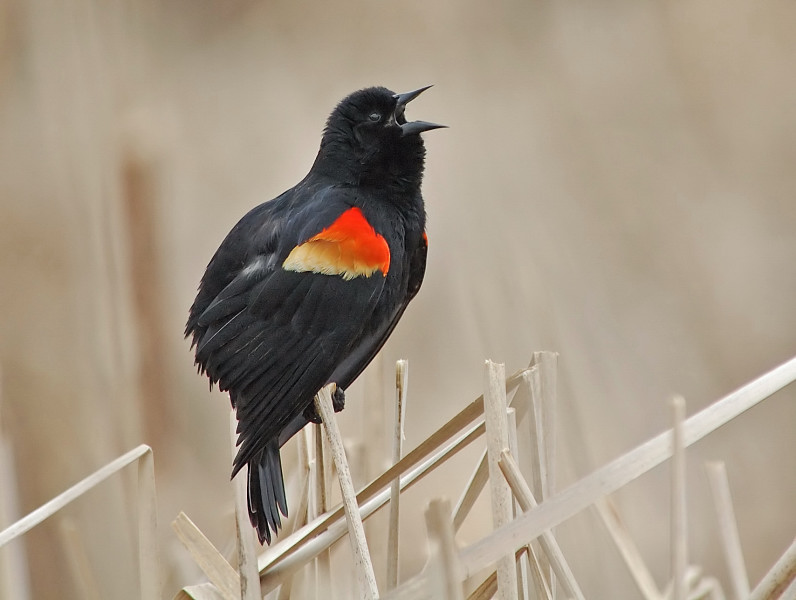
The Visitor Center at Jackson Hole, Wyoming (“Jackson Hole & Greater Yellowstone Visitor Center”), is a good place to go to for information on Grand Teton National Park, which borders the more-famous Yellowstone National Park.  Yet for bird-lovers, the visitor’s center itself is an attraction, in summer, because the marshy ponded area next to the building hosts a congregation of blackbirds, both Red-winged Blackbirds (Agelaius phoeniceus) and Yellow-headed Blackbirds (Xanthocephalus xanthocephalus).

If you are helping city kids to see these passerine icterids, tell them to “look for the tall corny-dogs growing in the wild” (cattails – Typha species, tall-stemmed wetland plants topped by a sausage-shaped flowering “spike”), around the pond.

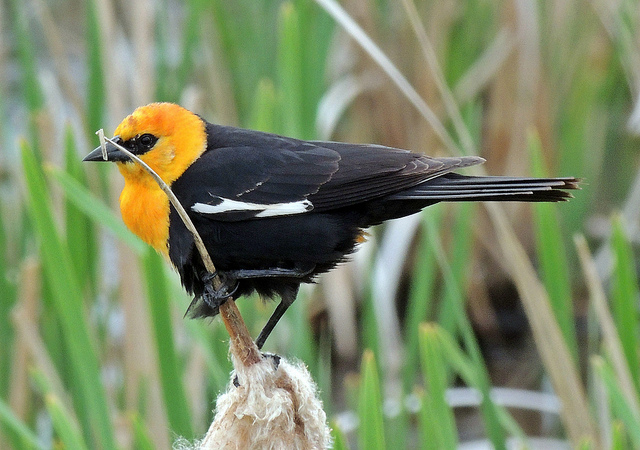
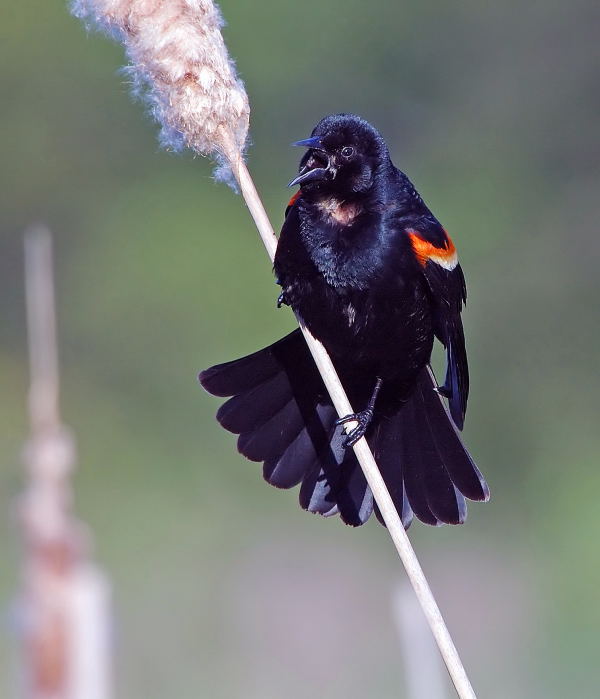
As in many other lacustrine marshlands, red-winged blackbirds are often found perched among the cattails that grow as emergents among the wavy shoreline of pond.  For a redwing this is “prime real estate”, until the yellow-heads move in. How so?  In cattail dominated marsh-ponds, if both yellow-heads and red-wings are both present, the innermost places of the cattail “ring” are routinely occupied by the yellow-headed blackbirds, leaving the “outer” cattail positions (i.e., slightly farther away from the pond-water) for the redwings.

Why?  I have no idea why, but others have notice this. [E.g., see W. Braun’s observations in Blackbirds In Cattail Marshes , saying “The YHBs [yellow-headed blackbirds] clearly are the rulers of the cattails. They often, but not always, nest in the same marsh as the Red-winged Blackbird and the Common Grackles. The larger Yellow-headed Blackbird is dominant to the Red-winged Blackbird and displaces the smaller blackbird from the prime nesting spots.”]
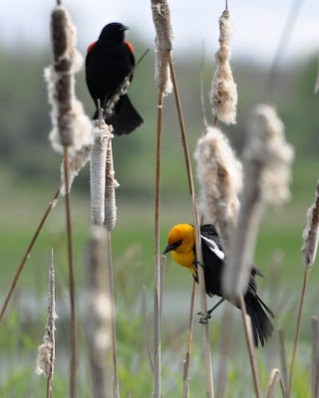
Red-winged and Yellow-headed Blackbirds on Cattails ©Orcawatcher.com

Red-winged and Yellow-headed Blackbirds on Cattails ©Orcawatcher.com

Photo credit Orcawatcher.Com

But it reminds me of the dramatic difference between the apostle Peter and the Pharisee Nicodemus.  Peter was (almost) always close to Christ, and often so, but Nicodemus mostly kept his distance from Christ, at least publicly.

Far from being infallible, Peter is infamous for his cowardice that was indicted by a rooster crowing thrice (Luke 22:54-61).  Peter is also remembered for getting distracted, and becoming fearful, and sinking into the Sea of Galilee, after having miraculously walked on water for only a few steps (Matthew 14:24-33).  But Peter was wise enough to immediately cry out “Lord, save me!”  (And Jesus did.)  At least Peter did some walking on water (at Christ’s command, of course), which is a lot better than the other disciples who just stayed in the boat, as mere spectators, wonderfully how Jesus was enabling Peter to walk on water.
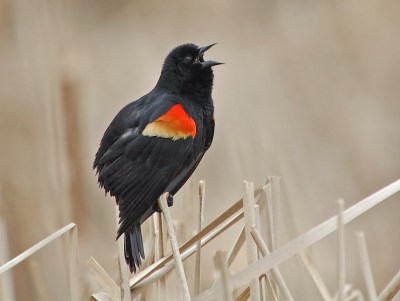
Red-winged Blackbird (Agelaius phoeniceus) by Ray

Red-winged Blackbird (Agelaius phoeniceus) by Ray

Likewise, Peter had the courage to step up and speak up – to call Jesus “the Christ, the Son of the living God” – a deed that the Lord Jesus commended Peter  — and God the Father —  for doing (Matthew 16:15-17).  And Peter did what he could to defend Jesus, in the Garden of Gethsemane, as Jesus was being arrested – Peter used a sword to chop off one man’s ear (Luke 22:49-51; John 18:10-11)!  (But unlike the Orcadian Viking known to history as Thorfinn Skull-splitter, Peter missed most of his victim’s head.)  It’s the thought that counts, right?

Yellow-hooded Blackbird (Chrysomus icterocephalus) ©Flickr Bob

Yellow-hooded Blackbird (Chrysomus icterocephalus) ©Flickr Bob

So you really have to love Peter.  (Jesus certainly did!)  Peter was one of the “inner” circle of three  –  just James, John, and Peter  — who were invited to witness the Lord Jesus Christ being glorified upon the Mount of Transfiguration (Matthew 17:1-8).  What an unforgettable privilege that was (2nd Peter 1:16-18)!  Jesus later invited the same “inner circle” of three to pray for Him in the Garden of Gethsemane (Matthew 26:37-38).  With all his faults, Peter was a truly privileged member of Christ’s “inner circle”.

But Peter’s privileges are not so high that we should feel sorry for Nicodemus.  Not at all!
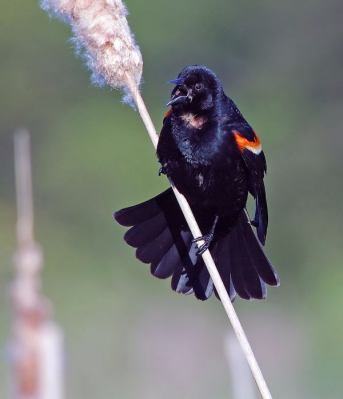
Red-winged Blackbird (Agelaius phoeniceus) by Ray

What a privilege it was for Nicodemus to be the first listener to hear, what we now read in, John’s third chapter (John 3:1-9), including the everlastingly famous promise of John 3:16, spoken by Jesus Himself!  Later Nicodemus took a modest stand for Jesus (John 7:50-52), and in time Nicodemus had an official role in Christ’s burial (John 19:39-40) three days before Jesus rose triumphantly from the grave!

Even so, if one had the choice, why visit Christ, in secret, keeping a distance from Him in public, when the opportunity to belong to His “inner circle” is available?

Am I more like Peter or Nicodemus?  Maybe that question will come to mind next time you see a group of “inner circle” yellow-headed blackbirds, perching on cattails, as the “outer circle” of cattails hosts the red-winged blackbirds. And, if you like the idea of being in the Lord’s “inner circle”, you might sing this as a prayer:  “Just a closer walk with Thee…”

James J. S. Johnson, with his family, has repeatedly visited Wyoming’s Jackson Hole Visitor Center, in summer, to admire the yellow-headed and red-winged blackbirds that congregate on and among the pond-ringed cattails there. (And a very special thank-you to Lee for teaching me how to edit the typos in this blog.)

*
Sunday Inspiration – Hawks

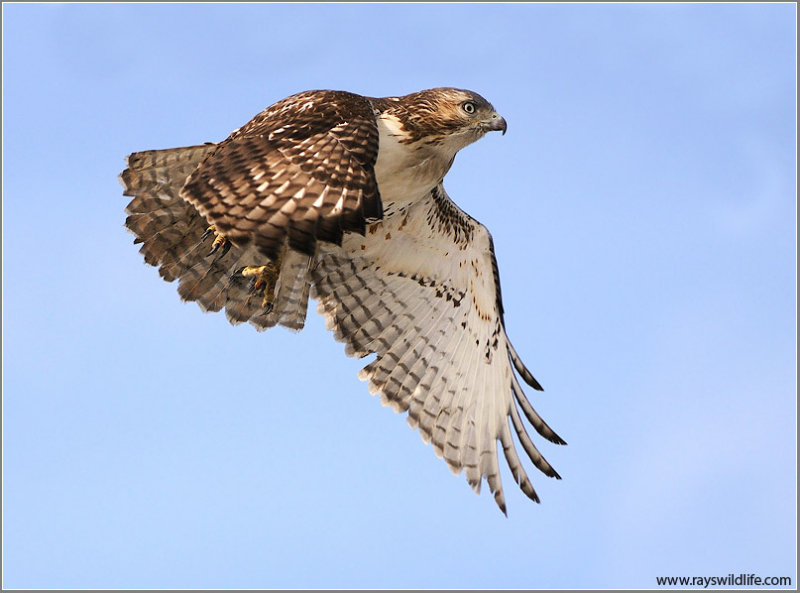
Red-tailed Hawk (Buteo jamaicensis) by Raymond Barlow

Red-tailed Hawk (Buteo jamaicensis) by Raymond Barlow

Does the hawk fly by your wisdom, And spread its wings toward the south? (Job 39:26 NKJV)

Hawks are members of the Accipitridae Family which includes the Hawks, Kites, Eagles, Vultures, plus Buzzards and other Birds of Prey. There are 256 species in the family. There are 3 or 4 references to hawks and their kinds in the Bible. Therefore they are also a Bird of the Bird.

Even though they catch live animals and are considered a bird of prey, they are beautiful creations from our Creator. Until the curse they would have been vegetarian like all the rest of creation. Unfortunately, sin entered, and now some look down on hawks, but even in that, the Lord provided for them to have the capability to catch prey as they do today.

Enjoy viewing these beautiful birds from their creator, the Lord Jesus Christ.
*

This slideshow requires JavaScript.

Does the hawk fly by your wisdom, And spread its wings toward the south? (Job 39:26 NKJV)

“I Will Pilot Thee” ~ by Dr. Richard Gregory

*

Sunday Inspirations

Birds of the Bible

Accipitridae – Kites, Hawks & Eagles Family

Hope for Hard Times

*

Ian’s Bird of the Week – Australian King Parrot

Ian’s Bird of the Week – Australian King Parrot ~ Ian Montgomery

Newsletter – 7-31-14

Mea culpa again for the long delay since the last bird of the week. The good news is that, apart from dotting a few i’s, my current obsession Where to Find Birds in Northern Queensland is finished, so with luck you may get more frequent BotWs in the future. Here is an attractive and surprising omission from the BotW series, the Australian King Parrot. It’s one of the most spectacular Australian parrots and deserves the ‘King’ moniker. The French call it la Perruche royale.

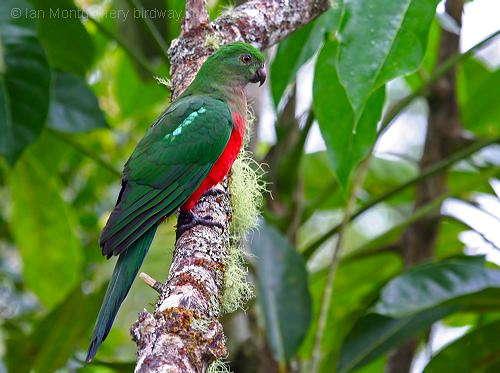
King Parrot by Ian

King Parrot by Ian


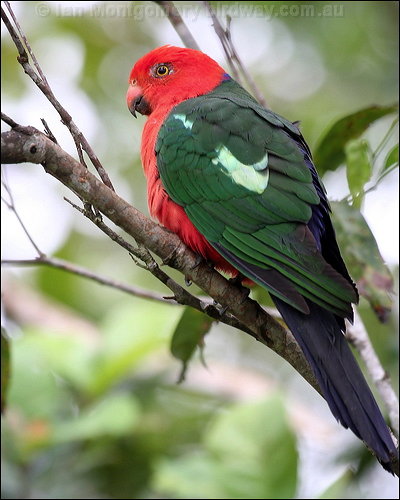
It’s quite common along the eastern seaboard of Australia, with a preference for fairly dense coastal and highland forests including rainforest. That can make it hard to see but it’s quite vocal and the whistling call of the males is a very characteristic sound of eastern forest. It responds readily to being fed and can get quite tame. The one in the first photo was taken at O’Reilly’s in Lamington National Park, where the birds will perch on arms and shoulders and pose happily for photos. The males are distinguished from the females by the brilliant scarlet of the breast extending onto the head and having a conspicuou peppermint green blaze on the wings.


Australian King Parrot (Alisterus scapularis) Male by Ian

Australian King Parrot (Alisterus scapularis) Male by Ian

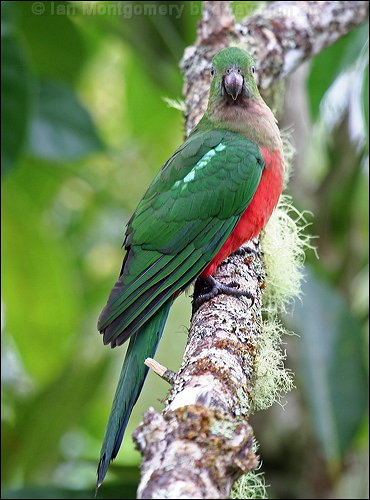
The females are gorgeous too with scarlet lower breast and belly, green heads and pinkish necks. The one in the second photo was busy exploring hollows in trees, but it was hard to imagine that she was contemplating nesting in May. Both sexes have blue backs, third photo, but this is usually hidden by the folded wings. The wing blaze may be missing or inconspicuous in females.


Australian King Parrot (Alisterus scapularis) Female WikiC

Australian King Parrot (Alisterus scapularis) Female WikiC

It’s usually just called the King Parrot in Australia and I used to wonder vaguely about the ‘Australian’ qualification. The reason for it is that is a Papuan one in New Guinea and a Moluccan one in western New Guinea and the islands of eastern Indonesia. Both these are rather similar to the Australian one, but smaller and differ mainly in the colour or lack of the blaze on the wings, and the amount of blue in the plumage.

Australian King Parrot (Alisterus scapularis) Male Closeup by Ian

Australian King Parrot (Alisterus scapularis) Male Closeup by Ian


There are two races of the Australian species. The larger nominate race occurs along most of the east coast, while the smaller race minor (obviously) occurs in northeastern Queensland. The literature doesn’t say much about minor except that it’s smaller, and there’s disagreement in the field guides about how far south it occurs: choose between Cardwell, Townsville and Mackay. I suspect Townsville is correct as there a big gap between the Paluma Range population and the Eungella/Clark Range one near Mackay. Anyway, the male in photo 4 and the female in photo 5 were photographed on the Atherton Tableland and are certainly minor.

Australian King Parrot (Alisterus scapularis) by Ian

Australian King Parrot (Alisterus scapularis) by Ian

It seemed to me from the photos that I took there that the northern males had brighter and more extensive blue hind collars and the females had brighter wing-blazes than southern birds. My sample size was small, but it might be an interesting project to check out whether these differences are consistent and to establish the exact geographical ranges of the subspecies. In northeastern Queensland it is mainly a highland species, with some movement to the lowlands in winter and I have seen them very occasionally near where I live.

Links:
Australian King-Parrot (I should have put hyphens in the photo captions)
Red-winged Parrot

Anyway, back to dotting i’s. The next stage in the book is to check out publishing via Apple iBooks, Google Play, etc. That’s something I know nothing about, so it will be interesting to find out how it’s done.

Greetings

Ian
**************************************************
Ian Montgomery, Birdway Pty Ltd,
454 Forestry Road, Bluewater, Qld 4818
Tel 0411 602 737 ian@birdway.com.au
Bird Photos http://www.birdway.com.au/
Recorder Society http://www.nqrs.org.au


Lee’s Addition:

Now unto the King eternal, immortal, invisible, the only wise God, be honour and glory for ever and ever. Amen. (1 Timothy 1:17 KJV)

What beautifully created Parrots! They are just fantastic. Also, I was beginning to worry about Ian. It has been over a month since his last newsletter, Plum-headed Finches.

These parrots are members of the Psittacidae – Parrots Family. There are approximately 365 members, depending on whose list. The greatest diversity of parrots is in South America and Australasia.

Checkout all of Ian’s Parrot photos (around 50 species)

King Parrot at Wikipedia

Psittacidae – Parrots Family

*

Interesting Things – Meerkat School

SmileyCentral.com

MEERKAT SCHOOL

“… and I will be with thy mouth, and with his mouth, and will teach you what ye shall do.” Exodus 4:15b

Behavioral researchers define teaching very specifically. First, of course, a teacher must have pupils. Then the teacher must be less efficient in doing whatever he is doing than he normally would be if he were alone, as a means of showing the pupils how to do the task. And finally, the pupils must learn the task more quickly than they would on their own.

Meerkats at the Auckland Zoo ©©Auckland_Zoo

Meerkats at the Auckland Zoo ©©Auckland_Zoo

Meerkats at the Auckland Zoo by that definition, humans, of course, are teachers. Among animals, only a species of ant meets this definition of teaching. But now researchers from the University of Cambridge in England say that meerkats also qualify as teachers. They found that experienced hunters will take young, inexperienced pups with them when they hunt. They will let the youngsters watch them as they catch prey. Of course, when they catch some small prey, the youngsters will vocally beg for a handout. However, only 35 percent of those handouts are served to the youngsters dead. The rest of the time they have to learn how to subdue the caught prey themselves. On the other hand, older, more experienced pups received already-killed handouts only 10 percent of the time. Further tests involving live and dead prey show that those given live prey could learn to subdue it in only three days.

Despite the researchers’ presupposition that teaching evolved, God is still the One that teaches the teachers.

Meerkat at LP Zoo by Lee

Meerkat at LP Zoo by Lee

Prayer:
Father, I pray that you would provide Your church with faithful teachers of the forgiveness we have in Jesus Christ. Amen.
Notes:
Science News, 7/15/06, p. 36, S. Milius, “Live Prey for Dummies.” Photo: Meerkats at the Auckland Zoo. Courtesy of Ashleigh Thompson. Licensed under the Creative Commons Attribution 2.0 Generic license.

©Creation Moments – Meerkat School, 2014.


Lee’s Additions:

Meerkat at LP Zoo by Lee

Meerkat at LP Zoo by Lee

I have always enjoy watching Meerkats and thought you might enjoy another Interesting Things blog. Lowry Park Zoo and other zoos keep them.

*

*

Sunday Inspiration – Bittern

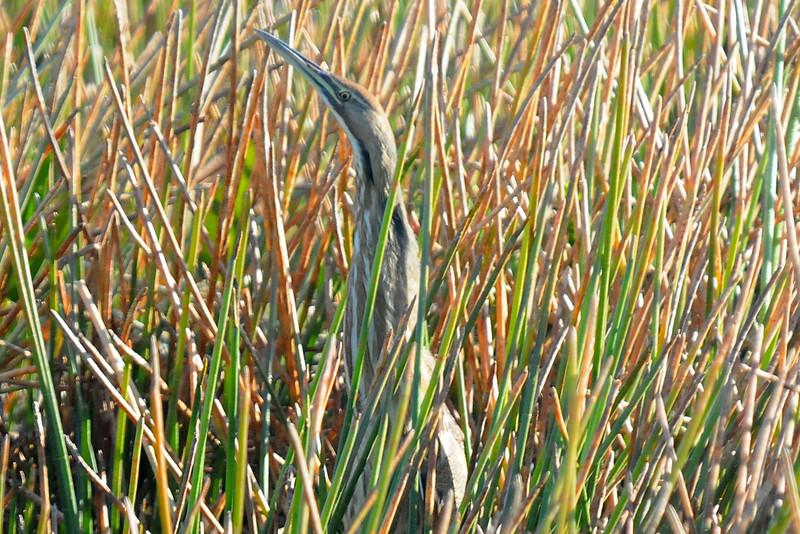
American Bittern (Botaurus lentiginosus) at Circle B by Lee

American Bittern (Botaurus lentiginosus) by Lee

The herds shall lie down in her midst, Every beast of the nation. Both the pelican and the bittern Shall lodge on the capitals of her pillars; Their voice shall sing in the windows; Desolation shall be at the threshold; For He will lay bare the cedar work. (Zephaniah 2:14 NKJV)

I enjoy “trying” to find bitterns. They can be right challenging because of the way the Lord designed them to be “hidden in plain view.” The American Bittern, at the top, landed right in front of us at Circle B last year. Otherwise, he would have blended right in and he would have been missed. Bitterns are also a Bird of the Bible.

American Bittern (Botaurus lentiginosus) by Bob-Nan

American Bittern (Botaurus lentiginosus) by Bob-Nan

Bitterns belong to the Ardeidae- Herons, Bitterns Family and most are well hidden while they search for food. “Bitterns are a classification of birds in the heron family, a family of wading birds. Species named bitterns tend to be the shorter-necked, often more secretive members of this family. Bitterns usually frequent reed beds and similar marshy areas, and feed on amphibians, reptiles, insects, and fish. Unlike the similar storks, ibises, and spoonbills, herons and bitterns fly with their necks retracted, not outstretched.” (Wikipedia)

Sunbitterns, which I added, are members of the Eurypygidae – Sunbittern Family. These comments from Woodland Park Zoo, show how their design helps hide them. “With its slow, deliberate walk on orange-colored legs and its long neck held parallel to the ground, the sunbittern resembles the sun-flecked forest interior. This spectacular frontal display is for threat or defense rather than courtship and is usually accompanied by a low hiss and bowing.”

“… they have vividly colored middle webs, which with wings fully spread show bright eyespots in red, yellow, and black. These are shown to other sunbitterns in courtship and threat displays, or used to startle potential predators. (Wikipedia)

This ability to hide brought to mind these verses:

Keep me as the apple of Your eye; Hide me under the shadow of Your wings, (Psalms 17:8 NKJV)

For in the day of trouble He will conceal me in His tabernacle; In the secret place of His tent He will hide me; He will lift me up on a rock. (Psalms 27:5 NASB)

Hide me from the secret counsel of evildoers, From the tumult of those who do iniquity, (Psalms 64:2 NASB)

Can anyone hide himself in secret places, So I shall not see him?” says the LORD; “Do I not fill heaven and earth?” says the LORD. (Jeremiah 23:24 NKJV)

*

This slideshow requires JavaScript.

*

“Hide Thou Me” – ©Rejoice! by the Hyssongs

*

Links:

*

Birds of the World – Laughingthrush and Allies

Red-tailed Laughingthrush (Trochalopteron milnei) and Black-throated Laughingthrush by Lee at Zoo Miami

Red-tailed Laughingthrush and Black-throated Laughingthrush by Lee at Zoo Miami

A time to weep, And a time to laugh; A time to mourn, And a time to dance; (Ecclesiastes 3:4 NKJV)

Blessed are you who hunger now, For you shall be filled. Blessed are you who weep now, For you shall laugh. (Luke 6:21 NKJV)

I trust you enjoyed seeing the Laughingthrush – Leiothrichidae family in the Sunday Inspiration – Laughingthrush article. From my first encounter with them, they have been a delight to watch. We have only seen them in Zoos, because they live in Southeast Asia and Indian Subcontinent.

(Black and White) Sumatran Laughingthrush (Garrulax bicolor) by Lee

(Black and White) Sumatran Laughingthrush (Garrulax bicolor) by Lee

The Laughingthrushes are the genus Garrulax and Trochalopteron of the Leiothrichidae family of passerine birds. They primarily occur in tropical Asia. These are rangy, medium-sized landbirds. These birds have strong legs and are quite terrestrial. This group is not strongly migratory, and most species have short rounded wings, and a weak flight.

A few, like the Streaked Laughingthrush occur in fairly open habitats, but most are jungle species, difficult to observe in the dense vegetation they prefer.

These are noisy birds, and the characteristic laughing calls are often the best indication that these birds are present. They frequently occur in groups of up to a dozen, and the rainforest species like the Ashy-headed Laughingthrush often occur in the mixed feeding flocks typical of tropical Asian jungle.

They are small to medium sized birds. They have strong legs, and many are quite terrestrial. They typically have generalised bills, similar to those of a thrush. Most have predominantly brown plumage, with minimal difference between the sexes, but many more brightly coloured species also exist. This group is not strongly migratory, and most species have short rounded wings, and a weak flight. They live in lightly wooded or scrubland environments, ranging from swamp to near-desert. They are primarily insectivorous, although many will also take berries, and the larger species will even eat small lizards and other vertebrates. (Wikipedia)

The Sumatran Laughingthrush (Garrulax bicolor), also known as the Black-and-white Laughingthrush, is a member of the Leiothrichidae family. It is endemic to highland forest on the Indonesian island of Sumatra, The laughingthrushes are a family of mostly Old World passerine birds. They are rather diverse in size and coloration. These are birds of tropical areas, with the greatest variety in Southeast Asia and the Indian Subcontinent. The entire family was previously included in the Timaliidae.


From the Life List of All Birds We Have Seen (Not up to date), here are the family members we have seen so far.

Laughingthrushes (Family Leiothrichidae)

White-crested Laughingthrush (Garrulax leucolophus) by Lee Miami WA

White-crested Laughingthrush (Garrulax leucolophus) by Lee Miami WA

FUN FACT – White-crested Laughing Thrushes are noisy, social birds who occasionally burst into loud calls that sound just like laughter. (National Aviary)

White-crested Laughingthrush (Garrulax leucolophus) MZ NA WA

Sumatran Laughingthrush (Garrulax bicolor) by Dan at  Wing of Asia ZM

Sumatran Laughingthrush (Garrulax bicolor) by Dan at Wing of Asia ZM

Sumatran Laughingthrush (Garrulax bicolor) WA by Dan

Blue-crowned Laughingthrush (Garrulax courtoisi) at Cincinnati Zoo by Lee

Blue-crowned Laughingthrush (Garrulax courtoisi) at Cincinnati Zoo by Lee

*

*

Black-throated Laughingthrush (Garrulax chinensis) ProofShot

Black-throated Laughingthrush (Garrulax chinensis) ProofShot – Zoo Miami by Lee

Black-throated Laughingthrush (Garrulax chinensis) WA by Lee

Spotted Laughingthrush (Garrulax ocellatus) WA

Chestnut-capped Laughingthrush (Garrulax mitratus) WA

(Spectacled) Red-winged Laughingthrush (Garrulax formosus) WA

Red-tailed Laughingthrush  by Dan at Wings of Asia Zoo Miami

Red-tailed Laughingthrush by Dan at Wings of Asia Zoo Miami

Red-tailed Laughingthrush (Trochalopteron milnei) WA by Dan

Red-faced Liocichla (Liocichla phoenicea) Proof shot by Lee Riverbanks Zoo

Red-faced Liocichla (Liocichla phoenicea) Proof shot by Lee Riverbanks Zoo

Red-faced Liocichla (Liocichla phoenicea) WA RZ by Lee

Red-billed Leiothrix (Leiothrix lutea) by Dan's Pix at National Aviary

Red-billed Leiothrix (Leiothrix lutea) by Dan’s Pix at National Aviary

*

Sunday Inspiration – Laughingthrush

Laughingthrushes (Family Leiothrichidae)

Life List of All Birds We Have Seen

*


“Horn” Birds

 Hornbill Friarbird (Philemon yorki) by Tom Tarrant

Hornbill Friarbird (Philemon yorki) by Tom Tarrant

The LORD is my rock, and my fortress, and my deliverer; my God, my strength, in whom I will trust; my buckler, and the horn of my salvation, and my high tower. (Psalms 18:2 KJV)

The Sunday Inspiration this week was about Hornbills. That put me to wondering what other birds have “Horn” in their name. So, let’s see what is listed in the IOC’s List of Birds, which is what this blog uses:

The first thing I found is a Hornbill Friarbird (Philemon yorki), formerly (Philemon buceroides yorki), is one of the newer splits. It was a subspecies of the Helmeted Friarbird (Philemon buceroides). In fact, Wikipedia doesn’t even cover it yet, but others do.

Call from xeno-canto by Marc Anderson

Next I sorted my IOC List of names alphabetically by first name of birds. Here is what I found:

Hornby’s Storm Petrel (Oceanodroma hornbyi)
Horned Coot (Fulica cornuta)
Horned Curassow (Pauxi unicornis)
Horned Grebe (Podiceps auritus)
Horned Guan (Oreophasis derbianus)
Horned Lark (Eremophila alpestris)
Horned Parakeet (Eunymphicus cornutus)
Horned Puffin (Fratercula corniculata)
Horned Screamer (Anhima cornuta)
Horned Sungem (Heliactin bilophus)

I know there is a Great Horned Owl, so I guess I need to sort some more.

Great Horned Owl (Bubo virginianus)
Lesser Horned Owl (Bubo magellanicus)
Scarlet-horned Manakin (Dixiphia cornuta)
Hornby’s Storm Petrel (Oceanodroma hornbyi)
Lesser Hornero (Furnarius minor)
Band-tailed Hornero (Furnarius figulus)
Pale-legged Hornero (Furnarius leucopus)
Pacific Hornero (Furnarius cinnamomeus)
Caribbean Hornero (Furnarius longirostris)
Bay Hornero (FurRufous Hornero (Furnarius rufus)
Rufous Hornero (Furnarius rufus)
Crested Hornero (Furnarius cristatus)

Trust you don’t mind finding out this information. When we stop being curious, we stagnate. Besides, the Lord has made so many birds out there for us to find, 10,530 at the time, this is a way to discover a few more of them. I found some “Thornbirds”, but will save that for another time. Also, birds do not have horns, but rather tufts of feathers that stick up like horns.

The blessing of the LORD, it maketh rich, and he addeth no sorrow with it. (Proverbs 10:22 KJV)

Also he (Solomon) spoke of trees, from the cedar tree of Lebanon even to the hyssop that springs out of the wall; he spoke also of animals, of birds, of creeping things, and of fish. (1 Kings 4:33 NKJV)


This slideshow requires JavaScript.

———————

Birds of the World

Sunday Inspiration – Hornbills

Other Sunday Inspirations

Good News Tracts

*