Jacksonville Zoo’s Noisy Stork Tree

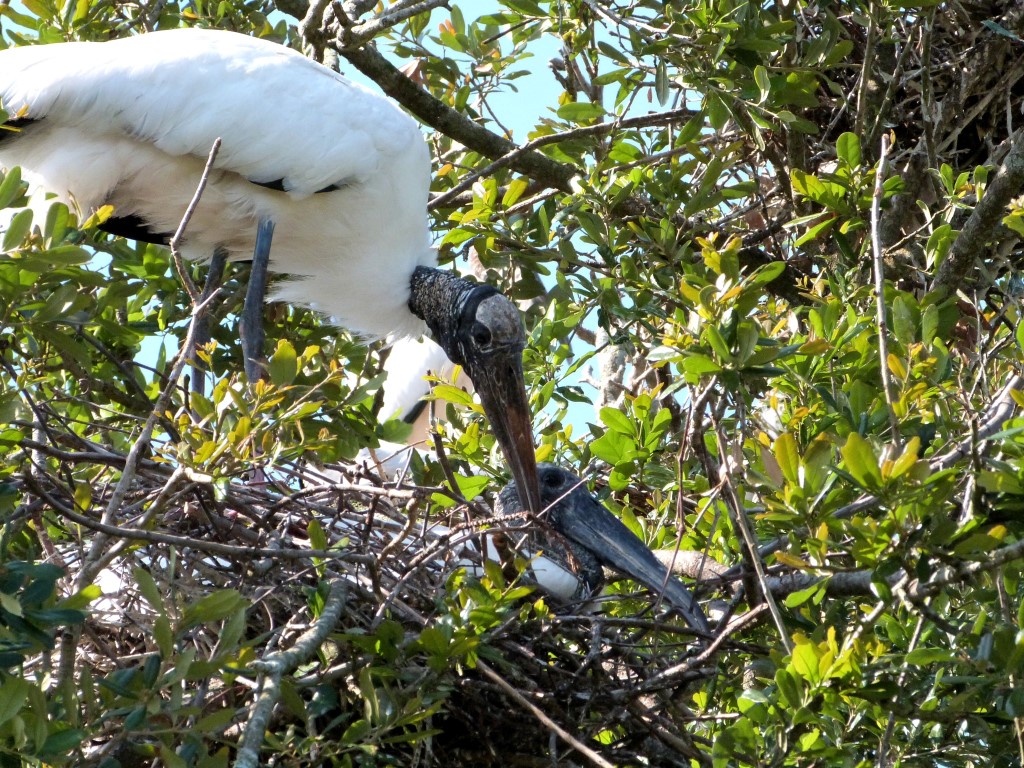
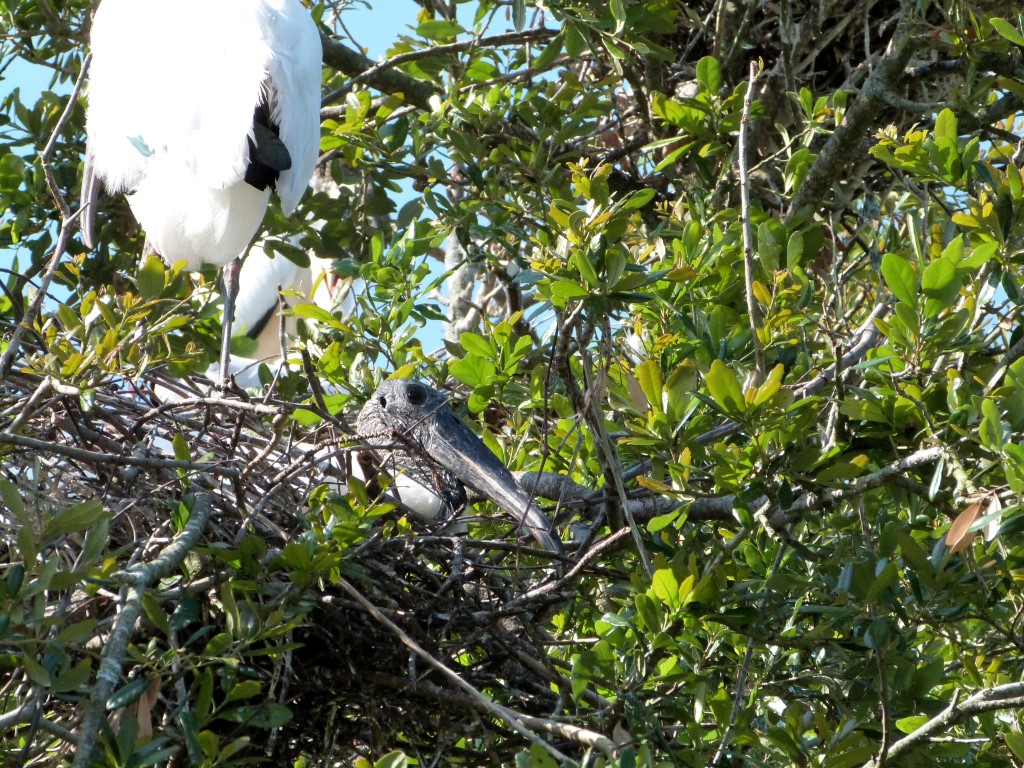
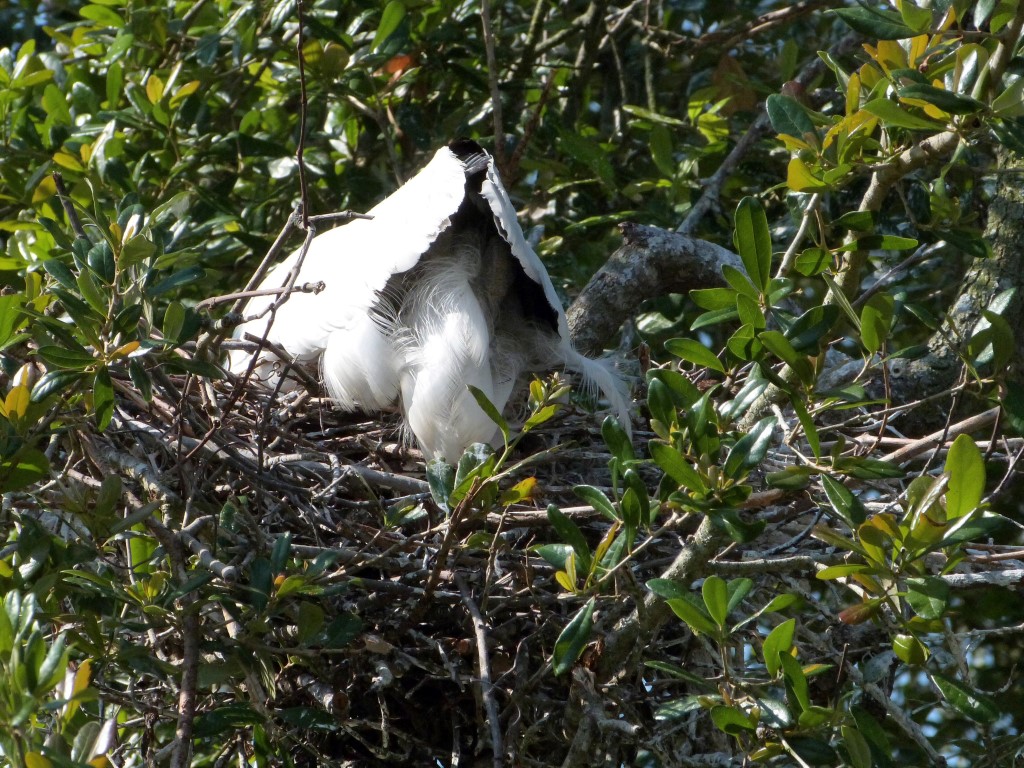
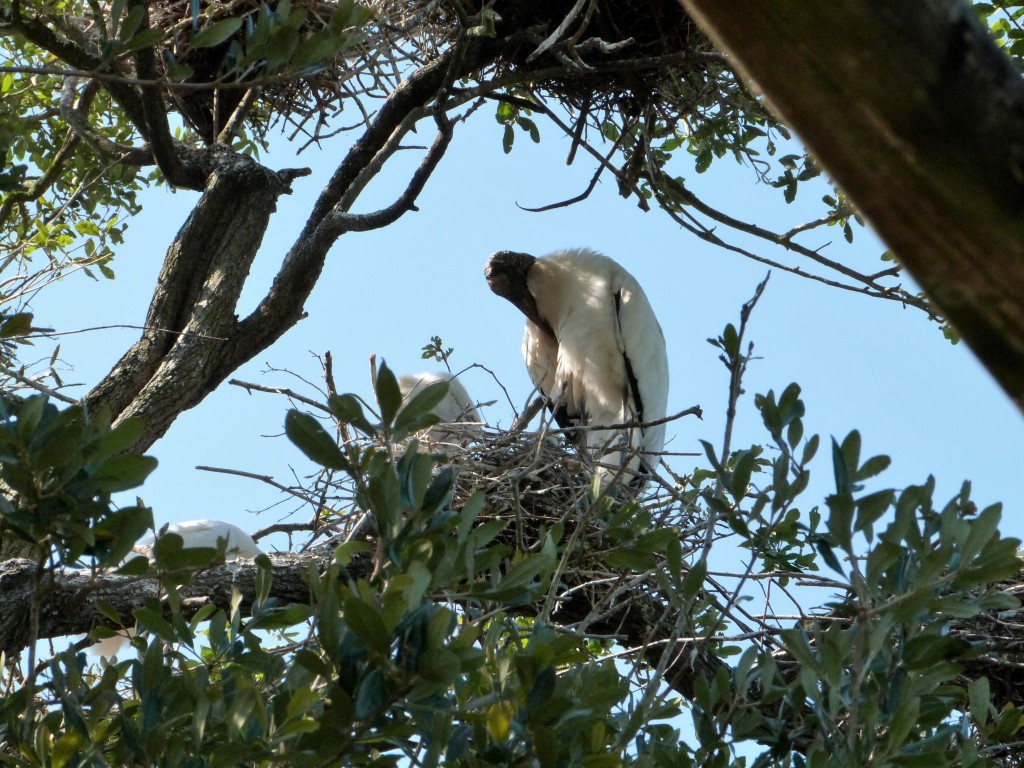
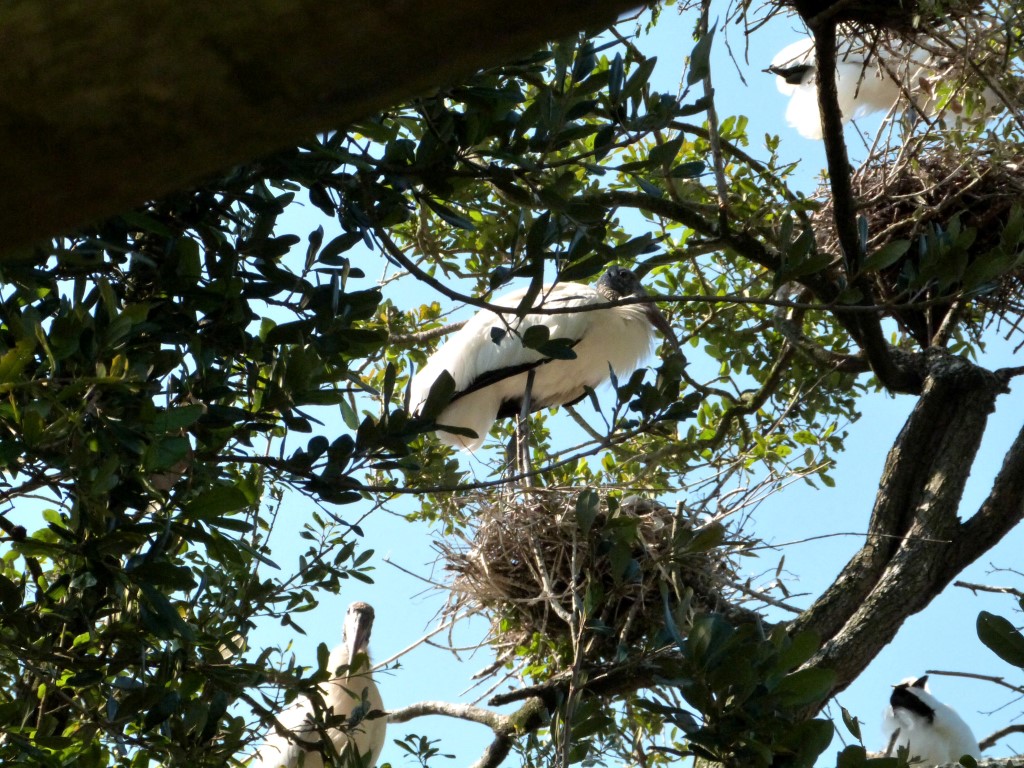
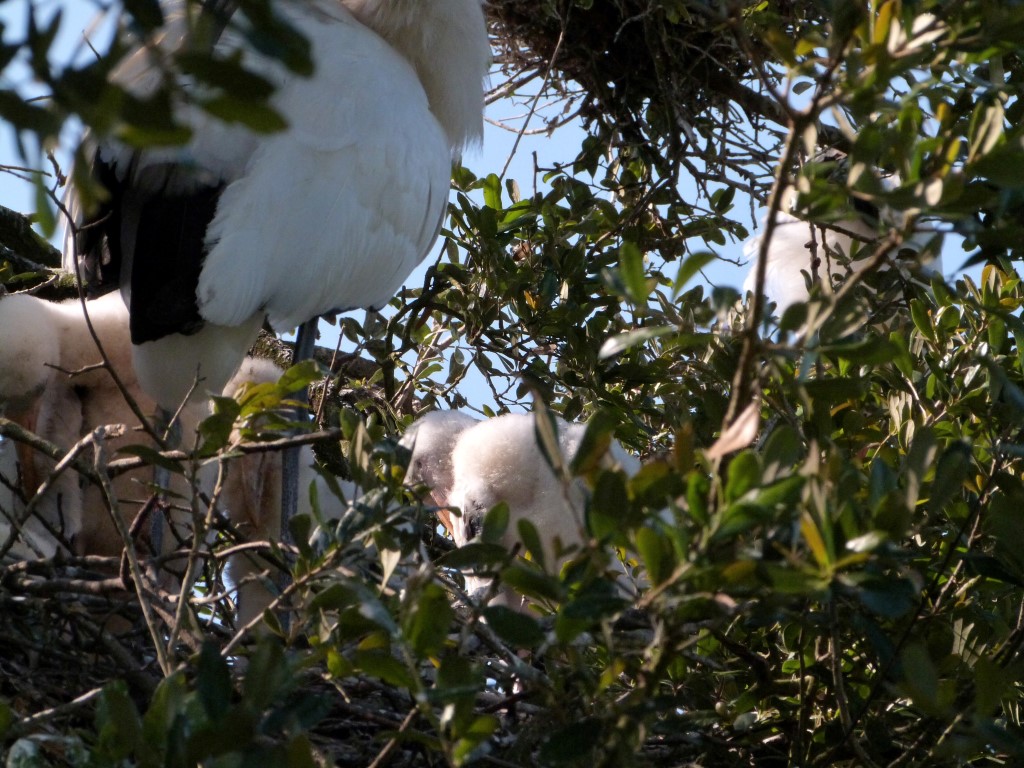
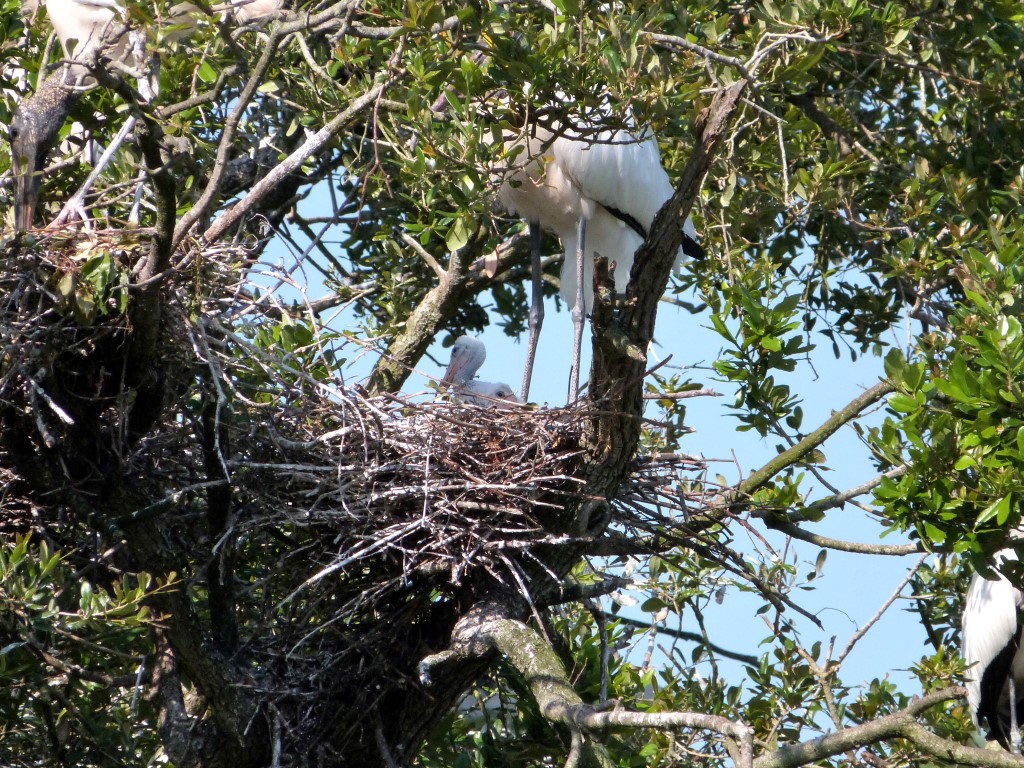
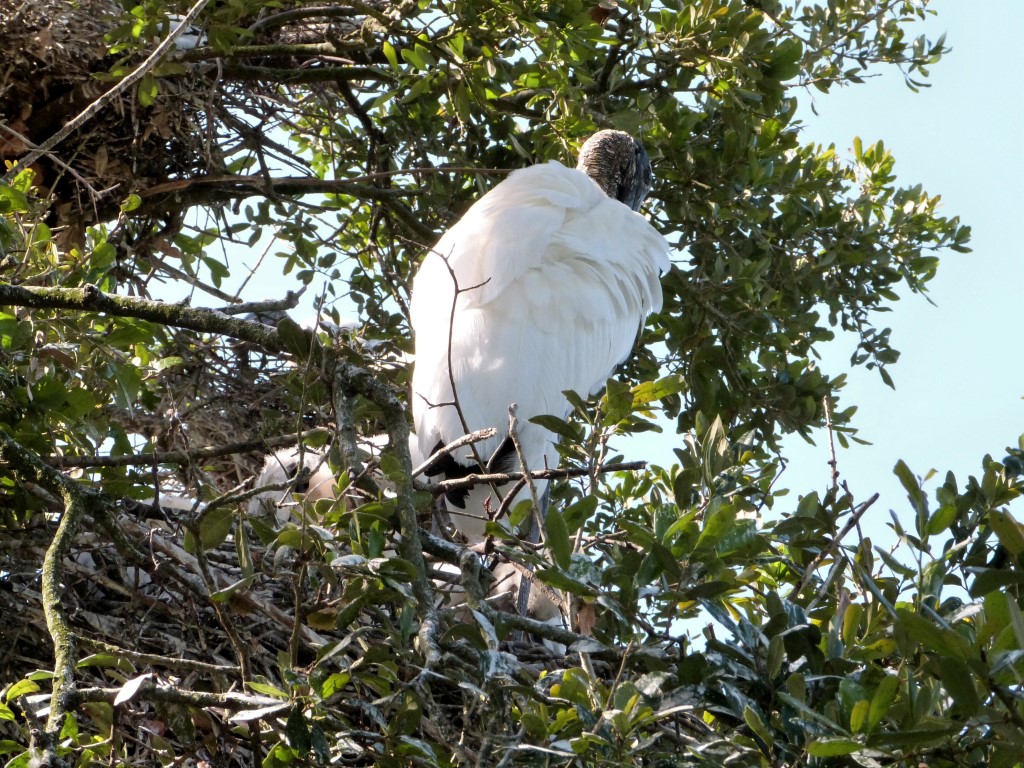
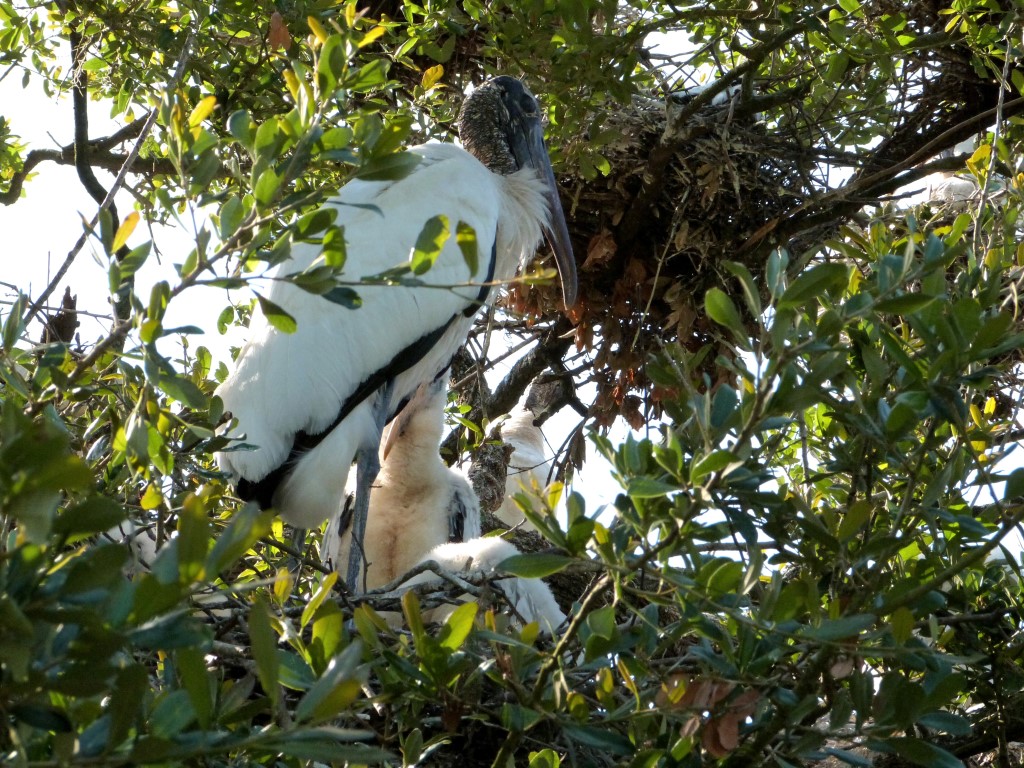
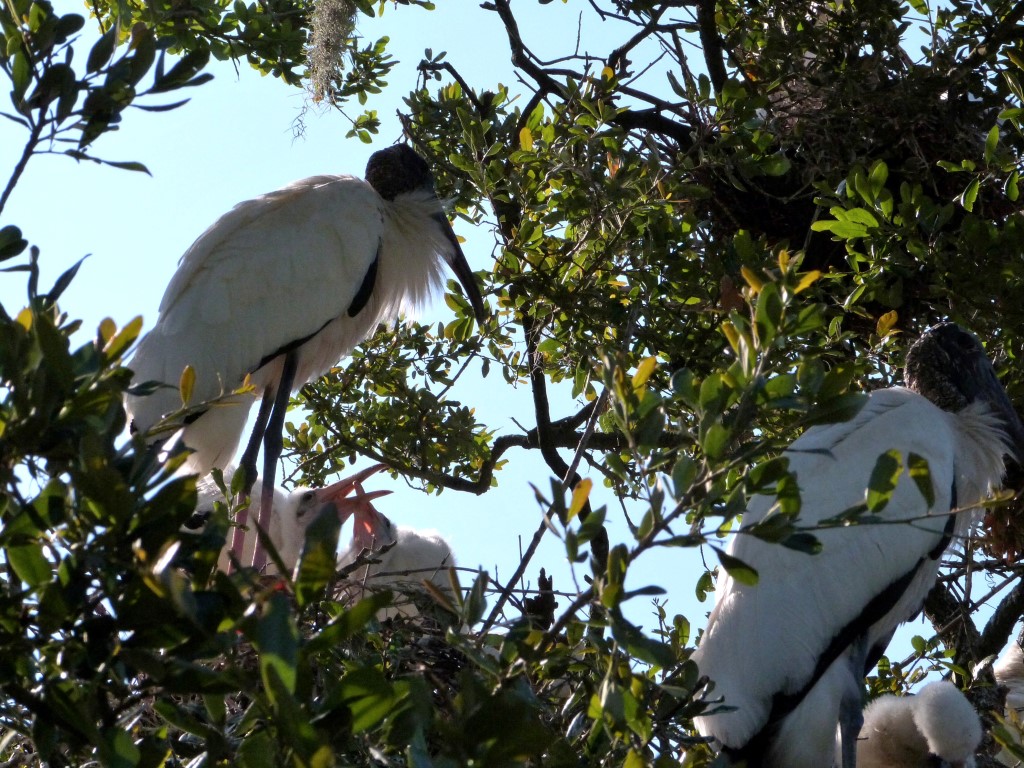
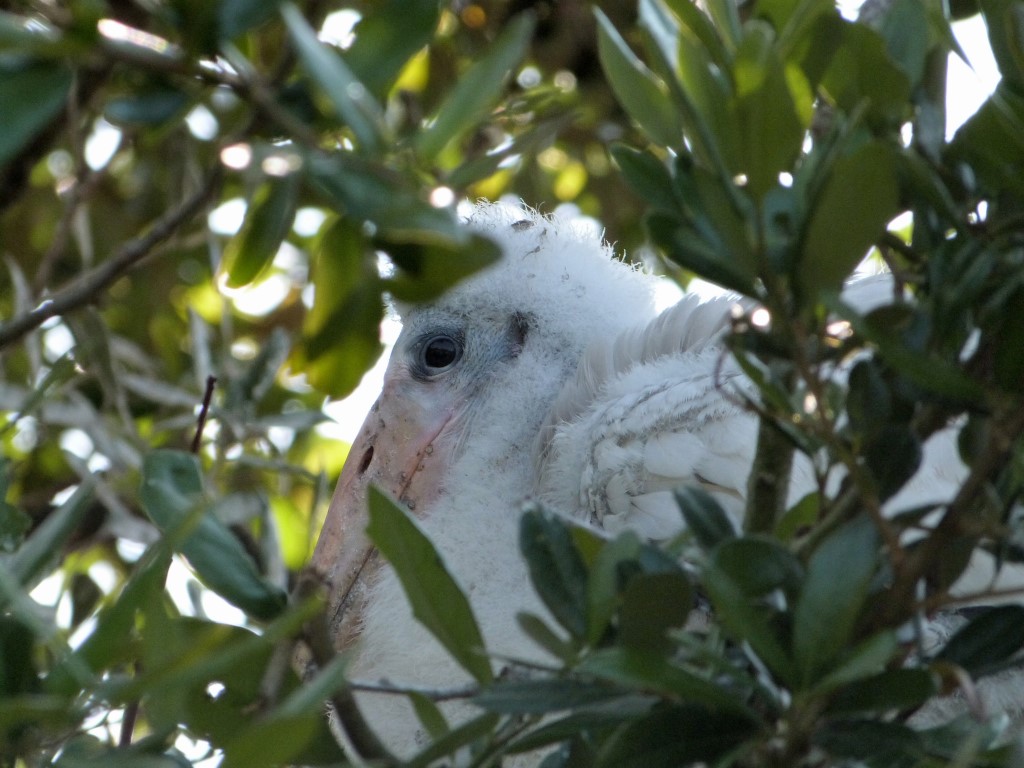
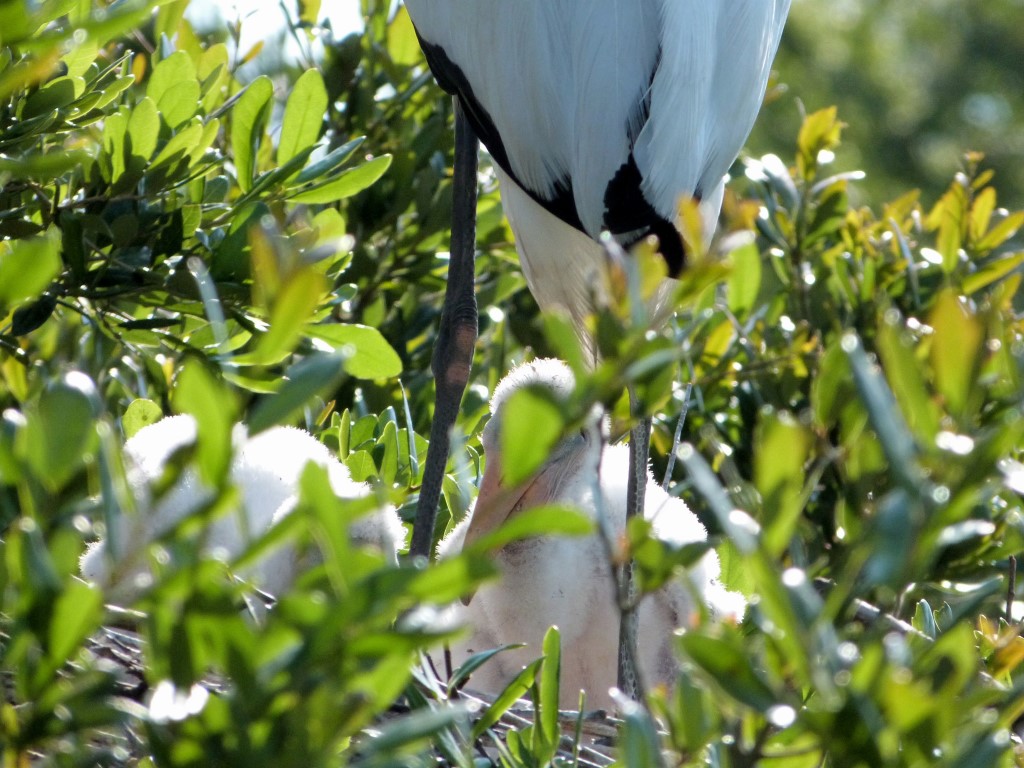
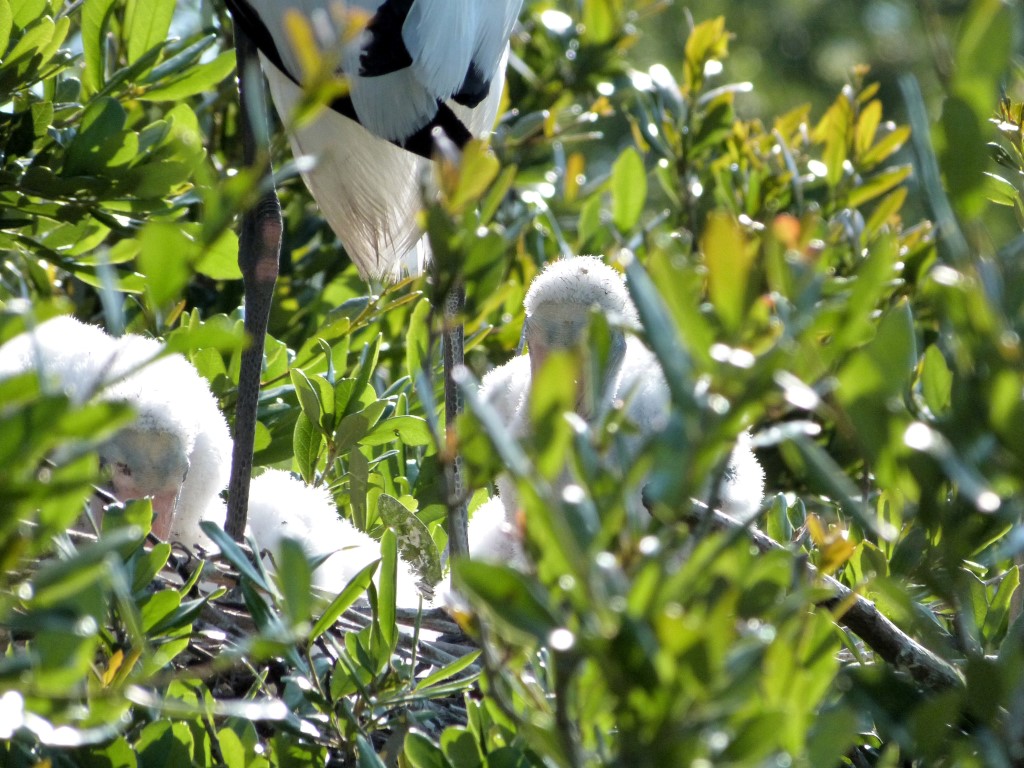
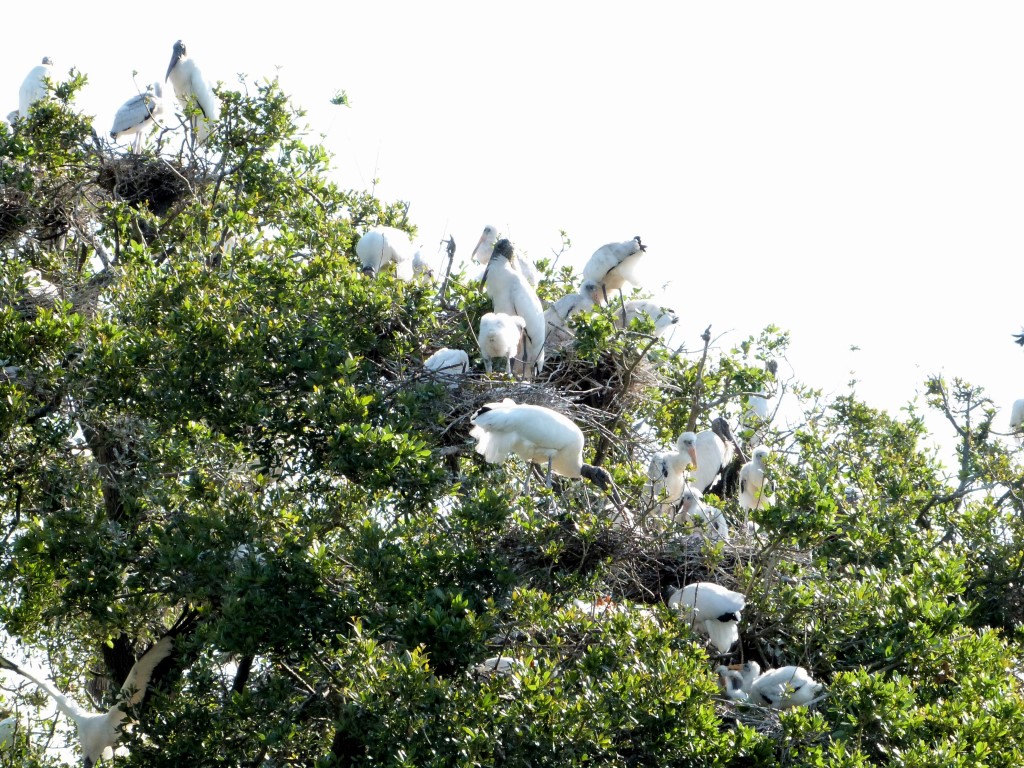
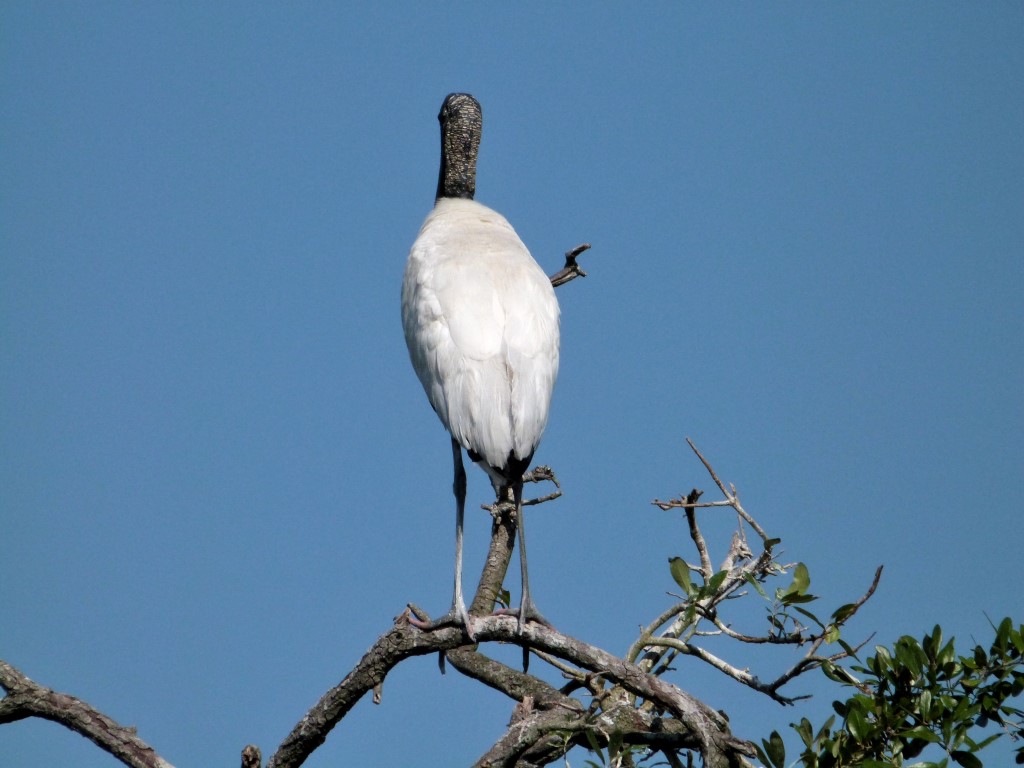
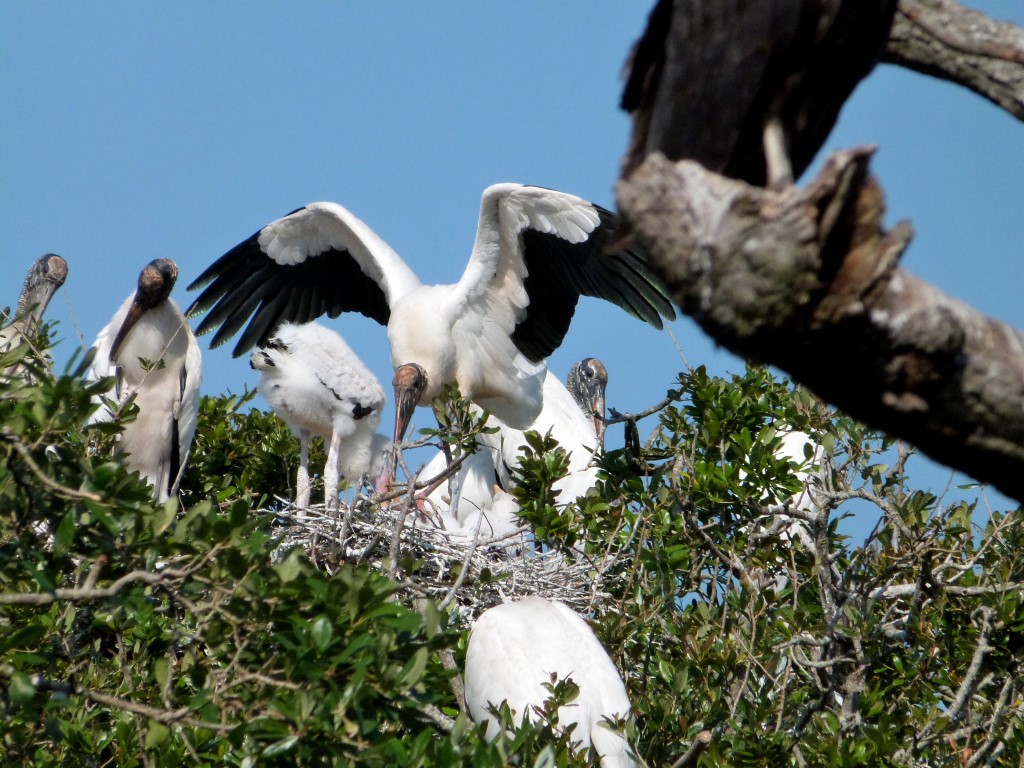
Wood Stork (Mycteria americana) with Chicks Jax Zoo by Lee

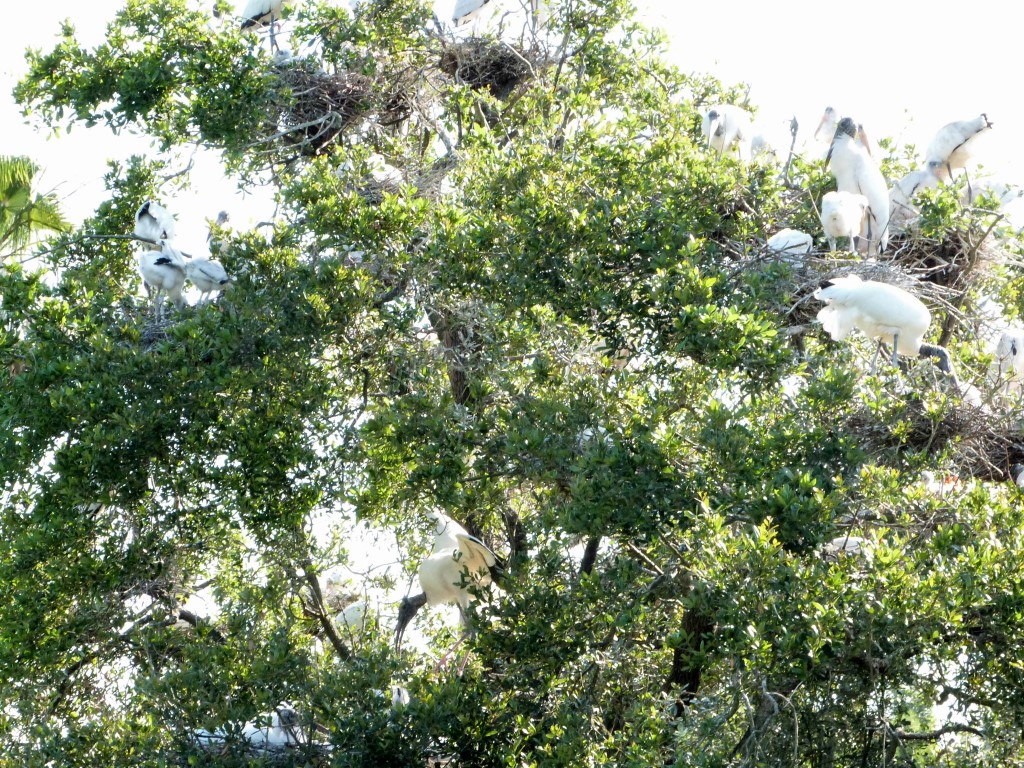
Wood Stork (Mycteria americana) with Chicks Jax Zoo by Lee

Yea, the stork in the heaven knoweth her appointed times; and the turtle and the crane and the swallow observe the time of their coming; but my people know not the judgment of the LORD. (Jeremiah 8:7 KJV)

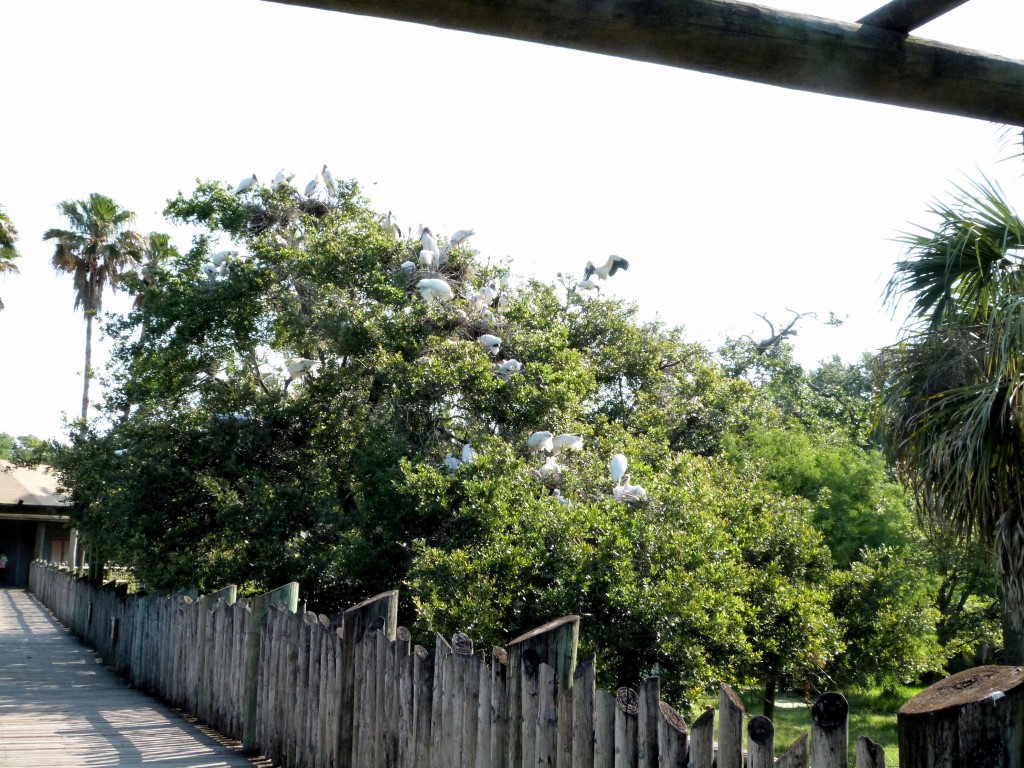
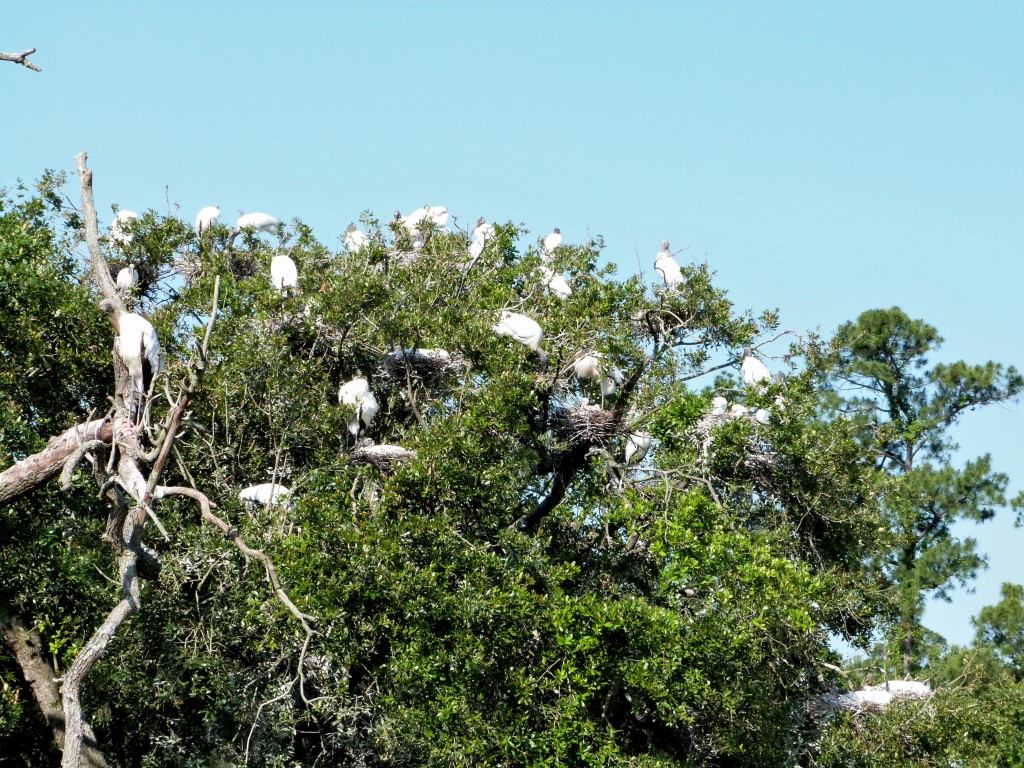
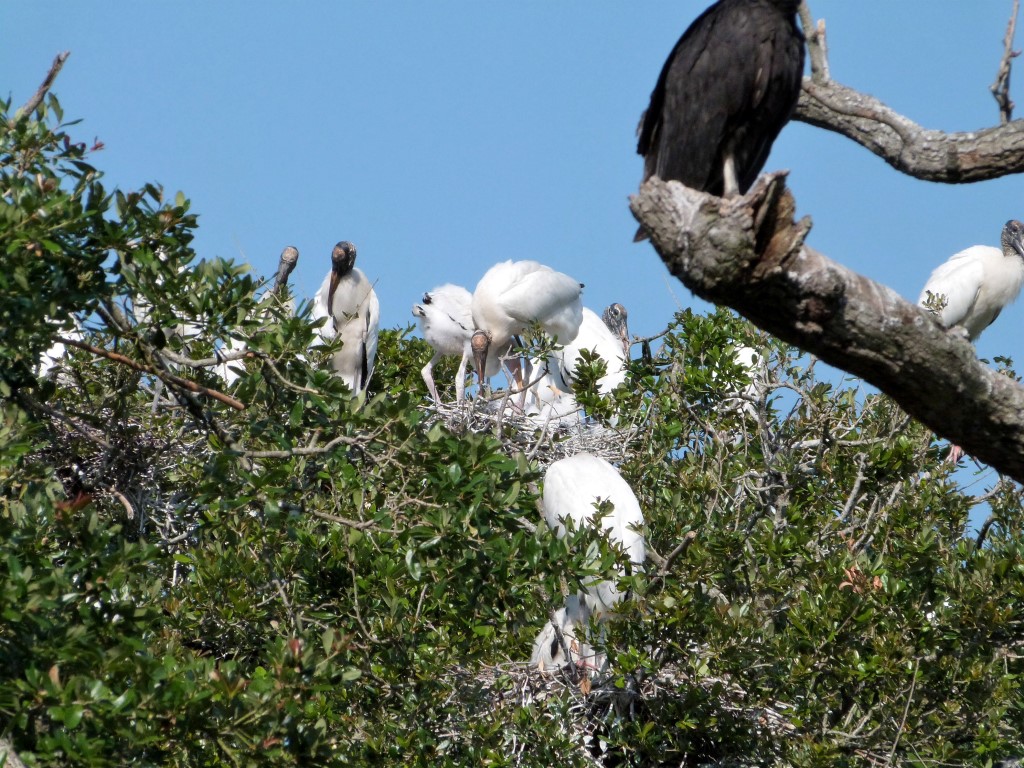
Last week while we were at the Jacksonville Zoo, we noticed a tree loaded with Wood Stork nests. It was hard to miss as you could hear it from far away. As you watch the videos, you will hear the noise coming from all the nest. The tree was right by the boardwalk, so we were very close to them.

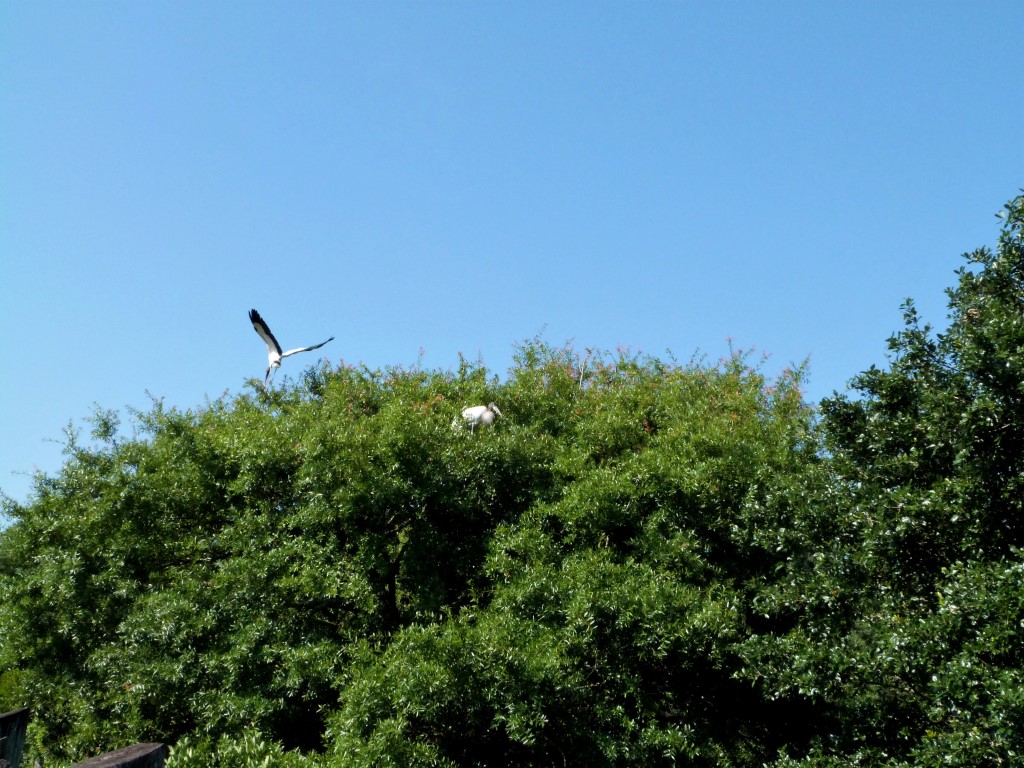
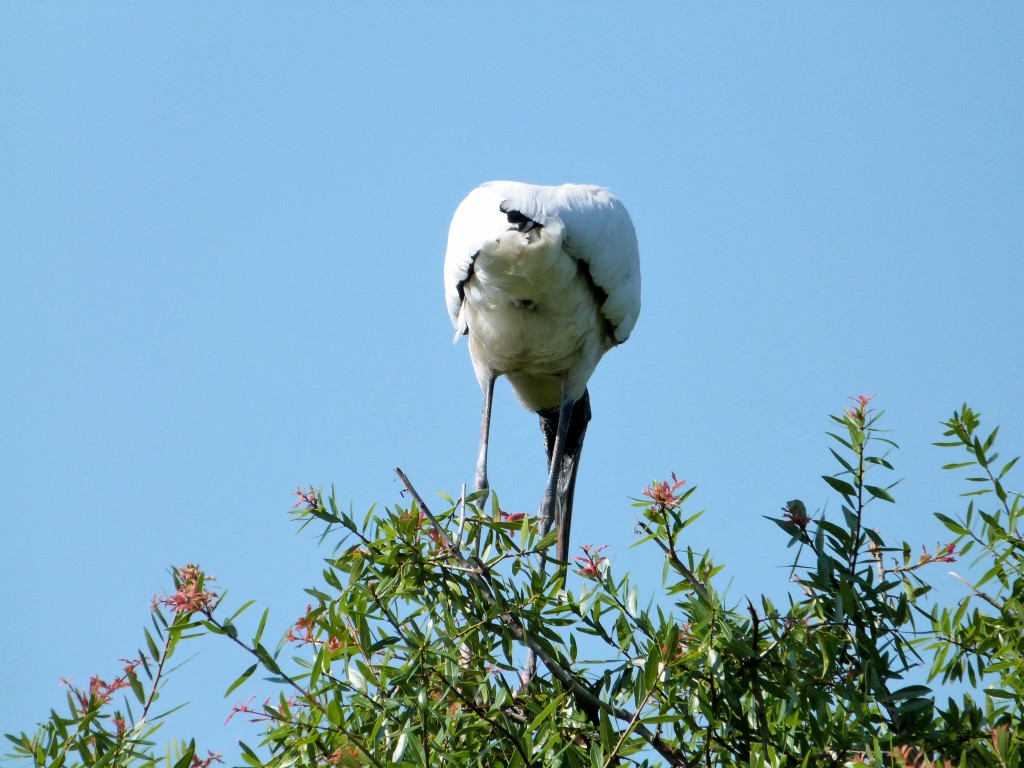
Wood Stork (Mycteria americana) with Chicks Jax Zoo by Lee

 Where the birds make their nests: as for the stork, the fir trees are her house. (Psalms 104:17 KJV)

Wood Storks are part of the Ciconiidae – Storks Family and are also mentioned several times in Scripture. That makes them one of the Birds of the Bible – Storks. We are fortunate in that we get to see Wood Storks quite frequently here in Polk County, Florida, especially out at the Circle B Bar Reserve. Circle B is one of my favorite places to go birdwatching. Yet, I have never seen the nest up close like this.

Here is a combined video of the noisy tree: (Ignore the talking in the background, listen to the noisy birds.)

*

Sing unto him a new song; play skilfully with a loud noise. (Psalms 33:3 KJV)

After taking photos and videos, I found three young one showing how the noise was produced. Now multiply that by all the other nest with young ones doing the same thing.

Error
This video doesn’t exist

O come, let us sing unto the LORD: let us make a joyful noise to the rock of our salvation. (Psalms 95:1 KJV)

*

Hope you don’t mind seeing some of the photos also. These are set up so you can see them larger. Enjoy the Lord’s Creation in the form of Wood Storks.

*

See:

*

Is Evolution Simply Change? – (from Creation Moments)

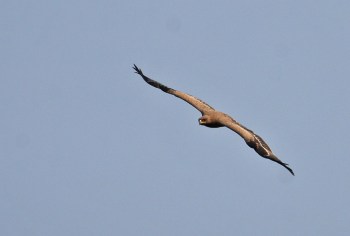
Bald Eagle maturing at Jax Zoo by Dan

Bald Eagle maturing at Jax Zoo by Dan

Is Evolution Simply Change?

(from Creation Moments)

*

“Where is the wise? where is the scribe? where is the disputer of this world? hath not God made foolish the wisdom of this world?” (1 Corinthians 1:20)

Many people think that evolution is simply any change. Developing a new breed of dog is often referred to by many people as proof for evolution. But is it really? Those who claim that the domestic breeding of crop or animal species has anything to do with evolution take their cue from Darwin, who – although he had no degree in science – made the same claims.

Cover of Michael Denton's book Evolution: A Theory in Crisis.Evolution is not simply change like what we see in domestic breeding programs. You might say that it’s easy for a creationist to say this, but let’s allow a scientist who is neither a creationist nor a Christian make the case for us. In his book Evolution: A Theory in Crisis, Dr. Michael Denton explains that evolution is in crisis for the simple reason that biology offers no evidence that evolution happens. Since science relies on evidence, he is really saying that evolution is not science at all.

Denton, who has spent much of his scientific career studying evolution, adds insult to injury by stating that “Despite more than a century of intensive effort on the part of evolutionary biologists, the major objections raised by Darwin’s critics . . . have not been met.”

In other words, evolutionary scientists have not been able to answer creationist challenges. Or, as we have been saying all along, the Bible does offer an intelligent alternative to evolution!

Prayer:
Dear Father, I thank You for those honest scientists who, even though they do not believe in Christ as their Lord and Savior, are still honest enough to identify a falsehood. Today I especially ask that You work in their hearts so that they may seek and find their Savior, Jesus Christ. In His Name. Amen.
Notes:
Photo: Cover of Michael Denton’s book Evolution: A Theory in Crisis. Published by Burnett Books, 1985.

*


Lee’s Addition:

In the beginning God created the heaven and the earth. (Genesis 1:1 KJV)

I alway enjoy the short, but Biblically truthful articles from Creation Moments. We see the birds breeding and developing subspecies, but that isn’t evolution. They are all still birds. The subspecies get split off into a different species of their own, yet when they run the DNA test, they find they all come from the same original pair of birds.

All that splitting and lumping is what keeps me busy every 3 or 4 months updating the Birds of the World lists.

See:

*

Marabou Stork Chicks and Inca Tern at Jacksonville Zoo

Marabou Stork (Leptoptilos crumenifer) with chicks-Jax Zoo by Lee

Marabou Stork (Leptoptilos crumenifer) with chicks-Jax Zoo by Lee

Where the birds make their nests: as for the stork, the fir trees are her house. (Psalms 104:17 KJV)

We just got back from a trip to Jacksonville, FL and a visit to the Jacksonville Zoo. I haven’t had time to go through the photos yet, but wanted to share two of the videos.

The first one is two Marabou Stork chicks with a parent. They are not any better looking as a youngster than their parents are. We see them at the Lowry Park Zoo frequently, but never saw them with a chick.

The Marabou Stork (Leptoptilos crumeniferus) is a large wading bird in the Ciconiidae – Storks Family. It breeds in Africa south of the Sahara, in both wet and arid habitats, often near human habitation, especially waste tips. It is sometimes called the “Undertaker Bird” due to its shape from behind: cloak-like wings and back, skinny white legs, and sometimes a large white mass of “hair”. It has one of the largest wing spans of any bird. (Wikipedia)

*

*

The the second video is of an Inca Tern preening. I love those “whiskers.”

The Inca Tern (Larosterna inca) is a seabird in the Laridae – Gulls, Terns and Skimmers – Family. It is the only member of the genus Larosterna.

This uniquely plumaged bird breeds on the coasts of Peru and Chile, and is restricted to the Humboldt current. It can be identified by its dark grey body, white moustache on both sides of its head, and red-orange beak and feet.*

*

This is short because we are still unpacking. The Lord gave us a great trip and traveling mercies. I have many nice videos and photos to share. Stay tuned.

See:

Jacksonville Zoo

Bio Facts: Stork, Marabou – Jacksonville Zoo

Marabou Stork – Wikipedia

Marabou Stork – ARKive

Marabou Stork “Undertaker Bird”

Ciconiidae – Storks Family

Laridae – Gulls, Terns and Skimmers – Family

Inca Tern – Oregon Zoo

Inca Tern: The Magnificently Mustached Bird

Inca Tern – Wikipedia

*

Sunday Inspiration – Singing Birds

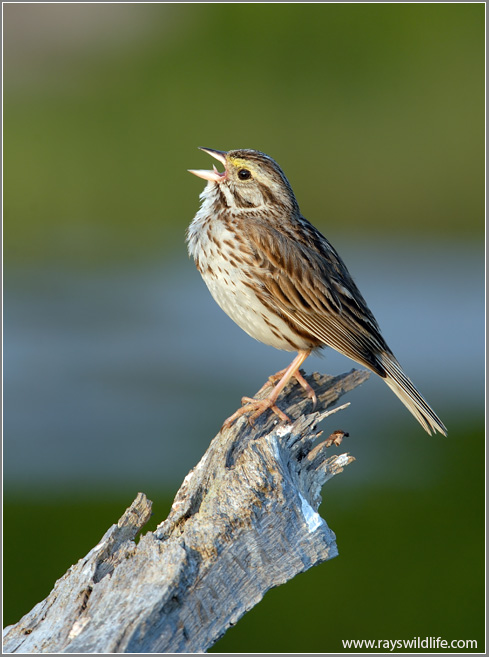
Savannah Sparrow singing by Ray

Savannah Sparrow singing by Ray

By them the birds of the heavens have their home; They sing among the branches. (Psalms 104:12 NKJV)

The Lord created the birds with the ability to sing such beautiful songs. They have various reasons for singing and shouldn’t we also be willing to sing in our different activities?

The LORD is my strength and my shield; My heart trusted in Him, and I am helped; Therefore my heart greatly rejoices, And with my song I will praise Him. (Psalms 28:7 NKJV)

“O God, my heart is fixed; I will sing and give praise, even with my glory.” (Psalms 108:1 KJV)

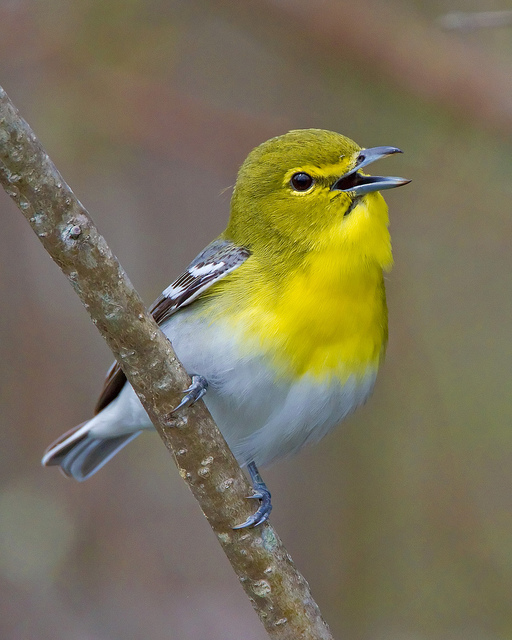
Yellow-throated Vireo (Vireo flavifrons) singing ©nebirdsplus

Yellow-throated Vireo (Vireo flavifrons) singing ©nebirdsplus

And some more great “singing” verses:

Speaking to yourselves in psalms and hymns and spiritual songs, singing and making melody in your heart to the Lord; (Ephesians 5:19 KJV)

Let the word of Christ dwell in you richly in all wisdom; teaching and admonishing one another in psalms and hymns and spiritual songs, singing with grace in your hearts to the Lord. (Colossians 3:16 KJV)

*

This slideshow requires JavaScript.

*

“Singing” – by Dr. Richard Gregory (permission given by Mrs. Gregory)

Dr. Gregory, who was a member of our church, is now in the presence of the Lord. He is seeing His Saviour “Face to face.”

*

Sunday Inspiration

Birds of the Bible

Birds of the Bible – Singing Birds

Birds in Hymns

Sharing The Gospel

*


Birds of the Bible – Buzzards

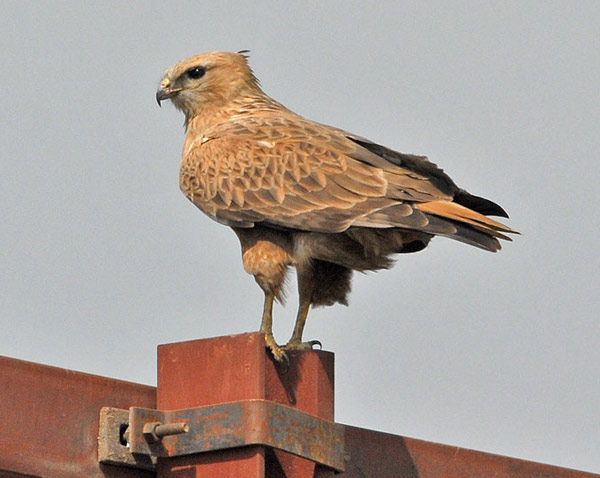
Long-legged Buzzard (Buteo rufinus) by Nikhil Devasar

Long-legged Buzzard (Buteo rufinus) by Nikhil Devasar

But these you shall not eat: the eagle, the vulture, the buzzard, (Deuteronomy 14:12 NKJV)

In Birds of the Bible – How Many Are There? II, the buzzard was mentioned. Also last week, Ian did an article on the Black-breasted Buzzard. Since realizing that this bird, the Buzzard, had not been added to the Birds of the Bible pages, I added a Buzzard and this is the first article about our forgotten avian bird.

Aren’t we glad that the Lord does not forget His Creation?

Look at the birds of the air, for they neither sow nor reap nor gather into barns; yet your heavenly Father feeds them. Are you not of more value than they? (Matthew 6:26 NKJV)

Buzzards belong to the  Accipitridae – Kites, Hawks & Eagles Family and has 28 species in this family with “Buzzard” in their name. Members of this family are known as “Birds of Prey” or “raptors” by many.

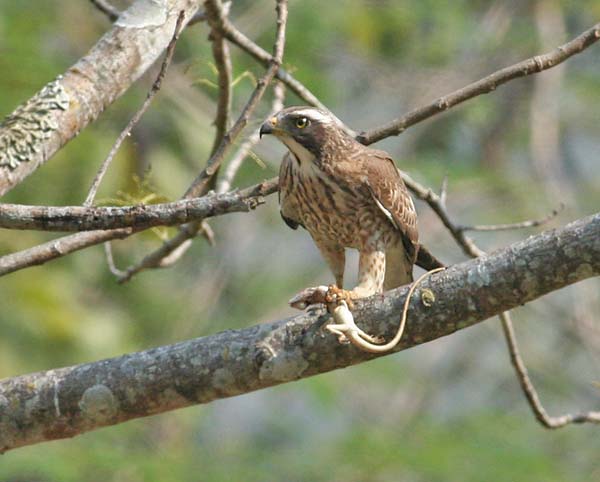
Grey-faced Buzzard (Butastur indicus) by Peter Ericsson

Grey-faced Buzzard (Butastur indicus) by Peter Ericsson

From Britannica “True buzzards, or buteos, constitute the subfamily Buteoninae of the family Accipitridae. When in flight, they can usually be distinguished from other birds of prey by their broad wings and expansive rounded tails. They fly with slow heavy wing beats and soar gracefully. The plumage of most species is essentially dark brown above and white or mottled brown below, and the tail and underside of the wings usually are barred. There is much variability of pigmentation, however, even between individuals of a single species. Buzzards customarily prey on insects and small mammals and only occasionally attack birds. The nest, in a tree or on a cliff, is substantial, built of sticks and lined with softer materials. The two to five whitish eggs are blotched with brown.”

One of several medium-sized, wide-ranging raptors with a robust body and broad wings. In particular, those in the genus Buteo. In the Old World, members of this genus are named as “buzzards”, but “hawk” is more common in North America.

In Europe, the Common Buzzard, Buteo buteo, where Buzzard is often used as a synonym. The Common Buzzard is the most known buzzard in the Old World.

In the New World Buzzard can mean:

  • A vulture, particularly the American Black Vulture and Turkey Vulture, or as a general term for vultures.
  • In parts of the United States where they are considered pest, particularly in rural areas, a derogatory term for certain birds of prey, such as the Chickenhawk (a common colloquial name referring to either the Cooper’s Hawk, the Sharp-shinned Hawk or the Red-tailed Hawk), or the Duck hawk (known elsewhere as the Peregrine Falcon).

Quotes from Britannica and Wikipedia with editing.

Another Bible verse with “buzzard” is in Leviticus:

And these you shall regard as an abomination among the birds; they shall not be eaten, they are an abomination: the eagle, the vulture, the buzzard, (Leviticus 11:13 NKJV)

Both verses, Leviticus 11:13 and Deuteronomy 14:12 are listed in the birds not to be eaten by the Israelites. Considering what they eat, I am in no hurry to eat them either.


See:

*

Birds of the Bible – How Many Are There? II

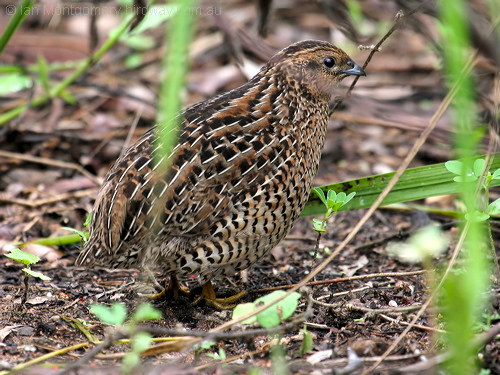
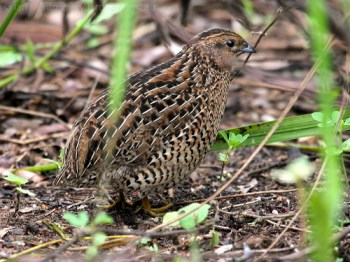
Brown Quail (Coturnix ypsilophora) by Ian

Brown Quail (Coturnix ypsilophora) by Ian

Birds of the Bible – How Many Are There? I (continued…)

As we continue in Genesis, the only other reference to birds that I have found is in Chapter 40. Joseph had been tossed in prison and in time he was joined by Pharaoh’s chief butler and his chief baker. They each have dreams and Joseph interprets them for the two men. Unfortunately the baker’s dream, which includes birds, will be killed.

And in the uppermost basket there was of all manner of bakemeats for Pharaoh; and the birds did eat them out of the basket upon my head. And Joseph answered and said, This is the interpretation thereof: The three baskets are three days: Yet within three days shall Pharaoh lift up thy head from off thee, and shall hang thee on a tree; and the birds shall eat thy flesh from off thee. (Genesis 40:17-19 KJV)

Looking at the verses in the compare mode, “birds” or “birdies” are listed by all except one. The ECB calls them the “flyers.” No matter what they are called, it was not a good day for the Chief Baker.

That brings us to the book of Exodus as the children of Israel travel through the wilderness that we meet our next named bird. The Quail. They had been complaining about only eating manna and started asking why they couldn’t have meat. So the LORD sent them quail or whatever we find they called them. I wrote about this avian critter in Birds of the Bible – Quail and in Quail II. Let’s see how the quail in translated here.

And it came to pass, that at even the quails came up, and covered the camp: and in the morning the dew lay round about the host. (Exodus 16:13 KJV)

  • Quail or quails by most versions
  • mother-quail (ABP+)
  • little birds (BBE)
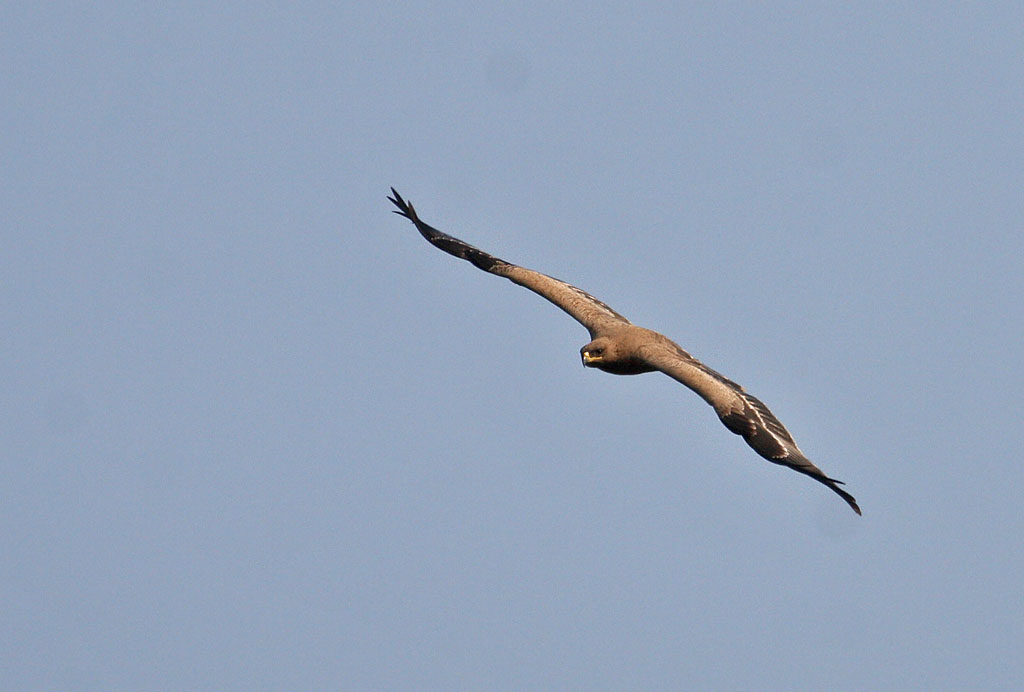
Steppe Eagle (Aquila nipalensis) by Peter Ericsson

Steppe Eagle (Aquila nipalensis) by Peter Ericsson

Our next verse and named bird is in Exodus 19:4 where the LORD is telling Moses what to tell the people.

Ye have seen what I did unto the Egyptians, and how I bare you on eagles‘ wings, and brought you unto myself. (Exodus 19:4 KJV)

The power of the eagle’s wings is referred to as how He freed them from their bondage in Egypt. So now we can add the Eagle to our list of birds. There are many references to Eagles throughout God’s Word. Every version mentions “eagle’s wings” or “wings of eagles.” See the Eagle articles.

As we move on to Leviticus, our count of the birds is going to really climb as we encounter the list of the Clean and Unclean birds in Chapter 11 also lots a variety as to how those birds are translated. Before we get there, the sacrifices are mentioned of the turtledoves or young pigeons, previously covered, in Lev 1:14, 5:7, 11, 12:6, 8, and  chapters 14 and 15.

And if the burnt sacrifice of his offering to the LORD is of birds, then he shall bring his offering of turtledoves or young pigeons. (Leviticus 1:14 NKJV)

I am going to quote the KJV and NKJV for the list, then we will check out the variations:

Leviticus 11:13-19 KJV
(13) And these are they which ye shall have in abomination among the fowls; they shall not be eaten, they are an abomination: the eagle, and the ossifrage, and the ospray,
(14) And the vulture, and the kite after his kind;
(15) Every raven after his kind;
(16) And the owl, and the night hawk, and the cuckow, and the hawk after his kind,
(17) And the little owl, and the cormorant, and the great owl,
(18) And the swan, and the pelican, and the gier eagle,
(19) And the stork, the heron after her kind, and the lapwing, and the bat.

Leviticus 11:13-19 NKJV
(13) ‘And these you shall regard as an abomination among the birds; they shall not be eaten, they are an abomination: the eagle, the vulture, the buzzard,
(14) the kite, and the falcon after its kind;
(15) every raven after its kind,
(16) the ostrich, the short-eared owl, the sea gull, and the hawk after its kind;
(17) the little owl, the fisher owl, and the screech owl;
(18) the white owl, the jackdaw, and the carrion vulture;
(19) the stork, the heron after its kind, the hoopoe, and the bat.

Can you see the differences already? That is just two translations, let’s see what the others reveal. So far we now have added; ossifrage, ospray, kite, night hawk, cuckow, hawk, little owl, cormorant, great owl, swan, pelican, gier eagle, stork, heron, lapwing, falcon, ostrich, short-eared owl, sea gull, fisher owl, screech owl, white owl, jackdaw, carrion vulture, hoopoe.

Levitus 11: 13 –

  • griffin (ABP+) (DRB) griffon vulture (NET),  
  • gier-eagle (ASV) (BBE) (RV),
  • Goshauke (Bishops) (Geneva) (Tyndale),
  • sea-eagle (Brenton) (Darby),
  • buzzards (ERV) (NAS77) (NASB) (UKJV),
  • bearded vulture and black vulture (ESV) (GW) (HCSB) (LITV) (MKJV)(WEB R) black and great vulture (JPS)
  • cormoraunte and kyte (Tyndale)

Some list them all in one verse:

(CEV) Eagles, vultures, buzzards, crows, ostriches, hawks, sea gulls, owls, pelicans, storks, herons, hoopoes, and bats are also disgusting, and you are forbidden to eat any of them.
(GNB) You must not eat any of the following birds: eagles, owls, hawks, falcons; buzzards, vultures, crows; ostriches; seagulls, storks, herons, pelicans, cormorants; hoopoes; or bats.

The next two verses are easier. Verse 14 has all birds of prey: (KJV)  “And the vulture, and the kite after his kind; ”

  • vulture – “whole species of falcon” (AMP)
  • kite
  • crows (ABP+)
  • buzzards (CJB) (GW) (NRSV)
  • falcon (Darby) + others
  • hawk (ECB)
  • red kite (ISV)
  • red kites and all kinds of black kites (NIrV) (NIV) (WEB (R))
One last verse for now: “every raven of any kind,” (Leviticus 11:15 ESV)
  • black birds, (ERV)
  • crows (GW) (NET)
Ravens, Blackbirds and Crows are all in the same family. No problem there.

In our list below, I doubled up the obvious birds that are in the same family like the owls and vultures.

Our list of Birds of the Bible so far:

Also mentioned:

  • Swooper (Gen 15:11)
  • Flyers (Gen 40:19) (Lev 11:13)

I am only listing what the different versions have written. I am neither approving or disapproving those versions.

For now, that is enough. To be continued in Part III.

Wordless Birds

Disclaimer About Bible Version Usage

*
Birds of the Bible – How Many Are There? I

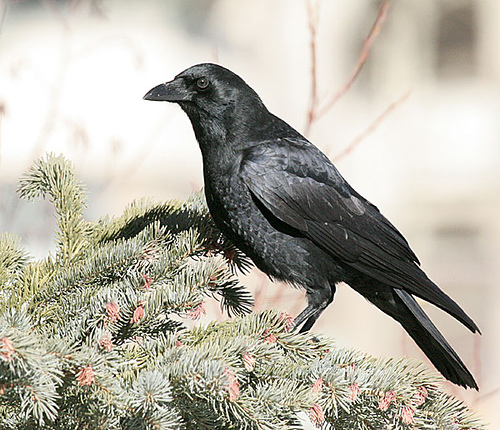
Chihuahuan Raven (Corvus cryptoleucus)Raven (Corvus corax) by Kent Nickell

Northern Raven (Corvus corax) by Kent Nickell

The list of the Birds of the Bible varies according to which version of the Bible you use. We have discussed this in other articles, but don’t think I ever actually listed them all. An article from Birding and the Bible says there are 29 and then questions 2 of them, the Glede and the Ossifrage, adding the Swift, his lists is 28 or 29.

The sidebar here has links to 33 pages of Bible Birds. There are a few more I am considering adding. After this study, I may find even more. I am going to write this as I do my research using my e-Sword program (free). Currently, I have quite a few versions of the Scriptures loaded and want to see what is listed. (Disclaimer About Bible Version Usage) Let’s get started.

The very first reference to birds or fowls, is in Genesis 1:21. That is where God created “every winged fowl after his kind” (KJV) or ” every winged bird according to its kind” (NKJV). Most agree with, “And God saw that it was good.” Here are some of the other ways of stating it:

  • “winged creature feathered  according to type.” (ABP+)
  • “every creature that flies with wings according to its kind,” (Brenton)
  • “every kind of bird that flies in the air.” (ERV)
  • ” all kinds of birds.” (GNB)
  • “He created every kind of bird that flies.” (NIrV)

So basically, all agree that the birds or fowls were created after their kind or type on the fifth day (1:23) and that God saw that it was good. That right there includes all the major families of birds, some have become extinct, some which interbred within their kinds, etc. until today we now have over 10,000 named species of birds. (Birds of the World)

In Genesis 1:25 God said, “Let us make man in our image, after our likeness: and let them have dominion” over birds, etc. The term his is given as “dominion over”, “have rule over”, “power over” (GNB), “be masters over” (ISV), “So they can be responsible for” (MSG).

Then in Genesis 2:20, Adam named the birds that the LORD God brought to him. The version all agree that they are birds or fowls or the air or heavens.

In chapter 3, Adam and Eve sin against God and we all come under the judgement including the critters, birds included. By chapter 6, things are so bad that the LORD tells Noah to bring two of every kind of critter into the Ark and then in 6:20, the birds are again mentioned. They are to be preserved in pairs of sevens. Again, no specific named bird is mentioned throughout chapter 6 or 7.

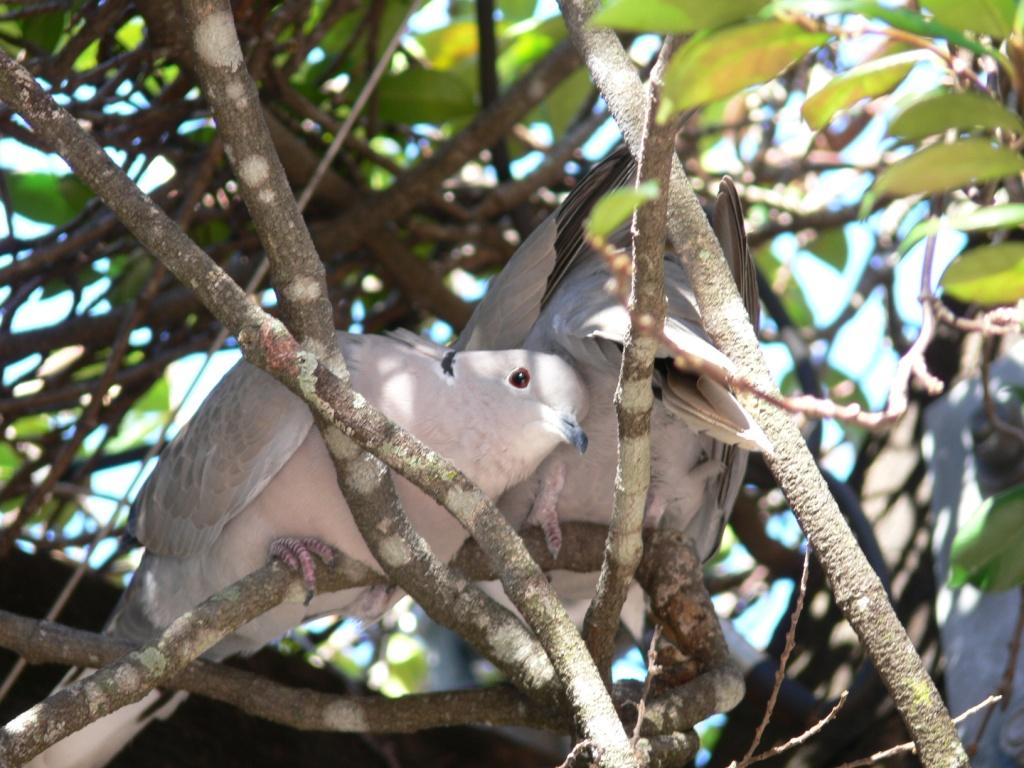
Eurasian Collared Dove (Streptopelia decaocto) by Lee

During and after the Flood, then we finally here of specific named birds. The first bird named in the Bible is the Raven. Noah opened the window of the ark and “sent forth a raven” and it flew back and forth “until the waters were dried up from off the earth.” (KJV) Other than spelling differences, they all agree on the Raven. The same is true of verse 8 where the Dove was released. The Dove kept coming back until the waters were totally dried up. The third time it was released, it did not return.

So now we have 2 Birds of the Bible – the Raven and the Dove.

The next reference to birds is in 9:2 where the birds now have a fear of humans placed on them. They, the birds, are told to multiply and fill the earth and are given a covenant or promise by God that the earth would never be destroyed by a worldwide flood again. Gen 9:10-17 – the Rainbow.

And the fear of you and the dread of you shall be upon every beast of the earth, and upon every fowl of the air, upon all that moveth upon the earth, and upon all the fishes of the sea; into your hand are they delivered. (Genesis 9:2 KJV)

King Vulture Brevard Zoo 120913 by Lee

King Vulture Brevard Zoo by Lee

In Genesis 15:9 we find the next birds, a Turtledove, young pigeon and in 15:11, the vultures. Two are sacrificed birds, the other is coming to take from the alter.

So He said to him, “Bring Me a three-year-old heifer, a three-year-old female goat, a three-year-old ram, a turtledove, and a young pigeon.” Then he brought all these to Him and cut them in two, down the middle, and placed each piece opposite the other; but he did not cut the birds in two. And when the vultures came down on the carcasses, Abram drove them away. (Genesis 15:9-11 NKJV)

Let’s see how these birds are given in the various translations. “dove” several, “turtle” (DRB), “mourning dove” (GW), “even a nestling” (LITV), and “young bird” (YLT). Most are in agreement with spelling differences from the old English of some of the translations.

Verse 11 has: birds of prey, birds, fowls, large birds (DRB), swoopers (ECB), Vultures (GNB, MSG, NKJV), and ravenous birds (YLT). Never heard of “swoopers”, so I guess that one doesn’t count. What you think? They all realize that some birds came swooping down trying to get at the sacrifice, but Abram drove them away.

Our list of Birds of the Bible so far:

Also mentioned:

  • Swooper (Gen 15:11)

For now, that is enough. To be continued in Part II.

Birds of the Bible

Wordless Birds

*

Crested Pigeon at Zoo Miami

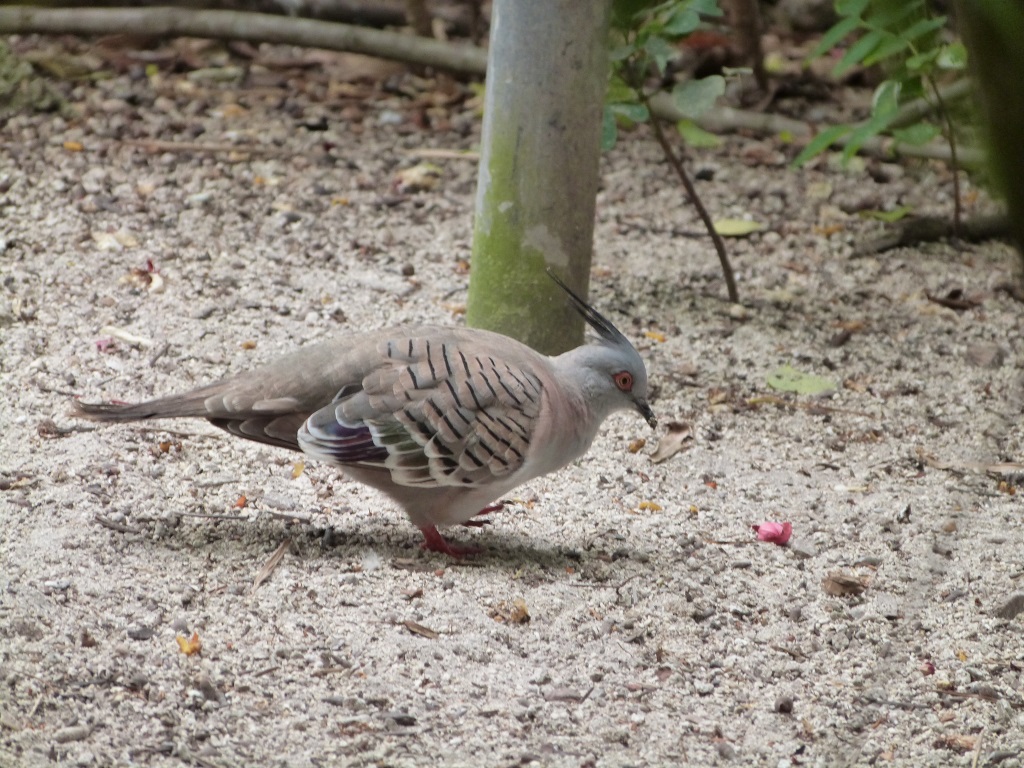
COL-Colu Crested Pigeon (Ocyphaps lophotes) at ZM by Lee

Crested Pigeon (Ocyphaps lophotes) at ZM by Lee

And he said unto him, Take me an heifer of three years old, and a she goat of three years old, and a ram of three years old, and a turtledove, and a young pigeon. (Genesis 15:9 KJV)

The Crested Pigeon was another interesting bird that we were able to watch at the Zoo Miami, Birds of Asia Aviary. I like their Crest. It adds some “class” to this creation from the Lord. They are colorful, but notice in the photos below how they blend in with their surrounding. The Creator has provided them with a nice camouflage design.

The Crested Pigeon (Ocyphaps lophotes, also commonly known as the Top Notch Pigeon) is a bird found widely throughout mainland Australia except for the far northern tropical areas. They belong to the Columbidae Family and is the only member of the genus Ocyphaps. There are only two Australian pigeon species that possess an erect crest, being the Crested Pigeon and the Spinifex Pigeon. The Crested Pigeon is the larger of the two species.

Habitat is grasslands, brush and wooded areas but they can also be seen at watercourses, homestead gardens, pastoral areas, sports grounds, and golf courses. Their habitat has expanded since settlement has produced pastoral lands (previously they were only found in inland and Western Australia). Foraging for grain, has adapted to grain farming areas, often feeding on the noxious weed of Salvation Jane. They are commonly misidentified as the Topknot Pigeon.

Their most distinctive behaviour is the beating and whistling sound their wings make when they take off. This is most likely to draw the attention of predators to birds on the wing, and away from any birds remaining on the ground and as an alarm call to other pigeons. When the birds land, the tail tilts upwards and the flight patterns are similar to the those of the Spotted Turtle-Dove. They are generally solitory. Although they can be seen in pairs, they can be highly social and tend to be seen in packs. They are highly gregarious birds when in contact with humans. (Wikipedia)


COL-Colu Crested Pigeon (Ocyphaps lophotes) at ZM by Lee

Crested Pigeon (Ocyphaps lophotes) at ZM by Lee

And I said, Oh that I had wings like a dove! for then would I fly away, and be at rest. (Psalms 55:6 KJV)

Lee’s Addition:

I trust you enjoy the Crested Pigeon (Ocyphaps lophotes). My computer is off line, in fact, not even set up. A new flooring is being installed in that room and it is getting a new coat of paint. So it will be down for several days. This is being scheduled ahead of time.

*

*

This slideshow requires JavaScript.

*

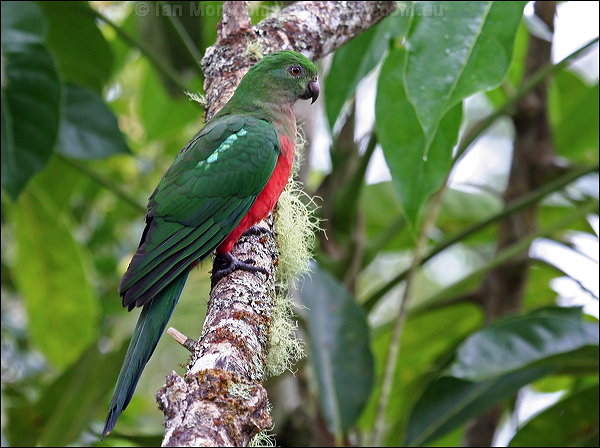
Australian King Parrot by Bellamoon Nature

Australian King Parrot (Alisterus scapularis) Female by Ian

Australian King Parrot (Alisterus scapularis) Female by Ian

For God is the King of all the earth: sing ye praises with understanding. (Psalms 47:7 KJV)

Australian King Parrot by Bellamoonnature

*

KING PARROT – One of the most spectacular, brilliantly coloured of all parrots endemic to Eastern Australia. Male king parrots are the only Australian parrot with a completely red head, females have a green head and breast. Found in humid and heavily forested regions. Thank you for viewing Enjoy!

“Some birds are not meant to be caged, that’s all. Their feathers are too bright, their songs too sweet and wild. So you let them go, or when you open the cage to feed them they somehow fly out past you. And the part of you that knows it was wrong to imprison them in the first place rejoices, but still, the place where you live is that much more drab and empty for their departure.” – Stephen King.

“In order to see birds it is necessary to become part of the silence” – Robert Lynd

Australian King Parrots belong to the Psittacidae – Parrots Family.

Australian King Parrots range from North and Central to Southern Victoria. They are frequently seen in small groups with various species of rosella. Further from their normal eastern upland habitat, they are also found in Canberra during winter, the outer western suburbs and north shore of Sydney, and the Carnarvon Gorge in Central Queensland

There are three species of king parrots – medium-sized parrots in the genus Alisterus; the Australian King Parrot (Alisterus scapularis), the Papuan King Parrot (Alisterus chloropterus), and the Moluccan King Parrot (Alisterus amboinensis). The three species are found in Eastern Australia, New Guinea, and Indonesian islands including the Maluku islands respectively. Predominantly of red and green plumage, the long tailed parrots are related to the genera Aprosmictus and Polytelis.

(Information – Bellamoonnature and Wikipedia)


Moluccan King Parrot (Alisterus amboinensis) ©WikiC - Brevard_Zoo

Moluccan King Parrot (Alisterus amboinensis) ©WikiC – Brevard_Zoo

Let us come before his presence with thanksgiving, and make a joyful noise unto him with psalms. For the LORD is a great God, and a great King above all gods. (Psalms 95:2-3 KJV)

Lee’s Addition:

I trust you enjoy this video by Bellamoon. My computer is off line, in fact, not even set up. A new flooring is being installed in that room and it is getting a new coat of paint. So it will be down for several days. This is being scheduled ahead of time.

*

Bellamoonnature – YouTube

Ian’s Australian King Parrots

Psittacidae – Parrots Family

Australian King Parrot – Wikipedia

Birds of the World

*

For The Sheer Joy of Variety! – Creation Moments


Greater Painted Snipe (Rostratula benghalensis) by W Kwong

Greater Painted Snipe (Rostratula benghalensis) by W Kwong

FOR THE SHEER JOY OF VARIETY!

“Woe unto him that striveth with his Maker! Let the potsherd strive with the potsherds of the earth. Shall the clay say to him that fashioneth it, What makest thou? or thy work, He hath no hands?” (Isaiah 45:9)

Did you ever try to plan all the details of a simple project? How many plans do you think the Lord had to make when He created living things? A billion? A billion times a billion?

The hierarchy of biological classification’s eight major taxonomic ranks

The hierarchy of biological classification’s eight major taxonomic ranks

We all know that it takes time to plan the most simple project. Did you ever think about the planning God had to do when He created all the different kinds of living things? Our word “species” today includes many creatures that the Bible counts as being the same “kind” – as when God created the kinds. But God did design the genetic information that allowed the kinds to produce these variations.

Yes, God’s act of creating living things was much more than just wishing. Just think that there are more than 20,000 different species of bees – some with very complex societies – and their own languages! The figures and the beauty of it all makes one wonder at God. Why are there 4,500 different species of sponges? Why are some creatures – never seen by humans until this century – so eerily beautiful? For that matter, why have so many different kinds of beautiful flowers?

The variety in the creation reflects some of the joy of creation that God felt, and shows us the incredible unbridled creativity of our wonderful God. The fact that there is only one species of human – all related – confirms the human history related in the Bible.

Prayer:
Dear heavenly Father, I know that I shall never have Your ability to plan and carry out those plans. I confess that too often I waste the time and energy You give me because I don’t even bother to use the abilities You have given me. Forgive me for Jesus’ sake, and for His sake help me to be more like You in this. Amen.
Notes:
Diagram: The hierarchy of biological classification’s eight major taxonomic ranks. The biblical “kind” is roughly the same as the “family” classification.
(Used with permission of Creation Moments©2014)


Lee’s Addition:

We mention the Lord’s fantastic variety in His avian creations often. This article fits right in with those thoughts and thought it should be shared.


This slideshow requires JavaScript.

*

I selected different photos for the same article on my other site:

Creation Moments’ – For The Sheer Joy of Variety!

*

Feather Coloration

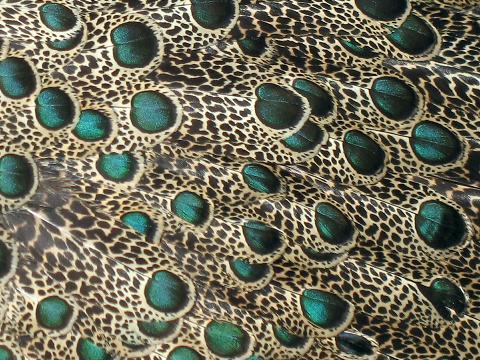
Malayan Peacock-Pheasant (Polyplectron malacense) Feathers ©WikiC

Malayan Peacock-Pheasant (Polyplectron malacense) Feathers ©WikiC

Gavest thou the goodly wings unto the peacocks? or wings and feathers unto the ostrich? (Job 39:13 KJV)

Though you lie down among the sheepfolds, You will be like the wings of a dove covered with silver, And her feathers with yellow gold.” (Psalms 68:13 NKJV)

and say, ‘Thus says the Lord GOD: “A great eagle with large wings and long pinions, Full of feathers of various colors, Came to Lebanon And took from the cedar the highest branch. (Ezekiel 17:3 NKJV)

Our Lord Jesus Christ has created an amazing array of colored feathers to clothe our avian friends. Found these intesting facts in the following book:

Feather Colors (by Dr Roger Lederer)

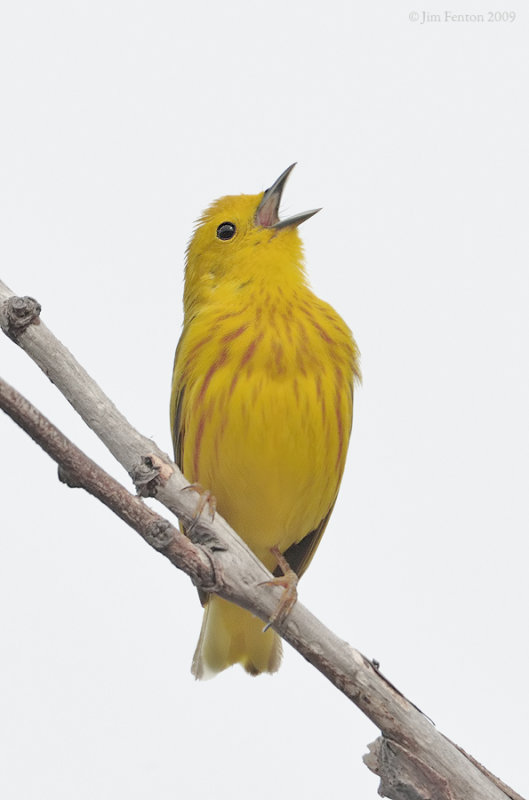
Good ground - American Yellow Warbler (Dendroica aestiva) by J Fenton

Good ground – American Yellow Warbler (Dendroica aestiva) by J Fenton

“The colors of feathers are produced in two ways: pigment and structure.

Brown, gray, yellow, black, tan, orange, and related colors are caused by pigments in the feathers.”

Brevard Zoo 120913 by Lee

Red-crested Turaco (Tauraco erythrolophus) Brevard Zoo by Lee

“The turaco family of Africa contains red and green copper pigments found in no other animal. Int other birds, different pigments combined with light refraction produce such colors.”

Australian King Parrot (Alisterus scapularis) Female by Ian

Australian King Parrot (Alisterus scapularis) Female by Ian

“Bluebird blue, parrot green, white, metallic red, and iridescence are produced by the structure of the feather. To produce blue color, brown granules in the barbs of the feather scatter light–red and yellow wavelengths pass through the granules, while blue is reflected.”

Mountain Bluebird (Sialia currucoides) for ajmithra's article

Mountain Bluebird (Sialia currucoides)

“If your find a feather from a blue bird–a bluebird or jay, for example–look at the feather in your hand: it will appear blue. Then hold the feather up to the light and look through it; it will appear brown.”

(From – “Feather Colors”, p.83, The Amazing Bird Facts and Trivia by Dr Roger Lederer)

*

All About Birds – Color

All About Birds – Feathers and Plumages

Why Are Some Feathers Blue? – Smithsonian

How Do Birds Get Their Color? – 10,000 Birds

Feather – Wikipedia

*

P.S. There will be no “Sunday Inspiration” this week. I am getting ready to take my computer apart. We will be painting and re-flooring this room. There are articles scheduled for Mon, Wed, and Thur. Should be back up and running by Friday, May 2nd. I will still be able to check “comments” and “likes” via a laptop. Thank you for your support. Lord Bless all of you who visit this site.

*

After Their Kinds – Creation Moments

American Robin (Turdus migratorius) in nest ready to eat WikiC

American Robin (Turdus migratorius) in nest ready to eat WikiC

AFTER THEIR KINDS

And the earth brought forth grass, and herb yielding seed after his kind, and the tree yielding fruit, whose seed was in itself, after his kind: and God saw that it was good. (Genesis 1:12)

How wonderful! Your dog has just had puppies! But do you now have to sort through the litter and make sure there are no baby giraffes or kangaroos?

New born Welsh Springer Spaniel puppies ©WikiC

New born Welsh Springer Spaniel puppies ©WikiC

No, not a single giraffe or kangaroo in the litter!In God’s account of creation in Genesis 1, we repeatedly read that both plants and animals were created to reproduce “after their kind.” Genesis 1, in speaking about the creation of plants, repeats three times in just two verses that they are to reproduce “after their kind.” We see the same phrase repeated later in the chapter when animals are created. This is not just empty repetition. God is stressing a fundamental principle that all things reproduce “after their kind.” Mother dogs have puppies and mother cats have kittens. You can count on it.

Why does God stress this principle? Even before creation, God knew that humans would eventually sin and then seek to hide their responsibility by trying to explain things without a Creator. God knew that this idea of evolution would capture the faith of millions over the history of the world.

God stresses what our experience shows so that He might be harder for us to hide from. All things do reproduce after their kind. And despite evolutionists’ strong faith in evolution, they cannot offer one established scientific fact to explain how one kind of creature might eventually make a completely different kind!

Prayer:
I thank You, Lord, that You have made it hard for men to deny You. Yet men still deny You, seeking explanations and excuses outside of Your Word. I know that I, too, can do this, for I am both saint and sinner. I ask that You would correct me when I seek outside of Your Word what is so richly provided to me in Your Word. Amen.

Notes:
Photo: No, not a single giraffe or kangaroo in the litter!
Used with permission of Creation Moments ©2014


See:

Creation Moments – After Their Kind

More Creation Moment and Interesting Things articles here

*