Birds Vol 2 #1 – Bird Song~July

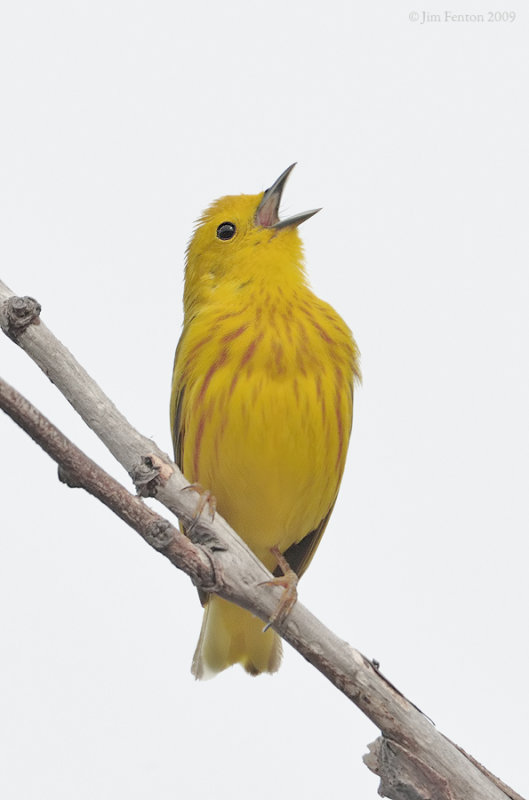
Good ground - American Yellow Warbler (Dendroica aestiva) by J Fenton

American Yellow Warbler (Dendroica aestiva) by J Fenton

Vol. II. No. 1. JULY, 1897.

BIRD SONG.

imgi
T SHOULD not be overlooked by the young observer that if he would learn to recognize at once any particular bird, he should make himself acquainted with the song and call notes of every bird around him. The identification, however, of the many feathered creatures with which we meet in our rambles has heretofore required so much patience, that, though a delight to the enthusiast, few have time to acquire any great intimacy with them. To get this acquaintance with the birds, the observer has need to be prepared to explore perilous places, to climb lofty trees, and to meet with frequent mishaps. To be sure if every veritable secret of their habits is to be pried into, this pursuit will continue to be plied as patiently as it has ever been. The opportunity, however, to secure a satisfactory knowledge of bird song and bird life by a most delightful method has at last come to every one.

A gentleman who has taken a great interest in Birds from the appearance of the first number, but whose acquaintance with living birds is quite limited, visited one of our parks a few days ago, taking with him the latest number of the magazine. His object, he said, was to find there as many of the living forms of the specimens represented as he could. “Seating myself amidst a small grove of trees, what was my delight at seeing a Red Wing alight on a telegraph wire stretching across the park. Examining the picture in Birds I was somewhat disappointed to find that the live specimen was not so brilliantly marked as in the picture. Presently, however, another Blackbird alighted near, who seemed to be the veritable presentment of the photograph. Then it occurred to me that I had seen the Red Wing before, without knowing its name. It kept repeating a rich, juicy note, oncher-la-ree-e! its tail tetering at quick intervals. A few days later I observed a large number of Red Wings near the Hyde Park water works, in the vicinity of which, among the trees and in the marshes, I also saw many other birds unknown to me. With Birds in my hands, I identified the Robin, who ran along the ground quite close to me, anon summoning with his beak the incautious angle worm to the surface. The Jays were noisy and numerous, and I observed many new traits in the Wood Thrush, so like the Robin that I was at first in some doubt about it. I heard very few birds sing that day, most of them being busy in search of food for their young.”

[continued on page 17.]

BIRD SONG—Continued from page 1.

Many of our singing birds may be easily identified by any one who carries in his mind the images which are presented in our remarkable pictures. See the birds at home, as it were, and hear their songs.

Those who fancy that few native birds live in our parks will be surprised to read the following list of them now visible to the eyes of so careful an observer as Mr. J. Chester Lyman.

“About the 20th of May I walked one afternoon in Lincoln Park with a friend whose early study had made him familiar with birds generally, and we noted the following varieties:

1  Magnolia Warbler.
2  Yellow Warbler.
3  Black Poll Warbler. (Black-polled Yellowthroat)
4  Black-Throated Blue Warbler.
5  Black-Throated Queen Warbler. (Black-throated Green Warbler?)
6  Blackburnian Warbler.
7  Chestnut-sided Warbler.
8  Golden-crowned Thrush.
9  Wilson’s Thrush. (Veery)
10 Song Thrush.
11 Catbird. (Grey)
12 Bluebird. (Eastern)
13 Kingbird. (Eastern)
14 Least Fly Catcher. (Flycatcher)
15 Wood Pewee Fly Catcher. (Eastern Wood Pewee)
16 Great Crested Fly Catcher. (Flycatcher)
17 Red-eyed Vireo.
18 Chimney Swallow. (Chimney Swift)
19 Barn Swallow.
20 Purple Martin.
21 Red Start. (American Redstart)
22 House Wren.
23 Purple Grackle. (Common)
24 White-throated Sparrow.
25 Song Sparrow.
26 Robin. (American)
27 Blue Jay.
28 Red-Headed Woodpecker.
29 Kingfisher. (Belted)
30 Night Hawk. (Common)
31 Yellow-Billed Cuckoo.
32 Scarlet Tanager, Male and Female.
33 Gull, or Wilson’s Tern. (Common Tern)
34 The Omni-present English Sparrow. (House)

“On a similar walk, one week earlier, we saw about the same number of varieties, including, however, the Yellow Breasted Chat, and the Mourning, Bay Breasted, and Blue Yellow Backed Warblers.”

The sweetest songsters are easily accessible, and all may enjoy their presence.

C. C. Marble.
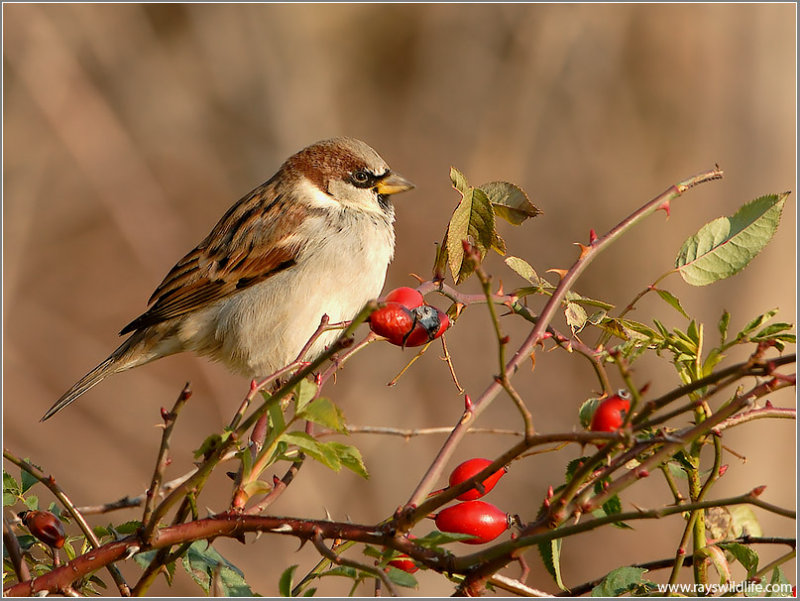

House Sparrow by Ray

Lee’s Addition:

You make springs gush forth in the valleys; they flow between the hills; they give drink to every beast of the field; the wild donkeys quench their thirst. Beside them the birds of the heavens dwell; they sing among the branches. (Psalms 104:10-12 ESV)

I added links to xeno-canto.org for the sound of the birds on the list. It took awhile to figure out what some of the birds are called today. I am sure some are incorrect, but did my best. I used the “song” recordings where available and a few of the “call” ones where either the birds don’t sing or no recording is available.

They each have a distinct sound even as an instrument does.

Even things without life, whether flute or harp, when they make a sound, unless they make a distinction in the sounds, how will it be known what is piped or played? For if the trumpet makes an uncertain sound, who will prepare for battle? (1 Corinthians 14:7-8 NKJV)

If the birds changed songs all the time, how would they find mates, defend their territory, or know the sound of an enemy? Isn’t the Lord gracious in the way He designed the birds to sing so uniquely.

Listening to them was actually quite enjoyable. They each have their own way of communicating to their fellow birds and/or enemies.

Birds Illustrated by Color Photography – Revisited – Introduction

The above article is the first article in the monthly serial that was started in January 1897 “designed to promote Knowledge of Bird-Live.” These include Color Photography, as they call them, today they are drawings. There are at least three Volumes that have been digitized by Project Gutenberg.

To see the whole series of – Birds Illustrated by Color Photography – Revisited

*

(Information from Wikipedia and other internet sources)

Next Article – The Canvas-Back Duck

Previous Article – The Mallard Duck

Western Tanager: Red, Yellow, Black and White

Links:

xeno-canto.org – Birds Sounds of the World

*
 

Birds Vol 2 #1 – The Mallard Duck

THE MALLARD DUCK

THE MALLARD DUCK

THE MALLARD DUCK.

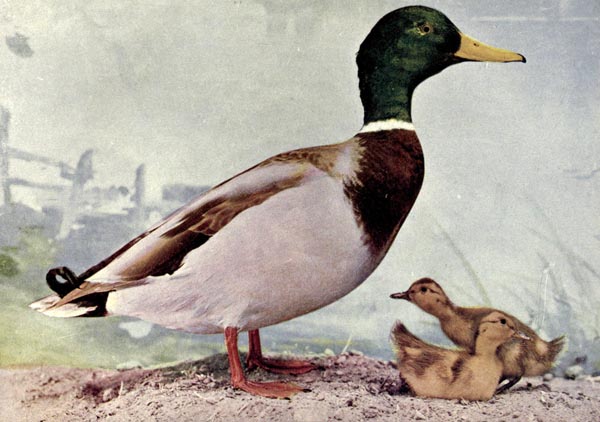
We should probably think this the most beautiful of ducks, were the Wood Duck not around.

His rich glossy-green head and neck, snowy white collar, and curly feathers of the tail are surely marks of beauty.

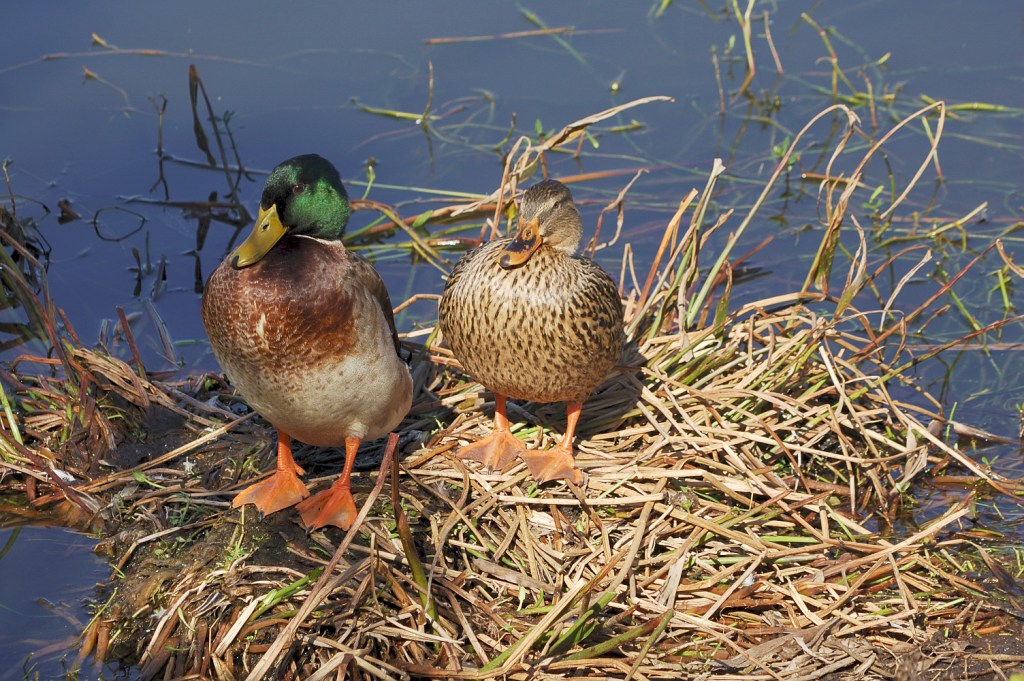
But Mr. Mallard is not so richly dressed all of the year. Like a great many other birds, he changes his clothes after the holiday season is over. When he does this, you can hardly tell him from his mate who wears a sober dress all the year.

Most birds that change their plumage wear their bright, beautiful dress during the summer. Not so with Mr. Mallard. He wears his holiday clothes during the winter. In the summer he looks much like his mate.

Usually the Mallard family have six to ten eggs in their nest. They are of a pale greenish color—very much like the eggs of our tame ducks that we see about the barnyards.

Those who have studied birds say that our tame ducks are descendants of the Mallards.

If you were to hear the Mallard’s quack, you could not tell it from that of the domestic duck.

The Mallard usually makes her nest of grass, and lines it with down from her breast. You will almost always find it on the ground, near the water, and well sheltered by weeds and tall grasses.

It isn’t often you see a duck with so small a family. It must be that some of the ducklings are away picking up food.

Do you think they look like young chickens?

From col. Chi. Acad. Sciences.
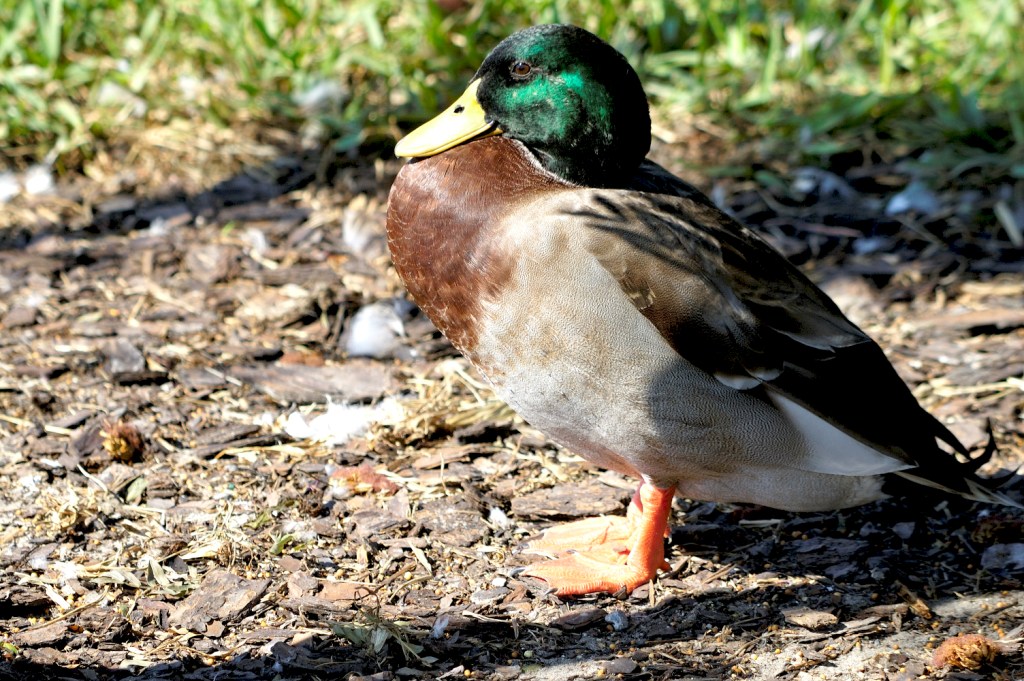
Mallard (Anas platyrhynchos) at Lake Parker By Dan'sPix

Mallard (Anas platyrhynchos) at Lake Parker By Dan’sPix


THE MALLARD DUCK.

imgt

HE Mallard Duck is generally distributed in North America, migrating south in winter to Panama, Cuba, and the Bahamas. In summer the full grown male resembles the female, being merely somewhat darker in color. The plumage is donned by degrees in early June, and in August the full rich winter dress is again resumed. The adult males in winter plumage vary chiefly in the extent and richness of the chestnut of the breast.

The Mallard is probably the best known of all our wild ducks, being very plentiful and remarkable on account of its size. Chiefly migrant, a few sometimes remain in the southern portion of Illinois, and a few pairs sometimes breed in the more secluded localities where they are free from disturbance. Its favorite resorts are margins of ponds and streams, pools and ditches. It is an easy walker, and can run with a good deal of speed, or dive if forced to do so, though it never dives for food. It feeds on seeds of grasses, fibrous roots of plants, worms, shell fish, and insects. In feeding in shallow water the bird keeps the hind part of its body erect, while it searches the muddy bottom with its bill. When alarmed and made to fly, it utters a loud quack, the cry of the female being the louder. “It feeds silently, but after hunger is satisfied, it amuses itself with various jabberings, swims about, moves its head backward and forward, throws water over its back, shoots along the surface, half flying, half running, and seems quite playful. If alarmed, the Mallard springs up at once with a bound, rises obliquely to a considerable height, and flies off with great speed, the wings producing a whistling sound. The flight is made by repeated flaps, without sailing, and when in full flight its speed is hardly less than a hundred miles an hour.”

Early in spring the male and female seek a nesting place, building on the ground, in marshes or among water plants, sometimes on higher ground, but never far from water. The nest is large and rudely made of sedges and coarse grasses, seldom lined with down or feathers. In rare instances it nests in trees, using the deserted nests of hawks, crows, or other large birds. Six or eight eggs of pale dull green are hatched, and the young are covered over with down. When the female leaves the nest she conceals the eggs with hay, down, or any convenient material. As soon as hatched the chicks follow the mother to the water, where she attends them devotedly, aids them in procuring food, and warns them of danger. While they are attempting to escape, she feigns lameness to attract to herself the attention of the enemy. The chicks are wonderfully active little fellows, dive quickly, and remain under water with only the bill above the surface.

On a lovely morning, before the sun has fairly indicated his returning presence, there can be no finer sight than the hurrying pinions, or inspiring note than the squawk, oft repeated, of these handsome feathered creatures, as they seek their morning meal in the lagoons and marshes.

Summary

MALLARD DUCK.Anas boschas. Other names: “Green-head,” “Wild Duck.” Adult male, in fall, winter, and spring, beautifully colored; summer, resembles female—sombre.

Range—Northern parts of Northern Hemisphere.

Nest—Of grasses, on the ground, usually near the water.

Eggs—Six to ten; pale green or bluish white.

Mallard (Anas platyrhynchos) By Dan'sPix

Mallard (Anas platyrhynchos) By Dan’sPix at Lake Hollingsworth


Lee’s Addition:

And Jesus said to him, “Foxes have holes and birds of the air have nests, but the Son of Man has nowhere to lay His head.” (Matthew 8:20 NKJV)

We see Mallards all the time here in Central Florida. With over 500 lakes in Polk County, ducks, especially Mallards are quite common. A few of those lakes allow feeding and they become almost tame. Even the “Aflac” Duck (called that because of the Aflac Insurance ads) are actually a white version of the Mallard. (So I have been told.)

The Mallard (Anas platyrhynchos) belongs to the Anatidae – Ducks, Geese & Swans Family. There are 172 species in the family at present. Not all are ducks of course. The Anas genera is made up of Ducks, Teals, Wigeons, the Gadwall, Shovelers and Pintails. The whole family has Whistling Ducks, Geese and Pygmy Geese, Swans, Shelducks, Pochards, Scaups, Scoters, Eiders, Mergansers, and various other “ducks.”

Wikipedia says,The Mallard or Wild Duck (Anas platyrhynchos) is a dabbling duck which breeds throughout the temperate and subtropical Americas, Europe, Asia, and North Africa, and has been introduced to New Zealand and Australia. This duck belongs to the subfamily Anatinae of the waterfowl family Anatidae.
The male birds (drakes) have a bright green head and are grey on wings and belly, while the females are brown all over. Mallards live in wetlands, eat water plants and small animals, and are gregarious. This species is the ancestor of almost all of the breeds of domestic ducks (Aflacs etc).

The Mallard is 50–65 cm (20–26 in) long (of which the body makes up around two-thirds), has a wingspan of 81–98 cm (32–39 in), and weighs 0.72–1.58 kg (1.6–3.5 lb).

The breeding male is unmistakable, with a bright bottle-green head, black rear end and a yellowish orange (can also contain some red) bill tipped with black (as opposed to the black/orange bill in females). It has a white collar which demarcates the head from the purple-tinged brown breast, grey brown wings, and a pale grey belly. The dark tail has white borders. 

The female Mallard is a mottled light brown, like most female dabbling ducks, and has buff cheeks, eyebrow, throat and neck with a darker crown and eye-stripe. However, both the female and male Mallards have distinct purple speculum edged with white, prominent in flight or at rest (though temporarily shed during the annual summer moult).

Upon hatching, the plumage colouring of the duckling is yellow on the underside and face (with streaks by the eyes) and black on the backside (with some yellow spots) all the way to the top and back of the head. Its legs and bill are also black. As it nears a month in age, the duckling’s plumage will start becoming drab, looking more like the female (though its plumage is more streaked) and its legs will lose their dark grey colouring.

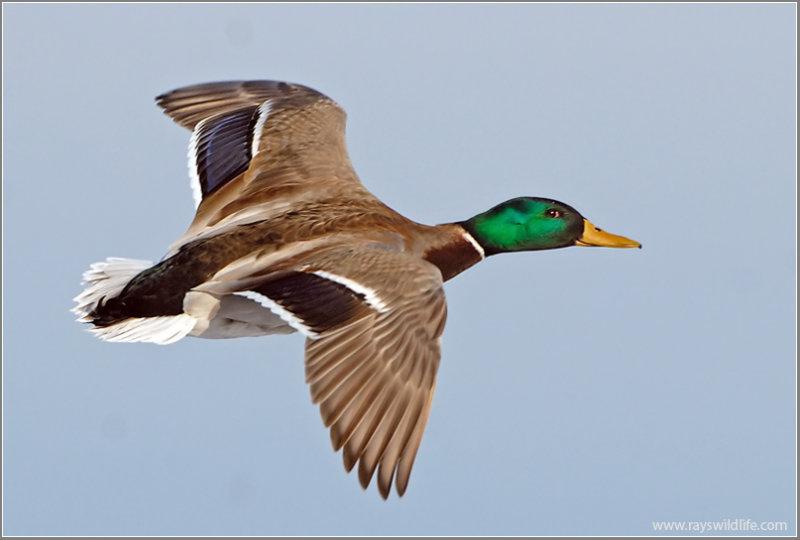
Mallard (Anas platyrhynchos) by Ray

*

Birds Illustrated by Color Photography – Revisited – Introduction

The above article is the first article in the monthly serial that was started in January 1897 “designed to promote Knowledge of Bird-Live.” These include Color Photography, as they call them, today they are drawings. There are at least three Volumes that have been digitized by Project Gutenberg.

To see the whole series of – Birds Illustrated by Color Photography – Revisited

*

(Information from Wikipedia and other internet sources)

Next Article – Bird Song – July

Previous Article – The Semi-Palmated Ring Plover

Sharing The Gospel

Links:

Anatidae – Ducks, Geese & Swans Family

Mallard – All About Birds

Mallard – Wikipedia

*


Birds Vol 2 #1 – The Semi-Palmated Ring Plover

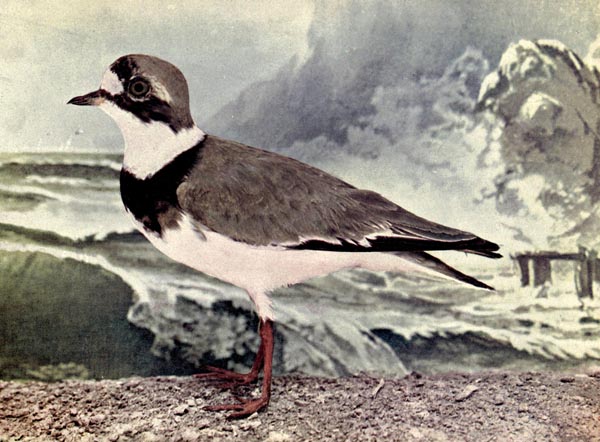
Ring Plover - Birds Illustrated by Color Photography, 1897

Ring Plover – Birds Illustrated by Color Photography, 1897

Birds Illustrated by Color Photography – Revisited

Vol 2. July, 1897 No. 1

*

THE SEMI-PALMATED RING PLOVER.

imgi

N THEIR habits the Plovers are usually active; they run and fly with equal facility, and though they rarely attempt to swim, are not altogether unsuccessful in that particular.

The Semi-palmated Ring Plover utters a plaintive whistle, and during the nesting season can produce a few connected pleasing notes. The three or four pear-shaped, variagated eggs are deposited in a slight hollow in the ground, in which a few blades of grass are occasionally placed. Both parents assist in rearing the young. Worms, small quadrupeds, and insects constitute their food. Their flesh is regarded as a delicacy, and they are therefore objects of great attraction to the sportsman, although they often render themselves extremely troublesome by uttering their shrill cry and thus warning their feathered companions of the approach of danger. From this habit they have received the name of “tell-tales.” Dr. Livingstone said of the African species: “A most plaguey sort of public spirited individual follows you everywhere, flying overhead, and is most persevering in his attempts to give fair warning to all animals within hearing to flee from the approach of danger.”

The American Ring Plover nests as far north as Labrador, and is common on our shores from August to October, after which it migrates southward. Some are stationary in the southern states. It is often called the Ring Plover, and has been supposed to be identical with the European Ringed Plover.

It is one of the commonest of shore birds. It is found along the beaches and easily identified by the complete neck ring, white upon dark and dark upon light. Like the Sandpipers the Plovers dance along the shore in rhythm with the wavelets, leaving sharp half-webbed footprints on the wet sand. Though usually found along the seashore, Samuels says that on their arrival in spring, small flocks follow the courses of large rivers, like the Connecticut. He also found a single pair building on Muskeget, the famous haunt of Gulls, off the shore of Massachusetts. It has been found near Chicago, Illinois, in July.


THE RING PLOVER.

Plovers belong to a class of birds called Waders.

They spend the winters down south, and early in the spring begin their journey north. By the beginning of summer they are in the cold north, where they lay their eggs and hatch their young. Here they remain until about the month of August, when they begin to journey southward. It is on their way back that we see most of them.

While on their way north, they are in a hurry to reach their nesting places, so only stop here and there for food and rest.

Coming back with their families, we often see them in ploughed fields. Here they find insects and seeds to eat.

The Ring Plover is so called from the white ring around its neck.

These birds are not particular about their nests. They do not build comfortable nests as most birds do. They find a place that is sheltered from the north winds, and where the sun will reach them. Here they make a rude nest of the mosses lying around.

The eggs are somewhat pointed, and placed in the nest with the points toward the center. In this way the bird can more easily cover the eggs.

We find, among most birds, that after the nest is made, the mother bird thinks it her duty to hatch the young.

The father bird usually feeds her while she sits on the eggs. In some of the bird stories, you have read how the father and mother birds take turns in building the nest, sitting on the nest, and feeding the young.

Some father birds do all the work in building the nest, and take care of the birds when hatched.

Among plovers, the father bird usually hatches the young, and lets the wife do as she pleases.

After the young are hatched they help each other take care of them.

Plovers have long wings, and can fly very swiftly.

The distance between their summer and winter homes is sometimes very great.

Summary

SEMI-PALMATED PLOVER.Ægialitis semi-palmata. Other names: “American Ring Plover,” “Ring Neck,” “Beach Bird.” Front, throat, ring around neck, and entire under parts white; band of deep black across the breast; upper parts ashy brown. Toes connected at base.

Range—North America in general, breeding in the Arctic and sub-arctic districts, winters from the Gulf States to Brazil.

Nest—Depression in the ground, with lining of dry grass.

Eggs—Three or four; buffy white, spotted with chocolate.


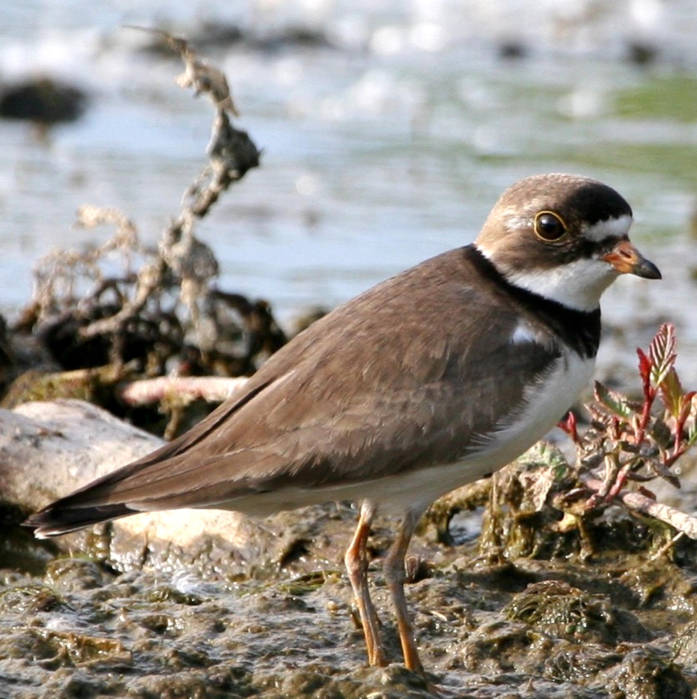
Semipalmated Plover (Charadrius semipalmatus) by S Slayton

Semipalmated Plover (Charadrius semipalmatus) by S Slayton


Call from xeno-canto.org

Lee’s Addition:

When I consider Your heavens, the work of Your fingers, The moon and the stars, which You have ordained, What is man that You are mindful of him, And the son of man that You visit him? For You have made him a little lower than the angels, And You have crowned him with glory and honor. You have made him to have dominion over the works of Your hands; You have put all things under his feet, All sheep and oxen— Even the beasts of the field, The birds of the air, And the fish of the sea That pass through the paths of the seas. O LORD, our Lord, How excellent is Your name in all the earth! (Psalms 8:3-9 NKJV)

The Semipalmated Plover (Charadrius semipalmatus) is a small plover. We see them here at our shores. Florida has lots of shoreline.
This species weighs  0.78–2.2 oz (22–63 g) and measures 5.5–7.9 in (14–20 cm) in length and 14–22 in (35–56 cm) across the wings. Adults have a grey-brown back and wings, a white belly, and a white breast with one black neckband. They have a brown cap, a white forehead, a black mask around the eyes and a short orange and black bill.

Their breeding habitat is open ground on beaches or flats across northern Canada and Alaska. They nest on the ground in an open area with little or no plant growth.
They are migratory and winter in coastal areas ranging from the United States to Patagonia. They are extremely rare vagrants to western Europe, although their true status may be obscured by the difficulty in identifying them from the very similar Ringed Plover of Eurasia, of which it was formerly considered a subspecies.
These birds forage for food on beaches, tidal flats and fields, usually by sight. They eat insects, crustaceans and worms.

Broken wing” display

This bird resembles the Killdeer but is much smaller and has only one band. The term “semipalmated” refers to its partly webbed feet. Like the Killdeer and since its nest is on the ground, it uses a “broken-wing” display to lure intruders away from the nest. (Wikipedia)

If a bird’s nest happens to be before you along the way, in any tree or on the ground, with young ones or eggs, with the mother sitting on the young or on the eggs, you shall not take the mother with the young; (Deuteronomy 22:6 NKJV)

Semipalmated Plovers belong to the Charadriidae – Plovers Family. There are 67 species that “are small to medium-sized birds with compact bodies, short, thick necks and long, usually pointed, wings, but most species of lapwing may have more rounded wings. Their bill are usually straight (except for the Wrybill) and short, their toes are short, hind toe could be reduced or absent, depending on species. Most Charadriidae also have relatively short tails, the Killdeer is the exception. In most genera, the sexes are similar, very little sexual dimorphism occurs between sexes. They range in size from the Collared Plover, at 26 grams and 14 cm (5.5 inches), to the Masked Lapwing, at 368 grams (13 oz) and 35 cm (14 inches)

Semipalmated Plover (Charadrius semipalmatus) ©USFWS

Semipalmated Plover (Charadrius semipalmatus) ©USFWS

Birds Illustrated by Color Photography – Revisited – Introduction

The above article is the first article in the monthly serial that was started in January 1897 “designed to promote Knowledge of Bird-Live.” These include Color Photography, as they call them, today they are drawings. There are at least three Volumes that have been digitized by Project Gutenberg.

To see the whole series of – Birds Illustrated by Color Photography – Revisited

*

(Information from Wikipedia and other internet sources)

Next Article – The Mallard Duck

Previous Article – The Bald-Headed Eagle

ABC’s Of The Gospel

Links:

Charadriidae – Plovers Family

Order – CHARADRIIFORMES

Semipalmated Plover – Wikipedia

Semipalmated Plover – All About Birds

*

Birds Vol 2 #1 – The Bald-headed Eagle

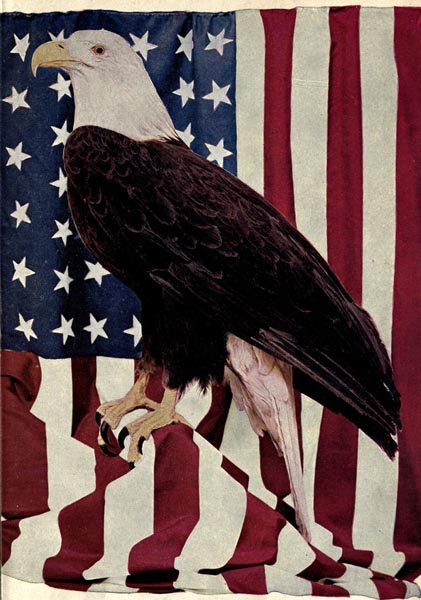
The Bald-headed Eagle (Bald Eagle) - Birds Illustrated by Color Photography, 1897

The Bald-headed Eagle (Bald Eagle) – Birds Illustrated by Color Photography, 1897

Birds Illustrated by Color Photography – Revisited

Vol 2. July, 1897 No. 1

THE BALD-HEADED EAGLE.

Dear Boys and Girls:

I had hoped to show you the picture of the eagle that went through the war with the soldiers. They called him “Old Abe.” You will find on page 35 a long story written about him. Ask some one to read it to you.

I could not get “Old Abe,” or you should now be looking at his picture. He is at present in Wisconsin, and his owner would not allow him to be taken from home.

I did the next best thing, and found one that was very much like him. They are as near alike as two children of a family. Old Abe’s feathers are not quite so smooth, though. Do you wonder, after having been through the war? He is a veteran, isn’t he?

The picture is that of a Bald-headed Eagle. He is known, also, by other names, such as White-headed Eagle, Bird of Washington, Sea Eagle.

You can easily see by the picture that he is not bald-headed. The name White-headed would seem a better name. It is because at a distance his head and neck appear as though they were covered with a white skin.

He is called “Sea Eagle” because his food is mostly fish. He takes the fish that are thrown upon the shores by the waves, and sometimes he robs the Fish Hawk of his food. (Not today – there is a Sea Eagle which is a different Eagle.)

This mighty bird usually places his large nest in some tall tree. He uses sticks three to five feet long, large pieces of sod, weeds, moss, and whatever he can find.

The nest is sometimes five or six feet through. Eagles use the same nest for years, adding to it each year.

Young eagles are queer looking birds. When hatched, they are covered with a soft down that looks like cotton.

Their parents feed them, and do not allow them to leave the nest until they are old enough to fly. When they are old enough, the mother bird pushes them out of the nest. She must be sure that they can fly, or she would not dare do this. Don’t you think so?

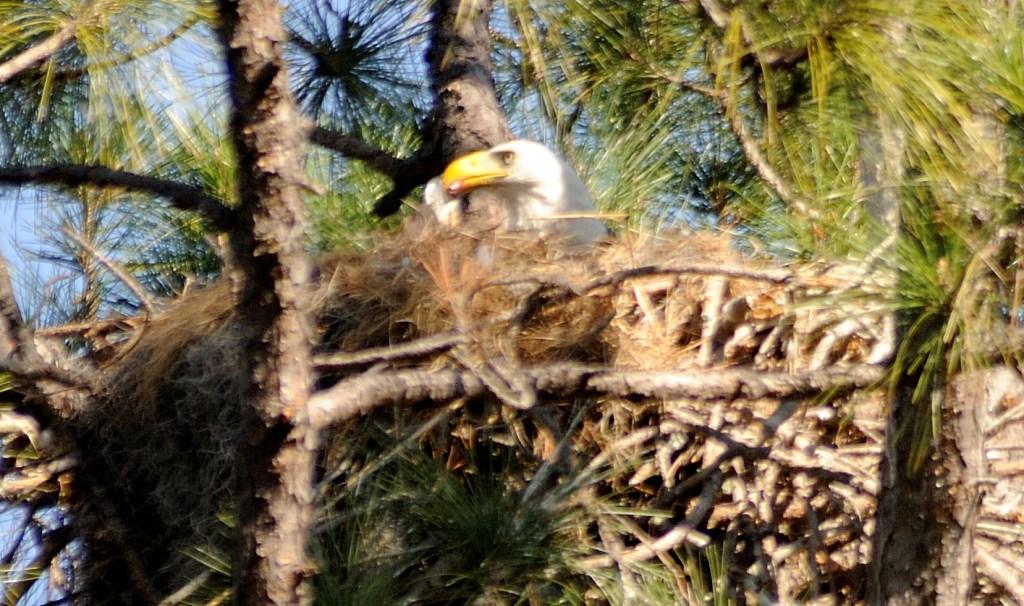
Eagle in nest feeding eaglets by Dan

Eagle in nest feeding eaglets-zoomed in by Dan

THE BALD-HEADED EAGLE.

THIS mighty bird of lofty flight is a native of the whole of North America, and may be seen haunting the greater portions of the sea coasts, as well as the mouths of large rivers. He is sometimes called the White-headed Eagle, the American Sea Eagle, the Bird of Washington, the Washington Eagle, and the Sea Eagle. On account of the snowy white of his head and neck, the name Bald Eagle has been applied to him more generally than any other.

Sea-faring men are partial to young Eagles as pets, there being a well established superstition among them that the ship that carries the “King of Birds” can never go down. The old Romans, in selecting the Eagle as an emblem for their imperial standard, showed this superstitious belief, regarding him as the favorite messenger of Jupiter, holding communion with heaven. The Orientals, too, believed that the feathers of the Eagle’s tail rendered their arrows invincible. The Indian mountain tribes east of Tennessee venerated the Eagle as their bird of war, and placed a high value on his feathers, which they used for headdresses and to decorate their pipes of peace.

The United States seems to have an abiding faith in the great bird, as our minted dollars show.

The nest of the Bald Eagle is usually placed upon the top of a giant tree, standing far up on the side of a mountain, among myriads of twining vines, or on the summit of a high inaccessible rock. The nest in the course of years, becomes of great size as the Eagle lays her eggs year after year in the same nest, and at each nesting season adds new material to the old nest. It is strongly and comfortably built with large sticks and branches, nearly flat, and bound together with twining vines. The spacious interior is lined with hair and moss, so minutely woven together as to exclude the wind. The female lays two eggs of a brownish red color, with many dots and spots, the long end of the egg tapering to a point. The parents are affectionate, attend to their young as long as they are helpless and unfledged, and will not forsake them even though the tree on which they rest be enveloped in flames. When the Eaglets are ready to fly, however, the parents push them from the perch and trust them to the high atmospheric currents. They turn them out, so to speak, to shift for themselves.

The Bald Eagle has an accommodating appetite, eating almost anything that has ever had life. He is fond of fish, without being a great fisher, preferring to rob the Fish-hawk of the fruits of his skillful labor. Sitting upon the side of a mountain his keen vision surveys the plain or valley, and detects a sheep, a young goat, a fat turkey or rooster, a pig, a rabbit or a large bird, and almost within an eye-twinkle he descends upon his victim. A mighty grasp, a twist of his talons, and the quarry is dead long before the Eagle lays it down for a repast. The impetuosity and skill with which he pursues, overtakes and robs the Fish-hawk, and the swiftness with which the Bald Eagle darts down upon and seizes the booty, which the Hawk has been compelled to let go, is not the least wonderful part of this striking performance.

The longevity of the Eagle is very great, from 80 to 160 years.

Summary

BALD EAGLE.Haliæetus leucocephalus. Other names: “White-headed Eagle,” “Bird of Washington,” “Gray Eagle,” “Sea Eagle.” Dark brown. Head, tail, and tail coverts white. Tarsus, naked. Young with little or no white.

Range—North America, breeding throughout its range.

Nest—Generally in tall trees.

Eggs—Two or three, dull white.

*


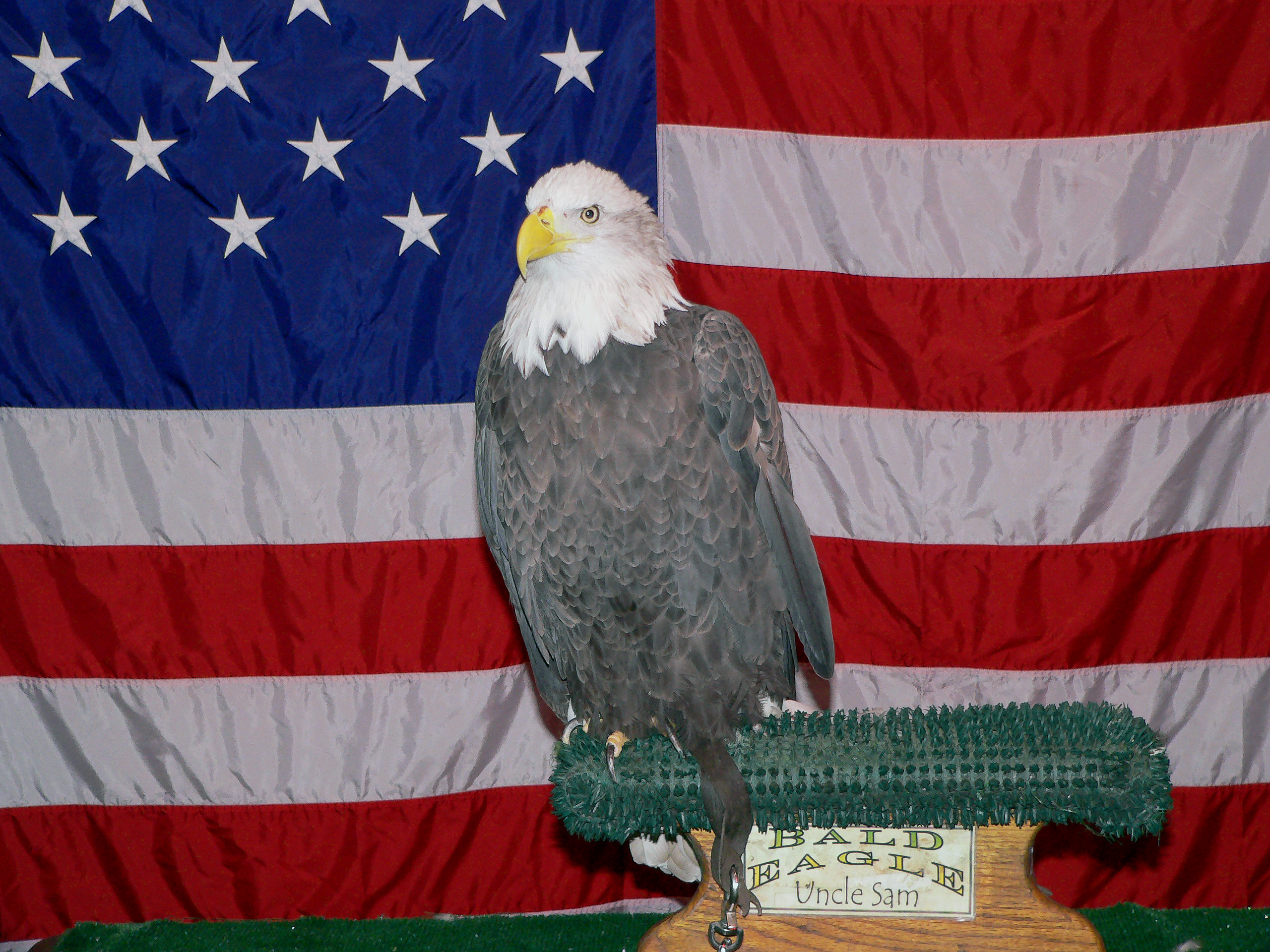
Uncle Sam – Bald Eagle taken at Titusville Birding Festival

Lee’s Addition:

Today the Bald-headed Eagle is just the Bald Eagle. The Sea Eagle is a different Eagle, much larger than the Bald. Also, not so sure about 160 year life span. Will have to check that out.

We are fortunate here in Polk County and in Central Florida. We get to see Bald Eagles quite often in the winter. That picture of the nest was taken at South Lake Howard Nature Park where the Eagles return to have young each year. At Circle B Bar Reserve, which we write about, they have several active Bald Eagle nests. Right by our Publix supermarket, the eagles sit on the high electrical posts and scan the area for dinner. I used to have to travel far to see them, but now, we live right where they hang out.

I have to admit that when I see a Bald Eagle fly by or just sitting, I stop in my tracks. There is something about the Bald Eagle’s appearance that appeals to me. Also, the Eagle is a Bible Birds and is mentioned in 34 times in the King James Version, 32 in NKJV, 31 in NASB and 29 times in ESV. It varies in the other versions also. Still it is mentioned about 30 times or so. Most are great verses that tell of their strenght and mighty wings. What a magnificent creation.

Ye have seen what I did unto the Egyptians, and how I bare you on eagles’ wings, and brought you unto myself. (Exodus 19:4 KJV)

Doth the eagle mount up at thy command, and make her nest on high? (Job 39:27 KJV)

But they that wait upon the LORD shall renew their strength; they shall mount up with wings as eagles; they shall run, and not be weary; and they shall walk, and not faint. (Isaiah 40:31 KJV)

Make thee bald, and poll thee for thy delicate children; enlarge thy baldness as the eagle; for they are gone into captivity from thee. (Micah 1:16 KJV)


Birds Illustrated by Color Photography – Revisited – Introduction

The above article is the first article in the monthly serial that was started in January 1897 “designed to promote Knowledge of Bird-Live.” These include Color Photography, as they call them, today they are drawings. There are at least three Volumes that have been digitized by Project Gutenberg.

To see the whole series of – Birds Illustrated by Color Photography – Revisited

*

(Information from Wikipedia and other internet sources)

Next Article – The Semi-Palmated Ring Plover

Previous Article – Birds Vol 1 #6 – The Volume 1. – Index

Sharing The Gospel

Links:

Bible Birds – Eagles

Birds of the Bible – Eagles

Accipitridae – Family (Kites, Hawks & Eagles)

Amazing Free-Flying Bald Eagle “Challenger”

Bald Eagle – WhatBird

*

Birds Illustrated By Color Photography – Volume II Indroduction

BIRDS

A MONTHLY SERIAL

ILLUSTRATED BY COLOR PHOTOGRAPHY

DESIGNED TO PROMOTE

KNOWLEDGE OF BIRD-LIFE


VOLUME II.


CHICAGO  Nature Study Publishing Company


copyright, 1897 by

Nature Study Publishing Co.

chicago.


INTRODUCTION.

This is the second volume of a series intended to present, in accurate colored portraiture, and in popular and juvenile biographical text, a very considerable portion of the common birds of North America, and many of the more interesting and attractive specimens of other countries, in many respects superior to all other publications which have attempted the representation of birds, and at infinitely less expense. The appreciative reception by the public of Vol. I deserves our grateful acknowledgement. Appearing in monthly parts, it has been read and admired by thousands of people, who, through the life-like pictures presented, have made the acquaintance of many birds, and have since become enthusiastic observers of them. It has been introduced into the public schools, and is now in use as a text book by hundreds of teachers, who have expressed enthusiastic approval of the work and of its general extension. The faithfulness to nature of the pictures, in color and pose, have been commended by such ornithologists and authors as Dr. Elliott Coues, Mr. John Burroughs, Mr. J. W. Allen, editor of The Auk, Mr. Frank M. Chapman, Mr. J. W. Baskett, and others.

The general text of Birds—the biographies—has been conscientiously prepared from the best authorities by a careful observer of the feather-growing denizens of the field, the forest, and the shore, while the juvenile autobiographies have received the approval of the highest ornithological authority.

The publishers take pleasure in the announcement that the general excellence of Birds will be maintained in subsequent volumes. The subjects selected for the third and fourth volumes—many of them—will be of the rare beauty in which the great Audubon, the limner par excellence of birds, would have found “the joy of imitation.”

Nature Study Publishing Company.


BIRDS.

Illustrated by COLOR PHOTOGRAPHY.

Vol. II.   No. 1.   JULY, 1897.


Bald Eagle (Haliaeetus leucocephalus) by Lee

Bald Eagle (Haliaeetus leucocephalus) by Lee

Lee’s Addition:

This second volume does not have a cover photo for each month like Volume I did. They apparently changed their format. Also, there are no old time advertisements. These were reproduced through Gutenberg Project.

Will be posting the different birds soon. See Birds Illustrated by Color Photography – Revisted.

*

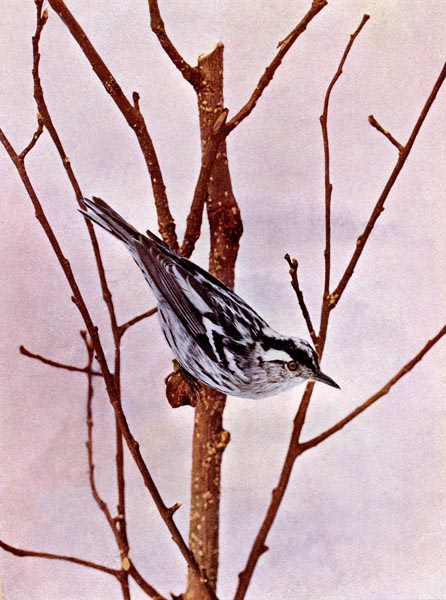
Birds Vol 1 #6 – The Black and White Creeping Warbler

Black and white Creeping Warbler for Birds Illustrated by Color Photography, 1897

Black and white Creeping Warbler for Birds Illustrated by Color Photography, 1897

Birds Illustrated by Color Photography – Revisited

Vol 1. June, 1897 No. 6

*

THE BLACK AND WHITE CREEPING WARBLER.

HIS sprightly little bird is met with in various sections of the country. It occurs in all parts of New England and New York, and has been found in the interior as far north as Fort Simpson. It is common in the Bahamas and most of the West India Islands, generally as a migrant; in Texas, in the Indian Territory, in Mexico, and throughout eastern America.

Dr. Coues states that this warbler is a very common summer resident near Washington, the greater number going farther north to breed. They arrive there during the first week in April and are exceedingly numerous until May.

In its habits this bird seems to be more of a creeper than a Warbler. It is an expert and nimble climber, and rarely, if ever, perches on the branch of a tree or shrub. In the manner of the smaller Woodpecker, the Creepers, Nuthatches, and Titmice, it moves rapidly around the trunks and larger limbs of the trees of the forest in search of small insects and their larvae. It is graceful and rapid in movement, and is often so intent upon its hunt as to be unmindful of the near presence of man.

It is found chiefly in thickets, where its food is most easily obtained, and has been known to breed in the immediate vicinity of a dwelling.

The song of this Warbler is sweet and pleasing. It begins to sing from its first appearance in May and continues to repeat its brief refrain at intervals almost until its departure in August and September. At first it is a monotonous ditty, says Nuttall, uttered in a strong but shrill and filing tone. These notes, as the season advances, become more mellow and warbling.

The Warbler’s movements in search of food are very interesting to the observer. Keeping the feet together they move in a succession of short, rapid hops up the trunks of trees and along the limbs, passing again to the bottom by longer flights than in the ascent. They make but short flight from tree to tree, but are capable of flying far when they choose.

They build on the ground. One nest containing young about a week old was found on the surface of shelving rock. It was made of coarse strips of bark, soft decayed leaves, and dry grasses, and lined with a thin layer of black hair. The parents fed their young in the presence of the observer with affectionate attention, and showed no uneasiness, creeping head downward about the trunks of the neighboring trees, and carrying large smooth caterpillars to their young.

They search the crevices in the bark of the tree trunks and branches, look among the undergrowth, and hunt along the fences for bunches of eggs, the buried larvae of the insects, which when undisturbed, hatch out millions of creeping, crawling, and flying things that devastate garden and orchard and every crop of the field.


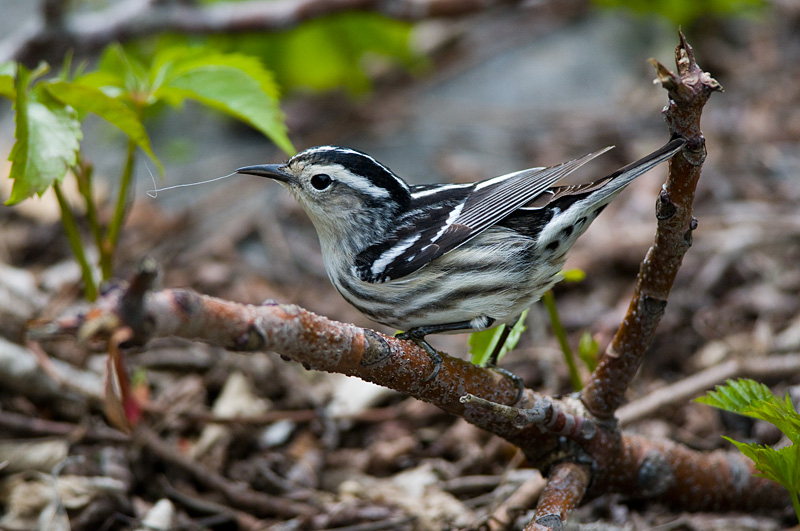
Black-and-white Warbler (Mniotilta varia) by Anthony 747

Black-and-white Warbler (Mniotilta varia) by Anthony 747

Lee’s Addition:

Look at the birds of the air, for they neither sow nor reap nor gather into barns; yet your heavenly Father feeds them. Are you not of more value than they? (Matthew 6:26 NKJV)

Today this birds is called the Black-and-white Warbler. But it still likes to climb around on the trees. It has a longer toe on the back of it foot that helps it cling to the tree as it checks for its meal. This bird feeds on insects and spiders, and unlike other warblers, forages like a nuthatch, moving up and down tree trunks and along branches.

Their measurements are: Length – 4.3–5.1 in (11–13 cm). Wingspan – 7.1–8.7 in (18–22 cm), Weight – 0.3–0.5 oz  (8–15 g).

The Black-and-white Warbler (Mniotilta varia) is a species of New World warbler, the only member of its genus, Mniotilta.[2] It breeds in northern and eastern North America from the Northwest Territory and Newfoundland and Labrador, Canada to Florida. This species is migratory, wintering in Florida, Central America and the West Indies down to Peru. This species is a very rare vagrant to western Europe.

Its song is a high see wee-see wee-see wee-see wee-see wee-see or weesa weesa weetee weetee weetee weet weet weet. It has two calls, a hard tick, and a soft, thin fsss.

The breeding habitat is broadleaved or mixed woodland, preferably in wetter areas. Black-and-white Warblers nest on the ground, laying 4–5 eggs in a cup nest.

The noise of a whip And the noise of rattling wheels, Of galloping horses, Of clattering chariots! (Nahum 3:2 NKJV)

Better yet, here is a youtube of a Black-and-white Warbler singing.

*

*

Birds Illustrated by Color Photograhy Vol 1 June, 1897 No 6 - Cover

Birds Illustrated by Color Photograhy Vol 1 June, 1897 No 6 – Cover

Birds Illustrated by Color Photography – Revisited – Introduction

The above article is the first article in the monthly serial that was started in January 1897 “designed to promote Knowledge of Bird-Live.” These include Color Photography, as they call them, today they are drawings. There are at least three Volumes that have been digitized by Project Gutenberg.

To see the whole series of – Birds Illustrated by Color Photography – Revisited

*

(Information from Wikipedia and other internet sources)

Next Article – VOLUME 1. JANUARY TO JUNE, 1897 – INDEX.

Previous Article – The Ruffed Grouse

Wordless Birds

Links:

Black and White Creeping Warbler – Audubon

*

Birds Vol 1 #6 – The Ruffed Grouse

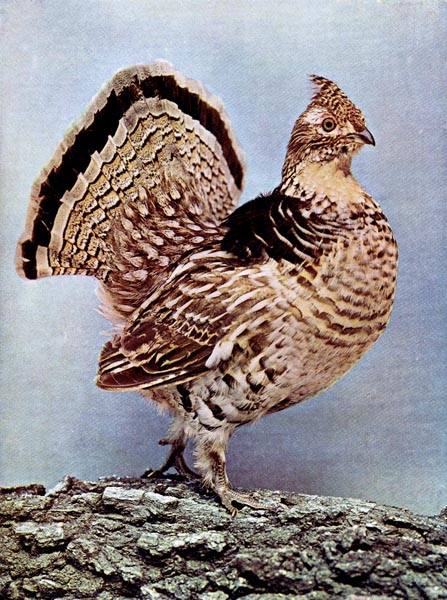
Ruffed Grous for Birds Illustrated by Color Photography, 1897

Ruffed Grous for Birds Illustrated by Color Photography, 1897, From col. F. M. Woodruff

Birds Illustrated by Color Photography – Revisited

Vol 1. June, 1897 No. 6

*

THE RUFFED GROUSE.

imgt

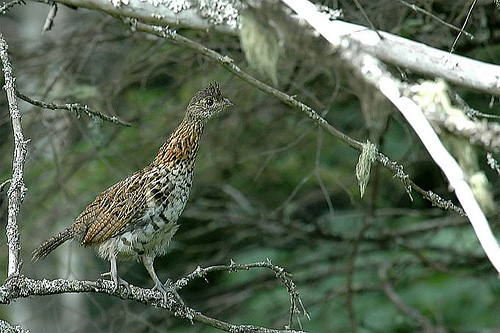
HE Ruffed Grouse, which is called Partridge in New England and Pheasant in the Middle and Southern States, is the true Grouse, while Bob White is the real Partridge. It is unfortunate that they continue to be confounded. The fine picture of his grouseship, however, which we here present should go far to make clear the difference between them.

The range of the Ruffed Grouse is eastern United States, south to North Carolina, Georgia, Mississippi, and Arkansas. They hatch in April, the young immediately leaving the nest with the mother. When they hear the mother’s warning note the little ones dive under leaves and bushes, while she leads the pursuer off in an opposite direction. Building the nest and sitting upon the eggs constitute the duties of the female, the males during this interesting season keeping separate, not rejoining their mates until the young are hatched, when they begin to roam as a family.

Like the Turkey, the Ruffed Grouse has a habit of pluming and strutting, and also makes the drumming noise which has caused so much discussion. This noise “is a hollow vibrating sound, beginning softly and increasing as if a small rubber ball were dropped slowly and then rapidly bounced on a drum.” While drumming the bird contrives to make himself invisible, and if seen it is difficult to get the slightest clue to the manner in which the sound is produced. And observers say that it beats with its wings on a log, that it raises its wings and strikes their edges above its back, that it claps them against its sides like a crowing rooster, and that it beats the air. The writer has seen a grouse drum, appearing to strike its wings together over its back. But there is much difference of opinion on the subject, and young observers may settle the question for themselves. When preparing to drum he seems fidgety and nervous and his sides are inflated. Letting his wings droop, he flaps them so fast that they make one continuous humming sound. In this peculiar way he calls his mate, and while he is still drumming, the hen bird may appear, coming slyly from the leaves.

The nest is on the ground, made by the female of dry leaves and a few feathers plucked from her own breast. In this slight structure she lays ten or twelve cream-colored eggs, specked with brown.

The eyes of the Grouse are of great depth and softness, with deep expanding pupils and golden brown iris.

Coming suddenly upon a young brood squatted with their mother near a roadside in the woods, an observer first knew of their presence by the old bird flying directly in his face, and then tumbling about at his feet with frantic signs of distress and lameness. In the meantime the little ones scattered in every direction and were not to be found. As soon as the parent was satisfied of their safety, she flew a short distance and he soon heard her clucking call to them to come to her again. It was surprising how quickly they reached her side, seeming to pop up as from holes in the ground.

THE RUFFED GROUSE.

At first sight most of you will think this is a turkey. Well, it does look very much like one. He spreads his tail feathers, puffs himself up, and struts about like a turkey. You know by this time what his name is and I think you can easily see why he is called Ruffed.

This proud bird and his mate live with us during the whole year. They are found usually in grassy lands and in woods.

Here they build their rude nest of dried grass, weeds and the like. You will generally find it at the foot of a tree, or along side of an old stump in or near swampy lands.

The Ruffed Grouse has a queer way of calling his mate. He stands on a log or stump, puffed up like a turkey—just as you see him in the picture. Then he struts about for a time just as you have seen a turkey gobbler do. Soon he begins to work his wings—slowly at first, but faster and faster, until it sounds like the beating of a drum.

His mate usually answers his call by coming. They set up housekeeping and build their rude nest which holds from eight to fourteen eggs. As soon as the young are hatched they can run about and find their own food. So you see they are not much bother to their parents. When they are a week old they can fly. The young usually stay with their parents until next Spring. Then they start out and find mates for themselves.

I said at the first that the Ruffed Grouse stay with us all the year. In the winter, when it is very cold, they burrow into a snowdrift to pass the night. During the summer they always roost all night.


Ruffed Grouse (Bonasa umbellus) by Kent Nickel

Ruffed Grouse (Bonasa umbellus) by Kent Nickel

Lee’s Addition:

If a bird’s nest happens to be before you along the way, in any tree or on the ground, with young ones or eggs, with the mother sitting on the young or on the eggs, you shall not take the mother with the young; you shall surely let the mother go, and take the young for yourself, that it may be well with you and that you may prolong your days. (Deuteronomy 22:6-7 NKJV)

Here is another one of God’s neat birds. The Ruffed Grouse (Bonasa umbellus) is a medium-sized grouse occurring in forests from the Appalachian Mountains across Canada to Alaska. It is non-migratory. The Ruffed Grouse is frequently referred to as a “partridge”. This is technically wrong—partridges are unrelated phasianids, and in hunting may lead to confusion with the Grey Partridge, it is a bird of woodlands, not open areas. It is a very popular game bird.

The Ruffed Grouse is also the state bird of Pennsylvania.

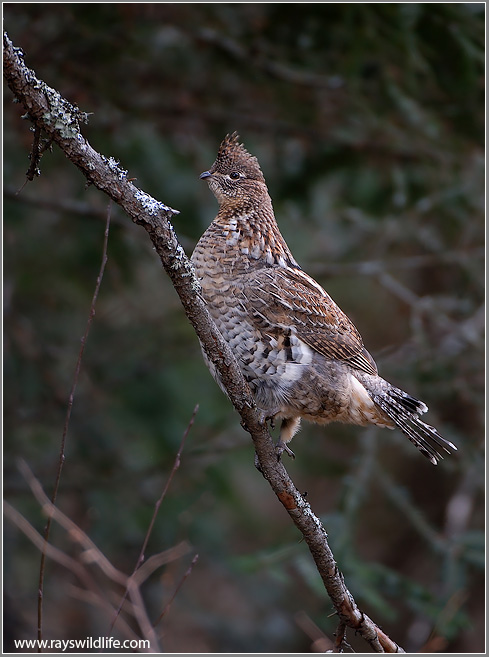
Ruffed Grouse (Bonasa umbellus) by Raymond Barlow

Ruffed Grouse (Bonasa umbellus) by Raymond Barlow

Ruffed Grouse look like chickens in appearance. They are medium to large with a thick body with a small crest on their head. When they fly their wings are rounded. Their coloration works very well to blend them with their habitat. The Lord has provided that protection for them. “One of the interesting ruffed grouse facts is that during winter, these birds develop a web-like structure that joins their toes, so that they can walk easily on snow.” Buzzle.com

The Ruffed Grouse is one of 182 members of the Phasianidae – Pheasants, Fowls and Allies Family. Other birds that are similar are found in the Galliformes Order.

Here is a video of a Ruffed Grouse drumming from YouTube from TheMusicofNature

*

Birds Illustrated by Color Photograhy Vol 1 June, 1897 No 6 - Cover

Birds Illustrated by Color Photograhy Vol 1 June, 1897 No 6 – Cover

Birds Illustrated by Color Photography – Revisited – Introduction

The above article is the first article in the monthly serial that was started in January 1897 “designed to promote Knowledge of Bird-Live.” These include Color Photography, as they call them, today they are drawings. There are at least three Volumes that have been digitized by Project Gutenberg.

To see the whole series of – Birds Illustrated by Color Photography – Revisited

*

(Information from Wikipedia and other internet sources)

Next Article – The Black And White Creeping Warbler

Previous Article – The Scarlet Tanager

ABC’s Of The Gospel

Links:

Ruffed Grouse – All About Birds

Ruffed Grouse – Wikipedia

Grouse Facts

*


Birds Vol 1 #6 – The Scarlet Tanager

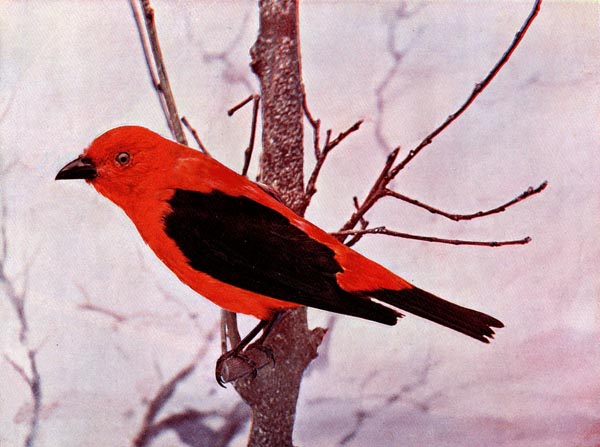
Scarlet Tanager for Birds Illustrated by Color Photography, 1897

Scarlet Tanager for Birds Illustrated by Color Photography, 1897, From col. F. M. Woodruff

Birds Illustrated by Color Photography – Revisited

Vol 1. June, 1897 No. 6

*

THE SCARLET TANAGER.

imgo

NE of the most brilliant and striking of all American birds is the Scarlet Tanager. From its black wings resembling pockets, it is frequently called the “Pocket Bird.” The French call it the “Cardinal.” The female is plain olive-green, and when seen together the pair present a curious example of the prodigality with which mother nature pours out her favors of beauty in the adornment of some of her creatures and seems niggardly in her treatment of others. Still it is only by contrast that we are enabled to appreciate the quality of beauty, which in this case is of the rarest sort. In the January number of Birds we presented the Red Rumped Tanager, a Costa Rica bird, which, however, is inferior in brilliancy to the Scarlet, whose range extends from eastern United States, north to southern Canada, west to the great plains, and south in winter to northern South America. It inhabits woodlands and swampy places. The nesting season begins in the latter part of May, the nest being built in low thick woods or on the skirting of tangled thickets; very often also, in an orchard, on the horizontal limb of a low tree or sapling. It is very flat and loosely made of twigs and fine bark strips and lined with rootlets and fibers of inner bark.

The eggs are from three to five in number, and of a greenish blue, speckled and blotted with brown, chiefly at the larger end.

The disposition of the Scarlet Tanager is retiring, in which respect he differs greatly from the Summer Tanager, which frequents open groves, and often visits towns and cities. A few may be seen in our parks, and now and then children have picked up the bright dead form from the green grass, and wondered what might be its name. Compare it with the Redbird, with which it is often confounded, and the contrast will be striking.

His call is a warble, broken by a pensive call note, sounding like the syllables chip-churr, and he is regarded as a superior musician.

From xeno-canto.org – Scarlet Tanager song:

“Passing through an orchard, and seeing one of these young birds that had but lately left the nest, I carried it with me for about half a mile to show it to a friend, and having procured a cage,” says Wilson, “hung it upon one of the large pine trees in the Botanic Garden, within a few feet of the nest of an Orchard Oriole, which also contained young, hoping that the charity and kindness of the Orioles would induce them to supply the cravings of the stranger. But charity with them as with too many of the human race, began and ended at home. The poor orphan was altogether neglected, and as it refused to be fed by me, I was about to return it to the place where I had found it, when, toward the afternoon, a Scarlet Tanager, no doubt its own parent, was seen fluttering around the cage, endeavoring to get in. Finding he could not, he flew off, and soon returned with food in his bill, and continued to feed it until after sunset, taking up his lodgings on the higher branches of the same tree. In the morning, as soon as day broke, he was again seen most actively engaged in the same manner, and, notwithstanding the insolence of the Orioles, he continued his benevolent offices the whole day, roosting at night as before. On the third or fourth day he seemed extremely solicitous for the liberation of his charge, using every expression of distressful anxiety, and every call and invitation that nature had put in his power, for him to come out. This was too much for the feelings of my friend. He procured a ladder, and mounting to the spot where the bird was suspended, opened the cage, took out his prisoner, and restored him to liberty and to his parent, who, with notes of great exultation, accompanied his flight to the woods.”


THE SCARLET TANAGER.

What could be more beautiful to see than this bird among the green leaves of a tree? It almost seems as though he would kindle the dry limb upon which he perches. This is his holiday dress. He wears it during the nesting season. After the young are reared and the summer months gone, he changes his coat. We then find him dressed in a dull yellowish green—the color of his mate the whole year.

Do you remember another bird family in which the father bird changes his dress each spring and autumn?

The Scarlet Tanager is a solitary bird. He likes the deep woods, and seeks the topmost branches. He likes, too, the thick evergreens. Here he sings through the summer days. We often pass him by for he is hidden by the green leaves above us.

He is sometimes called our “Bird of Paradise.”

Tanagers feed upon winged insects, caterpillars, seeds, and berries. To get these they do not need to be on the ground. For this reason it is seldom we see them there.

Both birds work in building the nest, and both share in caring for the little ones. The nest is not a very pretty one—not pretty enough for so beautiful a bird, I think. It is woven so loosely that if you were standing under it, you could see light through it.

Notice his strong, short beak. Now turn to the picture of the Rose-Breasted Grosbeaks in April Birds. Do you see how much alike they are? They are near relatives.

I hope that you may all have a chance to see a Scarlet Tanager dressed in his richest scarlet and most jetty black.


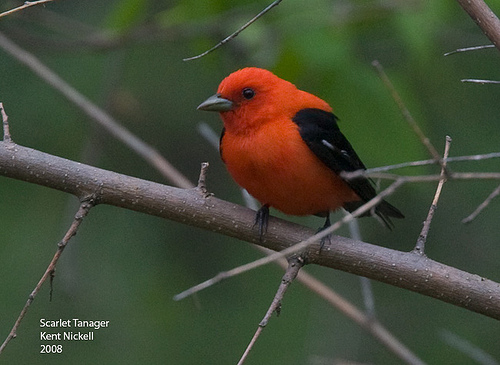
Scarlet Tanager (Piranga olivacea) by Kent Nickell

Scarlet Tanager (Piranga olivacea) by Kent Nickell

Lee’s Addition:

‘Come now, and let us reason together,” Says the LORD, “Though your sins are like scarlet, They shall be as white as snow; Though they are red like crimson, They shall be as wool. (Isaiah 1:18 NKJV)

Scarlet Tanagers (Piranga olivacea) find themselves assigned to the Cardinalidae – Grosbeaks, Saltators & Allies Family and not in the Thraupidae – Tanagers and Allies where I would have thought they might be.

The tanagers comprise the bird family Thraupidae, in the order Passeriformes. The family has an American distribution (Cardinalidae). Tanagers are small to medium-sized birds.

There were traditionally about 240 species of tanagers, but the taxonomic treatment of this family’s members is currently in a state of flux. As more of these birds are studied using modern molecular techniques it is expected that some genera may be relocated elsewhere. Already species in the genera Euphonia and Chlorophonia, which were once considered part of the tanager family, are now treated as members of Fringillidae, in their own subfamily (Euphoniinae). Likewise the genera Piranga (which includes the Scarlet Tanager, Summer Tanager, and Western Tanager), Chlorothraupis, and Habia appear to be members of the Cardinal family, and have been reassigned to that family by the AOU.

The Scarlet Tanager (Piranga olivacea) is a medium-sized American songbird. It and other members of its genus are now classified in the cardinal family (Cardinalidae). The specie’s plumage and vocalizations are similar to other members of the cardinal family.

Adults have pale stout smooth bills. Adult males are bright red with black wings and tail; females are yellowish on the underparts and olive on top, with olive-brown wings and tail. The adult male’s winter plumage is similar to the female’s, but the wings and tail remain darker. Young males briefly show a more complex variegated plumage intermediate between adult males and females. It apparently was such a specimen that was first scientifically described. Hence the older though somewhat confusing specific epithet olivacea (“the olive-colored one”) is used rather than erythromelas (“the red-and-black one”), as had been common throughout the 19th century.

Their breeding habitat is large forested areas, especially with oaks, across eastern North America. Scarlet Tanagers migrate to northwestern South America, passing through Central America around April, and again around October.

They begin arriving on the breeding grounds in numbers by about May and already start to move south again in mid-summer; by early October they are all on their way south.[3] The bird is an extremely rare vagrant to western Europe.
Scarlet Tanagers are often out of sight, foraging high in trees, sometimes flying out to catch insects in flight. They eat mainly insects and fruit.

These birds do best in the forest interior, where they are less exposed to predators and brood parasitism by the Brown-headed Cowbird. Their nests are typically built on horizontal tree branches. Specifically their numbers are declining in some areas due to habitat fragmentation, but on a global scale tanagers are a plentiful species.

*

Birds Illustrated by Color Photograhy Vol 1 June, 1897 No 6 - Cover

Birds Illustrated by Color Photograhy Vol 1 June, 1897 No 6 – Cover

Birds Illustrated by Color Photography – Revisited – Introduction

The above article is the first article in the monthly serial that was started in January 1897 “designed to promote Knowledge of Bird-Live.” These include Color Photography, as they call them, today they are drawings. There are at least three Volumes that have been digitized by Project Gutenberg.

To see the whole series of – Birds Illustrated by Color Photography – Revisited

*

(Information from Wikipedia and other internet sources)

Next Article – The Ruffed Grouse

Previous Article – June and the Birds and Farmers

Wordless Birds – With Hummingbirds

Links:

Scarlet Tanager – Wikipedia

Tanager – Wikipedia

Learning From The Birds – Overwhelmed

*

Birds Vol 1 #6 – June and The Birds and Farmers

Eastern Bluebird (Sialia sialis) by S Slayton

Eastern Bluebird (Sialia sialis) by S Slayton

Birds Illustrated by Color Photography – Revisited

Vol 1. June, 1897 No. 6

*

JUNE.

Frank-hearted hostess of the field and wood,
Gipsy, whose roof is every spreading tree,
June is the pearl of our New England year,
Still a surprisal, though expected long,
Her coming startles. Long she lies in wait,
Makes many a feint, peeps forth, draws coyly back,
Then, from some southern ambush in the sky,
With one great gush of blossoms storms the world.
A week ago the Sparrow was divine;
The Bluebird, shifting his light load of song
From post to post along the cheerless fence,
Was as a rhymer ere the poet came;
But now, O rapture! sunshine winged and voiced,
Pipe blown through by the warm, wild breath of the West,
Shepherding his soft droves of fleecy cloud,
Gladness of woods, skies, waters, all in one,
The Bobolink has come, and, like the soul
Of the sweet season vocal in a bird,
Gurgles in ecstasy we know not what
Save June! Dear June! Now God be praised for June.
—Lowell.

BIRDS AND FARMERS.

From the Forest and Stream.

imgt

HE advocates of protection for our small birds present two sets of reasons for preventing their killing; the one sentimental, and the other economic.
The sentimental reasons are the ones most often urged; they are also of a kind to appeal with especial force to those whose responsibility for the destruction of the birds is greatest. The women and girls, for whose adornment birds’ plumage is chiefly used, think little and know less about the services which birds perform for agriculture, and indeed it may be doubted whether the sight of a bunch of feathers or a stuffed bird’s skin suggests to them any thought of the life that those feathers once represented. But when the wearers are reminded that there was such a life; that it was cheery and beautiful, and that it was cut short merely that their apparel might be adorned, they are quick to recognize that bird destruction involves a wrong, and are ready to do their part toward ending it by refusing to wear plumage.

The small boy who pursues little birds from the standpoint of the hunter in quest of his game, feels only the ardor of pursuit. His whole mind is concentrated on that and the hunter’s selfishness, the desire of possession, fills his heart. Ignorance and thoughtlessness destroy the birds.

Every one knows in a general way that birds render most valuable service to the farmer, but although these services have long been recognized in the laws standing on the statute books of the various states, it is only within a few years that any systematic investigations have been undertaken to determine just what such services are, to measure them with some approach to accuracy, to weigh in the case of each species the good and the evil done, and so to strike a balance in favor of the bird or against it. The inquiries carried on by the Agricultural Department on a large scale and those made by various local experiment stations and by individual observers have given results which are very striking and which can no longer be ignored.

It is a difficult matter for any one to balance the good things that he reads and believes about any animal against the bad things that he actually sees. The man who witnesses the theft of his cherries by robin or catbird, or the killing of a quail by a marsh hawk, feels that here he has ocular proof of harm done by the birds, while as to the insects or the field mice destroyed, and the crops saved, he has only the testimony of some unknown and distant witness. It is only natural that the observer should trust the evidence of his senses, and yet his eyes tell him only a small part of the truth, and that small part a misleading one.

It is certain that without the services of these feathered laborers, whose work is unseen, though it lasts from daylight till dark through every day in the year, agriculture in this country would come to an immediate standstill, and if in the brief season of fruit each one of these workers levies on the farmer the tribute of a few berries, the price is surely a small one to pay for the great good done. Superficial persons imagine that the birds are here only during the summer, but this is a great mistake. It is true that in warm weather, when insect life is most abundant, birds are also most abundant. They wage an effective and unceasing war against the adult insects and their larvae, and check their active depredations; but in winter the birds carry on a campaign which is hardly less important in its results.


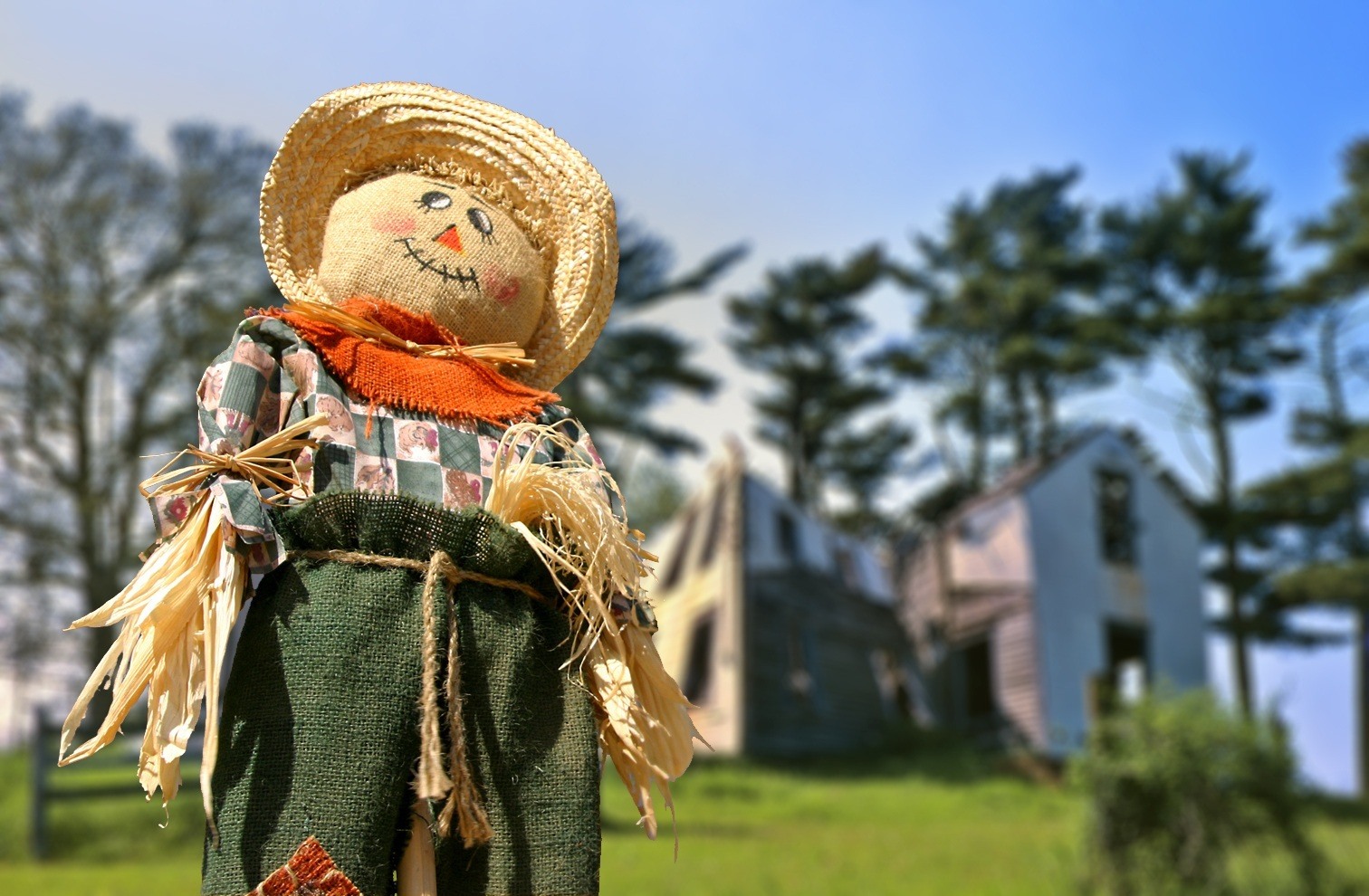
Scarecrow ©©

Scarecrow ©©

Lee’s Addition:

In 1897 it appears that ladies using feathers for hats, boys shooting birds and farmers using various practices were all responsible for the decline of many farmland birds. Fast-forward to today and farmers are still faced with decisions that affect bird welfare. I have placed some links at the end that show some of the present day challenges.

The California Rice farmers are making some strides to help migratory birds. “The hundreds of vast, flooded rice paddies that cover miles of interior northern California may seem like an unlikely safe haven for shorebirds, but changes occurring in the state’s rice country may help improve the outlook for dozens of species in decline in recent decades. So far, more than 165 rice farmers have signed up for an incentive program that will build a system of islands and other habitat improvements in their paddies, and provide birds like the avocet a place to rest, feed and breed throughout the year.”

“Most of the coffee sold in America today is literally killing the songbirds we love – and destroying a sustainable method of farming that supports rural communities in Latin America and keeps farm workers and their children away from toxic chemicals.” This is from the Birds and Beans web page which is trying to get coffee raised in a way that spares birds.

Another controversy today is the Wind Turbines to generate electricity. The debate is on as to whether there are excessive amounts of bird kill being caused by these. See some of the articles below.

England and the E.U. is not immune either. They have done much to cause the loss of birds by their practices. See The birds and the weeds: A farm conservation love story – UK, and Bird populations dropping in EU tied to farming policies

I am not really on either side of the issue as I have not studied it in depth. I know man has to live, but so does the wild life. So, where is the balance? I am sure I lean toward the birds being preserved because I enjoy watching them. Man was given dominion over the animals, but that does not mean that the birds are not to be preserved also. There is a balance there that needs to be met.

Then God blessed them, and God said to them, “Be fruitful and multiply; fill the earth and subdue it; have dominion over the fish of the sea, over the birds of the air, and over every living thing that moves on the earth. (Genesis 1:28 NKJV)

So God blessed Noah and his sons, and said to them: “Be fruitful and multiply, and fill the earth. And the fear of you and the dread of you shall be on every beast of the earth, on every bird of the air, on all that move on the earth, and on all the fish of the sea. They are given into your hand. Every moving thing that lives shall be food for you. I have given you all things, even as the green herbs. (Genesis 9:1-3 NKJV)

*

Birds Illustrated by Color Photograhy Vol 1 June, 1897 No 6 - Cover

Birds Illustrated by Color Photograhy Vol 1 June, 1897 No 6 – Cover

Birds Illustrated by Color Photography – Revisited – Introduction

The above article is the first article in the monthly serial that was started in January 1897 “designed to promote Knowledge of Bird-Live.” These include Color Photography, as they call them, today they are drawings. There are at least three Volumes that have been digitized by Project Gutenberg.

To see the whole series of – Birds Illustrated by Color Photography – Revisited

*

(Information from Wikipedia and other internet sources)

Next Article – The Scarlet Tanager

Previous Article – The Snowy Owl

Wordless Birds

Links:

The birds and the weeds: A farm conservation love story – UK
Bird populations dropping in EU tied to farming policies
Birds and Beans
Are Windmills Killing Ducks?

*

Birds Vol 1 #6 – The Snowy Owl

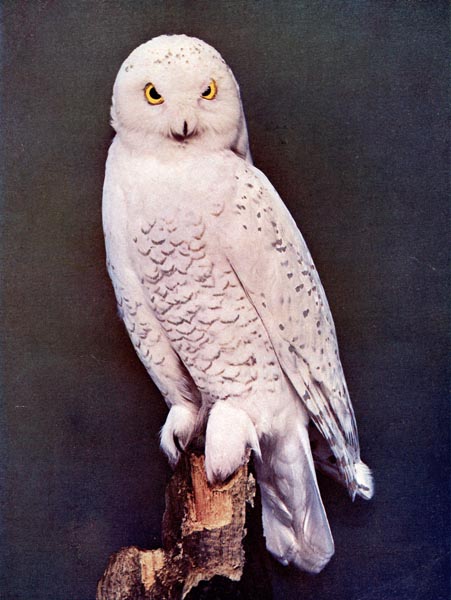
Snowy Owl for Birds Illustrated by Color Photography, 1897

Snowy Owl for Birds Illustrated by Color Photography, 1897

Birds Illustrated by Color Photography – Revisited

Vol 1. June, 1897 No. 6

*

THE SNOWY OWL.

F for Birds Illustrated by Color Photography

EW of all the groups of birds have such decided markings, such characteristic distinctions, as the Owl. There is a singular resemblance between the face of an Owl and that of a cat, which is the more notable, as both of these creatures have much the same habits, live on the same prey, and are evidently representatives of the same idea in their different classes. The Owl, in fact, is a winged cat, just as the cat is a furred owl.

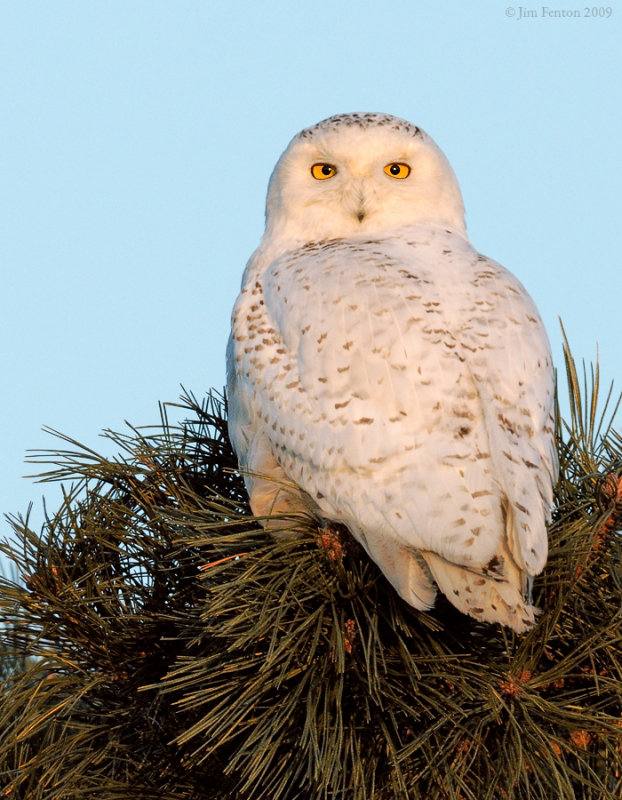
The Snowy Owl is one of the handsomest of this group, not so much on account of its size, which is considerable, as by reason of the beautiful white mantle which it wears, and the large orange eyeballs that shine with the lustre of a topaz set among the snowy plumage.

It is a native of the north of Europe and America, but is also found in the more northern parts of England, being seen, though rather a scarce bird, in the Shetland and Orkney Islands, where it builds its nest and rears its young. One will be more likely to find this owl near the shore, along the line of salt marshes and woody stubble, than further inland. The marshes do not freeze so easily or deep as the iron bound uplands, and field-mice are more plentiful in them. It is so fleet of wing that if its appetite is whetted, it can follow and capture a Snow Bunting or a Junco in its most rapid flight.

Like the Hawk Owl, it is a day-flying bird, and is a terrible foe to the smaller mammalia, and to various birds. Mr. Yarrell in his “History of the British Birds,” states that one wounded on the Isle of Balta disgorged a young rabbit whole, and that a young Sandpiper, with its plumage entire, was found in the stomach of another.

In proportion to its size the Snowy Owl is a mighty hunter, having been detected chasing the American hare, and carrying off wounded Grouse before the sportsman could secure his prey. It is also a good fisherman, posting itself on some convenient spot overhanging the water, and securing its finny prey with a lightning-like grasp of the claw as it passes beneath the white clad fisher. Sometimes it will sail over the surface of a stream, and snatch the fish as they rise for food. It is also a great lover of lemmings, and in the destruction of these quadruped pests does infinite service to the agriculturist.

The large round eyes of this owl are very beautiful. Even by daylight they are remarkable for their gem-like sheen, but in the evening they are even more attractive, glowing like balls of living fire.

From sheer fatigue these birds often seek a temporary resting place on passing ships. A solitary owl, after a long journey, settled on the rigging of a ship one night. A sailor who was ordered aloft, terrified by the two glowing eyes that suddenly opened upon his own, descended hurriedly to the deck, declaring to the crew that he had seen “Davy Jones a-sitting up there on the main yard.”


THE SNOWY OWL.

What do you think of this bird with his round, puffy head? You of course know it is an Owl. I want you to know him as the Snowy Owl.

Don’t you think his face is some like that of your cat? This fellow is not full grown, but only a child. If he were full grown he would be pure white. The dark color you see is only the tips of the feathers. You can’t see his beak very well for the soft feathers almost cover it.

His large soft eyes look very pretty out of the white feathers. What color would you call them? Most owls are quiet during the day and very busy all night. The Snowy Owl is not so quiet day times. He flies about considerably and gets most of his food in daylight.

A hunter who was resting under a tree, on the bank of a river, tells this of him:

“A Snowy Owl was perched on the branch of a dead tree that had fallen into the river. He sat there looking into the water and blinking his large eyes.

Suddenly he reached out and before I could see how he did it, a fish was in his claws.”

This certainly shows that he can see well in the day time. He can see best, however, in the twilight, in cloudy weather or moonlight. That is the way with your cat.

The wing feathers of the owl are different from those of most birds. They are as soft as down. This is why you cannot hear him when he flies. Owls while perching are almost always found in quiet places where they will not be disturbed.

Did you ever hear the voice of an owl in the night? If you never have, you cannot imagine how dreary it sounds. He surely is “The Bird of the Night.”


Snowy Owl (Bubo scandiacus) by J Fenton

Snowy Owl (Bubo scandiacus) by J Fenton

Lee’s Addition:

The Owl is mentioned 8 times in the NKJV of the Bible and it qualifies as a Bird of the Bible. These verses are from the “unclean” list:

the white owl, the jackdaw, and the carrion vulture; (Leviticus 11:18 NKJV)

the little owl, the screech owl, the white owl, (Deuteronomy 14:16 NKJV)

The Snowy Owl is in the Strigidae – Owls Family which currently has 211 species. There are two families that make up the Strigiformes Order, the Owls and the Barn Owls – Tytonidae Family.

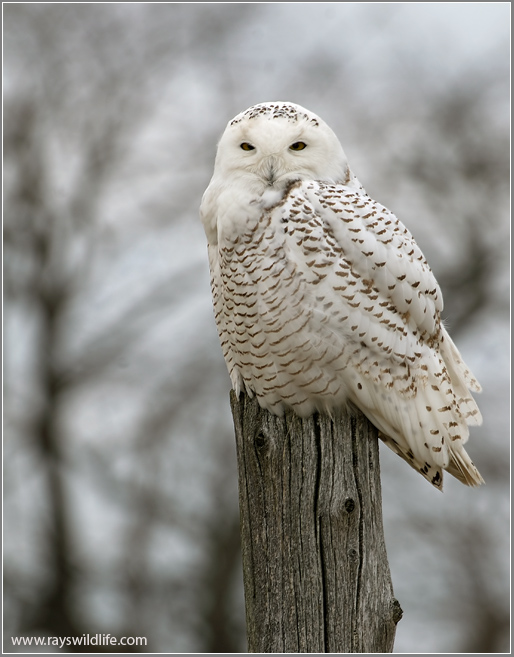
Because Snowy Owls live in cold weather often, they have feathers that cover most of their legs and feet. The Lord has provided extra protection for them this way. A lack of pigment leaves extra space in the feathers to help keep them warm and also is the reason they are so white. Also being white helps protect them from being seen so well in snow. Another interesting thing is that they hunt in the daytime more than regular owls. When you live way up north by the Arctic Circle, the sun never sets for periods of time. An owl could get might hungry waiting for darkness to go hunting.

*

Snowy Owl (Bubo scandiacus) by Raymond Barlow

Snowy Owl (Bubo scandiacus) by Raymond Barlow

*

From xeno-canto the call of a pair of Snowy Owls

The Snowy Owl is a large owl and is the official bird of Quebec. It goes by several names, such as, the Arctic OwlGreat White OwlIcelandic Snow Owl, or Harfang.

Snowy Owl (Bubo scandiacus) Leggings ©WikiC

Snowy Owl (Bubo scandiacus) Leggings ©WikiC

*

“Most of the owls’ hunting is done in the “sit and wait” style; prey may be captured on the ground, in the air or fish may be snatched off the surface of bodies of water using their sharp talons. Each bird must capture roughly 7 to 12 mice per day to meet its food requirement and can eat more than 1,600 lemmings per year.
Snowy Owls, like many other birds, swallow their small prey whole. Strong stomach juices digest the flesh, while the indigestible bones, teeth, fur, and feathers are compacted into oval pellets that the bird regurgitates 18 to 24 hours after feeding. Regurgitation often takes place at regular perches, where dozens of pellets may be found. Biologists frequently examine these pellets to determine the quantity and types of prey the birds have eaten. When large prey are eaten in small pieces, pellets will not be produced.

Though Snowy Owls have few predators, the adults are very watchful and are equipped to defend against any kind of threat towards them or their offspring. During the nesting season, the owls regularly defend their nests against arctic foxes, corvids and swift-flying jaegers; as well as dogs, gray wolves and avian predators. Males defend the nest by standing guard nearby while the female incubates the eggs and broods the young. Both sexes attack approaching predators, dive-bombing them and engaging in distraction displays to draw the predator away from a nest.” (Wikipedia)

*

Birds Illustrated by Color Photograhy Vol 1 June, 1897 No 6 - Cover

Birds Illustrated by Color Photograhy Vol 1 June, 1897 No 6 – Cover

Birds Illustrated by Color Photography – Revisited – Introduction

The above article is the first article in the monthly serial that was started in January 1897 “designed to promote Knowledge of Bird-Live.” These include Color Photography, as they call them, today they are drawings. There are at least three Volumes that have been digitized by Project Gutenberg.

To see the whole series of – Birds Illustrated by Color Photography – Revisited

*

(Information from Wikipedia and other internet sources)

Next Article –June, Birds And Farmers

Previous Article – The Baltimore Oriole

ABC’s Of The Gospel

Links:

*

Birds Vol 1 #6 – The Baltimore Oriole

Baltimore Oriole for Birds Illustrated by Color Photography, 1897

Baltimore Oriole for Birds Illustrated by Color Photography, 1897, From Col. F. M. Woodruff.

Birds Illustrated by Color Photography – Revisited

Vol 1. June, 1897 No. 6

*

THE BALTIMORE ORIOLE.

imgb

ALTIMORE Orioles are inhabitants of the whole of North America, from Canada to Mexico. They enter Louisiana as soon as spring commences there. The name of Baltimore Oriole has been given it, because its colors of black and orange are those of the family arms of Lord Baltimore, to whom Maryland formerly belonged. Tradition has it that George Calvert, the first Baron Baltimore, worn out and discouraged by the various trials and rigours of temperature experienced in his Newfoundland colony in 1628, visited the Virginia settlement. He explored the waters of the Chesapeake, and found the woods and shores teeming with birds, among them great flocks of Orioles, which so cheered him by their beauty of song and splendor of plumage, that he took them as good omens and adopted their colors for his own.

When the Orioles first arrive the males are in the majority; they sit in the spruces calling by the hour, with lonely querulous notes. In a few days however, the females appear, and then the martial music begins, the birds’ golden trumpeting often turning to a desperate clashing of cymbals when two males engage in combat, for “the Oriole has a temper to match his flaming plumage and fights with a will.”

This Oriole is remarkably familiar, and fearless of man, hanging its beautiful nest upon the garden trees, and even venturing into the street wherever a green tree nourishes. The materials of which its nest is made are flax, various kinds of vegetable fibers, wool, and hair, matted together so as to resemble felt in consistency. A number of long horse-hairs are passed completely through the fibers, sewing it firmly together with large and irregular, but strong and judiciously placed stitching. In one of these nests an observer found that several of the hairs used for this purpose measured two feet in length. The nest is in the form of a long purse, six or seven inches in depth, three or four inches in diameter; at the bottom is arranged a heap of soft material in which the eggs find a warm resting place. The female seems to be the chief architect, receiving a constant supply of materials from her mate, occasionally rejecting the fibers or hairs which he may bring, and sending him off for another load more to her taste.

Like human builders, the bird improves in nest building by practice, the best specimens of architecture being the work of the oldest birds, though some observers deny this.

The eggs are five in number, and their general color is whitish-pink, dotted at the larger end with purplish spots, and covered at the smaller end with a great number of fine intersecting lines of the same hue.

In spring the Oriole’s food seems to be almost entirely of an animal nature, consisting of caterpillars, beetles, and other insects, which it seldom pursues on the wing, but seeks with great activity among the leaves and branches. It also eats ripe fruit. The males of this elegant species of Oriole acquire the full beauty of their plumage the first winter after birth.

The Baltimore Oriole is one of the most interesting features of country landscape, his movements, as he runs among the branches of trees, differing from those of almost all other birds. Watch him clinging by the feet to reach an insect so far away as to require the full extension of the neck, body, and legs without letting go his hold. He glides, as it were, along a small twig, and at other times moves sidewise for a few steps. His motions are elegant and stately.


THE BALTIMORE ORIOLE.

About the middle of May, when the leaves are all coming out to see the bright sunshine, you may sometimes see, among the boughs, a bird of beautiful black and orange plumage.

He looks like the Orchard Oriole, whose picture you saw in May “Birds.” It is the Baltimore Oriole. He has other names, such as “Golden Robin,” “Fire Bird,” “Hang-nest.” I could tell you how he came to be called Baltimore Oriole, but would rather you’d ask your teacher about it. She can tell you all about it, and an interesting story it is, I assure you.

You see from the picture why he is called “Hang-nest.” Maybe you can tell why he builds his nest that way.

The Orioles usually select for their nest the longest and slenderest twigs, way out on the highest branches of a large tree. They like the elm best. From this they hang their bag-like nest.

It must be interesting to watch them build the nest, and it requires lots of patience, too, for it usually takes a week or ten days to build it.

They fasten both ends of a string to the twigs between which the nest is to hang. After fastening many strings like this, so as to cross one another, they weave in other strings crosswise, and this makes a sort of bag or pouch. Then they put in the lining.

Of course, it swings and rocks when the wind blows, and what a nice cradle it must be for the baby Orioles?

Orioles like to visit orchards and eat the bugs, beetles and caterpillars that injure the trees and fruit.

There are few birds who do more good in this way than Orioles.

Sometimes they eat grapes from the vines and peck at fruit on the trees. It is usually because they want a drink that they do this.

One good man who had a large orchard and vineyard placed pans of water in different places. Not only the Orioles, but other birds, would go to the pan for a drink, instead of pecking at the fruit. Let us think of this, and when we have a chance, give the birds a drink of water. They will repay us with their sweetest songs.


Baltimore Oriole (Icterus galbula) Male by Nature's Hues

Baltimore Oriole (Icterus galbula) Male by Nature’s Hues

Lee’s Addition:

I know all the birds of the mountains, And the wild beasts of the field are Mine. (Psalms 50:11 NKJV)

The Baltimore Oriole is in the Icteridae – Oropendolas, Orioles & Blackbirds Family. They are slimmer and smaller than an American Robin.

This bird received its name from the fact that the male’s colors resemble those on the coat-of-arms of Lord Baltimore. Like all icterids called ‘oriole’, it is named after an unrelated, physically similar family found in the Old World: the Oriolidae. At one time, this species and the Bullock’s Oriole, (Icterus bullockii), were considered to be a single species called the Northern Oriole.

The male oriole is slightly larger than the female. Adults have a pointed bill and white bars on the wings. The adult male is orange on the underparts, shoulder patch and rump. All of the rest of the male is black. The adult female is yellow-brown on the upper parts with darker wings, and dull orange on the breast and belly.

Baltimore Oriole (Icterus galbula) Female by Nature's Hues

Baltimore Oriole (Icterus galbula) Female by Nature’s Hues

The Baltimore Orioles, a Major League Baseball team in Baltimore, Maryland, were named after this bird. It is also the state bird of Maryland.

Song of an Oriole – by xeno-canto.org (recorded by Robin Carter)

The male sings a loud flutey whistle that often gives away the bird’s location before any sighting can be made.

Baltimore Orioles forage in trees and shrubs, also making short flights to catch insects. They mainly eat insects, berries and nectar, and are often seen sipping at hummingbird feeders. Oriole feeders contain essentially the same food as hummingbird feeders, but are designed for orioles, and are orange instead of red and have larger perches. Baltimore Orioles are also fond of halved oranges, grape jelly and, in their winter quarters, the red arils of Gumbo-limbo (Bursera simaruba).

*

Birds Illustrated by Color Photograhy Vol 1 June, 1897 No 6 - Cover

Birds Illustrated by Color Photograhy Vol 1 June, 1897 No 6 – Cover

Birds Illustrated by Color Photography – Revisited – Introduction

The above article is the first article in the monthly serial that was started in January 1897 “designed to promote Knowledge of Bird-Live.” These include Color Photography, as they call them, today they are drawings. There are at least three Volumes that have been digitized by Project Gutenberg.

To see the whole series of – Birds Illustrated by Color Photography – Revisited

*

(Information from Wikipedia and other internet sources)

Next Article – The Snowy Owl

Previous Article – The Loggerhead Shrike

Wordless Birds

Links:

*

Birds Vol 1 #6 – The Loggerhead Shrike

Loggerhead Shrike for Birds Illustrated by Color Photography, 1897

Loggerhead Shrike for Birds Illustrated by Color Photography, 1897

Birds Illustrated by Color Photography – Revisited

Vol 1. June, 1897 No. 6

*

THE LOGGERHEAD SHRIKE.

imga1

RAMBLER in the fields and woodlands during early spring or the latter part of autumn is often surprised at finding insects, grasshoppers, dragon flies, beetles of all kinds, and even larger game, mice, and small birds, impaled on twigs and thorns. This is apparently cruel sport, he observes, if he is unacquainted with the Butcher Bird and his habits, and he at once attributes it to the wanton sport of idle children who have not been led to say,


With hearts to love, with eyes to see,
With ears to hear their minstrelsy;
Through us no harm, by deed or word,
Shall ever come to any bird.

If he will look about him, however, the real author of this mischief will soon be detected as he appears with other unfortunate little creatures, which he requires to sustain his own life and that of his nestlings. The offender he finds to be the Shrike of the northern United States, most properly named the Butcher Bird. Like all tyrants he is fierce and brave only in the presence of creatures weaker than himself, and cowers and screams with terror if he sees a falcon. And yet, despite this cruel proceeding, which is an implanted instinct like that of the dog which buries bones he never seeks again, there are few more useful birds than the Shrike. In the summer he lives on insects, ninety-eight per cent. of his food for July and August consisting of insects, mainly grasshoppers; and in winter, when insects are scarce, mice form a very large proportion of his food.

The Butcher Bird has a very agreeable song, which is soft and musical, and he often shows cleverness as a mocker of other birds. He has been taught to whistle parts of tunes, and is as readily tamed as any of our domestic songsters.

The nest is usually found on the outer limbs of trees, often from fifteen to thirty feet from the ground. It is made of long strips of the inner bark of bass-wood, strengthened on the sides with a few dry twigs, stems, and roots, and lined with fine grasses. The eggs are often six in number, of a yellowish or clayey-white, blotched and marbled with dashes of purple, light brown, and purplish gray. Pretty eggs to study.

Readers of Birds who are interested in eggs do not need to disturb the mothers on their nests in order to see and study them. In all the great museums specimens of the eggs of nearly all birds are displayed in cases, and accurately colored plates have been made and published by the Smithsonian Institution and others. The Chicago Academy of Sciences has a fine collection of eggs. Many persons imagine that these institutions engage in cruel slaughter of birds in order to collect eggs and nests. This, of course, is not true, only the fewest number being taken, and with the exclusive object of placing before the people, not for their amusement but rather for their instruction, specimens of birds and animals which shall serve for their identification in forest and field.

The Loggerhead Shrike and nest shown in this number were taken under the direction of Mr. F. M. Woodruff, at Worth, Ill., about fourteen miles from Chicago. The nest was in a corner of an old hedge of Osage Orange, and about eight feet from the ground. He says in the Osprey that it took considerable time and patience to build up a platform of fence boards and old boxes to enable the photographer to do his work. The half-eaten body of a young garter snake was found about midway between the upper surface of the nest and the limb above, where it had been hung up for future use.


Loggerhead Shrike (Lanius ludovicianus) by Daves BirdingPix

Loggerhead Shrike (Lanius ludovicianus) by Daves BirdingPix

Lee’s Addition:

“That path no bird of prey knows, and the falcon’s eye has not seen it. (Job 28:7 ESV)

What a surprise about a week or so ago when I looked out at my feeders/fountain area. There were 4 Loggerhead Shrikes around the fountain and chasing each other around the tree. That is the first time they have visited our yard. Saw my first Loggerhead out in Louisiana years ago. They can confuse you at first look with a Northern Mockingbird, which is what I thought I was looking at at the fountain.

Loggerhead Shrikes are in the Laniidae – Shrikes Family which at the time has 33 members. The family name, and that of the largest genus, Lanius, is derived from the Latin word for “butcher”, and some shrikes were also known as “butcher birds” because of their feeding habits. Note that the Australasian butcherbirds (Artamidae family) are not shrikes.

Most shrike species have a Eurasian and African distribution, with just two breeding in North America (the Loggerhead and Great Grey shrikes). There are no members of this family in South America or Australia, although one species reaches New Guinea. The shrikes vary in the extent of their ranges, with some species like the Great Grey Shrike ranging across the northern hemisphere to the Newton’s Fiscal which is restricted to the island of São Tomé.

They inhabit open habitats, especially steppe and savannah. A few species of shrike are forest dwellers, seldom occurring in open habitats. Some species breed in northern latitudes during the summer, then migrate to warmer climes for the winter.

The Loggerhead Shrike (Lanius ludovicianus) is a passerine bird. It is the only member of the shrike family endemic to North America; the related Northern Shrike (L. excubitor) occurs north of its range but also in the Palearctic.

The bird has a large hooked bill; the head and back are grey and the underparts white. The wings and tail are black, with white patches on the wings and white on the outer tail feather. The black face mask extends over the bill, unlike that of the similar but slightly larger Northern Shrike.

The bird breeds in semi-open areas in southern Ontario, Quebec and the Canadian prairie provinces, south to Mexico. It nests in dense trees and shrubs. The female lays 4 to 8 eggs in a bulky cup made of twigs and grass. There is an increase in average clutch size as latitude increases.

Loggerhead Shrike (Lanius ludovicianus) by ©Wiki

Loggerhead Shrike (Lanius ludovicianus) by ©Wiki

The shrike is a permanent resident in the southern part of the range; northern birds migrate further south. They are considered a bird of prey even though they have weak legs and feet. The bird waits on a perch with open lines of sight and swoops down to capture prey. Its food is large insects and lizards . Known in many parts as the “Butcher Bird,” it impales its prey on thorns or barbed wire before eating it, because it does not have the talons of the larger birds of prey.

The population of this species has declined in the northeastern parts of its range, possibly due to loss of suitable habitat and pesticide use.

“Loggerhead” refers to the relatively large head as compared to the rest of the body.

*

Birds Illustrated by Color Photograhy Vol 1 June, 1897 No 6 - Cover

Birds Illustrated by Color Photograhy Vol 1 June, 1897 No 6 – Cover

Birds Illustrated by Color Photography – Revisited – Introduction

The above article is the first article in the monthly serial that was started in January 1897 “designed to promote Knowledge of Bird-Live.” These include Color Photography, as they call them, today they are drawings. There are at least three Volumes that have been digitized by Project Gutenberg.

To see the whole series of – Birds Illustrated by Color Photography – Revisited

*

(Information from Wikipedia and other internet sources)

Next Article – The Baltimore Oriole

Previous Article – The Ring-Billed Gull

ABC’s Of The Gospel

Links:

Loggerhead Shrike – Wikipedia

Loggerhead Shrike – All About Birds

Lanidae – Shrike Family

*