Birdwatching Term – Dabbling Duck

Blue-Winged-Teal-Dabbling ©Flyways USFWS

Blue-Winged-Teal-Dabbling ©Flyways USFWS

Dabbling Duck

What does it mean when a duck “dabbles” or is a “dabbling duck”?

This group of ducks has been so named because its members feed mainly on vegetable matter by upending on the water surface, or grazing, and only rarely dive. These are mostly gregarious ducks of freshwater or estuaries. These birds are strong fliers and northern species are highly migratory. Compared to other types of duck, their legs are placed more towards the centre of their bodies. They walk well on land, and some species feed on land.

Puddle ducks generally feed on the surface of the water or feed on very shallow bottoms. They are not equipped to dive down several feet like their diving counterparts. The most predominant difference between puddle ducks and divers are the size of the feet. A puddle duck’s feet are generally smaller because they do not need the extra propulsion to dive for their forage.

Another distinguishing characteristic of puddle ducks when compared to diving ducks is the way in which they take flight when spooked or are on the move.

Puddle ducks spring straight up from the water, and diving ducks need to gain momentum to take off, so they must run across the water a short distance to gain flight.

These Ducks belong to the Anatine sub-family of the Swans, Geese, and Duck Family.

Mallard-Takes-Off ©Flyways USFWS

Mallard-Takes-Off ©Flyways USFWS

For the younger reader:

What does it mean when a duck “dabbles” or is a “dabbling duck”?

They are called that because these ducks feed mainly on vegetable matter (plants) by upending on the water surface (They put their head in the water to eat and their tail section is all that is seen above the water.) or grazing, and only rarely dive.

When they take flight, they spring straight up from the water. The Diving ducks have to sort of run to take-off.

(Wikipedia with editing)

Look at the birds of the air; they neither sow nor reap nor gather into barns, and yet your heavenly Father keeps feeding them. Are you not worth much more than they? (Mat 6:26 AMP)

*

See:

Swans, Geese, and Duck Family.

Dabbling Ducks – Flyways.us

Dabbling Ducks – Wikipedia

More Birdwatching Terms

Wordless Birds

*
Child’s Book of Water Birds ~ The Dabchick

The Dabchick

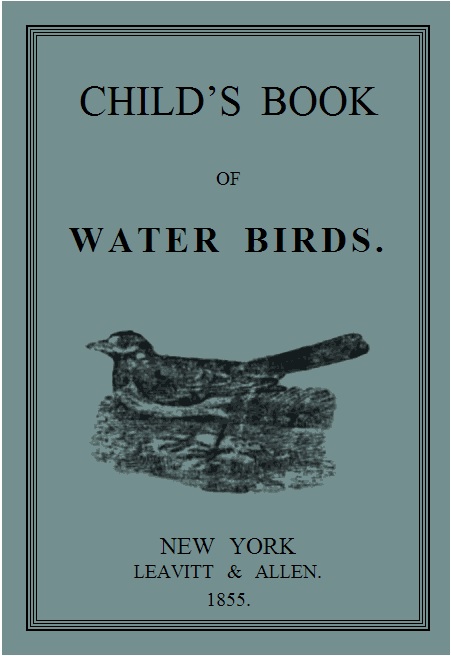
Child's Book of Water Birds - Book Cover

Child’s Book of Water Birds – Book Cover

***

Childs Bk of Water Birds titlebird

NEW YORK

LEAVITT & ALLEN.

1855.

***

Welcome to the Updated Child’s Book of Water Birds, by Anonymous. It was written in 1855 and this is 2013. That is 158 years ago.

*
*
Childs Bk of Water Birds dabchick

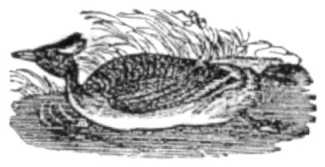
THE DABCHICK.

The Dabchick is a very timid bird, and when alarmed instantly dives, after which it is useless to look after the bird. It is easily domesticated, and is often seen placed as an ornament to ponds, where it swims about very merrily, and seems to enjoy a game of hide and seek with any one who is attempting to watch its movements.

*

Little Grebe (Tachybaptus ruficollis) by Nikhil Devasar

Little Grebe (Tachybaptus ruficollis) by Nikhil Devasar

Update:

The Little Grebe (Tachybaptus ruficollis), also known as Dabchick, is a member of the Grebe family of water birds. At 9 to 11.4 in (23 to 29 cm) in length it is the smallest European member of its family. It is commonly found in open bodies of water across most of its range. Also, there is a New Zealand Grebe (Dabchick).

It is a small water bird with a pointed bill. In summer, the adult is dark above with its rich, rufous colour neck, cheeks and flanks (sides), and bright yellow gape (mouth). Non-breeding and juvenile birds are a dirty brownish grey.

It is an excellent swimmer and diver and chases its fish and aquatic prey underwater. It uses the vegetation skilfully as a hiding place.  it nests at the water’s edge, since its legs are set very far back and it cannot walk well. The young leave the nest and can swim soon after hatching, and chicks are often carried on the backs of the swimming adults.

If a bird’s nest should chance to be before you in the way, in any tree or on the ground, with young ones or eggs, and the mother bird is sitting on the young or on the eggs, you shall not take the mother bird with the young. (Deu 22:6 AMP)

The Little Grebe’s breeding call, given singly or in duet, is a trilled repeated weet-weet-weet or wee-wee-wee which sounds like a horse whinnying.

***

See the other five Child’s Book of Water Birds:

The Swan

The Coot

The Teal

The Goose

The Oyster Catcher

*

Grebe family

New Zealand Grebe (Dabchick)

Little Grebe – Wikipedia

Bible Birds

Wordless Birds

*
Child's Book of Water Birds - Levit and Allen

Back Cover

*** PROJECT GUTENBERG EBOOK CHILD'S BOOK OF WATER BIRDS ***

*

Child’s Book of Water Birds ~ The Coot

The Coot

Child's Book of Water Birds - Book Cover

Child’s Book of Water Birds – Book Cover

***

Childs Bk of Water Birds titlebird

NEW YORK

LEAVITT & ALLEN.

1855.

***
Welcome to the Updated Child’s Book of Water Birds, by Anonymous. It was written in 1855 and this is 2013. That is 158 years ago.
*
Childs Bk of Water Birds coot

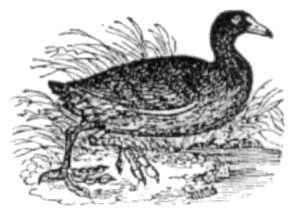
THE COOT.

The Coot is generally found in large sheets of water, particularly if shaded by trees. The nest is a mass of flags, reeds, and grass, usually at the water’s edge, but sometimes actually in the water. The Coot’s eggs are generally seven in number. They are of a greenish-white, spotted.

*

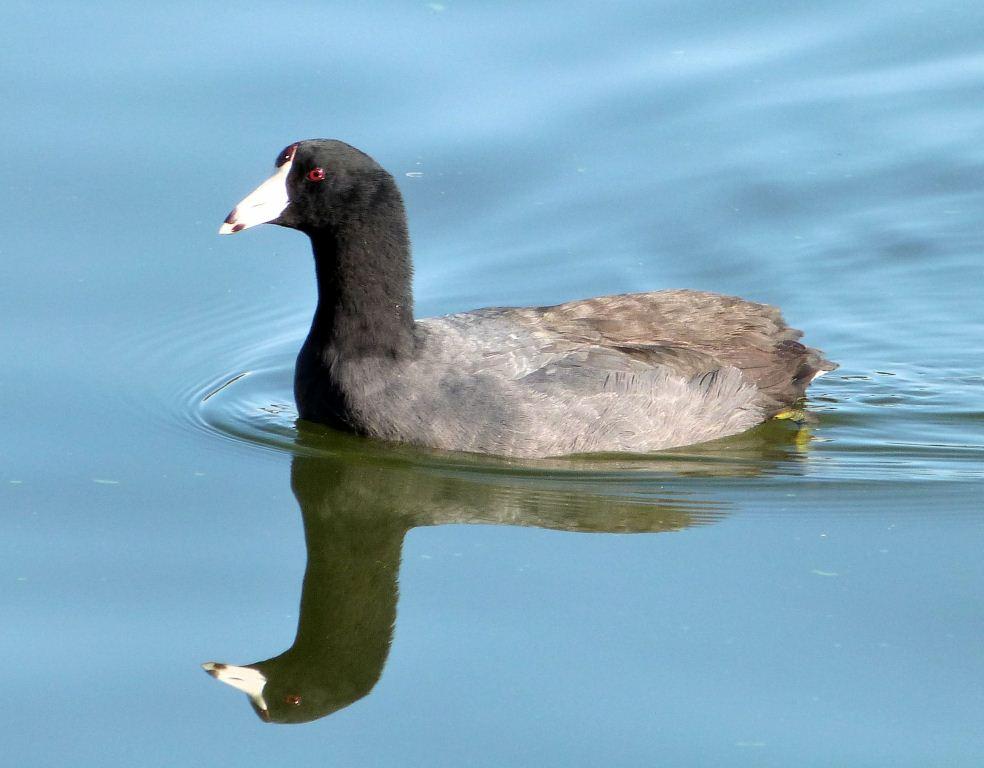
American Coot (Fulica americana) by Lee at Lk Morton

American Coot (Fulica americana) by Lee at Lk Morton

Update:

Coots are medium-sized birds that belong to the Raillidae – Rail Family. There are twelve (12) different Coots around the world.

They have mostly black feathers and can be seen swimming in open water. Coots have prominent frontal shields or other decoration on the forehead, with red to dark red eyes and coloured bills. Many, but not all, have white on the under tail.

Coots eat plants, eggs and some small animals. The defend their nest when they have babies. A group of Coots are called a “covert” or  “cover.”

Like other rails, they have long, lobed toes that are well adapted to soft, uneven surfaces. Coots have strong legs and can walk and run fast. This video shows their feet.

*


*

****

See the other five Child’s Book of Water Birds:

The Swan

The Dabchick

The Teal

The Goose

The Oyster Catcher

*

Rallidae – Rails, Crakes & Coots Family

American Coot – All About Birds

Bible Birds

Wordless Birds

*
Child's Book of Water Birds - Levit and Allen

Back Cover

*** PROJECT GUTENBERG EBOOK CHILD'S BOOK OF WATER BIRDS ***

*

Child’s Book of Water Birds ~ The Swan

The Swan

Child's Book of Water Birds - Book Cover

Child’s Book of Water Birds – Book Cover

***

Childs Bk of Water Birds titlebird

NEW YORK

LEAVITT & ALLEN.

1855.

***

Welcome to the Updated Child’s Book of Water Birds, by Anonymous. It was written in 1855 and this is 2013. That is 158 years ago.

*
Childs Bk of Water Birds swan

THE SWAN.

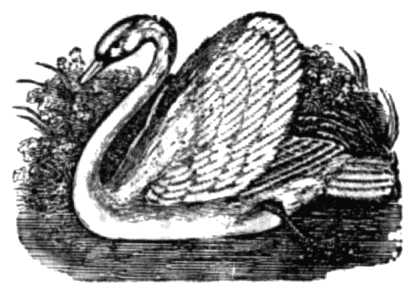
The Swan is a very beautiful bird. It is generally white, though a black swan has been discovered in Australia. It is not very often seen in this country. It was brought from Asia and Eastern Europe into England—from whence, most probably, a few specimens have been introduced into this country. The Swan is very graceful in the water, but on land it is an awkward waddler.

*

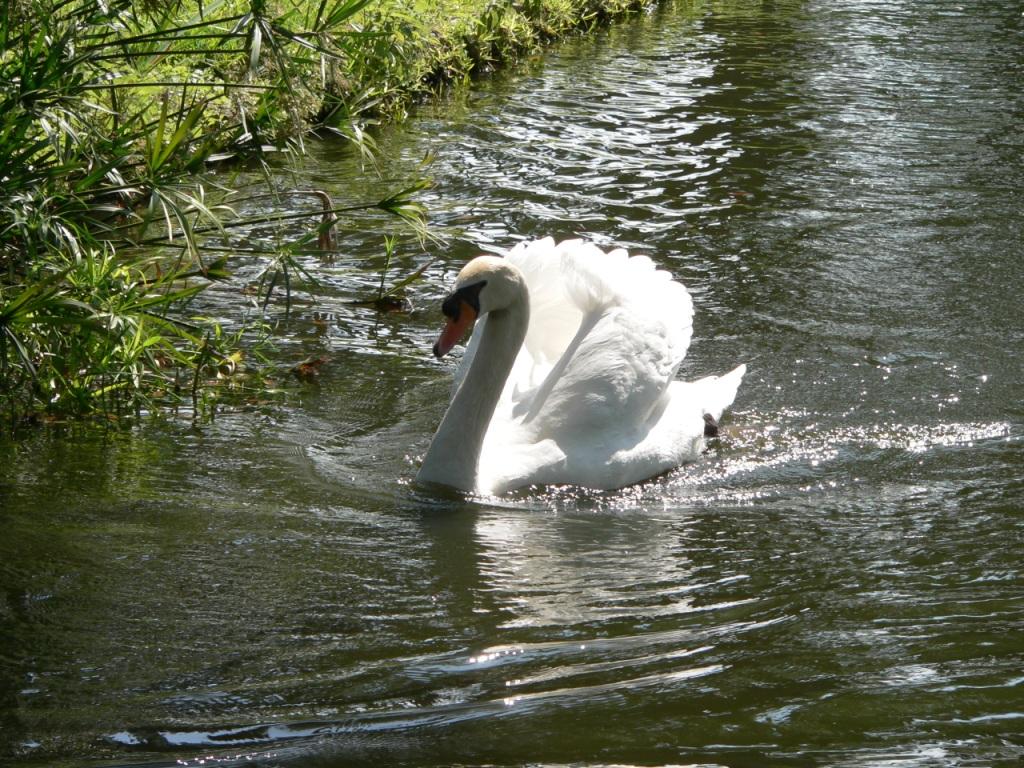
Swan at Bok Tower

Swan at Bok Tower

Update:

Swans are the largest member of the Water Birds family Swans. They are also among the largest flying birds. Some Swans have a wingspan almost 10 ft (3 m).

A group of swans is called a bevy or a wedge in flight. Swans feed in the water and on land.

The nest is on the ground near water. Average egg size (for the mute swan) is 4.4 X 2.9 in (113×74 mm), weighing 11 oz (340 g), in a clutch size of 4 to 7. Swans are very protective of their nest.

The Swan is one of the Bible Birds. (See Bible Birds – Swans)

And the swan, and the pelican, and the gier eagle, (Leviticus 11:18 KJV)

***

See the other five Child’s Book of Water Birds:

The Coot

The Dabchick

The Teal

The Goose

The Oyster Catcher

*

Anatidae – Swan Family

Bible Birds – Swans

Bible Birds

Wordless Birds


*

*
Child's Book of Water Birds - Levit and Allen
*** PROJECT GUTENBERG EBOOK CHILD'S BOOK OF WATER BIRDS ***

*

Vol 2, #6 – The Ring-necked Pheasant

Common Pheasant (Phasianus colchicus) "Ring-necked" for Birds Illustrated

Common Pheasant (Phasianus colchicus) “Ring-necked” for Birds Illustrated

From col. Chi. Acad. Sciences. Copyrighted by
Nature Study Pub. Co., 1897, Chicago.

THE RING-NECKED PHEASANT.

(RELOCATED – CLICK HERE)

Updated: The Bible Birds Cormorant Page

The Bible Birds – Cormorants page has been updated. A Gallery of photos of Cormorants and others in their family was added. The Cormorants belong to the Family – Phalacrocoracidae – Cormorants, shags which has 41 members. Also additional links were added.

This slideshow requires JavaScript.


*

Bible Birds are the Birds of the Bible Birds written with to Younger Folks and those who are “Young at Heart”. As other pages are updated, a post will announce them also.

*

Updated: The Bible Bird Owls Page

Just finished the Bible Birds – Owls page. A Photo gallery and some Fun Facts were added.

This slideshow requires JavaScript.


Bible Birds are the Birds of the Bible Birds written with to Younger Folks and those who are “Young at Heart”. As other pages are updated, a post will announce them also.

*

Birds Of The Bible – Joy And Laughter

Laughing Kookaburra (Dacelo novaeguineae) at LPZoo

Laughing Kookaburra (Dacelo novaeguineae) by Lee

While we were at Lowry Park Zoo last week, we also had the joy of hearing the Laughing Kookaburra (Dacelo novaeguineae) sounding off with its mate. Seems like the Myna birds and the singing dogs were not the only ones in a happy mood. The two Kookaburras got to “laughing” also. They sort of set the tone to put you a joyful mood.

For You, O Lord, have made me glad by Your works; at the deeds of Your hands I joyfully sing. (Psalms 92:4 AMP) Make a joyful noise to the Lord, all the earth; break forth and sing for joy, yes, sing praises! (Psalms 98:4 AMP)

I have always enjoyed seeing the Kookaburras. When we were at the National Aviary I tried recording them, but by the time I got the camera on, they stopped. I recorded them this time but didn’t get the camera focused on them until about half way through. Oh, the challenges of birdwatching! Well, at least trying to get a recording to use on the blog anyway. When you put all the events together; the singing Bali Myna, the singing dogs, and these singing Kookaburras, it brings to mind a story in the Bible. When Paul and Silas where in prison, (behind bars) they were joyful just the same. All of these critters plus the men (Paul and Silas) are behind bars, yet they are joyful and carrying on with their lives. Could there be a lesson there for us to learn and observe?

And at midnight Paul and Silas prayed, and sang praises unto God: and the prisoners heard them. (Acts 16:25 KJV)

Consider it wholly joyful, my brethren, whenever you are enveloped in or encounter trials of any sort or fall into various temptations. (James 1:2 AMP)

We all have things come into our lives, but our attitude affects how well we handle those circumstances. Prayer is one of the best ways to find peace in the midst of trials. Knowing the Lord Jesus Christ as personal Savior is the absolute best way. I trust you know Him.

Gospel Message

*

This video has two of my photos to cover the blurred part, but the sound is the whole recording.

The Laughing Kookaburra (Dacelo novaeguineae) is a carnivorous bird in the kingfisher family Halcyonidae. Native to eastern Australia, it has also been introduced to parts of New Zealand, Tasmania and Western Australia. Male and female adults are similar in plumage, which is predominantly brown and white. A common and familiar bird, this species of kookaburra is well known for its laughing call.

There are actually 6 Kookaburras:

  • Lilac Kingfisher (Cittura cyanotis)
  • Shovel-billed Kookaburra (Clytoceyx rex)
  • Laughing Kookaburra (Dacelo novaeguineae)
  • Blue-winged Kookaburra (Dacelo leachii)
  • Spangled Kookaburra (Dacelo tyro)
  • Rufous-bellied Kookaburra (Dacelo gaudichaud)

See:

Birds of the Bible

Laughing Kookaburra – Wikipedia

Alcedinidae – Kingfishers – Family

*

Birds of the Bible – Heron’s Teaching

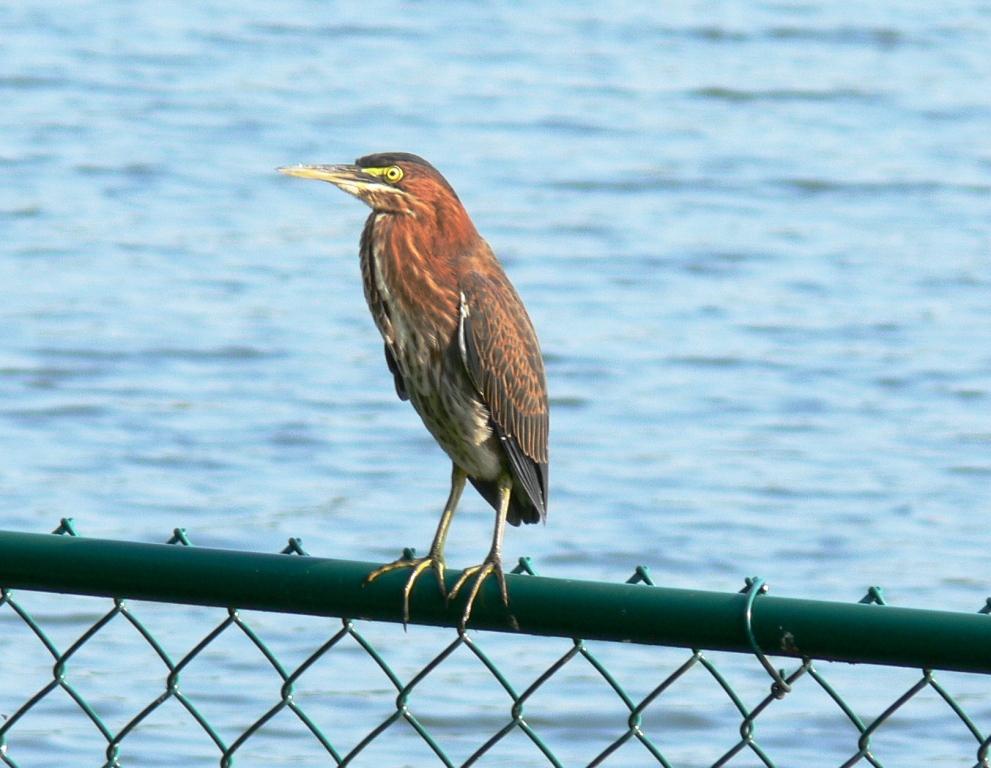
Green Heron (Butorides virescens) by Lee

Green Heron (Butorides virescens) by Lee

“But now ask the beasts, and they will teach you; And the birds of the air, and they will tell you; (Job 12:7 NKJV)

I have been thinking about that Green Heron in the video I posted a few days ago. (Green Heron Fishing With Bread) The verse above makes me think there has to be some lessons to learn from it. These are just some of my thoughts and I am sure you can come up with some of your own.

One that comes to thought right off is that bird’s patience. Are we?

These wait all upon thee; that thou mayest give them their meat in due season. That thou givest them they gather: thou openest thine hand, they are filled with good. (Psalms 104:27-28 KJV)

The verse used in the article tells how the Lord protects and provides for His creation. Will He not provide for us also. He loves us and wants to meet our needs, just as was provided for this Heron.

Look at the birds of the air, for they neither sow nor reap nor gather into barns; yet your heavenly Father feeds them. Are you not of more value than they? (Matthew 6:26 NKJV)

Another lesson is that the bird is doing something that we wouldn’t think it could do. You wonder where it learned that behavior. For us, the Lord wants us to do something, and if we are willing, we are amazed at what we can do. Things we would never think we had the capacity to do He helps us perform..

Jesus said unto him, If thou canst believe, all things are possible to him that believeth. (Mark 9:23 KJV)

I can do all things through Christ which strengtheneth me. (Philippians 4:13 KJV)

He (the heron) has a goal in mind and isn’t going to give up even though it takes several attempts to accomplish his goal. The Lord tells us to become “fishers of men” and we need to keep trying and not give up. Even when our “bread” is down to hardly anything and you think you might as well give up, you try one more time.

So then neither is he that planteth any thing, neither he that watereth; but God that giveth the increase. Now he that planteth and he that watereth are one: and every man shall receive his own reward according to his own labour. (1 Corinthians 3:7-8 KJV)

On a more light side, I am not so sure that the Heron wasn’t bordering on “gluttony.” Did you see that last part where it is swallowing the fish. Looks like it almost “bit of more than it could chew.”

But put ye on the Lord Jesus Christ, and make not provision for the flesh, to fulfil the lusts thereof. (Romans 13:14 KJV)

These are but a few and if you have some, leave a comment and share them with us.

Birds of the Bible – Herons

Birds of the Bible

Bible Birds

Wordless Birds

*

*

Birds of the Bible – Remembering

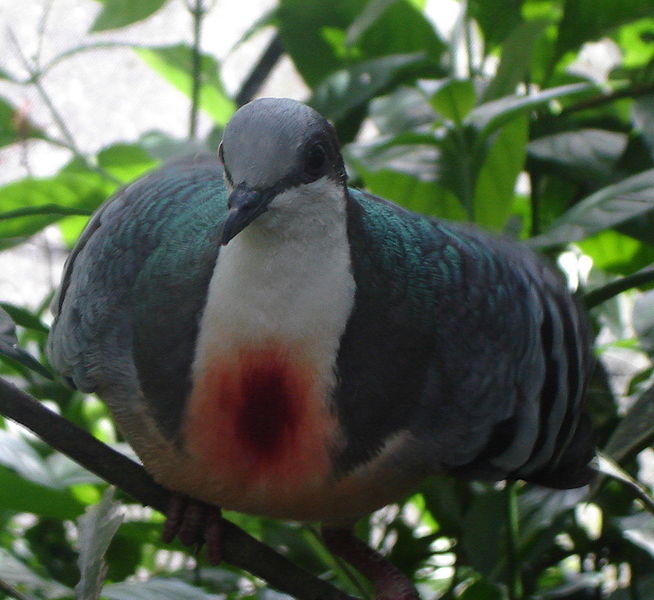
Bleeding-Heart Pigeon ©WikiC

Bleeding-Heart Pigeon ©WikiC

And God remembered Noah, and every living thing, and all the cattle that was with him in the ark: and God made a wind to pass over the earth, and the waters asswaged; (Genesis 8:1 KJV)

Today, here in the United States, is Memorial Day. A day when we remember those who have given their all in the service of our country. We honor those who we can no longer thank. As this is being written, they are laying a wreath at the tomb of the unknown soldier at Arlington National Cemetary.

My father was one of those who passed away as a result of his being in the trenches in WW I. He suffered for several years from the effects of the “mustard gas” that was sprayed on them. It is good for us to remember things and honor events.

Yesterday, in the morning service, the event of the 12 stones being taken for the Jordon River by the Israelites for a memorial was taught. That was a memorial to remind them of the way the LORD protected them and made a way for them to cross over the Jordon. It is good to remember things and honor events.

And Joshua said unto them, Pass over before the ark of the LORD your God into the midst of Jordan, and take ye up every man of you a stone upon his shoulder, according unto the number of the tribes of the children of Israel: That this may be a sign among you, that when your children ask their fathers in time to come, saying, What mean ye by these stones? Then ye shall answer them, That the waters of Jordan were cut off before the ark of the covenant of the LORD; when it passed over Jordan, the waters of Jordan were cut off: and these stones shall be for a memorial unto the children of Israel for ever. (Joshua 4:5-7 KJV)

Mourning Dove (Zenaida macroura) by Quy Tran

Mourning Dove (Zenaida macroura) by Quy Tran

Our Scripture above is where the God remembered those He was protecting from the flood that were aboard the ark. He did not forget them. In time, the waters went down and they were able to leave the ark.

And it came to pass in the six hundred and first year, in the first month, the first day of the month, that the waters were dried up from the earth; and Noah removed the covering of the ark and looked, and indeed the surface of the ground was dry. And in the second month, on the twenty-seventh day of the month, the earth was dried. Then God spoke to Noah, saying, “Go out of the ark, you and your wife, and your sons and your sons’ wives with you. Bring out with you every living thing of all flesh that is with you: birds and cattle and every creeping thing that creeps on the earth, so that they may abound on the earth, and be fruitful and multiply on the earth.” (Genesis 8:13-17 NKJV)

It does us good to remember what the God has done through His creation and protection during the flood. Just as He provided salvation for them from the flood, and only those in the ark were saved. Today, we have a Savior who said:

Jesus saith unto him, I am the way, the truth, and the life: no man cometh unto the Father, but by me. (John 14:6 KJV)

Bald Eagle Brings Nesting Material by Aesthetic Photos

Bald Eagle Brings Nesting Material by Aesthetic Photos

Happy Memorial Day! Lord Bless your day as you remember.

See:

Gospel Message

Birds of the Bible

Bible Birds

P.S. Check out this article:

‘Sarge, Will You Tell Us About God?’ – The Story of God’s Miraculous Protection of an Entire U. S. Marine Unit, From A Walk In The Word

*

Bible Birds – Mother Birds and Their Young

My Mom and Us

My Mom and Us

Yesterday, in My Mom and Me – Photos, you saw many photos of Mother Animals and Mother Birds with their young ones. Does the Bible mention mother birds and their young or eggs. Yes, it does.

“If a bird’s nest happens to be before you along the way, in any tree or on the ground, with young ones or eggs, with the mother sitting on the young or on the eggs, you shall not take the mother with the young;

you shall surely let the mother go, and take the young for yourself, that it may be well with you and that you may prolong your days. (Deuteronomy 22:6-7 NKJV)

That is very interesting verse. It tells us not to take both the mother and the young or eggs. Do you know why? Look at the last verse; it says “may be well with you and you will prolong your days (live longer). Do you know another reason not to take both? The Lord commanded the animals and birds to have babies and fill the earth. If you kill them both, then none of that family will be able to have more baby birds or the young will not get to grow up and have baby birds. Soon, there wouldn’t be any more of those kinds of birds and they would become “extinct.”

The Lord told us from the very beginning of the Bible to have “dominion” over the birds and animals. That does not mean to be mean to them, but more like to watch over them and care for them. That is what our verse above is telling us. Not to destroy all of them, but to leave some of the family alive to carry on.

Gather the people–men, women, children, and foreigners living within your gates–so that they may listen and learn to fear the LORD your God and be careful to follow all the words of this law. (Deuteronomy 31:12 HCSB)

Wordless Birds

See:

More Bible Birds

*

My Mom And Me – Email

(Received this as an email. – Not sure who to credit them to.)

*

Here’s your AWE! for the day!!!

*

This slideshow requires JavaScript.

*

Bring forth every living thing that is with you of all flesh–birds and beasts and every creeping thing that creeps on the ground–that they may breed abundantly on the land and be fruitful and multiply upon the earth. (Genesis 8:17 AMP)

*