An Apology, Plus Much Work At Hand

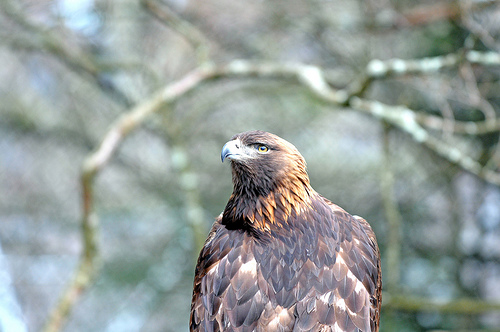
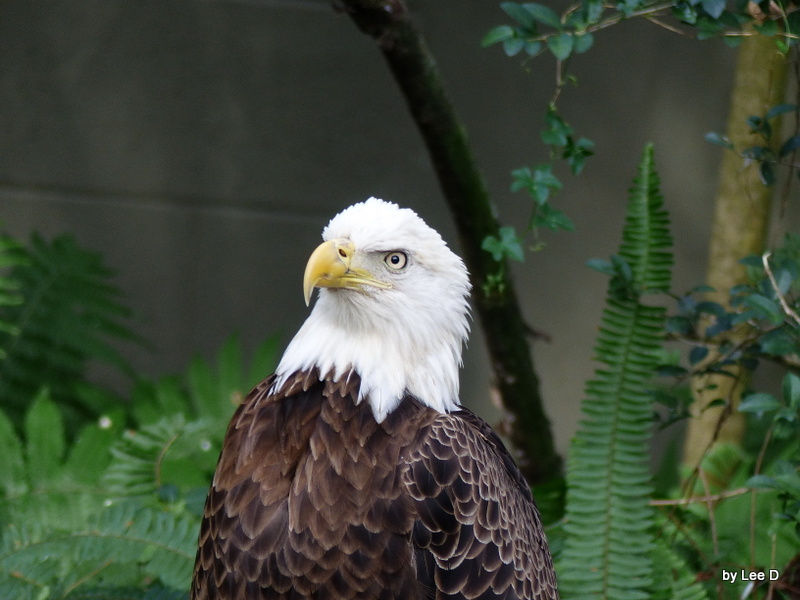
Bald Eagle Lowry Park Zoo 12-31-15 by Lee

An apology to those of our readers who have encountered a “404 Page Not Found” error. For some reason, there are many broken links on this Blog. I have been noticing them lately, especially links to photos. Yikes!! There are hundreds of them. There is no clue as to where they flew off to. Most of them are links to bird photos. The birds must have just flown the coop. :)  [Maybe Hurricane Irma blew them away.]

“And out of the ground the LORD God formed every beast of the field, and every fowl of the air; and brought them unto Adam to see what he would call them: and whatsoever Adam called every living creature, that was the name thereof.” (Genesis 2:19 KJV)

Actually, this is going to take much time working behind the scenes to replace the photos, once the broken “links” are discovered. There is a program online to scan your pages for missing links. As many of you know, we have tried to find a photo of all the living birds the Lord created. With over 10,600 birds, it has been a challenge finding these photos so that readers can click the links to see that particular bird.

Bald Eagle (Haliaeetus leucocephalus) Flying by Aesthetic Photos

Bald Eagle (Haliaeetus leucocephalus) Flying by Aesthetic Photos

That program scanned just the Accipitridae – Kites, Hawks and Eagles page and found 111 broken links. There are 256 birds in that Family. It will take hours just to fix THAT page. Pray that not every Family of birds are missing photos. Many other pages link to the same bird. The task is daunting, but, Lord Willing, the photo links can be repaired in a reasonable time period.

“Knowing this, that the trying of your faith worketh patience. But let patience have her perfect work, that ye may be perfect and entire, wanting nothing. If any of you lack wisdom, let him ask of God, that giveth to all men liberally, and upbraideth not; and it shall be given him. But let him ask in faith, nothing wavering. For he that wavereth is like a wave of the sea driven with the wind and tossed.” (James 1:3-6 KJV)

*** If you encounter a “404 Page Not Found” or another type of problem, please either leave a comment on that page or post, or contact me at Lee@Leesbird.com to leave a note.***

Your help will be greatly appreciated.

P.S. As of last week, the Master of Christian Education [M.CEd.] degree I have been working on was finally finished!!! Yeah!! Not bad for a 74-year-old. :) The Lord is Gracious! The degree was taken online from the School of Biblical Apologetics – Institute for Creation Research. I highly recommend considering taking courses from I.C.R. More about this in another post. [I only mentioned finishing because I’ll have more time to work on these broken links.]

Stay Tuned!!

Blue-gray Tanagers And Your Teenager


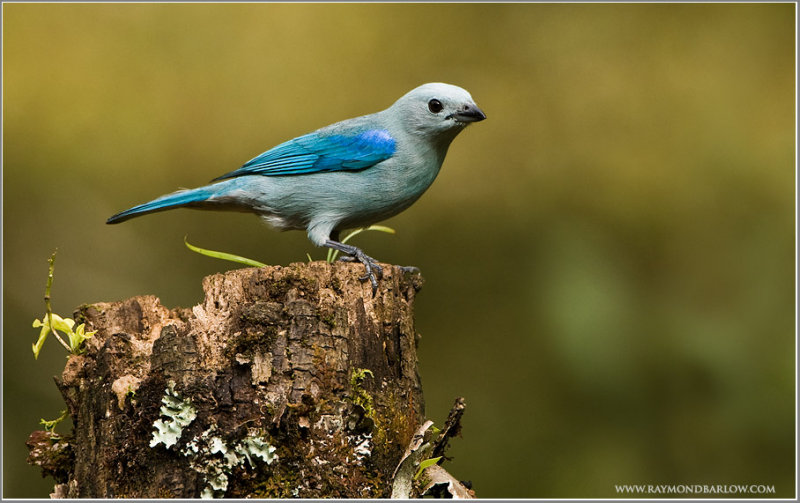
Blue-gray Tanager (Tangara azulada) ©Colombia Wildlife – Oswaldo Cortes

“For thou art my hope, O Lord GOD: thou art my trust from my youth.” (Psalms 71:5 KJV)

While watching this video of the Blue-gray Tanager youngster, my thoughts went to those of you who have teenagers. Many tell me that they, the teenagers, are difficult to fill up. Enjoy the video knowing that you are not alone in God’s Creation. Even the birds have to deal with filling up their offspring. :0)

Blue-gray Tanagers (Thraupis episcopus) are members of the Thraupidae Family. The tanager is a medium-sized South American songbird whose song is a squeaky twittering, interspersed with tseee and tsuup call notes. Its range is from Mexico south to northeast Bolivia and northern Brazil, all of the Amazon Basin, except the very south. It has been introduced to Lima (Peru). On Trinidad and Tobago, this bird is called blue jean.

Blue-grey Tanager (Thraupis episcopus) Reinier Munguia

The Blue-gray Tanager is 16–18 cm (6.3–7.1 in) long and weighs 30–40 g (1.1–1.4 oz). Adults have a light bluish head and underparts, with darker blue upperparts and a shoulder patch colored a different hue of blue. The bill is short and quite thick. Sexes are similar, but the immature is much duller in plumage.

The breeding habitat is open woodland, cultivated areas and gardens. The Blue-gray Tanager lives mainly on fruit, but will also take some nectar and insects. This is a common, restless, noisy and confiding species, usually found in pairs, but sometimes small groups. It thrives around human habitation, and will take some cultivated fruit like papayas (Carica papaya).

(Information from Wikipedia)

Blue-grey Tanager (Thraupis episcopus) by Raymond Barlow

Blue-gray Tanager (Thraupis episcopus) by Raymond Barlow

“O God, thou hast taught me from my youth: and hitherto have I declared thy wondrous works.” (Psalms 71:17 KJV)

Thraupidae – Tanagers and Allies Family


BEMA Birds by Emma Foster

BEMA Birds by Emma Foster

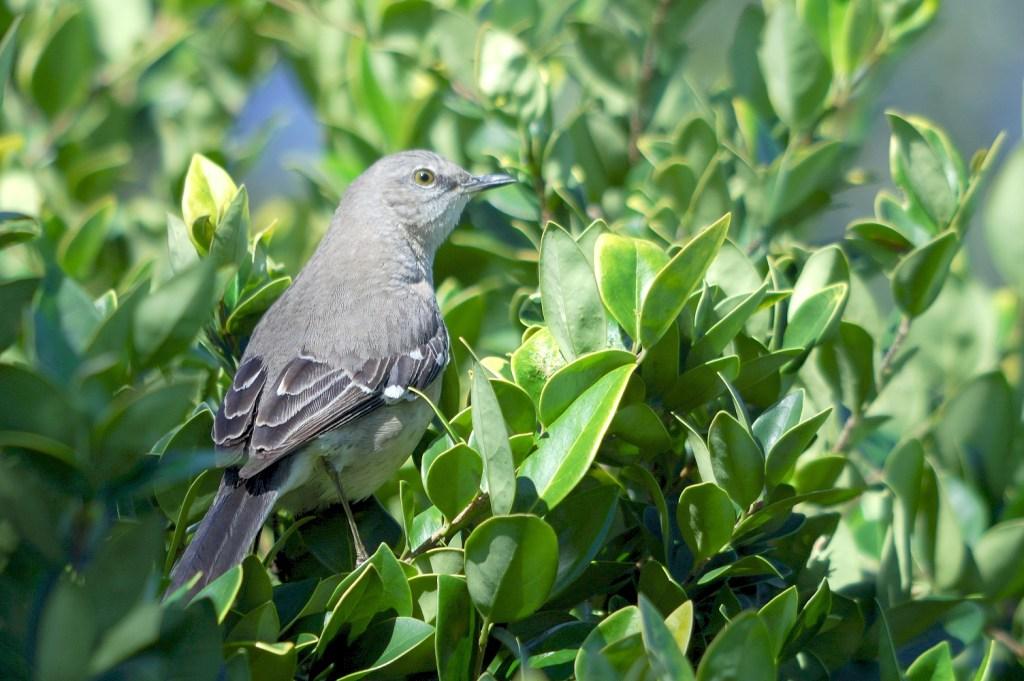
Northern Mockingbird (Mimus polyglottos) By Dan'sPix

Northern Mockingbird (Mimus polyglottos) By Dan’sPix

Once there was a mockingbird named Carl who was a member of BEMA, the Bird Emergency Management Agency. Whenever a hurricane or other natural disaster was about to occur, Carl was in charge of helping other birds find a place to hide. Because he and several other birds that worked for BEMA lived in Florida, they were mainly in charge of helping other birds fly north.

One day Carl flew to a meeting that took place in a hollowed oak tree in the central area of Florida. Many of the birds that lived in Florida and were members of BEMA attended the meeting because of rumors that a hurricane was growing in the Atlantic Ocean. At the meeting, Carl received an alert that a hurricane was nearing Florida and it was going to cross the state.

Carl and many other birds who had come to the meeting were sent to different areas of Florida in order to hide birds from the weather and keep them safe. Most of them would fly north, and Carl and the other birds would help lead them to different places that BEMA thought safe.

Carl quickly flew down to the south of Florida after hearing that the hurricane was estimated to come in three days. He landed in the Florida Keys in an area where he had been assigned and where he knew there would be many birds ready to relocate for the storm. As Carl traveled down south, the winds began to pick up, making it more difficult for him to fly.

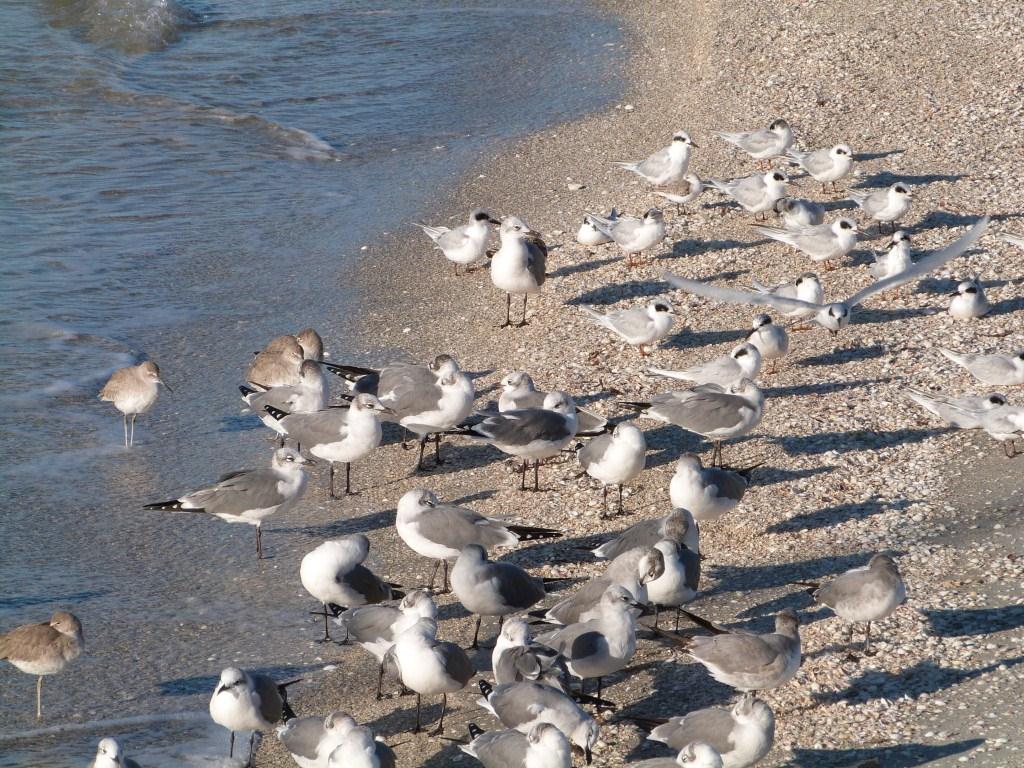
Willit - Laughing Gull - Forster's Tern at Ft DeSoto 11-22-12 Thanksgiving

Willit – Laughing Gull – Forster’s Tern at Ft DeSoto 11-22-12 Thanksgiving

When Carl arrived at the Keys, a large group of birds had gathered near a hotel. Most of them were seagulls and ibises. Carl quickly explained that they were heading north and that they had to stay together while flying. He told the nervous birds that he would guide them back to where they lived once the hurricane had passed. Before they took off, Carl took a quick head count and counted fifteen birds in his group.

Carl immediately began flying north, the other birds flying behind him. He made sure they flew in a formation that made them fly with the wind to make it easier for the smaller birds. The winds were moving faster now, and the rain was making it hard for some of the birds to fly.

After a few hours, Carl flew lower toward an area with many bushes and trees. The group of birds landed underneath the bushes to keep safe and warm. Carl took another head count, but realized that there were only fourteen birds that were now hiding in the bushes. Just as Carl was about to turn back and look for the other seagull, the rain began coming down hard, so Carl was forced to take shelter with the other birds.

The rain lasted for a few days. Every now and then Carl would come out of the bushes to search for something to eat for him and the other birds, finding worms on the ground because of the rain. Eventually, the stormed passed over them, and even though it was still raining Carl was able to take the other birds back to the Keys.

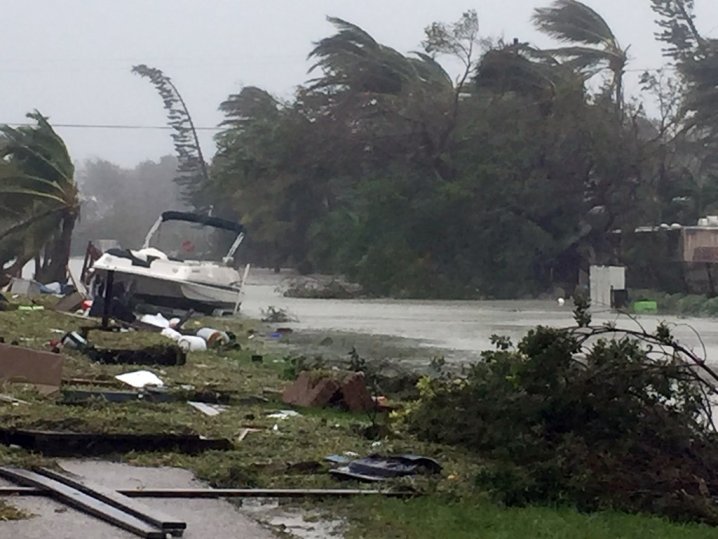
Damage in Keys ©Peninsula Qatar

When Carl and the other birds came back they found their nests and many other homes destroyed, but they knew they would be able to rebuild their nests with time. They mourned the loss of the one seagull that didn’t make it with them, holding a small funeral by where the bird’s nest used to be. Afterward, Carl said goodbye and flew back home. The next day BEMA held another meeting that laid out a plan to help the birds fix their homes and get rid of the debris that was now scattered everywhere.


Thanks, Emma. It is great to know that the birds have a BEMA organization to help them to recover after hurricanes. Emma, like the rest of us here in Central Florida, is aware of the help FEMA provides for humans. When Hurricane Irma came up through the state, from Key West up past us, many have had repairs to perform. Also, like the seagull that didn’t survive, there are many reports of birds and other critters that lost their lives in the hurricane.

“Are not two sparrows sold for a copper coin? And not one of them falls to the ground apart from your Father’s will.” (Matthew 10:29 NKJV)

I know the Lord, when He created birds, gave them the resilience to rebuild and continue to multiply.

Then God said, “Let the waters abound with an abundance of living creatures, and let birds fly above the earth across the face of the firmament of the heavens.” So God created great sea creatures and every living thing that moves, with which the waters abounded, according to their kind, and every winged bird according to its kind. And God saw that it was good. And God blessed them, saying, “Be fruitful and multiply, and fill the waters in the seas, and let birds multiply on the earth.” (Genesis 1:20-22 NKJV)


More of Emma’s Stories

*


Avian And Attributes – Willing

Avian And Attributes – Willing

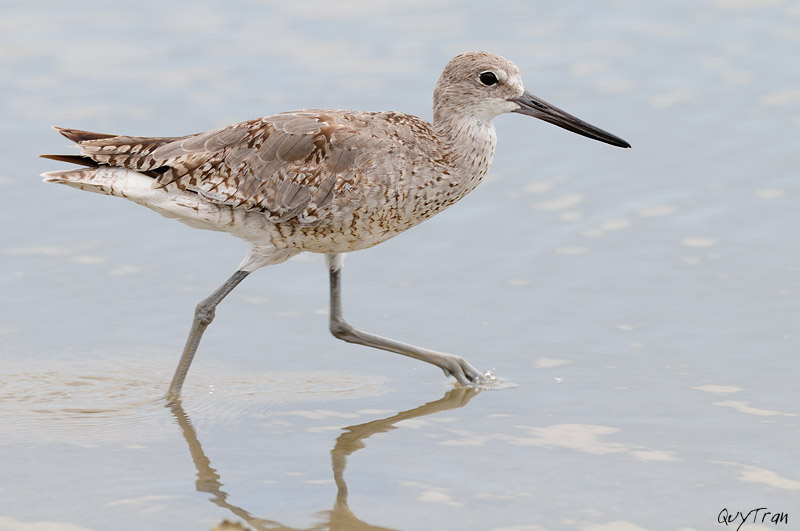
Willet (Tringa semipalmata) by Quy Tran

“Wherein God, willing more abundantly to shew unto the heirs of promise the immutability of his counsel, confirmed it by an oath:” (Hebrews 6:17 KJV)

The Lord is not slack concerning his promise, as some men count slackness; but is longsuffering to us-ward, not willing that any should perish, but that all should come to repentance.
(2 Peter 3:9 KJV)


Avian and Attributes – Willing

WILLING, ppr.
1. Determining; resolving; desiring.
2. Disposing of by will.
WILLING, a.

1. Free to do or grant; having the mind inclined; disposed; not averse. Let every man give, who is able and willing.
2. Pleased; desirous.
Felix, willing to show the Jews a pleasure. Acts 24.
3. Ready; prompt.
He stoopd with weary wings and willing feet.
4. Chosen; received of choice or without reluctance; as, to be held in willing chains.
5. Spontaneous.
6. Consenting.


Eastern Willet by Jim Fenton

Willet (Tringa semipalmata)

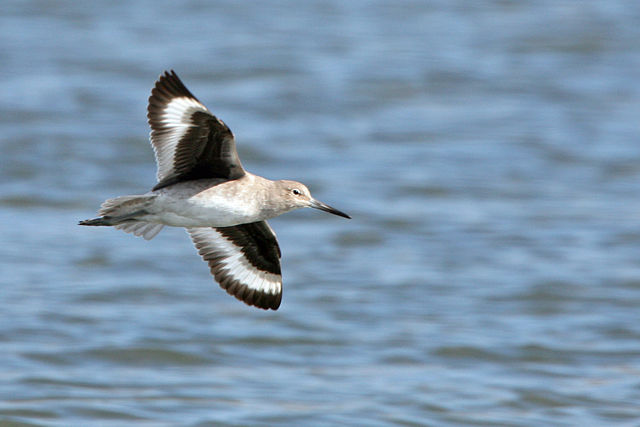
The Willet (Tringa semipalmata), formerly in the monotypic genus Catoptrophorus as Catoptrophorus semipalmatus, is a large shorebird in the sandpiper family. It is a relatively large and robust member sandpiper, and is the largest of the species called “shanks” in the genus Tringa. Its closest relative is the lesser yellowlegs, a much smaller bird with a very different appearance apart from the fine, clear, and dense pattern of the neck, which both species show in breeding plumage. It breeds in North America and the West Indies and winters in southern North America, Central America, the West Indies and South America.

The Willet’s name is onomatopoeic and refers to it loud peircing “pill-will-willet” territorial song., which is higherpicjed and repeated at a faster rate in Eastern willets than in Western birds. Other calls include a predator response call given by breeding birds which is a repeated, staccato “kleep“, while non breeding birds alarms include a high, pitched anxious “kip-kip=viek” call and a “kreei” call. They also have a distinctive call when crossing another willet’s territory and this “klay-dir” call is also used as a contact call when willets are migrating

Willet (Tringa semipalmata) ©WikiC

(Scolopacidae – Sandpipers, Snipes Family) (Willet – Wikipedia)


More Avian and Attributes

Birds whose first name starts with “W”

Good News

*
[Definitions from Webster’s Dictionary of American English (1828), unless noted. Bird info from Wikipedia plus.]

Birds Taking A Sabbath Rest? – from Creation Moments

DO BIRDS TAKE A SABBATH REST? from Creation Moments

Re-posted from Creation Moments

“And God blessed the seventh day, and sanctified it: because that in it he had rested from all his work which God created and made.” Genesis 2:3

Myles Willard is an avid bird watcher, award-winning nature photographer and long-time friend of Creation Moments. Myles has given us hundreds of breathtaking nature photos, one of which accompanies the printed transcript of today’s program at the Creation Moments website.

The reason I’m telling you about him today is because of an unexpected discovery he made while looking out the window of his home in Michigan. Each fall he meticulously tracks and logs the number of migrating warblers that stop by for a rest in the big cedar tree in his yard. After tracking the activity of over 1,500 warblers for 18 years, he was surprised to see a statistically significant dip in the number of birds stopping by that occurred on every seventh day!

Did these migrating birds have a built-in instinct that somehow made them follow the biblical principle of a Sabbath rest? We are not saying, of course, that the warblers were knowingly obeying God’s fourth commandment. However, if God worked for six days and then rested on the seventh, why would it be hard to believe that God gave these birds a cycle of six days of work followed by a seventh day of rest?

According to the account given in the book Inspired Evidence: Only One Reality, “It would seem that Myles Willard, science teacher, nature photographer and bird watcher, has found and documented such a pattern.”

Prayer:
Oh Lord, thank You for doing all the work necessary for our salvation so we can rest securely in the knowledge that – by grace through faith – we can have eternal life! Amen.
Notes:
Myles Willard, The Rest Is History, monograph, 2008. Cited in Inspired Evidence: Only One Reality by Julie Von Vett and Bruce Malone, April 29 (Search for the Truth Publications, 2012). Photo: One of Myles Willard’s superb photos. Used with permission.

©Creation Moments 2017 – Used with permission

See:

More Interesting Things from Creation Moments

*

Avian And Attributes – Song

Avian And Attributes – Song

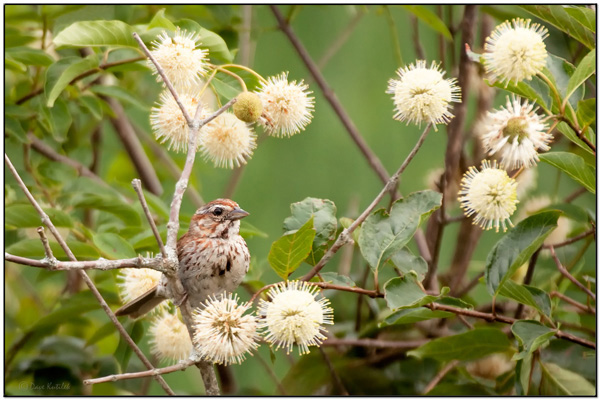
Song Sparrow in white flowers by Daves BirdingPix

Song Sparrow in white flowers by Daves BirdingPix

“The LORD is my strength and song, and he is become my salvation: he is my God, and I will prepare him an habitation; my father’s God, and I will exalt him.” (Exodus 15:2 KJV)

Behold, God is my salvation; I will trust, and not be afraid: for the LORD JEHOVAH is my strength and my song; he also is become my salvation.” (Isaiah 12:2 KJV)


Avian and Attributes – Song

SONG, n.
1. In general, that which is sung or uttered with musical modulations of the voice, whether of the human voice or that of a bird.
2. A little poem to be sung, or uttered with musical modulations; a ballad. The songs of a country are characteristic of its manners. Every country has its love songs, its war songs, and its patriotic songs.
3. A hymn; a sacred poem or hymn to be sung either in joy or thanksgiving, as that sung by Moses and the Israelites after escaping the dangers of the Arabian gulf and of Pharaoh; or of lamentation, as that of David over the death of Saul and Jonathan. Songs of joy are represented as constituting a part of heavenly felicity. [edited]

“Yet the LORD will command his lovingkindness in the daytime, and in the night his song shall be with me, and my prayer unto the God of my life.” (Psalms 42:8 KJV)


Song Sparrow (Melospiza melodia) by J Fenton

Song Sparrow

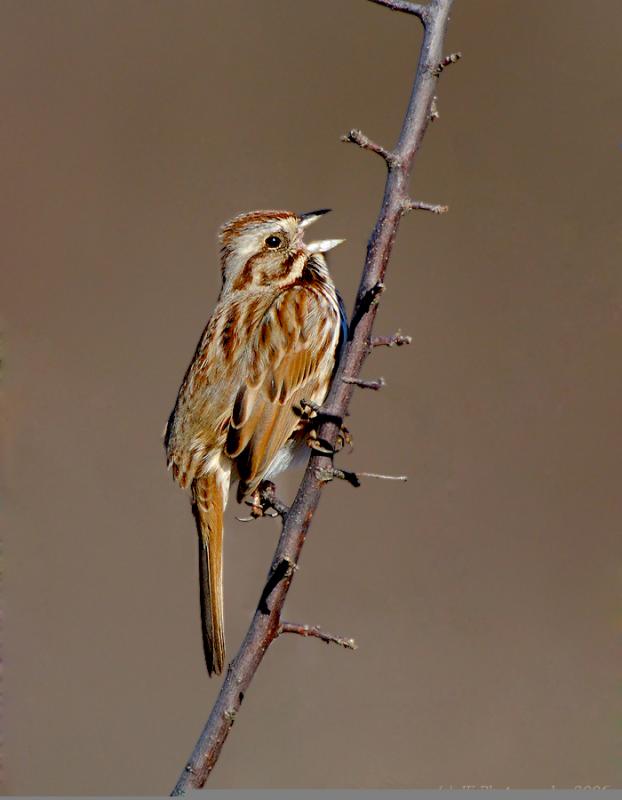
The Song Sparrow (Melospiza melodia) is a medium-sized American sparrow. Among the native sparrows in North America, it is easily one of the most abundant, variable and adaptable species.

Though a habitat generalist, the Song sparrow favors brushland and marshes, including salt marshes, across most of Canada and the United States. They also thrive in human dominated areas such as in suburbs, agricultural fields, and along roadsides. Permanent residents of the southern half of their range, northern populations of the song sparrow migrate to the southern United States or Mexico during winter and intermingle with the native, non-migratory population. The song sparrow is a very rare vagrant to western Europe, with a few recorded in Great Britain and Norway.

These birds forage on the ground, in shrubs or in very shallow water. They mainly eat insects and seeds. Birds in salt marshes may also eat small crustaceans. They nest either in a sheltered location on the ground or in trees or shrubs.

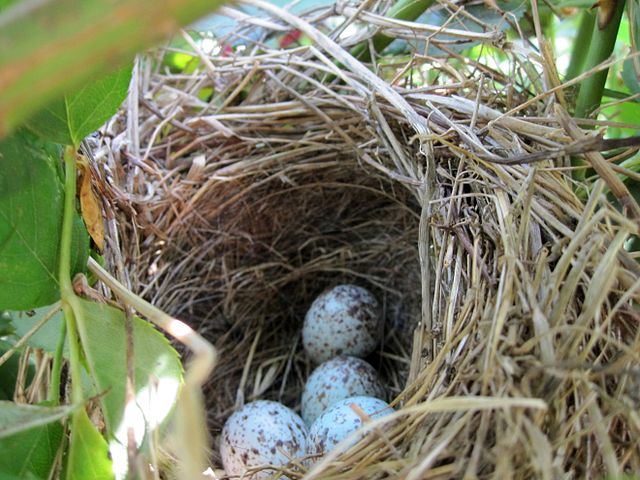
Song Sparrow (Melospiza melodia) Nest ©WikiC

The sparrow species derives it name from its colorful repertoire of songs. Enthusiasts report that one of the songs heard often in suburban locations closely resembles the opening four notes of Ludwig van Beethoven’s Symphony No. 5. The male uses a fairly complex song to declare ownership of its territory and attract females.

Singing itself consists of a combination of repeated notes, quickly passing isolated notes, and trills. The songs are very crisp, clear, and precise, making them easily distinguishable by human ears

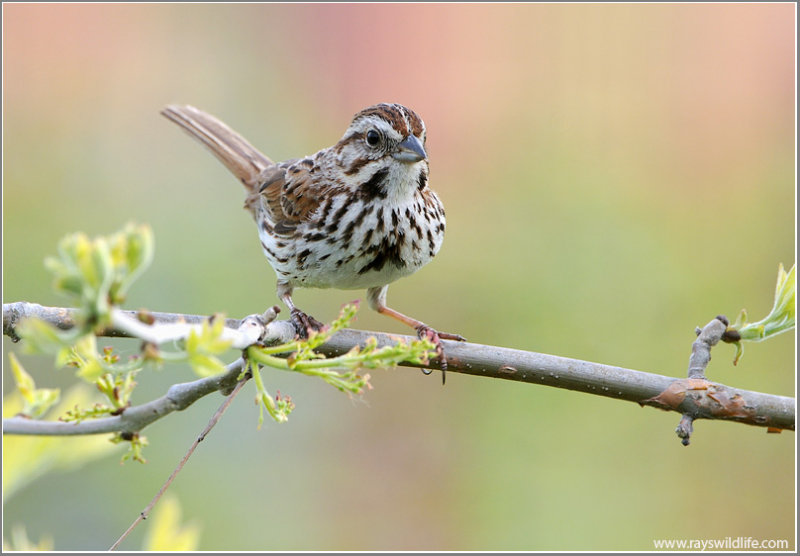
Song Sparrow by Ray

Song Sparrow by Ray

(Emberizidae – Buntings, New World Sparrows & Allies Family) (Song Sparrow – Wikipedia)


More Avian and Attributes

Birds whose first name starts with “S”

Good News

*
[Definitions from Webster’s Dictionary of American English (1828), unless noted. Bird info from Wikipedia plus.]

From the Archives – Interesting Things – Dragonflies

From the Archives – Interesting Things – Dragonflies

*

Here is an interesting video fromYouTube.com -Exploration Films about the Dragonflies. It is very interesting.

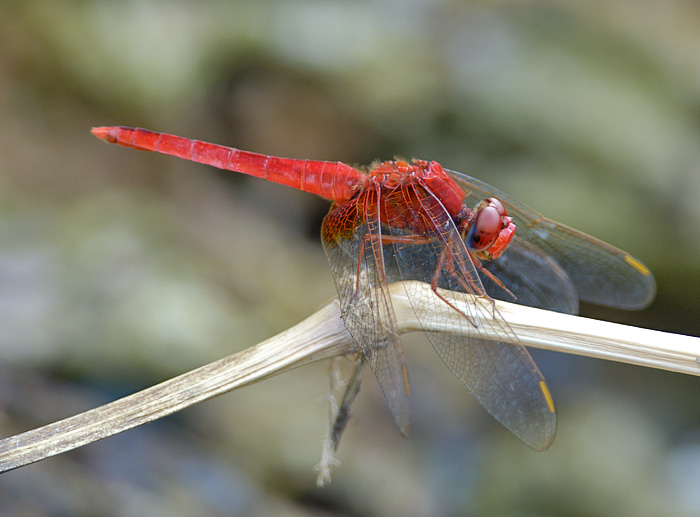
Dragonfly by Phil Kwong

Dragonfly by Phil Kwong

Learning from the Dragonfly by Creation Moments

“Scientists studying the dragonfly are learning even more secrets of flight. Our best high-performance aircraft can barely lift themselves off the ground. However, the dragonfly can lift 15 times his own weight into the air.”

The Amazing Mosquito Hawk by Creation Moments

But ask now the beasts, and they shall teach thee; and the fowls of the air, and they shall tell thee: Or speak to the earth, and it shall teach thee: and the fishes of the sea shall declare unto thee. Who knoweth not in all these that the hand of the LORD hath wrought this?
(Job 12:7-9 KJV)
More articles from Creation Moments:

100 Foot Ferns “dragonflies had wingspans of six feet”

The Pre-Flood Atmosphere “dragonflies were the size of hawks”

From Creation Ministries International:

“Dragonflies

Dragonflies are probably the most beautiful of the flying insects. There are about 4,500 different varieties. They begin their life in water, where eggs hatch into rather ugly brown nymphs. The time spent living in water varies from a few weeks to several years, but for all the varieties the day comes when the nymph suddenly has the urge to climb out of the water. It sits for a while at the top of a piece of grass until its skin splits open and out comes a dragonfly! After waiting for its wings to become firm and dry, the dragonfly flies away, its lovely colours glinting in the sunshine.

Although they are very small, dragonflies are wonderfully designed for flying. Their two pairs of wings are very light, but strengthened by a network of tiny veins, which not only carry blood fluid to keep the wings stiff, but also nerves and oxygen. Some dragonflies beat their wings 40 times in one second! Dragonflies are like tiny helicopters—they can even fly backwards! In fact, Igor Sikorsky, who first designed helicopters, for the idea from watching dragonflies.

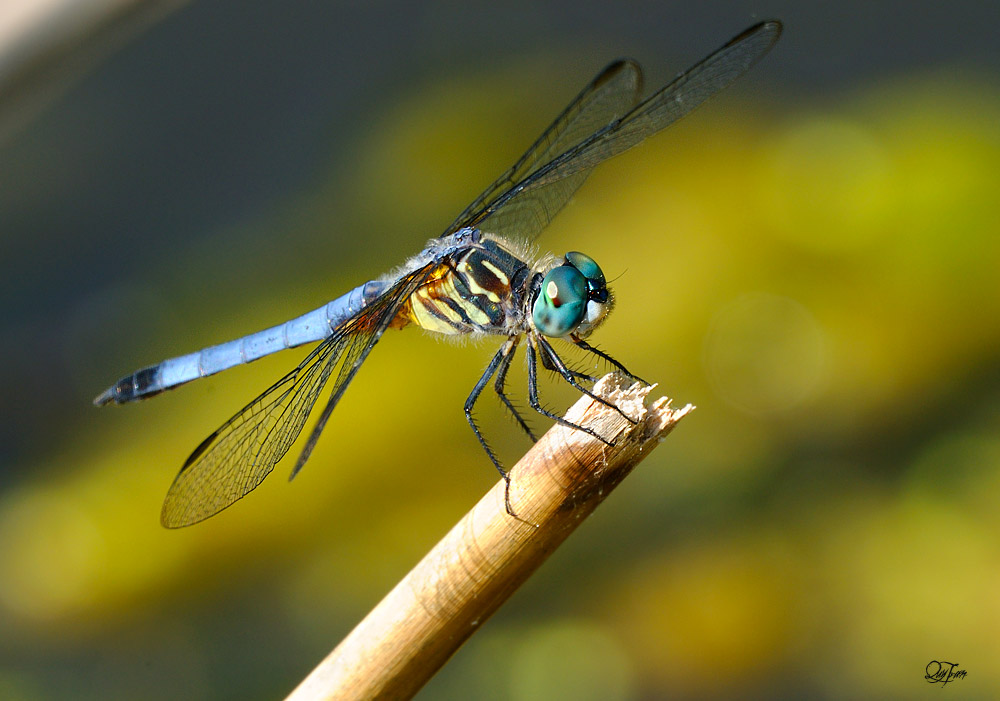
Dragonfly by QuyTran

Another wonderful thing about dragonflies is their eyes. Each pair of eyes is actually made up of as many as 30,000 separate eyes, each with its own lens! This enables the insect to see what is happening over a wide area, and spot every tiny movement without moving its head.

The supposedly oldest fossil dragonflies are just like dragonflies are now, except that they were much larger—75 centimeters (2.5 feet) from wing-tip to wing-tip! So there is no evidence that they evolved from ancestors without wings. And surely those amazing eyes did not evolve? Dragonflies are another of the many wonders of God’s creation!” From Our World (Answers for Kids.)

Astonishing acrobatics – dragonflies – by Johathan Sarfati

(Updated 4/29/09)

Dragonflies and fighter pilots – what can we learn? by Ken Ham

*
Original article
This has been the most viewed non-avian article on our blog.

From The Archives – Birds of the Bible – Eagle’s Renewal

Birds of the Bible – Eagle’s Renewal

Bless the LORD, O my soul, And forget not all His benefits: Who forgives all your iniquities, Who heals all your diseases, Who redeems your life from destruction, Who crowns you with lovingkindness and tender mercies, Who satisfies your mouth with good things, So that your youth is renewed like the eagle’s. (Psalms 103:2-5 NKJV)

Bald Eagle (Haliaeetus leucocephalus) by AestheticPhotos

The Eagle is an interesting bird and I have written about them before. In the King James Version of the Bible, an eagle is mentioned in 34 verses. So, there will be future articles about the eagle also.

The interest of this article is the renewing of the eagle. In Psalms 103:5 (quoted above), your youth is renewed like the eagle’s. What exactly does that mean? Also, in Isaiah 40:31, strength is renewed and “shall mount up with wings as eagles.”

But they that wait upon the LORD shall renew their strength; they shall mount up with wings as eagles; they shall run, and not be weary; and they shall walk, and not faint. (Isaiah 40:31 KJV)

Many articles can be found on the internet about an eagle going off and plucking its feathers and not being able to fly for about five months. The image has even been added that the beak and claws are knocked off and then grow back during that time, giving them another 10 or so more years to their life. I have been trying to find proof of that, and am not finding it. Most Eagle authorities state that that would not happen, because the bird would die during that time with no flight feathers or beak or claws.

Bald Eagle (Haliaeetus leucocephalus)Grandfather Eagle by PastorBBC

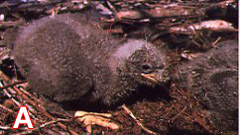
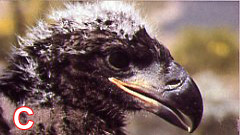
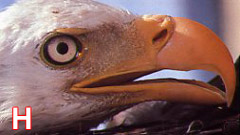
If those facts are true, then what is meant by God’s Word about the eagle? I believe God’s Word is true, so there has to be an explanation of it. From the Southwestern Bald Eagle Management I found an interesting chart that shows the different stages of plumage (feathers) as an eagle ages.  They said, “In their five year development to adulthood, bald eagles go through one of the most varied plumage changes of any North American bird. During its first four weeks of life, an eaglet’s fluffy white down changes to a gray wooly down. At about five weeks, brown and black feathers begin to grow. It becomes fully feathered at 10 weeks of age. In its first year, the mostly dark-colored juvenile can often be mistaken as a golden eagle. However, the bald eagle progressively changes until it reaches adult plumage at five years. Notice in the pictures how its dark eye lightens throughout its first four years of life until it becomes yellow. Also, see how its beak changes form gray-black to a vibrant yellow.

ald Eagle (Haliaeetus leucocephalus) by AestheticPhotos

It is believed that the darker, more mottled plumage of a young eagle serves as camouflage, while the white head and tail announce that it is of breeding age.”

That to me sounds a lot like, “So that your youth is renewed like the eagle’s.” As the eagle goes through the different stages of its life, the new feathers are graciously provided by a Creator that sees to the needs of His creation by having designed those features to renew as it matures.

The Lord provides for renewal for His children as they mature. The following verses tell of a renewed right spirit, mind, spirit of your mind, and knowledge:

Create in me a clean heart, O God; and renew a right spirit within me. (Psalms 51:10 KJV)
And be not conformed to this world: but be ye transformed by the renewing of your mind, that ye may prove what is that good, and acceptable, and perfect, will of God. (Romans 12:2 KJV)
And be renewed in the spirit of your mind; (Ephesians 4:23 KJV)
And have put on the new man, which is renewed in knowledge after the image of him that created him: (Colossians 3:10 KJV)

(Update 11/2/11) Here is another possible explaination about this topic. It might be a vulture instead of an eagle. See: http://www.thewonderofbirds.com/griffon-vulture/bible.htm)
*


*** From the Archives ***

This is the first of “From the Archives.” We have decided to look back over the years and bring back some of the most popular articles. This post has had 114 remarks so far and was originally posted on 

[We have advanced in our layout of the blog over the year. The Birds of the Bible articles were the original reason for Lee’s Birdwatching Adventures being launched.


Avian And Attributes – Judge

Avian And Attributes – Judge

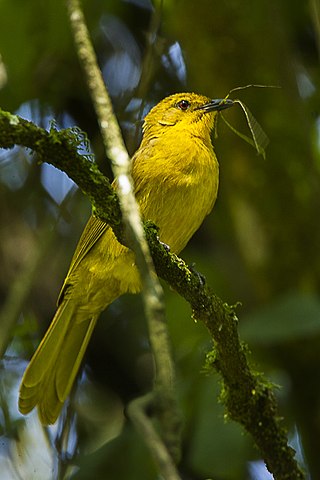
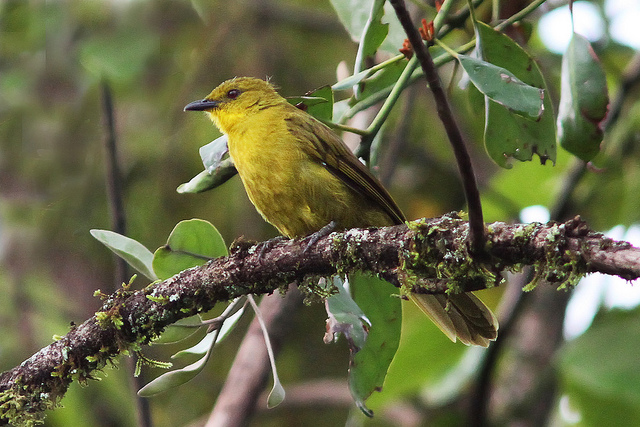
Joyful Greenbul (Chlorocichla laetissima) WikiC

“A Psalm of David. Judge me, O LORD; for I have walked in mine integrity: I have trusted also in the LORD; therefore I shall not slide.” (Psalms 26:1 KJV)


Avian and Attributes – Judge

JUDGE, n. [L. judex, supposed to be compounded of jus, law or right, and dico, to pronounce.]

1. A civil officer who is invested with authority to hear and determine causes, civil or criminal, between parties, according to his commission; as the judges of the king’s bench, or of the common pleas; judges of the supreme court, of district courts, or of a county court. The judge of a court of equity is called a chancellor.

2. The Supreme Being.

Shall not the judge of all the earth do right? Gen 18.

That be far from thee to do after this manner, to slay the righteous with the wicked: and that the righteous should be as the wicked, that be far from thee: Shall not the Judge of all the earth do right?” (Genesis 18:25 KJV)

3. One who presides in a court of judicature.

4. One who has skill to decide on the merits of a question, or on the value of any thing; one who can discern truth and propriety.

5. In the history of Israel, a chief magistrate, with civil and military powers. The Israelites were governed by judges more than three hundred years, and the history of their transactions is called the book of Judges.

JUDGE, v.i. [L. judico.]

1. To compare facts or ideas, and perceive their agreement or disagreement, and thus to distinguish truth from falsehood.

Judge not according to the appearance John 7.

3. To hear and determine, as in causes on trial; to pass sentence. He was present on the bench, but could not judge in the case.

The Lord judge between thee and me. Gen 16:5.

JUDGE, v.t. To hear and determine a case; to examine and decide.

1. To try; to examine and pass sentence on.

Take ye him and judge him according to your law. John 18.

God shall judge the righteous and the wicked. Eccl 3.

I said in mine heart, God shall judge the righteous and the wicked: for there is a time there for every purpose and for every work.” (Ecclesiastes 3:17 KJV)

2. Rightly to understand and discern.

3. To censure rashly; to pass severe sentence.

Judge not, that ye be not judged. Mat 7.

5. To rule or govern.

The Lord shall judge his people. Heb 10.

For we know him that hath said, Vengeance belongeth unto me, I will recompense, saith the Lord. And again, The Lord shall judge his people. It is a fearful thing to fall into the hands of the living God.” (Hebrews 10:30-31 KJV)

6. To doom to punishment; to punish.

I will judge thee according to thy ways. Ezek 7.


Joyful Greenbul (Chlorocichla laetissima) Flickr Dave Curtis

Joyful Greenbul

The Joyful Greenbul (Chlorocichla laetissima), or joyful bulbul, is a species of songbird in the bulbul family, Pycnonotidae. It is found in east-central Africa. Its natural habitats are boreal forests and subtropical or tropical moist montane forests. 

The bulbuls are a family, Pycnonotidae, of medium-sized passerine songbirds. Many forest species are known as greenbuls, brownbuls, leafloves, or bristlebills. The family is distributed across most of Africa and into the Middle East, tropical Asia to Indonesia, and north as far as Japan. A few insular species occur on the tropical islands of the Indian Ocean There are over 150 species in 27 genera. While some species are found in most habitats, the African species are predominantly found in rainforest whilst rainforest species are rare in Asia, instead preferring more open areas.  (Pycnonotidae – Bulbul Family)  (Wikipedia)

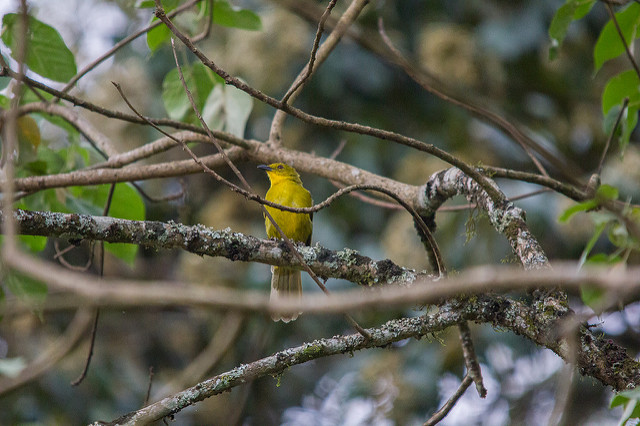
Joyful Greenbul (Chlorocichla laetissima) Flickr Peter Steward


More Avian and Attributes

Birds whose first name starts with “J”

Good News

*
[Definitions from Webster’s Dictionary of American English (1828), unless noted. Bird info from Wikipedia plus.]

Avian And Attributes – Helper

Avian And Attributes – Helper

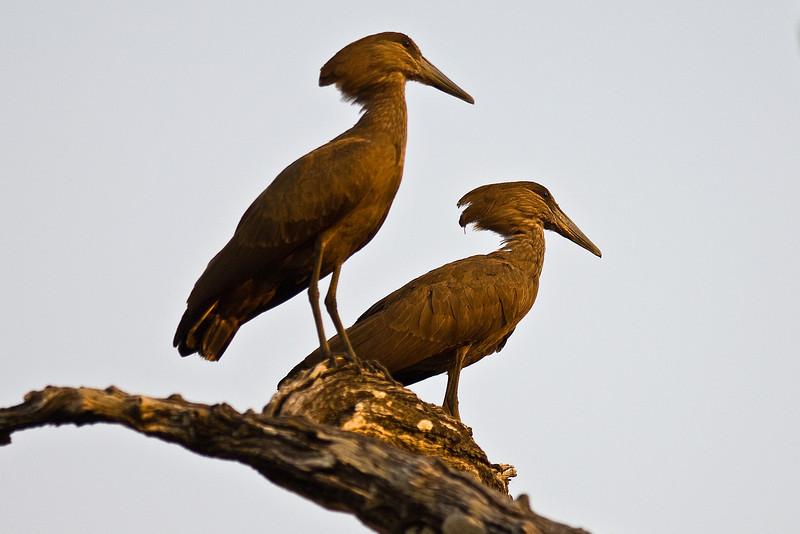
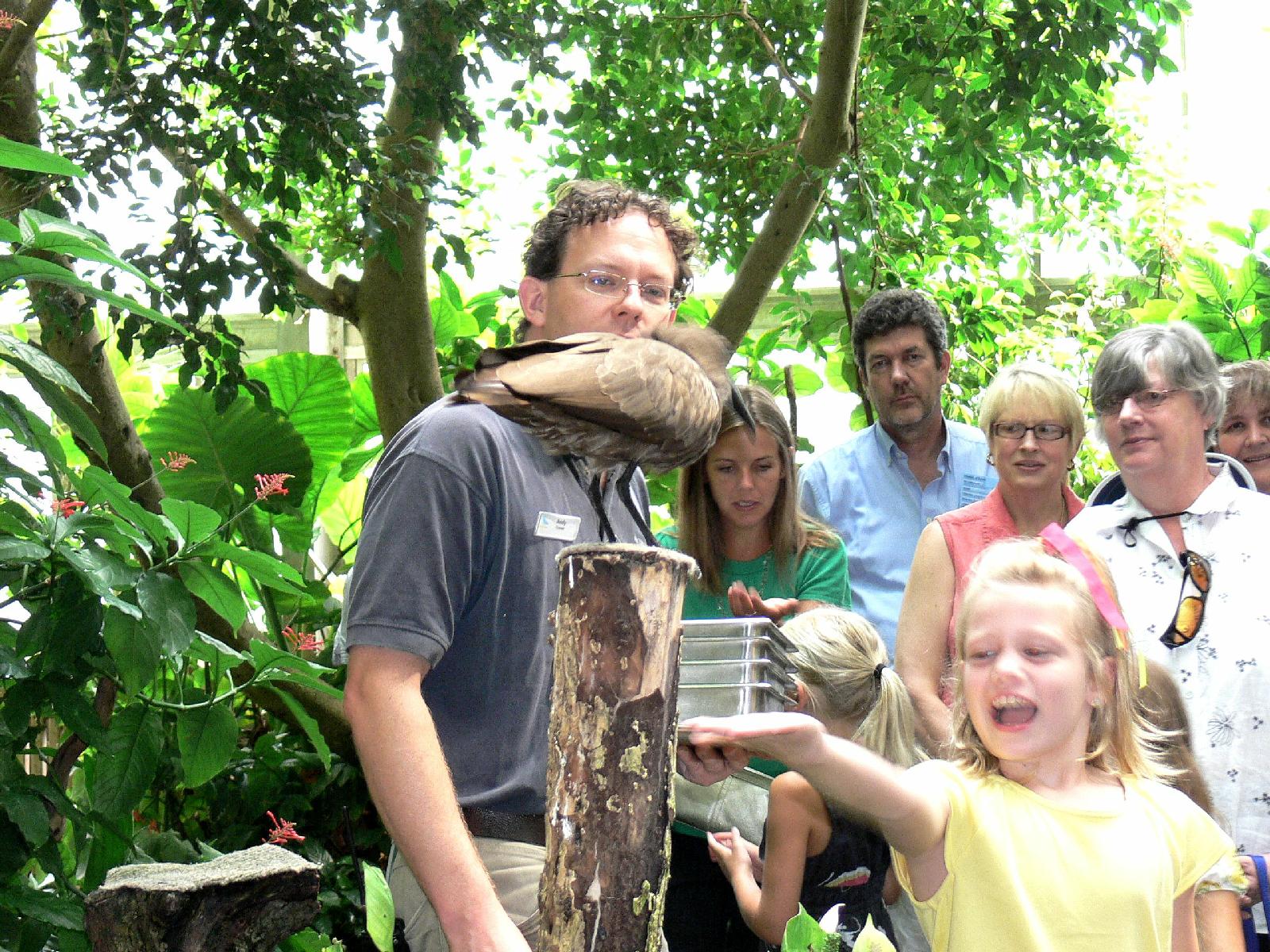
Hamerkop at National Aviary by Dan

“So that we may boldly say, The Lord is my helper, and I will not fear what man shall do unto me.” (Hebrews 13:6 KJV)

“Behold, God is mine helper: the Lord is with them that uphold my soul.” (Psalms 54:4 KJV)


Avian and Attributes – Helper

HELP’ER, n. One that helps, aids or assists; an assistant; an auxiliary.

1. One that furnishes or administers a remedy.
Compassion–is oftentimes a helper of evils.

“For he shall deliver the needy when he crieth; the poor also, and him that hath no helper.” (Psalms 72:12 KJV)

2. One that supplies with any thing wanted; with to.
“Hear, O LORD, and have mercy upon me: LORD, be thou my helper.” (Psalms 30:10 KJV)

3. A supernumerary servant.


Hamerkop (Scopus umbretta) by Africaddict

Hamerkop (Scopus umbretta)

The Hamerkop (Scopus umbretta), is a medium-sized wading bird. It is the only living species in the genus Scopus and the family Scopidae. The shape of its head with a long bill and crest at the back is reminiscent of a hammer, which has given this species its name. It ranges from Africa, Madagascar to Arabia, in wetlands of a wide variety, including estuaries, lakesides, fish ponds, riverbanks and rocky coasts in Tanzania. The Hamerkop, which is a sedentary bird that often show local movements, is not globally threatened and is locally abundant in Africa and Madagascar. (Scopidae – Hamerkop Family)

Hamerkop (Scopus umbretta) at National Aviary by Lee


More Avian and Attributes

Birds whose first name starts with “H”

Good News

*
[Definitions from Webster’s Dictionary of American English (1828), unless noted. Bird info from Wikipedia plus.]

Avian And Attributes – Gracious

Avian And Attributes – Gracious

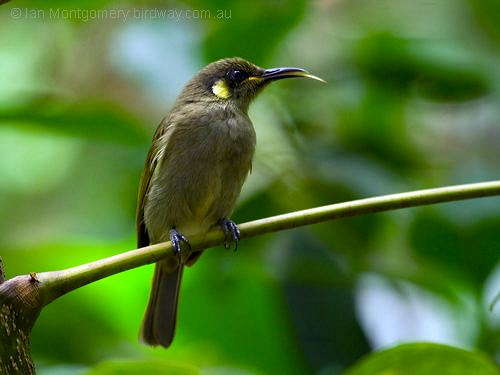
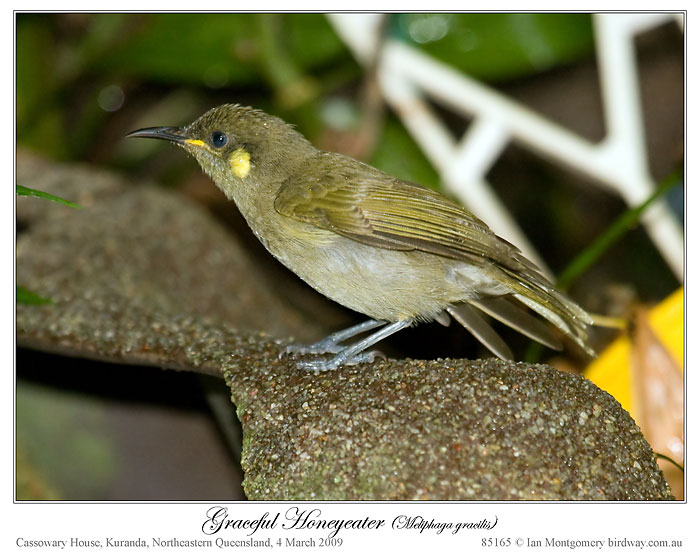
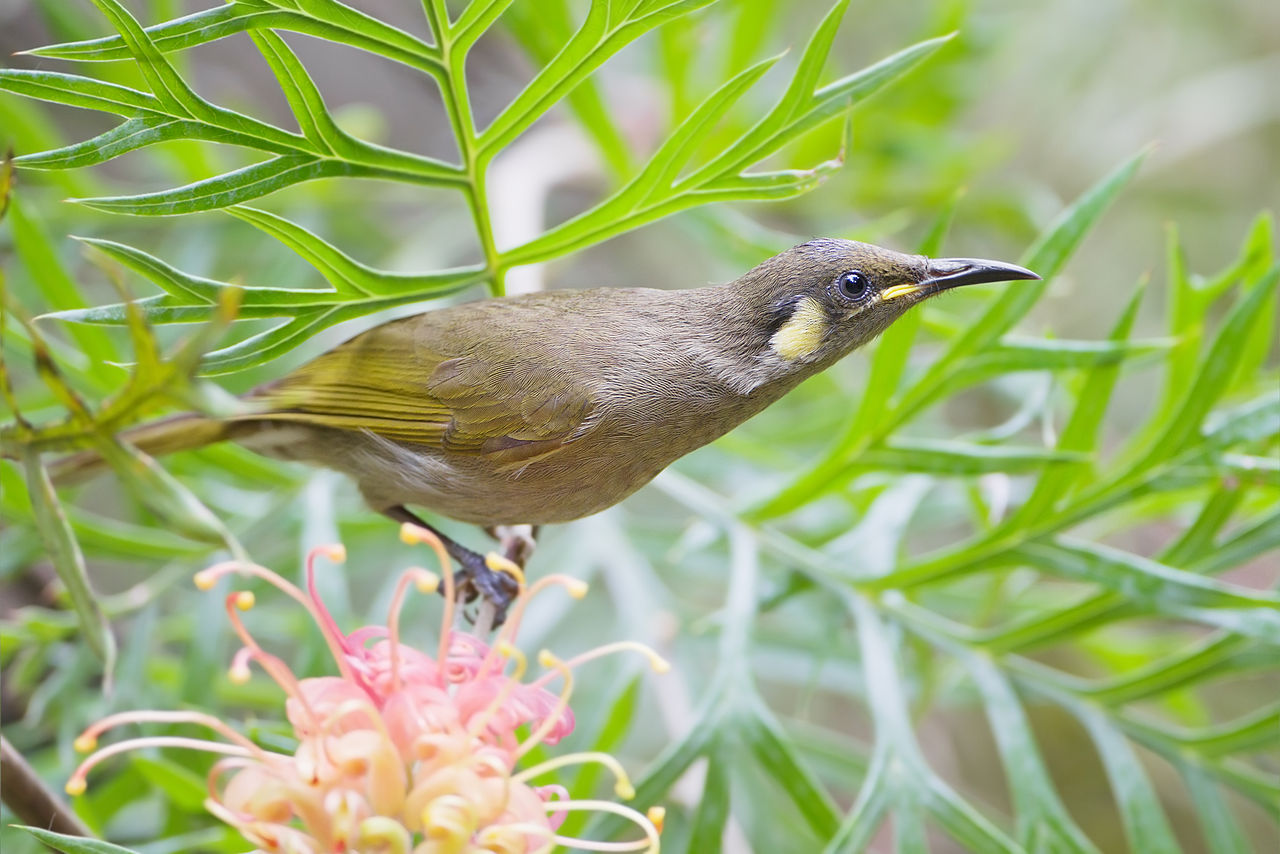
Graceful Honeyeater (Meliphaga gracilis) by Ian at Birdway

Graceful Honeyeater (Meliphaga gracilis) by Ian at Birdway

“And the LORD descended in the cloud, and stood with him there, and proclaimed the name of the LORD. And the LORD passed by before him, and proclaimed, The LORD, The LORD God, merciful and gracious, longsuffering, and abundant in goodness and truth,
(Exodus 34:5-6 KJV)


Avian and Attributes – Gracious

GRA’CIOUS, a. [L. gratiosus.]

1. Favorable; kind; friendly; as, the envoy met with a gracious reception.

2. Favorable; kind; benevolent; merciful; disposed to forgive offenses and impart unmerited blessings.
Thou art a God ready to pardon, gracious and merciful. Neh 9.

“And refused to obey, neither were mindful of thy wonders that thou didst among them; but hardened their necks, and in their rebellion appointed a captain to return to their bondage: but thou art a God ready to pardon, gracious and merciful, slow to anger, and of great kindness, and forsookest them not.” (Nehemiah 9:17 KJV)

3. Favorable; expressing kindness and favor.
All bore him witness, and wondered at the gracious words which proceeded from his mouth. Luke 4.

“And he said, Verily I say unto you, No prophet is accepted in his own country.” (Luke 4:24 KJV)

4. Proceeding from divine grace; as a person in a gracious state.

5. Acceptable; favored.
He made us gracious before the kings of Persia. [Little used.] 1 Esdras.

6. Renewed or implanted by grace; as gracious affections.

7. Virtuous; good.

8. Excellent; graceful; becoming


Graceful Honeyeater (Meliphaga gracilis) by Ian

Graceful Honeyeater

“The Graceful Honeyeater (Meliphaga gracilis) is a species of bird in the family Meliphagidae. It is found in the Aru Islands, southern New Guinea and Cape York Peninsula. Its natural habitats are subtropical or tropical moist lowland forests and subtropical or tropical mangrove forests.” (Wikipedia)

“It feeds on nectar, fruit and insects. Forages in canopy, mid-canopy (including in crowns of substage trees) and understorey shrubs.” (HBW)

(Meliphagidae – Honeyeaters Family)

Graceful Honeyeater (Meliphaga gracilis) ©WikiC


More Avian and Attributes

Birds whose first name starts with “G”

Good News

*
[Definitions from Webster’s Dictionary of American English (1828), unless noted. Bird info from Wikipedia plus.]

Avian And Attributes – Fortress

Avian and Attributes – Fortress

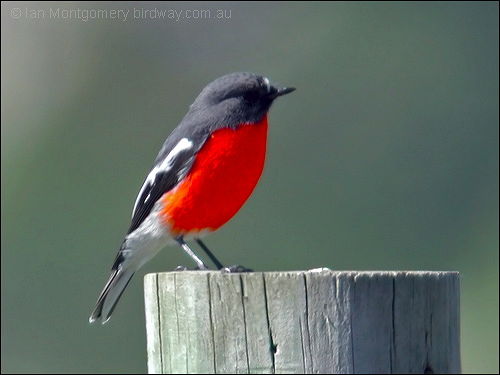
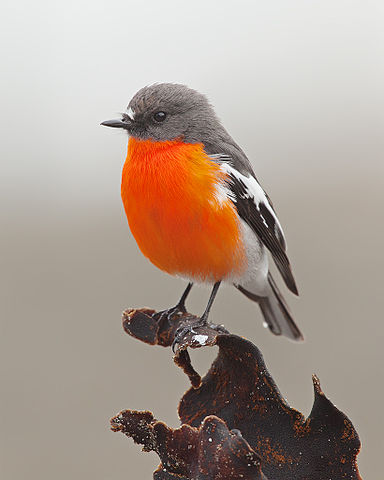
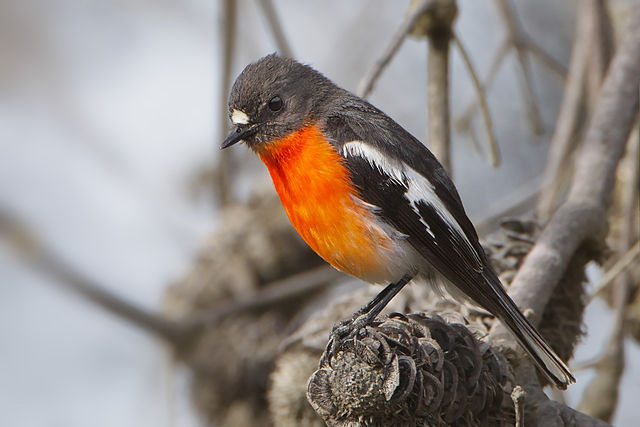
Flame Robin (Petroica phoenicea) by Ian

Flame Robin (Petroica phoenicea) by Ian

“The LORD is my rock, and my fortress, and my deliverer; my God, my strength, in whom I will trust; my buckler, and the horn of my salvation, and my high tower.” (Psalms 18:2 KJV)

“I will say of the LORD, He is my refuge and my fortress: my God; in him will I trust.” (Psalms 91:2 KJV)


Avian and Attributes – Fortress

FOR’TRESS, n.

1. Any fortified place; a fort; a castle; a strong hold; a place of defense or security. The English have a strong fortress on the rock of Gibraltar, or that rock is a fortress.

2. Defense; safety; security;

The Lord is my rock, and my fortress. Psa 18.

FOR’TRESS, v.t. To furnish with fortresses; to guard; to fortify.


Flame Robin (Petroica phoenicea) ©WikiC

Flame Robin

“His eyes were as a flame of fire, and on his head were many crowns; and he had a name written, that no man knew, but he himself.” (Revelation 19:12 KJV)

The Fflame Robin (Petroica phoenicea) is a small passerine bird native to Australia. It is a moderately common resident of the coolest parts of south-eastern Australia, including Tasmania. Like the other two red-breasted Petroica robins—the scarlet robin and the red-capped robin—it is often simply called the robin redbreast. Like many brightly coloured robins of the Petroicidae Family. Measuring 12–14 cm (4.7–5.5 in) long, the flame robin has dark brown eyes and a small thin black bill. The male has a brilliant orange-red chest and throat, and a white patch on the forehead above the bill. Its upper parts are iron-grey with white bars, and its tail black with white tips. The female is a nondescript grey-brown. Its song has been described as the most musical of its genus. (Petroicidae – Australian Robin Family)

Flame Robin (Petroica phoenicea) ©WikiC


More Avian and Attributes

Birds whose first name starts with “F”

Good News

*
[Definitions from Webster’s Dictionary of American English (1828), unless noted. Bird info from Wikipedia plus.]