***
FEED ME
***
Remove far from me vanity and lies: give me neither poverty nor riches; feed me with food convenient for me: (Proverbs 30:8 KJV)
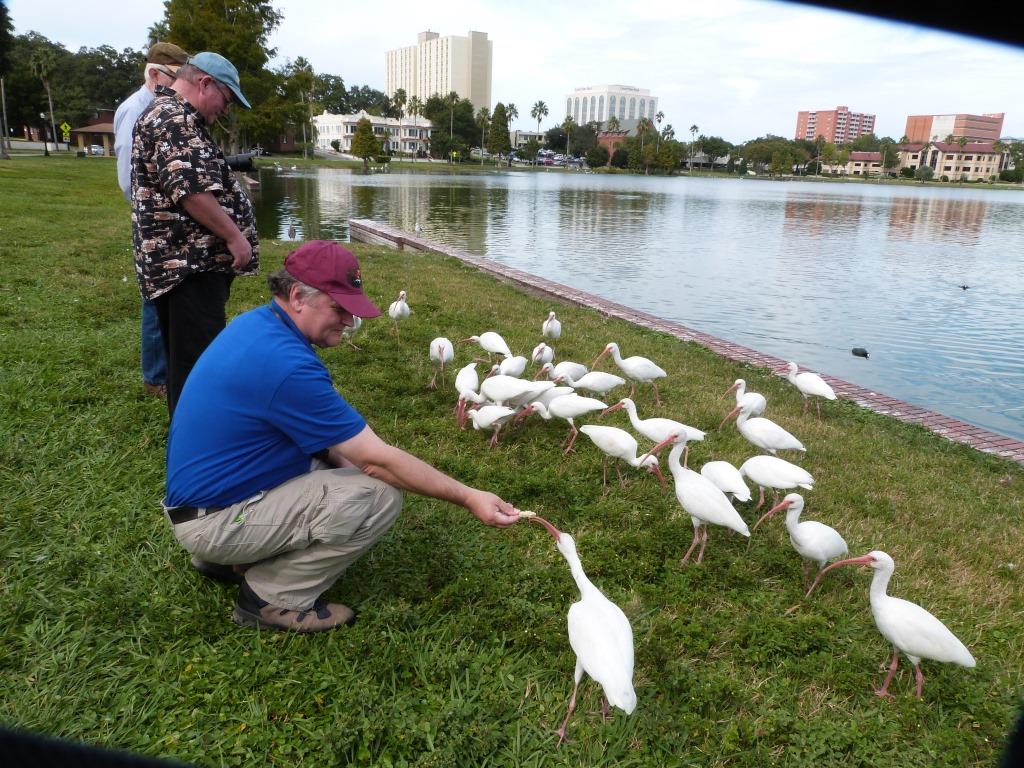
Feeding White Ibises at Lake Morton (L to R – Dan, Golden Eagle, and James J S Johnson)
*
*
Remove far from me vanity and lies: give me neither poverty nor riches; feed me with food convenient for me: (Proverbs 30:8 KJV)
Feeding White Ibises at Lake Morton (L to R – Dan, Golden Eagle, and James J S Johnson)
*
*
The law of his God is in his heart; none of his steps shall slide. (Psalms 37:31 KJV)
Hooded Crow (Corvus cornix) by RT News
*
*

He put a new song in my mouth, a song of praise to our God; Many will see and fear And will trust in the LORD. (Psalms 40:3 NASB)
American Yellow Warbler (Dendroica aestiva) singing by Jim Fenton
*
*
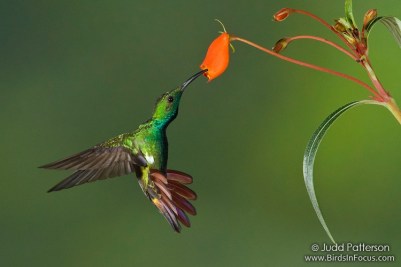
Green-breasted Mango (Anthracothorax prevostii) by Judd Patterson
Many, O LORD my God, are the wonders which You have done, And Your thoughts toward us; There is none to compare with You. If I would declare and speak of them, They would be too numerous to count.
(Psalms 40:5 NASB)
Green-breasted Mango (Anthracothorax prevostii) by Judd Patterson
*
*
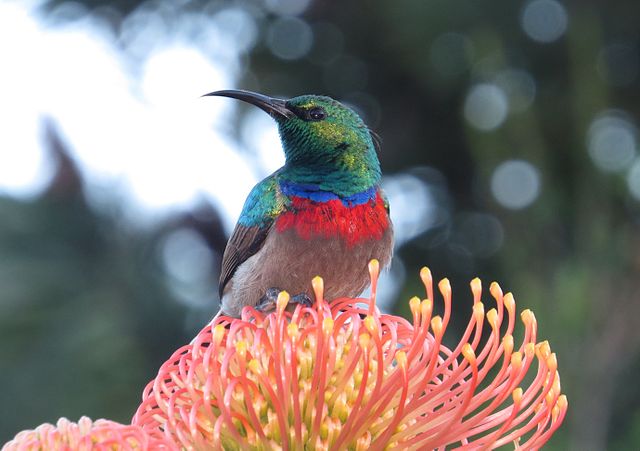
Southern Double-collared Sunbird (Cinnyris chalybeus) ©WikiC
Look at the birds of the air, for they neither sow nor reap nor gather into barns; yet your heavenly Father feeds them. Are you not of more value than they?
(Matthew 6:26 NKJV)
*
*
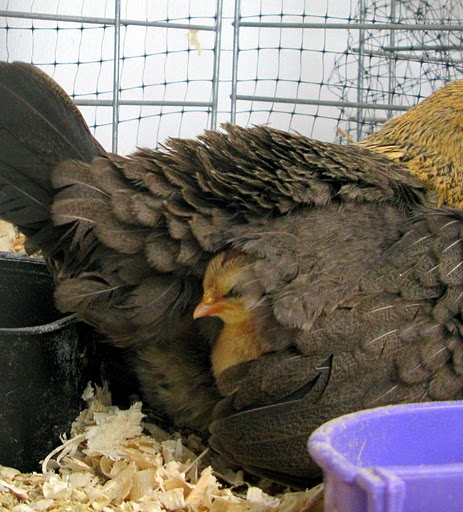
He shall cover you with His feathers, And under His wings you shall take refuge; His truth shall be your shield and buckler. (Psalms 91:4 NKJV)
Baby Chick Peeping Out From Under His Mom’s Wing – ©©
*
*

White-crowned Sparrow (Zonotrichia leucophrys) ©USFWS
I am currently taking a Ladies Bible study, “Disciples Prayer Life.” One of our lessons suggested using some of the different names of God while praying. There is quite a list of God’s names in our lesson. Some of them are:
It is this last one, Jehovah-Shammah, that has really caught my interest. As you can see, it means “The Lord who is there.”
When we read Genesis 1:1, it begins with “In the beginning, God…” The word for God here is Elohim – אֱלֹהִים , ‘ĕlôhı̂ym, el-o-heem’ There is much to be said about this, but, for now, that is not my purpose. The Lord God is the Creator, Sovereign and all-powerful. God has no beginning, or ending, He is the Alpha and the Omega.
Because God has always been, the word, Jehovah-Shammah, “The Lord who is there” is also true. God’s Word chose not to use that word here.
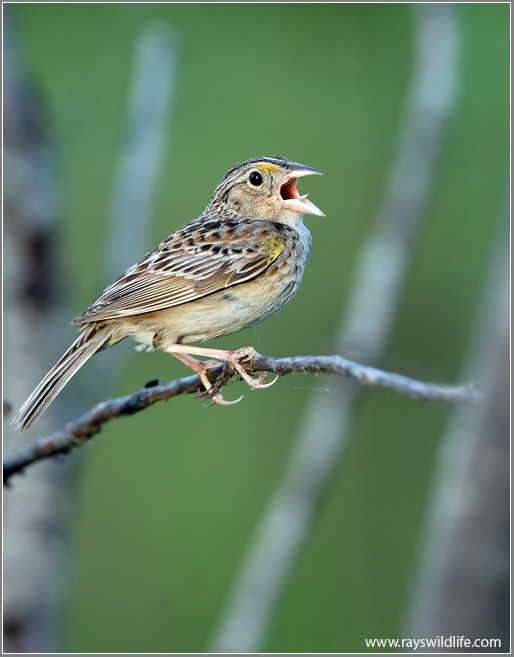
Grasshopper Sparrow (Ammodramus savannarum) by Ray
All of this to explain a passage about the sparrows, which I have used many times before, that could have used the word ” Jehovah-Shammah.”
“Are not two sparrows sold for a farthing? and one of them shall not fall on the ground without your Father. But the very hairs of your head are all numbered. Fear ye not therefore, ye are of more value than many sparrows.” (Matthew 10:29-31 KJV) (emphasis mine)
When a sparrow or any bird falls and/or dies, their Father, knows all about it because HE IS THERE.
If a fallen sparrow is noticed by the Father, who is there, should we not receive comfort from knowing that our Lord God knows and sees us also. As that passage goes on, there is comfort given to us because we are of more value than the birds. We, mankind, were made in the image of God, animals and birds were not. Because of sin, the Lord Jesus Christ, God’s Son, provided salvation for us. It cost the Lord His blood to save us from our sins. We have a choice whether to receive that Sacrifice or not.
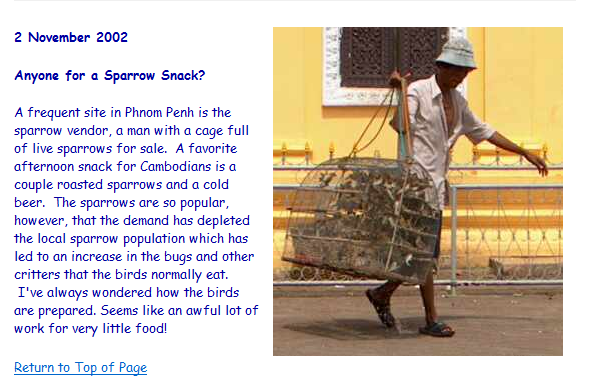
Anyone for a Sparrow Snack?
Every since I saw this photo, Matthew 10:29, has meant more to me than just a bird dying of old age. That whole cage is packed with sparrows to be eaten. That sickens me, but maybe I eat things that sicken others in another culture. I just found another photo of a roasted sparrow. I refuse to post it.
I love Sparrows of all kinds and the other birds. Most of all, I am thankful for a Creator God who cares for those birds and for us. When we KNOW that the Lord IS THERE, we can have comfort knowing we can pray and bring our requests to the Lord, knowing that He cares and already knows all about our needs.
*
Birds of the Bible – Worry and Sparrows
*
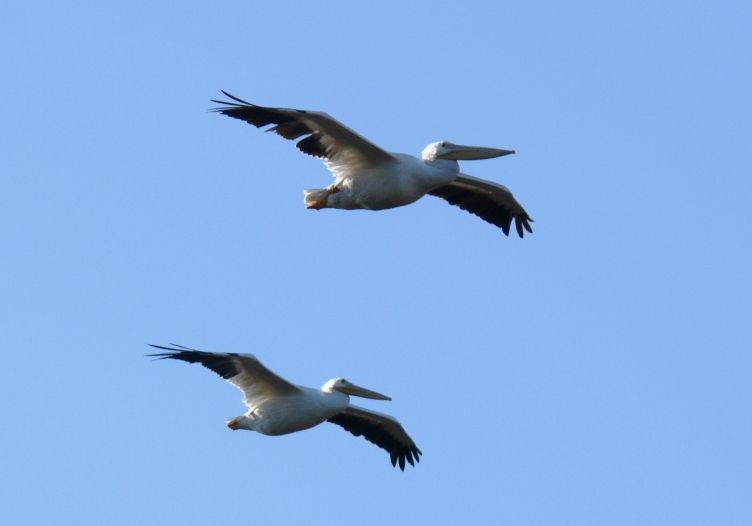
Then God said, “Let the waters abound with an abundance of living creatures, and let birds fly above the earth across the face of the firmament of the heavens.” (Genesis 1:20 NKJV)
American White Pelican (Pelecanus erythrorhynchos) by Lee at Circle B Bar Reserve
*
*
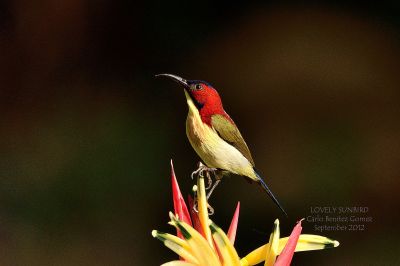
Lovely Sunbird (Aethopyga shelleyi) ©WikiC
Also, to every beast of the earth, to every bird of the air, and to everything that creeps on the earth, in which there is life, I have given every green herb for food”; and it was so. (Genesis 1:30 NKJV)
The 143 Nectariniidae – Sunbird Family members are beautiful birds from their Creator’s Hand, who has equipped them to be perfectly suited for their habitat and food sources.
The sunbirds and spiderhunters make up a family, Nectariniidae, of passerine birds. They are small, slender passerines from Old World, with long, usually decurved bill and some species with long tail; many brightly coloured, most with some iridescence, particularly in male. They are living from Africa to Australia, across Madagascar, Egypt, Iran, Yemen, Southern China, Indian subcontinent, Indochinese peninsulas, Philippines, Southeast Asian to nearby Pacific Islands and just reaches northern Australia. The number of species is greater in equatorial and tropical areas.

Malachite Sunbird (Nectarinia famosa) ©©Rainbirder
Most sunbirds feed largely on nectar, but also take insects and spiders, especially when feeding young. Flower tubes that bar access to nectar because of their shape, are simply punctured at the base near the nectaries. Fruit is also part of the diet of some species. Their flight is fast and direct on their short wings.
The sunbirds have counterparts in two very distantly related groups: the hummingbirds of the Americas and the honeyeaters of Australia. The resemblances are due to convergent evolution brought about by a similar nectar-feeding lifestyle.[1] Some sunbird species can take nectar by hovering like a hummingbird, but they usually perch to feed.
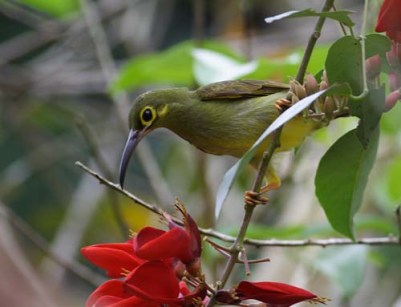
Lovely Sunbird (Aethopyga shelleyi) ©WikiC
The spiderhunters, of the genus Arachnothera, are distinct in appearance from the other members of the family. They are typically larger than the other sunbirds, with drab brown plumage that is the same for both sexes, and long, down-curved beaks. (Wikipedia – Sunbird with editing)
I am going to risk having the video for you to hear this beautiful music, fearing you will watch her more than the birds. :) This is so beautiful and amazing by such a young harpist.
He does great things past finding out, Yes, wonders without number.
(Job 9:10 NKJV)Oh, the depth of the riches both of the wisdom and knowledge of God! How unsearchable are His judgments and His ways past finding out! (Romans 11:33 NKJV)
*
“The Fountain” Harp — 9-year-old Alisa Sadikova is an incredibly talented harpist. But hearing her play ‘The Fountain’ is enough to transport you to Heaven! Her gift is truly from the Lord and playing this she sounds like an angel! (from GodVine.com)
After the recent post – Birds of the Bible – Who Colored These Originally? who needs to improve on the beauty and magnificant colors of this Sunbird family.
Sunbird – Wikipedia
*

White-throated Dipper (Cinclus cinclus) by Ian
This week we have birds running around in the water, another family of birds that are mostly green and a group that loves nectar. Which ones are they?
Let’s start with the Cinclidae – Dippers family. There are only five members in the Cinclus genus. They get their name from their bobbing or dipping movements. They are unique among passerines for their ability to dive and swim underwater. What an ability the Lord gave this family of dippers. Watch!
***

Orange-bellied Leafbird (Chloropsis hardwickii) by W Kwong
Our next group belong to the Chloropseidae – Leafbirds Family and they have 11 species with many subspecies. They are small birds found in India, Sri Lanka and Southeast Asia. They are one of only three bird families that are entirely endemic to the Indomalayan ecozone.
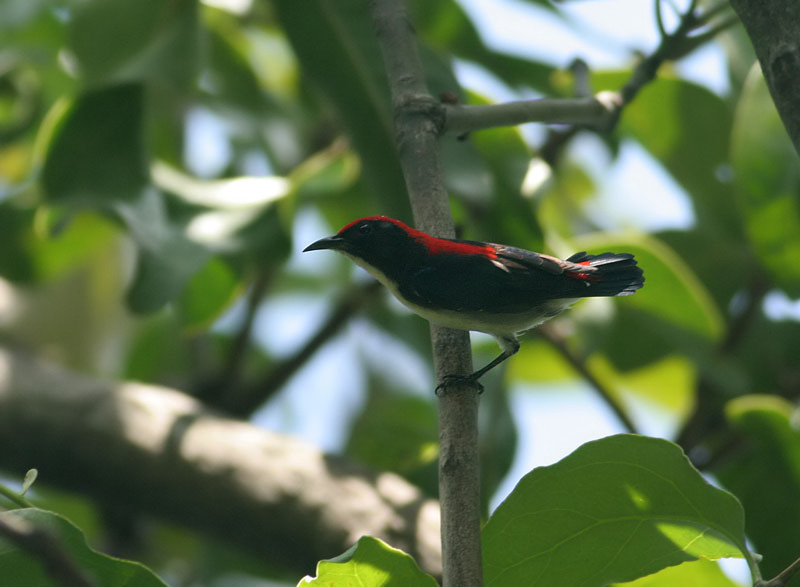
Scarlet-backed Flowerpecker (Dicaeum cruentatum) by Peter Ericsson
The flowers appear on the earth; The time of singing has come (Song of Solomon 2:12a NKJV)
This last family, Dicaeidae – Flowerpeckers, has 48 species. The family is distributed through tropical southern Asia and Australasia from India east to the Philippines and south to Australia. The family is catholic in its habitat preferences, occupying a wide range of environments from sea level to montane habitats. Some species, such as the Mistletoebird of Australia, are recorded as being highly nomadic over parts of their range.
Nectar forms part of the diet, although they also take berries, spiders and insects. Mistletoes of 21 species in 12 genera have been found to be part of the diet of flowerpeckers, and it is thought that all species have adaptations (Creative design) to eat these berries and dispose of them quickly. (Wikipedia with modification)
“Faith Medley” ~ Faith Baptist Choir
*
Assurance: The Certainty of Salvation
*
Thought I would share some more photos from the Zoo and a video that has challenged me. So far, in this new year the Lord is treating me well. I trust it is starting out alright for you also.
A land which the LORD thy God careth for: the eyes of the LORD thy God are always upon it, from the beginning of the year even unto the end of the year. (Deuteronomy 11:12 KJV)

Sacred Ibis Lowry Park Zoo 12-31-15 by Lee
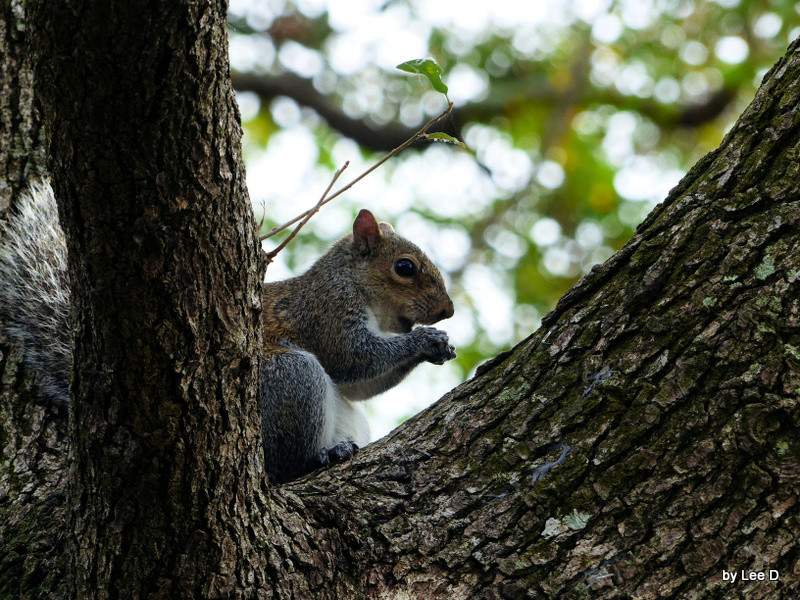
Squirrel Lowry Park Zoo 12-31-15 by Lee
The fear of the LORD is the beginning of knowledge: but fools despise wisdom and instruction. (Proverbs 1:7 KJV)
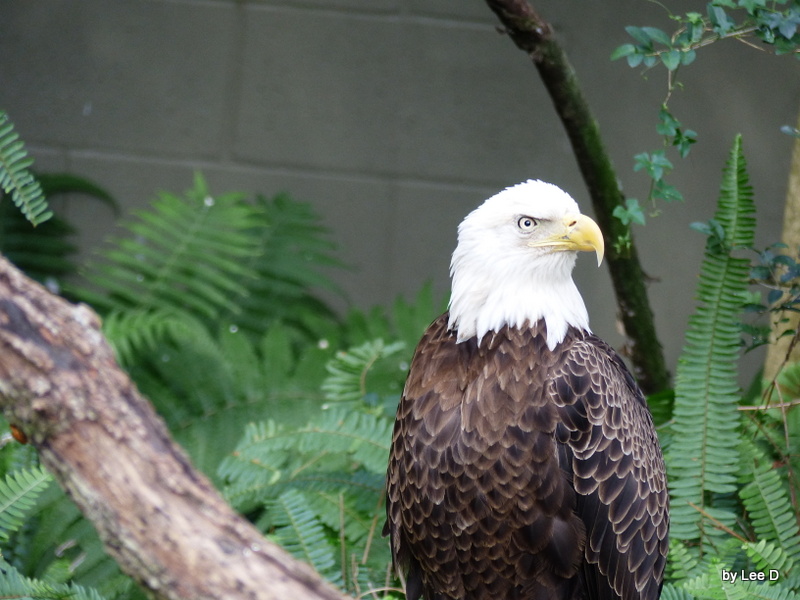
Bald Eagle Lowry Park Zoo 12-31-15 by Lee
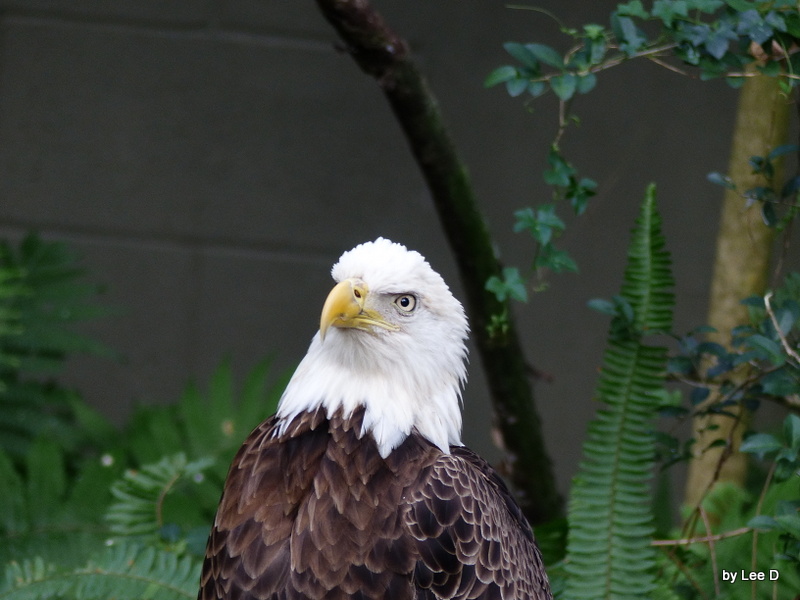
Bald Eagle Lowry Park Zoo 12-31-15 by Le
In the beginning was the Word, and the Word was with God, and the Word was God. The same was in the beginning with God. All things were made by him; and without him was not any thing made that was made. (John 1:1-3 KJV)

Inca Tern Lowry Park Zoo 12-31-15 by Lee
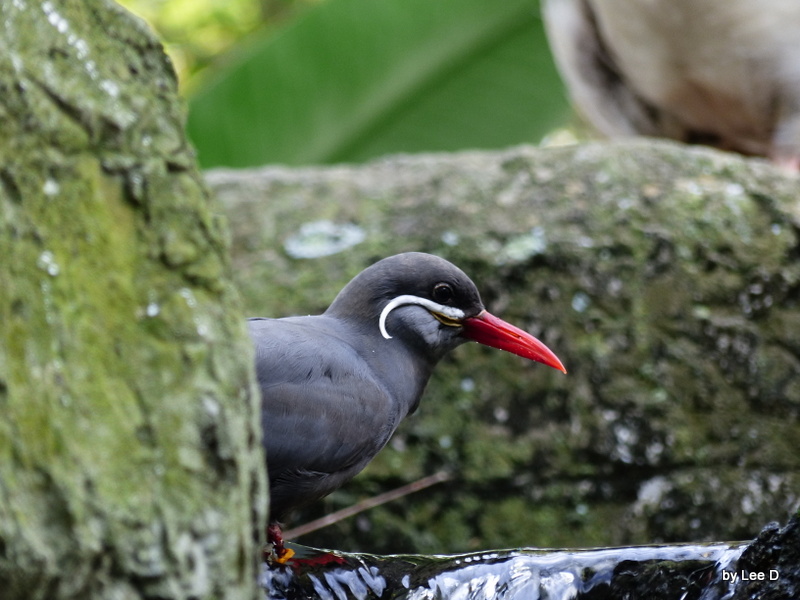
Inca Tern Lowry Park Zoo 12-31-15 by Lee
Thy word is true from the beginning: and every one of thy righteous judgments endureth for ever. (Psalms 119:160 KJV)
“Winning Life’s Battles” by Pastor Nathan Osborne was a great message that challenged for AD 2016. It is worth the time to watch. Our pastor’s messages are now being placed on the Faith Baptist Church website.
“Reach for the impossible” was one of his points that challenged my heart. I have some interesting challenges coming during this new year and the Lord has and is using this message to encourage me.
I can do all things through Christ which strengtheneth me. (Philippians 4:13 KJV)
Abide in me, and I in you. As the branch cannot bear fruit of itself, except it abide in the vine; no more can ye, except ye abide in me. I am the vine, ye are the branches: He that abideth in me, and I in him, the same bringeth forth much fruit: for without me ye can do nothing. (John 15:4-5 KJV)
I trust we will all have a productive new year. Whether it is accepting new challenges or just doing regular things like birdwatching and, then after finding the bird, trying to get a decent photo of it. :0)

Kookaburra Lowry Park Zoo 12-31-15 by Lee
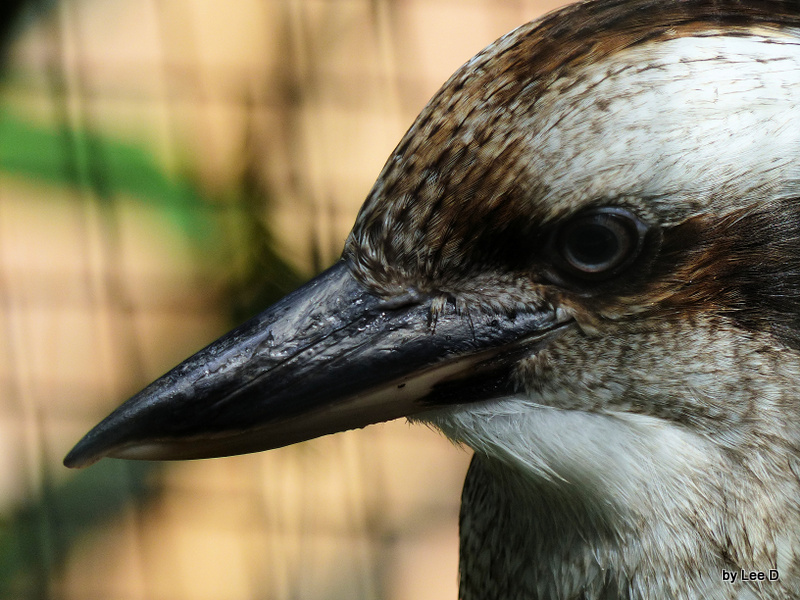
Kookaburra Lowry Park Zoo 12-31-15 by Lee
Better is the end of a thing than the beginning thereof: and the patient in spirit is better than the proud in spirit. (Ecclesiastes 7:8 KJV)
(Bolding in verses is mine)
*
*
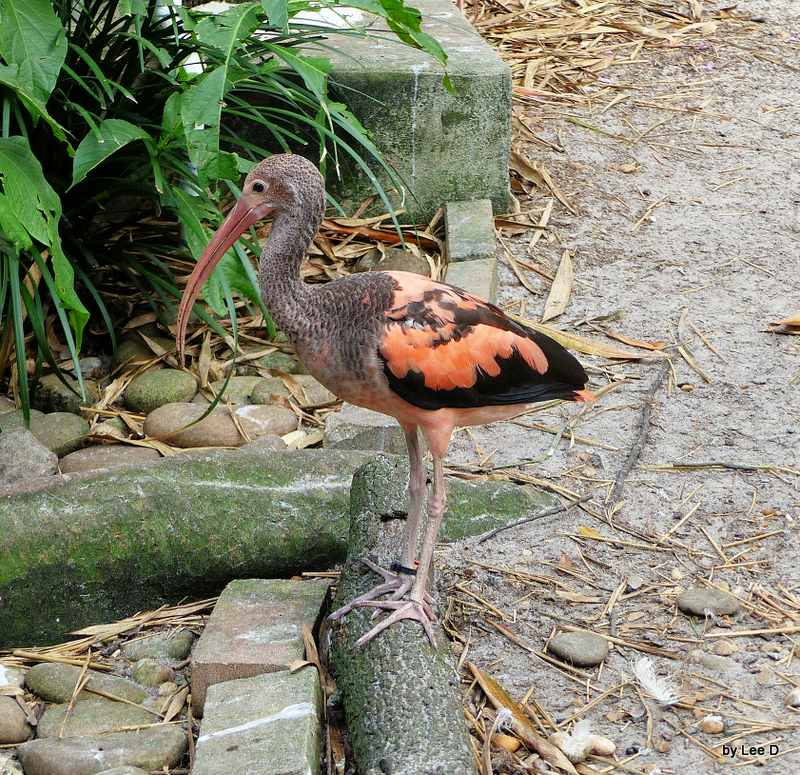
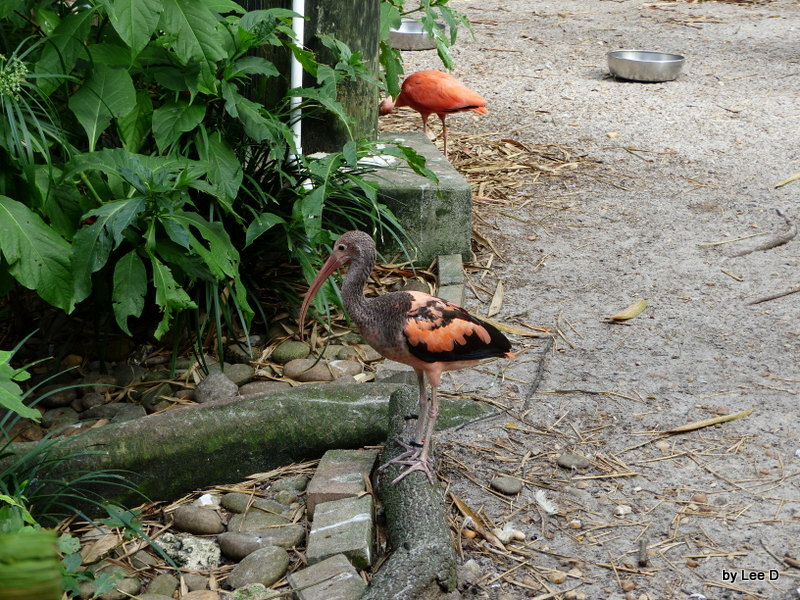
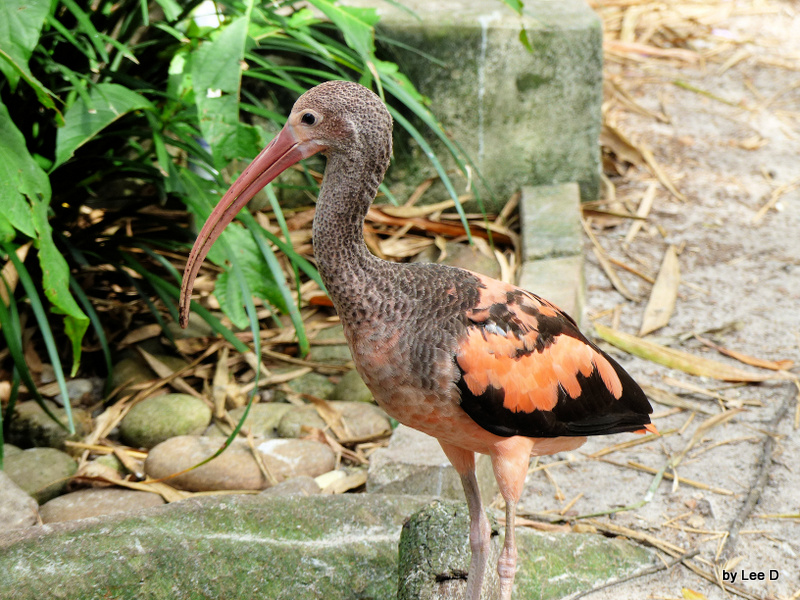
Scarlet Ibis (Eudocimus ruber) Juvenile Lowry Park Zoo
Behold, I tell you a mystery: We shall not all sleep, but we shall all be changed—in a moment, in the twinkling of an eye, at the last trumpet. For the trumpet will sound, and the dead will be raised incorruptible, and we shall be changed. For this corruptible must put on incorruption, and this mortal must put on immortality. (1 Corinthians 15:51-53 NKJV) (emphasis mine)
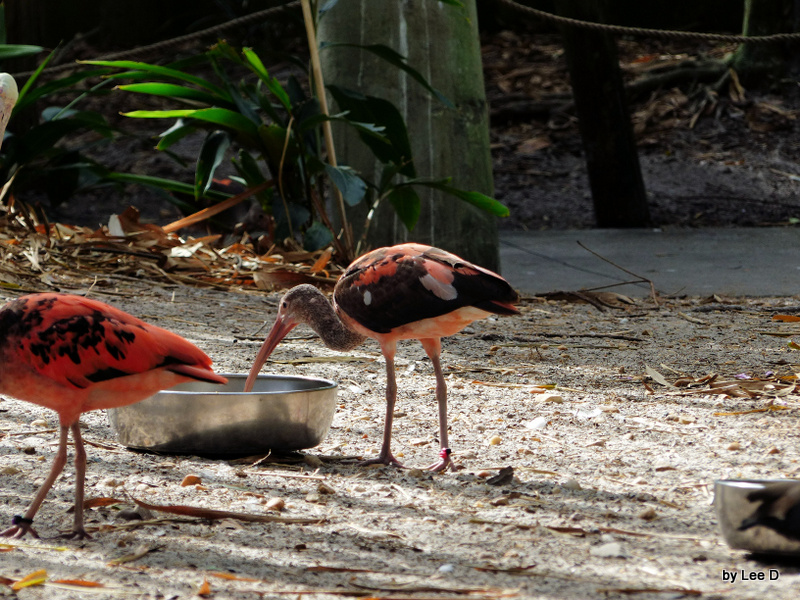
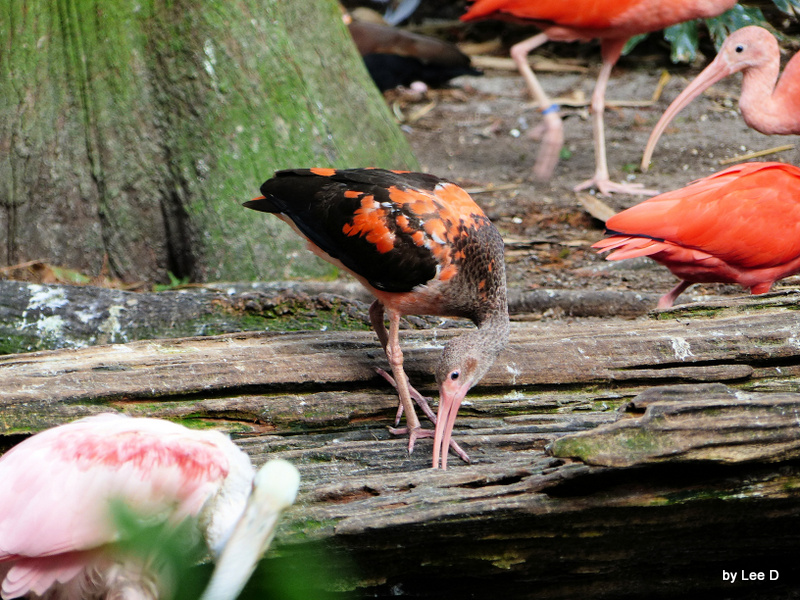
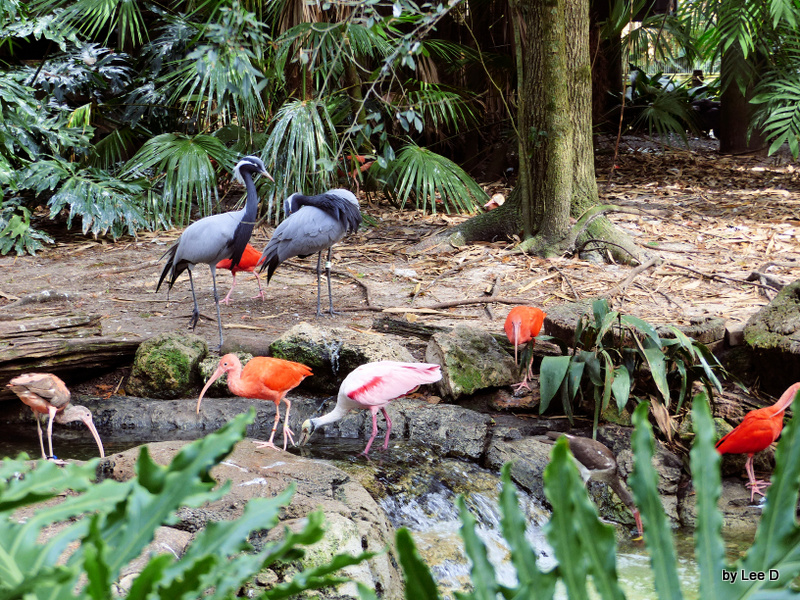
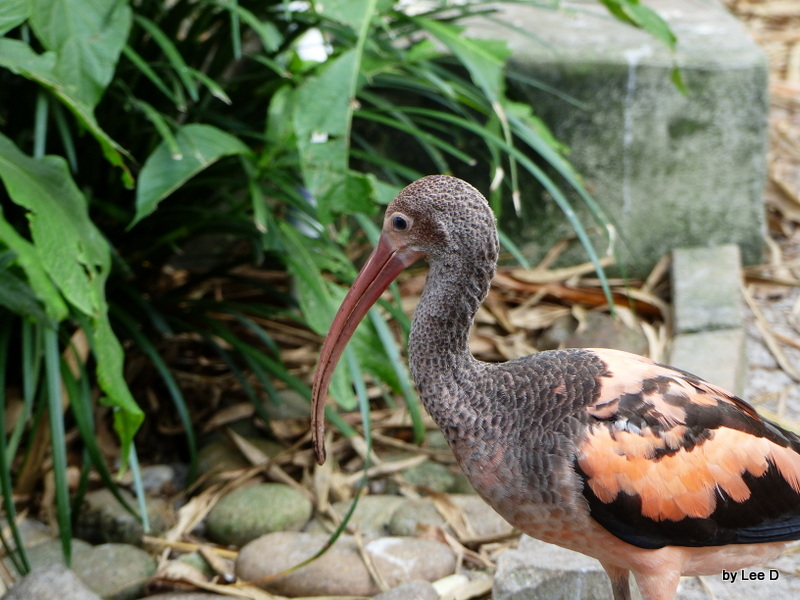
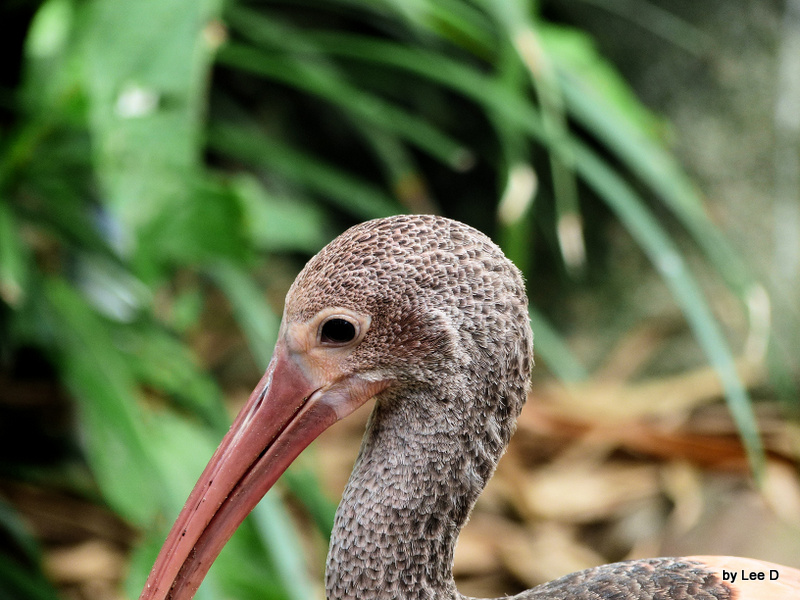
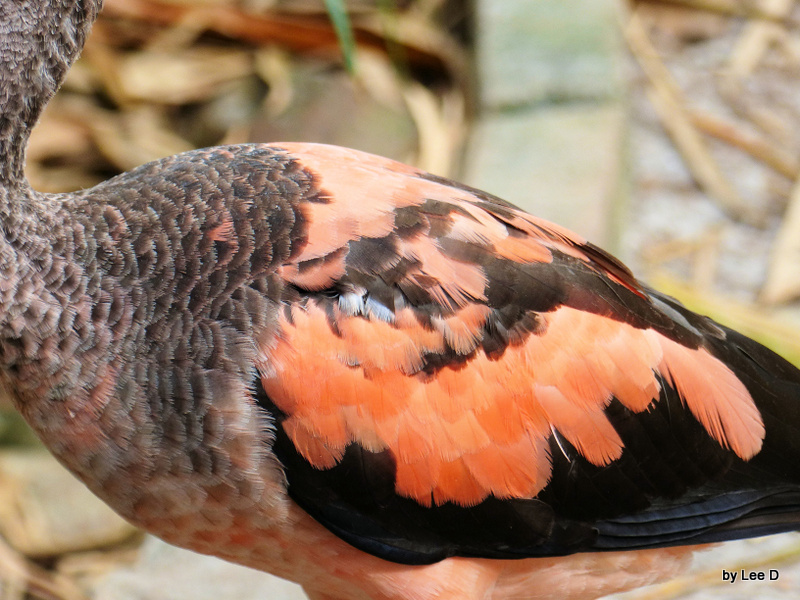
While in the Aviary at Lowry Park last week, this little avian wonder caught my attention. Our Scarlet Ibis juvenile is in the process of becoming a beautiful adult, but at present he is still in transition. The Lord’s Creative Hand gave these ibises protection while growing up, but now that change to a full-grown Scarlet Ibis is becoming very evident.
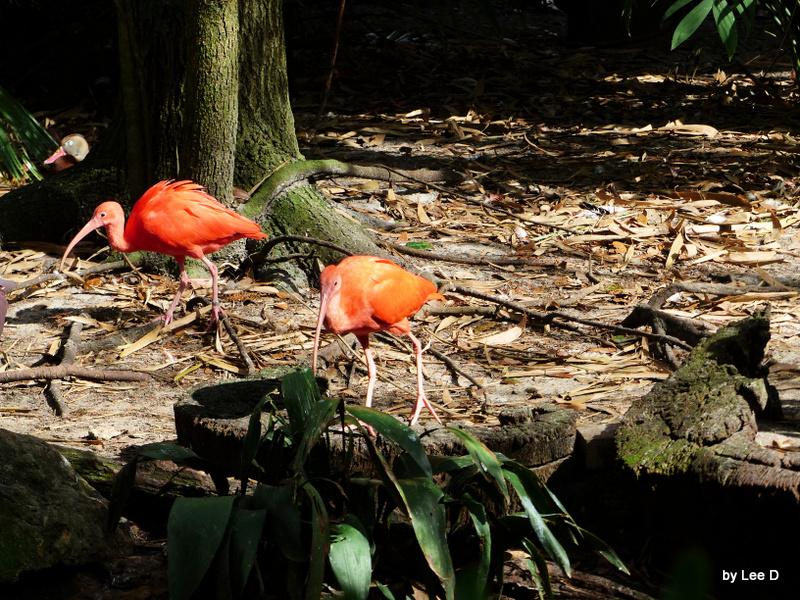
Scarlet Ibis adults in the Aviary
Adult plumage is virtually all scarlet. The feathers may show various tints and shades, but only the tips of their wings deviate from their namesake color. A small but reliable marking, these wingtips are a rich inky black (or occasionally dark blue) and are found only on the longest primaries – otherwise the birds’ coloration is “a vivid orange-red, almost luminous in quality.” Scarlet ibises have red bills and feet however the bill is sometimes blackish, especially toward the end. They have a long, narrow, decurved bill. Their legs and neck are long and extended in flight.
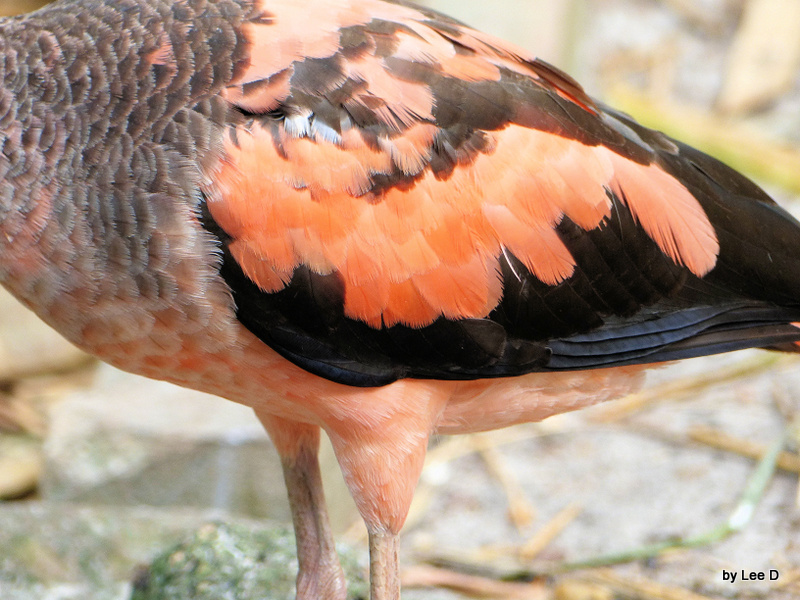
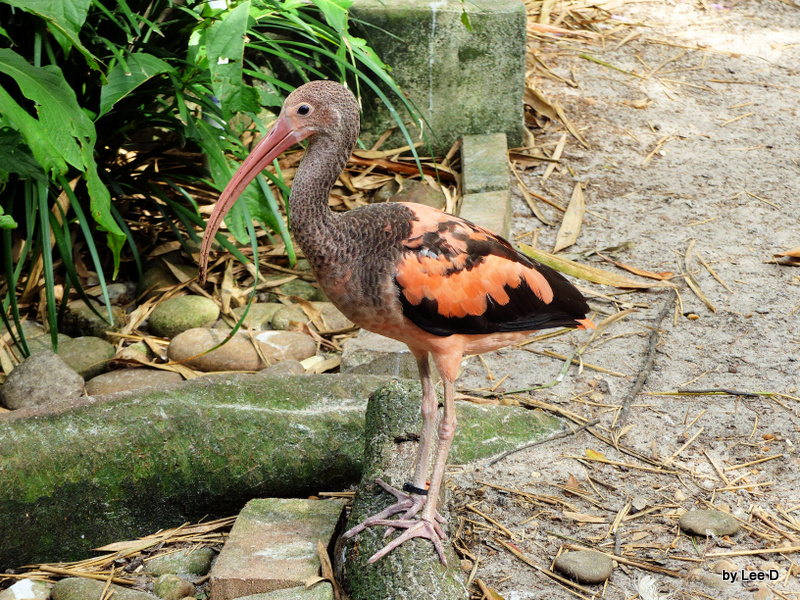
Scarlet Ibis (Eudocimus ruber) Juvenile Lowry Park Zoo
A juvenile scarlet ibis is a mix of grey, brown, and white. As it grows, a heavy diet of red crustaceans produces the scarlet coloration. The color change begins with the juvenile’s second moult, around the time it begins to fly: the change starts on the back and spreads gradually across the body while increasing in intensity over a period of about two years. The scarlet ibis is the only shorebird with red coloration in the world.
As newborn babes, desire the sincere milk of the word, that ye may grow thereby: If so be ye have tasted that the Lord is gracious. (1 Peter 2:2-3 KJV) (emphasis mine)
As these young Scarlet Ibises are growing into beautifully colored adults, you can see how they have grown from the baby to where they are now.
So, we as Christians, should be growing and changing as we grow in the Lord. How do we grow? Reading God’s Word, attending a good Bible preaching church, praying, studying, and doing whatever the Lord may lead you to do to help out. These juveniles are starting to change and so will you as grow in the Lord. Sooner or later you will bloom into a mature Christian able and willing to serve Our Lord wherever or however He chooses.
You therefore, beloved, knowing this beforehand, be on your guard so that you are not carried away by the error of unprincipled men and fall from your own steadfastness, but grow in the grace and knowledge of our Lord and Savior Jesus Christ. To Him be the glory, both now and to the day of eternity. Amen. (2 Peter 3:17-18 NASB)
For since the creation of the world His invisible attributes are clearly seen, being understood by the things that are made, even His eternal power and Godhead, so that they are without excuse, because, although they knew God, they did not glorify Him as God, nor were thankful, but became futile in their thoughts, and their foolish hearts were darkened. Professing to be wise, they became fools, and changed the glory of the incorruptible God into an image made like corruptible man—and birds and four-footed animals and creeping things. (Romans 1:20-23 NKJV) (emphasis mine)
Scarlet Ibis – Threskiornithidae – Ibises, Spoonbills
*
 Lee's Birdwatching Adventures Plus