Sunday Inspiration – Chats and Old World Flycatchers II

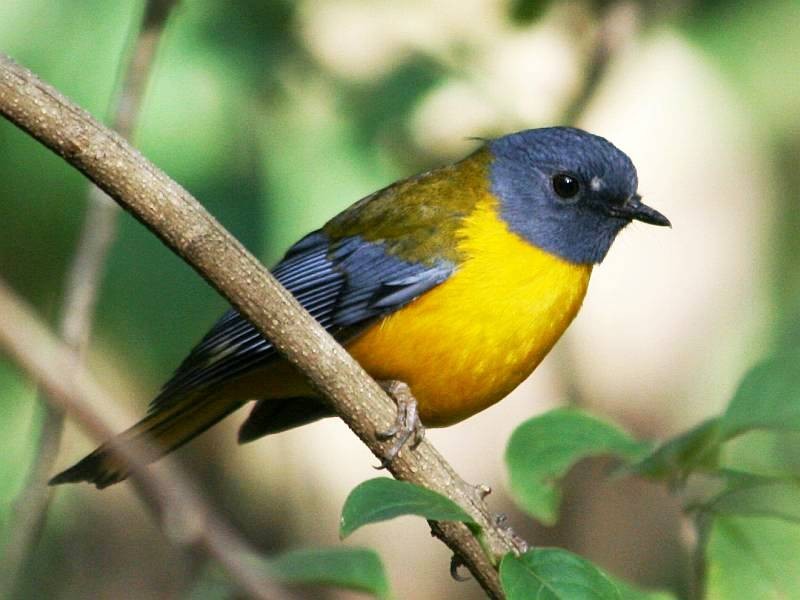
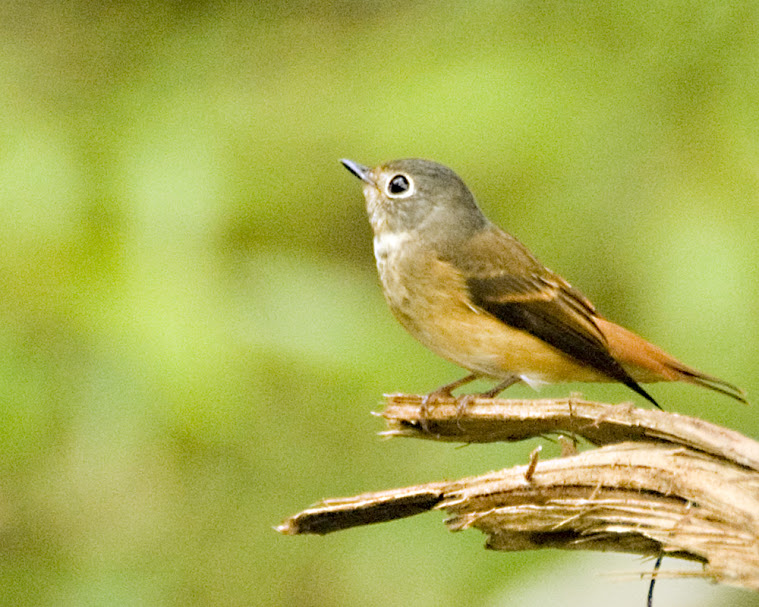
Rufous-bellied Niltava (Niltava sundara) by Nikhil Devasar

Rufous-bellied Niltava (Niltava sundara) by Nikhil Devasar

Out of the ground the LORD God formed every beast of the field and every bird of the sky, and brought them to the man to see what he would call them; and whatever the man called a living creature, that was its name. (Genesis 2:19 NASB)

Last week’s Sunday Inspiration – Chats and Old World Flycatchers covered the first part of the Muscicapidae Family. This week, we will show the some more of the Family. There are 321 Members that make up the Muscicapidae Family. What great looking birds from their Creator.

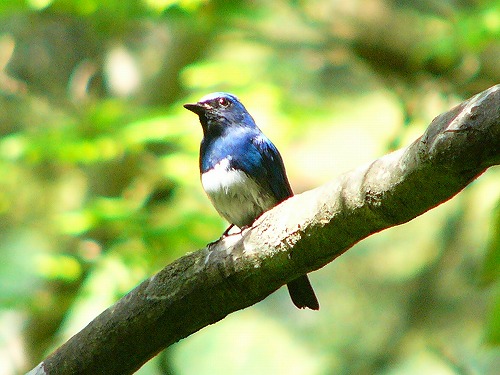
Blue-and-white Flycatcher (Cyanoptila cyanomelana) ©WikiC

Blue-and-white Flycatcher (Cyanoptila cyanomelana) ©WikiC

Chats (formerly sometimes known as “chat-thrushes”) are a group of small Old World insectivorous birds formerly classified as members of the thrush family Turdidae, but now are considered Old World flycatchers. The name is normally applied to the more robust ground-feeding flycatchers found in Europe and Asia and most northern species are strong migrants.

The Old World flycatchers, the Muscicapidae, are small passerine birds mostly restricted to the Old World (Europe, Africa and Asia). These are mainly small arboreal insectivores, many of which, as the name implies, take their prey on the wing.

White-starred Robin (Pogonocichla stellata) WikiC

White-starred Robin (Pogonocichla stellata) ©WikiC

The appearance of these birds is very varied, but they mostly have weak songs and harsh calls. They are small to medium birds, ranging from 9 to 22 cm in length. Many species are dull brown in colour, but the plumage of some can be much brighter, especially in the males. Most have broad, flattened bills suited to catching insects in flight, although the few ground-foraging species typically have finer bills.

Old World flycatchers live in almost every environment with a suitable supply of trees, from dense forest to open scrub, and even the montane woodland of the Himalayas. The more northerly species migrate south in winter, ensuring a continuous diet of insects.

Depending on the species, their nests are either well-constructed cups placed in a tree or cliff ledge, or simply lining in a pre-existing tree hole. The hole-nesting species tend to lay larger clutches, with an average of eight eggs, rather than just two to five.

White-browed Robin-Chat (Cossypha heuglini) by Daves BirdingPix

White-browed Robin-Chat (Cossypha heuglini) by Daves BirdingPix

Because this Muscicapidae family is so large, this week’s Sunday Inspiration and last week’s were divided. The reason for this is so the slideshow will not be too long. This divides them in taxonomic order in to several groups. I was going to divide this family in half, but there are so many photos available that I would have to find a symphony to provide enough music to show them all at once. ☺♪♫☺

Last week, the first 97-98 members were shown from these genera: Alethe, Cercotrichas, Copsychus, Fraseria, Myioparus, Melaenornis, Empidornis, Muscicapa, Anthipes, Cyornis.

This Slideshow of Muscicapidae in taxonomic order – Second Part (includes the genera- Niltava, Cyanoptila, Eumyias, Erithacus, Pseudalethe, Cossyphicula, Cossypha, Swynnertonia, Pogonocichla, Stiphrornis, Sheppardia, Cichladusa, Heinrichia, Leonardina, Heteroxenicus, Brachypteryx , Vauriella, Larvivora, Luscinia, Irania and Calliope.) 75 Species

Start with Niltava 

This slideshow requires JavaScript.

Let this mind be in you which was also in Christ Jesus, who, being in the form of God, did not consider it robbery to be equal with God, but made Himself of no reputation, taking the form of a bondservant, and coming in the likeness of men. And being found in appearance as a man, He humbled Himself and became obedient to the point of death, even the death of the cross. Therefore God also has highly exalted Him and given Him the name which is above every name, that at the name of Jesus every knee should bow, of those in heaven, and of those on earth, and of those under the earth, and that every tongue should confess that Jesus Christ is Lord, to the glory of God the Father. (Philippians 2:5-11 NKJV)

“The Birthday of a King” ~ by Dr. Richard Gregory, now in Glory.

*

Sunday Inspiration – Chats and Old World Flycatchers I

More Sunday Inspirations

Muscicapidae – Chats and Old World Flycatchers

Faith Baptist Church

Gospel Presentation

*

Good One – An Email

Peek-a-boo ©Flickr Kathy

Peek-a-boo ©Flickr Kathy

GOOD ONE
We were the only family with children in the restaurant. I sat Erik in a high chair and noticed everyone was quietly sitting and talking. Suddenly, Erik squealed with glee and said, ‘Hi.’ He pounded his fat baby hands on the high chair tray. His eyes were crinkled in laughter and his mouth was bared in a toothless grin, as he wriggled and giggled with merriment.
I looked around and saw the source of his merriment. It was a man whose pants were baggy with a zipper at half-mast and his toes poked out of would-be shoes. His shirt was dirty and his hair was uncombed and unwashed. His whiskers were too short to be called a beard and his nose was so varicose it looked like a road map.
We were too far from him to smell, but I was sure he smelled.. His hands waved and flapped on loose wrists.. ‘Hi there, baby; hi there, big boy. I see ya, buster,’ the man said to Erik.
My husband and I exchanged looks, ‘What do we do?’
Erik continued to laugh and answer, ‘Hi.’
Everyone in the restaurant noticed and looked at us and then at the man. The old geezer was creating a nuisance with my beautiful baby. Our meal came and the man began shouting from across the room, ‘Do ya patty cake? Do you know peek-a-boo? Hey, look, he knows peek- a-boo.’
Nobody thought the old man was cute. He was obviously drunk. My husband and I were embarrassed. We ate in silence; all except for Erik, who was running through his repertoire for the admiring skid-row bum, who in turn, reciprocated with his cute comments.
We finally got through the meal and headed for the door. My husband went to pay the check and told me to meet him in the parking lot. The old man sat poised between me and the door. ‘Lord, just let me out of here before he speaks to me or Erik,’ I prayed. As I drew closer to the man, I turned my back trying to sidestep him and avoid any air he might be breathing. As I did, Erik leaned over my arm, reaching with both arms in a baby’s ‘pick-me-up’ position. Before I could stop him, Erik had propelled himself from my arms to the man.
Suddenly a very old smelly man and a very young baby consummated their love and kinship. Erik in an act of total trust, love, and submission laid his tiny head upon the man’s ragged shoulder. The man’s eyes closed, and I saw tears hover beneath his lashes. His aged hands full of grime, pain, and hard labor, cradled my baby’s bottom and stroked his back. No two beings have ever loved so deeply for so short a time.
I stood awestruck. The old man rocked and cradled Erik in his arms and his eyes opened and set squarely on mine. He said in a firm commanding voice, ‘You take care of this baby.’
Somehow I managed, ‘I will,’ from a throat that contained a stone.
He pried Erik from his chest, lovingly and longingly, as though he were in pain. I received my baby, and the man said, ‘God bless you, ma’am, you’ve given me my Christmas gift.’
I said nothing more than a muttered thanks. With Erik in my arms, I ran for the car. My husband was wondering why I was crying and holding Erik so tightly, and why I was saying, ‘My God, my God, forgive me.’
I had just witnessed Christ’s love shown through the innocence of a tiny child who saw no sin, who made no judgment; a child who saw a soul, and a mother who saw a suit of clothes. I was a Christian who was blind, holding a child who was not.. I felt it was God asking, ‘Are you willing to share your son for a moment?’ when He shared His for all eternity. How did God feel when he put his baby in our arms 2000 years ago.
The ragged old man, unwittingly, had reminded me, ‘To enter the Kingdom of God , we must become as little children.’
If this has blessed you, please bless others by sending it on. Sometimes, it takes a child to remind us of what is really important. We must always remember who we are, where we came from and, most importantly, how we feel about others. The clothes on your back or the car that you drive or the house that you live in does not define you at all; it is how you treat your fellow man that identifies who you are.
This one is a keeper.
‘It is better to be liked for the true you, than to be loved for who people think you are……'(Amen! )
Old man and baby ©Flickr Gustavo Devito

Old man and baby ©Flickr Gustavo Devito

(Author Unknown)
*

Merry Christmas 2015

Merry Christmas

That which was from the beginning, which we have heard, which we have seen with our eyes, which we have looked upon, and our hands have handled, of the Word of life; (For the life was manifested, and we have seen it, and bear witness, and shew unto you that eternal life, which was with the Father, and was manifested unto us;) That which we have seen and heard declare we unto you, that ye also may have fellowship with us: and truly our fellowship is with the Father, and with his Son Jesus Christ. And these things write we unto you, that your joy may be full. (1 John 1:1-4 KJV)

I would like to share with you our Christmas Cantata presented on December 13, 2015 at Faith Baptist Church in Winter Haven, Florida. They all did fantastic and thought you would enjoy it also.

It was entitled, “Lord of Glory” Christmas Cantata

May the Lord bless you as you share Christmas with family and friends. Dan and I would both like to wish you a great Christmas day full of blessings from the Lord.

*


“Movie On Cwismus”

So it was, that while they were there, the days were completed for her to be delivered. And she brought forth her firstborn Son, and wrapped Him in swaddling cloths, and laid Him in a manger, because there was no room for them in the inn. (Luke 2:6-7 NKJV)

Here is a special video sent to me by James J. S. Johnson. It is about kids telling the story of Cwismus (Christmas) by the Mobberly Kids. Enjoy.

Good News

Birds in Christmas Hymns – Review

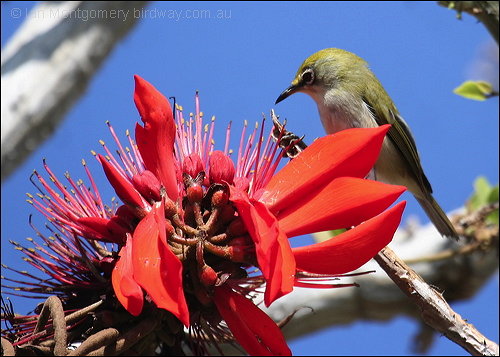
Christmas Island White-eye (Zosterops natalis) by Ian

Christmas Island White-eye (Zosterops natalis) by Ian

Birds in Christmas Hymns

Birds in Christmas Hymns

And when they had sung an hymn, they went out… (Mark 14:26a KJV)

Here are the Birds in Christmas Hymns from the Birds in Hymns Page. Many writers of these hymns must have enjoyed our beautiful created birds and included them in these Christmas Hymns.

Carol of Birds (Bird, Nightingale, Sparrow, Finch, Partridge, Nest), (Australian Birds)
Christmas Brings Joy To Every Heart – (Birds, Perch, Sparrow, Dove)
Hail to the Lord’s Anointed (Eagle, Dove, Wing, Pinion)
I Wonder As I Wander (Bird)
Joyful, Joyful, We Adore Thee – (Singing bird)
The Day The Christ-Child’s Tender Eyes – (Birds, Feather)
The Friendly Beasts – (Dove)
The Worcester Christmas Carol – (Bird)
This Endris Night – (Bird)
Thou Didst Leave Thy Throne –  (Bird, Nest)
Welcome To Christmas – (Dove, Wing)

*

O Holy Night – Card

That which was from the beginning, which we have heard, which we have seen with our eyes, which we have looked upon, and our hands have handled, of the Word of life; (1 John 1:1 KJV)

Please Click Here To See The Card

Here is the video they used with it:

*

A friend sent this to me and I trust you also are as moved by it as I am. Tears are still flowing as I type this.

Yes, I know the Wise Men showed up later, but enjoy the video.

Sunday Inspiration – Chats and Old World Flycatchers I

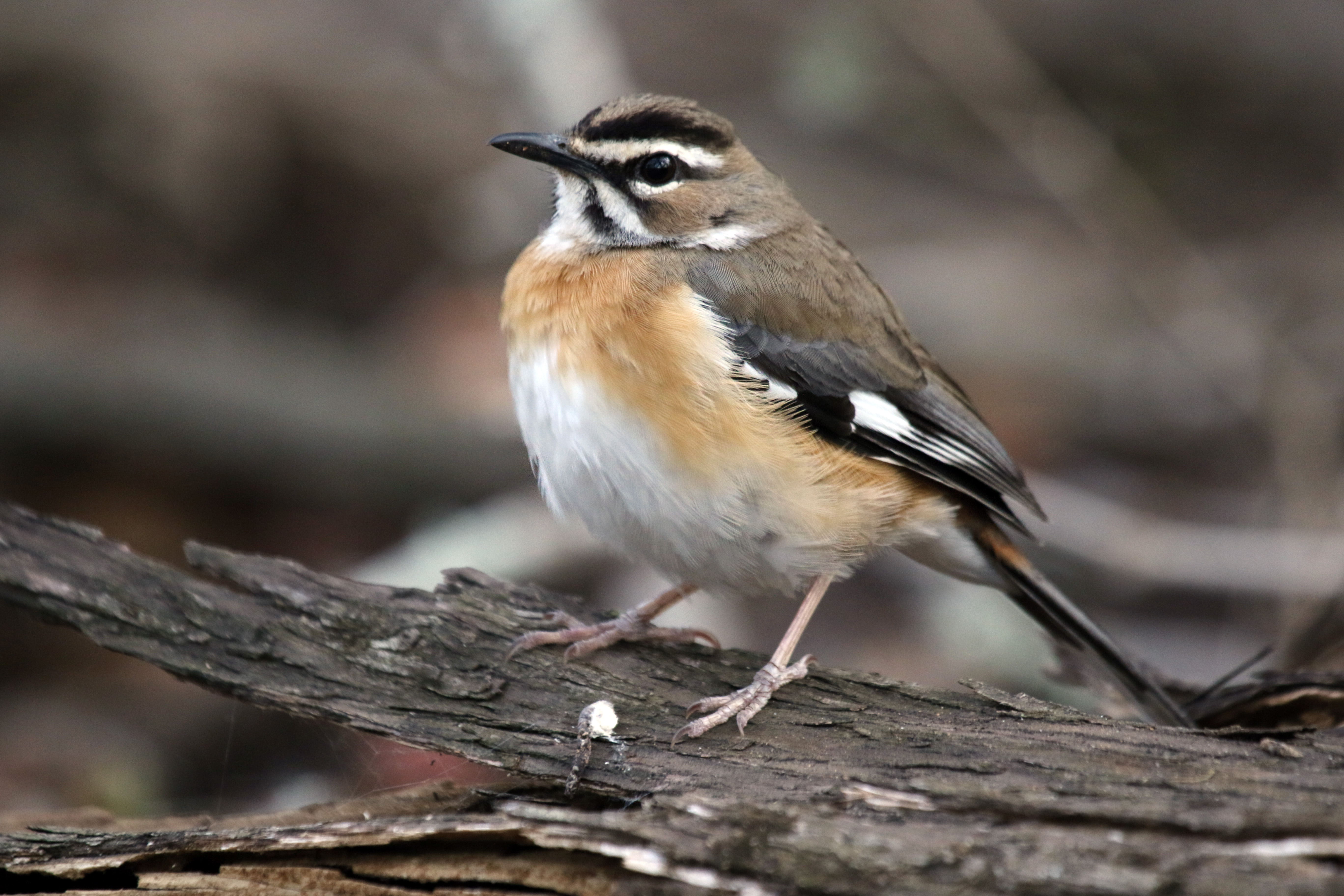
Bearded Scrub Robin (Cercotrichas quadrivirgata) ©WikiC

Bearded Scrub Robin (Cercotrichas quadrivirgata) ©WikiC

In all labor there is profit, But idle chatter leads only to poverty. (Proverbs 14:23 NKJV)

The Old World flycatchers are a large family (321 Members), the Muscicapidae, of small passerine birds mostly restricted to the Old World (Europe, Africa and Asia). These are mainly small arboreal insectivores, many of which, as the name implies, take their prey on the wing.

The appearance of these birds is very varied, but they mostly have weak songs and harsh calls. They are small to medium birds, ranging from 9 to 22 cm in length. Many species are dull brown in color, but the plumage of some can be much brighter, especially in the males. Most have broad, flattened bills suited to catching insects in flight, although the few ground-foraging species typically have finer bills.

Old World flycatchers live in almost every environment with a suitable supply of trees, from dense forest to open scrub, and even the montane woodland of the Himalayas. The more northerly species migrate south in winter, ensuring a continuous diet of insects.
Depending on the species, their nests are either well-constructed cups placed in a tree or cliff ledge, or simply lining in a pre-existing tree hole. The hole-nesting species tend to lay larger clutches, with an average of eight eggs, rather than just two to five.

Ferruginous Flycatcher (Muscicapa ferruginea) by MAMuin

Ferruginous Flycatcher (Muscicapa ferruginea) by MAMuin

“For the wisdom of this world is foolishness with God. For it is written, “HE CATCHES THE WISE IN THEIR OWN CRAFTINESS”; (1 Corinthians 3:19 NKJV)

Because this Muscicapidae family is so large, this Sunday Inspiration and next week’s will be divided. The reason for this is so the slideshow is not too long. This will divide them in taxonomic order about half way.

Slideshow of Muscicapidae in taxonomic order – First Half

This slideshow requires JavaScript.

Now when Jesus was born in Bethlehem of Judaea in the days of Herod the king, behold, there came wise men from the east to Jerusalem, Saying, Where is he that is born King of the Jews? for we have seen his star in the east, and are come to worship him. (Matthew 2:1-2 KJV)

“Wise Men Still Seek Him” – Trio and Choir

*

“Heaven’s Announcement” – message by Pastor Osborne last Sunday. About the birth of Christ.

Shepherd ©Flickr

Shepherd ©Flickr

More Sunday Inspirations

Muscicapidae – Chats and Old World Flycatchers

Faith Baptist Church

*


Sunday Inspiration – Oxpeckers and Thrushes

Red-billed Oxpecker (Buphagus erythrorynchus) by Africaddict

Red-billed Oxpecker (Buphagus erythrorynchus) by Africaddict

Then He answered them, saying, “Which of you, having a donkey or an ox that has fallen into a pit, will not immediately pull him out on the Sabbath day?” (Luke 14:5 NKJV)

This Sunday’s continuation of the Passerines (Songbirds) bring us to two more families, one small with only 2 species of Oxpeckers and the other, the large Thrush family with 167 members.

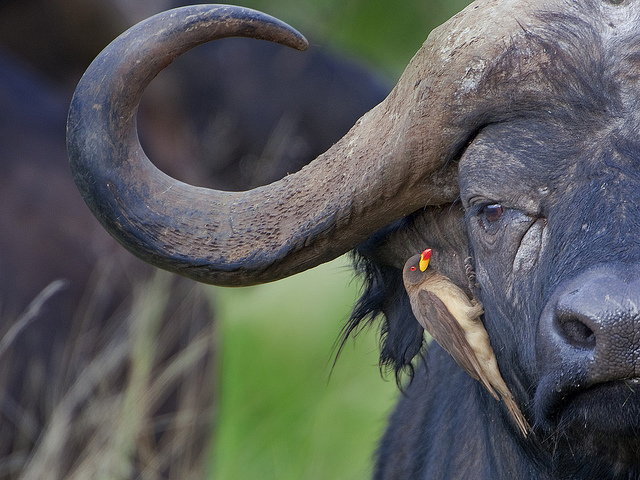
Yellow-billed Oxpecker with Water Buffalo ©©

Yellow-billed Oxpecker with Water Buffalo ©©

The oxpeckers are two species of bird which make up the family Buphagidae. Oxpeckers are endemic to the savanna of Sub-Saharan Africa. Both the English and scientific names arise from their habit of perching on large mammals (both wild and domesticated) such as cattle or rhinoceroses, and eating ticks, botfly larvae, and other parasites.

Oxpeckers feed exclusively on the backs of large mammals. Certain species are seemingly preferred, whereas others, like the Lichtenstein’s hartebeest or Topi are generally avoided. Smaller antelope such as lechwe, duikers and reedbuck are also avoided, the smallest regularly used species is the Impala, probably because of the heavy tick load and social nature of that species. In many parts of their range they now feed on cattle, but avoid camels. They feed on ectoparasites, particularly ticks, as well as insects infecting wounds and the flesh and blood of some wounds as well. (Info from Wikipedia)

Orange-headed Thrush (Geokichla citrina) ©WikiC

Orange-headed Thrush (Geokichla citrina) ©WikiC

Thrushes are medium-sized mostly insectivorous or omnivorous birds. The genus, Turdus, is the largest genus of the thrush family, Turdidae.

The Turdus genus has a cosmopolitan distribution, with species in the Americas, Europe, Asia, Africa and Australia. Several species have also colonized some oceanic islands, and two species have been introduced to New Zealand. Some New World species are called robins, the most famous of which is the American robin. Several species are migratory.

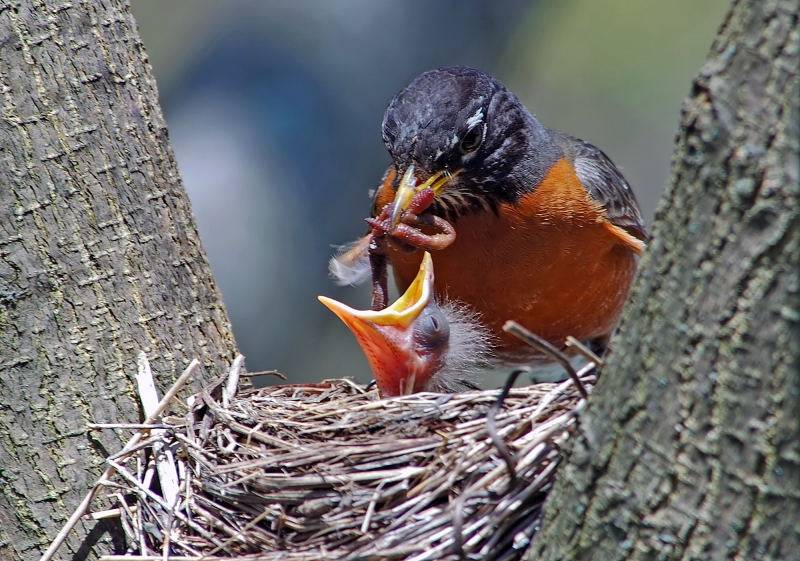
American Robin (Turdus migratorius)with youngsters by Raymond Barlow

American Robin (Turdus migratorius)with youngsters by Raymond Barlow

They are insectivorous, but most species also eat worms, land snails, and fruit. Many species are permanently resident in warm climes, while others migrate to higher latitudes during summer, often over considerable distances.

Thrushes build cup-shaped nests, sometimes lining them with mud. They lay two to five speckled eggs, sometimes laying two or more clutches per year. Both parents help in raising the young.

The songs of some species, including members of the genera Catharus, Myadestes, and Turdus, are considered to be among the most beautiful in the avian world. (Info from Wikipedia)

This slideshow requires JavaScript.

“Even the stork in the sky Knows her seasons; And the turtledove and the swift and the thrush Observe the time of their migration; But My people do not know The ordinance of the LORD. (Jeremiah 8:7 NASB)

“I Heard The Bells With Peace On Earth” – with Jessie Padgett, Angel Long and the FX Girls

*

Faith Baptist has just recently started posting our services on YouTube. Here is last Sunday’s Message (Dec 6, 2015) if you would like to watch it. We have a great pastor and church. He is doing a Christmas theme during December.

*

Sunday Inspirations

Buphagidae – Oxpeckers Family

Turdidae – Thrushes Family

PASSERIFORMES Order

Birds of the Bible – Thrushes

Birds of the Bible – Bluebirds

*


FBT Little Quartet – Christmas Carols

A friend sent me this and thought I would share it.

O let the nations be glad and sing for joy: for thou shalt judge the people righteously, and govern the nations upon earth. Selah.
(Psalms 67:4 KJV)

Plus – Elephants Helping A Calf Out of a Waterhole

Baby Elephant at Lowry Park Zoo by Lee

Baby Elephant at Lowry Park Zoo by Lee

Focusing On Wildlife.com shared this video of Elephants Helping A Calf Out of a Waterhole.

It is very touching and neat to see them all work together to get the little one out.

Enjoy!!!

*

As these elephants helped the youngster, may we remember these verse to encourage us:

For he shall deliver the needy when he crieth; the poor also, and him that hath no helper. (Psalms 72:12 KJV)

Hear, O LORD, and have mercy upon me: LORD, be thou my helper. (Psalms 30:10 KJV)

Behold, God is mine helper: the Lord is with them that uphold my soul. (Psalms 54:4 KJV)

So that we may boldly say, The Lord is my helper,…(Hebrews 13:6a KJV)

*

Bluebirds of Happiness, Plus Enjoying A Lutefisk Banquet

Bluebirds of Happiness,

Plus Enjoying A Lutefisk Banquet


by James J. S. Johnson

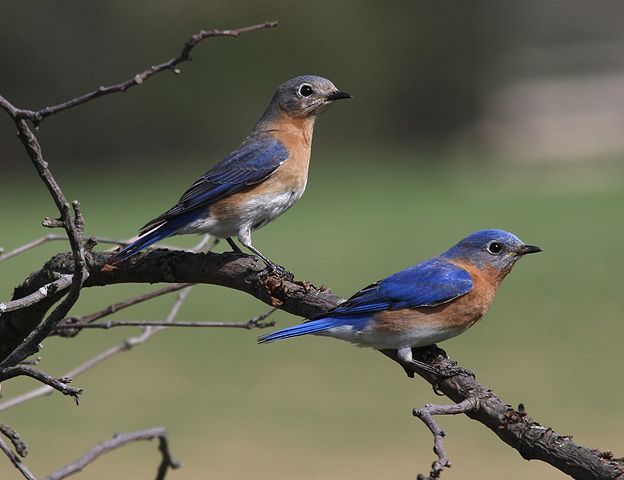
Eastern Bluebird (Sialia sialis) ©WikiC

Eastern Bluebird (Sialia sialis) ©WikiC

Happy is the man that findeth wisdom, and the man that getteth understanding.   (Proverbs 3:13)

He that handleth a matter wisely shall find good: and whoso trusteth in the Lord, happy is he.   (Proverbs 16:20)

Happy is that people, that is in such a case: yea, happy is that people, whose God is the Lord.  (Psalm 144:15)


In honor of the so-called “bluebird of happiness” (with apologies to song lyricist Edward Heyman and vocalist Jan Peerce), we can think for a moment about being “happy”.   (In fact, nowadays, isn’t it just “ducky” to appreciate being “happy, happy, happy”?)

Years ago someone told me that the Bible only promises “joy” to godly people, never “happiness”.  The idea was that “joy” is a gladness that is content in the Lord, regardless  whether the surrounding circumstances are pleasant or unpleasant.  (“Happiness depends on what is happening to you”, I was told, “but joy is only dependent upon your appreciation for God Himself  —  glorifying Him and enjoying Him forever.”)

Wise-sounding sound bites, right?  But is that Biblically sound advice?  Not quite.

While it is certainly true that our joy should be anchored in the Lord, as we appreciate belonging to Him (Nehemiah 8:10; Psalm 100:1; Luke 10:20 & 15:6-7; Philippians 1:3-6 & 1:25-26 & 4:4; etc.),  —  it is also Biblically proper to enjoy being happy  —  glad  — as we enjoy appreciating and experiencing the many blessings that God gives to us, here and there, from time to time (Proverbs 3:13 & 16:20; Job 5:17; Psalm 146:5-9; Esther 8:16-17 & 9:17-19 & 9:22; John 13:17; Romans 14:21; 1st Peter 3:14 & 4:14)!

In fact, if a happy occasion is honoring to God, surely it will blend joy with happiness (compare holiday happiness in Esther 9:17-19 with the “joy” mentioned in Esther 9:22).

Fair Use credit: Norwegian Society of Texas, including Steve Ogden, toasting at Cranfills Gap Lutefisk Supper

Fair Use credit: Norwegian Society of Texas, including Steve Ogden, toasting at Cranfills Gap Lutefisk Supper

[ Fair Use credit: Norwegian Society of Texas, including Steve Ogden, toasting at Cranfills Gap Lutefisk Supper]

So, it’s not unbiblical to be happy about being happy (being compassionately sensitive to context, of course – see Romans 12:15).  In fact, we should enjoy being happy with gladness, living life with a song in our heart  — and laughter should not be a stranger!

Accordingly, with those happy thoughts in mind, let us now consider the famous “bluebird of happiness”.  (By the way, that popular phrase caused my own mother, who recently left Earth for glory, to especially appreciate Eastern Bluebirds   —   she was known to greet family and friends with the words, “welcome to the happy home!”)   And all bluebirds need “homes” to nest in.
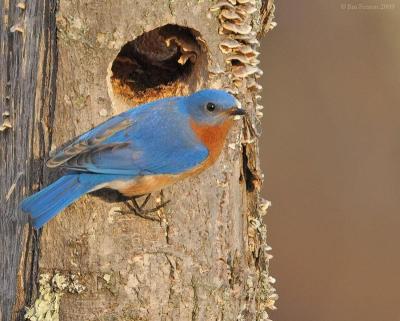
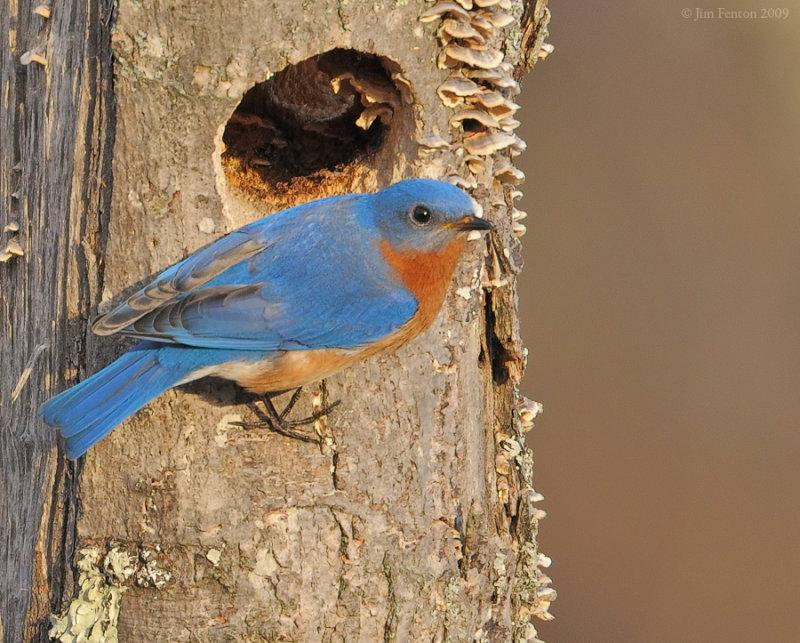
Eastern Bluebird (Sialia sialis) by J Fenton

Eastern Bluebird (Sialia sialis) by J Fenton

So what kind of bluebirds (“of happiness”, presumably) do we have in America?

There are three bluebirds in America:  Eastern Bluebird (Sialia sialis – bright blue above, orange underneath, ranging mostly east of the Rocky Mountains), Mountain Bluebird (Sialia currucides – bright blue above and light-blue underneath, ranging mostly in and west of the Rocky Mountains); and Western Bluebird (Sialia mexicana – bright blue above, with underside blue at the “bib” and orange on the lower underside, ranging mostly in and west of the Rocky Mountains).
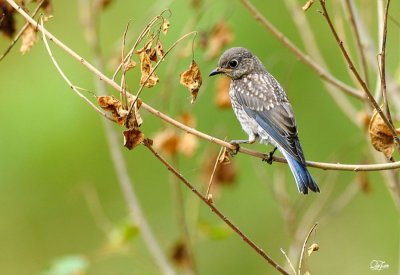
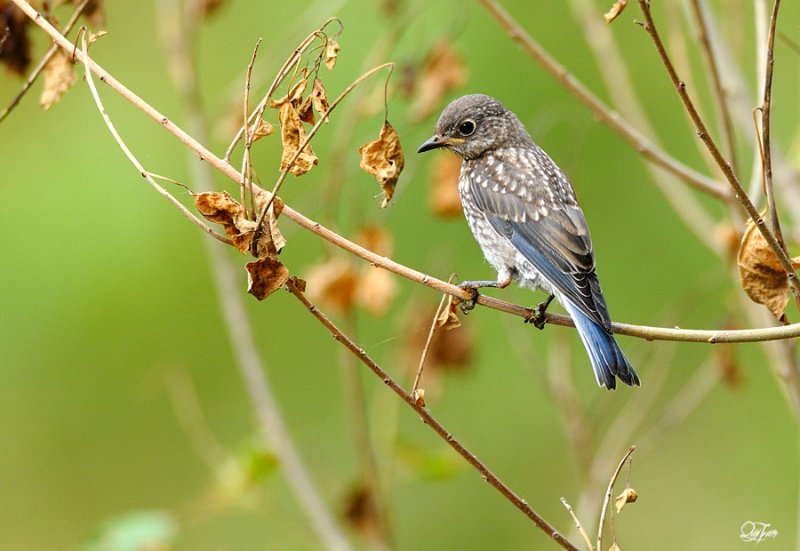
Western Bluebird (Sialia mexicana) juvenile by Quy Tran

Western Bluebird (Sialia mexicana) juvenile by Quy Tran

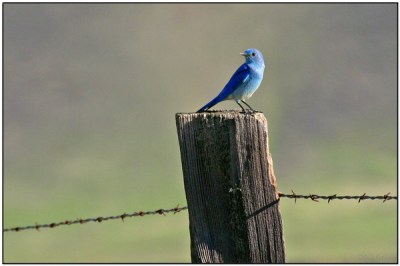
Mountain Bluebird (Sialia currucoides) by Daves BirdingPix

Mountain Bluebird (Sialia currucoides) by Daves BirdingPix

Since last Saturday I saw a brilliant blue-backed Eastern Bluebird, flying in the Texas “hill country” (where they often winter), I will now limit my comments to the Eastern Bluebird.

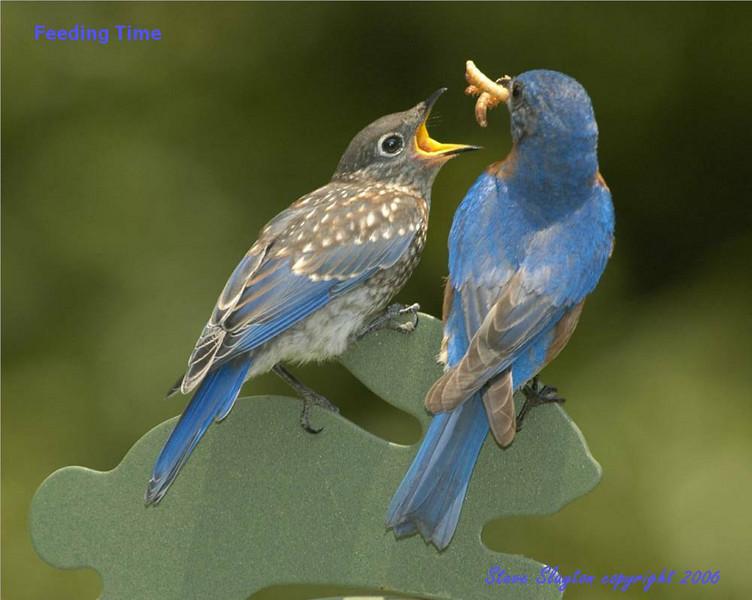
Eastern Bluebird (Sialia sialis) by S Slayton

Eastern Bluebird (Sialia sialis) by S Slayton

Roger Tory Peterson gives the following description of the Eastern Bluebird:

“A bit larger than a sparrow, a blue bird with a rusty red breast; appears round-shouldered when perched.  Female duller than male [no jokes, please!]; young bird is speckle-breasted, grayish, devoid of red, but always with the same telltale blue in wings and tail. … Habitat: Open country with scattered trees; farms, roadsides.”

[Quoting from Roger Tory Peterson, A FIELD GUIDE TO THE BIRDS:   A Completely New Guide to All the Birds of Eastern and Central North America, 4th ed. (Houghton Mifflin, 1980; abbreviated title: EASTERN BIRDS), page 220 & Map 301.]

[another picture of an Eastern Bluebird, or 2 or more]

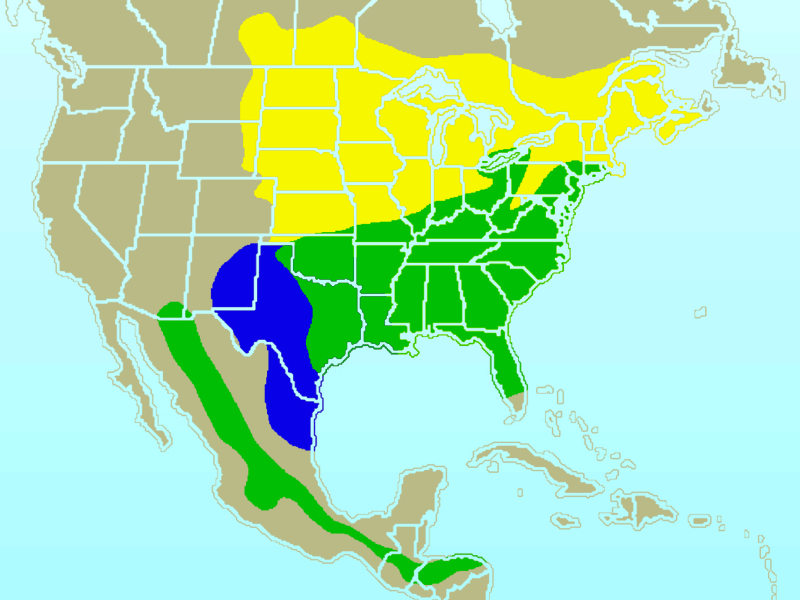
In fact, the Eastern Bluebird is the official state bird for both Missouri (since AD1927) and New York (since AD1970), where it is often found, especially in summer months (according the Peterson’s EASTERN BIRDS, at Map 266).  In America, the Eastern Bluebird is the most common of the three bluebirds, and it is the only one that is commonly found east of the Great Plains.
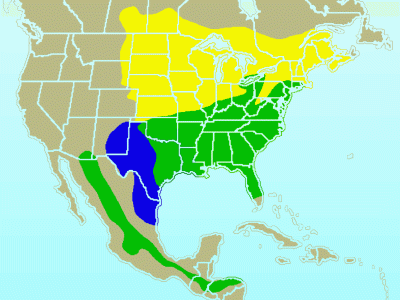
Eastern_Bluebird-rangemap rangemap Y-Sum B-win G-yr rnd

Eastern_Bluebird-rangemap rangemap Y-Sum B-win G-yr rnd ©WikiC

Just a couple of generations ago, colorful bluebirds frequently (and happily) displayed their brilliant blue plumage plentifully in Texas,  –  ranging from the Piney Woods of East Texas, westward into the Hill Country (east of where West Texas touches the Rocky Mountains).  However, their numbers have declined, as their nesting range habitats have shrunk (and as competitive avian “demographics” have changed their nesting-dependent procreative  opportunities).

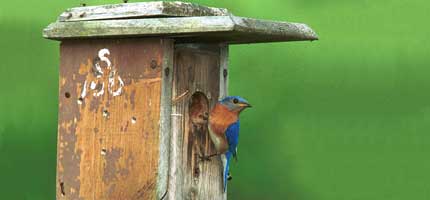
At one point Eastern Bluebird populations were so depressed (due to nesting challenges, especially as bluebird-friendly cavity trees disappeared), that efforts (by local Audubon Society chapters and other bird-lovers) were exerted to expand their nesting opportunities, by providing birdhouses equipped with ingress-egress holes tailored to suit these birds (and thus to deter their nests from invading competitors or predators).

Eastern Bluebird (by www.portal.state.pa.us)

Eastern Bluebird (by http://www.portal.state.pa.us)

Specifically, birdhouse openings were sized to be no larger than 1.5 inches in diameter, in places where bluebirds habituate (such as along roadsides and in open fields), and bluebird populations have improved  —  happily!  So the population trend, for America’s bluebirds, appears to be headed for a “happy ending”.

Now I return to why I was traveling in the Texas Hill Country, when I saw a bright blue Eastern Bluebird – flying from one rural field over to another – on a cool winter morning.

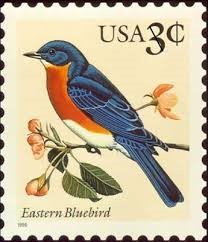
Eastern Bluebird postage PD

Eastern Bluebird postage PD

In fact, my wife and I were driving through Bosque County, into Clifton and later onto Cranfills Gap, to celebrate Norwegian Christmas festivities.

And, for the brave at heart (and stomach), the highlight of that Saturday was a Lutefisk Supper, a tradition (in that area) originally sponsored by St. Olaf Lutheran Church (of Cranfills Gap), now provided as a feast-fundraiser for Cranfills Gap High School.  Of course, Norwegian-American Christmas festivities are happy activities, which is only proper  —  because holiday happiness has a Biblical precedent from the Old Testament (see, e.g., Esther 8:17-19).
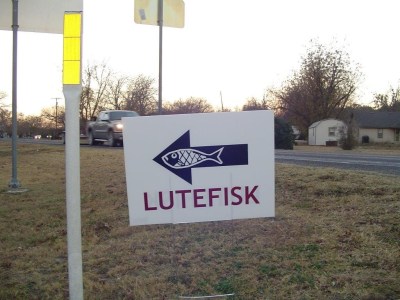
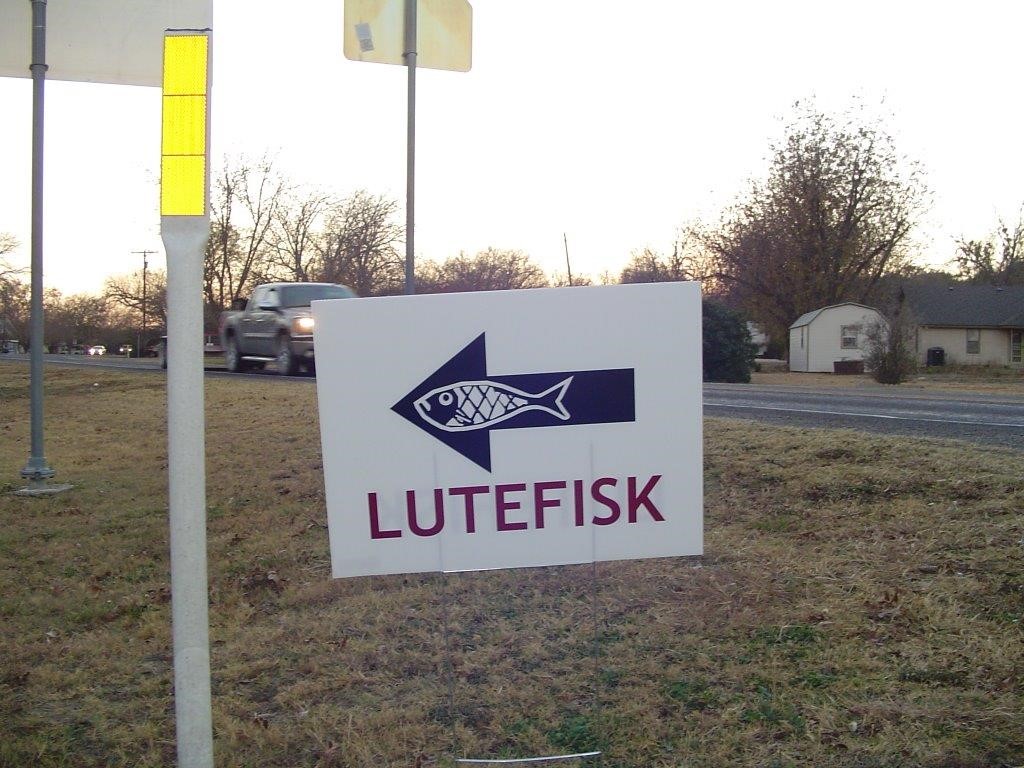
Cranfills Gap Lutefisk Supper road-sign photograph by James J. S. Johnson

Cranfills Gap Lutefisk Supper road-sign photograph by James J. S. Johnson

So what is a “lutefisk supper”?  Why do some regard it as a holiday festivity?

For many of Nordic heritage, especially those who are unusually brave in their cuisine adventures, a unique and historic preparation of codfish, called LUTEFISK, is an unforgettable Christmas tradition:

LUTEFISK SUPPER

‘The Lutefisk Supper is one of the most interesting events in Cranfills Gap [a town in Bosque County, Texas] and is centered round a dried fish imported from Norway.  The tradition began many years ago sponsored by the Ladies’ Aid [Society] of the St. Olaf Lutheran Church.  After several years of time-consuming preparations, organizing, cooking, and serving, the crowds attending the supper became so large that the ladies of the church felt they could no longer carry on this custom so it was discontinued.

In 1965, Oliver Hanson had an idea for a way to financially help the [Cranfills Gap] school’s athletic programs.  To do this, the Lions’ Booster Club of Cranfills Gap High School revived the tradition of serving the Lutefisk Supper.

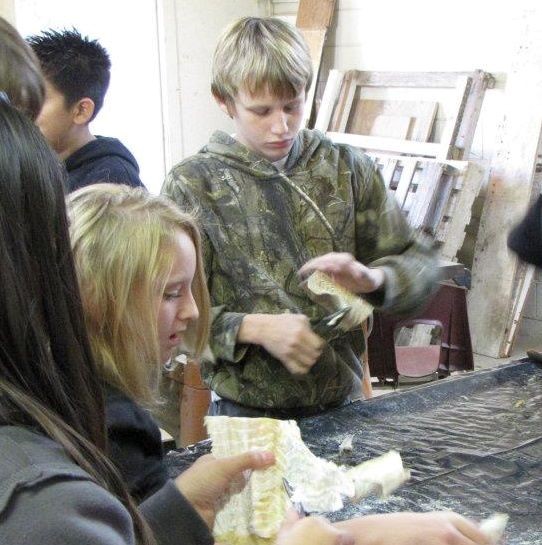
This group took on the arduous task of preparing the fish.  The fish comes from Norway in 100-pound bales [i.e., stacks of dried codfish]. The weight of each dry fish is from one and a half to two pounds and has already been split in half.  Volunteers saw each dried fish into chunks [note: nowadays the hard-dried codfish is usually cut by a woodshop’s power jigsaw] about four inches long, and then skin the fish of its dry, parchment-like skin.  This is a slow and difficult job.  Next, the fish is soaked in a solution of lye [a strongly alkaline solution, usually dominated by potassium hydroxide] and water for 72 hours.  At the end of these three days, the [now softened] fish is taken out and rinsed and cleaned of any excess skin or any brown spots.  Most of the fins are removed.  Next, the fish is soaked in a solution of lime [limewater is an alkaline solution of calcium hydroxide] and water for a period of 72 hours.  The fish are taken out at the end of that time and carefully cleaned again.  After this cleansing, the fish are then soaked in clear water for 96 hours, changing the water every twelve hours [culminating ten days of various soakings of the no-longer-stiff stockfish!].  By this time the chunks have swelled to four and a half to five times the beginning size and are white.  At cooking time, the fish are placed into a cheesecloth bag, put into a pot of salted, boiling water and boiled about five to ten minutes.  The boiled fish is served with melted butter, white sauce, and boiled Irish potatoes.  Plenty of salt and pepper is a necessity!

Lutefisk serves to bring the [Bosque County] community together as an all out effort probably not seen anywhere else.  On the first Saturday of December almost every able-bodied person in the Gap community begins his or her assigned task[s]—some bake turkeys, some peel potatoes, some bake pies [one favorite being a combined cherry-and-apple pie!], others donate coffee, tea, or sugar.  The person in charge of organizing the dinner assigned duties and food preparation.  Tickets are usually sold in advance, but also at the door [of the Cranfills Gap High School gymnasium].  By 4:00 pm the guests begin to arrive.  The [high school] cafetorium will seat about 200 people at one time.  The food is served family style and high school girls are the waitresses.  The boys wash the dishes.  Through the years, each December as many as 900—1,000 guests have eaten a very delicious meal.

If a diner is not so certain about lutefisk…[!] turkey, dressing, green beans, [cranberry sauce, in lieu of lingonberries] and pie complete the menu.  The cost of the fish has increased from $500 for a 100# bale to $2000 for an 80# box.  An adult ticket in 1965 cost $4.50, but today the ticket is $18.  In the fifty years the Booster Club has sponsored this traditional supper, $250,000 has been donated to the school towards various projects and improvements.

Betty Carlson Smith added more interest in this event when she began teaching elementary age kids several Norwegian [folk] dances.  These dances are performed in the gym for those waiting for their time to be served.  Betty has since retired but the dance tradition [in the gymnasium ‘waiting room’] continues.  For a very reasonable price there is good food, great service, friendly hospitality, and fun.”

Quoting from Darla Kinney, Charlene Tergerson, Rita Hanson, & Laverne Smith, CRANFILLS GAP, TEXAS:  LOKING BACK AND MOVING FORWARD, November 2015 edition (Cranfills Gap, Texas: Cranfills Gap Chamber of Commerce Historical Committee, 2015), page 56-58.
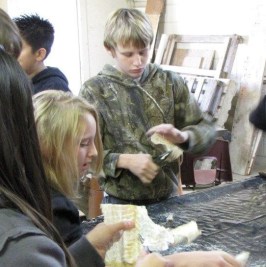
Students Skinning Codfish, in preparation for Cranfills Gap Lutefisk Supper

Students Skinning Codfish, in preparation for Cranfills Gap Lutefisk Supper

So there you have it!  Lutefisk banquets, to Nordic-Americans, are often part of Christmas tradition,  —  and if you are anywhere near Cranfills Gap (Texas), for the first weekend in December, you might want to check out the annual Lutefisk Supper (Saturday evening), and enjoy watching young children dance, as you wait to be called to the banquet table!

Norwegian folk dancing by children at Cranfills Gap: entertainment before lutefisk supper

Norwegian folk dancing by children at Cranfills Gap: entertainment before lutefisk supper

Some of us are happy as bluebirds when feasting on lutefisk.  (And some, for various reasons, prefer to abstain!)

But regardless of how you celebrate the Savior’s birth at Bethlehem (fulfilling the Messianic prophecy of Micah 5:2),  —  whether by eating lutefisk, lefse, and lingonberries  –  or  whether you rejoice in Christ’s historic arrival, by observing some other cultural custom, –  the key is to joyously and gratefully appreciate that the Lord Jesus Christ is the Reason for the season!  JOY TO THE WORLD, THE LORD IS COME!

*


[Fair Use image credit:

Turdidae – Thrushes

James J. S. Johnson

Orni-Theology

Wordless Birds

*
Sunday Inspiration – Starlings, Mynas and Rhabdornis

Common Starling (Sturnus vulgaris) by Robert Scanlon

Common Starling (Sturnus vulgaris) by Robert Scanlon

I know all the birds of the mountains, And the wild beasts of the field are Mine. (Psalms 50:11 NKJV)

This weeks Sturnidae Family is rather large with 123 species presently. (Twenty-three are Mynas; three are Rhabdornis; one Coleto and the rest are Starlings.) Here in the U. S., when we think of a Starling it is a very the plain Common (European) Starling. Yet other Starlings are very colorful and beautiful creations from our Lord.

Golden-breasted Starling at NA

Golden-breasted Starling at National Aviary by Lee

The name “Sturnidae” comes from the Latin word for starling, sturnus. Many Asian species, particularly the larger ones, are called mynas, and many African species are known as glossy starlings because of their iridescent plumage. Starlings are native to the Old World, from Europe, Asia and Africa, to northern Australia and the islands of the tropical Pacific. Several European and Asian species have been introduced to these areas as well as North America, Hawaii and New Zealand, where they generally compete for habitats with native birds and are considered to be invasive species. The starling species familiar to most people in Europe and North America is the common starling, and throughout much of Asia and the Pacific, the common myna is indeed common.

Bali Myna (Leucopsar rothschildi Palm Beach Zoo by Lee

Bali Myna (Leucopsar rothschildi Palm Beach Zoo by Lee

Starlings have strong feet, their flight is strong and direct, and they are very gregarious. Their preferred habitat is fairly open country, and they eat insects and fruit. Several species live around human habitation and are effectively omnivores. Many species search for prey such as grubs by “open-bill probing”, that is, forcefully opening the bill after inserting it into a crevice, thus expanding the hole and exposing the prey; this behaviour is referred to by the German verb zirkeln (pronounced [ˈtsɪʁkəln]).

Common Starling (Sturnus vulgaris) Eggs ©WikiC

Common Starling (Sturnus vulgaris) Eggs ©WikiC

Plumage of many species is typically dark with a metallic sheen. Most species nest in holes and lay blue or white eggs.

Metallic Starling (Aplonis metallica) by Ian

Metallic Starling (Aplonis metallica) by Ian

Starlings have diverse and complex vocalizations and have been known to embed sounds from their surroundings into their own calls, including car alarms and human speech patterns. The birds can recognize particular individuals by their calls and are currently the subject of research into the evolution of human language.

Stripe-headed Rhabdornis (Rhabdornis mystacalis) ©©

Stripe-headed Rhabdornis (Rhabdornis mystacalis) ©©

James J. S. Johnson just wrote about the murmuration of the Starlings in Choreographed Choir on the Wing: Birds of a Feather Flock Together. “The starlings are generally a highly social family. Most species associate in flocks of varying sizes throughout the year. A flock of starlings is called a murmuration. These flocks may include other species of starlings and sometimes species from other families. This sociality is particularly evident in their roosting behavior; in the non-breeding season some roosts can number in the thousands of birds.” (Most information from Wikipedia)

Starling Murmuration

Starling Murmuration

*

Many of the family members in random order:

This slideshow requires JavaScript.

*

“Once Upon A Tree” ~ Choir – and – “Sing To Jesus” ~ Angel Long & Jessie Padgett

More Sunday Inspirations

Sturnidae – Starlings, Rhabdornis

Ian’s Bird of the Week – Metallic Starling

Starling – Wikipedia

Wages or a Gift