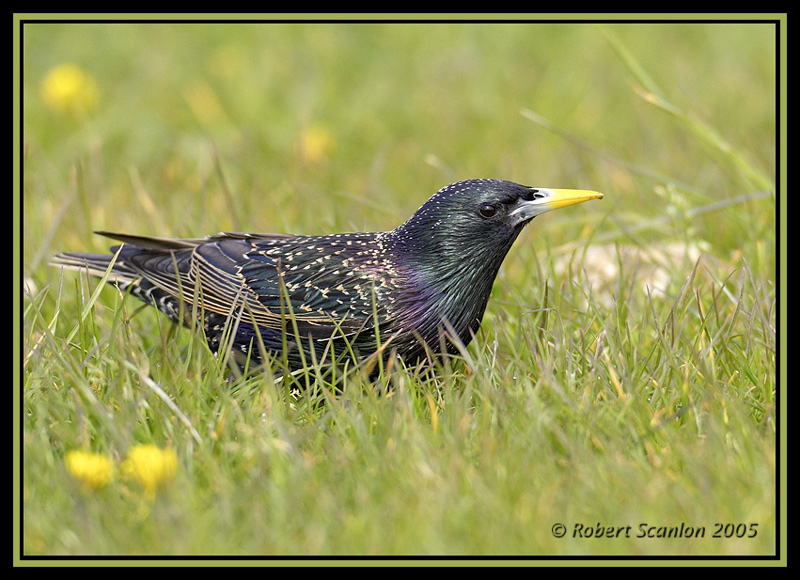
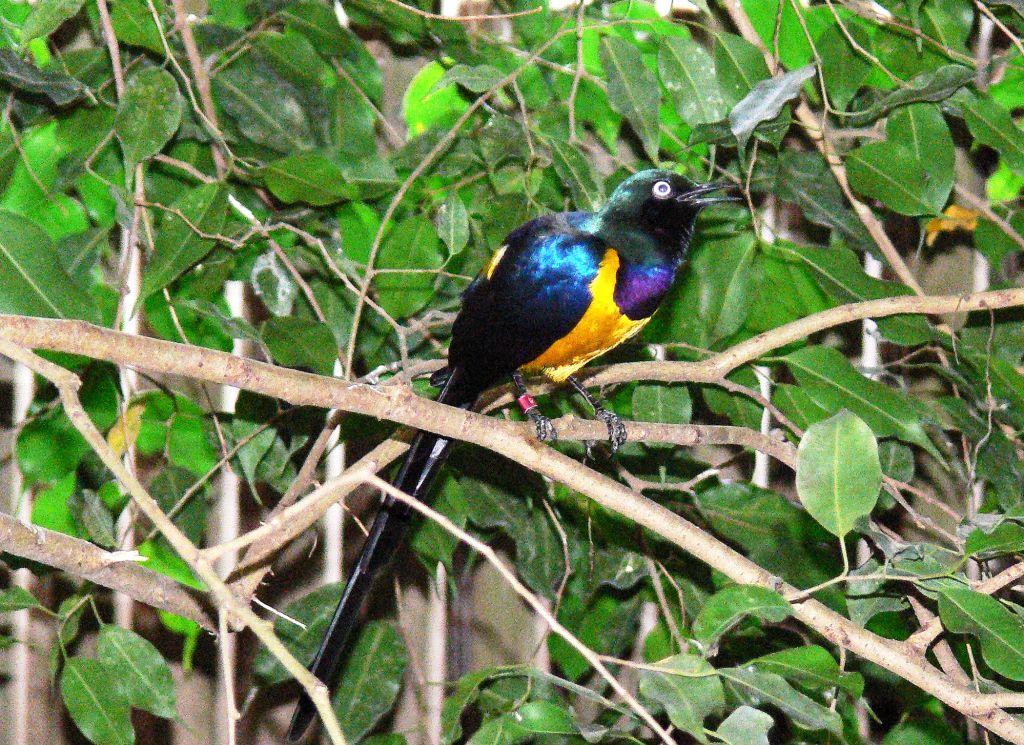
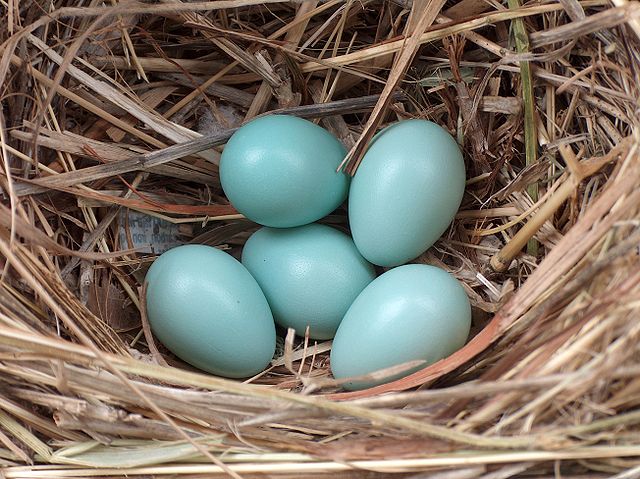
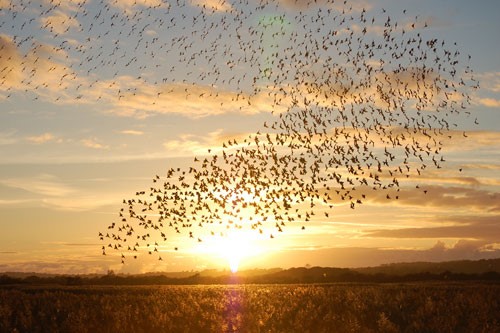
Sparrow Quote from The Life Project

House Sparrows visiting National Aviary Parrot Show by Lee

House Sparrows visiting National Aviary by Lee

The Life Project by Don Merritt is a blog I follow. Here is an interesting quote from Jesus and His relationship with the Disciples:

Jesus wraps up this thought with the example of a sparrow. Who watches out for sparrows? Actually, we could ask something like: Who cares at all about sparrows?

Jesus gives us an answer: His Father in heaven cares about each and every single insignificant sparrow on the planet, and nothing happens to a single little sparrow that He doesn’t know about.

That is a staggering thought…

Read the whole article….

*

Are not two sparrows sold for a farthing? and one of them shall not fall on the ground without your Father. (Matthew 10:29 KJV)

The Life Project

Jesus and His relationship with the Disciples

Birds of the Bible – Sparrows

*

Sunday Inspiration – Mockingbirds and Thrashers

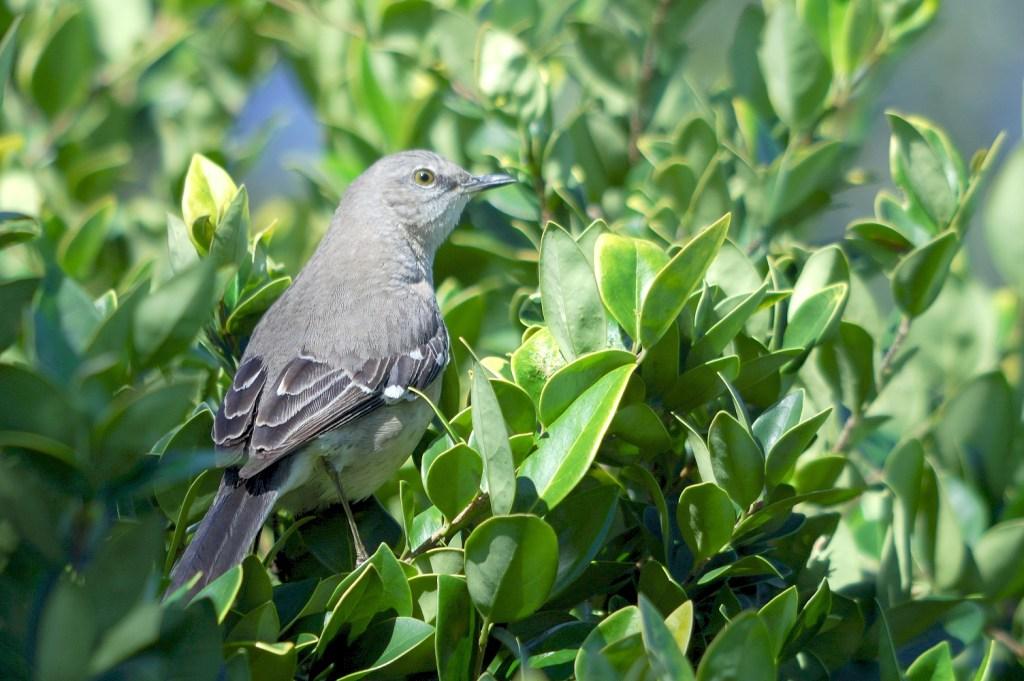
Northern Mockingbird (Mimus polyglottos) By Dan'sPix

Northern Mockingbird (Mimus polyglottos) By Dan (Dan’sPix)

“Do not curse the king, even in your thought; Do not curse the rich, even in your bedroom; For a bird of the air may carry your voice, And a bird in flight may tell the matter.” (Ecclesiastes 10:20 NKJV)

Mockingbirds have been one of my favorite birds. They used to nest in a bush outside our bedroom when we lived in Fort Lauderdale, FL. He used to sing, sing, and sing when they had their young. Only problem was sometimes he sang at 2 or 3 in the morning (outside our bedroom). Those are the times when you wished birds observed “quite hours.”

When the doors are shut in the streets, And the sound of grinding is low; When one rises up at the sound of a bird, And all the daughters of music are brought low. (Ecclesiastes 12:4 NKJV)

Brown Thrasher (Toxostoma rufum) By Dan'sPix

Brown Thrasher (Toxostoma rufum) By Dan’sPix

That said, let’s look at our bird family this week. The Mimidae are the New World family of passerine birds that includes thrashers, mockingbirds, tremblers, and the New World catbirds. As their name (Latin for “mimic”) suggests, these birds are notable for their vocalization, especially some species’ remarkable ability to mimic a wide variety of birds and other sounds heard outdoors.

Brown Trembler (Cinclocerthia ruficauda) ©WikiC

Brown Trembler (Cinclocerthia ruficauda) ©WikiC

There are 34 birds in this family which includes thrashers, mockingbirds, tremblers, and the New World catbirds. They tend towards dull grays and browns in their appearance, though a few are black or blue-gray, and many have red, yellow, or white irises. Many mimids have a rather thrush-like pattern: brown above, pale with dark streaks or spots below. They tend to have longer tails than thrushes (or the bigger wrens, which they also resemble) and longer bills that in many species curve downward.

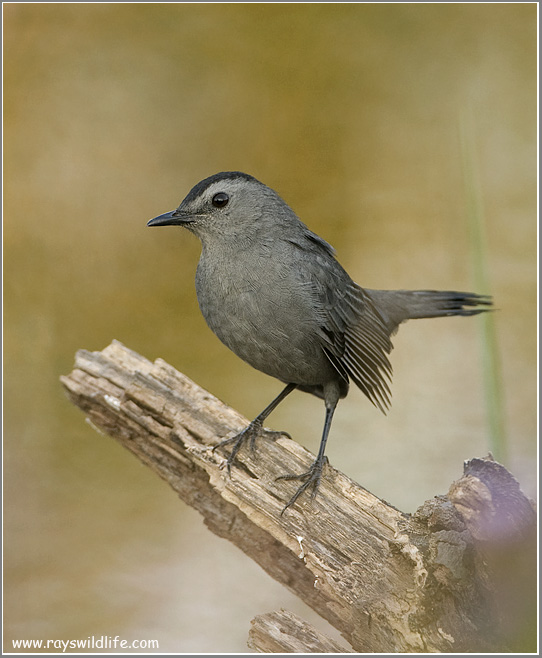
Grey Catbird (Dumetella carolinensis) by Raymond Barlow

Grey Catbird (Dumetella carolinensis) by Raymond Barlow

They have long, strong legs (for passerines) with which many species hop through undergrowth searching for arthropods and fruits to eat. Their habitat varies from forest undergrowth to scrub, high-altitude grasslands, and deserts. The two tremblers live in the atypical habitat of rain forests in the Lesser Antilles, and the Brown Trembler has the particularly atypical behavior of foraging while clinging to tree trunks. (With information from Wikipedia)

This slideshow requires JavaScript.

At that day ye shall know that I am in my Father, and ye in me, and I in you. He that hath my commandments, and keepeth them, he it is that loveth me: and he that loveth me shall be loved of my Father, and I will love him, and will manifest myself to him. (John 14:20-21 KJV)

“I Am Loved” ~ Faith Baptist Orchestra

More Sunday Inspirations

Mimidae – Mockingbirds, Thrashers

Sharing The Gospel

*

Birds of the Bible – Foundation #2 Updated

We will continue with the Foundation from the Word of God (the Bible) about the creation of birds.

If you have not read “Birds of the Bible – Foundation #1 Updated Click Here

By the end of Genesis Chapter 1 the birds (fowls of the air):

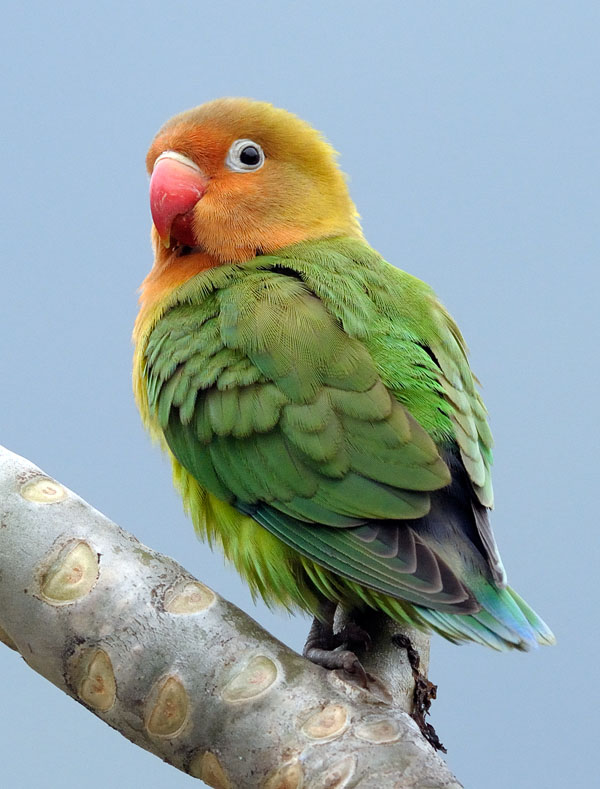
Fischers Lovebird by Phil Kwong

Fischers Lovebird by Phil Kwong

  • Created by the Lord on Day 5
  • Each according to its kind
  • Told to multiply and fill the earth
  • Were given every green herb for food (vegetarians)
  • Placed under the dominion of man
  • “God saw everything that He had made, and indeed it was very good.”

In Chapter 2, the birds are named by Adam. (v 19-20)

At this point, we know that the birds were at their best, they were eating fruits, seeds, herbs and not each other.  The birds had been named according to their kinds by Adam, who was created on Day 6. Their colors and features were at their grandest showing the Glory of God’s wisdom and omnipotence. They must have been fantastic to behold.

BUT WE COME TO GENESIS CHAPTER 3

When the serpent tempted Eve and caused her to question the Word of God, she not only questioned, but added to the Word of God.

Now the serpent was more subtle than any beast of the field which the LORD God had made. And he said unto the woman, Yea, hath God said, Ye shall not eat of every tree of the garden? And the woman said unto the serpent, We may eat of the fruit of the trees of the garden: But of the fruit of the tree which is in the midst of the garden, God hath said, Ye shall not eat of it, neither shall ye touch it, lest ye die. (Genesis 3:1-3 KJV

Most of you know the rest of what happened:

  • Eve ate of the tree of the knowledge of good and evil and gave Adam some also.
  • They were caught and tried to pass the blame.
  • The serpent was cursed. Adam and Eve become sinners and pass sin on to their offspring (us).
  • All God’s creation was cursed (Genesis 3:15-19)
  • Death (spiritual and physical) is now present, which had not been before.
  • Because of Adam’s sin, an animal had to die to make “coats of skins, and clothed them”, “God clothes them with a garment which covers their nakedness, a garment which had its origin in death (the death of another), which had come in, but which hid the effects of the sin that had introduced it.” (Darby’s Synopsis)
  • Sacrifices of the blood of animals and birds for man’s sin is begun. Not until the Lord Jesus Christ became the perfect sacrifice (Hebrews 9:12-14) did the need for those sacrifices end.

For God so loved the world, that he gave his only begotten Son, that whosoever believeth in him should not perish, but have everlasting life. For God sent not his Son into the world to condemn the world; but that the world through him might be saved. He that believeth on him is not condemned: but he that believeth not is condemned already, because he hath not believed in the name of the only begotten Son of God. And this is the condemnation, that light is come into the world, and men loved darkness rather than light, because their deeds were evil. For every one that doeth evil hateth the light, neither cometh to the light, lest his deeds should be reproved. But he that doeth truth cometh to the light, that his deeds may be made manifest, that they are wrought in God. (John 3:16-21)

Somewhere between the Fall of Adam and Eve and the cursing of them and all of creation, the birds, animals,  earth, man, etc. all begin to have changes in their behavior from God’s proclaiming that all was “very good.” By the time of the Flood (Foundation #3), that, “very good” is no longer true.

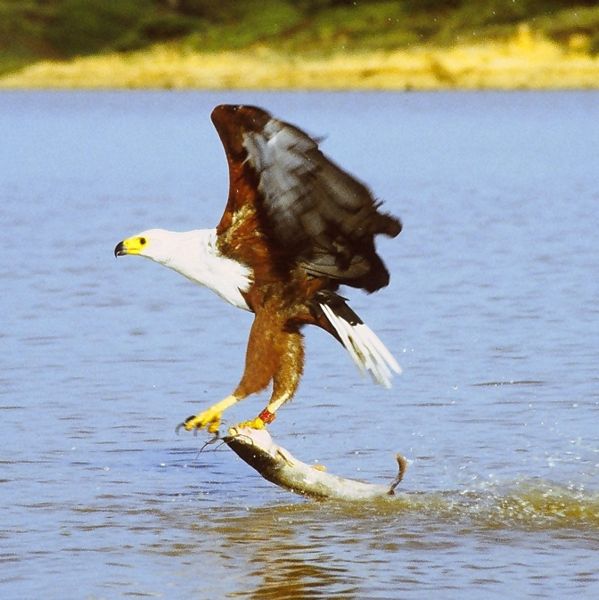
African Fish Eagle (Haliaeetus vocifer) ©WikiC

African Fish Eagle (Haliaeetus vocifer) ©WikiC

Several very interesting articles:

Different Kinds of Flesh, by Paul A. Bartz

Even Strange Animals Fit into Kinds, by Paul A. Bartz

Why Does God’s Creation Include Death & Suffering?, by Tommy Mitchell, January 31, 2008, From “The New Answers Book”, Answers in Genesis

How Did Defense/Attack Structures Come About?, by Andy McIntosh & Bodie Hodge, December 27, 2007, From “The New Answers Book”, Answers in Genesis

Why Did God Create Such Terrible Teeth? by Brian Thomas, M.S., Institute for Creation Research

Did Lions Roam the Garden of Eden? by Nathaniel T. Jeanson, Ph.D., Institute for Creation Research

*

*


Sunday Inspiration – Nuthatches and Creepers

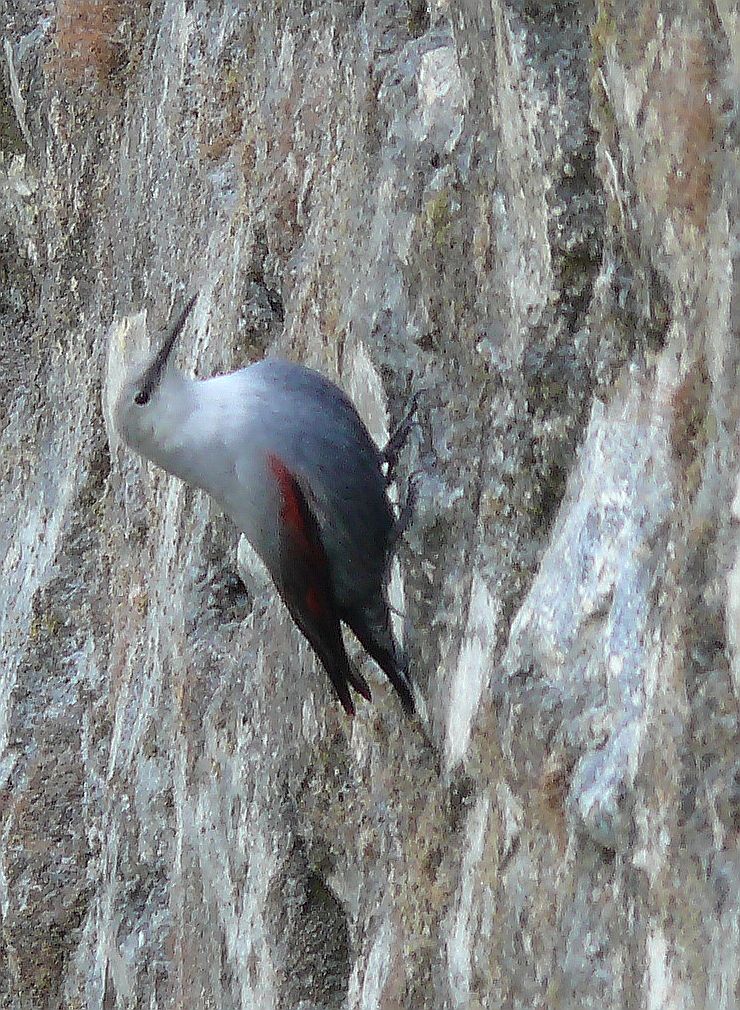
Wallcreeper (Tichodroma muraria) ©WikiC

Wallcreeper (Tichodroma muraria) ©WikiC

Every animal, every creeping thing, every bird, and whatever creeps on the earth, according to their families, went out of the ark. (Genesis 8:19 NKJV)

The Lord has created more little avian wonders in these three next families:

Red-breasted Nuthatch (Sitta canadensis) by Daves BirdingPix

Red-breasted Nuthatch (Sitta canadensis) by Daves BirdingPix

The 28 Nuthatches constitute a genus, Sitta, of small passerine birds belonging to the family Sittidae. Characterised by large heads, short tails, and powerful bills and feet, nuthatches advertise their territory using loud, simple songs. Most species exhibit grey or bluish upperparts and a black eye stripe.

Most nuthatches breed in the temperate or montane woodlands of the Northern Hemisphere, although two species have adapted to rocky habitats in the warmer and drier regions of Eurasia. However, the greatest diversity is in Southern Asia, and similarities between the species have made it difficult to identify distinct species. All members of this genus nest in holes or crevices. Most species are non-migratory and live in their habitat year-round, although the North American Red-breasted Nuthatch migrates to warmer regions during the winter.

Wallcreeper (Tichodroma muraria) by Nikhil Devasar

The Wallcreeper (Tichodroma muraria) is a small passerine bird found throughout the high mountains of Eurasia. It is the only member of the genus Tichodroma. (Wikipedia)

PAS-Clim Brown Treecreeper (Climacteris picumnus) ©WikiC 3

Brown Treecreeper (Climacteris picumnus) ©WikiC

The 11 Treecreepers are a family, Certhiidae, of small passerine birds, widespread in wooded regions of the Northern Hemisphere and sub-Saharan Africa. The family contains ten species in two genera, Certhia and Salpornis. Their plumage is dull-coloured, and as their name implies, they climb over the surface of trees in search of food.

This slideshow requires JavaScript.

Also, to every beast of the earth, to every bird of the air, and to everything that creeps on the earth, in which there is life, I have given every green herb for food”; and it was so. Then God saw everything that He had made, and indeed it was very good. So the evening and the morning were the sixth day. (Genesis 1:30-31 NKJV)

“How Deep Is Your Love?” – Played by Jill Foster (Faith Baptist)

*
More Sunday Inspirations

Sittidae – Nuthatches

Tichodromidae – Wallcreeper

Certhiidae – Treecreepers

Sharing The Gospel

*

Sunday Inspiration – Wrens

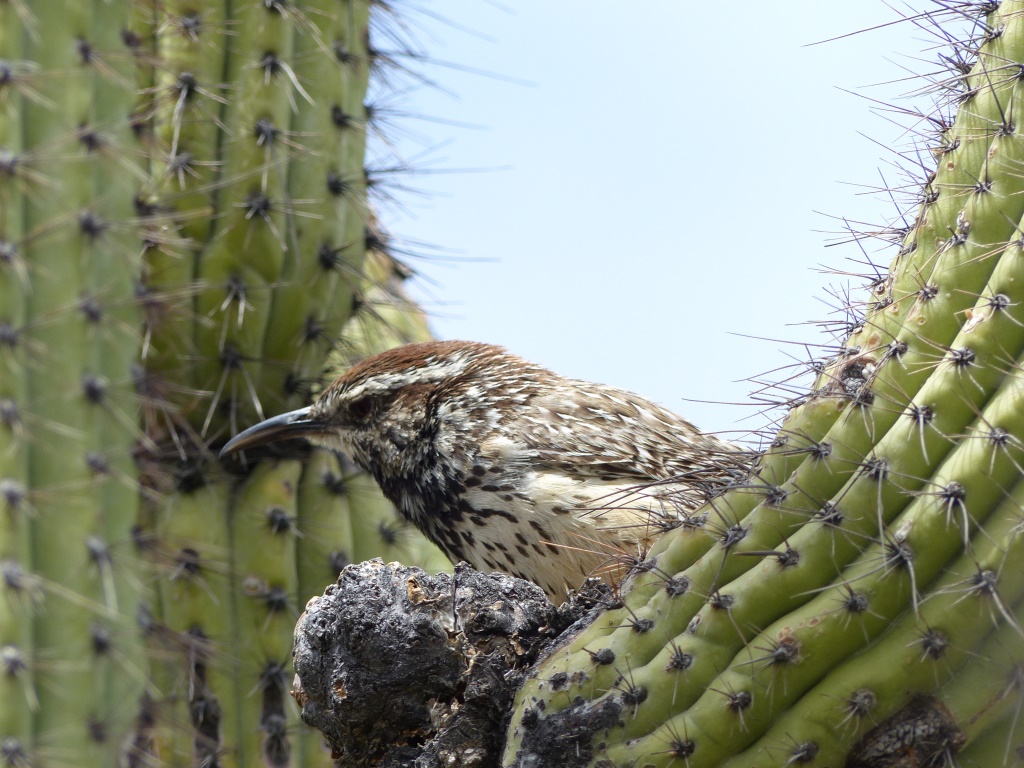
Cactus Wren (Campylorhynchus brunneicapillus) by Lee

God, who made the world and everything in it, since He is Lord of heaven and earth, does not dwell in temples made with hands. (Acts 17:24 NKJV)

The Troglodytidae – Wrens Family was the one skipped over in the Sunday Inspiration last week. There are 84 species in the family, so they deserve their own blog. The family name Troglodytidae is derived from troglodyte, which means “cave-dweller”, and the wrens get their scientific name from the tendency of some species to forage in dark crevices.

Rufous-naped Wren (Campylorhynchus rufinucha) by Raymond Barlow

Rufous-naped Wren (Campylorhynchus rufinucha) by Raymond Barlow

Wrens are medium-small to very small birds. The Eurasian wren is among the smallest birds in its range, while the smaller species from the Americas are among the smallest passerines in that part of the world. They range in size from the white-bellied wren, which averages under 10 cm (3.9 in) and 9 g (0.32 oz), to the giant wren, which averages about 22 cm (8.7 in) and weighs almost 50 g (1.8 oz). The dominating colors of their plumage are generally drab, composed of gray, brown, black, and white, and most species show some barring, especially to tail and/or wings. No sexual dimorphism is seen in the plumage of wrens, and little difference exists between young birds and adults. All have fairly long, straight to marginally decurved bills.

Bewick's Wren (Thryomanes bewickii) by Daves BirdingPix

Bewick’s Wren (Thryomanes bewickii) by Daves BirdingPix

Wrens have loud and often complex songs, sometimes given in duet by a pair. The song of members of the genera Cyphorhinus and Microcerculus have been considered especially pleasant to the human ear, leading to common names such as song wren, musician wren, flutist wren, and southern nightingale-wren.

Then God saw everything that He had made, and indeed it was very good. So the evening and the morning were the sixth day. (Genesis 1:31 NKJV)

This slideshow requires JavaScript.

“He is Everything To Me” – Men’s Ensemble – Faith Baptist

*

More Sunday Inspirations

Sermons From My Pastor


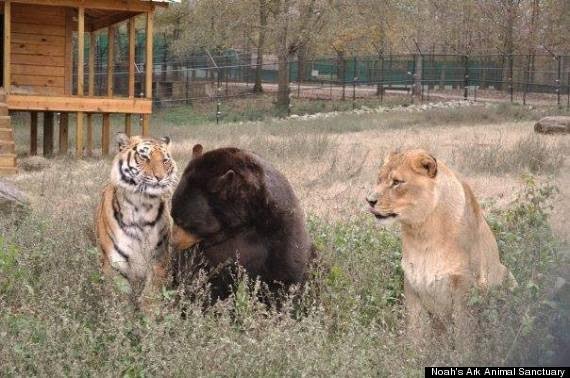
BLT at Noah’s ARK

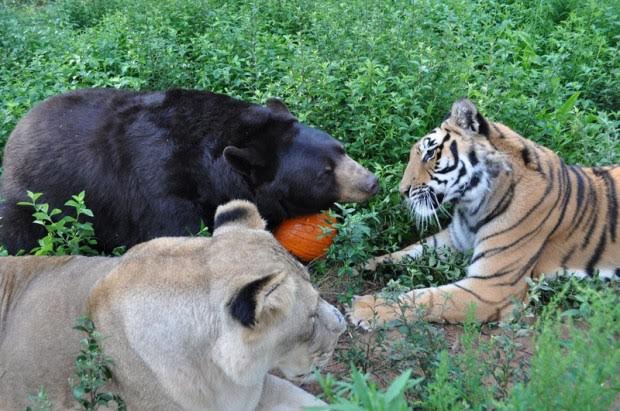
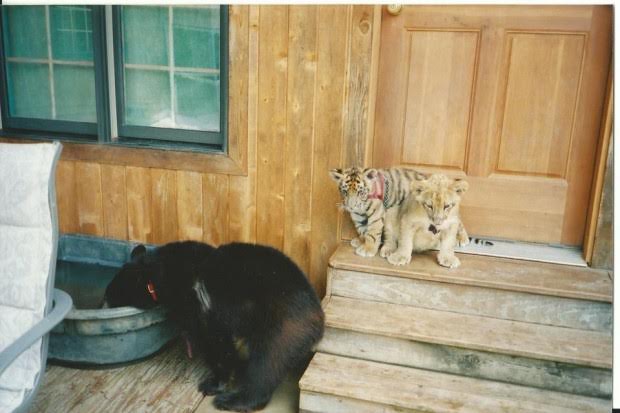
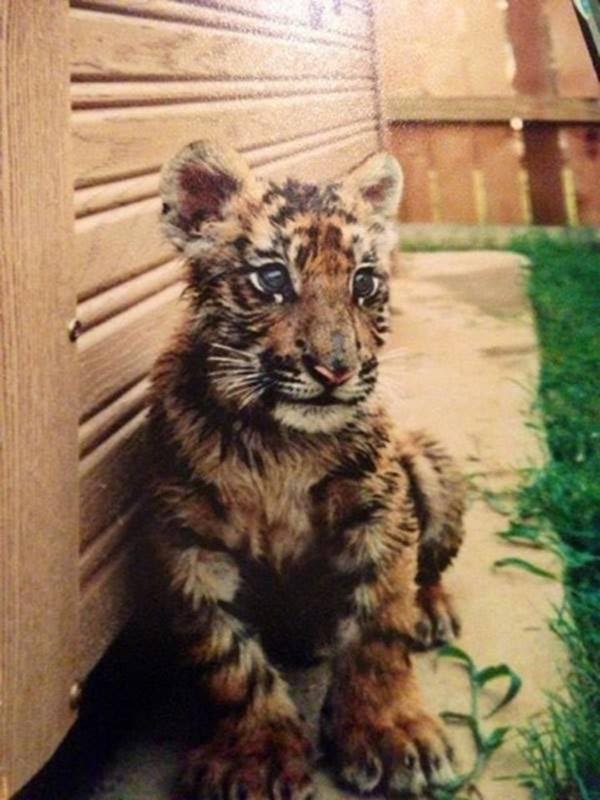
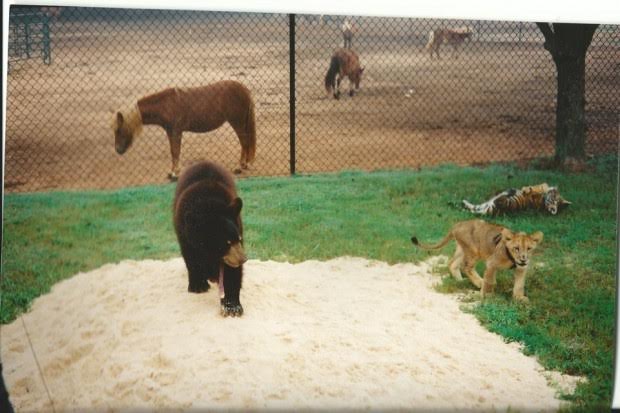
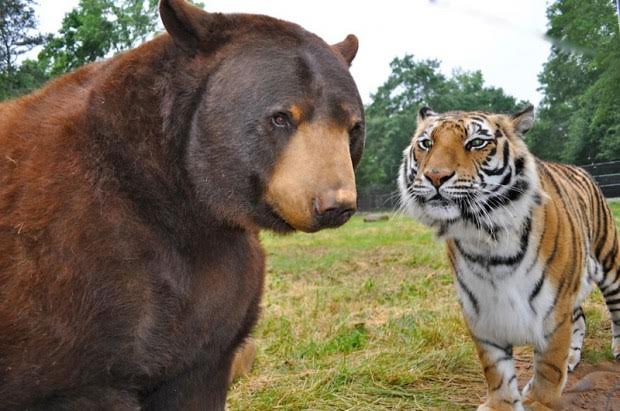
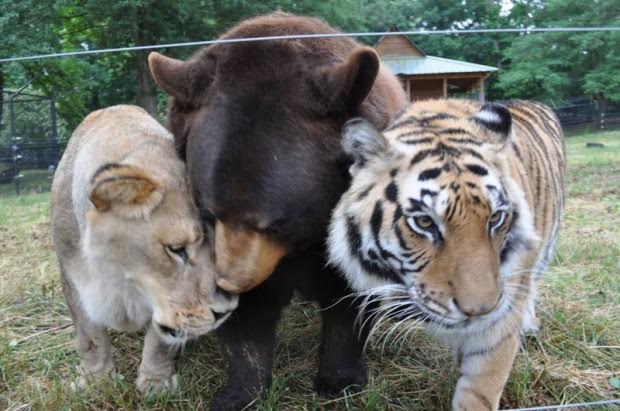
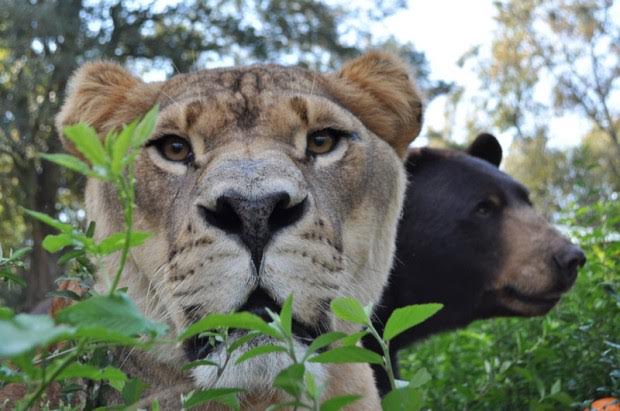
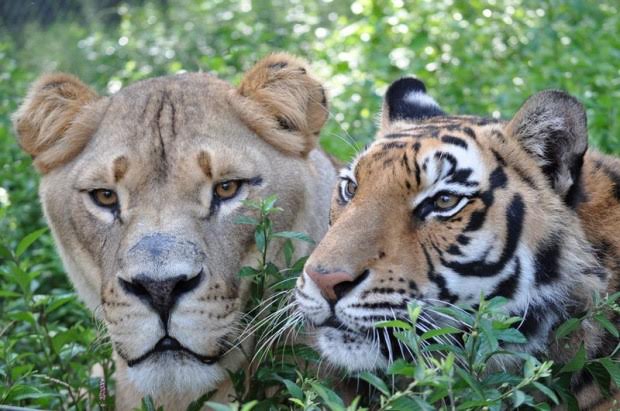
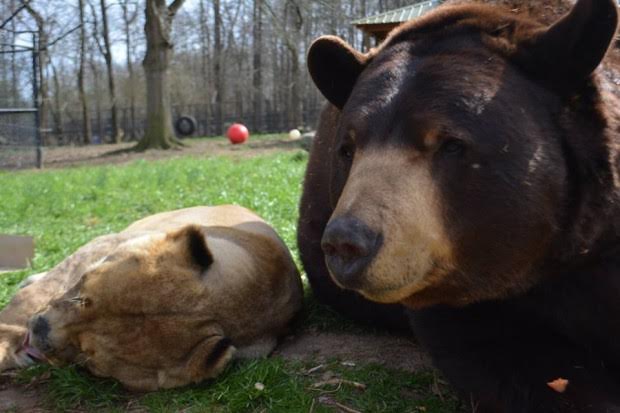
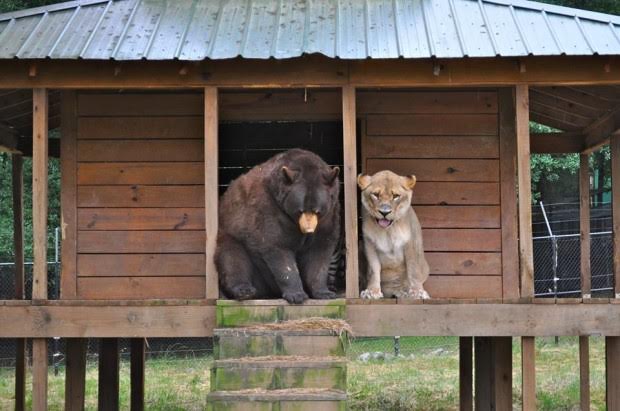
Interesting Things from Smiley CentralFrom another e-mail received, this one is about a Bear, Lion and a Tiger. They are affectionately known as “BLT” and housed at the Noah’s Ark Sanctuary in Georgia.

This is Leo the African Lion, Baloo the Black Bear, and Shere Khan the Bengal Tiger.

BLT 1

The threesome were rescued as babies from the basement of an Atlanta drug dealer’s home when it was raided by authorities.

BLT 2

They were starving, traumatized and had bacterial infections.

BLT 3

Since then, they were brought to Noah’s Ark Animal Sanctuary

BLT 4

… where they’ve lived in the same habitat together for 13 years.

BLT 5

The only time the three were separated was when Baloo was sent to surgery. [While at the drug dealer’s home, Baloo had been mistreated so profoundly that the harness that was put on him had grown into his skin.]

BLT 7

The two cats were distraught and cried for the bear’s return when he was at the vet’s. Since then no one has separated the group.

BLT 8

They clearly bonded during their earliest memories and never wanted to be apart.

BLT 9

Now they live together as if they were brothers of the same species.

BLT 10

They play together, nuzzle one another and are extremely affectionate.

BLT 11

The threesome are the only lion, tiger and bear living together in the world.

BLT 12

They’re just that exceptional.

BLT 13

Humans could really learn from the bond that these three have.

BLT 14

No one ever told them they couldn’t love one another, so they did just that.

BLT 15

And now, even all these years later, they continue to do so.

BLT 16

The trio are affectionately referred to as BLT, standing for bear, lion, and tiger. They might just be the most adorable sandwich ever!

That is the end of the e-mail I received. Their behavior reminds us that when the Lord returns, sets up His kingdom on earth and Isaiah is fulfilled:

“The wolf also shall dwell with the lamb, The leopard shall lie down with the young goat, The calf and the young lion and the fatling together; And a little child shall lead them. The cow and the bear shall graze; Their young ones shall lie down together; And the lion shall eat straw like the ox. The nursing child shall play by the cobra’s hole, And the weaned child shall put his hand in the viper’s den. They shall not hurt nor destroy in all My holy mountain, For the earth shall be full of the knowledge of the LORD As the waters cover the sea.” (Isaiah 11:6-9 NKJV)

Here are two videos found on the internet about them.

*

*

Noah’s Ark Sanctuary in Georgia

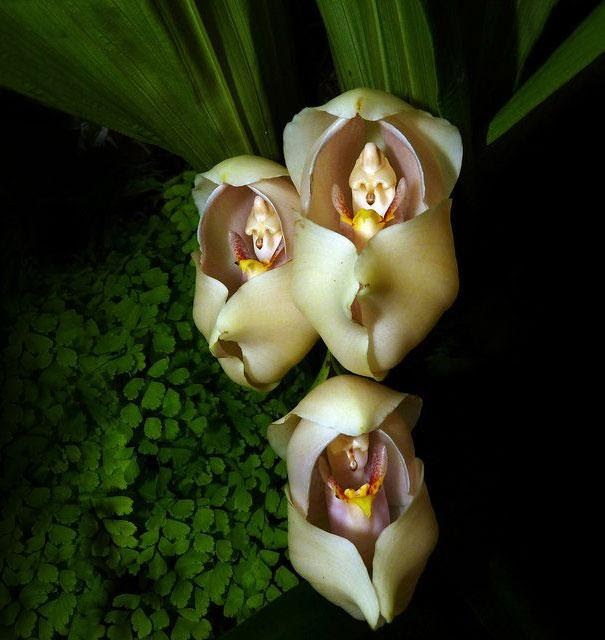
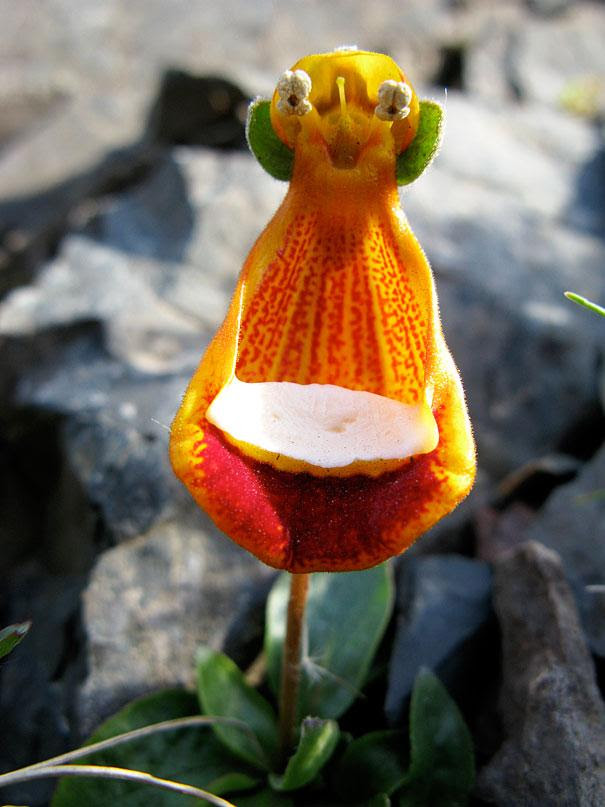
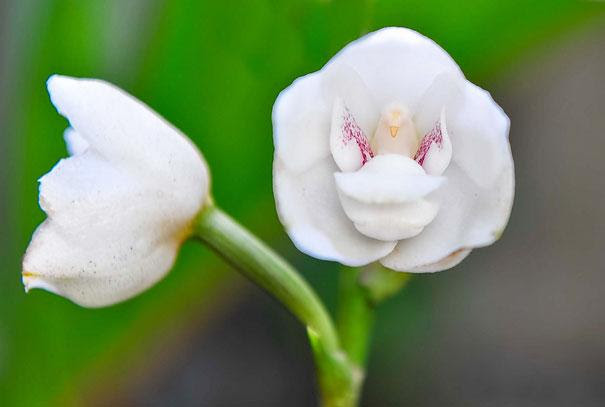
Who Says God Doesn’t Have A Sense of Humor!

Received this in an e-mail and thought you also would enjoy it. Not sure who to give the credit to for the photos, but I know Who to give the credit to for creating them. Thank You, Lord.

All things were made by him; and without him was not any thing made that was made. (John 1:3 KJV)

What a wonderful world!
“May God grant you always…
A sunbeam to warm you,
a moonbeam to charm you,
a sheltering Angel so nothing can harm you,
Laughter to cheer you.
Faithful friends near you.
And whenever you pray, Heaven to hear you.” —
An Irish Blessing

Contentment is not the fulfillment of what you want, but the realization of how much you already have.


Lee’s Addition:

The Bible says it this way, “But godliness with contentment is great gain. For we brought nothing into this world, and it is certain we can carry nothing out. And having food and raiment let us be therewith content. (1 Timothy 6:6-8 KJV)

Sunday Inspiration – Seven Small Families

As we continue through our Passerines, we come to seven families that have very few members in them. Just because their numbers are few, their Creator has not failed to give each a niche to fill and the ability and design to do so. They are all small birds, like the song, “His Eye Is On The Sparrow,” these bird are no less ignored by the Lord.

Dapple-throat (Arcanator orostruthus) ©WikiC

Dapple-throat (Arcanator orostruthus) ©WikiC

I am weary with my crying; My throat is dry; My eyes fail while I wait for my God. (Psalms 69:3 NKJV)

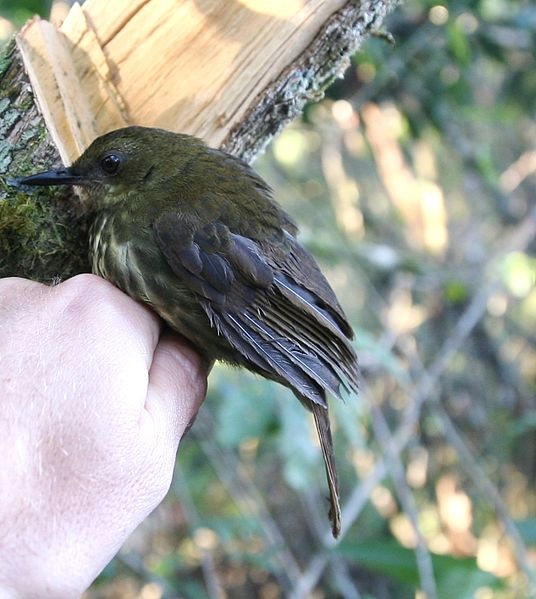
The Dapple-throat and allies – Modulatricidae  family only has three species; Spot-throat, Dapple-throat and the Grey-chested Babbler. Internet says they are from Africa and that its natural habitat is subtropical or tropical moist montane forests. That is about the only information given.

Cape Sugarbird (Promerops cafer) ©WikiC

Cape Sugarbird (Promerops cafer) ©WikiC

More to be desired are they than gold, Yea, than much fine gold; Sweeter also than honey and the honeycomb. (Psalms 19:10 NKJV)

The Sugarbirds make up a small family, Promeropidae, of passerine birds which are restricted to southern Africa. The two species of sugarbird make up one of only two bird families restricted entirely to southern Africa, the other being the rock-jumpers Chaetopidae. In general appearance as well as habits they resemble large long-tailed sunbirds, but are possibly more closely related to the Australian honeyeaters. They have brownish plumage, the long downcurved bill typical of passerine nectar feeders, and long tail feathers.

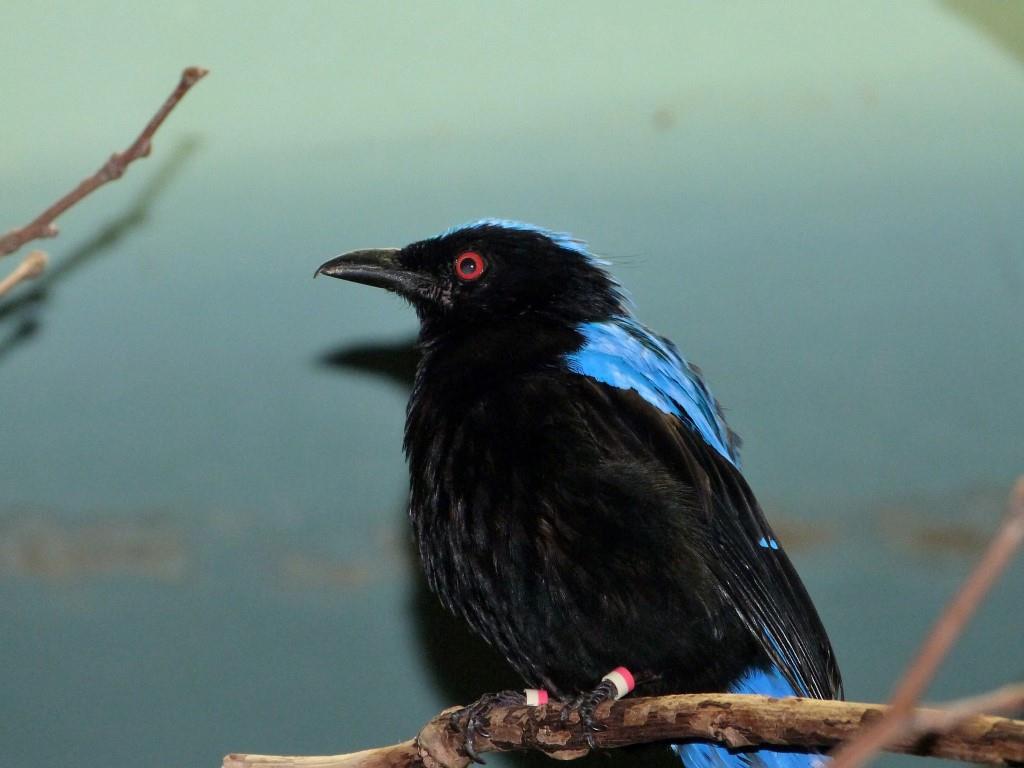
Asian Fairy-bluebird (Irena puella) at Cincinnati Zoo by Lee

Asian Fairy-bluebird (Irena puella) at Cincinnati Zoo by Lee

“You shall make the robe of the ephod all of blue.” (Exodus 28:31 NKJV)

The two Fairy-bluebirds are small passerine bird species found in forests and plantations in tropical southern Asia and the Philippines. They are the sole members of the genus Irena and family Irenidae, and are related to the ioras and leafbirds.

These are bulbul-like birds of open forest or thorn scrub, but whereas that group tends to be drab in colouration, fairy-bluebirds are sexually dimorphic, with the males being dark blue in plumage, and the females duller green.

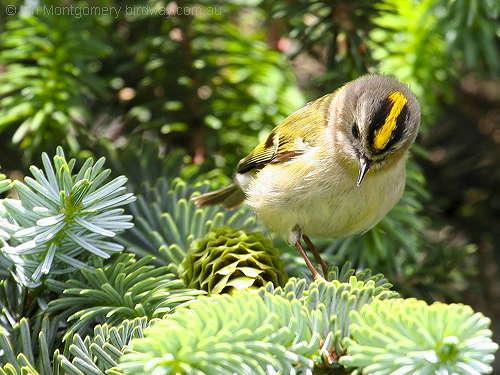
Goldcrest (Regulus regulus) by Ian

Goldcrest (Regulus regulus) by Ian

And thou shalt overlay it with pure gold, and make thereto a crown of gold round about. (Exodus 25:24 KJV)

Regulidae – Goldcrests, kinglets family has only six members. The kinglets or crests are a small group of birds sometimes included in the Old World warblers, but are frequently given family status because they also resemble the titmice. The scientific name Regulidae is derived from the Latin word regulus for “petty king” or prince, and comes from the coloured crowns of adult birds. This family has representatives in North America and Eurasia.

Spotted Elachura (Elachura formosa) ©Ramki Sreenivasan

Spotted Elachura (Elachura formosa) ©Ramki Sreenivasan

The Spotted Elachura (Elachura formosa (Elachuridae) is the only bird in its family they discovered recently through DNA studies. It is found in Bangladesh, Bhutan, China, India, Laos, Myanmar, Nepal, and Vietnam. Its natural habitat is subtropical or tropical moist montane forests. This species is found in undergrowth and dense thickets of this type of forest, with a preference for thick fern ground cover, mossy rocks and decaying trunks of fallen trees and brushwood (often near stream or creek) long grass and scrub.

Violet-baked Hyliota (Hyliota violacea) ©WikiC

Violet-baked Hyliota (Hyliota violacea) ©WikiC

Hyliotidae – Hyliota found in Angola, Cameroon, Democratic Republic of the Congo, Kenya, Malawi, Mozambique, South Africa, Tanzania, Uganda, Zambia, and Zimbabwe. Its natural habitats are subtropical or tropical moist lowland forests, subtropical or tropical moist montane forests, and plantations. It is threatened by habitat loss.

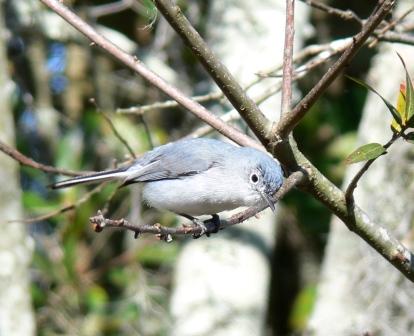
Blue-Gray Gnatcatcher at Circle B Reserve by Lee

Blue-Gray Gnatcatcher at Circle B Reserve by Lee

Lift up your eyes to the heavens, and look upon the earth beneath; for the heavens shall be dissolved and vanish away like smoke, and the earth shall wax old like a garment, and they that dwell therein shall die in like manner [like gnats]. But My salvation shall be forever, and My rightness and justice [and faithfully fulfilled promise] shall not be abolished. [Matt. 24:35; Heb. 1:11; II Pet. 3:10.] (Isaiah 51:6 AMP)

(Wrens skipped until next week ) Our last group of very small birds are from the Polioptilidae – Gnatcatchers. The 18 species of small passerine birds in the gnatcatcher family occur in North and South America (except far south and high Andean regions). Most species of this mainly tropical and subtropical group are resident, but the Blue-gray Gnatcatcher of the USA and southern Canada migrates south in winter. They are close relatives of the wrens. (Wikipedia)


This slideshow requires JavaScript.

*

*

*

Sunday Inspiration – White Eyes

Reunion Olive White-eye (Zosterops olivaceus) ©WikiC

Reunion Olive White-eye (Zosterops olivaceus) ©WikiC

Say not ye, There are yet four months, and then cometh harvest? behold, I say unto you, Lift up your eyes, and look on the fields; for they are white already to harvest. (John 4:35 KJV)

The Zosteropidae – White-eyes Family is passerine birds that live in the tropical and subtropical Sub-Saharan Africa, Australasia and eastern Asia. White-eyes inhabit most tropical islands in the Indian Ocean, the western Pacific Ocean, and the Gulf of Guinea. There are currently 127 members in the family. Most are White-eyes, a Silvereye, a Blackeye, a Darkeye, 4 Speirops, 11 Yuhinas, and about a dozen Babblers.

Silvereye (Zosterops lateralis) by Ian

Silvereye (Zosterops lateralis) by Ian

As their common name implies, many species have a conspicuous ring of tiny white feathers around their eyes. The scientific name of the group also reflects this latter feature, being derived from the Ancient Greek for “girdle-eye”. They have rounded wings and strong legs. Like many other nectivorous birds, they have slender, pointed bills, and brush-tipped tongues. The size ranges up to 15 cm (6 inches) in length. (Wikipedia)

Stripe-throated Yuhina (Yuhina gularis) ©WikiC

Stripe-throated Yuhina (Yuhina gularis) ©WikiC

I trust you will enjoy getting to know and see another enchantingly created family of birds from Our Creator.

But mine eyes are unto thee, O GOD the Lord: in thee is my trust; (Psalms 141:8a KJV)

This slideshow requires JavaScript.

*

“Come, Look To Jesus” ~ Played by Jill Foster at Faith Baptist (during Communion)

*

More Sunday Inspiration

Zosteropidae – White-eyes

Birds of the World Families

White-eye – Wikipedia

Is There A God?

*

Parrot Mountain’s Prayer Garden

And when he had sent the multitudes away, he went up into a mountain apart to pray: and when the evening was come, he was there alone. (Matthew 14:23 KJV)

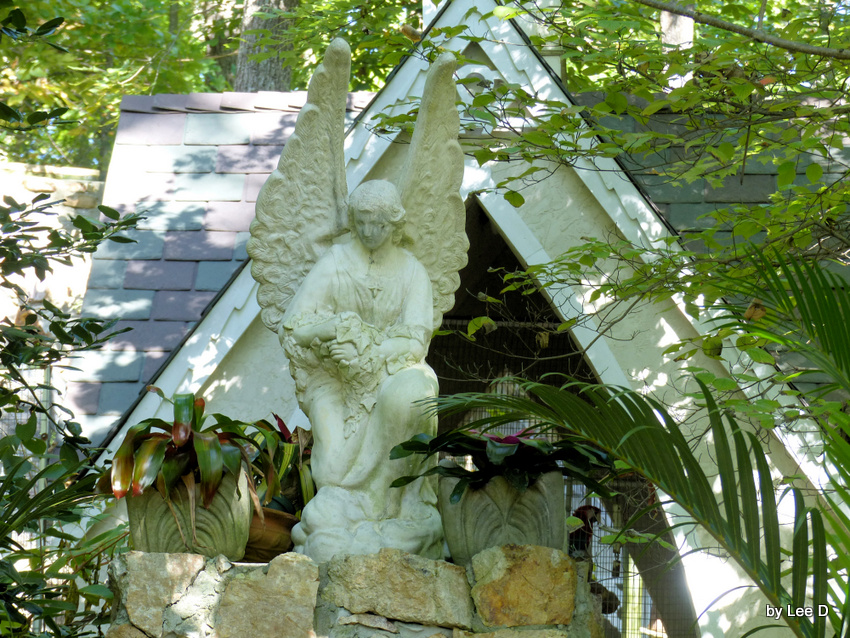
The Prayer Garden at Parrot Mountain is very peaceful and lovely. Thought I would share some of those photos this time. At the entrance there are two angel statues and then as you enter.

Angel

Angel

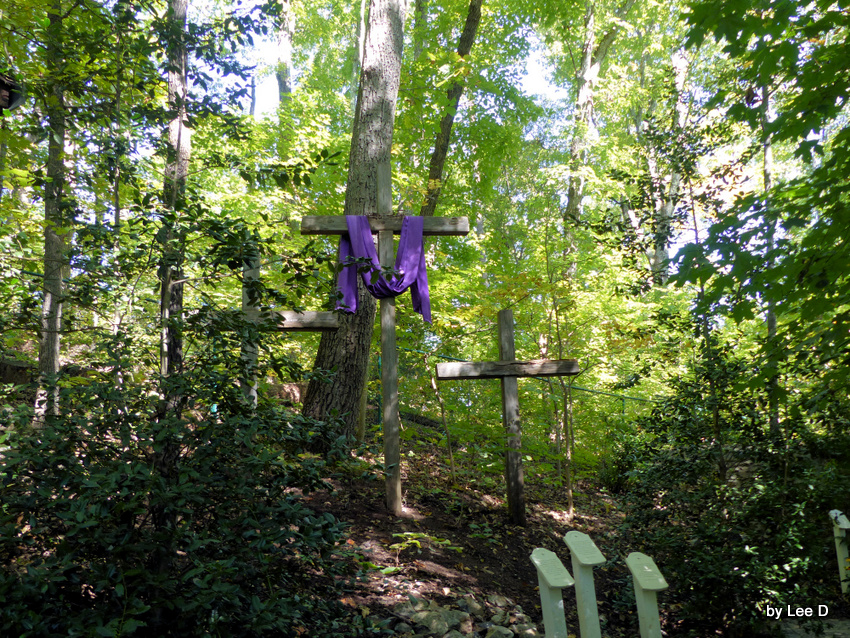
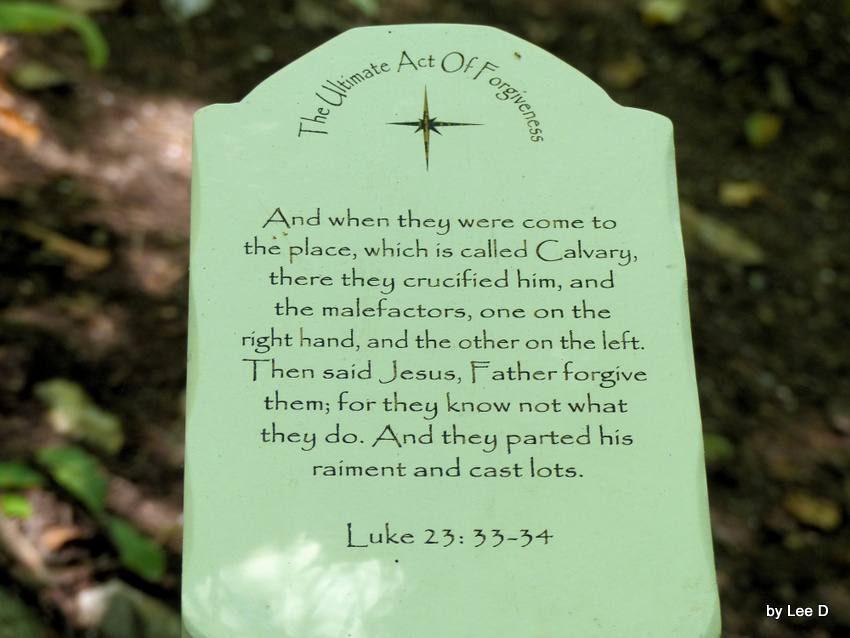
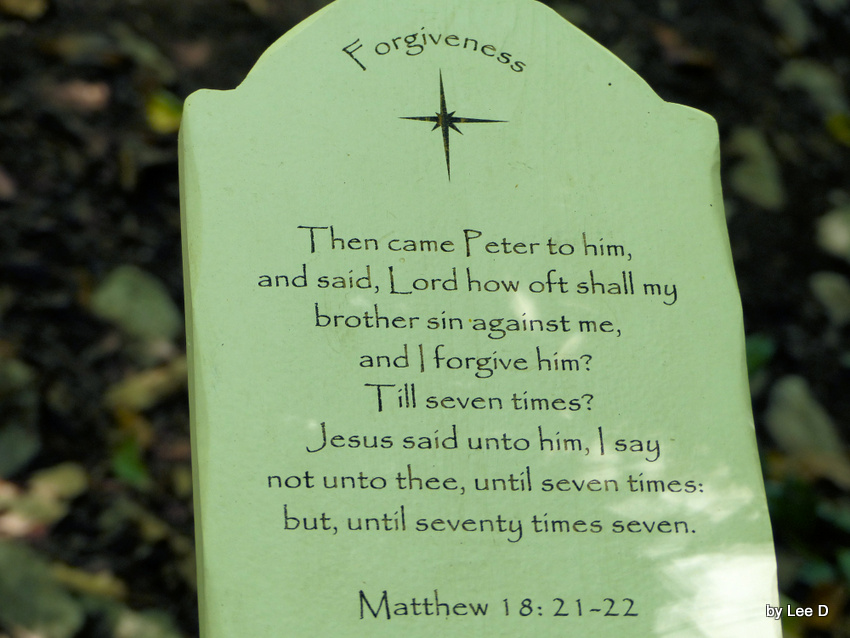
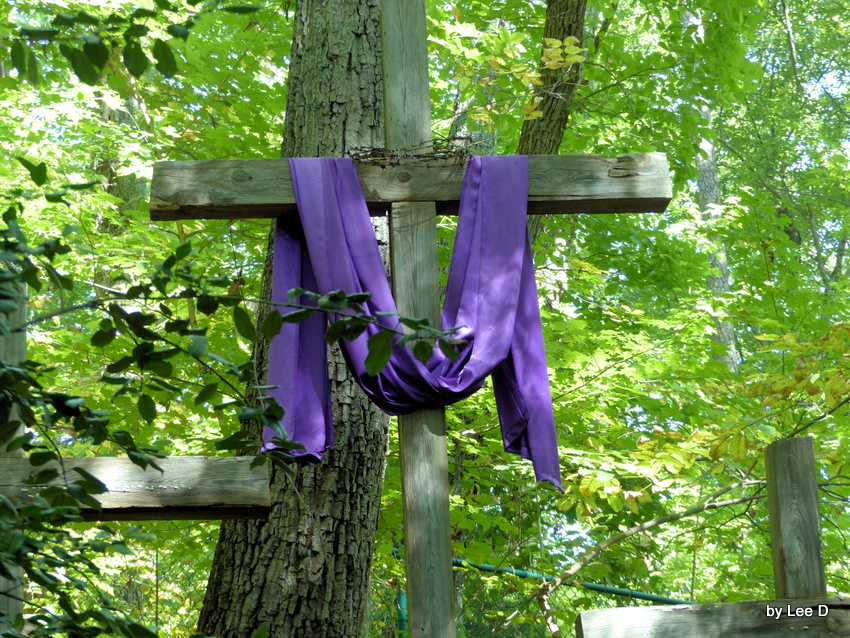
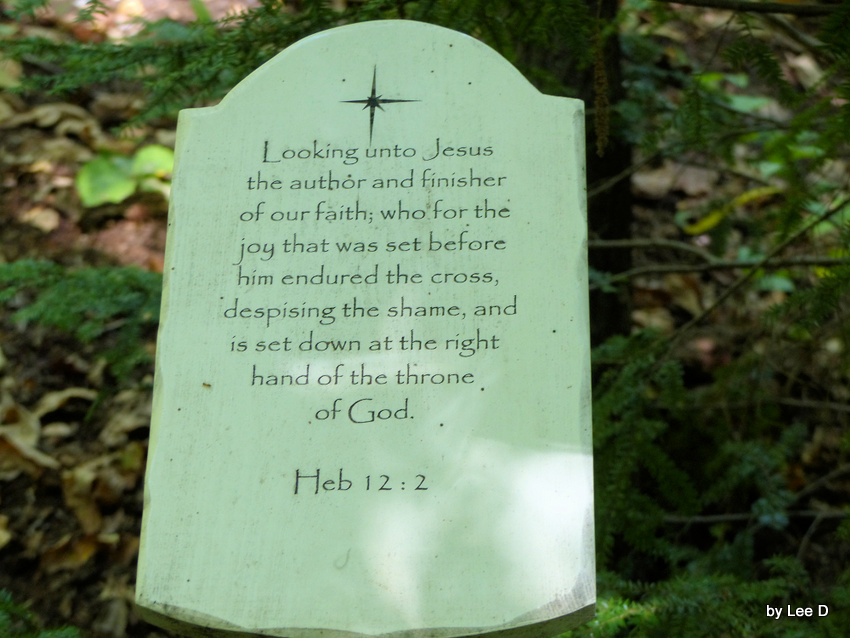
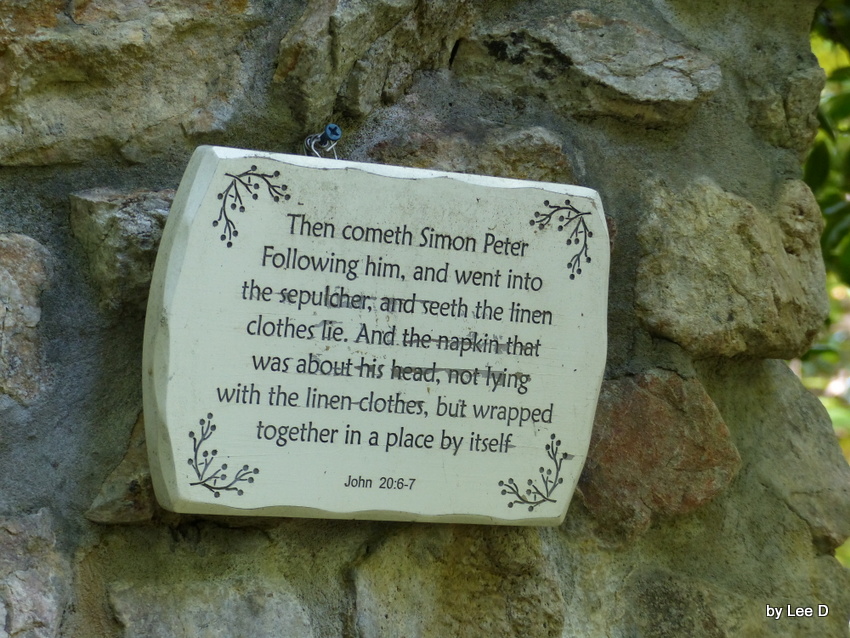
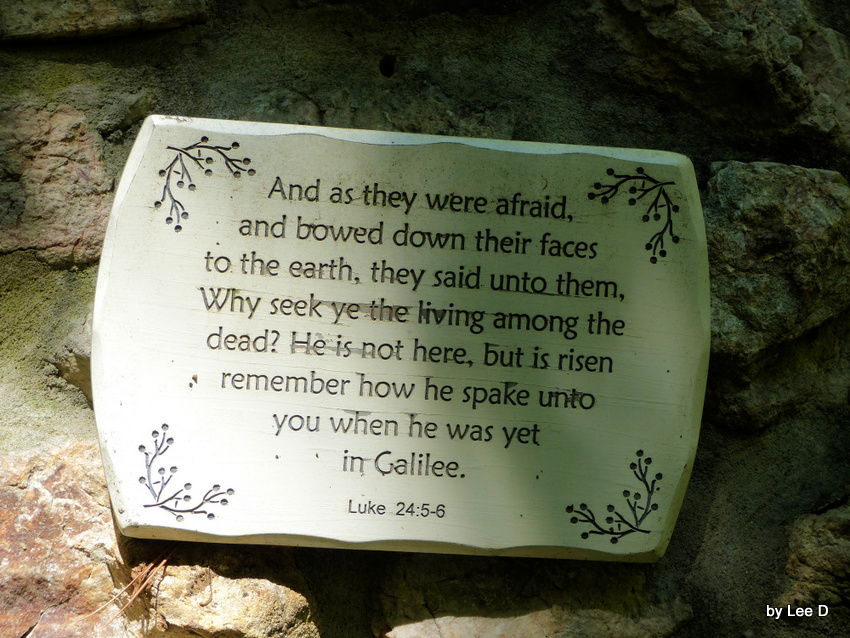
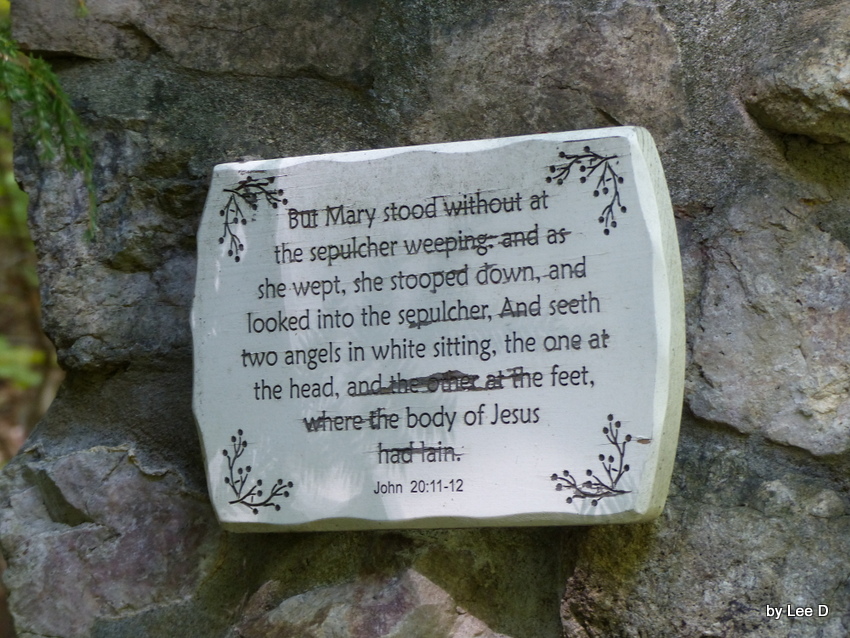
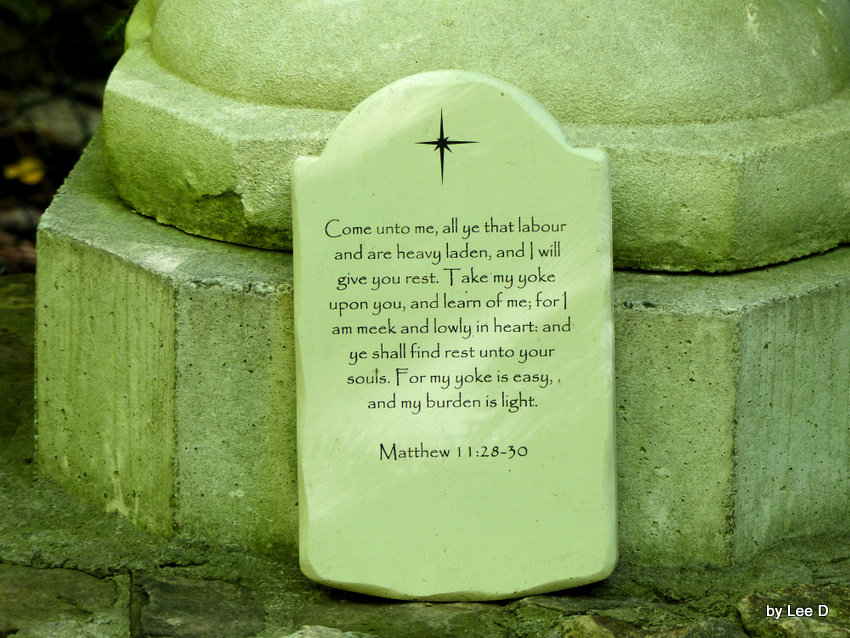
There are three crosses and some signs with verses:

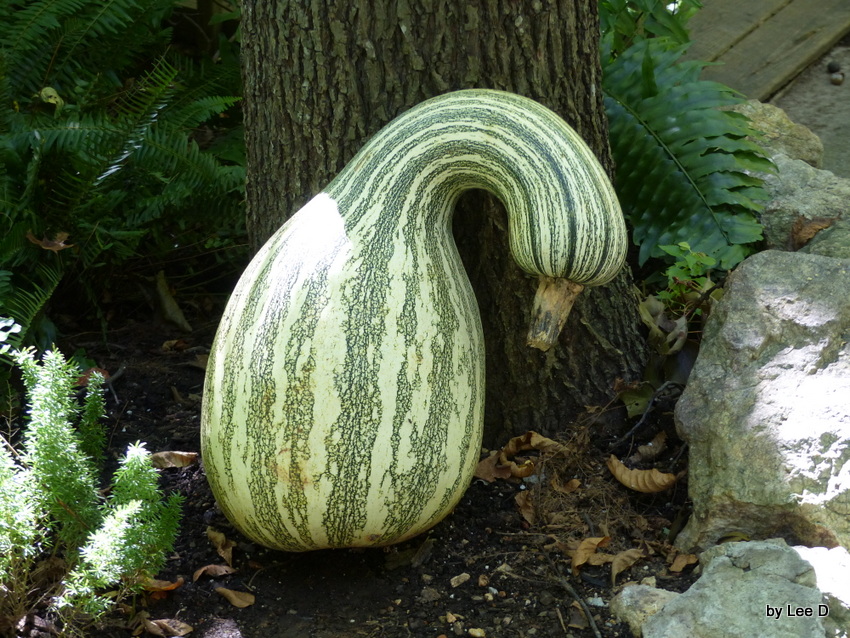
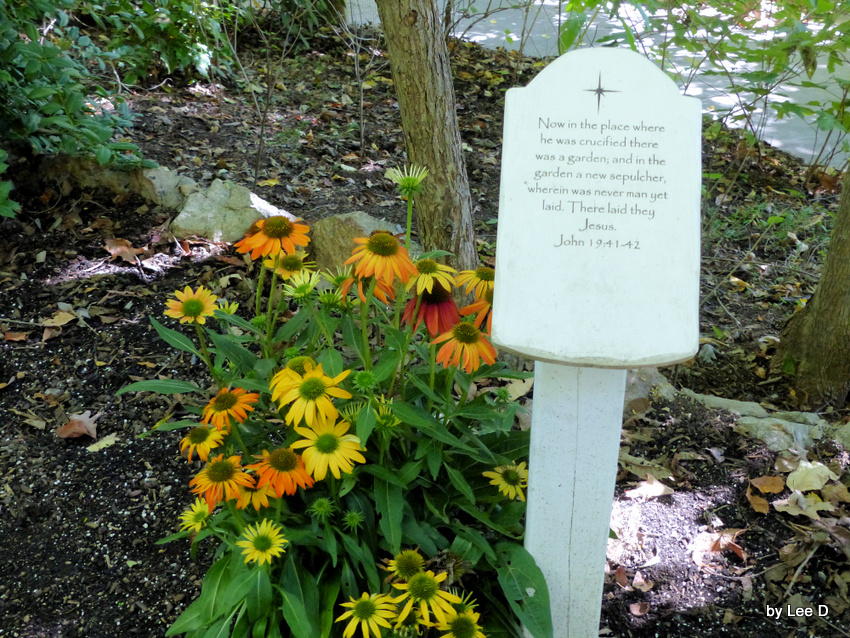
Parrot Mountain Landscape and Signs

Three Crosses and Signs

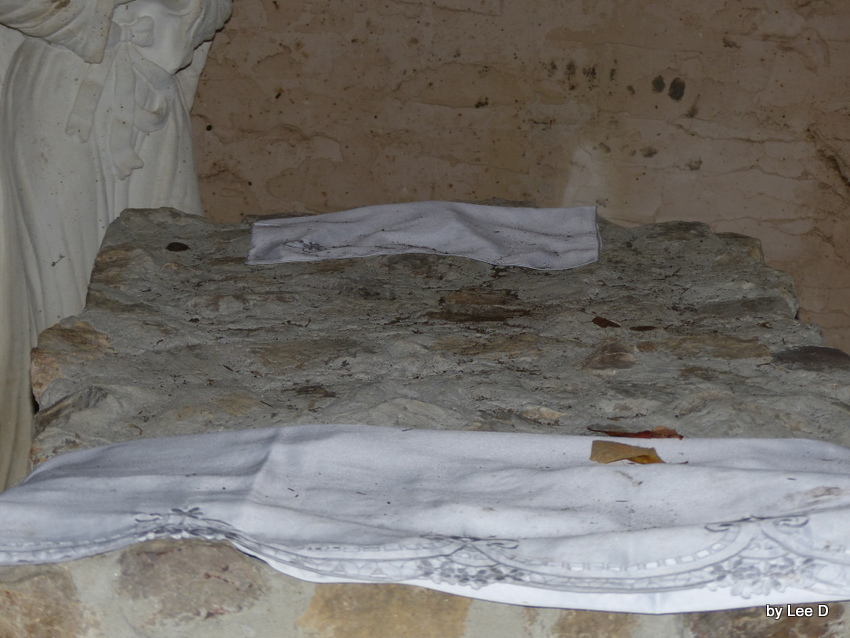
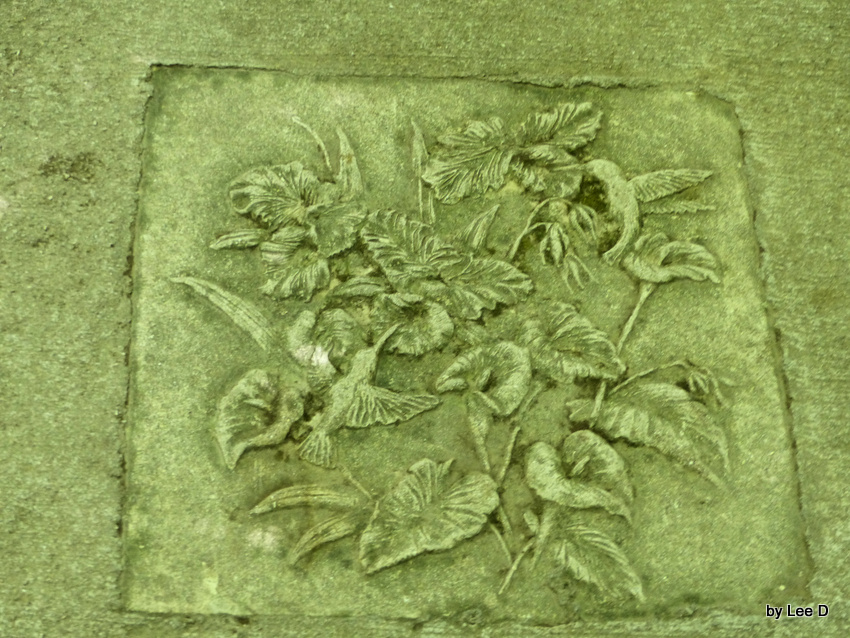
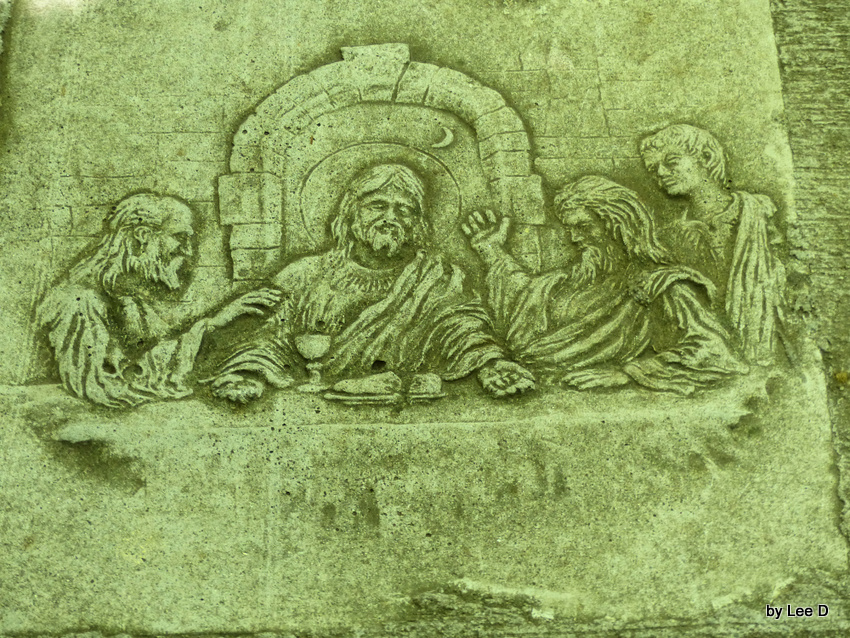
As you go in further there are more signs, a garden tomb with an angel and a place where the Savior was lain. More signs and walkway with sculptures in them. Here are more of the photos of this area of Parrot Mountain.

*
Parrot Mountain in Pigeon Forge, Tennessee
Fellowship in the Smokies
Peaceful Stream
Salmon-crested (Moluccan) Cockatoo at Parrot Mountain
Are You Missing Something?
Sharing The Gospel

*

Sunday Inspiration – Sylviid Babblers

Eurasian Blackcap (Sylvia atricapilla) ©WikiC

Eurasian Blackcap (Sylvia atricapilla) ©WikiC

Here is our next avian group taxonomically, the Sylviidae – Sylvid Babblers Family. The Lord created these birds with a song to sing and some that are very colorful. Actually there are very few Babblers in the family. There are Blackcaps, various Warblers, Whitethroats, Fulvettas, Parrotbills plus a Myzornis and a Catbird.

Fire-tailed Myzornis (Myzornis pyrrhoura) ©WikiC

Fire-tailed Myzornis (Myzornis pyrrhoura) ©WikiC

Sylviidae is a family of passerine birds that was part of an assemblage known as the Old World warblers. The family was formerly a wastebin taxon with over 400 species of bird in over 70 genera. The family was poorly defined with many characteristics shared with other families. Advances in classification, particularly helped with molecular data, have led to the splitting out of several new families from within this group. Today the smaller family Sylviidae includes the typical warblers in the genus Sylvia, the parrotbills of Asia (formerly a separate family Paradoxornithidae), a number of babblers formerly placed within the family Timaliidae (which is itself currently being split) and the wrentit, an unusual North American bird that has been a longstanding taxonomic mystery.

Hume's Whitethroat (Sylvia althaea) ©WikiC

Hume’s Whitethroat (Sylvia althaea) ©WikiC

There is now evidence that these Sylvia “warblers” are more closely related to babblers [Timaliidae], and thus these birds are better referred to as Sylvia babblers, or just sylvids.

Vinous-throated Parrotbill (Sinosuthora webbiana) ©WikiC

Vinous-throated Parrotbill (Sinosuthora webbiana) ©WikiC

Sylviids are small to medium-sized birds. The bill is generally thin and pointed with bristles at the base. Sylviids have a slender shape and an inconspicuous and mostly plain plumage. The wings have ten primaries, which are rounded and short in non-migratory species. (Wikipedia)

For thus says the LORD, Who created the heavens, Who is God, Who formed the earth and made it, Who has established it, Who did not create it in vain, Who formed it to be inhabited: “I am the LORD, and there is no other. (Isaiah 45:18 NKJV)

This slideshow requires JavaScript.

Now if God so clothes the grass of the field, which today is, and tomorrow is thrown into the oven, will He not much more clothe you, O you of little faith? (Matthew 6:30 NKJV)

“I Stand Amazed” ~ Faith Baptist Choir

*

More Sunday Inspirations 

Sylviidae – Sylviid Babblers

Sylviidae – Wikipedia

Parrotbill – Wikipedia

Babbler For Who?

*

Peaceful Stream

Trees along the Roaring Fork Drive

Trees along the Roaring Fork Drive

The trees have not turned that much yet, but the two videos below are just relaxing to watch. In about two weeks or so the leaves should really be at prime.

He brought streams also out of the rock, and caused waters to run down like rivers. (Psalms 78:16 KJV)

But let judgment run down as waters, and righteousness as a mighty stream. (Amos 5:24 KJV)

Now no chastening seems to be joyful for the present, but painful; nevertheless, afterward it yields the peaceable fruit of righteousness to those who have been trained by it. (Hebrews 12:11 NKJV)

*