Birds Of The Bible – Swallow-tailed Kites

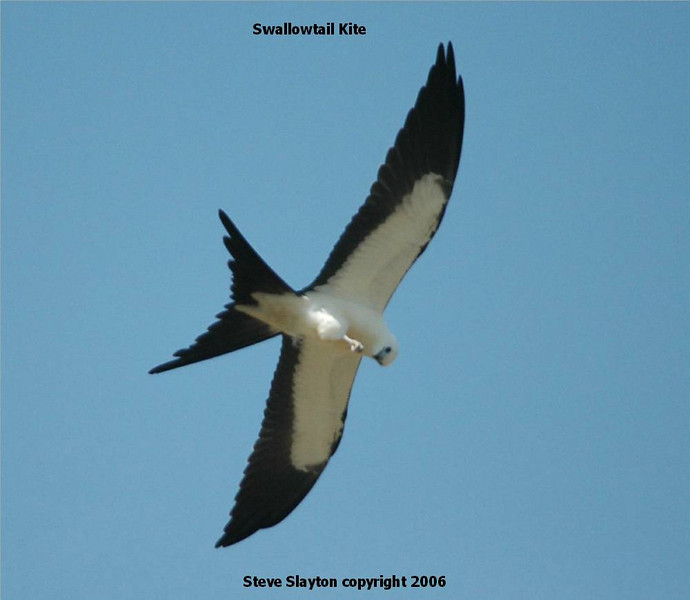
Swallow-tailed Kite by S Slayton

Swallow-tailed Kite by S Slayton

and the red kite, the falcon, and the kite in their kinds, (Deuteronomy 14:13 NASB)

In the Birds of the Bible – Hidden Covenant Part 3, I mistakenly placed this photo of a Swallow-tailed Kite instead of a Swallow. I have since fixed my mistake. A J was talking about the Swallows observing the time of their coming and he used Jeremiah 8:7.

Even the stork in the heavens Knows her appointed times; And the turtledove, the swift, and the swallow Observe the time of their coming. But My people do not know the judgment of the LORD. (Jeremiah 8:7 NKJV)

The reason I mixed them up is because right now, in this area, the Swallow-tailed Kites are being spotted. I have seen a single one three times and just the other day, Dan and I had two of them skim over the top of trees, right in front of us. They have been in the area for a month or so, and soon they will move on again. They “Observe the time of their coming.” Thus the mistake on my part.

They may be one of the Birds of Prey, but they were beautifully created by the Lord. They are so graceful and enjoyable to watch. I am always amazed at the Creator’s use of such variety in the birds and in all the other neat things around us.

Who is like You, O LORD, among the gods? Who is like You, glorious in holiness, Fearful in praises, doing wonders? (Exodus 15:11 NKJV)

According to the Audubon WatchList, “Two subspecies found in the Americas. Northern subspecies (Elanoides forficatus forficatus) breeds in small sections of seven southeastern U.S. states and in southern Mexico. Members of this group migrate to South America in the late summer. Southern subspecies (Elanoides forficatus yetapa) found through much of South America. The estimated U.S. population of approximately 10,000 birds now breeds in fragmented populations from South Carolina south to Florida and west to Louisiana/Texas border with largest known populations in northern Florida. Formerly bred north to Minnesota and west through Texas to Mexico. Significant populations remain in Florida and along the Pascagoula River in Mississippi.”

I really enjoy seeing these Kites because you just have to be looking in the right direction at the right time. Every time they have been spotted by us, they just sort of “appear” over the tops of the trees. They skim so low, that when they come over you, you either see them or you don’t.

Kites are of course one of our Birds of the Bible – (Glede and Kites). They are mentioned twice in Scripture in the list of “unclean” birds in Leviticus 11:14 and Deuteronomy 14:13. Each time “after its kind” is given. So, our Swallow-tailed Kite is one of those kinds and would like to introduce you to this amazing bird that is so neat to watch flying. When they spread that tail of theirs, it is just super neat.
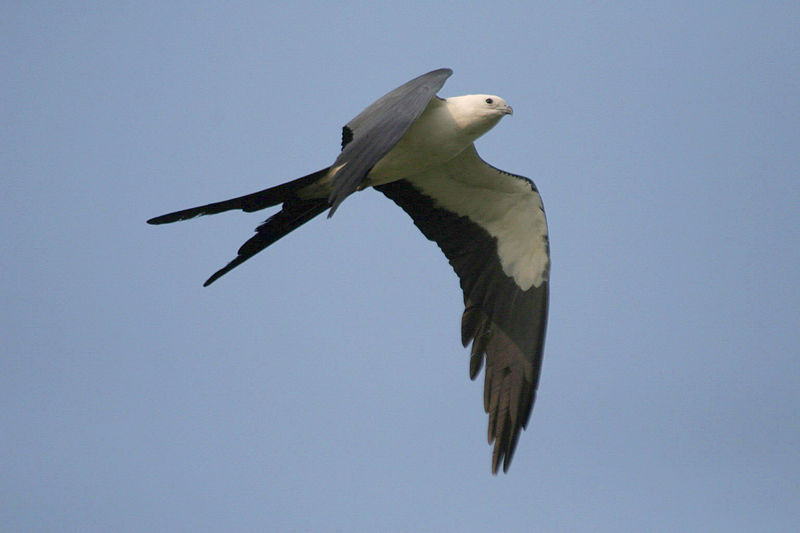
Swallow-tailed Kite (Elanoides forficatus) ©Wikipedia

Swallow-tailed Kite (Elanoides forficatus) ©Wikipedia

(Sounds from xeno-canto)

The Swallow-tailed Kite is a member of the Accipitridae Family (Kites, Hawks & Eagles) Family in the Order Accipitriformes. They are considered Abundance Common according the Thayer Birding software.

They are 24 inches (60 cm) with a very long black forked tail, white head, chest, belly and leading portion of underwing. Their flight feathers are black and their back is also black.

They are a medium-sized, graceful, long-winged, long-tailed hawk with pointed wings, a short, dark, hooked bill. The males and females are similar.

Adults have a long, deeply forked tail. white head, neck, chest, underwing coverts, belly, and undertail coverts, a slate gray back and upperwings, black tail and flight feathers. Whereas the immature is duller than adult with fine streaks on head and breast and has a shorter, less deeply-forked tail than adult.

Thayer also says of their habitat and behavior – ” Wet open woodlands, bottomlands, wooded river swamps, marshes, wetlands, and along rivers, ponds and lakes. Agile and graceful in flight. Eats in flight by bending head and neck under body to eat prey held in talon. Will drink in flight, much like a swallow. Gregarious. Will sweep low over open fields and grasslands to catch food or soar very high for flying insects.”

Swallow-tailed Kite (Elanoides forficatus) by Africaddict

Swallow-tailed Kite (Elanoides forficatus) by Africaddict

The Swallow-tails like to breed in “Lowland forest, especially swampy areas extending into open woodland. 1 brood. Mating system is monogamous. Displays are In flight: easy sailing, curving chase often over water. On perch: mutual approach on horizontal limb, face-off, female quickly turns or backs under limb. They also do courtship feeding.

The nest is usually in treetop concealed by thick foliage and they place it on a foundation of preceding year’s nest. It consist of sticks, twigs, moss, pine needles, leaves, lichen. Lined with fine materials, few feathers. Both sexes help with nest construction.

The eggs are white, marked with browns, occasionally lavender, often concentrated at end. 1.8” (47 mm). Both sexes incubate.  with Incubation taking 28 days. Development is semialtricial (immobile, downy, eyes open, fed). Young are able to fly after 36-42 days. Both sexes tend young.

The spend their winters from Colombia and Venezuela S. Marsh drainage, deforestation, and shooting are responsible for reduction in population and range.

Miscellaneous notes; Occasionally nest in loose colonies of a few pairs. Bathe and drink by skimming water surface like swallow. Occasionally soar at great heights. Up to 200 pieces used in nest, carried individually, may require up to 800 miles of flight. Formerly known as American Swallow-tailed Kite; changed by AOU in 1996.

From Thayer Birding Software, The Birder’s Handbook, Wikipedia, and other internet sources.

See also:

*

Birds of the Bible – Goldfinches Are On The Way

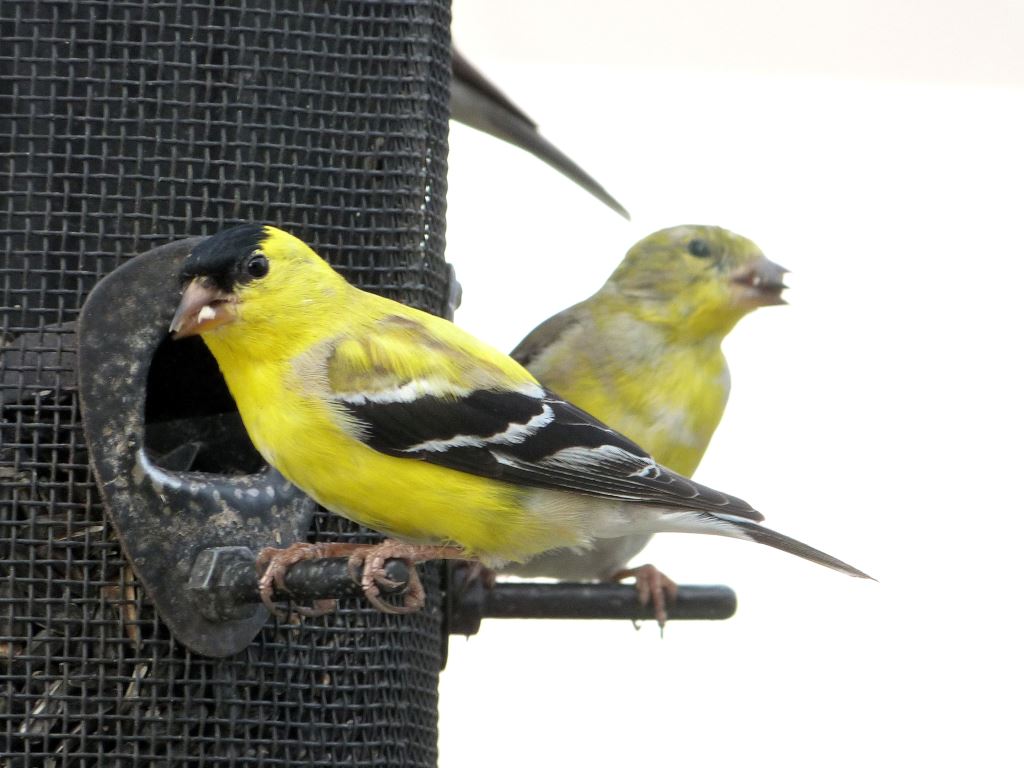
Goldfinches 4-1-13 No screen clean window (7)

Even the stork in the sky knows her seasons. The turtledove, swallow, and crane are aware of their migration, but My people do not know the requirements of the LORD. (Jeremiah 8:7 HCSB)

We have been having American Goldfinches at the feeders for the last few weeks. Don’t see them often, so was enjoying their presence. They kept building in numbers from 6 at first, then 12 about a week ago, then Easter Sunday there were at least 20 of them. It even motivated me to wash the window and take out the screen on Monday to get better photos of them.

Yesterday morning, Wednesday, I checked out the window to see how many there were now. Not a one! So throughout the morning I kept checking, NONE! When we went out, there was no singing in the trees that we have been hearing lately. Needless to say, I was a little disappointed, but it didn’t take long to figure out where they were. GONE!!!

Keep your eyes open up north, the Goldfinches are on the way. This is a spring occurrence down here. The birds fold up their lounge chairs, pack the bellies full of my sunflower seed and head back home. They have territories to claim, nest to build, broods to raise and give you now the pleasure of viewing them and listening to their songs. ENJOY!

It’s your turn to enjoy the Lord’s beautiful American Goldfinches as they migrate up to you. Treat them nice and when fall comes, send them back, please.

This slideshow requires JavaScript.

*
Birds of the Bible Articles

Bible Birds
*

Stop flying solo…

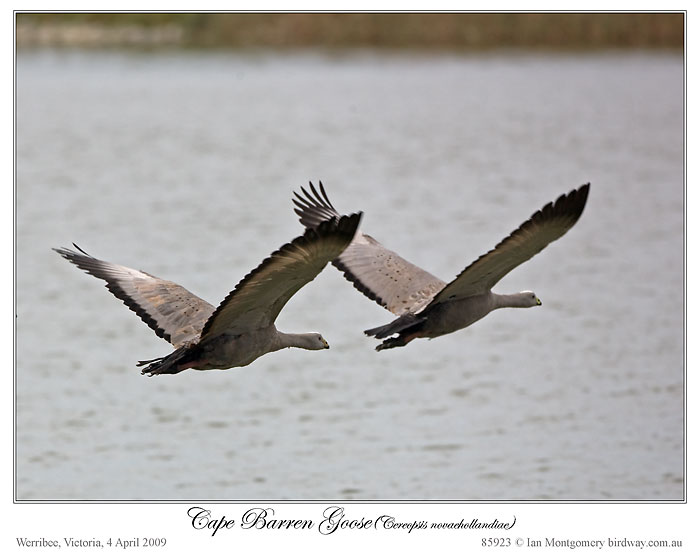
Cape Barren Goose (Cereopsis novaehollandiae) by Ian

Cape Barren Goose (Cereopsis novaehollandiae) by Ian

Stop flying solo… ~ by a j mithra

The linear flight formations of migratory birds are called echelons.
The V and the J structures are typical and are the most readily recognized flock echelons…

There are two well-supported and complementary explanations for why birds fly in formation.

  • One is to conserve energy by taking advantage of the upwash vortex fields created by the wings of the birds in front.
  • The other is to facilitate orientation and communication among the birds.

These explanations have been backed by a variety of studies..
We as believers are on a journey, migrating to heaven..
How much energy do we conserve?

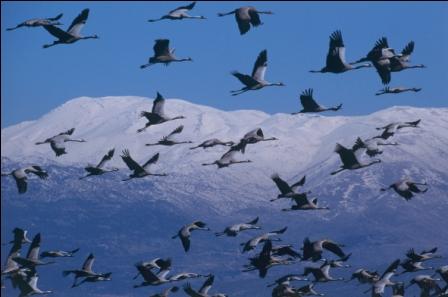
Crane Migration over Israel

Crane Migration over Israel

First of all,

  • do we migrate in groups
  • or are we on a selfish solo flight

to heaven?
Unless we communicate with fellow believers we will not be able to migrate as a group
and unless we migrate as a group we will not be able to conserve energy..
Cos, GOD’s presence is mightier in corporate worship…

After all, GOD said that

For where two or three are gathered together in my name, there am I in the midst of them. (Matthew 18:20 KJV)

Lets stop solo flight and start migrating as a crowd…..

Your’s in YESHUA,
a j mithra

Please visit us at:

Crosstree

ajmithra21

*

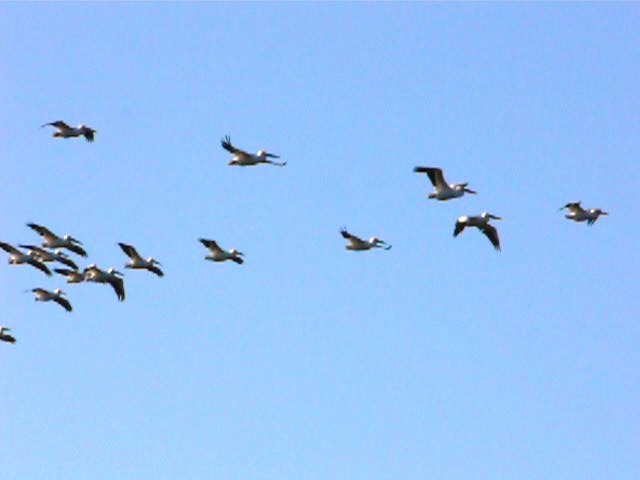
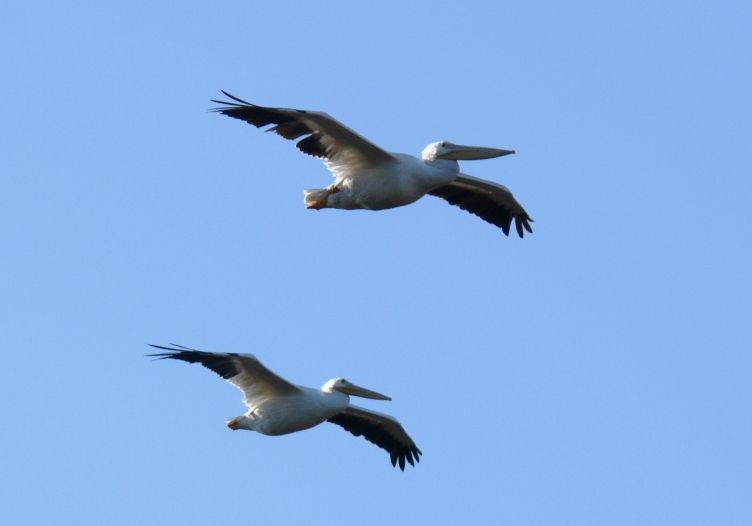
American White Pelican (Pelecanus erythrorhynchos) by Lee

White Pelicans on the Wing at Circle B Bar Reserve by Lee

Why do geese fly in a V shape?

More of a j mithra’s Articles:

*

Birds of the Bible – Where Did They Go?

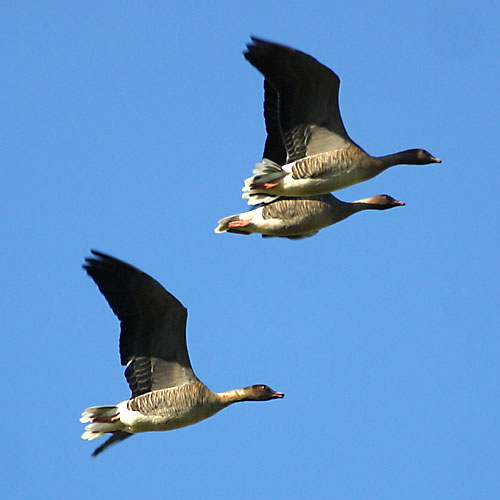
Pink-footed Goose (Anser brachyrhynchus) ©Arthur Grosset

Pink-footed Goose (Anser brachyrhynchus) ©Arthur Grosset

Where did they go? I was wondering that a little over a week ago when we drove 50 miles to Orlando. I keep a small notebook and write down the birds we see as Dan drives. As cross into each county, I start my list for that county by drawing a line, putting the time, temperature if I know it, and what the sky looks like. Other than a Turkey Vulture or Black Vulture in each county, nothing was flying. We saw a few grackles, a Mockingbird, and a few Fish Crows. Coming back, one county I wrote “none” on my notebook. Normally here in Central Florida, we see birds around the ponds and lake. Nothing that day.

The next day, we drove 50 the other direction to Tampa to go to the Lowry Park Zoo. I knew those birds would be there. They are captive. I had the same results. One or two birds, but nothing flying. When I attended church the next day, I had several people tell me that they hadn’t seen any birds at their feeders and wondered if I knew why. I didn’t and don’t have a clue.

I am curious if it is that way up north when the birds start their migrations. You see them one day and then not the next. Our summer birds seem to be here year-round, or at least I thought so.

American White Pelican (Pelecanus erythrorhynchos) by Lee

American White Pelican (Pelecanus erythrorhynchos) by Lee

All of that reminded me of the verses in Jeremiah:

I beheld, and indeed there was no man, And all the birds of the heavens had fled. (Jeremiah 4:25 NKJV)

I will take up a weeping and wailing for the mountains, And for the dwelling places of the wilderness a lamentation, Because they are burned up, So that no one can pass through; Nor can men hear the voice of the cattle. Both the birds of the heavens and the beasts have fled; They are gone. (Jeremiah 9:10 NKJV)

That also caused me to think about this past summer. Where did it go? Where did those days and hours go that I had so many plans for. I especially thought I would work on this blog while the birds were gone north for the summer. Well, guess what? Here it is Autumn and it didn’t happen. In fact I am busier now than before they left. I was putting out about one article a day and now struggle to get one out every few days.

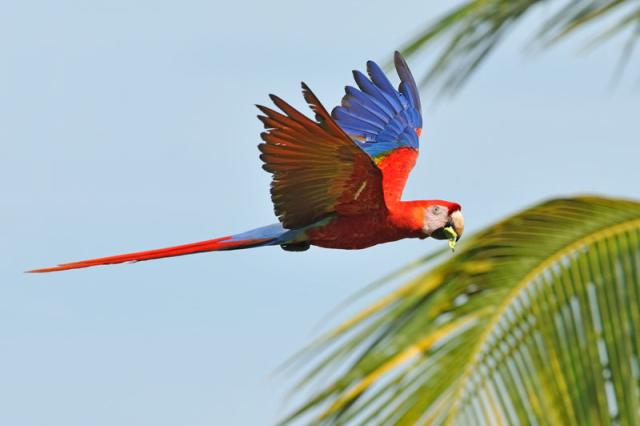
Scarlet Macaw (Ara macao) Reinier Munguia

Scarlet Macaw (Ara macao) Reinier Munguia

Do these verses cause you also to consider where time goes?

Indeed, You have made my days as handbreadths, And my age is as nothing before You; Certainly every man at his best state is but vapor. Selah (Psalms 39:5 NKJV)

Come now, you who say, “Today or tomorrow we will go to such and such a city, spend a year there, buy and sell, and make a profit”; whereas you do not know what will happen tomorrow. For what is your life? It is even a vapor that appears for a little time and then vanishes away. Instead you ought to say, “If the Lord wills, we shall live and do this or that.” (James 4:13-15 NKJV)

This post is just a “rambling” post, but I’m sure most of those who visit here that have blogs have felt the same way at times. I don’t want to just put a post up just for the sake of putting one up. I prefer for it to mean, instill or teach something.

ActiveLink

ActiveLink for today

Seems like lately, everything vies for my time. I have been on Weight Watchers since January (lost 30 lbs so far) and now even they are after my time. They recently released “ActiveLink” which monitors our movements. Sitting at a computer for hours, does not movement make. So now I have to get up and, ugh, exercise every so often or at least walk around. It will be worth it, but it takes “TIME.” That isn’t the only thing I have added lately. I am in new Ladies Bible Study and now I have “homework.” Time, time, time, where does it go?

Can you relate to any of this? I would venture to say many of you can. Oh, but isn’t the Lord great? When we do get time to see his fantastic creation, especially His birds, don’t they bring joy to you?

See also:

Birds of the Bible

Birds of the Bible – Birds of the Air

Wordless Birds

*

The Northern Wheatear – The Incredible Migrator..

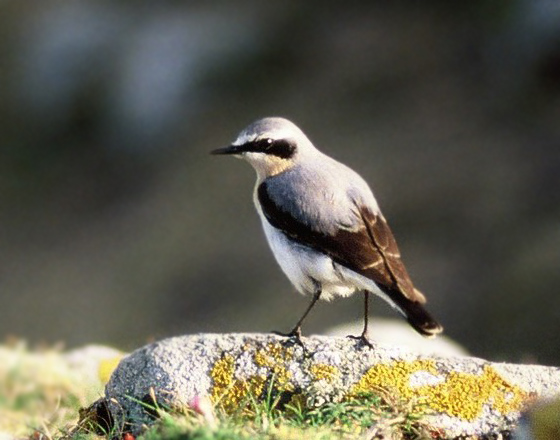
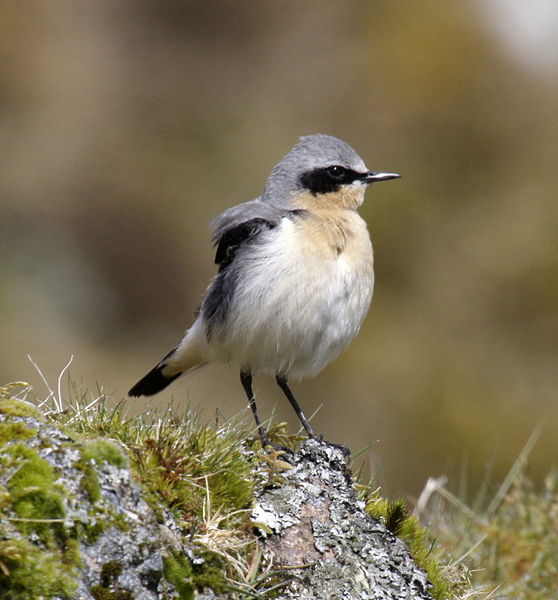
Northern Wheatear (Oenanthe oenanthe) Breeding male ©WikiC

Northern Wheatear (Oenanthe oenanthe) Breeding male ©WikiC

A migratory species, the northern wheatear breeds across northern Europe, North Africa, Asia, Alaska, north-eastern Canada and Greenland. After the breeding season, it migrates to sub-Saharan Africa, where it is found across a broad belt that stretches from Mauritania and Mali through northern Nigeria, Central African Republic and Sudan, to Ethiopia and southern Somalia. It is possible that the northern wheatear is the only regularly breeding passerine of North America that migrates to wintering grounds in sub-Saharan Africa, crossing either the Atlantic Ocean or Eurasia.

With a length of about 14.5 to 15.5 centimeters and weighing just about 18 to 33 grams that would just run to about the weight of two table spoons of salt, this bird flies to places where the other song birds have never ventured.

This is another amazing example of how God uses tiny beings to finish mighty tasks.

  • If you feel that you are small, not-fit-for-anything type or useless, just take inspiration from these tiny creatures.
  • Remember, we would soon take off for the final migration to the wedding banquet of Jesus, the King of kings, who is going to fill heaven, our final destination with redeemed sinners, weak and weary, lonely and lost and those of whom the world calls good for nothing.
  • It is for this reason we need to rejoice Him at all times even during times of trouble.

Then saith he to his servants, The wedding is ready, but they which were bidden were not worthy. Go ye therefore into the highways, and as many as ye shall find, bid to the marriage. So those servants went out into the highways, and gathered together all as many as they found, both bad and good: and the wedding was furnished with guests. (Mathew 22:8-10)

Northern Wheatear (Oenanthe oenanthe) Breeding male ©WikiC

Northern Wheatear (Oenanthe oenanthe) Breeding male ©WikiC

During the breeding season, the northern wheatear is typically found around habitats with short turf, such as moors, cliff-tops,tundra and rocky fields. It uses a variety of open habitats whilst migrating, including cultivated areas and desert, as well as human settlements.

In its winter range, the northern wheatear favours short grass steppe and degraded savanna, but may also be found on cultivated land, on barren rocky hills and among coconut palms.

This bird doesn’t seem to grumble but happily strives in almost any type of land.
Are we satisfied with the place where God has kept us? Or do we grumble that God has kept us in the wrong place?
Our God never makes mistakes.
He knows whom to choose, where to keep and when to keep..
He is always right..

There is a divine purpose in keeping you in a place where you are not happy..

  • Paul and Silas where in the wrong place but still they worshipped God and you know what?
  • God turned the wrong place into the right place for the world to know the extraordinary power of God.
  • Want to see the extraordinary power of God in your life?
  • Just stop grumbling and start worshipping God in the place where God has kept you.

The lines are fallen unto me in pleasant places; yea, I have a goodly heritage (Psalm 16:6)

Northern Wheatear (Oenanthe oenanthe) ©©

Northern Wheatear (Oenanthe oenanthe) ©©

After sighting its insect prey from an elevated perch, such as a conspicuous rock, the Northern Wheatear bounds between vegetation and stones to catch its prey on the ground. It may also scoop slow low-flying insects from the air after a short run or a low jump. A largely solitary species, outside the breeding season the northern wheatear defends a small feeding territory against other wheatears .

Breeding birds tend to return to the same nesting site each year. The male arrives around one week before the female, and courtship begins soon after the arrival of the female. Breeding pairs engage in unusual courtship dances, usually in a depression in the ground, when the male flutters and glides in the air, singing constantly.

Jesus left this earth after resurrection not just to prepare a place for us but for the wedding banquet where He would make us His bride and we would be singing praises to Him forever and ever.

And after these things I heard a great voice of much people in heaven, saying, Alleluia; Salvation, and glory, and honour, and power, unto the Lord our God: (Revelation 19:1)
And I heard as it were the voice of a great multitude, and as the voice of many waters, and as the voice of mighty thunderings, saying, Alleluia: for the Lord God omnipotent reigneth. Let us be glad and rejoice, and give honour to him: for the marriage of the Lamb is come, and his wife hath made herself ready. (Revelation 19:6,7)

Once a pair bond is established, the female chooses a nest site and the pair set about constructing the nest, which is a simple unlined cup of leaves, stems, moss, lichen, feathers and hair, built on a foundation
of dried stems and grasses. The nest is usually placed in a well-sheltered rock cavity, narrow crevice, rodent burrow, hole in a wall or under stones. Between 4 and 8 eggs are incubated for 12 to 13 days. The chicks fledge at 15 to 17 days, but do not reach full independence for a further 12 or 13 days.

The Northern Wheatear makes one of the longest journeys of any small bird, crossing ocean, ice, and desert. It migrates from Sub-Saharan Africa in spring over a vast area of the northern hemisphere that includes northern and central Asia, Europe, Greenland, Alaska, and parts of Canada. In Autumn all return to Africa, where their ancestors had wintered. Arguably, some of the birds that breed in north Asia could take a shorter route and winter in south Asia; however, their inherited inclination to migrate takes them back to Africa.

Northern Wheatear (Oenanthe oenanthe leucorhoa) by BirdPhotos

Northern Wheatear (Oenanthe oenanthe leucorhoa) by BirdPhotos

Birds of the large, bright Greenland race, leucorhoa, makes one of the longest transoceanic crossings of any passerine. In spring most migrate along a route (commonly used by Wadersand Waterfowl) from Africa via continental Europe, the British Isles, and Iceland to Greenland. However, autumn sightings from ships suggest that some birds cross the North Atlantic directly from Canada and Greenland to southwest Europe (a distance of up to 2500 km).

Birds breeding in eastern Canada are thought to fly from Baffin Island and Newfoundland via Greenland, Ireland, and Portugal to the Azores (crossing 3500 km of the North Atlantic) before flying onwards to Africa. Other populations from western Canada and Alaska migrate by flying over much of Eurasia to Africa. Miniature tracking devices have recently shown that the Northern Wheatear has one of the longest migratory flights known – 30,000km (18,640 miles), from from sub-Saharan Africa to their Arctic breeding grounds. “The Alaskan birds travelled almost 15,000km (9,000 miles) each way – crossing Siberia and the Arabian Desert, and travelling, on average, 290 km per day.

“This is the longest recorded migration for a songbird as far as we know,” said Dr Schmaljohann..
Dr Schmaljohann added: “[In the past] we totally underestimated the flight capability of birds in terms of migration.”It seems that bird migration is limited by the size of the Earth. If the planet was larger, they would probably migrate even further.”

If these small birds can set a record for the longest flight,

  • flying over extreme conditions,
  • flying over an ocean and also
  • flying over one of the biggest desert,
  • how far have we traveled to share the word of God?

We find it ever so easy to give our money to send missionaries to remote places to preach the gospel, but, why we find it so difficult to even step out of our house to share the Gospel to our neighbor?

  • God does not want our money..
  • He wants us to stand in the gap for perishing souls..
  • How many of us are ready to obey to His call?

Also I heard the voice of the Lord, saying, “Whom shall I send, and who will go for us? Then said I, Here am I; send me.” (Isaiah 6:8)

Have a blessed day!

Yours in YESHUA,
a j mithra

Please visit us at:

Crosstree

ajmithra21

*

Lee’s Addition:

Wheatears are part of the Muscicapidae – Chats, Old World Flycatchers Family.

*

Our Built-In Homing Device – (excerpt from Hanging Out With God)

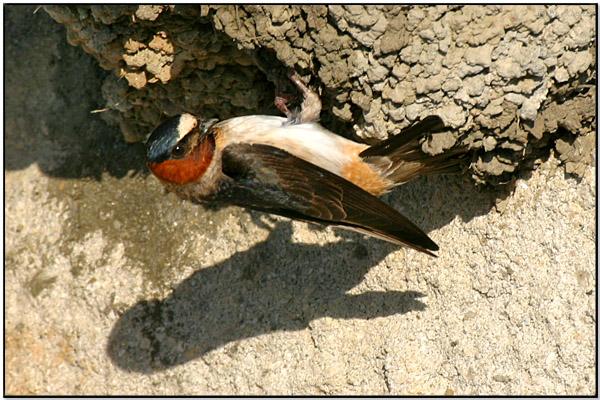
American Cliff Swallow (Petrochelidon pyrrhonota) by Daves BirdingPix

“Did you hear the bells this past Monday? The bells at San Juan Capistrano? Thousands of people did hear them, because they gathered, as they do every year, to rejoice in and celebrate the return of the beloved Swallows. These famous swallows begin their flight every year at dawn on February 18th, from the Argentinian city of Goya, and arrive at the San Juan Capistrano mission, without fail, on the morning of March 19th.

According to Argentinian magazine correspondent Enrique Bermudez, who has made a thorough study of the swallows, they fly a total of 7,500 miles one way on this astounding trip, which they have been making every year for at least 200 years…..”

See the whole article at Our Built-In Homing Device

Very Good Article – worth reading,

Lee

Birds Vol 1 #3 – The Return of the Birds

Eastern Bluebird (Sialia sialis) by S Slayton

Eastern Bluebird (Sialia sialis) by S Slayton

Birds Illustrated by Color Photography – Revisited

Vol 1. March, 1897 No. 3

*

THE RETURN OF THE BIRDS.

“Everywhere the blue sky belongs to them and is their appointed rest, and their native country, and their own natural home which they enter unannounced as lords that are certainly expected, and yet there is a silent joy at their arrival.”

imgt

HE return of the birds to their real home in the North, where they build their nests and rear their young, is regarded by all genuine lovers of earth’s messengers of gladness and gayety as one of the most interesting and poetical of annual occurrences. The naturalist, who notes the very day of each arrival, in order that he may verify former observation or add to his material gathered for a new work, does not necessarily anticipate with greater pleasure this event than do many whose lives are brightened by the coming of the friends of their youth, who alone of early companions do not change. First of all—and ever the same delightful warbler—the Bluebird, who, in 1895, did not appear at all in many localities, though here in considerable numbers last year, betrays himself. “Did he come down out of the heaven on that bright March morning when he told us so softly and plaintively that, if we pleased, spring had come?” Sometimes he is here a little earlier, and must keep his courage up until the cold snap is over and the snow is gone. Not long after the Bluebird, comes the Robin, sometimes in March, but in most of the northern states April is the month of his arrival. With his first utterance the spell of winter is broken, and the remembrance of it afar off. Then appears the Woodpecker in great variety, the Flicker usually arriving first. He is always somebody’s old favorite, “announcing his arrival by a long, loud call, repeated from the dry branch of some tree, or a stake in the fence—a thoroughly melodious April sound.”

Few perhaps reflect upon the difficulties encountered by the birds themselves in their returning migrations. A voyager sometimes meets with many of our common birds far out at sea. Such wanderers, it is said, when suddenly overtaken by a fog, completely lose their sense of direction and become hopelessly lost. Humming birds, those delicately organized, glittering gems, are among the most common of the land species seen at sea.

The present season has been quite favorable to the protection of birds. A very competent observer says that not all of the birds migrated this winter. He recently visited a farm less than an hour’s ride from Chicago, where he found the old place, as he relates it, “chucked full of Robins, Blackbirds, and Woodpeckers,” and others unknown to him. From this he inferred they would have been in Florida had indications predicted a severe winter. The trees of the south parks of Chicago, and those in suburban places, have had, darting through their branches during the months of December and January, nearly as many members of the Woodpecker tribe as were found there during the mating season in May last.

Alas, that the Robin will visit us in diminished numbers in the approaching spring. He has not been so common for a year or two as he was formerly, for the reason that the Robins died by thousands of starvation, owing to the freezing of their food supply in Tennessee during the protracted cold weather in the winter of 1895. It is indeed sad that this good Samaritan among birds should be defenseless against the severity of Nature, the common mother of us all. Nevertheless the return of the birds, in myriads or in single pairs, will be welcomed more and more, year by year, as intelligent love and appreciation of them shall possess the popular mind.

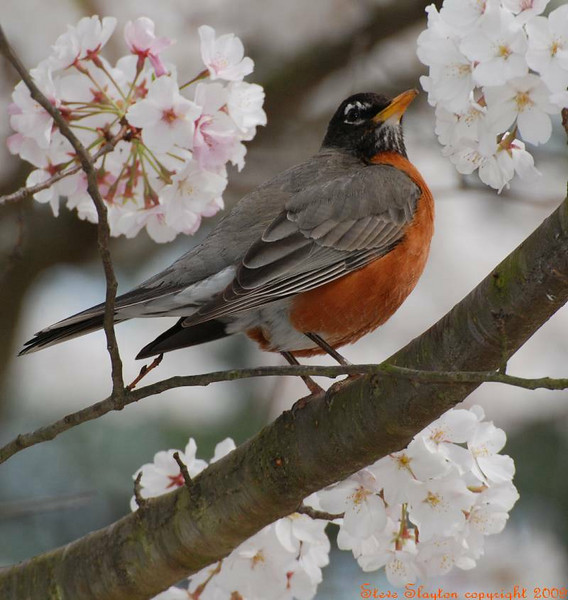
American Robin (Turdus migratorius) by S Slayton

American Robin (Turdus migratorius) by S Slayton


Lee’s Addition:

Even the stork in the heavens Knows her appointed times; And the turtledove, the swift, and the swallow Observe the time of their coming. But My people do not know the judgment of the LORD. (Jeremiah 8:7 NKJV)

This time of the year the birds head back north, at least in North America. Unfortunately they leave us here in Florida where some of them have been on their winter vacation. Birdwatching excitement slows down for us, but picks up for those of you who have been without your avian friends during the winter. Trust me, they are on the way.  We have been out watching birds several times this last week or so and the winter birds have left or are packing their bags and folding up their lounge chairs. We are getting a few of the migrants that are passing through on their way north. They land to rest and feed, then off they go again. Keep your eyes alert, northern friends, the birds are coming.

Birds Illustrated by Color Photograhy Vol 1 March 1897 No 3 - Cover

Birds Illustrated by Color Photography – Revisited – Introduction

The above article is the first article in the monthly serial for February 1897 “designed to promote Knowledge of Bird-Live.” These include Color Photography, as they call them, today they are drawings. There are at least three Volumes that have been digitized by Project Gutenberg.

To see the whole series of – Birds Illustrated by Color Photography – Revisited

*

(Information from Wikipedia and other internet sources)

Next Article – The Black Tern

Previous Article – The Crow and The Common Crow

ABC’s of the Gospel

Links:

Birds of the Bible – Migration
Interesting – Migration and Mechanics of Flight
Interesting Things – Amazing Bird Migration
The Flight of Migratory Birds by Werner Gitt
Bird Migration – Wikipedia
Birds of the Bible – Hawk Migration
Interesting Things – A Lesson from the Stork
Bar-tailed Godwit Migration – Wikipedia
Do Migratory Birds Practice Preventative Medicine?

Ad in Birds Illustrated by Color Photography, 1897

Ad in Birds Illustrated by Color Photography, 1897

*

Birds of the Bible – Demoiselle Crane

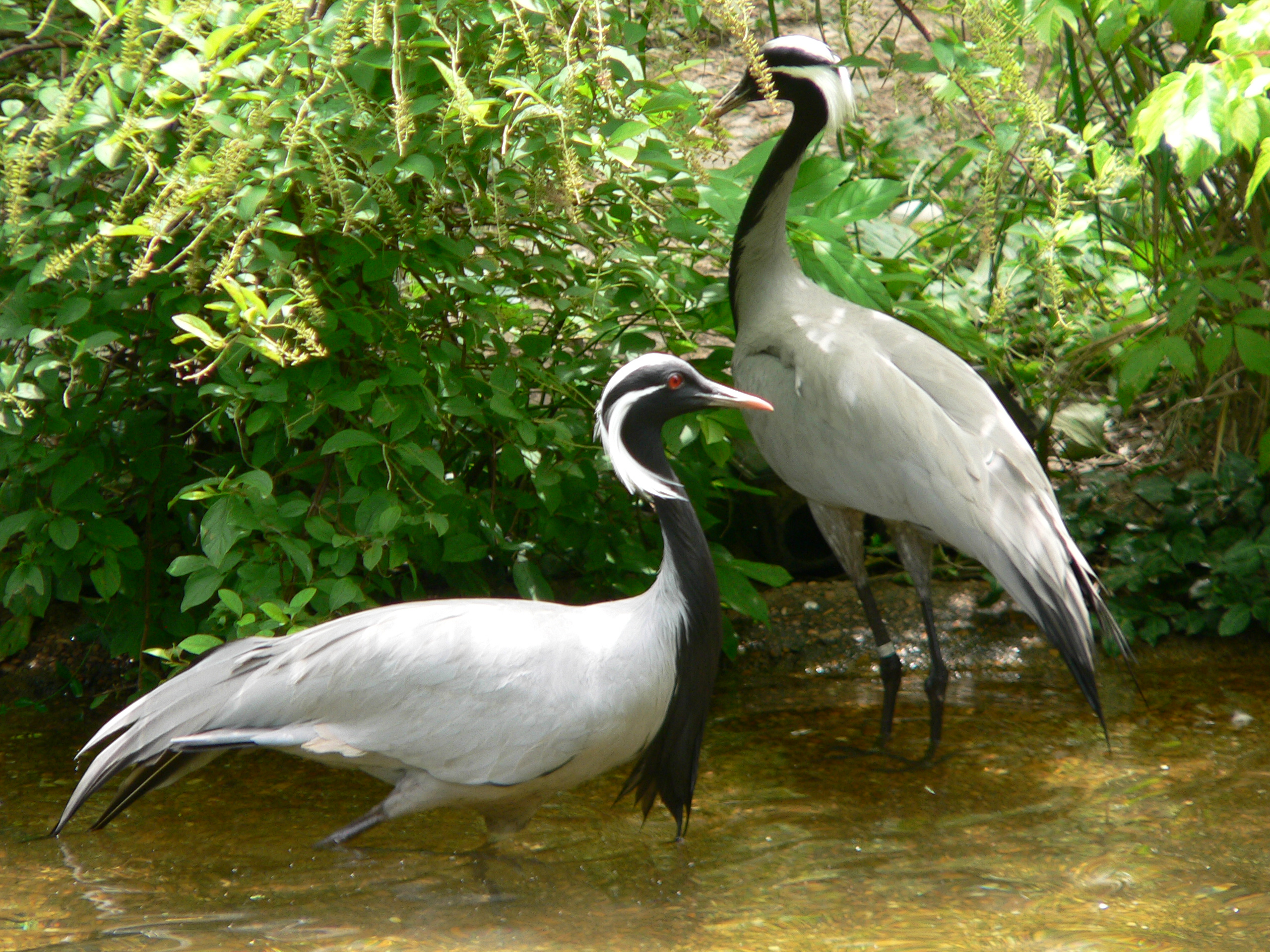
Demoiselle Crane (Grus virgo) by Lee LPZoo 12-28-2011

Demoiselle Crane (Grus virgo) by Lee LPZoo 12-28-2011

“The Demoiselle Crane (Anthropoides virgo), is a species of crane that breeds in Central Asia and winters in India, with a few found in Cyprus and eastern Turkey as well. The crane annually migrates to Africa and South Asia in winter. The bird is symbolically significant in the culture of North India and Pakistan, where it is known as the koonj.

It has a loud trumpeting call, higher-pitched than the Common Crane. Like other cranes it has a dancing display, more balletic than the Common Crane, with less leaping, but with calling, bowing and head-bobbing.

Call – Demoiselle Crane (Grus virgo) from Xeno-canto.org

Like a crane or a swallow, so did I chatter: I did mourn as a dove: mine eyes fail with looking upward: O LORD, I am oppressed; undertake for me. (Isaiah 38:14 KJV)

*

*
Demoiselle Cranes have to take one of the toughest migrations in the world. In late August through September, they gather in flocks of up to 400 individuals and prepare for their flight to their winter range. During their migratory flight south, Demoiselles fly like all cranes, with their head and neck straight forward and their feet and legs straight behind, reaching altitudes of 16,000-26,000 feet (4,875-7,925 m). Along their arduous journey they have to cross the Himalayan mountains to get to their over-wintering grounds in India, many die from fatigue, hunger and predation from birds such as eagles. Simpler, lower routes are possible, such as crossing the range via the Khyber Pass. However, their presently preferred route has been hard-wired by countless cycles of migration (placed in them by their creator). At their wintering grounds, Demoiselles have been observed flocking with Common Cranes, their combined totals reaching up to 20,000 individuals. Demoiselles maintain separate social groups within the larger flock. In March and April, they begin their long spring journey back to their northern nesting grounds.

In Khichan, Rajasthan in India, villagers feed the Cranes on their migration and these large congregations have become an annual spectacle.

Yea, the stork in the heaven knoweth her appointed times; and the turtle and the crane and the swallow observe the time of their coming; but my people know not the judgment of the LORD. (Jeremiah 8:7 KJV)

Watch this amazing video of them crossing the Himalayan mountains by AZPanorama:

*

When the Lord created the Crane kind, they were programmed for future variations like this Demoiselle Crane. They act like many other birds that pretend they are injured. This helps them lead the preying bird or animal away to protect their young. The Demoiselles also are the smallest cranes.  They have shorter toes and bills than other cranes which allows them to travel on ground that is hard and dry. The shorter bills aid in their choice of food. Their survival is being provided by their Designer and Creator.

Our verses:

Isaiah 38:14

Geneva Bible Translation Notes – I was so oppressed with sorrow, that I was not able to utter my words, but only to groan and sigh.

CC Commentary – 14.) – As a crane, or a swallow. Hezekiah cannot satisfy himself in explaining the severity of his anguish. He now says that he was reduced so low that he could not utter an articulate voice, but muttered some confused sound, like persons who are almost at the point of death. Hence it is evident that his distress was excruciating; for the severity of the pain took away his voice, and his voice, he says, stuck in his throat; nothing was heard but indistinct groans.
Such is the import of these metaphors of “the crane and the swallow,” which the Prophet employs. Still it is certain that this indistinct sound of the voice is nevertheless heard by God; though all our senses are oppressed by pain, and our throat is choked by grief, still God beholds our hearts and listens to godly sighs, which will be even more powerful than plain and direct words, provided that the Spirit is present, who produces in us those “groanings that cannot be uttered,” of which Paul speaks. (Rom_8:26.) There is no believer who does not feel that in prayer, when his heart is oppressed by any heavy sorrow, he either stammers or is almost dumb.

Bible Knowledge Commentary – b. Hezekiah’s song of thanksgiving (Isa_38:9-20)
(1) Hezekiah’s statement about his condition.
After he was healed Hezekiah wrote a song to express his thanks to God. His illness came, he said, in the prime of his life. Death was referred to figuratively as having gates through which a person entered (cf. Job_38:17; Psa_9:13; Psa_107:18). His statement that in death he would not… see the Lord does not mean he had no hope of heaven. It probably means that he would no longer have the benefit of enjoying God’s blessings in this life. He would be without friends (Isa_38:11) as his house (his body) was dismantled. By death he would be cut… off like a cloth being cut from a weaver’s loom. He had hoped he would get well (Isa_38:13) but he got worse (Isa_38:13-14). His illness was as if God were a lion breaking all his bones, a figure of speech depicting his deep inner anguish. In some way his cries of pain were like the sound of a bird and his mourning like the doleful sound of a dove (cf. Isa_59:11; Nah_2:7). Hezekiah realized that this experience should humble him because God had brought on this illness.

Demoiselle Crane (Grus virgo) Memphis Zoo by Dan

Demoiselle Crane (Grus virgo) Memphis Zoo by Dan

Jeremiah 8:7

Bible Believer’s Commentary – 8:1-7 – …Unlike those who fall and rise again, who sin and repent, Judah refused to return to Jehovah. As far as the law was concerned, the people compared unfavorably with the stork, the turtledove, the swift, and the swallow, which are obedient to their appointed laws of migration.

CC Commentary – Here again Jeremiah condemns the shameful insensibility of the people, — that they had less wisdom than birds, not endued with reason and understanding. He then says, that the Jews were more foolish than cranes, swallows, and storks. He no doubt deeply wounded the feelings of the people by so severe a reproof; but it was necessary thus sharply to reprehend the despisers of God; for it appears evident by these words, that they were become exceedingly hardened in their vices. No wonder, then, that the Prophet declares that they were more silly than cranes and swallows.

Kelly Commentary – Moreover, the prophet was to remonstrate with the people of Jerusalem on their perpetual and unrepentant backsliding (Ver. 4-6), more heedless than familiar birds, great or small, which attend to their fit times, yet with all assumption of wisdom. (Ver. 7, 8.) But what wisdom is in those who reject the word of the Lord? Their covetousness and perfidious neglect of the true interests of Israel must meet with due retribution at His hands.

Geneva Bible Translation Notes – He accuses them in that they are more ignorant of God’s judgments, than these birds are of their appointed seasons to discern the cold and heat.

Adam Clarke’s Commentary – The stork in the heaven – The birds of passage know the times of their going and return, and punctually observe them; they obey the dictates of nature, but my people do not obey my law.

P.S. I have to share an incident that happened while I was teaching 4th grade in a Christian School. On a Friday, I had forgotten to write up the weekly Bible Quiz so I quickly put 5 Essay Questions on the board. We had been discussing King Hezekiah that week so one of the questions was “Tell me about King Hezekiah.” Well, while grading the papers, I almost fell out of my chair laughing. One of my students had told all about how he had been sick and that the Lord had – (here’s the verse – “Isaiah 38:8 Behold, I will bring again the shadow of the degrees, which is gone down in the sun dial of Ahaz, ten degrees backward. So the sun returned ten degrees, by which degrees it was gone down.”). My student went on to say that because the sun dial went back an hour, “that is why we now have Daylight Savings time.” Oh, the pleasures of teaching!

The Crane Family, Gruidaes, has 15 species. They are one of 6 families in the Gruiformes (Cranes, Rails, Coots and allies) Order.

See:

Birds of the Bible – Cranes

Birds of the Bible – Cranes I

Birds of the Bible – Cranes II

Gruidae – Cranes

Sharing the Gospel

*


The Christmas Bird?

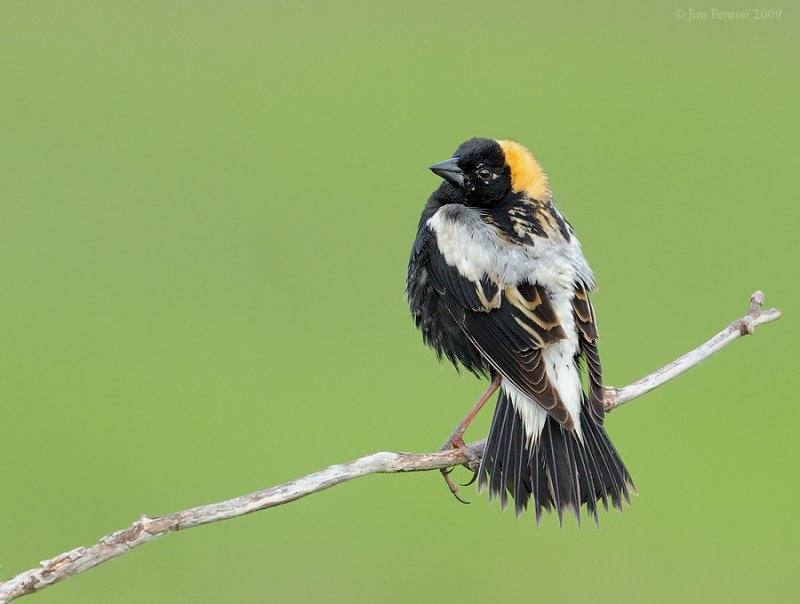
Bobolink (Dolichonyx oryzivorus) by J Fenton

Bobolink (Dolichonyx oryzivorus) by J Fenton

The Christmas Bird?

The other day as I was reading an article on Bobolinks,
My thoughts immediately flew to the manger
where our Lord lay among the haystack.
This bird too loves to live and nest among the hay fields.
  • Are we satisfied with the place which God has given us?
  • Or do we grumble about where God has placed us?
  • Or are we trying to live or outlive like others?
God lowered Himself to the manger..
We all want to be like Jesus,
  • but, are we willing to humble ourselves like Him?
Take my yoke upon you, and learn of me; for I am meek and lowly in heart: and ye shall find rest unto your souls.  (Mathew11:29)
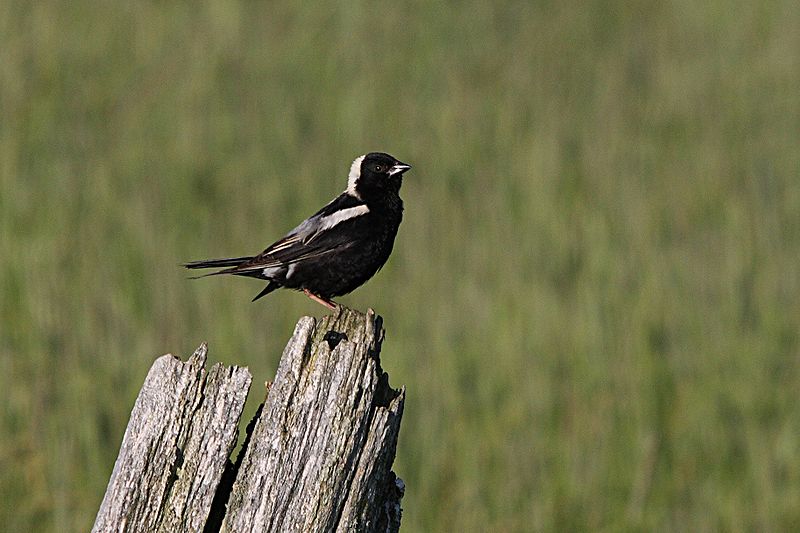
Bobolink (Dolichonyx oryzivorus) ©WikiC

Bobolink (Dolichonyx oryzivorus) ©WikiC

These birds are seen feeding during the night too…

This reminded me of the shepherds
who went in search of the Heavenly Manna during the night…
Each one of us would like to be called as being righteous, but,
  • do we meditate His words, every day and every night?
“But his delight is in the law of the LORD; and in his law doth he meditate day and night.” Psalm 1:2
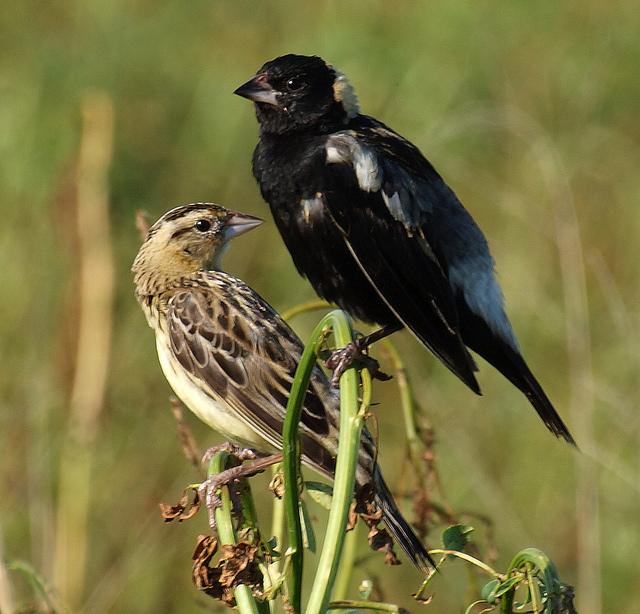
Bobolink (Dolichonyx oryzivorus) CC Pair ramendan

Bobolink (Dolichonyx oryzivorus) CC Pair ramendan

These birds though very small in size,

are extraordinary migrants,
making a trip of about 20,000 kilometers in one season
using the earth’s magnetic field as compass
and the location of stars as its map.
This reminded me of the star
that showed the way to the wise men
who came in search of
Jesus, the Brightest Morning Star…
I am the root and the offspring of David, and the bright and morning star. (Revelation 22:16)
When Jesus becomes our Bright and morning star,
We would never loose our way like the wise men
even in our darkest hour..
Can we call Bobolink as the “Christmas Bird?”
Wish you all a very blessed and a meaningful Christmas..
With love and prayers,

Yours in YESHUA,

a j mithra

Please visit us at:

ajmithra21/


Bobolinks are part of the Icteridae – Oropendolas, Orioles & Blackbirds Family.

Bobolink – Extraordinary Migrant…

*

Do Migratory Birds Practice Preventative Medicine?


Cedar Waxwing (Bombycilla cedrorum) by Daves BirdingPix

Cedar Waxwing (Bombycilla cedrorum) by Daves BirdingPix

Do Migratory Birds Practice Preventative Medicine?
by Brian Thomas, M.S. *

“Before a long migration, certain birds shift from an insect diet to eating fruits such as berries. Researchers once thought that this added carbohydrate reserves as fuel for the journey. But a new study out of the University of Rhode Island suggests that the birds are interested in the fruits’ antioxidants, not their sugars.

Antioxidants are chemicals that are packed within richly colored fruit skins and are known to stabilize cellular processes. Based on research presented at the March 24th American Chemical Society meeting in San Francisco, it appears that the birds fill up on berry antioxidants for the medicinal benefits they provide to tissues that will undergo stress during the upcoming flight.

But this implies that birds use preventative medicine by instinct,….”
To read the rest of the article – CLICK HERE

Thought this was quite interesting and that you might enjoy reading the article from Institute for Creation Research.

*

They’re Back – White Pelicans

American White Pelican (Pelecanus erythrorhynchos) by Lee

White Pelicans on the Wing at Circle B Bar Reserve

Yesterday morning, while looking out the door at church, I noticed a flock of birds flying toward the west. They were heading in the Circle B Bar Reserve direction. One squadron after another went by and it dawned on me that it was most likely the White Pelicans. I watched them for over 15 minutes and they just kept coming.

American White Pelican (Pelecanus erythrorhynchos) by Lee

American White Pelican (Pelecanus erythrorhynchos) by Lee

I am like a pelican of the wilderness: I am like an owl of the desert. (Psalms 102:6 KJV)

So, today, Dec. 21, 2010, we went to the Circle B to see if they really were the White Pelicans. Last year there were around 7,000 of them that spent part of their winter here with us in Florida. See – Birdwatching at Circle B Bar Reserve – 12/23/09 in which I made a video of the numerous Pelicans that we saw then. Yep! They are back! I am sure more than 1000 of them flew over my head today as they prepared to land about a half mile from my location.

Wood Stork (Mycteria americana) by Lee

Woodstork Tree at Circle B by Lee

Where the birds make their nests: as for the stork, the fir trees are her house. (Psalms 104:17 KJV)

I took lots of photos of them and some more video, but won’t bore you with them. We have had two hard freezes in the last few weeks that has killed or severely damaged much of the vegetation out at the Circle B. That and a lack of rain makes the place look quite drab right now. Many areas where we photograph and watch birds were sparse on numbers. Still had a great birdwatching adventure today even if it was about 40 degrees when we got there.

Wilson's Snipe at Circle B by Lee

Wilson's Snipe at Circle B

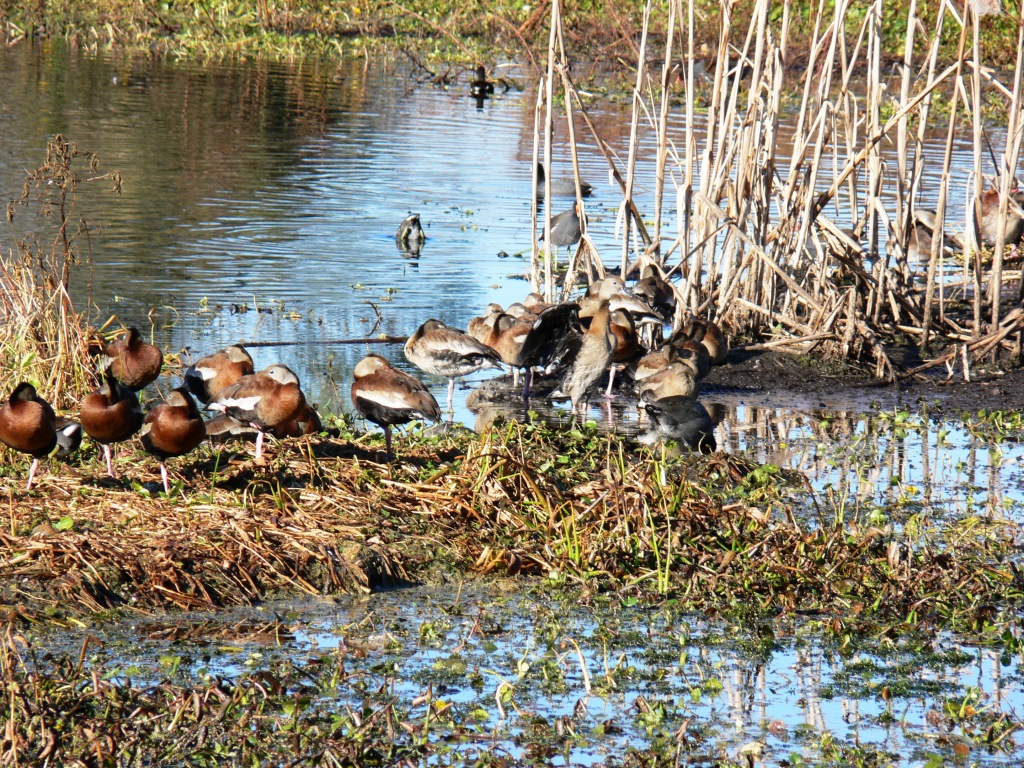
Some of the highlights were the White Pelicans, of course, but also finding a Wilson’s Snipe right beside the road and not spooking while being photographed by several people, “Wood Stork trees” (trees lined with the storks), watching a Snowy Egret working the water with its feet in search of breakfast, getting close to the Black-bellied Whistling Ducks and finding a White-eyed Vireo.

Black-bellied Whistling Duck (Dendrocygna autumnalis) by Lee

Black-bellied Whistling Duck (Dendrocygna autumnalis) by Lee

Here is a list of the 36 species of birds that we spotted today: (in order they were spotted)

Great Blue Heron 2

Morning Doves 7

Red-bellied Woodpecker 4

Blue Jay 1

American White Pelicans 1,000+

Wood Storks 100+

Eastern Kingbird

Sandhill Cranes 21

Tufted Titmouse 1

Northern Cardinal – female

Boat-tailed Grackles 15+

Wilson’s Snipe 1

Killdeer 15+

White Ibises 20+

Glossy Ibises 10+

Little Blue Heron adults and immature (white)

American Coots 100’s

Anhingas 10

Mockingbird 3

Red-shouldered Hawk 2

Tricolored Heron 1

Black-bellied Whistling Ducks 75+

Common Moorhen (or Gallinule) 20+

Blue-winged Teal 10

Mottled Duck 4

Pied-billed Grebe 2

Green Heron 1

House Wren 1

Blue-grey Gnatcatchers 5

White-eyed Vireo 1 (new catch for me)

Osprey 5

Turkey Vultures 10+

Pileated Woodpecker 1

Cattle Egret 3

Pine Warbler 1 Yellow

Myrtle Warbler 1

Here is the shorter video of the Snowy Egret stirring up breakfast. He catches something and then keeps trying for more.

Other birdwatching trips to the Circle B Bar Reserve

*

Launching pad…

Brant Goose (Branta bernicla) by Ian

Brant Goose (Branta bernicla) by Ian

Launching pad… ~ a j mithra

Brant Geese (Branta bernicla) by Ian

Brant Geese (Branta bernicla) by Ian

The small Arctic Goose
called Brant Goose,
would wait
for the storm system
to come,
so that,
it would catch
the storm’s tail wind
and
migrate during winter…
GOD doesn’t give
the storm to destroy you,
but,
to take you
to a better place…
Remember,
storm is surely
a launching pad…

The LORD is slow to anger, and great in power, and will not at all acquit the wicked: the LORD hath his way in the whirlwind and in the storm, and the clouds are the dust of his feet. (Nahum 1:3)

Have a blessed day!

A thought from ~ a j mithra

*