Ian’s Bird of the Week – Southern Giant-Petrel

Southern Giant Petrel (Macronectes giganteus) by Ian

Southern Giant Petrel (Macronectes giganteus) by Ian

Ian’s Bird of the Week – Southern Giant-Petrel ~ by Ian Montgomery

Newsletter ~ 8/7/2013

I’ve been neglecting the bird of the week list lately, so here is a big bird and a big posting to make up. My excuse for the neglect is my recent involvement with organising a recorder workshop and the involvement of the North Queensland Recorder Society in Benjamin Britten’s opera Noye’s Fludde – Noah’s Flood – at the Australian Festival of Chamber Music in Townsville. Anyway, the musical dust is settling now and it’s back to the birds.

A Shearwater and a Petrel have featured as bird of the week recently (Providence PetrelFlesh-footed Shearwater). They’re closely related, belonging to the family Procellariidae, so here’s one to illustrate, perhaps grossly, the difference between them. Shearwaters are slender, more elegant and have finer bills then their dumpier counterparts, the Petrels. The dumpiest of the lot is the Southern Giant-Petrel, comparable in size to the smaller Albatrosses (or Mollymawks) with a length of 85-100cm/33-39in , a wingspan of 150-210cm/59-83in and a weight of 3.8-5.0Kg/8.4-11lbs.
Southern Giant Petrel (Macronectes giganteus) by Ian

Southern Giant Petrel (Macronectes giganteus) by Ian

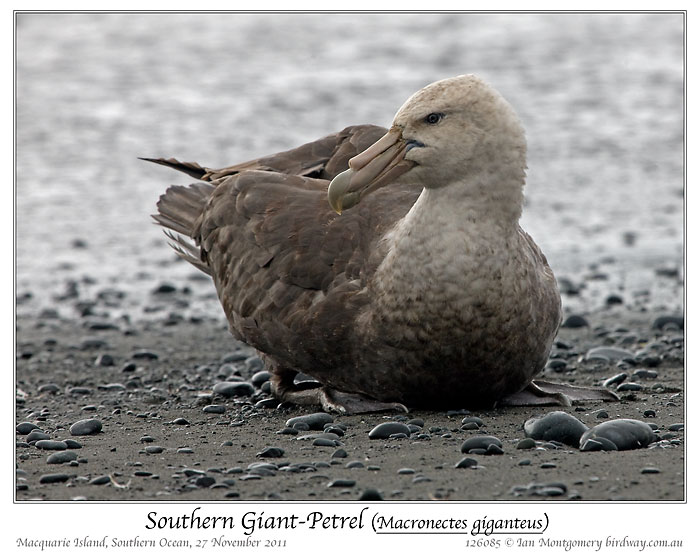
They are the vultures of the Southern Ocean, dealing with the unsavoury task of cleaning up offal in bird and marine mammal colonies, a job they tackle with unsubtle enthusiasm. They’re also not above killing young and or weak chicks of penguins, so it’s not surprising that they are often regarded with some distaste. On land, they appear clumsy like other members of the family, but, as the first photo, can be surprisingly agile. this bird is a young adult with a restricted amount of off-white on the face and neck. Juveniles are brownish-black and the adults get progressively paler on the head and neck as they age. The one in the second photo is an older adult.

Southern Giant Petrel (Macronectes giganteus) by Ian

Southern Giant Petrel (Macronectes giganteus) by Ian

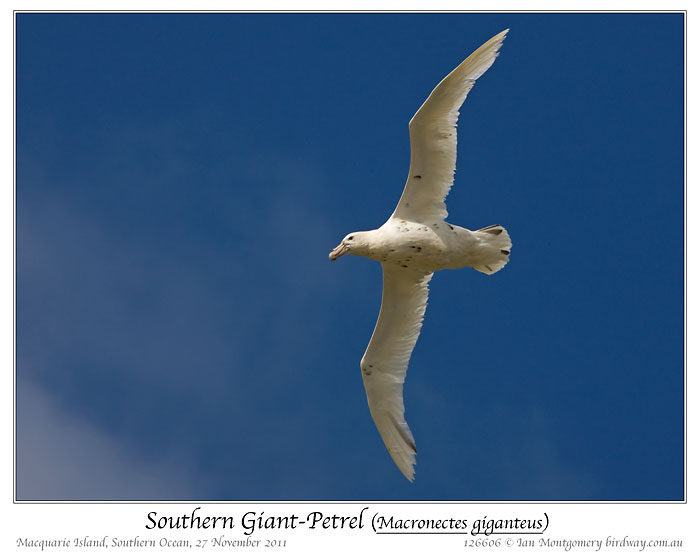
The most important field-mark for distinguishing Southern and Northern Giant-Petrels is the colour of the bulbous tip to the bill: this is greenish in the Southern and pinkish-red in the Northern. This might seem an inconspicuous feature, but the contrast between the otherwise pinkish bill and greenish tip of the Southern species is fairly obvious, even at a distance and the field-mark holds true for juvenile birds as well. The other field-mark is the pale leading edge to the wing of adult Southern Giant-Petrels, visible in the third photo of a bird concentrating very hard on making a gentle landing on the beach at Macquarie Island. This particular bird looked very pleased with itself after landing as you can see by following this link.
Southern Giant Petrel (Macronectes giganteus) by Ian

Southern Giant Petrel (Macronectes giganteus) by Ian

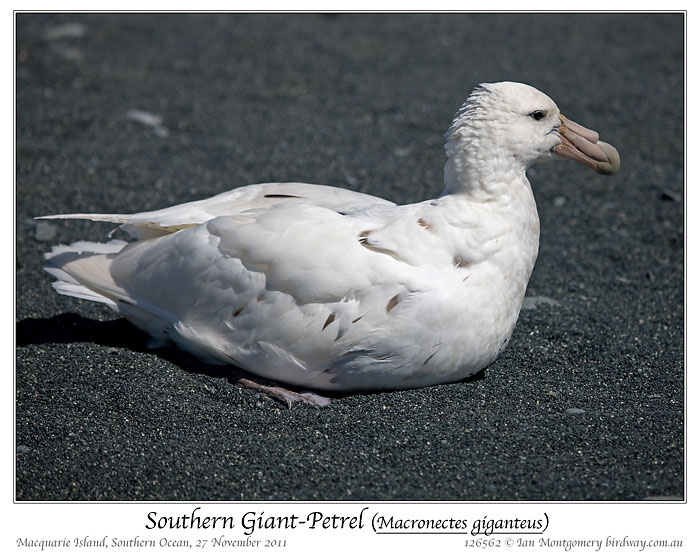
Both species nest on islands all around the Southern Ocean, and their distributions overlap, though only the Southern breeds on the coast of Antarctica and only the Northern breeds on the Sub-Antartic Islands of New Zealand. Both nest on Macquarie Island, so there seems to be no doubt that they are different species despite their similarities, even though there is a population on Gough Island that is intermediate and may be hybrid (Northern plumage with greenish bill-tip). About 10% of the adult Southern population on Macquarie Island belong to a white morph and have almost complete white plumage with a few dark spots, fourth and fifth photos. With a little imagination, this looks like ermine and makes these birds look almost regal compared with their decidedly grungy relatives. Interestingly, about 1% of the juveniles fledged on Macquarie are albino with completely white plumage and pink bill, legs and feet, but they don’t appear to survive to adulthood. The Northern Giant-Petrel doesn’t have a white morph.
Southern Giant Petrel (Macronectes giganteus) by Ian

Southern Giant Petrel (Macronectes giganteus) by Ian

Both species occur in mainland Australian waters but usually offshore and usually as juveniles. The juveniles have silky dark plumage and look quite dapper. The sixth photo shows one of each species off the coast of Victoria, and you can see the difference in bill colour.

Southern Giant Petrel (Macronectes giganteus) and Northern Giant Petrel (Macronectes halli) juv by Ian

Southern Giant Petrel (Macronectes giganteus) and Northern Giant Petrel (Macronectes halli) juv by Ian

The seventh photo shows a juvenile in flight south of New Zealand. The pale leading edge to the wing of the Southern species is absent in juveniles, but this photo illustrates the point I made earlier that the bill colour is visible even in birds at a distance.

Southern Giant Petrel (Macronectes giganteus) by Ian

Southern Giant Petrel (Macronectes giganteus) by Ian

If you’re observant, you may have noticed that I’ve tried changing the font of the species English and scientific names – the seventh photo shows the old font. I chose this originally to copy the style of 19th Century bird artists such as the French-America John James Audubon (below). Recently a member of the list made the point that the scientific name in particular was hard to read in the old font (Edwardian Script). The new one (Apple Chancery) is italic-looking and doesn’t have a separate italic style, so I’ve need to underline the scientific name instead to conform to scientific naming conventions. If you feel strongly about either the old or new fonts, let me know ian@birdway.com.au so I can make a decision whether to make the change permanent.

Audubon's Shearwater (Puffinus lherminieri) Drawing Ian

Audubon’s Shearwater (Puffinus lherminieri) Drawing Ian

The Dusky Shearwater, incidentally, is now known as Audubon’s Shearwater (Puffinus lherminieri) and is part of the Little Shearwater species complex. He encountered it off the coast of Florida: it breeds in the Caribbean and on Cape Verde Is and has been recorded in Australia.

Best wishes
Ian

**************************************************
Ian Montgomery, Birdway Pty Ltd,
454 Forestry Road, Bluewater, Qld 4818
Tel 0411 602 737 ian@birdway.com.au
Bird Photos http://www.birdway.com.au/
Recorder Society http://www.nqrs.org.au


Lee’s Addition:

The birds of the air, and the fish of the sea, and whatever passes along the paths of the seas. (Psalms 8:8 AMP)

Here is a hint for the photo that has the two juveniles in it; the bulbous tip of the front one is green and the back one is pink. Thanks, Ian, for introducing us to more interesting birds. Their beaks are quite interesting. See Formed By Him – Sea Birds That Drink Seawater, for an article for an explanation of that beak.

Wikipedia, with editing, also has this to say about this bird: The Southern Giant Petrel (Macronectes giganteus), also known as the Antarctic Giant PetrelGiant FulmarStinker, and Stinkpot, is a large seabird of the southern oceans. Its distribution overlaps broadly with the similar Northern Giant Petrel, though it overall is centered slightly further south.

It, like all members of the Procellariiformes have certain features that set them apart from other birds. First, they have nasal passages that attach to the upper bill called naricorns. Although the nostrils on the Petrels are on the top of the bill. The bills of all Procellariiformes are also unique in that they are split into between 7 and 9 horny plates. Finally, they produce a stomach oil made up of wax esters and triglycerides that is stored in the proventriculus. This is used against predators as well as an energy rich food source for chicks and for the adults during their long flights. They also have a salt gland that is situated above the nasal passage and helps desalinate their bodies, due to the high amount of ocean water that they imbibe; it excretes a concentrated saline solution from the nostrils.

Southern Giant Petrel (Macronectes giganteus) egg ©WikiC

Southern Giant Petrel (Macronectes giganteus) egg ©WikiC

The Southern Giant Petrel achieves maturity at six or seven years of age; however the average age of first breeding is ten years. Its breeding season begins in October. Its nest is a mound of moss, grass, and stones with a depression in the center and located on bare or grassy ground. They form loose colonies except in the Falkland Islands where the colonies are much larger. One egg is laid and is incubated for 55–66 days. When the white chick is born it is brooded for two to three weeks and it fledges at 104–132 days.

See:

*

Updated: The Bible Bird Owls Page

Just finished the Bible Birds – Owls page. A Photo gallery and some Fun Facts were added.

This slideshow requires JavaScript.


Bible Birds are the Birds of the Bible Birds written with to Younger Folks and those who are “Young at Heart”. As other pages are updated, a post will announce them also.

*

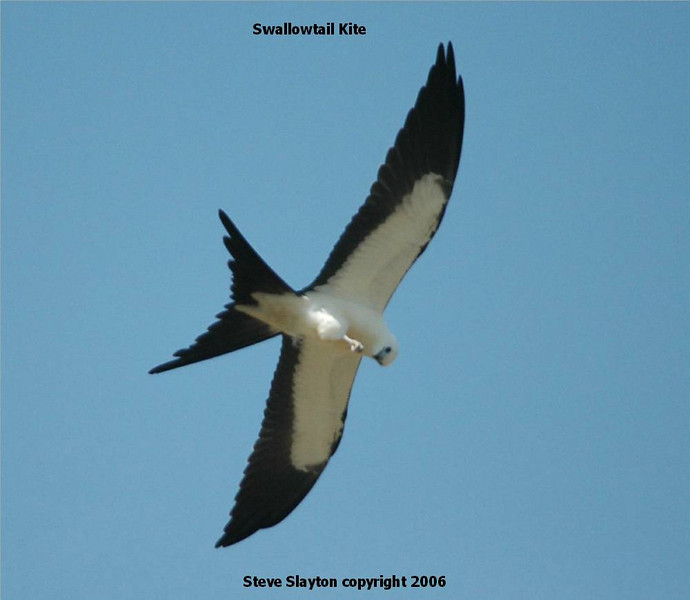
Birds Of The Bible – Swallow-tailed Kites

Swallow-tailed Kite by S Slayton

Swallow-tailed Kite by S Slayton

and the red kite, the falcon, and the kite in their kinds, (Deuteronomy 14:13 NASB)

In the Birds of the Bible – Hidden Covenant Part 3, I mistakenly placed this photo of a Swallow-tailed Kite instead of a Swallow. I have since fixed my mistake. A J was talking about the Swallows observing the time of their coming and he used Jeremiah 8:7.

Even the stork in the heavens Knows her appointed times; And the turtledove, the swift, and the swallow Observe the time of their coming. But My people do not know the judgment of the LORD. (Jeremiah 8:7 NKJV)

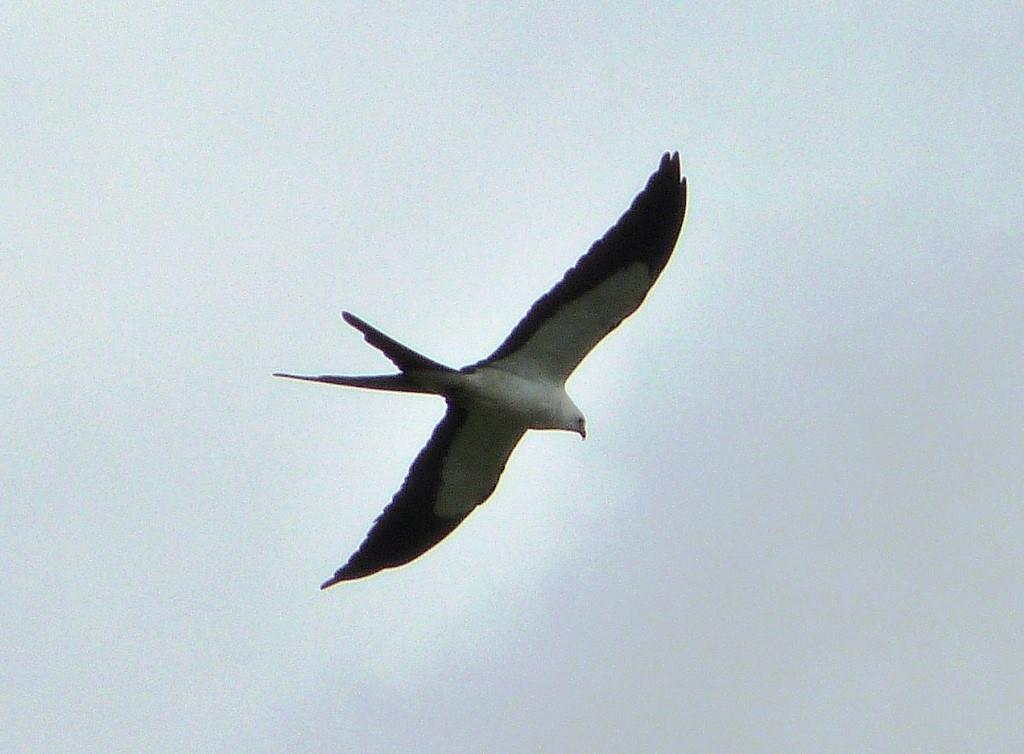
The reason I mixed them up is because right now, in this area, the Swallow-tailed Kites are being spotted. I have seen a single one three times and just the other day, Dan and I had two of them skim over the top of trees, right in front of us. They have been in the area for a month or so, and soon they will move on again. They “Observe the time of their coming.” Thus the mistake on my part.

They may be one of the Birds of Prey, but they were beautifully created by the Lord. They are so graceful and enjoyable to watch. I am always amazed at the Creator’s use of such variety in the birds and in all the other neat things around us.

Who is like You, O LORD, among the gods? Who is like You, glorious in holiness, Fearful in praises, doing wonders? (Exodus 15:11 NKJV)

According to the Audubon WatchList, “Two subspecies found in the Americas. Northern subspecies (Elanoides forficatus forficatus) breeds in small sections of seven southeastern U.S. states and in southern Mexico. Members of this group migrate to South America in the late summer. Southern subspecies (Elanoides forficatus yetapa) found through much of South America. The estimated U.S. population of approximately 10,000 birds now breeds in fragmented populations from South Carolina south to Florida and west to Louisiana/Texas border with largest known populations in northern Florida. Formerly bred north to Minnesota and west through Texas to Mexico. Significant populations remain in Florida and along the Pascagoula River in Mississippi.”

I really enjoy seeing these Kites because you just have to be looking in the right direction at the right time. Every time they have been spotted by us, they just sort of “appear” over the tops of the trees. They skim so low, that when they come over you, you either see them or you don’t.

Kites are of course one of our Birds of the Bible – (Glede and Kites). They are mentioned twice in Scripture in the list of “unclean” birds in Leviticus 11:14 and Deuteronomy 14:13. Each time “after its kind” is given. So, our Swallow-tailed Kite is one of those kinds and would like to introduce you to this amazing bird that is so neat to watch flying. When they spread that tail of theirs, it is just super neat.

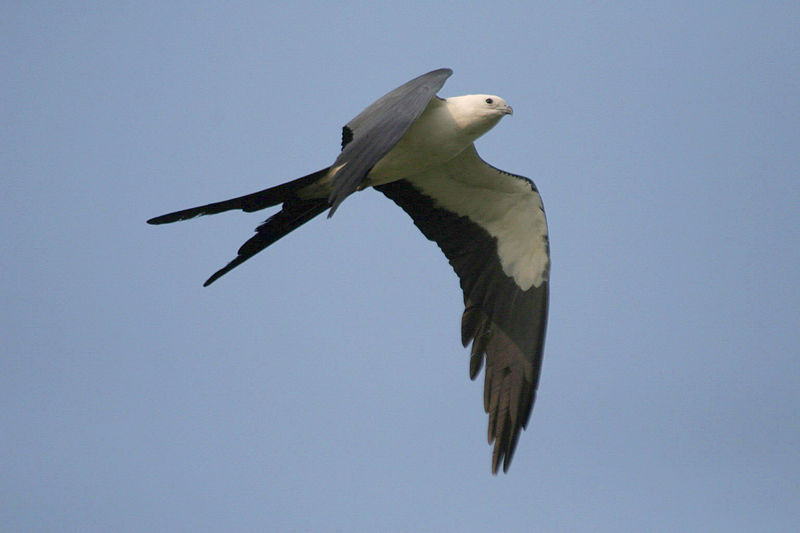
Swallow-tailed Kite (Elanoides forficatus) ©Wikipedia

Swallow-tailed Kite (Elanoides forficatus) ©Wikipedia

(Sounds from xeno-canto)

The Swallow-tailed Kite is a member of the Accipitridae Family (Kites, Hawks & Eagles) Family in the Order Accipitriformes. They are considered Abundance Common according the Thayer Birding software.

They are 24 inches (60 cm) with a very long black forked tail, white head, chest, belly and leading portion of underwing. Their flight feathers are black and their back is also black.

They are a medium-sized, graceful, long-winged, long-tailed hawk with pointed wings, a short, dark, hooked bill. The males and females are similar.

Adults have a long, deeply forked tail. white head, neck, chest, underwing coverts, belly, and undertail coverts, a slate gray back and upperwings, black tail and flight feathers. Whereas the immature is duller than adult with fine streaks on head and breast and has a shorter, less deeply-forked tail than adult.

Thayer also says of their habitat and behavior – ” Wet open woodlands, bottomlands, wooded river swamps, marshes, wetlands, and along rivers, ponds and lakes. Agile and graceful in flight. Eats in flight by bending head and neck under body to eat prey held in talon. Will drink in flight, much like a swallow. Gregarious. Will sweep low over open fields and grasslands to catch food or soar very high for flying insects.”

Swallow-tailed Kite (Elanoides forficatus) by Africaddict

Swallow-tailed Kite (Elanoides forficatus) by Africaddict

The Swallow-tails like to breed in “Lowland forest, especially swampy areas extending into open woodland. 1 brood. Mating system is monogamous. Displays are In flight: easy sailing, curving chase often over water. On perch: mutual approach on horizontal limb, face-off, female quickly turns or backs under limb. They also do courtship feeding.

The nest is usually in treetop concealed by thick foliage and they place it on a foundation of preceding year’s nest. It consist of sticks, twigs, moss, pine needles, leaves, lichen. Lined with fine materials, few feathers. Both sexes help with nest construction.

The eggs are white, marked with browns, occasionally lavender, often concentrated at end. 1.8” (47 mm). Both sexes incubate.  with Incubation taking 28 days. Development is semialtricial (immobile, downy, eyes open, fed). Young are able to fly after 36-42 days. Both sexes tend young.

The spend their winters from Colombia and Venezuela S. Marsh drainage, deforestation, and shooting are responsible for reduction in population and range.

Miscellaneous notes; Occasionally nest in loose colonies of a few pairs. Bathe and drink by skimming water surface like swallow. Occasionally soar at great heights. Up to 200 pieces used in nest, carried individually, may require up to 800 miles of flight. Formerly known as American Swallow-tailed Kite; changed by AOU in 1996.

From Thayer Birding Software, The Birder’s Handbook, Wikipedia, and other internet sources.

See also:

*

Our 50th Anniversary Today

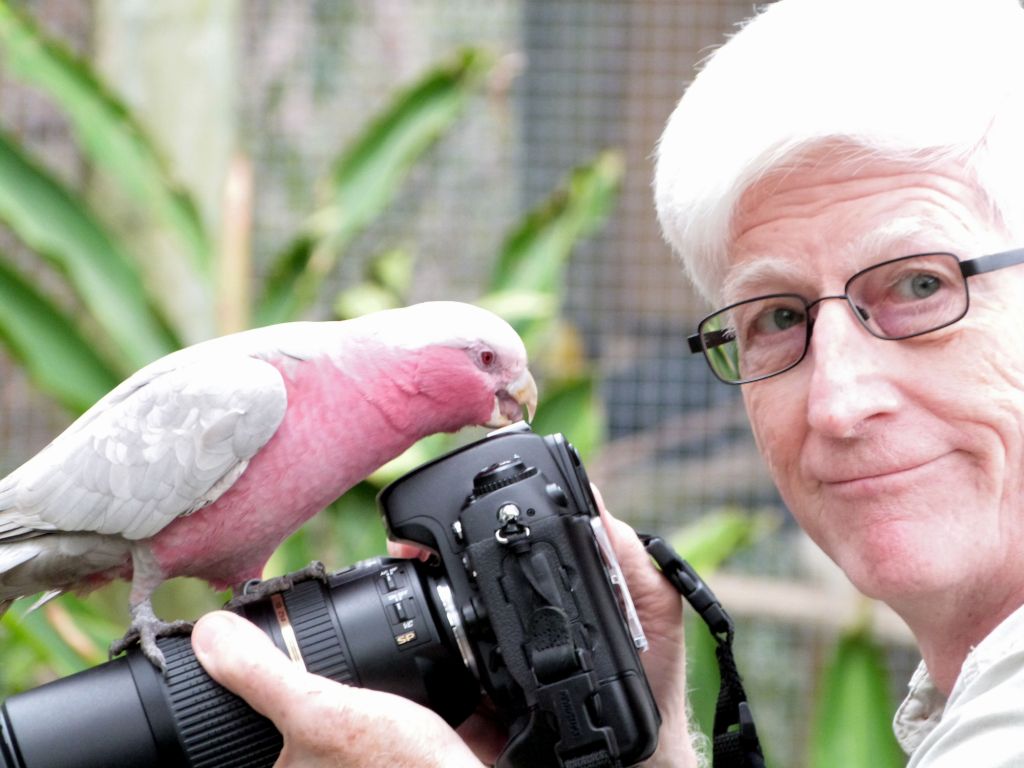
Galah (Eolophus roseicapilla) and Dan

Galah (Eolophus roseicapilla) and Dan

Today, Dan and I are celebrating our 50th Wedding Anniversary or our Golden Anniversary. It is hard to believe that is was 50 years ago that we began our journey through life together. On July 26, 1963 we said our “I do”s and now here we are on July 26, 2013 enjoying this day together. Praise the Lord for His grace and guidance over the years.

Our pastor asked Dan yesterday how it feels to be married fifty years? Dan told him, “My grandfather told me while going through the reception line at our wedding, ‘Son, your first 50 years will be the hardest. The rest is easy’.”

We were both Christians when we got married and have tried to keep the Lord at the head over the years. He has blessed us beyond measure even though at times He slipped from the Number One position because of our attitudes. If you were to ask how do you stay married and in love for these many years, then the Lord is the answer.

On our 25th Anniversary, my sister sent a poem to us, that I would like to share:

Marriage Takes 3

I once

thought marriage 

took just two to make a

go but now I am convinced

it takes the Lord also. And

not one marriage fails where

Christ is asked to enter as

lovers come together with Jesus

at the center. But marriage seldom thrives

and homes are incomplete till He

is welcomed there to help avoid

defeat. In homes where God

is first it’s obvious to see

those unions really work

For marriage still

takes three.

(Perry Tanksley)

*

And he answered and said unto them, Have ye not read, that he which made them at the beginning made them male and female, And said, For this cause shall a man leave father and mother, and shall cleave to his wife: and they twain shall be one flesh? Wherefore they are no more twain, but one flesh. What therefore God hath joined together, let not man put asunder. (Matthew 19:4-6 KJV)

We have always had many common interest. Number one, our faith in the Lord Jesus Christ. Our current other interest is our birdwatching activities which readers of this blog are familiar with. Dan is the photographer, who takes the good pictures, and I attempt to write about our adventures.

Lee - Taken by Dan

Lee – Taken 6/27/13

Praise the Lord for 50 years with my two best friends, the Lord and Dan.

*

Gospel Message

*

Ian’s Bird of the Week – Flesh-footed Shearwater

Flesh-footed Shearwater (Puffinus carneipes) by Ian

Flesh-footed Shearwater (Puffinus carneipes) by Ian 1

Ian’s Bird of the Week – Flesh-footed Shearwater ~ by Ian Montgomery

Newsletter – 7/16/13

One night when we were in our room on Lord Howe Island, we heard a scratching noise at the front door. On investigation this proved to be a juvenile Flesh-footed Shearwater from a nearby nesting colony attracted by the light. This one, first photo, is almost complete fledged with traces of fluffy down still apparent.

In the region of 20,000 to 40,000 pairs of Flesh-footed Shearwaters nest on Lord Howe. They dig nesting burrows in the sandy soil of the forest, mainly in the lowland area where the settlement is situated. Adults come ashore under cover of darkness to nest, change incubation shifts and feed their partners and young. They make their presence known by making loud crooning noises that sometimes sound like cats fighting but during daylight, they are silent and there is usually little sign of them on the island.

Flesh-footed Shearwater (Puffinus carneipes) by Ian

Flesh-footed Shearwater (Puffinus carneipes) by Ian 2

We were there at the end of the breeding season. When the juveniles are fledged, their cosseted existence comes to an abrupt end as the adults stop coming ashore and the young are abandoned to fend for themselves. Eventually, they wander out of their burrows and (mostly) make their way to the sea to start an independent pelagic life. Lord Howe is the only colony of this species on the east coast of Australia, but there are other colonies on islands off South Australia (one), Southwest Western Australia (several), New Zealand and St Paul Island in the South Atlantic.

The following day, we found another fledged juvenile when we went to Ned’s beach for a snorkel, photos 2 and 3. This one seemed to have failed to make it down the beach and was presumably waiting for darkness. The Flesh-footed is one of several rather similar, mainly dark shearwaters breeding in Australian waters and the third photo shows its two-toned bill – horn-coloured with a dark tip which is its most obvious field mark.

Flesh-footed Shearwater (Puffinus carneipes) by Ian

Flesh-footed Shearwater (Puffinus carneipes) by Ian 3

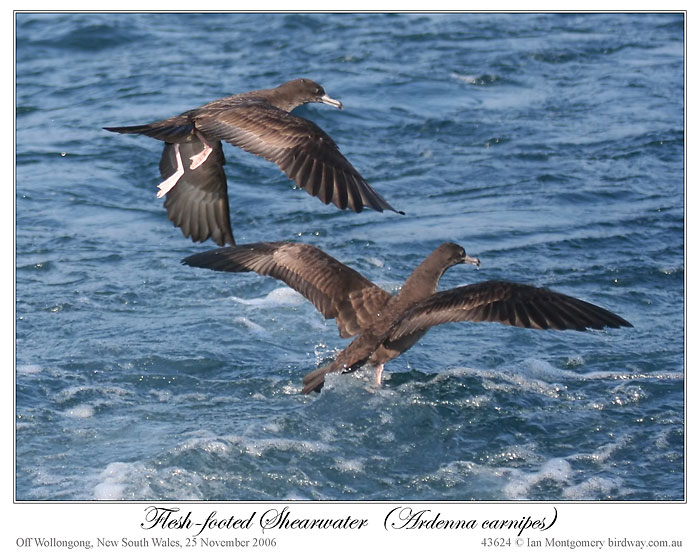
Outside the breeding season, Wedge-tailed Shearwaters are pelagic and range widely in both the Pacific and Indian Ocean. Birds from Lord Howe and New Zealand migrate north to the waters off South Korea and also appear off the coast of North America. The two in the fourth photo were off Wollongong, south of Sydney, in the deep water beyond the continental shelf. In this photo you can see the two-tone bills and the pink legs and feet.

Flesh-footed Shearwater (Puffinus carneipes) by Ian

Flesh-footed Shearwater (Puffinus carneipes) by Ian 4

Here, photo 5, for comparison is a Wedge-tailed Shearwater. Note the grey bill and longer, more pointed tail. The third common species in Australia is the Short-tailed, but, true to its name, the feet extend beyond the tip of the tail in flight.

Wedge-tailed Shearwater (Puffinus pacificus) by Ian

Wedge-tailed Shearwater (Puffinus pacificus) by Ian

All these species are collectively called “muttonbirds” and were harvested in large numbers by early settlers for their eggs and oily, rather salty flesh. Clumsy on land and foolishly trusting, they were never rated as very bright. They are, however, masters of the air and sea and their annual movements around the oceans of the world ending up on tiny specks of land like Lord Howe are impressive feats of both navigation and endurance.

Best wishes
Ian

**************************************************
Ian Montgomery, Birdway Pty Ltd,
454 Forestry Road, Bluewater, Qld 4818
Tel 0411 602 737 ian@birdway.com.au
Bird Photos http://www.birdway.com.au/
Recorder Society http://www.nqrs.org.au


Lee’s Addition:

the birds of the heavens, and the fish of the sea, whatever passes along the paths of the seas. O LORD, our Lord, how majestic is your name in all the earth! (Psalms 8:8-9 ESV)

I am always amazed when I see this kind of snout on birds. What an amazing design. See: Formed By Him – Sea Birds That Drink Seawater

The family Procellariidae is a group of seabirds that comprises the fulmarine petrels, the gadfly petrels, the prions, and the shearwaters. This family is part of the bird order Procellariiformes (or tubenoses), which also includes the albatrosses, the storm-petrels, and the diving petrels.

The Flesh-footed Shearwater, Puffinus carneipes, is a small shearwater. Its plumage is black. It has pale pinkish feet, and a pale bill with a black tip. Together with the equally light-billed Pink-footed Shearwater, it forms the Hemipuffinus group, a superspecies which may or may not have an Atlantic relative in the Great Shearwater. These are large shearwaters which are among those that could be separated in the genus Ardenna.

It breeds in colonies, and has two main breeding areas: one in the South West Pacific Ocean includes Lord Howe Island (20,000 to 40,000 pairs) and northern New Zealand (50,000 to 100,000 pairs); the other is along the coast of Western Australia from Cape Leeuwin to the Recherche Archipelago. Another 600 pairs breed on St Paul Island in the Indian Ocean, as well in the Astola Island of Pakistan in the Arabian Sea. It occurs as a summer visitor in the North Pacific Ocean as far north as British Columbia. Flesh-footed shearwaters have been sighted in the Central-North Pacific, above the main Hawaiian Islands as well. (Wikipedia, with editing)

*

*

Black Swans by Bellamoon Nature

Black Swan by Lee

Black Swan by Lee

Bellamoon sent a link to some of his videos. The one below of the Black Swans and their family is super. He previously gave me permission to use his music for videos I put together, but this is better than anything I could ever do.

Several verses came to mind about “under his wings” while watching this:

Keep me as the apple of the eye, hide me under the shadow of thy wings, (Psalms 17:8 KJV)

How excellent is thy lovingkindness, O God! therefore the children of men put their trust under the shadow of thy wings. (Psalms 36:7 KJV)

He shall cover thee with his feathers, and under his wings shalt thou trust: his truth shall be thy shield and buckler. (Psalms 91:4 KJV)

He shall cover thee with his feathers, and under his wings shalt thou trust: his truth shall be thy shield and buckler. (Psalms 91:4 KJV)

O Jerusalem, Jerusalem, which killest the prophets, and stonest them that are sent unto thee; how often would I have gathered thy children together, as a hen doth gather her brood under her wings, and ye would not! (Luke 13:34 KJV)

There are verses that help us think about how kind these swans are to their young:

For thy lovingkindness is before mine eyes: and I have walked in thy truth. (Psalms 26:3 KJV)

Withhold not thou thy tender mercies from me, O LORD: let thy lovingkindness and thy truth continually preserve me. (Psalms 40:11 KJV)

Whoso is wise, and will observe these things, even they shall understand the lovingkindness of the LORD. (Psalms 107:43 KJV)

Links:

*

Ian’s Bird of the Week – Flock Bronzewing

Flock Bronzewing (Phaps histrionica) by Ian 1

Flock Bronzewing (Phaps histrionica) by Ian 1

Ian’s Bird of the Week – Flock Bronzewing ~ by Ian Montgomery

Newsletter – 6/30/13

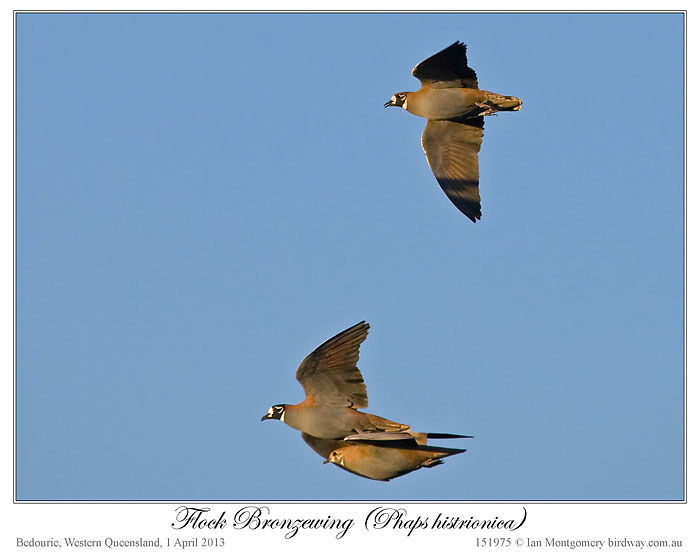
This photo of a Flock Bronzewing featured as bird of the week in June 2006. This male was one of several flocks that we saw flying across the Flinders Highway near Julia Creek late one afternoon as we were heading west towards Mount Isa and the birds, presumably, were doing their evening ritual of visiting waterholes. He obligingly decided that a pool near the road was good enough for him and landed quite close to us. This was my first, and until recently only, encounter with this enigmatic, rarely seen, nomadic pigeon of central Australia.

In 2008, this photo was published in the book 100 Birds to See Before You Die by Chandler and Couzens,, where the Flock Bronzewing featured as No 50 in the global list (No. 1 was the Ivory-billed Woodpecker). The book was one of many of this kind written after the success of the 2007 movie The Bucket List (http://www.youtube.com/watch?v=vc3mkG21ob4), the title referring to the list of things one wants to do before one ‘kicks the bucket’.

Flock Bronzewing (Phaps histrionica) by Ian 2

Flock Bronzewing (Phaps histrionica) by Ian 2

On the recent trip along the Birdsville Track, I was approaching Bedourie, the last town before Birdsville driving south from Mount Isa via Boulia, when I saw a small flock of brown birds flying swiftly near the airstrip. Their size, colour and habitat made me think, incorrectly, Australian Pratincole. A little while later, I stopped to watch two much larger flocks merge into one of about 300 individuals and start flying around the two dams near Bedourie ‘Outback’ Golf Course when I realised that the were Flock Bronzewings.

I gather that an outback golf course has natural sand bunkers – Bedourie is on the edge of the Simpson Desert – and, instead of greens, oil scrapes which make ‘a great putting surface’.The dams incidentally are called Lakes Larry and Simpson ‘after their creator’, so presumably are, unlike the bunkers, not natural.

Flock Bronzewing (Phaps histrionica) by Ian 3

Flock Bronzewing (Phaps histrionica) by Ian 3

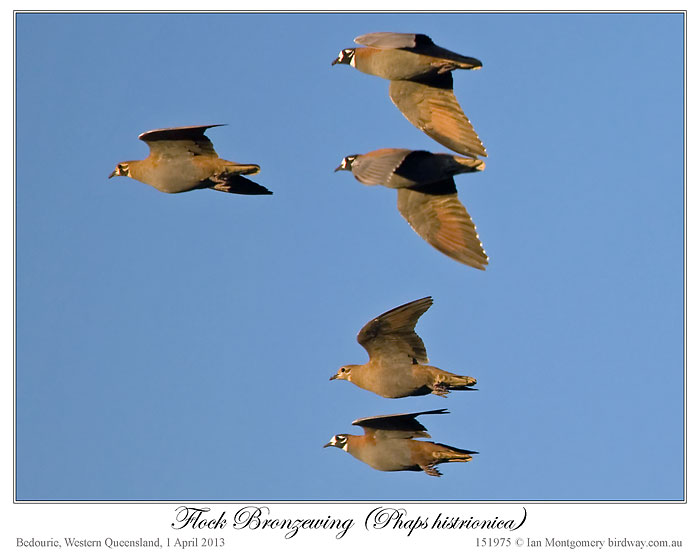
The flock, containing flew close enough to me get a reasonable shot in the evening sunlight: photos 3 and 4 are details from the same photo. Photo number 3 has two adult males with their characteristic black and white faces, while the third bird is a female or juvenile. The field guides indicate that the facial pattern of the has varying amount of black, and the juveniles are yet paler and photo number 4 shows 3 males and two other birds, one of which has only very faint markings. The scientific name histrionica refers to the harlequin pattern on the head, though histrionicus is the Latin for ‘theatrical’. (The Harlequin Duck of North America is Histrionicus histrionicus.)

Flock Bronzewing (Phaps histrionica) by Ian 4

Flock Bronzewing (Phaps histrionica) by Ian 4

Flock Bronzewings feed in the vast and sparse grasslands of the arid interior and have a history of being seen in huge numbers with 100,000 being recorded in 1931 at one waterhole and 50,000 in one flock in 1972. More recently, such large flock have not been recorded and this gave rise to concerns that the species was in steep decline. If that was the case, this decline seems to have ended, though it has been suggested that the lack of very large flocks is due to the provision of more sources of water on grazing properties. Either way, it is the case that the Flock Bronzewing is an all or nothing bird: you either see many (very rarely), or none (usually).

Does one do things on a bucket list twice or is that considered excessive? I don’t know, but I’m going to use it as an excuse for making it bird of the week a second time.

Best wishes
Ian

**************************************************
Ian Montgomery, Birdway Pty Ltd,
454 Forestry Road, Bluewater, Qld 4818
Tel 0411 602 737 ian@birdway.com.au
Bird Photos http://www.birdway.com.au/
Recorder Society http://www.nqrs.org.au


Lee’s Addition:

Also, to every beast of the earth, to every bird of the air, and to everything that creeps on the earth, in which there is life, I have given every green herb for food”; and it was so. (Genesis 1:30 NKJV)

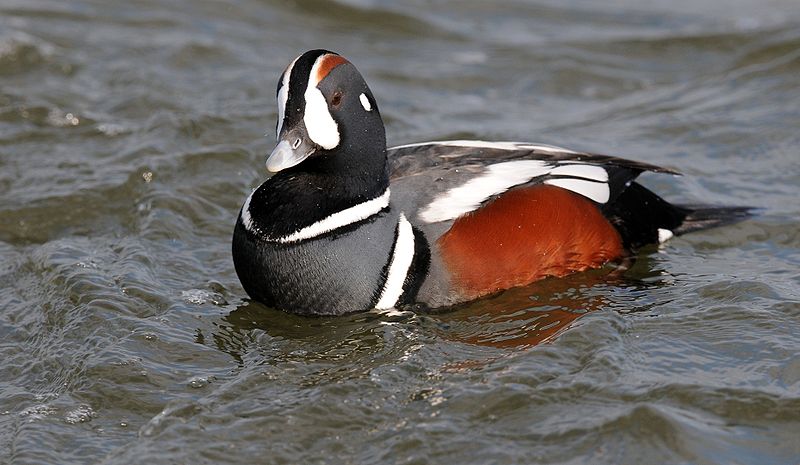
What an interesting Pigeon. Their heads are so fascinating. Plus, they do favor the Harlequin Duck’s coloration and markings. If I had a “bucket list” and there was some bird I really enjoyed seeing, I wouldn’t have any problems revisiting that bird again.

Harlequin Duck (Histrionicus histrionicus) ©WikiC

Harlequin Duck (Histrionicus histrionicus) ©WikiC

The Flock Bronzewing (Phaps histrionica), also known as the Flock Pigeon, Harlequin Bronzewing and the Harlequin Pigeon is a species of pigeon in the Columbidae family. It is endemic to drier parts of Australia. The Flock Bronzewing is the most nomadic of the Australian pigeons, and it is difficult to mistake for other Australian species. Fully-grown Flock Bronzewings can range in length from 280–305 mm with a wingspan of 189 – 216 mm. Its weight can range from 260 – 320 grams.

More than any other Australian species of pigeon, the Flock Bronzewing is adapted to the arid plains of the continent. The preferred habitat is open grassland plains, clumped grasses and small shrubs with open spaces. A major area for this type of habitat where the Flock Bronzewings are present is within the grass plains of the Barkly Tablelands.

The main source of food is the seeds of grasses, herbs and shrubs, whilst occasionally browsing on green shoots. With the introduction of cattle into the interior of Australia, the Flock Bronzewing has adapted to eating the undigested seeds from cattle dung. Some species of seed eaten include the Desert Spurge, Camel Bush, Yellow Daisy and River Grass.

The breeding season is variable and relies heavily on the availability of food. In the south of its range, they tend to breed from spring to early summer and in the north, breeding occurs from early to the middle of the dry season. The nest is a scrape in the ground, which is lined with grass and twigs, usually between the shelter of clumps of grass or shrubs. Two white eggs are incubated for 16 days, with the young capable of leaving the nest after a week. (Wikipedia with editing)

See:

*

Thanks

Lee - Taken by Dan 6/27/13

Lee – Taken by Dan 6/27/13

Be anxious for nothing, but in everything by prayer and supplication, with thanksgiving, let your requests be made known to God; (Philippians 4:6 NKJV)

I want to thank all of you who have been praying for me while I went through my eye surgery on Monday. As you can see, my left ey is just barely pinkish. The follow up visit on Tuesday was great. The eye Doctor said all was looking good and they test me at 20/20 for distant vision. Last week I couldn’t even see the Big E at the top of the chart.

My close vision is not so well and will have to be corrected with reading glasses. (They put in a “distant vision” lens) I have actually been going around with no glasses on for the first time in years. I also was noticing the leaves on the trees again, not just green trees.

As I said in a reply to the first article, I knew lots of people were praying for me. With four attempts to put in the IV and four nurses trying, I stayed calm. That is not my normal behavior when that happens. At the time, I could feel your prayers and I am very thankful for every one of them. The Lord was very close to me and helped the nurses and the doctor to do their jobs well.

We have been having VBS at our church this week and we have been helping with the photos. Dan caught me while I was sitting down on the job. My photos have actually turned out decent this week.

VBS 2013

One of the classes – VBS 2013 by Lee

The colors are so crisp and bright, I can hardly wait to get out on a birdwatching adventure soon.

Praise the LORD! For it is good to sing praises to our God; For it is pleasant, and praise is beautiful. (Psalms 147:1 NKJV)

In everything give thanks; for this is the will of God in Christ Jesus for you. (1 Thessalonians 5:18 NKJV)

*

Day 2 - The Treasure Chest by Lee

The Treasure Chest by Lee

*

Ian’s Bird of the Week – Hoary-headed Grebe

Birdsville Track by Ian

Birdsville Track by Ian

Ian’s Bird of the Week – Hoary-headed Grebe ~ by Ian Montgomery

Newsletter – 6/17/13

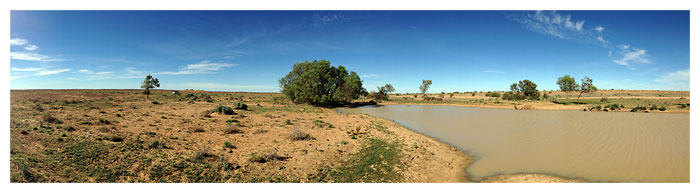
The Birdsville Track isn’t famous for its waterbirds but when we drove along it in April there had been recent rains and we were in for a few surprises. Not, happily, of the getting bogged variety, but birding ones at several spots including this one where we camped more or less in the middle of nowhere beside a small dam. That speck on the left hand side near the lone tree is my car.

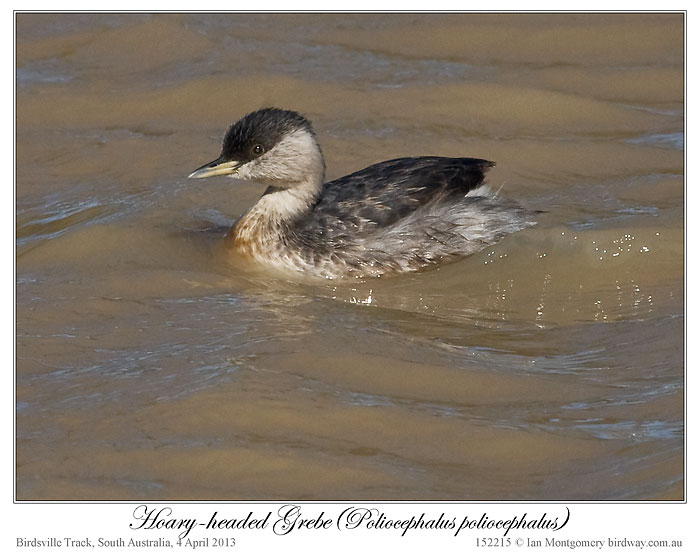
As well as some Pink-eared Ducks, there were several Hoary-headed Grebes. The ones in the first and second Grebe photos are in non-breeding or immature plumage and, although they are larger than Australasian (Little) Grebes (30cm/12in versus 25cm/10in in length) you need to use subtle field marks to distinguish them in these plumages.

Hoary-headed Grebe (Poliocephalus poliocephalus) by Ian 1

Hoary-headed Grebe (Poliocephalus poliocephalus) by Ian 1

The main field marks are: the Hoary-Headed has greyish rather than rufous-tinged flanks and whiter breast (though the bird in the first Grebe photo shows that you need to be careful with stained plumage); the border between the dark cap and pale cheeks goes below rather than through the eye in the Hoary-headed Grebe and the eyes are different in colour and pattern. The Australasian Grebe has conventional-looking eyes with yellow iris while the Hoary-headed Grebe has button-like eyes with a dark iris with a white inner and a white outer ring. This is probably easier to see in the closer bird in the second Grebe photo.

Hoary-headed Grebe (Poliocephalus poliocephalus) by Ian 2

Hoary-headed Grebe (Poliocephalus poliocephalus) by Ian 2

It’s only when you see a bird in breeding plumage with spiky pale head feathers that you understand where it gets its unusual English name (the scientific name Poliocephalus means a much more prosaic ‘grey-headed’). ‘Hoary’ literally just means ‘whitish’ but it’s an adjective that is usually applied to frost and snow so it is used as a metaphor for ‘frosty’ in the English names of 4 or 5 bird species globally. (Another example is the Hoary or Arctic Redpoll http://www.birdway.com.au/fringillidae/hoary_redpoll/index.htm which fits better geographically.) We encountered the bird in breeding plumage about a week later at Bowra Station near Cunnamulla, SW Queensland, where we spent a few nights on the way back to Townsville.

Hoary-headed Grebe (Poliocephalus poliocephalus) by Ian 3

Hoary-headed Grebe (Poliocephalus poliocephalus) by Ian 3

Grebes are almost exclusively aquatic and expert divers. Their legs are set far back on the body, so they are very awkward on land which they avoid as much as possible. They build floating nests out of water plants so they just need to haul themselves out of the water to tend the eggs and the young leave the nest soon after hatching. They usually dive rather than fly to avoid predators, though they can fly long distances if necessary to find water and the Hoary-headed Grebe, commonest in southern Australia is rather a nomad in the north. It’s closest relative is the New Zealand Grebe or ‘Dabchick’ and is the only member of the genus Poliocephalus.

Best wishes
Ian

**************************************************
Ian Montgomery, Birdway Pty Ltd,
454 Forestry Road, Bluewater, Qld 4818
Tel 0411 602 737 ian@birdway.com.au
Bird Photos http://www.birdway.com.au/
Recorder Society http://www.nqrs.org.au


Lee’s Addition:

Looks like quite a deserted place, but those are cute little Grebes. I am glad Ian gets out and about so much there in Australia. He always finds something interesting for us to learn about. Thanks, Ian, for sharing.

I will open rivers on the bare heights, and fountains in the midst of the valleys; I will make the wilderness a pool of water, and the dry land springs of water. (Isaiah 41:18 AMP)

This Grebe is in the Podicipedidae – Grebe Family. See Ian’s Grebe Family photos.

The Hoary-headed Grebe (Poliocephalus poliocephalus) is a member of the grebe family found in Australia and New Zealand. The bird takes its name from the silvery-white streaking on its black head. It is common in Australia, with a population of about 500,000. Its habitat is similar to that of the Australasian Grebe.

The Hoary-headed Grebe feeds on aquatic arthropods, mostly caught by deep diving. This species feeds during the day, and when the light is poor, forages mostly at the water surface.

Hoary-headed Grebes breed from August to January. The nests are a floating platform of water weeds, similar to that of the Australasian Grebe, and usually some distance out from shore among sparse reeds or other plants, anchored to and at least partly supported by them. A shallow depression on top is just slightly above water, so the eggs are lying in water or dampness. The eggs are concealed under pieces of wet vegetation when the incubating parent leaves so that the nest appears empty. Under full sun the covered eggs are warm and moist, often left unattended for some time. The egg’s appearance is oval, white, and soon stained brownish ochre, while the clutch is usually 2–5 eggs. Incubation is 20–24 days and egg size is 39 x 27 mm. (Wikipedia with editing)

See:

Ian’s Birds of the Week

Hoary-headed Grebe – Wikipedia

Podicipedidae – Grebe Family

Hoary-headed Grebe

*

Birdwatching at Circle B Reserve – June 8

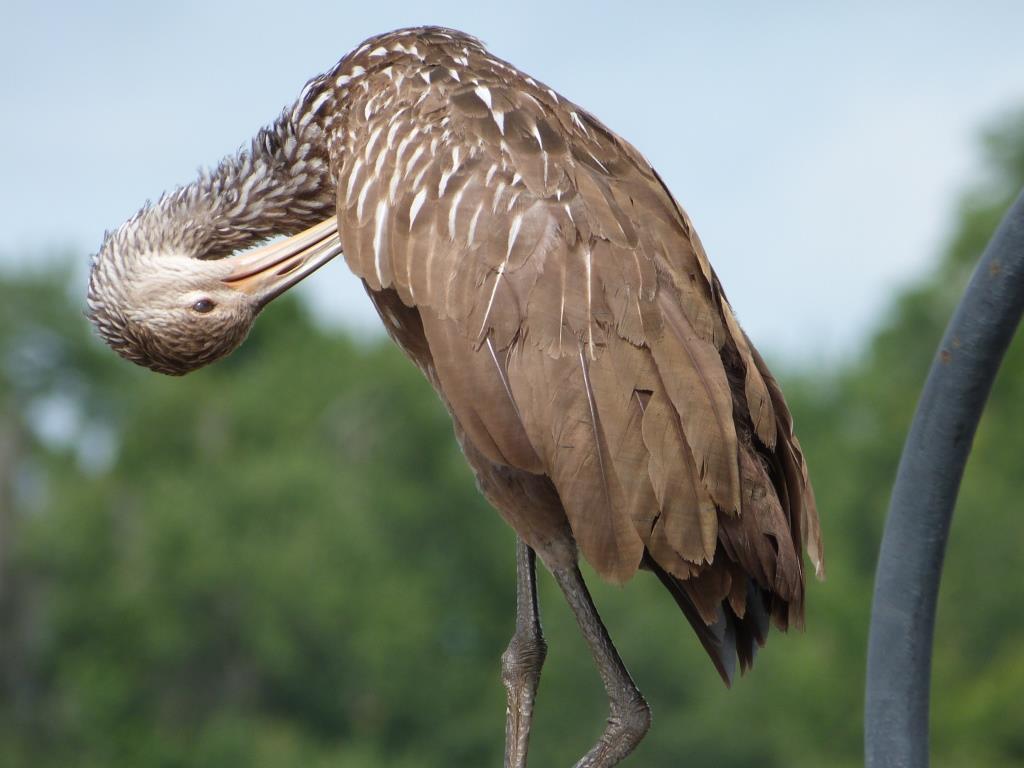
Limpkin (Aramus guarauna) Preening at Circle B

Limpkin (Aramus guarauna) Preening at Circle B

We took about an hour and a half to check out Circle B Bar Reserve again today. It was partly cloudy and around 81 degrees when we arrived. We managed to see or hear 31 species. Not bad. We had all that rain from Tropical Storm Andrea and thought maybe it would help bring in some birds. It was still pretty dry out there, but the weeds and growth sure had enjoyed all that rain we had.

Since most of our winter birds have left, we were happy with what we saw. Some of the delights and surprises were catching a video of a Carolina Wren singing right in front of us as we got out of the car. Was surprised to see 25 White Pelicans this time of the year. They went by in 3 squadrons.

By them the birds of the heavens have their home; They sing among the branches. (Psalms 104:12 NKJV)

Also, finally got a photo of the Tufted Titmouse that I have heard out there but never was able to get a glimpse of. Heading back to the car, a Swallow-tailed Kite flew over. All in all it was great. Now? It has been raining for the last 5 or 6 hours. Good thing we were there early.

Swallow-tailed Kite (Elanoides forficatus) at Circle B

Swallow-tailed Kite (Elanoides forficatus) at Circle B

Species Count
Wood Stork 4
Anhinga 1
American White Pelican 25
Great Blue Heron 2
Great Egret 3
Snowy Egret 1
Tricolored Heron 2
Cattle Egret 10
White Ibis 2
Glossy Ibis 4
Black Vulture 20
Turkey Vulture 5
Osprey 1
Swallow-tailed Kite 1
Bald Eagle 1
Red-shouldered Hawk 2
Common Gallinule 5
Limpkin 2
Sandhill Crane 2
Mourning Dove 2
Red-bellied Woodpecker 2
Downy Woodpecker 2
Hairy Woodpecker 1
Pileated Woodpecker 2
Blue Jay 3
Fish Crow 2
Tufted Titmouse 2
Carolina Wren 1
Northern Cardinal 4
Red-winged Blackbird 15
Boat-tailed Grackle 20

Update on the eye situation – I got the “All is well” for the 6-months checkup on my retina surgery and now I am scheduled June 19th to see the Eye Doctor who will do the cataract surgery. I am praying that it will be done by the end of the month. It was quite blurry out birding today.

I was using my camera as my eyes. I could tell there was something on a tree, but had no clear idea of what it was until viewed through the viewfinder and with my camera zoomed in. Hey! You do what you have to do to be able to enjoy birdwatching. And I did. The Lord let me see all of these neat birds today.

See:

Birdwatching Trips – Circle B

Wordless Birds

*
Ian’s Bird of the Week – Double-banded Plover

Ian’s Bird of the Week – Double-banded Plover ~ by Ian Montgomery

Newsletter ~ 6-2-13

As well as the bird of the week, here is the airport of the year or maybe of the century. The photo shows the departure gate on Lord Howe Island, more like someone’s picket-fenced front garden: no crowds, escalators, queues or security, and plenty of opportunities for last-minute birdwatching. When I was there 20 years ago, I left the airport after checking-in to check out a Royal Spoonbill which had landed at the nearby wetland. This time there were plenty of waders on and near the runway and a pair of Woodhens in the bush in front of the picket fence.

Lord Howe Airport by Ian 1

Lord Howe Airport by Ian 1

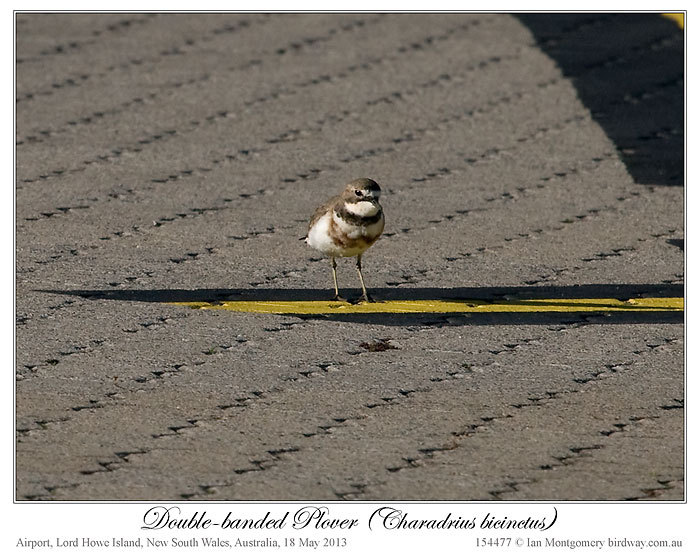
The waders included out-of-season ones such as Pacific Golden Plovers, Bar-tailed Godwits and Ruddy Turnstones that had sensibly decided that spending the northern summer on Lord Howe was a much more attractive proposition that flying to Siberia to breed. There was also an in-season wader, the Double-banded Plover, in-season for reasons that I’ll explain in a moment.

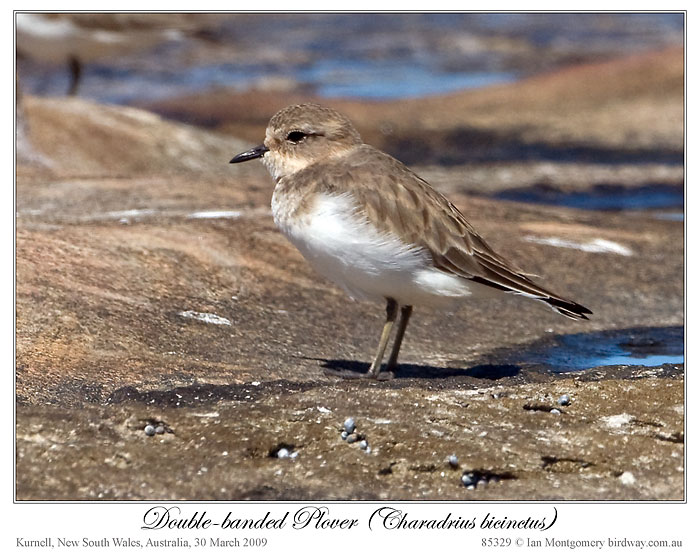
Double-banded Plover (Charadrius bicinctus) by Ian 2

Double-banded Plover (Charadrius bicinctus) by Ian 2

Waders in non-breeding and immature plumage are notoriously confusing, representing either a challenge or a headache to identify, depending on one’s attitude, and small plovers are no exception. What struck me in this case, however, was that these plovers seemed to be doing their utmost to help the waiting passengers with identification by persistently choosing to stand on the double black bands painted on the apron. The bird in the second photo is an immature Double-banded Plover – immatures have buffish faces as well as the diagnostic – but often faint traces – of the double bands on the breast.

Double-banded Plover (Charadrius bicinctus) by Ian 3

Double-banded Plover (Charadrius bicinctus) by Ian 3

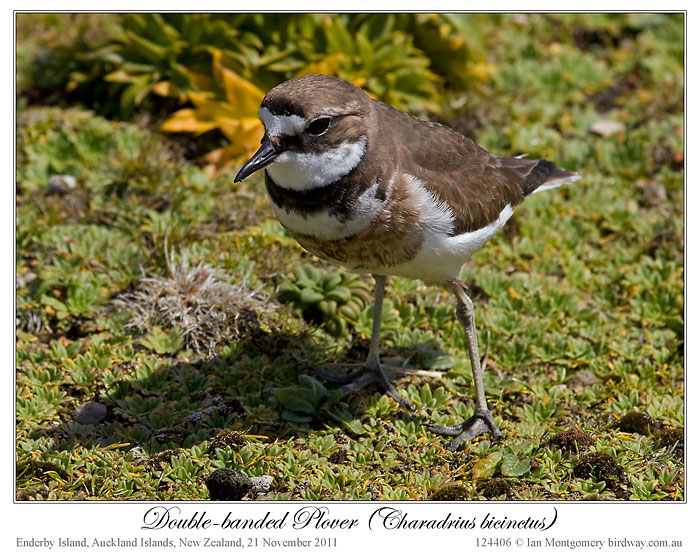
The bird in the third photo is an adult, still showing the upper blackish and lower chestnut breast bands characteristic of this species. It’s probably a male, as the bands are fairly wide and there are traces of a black upper edge to the white forehead.

Double-banded Plover (Charadrius bicinctus) by Ian 4

Double-banded Plover (Charadrius bicinctus) by Ian 4

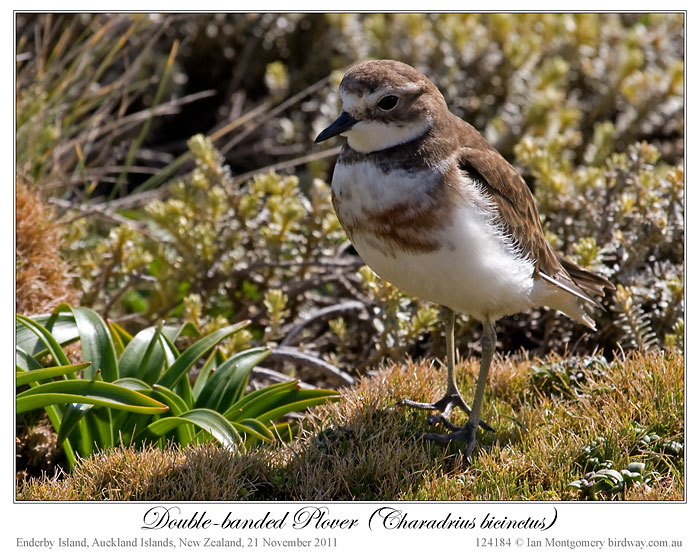
The bird in the fourth photo is an adult male in breeding plumage at the most southerly breeding location of this species on Enderby Island, one of the chain of sub-Antarctic Islands south of New Zealand. The Double-banded Plover is a New Zealand endemic – where it is called the Banded Dotterel – and widespread as a breeding species also on both of the main islands. The bird in the fifth photo is a breeding female with narrower and less intense bands and no black fringe to the white forehead.

Double-banded Plover (Charadrius bicinctus) Female by Ian 5

Double-banded Plover (Charadrius bicinctus) Female by Ian 5

The bird in the sixth photo is an adult in non-breeding plumage with only faint breast bands and lacking the buffish background of the head of the juvenile. What is was doing in this condition on Enderby Island in the middle of the breeding season is anyone’s guess.

Double-banded Plover (Charadrius bicinctus) Adult in non-breeding plumage by Ian 6

Double-banded Plover (Charadrius bicinctus) Adult in non-breeding plumage by Ian 6

And finally the bird in the seventh photo shows a better view of an immature bird and the buff head markings contrast clearly with the corresponding white markings of the non-breeding adult. This bird had just arrived on the east coast of Australia for the southern winter when it is a fairly common species in southeastern Australia, Tasmania, Lord Howe and Norfolk Islands. It is thought that the birds migrating to Australia for the winter are high-country breeders on the South Island: many others remain in New Zealand.

Double-banded Plover (Charadrius bicinctus) Immature by Ian 7

Double-banded Plover (Charadrius bicinctus) Immature by Ian 7

So, that’s why these birds are in-season in Australia in the southern winter. Any other waders here at that time of the year are either Australian residents (eg the somewhat similar Red-capped Plover) or northern hemisphere breeders that have stayed behind.

Best wishes
Ian

**************************************************
Ian Montgomery, Birdway Pty Ltd,
454 Forestry Road, Bluewater, Qld 4818
Tel 0411 602 737 ian@birdway.com.au
Check the latest website updates:
http://www.birdway.com.au/#updates


Lee’s Addition:

Bring forth every living thing that is with you of all flesh–birds and beasts and every creeping thing that creeps on the ground–that they may breed abundantly on the land and be fruitful and multiply upon the earth. (Genesis 8:17 AMP)

The Double-banded Plover is part of the Charadriidae – Plovers Family in the Charadriiformes Order.

The Double-banded Plover (Charadrius bicinctus), known as the Banded Dotterel in New Zealand, is a small (18 cm) wader in the plover family of birds. It lives in beaches, mud flats, grasslands and on bare ground. Two subspecies are recognised, the nominate Charadrius bicinctus bicinctus breeding in New Zealand and the Chatham Islands and Charadrius bicinctus exilis breeding in the Auckland Islands.

Adults in breeding plumage are white, with a dark greyish brown back, and have a distinctive brown breast, with a thinner band of black below the neck, and between the eyes and beak. Younger birds have no bands, and are often speckled brown on top, with less white parts.

They are fairly widespread in the south of New Zealand, but not often seen in the north. The nominate subspecies is partly migratory, breeding in New Zealand and the Chatham Islands and some wintering in Australia, New Caledonia, Vanuatu and Fiji, others staying in New Zealand. The Auckland Islands subspecies is sedentary but some birds move from their territories to the shore.

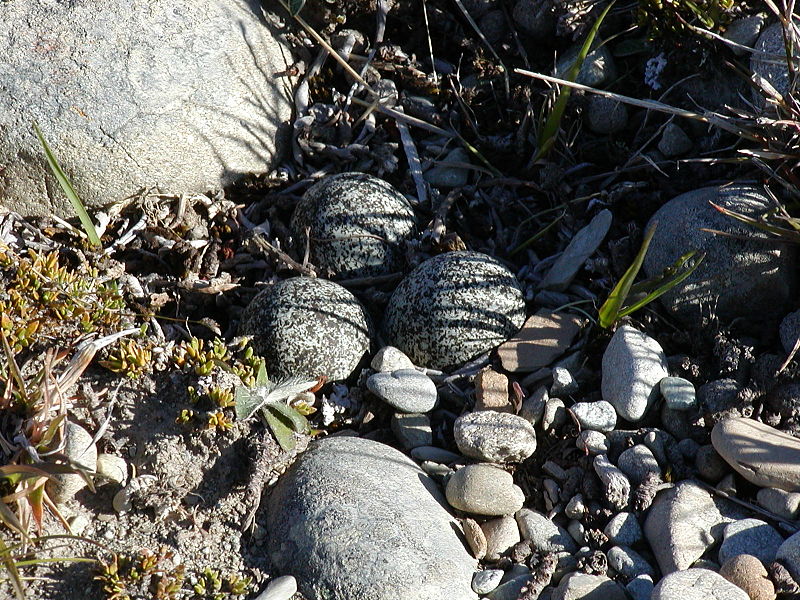
Their eggs are grey, speckled with black, making them well camouflaged against river stones and pebbles, which make up the main structure of their very simple nest. (Wikipedia with editing)

Double-banded Plover (Charadrius bicinctus) Nest and Eggs ©WikiC

Double-banded Plover (Charadrius bicinctus) Nest and Eggs ©WikiC

See Also:

Ian’s Bird of the Week

Ian Montgomery’s Birdway

Ian Montgomery’s Birdway – Charadriidae Family

Double-banded Plover – Wikipedia

Charadriidae – Plovers Family

Charadriiformes Order

Birds of the Bible – Names Study – Plover

*

Ian’s Bird of the Week – Providence Petrel

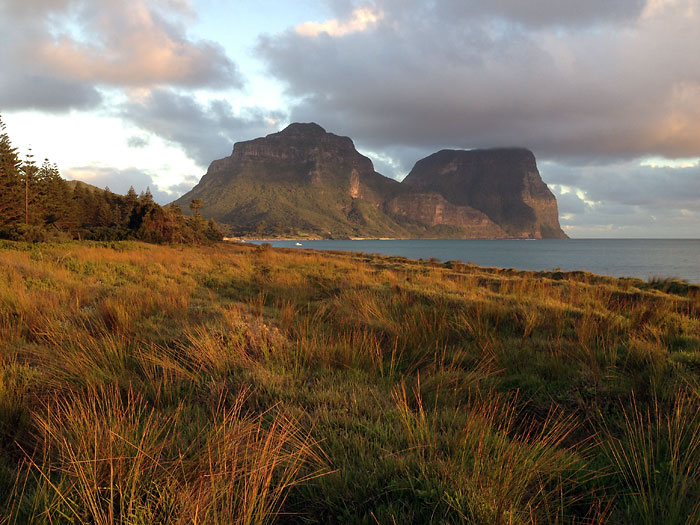
Lord Howe Island by Ian

Lord Howe Island by Ian

Ian’s Bird of the Week – Providence Petrel ~ by Ian Montgomery

Newsletter ~ 5/20/13

Your collective moral support did it again, thank you very much, so here is the Providence Petrel the other really special bird species of Lord Howe Island. ‘Special’ in the sense that after its extermination on Norfolk Island by 1800, Lord Howe was its last remaining breeding site, saving it from extinction. Unlike Norfolk Island which lacks very high mountains, Lord Howe has two fairly inaccessible ones, Mount Lidgbird, on the left in the first photo, and the taller Mount Gower on the right and it is on the tops and slopes of these that the Providence Petrel breeds.

You need to be a mountaineer to climb Mount Lidgbird and young and very fit to climb Mount Gower. We took the easier option of going by boat to the base of Mount Gower where we got good views of many Petrels in flight preparing to land at their nesting burrows. They are winter breeders, returning to the island in March and laying eggs in May. They seem reluctant to actually land, so each afternoon the air around the two Mountains swarms with these birds like clouds of insects and it is a wonderful sight.

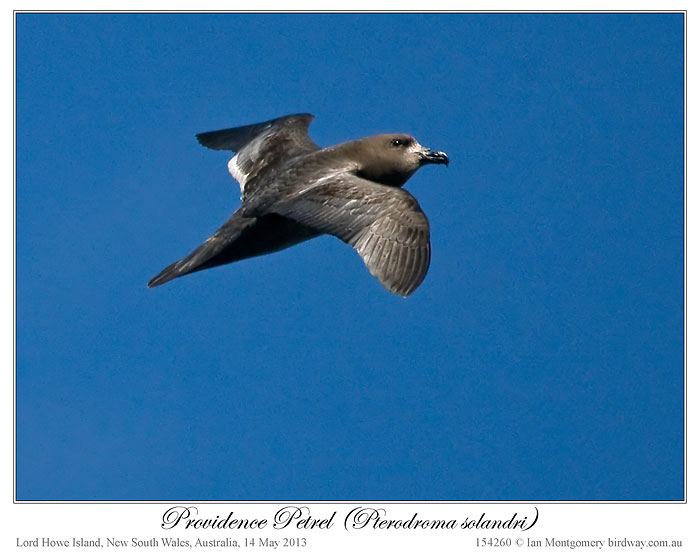
Providence Petrel (Pterodroma solandri) by Ian

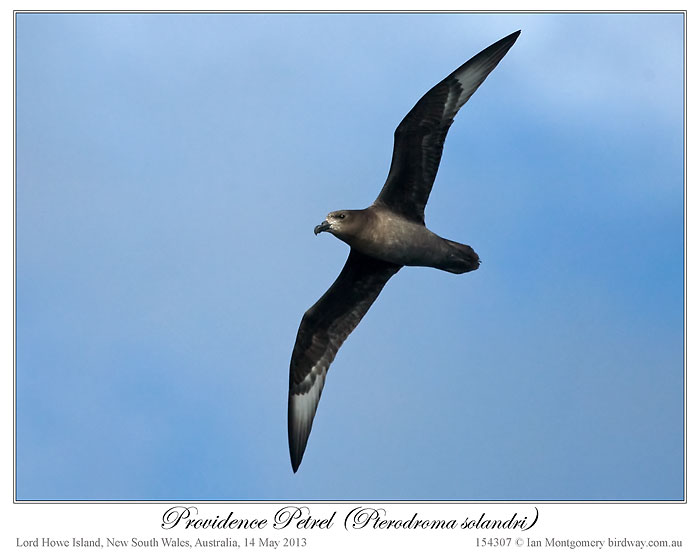
Very clumsy on the ground, they are fast and agile in the air so I was happy to get a few reasonable shots given the choppy conditions without falling overboard. The first Petrel photo shows the characteristic overall dark bird (it looks lighter than usual against Mount Gower) with the characteristic white patches on the primary wing feathers and under wing coverts that distinguishes it from most other similar petrels. The second petrel shot, shows the upper wings – these are all dark and lack the white shafts to the primaries that distinguish the similar Kermadec Petrel. Other field marks are the scaly white feathers on the face and the dark neck and upper breast.

Providence Petrel (Pterodroma solandri) by Ian

The third petrel photo shows a more characteristic dorsal shot with the bird silhouetted against the sky and shows it long slender wings. The birds average 40cm/16 in in length with a wingspan of about 1 m/3 ft 3 in. After breeding, the disperse to the North Pacific. For food, they dive into the water for crustaceans, squid and small fish.

Providence Petrel (Pterodroma solandri) by Ian

Providence Petrel (Pterodroma solandri) by Ian

The Lord Howe population is estimated at about 30,000 pairs. Feral pigs were eliminated as part of the Woodhen recovery project and the Petrels are recolonising the lower slopes of the mountains. They were rediscovered on Phillip Island close to Norfolk Island in 1985 and the current population there is less than 100 pairs. The elimination from Norfolk Island took place between 1790 and 1800 with perhaps one million adults and young being harvested in the period 1790-1793.

Best wishes
Ian

**************************************************
Ian Montgomery, Birdway Pty Ltd,
454 Forestry Road, Bluewater, Qld 4818
Tel 0411 602 737 ian@birdway.com.au
Check the latest website updates:
http://www.birdway.com.au/#updates


Lee’s Addition:

Let them give glory unto the LORD, and declare his praise in the islands. (Isaiah 42:12 KJV)

Ian has shared another of his birdwatching adventures with us. It’s good to hear that the Petrels there are making a comeback.

Petrels belong to the Procellaridae Family. The family consists of Petrels, Shearwaters, Fulmars, and Prions,

“The Providence Petrel (Pterodroma solandri) is a species that burrows in one location; isolated Lord Howe Island, some 800km from the Australian mainland in the Tasman Sea.

Of roughly pigeon like proportions (40cm), the bird was once also numerous on Norfolk Island (to Australia). However, its population here was consumed by starving epicurean transportees, sent to Norfolk Island as way of punishment. Nonetheless it numbers some 100,000 on Lord Howe. Graceful and supple in flight, the Providence Petrel has a cumbersome propensity on the ground, making it vulnerable from attack by predators.

Despite its reasonably copious strength of numbers, the Providence Petrel is deemed to be in a precarious disposition because its breeding is confined to two mountain tops and one tiny islet, and is therefore at great risk from a catastrophe.

This species is classified as vulnerable. Main causes of death are predation by the endangered Lord Howe Rail and flooding of burrows. Other dangers include rat predation and drowning in longline fishing gear. The current population is estimated at 64,000.

The scientific name of this species was given in honour of the Swedish botanist Daniel Solander, Solander’s Petrel being an alternative common name.” (Information from Wikipedia)

See:

Ian’s Petrel Photos

Procellariidae – Petrels, Shearwaters Family

Providence Petrel – Wikipedia

Ian’s Bird of the Week

*