Ian’s Bird of the Week – Yellow-crowned Parakeet

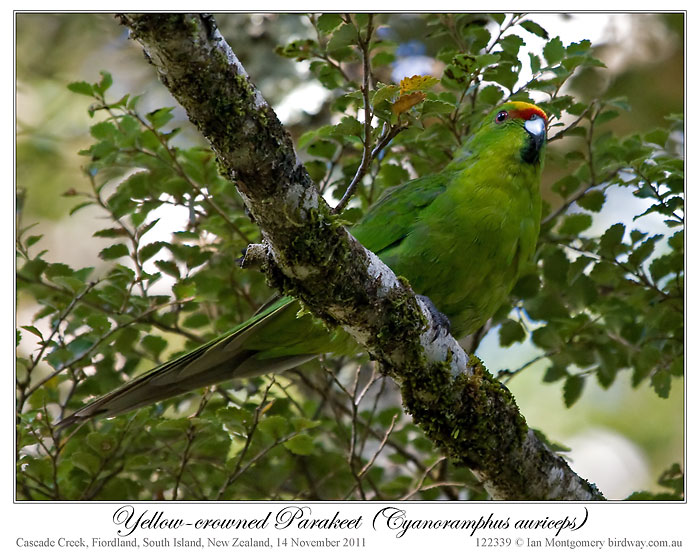
Yellow-crowned Parakeet (Cyanoramphus auriceps) by Ian 1

Yellow-crowned Parakeet (Cyanoramphus auriceps) by Ian 1

Ian’s Bird of the Week – Yellow-crowned Parakeet ~ by Ian Montgomery

Newsletter ~ 3/8/12

Last December, the Red-crowned Parakeet was the bird of the week http://www.birdway.com.au/psittacidae/red_crowned_parakeet/index.htm . That was photographed on Enderby Island in the Auckland Islands one of the New Zealand Sub-Antarctic islands. Here is a close relative the Yellow-crowned Parakeet photographed on the same trip in Fiordland on the South Island. I’ve chosen it for this week’s bird, as I’m going to Norfolk Island tomorrow and I need your moral and spiritual support to help me photograph the endangered Norfolk Island or Tasman Parakeet.

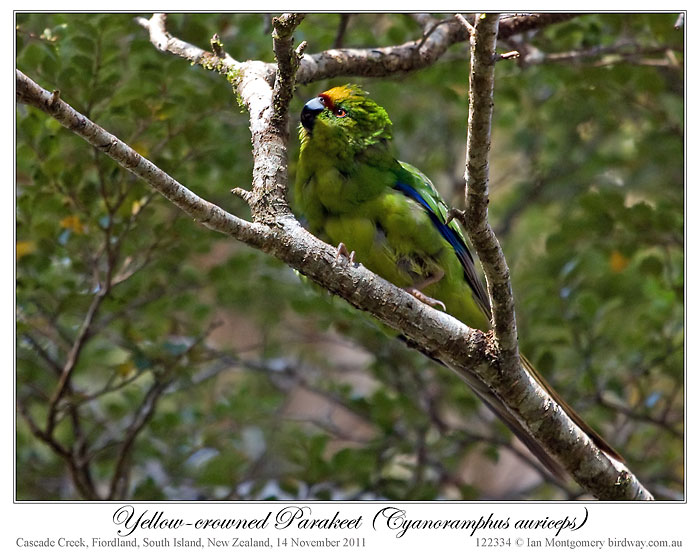
In Fiordland, I camped at Cascade Creek camping site because it’s within striking distance of Milford Sound for the Fiordland Penguin and also because it’s right beside a nature trail through Antarctic Beech forest to Lake Gunn. This particular trail had been recommended as a good site for various native birds including the Yellow-crowned Parakeet. I found the Parakeets with relative ease as they chatter away when feeding or in flight. In the first photo, the bird is perched in a beech tree, and you can see its lovely, serrated, spoon-shaped leaves.
Yellow-crowned Parakeet (Cyanoramphus auriceps) by Ian 2

Yellow-crowned Parakeet (Cyanoramphus auriceps) by Ian 2

With a length of 23-25cm/9-10in, they’re smaller than the Red-crowned but otherwise very similar, apart from the colour of the crown and the lack of red behind the eye. In sunlight, the colours stand out well, as in the second photo, but in the shady areas of the forest they are well camouflaged and the presence of faded yellow leaves in both photos show well how the patches of colour in the plumage help to break up the outline of the bird.
Yellow-crowned Parakeet (Cyanoramphus auriceps) by Ian 3

Yellow-crowned Parakeet (Cyanoramphus auriceps) by Ian 3

The third photo shows another bird in a patch of sunlight on a very mossy tree stump. It’s a delightful forest, very Lord of the Rings, and it was easy to imagine encountering Treebeard along the way. It’s no wonder that the movie was filmed in New Zealand, and Tevora Lakes – not too far from here – was the location for Fangorn Forest, and you will, of course, remember that ‘Fangorn’ was the Sindarin for Treebeard http://en.wikipedia.org/wiki/Treebeard .
Yellow-crowned Parakeet (Cyanoramphus auriceps) by Ian Middle Earth

Yellow-crowned Parakeet (Cyanoramphus auriceps) by Ian Middle Earth

http://www.virtualoceania.net/newzealand/culture/lotr/Anyway, I’m wandering. The Norfolk Island trip is being organised by the same birders from Victoria that were my companions on the Sub-Antarctic trip. I’d originally turned down the invitation to join them on the grounds of extravagance so shortly after the other trip. We had such fun together, however, that I changed my mind, particular when their flights were re-routed through Brisbane, an easy, if horribly early, connection away from Townsville.

The Tasman/Norfolk Island Parakeet looks similar to the Red-crowned but yet smaller (21-26cm/8.3-10.2in). Like all the 10 members of this South Pacific genus (Cyanorhamphus – ‘blue bill’) it has suffered from the introduction of mammalian predators by Europeans, is classified as endangered and is restricted in distribution to the Norfolk Island National Park. Its numbers have increased recently from a dangerous low as a result of conservation efforts. There is talk of reintroducing it to Phillip Island, a small predator-freed island off Norfolk, and to Lord Howe, where a similar parakeet became extinct. It is thought to belong to the same species, hence the name Tasman Parakeet. So, wish me luck, keep your fingers crossed and transmit the same spiritual energy that is has been so successful before, and I’ll try to bring you the Tasman Parakeet as a future bird of the week.

Best wishes

Ian


Ian Montgomery, Birdway Pty Ltd,
454 Forestry Road, Bluewater, Qld 4818
Preferred Email: ian@birdway.com.au
Website: http://www.birdway.com.au/index.php


Lee’s Addition:

Our prayers will go with you for safety and that you might find your next “Bird of the Week.” We like following your adventures into the wilds. Must be nice to have so many parakeets and parrots around.

Check out Ian’s many members of the Parrots and Allies – Psittacidae Family photos. He has quite a collection of them. He has almost 50 species there. There are 350 total members in the Parrot family. Ian has a few more trips to take. When he mentioned “in the shady areas of the forest they are well camouflaged and the presence of faded yellow leaves,” it reminds me of how well their creator provided for their protection.

There will be a shelter to give shade from the heat by day, and refuge and protection from the storm and the rain. (Isaiah 4:6 NASB)

More – Bird of the Week articles

*

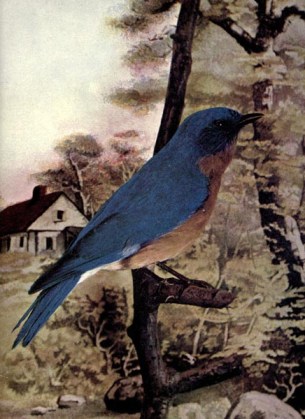
Birds Vol 1 #3 – Little Boy Blue

Bluebird - Little Boy Blue

Bluebird – Little Boy Blue

Birds Illustrated by Color Photography – Revisited

Vol 1. March, 1897 No. 3

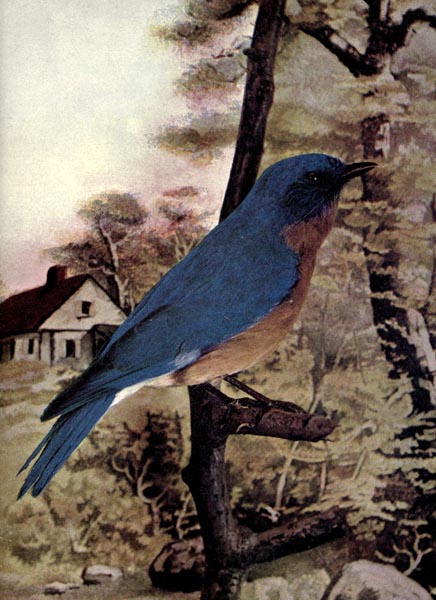
LITTLE BOY BLUE – THE BLUE BIRD

Boys and girls, don’t you think that is a pretty name? I came from the warm south, where I went last winter, to tell you that Springtime is nearly here.

When I sing, the buds and flowers and grass all begin to whisper to one another, “Springtime is coming for we heard the Bluebird say so,” and then they peep out to see the warm sunshine. I perch beside them and tell them of my long journey from the south and how I knew just when to tell them to come out of their warm winter cradles. I am of the same blue color as the violet that shows her pretty face when I sing, “Summer is coming, and Springtime is here.”

I do not like the cities for they are black and noisy and full of those troublesome birds called English Sparrows. I take my pretty mate and out in the beautiful country we find a home. We build a nest of twigs, grass and hair, in a box that the farmer puts up for us near his barn.

Sometimes we build in a hole in some old tree and soon there are tiny eggs in the nest. I sing to my mate and to the good people who own the barn. I heard the farmer say one day, “Isn’t it nice to hear the Bluebird sing? He must be very happy.” And I am, too, for by this time there are four or five little ones in the nest.

Little Bluebirds are like little boys—they are always hungry. We work hard to find enough for them to eat. We feed them nice fat worms and bugs, and when their little wings are strong enough, we teach them how to fly. Soon they are large enough to hunt their own food, and can take care of themselves.

The summer passes, and when we feel the breath of winter we go south again, for we do not like the cold.


THE BLUE BIRD.

I know the song that the Bluebird is singing
Out in the apple tree, where he is swinging.
Brave little fellow! the skies may be dreary,
Nothing cares he while his heart is so cheery.
Hark! how the music leaps out from his throat,
Hark! was there ever so merry a note?

Listen a while, and you’ll hear what he’s saying,
Up in the apple tree swinging and swaying.
“Dear little blossoms down under the snow,
You must be weary of winter, I know;
Hark! while I sing you a message of cheer,
Summer is coming, and springtime is here!”

“Dear little snow-drop! I pray you arise;
Bright yellow crocus! come open your eyes;
Sweet little violets, hid from the cold,
Put on our mantles of purple and gold;
Daffodils! daffodils! say, do you hear,
Summer is coming! and springtime is here!”
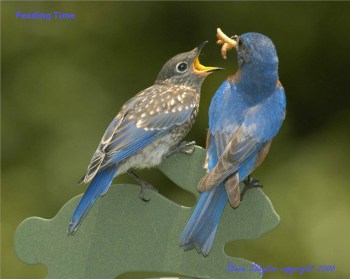
Eastern Bluebird (Sialia sialis) by S Slayton

Eastern Bluebird (Sialia sialis) by S Slayton


THE BLUE BIRD.

Winged lute that we call a blue bird,
You blend in a silver strain
The sound of the laughing waters,
The patter of spring’s sweet rain,
The voice of the wind, the sunshine,
And fragrance of blossoming things,
Ah! you are a poem of April
That God endowed with wings.E. E. R.

****

imgl

IKE a bit of sky this little harbinger of spring appears, as we see him and his mate househunting in early March. Oftentimes he makes his appearance as early as the middle of February, when his attractive note is heard long before he himself is seen. He is one of the last to leave us, and although the month of November is usually chosen by him as the fitting time for departure to a milder clime, his plaintive note is quite commonly heard on pleasant days throughout the winter season, and a few of the braver and hardier ones never entirely desert us. The Robin and the Blue Bird are tenderly associated in the memories of most persons whose childhood was passed on a farm or in the country village. Before the advent of the English Sparrow, the Blue Bird was sure to be the first to occupy and the last to defend the little box prepared for his return, appearing in his blue jacket somewhat in advance of the plainly habited female, who on her arrival quite often found a habitation selected and ready for her acceptance, should he find favor in her sight. And then he becomes a most devoted husband and father, sitting by the nest and warbling with earnest affection his exquisite tune, and occasionally flying away in search of food for his mate and nestlings.

The Blue Bird rears two broods in the season, and, should the weather be mild, even three. His nest contains three eggs.

In the spring and summer when he is happy and gay, his song is extremely soft and agreeable, while it grows very mournful and plaintive as cold weather approaches. He is mild of temper, and a peaceable and harmless neighbor, setting a fine example of amiability to his feathered friends. In the early spring, however, he wages war against robins, wrens, swallows, and other birds whose habitations are of a kind to take his fancy. A celebrated naturalist says: “This bird seems incapable of uttering a harsh note, or of doing a spiteful, ill-tempered thing.”

Nearly everybody has his anecdote to tell of the Blue Bird’s courage, but the author of “Wake Robin” tells his exquisitely thus: “A few years ago I put up a little bird house in the back end of my garden for the accommodation of the wrens, and every season a pair have taken up their abode there. One spring a pair of Blue Birds looked into the tenement, and lingered about several days, leading me to hope that they would conclude to occupy it. But they finally went away. Late in the season the wrens appeared, and after a little coquetting, were regularly installed in their old quarters, and were as happy as only wrens can be. But before their honeymoon was over, the Blue Birds returned. I knew something was wrong before I was up in the morning. Instead of that voluble and gushing song outside the window, I heard the wrens scolding and crying out at a fearful rate, and on going out saw the Blue Birds in possession of the box. The poor wrens were in despair and were forced to look for other quarters.”

THE BLUE BIRD.

“Drifting down the first warm wind
That thrills the earliest days of spring,
The Bluebird seeks our maple groves
And charms them into tasselling.”

“He sings, and his is Nature’s voice—
A gush of melody sincere
From that great fount of harmony
Which thaws and runs when Spring is here.”

“Short is his song, but strangely sweet
To ears aweary of the low
Dull tramps of Winter’s sullen feet,
Sandalled in ice and muffled in snow.”
*****
“Think, every morning, when the sun peeps through
The dim, leaf-latticed windows of the grove,
How jubilant the happy birds renew
Their old, melodious madrigals of love!
And when you think of this, remember, too,
’Tis always morning somewhere, and above
The awakening continents, from shore to shore,
Somewhere the birds are singing evermore.

“Think of your woods and orchards without birds!
Of empty nests that cling to boughs and beams
As in an idiot’s brain remembered words
Hang empty ’mid the cobwebs of his dreams!
Will bleat of flocks or bellowing of herds
Make up for the lost music, when your teams
Drag home the stingy harvest, and no more
The feathered gleaners follow to your door?”
From “The Birds of Killingsworth.”

*

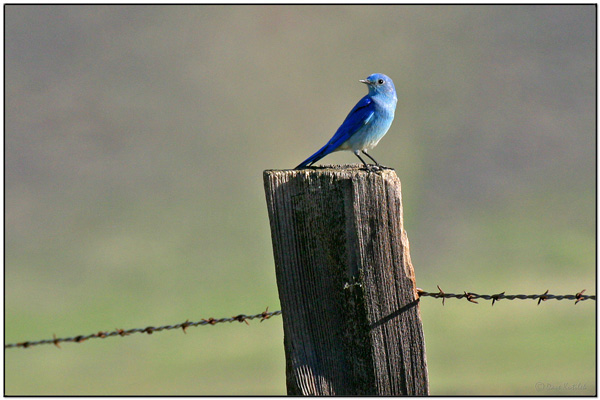
Mountain Bluebird (Sialia currucoides) by Daves BirdingPix

Mountain Bluebird (Sialia currucoides) by Daves BirdingPix


Lee’s Addition:

And he made the robe of the ephod of woven work, all of blue. (Exodus 39:22 KJV)

Another delightful story from the past. Who doesn’t like Bluebirds?

The bluebirds are a group of medium-sized, mostly insectivorous or omnivorous birds in the genus Sialia of the thrush family (Turdidae – Thrushes). Bluebirds are one of the few thrush genera in the Americas. They have blue, or blue and red, plumage. Female birds are less brightly colored than males, although color patterns are similar and there is no noticeable difference in size between sexes.
Species:

  • Eastern Bluebird, Sialia sialis
  • Western Bluebird, Sialia mexicana
  • Mountain Bluebird, Sialia currucoides
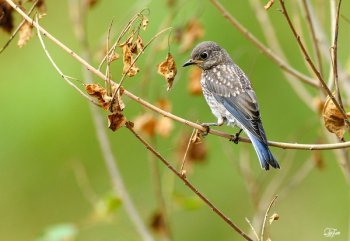
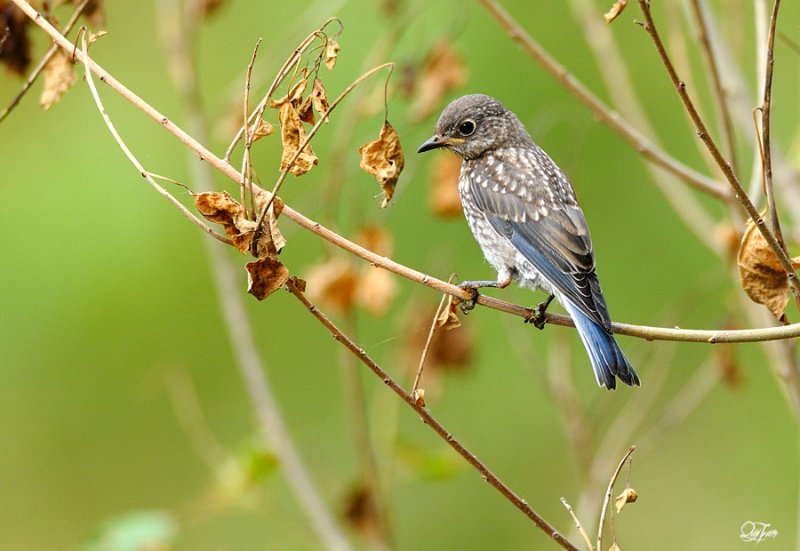
Western Bluebird (Sialia mexicana) juvenile by Quy Tran

Western Bluebird (Sialia mexicana) juvenile by Quy Tran

Bluebirds are territorial, prefer open grassland with scattered trees and are cavity nesters (similar to many species of woodpecker). Bluebirds can typically produce between two and four broods during the spring and summer (March through August in the Northeastern United States). Males identify potential nest sites and try to attract prospective female mates to those nesting sites with special behaviors that include singing and flapping wings, and then placing some material in a nesting box or cavity. If the female accepts the male and the nesting site, she alone builds the nest and incubates the eggs.

Bluebirds are attracted to platform bird feeders, filled with grubs of the darkling beetle, sold by many online bird product wholesalers as mealworms. Bluebirds will also eat raisins soaked in water. In addition, in winter bluebirds use backyard heated birdbaths. Of all the birds a gardener could choose to attract, the bluebird is the quintessential helpful garden bird. Gardeners go to extreme lengths to attract and keep them in the garden for their beneficial properties. Bluebirds are voracious insect consumers, quickly ridding a garden of insect pests.

By the 1970s, bluebird numbers had declined by estimates ranging to 70% due to unsuccessful competition with house sparrows and starlings, both introduced species, for nesting cavities, coupled with a decline in habitat. However, in late 2005 Cornell University’s Laboratory of Ornithology reported bluebird sightings across the southern U.S. as part of its yearly Backyard Bird Count, a strong indication of the bluebird’s return to the region. This upsurge can largely be attributed to a movement of volunteers establishing and maintaining bluebird trails.

While traveling full-time in our RV, one of our volunteer jobs was to clean the Bluebird houses of the “Trail” at the Avon Park Air Force Range in Avon Park, FL. There were 100 houses over a 78 mile distance. They were about 1/2 mile or so apart. Needless to say, it wasn’t done in one day. That year the Bluebirds had produced about 468 Bluebirds in those boxes. We were able to watch the Eastern Bluebirds quite frequently.

There are a few other “Bluebirds” around the world like the Asian Fairy-bluebird, Philippine Fairy-bluebird are in the Irenidae – Fairy-bluebird Family.
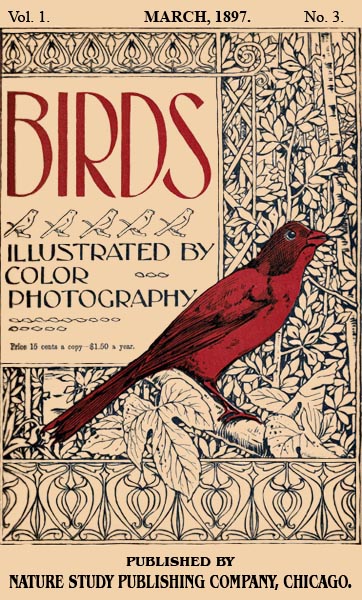
Birds Illustrated by Color Photograhy Vol 1 March 1897 No 3 - Cover

Birds Illustrated by Color Photography – Revisited – Introduction

The above article is the first article in the monthly serial for February 1897 “designed to promote Knowledge of Bird-Live.” These include Color Photography, as they call them, today they are drawings. There are at least three Volumes that have been digitized by Project Gutenberg.

To see the whole series of – Birds Illustrated by Color Photography – Revisited

*

(Information from Wikipedia and other internet sources)

Next Article – The Swallow

Previous Article – The American Red Bird

Sharing The Gospel

Links:

Bluebird – Wikipedia

FAIRY-BLUEBIRDS Irenidae

The Mountain Bluebird – The Zealous Bridegroom.. by ajmithra

Turdidae – Thrushes

Mountain Bluebirds – Vol 2, #6

*
Ian’s Bird of the Week – New Zealand/Sub-Antarctic Snipe

Subantarctic Snipe (Coenocorypha aucklandica) by Ian 1

Subantarctic Snipe (Coenocorypha aucklandica) by Ian 1

Ian’s Bird of the Week – New Zealand/Sub-Antarctic Snipe ~ by Ian Montgomery

Newsletter ~ 2/29/12

My apologies for a late Bird of the Week. Lots of excuses are presenting themselves, as they do, but I won’t bore you with them. I’ve chosen another mostly good news conservation story from the Sub-Antarctic islands, the New Zealand or Sub-Antarctic Snipe. These are odd, dumpy, almost tail-less little snipe – length 23cm/9in – that occur now only on some of the islands south of New Zealand: Snares, Auckland Islands, Antipodes Islands and Campbell Island with a closely related species on Chatham Island.

We found them on Enderby Island, one of the Auckland Islands group, where the nominate subspecies (aucklandica) occurs. With their relatively short, curved bill they don’t look like your average snipe and they don’t behave like one either. Like the Auckland and Campbell Islands Teals they’re fairly confiding and allow close approach but, unlike the Teal, they can still fly, though are very reluctant to do so. When disturbed – and you have to nearly step on them to do that – they creep away mouse-like through the thick vegetation that they prefer and disappear with relative ease. Perhaps crake- or rail-like would be closer to the mark and the curved bill reminded me of the longer-billed rails such as the Virginia Rail http://www.birdway.com.au/rallidae/virginia_rail/source/virginia_rail_110552.htm .

Subantarctic Snipe (Coenocorypha aucklandica) by Ian 2

Subantarctic Snipe (Coenocorypha aucklandica) by Ian 2

By day they stay under cover, only venturing out onto more open areas at night. They feed on a wide variety of invertebrates that they the find by deeply probing the peaty island soil. The male, apparently, has a distinctive territorial call uttered at dawn and dusk and rendered as ‘queeyoo queeyoo’, and the extinct Stewart Island race is supposed to be responsible for the Maori legend of the hakawai or or hokioi, a frightening creature that called only at night (Heather & Robertson, Field Guide to the Birds of New Zealand). The males also perform a nocturnal display flight, making, like other snipe, a humming sound by vibrating the tail feathers, which, given the short tails of this species, one can imagine as being very high-pitched.

Subantarctic Snipe (Coenocorypha aucklandica) by Ian 3

Subantarctic Snipe (Coenocorypha aucklandica) by Ian 3

The third photo shows a pair of the snipe sneaking past the abundant yellow-flowered Bulbinella or Ross Lily, one of the characteristic, so-called ‘megaherbs’ of these islands http://en.wikipedia.org/wiki/Bulbinella_rossii.

The good part of the news is that although the New Zealand Snipe became extinct on the main islands following the arrival of the Pacific Rat with the Maoris a thousand years ago and the recent extinction of two races on Stewart Island and Little Barrier Island (the latter, ironically as a result of the introduction there of the Weka http://www.birdway.com.au/rallidae/weka/index.htm ), the remaining races seem to be doing quite well with a total population estimated at 34,000, of which two thirds occur on the smaller of the Auckland Islands, including Enderby.

Yet another race was thought to have become extinct on Campbell Island after the brig Perseverance, responsible for discovery of the island in 1810, was wrecked there in 1828 leaving the usual legacy of rats. This race remained undescribed and unseen until a small population was discovered on an almost inaccessible, nearby, little island called Jacquemart in 1997 during a search for the Campbell Island Teal. Rats were eliminated on the relatively huge – 11,000 hectare – main island in 2001 and the snipe have recolonised it from Jacquemart unaided. The race is now called, paradoxically, perseverence. Some of the more intrepid members of our party found some snipe on an arduous walk there in wet conditions on our last day. I’d had enough of boggy, wet walks through unrelenting waist-deep tussock grass by then and didn’t join them. Alas!

To make amends for the late BoftW, here is a non-bird of the week, Lumholtz’s Tree Kangaroo.

Lumholtz's Tree Kangaroo by Ian

Lumholtz's Tree Kangaroo by Ian

This obliging animal made a greatly-appreciated appearance in the middle of a Birds Australia North Queensland committee meeting 11 days ago when we were just about to debate a controversial agenda item. The meeting was being held at a member’s house in rainforest on the Atherton Tableland. A delightful interlude with this placid animal led to a very harmonious and well-mannered debate. There’s an obvious lesson there for choosing a suitable venue for meetings.

Best wishes
Ian


Ian Montgomery, Birdway Pty Ltd,
454 Forestry Road, Bluewater, Qld 4818
Phone: 0411 602 737 +61-411 602 737
Preferred Email: ian@birdway.com.au
Website: http://birdway.com.au


Lee’s Addition:

He causes the grass to grow for the cattle, And vegetation for the service of man, That he may bring forth food from the earth, (Psalms 104:14 NKJV)

Another neat bird and adventure by Ian. The Tree Kangaroo is also an adorable addition. We have the Wilson’s Snipe in this area, which is the only snipe seen by us. I am glad Ian let’s in on his adventures around the world. Better him having his “walks through unrelenting waist-deep tussock grass” than us. Thanks, Ian, for sparing us.

See all of Ian’s Birds of the Week – Click Here

*

Updating the Slideshows – Report # 3

As previously reported, the Slide.Com is closing down as of March 6th. Unfortunately I have used a lot of the Slideshows from them on this site. I am busy kicking up dust behind the scenes and decided to share links to the articles as I get some of them finished. At least you will know I have not been “goofing off.” Besides that, many of these were produced sometime back and deserve a reminder of our many birds the Lord has created for His Glory and pleasure. Trust you like the new Slideshows that are being installed. They are taking a great effort on my part to learn the new procedure, but after quite a few mistakes, maybe I can get them out quicker now.

The works of the LORD are great, sought out of all them that have pleasure therein.(Psalms 111:2 KJV) Having made known unto us the mystery of his will, according to his good pleasure which he hath purposed in himself: (Ephesians 1:9 KJV) For it is God which worketh in you both to will and to do of his good pleasure. (Philippians 2:13 KJV) Thou wilt shew me the path of life: in thy presence is fulness of joy; at thy right hand there are pleasures for evermore. (Psalms 16:11 KJV)

Thanks for your patience and your visits to this website. While I am working away, I am enjoying seeing articles that I had forgotten about. Completed:

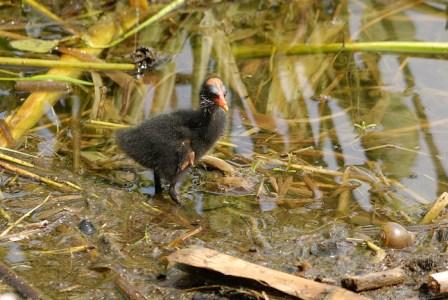
Baby Common Moorhen

Birdwatching Trip – Lake Hollingsworth 7-29-08

Anhinga (Anhinga anhinga) by Dan

Birdwatching Trip – Lake Hollingsworth 5/1/08

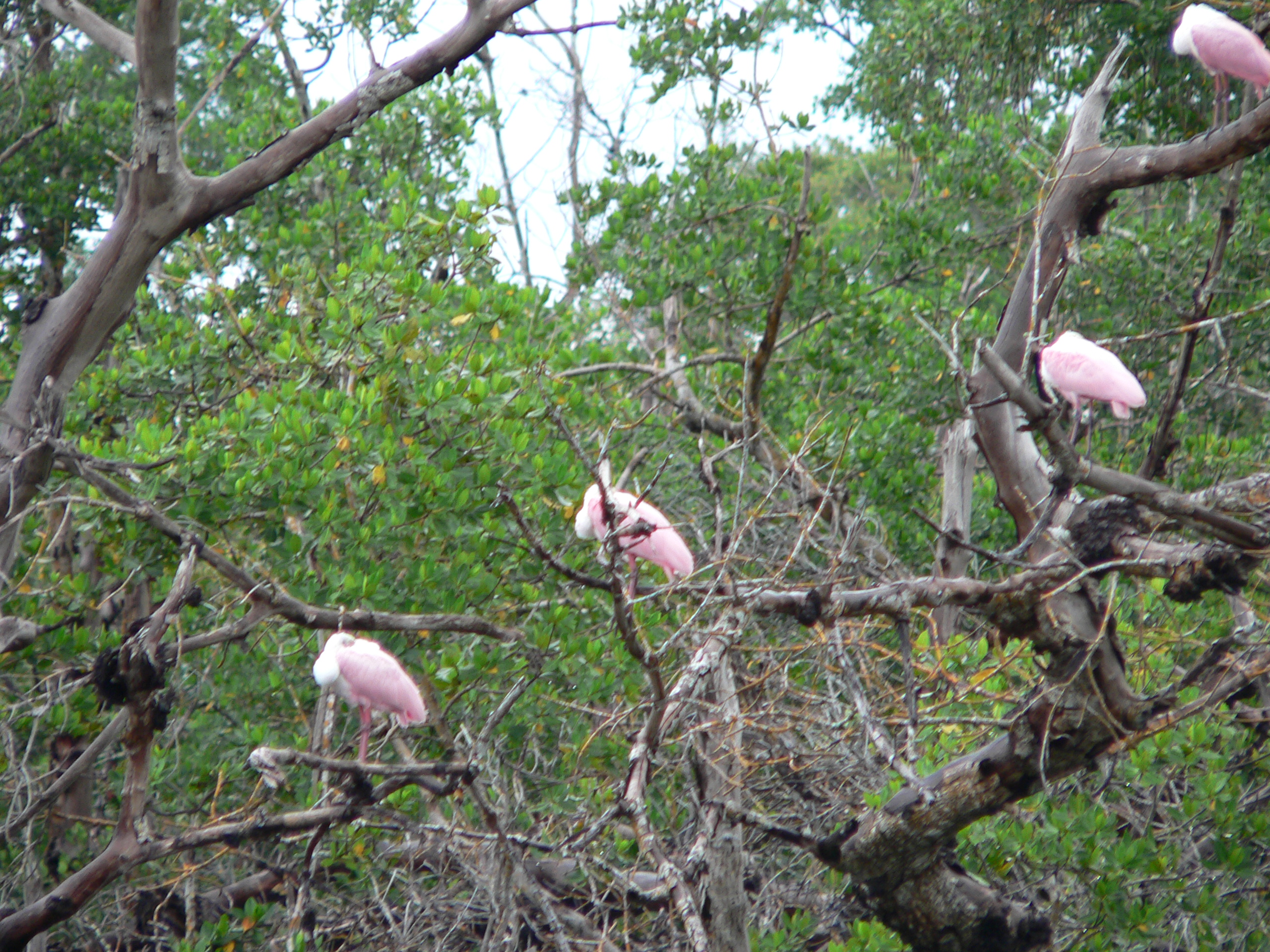
Roseate Spoonbills at Ding Darling

Birdwatching Trip – J. N. “Ding” Darling NWR – July 15, 2008

Black-necked Stilt - Skippy

"Skippy" - Black-necked Stilt

Happy Birthday – Skippy at National Aviary

Birdwatching at the National Aviary – Introduction

National Aviary – Hospital, Breeding, and Kitchen Areas

National Aviary – Penguin Encounter

Birds of the Bible – At the National Aviary

Birdwatching the National Aviary – Grasslands

Birdwatching the National Aviary – Tropical Forest

Also:

Scarlet Robin (Petroica boodang) by Ian

Scarlet Robin (Petroica boodang) by Ian

Birds of the Bible – Eye Hath Seen

Birdwatching at Lake Hollingsworth-June 1st

Birds of the Bible – Spain

Formed By Him – Birds of Peru and Chile – II

Also See:

Updating the Slideshows – Report # 1

Updating the Slideshows – Report # 2

*

Birds Vol 1 #2 – The American Red Bird

Red Bird - Northern Cardinal for Birds Illustrated

Red Bird – Northern Cardinal for Birds Illustrated

Birds Illustrated by Color Photography – Revisited

Vol 1. February, 1897 No. 2

*

THE AMERICAN RED BIRD.

imga1

MERICAN RED BIRDS are among our most common cage birds, and are very generally known in Europe, numbers of them having been carried over both to France and England. Their notes are varied and musical; many of them resembling the high notes of a fife, and are nearly as loud. They are in song from March to September, beginning at the first appearance of dawn and repeating successively twenty or thirty times, and with little intermission, a favorite strain.

The sprightly figure and gaudy plumage of the Red Bird, his vivacity, strength of voice, and actual variety of note, and the little expense with which he is kept, will always make him a favorite.

This species is more numerous to the east of the great range of the Alleghenies, but is found in Pennsylvania and Ohio, and is numerous in the lower parts of the Southern States. In January and February they have been found along the roadsides and fences, hovering together in half dozens, associating with snow birds, and various kinds of sparrows. In the northern states they are migratory, and in the southern part of Pennsylvania they reside during the whole year, frequenting the borders of rivulets, in sheltered hollows, covered with holly, laurel, and other evergreens. They love also to reside in the vicinity of fields of Indian corn, a grain that constitutes their chief and favorite food. The seeds of apples, cherries, and other fruit are also eaten by them, and they are accused of destroying bees.

Early in May the Red Bird begins to prepare his nest, which is very often fixed in a holly, cedar or laurel bush. A pair of Red Birds in Ohio returned for a number of years to build their nest in a honeysuckle vine under a portico. They were never disturbed and never failed to rear a brood of young. The nest was constructed of small twigs, dry weeds, slips of vine bark, and lined with stalks of fine grass. Four eggs of brownish olive were laid, and they usually raised two broods in a season.

In confinement they fade in color, but if well cared for, will live to a considerable age. They are generally known by the names: Red Bird, Virginia Red Bird, Virginia Nightingale, and Crested Red Bird. It is said that the female often sings nearly as well as the male.


THE REDBIRDS.

Two Redbirds came in early May,
Flashing like rubies on the way;
Their joyous notes awoke the day,
And made all nature glad and gay.

Thrice welcome! crested visitants;
Thou doest well to seek our haunts;
The bounteous vine, by thee possessed,
From prying eyes shall keep thy nest.

Sing to us in the early dawn;
’Tis then thy scarlet throats have drawn
Refreshing draughts from drops of dew,
The enchanting concert to renew.

No plaintive notes, we ween, are thine;
They gurgle like a royal wine;
They cheer, rejoice, they quite outshine
Thy neighbor’s voice, tho’ it’s divine.

Free as the circumambient air
Do thou remain, a perfect pair,
To come once more when Proserpine
Shall swell the buds of tree and vine.
—C. C. M.

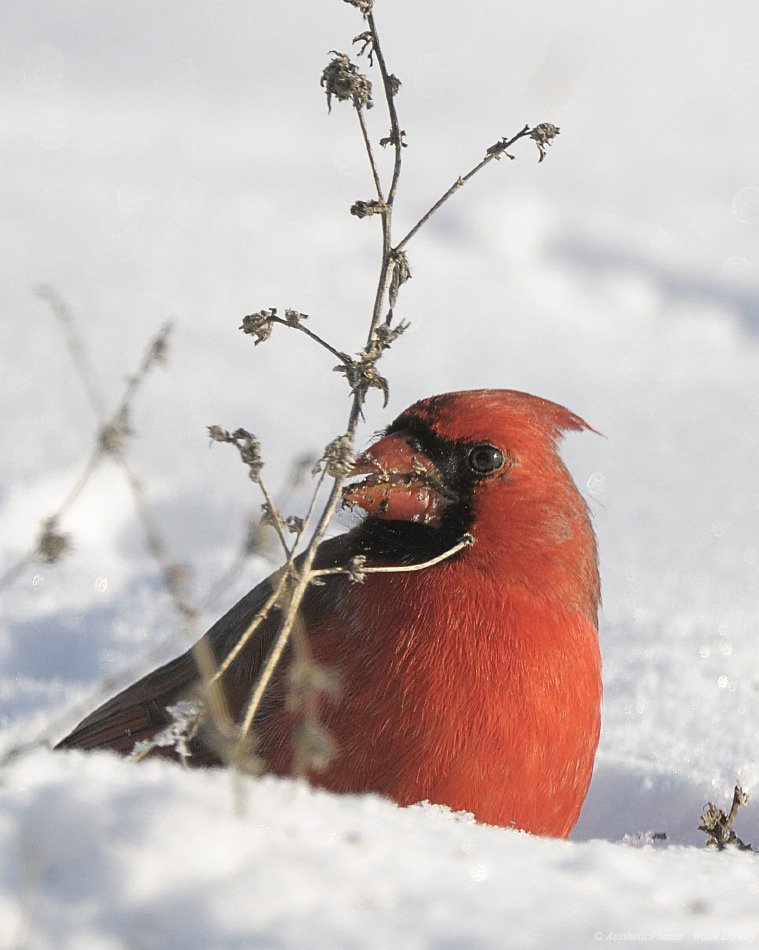
Northern Cardinal by Aestheticphotos

Northern Cardinal (Cardinalis cardinalis) by Aestheticphotos

THE RED BIRD.

Is it because he wears a red hat,
That we call him the Cardinal Bird?
Or is it because his voice is so rich
That scarcely a finer is heard?

’Tis neither, but this—I’ve guessed it, I’m sure—
His dress is a primary color of Nature.
It blends with the Oriole’s golden display,
And the garment of Blue Bird completes the array.
—C. C. M.


Lee’s Addition:

Come now, and let us reason together, saith the LORD: though your sins be as scarlet, they shall be as white as snow; though they be red like crimson, they shall be as wool. (Isaiah 1:18 KJV)

I hadn’t realized that back in 1897 that they carried the Cardinal or Red Bird overseas to be in cages. I suppose it is no different than those here, even today, cage birds from other countries. Personally, I think they should all be free, other than places like zoos where they are breeding them to help preserve endangered species. Even those young should be released once their numbers improve.

The Northern Cardinal is a favorite for most of us probably because they are seen in so many areas of our country. We had a pair stop by for a visit to the feeders within the last week. One chilly morning, the male sat out there and looked twice as large as normal. He was fluffed up trying to stay warm. Their song is quite known and we can hear them singing and identify them by there different songs and calls.

(Audio from xeno-canto.org)

The Northern Cardinal is one of three birds in the genus Cardinalis and is included in the family Cardinalidae, which is made up of passerine birds found in North and South America.

The Northern Cardinal was one of the many species originally described by Linnaeus in his 18th century work, Systema Naturae. It was initially included in the genus Loxia, which now contains only crossbills. In 1838, it was placed in the genus Cardinalis and given the scientific name Cardinalis virginianus, which means “Virginia Cardinal”. In 1918, the scientific name was changed to Richmondena cardinalis to honor Charles Wallace Richmond, an American ornithologist. In 1983, the scientific name was changed again to Cardinalis cardinalis and the common name was changed to “Northern Cardinal”, to avoid confusion with the seven other species also termed cardinals.

The common name, as well as the scientific name, of the Northern Cardinal refers to the cardinals of the Roman Catholic Church, who wear distinctive red robes and caps. The term “Northern” in the common name refers to its range, as it is the northernmost cardinal species.

The Northern Cardinal is a mid-sized songbird with a body length of 20–23 cm (7.9–9.1 in) and a wingspan of 25–31 cm (9.8–12 in). It weighs about 45 g (1.6 oz). The male is slightly larger than the female. The male is a brilliant crimson red with a black face mask over the eyes, extending to the upper chest. The color is dullest on the back and wings. The female is fawn, with mostly grayish-brown tones and a slight reddish tint on the wings, the crest, and the tail feathers. The face mask of the female is gray to black and is less defined than that of the male. Both sexes possess prominent raised crests and bright coral-colored beaks. The beak is cone-shaped and strong.

Northern Cardinal (Cardinalis cardinalis) Female ©WikiC

Northern Cardinal (Cardinalis cardinalis) Female ©WikiC

The Northern Cardinal is found in residential areas throughout its range. Backyard birders attract it using feeders containing seeds, particularly sunflower seeds and safflower seeds. Although some controversy surrounds bird feeding, an increase in backyard feeding by humans has generally been beneficial to this species. It has an estimated global range of 5,800,000 square kilometers (2,239,392.5 sq mi) and a global population estimated to be about 100,000,000 individuals. Populations appear to remain stable. It was once prized as a pet due to its bright color and distinctive song. In the United States, this species receives special legal protection under the Migratory Bird Treaty Act of 1918, which also banned their sale as cage birds. It is also protected by the Convention for the Protection of Migratory Birds in Canada. It is illegal to take, kill, or possess Northern Cardinals, and violation of the law is punishable by a fine of up to 15,000 US dollars and imprisonment of up to six months.

In the United States, the Northern Cardinal is the mascot of a number of athletic teams. In professional sports, it is the mascot of the St. Louis Cardinals of Major League Baseball’s National League and the Arizona Cardinals of the National Football League. In college athletics, it is the mascot of many schools, including the University of Louisville, the State University of New York at Plattsburgh, Ball State University, Illinois State University, Lamar University, the Catholic University of America, Wesleyan University, Wheeling Jesuit University, Massachusetts College of Pharmacy and Health Sciences, North Idaho College and Saint John Fisher College. It is also the state bird of seven states, more than any other species: North Carolina, West Virginia, Ohio, Illinois, Indiana, Kentucky, and Virginia. It was also a candidate to become the state bird of Delaware, but lost to the Blue Hen of Delaware.

*

*

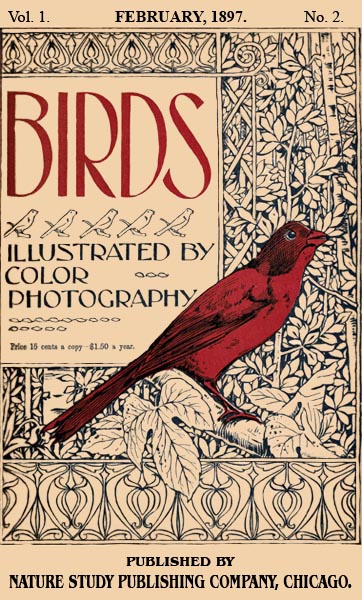
Birds Illustrated by Color Photograhy Vol 1 February 1897 No 2 - Cover

Birds Illustrated by Color Photograhy Vol 1 February 1897 No 2 – Cover

Birds Illustrated by Color Photography – Revisited – Introduction

The above article is the first article in the monthly serial for February 1897 “designed to promote Knowledge of Bird-Live.” These include Color Photography, as they call them, today they are drawings. There are at least three Volumes that have been digitized by Project Gutenberg.

To see the whole series of – Birds Illustrated by Color Photography – Revisited

*

(Information from Wikipedia and other internet sources)

Next Article – Little Boy Blue – The Blue Bird

Previous Article – Blue Mountain Lory (Rainbow Lorikeet)

Wordless Birds

Links:

Cardinalidae – Grosbeaks, Saltators & Allies

Northern Cardinal (Wikipedia)

*

Birds Vol 1 #2 – The Red-Wing Black Bird

Red-winged Blackbird (Agelaius phoeniceus) - Birds Illustrated

Red-winged Blackbird (Agelaius phoeniceus) – Birds Illustrated

Birds Illustrated by Color Photography – Revisited

Vol 1. February, 1897 No. 2

*

THE RED WING BLACK BIRD – THE BIRD OF SOCIETY

THE BLACKBIRD.

“I could not think so plain a bird
Could sing so fine a song.”


One on another against the wall
Pile up the books—I am done with them all;
I shall be wise, if I ever am wise,
Out of my own ears, and of my own eyes.

One day of the woods and their balmy light—
One hour on the top of a breezy hill,
There in the sassafras all out of sight
The Blackbird is splitting his slender bill
For the ease of his heart:
Do you think if he said
“I will sing like this bird with the mud colored back
And the two little spots of gold over his eyes,
Or like to this shy little creature that flies
So low to the ground, with the amethyst rings
About her small throat—all alive when she sings
With a glitter of shivering green—for the rest,
Gray shading to gray, with the sheen of her breast
Half rose and half fawn—
Or like this one so proud,
That flutters so restless, and cries out so loud,
With stiff horny beak and a top-knotted head,
And a lining of scarlet laid under his wings—”
Do you think, if he said, “I’m ashamed to be black!”
That he could have shaken the sassafras-tree
As he does with the song he was born to? not he!
—Alice Cary.


“Do you ne’er think what wondrous beings these?
Do you ne’er think who made them—who taught
The dialect they speak, where melodies
Alone are the interpreters of thought?
Whose household words are songs in many keys,
Sweeter than instrument of man ere caught!
Whose habitation in the tree-tops even
Are half-way houses on the road to heaven!

* * * * * * *

“You call them thieves or pillagers; but know,
They are the winged wardens of your farms,
Who from the cornfields drive the insidious foe,
And from your harvest keep a hundred harms;
Even the blackest of them all, the crow,
Renders good service as your man-at-arms,
Crushing the beetle in his coat of mail,
And crying havoc on the slug and snail.”
—From “The Birds of Killingworth.”


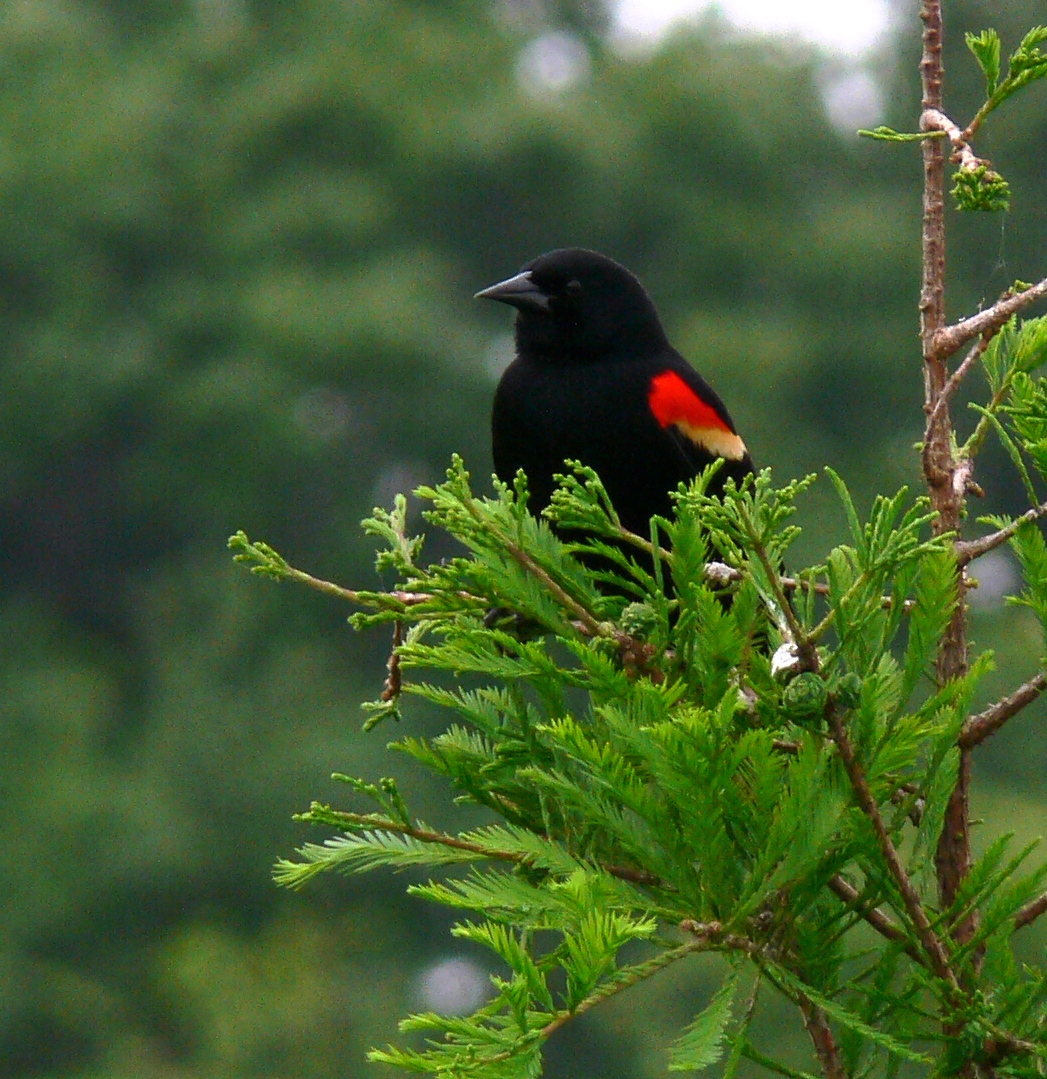
Red-winged Blackbird at S. Lake Howard Nature Pk. by Lee

Red-winged Blackbird at S. Lake Howard Nature Pk. by Lee

*

The blackbirds make the maples ring
With social cheer and jubilee;
The redwing flutes his o-ka-lee.—Emerson.

imgtHE much abused and persecuted Red Wing Black Bird is found throughout North America, from the Atlantic to the Pacific; and it breeds more or less abundantly wherever found. In New England it is generally migratory, though instances are on record where a few have been known to remain throughout the winter in Massachusetts. Passing, in January, through the lower counties of Virginia, one frequently witnesses the aerial evolutions of great numbers of these birds. Sometimes they appear as if driven about like an enormous black cloud carried before the wind, varying every moment in shape. Sometimes they rise suddenly from the fields with a noise like thunder, while the glittering of innumerable wings of the brightest vermillion, amid the black cloud, occasion a very striking effect. At times the whole congregated multitude will suddenly alight in some detached grove and commence one general concert, that can plainly be distinguished at the distance of more than two miles. With the Redwings the whole winter season seems one continued carnival. They find abundant food in the old fields of rice, buckwheat and grain, and much of their time is spent in aerial movements, or in grand vocal performances.

The Redwings, for their nest, always select either the borders of streams or low marshy situations, amongst thick bunches of reeds. One nest was found built on a slender sapling at the distance of fourteen feet from the ground. The nest was pensile, like that of the Baltimore Oriole.

They have from one to three or more broods in a season, according to locality.

In the grain growing states they gather in immense swarms and commit havoc, and although they are shot in great numbers, and though their ranks are thinned by the attacks of hawks, it seems to have but little effect upon the survivors.

On the other hand, these Black Birds more than compensate the farmer for their mischief by the benefit they confer in the destruction of grub worms, caterpillars, and various kinds of larvae, the secret and deadly enemies of vegetation. It has been estimated the number of insects destroyed by these birds in a single season, in the United States, to be twelve thousand millions.

The eggs average about an inch in length. They are oval in shape, have a light bluish ground, and are marbled, lined and blotched with markings of light and dark purple and black.


BLACKBIRD.

’Tis a woodland enchanted!
By no sadder spirit
Than blackbirds and thrushes,
That whistle to cheer it
All day in the bushes,
This woodland is haunted;
And in a small clearing,
Beyond sight or hearing
Of human annoyance,
The little fount gushes.—Lowell.


THE BIRD OF SOCIETY.

The blackbird loves to be one of a great flock. He talks, sings or scolds from morning until night. He cannot keep still. He will only stay alone with his family a few months in the summer. That is the reason he is called the “Bird of Society.” When he is merry, he gaily sings, “Conk-quer-ree.” When he is angry or frightened he screams, “Chock! Chock!” When he is flying or bathing he gives a sweet note which sounds like ee-u-u. He can chirp—chick, check, chuck, to his little ones as softly as any other bird. But only his best friends ever hear his sweetest tones, for the Blackbirds do not know how to be polite. They all talk at once. That is why most people think they only scream and chatter. Did you ever hear the blackbirds in the cornfields? If the farmers thought about it perhaps they would feel that part of every corn crop belongs to the Blackbirds. When the corn is young, the farmer cannot see the grubs which are eating the young plants. The Blackbirds can. They feed them to their babies—many thousands in a day. That is the way the crops are saved for the farmer. But he never thinks of that. Later when the Blackbirds come for their share of the corn the farmer says, “No, they shall not have my corn. I must stop that quickly.” Perhaps the Blackbirds said the same thing to the grubs in the spring. It is hard to have justice for everyone.

In April the Blackbird and his mate leave the noisy company. They seek a cosy home near the water where they can be quiet until August. They usually choose a swampy place among low shrubs and rushes. Here in the deep nest of coarse grass, moss and mud the mother bird lays her five eggs. They are very pretty—light blue with purple and black markings. Their friends say this is the best time to watch the blackbirds. In the flock they are all so much alike we cannot tell one from another. You would like to hear of some of the wise things Blackbirds do when they are tame.

One friend of the birds turned her home into a great open bird cage. Her chair was the favorite perch of her birds. She never kept them one minute longer than they wanted to stay. Yet her home was always full. This was Olive Thorne Miller. If you care to, you might ask mother to get “Bird Ways” and read you what she says about this “bird of society” and the other birds of this book.


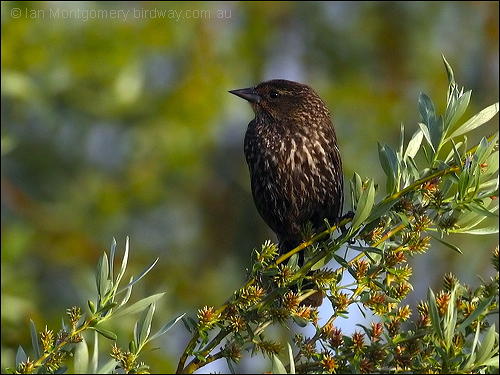
Red-winged Blackbird (Agelaius phoeniceus) female by Ian

Red-winged Blackbird (Agelaius phoeniceus) female by Ian

Lee’s Addition:

I combined the Blackbird and the Red Wing Blackbird together. The poems and some of the writing, combined them and only one photo was provided.

Today this bird is called the Red-winged Blackbird and they are in the Icteridae – Oropendolas, Orioles & Blackbirds Family, which has 108 species. We are fortunate here because we see Red-winged Blackbirds quite often and even have them stop by the feeders in our yard. I can always tell when they are near because of the male’s song. It is a loud, gurgling “conk-a-reeeee” or “o-ka-leeeee” sound.

And to every beast of the earth and to every bird of the heavens and to everything that creeps on the earth, everything that has the breath of life, I have given every green plant for food.” And it was so. And God saw everything that he had made, and behold, it was very good. And there was evening and there was morning, the sixth day. (Genesis 1:30-31 ESV)

*

Birds Illustrated by Color Photograhy Vol 1 February 1897 No 2 - Cover

Birds Illustrated by Color Photograhy Vol 1 February 1897 No 2 – Cover

Birds Illustrated by Color Photography – Revisited – Introduction

The above article is the first article in the monthly serial for February 1897 “designed to promote Knowledge of Bird-Live.” These include Color Photography, as they call them, today they are drawings. There are at least three Volumes that have been digitized by Project Gutenberg.

To see the whole series of – Birds Illustrated by Color Photography – Revisited

*

(Information from Wikipedia and other internet sources)

Next Article – Blue Mountain Lory

Previous Article –The Kingfisher – The Lone Fisherman

Wordless Birds

Links:

Red-winged Blackbirds

*

Birds Vol 1 #2 – The Kingfisher – The Lone Fisherman

Kingfisher – Birds Illustrated by Photography 1897

Birds Illustrated by Color Photography – Revisited

Vol 1. February, 1897 No. 2

*

THE KINGFISHER.

Dear Children:

I shall soon arrive from the south. I hear that all the birds are going to tell stories to the boys and girls.

I have never talked much with children myself for I never really cared for people. They used to say that the dead body of a Kingfisher kept them safe in war and they said also that it protected them in lightning.

Even now in some places in France they call us the moth birds, for they believe that our bodies will keep away moths from woolen cloth.

I wish that people would not believe such things about us. Perhaps you cannot understand me when I talk. You may think that you hear only a child’s rattle.

Listen again! It is I, the Kingfisher. That sound is my way of talking. I live in the deep woods. I own a beautiful stream and a clear, cool lake. Oh, the little fish in that lake are good enough for a king to eat! I know, for I am a king.

You may see me or some of my mates near the lake any pleasant day. People used to say that we always brought pleasant weather. That is a joke. It is the pleasant weather that always brings us from our homes. When it storms or rains we cannot see the fish in the lake. Then we may as well stay in our nests.

My home once belonged to a water rat. He dug the fine hall in the gravel bank in my stream. It is nearly six feet long. The end of it is just the kind of a place for a nest. It is warm, dry and dark. In June my wife and I will settle down in it. By that time we shall have the nest well lined with fish bones. We shall put in some dried grass too. The fish bones make a fine lining for a nest. You know we swallow the fish whole, but we save all the bones for our nest.

I shall help my wife hatch her five white eggs and shall try in every way to make my family safe.

Please tell the people not to believe those strange things about me and you will greatly oblige,
A neighbor,
The Kingfisher.


THE KINGFISHER.

The Lone Fisherman.

imgtHE American species belongs to the true group of Kingfishers. It occupies the whole continent of North America and although migrating in the north, he is a constant resident of our southern states. The belted Kingfisher is the only variety found along the inland streams of the United States. Audubon declares that “belted” should apply only to the female, however.

Like most birds of brilliant plumage, the Kingfisher prefers a quiet and secluded haunt. It loves the little trout streams, with wooded and precipitous banks, the still ponds and small lakes, ornamental waters in parks, where it is not molested, and the sides of sluggish rivers, drains and mill-ponds.

Here in such a haunt the bird often flits past like an indistinct gleam of bluish light. Fortune may sometimes favor the observer and the bird may alight on some twig over the stream, its weight causing it to sway gently to and fro. It eagerly scans the shoal of young trout sporting in the pool below, when suddenly it drops down into the water, and, almost before the observer is aware of the fact, is back again to its perch with a struggling fish in its beak. A few blows on the branch and its prey is ready for the dexterous movement of the bill, which places it in a position for swallowing. Sometimes the captured fish is adroitly jerked into the air and caught as it falls.

Fish is the principal food of the Kingfisher; but it also eats various kinds of insects, shrimps, and even small crabs. It rears its young in a hole, which is made in the banks of the stream it frequents. It is a slatternly bird, fouls its own nest and its peerless eggs. The nesting hole is bored rather slowly, and takes from one to two weeks to complete. Six or eight white glossy eggs are laid, sometimes on the bare soil, but often on the fish bones which, being indigestible, are thrown up by the bird in pellets.

The Kingfisher has a crest of feathers on the top of his head, which he raises and lowers, especially when trying to drive intruders away from his nest.

The plumage is compact and oily, making it almost impervious to water. The flesh is fishy and disagreeable to the taste, but the eggs are said to be good eating. The wings are long and pointed and the bill longer than the head. The voice is harsh and monotonous.

It is said that few birds are connected with more fables than the Kingfisher. The superstition that a dead Kingfisher when suspended by the throat, would turn its beak to that particular point of the compass from which the wind blew, is now dead. It was also supposed to possess many astonishing virtues, as that its dried body would avert thunderbolts, and if kept in a wardrobe would preserve from moths the woolen stuffs and the like contained in it.

Under the name of “halcyon,” it was fabled by the ancients to build its nest on the surface of the sea, and to have the power of calming the troubled waves during its period of incubation; hence the phrase “halcyon days.”

A pair of Kingfishers have had their residence in a bank at the south end of Washington Park, Chicago, for at least three seasons past. We have watched the Kingfisher from secluded spots on Long Island ponds and tidal streams, where his peculiar laughing note is the same as that which greets the ear of the fisherman on far inland streams on still summer days.

Belted Kingfisher (Megaceryle alcyon) by Daves BirdingPix


Lee’s Addition:

Another of my favorite birds. I think most of them are, but the Belted Kingfisher is a real challenge to photograph. They must sense that your camera is on. Dan says that many photographers call it the “Devil Bird” because it is so hard to photo. See http://jimt.zenfolio.com/p703966915 by James Thiel and another photographer at http://www.flickr.com/photos/johnklos/3049270990/.

I think of them as having a short squatty neck and a long beak. Actually the Laughing Kookaburra is in the Kingfisher family, the Kingfishers – Alcedinidae Family. The article mentioned that the Belted Kingfisher is the only one in the U. S., but there are actually two more; the Ringed and the Green Kingfishers that are found in south Texas. We have seen all three of them.

The Kingfisher – Alcedinidae family has a total of 95 members. Many of them are very colorful and again show the Lord’s Creative Hand at work. He has provided them with just the right kind of beak to snatch their meals with and even given them the ability to see their prey in the water. The distortion water gives is compensated for them.

And Jesus, walking by the sea of Galilee, saw two brethren, Simon called Peter, and Andrew his brother, casting a net into the sea: for they were fishers. And he saith unto them, Follow me, and I will make you fishers of men. (Matthew 4:18-19 KJV)

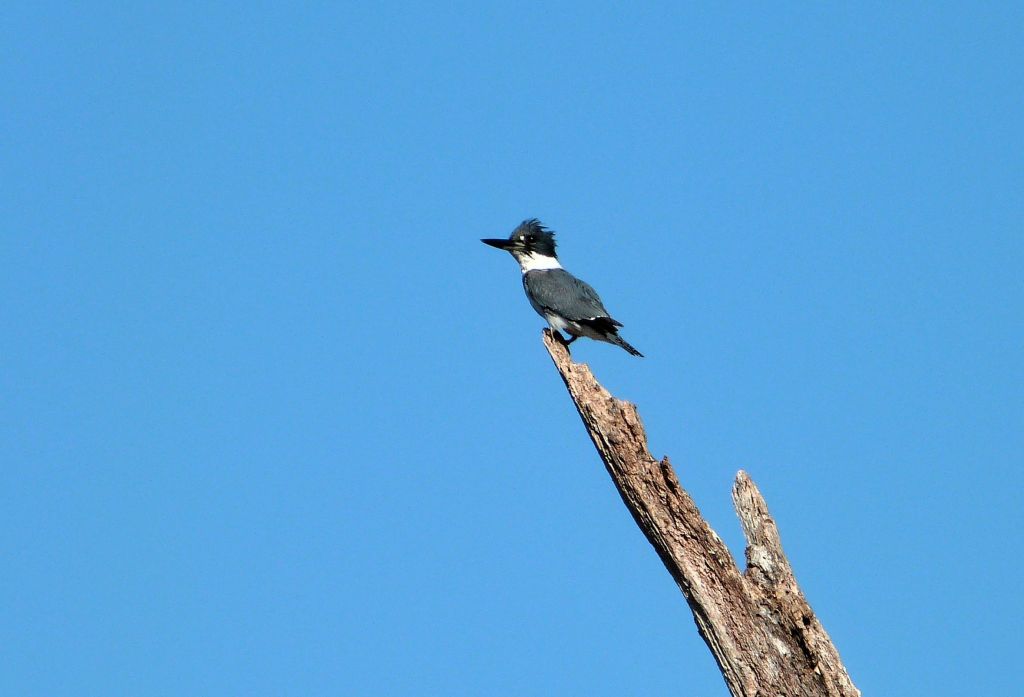
Belted Kingfisher (Megaceryle alcyon) by Lee Circle B

Belted Kingfisher (Megaceryle alcyon) by Lee Circle B

In January, I was able for the first time to get some photos of the Belted Kingfisher. Two of them were showing off and forgot someone was watching. They can hover over the water, keeping their head steady and watch for their prey. It is amazing to watch them do that. (Birdwatching Adventure – Circle B Bar Reserve – 1/16/12)

Birds Illustrated by Color Photograhy Vol 1 February 1897 No 2 - Cover

Birds Illustrated by Color Photograhy Vol 1 February 1897 No 2 – Cover

Birds Illustrated by Color Photography – Revisited – Introduction

The above article is the first article in the monthly serial for February 1897 “designed to promote Knowledge of Bird-Live.” These include Color Photography, as they call them, today they are drawings. There are at least three Volumes that have been digitized by Project Gutenberg.

To see the whole series of – Birds Illustrated by Color Photography – Revisited

*

(Information from Wikipedia and other internet sources)

Next Article – The Red Wing Black Bird – The Bird Of Society

Previous Article – The American Robin – The Bird Of The Morning

Wordless Birds

Links:


Updating the Slideshows – Report # 2

As previously reported, the Slide.Com is closing down as of March 6th. Unfortunately I have used a lot of the Slideshows from them on this site. I am busy kicking up dust behind the scenes and decided to share links to the articles as I get some of them finished. At least you will know I have not been “goofing off.” Besides that, many of these were produced sometime back and deserve a reminder of our many birds the Lord has created for His Glory and pleasure. Trust you like the new Slideshows that are being installed. They are taking a great effort on my part to learn the new procedure, but after quite a few mistakes, maybe I can get them out quicker now.

The works of the LORD are great, sought out of all them that have pleasure therein.(Psalms 111:2 KJV)

Having made known unto us the mystery of his will, according to his good pleasure which he hath purposed in himself: (Ephesians 1:9 KJV)

For it is God which worketh in you both to will and to do of his good pleasure. (Philippians 2:13 KJV)

Thou wilt shew me the path of life: in thy presence is fulness of joy; at thy right hand there are pleasures for evermore. (Psalms 16:11 KJV)

Thanks for your patience and your visits to this website. While I am working away, I am enjoying seeing articles that I had forgotten about.

Completed:

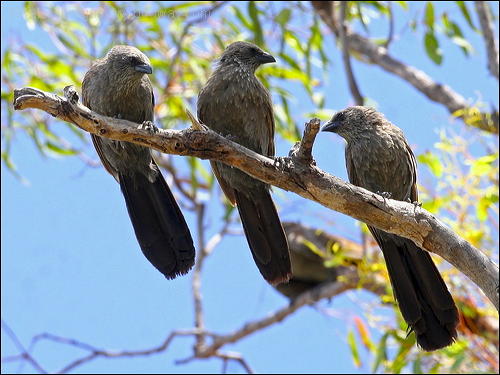
Apostlebird (Struthidea cinerea) by Ian

Apostlebird (Struthidea cinerea) by Ian

Birds of the Bible – Names of Birds

*

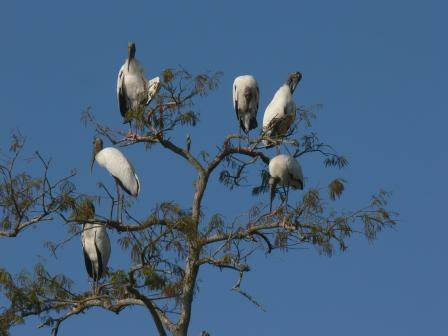
Wood Storks in Top of Tree by Lee

Birdwatching at Circle B Bar Reserve – October

Red-legged Seriema (Cariama cristata) by Lee at Lowry Park Zoo

Red-legged Seriema (Cariama cristata) by Lee

Birdwatching at the Lowry Park Zoo 2/15/11

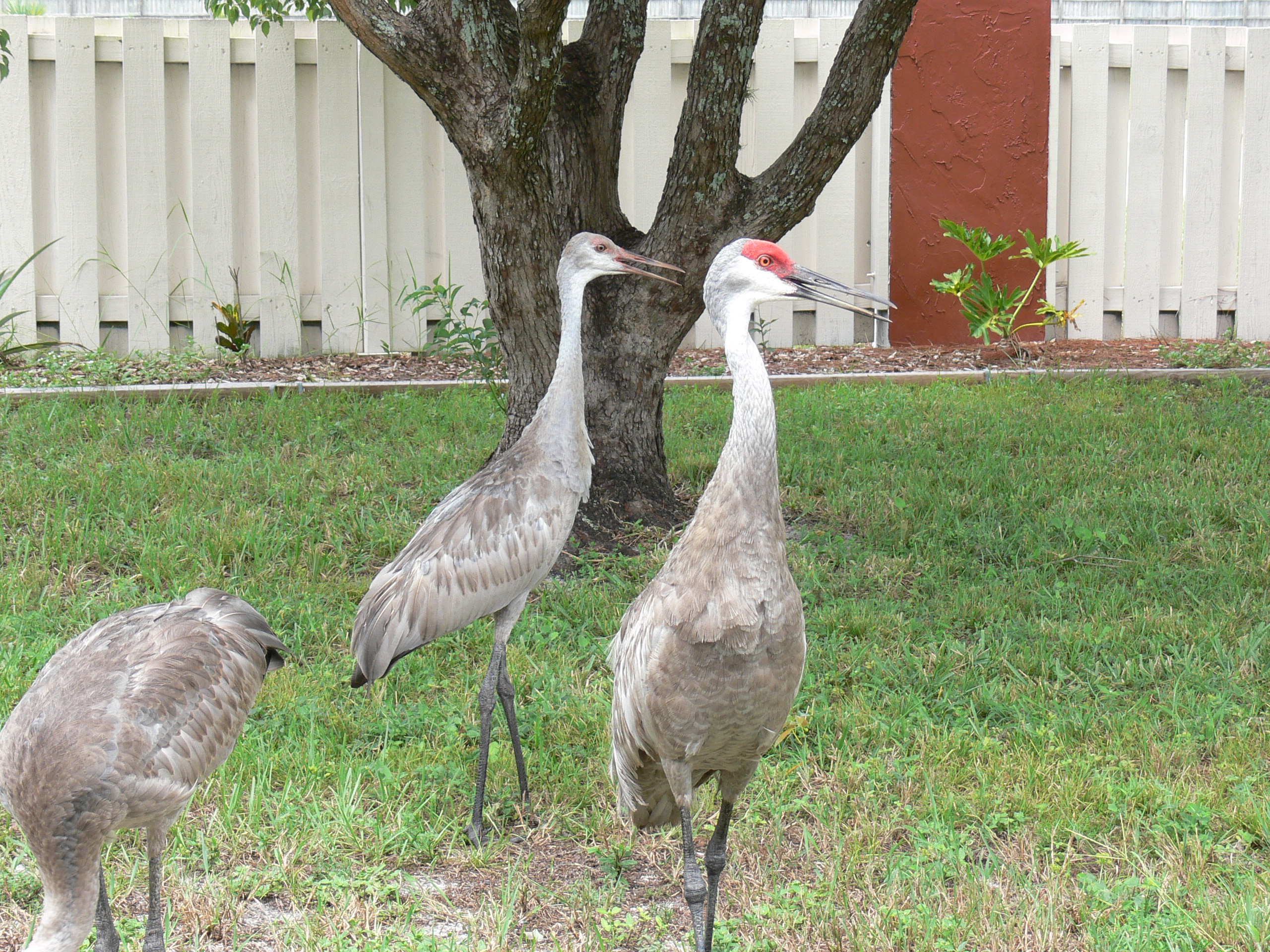
Sandhill Cranes - Adult and Juvenile in yard 8/27/10

Sandhill Crane Juveniles in Backyard

Sandhill Crane "colts"

Sandhill Crane "colts"

Sandhill Crane “Colt” Birdwatching

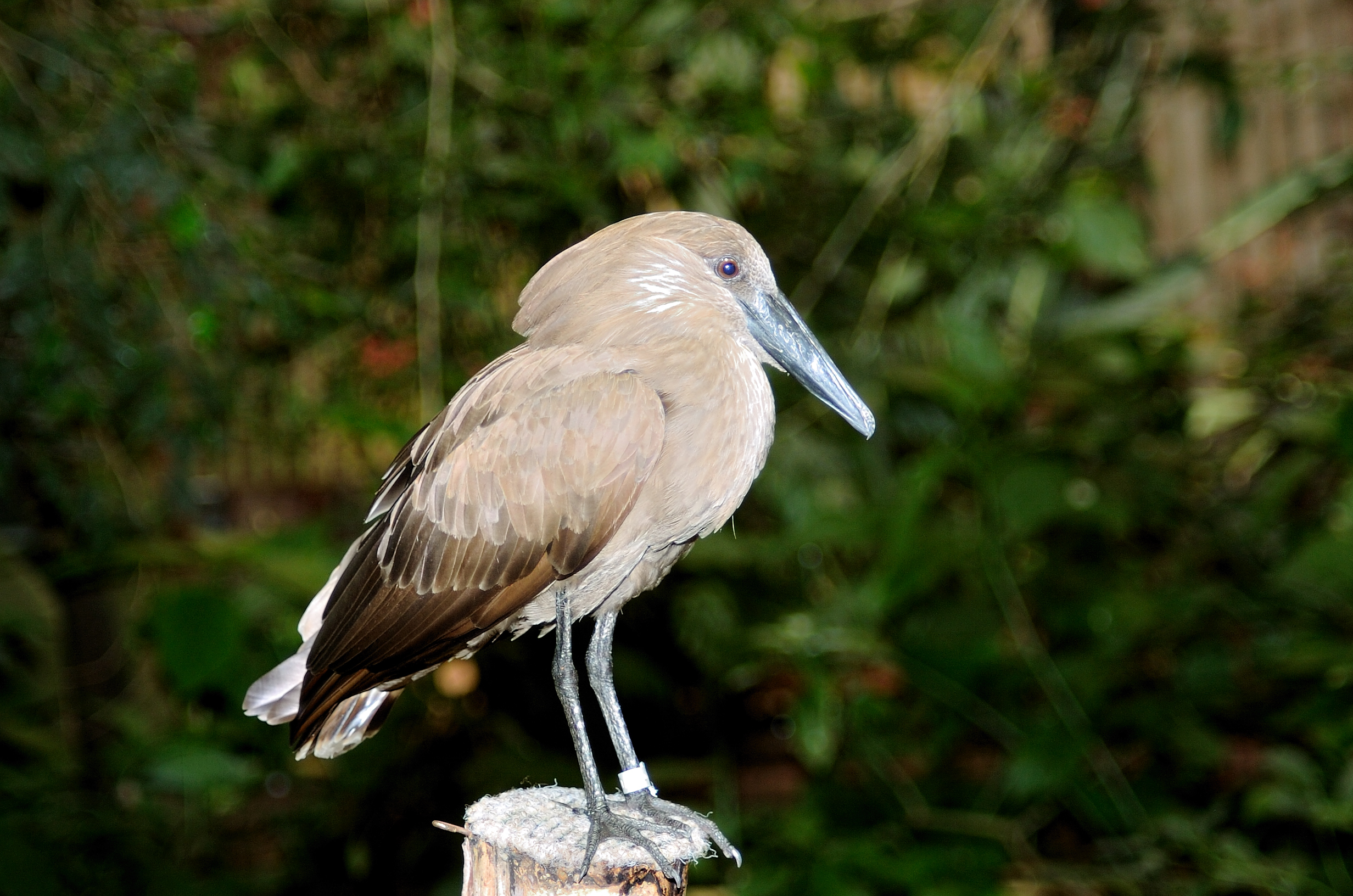
Hamerkop (Scopus umbretta) at NA by Dan

Hamerkop (Scopus umbretta) at National Aviary by Dan

Birds of the Bible – Tamed

*

Ian’s Bird of the Week – Auckland and Campbell Islands Teal

Auckland Teal (Anas aucklandica) Male by Ian 1

Auckland Teal (Anas aucklandica) Male by Ian 1

Ian’s Bird of the Week  – Auckland and Campbell Islands Teal

by Ian Montgomery

Newsletter ~ 2/16/12

The almost predator-free nature of the Sub-Antarctic Islands before the Europeans and their pests arrived is well illustrated by the existence of two closely-related flightless ducks on the Auckland and Campbell Islands. The first photo shows a male Auckland Islands Teal on Enderby Island – now their main stronghold – in the Auckland Islands group.

You can see how short the wings are, extending only two thirds of the way along the body instead of to the base of the tail as in their flying relatives the Chestnut Teal of Australia and the Brown Teal of New Zealand. This male is in breeding plumage and has greenish iridescence on the head and subtly beautiful barring on the flanks.

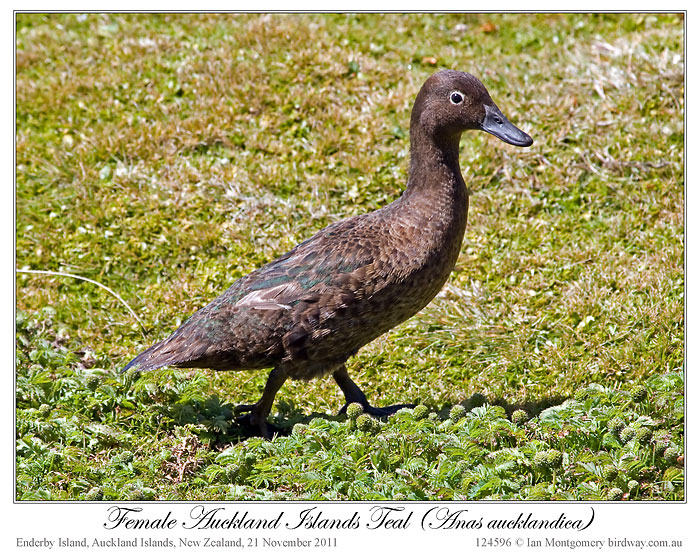
Auckland Teal (Anas aucklandica) Female by Ian 2

Auckland Teal (Anas aucklandica) Female by Ian 2

Females (and juveniles and eclipse-plumaged males) have more subdued colours and lack the green sheen on the head. The white eye-ring of both sexes is shared with the Brown Teal of New Zealand but not the Chestnut Teal of Australia. The third photo shows another female going for a stroll. Note the slightly drooping tail and upright stance, both characteristic of the two flightless species.

Auckland Teal (Anas aucklandica) Female by Ian 3

Auckland Teal (Anas aucklandica) Female by Ian 3

As you can probably judge from the photos, the teal were very confiding showing no alarm when closely approached. I had to retreat from the male to get it in focus – the lens I was using has a minimum focus distance of 1.8m/5.9ft, not usually an issue with wild birds! The first two photos were taken on one of the few bodies of freshwater on Enderby Island. Their more usual habitat is along the coast. We saw some in sheltered pools on a rock platform and they feed mainly on invertebrates and algae found in both attached and beach-stranded seaweed.

Campbell Teal (Anas nesiotis) by Ian 4

Campbell Teal (Anas nesiotis) by Ian 4

The fourth photo shows a vocal male Campbell Islands Teal on salt water near the landing wharf of that island. It’s very similar in appearance to the Auckland Islands Teal and both species were until recently treated as races of the flight-worthy Brown Teal of mainland New Zealand. Recent studies suggest that the the Brown Teal and Sub-Antarctic Teals were the product of separate colonisation events by the Australian Chestnut Teal, which occurs in New Zealand only as a rare vagrant.

The Sub-Antarctic Teals have suffered badly from the introduction of mammalian pests, particularly pigs, cats and rats (mice seem to affect them less). The Auckland Islands Teal is extinct on the main Auckland Island, but survives on six neighbouring island pig-less and cat-less island. The population is estimated at 600-2,000 individuals, appears stable, is classified as Vulnerable, and the New Zealand government is planning to eliminate pigs and cats from Auckland Island which will permit reintroduction of the Teal.

The Campbell Islands Teal was though to be extinct but a population of about 20 were rediscovered on nearby Dent Island in 1975, raising its status to Critically Endangered and the world’s rarest duck. A captive breeding program followed, leading to the establishment of a feral population on predator-free Codfish Island near Stewart Island in 1999 and 2000. Following the elimination of rats on Campbell Island, 50 birds were released there in 2005 and 55 in 2006. Successful breeding occurred in 2006. The total population, captive and wild, is now thought to be over 200 and its status has been downgraded to merely Endangered.

You can read the full story here http://terranature.org/tealcampbell_island.htm . It’s great to read a successful conservation story at a time of increasingly frequent bad news about wild populations.

Links to Ian’s Photos:

Aukland Islands Teal
Campbell Islands Teal
Chestnut Teal

Best wishes
Ian

Ian Montgomery, Birdway Pty Ltd,
454 Forestry Road, Bluewater, Qld 4818
Phone: 0411 602 737 +61-411 602 737
Preferred Email: ian@birdway.com.au
Website: http://birdway.com.au


Lee’s Addition:

That last Teal looks happy and “bushy eyed.” They must havee happy ducks and teals down there. Must be that lack of pigs and cats!

The Teals belong to the Anatidae – Ducks, Geese & Swans Family. There are 165 species in 48 genus including the Teals, Ducks, Shovelers, Wigeons, Pintails, Swans, Geese,  Pochards, Scaups, Eiders, Mergansers and all their allies. “Anatidae is the biological family of birds that includes ducksgeese and swans. The family has a cosmopolitan distribution, occurring on all the world’s continents except Antarctica and on most of the world’s islands and island groups. These are birds that can swim, float on the water surface, and in some cases dive in at least shallow water.” (Wikipedia)

And God blessed them, saying, “Be fruitful and multiply, and fill the waters in the seas, and let birds multiply on the earth.” (Genesis 1:22 NKJV)

*

Updating the Slideshows – Report # 1

As previously reported, the Slide.Com is closing down as of March 6th. Unfortunately I have used a lot of the Slideshows from them on this site. I am busy kicking up dust behind the scenes and decided to share links to the articles as I get some of them finished. At least you will know I have not been “goofing off.” Besides that, many of these were produced sometime back and deserve a reminder of our many birds the Lord has created for His Glory and pleasure. Trust you like the new Slideshows that are being installed. They are taking a great effort on my part to learn the new procedure, but after quite a few mistakes, maybe I can get them out quicker now.

The works of the LORD are great, sought out of all them that have pleasure therein.(Psalms 111:2 KJV) Having made known unto us the mystery of his will, according to his good pleasure which he hath purposed in himself: (Ephesians 1:9 KJV) For it is God which worketh in you both to will and to do of his good pleasure. (Philippians 2:13 KJV) Thou wilt shew me the path of life: in thy presence is fulness of joy; at thy right hand there are pleasures for evermore. (Psalms 16:11 KJV)

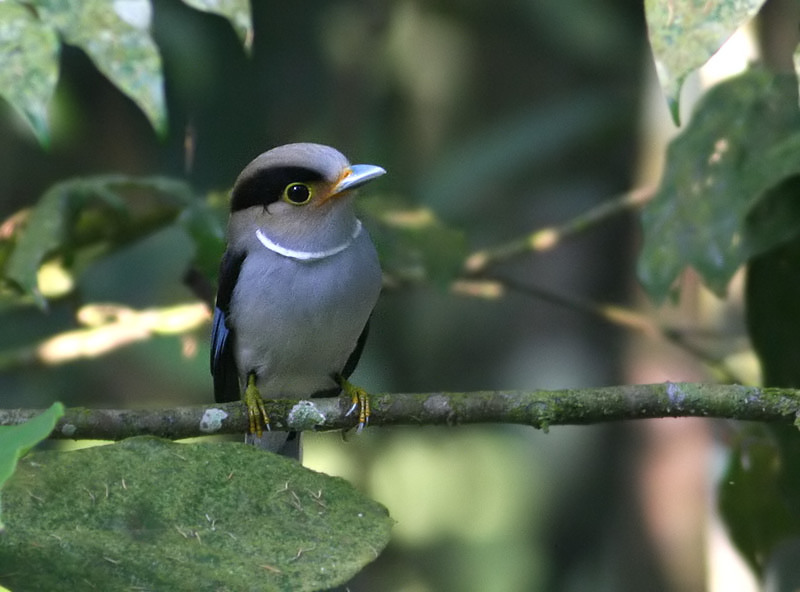
Thanks for your patience and your visits to this website. Completed: One of my favorite birds the Broadbill. Never heard of it until I started doing the Birds of the World. Aren’t they adorable?

Silver-breasted Broadbill (Serilophus lunatus) by Peter Ericsson

Silver-breasted Broadbill (Serilophus lunatus) by Peter Ericsson

Formed By Him – Broadbills

*

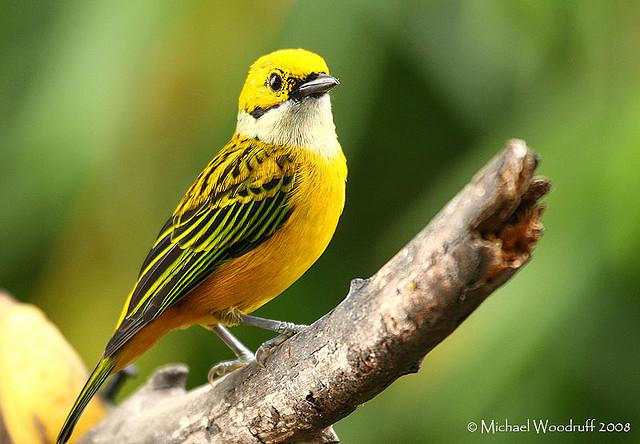
Silver-throated Tanager (Tangara icterocephala) by Michael Woodruff

Silver-throated Tanager (Tangara icterocephala) by Michael Woodruff

Formed by Him – Silver Birds

*

Copper-rumped Hummingbird (Amazilia tobaci) by Ian

Copper-rumped Hummingbird (Amazilia tobaci) by Ian

Formed By Him – Copper Birds

*

Myrtle Warbler (Setophaga coronata) Brevard Zoo by Lee

Myrtle Warbler (Setophaga coronata) Brevard Zoo by Lee

Yellow-rumped Warbler Split

*

Silver-eared Laughingthrush (Trochalopteron melanostigma) by Peter Ericsson

Birds of the Bible – Pleasant to the Sight

*

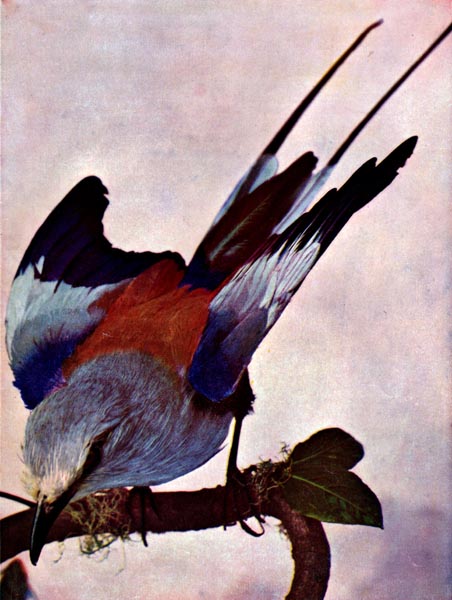
Birds Vol 1 #2 – The Swallow-tailed Indian Roller (Lilac-breasted, Racket-tailed or Abyssinian)

Swallow-tailed Indian Roller for Birds Illustrated by Color Photography - Vol 1-2

Swallow-tailed Indian Roller for Birds Illustrated by Color Photography – Vol 1-2

Birds Illustrated by Color Photography – Revisited

Vol 1. February, 1897 No. 2

*

THE SWALLOW-TAILED INDIAN ROLLER.

imgsWALLOW-TAILED Indian Rollers are natives of Northeastern Africa and Senegambia, and also the interior of the Niger district. The bird is so called from its way of occasionally rolling or turning over in its flight, somewhat after the fashion of a tumbler pigeon. A traveller in describing the habits of the Roller family, says:

“On the 12th of April I reached Jericho alone, and remained there in solitude for several days, during which time I had many opportunities of observing the grotesque habits of the Roller. For several successive evenings, great flocks of Rollers mustered shortly before sunset on some dona trees near the fountain, with all the noise but without the decorum of Rooks. After a volley of discordant screams, from the sound of which it derives its Arabic name of “schurkrak,” a few birds would start from their perches and commence overhead a series of somersaults. In a moment or two they would be followed by the whole flock, and these gambols would be repeated for a dozen times or more.

“Everywhere it takes its perch on some conspicuous branch or on the top of a rock, where it can see and be seen. The bare tops of the fig trees, before they put forth their leaves, are in the cultivated terraces, a particularly favorite resort. In the barren Ghor I have often watched it perched unconcernedly on a knot of gravel or marl in the plain, watching apparently for the emergence of beetles from the sand. Elsewhere I have not seen it settle on the ground.

“Like Europeans in the East, it can make itself happy without chairs and tables in the desert, but prefers a comfortable easy chair when it is to be found. Its nest I have seen in ruins, in holes in rocks, in burrows, in steep sand cliffs, but far more generally in hollow trees. The colony in the Wady Kelt used burrows excavated by themselves, and many a hole did they relinquish, owing to the difficulty of working it. So cunningly were the nests placed under a crumbling, treacherous ledge, overhanging a chasm of perhaps one or two hundred feet, that we were completely foiled in our siege. We obtained a nest of six eggs, quite fresh, in a hollow tree in Bashan, near Gadara, on the 6th of May.

“The total length of the Roller is about twelve inches. The Swallow-tailed Indian Roller, of which we present a specimen, differs from the Europeon Roller only in having the outer tail feathers elongated to an extent of several inches.”


Lee’s Addition:

Then God said, “Let the waters abound with an abundance of living creatures, and let birds fly above the earth across the face of the firmament of the heavens.” (Genesis 1:20 NKJV)

Currently there is not a bird named the Swallow-tailed Indian Roller. Looking at the “photograph,” it appears to be either the Lilac-breasted, Racket-tailed or Abyssinian Roller. Those three have the long tails, “swallow-tail” and they all have black beaks which is typical of the Coracias Genus of the Rollers. The Coraciidae – Rollers family has two Genus, the Coracias and the Eurystomus, which has various colored beaks. None of the three exactly match that drawing, but they are close and in the same family.

The rollers are an Old World family, Coraciidae, of near passerine birds. The group gets its name from the aerial acrobatics some of these birds perform during courtship or territorial flights. Rollers resemble crows in size and build, and share the colourful appearance of kingfishers and bee-eaters, blues and pinkish or cinnamon browns predominating. The two inner front toes are connected, but not the outer one.

They are mainly insect eaters, with Eurystomus species taking their prey on the wing, and those of the genus Coracias diving from a perch to catch food items from on the ground, like giant shrikes.

Lilac-breasted Roller (Coracias caudatus) by BirdingPix

Lilac-breasted Roller (Coracias caudatus) by BirdingPix

According to Wikipedia, “the Lilac-breasted Roller (Coracias caudatus) is a member of the roller family of birds. It is widely distributed in sub-Saharan Africa and the southern Arabian Peninsula, preferring open woodland and savanna; it is largely absent from treeless places. Usually found alone or in pairs, it perches conspicuously at the tops of trees, poles or other high vantage points from where it can spot insects, lizards, scorpions, snails, small birds and rodents moving about at ground level. Nesting takes place in a natural hole in a tree where a clutch of 2–4 eggs is laid, and incubated by both parents, who are extremely aggressive in defence of their nest, taking on raptors and other birds. During the breeding season the male will rise to great heights, descending in swoops and dives, while uttering harsh, discordant cries. The sexes are alike in coloration. Juveniles do not have the long tail feathers that adults do. It is also the national bird of Botswana.”

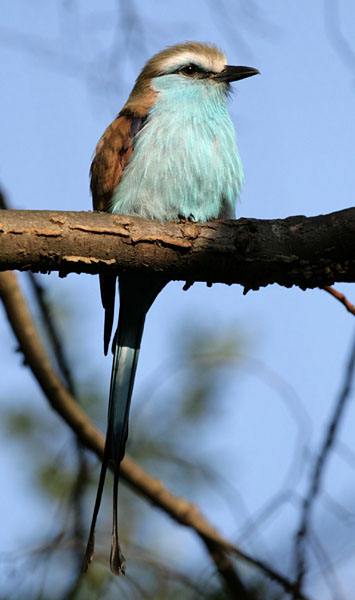
Racket-tailed Roller (Coracias spatulatus) ©WikiC

Racket-tailed Roller (Coracias spatulatus) ©WikiC

“The Racket-tailed Roller (Coracias spatulatus) is a species of bird in the Coraciidae family. It is found in Angola, Botswana, Democratic Republic of the Congo, Malawi, Mozambique, Namibia, South Africa, Swaziland, Tanzania, Zambia, and Zimbabwe.

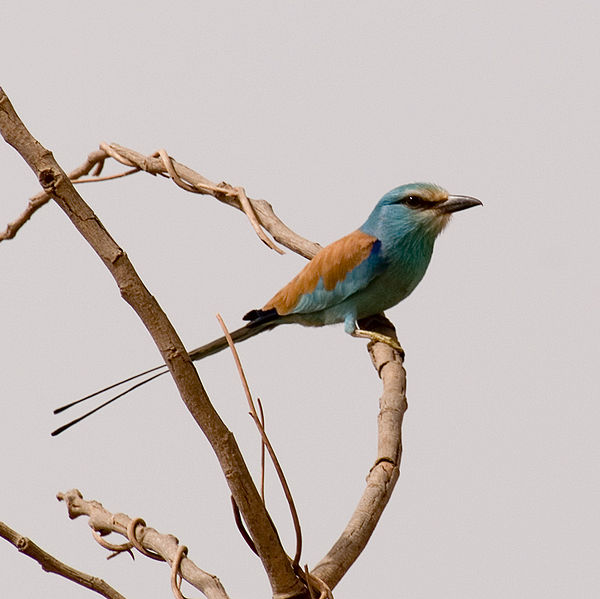
Abyssinian Roller (Coracias abyssinicus) ©WikiC

Abyssinian Roller (Coracias abyssinicus) ©WikiC

The Abyssinian RollerCoracias abyssinicus, is a member of the roller family of birds which breeds across tropical Africa in a belt south of the Sahara, known as the Sahel. It is resident in the southern part of its range, but northern breeding populations are short-distance migrants, moving further south after the wet season.

Abyssinian Roller is striking in its strong direct flight, with the brilliant blues of the wings contrasting with the brown back and the long tail streamers trailing behind.

This is a common bird of warm open country with some trees, and has adapted to farmland and human habitation. These rollers often perch prominently on trees, posts or overhead wires, like giant shrikes, whilst watching for the large insects and rodents on which they feed. They will dash into the smoke of a forest fire for disturbed invertebrates. They are fearless, and will dive and roll at humans and other intruders.

The display of this bird is a lapwing-like display, with the twists and turns that give this group its English name. It nests in a scantily lined hole in a tree or building, and lays 3-6 eggs.

The call of Abyssinian Roller is a harsh crow-like gak sound, or a screeched aaaargh.

Birds Illustrated by Color Photograhy Vol 1 February 1897 No 2 - Cover

Birds Illustrated by Color Photograhy Vol 1 February 1897 No 2 – Cover


Birds Illustrated by Color Photography – Revisited – Introduction

The above article is the first article in the monthly serial for February 1897 “designed to promote Knowledge of Bird-Live.” These include Color Photography, as they call them, today they are drawings. There are at least three Volumes that have been digitized by Project Gutenberg.

To see the whole series of – Birds Illustrated by Color Photography – Revisited

*

(Information from Wikipedia and other internet sources)

Next Article – The Red Headed Woodpecker and The Drummer Bird

Previous Article – The Blue Jay

Gospel Message

Links:

Wikipedia – Lilac-breasted RollerRacket-tailed Roller –Abyssinian Roller

They even had ads in the Birds Illustrated by Color Photography.

Singer Pianos Ad

Singer Pianos Ad

*

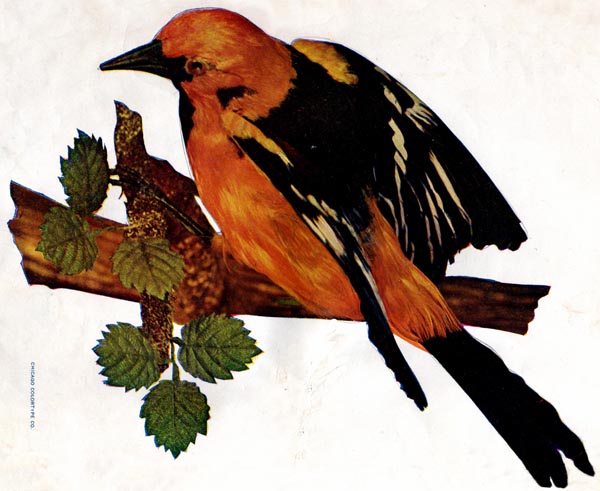
Birds Vol 1 #1 – The Golden Oriole (or Hooded Oriole)

Golden Oriole

Golden Oriole

Birds Illustrated by Color Photography – Revisited

Vol 1. January, 1897 No. 1

*

THE GOLDEN ORIOLE

imgw

E find the Golden Oriole in America only. According to Mr. Nuttall, it is migratory, appearing in considerable numbers in West Florida about the middle of March. It is a good songster, and in a state of captivity imitates various tunes.

This beautiful bird feeds on fruits and insects, and its nest is constructed of blades of grass, wool, hair, fine strings, and various vegetable fibers, which are so curiously interwoven as to confine and sustain each other. The nest is usually suspended from a forked and slender branch, in shape like a deep basin and generally lined with fine feathers.

“On arriving at their breeding locality they appear full of life and activity, darting incessantly through the lofty branches of the tallest trees, appearing and vanishing restlessly, flashing at intervals into sight from amidst the tender waving foliage, and seem like living gems intended to decorate the verdant garments of the fresh clad forest.”

It is said these birds are so attached to their young that the female has been taken and conveyed on her eggs, upon which with resolute and fatal instinct she remained faithfully sitting until she expired.

An Indiana gentleman relates the following story:

“When I was a boy living in the hilly country of Southern Indiana, I remember very vividly the nesting of a pair of fine Orioles. There stood in the barn yard a large and tall sugar tree with limbs within six or eight feet of the ground.

“At about thirty feet above the ground I discovered evidences of an Oriole’s nest. A few days later I noticed they had done considerably more work, and that they were using horse hair, wool and fine strings. This second visit seemed to create consternation in the minds of the birds, who made a great deal of noise, apparently trying to frighten me away. I went to the barn and got a bunch of horse hair and some wool, and hung it on limbs near the nest. Then climbing up higher, I concealed myself where I could watch the work. In less than five minutes they were using the materials and chatted with evident pleasure over the abundant supply at hand.

“They appeared to have some knowledge of spinning, as they would take a horse hair and seemingly wrap it with wool before placing it in position on the nest.

“I visited these birds almost daily, and shortly after the nest was completed I noticed five little speckled eggs in it. The female was so attached to the nest that I often rubbed her on the back and even lifted her to look at the eggs.”


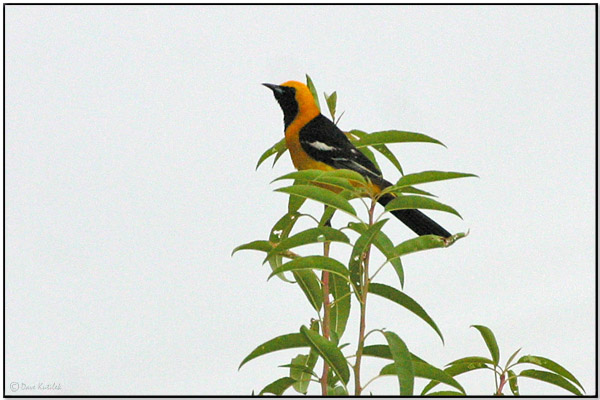
Hooded Oriole (Icterus cucullatus) by Daves BirdingPix

Hooded Oriole (Icterus cucullatus) by Daves BirdingPix


Lee’s Addition:

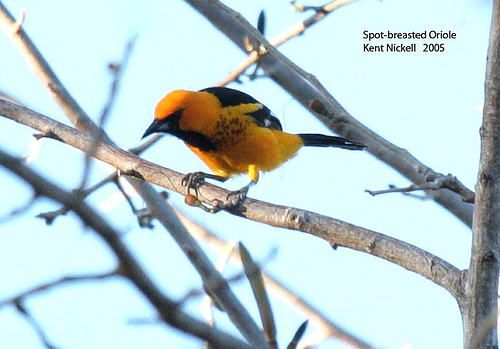
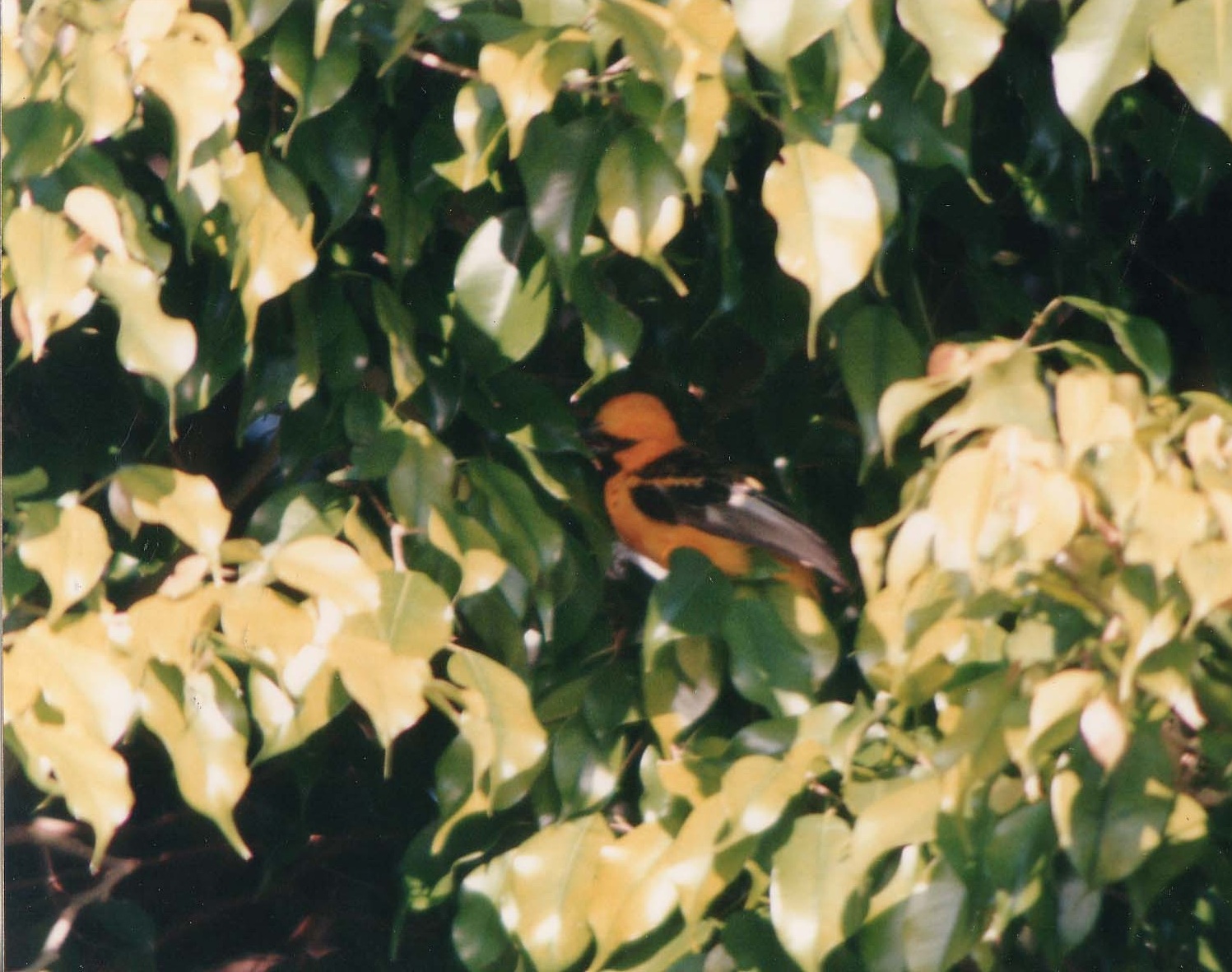
According to the article, the bird came here to Florida. Checking Thayer’s Birding Software and limiting it to Florida and Orioles, I think it must have been the Spot-breasted or the Hooded (but they don’t come to Florida, so it must be the Spot-breasted) Oriole as we call it today. The only “Golden Oriole” is the “Golden Oriole or European (or EurasianGolden Oriole (Oriolus oriolus) is the only member of the oriole family of passerine birds breeding in northern hemisphere temperate regions. It is a summer migrant in Europe and western Asia and spends the winter season in the tropics.” “The African Golden Oriole (Oriolus auratus) is a member of the oriole family of passerine birds which is a resident breeder in Africa south of the Sahara and the “Indian Golden Oriole (Oriolus kundoo)” of India. All three of those birds leave Florida and Indiana out of the picture.

The Orioles are actually found in two different families; the Icteridae – Oropendolas, Orioles, & Blackbirds Family (New World) and the Oriolidae – Figbirds, Orioles Family (Old World).

Spot-breasted Oriole (Icterus pectoralis) by Kent Nickell

Spot-breasted Oriole (Icterus pectoralis) by Kent Nickell

New World orioles, comprising the genus Icterus, are a group of birds in the blackbird family. They are not related to Old World orioles which are in the family Oriolidae, but are strikingly similar in size, diet, behaviour and in their strongly contrasting plumage, and are a good example the Lord’s Creative Hand. Because of similarities and being from the same kind, the two took the same vernacular name.

The males are typically black and yellow or orange, with white markings; the plumage of females and immature birds is duller. These birds go through one moult in a year. They are generally slender with long tails and a pointed bill. They mainly eat insects, often also nectar and fruit. The nest is a woven, elongated pouch. Several species are easy to attract to birdtables by the provision of cut oranges and grape jelly. Species nesting in areas with cold winters (including most of the United States) are strongly migratory, while subtropical and tropical species are more sedentary.

The name “oriole” was first recorded (in the Latin form oriolus) by Albertus Magnus in about 1250, and was stated by him to be onomatopoeic, from the song of the European Golden Oriole.

The genus name Icterus as used by classical authors, referred to a bird with yellow or green plumage. In modern times this has been identified as the golden oriole. Brisson re-applied the name to the New World birds because of their similarity in appearance.

Spot-breasted Oriole (Icterus pectoralis) by Lee -Tamarac from photo

Spot-breasted Oriole (Icterus pectoralis) by Lee -in Tamarac, FL from photo in 1990’s

*

Birds Illustrated by Color Photograhy Vol 1 January 1897 No 1 - Cover

Birds Illustrated by Color Photography – Revisited – Introduction

The above article is the tenth article in the monthly serial that was started in January 1897 “designed to promote Knowledge of Bird-Live.” These include Color Photography, as they call them, today they are drawings. There are at least three Volumes that have been digitized by Project Gutenberg.

To see the whole series of – Birds Illustrated by Color Photography – Revisited

*

(Information from Wikipedia and other internet sources)

Next Article – Vol 1 #2 February 1897

Previous Article – The Red-Rumped Tanager

ABC’s of the Gospel

Links:

New World Oriole – Wikipedia

Spot-breasted Oriole – Wikipedia

*