I love watching the Great Egret with their long flowing feathers. Today the breeze was blowing gently and was able to catch this beautiful Great Egret on Video. Enjoy!
“He who dwells in the secret place of the Most High Shall abide under the shadow of the Almighty. I will say of the LORD, “He is my refuge and my fortress; My God, in Him I will trust.” Surely He shall deliver you from the snare of the fowler And from the perilous pestilence. He shall cover you with His feathers, And under His wings you shall take refuge; His truth shall be your shield and buckler.” (Psalms 91:1-4 NKJV)
These photos were also taken:
These photos are on the Flickr Site. Still testing.
And the stork, the heron after her kind, and the lapwing, and the bat. (Leviticus 11:19 KJV)
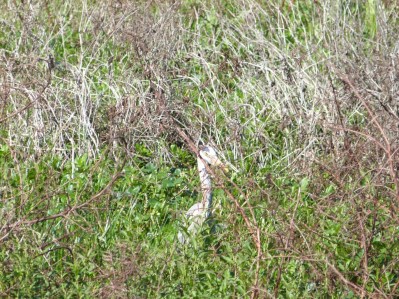
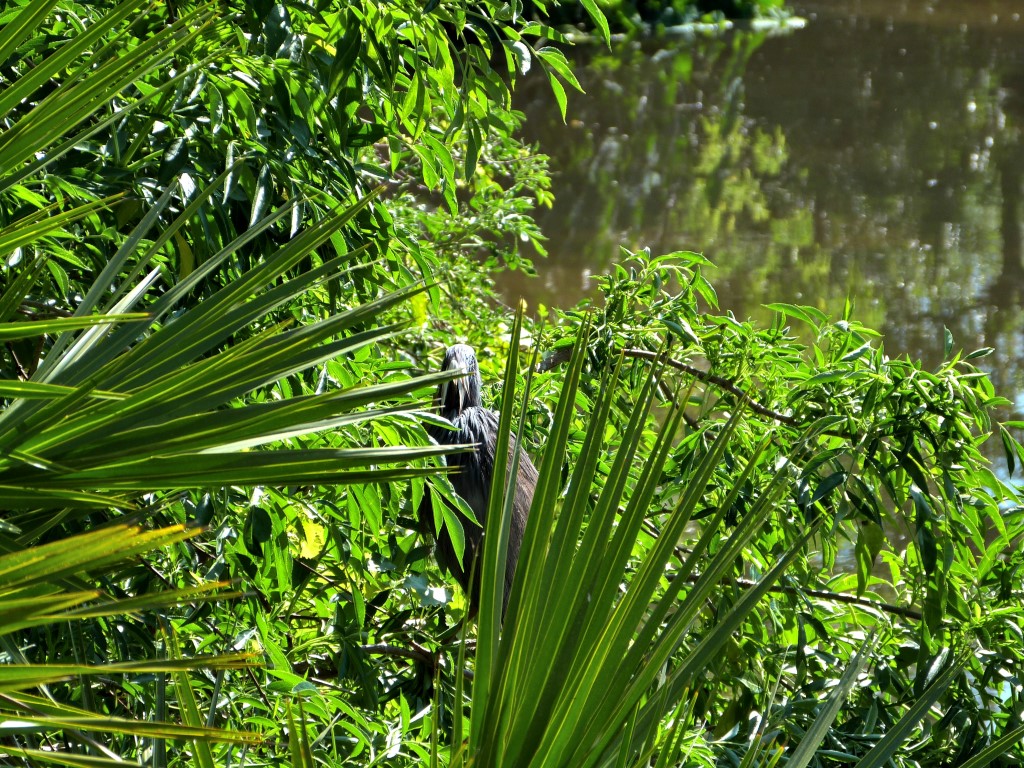
Great Blue Heron camouflaged by Lee
And the stork, and the heron after her kind, and the lapwing, and the bat. (Deuteronomy 14:18 KJV)
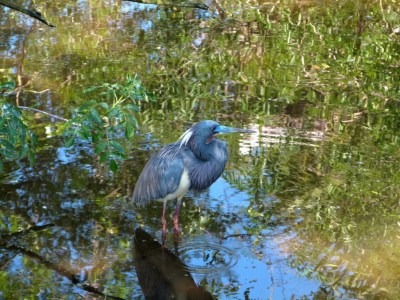
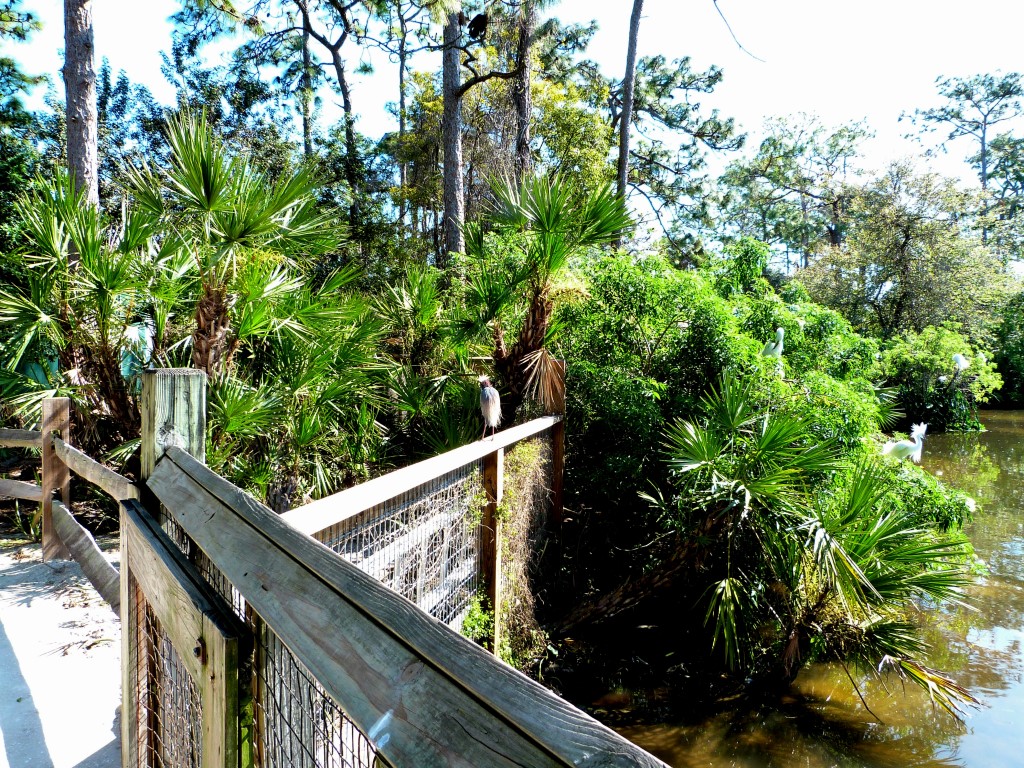
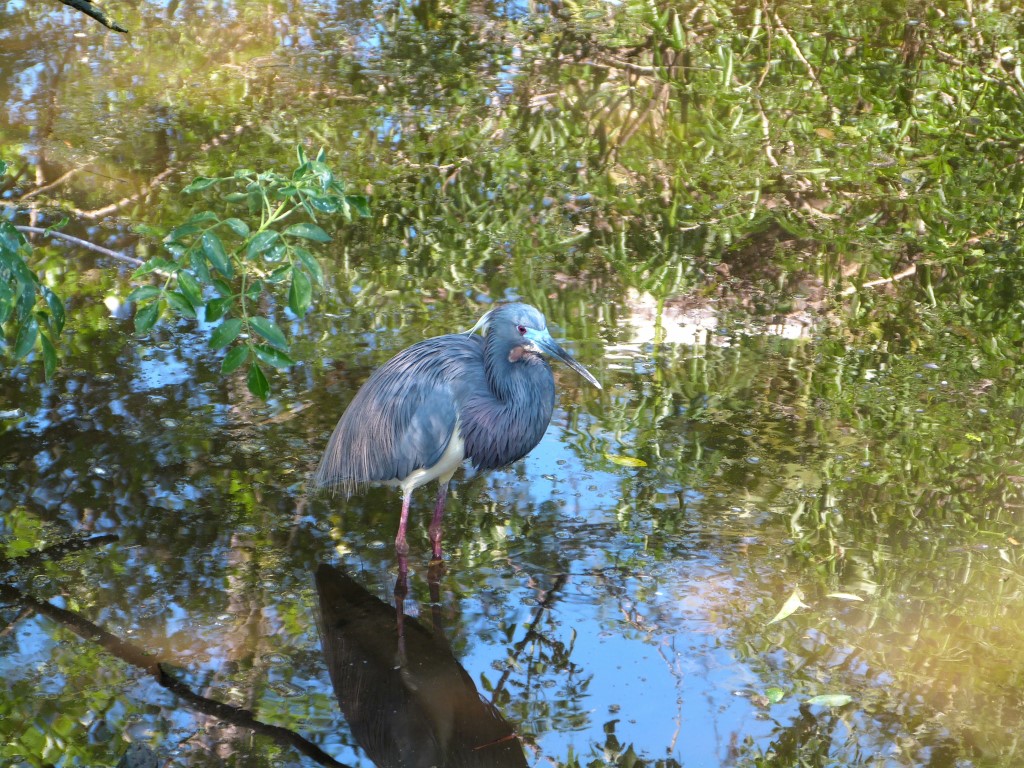
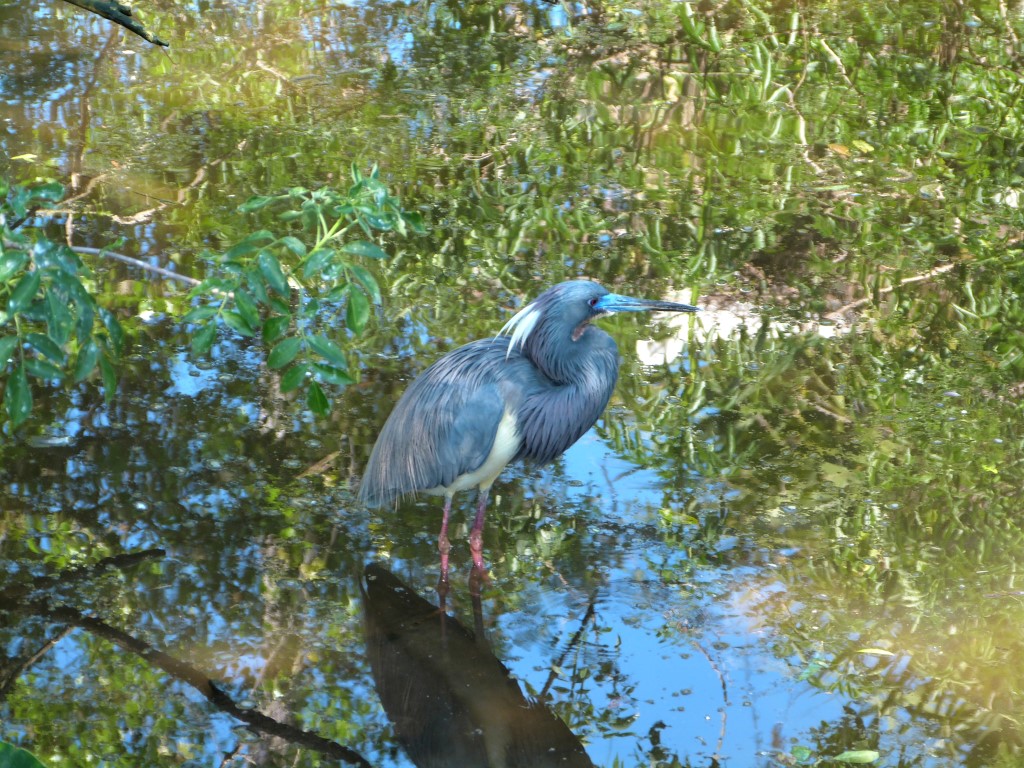
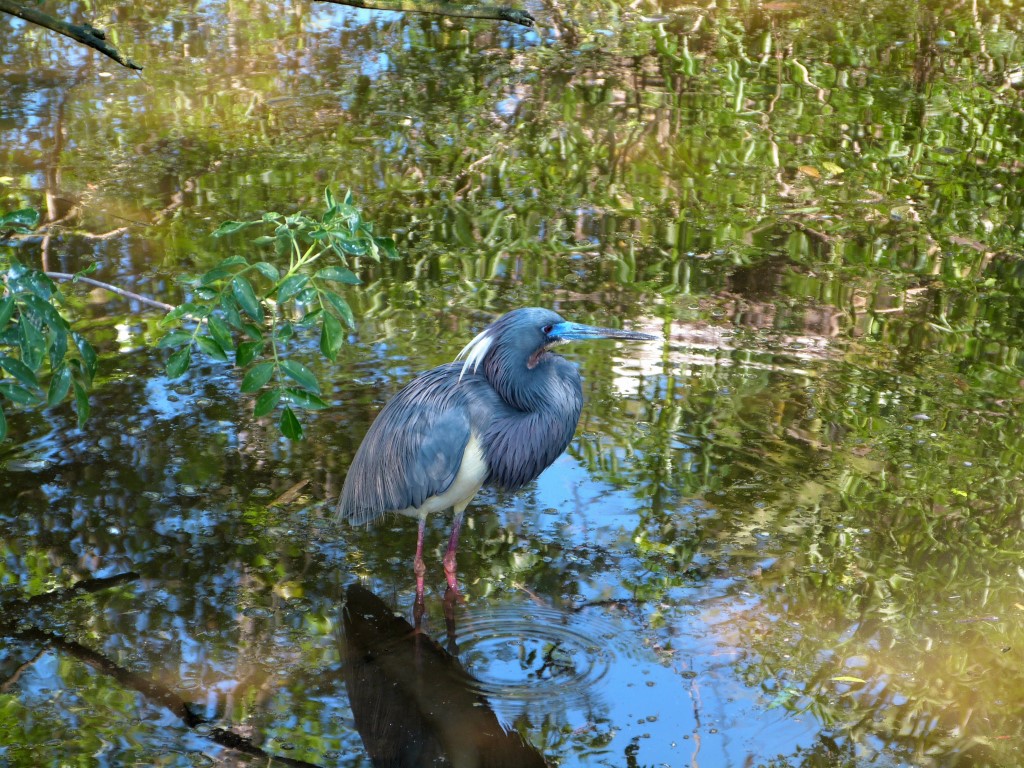
The original Birds of the Bible – Heron article was posted on July 17, 2008. Seems like it’s time for an update and to keep our Heron family visible. Actually, some of the family members are very good at hiding or blending in with their surroundings. Their Creator, the Lord Jesus Christ, designed them to be slim like the reeds they hide in, called camouflage, and gave them the ability to move back and forth again like reeds. Notice the Tricolored Heron in the first photo. Even though he is blue, the sky color reflecting in the water actually is helping keep him “hidden in plain view.”
Around the World the Ardeidae family, now with 72 species, includes Herons (46), Egrets (9) and Bitterns (15). From Thayer Birding Software, “Most herons nest in dense or dispersed colonies; a few species, including most bitterns, are solitary. Nests are platforms of interlocked sticks in trees or piles of vegetation in reeds or on the ground, built mainly or entirely by the female of material brought by the male.”
Most of the Herons rest and fly with their necks in an “S” curve. They can be seen along or in the edges of water fishing. Many stand perfectly still looking in the water and then thrust with a quick movement to either spear or catch their prey. You can see that in the video I posted yesterday.
This video of a Great Egret was watching something so intently. Also, notice how his neck sways like they do in the tall grass or reeds. Egrets are part of the Heron Family group.
Herons amaze me in how perfectly still they stand and wait. They seem so patient to me. Herons are on the “unclean” list of birds found in Leviticus 11:19 and Deuteronomy 14:18. Because they are so “patient” and “wait,” it reminds me of:
Rest in the LORD, and wait patiently for him: fret not thyself because of him who prospereth in his way, because of the man who bringeth wicked devices to pass. (Psalms 37:7 KJV)
And so, after he had patiently endured, he obtained the promise. (Hebrews 6:15 KJV)
The eyes of all wait upon thee; and thou givest them their meat in due season (Psalms 145:15 KJV
And of course our great verse from last week:
But they that wait upon the LORD shall renew their strength; they shall mount up with wings as eagles; they shall run, and not be weary; and they shall walk, and not faint. (Isaiah 40:31 KJV)
Hymns mention “waiting” and being “still” and “patient. Here is a favorite:
Be Still, My Soul by Katharina von Schlegel,
1697-Trans. By Jane L. Borthwick, 1813-1897
Be still, my soul: the Lord is on thy side;
Bear patiently the cross of grief or pain;
Leave to thy God to order and provide;
In ev’ry change He faithful will remain.
Be still, my soul: thy best, thy heav’nly Friend
Thro’ thorny ways leads to a joyful end.
Be still, my soul: thy God doth undertake
To guide the future as He has the past.
Thy hope, thy confidence let nothing shake;
All now mysterious shall be bright at last.
Be still, my soul: the waves and winds still know
His voice who ruled them while He dwelt below.
Be still, my soul: the hour is hast’ning on
When we shall be forever with the Lord,
When disappointment, grief, and fear are gone,
Sorrow forgot, love’s purest joys restored.
Be still, my soul: when change and tears are past,
All safe and blessed we shall meet at last.
Little Jonny went to meet the geese. He bowed to say ‘hello’ and you just have to see how these amazing birds responded. How polite are they!?! I can hardly believe it!
Oh come, let us worship and bow down; Let us kneel before the LORD our Maker. (Psalms 95:6 NKJV)
‘Ah, Lord GOD! Behold, You have made the heavens and the earth by Your great power and outstretched arm. There is nothing too hard for You. (Jeremiah 32:17 NKJV)
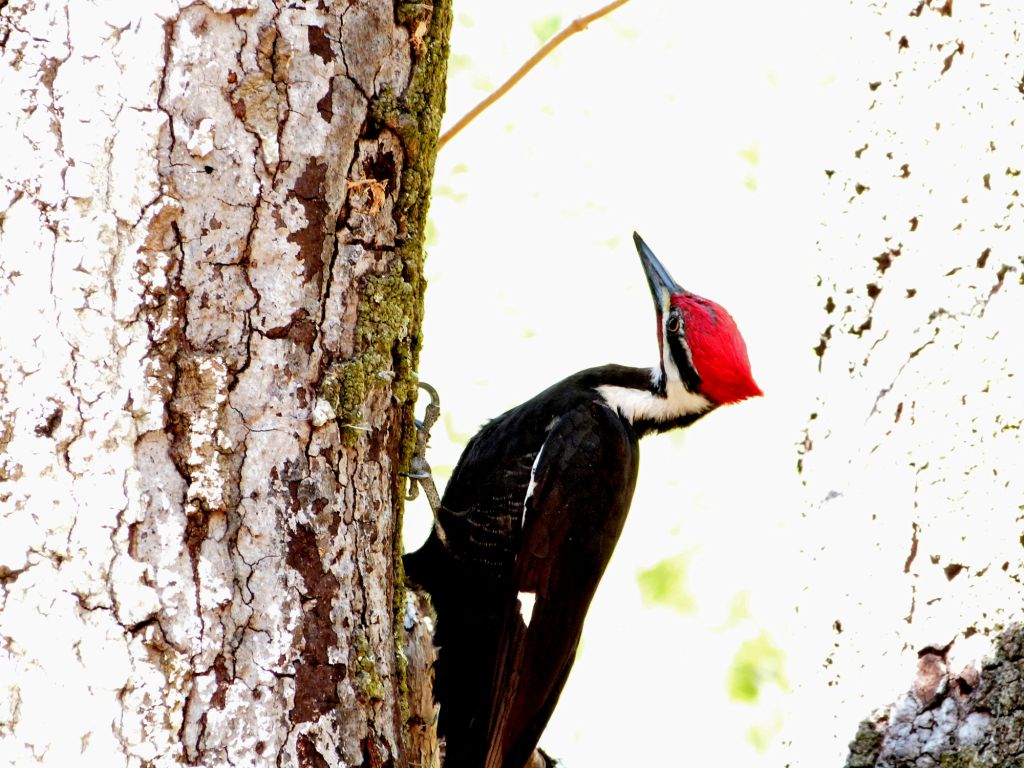
I always enjoy seeing Pileated Woodpeckers like this one at Circle B Bar Reserve here in the area. This was taken several years ago.
I found these videos on YouTube and they show the Pileated in a different way than we have observed them. Enjoy!
The first one is a YouTube by Dan & Joe. He discovers a chipmunk:
He has made the earth by His power; He has established the world by His wisdom, And stretched out the heaven by His understanding. (Jeremiah 51:15 NKJV)
Here’s another video of a Pileated Woodpecker Singing by Pureimaginationvideo:
This last one has a very good close-up of a Pileated digging for Grubs by Martyn Stewart:
But the LORD is the true God; He is the living God and the everlasting King. At His wrath the earth will tremble, And the nations will not be able to endure His indignation. Thus you shall say to them: “The gods that have not made the heavens and the earth shall perish from the earth and from under these heavens.” He has made the earth by His power, He has established the world by His wisdom, And has stretched out the heavens at His discretion. (Jeremiah 10:10-12 NKJV)
I have been reading through Jeremiah and these verse caught my attention.
“Ok Lee, help me out on this one, is this for real? Is there a bird that really walks like that?
The music they put to this video is perfect, but it’s distracting because I can’t decide if there’s a bird that really does this or not!
Either way, This is a very cute video!”
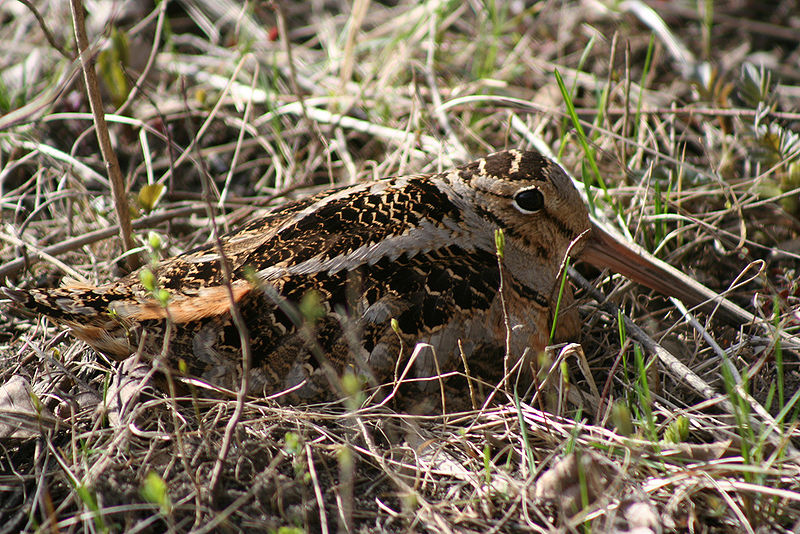
The answer is Yes! That is an American Woodcock They do that to help make worms move around so they can probe with their beak to find them.
*
Here’s another video of a Woodcock Display using a sound they make:
*
And yet two more videos of one doing the dance minus the music.
An interesting fact from All About Birds – “The American Woodcock probes the soil with its bill to search for earthworms, using its flexible bill tip to capture prey. The bird walks slowly and sometimes rocks its body back and forth, stepping heavily with its front foot. This action may make worms move around in the soil, increasing their detectablity.
A very wise creator gave these birds good coloration, courtship displays and a very practical “heavy-footed” walk.
Look at the birds of the air, for they neither sow nor reap nor gather into barns; yet your heavenly Father feeds them. Are you not of more value than they? (Matthew 6:26 NKJV)
the stork, the heron after its kind, the hoopoe…. (Leviticus 11:19 NKJV)
Here is the next beautifully created bird seen on our trip to Gatorland this week. See the other articles listed below.
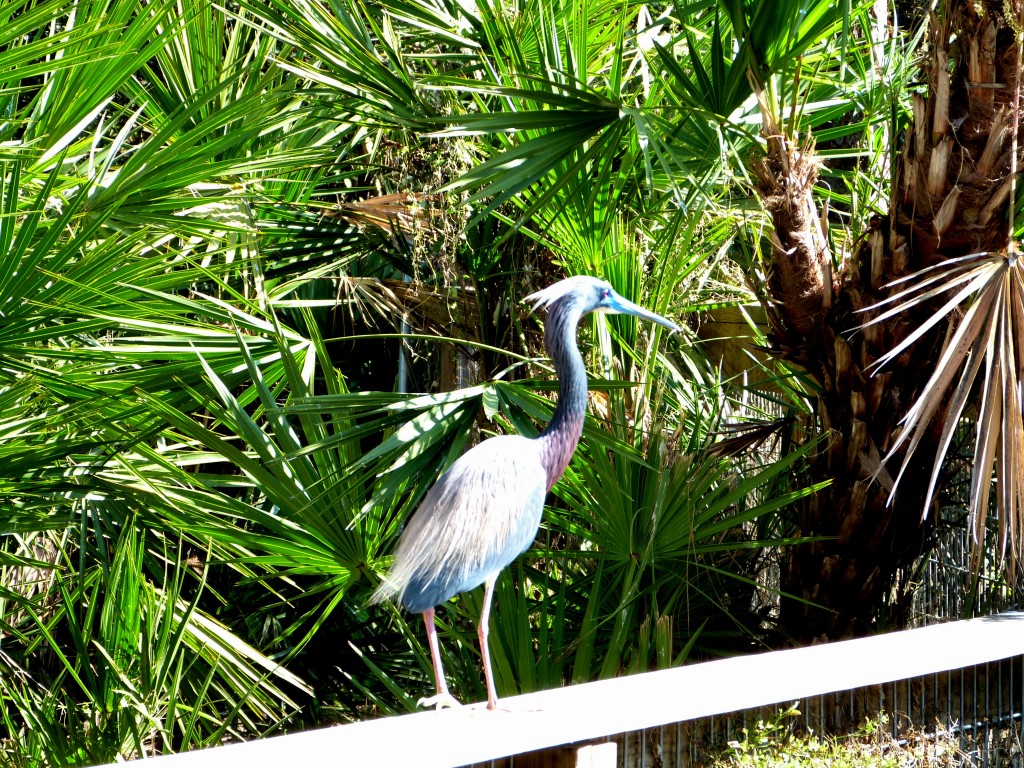
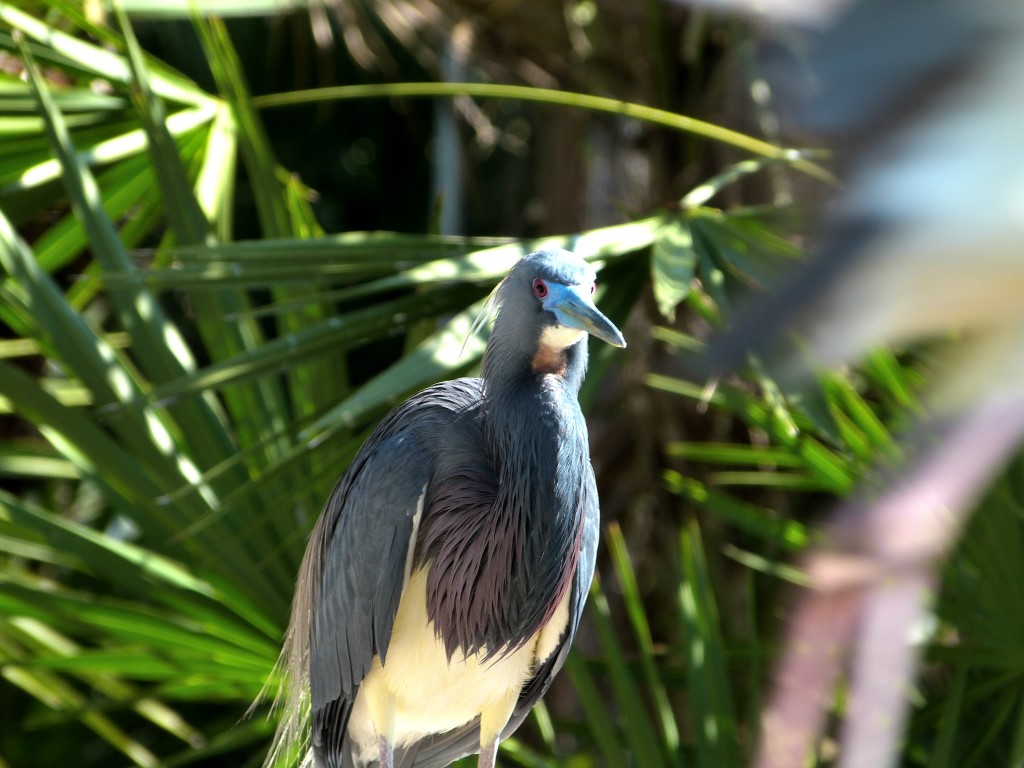
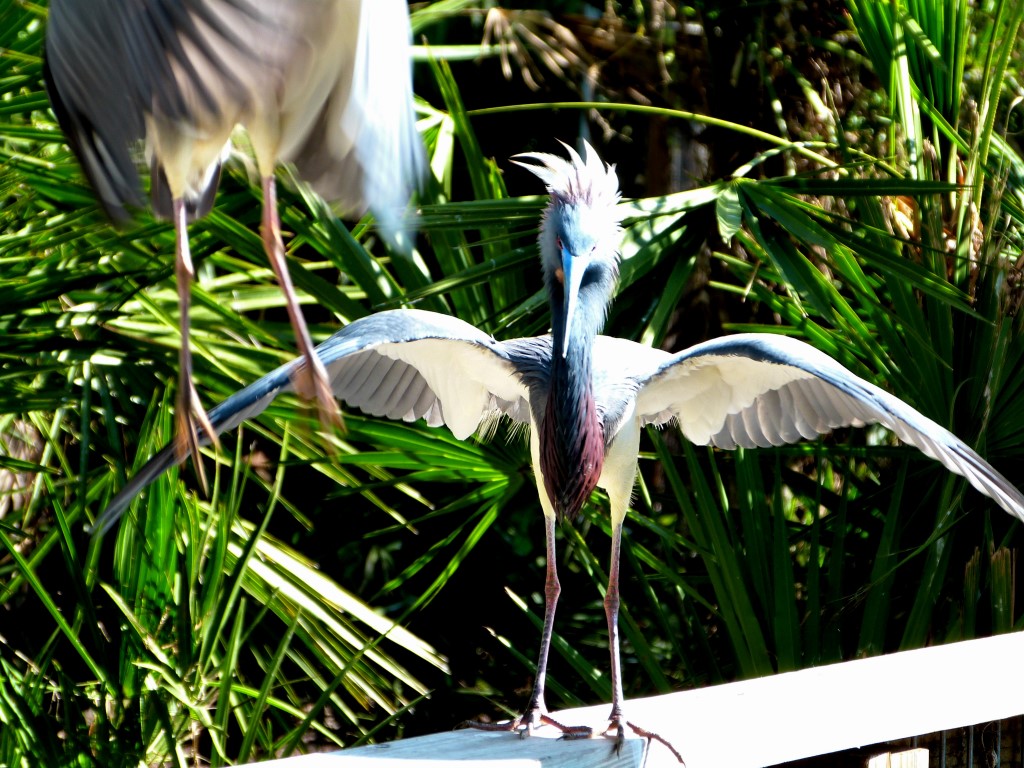
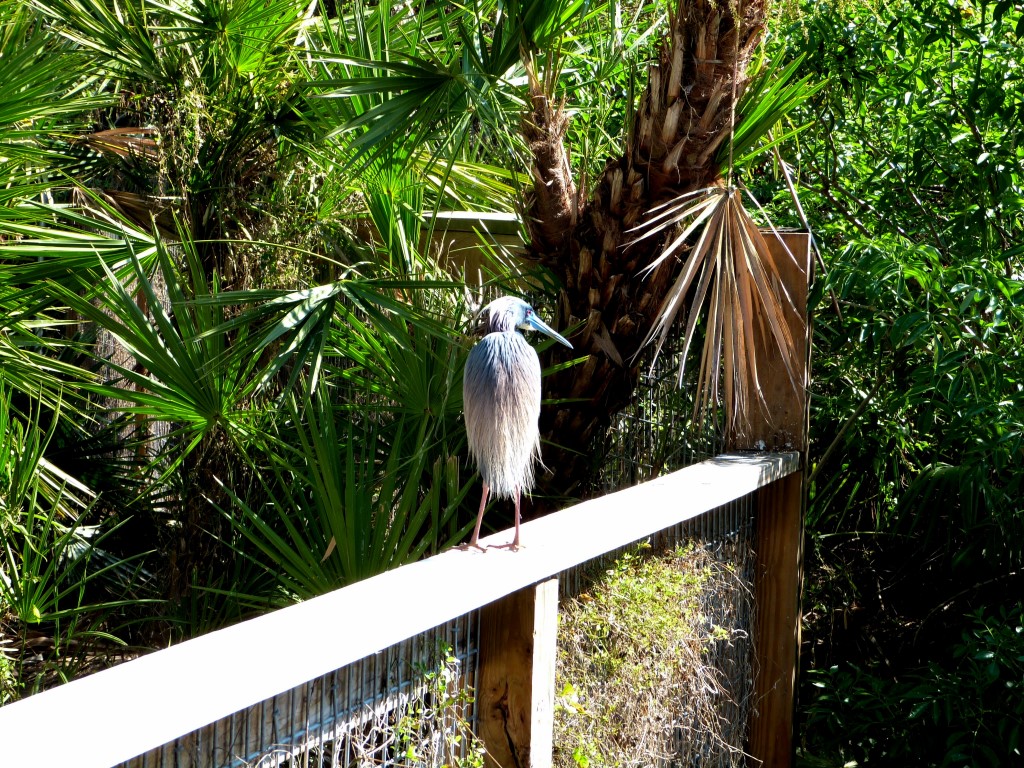
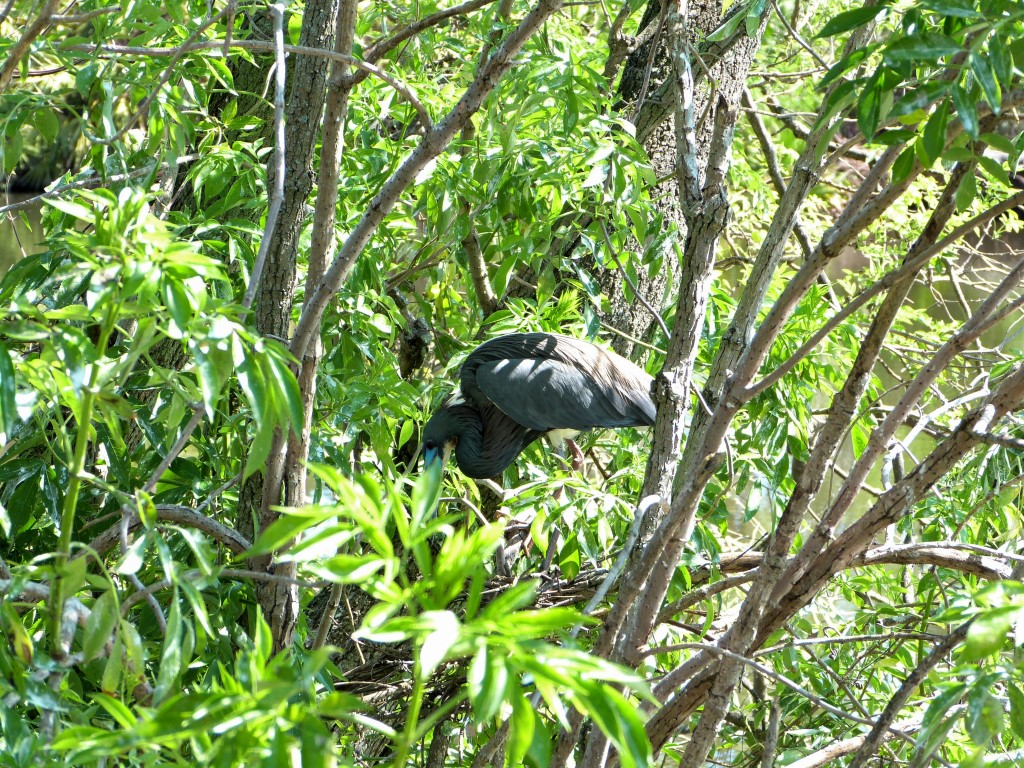
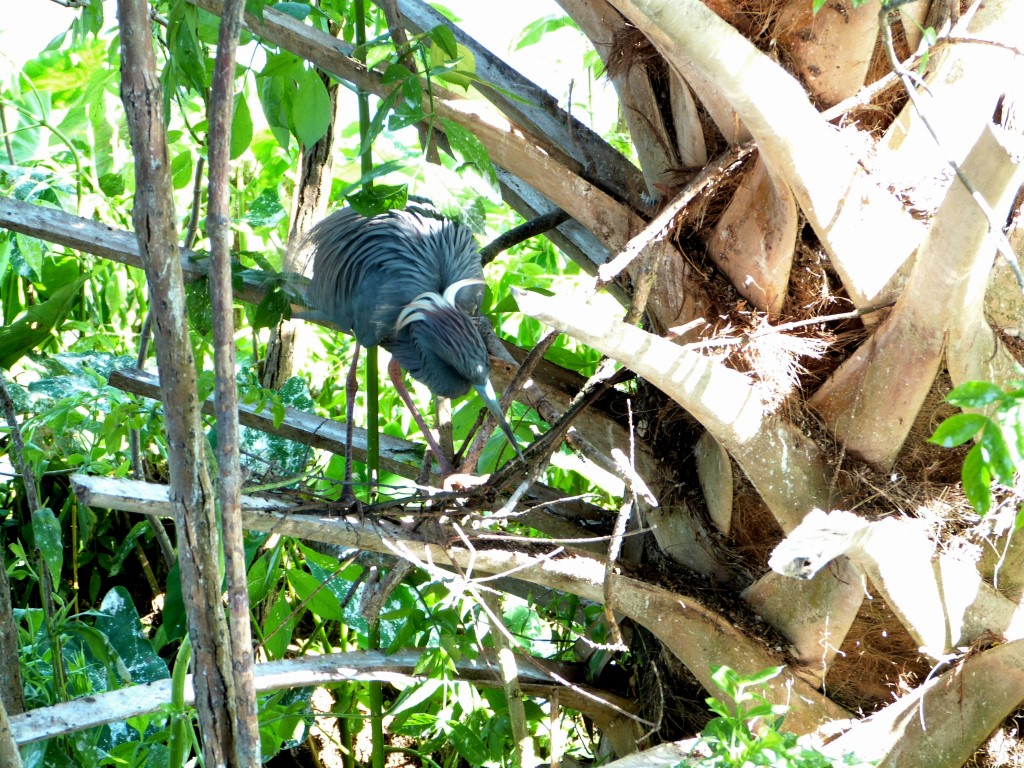
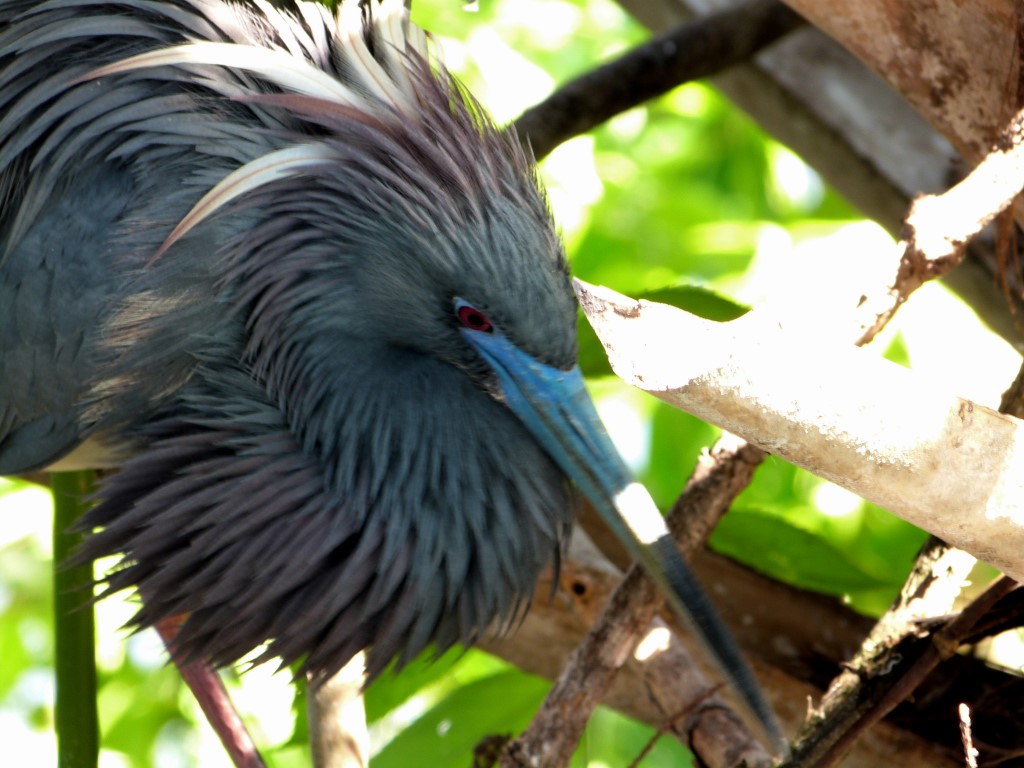
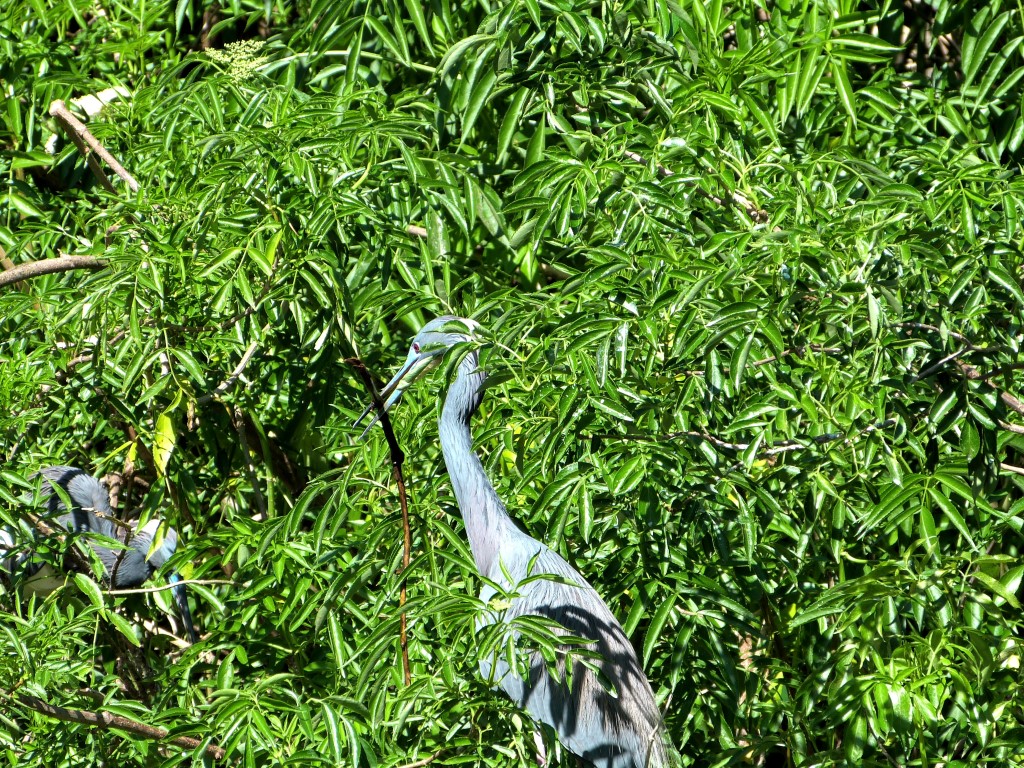
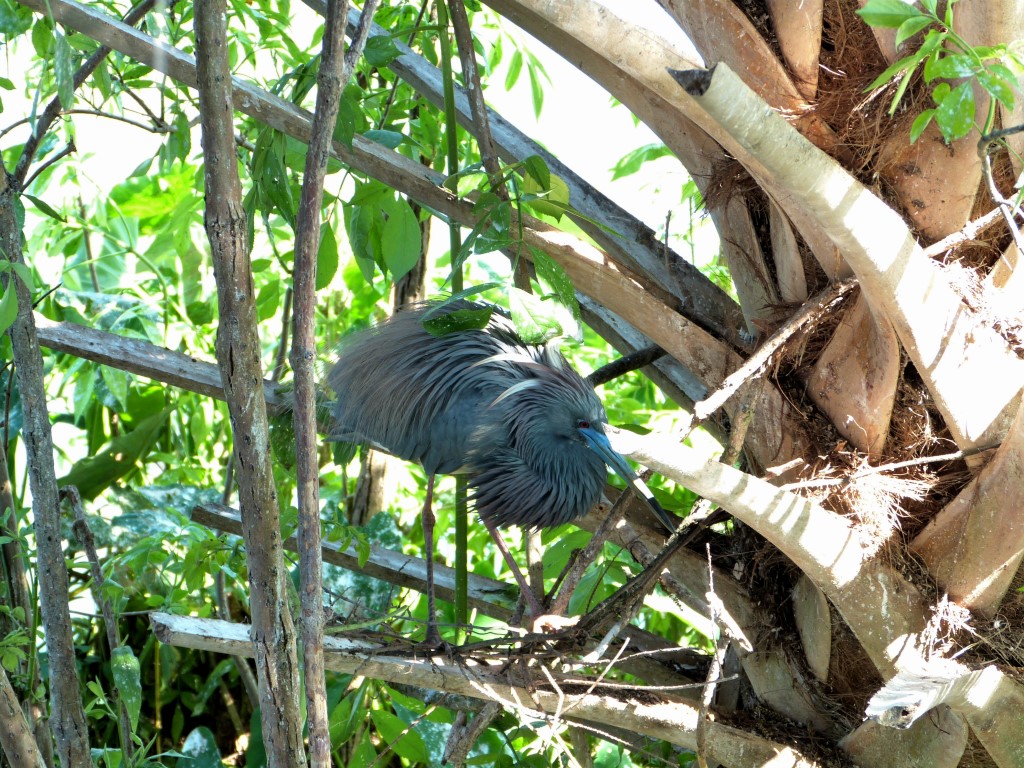
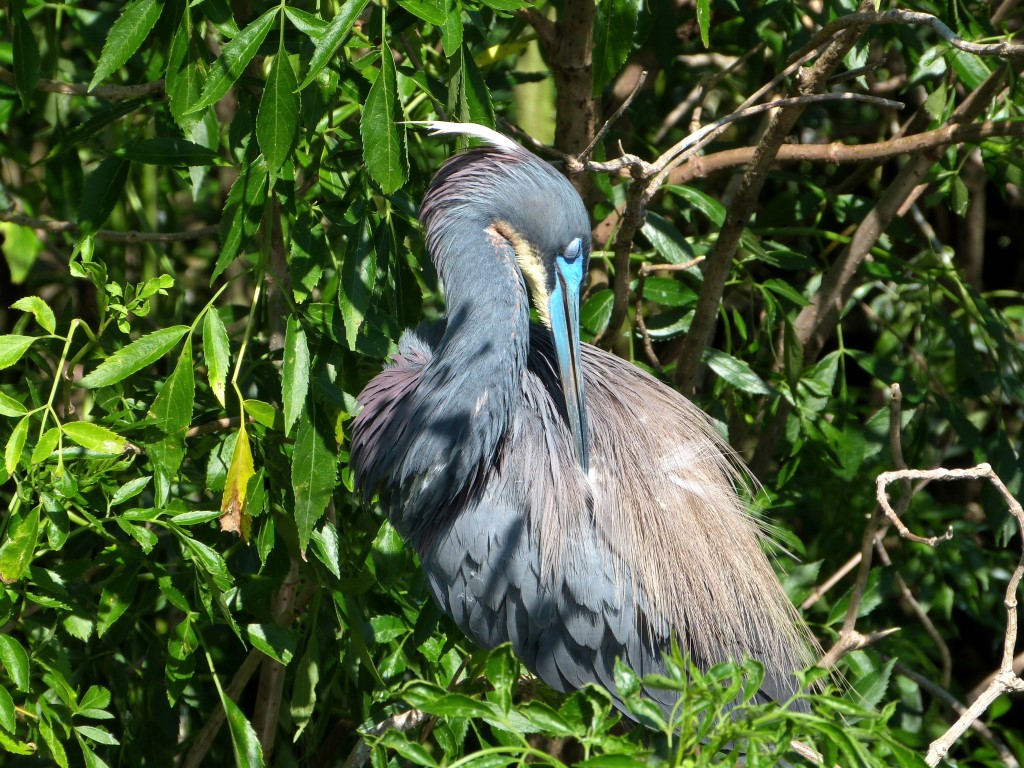
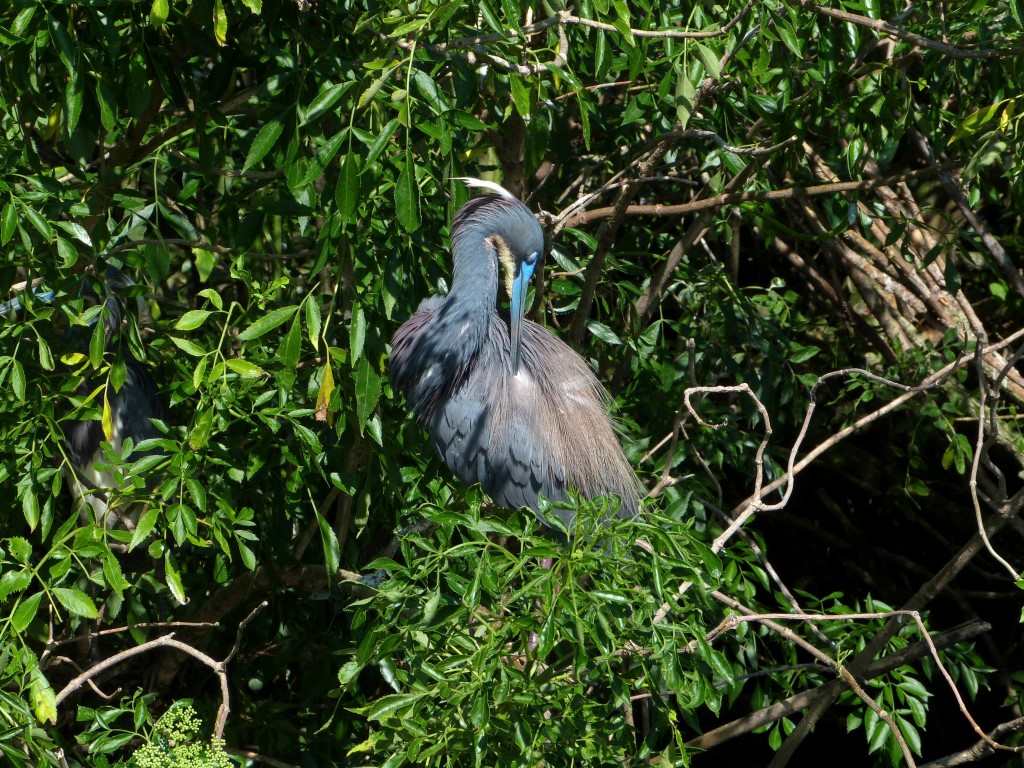
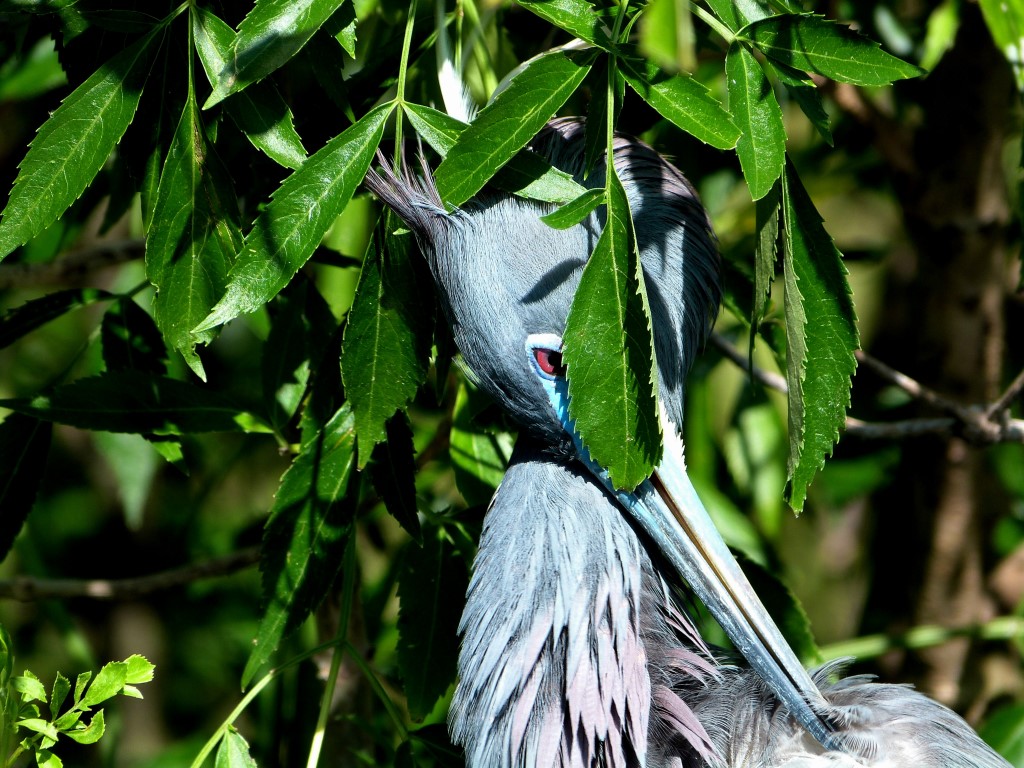
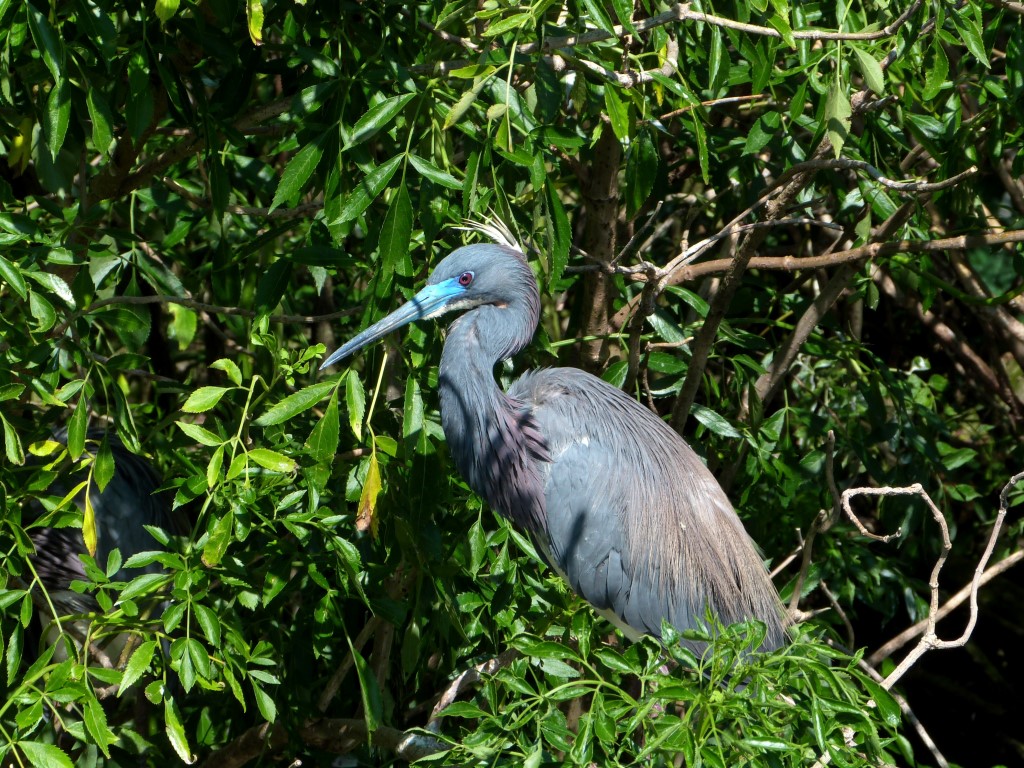
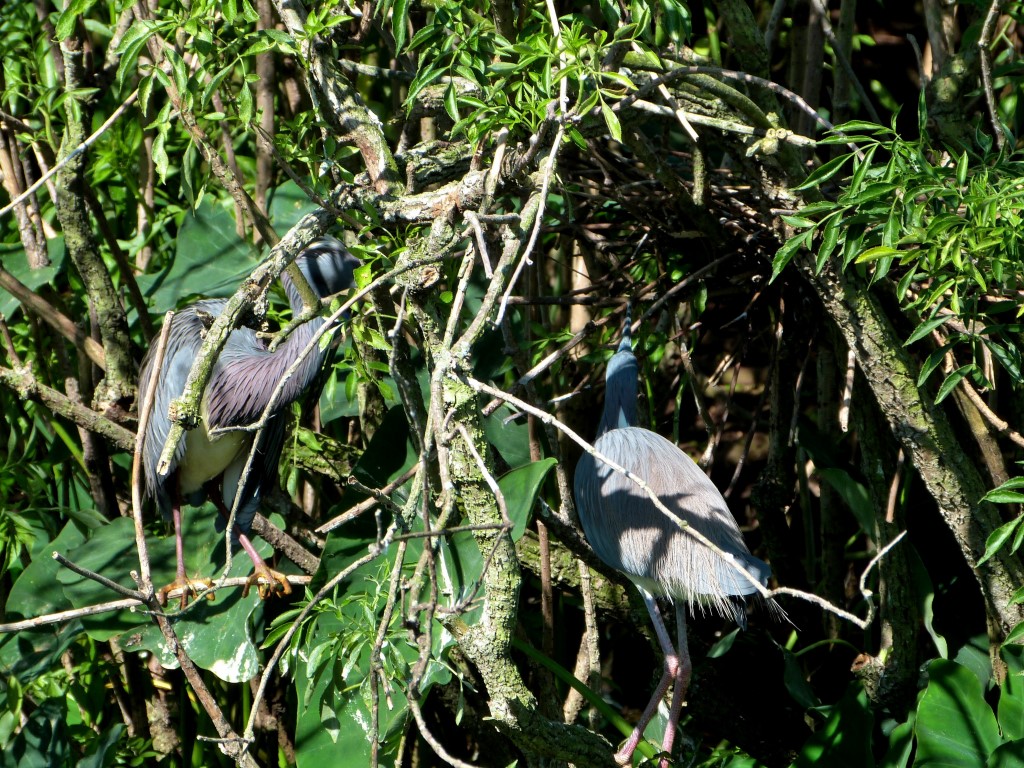
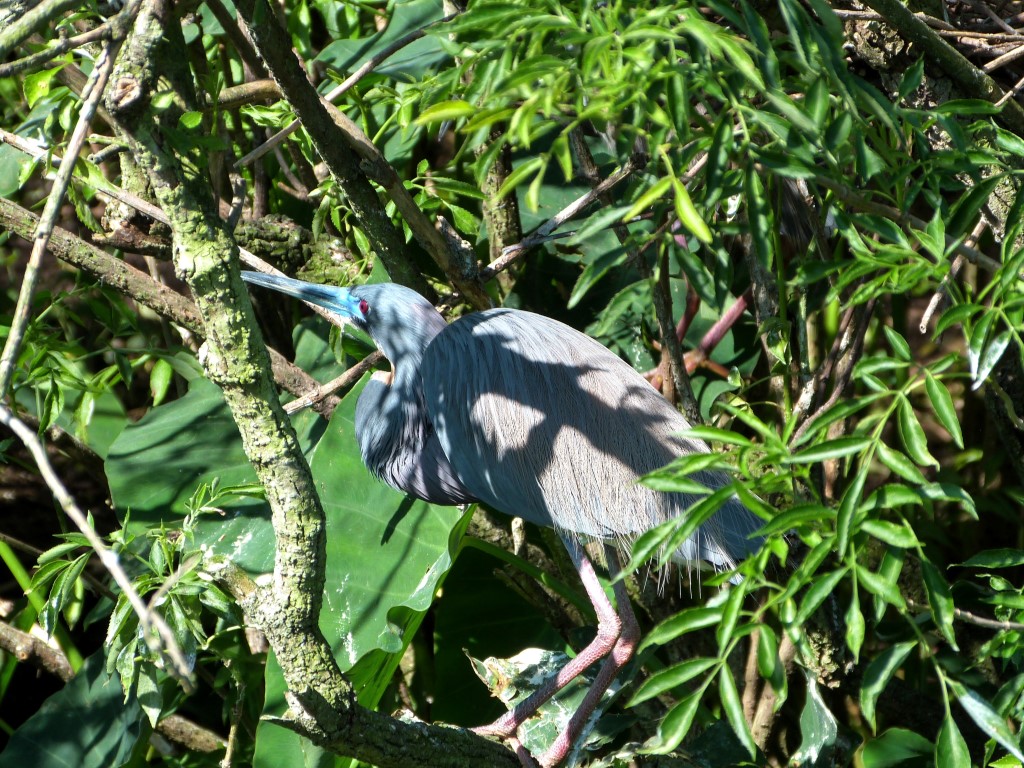
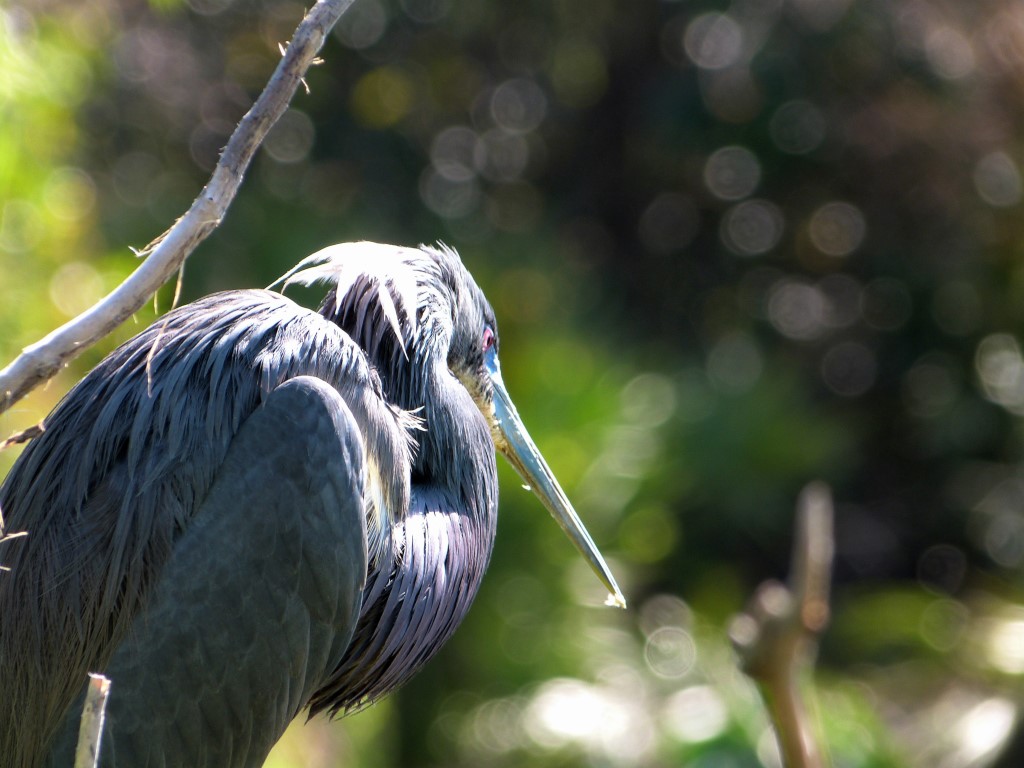
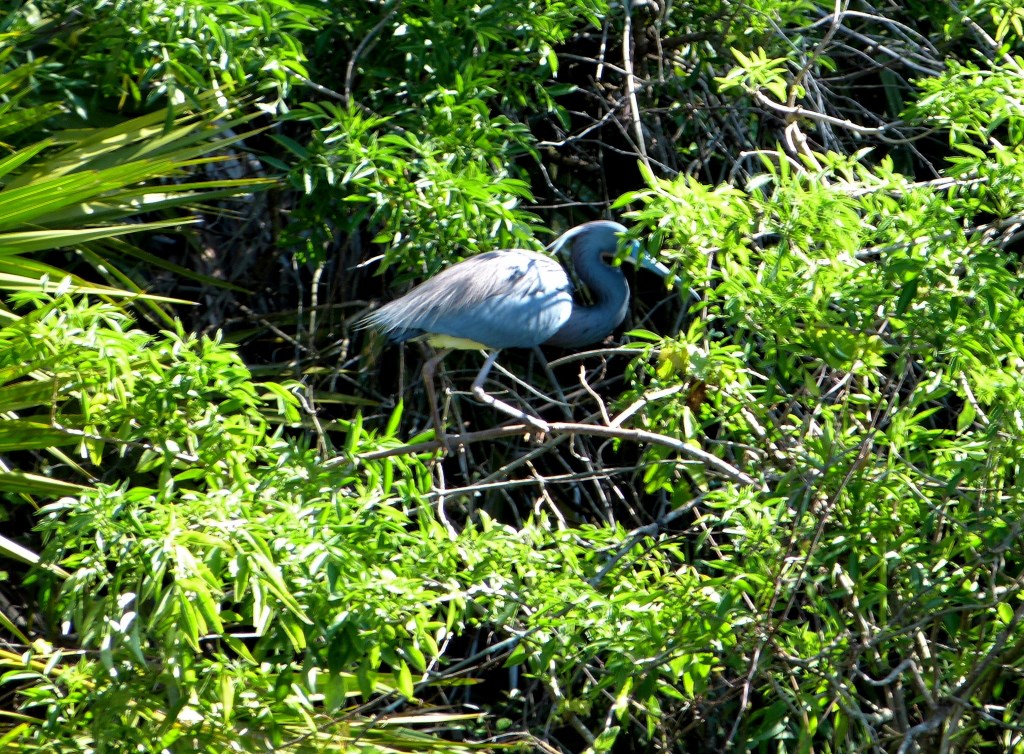
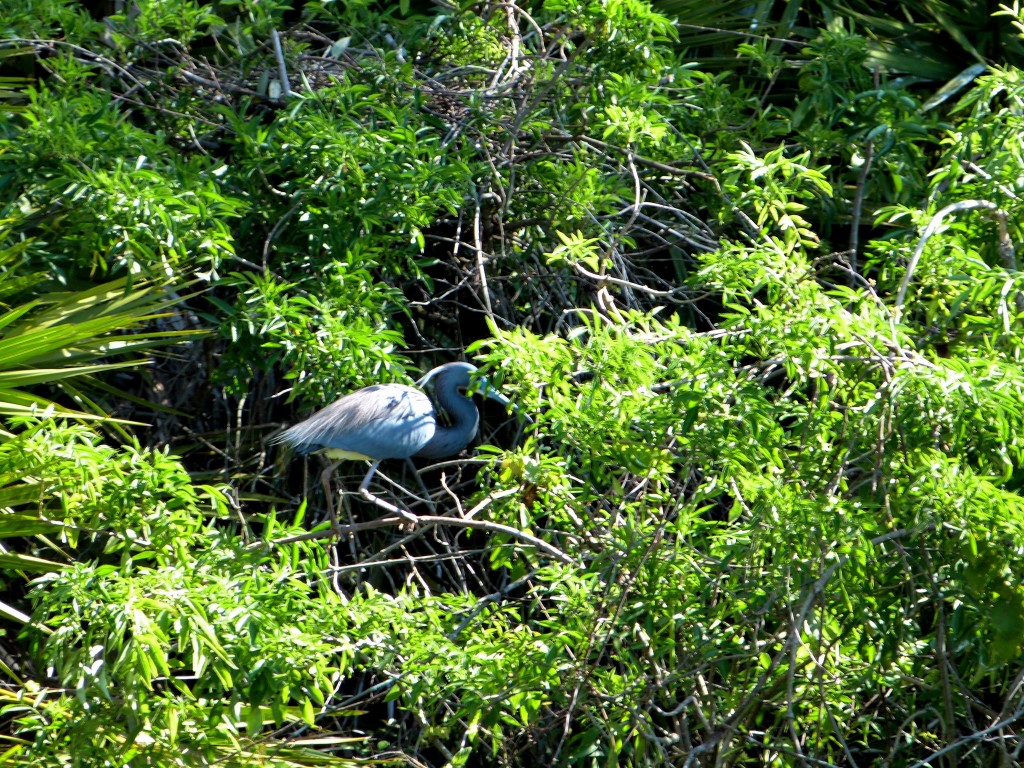
Today, I want to share the Tricolored Herons (Egretta tricolor) which were in their breeding plumage busy courting and building nest.
“During breeding season, the Tricolored Heron sports a short white head plume, a buffy throat and fore-neck, a blue face, and a blue bill, tipped with black. The eyes are reddish, and the legs pinkish. Nonbreeding adults have a yellow face, bill, and legs; the throat and fore-neck are white.” (Audubon)
Tricolored Heron at Gatorland
The Tricolored Heron (Egretta tricolor) formerly known in North America as the Louisiana Heron, is a small heron. They are in the Ardeidae- Herons, Bitterns Family. It is a resident breeder from the Gulf states of the USA and northern Mexico south through Central America and the Caribbean to central Brazil and Peru. There is some post-breeding dispersal to well north of the nesting range.
Tricolored Heron’s breeding habitat is sub-tropical swamps. It nests in colonies, often with other herons, usually on platforms of sticks in trees or shrubs. In each clutch, 3–7 eggs are typically laid.
Tricolored Heron at Gatorland
This species measures from 56 to 76 cm (22 to 30 in) long, and has a wingspan of 96 cm (38 in). The slightly larger male heron weighs 415 g (14.6 oz) on average, while the female averages 334 g (11.8 oz). It is a medium-large, long-legged, long-necked heron with a long pointed yellowish or greyish bill with a black tip. The legs and feet are dark.
Adults have a blue-grey head, neck, back and upperwings, with a white line along the neck. The belly is white.
Tricolored Heron stalks its prey in shallow or deeper water, often running as it does so. It eats fish, crustaceans, reptiles, and insects. (Wikipedia)
Trying this method of showing the photos. By clicking on a photo, it will bring it up full screen and then you can browse through them. Leave a comment as to which method you prefer.
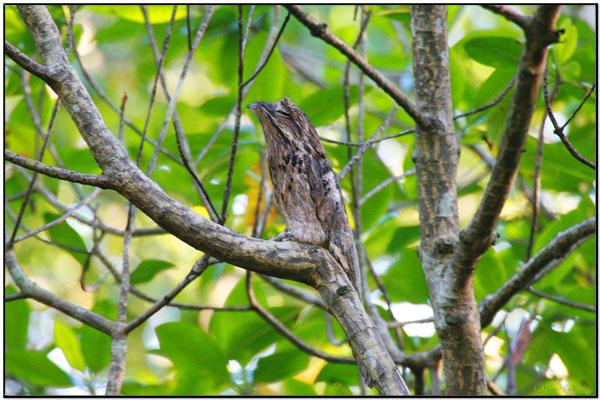
Common Potoo (Nyctibius griseus) by Daves BirdingPix
Thought I would share this video with you. A friend suggested that I watch it. It is really good.
Also, I didn’t do the usual Sunday Inspiration today because of honoring A J Mithra. It has affected me greatly. He had become a dear friend and I will miss him. I know he is enjoying the Lord’s presence, but there is still sadness here.
The world’s most brazenly hidden bird — the Common Potoo by jonnytropics
*
Potoos are members of the Nyctibiidae – Potoos Family. There are seven species and the Lord has given them an appearance of wood or some camouflaged look.
This verse is out of context, but it describes our bird.
It stood still, but I could not discern its appearance. A form was before my eyes; there was silence, ….. (Job 4:16)
Ferruginous Duck (Aythya nyroca) and Pintail by Lee at ZM 2014
But no one says, ‘Where is God my Maker, Who gives songs in the night, Who teaches us more than the beasts of the earth, And makes us wiser than the birds of heaven?’ (Job 35:10-11)
We know that God has given us more insight and wisdom than the animals and birds. Unfortunately, sometimes we need to observe the birds to see how we should behave. There are many times we can learn from watching their behaviors.
“But now ask the beasts, and they will teach you; And the birds of the air, and they will tell you; (Job 12:7)
While at the Zoo Miami’s Wings of Asia aviary, this behavior was captured on video. It’s between Ferruginous Ducks and a Mandarin Duck.
Can you think of some lessons that can be observed and learned? Are those ducks patient? Was one, the Mandarin Duck, jumping the line? What can be seen in their behaviors? Did you notice the eyes of the waiting duck? He wants it, but he is waiting. He even keeps his beak shut. Do we complain when things don’t go right? etc.
Here are some verses about patience, waiting and kindness that we can be taught from the birds.
Patience:
These all wait for You, That You may give them their food in due season. (Psalms 104:27)
Let integrity and uprightness preserve me, For I wait for You. (Psalms 25:21)
Kindness:
Therefore, my brethren, when you come together to eat, wait for one another. (1 Corinthians 11:33)
Breaking in Line – Mandarin:
Rest in the LORD, and wait patiently for Him; Do not fret because of him who prospers in his way, Because of the man who brings wicked schemes to pass. Cease from anger, and forsake wrath; Do not fret—it only causes harm. (Psalms 37:7-8)
*
The Ferruginous Duck, also Ferruginous Pochard (Aythya nyroca) is a medium-sized diving duck from Eurasia. The species is known colloquially by birders as “Fudge Duck”. They are members of the Anatidae – Ducks, Geese & Swans Family.
Their breeding habitat is marshes and lakes with a metre or more water depth. These ducks breed in southern and eastern Europe and southern and western Asia. They are somewhat migratory, and winter farther south and into north Africa.
The adult male is a rich chestnut colour with a darker back and a yellow eye. The pure white undertail helps to distinguish this species from the somewhat similar Tufted Duck. The female is similar but duller, and with a dark eye.
These are gregarious birds, forming large flocks in winter, often mixed with other diving ducks, such as Tufted Ducks and Pochards.
These birds feed mainly by diving or dabbling. They eat aquatic plants with some molluscs, aquatic insects and small fish. They often feed at night, and will upend (dabble) for food as well as the more characteristic diving.
Thou hast enlarged my steps under me, that my feet did not slip. (Psalms 18:36 KJV)
In the Coot article they said: “Like other rails, they have long, lobed toes that are well adapted to soft, uneven surfaces. Coots have strong legs and can walk and run fast.”
Answers gives this definition: “Feet that have toes with stiff scale-covered flaps that extend to provide a surface analogous to webbing on a duck as an aid in swimming.”
The Lord designed these “lobed feet” to help the birds walk over uneven ground, in and out of water. He cares about all His creatures.
American Coot – from Color Key To North American Birds
This Drawing from Color Key To North American Birds helps you to see their feet better.
It is neat to watch them walk around and see those “big feet.”
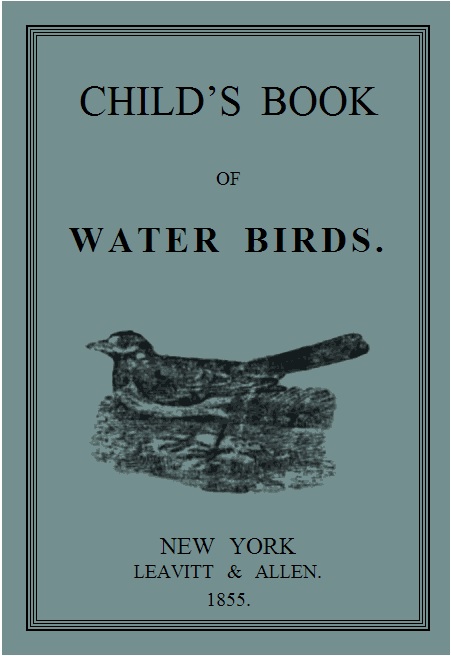
Welcome to the Updated Child’s Book of Water Birds, by Anonymous. It was written in 1855 and this is 2013. That is 158 years ago.
*
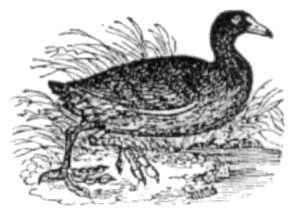
THE COOT.
The Coot is generally found in large sheets of water, particularly if shaded by trees. The nest is a mass of flags, reeds, and grass, usually at the water’s edge, but sometimes actually in the water. The Coot’s eggs are generally seven in number. They are of a greenish-white, spotted.
*
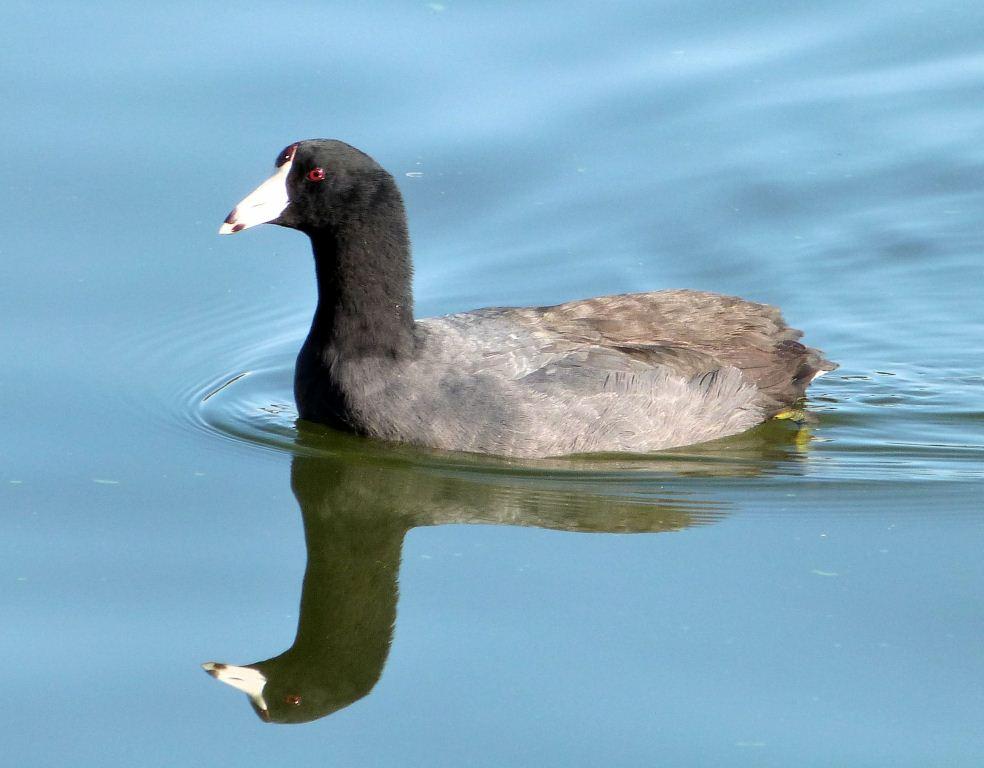
American Coot (Fulica americana) by Lee at Lk Morton
Update:
Coots are medium-sized birds that belong to the Raillidae – Rail Family. There are twelve (12) different Coots around the world.
They have mostly black feathers and can be seen swimming in open water. Coots have prominent frontal shields or other decoration on the forehead, with red to dark red eyes and coloured bills. Many, but not all, have white on the under tail.
Coots eat plants, eggs and some small animals. The defend their nest when they have babies. A group of Coots are called a “covert” or “cover.”
Like other rails, they have long, lobed toes that are well adapted to soft, uneven surfaces. Coots have strong legs and can walk and run fast. This video shows their feet.
And the peace of God, which passeth all understanding, shall keep your hearts and minds through Christ Jesus. (Philippians 4:7 KJV)
Yesterday during our morning service at Faith Baptist Church in Winter Haven, FL, our pastor had some thoughts and prayer for those in Newtown, CT. They are not the only ones affected by what happened there this last week at the Sandy Fork Elementary School. I feel all of us here and around the world find what happened hard to “get our minds around it.” We were all moved by what was said and prayed.
Here is that part of our service. I just wanted to share it and also let those who are affected by this know that you are in our prayers. We love you and feel your pain and sorrow. Lord Bless you with a peace that only He can give.
*
(There is about a 2 minute spot where there is an echo, but it clears back up.)








 Lee's Birdwatching Adventures Plus