Bible Birds – Cuckoo Introduction

Guira Cuckoo (Guira guira) at NA by Dan at National Aviary

Guira Cuckoo (Guira guira) at NA by Dan at National Aviary

Bible Birds – Cuckoo’s Introduction

The “Cuckoo” or old English”Cuckow” is found in these verses:

and the owl, and the night-hawk, and the cuckoo, and the hawk after its kind, (Leviticus 11:16 YLT)

And the owl, and the night hawk, and the cuckow, and the hawk after his kind, (Deuteronomy 14:15 KJV)

The Old Testament was written in Hebrew and the word used has several meanings and so some Bibles call the bird a Cuckoo or Cuckow, some a Gull. For now, we are introducing you to Cuckoos.

1) a ceremonially unclean bird

  • 1a) cuckow, gull, seagull, sea-mew
  • 1b) maybe an extinct bird, exact meaning unknown

Did you think Cuckoos only live in Clocks?

No, there actually is a bird called a Cuckoo. It belongs to a family Cuculidae – Cuckoos. There are 149 species in the family. Not only Cuckoos, but Coucals, Anis, Couas, and Malkohas are family members.

Here are some descriptions of North American Cuckoos: (from Color Key to NA Birds)
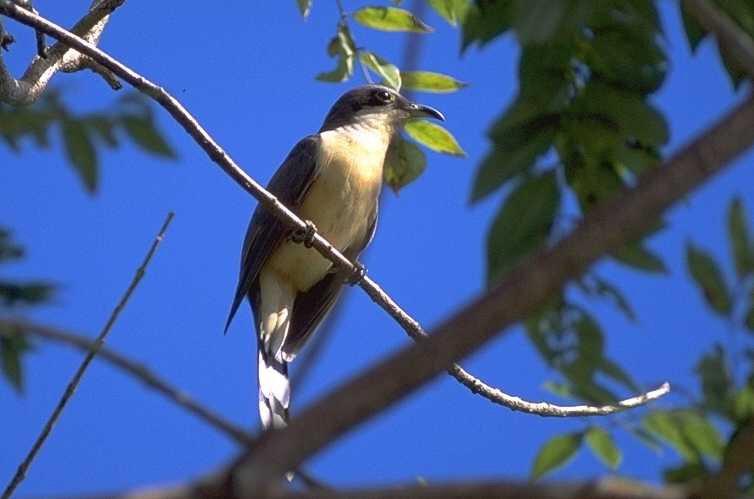
Mangrove Cuckoo

Mangrove Cuckoo

Mangrove Cuckoo (Coccyzus minor). Underparts uniformly rich buff; above grayish brown, crown grayer; ear-coverts black; tail black, outer feathers broadly tipped with white.

Range.—Northern South America, north through Central America, Mexico and Greater Antilles (except Porto Rico?) to Florida and Louisiana, migrating south in fall.

Maynard Cuckoo (C. m. maynardi). Similar to Mangrove Cuckoo, but underparts paler, the throat and forebreast more or less ashy white.

Range.—Bahamas and (eastern?) Florida Keys. (2012 Now Mangrove Cuckoo)
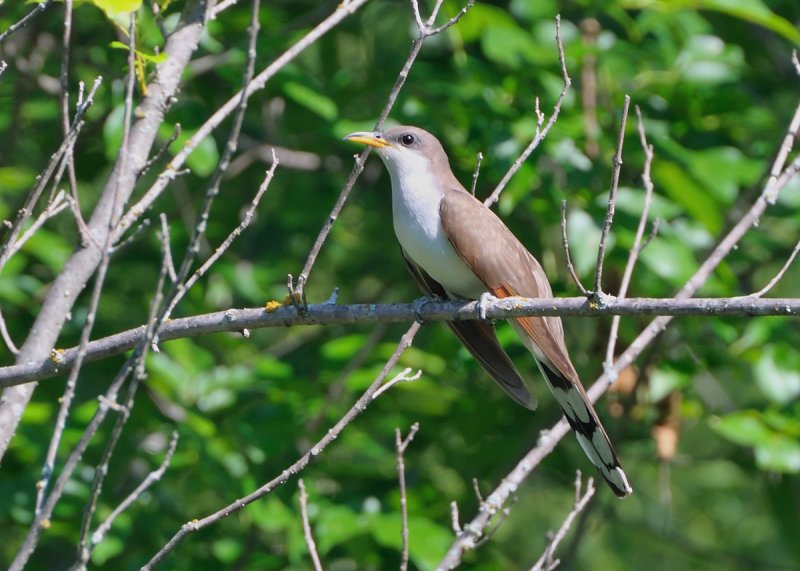
Yellow-billed Cuckoo (Coccyzus americanus) Neal Addy Gallery

Yellow-billed Cuckoo (Coccyzus americanus) Neal Addy Gallery

Yellow-billed Cuckoo (Coccyzus americanus). Length 12.2 in. Ads. Below white; lower mandible largely yellow, tail black, outer feathers widely tipped with white. Notes.Tut-tuttut-tuttut-tuttut-tutcl-uckcl-uckcl-uckcl-uckcl-uckcl-uckcowcowcowcowcowcow, usually given in part.

Range.—Eastern North America; breeds from Florida to New Brunswick and Minnesota; winters in Central and South America.

California Cuckoo (C. a. occidentalis). Similar to Yellow-billed Cuckoo but somewhat grayer and larger; the bill slightly longer, 1.05 in.

Range.—Western North America; north to southern British Columbia; east to Western Texas; winters south into Mexico.

Black-billed Cuckoo (Coccyzus erythropthalmus) by Jim Fenton

Black-billed Cuckoo (Coccyzus erythropthalmus) by Jim Fenton

Black-billed Cuckoo (Coccyzus erythrophthalmus). Length 11.8. Ads. White below; bill black; tail, seen from below, grayish narrowly tipped with white; above, especially on crown, browner than Yellow-billed Cuckoo. Notes. Similar to those of Yellow-billed Cuckoo, but softer, the cow notes connected.

Range.—Eastern North America; west to Rocky Mountains; breeds north to Labrador and Manitoba; winters south of United States to Brazil.

Cuckoo Sound with Pictures (From Poland)

Sort of sounds like the clock doesn’t it?

We will tell you more about the Cuckoo in the next Bible Birds – Cuckoo article.

*
Golden Eagle – Birds Are Free

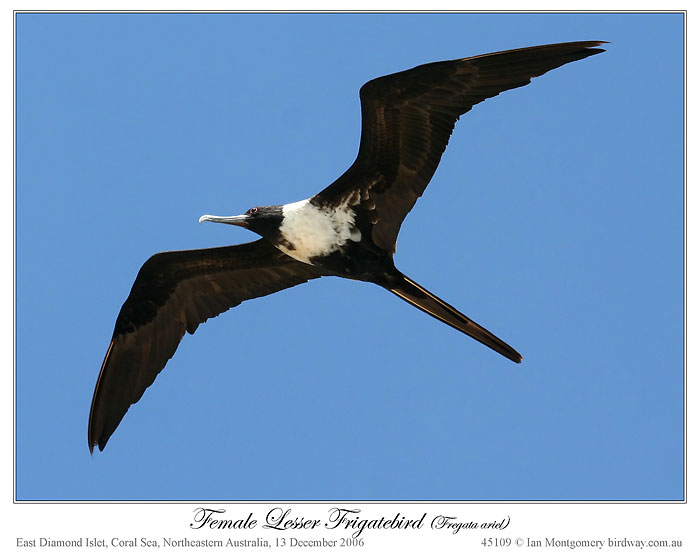
Lesser Frigatebird (Fregata ariel) female by Ian

Lesser Frigatebird (Fregata ariel) female by Ian

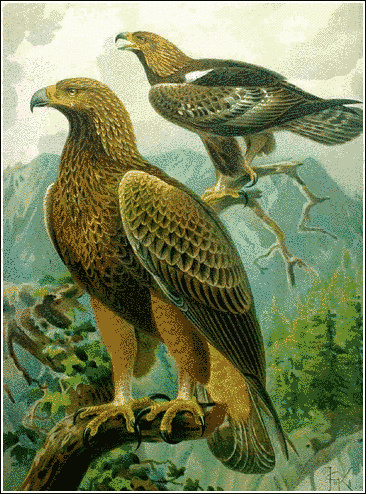
Golden Eagle ©PD

Golden Eagle ©PD

Hey kids! What do birds bring to your mind? To me, the Golden Eagle, they are free from this old world. I mean that they are free from gravity! They can soar above the trees and above the beautiful mountains that God created! Speaking of gravity-Jesus walked on water! Peter walked on water and Jesus was taken away in the clouds when He went back to Heaven!

And when Jesus had spoken these things, while they beheld, he was taken up; and a cloud received him out of their sight…THIS SAME JESUS, WHICH IS TAKEN UP FROM YOU INTO HEAVEN, SHALL SO COME IN LIKE MANNER AS YE HAVE SEEN HIM GO INTO HEAVEN” (Acts 1:9,11)


Jesus and the Bible has promised that He will return to this very earth someday in the future! It might even be today! Please make sure that you are born again, that you are saved, that you have received Him, a free GIFT OF ETERNAL LIFE from the Father! I for one want to live forever.

 Birds are free, they can soar to new heights, they are very colorful, and just full of beautiful colors! They make their nests in many different places! Sometimes in a tree, yes in a nest that they have made. Sometimes they live on the side of a cliff or they burrow a whole in the ground like some owls. Some birds will nest right on the ground. The cool thing is that God takes care of them and He takes care of us every day.
Painted Bunting (Passerina ciris) ©©Flickr

Painted Bunting (Passerina ciris) ©©Flickr

Hey, how’s that journal coming along? Have you spotted any birds? Have you entered that in your journal? Have you run across an interesting bird story? Do any of you have a question for the Golden Eagle? Free flight, fantastic colors, and fun builders of nests! The amazing creation of birds shows us the amazing ability of an awesome God! If you look around your room or you house, do you see any material things? Of course you do. And you know that each thing you see and touch, somebody made the things that you are looking at. They did not get there by pure chance, did they? Well, this earth, the Universe, you and me, the birds did not just get here by chance! That is what evolution teaches, but that doesn’t even make any sense. Nothing happens by pure chance. If that was true, there would be no purpose or reason for being in existence at all. The Bible teaches us that God made everything.

 For in six days the Lord made heaven and earth, the sea, and all that in them is… (Exodus 20:11)
That means that God made EVERYTHING and that He controls everything. There are no accidents with God. God is in control of each thing that happens around us and each thing that happens through us! Keep your eyes open, your ears alert, and watch today for the things that God is doing in your life and around you. I am certain that Jesus Christ, who is God, will be working TODAY!
Bye until the next adventure, I see a fish in my pond and I am hungry.
*
More from Golden Eagle

The Wordless Book

*

Introduction to Bible Birds

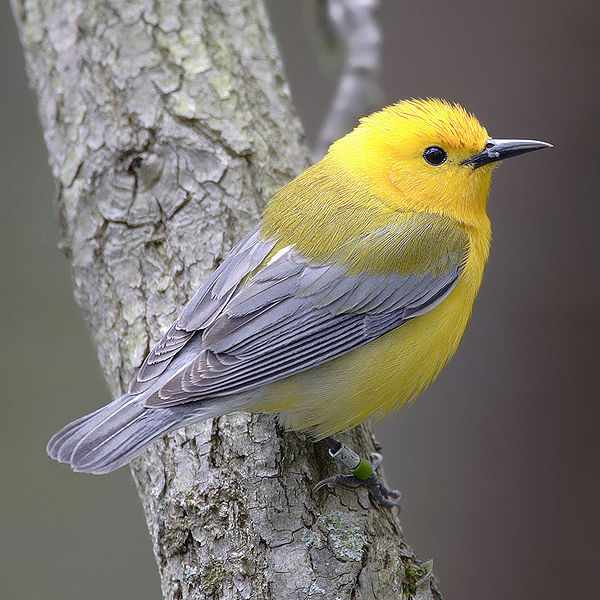
Prothonotary Warbler (Protonotaria citrea) ©WikiC

Prothonotary Warbler (Protonotaria citrea) ©WikiC

Introduction to Bible Birds

This is an Introduction to the Bible Birds. We have been adding many things about the birds in the Bible and other birds that are not named in the Bible, but the Lord made all the birds.

On Day Five (5) of creation, the birds were created. They didn’t just happen. They were designed by God and each one is different. Each one was given just what it needs to live, eat, and make more birds.

Genesis 1:20-23 NKJV
(20) Then God said, “Let the waters abound with an abundance of living creatures, and let birds fly above the earth across the face of the firmament of the heavens.”
(21) So God created great sea creatures and every living thing that moves, with which the waters abounded, according to their kind, andevery winged bird according to its kind. And God saw that it was good.
(22) And God blessed them, saying, “Be fruitful and multiply, and fill the waters in the seas, and let birds multiply on the earth.”
(23) So the evening and the morning were the fifth day.

I know there are some big words in those verses, but the bold letters help find important words.

Did you see the “let birds multiply”? That doesn’t mean they do math. It means that they were to have baby birds, then the baby could grow up and have more baby birds. Then there would be lots of birds.

We will be telling you more soon. Come back and find out about the many birds in the bible.

See:

Bible Birds

Birds of the Bible

Wordless Birds

*

(Sept 1 – Opened up a new section of the blog called Kids Section – Bible Birds. This is the Introduction for their Bible Birds section, which has links to easier reading articles or ones written for the younger folks.

Some of these articles were here already and others were written just for the Birds of the Bible For Kids blog.  We are placing a copy of all articles on this blog. This will save much duplications. Also, the younger readers will also have the benefit of the wealth of information here also.

Expect to see more articles for both our regular readers and our younger readers. You might be surprised how interesting they can be.

Eagles and Ravens

Bald Eagle (Haliaeetus leucocephalus) by PattiKru

Bald Eagle (Haliaeetus leucocephalus) by PattiKru

EAGLES AND RAVENS

He is Very Brave

He is Very Brave


“Some white-tailed eagles were boasting one day of their bravery,” commenced daddy. “They were also saying how fine they were in every way and that their very name meant something splendid and free and strong.

“As a matter of fact, though the white-tailed eagles won’t admit it, they are less brave than any of the eagle families.
“The ravens are not kindly at all and they love to fight. They had often thought it would be great sport to have those ‘silly white-tailed eagles,’ as they called them, admit that they were not brave and have their leader beg for mercy from General Raven.
“And, as you can imagine, when Brother Black Raven heard the eagles boasting he knew it was high time to begin and frighten them.
“So he called all the ravens together. Some of them were having their naps, but as soon as Brother Black Raven called them, up they got in a great hurry, spread their wings and drilled a little bit just like soldiers. Only instead of marching they flew.
“As General Raven came near the nest of the white-tailed eagles, he said in a very queer, croaking sort of voice:
“‘Good-morning!’ That was rather mean of him to say, for, of course, he didn’t really wish them a ‘Good-morning.’
“‘Do you want to fight?’ asked General Raven.
“Still not a sound from the eagles. There was a slight fluster and trembling, which the ravens could hear and which made them grin with delight, but the eagles never said a word. They didn’t even look at the ravens! For they were so frightened they didn’t dare look at them, and they kept thinking, ‘Oh, won’t those awful ravens and their ugly old general go away?’ The eagles, of course, thought the ravens were very ugly because they were so afraid of them.
“‘For the last time, do you want to fight us, eh?’ asked General Raven. And still the eagles said not a word—nor made a sound. ‘Well, let me say then for all of us,’ said General Raven, ‘that we think you’re very cowardly, and we heard you talking before we came of your bravery. We wouldn’t fight you because you’re afraid of us, but you’ll have to admit it after this,’ and with a deep chuckle off went General Raven and his followers.
“The eagles did not go on boasting, but they were very contented that the ravens had gone away!”

Northern Raven (Corvus corax) by Kent Nickell

Northern Raven (Corvus corax) by Kent Nickell

Lee’s Addition:

For I say, through the grace given to me, to everyone who is among you, not to think of himself more highly than he ought to think, but to think soberly, as God has dealt to each one a measure of faith. (Romans 12:3 NKJV)

By pride comes nothing but strife, But with the well-advised is wisdom. (Proverbs 13:10 NKJV)

We should be careful not to think too much or ourselves or boast. We can have confidence through Christ, but should never get “proud.”

*

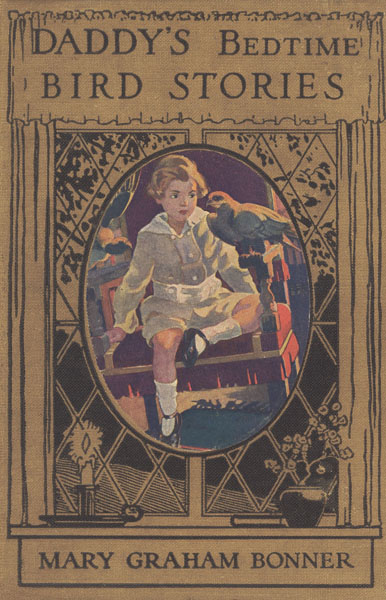
From Daddy’s Bedtime Bird Stories – Gutenberg ebooks By Mary Graham Bonner With four illustrations in color by Florence Choate and Elizabeth CurtisDaddys Bedtime Story ImagesThese stories first appeared in the American Press Association Service and the Western Newspaper Union.


Many of the sketches in this volume are the work of Rebecca McCann, creator of the “Cheerful Cherub,” etc.Daddy's Bedtime Bird Stories by Mary Graham Bonner - 1917Daddy’s Bedtime Bird Stories by Mary Graham Bonner – 1917

*

Links:

Painted Bunting (Passerina ciris) ©©Flickr


  Bird Tales


  Daddy’s Bedtime Bird Stories


Spanish Sparrow (Passer Hispaniolensis) female ©WikiC


  Wordless Birds


*

Poor Old Mr. Owl’s Toothache

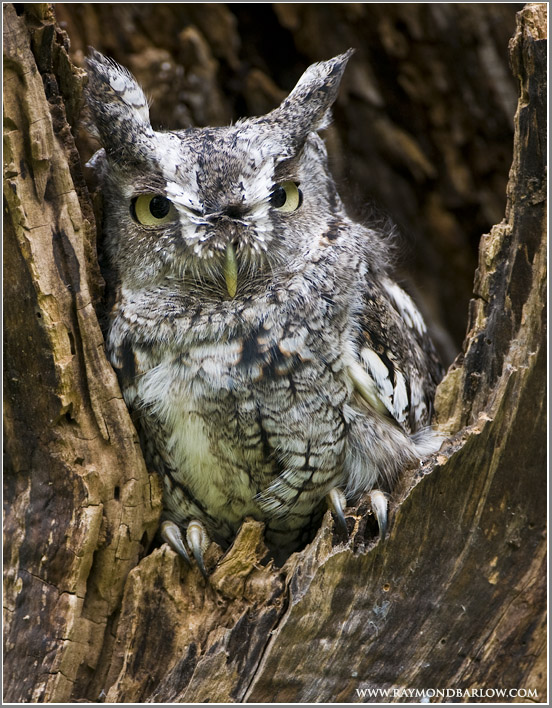
Western Screech Owl (Megascops kennicottii)(captive) by Raymond Barlow

Western Screech Owl (Megascops kennicottii)(captive) by Raymond Barlow

POOR OLD MR. OWL’S TOOTHACHE

"I'm ready now," said Dr. Raven.

“I’m ready now,” said Dr. Raven.


Evelyn had been eating a great deal of candy—so much that it had given her a very bad toothache—and when daddy came home he found her curled up on the bed looking very mournful. Jack had been trying to comfort her, but he hadn’t been able to help much. So when he heard daddy’s step he called, “Come along, daddy, and tell a story especially for Evelyn to make her forget about her toothache.”

“That is too bad,” said daddy. “I’m sorry my little girl has a toothache. I’ll see if I can’t tell a good story so you’ll feel better and will be able to sleep and have pleasant dreams. I think I’ll tell you about old Mr. Owl, for he had the most terrible toothache one time. He had been eating a great many sugar-plums and lots of candy, and before he knew it one of his teeth was aching so hard he could hardly stand it. ‘Oh, dear,’ he moaned; ‘my tooth, my poor tooth! Whatever will I do?’

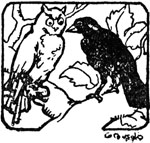
“It ached so badly for several days that he decided at last he’d go to the dentist. Dr. Raven was considered the very best dentist. So off went Mr. Owl to his office in the pine tree. When he arrived there he saw Dr. Raven busily fixing Mrs. Crow’s teeth. She was leaning back on a stump of wood which Dr. Raven used as his dental chair. She had a rubber band over her mouth and looked very miserable. It quite frightened Mr. Owl, but he tried to be brave and sat down, put on his spectacles and began to read one of Dr. Raven’s magazines. In a few moments Mrs. Crow got out of the chair, and Dr. Raven said, ‘I’m ready for you now, Mr. Owl.’ So Mr. Owl took off his spectacles, got into Dr. Raven’s chair and leaned his head back. ‘Open wide,’ said Dr. Raven. Mr. Owl opened his mouth as wide as he could, and Dr. Raven looked inside. First he looked over his upper teeth, then over his lower teeth, and finally he began to poke at one back tooth with such energy that Mr. Owl screamed, ‘That’s my sore tooth, and you’re hurting it terribly!

Northern Raven (Corvus corax) by Raymond Barlow

Northern Raven (Corvus corax) by Raymond Barlow

“‘Yes,’ said Dr. Raven; ‘the tooth is a wisdom tooth, and it is much inflamed, so I’ll take it out right away.’ He reached for his pinchers, but Mr. Owl said: ‘If you take out my wisdom tooth I’ll lose my wisdom, and I’m known all over the world for my wisdom. I simply won’t have it.’

“And before Dr. Raven had a chance to speak Mr. Owl had jumped out of the chair and flown off. When he got home his tooth still hurt, but the next morning it felt much better, and the next day it was all well. ‘I know what all the trouble was,’ said Mr. Owl. ‘I ate too much candy. I’ll never eat too much again, for I cannot lose any of my wisdom teeth when I’m known as the wisest bird.'”

“Daddy,” said Jack, “your story would be a very good one, only owls don’t have teeth.” Daddy smiled, and as the children laughingly went to bed, Evelyn said her toothache had gone.


Lee’s Addition:

The fear of the LORD is the beginning of wisdom, And the knowledge of the Holy One is understanding. (Proverbs 9:10 NKJV)

For the LORD gives wisdom; From His mouth come knowledge and understanding; (Proverbs 2:6 NKJV)

What can I add to that story, other than just enjoy it. Also, Owls are known to be wise, but true wisdom comes from God.

Owls and Ravens are both Bible Birds.

*

Another Bird Tale From

Daddy’s Bedtime Bird Stories – Gutenberg ebooks

By

Mary Graham Bonner

With four illustrations in color by
Florence Choate and Elizabeth Curtis


Daddys Bedtime Story Images

These stories first appeared in the American Press Association Service and the Western Newspaper Union.


Many of the sketches in this volume are the work of Rebecca McCann, creator of the “Cheerful Cherub,” etc.

Daddy's Bedtime Bird Stories by Mary Graham Bonner - 1917
Daddy’s Bedtime Bird Stories by Mary Graham Bonner – 1917

*

Links:

Painted Bunting (Passerina ciris) ©©Flickr


  Bird Tales


  Daddy’s Bedtime Bird Stories


  ABC’s of the Gospel


*

Bible Birds – Peacocks in South Carolina

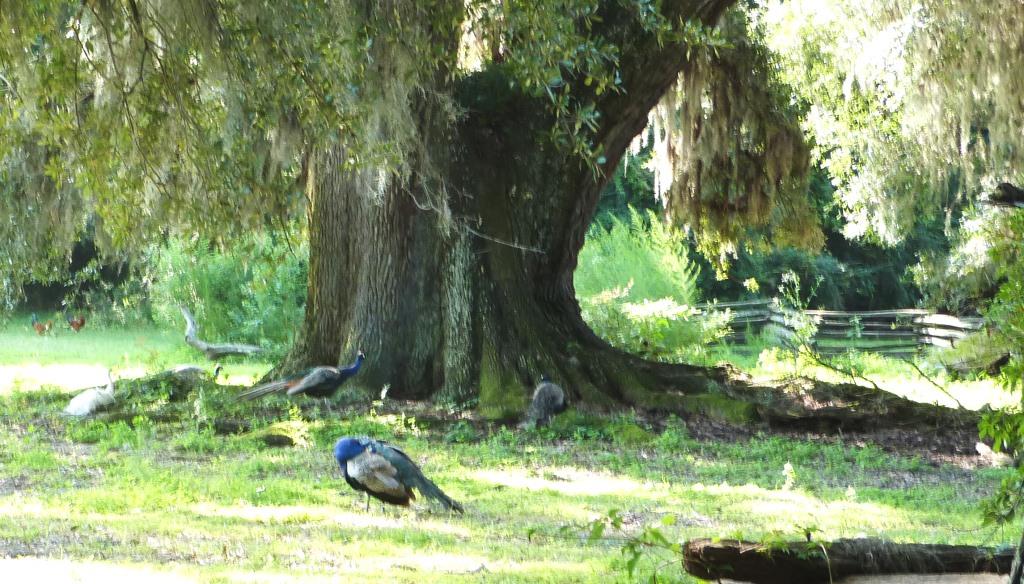
Peacocks at entrance to Magnolia Plantation

Peacocks at entrance to Magnolia Plantation


For the king had at sea a navy of Tharshish with the navy of Hiram: once in three years came the navy of Tharshish, bringing gold, and silver, ivory, and apes, and peacocks. (1 Kings 10:22)

We have just arrived home from a shortened vacation due to a health issue. We got as far as Charleston, S. C. before turning around and drifting back home.

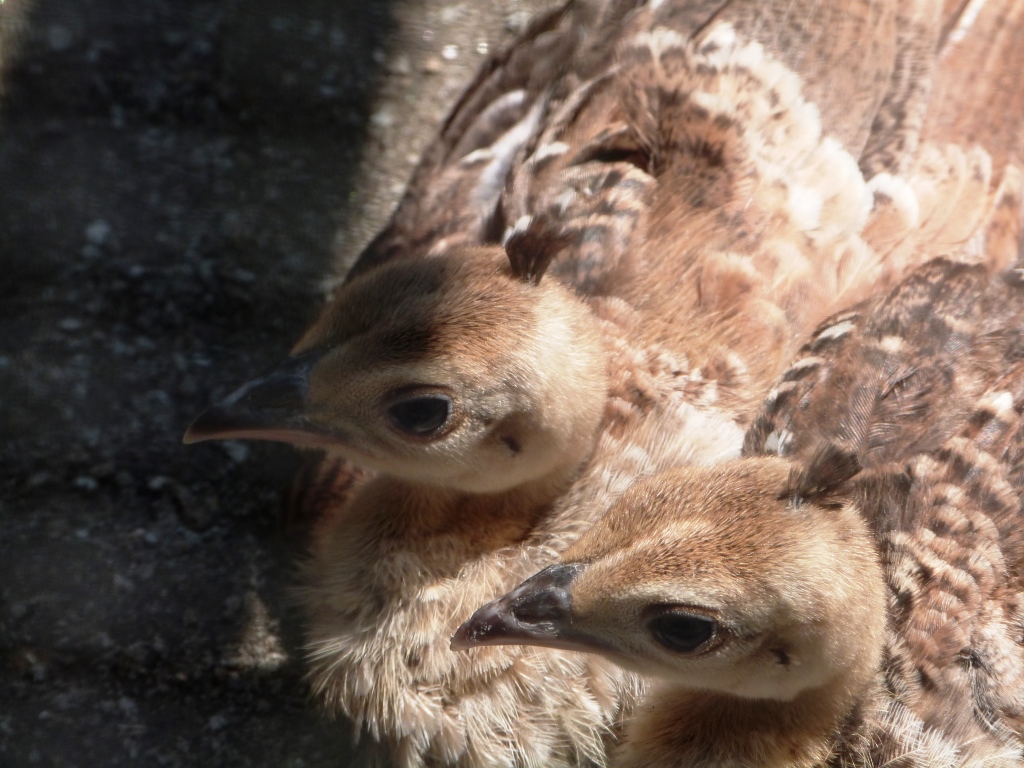
We were able to visit a few places, the Magnolia Plantation, for one, in Charleston. We were greeted at the entrance by at least 6 or 7 Peacocks. Also at the Petting Zoo, they had two female Peafowl with very young peachicks. As far as I could tell, these were Indian Peafowl (Pavo cristatus). Peacocks are actually Peafowl and belong to the Pheasant & Allies Phasianidae Family.

I have never seen peachicks before and thought it cute that they have the little tufts on their heads that will eventually grow those top feathers.

Peachicks at Magnolia Gardens by Lee

Peachicks at Magnolia Gardens by Lee

“First, the “Peacocks” are the males. The females are called “Peahen” and their chicks are called “Peachicks.”  Collectively the birds are called Peafowl. They all belong to the Phasianidae – Pheasants, Fowl & Allies Family.” (From Birds of the Bible – Peacocks II


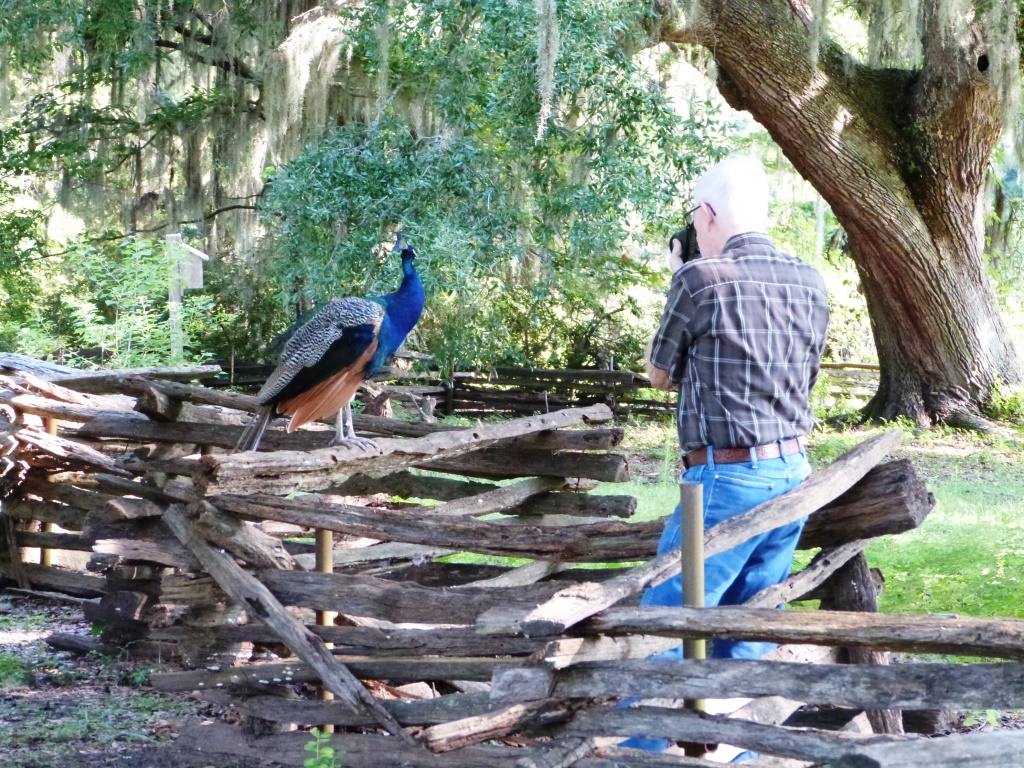
Here are some of the photos of the peacocks there at the Plantation.

Dan photographing one of the Peacocks

Dan photographing one of the Peacocks

To find out more about Peacocks (Peafowl):

*

PS. Sorry about the quickly edited photos. I’ve had the blog on “auto-pilot” for over a week, but ran out of pre-scheduled blogs.

*

The Seagulls Move To Blue Cove

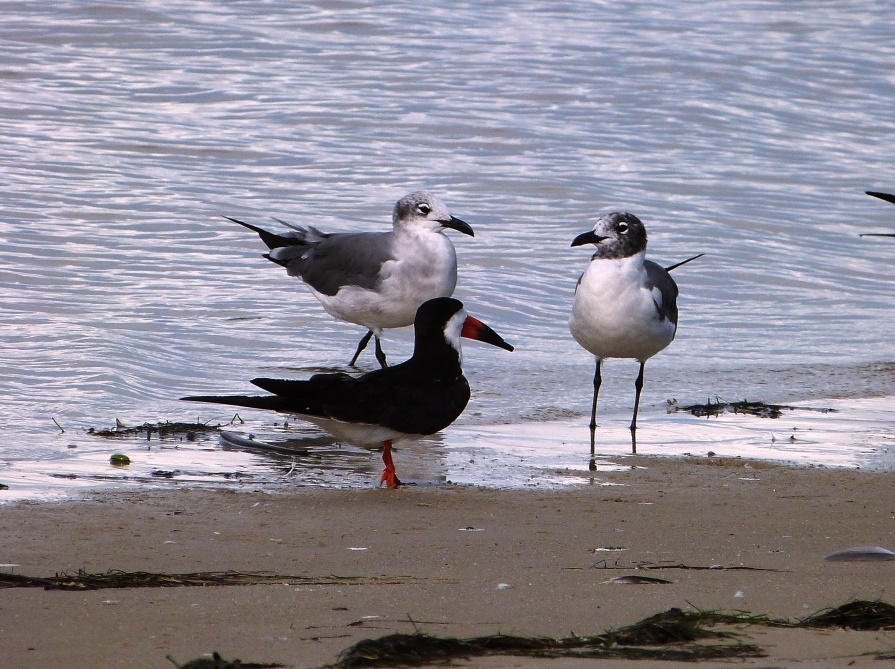
Laughing Gull and Skimmer by Lee

THE SEAGULLS MOVE TO BLUEY COVE

Daddys Bedtime Story Images (5)

“Mr. and Mrs. Seagull didn’t really know what to do,” said daddy. “They loved their home, which was in a big harbor, for they enjoyed seeing the boats pass and hearing the different whistles. All kinds of boats passed—ferryboats, sailboats, old fishing-boats, great big boats that went across the ocean, and little tugboats.

“The seagulls would fly overhead, and then they’d land on top of the water, but they never could stay there long, as the boats would come along, and they would have to fly off. Of late Mr. and Mrs. Seagull, although they were still as fond of their home as ever, became rather worried, for the little seagulls didn’t seem to be able to get out of [p.14]the way of the boats as quickly as the old seagulls could. Mr. and Mrs. Seagull were afraid that one of them might get hurt by a boat.

“Of course the little seagulls were quite certain that nothing like that would ever happen, but one day it did.

“They were playing tag on the surface of the water and so interested in their game that they didn’t notice until too late that a great huge boat was coming along. The captain of the boat had blown the whistle to scare the seagulls away. They hadn’t heard it at all, so busy were they playing, and it hit poor little Bluey Seagull. One of the others called out:

“‘Oh, fly up quickly, Bluey!’ He was not badly hit, for the pilot of the boat had seen the seagulls and made the boat slow down.

“Bluey was frightened almost out of his wits, but with the encouragement of the other seagulls he managed to fly off.

“When Mr. and Mrs. Seagull saw what had happened to Bluey they were horrified and quickly flew off with him, all the other little seagulls following.

“They flew as far from the boats as they could, for, now that Bluey had been hit, they didn’t think life in the harbor where the boats passed was so attractive. In fact, they decided they would never go back there again.

“They flew so far that they reached a little cove at the basin of the harbor, and when Mr. Seagull saw it he said:

“‘This will be our new home.’

“Mrs. Seagull said:

“‘We will never leave this home until all little seagulls are grown up, for then they will always be safe and can play all they want to without being afraid of getting hit by the big boats.’

“So it was decided, and the cove was named Bluey Cove because it had been on Bluey’s account that they had moved there. And of all the seagulls he was the happiest and most relieved.”


Laughing Gull (Leucophaeus atricilla) by Lee at Honeymoon Is SP

Laughing Gull (Leucophaeus atricilla) by Lee at Honeymoon Is SP

Lee’s Addition:

So let’s not sleepwalk through life like those others. Let’s keep our eyes open and be smart. (1 Thessalonians 5:6)

Do you get so involved with what you are doing that you forget to be aware of danger. If a ball go into the street, do you forget and just run after it, not paying attention to cars. Your parents can help you think of other ways to stay alert.

As Christians, we are supposed to watch, and pray, so that we don’t do bad things (sin).

Seagulls are members of the Laridae – Gulls, Terns & Skimmers Family and are known to fly very long distances. So it wouldn’t have been hard for them to fly to a safe place.

Another Bird Tales

From

Daddy’s Bedtime Bird Stories – Gutenberg ebooks

By

Mary Graham Bonner

With four illustrations in color by
Florence Choate and Elizabeth Curtis

Daddys Bedtime Story Images


These stories first appeared in the American Press Association Service and the Western Newspaper Union.


Many of the sketches in this volume are the work of Rebecca McCann, creator of the “Cheerful Cherub,” etc.

Daddy's Bedtime Bird Stories by Mary Graham Bonner - 1917

*
Daddy’s Bedtime Bird Stories by Mary Graham Bonner – 1917

*

Links:

Painted Bunting (Passerina ciris) ©©Flickr


  Bird Tales


  Daddy’s Bedtime Bird Stories


Spanish Sparrow (Passer Hispaniolensis) female ©WikiC


  Wordless Birds


Laridae – Gulls, Terns & Skimmers Family


  Charadriiformes Order (Has more Sea birds)


Laughing Gull (Leucophaeus atricilla) by Lee at Honeymoon Is SP


  Laridae – Gulls, Terns & Skimmers Family


*

The Bobolinks Have A Tea Party

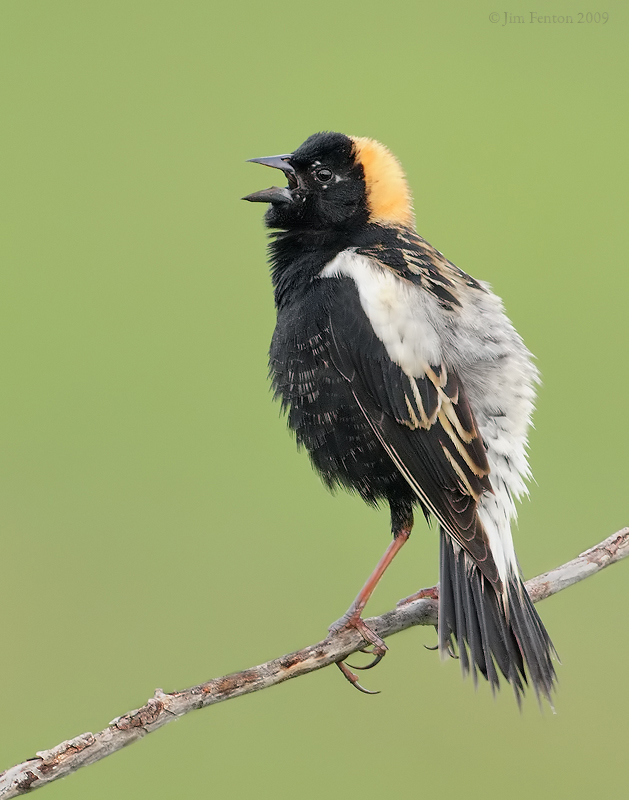
Bobolink (Dolichonyx oryzivorus) by J Fenton

Bobolink (Dolichonyx oryzivorus) by J Fenton

THE BOBOLINKS HAVE A TEA PARTY

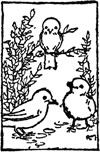
Who Should Arrive But the Fairies

Who Should Arrive But the Fairies


“The other day,” commenced daddy, “the bobolinks had an afternoon tea.

“The tea party was given for the meadow larks. The bobolinks are great friends of the meadow larks and they wanted to be the first this season to entertain them. Besides, most of the bobolinks had new summer homes and their colony was near a beautiful stream.

“You know the bobolinks always build their homes in the meadows—but they build very near a stream and their homes are always deep down in the long grass.

“They had all come to live in Waving Grassland for the summer—that is, all the bobolinks who always moved about together in the summer and winter—and many of their friends, the meadow larks, were on hand to greet them. A number of others were going to arrive in a few days—before the tea party.

“Now Waving Grassland was very beautiful country. The meadows were very large and the grass was so beautiful and so long that it always waved in the soft breezes, so that the bobolinks named their new summer place Waving Grassland.

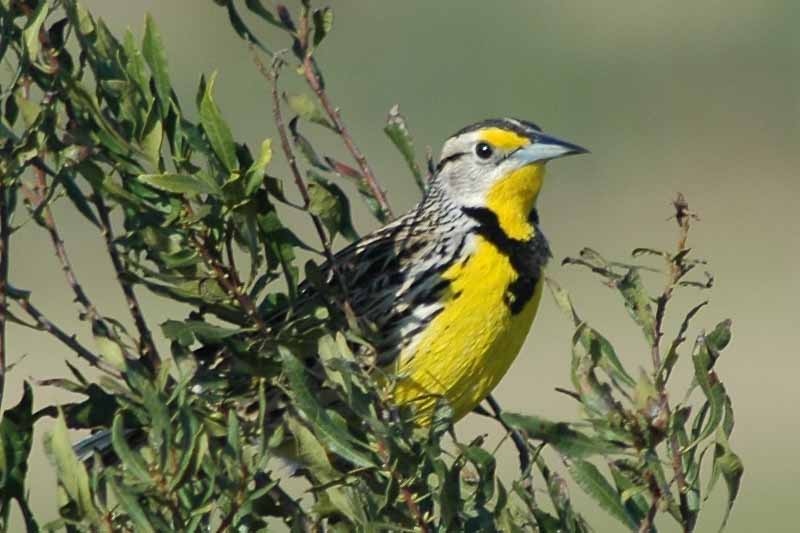
Eastern Meadowlark (Sturnella magna) by Bob-Nan

Eastern Meadowlark (Sturnella magna) by Bob-Nan

“And so the bobolinks made all their preparations for the tea party. The guests arrived dressed up in their best new summer plumage. The meadow larks came first, as they were the guests of honor.

Rose-breasted Grosbeak (Pheucticus ludovicianus) by Raymond Barlow

Rose-breasted Grosbeak (Pheucticus ludovicianus) by Raymond Barlow

“The red-breasted grosbeak family were all there looking too lovely for words. And the bluejays,

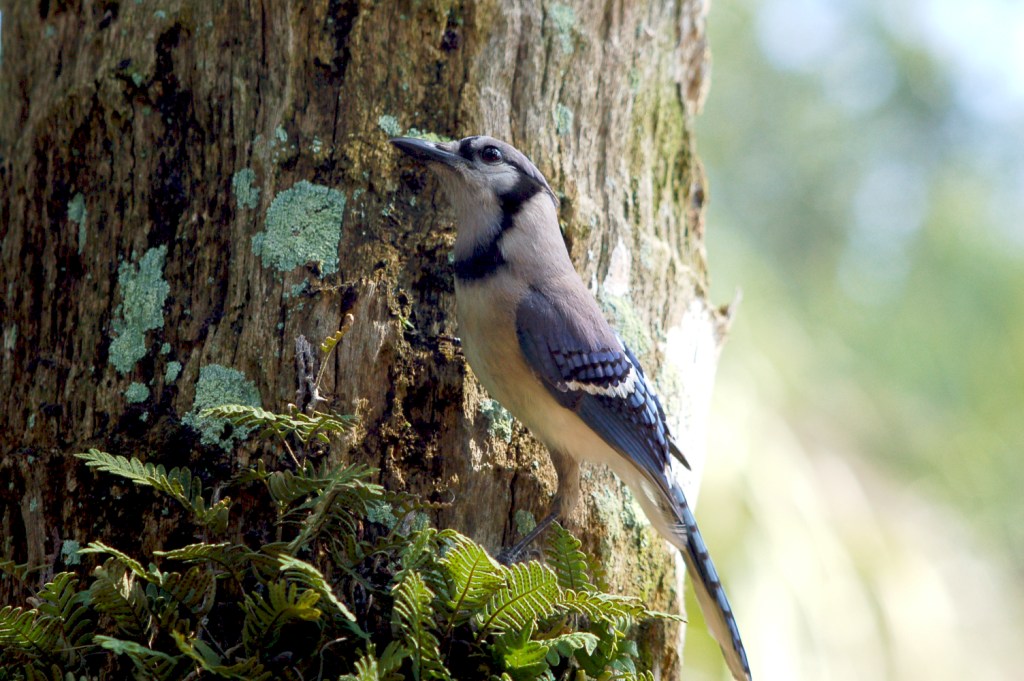
Blue Jay (Cyanocitta cristata) at Bok Tower By Dan'sPix

Blue Jay (Cyanocitta cristata) at Bok Tower By Dan’sPix

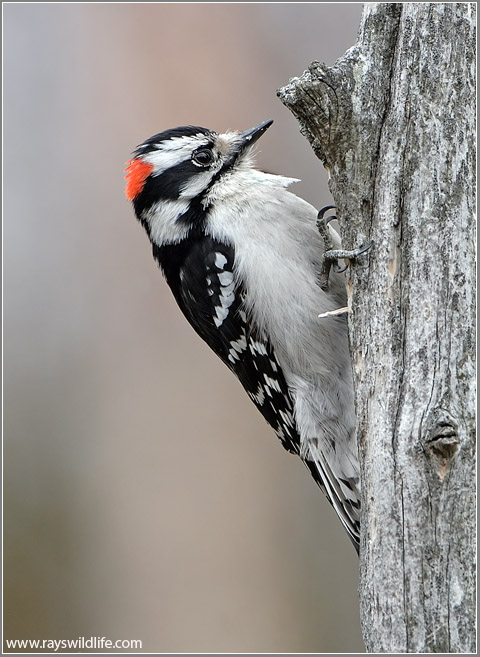
downy woodpeckers,

Downy Woodpecker (Picoides pubescens) by Raymond Barlow

Downy Woodpecker (Picoides pubescens) by Raymond Barlow

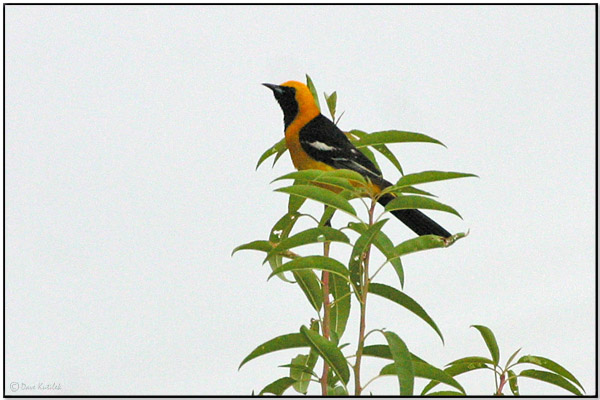
the orioles,

Hooded Oriole (Icterus cucullatus) by Daves BirdingPix

Hooded Oriole (Icterus cucullatus) by Daves BirdingPix

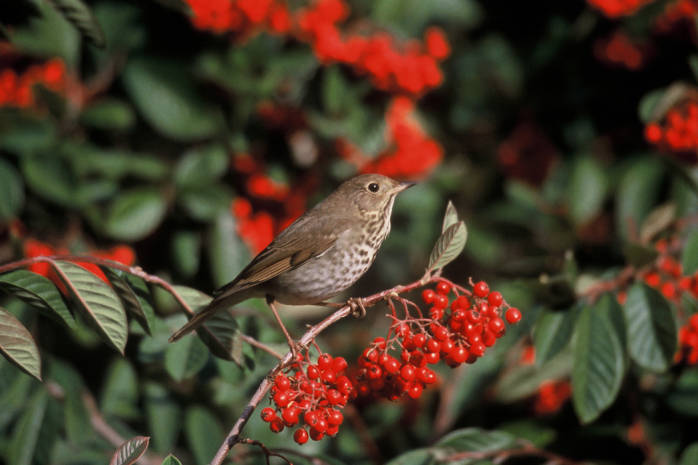
the thrush family,

Hermit Thrush (Catharus guttatus) ©USFWS

Hermit Thrush (Catharus guttatus) ©USFWS

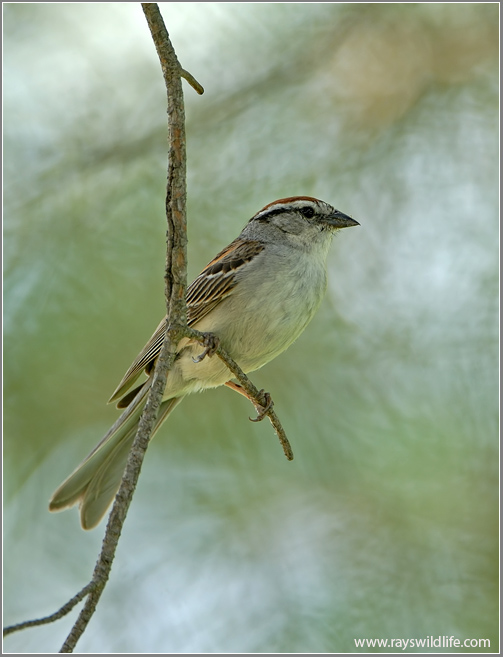
the chipping sparrows,

Chipping Sparrow (Spizella passerina) by Ray

Chipping Sparrow (Spizella passerina) by Ray

the robins,

American Robin (Turdus migratorius) eating by Jim Fenton

American Robin (Turdus migratorius) eating by Jim Fenton

the indigo birds—

Indigo Bunting (Passerina cyanea) by Raymond Barlow

Indigo Bunting (Passerina cyanea) by Raymond Barlow

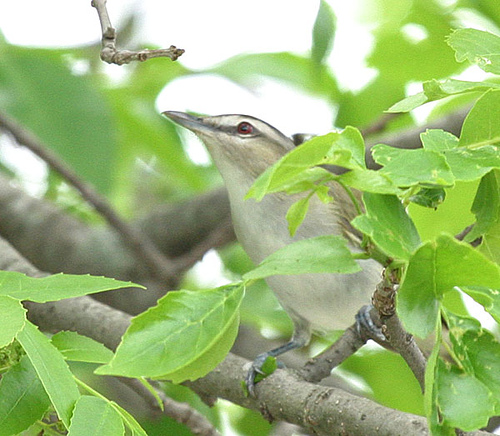
and even the shy vireos ventured forth.

Red-eyed Vireo (Vireo olivaceus) by Kent Nickell

Red-eyed Vireo (Vireo olivaceus) by Kent Nickell

Of course, usually they hate parties, but they loved the stream nearby and the beautiful country the bobolinks were living in, and they thought at least once a year they ought to be a little bit sociable and friendly with their neighbors.

“After they had all chatted together—to us it would have sounded more like chirping—the bobolinks began to serve tea.

“They had spring water for their tea—the water from the cool stream which had a deep spring within it. And this tea they served in little moss-covered stones. That gave it the most delicious flavor, and all the birds asked the bobolinks where they had found such good tea. You know in birdland they don’t ask each other where anything is bought, but where it is found! And the bobolinks told their secret.

Fairychapeltoun“But as they were drinking cup after cup—or stoneful after stoneful—of tea, who should arrive but all the fairies!

“The birds greeted the fairies with their best songs—or their way of saying ‘We’re so glad to see you’—and the bobolinks trilled with joy because they had arranged this lovely surprise for their guests.”

*


Lee’s Addition:

In that day,’ says the LORD of hosts, ‘Everyone will invite his neighbor Under his vine and under his fig tree.’ ” (Zechariah 3:10 NKJV)

Then He also said to him who invited Him, “When you give a dinner or a supper, … But when you give a feast, invite the poor, the maimed, the lame, the blind. And you will be blessed, because they cannot repay you; for you shall be repaid at the resurrection of the just.” (Luke 14:12-14 NKJV)

That was nice of the Bobolinks to invite their neighbors and friends. We also should be willing to invite and share with others our blessings. Also, it sounds like they had a lot of fun and chats. Are you friendly to those around you and willing to share. We should share and not expect to receive something in return.

The best thing we can share is our faith in the Lord Jesus Christ. ABC’s of the Gospel

Another Bird Tale From

Daddy’s Bedtime Bird Stories – Gutenberg ebooks

By

Mary Graham Bonner

With four illustrations in color by
Florence Choate and Elizabeth Curtis


Daddys Bedtime Story Images

These stories first appeared in the American Press Association Service and the Western Newspaper Union.


Many of the sketches in this volume are the work of Rebecca McCann, creator of the “Cheerful Cherub,” etc.

Daddys Bedtime Story Images
Daddy’s Bedtime Bird Stories by Mary Graham Bonner – 1917

*

Links:

Painted Bunting (Passerina ciris) ©©Flickr


  Bird Tales


  Daddy’s Bedtime Bird Stories


  ABC’s of the Gospel


Red-winged Blackbird (Agelaius phoeniceus) by Ray


  Icteridae – Oropendolas, Orioles & Blackbirds (and Bobolinks) Family


*

Farmer’s Scarecrow Protect A Corn-Field

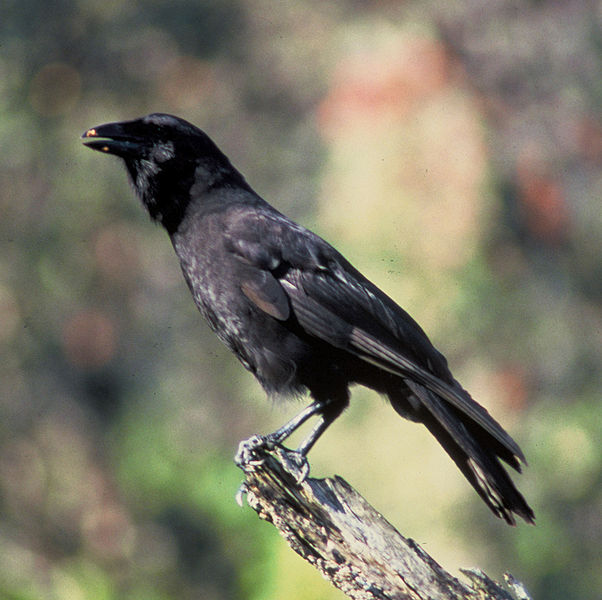
Hawaiian Crow (Corvus hawaiiensis) ©WikiC

Hawaiian Crow (Corvus hawaiiensis) ©WikiC

FARMER’S SCARECROW PROTECTS A CORN-FIELD

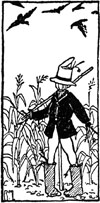
"It's a man."

“It’s a man.”

“To-night,” said daddy, “we are going to have the story of the meeting of the brownies, crows, and old Mr. Scarecrow. The crows had been giving feasts in a corn-field almost every morning bright and early before any of the big people who lived in the nearby farm-house were up. Such feasts as they did have! And one day they asked the brownies if they wouldn’t come to their next one.

“‘Caw-caw,’ said the crows together.

“‘Where are we going?’ asked one of the brownies teasingly, for they had been going around and around in circles and hadn’t reached any place.

“‘I don’t quite know,’ said Black Crown Crow, ‘it’s a question which is very hard to decide.’

“‘But we thought you had chosen a special spot,’ said one of the brownies.

“Black Crown Crow looked very sad, and his black wings seemed to droop. ‘It’s that guest I never asked. He’s causing all the trouble. How very rude it is of folks to come to a feast who aren’t invited, and to arrive before us, too. It’s very e-x-a-s-p-e-r-a-t-i-n-g!’

“‘Who is he?’ shouted the brownies, for every little while Black Crown Crow had gone ahead and then had come back. In these little trips he had seen right in the center of the corn-field a man—a real man, he thought, with a hat and a coat and trousers and boots—and carrying something which he couldn’t quite make out. It was either a great huge stick—or worse still—it was a gun. He shivered whenever he thought of that awful word gun.

“‘Caw-caw,’ again shrieked Black Crown Crow, ‘it’s a man and he has a gun—I’m sure it’s a gun. Now the rudeness of him! As if we wanted a man and a gun at our corn feast!’

“‘Oh, it was to have been a corn feast, and now the man has stopped it,’ laughed one of the brownies. ‘Well, such a joke! But to show you how nice we’ll be when we’re here ready for a party which can’t take place, we’ll give a nice party ourselves.’

“And the brownies scampered about a little grove near the corn-field, and there they made a bonfire over which they cooked some corn-meal which they had carried with them in their bags. They knew all along, ever since they’d started, where the crows wanted them to go for the feast, and they also knew that the farmer had made that scarecrow in his corn-field to frighten off Black Crown Crow and his followers.

“The brownies made a fine feast, but how they did chuckle among themselves that the pole dressed up as a man had succeeded in saving the corn for the people of the farm-house.”


American Crow (Corvus brachyrhynchos) by Daves BirdingPix

American Crow (Corvus brachyrhynchos) by Daves BirdingPix

Lee’s Addition:

Come, you children, listen to me; I will teach you the fear of the LORD. (Psalms 34:11 NKJV)

Looks like the Brownies, helped out the “exasperated” Crows and had a good laugh at the same time. The farmer was only trying to protect his crop and the crows were only trying to eat.

What can we learn?

  • The Farmer had a right to protect his food.
  • The Crows were afraid of something that wasn’t really frightening.
  • The Crows were hungry, but maybe they were “over-eating.”
  • The Brownies were helpful and provided food for them.

Consider the ravens, for they neither sow nor reap; they have no storeroom nor barn, and yet God feeds them; how much more valuable you are than the birds! (Luke 12:24 NASB)

This verse tells us that God will provide for the Ravens (and Crows, which are in the same bird family). The Crows may need to go to another field where they can be provided for. Also, are you ever afraid of something, that isn’t really scary?

If the Lord feeds the Crows and other birds, He provides for us and also helps our fears.

From

Daddy’s Bedtime Bird Stories – Gutenberg ebooks

By

Mary Graham Bonner

With four illustrations in color by
Florence Choate and Elizabeth Curtis

Daddys Bedtime Story Images


These stories first appeared in the American Press Association Service and the Western Newspaper Union.


Many of the sketches in this volume are the work of Rebecca McCann, creator of the “Cheerful Cherub,” etc.

Daddy's Bedtime Bird Stories by Mary Graham Bonner - 1917

*
Daddy’s Bedtime Bird Stories by Mary Graham Bonner – 1917

*

Links:

Painted Bunting (Passerina ciris) ©©Flickr


  Bird Tales


  Daddy’s Bedtime Bird Stories


Spanish Sparrow (Passer Hispaniolensis) female ©WikiC


  Wordless Birds


*


Mr. Plain Sparrow Calls on Ducks

House Sparrow (Passer domesticus)

House Sparrow (Passer domesticus)

MR. PLAIN SPARROW CALLS ON DUCKS

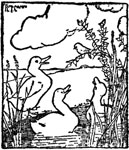
"Would you like to join us?"

“Would you like to join us?”

“It was such a hot day yesterday,” said daddy, “that Mr. Plain Sparrow simply could not get cool. You see he never goes away in the winter and so he gets used to really cold weather. On a day as hot as it was yesterday he simply doesn’t know what to do with himself. He called himself Mr. Plain Sparrow because that was exactly what he was. He was just a plain, ordinary sparrow, and he thought it such a wise thing to call himself that—and not put on any silly frills. He prided himself on being sensible.

“‘If there’s anything in this world I hate,’ he said, ‘it’s pretending to be what a creature is not.’ And so he called himself by the name of Mr. Plain Sparrow, and his wife was Mrs. Plain Sparrow, and his children were the Plain Sparrow Children.

“‘I think,’ he said, ‘that I will take a walk or a fly to the duck pond in the park nearby. Yes, it seems to me that’s an excellent scheme. I would like to see those ducks, for they’re right smart creatures, and I like to hear their funny quack-quack talk.’

“‘What are you up to, ducks?’ he called, as he flew over the pond, and then perched on a small bush that was at one side.

“‘We’re well,’ said the ducks. ‘We’re enjoying a cooling drink between swims. Would you like to join us? It’s just tea time.’

“‘Tea time, eh?’ said Mr. Plain Sparrow. ‘And would you give a fellow a good, fat worm in place of bread and butter and cake?’

“‘Quack-quack! ha, ha!’ laughed the ducks. ‘We don’t like bread and butter and cake. But we can’t get the worm for you just now, as we’re not very good at digging on such a hot day!’

“‘Well, then, how about my digging for a couple of them, and then joining all you nice ducks when you’re ready to have your tea?’

“‘Splendid idea,’ quacked the ducks. And off went Mr. Plain Sparrow to a soft place in the earth where he thought there would be some good worms.

“Pretty soon he came back with some fine ones, and he sat on his perch and ate them, while the ducks nibbled at their food, and had drinks of pond water, which they called tea. Mr. Plain Sparrow flew down and took sips of water by the side of the pond, and in one very shallow place he had some nice showerbaths while the ducks were having swims. And before he left he told the ducks what a good time he had had, and how nice and cool he felt.

“‘Well, you’re so friendly we’re glad you came,’ quacked the ducks once again.”


House Sparrow by Nikhil Devasar

Lee’s Addition:

A man who has friends must himself be friendly, But there is a friend who sticks closer than a brother. (Proverbs 18:24 NKJV)

Here is another Bird Tale to remind us to be friendly. Even though Mr. Plain Sparrow was having a rough day, he still showed himself friendly to others around him. When things don’t go the way we want, do we become unfriendly to those around us? What should we do?

Who is the friend who sticks closer than a brother? See ABC’s of the Gospel


From

Daddy’s Bedtime Bird Stories – Gutenberg ebooks

By

Mary Graham Bonner

With four illustrations in color by
Florence Choate and Elizabeth Curtis

Daddys Bedtime Story Images


These stories first appeared in the American Press Association Service and the Western Newspaper Union.


Many of the sketches in this volume are the work of Rebecca McCann, creator of the “Cheerful Cherub,” etc.

Daddy's Bedtime Bird Stories by Mary Graham Bonner - 1917

*
Daddy’s Bedtime Bird Stories by Mary Graham Bonner – 1917

*

Links:

Painted Bunting (Passerina ciris) ©©Flickr


  Bird Tales


  Daddy’s Bedtime Bird Stories


Spanish Sparrow (Passer Hispaniolensis) female ©WikiC


  Wordless Birds


*

King Solomon and The Birds – Part 2

Eurasian Hoopoe (Upupa epops) by W Kwon

Eurasian Hoopoe (Upupa epops) by W Kwon

King Solomon and The Birds ~ from The Curious Book of Birds

King Solomon and The Birds – Part 2


Cur Book of Birds letter-one day when Solomon was journeying across the desert, he was sorely distressed by the heat of the sun, until he came near to fainting. Just then he spied a flock of his friends the Hoopoes flying past, and calling to them feebly he begged them to shelter him from the burning rays.

The King of the Hoopoes gathered together his whole nation and caused them to fly in a thick cloud over the head of Solomon while he continued his journey. In gratitude the wise King offered to give his feathered friends whatever reward they might ask.

For a whole day the Hoopoes talked the matter over among themselves, then their King came to Solomon and said to him,—

“We have considered your offer, O generous King, and we have decided that what we most desire is to have, each of us, a golden crown on his head.”

King Solomon smiled and answered, “Crowns of gold shall you have. But you are foolish birds, my Hoopoes; and when the evil days shall come upon you and you see the folly of your desire, return here to me and I will help you yet again.”

So the King of the Hoopoes left King Solomon with a beautiful golden crown upon his head. And soon all the Hoopoes were wearing golden crowns. Thereupon they grew very proud and haughty. They went down by the lakes and pools and strutted there that they might admire themselves in the water mirrors. And the Queen of the Hoopoes became very airy, and refused to speak to her own cousin and to the other birds who had once been her friends.

There was a certain fowler who used to set traps for birds. He put a piece of broken mirror into his trap, and a Hoopoe spying it went in to admire herself, and was caught. The fowler looked at the shining crown upon her head and said, “What have we here! I never saw a crown like this upon any bird. I must ask about this.”

So he took the crown to Issachar, the worker in metal, and asked him what it was. Issachar examined it carefully, and his eyes stuck out of his head. But he said carelessly, “It is a crown of brass, my friend. I will give you a quarter of a shekel for it; and if you find any more bring them to me. But be sure to tell no other man of the matter.” (A shekel was about sixty-two cents.)

After this the fowler caught many Hoopoes in the same way, and sold their crowns to Issachar. But one day as he was on his way to the metalworker’s shop he met a jeweler, and to him he showed one of the Hoopoes’ crowns.

“What is this, and where did you find it?” exclaimed the jeweler. “It is pure gold. I will give you a golden talent for every four you bring me.” (A talent was worth three hundred shekels.)

Now when the value of the Hoopoes’ crowns was known, every one turned fowler and began to hunt the precious birds. In all the land of Israel was heard the twang of bows and the whirling of slings. Bird lime was made in every town, and the price of traps rose in the market so that the trap-makers became rich men. Not a Hoopoe could show his unlucky head without being slain or taken captive, and the days of the Hoopoes were numbered. It seemed that soon there would be no more Hoopoes left to bewail their sad fate.

At last the few who still lived gathered together and held a meeting to consider what should be done, for their minds were filled with sorrow and dismay. And they decided to appeal once more to King Solomon, who had granted their foolish prayer.

Flying by stealth through the loneliest ways, the unhappy King of the Hoopoes came at last to the court of the King, and stood once more before the steps of his golden throne. With tears and groans he related the sad fortune which had befallen his golden-crowned race.

King Solomon looked kindly upon the King of the Hoopoes and said, “Behold, did I not warn you of your folly in desiring to have crowns of gold? Vanity and pride have been your ruin. But now, that there may be a memorial of the service which once you did me, your crowns of gold shall be changed into crowns of feathers, and with them you may walk unharmed upon the earth.”

In this way the remaining Hoopoes were saved. For when the fowlers saw that they no longer wore crowns of gold upon their heads, they ceased to hunt them as they had been doing. And from that time forth the family of the Hoopoes have flourished and increased in peace, even to the present day.


Lee’s Addition:

When pride comes, then comes dishonor, But with the humble is wisdom. (Proverbs 11:2 NASB)

Vanity means – “too much pride in oneself or in how one looks.”

Pride can mean – “a sense of one’s own value that is too high.” or “an inborn feeling of self-worth.” (One of these definitions is good and the other bad.)

Was our King of the Hoopoes showing good or bad pride? When we think too much of ourself and think we are better or nicer looking. (“Look at me, I have a gold crown.”)

You could work hard on a project and win a gold ribbon or metal for that effort. If you wore that ribbon around your neck, would your attitude about it be a good or bad pride?

Praise the LORD! Oh, give thanks to the LORD, for He is good! For His mercy endures forever. (Psalms 106:1 NKJV)

Links:

King Solomon and The Birds – Part 1

King Solomon and The Birds – Part 2

King Solomon and The Birds – Part 3


Eurasian Hoopoe (Upupa epops) by Peter Ericsson


  Hoopoes – Upupidae Family


Painted Bunting (Passerina ciris) ©©Flickr


  Bird Tales


Curious Book of Birds - Cover


  The Curious Book of Birds


Spanish Sparrow (Passer Hispaniolensis) female ©WikiC


  Wordless Birds


Fixed Daddy’s Bedtime Bird Stories

Daddys Bedtime Story Images (1)

Daddy’s Bedtime Bird Stories had some broken links because of a change in Gutenberg’s policy. They do not want links to their articles and photos. Long story short, I fixed them and now they should be okay. I also added photo links since I had to redo all of them. Here are the stories so far. I realized there are many stories yet to be told yet. Stay tuned!

(If you should find any broken links, please leave a comment on that story so it can be fixed. Thanks.)

These are the ones available for reading:

*

Links:

Painted Bunting (Passerina ciris) ©©Flickr


  Bird Tales


  Daddy’s Bedtime Bird Stories


Spanish Sparrow (Passer Hispaniolensis) female ©WikiC


  Wordless Birds


*