McGuffey’s 6th Grade Reader – The Morning Oratorio

Chipping Sparrow (Spizella passerina) by Quy Tran

Chipping Sparrow (Spizella passerina) by Quy Tran

“He sends forth springs in the valleys; They flow between the mountains; They give drink to every beast of the field; The wild donkeys quench their thirst. Beside them the birds of the heavens dwell; They lift up their voices among the branches.” (Psalms 104:10-12 NASB)

McGuffey Readers were a series of graded primers for grade levels 1-6. They were widely used as textbooks in American schools from the mid-19th century to the mid-20th century, and are still used today in some private schools and in homeschooling.

Here is a story of The Oratorio from the Sixth Grade Reader. (From Gutenberg) Pictures are current photos.

hairbird

Noun (plural hairbirds) – birdSpizella passerina, the chipping sparrow. [from Your Dictionary]

XI. THE MORNING ORATORIO. (90)

Wilson Flagg, 1806-1884, was born in Beverly, Mass. He pursued his academical course in Andover, at Phillips Academy, and entered Harvard College, but did not graduate. His chief Works are: “Studies in the Field and Forest,” “The Woods and Byways of New England,” and “The Birds and Seasons of New England.”

Nature, for the delight of waking eyes, has arrayed the morning heavens in the loveliest hues of beauty. Fearing to dazzle by an excess of delight, she first announces day by a faint and glimmering twilight, then sheds a purple tint over the brows of the rising morn, and infuses a transparent ruddiness throughout the atmosphere. As daylight widens, successive groups of mottled and rosy-bosomed clouds assemble on the gilded sphere, and, crowned with wreaths of fickle rainbows, spread a mirrored flush over hill, grove, and lake, and every village spire is burnished with their splendor.

At length, through crimsoned vapors, we behold the sun’s broad disk, rising with a countenance so serene that every eye may view him ere he arrays himself in his meridian brightness. Not many people who live in towns are aware of the pleasure attending a ramble near the woods and orchards at daybreak in the early part of summer. The drowsiness we feel on rising from our beds is gradually dispelled by the clear and healthful breezes of early day, and we soon experience an unusual amount of vigor and elasticity.

During the night, the stillness of all things is the circumstance that most powerfully attracts our notice, rendering us peculiarly sensitive to every accidental sound that meets the ear. In the morning, at this time of year, on the contrary, we are overpowered by the vocal and multitudinous chorus of the feathered tribe. If you would hear the commencement of this grand anthem of nature, you must rise at the very first appearance of dawn, before the twilight has formed a complete semicircle above the eastern porch of heaven.

Chipping Sparrow (Spizella passerina) by Daves BirdingPix

The first note that proceeds from the little warbling host, is the shrill chirp of the hairbird,—occasionally vocal at an hours on a warm summer night. This strain, which is a continued trilling sound, is repeated with diminishing intervals, until it becomes almost incessant. But ere the hairbird has uttered many notes, a single robin begins to warble from a neighboring orchard, soon followed by others, increasing in numbers until, by the time the eastern sky is flushed with crimson, every male, robin in the country round is singing with fervor.

It would be difficult to note the exact order in which the different birds successively begin their parts in this performance; but the bluebird, whose song is only a short, mellow warble, is heard nearly at the same time with the robin, and the song sparrow joins them soon after with his brief but finely modulated strain. The different species follow rapidly, one after another, in the chorus, until the whole welkin rings with their matin hymn of gladness.

I have often wondered that the almost simultaneous utterance of so many different notes should produce no discords, and that they should result in such complete harmony. In this multitudinous confusion of voices, no two notes are confounded, and none has sufficient duration to grate harshly with a dissimilar sound. Though each performer sings only a few strains and then makes a pause, the whole multitude succeed one another with such rapidity that we hear an uninterrupted flow of music until the broad light of day invites them to other employments.

When there is just light enough to distinguish the birds, we may observe, here and there, a single swallow perched on the roof of a barn or shed, repeating two twittering notes incessantly, with a quick turn and a hop at every note he utters. It would seem to be the design of the bird to attract the attention of his mate, and this motion seems to be made to assist her in discovering his position. As soon as the light has tempted him to fly abroad, this twittering strain is uttered more like a continued song, as he flits rapidly through the air.

Purple Martin (Progne subis) ©WikiC

But at this later moment the purple martins have commenced their more melodious chattering, so loud as to attract for a while the most of our attention. There is not a sound in nature so cheering and animating as the song of the purple martin, and none so well calculated to drive away melancholy. Though not one of the earliest voices to be heard, the chorus is perceptibly more loud and effective when this bird has united with the choir.

American Robin (Turdus migratorius) eating by Jim Fenton

American Robin (Turdus migratorius) eating by Jim Fenton

When the flush of the morning has brightened into vermilion, and the place from which the sun is soon to emerge has attained a dazzling brilliancy, the robins are already less tuneful. They are now becoming busy in collecting food for their morning repast, and one by one they leave the trees, and may be seen hopping upon the tilled ground, in quest of the worms and insects that, have crept out during the night from their subterranean retreats.

Bobolink (Dolichonyx oryzivorus) by J Fenton

But as the robins grow silent, the bobolinks begin their vocal revelries; and to a fanciful mind it might seem that the robins had gradually resigned their part in the performance to the bobolinks, not one of which is heard until some of the former have concluded their songs. The little hairbird still continues his almost incessant chirping, the first to begin and the last to quit the performance. Though the voice of this bird is not very sweetly modulated, it blends harmoniously with the notes of other birds, and greatly increases the charming effect of the combination.

Eastern Wood Pewee (Contopus virens) by Raymond Barlow

Eastern Wood Pewee (Contopus virens) by Raymond Barlow

It would be tedious to name all the birds that take part in this chorus; but we must not omit the pewee, with his melancholy ditty, occasionally heard like a short minor strain in an oratorio; nor the oriole, who is really one of the chief performers, and who, as his bright plumage flashes upon the sight, warbles forth a few notes so clear and mellow as to be beard above every other sound. Adding a pleasing variety to all this harmony, the lisping notes of the meadowlark, uttered in a shrill tone, and with a peculiar pensive modulation, are plainly audible, with short rests between each repetition.

Western Meadowlark (Sturnella neglecta)©USFWS

Western Meadowlark (Sturnella neglecta)©USFWS

There is a little brown sparrow, resembling the hairbird, save a general tint of russet in his plumage, that may be heard distinctly among the warbling host. He is rarely seen in cultivated grounds, but frequents the wild pastures, and is the bird that warbles so sweetly at midsummer, when the whortleberries are ripe, and the fields are beautifully spangled with red lilies.

There is no confusion in the notes of his song, which consists of one syllable rapidly repeated, but increasing in rapidity and rising to a higher key towards the conclusion. He sometimes prolongs his strain, when his notes are observed to rise and fall in succession. These plaintive and expressive notes are very loud and constantly uttered, during the hour that precedes the rising of the sun. A dozen warblers of this species, singing in concert, and distributed in different parts of the field, form, perhaps, the most delightful part of the woodland oratorio to which we have listened.

Carolina Wren (Thryothorus ludovicianus) by Quy Tran

Carolina Wren (Thryothorus ludovicianus) by Quy Tran

At sunrise hardly a robin can be beard in the whole neighborhood, and the character of the performance has completely changed during the last half hour. The first part was more melodious and tranquilizing, the last is more brilliant and animating. The grass finches, the vireos, the wrens, and the linnets have joined their voices to the chorus, and the bobolinks are loudest in their song. But the notes of the birds in general are not so incessant as before sunrise. One by one they discontinue their lays, until at high noon the bobolink and the warbling flycatcher are almost the only vocalists to be heard in the fields.


Title: McGuffey’s Sixth Grade Eclectic Reader, Author: William Holmes McGuffey
Release Date: September 26, 2005 [EBook #16751], Language: English

McGuffey’s Sixth Grade Reader

Wordless Birds

Creation Moment’s – Let Birds Fly Across The Expanse

LET BIRDS FLY ACROSS THE EXPANSE

Genesis 1:20

“And God said, Let the waters bring forth abundantly the moving creature that hath life, and fowl that may fly above the earth in the open firmament of heaven.”

On the fifth day of the Creation Week, God created swarms of sea creatures. He also created flying creatures. In Genesis 1:20, God says: “Let birds fly above the earth across the expanse of the heavens.” The birds were not, in fact, in the firmament. When the KJV translates the phrase as “in the open firmament”, the word open reminds us that the birds are simply seen against the background of the firmament, and are not in it. We heard in the previous Creation Moment that God created whole swarms of sea creatures. It could also be assumed that He created a very large variety of flying creatures.

This brings us to the fact that many translations tell us that God made birds. The KJV refers to fowl. The use of a word other than bird in the KJV is significant. The Hebrew word is ôph (עוֹף). There is another Hebrew word that means birds. It is tsippor(צִפּוֹר). In fact, the word ôph is much wider in meaning than birds and includes all flying creatures. For instance, in Leviticus 11:13-19, the bat is included at the end of a list of birds. But the collective word used in Leviticus 11:13 is ôph, not tsippor. So ôph does not really mean birds – it means flying creatures. Hence, the creation of flying creatures in Genesis 1:20 includes not only birds, but also bats, and, by implication, flying insects also – and pterosaurs – the flying dinosaurs.
Once again, we notice the efficiency and economy of the words used in Genesis 1, which gives far more information than at first we think.  

Prayer: Your wonderful book, the Bible, astonishes us again and again as it explains to us how and why You created this world. Thank You for the wide variety of creatures that You put in the world. Amen.

Ref: Sarfati, J. (2015), The Genesis Account, (Powder Springs, GA: CMI), pp. 223-225. Image: Adobe Stock Images, licensed to author.

©Creation Moments 2019, Used with permission.


A very interesting study of the creation of the “fowls/birds.” Would make for a good BIrds of the Bible article, but they beat me to it. :)

Bible Birds – Hawk Introduction

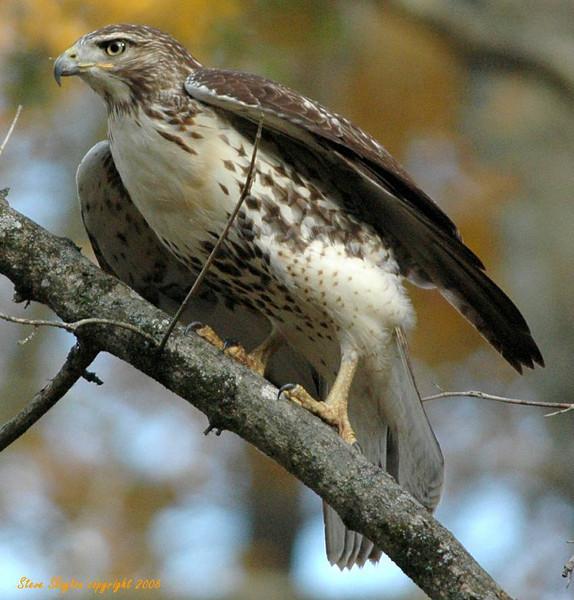
Red-tailed Hawk (Buteo jamaicensis) by Dan (closeup)

“Does the hawk fly by your wisdom, And spread its wings toward the south? (Job 39:26 NKJV)

According to the King James Version of Scripture, the other two verses with hawk in them are:

“the ostrich, the short-eared owl, the sea gull, and the hawk after its kind;” (Leviticus 11:16 NKJV)

“the ostrich, the short-eared owl, the sea gull, and the hawk after their kinds;” (Deuteronomy 14:15 NKJV)

For more advanced reading, you can check out Birds of the Bible – Clean vs. Unclean,  Birds of the Bible – The Law Of The Birds and Deuteronomy 14:11-18 Visualized on Leesbird.com

What is a Hawk? To what Family of birds does it belong?

Harris Hawk in Training at National Aviary

Hawks are one of God’s Created Avian Wonders. The bird family of Hawks, Accipitridae, not only includes Hawks, but also Eagles, Kites, Harriers, Vultures, plus more. The Lord has given them great eyesight, hearing, and speed.

Hawks have excellent eyesight. They can see up to 8 times more clearly than the sharpest human eye. Eyesight is primarily used for hunting.

Their hearing is acute, but their sense of smell is poor.

Hawk species are known for their speed, particularly when chasing prey. During the hunt, some species of hawks can dive 240 kilometers (150 miles) per hour through the air. [Just Fun Facts]

“All hawks are almost exactly the same structurally as all other birds, and the distinguishing features that set them apart from all of the other hawks are minute. Hawks are distinguished from all other birds, especially falcons, by their broader, more rounded wings. They also have sharp, curved, hooked bills, strong feet with curved talons, and amazing sight capabilities. All hawks have uniform 20/2 vision, exactly 8 times better than a human with good eyesight! Almost all male hawks are smaller than females.” Hawks – CreationWiki [with editing]

Great Black Hawk (Buteogallus urubitinga) ©WikiC
Sharp-shinned Hawk (Accipiter striatus) ©USFWS
Short-tailed Hawk (Buteo brachyurus) ©WikiC

Hawks are in the Accipitridae Family of Kites, Hawks & Eagles and you can read more about them in the Birds of the Bible – Hawk section.
Hawks have claws which are used for catching their prey. Beware of these:

Red-tailed Hawk (Buteo jamaicensis) talons by Beedie
  • A Cooper’s Hawk captures a bird with its feet and kills it by repeated squeezing. Falcons tend to kill their prey by biting it, but Cooper’s Hawks hold their catch away from the body until it dies. [Cool Fact from All about Birds]

Hawks and the other birds in this family did not always prey (catch) other living critters. Because of sin, these avian creations from the Lord, were placed under God’s curse. One day, when that curse is removed, the birds of prey will become birds of play [with others.]

Check out All About Birds – Hawks and Falcons

See also:

Accipitriformes – Order, Accipitridae – Family (Kites, Hawks & Eagles)

ABC’s of the Gospel

Some Homes in the Green Forest – Chapter 18

Redtail the Hawk - Burgess Bird Book ©©

Redtail the Hawk – Burgess Bird Book ©©

Some Homes in the Green Forest

The Crow, the Oven Bird and the Red-tailed Hawk.

The Burgess Bird Book For Children

*

CHAPTER 18. Some Homes in the Green Forest.

Listen to the story read.

Reddy Fox wasted very little time waiting for Peter Rabbit to come out from under that pile of brush where he had hidden at Sammy Jay’s warning. After making some terrible threats just to try to frighten Peter, he trotted away to look for some Mice. Peter didn’t mind those threats at all. He was used to them. He knew that he was safe where he was, and all he had to do was to stay there until Reddy should be so far away that it would be safe to come out.

Just to pass away the time Peter took a little nap. When he awoke he sat for a few minutes trying to make up his mind where to go and what to do next. From ‘way over in the direction of the Old Pasture the voice of Blacky the Crow reached him. Peter pricked up his ears, then chuckled.

“Reddy Fox has gone back to the Old Pasture and Blacky has discovered him there,” he thought happily. You see, he understood what Blacky was saying. To you or me Blacky would have been saying simply, “Caw! Caw!” But to all the little people of the Green Forest and Green Meadows within hearing he was shouting, “Fox! Fox!”

“I wonder,” thought Peter, “where Blacky is nesting this year. Last year his nest was in a tall pine-tree not far from the edge of the Green Forest. I believe I’ll run over there and see if he has a new nest near the old one.”

So Peter scampered over to the tall pine in which was Blacky’s old nest. As he sat with his head tipped back, staring up at it, it struck him that that nest didn’t look so old, after all. In fact, it looked as if it had recently been fixed up quite like new. He was wondering about this and trying to guess what it meant, when Blacky himself alighted close to the edge of it.

There was something in his bill, though what it was Peter couldn’t see. Almost at once a black head appeared above the edge of the nest and a black bill seized the thing which Blacky had brought. Then the head disappeared and Blacky silently flew away.

“As sure as I live,” thought Peter, “that was Mrs. Blacky, and Blacky brought her some food so that she would not have to leave those eggs she must have up there. He may be the black-hearted robber every one says he is, but he certainly is a good husband. He’s a better husband than some others I know, of whom nothing but good is said. It just goes to show that there is some good in the very worst folks. Blacky is a sly old rascal. Usually he is as noisy as any one I know, but he came and went without making a sound. Now I think of it, I haven’t once heard his voice near here this spring. I guess if Farmer Brown’s boy could find this nest he would get even with Blacky for pulling up his corn. I know a lot of clever people, but no one quite so clever as Blacky the Crow. With all his badness I can’t help liking him.”

Twice, while Peter watched, Blacky returned with food for Mrs. Blacky. Then, tired of keeping still so long, Peter decided to run over to a certain place farther in the Green Forest which was seldom visited by any one. It was a place Peter usually kept away from. It was pure curiosity which led him to go there now. The discovery that Blacky the Crow was using his old nest had reminded Peter that Redtail the Hawk uses his old nest year after year, and he wanted to find out if Redtail had come back to it this year.

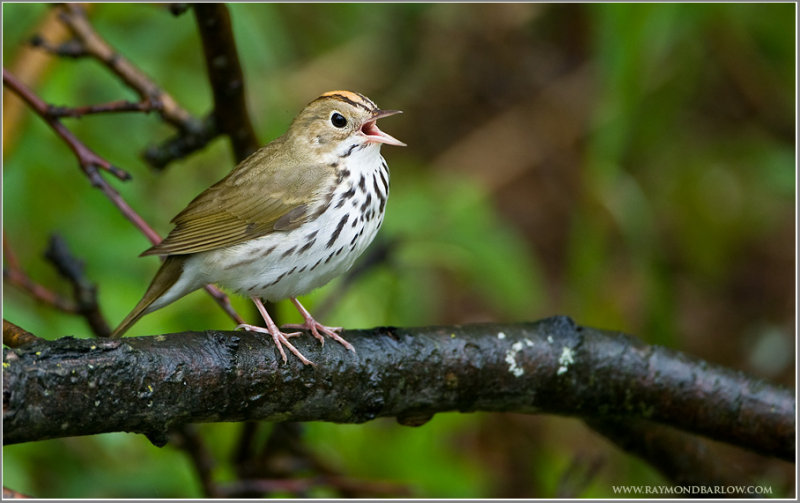
Halfway over to that lonesome place in the Green Forest a trim little bird flew up from the ground, hopped from branch to branch of a tree, walked along a limb, then from pure happiness threw back his head and cried, “Teacher, teacher, teacher, teacher, teacher!” each time a little louder than before. It was Teacher the Oven Bird.

Ovenbird (Seiurus aurocapilla) by Raymond Barlow

Ovenbird (Seiurus aurocapilla) by Raymond Barlow

In his delight at seeing this old friend, Peter quite forgot Redtail the Hawk. “Oh, Teacher!” cried Peter. “I’m so glad to see you again!”

Teacher stopped singing and looked down at Peter. “If you are so glad why haven’t you been over to see me before?” he demanded. “I’ve been here for some time.”

Peter looked a little foolish. “The truth is, Teacher,” said he very humbly, “I have been visiting the Old Orchard so much and learning so many things that this is the first chance I have had to come ‘way over here in the Green Forest. You see, I have been learning a lot of things about you feathered folks, things I hadn’t even guessed. There is something I wish you’d tell me, Teacher; will you?”

“That depends on what it is,” replied Teacher, eyeing Peter a little suspiciously.

“It is why you are called Oven Bird,” said Peter.

“Is that all?” asked Teacher. Then without waiting for a reply he added, “It is because of the way Mrs. Teacher and I build our nest. Some people think it is like an oven and so they call us Oven Birds. I think that is a silly name myself, quite as silly as Golden Crowned Thrush, which is what some people call me. I’m not a Thrush. I’m not even related to the Thrush family. I’m a Warbler, a Wood Warbler.”

“I suppose,” said Peter, looking at Teacher thoughtfully, “they’ve given you that name because you are dressed something like the Thrushes. That olive-green coat, and white waistcoat all streaked and spotted with black, certainly does remind me of the Thrush family. If you were not so much smaller than any of the Thrushes I should almost think you were one myself. Why, you are not very much bigger than Chippy the Chipping Sparrow, only you’ve got longer legs. I suppose that’s because you spend so much time on the ground. I think that just Teacher is the best name for you. No one who has once heard you could ever mistake you for any one else. By the way, Teacher, where did you say your nest is?”

“I didn’t say,” retorted Teacher. “What’s more, I’m not going to say.”

“Won’t you at least tell me if it is in a tree?” begged Peter.

Teacher’s eyes twinkled. “I guess it won’t do any harm to tell you that much,” said he. “No, it isn’t in a tree. It is on the ground and, if I do say it, it is as well hidden a nest as anybody can build. Oh, Peter, watch your step! Watch your step!” Teacher fairly shrieked this warning.

Peter, who had just started to hop off to his right, stopped short in sheer astonishment. Just in front of him was a tiny mound of dead leaves, and a few feet beyond Mrs. Teacher was fluttering about on the ground as if badly hurt. Peter simply didn’t know what to make of it. Once more he made a movement as if to hop. Teacher flew right down in front of him. “You’ll step on my nest!” he cried.

Peter stared, for he didn’t see any nest. He said as much.

“It’s under that little mound of leaves right in front of your feet!” cried Teacher. “I wasn’t going to tell you, but I just had to or you certainly would have stepped on it.”

Ovenbird (Seiurus aurocapilla) Nest ©WikiC

Very carefully Peter walked around the little bunch of leaves and peered under them from the other side. There, sure enough, was a nest beneath them, and in it four speckled eggs. “I won’t tell a soul, Teacher. I promise you I won’t tell a soul,” declared Peter very earnestly. “I understand now why you are called Oven Bird, but I still like the name Teacher best.”

Feeling that Mr. and Mrs. Teacher would feel easier in their minds if he left them, Peter said good-by and started on for the lonesome place in the Green Forest where he knew the old nest of Redtail the Hawk had been. As he drew near the place he kept sharp watch through the treetops for a glimpse of Redtail. Presently he saw him high in the blue sky, sailing lazily in big circles. Then Peter became very, very cautious. He tiptoed forward, keeping under cover as much as possible. At last, peeping out from beneath a little hemlock-tree, he could see Redtail’s old nest. He saw right away that it was bigger than it had been when he saw it last. Suddenly there was a chorus of hungry cries and Peter saw Mrs. Redtail approaching with a Mouse in her claws. From where he sat he could see four funny heads stretched above the edge of the nest.

“Redtail is using his old nest again and has got a family already,” exclaimed Peter. “I guess this is no place for me. The sooner I get away from here the better.”

Red-tailed Hawk- Cochran Shoals Unit Chattahoochee River by SSlayton

Red-tailed Hawk- Cochran Shoals Unit Chattahoochee River by SSlayton

Just then Redtail himself dropped down out of the blue, blue sky and alighted on a tree close at hand. Peter decided that the best thing he could do was to sit perfectly still where he was. He had a splendid view of Redtail, and he couldn’t help but admire this big member of the Hawk family. The upper parts of his coat were a dark grayish-brown mixed with touches of chestnut color. The upper part of his breast was streaked with grayish-brown and buff, the lower part having but few streaks. Below this were black spots and bars ending in white. But it was the tail which Peter noticed most of all. It was a rich reddish-brown with a narrow black band near its end and a white tip. Peter understood at once why this big Hawk is called Redtail.

It was not until Mr. and Mrs. Redtail had gone in quest of more food for their hungry youngsters that Peter dared steal away. As soon as he felt it safe to do so, he headed for home as fast as he could go, lipperty-lipperty-lip. He knew that he wouldn’t feel safe until that lonesome place in the Green Forest was far behind.

Yet if the truth be known, Peter had less cause to worry than would have been the case had it been some other member of the Hawk family instead of Redtail. And while Redtail and his wife do sometimes catch some of their feathered and furred neighbors, and once in a while a chicken, they do vastly more good than harm.

This story gives good examples of friends watching out for friends. Also, friends love their neighbors and go for visits now and then.

“But you be watchful in all things,…” (2 Timothy 4:5a NKJV)

*

  • Who was the one warning the animal and bird friends?
  • What is a call of the Crow?
  • Is it good for us to warn others of danger?
  • What does Peter really think it says?
  • Who was the little bird that Peter spotted up in the tree?
  • Why is he called by that name?
  • When Peter began to leave, why did the little bird become upset?
  • What bird was Peter looking for, yet had to make sure that bird didn’t see him?
  • Why didn’t Peter want to be seen?
  • Who sees us all the time? Can we hide from Him?

*

“A friend loveth at all times,…” (Proverbs 17:17a KJV)

Links:

*

Links:


  Next Chapter (A Maker of Thunder and a Friend in Black. Coming Soon)


Burgess-Bird-Book-for-Children


  Burgess-Bird-Book-for-Children


Gold/Yellow = Heaven


Wordless Birds


**


Bible Birds – Ibis Introduction

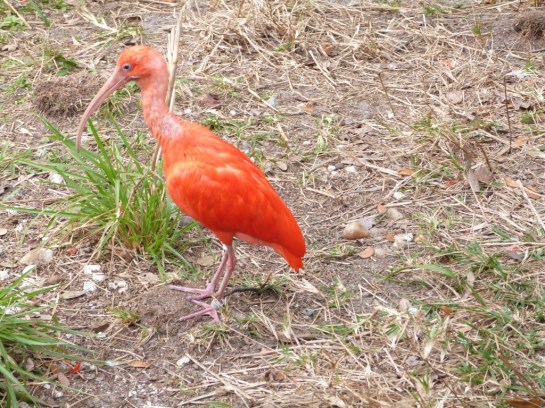
Scarlet Ibis (Eudocimus ruber) Brevard Zoo by Lee

“and for a long time birds and hedgehogs, and ibises and ravens shall dwell in it: and the measuring line of desolation shall be cast over it, and satyrs shall dwell in it.” (Isaiah 34:11 Brenton)

Many of the birds in the Bible are listed differently in some versions. The Ibises is only listed in this verse in the Brenton, DRB, and the ABP versions. Most of the different versions list Pelicans, Cormorants, Bitterns, Heron, and Storks. The Pelicans, Cormorants, Bitterns, and Heron are all found in thePELECANIFORMES Order of birds. The Storks are in the close CICONIIFORMES Order.

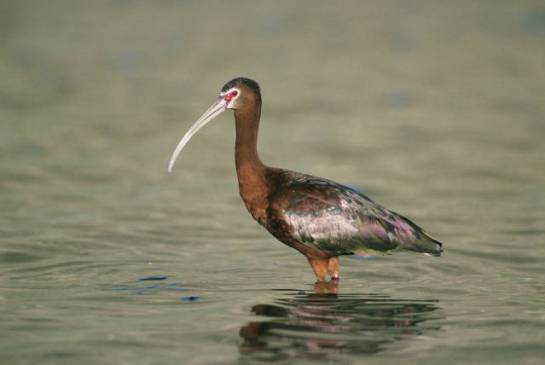
White-faced Ibis (Plegadis chihi) ©USFWS

All of these birds enjoy similar surroundings and the Ibises and Spoonbills make up the Threskiornithidae Family.
The ibises (collective plural ibis; classical plurals ibides and ibes) are a group of long-legged wading birds, that inhabit wetlands, forests and plains. “Ibis” derives from the Latin and Ancient Greek word for this group of birds. It also occurs in the scientific name of the cattle egret, (Bubulcus ibis), mistakenly identified in 1757 as being the sacred ibis.

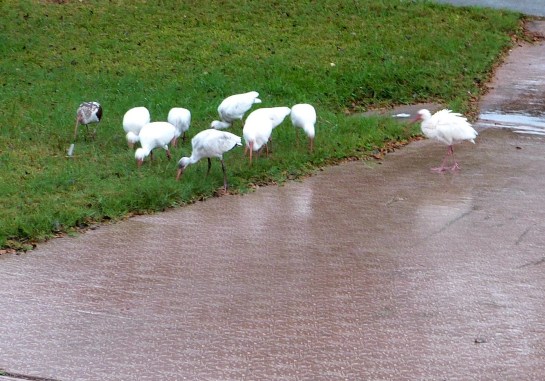
American White Ibis (Eudocimus albus) 1st Birds of 2014 by Lee cropped

Ibises all have long, down-curved bills, and usually feed as a group, probing mud for food items, usually crustaceans. They are monogamous and highly territorial while nesting and feeding. Most nest in trees, often with spoonbills or herons. The word ibis comes from Latin ibis from Greek ἶβις ibis from Egyptian hb, hīb.

Bible Birds – Ibis

Bible Birds

Birds of the Bible – Ibises

Threskiornithidae Family

Bible Birds – Swift Introduction

Bible Birds – Swift Introduction

Alpine Swift (Tachymarptis melba) ©WikiC

“Even the stork in the sky Knows her seasons; And the turtledove and the swift and the thrush Observe the time of their migration; But My people do not know The ordinance of the LORD.” (Jeremiah 8:7 NASB)

The different versions of the Bible, translate this verse with different birds named. Many use either the Swift or the Swallow. They are similar but are in different bird families. The Swifts are in the Apodidae family and Swallows are in the Hirundinidae Family. Mainly, the verse is saying that the birds have more wisdom than some people.

Resemblances between swifts and swallows are similar because of their lifestyles based on catching insects in flight. They were both created with that ability. Both of them migrate or fly to other areas during the seasons. They need warmer weather to have an abundance of flying insects to feast on. [eat]

Glossy Swiftlet (Collocalia esculenta) by Nikhil Devasar

The family name, Apodidae, is derived from the Greek ἄπους (ápous), meaning “footless”, a reference to the small, weak legs of these most aerial of birds. The tradition of depicting swifts without feet continued into the Middle Ages, as seen in the heraldic martlet.

Some species of swifts are among the fastest animals on the planet, with some of the fastest measured flight speeds of any bird. “Swifts are the fastest of birds. Larger species are amongst the fastest fliers in the animal kingdom, with the white-throated needletail having been reported flying at up to 169 km/h (105 mph). Even the common swift can cruise at a maximum speed of 31 metres per second (112 km/h; 70 mph). In a single year the common swift can cover at least 200,000 km.” [Wikipedia]

See Swift – Creationwiki

Bible Birds – Swift

Bible Birds

Wordless Yellow-fronted Woodpecker

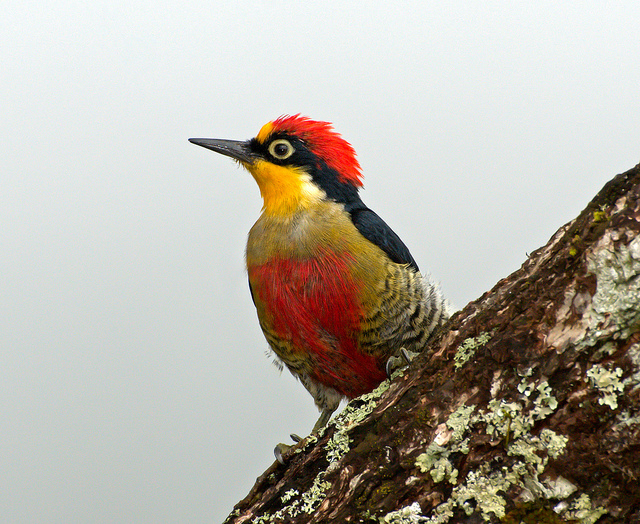
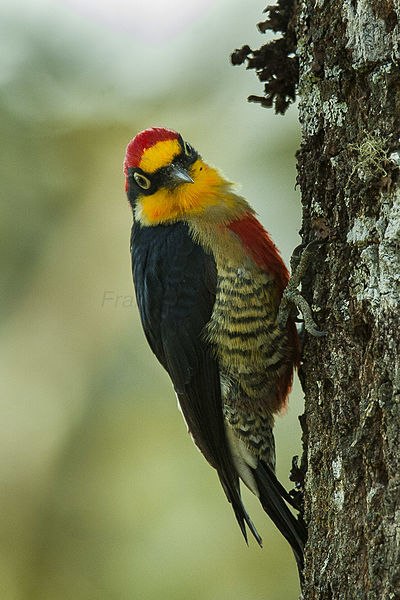
Yellow-fronted Woodpecker (Melanerpes flavifrons) by Dario Sanches

Yellow-fronted Woodpecker (Melanerpes flavifrons) by Dario Sanches

This GOLD reminds us of Heaven. The Bible tells us Heaven has a street of gold! But the best part about Heaven is that God, who created you and me, lives there. The Bible, God’s Word, says: “God so loved the world that He gave His only begotten Son, that whosoever believeth in Him should not perish but have everlasting life.” — John 3:16 Jesus, God the Son, is in Heaven preparing a place for all who put their trust in Him. (John 14:2-3) God is holy and perfect. He cannot allow anything in Heaven that is less than perfect, so there’s one thing that can never be in Heaven. Can you think of what that might be?

Yellow-fronted Woodpecker (Melanerpes flavifrons) by Dario Sanches

Yellow-fronted Woodpecker (Melanerpes flavifrons) by Dario Sanches

It is sin! That is what this DARK reminds us of. Sin is anything you think, say, or do that does not please God, like lying, cheating, being selfish, or hurting others. The Bible says: “All have sinned and come short of the glory of God.” — Romans 3:23 That means everyone, big or little, young or old! No matter where you live or who you are, you have sinned. Everyone is born with a “want to” to do wrong. God says that sin must be punished (Romans 6:23), and the punishment for sin is to be separated from God forever in a place of suffering….a place called Hell. But God has a wonderful plan so that you will not have to be punished for your sin!

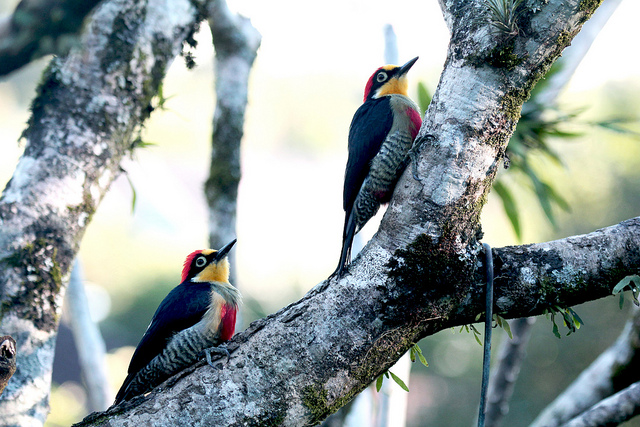
Yellow-fronted Woodpecker (Melanerpes flavifrons) ©WikiC

God sent Jesus Christ, His perfect Son, to be born as a little baby. Jesus lived a perfect life….He never sinned. When He was grown, wicked men nailed Him to a cross. The bird’s RED reminds us of Jesus’ blood. The Bible says that without the giving of blood there can be no forgiveness of sin (Hebrews 9:22). So Jesus Christ willingly died to take your sin punishment. “…Christ died for our sins according to the Scriptures; and that He was buried, and that He rose again the third day, according to the Scriptures.“— 1 Corinthians 15:3-4 Now, because of what Jesus has done for you, you can have your sins forgiven. Read on to see how!

Yellow-fronted Woodpecker (Melanerpes flavifrons) ©Galo Torquato

The Bible says: “As many as received Him, to them gave He power to become the sons of God, even to them that believed on His name.” — John 1:12 The WHITE reminds us of a CLEAN heart. How can you have a clean heart? A = Admit to God you are a sinner and want to turn away from those sins. B = Believe in Jesus Christ, that He is God’s perfect Son who died for your sin, was buried, and rose again. C = Call on Him to save you from your sin. Would you like to do that right now? He has promised to hear, and once you are His child, He will never leave you (Hebrews 13:5). Take a moment and talk to God right now. It will change your life forever. Only one more color! What can it mean?

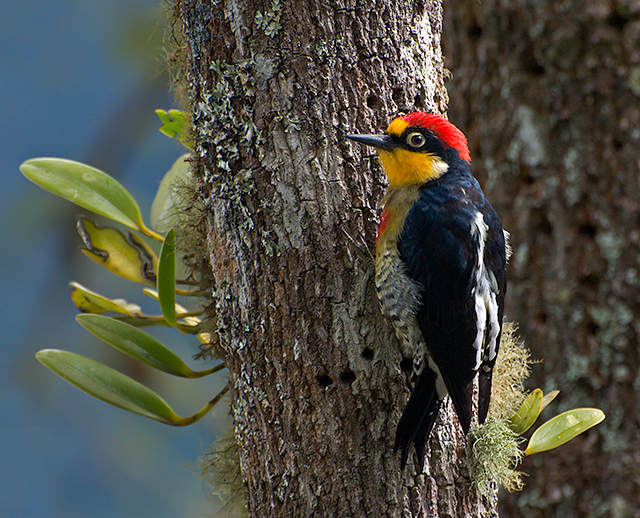
Yellow-fronted Woodpecker (Melanerpes flavifrons) by Dario Sanches

Yellow-fronted Woodpecker (Melanerpes flavifrons) by Dario Sanches

The GREEN stands for things that grow. When you ask God to forgive you and save you, you become His child. God wants you to get to know Him better and to grow to become more like Him. These four things will help you grow:

1. PRAY (talk to God every day)
2. READ & OBEY THE BIBLE (to know what He says, then do it)
3. TELL OTHERS ABOUT JESUS
4. GO TO A BIBLE-BELIEVING CHURCH (where you can learn more about pleasing Him)

As a child of God, if you should sin again, stop and tell Him about it. He promises in His Word… “If we confess our sins, He is faithful and just to forgive us our sins and to cleanse us from all unrighteousness.” — 1 John 1:9 Ask God to help you live a life to please Him! Share the Good News of this story with someone else.

The Wordless Book has been used for many years by CEF (Child Evangelism Fellowship). These words are from CEF.

Yellow-fronted Woodpecker (Melanerpes flavifrons) by Dario Sanches

Yellow-fronted Woodpecker (Melanerpes flavifrons) by Dario Sanches

*

A friend shared with me about someone who uses the Toucan to teach the “Wordless Book.”

Other Wordless Birds:

Wordless Birds

Wordless Birds – With Hummingbirds

The Wordless Book

Story of the Wordless Book

Yellow-fronted Woodpecker – Cornell Neotropical

Feel free to share any of these “Wordless Birds.” All photos are Creative Commons.

Newest Articles on the Kid’s Blog

Barred Owl at Circle B by Lee

Our latest trip to Circle B Bar Reserve was rewarded with my first sighting of a wild Barred Owl. We have seen them in Zoos, but never in the wild.

See – Bible Birds – Owl’s Provision

Bible Birds – Holding On With My Feet

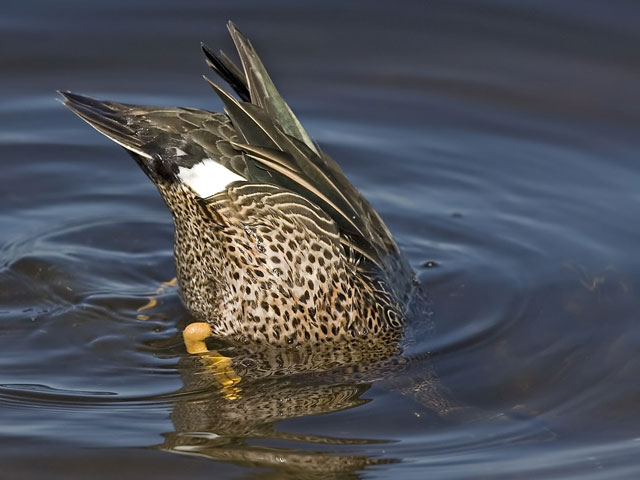
Blue-Winged-Teal-Dabbling ©Flyways USFWS

Blue-Winged-Teal-Dabbling ©Flyways USFWS

Birdwatching Term – Dabbling Duck

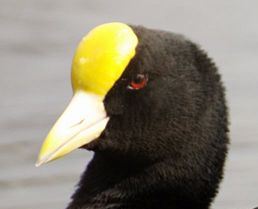
White-winged Coot (Fulica leucoptera) Cropped ©WikiC

White-winged Coot (Fulica leucoptera) Cropped ©WikiC

Birdwatching Term – Frontal Shield

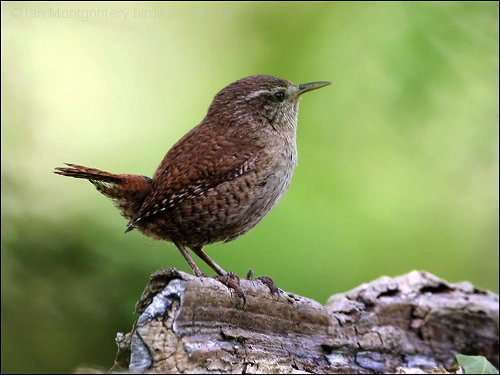
Winter Wren (Troglodytes troglodytes) by Ian

Winter Wren (Troglodytes troglodytes) by Ian

Jenny Wren Arrives – Chapter 1

Hope you will check these out and if you like them, consider following that blog also. Lots of interesting things to share with your children and grandchildren.

“And thou shalt love the LORD thy God with all thine heart, and with all thy soul, and with all thy might. And these words, which I command thee this day, shall be in thine heart: And thou shalt teach them diligently unto thy children, and shalt talk of them when thou sittest in thine house, and when thou walkest by the way, and when thou liest down, and when thou risest up.” (Deuteronomy 6:5-7 KJV)

No, the posts aren’t scripture, but there are always principles to grow and learn by. Enjoy!

Sharing the Gospel

Bible Birds – Owl’s Provision

Barred Owl at Circle B by Lee

Barred Owl at Circle B by Lee

“The beast of the field shall honour me, the dragons and the owls: because I give waters in the wilderness, and rivers in the desert, to give drink to my people, my chosen.” (Isaiah 43:20 KJV)

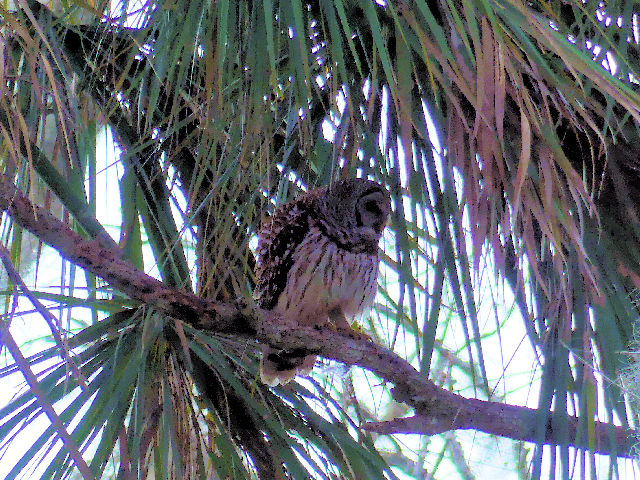
We were recently out to Circle B Bar Reserve and spotted this Barred Owl. There have been numerous articles here about this Owl, but this is the first time I have seen one in the Wild. I have heard them, but not seen them.

As we were getting our cameras out of the car [and my walker] we spotted a group of birders concentrating on one area. They pointed out a palm tree with a dark figure in it.

Barred Owl in the Palm Tree – Do you see it?

The rest of the photos have been lightened up to see it better. When we first spotted it, it was still, as if asleep. After walking to the marsh and back, I searched for the Owl again. Sure enough, he was still there. This time looking around. [top two photos] It is always enjoyable to spot an owl in the daytime. They are mostly nighttime birds.

“The beast of the field shall honour me, the dragons and the owls” Why do they honor the Lord their Creator? One reason is because He “give waters in the wilderness, and rivers in the desert, to give drink to my people, my chosen.” The water that is provided for people also provides water for the critters and birds to drink.

May this Barred Owl be a reminder of the love and provisions that the Lord provides for us. He cares about us and wants us to ask for and thank Him for all the good provisions (food, water, house, bed, clothes, parents, etc.) He gives.

“But ask now the beasts, and they shall teach thee; and the fowls of the air, and they shall tell thee:” (Job 12:7 KJV)

See:

A Heart Message

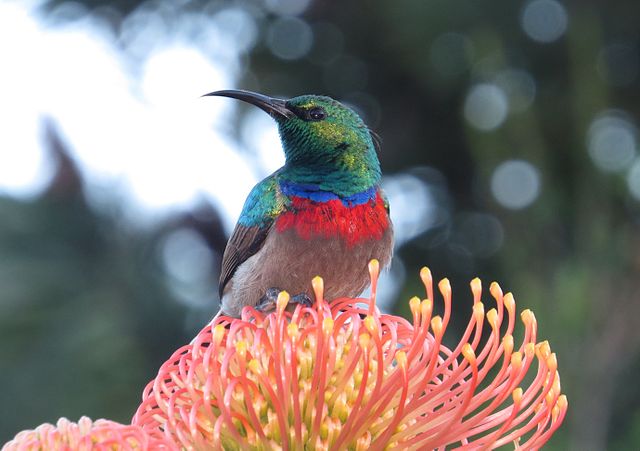
Southern Double-collared Sunbird (Cinnyris chalybeus) ©WikiC

“For if thou altogether holdest thy peace at this time, … and who knoweth whether thou art come to the kingdom for such a time as this?” (Esther 4:14 KJV)

Last weekend we had a great Missions Conference. All the missionaries that spoke were real “heroes of the faith.” Of all the Conferences at Faith Baptist Church, here in Florida, this was the best since we have been here. The Theme was For Such A Time As This! My heart was stirred as we listened to the heartbeat of these Christians who have dedicated their lives to go and reach others for Christ. Sometimes I grumble inwardly about having to fix problems on this blog, yet they have so many issues to deal with. They keep looking to the Lord to help them through. All the stories of problems and blessings from the Lord help us to remember that God is in control. Keep On, Keeping On!

On Sunday night, the final speaker was Mrs. Grace Fabian who was with Wycliffe Bible Translators in Papua New Guinea. She has written a book about all that happened to them while they were there. Her husband was murdered, yet she stayed on to help translate the Bible into the language of that tribe. I found two YouTube videos online that tell much of what she told us.

Check out: Part 1 – https://youtu.be/k5_5UHqwiv4 and Part 2 – https://youtu.be/6wI-FUjtwdg

So, what does all of this have to do with birds? One of the missionaries serves in Togo, West Africa. The Lethers family had on their display table a book of birds from Togo. It was opened to a photo of a Sunbird. Thanks to the Birds of the World blogs that have been here, I was able to immediately put a name on it. [The name was covered]

I was birdwatching at the conference. Most birders, after a while, notice photos or birds no matter where they are. Hopefully, you have become more aware of the birds around you. Whether they are in the wild, a zoo, or even in a book, your eyes will drift that way. Mine do.

Checking the Wikipedia list of birds in Togo, West Africa, there is a huge number of avian wonder in Togo. Here are just a few of them:

Morris The Finch In The Airport by Emma Foster

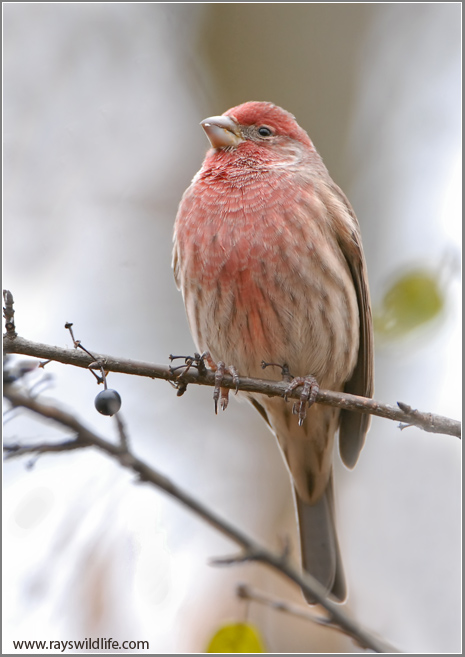
House Finch (Haemorhous mexicanus) by Ian

House Finch (Haemorhous mexicanus) by Ian

Morris The Finch In The Airport

By Emma Foster

Morris was a small house finch who lived in the sunny state of Florida. He had built a tiny nest for himself and lived in a small forest away from busy streets and people. The only road that was close by was a highway leading to a large building that was about half a mile away. Morris could barely see the building from the top of a high tree in which he lived. Every day Morris would watch incredibly large birds fly to and from the building, but he had no idea what they were. The building was in fact an airport, and the large birds were airplanes, but Morris did not know this.

Eventually, the weather became really hot as spring turned into summer. Morris grew tired of the heat and decided to find a new place to stay, at least for the summer. Morris flew out of his nest into the air and began to search for a cooler place to live.

He slowly reached the giant building in the hot sun. Looking inside, Morris noticed trees that seemed comfortable in the cool air. He tried to find a place to fly in, but every part of the building seemed to be made of windows. After trying to get inside for a long time Morris caught sight of a shuttle zipping inside the building. He followed the shuttle inside into the refreshingly cool air and instantly flew toward a tall tree that stood in the sunlight.

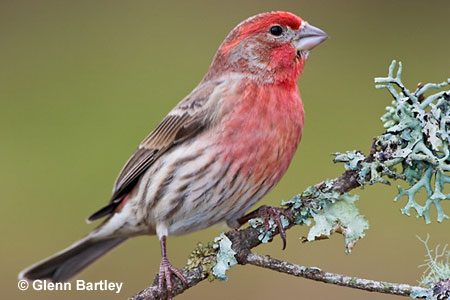
House Finch male ©Glenn Bartley-Wichita StateU

The tree gave Morris a broad view of a wide space were many people were eating. At first, he thought we would be able to handle the noisy people, but as the sun rose higher into the sky more people began to arrive and the building grew louder. Morris tried to ignore it, knowing when the air became colder he could fly back to his nest.

After a few minutes of trying to pull up some branches and twigs to make a new nest, Morris realized that the “tree” was fake, which made him slightly annoyed. Fortunately, he could still make his new home cozy because it was cool and comfortable sitting in the branches and watching the people.

Morris began to grow hungry and decided that he should find some food, though it didn’t look as if there were any worms around. He swooped down to where several people were eating and picked up a few dry crumbs from off the ground. After eating a few pieces Morris was still hungry so he decided to fly back outside to search for some worms.

It felt nice to be away from the noise, but as Morris flew back the way he came, he accidentally flew into the shuttle that carried passengers back and forth. He couldn’t get out before the doors closed. He flew up and down in a frenzy, searching for a way out. People around him screamed, terrified, until finally he was able to fly back outside.

House Finch (Carpodacus mexicanus) by Raymond Barlow

Instead of searching for worms Morris flew straight back to his nest and stayed there for the rest of the day even though it was still hot. That night Morris’s surroundings became cool and Morris was able to sleep peacefully despite the chaos of the morning.

The next morning Morris stayed in his nest, deciding that, despite the heat, he would rather be home than anywhere else. He remembered how quiet it was even with the big birds flying overhead, and decided that no matter how hot it became, he would never fly back into that building again


Lee’s Addition:

“Let your conversation be without covetousness; and be content with such things as ye have: for he hath said, I will never leave thee, nor forsake thee.” (Hebrews 13:5 KJV)

Emma has treated us to another interesting story. Not sure if a bird ever went looking for air conditioning, but it sounds logical. But, like us, we are better off being right where the Lord has placed us and with the provisions that have been provided by Him. Thanks again, Emma.

See More of Emma’s Stories

Many More Birds Have Arrived!

Birds of the Bible for Kids is Under Construction
Keep Checking

The dust is thinning out a bit.

Here is the Latest list of pages and articles that have flown over to the Birds of the Bible for Kids site. The ones in blue are the newest arrivals. Wow! I had forgotten about so many of these articles. They are being re-published to current dates.

I trust you will check some of these out. If you have youngsters and/or teenagers, or, grandchildren, you may want to share these with them.

The Bible Bird indexes that are now open are GROWING:

“I will meditate also of all thy work, and talk of thy doings.” (Psalms 77:12 KJV)

Bible Birds

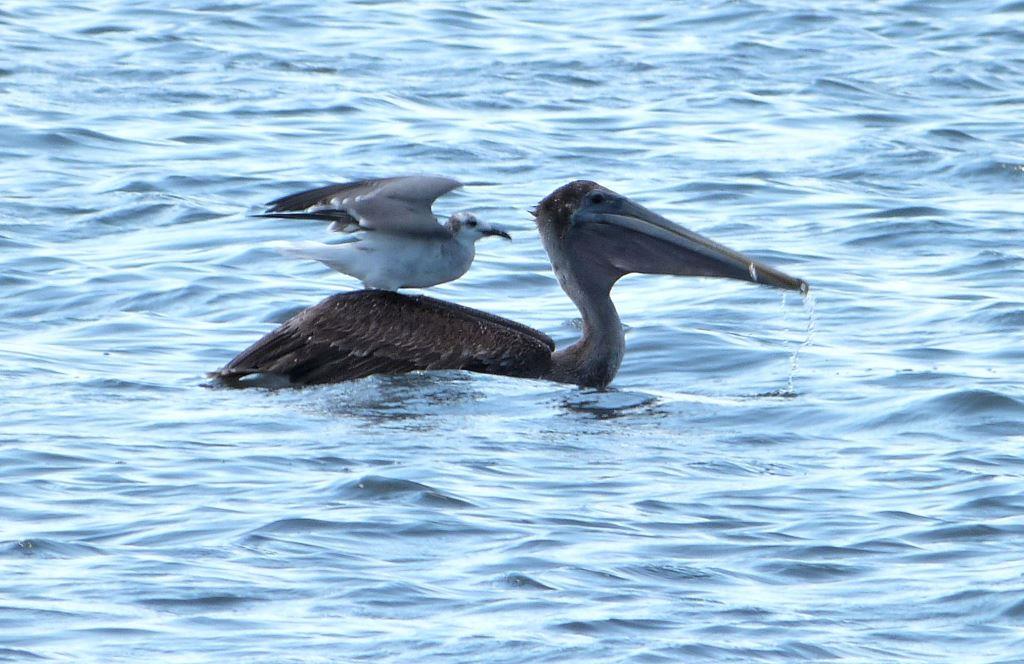
Brown Pelican and Laughing Gull - Waiting

Waiting

Here are some of the articles that are active again: (reverse order as they were released)

STAY TUNED!!