Afraid To Stick Neck Out

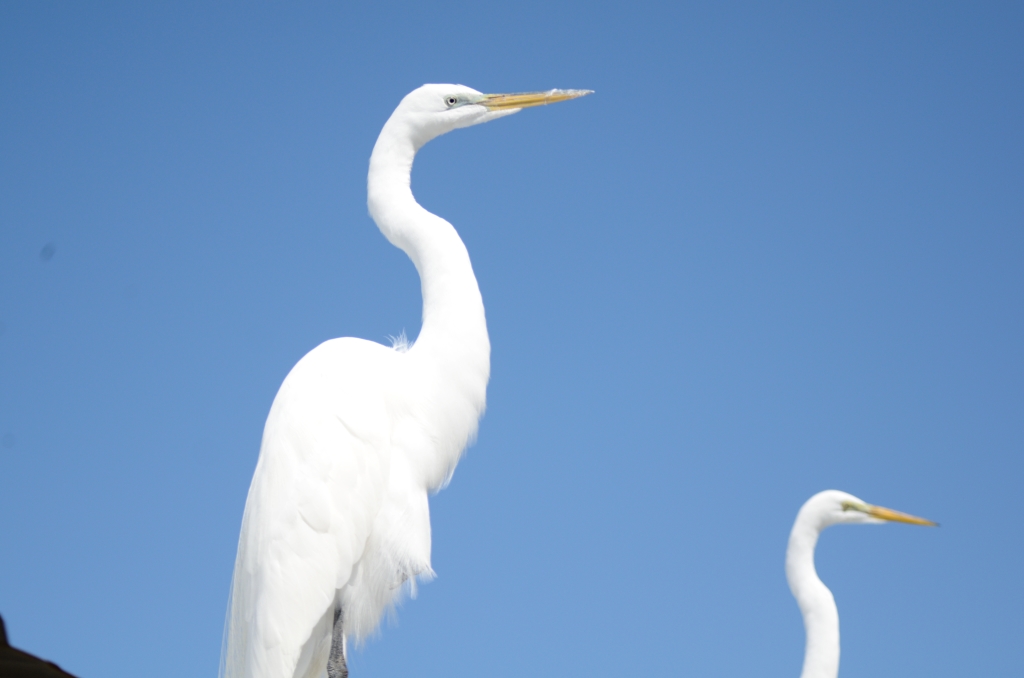
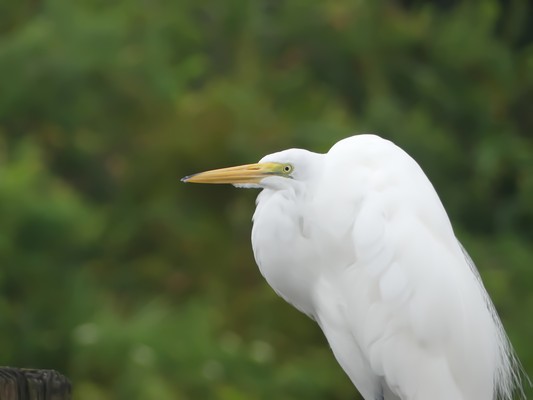
Great Egret with head tucked in at Gatorland

“Whatsoever thy hand findeth to do, do it with thy might; for there is no work, nor device, nor knowledge, nor wisdom, in the grave, whither thou goest.” (Ecclesiastes 9:10 KJV)

I found this Great Egret at Gatorland recently who was afraid to stick his neck out. Have you ever felt that way? As many readers are aware, there have been numerous broken links discovered on this site. Many pages have been fixed already, yet there are hundreds and hundreds more that need to be corrected. After chatting with WordPress again today, there is not much they can do to revive the deleted photos and music from the Media Cache. I did find out today, it is possible that this site was hacked. “You’re kidding,” I told them. “No, others have had that happen”.

For those of us on WordPress and other sites for that matter, they said it is very important to use a STRONG password. Also, to use a two-step authentification. I have since rechanged the password again. Here is a link to instructions on how to do this on WordPress.com.

Two Step Authentication

For now, I am not going to pull my head in, but am going to plug away at repairing the damage done to Lee’s Birdwatching Adventures Plus. This was not quite the “Adventure”  I had in mind, but it would be wrong to pull my head in and give up. Who knows, maybe the Lord will help me improve it and find more ways to show forth His wonderful Birds and Creation. Stay tuned!

Great Egret at Gatorland by Dan


Dinosaurs and Feathers Re-post from Creation Moments

“And God made the beast of the earth after his kind, and cattle after their kind, and every thing that creepeth upon the earth after his kind: and God saw that it was good.”
I am a long-time fan of the BBC science fiction show Doctor Who, having watched it since the mid-1960s when the show was in black and white with no computer graphics and Daleks were upturned trash cans with sink plungers attached. One of my favorite episodes of the modern era was entitled Dinosaurs on a Spaceship. The title said it all.Dinosaur

A lost craft was traveling through space with a cargo of untethered dinosaurs. But not everyone enjoyed the episode. Some well-known evolutionary biologists in Britain complained about one scene which featured a couple of tyrannosauruses. Their complaint was that the T. Rexes should have been covered in feathers.

In practice, the idea of feathered dinosaurs still does not have solid fossil evidence to back it up. Most of the fossils found with evidence of feathers are clearly birds. A small number of others are doubtful but could easily be assumed to be birds.

In 2016, it was announced that a dinosaur feather had been found entrapped in amber. However, the feather was not attached to an animal. Later the same year, other amber-clad feathers were discovered that were definitely attached to a bird. Some have claimed that there are fossil T. Rexes that show signs of feather follicles.

Again, these patterns are open to interpretation. Now, it is possible, perhaps, that some dinosaurs could have had feathers, but this does not provide proof that birds evolved from dinosaurs. What we actually find in the fossil record is evidence of kinds of animals, just as the Bible states. It does not make sense to impose an evolutionary worldview on any of these findings.

Prayer: 
When You finished creating, Lord God, You looked at all You had made and declared it to be “very good”. Thank You that all we understand about dinosaurs and other animals is consistent with Your word. Amen.
Notes:
Ref: Thomas, B. New Doubts about Dinosaur Feathers, ICR article. Image: RJ Palmer, license: Creative Commons Attribution Share-alike 4.0 International.

Source: Dinosaurs and Feathers | Creation Moments

Used with permission ©Creation Moments 2017

The Snowy “Want-to-Be” at Gatorland

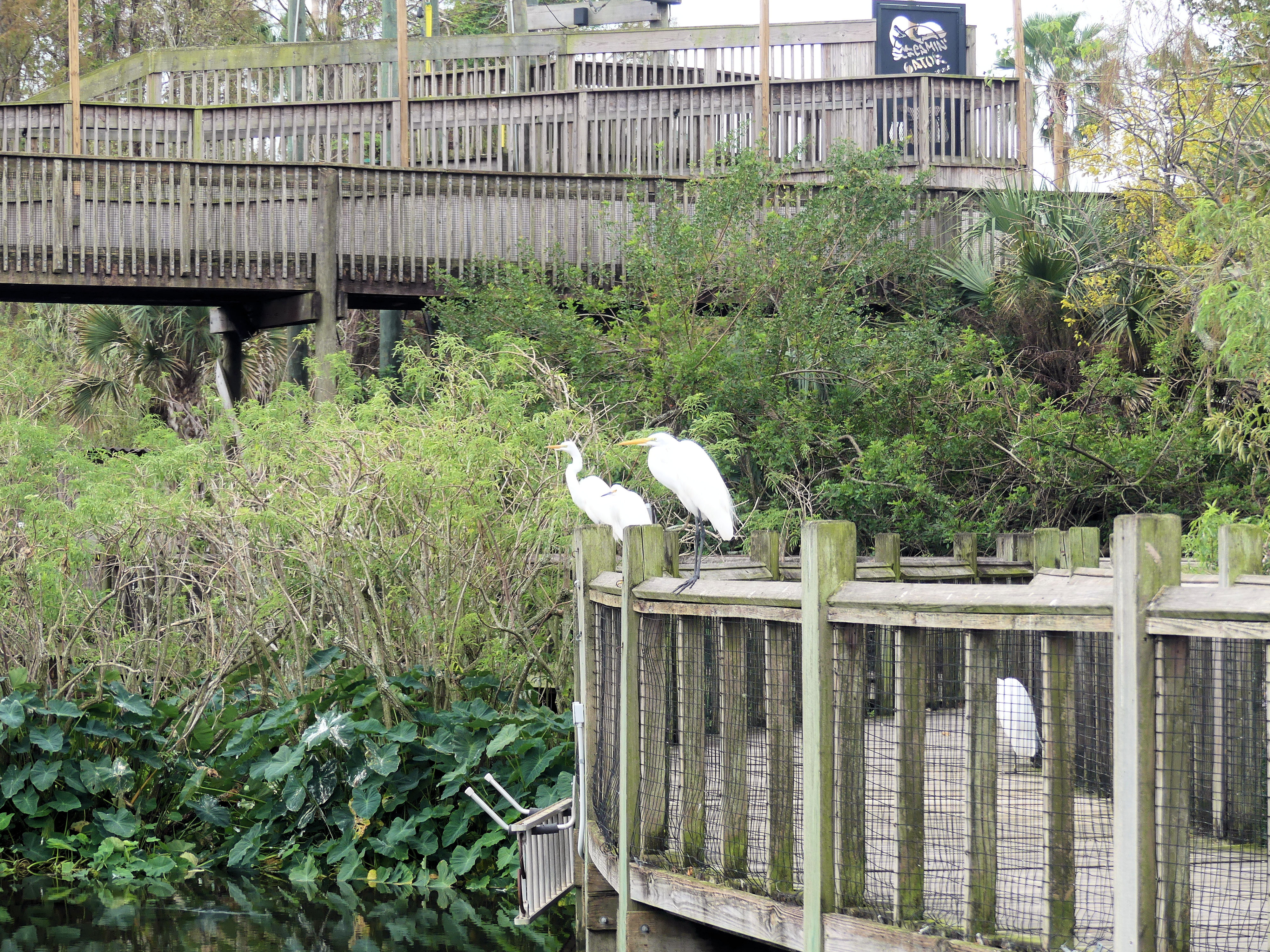
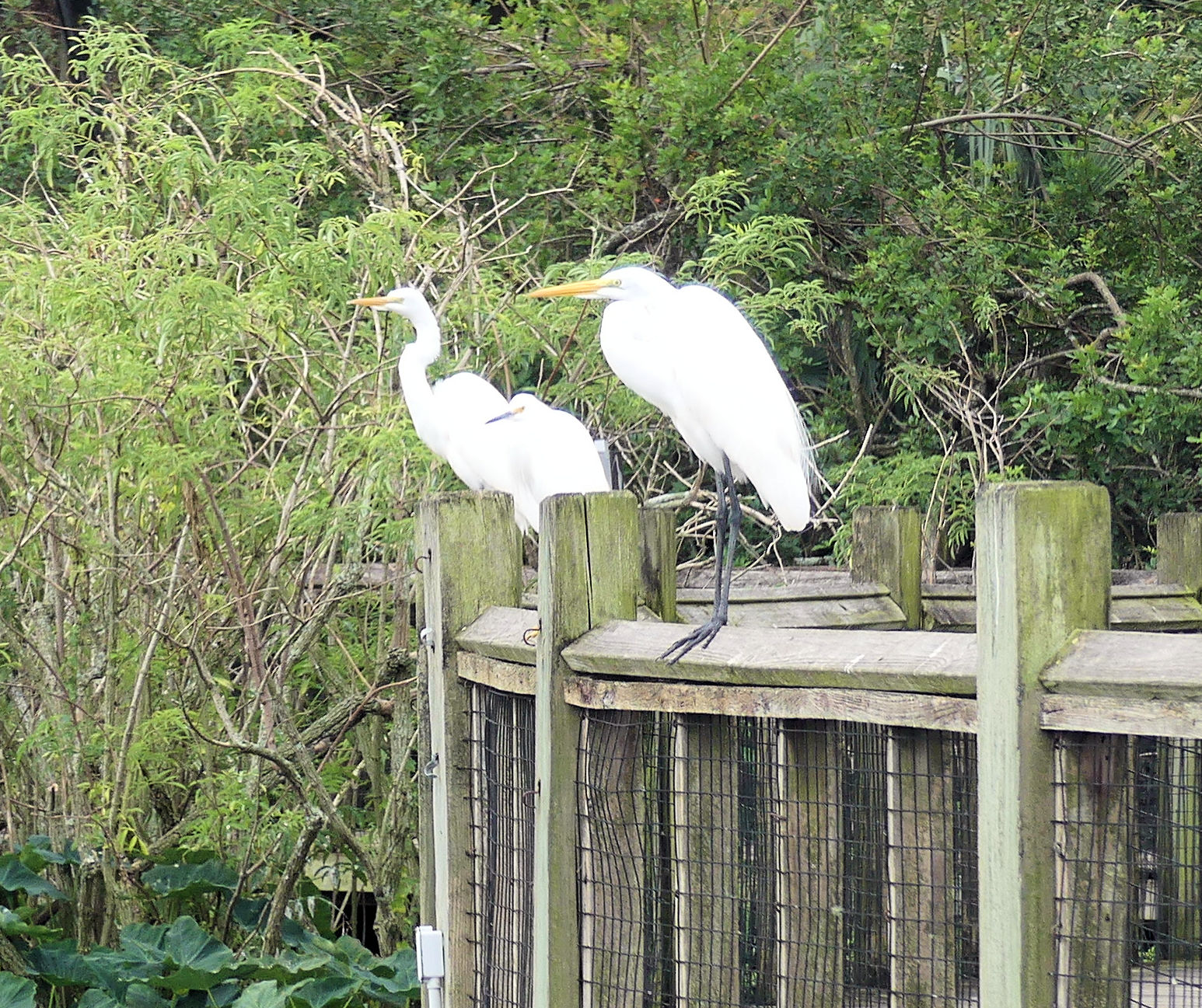
Great Egrets and a Snowy Egret at Gatorland

When we were at Gatorland a few weeks ago, I noticed two Great Egrets on the walkway rail. I zoomed in to get a better view of them. There were actually two Great Egrets and a Snowy Egret in between them.

Great Egrets and a Snowy Egret at Gatorland zoomed

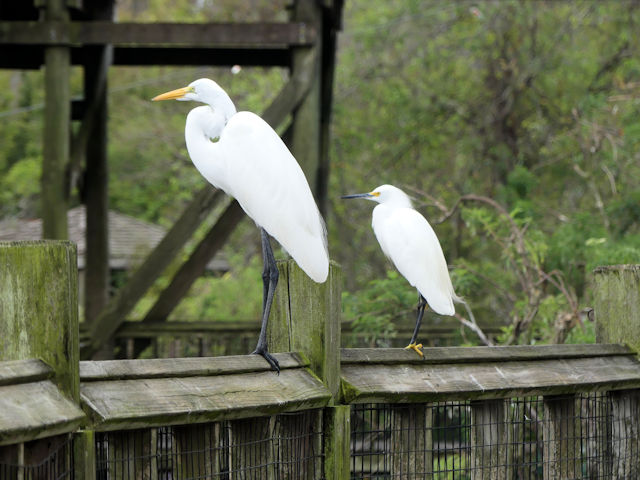
By the time we arrived at their location, one of the Great Egrets had flown off to check something out. There sat the Great Egret and the Snowy Egret side-by-side. I thought maybe that Snowy was thinking he would like to be tall like this friendly Great Egret.

A Great Egret “Want to Be”

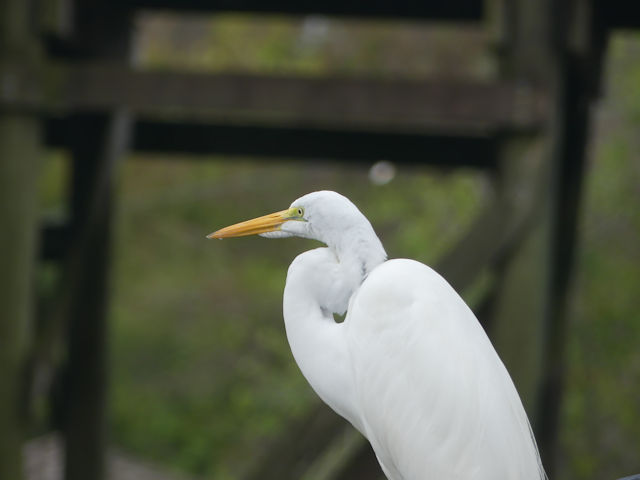
The Great Egret is tall and nice looking with his long yellow beak and black feet.

Great Egret up Close at Gatorland by Lee

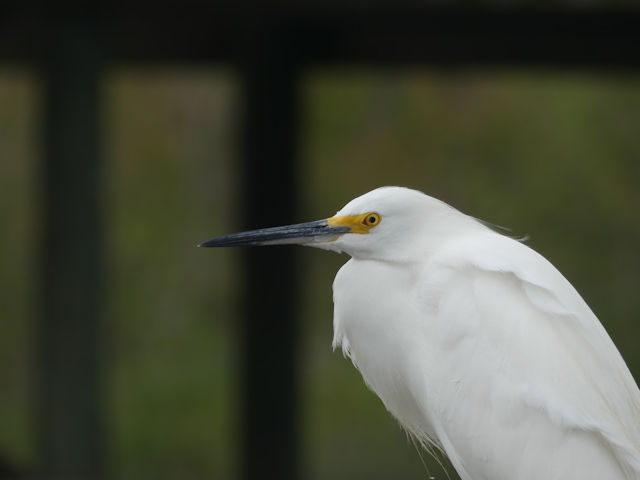
The Snowy though shorter has a nice black beak and cool yellow feet.

Snowy Egret up close at Gatorland by Lee

Knowing that the Lord created both of these fine birds, He made them just the way He wanted them. One tall, one short. One with a black beak and the other with a yellow one. And He may have given height to the Great Egret, but He gave the shorter Snowy those neat yellow feet.

Do we get envious and desire what someone else has? Maybe taller, more talented, sing better, etc? God has made us just the way He wants us, and has provided us with different bodies, talents, abilities, and directions to serve Him. Are we content with what He has given us?

“Not that I speak in respect of want: for I have learned, in whatsoever state I am, therewith to be content.” (Philippians 4:11 KJV)

“And having food and raiment let us be therewith content.” (1 Timothy 6:8 KJV)

“Let your conversation be without covetousness; and be content with such things as ye have: for he hath said, I will never leave thee, nor forsake thee.” (Hebrews 13:5 KJV)

I am sure are Snowy Egret was not the least bit jealous or envious.

Snowy Egret up close at Gatorland by Lee


More posts from Gatorland:

Gatorland, FL

Gatorland’s Greedy Snowy Egret

Gatorland Roseate Spoonbills

Gatorland Grackle

*


Far Flying Ducks and Their Allies

Black-bellied Whistling Ducks forming V by Lee

I’ll fly away, Oh Glory
I’ll fly away; (in the morning)
When I die, Hallelujah, by and by,
I’ll fly away (I’ll fly away).

“Who are these who fly like a cloud, And like doves to their roosts?” (Isaiah 60:8 NKJV)

Yep! That’s what they have been doing. Flying right off the pages. I am still working away trying to fix my broken links. It is time consuming, but maybe the new reworked Bird Family pages will be easier to work with.

As you know, from the last few posts, I have been fixing missing birds, photographers, songs, etc:

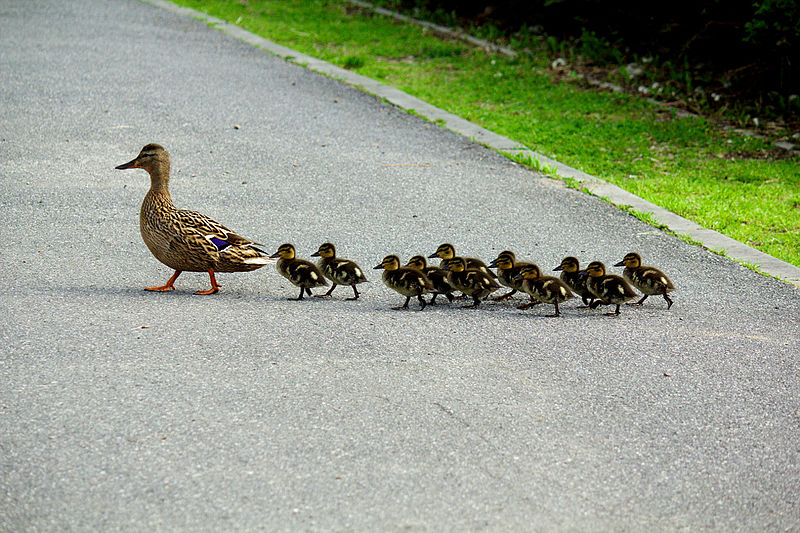
Mallard Duck army marching (I know it’s not a King, but it’s cute) ©WikiC

Today, a decision was made to rework ALL the Family Bird Pages. Hopefully, all of the pages listed below are error free. [Famous Last Words] These are in the new format. I wasn’t doing too bad until the Ducks pages were checked. 131 of them had taken off. Whew! I think most of them came back safely, especially because the hunters are out and about. The PLAN is to continue through the family pages one at a time. If you should find any escaped birds, would you try to SHOO them back this way??

Updated Family Pages

Stay Tuned!

Mass Exodus of Old World Parrots

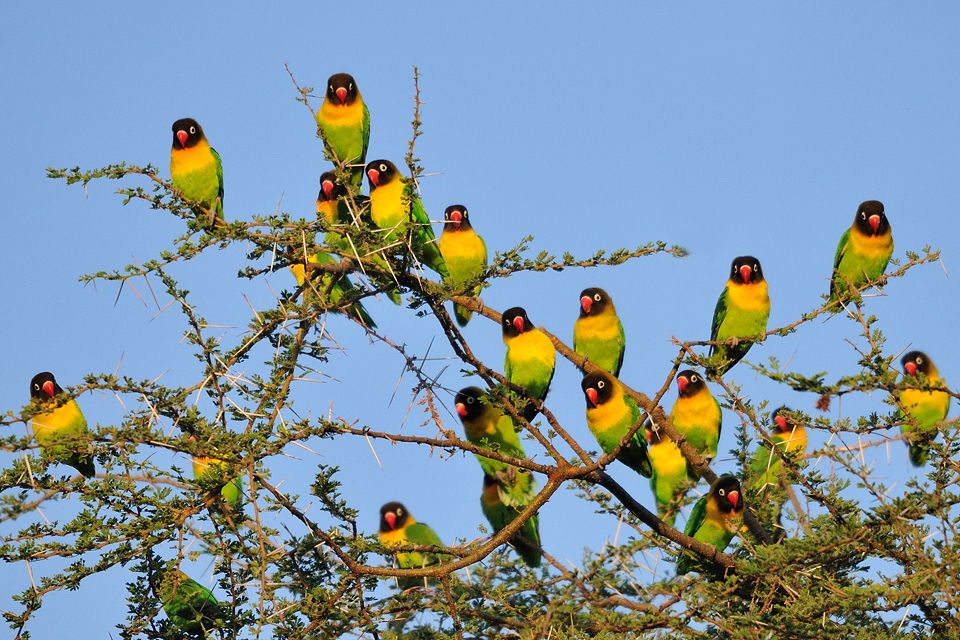
Black-cheeked Lovebird (Agapornis nigrigenis) ©ImagesFromAfrica

Mass Exodus of Parrots from the Psittaculidae – Old World Parrots

Now that the Thanksgiving break is over, I am back at work on the broken links. Out of 192 Old World Parrots in the Psittaculidae Family, 133 of them scattered. This was/is a major page to figure out how to rescue all those Parrots.

What to do??? I decided crying would not bring them back.

“For His anger is but for a moment, His favor is for life; Weeping may endure for a night, But joy comes in the morning.” (Psalms 30:5 NKJV)

After checking with WordPress recently, they found that there was a mass set of deletions back in April of this Year. They say I must have done it, and there is nothing they can do to retrieve those files. What I find so amazing is that every photo of a certain bird is gone. I could see me deleting duplicates, but to take out every copy of a bird, is beyond me. Also, even MP3 used in my Birds in Hymns pages are missing. I am only mentioning this, because many of you maintain blogs with photos, songs, or links to other articles, etc. It is wise to check your site occasionally for missing items. Dead Link Checker is a free link checker that I am using.

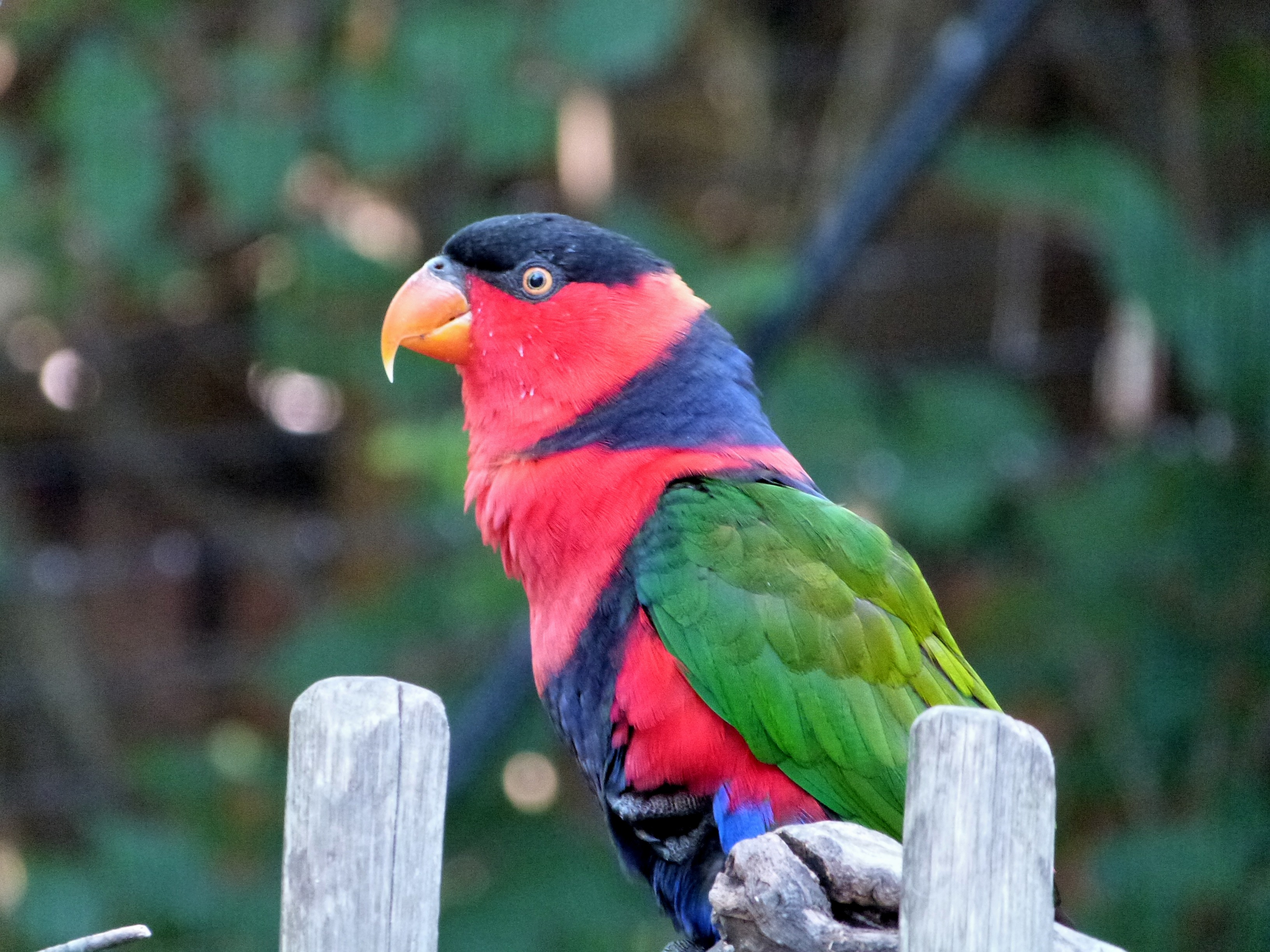
Black-capped Lory (Lorius lory) Cincinnati Zoo 9-5-13 by Lee

Black-capped Lory (Lorius lory) by Lee

“Look at the birds of the air, for they neither sow nor reap nor gather into barns; yet your heavenly Father feeds them. Are you not of more value than they?” (Matthew 6:26 NKJV)

The parrots must have thought hanging out on my page was similar to being in a barn. They sought their freedom.

This site tries to keep up with the latest version of the I.O.C. World List of Birds. The way the page is set up now, it will be easier to update in the future. The bird photos are now at the end of the page, in three columns. They will be alphabetical down the first row, then down the 2nd, then the last row. That is the way WordPress does their columns. Being in alphabetical order will make it easier to find the bird you are desiring.

Please leave a remark with your thoughts on this. I would appreciate ideas to improve these bird pages. [For now, I have not reloaded all the photos yet for this family. Also, I’ll have to locate new missing photos in the public domain since the pages were originally produced.]

Stay Tuned!

Birds in Hymns – Carol of the Birds – Again

Five years ago, this Birds in Hymns was re-posted, now the re-post has had some broken links fixed. I also, added the Video for the music. Now that Thanksgiving is winding down, it’s time to start thinking about Carols again. Enjoy the revised revision. :)

American Yellow Warbler (Dendroica aestiva) singing by J Fenton

American Yellow Warbler (Dendroica aestiva) singing by J Fenton

And the angel said unto them, Fear not: for, behold, I bring you good tidings of great joy, which shall be to all people. For unto you is born this day in the city of David a Saviour, which is Christ the Lord. (Luke 2:10-11)

Written as – El Cant Dels Ocells – Traditional Catalonian Carol

Translator Unknown

Birds in Christmas Hymns

Carol of the Birds

1. Upon this holy night,

When God’s great star appears,
And floods the earth with brightness
Birds’ voices rise in song
And warbling all night long
Express their glad heart’s lightness
Birds’ voices rise in song
And warbling all night long
Express their glad heart’s lightness

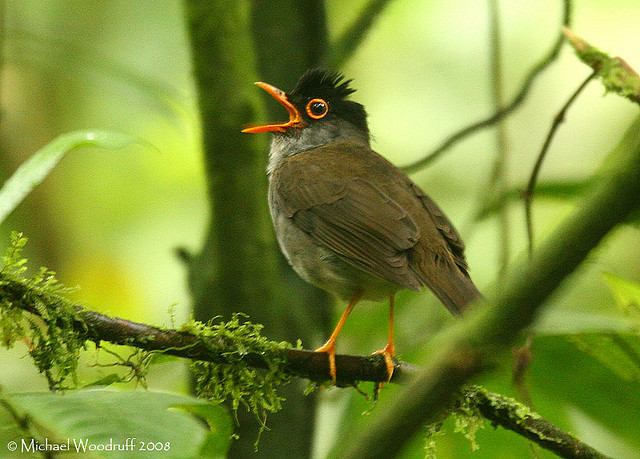
Black-headed Nightingale-Thrush (Catharus mexicanus) by Michael Woodruff

Black-headed Nightingale-Thrush (Catharus mexicanus) by Michael Woodruff

2. The Nightingale is first
To bring his song of cheer,
And tell us of His glad – ness:
Jesus, our Lord, is born
To free us from all sin
And banish ev’ry sadness!
Jesus, our Lord is born
To free us from all sin
And banish ev’ry sadness!

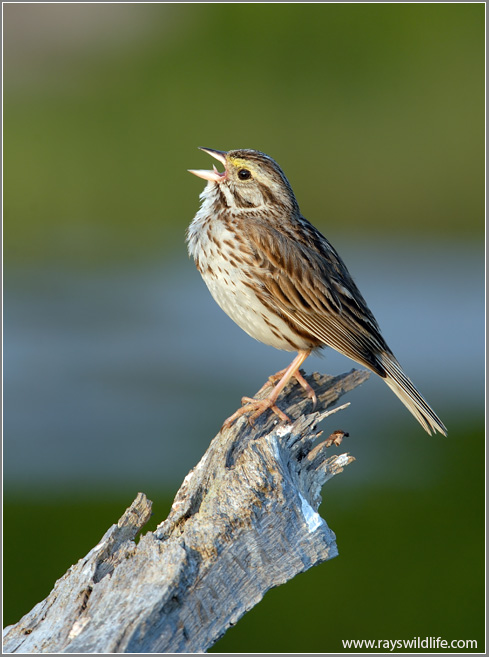
Savannah Sparrow singing by Ray

Savannah Sparrow singing by Ray

3. The answ’ring Sparrow cries:
“God comes to earth this day
Amid the angels flying.”
Trilling in sweetest tones,
The Finch his Lord now owns:
“To Him be all thanksgiving.”
Trilling in sweetest tones,
The Finch his Lord now owns:
“To Him be all thanksgiving.”

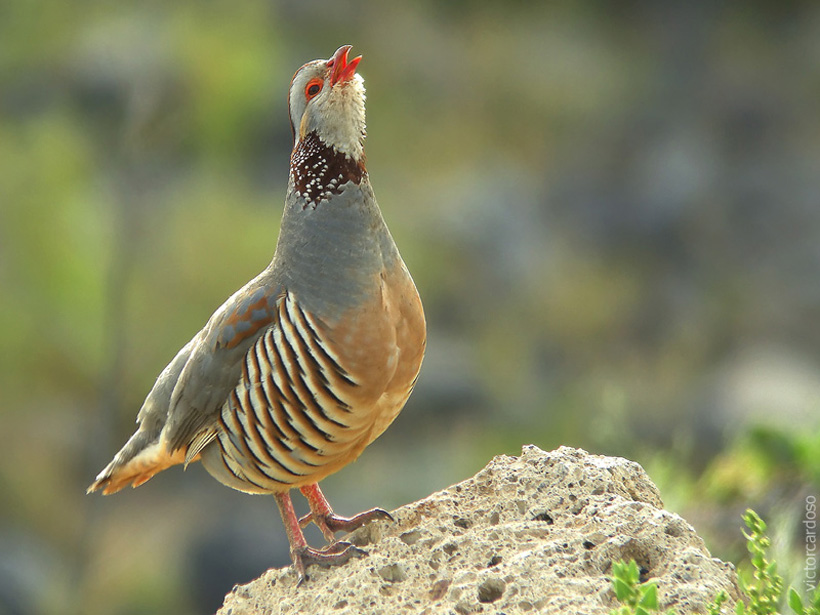
Barbary Partridge (Alectoris barbara koenigi) Pixdaus

Barbary Partridge (Alectoris barbara koenigi) Pixdaus

4. The Partridge adds his note:
“To Bethlehem I’ll fly,
Where in the stall He’s lying.
There, near the manger blest,
I’ll build myself a nest,
And sing my love undying.
There, near the manger blest,
I’ll build myself a nest,
And sing my love undying.

*

Found another version of the Carol of the Birds and it appears to be Australian Birds.

The Carol of the Birds
(Wheeler/James)

Brolga (Grus rubicunda) by Ian

Brolga (Grus rubicunda) by Ian

Out on the plains the brolgas are dancing
Lifting their feet like warhorses prancing
Up to the sun the woodlarks go winging
Faint in the dawn light echoes their singing
Crana! Orana! Orana to Christmas Day.

Crested Bellbird (Oreoica gutturalis) by Ian

Crested Bellbird (Oreoica gutturalis) by Ian

Down where the tree ferns grow by the river
There where the waters sparkle and quiver
Deep in the gullies bell-birds are chiming
Softly and sweetly their lyric notes rhyming
Orana! Orana! Orana to Christmas Day.

Silver-crowned Friarbird (Philemon argenticeps) by Ian

Silver-crowned Friarbird (Philemon argenticeps) by Ian

Friar birds sip the nectar of flowers
Currawongs chant in wattle tree bowers
In the blue ranges lorikeets calling
Carols of bush birds rising and falling
Orana! Orana! Orana to Christmas Day.
*

More Birds in Hymns

See ~ Share The Gospel

Most information from The Hymns and Carols of Christmas – Name of Hymn with Link to it

*

Gatorland’s Greedy Snowy Egret

Happy Thanksgiving to you all.

May you have a great day enjoying family, friends, and fine food. But please, do not bite off more than you should! [This video of a Snowy Egret was taken at Gatorland this week.]

“A Psalm of Thanksgiving. Make a joyful shout to the LORD, all you lands! Serve the LORD with gladness; Come before His presence with singing. Know that the LORD, He is God; It is He who has made us, and not we ourselves; We are His people and the sheep of His pasture. Enter into His gates with thanksgiving, And into His courts with praise. Be thankful to Him, and bless His name. For the LORD is good; His mercy is everlasting, And His truth endures to all generations.” (Psalms 100:1-5 NKJV)

Family: Building a Home God’s Way

More Gatorland Adventures

Gatorland in Orlando, Florida

*


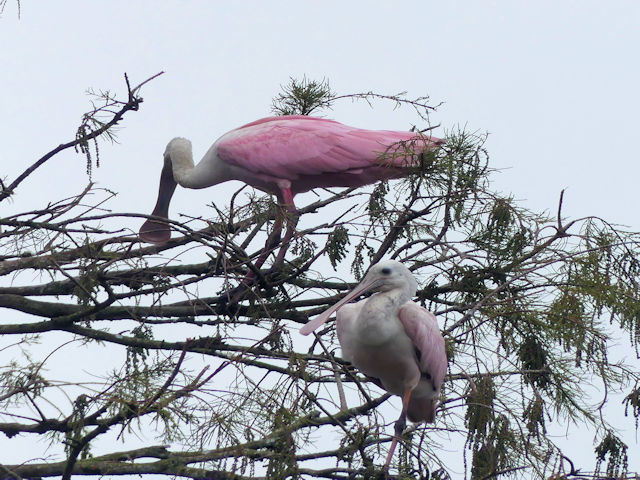
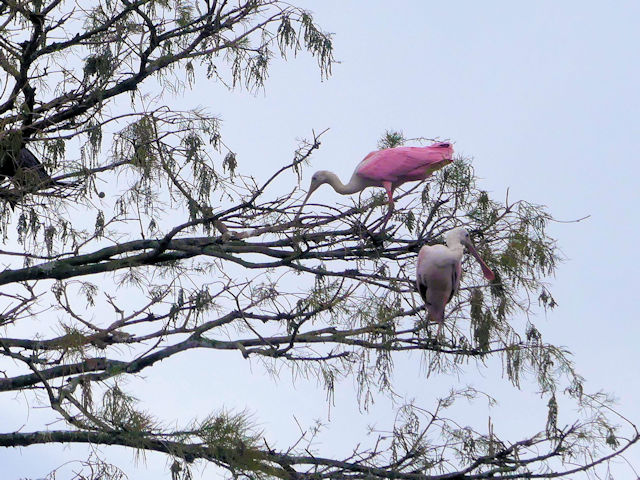
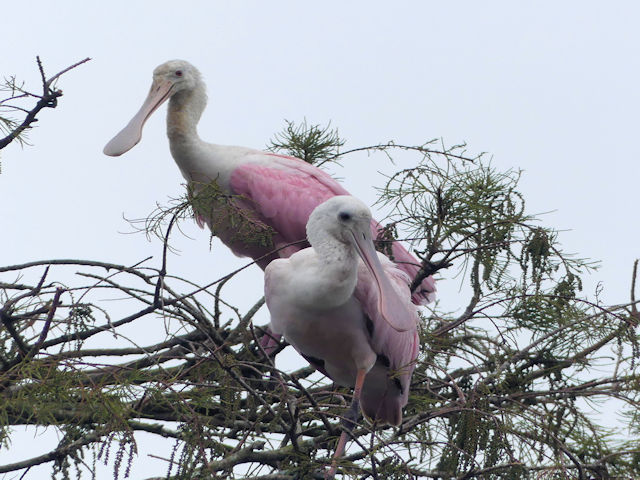
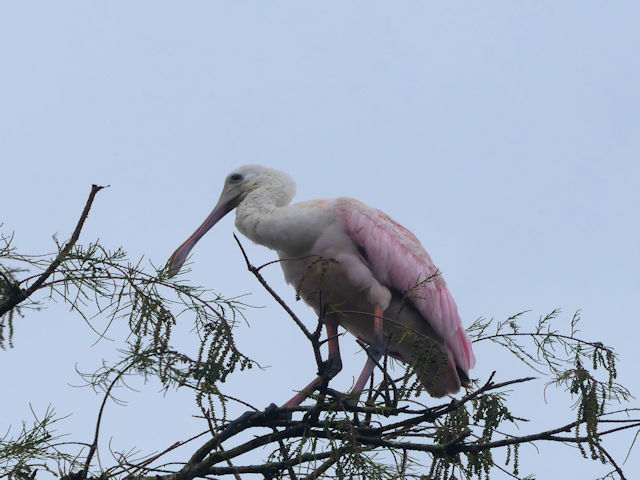
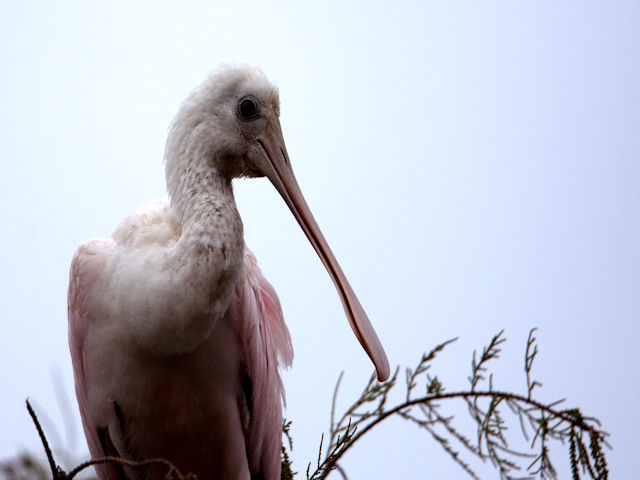
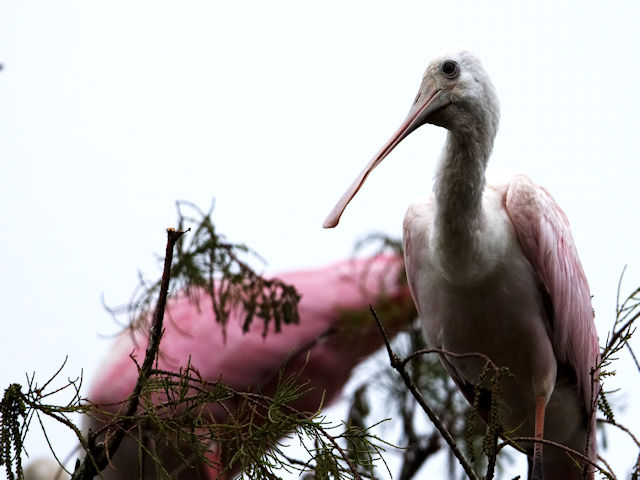
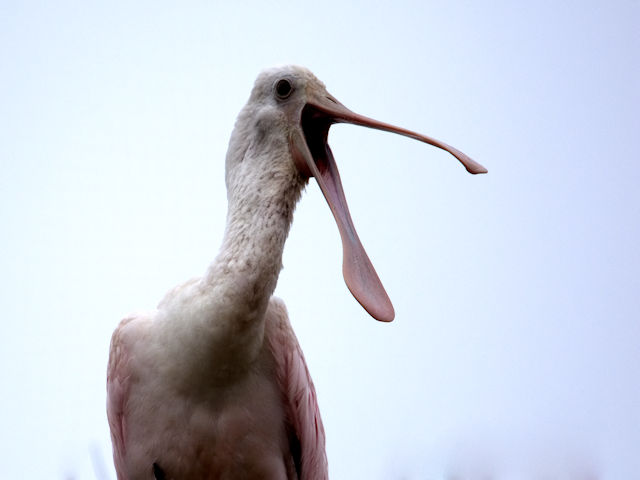
Gatorland Roseate Spoonbills

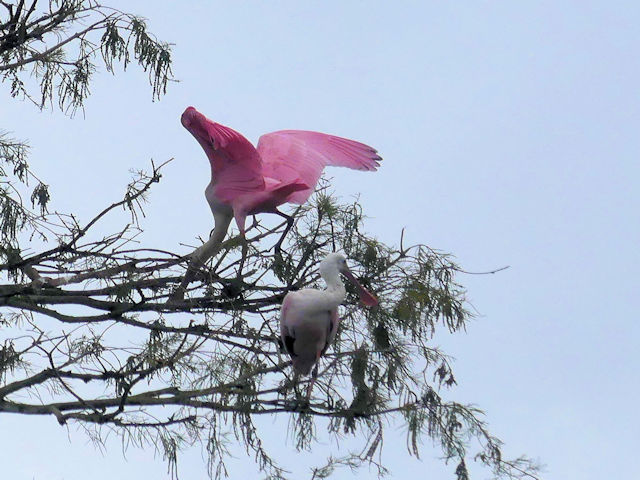
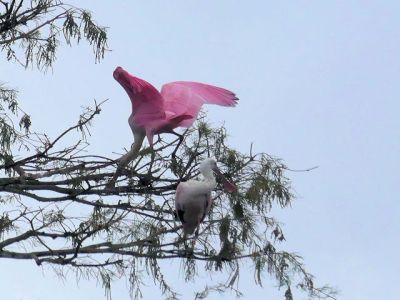
Roseate Spoonbill landing at Gatorland by Lee 11-21-17

Yesterday, I shared the Boat-tailed Grackle female. Today, here are a few photos of two Roseate Spoonbills that landed on one of the trees at Gatorland. [Plus a bonus at the end]
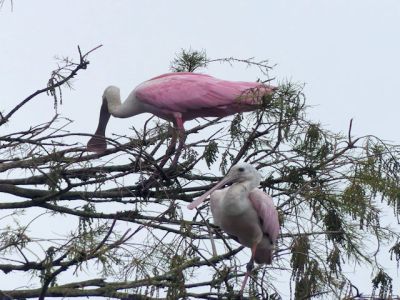
Didn’t realize that she was already there.

The Roseate Spoonbill (Platalea ajaja) is a gregarious wading bird of the ibis and spoonbill family, Threskiornithidae. It is a resident breeder in South America mostly east of the Andes, and in coastal regions of the Caribbean, Central America, Mexico, the Gulf Coast of the United States, and on central Florida’s Atlantic coast at Merritt Island National Wildlife Refuge, adjoined with NASA Kennedy Space Center. They are also found here in Central Florida. These were at Gatorland in Orlando on 11/21/17.
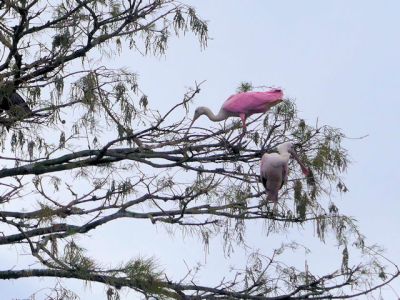
Zoomed in even on this photo. The first ones were also cropped.

The roseate spoonbill is 71–86 cm (28–34 in) long, with a 120–133 cm (47–52 in) wingspan. The tarsus measures 9.7–12.4 cm (3.8–4.9 in), the culmen measures 14.5–18 cm (5.7–7.1 in) and the wing measures 32.3–37.5 cm (12.7–14.8 in) and thus the legs, bill, neck and spatulate bill all appear elongated. Adults have a bare greenish head (“golden buff” when breeding) and a white neck, back and breast (with a tuft of pink feathers in the center when breeding), and are otherwise a deep pink. The bill is grey.
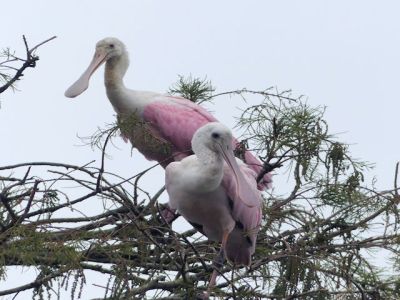
Roseate Spoonbilsl landing at Gatorland by Lee 11-21-17
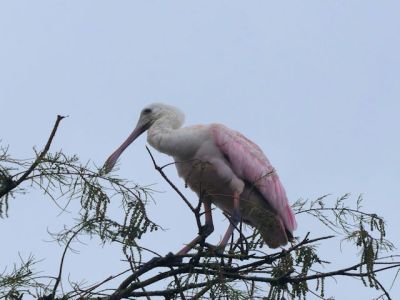
Roseate Spoonbills at Gatorland by Dan – Zoomed & Cropped

Roseate Spoonbills at Gatorland by Dan – Zoomed & Cropped

Like the American flamingo, their pink color is diet-derived, consisting of the carotenoid pigment canthaxanthin. Another carotenoid, astaxanthin, can also be found deposited in flight and body feathers. The colors can range from pale pink to bright magenta, depending on age, whether breeding or not, and location. Unlike herons, spoonbills fly with their necks outstretched. They alternate groups of stiff, shallow wingbeats with glides.

Roseate Spoonbills at Gatorland by Dan – Zoomed & Cropped
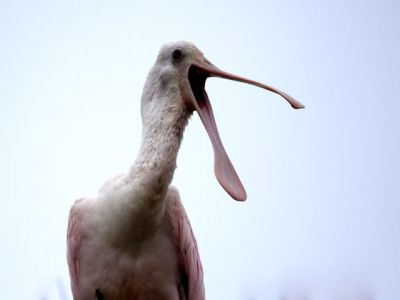
Roseate Spoonbills at Gatorland by Dan – Yawning

This species feeds in shallow fresh or coastal waters by swinging its bill from side to side as it steadily walks through the water, often in groups. The spoon-shaped bill allows it to sift easily through mud. It feeds on crustaceans, aquatic insects, frogs, newts and very small fish ignored by larger waders. In the United States, a popular place to observe roseate spoonbills is “Ding” Darling National Wildlife Refuge in Florida. Roseate spoonbills must compete for food with snowy egrets, great egrets, tricolored herons and American white pelicans. [Wikipedia, with editing]
Threskiornithidae – Ibises, Spoonbills Family
***

“Out of the ground the LORD God formed every beast of the field and every bird of the air, and brought them to Adam to see what he would call them. And whatever Adam called each living creature, that was its name.” (Genesis 2:19 NKJV)

Bonus:
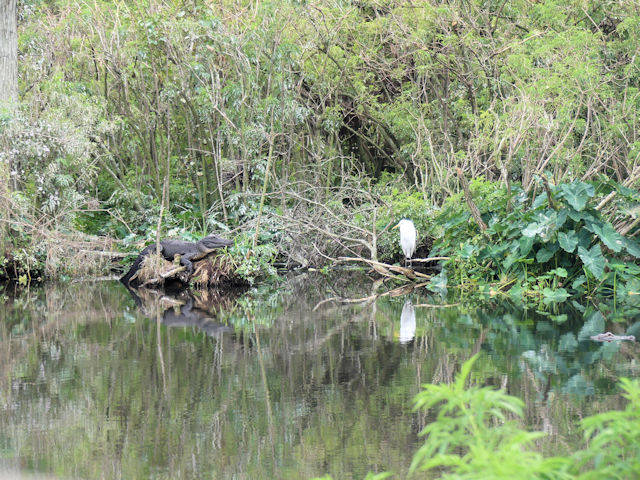
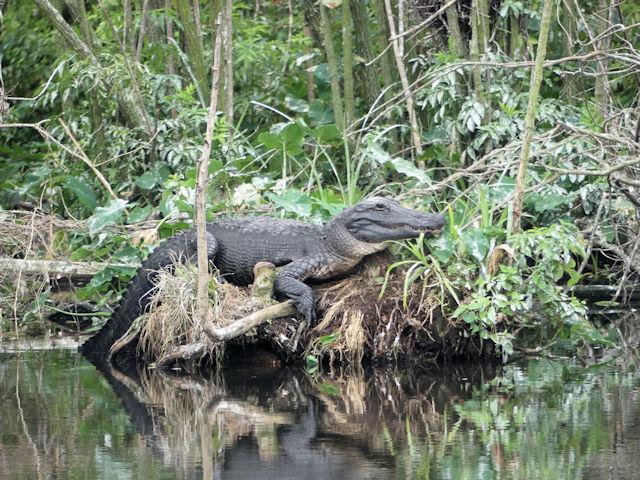
I found this Great Egret along the edge and an alligator nearby with quite a look on its face. They really weren’t that close, but thought you would enjoy this series of photos. [Click to enlarge]

More Gatorland Adventures

Gatorland in Orlando, Florida
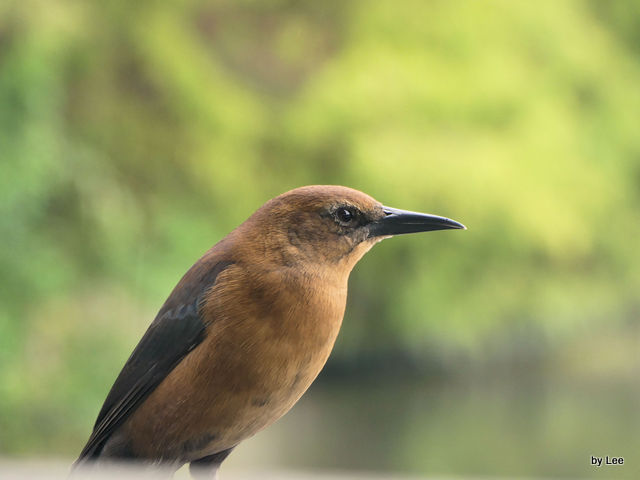
Gatorland Grackle

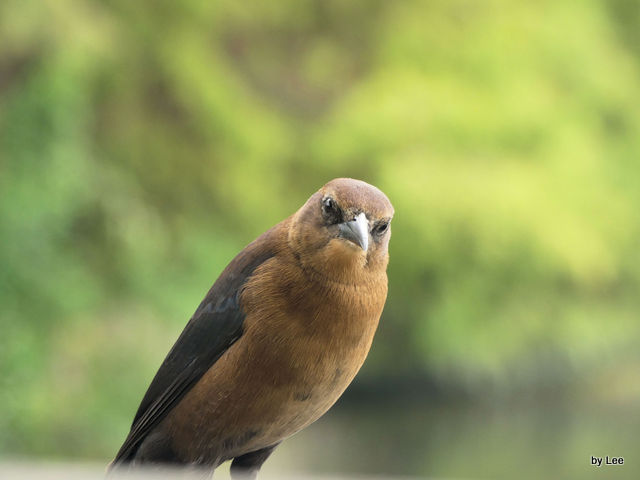
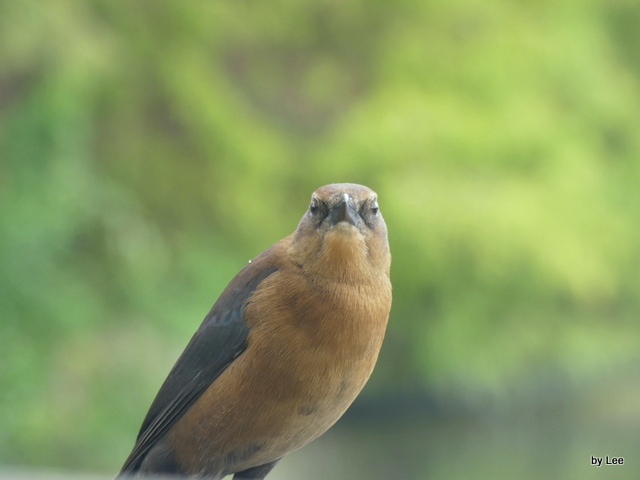
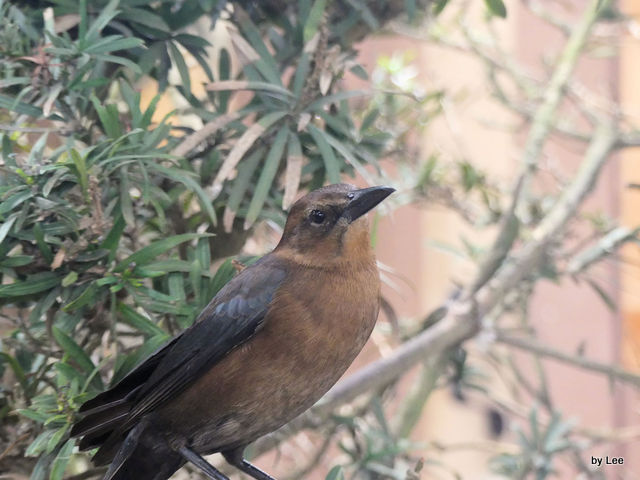
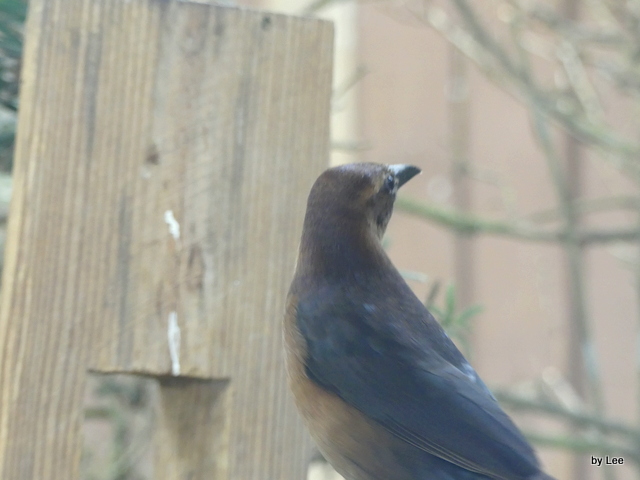
Boat-tailed Grackle at Gatorland by Lee

“To the end that my glory may sing praise to thee, and not be silent. O LORD my God, I will give thanks unto thee for ever.” (Psalms 30:12 KJV)

We drove over to Gatorland today to get in a bit of birdwatching. Those adventures have been rare lately, and today was not the best for photos. It was overcast and it began to rain less than an hour after arriving. Today, a female caught my attention and I was able to get a few fairly decent photos of her. I am always thankful for any bird that poses for me.

Were we discouraged? No way! We love watching birds and “trying” to take their photo, no matter what the weather. The Lord should give us pleasure in seeing His Creation, whether it is raining or not. Right?

“Giving thanks always for all things unto God and the Father in the name of our Lord Jesus Christ;” (Ephesians 5:20 KJV)

Boat-tailed Grackle Female at Gatorland

The Boat-tailed Grackle (Quiscalus major) is a passerine bird of the family Icteridae found as a permanent resident on the coasts of the southeastern United States. It is found in coastal saltwater marshes, and, in Florida, also on inland waters. The nest is a well-concealed cup in trees or shrubs near water; three to five eggs are laid.

Boat-tailed Grackle Female at Gatorland

The male boat-tailed grackle is 37–43 cm (15–17 in) long and weighs 165–250 g (5.8–8.8 oz). Adult males have entirely iridescent black plumage, a long dark bill, a pale yellowish or brown iris and a long keel-shaped tail. The adult female is much smaller at 26–33 cm (10–13 in) long and a weight of 90–115 g (3.2–4.1 oz). She is also distinguished by her shorter tail and tawny-brown coloration, which covers the body apart from the darker wings and tail. The wingspan in adult birds is 39–50 cm (15–20 in).

Boat-tailed Grackle Female at Gatorland near the Parrots

These birds forage on the ground, in shallow water, or in shrubs; they will steal food from other birds. They are omnivorous, eating insects, minnows, frogs, eggs, berries, seeds, and grain, even small birds. Boat-tailed grackles have established significant populations in several United States Gulf Coast cities and towns where they can be found foraging in trash bins, dumpsters, and parking lots. They also mooch off the food thrown to the gators and other critters that the visitors feed.

Boat-tailed Grackle Female at Gatorland near the Parrots

This bird’s song is a harsh jeeb, and it has a variety of typically grackle-like chatters and squeaks.
***
Bonus Yesterday:

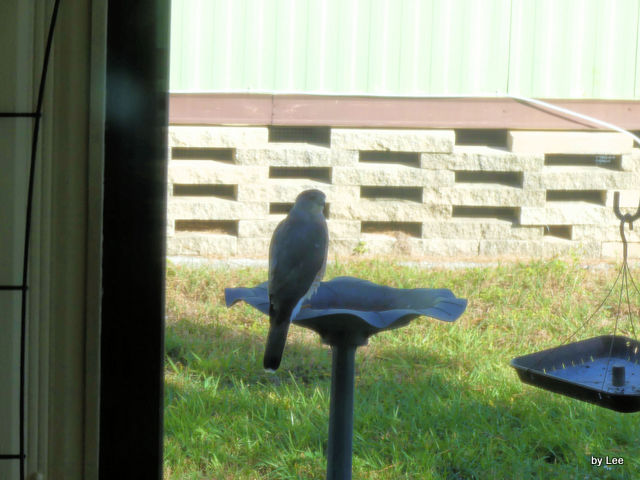
Coopers Hawk at Bird Bath 112017 by Lee

I glanced out the kitchen window yesterday and this Cooper’s Hawk was sitting on the bird bath. I hurried to get the camera before he flew off. This is through the window and the screen. The day before that, this Hawk was sitting in our carport on the water hose winder. We have feeders and the bird was probably waiting for lunch. No camera then. This is a life bird for our yard. Yeah!

Stay tuned! There are more photos to work on from this latest adventure. We always enjoy our trips over to Orlando to visit Gatorland.

More adventures from:

Reginald The Turkey Commander: The Great Snowstorm

Reginald the Turkey Commander: the Great Snowstorm, by Emma Foster

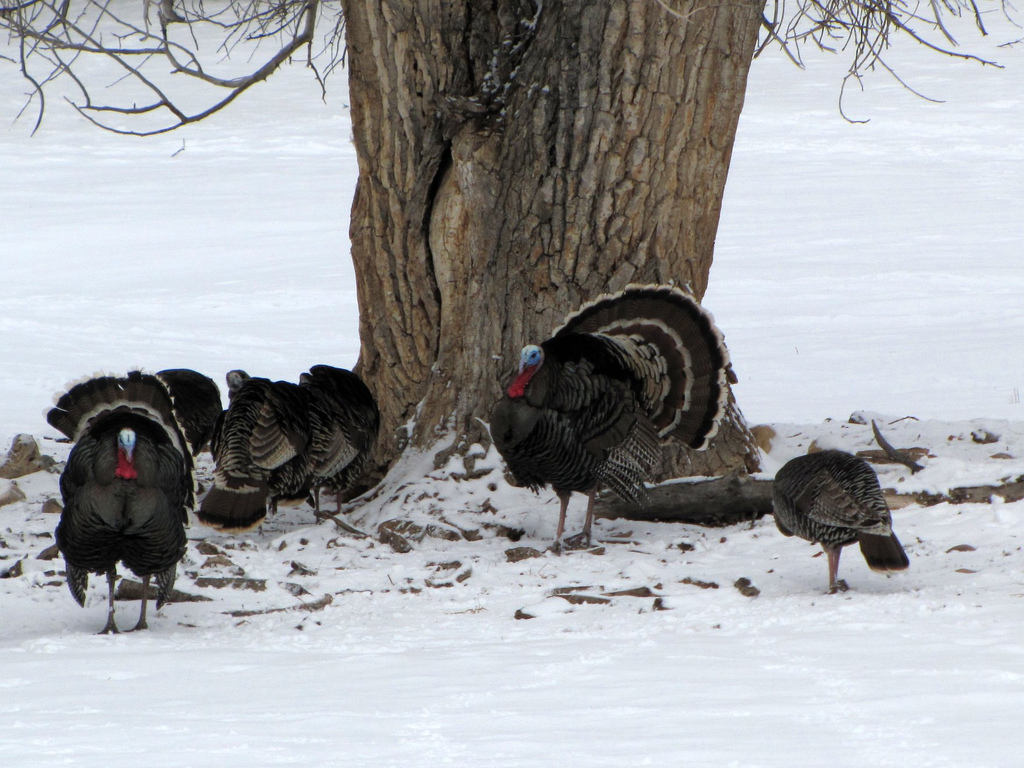
Turkeys in Snow ©Bryant Olsen Flickr

Turkeys in Snow ©Bryant Olsen Flickr

Thanksgiving was beginning to draw near and Reginald knew it was time for the turkeys to trek through the forest to their fortress, which they had built years before to keep safe from hunters. The turkeys were hoping to travel in a few days, but something about the weather began to concern Reginald. He decided it was best to check to see what the weather would be like when they would be travelling.

Reginald had to walk to a nearby farmer’s house to see the weather because the farmer that lived there always had the weather on the television early every morning because he was always concerned about the weather. Sometimes Reginald would leave the turkeys and go watch the weather so he would know if bad weather was headed to the forest. Reluctantly, Reginald let Oliver come along so that Oliver wouldn’t get into any mischief.

Wild Turkeys ©Pixabay

Reginald and Oliver hurried through the forest and across a field to where a lonely house stood. Reginald warned Oliver to be as quiet as he could when they reached the farm because there was a chance the farmer wouldn’t mind having them for Thanksgiving dinner like the other hunters. Oliver cautiously followed Reginald to a chicken coop, which stood near the window of the living room. Reginald climbed into the coop through the chicken wire by cutting part of the wire with a sharp piece of wood he had brought and was pulling it back to make a hole. Oliver attempted to crawl through, but some of his feathers got caught. Reginald told him to calm down and to stop gobbling so the farmer wouldn’t hear him. After pulling him out, Reginald quickly blended in with the chickens, hurried to the window, then peered inside to see what the weather was like. The television was on, and the weather report stated that a record amount of heavy snowfall would be coming before Thanksgiving.

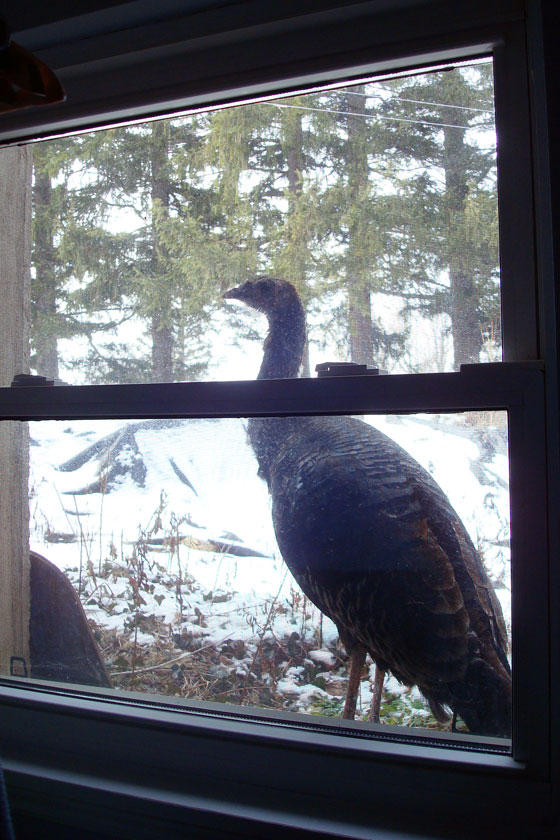
Turkey looking in window. ©Julia@Home on 129Acres

Reginald knew they would have to hurry to make it to the fortress so he turned around to tell Oliver to run back and warn the turkeys. When he looked back Oliver had gotten his head stuck in the chicken coop and the chickens had gathered around him and had started clucking while Oliver’s army helmet (worn to protect them from hunters) clanged against the walls of the coop. Reginald shook his head and dragged him out, telling him to tell the turkeys about the snowfall and that they needed to build sleds out of pieces of wood from trees that they could pull with roots to their fortress.

Oliver raced back to the turkeys while Reginald stayed behind to watch the weather. Eventually, the farmer turned the news off and Reginald had to hurry back to the turkeys. When he got back, the turkeys had already begun building their sleds, which would be used to carry the elderly and baby turkeys through the snow that was already falling. All of the turkeys were present except Oliver.

Turkey looking in window. ©Pinterest

When Reginald asked about Oliver, the turkeys said he had gone back for him. Reginald shook his head and impatiently walked all the way back through the snow to the farmhouse. Oliver was standing by the window, watching a gameshow on the television. Reginald shook his head again and told Oliver to come back with him to the turkeys.

The turkeys had finished building the sleds when Reginald and Oliver returned, and lots of snow was now on the ground. Using the sleds, the turkeys were able to arrive at their fortress before the snowbanks grew too high and the winds were too strong. They were able to spend their Thanksgiving nice and warm underground, while yet again the hunters had to hunt for turkeys in other woods.


“…but that the members should have the same care one for another. And whether one member suffer, all the members suffer with it; or one member be honoured, all the members rejoice with it.” (1 Corinthians 12:25b-26 KJV)

Looks like Reginald and Oliver have returned in time for another Thanksgiving adventure. Thanks again, Emma, for providing an entertaining tale, for a favorite holiday.

Emma’s Stories

Especially:


Don’t Feed the Birds or They’ll Evolve – Re-post from AIG

Eurasian Bullfinch (Pyrrhula pyrrhula) Male and Female ©WikiC

Don’t Feed the Birds or They’ll Evolve – Re-post from Answers In Genesis

by Avery Foley on November 13, 2017

Each year thousands of people fill bird feeders with seeds, corn, and nuts to encourage feathery friends to make a stop in their backyard. Bird feeding is especially popular in the United Kingdom where Britons spend nearly double that of other Europeans on bird feeders and birdseed, and half of homes with a backyard boast bird feeders. According to researchers, this seedy proffering is driving the rapid evolution of bird species.

Bird Feeders and Beak Size
This new research, part of a long-term study conducted by the University of Oxford’s Department of Zoology, focused on several populations of great tits (Parus major), a small bird species. One population was found in Wytham Woods, in the UK, the others in Oosterhout and Veluwe, in the Netherlands….

The Same Old Story

Of course, this isn’t the first time bird beaks have been used as examples of evolution. The so-called “Darwin’s finches” have famously been used to support the idea of molecules-to-man evolution….

…. Continue Reading There are some very nice photos in the article.

American Goldfinch at Feeder by Lee

The evolutionist just cannot figure it out that God is their Creator and the bird’s also. Enjoy reading about the latest reason not to feed the birds. As for me, my feeders are still out for the avian wonders of the Lord to enjoy eating from.

“For by him were all things created, that are in heaven, and that are in earth, visible and invisible, whether they be thrones, or dominions, or principalities, or powers: all things were created by him, and for him: And he is before all things, and by him all things consist.” (Colossians 1:16-17 KJV)

Harriet, The Osprey

Osprey Harriet’s transmitter is safely attached ©Craig Koppie USFWS

James J. S. Johnson, [Dr. Jim, to me] sent a very interesting article to share with you all. It is about an Osprey, named Harriet, who lives up in the Baltimore, Maryland [USA] area. Recently they, the U.S. Fish and Wildlife Service, mounted a satellite tracker on her. Wait, here is the article:

“…On July 10, Harriet was captured and fitted with a satellite transmitter to track her movements. The transmitter, which has a visible antenna, was comfortably and securely attached by a harness onto Harriet’s back.

Like so many other birds we see around the Chesapeake in spring and summer, ospreys begin to migrate to South America in September for the winter. Most of our Chesapeake osprey spend the colder months there, ranging from Venezuela, to as far south as Paraguay and even Argentina.”

Continue to the article, Hurricanes no match for Baltimore’s Harriet the Osprey on her fall trek, by CLICKING HERE

Harriot’s trip so far – Satelite ©USFWS


“Doth the hawk fly by thy wisdom, and stretch her wings toward the south? Doth the eagle mount up at thy command, and make her nest on high?” (Job 39:26-27 KJV)

We have also written articles along this line about tracking our migrating avian wonders from the Lord: