***
PRIDE OF LIFE
***
For all that is in the world, the lust of the flesh, and the lust of the eyes, and the pride of life, is not of the Father, but is of the world. (1 John 2:16 KJV)
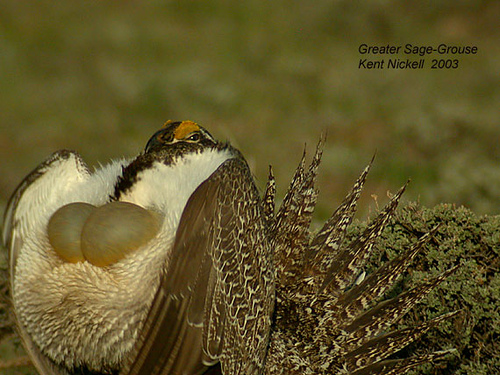
Sage Grouse (Centrocercus urophasianus) by Kent Nickel
*
*
For all that is in the world, the lust of the flesh, and the lust of the eyes, and the pride of life, is not of the Father, but is of the world. (1 John 2:16 KJV)
Sage Grouse (Centrocercus urophasianus) by Kent Nickel
*
*

Also, to every beast of the earth, to every bird of the air, and to everything that creeps on the earth, in which there is life, I have given every green herb for food”; and it was so. (Genesis 1:30 NKJV)
Rosy-faced Lovebird (Agapornis roseicollis ) A feral Rosy-faced Lovebird eating seeds in Chicago ©WikiC
*
*
Gold – Heaven
This GOLD reminds us of Heaven. The Bible tells us Heaven has a street of gold! But the best part about Heaven is that God, who created you and me, lives there. The Bible, God’s Word, says: “God so loved the world that He gave His only begotten Son, that whosoever believeth in Him should not perish but have everlasting life.” — John 3:16 Jesus, God the Son, is in Heaven preparing a place for all who put their trust in Him. (John 14:2-3) God is holy and perfect. He cannot allow anything in Heaven that is less than perfect, so there’s one thing that can never be in Heaven. Can you think of what that might be?

Black/Dark – Sin
It is sin! That is what this DARK reminds us of. Sin is anything you think, say, or do that does not please God, like lying, cheating, being selfish, or hurting others. The Bible says: “All have sinned and come short of the glory of God.” — Romans 3:23 That means everyone, big or little, young or old! No matter where you live or who you are, you have sinned. Everyone is born with a “want to” to do wrong. God says that sin must be punished (Romans 6:23), and the punishment for sin is to be separated from God forever in a place of suffering….a place called Hell. But God has a wonderful plan so that you will not have to be punished for your sin!
Red – Jesus’ Blood
God sent Jesus Christ, His perfect Son, to be born as a little baby. Jesus lived a perfect life….He never sinned. When He was grown, wicked men nailed Him to a cross. The bird’s RED reminds us of Jesus’ blood. The Bible says that without the giving of blood there can be no forgiveness of sin (Hebrews 9:22). So Jesus Christ willingly died to take your sin punishment. “…Christ died for our sins according to the Scriptures; and that He was buried, and that He rose again the third day, according to the Scriptures.“— 1 Corinthians 15:3-4 Now, because of what Jesus has done for you, you can have your sins forgiven. Read on to see how!
White – Heaven
The Bible says: “As many as received Him, to them gave He power to become the sons of God, even to them that believed on His name.” — John 1:12 The WHITE reminds us of a CLEAN heart. How can you have a clean heart? A = Admit to God you are a sinner and want to turn away from those sins. B = Believe in Jesus Christ, that He is God’s perfect Son who died for your sin, was buried, and rose again. C = Call on Him to save you from your sin. Would you like to do that right now? He has promised to hear, and once you are His child, He will never leave you (Hebrews 13:5). Take a moment and talk to God right now. It will change your life forever. Only one more color! What can it mean?
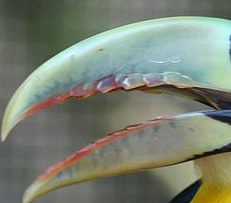
Green – Grow
The GREEN stands for things that grow. When you ask God to forgive you and save you, you become His child. God wants you to get to know Him better and to grow to become more like Him. These four things will help you grow:
1. PRAY (talk to God every day)
2. READ & OBEY THE BIBLE (to know what He says, then do it)
3. TELL OTHERS ABOUT JESUS
4. GO TO A BIBLE-BELIEVING CHURCH (where you can learn more about pleasing Him)
As a child of God, if you should sin again, stop and tell Him about it. He promises in His Word… “If we confess our sins, He is faithful and just to forgive us our sins and to cleanse us from all unrighteousness.” — 1 John 1:9 Ask God to help you live a life to please Him! Share the Good News of this story with someone else.
The Wordless Book has been used for many years by CEF (Child Evangelism Fellowship). These words are from CEF.
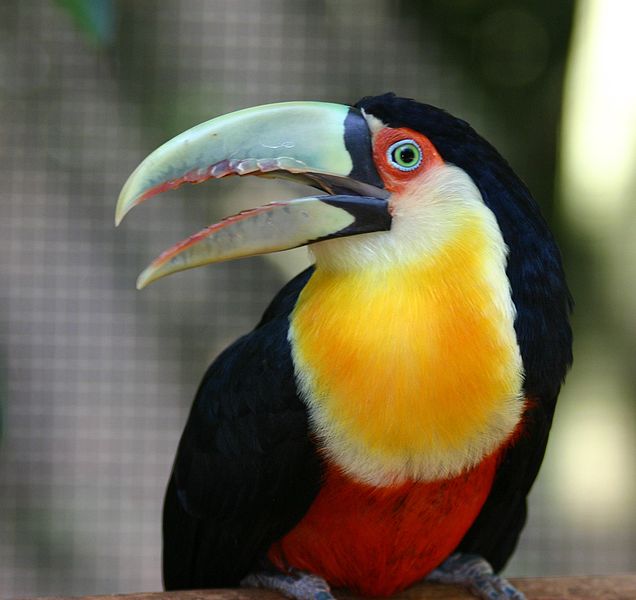
Our Wordless Toucan
*

Green-billed Toucan (Ramphastos dicolorus) by Dario Sanches
*
A friend shared with me about someone who uses the Toucan to teach the “Wordless Book.”
Other Wordless Birds:
Wordless Birds – With Hummingbirds
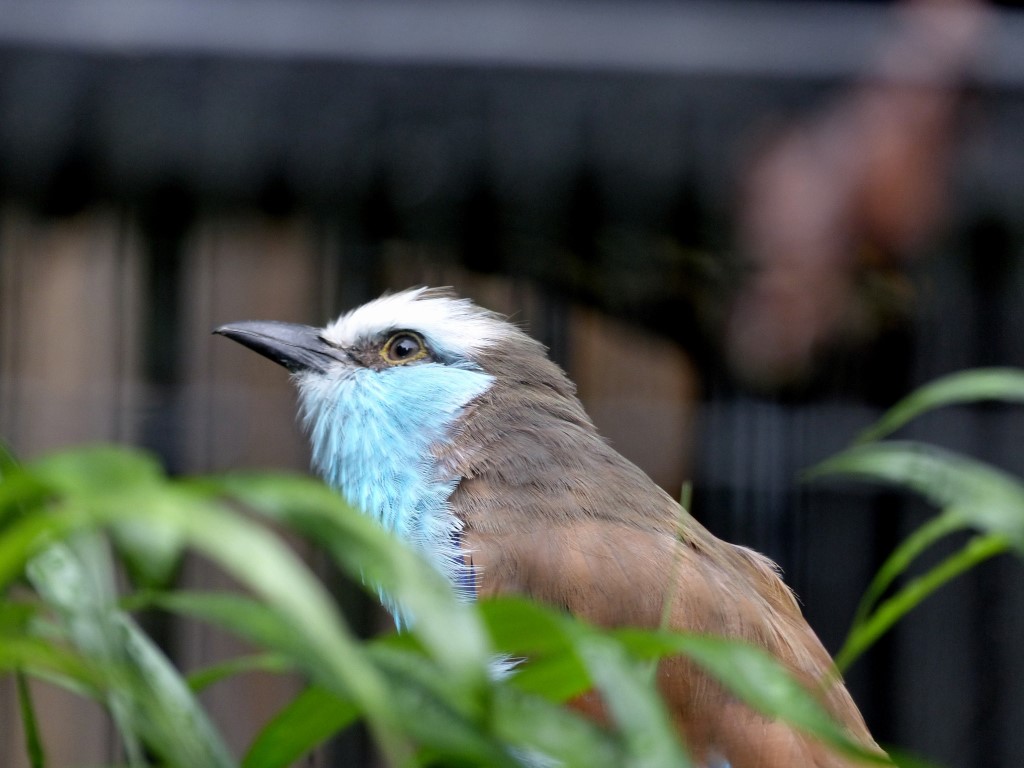
“Roll your works upon the Lord [commit and trust them wholly to Him; He will cause your thoughts to become agreeable to His will, and] so shall your plans be established and succeed.” (Proverbs 16:3 AMP)
Commit thy works unto the LORD, and thy thoughts shall be established. (Proverbs 16:3 KJV)
Racket-tailed Roller (Coracias spatulatus) Houston Zoo 5-6-15 by Lee
*
*

Rosy Pipit (Anthus roseatus) by Nikhil Devasar
“He hath made his wonderful works to be remembered: the LORD is gracious and full of compassion.” (Psalms 111:4 KJV)
The Motacillidae are a family of small passerine birds with medium to long tails. There are around 66 species in 6 genera and they include the wagtails, longclaws and pipits. The longclaws are entirely restricted to the Afrotropics, and the wagtails are predominantly found in Europe, Africa and Asia, with two species migrating and breeding in Alaska. The pipits have the most cosmopolitan distribution, being found across mostly in the Old World but occurring also in the Americas and oceanic islands such as New Zealand and the Falklands. Two African species, the Yellow-breasted Pipit and Sharpe’s Longclaw are sometimes placed in a separate seventh genus, Hemimacronyx, which is closely related to the longclaws.

Yellow-throated Longclaw (Macronyx croceus) ©WikiC
Wagtails, pipits, and longclaws are slender, small to medium sized passerines, ranging from 14 to 17 centimetres in length, with short necks and long tails. They have long, pale legs with long toes and claws, particularly the hind toe which can be up to 4 cm in length in some longclaws. Overall the robust longclaws are larger than the pipits and wagtails. Longclaws can weigh as much as 64 g, whereas the weight range for pipits and wagtails is 15–31 g. The plumage of most pipits is dull brown and reminiscent of the larks, although some species have brighter plumages, particularly the Golden Pipit of north-east Africa. The adult male longclaws have brightly coloured undersides.

Citrine Wagtail (Motacilla citreola) by Nikhil Devasar
The wagtails often have striking plumage, including grey, black, white, and yellow. (Wikipedia with editing)
*
“And they that passed by reviled him, wagging their heads, And saying, Thou that destroyest the temple, and buildest it in three days, save thyself. If thou be the Son of God, come down from the cross.” (Matthew 27:39-40 KJV)
“Glorious Love” ~ Choir, Orchestra, Solo by Pastor Jerry
*
Motacillidae – Wagtails, Pipits Family
*

And God shall wipe away all tears from their eyes; and there shall be no more death, neither sorrow, nor crying, neither shall there be any more pain: for the former things are passed away. (Revelation 21:4 KJV)
Atlantic Puffin (Fratercula arctica) by Michael Woodruff
(I know the Puffin isn’t crying, but he looks sad. We have shed many tears this week and are looking forward to the promise above.)
*
*
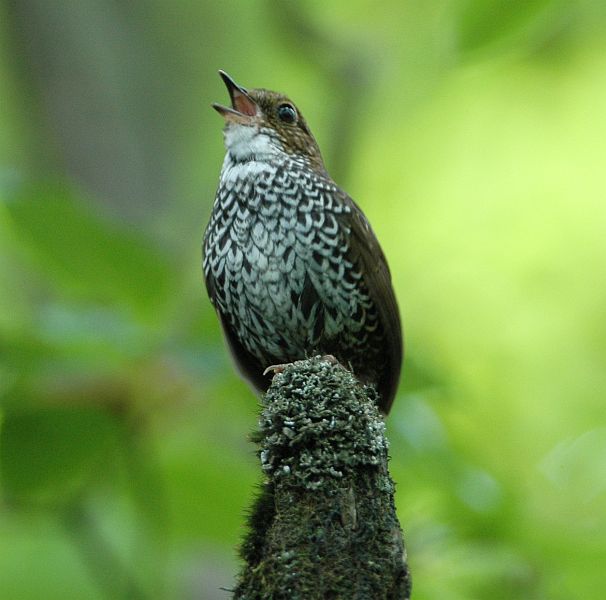
My voice shalt thou hear in the morning, O LORD; in the morning will I direct my prayer unto thee, and will look up.
(Psalms 5:3 KJV)
Scaly-breasted Wren-babbler (Pnoepyga albiventer) ©©
*
*
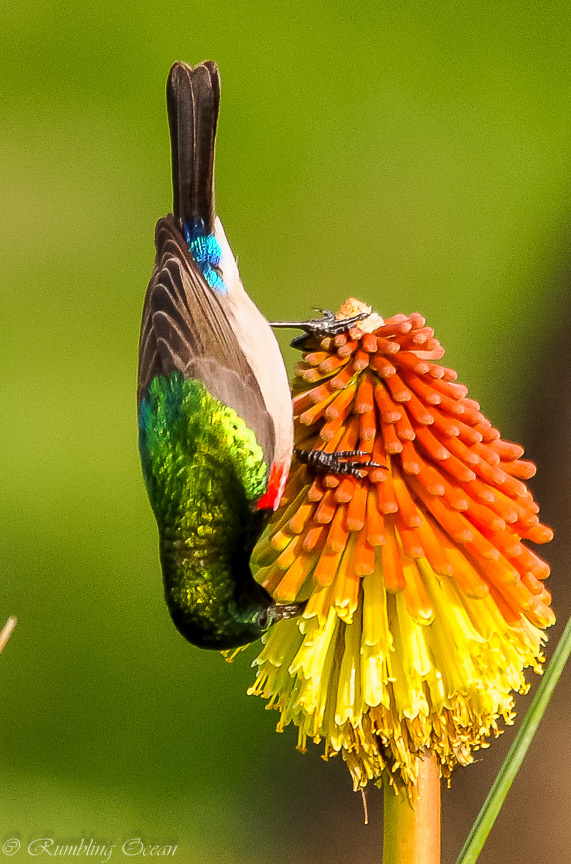
Lesser Double-collared Sunbird enjoying a Kniphofia flower ©©Rambling Ocean-Boeta.
Then shall the righteous shine forth as the sun in the kingdom of their Father. Who hath ears to hear, let him hear. (Matthew 13:43 KJV)
In the daily devotional yesterday, I forgot to give you a link to my friend’s website. They gave me permission to use it, but I forgot to give him credit for his beautiful photography.
I have fixed my over-site by providing the link. Our Rumbling Ocean is a site I have been following for some time and have become friends with them. They have a son who is featured very often. We have all been watching him grow up. They live on the East Coast of South Africa and are within 150 m of the ocean. Check out their blogs at:
Our Rumbling Ocean and Having Fun With My Camera
Here are links to the four pictures of the sunbird and the Kniphofia flower:
Now, let me tell you a little bit about that beautiful bird that the Lord created. The scientific name is Cinnyris chalybeus, and as is common, they have several names given to a bird. Locally, there in South Africa, it is known as the Lesser Double-collared Sunbird. The I.O.C. uses the name, Southern Double-collared Sunbird (Cinnyris chalybeus).
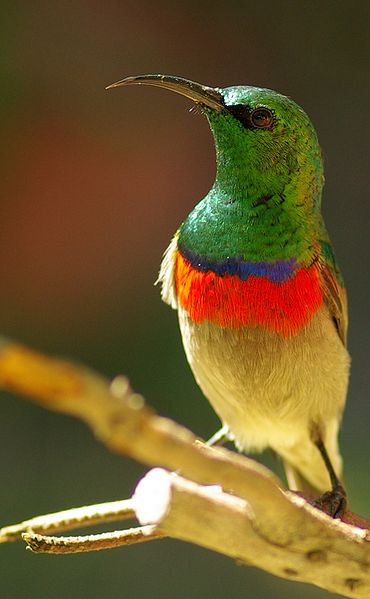
Southern Double-collared Sunbird (Cinnyris chalybeus) ©WikiC
“The southern double-collared sunbird or lesser double-collared sunbird (Cinnyris chalybeus) is a small passerine bird which breeds in southern South Africa. It is mainly resident, but partially migratory in the north-east of its range.” This Sunbird is part of the Nectariniidae – Sunbirds Family. This family was featured in the Sunday Inspiration – Sunbirds in August.
“This sunbird is common in gardens, fynbos, forests and coastal scrub. The southern double-collared sunbird breeds from April to December, depending on region. The closed oval nest is constructed from grass, lichen and other plant material, bound together with spider webs. It has a side entrance which sometimes has a porch, and is lined with wool, plant down and feathers.”
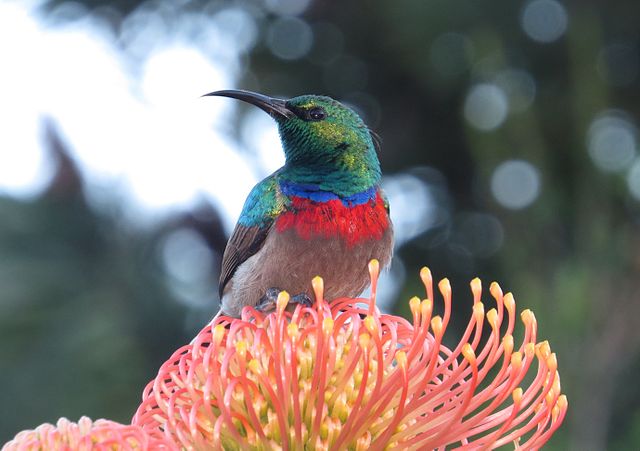
outhern Double-collared Sunbird (Cinnyris chalybeus) ©WikiC
“The southern double-collared sunbird is 12 cm long. The adult male has a glossy, metallic green head, throat upper breast and back. It has a brilliant red band across the chest, separated from the green breast by a narrow metallic blue band. The rest of the underparts are whitish. When displaying, yellow feather tufts can be seen on the shoulders. As with other sunbirds the bill is long and decurved. The bill, legs and feet are black. The eye is dark brown. The male can be distinguished from the similar greater double-collared sunbird by its smaller size, narrower red chest band and shorter bill.

Southern Double-collared Sunbird (Cinnyris chalybeus) Female ©WikiC
The female southern double-collared sunbird has brown upperparts and yellowish-grey underparts. The juvenile resembles the female. The female is greyer below than the female orange-breasted sunbird, and darker below than the female dusky sunbird.”

Southern Double-collared Sunbird (Cinnyris chalybeus) ©©Redwood
“The southern double-collared sunbird is usually seen singly or in small groups. Its flight is fast and direct on short wings. It lives mainly on nectar from flowers, but takes some fruit, and, especially when feeding young, insects and spiders. It can take nectar by hovering like a hummingbird, but usually perches to feed most of the time.
The call is a hard chee-chee, and the song is high-pitched jumble of tinkling notes, rising and falling in pitch and tempo for 3–5 seconds or more.” (Quoted material is from Wikipedia with editing.) I also think Rambling Oceans photos are better, but I had only asked permission for the one. :(
*
Southern Double-collared Sunbird – Wikipedia
*
But I will hope continually, and will yet praise thee more and more. (Psalms 71:14 KJV)
Lesser Double-collared Sunbird enjoying a Kniphofia flower ©©Rambling Ocean-Boeta.
*
*
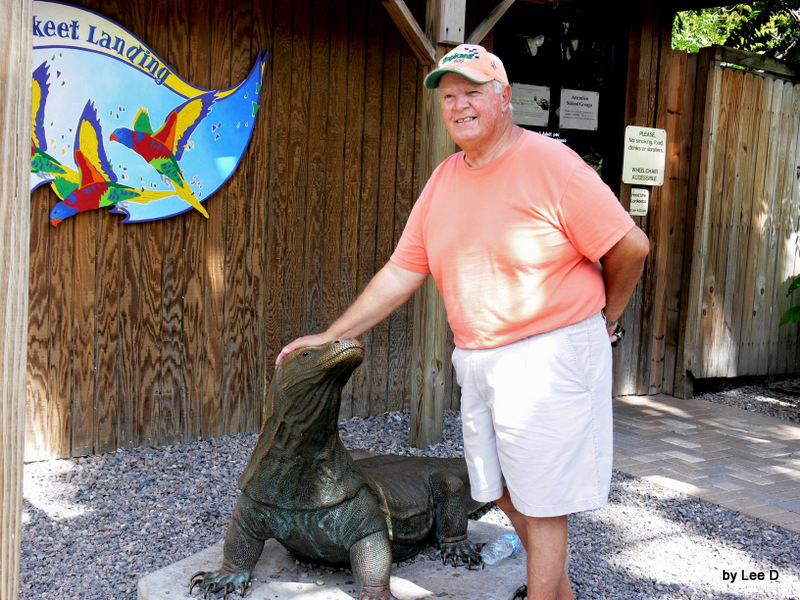
Jim with Komono Dragon at Lowry Park Zoo
Therefore we are always confident, knowing that, whilst we are at home in the body, we are absent from the Lord: (For we walk by faith, not by sight:) We are confident, I say, and willing rather to be absent from the body, and to be present with the Lord. (2 Corinthians 5:6-8 KJV)
Dan and I have been privileged to have close friends over the years. As you move to new locations, the Lord helps you develop more “best friend” relationships. Here, Jim and Phyllis, have become more of our “best friends.” Yesterday, Jim (James) Foster, went home “to be with Our Lord.”
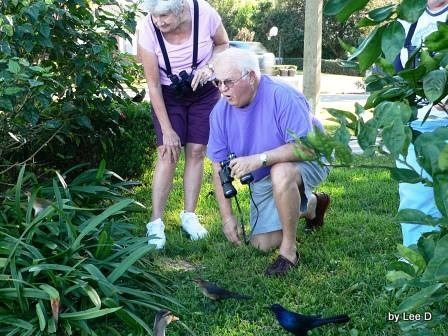
Jim and Phyllis Looking at Baby Gallinule at Lake Hollingsworth
Over the years, Jim and Phyllis have joined us in some of our birdwatching adventures, and so, in honor of those great times together, I’d like to share some of those photos. This is also, to help ease the loss we feel at his “home going.”
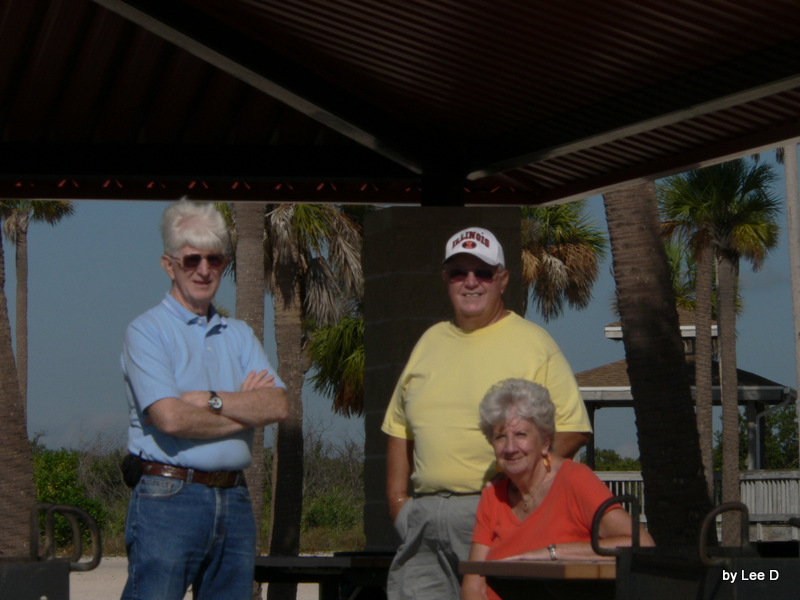
Dan, Jim and Phyllis at MacDill AFB Shore
Jim is enjoying the delights of heaven and of being in the presence with the Lord. It is those of us here, that are sad and happy at the same time.
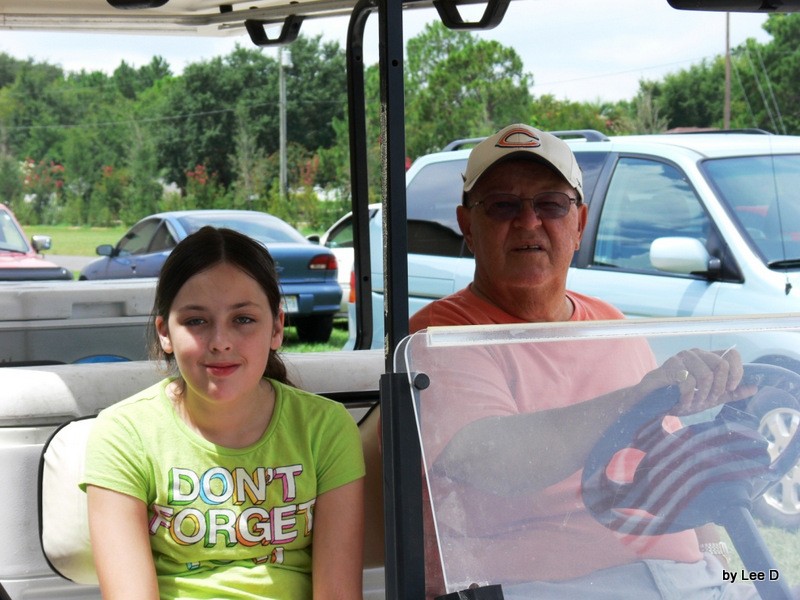
Jim and Emma Foster – Work Day 2011
Also, you are familiar with our great stories from Emma Foster. This is her grandfather. She, and all of her family will appreciate your prayers.
Jim and Phyllis were always ready and willing to volunteer for VBS and other events at church. Most of the time, it was in the kitchen area.

Jim with Pastor Pete and Emma at Window
But I would not have you to be ignorant, brethren, concerning them which are asleep, that ye sorrow not, even as others which have no hope. For if we believe that Jesus died and rose again, even so them also which sleep in Jesus will God bring with him. (1 Thessalonians 4:13-14 KJV)
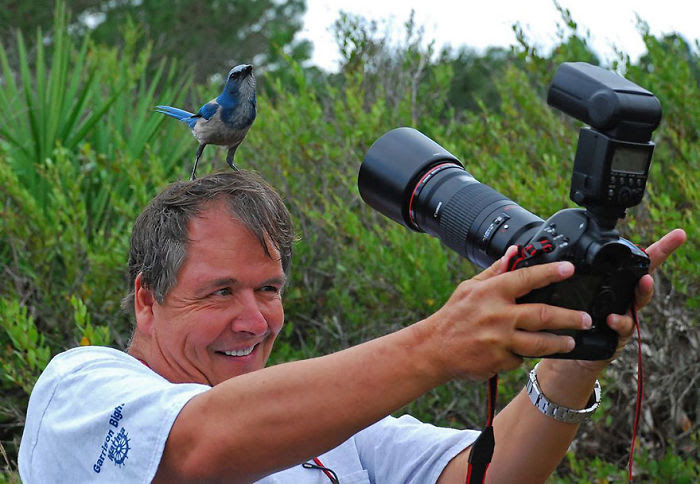
Blessings are on the head of the righteous, …. (Proverbs 10:6a NKJV)
Scrub Jay on Photographer’s Head ©Unknown
Wild Wildlife Photographers!
*
*
 Lee's Birdwatching Adventures Plus