Birds of the Bible – Buzzards

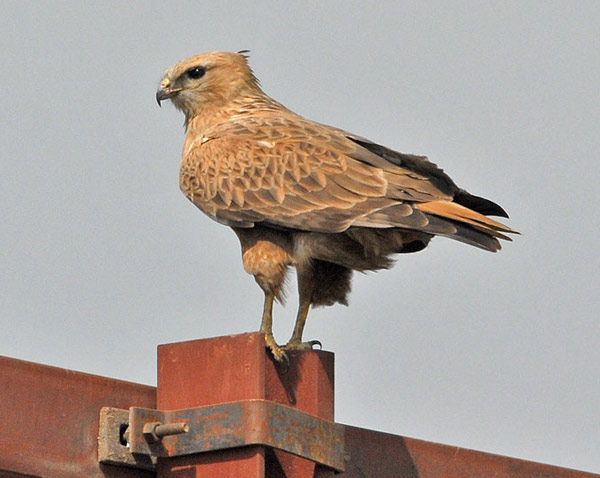
Long-legged Buzzard (Buteo rufinus) by Nikhil Devasar

Long-legged Buzzard (Buteo rufinus) by Nikhil Devasar

But these you shall not eat: the eagle, the vulture, the buzzard, (Deuteronomy 14:12 NKJV)

In Birds of the Bible – How Many Are There? II, the buzzard was mentioned. Also last week, Ian did an article on the Black-breasted Buzzard. Since realizing that this bird, the Buzzard, had not been added to the Birds of the Bible pages, I added a Buzzard and this is the first article about our forgotten avian bird.

Aren’t we glad that the Lord does not forget His Creation?

Look at the birds of the air, for they neither sow nor reap nor gather into barns; yet your heavenly Father feeds them. Are you not of more value than they? (Matthew 6:26 NKJV)

Buzzards belong to the  Accipitridae – Kites, Hawks & Eagles Family and has 28 species in this family with “Buzzard” in their name. Members of this family are known as “Birds of Prey” or “raptors” by many.
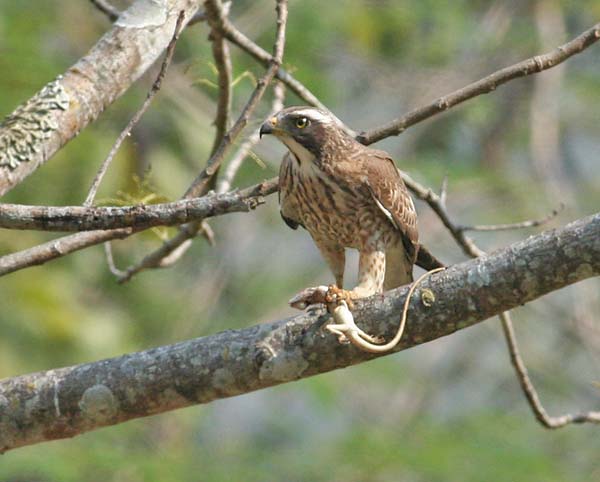
Grey-faced Buzzard (Butastur indicus) by Peter Ericsson

Grey-faced Buzzard (Butastur indicus) by Peter Ericsson

From Britannica “True buzzards, or buteos, constitute the subfamily Buteoninae of the family Accipitridae. When in flight, they can usually be distinguished from other birds of prey by their broad wings and expansive rounded tails. They fly with slow heavy wing beats and soar gracefully. The plumage of most species is essentially dark brown above and white or mottled brown below, and the tail and underside of the wings usually are barred. There is much variability of pigmentation, however, even between individuals of a single species. Buzzards customarily prey on insects and small mammals and only occasionally attack birds. The nest, in a tree or on a cliff, is substantial, built of sticks and lined with softer materials. The two to five whitish eggs are blotched with brown.”

One of several medium-sized, wide-ranging raptors with a robust body and broad wings. In particular, those in the genus Buteo. In the Old World, members of this genus are named as “buzzards”, but “hawk” is more common in North America.

In Europe, the Common Buzzard, Buteo buteo, where Buzzard is often used as a synonym. The Common Buzzard is the most known buzzard in the Old World.

In the New World Buzzard can mean:

  • A vulture, particularly the American Black Vulture and Turkey Vulture, or as a general term for vultures.
  • In parts of the United States where they are considered pest, particularly in rural areas, a derogatory term for certain birds of prey, such as the Chickenhawk (a common colloquial name referring to either the Cooper’s Hawk, the Sharp-shinned Hawk or the Red-tailed Hawk), or the Duck hawk (known elsewhere as the Peregrine Falcon).

Quotes from Britannica and Wikipedia with editing.

Another Bible verse with “buzzard” is in Leviticus:

And these you shall regard as an abomination among the birds; they shall not be eaten, they are an abomination: the eagle, the vulture, the buzzard, (Leviticus 11:13 NKJV)

Both verses, Leviticus 11:13 and Deuteronomy 14:12 are listed in the birds not to be eaten by the Israelites. Considering what they eat, I am in no hurry to eat them either.


See:

*

Birds of the Bible – How Many Are There? II

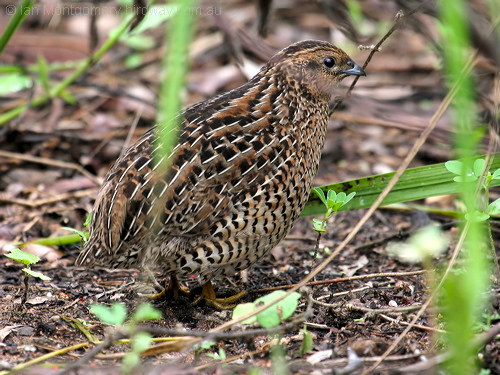
Brown Quail (Coturnix ypsilophora) by Ian

Brown Quail (Coturnix ypsilophora) by Ian

Birds of the Bible – How Many Are There? I (continued…)

As we continue in Genesis, the only other reference to birds that I have found is in Chapter 40. Joseph had been tossed in prison and in time he was joined by Pharaoh’s chief butler and his chief baker. They each have dreams and Joseph interprets them for the two men. Unfortunately the baker’s dream, which includes birds, will be killed.

And in the uppermost basket there was of all manner of bakemeats for Pharaoh; and the birds did eat them out of the basket upon my head. And Joseph answered and said, This is the interpretation thereof: The three baskets are three days: Yet within three days shall Pharaoh lift up thy head from off thee, and shall hang thee on a tree; and the birds shall eat thy flesh from off thee. (Genesis 40:17-19 KJV)

Looking at the verses in the compare mode, “birds” or “birdies” are listed by all except one. The ECB calls them the “flyers.” No matter what they are called, it was not a good day for the Chief Baker.

That brings us to the book of Exodus as the children of Israel travel through the wilderness that we meet our next named bird. The Quail. They had been complaining about only eating manna and started asking why they couldn’t have meat. So the LORD sent them quail or whatever we find they called them. I wrote about this avian critter in Birds of the Bible – Quail and in Quail II. Let’s see how the quail in translated here.

And it came to pass, that at even the quails came up, and covered the camp: and in the morning the dew lay round about the host. (Exodus 16:13 KJV)

  • Quail or quails by most versions
  • mother-quail (ABP+)
  • little birds (BBE)
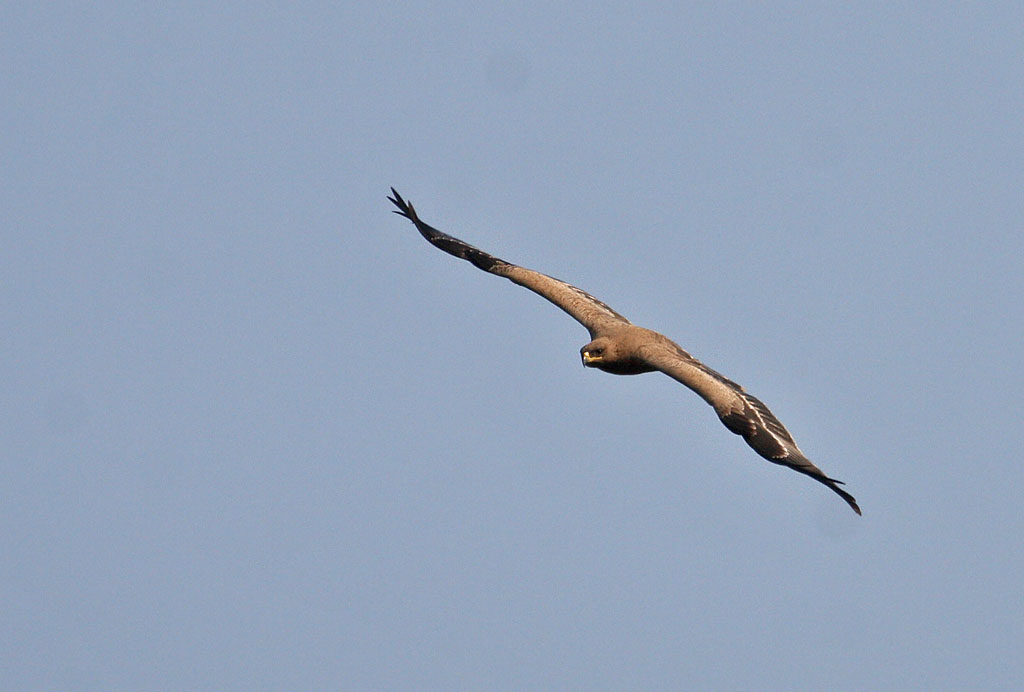
Steppe Eagle (Aquila nipalensis) by Peter Ericsson

Steppe Eagle (Aquila nipalensis) by Peter Ericsson

Our next verse and named bird is in Exodus 19:4 where the LORD is telling Moses what to tell the people.

Ye have seen what I did unto the Egyptians, and how I bare you on eagles‘ wings, and brought you unto myself. (Exodus 19:4 KJV)

The power of the eagle’s wings is referred to as how He freed them from their bondage in Egypt. So now we can add the Eagle to our list of birds. There are many references to Eagles throughout God’s Word. Every version mentions “eagle’s wings” or “wings of eagles.” See the Eagle articles.

As we move on to Leviticus, our count of the birds is going to really climb as we encounter the list of the Clean and Unclean birds in Chapter 11 also lots a variety as to how those birds are translated. Before we get there, the sacrifices are mentioned of the turtledoves or young pigeons, previously covered, in Lev 1:14, 5:7, 11, 12:6, 8, and  chapters 14 and 15.

And if the burnt sacrifice of his offering to the LORD is of birds, then he shall bring his offering of turtledoves or young pigeons. (Leviticus 1:14 NKJV)

I am going to quote the KJV and NKJV for the list, then we will check out the variations:

Leviticus 11:13-19 KJV
(13) And these are they which ye shall have in abomination among the fowls; they shall not be eaten, they are an abomination: the eagle, and the ossifrage, and the ospray,
(14) And the vulture, and the kite after his kind;
(15) Every raven after his kind;
(16) And the owl, and the night hawk, and the cuckow, and the hawk after his kind,
(17) And the little owl, and the cormorant, and the great owl,
(18) And the swan, and the pelican, and the gier eagle,
(19) And the stork, the heron after her kind, and the lapwing, and the bat.

Leviticus 11:13-19 NKJV
(13) ‘And these you shall regard as an abomination among the birds; they shall not be eaten, they are an abomination: the eagle, the vulture, the buzzard,
(14) the kite, and the falcon after its kind;
(15) every raven after its kind,
(16) the ostrich, the short-eared owl, the sea gull, and the hawk after its kind;
(17) the little owl, the fisher owl, and the screech owl;
(18) the white owl, the jackdaw, and the carrion vulture;
(19) the stork, the heron after its kind, the hoopoe, and the bat.

Can you see the differences already? That is just two translations, let’s see what the others reveal. So far we now have added; ossifrage, ospray, kite, night hawk, cuckow, hawk, little owl, cormorant, great owl, swan, pelican, gier eagle, stork, heron, lapwing, falcon, ostrich, short-eared owl, sea gull, fisher owl, screech owl, white owl, jackdaw, carrion vulture, hoopoe.

Levitus 11: 13 –

  • griffin (ABP+) (DRB) griffon vulture (NET),  
  • gier-eagle (ASV) (BBE) (RV),
  • Goshauke (Bishops) (Geneva) (Tyndale),
  • sea-eagle (Brenton) (Darby),
  • buzzards (ERV) (NAS77) (NASB) (UKJV),
  • bearded vulture and black vulture (ESV) (GW) (HCSB) (LITV) (MKJV)(WEB R) black and great vulture (JPS)
  • cormoraunte and kyte (Tyndale)

Some list them all in one verse:

(CEV) Eagles, vultures, buzzards, crows, ostriches, hawks, sea gulls, owls, pelicans, storks, herons, hoopoes, and bats are also disgusting, and you are forbidden to eat any of them.
(GNB) You must not eat any of the following birds: eagles, owls, hawks, falcons; buzzards, vultures, crows; ostriches; seagulls, storks, herons, pelicans, cormorants; hoopoes; or bats.

The next two verses are easier. Verse 14 has all birds of prey: (KJV)  “And the vulture, and the kite after his kind; ”

  • vulture – “whole species of falcon” (AMP)
  • kite
  • crows (ABP+)
  • buzzards (CJB) (GW) (NRSV)
  • falcon (Darby) + others
  • hawk (ECB)
  • red kite (ISV)
  • red kites and all kinds of black kites (NIrV) (NIV) (WEB (R))
One last verse for now: “every raven of any kind,” (Leviticus 11:15 ESV)
  • black birds, (ERV)
  • crows (GW) (NET)
Ravens, Blackbirds and Crows are all in the same family. No problem there.

In our list below, I doubled up the obvious birds that are in the same family like the owls and vultures.

Our list of Birds of the Bible so far:

Also mentioned:

  • Swooper (Gen 15:11)
  • Flyers (Gen 40:19) (Lev 11:13)

I am only listing what the different versions have written. I am neither approving or disapproving those versions.

For now, that is enough. To be continued in Part III.

Wordless Birds

Disclaimer About Bible Version Usage

*

Birds of the Bible – How Many Are There? I

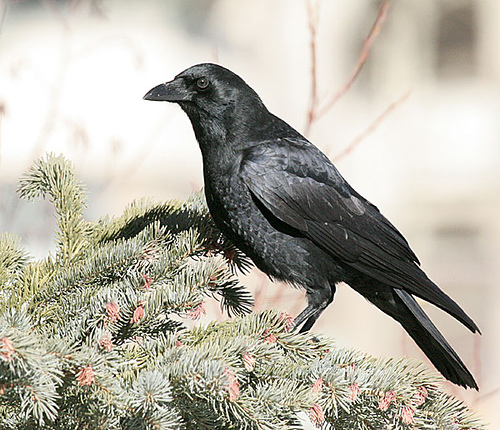
Chihuahuan Raven (Corvus cryptoleucus)Raven (Corvus corax) by Kent Nickell

Northern Raven (Corvus corax) by Kent Nickell

The list of the Birds of the Bible varies according to which version of the Bible you use. We have discussed this in other articles, but don’t think I ever actually listed them all. An article from Birding and the Bible says there are 29 and then questions 2 of them, the Glede and the Ossifrage, adding the Swift, his lists is 28 or 29.

The sidebar here has links to 33 pages of Bible Birds. There are a few more I am considering adding. After this study, I may find even more. I am going to write this as I do my research using my e-Sword program (free). Currently, I have quite a few versions of the Scriptures loaded and want to see what is listed. (Disclaimer About Bible Version Usage) Let’s get started.

The very first reference to birds or fowls, is in Genesis 1:21. That is where God created “every winged fowl after his kind” (KJV) or ” every winged bird according to its kind” (NKJV). Most agree with, “And God saw that it was good.” Here are some of the other ways of stating it:

  • “winged creature feathered  according to type.” (ABP+)
  • “every creature that flies with wings according to its kind,” (Brenton)
  • “every kind of bird that flies in the air.” (ERV)
  • ” all kinds of birds.” (GNB)
  • “He created every kind of bird that flies.” (NIrV)

So basically, all agree that the birds or fowls were created after their kind or type on the fifth day (1:23) and that God saw that it was good. That right there includes all the major families of birds, some have become extinct, some which interbred within their kinds, etc. until today we now have over 10,000 named species of birds. (Birds of the World)

In Genesis 1:25 God said, “Let us make man in our image, after our likeness: and let them have dominion” over birds, etc. The term his is given as “dominion over”, “have rule over”, “power over” (GNB), “be masters over” (ISV), “So they can be responsible for” (MSG).

Then in Genesis 2:20, Adam named the birds that the LORD God brought to him. The version all agree that they are birds or fowls or the air or heavens.

In chapter 3, Adam and Eve sin against God and we all come under the judgement including the critters, birds included. By chapter 6, things are so bad that the LORD tells Noah to bring two of every kind of critter into the Ark and then in 6:20, the birds are again mentioned. They are to be preserved in pairs of sevens. Again, no specific named bird is mentioned throughout chapter 6 or 7.

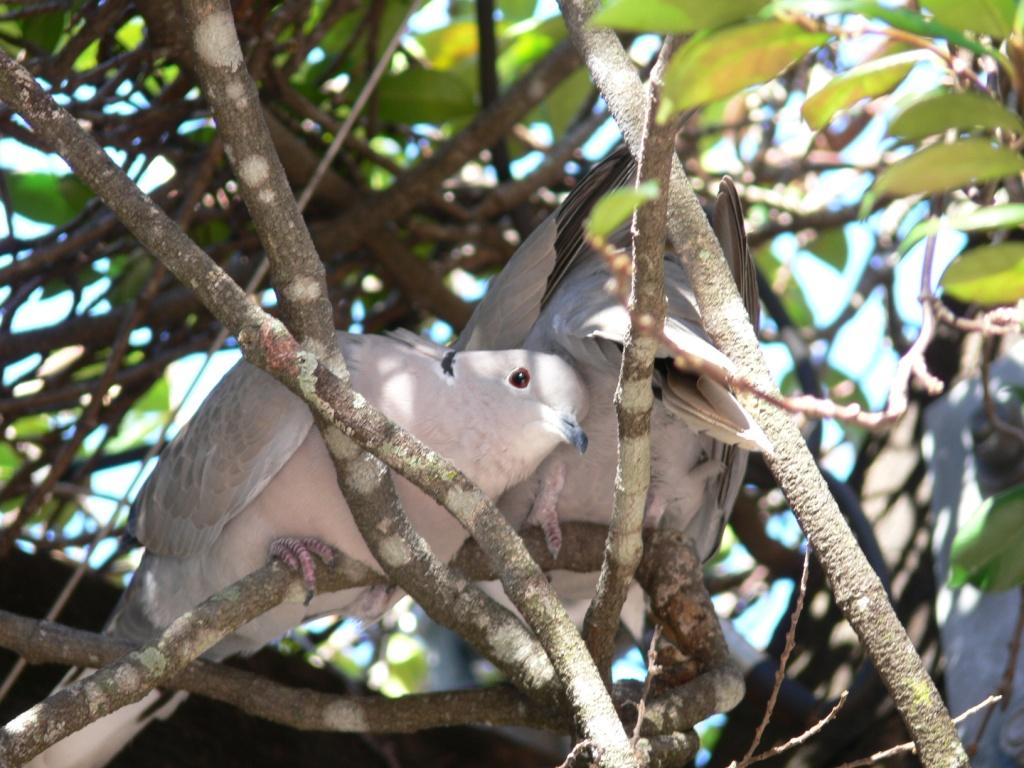
Eurasian Collared Dove (Streptopelia decaocto) by Lee

During and after the Flood, then we finally here of specific named birds. The first bird named in the Bible is the Raven. Noah opened the window of the ark and “sent forth a raven” and it flew back and forth “until the waters were dried up from off the earth.” (KJV) Other than spelling differences, they all agree on the Raven. The same is true of verse 8 where the Dove was released. The Dove kept coming back until the waters were totally dried up. The third time it was released, it did not return.

So now we have 2 Birds of the Bible – the Raven and the Dove.

The next reference to birds is in 9:2 where the birds now have a fear of humans placed on them. They, the birds, are told to multiply and fill the earth and are given a covenant or promise by God that the earth would never be destroyed by a worldwide flood again. Gen 9:10-17 – the Rainbow.

And the fear of you and the dread of you shall be upon every beast of the earth, and upon every fowl of the air, upon all that moveth upon the earth, and upon all the fishes of the sea; into your hand are they delivered. (Genesis 9:2 KJV)

King Vulture Brevard Zoo 120913 by Lee

King Vulture Brevard Zoo by Lee

In Genesis 15:9 we find the next birds, a Turtledove, young pigeon and in 15:11, the vultures. Two are sacrificed birds, the other is coming to take from the alter.

So He said to him, “Bring Me a three-year-old heifer, a three-year-old female goat, a three-year-old ram, a turtledove, and a young pigeon.” Then he brought all these to Him and cut them in two, down the middle, and placed each piece opposite the other; but he did not cut the birds in two. And when the vultures came down on the carcasses, Abram drove them away. (Genesis 15:9-11 NKJV)

Let’s see how these birds are given in the various translations. “dove” several, “turtle” (DRB), “mourning dove” (GW), “even a nestling” (LITV), and “young bird” (YLT). Most are in agreement with spelling differences from the old English of some of the translations.

Verse 11 has: birds of prey, birds, fowls, large birds (DRB), swoopers (ECB), Vultures (GNB, MSG, NKJV), and ravenous birds (YLT). Never heard of “swoopers”, so I guess that one doesn’t count. What you think? They all realize that some birds came swooping down trying to get at the sacrifice, but Abram drove them away.

Our list of Birds of the Bible so far:

Also mentioned:

  • Swooper (Gen 15:11)

For now, that is enough. To be continued in Part II.

Birds of the Bible

Wordless Birds

*

Sunday Inspiration – Mother’s Day

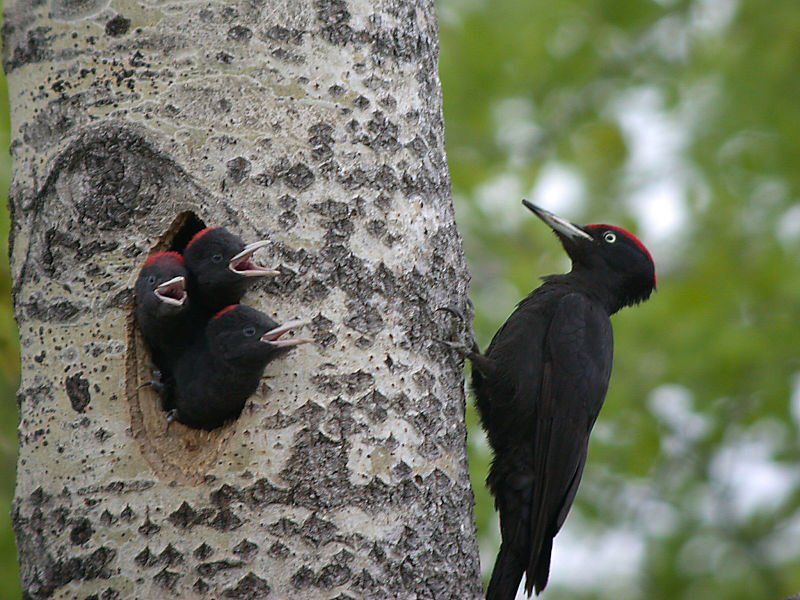
Black Woodpecker (Dryocopus martius) with Young ©WikiC

Black Woodpecker (Dryocopus martius) with Young ©WikiC

Since today is “Mother’s Day” here in the United States, it is appropriate to remember them.

My son, keep your father’s command, And do not forsake the law of your mother. Bind them continually upon your heart; Tie them around your neck. When you roam, they will lead you; When you sleep, they will keep you; And when you awake, they will speak with you. (Proverbs 6:20-22 NKJV)

Hooded Warbler (Wilsonia citrina) ©USFWS

Hooded Warbler (Wilsonia citrina) ©USFWS

Let your father and your mother be glad, And let her who bore you rejoice. (Proverbs 23:25 NKJV)

He grants the barren woman a home, Like a joyful mother of children. Praise the LORD! (Psalms 113:9 NKJV)


Greater Painted Snipe (Rostratula benghalensis) by W Kwong

Greater Painted Snipe (Rostratula benghalensis) by W Kwong

“HONOR YOUR FATHER AND MOTHER,” which is the first commandment with promise: “THAT IT MAY BE WELL WITH YOU AND YOU MAY LIVE LONG ON THE EARTH.” (Ephesians 6:2-3 NKJV)

But we were gentle among you, just as a nursing mother cherishes her own children. (1 Thessalonians 2:7 NKJV)


This slideshow requires JavaScript.

*

“Stay Close To Me” © the Hyssongs (used with permission of the Hyssong)

I know this is not the typical Mother’s Day song, but listen to the words. It is a journey being a mother from the day you become aware a child is on the way. Mothers make decisions many times daily and need to “Stay Close To Me (the Lord)” as they travel through “motherhood.”

Lord Bless your day and Happy Mother’s Day

Lee and Dan

*

Sunday Inspirations

Changed From the Inside Out

*

Lesson From The Bird’s Nest

*

A week ago, we went to Lake Morton in Lakeland for half hour or so. Several of the Swans were sitting on nest and a Peking Duck or a White Mallard was working on her nest. She kept adding twigs and grass to the nest and then walked away.

Have you ever watched a bird build or work on a nest? They add the “walls” and a “floor” and some birds like Weavers, make a “roof” over their nest.

As I watched the bird working on her nest, it reminded me of what was going on at our house. As I mentioned last week, our house was in “disarray” while our “spare” bedroom and two other areas were being worked on. Many spare rooms become a collection of “stuff.” (At least our is)

Behold, the days come, that all that is in thine house, and that which thy fathers have laid up in store until this day, shall be carried to Babylon: nothing shall be left, saith the LORD. (Isaiah 39:6 KJV)

This was a warning to the Israelites. We all know that there are good things put in “store.”

Upon the first day of the week let every one of you lay by him in store, as God hath prospered him, that there be no gatherings when I come. (1 Corinthians 16:2 KJV)

Laying up in store for themselves a good foundation against the time to come, that they may lay hold on eternal life. (1 Timothy 6:19 KJV)

Back to our nest. This verse: “Even the stork in the sky knows her appointed seasons, and the dove, the swift and the thrush observe the time of their migration. But my people do not know the requirements of the LORD.” (Jeremiah 8:7 NIV)

Another lesson we can learn from our birds. They do not load their nest with stuff. Some add colorful threads now and then, but there are no hat racks or closets with different feathers hanging. They do not have to decide what color feather they to wear today. No cooking utensils to worry about. No suitcase ready to pack when it become time to migrate. When it is time to go, they go.

American Robin (Turdus migratorius) with youngstersby Raymond Barlow

American Robin (Turdus migratorius) with youngstersby Raymond Barlow

Must be a lesson there. I am a bit of a pack-rat and it has been interesting around here lately. Especially when all did not go as planned. A mix-up caused a delay, so the disarray has continued longer than expected. Now that the floor is finally completed, I am trying to de-clutter some as “things” are returned to the “spare” room. At least the computer is back up and running. Yeah!

Yep! The birds have the right idea. Lord bless you all as you face your challenges. Maybe the birds will have a hint to help you also.

*

Wordless Birds

*


Sunday Inspiration – Jays and Cousins


Florida Scrub Jay (Aphelocoma coerulescens) by Dan

Florida Scrub Jay (Aphelocoma coerulescens) by Dan

And he sent forth a raven, which went forth to and fro, until the waters were dried up from off the earth. (Genesis 8:7 KJV)

Yesterday’s Birds of the Bible – Eurasian Jay? gave the idea for today’s Sunday Inspiration. Blue Jays are a favorite of mine, even though they can be a pest to other birds. Their warning cries of predators help offset their”peskiness.”

The Corvidae – Crows, Jays Family contains not only Jays and Crows,, but also Magpies, Treepies, Bushcrows, Nutcrackers, Choughs, Piapiac, Jackdaws,  Rook and Ravens. One of these is a Bird of the Bible; see – Birds of the Bible Raven.

The family has some plain birds, but the Lord has created many with beautiful colors like our Blue Jay and the Eurasian Jay. He designed them just the way He planned for the places they are to occupy. He love them all and know when any of them fall.

The Lord has “designed” us just the way He trusts we will serve Him. Some of us love his bird creations and want to share them and His Love for them and us. Some of you were give other likes and interests that He wants used.

*

This slideshow requires JavaScript.

*

A Psalm of David. Bless the LORD, O my soul: and all that is within me, bless his holy name. (Psalms 103:1 KJV)

“Bless The Lord Oh My Soul” by Sean Fielder

*

More:

Sunday Inspirations

Assurance: The Certainty of Salvation

*

Birds of the Bible – Eurasian Jay?

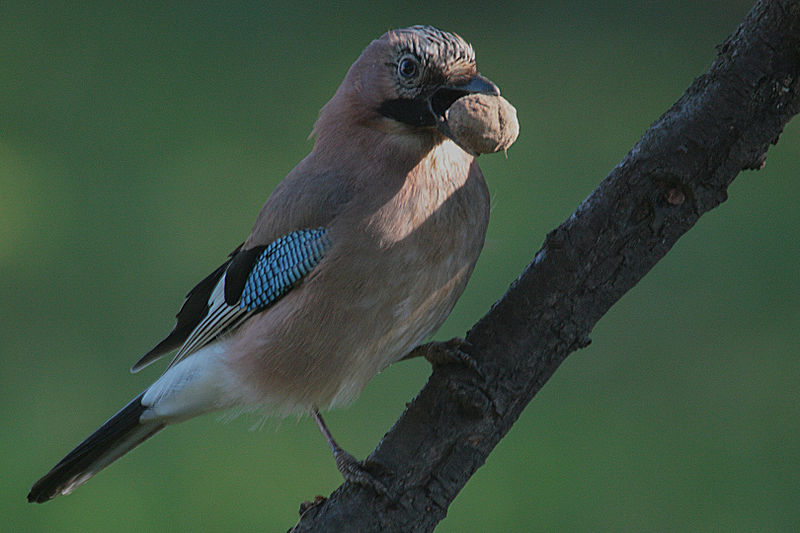
Eurasian Jay (Garrulus glandarius) ©© Pierre Dalous

Eurasian Jay (Garrulus glandarius) ©© Pierre Dalous

One generation shall praise Your works to another, And shall declare Your mighty acts. (Psalms 145:4 NKJV)

A new commandment I give to you, that you love one another; as I have loved you, that you also love one another. By this all will know that you are My disciples, if you have love for one another.” (John 13:34-35 NKJV)

How can an Eurasian Jay be a Bird of the Bible? Many times I have quoted the verse, in Job 12:17, about learning from the birds and now we have another bird we can learn from.  Focusing On Wildlife had an interesting article, Male Eurasian Jays Surprise Ornithologists.

Some quotes from the article:”The ability to disengage from our own desire to cater to someone else’s wishes is thought to be a unique feature of human cognition.” In their study, long story short, the male and female were fed different diets separate from each other. The male could watch the female eat, and when they were finally placed together, he would pick out her favorite food to get to her, even though his favorite was also there. “However, when the female’s desire differed from the male’s, then he took his partner’s wishes into account, often feeding her the food that she desired. This ability to ascribe to another individual an internal life-like one’s own and at the same time understand that the other’s internal, psychological states might differ from one’s own is called state-attribution.” “As humans, we ‘put ourselves into someone else’s shoes’ in order to respond to what the other person wants. Although we are biased by our own current desires,…”

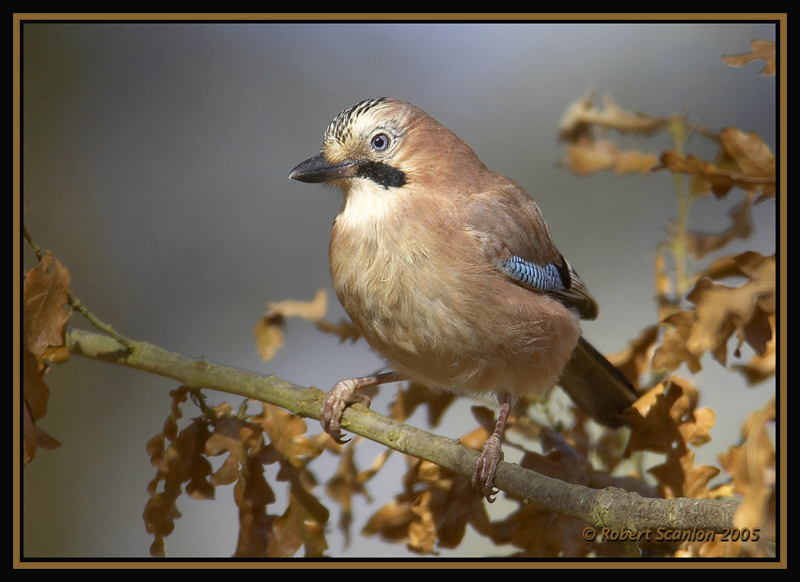
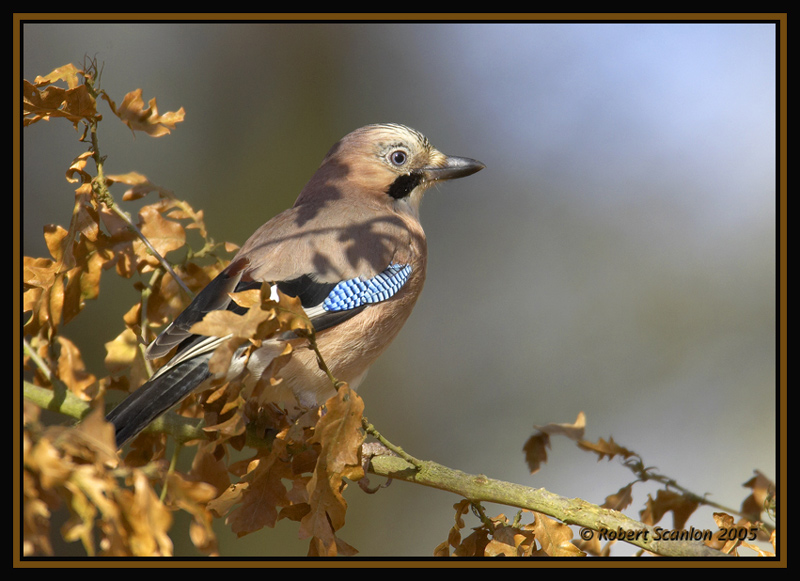
Eurasian Jay (Garrulus glandarius) by Robert Scanlon

Eurasian Jay (Garrulus glandarius) by Robert Scanlon

This is My commandment, that you love one another as I have loved you. (John 15:12 NKJV)

Be kindly affectionate to one another with brotherly love, in honor giving preference to one another; (Romans 12:10 NKJV)

Eurasian Jay (Garrulus glandarius) ©WikiC

Eurasian Jay (Garrulus glandarius) ©WikiC

Therefore let us pursue the things which make for peace and the things by which one may edify another. (Romans 14:19 NKJV)

For you, brethren, have been called to liberty; only do not use liberty as an opportunity for the flesh, but through love serve one another. (Galatians 5:13 NKJV)

PAS-Corv Eurasian Jay (Garrulus glandarius)2 by Robert Scanlon

And may the Lord make you increase and abound in love to one another and to all, just as we do to you, so that He may establish your hearts blameless in holiness before our God and Father at the coming of our Lord Jesus Christ with all His saints. (1 Thessalonians 3:12-13 NKJV)

Therefore comfort each other and edify one another, just as you also are doing. (1 Thessalonians 5:11 NKJV)

The verses on this page should help us remember how we are supposed to put others first in our lives.

Is the Eurasian Jay a Bird of the Bible? I think so. How about you? Let us learn his lesson.

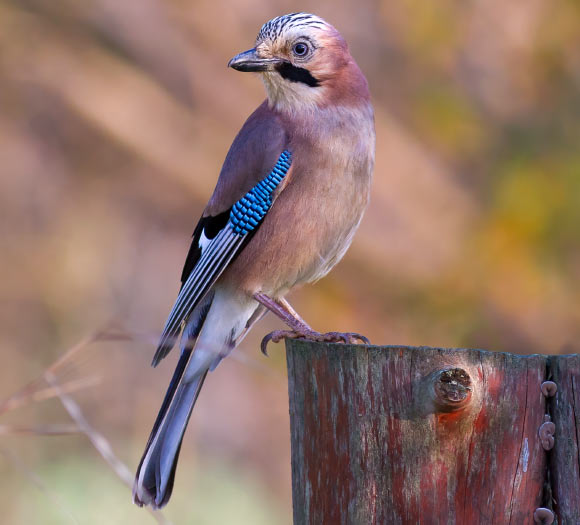
Eurasian Jay (Garrulus glandarius) by Nikhil Devasar

Eurasian Jay (Garrulus glandarius) by Nikhil Devasar

And let us consider one another in order to stir up love and good works, (Hebrews 10:24 NKJV)

Since you have purified your souls in obeying the truth through the Spirit in sincere love of the brethren, love one another fervently with a pure heart, (1 Peter 1:22 NKJV)

The Eurasian Jay (Garrulus glandarius) is a species of bird occurring over a vast region from Western Europe and north-west Africa to the Indian Subcontinent and further to the eastern seaboard of Asia and down into south-east Asia. Across its vast range, several very distinct racial forms look very different from each other, especially when forms at the extremes of its range are compared.

The bird is called jay, without any epithets, by English speakers in Great Britain and Ireland. It is the original ‘jay’ after which all others are named. (Wikipedia with editing)

The Jays belong to the Corvidae – Crows, Jays Family. There are 130 species in this family.

Eurasian Jay (Garrulus glandarius) ©WikiC

Eurasian Jay (Garrulus glandarius) ©WikiC

Finally, all of you be of one mind, having compassion for one another; love as brothers, be tenderhearted, be courteous; (1 Peter 3:8 NKJV)

Be hospitable to one another without grumbling. (1 Peter 4:9 NKJV)

Beloved, if God so loved us, we also ought to love one another. (1 John 4:11 NKJV)

See Also:

*

Birds On A Wire

I received this in an e-mail and wanted to share it.  Enjoy.

Sing to Him a new song; Play skillfully with a shout of joy. (Psalms 33:3 NKJV)

The LORD is my strength and my shield; My heart trusted in Him, and I am helped; Therefore my heart greatly rejoices, And with my song I will praise Him. (Psalms 28:7 NKJV)

One morning while reading a newspaper, Jarbas saw a photograph of birds on an electric wire. He cut out the photo and was inspired to make a song using the exact location of the birds as musical notes. He was curious to hear what melody the birds created.

He sent the music to the photographer, Paulo Pinto, who told his editor, who told a reporter and the story ended up as an interview in the newspaper. It ended up Winner of the YouTube Play Guggenheim Biennial Festival.

Just have a listen below at how incredible this sounds.

You can check out Jarbas Agnelli’s live presentation of Birds On The Wires

Also see:

Jarbas Agnelli: “Birds on the wires”, 

Wordless Birds

*

Crested Pigeon at Zoo Miami

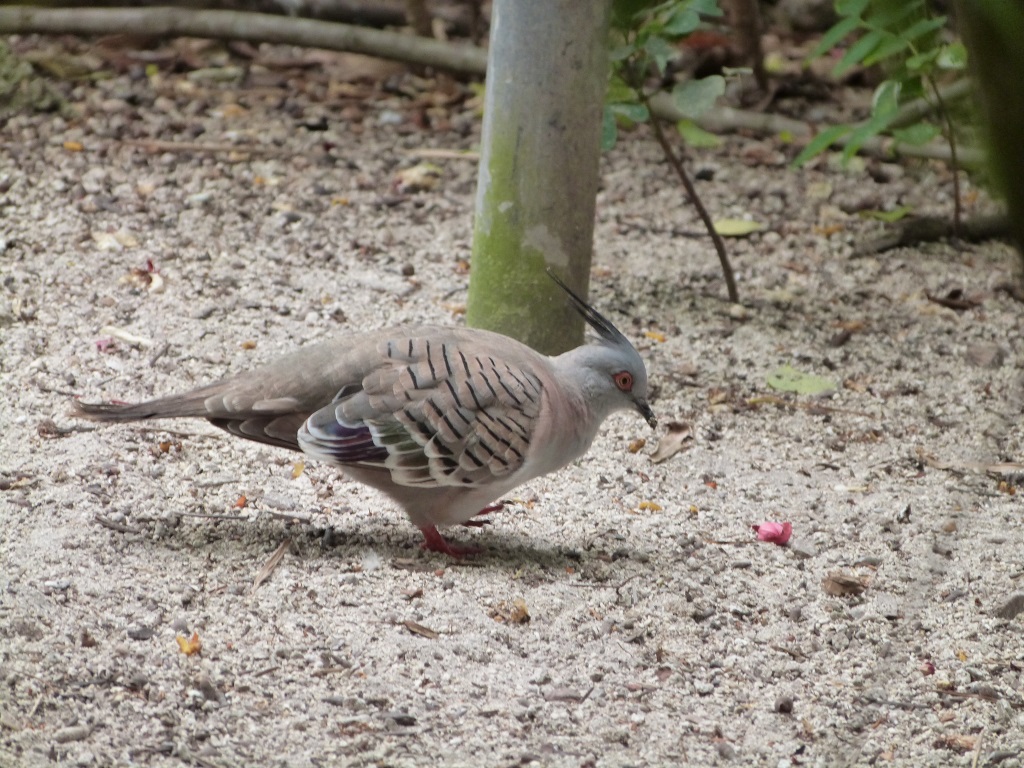
COL-Colu Crested Pigeon (Ocyphaps lophotes) at ZM by Lee

Crested Pigeon (Ocyphaps lophotes) at ZM by Lee

And he said unto him, Take me an heifer of three years old, and a she goat of three years old, and a ram of three years old, and a turtledove, and a young pigeon. (Genesis 15:9 KJV)

The Crested Pigeon was another interesting bird that we were able to watch at the Zoo Miami, Birds of Asia Aviary. I like their Crest. It adds some “class” to this creation from the Lord. They are colorful, but notice in the photos below how they blend in with their surrounding. The Creator has provided them with a nice camouflage design.

The Crested Pigeon (Ocyphaps lophotes, also commonly known as the Top Notch Pigeon) is a bird found widely throughout mainland Australia except for the far northern tropical areas. They belong to the Columbidae Family and is the only member of the genus Ocyphaps. There are only two Australian pigeon species that possess an erect crest, being the Crested Pigeon and the Spinifex Pigeon. The Crested Pigeon is the larger of the two species.

Habitat is grasslands, brush and wooded areas but they can also be seen at watercourses, homestead gardens, pastoral areas, sports grounds, and golf courses. Their habitat has expanded since settlement has produced pastoral lands (previously they were only found in inland and Western Australia). Foraging for grain, has adapted to grain farming areas, often feeding on the noxious weed of Salvation Jane. They are commonly misidentified as the Topknot Pigeon.

Their most distinctive behaviour is the beating and whistling sound their wings make when they take off. This is most likely to draw the attention of predators to birds on the wing, and away from any birds remaining on the ground and as an alarm call to other pigeons. When the birds land, the tail tilts upwards and the flight patterns are similar to the those of the Spotted Turtle-Dove. They are generally solitory. Although they can be seen in pairs, they can be highly social and tend to be seen in packs. They are highly gregarious birds when in contact with humans. (Wikipedia)


COL-Colu Crested Pigeon (Ocyphaps lophotes) at ZM by Lee

Crested Pigeon (Ocyphaps lophotes) at ZM by Lee

And I said, Oh that I had wings like a dove! for then would I fly away, and be at rest. (Psalms 55:6 KJV)

Lee’s Addition:

I trust you enjoy the Crested Pigeon (Ocyphaps lophotes). My computer is off line, in fact, not even set up. A new flooring is being installed in that room and it is getting a new coat of paint. So it will be down for several days. This is being scheduled ahead of time.

*

*

This slideshow requires JavaScript.

*

Australian King Parrot by Bellamoon Nature

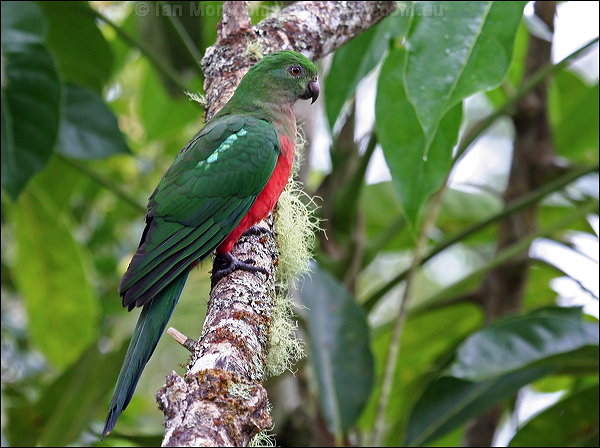
Australian King Parrot (Alisterus scapularis) Female by Ian

Australian King Parrot (Alisterus scapularis) Female by Ian

For God is the King of all the earth: sing ye praises with understanding. (Psalms 47:7 KJV)

Australian King Parrot by Bellamoonnature

*

KING PARROT – One of the most spectacular, brilliantly coloured of all parrots endemic to Eastern Australia. Male king parrots are the only Australian parrot with a completely red head, females have a green head and breast. Found in humid and heavily forested regions. Thank you for viewing Enjoy!

“Some birds are not meant to be caged, that’s all. Their feathers are too bright, their songs too sweet and wild. So you let them go, or when you open the cage to feed them they somehow fly out past you. And the part of you that knows it was wrong to imprison them in the first place rejoices, but still, the place where you live is that much more drab and empty for their departure.” – Stephen King.

“In order to see birds it is necessary to become part of the silence” – Robert Lynd

Australian King Parrots belong to the Psittacidae – Parrots Family.

Australian King Parrots range from North and Central to Southern Victoria. They are frequently seen in small groups with various species of rosella. Further from their normal eastern upland habitat, they are also found in Canberra during winter, the outer western suburbs and north shore of Sydney, and the Carnarvon Gorge in Central Queensland

There are three species of king parrots – medium-sized parrots in the genus Alisterus; the Australian King Parrot (Alisterus scapularis), the Papuan King Parrot (Alisterus chloropterus), and the Moluccan King Parrot (Alisterus amboinensis). The three species are found in Eastern Australia, New Guinea, and Indonesian islands including the Maluku islands respectively. Predominantly of red and green plumage, the long tailed parrots are related to the genera Aprosmictus and Polytelis.

(Information – Bellamoonnature and Wikipedia)


Moluccan King Parrot (Alisterus amboinensis) ©WikiC - Brevard_Zoo

Moluccan King Parrot (Alisterus amboinensis) ©WikiC – Brevard_Zoo

Let us come before his presence with thanksgiving, and make a joyful noise unto him with psalms. For the LORD is a great God, and a great King above all gods. (Psalms 95:2-3 KJV)

Lee’s Addition:

I trust you enjoy this video by Bellamoon. My computer is off line, in fact, not even set up. A new flooring is being installed in that room and it is getting a new coat of paint. So it will be down for several days. This is being scheduled ahead of time.

*

Bellamoonnature – YouTube

Ian’s Australian King Parrots

Psittacidae – Parrots Family

Australian King Parrot – Wikipedia

Birds of the World

*

The Cracked Pot ~ by Brad Stanton

The Cracked Pot

00000765

I found this story some time ago and wanted to share it because it is sooo good.

water bearer in India had two large pots, each hung on each end of a pole which he carried across his neck.  One of the pots had a crack in it, and while the other pot was perfect and always delivered a full portion of water at the end of the long walk from the stream to the master’s house, the cracked pot arrived only half full. 

For a full two years this went on daily, with the bearer delivering only one and a half pots full of water in his master’s house.  Of course, the perfect pot was proud of its accomplishments.  But the poor cracked pot was ….

See the rest of the story. The Cracked Pot.


(Brad is one of the followers of this blog. He has many interesting articles on his site.)

*

For The Sheer Joy of Variety! – Creation Moments


Greater Painted Snipe (Rostratula benghalensis) by W Kwong

Greater Painted Snipe (Rostratula benghalensis) by W Kwong

FOR THE SHEER JOY OF VARIETY!

“Woe unto him that striveth with his Maker! Let the potsherd strive with the potsherds of the earth. Shall the clay say to him that fashioneth it, What makest thou? or thy work, He hath no hands?” (Isaiah 45:9)

Did you ever try to plan all the details of a simple project? How many plans do you think the Lord had to make when He created living things? A billion? A billion times a billion?

The hierarchy of biological classification’s eight major taxonomic ranks

The hierarchy of biological classification’s eight major taxonomic ranks

We all know that it takes time to plan the most simple project. Did you ever think about the planning God had to do when He created all the different kinds of living things? Our word “species” today includes many creatures that the Bible counts as being the same “kind” – as when God created the kinds. But God did design the genetic information that allowed the kinds to produce these variations.

Yes, God’s act of creating living things was much more than just wishing. Just think that there are more than 20,000 different species of bees – some with very complex societies – and their own languages! The figures and the beauty of it all makes one wonder at God. Why are there 4,500 different species of sponges? Why are some creatures – never seen by humans until this century – so eerily beautiful? For that matter, why have so many different kinds of beautiful flowers?

The variety in the creation reflects some of the joy of creation that God felt, and shows us the incredible unbridled creativity of our wonderful God. The fact that there is only one species of human – all related – confirms the human history related in the Bible.

Prayer:
Dear heavenly Father, I know that I shall never have Your ability to plan and carry out those plans. I confess that too often I waste the time and energy You give me because I don’t even bother to use the abilities You have given me. Forgive me for Jesus’ sake, and for His sake help me to be more like You in this. Amen.
Notes:
Diagram: The hierarchy of biological classification’s eight major taxonomic ranks. The biblical “kind” is roughly the same as the “family” classification.
(Used with permission of Creation Moments©2014)


Lee’s Addition:

We mention the Lord’s fantastic variety in His avian creations often. This article fits right in with those thoughts and thought it should be shared.


This slideshow requires JavaScript.

*

I selected different photos for the same article on my other site:

Creation Moments’ – For The Sheer Joy of Variety!

*