Sunday Inspiration – Easter

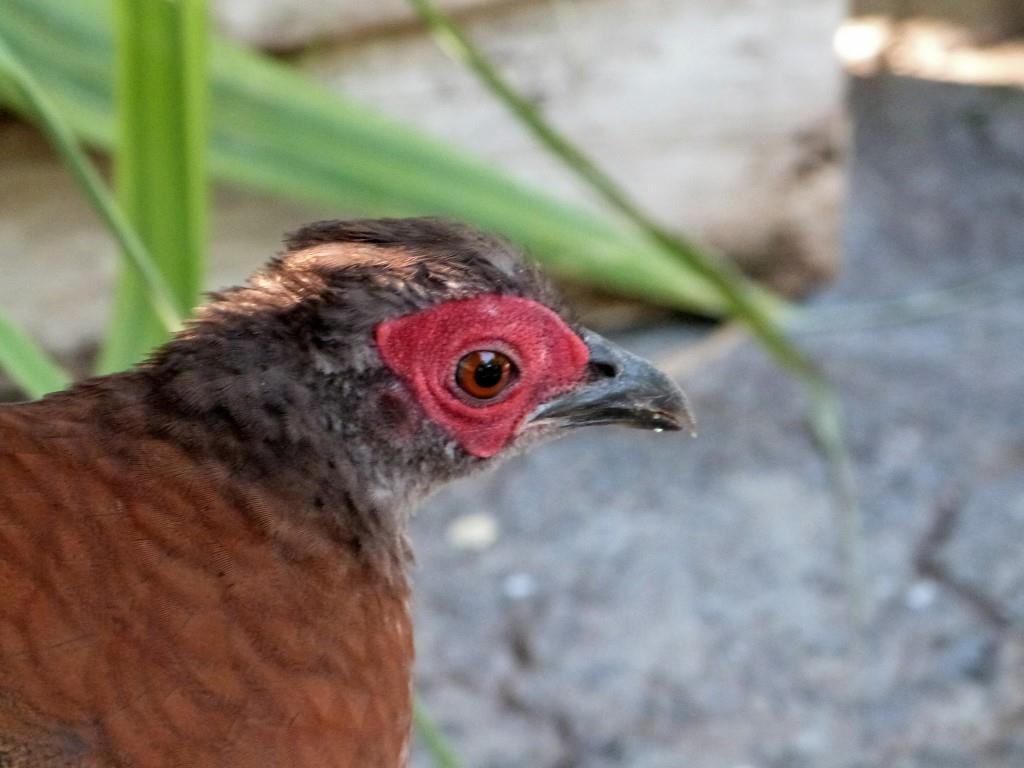
Bleeding Heart Pigeons

Bleeding Heart Pigeons

Alleluia!

HE IS RISEN!

1 Corinthians 15:12-22 KJV

(12) Now if Christ be preached that he rose from the dead, how say some among you that there is no resurrection of the dead?
(13) But if there be no resurrection of the dead, then is Christ not risen:
(14) And if Christ be not risen, then is our preaching vain, and your faith is also vain.
(15) Yea, and we are found false witnesses of God; because we have testified of God that he raised up Christ: whom he raised not up, if so be that the dead rise not.
(16) For if the dead rise not, then is not Christ raised:
(17) And if Christ be not raised, your faith is vain; ye are yet in your sins.
(18) Then they also which are fallen asleep in Christ are perished.
(19) If in this life only we have hope in Christ, we are of all men most miserable.
(20) But now is Christ risen from the dead, and become the firstfruits of them that slept.
(21) For since by man came death, by man came also the resurrection of the dead.
(22) For as in Adam all die, even so in Christ shall all be made alive.

Christmas and Easter are the most important times of remembrance for those of us who have accepted the Lord Jesus Christ as our personal Savior. I made that decision 54 years ago and it has changed my life.

At Christmas we are reminded that the Creator of all these birds we write about, gave up His seat beside the Father and came to earth to take on human flesh. Perfect sinless human flesh.

Now Today, Easter, we remember and celebrate. We remember that He gave His life to die as the perfect sacrifice for our sins. We know the story of Him hanging on the cross, and crying out, “My God, My God, why hast thou forsaken me?”

And about the ninth hour Jesus cried out with a loud voice, saying, “Eli, Eli, lama sabachthani?” that is, “MY GOD, MY GOD, WHY HAVE YOU FORSAKEN ME?”
(Matthew 27:46 NKJV)

It is better to call today Resurrection Sunday. The Lord Jesus Christ did not stay dead in the tomb, but He AROSE! If He can create this world and all that is in it, does He not have the power to Come Forth From The Grave.

Do you know Him? Have you ever repented and accepted Him as your Savior?

For God so loved the world, that he gave his only begotten Son, that whosoever believeth in him should not perish, but have everlasting life. (John 3:16 KJV)

*

Music by Sean Fielder

*

Faith Baptist Orchestra playing at the Easter Service in 2012

*

More Sunday Inspiration

Gospel Presentation (narrated by our Pastor Osborne and music by Sean Fielder)

Gideon

*

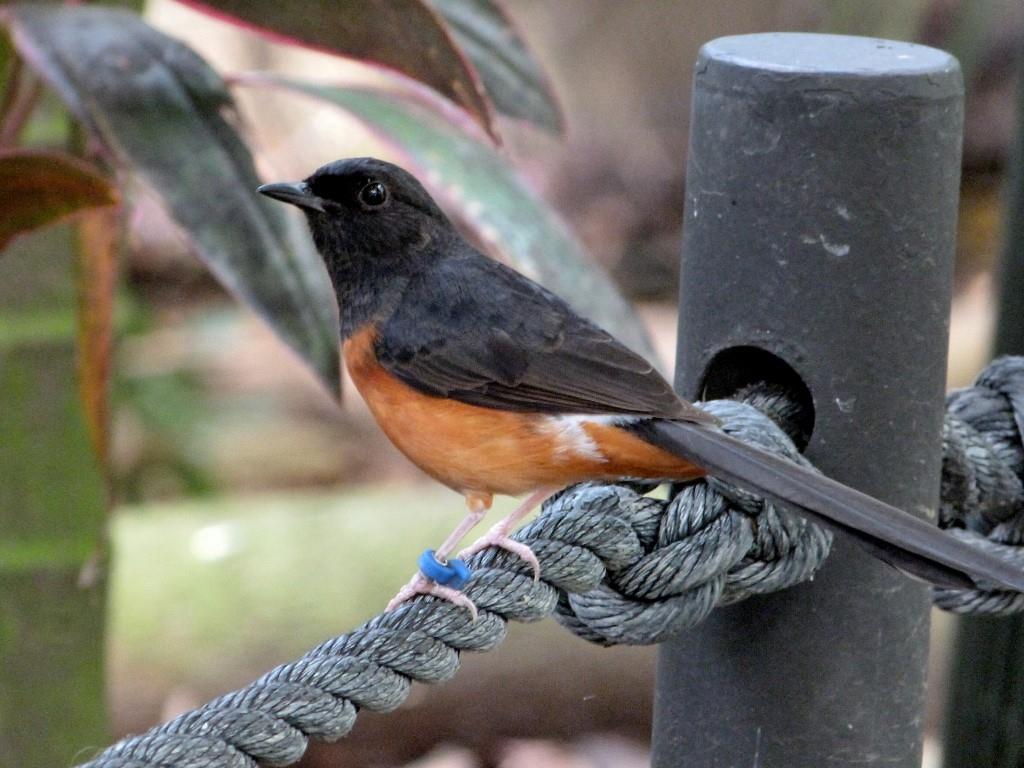
White-rumped Shama at Zoo Miami

White-rumped Shama (Copsychus malabaricus)  at Zoo Miami - Lee

White-rumped Shama (Copsychus malabaricus) at Zoo Miami – Lee

Even the stork in the sky Knows her seasons; And the turtledove and the swift and the thrush Observe the time of their migration; But My people do not know The ordinance of the LORD. (Jeremiah 8:7 NASB)

The White-rumped Shama (Copsychus malabaricus) is a small passerine bird of the family Muscicapidae. Native to densely vegetated habitats in the Indian Subcontinent and Southeast Asia, its popularity as a cage-bird and songster has led to it being introduced elsewhere.

It was formerly classified as a member of the thrush family, Turdidae, causing it to be commonly known as the White-rumped Shama Thrush or simply Shama Thrush.

They typically weigh between 28 and 34 g (1.0 and 1.2 oz) and are around 23–28 cm (9–11 in) in length. Males are glossy black with a chestnut belly and white feathers on the rump and outer tail. Females are more greyish-brown, and are typically shorter than males. Both sexes have a black bill and pink feet. Juveniles have a greyish-brown colouration, similar to that of the females, with a blotchy or spotted chest.

The voice of this species is rich and melodious which made them popular as cage birds in South Asia with the tradition continuing in parts of Southeast Asia. It is loud and clear, with a variety of phrases, and often mimics other birds. They also make a ‘Tck’ call in alarm or when foraging. One of the first recordings of a bird song that was ever made was of this species. This recording was made in 1889 from a captive individual using an Edison wax cylinder by Ludwig Koch in Germany. (Wikipedia)

Here is a video of the Shama singing the second day we were at the Wings of Asia aviary at the Zoo. The pair have a nest and I think the chicks have hatched. (Senior moment-I don’t remember what they told me.)

The LORD is my strength and my shield; my heart trusted in him, and I am helped: therefore my heart greatly rejoiceth; and with my song will I praise him. (Psalms 28:7 KJV)

I am kicking up dust again behind the scenes. The new IOC 4.2 list came out while we were at the zoo. So far I have 237 pages updated, all but the Lark family. They added a new family and are scrambling the Larks around. I am now preparing to do the indexes.  The new 4.2 count is 10,530 species in the world. Stay tuned.

Birds of the World – Families – done

Birds of the Bible – Thrush

White-rumped Shama – Wikipedia

*

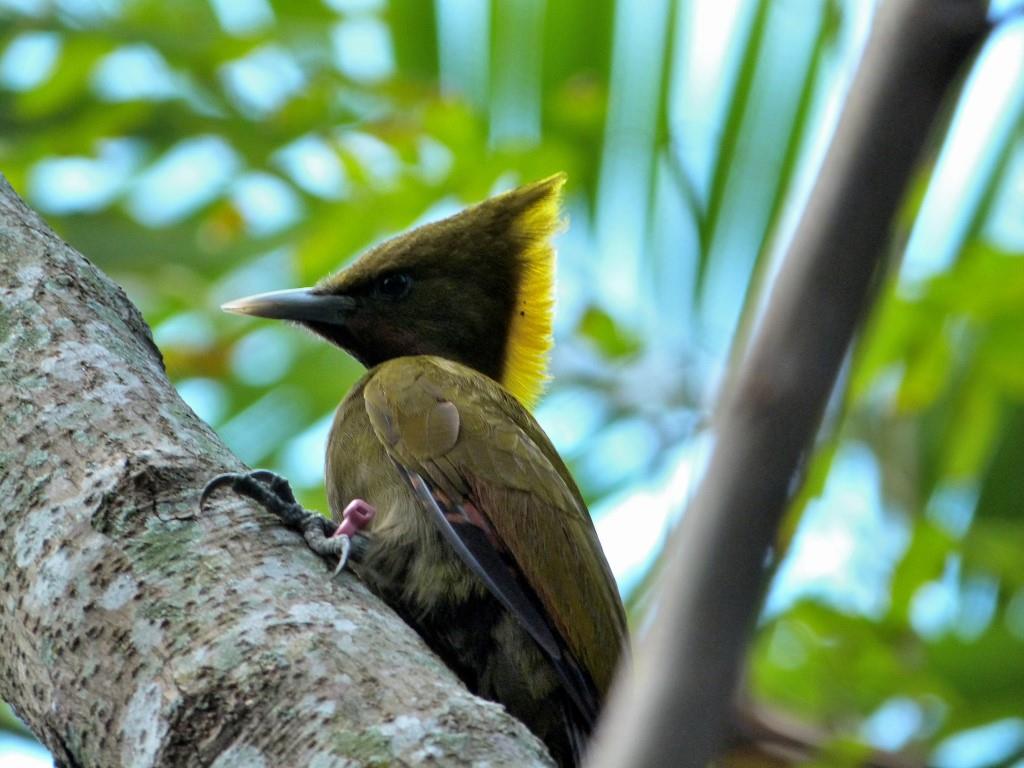
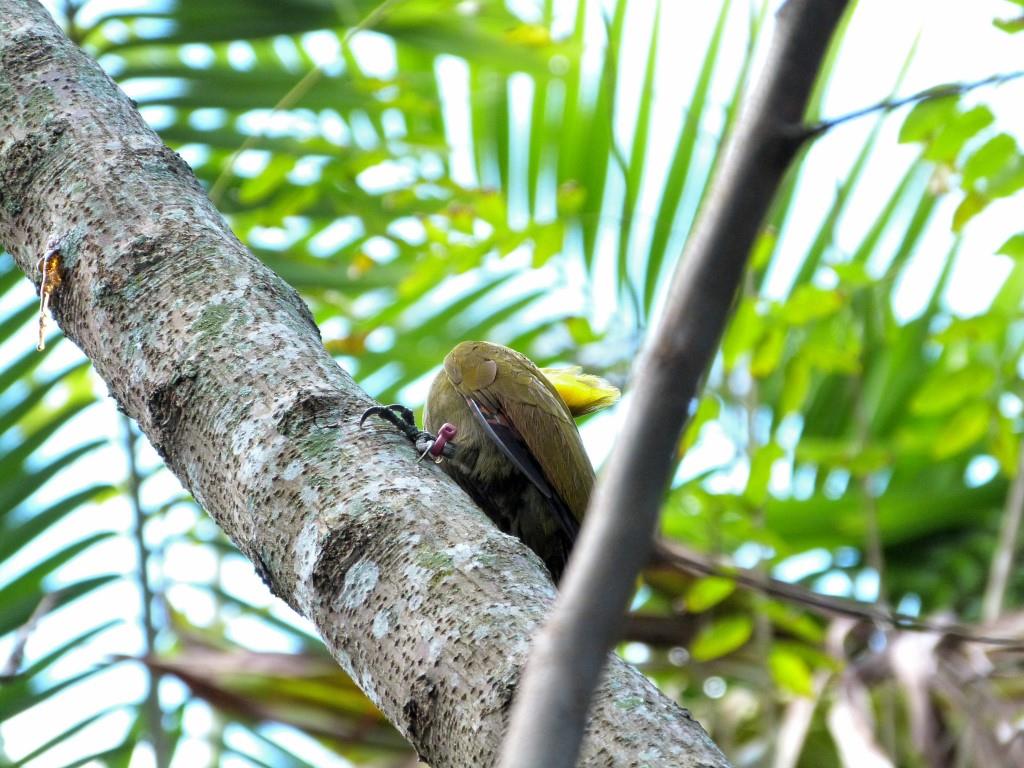
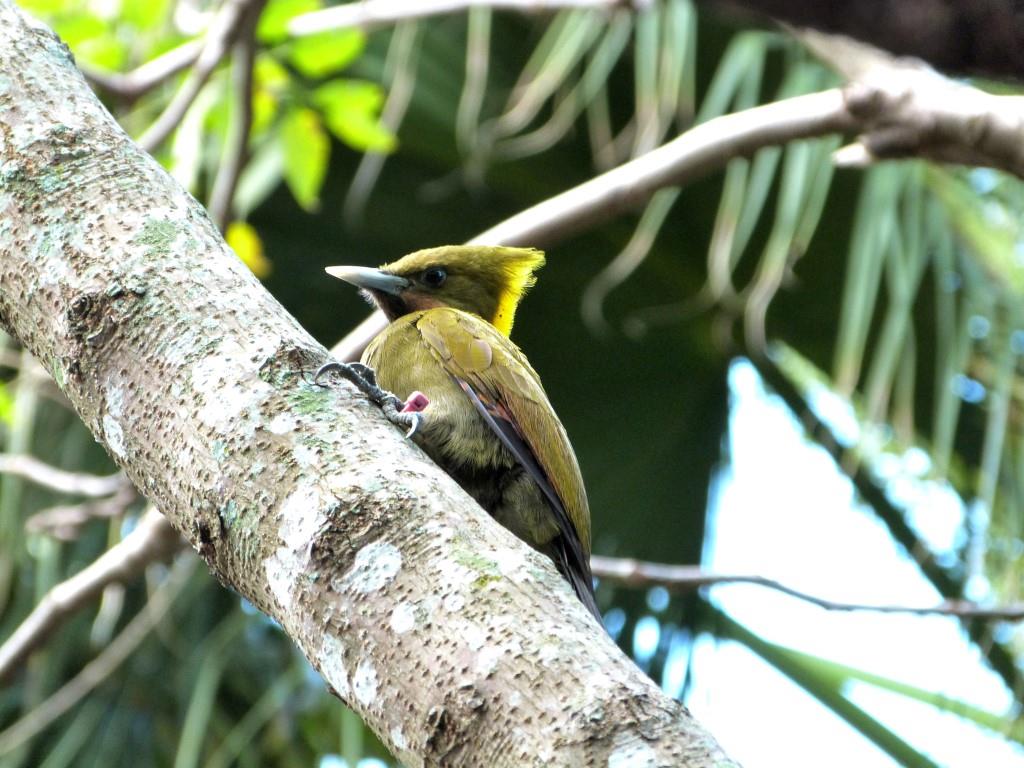
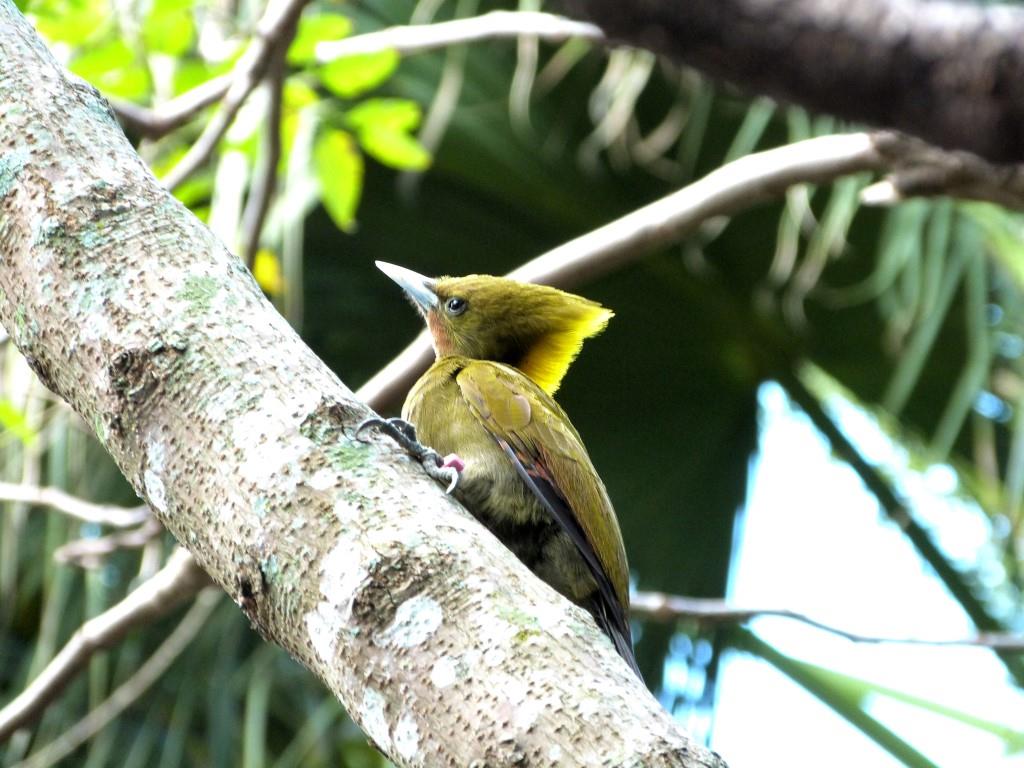
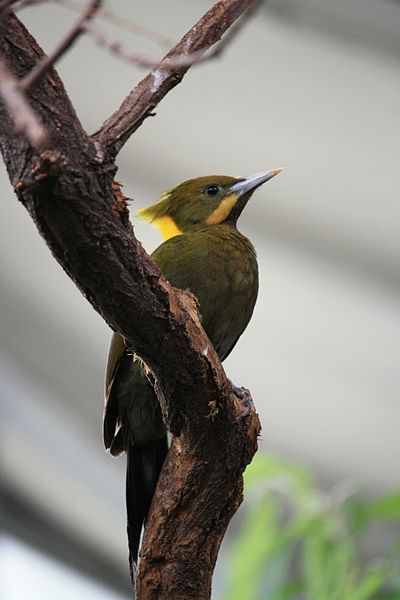
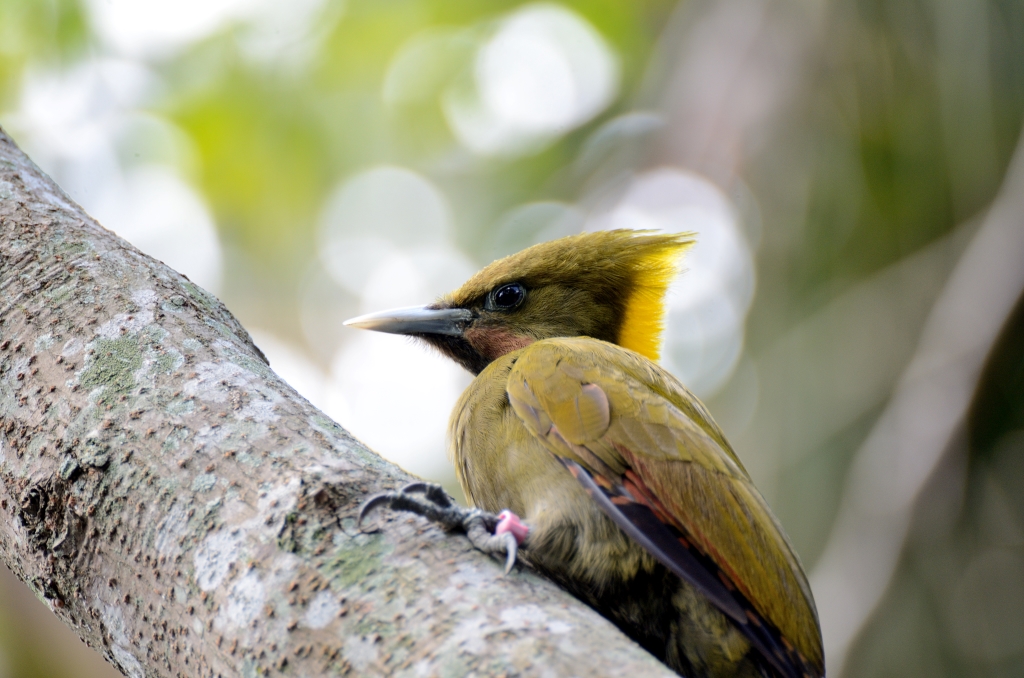
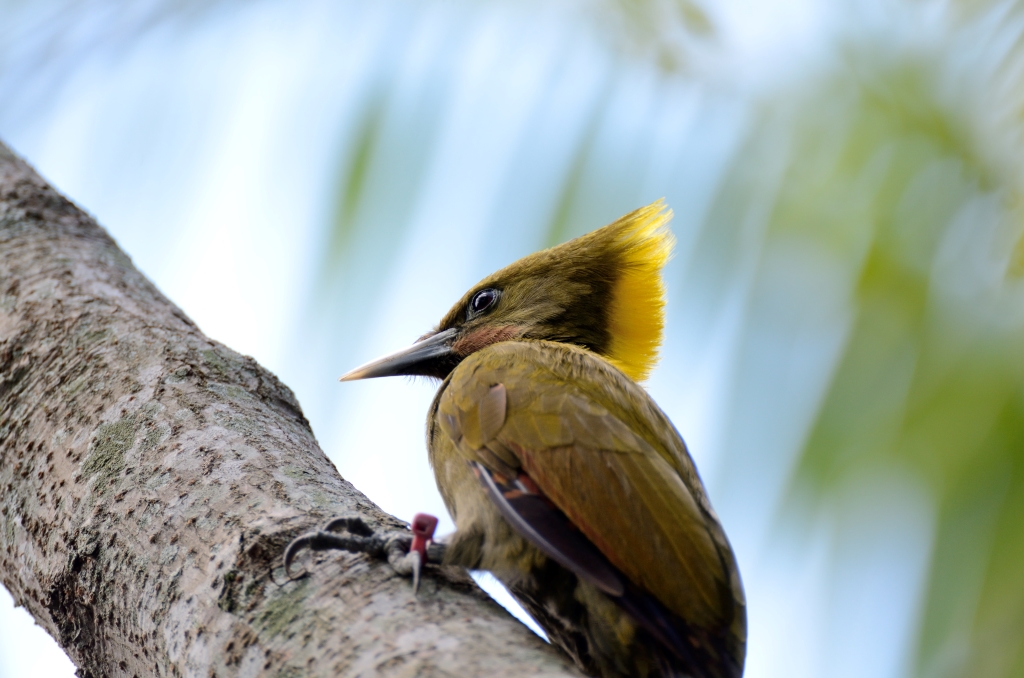
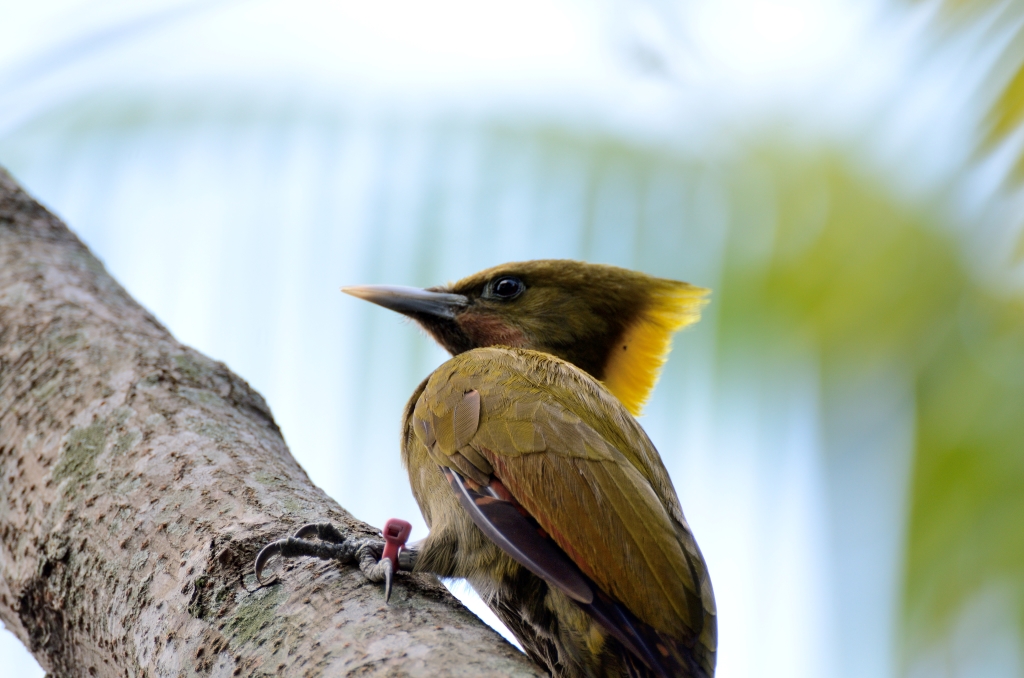
Zoo Miami’s Greater Yellownape

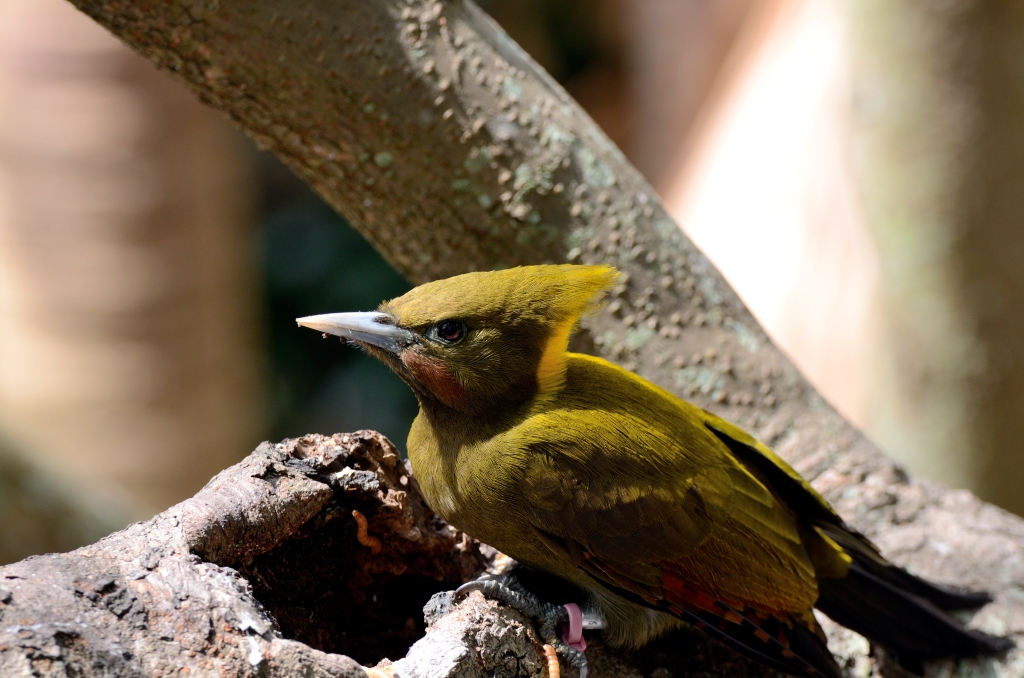
Greater Yellownape (Chrysophlegma flavinucha) female Zoo Miami by Lee

Greater Yellownape (Chrysophlegma flavinucha) female Zoo Miami by Lee

For they will be a graceful ornament on your head, And chains about your neck. (Proverbs 1:9 NKJV)

Here is one of my favorites at Zoo Miami’s Wings of Asia Aviary. They have 87 species and they are all my favorites, but this one is further up the scale. This is a Greater Yellownape (Chrysophlegma flavinucha) female and believe it is the only Yellownape there at present.

Dan and I went back down to Zoo Miami this week and spent two days just in the Aviary. When we were there earlier this year, most of my photos did not come out well. After some adjustments to my Panasonic Lumix FZ47 point-n-shoot (which I shoot in “program mode”), things didn’t do much better at first the first day. More adjustments and these came out better. Tuesday night in the motel, Dan made some more fixes. Yesterday, I finally got some really nice photos which I will share later.

Greater Yellownape (Chrysophlegma flavinucha) female Zoo Miami by Dan

Greater Yellownape (Chrysophlegma flavinucha) female Zoo Miami by Dan

My son, keep your father’s command, And do not forsake the law of your mother. Bind them continually upon your heart; Tie them around your neck. (Proverbs 6:20-21 NKJV)

For those of you into photography, the problem is that the Aviary is well landscaped with lots of trees and is covered with its wire mesh. My ISO and lens speed were to low to compensate for the environment. My camera normally does well when I am “outdoors” and not in an aviary. (As for ISOs and F-stops, I don’t know much them. I would rather study about the birds and let Dan worry about the camera.)

Back to our Yellownape. This is another neat creation from its Creator. They belong to the Woodpecker – Picidae Family. At the aviary, they call it the Greater Yellow Naped Woodpecker.

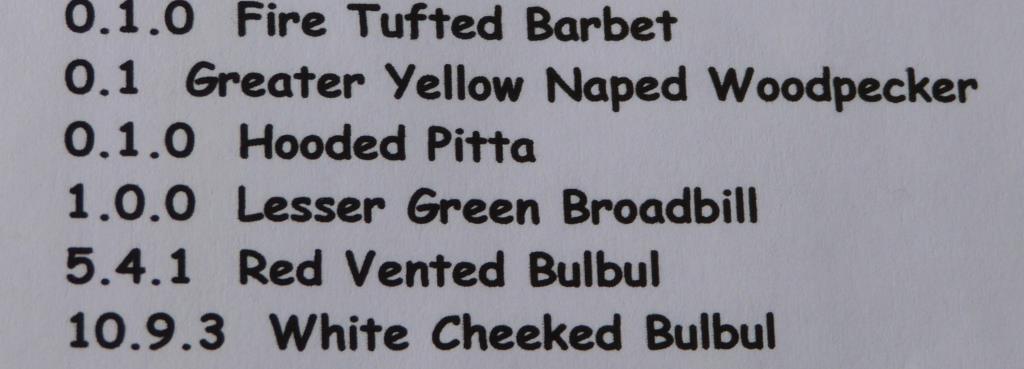
List of birds at Wings of Asia - Greater Yellow Nape

List of birds at Wings of Asia – Greater Yellownape

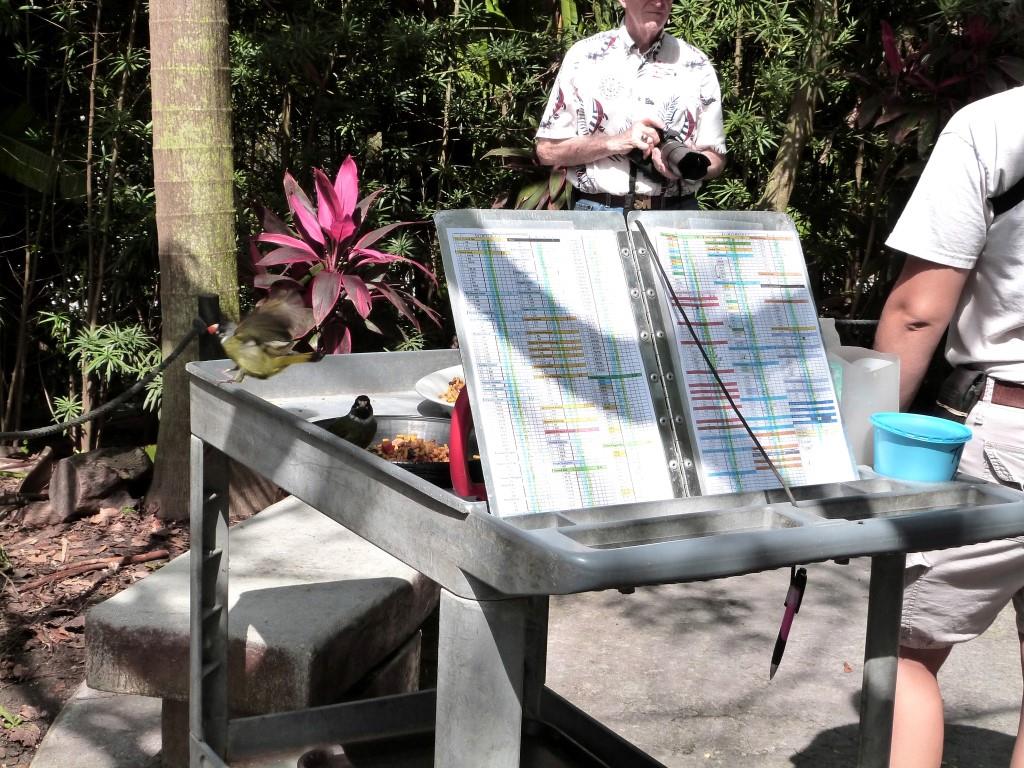
From a copy of their list, you can tell it is a female and the only one. The list has the number of males first, then number of females and then the third number is unknown sex. Every day they check on the birds and try to find each one. If after 3 days a bird isn’t spotted, then a real search begins. By following the counters around, who were very friendly and willing to help with names of birds, many of the birds come out and into view. Could it be because the counters have food with them? In fact some of the birds make themself right at home on the cart.

Counters with friends

Counters with friends

*

Counters with friends making themselves at home

Counters with friends making themselves at home

*

Counters with friends making themselves at home

Counters with friends making themselves at home

*

Actually the Yellownape came in close the second day, but I failed to get her photo, but Dan captured her in the second photo as she was eating worms from the hole in the tree. The worker had just placed some worms there to bring the birds in closer so they could be counted.

The Greater Yellownape is a large, olive-green woodpecker with prominent yellow-crested nape and throat. Dark olive-green with grey underparts. Crown brownish and flight feathers chestnut barred with black. Bill often looks whitish. “Nape” is the back or base of the neck area. See Birdwatching Term – Nape

It is found in Bangladesh, Bhutan, Cambodia, China, India, Indonesia, Laos, Malaysia, Myanmar, Nepal, Thailand, and Vietnam. Its natural habitats are subtropical or tropical moist lowland forests and subtropical or tropical moist montane forests. (Wikipedia)

Included in the photos below is a photo of a male from Wikipedia. Notice his line on his chin is more yellow than the female. Here is more of a rusty color.

Here are the photos of the Greater Yellownape (Chrysophlegma flavinucha).

“And he arose and came to his father. But when he was still a great way off, his father saw him and had compassion, and ran and fell on his neck and kissed him. …It was right that we should make merry and be glad, for your brother was dead and is alive again, and was lost and is found.’ ” (Luke 15:20, 32 NKJV)

See:

*

Deep-Frozen Squirrel ~ by Creation Moments

Artic Ground Squirrel (Spermophilus parryii) (eating mushroom) ©WikiC

Artic Ground Squirrel (Spermophilus parryii) (eating mushroom) ©WikiC

Deep-Frozen Squirrel ~ from Creation Moments

Then the beasts go into dens, and remain in their places. Out of the south cometh the whirlwind: and cold out of the north. By the breath of God frost is given: and the breadth of the waters is straitened. (Job 37:8-10)

Researchers have discovered a species of mammal that can actually survive being frozen for several weeks.

SmileyCentral.com

Scientists were amazed to find that the little Arctic ground squirrel can allow its body to drop to 27 degrees F – that’s five degrees below the freezing point of water – for up to two weeks at a time during its unusual Arctic ground squirrel eating a mushroom eight-to ten-month hibernation period. After the two weeks at this very low temperature, the squirrel rouses itself, returns to normal body temperature, takes care of a few bathroom duties, and then returns to a state of nearly frozen hibernation for another two weeks. The squirrel usually comes out of hibernation for its short summer in June. It has only two or three months before the ground freezes again and it returns to hibernation, so the squirrel is very busy eating and mating for two short months. You could say that the Arctic ground squirrel sleeps most of its life away.

Scientists say that the Arctic ground squirrel is the only mammal that is able to allow its body temperature to fall below freezing. If they can find out how the squirrel does it, they believe the same method might be used to preserve transplant organs for longer than a few hours. So once again, scientists expect to learn new medical methods by studying how the Creator does the same thing.

*
Prayer:
Dear Father, Your understanding and wisdom in designing the creation are so great that even those who do not want to recognize You still expect to learn from You. As they do so, make it ever more difficult for them to deny You. In Jesus’ Name. Amen.

Artic Ground Squirrel (Spermophilus parryii) ©Nunavut ©WikiC

Artic Ground Squirrel (Spermophilus parryii) ©Nunavut ©WikiC

Notes:
“Squirrel makes its body subfreezing to hibernate,” Minneapolis Star Tribune, Saturday/July1/1989/8A. Photo: Arctic ground squirrel eating a mushroom. Courtesy of Ianaré Sévi. Licensed under the Creative Commons Attribution-Share Alike 3.0 Unported license. (Used with permission of Creation Moments 2014)


Lee’s Addition:

Arctic Ground Squirrels Are No Stiff – Deseret News

More Interesting Things

Wordless Birds

*


Ian’s Bird of the Week – Greater Sand Plover

Looking South from Croquette Point by Ian

Ian’s Bird of the Week – Greater Sand Plover ~ by Ian Montgomery

Newsletter ~ 4/14/14

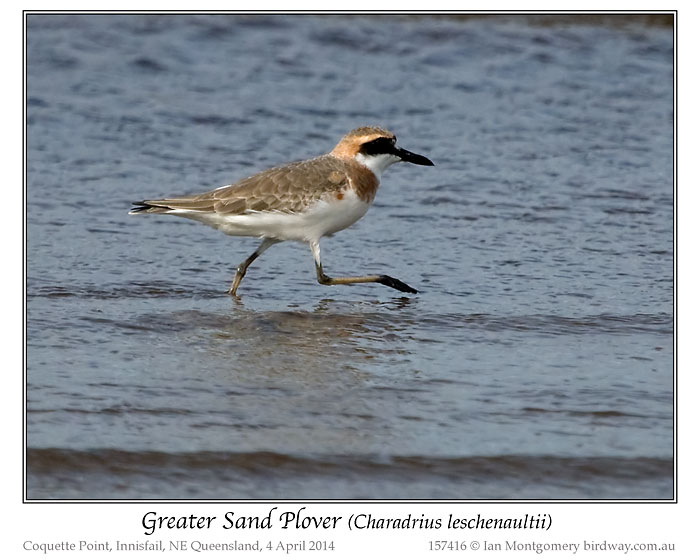
As I mentioned in the last email, I took advantage of a spell of reasonable weather to make a trip to Cairns to take location photos for Where to Find Birds in Northeast Queensland. On the way back, I visited Coquette Point near to check it out as it is listed in the book as a good spot for both mangrove birds and waders. Coquette Point and Flying Fish Point are the charmingly named headlands on the southern and northern banks of the mouth of the Johnstone River on which Innisfail, 100 km south of Cairns, is situated.

Although it mightn’t live up to the dream of an idyllic tropical paradise – I’m still itching from some sandfly bites and there have been recent sightings of Saltwater Crocodiles in the neighbourhood – it did indeed turn out to be good for birds. As well as a pair of Beach Stone-Curlews in the mangroves, there were several pairs of Greater Sand Plovers feeding in the shallows. At this time of the year, many waders are migrating back to their breeding grounds in the northern hemisphere and it is a good time to look for ones in breeding plumage, such as the one in the first photo.

Greater Sand Plover (Charadrius leschenaultii) by Ian

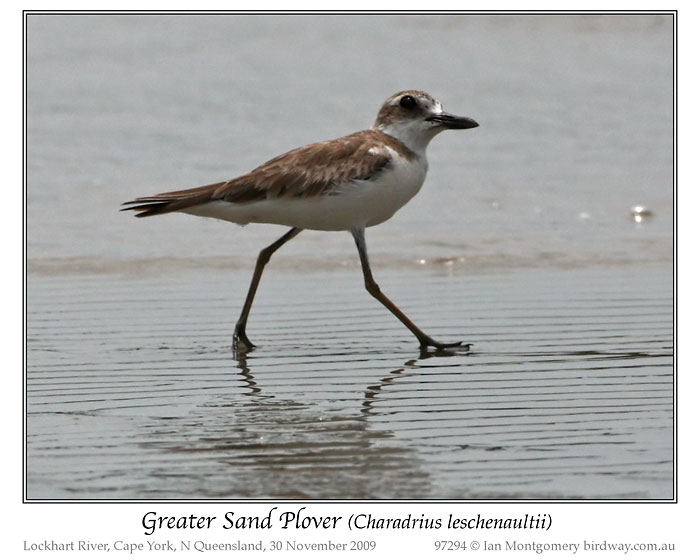
In non-breeding plumage most waders are, frankly, drab and often difficult to identify. Here is a Greater Sand Plover in non-breeding plumage on Cape York. This particular individual shows the characteristic long legs and large bill that distinguish it from the very similar Lesser or Mongolian Sand Plover, but Sand Plovers are quite variable in both size and bill length and I’m not always certain of identification, even with the aid of photos.

Greater Sand Plover (Charadrius leschenaultii) by Ian

Here, to illustrate the point, is a pair at Coquette Point. The bird in non-breeding plumage looks smaller than its companion, has the slightly hunched posture of the Lesser Sand Plover but its large bill, and guilt by association, would indicate a Greater.

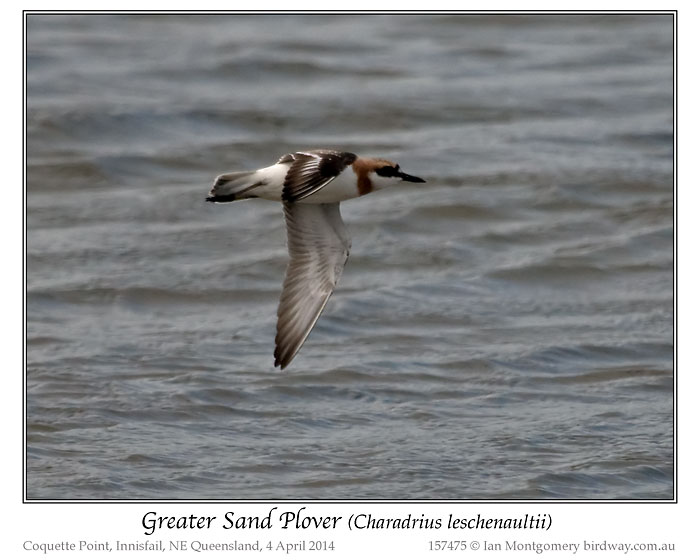
Greater Sand Plover (Charadrius leschenaultii) by Ian

Finally, to complete the series, here is one of the Coquette Point birds in flight. The birds wintering in Australia belong to the nominate race leschenaultii and nest in Southern Siberia, Western China and Southern Mongolia. Their movements are not well understood but it is thought that they migrate non-stop, so this at least is one species of wader that doesn’t have to rely on the fast-disappearing mudflats of the Yellow Sea for refuelling stopovers.

Greater Sand Plover (Charadrius leschenaultii) by Ian 4

I’d always vaguely assumed that the person who named Flying Fish Point did so because he or she had seen Flying Fish there, but Coquette Point aroused my curiosity as there seemed nothing flirtatious about it. With the help of Google, I found out that George Dalrymple, one of the explorers in this part of the world was sent by the Queensland Government in 1873 to explore the inlets and rivers between Cardwell and Cooktown. His boats were two cutters, the Flying Fish and the Coquette and one of his companion policemen was Robert Johnstone. In Dalrymple’s report to Parliament he said “I therefore considered that I was justified in naming the river after Mr Johnstone, a gentleman who has become identified with discovery and enterprise on the north east coast and who first brought to light the real character and value of this fine river, and it’s rich agricultural land…”. This, incidentally, is what 19th Century cutters looked like.

Ancient British Navy Gun Cutter from Ian

Ancient British Navy Gun Cutter from Ian

Which, of course, begs the question of why a Queensland boat would be called Coquette. The only clue I could find was that the first Royal Navy ship called Coquette was a 28 gun one captured off the French in 1783 and put into service. After that the name ‘Coquette’ was used repeatedly for a series of smaller ships.

Greetings
Ian

**************************************************
Ian Montgomery, Birdway Pty Ltd,
454 Forestry Road, Bluewater, Qld 4818
Tel 0411 602 737 ian@birdway.com.au
Bird Photos http://www.birdway.com.au/
Recorder Society http://www.nqrs.org.au


Lee’s Addition:

Even the stork in the heavens knows her times, and the turtledove, swallow, and crane keep the time of their coming, but my people know not the rules of the LORD. (Jer 8:7 ESV)

Thanks again, Ian, for sharing another interesting bird. I find it interesting that his birds are migrating, but for the opposite reason ours are migrating. Cold is coming on down there and our are heading home because it is getting warmer. Either way, the birds are on the “move.”

Plovers are members of the Charadriidae – Plovers Family.

*
More:

Ian’s Bird of the Week

Charadriidae – Plovers Family

*

Sunday Inspiration – Palm Birds

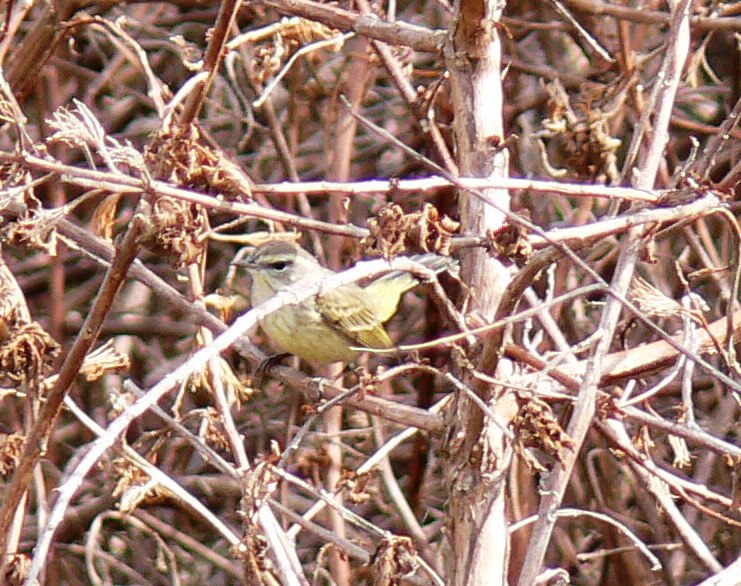
Palm Warbler (Dendroica palmarum) yellow by Lee

Palm Warbler (Dendroica palmarum) yellow by Lee

And ye shall take you on the first day the boughs of goodly trees,branches of palm trees, and the boughs of thick trees, and willows of the brook; and ye shall rejoice before the LORD your God seven days. (Leviticus 23:40 KJV) [Foretold]

The next day a great multitude that had come to the feast, when they heard that Jesus was coming to Jerusalem, took branches of palm trees and went out to meet Him, and cried out: “Hosanna! ‘BLESSED IS HE WHO COMES IN THE NAME OF THE LORD!’ The King of Israel!” Then Jesus, when He had found a young donkey, sat on it; as it is written: “FEAR NOT, DAUGHTER OF ZION; BEHOLD, YOUR KING IS COMING, SITTING ON A DONKEY’S COLT.” (John 12:12-15 NKJV) [Fulfilled]

This slideshow requires JavaScript.

*

Hosanna (Messiah Has Come) and Messiah – (Solo by Lisa Brock) from the Easter Musical 2013 by Faith Baptist Choir.

*

(I pushed the photos a little bit by including the Semipalmated Plover and Sandpiper)

See:

More Sunday Inspirations

Gospel Presentation

Formed By Him – “Palm” Birds

*


Peru’s Marvellous Hummingbird – Updated

Marvelous Spatuletail (Loddigesia mirabilis)©©

Marvelous Spatuletail (Loddigesia mirabilis)©©

Peru’s Marvellous Hummingbird

(from Creation Moments)

In that day the LORD of hosts will be for a crown of glory and a diadem of beauty to the remnant of His people. (Isaiah 28:5)

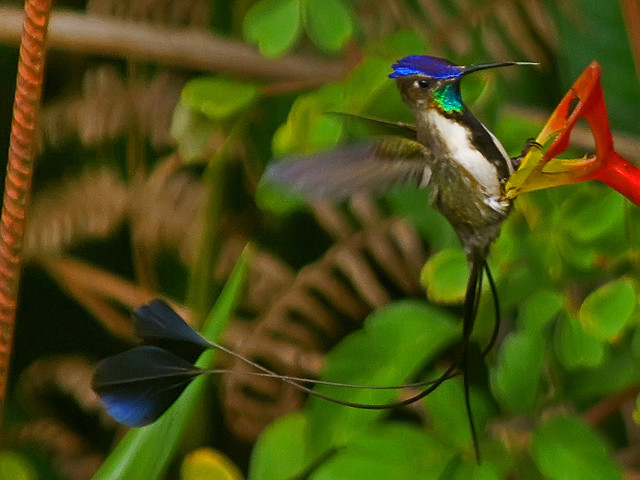
In 1835, when scientists first saw Peru’s most unusual hummingbird, they were so overcome with its beauty that they gave it the name “Marvellous.” This little bird treats the eye to iridescent green, yellow, orange, and purple feathers. But its most unusual feature is its tail. While most birds have eight to twelve tail feathers, the Marvellous hummingbird has only four. Two of these are long, pointed, thorn-like feathers that don’t seem to help much in flying or landing. The other two feathers are truly marvellous. They are six inches long, three times the length of the bird’s two-inch body. On the end of these two long narrow feathers are large feather fans that nearly equal the surface area of its wings.

Marvelous Spatuletail (Loddigesia mirabilis) ©©

Marvelous Spatuletail (Loddigesia mirabilis) ©©

Astonishingly, the Marvelous hummingbird has complete control of these feathers. At rest, the bird perches with these two feathers hanging down an inch or so from its body, and then crossing them until they are horizontal. In flight and landing they provide remarkable maneuverability. During mating, the hummingbird moves them as semaphores. Interestingly enough, evolutionists admit that they are stumped as to why these unusual feathers should have evolved.

One look at our creation clearly shows that our Creator appreciates beauty. But even the beautiful Marvelous hummingbird is but a poor and cloudy hint of the beauty of our Creator Himself.

Prayer:
Dear Father, help me treat the beauty You have created as You would have me to do. Let me be filled with thanksgiving to You for it, and let it remind me that You are the source of all that is truly beautiful. In Jesus’ Name. Amen.
Notes:
Crawford H. Greenewalt. The Marvelous Hummingbird Rediscovered. National Geographic, Vol. 130, No. 1. P. 98-101.”

©Creation Moments 2014


*

Lee’s Addition:

This was originally done in 2010, but needs to be re-blogged again. Also, the YouTube above was added. It is astonishing to watch the little bird in action. Thanks to one of our readers who found the video to add to their site. See The Vine Vigil.

The Marvellous Hummingbird is now the Marvelous Spatuletail (Loddigesia mirabilis). It is in the Hummingbird Family (Trochilidae) and is part of the Apodiformes Order.

Marvelous Spatuletail (Loddigesia mirabilis) ©WikiC-Gould_Troch._pl._161

Marvelous Spatuletail (Loddigesia mirabilis) ©WikiC-Gould_Troch._pl._161

The Marvelous (also Marvellous) Spatuletail (hummingbird), Loddigesia mirabilis, is a medium-sized (up to 5.9 in/15 cm long) white, green and bronze hummingbird adorned with blue crest feathers, a brilliant turquoise gorget, and a black line on its white underparts. It is the only member of the monotypic genus Loddigesia.

A Peruvian endemic, this species is found in the forest edge of the Río Utcubamba region. It was first reported in 1835 by the bird collector Andrew Matthews for George Loddiges. The Marvellous Spatuletail is unique among birds, for it has just four feathers in its tail. Its most remarkable feature is the male’s two long racquet-shaped outer tail feathers that cross each other and end in large violet-blue discs or “spatules”. He can move them independently.

Information gathered from Creation Moments, Wikipedia, and YouTube.

Wordless Birds

Peru’s Marvellous Hummmingbird – The Vine Vigil

*

*


Birdwatching at the Family Reunion

Palm Warbler

Palm Warbler

Last weekend, we had a family reunion at my brother’s place. He lives near Bushnell and Webster, FL on 5 acres of land. Since it is so wooded with Oak trees and others, I kept my camera at the ready.

We heard lots of birds, saw some and photographed even fewer. We still had a great time.

My nephew from south Florida was there with his family, so I asked four of my great-nieces and great-nephew to join me on a birdwatching adventure.  Figured I might as well start training another generation of birdwatchers. We headed off and my almost 5 yr old “chatterbox” nephew produced the first lesson. We encouraged him to “talk less” and “listen.”

Train up a child in the way he should go, And when he is old he will not depart from it. (Proverbs 22:6 NKJV)

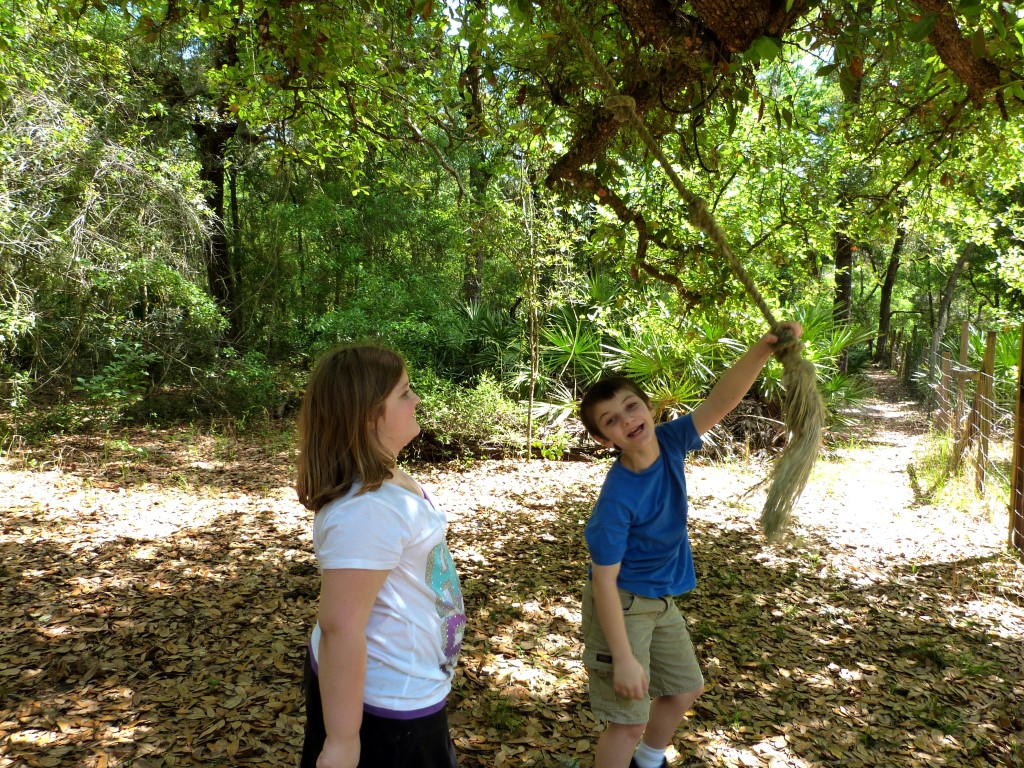
We heard several, but never saw any. (Northern Cardinal, Tufted Titmouse and a Blue Jay) When we got to the end of the property, turned right and followed the fence line. Not very far we came upon a tree with a rope hanging down with knots on it. At that point, all birdwatching and birdwatching lessons stopped.

The rope with the "Chatterbox" aboard.

The rope with the “Chatterbox” aboard.

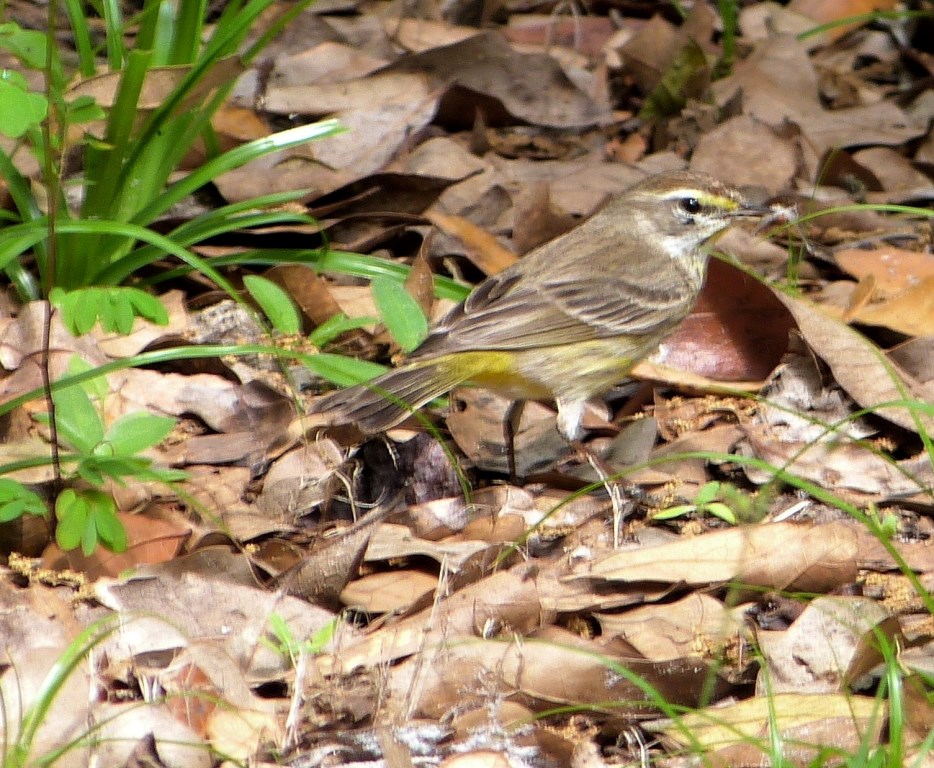
Later, I gathered some more and off we went again. This time my great-niece and nephew from Tampa were with me. We heard those same birds, plus a Palm Warbler, and saw them very briefly. Another lesson was taught about having “soft eyes” as you look at trees. Don’t stare, just sort of look lightly and watch for movement. Fine, we turned the corner at the fence and ran into the “rope” again. That birdwatching adventure ended and another “rope adventure” began.

Oh, that men would give thanks to the LORD for His goodness, And for His wonderful works to the children of men! (Psalms 107:8 NKJV)

At the rope again.

At the rope again.

Needless to say, that “rope” became an unexpected highlight of the reunion. Every attempt to take a trip ended up there. They even loaded up my brother’s golf cart and brought a whole crew down there.

What did I eventually see and here? Let’s see; Northern Cardinal, Tufted Titmouse, Blue Jay, Carolina Wrens, Pileated Woodpecker, Ruby-throated Hummingbirds, Grey Catbird, and some Black Vultures flying overhead.

Carolina Wren

Carolina Wren

To me, one of the highlights was watching the Carolina Wrens flying into a cabinet in my brother’s pole barn. When they weren’t around, this is what I discovered:

Wren nest in a paper box.

Wren nest in a paper box.

On the next to the top shelf they had a nest in the works.

Wren nest in a Pepsi paper cup.

Wren nest in a Pepsi paper cup.

*

Wren nest in a Pepsi paper cup.

Wren nest in a Pepsi paper cup – closeup.

Talking with my sister-in-law, also a birdwatcher – who lives there, she figures that they feel safe in the pole barn because the hawks can’t fly through there and attack the nests. Several years ago on one of my visits, the Wrens had made a nest in a paper sack. There were eggs in it that time.

*

I had the blog on autopilot last week and through the week-end. My sister spent time with us before and after the reunion. Now it is time to get back to blogging.

*


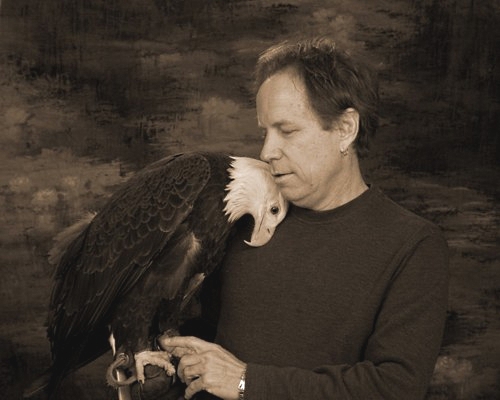
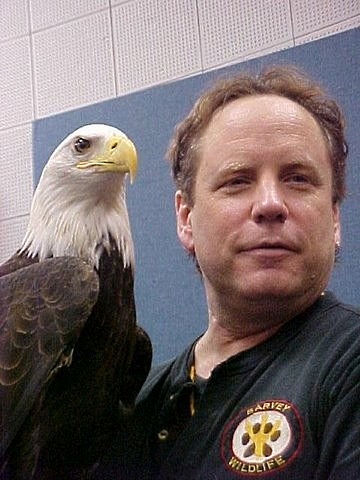
Jeff Guidry and His Eagle Named Freedom

(This was sent to me in an e-mail and thought I would share it. It’s been around awhile, but is new to me. Also, below is a video of the two of them.)

An Eagle Kiss

As an eagle stirs up its nest, Hovers over its young, Spreading out its wings, taking them up, Carrying them on its wings, (Deuteronomy 32:11 NKJV)

This is the kind of story you need when it seems like the world is spiraling out of control.. Not many people get a picture of this proud bird snuggled up next to them!

Freedom 1Freedom and Jeff

Freedom and I have been together 11 years this summer.  She came in as a baby in 1998 with two broken wings.  Her left wing doesn’t open all the way even after surgery, it was broken in 4 places. She’s my baby.

When Freedom came in, she could not stand and both wings were broken. She was emaciated and covered in lice. We made the decision to give her a chance at life, so I took her to the vet’s office. From then on, I was always around her. We had her in a huge dog carrier with the top off, and it was loaded up with shredded newspaper for her to lay in.

I used to sit and talk to her, urging her to live, to fight; and she would lay there looking at me with those big brown eyes. We also had to tube feed her for weeks. This went on for 4-6 weeks, and by then she still couldn’t stand. It got to the point where the decision was made to euthanize her if she couldn’t stand in a week. You know you don’t want to cross that line between torture and rehab, and it looked like death was winning.

She was going to be put down that Friday, and I was supposed to come in on that Thursday afternoon. I didn’t want to go to the center that Thursday, because I couldn’t bear the thought of her being euthanized; but I went anyway, and when I walked in everyone was grinning from ear to ear. I went immediately back to her cage; and there she was, standing on her own, a big beautiful eagle. She was ready to live. I was just about in tears by then.

That was a very good day. We knew she could never fly, so the director asked me to glove train her. I got her used to the glove, and then to jesses, and we started doing education programs for schools in western Washington. We wound up in the newspapers, radio (believe it or not) and some TV. Miracle Pets even did a show about us.

In the spring of 2000, I was diagnosed with non-Hodgkin’s lymphoma. I had stage 3, which is not good (one major organ plus everywhere), so I wound up doing 8 months of chemo. Lost the hair – the whole bit. I missed a lot of work.

When I felt good enough, I would go to Sarvey and take Freedom out for walks. Freedom would also come to me in my dreams and help me fight the cancer. This happened time and time again.

Fast forward to November 2000.  The day after Thanksgiving, I went in for my last checkup.  I was told that if the cancer was not all gone after 8 rounds of chemo, then my last option was a stem cell transplant. Anyway, they did the tests; and I had to come back Monday for the results. I went in Monday, and I was told that all the cancer was gone.

Freedom2

So the first thing I did was get up to Sarvey and take the big girl out for a walk. It was misty and cold. I went to her flight and jessed her up, and we went out front to the top of the hill. I hadn’t said a word to Freedom, but somehow she knew. She looked at me and wrapped both her wings around me to where I could feel them pressing in on my back (I was engulfed in eagle wings), and she touched my nose with her beak and stared into my eyes, and we just stood there like that for I don’t know how long.

That was a magic moment. We have been soul mates ever since she came in. This is a very special bird.

On a side note:  I have had people who were sick come up to us when we are out, and Freedom has some kind of hold on them. I once had a guy who was terminal come up to us and I let him hold her.  His knees just about buckled and he swore he could feel her power course through his body. I have so many stories like that.

I never forget the honor I have of being so close to such a magnificent spirit as Freedom.

Hope you enjoyed this!

*

*

Sunday Inspiration – Feet

Giant Coot (Fulica gigantea) Loped Feet ©©Flickr Lobed Feet

Giant Coot (Fulica gigantea) Loped Feet ©©Flickr Lobed Feet

You enlarged my path under me, So my feet did not slip. (Psalms 18:36 NKJV)

I have restrained my feet from every evil way, That I may keep Your word. (Psalms 119:101 NKJV)

My foot has held fast to His steps; I have kept His way and not turned aside. (Job 23:11 NKJV)

As you watch the birds, notice their feet. The Lord has given each of them very specific feet that our necessary for their needs. Does He not provide us with the needs that we have and help us walk with Him?

This slideshow requires JavaScript.

“Just A Closer Walk With Thee” – © by The Hyssongs (Used With Permission of the Hyssongs)

*

More Sunday Inspiration

*

Birds of the Bible – Feeding

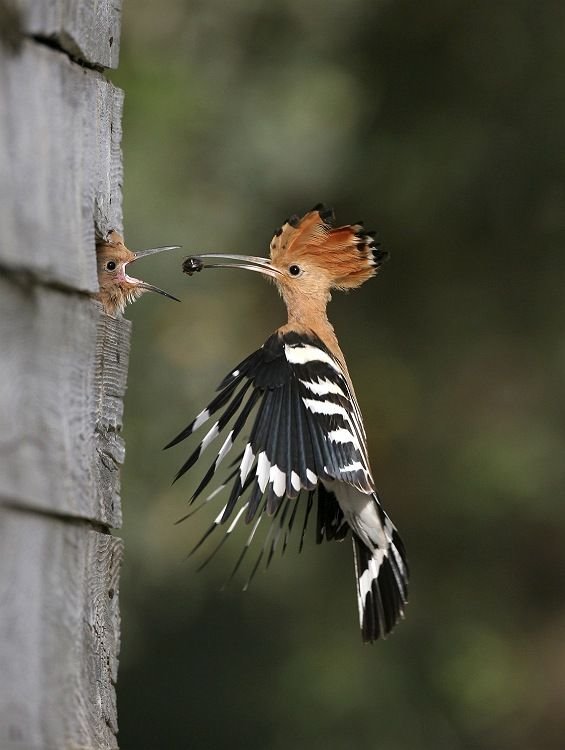
Hoopoe Feeding Young ©©Dvir Lotan from Israel

Hoopoe Feeding Young ©©Dvir Lotan from Israel


Also, to every beast of the earth, to every bird of the air, and to everything that creeps on the earth, in which there is life, I have given every green herb for food“; and it was so. Then God saw everything that He had made, and indeed it was very good. So the evening and the morning were the sixth day. (Genesis 1:30-31 NKJV)

Look at the birds of the air, for they neither sow nor reap nor gather into barns; yet your heavenly Father feeds them. Are you not of more value than they? (Mat 6:26 )

These verses have been shared before, but the quote below, that I received from an e-mail, provides another angle.

God Gives every bird its food,

but He does not throw it into its nest.

That quote cause a chuckle at first, but then you begin to really think about it.

Fan-tailed Raven (Corvus rhipidurus) ©WikiC

Fan-tailed Raven (Corvus rhipidurus) ©WikiC

 Who provides food for the raven, When its young ones cry to God, And wander about for lack of food? (Job 38:41 NKJV)

He gives to the beast its food, And to the young ravens that cry. (Psalms 147:9 NKJV)

Consider the ravens, for they neither sow nor reap, which have neither storehouse nor barn; and God feeds them. Of how much more value are you than the birds? (Luke 12:24 NKJV)

We know that the Lord provides for the birds, but they have to go out an gather it up. Some have it easy, other birds have to work at finding and then opening up the seeds, snails, nuts or what ever they have. The Lord, through His Creative Hand has given the various birds, the “tools” they need. Special beaks, feet, swift wings, keen eyes, etc.

And God said, “See, I have given you every herb that yields seed which is on the face of all the earth, and every tree whose fruit yields seed; to you it shall be for food. (Genesis 1:29 NKJV)

You cause the grass to grow for the livestock and plants for man to cultivate, that he may bring forth food from the earth (Psalms 104:14 ESV)

Those verse let us know that the Lord has also provided for us. Yet we have to gather it and again, the Lord has given us the skills and tools to feed ourselves. Can we not learn for the birds?

But now ask the beasts, and they will teach you; And the birds of the air, and they will tell you; (Job 12:7 NKJV)

Cedar Waxwing Eating by Steve Slayton

Cedar Waxwing Eating by Steve Slayton

She rises while it is yet night and provides food for her household and portions for her maidens. (Proverbs 31:15 ESV)

Give us this day our daily bread. (Matthew 6:11 NKJV)

Six days you shall labor and do all your work, (Exodus 20:9 NKJV)

Bearded Barbet (Lybius dubius) ©© Passing food

Bearded Barbet (Lybius dubius) ©© Passing food

I have shown you in every way, by laboring like this, that you must support the weak. And remember the words of the Lord Jesus, that He said, ‘It is more blessed to give than to receive.’ ” (Acts 20:35 NKJV)

Let him who stole steal no longer, but rather let him labor, working with his hands what is good, that he may have something to give him who has need. (Ephesians 4:28 NKJV)

The soul of a lazy man desires, and has nothing; But the soul of the diligent shall be made rich. (Proverbs 13:4 NKJV)

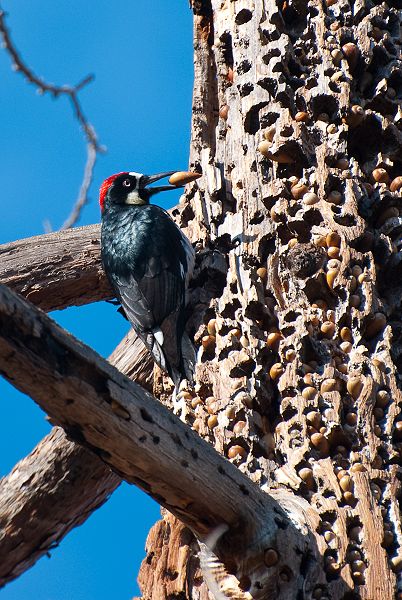
Acorn Woodpecker (Melanerpes formicivorus) with Hoard or Grainary WikiC

Acorn Woodpecker (Melanerpes formicivorus) with Hoard or Grainary WikiC

The lazy man will not plow because of winter; He will beg during harvest and have nothing. (Proverbs 20:4 NKJV)

The soul of a lazy man desires, and has nothing; But the soul of the diligent shall be made rich. (Proverbs 13:4 NKJV)

The lazy man will not plow because of winter; He will beg during harvest and have nothing. (Proverbs 20:4 NKJV)

Osprey with Fish by Jim Fenton

Osprey with Fish by Jim Fenton

For even when we were with you, we commanded you this: If anyone will not work, neither shall he eat. (2 Thessalonians 3:10 NKJV)

See:

Birds of the Bible

Gideon

*

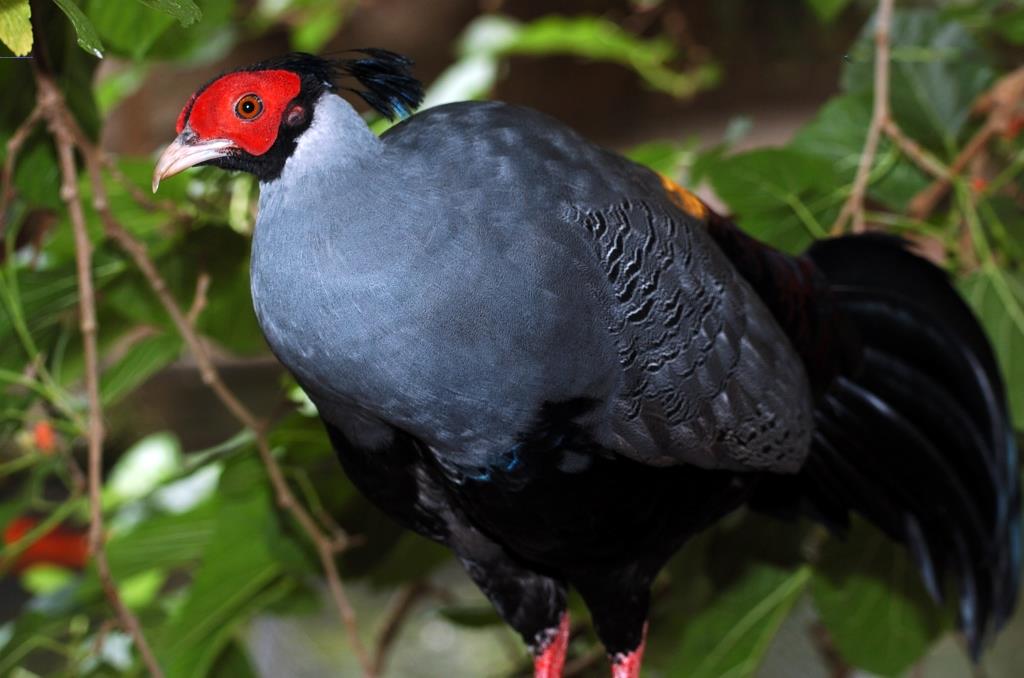
Siamese Fireback by Dan

Siamese Fireback by Dan's Pix

Siamese Fireback by Dan’s Pix at Zoo Miami

As the partridge sitteth on eggs, and hatcheth them not; so he that getteth riches, and not by right, shall leave them in the midst of his days, and at his end shall be a fool. (Jeremiah 17:11 KJV)

I was browsing through some of Dan’s photos on his Dan’s Pix site and came across the Siamese Fireback. We saw this bird in the Wings of Asia Aviary at Zoo Miami. This is another of the Lord’s interesting creations.

The Siamese Fireback (Lophura diardi) also known as Diard’s Fireback is a fairly large, approximately 31.5 in (80 cm) long, pheasant. The male has a grey plumage with an extensive red facial skin, crimson legs and feet, ornamental black crest feathers, reddish brown iris and long curved blackish tail. The female is a brown bird with blackish wing and tail feathers.

The Siamese Fireback is distributed to the lowland and evergreen forests of Cambodia, Laos, Thailand and Vietnam in Southeast Asia. Very dense forests, bamboo and evergreen from sea-level to 2,000 feet. This species is also designated as the national bird of Thailand.

Siamese Fireback (Lophura diardi) ©WikiC

Siamese Fireback (Lophura diardi) ©WikiC (You can see the yellow on its back)

The female usually lays between four to eight rosy eggs. They have a more subtle coloration that helps them blend into the area while nesting.

Siamese Fireback (Lophura diardi) female by Lee ZM

Siamese Fireback (Lophura diardi) female by Lee ZM

Where there is no wood, the fire goes out; And where there is no talebearer, strife ceases. (Proverbs 26:20 NKJV)

Siamese Fireback (Lophura diardi) female by Lee ZM

Siamese Fireback (Lophura diardi) female by Lee ZM

The scientific name commemorates the French naturalist Pierre-Médard Diard. (Information from various internet sources.)

The three Firebacks are part of the Phasianidae – Pheasants, Fowl & Allies Family. Partridges, Pheasants, Grouse, Quail, Francolin, Peafowl, Peacocks and others make up this family.

Crestless Fireback (Lophura erythrophthalma) IBC

Crested Fireback (Lophura ignita)

Siamese Fireback (Lophura diardi) by Dan’s Pix

Also:

*