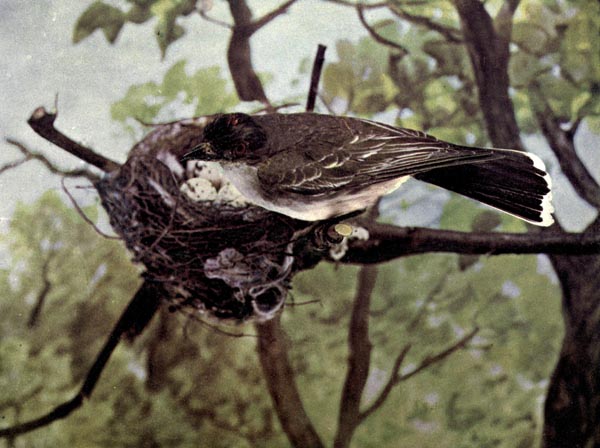
Kingbird of Birds Illustrated by Color Photography, 1897
From col. F. M. Woodruff. Copyrighted by
Nature Study Pub. Co., 1897, Chicago.
THE KINGBIRD.
(RELOCATED – CLICK HERE)
Kingbird of Birds Illustrated by Color Photography, 1897
From col. F. M. Woodruff. Copyrighted by
Nature Study Pub. Co., 1897, Chicago.
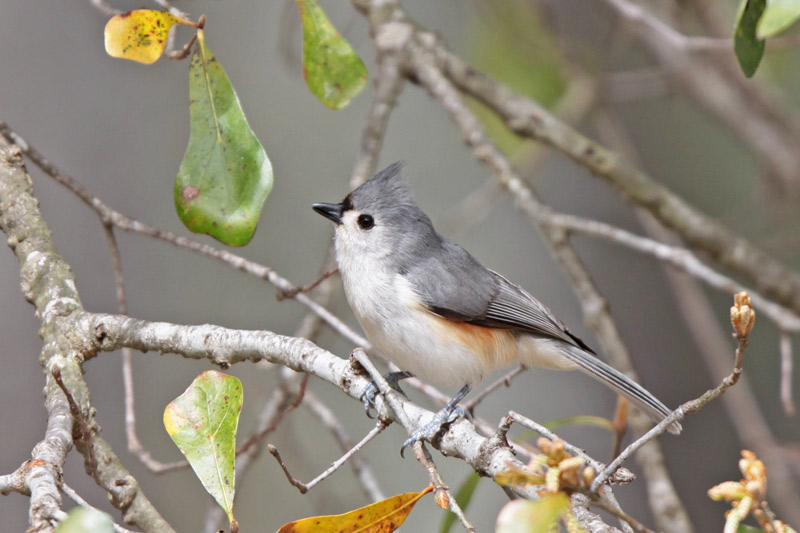
Tufted Titmouse (Baeolophus bicolor) by Margaret Sloan
I would like to introduce our newest photographer to permit permission to use her photos. While searching for the Morningbird, which Margaret had one of the very few photos of the bird, I discovered her website. She has graciously given permission to use her photos.
Margaret Sloan has her photos on PBase at
http://www.pbase.com/laumakani.
She is from Texas and has over 12,000 images online in over 1,100 galleries. Wow! It will take awhile to check it out, but what I have seen so far is very good. Please stop by her site and admire the photos of some amazing birds, plus places, spaces, and scenery. Lots to view and enjoy.
From her Birds of Costa Rica gallery:

Keel-billed Toucan (Ramphastos sulfuratus) by Margaret Sloan
From the Birds of Peru – Cotingas and Manakins gallery:

Andean Cock-of-the-rock (Rupicola peruvianus) by Margaret Sloan
From the Birds of Southeast Asia – Sunbirds, Flowerpeckers, Leafbirds:

Olive-backed Sunbird (Cinnyris jugularis) by Margaret Sloan
Closer to home – Birds of North America:
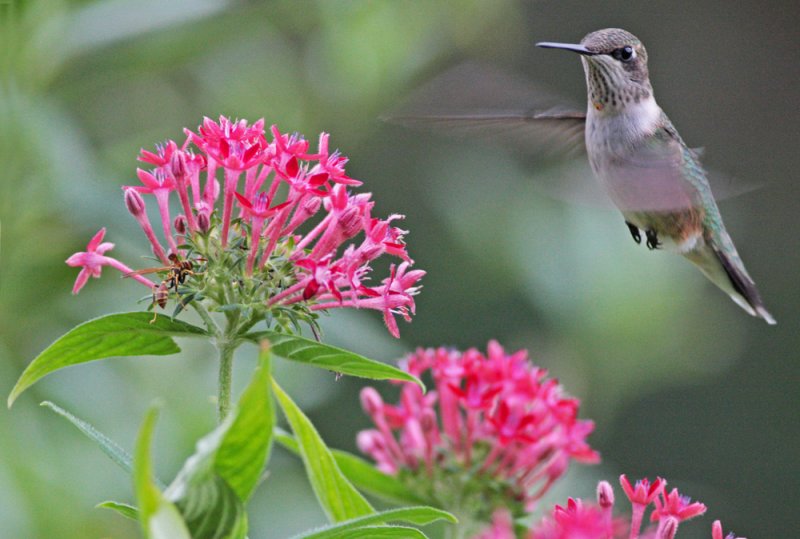
Hummingbird with Pentas by Margaret Sloan
From her Nature – Butterflies:
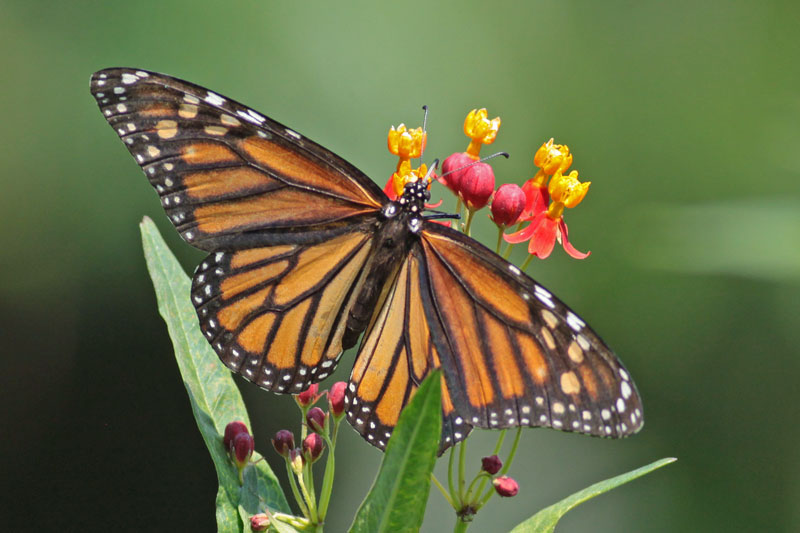
Monarch Butterfly by Margaret Sloan
These are but a few of the numerous photos she has taken of the birds and beauty around her. Thank you, Margaret, for sharing with us what you have seen through your lens. May you find many more adventures that you can take photographs of and share with us.
Who is like You, O Lord, among the gods? Who is like You, glorious in holiness, awesome in splendor, doing wonders? (Exodus 15:11 AMP)
Many, O Lord my God, are the wonderful works which You have done, and Your thoughts toward us; no one can compare with You! If I should declare and speak of them, they are too many to be numbered. (Psalms 40:5 AMP)
*
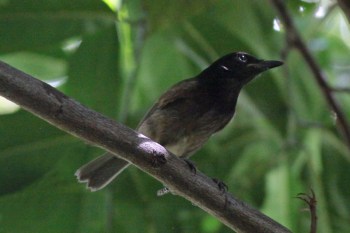
Morningbird (Colluricincla tenebrosa) by Margaret Sloan
My voice shalt thou hear in the morning, O LORD; in the morning will I direct my prayer unto thee, and will look up. (Psalms 5:3 KJV)
The Morningbird (Colluricincla tenebrosa) is a songbird species in the family Pachycephalidae. It is also known a “Brown Pitohui, Morning Bird, Morning Pitohui, Morningbird, Palau Morning Bird, Palau Morningbird, and Palau Pitohui” (Avibase) At the present time it is a bird of “Least Concern” but it is hard to find a photo of it. That is what caught my attention to it. I liked its name. A recording of the Morningbird by Todd Mark (xeno-canto) made a remark that it was the “first loud singer of dawn chorus.” That seems to be appropriate according to the name it has been given,
Evening, and morning, and at noon, will I pray, and cry aloud: and he shall hear my voice. (Psalms 55:17 KJV)
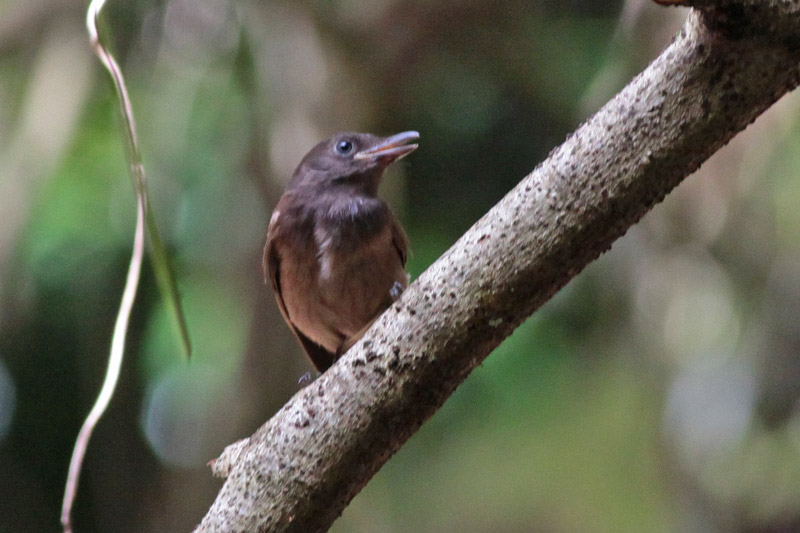
Morningbird (Colluricincla tenebrosa) by Margaret Sloan
The Morningbird is endemic to the islands of Babelthuap, Koror, Garakayo, Peleliu and Ngabad in Palau. Its natural habitat is deep primary tropical moist lowland forests. The species is non-migratory. It is apparently commoner on the smaller islands in its range. The feed principally on insects, but also take snails, berries, fruit, and seeds. They feed on or around the ground. Checking the internet, there are many birds called by that name because they sing in the morning, but very few photos. (Margaret Sloan just gave permission to use her photos of this bird, thanks.)
There are videos of a Morningbird Song. Most probably do not know that there actually is a “Morningbird.” Here is one verse of that song:
You are the blood of me
The harvest of my dreams
There’s nowhere I can find peace
And the silence won’t cease
Sorry, but just because a Morning Bird flew away, our lives should not be like those words. We can have peace and knowing the Lord Jesus Christ as your personal Savior is the only real peace anyone really receives. He is the way to peace:
Let not your heart be troubled: ye believe in God, believe also in me. In my Father’s house are many mansions: if it were not so, I would have told you. I go to prepare a place for you. And if I go and prepare a place for you, I will come again, and receive you unto myself; that where I am, there ye may be also. And whither I go ye know, and the way ye know. Thomas saith unto him, Lord, we know not whither thou goest; and how can we know the way? Jesus saith unto him, I am the way, the truth, and the life: no man cometh unto the Father, but by me. (John 14:1-6 KJV)

Palau Morningbird Pitohui © Mandy Etpison
But to You I cry, O Lord; and in the morning shall my prayer come to meet You. (Psalms 88:13 AMP)
The Morningbird (Colluricincla tenebrosa) is a member of the Pachycephalidae – Whistlers and Allies Family. There are presently 58 species that are assigned to that family by the IOC. Others place it in the Colluricinclidae family according to Wikipedia, yet I can’t find much about that family. They are closely related to the Shrike-thrushes and some sources list it as a Pitohui
(Wikipedia and other internet sources)
Links:
*

Slate-colored Red Junco of Birds Illustrated by Color Photography, 1897

White-eyed Foliage-gleaner (Automolus leucophthalmus) by Dario Sanches
And thou shalt not glean thy vineyard, neither shalt thou gather every grape of thy vineyard; thou shalt leave them for the poor and stranger: I am the LORD your God. (Leviticus 19:10 KJV)
Yesterday you were introduced to the Firewood-gatherer from the Ovenbird – Furnariidae Family. Let’s look at some more things about this family. There are presently (IOC 3.3) 307 species assigned together, but it is such a diverse group. There are over 70 Genera listed. Number one, the Ovenbird, is not even a member of this family. You have to look for it in the Parulidae – New World Warblers to find it.
The Ovenbird name seems to be from the fact that many of these birds make an “oven style” nest or at least one that has an opening to enter or a covering, not the “cup type” of nest of many birds. Most are insectivores that are mostly arboreal in nature. Insects form the majority of the diet, with some spiders, centipides, millipides and even lizards being taken as well.
They are sub-divided into subfamilies which help find them. It is the names of these birds that have caught my attention this time. Listen to these names:
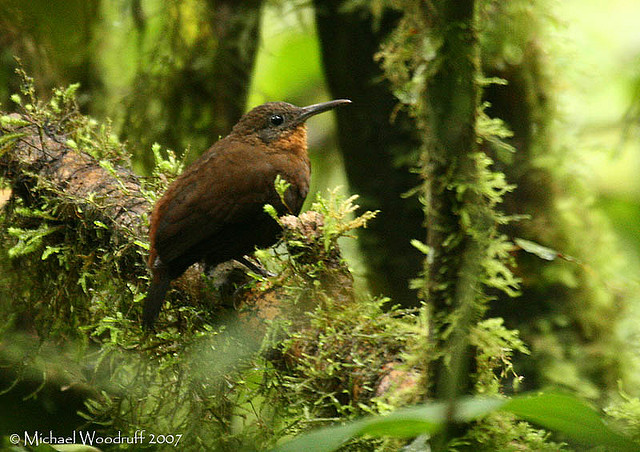
Tawny-throated Leaftosser (Sclerurus mexicanus) by Michael Woodruff
Subfamily: Sclerurinae ~~ Miners and Leaftossers

Wedge-billed Woodcreeper (Glyphorynchus spirurus) by Michael Woodruff
Subfamily: Dendrocolaptinae ~~ Woodcreepers

Rufous Hornero (Furnarius rufus) ©WikiC
Subfamily: Furnariinae ~~ Neotropical ovenbirds and allies
Just reading the names you can almost image what they do. Many of them are “creepers,” “runners,” “gleaners,” “haunters,” and then others have their tail described. The tails are Barb, Spine, Wire, Soft, Thorn, Prickle and Gray. The Runners are apparently running up Trees or in the Stream. Not sure what the Miners are digging for, but maybe they are trying to find insects in the ground, whereas the Leaf-tossers are probably looking under leaves for their lunch. They don’t appear to be a “lazy” bird family.
This is a family that I could see being named by what they were doing or how their tail looked. After the birds were created, the Lord brought them to Adam to see what he would call them. What ever he decided to call them, that was their name. Maybe this is how Adam named them by observing their behaviors. Others from another family may have had a different way he named them.
Out of the ground the LORD God formed every beast of the field and every bird of the air, and brought them to Adam to see what he would call them. And whatever Adam called each living creature, that was its name. So Adam gave names to all cattle, to the birds of the air, and to every beast of the field. But for Adam there was not found a helper comparable to him. (Genesis 2:19-20 NKJV)
Some interesting articles about this family:
Birds of Brazil – Woodpeckers, Woodcreepers and Foliage-gleaners by Mark George
*
*
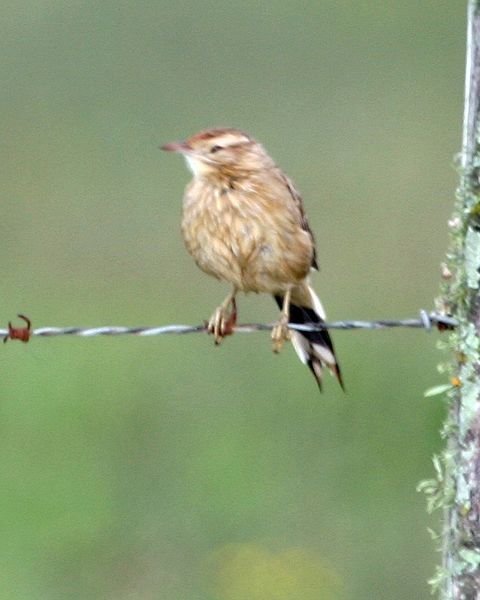
Firewood-gatherer (Anumbius annumbi) ©WikiC
The Firewood-gatherer (Anumbius annumbi) is a species of bird in the Furnariidae family. It is the only member of the genus Anumbius.
It is found in Argentina, Brazil, Paraguay, and Uruguay. Its natural habitats are subtropical or tropical seasonally wet or flooded lowland grassland, pastureland, and heavily degraded former forest.
It got its name because it is frequently seen carrying sticks to its nest. It interweaves thorny twigs to build its nest. It can be up to 6½ ft (2 m) tall and decorated with glass or threads. The young from the first brood may be ejected from the territory, but may help raise the second brood.
For lack of wood the fire goes out, and where there is no whisperer, quarreling ceases. (Proverbs 26:20 ESV)
Where no wood is, there the fire goeth out: so where there is no talebearer, the strife ceaseth. As coals are to burning coals, and wood to fire; so is a contentious man to kindle strife. The words of a talebearer are as wounds, and they go down into the innermost parts of the belly. (Proverbs 26:20-22 KJV)
This next verse I don’t think applies to the Firewood-gatherer bird. I am sure they don’t know one day from the other, so I am sure they do not get in trouble.
Now while the children of Israel were in the wilderness, they found a man gathering sticks on the Sabbath day. (Numbers 15:32 NKJV)

Firewood-gatherer (Anumbius annumbi) Nest ©WikiC
I discovered this uniquely named bird while working on Furnariidae family. After working on the Toucans, this family of 307 species is rather bland. They are mostly brownish, with little color so I was not as excited trying to find the photos. Yet, the Lord created them all, and who am I to judge them by just their outer feathers? Isn’t that true of us? We aren’t to place one person above another.
My brothers, ye should not have the faith of our Lord Jesus Christ of glory, in favoritism. For if a man with a gold ring in bright clothing comes into your synagogue, and also a poor man in dirty clothing comes in, and ye have regard for the man wearing the bright clothing, and say to him, Sit thou here well, and ye say to the poor man, Stand thou there, or sit here below my footstool, then are ye not partial among yourselves, and become judges from evil thoughts? Listen, my beloved brothers, did not God choose the poor of the world, rich in faith, and heirs of the kingdom, which he promised to those who love him? (James 2:1-5 ACV)
Even the birds can help us learn lessons that are good for us. Praise the Lord for all He does to help us serve Him better. Look around, there are lessons everywhere to be discerned and taken to heart.
(Wikipedia and other internet sources)
Anumbius annumbi (Firewood Gatherer) by Jose Ignacio, Maldonado
See:
*

Toco Toucan (Ramphastos toco) ©WikiC
I know all the birds of the mountains, And the wild beasts of the field are Mine. (Psalms 50:11 NKJV)
While working on the Ramphastidae Family yesterday, I decided to share some of the beauty the Lord created in this group of birds. These are the Toucans, Toucanets, and Aracaris. They are just so appealing to see and wonder how the Lord comes up with so many designs and colors in His Creation. This family definitely show such variety.
This morning while reading my latest Acts & Facts, there was an article about Diversity by Dr. James J. S. Johnson, who did our guest article this week,( Bird Brains, Amazing Evidence of God’s Genius). Both are very interesting articles worth reading. But I want to quote Dr. Johnson about variety.
Two words summarize the answer: life and variety. Even in this after-Eden world, cursed and groaning as it is under the weight of sin and death, we still see a prolific and diversified creation.
Why did God design earth’s biodiversity the way that He did?
God loves life. God is the essence and ultimate origin of all forms and levels of life.1
God loves variety. God’s nature is plural, yet one, and He is the Creator of all biological diversity anywhere and everywhere on earth.2
This family catches your eye and causes a second look. Toco Toucans are familiar to many, and some of the others. (Even Toucan Sam is the cartoon mascot for Froot Loops breakfast cereal). We had the privilege to meet “Gracie” a retired Chestnut-mandibled Toucan at the National Aviary. (National Aviary – Hospital, Breeding, and Kitchen Areas) Needless to say, that is the closest I have been to a Toucan.

Gracie the retired Chestnut-mandibled Toucan petted by Lee
The Ramphastidae Family has 5 or 6 genera, depending on sources, with Toucanets in the Aulacorhynchus and Selenidera, Mountain Toucans in the Andigena genus, Aracaris are Pteroglossus with the Saffron Toucanet added by some, and the Typical Toucans belong to the Ramphastos genus. The “Toucan” name of this bird group is derived from the Tupi word tukana, via Portuguese. They have large colorful and brightly marked bills.
Toucans range in size from the Lettered Aracari (Pteroglossus inscriptus), at 130 g (4.6 oz) and 29 cm (11.5 inches), to the Toco Toucan(Ramphastos toco), at 1.5 lb (680 g) and 29 inches (63 cm). Their bodies are short (of comparable size to a crow’s) and compact. The tail is rounded and varies in length, from half the length to the whole length of the body. The neck is short and thick. The wings are small, as they are forest-dwelling birds who only need to travel short distances.
The legs of the toucan are strong and rather short. Their toes are arranged in pairs with the first and fourth toes turned backward. The majority of toucans do not show any sexual dimorphism in their coloration. However, the bills of female toucans are usually shorter, deeper and sometimes straighter, giving more of a “blocky” impression compared to male bills. The feathers in the genus containing the largest toucans are generally black, with touches of white, yellow, and scarlet. The underparts of the araçaris (smaller toucans) are yellow, crossed by one or more black or red bands. The toucanets have mostly green plumage with blue markings.
Toucans are native to Southern Mexico, Central and South America, and the Caribbean region. They generally live in tropical and sub-tropical regions. They make their nests in tree hollows and holes excavated by other animals such as woodpeckers—the toucan bill has very limited use as an excavation tool.
They mainly eat fruit, but will eat insects and small lizards if they become available. However, in their range, toucans are the dominant frugivores, and as such play an extremely important ecological role as vectors for seed dispersal of fruiting trees.
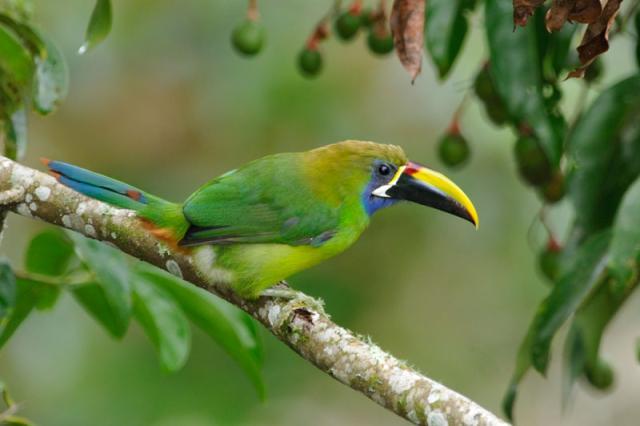
Emerald Toucanet (Aulacorhynchus prasinus) by Reinier Munguia
Toucanets
The green toucanets are birds from the genus Aulacorhynchus in the toucan family. They are native to Mexico, and Central and South America. All are found in humid forests and woodlands in highlands, but a few also occur in adjacent lowlands. They are relatively small toucans, 12–17 in (30–44 centimetres) long, with colorful, mainly green, plumage. They are typically seen in pairs or small groups, and sometimes follow mixed species flocks.
Wagler’s Toucanet (Aulacorhynchus wagleri)
Emerald Toucanet (Aulacorhynchus prasinus)
Blue-throated Toucanet (Aulacorhynchus caeruleogularis)
White-throated Toucanet (Aulacorhynchus albivitta)
Black-throated Toucanet (Aulacorhynchus atrogularis)
Groove-billed Toucanet (Aulacorhynchus sulcatus)
Chestnut-tipped Toucanet (Aulacorhynchus derbianus)
Tepui Toucanet (Aulacorhynchus whitelianus)
Crimson-rumped Toucanet (Aulacorhynchus haematopygus)
Yellow-browed Toucanet (Aulacorhynchus huallagae)
Blue-banded Toucanet (Aulacorhynchus coeruleicinctis)

Yellow-eared Toucanet (Selenidera spectabilis) ©WikiC
Selenidera is a bird genus containing six species of dichromatic toucanets in the toucan family Ramphastidae. They are found in lowland rainforest (below 1,500 metres or 4,900 feet) in tropical South America with one species in Central America.
All the species have green upperparts, red undertail-coverts and a patch of bare blue or blue-green skin around the eye. Unlike most other toucans, the sexes are different in color. The males all have a black crown, nape, throat and breast and an orange/yellow auricular streak. The females of most species have the black sections in the male replaced by rich brown and a reduced/absent auricular streak,
Saffron Toucanet (Pteroglossus bailloni)
Yellow-eared Toucanet (Selenidera spectabilis)
Guianan Toucanet (Selenidera piperivora)
Golden-collared Toucanet (Selenidera reinwardtii)
Tawny-tufted Toucanet (Selenidera nattereri)
Gould’s Toucanet (Selenidera gouldii)
Spot-billed Toucanet (Selenidera maculirostris)

Many-banded Aracari (Pteroglossus pluricinctus) by Kent Nickel
Aracari
An aracari or araçari is any of the medium-sized toucans that, together with the Saffron Toucanet, make up the genus Pteroglossus. They are brightly plumaged and have enormous, contrastingly patterned bills. These birds are residents in forests and woodlands in the Neotropics.
Green Aracari (Pteroglossus viridis)
Lettered Aracari (Pteroglossus inscriptus)
Red-necked Aracari (Pteroglossus bitorquatus)
Ivory-billed Aracari (Pteroglossus azara)
Brown-mandibled Aracari (Pteroglossus mariae)
Black-necked Aracari (Pteroglossus aracari)
Chestnut-eared Aracari (Pteroglossus castanotis)
Many-banded Aracari (Pteroglossus pluricinctus)
Collared Aracari (Pteroglossus torquatus)
Stripe-billed Aracari (Pteroglossus sanguineus)
Pale-mandibled Aracari (Pteroglossus erythropygius)
Fiery-billed Aracari (Pteroglossus frantzii)
Curl-crested Aracari (Pteroglossus beauharnaesii)

Plate-billed Mountain Toucan (Andigena laminirostris) by Michael Woodruff
Mountain Toucans
Andigena, the mountain toucans, is a genus of birds in the Ramphastidae family. They are found in humid highland forests in the Andes of South America, ranging from Bolivia to Venezuela. These medium-sized toucans all have olive-brown upperparts, a black crown, yellow rump, blue-grey underparts and a red vent.
Grey-breasted Mountain Toucan (Andigena hypoglauca)
Plate-billed Mountain Toucan (Andigena laminirostris)
Hooded Mountain Toucan (Andigena cucullata)
Black-billed Mountain Toucan (Andigena nigrirostris)

Keel-billed Toucan (Ramphastos sulfuratus) ©WikiC
Toucans
Ramphastos is a genus of toucans, tropical and subtropical near passerine birds from Mexico, and Central and South America, which are brightly marked and have enormous, often colourful, bills.
This genus comprises the largest toucans, ranging from 17 to 24 in (42 to 61 centimetres) in length. All have black wings, tails and thighs, but the color of the remaining plumage depends on the exact species involved. All the species are basically fruit-eating, but will take insects and other small prey. They are arboreal and nest in tree holes laying 2–4 white eggs. They are essentially resident birds, but may take part in minor, local movements (e.g., to lower altitudes in the winter).
Green-billed Toucan (Ramphastos dicolorus)
Channel-billed Toucan (Ramphastos vitellinus)
Citron-throated Toucan (Ramphastos citreolaemus)
Choco Toucan (Ramphastos brevis)
Keel-billed Toucan (Ramphastos sulfuratus)
Toco Toucan (Ramphastos toco)
White-throated Toucan (Ramphastos tucanus)
Yellow-throated Toucan (Ramphastos ambiguus)
Enjoy the variety of these beautiful birds that have been placed here for their benefit and our enjoyment by their Creator. Clicking the links will reveal some that are at various websites besides the ones here.
And let the beauty of the LORD our God be upon us, And establish the work of our hands for us; Yes, establish the work of our hands. (Psalms 90:17 NKJV)
Splendor and majesty are before him; strength and beauty are in his sanctuary. (Psalms 96:6 ESV)
(Wikipedia and other internet sources)
See Also:
Toucan – Ramphastidae Family
Toucans (Ramphastidae) – IBC
Toucan – Ramphastidae – Wikipedia
*

Black Vulture by Birdway (Ian)
And these are they which ye shall have in abomination among the fowls; they shall not be eaten, they are an abomination: the eagle, and the ossifrage, and the ospray, (Leviticus 11:13 KJV)
We have looked into this bird before in Birds of the Bible – Ossifrage and the Birds of the Bible Ossifrage Page. Since we have been looking at the actual meanings of the names in the Name Studies, maybe we can discover something else of interest. I hope this long list below of the different translations that are shown are a blessing and not a curse. They were cut down to just show the three birds, except for the translations that like to put all the verses in one verse. (from my e-Sword)
Scanning down through the list the Eagle seems to be no real problem. Most translate it as an Eagle. The last bird, most show as the Osprey or Sea-eagle. Wikipedia says, “The Osprey (Pandion haliaetus), sometimes known as the sea hawk, fish eagle or fish hawk,” A few make this last bird one of the vultures. The middle bird is our concentration in this article.
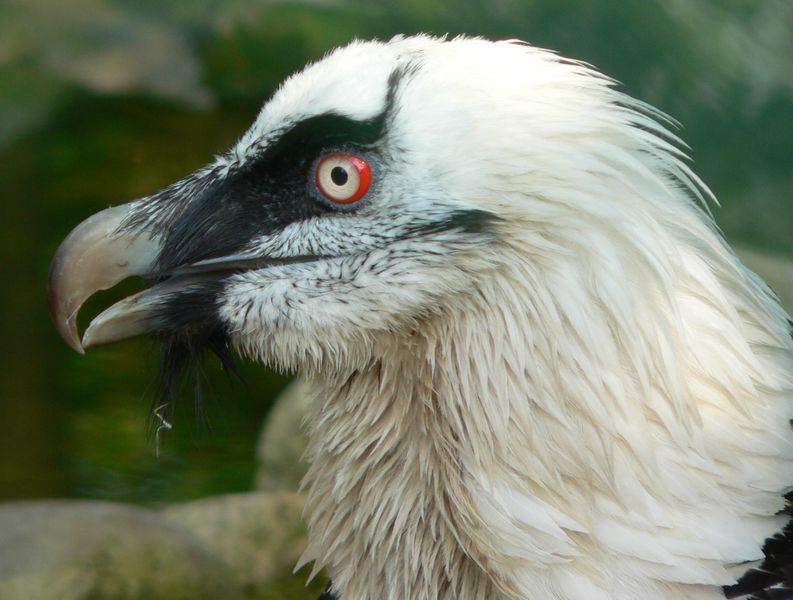
Ossifrage – Lammergier
Looking down this list you will find these birds:
(Ornitología) vulture
buitre alimoche Egyptian vulture
buitre leonado griffon vulture
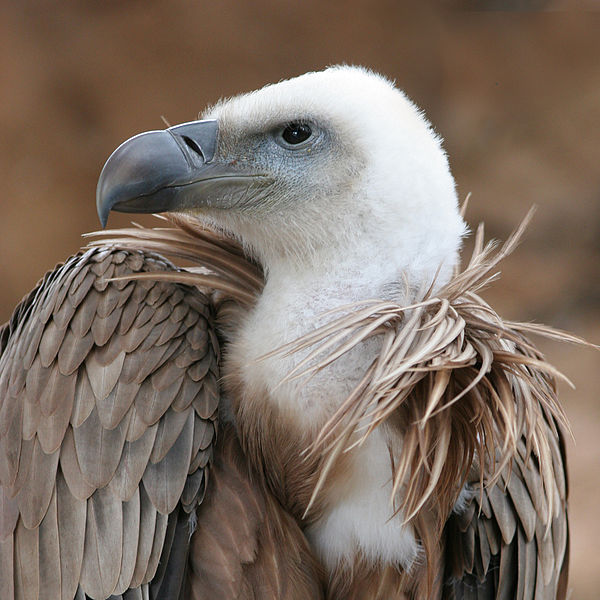
Griffon Vulture (Gyps fulvus) ©WikiC
What is the Hebrew word for this bird?
H6538
פּרס
peres
peh’-res
From H6536; a claw; also a kind of eagle: – claw, ossifrage.
Many of the online Bible Commentaries and Dictionaries use “bone-breaker” and lean toward Lammergeir. See: Bible Encyclopedia, Net Bible, OED, Bible Suite,and Bible Study Tools.
English
Latin
Spanish
Hebrew or Greek #s (with some editing)
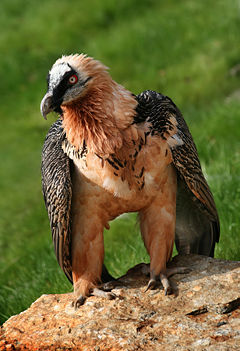
Bearded Vulture (Gypaetus barbatus)
The Bearded Vulture is in the Gypaetus genus, which is similar to the Vulgate term for it. There are many Old World Vultures in the Accipitridae – Kites, Hawks and Eagles family and most likely it is one of them. A black or bearded one. The Black Vulture above is a New World Vulture and is in the Cathartidae – New World Vultures Family. That “black vulture” is not likely to be the one in this Scriputure.
The Bearded Vulture, like other vultures it is a scavenger, feeding mostly on animal matter from dead animals. It usually disdains the actual meat, however, and lives on a diet that is typically compromised at 85-90% by bone marrow. This is the only living bird species that specializes in feeding on marrow. The Lammergeier can swallow whole or bite through brittle bones up to the size of a lamb’s femur and its powerful digestive system quickly dissolves even large pieces. The Lammergeier has learned to crack bones too large to be swallowed by carrying them in flight to a height of 50–150 m (160–490 ft) above the ground and then dropping them onto rocks below, which smashes them into smaller pieces and exposes the nutritious marrow. They can fly with bones up to 10 cm (3.9 in) in diameter and weighing over 4 kg (8.8 lb), or nearly equal to their own weight. After dropping the large bones, the Bearded Vulture spirals or glides to down to inspect them and may repeat the act if the bone is not sufficiently cracked. This learned skill requires extensive practice by immature birds and takes up to seven years to master. Its old name of Ossifrage (“bone breaker”) relates to this habit. More seldom, these birds have been observed to try to break bones (usually of a medium size) by hammering them with their bill directly into rocks while perched. (from Wikipedia with editing)
Sounds like a “bone-breaker” and also look at its claws. As I said in the other article “Only God knows which bird was really indicated.” Whichever one it is, they are Birds of Prey and being on the “do not eat” list, they definitely would not end up on my table even though that law was for then. Praise the Lord that the Law was fulfilled through the sinless crucifixion of the Lord Jesus Christ on the cross.
Think not that I am come to destroy the law, or the prophets: I am not come to destroy, but to fulfil. For verily I say unto you, Till heaven and earth pass, one jot or one tittle shall in no wise pass from the law, till all be fulfilled. (Matthew 5:17-18 KJV)
And he said unto them, These are the words which I spake unto you, while I was yet with you, that all things must be fulfilled, which were written in the law of Moses, and in the prophets, and in the psalms, concerning me. (Luke 24:44 KJV)
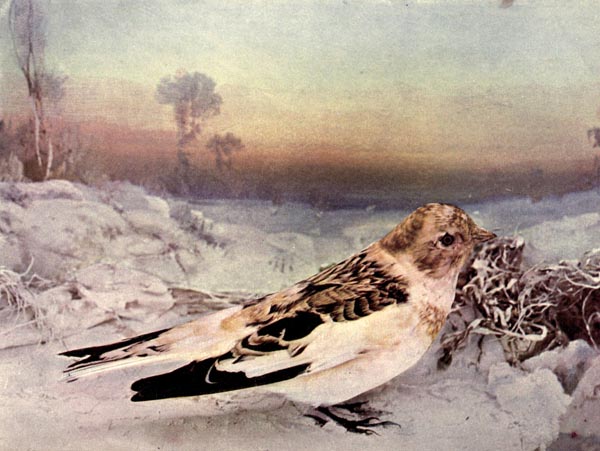
Snow Bunting of Birds Illustrated by Color Photography, 1897
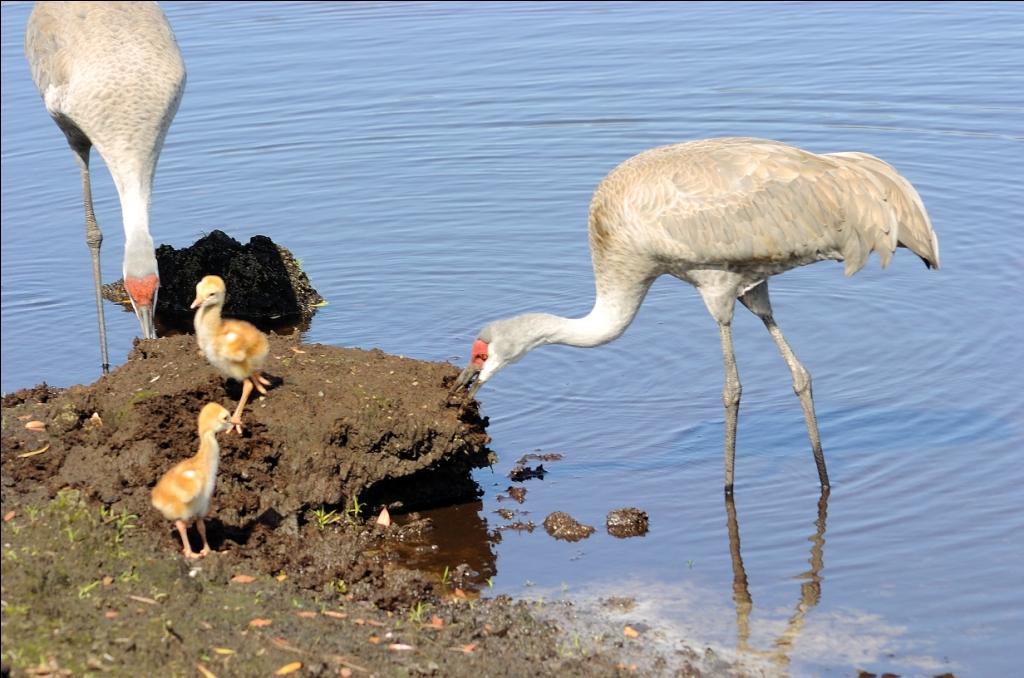
Sandhill Cranes with “Colts”
“Ah, Soul, God does listen to the chattering of cranes! I know He does, for I have read in His Word what is tantamount to that in the text [Isaiah 38:14],
Like a crane or a swallow, so did I chatter: I did mourn as a dove: mine eyes fail with looking upward: O LORD, I am oppressed; undertake for me. (Isaiah 38:14 KJV)
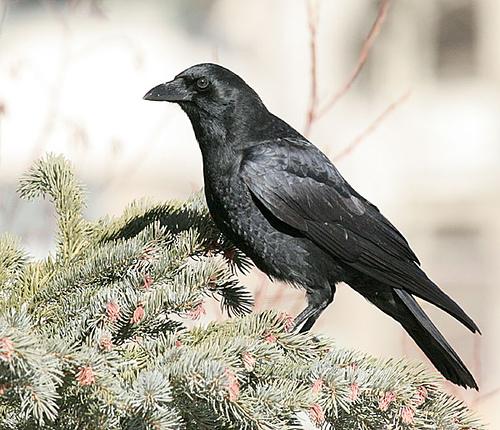
Northern Raven (Corvus corax) by Kent Nickell
“He hears the young ravens when they cry.”
And surely if He hears a raven’s cry and if not a sparrow falls to the ground without our Father, your prayer, though it may be very indistinct and the language, itself, may be very unworthy of the Divine ear, yet it shall command an audience and will bring down a blessing from above!”
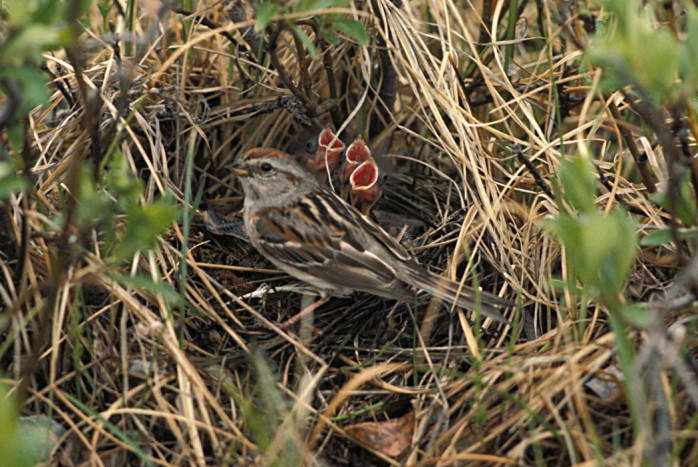
American Tree Sparrow (Spizella arborea) w chicks ©USFWS
Above is a quote from C. H. Spurgeon’s Notable Quotes: —Volume 61, Sermon #3468
Give ear to my words, O LORD, consider my meditation. Hearken unto the voice of my cry, my King, and my God: for unto thee will I pray. My voice shalt thou hear in the morning, O LORD; in the morning will I direct my prayer unto thee, and will look up. (Psalms 5:1-3 KJV)
See all the:
*

Laughing Gull landing on Brown Pelican
I am like a pelican of the wilderness; I am like an owl of the desert. (Psalms 102:6 NKJV)
Yesterday we were at the beach at MacDill AFB in Tampa. Apparently the fish were numerous, because the Brown Pelicans, Forster’s Tern, Laughing Gulls, Ospreys and others were diving in.

Laughing Gull landing on Brown Pelican
What really amazed me were the Laughing Gulls landing on the backs of the Brown Pelicans. Checking the internet to find out about this, I came across this very interesting article, The Pelican and the Gull. It appears this is a common practice for the Laughing Gull to steal some of the Pelicans food.
Here are some excerpts from that article:
One method the laughing gull has of getting food is to steal fish from another seabird that inhabits the region, the brown pelican. The laughing gull accomplishes this larceny by waiting for the brown pelican to make a successful dive….
When the pelican has a bill full of fish and water, it transfers the fish to the pouch that hangs below its bill. The pelican cannot fly away or swallow the fish until the water is drained from the pouch. Laughing gulls either circle closely above the pelican or land on the pelican’s bill or head. The gull may even give the pelican a sharp peck or two. If the pelican pays too much attention to the antics of the laughing gull and not enough attention to the delicate draining and swallowing process, the pelican may lose some of the trapped fish. The gull then swoops down and scoops up the pelican’s hard-earned catch, flying away at top speed from the scene of the crime and makes short work of his ill-gotten gains.
Of course, I could make all kinds of applications about not stealing, pecking someone on the head, or getting on their backs without permission. Because of the curse we are all under, the birds included, this kind of things happen. Eagles steal from Ospreys, Cuckoos lay eggs in other species nest, etc. For us, we know that stealing is wrong and I trust we don’t. Also, we are supposed to “love one another.” Not so sure this is being displayed here.
And be ye kind one to another, tenderhearted, forgiving one another, even as God for Christ’s sake hath forgiven you. (Ephesians 4:32 KJV)
Here is another sequence of photos I took of an exchange between the Gull and the Pelican (cropped):
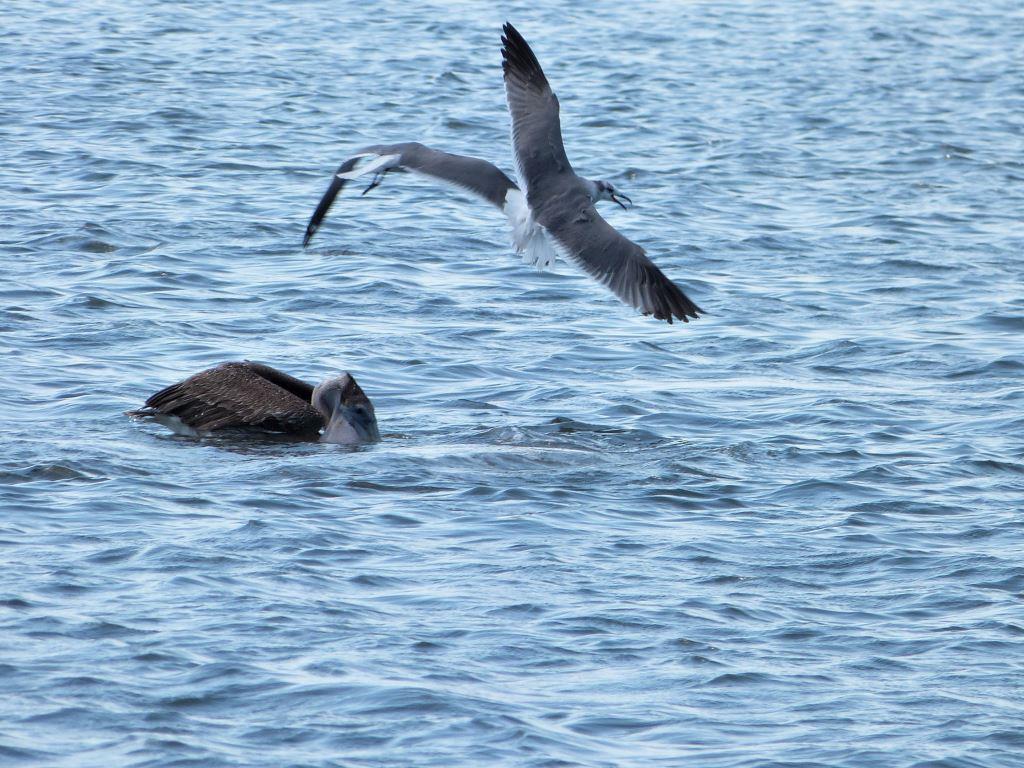
Pelican catching fish and Gull circling

Laughing Gull watching Brown Pelican preparing to land

Laughing Gull lands on Pelican as he comes up
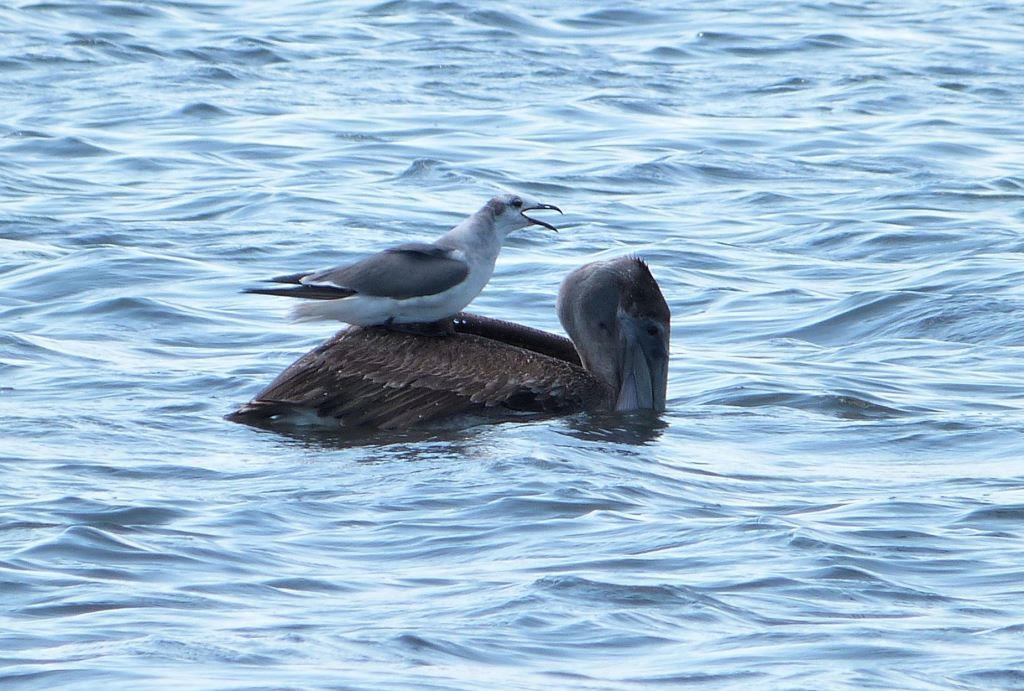
Would you hurry up
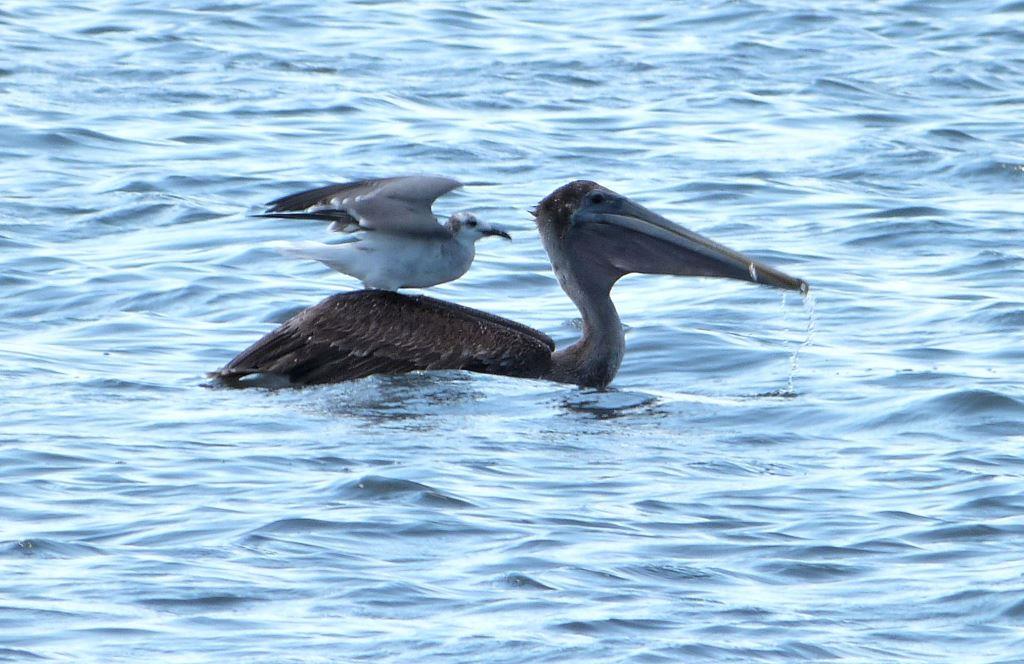
Waiting
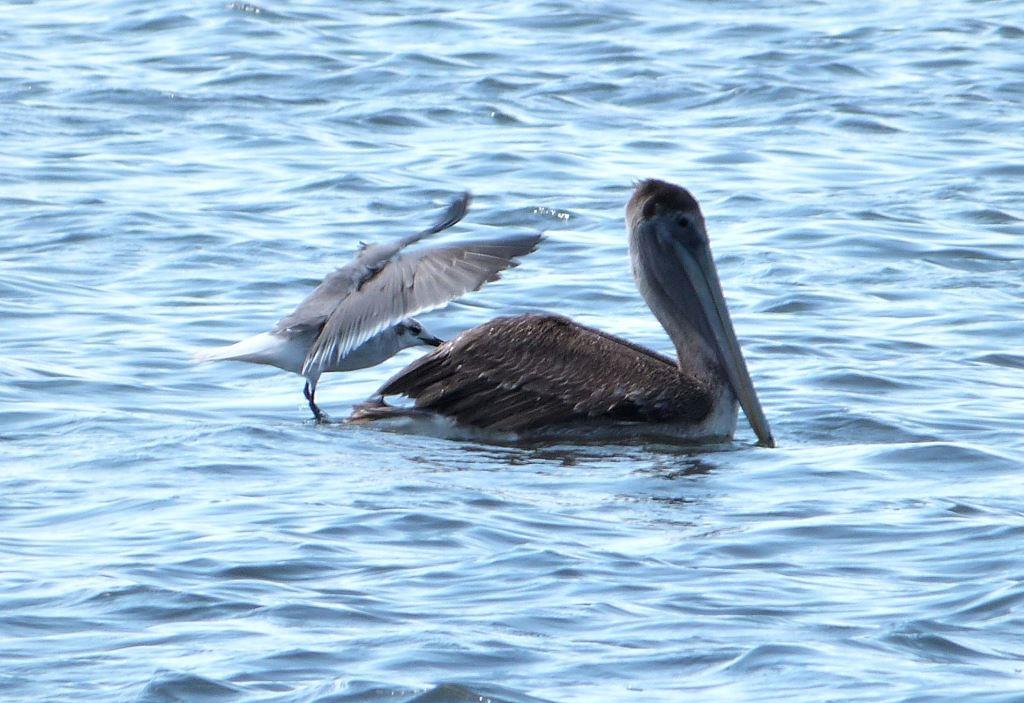
Slipping Off
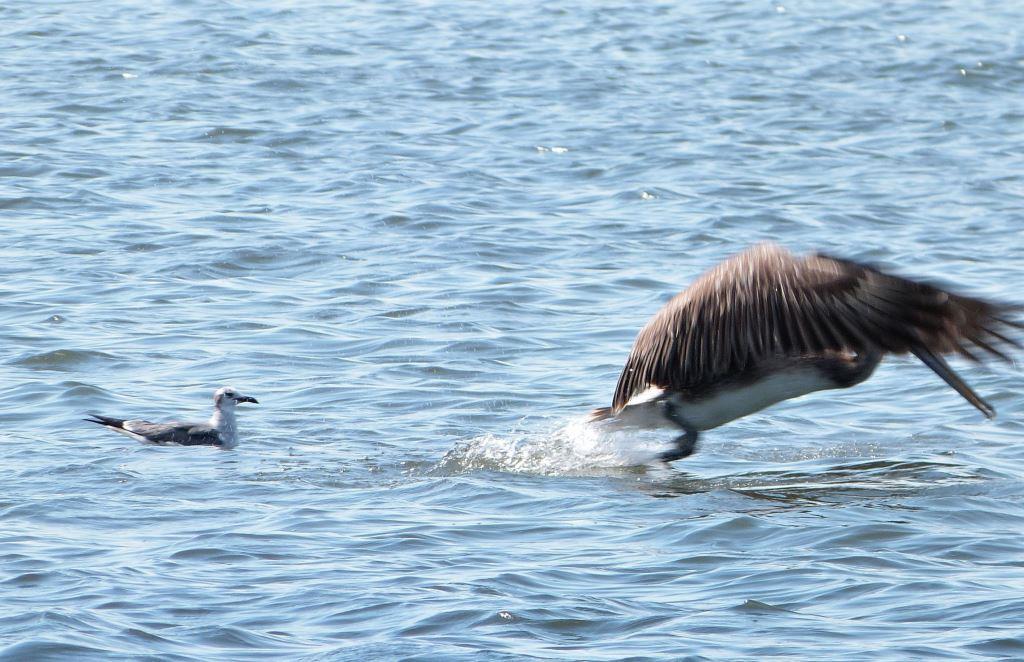
Watching His Food Source Leave

Maybe I can catch him
These photos were taken with my zoom because they were out quite a way from the shore. The following two photos were closer up as they both posed on posts for us.
Pelicans belong to the Pelecanidae – Pelicans Family and are on of the Birds of the Bible.

Mature Brown Pelican by Dan at MacDill
The Brown Pelican is the smallest of the eight species of pelican, although it is a large bird in nearly every other regard. It is 42–54 in (106–137 cm) in length, weighs from 6.1 to 12 lb (2.75 to 5.5 kg) and has a wingspan from 6.0 to 8.2 ft (1.83 to 2.5 m). Through most of its range, the brown pelican is an unmistakable bird. Like all pelicans, this species has a very large bill, 11 to 13.7 in (28 to 34.8 cm) long in this case, with a gular pouch on the bottom for draining water when it scoops out prey. The head is white but often gets a yellowish wash in adult birds. The bill is grayish overall in most birds, though breeding birds become reddish on the underside of the throat. The back, rump, and tail are streaked with gray and dark brown, sometimes with a rusty hue. In adult pelicans, the breast and belly are a blackish-brown and the legs and feet are black. The juvenile is similar but has a brownish-gray neck and white underparts.
This bird is readily distinguished from the American White Pelican by its non-white plumage, smaller size and its habit of diving for fish from the air, as opposed to co-operative fishing from the surface. The Peruvian Pelican, previously considered a subspecies of Brown Pelican, is now considered to be a separate species. It has very similar plumage to the Brown, but it is noticeably larger. The Brown and Peruvian pelicans may overlap in some areas along the Pacific coast of South America.
the ostrich, the short-eared owl, the sea gull, and the hawk after their kinds; (Deuteronomy 14:15 NKJV)
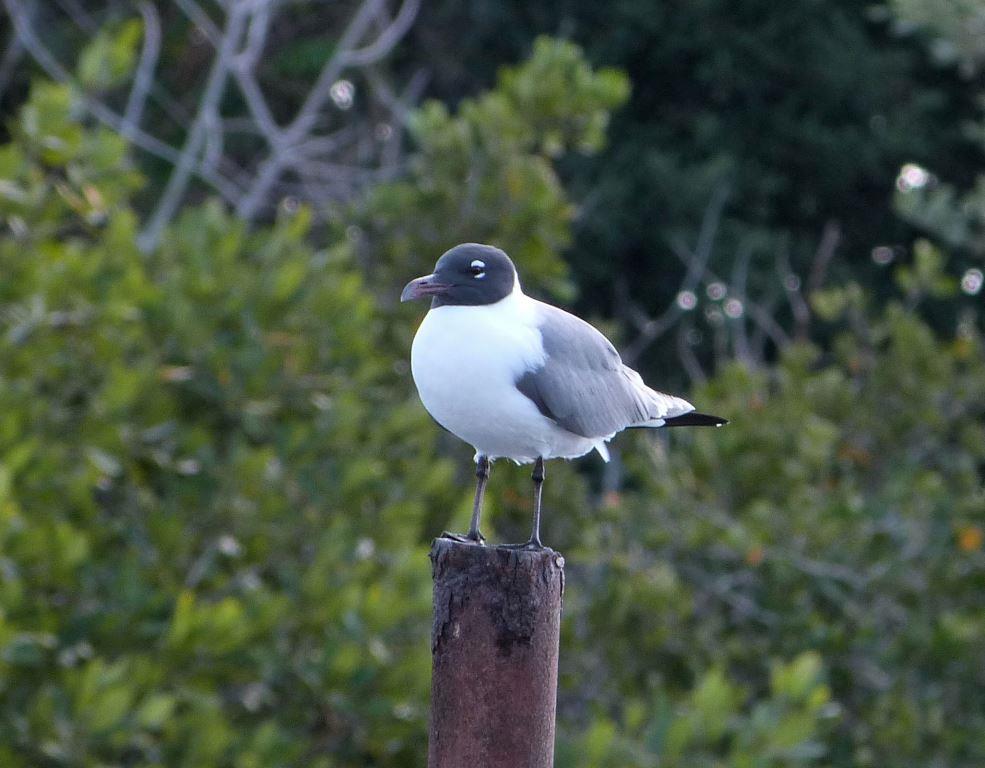
Laughing Gull on post by Lee
The Laughing Gull is a member of the Laridae – Gulls, Terns and Skimmers Family and is a Bird of the Bible also. The Laughing Gull (Leucophaeus atricilla) is a medium-sized gull of North and South America. It breeds on the Atlantic coast of North America, the Caribbean, and northern South America. Northernmost populations migrate further south in winter, and this species occurs as a rare vagrant to western Europe. The Laughing Gull’s English name is derived from its raucous kee-agh call, which sounds like a high-pitched laugh “ha… ha… ha…”.
This species is easy to identify. It is 14–16 in (36–41 cm) long with a 39–43 in (98–110 cm) wingspan. The summer adult’s body is white apart from the dark grey back and wings and black head. Its wings are much darker grey than all other gulls of similar size except the smaller Franklin’s Gull, and they have black tips without the white crescent shown by Franklin’s. The beak is long and red. The black hood is mostly lost in winter.
Laughing Gulls take three years to reach adult plumage. Immature birds are always darker than most similar-sized gulls other than Franklin’s. First-year birds are greyer below and have paler heads than first-year Franklin’s, and second-years can be distinguished by the wing pattern and structure. Laughing Gulls breed in coastal marshes and ponds in large colonies. The large nest, made largely from grasses, is constructed on the ground. The 3 or 4 greenish eggs are incubated for about three weeks. These are omnivores like most gulls, and they will scavenge as well as seeking suitable small prey. Like most other members of the genus Leucophaeus, the Laughing Gull was long placed in the genus Larus. (Wikipedia with editing)
Interesting Links:
*
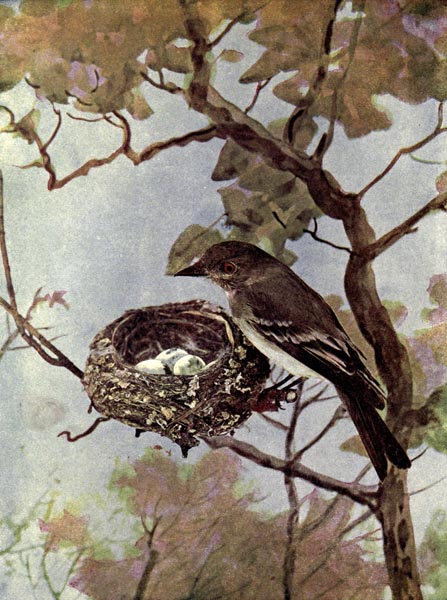
Wood Pewee of Birds Illustrated by Color Photography, 1897
Eastern Pewee’s Twilight Song (Though this bird sings throughout the day, listen for its ballads before dawn’s light and well after sunset when this activity peaks. WhatBird) by Todd Wilson – xeno-canto
From col. Chi. Acad. Sciences. Copyrighted by
Nature Study Pub. Co., 1897, Chicago.
 Lee's Birdwatching Adventures Plus