Sulawesi Hornbill (Penelopides exarhatus)LPZoo by Lee
They have come out with the latest Update and I am again working on updating the blog. This time they added only 13 new species, deleted 2, and made 3 changes to names. But, as lately, they threw another family up in the air to rearrange it. This time it was the Hornbill-Bucerotidae family. It was really reshuffled and they changed some of the genus around.
Here are the new additions:
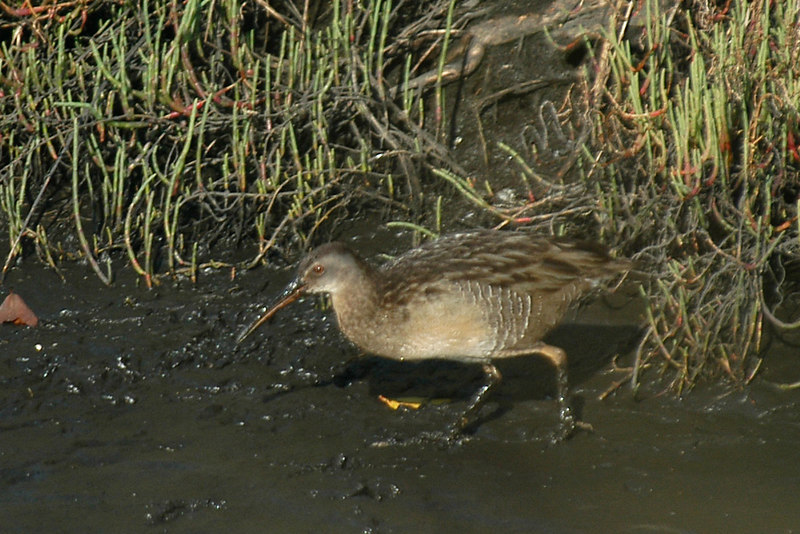
Aztec Rail (Rallus tenuirostris) – Was Subspecies of King Rail
Riparian Antbird (Cercomacra fuscicauda)- Was Subspecies
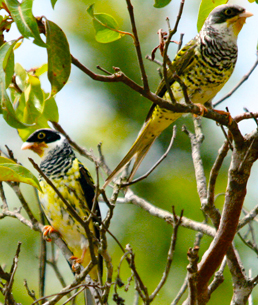
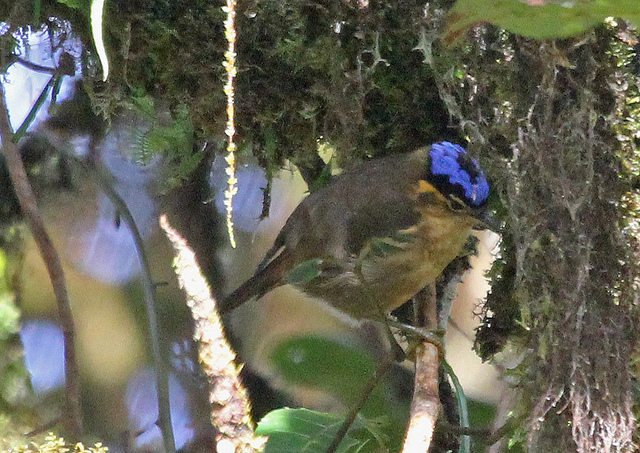
Bougainville Whistler (Pachycephala richardsi) – Was Subspecies
Black-eared Warbler (Basileuterus melanotis) – Was Subspecies
Tacarcuna Warbler (Basileuterus tacarcunae) – Was Subspecies
Yungas Warbler (Basileuterus punctipectus)- Was Subspecies
Roraiman Warbler (Myiothlypis roraimae)- Was Subspecies
Pale Baywing (Agelaioides fringillarius)- Was Subspecies
Deleted:
Norfolk Ground Dove
White-throated Whistler
Hard to find data yet on these because sites are being updated, just as this one is. Will update when all the 4.4 Version is complete.
Also: Sorry there has not been as many articles lately, but have been dealing with several health issues. The Bronchitis is almost over, now have stitches from skin cancer removal. Physical Therapy is helping. Praise the Lord, it could be a lot worse. It is just that everything came close together. Also, Praise the Lord for the way He created the human body.
I will praise You, for I am fearfully and wonderfully made; Marvelous are Your works, And that my soul knows very well. (Psalms 139:14 NKJV)
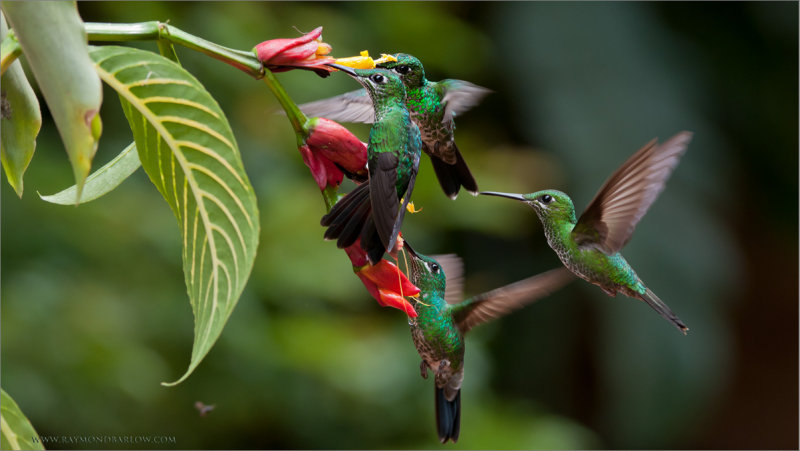
Green-crowned Brilliant (Heliodoxa jacula) by Raymond Barlow
That I may publish with the voice of thanksgiving, and tell of all thy wondrous works. (Psalms 26:7 KJV)
Just wanted to share a really neat photo that Ray shared on his Facebook page. He is one of the first photographers that gave permission to use his photos.
Ray took this on one of his trips to Costa Rica. This is from his page:
2 Green-crowned Brilliant Hummingbirds sort out their problems in front of my guests during a photo-shoot in Costa Rica. Looks like mother and daughter here, we all wonder why nature needs to be so confrontational! (more with hummingbirds than any other of our planets species!)
I think the word “Mine” explains things.. :))
Special thanks to everyone for viewing my images!!
It is always so amazing to view more of the Lord’s Creation. He has also given Ray a great talent. Thanks, Ray.
Here’s another of those beautiful hummers.
Green-crowned Brilliant (Heliodoxa jacula) Females Feeding by Raymond Barlow
*
Found this on the Kid’s Blog – I’m still kicking up dust. I have less than 80 of the 412 articles left to relocate over here. Already finished the 51 pages. Then I can start fixing some of the problems I have caused here on this blog.. :))
See:
Wreathed Hornbill (Rhyticeros undulatus) Female Central Florida Zoo by Lee
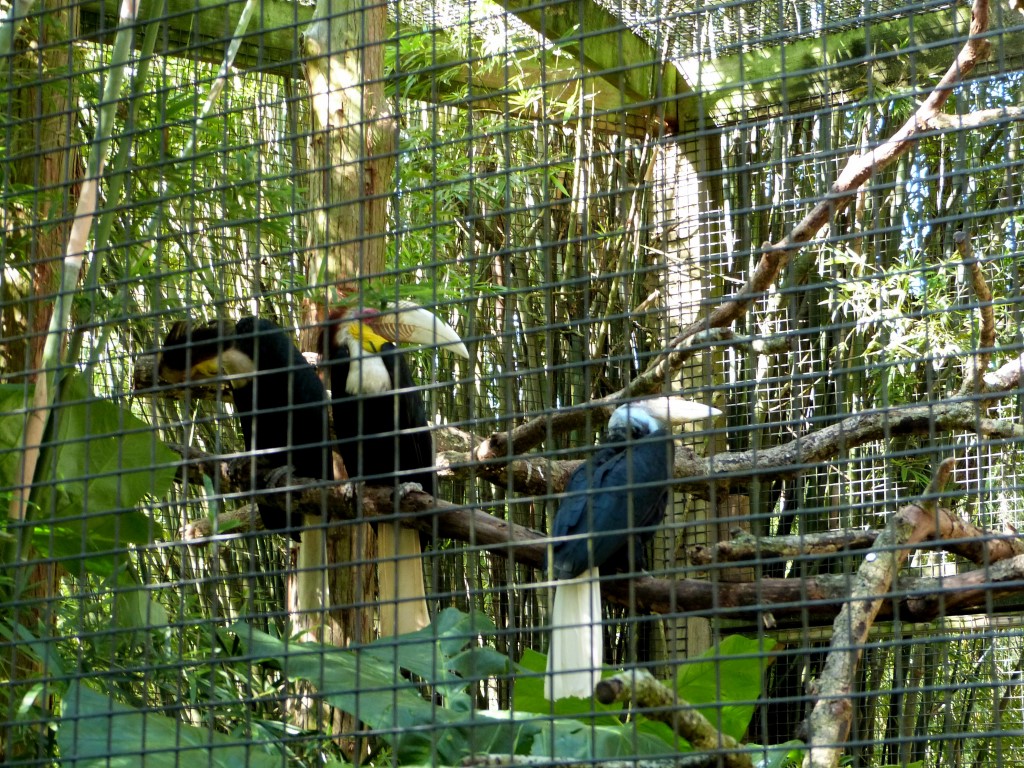
Last week on the way over to the retreat in Daytona Beach, we stopped by the Central Florida Zoo & Botanical Gardens. There were several interesting birds, especially the Wreathed Hornbill (Rhyticeros undulatus). There was a male, female and a juvenile male there. More unique creations from our Creator.
The Hornbill names can be confusing because there is a Wrinkled, Writhed, and the Wreathed Hornbills along with the others. The one here at Central Florida Zoo was the Wreathed..It was hard to get a decent photo because of the size of the fencing/wires on the cages. So, the photos were about a good as I could get shooting in Program mode. I tossed quite a few photos because of the fencing. :))
Wreathed Hornbill (Rhyticeros undulatus) Adult Male Central Florida Zoo by Lee
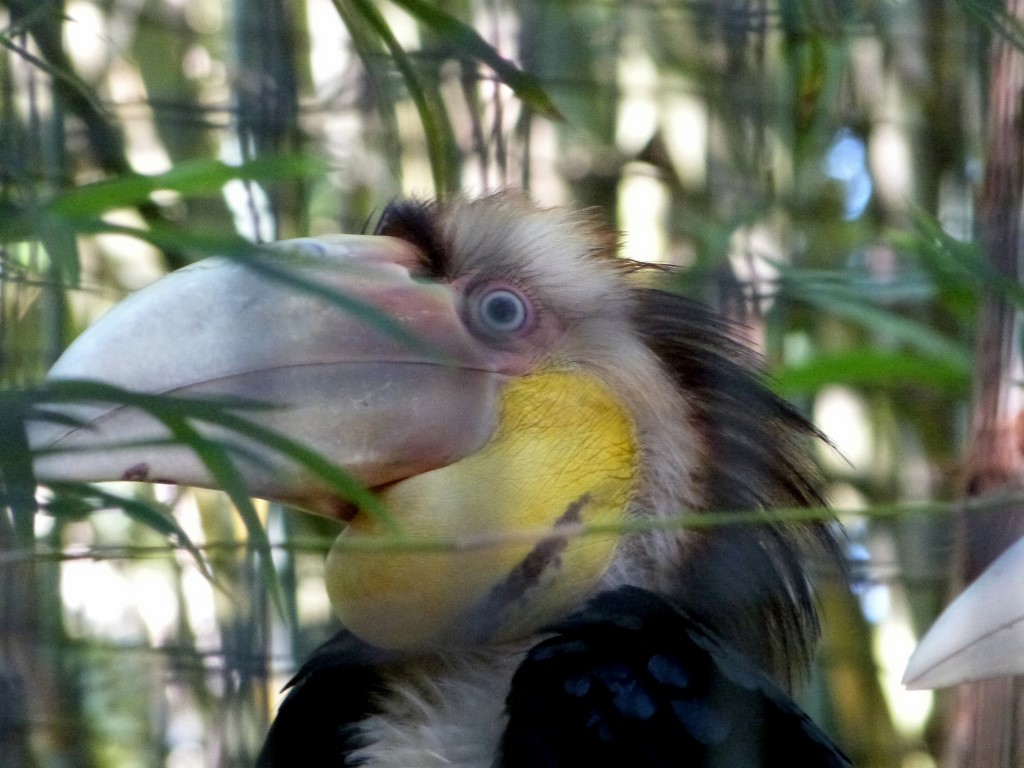
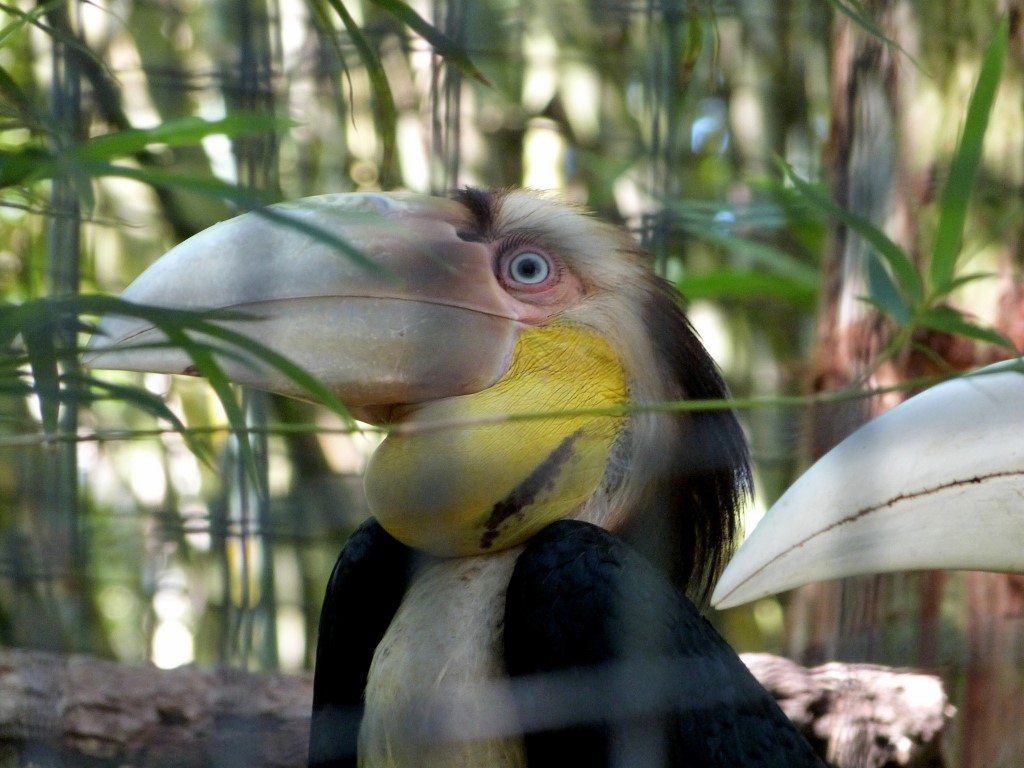
The Wreathed Hornbill (Rhyticeros undulatus), also known as the Bar-pouched Wreathed Hornbill because of the black line on the pouch or chin. It is a species of hornbill found in forests from far north-eastern India and Bhutan, east and south through mainland Southeast Asia and the Greater Sundas, except Sulawesi. It is 75–100 cm (30–39 in) long. Males weigh from 4.0 lb (1.8 kg) to 8.0 lb (3.65 kg), and females weigh from 3.0 lb (1.36 kg) to 6.0 lb (2.7 kg). Both sexes are similar to the respective sexes of the closely related plain-pouched hornbill, but the wreathed hornbill can be recognized by the dark bar on the lower throat (hence the alternative common name, bar-pouched). Though commonly considered monotypic, evidence suggests some geographical variation in the appearance. (Wikipedia with editing)
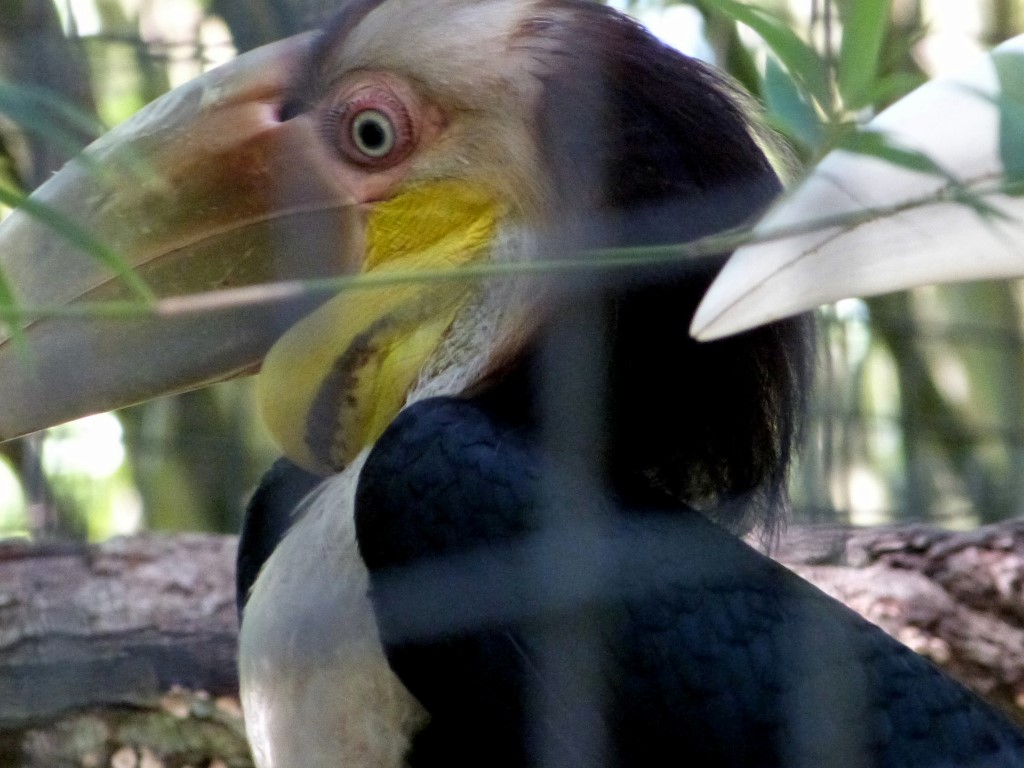
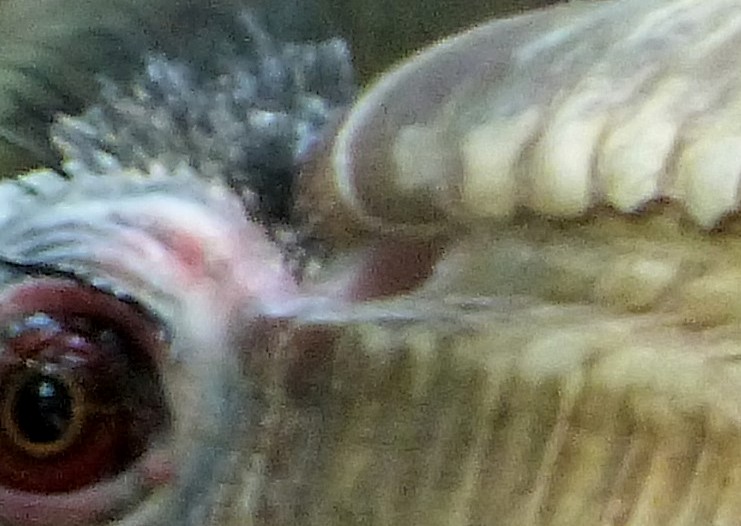
They belong to the Bucerotidae – HornbillsFamily which has 59 species. “These birds have large down-curved bills and many have a large growth on the upper bill called a casque. These bills come in many striking shapes and colors. They also have what appears to be eyelashes, but they are not made of hair, they are small feathers that serve the same function.” (Central FL Zoo)
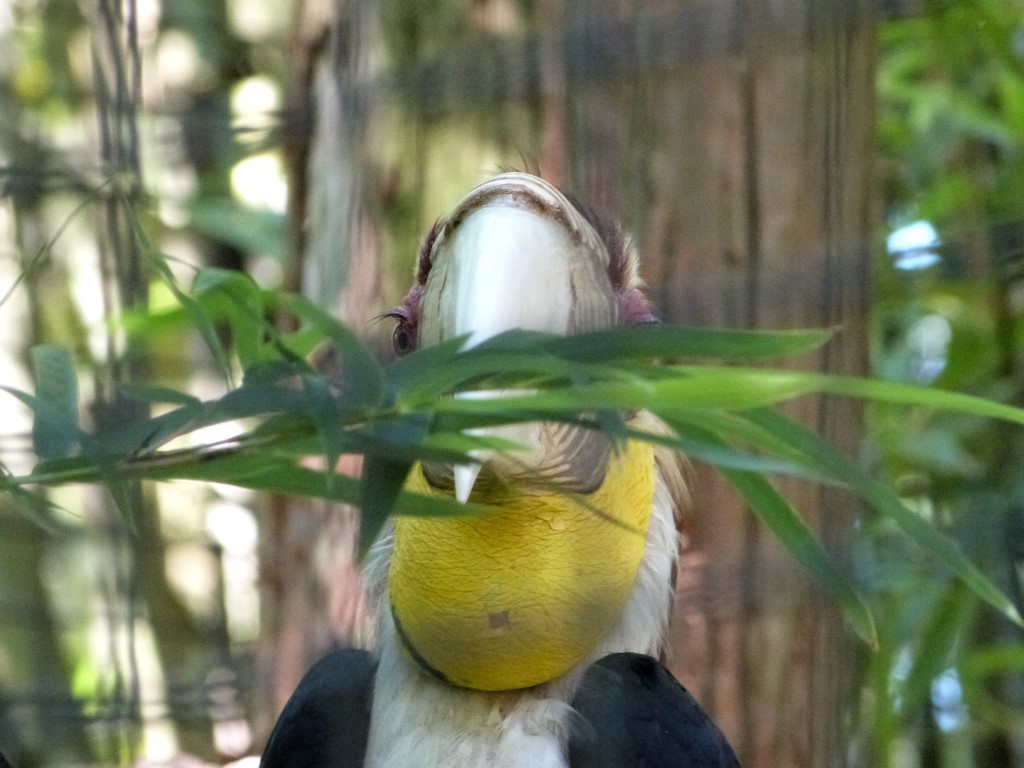
Males can be easily distinguished from females by the color of their throats. The male’s throat skin is yellow; the female’s is blue. – Males and females pair for life. – The specialized knobs on the tops of the birds’ beaks are known as casques. These are believed to function as signals of dominance and gender.
You shall take with you of every clean animal by sevens, a male and his female; and of the animals that are not clean two, a male and his female; also of the birds of the sky, by sevens, male and female, to keep offspring alive on the face of all the earth. (Genesis 7:2-3 NASB)
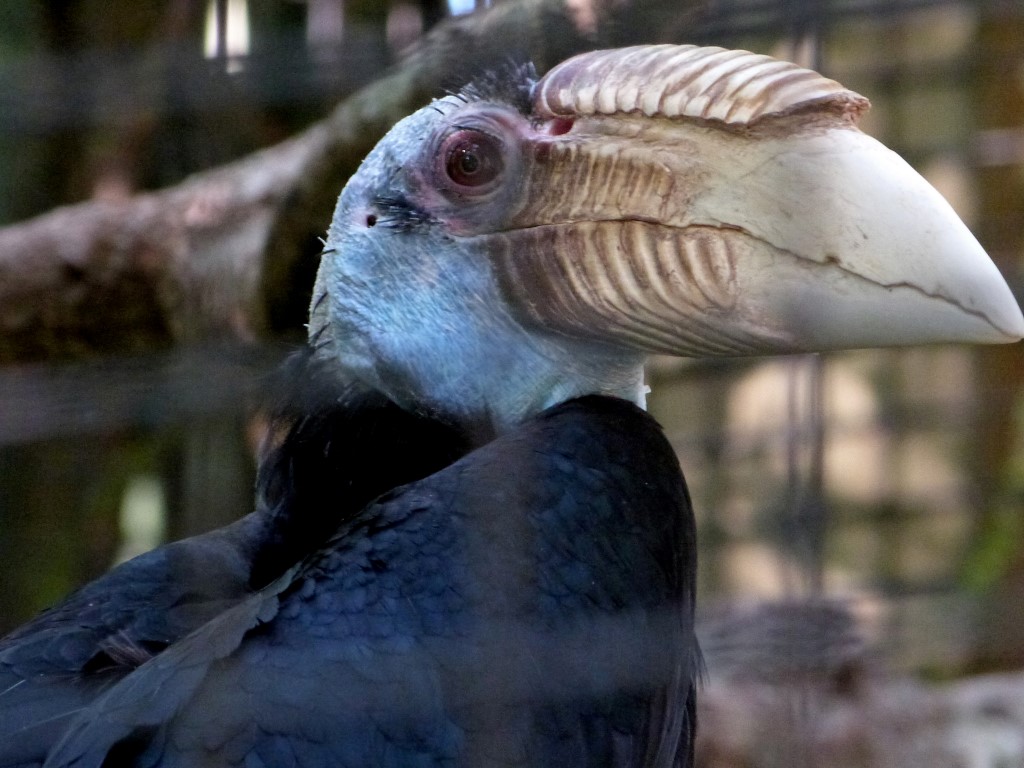
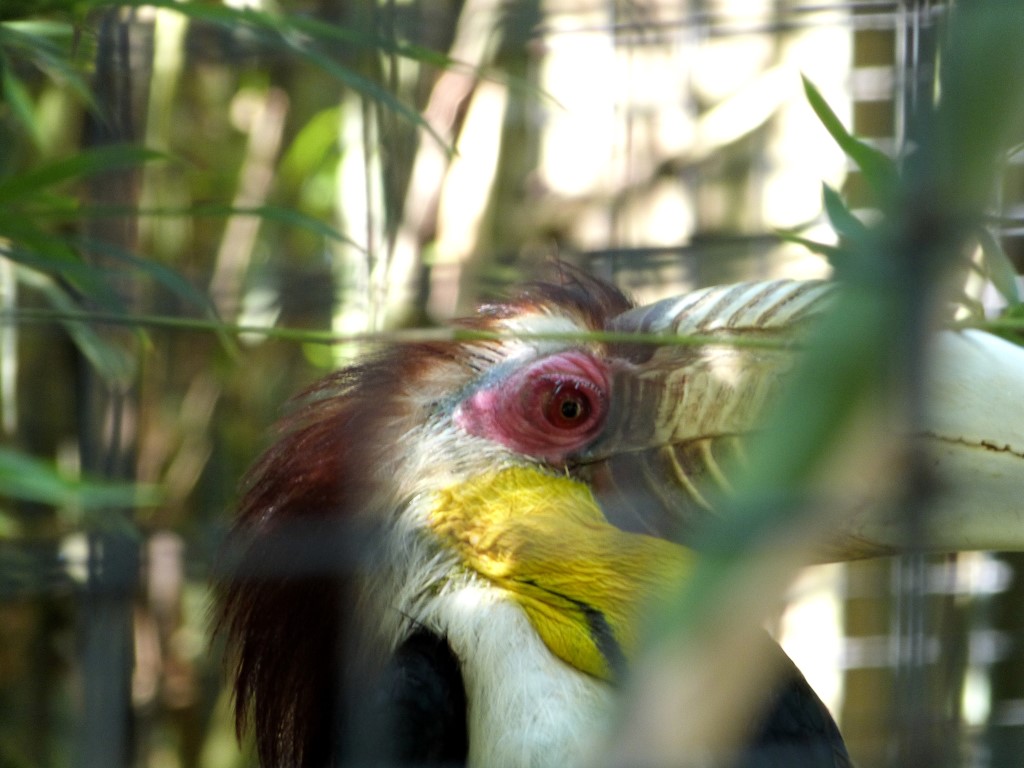
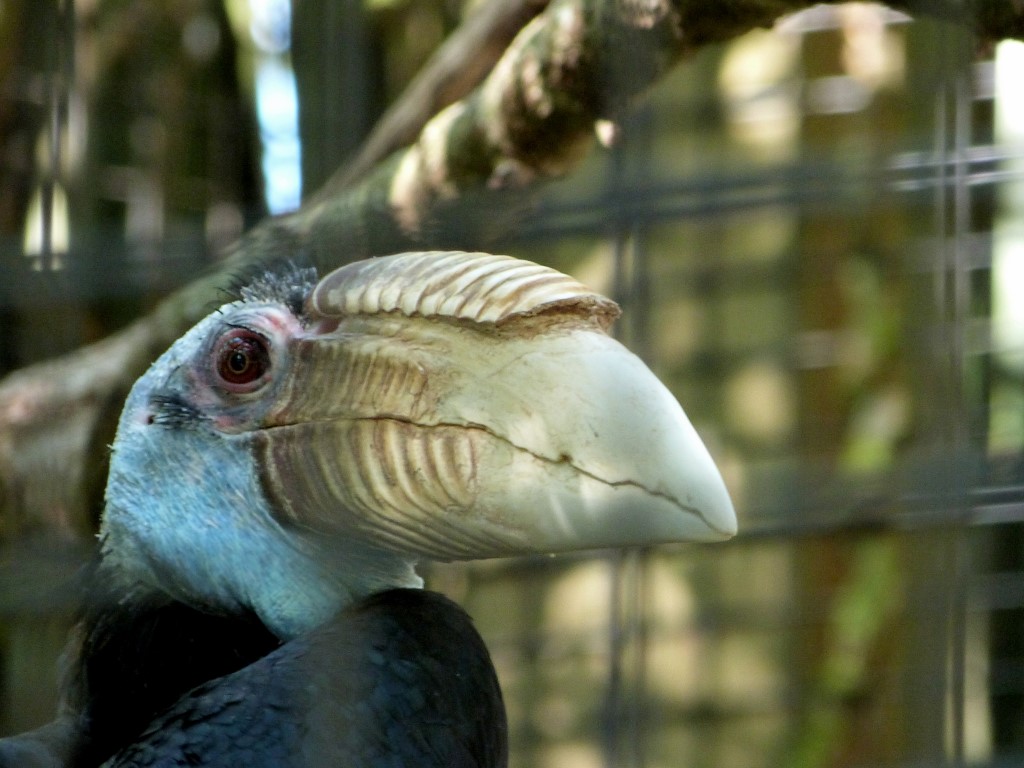
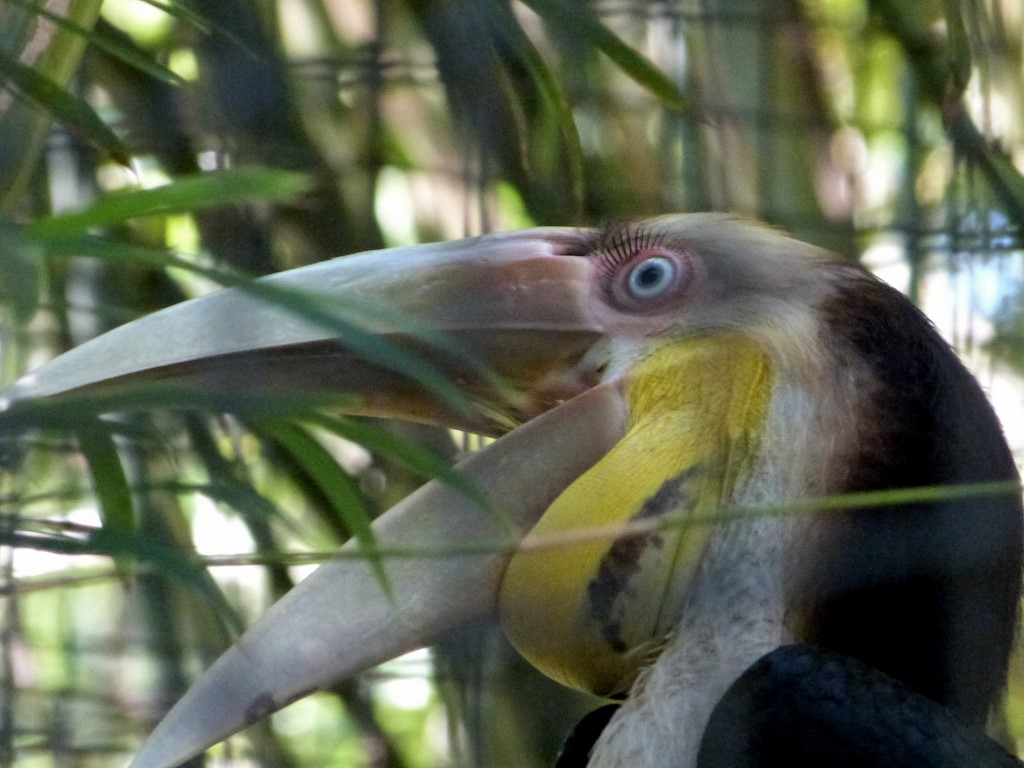
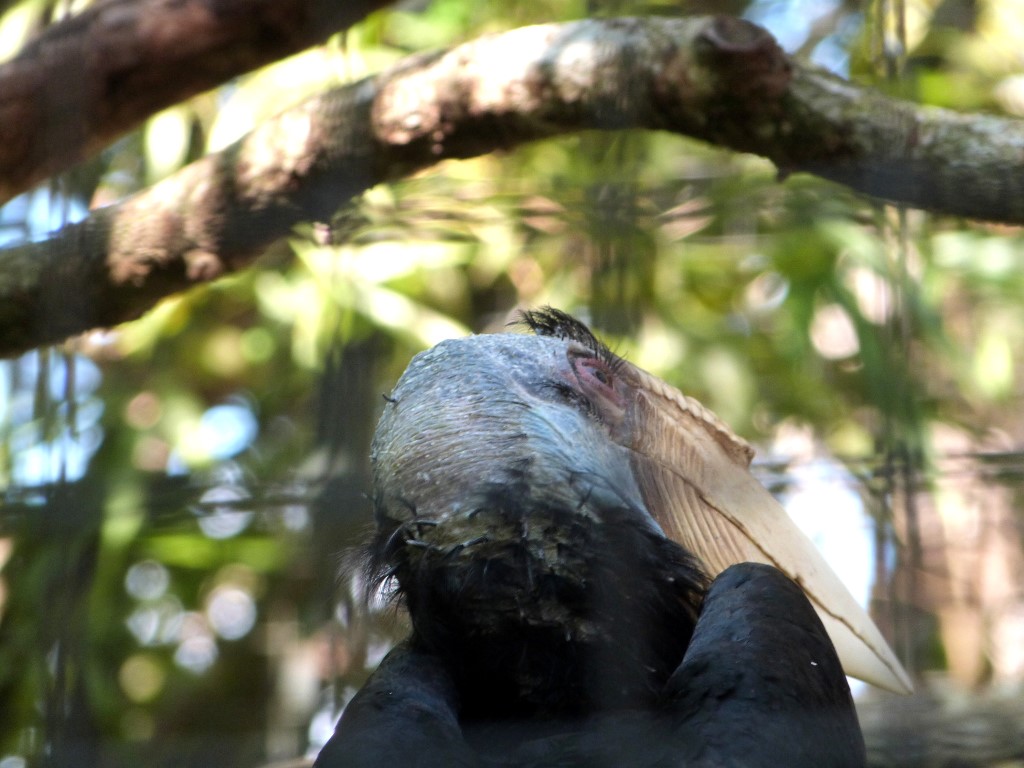
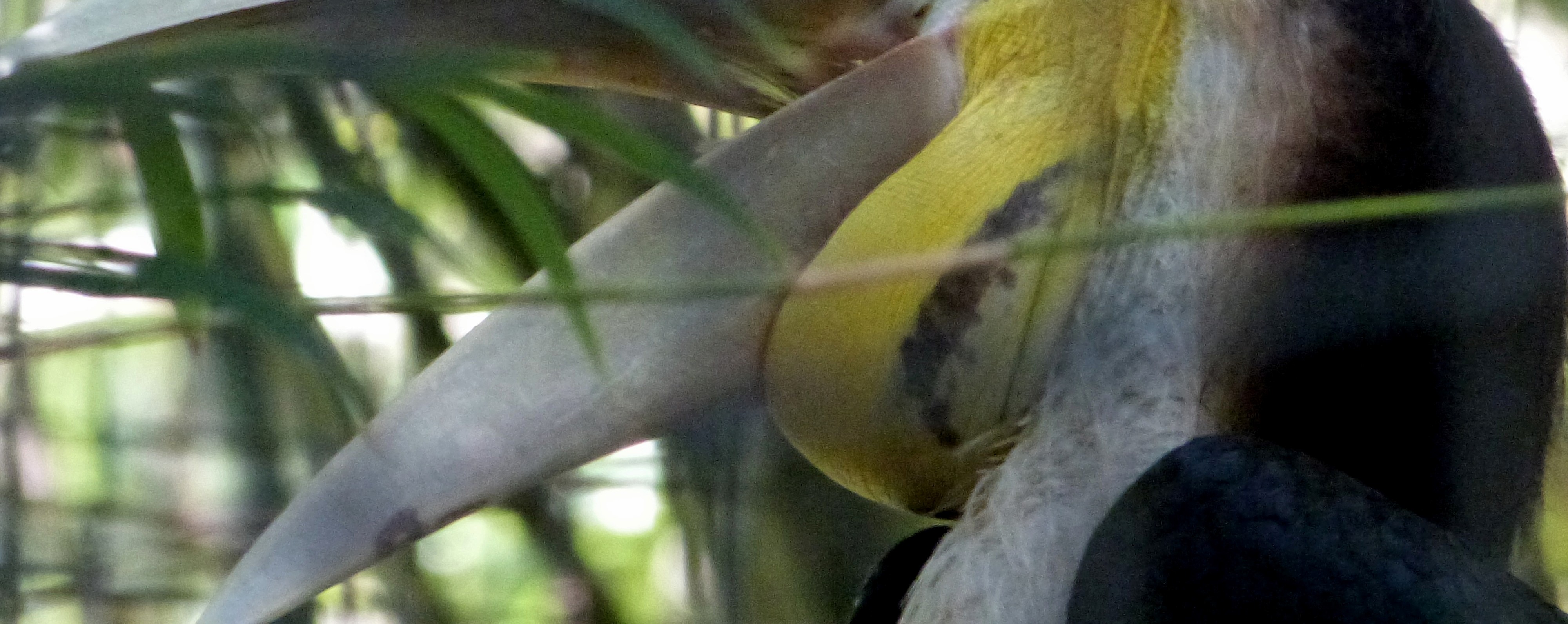
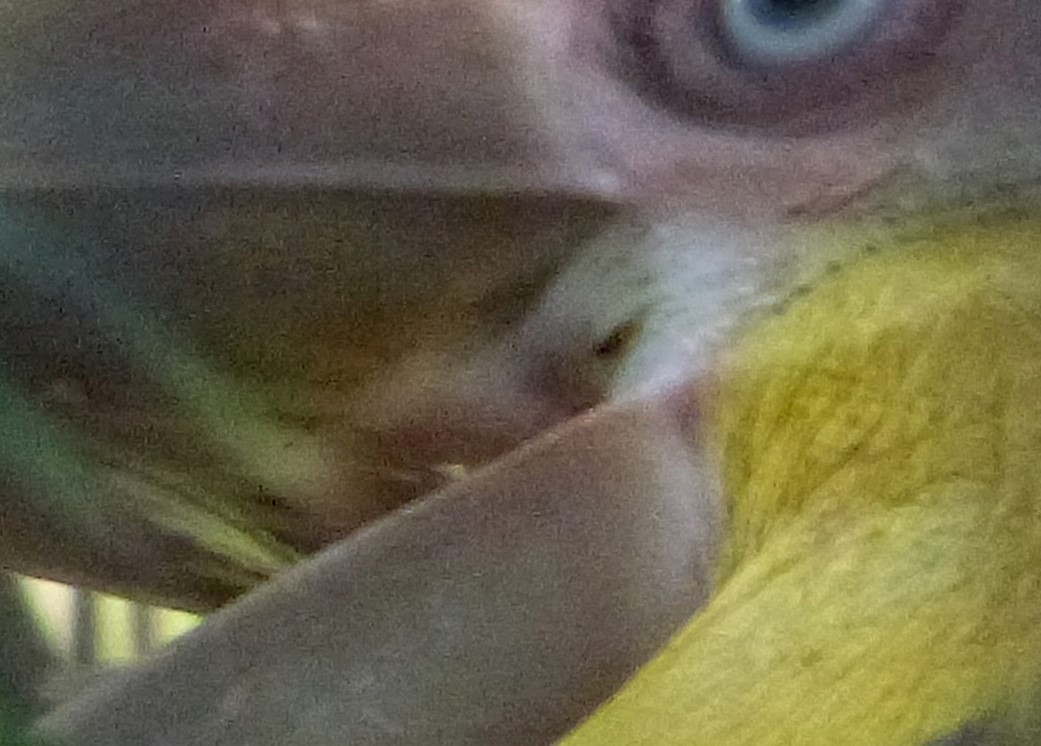
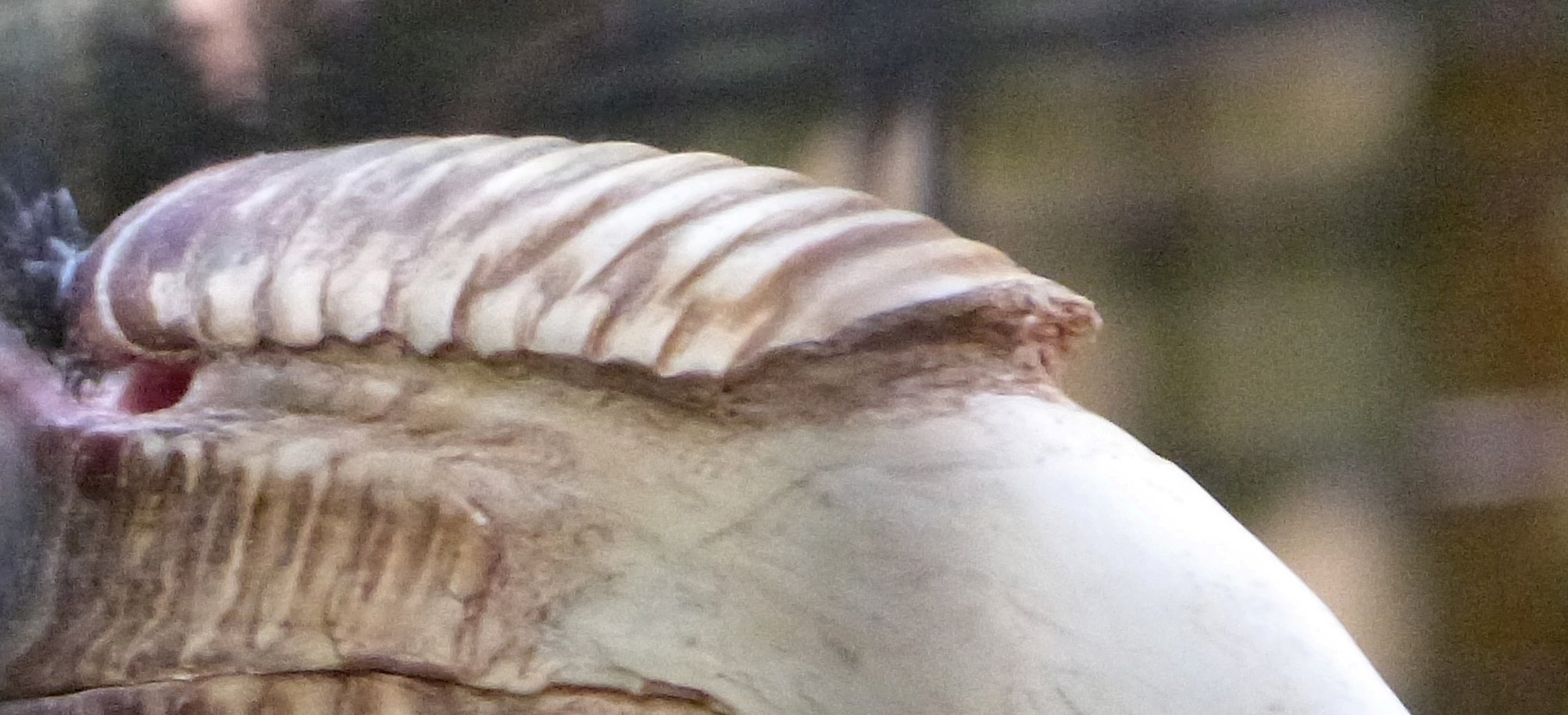
I find their beak so interesting. In light of yesterday’s article, Birdwatching Terms – About’s Bird Bill Parts, I have included some cropped photos pointing out the different parts of the beak. Also, I like their eyelashes which are actually feathers, but act like our eyelashes.
Wreathed Hornbill (Rhyticeros undulatus) Sign CF Zoo by Lee
Wreathed Hornbill (Rhyticeros undulatus) Central Florida Zoo by Lee
Wreathed Hornbill (Rhyticeros undulatus) Central Florida Zoo by Lee
Wreathed Hornbill Adult Male Central Florida Zoo by Lee
Wreathed Hornbill (Rhyticeros undulatus) Adult Female Central Florida Zoo by Lee
Wreathed Hornbill (Rhyticeros undulatus) Female CF Zoo by Lee
Wreathed Hornbill Juvenile Male Central Florida Zoo by Lee
Wreathed Hornbill Juvenile Male CF Zoo by Lee
Wreathed Hornbill Juvenile Male CF Zoo by Lee
Wreathed Hornbill (Rhyticeros undulatus) Central Florida Zoo by Lee
Wreathed Hornbill (Rhyticeros undulatus) Male Central Florida Zoo by Lee
Wreathed Hornbill (Rhyticeros undulatus) Central Florida Zoo by Lee
Wreathed Hornbill Juvenile Male CF Zoo by Lee
Wreathed Hornbill (Rhyticeros undulatus) Adult Male CF Zoo by Lee
Wreathed Hornbill Female CF Zoo by Lee
Wreathed Hornbill (Rhyticeros undulatus) Adult Male Central Florida Zoo by Lee
Wreathed Hornbill – 1 – Lore
Wreathed Hornbill – 2 Nares
Wreathed Hornbill – 3 Maxilla or Upper Mandible
Wreathed Hornbill – 5 – Tip
Wreathed Hornbill – 6 – Mandible or Lower half of bill
Wreathed Hornbill – 7 – Chin
Wreathed Hornbill – 8 – Gape or fleshly area where upper and lower bills meet
Wreathed Hornbill – Casque – not all birds have these
The list of all the Birds of the Worldare updated about every four months. Which we try to keep up with their (I.O.C.) newest lists.
You are probably wondering why you would need it. Let me share some things about it and then give you some ideas how it my be handy for one of your school projects.
The I.O.C. is actually the International Ornithological Committee. “Ornithological” basically means those who study birds or bird related. They maintain a list of all the birds around the world. They set standards of how to name them, what scientific classification to place the birds in, and divide them into Orders and Families, etc.
They are needed because we may call a bird by one name, yet someone in a different country or area may call it by a different name. They realize that those two names belong to the same bird. It is a very hard task to keep track of all those 10,000 plus birds, but that is what they try to do.
They give every bird an English name as a standard. Then they also want every one to spell the words the same. For instance, some people spell the “Grey” or “Gray” to mean the same color. To keep things simple, all the birds are spelled as “Grey.” That is just one example.
There are committees all over the world working on the birds of the area they live in, then those committees get together to combine all the list to make one big list. That is what was just updated.
On our Birds of the World section, you will find the birds listed by Orders (40 main classifications), then by Families (240 groups of closely related birds). The reason all of that is not duplicated here would be very time-consuming. There are hundreds of pages and thousands of photos on that site.
Wood Duck (Aix sponsa) by Dan
Projects for school or your own information:
You know the name of a bird’s name, but need to find the Species name, Go to the Species Index to find these choices:
When you find your bird in the right family, almost every bird has a link to a photo or video.
I will share more tips on how to use those indexes in another article.
Another reason is because we believe the Lord created all the beautiful birds and He should get all the credit.
In the beginning God created the heavens and the earth. (Genesis 1:1 NKJV)
So God created great sea creatures and every living thing that moves, with which the waters abounded, according to their kind, and every winged bird according to its kind. And God saw that it was good. (Genesis 1:21 NKJV)
Blue-capped Ifrita (Ifrita kowaldi) cc jerryoldenettle
My son, fear thou the LORD and the king: and meddle not with them that are given to change: (Proverbs 24:21 KJV)
The update to IOC Version 4.3 is now completed. Along with the spelling changes shown in Working On IOC 4.3 Version – Name Changes, here are some more of the changes that were made.
They added 7 new birds, most raised from a Subspecies to a Species and 3 deleted, which were lowered to a Subspecies.
It is a good thing to give thanks unto the LORD, and to sing praises unto thy name, O most High: To shew forth thy lovingkindness in the morning, and thy faithfulness every night,
(Psalms 92:1-2 KJV)
I realized that while we were on our recent trip, that the IOC 4.3 Version was released just before we left. So, I am busy working on updating the Birds of the World pages. Not finished, but here are the – Name Changes.
The new IOC 4.3 Version now has 10,534 extant (living) species and 150 extinct species of birds of the world (Version 4.3), with subspecies (20,999) and annotations. They have added several new families and deleted one. Plus they have rearranged several families. Stay tuned as I work on it behind the scenes.
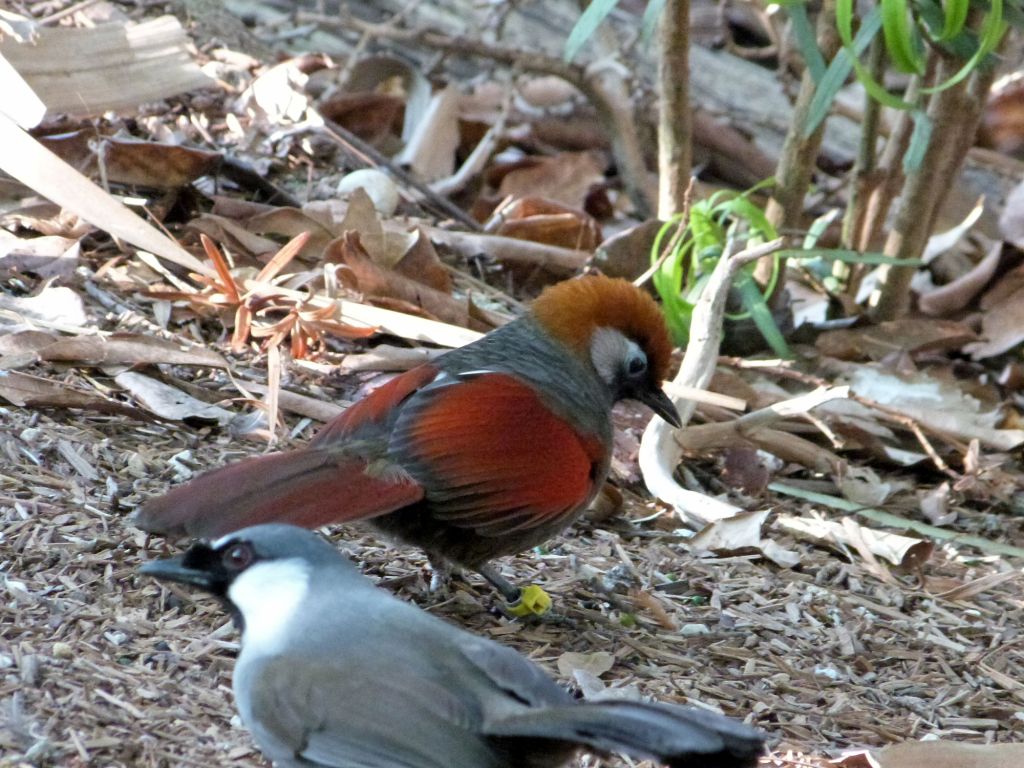
Red-tailed Laughingthrush and Black-throated Laughingthrush by Lee at Zoo Miami
A time to weep, And a time to laugh; A time to mourn, And a time to dance; (Ecclesiastes 3:4 NKJV)
Blessed are you who hunger now, For you shall be filled. Blessed are you who weep now, For you shall laugh. (Luke 6:21 NKJV)
I trust you enjoyed seeing the Laughingthrush – Leiothrichidae family in the Sunday Inspiration – Laughingthrush article. From my first encounter with them, they have been a delight to watch. We have only seen them in Zoos, because they live in Southeast Asia and Indian Subcontinent.
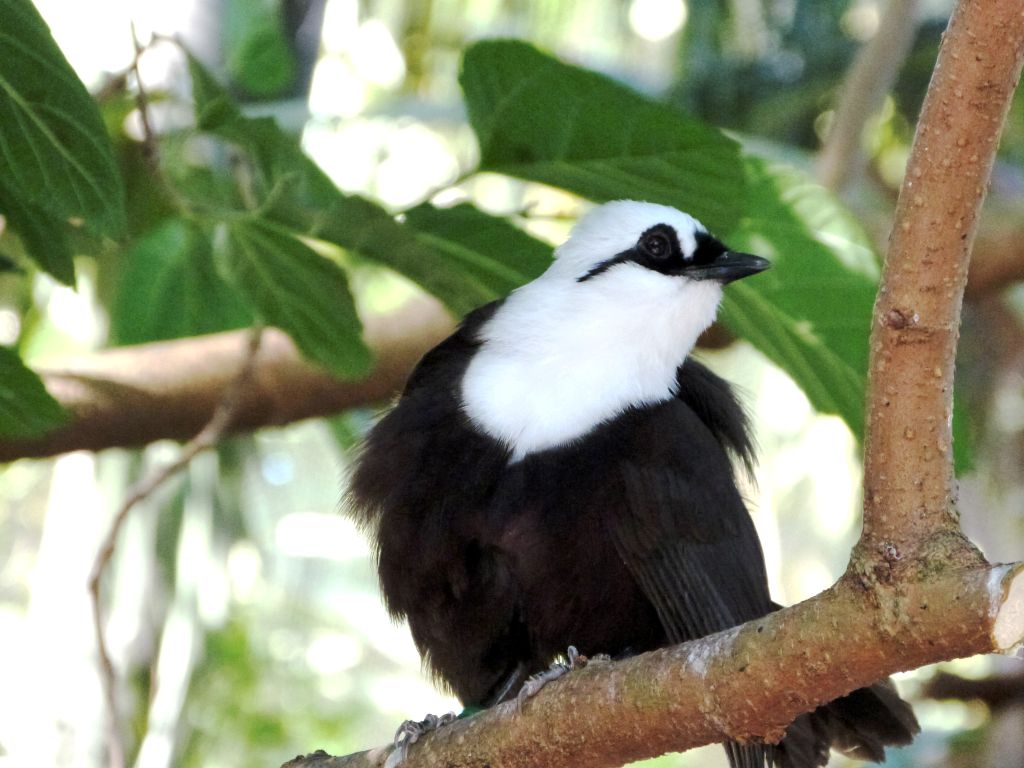
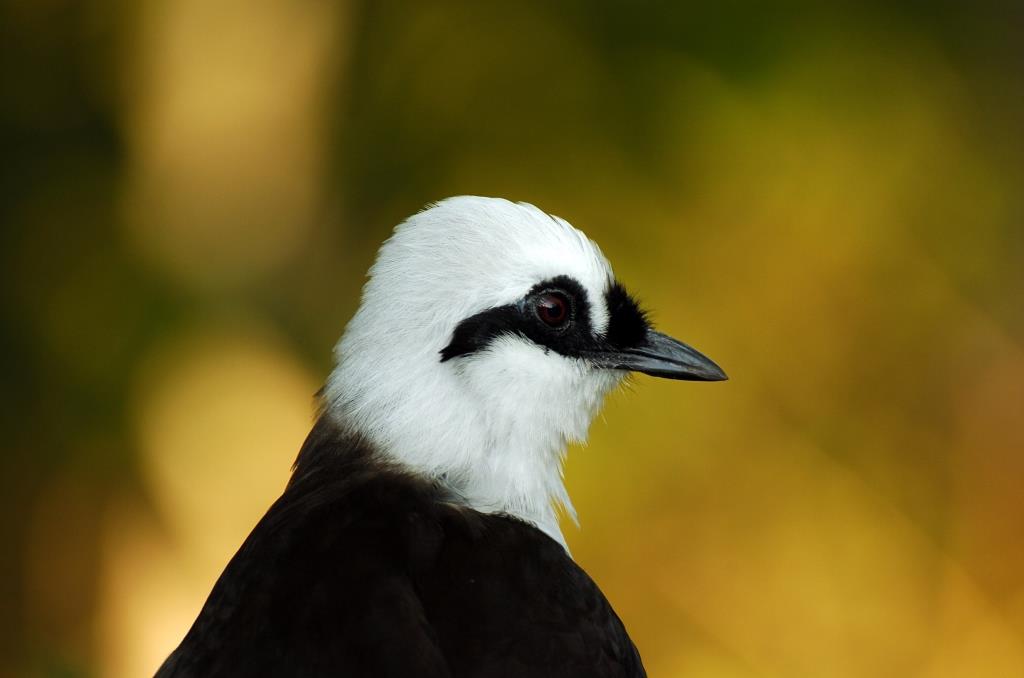
(Black and White) Sumatran Laughingthrush (Garrulax bicolor) by Lee
The Laughingthrushes are the genus Garrulax and Trochalopteron of the Leiothrichidae family of passerine birds. They primarily occur in tropical Asia. These are rangy, medium-sized landbirds. These birds have strong legs and are quite terrestrial. This group is not strongly migratory, and most species have short rounded wings, and a weak flight.
A few, like the Streaked Laughingthrush occur in fairly open habitats, but most are jungle species, difficult to observe in the dense vegetation they prefer.
These are noisy birds, and the characteristic laughing calls are often the best indication that these birds are present. They frequently occur in groups of up to a dozen, and the rainforest species like the Ashy-headed Laughingthrush often occur in the mixed feeding flocks typical of tropical Asian jungle.
They are small to medium sized birds. They have strong legs, and many are quite terrestrial. They typically have generalised bills, similar to those of a thrush. Most have predominantly brown plumage, with minimal difference between the sexes, but many more brightly coloured species also exist. This group is not strongly migratory, and most species have short rounded wings, and a weak flight. They live in lightly wooded or scrubland environments, ranging from swamp to near-desert. They are primarily insectivorous, although many will also take berries, and the larger species will even eat small lizards and other vertebrates. (Wikipedia)
The Sumatran Laughingthrush (Garrulax bicolor), also known as the Black-and-white Laughingthrush, is a member of the Leiothrichidae family. It is endemic to highland forest on the Indonesian island of Sumatra, The laughingthrushes are a family of mostly Old World passerine birds. They are rather diverse in size and coloration. These are birds of tropical areas, with the greatest variety in Southeast Asia and the Indian Subcontinent. The entire family was previously included in the Timaliidae.
White-crested Laughingthrush (Garrulax leucolophus) by Lee Miami WA
FUN FACT – White-crested Laughing Thrushes are noisy, social birds who occasionally burst into loud calls that sound just like laughter. (National Aviary)
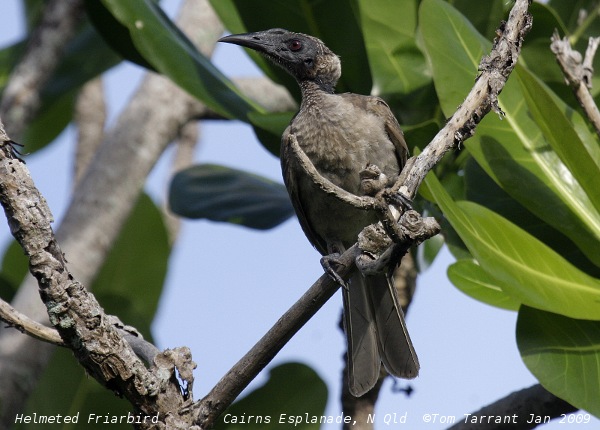
Hornbill Friarbird (Philemon yorki) by Tom Tarrant
The LORD is my rock, and my fortress, and my deliverer; my God, my strength, in whom I will trust; my buckler, and the horn of my salvation, and my high tower. (Psalms 18:2 KJV)
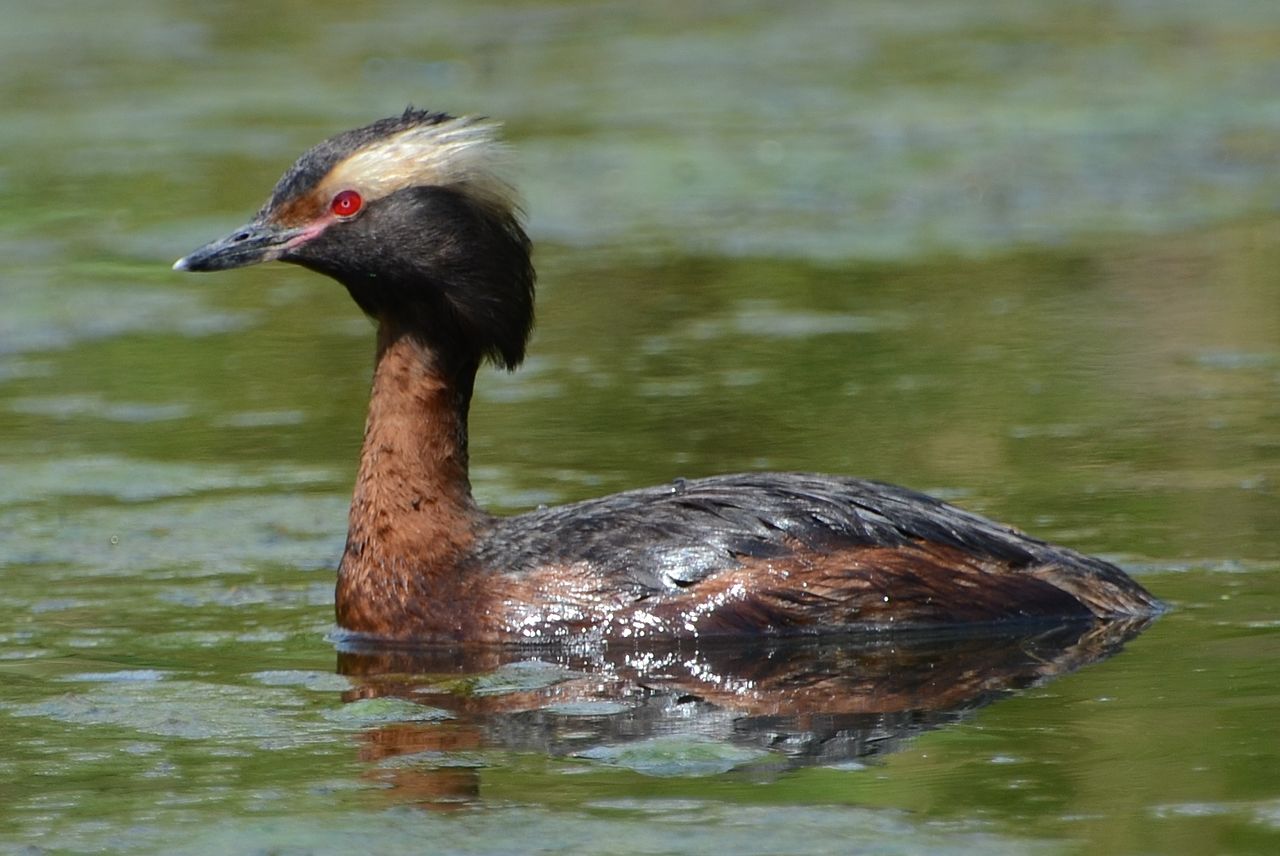
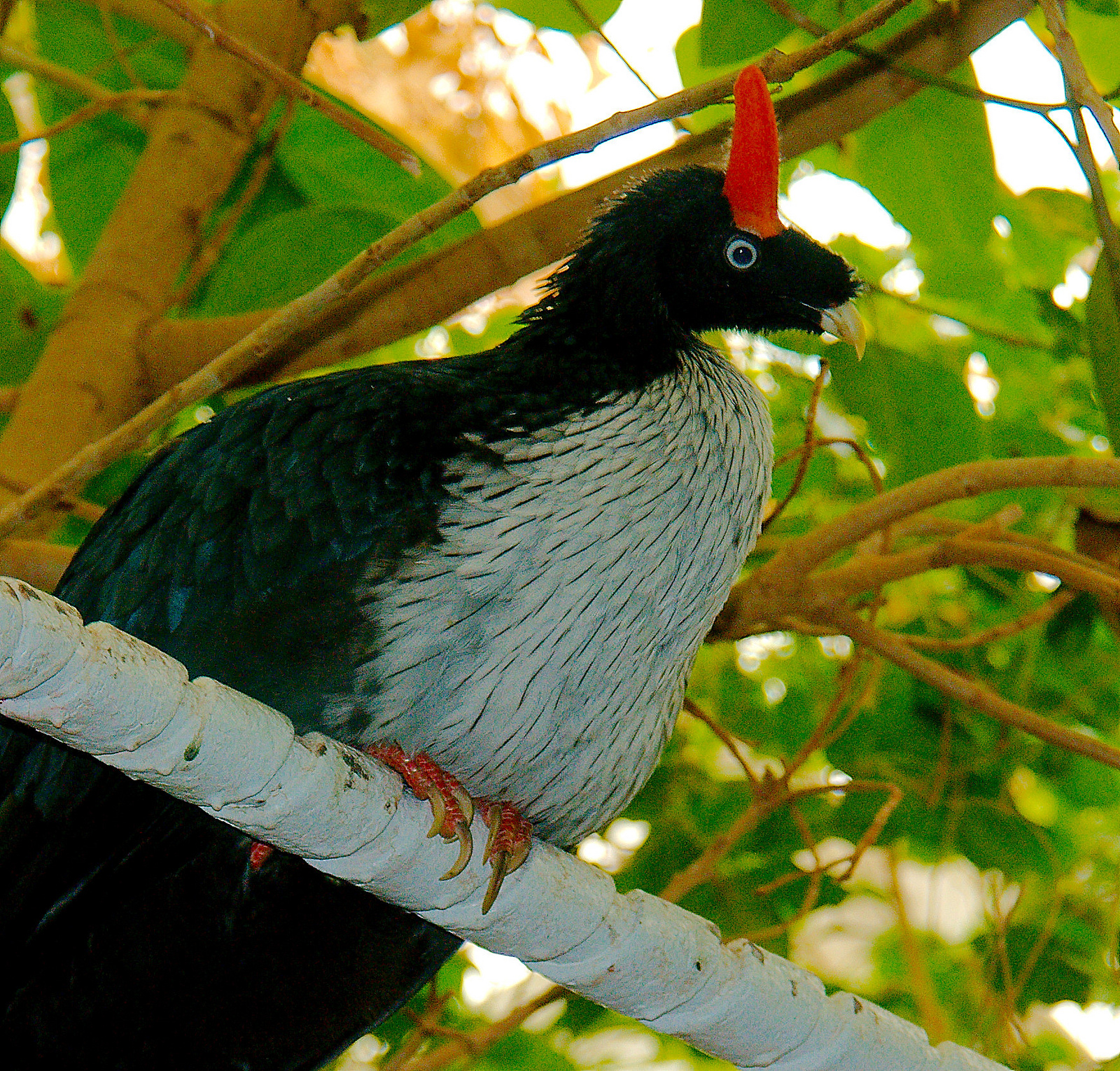
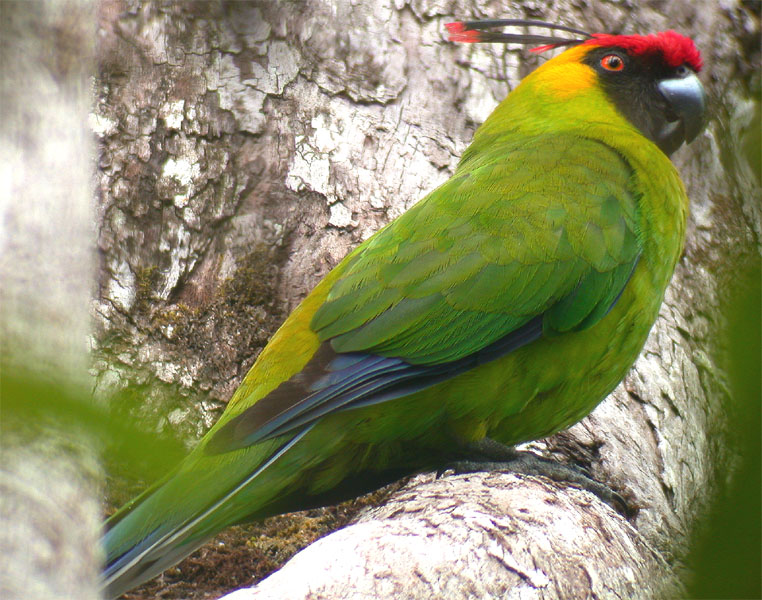
The Sunday Inspiration this week was about Hornbills. That put me to wondering what other birds have “Horn” in their name. So, let’s see what is listed in the IOC’s List of Birds, which is what this blog uses:
The first thing I found is a Hornbill Friarbird (Philemon yorki), formerly (Philemon buceroides yorki), is one of the newer splits. It was a subspecies of the Helmeted Friarbird (Philemon buceroides). In fact, Wikipedia doesn’t even cover it yet, but others do.
Trust you don’t mind finding out this information. When we stop being curious, we stagnate. Besides, the Lord has made so many birds out there for us to find, 10,530 at the time, this is a way to discover a few more of them. I found some “Thornbirds”, but will save that for another time. Also, birds do not have horns, but rather tufts of feathers that stick up like horns.
The blessing of the LORD, it maketh rich, and he addeth no sorrow with it. (Proverbs 10:22 KJV)
Also he (Solomon) spoke of trees, from the cedar tree of Lebanon even to the hyssop that springs out of the wall; he spoke also of animals, of birds, of creeping things, and of fish. (1 Kings 4:33 NKJV)
According to studies, January to June is usually the breeding season of Coppersmith Barbets found in the Indian Subcontinent. I had seen a courtship display of this species last year where the female waited patiently for the male, the male kept returning to the female with food in its beak, the male used to puff himself up, start flapping its wings and then feed the female displaying his affection to her, and then the eventually they would mate.
Let your speech be alway with grace, seasoned with salt, that ye may know how ye ought to answer every man. (Colossians 4:6 KJV)
The article goes on to describe this behavior as “a term ‘allobilling’ trying to find out what this behavior meant. From what i read, ‘allobilling’ is mutual mouthing between two birds.”
This mouthing is what caught my interest as a Christian. What kind of “mouthing” are we doing?
A man hath joy by the answer of his mouth: and a word spoken in due season, how good is it! (Proverbs 15:23 KJV)
I know all the birds of the mountains (and Lake Morton) , And the wild beasts of the field are Mine. (Psalms 50:11 NKJV)
We finally had a chance to take a short birdwatching adventure to Lake Morton over in Lakeland. I have been battling a cold and cough for the last three weeks. Our trips to Lake Morton don’t require much walking and it is one of the few places that people feed the birds.
When someone parks their car, before they can get across the street, the birds start walking towards them. Needless to say, the birds are expecting something.
Wood Stork up close by Lee at Lake Morton
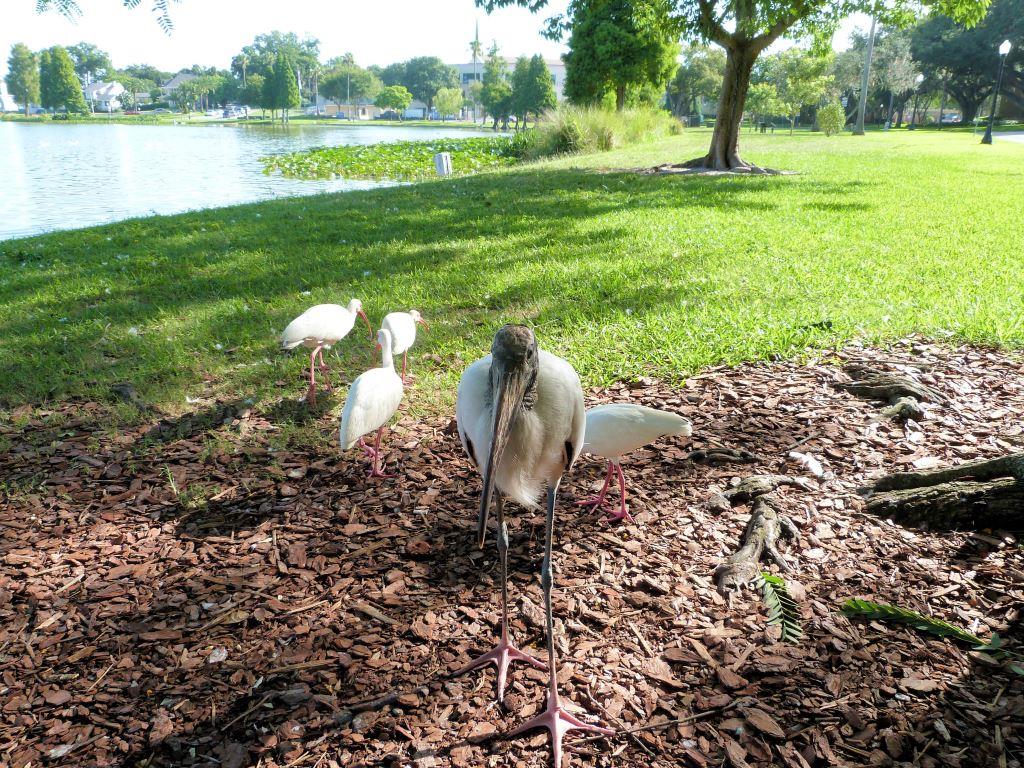
As I was walking across the street, here they came; Wood Stork in the lead because of its long legs, White Ibises next, followed by the waddling shorter legged birds – Mute Swans, Mallards, Muscovy Duck and then the fly-ins – Boat-tailed Grackles and the Gulls. The Wood Stork met me at the curb.
Of course when you have a treat for them, you become the “Pied Piper.” Apparently, someone must have recently fed them, because they were gathered loosely together. Once I got to the table and sat down, the group gathered around. I was enjoying them so much, I didn’t take many photos then.
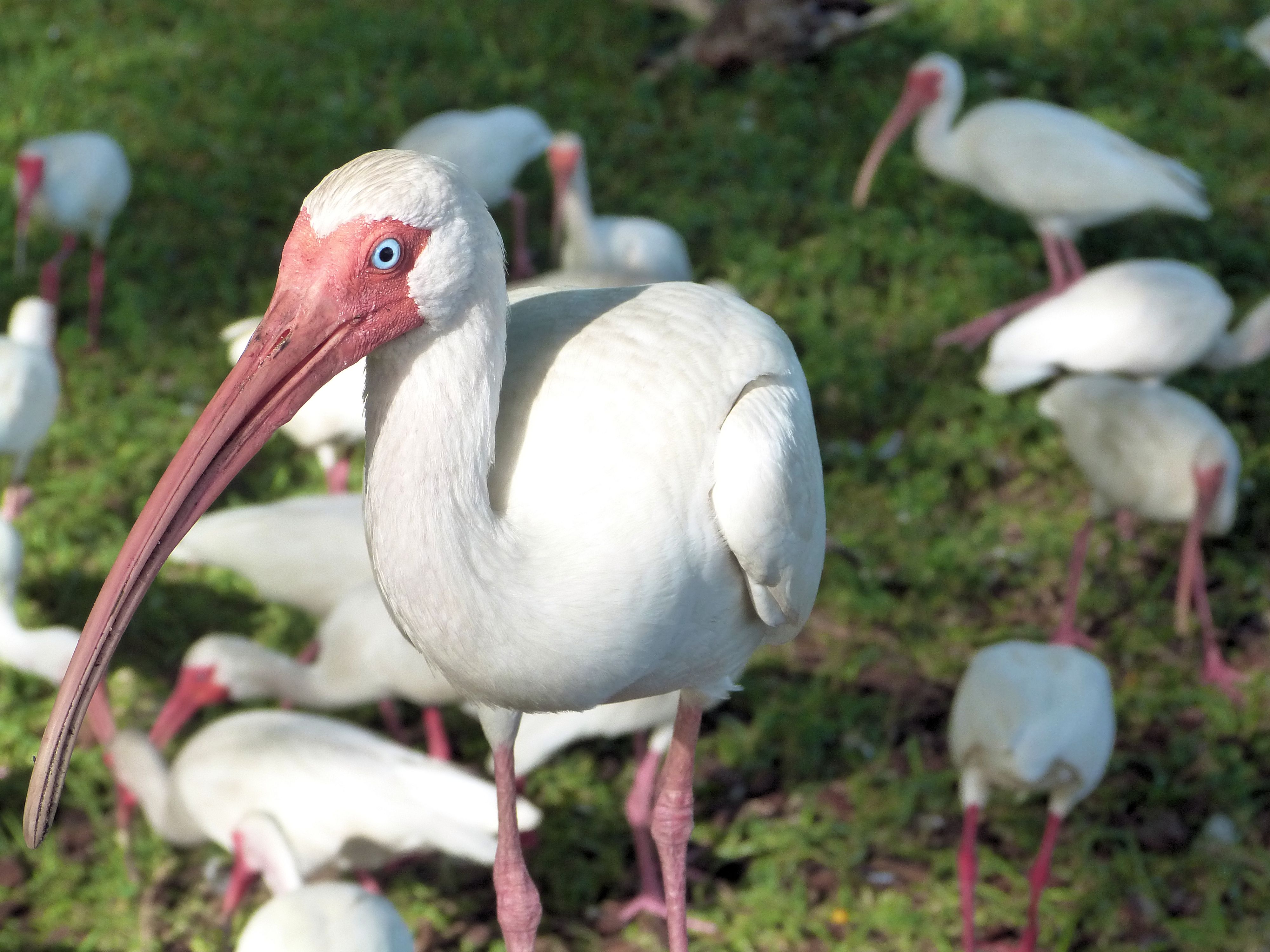
American White Ibis on Table by Lee
Once the food gave out, of which I didn’t have much to begin with, they moseyed off to rest in the shade until the next visitor with a bag of goodies came. One White Ibis hopped upon the table behind me, but too late because the bag was empty. Took its photo, but it was almost too close.
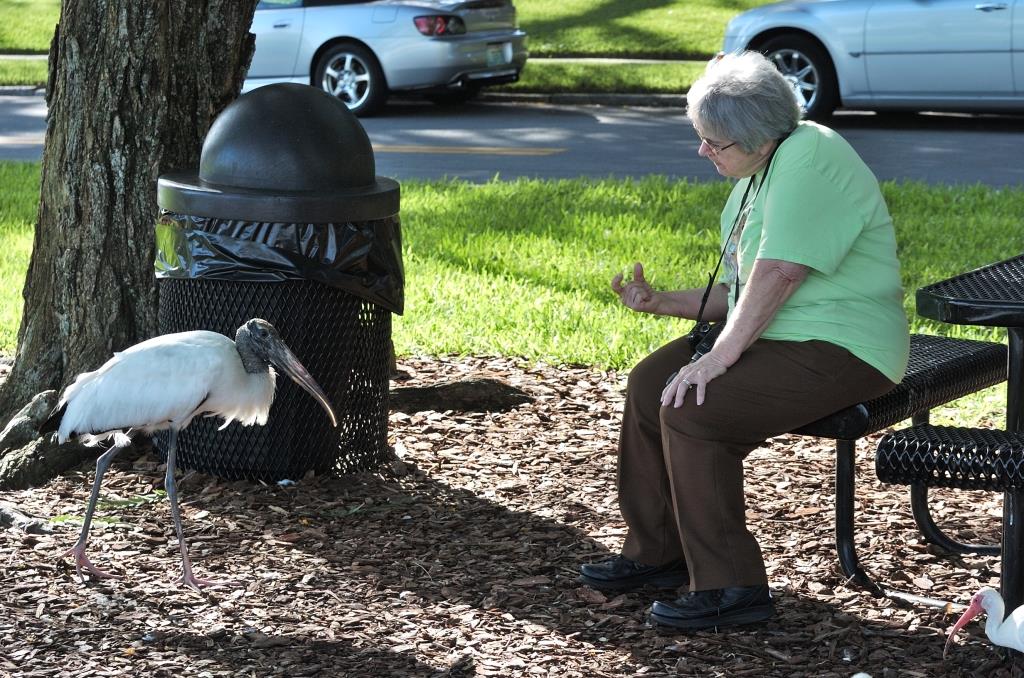
Woodstork & Lee by Dan at Lake Morton
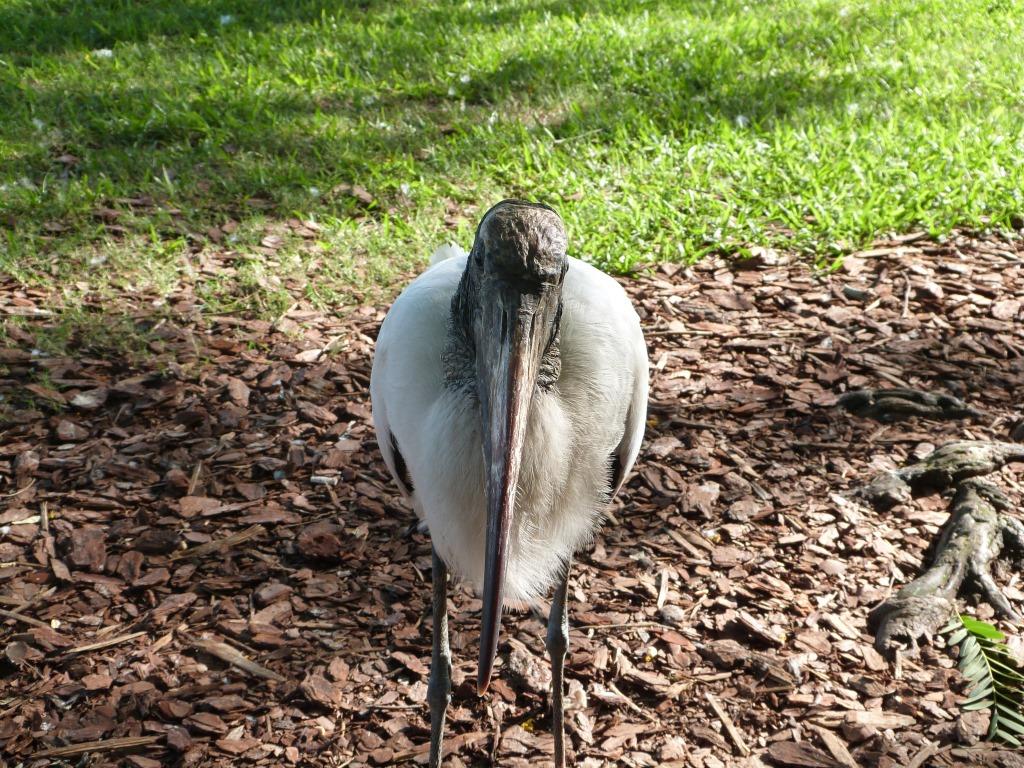
One of the resident Wood Storks walked up in front of me and stood there. I reassured him that I had nothing else, but he (or she) just stayed there. I started talking to it, motioned to come closer, and it did. I could have reached out and touched the Wood Stork, but chose not to with that long beak. Have you ever heard a Wood Stork’s beak “snap” when it grabs food? It is loud. No, I like my fingers!
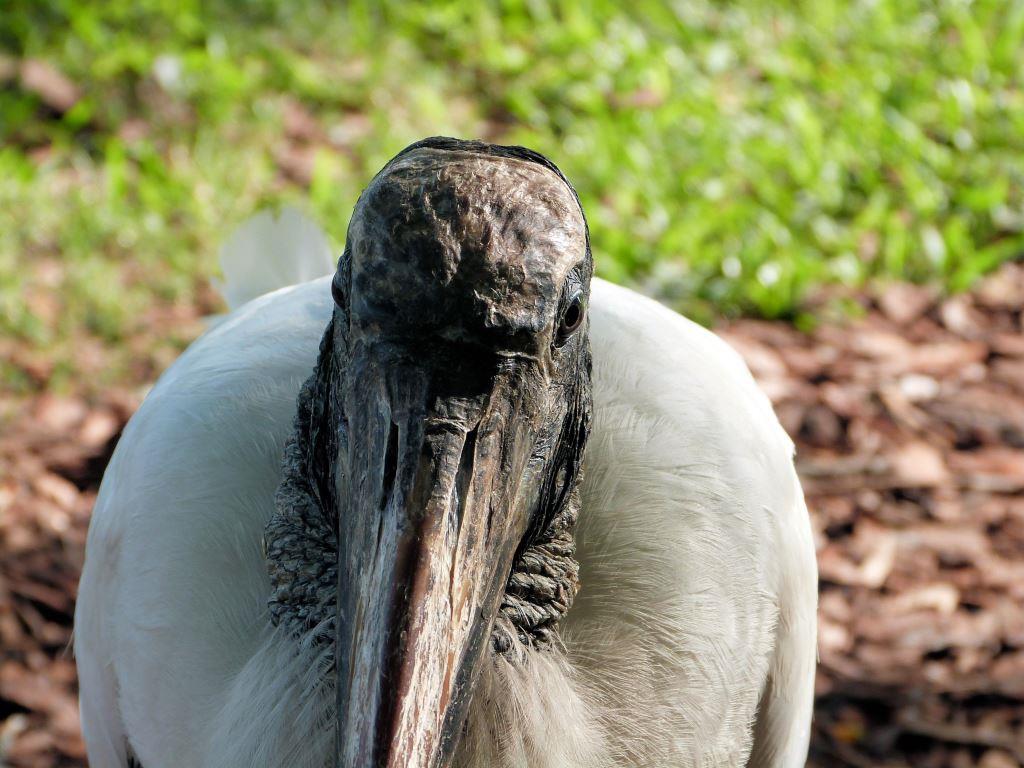
Wood Stork close-up by Lee at Lake Morton
We sat face to face for about 4 minutes of so; me talking and him just standing there looking at me.
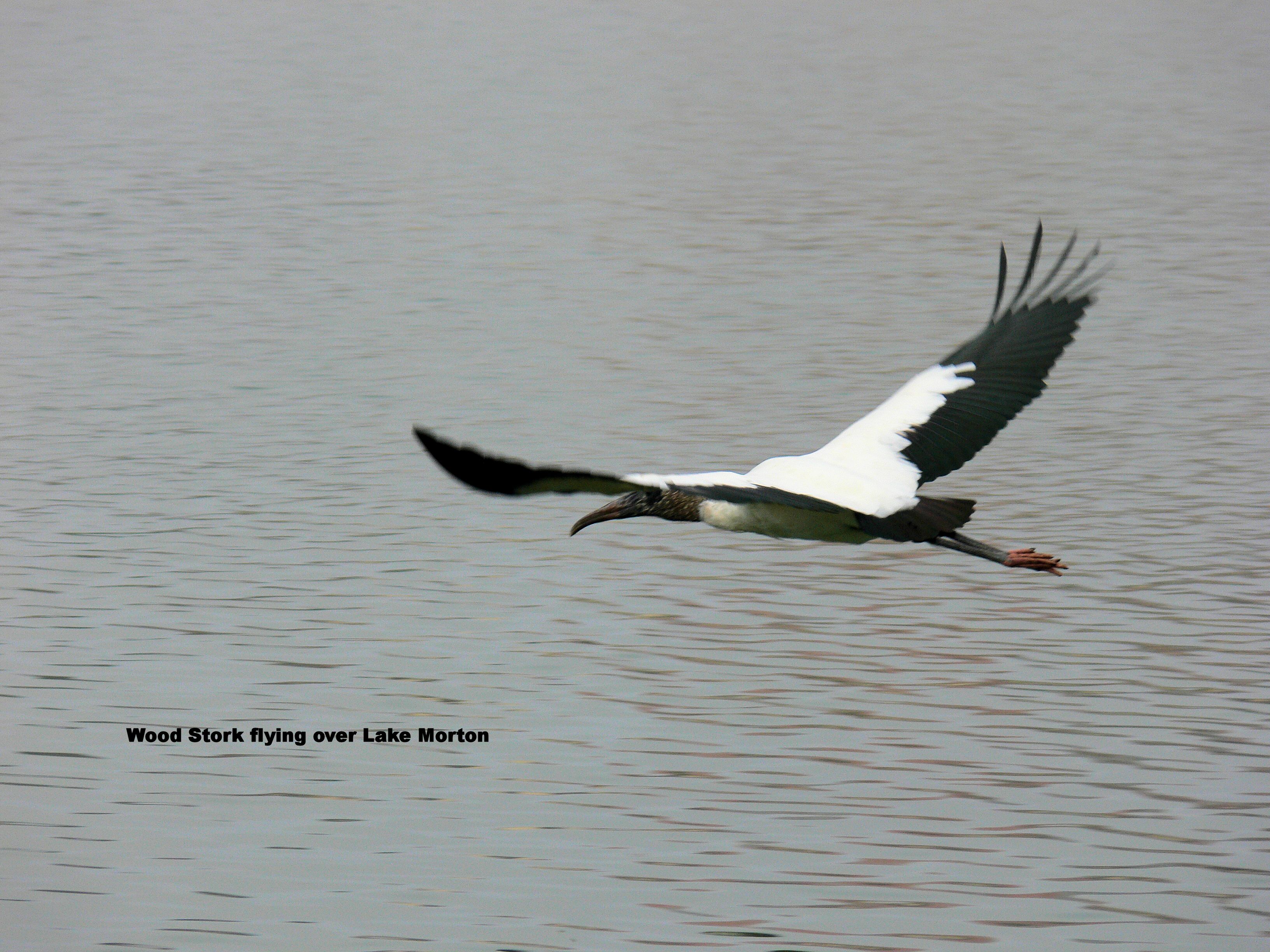
Even though they are “ugly,” they are really neat. Have you ever seen a Wood Stork in the air? They are so beautiful and graceful, but up this close? I assured him that the Lord had created him and that He makes no mistakes.
Great is our Lord, and mighty in power; His understanding is infinite. (Psalms 147:5 NKJV)
Wood Stork flying over Lake Morton by Lee 2009
The wings of the ostrich wave proudly, But are her wings and pinions like the kindly stork’s? (Job 39:13 NKJV)
Thought you might enjoy a video of the birds that make Spain their home. Paul wanted to journey to Spain. These type of birds would have greeted him. Also, my good friends, Tim and Pam, are missionaries there.
whenever I journey to Spain, I shall come to you. For I hope to see you on my journey, and to be helped on my way there by you, if first I may enjoy your company for a while…. Therefore, when I have performed this and have sealed to them this fruit, I shall go by way of you to Spain. (Romans 15:24,28 NKJV)




















 Lee's Birdwatching Adventures Plus