Birds of the Bible – Flying

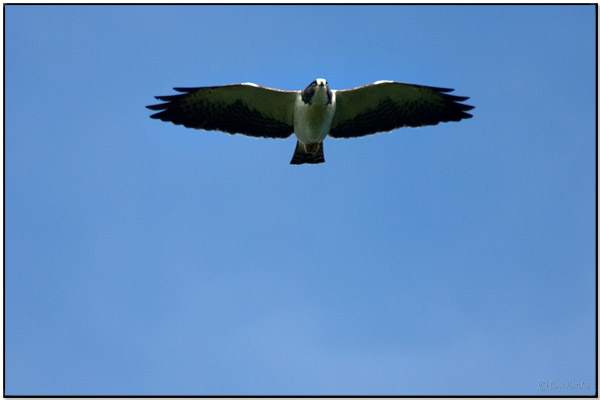
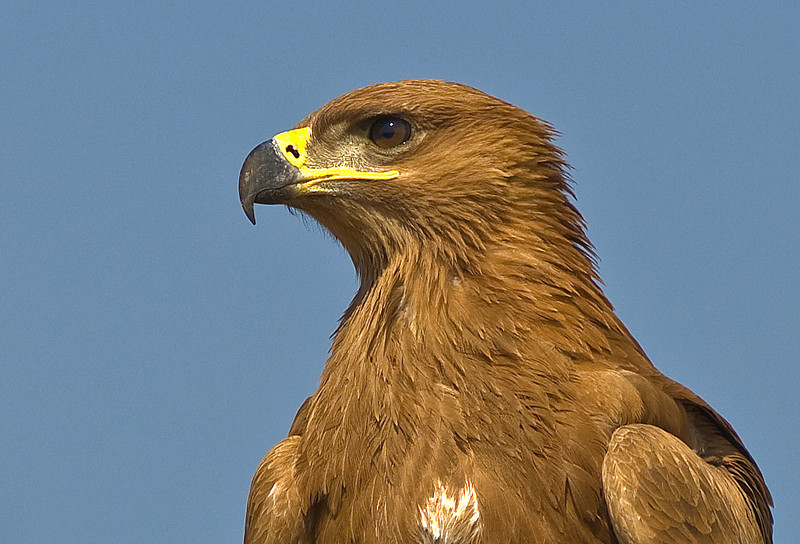
African Fish Eagle (Haliaeetus vocifer) by Africaddict

African Fish Eagle (Haliaeetus vocifer) by Africaddict

Wilt thou set thine eyes upon that which is not? for riches certainly make themselves wings; they fly away as an eagle toward heaven. (Proverbs 23:5)

Using e-Sword’s search for just the word “fly,” there are 15 verses in the AMP, 16 in the ESV, and 25 in the KJV. They can’t all refer to a bird flying around, so let’s see how many actually refer to the birds.

Here are the verses from the KJV:

And God said, Let the waters bring forth abundantly the moving creature that hath life, and fowl that may fly above the earth in the open firmament of heaven. (Gen_1:20)

Wherefore then didst thou not obey the voice of the LORD, but didst fly upon the spoil, and didst evil in the sight of the LORD? (1Sa_15:19)

And he rode upon a cherub, and did fly: and he was seen upon the wings of the wind. (2Sa_22:11)

Yet man is born unto trouble, as the sparks fly upward. (Job_5:7)

He shall fly away as a dream, and shall not be found: yea, he shall be chased away as a vision of the night. (Job_20:8)

Doth the hawk fly by thy wisdom, and stretch her wings toward the south? (Job_39:26)

And he rode upon a cherub, and did fly: yea, he did fly upon the wings of the wind. (Psa_18:10)

And I said, Oh that I had wings like a dove! for then would I fly away, and be at rest. (Psa_55:6)

The days of our years are threescore years and ten; and if by reason of strength they be fourscore years, yet is their strength labour and sorrow; for it is soon cut off, and we fly away. (Psa_90:10)

Wilt thou set thine eyes upon that which is not? for riches certainly make themselves wings; they fly away as an eagle toward heaven. (Pro_23:5)

Above it stood the seraphims: each one had six wings; with twain he covered his face, and with twain he covered his feet, and with twain he did fly. (Isa_6:2)

And it shall come to pass in that day, that the LORD shall hiss for the fly that is in the uttermost part of the rivers of Egypt, and for the bee that is in the land of Assyria. (Isa_7:18)

But they shall fly upon the shoulders of the Philistines toward the west; they shall spoil them of the east together: they shall lay their hand upon Edom and Moab; and the children of Ammon shall obey them. (Isa_11:14)
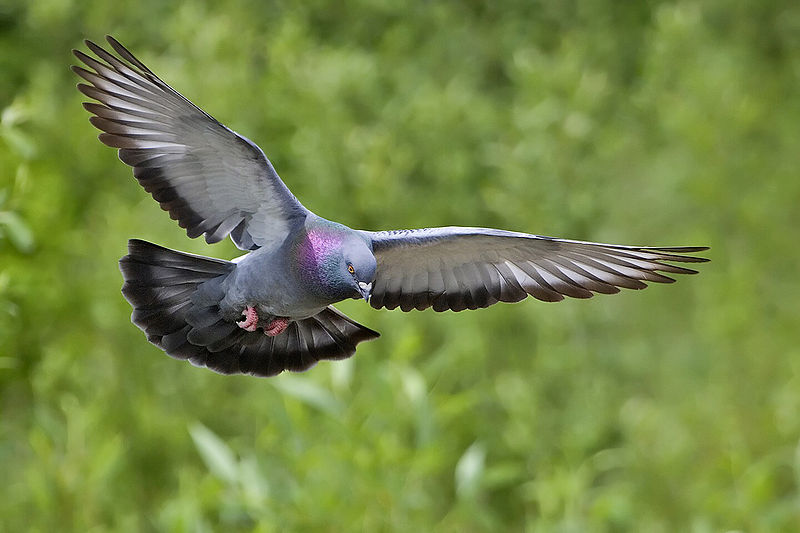
Rock Dove (Columba livia) ©WikiC

Rock Dove (Columba livia) ©WikiC

Who are these that fly as a cloud, and as the doves to their windows? (Isa_60:8)

For thus saith the LORD; Behold, he shall fly as an eagle, and shall spread his wings over Moab. (Jer_48:40)

Behold, he shall come up and fly as the eagle, and spread his wings over Bozrah: and at that day shall the heart of the mighty men of Edom be as the heart of a woman in her pangs. (Jer_49:22)

Wherefore thus saith the Lord GOD; Behold, I am against your pillows, wherewith ye there hunt the souls to make them fly, and I will tear them from your arms, and will let the souls go, even the souls that ye hunt to make them fly. (Eze_13:20)

Yea, whiles I was speaking in prayer, even the man Gabriel, whom I had seen in the vision at the beginning, being caused to fly swiftly, touched me about the time of the evening oblation. (Dan_9:21)

As for Ephraim, their glory shall fly away like a bird, from the birth, and from the womb, and from the conception. (Hos_9:11)

Their horses also are swifter than the leopards, and are more fierce than the evening wolves: and their horsemen shall spread themselves, and their horsemen shall come from far; they shall fly as the eagle that hasteth to eat. (Hab_1:8)

And to the woman were given two wings of a great eagle, that she might fly into the wilderness, into her place, where she is nourished for a time, and times, and half a time, from the face of the serpent. (Rev_12:14)

And I saw another angel fly in the midst of heaven, having the everlasting gospel to preach unto them that dwell on the earth, and to every nation, and kindred, and tongue, and people, (Rev_14:6)

And I saw an angel standing in the sun; and he cried with a loud voice, saying to all the fowls that fly in the midst of heaven, Come and gather yourselves together unto the supper of the great God; (Rev_19:17)

How many do you think directly relate to birds? Some refer to their speed of flying. How many birds were actually named?
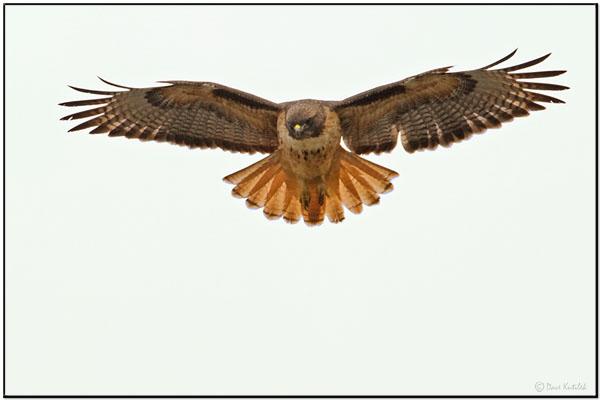
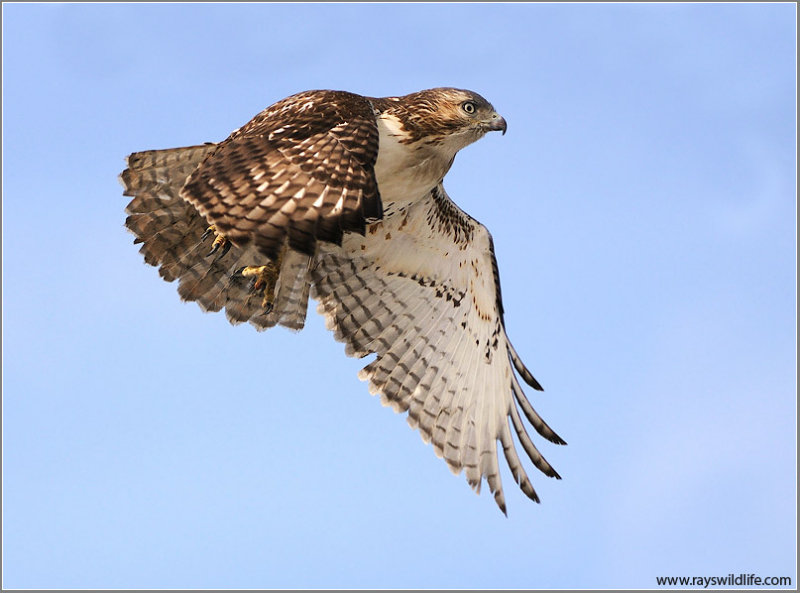
Red-tailed Hawk (Buteo jamaicensis) by Daves BirdingPix

Red-tailed Hawk (Buteo jamaicensis) by Daves BirdingPix

I trust you enjoy digging into God’s Word more than just reading it. If you have a program like e-Sword (free) or something similiar or a good concordance, you can do these type of searches.

Back to the questions – which verses have birds mentioned?

fowl that may fly above the earth (Gen_1:20)

hawk fly (Job_39:26)

dove! for then would I fly away, and be at rest. (Psa_55:6)

fly away as an eagle toward heaven. (Pro_23:5)

fly as a cloud, and as the doves to their windows? (Isa_60:8)

shall fly as an eagle, and shall spread his wings over Moab. (Jer_48:40)

fly as the eagle, and spread his wings over Bozrah (Jer_49:22)

their glory shall fly away like a bird, (Hos_9:11)

fly as the eagle that hasteth to eat. (Hab_1:8)

two wings of a great eagle, that she might fly into the wilderness (Rev_12:14)

all the fowls that fly in the midst of heaven (Rev_19:17)

The Bible tells us:

But now ask the beasts, and they will teach you; And the birds of the air, and they will tell you; (Job 12:7 NKJV)

If you had never watched a bird fly, would any of those verses above make sense to you? The Lord not only has given all the numerous birds for us to enjoy, but also to teach us lessons.

Would you understand “…for riches certainly make themselves wings; they fly away as an eagle toward heaven. (Proverbs 23:5) if you had not seen how fast an eagle flies? How fast can we waste our riches?

Thinking about how birds fly, reread the verses above, even the ones that do not mention birds and see if that doesn’t help explain parts of the verse.

See:

*

One of my favorite videos.

*

Birds of the Bible – Worry and Ravens

Northern Raven (Corvus corax) by Ray

Northern Raven (Corvus corax) by Ray

Better than the Birds

Luke 12:6-31

Birds of the Bible – Worry and Sparrows was the introduction to the “Better Than The Birds” message by Pastor Stephen Harvey. We were told that “1. Worry denies the gracious care of God.”

Now for part II:

2. Secondly, worry depreciates the higher value of mankind

He’s not finished with the birds yet – notice verse 7 again – the last part – Do not fear; you are more valuable than many sparrows.

Matthews account says, “Are you not worth much more than they?

In case we didn’t pick up on the lesson – in case we’re a little slow – God’s care of the lesser creation ensures His care of His highest creation.

Evidently Jesus thinks we just might be a little slow on the uptake here – or maybe find it hard to believe – so He circles back around to this subject again and adds another pearl to the string – look over at verse 24. Consider the ravens, for they neither sow nor reap, they have no store room nor barn, and yet God feeds them; how much more valuable you are than the birds!

Maybe Jesus repeated this lesson simply because He knew that billions of people one day would struggle with believing they were less valuable than animals.

Was God peering into the 21st century or what?

You sit through the average Animal Planet program or read the latest evolutionary textbook taught to middle schoolers and you’ll get the message loud and clear that human beings have messed up the circle of life; humans have interrupted the food chain; humans are in the way and if we’d only get out of the way, the animals who evidently have the right to be on the planet – because they evolved first – would get what they deserve; if we’d just go back to living in caves, the animals would be able to enjoy their lives so much better.

That message is coming across loud and clear! Whenever you remove the glory of God’s created order, Genesis 1 and 2, where mankind was made in the image of God and given the right to rule earth – to train and subjugate and benefit from the animal kingdom – you end up with a culture where animals ultimately matter more.

You now exist to serve them; you now live to make their lives more comfortable.

Now I’m not defending animal abuse, by the way. We’re to be good stewards of earth and the animal kingdom.

But go visit India today, and watch, as I did, sacred cows which have been given superior rights within their culture – watch them meander across busy roadways and down streets cluttered with starving children – and begging mothers with babies on their hips; where a child starving to death is less important than a cow having something to eat.

How do we know that human beings are more valuable than animals? How do we know that?

Apart from God, we don’t.

Apart from the words of Jesus Christ, the creator of all things (Colossians 1), we might be confused – look again at verse 24 – you are more valuable than the birds.

Is that radical news or what?

And this really got the attention of Jesus’ Jewish audience, by the way, because Jesus used ravens as an example here – ravens were considered unclean according to Mosaic Law (Leviticus 11:13-15).vii

The ravens were unclean birds.

I’m sorry for how that makes you Baltimore Ravens fans feel – I’m sorry you had to find that out – you’ve been cheering all along for unclean animals . . . you already knew that.

Here’s why this was so stunning an analogy for Christ to make: It’s one thing to be insignificant like a sparrow and be cared for by God – it’s another thing to be unclean and despised and be cared for by God.

And you know why I’m so glad Jesus added this illustration?

Because the enemy of our heart and spirit and joy will more than likely come and whisper in our ear – sparrows might be cheap, but at least they’re clean animals – no wonder God cares about them; but you’re more like an unclean bird . . . despised and unclean according to God’s holy law . . . you don’t deserve God’s attention.

You have very reason to worry about your life.

But notice – verse 24. God has managed to care for them too – He effectively feeds them too – and get this – “How much more valuable you are than the animal kingdom!”

Worry denies the gracious care of God

Worry depreciates the higher value of mankind.

Brown-necked Raven of Israel

Brown-necked Raven, Israel ©WikiC

(Copied with permission from Wisdom for the Heart and Pastor Stephen Davey.)

vii MacArthur, p. 140


Lee’s Addition:

‘And these you shall regard as an abomination among the birds; they shall not be eaten, they are an abomination: the eagle, the vulture, the buzzard, the kite, and the falcon after its kind; every raven after its kind, (Leviticus 11:13-15 NKJV)

Consider the ravens, for they neither sow nor reap, which have neither storehouse nor barn; and God feeds them. Of how much more value are you than the birds? (Luke 12:24 NKJV)

Another great encouragement not to worry. Thanks, Pastor Davey, for a great message.

See:

*

Birds of the Bible – Review II

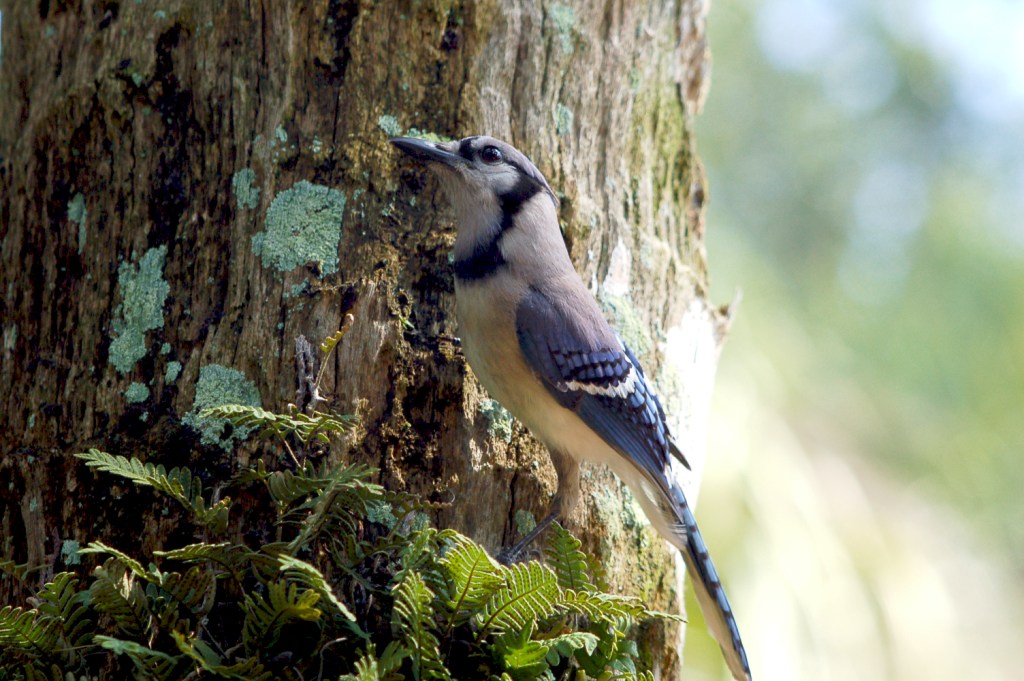
Blue Jay at Bok Tower by Dan's Pix

Blue Jay II at Bok Tower by Dan’s Pix

I will remember the works of the LORD: surely I will remember thy wonders of old. I will meditate also of all thy work, and talk of thy doings. (Psalms 77:11-12 KJV)

In 2008 Birds of the Bible – Review was written. Needless to say, many more articles have been added since then. Please take some time over the next few days and check out articles that you may have missed or you are new and didn’t know of their existence.

Scripture tells us to remember the Lord’s blessings and all His benefits. I consider watching birds one of the Lord’s great blessings. The previous articles were written in an attempt to honor the Lord through telling about His birds. I trust you will dig around and discover some interesting new or old avian friends to read and learn about.

Another reason for this blog is to ask for prayer for me. On Wednesday last week, I had a Squamous Cell Cancer removed from my neck, just under my chin. They attempted to remove it 6 months ago, but didn’t get it all. This time, he cut it out and I have an inch and half row of stitches. On Saturday, it started turning red and irritating me. Monday when I went back to have it looked at, it was infected. So, now I am on an antibiotic, which makes me sort of  drowsy. It hurts to lift my head up to look at the monitor (it pulls on the stitches), so the blogs have slowed down. My stitches are supposed to come out next Tuesday, the 8th of October.

Praise the Lord, with over 1,500 articles and 1,100 pages of material, surely there is something you haven’t read before. There are tabs or menus along the top which help you find different topics. Check them out. By you reading, it will also help my page view counts while I am in a “coasting” mode. Thank you.

Here are the Birds of the Bible Topics:

Birds of the Bible

Miscellaneous articles:

Names of Birds Study


Harriet Newell Cook – The Scripture Alphabet of Animals

Disclaimer About Bible Version Usage

*

Birds of the Bible – Worry and Sparrows

House Sparrows visiting National Aviary Parrot Show by Lee

House Sparrows at National Aviary by Lee

While listening to Wisdom For The Heart on BBN (Bible Broadcasting Network) last week, I heard this message by Pastor Stephen Davey and wanted to share it. His message was “Better than the Birds” and of course it caught my attention. There are four parts, but I am only sharing the introduction and part one here.

Better than the Birds

Luke 12:6-31

I have read that a dense fog – so extensive that it covers seven city blocks a hundred feet deep is actually composed of no more than one glass of water; water, of course that’s divided into more than 60 billion droplets of water.i

Just a couple gallons of water can cripple an entire city.

In many ways, this perfectly illustrates the substance of worry. Just a little bit of it can spread and deepen and ultimately cripple the mind and the heart of even believers.

One author put it this way when he wrote, “Worry is a thin stream of fear that trickles through the mind, which, if encouraged, will cut a channel so wide that all other thoughts will be drained out.”ii

I find it extremely gracious of our Lord that whenever He addressed the subject of worry, and He did on several occasions, He went much further than simply saying, “You know better than that . . . worrying isn’t good for you . . . it’ll mess up your mind . . . isn’t right . . . stop worrying right now!”

Instead, Jesus graciously causes us to think through this vaporous substance of worry; He gives us several reasons to stop worrying and He even condescends in His patience to give us illustrations – effectively – giving us principles to teach us why we really don’t ever need to worry.

And several of His key principles are the form of questions.

Let me invite you to Luke chapter 12 where Jesus asks some profound questions.

He’s teaching His disciples – this chapter in Luke corresponds to His sermon in Matthew’s Gospel.

Now if you’ve ever read His sermon, you’ll notice that He goes from one subject to the next – almost randomly touching on a series of different topics.

Jesus is actually employing a Jewish teaching style called Charaz – which means, stringing pearls.iii

In other words, Jesus will string pearls of wisdom on a number of subjects, like someone might string together a rare necklace of pearls.

And one of the pearls He adds to his string of pearls is this subject of worry.

Let me give you four principles in this regard as we work through His comments on overcoming worry.

The first principle to understand is that:

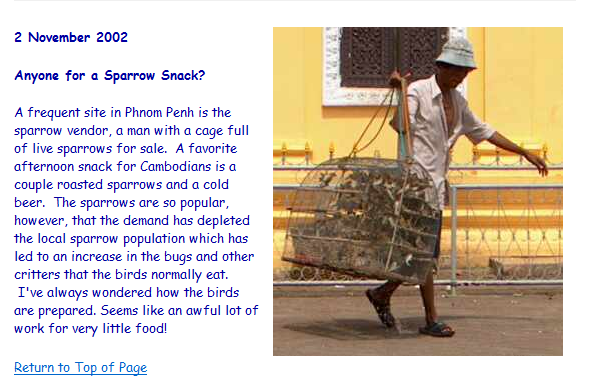
Anyone for a Sparrow Snack?

Anyone for a Sparrow Snack?

   1. Worry denies the gracious care of God

And He proves His point by asking two questions – notice His first question at verse 6. Are not five sparrows sold for two cents? Yet not one of them is forgotten before God.

Now if you compared this account with Matthews account, we’re told that 2 sparrows were sold for 1 penny.

The Greek term for this coin refers to a small brass coin worth about 1/10th of a day’s wage for a working laborer.

Which is a long way of saying, sparrows were the cheapest meat sold in the marketplace.iv

They were the food of the poorest of the poor. You barely got a mouthful of meat from a little sparrow.

In fact, Matthew’s Gospel tells us that you can buy 2 sparrows for a penny and Luke here tells us that you can get 5 sparrows for 2 penny’s; how’s that add up?

Well, we know from history that during the days of Christ, sparrows were so abundant and so cheaply sold to the poor that if you bought 4, you got one thrown in for nothing.

And that’s what Luke alludes to here – are not five sparrows sold for two cents? Yet not one of them is forgotten before God.

Now watch this – Luke is effectively saying, even the free sparrow is not forgotten by God. Even the sparrow that got thrown in for nothing matters to God.

You want to know why you never need to worry? Because to God you are never lost in the crowd.v

Not only does God not lose track of even one sparrow – he doesn’t even lose track of one single hair from your head.

Notice further in verse 7. Indeed the very hairs of your head are all numbered.

I’ve read that the average person’s head holds more than 100,000 hairs. Some of us are down to a few hundred.vi

A few dozen . . .

Now some commentators don’t think Jesus is being serious here – that He’s just exaggerating to make a point.

I mean, come on . . . He counts the number of the hairs on our heads? That number changes daily. Surely God doesn’t bother with that kind of detail. Gary Hallquist – 60,000; Dr. Burggraff – 12 . . . hundred.

No, I think that’s exactly His point. The glory of God revealed here is that He actually does know!

Jesus is effectively asking us, “Look, do you really think you can slip out of your Heavenly Father’s care – that you can somehow slip out from underneath the radar of His divine omniscience? Do you think He’s forgotten about you or that your problems are too numerous to keep up with?

I mean if He can keep track of 100,000 hairs on somebody’s head of hair, do you think He’ll get frustrated with you coming to Him over and over again to give Him your worries?

Do you think He’s going to say, “Look, there’s only so much room on my ledger and you’ve already been here a dozen times today . . . I just can’t keep track.”

Listen, if God is actually such a gracious, omniscient God – that He doesn’t overlook a single sparrow – even the one that gets thrown in for free – He will never overlook you either.

Worry denies the gracious care of God

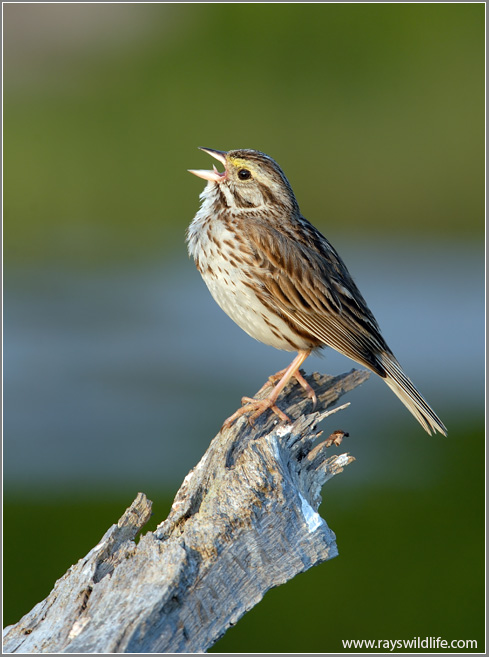
Savannah Sparrow singing by Ray

Savannah Sparrow singing by Ray

(Copied with permission from Wisdom for the Heart and Pastor Stephen Davey.)

i John MacArthur, Matthew 1-7 (Moody Publishers, 1985), p. 419
ii Ibid
iii William Barclay, The Gospel of Luke (Westminster, 1975), p. p. 160
iv Bruce B. Barton, Life Application Bible: Luke (Tyndale, 1997), p. 314
v Barclay, p. 161
vi MacArthur, p. 119


Lee’s Addition:

Are not five sparrows sold for two farthings, and not one of them is forgotten before God? But even the very hairs of your head are all numbered. Fear not therefore: ye are of more value than many sparrows. (Luke 12:6-7 KJV)

What a great encouragement not to worry. Thanks, Pastor Davey for a great message.

See:

See Worry and Sparrows – Part II

*

Birds of the Bible – Bitterns in Zephaniah

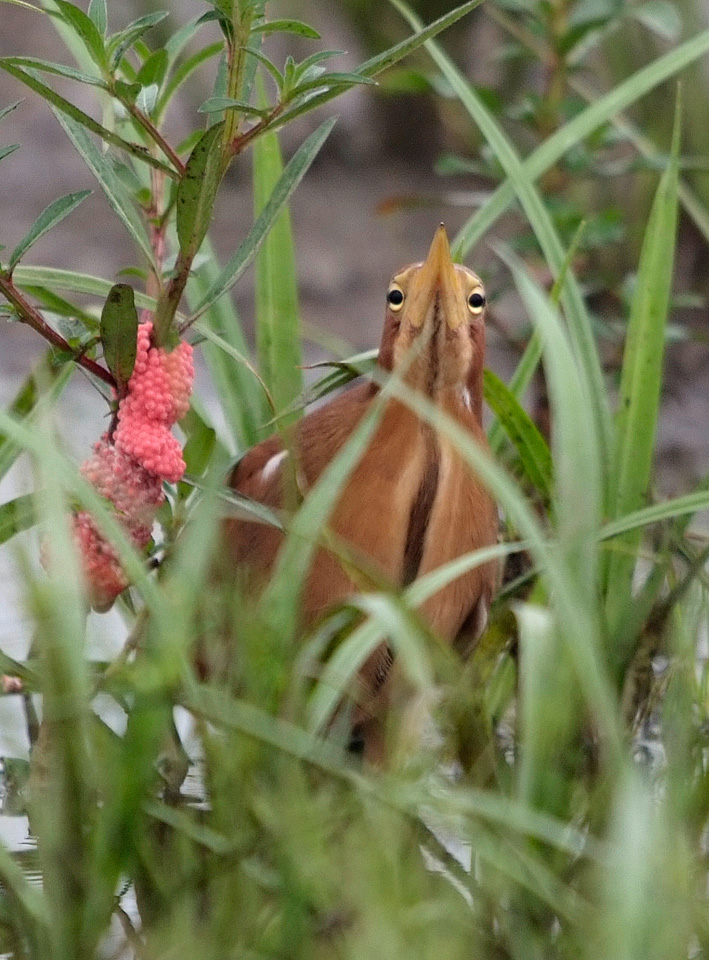
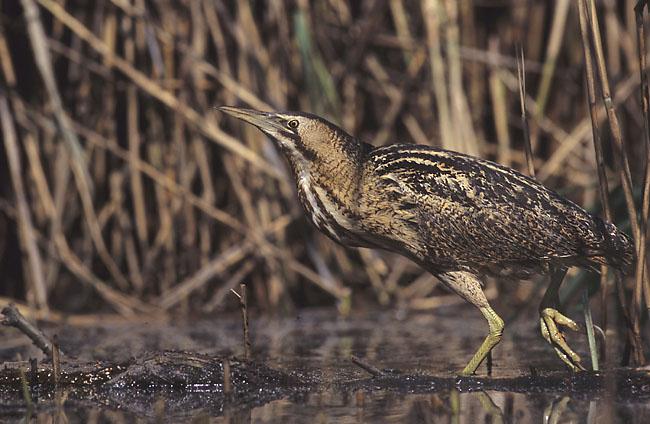
Cinnamon Bittern by Phil Kwong in Hong Kong

Cinnamon Bittern by Phil Kwong in Hong Kong

And flocks shall lie down in the midst of her, all the beasts of the nations: both the cormorant and the bittern shall lodge in the upper lintels of it; their voice shall sing in the windows; desolation shall be in the thresholds: for he shall uncover the cedar work. (Zephaniah 2:14 KJV)

This verse in Zephaniah is a bit confusing because some of the characteristics mentioned are not in line with a bittern’s normal behavior. So, let’s look into this verse a little deeper.

Pulling up my e-Sword program, I am heading to the “Compare” mode. Wow! This is going to be interesting. What a variation of birds and animals listed for that verse.

  • ACV, ASV, BBE, RV, Disciple’s, WEB – pelican and the porcupine
  • ABP, Brenton – chameleons; and hedgehogs
  • AKJV, KJV, IAV, JUB, UKJV, Webster – cormorant and the bittern
  • AMP, NAS77, NASB, YLT – pelican and the hedgehog
  • Bishops, Geneva – pellicanes and owles
  • CEV – all kinds of desert owls
  • CJB –  jackdaws and owls
  • Darby, ECB, HRB, LITV, JPS, MKJV, NKJV  – pelican and the bittern
  • DRB – bittern and the urchin
  • ERV – Owls and crows
  • ESV – owl and the hedgehog
  • GNB, MSG, NET – Owls
  • GW – pelicans and herons
  • HCSB, ISV, NIV, NRSV – desert owl and the screech owl
  • KJ2000 – vulture and the hedgehog
  • TRC – pelicans and storks

See what my mean?

Here are the Strong’s Definitions for those two word in order of occurance.

H6893
קאת
qâ’ath
kaw-ath’
From H6958; probably the pelican (from vomiting): – cormorant.

H7090
קפּד קפּוד
qippôd qippôd
kip-pode’, kip-pode’
From H7088; a species of bird, perhaps the bittern (from its contracted form): – bittern.

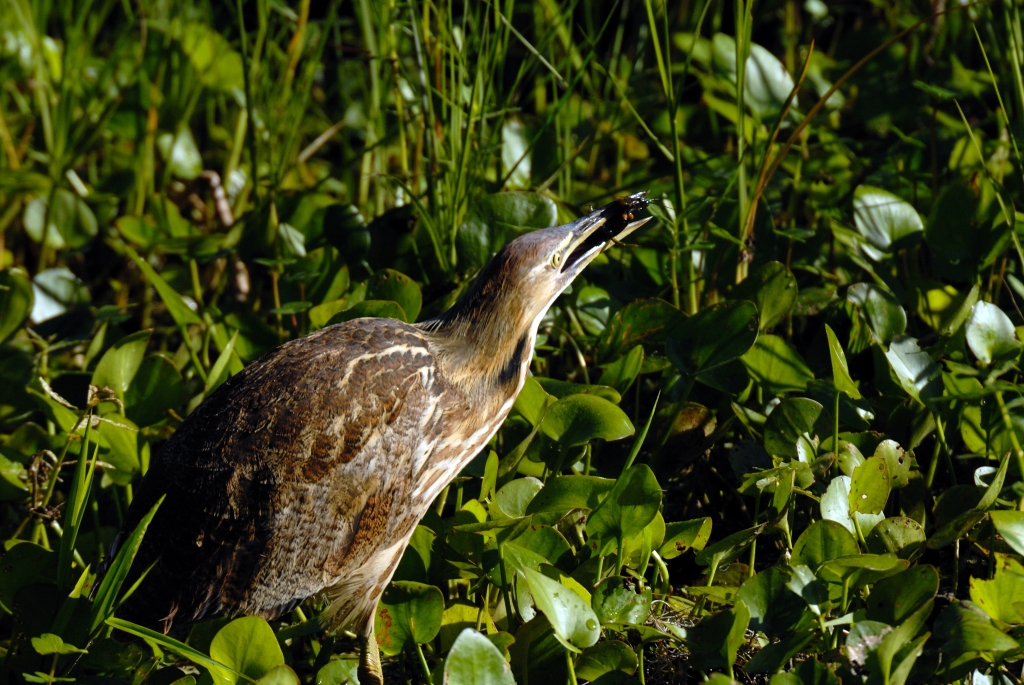
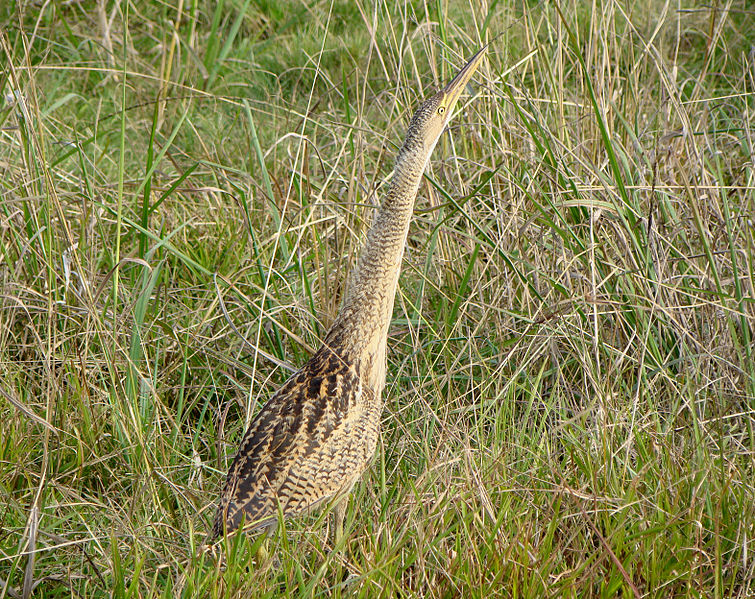
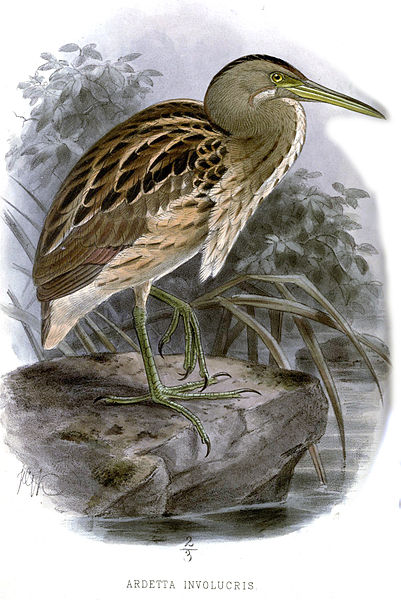
At least 14 versions use the “bittern” as one of the two birds. Now to look further in the verse, it mentions that they are lodged in the upper parts with their voice singing in the windows. That is where I am curious about it being a bittern. Have you heard a bittern “sing”? Here a few of their “songs” from xeno-canto.

Eurasian Bittern (Botaurus stellaris) ©WikiC

Eurasian Bittern (Botaurus stellaris) ©WikiC

Eurasian Bittern (Botaurus stellaris)

American Bittern (Botaurus lentiginosus) by Dans Pix

American Bittern (Botaurus lentiginosus) by Dans Pix

American Bittern (Botaurus lentiginosus)

Pinnated Bittern (Botaurus pinnatus) by Daves BirdingPix ©WikiC

Pinnated Bittern (Botaurus pinnatus) by Daves BirdingPix ©WikiC

Pinnated Bittern (Botaurus pinnatus)

Stripe-backed Bittern (Ixobrychus involucris) ©Drawing WikiC

Stripe-backed Bittern (Ixobrychus involucris) ©Drawing WikiC

Stripe-backed Bittern (Ixobrychus involucris)

Least Bittern (Ixobrychus exilis)  by Bob-Nan

Least Bittern (Ixobrychus exilis) by Bob-Nan

Least Bittern (Ixobrychus exilis)

Least Bittern (Ixobrychus exilis)

*

I am not as concerned as to which birds were there as much as if you read the context, you realize that the birds and critters are there because the places are deserted. Like a “ghost town” you see in the movies, with creatures occupying the windows and rafters. Why? Because of the Lord’s judgement on the people. Verses 10-13 explain this:

This shall they have for their pride, because they have reproached and magnified themselves against the people of the LORD of hosts. The LORD will be terrible unto them: for he will famish all the gods of the earth; and men shall worship him, every one from his place, even all the isles of the heathen. Ye Ethiopians also, ye shall be slain by my sword. And he will stretch out his hand against the north, and destroy Assyria; and will make Nineveh a desolation, and dry like a wilderness. (Zephaniah 2:10-13 KJV)

Maybe we should heed the warnings and examples given throughout Scripture. We have a loving God and Lord who created everything and cares about it, but He is also a God of Judgment. John 3:16 tells us “For God so loved the world, that he gave his only begotten Son, that whosoever believeth in him should not perish, but have everlasting life.” But if you continue reading, you see that there is also judgment.

(17) For God sent not his Son into the world to condemn the world; but that the world through him might be saved.
(18) He that believeth on him is not condemned: but he that believeth not is condemned already, because he hath not believed in the name of the only begotten Son of God.
(19) And this is the condemnation, that light is come into the world, and men loved darkness rather than light, because their deeds were evil.
(20) For every one that doeth evil hateth the light, neither cometh to the light, lest his deeds should be reproved.
(21) But he that doeth truth cometh to the light, that his deeds may be made manifest, that they are wrought in God.
John 3:17-21 KJV

I trust you know the Lord as your personal Savior.

See:

*

Birds of the Bible – Swift Eagles

Verreaux’s Eagle (Aquila verreauxii) ©WikiC2

Verreaux’s Eagle (Aquila verreauxii) ©WikiC2

Saul and Jonathan were beloved and pleasant in their lives, And in their death they were not divided; They were swifter than eagles, They were stronger than lions. (2 Samuel 1:23 NKJV)

In my reading today of II Samuel 1, David was told of the death of King Saul and his son Jonathan. They were killed in battle with the Philistines in the last chapter (31) of I Samuel.

David takes up a lament starting in II Samuel 1:17. Even though Saul had tried to kill David on many occasions, David never desired to harm Saul, because he knew that the King was the Lord’s anointed one. Jonathan and David were the best of friends.

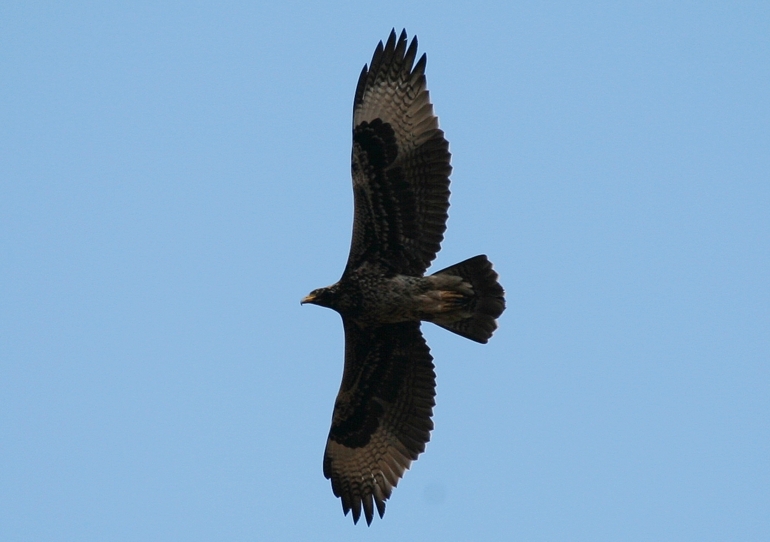
In verse 23, David refers to Saul and Jonathan, father and son, were together even in the battles and both were very skilled in battle. They were “stronger than lions” and won many victories. Being “swifter than eagles” could well refer to their ability to dodge the swords and arrows of battle and to come quickly to the place of the fight.

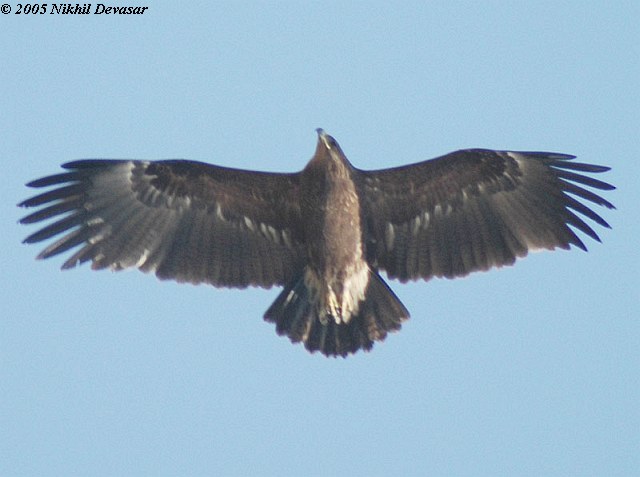
David’s use of the Eagle was because of his familiarity of them. As a shepherd, he must have watched them flying over with great speed and agility. The following Eagles are all seen in Israel and may well have been some of the ones that David was observed speeding through the sky on the way to catch a prey.

Gill – “they were swifter than eagles; in the quick dispatch of business, in hasting to the relief of the distressed, as Saul to the men of Jabeshgilead, and in the pursuit of their enemies, as of the Philistines, more than once:”

K & D  – “The light motion or swiftness of an eagle (cf. Hab_1:8), and the strength of a lion (vid., 2Sa_17:10), were the leading characteristics of the great heroes of antiquity.”

Poole – “Swifter than eagles; expeditious and nimble in pursuing their enemies, and executing their designs; which is a great commendation in a prince and in a soldier.

Stronger than lions, in regard of their bodily strength and the courage of their minds.”

Wesley – “2 Samuel 1:23

Lovely – Amiable, and obliging in their carriage and conversation, both towards one another, and towards their people: for, as for Saul’s fierce behaviour towards Jonathan, it was only a sudden passion, by which his ordinary temper was not to be measured; and for his carriage towards David, that was from that jealousy and reason of state which usually engageth even well – natured princes, to the same hostilities. But it is observable, that David speaks not a word here of his piety; but only commends him for those things which were truly in him…. Swifter, &c. – Expeditious in pursuing their enemies, and executing their designs; which is a great commendation in a prince, and in a soldier. Stronger, &c. – In regard of their bodily strength, and the courage of their mind.”

Here is a list of the Eagles seen in Israel:

This slideshow requires JavaScript.

See:

*

Birds of the Bible – The Bat Revisited

Giant Fruit Bat at Cincinnati Zoo 9-5-13 by Dan

Giant Fruit Bat at Cincinnati Zoo by Dan

And the stork, the heron after her kind, and the lapwing, and the bat. All fowls that creep, going upon all four, shall be an abomination unto you. Yet these may ye eat of every flying creeping thing that goeth upon all four, which have legs above their feet, to leap withal upon the earth; Even these of them ye may eat; the locust after his kind, and the bald locust after his kind, and the beetle after his kind, and the grasshopper after his kind. But all other flying creeping things, which have four feet, shall be an abomination unto you.
(Leviticus 11:19-23 KJV)

While we were at the Cincinnati Zoo, we were able to see and photograph several Bat species. They were really cool and I wanted to share them with you.

Giant Fruit Bat at Cincinnati Zoo 9-5-13 by Lee

Giant Fruit Bat at Cincinnati Zoo by Lee

Then I remembered that I had written about them in Birds of the Bible – The Bat?, in 2010. In that article, the controversy over whether a Bat is a Bird was mentioned, with several commentary comments. This time, I am mainly sharing the photos of the Bats that are there at the Zoo and comments about them. Just one personal observation about the above verses. The use of “fowl” in the King James Version and some of the others seems to refer to any creature that had wings and flies. I quoted the whole context because; 1) The verse and chapter separations were inserted later, 2) Birds, bats, and insects all seem to be referred to with the same collective term, “fowl.” I do not have a problem with the bat. It is not a bird.

The only other verses using “bat” or “bats” are:

And the stork, and the heron after her kind, and the lapwing, and the bat. (Deuteronomy 14:18 KJV)

In that day a man shall cast his idols of silver, and his idols of gold, which they made each one for himself to worship, to the moles and to the bats; (Isaiah 2:20 KJV)

The bats we saw at the Cincinnati Zoo were the Giant Fruit Bats and the Vampire Bats. They are amazing creatures of design and creation from their Creator, the Lord.

*

Giant Fruit Bat at Cincinnati Zoo 9-5-13 by Lee

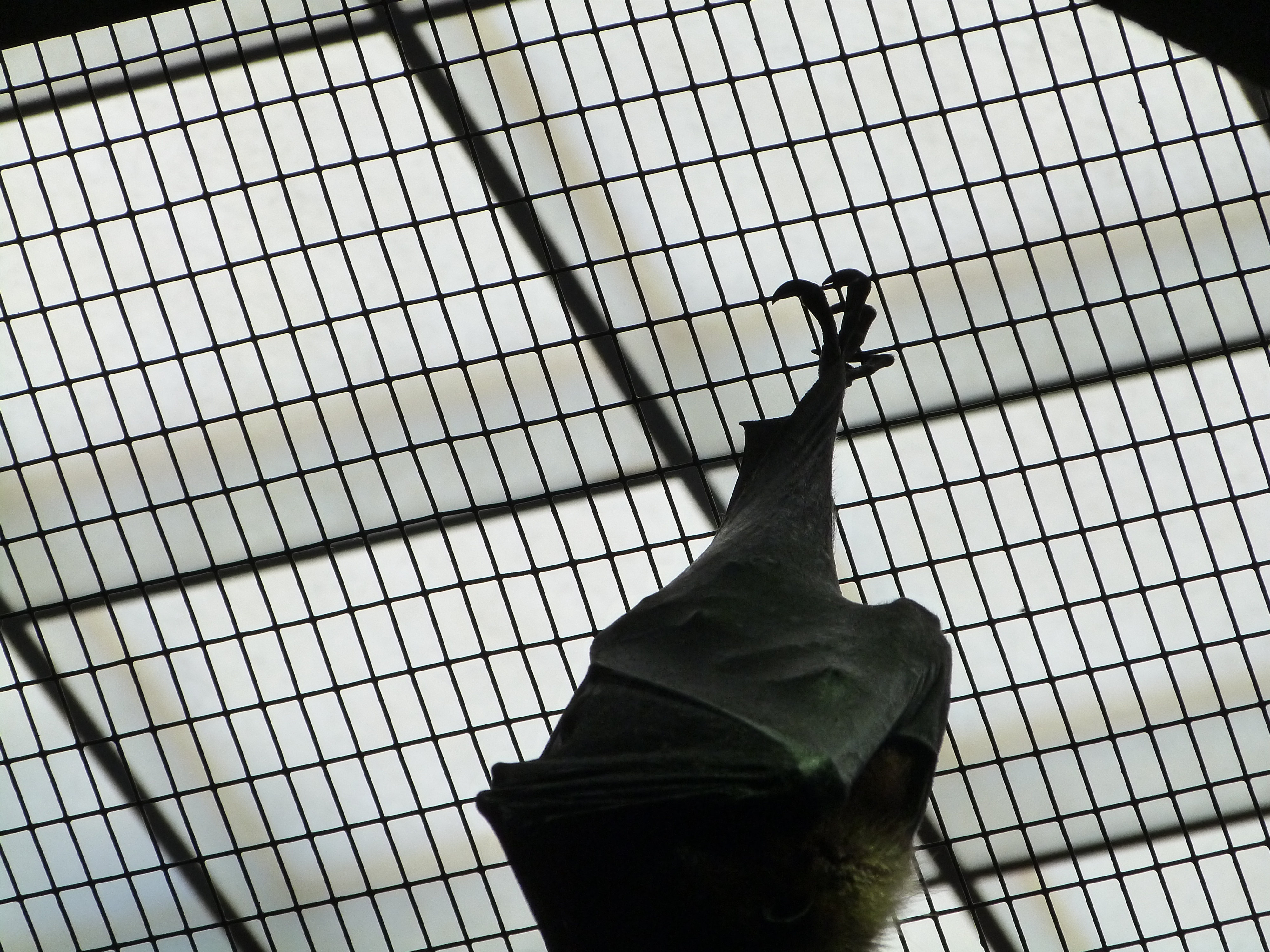
Giant Fruit Bat’s Foot amazed me

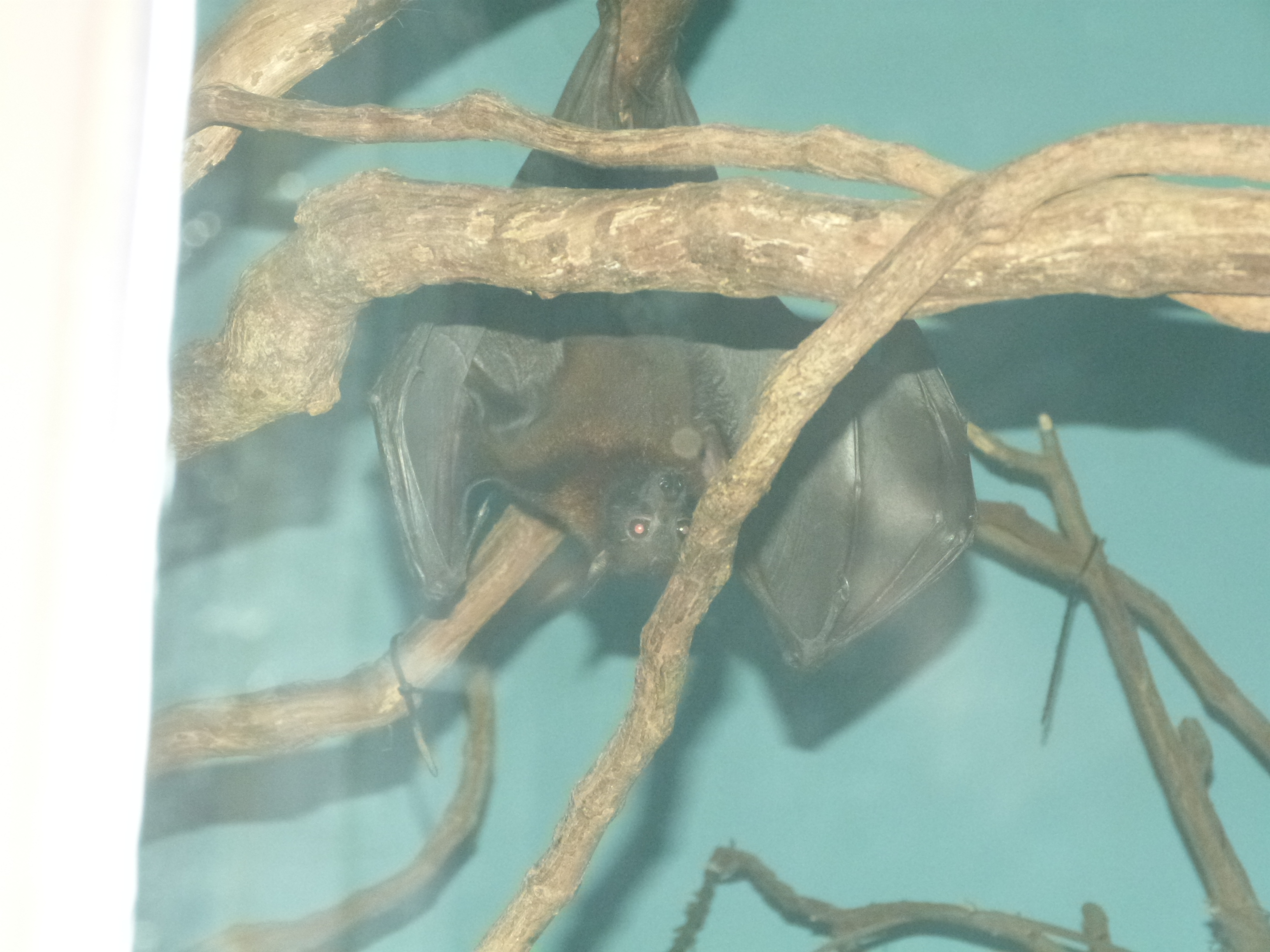
Giant Fruit Bat (Pteropus giganteus) or Indian Flying Fox is found in Bangladesh, China, India, the Maldives, Nepal, Pakistan, and Sri Lanka. Also known as the greater Indian fruit bat, it lives in mainly forests. It is a very large bat with a wingspan between 3 ft 10 in and 4 ft 10 in (1.2 and 1.5 m). It is nocturnal and feeds mainly on ripe fruits, such as mangoes and bananas, and nectar. This bat is gregarious and lives in colonies which can number a few hundred. Their offspring have no specific name besides ‘young’. They have one to two young.

The Indian flying fox lives in tropical forests and swamps, where a large body of water is nearby.

The way they were hanging up there amazed me. I zoomed in and took a photo of its foot. Also, they almost looked like a large cocoon hanging up there with the wings wrapped around them. The first photo, Dan caught one of them stretching.

*

*

Common Vampire Bat (Desmodus rotundus) Cincinnati Zoo 9-5-13 by Lee

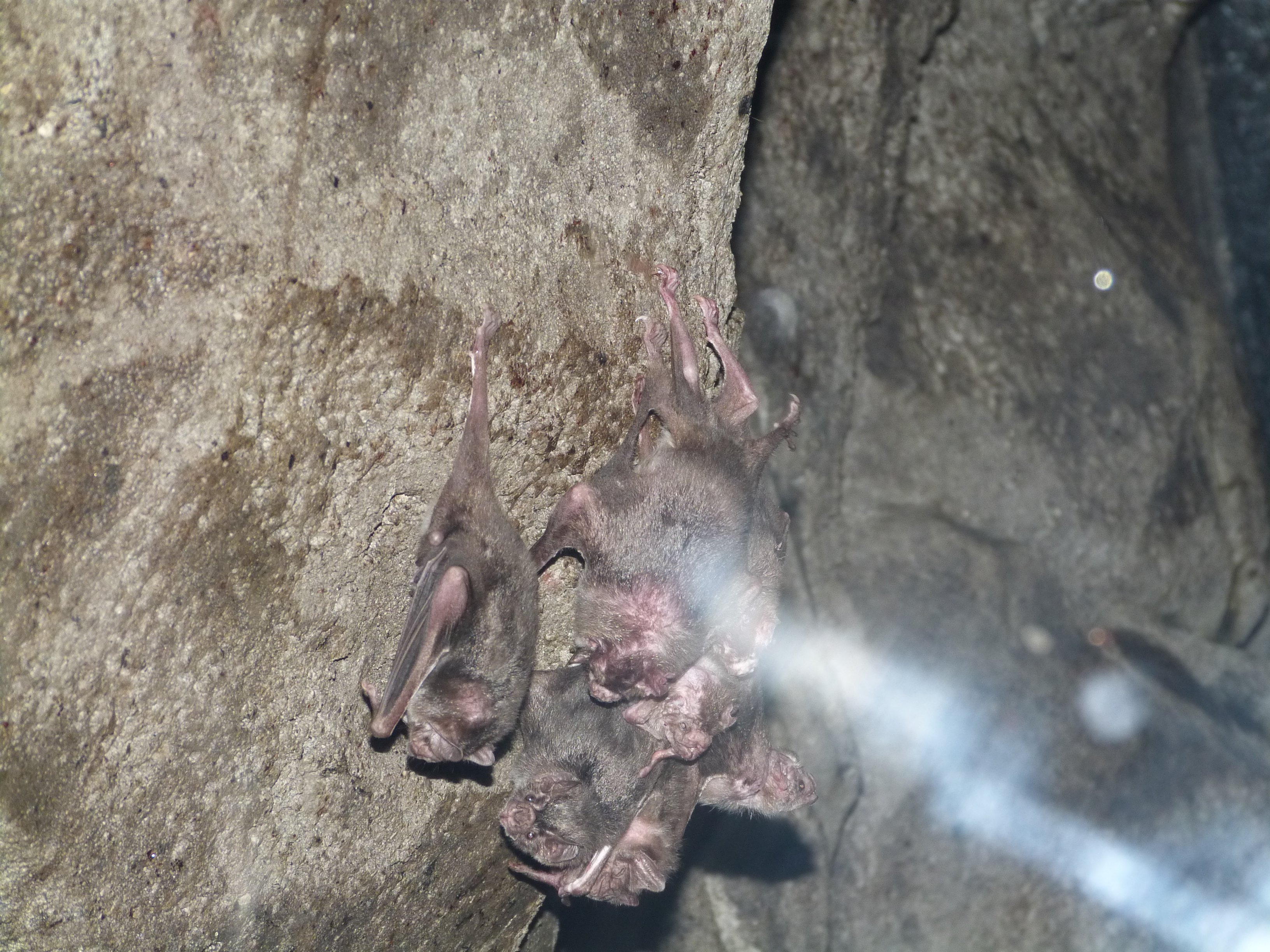
Common Vampire Bat Cincinnati Zoo by Lee (Shot through glass into a dark exhibit)

(Common) Vampire Bat (Desmodus rotundus) – The common vampire bat mainly feeds on the blood of livestock, approaching its prey at night while they are sleeping. It uses its razor-sharp teeth to cut open the skin of its hosts and laps up their blood with its long tongue. They are native to the New World, ranging from Mexico to Brazil, Chile, and Argentina.

The common vampire bat is short-haired, with silver-gray fur on its undersides, sharply demarcated from the darker fur on its back. It has small, somewhat rounded ears, a deeply grooved lower lip, and a flat, leaf-shaped nose. A well-developed, clawed thumb on each wing is used to climb onto prey and to assist the animal in take-off. The bat averages about 3.5 in (9 cm) long with a wingspan of 7 in (18 cm). It commonly weighs about 2 oz (57 grams), but its weight can double after a single feeding. The braincase is relatively large, but the snout is reduced to accommodate large incisors and canines. It has the fewest teeth among bats.

Common Vampire Bat - Cincinnati Zoo by Lee

Common Vampire Bat – Cincinnati Zoo by Lee

Common vampire bats have good eyesight. They are able to distinguish different optical patterns and may use vision for long-range orientation. These bats also have well-developed senses of smell and hearing: the cochlea is highly sensitive to low-frequency acoustics, and the nasal passages are relatively large. They emit echolocation signals orally, and thus fly with their mouths open for navigation.

Common Vampire Bat - Cincinnati Zoo by Lee

Common Vampire Bat – Cincinnati Zoo by Lee

*

(Wikipedia with editing)

*

*

Links:

Cincinnati Zoo

Giant Fruit Bats – Cincinnati Zoo

Indian Flying Fox – Wikipedia

Vampire Bats – Cincinnati Zoo

Common Vampire Bat – Wikipedia

Birds of the Bible – The Bat?

Birds of the Bible

*

Birds of the Bible – Shield

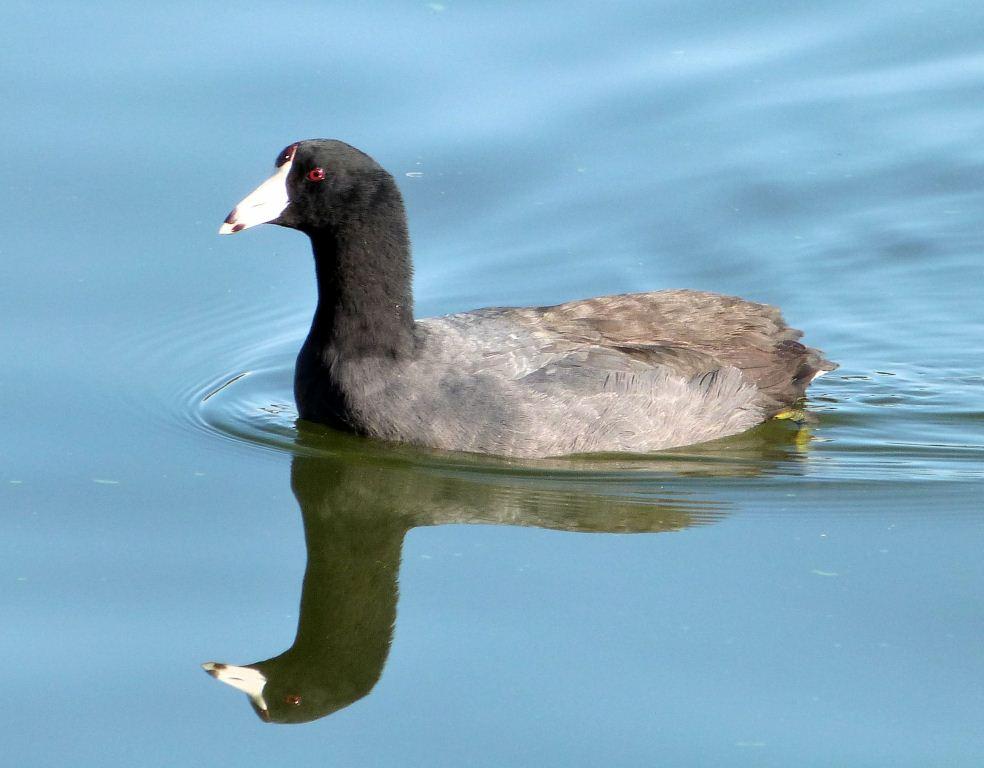
American Coot (Fulica americana) by Lee at Lk Morton

American Coot (Fulica americana) by Lee at Lk Morton

He shall cover thee with his feathers, and under his wings shalt thou trust: his truth shall be thy shield and buckler. (Psalm 91:4 KJV)

While working on the Coot article, the shield was mentioned. “Coots have prominent frontal shields or other decoration on the forehead…”

When the Lord created the Coots and many of the birds in the Rallidae – Rails, Crakes & Coots family, He gave them a frontal shield. Some Jacanas (Jacanidae – Jacanasalso have shields.

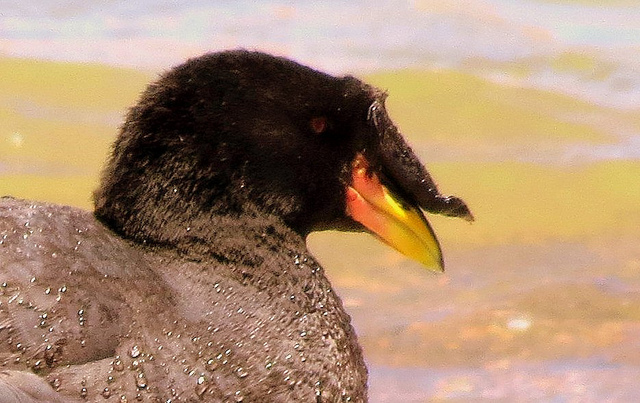
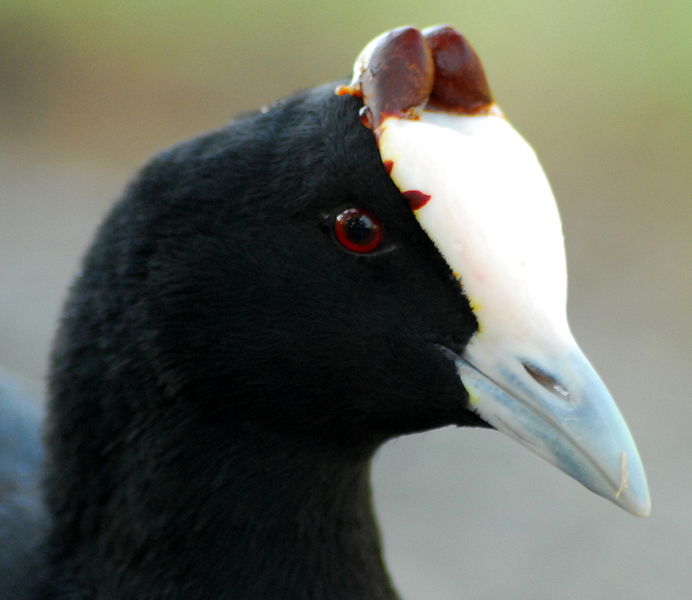
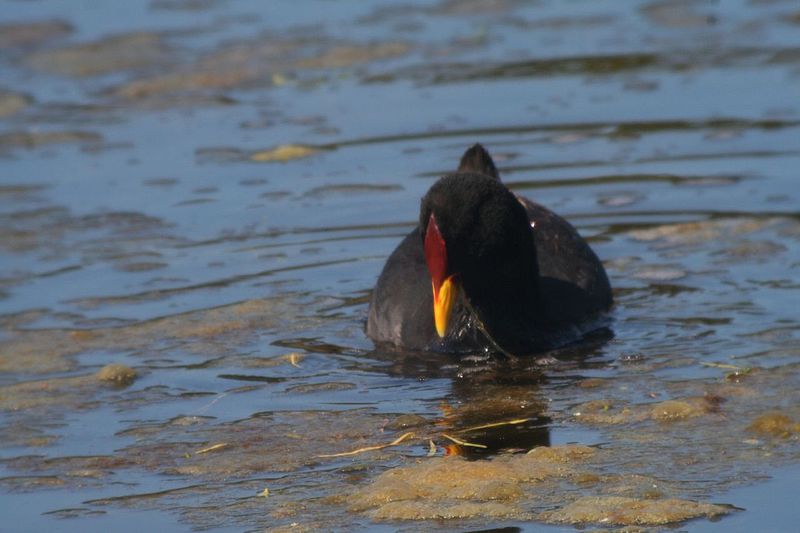
The Merriam-Webster Dictionary gives this definition: “a platelike prolongation of the base of the upper mandible over the forehead that is a characteristic feature of the coots and gallinules.”  A few coots and gallinules have a frontal shield, which is a fleshy rearward extension of the upper bill. The most complex frontal shield is found in the Horned Coot.

This slideshow requires JavaScript.


*
As you can see by the different photos, each species has a different shield, some similar, but others quite different.

Wikipedia says, “A shield is a type of personal armor, meant to intercept attacks, either by stopping projectiles such as arrows or redirecting a hit from a sword, mace, battle axe or similar weapon to the side of the shield-bearer.

Shields vary greatly in size, ranging from large panels that protect the user’s entire body to small models (such as the buckler) that were intended for hand-to-hand-combat use. Shields also vary a great deal in thickness; whereas some shields were made of relatively deep, absorbent, wooden planking to protect soldiers from the impact of spears and crossbow bolts, others were thinner and lighter and designed mainly for deflecting blade strikes.

Often shields were decorated with a painted pattern or an animal representation and these designs developed into systematized heraldic devices during high-medieval times for purposes of battlefield identification. ”

Ceremonial shield with mosaic decoration- Aztec or Mixtec-AD 1400-1521-In the British Museum ©WikiC

Ceremonial shield with mosaic decoration- Aztec or Mixtec-AD 1400-1521-In the British Museum ©WikiC

For our birds, I would think the decorated shields for identification seems the most logical. Since the Lord enjoys so much variety, we see it again displayed in these frontal shields.

At least 54 verses (depending on version) mention the word “shield” in the Bible. Psalm 91:4 above is providing refuge under feathers and wings and is protecting us with a shield of truth and faithfulness. Let’s look at some of the verses and just let His word encourage and challenge us to serve Him more.

The God of my rock; in him will I trust: he is my shield, and the horn of my salvation, my high tower, and my refuge, my saviour; thou savest me from violence. (2 Samuel 22:3 KJV)

But You, O LORD, are a shield about me, My glory, and the One who lifts my head. (Psalms 3:3 NASB)

Horned Coot (Fulica cornuta) ©©Flickr Gunnar Engblom

Horned Coot (Fulica cornuta) ©©Flickr Gunnar Engblom

Thou hast also given me the shield of thy salvation: and thy right hand hath holden me up, and thy gentleness hath made me great. (Psalms 18:35 KJV)

Our soul waiteth for the LORD: he is our help and our shield. (Psalms 33:20 KJV)

Red-knobbed Coot (Fulica cristata) Breeding ©WikiC

Red-knobbed Coot (Fulica cristata) Breeding ©WikiC

For the LORD God is a sun and shield: the LORD will give grace and glory: no good thing will he withhold from them that walk uprightly. (Psalms 84:11 KJV)

Ye that fear the LORD, trust in the LORD: he is their help and their shield. (Psalms 115:11 KJV)

Red-fronted Coot (Fulica rufifrons) ©WikiC

Red-fronted Coot (Fulica rufifrons) ©WikiC

Above all, taking the shield of faith, wherewith ye shall be able to quench all the fiery darts of the wicked. (Ephesians 6:16 KJV)

Are others able to identify us by our shield?

*

Wordless Birds

*

See:

Birds of the Bible

Rallidae – Rails, Crakes & Coots Family

Jacanidae – Jacanas Family

Birdwatching Term – Frontal Shield

*

Birds of the Bible – Gleaning’s Noah and the Birds

Mourning Dove (Zenaida macroura) by Quy Tran

Mourning Dove (Zenaida macroura) by Quy Tran

And of every living thing of all flesh you shall bring two of every sort into the ark, to keep them alive with you; they shall be male and female. (Gen 6:19 NKJV)

After computer problems last week, we are back up and running. I reloaded my e-Sword on to a new SSD drive and decided to see how fast the searches would be. Zip! Searching for the word “bird” in the Reference Library, I came across these interesting thoughts from “Gleanings In Genesis” by Arthur W. Pink

Noah, as a Type of Christ, is being discussed in this section and the reference to caring for the birds and animals of course caught my “birdwatching eye.”

From Gleanings in Genesis, Chapter 12, Noah A Type of Christ (excerpt):

“9. The successful issue of Noah’s work, seen in “the saving of his house” (Hebrews_11:7) reminds us of the language of Hebrews_3:6, “But Christ as a son over his own house” (Hebrews_3:6). But the type goes further: Noah’s work brings blessing to all creation as is seen from the fact that the animals and birds were also preserved in the ark. Observe how beautifully this is brought out in Genesis_8:1 —”And God remembered Noah, and every living thing, and all the cattle that was with him in the ark.” So, too, the work of Christ shall yet bring blessing to the beasts of the field. At His return to the earth “the creation itself also shall be delivered from the bondage of corruption into the glorious liberty of the children of God” (Romans_8:21).

Spotted Nightingale-Thrush (Catharus dryas) ©WikiC

Spotted Nightingale-Thrush (Catharus dryas) ©WikiC

10. In Genesis_6:19 we have a hint of the animal creation being subject to Noah “And of every living thing of all flesh, two of every sort shalt thou bring into the ark, to keep them alive with thee.” We have a passing glimpse of the yet future fulfillment of this part of the type in Mark_1:13 —”And He was there in the wilderness forty days tempted of Satan; and was with the wild beasts.” Noah’s headship over all creatures comes out even more clearly in Genesis_9:2 —”And the fear of you and the dread of you shall be upon every beast of the earth, and upon every fowl of the air, upon all that moveth upon earth, and upon all the fishes of the sea; into your hand are they delivered.” How this reminds us of Psalm 8, which speaks of the future dominion of the Son of Man. “For Thou hast made Him a little lower than the angels, and hast crowned Him with glory and honor. For thou madest Him to have dominion over the works of Thy hands; Thou hast put all things under His feet (compare Hebrews_2:8), “But now we see not yet all things put under Him, all sheep and oxen, yea, and the beasts of the field; the fowl of the air and the fish of the sea!” This same thought is repeated in the Genesis narrative again and again as if with deliberate emphasis. When we read of the animals entering the Ark we are told “They went in unto Noah (not unto Noah and his family) into the Ark,” and then we are told “And the Lord shut him (not ‘them’) in” (Genesis_7:15-16). And again, on leaving the ark we read that God said unto Noah, “Every moving thing that liveth shall be meat for you; even as the green herb have I given you all things” (Genesis_9:3). So Christ is “the Heir of all things” (Hebrews_1:2).

Interesting House Finch at feeder

Interesting House Finch at feeder

11. In Gen_6:21 we find Noah presented as the great food-provider: “And take thou unto thee of all food that is eaten, and thou shalt gather it to thee; and it shall be for food for thee, and for them.” We need hardly say that this finds its complement in Christ the Bread of Life. He is God’s Manna for our souls. He is the Shewbread which was eaten by Aaron and his sons (Leviticus_24:9). He is the Old Corn of the land (Joshua_5:11). In short, it is only as we feed upon Christ as He is presented unto us in the written Word that our spiritual life is quickened and nourished.

He does great things past finding out, Yes, wonders without number. (Job 9:10 NKJV)

We have a wonderful Creator, Sustainer and Saviour in the Lord Jesus Christ. Through the use of “Types,” like Noah, and illustrations with birds and other objects, it helps us better understand many things that are beyond our grasp or understanding at times.

(Spelling of Books and bolding are mine.)

See:

Birds of the Bible

Gospel Presentation

*

Birds Of The Bible – Clinging Birds

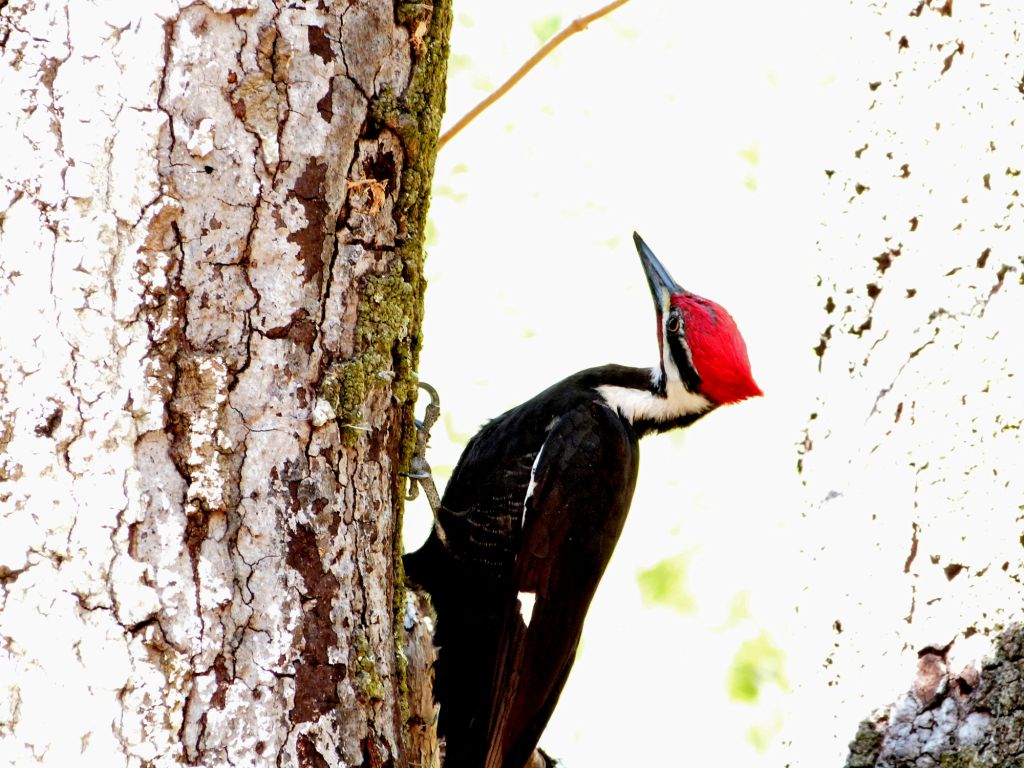
Pileated Woodpecker by Lee

Pileated Woodpecker at Circle B by Lee

But you are to cling to the LORD your God, as you have done to this day. (Joshua 23:8 NASB)

While finishing the last two chapters of Joshua, I came across the verse above. I immediately pictured a Woodpecker “clinging” to a tree. Then the following picture also came to mind. What can we learn about our “clinging birds” and us “clinging to the Lord”?

Brown-headed Barbet (Megalaima zeylanica) by Nikhil Devasar

Brown-headed Barbet (Megalaima zeylanica) by Nikhil Devasar

Woodpeckers were created with an ability to cling to trees with the help of the way the toes are arranged on their feet. They also use their stiffened tail feathers to keep them on the tree.”Woodpeckers, piculets and wrynecks all possess zygodactyl feet. Zygodactyl feet consist of four toes, the first (hallux) and the fourth facing backward and the second and third facing forward. This foot arrangement is good for grasping the limbs and trunks of trees. Members of this family can walk vertically up a tree trunk, which is beneficial for activities such as foraging for food or nest excavation. In addition to the strong claws and feet, woodpeckers have short strong legs. This is typical of birds that regularly forage on trunks. The tails of all woodpeckers except the piculets and wrynecks are stiffened, and when the bird perches on vertical surfaces, the tail and feet work together to support it.” (Wikipedia)

Bird Feet ©WikiC

Bird Feet ©WikiC

The following video from explorationfilm has information about the feet and tail of Woodpeckers at the beginning. The rest of the video is very interesting also.

*

*

Other birds also, like the Barbets can do some clinging also. “Nine families of largely arboreal birds make up the order Piciformes, the best-known of them being the Picidae, which includes the woodpeckers and close relatives. The Piciformes contain about 67 living genera with a little over 400 species, of which the Picidae (woodpeckers and relatives) make up about half.

In general, the Piciformes are insectivorous, although the barbets and toucans mostly eat fruit and the honeyguides are unique among birds in being able to digest beeswax (although insects make up the bulk of their diet). Nearly all Piciformes have parrot-like zygodactyl feet—two toes forward and two back, an arrangement that has obvious advantages for birds that spend much of their time on tree trunks. An exception are a few species of three-toed woodpeckers. The jacamars aside, Piciformes do not have down feathers at any age, only true feathers. They range in size from the Rufous Piculet at 8 centimetres in length, and weighing 7 grams, to the Toco Toucan, at 63 centimetres long, and weighing 680 grams. All nest in cavities and have altricial young.” (Wikipedia)

Short-toed Treecreeper (Certhia brachydactyla) ©WikiC

Short-toed Treecreeper (Certhia brachydactyla) ©WikiC

Another group of birds that “cling” are the Tree Creepers. Treecreepers measure from 12 to 18 centimetres in length. Their bills are gently down-curved and rather long, used for probing bark for insects and spiders. They often climb up tree trunks in a helical path, hopping with their feet together; their toes are long and tipped with strongly curved claws for gripping. The longer tails of the Certhia treecreepers are stiffened to use as a prop while climbing, but those of the Spotted Creeper are shorter and not stiffened. Their songs and calls are thin and high-pitched.

Most species of treecreeper occur in the Palearctic and Indomalaya ecozones, from Western Europe to Japan and India. One species occurs in North America from Alaska to Nicaragua and another has a discontinuous distribution in sub-Saharan Africa and India. All species of treecreeper are found in forest and woodland habitats. The more northerly species are partly migratory, and those found in warmer climates are thought to be resident, although information is lacking for many species.

Brown-headed Nuthatch (Sitta pusilla) ©WikiC

Brown-headed Nuthatch (Sitta pusilla) ©WikiC

One more well-known bird that clings to trees is the Nuthatch. Not only does he cling, but goes up and down the trees head first. Nuthatches are compact birds with short legs, compressed wings, and square 12-feathered tails. They have long, sturdy, pointed bills and strong toes with long claws.

We know birds can cling, how about us? When I searched the KJV on my e-Sword, the word “cling” did not show up in any verses. Switching to the NASB, which I had been reading, “cling” was found in fourteen (14) verses. Here are some of them:

You shall fear the LORD your God; you shall serve Him and cling to Him, and you shall swear by His name. “He is your praise and He is your God, who has done these great and awesome things for you which your eyes have seen. (Deuteronomy 10:20-21 NASB)

Blond-crested Woodpecker (Celeus flavescens) ©WikiC

Blond-crested Woodpecker (Celeus flavescens) ©WikiC

You shall follow the LORD your God and fear Him; and you shall keep His commandments, listen to His voice, serve Him, and cling to Him. (Deuteronomy 13:4 NASB)

Northern Flicker (Colaptes auratus) Red-shafted ©WikiC

Northern Flicker (Colaptes auratus) Red-shafted ©WikiC

I have chosen the faithful way; I have placed Your ordinances before me. I cling to Your testimonies; O LORD, do not put me to shame! I shall run the way of Your commandments, For You will enlarge my heart. (Psalms 119:30-32 NASB)

White-barred Piculet (Picumnus cirratus) ©©LeeKip

White-barred Piculet (Picumnus cirratus) ©©LeeKip

Let love be without hypocrisy. Abhor what is evil; cling to what is good. Be devoted to one another in brotherly love; give preference to one another in honor;
(Romans 12:9-10 NASB)

These are all great ways we can CLING to the Lord.

The word cling is translated several ways in our original verse:

But you are to cling to the LORD your God, as you have done to this day. (Joshua 23:8 NASB)

KJV – But cleave unto the LORD your God
AKJV – But hold to the LORD your God
BBE – But be true to the Lord your God
Bishops – But sticke fast vnto the Lorde your God,
CEV – Be as faithful to the LORD
ERV – You must continue to follow the LORD your God
GW – But you must be loyal to the LORD your God
MSG – Hold tight to GOD, your God
NET – But you must be loyal to the LORD your God

KJV+ – But cleave H1692
H1692
דּבק
dâbaq
daw-bak’
A primitive root; properly to impinge, that is, cling or adhere; figuratively to catch by pursuit: – abide, fast, cleave (fast together), follow close (hard, after), be joined (together), keep (fast), overtake, pursue hard, stick, take.

They are all good words and may we learn to “cling” to our Lord, just as the birds “cling” to the trees.

“But ask the animals — they will teach you — and the birds in the air — they will tell you; (Job 12:7 CJB)

O taste and see that the LORD is good: blessed is the man that trusteth in him. (Psalms 34:8 KJV)

*

See also:

Birds of the Bible

PICIFORMES – Woodpeckers and Allies

Picidae (woodpeckers and relatives)

Certhiidae – Treecreepers

Sittidae – Nuthatches

*

Birds of the Bible – Hawks and Wisdom

Short-tailed Hawk (Buteo brachyurus) by Daves BirdingPix

Short-tailed Hawk (Buteo brachyurus) by Daves BirdingPix

Is it by your wisdom [Job] that the hawk soars and stretches her wings toward the south [as winter approaches]? (Job 39:26 AMP)

In the Birds of the Bible – Hawk Migration, written in 2008, this verse was introduced. Job was being addressed and the questions started coming:

THEN THE Lord answered Job out of the whirlwind and said, Who is this that darkens counsel by words without knowledge? [Job 35:16.] Gird up now your loins like a man, and I will demand of you, and you declare to Me. (Job 38:1-3 AMP)

Questions of Where…?; Who…?; When…?; Have you commanded…, explored…, entered…?; Can you …?; Do you…? etc. These question run all through Job 38 and 39. That is where we find our question about the hawk.

Sharp-shinned Hawk (Accipiter striatus) ©USFWS

Sharp-shinned Hawk (Accipiter striatus) ©USFWS

Commentary Quotes on Job 39:26 (From my e-Sword)

Barnes – “Doth the hawk fly by thy wisdom – The appeal here is to the hawk, because it is among the most rapid of the birds in its flight. The particuIar thing specified is its flying, and it is supposed that there was something special in that which distinguished it from other birds. Whether it was in regard to its speed, to its manner of flying, or to its habits of flying at periodical seasons, may indeed be made a matter of inquiry, but it is clear that the particular thing in this bird which was adapted to draw the attention, and which evinced especially the wisdom of God, was connected with its flight. The word here rendered “hawk,” (נץ nêts) is probably generic, and includes the various species of the falcon or hawk tribe, as the jet-falcon, the goshawk, the sparrow, hawk, the lanner, the saker, the hobby, the kestril, and the merlin. Not less than one hundred and fifty species of the hawk, it is said, have been described, but of these many are little known, and many of them differ from others only by very slight distinctions.

They are birds of prey, and, as many of them are endowed with remarkable docility, they are trained for the diversions of falconry – which has been quite a science among sportsmen. The falcon, or hawk, is often distinguished for fleetness. One, belonging to a Duke of Cleves, flew out of Westphalia into Prussia in one day; and in the county of Norfolk (England) one was known to make a flight of nearly thirty miles in an hour. A falcon which belonged to Henry IV. of France, having escaped from Fontainebleau, was found twenty-four hours after in Malta, the space traversed being not less than one thousand three hundred and fifty miles; being a velocity of about fifty-seven miles an hour, on the supposition that the bird was on the wing the whole time. It is this remarkable velocity which is here appealed to as a proof of the divine wisdom. God asks Job whether he could have formed these birds for their rapid flight. The wisdom and skill which has done this is evidently far above any that is possessed by man.

And stretch her wings toward the south – Referring to the fact that the bird is migratory at certain seasons of the year. It is not here merely the rapidity of its flight which is referred to, but that remarkable instinct which leads the feathered tribes to seek more congenial climates at the approach of winter. In no way is this to be accounted for, except by the fact that God has so appointed it. This great law of the winged tribes is one of the clearest proofs of divine wisdom and agency.”

Grey Goshawk ( novaehollandiae) by Ian 1

Grey Goshawk ( novaehollandiae) by Ian

Pulpit Commentary – ” Doth the hawk fly (or, soar) by thy wisdom? The hawk”s strength of wing is extraordinary, and one of the greatest of natural marvels. Can Job claim to have contrived it? Many as have been the attempts made, human ingenuity has not yet devised anything that can fly. And stretch her wings toward the south? Migrate, i.e. , when winter approaches, to the warmer southern regions. Few things in nature are more remarkable than the instinct of migratory birds.

Red Sholdered Hawk by Ray

Red Sholdered Hawk by Ray

Matthew Henry – “All these beautiful references to the works of nature, should teach us a right view of the riches of the wisdom of Him who made and sustains all things. The want of right views concerning the wisdom of God, which is ever present in all things, led Job to think and speak unworthily of Providence.

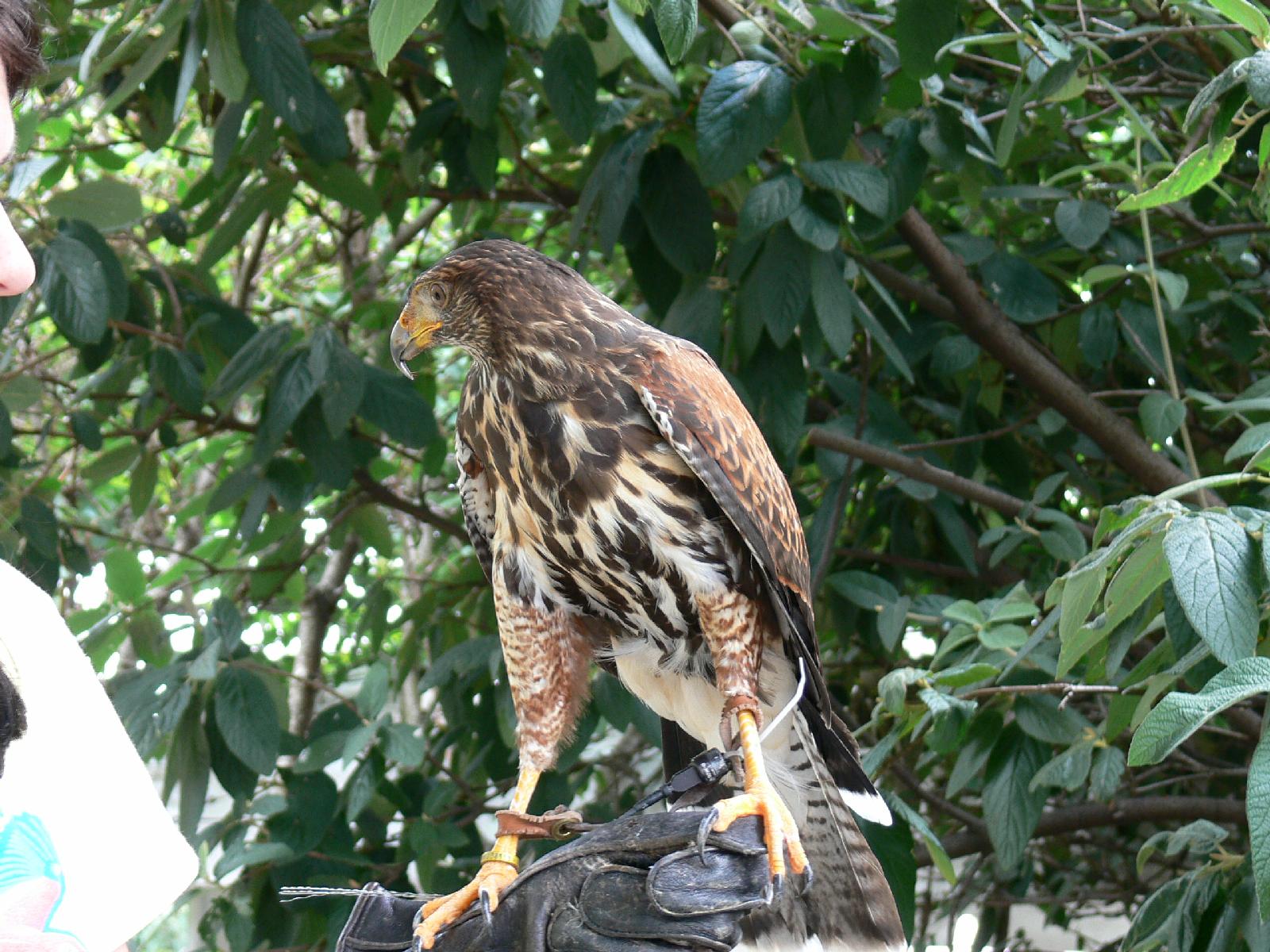
Harris's Hawk at NA by Lee

Harris’s Hawk at National Aviary by Lee

Wesley – Fly – So strongly, constantly, unweariedly, and swiftly. South – At the approach of winter, when wild hawks fly into warmer countries, as being impatient of cold. The birds of the air are proofs of the wonderful providence of God, as well as the beasts of the earth. God instances in two stately ones.

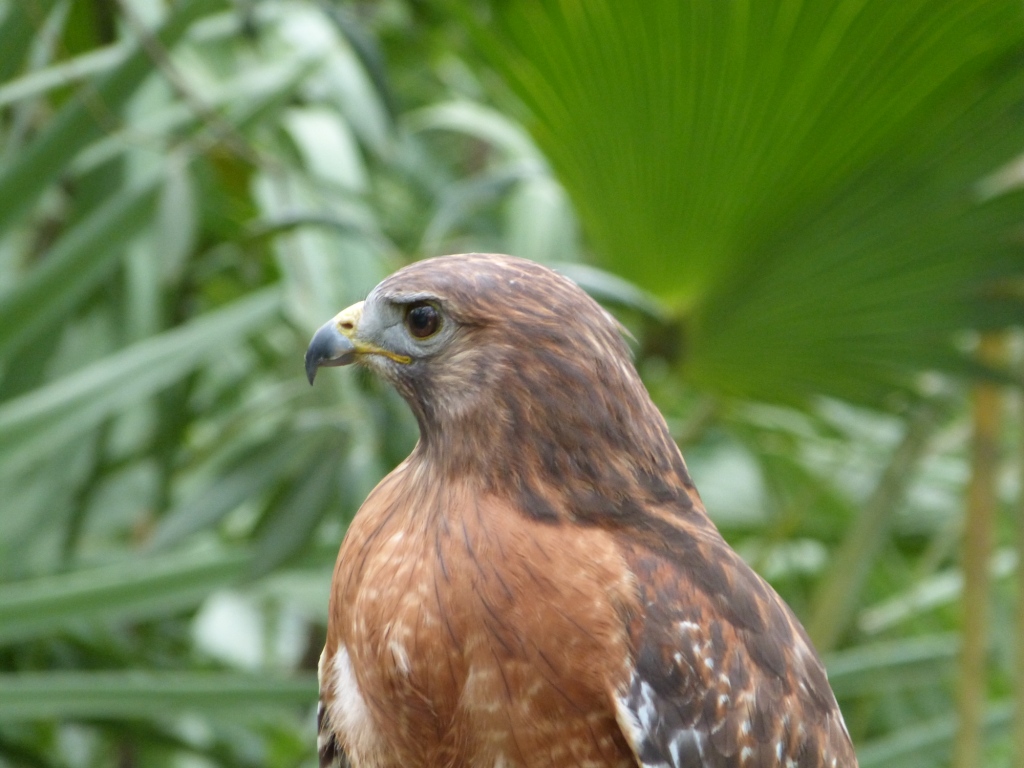
Red-shouldered Hawk (Buteo lineatus) Brevard Zoo by Lee

Red-shouldered Hawk (Buteo lineatus) Brevard Zoo by Lee

Lange – “… If even the book of nature transcends our ability to decipher it fully, how much more incomprehensible and mysterious will the book of Holy Scripture be for us.—von Gerlach: The fundamental thought of these representations which God here puts forth is that only He who can create and govern all things, who superintends everything and adjusts all things in their relation to each other, can also comprehend the connection of human destinies. Inasmuch however as feeble short-sighted man cannot understand and fathom the created things which are daily surrounding him, how can he assume to himself any part of God’s agency in administering the universe?”

Red-tailed Hawk by Ray

Red-tailed Hawk by Ray

Believers Bible Commentary – “39:26-30 Did Job give wisdom to the hawk to migrate south? And was he the one who taught the eagle to fly, to nest on the high rocky crag, to spy out carrion from a great distance, and to train its young ones to find their food?”

Red-backed Hawk - Argentina

Red-backed Hawk – Argentina

Biblical Illustrator – “The higher teaching of Nature The intent of all these beautiful references to the works of Nature is to teach us, from the wisdom, skill, and curious designs discoverable in the formation and the instincts of various birds and beasts, to impress ourselves with a worthy notion of the “riches of the wisdom” of Him that made and sustaineth all things. These impressions we are to carry with us when we consider the dealings of God in the way of Providence, and in His ordering of all events, as the great Governor of the universe. Can we suppose that there is anything wrong here, or without the design of the most consummate wisdom, when He has put forth so much of His skill and contrivance in the formation and ordering of these inferior animals? May He not be trusted to do all things well, concerning the destiny of man, the greatest of His works? In this higher economy, are we to suppose there is less wisdom and design to be manifested, than in this, which displays itself so visibly in these inferior works of His hand? Thus would our blessed Lord increase the confidence of His disciples in His providential care of them, by observing, “Are not two sparrows sold for a farthing, and not one of them falleth to the ground without your Father?” “Fear not,” “are ye not much better than they?—of more value than many sparrows.” It was the want of such due impressions concerning the designing wisdom of God, ever present, and ever operating in all things, that had led Job to think and speak unworthily of that dispensation of Providence under which he now lived, as being altogether arbitrary, discovering no design and discriminating wisdom, nor manifesting the righteous Governor of all things….”

If any of you lack wisdom, let him ask of God, that giveth to all men liberally, and upbraideth not; and it shall be given him. (James 1:5 KJV)

My the Lord continue his blessings as we observe His Wisdom through the birdwatching of His Hawks.

See also:

*

Birds Of The Bible – Swallow-tailed Kites

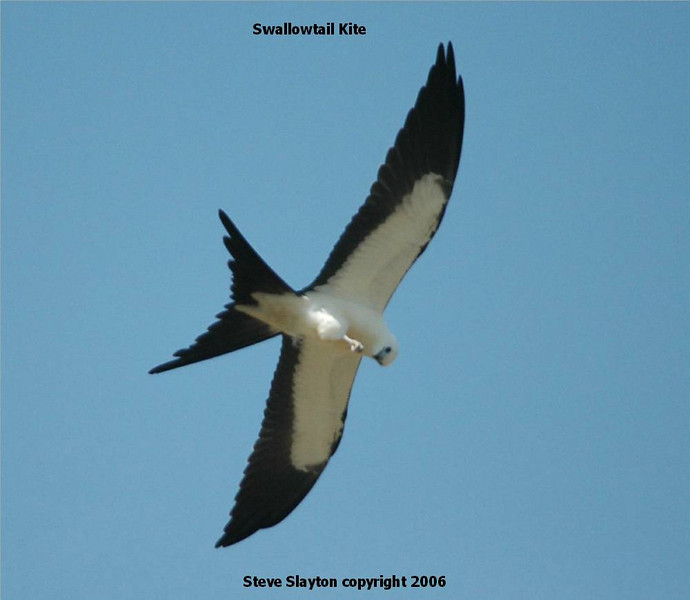
Swallow-tailed Kite by S Slayton

Swallow-tailed Kite by S Slayton

and the red kite, the falcon, and the kite in their kinds, (Deuteronomy 14:13 NASB)

In the Birds of the Bible – Hidden Covenant Part 3, I mistakenly placed this photo of a Swallow-tailed Kite instead of a Swallow. I have since fixed my mistake. A J was talking about the Swallows observing the time of their coming and he used Jeremiah 8:7.

Even the stork in the heavens Knows her appointed times; And the turtledove, the swift, and the swallow Observe the time of their coming. But My people do not know the judgment of the LORD. (Jeremiah 8:7 NKJV)

The reason I mixed them up is because right now, in this area, the Swallow-tailed Kites are being spotted. I have seen a single one three times and just the other day, Dan and I had two of them skim over the top of trees, right in front of us. They have been in the area for a month or so, and soon they will move on again. They “Observe the time of their coming.” Thus the mistake on my part.

They may be one of the Birds of Prey, but they were beautifully created by the Lord. They are so graceful and enjoyable to watch. I am always amazed at the Creator’s use of such variety in the birds and in all the other neat things around us.

Who is like You, O LORD, among the gods? Who is like You, glorious in holiness, Fearful in praises, doing wonders? (Exodus 15:11 NKJV)

According to the Audubon WatchList, “Two subspecies found in the Americas. Northern subspecies (Elanoides forficatus forficatus) breeds in small sections of seven southeastern U.S. states and in southern Mexico. Members of this group migrate to South America in the late summer. Southern subspecies (Elanoides forficatus yetapa) found through much of South America. The estimated U.S. population of approximately 10,000 birds now breeds in fragmented populations from South Carolina south to Florida and west to Louisiana/Texas border with largest known populations in northern Florida. Formerly bred north to Minnesota and west through Texas to Mexico. Significant populations remain in Florida and along the Pascagoula River in Mississippi.”

I really enjoy seeing these Kites because you just have to be looking in the right direction at the right time. Every time they have been spotted by us, they just sort of “appear” over the tops of the trees. They skim so low, that when they come over you, you either see them or you don’t.

Kites are of course one of our Birds of the Bible – (Glede and Kites). They are mentioned twice in Scripture in the list of “unclean” birds in Leviticus 11:14 and Deuteronomy 14:13. Each time “after its kind” is given. So, our Swallow-tailed Kite is one of those kinds and would like to introduce you to this amazing bird that is so neat to watch flying. When they spread that tail of theirs, it is just super neat.

Swallow-tailed Kite (Elanoides forficatus) ©Wikipedia

Swallow-tailed Kite (Elanoides forficatus) ©Wikipedia

(Sounds from xeno-canto)

The Swallow-tailed Kite is a member of the Accipitridae Family (Kites, Hawks & Eagles) Family in the Order Accipitriformes. They are considered Abundance Common according the Thayer Birding software.

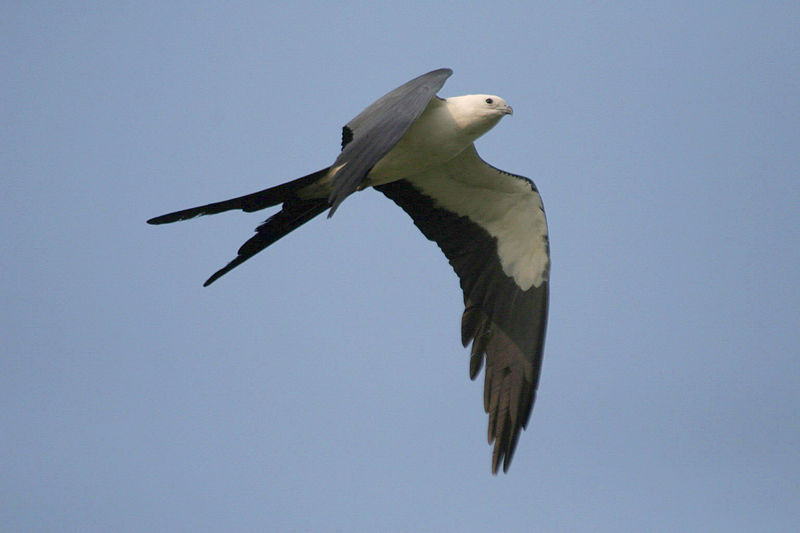
They are 24 inches (60 cm) with a very long black forked tail, white head, chest, belly and leading portion of underwing. Their flight feathers are black and their back is also black.

They are a medium-sized, graceful, long-winged, long-tailed hawk with pointed wings, a short, dark, hooked bill. The males and females are similar.

Adults have a long, deeply forked tail. white head, neck, chest, underwing coverts, belly, and undertail coverts, a slate gray back and upperwings, black tail and flight feathers. Whereas the immature is duller than adult with fine streaks on head and breast and has a shorter, less deeply-forked tail than adult.

Thayer also says of their habitat and behavior – ” Wet open woodlands, bottomlands, wooded river swamps, marshes, wetlands, and along rivers, ponds and lakes. Agile and graceful in flight. Eats in flight by bending head and neck under body to eat prey held in talon. Will drink in flight, much like a swallow. Gregarious. Will sweep low over open fields and grasslands to catch food or soar very high for flying insects.”

Swallow-tailed Kite (Elanoides forficatus) by Africaddict

Swallow-tailed Kite (Elanoides forficatus) by Africaddict

The Swallow-tails like to breed in “Lowland forest, especially swampy areas extending into open woodland. 1 brood. Mating system is monogamous. Displays are In flight: easy sailing, curving chase often over water. On perch: mutual approach on horizontal limb, face-off, female quickly turns or backs under limb. They also do courtship feeding.

The nest is usually in treetop concealed by thick foliage and they place it on a foundation of preceding year’s nest. It consist of sticks, twigs, moss, pine needles, leaves, lichen. Lined with fine materials, few feathers. Both sexes help with nest construction.

The eggs are white, marked with browns, occasionally lavender, often concentrated at end. 1.8” (47 mm). Both sexes incubate.  with Incubation taking 28 days. Development is semialtricial (immobile, downy, eyes open, fed). Young are able to fly after 36-42 days. Both sexes tend young.

The spend their winters from Colombia and Venezuela S. Marsh drainage, deforestation, and shooting are responsible for reduction in population and range.

Miscellaneous notes; Occasionally nest in loose colonies of a few pairs. Bathe and drink by skimming water surface like swallow. Occasionally soar at great heights. Up to 200 pieces used in nest, carried individually, may require up to 800 miles of flight. Formerly known as American Swallow-tailed Kite; changed by AOU in 1996.

From Thayer Birding Software, The Birder’s Handbook, Wikipedia, and other internet sources.

See also:

*