World’s Fastest Seagull

Lesser Black-backed Gull (Larus fuscus) ©

Lesser Black-backed Gull (Larus fuscus) ©

‘World’s fastest seagull’ stuns experts

Jul. 30, 2019 – 1:26 – A lesser black-backed seagull, is stunning experts with its apparent speed, traveling more than 500 miles in just seven days. The seagull which was ringed on Burhou in the Channel islands on July 17, was later found at Ares Beach in A Coruna Spain, on July 24. Alderney Bird Observatory warden John Horton said that the distance traveled by the bird in such a short period of time was unusual.

Here is a link attached to this clip:

https://video.foxnews.com/v/6065781298001/#sp=show-clips

Lesser Black-backed Gull (Larus fuscus) (Heuglin's)

Lesser Black-backed Gull (Larus fuscus) (Heuglin’s)

The lesser black-backed gull was one of the many species originally described by Linnaeus in his 18th-century work, Systema Naturae, and it still bears its original name of Larus fuscus. The scientific name is from Latin. Larus appears to have referred to a gull or other large seabird, and fuscus meant black or brown.

“Will you set your eyes upon wealth, when [suddenly] it is gone? For riches certainly make themselves wings, like an eagle [ or Lesser-Black-backed Gull] that flies toward the heavens.” (Proverbs 23:5 AMP)

Lesser Black-backed Gull – All About Birds

Lesser Black-backed Gull – eBird

Lesser Black-backed Gull – Wikipedia

Bird Friends – McGuffey’s Third Reader

Sparrow on Branch ©©Bing

Sparrows on Branch ©©Bing

LESSON XVI. BIRD FRIENDS.

1. I once knew a man who was rich in his love for birds, and in their love for him. He lived in the midst of a grove full of all kinds of trees. He had no wife or children in his home.

2. He was an old man with gray beard, blue and kind eyes, and a voice that the 49 birds loved; and this was the way he made them his friends.

3. While he was at work with a rake on his nice walks in the grove, the birds came close to him to pick up the worms in the fresh earth he dug up. At first, they kept a rod or two from him, but they soon found he was a kind man, and would not hurt them, but liked to have them near him.

Eurasian Tree Sparrow (Passer montanus) by Nikhil Devasar

4. They knew this by his kind eyes and voice, which tell what is in the heart. So, day by day their faith in his love grew in them.

5. They came close to the rake. They would hop on top of it to be first at the worm. They would turn up their eyes into his when he spoke to them, as if they said, “He is a kind man; he loves us; we need not fear him.”

6. All the birds of the grove were soon his fast friends. They were on the watch for him, and would fly down from the green tree tops to greet him with their chirp.

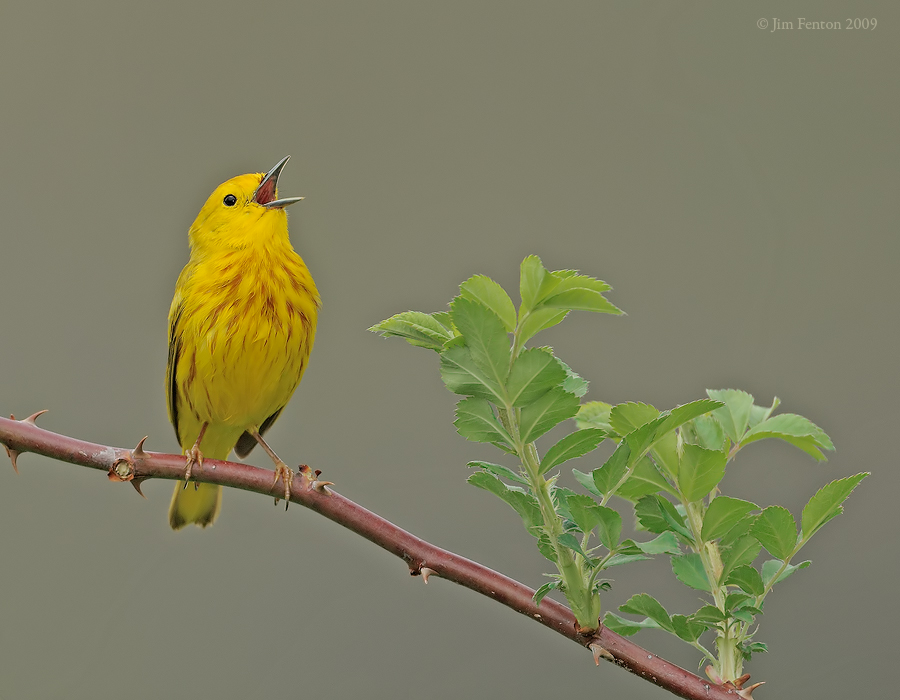
American Yellow Warbler (Dendroica aestiva) singing by J Fenton

American Yellow Warbler (Dendroica aestiva) singing by J Fenton

7. When he had no work on the walks to do with his rake or his hoe, he took crusts of bread with him, and dropped the crumbs on the ground. Down they would dart on his head and feet to catch them as they fell from his hand.

8 He showed me how they loved him. He put a crust of bread in his mouth, with one end of it out of his lips. Down they came like bees at a flower, and flew off with it crumb by crumb.

House Sparrow (Passer domesticus) Five ©Indiatoday

House Sparrow (Passer domesticus) Five ©Indiatoday

9. When they thought he slept too long in the morning, they would fly in and sit on the bedpost, and call him up with their chirp.

10. They went with him to church, and while he said his prayers and sang his hymns in it, they sat in the trees, and sang their praises to the same good God who cares for them as he does for us.

Indigo Bunting ©WilliamWisePhoto.com

11. Thus the love and trust of birds were a joy to him all his life long; and such love and trust no boy or girl can fail to win with the same kind heart, voice, and eye that he had.

Adapted from Elihu Burritt.

ellow Warbler singing by J Fenton

Yellow Warbler singing by J Fenton

With my mouth I will give thanks abundantly to the LORD; And in the midst of many I will praise Him.
(Psalms 109:30 NASB)

Title: McGuffey’s Third Eclectic Reader, Author: William Holmes McGuffey
Release Date: January 23, 2005 [EBook #14766]

McGuffey’s Third Grade Reader

Bible Birds – Sparrows

Wordless Birds

Avian and Attributes – Strong

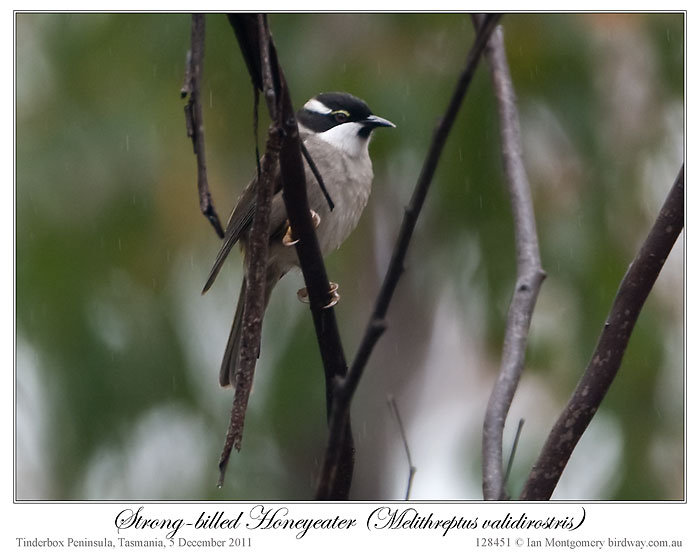
Strong-billed Honeyeater (Melithreptus validirostris) by Ian 2

Strong-billed Honeyeater (Melithreptus validirostris) by Ian

“Lift up your heads, O ye gates; and be ye lift up, ye everlasting doors; and the King of glory shall come in. Who is this King of glory? The LORD strong and mighty, the LORD mighty in battle.” (Psalms 24:7-8 KJV)

STRONG
Strong, a. [G., L. The sense of the radical word is to stretch, strain, draw, and probably from the root of stretch and reach.]

Having physical active power, or great physical power; having the power of exerting great bodily force; vigorous. A patient is recovering from sickness, but is not yet strong enough to walk. A strong man will lift twice his own weight.
That our oxen may be strong to labor. Psa 144.
Having physical passive power; having ability to bear or endure; firm; solid; as a constitution strong enough to bear the fatigues of a campaign.
Well fortified; able to sustain attacks;
Having great wealth, means or resources;

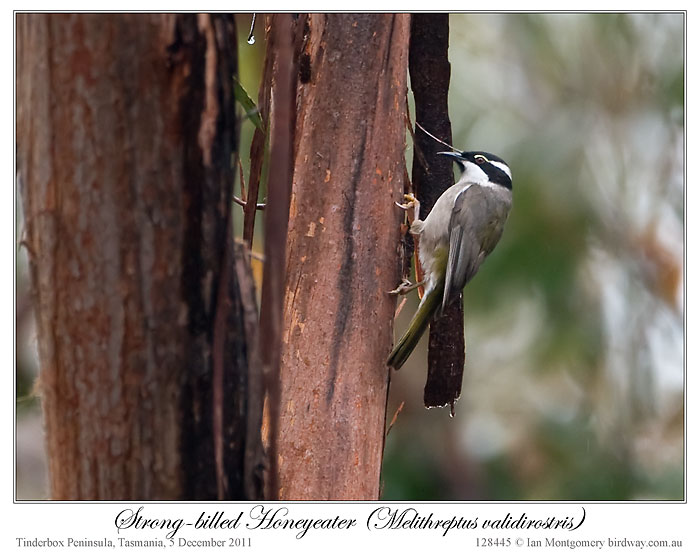
Strong-billed Honeyeater (Melithreptus validirostris) by Ian 1

Strong-billed Honeyeater (Melithreptus validirostris) by Ian 1

Moving with rapidity; violent; forcible; impetuous; as a strong current of water or wind; the wind was strong from the northeast; we had a strong tide against us.
Hale; sound; robust; as a strong constitution.
Powerful; forcible; cogent; adapted to make a deep or effectual impression on the mind or imagination; as a strong argument; strong reasons; strong evidence; a strong example or instance. – He used strong language.

Strong-billed Woodcreeper (Xiphocolaptes promeropirhynchus) ©WikiC

Ardent; eager; zealous; earnestly engaged;
Affecting the sight forcibly; as strong colors.
Affecting the taste forcibly; as the strong flavor of onions.
Affecting the smell powerfully; as a strong scent.
Not of easy digestion; solid; as strong meat. Heb 5.
Well established; firm; not easily overthrown or altered;
Violent; vehement; earnest. – Who in the day of his flesh, when he offered up prayers with strong crying and tears– Heb 5.
Able; furnished with abilities. – I was stronger in prophecy than in criticism.
Having great force of mind, of intellect or of any faculty; as a man of strong powers of mind; a man of a strong mind or intellect; a man of strong memory, judgment or imagination.
Bright; glaring; vivid; as a strong light.
Powerful to the extent of force named; as an army ten thousand strong.

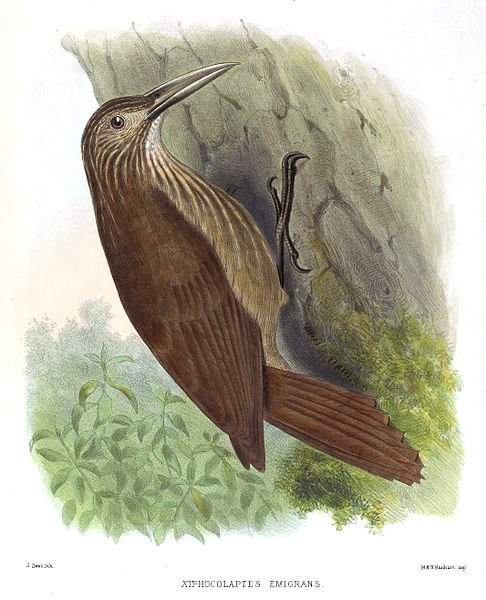
Strong-billed Woodcreeper (Xiphocolaptes promeropirhynchus) ©Drawingi WikiC

Strong-billed Woodcreeper (Xiphocolaptes promeropirhynchus) ©Drawingi WikiC

“Bow down thine ear to me; deliver me speedily: be thou my strong rock, for an house of defence to save me. For thou art my rock and my fortress; therefore for thy name’s sake lead me, and guide me.” (Psalms 31:2-3 KJV)

“The name of the LORD is a strong tower: the righteous runneth into it, and is safe.” (Proverbs 18:10 KJV)


More Avian and Attributes

Birds whose first or last name starts with “S”

Good News

*
[Definitions from Webster’s Dictionary of American English (1828), unless noted. Bird info from Wikipedia plus.]

Avian and Attributes – Stripes

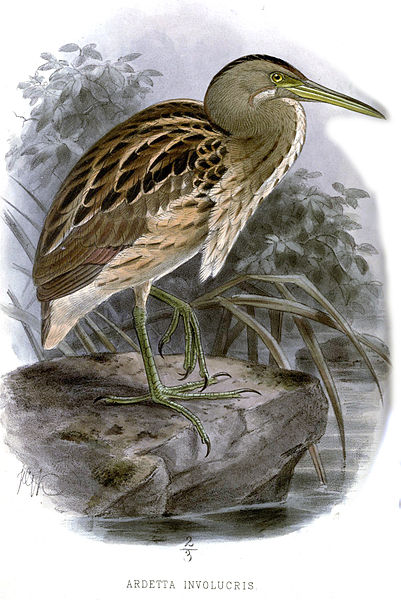
Stripe-backed Bittern (Ixobrychus involucris) ©Drawing WikiC

Stripe-backed Bittern (Ixobrychus involucris) ©Drawing WikiC

“But he was wounded for our transgressions, he was bruised for our iniquities: the chastisement of our peace was upon him; and with his stripes we are healed.” (Isaiah 53:5 KJV)

Stripe
STRIPE, n.
1. A line or long narrow division of any thing, of a different color from the ground as a stripe of red on a green ground; hence, any linear variation of color.
2. A strip or long narrow piece attached to something of a different color; as a long stripe sewed upon a garment.
3. The weal or long narrow mark discolored by a lash or rod.
4. A stroke made with a lash, whip, rod, strap or scourge.
Forty stripes may he give him, and not exceed. Deu 25.
[A blow with a club is not a stripe.]
5. Affliction; punishment; sufferings.
By his stripes are we healed. Isa 53.
STRIPE, v.t.
1. To make stripes; to form with lines of different colors; to variegate with stripes.
2. To stripe; to lash. [Little used.]

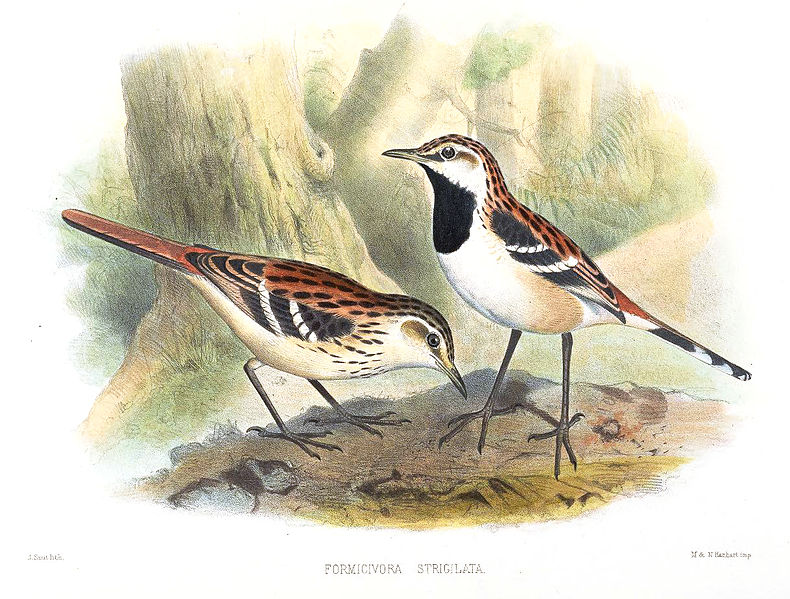
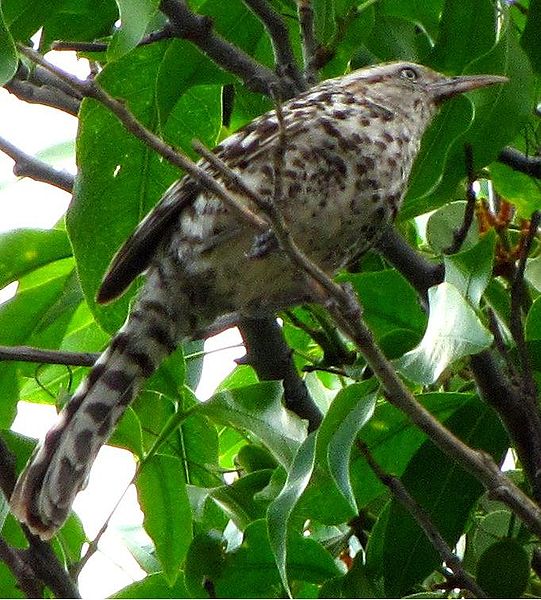
There are quite a few birds that have the word Stripe in their name. The first three birds below are called Stripe-backed, as that is what the Lord’s back must have looked like after He was beaten.

Stripe-backed Antbird (Myrmorchilus strigilatus)

Stripe-backed Antbird (Myrmorchilus strigilatus) ©Drawing WikiC

Stripe-backed Antbird (Myrmorchilus strigilatus) ©Drawing WikiC

Stripe-backed Bittern (Ixobrychus involucris) (Shown above)
Stripe-backed Wren (Campylorhynchus nuchalis)

Stripe-backed Wren (Campylorhynchus nuchalis) ©WikiC

Stripe-backed Wren (Campylorhynchus nuchalis) ©WikiC

Other birds with Striped in their name:
Striped Crake (Aenigmatolimnas marginalis)
Striped Cuckoo (Tapera naevia)
Striped Flowerpecker (Dicaeum aeruginosum)
Striped Flufftail (Sarothrura affinis)
Striped Honeyeater (Plectorhyncha lanceolata)
Striped Kingfisher (Halcyon chelicuti)
Striped Laughingthrush (Trochalopteron virgatum)

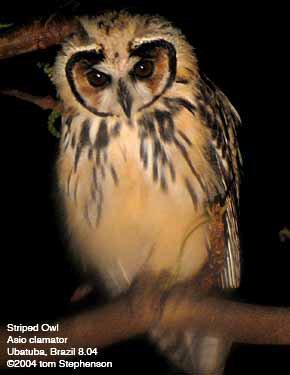
Striped Owl (Pseudoscops clamator)
Striped Pipit (Anthus lineiventris)
Striped Sparrow (Oriturus superciliosus)
Striped Treehunter (Thripadectes holostictus)
Striped Woodcreeper (Xiphorhynchus obsoletus)
Striped Woodpecker (Veniliornis lignarius)
Striped Wren-Babbler (Kenopia striata)

“For even hereunto were ye called: because Christ also suffered for us, leaving us an example, that ye should follow his steps: Who did no sin, neither was guile found in his mouth: Who, when he was reviled, reviled not again; when he suffered, he threatened not; but committed himself to him that judgeth righteously: Who his own self bare our sins in his own body on the tree, that we, being dead to sins, should live unto righteousness: by whose stripes ye were healed. For ye were as sheep going astray; but are now returned unto the Shepherd and Bishop of your souls.” (1 Peter 2:21-25 KJV)


More Avian and Attributes

Birds whose first or last name starts with “S”

Good News

*
[Definitions from Webster’s Dictionary of American English (1828), unless noted. Bird info from Wikipedia plus.]

Meet Another New Photographer – William Wise

Eastern Screech Owl (Megascops asio) ©williamwisephoto.com

Eastern Screech Owl (Megascops asio) ©williamwisephoto.com

Thankfully, we have another new photographer who has given permission to use his photos. William Wise has been taking photos of quite a variety of topics for some time. And he also is a Christian.

You can check out the main page at William Wise Photography. He has five sections to view his various subjects:

Home

“O LORD, how manifold are your works! In wisdom have you made them all; the earth is full of your creatures.”  Psalm 104:24 

Shelter Photography

Shelter Puppy ©WilliamWisePhoto.com

Nature Photography

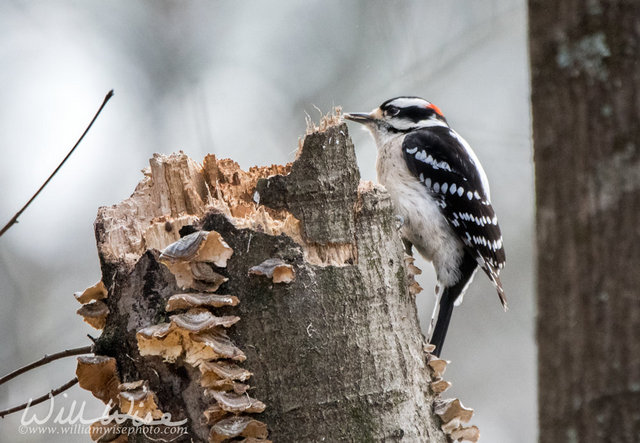
Downy Woodpeckerr ©WilliamWise.com

Creation Speaks

Canada Goose (Branta canadensis) ©WilliamWisePhotography.com

Canada Goose (Branta canadensis) ©WilliamWisePhotography.com

CREATION SPEAKS
Creation Speaks is a Biblical creation teaching ministry that uses writing and photography to teach the truth of our origin and other spiritual truths from the Bible. The lessons from God’s creation are also taught in multi-media presentations designed for Christian schools, youth and adult groups, and church Sunday School groups utilizing slideshows, videos, mounted and live animals.

Blogs

Like you, I will be busy looking through these many photos and articles for ideas for this blog. His theme in the Creation Speaks section is similar to what we try to do here. This is from his Creation Speaks section:

Here is a photo from one of his blogs: Fighting The Reflection…

Tufted Titmouse Picture

“For if you listen to the word and don’t obey, it is like glancing at your face in a mirror. You see yourself, walk away, and forget what you look like.” James 1:23-24 New Living Translation

Thank you William for this new permission. Lord’s Blessing on on your do. Keep up the good photography, I might need them here. :)


Fish Hawk – McGuffey’s Second Grade Reader

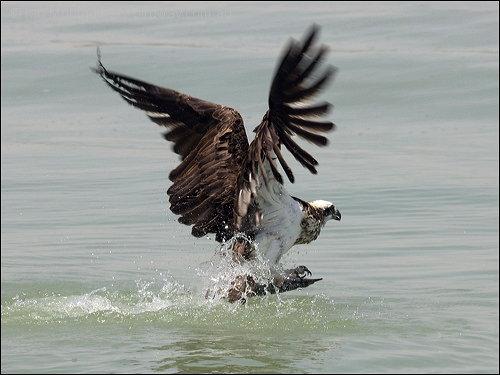
Eastern osprey by Ian

GRANDFATHER’S STORY.

1. “Come and sit by my knee, Jane, and grandfather will tell you a strange story.

2. “One bright Summer day, I was in a garden in a city, with a friend. “We rested underneath a fig tree. The broad leaves were green and fresh.

3. “We looked up at the ripe, purple figs. And what do you think came down through the branches of the fig tree over our heads?”

4. “Oh, a bird, grandfather, a bird!” said little Jane, clapping her hands.

5. “No, not a bird. It was a fish; a trout, my little girl.”

6. “Not a fish, grandfather! A trout come through the branches of a tree in the city’! I am sure you must be in fun.”

7. “No, Jane, I tell you the truth. My friend and I were very much surprised to see a fish falling from a fig tree.

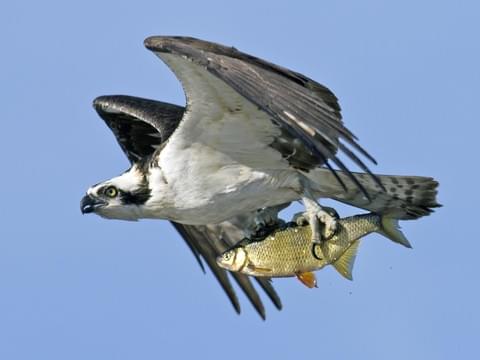
8. “But we ran from under the tree, and saw a fishhawk flying, and an eagle after him.

9. “The hawk had caught the fish, and was carrying it home to his nest, when the eagle saw it and wanted it.

Osprey and Eagle Fighting ©WikiC

10. “They fought for it. The fish was dropped, and they both lost it. So much for fighting!”

Western Osprey (Pandion haliaetus) dropping this fish ©Flickr Andy Morffew

Western Osprey (Pandion haliaetus) dropping this fish ©Flickr Andy Morffew

***

“Where do wars and fights come from among you? Do they not come from your desires for pleasure that war in your members?” (James 4:1 NKJV)

Both of these birds are mentioned in the Bible:


Title: McGuffey’s Second Grade Reader – Gutenberg – Author: William Holmes McGuffey

Release Date: June 29, 2005 [EBook #14668] – Language: English

Wordless Birds

More McGuffey’s Second Grade Reader Stories

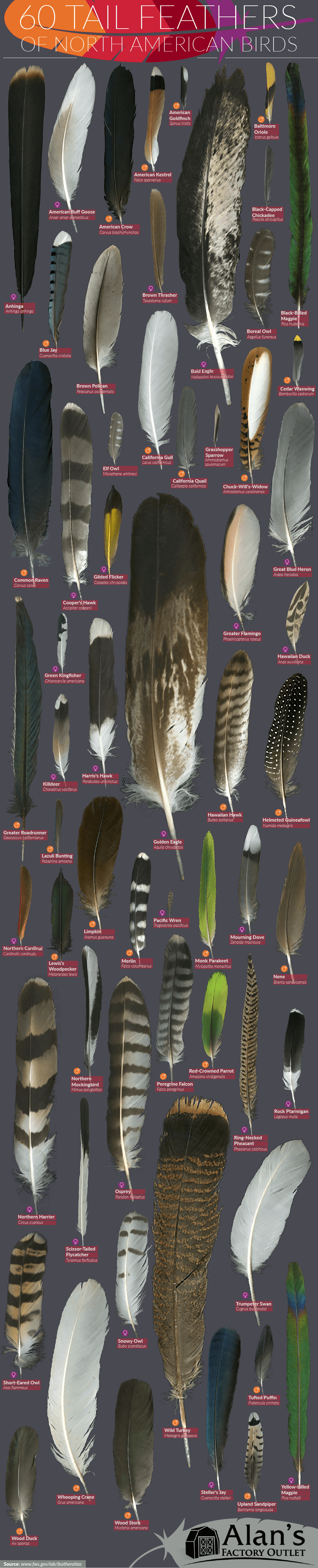
Tail Feathers of North American Birds

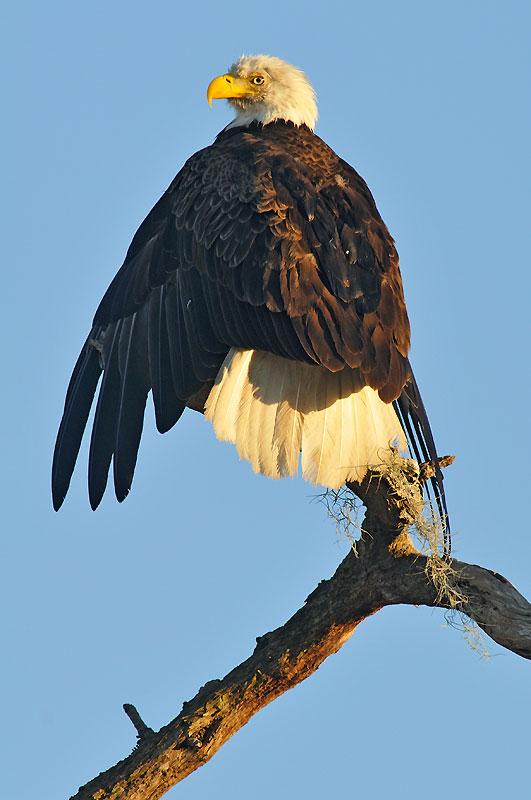
Bald Eagle with Tail spread out

I’m thankful for an email from a Boy Scouts of America leader. He suggested placing links to this information about Tail Feathers in the Birdwatching section. [Which are now there, plus on two other pages.] It is part of a badge they are working on.

These feathers are interesting and would love to see each of these species in the field. Isn’t it amazing how the Creator of these Avian Wonders goes into such details in tail feather design. Along with the rest of the feathers attached to the birds. :)

60 Tail Feathers of North American Birds - AlansFactoryOutlet.com - Infographic
By AlansFactoryOutlet.com

“Of the birds after their kind, of animals after their kind, and of every creeping thing of the earth after its kind, two of every kind will come to you to keep them alive.” (Genesis 6:20 NKJV) [In to the Ark]

“Bring out with you every living thing of all flesh that is with you: birds and cattle and every creeping thing that creeps on the earth, so that they may abound on the earth, and be fruitful and multiply on the earth.
(Genesis 8:17 NKJV) [Out of the Ark]

Here are most of the birds that these feathers would be attached to:

Wordless Birds

McGuffey’s 6th Grade Reader – The Morning Oratorio

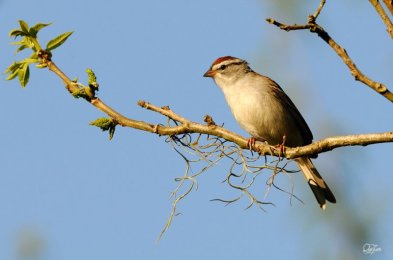
Chipping Sparrow (Spizella passerina) by Quy Tran

Chipping Sparrow (Spizella passerina) by Quy Tran

“He sends forth springs in the valleys; They flow between the mountains; They give drink to every beast of the field; The wild donkeys quench their thirst. Beside them the birds of the heavens dwell; They lift up their voices among the branches.” (Psalms 104:10-12 NASB)

McGuffey Readers were a series of graded primers for grade levels 1-6. They were widely used as textbooks in American schools from the mid-19th century to the mid-20th century, and are still used today in some private schools and in homeschooling.

Here is a story of The Oratorio from the Sixth Grade Reader. (From Gutenberg) Pictures are current photos.

hairbird

Noun (plural hairbirds) – birdSpizella passerina, the chipping sparrow. [from Your Dictionary]

XI. THE MORNING ORATORIO. (90)

Wilson Flagg, 1806-1884, was born in Beverly, Mass. He pursued his academical course in Andover, at Phillips Academy, and entered Harvard College, but did not graduate. His chief Works are: “Studies in the Field and Forest,” “The Woods and Byways of New England,” and “The Birds and Seasons of New England.”

Nature, for the delight of waking eyes, has arrayed the morning heavens in the loveliest hues of beauty. Fearing to dazzle by an excess of delight, she first announces day by a faint and glimmering twilight, then sheds a purple tint over the brows of the rising morn, and infuses a transparent ruddiness throughout the atmosphere. As daylight widens, successive groups of mottled and rosy-bosomed clouds assemble on the gilded sphere, and, crowned with wreaths of fickle rainbows, spread a mirrored flush over hill, grove, and lake, and every village spire is burnished with their splendor.

At length, through crimsoned vapors, we behold the sun’s broad disk, rising with a countenance so serene that every eye may view him ere he arrays himself in his meridian brightness. Not many people who live in towns are aware of the pleasure attending a ramble near the woods and orchards at daybreak in the early part of summer. The drowsiness we feel on rising from our beds is gradually dispelled by the clear and healthful breezes of early day, and we soon experience an unusual amount of vigor and elasticity.

During the night, the stillness of all things is the circumstance that most powerfully attracts our notice, rendering us peculiarly sensitive to every accidental sound that meets the ear. In the morning, at this time of year, on the contrary, we are overpowered by the vocal and multitudinous chorus of the feathered tribe. If you would hear the commencement of this grand anthem of nature, you must rise at the very first appearance of dawn, before the twilight has formed a complete semicircle above the eastern porch of heaven.

Chipping Sparrow (Spizella passerina) by Daves BirdingPix

The first note that proceeds from the little warbling host, is the shrill chirp of the hairbird,—occasionally vocal at an hours on a warm summer night. This strain, which is a continued trilling sound, is repeated with diminishing intervals, until it becomes almost incessant. But ere the hairbird has uttered many notes, a single robin begins to warble from a neighboring orchard, soon followed by others, increasing in numbers until, by the time the eastern sky is flushed with crimson, every male, robin in the country round is singing with fervor.

It would be difficult to note the exact order in which the different birds successively begin their parts in this performance; but the bluebird, whose song is only a short, mellow warble, is heard nearly at the same time with the robin, and the song sparrow joins them soon after with his brief but finely modulated strain. The different species follow rapidly, one after another, in the chorus, until the whole welkin rings with their matin hymn of gladness.

I have often wondered that the almost simultaneous utterance of so many different notes should produce no discords, and that they should result in such complete harmony. In this multitudinous confusion of voices, no two notes are confounded, and none has sufficient duration to grate harshly with a dissimilar sound. Though each performer sings only a few strains and then makes a pause, the whole multitude succeed one another with such rapidity that we hear an uninterrupted flow of music until the broad light of day invites them to other employments.

When there is just light enough to distinguish the birds, we may observe, here and there, a single swallow perched on the roof of a barn or shed, repeating two twittering notes incessantly, with a quick turn and a hop at every note he utters. It would seem to be the design of the bird to attract the attention of his mate, and this motion seems to be made to assist her in discovering his position. As soon as the light has tempted him to fly abroad, this twittering strain is uttered more like a continued song, as he flits rapidly through the air.

Purple Martin (Progne subis) ©WikiC

But at this later moment the purple martins have commenced their more melodious chattering, so loud as to attract for a while the most of our attention. There is not a sound in nature so cheering and animating as the song of the purple martin, and none so well calculated to drive away melancholy. Though not one of the earliest voices to be heard, the chorus is perceptibly more loud and effective when this bird has united with the choir.

American Robin (Turdus migratorius) eating by Jim Fenton

American Robin (Turdus migratorius) eating by Jim Fenton

When the flush of the morning has brightened into vermilion, and the place from which the sun is soon to emerge has attained a dazzling brilliancy, the robins are already less tuneful. They are now becoming busy in collecting food for their morning repast, and one by one they leave the trees, and may be seen hopping upon the tilled ground, in quest of the worms and insects that, have crept out during the night from their subterranean retreats.

Bobolink (Dolichonyx oryzivorus) by J Fenton

But as the robins grow silent, the bobolinks begin their vocal revelries; and to a fanciful mind it might seem that the robins had gradually resigned their part in the performance to the bobolinks, not one of which is heard until some of the former have concluded their songs. The little hairbird still continues his almost incessant chirping, the first to begin and the last to quit the performance. Though the voice of this bird is not very sweetly modulated, it blends harmoniously with the notes of other birds, and greatly increases the charming effect of the combination.

Eastern Wood Pewee (Contopus virens) by Raymond Barlow

Eastern Wood Pewee (Contopus virens) by Raymond Barlow

It would be tedious to name all the birds that take part in this chorus; but we must not omit the pewee, with his melancholy ditty, occasionally heard like a short minor strain in an oratorio; nor the oriole, who is really one of the chief performers, and who, as his bright plumage flashes upon the sight, warbles forth a few notes so clear and mellow as to be beard above every other sound. Adding a pleasing variety to all this harmony, the lisping notes of the meadowlark, uttered in a shrill tone, and with a peculiar pensive modulation, are plainly audible, with short rests between each repetition.

Western Meadowlark (Sturnella neglecta)©USFWS

Western Meadowlark (Sturnella neglecta)©USFWS

There is a little brown sparrow, resembling the hairbird, save a general tint of russet in his plumage, that may be heard distinctly among the warbling host. He is rarely seen in cultivated grounds, but frequents the wild pastures, and is the bird that warbles so sweetly at midsummer, when the whortleberries are ripe, and the fields are beautifully spangled with red lilies.

There is no confusion in the notes of his song, which consists of one syllable rapidly repeated, but increasing in rapidity and rising to a higher key towards the conclusion. He sometimes prolongs his strain, when his notes are observed to rise and fall in succession. These plaintive and expressive notes are very loud and constantly uttered, during the hour that precedes the rising of the sun. A dozen warblers of this species, singing in concert, and distributed in different parts of the field, form, perhaps, the most delightful part of the woodland oratorio to which we have listened.

Carolina Wren (Thryothorus ludovicianus) by Quy Tran

Carolina Wren (Thryothorus ludovicianus) by Quy Tran

At sunrise hardly a robin can be beard in the whole neighborhood, and the character of the performance has completely changed during the last half hour. The first part was more melodious and tranquilizing, the last is more brilliant and animating. The grass finches, the vireos, the wrens, and the linnets have joined their voices to the chorus, and the bobolinks are loudest in their song. But the notes of the birds in general are not so incessant as before sunrise. One by one they discontinue their lays, until at high noon the bobolink and the warbling flycatcher are almost the only vocalists to be heard in the fields.


Title: McGuffey’s Sixth Grade Eclectic Reader, Author: William Holmes McGuffey
Release Date: September 26, 2005 [EBook #16751], Language: English

McGuffey’s Sixth Grade Reader

Wordless Birds

Avian And Attributes – Stone

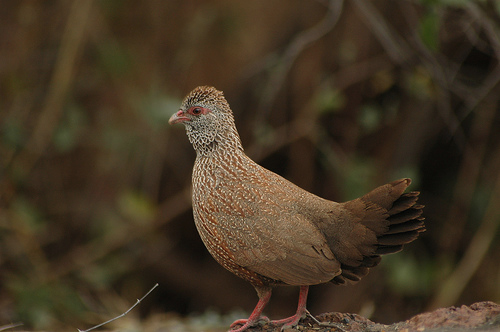
Stone Partridge (Ptilopachus petrosus) ©WikiC

Stone Partridge (Ptilopachus petrosus) ©WikiC

“Jesus saith unto them, Did ye never read in the scriptures, The stone which the builders rejected, the same is become the head of the corner: this is the Lord’s doing, and it is marvellous in our eyes?” (Matthew 21:42 KJV)


Avian and Attributes – Stone

STONE, n. [Gr.]
2. A gem; a precious stone.
Inestimable stones, unvalued jewels.
3. Any thing made of stone; a mirror.
8. A monument erected to preserve the memory of the dead.
Should some relentless eye glance on the stone where our cold relics lie–
9. It is used to express torpidness and insensibility; as a heart of stone.
I have not yet forgot myself to stone.
10. Stone is prefixed to some words to qualify their signification. Thus stone-dead, is perfectly dead, as lifeless as a stone; stone-still, still as a stone, perfectly still; stone-blind, blind as a stone, perfectly blind.
To leave no stone unturned, a proverbial expression which signifies to do every thing that can be done; to use all practicable means to effect an object.
STONE, a. Made of stone, or like stone; as a stone jug.
STONE, v.t.
1. To pelt, beat or kill with stones.
And they stoned Stephen calling on God and saying, Lord Jesus, receive my spirit. Acts 7.


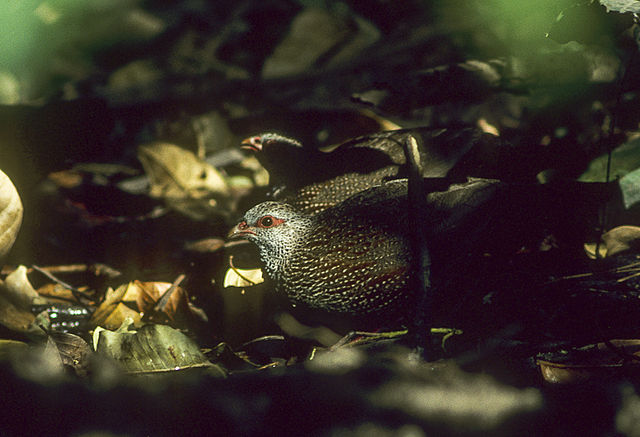
Stone Partridge (Ptilopachus petrosus) ©Flickr Jean

The Stone Partridge (Ptilopachus petrosus) is a bird of the new world quail family. This largely brown bird, which commonly holds its tail raised, is found in scrubland and lightly wooded habitats, often near rocks, from Kenya and Ethiopia to Gambia (a large part if its range is in the Sudanian Savanna). As traditionally defined, it is the only member of Ptilopachus, but based on genetic evidence this genus also includes the Nahan’s “francolin”

Stone Partridge (Ptilopachus petrosus) ©WikiC

The Stone Partridge is exceptional among gamebirds in that the female, to human eyes, is showier than the male. Both sexes are predominantly earthy chocolate brown above, with sparse pale cream-grey spotting. The head, neck and chest are paler brown and have broad cream edging to the feathers that gives the bird a scaled appearance. In males the lower chest and belly are orange-cream; in females, very pale cream. Both sexes raise their crown feathers to form a rudimentary crest but the feathers of females are somewhat longer and hence more obvious when raised.

Eggs are pale pink, fading to cream, juveniles are dark chocolate-brown throughout, moulting into adult plumage at several weeks old. In captivity at least, the male plays a major role in both incubation and rearing of the young, offering young small items of food by picking them up, dropping them and calling to the chicks.


“But ye believe not, because ye are not of my sheep, as I said unto you. My sheep hear my voice, and I know them, and they follow me: And I give unto them eternal life; and they shall never perish, neither shall any man pluck them out of my hand. My Father, which gave them me, is greater than all; and no man is able to pluck them out of my Father’s hand. I and my Father are one. Then the Jews took up stones again to stone him. Jesus answered them, Many good works have I shewed you from my Father; for which of those works do ye stone me?” (John 10:26-32 KJV)

More Avian and Attributes

Birds whose first or last name starts with “S”
Good News

*
[Definitions from Webster’s Dictionary of American English (1828), unless noted. Bird info from Wikipedia plus.]

Bird Barks And Lizard Growls – Creation Moments

Numbers 22:30

“So the donkey said to Balaam, ‘Am I not your donkey on which you have ridden, ever since I became yours, to this day? Was I ever disposed to do this to you?’ And he said, ‘No.’”

Have you ever noticed that we can usually sense whether an animal is hostile or friendly, simply by its sound? Did you ever wonder about the universal features that allow for important basic information to be shared between animals and humans?

None of us ever had to be taught that a dog, growling deeply and showing its teeth, was trying to threaten us. We’re all familiar with the high-pitched yips that same dog makes to welcome its owner home. Research shows that the motivations expressed by high-pitched and low-pitched sounds are universal among most creatures.

Researchers say that almost all animals bark (the high-pitched sounds) or growl (the low-pitched sounds). They were surprised to learn that animals don’t simply make arbitrary noises. Sound has meaning. Even the higher-pitched voice of birds has a barking mode that can be seen on a graph and heard when a slowed-down recording is played. Animals make lower, harsher sounds when they’re being aggressive. This is the growl. When friendly, an animal makes higher-pitched sounds. The bark seems to mean that an animal is neither hostile nor friendly, simply curious. Human speech follows the same general pattern.

These universal features of communication reflect the work of our Creator who intended for many different kinds of creatures to coexist. He gave us all a universal method for understanding important basic messages like fear, aggression and joy.

Prayer: I thank You, Lord, for the joy that animals add to our lives. I also thank You that You have made us able to share some basic but important features of communication. However, help me to value, most highly, Your communication to me in Your Holy Word. Amen.

REF.: Bennett, Dawn D. 1985. Making sense of animal sounds. Science Ne   Photo: Pembroke Corgi – pixabay.com (PD)

Used with permission. Creation Moments ©2019

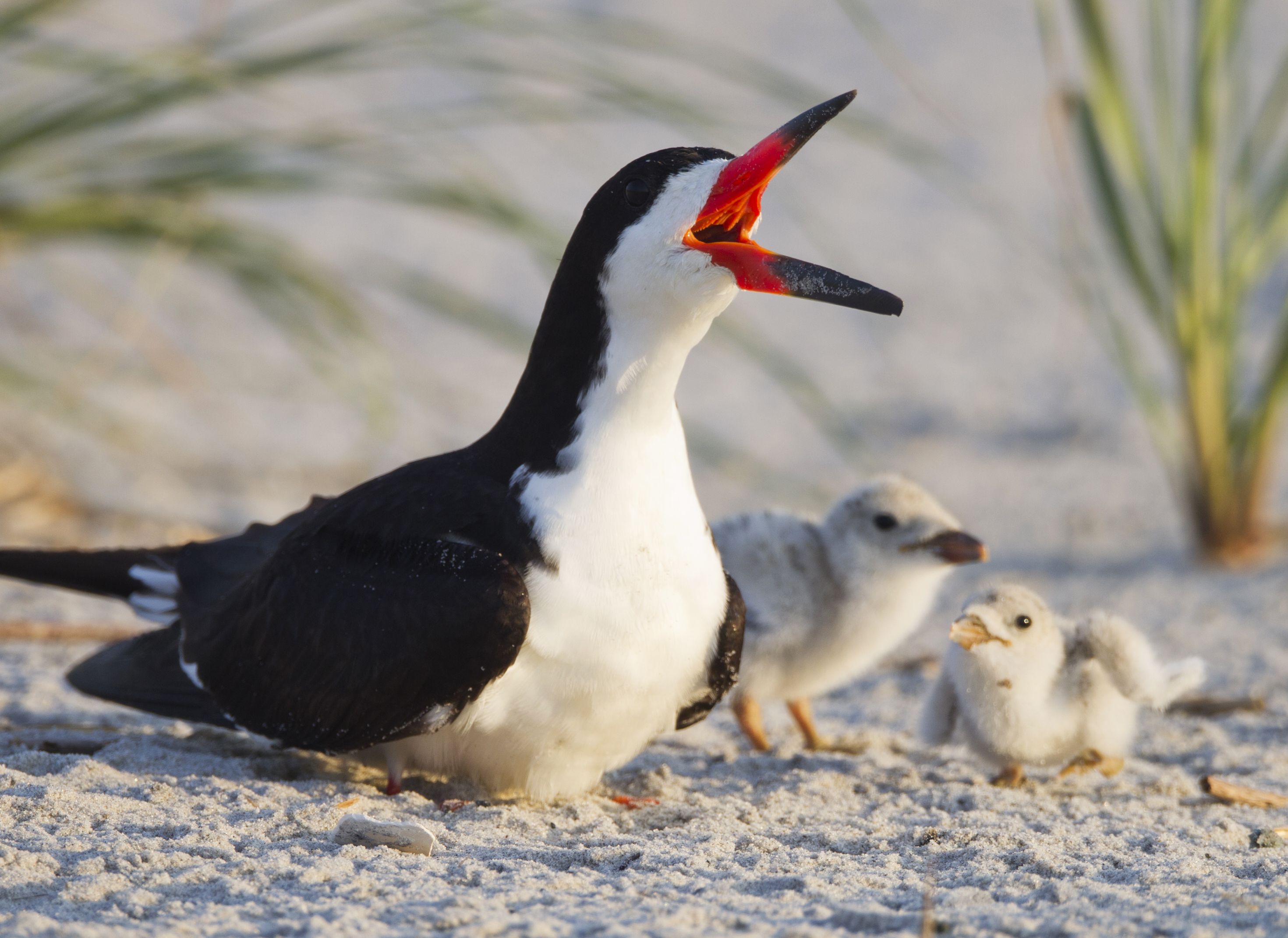
Black Skimmer (Rynchops niger niger), Northern subspecies, adult in breeding plumage calling and a pair of well camouflaged downy chicks at Nickerson Beach Park on Long Island, New York.

Wonder if this Skimmer is growling or barking?

More Creation Moments articles:

Interesting Things

What is the Gospel?

*

Nice Birdwatching Video About Circle B Bar Reserve

This is by one of the photographers that visits Circle B Bar Reserve in Lakeland, Florida. It is only a few miles from our house “as the crow flies.” We have spent many enjoyable trips there. This was from Dennis Hollingsworth.

Belted Kingfisher (Megaceryle alcyon) by Lee Circle B

Belted Kingfisher (Megaceryle alcyon) by Lee Circle B

Great Blue Heron (Ardea herodias) at Circle B By Dan'sPix

Bible Birds – Herons
Snowy Egret (Egretta thula) Notice Yellow Feet by Lee at Circle B

Snowy Egret (Egretta thula) Notice Yellow Feet by Lee at Circle B

“For since the creation of the world His invisible attributes are clearly seen, being understood by the things that are made, even His eternal power and Godhead, so that they are without excuse,” (NKJV)

This is by one of the photographers that visits Circle B Bar Reserve in Lakeland, Florida. It is only a few miles from our house “as the crow flies.” We have spent many enjoyable trips there. This was from Dennis Hollingsworth.
Belted Kingfisher (Megaceryle alcyon) by Lee Circle B Belted Kingfisher (Megaceryle alcyon) by Lee Circle BGreat Blue Heron (Ardea herodias) at Circle B By Dan'sPix Bible Birds – HeronsSnowy Egret (Egretta thula) Notice Yellow Feet by Lee at Circle B Snowy Egret (Egretta thula) Notice Yellow Feet by Lee at Circle B
“For since the creation of the world His invisible attributes are clearly seen, being understood by the things that are made, even His eternal power and Godhead, so that they are without excuse,” (Romans 1:20 NKJV)


Sandhill Crane Chick at Circle B by Lee

Sandhill Crane Chick at Circle B by Lee

Blue-Gray Gnatcatcher at Circle B Reserve by Lee

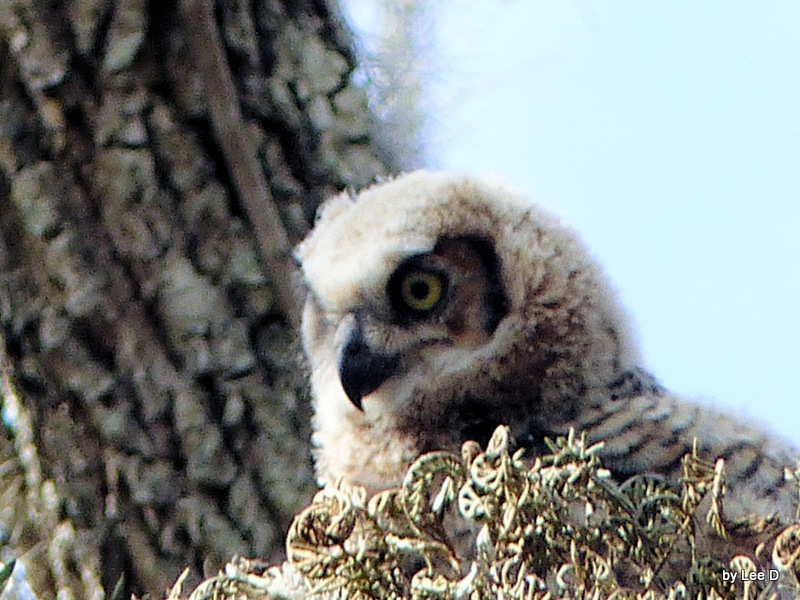
Great Horned Owl Youngsters at Circle B Bar Reserve by Lee

Snowy Egret Circle B 8-3-12 by Lee

Snowy Egret Circle B by Lee

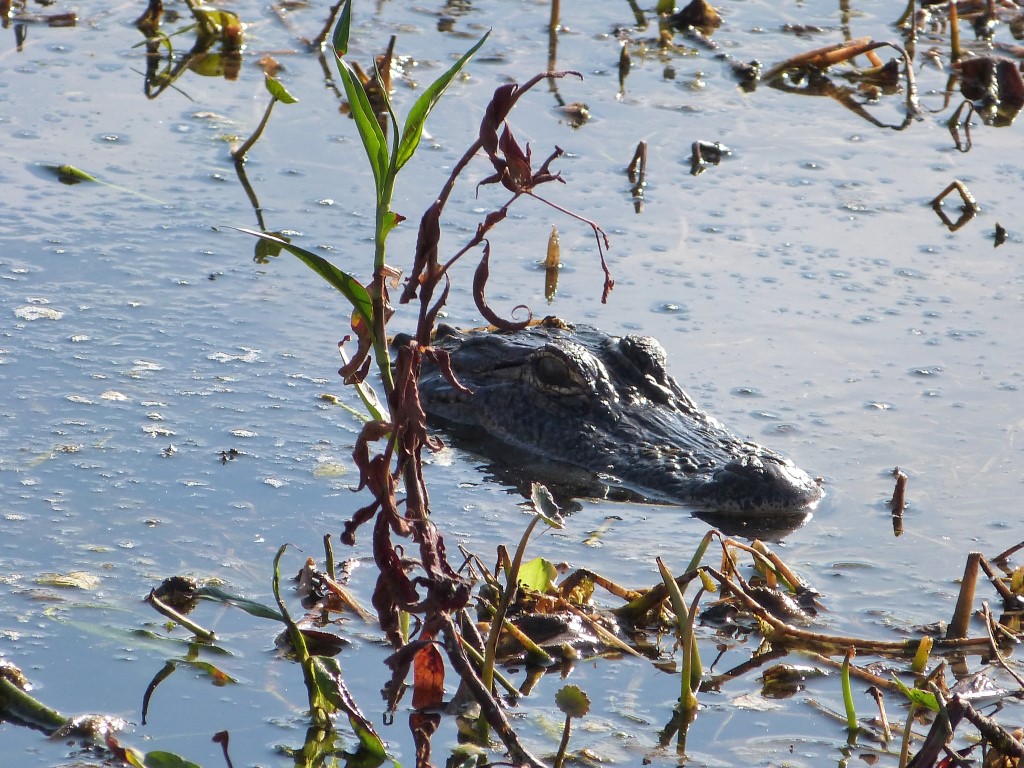
Alligator Circle B Bar Reserve by Lee

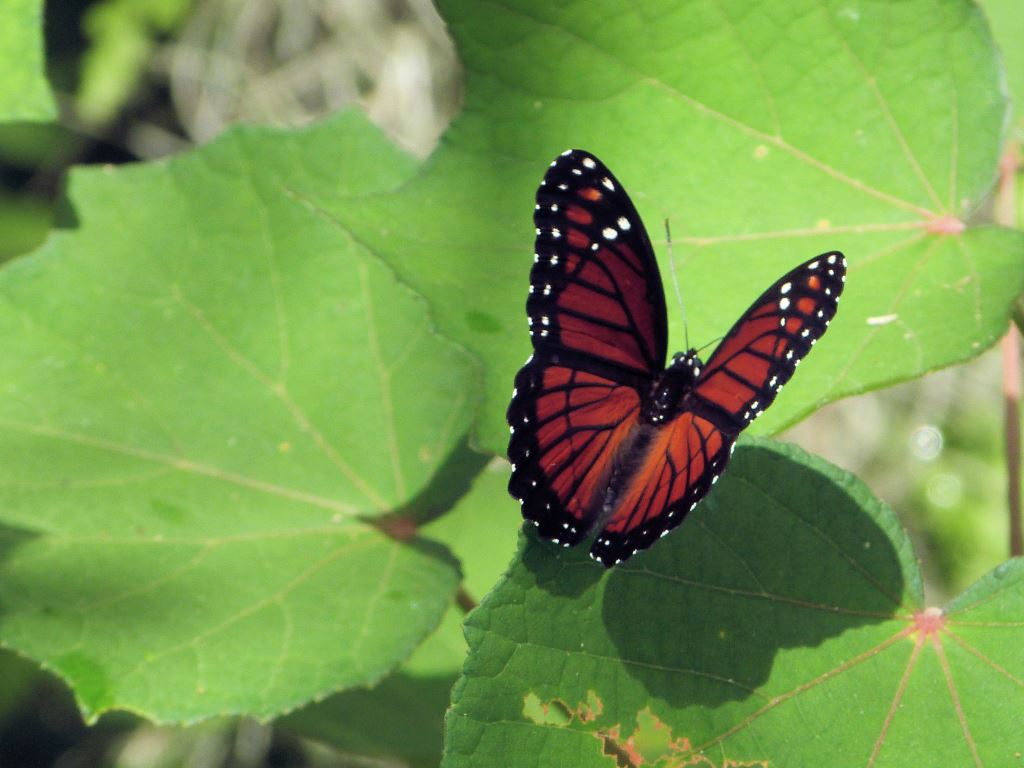
Butterfly Circle B by Lee 7-16-14

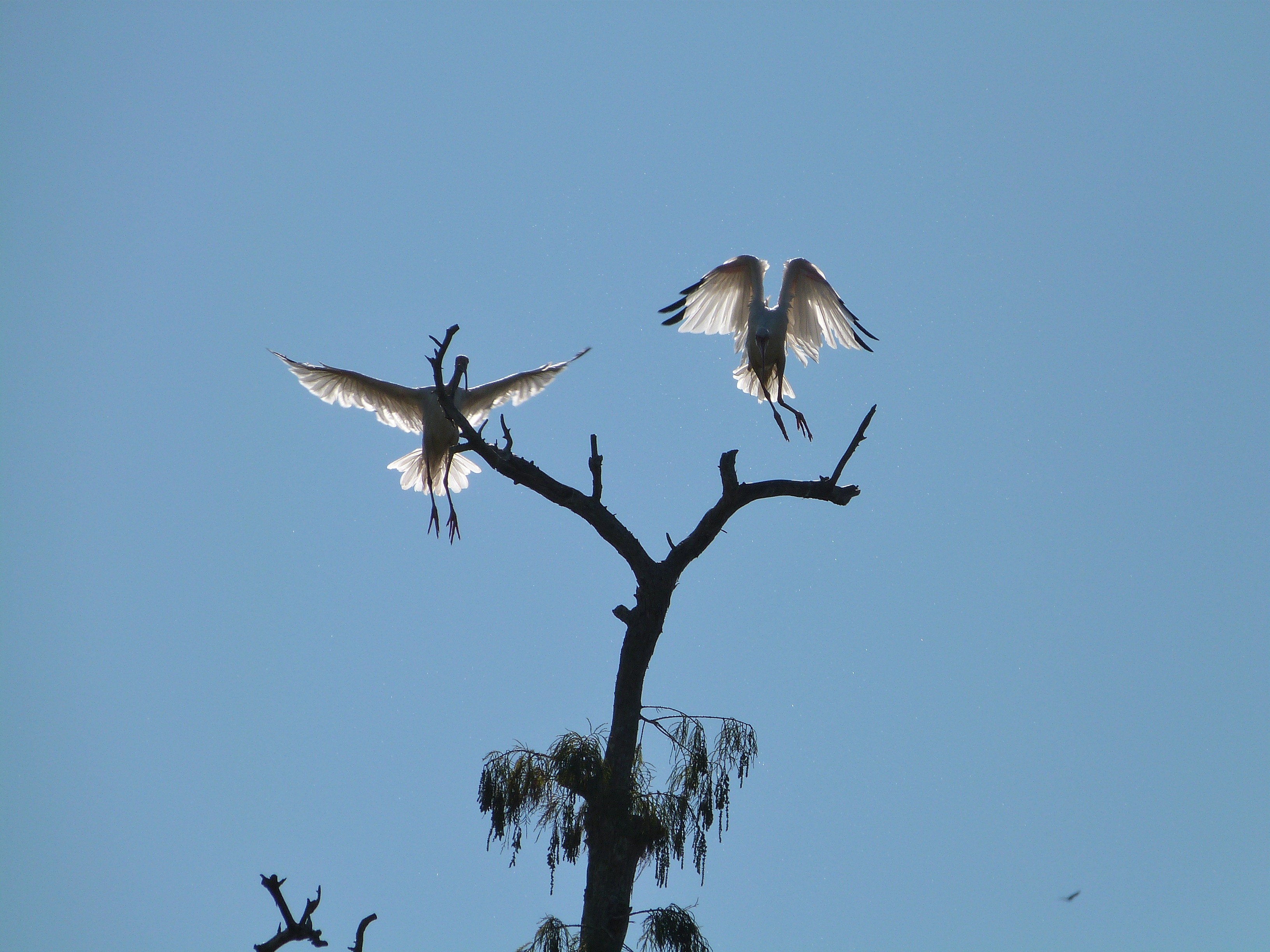
American White Ibis (Eudocimus albus) by Lee at Circle B

American White Ibis (Eudocimus albus) by Lee at Circle B

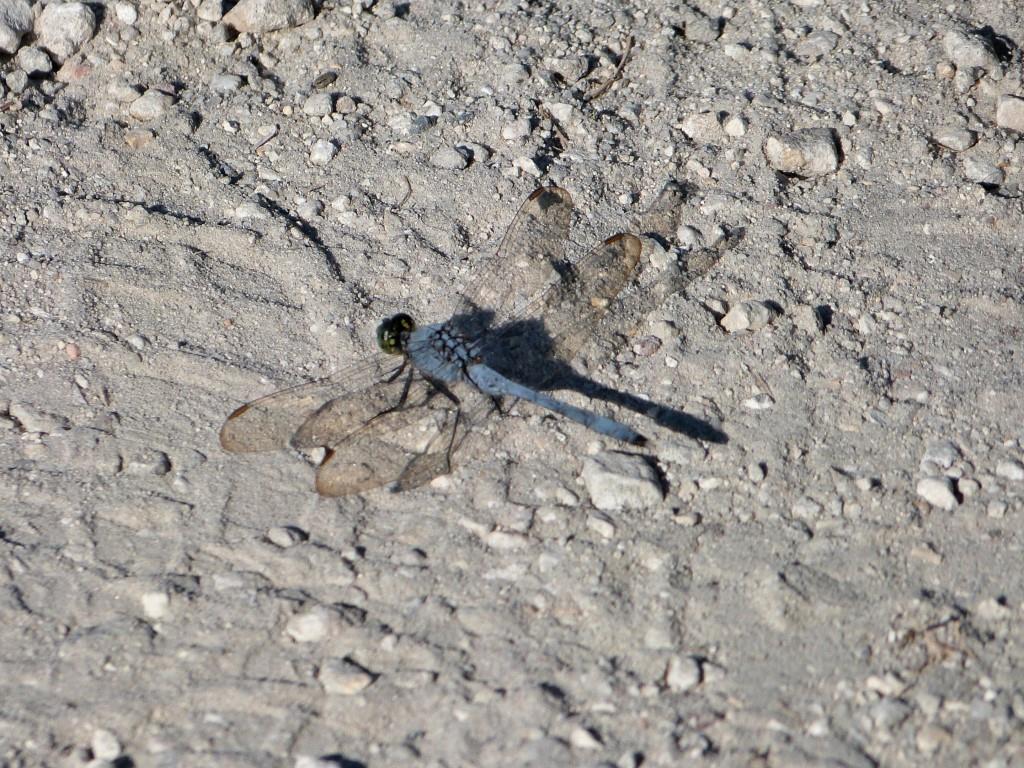
Dragonfly by Lee at Circle B

Dragonfly by Lee at Circle B

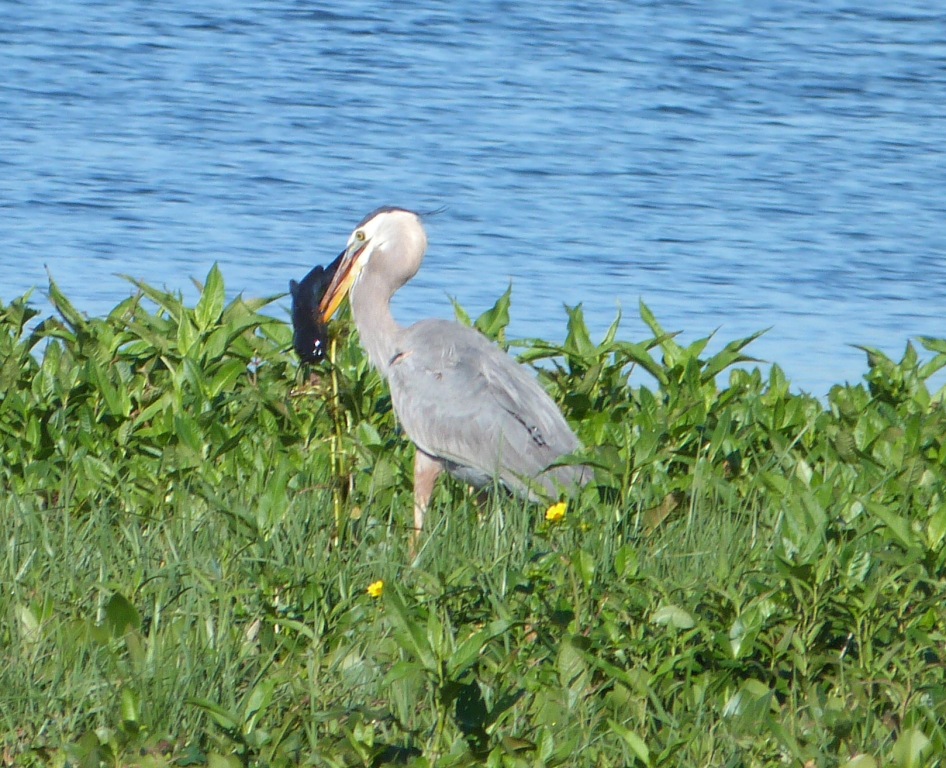
Great Blue Heron with Catfish at Circle B by Lee - cropped

Great Blue Heron with Catfish at Circle B by Lee – cropped

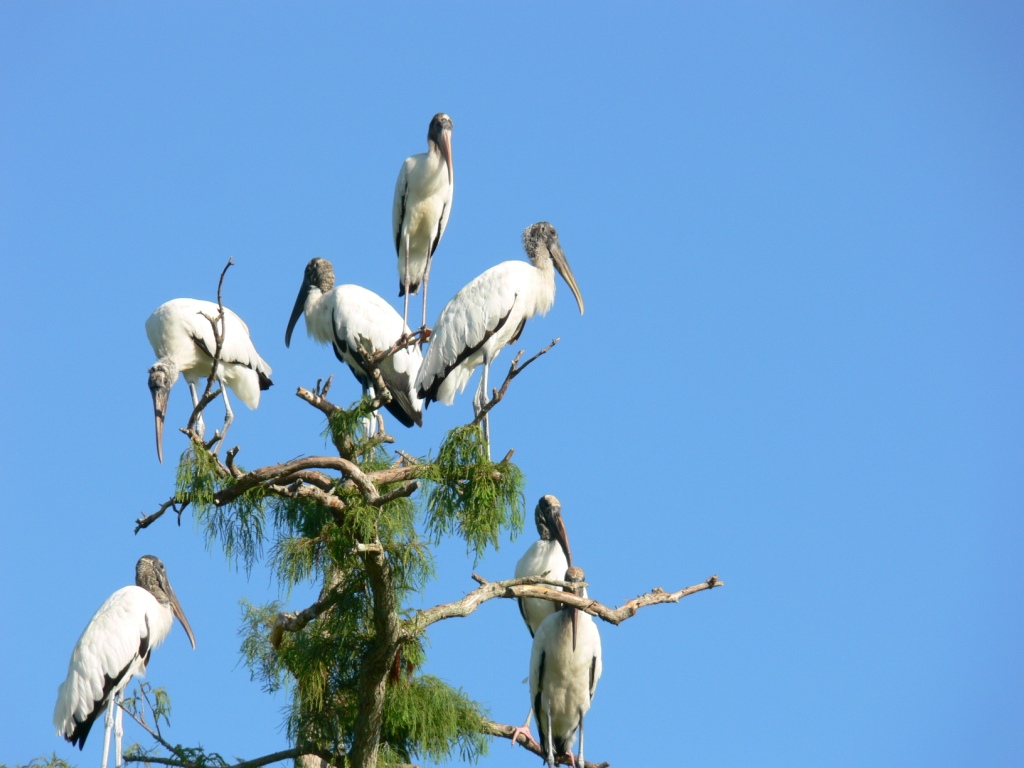
Wood Storks on top of tree at Circle B -7-22-11 by Lee

Wood Storks on top of tree at Circle B by Lee

Sunset at Circle B by TommyT

IOC Version 9.2- Indexes Up To Date – Part IV

Blue-naped Mousebird (Urocolius macrourus) at Cincinnati Zoo) by Lee

Blue-naped Mousebird (Urocolius macrourus) at Cincinnati Zoo) by Lee

Thanks for patience as the Lee’s Birdwatching Adventures blog is being updated to the new I.O.C. Version 9.2. Along with cataract eye surgery this week, brain freeze [Couldn’t get my Excel to build my links. Oh, no! Could it be old age?], and a holiday, I think most of it is finished.

“But now finish doing it also, so that just as there was the readiness to desire it, so there may be also the completion of it by your ability. For if the readiness is present, it is acceptable according to what a person has, not according to what he does not have.” (2 Corinthians 8:11-12 NASB)

These links are all working:

I am still updating these new Family pages. They added six new families, but one of them was the old Incertae Sedis Family (now Hyliidae-Hylias). It was a holding place for birds they didn’t know where to place. With all the DNA testing going on, they keep finding surprises. In the future, they will most like shuffle some more families and species around.
Green Hylia (Hylia prasina) ©Flickr Nic Borrows

New Families Added with Version 9.2
Calyptomenidae – African and Green Broadbills (9.2)
Cinclosomatidae – Jewel-babblers, Quail-thrushes (9.2)
Falcunculidae – Shriketit (9.2)
Hyliidae – Hylias, Pholidornis (9.2)
Coliidae – Mousebirds (9.2)
Philepittidae – Asities (9.2)

An interesting link from Birdwatching Daily about this new update.
North American Bird Checklist 2019

Order Pages are Updated

Good News