Sunday Inspiration – Bittern

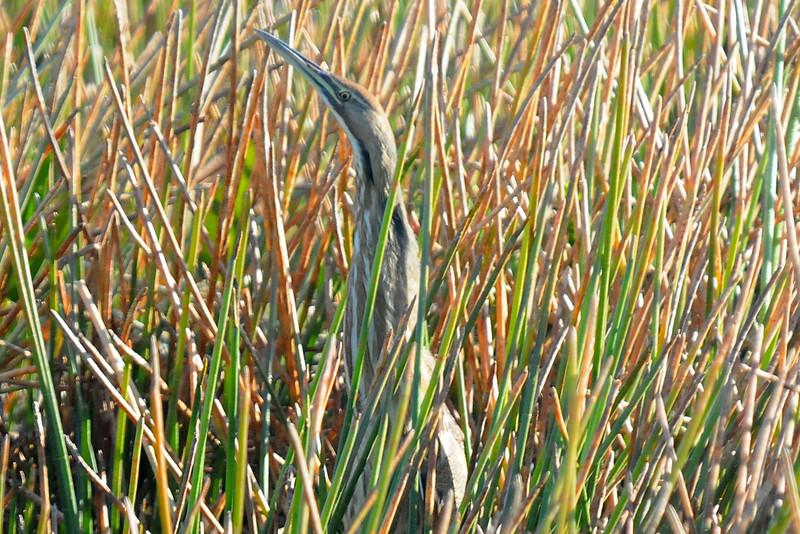
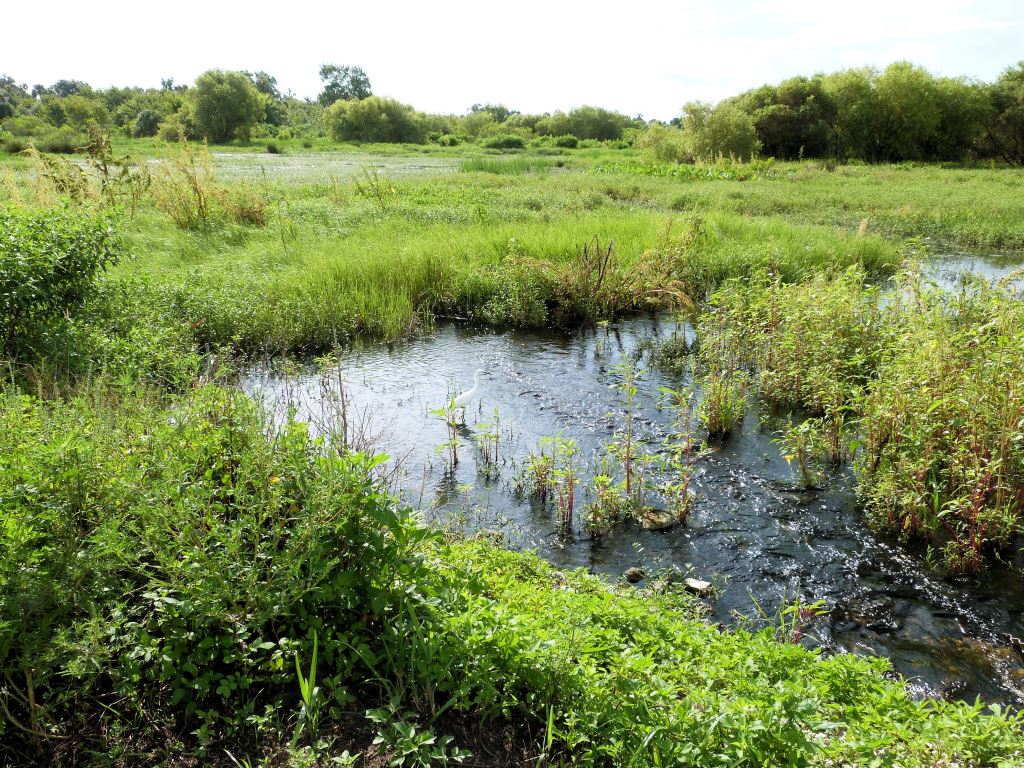
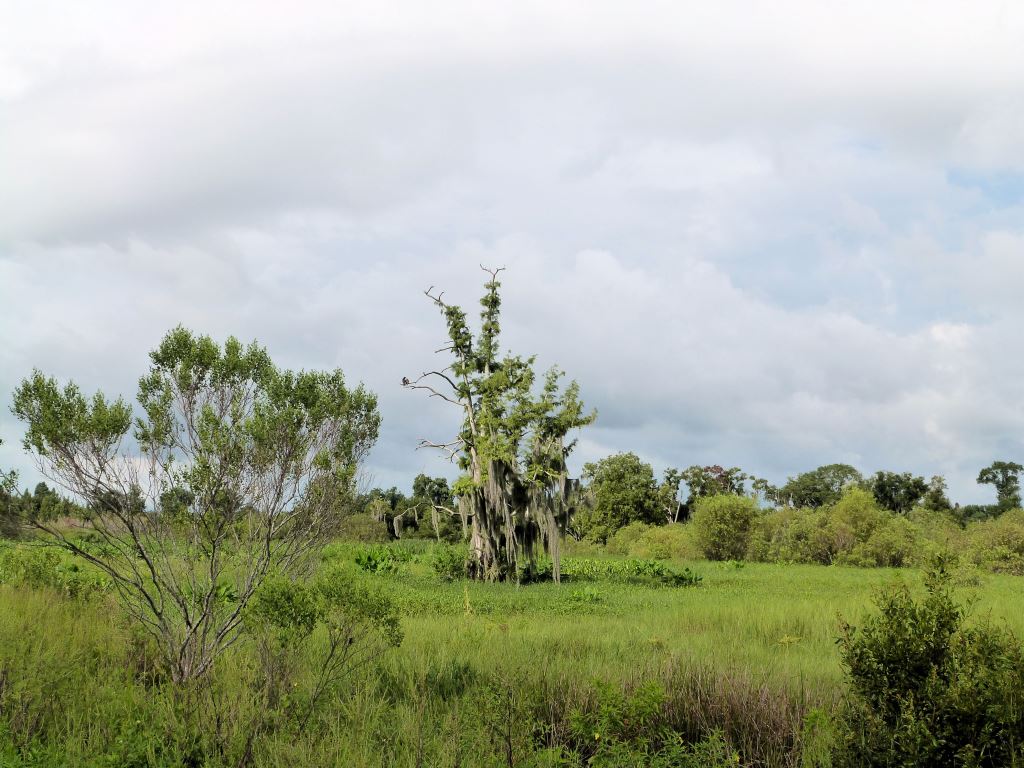
American Bittern (Botaurus lentiginosus) at Circle B by Lee

American Bittern (Botaurus lentiginosus) by Lee

The herds shall lie down in her midst, Every beast of the nation. Both the pelican and the bittern Shall lodge on the capitals of her pillars; Their voice shall sing in the windows; Desolation shall be at the threshold; For He will lay bare the cedar work. (Zephaniah 2:14 NKJV)

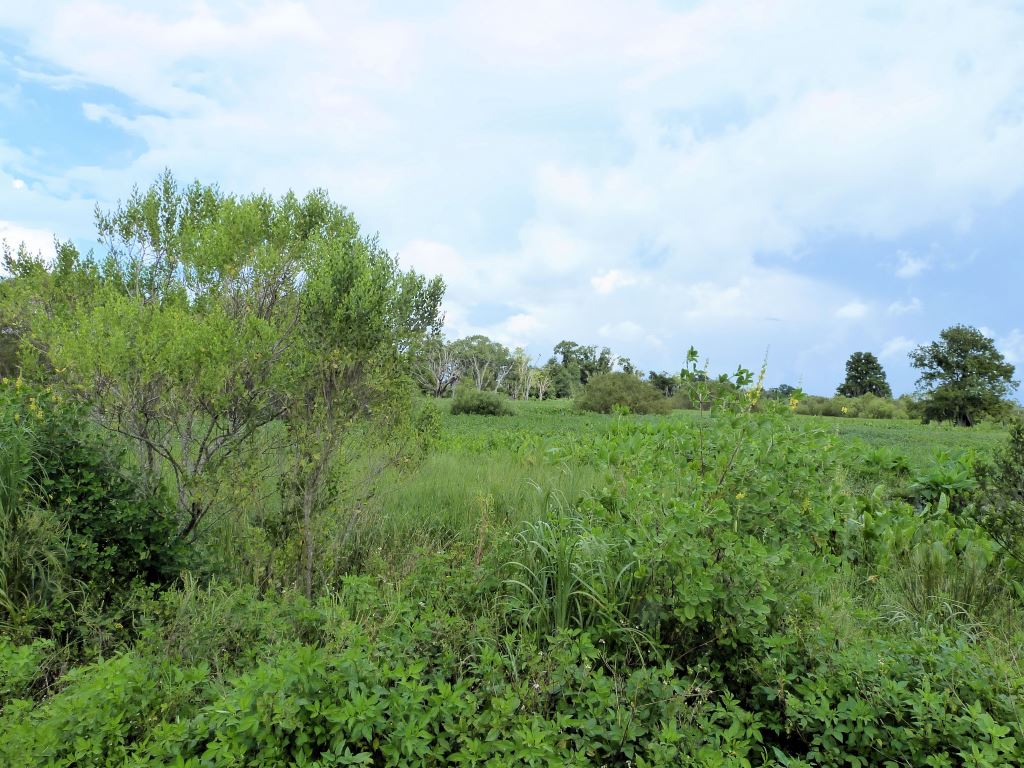
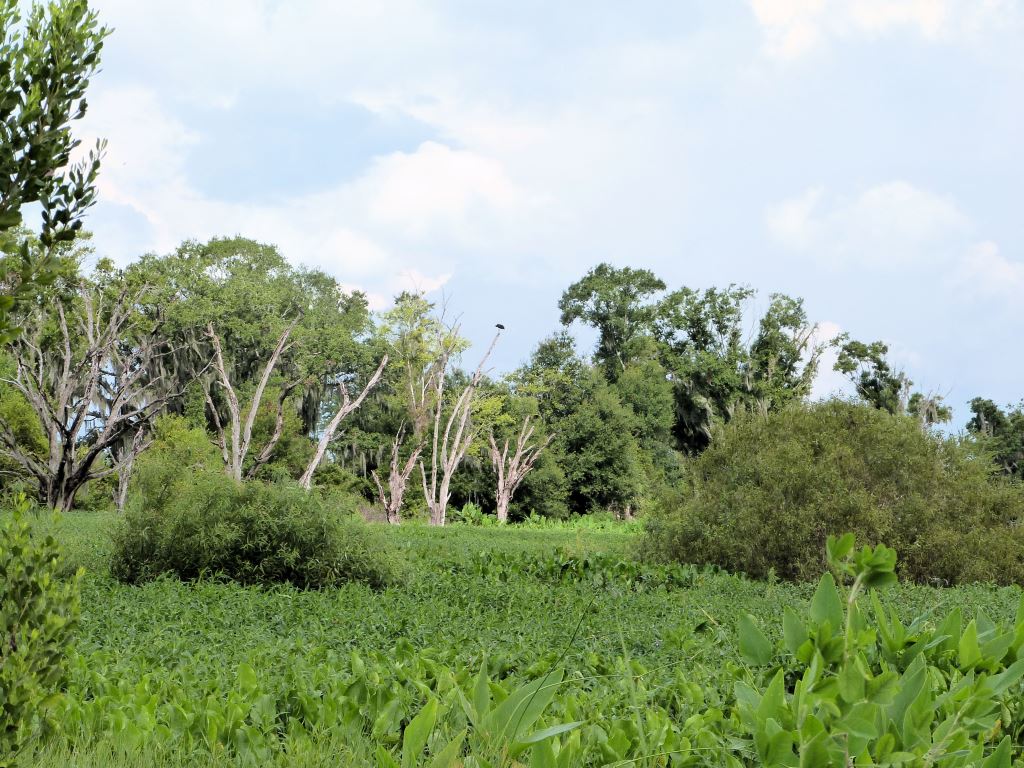
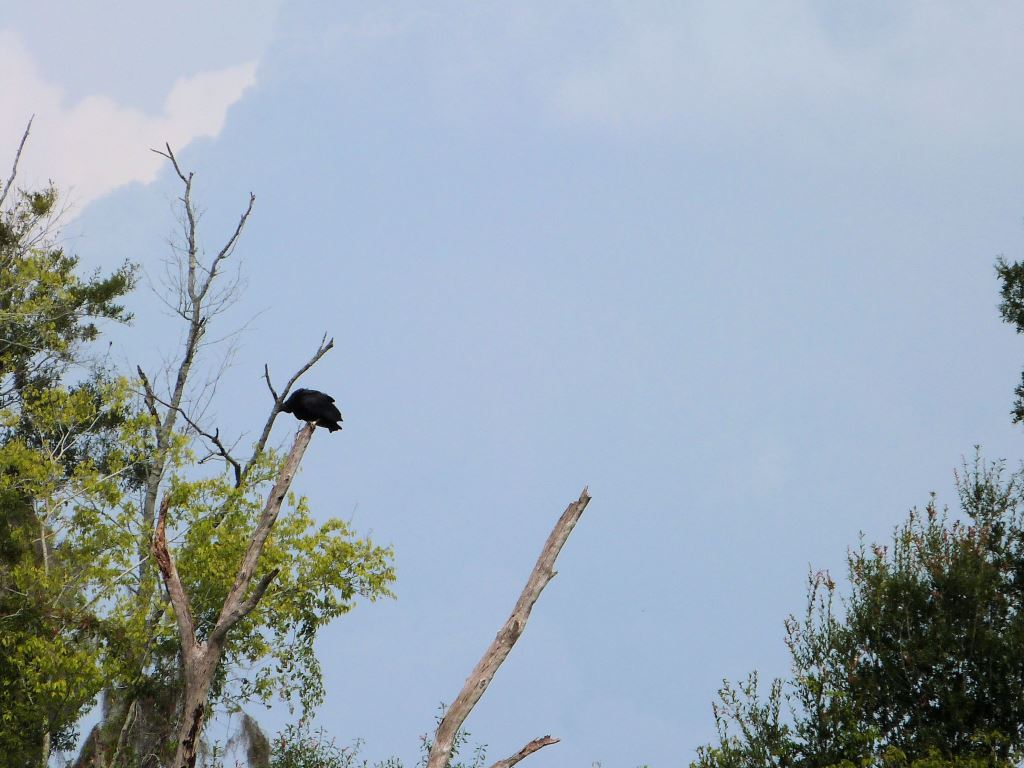
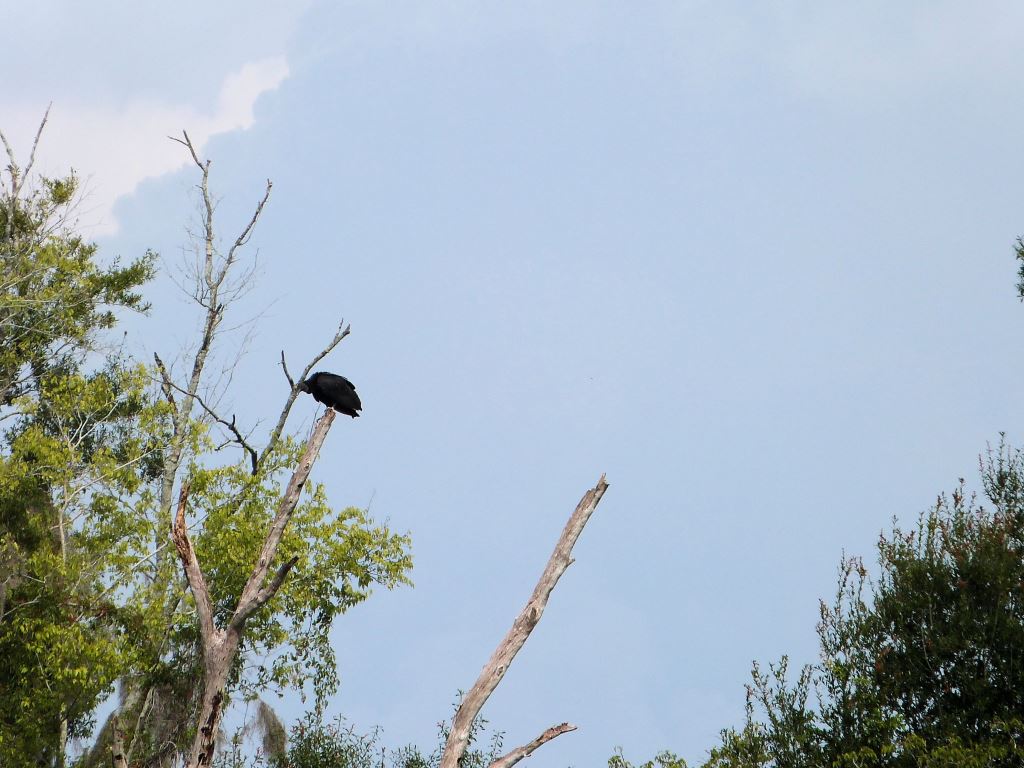
I enjoy “trying” to find bitterns. They can be right challenging because of the way the Lord designed them to be “hidden in plain view.” The American Bittern, at the top, landed right in front of us at Circle B last year. Otherwise, he would have blended right in and he would have been missed. Bitterns are also a Bird of the Bible.

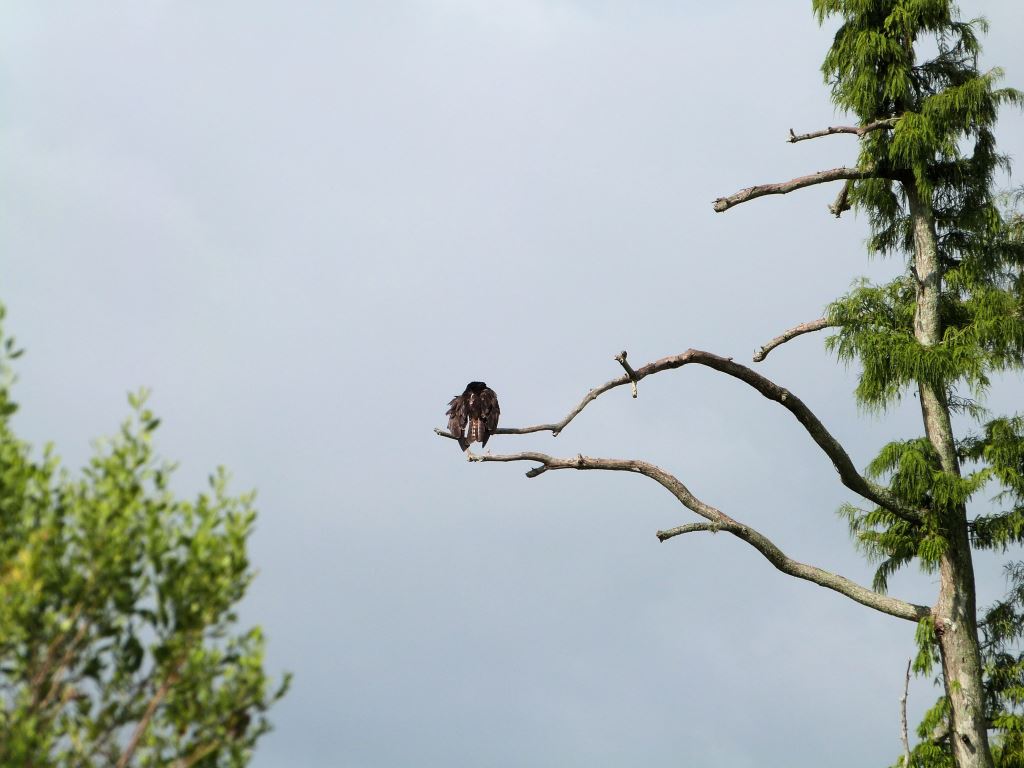
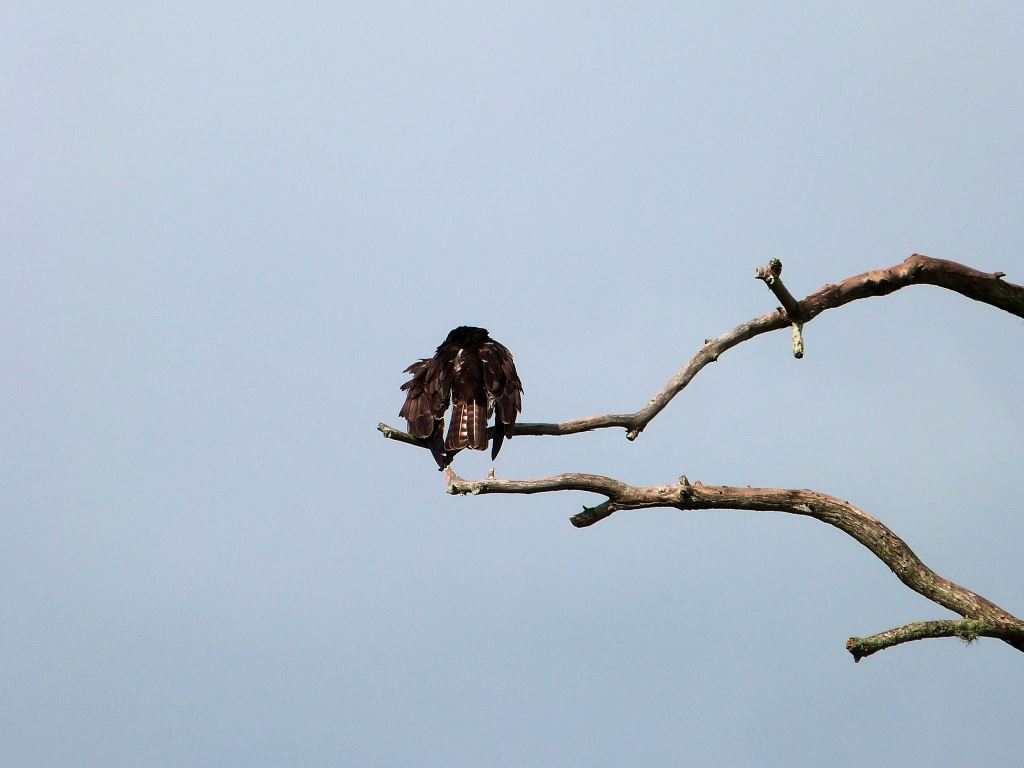
American Bittern (Botaurus lentiginosus) by Bob-Nan

American Bittern (Botaurus lentiginosus) by Bob-Nan

Bitterns belong to the Ardeidae- Herons, Bitterns Family and most are well hidden while they search for food. “Bitterns are a classification of birds in the heron family, a family of wading birds. Species named bitterns tend to be the shorter-necked, often more secretive members of this family. Bitterns usually frequent reed beds and similar marshy areas, and feed on amphibians, reptiles, insects, and fish. Unlike the similar storks, ibises, and spoonbills, herons and bitterns fly with their necks retracted, not outstretched.” (Wikipedia)

Sunbitterns, which I added, are members of the Eurypygidae – Sunbittern Family. These comments from Woodland Park Zoo, show how their design helps hide them. “With its slow, deliberate walk on orange-colored legs and its long neck held parallel to the ground, the sunbittern resembles the sun-flecked forest interior. This spectacular frontal display is for threat or defense rather than courtship and is usually accompanied by a low hiss and bowing.”

“… they have vividly colored middle webs, which with wings fully spread show bright eyespots in red, yellow, and black. These are shown to other sunbitterns in courtship and threat displays, or used to startle potential predators. (Wikipedia)

This ability to hide brought to mind these verses:

Keep me as the apple of Your eye; Hide me under the shadow of Your wings, (Psalms 17:8 NKJV)

For in the day of trouble He will conceal me in His tabernacle; In the secret place of His tent He will hide me; He will lift me up on a rock. (Psalms 27:5 NASB)

Hide me from the secret counsel of evildoers, From the tumult of those who do iniquity, (Psalms 64:2 NASB)

Can anyone hide himself in secret places, So I shall not see him?” says the LORD; “Do I not fill heaven and earth?” says the LORD. (Jeremiah 23:24 NKJV)

*

This slideshow requires JavaScript.

*

“Hide Thou Me” – ©Rejoice! by the Hyssongs

*

Links:

*

Birds of the World – Laughingthrush and Allies

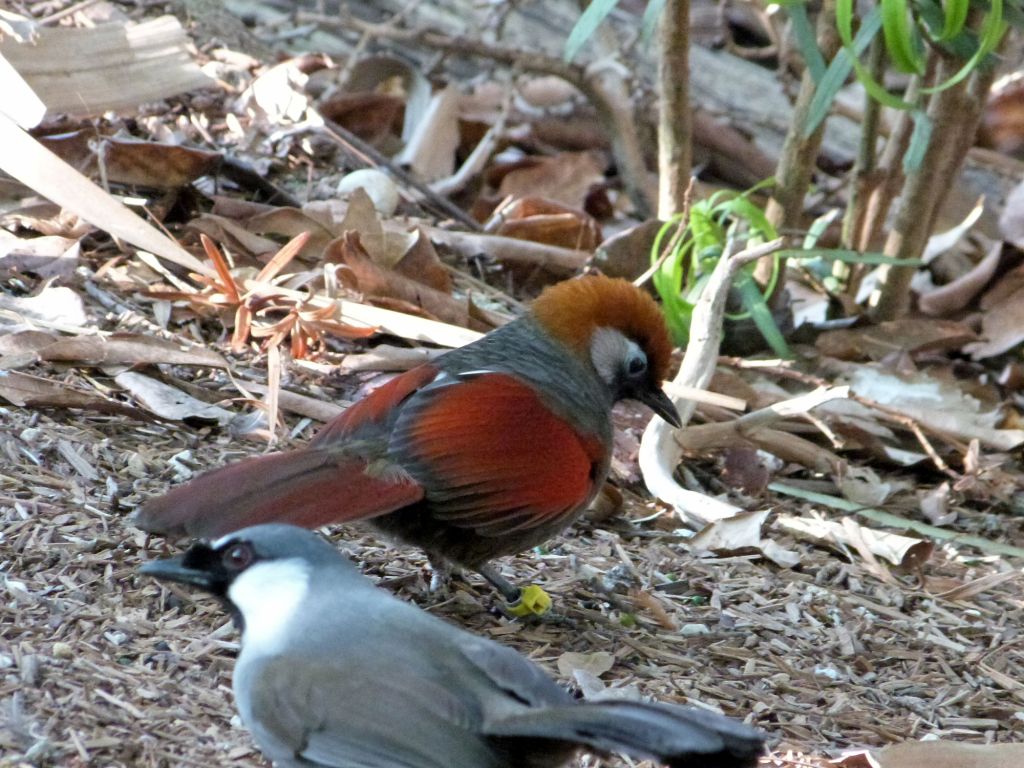
Red-tailed Laughingthrush (Trochalopteron milnei) and Black-throated Laughingthrush by Lee at Zoo Miami

Red-tailed Laughingthrush and Black-throated Laughingthrush by Lee at Zoo Miami

A time to weep, And a time to laugh; A time to mourn, And a time to dance; (Ecclesiastes 3:4 NKJV)

Blessed are you who hunger now, For you shall be filled. Blessed are you who weep now, For you shall laugh. (Luke 6:21 NKJV)

I trust you enjoyed seeing the Laughingthrush – Leiothrichidae family in the Sunday Inspiration – Laughingthrush article. From my first encounter with them, they have been a delight to watch. We have only seen them in Zoos, because they live in Southeast Asia and Indian Subcontinent.

(Black and White) Sumatran Laughingthrush (Garrulax bicolor) by Lee

(Black and White) Sumatran Laughingthrush (Garrulax bicolor) by Lee

The Laughingthrushes are the genus Garrulax and Trochalopteron of the Leiothrichidae family of passerine birds. They primarily occur in tropical Asia. These are rangy, medium-sized landbirds. These birds have strong legs and are quite terrestrial. This group is not strongly migratory, and most species have short rounded wings, and a weak flight.

A few, like the Streaked Laughingthrush occur in fairly open habitats, but most are jungle species, difficult to observe in the dense vegetation they prefer.

These are noisy birds, and the characteristic laughing calls are often the best indication that these birds are present. They frequently occur in groups of up to a dozen, and the rainforest species like the Ashy-headed Laughingthrush often occur in the mixed feeding flocks typical of tropical Asian jungle.

They are small to medium sized birds. They have strong legs, and many are quite terrestrial. They typically have generalised bills, similar to those of a thrush. Most have predominantly brown plumage, with minimal difference between the sexes, but many more brightly coloured species also exist. This group is not strongly migratory, and most species have short rounded wings, and a weak flight. They live in lightly wooded or scrubland environments, ranging from swamp to near-desert. They are primarily insectivorous, although many will also take berries, and the larger species will even eat small lizards and other vertebrates. (Wikipedia)

The Sumatran Laughingthrush (Garrulax bicolor), also known as the Black-and-white Laughingthrush, is a member of the Leiothrichidae family. It is endemic to highland forest on the Indonesian island of Sumatra, The laughingthrushes are a family of mostly Old World passerine birds. They are rather diverse in size and coloration. These are birds of tropical areas, with the greatest variety in Southeast Asia and the Indian Subcontinent. The entire family was previously included in the Timaliidae.


From the Life List of All Birds We Have Seen (Not up to date), here are the family members we have seen so far.

Laughingthrushes (Family Leiothrichidae)

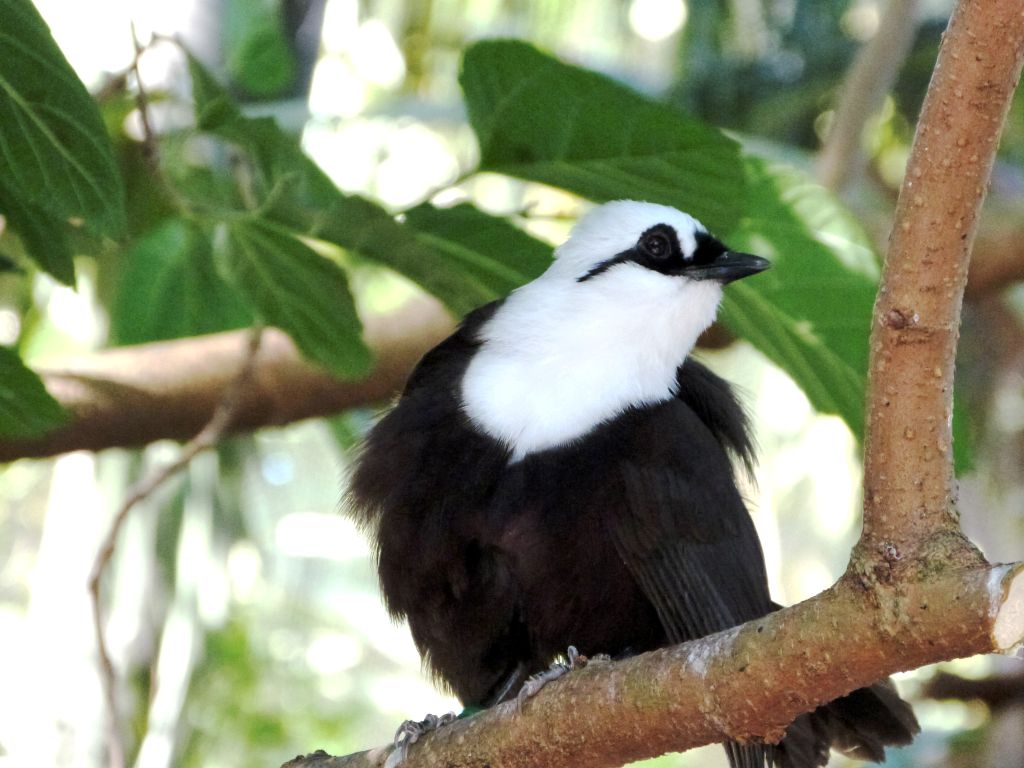
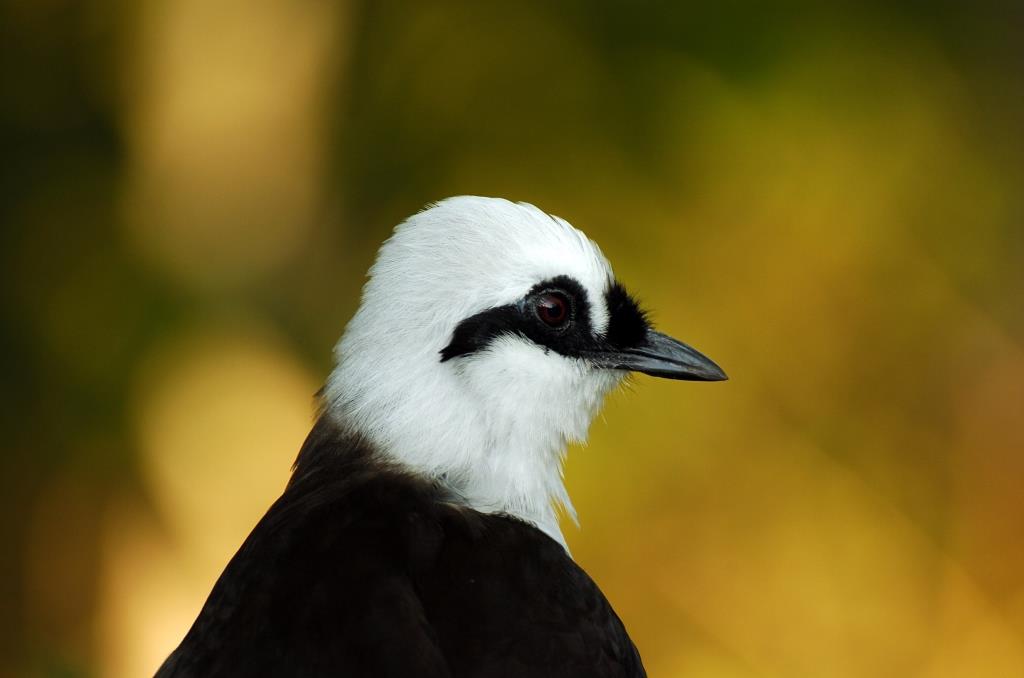
White-crested Laughingthrush (Garrulax leucolophus) by Lee Miami WA

White-crested Laughingthrush (Garrulax leucolophus) by Lee Miami WA

FUN FACT – White-crested Laughing Thrushes are noisy, social birds who occasionally burst into loud calls that sound just like laughter. (National Aviary)

White-crested Laughingthrush (Garrulax leucolophus) MZ NA WA

Sumatran Laughingthrush (Garrulax bicolor) by Dan at  Wing of Asia ZM

Sumatran Laughingthrush (Garrulax bicolor) by Dan at Wing of Asia ZM

Sumatran Laughingthrush (Garrulax bicolor) WA by Dan

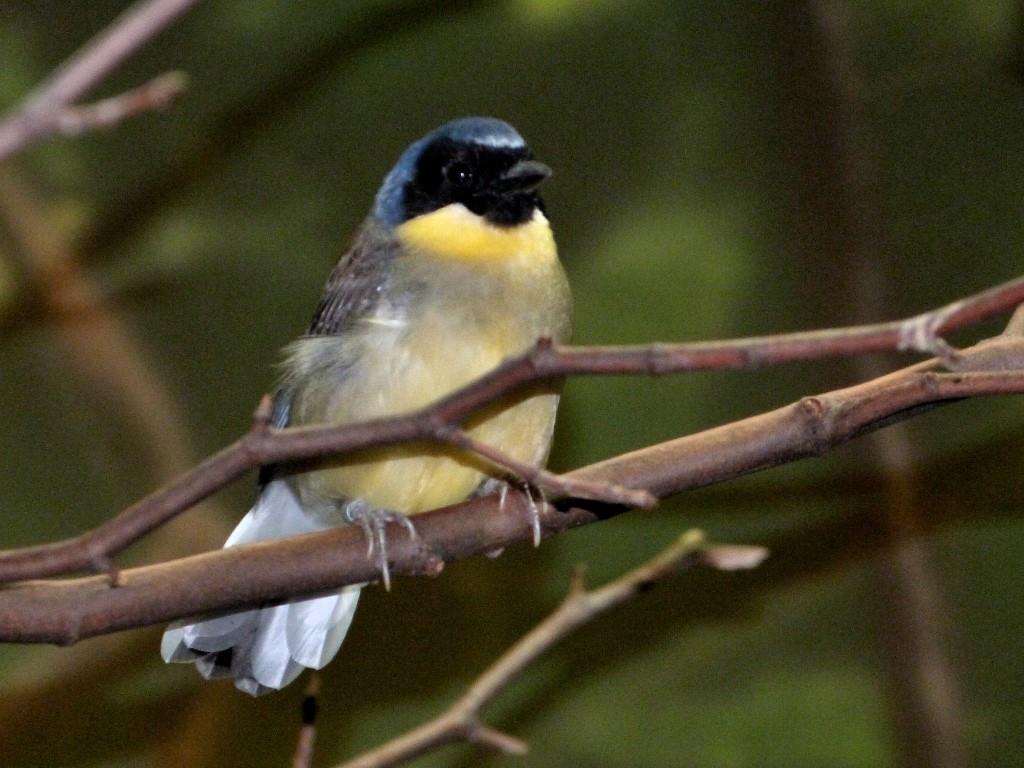
Blue-crowned Laughingthrush (Garrulax courtoisi) at Cincinnati Zoo by Lee

Blue-crowned Laughingthrush (Garrulax courtoisi) at Cincinnati Zoo by Lee

*

*

Black-throated Laughingthrush (Garrulax chinensis) ProofShot

Black-throated Laughingthrush (Garrulax chinensis) ProofShot – Zoo Miami by Lee

Black-throated Laughingthrush (Garrulax chinensis) WA by Lee

Spotted Laughingthrush (Garrulax ocellatus) WA

Chestnut-capped Laughingthrush (Garrulax mitratus) WA

(Spectacled) Red-winged Laughingthrush (Garrulax formosus) WA

Red-tailed Laughingthrush  by Dan at Wings of Asia Zoo Miami

Red-tailed Laughingthrush by Dan at Wings of Asia Zoo Miami

Red-tailed Laughingthrush (Trochalopteron milnei) WA by Dan

Red-faced Liocichla (Liocichla phoenicea) Proof shot by Lee Riverbanks Zoo

Red-faced Liocichla (Liocichla phoenicea) Proof shot by Lee Riverbanks Zoo

Red-faced Liocichla (Liocichla phoenicea) WA RZ by Lee

Red-billed Leiothrix (Leiothrix lutea) by Dan's Pix at National Aviary

Red-billed Leiothrix (Leiothrix lutea) by Dan’s Pix at National Aviary

*

Sunday Inspiration – Laughingthrush

Laughingthrushes (Family Leiothrichidae)

Life List of All Birds We Have Seen

*


“Horn” Birds

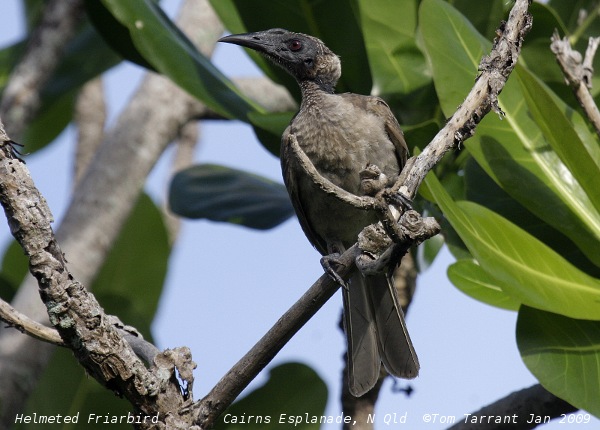
 Hornbill Friarbird (Philemon yorki) by Tom Tarrant

Hornbill Friarbird (Philemon yorki) by Tom Tarrant

The LORD is my rock, and my fortress, and my deliverer; my God, my strength, in whom I will trust; my buckler, and the horn of my salvation, and my high tower. (Psalms 18:2 KJV)

The Sunday Inspiration this week was about Hornbills. That put me to wondering what other birds have “Horn” in their name. So, let’s see what is listed in the IOC’s List of Birds, which is what this blog uses:

The first thing I found is a Hornbill Friarbird (Philemon yorki), formerly (Philemon buceroides yorki), is one of the newer splits. It was a subspecies of the Helmeted Friarbird (Philemon buceroides). In fact, Wikipedia doesn’t even cover it yet, but others do.

Call from xeno-canto by Marc Anderson

Next I sorted my IOC List of names alphabetically by first name of birds. Here is what I found:

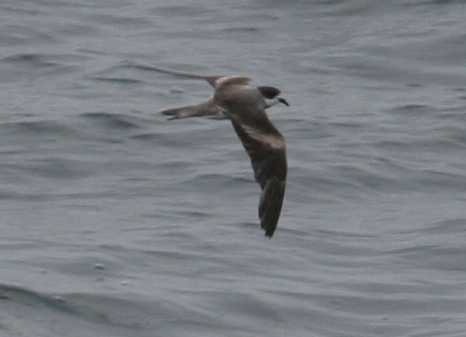
Hornby’s Storm Petrel (Oceanodroma hornbyi)
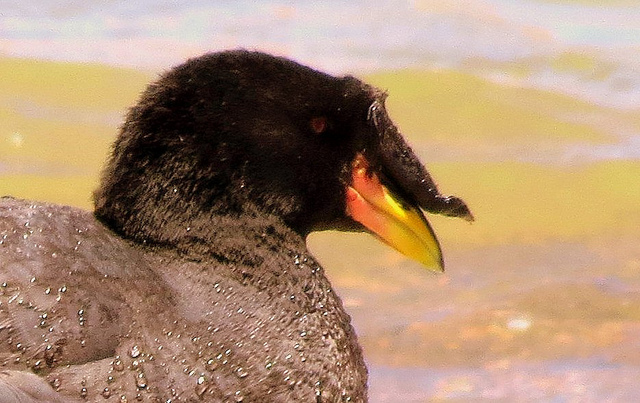
Horned Coot (Fulica cornuta)
Horned Curassow (Pauxi unicornis)
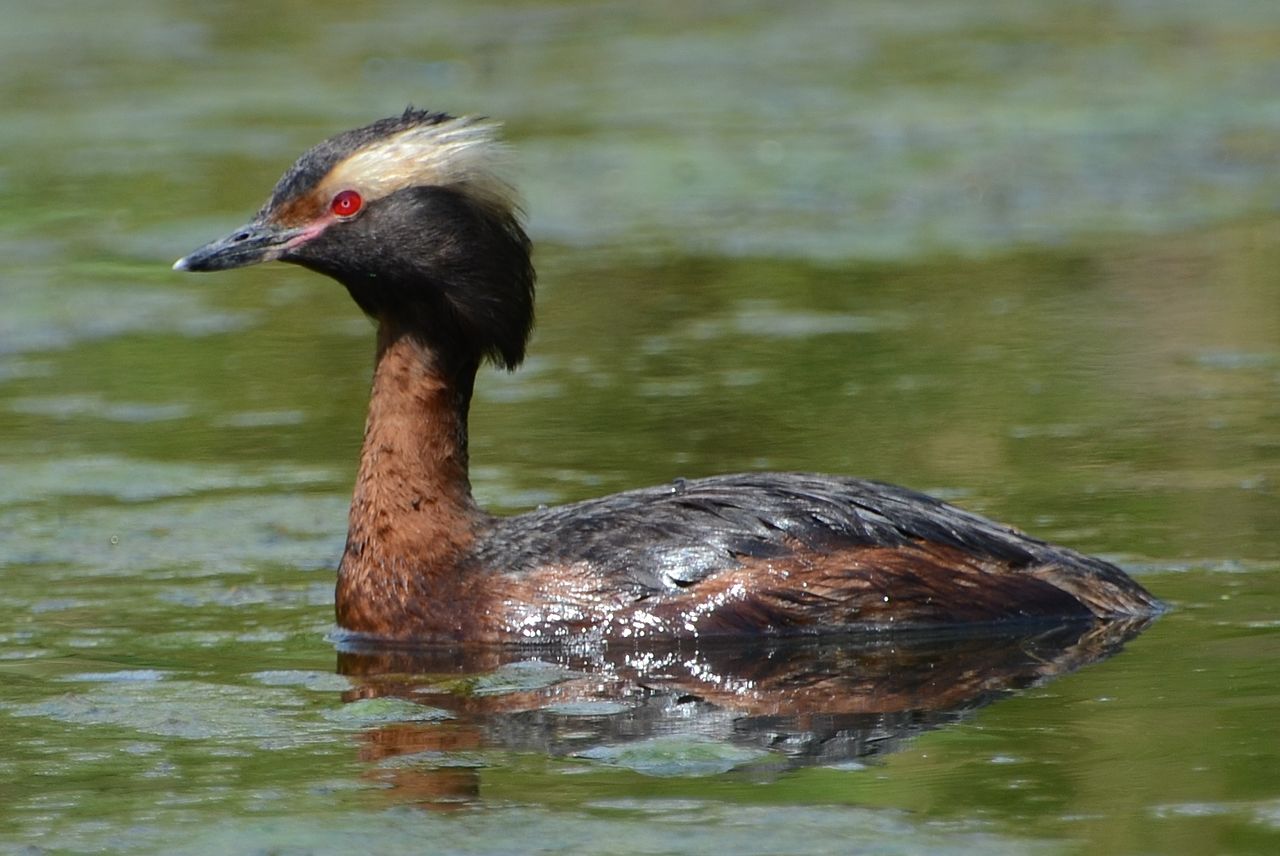
Horned Grebe (Podiceps auritus)
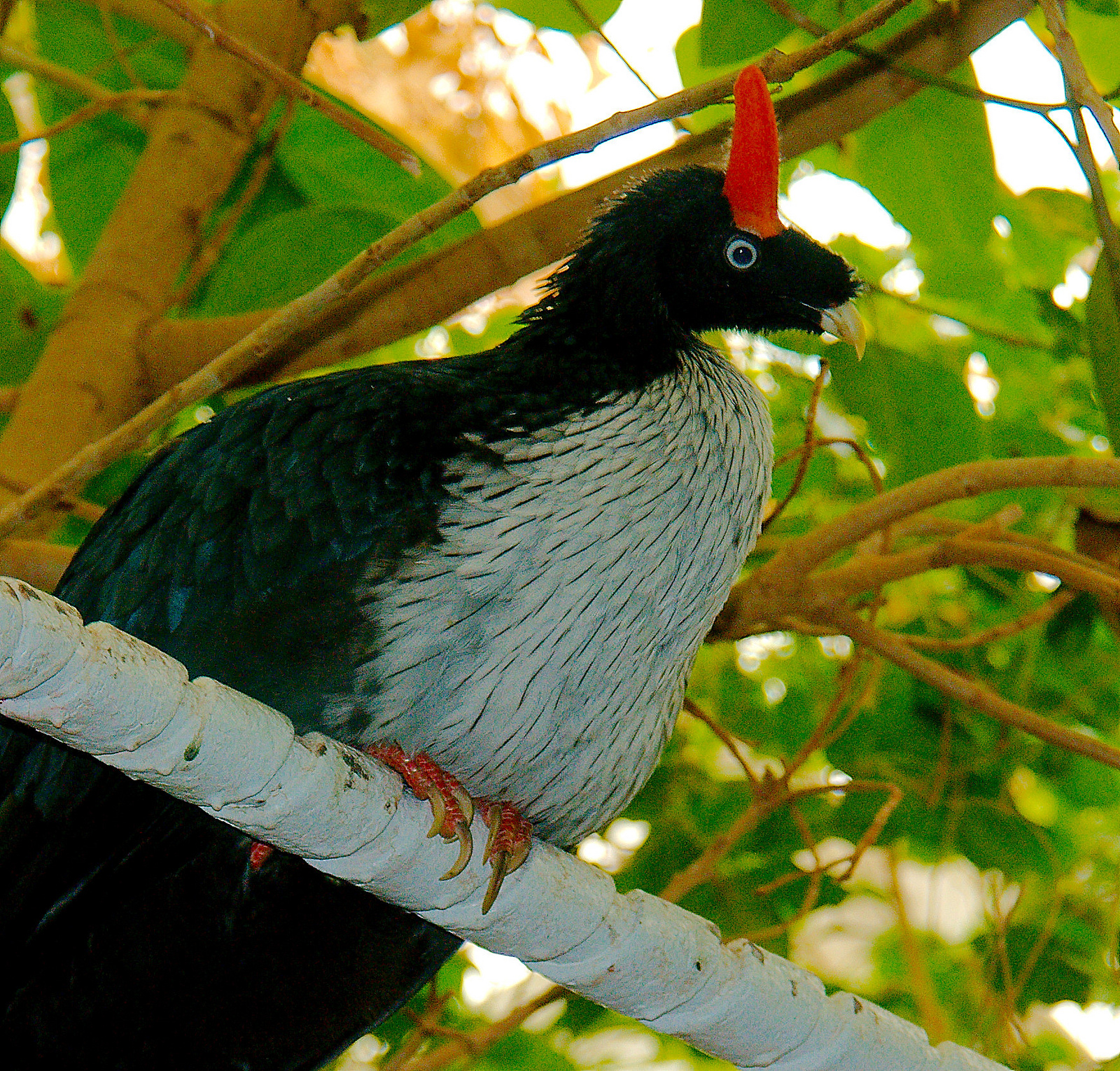
Horned Guan (Oreophasis derbianus)
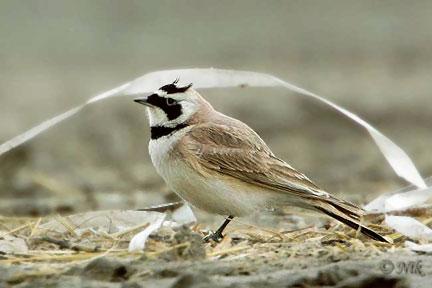
Horned Lark (Eremophila alpestris)
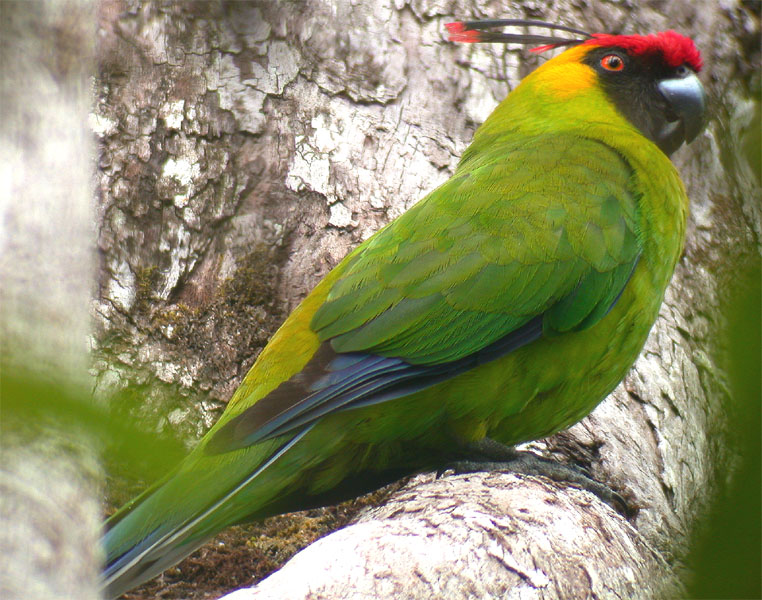
Horned Parakeet (Eunymphicus cornutus)
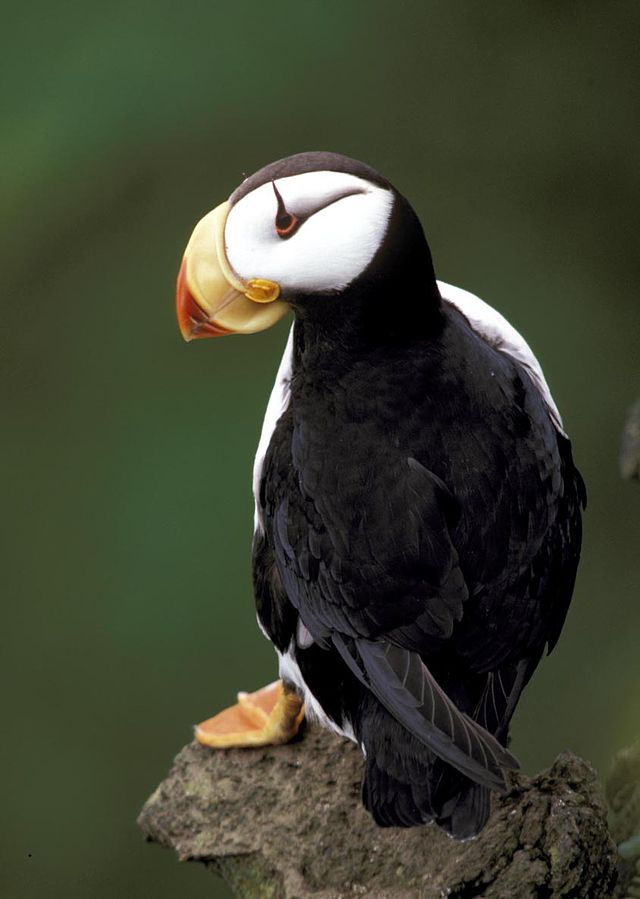
Horned Puffin (Fratercula corniculata)
Horned Screamer (Anhima cornuta)
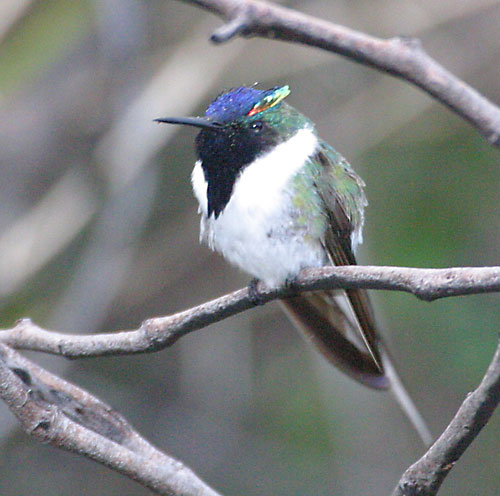
Horned Sungem (Heliactin bilophus)

I know there is a Great Horned Owl, so I guess I need to sort some more.

Great Horned Owl (Bubo virginianus)
Lesser Horned Owl (Bubo magellanicus)
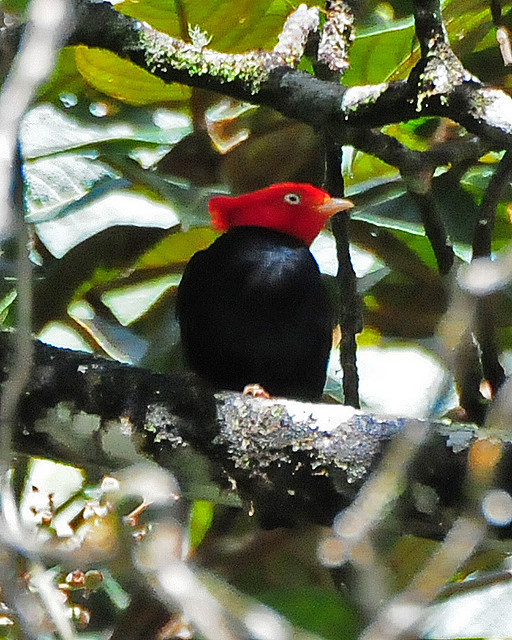
Scarlet-horned Manakin (Dixiphia cornuta)
Hornby’s Storm Petrel (Oceanodroma hornbyi)
Lesser Hornero (Furnarius minor)
Band-tailed Hornero (Furnarius figulus)
Pale-legged Hornero (Furnarius leucopus)
Pacific Hornero (Furnarius cinnamomeus)
Caribbean Hornero (Furnarius longirostris)
Bay Hornero (FurRufous Hornero (Furnarius rufus)
Rufous Hornero (Furnarius rufus)
Crested Hornero (Furnarius cristatus)

Trust you don’t mind finding out this information. When we stop being curious, we stagnate. Besides, the Lord has made so many birds out there for us to find, 10,530 at the time, this is a way to discover a few more of them. I found some “Thornbirds”, but will save that for another time. Also, birds do not have horns, but rather tufts of feathers that stick up like horns.

The blessing of the LORD, it maketh rich, and he addeth no sorrow with it. (Proverbs 10:22 KJV)

Also he (Solomon) spoke of trees, from the cedar tree of Lebanon even to the hyssop that springs out of the wall; he spoke also of animals, of birds, of creeping things, and of fish. (1 Kings 4:33 NKJV)


This slideshow requires JavaScript.

———————

Birds of the World

Sunday Inspiration – Hornbills

Other Sunday Inspirations

Good News Tracts

*


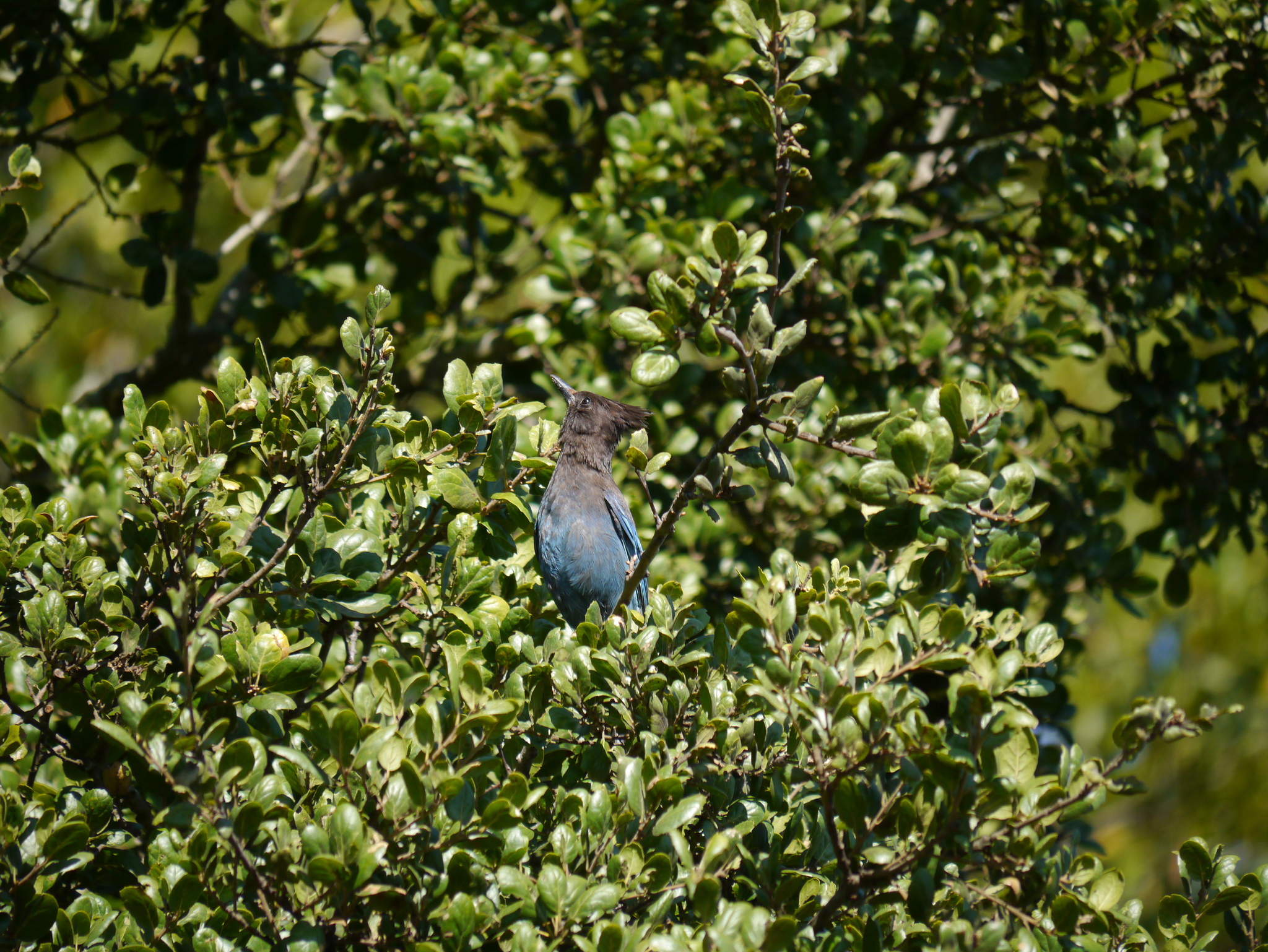
Steller’s Jay: A Lesson in Choosing What Is Valuable

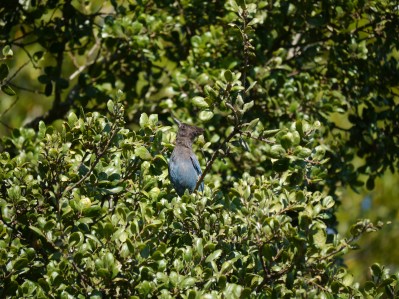
Steller’s Jay (Cyanocitta stelleri) ©Flickr LeeJaffe

by Dr. James J. S. Johnson

My son, despise not the chastening of the LORD; neither be weary of his correction: For whom the LORD loveth he correcteth; even as a father the son in whom he delighteth. Happy is the man that findeth wisdom, and the man that getteth understanding. For the merchandise of it is better than the merchandise of silver, and the gain thereof than fine gold. She is more precious than rubies: and all the things thou canst desire are not to be compared unto her.
(Proverbs 3:11-15 KJV)
Luzon Bleeding-heart by Dan

Orni-Theology

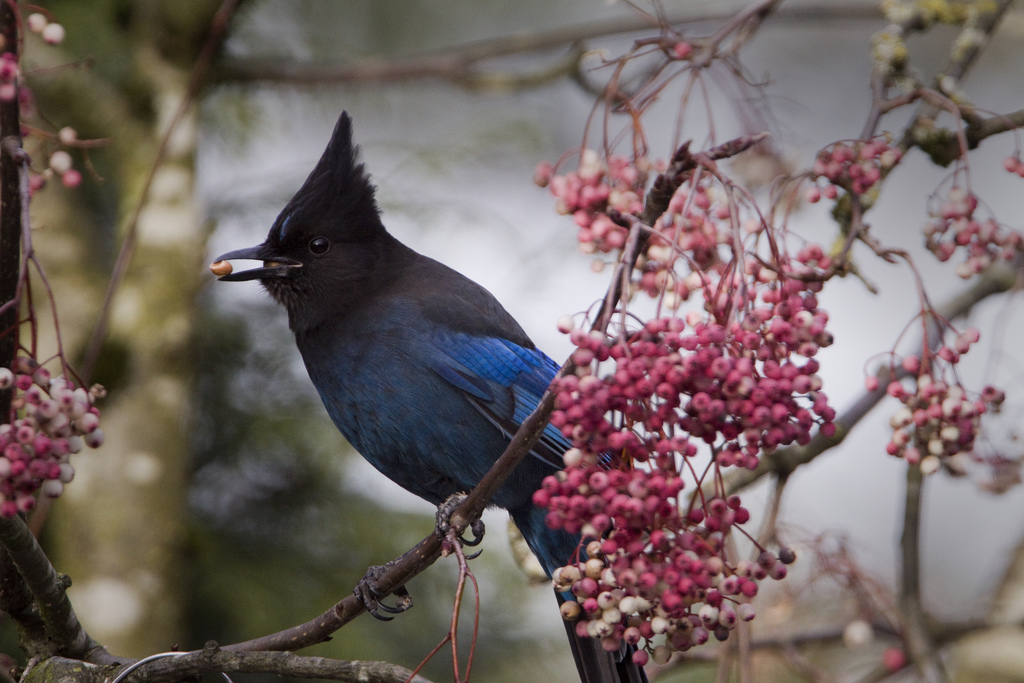
What can we learn from a Steller’s Jay, about how differently people measure what is valuable and what is worthless?  One clue to answering that question is found in a strange context, negotiating a contract! But before we examine one of the most famous contracts in human history, to illustrate how differently people value things in this life, let’s review a few facts about the star of today’s show:  the Steller’s Jay, a bird that looks more like Batman than any other bird.

Steller's Jay (Cyanocitta stelleri) by Lee at Desert Museum AZ

Steller’s Jay (Cyanocitta stelleri) by Lee at Desert Museum AZ

What’s in a name?  (So who was George Wilhelm Steller?) Before analyzing the Steller’s jay as a bird, let’s consider the bird’s name.  It’s not “stellar jay”, although the Steller’s jay is quite a superstar in his own right!  The bird is named for Germany’s Georg Wilhelm Steller (also spelled Stöller and Stohler), a world-traveling scientist, accomplished in botany, zoology (including ornithology!), medicine (including surgery), and ecology.  It was Steller who identified and studied the bird (Cyanocitta stelleri) in AD1741.

How did a German scientist discover the Batman-looking bird that habituates many forested areas of North America’s western half?  On behalf of the Russian czar, Denmark’s Vitus Jonassen Bering left Saint Petersburg in AD1733, with two outfitted ships (St. Paul and St. Peter) to explore parts of eastern Siberia and its coastal waters.  In AD1738 Georg and his wife (Brigitta) left to join them, but Brigitta abandoned the venture in Moscow, while Georg continued eastward, joining Bering’s expedition in AD1740.  Adventures on Siberia’s Kamchatka Peninsula included travelling by dogsled, a mode of transport still common in Alaska today.  Bering decided to sail between Russia and North America (what is today “Alaska”) and the outcome including adventures, tragedy, and discoveries. When the St. Peter made landfall on one of Alaska’s Aleutian Islands (apparently Kayak Island), amidst dangers and death, Vitus Bering intended only to replenish the ship’s freshwater supplies.  But Georg Steller begged for time to do some scientific research, hoping to prove that the land was connected to North America (not Asia).  Bering conceded ten hours only – so whatever scientific research Steller could do, in that short timeframe, must suffice! During those ten hours Steller empirically scrutinized (and journalistically documented) a variety of North American plants and animals,  –  one of them being a crested black-and-blue jaybird, later called “Steller’s Jay” (which was only found in North America, proving that the Aleutian Islands were ecologically connected to North America)!
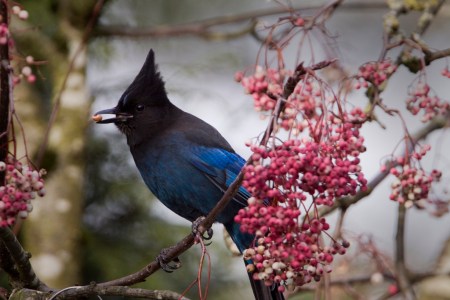
PAS-Corv Steller's Jay (Cyanocitta stelleri) ©Flickr RichLeche

Steller’s Jay (Cyanocitta stelleri) ©Flickr RichLeche

Other creatures bearing Steller’s name include two birds, a smallish sea duck called the Steller’s Eider (Polysticta stelleri) and the Steller’s Sea Eagle (Haliaeetus pelagicus), plus two marine mammals, a pinnipeds, the Steller’s sea lion (Eumetopias jubatus, and a sirenian, the now-extinct (manatee-like) Steller’s sea cow (Hydrodamalis gigas).

Steller's Jay (Cyanocitta stelleri) Decription ©sheriAnsel www.exploringnature.org

Steller’s Jay (Cyanocitta stelleri) Decription © Sheri Amsel http://www.exploringnature.org

What kind of bird is a Steller’s Jay? The Steller’s jay is a large-sized, tough-built corvid (meaning a crow-like bird), having a large wingspan, strong legs, a very tough bill, and a prominent crest.  Though this would be hard (or, at least, expensive) to prove, all corvids may descend from seven pairs of corvids who safely rode out the global Flood with Noah’s family (compare Genesis 7:3 & 8:7 with Leviticus 11:15 and Deuteronomy 14:14).  It is indisputable that Steller’s jays are true cousins of Blue Jays (Cyanocitta cristata), because they are known to hybridize, especially in Colorado. (In fact, the only North American corvids with a crest are the Steller’s Jay and the Blue Jay.)

Taxonomists categorize it as a passerine (i.e., perching) bird of the Order Passeriformes, Family Corvidae, with the Genus-species name Cyanocitta stelleri.  The corvid family includes a variety of jays and crow-like songbirds, such as the common raven, rook, European jackdaw, American crow, Jamaican crow, magpie, Eurasian jay, Siberian jay, grey jay, scrub jay, pinyon jay, blue jay, Yucatan jay, Clark’s nutcracker, and more.  The corvid family includes the largest-sized passerine birds.  Not only is there an impressive variety within the corvid family, the corvids can vocalize a variety of sounds, including imitated sounds – in a montane pine forest you may hear a jaybird imitating other birds, or “squirrels, cats, dogs, chickens, and some mechanical objects”. [Quoting from the Cornell Lab of Ornithology, “All About Birds:  Steller’s Jay (Life History)”, posted at http://www.allaboutbirds.org/guide/stellers_jay/lifehistory .]
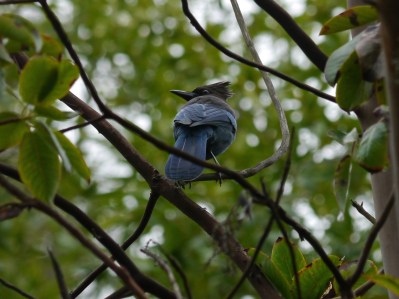
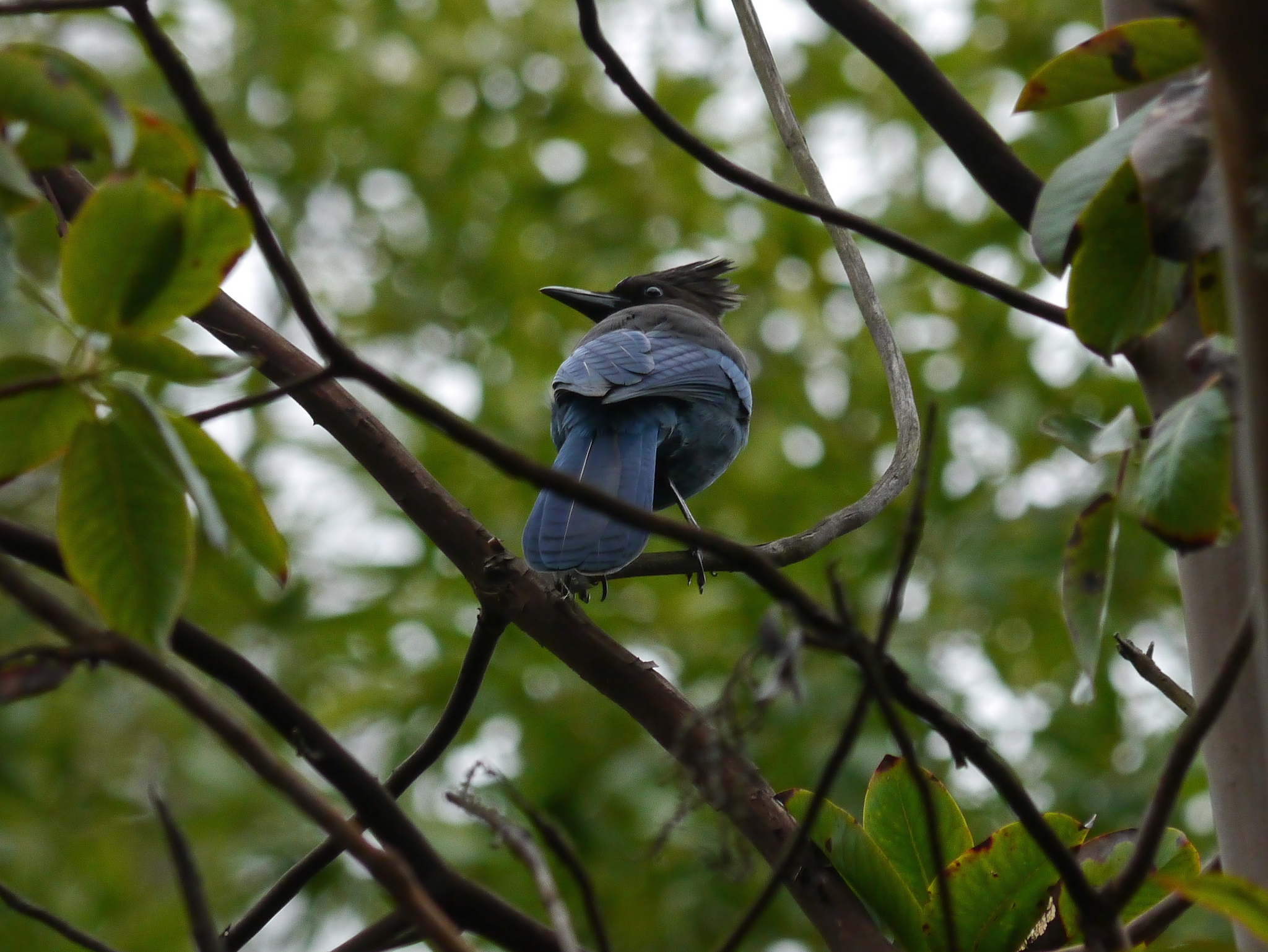
Steller's Jay (Cyanocitta stelleri) ©Flickr LeeJaffe

Steller’s Jay (Cyanocitta stelleri) ©Flickr LeeJaffe

Most jays (like most corvids) don’t migrate, but some do, especially if food becomes seasonally scarce where they reside.  In North America only the Steller’s Jay and its close cousin, the Blue Jay, are known to use mud for building their nests.  Steller’s jays are most likely to nest, and to be seen in conifer forests, though mixed woodlands with some open spaces characterize some of their ranges. Steller’s Jays are famous for “moving up in the world” – they prefer to reside on “higher ground”, at elevations somewhere between 3000 to 10,000 feet.
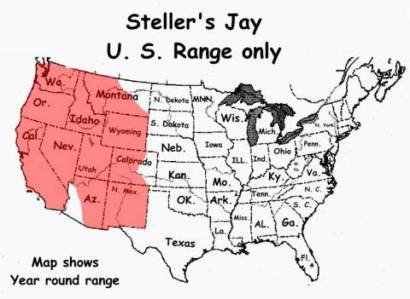
Steller's Jay (Cyanocitta stelleri) US Range Map ©WikiC

Steller’s Jay (Cyanocitta stelleri) US Range Map ©WikiC

Typical ranges for the Steller’s Jay are found in southern Alaska, western Canada, Washington, Oregon, Idaho, Montana, Colorado, Utah, Nevada, California, Arizona, New Mexico, and Mexico.  [For a different yet similar range map, see Donald & Lillian Stokes, Stokes Field Guide to Birds, Western Region (Little, Brown & Co., 1996), page 324.] Jays, like their crow cousins, are opportunistic food-finders.  Steller’s Jays are hunter-gatherers famous for scavenging and “cleaning up” picnic sites – eating feed intended for cattle, dog food, frogs, acorns, sometimes even small birds, plus a cornucopia of human foodstuffs, intended for human consumption as well as some of what is rejected as garbage by humans.   Like Blue Jays, the Steller’s Jay is fiercely territorial, killing (and sometimes eating) smaller birds that “trespass” what it deems to be its “property”, so most Dark-Eyed Juncos (and other smaller birds) know to flee when a Steller’s Jay threateningly appears.
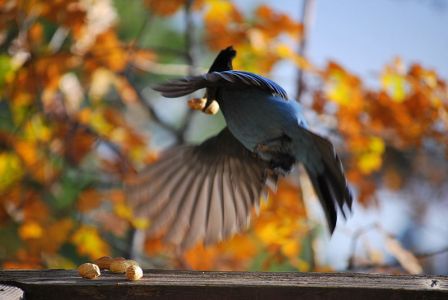
Steller's Jay (Cyanocitta stelleri) ©WikiC

Steller’s Jay (Cyanocitta stelleri) ©WikiC

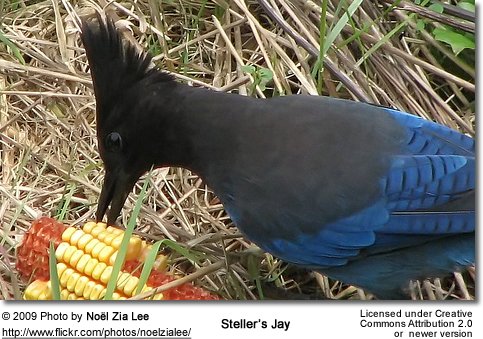
Steller's Jay (Cyanocitta stelleri) ©Flickr NoelZipLee
Like other corvids, Steller’s Jays are known to collect dozens of pinyon pine seeds in their throat-pouch, to hide (i.e., bury) them in protected locations for retrieval during winter months (when their food supplies are less plentiful).  Of course, as with other corvids that do the same (see, e.g., the Pinyon Jay), many such buried seeds, if not retrieved in time, germinate and sprout into the next generation of pinyon pine trees!  [See James J. Scofield Johnson, “Providential Planting:  The Pinyon Jay”, Creation Ex Nihilo 19(3):24-25 (June 1997), posted at https://answersingenesis.org/evidence-for-creation/providential-planting/ and http://creation.com/providential-planting .] It is the jaybird’s garbage-foraging habit that reminds me of today’s Bible text, Proverbs 3:11-15, quoted above.   Why?  Because many times (for many pleasant hours, actually, especially in the evening hours before sunset), at a huge metal dumpster, near huge conifer trees (close to a dining hall’s kitchen, where table scraps are disposed of after every meal), I have quietly watched and photographed Steller’s jays sifting through human garbage, at Horn Creek Family Camp in Colorado (a complex of Christian family camp facilities in the Sangre de Cristo Mountains).

1mans-trash=anothers-treasure.pptslide

What a joy it was to see those happy jaybirds, darting into the dumpster for food, flitting about, perching, eating, standing watch-guard (as others dove for “buried treasure” –  bread morsels, eggs, anything with nuts, seeds, or berries, etc.  What humans discarded as worthless, the jays grabbed as food!

“One man’s trash is another man’s treasure.” What makes the marketplace move with deal-making?  Disagreements about value.  Consider the scenario of a tourist eating a lunch at a café.  The seller is willing to sell a lunch for $10, and a buyer is willing to buy that lunch for $10.  What does their transaction display?  Differing opinions about value.  The seller values the $10 more than keeping the lunch.  The buyer values the lunch more than keeping the $10.  So the seller trades the lunch for the $10, and the buyer gladly surrenders $10 to get the lunch. In other words, all voluntary deals illustrate that the buyer preferred the purchase more than the money spent to gain what was purchased.  Obviously the seller thought the opposite, or else the seller would have refused to sell at the purchase price.  Every day we are making value judgments  —  deciding the values of things, and we make value judgments differently. This is illustrated in Genesis 25:29-34, when Esau exchanged his birthright for a bowl of red lentil soup.  Esau’s twin brother, Jacob, was so pleased with the deal that he added complimentary bread to go with the red soup!  Think of how those two men disagreed about the value of the birthright – the Bible says that this transaction showed how Esau “despised his birthright” (Genesis 25:34):   it was worth less than a bowl of soup to him!  Yet that specific birthright had a unique (and eternal) feature to it, it carried the Messianic lineage, the human ancestry of Christ.  Priceless!  Yet Esau traded it for a transitory value, a bowl of red soup. Surely we would not foolishly sacrifice something so valuable, something with eternal spiritual value, for something so ephemeral and worldly, as soup, right? Yet the Book of Proverbs challenges us, axiologically speaking, on that same value-choice:  how much do we really value God’s wisdom, godly understanding?  What if getting that kind of wisdom involves some experiences of discomfort, or pain, or afflictions, or a series of parental “spankings” from our caring Heavenly Father?

My son, despise not the chastening of the LORD; neither be weary of his correction: For whom the LORD loveth he correcteth; even as a father the son in whom he delighteth. Happy is the man that findeth wisdom, and the man that getteth understanding. For the merchandise of it is better than the merchandise of silver, and the gain thereof than fine gold. She is more precious than rubies: and all the things thou canst desire are not to be compared unto her.
(Proverbs 3:11-15 KJV)

Many earthbound humans strive to gain the treasures of this temporal life:  the merchandise of silver, gold, rubies, — or maybe high-tech equivalents of those treasures.  But true wisdom and godly understanding are better than those, “and all the things thou canst desire are not to be compared” unto God’s wisdom (Proverbs 3:15) and what it gains, in time and especially in eternity.  Some have traded spiritual opportunities for the values of this wayward world. Others have done the opposite, trading the worldly opportunities of this wayward world for Christ-honoring “investments”, laid up in Heaven. That’s why, whenever I remember those Steller’s jays foraging at the family camp dumpster, by those Colorado conifers, I’m reminded:  “one man’s trash is another man’s treasure.”  As the serious-about-living-life missionary Charles T. Studd once put it: Only one life, ’twill soon be past; only what’s done for Christ will last.
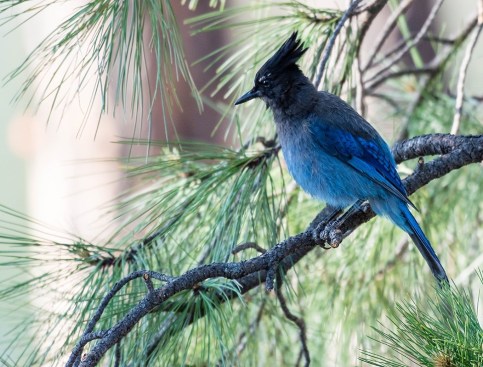
stellersjay-in-pine.pamelaparker-arizonahighways

STELLER’S JAY in pine tree   (Arizona Highways  /  Pamela Parker photo)

 ============================================

Jim Johnson (who formerly taught ornithology and avian conservation at Dallas Christian College)  has been fascinated with Steller’s jays from the first time he saw one in Colorado, even though it gained him a reputation for “always hanging out by the [camp] dumpster” to watch them.  By God’s grace, Jim tries to live his fast-paced life according to the values of Proverbs 3:13-15.

See:

*

Circle B After Recent Rains

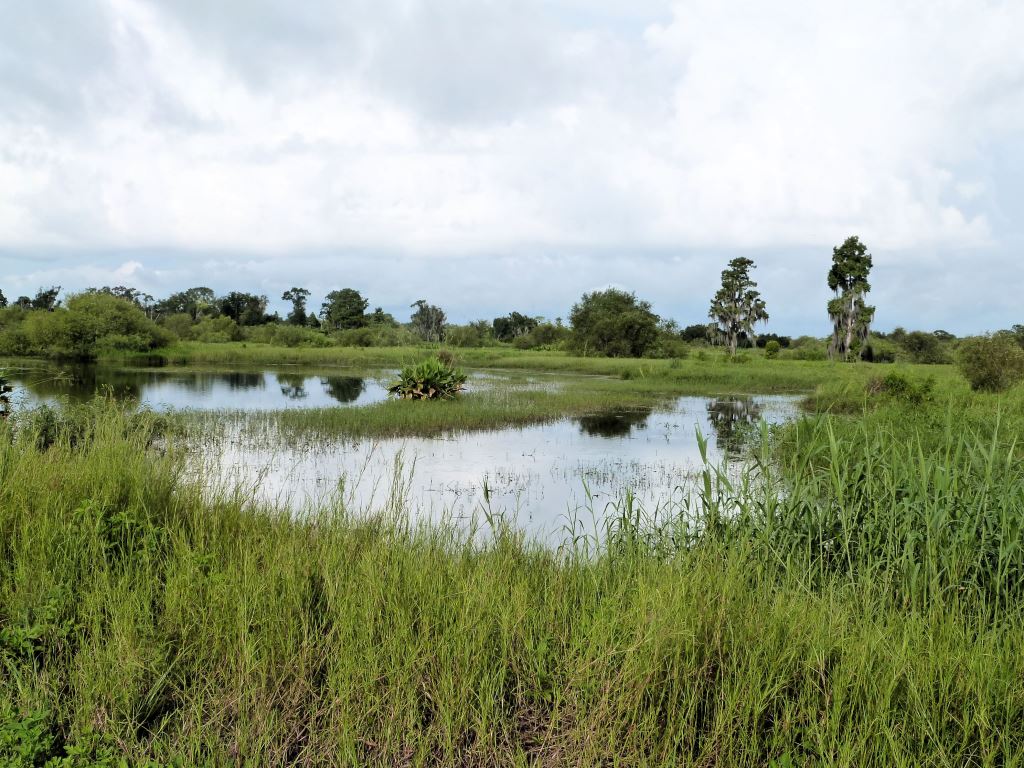
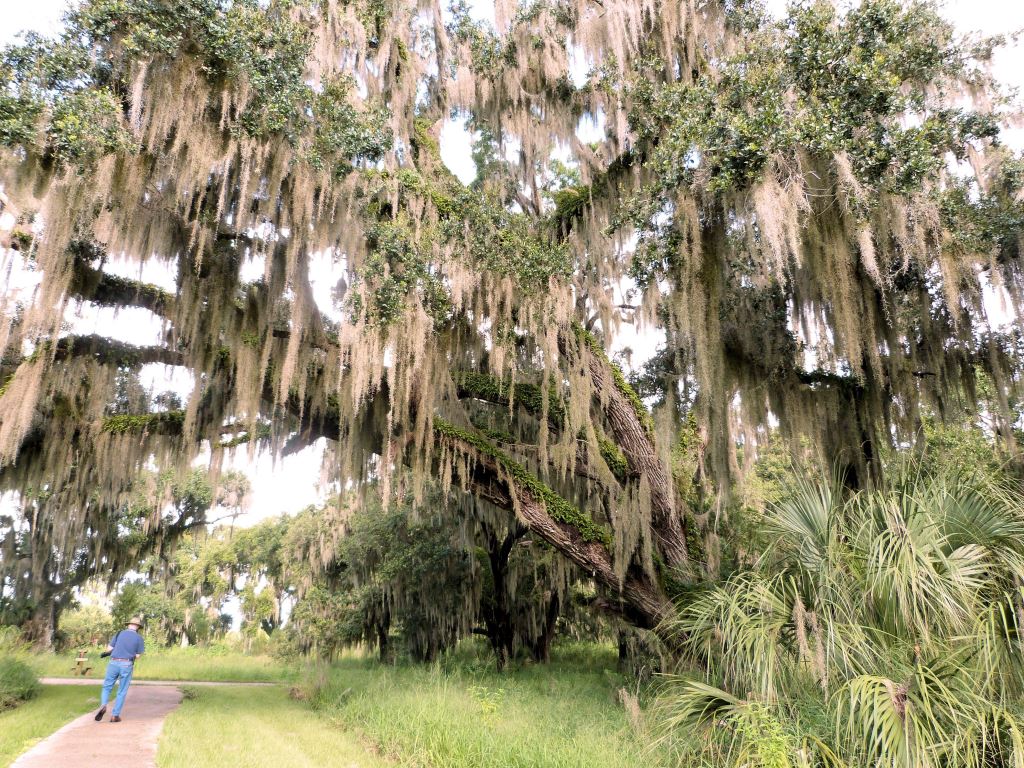
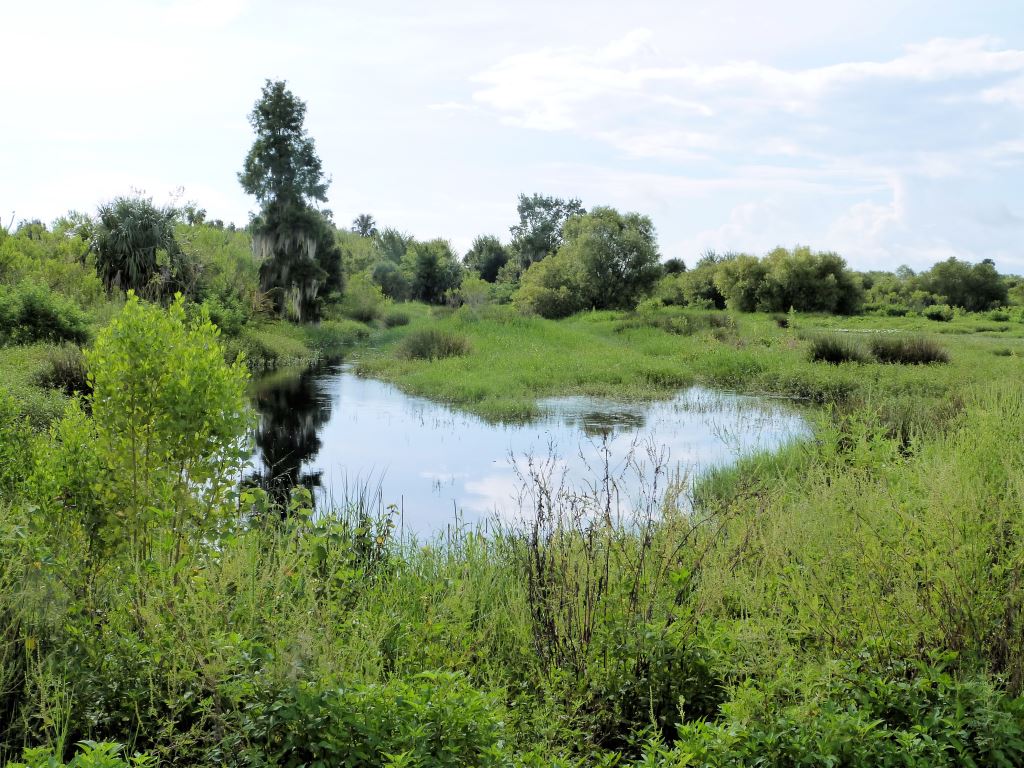
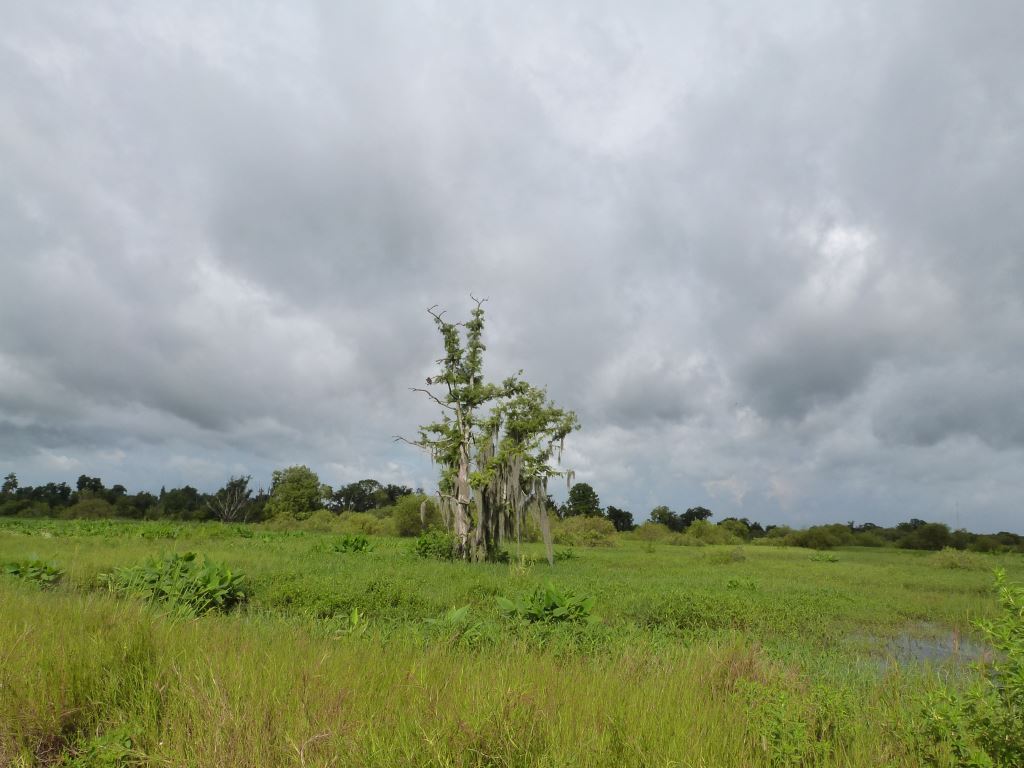
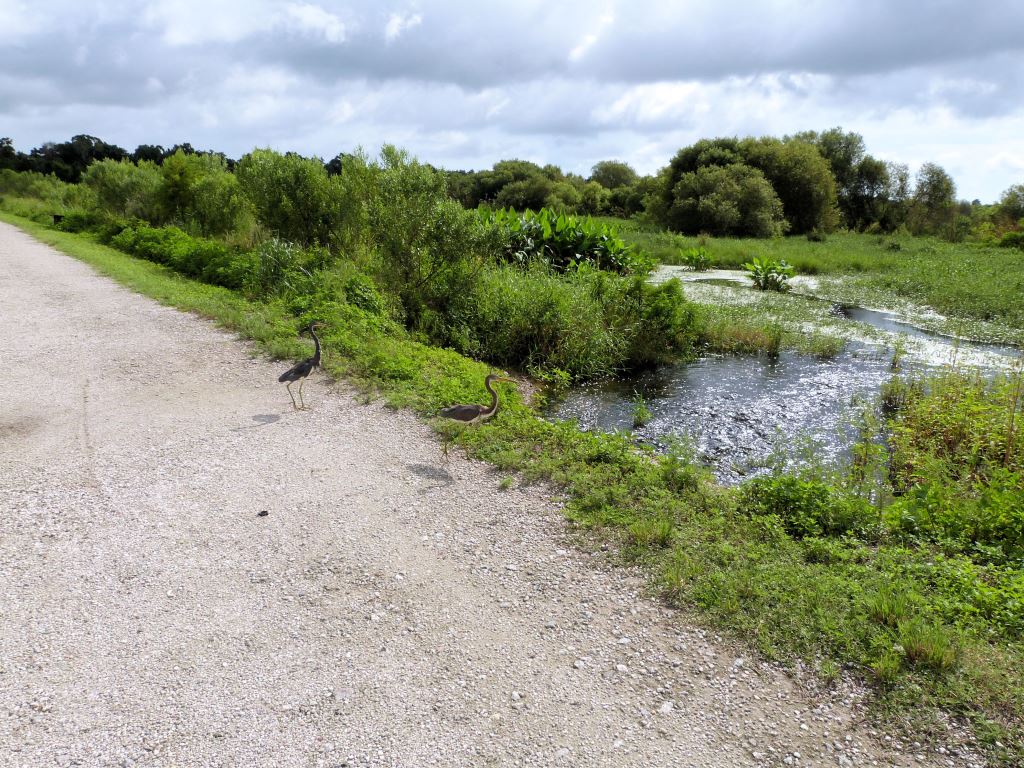
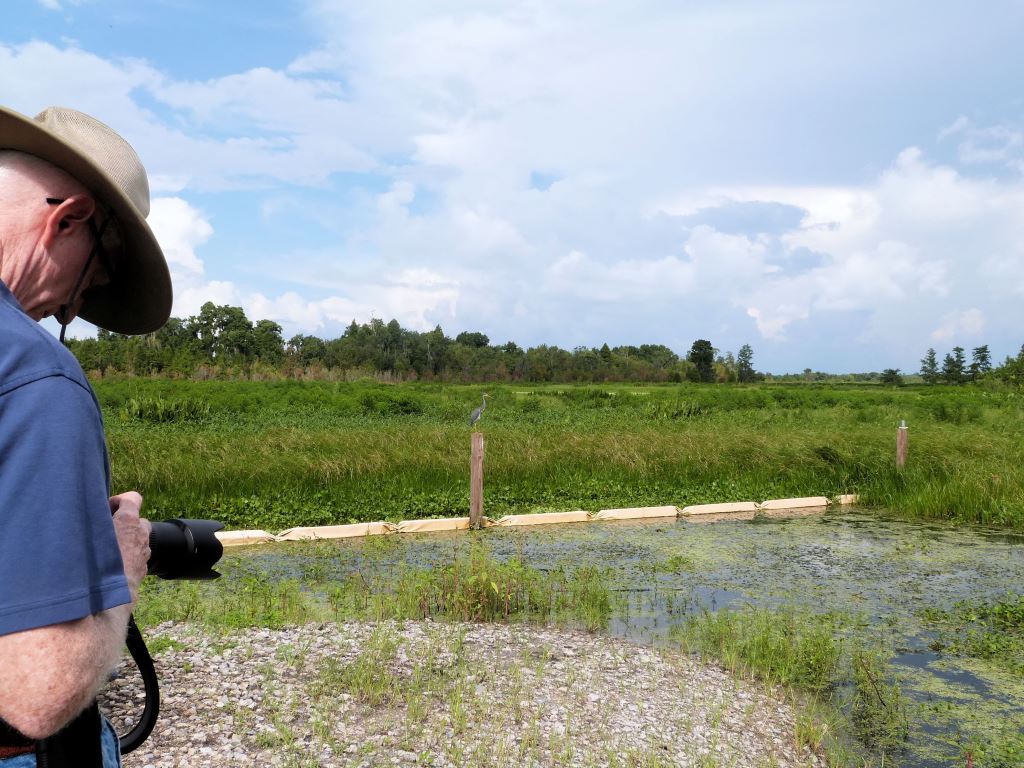
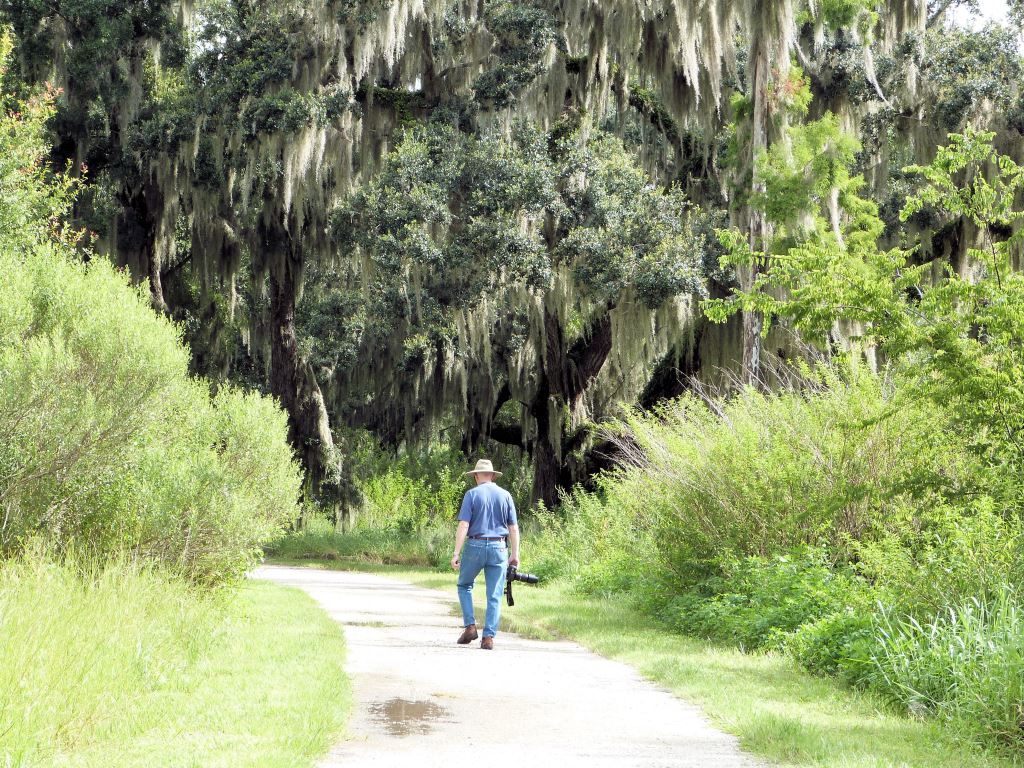
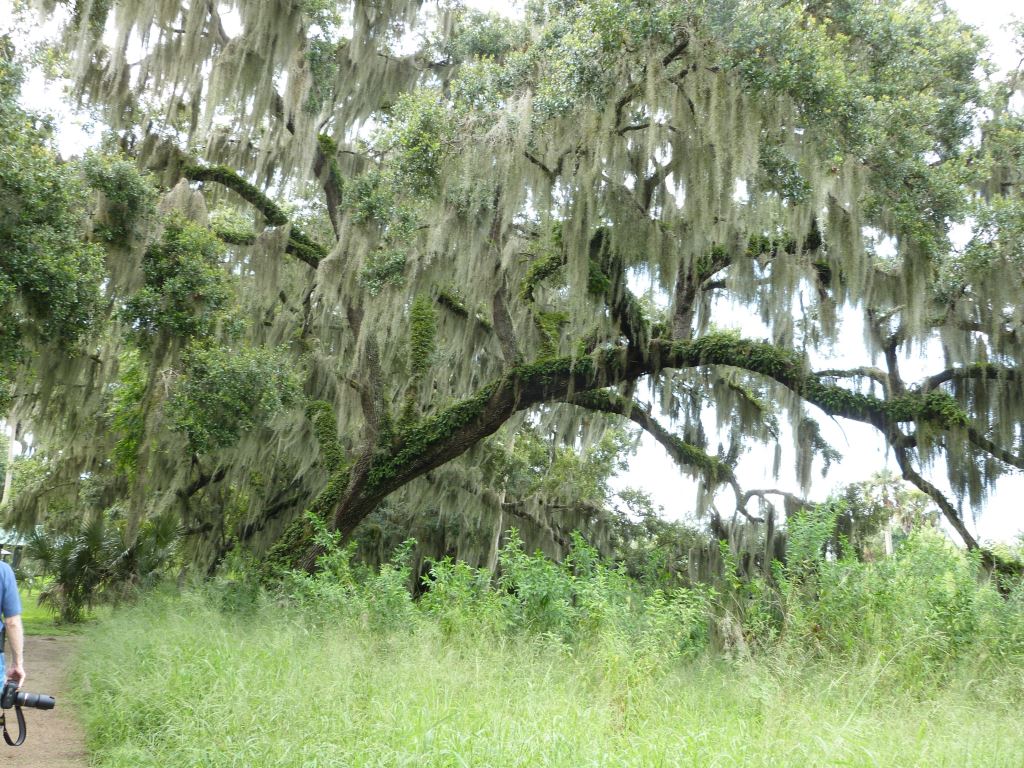
On Wednesday morning, July 16th, we decided to go out to Circle B Bar Reserve and see how the water levels were doing. We have had quite a bit of rain recently and figured that it had to be better than last time. It was quite dry then.

We were not disappointed. The marsh actually looked like a marsh for a change. There weren’t too many birds, but then again this time of the year most are up north.

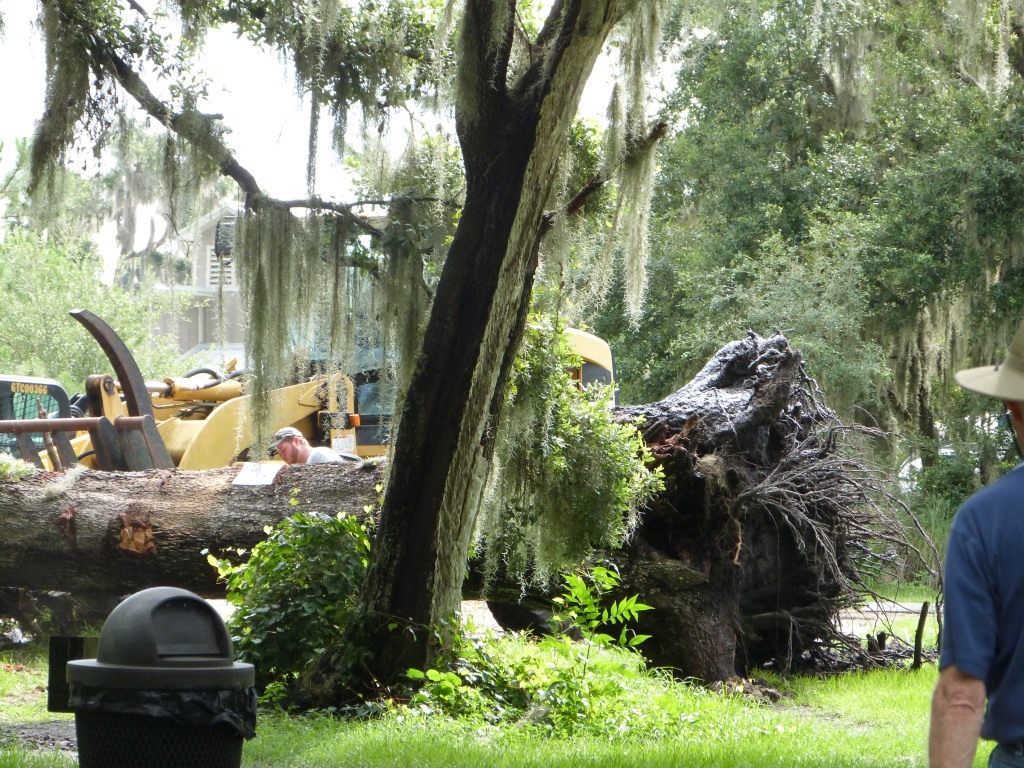
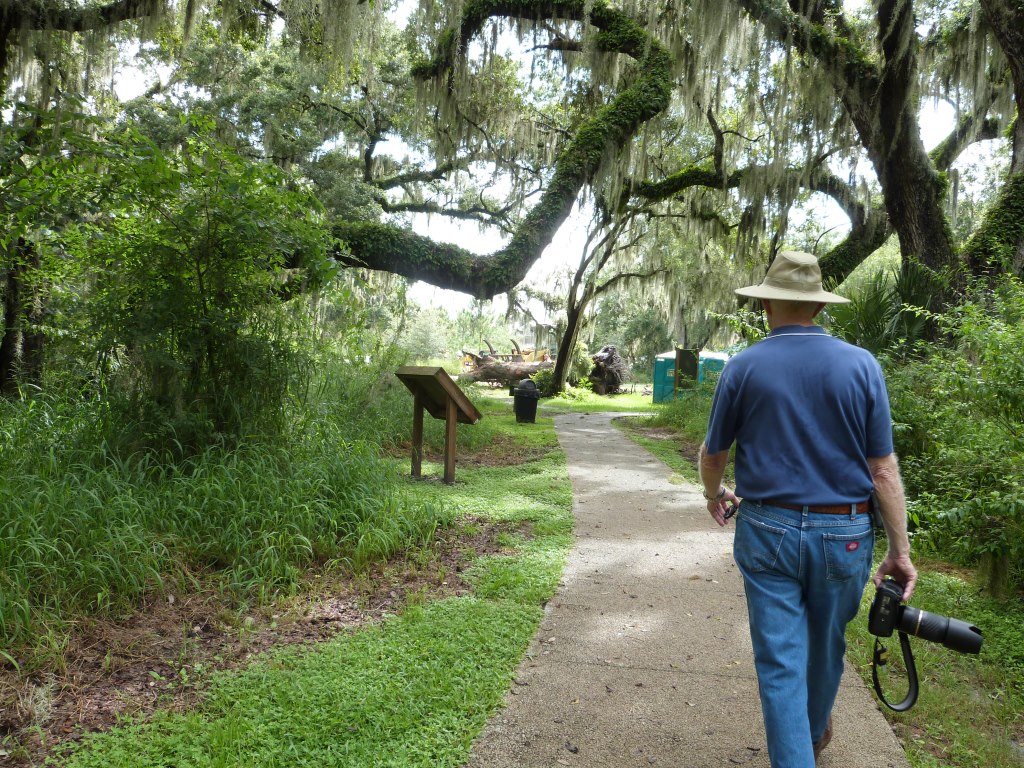
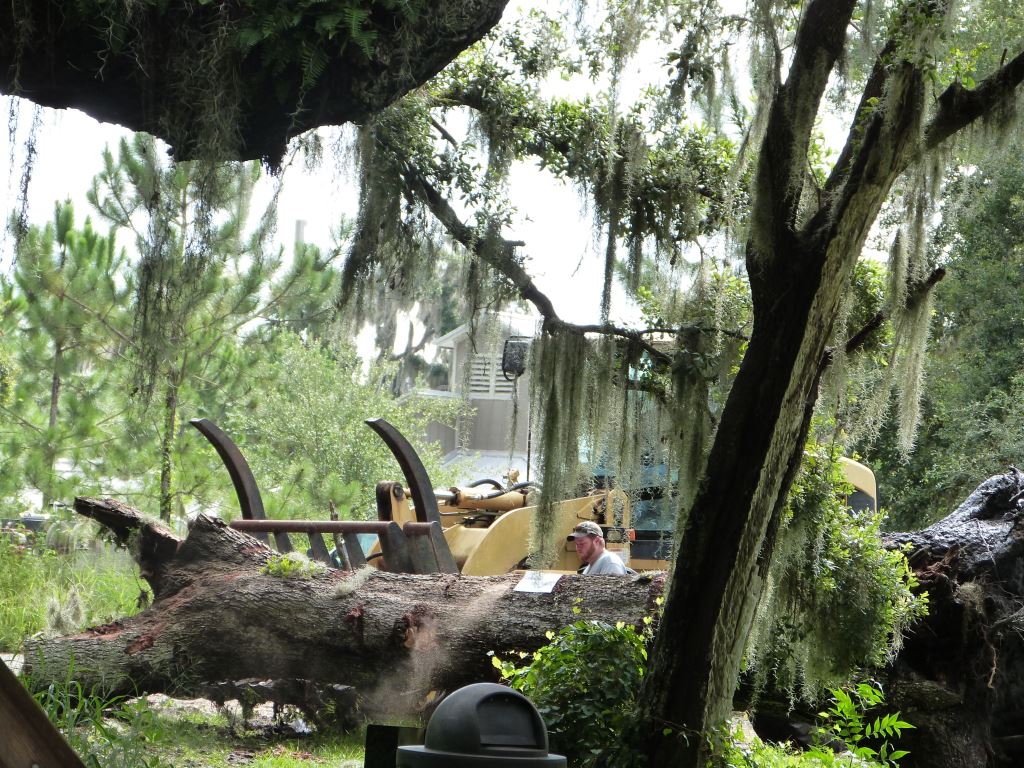
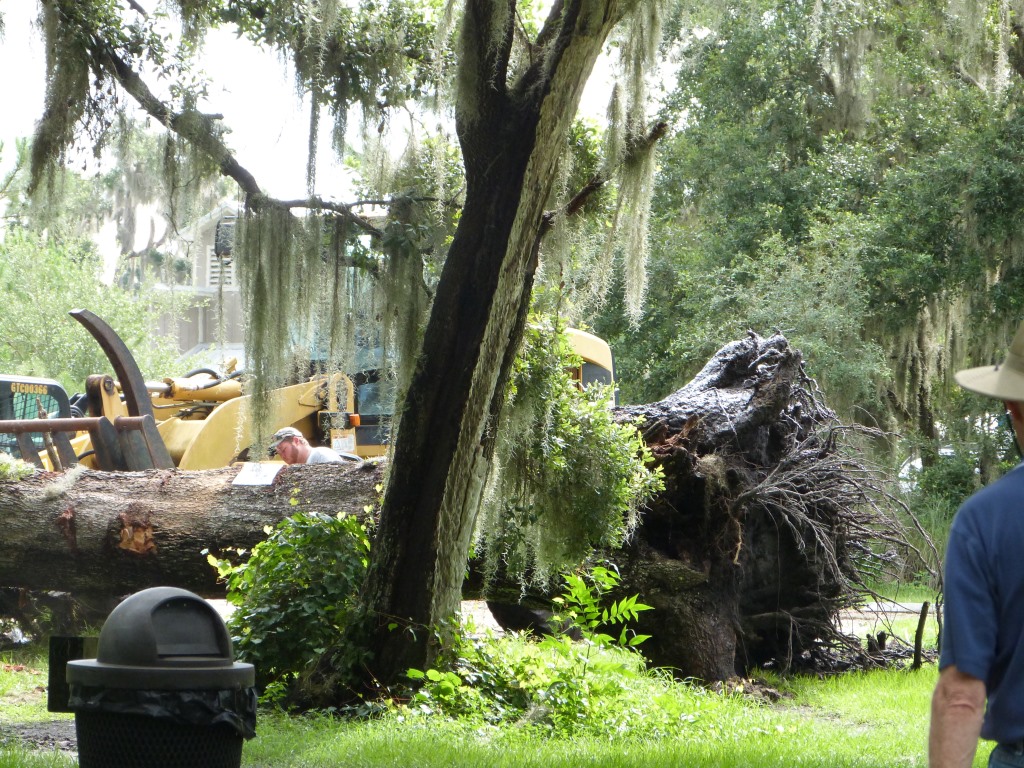
Removing the huge fallen Oak tree at Circle B

Removing the huge fallen Oak tree at Circle B

If the clouds are full of rain, They empty themselves upon the earth; And if a tree falls to the south or the north, In the place where the tree falls, there it shall lie. He who observes the wind will not sow, And he who regards the clouds will not reap. As you do not know what is the way of the wind, Or how the bones grow in the womb of her who is with child, So you do not know the works of God who makes everything. (Ecclesiastes 11:3-5 NKJV)

We were greeted at the parking lot by a crew working on a huge oak tree that had fallen. They were removing it. Sure glad no cars had been parked there at the time it came down.

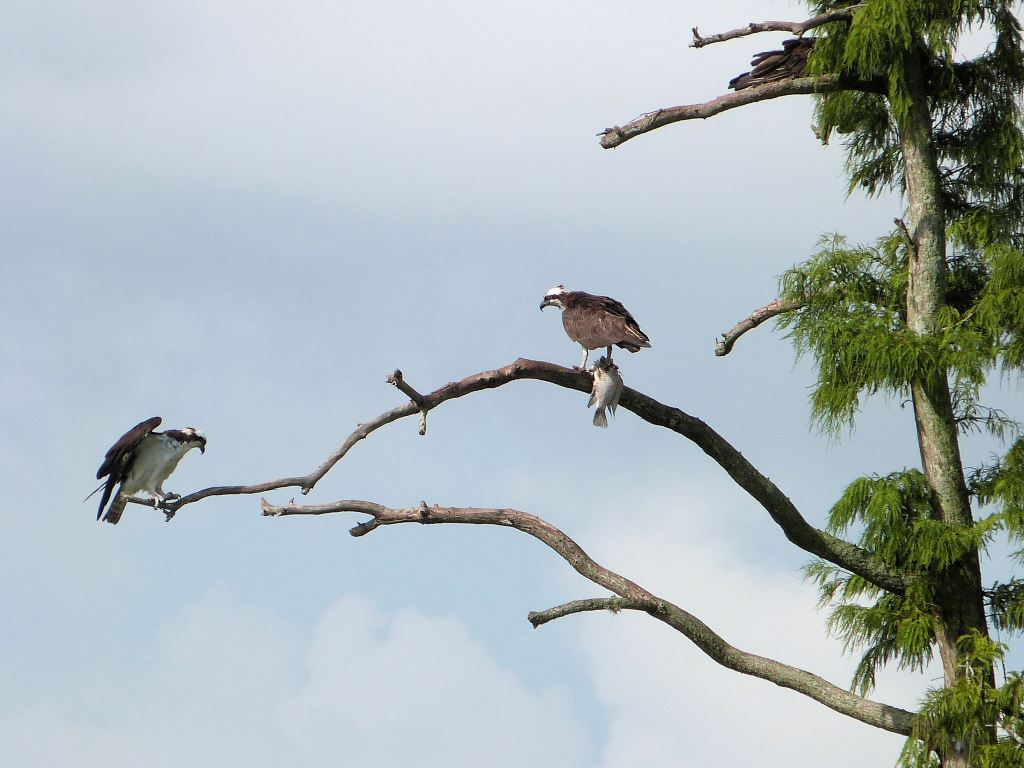
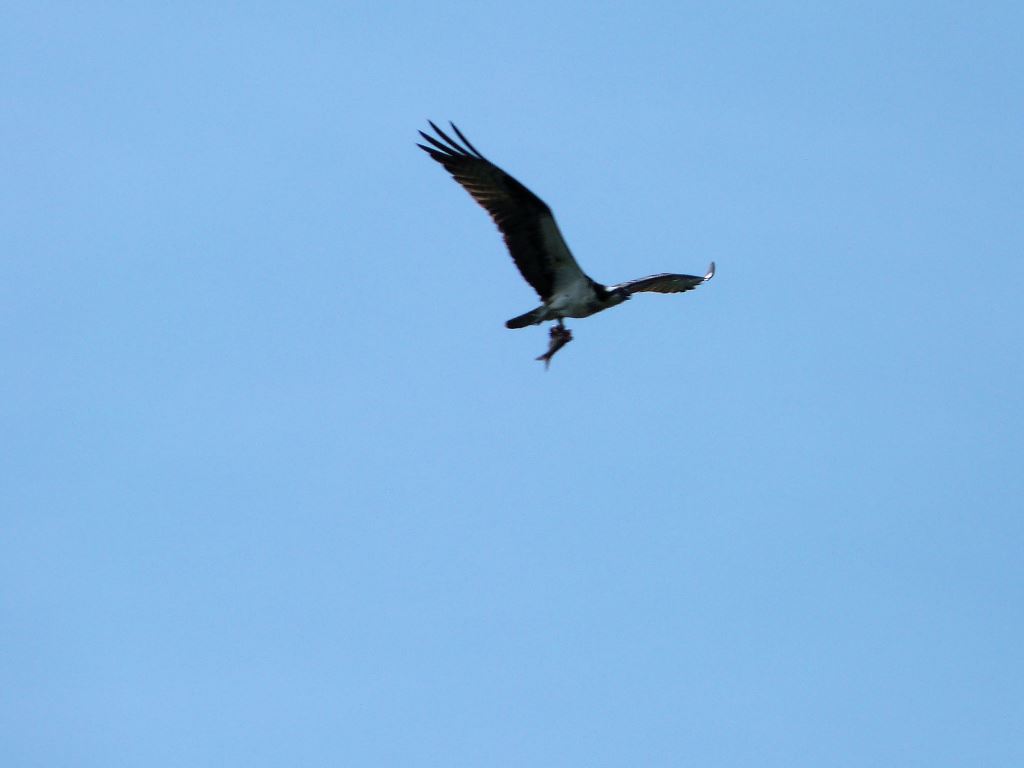
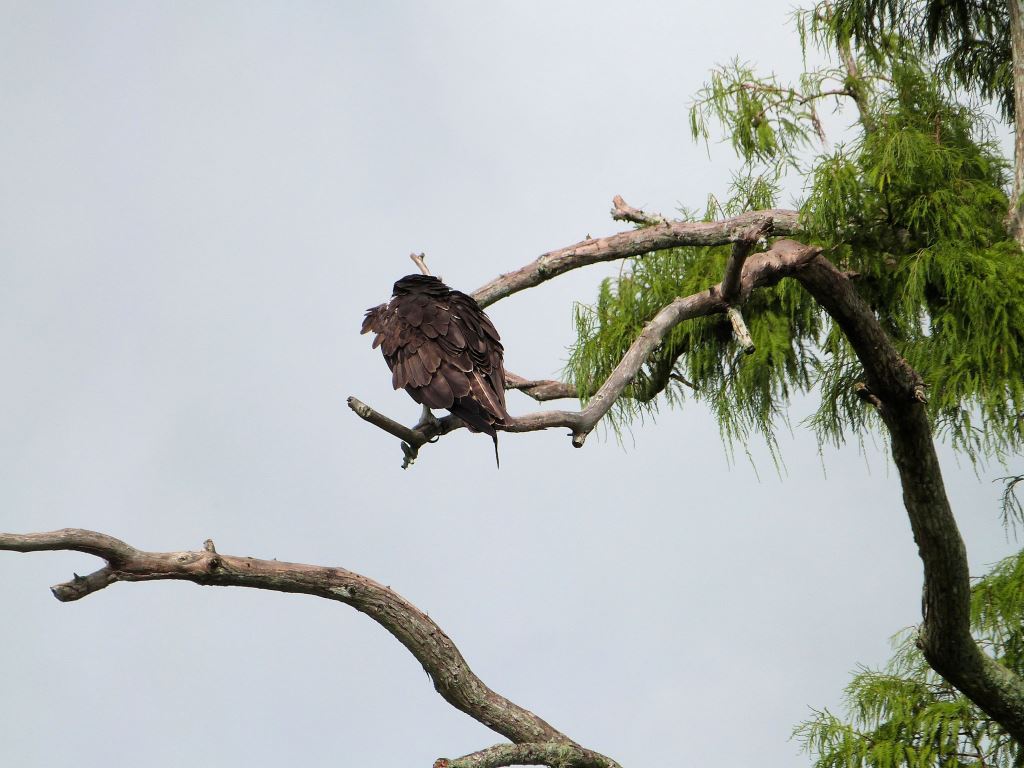
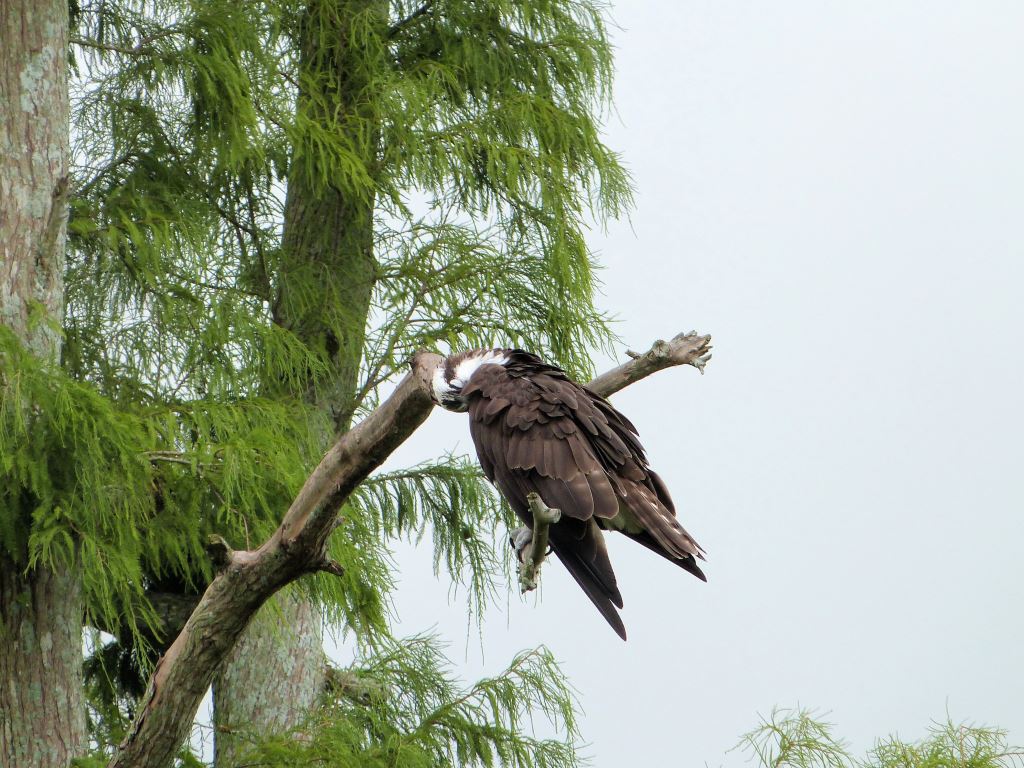
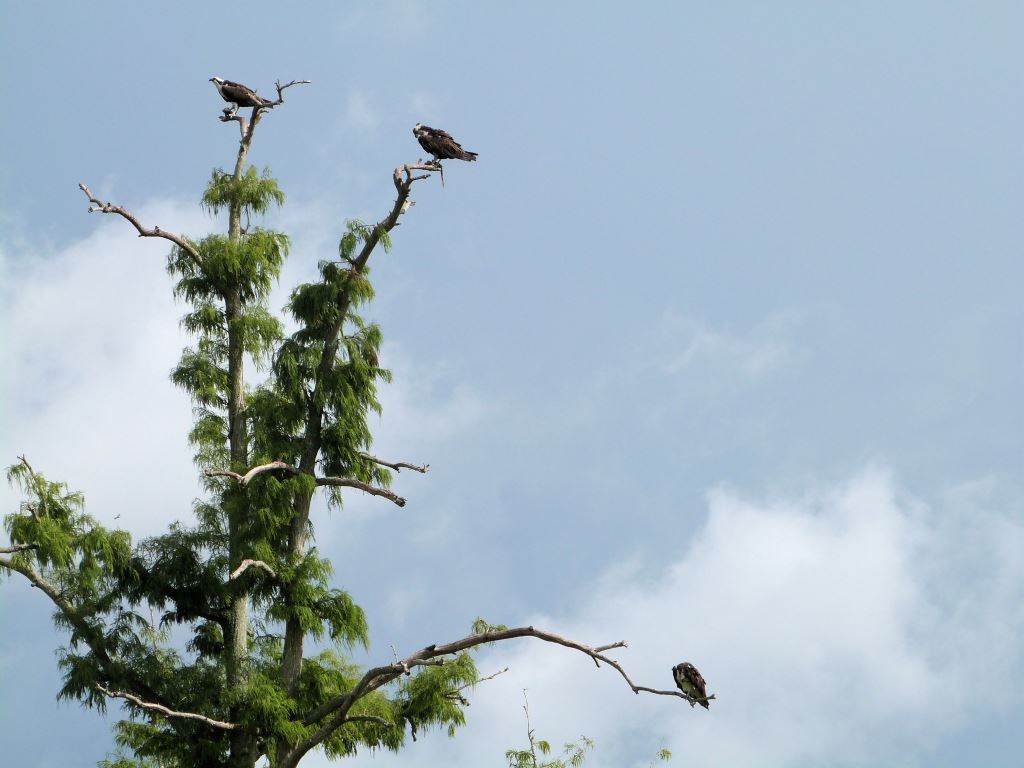
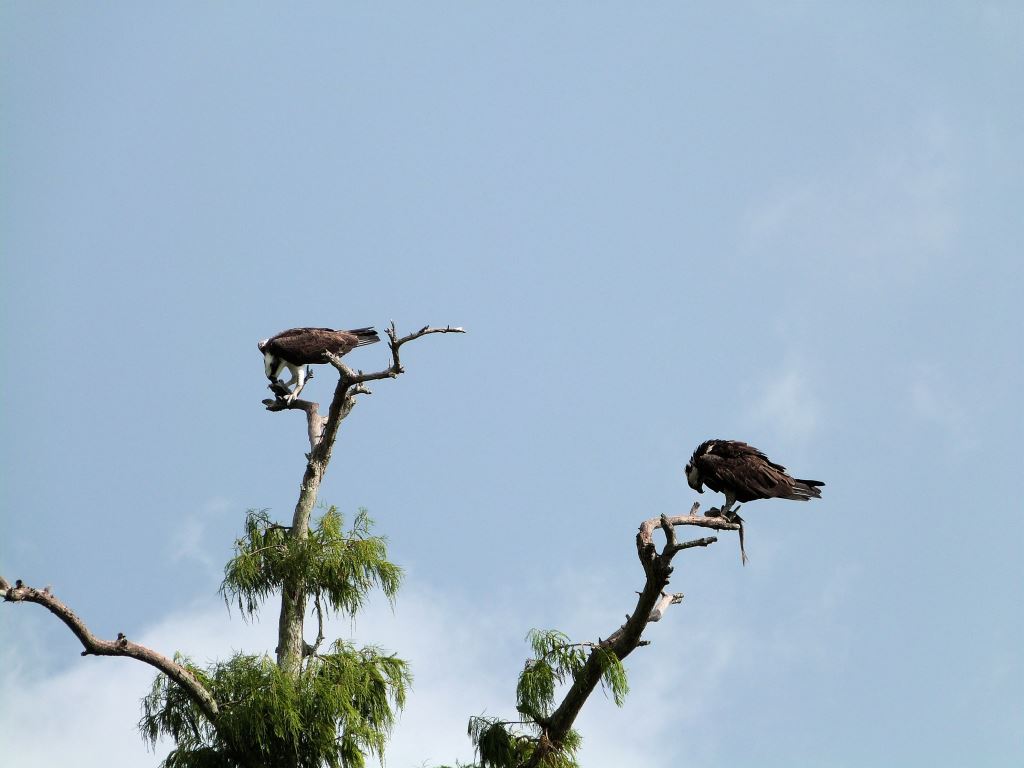
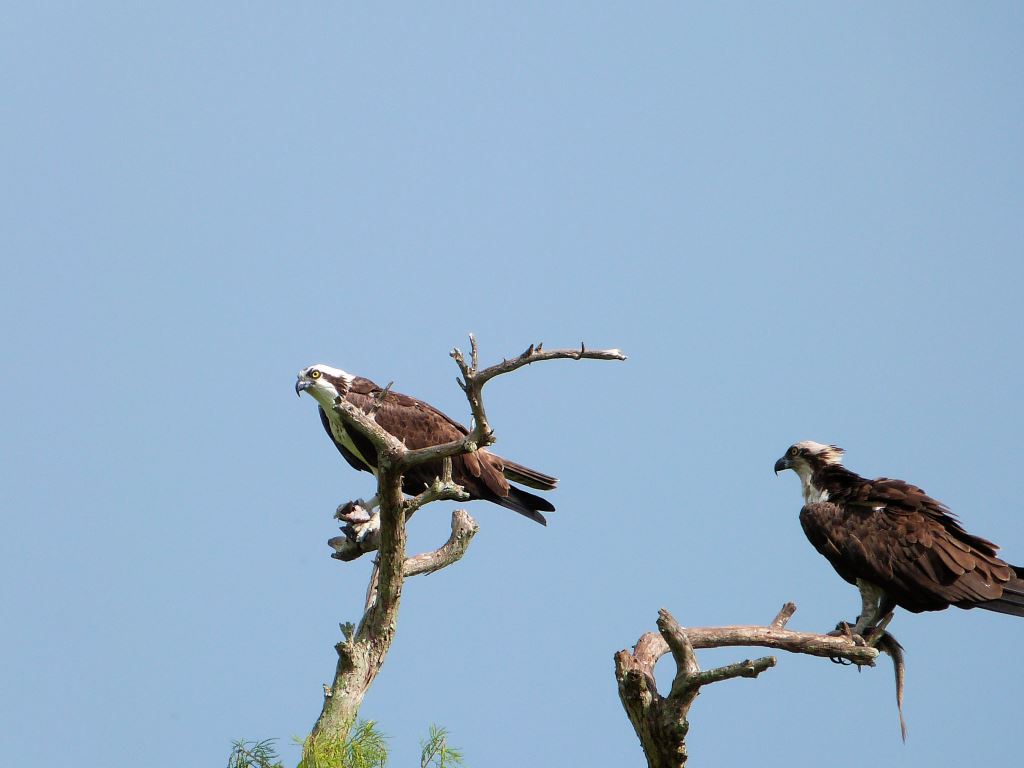
Western Osprey (Pandion haliaetus) With Fish

Western Osprey (Pandion haliaetus) With Fish

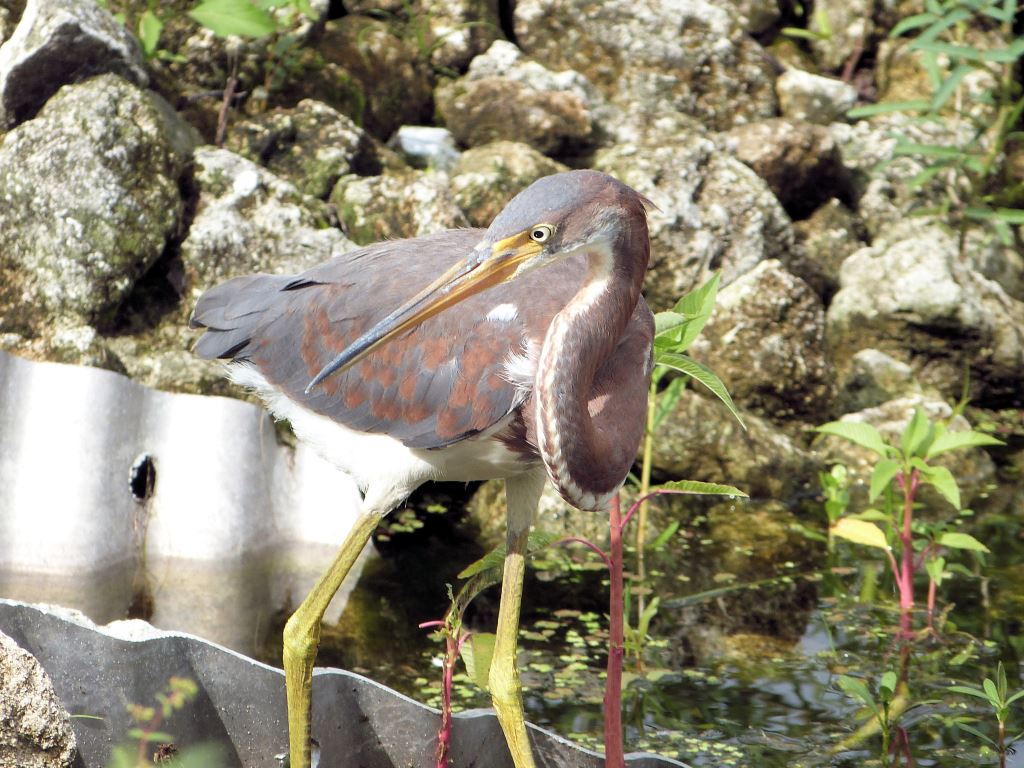
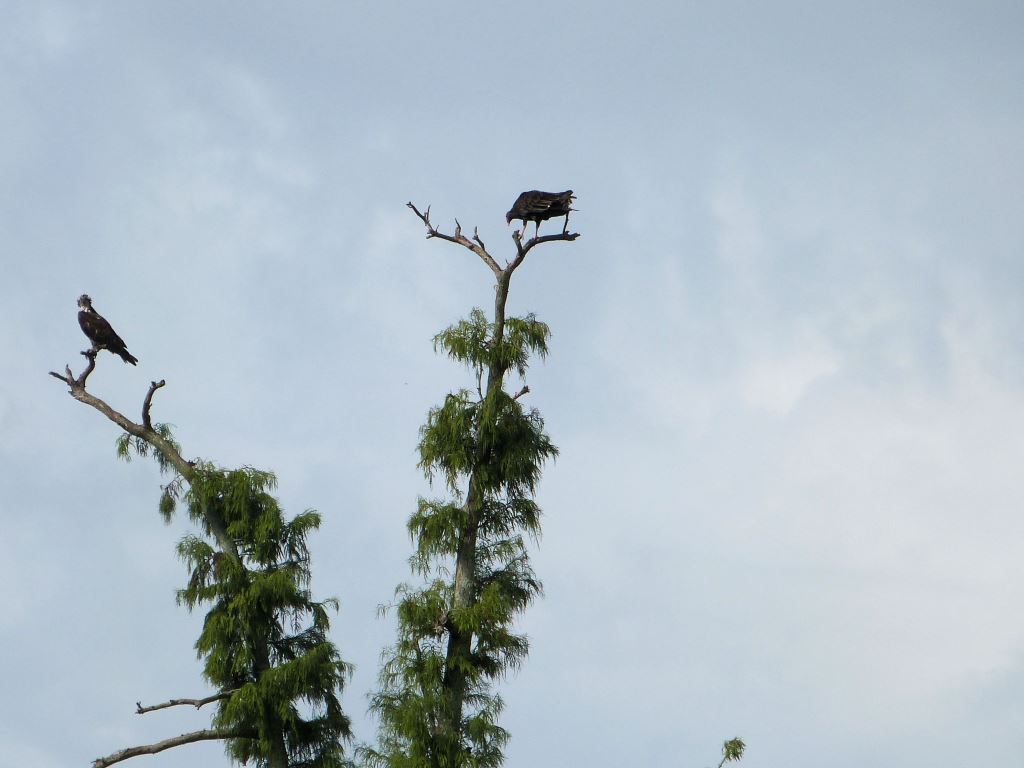
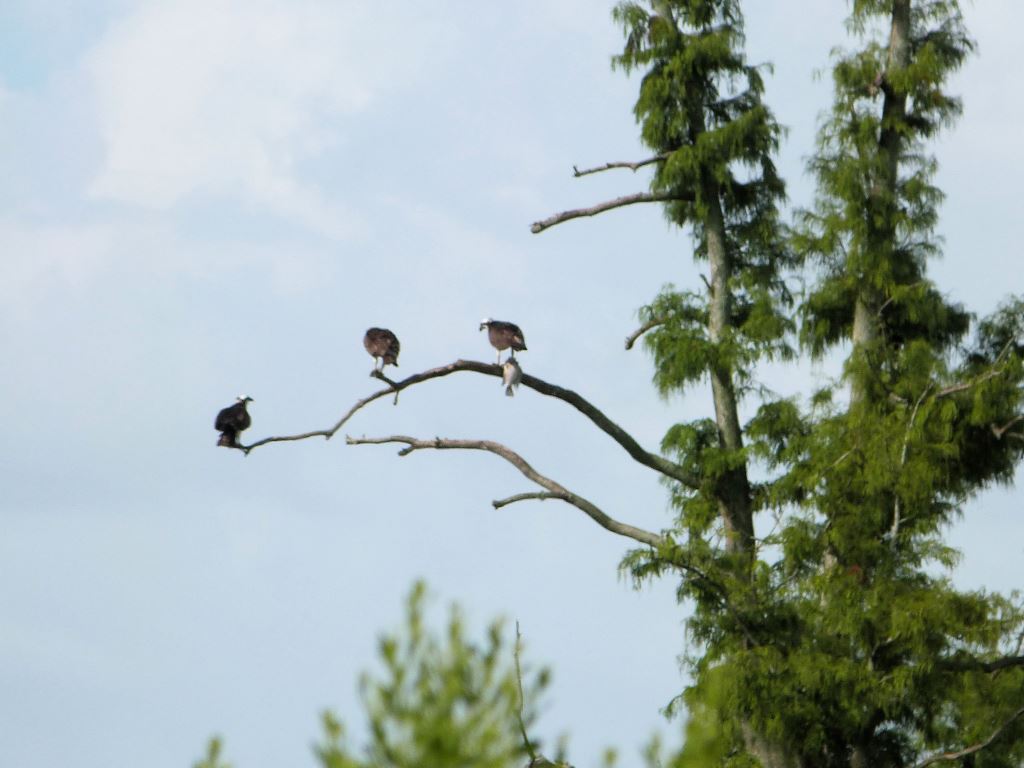
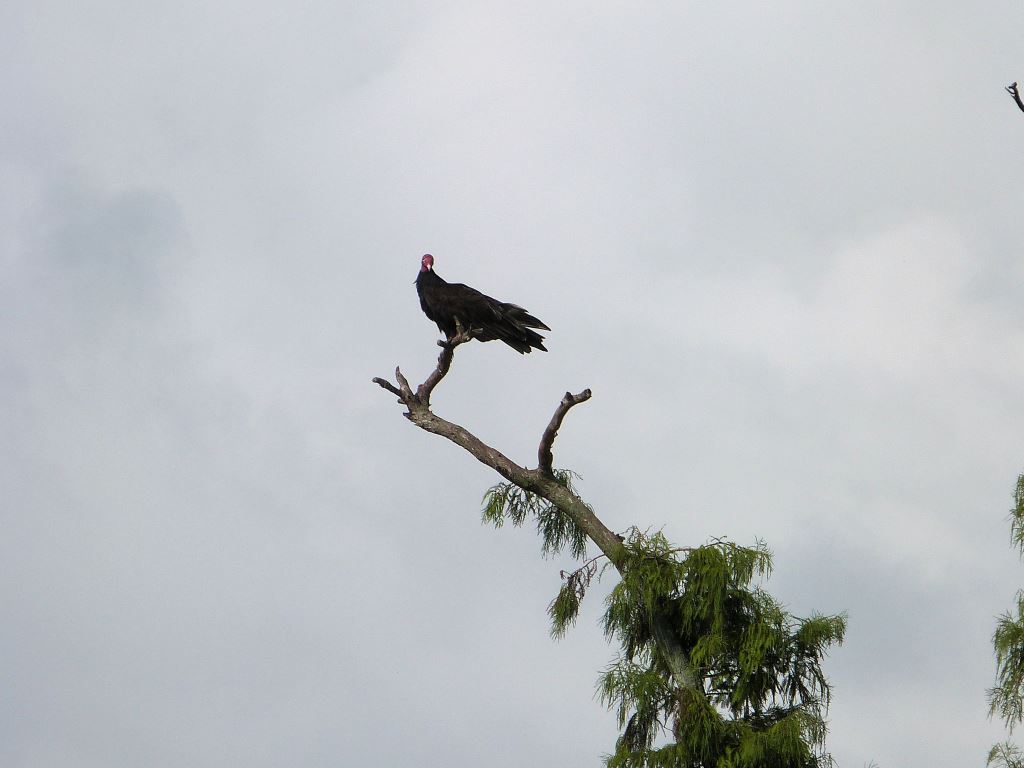
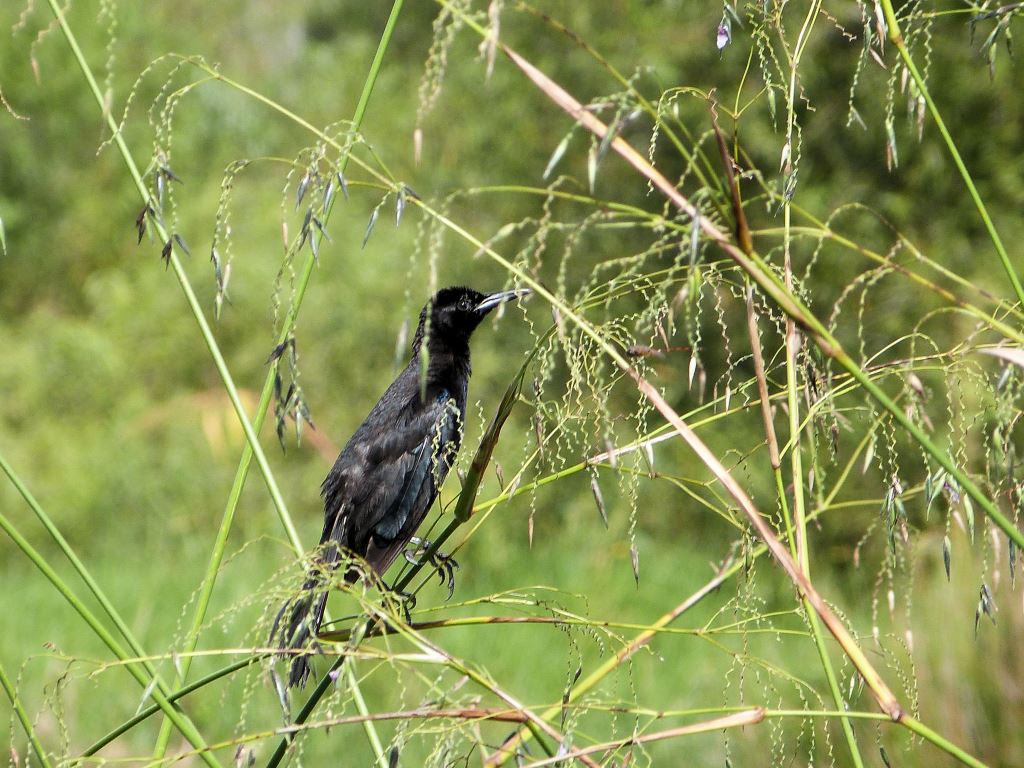
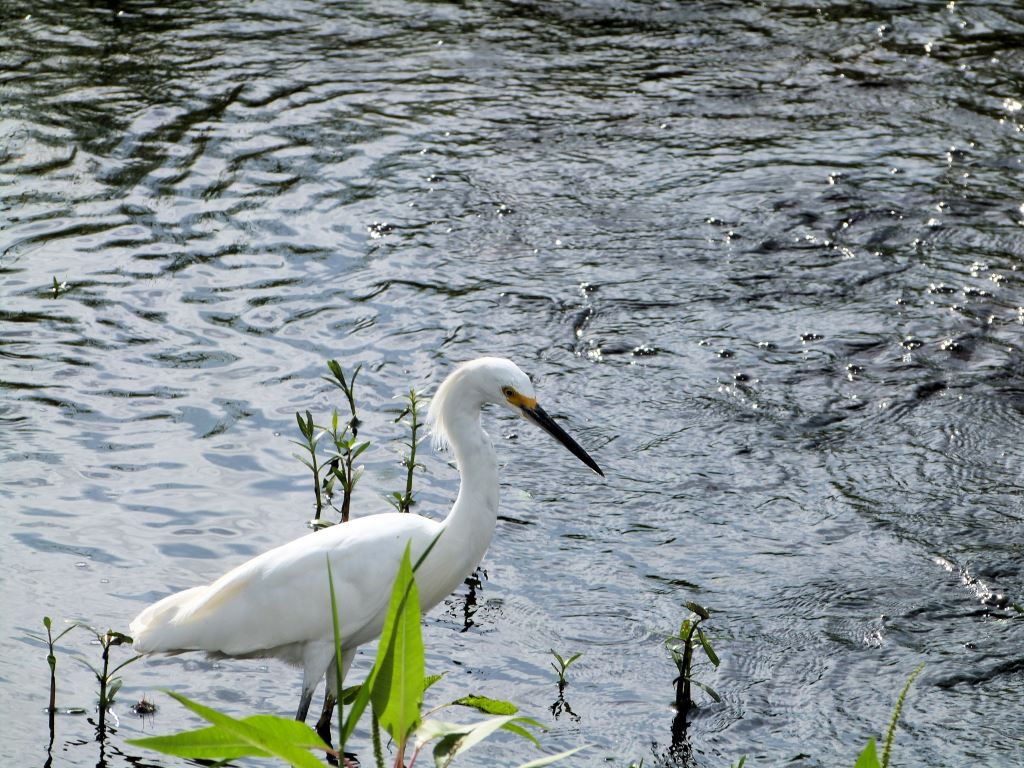
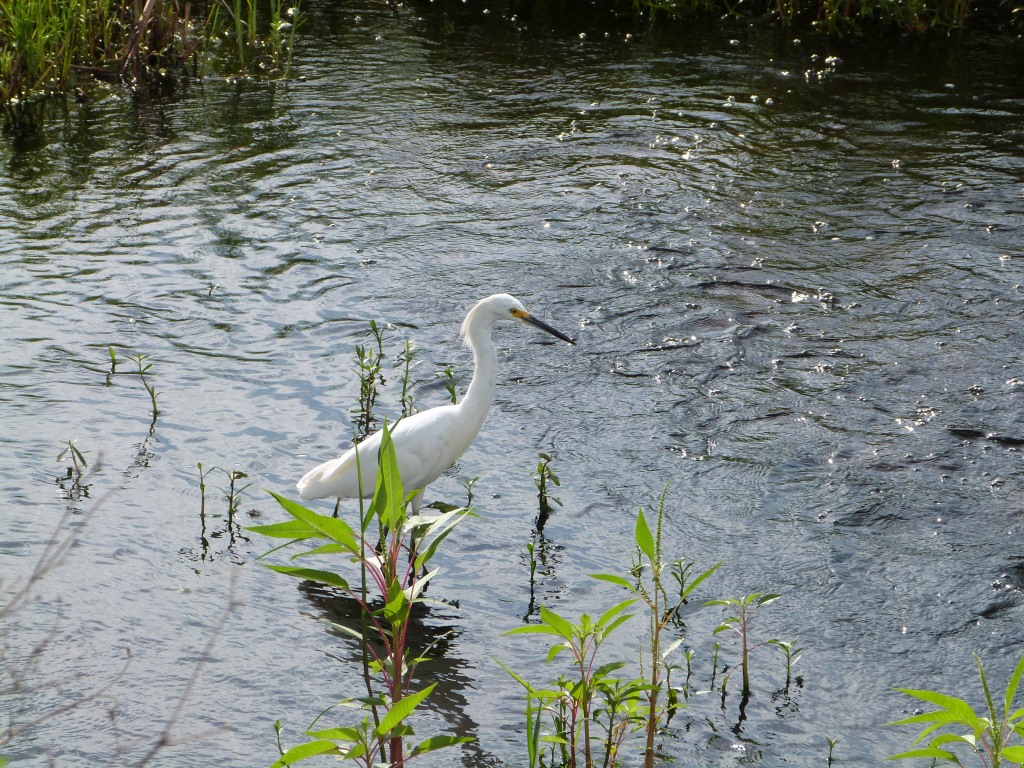
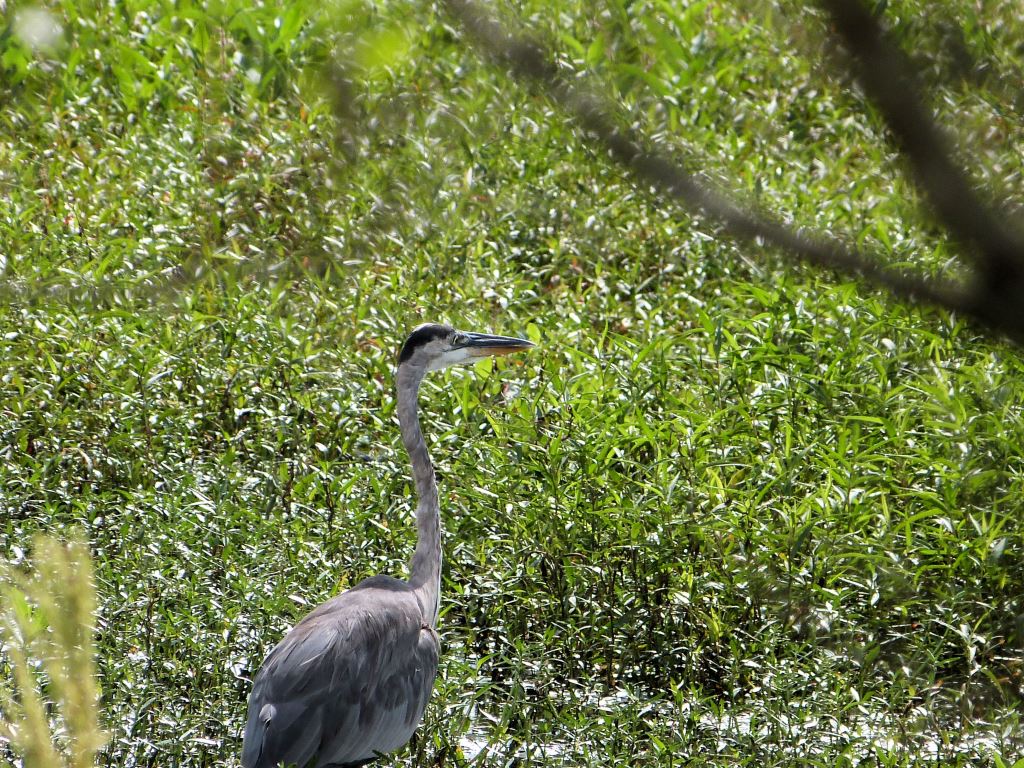
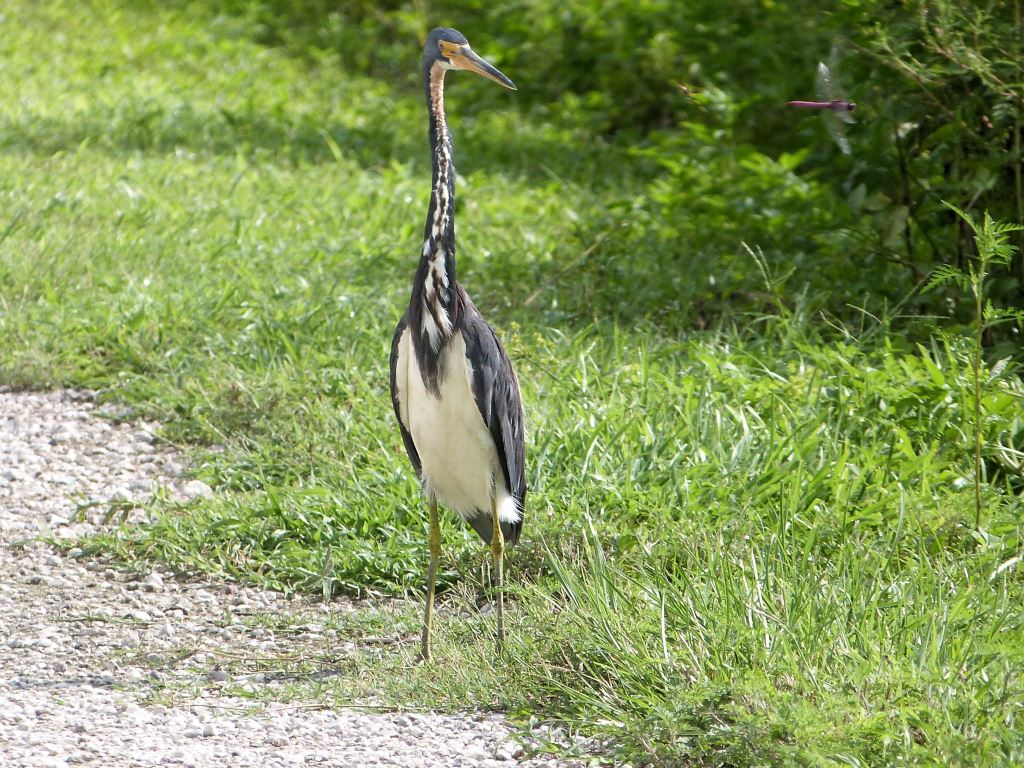
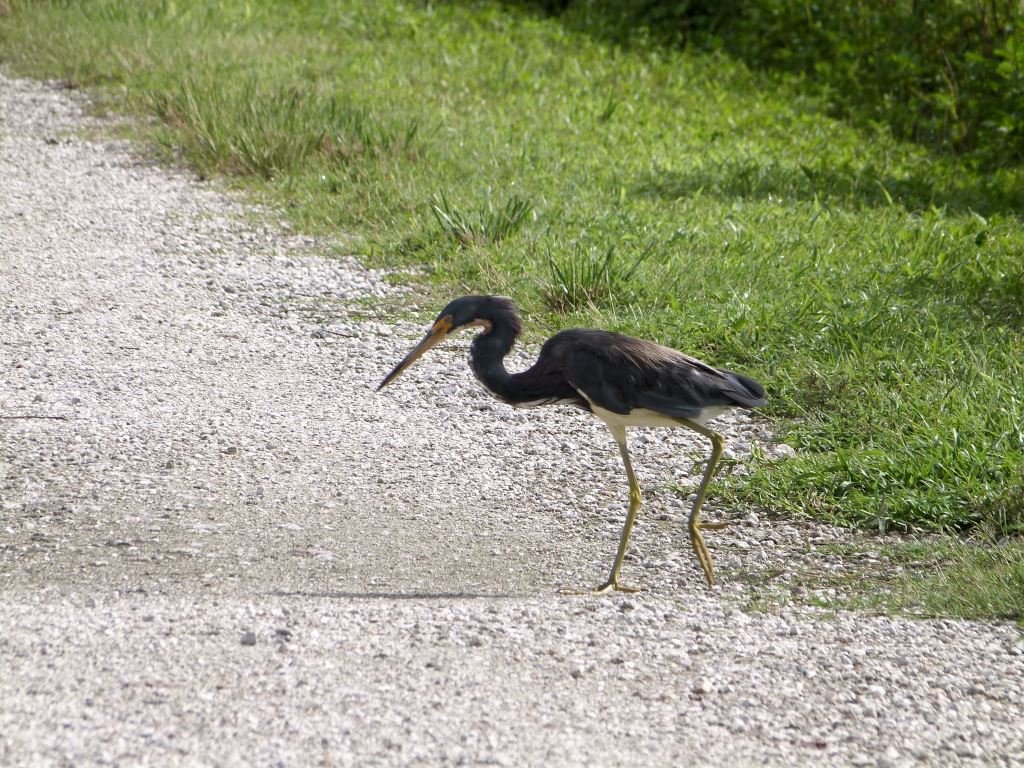
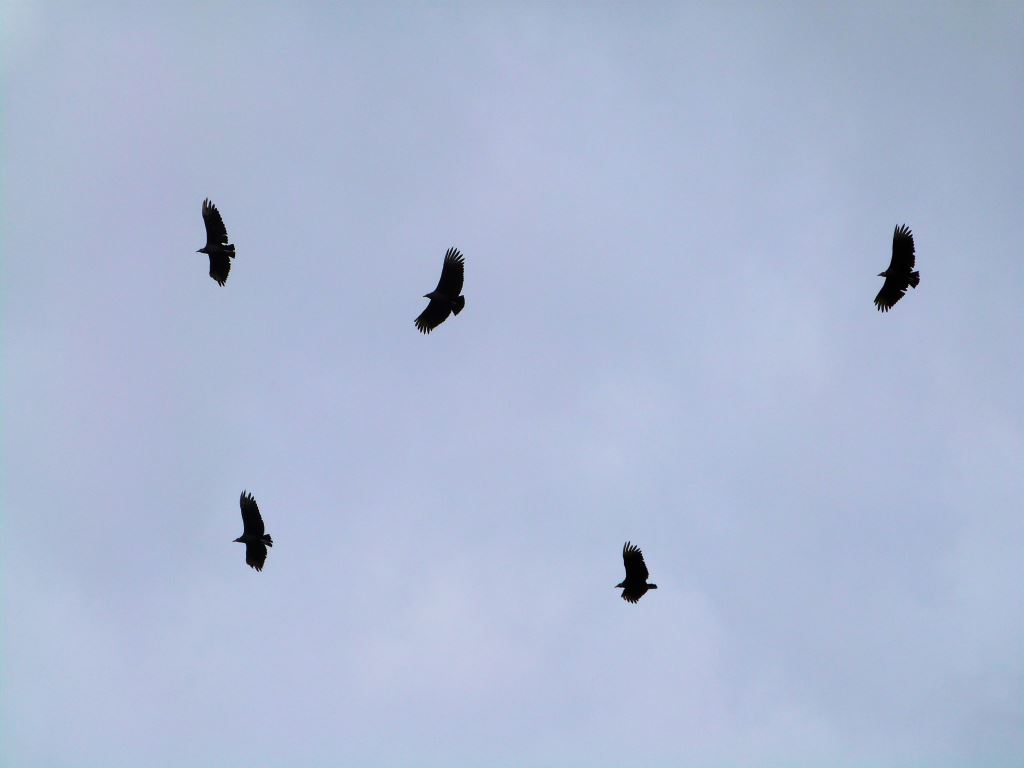
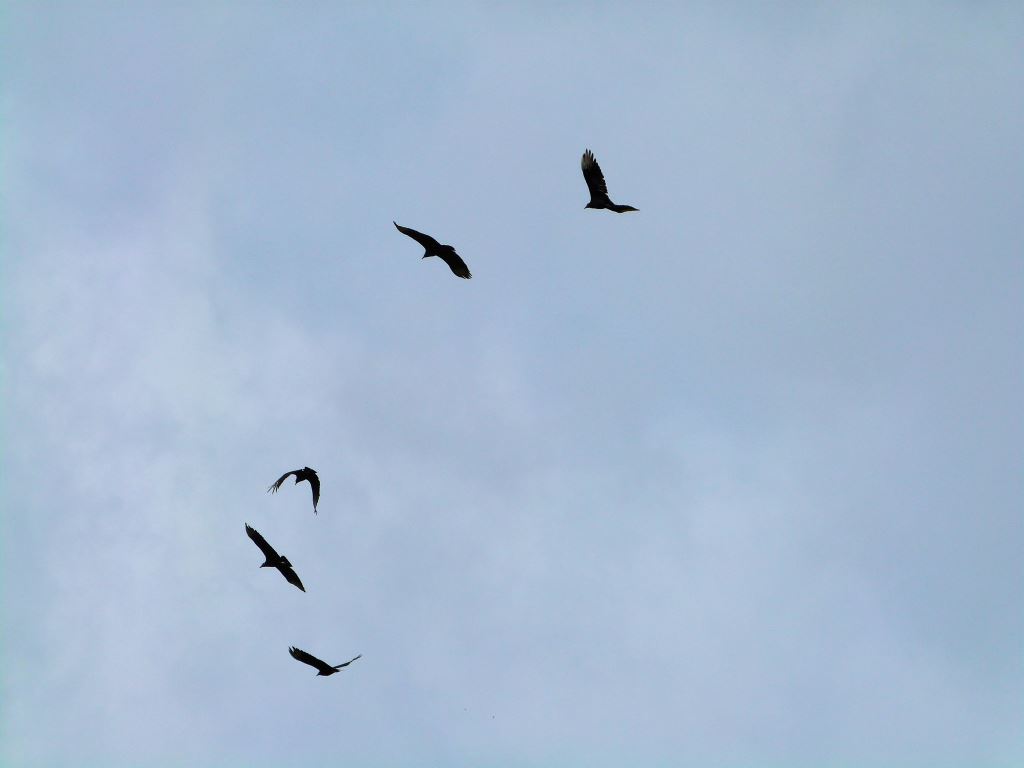
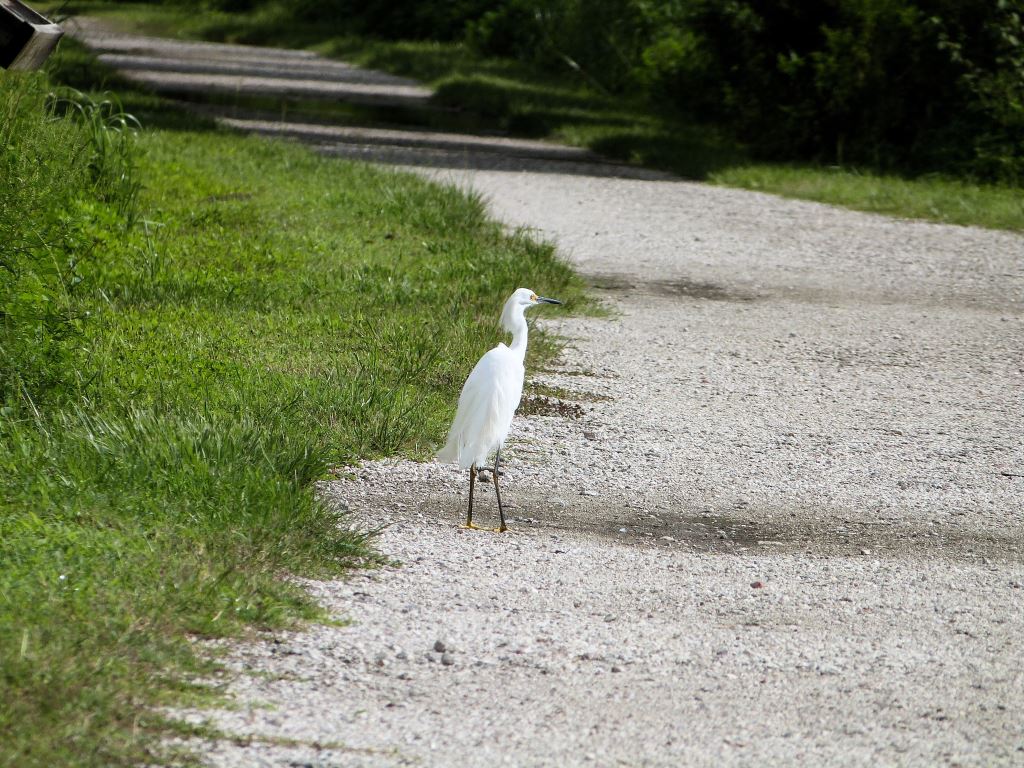
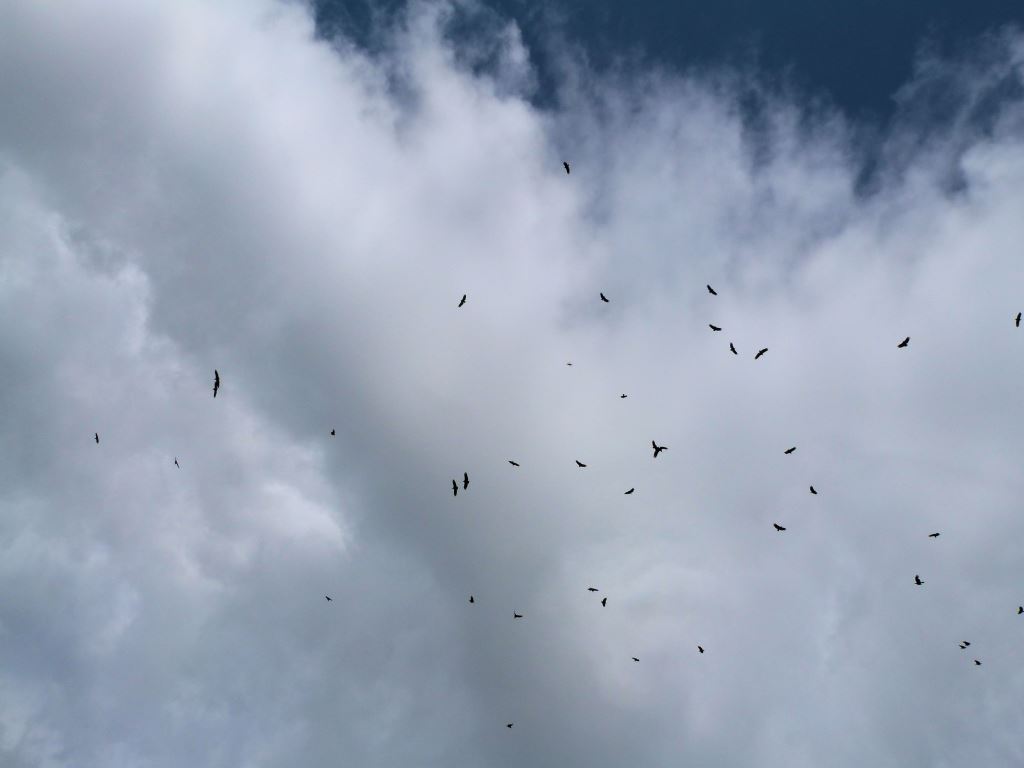
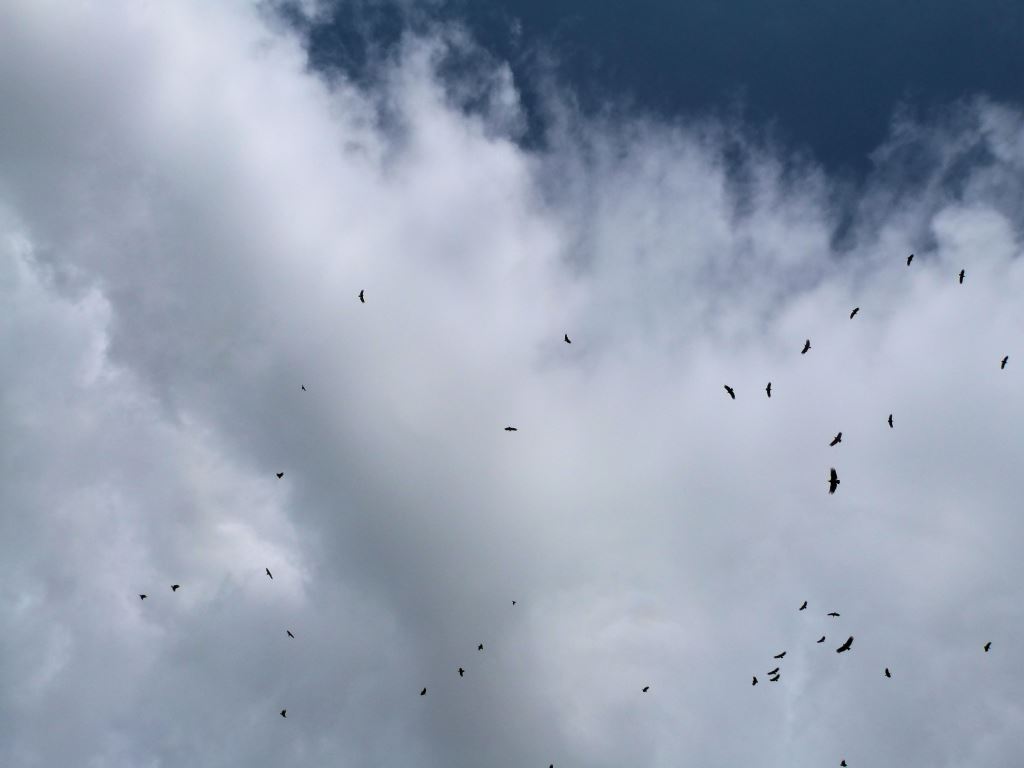
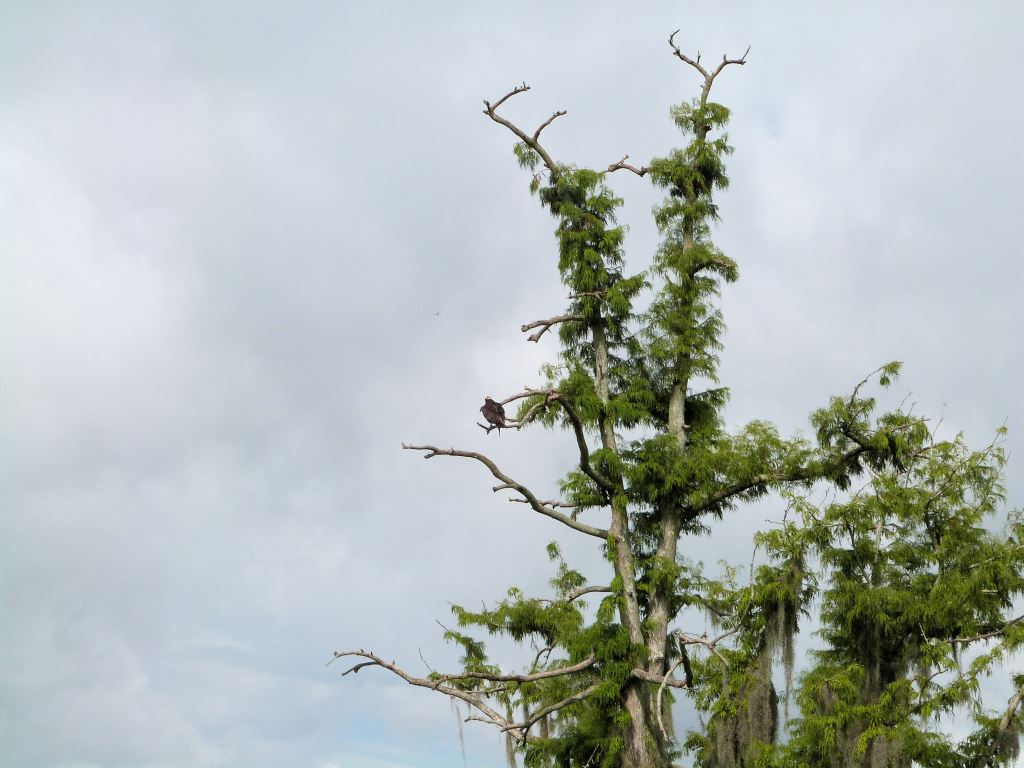
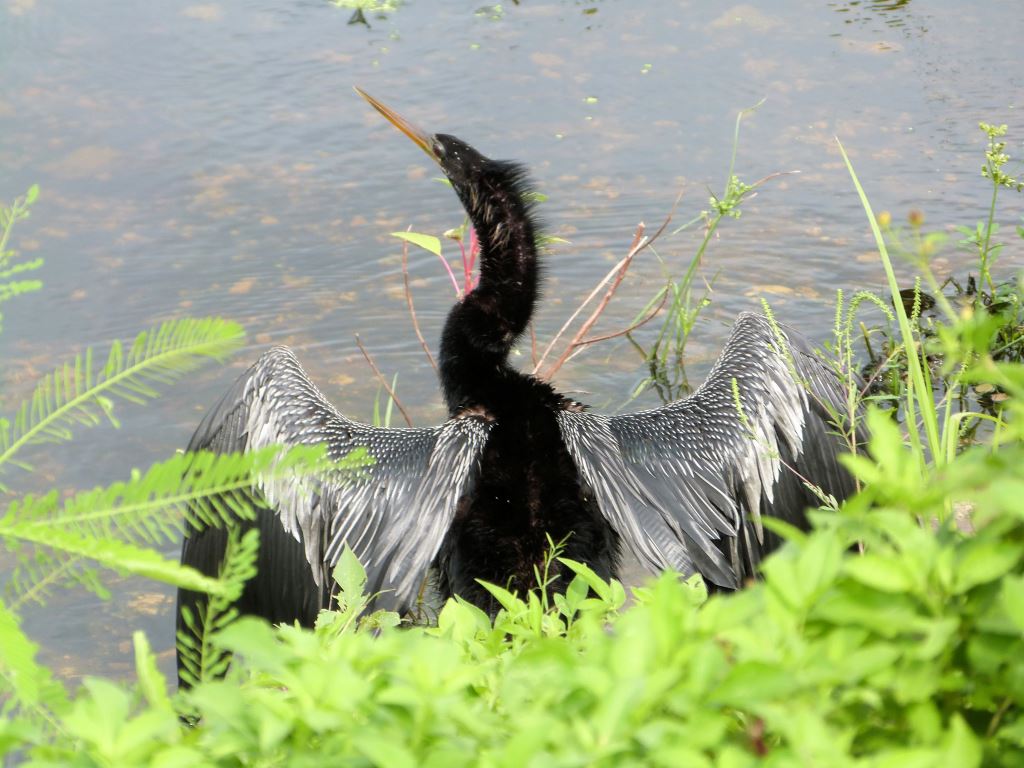
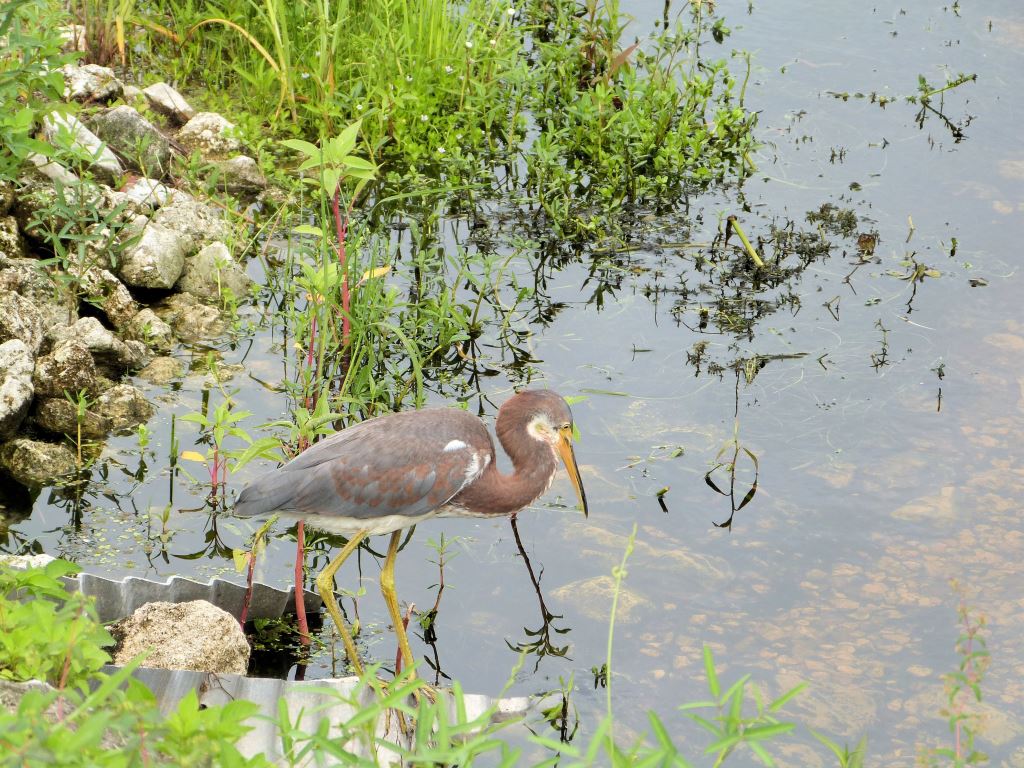
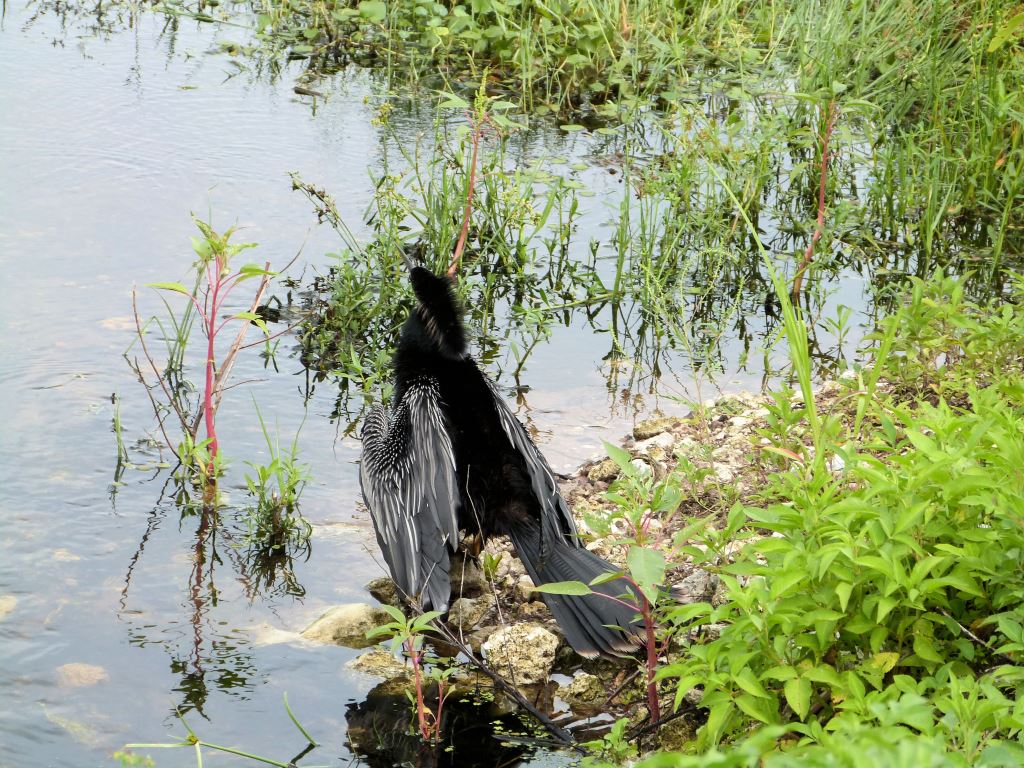
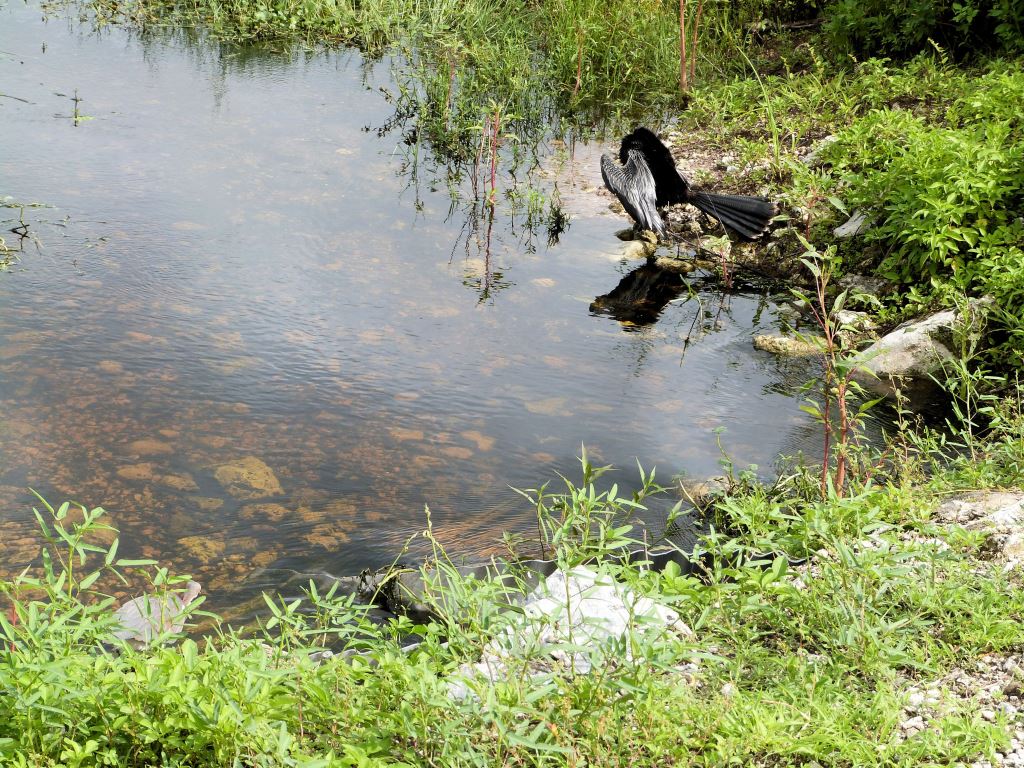
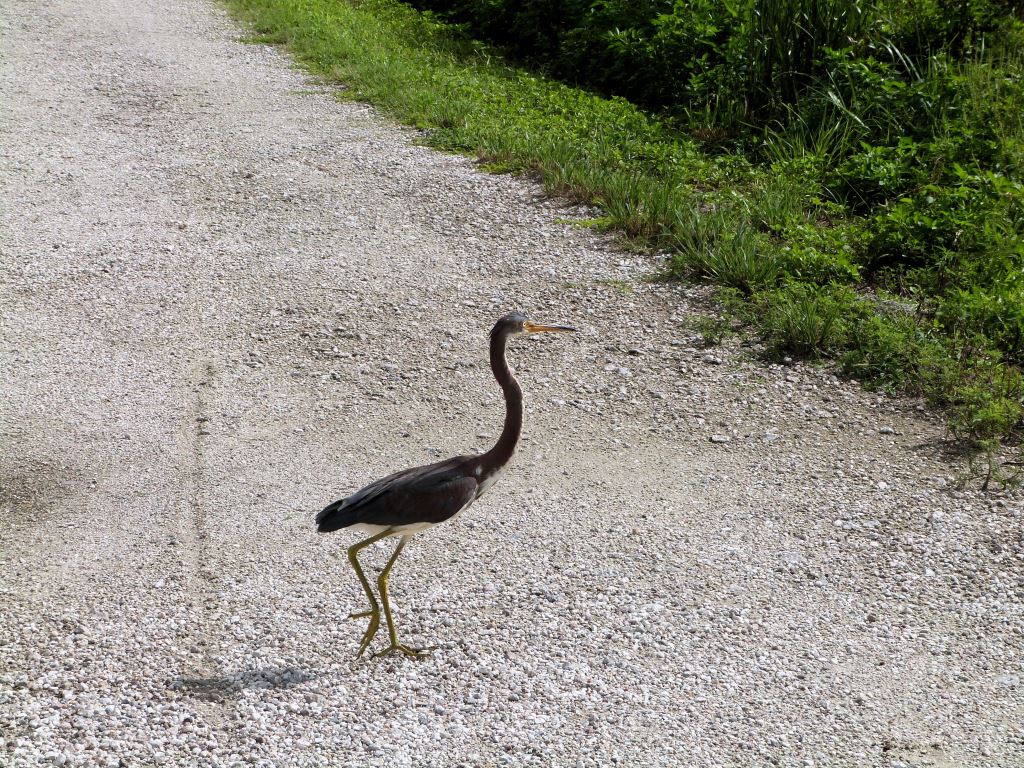
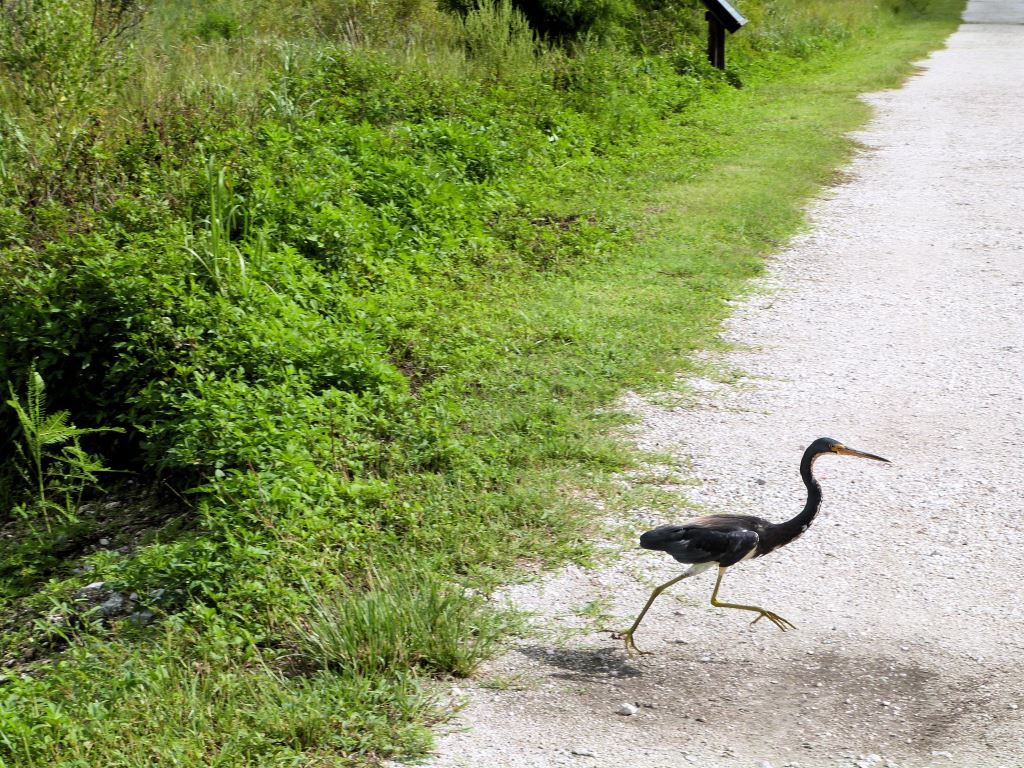
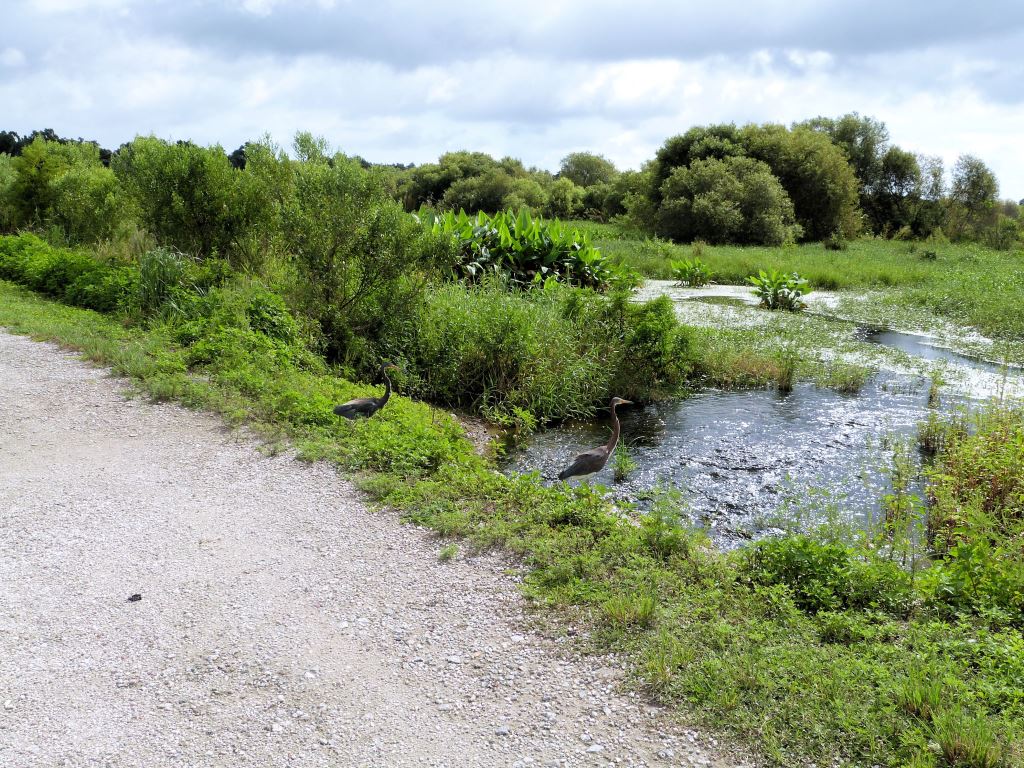
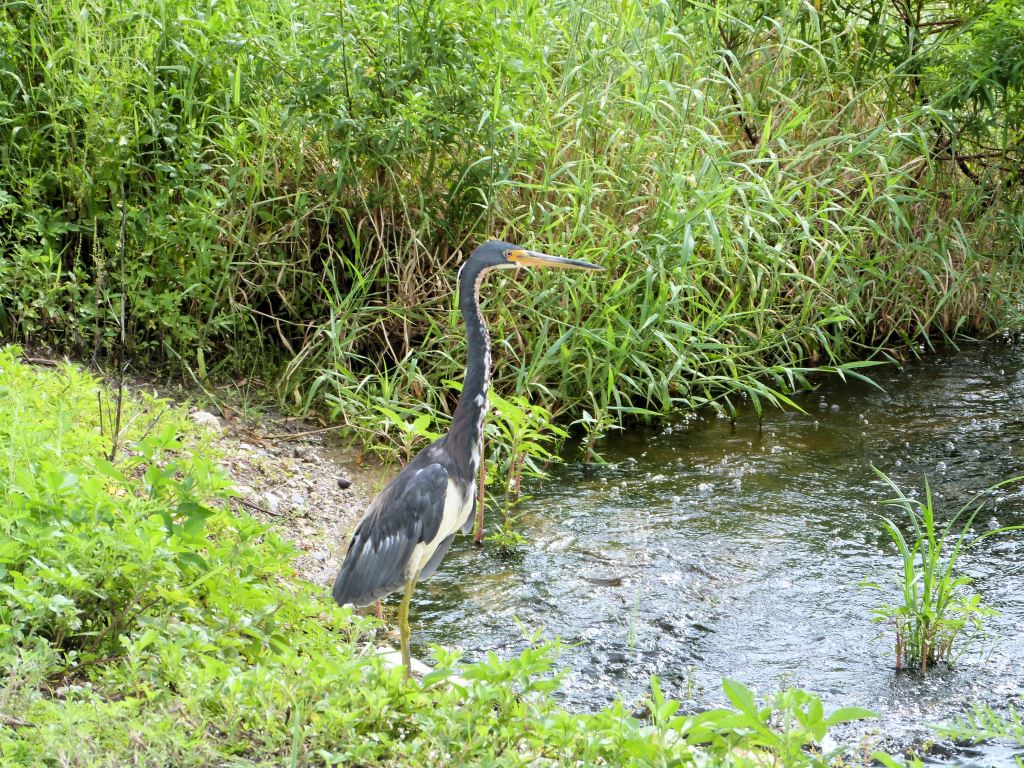
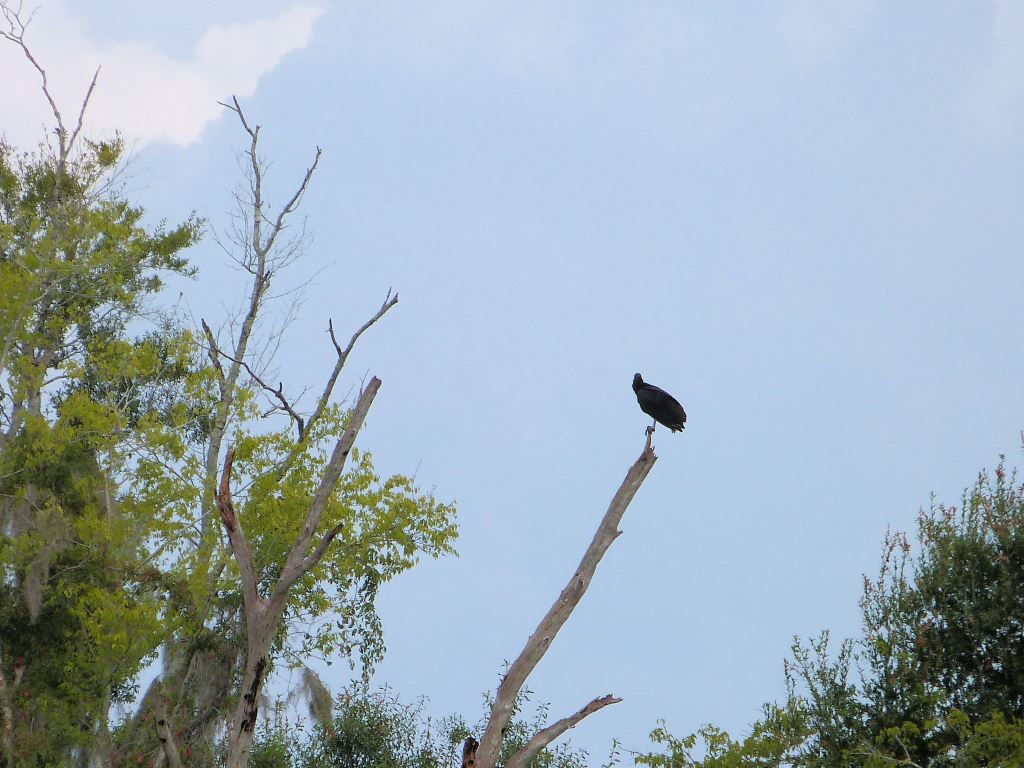
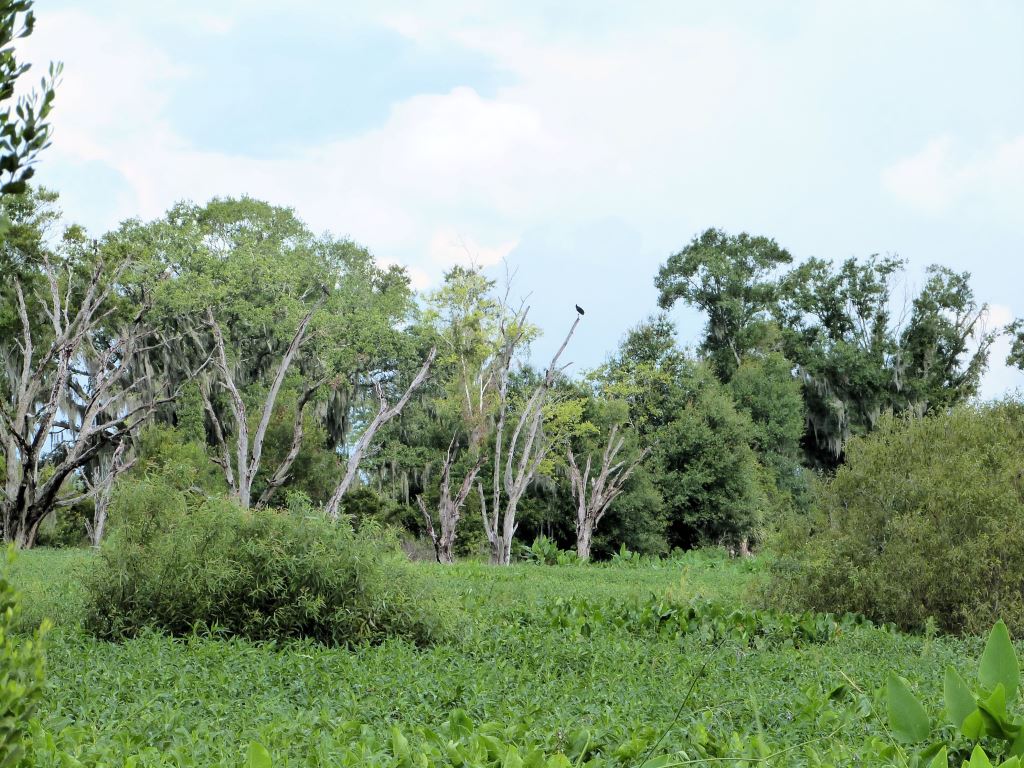
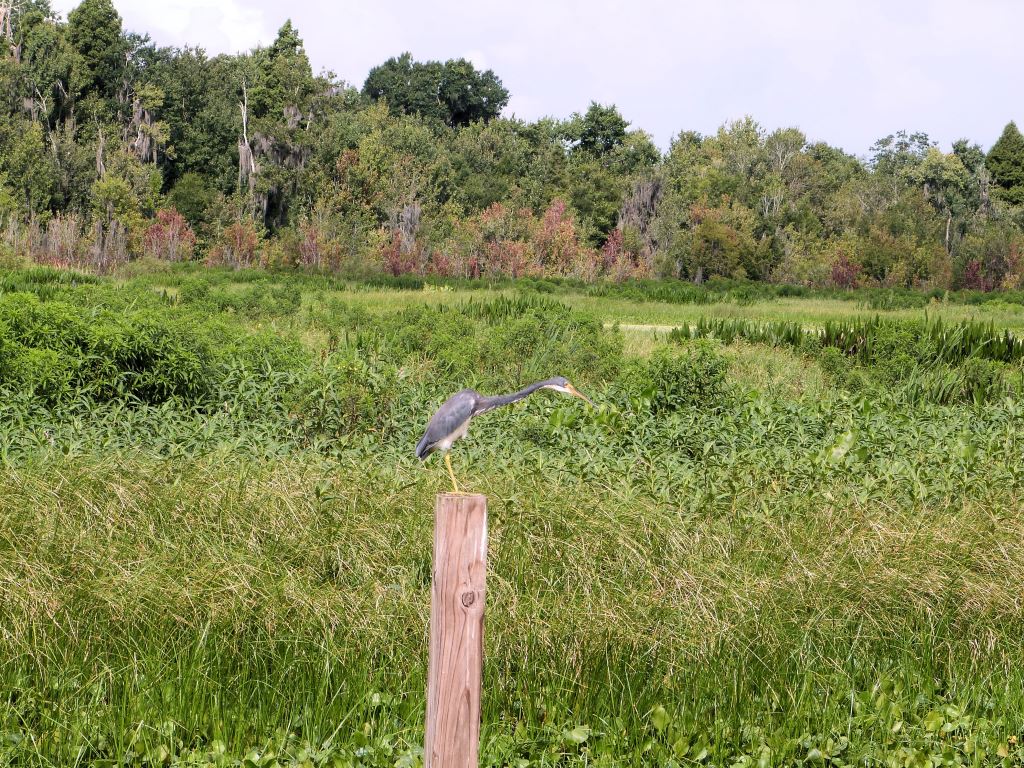
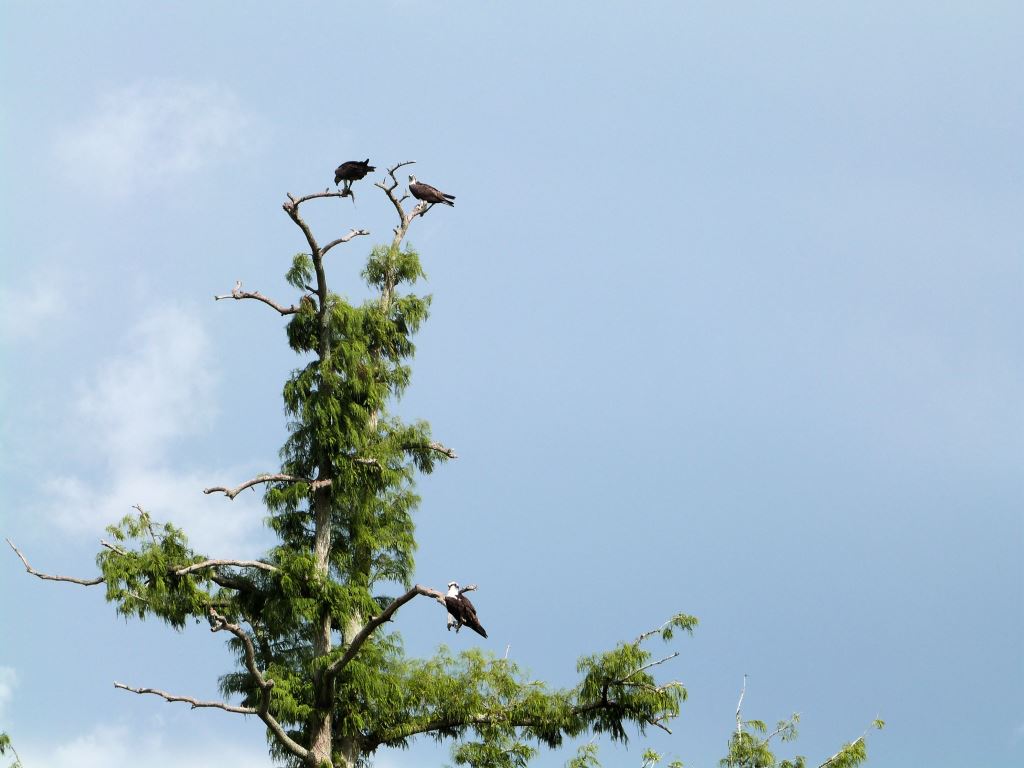
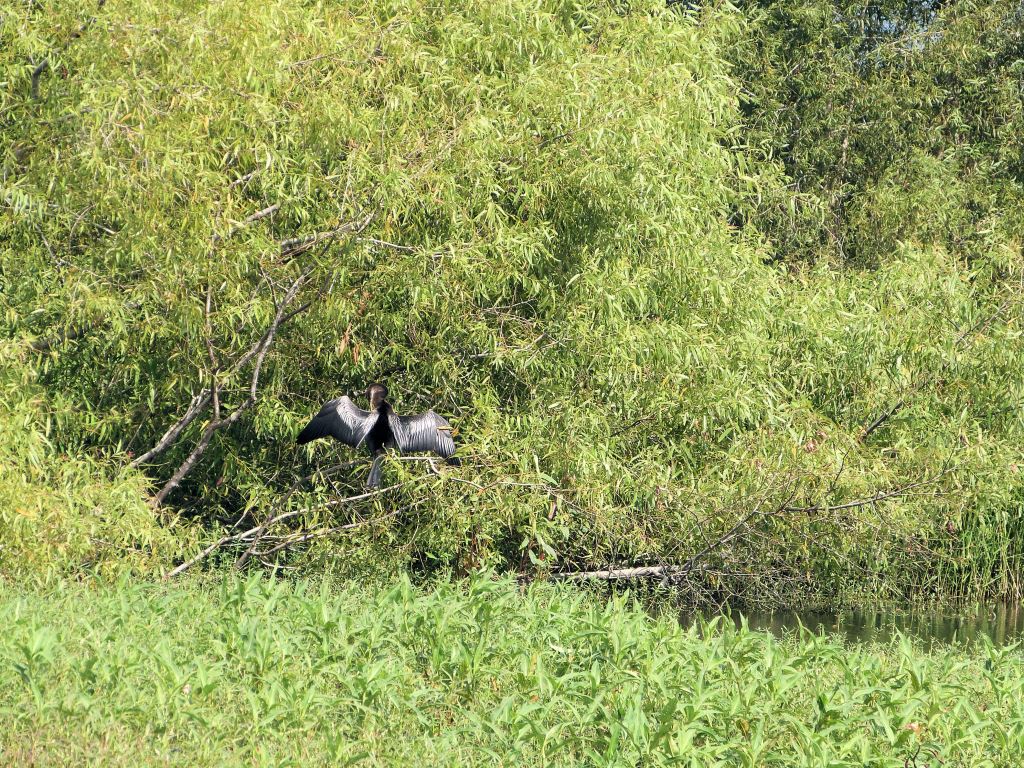
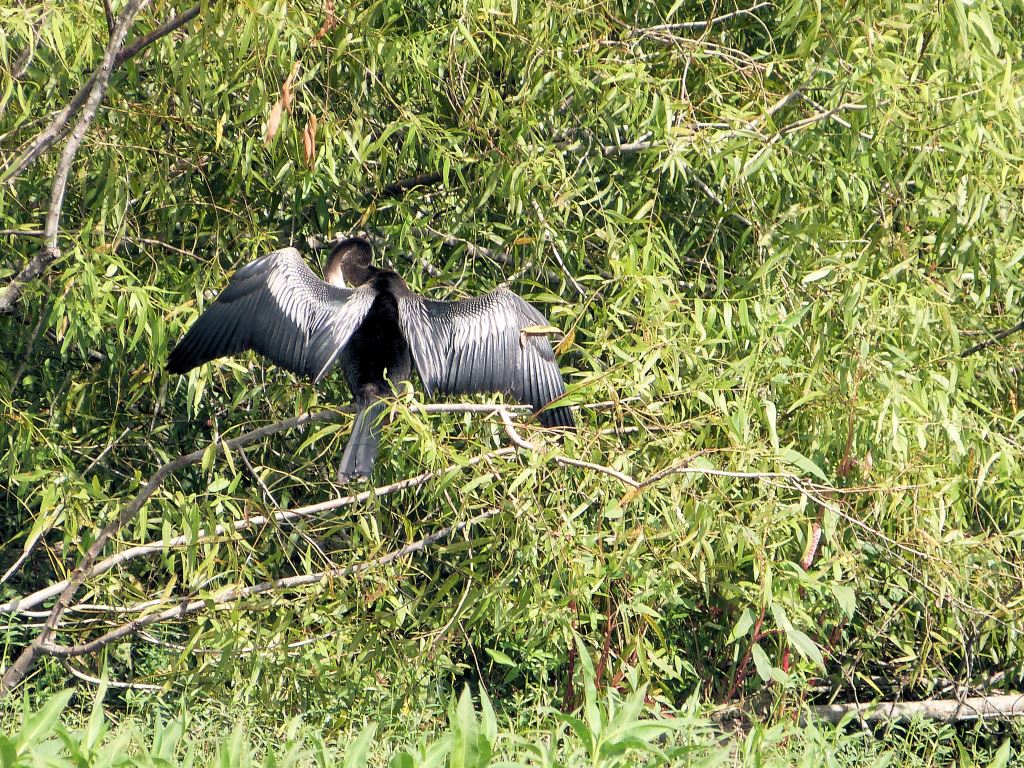
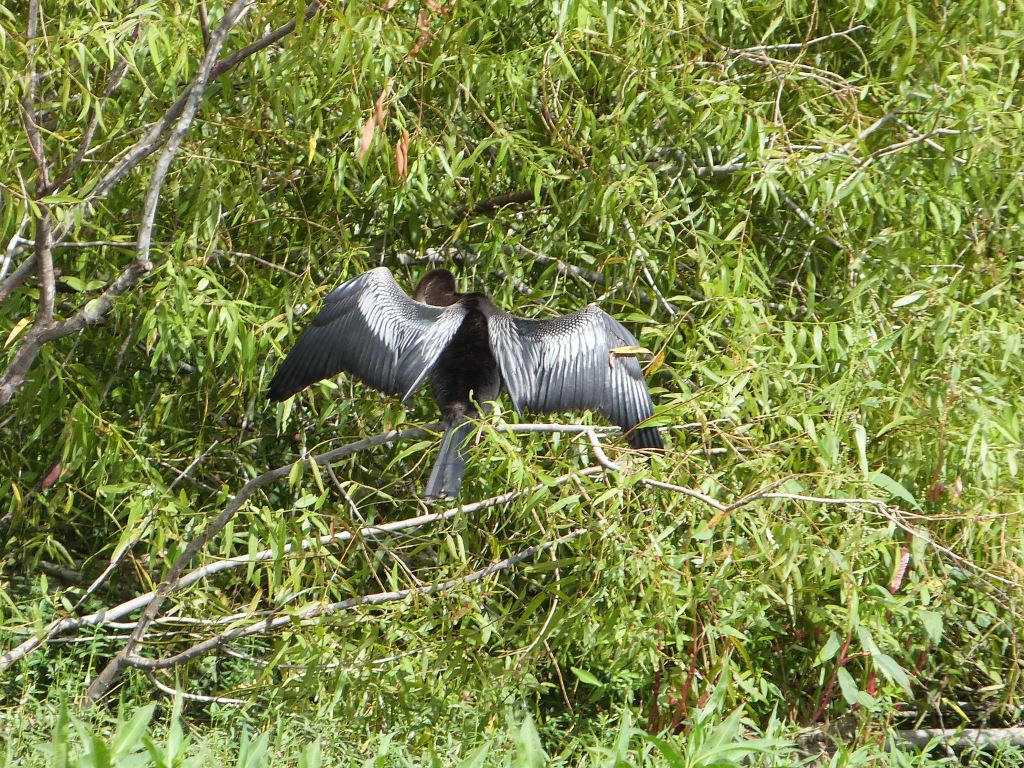
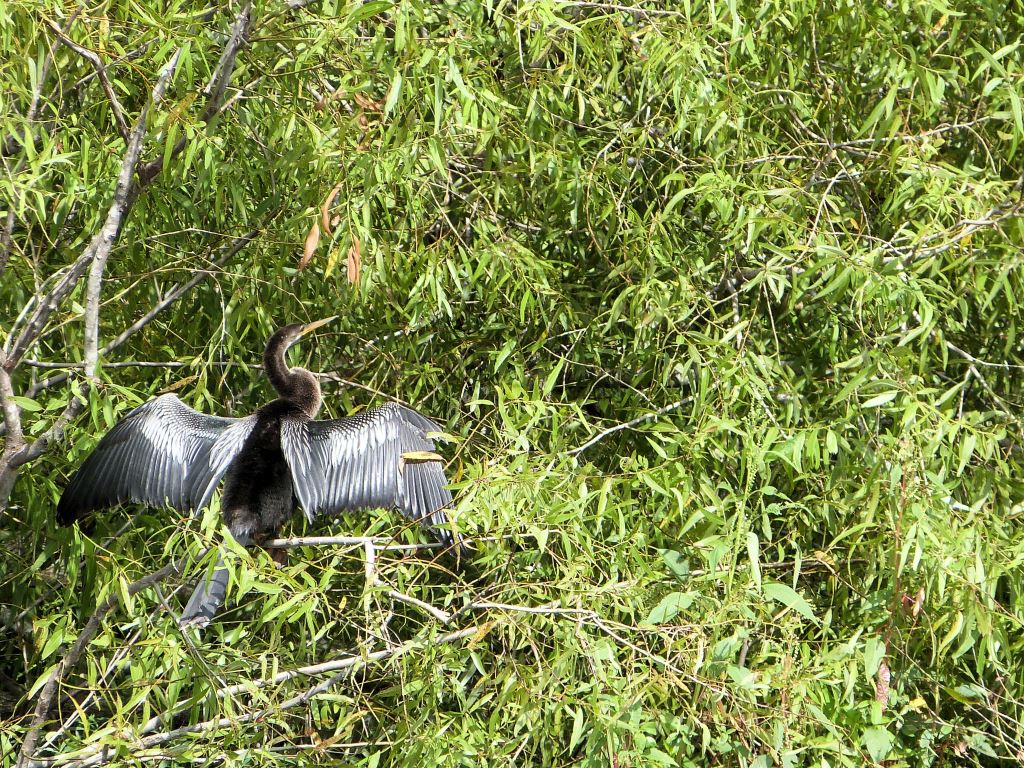
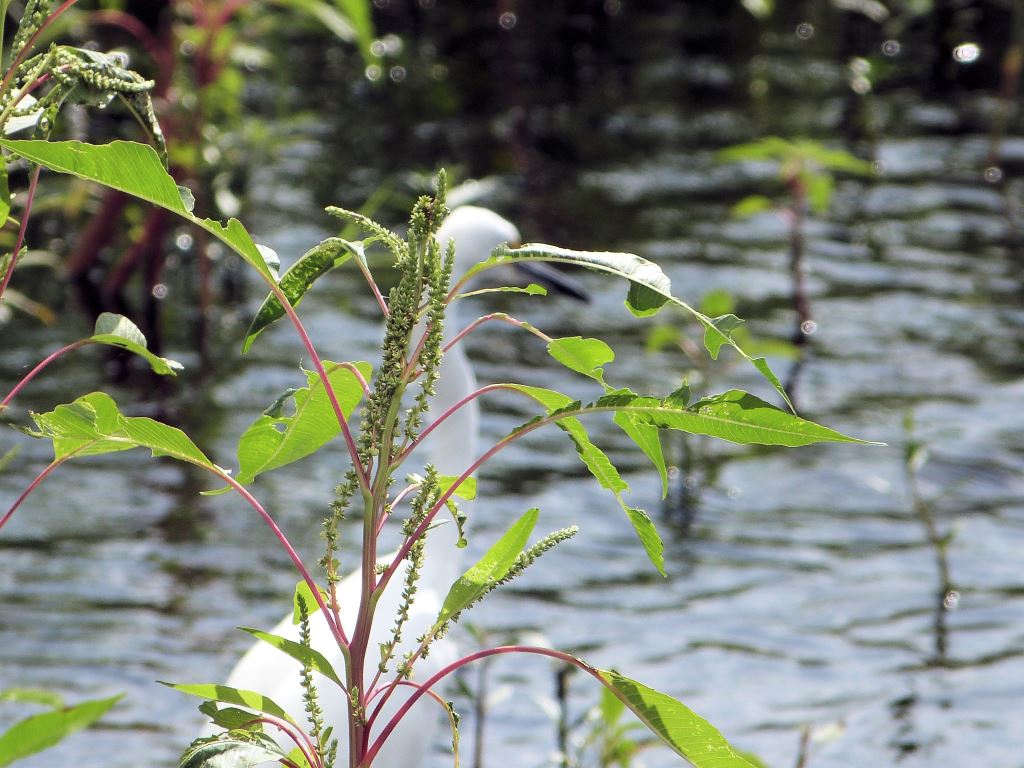
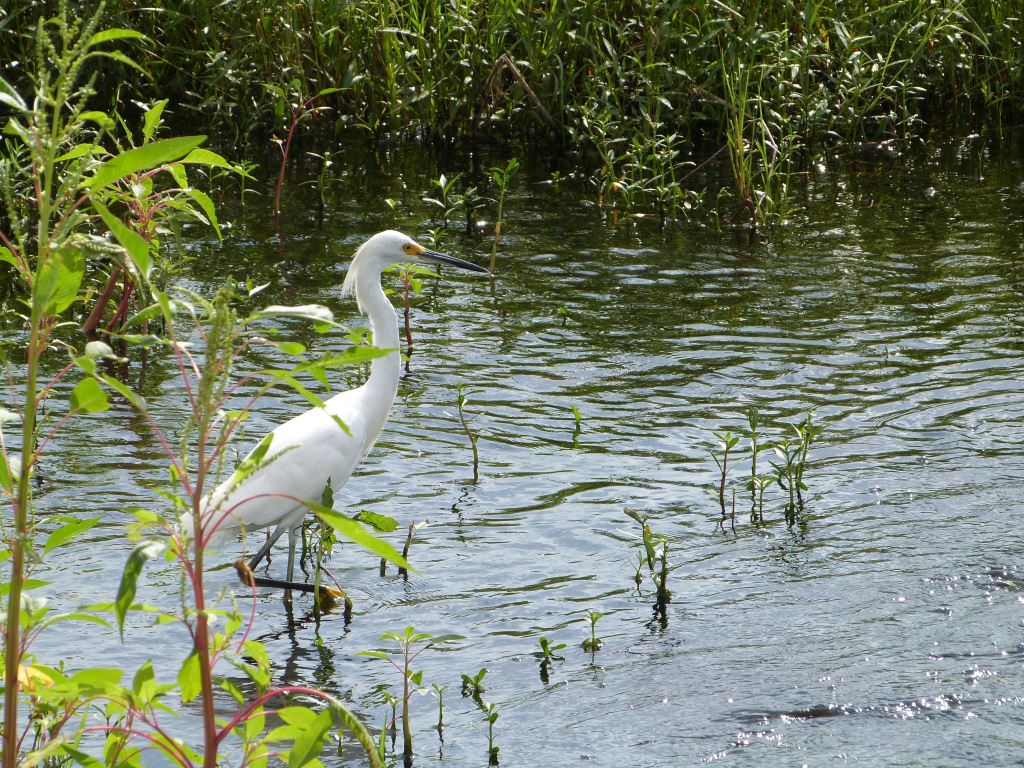
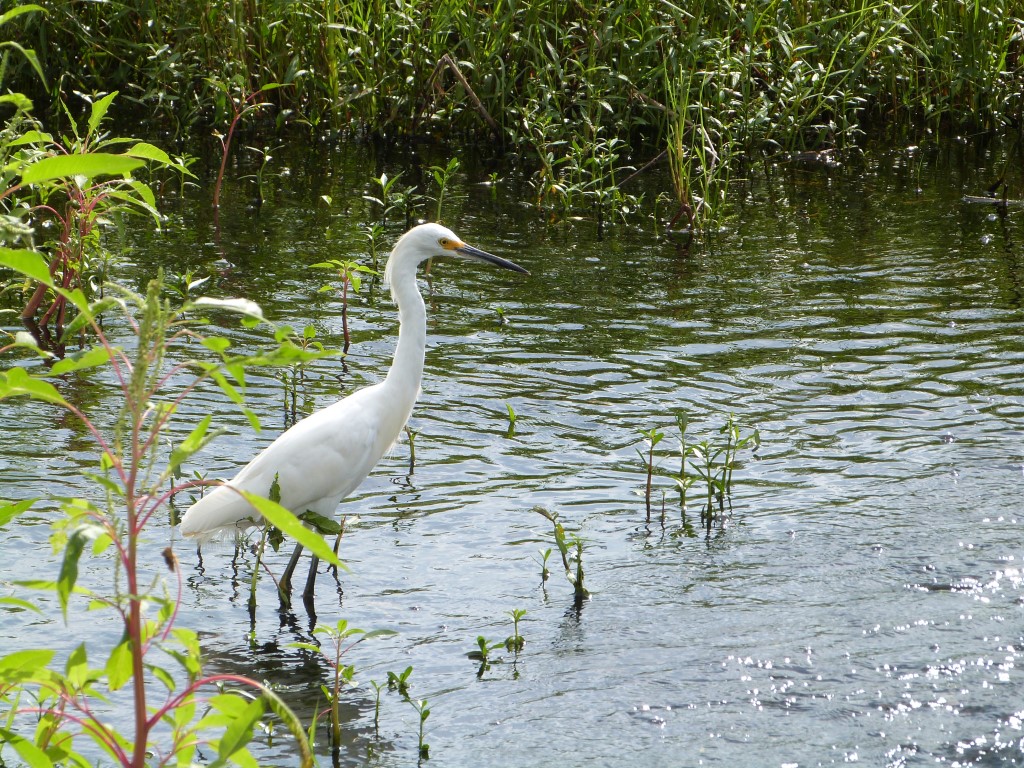
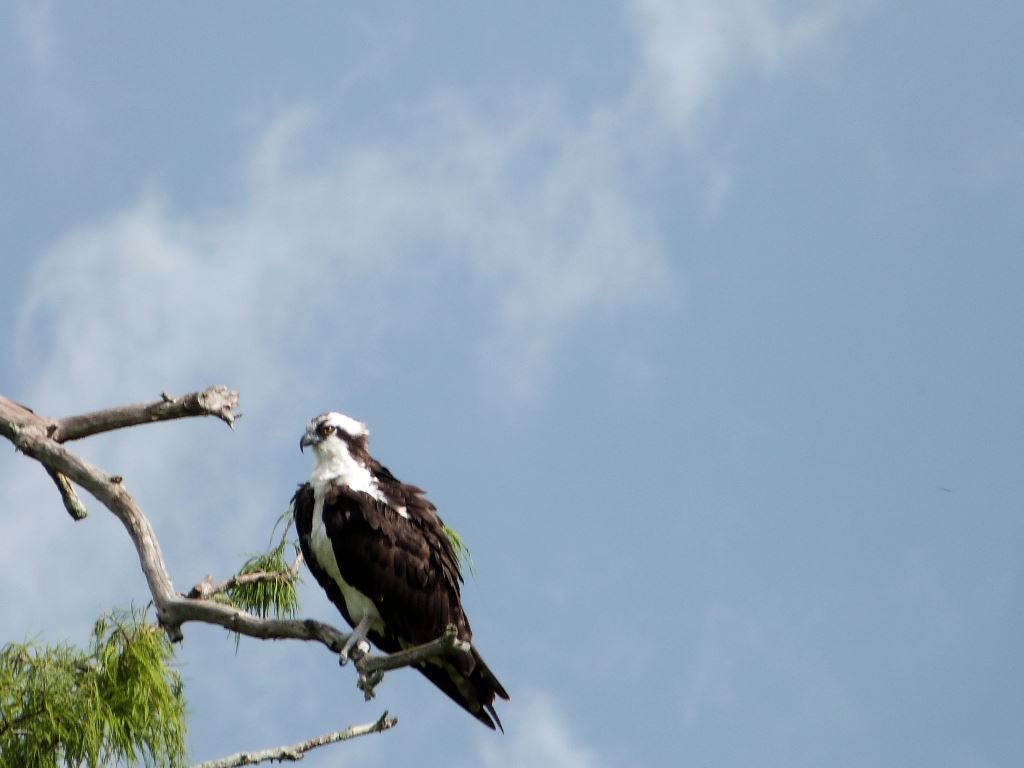
We managed to see quite a few Ospreys, one eating a huge fish up in a tree. There were at least five Tricolored Herons, one of them a juvenile, a Snowy Egret, two Black-bellied Whistling Ducks, some Common Gallinules, an Anhinga and lots of Black and Turkey Vultures circling overhead.


Tricolored Heron (Egretta tricolor) Juvenile Circle B by Lee

Tricolored Heron (Egretta tricolor) Juvenile Circle B by Lee

It was hot, humid, and it began to sprinkle, so we left after about 50 minutes or so. None the less, it is always enjoyable to get out and enjoy the Lord’s creations. I am also thankful that the Lord gave the rain recently to fill up the marsh again and water to drink. We had cool water in the car and did it ever “hit the spot.”

Here are some of my photos and videos that I took.

How great are his signs! and how mighty are his wonders! his kingdom is an everlasting kingdom, and his dominion is from generation to generation. (Daniel 4:3 KJV)

*


*

*

Rock Partridges: Lessons About Hunting And Hatching

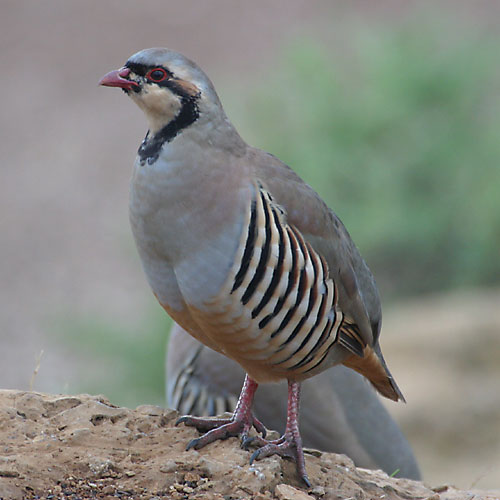
Rock Partridge (Alectoris graeca) WikiC

Rock Partridge (Alectoris graeca) WikiC

Rock Partridges: Lessons about Hunting and Hatching ~ James J. S. Johnson

Now therefore, let not my blood fall to the earth before the face of the LORD: for the king of Israel is come out to seek a flea, as when one doth hunt a partridge in the mountains. (1 Samuel 26:20 KJV)

Luzon Bleeding-heart by Dan

Orni-Theology

Rock Partridges – like other partridges – prefer to hide from people, yet their voices are quite detectable. “Rock partridges are masters of concealment and are best spotted when perched on a boulder sending out a challenge; however, when we were [in Israel] we probably heard ten for every one of which we had a glimpse” [quoting George Cansdale, All the Animals of the Bible Lands (Zondervan, 1970), pages 165-166].   Yet if we look for partridges carefully, in Scripture, we will find them mentioned twice, providing us with two lessons for our own lives (and “callings”, pardon the pun).  But, before looking at those two Bible passages, first let us consider what a “partridge” is.

 So what is a partridge?

Partridges are chicken-sized ground-dwelling birds, classified together with other “pheasant family” birds like pheasant, grouse, bobwhite, quail, junglefowl, chicken, peafowl, and ptarmigan. Specifically, partridges are categorized as fowl belonging to the order Galliformes, family Phasianidae, subfamily Perdicinae).

Partridges don’t migrate.  Partridges  — such as the Rock Partridges of the Holy Land — often nest in hilly or montane areas, in fairly dry climate zones, laying more than a dozen eggs in a minimally lined ground scrape – quite a humble nest!   This habit leaves partridge eggs quite vulnerable, for many ovivorous predators (including hungry humans – see Deuteronomy 22:6-7) hunt around the nesting grounds of partridges.  Resourceful foragers themselves, partridges routinely eat accessible ants, seeds, berries, lichen, and other low-to-the-ground vegetation.  Like other land-fowl partridges spend most of their time on the ground, hidden in ground cover, so don’t expect to see them flying around much, or perching in tree branches.

Partridges are mentioned only twice in the Old Testament (noted below), as translations of the Hebrew word qoré’ – a noun derived from the verb qara’ (meaning “to call”, “to cry”).   The Hebrew root  verb qara’ is used to describe calling out someone’s name, when you wish to speak to that person, and it is used to describe God’s actions when He “called” the light Day, the dark Night, the dry land Earth, etc. (in Genesis chapter 1).  Partridges, therefore, are “criers”, famous for their calls.  The Rock Partridge (Alectoris graeca), which seems to have been common during Bible times, is known for its “cok-cok-cokrr” call, in the arid piedmonts of Israel.

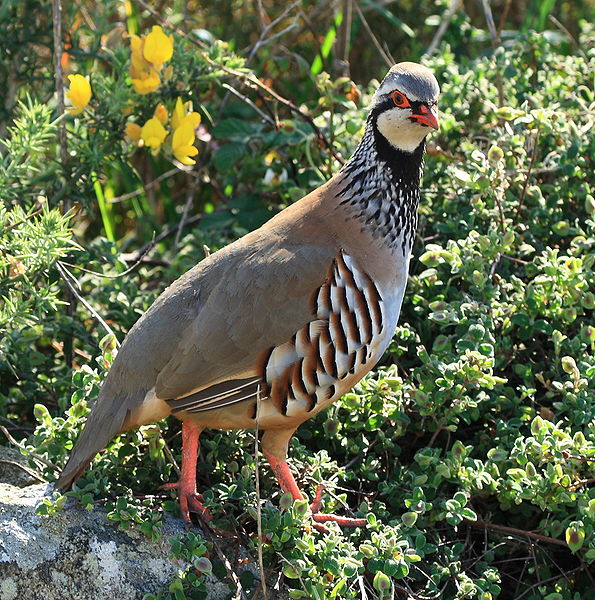
The Rock Partridge ranges “from the mountains of Lebanon in the north across the coastal plains to the dry hills of Judaea, but its range also extends westwards through Greece and all over Italy” [quoting George Cansdale, All the Animals of the Bible Lands (Zondervan, 1970), page 165].  Its Holy Land cousin, the Red-legged Partridge (Alectoris rufa), resembles the Rock Partridge from a distance, so the Bible could refer to either or both, as well as any hybrids.  Another partridge found in Israel’s desert lands is Hey’s Partridge (Ammoperdrix heyi), by the Dead Sea.

“Partridges” ae mentioned once in 1st Samuel 26:20 and once in Jeremiah 17:11.  Both verses illustrate important life lessons.

Red-legged Partridge (Alectoris rufa) ©WikiC

Red-legged Partridge (Alectoris rufa) ©WikiC

Living life on the run

As a fugitive trying to escape King Saul, David compares himself (in 1st Samuel 26:20, quoted above) to a partridge being hunted in the mountains.  Because partridges don’t fly far away, as chased ducks or geese may, hunters chase partridges in the hilly scrublands, causing the partridges to run this way and that, often wearying the partridges to the point that they became targets for whatever weapons (even sticks used for clubbing) the hunters have available.  Surely David saw such partridges in the arid wilderness scrublands he hid in, and likely David himself hunted, caught, and ate such partridges.  Because David was daily fleeing Saul’s soldiers, in the hilly wilderness  of Israel, David knew what partridges felt like, being pursued by hunters.  Yet God protected David from Saul’s evil efforts, and in God’s providence it was David, when the dust settled, who survived and reigned over Israel, not Saul.

What can we learn from David’s fugitive plight?

First, there is no good reason to surrender to one’s enemies!  When persecutors aim at innocent victims, as has been the plight of believers ever since Cain murdered Abel (Genesis 4:8-9; Matthew 23:35; Luke 11:51), we are counseled to evade persecutions when possible (Matthew 7:6 & 10:14 & 10:23; Luke 9:5 & 10:11 & 21:21; Acts 9:25 & 13:51).

Second, David’s example reminds us that God is sovereign – He will not let us die until it is the proper time for dying.  So long as God has earthly work for us to do, He will sustain us (James 4:13-15).

Rock Partridge (Alectoris graeca) ©Arthur Grosset

Rock Partridge (Alectoris graeca) ©Arthur Grosset

Don’t count your chickens (or partridges) before they hatch

Another lesson from the partridge comes from Jeremiah 17:11.  It seems that partridges have a bad reputation for being less than fully successful in hatching their eggs!  This parental deficiency is compared to the tentative gains of those who acquire wealth by unrighteous means – they will, in the end, be seen as the fools they are!  Why?  Because the wealth of this world, even if kept until death, is only transitory wealth.  It is like eggs laid in a slipshod nest, never to be successfully hatched.

Don’t invest the best of your life in the transitory things of this world  —  because the investment will be a disappointment, when life is over.  Rather, invest your time and treasure in what God values.  It is truly foolish to lay up temporal treasures, “where moth and rust doth corrupt, and where thieves break through and steal” (Matthew 6:19).  Materialistic treasures are a long-term waste of investment, to be displayed as folly in eternity (and often earlier, on earth), as “gains” wrongly gotten – because we are only stewards of the assets God entrusts to us.

Therefore, let us rather, on a daily basis, accrue (by God’s grace) “treasures in Heaven, where neither moth nor rust doth corrupt, and where thieves do not break through nor steal” (Matthew 6:20).  It’s really a matter of the heart:  “For where your treasure is, there will your heart be also” (Matthew 6:21).

(Dr. James J. S. Johnson, an apologetics professor for ICR, previously taught ornithology at Dallas Christian College.)


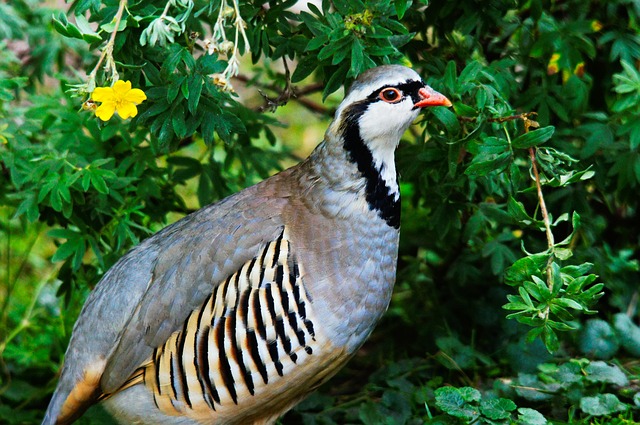
Rock Partridge (Alectoris graeca) ©Pixabay

Rock Partridge (Alectoris graeca) ©Pixabay

Lee’s Addition:

Rock Partridges belong to:

*
P.S. – As of this post, James J. S. Johnson is now one of our regular contributors to the blog. An introduction will be given soon.

*
Old Barns and Old People

A very good friend of mine, an “old” friend like me, just shared this with me. It is worth sharing here also.

The steps of a good man are ordered by the LORD: and he delighteth in his way. Though he fall, he shall not be utterly cast down: for the LORD upholdeth him with his hand. I have been young, and now am old; yet have I not seen the righteous forsaken, nor his seed begging bread. He is ever merciful, and lendeth; and his seed is blessed. (Psalms 37:23-26 KJV)

Enjoy!

*

YouTube by Bob Byerly

*
May you be encouraged to live for the Lord while you are young. Later on, you will be thankful.

*
Intimidating Duets – ©Creation Moments

Magpie-lark (Grallina cyanoleuca) ©©J.J. Harrison

Magpie-lark (Grallina cyanoleuca) ©©J.J. Harrison

“… and he shall rise up at the voice of the bird, and all the daughters of musick shall be brought low…” Ecclesiastes 12:4b

Precision in communication is highly important. This is especially true of the type of communication called music, whether you are talking about Mozart or magpie-larks.

Only about three percent of bird species are known to sing duets. In a duet, one mate begins singing, and the other mate begins a half second later. Among Australian magpie-larks, pairs that are newly mated usually lack that precision. However, in pairs that have been together for two years, the lag time of the duet usually varies by only a few hundredths of a second.

Researchers also discovered that this precision serves a purpose. Male magpie-larks respond to perceived threats by increasing their singing. When they played the less-precise duets to 12 pairs of other magpie-larks, the males only responded in this way seven times in five minutes. However, the more-precise duets resulted in nine responses in five minutes. In short, other magpie-larks are more intimidated by pairs that sing with precision than by those who do not. This is important in preserving an established couple’s territory from invasion by new couples.

Communication with precision is yet another fingerprint of God on the creation. In Scripture, the ultimate in precise communication, God even points us to the birds as He urges us to recognize His involvement in the creation.

Prayer:

Thank You, Father, for taking care of all Your creation and especially for sending Your Son to save me. Amen.

Notes:
Science News, 6/9/07, p. 357, S. Milius, “Scary Singing.” Photo: Female magpie-lark. Courtesy of J.J. Harrison. Licensed under the Creative Commons Attribution-Share Alike 3.0 Unported license.  ©Creation Moments 2014


Magpie-lark (Grallina cyanoleuca) by W Kwong

Magpie-lark (Grallina cyanoleuca) by W Kwong

Lee’s Addition:

By them the birds of the heavens have their home; They sing among the branches. (Psalms 104:12 NKJV)

Magpie-larks are members of the Monarchs – Monarchidae Family, which has 99 species in it. There are only two larks in this family:

Magpie-lark (Grallina cyanoleuca)
Torrent-lark (Grallina bruijnii) WorldBirds – Photos

Here is a sound recording from xeno-canto of a duet.

*

*


Birds of the Bible – Mighty Hand of God

Mandarin Duck (Aix galericulata) by Dan at Zoo Miami

Mandarin Duck (Aix galericulata) by Dan at Zoo Miami

O Lord GOD, You have begun to show Your servant Your greatness and Your mighty hand, for what god is there in heaven or on earth who can do anything like Your works and Your mighty deeds? (Deuteronomy 3:24 NKJV)

What a beautiful duck. When we look around us, the Lord’s Hand is at work everywhere. Be thankful today for the Lord’s Blessing.

Brown-headed Barbet (Megalaima zeylanica) by Nikhil Devasar

Hang in there, today!

O taste and see that the LORD is good: blessed is the man that trusteth in him. (Psalms 34:8 KJV)

*

Birds of the Bible

*

Sneaky Roadrunner

Greater Roadrunner (Geococcyx californianus) Reinier Munguia

Greater Roadrunner (Geococcyx californianus) Reinier Munguia

Sneaky Roadrunner ~ by Dr. James J. S. Johnson

There is no fear in love; but perfect love casteth out fear: because fear hath torment. He that feareth is not made perfect in love. (1 John 4:18 KJV)

Luzon Bleeding-heart by Dan

Orni-Theology

Roadrunners are unusual birds.   When you think of birds, usually you think of birds that fly.  But not roadrunners – mostly they run (up to 20 miles per hour!), or walk very quickly (“race-walking”).  But roadrunners sometimes fly short distances, if they want to escape someone.  Once I saw one fly from my home’s front yard to the roof of our house.  But a roadrunner’s usual exit strategy is to run.  But not always. Sometimes they try to be sneaky. Before recalling a memorable example of roadrunner sneakiness, however, a few fact about roadrunners should be reviewed.

Greater Roadrunner (Geococcyx californianus) by Daves BirdingPix

Greater Roadrunner (Geococcyx californianus) by Daves BirdingPix

Roadrunners have longer legs, in proportion to their bodies, than do most birds.  Obviously God designed these roadrunners to get around on foot!  Taxonomists (i.e., those who categorize creatures into groups of common traits, by “lumping” on similarities and “splitting” on dissimilarities) classify the Greater Roadrunner (Geococcyx californianus – meaning “Californian earth-cuckoo”) as a member of the cuckoo family, birds that look like half-starved chickens with long tails.  Roadrunners thrive in desert habitats, yet these black-and-white fowl are also found living in shrub-dominated lands known for hot, dry climates, such as the western half of Texas (as well as most of Oklahoma, New Mexico, Arizona, and California).  See Roger Tory Peterson, WESTERN BIRDS (Houghton Mifflin, 3rd ed., 1990), range map 192.  Roadrunners can also be seen, though less frequently, in contiguous states, such as Kansas, Colorado, Utah, Nevada, Missouri, and Arkansas.

Greater Roadrunner (Geococcyx californianus) ©©Alan Murphy Flickr

Greater Roadrunner (Geococcyx californianus) ©©Alan Murphy Flickr

Roadrunners are not picky eaters.  Roadrunners are happy to eat bugs (insects and spiders), seeds, fruits, millipedes, centipedes, scorpions, and even small birds (and their eggs), small mammals (usually rodents like mice, rats, and voles), and small reptiles (such as lizards).  One of the more unusual insects, that roadrunners are known to eat, is the tarantula hawk wasp – an amazing spider-killing wasp that the U.S. Army named one of its “unmanned aircraft” reconnaissance units after.  [See my article at www.icr.org/article/slow-death-for-tarantula-lesson-arachnid/ — “Slow Death for a Tarantula”.]

Greater Roadrunner (Geococcyx californianus) ©©Flickr

Greater Roadrunner (Geococcyx californianus) ©©Flickr

So how can a roadrunner be “sneaky”?  A few months ago I walked out of my house’s front door, and saw a roadrunner in my path.  Startled by my approach, the roadrunner skittishly scuttled around my van, which was parked in the driveway in front of my house.  So now I was standing on the north side of my van, and the roadrunner was standing on the south side of my van.

How do I know that, since I don’t have “x-ray eyes” that can see through a parked van?   As I slowly and silently crept, counter-clockwise around the west side of my van, I could see the roadrunner, standing on the south side of my blue van: he (or was it a she?) was bent over with his head turned to the southeast, with his slender bill and face aimed directly away from me.  By bending down his head, and aiming it away from where I was standing, the roadrunner must have thought that he was hiding from me, and that I could not see him – because he could not see me!  If I had impolitely startled him, then, surely it would have hurt his feelings, or his pride, because he obviously thought he really had me fooled.  So I stood silently, unmoving, for quite a while, to see if he would notice me – only about 3 feet form him – with nothing but air between us!  The roadrunner never moved, and he never turned his head to see me, so perhaps he thought I still could not see him.  Not having the heart to correct him, I slowly and silently backed up to the north side of the van, then retreated back through my front door, into my house.  To this day the roadrunner probably thinks that his bent-over, head-turned “hiding” had fooled me.

Greater Roadrunner (Geococcyx californianus) ©©thedrinkingbird Bing

Greater Roadrunner (Geococcyx californianus) ©©thedrinkingbird Bing

Then I got to thinking about how often we humans act as though we could hide ourselves from God.  When our first parents first sinned (Genesis 3:8-10) they tried to hide from God, among the trees in the Garden of Eden.  (If there had been a blue van there they might have tried to hide behind it.)  Of course, the very thought of hiding from God is silly because He is omnipresent and omniscient (Psalm 139).  But, because the Lord Jesus Christ provides us with a free redemption (John 3:16), there is no good reason to be afraid of God (Hebrews 10:19), because “perfect love casts out fear” (1st John 4:18).

Greater Roadrunner (Geococcyx californianus) ©©Nathan Davis Bing

Greater Roadrunner (Geococcyx californianus) ©©Nathan Davis Bing

Roadrunners are fun to watch – I love watching them scoot around on their fast, race-walking legs! If roadrunners only knew how kindly I regard them they would not fear me – they don’t need to sneak around to escape me.  And, because of Jesus, there is no good reason for us to try to hide from God.

(Dr. James J. S. Johnson, now apologetics professor at ICR,  previously taught ornithology at Dallas Christina College. Mrs. Thelma Bumgardner, his second-grade teacher, introduced him to creationist ornithology.)

*

*


Never Give Up

The steps of a good man are ordered by the LORD, And He delights in his way. Though he fall, he shall not be utterly cast down; For the LORD upholds him with His hand. I have been young, and now am old; Yet I have not seen the righteous forsaken, Nor his descendants begging bread. (Psalms 37:23-25 NKJV)

*

(From an email link)

*

Just got a notification from WordPress that today is my Sixth Anniversary here. Wow! Has it really been 6 years? Praise the Lord! Thanks all of you for the visits you have made to the blog. This blog started about 5 months earlier on another service.

1,151,195 visits and counting!

THANK YOU!!!

Latest Wood Stork Encounter

Wood Stork at Lake Morton by Lee

Wood Stork at Lake Morton by Lee

I know all the birds of the mountains (and Lake Morton) , And the wild beasts of the field are Mine. (Psalms 50:11 NKJV)

We finally had a chance to take a short birdwatching adventure to Lake Morton over in Lakeland. I have been battling a cold and cough for the last three weeks. Our trips to Lake Morton don’t require much walking and it is one of the few places that people feed the birds.

When someone parks their car, before they can get across the street, the birds start walking towards them. Needless to say, the birds are expecting something.

Wood Stork up close by Lee at Lake Morton

Wood Stork up close by Lee at Lake Morton

As I was walking across the street, here they came; Wood Stork in the lead because of its long legs, White Ibises next, followed by the waddling shorter legged birds – Mute Swans, Mallards, Muscovy Duck and then the fly-ins – Boat-tailed Grackles and the Gulls. The Wood Stork met me at the curb.

Of course when you have a treat for them, you become the “Pied Piper.” Apparently, someone must have recently fed them, because they were gathered loosely together. Once I got to the table and sat down, the group gathered around. I was enjoying them so much, I didn’t take many photos then.

White Ibis on Table by Lee

American White Ibis on Table by Lee

Once the food gave out, of which I didn’t have much to begin with, they moseyed off to rest in the shade until the next visitor with a bag of goodies came. One White Ibis hopped upon the table behind me, but too late because the bag was empty. Took its photo, but it was almost too close.

Woodstork & Lee by Dan at Lake Morton

Woodstork & Lee by Dan at Lake Morton

One of the resident Wood Storks walked up in front of me and stood there. I reassured him that I had nothing else, but he (or she) just stayed there. I started talking to it, motioned to come closer, and it did. I could have reached out and touched the Wood Stork, but chose not to with that long beak. Have you ever heard a Wood Stork’s beak “snap” when it grabs food? It is loud. No, I like my fingers!

Wood Stork close-up by Lee at Lake Morton

Wood Stork close-up by Lee at Lake Morton

We sat face to face for about 4 minutes of so; me talking and him just standing there looking at me.

Even though they are “ugly,” they are really neat. Have you ever seen a Wood Stork in the air? They are so beautiful and graceful, but up this close? I assured him that the Lord had created him and that He makes no mistakes.

Great is our Lord, and mighty in power; His understanding is infinite. (Psalms 147:5 NKJV)

Wood Stork flying over Lake Morton by Lee 2009

Wood Stork flying over Lake Morton by Lee 2009

 The wings of the ostrich wave proudly, But are her wings and pinions like the kindly stork’s? (Job 39:13 NKJV)

Wood Storks belong to the Ciconiidae – Storks Family and are also one of our Birds of the Bible.

Oh, I almost forgot. Since the Wood Stork was so close, I took a close up of its feet.

Wood Stork's Feet by Lee

Wood Stork’s Feet by Lee

*

*