The Chicken From Hell – (Re-post)

THE CHICKEN FROM HELL

“All flesh is not the same flesh: but there is one kind of flesh of men, another flesh of beasts, another of fishes, and another of birds.” 1 Corinthians 15:39

Evolutionists tell us a 66-million-year-old feathered dinosaur resembling a giant demonic bird was discovered in the fossil-rich Hell Creek formation of South and North Dakota. Not surprisingly, this newly discovered dinosaur species was dubbed the “chicken from hell”.
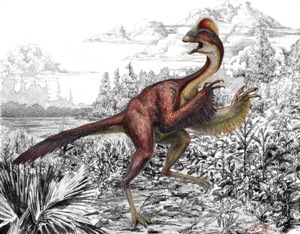
Chicken From Hell - Illustration: Anzu wyeliei

Chicken From Hell – Illustration: Anzu wyeliei


It was “as close as you can get to a bird without being a bird,” said vertebrate paleontologist Matt Lamanna. In addition to its long limbs, the research team found that the 11-foot-long, 500-pound dinosaur sported a stubby tail, likely framed by a fan of tail feathers.”What’s this? A tail likely framed by a fan of tail feathers? Not even National Geographic could stop themselves from telling the truth when they admitted: “Though the team didn’t find direct evidence of feathers, the species was so closely related to birds that it was very likely covered in feathers that looked identical to those of modern birds.”

The illustration accompanying the article shows the dinosaur’s forelimbs and tail covered with large feathers. Indeed, National Geographic and others have been doing this for years as they attempt to show that modern-day birds are the evolutionary descendents of dinosaurs. No real evidence required!

The Bible, on the other hand, is supported by a large amount of evidence, including archaeological discoveries, the fulfillment of Bible prophecies and much more. Christians also have the internal witness of the Holy Spirit that convinces us that God’s Word is true and that His Son is the Truth who alone provides salvation from sin.

Prayer:
Father, I thank You that Your Word doesn’t need to be supported by the imaginative speculations of fallible men. I know that the Bible is true from the first word to the last! In Jesus’ Name. Amen.

>Notes:
http://news.nationalgeographic.com/news/2014/03/140319-dinosaurs-feathers-animals-science-new-species/#close-modal3/19/14. National Geographic Daily News, 3/19/14. Illustration: Anzu wyeliei. Courtesy of Mark Klingler, Carnegie Museum of Natural History.<

©Creation Moments 2015

******

O Timothy, keep that which is committed to thy trust, avoiding profane and vain babblings, and oppositions of science falsely so called: (1 Timothy 6:20 KJV)

Evolutionists just refuse to even consider creation, so they make up more concoctions of feather-brained ideas.

*

Designed for Flight – Creation Moments TV

An eagle fishing

An eagle fishing

For thus says the LORD: “Behold, one will fly swiftly like an eagle And spread out his wings against Moab. (Jeremiah 48:40 NASB)

Creation Moments articles have been used here many times. Now they have a YouTube Channel called Creation Moments TV.

While checking out their new videos, I found this one about birds and thought you might enjoy seeing it. Watching instead of reading is more enjoyable at times. Though reading is still good for us or else those of us who do blogs would be out of business.

God created the great sea monsters and every living creature that moves, with which the waters swarmed after their kind, and every winged bird after its kind; and God saw that it was good. (Genesis 1:21 NASB)

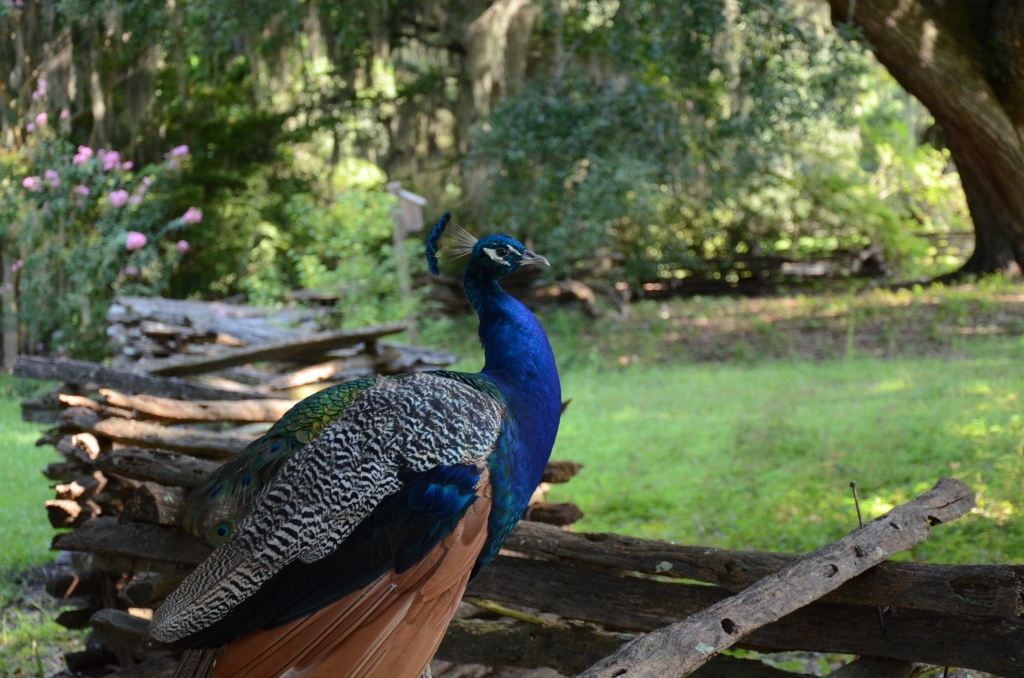
Peacock at Magnolia Plantation by Dan

Peacock at Magnolia Plantation by Dan

Creation Moments TV

Interesting Things from Creation Moments

When I Consider

*

Quotes from C. S. Lewis

Grey-headed Canary-Flycatcher (Culicicapa ceylonensis) by W Kwong

Grey-headed Canary-Flycatcher (Culicicapa ceylonensis) by W Kwong

In today’s Creation Moments article, A WONDROUS BUT TERRIFYING CREATION, these quotes from C. S. Lewis caught my interest. The article is actually about Louie Zamperini’s experiences, especially with nature.

C.S. Lewis writes about how our experience with the creation awakens within us a sense that there is more – something other, something beyond the natural world. He writes in Mere Christianity, “If I find in myself a desire which no experience in this world can satisfy, the most probable explanation is that I was made for another world.”

Lewis also observes in his book Miracles that we can only savor this world for the wonder that it really is when we appreciate it as the creation of a supernatural God. “Only Super-naturalists really see Nature…. To treat Nature as God, or as Everything, is to lose the whole pith and pleasure of her. Come out, look back and then you will see … this astonishing cataract of bears, babies, and bananas; this immoderate deluge of atoms, orchids, oranges, cancers, canaries, fleas, gases, tornadoes, and toads. How could you have ever thought this was ultimate reality? … The “vanity” (futility) to which she was subjected was her disease not her essence.”

Like all of us, Nature – though wondrous and awesome – is in need of redemption. The “essence” of Nature points us to her Awesome Maker. And the “disease” within her – the futility, corruption, and harsh cruelty – instructs us to anxiously long for our full redemption. As the Bible puts it,

“…the sufferings of this present time are not worthy to be compared with the glory which shall be revealed in us. For the earnest expectation of the creature (the anxious longing of the creation) waits for the manifestation of the sons of God…. For we know that the whole creation groaneth and travaileth in pain together until now.” (Romans 8:18-19, 22)

To see that article …

Like yesterday’s I’m Little but…., the hawk would not be trying to catch and eat the squirrel had it not been for the curse and our fallen world. It will be great when things are made right. The main question is, are you prepared for when that takes place?

The Gospel Message

Yellow Canary (Crithagra flaviventris) Male ©WikiC

Yellow Canary (Crithagra flaviventris) Male ©WikiC

*

The Hodge-Podge Writing Challenge

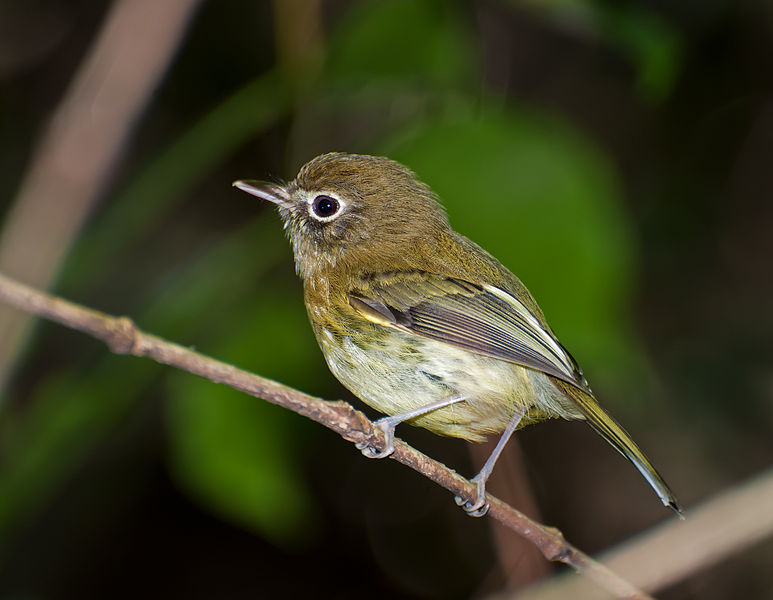
Eye-ringed Tody-Tyrant (Hemitriccus orbitatus) ©WikiC

Eye-ringed Tody-Tyrant (Hemitriccus orbitatus) ©WikiC

Leave it to my friend Sandra Connor, over at “In Love With Words” to start a weird challenge. Her The Hodge-Podge Writing Challenge caught my interest.

The challenge is to find three words, one on page one, one on page 50 (51 in my case-50 had a photo) and one from page 100. See her challenge for the exact rules. Then you are to make three sentences using those three words in each one.

So I am going to use “Naming the Birds at a Glace” to find 3 words. (Drum roll) My words are “Color” “Dark” and “Whitish”

Sentence #1

The color of the bird had a very dark head with a whitish ring around the eye.

Sentence #2

As the color of the sky lightened with the sunrise, the dark looking bird I had been watching became more whitish.

Sentence #3

The term “whitish” does not mean that the object is white, but more dark like a milky or creamy color.

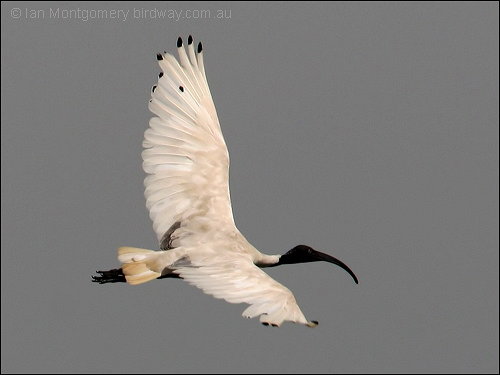
Australian White Ibis (Threskiornis molucca) by Ian

Australian White Ibis (Threskiornis molucca) by Ian

I think I will stick with writing about my birds and leave the fancy writing to Sandra and those of you who enjoy “thinking.”

By the way, I found the photos AFTER I wrote the sentences. Just so you will know. And of course I used birds because I am a “bird brained.”

If you would like to try this Challenge, go to The Hodge-Podge Writing Challenge and see what you come up with.

(PS Just thought of another sentence:)

No matter what color of skin you have, whether dark or whitish, it makes no matter, because the Lord loves us all.

Then Jesus said to them, “A little while longer the light is with you. Walk while you have the light, lest darkness overtake you; he who walks in darkness does not know where he is going. While you have the light, believe in the light, that you may become sons of light.” These things Jesus spoke, and departed, and was hidden from them. (John 12:35-36 NKJV)

And so we have the prophetic word confirmed, which you do well to heed as a light that shines in a dark place, until the day dawns and the morning star rises in your hearts; (2 Peter 1:19 NKJV)

*

You Don’t Have to Be a Christian to Call on Jesus – Re-blogged
Looking Back: Digging Through The Archives of ‘In Love With Words’ – Reblog

*

Bird’s Egg Evolution – Creation Moments

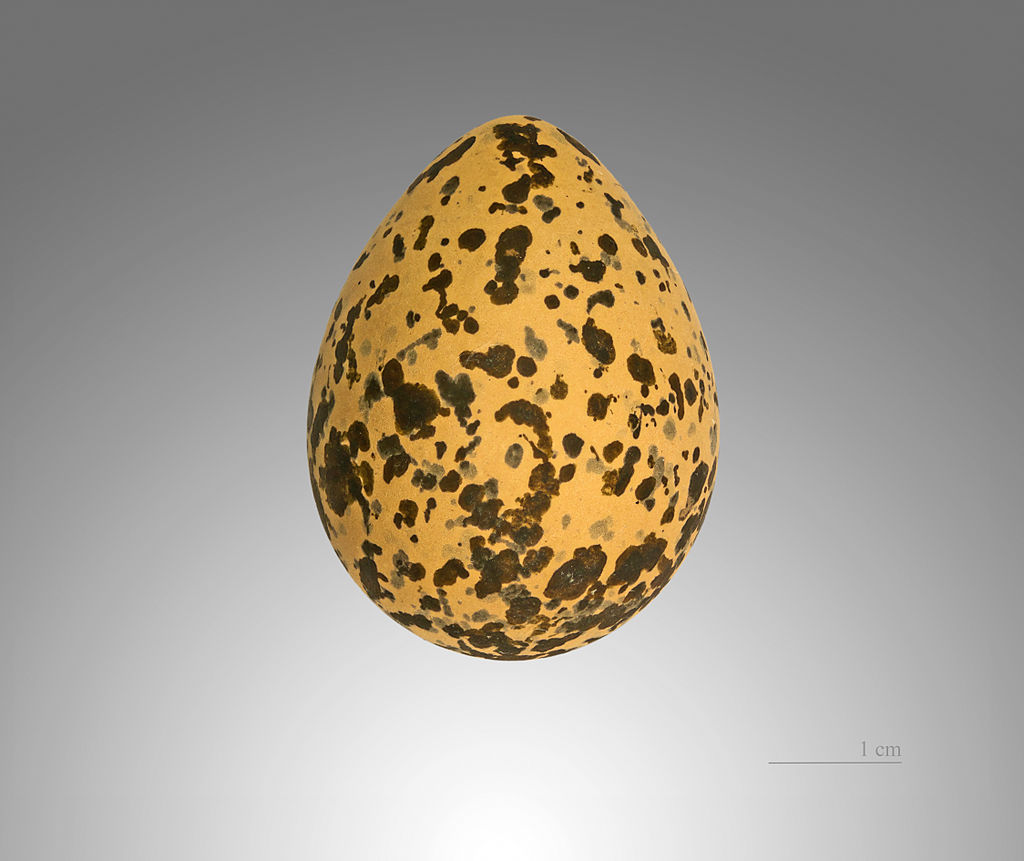
Spur-winged Lapwing (Vanellus spinosus) Egg ©Wiki

Spur-winged Lapwing (Vanellus spinosus) Egg ©Wiki

BIRDS EGG EVOLUTION

“Which leaveth her eggs in the earth, and warmeth them in dust, and forgetteth that the foot may crush them, or that the wild beast may break them.” (Job 39:14-15)

The creation is literally filled with millions of what those who believe in evolution call “happy coincidences.” But when you encounter millions of instances of what appears to be thoughtful design, the obvious conclusion is that there is a Designer. Take the example of bird eggs.

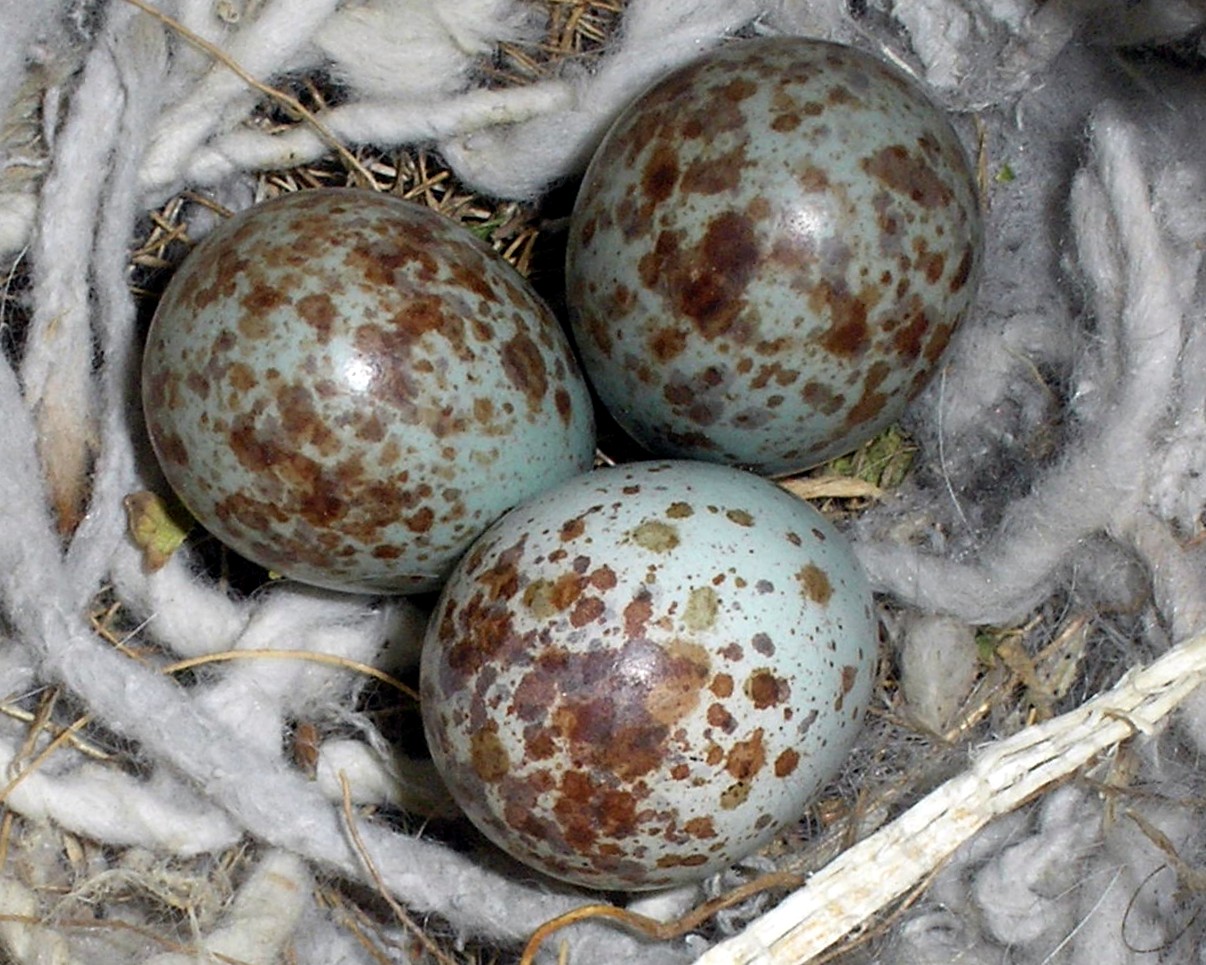
Northern Mockingbird (Mimus polyglottos) eggs ©WikiC

Northern Mockingbird (Mimus polyglottos) eggs ©WikiC

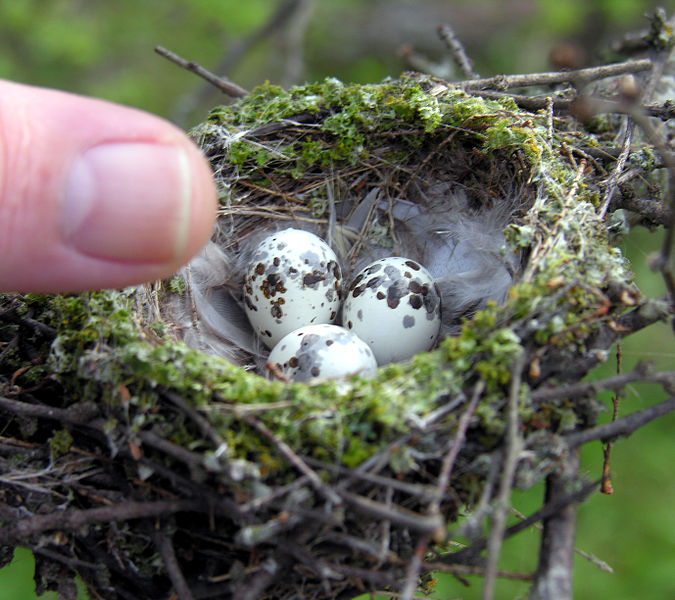
The shape of the egg makes it strong. This strength comes in handy in a busy nest. Mom and dad are coming and going, and they turn the eggs periodically during incubation. But all eggs are not equally egg shaped, and there is a pattern to their shapes. Birds like robins that build a nice, dish shaped nest tend to lay eggs that are more round in shape. Screech owls, which lay their eggs at the bottom of a hole in a tree, also have round shaped eggs. Birds like the killdeer barely build any kind of nest and lay eggs on the ground where almost-round eggs could roll away. For this reason, birds such as a kildeer lay much more sharply pointed eggs which are designed to pivot on their small end. Likewise, eggs that are laid where predators are not likely to see them are usually pale or solid in color, but eggs laid out in the open are camouflaged. Moreover, baby birds that hatch in protected nests, like the bluebird, tend to be naked, blind and helpless. But the unprotected killdeer hatchlings are ready to leave the nest within minutes of hatching.

All coincidences? It seems more scientific to say that here we have a few of the many fingerprints of our wise Creator!

Prayer:
I praise You, Father, for how Your glory is reflected in the creation. Amen.

Notes:
Jim Williams, “Bird basics: egg size, color and shape”, Star Tribune, 7/29/99, p. 8. Illustration: Long elliptical egg of a loon. (PD)

©Creation Moments, 2015 (Used with permission)

Vermilion Flycatcher (Pyrocephalus rubinus) Eggs ©WikiC

Vermilion Flycatcher (Pyrocephalus rubinus) Eggs ©WikiC


Lee’s Addition:

So teach us to number our days, that we may apply our hearts unto wisdom. (Psalms 90:12 KJV)

O LORD, how manifold are thy works! in wisdom hast thou made them all: the earth is full of thy riches. (Psalms 104:24 KJV)

Another reminder of how great and wise our Creator is.

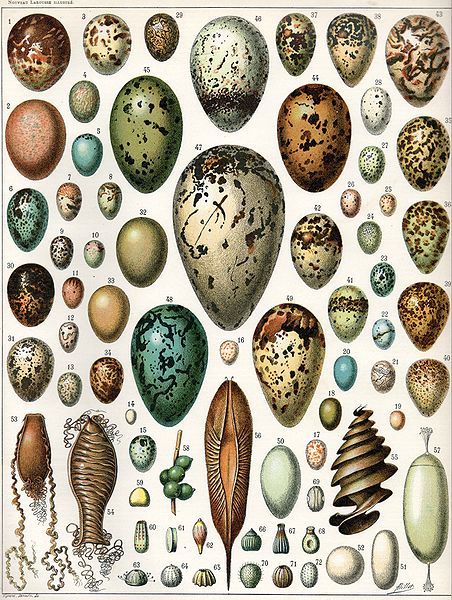
Different Eggs- Birds and Others - from Wikipedia

Different Eggs- Birds and Others – from Wikipedia

Incredible Chicken Egg
Birds of the Bible – Bird Egg Facts
Formed By Him – Bird Eggs

*

2014 in Review

The WordPress.com stats helper monkeys prepared a 2014 annual report for this blog.

Here’s an excerpt:

The Louvre Museum has 8.5 million visitors per year. This blog was viewed about 220,000 times in 2014. If it were an exhibit at the Louvre Museum, it would take about 9 days for that many people to see it.

Click here to see the complete report.

Thank you for all your visits to this blog during 2014. This is encouraging and keeps us motivated to “keep on keeping on.” May we all have a great 2015!

“That I may publish with the voice of thanksgiving, and tell of all thy wondrous works. (Psalms 26:7 KJV)

Lord Bless You In 2015!

Happy New Year!

*

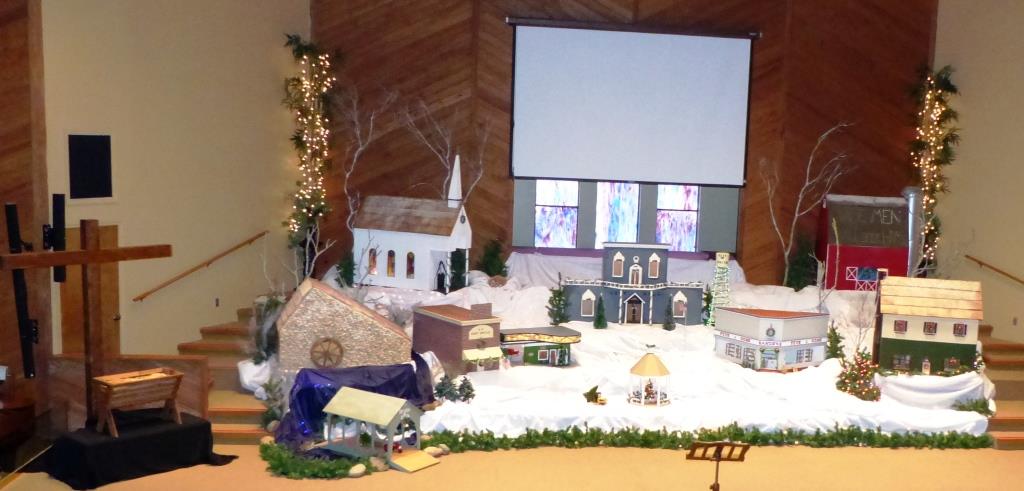
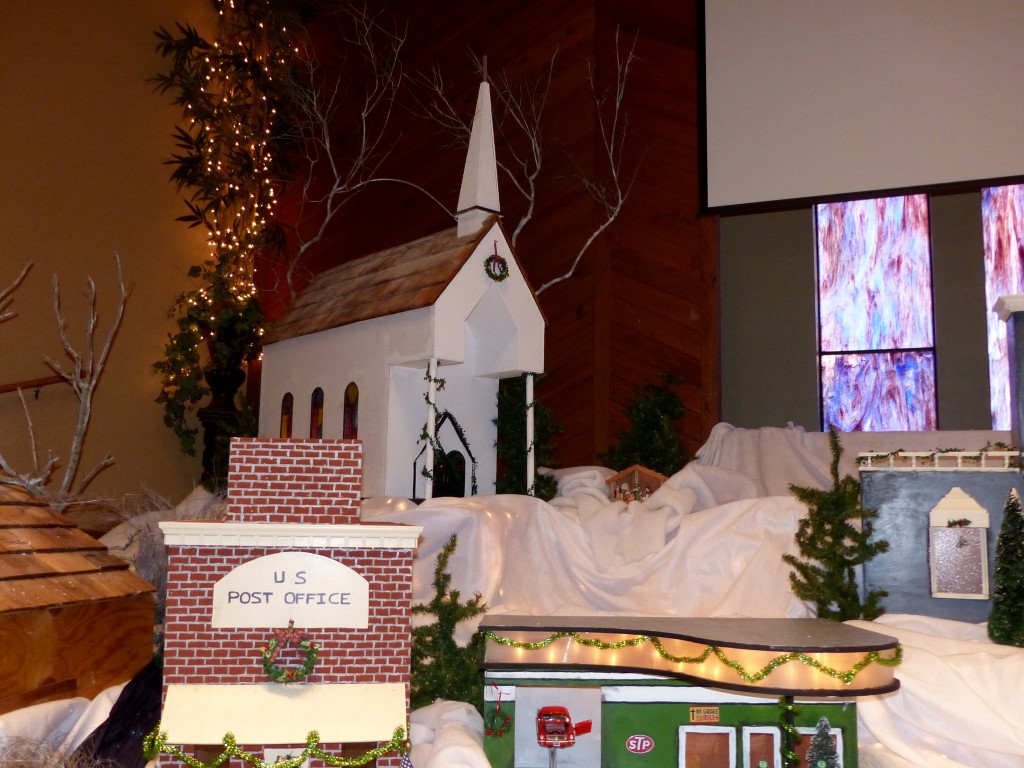
Christmas Village at Faith

Christmas Village from balcony by Lee

Christmas Village from balcony by Lee

“And it came to pass afterward, that he went throughout every city and village, preaching and shewing the glad tidings of the kingdom of God: … (Luke 8:1 KJV)

Yesterday I stopped by our church, Faith Baptist Church, and took some photos of the Christmas Village that is set up each year at this time. Our choir gets a few weeks of rest as the Village takes over the choir loft. They were setting up microphones and other things for tonight. The Village will be the background for our Christmas Candlelight service, which is always very special.

Christmas Decorations at Faith 2014

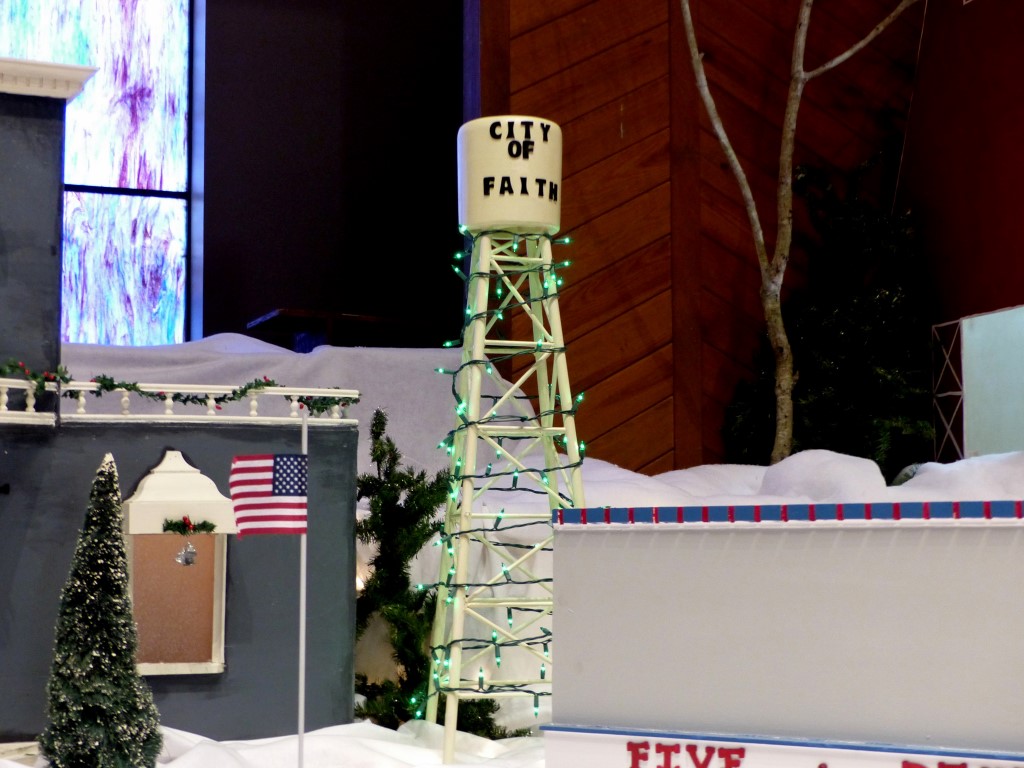
Jared Malcolm made them, starting with the Church and then the House. Each year another building was added. Now we have quite a village! Jared is now a missionary in Brazil, but even this year he made sure something new was added. He added the “City of Faith” Water tower and a Flagpole while he was home for a few weeks this year.

City of Faith Water Tower and Flag Pole

City of Faith Water Tower and Flag Pole

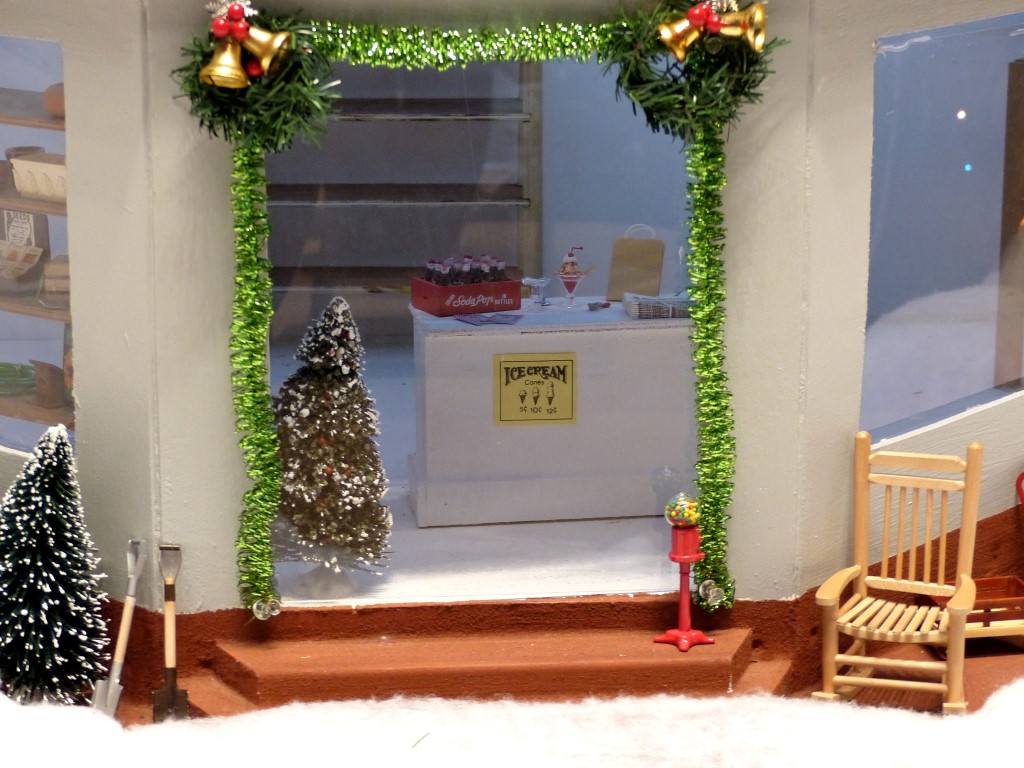
It has always been viewed by me from my pew, but while taking the photos, I saw a lot of details that I had no idea were there.

Christmas Decorations at Faith 2014 c (8)

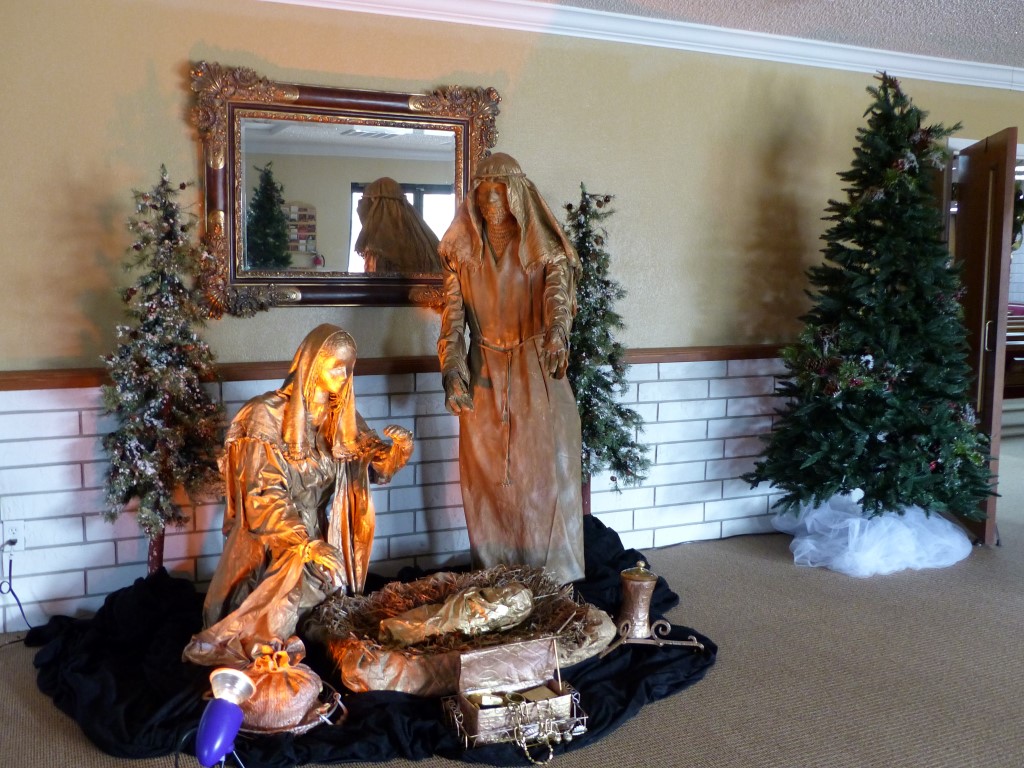
The manger scene of Mary, Joseph, and baby Jesus was made by Margaret Lofton this year for our Christmas float. It is now in the foyer.

Christmas Decorations at Faith 2014

So, trust you enjoy the slideshow of the village, church decorations, and the manger scene.

This slideshow requires JavaScript.

P.S. – Thanks to the therapy I have been taking, I actually climbed the stairs to the balcony to take some of the photos. Praise the Lord! That is a great Christmas present.

Lord Bless you as you enjoy this Christmas Eve. May we remember why Jesus came to earth.

Gospel Message

*


Interesting Things – A Few Questions For Evolutionists

Interesting Things from Smiley Central

“He taketh the wise in their own craftiness: and the counsel of the froward is carried headlong.” Job 5:13

Why do giraffes have long necks or kangaroos have pouches? Evolutionists answer that natural selection has favored the development of certain characteristics while discouraging and eliminating other features. But if this is what happened, we who believe in creation have a few questions.

Giraffe skeleton on exhibit at The Museum of Osteology, Oklahoma City, Oklahoma. (PD)

Giraffe skeleton on exhibit at The Museum of Osteology, Oklahoma City, Oklahoma. (PD)

Giraffes have long necks, say evolutionists, because conditions favored the development of long-necked creatures that could feed on higher parts of the tree. But then many other grazing animals live side by side with giraffes and manage to get by. The horse, according to evolutionary explanations, has crowned teeth in order to survive in its environment. And yet the cow, with its uncrowned teeth, survives quite well in the same environment.

Some evolutionists say that plants developed berries so that their seeds, inside the berries, would be carried far and wide by hungry birds, thus ensuring the plants’ survival. Why then did some plants develop poisonous berries? And if the maternal instinct evolved to preserve the next generation, why do creatures like the stickleback fish, seahorse, and midwife toad, to name a few, leave total care of the young to the male?

The truth is that natural selection does not offer a clear and consistent explanation for the living world. The diversity of the created world does not bear witness to evolutionary principles, but to the artistry of our Creator God.

Prayer:

Dear Father, You confound those who are wise in their own hearts and give wisdom and clear vision to those Whom You have made pure through the blood of Christ. Let the wisdom and vision I seek be that which You provide. In Jesus’ Name. Amen.

Notes:
Photo: Giraffe skeleton on exhibit at The Museum of Osteology, Oklahoma City, Oklahoma. (PD)
©Creation Moments 2014

Listen to this article from Creation Moments

*

Baby Elephant Receiving Help

Here is an interesting video that I thought you might enjoy. God has given animals an instinct to assist their own. Shouldn’t we as Christians also be ready and willing to help others?

Isa 41:6 Everyone helped his neighbor, And said to his brother, “Be of good courage!”

*

Saw this on the lastest Dusky’s Wonders

*

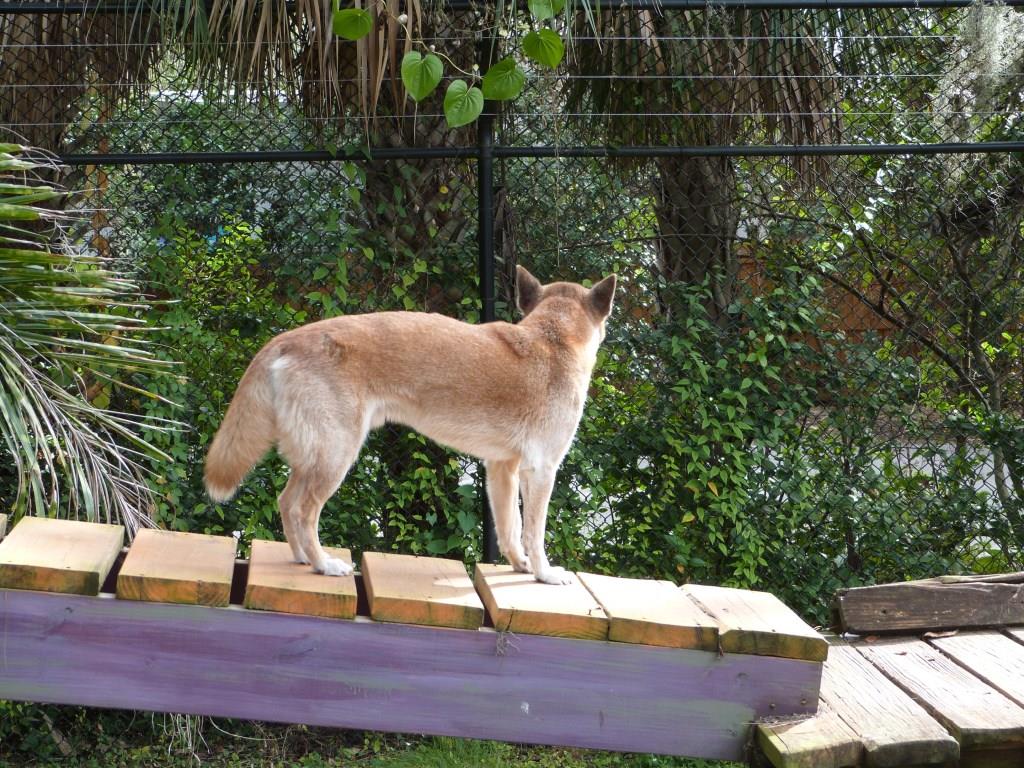
Singing Dogs at Lowry Park Zoo

Singing Dogs at Lowry Pk Zoo

Singing Dog at Lowry Pk Zoo

Serve the LORD with gladness: come before his presence with singing. (Psalms 100:2 KJV)

On one of our trips to the Lowry Park Zoo in Tampa, FL, the New Guinea Singing Dogs were enjoying themselves with a duet.

Here is the video of them chorus howling.


The whole earth is at rest, and is quiet: they break forth into singing. (Isaiah 14:7 KJV)

The dogs were mentioned in Bali Myna and Singing Dogs. It also contains a video taken that day.

The New Guinea singing dog (also known as the New Guinea dingo, Hallstrom dog, bush dingo, New Guinea wild dog, and singer) is a wild dog once found throughout New Guinea. New Guinea singing dogs are named for their unique vocalization. Little is known about New Guinea singing dogs in their native habitat. There are only two confirmed photographs of wild singing dogs. Current genetic research indicates that the ancestors of New Guinea dingoes were probably taken overland through present day China to New Guinea by travelers

Compared to other species in its genus, the New Guinea singing dog is described as relatively short-legged and broad-headed. These dogs have an average shoulder height of 12–18 in (31–46 centimetres) and weigh 20–31 lb (9–14 kilograms). They do not have rear dewclaws.

Singing Dog Sign LPZ by Lee

Singing Dog Sign LPZ by Lee

The limbs and spine of Singers are very flexible, and they can spread their legs sideways to 90°, comparable to the Norwegian Lundehund. They can also rotate their front and hind paws more than domestic dogs, which enables them to climb trees with thick bark or branches that can be reached from the ground; however their climbing skills do not reach the same level as those of the gray fox.

The eyes, which are highly reflective, are almond-shaped and are angled upwards from the inner to outer corners with dark eye rims. Eye color ranges from dark amber to dark-brown. Their eyes exhibit a bright green glow when lights are shown in at them in low light conditions. These two features allow singing dogs to see more clearly in low light, a trait which is unusual in canids.

New Guinea singing dogs have erect, pointed, fur-lined ears. As with other wild dogs, the ‘ears’ perk or lay forward, which is suspected to be an important survival features for the species. The ears can be rotated like a directional receiver to pick up faint sounds. Singer tails should be bushy, long enough to reach the hock, free of kinks, and have a white tip.

Singing Dogs at Lowry Pk Zoo

Singing Dog at Lowry Pk Zoo

New Guinea singing dogs are named for their distinctive and melodious howl, which is characterized by a sharp increase in pitch at the start and very high frequencies at the end. According to observations the howling of these dogs can be clearly differentiated from that of Australian dingoes, and differs significantly from that of grey wolves and coyotes.

An individual howl lasts an average of 3 seconds, but can last as long as 5 seconds. At the start, the frequency rises and stabilizes for the rest of the howling, but normally shows abrupt changes in frequency.

New Guinea singing dogs sometimes howl together, which is commonly referred to as chorus howling. During chorus howling, one dog starts and others join in shortly afterward. In most cases, chorus howling is well synchronized, and the howls of the group end nearly simultaneously. Spontaneous howling is most common during the morning and evening hours. When they are kept with dogs that bark, Singers may mimic the other dogs. (Wikipedia with editing)

Do you sing?

Speaking to yourselves in psalms and hymns and spiritual songs, singing and making melody in your heart to the Lord; (Ephesians 5:19 KJV)

*

See:

Birds Of The Bible – Joy And Laughter

Bali Myna at Lowry Park and Palm Beach Zoos

(Found this on the Kid’s Blog, never posted here.)

*

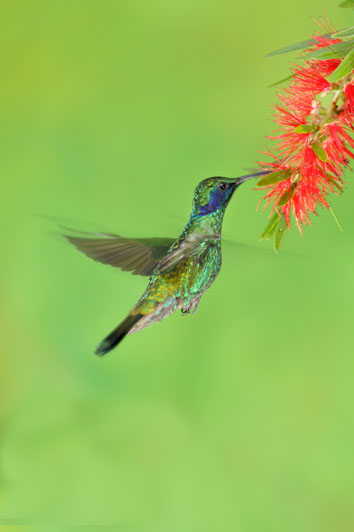
The Double Life of the Hummingbird ~ Creation Moments

GreenVioletear (Colibri thalassinus) Reinier Munguia

Green Violetear (Colibri thalassinus) Reinier Munguia

The Double Life of the Hummingbird ~ ©Creation Moments 2014

“I will both lay me down in peace, and sleep: for thou, LORD, only makest me dwell in safety.” Psalm 4:8

You might guess that the hummingbird, darting around from flower to flower with wings beating some 60 times a second, must burn a lot of energy to keep going. If a 65-pound boy burned up energy at the same rate, he would eat 100 pounds of chicken every day. The fact is, the hummingbird will die if it goes for more Green Violetear hummingbird than two hours without eating. You might wonder, if the hummingbird cannot go more than two hours without eating, when does it sleep? The fact is, the hummingbird does sleep a good eight hours every night. How does he do it?

God has given the hummingbird a most remarkable metabolism. During the day, the hummingbird’s heart must beat 10 times every second as it keeps its incredibly fast metabolism going. But when it goes to sleep, the hummingbird’s heart slows down to less than one beat per second – about the same as ours. And to further slow his metabolism, the hummingbird’s normal daytime temperature drops from 100 (F) degrees to the same temperature as the night air – 50 or 60 degrees. This drop in temperature would kill most warm-blooded animals. But all of this enables the hummingbird to go without food for a good eight-hour sleep.

The hummingbird provides more than enough evidence that the Creator really does care for His creatures, even when they are asleep.

Prayer:
Dear Father, I thank You that You care for me even when I am asleep and cannot protect myself. Comfort me with this truth, especially when I am fearful of the night. In Jesus’ Name. Amen.

Notes:
Bob Devine, Uncle Bob’s Animal Stories (Moody Press, Chicago, IL, 1986), pp. 38-39. Photo: Green Violetear hummingbird. Courtesy of Mdf. Licensed under the Creative Commons Attribution-Share Alike 3.0 Unported license. Creation Moments ©(Used with permission)

Vervain Hummingbird (Mellisuga minima) WikiC

Vervain Hummingbird (Mellisuga minima) WikiC

I always enjoy the articles from Creation Moments, especially the ones about our avian friends. Our Creator is definitely Omniscient (all-knowing). Such wisdom He used in providing for the various needs of the birds.

The Hummingbirds belong to the Trochilidae – Hummingbird Family.

Creation Moments

More Interesting Things from Creation Moments

*


Wise Advice From The Birds – Via Email

Received this in an email. (From an older friend) The birds and sayings are thought-provoking.

This slideshow requires JavaScript.

Cast me not off in the time of old age; forsake me not when my strength faileth. (Psalms 71:9 KJV)

Who teacheth us more than the beasts of the earth, and maketh us wiser than the fowls of heaven? (Job 35:11 KJV)

Lead me in thy truth, and teach me: for thou art the God of my salvation; on thee do I wait all the day. (Psalms 25:5 KJV)

I will instruct thee and teach thee in the way which thou shalt go: I will guide thee with mine eye. (Psalms 32:8 KJV)

*

Wordless Birds

*