Scripture Alphabet of Animals: The Locust

Desert Locust (Schistocerca gregaria)©WikiC

Scripture Alphabet of Animals: The Locust

By Harriet N. Cook (1814-1843)

The locust is called an insect, as well as the ant and the bee, but instead of being harmless, as they usually are, it does a great deal of injury. It is also much larger than they; for it is generally three inches long, and sometimes as much as four or five. The plague of the locusts was the eighth that God sent upon the Egyptians, because they would not let the children of Israel go, as he commanded; and it was a very terrible one indeed. The Bible says,

They covered the face of the whole earth, so that the land was darkened; and they did eat every herb of the land, and all the fruit of the trees which the hail had left; and there remained not any green thing in the trees, or in the herbs of the field through all the land of Egypt.

This is the way they often do in those countries, though perhaps it is not common for so many to come at once.

Locusts feeding ©WikiC

Locusts feeding ©WikiC

They fly in companies of thousands together, and so close that they look like a great black cloud. When they alight on the ground they all come down in a body, and immediately begin to devour the grass and grain; they also eat the leaves of the trees, and every green thing they can find. The people dread them more than they do the most terrible fire or storm; because though they are so small, they destroy all the food, and leave the people ready to starve. When the inhabitants see them coming over their fields, they try to drive them away by making loud noises or by kindling fires; but this does little good.

It is said that a great army of locusts came over the northern part of Africa about a hundred years before the birth of Christ. They consumed every blade of grass wherever they alighted; also the roots, and bark, and even the hard wood of the trees. After they had thus eaten up every thing, a strong wind arose, and after tossing them about awhile, it blew them over the sea, and great numbers of them were drowned. Then the waves threw them back upon the land, all along the sea-coast, and their dead bodies made the air so unwholesome that a frightful pestilence commenced, and great numbers of men and animals died.

Many travellers have seen these great clouds of locusts, and describe them in their books. One says that he saw a company consisting of so many that they were an hour in passing over the place where he was. They seemed to extend a mile in length and half a mile in width. When he first noticed them, they looked like a black cloud rising in the east; and when they came over head, they shut out the light of the sun, and made a noise with their wings like the rushing of a water-fall. Another swarm is mentioned which took four hours to pass over one spot; and they made the sky so dark that one person could not see another at twenty steps off.

You can now understand two or three passages from the Bible which I will mention. David says in the 23d verse of the 109th Psalm,

I am tossed up and down as the locust;

that is, as the clouds of locusts are tossed about by the wind. In the first chapters of Joel God threatens to send the locust among the people, because of their wickedness; and he says of them,

Before their faces the people shall be much pained; all faces shall gather blackness. They (the locusts,) shall run like mighty men; they shall climb the wall like men of war. They shall run to and fro in the city; they shall run upon the wall; they shall climb up upon the houses; they shall enter in at the windows like a thief.

An English clergyman who visited countries where the locusts are found, a few years ago, says that these verses describe them exactly as he has himself seen them.
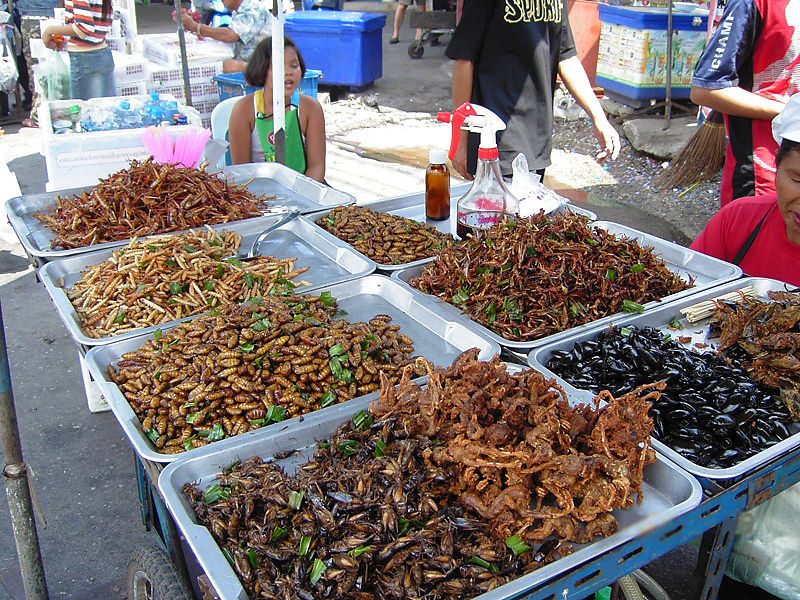
Locust - Insect food stall ©WikiC

Locust and other Insects food stall ©WikiC

Locusts are sometimes used for food. The Arabs boil them with salt, and then add a little oil or butter; sometimes they toast them by the fire before eating them. A traveller speaks of seeing the Arab women employed in filling bags with locusts, which were to be used for food. You know it is said in the New Testament that John the Baptist

did eat locusts and wild honey,

but it is not quite certain that this insect was meant; perhaps it was the fruit of the locust-tree that he ate.

___


See:

Harriet Newell Cook – Scripture Alphabet of Animals

Nave’s Topical Bible – Locust

Torrey’s Topical Textbook – Locust

(Photos ©WikiC)

*

Updating Lee’s Birdwatching Site

Under Construction Check Back Later

Not to worry, I’m doing a major reconstruction on Lee’s Birdwatching site. To accomplish this, there will be, hopefully, a lot of post coming up. I am in the process of closing down the Birds of the Bible for Kids blog. I am moving everything back over here for the last time.

Due to health, age, and the new editor that WordPress is forcing on us, my plans are to put everything into this blog.

Beware of possible broken links for awhile, but will clear them up as soon as I become aware of them. There are around 800 plus pages over there, and some of those are already here. Might take me some time to sort it all out.

Besides that, many of these were produced years ago and will give you a chance to read them again, or maybe find some you missed.

“Turn us back to You, O LORD, and we will be restored; Renew our days as of old,” (Lamentations 5:21 NKJV)

I don’t mean to be disrespectful of God’s Word, but while looking at this verse in other translations, the MSG caused me to chuckle a bit.

So why do you keep forgetting us? Why dump us and leave us like this? Bring us back to you, GOD—we’re ready to come back. Give us a fresh start.”

(Lamentations 5:20-21 MSG)

STAY TUNED!!

Not Deer or Bovine, So It Must Be An ‘Antelope’

Bibleworld Adventures has chosen to close down his website, due to a very busy schedule with work and his church ministries. We have decided to move his articles here. Baron has written articles here as Golden Eagle. This will preserve his and Dr. Johnson’s articles for us to enjoy. They are not about birds, but are all very interesting. Most are about a variety of our Creator’s amazing animals. [Will have a link to these pages in the sidebar as Bible World Adventures.]

Originally posted 2017/12/19

NOT DEER OR BOVINE, SO IT MUST BE AN ‘ANTELOPE’

Dr. James J. S. Johnson

The hart, and the roebuck, and the fallow deer, and the wild goat, and the pygarg [dîshōn], and the wild ox, and the chamois.   (Deuteronomy 14:5)

Addax-Morocco.Haytem93-photo

ADDAX male [photo credit: Haytem93]

Most likely the “Pygarg” [dîshōn] is what today is called an ADDAX.  An ADDAX is a desert-dwelling member of the ANTELOPE family.  [See George Cansdale, ALL THE ANIMALS OF THE BIBLE LANDS (Zondervan, 1976), page 85, saying “Among several quaint animal names found only in the AV [i.e., KJV] is the Pygarg, from Heb. dishon; this is merely a transliteration of the [LXX] Gr. Word meaning ‘white-rumped’, by which [Greeks] had long ago described an antelope. … [The reference in Deuteronomy 14:5] between two animals that are probably desert species, coupled with a long-standing tradition, suggests that this is the Addax, Addax nasomaculatus, a desert antelope classified between the oryx and hartebeests”.]antelope-family.jjsj-PPTslide

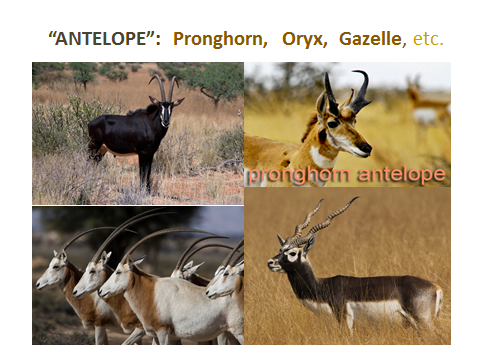
But, what is an antelope?

Antelope, and antelope-like animals, live in many different parts of the world—except not in Australia or Antarctica. For examples, pronghorns live mostly in America’s Western prairie states. The oryx live in Israel and many of the Arabian deserts.  The Dorcas gazelle lives in the top half of Africa.  Impalas live in eastern and southern Africa.

Serengeti-migraton-wildebeest-zebra.ZambesiSafari-photo

Wildebeests and Zebras migrate through Serengeti  /  Zambesi Safari photo

The blue wildebeest (also called “gnu”) are famous for their huge migratory herds, that often mix with zebras, that seasonally travel through Tanzania’s Serengeti.  Tibetan antelope, of course, live in Tibet, as well as in neighboring parts of Asia.  The Indian antelope (also called “blackbuck”) lives in India, Pakistan, and Nepal.

GreatMigration-Serengeti.Pinterest

Great Migration (Serengeti & Masai Mara)  image credit: Pinterest

These plant-eating mammals (animals that give mother’s milk to their babies) are different from other four-legged mammals – such as deer, cattle, horses, camels, sheep, goats, pigs, cats, and dogs.

In many ways antelope (and antelope-like animals, like the pronghorns of America’s prairies) are like deer. But unlike deer, which have antlers (that grow and shed each year, then regrow the next year, and are later shed, etc.), antelopes have horns (like cattle, bison, sheep, and goats), which continue to slowly grow out from their heads, anchored to bony roots.

Impala-w-oxpecker.jjsj-PPTslide

Antelopes often live in flat grasslands (such as the grassy prairies of America’s West), where their plant-food is plentiful. However, in grasslands there are usually very few trees, so antelopes cannot hide in forests from other animals (such as mountain lions or wolves), so it is good that God made them to have great speed for running across flat land.  And that is what antelopes (and pronghorns, which are antelope-like animals) often do–with great speed!–when they run away from predators at high speeds—sometimes as fast as 55 miles/hour for a mile, or 42 miles/hour for 2 miles, or 35 miles/hour for 3 miles.Gazelle-foraging.jjsj-PPTslide

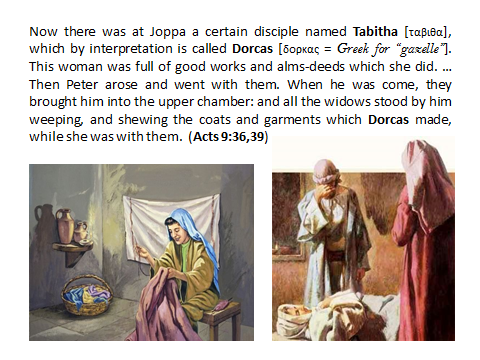
Dorcas is the Greek word for a gazelle, which is a member of the antelope family. Because gazelles are graceful and beautiful animals it is unsurprising that girl babies have been named Dorcas, including one who is mentioned in Scripture, in Acts chapter 9.Dorcas-philology.jjsj-PPTslide

Dorcas-Acts-chapter9.jjsj-PPTslide

In North America the primary antelope-like mammal is the PRONGHORN. To learn about this beautiful, graceful, and extremely speedy animals, see “Geography Matters, Illustrated by Pronghorns, Mountain Goats, and Old Testament Warfare”, posted at https://bibleworldadventures.com/2016/08/17/geography-matters-illustrated-by-pronghorns-mountain-goats-and-old-testament-warfare/ .

pronghorn-coming-fast.closeup-turning

When we see beauty, grace, strength, and speed — displayed in antelope (and antelope-like pronghorns) — we are reminded, by these living exhibits of God’s making, that God Himself is amazingly beautiful, graceful, strong, and quick, beyond our comprehension.

A Helpful Pigeon and Injured Puppy

©The Dodo

“And let us consider and give attentive, continuous care to watching over one another, studying how we may stir up (stimulate and incite) to love and helpful deeds and noble activities,” (Hebrews 10:24 AMP)

©The Dodo

“Two are better than one because they have a good return for their labor [friendship]. For if either of them falls, the one will lift up his companion. But woe to the one who falls when there is not another to lift him up. Furthermore, if two lie down together they keep warm, but how can one be warm alone?” (Ecclesiastes 4:9-11 NASB) [added emphasis]


Creation Moments – How Many Feathers?

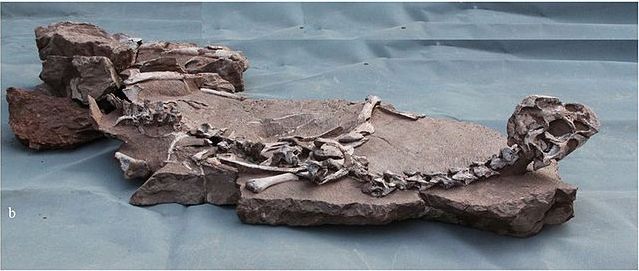
Tongtianlong Cropped ©WikiC

And God made the beast of the earth after his kind, and cattle after their kind, and every thing that creepeth upon the earth after his kind: and God saw that it was good.” Genesis 1:25

 Today, we often see pictures of dinosaurs covered in feathers, which used to be represented with bare scales. Why has this change occurred? There is a preconceived notion, held by many evolutionists, that birds evolved from therapod dinosaurs, such as tyrannosaurus and the smaller raptor dinosaurs.

One such dinosaur reported in the media just a few years ago was Tongtianlong limosus. Apparently, its name means “muddy dragon on the road to heaven”. This sheep-sized dinosaur was discovered in China, and the fossil had an arched neck and raised head, as if it was trying to get free of something. Artists’ impressions of the creature show it covered with feathers, and reporters and researchers alike assume that this is correct. One scientific commentator said, “Modern birds came from dinosaurs … and it’s dinosaurs like Tongtianlong that give us a glimpse of what the ancestors of modern birds would have looked like. Fossils like these capture evolution in action.” Yet, this is simply not the case and appears to be an example of circular reasoning. The fossil shows no sign of feathers – not even the so-called dubious proto-feathers associated with other finds. It is simply the type of dinosaur that has caused it to be so classified by evolutionists, exercising more artistic license than is appropriate for serious scientific work.

In the Bible we read that God made birds on day five, and He made land animals on day six, so birds could not have evolved from dinosaurs.

Prayer: Lord God, You made everything right, in the way that You designed it, according to Your glory. Amen.

Author: Paul F. Taylor

Ref: Robinson, P. (2016), Sorry, how many feathers did you find?, < https://creation.com/sorry-how-many-feathers-did-you-find >, accessed 5/1/2019. Image: CC BY-SA 4.0 International.

Used With Permission: © 2020 Creation Moments, Inc.


“If you tell a big enough lie and tell it frequently enough, it will be believed.” Adolf Hitler

“If I told you earthly things and you do not believe, how will you believe if I tell you heavenly things?” [Jesus’ Words] (John 3:12 NASB)

If people do not believe the things that the Lord said about His Creation, and continue to make up false theories, how will they ever believe the truth of Christ’s offer of salvation?

Will they prepare for heaven? God’s Word is true, yet many refuse to believe it. They would rather lie, than accept the truth. So sad. Maybe a good title for this article should have been,

“How Many Lies!”

Creation Moments – How Many Feathers?

Creation Moments

More Creation Moment articles here

What will you do with Jesus?

Double-take on Public Math

Dr. James J.S. Johnson, who writes great articles here, has just written an article for the Bibleworld blog. It is well written and worth reading.

Check out: Double-take on Doing Math in Public

Double-take on Doing Math in Public:

Chinese Fudge Factory Doubles Output

Dr. James J. S. Johnson

HotFudgeSundae-with--Cherry.Braums

Hot Fudge Sundae, with brownie & cherry (photo credit: Braum’s)

Recent reports (April 17, 2020) show that Chinese fudge is being produced, in Wuhan, at numbers now doubling earlier reports.  And more cherry-picked statistics.

The official Covid-19 death toll for Wuhan has been revised [as of April 17, 2020] up by 1,290 to 3,869 as life in the city returns to something like normal as many restrictions are lifted…..

Check out: Double-take on Doing Math in Public

More articles by Dr. Jim:

James J. S. Johnson


Birds That Can’t Fly – Creation Moments

Birds That Can’t Fly – Creation Moments

Genesis 1:21

“And God created great whales, and every living creature that moveth, which the waters brought forth abundantly, after their kind, and every winged fowl after his kind: and God saw that it was good.”

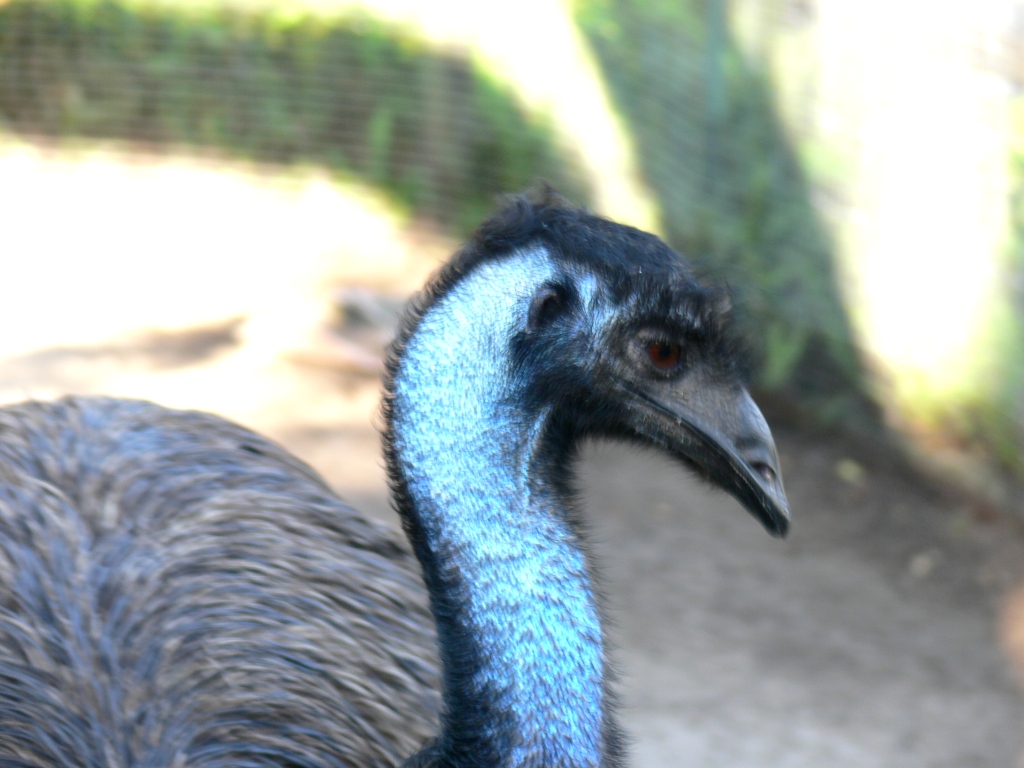
There are quite a number of birds that cannot fly. This sometimes surprises us, but it shouldn’t. We tend to wonder how they “lost” the ability to fly, but, although there are some species that might possibly have lost an ability to fly (as losing such an ability usually involves loss of information, not spontaneous creation), there is no reason to suppose that many have lost an ability. After all, we do not wonder at mammals that fly (i.e., bats), and we accept that these were created on Day Five, whereas most mammals were made on Day Six. In the same way, most flightless birds seem to be perfectly designed the way that they are. Ratite birds, for example, have no keel on their sternum. The keel is what anchors muscles to the wings, to enable flight. But birds like ostriches, rheas, emus and kiwis show no evidence, either in extant species or in the fossil record, to suggest that they ever had a structure. Therefore, they have not evolved into such a state – they were designed like that by God because that is the best design for us.
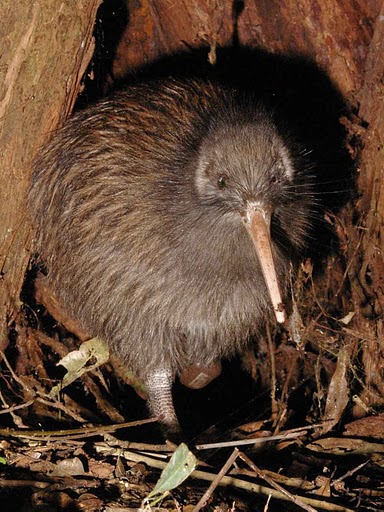
Other birds are flightless for other reasons. Penguins, for example, do not fly, but they do sort-of fly through water! Again, this requires a particular type of design that could not arise by itself. God designed penguins just perfectly for their habitat and their lives.

Flightless birds do not support evolutionary ideas. God created them as He saw fit.

Prayer: Thank You Father, even for those creatures that seem so strange to us! But they are part of Your overall design, and they give witness to Your creative power. Amen.

Author: Paul F. Taylor

Ref: O’daniel, D. (2015), Flightless Birds—Alternate Flight Plan, < https://answersingenesis.org/birds/flightless-birds-alternate-plan/ >, accessed 1/30/2019. Image: CC BY-SA 2.5 Generic.

North Island Brown Kiwi (Apteryx mantelli) by Derek©©

Lesser Rhea (Rhea pennata) ©WikiC

Common Ostrich (Struthio camelus) Memphis Zoo by Lee

Common Ostrich (Struthio camelus) Memphis Zoo by Lee

Emu (Dromaius novaehollandiae) Lowry Pk Zoo

Emu ((Dromaius novaehollandiae) Zoo Tampa by Lee

Creation Moments

More When I Consider Articles

Good News Tracts

Tickle Me Tuesday Revived – Cat – Bird Fight

James J. S. Johnson made a remark on the Tickle Me Tuesday post. Dr. Jim, as I call him, suggested that we revive the Tickle Me Tuesday series. The last one was posted in 2015, so I am sure by now, there must be some more funny videos to discover.

In fact, this Epic Crow and Cat fight is just the one to start us off with a new “Tickle.”

by ignoramusky

These four are definitely not showing Kindness!!

“Be kindly affectionate to one another with brotherly love, in honor giving preference to one another;” (Romans 12:10 NKJV)

Other Tickle Me Tuesday’s

World’s Fastest Seagull

Lesser Black-backed Gull (Larus fuscus) ©

Lesser Black-backed Gull (Larus fuscus) ©

‘World’s fastest seagull’ stuns experts

Jul. 30, 2019 – 1:26 – A lesser black-backed seagull, is stunning experts with its apparent speed, traveling more than 500 miles in just seven days. The seagull which was ringed on Burhou in the Channel islands on July 17, was later found at Ares Beach in A Coruna Spain, on July 24. Alderney Bird Observatory warden John Horton said that the distance traveled by the bird in such a short period of time was unusual.

Here is a link attached to this clip:

https://video.foxnews.com/v/6065781298001/#sp=show-clips

Lesser Black-backed Gull (Larus fuscus) (Heuglin's)

Lesser Black-backed Gull (Larus fuscus) (Heuglin’s)

The lesser black-backed gull was one of the many species originally described by Linnaeus in his 18th-century work, Systema Naturae, and it still bears its original name of Larus fuscus. The scientific name is from Latin. Larus appears to have referred to a gull or other large seabird, and fuscus meant black or brown.

“Will you set your eyes upon wealth, when [suddenly] it is gone? For riches certainly make themselves wings, like an eagle [ or Lesser-Black-backed Gull] that flies toward the heavens.” (Proverbs 23:5 AMP)

Lesser Black-backed Gull – All About Birds

Lesser Black-backed Gull – eBird

Lesser Black-backed Gull – Wikipedia

Birdwatching at Staffa: Puffins, Shags, & more

Birdwatching at Staffa, near Iona: Puffins, Shags, and Herring Gulls

Dr. James J. S. Johnson

Let them give glory unto the Lord, and declare his praise in the islands.  (Isaiah 42:12)

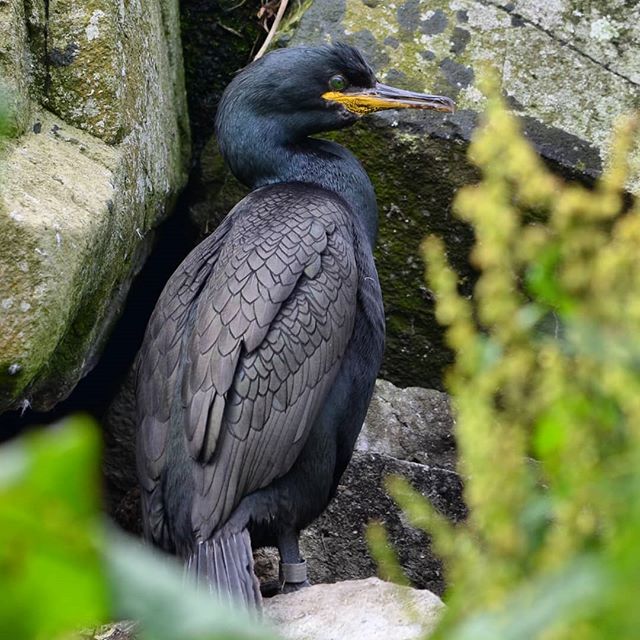
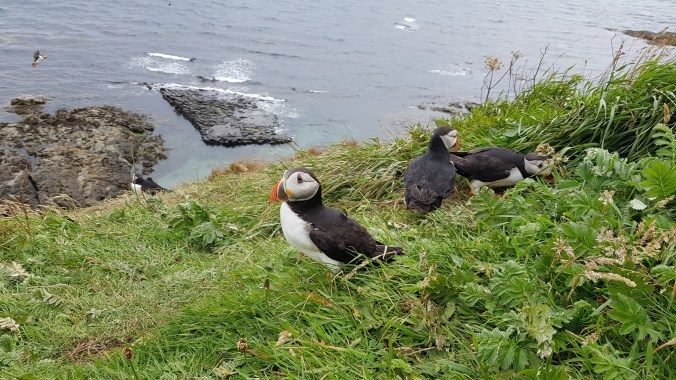
The three birds that I recall most, from visiting the island of Staffa (Inner Hebrides, just north of Iona) were Herring Gulls (a very common seagull),  Shags (a yellow-mouthed but otherwise all-black cormorant), and those cute and colorful (and comically clown-like) Atlantic Puffins, a couple of which settled (after some aerial arcing) not much more than a yard (i.e., meter) form where I was standing, upon the grassy cliff-side of the pasture-topped island.

Shag-Staffa.PublicInsta-[hoto

SHAG  at  STAFFA   (Public Insta photo credit)

Below is a limerick I wrote to recall my observations at the Isle of Staffa (same island that has Fingal’s Cave, made famous by Felix Mendelssohn’s overture written in AD1829), a small uninhabited island north of Iona (where I ate some of the best sea scallops, after soaking my feet in the cold Sound of Iona tidewaters!), in the Inner Hebrides archipelago on the western side of Scotland (July 19th AD2019).  Norse Vikings were reminded of staves (plural of “staff”) when they saw the upright timber/log-like columns (contiguous pillars) of basalt there  —  hence the name “Staffa“.

BIRDWATCHING  FROM  CLIFF-EDGE  ATOP  STAFFA  ISLAND,  NORTH  OF  IONA  (INNER  HEBRIDES)

Herring gulls, puffins, and shags,

Launch from cliff-edge grass and crags;

Flying low — then a splish!

Success!  Caught a fish!

Herring gulls, puffins, and shags.

Herring gulls, of course, I first observed during my boyhood days (in elementary school).  But shags and puffins are not seen in the parts of America where I have lived, so seeing them at Staffa was quite a privilege!

Puffins-Staffa.Mull-n-IonaRangerService

PUFFINS at STAFFA   (Mull & Iona Ranger Service)


POST-SCRIPT:   Puffins, gulls, and shags  —  as noted (in the limerick, above)  —   enjoy eating fish, from the sea-waters that wash ashore coastal rocks and beaches of the Hebrides.   Meanwhile, to consider what humans enjoy eating, when visiting Scotland’s Highlands and Hebrides,  check out “When in Scotland, Eat Well!”  —  posted at https://rockdoveblog.wordpress.com/2019/07/29/when-in-scotland-eat-well/  .


Who Provides For The Sawfly?

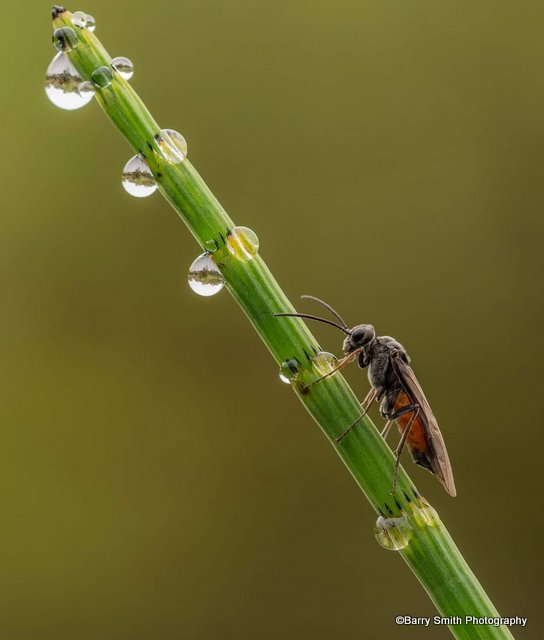
Sawfly on Horsetail drinking dew Cornwall UK Drinking Dew ©Photography of B Smith

“Who hath divided a watercourse for the overflowing of waters, or a way for the lightning of thunder; To cause it to rain on the earth, where no man is; on the wilderness, wherein there is no man; To satisfy the desolate and waste ground; and to cause the bud of the tender herb to spring forth? Hath the rain a father? or who hath begotten the drops of dew?” (Job 38:25-28 KJV)

When I saw this photo today, I asked permission from Barry Smith to use it. Thankfully, he has given permission and also for the usage of others on his Facebook site. Thanks, Barry.

Many species of sawfly have retained their ancestral attributes throughout time, specifically their plant-eating habits, wing veins and the unmodified abdomen, where the first two segments appear like the succeeding segments. The absence of the narrow wasp waist distinguishes sawflies from other members of hymenoptera, although some are Batesian mimics with coloration similar to wasps and bees, and the ovipositor can be mistaken for a stinger. Most sawflies are stubby and soft-bodied, and fly weakly. Sawflies vary in length: Urocerus gigas, which can be mistaken as a wasp due to its black-and-yellow striped body, can grow up to 20 millimetres (0.8 in) in length, but among the largest sawflies ever discovered was Hoplitolyda duolunica from the Mesozoic, with a body length of 55 millimetres (2.2 in) and a wingspan of 92 millimetres (3.6 in). The smaller species only reach lengths of 2.5 millimetres (0.1 in).

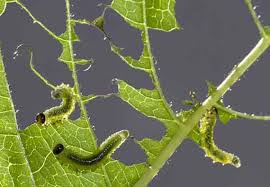
Sawfly Larvae Damage by their Larvae ©Pests.org

Predators include birds, insects and small animals. The larvae of some species have anti-predator adaptations such as regurgitating irritating liquid and clustering together for safety in numbers. Sawflies are hosts to many parasitoids, most of which are Hymenoptera, the rest being Diptera.

Adult sawflies are short-lived, with a life expectancy of 7–9 days, though the larval stage can last from months to years, depending on the species.

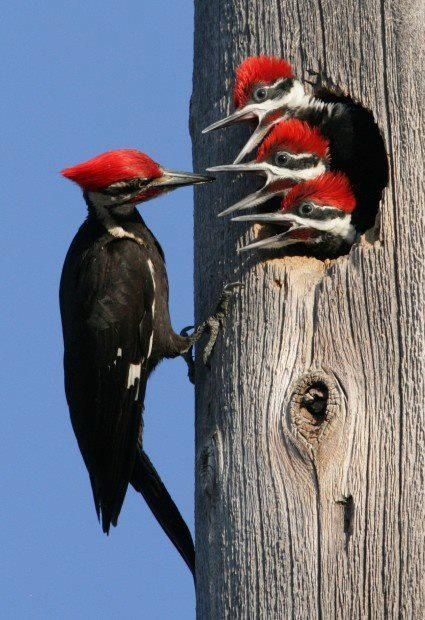
Woodpeckar Feeding Chicks From Pinterest

They are a pest for humans

Sawflies are major economic pests of forestry. For example, species in the Diprionidae, such as the pine sawflies, Diprion pini and Neodiprion sertifer, cause serious damage to pines in regions such as Scandinavia. D. pini larvae defoliated 500,000 hectares (1,200,000 acres) in the largest outbreak in Finland, between 1998 and 2001. Up to 75% of the trees may die after such outbreaks, as D. pini can remove all the leaves late in the growing season, leaving the trees too weak to survive the winter. Little damage to trees only occurs when the tree is large or when there is minimal presence of larvae. Eucalyptus trees can regenerate quickly from damage inflicted by the larvae; however, they can be substantially damaged from outbreaks, especially if they are young. The trees can be defoliated completely and may cause “dieback”, stunting or even death.

Sawflies are serious pests in horticulture. Different species prefer different host plants, often being specific to a family or genus of hosts. For example, Iris sawfly larvae, emerging in summer, can quickly defoliate species of Iris including the yellow flag and other freshwater species. Similarly the rose sawflies, Arge pagana and A. ochropus, defoliate rose bushes.

They are a pest for humans, yet the Lord, their Creator, cares enough for them to provide dew to drink.

“The LORD by wisdom hath founded the earth; by understanding hath he established the heavens. By his knowledge the depths are broken up, and the clouds drop down the dew.” (Proverbs 3:19-20 KJV)

Do we not sometimes misbehave, yet the Lord continues to provide water, sun, air to breathe, and other benefits for us? Critters are provided for, but we, humans, have even a greater blessing available to us. Salvation through the Lord Jesus Christ.

Photograghy of B Smith

Sawfly Wikipedia

Who Paints The Leaves?

Woodstock’s Dilemma

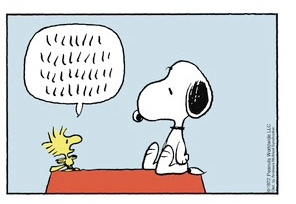
Peanuts for Sunday June 9, 2019 – A Dilemma

“A friend loves at all times,…” (Proverbs 17:17a NKJV)

Well, my friends Woodstock and Snoopy were at it again this Sunday. It appears that Woodstock has a Dilemma and patient Snoopy listened, and then offered a solution to the problem. It’s nice to have friends like that as we go through life.

Peanuts for Sunday June 9, 2019 – Split Hairs

“…And the sweetness of a man’s friend gives delight by hearty counsel.” (Proverbs 27:9b NKJV)

Here is some information that helps us understand how birds do get “Split Ends.” Notice the number 3 feather.

“A close look at feather growth reveals how these intricate structures form.

  1. Each new feather grows from a small outgrowth of skin called the papilla.
  2. As feathers mature, their tips get pushed away from the papilla, where the newest parts of the feather form. Like human hair, feathers are youngest at their base.
  3. The feather’s structure develops as proteins are laid down around the surface of this bump of skin. It’s here that the branching patterns form by smaller branches fusing at the base to make thicker ones—barbules fuse into barbs and barbs fuse into a rachis.
  4. As the feather grows, it stays curled in a tubular shape around the papilla until it is pushed away from the growth area.
  5. A protective sheath maintains the feather’s cylindrical shape until it starts to disintegrate near the tip, allowing the mature part of the feather to unfurl.
  6. The sheath falls off and the growth process is complete.”

The feather photo and above information is from: Everything You Need To Know About Feathers

Here is an interesting video that explains quite a bit about moulting. Even though she explains with captive birds, the principles are the same.

https://youtu.be/r4LQkiNxptc&rel=0

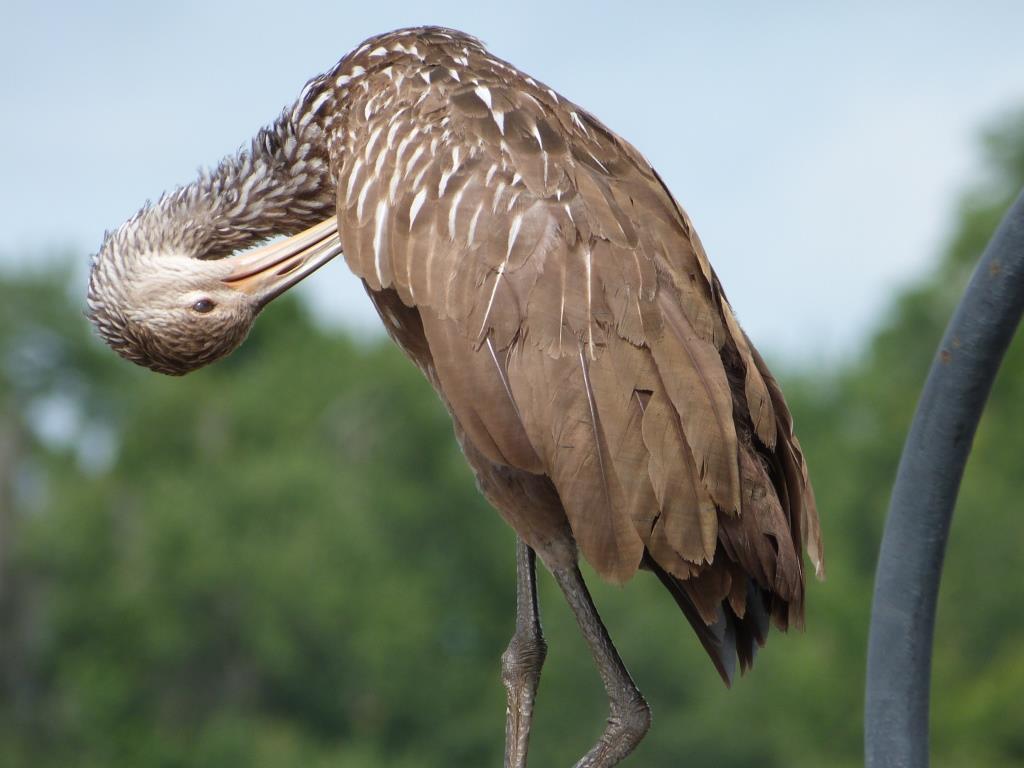
Most of us have watched birds preening their feathers. Often, they are working on a new feather that they are fixing up.

Limpkin (Aramus guarauna) Preening at Circle B

Limpkin (Aramus guarauna) Preening at Circle B

What a wonderful Creator of these Avian Wonders. I’ll never believe that feathers and their structures “just evolved.” No, their was, is, and will be a Master Creator at work.

“Then God said, “Let the waters abound with an abundance of living creatures, and let birds fly above the earth across the face of the firmament of the heavens.” (Genesis 1:20 NKJV)

Interesting Things

Save The Parrots