Bible Birds – Sparrows I

Russet Sparrow (Passer rutilans) by Nikhil Devasar

Russet Sparrow (Passer rutilans) by Nikhil Devasar

In the Bible, the Sparrows are mentioned in 7 verses. Check out these from the NKJV:

Even the sparrow has found a home, And the swallow a nest for herself, Where she may lay her young— Even Your altars, O LORD of hosts, My King and my God. (Psalms 84:3 NKJV)

I lie awake, And am like a sparrow alone on the housetop. (Psalms 102:7 NKJV)

Like a flitting sparrow, like a flying swallow, So a curse without cause shall not alight. (Proverbs 26:2 NKJV)

Are not two sparrows sold for a copper coin? And not one of them falls to the ground apart from your Father’s will. (Matthew 10:29 NKJV)

Do not fear therefore; you are of more value than many sparrows. (Matthew 10:31 NKJV)

Are not five sparrows sold for two copper coins? And not one of them is forgotten before God. (Luke 12:6 NKJV)

But the very hairs of your head are all numbered. Do not fear therefore; you are of more value than many sparrows. (Luke 12:7 NKJV)

Sparrows are not always thought of very highly. Many people think they are just “little brown birds” and are of no use. But is that what the Scriptures says in those verses? No.

What can you learn from those verses?

The sparrow has found a ____________

The sparrow is found on the __________________

How does the sparrow fly? (see Proverbs 26:2) _______________

Who is aware of or allows a sparrow to fall to the ground? ______________

Are sparrows forgotten by God? ______________

How many sparrows were sold for one copper coin? ________

For two copper coins? ___________

Who is more valuable, you or a sparrow? _____________

We will talk more about Sparrows in the next Bible Birds – Sparrows II. For now, here are a few pictures of different Sparrows around the world.

This slideshow requires JavaScript.

*

Bible Birds – Sparrows

Wordless Birds

*

Bible Birds – Dove, Turtledove and Pigeon’s Introduction

Common Pigeon -aka Rock(Columba livia) by Daves BirdingPix

Common Pigeon -aka Rock(Columba livia) by Daves BirdingPix

Bible Birds – Dove, Turtledove and Pigeon’s Introduction

Doves are in the Columbidae Family of the Columbiformes Order

They are walking birds, feeding both on the ground and in trees; bill slender, grooved, nostrils opening in a fleshy membrane; tail variable, short and square, or long and pointed; feet stout, often reddish. Color usually grayish brown. Call-notes a characteristic cooing.

Sound from xeno-canto.

Mourning Dove (Zenaida macroura) 2 Neal Addy Gallery

Mourning Dove (Zenaida macroura) 2 Neal Addy Gallery

Family Columbidae includes some 310 species. In general the terms “dove” and “pigeon” are used somewhat interchangeably. In ornithological practice, there is a tendency for “dove” to be used for smaller species and “pigeon” for larger ones, but this is in no way consistently applied, and historically the common names for these birds involve a great deal of variation between the terms “dove” and “pigeon.” This family occurs worldwide, but the greatest variety is in Indomalaya and Australasia. Young doves and pigeons are called “squabs.”

Pigeons and doves are stout-bodied birds with short necks, and have short slender bills with a fleshy cere. The species commonly referred to just as “pigeon” is the Feral Rock Pigeon, common in many cities.

Doves and pigeons build relatively flimsy nests from sticks and other debris, which may be placed in trees, on ledges or on the ground, depending on species. They lay one or two eggs, and both parents care for the young, which leave the nest after 7 to 28 days. Doves feed on seeds, fruit and plants. Unlike most other birds, the doves and pigeons produce “crop milk”, which is secreted by a sloughing of fluid-filled cells from the lining of the crop. Both parents produce this highly nutritious substance to feed to the young.

Victoria Crowned Pigeon (Goura victoria) by Lee at Zoo Miami

Victoria Crowned Pigeon (Goura victoria) by Lee at Zoo Miami

Pigeons and doves exhibit considerable variations in size. The largest species is the crowned pigeon of New Guinea, which is nearly turkey-sized, at a weight of 4.4-8.8 lb (2-4 kg) The smallest is the New World ground-dove of the genus Columbina, which is the same size as a House Sparrow and weighs as little as 22 g. With a total length of more than 19 in (50 cm) and weight of almost 2 lb (1 kg), the largest arboreal species is the Marquesan Imperial Pigeon, while the Dwarf Fruit Dove, which may measure as little as 5.1 in (13 cm), has a marginally smaller total length than any other species from this family. Smaller species tend to be known as doves, while larger species as pigeons.

Overall, the Columbidae tend to have short bills and legs, and small heads on large compact bodies. They have a habit of head bobbing was shown to be due to their natural desire to keep their vision constant. The wings are large and have low wing loadings; pigeons have strong wing muscles (wing muscles comprise 31–44% of their body weight) and are amongst the strongest fliers of all birds. They are also highly maneuverable in flight.

Superb Fruit Dove (Ptilinopus superbus) by Ian

Superb Fruit Dove (Ptilinopus superbus) by Ian

The plumage (feathers and colors) of the family is variable. Granivorous (seed eater) species tend to have dull plumage, with a few exceptions, whereas the frugivorous (fruit eater) species have brightly-coloured plumage. The Ptilinopus fruit doves are some of the brightest coloured pigeons, with the three endemic species of Fiji and the Indian Ocean Alectroenas being amongst the brightest coloured. In addition to bright colours pigeons may sport crests or other ornamentation.

Seeds and fruit form the major component of the diet of pigeons and doves. In fact, the family can be divided into the seed-eating or granivorous species (subfamily Columbinae) and the fruit-eating or frugivorous species (the other four subfamilies). The granivorous typically feed on seed found on the ground, whereas the species that feed on fruit and mast tend to feed in trees.

Now when the days of her purification according to the law of Moses were completed, they brought Him to Jerusalem to present Him to the Lord (as it is written in the law of the Lord, “EVERY MALE WHO OPENS THE WOMB SHALL BE CALLED HOLY TO THE LORD” ), and to offer a sacrifice according to what is said in the law of the Lord, “A PAIR OF TURTLEDOVES OR TWO YOUNG PIGEONS.” (Luke 2:22-24 NKJV)

In the Bible (Old Testament), doves or young pigeons were acceptable burnt offerings for those who couldn’t afford a more expensive animal. In the book of Genesis, Noah sent out a dove after the great flood in order to determine how far the floodwaters had receded. Dove is also a term of endearment in the Song of Songs and elsewhere.

When He had been baptized, Jesus came up immediately from the water; and behold, the heavens were opened to Him, and He saw the Spirit of God descending like a dove and alighting upon Him. (Matthew 3:16 NKJV)

Jesus’ parents sacrificed doves on his behalf after his circumcision (Luke 2:24). Later the Holy Spirit descended upon Jesus at his baptism like a dove (Matthew 3:16), and subsequently, the “peace dove” became a common Christian symbol of the Holy Spirit.

(Information from Wikipedia and other internet sources.)

See:

Bible Birds

Bible Birds – Doves and Pigeons

Columbidae Family

Wordless Birds

*

Birds Vol 2 #2 – The Red Breasted Merganser

Red-breasted Merganser from Birds Illustrated by Color Photography

Red-breasted Merganser from Birds Illustrated by Color Photography

THE RED BREASTED MERGANSER.

imgy

HY this duck should be called red-breasted is not at first apparent, as at a distance the color can not be distinguished, but seen near, the reason is plain. It is a common bird in the United States in winter, where it is found in suitable localities in the months of May and June. It is also a resident of the far north, breeding abundantly in Newfoundland, Labrador, Greenland, and Iceland. It is liberally supplied with names, as Red-Breasted Goosander or Sheldrake, Garbill, Sea Robin, etc.

There is a difference in opinion as to the nesting habits of the Red-Breast, some authorities claiming that, like the Wood Duck, the nest is placed in the cavity of a tree, others that it is usually found on the ground among brushwood, surrounded with tall grasses and at a short distance from water. Davie says that most generally it is concealed by a projecting rock or other object, the nest being made of leaves and mosses, lined with feathers and down, which are plucked from the breast of the bird. The observers are all probably correct, the bird adapting itself to the situation.

Fish is the chief diet of the Merganser, for which reason its flesh is rank and unpalatable. The Bird’s appetite is insatiable, devouring its food in such quantities that it has frequently to disgorge several times before it is able to rise from the water. This Duck can swallow fishes six or seven inches in length, and will attempt to swallow those of a larger size, choking in the effort.

The term Merganser is derived from the plan of the bird’s bill, which is furnished with saw teeth fitting into each other.

The eggs of the Red-Breasted Merganser vary from six to twelve, are oval in shape, and are of a yellowish or reddish-drab, sometimes a dull buffy-green.

You may have seen pictures of this Duck, which frequently figures in dining rooms on the ornamental panels of stuffed game birds, but none which could cause you to remember its life-like appearance. You here see before you an actual Red-Breasted Merganser.

Birds Vol 2 #2 – The Red Breasted Merganser

From col. J. G. Parker, Jr.

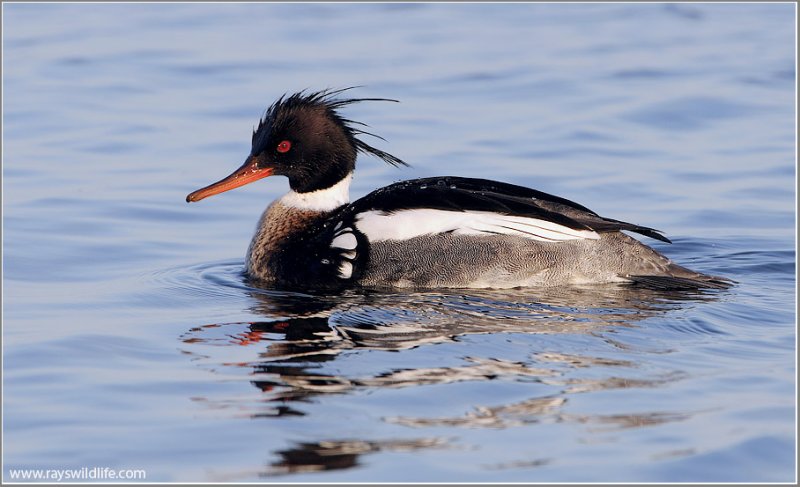
Red-breasted Merganser (Mergus serrator) by Ray

Red-breasted Merganser (Mergus serrator) by Ray

Lee’s Addition:

Out of the ground the LORD God formed every beast of the field and every bird of the air, and brought them to Adam to see what he would call them. And whatever Adam called each living creature, that was its name. (Genesis 2:19 NKJV)

Another of one of the Lord’s neat birds. Mergansers are found in the Anatidae – Ducks, Geese & Swans Family. There are six of them in two Genera. The Hooded Merganser in Lophodytes genus and the Auckland (extinct), Brazilian, Common, Red-breasted, and Scaly-sided in the Mergus genus.

The adult Red-breasted Merganser is 20–24 in (51–62 cm) long with a 28–34 in (70–86 cm) wingspan. It has a spiky crest and long thin red bill with serrated edges. The male has a dark head with a green sheen, a white neck with a rusty breast, a black back, and white underparts. Adult females have a rusty head and a greyish body. The juvenile is like the female, but lacks the white collar and has a smaller white wing patch.

The call of the female is a rasping prrak prrak, while the male gives a feeble hiccup-and-sneeze display call. (from xeno-canto)

Red-breasted Mergansers dive and swim underwater. They mainly eat small fish, but also aquatic insects, crustaceans, and frogs.

Its breeding habitat is freshwater lakes and rivers across northern North America, Greenland, Europe, and Asia. It nests in sheltered locations on the ground near water. It is migratory and many northern breeders winter in coastal waters further south.

It has been claimed to be the fastest bird in level flight, reaching speeds of 161 km/h (100 mph), but is disputed whether the White-throated Needletail is faster, reportedly flying at 170 km/h (105 mph).

Here is a video of a Common Merganser flipping his feet after diving for food that was given him at the Zoo Miami Wings of Asia Aviary – by me.

*

Birds Illustrated by Color Photography – Revisited – Introduction

The above article is the first article in the monthly serial that was started in January 1897 “designed to promote Knowledge of Bird-Live.” These include Color Photography, as they call them, today they are drawings. There are at least three Volumes that have been digitized by Project Gutenberg.

To see the whole series of – Birds Illustrated by Color Photography – Revisited

*

(Information from Wikipedia and other internet sources)

Next Article – The Yellow Legs

The Previous Article – The Kentucky Warbler

ABC’s Of The Gospel

Links:

Birds Vol 2 #2 – The Kentucky Warbler

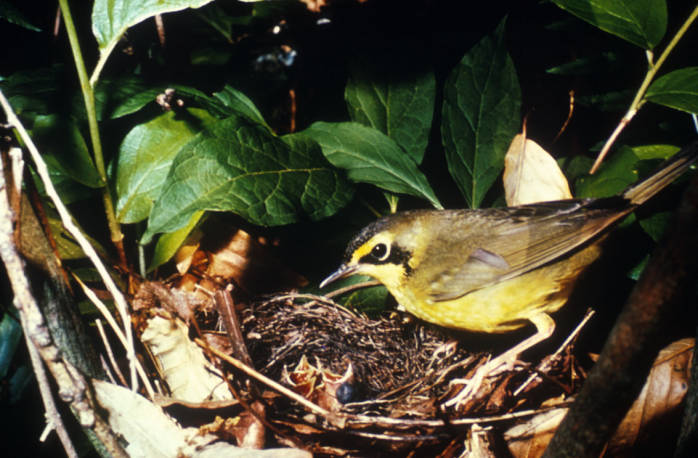
Kentucky Warbler (Oporornis formosus) ©USFWS

Kentucky Warbler (Oporornis formosus) ©USFWS

The Kentucky Warbler

Although this bird is called the Kentucky Warbler, we must not think he visits that state alone.

We find him all over eastern North America. And a beautiful bird he is.

As his name tells you he is one of a family of Warblers.

I told you somewhere else that the Finches are the largest family of birds. Next to them come the Warblers.

Turn back now and see how many Warblers have been pictured so far.

See if you can tell what things group them as a family. Notice their bills and feet.

This bird is usually found in the dense woods, especially where there are streams of water.

He is a good singer, and his song is very different from that of any of the other Warblers.

I once watched one of these birds—olive-green above and yellow beneath. His mate was on a nest near by and he was entertaining her with his song.

He kept it up over two hours, stopping only a few seconds between his songs. When I reached the spot with my field-glass I was attracted by his peculiar song. I don’t know how long he had been singing. I stayed and spent two hours with him and he showed no signs of stopping. He may be singing yet. I hope he is.

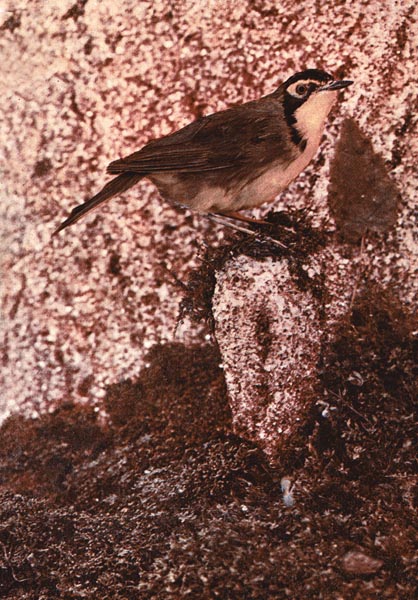
You see him here perched on a granite cliff. I suppose his nest is near by.

He makes it of twigs and rootlets, with several thicknesses of leaves. It is neatly lined with fine rootlets and you will always find it on or near the ground.

In the September and October number of “Birds” you will find several Warblers and Finches. Try to keep track of them and may be you can do as many others have done—tell the names of new birds that come along by their pictures which you have seen in “Birds.”

image
From col. F. M. Woodruff.


THE KENTUCKY WARBLER.

B

ETWEEN sixty and seventy warblers are described by Davie in his “Nests and Eggs of North American Birds,” and the Kentucky Warbler is recognized as one of the most beautiful of the number, in its manners almost the counterpart of the Golden Crowned Thrush (soon to delight the eyes of the readers of Birds), though it is altogether a more conspicuous bird, both on account of its brilliant plumage and greater activity, the males being, during the season of nesting, very pugnacious, continually chasing one another about the woods. It lives near the ground, making its artfully concealed nest among the low herbage and feeding in the undergrowth, the male singing from some old log or low bush, his song recalling that of the Cardinal, though much weaker.

The ordinary note is a soft schip, somewhat like the common call of the Pewee. Considering its great abundance, says an observer, the nest of this charmer is very difficult to find; the female, he thought, must slyly leave the nest at the approach of an intruder, running beneath the herbage until a considerable distance from the nest, when, joined by her mate, the pair by their evident anxiety mislead the stranger as to its location.

It has been declared that no group of birds better deserves the epithet “pretty” than the Warblers. Tanagers are splendid, Humming Birds refulgent, others brilliant, gaudy, or magnificent, but Warblers alone are pretty.

The Warblers are migratory birds, the majority of them passing rapidly across the United States in spring on the way to their northern nesting grounds, and in autumn to their winter residence within the tropics. When the apple trees bloom they revel among the flowers, vieing in activity and numbers with the bees; “now probing the recesses of a blossom for an insect, then darting to another, where, poised daintily upon a slender twig, or suspended from it, they explore hastily but carefully for another morsel. Every movement is the personification of nervous activity, as if the time for their journey was short; as, indeed, appears to be the case, for two or three days at most suffice some species in a single locality.”

We recently saw a letter from a gentleman living at Lake Geneva, in which he referred with enthusiasm to Birds, because it had enabled him to identify a bird which he had often seen in the apple trees among the blossoms, particularly the present season, with which he was unacquainted by name. It was the Orchard Oriole, and he was glad to have a directory of nature which would enable him to add to his knowledge and correct errors of observation. The idea is a capitol one, and the beautiful Kentucky Warbler, unknown to many who see it often, may be recognized in the same way by residents of southern Indiana and Illinois, Kansas, some localities in Ohio, particularly in the southwestern portion, in parts of New York and New Jersey, in the District of Columbia, and in North Carolina. It has not heretofore been possible, even with the best painted specimens of birds in the hand, to satisfactorily identify the pretty creatures, but with Birds as a companion, which may readily be consulted, the student cannot be led into error.


Lee’s Addition:

I know all the birds of the hills, and all that moves in the field is mine. (Psalms 50:11 ESV)

The Kentucky Warbler is in the New World Warblers – Parulidae Family. At present their are 115 species that make up this family. Warblers are confusing for me to figure out at times. Number 1, I don’t see them often, and then they are passing through on their migration south. They are neat birds and I always enjoy seeing them. Mostly here I see the Yellow-rumps and the Black-and-white occasionally.

The Kentucky Warbler, is a sluggish and heavy warbler with a short tail, preferring to spend most of its time on or near the ground, except when singing.

Kentucky Warbler song by Chris Parrish and call by Andrew Spencer from xeno-canto.org.

They are only about 5-6 inches long. They migrate to the Yucatan Peninsula and many of the Caribbean Islands. That is after they make a non-stop flight across the Gulf of Mexico. The Lord has given them quite a flying ability to do that.

*

Birds Illustrated by Color Photography – Revisited – Introduction

The above article is the first article in the monthly serial that was started in January 1897 “designed to promote Knowledge of Bird-Live.” These include Color Photography, as they call them, today they are drawings. There are at least three Volumes that have been digitized by Project Gutenberg.

To see the whole series of – Birds Illustrated by Color Photography – Revisited

*

(Information from Wikipedia and other internet sources)

Next Article – The Red Breasted Merganser

The Previous Article – The Sora Rail

Wordless Birds

Links:

Kentucky Warbler – Wikipedia

Kentucky Warbler – All About Birds

New World Warblers – Parulidae Family

*

Halcyone (Kingfisher)

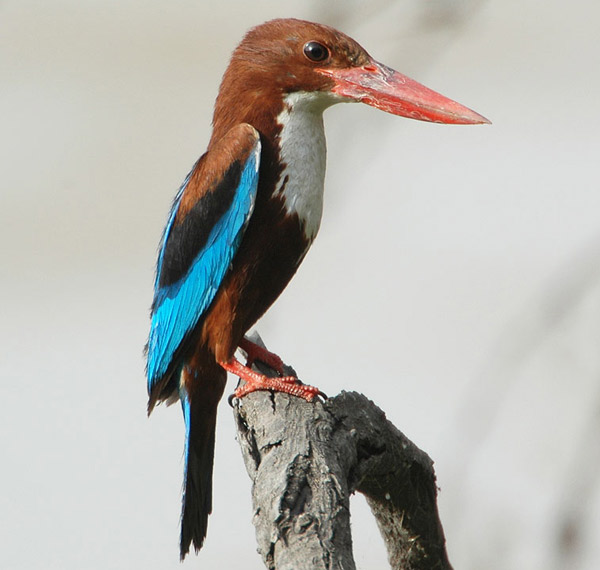
White-throated Kingfisher (Halcyon smyrnensis) by Nikhil Devasar

White-throated Kingfisher (Halcyon smyrnensis) by Nikhil Devasar

Halcyone ~ from The Curious Book of Birds

HALCYONE

Cur Book of Birds letter-tHE story of the first Kingfisher is a sad one, and you need not read it unless for a very little while you wish to feel sorry.

Long, long ago when the world was new, there lived a beautiful princess named Halcyone. She was the daughter of old Æolus, King of the Winds, and lived with him on his happy island, where it was his chief business to keep in order the four boisterous brothers, Boreas, the North Wind, Zephyrus, the West Wind, Auster, the South Wind, and Eurus, the East Wind. Sometimes, indeed, Æolus had a hard time of it; for the Winds would escape from his control and rush out upon the sea for their terrible games, which were sure to bring death and destruction to the sailors and their ships. Knowing them so well, for she had grown up with these rough playmates, Halcyone came to dread more than anything else the cruelties which they practiced at every opportunity.

One day the Prince Ceyx came to the island of King Æolus. He was the son of Hesperus, the Evening Star, and he was the king of the great land of Thessaly. Ceyx and Halcyone grew to love each other dearly, and at last with the consent of good King Æolus, but to the wrath of the four Winds, the beautiful princess went away to be the wife of Ceyx and Queen of Thessaly.

For a long time they lived happily in their peaceful kingdom, but finally came a day when Ceyx must take a long voyage on the sea, to visit a temple in a far country. Halcyone could not bear to have him go, for she feared the dangers of the great deep, knowing well the cruelty of the Winds, whom King Æolus had such difficulty in keeping within bounds. She knew how the mischievous brothers loved to rush down upon venturesome sailors and blow them into danger, and she knew that they especially hated her husband because he had carried her away from the island where she had watched the Winds at their terrible play. She begged Ceyx not to go, but he said that it was necessary. Then she prayed that if he must go he would take her with him, for she could not bear to remain behind dreading what might happen.

But Ceyx was resolved that Halcyone should not go. The good king longed to take her with him; no more than she could he smile at the thought of separation. But he also feared the sea, not on his own account, but for his dear wife. In spite of her entreaties he remained firm. If all went well he promised to return in two months’ time. But Halcyone knew that she should never see him again as now he spoke.

The day of separation came. Standing heart-broken upon the shore, Halcyone watched the vessel sail away into the East, until as a little speck it dropped below the horizon; then sobbing bitterly she returned to the palace.

Now the king and his men had completed but half their journey when a terrible storm arose. The wicked Winds had escaped from the control of good old Æolus and were rushing down upon the ocean to punish Ceyx for carrying away the beautiful Halcyone. Fiercely they blew, the lightning flashed, and the sea ran high; and in the midst of the horrible tumult the good ship went to the bottom with all on board. Thus the fears of Halcyone were proved true, and far from his dear wife poor Ceyx perished in the cruel waves.

That very night when the shipwreck occurred, the sad and fearful Halcyone, sleeping lonely at home, knew in a dream the very calamity which had happened. She seemed to see the storm and the shipwreck, and the form of Ceyx appeared, saying a sad farewell to her. As soon as it was light she rose and hastened to the seashore, trembling with a horrible dread. Standing on the very spot whence she had last seen the fated ship, she looked wistfully over the waste of stormy waters. At last she spied a dark something tossing on the waves. The object floated nearer and nearer, until a huge breaker cast before her on the sand the body of her drowned husband.

“O dearest Ceyx!” she cried. “Is it thus that you return to me?” Stretching out her arms toward him, she leaped upon the sea wall as if she would throw herself into the ocean, which advanced and retreated, seething around his body. But a different fate was to be hers. As she leaped forward two strong wings sprouted from her shoulders, and before she knew it she found herself skimming lightly as a bird over the water. From her throat came sounds of sobbing, which changed as she flew into the shrill piping of a bird. Soft feathers now covered her body, and a crest rose above the forehead which had once been so fair. Halcyone was become a Kingfisher, the first Kingfisher who ever flew lamenting above the waters of the world.

The sad bird fluttered through the spray straight to the body that was tossed upon the surf. As her wings touched the wet shoulders, and as her horny beak sought the dumb lips in an attempt to kiss what was once so dear, the body of Ceyx began to receive new life. The limbs stirred, a faint color returned to the cheeks. At the same moment a change like that which had transformed Halcyone began to pass over her husband. He too was becoming a Kingfisher. He too felt the thrill of wings upon his shoulders, wings which were to bear him up and away out of the sea which had been his death. He too was clad in soft plumage with a kingly crest upon his kingly head. With a faint cry, half of sorrow for what had happened, half of joy for the future in which these two loving ones were at least to be together, Ceyx rose from the surf-swept sand where his lifeless limbs had lain and went skimming over the waves beside Halcyone his wife.

Oriental Dwarf-Kingfisher (Ceyx erithaca) by Khong Tuck Khoon

Oriental Dwarf-Kingfisher (Ceyx erithaca) by Khong Tuck Khoon

So those unhappy mortals became the first kingfishers, happy at last in being reunited. So we see them still, flying up and down over the waters of the world, royal forms with royal crests upon their heads.

They built their nest of the bones of fish, a stout and well-joined basket which floated on the waves as safely as any little boat. And while their children, the baby Halcyons, lay in this rocking cradle, for seven days in the heart of winter, no storms ever troubled the ocean and mariners could set out upon their voyages without fear.

For while his little grandchildren rocked in their basket, the good King Æolus, pitying the sorrows of his daughter Halcyone, was always especially careful to chain up in prison those wicked brothers the Winds, so that they could do no mischief of any kind.

And that is why a halcyon time has come to mean a season of peace and safety.

Belted Kingfisher (Megaceryle alcyon) by Daves BirdingPix

Belted Kingfisher (Megaceryle alcyon) by Daves BirdingPix


Lee’s Addition:

Another enjoyable Bird Tale from the Curious Book of Birds. Kingfishers belong to the Alcedinidae – Kingfishers Family. There are two genus in the Kingfishers called Ceyx and Halcyon. Humm! What do you think? Must be those that name birds read the story?

We know the Lord created Kingfishers, but it is fun to read stories about them, even if they are make-believe.

And when he (Jesus) had finished speaking, he said to Simon, “Put out into the deep and let down your nets for a catch.” And Simon answered, “Master, we toiled all night and took nothing! But at your word I will let down the nets.” And when they had done this, they enclosed a large number of fish, and their nets were breaking. (Luke 5:4-6 ESV)

Kingfishers don’t have to use nets like these fishermen, which were the disciples. But they obeyed and they received a great many fish.

(Photos added by me.)

Links:

White-throated Kingfisher (Halcyon smyrnensis) by Nikhil Devasar


  Alcedinidae – Kingfishers Family


Painted Bunting (Passerina ciris) ©©Flickr


  Bird Tales


Curious Book of Birds - Cover


  The Curious Book of Birds


Spanish Sparrow (Passer Hispaniolensis) female ©WikiC


  Wordless Birds


*

Birds Vol 2 #2 – The Sora Rail

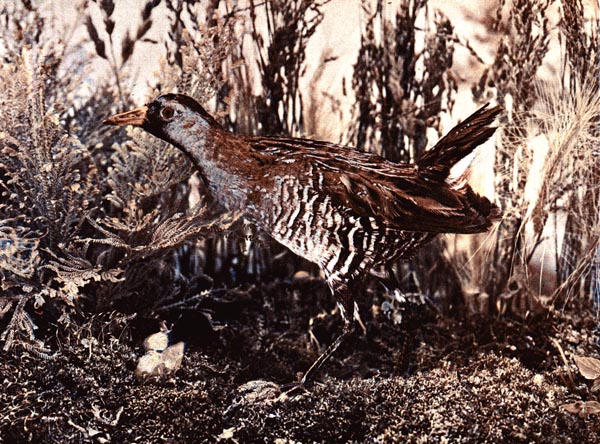
Sora - for the Birds Illustrated by Color Photography, 1897

Sora – for the Birds Illustrated by Color Photography, 1897

THE SORA RAIL.

imgv

ARIOUS are the names required to distinguish the little slate-colored Carolina Rail from its brethren, Sora, Common Rail, and, on the Potomac river, Ortolan, being among them. He is found throughout temperate North America, in the weedy swamps of the Atlantic states in great abundance, in the Middle states, and in California. In Ohio he is a common summer resident, breeding in the extensive swamps and wet meadows. The nest is a rude affair made of grass and weeds, placed on the ground in a tussock of grass in a boggy tract of land, where there is a growth of briers, etc., where he may skulk and hide in the wet grass to elude observation. The nest may often be discovered at a distance by the appearance of the surrounding grass, the blades of which are in many cases interwoven over the nest, apparently to shield the bird from the fierce rays of the sun, which are felt with redoubled force on the marshes.

The Rails feed on both vegetable and animal food. During the months of September and October, the weeds and wild oats swarm with them. They feed on the nutritious seeds, small snail shells, worms and larvae of insects, which they extract from the mud. The habits of the Sora Rail, its thin, compressed body, its aversion to take wing, and the dexterity with which it runs or conceals itself among the grass and sedge, are exactly similar to those of the more celebrated Virginia Rail.

The Sora frequents those parts of marshes preferably where fresh water springs rise through the morass. Here it generally constructs its nest, “one of which,” says an observer, “we had the good fortune to discover. It was built in the bottom of a tuft of grass in the midst of an almost impenetrable quagmire, and was composed altogether of old wet grass and rushes. The eggs had been flooded out of the nest by the extraordinary rise of the tide in a violent northwest storm, and lay scattered about the drift weed. The usual number of eggs is from six to ten. They are of a dirty white or pale cream color, sprinkled with specks of reddish and pale purple, most numerous near the great end.”

When on the wing the Sora Rail flies in a straight line for a short distance with dangling legs, and suddenly drops into the water.

The Rails have many foes, and many nests are robbed of their eggs by weasels, snakes, Blackbirds, and Marsh Hawks, although the last cannot disturb them easily, as the Marsh Hawk searches for its food while flying and a majority of the Rails’ nests are covered over, making it hard to distinguish them when the Hawk is above.


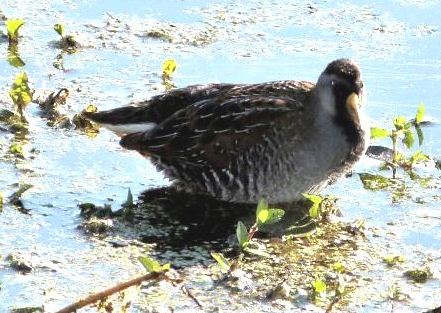
Sora(Porzana carolina) 4 by Bob-Nan

Sora(Porzana carolina) 4 by Bob-Nan

THE SORA RAIL.

This is one of our fresh-water marsh birds. I show you his picture taken where he spends most of his time.

If it were not for the note calls, these tall reeds and grasses would keep from us the secret of the Rail’s home.

Like most birds, though, they must be heard, and so late in the afternoon you may hear their clear note, ker-wee.

From all parts of the marsh you will hear their calls which they keep up long after darkness has set in.

This Rail was just about to step out from the grasses to feed when the artist took his picture. See him—head up, and tail up. He steps along carefully. He feels that it is risky to leave his shelter and is ready at the first sign of danger, to dart back under cover.

There are very few fresh-water marshes where the Rail is not found.

When a boy, I loved to hear their note calls and would spend hours on the edge of a marsh near my home.

It seemed to me there was no life among the reeds and cat-tails of the marsh, but when I threw a stone among them, the Rails would always answer with their peeps or keeks.

And so I used to go down to the marsh with my pockets filled with stones. Not that I desired or even expected to injure one of these birds. Far from it. It pleased me to hear their calls from the reeds and grass that seemed deserted.

Those of you who live near wild-rice or wild-oat marshes have a good chance to become acquainted with this Rail.

In the south these Rails are found keeping company with the Bobolinks or Reed-birds as they are called down there.


Sora(Porzana carolina)

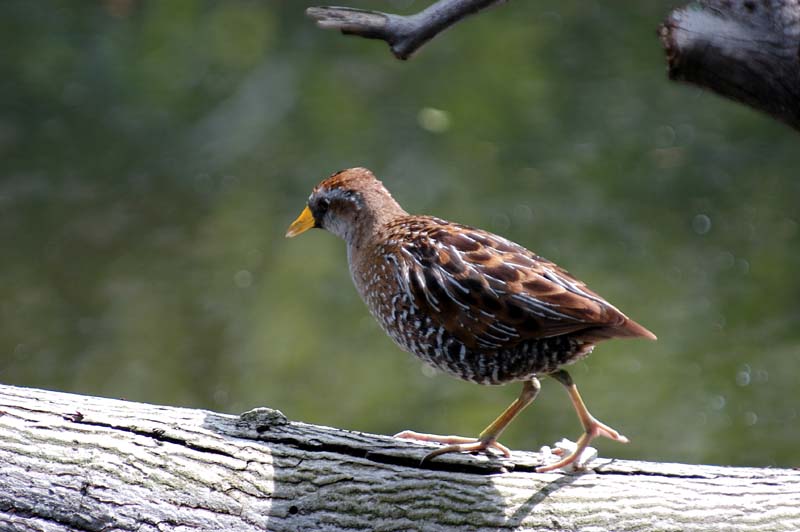
Sora (Porzana carolina) by Lee at Circle B

Lee’s Addition:

Can the papyrus grow up without a marsh? Can the reeds flourish without water? (Job 8:11 NKJV)

Under the lotus plants he lies, in the shelter of the reeds and in the marsh. (Job 40:21 ESV)

Soras are in the Rallidae – Rails, Crakes & Coots Family. At present there are 151 species in the family. Sometimes the Sora has Rail or Crake attached to Sora. They spend most of their time in marshes.

Adult Soras are 7.5–12 in (19–30 cm) long, with dark-marked brown upperparts, a blue-grey face and underparts, and black and white barring on the flanks. They have a short thick yellow bill, with black markings on the face at the base of the bill and on the throat. Sexes are similar, but young Soras lack the black facial markings and have a whitish face and buff breast. They weigh about 1.7–4.0 oz (49–112 g).

The Sora’s breeding habitat is marshes throughout much of North America. They nest in a well-concealed location in dense vegetation. The female usually lays 10 to 12 eggs, sometimes as many as 18, in a cup built from marsh vegetation. The eggs do not all hatch together. Both parents incubate and feed the young, who leave the nest soon after they hatch and are able to fly within a month.

They migrate to the southern United States and northern South America. Sora is a very rare vagrant to western Europe, where it can be confused with Spotted Crake. However, the latter species always has spotting on the breast. a streaked crown stripe, and a different wing pattern.

Soras forage while walking or swimming. They are omnivores, eating seeds, insects and snails. Although Soras are more often heard than seen, they are sometimes seen walking near open water. They are fairly common, despite a decrease in suitable habitat in recent times. The call is a slow whistled ker-whee, or a descending whinny. The use of call broadcasts greatly increases the chances of hearing a Sora. Call broadcasts can also increase the chances of seeing a Sora, as they will often investigate the source of the call.

Interesting photo of a Sora defending it’s nest from a snake. (by nsxbirder)

*

Birds Illustrated by Color Photography – Revisited – Introduction

The above article is the first article in the monthly serial that was started in January 1897 “designed to promote Knowledge of Bird-Live.” These include Color Photography, as they call them, today they are drawings. There are at least three Volumes that have been digitized by Project Gutenberg.

To see the whole series of – Birds Illustrated by Color Photography – Revisited

*

(Information from Wikipedia and other internet sources)

Next Article – The Kentucky Warbler

The Previous Article – The American Osprey

ABC’s Of The Gospel

Links:

Sora (bird) – Wikipedia

Sora – All About Birds

*

Birds Vol 2 #2 – The American Osprey

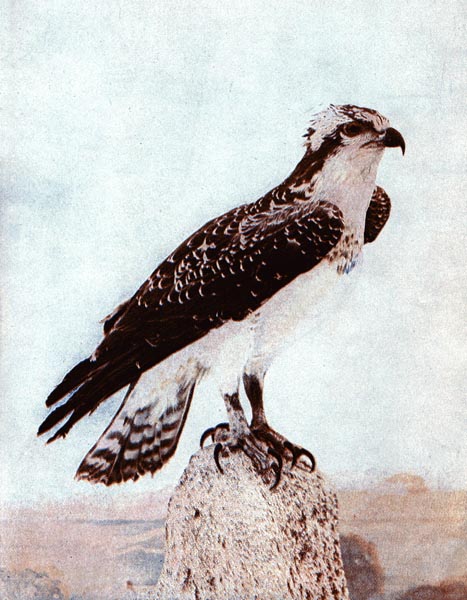
The American Osprey for Birds Illustrated by Color Photography, 1897 From col. F. M. Woodruff

The American Osprey for Birds Illustrated by Color Photography, 1897

The American Osprey.

Here is the picture of a remarkable bird. We know him better by the name Fish Hawk. He looks much like the Eagle in July “Birds.” The Osprey has no use for Mr. Eagle though.

You know the Bald Eagle or Sea Eagle is very fond of fish. Well, he is not a very good fisherman and from his lofty perch he watches for the Fish Hawk or Osprey. Do you ask why? Well, when he sees a Fish Hawk with his prey, he is sure to chase him and take it from him. It is for this reason that Ospreys dislike the Bald Eagle.

Their food is fish, which as a rule they catch alive.

It must be interesting to watch the Osprey at his fishing. He wings his way slowly over the water, keeping a watch for fish as they appear near the surface.

When he sees one that suits him, he hovers a moment, and then, closing his wings, falls upon the fish.

Sometimes he strikes it with such force that he disappears in the water for a moment. Soon we see him rise from the water with the prey in his claws.

He then flies to some tall tree and if he has not been discovered by his enemy, the Eagle, can have a good meal for his hard work.

Look at his claws; then think of them striking a fish as they must when he plunges from on high.

A gentleman tells of an Osprey that fastened his claws in a fish that was too large for him.

The fish drew him under and nothing more was seen of Mr. Osprey. The same gentleman tells of a fish weighing six pounds that fell from the claws of a Fish Hawk that became frightened by an Eagle.

The Osprey builds his nest much like the Bald Eagle. It is usually found in a tall tree and out of reach.

Like the Eagle, he uses the same nest each year, adding to it. Sometimes it measures five feet high and three feet across. One nest that was found, contained enough sticks, cornstalks, weeds, moss, and the like, to fill a cart, and made a load for a horse to draw. Like the Crows and Blackbirds they prefer to live together in numbers. Over three hundred nests have been found in the trees on a small island.

One thing I want you to remember about the Osprey. They usually remain mated for life.


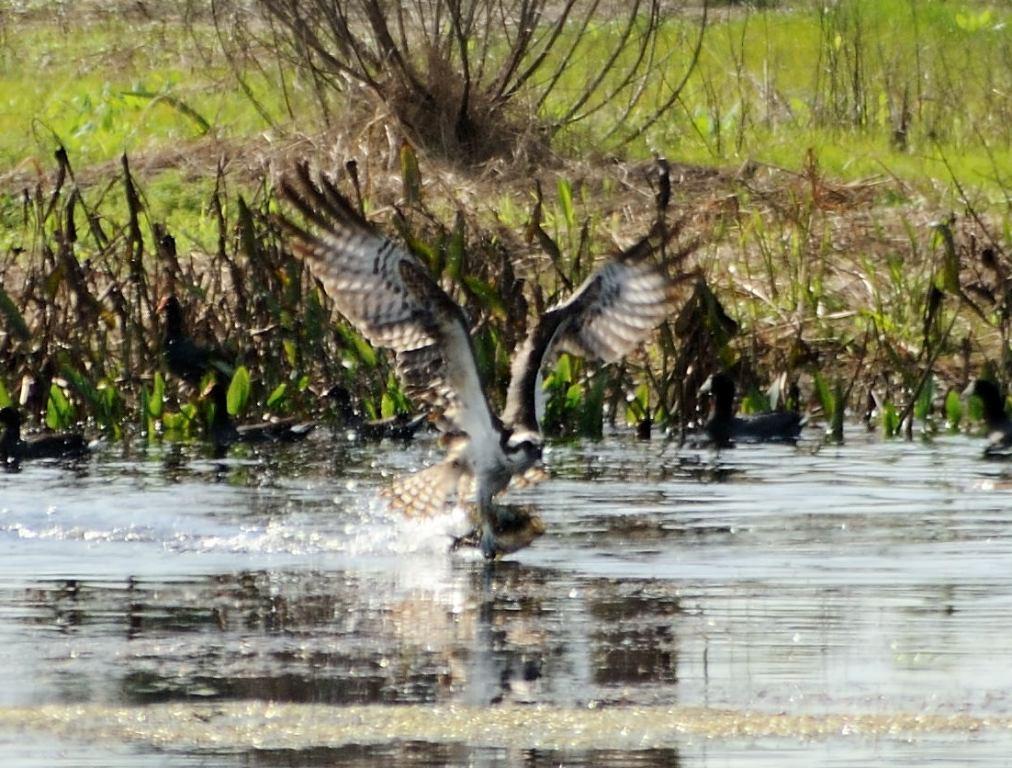
Osprey Catching Fish - Viera Wetlands

Osprey Catching Fish – Viera Wetlands by Dan

THE AMERICAN OSPREY.

N interesting bird, “Winged Fisher,” as he has been happily called, is seen in places suited to his habits, throughout temperate North America, particularly about islands and along the seacoast. At Shelter Island, New York, they are exceedingly variable in the choice of a nesting place. On Gardiner’s Island they all build in trees at a distance varying from ten to seventy-five feet from the ground; on Plum Island, where large numbers of them nest, many place their nests on the ground, some being built up to a height of four or five feet while others are simply a few sticks arranged in a circle, and the eggs laid on the bare sand. On Shelter Island they build on the chimneys of houses, and a pair had a nest on the cross-bar of a telegraph pole. Another pair had a nest on a large rock. These were made of coarse sticks and sea weed, anything handy, such as bones, old shoes, straw, etc. A curious nest was found some years ago on the coast of New Jersey. It contained three eggs, and securely imbedded in the loose material of the Osprey’s nest was a nest of the Purple Grackle, containing five eggs, while at the bottom of the Hawk’s nest was a thick, rotten limb, in which was a Tree Swallow’s nest of seven eggs.

In the spring and early autumn this familiar eagle-like bird can be seen hovering over creek, river, and sound. It is recognized by its popular name of Fish-Hawk. Following a school of fish, it dashes from a considerable height to seize its prey with its stout claws. If the fish is small it is at once swallowed, if it is large, (and the Osprey will occasionally secure shad, blue fish, bass, etc., weighing five or six pounds,) the fish is carried to a convenient bluff or tree and torn to bits. The Bald Eagle often robs him of the fish by seizing it, or startling him so that he looses his hold.

The Osprey when fishing makes one of the most breezy, spirited pictures connected with the feeding habits of any of our birds, as often there is a splashing and a struggle under water when the fish grasped is too large or the great talons of the bird gets entangled. He is sometimes carried under and drowned, and large fish have been washed ashore with these birds fastened to them by the claws.

Mrs. Mabel Osgood Wright says: “I found an Osprey’s nest in a crooked oak on Wakeman’s Island in late April, 1893. As I could not get close to the nest (the island is between a network of small creeks, and the flood tides covered the marshes,) I at first thought it was a monstrous crow’s nest, but on returning the second week in May I saw a pair of Osprey coming and going to and fro from the nest. I hoped the birds might return another season, as the nest looked as if it might have been used for two or three years, and was as lop-sided as a poorly made haystack. The great August storm of the same year broke the tree, and the nest fell, making quite a heap upon the ground. Among the debris were sticks of various sizes, dried reeds, two bits of bamboo fishing rod, seaweeds, some old blue mosquito netting, and some rags of fish net, also about half a bushel of salt hay in various stages of decomposition, and malodorous dirt galore.”

It is well-known that Ospreys, if not disturbed, will continue indefinitely to heap rubbish upon their nests till their bulk is very great. Like the Owls they can reverse the rear toe.


Osprey with Fish by Jim Fenton

Osprey with Fish by Jim Fenton

Lee’s Addition:

And these are they which ye shall have in abomination among the fowls; they shall not be eaten, they are an abomination: the eagle, and the ossifrage, and the ospray, (Leviticus 11:13 KJV)

We have the privilege of seeing Ospreys all the time. On a daily basis we spot them on their platforms that have been put up for them in this area. If they don’t place them there, then you find their nest in trees with bare branches that they can anchor the nest and have a good place to watch for fish.

Ospreys are in the Pandionidae – Ospreys Family and they are one of the Birds of the Bible.
*

Birds Illustrated by Color Photography – Revisited – Introduction

The above article is the first article in the monthly serial that was started in January 1897 “designed to promote Knowledge of Bird-Live.” These include Color Photography, as they call them, today they are drawings. There are at least three Volumes that have been digitized by Project Gutenberg.

To see the whole series of – Birds Illustrated by Color Photography – Revisited

*

(Information from Wikipedia and other internet sources)

Next Article – The Sora Rail

The Previous Article – Old Abe

Wordless Birds

Links:

Birds of the Bible – Osprey
Birds of the Bible – Osprey II
Birds of the Bible – Osprey III
Birds of the Bible – Ospreys in the Storm
Nave’s Topical Bible – Osprey

Osprey – WhatBird.com
Osprey – Wikipedia

*


The Disobedient Woodpecker

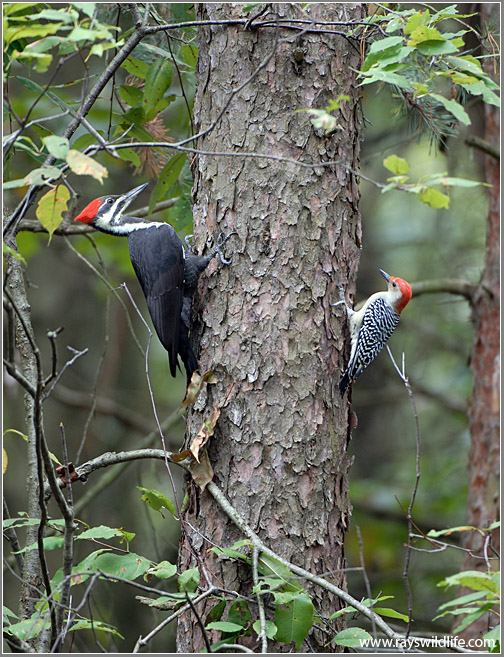
Pileated and Red-bellied Woodpecker on same tree by Ray

Pileated and Red-bellied Woodpecker on same tree by Ray

The Disobedient Woodpecker ~ from The Curious Book of Birds

THE DISOBEDIENT WOODPECKER

Cur Book of Birds letter-lONG, long ago, at the beginning of things, they say that the Lord made the world smooth and round like an apple. There were no hills nor mountains: nor were there any hollows or valleys to hold the seas and rivers, fountains and pools, which the world of men would need. It must, indeed, have been a stupid and ugly earth in those days, with no chance for swimming or sailing, rowing or fishing. But as yet there was no one to think anything about it, no one who would long to swim, sail, row, and fish. For this was long before men were created.

The Lord looked about Him at the flocks of newly made birds, who were preening their wings and wondering at their own bright feathers, and said to Himself,—

“I will make these pretty creatures useful, from the very beginning, so that in after time men shall love them dearly. Come, my birds,” He cried, “come hither to me, and with the beaks which I have given you hollow me out here, and here, and here, basins for the lakes and pools which I intend to fill with water for men and for you, their friends. Come, little brothers, busy yourselves as you would wish to be happy hereafter.”

Then there was a twittering and fluttering as the good birds set to work with a will, singing happily over the work which their dear Lord had given them to do. They pecked and they pecked with their sharp little bills; they scratched and they scratched with their sharp little claws, till in the proper places they had hollowed out great basins and valleys and long river beds, and little holes in the ground.

Then the Lord sent great rains upon the earth until the hollows which the birds had made were filled with water, and so became rivers and lakes, little brooks and fountains, just as we see them to-day. Now it was a beautiful, beautiful world, and the good birds sang happily and rejoiced in the work which they had helped, and in the sparkling water which was sweet to their taste.

All were happy except one. The Woodpecker had taken no part with the other busy birds. She was a lazy, disobedient creature, and when she heard the Lord’s commands she had only said, “Tut tut!” and sat still on the branch where she had perched, preening her pretty feathers and admiring her silver stockings. “You can toil if you want to,” she said to the other birds who wondered at her, “but I shall do no such dirty work. My clothes are too fine.”

Now when the world was quite finished and the beautiful water sparkled and glinted here and there, cool and refreshing, the Lord called the birds to Him and thanked them for their help, praising them for their industry and zeal. But to the Woodpecker He said,—

“As for you, O Woodpecker, I observe that your feathers are unruffled by work and that there is no spot of soil upon your beak and claws. How did you manage to keep so neat?”

The Woodpecker looked sulky and stood upon one leg.

“It is a good thing to be neat,” said the Lord, “but not if it comes from shirking a duty. It is good to be dainty, but not from laziness. Have you not worked with your brothers as I commanded you?”

“It was such very dirty work,” piped the Woodpecker crossly; “I was afraid of spoiling my pretty bright coat and my silver shining hose.”

“Oh, vain and lazy bird!” said the Lord sadly. “Have you nothing to do but show off your fine clothes and give yourself airs? You are no more beautiful than many of your brothers, yet they all obeyed me willingly. Look at the snow-white Dove, and the gorgeous Bird of Paradise, and the pretty Grosbeak. They have worked nobly, yet their plumage is not injured. I fear that you must be punished for your disobedience, little Woodpecker. Henceforth you shall wear stockings of sooty black instead of the shining silver ones of which you are so proud. You who were too fine to dig in the earth shall ever be pecking at dusty wood. And as you declined to help in building the water-basins of the world, so you shall never sip from them when you are thirsty. Never shall you thrust beak into lake or river, little rippling brook or cool, sweet fountain. Raindrops falling scantily from the leaves shall be your drink, and your voice shall be heard only when other creatures are hiding themselves from the approaching storm.”

It was a sad punishment for the Woodpecker, but she certainly deserved it. Ever since that time, whenever we hear a little tap-tapping in the tree city, we know that it is the poor Woodpecker digging at the dusty wood, as the Lord said she should do. And when we spy her, a dusty little body with black stockings, clinging upright to the tree trunk, we see that she is creeping, climbing, looking up eagerly toward the sky, longing for the rain to fall into her thirsty beak. She is always hoping for the storm to come, and plaintively pipes, “Plui-plui! Rain, O Rain!” until the drops begin to patter on the leaves.


Rufous-bellied Woodpecker (Dendrocopos hyperythrus) by Nikhil Devasar

Rufous-bellied Woodpecker (Dendrocopos hyperythrus) by Nikhil Devasar

Lee’s Addition:

Children, obey your parents in the Lord: for this is right. Honour thy father and mother; (which is the first commandment with promise;) That it may be well with thee, and thou mayest live long on the earth. (Ephesians 6:1-3 KJV)
Children, obey your parents in all things: for this is well pleasing unto the Lord. (Colossians 3:20 KJV)

Apparently the Woodpecker had not learned to obey. I trust you are obeying your parents. You are also to honor or give respect to your father and mother.

Now don’t think unkindly about the real Woodpeckers, because of course this is only a story. I think Woodpeckers are really neat birds and the Lord has provided them with just the right beak so it can make holes for a nest and for digging out worms.

Links:


  Picidae – Woodpeckers Family


Painted Bunting (Passerina ciris) ©©Flickr


  Bird Tales


Curious Book of Birds - Cover


  The Curious Book of Birds


Spanish Sparrow (Passer Hispaniolensis) female ©WikiC


  Wordless Birds


*

The Gorgeous Goldfinch – from The Curious Book of Birds

American Goldfinch (Carduelis tristis) on Thistle by Fenton

American Goldfinch (Carduelis tristis) on Thistle by Fenton

The Gorgeous Goldfinch ~ from The Curious Book of Birds

THE GORGEOUS GOLDFINCH

Cur Book of Birds letter-tHE Goldfinch who lives in Europe is one of the gaudiest of the little feathered brothers. He is a very Joseph of birds in his coat of many colors, and folk often wonder how he came to have feathers so much more gorgeous than his kindred. But after you have read this tale you will wonder no longer.

You must know that when the Father first made all the birds they were dressed alike in plumage of sober gray. But this dull uniform pleased Him no more than it did the birds themselves, who begged that they might wear each the particular style which was most becoming, and by which they could be recognized afar.

So the Father called the birds to Him, one by one, as they stood in line, and dipping His brush in the rainbow color-box painted each appropriately in the colors which it wears to-day. (Except, indeed, that some had later adventures which altered their original hues, as you shall hear in due season.)

But the Goldfinch did not come with the other birds. That tardy little fellow was busy elsewhere on his own affairs and heeded not the Father’s command to fall in line and wait his turn for being made beautiful.

So it happened that not until the painting was finished and all the birds had flown away to admire themselves in the water-mirrors of the earth, did the Goldfinch present himself at the Father’s feet out of breath.

“O Father!” he panted, “I am late. But I was so busy! Pray forgive me and permit me to have a pretty coat like the others.”

“You are late indeed,” said the Father reproachfully, “and all the coloring has been done. You should have come when I bade you. Do you not know that it is the prompt bird who fares best? My rainbow color-box has been generously used, and I have but little of each tint left. Yet I will paint you with the colors that I have, and if the result be ill you have only yourself to blame.”

The Father smiled gently as He took up the brush which He had laid down, and dipped it in the first color which came to hand. This He used until there was no more, when He began with another shade, and so continued until the Goldfinch was completely colored from head to foot. Such a gorgeous coat! His forehead and throat were of the most brilliant crimson. His cap and sailor collar were black. His back was brown and yellow, his breast white, his wings golden set off with velvet black, and his tail was black with white-tipped feathers. Certainly there was no danger of his being mistaken for any other bird.

When the Goldfinch looked down into a pool and saw the reflection of his gorgeous coat, he burst out into a song of joy. “I like it, oh, I like it!” he warbled, and his song was very sweet. “Oh, I am glad that I was late, indeed I am, dear Father!”

But the kind Father sighed and shook His head as He put away the brush, exclaiming, “Poor little Goldfinch! You are indeed a beautiful bird. But I fear that the gorgeous coat which you wear, and which is the best that I could give you, because you came so late, will cause you more sorrow than joy. Because of it you will be chased and captured and kept in captivity; and your life will be spent in mourning for the days when you were a plain gray bird.”

And so it happened. For to this day the Goldfinch is persecuted by human folk who admire his wonderful plumage and his beautiful song. He is kept captive in a cage, while his less gorgeous brothers fly freely in the beautiful world out of doors.

Cur Book of Birds img4-full

Such a gorgeous coat!

Such a gorgeous coat!


Lee’s Addition:

Then God said, “Let the waters abound with an abundance of living creatures, and let birds fly above the earth across the face of the firmament of the heavens.” So God created great sea creatures and every living thing that moves, with which the waters abounded, according to their kind, and every winged bird according to its kind. And God saw that it was good. And God blessed them, saying, “Be fruitful and multiply, and fill the waters in the seas, and let birds multiply on the earth.” So the evening and the morning were the fifth day. (Genesis 1:20-23 NKJV)

This is the first story to be published here from the Curious Book of Birds by Abbie Farwell Brown. This was published in 1903 and is in the public domain. The stories are cute and enjoyable to read. They will be under “From the Past” authors.

They are good stories, but not all the facts are right. 
Just enjoy them anyway. 
(Lee)
European Goldfinch (Carduelis carduelis) by W Kwong

European Goldfinch (Carduelis carduelis) by W Kwong

Links:

European Goldfinch (Carduelis carduelis) by W Kwong


   Fringillidae – Finches Family


Painted Bunting (Passerina ciris) ©©Flickr


  Bird Tales


Curious Book of Birds - Cover


  The Curious Book of Birds


Spanish Sparrow (Passer Hispaniolensis) female ©WikiC


  Wordless Birds


*

Birds Vol 2 #1 – Old Abe

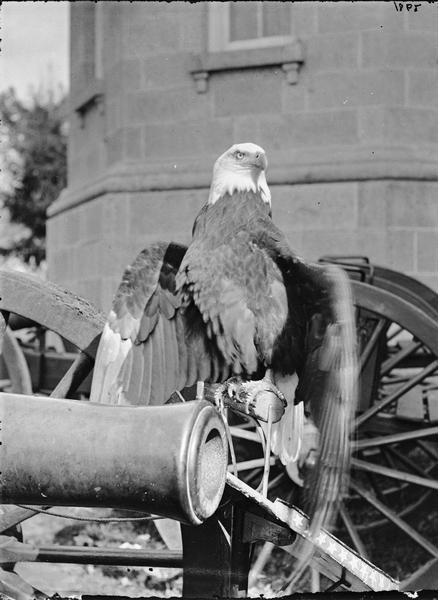
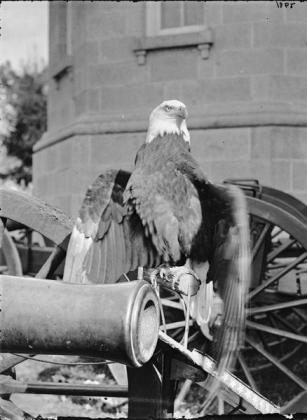
Old Abe ©WikiC

Old Abe ©WikiC

THE OLD ABE.

“I’d rather capture Old Abe,” said Gen. Sterling Price, of the Confederate Army, “than a whole brigade.”

imgo

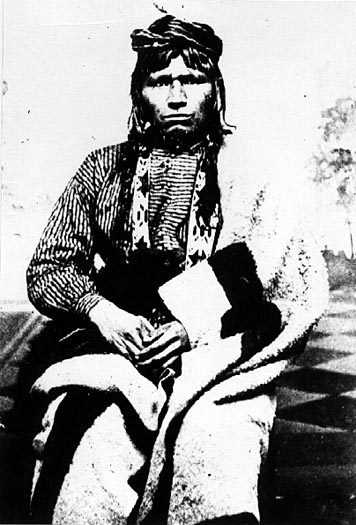
LD ABE” was the live war Eagle which accompanied the Eighth Wisconsin regiment during the War of the Rebellion. Much of a more or less problematical character has been written about him, but what we regard as authentic we shall present in this article. Old Abe was a fine specimen of the Bald Eagle, very like the one figured in this number of Birds. Various stories are told of his capture, but the most trustworthy account is that Chief Sky, a Chippewa Indian, took him from the nest while an Eaglet. The nest was found on a pine tree in the Chippewa country, about three miles from the mouth of the Flambeau, near some rapids in the river. He and another Indian cut the tree down, and, amid the menaces of the parent birds, secured two young Eagles about the size of Prairie Hens. One of them died. The other, which lived to become historical, was sold to Daniel McCann for a bushel of corn. McCann carried it to Eau Claire, and presented it to a company then being organized as a part of the Eighth Wisconsin Infantry.

What more appropriate emblem than the American Bald-headed Bird could have been thus selected by the patriots who composed this regiment of freemen! The Golden Eagle (of which we shall hereafter present a splendid specimen,) with extended wings, was the ensign of the Persian monarchs, long before it was adopted by the Romans. And the Persians borrowed the symbol from the Assyrians. In fact, the symbolical use of the Eagle is of very remote antiquity. It was the insignia of Egypt, of the Etruscans, was the sacred bird of the Hindoos, and of the Greeks, who connected him with Zeus, their supreme deity. With the Scandinavians the Eagle is the bird of wisdom. The double-headed Eagle was in use among the Byzantine emperors, “to indicate their claims to the empire of both the east and the west.” It was adopted in the 14th century by the German emperors. The arms of Prussia were distinguished by the Black Eagle, and those of Poland by the White. The great Napoleon adopted it as the emblem of Imperial France.

Old Abe was called by the soldiers the “new recruit from Chippewa,” and sworn into the service of the United States by encircling his neck with red, white, and blue ribbons, and by placing on his breast a rosette of colors, after which he was carried by the regiment into every engagement in which it participated, perched upon a shield in the shape of a heart. A few inches above the shield was a grooved crosspiece for the Eagle to rest upon, on either end of which were three arrows. When in line Old Abe was always carried on the left of the color bearer, in the van of the regiment. The color bearer wore a belt to which was attached a socket for the end of the staff, which was about five feet in length. Thus the Eagle was high above the bearer’s head, in plain sight of the column. A ring of leather was fastened to one of the Eagle’s legs to which was connected a strong hemp cord about twenty feet long.

Old Abe was the hero of about twenty-five battles, and as many skirmishes. Remarkable as it may appear, not one bearer of the flag, or of the Eagle, always shining marks for the enemy’s rifles, was ever shot down. Once or twice Old Abe suffered the loss of a few feathers, but he was never wounded.

The great bird enjoyed the excitement of carnage. In battle he flapped his wings, his eyes blazed, and with piercing screams, which arose above the noise of the conflict, seemed to urge the company on to deeds of valor.

David McLane, who was the first color bearer to carry him into battle, said:

“Old Abe, like all old soldiers, seemed to dread the sound of musketry but with the roll of artillery he appeared to be in his glory. Then he screamed, spread his wings at every discharge, and reveled in the roar and smoke of the big guns.” A correspondent who watched him closely said that when a battle had fairly begun Old Abe jumped up and down on his perch with such wild and fearful screams as an eagle alone can utter. The louder the battle, the fiercer and wilder were his screams.

Old Abe varied his voice in accord with his emotions. When surprised he whistled a wild melody of a melancholy softness; when hovering over his food he gave a spiteful chuckle; when pleased to see an old friend he seemed to say: “How do you do?” with a plaintive cooing. In battle his scream was wild and commanding, a succession of five or six notes with a startling trill that was inspiring to the soldiers. Strangers could not approach or touch him with safety, though members of the regiment who treated him with kindness were cordially recognized by him. Old Abe had his particular friends, as well as some whom he regarded as his enemies. There were men in the company whom he would not permit to approach him. He would fly at and tear them with his beak and talons. But he would never fight his bearer. He knew his own regiment from every other, would always accompany its cheer, and never that of any other regiment.

Old Abe more than once escaped, but was always lured by food to return. He never seemed disposed to depart to the blue empyrean, his ancestral home.

Having served three years, a portion of the members of Company C were mustered out, and Old Abe was presented to the state of Wisconsin. For many years, on occasions of public exercise or review, like other illustrious veterans, he excited in parade universal and enthusiastic attention.

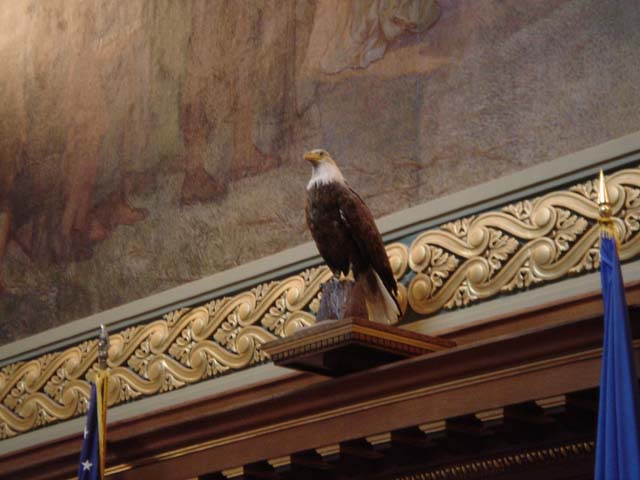
He occupied pleasant quarters in the State Capitol at Madison, Wisconsin, until his death at an advanced age.
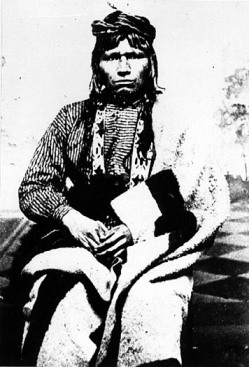
Ahgamahwegezhig (Chief Sky)

Ahgamahwegezhig (Chief Sky)


Lee’s Addition:

Here’s some information from Wikipedia about Old Abe:

Old Abe (1861? – March 28, 1881), a bald eagle, was the mascot of the 8th Wisconsin Volunteer Infantry Regiment in the American Civil War. Later, her image was adopted as the eagle appearing on a globe in Case Corporation’s logo and as the screaming eagle on the insignia of the U.S. Army’s 101st Airborne Division.
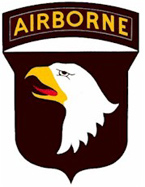
The 101st Airborne Division patch

The 101st Airborne Division patch

To capture the eagle, Chief Sky cut down a tree in which two fledgling eagles were nesting. One eaglet died from the fall, but the other became the young indian’s pet. After a few weeks, Chief Sky went on an expedition with his father, during which the eagle was traded for a bushel of corn to Daniel McCann, who lived in Eagle Point.

In August 1861, John E. Perkins, assisted by Seth Pierce, Frank McGuire, Thomas G. Butler and Victor Wolf, recruited a company of volunteers from Eau Claire and Chippewa Counties. This company was called the “Eau Claire Badgers”.

Soon after its formation, McCann offered to sell the eagle to the Badgers, for $2.50. In his “History of Old Abe”, published in 1865, Joseph 0. Barrett, who helped McCann to bring the eagle to Eau Claire, gave a description of the transaction, which can be paraphrased as:

“Will you buy my Eagle,” said McCann, “only two dollars and a half?”

“Here, boys, let’s put in twenty five cents apiece,” answered Frank McGuire, who began to collect quarters.

He also solicited a contribution from a civilian, S. M. Jeffers, but was rebuffed. When the soldiers heard of this, they accosted Jeffers, and gave him three lusty groans. When he understood that they were protesting against his reluctance to help buy the eagle, Jeffers laughed, paid for the bird with a Quarter Eagle and presented her to the Company. After that, he had cheers instead of groans. The quarters were returned to the donors.

From left to right: Ed Homaston, Christopher Darius Gorman, Sgt Ambrose Armitage, (unknown), Myron Riggs and three more unknowns.

In September 1861, the Badgers went to Madison, where they joined the 8th Wisconsin Volunteer Infantry Regiment as Company C. They became the the regimental color company and were given the name “Eagle Company”. The regiment also became the “Eagle Regiment”. After Captain Perkins named the eagle after President Abraham Lincoln, soldiers of Company C designed a special perch on which they carried the bird into battle.

Old Abe participated in the Second Battle of Corinth (in which the 8th Wisconsin lost half of its men) and the Siege of Vicksburg, among other battles. In battle, Old Abe quickly became legendary, screaming and spreading her wings at the enemy. Confederate troops called her the “Yankee Buzzard” and made several attempts to capture her but never succeeded. Several times she lost feathers to bullets and saw her handlers get shot out from under her. When passing by, Generals Ulysses S. Grant, William T. Sherman, and William Rosecrans were known to doff their hats to the eagle.
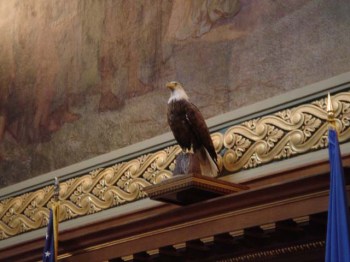
A replica of Old Abe presides over the Wisconsin State Assembly Chamber

A replica of Old Abe presides over the Wisconsin State Assembly Chamber

Old Abe was present at numerous battles and lesser engagements during the war:

  • Fredericktown, Missouri – 21 October 1861
  • New Madrid and *Island #10 – March & April 1862 Union General John Pope captured Point Pleasant, Missouri, provoking Confederates to evacuate New Madrid; they abandoned arms and provisions valued at one million dollars during their escape across the Mississippi River to the eastern bank and to Island No. 10
  • Point Pleasant, Missouri – March 20, 1862
  • Farmington, Mississippi. – May 9, 1862
  • Corinth, Mississippi. – May 28, 1862
  • Iuka, Mississippi. – September 12, 1862
  • Burnsville, Mississippi. – September 13, 1862
  • Iuka, Mississippi. – September 16-18, 1862
  • Corinth, Mississippi. – October 3-4, 1862
  • Tallahatchie, Mississippi. – December 2, 1862
  • Mississippi Springs, Mississippi. – May 13, 1863
  • Jackson, Mississippi. – May 14, 1863
  • Assault on Vicksburg, Mississippi. – May 22, 1863
  • Mechanicsburg, Mississippi. – June 4, 1863
  • Richmond, Louisiana. – June 15, 1863
  • Vicksburg, Mississippi. – June 24, 1863
  • Surrender of Vicksburg- July 4, 1863
  • Brownsville, Mississippi. – October 16, 1863
  • Fort Scurry, Louisiana. – March 13, 1864
  • Fort De Russey, Louisiana. – March 15, 1864
  • Henderson’s Hill, Louisiana. – March 21, 1864
  • Grand Ecore, Louisiana. – April 2, 1864
  • Pleasant Hill, Louisiana. – April 8-9, 1864
  • Natchitoches, Louisiana. – April 20, 1864
  • Kane River, Louisiana. – April 22, 1864
  • Clouterville and Crane Hill, Louisiana. – April 23, 1864
  • Bayou Rapids, Louisiana. – May 2, 1864
  • Bayou La Monre, Louisiana. – May 3, 1864
  • Bayou Roberts, Louisiana. – May 4-6, 1864
  • Moore’s Plantation, Louisiana. – May 8-12, 1864
  • Mansura, Louisiana. – May 16, 1864
  • Battle of Maysville, Louisiana. – May 17, 1864
  • Calhoun’s Plantation, Louisiana. – May 18, 1864
  • Bayou De Glaise, Louisiana. – May 18, 1864
  • Ditch Bayou at Lake Chicot or River Lake, Arkansas. – June 6, 1864
  • Hurricane Creek, Mississippi. – August 13, 1864

*

Birds Illustrated by Color Photography – Revisited – Introduction

The above article is the first article in the monthly serial that was started in January 1897 “designed to promote Knowledge of Bird-Live.” These include Color Photography, as they call them, today they are drawings. There are at least three Volumes that have been digitized by Project Gutenberg.

To see the whole series of – Birds Illustrated by Color Photography – Revisited

*

(Information from Wikipedia and other internet sources)

Next Article – The American Osprey

The Previous Article – The Snowy Heron

Wordless Birds

Links:

Old Abe – Wikipedia

*

Birds Vol 2 #1 – The Snowy Heron

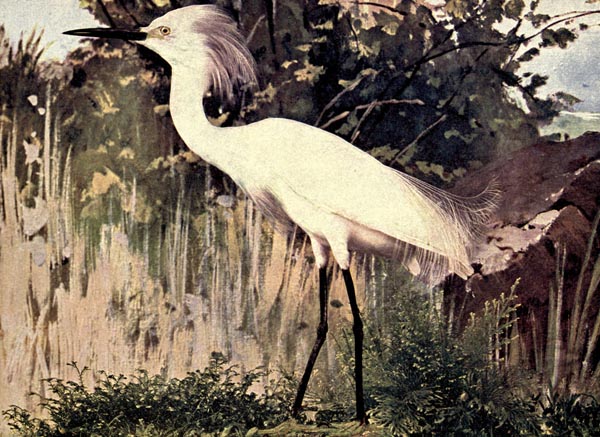
snowy heron or little egret

THE SNOWY HERON.

“What does it cost this garniture of death?
It costs the life which God alone can give;
It costs dull silence where was music’s breath,
It costs dead joy, that foolish pride may live.
Ah, life, and joy, and song, depend upon it,
Are costly trimmings for a woman’s bonnet!”
—May Riley Smith.

imgt
EMPERATE and tropical America, from Long Island to Oregon, south to Buenos Ayres, may be considered the home of the Snowy Heron, though it is sometimes seen on the Atlantic coast as far as Nova Scotia. It is supposed to be an occasional summer resident as far north as Long Island, and it is found along the entire gulf coast and the shores of both oceans. It is called the Little White Egret, and is no doubt the handsomest bird of the tribe. It is pure white, with a crest composed of many long hair-like feathers, a like plume on the lower neck, and the same on the back, which are recurved when perfect.

Snowy Herons nest in colonies, preferring willow bushes in the marshes for this purpose. The nest is made in the latter part of April or early June. Along the gulf coast of Florida, they nest on the Mangrove Islands, and in the interior in the willow ponds and swamps, in company with the Louisiana and Little Blue Herons. The nest is simply a platform of sticks, and from two to five eggs are laid.

Alas, plume hunters have wrought such destruction to these lovely birds that very few are now found in the old nesting places. About 1889, according to Mr. F. M. Woodruff, this bird was almost completely exterminated in Florida, the plume hunters transferring their base of operation to the Texas coast of the Gulf, and the bird is now in a fair way to be utterly destroyed there also. He found them very rare in 1891 at Matagorda Bay, Texas. This particular specimen is a remarkably fine one, from the fact that it has fifty-two plumes, the ordinary number being from thirty to forty.

Nothing for some time has been more commonly seen than the delicate airy plumes which stand upright in ladies’ bonnets. These little feathers, says a recent writer, were provided by nature as the nuptial adornment of the White Heron. Many kind-hearted women who would not on any account do a cruel act, are, by following this fashion, causing the continuance of a great cruelty. If ladies who are seemingly so indifferent to the inhumanity practiced by those who provide them with this means of adornment would apply to the Humane Education Committee, Providence, R. I., for information on the subject, they would themselves be aroused to the necessity of doing something towards the protection of our birds. Much is, however, being done by good men and women to this end.

The Little Egret moves through the air with a noble and rapid flight. It is curious to see it pass directly overhead. The head, body and legs are held in line, stiff and immovable, and the gently waving wings carry the bird along with a rapidity that seems the effect of magic.

An old name of this bird was Hern, or Hernshaw, from which was derived the saying, “He does not know a Hawk from a Hernshaw.” The last word has been corrupted into “handsaw,” rendering the proverb meaningless.

Summary SNOWY HERON.Ardea candidissima. Other names: “Little Egret,” “White-crested Egret,” “White Poke.”

Range—Tropical and temperate America.

Nest—A platform of sticks, in bushes, over water.

Eggs—Three to five; pale, dull blue.


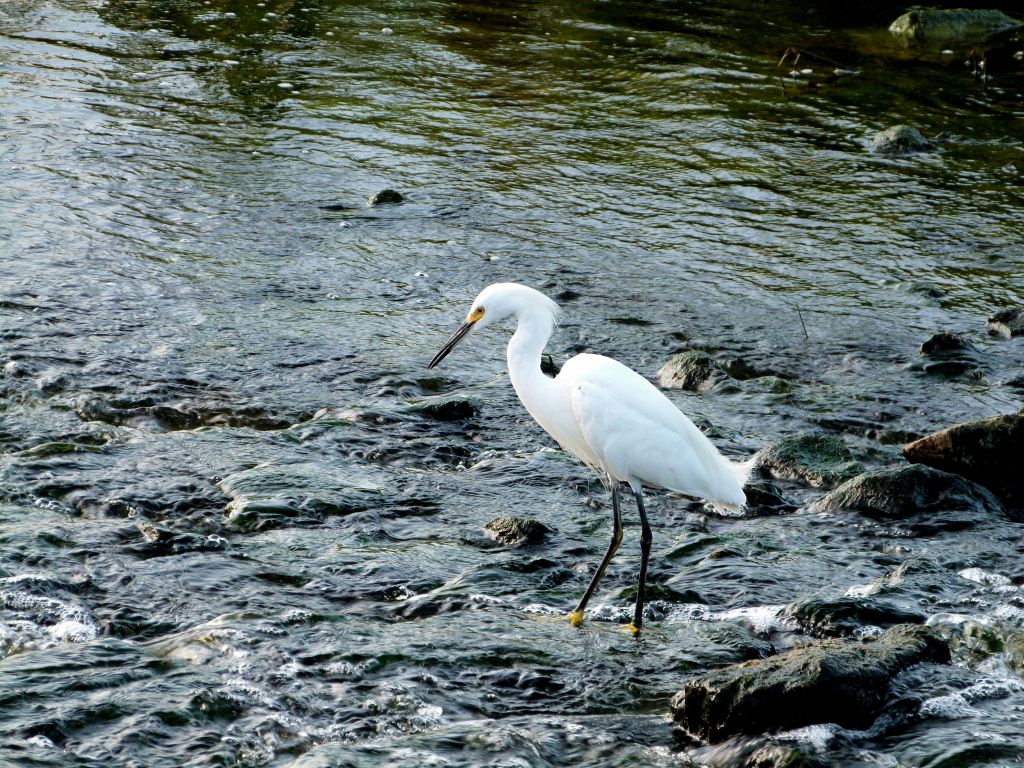
Snowy Egret Circle B by Lee

Snowy Egret Circle B by Lee

Lee’s Addition:

And the stork, the heron after her kind, and the lapwing, and the bat. (Leviticus 11:19 KJV)

American Ornithologists’ Union 1st edition (1886):
Snowy Heron ( Ardea candidissima)

was later changed to  

American Ornithologists’ Union 2nd edition (incl. 15th suppl.): 1895
Snowy Egret ( Egretta candidissima)

then finally changed to the current with the

American Ornithologists’ Union 4th edition (1931):
Snowy Egret ( Egretta thula)

We have another case where the name and the scientific name has changed over time. The above give how the American Ornithologists’ Union progressed in the re-naming. I thoroughly enjoy watching the Snowys here. I think it is their yellow feet that amuses me so much. I am always trying to get a photo of the feet.

They are smaller than our Great Egret and I have been able to distinguish them from the Great and the Cattle Egrets finally. Once that yellow foot comes in sight, it’s a “no-brainer.”

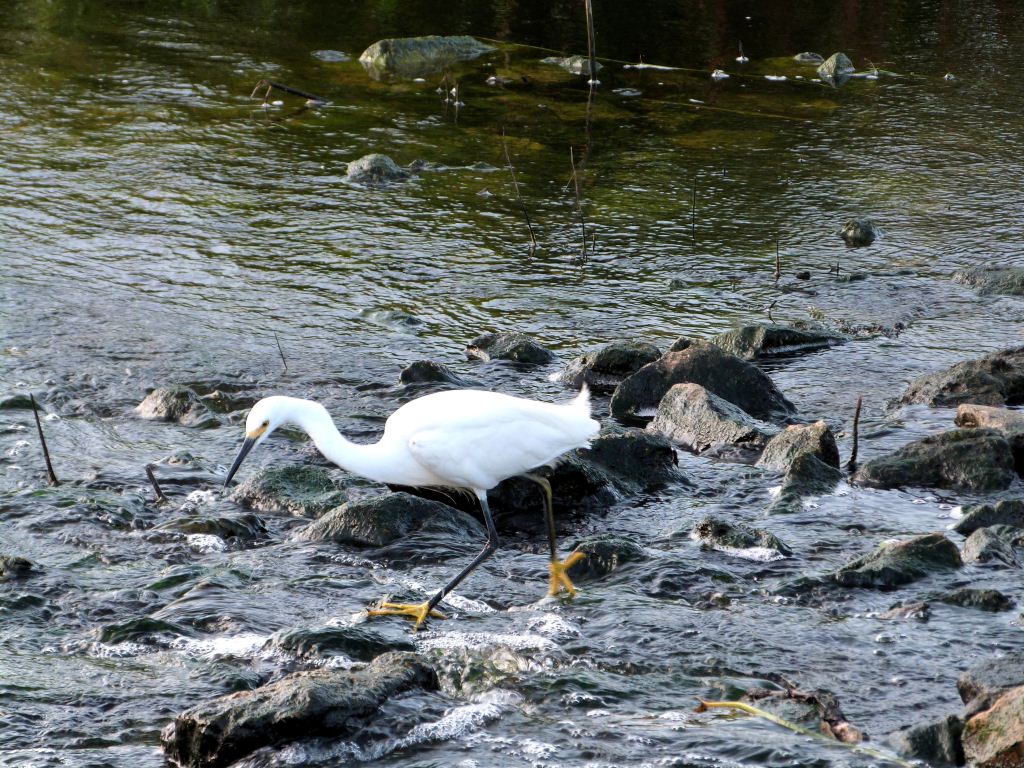
Snowy Egret Circle B 8-3-12 by Lee

Snowy Egret Circle B 8-3-12 by Lee

They are a medium-sized Heron that is all white. It has the yellow feet attached to its black legs. Their bill is dark and it pointed like most in the Heron families. That Family is the Ardeidae – Herons, Bitterns and also a Bible Bird. They and their kind are listed in the “do not eat” section for the Israelites. Even today, they are too much fun to watch than to eat.

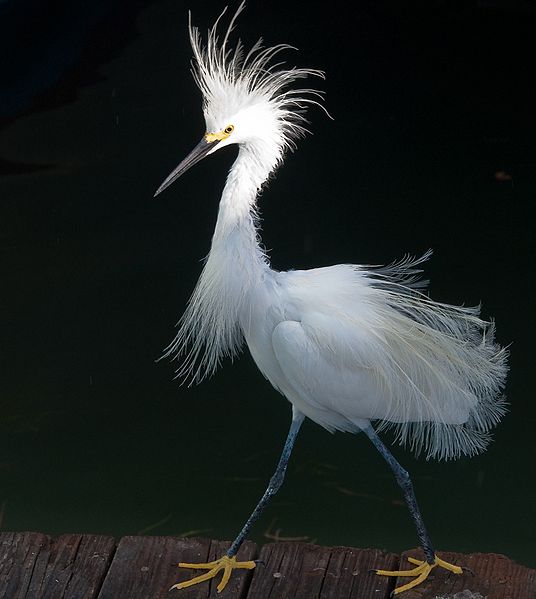
As stated above, their plumage was used a lot before that practice was stopped. Here is a photo from Wikipedia of the feathers displayed.

Snowy Egret (Egretta thula) Plumage ©WikiC

Snowy Egret (Egretta thula) Plumage ©WikiC

Their breeding habitat is large inland and coastal wetlands from the lower Great Lakes and southwestern United States to South America. The breeding range in eastern North America extends along the Atlantic and Gulf Coasts from Maine to Texas, and inland along major rivers and lakes. They nest in colonies, often with other waders, usually on platforms of sticks in trees or shrubs. Their flat, shallow nests are made of sticks and lined with fine twigs and rushes. Three to four greenish-blue, oval eggs are incubated by both adults. The young leave the nest in 20 to 25 days and hop about on branches near the nest before finally departing.

In warmer locations, some Snowy Egret are permanent residents; northern populations migrate to Central America and the West Indies. They may wander north after the breeding season, very rarely venturing to western Europe—the first bird sighted in Britain wintered in Scotland from 2001–2002.

The birds eat fish, crustaceans, insects and small reptiles. They stalk prey in shallow water, often running or shuffling their feet, flushing prey into view, as well “dip-fishing” by flying with their feet just over the water. Snowy Egrets may also stand still and wait to ambush prey, or hunt for insects stirred up by domestic animals in open fields.

Birds Illustrated by Color Photography – Revisited – Introduction

The above article is the first article in the monthly serial that was started in January 1897 “designed to promote Knowledge of Bird-Live.” These include Color Photography, as they call them, today they are drawings. There are at least three Volumes that have been digitized by Project Gutenberg.

To see the whole series of – Birds Illustrated by Color Photography – Revisited

*

(Information from Wikipedia and other internet sources)

Next Article – Old Abe

The Previous Article – The American Scoter

ABC’s Of The Gospel

Links:

Bible Birds – Herons

Snowy Heron– Audubon

Snowy Egret – Wikipedia

Snowy Egret – All About Birds

Birds of the Bible – Herons

*
Birds Vol 2 #1 – The American Scoter

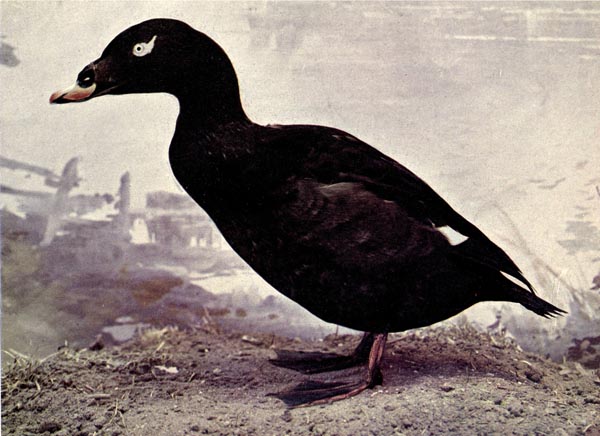
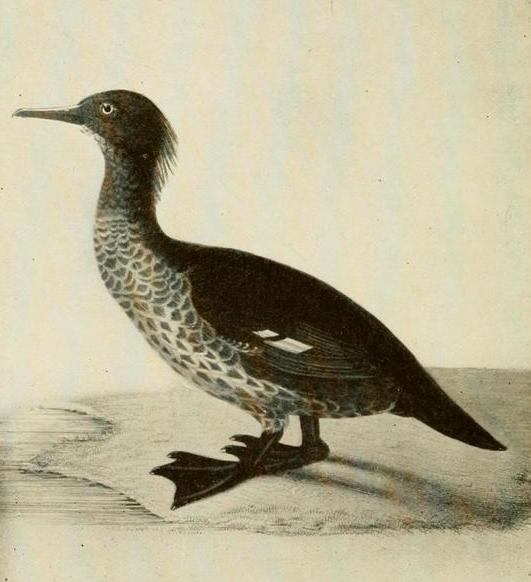
Black or American Scoter (Melanitta americana), From Birds Illustrated by Color Photography, 1897

White-winged Scoter, From Birds Illustrated by Color Photography, 1897

THE AMERICAN SCOTER.

imgt

HE specimen we give of the American Scoter is one of unusual rarity and beauty of plumage. It was seen off the government pier, in Chicago, in November, 1895, and has been much admired.

The Scoter has as many names as characteristics, being called the Sea Coot, the Butter-billed, and the Hollow-billed Coot. The plumage of the full grown male is entirely black, while the female is a sooty brown, becoming paler below. She is also somewhat smaller.

This Duck is sometimes found in great numbers along the entire Atlantic coast where it feeds on small shell fish which it secures by diving. A few nest in Labrador, and in winter it is found in New Jersey, on the Great Lakes, and in California. The neighborhoods of marshes and ponds are its haunts, and in the Hudson Bay region the Scoter nests in June and July.

The nest is built on the ground near water. Coarse grass, feathers, and down are commonly used to make it comfortable, while it is well secreted in hollows in steep banks and cliffs. The eggs are from six to ten, of a dull buff color.

Prof. Cooke states that on May 2, 1883, fifty of these ducks were seen at Anna, Union county, Illinois, all busily engaged in picking up millet seed that had just been sown. If no mistake of identification was made in this case, the observation apparently reveals a new fact in the habits of the species, which has been supposed to feed exclusively in the water, and to subsist generally on fishes and other aquatic animal food.

From col. F. M. Woodruff.
Summary

WHITE-WINGED SCOTER.Oidemia deglandi. Other names: “American Velvet Scoter,” “White-winged Coot,” “Uncle Sam Coot.”

Range—Northern North America; breeding in Labrador and the fur countries; south in winter.

Nest—On the ground, beneath bushes.

Eggs—Six to ten; pale, dull buff.


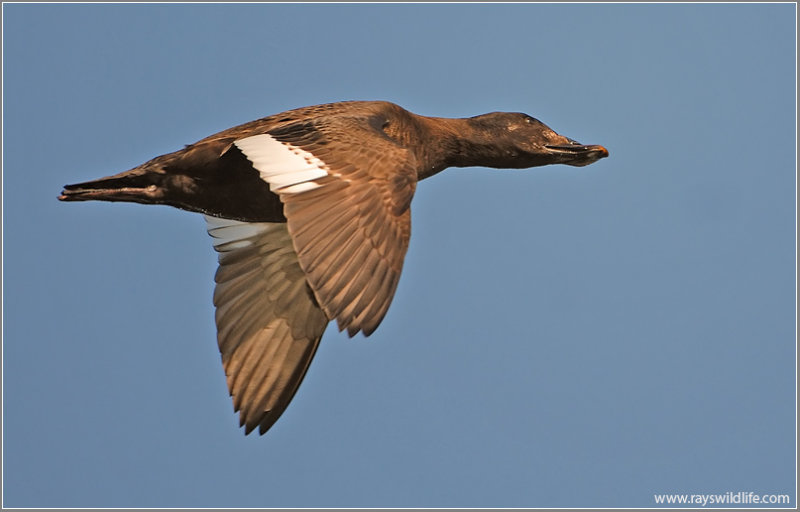
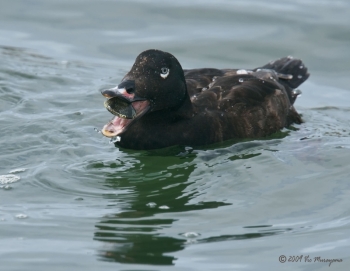
White-winged Scoter (Melanitta deglandi) by Ray

White-winged Scoter (Melanitta deglandi) by Ray

Lee’s Addition:

I have been hunted like a bird by those who were my enemies without cause; (Lamentations 3:52 ESV)

Look at the birds of the air: they neither sow nor reap nor gather into barns, and yet your heavenly Father feeds them. Are you not of more value than they? (Matthew 6:26 ESV)

The article is titled “American Scoter” but the photos and information is mostly about the “White-winged Scoter”. I have provided information on both of those Scoters. I have never seen any of the Scoters that I remember. They are in the Anatidae – Ducks, Geese & Swans family. I love those eyes of the White-winged Scoter.

The scoters are stocky seaducks in the genus Melanitta. The drakes are mostly black and have swollen bills. Females are brown.

They breed in the far north of Europe, Asia and North America, and winter further south in temperate zones of those continents. They form large flocks on suitable coastal waters. These are tightly packed, and the birds tend to take off together.

Their lined nests are built on the ground close to the sea, lakes or rivers, in woodland or tundra. These species dive for crustaceans and molluscs.

There are five species, grouped into two subgenera:

  • subgenus Oidemia (Black and Common Scoters)
  • subgenus Melanitta (Surf, Velvet and White-winged Scoters)

The presumed fossil “scoter” Melanitta ceruttii which lived in California is now placed in the genus Histrionicus.

The adult female Black or American Scoter averages about 2.1 lbs.(980 grams ) and 18 inches (45 cm) in length, while the adult male is on average 2.4 lbs. (1100 grams) and 19 inches (49 cm) in length. It is characterized by its bulky shape and large bill. The male is all black with a very bulbous bill which is mostly yellow,a good relation with the common scoter. The female is a brown bird with pale cheeks, very similar to female Common Scoter. This is America’s only black duck, although the female may have some yellow around the nostrils.

This species can be distinguished from other scoters, apart from Common, by the lack of white anywhere on the drake, and the more extensive pale areas on the female.

Black Scoter and Common Scoter have diagnostically distinct vocalisations

The lined nest is built on the ground close to the sea, lakes or rivers, in woodland or tundra. 5-7 eggs are laid. Each eggs weighs from 2-2.6 oz (60-74 grams), or 8% of the females body weight. The incubation period may range from 27 to 31 days. Females brood their young extensively for about 3 weeks, after which the still flightless young must fend for themselves.

The White-winged Scoter (Melanitta deglandi) or (Melanitta fusca deglandi) is a large sea duck.It is characterised by its bulky shape and large bill. This is the largest species of scoter. Females range from 2.1-4.2 lb (950-1950 grams) and 19-22 inches (48–56 cm), averaging 2.6 lb (1180 grams) and 21 inches (52.3 cm). She is brown with pale head patches. The male ranges from 3-4.7 lb (1360-2128 grams) and from 21-24 inches (53–60 cm), averaging 3.6 lb (1380 grams) and 22 inches (55 cm). He is all black, except for white around the eye and a white speculum. This scoter’s bill has a black base and a large knob.

The white patches are visible but not conspicuous when the wings are folded.

There are a number of differing characteristic of the Eastern Siberian race and the American race from Alaska and Canada to west of the Hudson Bay. Males of the American subspecies have browner flanks, dark yellow coloration of most of the bill and a less tall bill knob, approaching the Velvet Scoter. The Asian form has a very tall knob at the base of its mostly orange-yellow bill. Females are identical in the field.

The White-winged Scoter was named for French zoologist Dr. Côme-Damien Degland (1787–1856).

It was formerly considered to be conspecific with the Velvet Scoter, and some taxonomists still regard it as so. These two species, and the Surf Scoter, are placed in the subgenus Melanitta, distinct from the subgenus Oidemia, Black and Common Scoters.

The White-winged Scoter breeds over the far north of Asia east of the Yenisey Basin, and North America. It winters further south in temperate zones, on the Great Lakes, the coasts of the northern USA and the southern coasts of Canada, and Asia as far south as China. It forms large flocks on suitable coastal waters. These are tightly packed, and the birds tend to take off together.

White-winged Scoter (Melanitta deglandi) ©BirdPhotos

White-winged Scoter (Melanitta deglandi) ©BirdPhotos

Birds Illustrated by Color Photography – Revisited – Introduction

The above article is the first article in the monthly serial that was started in January 1897 “designed to promote Knowledge of Bird-Live.” These include Color Photography, as they call them, today they are drawings. There are at least three Volumes that have been digitized by Project Gutenberg.

To see the whole series of – Birds Illustrated by Color Photography – Revisited

*

(Information from Wikipedia and other internet sources)

Next Article – The Snowy Heron

Previous Article – The American Woodcock

Wordless Birds

Links:

Anatidae – Ducks, Geese & Swans

Scoters – Wikipedia

Black or American Scoter – Wikipedia

White-winged Scoter – Wikipedia

*