Birdwatching Term – Mobbing

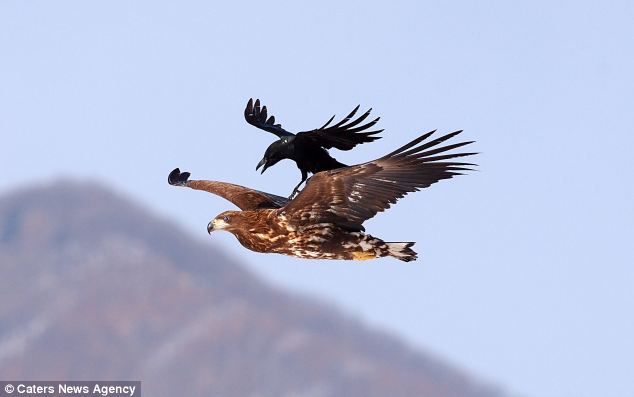
Crow on Eagles Back ©©

Maybe A Little Too Close – Crow on Eagles Back ©©

Birdwatching Term – Mobbing

In the recent article, The Old Orchard Bully – Chapter 2, the whole group of birds united to chase off the Black Cat. That is called, “mobbing.”

Some ask why don’t the bigger birds fight back? Here are a few quotes from various sources:

“This behavior – like calling your family for help – is used by many bird species. The best time to observe mobbing is spring and early summer, when breeding birds are trying to protect their nests and young. Birds including swallows, blackbirds, and even these American Crows, seen here mobbing a Red-tailed Hawk, know that there is strength and power in numbers. And they’ve learned to join forces to protect themselves. Be sure to watch the video!”

Quote from Why Don’t Hawks Fight Back? :All agreed that if a red-tailed hawk reached out and grabbed a crow with its talons, that would be the end of the crow. Or as one of the professionals put it, in scientific terms, “the crow would be toast.” But although large raptors have the necessary weapons, the energy cost of pursuing or otherwise attempting to catch a crow is normally not worth it. Crows are agile creatures and would be very difficult to catch in flight. So a hawk typically ignores the crows or flies away.”

A Great Horned Owl being mobbed!

*

Just as the Lord helps His Created critters, the Lord gives us promises about seeking His help:

But the LORD your God you shall fear; and He will deliver you from the hand of all your enemies.” (2 Kings 17:39 NKJV)

Give us help from trouble, For the help of man is useless. Through God we will do valiantly, For it is He who shall tread down our enemies. (Psalms 60:11-12 NKJV)

I have pursued my enemies and overtaken them; Neither did I turn back again till they were destroyed. (Psalms 18:37 NKJV)

O my God, I trust in You; Let me not be ashamed; Let not my enemies triumph over me. (Psalms 25:2 NKJV)

My times are in Your hand; Deliver me from the hand of my enemies, And from those who persecute me. (Psalms 31:15 NKJV)

For I will not trust in my bow, Nor shall my sword save me. But You have saved us from our enemies, And have put to shame those who hated us. In God we boast all day long, And praise Your name forever. Selah (Psalms 44:6-8 NKJV)

Some interesting links about mobbing:

Small Birds Mob Big Ones – Bird Note, with audio

Mobbing – RSPB

The Superb Fairywren – The Corporate Mob ~ by a j mithra

Birdwatching Terms

Birdwatching Tips 

Watching Birds

Wordless Birds

*


Golden Eagle ~ Bird-Brain Might Be a Compliment!

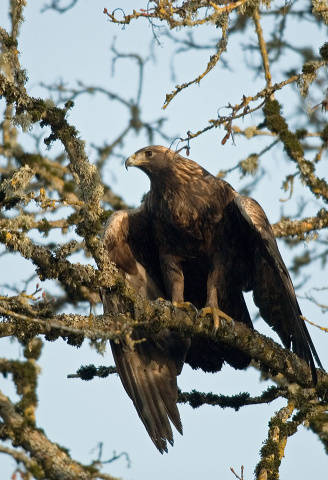
Golden Eagle (Aquila chrysaetos) ©USFWS

Golden Eagle (Aquila chrysaetos) ©USFWS

Bird-Brain Might Be a Compliment!

Hey, boys and girls, Golden Eagle here. How have you been since last time? Do you ever wonder why the Universe is here? Why is the Earth here? Why are we alive? Is there something after death? Will I see my departed loved ones again? What is my purpose for existence? Where did my conscience come from? Questions are great and never be afraid to ask your parents or teachers the hard questions.

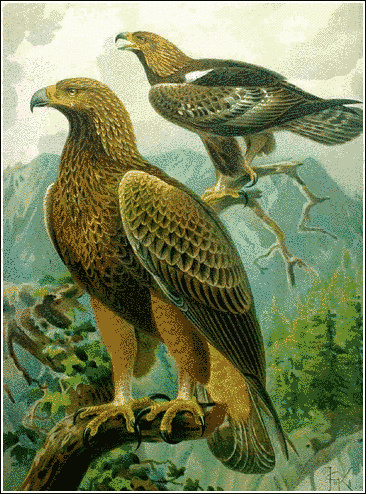
Golden Eagle ©PD

Golden Eagle ©PD

I am not a parrot! I am a high-flying eagle, but I am a little bit familiar with the Bible, the Word of God. In Revelation 4:11 the Bible says that Jesus “hast created ALL THINGS, and for thy pleasure they are and were created.” Even the animals can teach us things if we want to learn. Do you know, a small feathered fowl just landed on my perch? I’ll be back in a minute. I need to send my feathered friend on a mission, in order to reclaim my perch.

“But ask now the beasts (animals), and they shall teach thee; and the fowls of the air (the birds), and they shall teach thee. Or speak to the earth, and it shall teach thee; and the fishes of the sea shall declare unto thee.” What will these things teach us? WHO KNOWETH NOT IN ALL THESE THAT THE HAND OF THE LORD HATH WROUGHT THIS? IN WHOSE HAND IS THE SOUL OF EVERY LIVING THING, AND THE BREATH OF ALL MANKIND.” Jesus Christ has created everything.

Ladybug ©WikiC

Ladybug ©WikiC

From the colors of the rainbow to the spots on a ladybug, Jesus created it all! Some of you have watched Disney’s Tinker Bell movies. They have water fairies, and color fairies, and Spring fairies, etc. But did you know?

Fairies are not real, but God’s angels are real!

There are Angels for the wind. (Revelation 7:1) “I saw four angels standing on the four corners of the earth, holding the four winds of the earth…”

“And I heard the angel of the waters say…” There is a water angel!

“And the fourth angel poured out his vial upon the sun…” (Revelation 16:8)

Jesus Christ created visible and invisible things! In every blade of grass, there is a lesson about photosynthesis. Our DNA is packed full of information from God. Your DNA had the information for the color of your eyes, the color of your hair, the thickness of your bones, and how tall you will eventually reach.

Water floats when it freezes! Did you ever wonder why? Most things, when they change from a liquid to a solid get heavier, but not water. Water gets lighter, and ice floats in your glass! Why? Because Jesus designed it that way, so in the winter the lakes don’t freeze solid! The ice freezes on top of the lake and fish and plants can continue to live in the winter time.

Snowflake ©WikiC

Snowflake ©WikiC

Every snowflake is different. Did you ever wonder why? “Hast thou entered into the treasures of the snow? or hast thou seen the treasures of the hail, which I have reserved against the time of trouble, against the day of battle and war?” (Job 38:22-23) You know, snow helped George Washington in the battle for America’s Independence from England. Napoleon was turned back from Russia because of the cold and snow.

You see, there are so many things to learn. The greatest of all is the learn about the Lord Jesus Christ. He is the One-true Living God. Everything was made for Him! He wants you to get saved, and then to live for Him. When you do that, you will begin to fulfil the purpose God intended you to have.

Us birds, we have our place in God’s economy! And boys and girls, you have your place. Read the Bible every day to find out more.  Sometimes, birds are smarter than you think. Maybe, if someone calls you a “bird-brain” in the future, that might be a compliment!

This is Golden Eagle flying off! See Ya…

*

Golden Eagle

Wordless Birds

Bible Birds

*

The Burgess Bird Book For Children – Introduction

House Wren (Troglodytes aedon) by Ian

House Wren (Troglodytes aedon) by Ian

The Burgess Bird Book For Children

By Thornton W. Burgess

TO THE CHILDREN AND THE BIRDS OF AMERICA THAT THE BONDS OF LOVE AND FRIENDSHIP BETWEEN THEM MAY BE STRENGTHENED THIS BOOK IS DEDICATED


PREFACE

This book was written to supply a definite need. Its preparation was undertaken at the urgent request of booksellers and others who have felt the lack of a satisfactory medium of introduction to bird life for little children. As such, and in no sense whatever as a competitor with the many excellent books on this subject, but rather to supplement these, this volume has been written.

Its primary purpose is to interest the little child in, and to make him acquainted with, those feathered friends he is most likely to see. Because there is no method of approach to the child mind equal to the story, this method of conveying information has been adopted. So far as I am aware the book is unique in this respect. In its preparation an earnest effort has been made to present as far as possible the important facts regarding the appearance, habits and characteristics of our feathered neighbors. It is intended to be at once a story book and an authoritative handbook. While it is intended for little children, it is hoped that children of larger growth may find in it much of both interest and helpfulness.

Mr. Louis Agassiz Fuertes, artist and naturalist, has marvelously supplemented such value as may be in the text by his wonderful drawings in full color. They were made especially for this volume and are so accurate, so true to life, that study of them will enable any one to identify the species shown. I am greatly indebted to Mr. Fuertes for his cooperation in the endeavor to make this book of real assistance to the beginner in the study of our native birds.

It is offered to the reader without apologies of any sort. It was written as a labor of love—love for little children and love for the birds. If as a result of it even a few children are led to a keener interest in and better understanding of our feathered friends, its purpose will have been accomplished.

THORNTON W. BURGESS

CONTENTS

Introduction

  1. Jenny Wren Arrives.  – Introducing the House Wren
  2. The Old Orchard Bully. – The English or House Sparrow.
  3. Jenny Has a Good Word for Some Sparrows. – The Song, White-throated and Fox Sparrows.
  4. Chippy, Sweetvoice, and Dotty. – The Chipping, Vesper and Tree Sparrows.
  5. Peter Learns Something He Hadn’t Guessed. – The Bluebird and the Robin.
  6. An Old Friend In a New Home. – The Phoebe and the Least Flycatcher.
  7. The Watchman of the Old Orchard. – The Kingbird and the Great Crested Flycatcher.
  8. Old Clothes and Old Houses. – The Wood Peewee and Some Nesting Places.
  9. Longbill and Teeter. – The Woodcock and the Spotted Sandpiper.
  10. Redwing and Yellow Wing. – The Red-winged Blackbird and the Golden-winged Flicker.
  11. Drummers and Carpenters. – The Downy, Hairy and Red-headed Woodpeckers.
  12. Some Unlikely Relatives. – The Cowbird and the Baltimore Oriole.
  13. More of the Blackbird Family. – The Orchard Oriole and the Bobolink.
  14. Bob White and Carol the Meadow Lark. – The So-called Quail and the Meadow Lark.
  15. A Swallow and One Who Isn’t. The Tree Swallow and the Chimney Swift.
  16. A Robber in the Old Orchard. – The Purple Martin and the Barn Swallow.
  17. More Robbers. – The Crow and the Blue Jay.
  18. Some Homes in the Green Forest. – The Crow, the Oven Bird and the Red-tailed Hawk.
  19. A Maker of Thunder and a Friend in Black. – The Ruffed Grouse and the Crow Blackbird.
  20. A Fisherman Robbed. – The Osprey and the Bald-headed Eagle.
  21. A Fishing Party. – The Great Blue Heron and the Kingfisher.
  22. Some Feathered Diggers. – The Bank Swallow, the Kingfisher and the Sparrow Hawk.
  23. Some Big Mouths. – The Nighthawk, the Whip-poor-will and Chuck-wills-widow.
  24. The Warblers Arrive. – The Redstart and the Yellow Warbler.
  25. Three Cousins Quite Unlike. – The Black and White Warbler, the Maryland Yellow-Throat and the Yellow-breasted Chat.
  26. Peter Gets a Lame Neck. – The Parula, Myrtle and Magnolia Warblers.
  27. A New Friend and an Old One. – The Cardinal and the Catbird.
  28. Peter Sees Rosebreast and Finds Redcoat. – The Rose-breasted Grosbeak and the Scarlet Tanager.
  29. The Constant Singers. – The Red-eyed, Warbling and Yellow-throated Vireos.
  30. Jenny Wren’s Cousins. – The Brown Thrasher and the Mockingbird.
  31. Voices of the Dusk. – The Wood, Hermit and Wilson’s Thrushes.
  32. Peter Saves a Friend and Learns Something. – The Towhee and the Indigo Bunting.
  33. A Royal Dresser and a Late Nester. – The Purple Linnet and the Goldfinch.
  34. Mourner the Dove and Cuckoo. – The Mourning Dove and the Yellow-billed Cuckoo.
  35. A Butcher and a Hummer. – The Shrike and the Ruby-throated Hummingbird.
  36. A Stranger and a Dandy. – The English Starling and the Cedar Waxwing.
  37. Farewells and Welcomes. – The Chickadee.
  38. Honker and Dippy Arrive. – The Canada Goose and the Loon.
  39. Peter Discovers Two Old Friends. – The White-breasted Nuthatch and the Brown Creeper.
  40. Some Merry Seed-Eaters. – The Tree Sparrow and the Junco.
  41. More Friends Come With the Snow. – The Snow Bunting and the Horned Lark.
  42. Peter Learns Something About Spooky. – The Screech Owl.
  43. Queer Feet and a Queerer Bill. – The Ruffed Grouse and the Crossbills.
  44. More Folks in Red. – The Pine Grosbeak and the Redpoll.
  45. Peter Sees Two Terrible Feathered Hunters. – The Goshawk and the Great Horned Owl.

Lee’s Addition:

I think you will greatly enjoy this book. Birds and their behaviors are presented in a story, but many birdwatching truths are introduced. Look for questions and Christian principle at the end of the chapters. These are also a good way to read and teach your child or grandchild. Enjoy!

(P.S. – Just found a source for audio for these chapters. They will be attached.)

(The first chapter is being released today)


The Project Gutenberg EBook of The Burgess Bird Book for Children, by Thornton W. Burgess

This eBook is for the use of anyone anywhere at no cost and with almost no restrictions whatsoever. You may copy it, give it away or re-use it under the terms of the Project Gutenberg License included with this eBook or online at http://www.gutenberg.org

Burgess-Bird-Book-for-Children


 Burgess-Bird-Book-for-Children


Savannah Sparrow by Ray    Wordless Birds


Bible Birds – Vulture Introduction

Vulture Introduction

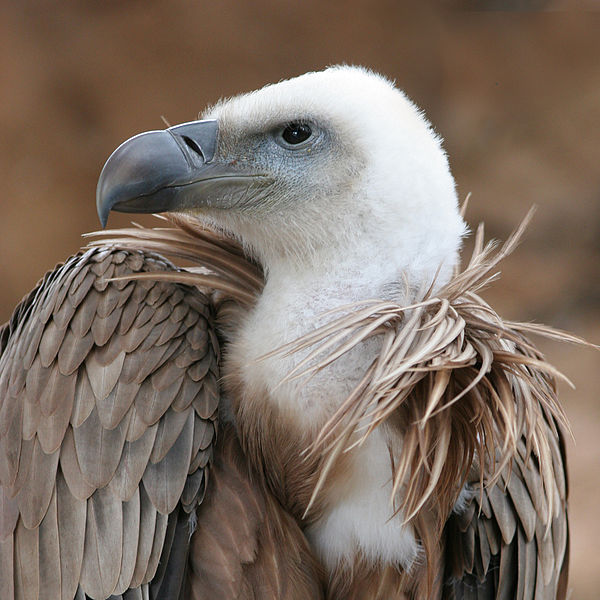
Griffon Vulture (Gyps fulvus) WikiC

Griffon Vulture (Gyps fulvus) WikiC

And these you shall regard as an abomination among the birds; they shall not be eaten, they are an abomination: the eagle, the vulture, the buzzard, (Leviticus 11:13 NKJV)

  • Christian Standard Bible (CSB) “but these are the ones you may not eat: eagles, bearded vultures, black vultures,
  • Complete Jewish Bible (CJB) “but these you are not to eat: eagles, vultures, ospreys,
  • Easy-to-Read Version (ERV) “But don’t eat any of these birds: eagles, vultures, buzzards,
  • English Standard Version (ESV) “But these are the ones that you shall not eat: the eagle, the bearded vulture, the black vulture,
  • Expanded Bible (EXB) “But do not eat these birds: eagles, vultures, black vultures, 13 red kites, falcons, any kind of kite,
  • GOD’S WORD Translation (GW) “But here are the birds that you should never eat: eagles, bearded vultures, black vultures,
  • International Children’s Bible (ICB)  “But do not eat these birds: eagles, vultures, black vultures,
  • International Standard Version (ISV) “You may eat all clean birds, 12 but you must not eat any of these: the eagle, vulture, osprey, 13 buzzard, any kind of kite,
  • Names of God Bible (NOG) “But here are the birds that you should never eat: eagles, bearded vultures, black vultures,
  • New English Translation (NET) “But do not eat these birds: eagles, vultures, black vultures,
  • New International Reader’s Version (NIRV) “But there are many birds you can’t eat. They include eagles, vultures, and black vultures.
Leviticus 11:18 and Deuteronomy 14:17 (NKJV) mention a carrion vulture. Jeremiah 12:9 mentions a speckled vulture.
 
All of these verses give us several different kinds of vultures.
vulture
bearded vulture – covered in Bible Birds – Ossifrage
black vulture
carrion vulture
speckled vulture
 
I am sure if I checked all of the translation available in BibleGateway, I would find some other type of Vulture. That might be a project you could do.
 
The vultures belong to the same family as the Buzzards recently written about. Accipitridae – Kites, Hawks & Eagles Family.
 
“A vulture is a scavenging bird of prey. The two types of vultures are the New World vultures, including the Californian and Andean condors, and the Old World vultures, including the birds that are seen scavenging on carcasses of dead animals on African plains. Some traditional Old World vultures (including the bearded vulture) are not closely related to the others, which is why the vultures are to be subdivided into three taxa rather than two. New World vultures are found in North and South America; Old World vultures are found in Europe, Africa, and Asia, meaning that between the two groups, vultures are found on every continent except Australia and Antarctica.”

White-backed Vultures (Gyps_africanus) on zebra carcass ©WikiC

From that description, again, you can see why those birds aren’t eaten. Eating something they just killed would be bad enough, but to eat things that had already died. That is not the kind of bird you would want to eat at Thanksgiving.
 
Here are some of the Vultures from around the world:

ABC’s of the Gospel


Dad and Mom its feeding time..

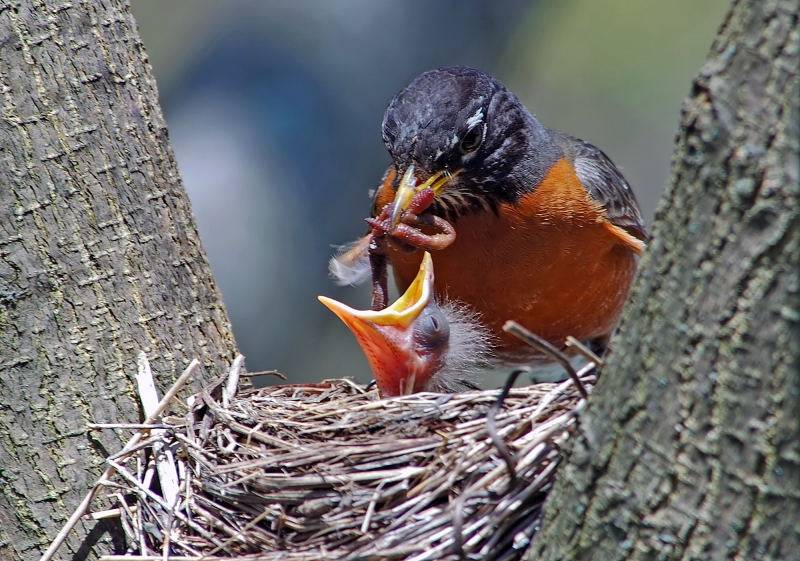
American Robin (Turdus migratorius)with youngsters by Raymond Barlow

American Robin (Turdus migratorius)with youngsters by Raymond Barlow

This is for every blessed parent who so anxiously works hard in raising their kids in the way of the Lord…
And for the kids being fed by their parents.

Birds emerge from the shell blind and so weak
they can’t even hold their heads up.
Parents must feed babies frequently because
baby birds digest their food quickly.

The larger the babies grow, the more food they require.
Baby Crows need at least half their weight in food
every day just to stay alive.
a baby Belted Kingfishers eat 1 to 1 3/4 times
their weight in fish every day.

American Robin (Turdus migratorius) with young in nest

American Robin (Turdus migratorius) with young in nest

On average, a songbird nestling
receives four-12 feedings
of protein-rich insect food every hour.
Young Hawks are fed about once an hour.
Feeding duties aren’t always divided
equally between the sexes.
This varies with the species and
the inclination of the individual bird.
One male House Wren – a single male
whose mate disappeared – fed his nestlings
1,217 times between 4:15 a.m. and 8 p.m.
That’s about one trip every 47 seconds.
It’s astonishing how much a young bird can eat.
In one instance, a young American Robin,
who was supposed to leave the nest that day,
was experimentally fed all the earthworms it would eat.
Each worm was measured.
The Robin ate 14 feet of worms.

Orni-Theology

Orni-Theology

If birds can feed so much to their chicks every day,

how much would God expect us as a parent
to nourish our kids with spiritual food.
Well, do we feed the word of God to our kids every day?
Kids, are you eating well? Are you reading and listening to the Word of God?

“In the beginning was the Word, and the Word was with God, and the Word was God.” John 1:1/blockquote>

Yours in YESHUA,
a j mithra
(Found this on the Kid’s blog. AJ wrote it especially for that blog before joining the Lord in Glory)

*

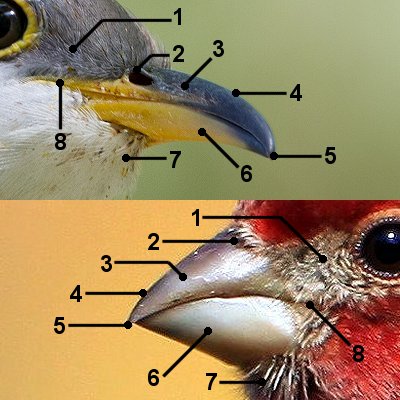
Birdwatching Terms – About’s Bird Bill Parts

Bird Bill Parts From About

About's Bill-Parts ©Dan Pancamo/nigel

About’s Bill-Parts ©Dan Pancamo/nigel

Bird Bill Parts.  ©Dan Pancamo / nigel

The dove came to him toward evening, and behold, in her beak was a freshly picked olive leaf. So Noah knew that the water was abated from the earth. (Genesis 8:11 NASB)

A bird’s bill, also called a beak, is a critical piece of its anatomy, not only for foraging, defense, singing and other behaviors, but also for birders to make a proper identification. Depending on the bird, a bill can provide clues to far more than species: age, gender, diet and foraging behaviors can all be learned by studying a bill. By knowing the basic parts of a bill and the bird’s face and head immediately adjacent to the bill, birders can be better prepared to look for the subtle clues bills can reveal about every bird.

Overall Bill Features

Some of the most important aspects of a bird’s bill are not specific features, but the general jizz of the bill. When first studying bird bills, look for…

  • Size: How large does the bill appear in proportion to the bird’s head? Check for length as compared to the length of the head as well as the width of the bill and how that width may change along the bill’s length.
  • Shape: Bill shapes vary widely, from delicate triangles or thin, needle-like bills to thick, bulbous bills to sharply curved bills to radical shapes that include spoon-like tips or horny casques. When the shape is very unique, that can be a diagnostic clue for a bird’s identity even if other field marks cannot be seen.
  • Color: The color of a bill can be a clue for species, gender or age. Note the overall color as well as any specific markings, such as a colored tip or base, subterminal band or color differences between the top and bottom of the bill.

Specific Bill Parts

When birders can get a good look at a bill, there are a number of different parts that can yield clues about the bird’s identity, such as…

  1. Lores: While not part of the bill itself, the lores are the space between the base of a bird’s bill and the forward edge of its eyes. This area may be a different color or show a smudge or eye line that can be an identification clue.
  2. Nares: More commonly called the nostrils, the position of the nares as well as their size and shape are important to note for bird’s identities. In some types of birds, such as raptors, the nares are covered by a fleshy cere, while in others, such as many seabirds, elongated tube-like nares help filter seawater.
  3. Maxilla: Also called the upper mandible, the maxilla is the top half of a bird’s bill. Size, length and shape will vary, and some birds have knobs, fleshy wattles or other features that distinguish the maxilla.
  4. Culmen: Difficult to see on many bird species, the culmen is the center line drawn down the length of a bird’s maxilla. In some species, this can be a very distinct peak that divides the sides of the bill, while it may not be noticeable in other species.
  5. Tip: The tip of a bird’s bill may be different shapes, such as blunt or sharply pointed, depending on the bird’s general diet. Hooks are common at the tip of carnivorous birds’ bills, while many waterfowl have small bumps, called nails, on the tip of the maxilla.
  6. Mandible: The lower half of a bird’s bill is called the mandible or lower mandible. The color may vary from the maxilla either along the entire length or just at one end, and can be a great clue for identification. Some birds, such as many gulls, may show spots or other markings just on the mandible.
  7. Chin: Not directly part of the bill, the chin is the area of feathers immediately adjacent to the base of a bird’s mandible. In some species, the color of the chin may vary from the throat or face, providing a valuable identification clue.
  8. Gape: This is a fleshy area at the base of the bill where the upper and lower mandibles meet. In young birds, it is often enlarged or may seem so because the birds have not developed their mature feathers to help conceal it, and it may be brightly colored so their mouths are more noticeable when they beg for food. On some species, such as the bananaquit, the gape remains colorful on adult birds.

Bananaquit (Coereba flaveola) by Raymond Barlow

Bananaquit (Coereba flaveola) by Raymond Barlow

It can be difficult to see many of the subtle details of a bird’s bill, but understanding the different bill parts is a great way for birders to refine their identification skills and learn more about every bird they see.

Photo – Yellow-Billed Cuckoo (Above) © Dan Pancamo
Photo – House Finch (Below) © nigel

*

This is a good introduction to the bird’s bill. Look for more articles on the individual parts of the beak.

From About Birding/Wild Birds – Bird Identification

More Birdwatching Terms 

Birdwatching Tips

*


Why Use The Birds of the World?

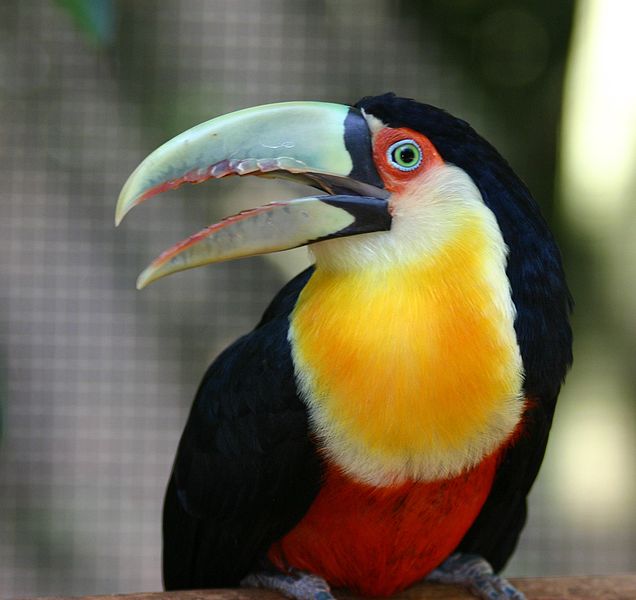
Green-billed Toucan (Ramphastos dicolorus) ©WikiC

Green-billed Toucan (Ramphastos dicolorus) ©WikiC

The list of all the Birds of the World are updated about every four months. Which we try to keep up with their (I.O.C.) newest lists.

You are probably wondering why you would need it. Let me share some things about it and then give you some ideas how it my be handy for one of your school projects.

The I.O.C. is actually the International Ornithological Committee. “Ornithological” basically means those who study birds or bird related. They maintain a list of all the birds around the world. They set standards of how to name them, what scientific classification to place the birds in, and divide them into Orders and Families, etc.

They are needed because we may call a bird by one name, yet someone in a different country or area may call it by a different name. They realize that those two names belong to the same bird. It is a very hard task to keep track of all those 10,000 plus birds, but that is what they try to do.

They give every bird an English name as a standard. Then they also want every one to spell the words the same. For instance, some people spell the “Grey” or “Gray” to mean the same color. To keep things simple, all the birds are spelled as “Grey.” That is just one example.

There are committees all over the world working on the birds of the area they live in, then those committees get together to combine all the list to make one big list. That is what was just updated.

On our Birds of the World section, you will find the birds listed by Orders (40 main classifications), then by Families (240 groups of closely related birds). The reason all of that is not duplicated here would be very time-consuming. There are hundreds of pages and thousands of photos on that site.

Wood Duck (Aix sponsa) by Dan

Wood Duck (Aix sponsa) by Dan

Projects for school or your own information:

You know the name of a bird’s name, but need to find  the Species name,  Go to the Species Index to find these choices:

If you know that it called Madagascan something, go to the First Name of Bird  index and choose the “M” page

If you know it is a Duck, go to the Last Name of Bird  index and choose the “D – Last Name” page.

The Families have four indexes to help you find the Families of birds.

When you find your bird in the right family, almost every bird has a link to a photo or video.

I will share more tips on how to use those indexes in another article.

Another reason is because we believe the Lord created all the beautiful birds and He should get all the credit.

In the beginning God created the heavens and the earth. (Genesis 1:1 NKJV)

So God created great sea creatures and every living thing that moves, with which the waters abounded, according to their kind, and every winged bird according to its kind. And God saw that it was good. (Genesis 1:21 NKJV)

*

Golden Eagle – You’re Invited To Supper

Cedar Waxwing Eating by Steve Slayton

Cedar Waxwing Eating by Steve Slayton

You’re Invited To Supper

Golden Eagle at your service. Boys and girls how have you been since our Golden Eagle ©PDlast encounter? Man do I like to eat. I am so grateful that the Lord Jesus Christ created me with a keen sense of sight. I can see my prey from quite a distance and can fly almost as quick as a bullet to sink my talons into my supper. You know in the very beginning in the Garden of Eden God supplied all the food that we would need. There were colorful fruit trees of every sort. The trees were pleasant to the eyes. They were good for food and the tree of life was in the middle of the garden. They tell me that if Adam and Eve had eaten from the tree of life, they would have lived forever! Think about that for a minute! Why some bristlecone pine trees live thousands of years. Trees live longer than people do. But remember, God created man in His own image and if he hadn’t sinned he would have lived forever! There’s a guy in the Bible that lived to the ripe old age of 969 years old. Who was that? You’re right if you said “Methuselah.”
Did you know that girls and boys will live a long time again in the future? In Isaiah 65:20 God says,”There shall be no more thence an infant of days, nor an old man that hath not filled his days: for the child shall die a hundred years old…” People are going to live a long time when Jesus returns and sets up His Millennial Kingdom down here on this Earth. He will rule from Jerusalem for 1000 years! And some people in the future might get to live to be a thousand years old.

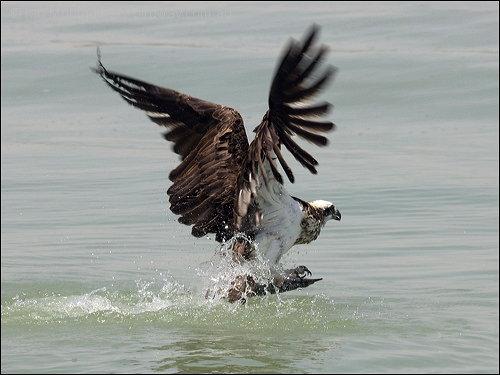
Eastern osprey by Ian

Eastern osprey by Ian

Hey guys and gals did you know that the Bible talks about two great suppers? One for humans and one for us birds. The birds of prey have been invited to a supper. Now this one will not be fun for the humans that are LOST. You probably have heard about World War I and World War II in school. Well the Bible says that there will at least be another world-wide war. It is called the Battle of Armageddon. At the end of this battle, Jesus has invited us birds to a supper.

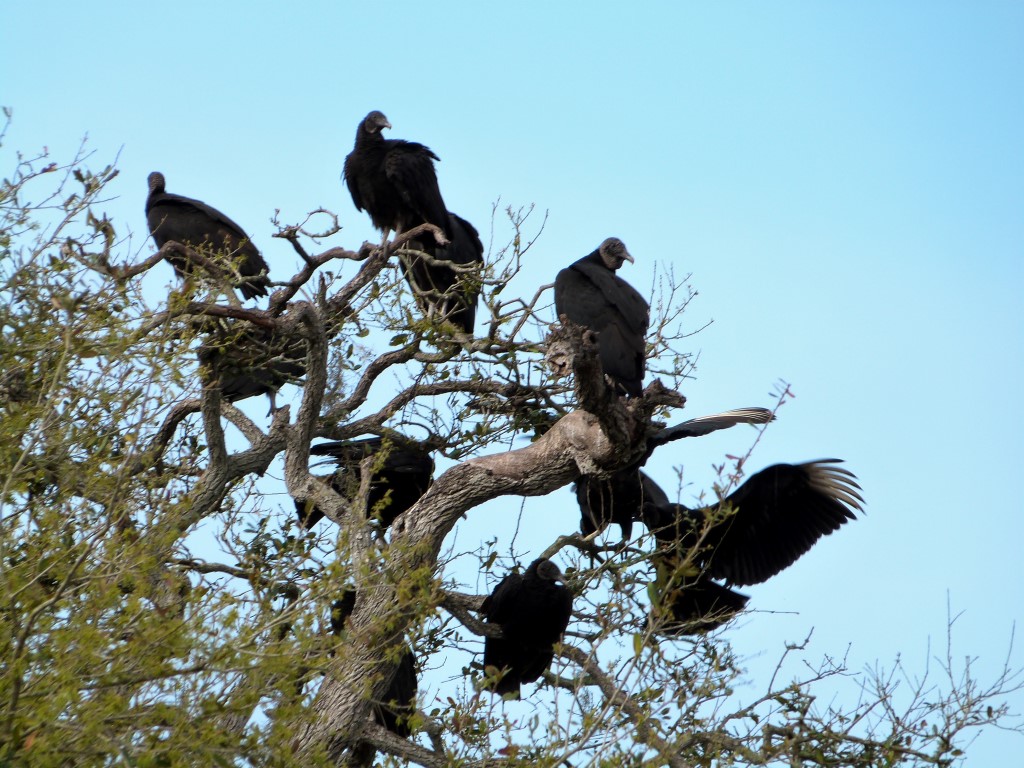
Black Vulture Tree by Lee Myakka SP

Black Vulture Tree by Lee Myakka SP

“And I saw an angel standing in the sun; and he cried with a loud voice, saying to all the birds that fly in the midst of heaven, Come and gather yourselves together unto the supper of the great God.” And then it tells us what will happen to people who have fought against God and His Son, Jesus Christ. “That ye may eat the flesh of kings, and the flesh of captains, and the flesh of mighty men, and the flesh of horses, and of them that sit on them, and the flesh of all men, both free and bond, both small and great.” Remember these words are from the Bible, God’s Holy Word. Whatever is in the Bible is TRUE. We are to believe each and every word. We are to obey what we find in the Bible. Some things are true and some things are false. The Bible is always true. Check it out on any page and you will find that what it says is true always!

Marriage Supper of the Lamb

Well, human dudes there is another SUPPER that God invites all of you to enjoy. In the Bible it is called the Marriage Supper of the Lamb (Jesus). And just like Adam and Eve had plenty of food in the Garden of Eden, there is plenty of food in God’s Heaven. The Bible even says in Revelation 22:2 that “the tree of life…bare twelve manner of fruits, and yielded her fruit every month…” There is food in the New Jerusalem and even months in God’s created Cosmos in the future!

Jesus Knocking at Door

Boys and Girls, Jesus stands at the door of your life, your soul, your heart. And He knocks, “Behold I stand at the door, and knock; if any man hear my voice, and open the door, I will come in to him, and will sup with him, and he with me.” Rev 3:20  You will get to have supper with Jesus Christ someday up in Heaven. These words are “true and faithful.”

“And he saith unto me, Write, Blessed (Happy) are they which are called unto the marriage supper of the Lamb.” Rev 19:9 Everything is ready. Jesus died on the cross to pay for your sins. His blood covers all your sin. He has called each of you to His future supper. Will you say Yes to Jesus? Call on Him in prayer and ask Jesus to save you. “For whosoever shall call upon the name of the Lord shall be SAVED.” Romans 10:13

My wings are tired, and I am going back to my nest! See yah next time! Golden Eagle and his book, the Bible! Smile…

*

Golden Eagle

ABC’s of the Gospel

Bible Birds

Kid’s Section

*

ABC’s of the Gospel

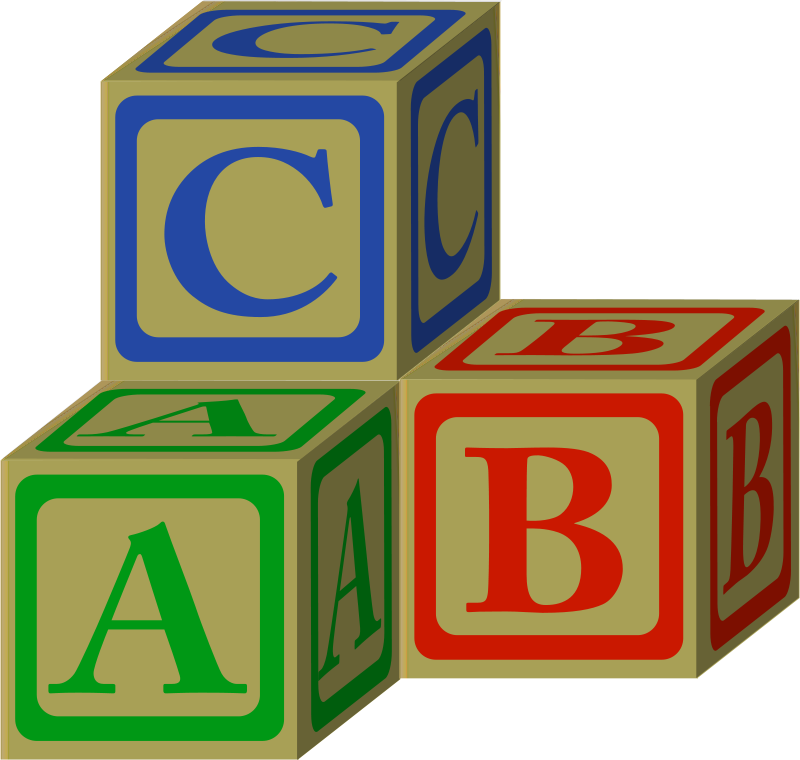
ABC Blocks

ABC’s of the Gospel

The ABC’s of the Gospel:


  • All have sinned and come short of the glory of God (Romans 6:23)
  • But God commendeth His love toward us, in that while we were yet sinners, Christ died for us. (Romans 5:8; John 1:29)
  • Call upon the name of the Lord (Romans 10:13; Isaiah 1:18)

Lead in the sinner’s prayer.

  • Dear God, I know I’m a sinner…
  • I ask you to forgive my sins right now…
  • I believe that Jesus died to save me…
  • I receive Him now as my Savior…
  • In Jesus’ name I pray, Amen

(Adopted from Pastor Jerry Smith’s – Dealing With Children)

Use A Simple Plan – Above

Obtain permission from parents for baptism if they accept the Lord.

*

More Good News

*

Child’s Book of Water Birds – Re-visited

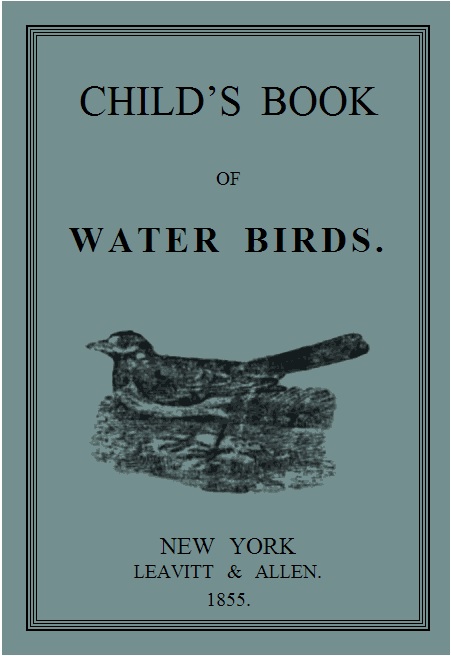
Child's Book of Water Birds - Book Cover

The Child’s Book of Water Birds

Revisited

An anonymous writer wrote the Child’s Book of Water Birds in 1855. You can see how Project Gutenberg published it as an e-book. (Public Domain) CLICK HERE

Below are the links to my “Re-visited” versions here. Moved these over from the Birds of the Bible for Kids blog and can be found in the Kid’s Section under Watching Birds.

The six different birds were written to a very young reader. I trust you will enjoy reading them for yourself or to your children or grand-children. They can be used to introduce you/them to birds.

Here are my versions of the Six Birds:

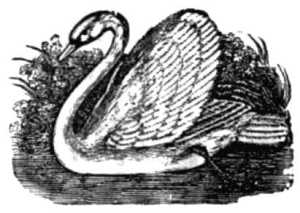
The Swan

Childs Bk of Water Birds swan

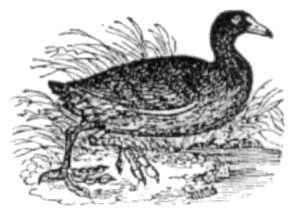
The Coot

Childs Bk of Water Birds coot

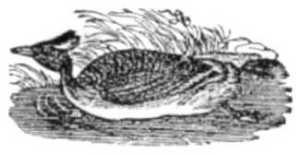
The Dabchick

Childs Bk of Water Birds dabchick

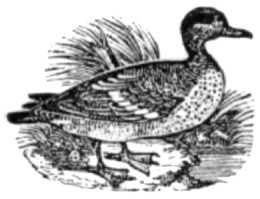
The Teal

Childs Bk of Water Birds teal

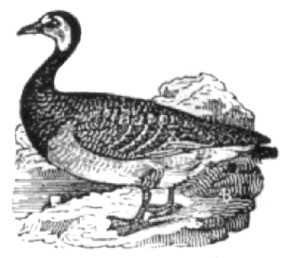
The Goose

Childs Bk of Water Birds goose

The Oystercatcher

Childs Bk of Water Birds oystercatcher

*

The Bible tells us that we are to

Train up a child in the way he should go: and when he is old, he will not depart from it. (Proverbs 22:6 KJV)

Introducing children to the amazing birds the Lord has created is a tiny step to help with that training. Introducing them to the Lord Jesus Christ, is the major step.

Wordless Birds

*

Keep A Journal

Keep A Journal

Wood Duck (Aix sponsa) by Ray3

Keep a Journal ~ by Ms. Lee

Out of the ground the LORD God formed every beast of the field and every bird of the air, and brought them to Adam to see what he would call them. And whatever Adam called each living creature, that was its name. (Genesis 2:19 NKJV)

Golden Eagle keeps telling you to write in your Journal. So, what is a journal?

A birdwatching journal is where you put down things about the bird you are looking at now or when you are at home. I keep a list of the birds I see every time I go birdwatching. It is a little 3X5 inch Memo Book (for my pocket) and a bigger one when I am at home. Here is what I put down in mine.

  • Date
  • Time
  • Where I am
  • Weather (sunny, cloudy, raining, windy and sometimes the temperature)
  • Name of the bird if I know it
  • How many
  • If I don’t know the name, I draw the beak or wing or whatever that will help me remember the bird)
When I get home I check my Bird Guide to see if I can find out what the bird is that I didn’t know.

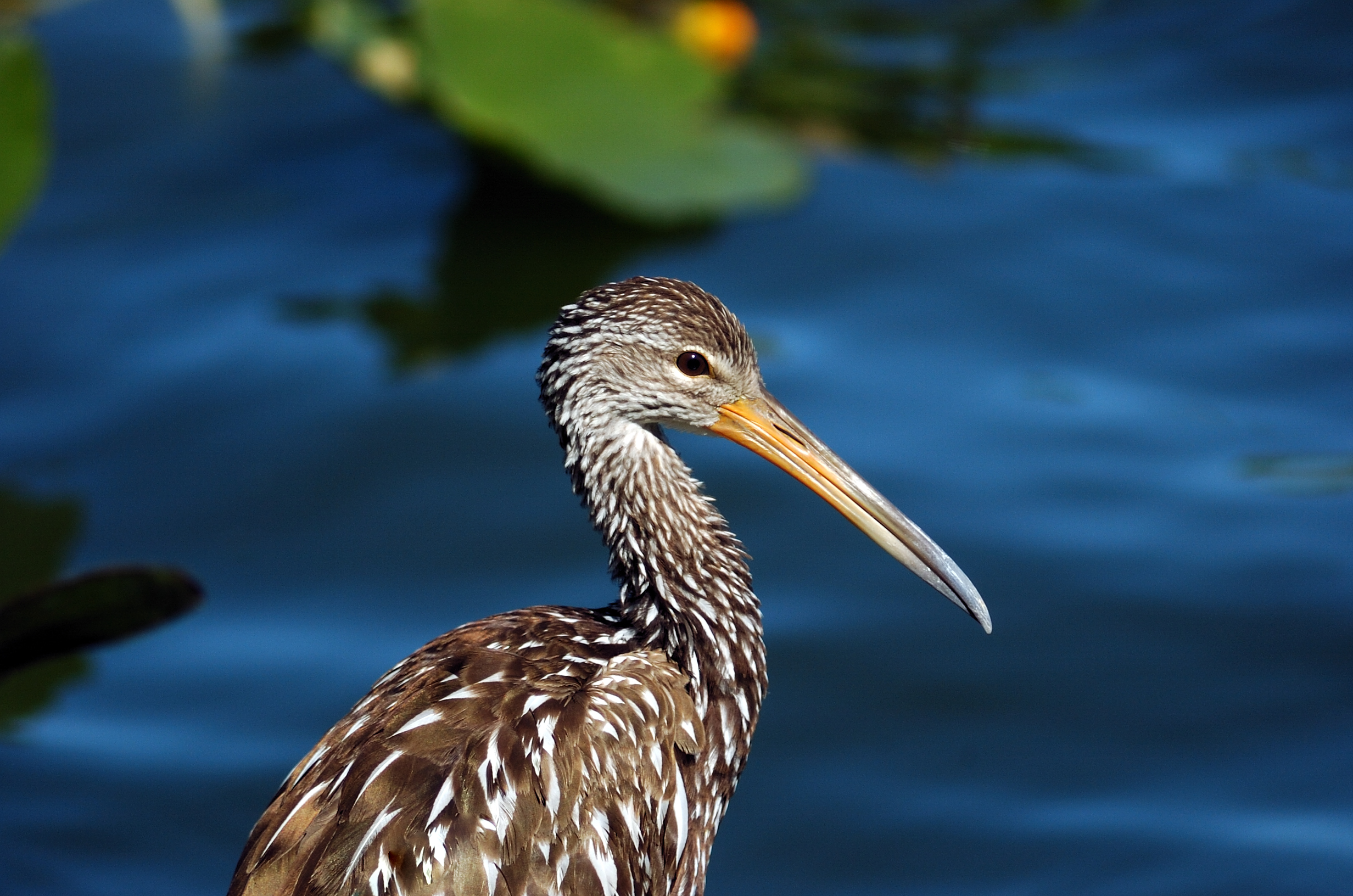
Limpkin (Aramus guarauna) Juvenile by Dan at Lake Morton

Limpkin (Aramus guarauna) by Dan at Lake Morton

Things to put in your journal:

Many write the item down and sometime draw the bird or something about it.

Outdoor Birds

  • What kind of bird (if you know)?
  • How big is it?
  • What color is it?
  • Shape? (duck, chicken, heron, sparrow,…)
  • Wings? (long, short, pointed, rounded,….)
  • Did it sing or make a noise? What did it sound like?
  • Date, time, and where you saw the bird

Bible Birds

  • Did you read the name in your Bible?
  • What was the name of the bird?
  • What verse?
  • What was said about the bird?

You can put other information in your journal. We will be telling you more about each thing. Everyone’s journal is different. Yours does not have to be like mine or Golden Eagles.

Why keep a list or journal?

Birdwatchers like to make lists. They keep some of these lists:

  • Life List (all the birds ever seen)
  • Year List (each years birds)
  • Trip List (a vacation or trip)
  • Park or Place List (Park, zoo, lake,…)
  • Whatever List (your list)

Most of us that are older wish we had kept a list of birds when we were young like you. We forget what we saw and then can’t put it on our life list. I have seen more birds than what is on my list, but I didn’t keep a journal when I was younger. Most people tell the truth and only list what they saw. Don’t make up birds you think you saw just so you have a long list. As you get older, your list will grow. The Lord has many birds for you to see and enjoy.

*

Read more:

Watching Birds

Kid’s Section

Bird-Watching Projects for Kids

Birdwatching For Beginners

How to Keep a Birdwatching Journal

Birdwatching

*

Bible Birds Finally Moved Here

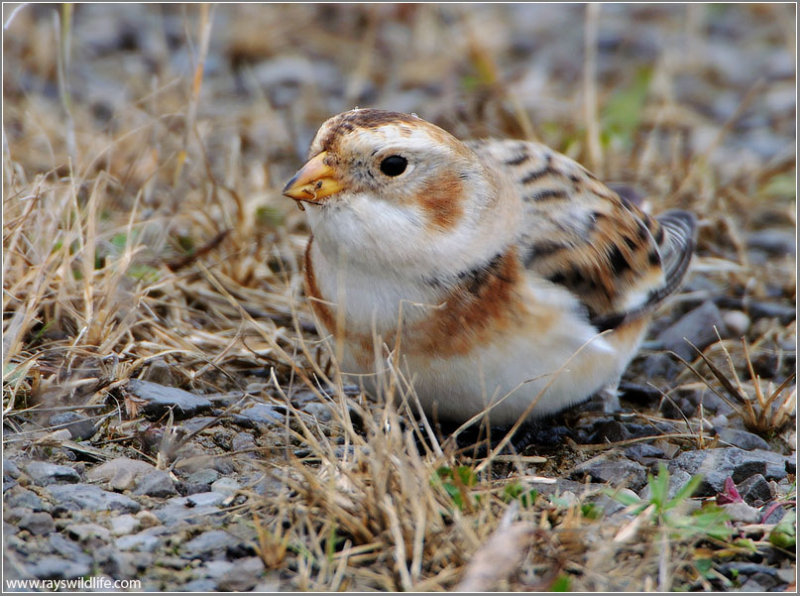
Snow Bunting (Plectrophenax nivalis) by Ray

Snow Bunting (Plectrophenax nivalis) by Ray

And let the beauty of the LORD our God be upon us: and establish thou the work of our hands upon us; yea, the work of our hands establish thou it. (Psalms 90:17 KJV)

Man goeth forth unto his work and to his labour until the evening. (Psalms 104:23 KJV)

Been working most of the day, moving the Bible Birds pages to here at Lee’s Birdwatching Adventures. It has been a challenge, but with dust still flying, they are now here.

I posted an article on the Birds of the Bible For Kids blog explaining the move of those articles. You might want to read that article because it affects this blog.

Changes On The Way

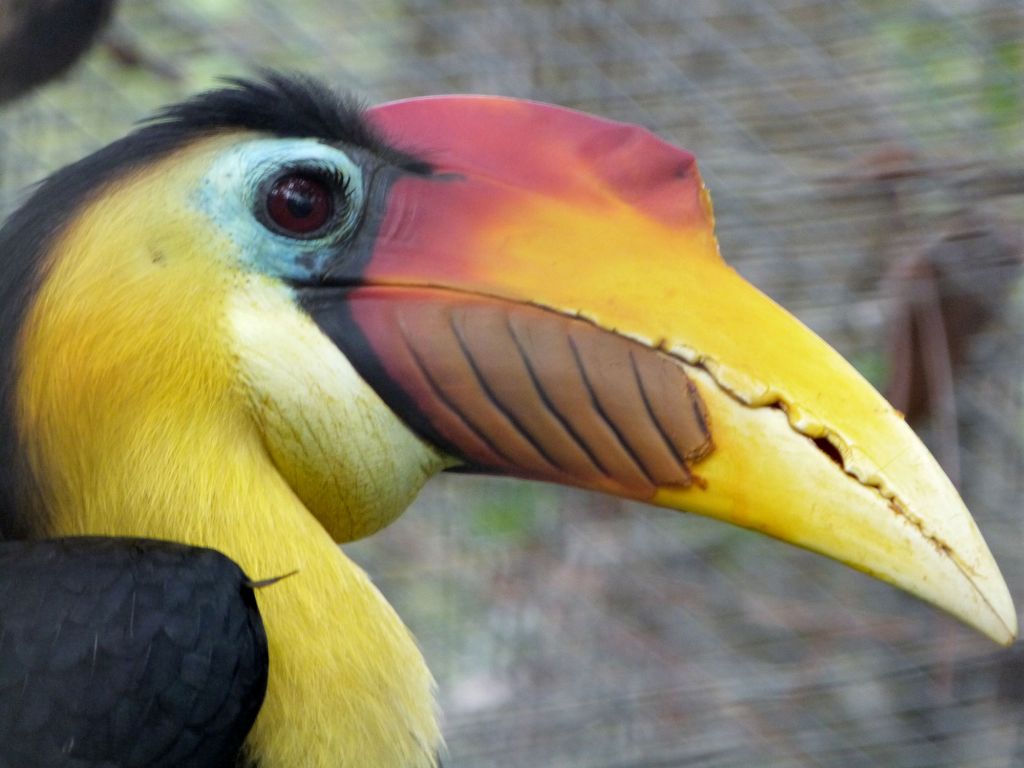
Wrinkled Hornbill (Aceros corrugatus) Brevard Zoo by Lee

Wrinkled Hornbill (Aceros corrugatus) Brevard Zoo by Lee

You can find the Bible Birds listed in the Kid’s Section. The side menu is now working also for that section. (I think it’s correct). Just hover your mouse over the Kid’s Section and you will see the Bible Birds, along with the Watching Birds, Bird Tales and Scripture Alphabet of Animals sections.

Now that the Bible Bird pages are here, I can start improving them and the regular Birds of the Bible sections.

Thanks you for being patient while things are being moved around and I trust you will see much improvement soon. As mentioned in the Changes on the Way article, “Our purpose is to Glorify Our Lord and show forth His great creation through His Birds and other Critters.”

There is still lots of work ahead, as other sections are moved to this blog. Just wanted to let you know why things are changing and dust is flying still. I have another big challenge coming next, but that will have to hold for now.

*