Say not ye, There are yet four months, and then cometh harvest? behold, I say unto you, Lift up your eyes, and look on the fields; for they are white already to harvest. (John 4:35 KJV)
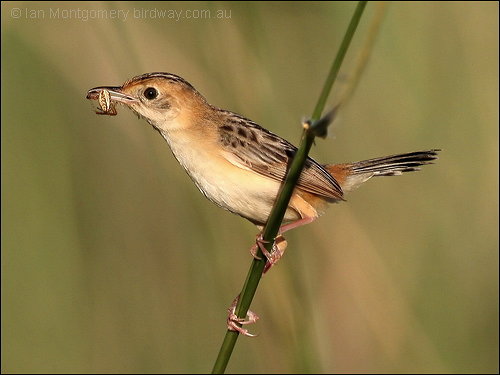
The Zosteropidae – White-eyes Family is passerine birds that live in the tropical and subtropical Sub-Saharan Africa, Australasia and eastern Asia. White-eyes inhabit most tropical islands in the Indian Ocean, the western Pacific Ocean, and the Gulf of Guinea. There are currently 127 members in the family. Most are White-eyes, a Silvereye, a Blackeye, a Darkeye, 4 Speirops, 11 Yuhinas, and about a dozen Babblers.
Silvereye (Zosterops lateralis) by Ian
As their common name implies, many species have a conspicuous ring of tiny white feathers around their eyes. The scientific name of the group also reflects this latter feature, being derived from the Ancient Greek for “girdle-eye”. They have rounded wings and strong legs. Like many other nectivorous birds, they have slender, pointed bills, and brush-tipped tongues. The size ranges up to 15 cm (6 inches) in length. (Wikipedia)
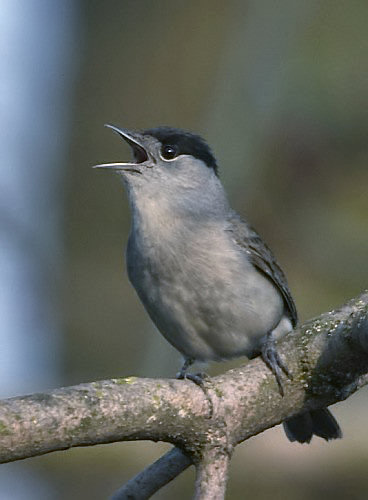
Here is our next avian group taxonomically, the Sylviidae – Sylvid Babblers Family. The Lord created these birds with a song to sing and some that are very colorful. Actually there are very few Babblers in the family. There are Blackcaps, various Warblers, Whitethroats, Fulvettas, Parrotbills plus a Myzornis and a Catbird.
Sylviidae is a family of passerine birds that was part of an assemblage known as the Old World warblers. The family was formerly a wastebin taxon with over 400 species of bird in over 70 genera. The family was poorly defined with many characteristics shared with other families. Advances in classification, particularly helped with molecular data, have led to the splitting out of several new families from within this group. Today the smaller family Sylviidae includes the typical warblers in the genus Sylvia, the parrotbills of Asia (formerly a separate family Paradoxornithidae), a number of babblers formerly placed within the family Timaliidae (which is itself currently being split) and the wrentit, an unusual North American bird that has been a longstanding taxonomic mystery.
There is now evidence that these Sylvia “warblers” are more closely related to babblers [Timaliidae], and thus these birds are better referred to as Sylvia babblers, or just sylvids.
Sylviids are small to medium-sized birds. The bill is generally thin and pointed with bristles at the base. Sylviids have a slender shape and an inconspicuous and mostly plain plumage. The wings have ten primaries, which are rounded and short in non-migratory species. (Wikipedia)
For thus says the LORD, Who created the heavens, Who is God, Whoformed the earth and made it, Who has established it, Who did not create it in vain, Who formed it to be inhabited: “I am the LORD, and there is no other. (Isaiah 45:18 NKJV)
This slideshow requires JavaScript.
Now if God so clothes the grass of the field, which today is, and tomorrow is thrown into the oven, will He not much more clothe you, O you of little faith? (Matthew 6:30 NKJV)
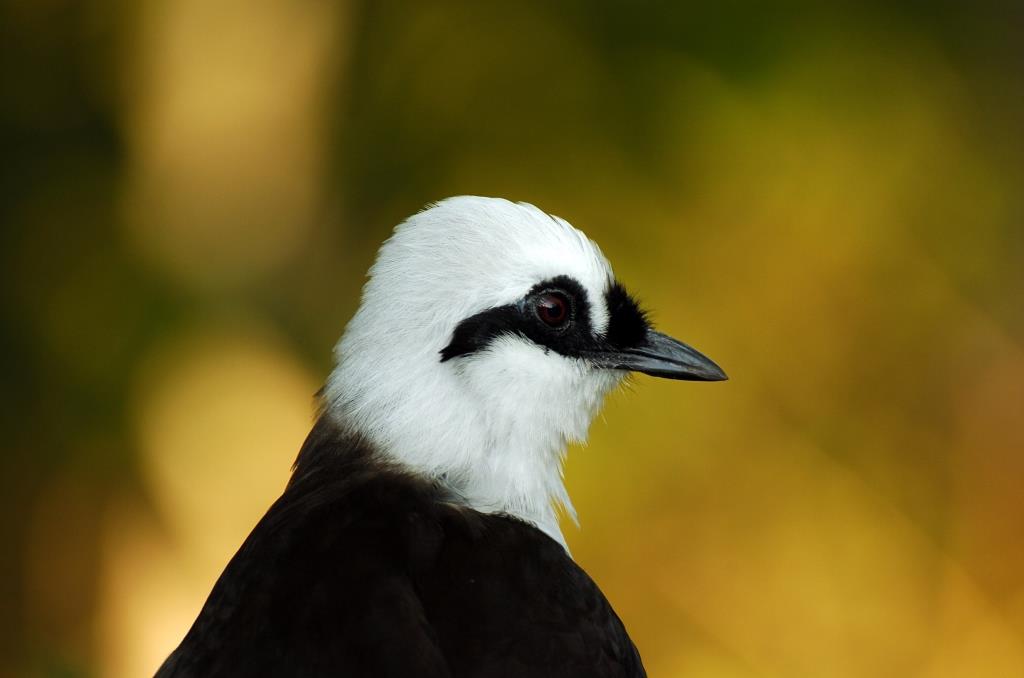
Sumatran Laughingthrush (Garrulax bicolor) by Dan at Wing of Asia ZM
A merry heart does good, like medicine, But a broken spirit dries the bones. (Proverbs 17:22 NKJV)
Every since we saw Laughingthrushes for the first time at Zoo Miami’s Wing of Asia aviary, I fell in love with these birds. The photo above is the one I like to call “Joe Cool.” Their “sunglasses” makes them look rather “Cool” don’t you think? They are fun to watch and most of them like to hop around instead of walking.
(Black and White) Sumatran Laughingthrush (Garrulax bicolor) by Lee “Joe Cool”
The Laughingthrush Family, called Leiothrichidae, has 133 species and is our next passerine family. Actually there was a Sunday Inspiration about them previously. Sunday Inspiration – Laughingthrush
The Laughingthrushes are the genus Garrulax of the large Old World babbler family of passerine birds. They occur in tropical Asia, with the greatest number of species occurring in the Himalaya and southern China.
These are rangy, medium-sized, floppy-tailed landbirds with soft fluffy plumage. These birds have strong legs and are quite terrestrial. This group is not strongly migratory, and most species have short rounded wings, and a weak flight.
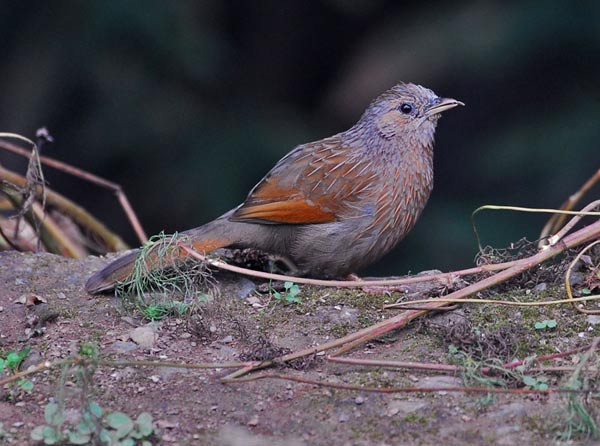
Streaked Laughingthrush (Garrulax lineatus) by Nikhil Devasar
A few, like the Streaked Laughingthrush occur in fairly open habitats, but most are jungle species, difficult to observe in the dense vegetation they prefer.
Like other babblers, these are noisy birds, and the characteristic laughing calls are often the best indication that these birds are present. As with other babbler species, they frequently occur in groups of up to a dozen, and the rainforest species like the Ashy-headed Laughingthrush often occur in the mixed feeding flocks typical of tropical Asian jungle. (Wikipedia)
Red-tailed Laughingthrush (Trochalopteron milnei) by Lee
Then our mouth was filled with laughter, And our tongue with singing. Then they said among the nations, “The LORD has done great things for them.” The LORD has done great things for us, And we are glad. Bring back our captivity, O LORD, As the streams in the South. Those who sow in tears Shall reap in joy. He who continually goes forth weeping, Bearing seed for sowing, Shall doubtless come again with rejoicing, Bringing his sheaves with him. (Psalms 126:2-6 NKJV)
He loves righteousness and justice; The earth is full of the goodness of the LORD. (Psalms 33:5 NKJV)
The Pellorneida is another neatly created family that has 70 members and are a family of mostly Old World passerine birds. They are rather diverse in size and coloration, but are characterised by soft fluffy plumage. These are birds of tropical areas, with the greatest variety in Southeast Asia and the Indian subcontinent. The entire family was previously included in the Timaliidae.
Morphological diversity is rather high; most species resemble “warblers”, jays or thrushes.
They are small to medium-sized birds. They have strong legs, and many are quite terrestrial. They typically have generalised bills, similar to those of a thrush or warbler. Most have predominantly brown plumage, with minimal difference between the sexes, but many more brightly coloured species also exist.
This group is not strongly migratory, and most species have short rounded wings, and a weak flight. They live in lightly wooded or scrubland environments, ranging from swamp to near-desert. They are primarily insectivorous, although many will also take berries, and the larger species will even eat small lizards and other vertebrates.(Wikipedia with editing)
This slideshow requires JavaScript.
A soft answer turneth away wrath: but grievous words stir up anger. (Proverbs 15:1 KJV)
The flowers appear on the earth; The time of singing has come, And the voice of the turtledove (Cisticola?) Is heard in our land. (Song of Solomon 2:12 NKJV)
The Cisticolidae – Cisticolas and Allies family has 158 species currently. They are warblers found mainly in warmer southern regions of the Old World. They are often included within the Old World warbler family Sylviidae. Among the Cisticolida, besides the Cisticola, there are; Jery, Prinia, Warblers, a Longtail, Apalis, Camaroptera, Wren-Warblers, Tailorbirds, Forest Warblers, and Eremomelas.
This family probably originated in Africa, which has the majority of species, but there are representatives of the family across tropical Asia into Australasia, and one species, the zitting cisticola, even breeds in Europe.
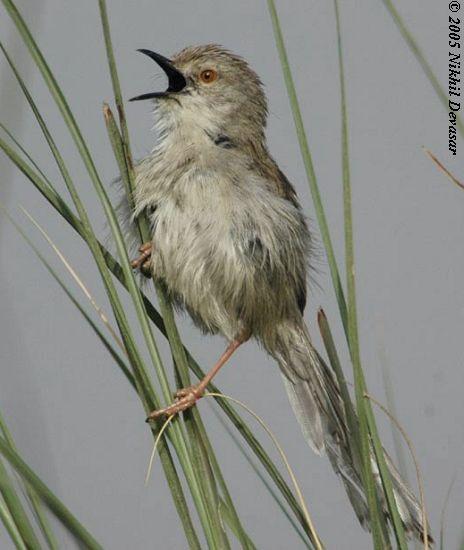
Graceful Prinia (Prinia gracilis) by Nikhil Devasar
These are generally very small birds of drab brown or grey appearance found in open country such as grassland or scrub. They are often difficult to see and many species are similar in appearance, so the song is often the best identification guide.
By them the birds of the heavens have their home; They sing among the branches. (Psalms 104:12 NKJV)
These are insectivorous birds which nest low in vegetation.
This slideshow requires JavaScript.
Serve the LORD with gladness; Come before His presence with singing. (Psalms 100:2 NKJV)
“How Can I Keep From Singing?” ~ by the Trio + 1 (Pastor Jerry, Reagan Osborne, Caleb & Jessie Padgett) Faith Baptist
Wherefore, holy brethren, partakers of the heavenly calling, consider the Apostle and High Priest of our profession, Christ Jesus;Who was faithful to him that appointed him, as also Moses was faithful in all his house. For this man was counted worthy of more glory than Moses, inasmuch as he who hath builded the house hath more honour than the house. For every house is builded by some man; but he that built all things is God. (Hebrews 3:1-4 KJV)
The Black-capped Donacobius (Donacobius atricapilla) is a conspicuous, vocal South American bird. It is found in tropical swamps and wetlands in Argentina, Bolivia, Brazil, Colombia, Ecuador, French Guiana, Guyana, Paraguay, Peru, Suriname, and Venezuela; also Panama of Central America. They are common in a wide range of Amazonian wetlands, including oxbow lakes, riparian zones, and other areas with tall dense aquatic or semi-aquatic vegetation.
Mating for life, pairs of Black-capped Donacobiuses can be seen frequently and throughout the day atop thickets of dense lakeside or streamside vegetation. They often will engage in antiphonic dueting. Adult offspring will remain with their parents and help raise siblings from subsequent nesting periods in a system of cooperative breeding. (Wikipedia)
The Malagasy warblers are a newly validated clade of songbirds. They were formally named Bernieridae in 2010. The family consists of 11 species of small forest birds and is endemic to Madagascar. (Wikipedia)
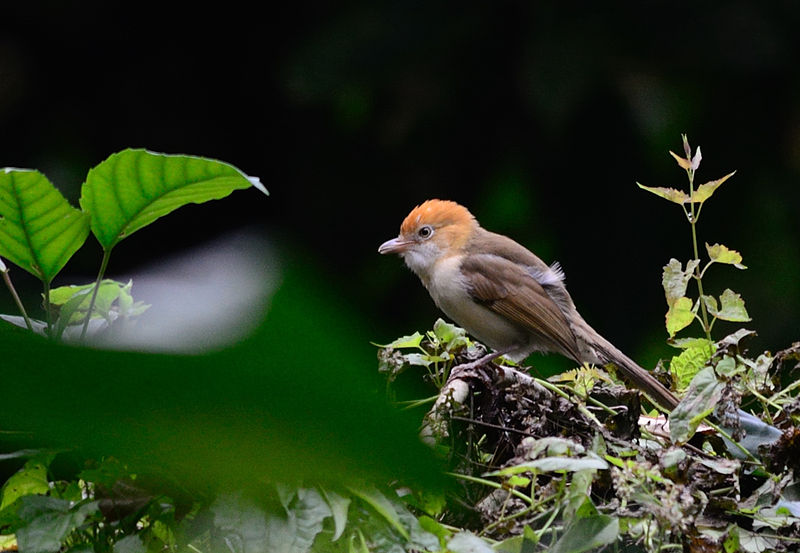
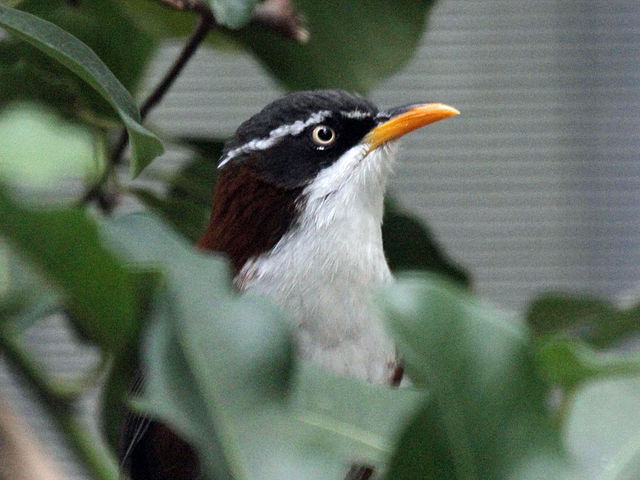
Our last family has Scimitar Babblers and some of the various Babblers.
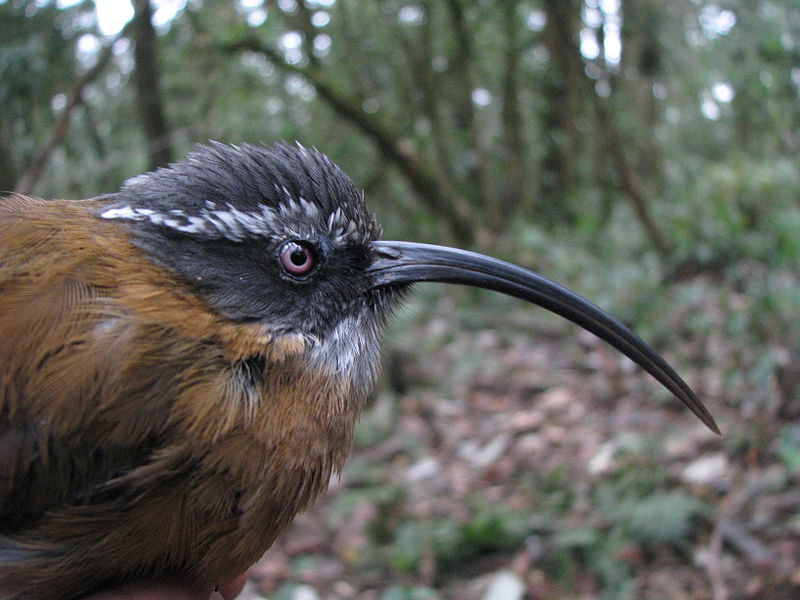
The genus Pomatorhinus of scimitar babblers are jungle birds with long downcurved bills. These are birds of tropical Asia, with the greatest number of species occurring in hills of the Himalayas. They are medium-sized, floppy-tailed landbirds with soft plumage. They are typically long-tailed, dark brown above, and white or orange-brown below. Many have striking head patterns, with a broad black band through the eye, bordered with white above and below.
Spelaeorni genusthe typical wren-babblers, is a bird genus in the family Timaliidae. Among this group, the typical wren-babblers are quite closely related to the type species, the chestnut-capped babbler (Timalia pileata). Typical babblers live in communities of around a dozen birds, jointly defending a territory. Many even breed communally, with a dominant pair building a nest, and the remainder helping to defend and rear their young. Young males remain with the group, while females move away to find a new group, and thus avoid inbreeding. They make nests from twigs, and hide them in dense vegetation. (Info from Wikipedia)
This slideshow requires JavaScript.
Saying with a loud voice, Worthy is the Lamb that was slain to receive power, and riches, and wisdom, and strength, and honour, and glory, and blessing. (Revelation 5:12 KJV)
The grass withers, the flower fades, but the word of our God will stand forever. (Isaiah 40:8 ESV)
The Lord Jesus Christ created another neat group (family) of birds that includes Grassbirds, Bush Warblers, Thicketbirds and other various warbler sized birds. There is even an Emutail.
Locustellidae is a newly recognized family of small insectivorous songbirds (“warblers”), formerly placed in the Old World warbler “wastebin” family. It contains the grass warblers, grassbirds, and the Bradypterus “bush warblers”. These birds occur mainly in Eurasia, Africa, and the Australian region. The family name is sometimes given as Megaluridae, but Locustellidae has priority.
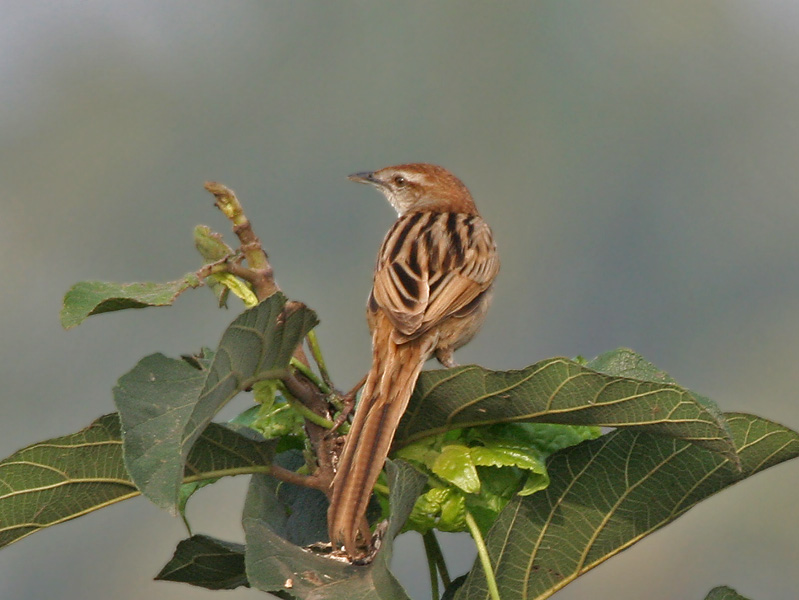
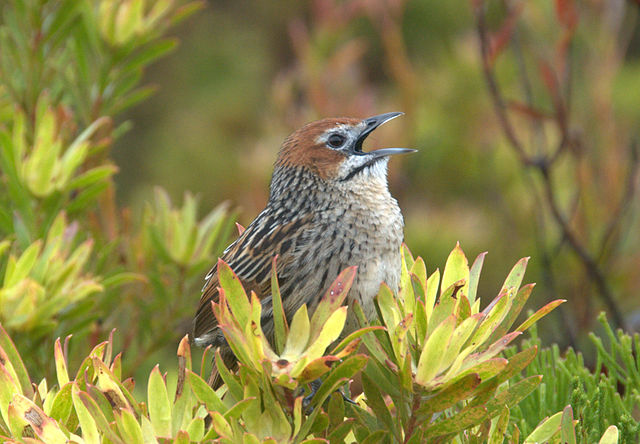
The species are smallish birds with tails that are usually long and pointed; the scientific name of the genus Megalurus in fact means “the large-tailed one” in plain English. They are less wren-like than the typical shrub-warblers (Cettia) but like these drab brownish or buffy all over. They tend to be larger and slimmer than Cettia though, and many have bold dark streaks on wings and/or underside. Most live in scrubland and frequently hunt food by clambering through thick tangled growth or pursuing it on the ground; they are perhaps the most terrestrial of the “warblers”. Very unusual for Passeriformes, some are becoming flightless in some taxa.
Among the “warbler and babbler” superfamily Sylvioidea, the Locustellidae are closest to the Malagasy warblers, another newly recognized (and hitherto unnamed) family; the black-capped donacobius (Donacobius atricapillus) is an American relative derived from the same ancestral stock and not a wren as was long believed. (Wikipedia with editing)
Then God said, “Let the earth bring forth grass, the herb that yields seed, and the fruit tree that yields fruit according to its kind, whose seed is in itself, on the earth”; and it was so. And the earth brought forth grass, the herb that yields seed according to its kind, and the tree that yields fruit, whose seed is in itself according to its kind. And God saw that it was good. (Genesis 1:11-12 NKJV)
You can see most of the Family as you listen to the music below the slideshow.
This slideshow requires JavaScript.
“The Church’s One Foundation” ~ Megan Fee, Cody Hancock & Dakota Hancock ~ at Faith Baptist
For we are labourers together with God: ye are God’s husbandry, ye are God’s building. According to the grace of God which is given unto me, as a wise masterbuilder, I have laid the foundation, and another buildeth thereon. But let every man take heed how he buildeth thereupon. For other foundation can no man lay than that is laid, which is Jesus Christ. (1 Corinthians 3:9-11 KJV)
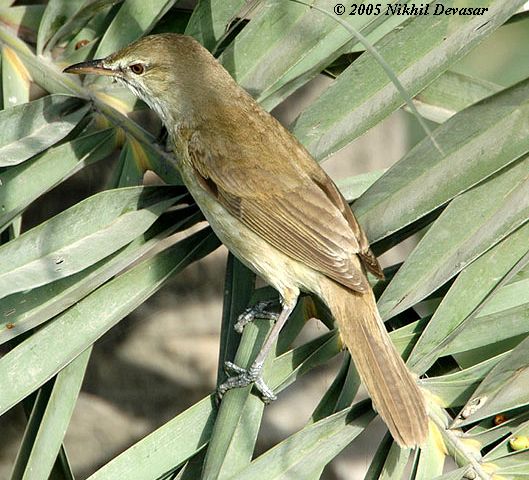
Clamorous Reed Warbler (Acrocephalus stentoreus) by Nikhil
“Can the papyrus grow up without a marsh? Can the reeds flourish without water? (Job 8:11 NKJV)
This week we introduce you to just one family, the Acrocephalidae Family of Reed Warblers, Marsh- and Tree-warblers, and Acrocephalid warblers. The Lord has created this family of birds to blend in rather well with their surroundings. Another act of love and concern from the Creator.
The species in this family are usually rather large “warblers”. Most are rather plain olivaceous brown above with much yellow to beige below. They are usually found in open woodland, reedbeds or tall grass. The family occurs mostly in southern to western Eurasia and surroundings, but also ranging far into Pacific, with some species in Africa.
Nesillas – Brush Warblers; found in Comoros and Madagascar. Its natural habitats are subtropical or tropical dry forests, subtropical or tropical moist lowland forests, and subtropical or tropical moist shrubland.
Sedge Warbler (Acrocephalus schoenobaenus) by Robert Scanlon
Acrocephalus warblers are small, insectivorous passerine birds. Formerly in the Old World warbler assemblage, they are now separated as the namesake of the marsh and tree warbler family Acrocephalidae. They are sometimes called marsh warblers or reed warblers. These are rather drab brownish warblers usually associated with marshes or other wetlands. Some are streaked, others plain. Many species are migratory. Many species have a flat head profile, which gives rise to the group’s scientific name;
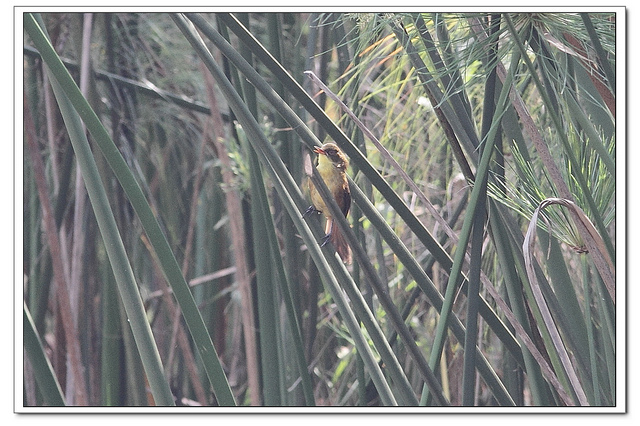
(Calamonastides gracilirostris) Papyrus Yellow Warbler is a species of tree warbler; formerly placed in the “Old World warblers”. It is monotypic in its genus. It is found in Burundi, Democratic Republic of the Congo, Kenya, Rwanda, Tanzania, Uganda, and Zambia. Its natural habitat is swamps. It is threatened by habitat loss. Compared with the dull browns and greys typical of swamp-dwelling warblers, this warbler is brightly coloured. It shows an underbelly of rich yellow and olive-brown upper parts. Its song consists of melodious liquid warbling:
Hippolais is a genus of tree warbler in the Acrocephalidae family. It is sometimes lumped together with the genus Iduna.
(Info from Wikipedia with editing)
Acrocephalidae – Reed Warblers and allies:
This slideshow requires JavaScript.
As they departed, Jesus began to say to the multitudes concerning John: “What did you go out into the wilderness to see? A reed shaken by the wind? (Matthew 11:7 NKJV)
“When I Survey The Wondrous Cross” ~ by Miss Anna Pletcher (12 years old at Faith Baptist) on piano
I love the last verse of this hymn:
Were the whole realm of nature mine, That were a present far too small; Love so amazing, so divine, Demands my soul, my life, my all.
And Jesus saith unto him, The foxes have holes, and the birds of the air have nests; but the Son of man hath not where to lay his head. (Matthew 8:20 KJV)
We have another mixture of birds from our Creator found in several families, but most are Leaf Warblers from Phylloscopidae family. There are 77 in that family, but the families before them, taxonomically, have just a few species in them.
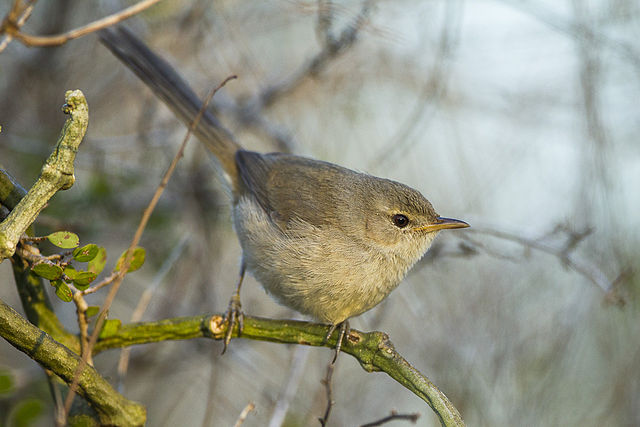
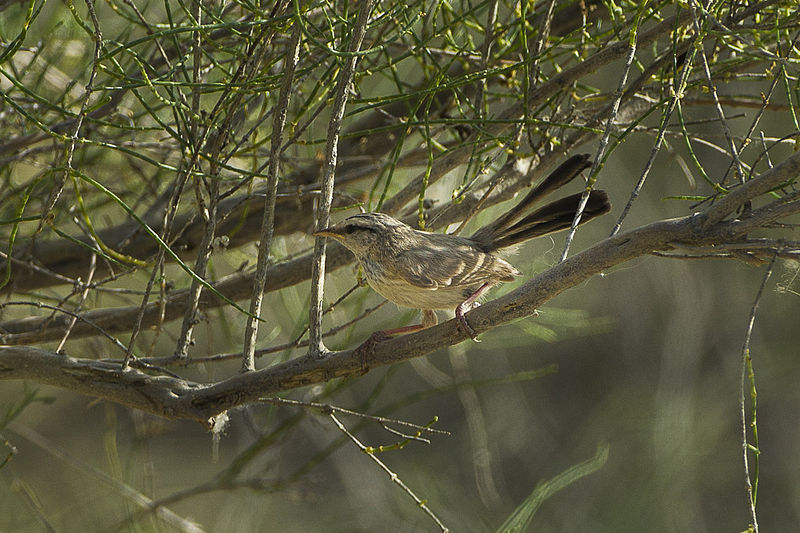
Streaked Scrub Warbler – Scotocercidae has only one bird – the Streaked Scrub Warbler (Scotocerca inquieta). It is found in Afghanistan, Algeria, Egypt, India, Iran, Israel, Jordan, Kazakhstan, Lebanon, Libya, Mauritania, Morocco, Oman, Pakistan, Palestine, Russia, Saudi Arabia, Syria, Tajikistan, Tunisia, Turkmenistan, United Arab Emirates, Uzbekistan,and Yemen. (Wikipedia)
Yellow Flycatchers – Erythrocercidae has 3 members; Little Yellow Flycatcher (Erythrocercus holochlorus), Chestnut-capped Flycatcher (Erythrocercus mccallii) and the Livingstone’s Flycatcher (Erythrocercus livingstonei). All three of these creations are found in Africa.
This next group of birds are assigned to an Incertae Sedis family. That simply means they don’t which family to assign to them. They are the Grauer’s Warbler (Graueria vittata), Green Hylia (Hylia prasina) and Tit Hylia (Pholidornis rushiae). They get moved in and out of families, but the IOC Version 5.3 has them unassigned. They are all in Africa and are “basically” Old World Warblers.
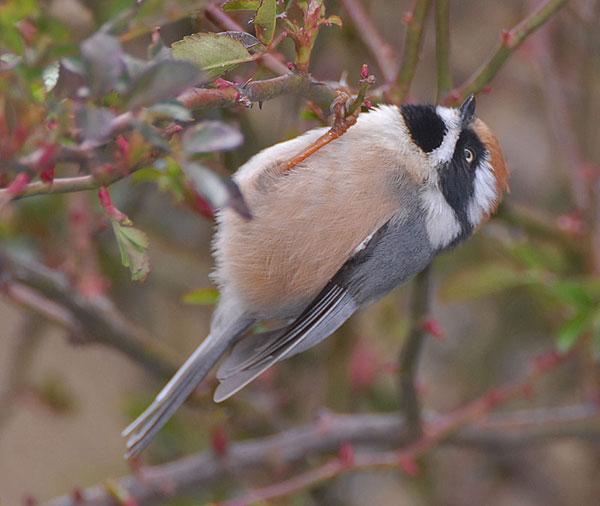
Black-throated Bushtit (Aegithalos concinnus) by Nikhil Devasar
The Aegithalidae – Bushtits family has 13 members and are a family of small, drab passerine birds with moderately long tails. The family contains three genera, all but one of which are found in Eurasia. Bushtits are active birds, moving almost constantly while they forage for insects in shrubs and trees. During non-breeding season, birds live in flocks of up to 50 individuals. Several bushtit species display cooperative breeding behavior, also called helpers at the nest.
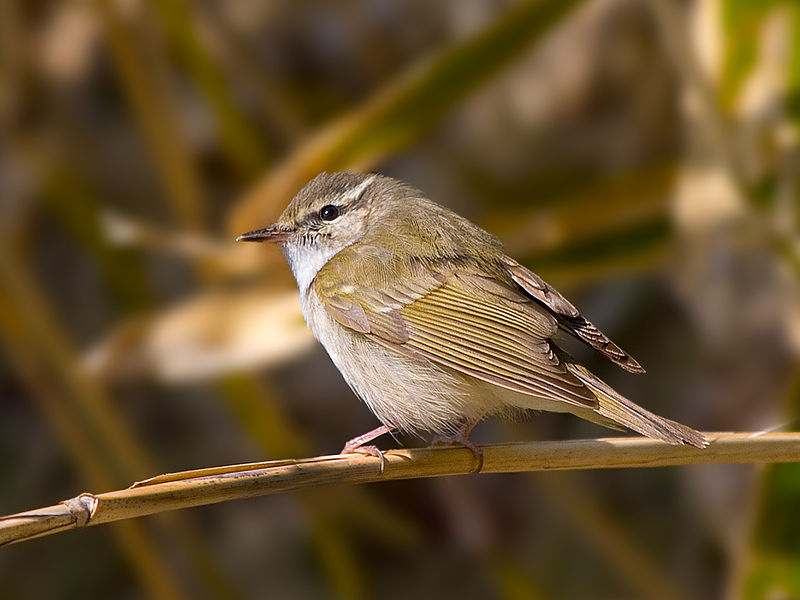
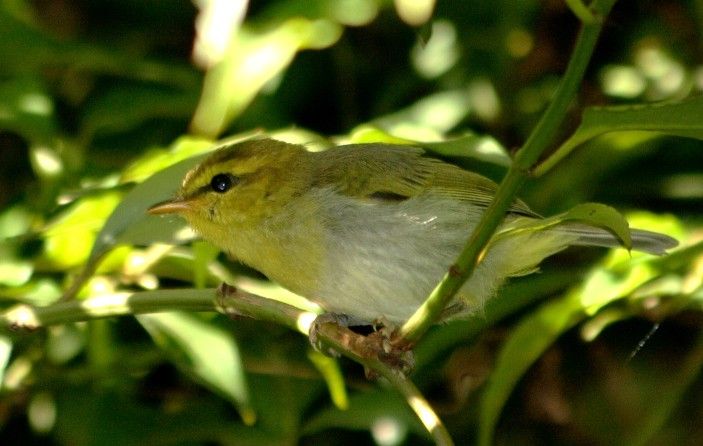
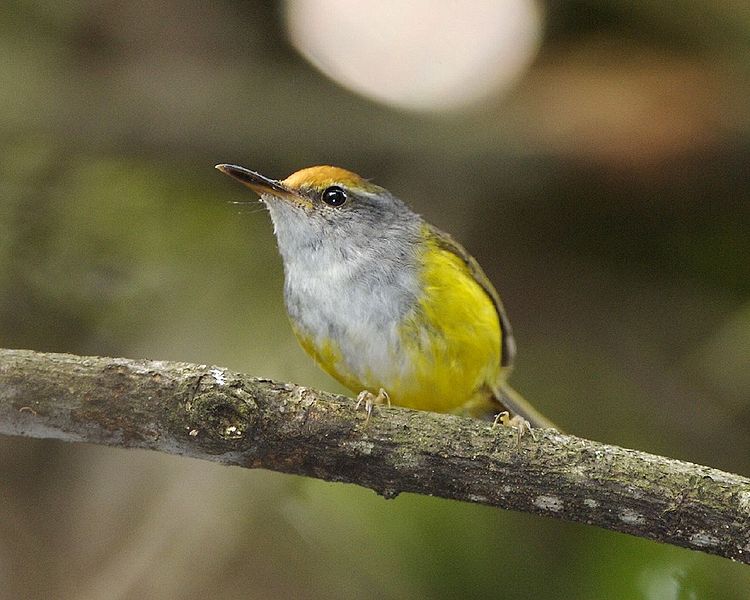
And our last family of avian wonders from the Lord is the Phylloscopidae – Leaf warblers and allies Family. This family of 77 species contains various Warblers and Chiffchaff. They were formerly included in the Old World warbler family but are now considered to belong to the Phylloscopidae, a family created in 2006. The genus is closely related to Seicercus and some species have been moved between the two genera in recent classification attempts. Leaf warblers are active, constantly moving, often flicking their wings as they glean the foliage for insects along the branches of trees and bushes. They forage at various levels within forests, from the top canopy to the understorey. Most of the species are markedly territorial both in their summer and winter quarters.
Most are greenish or brownish above and off-white or yellowish below. Compared to some other “warblers”, their songs are very simple.
Well, that’s our group of birds for this week. Trust you will enjoy seeing them as you listen to the music below. You have two options this week. You can listen or you can watch the Kid’s Choir as they sing. Figured little warblers needed young people singing as you view them.
But Jesus said, Suffer little children, and forbid them not, to come unto me: for of such is the kingdom of heaven. (Matthew 19:14 KJV)
*
This slideshow requires JavaScript.
*
Beautiful Savior (Fairest Lord Jesus) ~ by Kid’s Choir Faith Baptist
For by Him all things were created that are in heaven and that are on earth, visible and invisible, whether thrones or dominions or principalities or powers. All things were created through Him and for Him. (Colossians 1:16 NKJV)
I trust you are enjoying this Sunday Inspiration series of the Lord’s Creation of the PASSERIFORMES – Passerines (Songbirds) Order. This week’s collection of little Passerines are from three families. Of the 130 families in the Order, we have arrived at numbers 76, 77, and 78. By now, you have see over half the Songbird species in the world. Of the 40 Orders of Birds, the Passerines are the largest.
Immediately there fell from his eyes something like scales, and he received his sight at once; and he arose and was baptized. (Acts 9:18 NKJV)
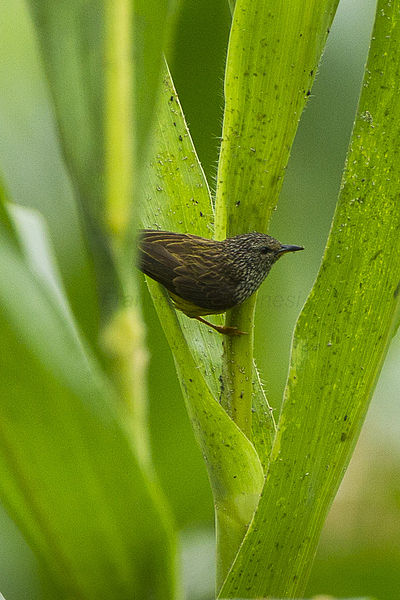
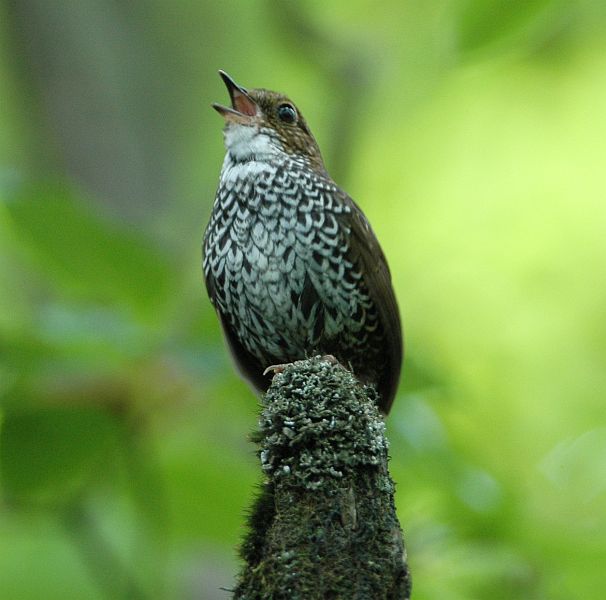
Pnoepygidae – Cupwing [8.2 Version just changed these to Cupwings] has only five species and are endemic to southern and south eastern Asia. The genus contains four species. The genus has long been placed in the babbler family Timaliidae. A 2009 study of the DNA of the families Timaliidae and the Old World warblers (Sylviidae) found no support for the placement of the genus in either family, prompting the authors to erect a new monogeneric family, the Pnoepygidae.
Sing unto him, sing psalms unto him, talk ye of all his wondrous works. (1 Chronicles 16:9 KJV)
Macrosphenidae – Crombecs, African Warblers family has eighteen (18) members in its family. The African warblers are a newly erected family, Macrosphenidae, of songbirds. Most of the species were formerly placed in the Old World warbler family Sylviidae, although one species, the Rockrunner, was placed in the babbler family Timaliidae. A series of molecular studies of the Old World warblers and other bird families in the superfamily Sylvioidea (which includes the larks, swallows and tits) found that the African warblers were not part of the family Sylviidae but were instead an early offshoot (basal) to the entire Sylvioidea clade.
Cettiidae is a newly validated family of small insectivorous songbirds (“warblers”) It contains the typical bush warblers (Cettia) and their relatives. As common name, cettiid warblers is usually used.
Its members occur mainly in Asia and Africa, ranging into Wallacea and Europe. The monarch warblers (Erythrocercus), Tit Hylia Pholidornis and Green Hylia (Hylia) are exclusively found in the forests of Africa. The pseudo-tailorbirds, tesias and stubtails, as well as Tickellia and Abroscopus warblers are mostly found in the forests of south and southeastern Asia, with one species reaching as far north as Japan and Siberia. The genus Cettia has the widest distribution of the family, reaching from Western Europe across Asia to the Pacific islands of Fiji and Palau. Most of the species in the genus are sedentary, but the Asian Stubtail is wholly migratory and the Japanese Bush Warbler and Cetti’s Warbler are partly migratory over much of their range. A few species, such as the Pale-footed Bush Warbler, are altitudinal migrants.
The species are small, stubby birds. Most have moderately long to long tails, while the stubtails and tesias have tiny tails that do not even emerge past their tail retrices. The group is typically clad in dull plumage, often with a line above the eye. Some, like the monarch-warblers (Erythrocercus), are much different in appearance, having areas of bright yellow plumage. (Wikipedia)
This slideshow requires JavaScript.
Listen as you watch the birds:
“Bow The Knee” ~ Sheila Vegter and Jacob (her son who is playing the piano and singing)
Barn Swallow (Hirundo rustica) baby by Neal Addy Gallery
Even the sparrow has found a home, And the swallow a nest for herself, Where she may lay her young— Even Your altars, O LORD of hosts, My King and my God. (Psalms 84:3 NKJV)
This week’s 88 avian flyers are from the Hirundinidae Family of Swallows and Martins. The species in this group are River Martins, Saw-wings, Swallows, and Martins of various genus, Many here in America are familiar with the Barn Swallow.
Also, the Swallows are Birds of the Bible, being mentioned in at least four verses; Psalms 84:3, Proverbs 26:2, Isaiah 38:14, and Jeremiah 8:7,
Swallows are in the Hirundinidae – Swallows Family which includes Martins. “Within the Hirundiniae, the name ‘martin’ tends to be used for the squarer-tailed species, and the name “swallow” for the more fork-tailed species; however, there is no scientific distinction between these two groups. The family contains around 88 species in 19 genera.” The subfamilies are: Saw-wings (including Square-tailed, Mountain, White-headed, Black and Fanti), Swallows (many including Barn, Bank, Cave Mangrove, Golden, etc), Martins (Purple, Cuban, Sinaloa, Brown-chested, etc.), Sand Martins (including Brown-throated, Congo, Pale, Banded).
The swallows are found on all continents except Antarctica, with the largest diversity of species in Africa. They are found on many islands, as there are quite a few that migrate long distances. God has designed them with short bills, but with a wide mouth that has a strong jaw. This is useful in their hunt for insects which they catch on the wing. With their streamlined body and wings that are pointed, they are very maneuverable at great speeds. Their forked long tail, that has 12 feathers, helps them steer. They can range from 3.9-9.4 inches and weight between 0.4-2.1 ounces.
This family of birds, to me, are one of the hardest to photograph. They zip about often, but land very seldom to catch their picture. Thankfully the Lord gave these birds a tastebud for insects that have a tastebud for us.
This slideshow requires JavaScript.
Like a flitting sparrow, like a flying swallow, So a curse without cause shall not alight. (Proverbs 26:2 NKJV)
“If I Don’t Have Love” ~ by Jessie Padgett – Special at Faith Baptist
White-eared (Cheeked) Bulbul (Pycnonotus leucotis) at Zoo Miami by Lee
Then the trees of the forest will sing for joy before the LORD; For He is coming to judge the earth. O give thanks to the LORD, for He is good; For His lovingkindness is everlasting. (1 Chronicles 16:33-34 NASB)
Bulbuls are a family, Pycnonotidae, of medium-sized passerine songbirds. Many forest species are known as greenbuls, brownbuls, leafloves, bristlebills, finchbills and a Malia. The family is distributed across most of Africa and into the Middle East, tropical Asia to Indonesia, and north as far as Japan. A few insular species occur on the tropical islands of the Indian Ocean There are 151 species in around 28 genera. While some species are found in most habitats, overall African species are predominantly found in rainforest whilst rainforest species are rare in Asia, instead preferring more open areas.
Collared Finchbill by Dan at Zoo Miami
Bulbuls are short-necked slender passerines. The tails are long and the wings short and rounded. In almost all species the bill is slightly elongated and slightly hooked at the end. They vary in length from 13 cm for the tiny greenbul to 29 cm in the straw-headed bulbul. Overall the sexes are alike, although the females tend to be slightly smaller. In a few species the differences are so great that they have been described as functionally different species. The soft plumage of some species is colourful with yellow, red or orange vents, cheeks, throat or supercilia, but most are drab, with uniform olive-brown to black plumage. Species with dull coloured eyes often sport contrasting eyerings. Some have very distinct crests. Bulbuls are highly vocal, with the calls of most species being described as nasal or gravelly. One author described the song of the brown-eared bulbul as “the most unattractive noises made by any bird”
Let the field be joyful, and all that is therein: then shall all the trees of the wood rejoice (Psalms 96:12 KJV)
Maybe in the case of that brown-eared bulbul, this verse would be more appropriate:
Make a joyful noise unto the LORD, all the earth: make a loud noise, and rejoice, and sing praise. (Psalms 98:4 KJV)
This slideshow requires JavaScript.
“How Deep The Father’s Love For Us” ~ played by Megan Fee and Jill Foster
How deep the Father’s love for us
How vast beyond all measure
That He should give His only Son
To make a wretch His treasure
How great the pain of searing loss
The Father turns His face away
As wounds which mar the Chosen One
Bring many sons to glory
Behold the man upon a cross
My sin upon His shoulders
Ashamed, I hear my mocking voice
Call out among the scoffers
It was my sin that held Him there
Until it was accomplished
His dying breath has brought me life
I know that it is finished
I will not boast in anything
No gifts, no power, no wisdom
But I will boast in Jesus Christ
His death and resurrection
Why should I gain from His reward?
I cannot give an answer
But this I know with all my heart
His wounds have paid my ransom
Why should I gain from His reward?
I cannot give an answer
But this I know with all my heart
His wounds have paid my ransom
For God so loved the world, that he gave his only begotten Son, that whosoever believeth in him should not perish, but have everlasting life. (John 3:16 KJV)














 Lee's Birdwatching Adventures Plus