Babbler For Who?

Indian Scimitar Babbler (Pomatorhinus horsfieldii) ©WikiC

Indian Scimitar Babbler (Pomatorhinus horsfieldii) ©WikiC

bab·bler – ˈbab(ə)lər/ – noun

  • a person who babbles.
  • a thrushlike Old World songbird with a long tail, short rounded wings, and typically a loud discordant or musical voice.

While reading in Ecclesiastes recently, I saw the word “babbler.” Working on the Birds of the World lists, that word caught my attention. Ahh! Maybe I could write an article about the Babblers that I had seen in the list.

A serpent may bite when it is not charmed; The babbler is no different. (Ecclesiastes 10:11 NKJV)

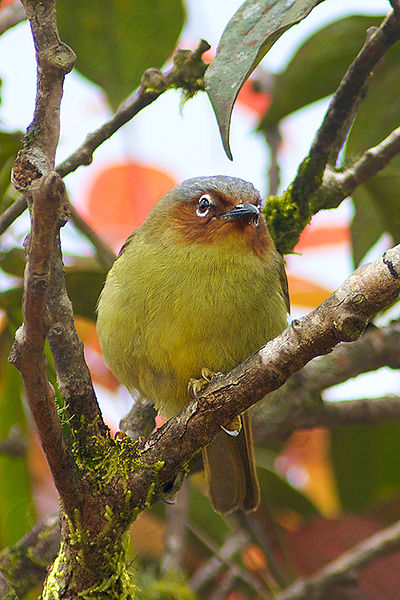
Chestnut-faced Babbler (Zosterornis whiteheadi) ©WikiC

Chestnut-faced Babbler (Zosterornis whiteheadi) ©WikiC

What I did not know is that there are seven families that have “Babbler” birds in them. There are Ground Babblers, Wren Babblers, Thrush-Babblers, Scimitar Babblers, Jewel-babblers, Hill Babblers, Tit-Babblers, a Rail-babblers and regular just plain Babblers.

Then checking for more verses on “babblers,” I found two more. The verse above and this one both have a sort of negative meaning to the word.

Whoever goes about slandering reveals secrets; therefore do not associate with a simple babbler. (Proverbs 20:19 ESV)

There is one more verse that will come later. First, what is a Babbler of the bird kind?

Rail-babbler (Eupetes macrocerus) by Peter Ericsson

Rail-babbler (Eupetes macrocerus) by Peter Ericsson

“The Old World babblers or timaliids are a large family of mostly Old World passerine birds. They are rather diverse in size and coloration, but are characterised by soft fluffy plumage. These are birds of tropical areas, with the greatest variety in Southeast Asia and the Indian subcontinent. The timaliids are one of two unrelated groups of birds known as babblers, the other being the Australasian babblers of the family Pomatostomidae (also known as pseudo-babblers).

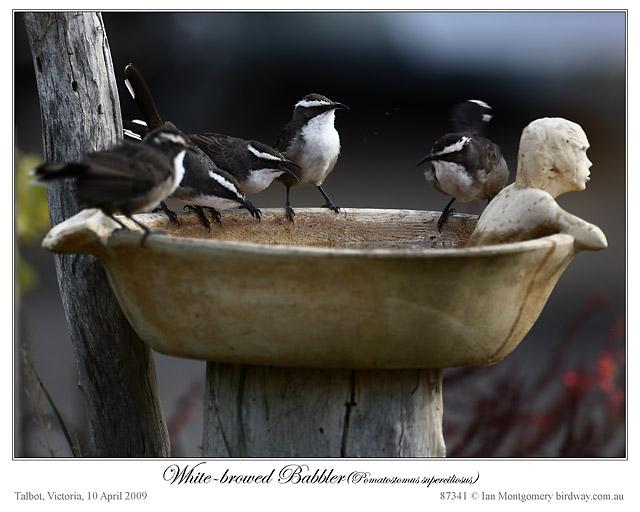
White-browed Babbler by Ian

White-browed Babbler by Ian (Australia)

Morphological diversity is rather high; most species resemble “warblers”, jays or thrushes. This group is among those Old World bird families with the highest number of species still being discovered.

Timaliids are small to medium birds. They have strong legs, and many are quite terrestrial. They typically have generalised bills, similar to those of a thrush or warbler, except for the scimitar babblers which, as their name implies, have strongly decurved bills. Most have predominantly brown plumage, with minimal difference between the sexes, but many more brightly coloured species also exist.

The systematics of Old World babblers have long been contested. During much of the 20th century, the family was used as a “wastebin taxon” for numerous hard-to-place Old World songbirds (such as Picathartidae or the wrentit). Ernst Hartert was only half-joking when he summarized this attitude with the statement that, in the passerines, (Wikipedia)

“Was man nicht unterbringen kann, sieht man als Timalien an.” (What one can’t place systematically is considered an Old World babbler)

They finally started trying to divide them into different groups and families. You will find those seven families below. Also, from the definition at the beginning, they are vocal with a “typically a loud discordant or musical voice.”

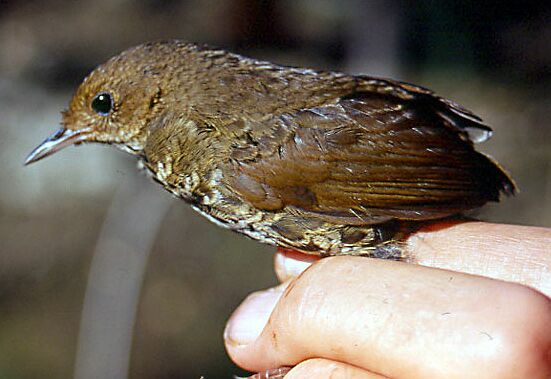
Nepal Wren-Babbler (Pnoepyga immaculata) by Nikhil Devasar

Nepal Wren-Babbler (Pnoepyga immaculata) by Nikhil Devasar

The last verse I found with “babbler” gives us a more positive emphasis. The Apostle Paul was in Athens and:

“Now while Paul waited for them at Athens, his spirit was provoked within him when he saw that the city was given over to idols. Therefore he reasoned in the synagogue with the Jews and with the Gentile worshipers, and in the marketplace daily with those who happened to be there. Then certain Epicurean and Stoic philosophers encountered him. And some said, “What does this babbler want to say?” Others said, “He seems to be a proclaimer of foreign gods,” because he preached to them Jesus and the resurrection. And they took him and brought him to the Areopagus, saying, “May we know what this new doctrine is of which you speak? For you are bringing some strange things to our ears. Therefore we want to know what these things mean.” (Acts 17:16-20 NKJV)

Are we “babblers” for the Lord like Paul? When people listen to us (or read what we write), do they hear a loud “discordant sound” or a clear “musical note”? We have no control how the words are heard. Some may consider the Words of Jesus as just another belief system in the world, while others will hear the Words as joy to their souls. We are told to tell others about Christ. So, Who do we “Babble” for?

*
Eupetidae – Rail-babbler – 1

Pellorneidae – Fulvettas, Ground Babblers – 40+ Wren Babblers, Thrush-Babbler, Scimitar Babbler, Babblers

Pnoepygidae – Wren-babblers – 5 Wren-babblers

Pomatostomidae – Australasian Babblers – 5 Babblers

Psophodidae – Whipbirds, Jewel-babblers and Quail-thrushes – 4 Jewel-babblers

Sylviidae – Sylviid Babblers – 6 Hill Babblers, Thrush-Babblers, and Babblers

Timaliidae – Babblers – 55 Scimitar Babblers, Wren-Babblers, Tit-Babblers and Babblers

Orni-Theology

Sharing The Gospel

*

Sunday Inspiration – Let Everything Praise

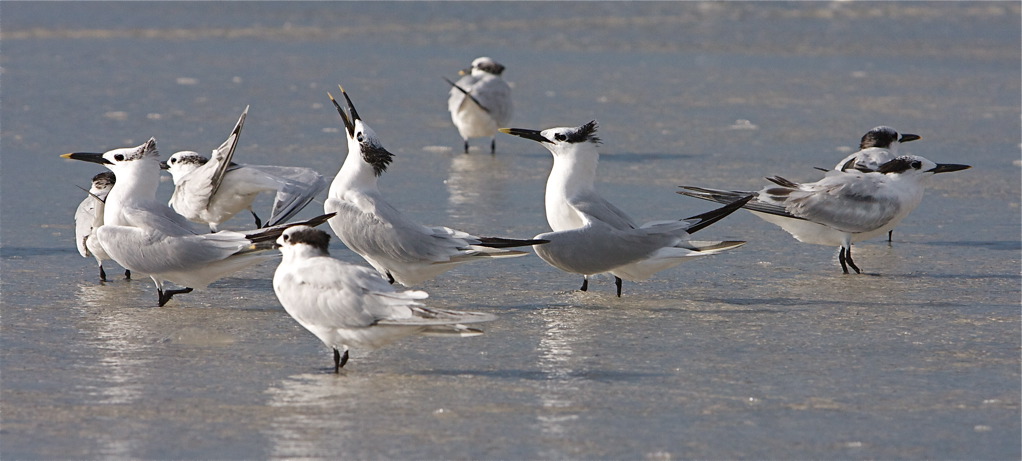
Sandwich Tern Singing (calling) By Mike Bader

Sandwich Tern Singing (calling) By Mike Bader

Let every thing that hath breath praise the LORD. Praise ye the LORD. (KJV)

Let everything that has breath and every breath of life praise the Lord! Praise the Lord! (Hallelujah!) (AMP)

Let every living creature praise the LORD. Shout praises to the LORD! (CEV)

This week the Hyssongs came to our Young At Heart (55 plus) gathering and sang for us. They did a fantastic program of song and praise to our Lord. Last year when they came, they gave me permission to use their music in these Sunday Inspirations. (They are copyrighted and need permission-please, do not copy)

I have purchased their latest CD ~ “Right Time – Right Place” and wanted to share this song, “God Is Great.” Trust you will enjoy their song, what it says, and enjoy our avian friends and some others singing their praise.

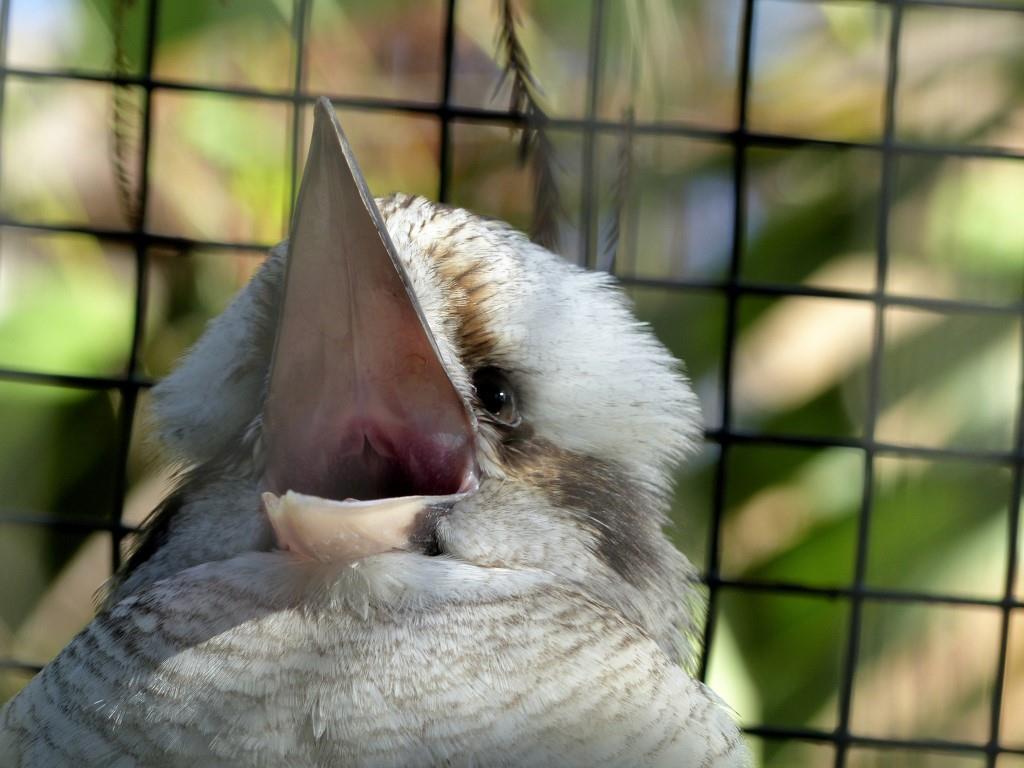
Laughing Kookabura at Lowry Park Zoo by Lee 12-26-14

Laughing Kookabura at Lowry Park Zoo by Lee 12-26-14

Here are a few quotes about Psalm 150 from two commentaries:

Let everything that has breath praise the LORD. Praise the LORD! (NKJV)

Constable – Psalms 150

The inspired poet called on every person to praise Yahweh for His powerful deeds and supreme greatness (10 times out of the 13 uses of “praise” in this psalm). This psalm serves as a final doxology, bringing the collection of psalms to a solemn and joyful conclusion.

“The conclusion of the Psalter is this extravagant summons to praise, which seeks to mobilize all creation with a spontaneous and unreserved act of adoration, praise, gratitude, and awe. There are no ‘bases’ given; no reason needs to be given.” [Note: Brueggemann, p. 167.]

Biblical Illustrator – “IV. By whom (verse 6). Here the psalmist reaches the climax in his exhortation; he has exhausted language; he can particularize no more; he rushes to the culmination; he demands a universal outburst of adoration; he calls upon all in whom the breath of life is to help swell the “hallelujah chorus!” O what a thrilling crash of melody! what a volume of perfect harmony, when animate and inanimate creation, with all creatures, rising rank upon rank, order above order, species above species, purged from corruption, delivered from all evil, and attuned to the euphony of the skies—when “everything that hath breath,” the consecrated breath Divine—“shall join in one harmonious song, and crown Him Lord of all!” (J. O. Keen, D. D.)”

This slideshow requires JavaScript.

Let everything that breathes praise Jehovah. Praise Jehovah! (LITV-TSP)

Todo lo que respira alabe á JAH. Aleluya. (SRV)

(Click to Play)

Let Everything Praise ~ “God Is Great.” ©The Hyssongs

*

Sunday Inspirations

“King” Birds

Hornbills

Bitterns

Hide Thou Me

Resting

Sharing The Gospel

*


Martha and the Go-Kart Race

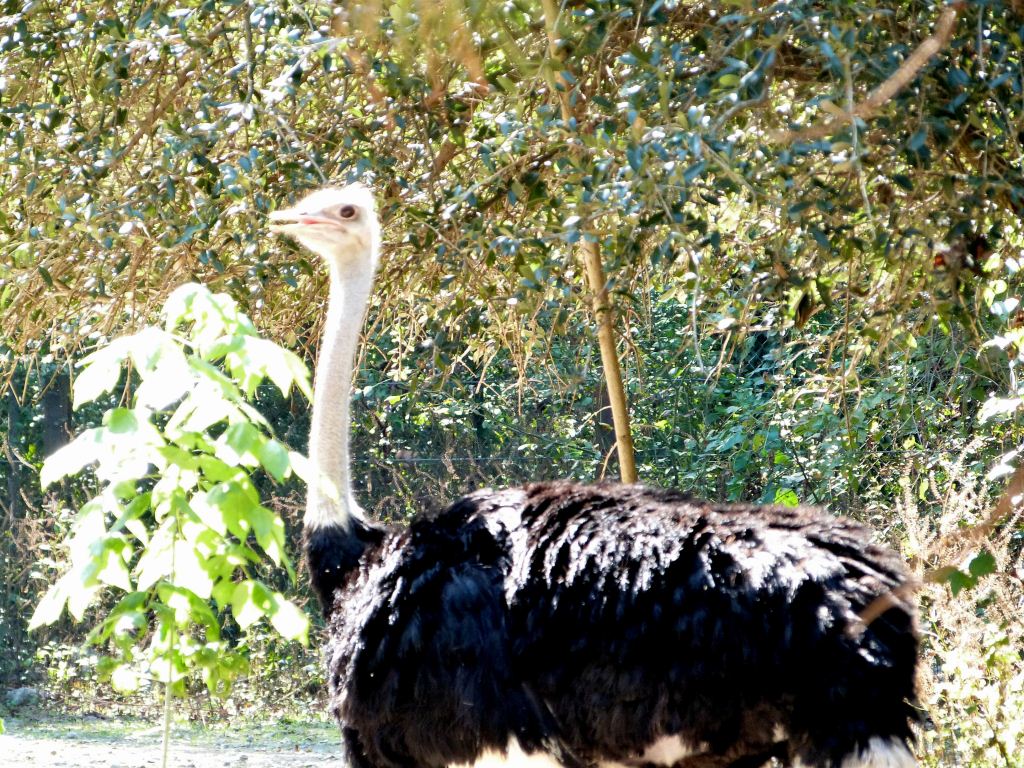
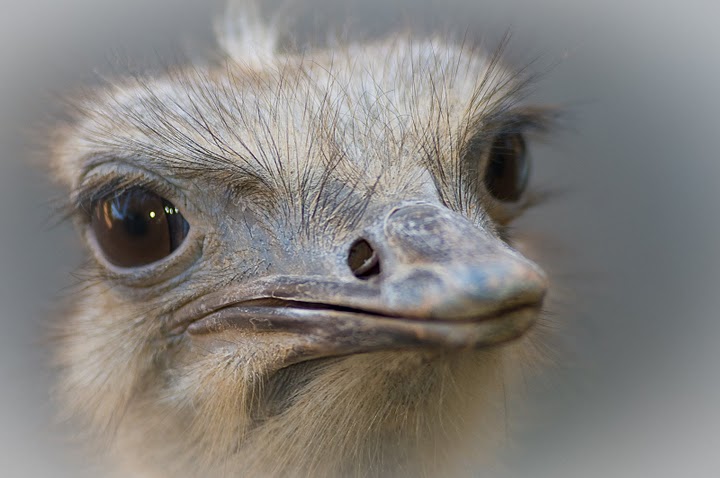
Common Ostrich (Struthio camelus) at Riverbanks Zoo SC by Lee

Common Ostrich (Struthio camelus) at Riverbanks Zoo SC by Lee

Martha and the Go-Kart Race ~ by Emma Foster

There was once an enormous ostrich named Martha who was extremely tall with a really long neck. She lived at the zoo and every day people would come there to look at her and all the strange and exotic animals. Many people came to look at Martha every day.

One day a flyer that had been left on the ground by a boy who was passing them out was blown in by the wind into Martha’s exhibit. She glanced down at the flyer. In big bold letters it said: GO-KART RACE THIS SATURDAY! The flyer went on to explain the instructions and it said that all ages were admitted. Martha decided right then and there she would enter the race.

That night, Martha sneaked out of her exhibit by climbing over the fence and sneaked into the shed in the back of the zoo. Finding some wooden boards, a hammer and nails, and a few other things, Martha set to work and eventually constructed her go-kart by Saturday.

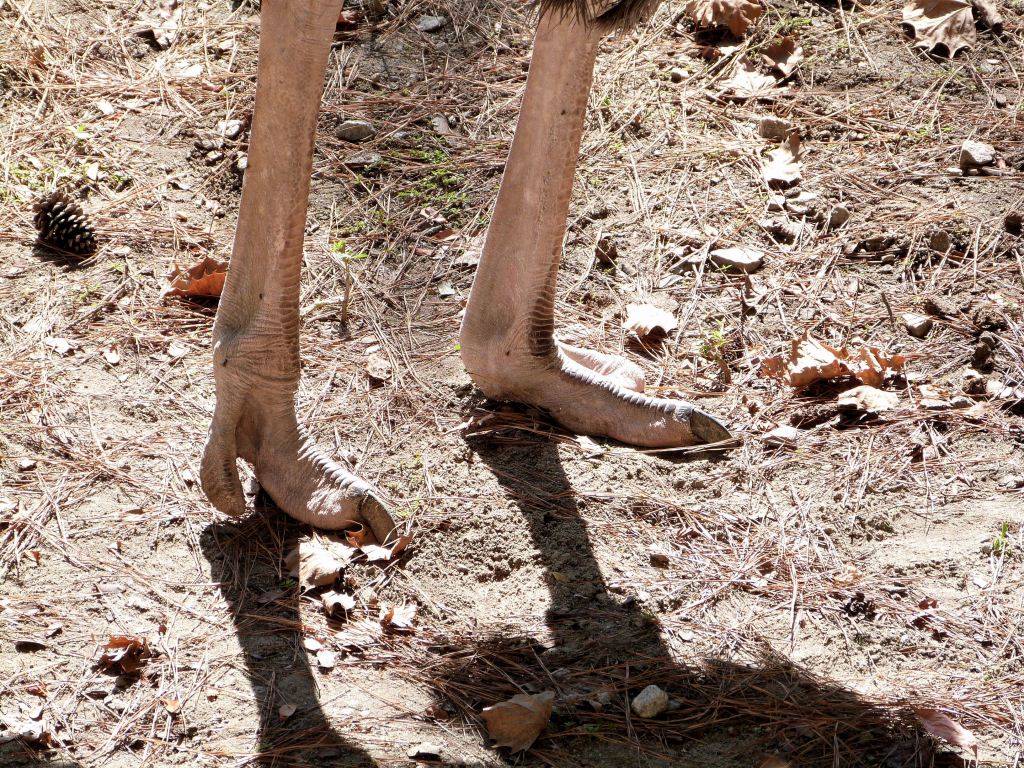
Common Ostrich (Struthio camelus) Foot at Riverfront Zoo SC by Lee

Common Ostrich (Struthio camelus) Foot at Riverfront Zoo SC by Lee

On the day of the race, Martha pushed her go-kart up to the starting line. All of the kids stared at her as she tried to get into the go-kart. It was difficult because of her long legs, but Martha eventually managed to get settled.

A man from the sideline swung a flag signaling to start the race. Martha zoomed down the road and turned a corner. After a few more turns Martha and the others drove over a bridge and eventually down a steep hill.

Ostrich

Ostrich

Martha spotted the finish line. She was in the lead. In a few seconds Martha crossed the finish line and won first place. Now every time someone at the zoo passed by Martha’s exhibit, they would see her first place trophy and her go-kart. The people at the zoo would always say they had never seen a better racer and the zoo keepers never figured out how she escaped from her exhibit.

The End


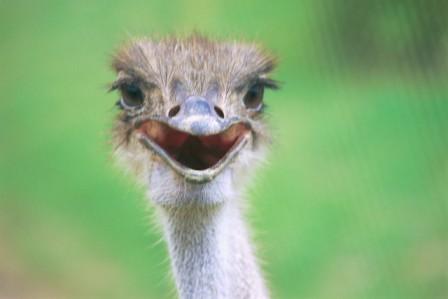
Common Ostrich (Struthio camelus) Closeup by WikiC

Common Ostrich (Struthio camelus) Closeup by ©WikiC

Lee’s Addition:

Gavest thou the goodly wings unto the peacocks? or wings and feathers unto the ostrich? (Job 39:13 KJV)

Well, our young writer has come up with another interesting Bird Tale. Emma continues to amaze me with her stories. Thanks, again, Emma. Keep up the good work. Lord Bless you as you continue to develop in wisdom and with the Lord.

See her other stories:

Also:

*

Eyes of the Heart

Masked Lapwing (Vanellus miles) Eye ©WikiC

I pray that the eyes of your heart may be enlightened, so that you will know what is the hope of His calling, what are the riches of the glory of His inheritance in the saints, (Ephesians 1:18 NASB)

For this people’s heart is waxed gross, and their ears are dull of hearing, and their eyes they have closed; lest at any time they should see with their eyes, and hear with their ears, and should understand with their heart, and should be converted, and I should heal them. But blessed are your eyes, for they see: and your ears, for they hear. (Matthew 13:15-16 KJV)

Luzon Bleeding-heart by Dan

Orni-Theology

After our devotions, Dan and I read from a book. Currently we are reading from Ray Pritchard’s Beyond All You Could Ask Or Think. In talking about prayer, (p78+):

“The heart has eyes. Did you know that? When Paul speaks of “your heart,” he’s not referring to the organ in your chest that pumps blood throughout your body. The term “heart” refers to “the real you,” the place inside where the decisions of life are made.”

He goes on to say that all important decisions are decided in your heart. The question then comes to whether your “eyes” are open or closed to God’s truth. When we explain something about God’s Word and the truth found there, the person listening will either understand or not, depending on whether the “eyes of their heart” are open or closed.

He then goes on to encourage us to pray for us and others to keep our eyes and theirs “open” and on the Lord. (My paraphrase)

So what does this have to do with birdwatching? I enjoy watching birds and many times they have their eyes closed, half-closed or open. If you have followed this blog very long, you also know I like to use e-Sword to help search through the Bible. I know that birds and eyes are mentioned somewhere. Let’s go see what we can find!

“That path no bird knows, Nor has the falcon’s eye seen it. (Job 28:7 NKJV)

“”From where then does wisdom come? And where is the place of understanding? It is hidden from the eyes of all living, And concealed from the birds of the air. (Job 28:20-21 NKJV)

Those verse don’t apply except that we know that wisdom and knowledge are concealed from the birds. The Lord just gave them a built in instinct to do as He created. They do not need to get out a Bible and study to learn.

It is amazing how many verses have “eyes” and “heart” mentioned in the same verse. Enjoy searching for them.

The slide show below will have an eye or eyes zoomed in and then the next slide will show the bird. See if you can ID the bird by the eye before the answer shows.

This slideshow requires JavaScript.

Here are more verses mentioning eye and heart in same verse.

They have not known nor understood: for he hath shut their eyes, that they cannot see; and their hearts, that they cannot understand. (Isaiah 44:18 KJV)

He hath blinded their eyes, and hardened their heart; that they should not see with their eyes, nor understand with their heart, and be converted, and I should heal them. (John 12:40 KJV)

Saying, Go unto this people, and say, Hearing ye shall hear, and shall not understand; and seeing ye shall see, and not perceive: For the heart of this people is waxed gross, and their ears are dull of hearing, and their eyes have they closed; lest they should see with their eyes, and hear with their ears, and understand with their heart, and should be converted, and I should heal them. Be it known therefore unto you, that the salvation of God is sent unto the Gentiles, and that they will hear it. (Acts 28:26-28 KJV)

The light of the eyes rejoiceth the heart: and a good report maketh the bones fat. (Proverbs 15:30 KJV)

My son, give me thine heart, and let thine eyes observe my ways. (Proverbs 23:26 KJV)

The statutes of the LORD are right, rejoicing the heart: the commandment of the LORD is pure, enlightening the eyes. (Psalms 19:8 KJV)

*

Some other articles mentioning the “Eye”:

*

Sunday Inspiration – Flamingo Gardens

Birds at Flamingo Gardens by Lee 2014

Birds at Flamingo Gardens by Lee 2014

When Jesus had spoken these words, he went forth with his disciples over the brook Cedron, where was a garden, into the which he entered, and his disciples. And Judas also, which betrayed him, knew the place: for Jesus ofttimes resorted thither with his disciples. (John 18:1-2 KJV)

…Did not I see thee in the garden with him? (John 18:26 KJV)

Dan and I stopped at Flamingo Gardens in Davie, Florida in November. Realized I haven’t said anything about it and decided to share some of the photos taken then.

We were there many years ago when they first opened. We lived in the area at the time. Flamingo Garden has grown and is a very delightful place to visit. They have an aviary which contains Florida native birds. Many have been injured and cannot be released to the wild again.

Please enjoy some of the sights as you listen to our orchestra play In “The Garden”. (Click arrow below the slideshow)

This slideshow requires JavaScript.


“In The Garden” ~ Faith Baptist Orchestra with Flute Solo by Lauren D

*

Sunday Inspirations

Flamingo Gardens

Gideon

*

Of Robins, Wrens, and Monuments in AD2015

But lay up for yourselves treasures in heaven, where neither moth nor rust doth corrupt, and where thieves do not break through nor steal.  (Matthew 6:20)

As the year of our Lord 2014 closed, all too quickly it seemed, I thought about what was done in those dozen months of busy-ness.  What do we have to show for our journey through those pages of the AD2014 calendar?   Was that year worth our time on Earth?  Was that year one of fruitful service to our Lord?  What good achievements, what valuable accomplishments, what worthwhile “monuments” are left in our wake, as we sail ahead into the year of our Lord 2015?

Thinking about these questions reminded me of robins and wrens, for reasons that follow.

But before exploring why earthly achievements (and “monuments”) remind me of wrens and robins, some attention to those birds is appropriate.
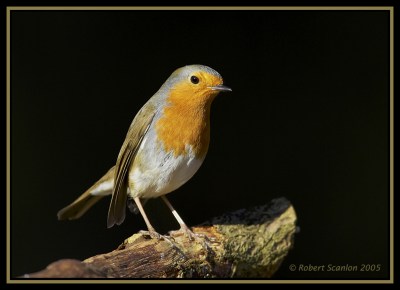
European Robin (Erithacus rubecula) by Robert Scanlon

European Robin (Erithacus rubecula) by Robert Scanlon

ROBINS

The European Robin (Erithacus rubecula) is the unofficial bird of the United Kingdom.  English settlers, seeing what we call the American Robin (Turdus migratorius), were reminded (perhaps nostalgically) of the European Robin, which is also a thrush-like brown-and-grey-backed bird with orange breast coloring. The American Robin is larger, and its coloring is less intense, but it is not hard to understand why the English settlers were reminded of the European Robin they knew from their native land.

The American Robin, as its scientific name denotes, is known for seasonal migration  — its range covers most of America, plus parts of Canada and Mexico, with moderate climate regions hosting robins year-round.  [See Donald Stokes, A Guide to Bird Behavior, Volume 1 (Little Brown & Co., 1979), page 221; see also Roger Tory Peterson, Eastern Birds (Peterson Field Guides, Houghton Mifflin, 1980), pages 220-221 & range map M267.]
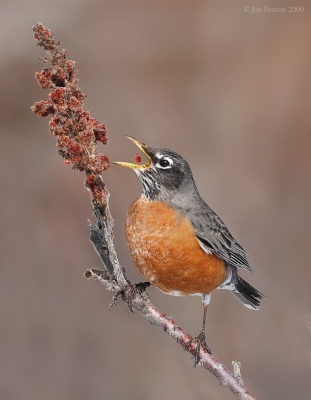
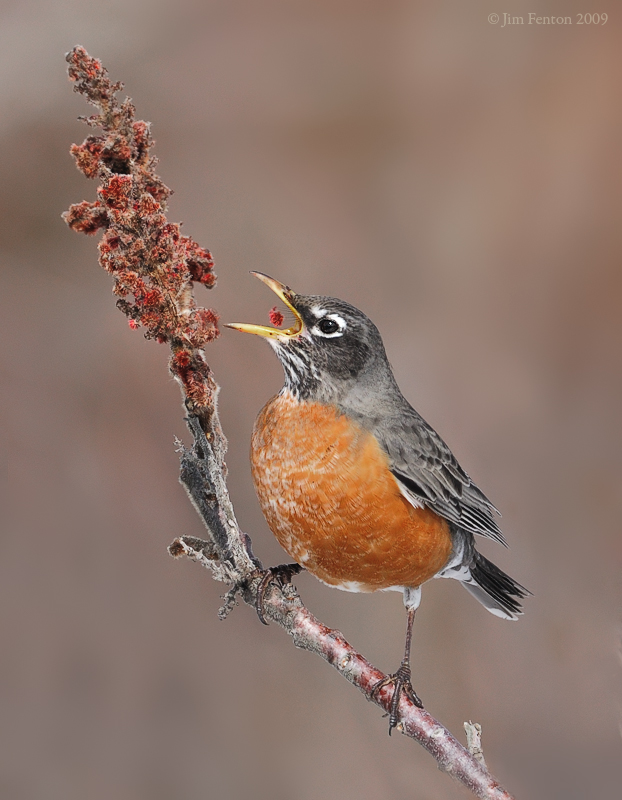
Robin Eating by Jim Fenton

Robin Eating by Jim Fenton

American Robins walk about with erect heads, sporting large dark eyes (with white eye-rings, if you look closely).  Like other thrushes, American Robin juveniles have spotted breast coloring.   The American Robin adult females have dull orange breast coloring, and dull brown backs, in contrast to the brighter almost brick-red breast coloring and darker brown backs of the adult males.  Robins love to eat berries in winter.

European Robin juveniles, like their American counterparts, have spotted buff-colored bellies.  Males and females look alike, unlike their Yankee cousins. These birds are known for hopping along the ground, with drooped wings, often pausing upright and alerted.  Common year-round residents in the British Isles, these robins have a year-round range that includes most of Western Europe, except most of Norway and Sweden host them only during the mild months of summer.  [See Chris Kightley, Steve Madge, & Dave Nurney, Birds of Britian and North-West Europe (Yale University Press, 1998), page 207.]  Imagine how honored some European Robins must be, to visit and entertain Laird Bill Cooper (a noble birdwatcher in England, renowned for his godly scholarship as a Biblical creationist) and his family!  Even birds can be granted great privileges during their little avian lifespans!
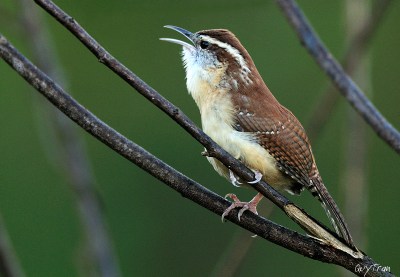
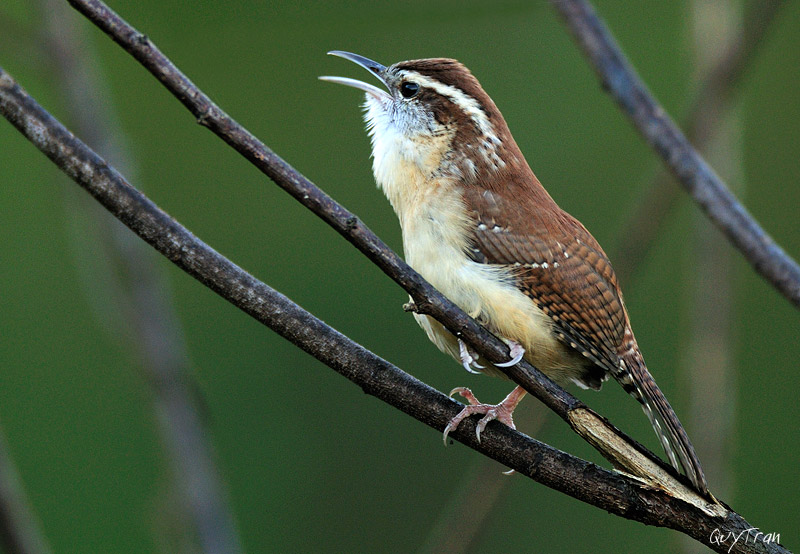
Carolina Wren (Thryothorus ludovicianus) by Quy Tran

Carolina Wren (Thryothorus ludovicianus) by Quy Tran

WRENS

Wrens are famous as small, short, energetic birds with slightly decurved bills and tilted-up tails.  The tail is routinely cocked almost upright, as if flying a flag.  Wren tails often are brown with black parallel stripes, with brown backs and wings, and white or ivory bellies.  When not flying, here or there, wrens hop, creep, climb, and scurry.  Examples of familiar wrens,  often sighted by birders, include Bewick’s Wren (Thryomanes bewickii), Carolina Wren (Thryothorus ludovicianus), House Wren (Troglodytes aedon), Marsh Wren (Cistothorus palustris), Rock Wren (Salpinctes obsoletus), Sedge Wren (Cistothorus platensis), Winter Wren (Troglodytes troglodytes – common also in the British Isles and Western Europe), etc.  [See Roger Tory Peterson, Eastern Birds (Peterson Field Guides, Houghton Mifflin, 1980), pages 214-215 & range maps M254 through M259.]
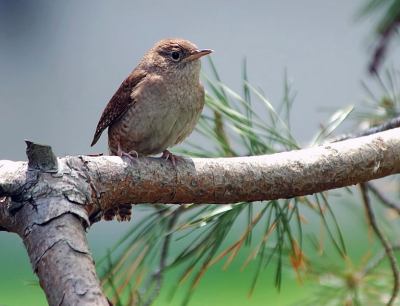
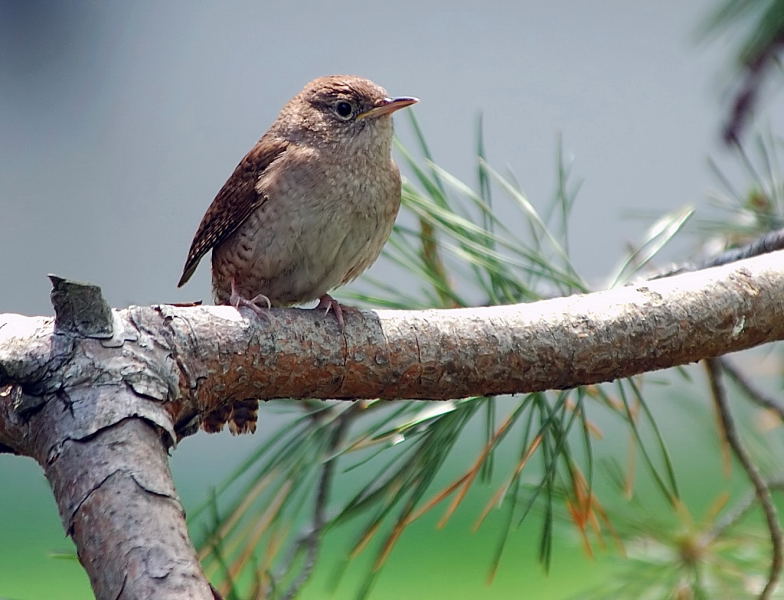
House Wren (Troglodytes aedon) by Ray

House Wren (Troglodytes aedon) by Ray

One popular wren, known for its warbling song, is the House Wren (Troglodytes aedon).  Males try to attract females, vibrating their wings and singing with a squeaky high-pitched voice when a prospective mate approaches the male’s nest site. If she adds a lining of soft grass to a male’s nest, that means “yes”.  Soon the female will be incubating eggs as her mate brings food to her.  Often two broods will be hatched and fledged during the spring-to-autumn months.  [See Donald Stokes, A Guide to Bird Behavior, Volume 1 (Little Brown & Co. 1979), pages 175-176.]

Bewick's Wren (Thryomanes bewickii) by Daves BirdingPix

Bewick’s Wren (Thryomanes bewickii) by Daves BirdingPix

Years ago a Bewick’s Wren (Thryomanes bewickii) built a nest inside a decorative wreath, a wreath that my wife hung on our Texas home’s front door.  When we walked out our front door the nervous mother wren would flutter and fly away, as we tried to gently shut the door so that the nest was not unnecessarily jostled.  The mother wren would quickly return, satisfied that we were not bothering her nest’s nestlings.  Baby wrens were hatched and fledged from the wreath on our front door!  This arrangement worked nicely, for us and for the wren family, for weeks if not months.  But one day Mama Wren got confused, as someone opened the door – she flew into the house – and then panicked as she tried to discern how to undo what she had done!  Eventually we coached her out – she never tried that again!

Obviously robins and wrens are delightful birds.  But now, robins remind me of “Christopher Robin”.

Christopher Robin ©WikiC

Christopher Robin ©WikiC

CHRISTOPHER ROBIN

Many children know about Winnie the Pooh (originally written Winnie-the-Pooh), a fictional bear cub who acts a lot like a human child.  (The original “Winnie” was a real bear that A. A. Milne saw at the London Zoo.)  Pooh’s imaginary adventures have amused children of many generations  —  what fun it is to romp about on a “blustery day”!  Winnie the Pooh’s adventures (“Winnie-the-Pooh”, “The House at Pooh Corner”, etc.) began in newspaper serials, and later books, authored by Alan Alexander Milne (and illustrated by Ernest  Howard Shepard).  Later, the adventures of Pooh and his friends (Eeyore, Christopher Robin, Tigger, Piglet, Kanga, Roo, Owl, etc.), and later were dramatized by animated cartoon movies.  Pooh’s literary creator, A. A. Milne, had a son named Christopher Robin Milne, obviously the source of Mr. Milne’s concept for the Christopher Robin” who appears as Pooh’s friend and co-adventurer in the Pooh book series.  The Milne family life was an ongoing tragedy, apparently, and the available evidence points to a pessimistic eternal destiny for Christopher Robin (Milne), “and probably also for his father, author A. A. Milne (who despised the Old Testament  –  see John 5:45-47).

Harry Colebourne and Winnie 1914 ©WikiC

Harry Colebourne and Winnie 1914 ©WikiC

Winnie the Pooh has made millions of dollars for several individuals and businesses, but what lasting value is that, by itself?  It is inferior to treasures laid up in Heaven, which neither corrupt nor disappear to human thievery.  Childhood memories – and gentle stories for toddlers — are valuable, of course, but how much more precious are experiences and deeds that honor the Lord, which become “gold, silver, and precious stones” in eternity.

CHRISTOPHER WREN

The name “Christopher Robin” reminds me of a similar name, featuring a different bird:  Christopher Wren.  Sir Christopher Wren was an expert in engineering science, a science professor and (better known as) the leading architect of his generation.  Wren was the architect responsible for building dozens of English churches after London’s Great Fire (of AD1666), including St. Paul’s Cathedral, as well as England’s Royal Observatory, the Wren Library at Cambridge’s Trinity College, Chelsea Hospital, Windsor Castle’s reconstructed state room, works at Kensington Palace and Hampton Court, Oxford’s Sheldonian Theatre, Cambridge’s Pembroke College’s chapel, etc.

But the crowning architectural achievement of Christopher Wren, from 300+ years ago, is the Anglican church titled St. Paul’s Cathedral, which rests atop Ludgate Hill, the highest part of London – at a site said to have hosted an earlier church building (named for the apostle Paul) founded around AD604, — ironically, by an invader/activist named Augustine of Canterbury (who is infamous for persecuting the British Celtic Church to the point of orchestrating slaughter of their presbyters at Bangor).
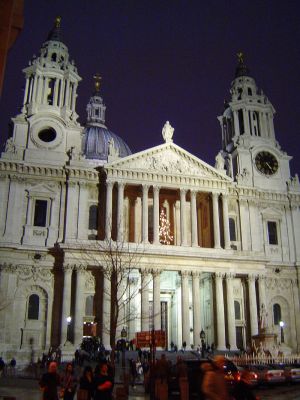
St. Paul's Cathedral At Night ©WikiC

St. Paul’s Cathedral At Night ©WikiC

Christopher Wren’s greatest earthly memorial, of course, is St. Paul’s Cathedral itself, which includes a Latin inscription upon the black marble beneath its central dome, that translates to English as:

Here in its foundations lies the architect of this church and city, Christopher Wren, who lived beyond ninety years, not for his own profit but for the public good. Reader, if you seek his monument – look around you.  Died 25 Feb. 1723, age 90.

St Paul's Cathedral Dome Interior ©WikiC

St Paul’s Cathedral Dome Interior ©WikiC

The Latin inscription was composed by Christopher Wren, Jr., his son.  Thus his greatest professional accomplishment, the grandiose design and successful construction of St. Paul’s Cathedral, became Christopher Wren’s gargantuan “monument”, more dignified than any cemetery gravestone.

But what kind of achievements will constitute the “monuments” of our earthly lives?  Will our deeds, done last year, stand the test of time and eternity, as deeds of faith like those reported in Hebrews chapter 11, the “Hall of Faith”?

But lay up for yourselves treasures in heaven, where neither moth nor rust doth corrupt, and where thieves do not break through nor steal.  (Matthew 6:20)

Last year, good or bad, is behind us  –  so it is this new year that we must try (under God’s good grace) to be worthy stewards of, so that each day becomes another “monument” of gratitude and testimony to our great God and Savior.  How we use this new year will be a “monument” to what we really value.

For where your treasure is, there will your heart be also.  (Matthew 6:21)

By James J. S. Johnson

*

Orni-Theology

James J. S. Johnson

*

Ian’s Bird of the Week – Collared Kingfisher

Ian’s Bird of the Week – Collared Kingfisher ~ by Ian Montgomery

Newsletter ~ 12-30-14

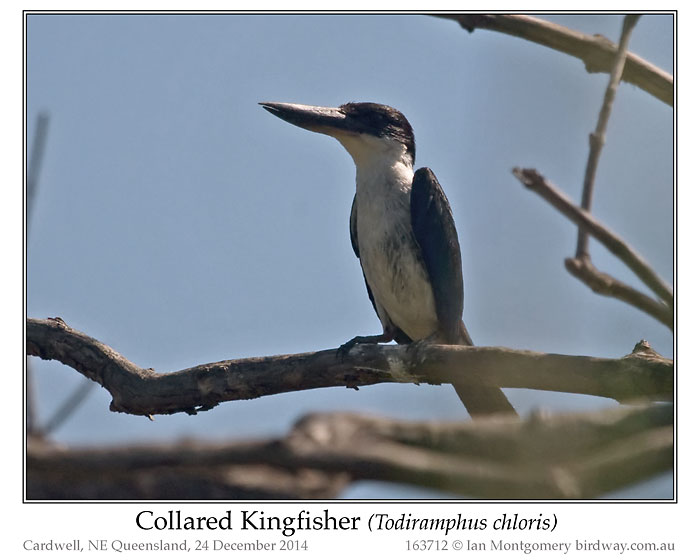
The first photo shows a present from Santa that I want to share, taken late in the afternoon on Christmas Day: a Collared Kingfisher This species is the only one of the ten Kingfishers and Kookaburras normally found in Australia that hasn’t featured as bird of the week. It’s a close relative of the Sacred Kingfisher, but larger with a much heavier bill. In Australia it is almost exclusively a dweller of mangroves and feeds mainly on crustaceans such as crabs with a carapace width up to 2cm: hence the shell-crunching beak, it’s best field mark.

Common Kingfisher (Alcedo atthis) by Ian

Because of its preference for mangroves and because it’s not very common, I’ve found it a difficult species to photograph in Australia. Often the only access to mangroves is on boardwalks, so you can’t get close to anything that’s not close to the boardwalk and, even if you can, you usually can’t get an uninterrupted view in the dense vegetation. In fact, the only tolerable Australian photo that I had was one I took in Darwin in 2004 where there is a walking track into mangroves from Tiger Brennan Drive.


Common Kingfisher (Alcedo atthis) by IanWhen I pass through Cardwell travelling north towards Innisfail and Cairns, I always stop there as it’s a lovely place where the highway runs along the beach front with views of Hinchinbrook Island and a convenient 90 minutes from home. There’s a rest area at the southern end of town close to a patch of mangroves that regularly produces interesting birds. It was badly damaged by cyclone Yasi four years ago, but is now recovering and the path through the mangroves from the rest area to Port Hinchinbrook has been restored.

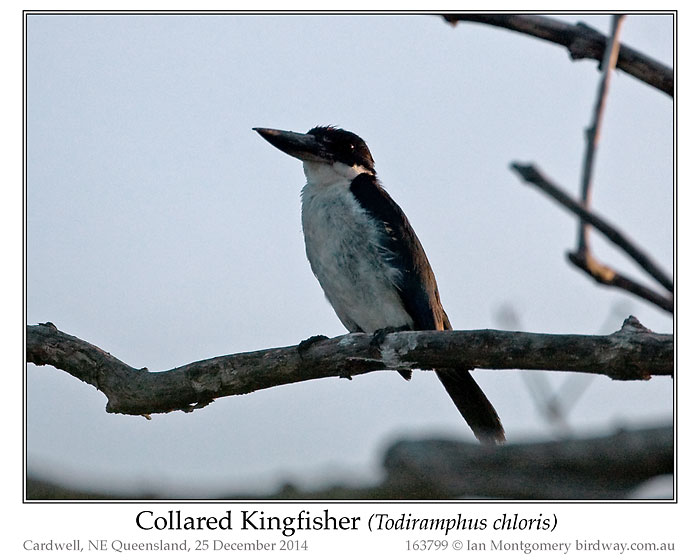
In early November, I saw a Collared Kingfisher perched in the open on a dead mangrove near the rest area; it was low tide and the bird was presumably looking for dinner on the mudflat. I didn’t get a photo of it – camera malfunction – but looked again on Christmas Eve on the way north and heard and then found one on a different perch in the middle of the mangroves. I got only the quick, back-lit, get-it-before-it-flies-away shot, second photo, before it did exactly that and I didn’t see it again.

Common Kingfisher (Alcedo atthis) by Ian

I returned home on Christmas Day and had another look, as the tide was going out and I hope that this would attract the bird into a more open position for a late feed. Just before I was about to give up, I heard the bird calling and found it perched near the beach. I got some distant shots, but when I approached it it flew over my head and returned to exactly the same back-lit spot where it had been on Christmas Eve. If you compare photos two and three, you can see from the guano stains on the branch that it is only a couple of centimetres apart on the two occasions. Clearly a bird of habits. This time, it tolerated my approach, and allowed me to leave the path, squelch through the mangroves and get around behind it where I took the first photo. Austral

Common Kingfisher (Alcedo atthis) by Ian

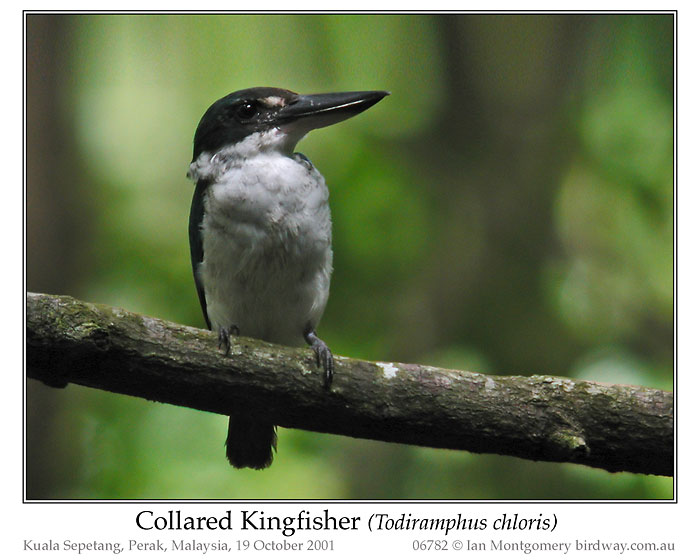
I’ve qualified some comments with ‘in Australia’. This species also ranges quite widely through Asia, and in some places it is found in many other habitats including suburban gardens and forested areas along rivers. I had no trouble photographing three in the space of week in Singapore and Malaysia, fourth photo, in 2001. These Asian birds belong to different races from the Australian ones and their taxonomy is very confused, with about 50 subspecies being currently recognized. The Malaysian and Australian races have white underparts but some others, particular those in the Pacific Islands east of New Guinea are quite buff, and some taxonomists think they should be transferred to the Sacred Kingfisher. The calls vary by location too. In Australia the usual contact call is a distinctive two note ‘kek KEK’, with the emphasis on the second one.

I hope Santa brought you what you wanted too.
Happy New Year!

Ian

**************************************************
Ian Montgomery, Birdway Pty Ltd,
454 Forestry Road, Bluewater, Qld 4818
Tel 0411 602 737 ian@birdway.com.au
Bird Photos http://www.birdway.com.au/


Lee’s Addition:

“And Jesus, walking by the sea of Galilee, saw two brethren, Simon called Peter, and Andrew his brother, casting a net into the sea: for they were fishers. And he saith unto them, Follow me, and I will make you fishers of men. And they straightway left their nets, and followed him.” (Matthew 4:18-20 KJV)

It is always enjoyable to happen upon a bird that is not always easy to find. Of course, when you bring out a camera, you never know if they will stay long enough to get a photo or not. Personally, for me, they seem to scatter. I am glad Ian was able to capture this beautiful Kingfisher’s photo.

You can see Ian’s Kingfisher photos here:

Collared Kingfisher

Sacred Kingfisher

Whole Kingfisher Family

and also enjoy many of his adventures here:

Ian’s Bird of the Week

Kingfishers – Alcedinidae – Whole Family

*

Sunday Inspiration – What A Savior!

Christmas Decorations at Faith 2014

“I, even I, am the LORD; and beside me there is no saviour. (Isaiah 43:11 KJV)

“For unto you is born this day in the city of David a Saviour, which is Christ the Lord. (Luke 2:11 KJV)

“And we have seen and do testify that the Father sent the Son to be the Saviour of the world. (1 John 4:14 KJV)

Trust you will enjoy an excerpt from this year’s Christmas Program at Faith Baptist. A video seems more appropriate than just an audio.

*

Laughing Kookabura at Lowry Park Zoo by Lee 12-26-14

Laughing Kookabura at Lowry Park Zoo by Lee 12-26-14

To think Our Creator, the Creator of all the world and especially the birds we enjoy so much, humbled Himself to come to earth to do the Father’s will. Our Savior!

In the beginning was the Word, and the Word was with God, and the Word was God. The same was in the beginning with God. All things were made by him; and without him was not any thing made that was made. (John 1:1-3 KJV)

Inca Tern at Lowry Park Zoo by Lee 12-26-14

Inca Tern at Lowry Park Zoo by Lee 12-26-14

*

Sunday Inspirations

Gospel Message

*


Sunday Inspiration – Humbleness of The Creator

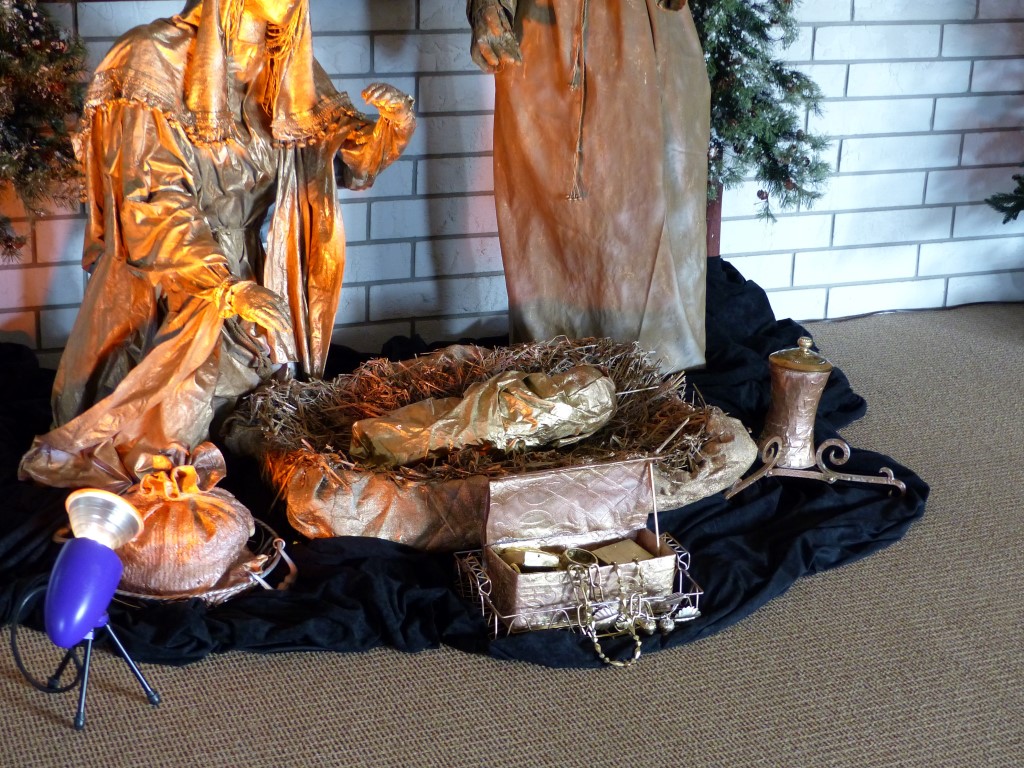
Birth of Christ (from an e-mail-source unknown)

“Let this mind be in you, which was also in Christ Jesus: Who, being in the form of God, thought it not robbery to be equal with God: But made himself of no reputation, and took upon him the form of a servant, and was made in the likeness of men: And being found in fashion as a man, he humbled himself, and became obedient unto death, even the death of the cross. Wherefore God also hath highly exalted him, and given him a name which is above every name: That at the name of Jesus every knee should bow, of things in heaven, and things in earth, and things under the earth; And that every tongue should confess that Jesus Christ is Lord, to the glory of God the Father.”(Philippians 2:5-11 KJV)

The Creator, of all the birds we like to feature here, humbled Himself to come in sinless flesh, to die for us. resurrect Himself, and provide Salvation for us. Don’t let that important point be lost in all the activities of Christmas.

We here, at the blog, trust you have a very Merry Christmas and enjoy seeing some of His Created birds as you listen to the music.

This slideshow requires JavaScript.

*
“Now when Jesus was born in Bethlehem of Judaea in the days of Herod the king, behold, there came wise men from the east to Jerusalem, Saying, Where is he that is born King of the Jews? for we have seen his star in the east, and are come to worship him”. (Matthew 2:1-2 KJV)

“The fear of the LORD is the beginning of wisdom: a good understanding have all they that do his commandments: his praise endureth for ever.” (Psalms 111:10 KJV)

“Wise Men Still Seek Him” – Pastor Jerry, Jessie, Caleb and Choir – FBC

(From our Christmas Program last Sunday night)

*

*

Sunday Inspiration – Christmas Birds

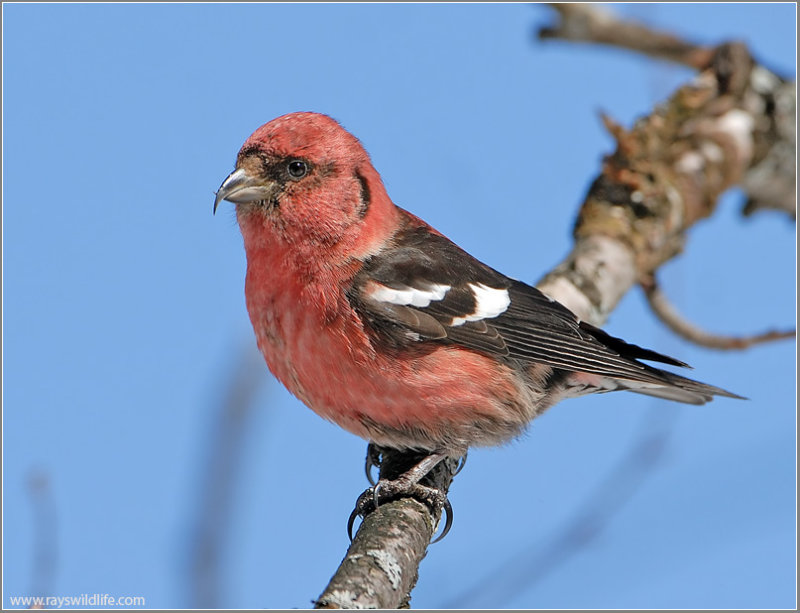
Two-barred Crossbill (Loxia leucoptera)(White-winged) by Raymond Barlow

Two-barred Crossbill (Loxia leucoptera)(White-winged) by Raymond Barlow

Now when Jesus was born in Bethlehem of Judaea in the days of Herod the king, behold, there came wise men from the east to Jerusalem, Saying, Where is he that is born King of the Jews? for we have seen his star in the east, and are come to worship him. (Matthew 2:1-2 KJV)

Today I am doing something a little different. Instead of a song, there is a short Christmas message from my pastor. This was given during the Camel Lot Christmas Musical that we had in 2012. It applies for today, as well. Listen to Pastor Nathan Osborne III as you watch some of the Lord Jesus Christ’s creation among the birds.

The birth of the Jesus, His death on the cross and His resurrection are all a part of Christmas.

This slideshow requires JavaScript.

Our Pastor at the Christmas Camel Lot Musical – 2012

*

(Started adding Christmas colored birds, but then added newer photos from this year.)

Sunday Inspirations

Some Previous Christmas Articles

*

Sunday Inspiration – Resting

Caribbean Dove (Leptotila jamaicensis) ©WikiC

Caribbean Dove (Leptotila jamaicensis) ©WikiC

But the dove found no rest for the sole of her foot, and she returned unto him into the ark, for the waters were on the face of the whole earth: then he put forth his hand, and took her, and pulled her in unto him into the ark. (Genesis 8:9 KJV)

And the work of righteousness shall be peace; and the effect of righteousness quietness and assurance for ever. And my people shall dwell in a peaceable habitation, and in sure dwellings, and in quiet resting places; (Isaiah 32:17-18 KJV)

Therefore my heart is glad, and my glory rejoiceth: my flesh also shall rest in hope. (Psalms 16:9 KJV)

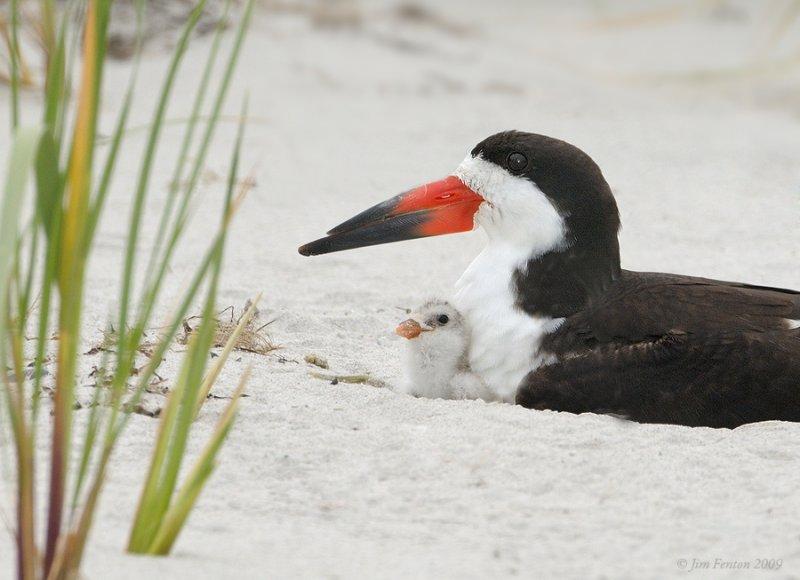
Black Skimmer (Rynchops niger) by J Fenton

Black Skimmer (Rynchops niger) by J Fenton

And I said, Oh that I had wings like a dove! for then would I fly away, and be at rest. (Psalms 55:6 KJV)

Return unto thy rest, O my soul; for the LORD hath dealt bountifully with thee. (Psalms 116:7 KJV)

Come unto me, all ye that labour and are heavy laden, and I will give you rest. Take my yoke upon you, and learn of me; for I am meek and lowly in heart: and ye shall find rest unto your souls. (Matthew 11:28-29 KJV)

Are we resting like we should, knowing that God Is In Control?

*

This slideshow requires JavaScript.

“God’s Still In Control” ~ ©Hyssongs

*

More Sunday Inspirations

Hope for Hard Times

Is There a God?

*

Bird of the Week – Bonelli’s Eagle

Bonelli's Eagle (Aquila fasciata) by Ian

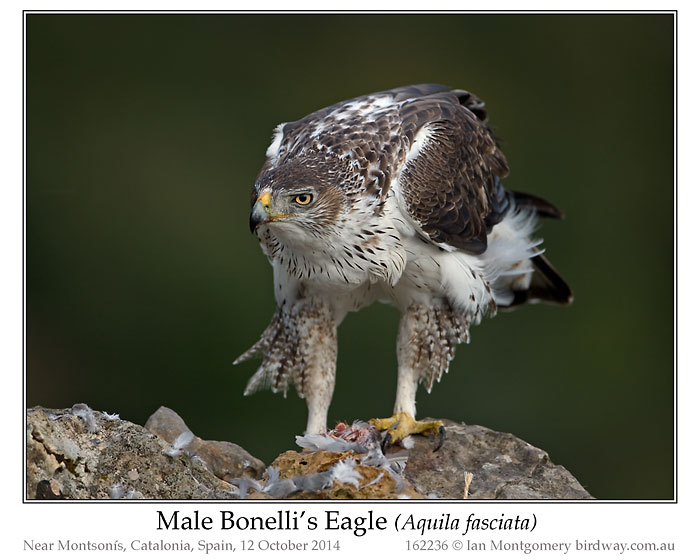
This is the last in this series of raptor photos from the Pyrenees: Bonelli’s Eagle taken at another feeding station managed by Birding in Spain. Like last week’s Northern Goshawk feral pigeons from a local council culling programme are used to attract the eagles. It’s brown and white plumage reminded me rather of the similarly sized Osprey particular that of the male, first photo, which is paler than the female. In size it has a length of up to 73cm/28in, a wingspan to 180cm/71in and weights up to 2.4kg/5.3lbs. That makes it much smaller than most of the other Aquila eagles, such as the Golden and Wedge-tailed but larger than the Little Eagle of Australia.

View From The Hide in Spain by Ian

View From The Hide in Spain by Ian

There the resemblance to ospreys ends, as Bonelli’s Eagle is found in hilly or mountainous country in warm regions and eats mammals and birds – in Spain it eats mainly rabbits and partridges. The second photo shows the view from the hide. The stone wall on the left is where the food is tied in place, as is done with the goshawks to prevent them from carrying the food away. The bird arrived quite promptly after set up: you can see in the first photo that the reflection of the sun in its eye is just above the horizon.

Bonelli's Eagle (Aquila fasciata) by Ian

The third photo is another one of the male with the remains of a pigeon. On the back just below the neck a white spot is visible – this is a diagnostic feature of adult Bonelli’s Eagles and fairly conspicuous in flight though the birds arrived and departed so quickly from the rocky ridge in front of the hide that I didn’t get any decent flight shots.

Bonelli's Eagle (Aquila fasciata) by Ian

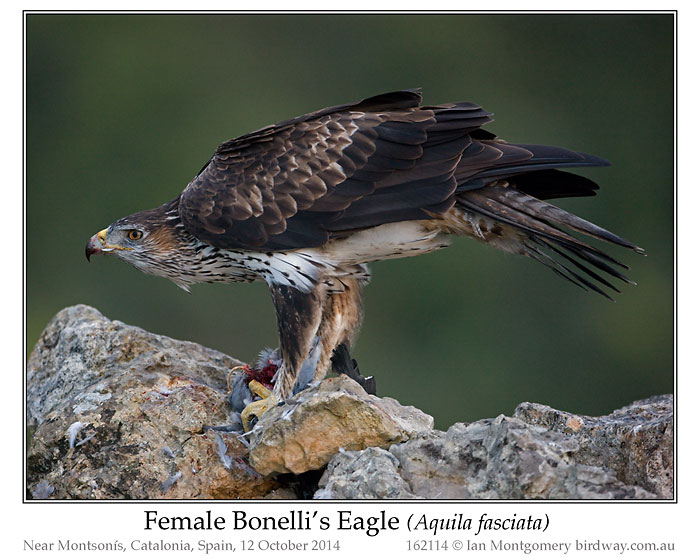
They were fast eaters too. The fourth photo was taken 25 minutes after the third: very little of the pigeon remains and the crop of the bird is quite full. The adult goshawk also took about half an hour to demolish a pigeon, but the immature goshawk took the best part of two hours and remained long after the adult had left. Despatching prey at speed would appear to be a skill that takes raptors a bit of practice. Both these photos show the feathered legs or ‘boots’, characteristic of ‘true’ eagles. They’re not exclusive to eagles though. The goshawks had impressive trousers too as do some falcons such as the Brown Falcon of Australia.

Bonelli's Eagle (Aquila fasciata) by Ian

Once fed, the male seemed more aware of what was going on around it and in the fifth photo is peering at the hide, presumably in response to the sound of the camera shutter.

Meanwhile, the female, sixth and seventh photos, was getting stuck into the other pigeon. She was a fine-looking bird too, larger than the male, with hazel eyes and identifiable by much stronger streaks on the breast. The female had much darker trousers, seventh photo, but I don’t know whether that’s generally the case or peculiar to this bird.

Bonelli's Eagle (Aquila fasciata) by Ian Female

Bonelli’s Eagle is widely but sparsely distributed through southern Europe, northern Africa, parts of the Middle East, South and Southeastern Asia as far east as Timor. The European population is about 900 pairs, of which about 700 are in Spain. They are sedentary, keeping to their large home ranges throughout the year. Satellite tracking in Spain has shown an average home range of 200sq km/77sq miles with a core range of about 45sq km/17 sq miles.

Bonelli's Eagle (Aquila fasciata) by Ian Female

The generic name ‘fasciata’ comes from the Latin fascia meaning stripe, band or sash. It’s usually used in birds to refer to horizontal bands or barring but maybe Veillot, the taxonomist responsible, was referring to the barring on the ‘trousers’ rather than the streaks on the breast. Veillot, Jean Pierre that is, was an important French avian taxonomist, 1748-1831, who extended the three-level Linnaean classification of order-genus-species into order-tribe-family-genus-species in his Analyse d’une nouvelle Ornithologie Elémentaire (1816). Franco Andrea Bonelli was, unsurprisingly, an Italian ornithologist 1784-1830 and discovered both this eagle and Bonelli’s Warbler in 1815. He worked at the Natural History Museum in Paris 1810-11 before returning to Italy to take up the position of Professor of Zoology at the University of Turin. Interestingly, he published his main works in French.

What would we do without Wikipedia?
Greetings
Ian

**************************************************
Ian Montgomery, Birdway Pty Ltd,
454 Forestry Road, Bluewater, Qld 4818
Tel 0411 602 737 ian@birdway.com.au
Bird Photos http://www.birdway.com.au/
Recorder Society http://www.nqrs.org.au


Lee’s Addition:

They are passed away as the swift ships: as the eagle that hasteth to the prey. (Job 9:26 KJV)

Their horses also are swifter than the leopards, and are more fierce than the evening wolves: and their horsemen shall spread themselves, and their horsemen shall come from far; they shall fly as the eagle that hasteth to eat. (Habakkuk 1:8 KJV)

What an amazing set of photos of this magnificent Eagle. Thanks again, Ian, for sharing these fantastic glimpses of the Bonelli’s Eagle. Pretty fast eaters, it appears.

This Eagle is a member of the Accipitridae – Kites, Hawks and Eagles Family and a Bird of the Bible also. Eagles are mentioned over thirty times in the Bible, plus they are included in the various “birds of prey” verses.

*

Ian’s Bird of the Week

Ian’s Eagle Family pages

Accipitridae – Kites, Hawks and Eagles Family

Birds of the Bible – Eagle

*