Bald Eagle (Haliaeetus leucocephalus) Brevard Zoo by Lee
While having devotions this morning, we read this from Comments on Here and Hereafter, by Dr. Bob Jones, Sr. (After our regular devotional we read from different books.)
“A story is told of an eagle that had its wing clipped. He was put in the barnyard with the fowls. The eagle used to walk out in the light and turn one eye to the mountain and the other eye to the sun, and he said in his eagle language, ‘This is not my home. I don’t belong here. God made me for the jagged peaks of the mountain top.’ The eagle tried to lift himself with the clipped wing, but he could not fly. Day after day while the wing was growing back to normal he looked at the mountain and he looked at the sun and said in his own eagle language, ‘I am going home some day.’ One day the eagle’s wing was strong. He tried his wings and found he could lift himself. He said, ‘Good-by, I am going home. God didn’t make me for this place. He made me for a mountain top.’ God didn’t make man for the dread sordidness of the commonplace and the monotony of every-day life. The soul of man has wings. But sin has made these wings helpless. Christ can restore us and make strong these wings of the soul so man can fly high enough to have fellowship with the infinite God.”
For God so loved the world, that he gave his only begotten Son, that whosoever believeth in him should not perish, but have everlasting life. For God sent not his Son into the world to condemn the world; but that the world through him might be saved. (John 3:16-17 KJV)
Kingfisher – Birds Illustrated by Photography 1897
Birds Illustrated by Color Photography – Revisited
Vol 1. February, 1897 No. 2
*
THE KINGFISHER.
Dear Children:
I shall soon arrive from the south. I hear that all the birds are going to tell stories to the boys and girls.
I have never talked much with children myself for I never really cared for people. They used to say that the dead body of a Kingfisher kept them safe in war and they said also that it protected them in lightning.
Even now in some places in France they call us the moth birds, for they believe that our bodies will keep away moths from woolen cloth.
I wish that people would not believe such things about us. Perhaps you cannot understand me when I talk. You may think that you hear only a child’s rattle.
Listen again! It is I, the Kingfisher. That sound is my way of talking. I live in the deep woods. I own a beautiful stream and a clear, cool lake. Oh, the little fish in that lake are good enough for a king to eat! I know, for I am a king.
You may see me or some of my mates near the lake any pleasant day. People used to say that we always brought pleasant weather. That is a joke. It is the pleasant weather that always brings us from our homes. When it storms or rains we cannot see the fish in the lake. Then we may as well stay in our nests.
My home once belonged to a water rat. He dug the fine hall in the gravel bank in my stream. It is nearly six feet long. The end of it is just the kind of a place for a nest. It is warm, dry and dark. In June my wife and I will settle down in it. By that time we shall have the nest well lined with fish bones. We shall put in some dried grass too. The fish bones make a fine lining for a nest. You know we swallow the fish whole, but we save all the bones for our nest.
I shall help my wife hatch her five white eggs and shall try in every way to make my family safe.
Please tell the people not to believe those strange things about me and you will greatly oblige,
A neighbor,
The Kingfisher.
THE KINGFISHER.
The Lone Fisherman.
HE American species belongs to the true group of Kingfishers. It occupies the whole continent of North America and although migrating in the north, he is a constant resident of our southern states. The belted Kingfisher is the only variety found along the inland streams of the United States. Audubon declares that “belted” should apply only to the female, however.
Like most birds of brilliant plumage, the Kingfisher prefers a quiet and secluded haunt. It loves the little trout streams, with wooded and precipitous banks, the still ponds and small lakes, ornamental waters in parks, where it is not molested, and the sides of sluggish rivers, drains and mill-ponds.
Here in such a haunt the bird often flits past like an indistinct gleam of bluish light. Fortune may sometimes favor the observer and the bird may alight on some twig over the stream, its weight causing it to sway gently to and fro. It eagerly scans the shoal of young trout sporting in the pool below, when suddenly it drops down into the water, and, almost before the observer is aware of the fact, is back again to its perch with a struggling fish in its beak. A few blows on the branch and its prey is ready for the dexterous movement of the bill, which places it in a position for swallowing. Sometimes the captured fish is adroitly jerked into the air and caught as it falls.
Fish is the principal food of the Kingfisher; but it also eats various kinds of insects, shrimps, and even small crabs. It rears its young in a hole, which is made in the banks of the stream it frequents. It is a slatternly bird, fouls its own nest and its peerless eggs. The nesting hole is bored rather slowly, and takes from one to two weeks to complete. Six or eight white glossy eggs are laid, sometimes on the bare soil, but often on the fish bones which, being indigestible, are thrown up by the bird in pellets.
The Kingfisher has a crest of feathers on the top of his head, which he raises and lowers, especially when trying to drive intruders away from his nest.
The plumage is compact and oily, making it almost impervious to water. The flesh is fishy and disagreeable to the taste, but the eggs are said to be good eating. The wings are long and pointed and the bill longer than the head. The voice is harsh and monotonous.
It is said that few birds are connected with more fables than the Kingfisher. The superstition that a dead Kingfisher when suspended by the throat, would turn its beak to that particular point of the compass from which the wind blew, is now dead. It was also supposed to possess many astonishing virtues, as that its dried body would avert thunderbolts, and if kept in a wardrobe would preserve from moths the woolen stuffs and the like contained in it.
Under the name of “halcyon,” it was fabled by the ancients to build its nest on the surface of the sea, and to have the power of calming the troubled waves during its period of incubation; hence the phrase “halcyon days.”
A pair of Kingfishers have had their residence in a bank at the south end of Washington Park, Chicago, for at least three seasons past. We have watched the Kingfisher from secluded spots on Long Island ponds and tidal streams, where his peculiar laughing note is the same as that which greets the ear of the fisherman on far inland streams on still summer days.
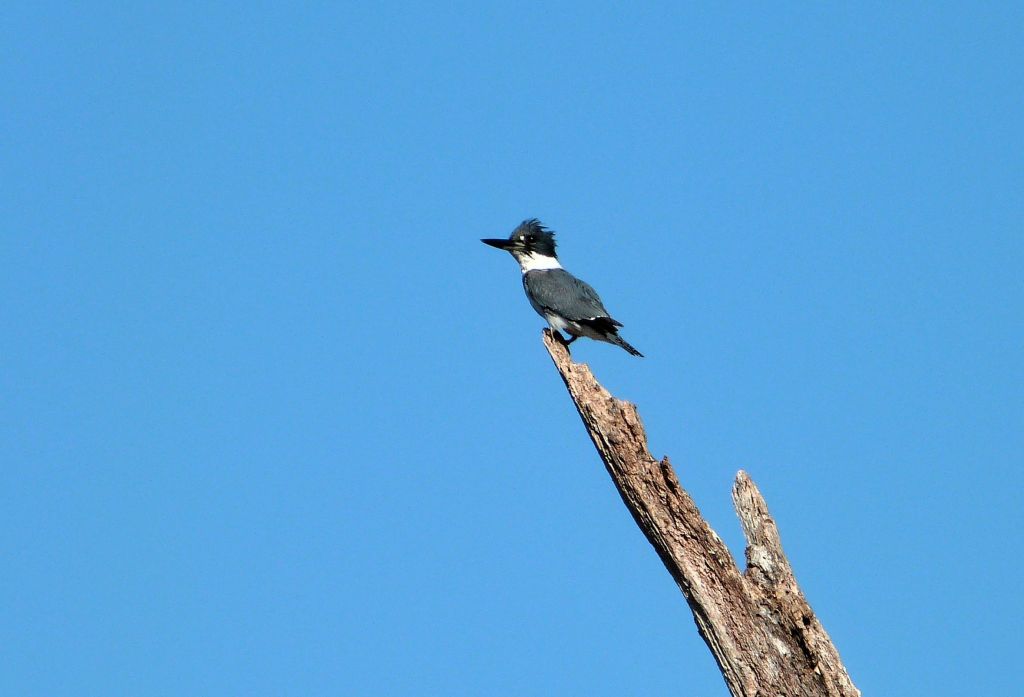
Belted Kingfisher (Megaceryle alcyon) by Daves BirdingPix
Lee’s Addition:
Another of my favorite birds. I think most of them are, but the Belted Kingfisher is a real challenge to photograph. They must sense that your camera is on. Dan says that many photographers call it the “Devil Bird” because it is so hard to photo. See http://jimt.zenfolio.com/p703966915 by James Thiel and another photographer at http://www.flickr.com/photos/johnklos/3049270990/.
I think of them as having a short squatty neck and a long beak. Actually the Laughing Kookaburra is in the Kingfisher family, the Kingfishers – Alcedinidae Family. The article mentioned that the Belted Kingfisher is the only one in the U. S., but there are actually two more; the Ringed and the Green Kingfishers that are found in south Texas. We have seen all three of them.
The Kingfisher – Alcedinidae family has a total of 95 members. Many of them are very colorful and again show the Lord’s Creative Hand at work. He has provided them with just the right kind of beak to snatch their meals with and even given them the ability to see their prey in the water. The distortion water gives is compensated for them.
And Jesus, walking by the sea of Galilee, saw two brethren, Simon called Peter, and Andrew his brother, casting a net into the sea: for they were fishers. And he saith unto them, Follow me, and I will make you fishers of men. (Matthew 4:18-19 KJV)
Belted Kingfisher (Megaceryle alcyon) by Lee Circle B
In January, I was able for the first time to get some photos of the Belted Kingfisher. Two of them were showing off and forgot someone was watching. They can hover over the water, keeping their head steady and watch for their prey. It is amazing to watch them do that. (Birdwatching Adventure – Circle B Bar Reserve – 1/16/12)
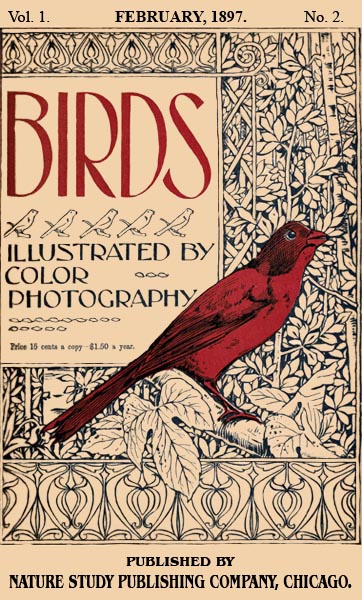
Birds Illustrated by Color Photograhy Vol 1 February 1897 No 2 – Cover
The above article is the first article in the monthly serial for February 1897 “designed to promote Knowledge of Bird-Live.” These include Color Photography, as they call them, today they are drawings. There are at least three Volumes that have been digitized by Project Gutenberg.
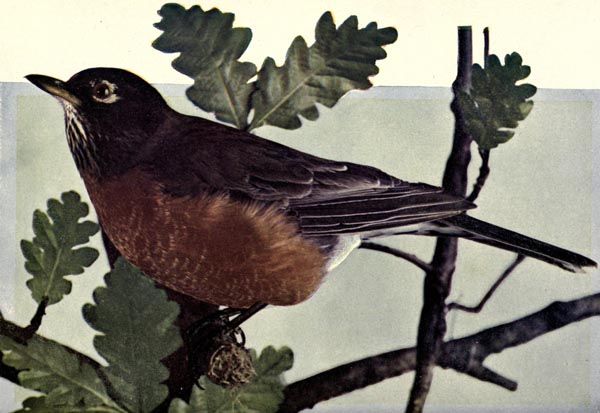
American Robin for Birds Illustrated by Color Photography
Birds Illustrated by Color Photography – Revisited
Vol 1. February, 1897 No. 2
*
THE AMERICAN ROBIN.
The Bird of the Morning.
Yes, my dear readers, I am the bird of the morning. Very few of you rise early enough to hear my first song. By the time you are awake our little ones have had their breakfast, Mrs. Robin and I have had our morning bath and we are all ready to greet you with our morning song.
I wonder if any of you have seen our nest and can tell the color of the eggs that Mrs. Robin lays. Some time I will let you peep into the nest and see them, but of course you will not touch them.
I wonder, too, if you know any of my cousins—the Mocking bird, the Cat-bird or the Brown Thrush—I think I shall ask them to have their pictures taken soon and talk to you about our happy times.
Did you ever see one of my cousins on the ground? I don’t believe you can tell how I move about. Some of you may say I run, and some of you may say I hop, and others of you may say I do both. Well, I’ll tell you how to find out. Just watch me and see. My little friends up north won’t be able to see me though until next month, as I do not dare leave the warm south until Jack Frost leaves the ground so I can find worms to eat.
I shall be about the first bird to visit you next month and I want you to watch for me. When I do come it will be to stay a long time, for I shall be the last to leave you. Just think, the first to come and last to leave. Don’t you think we ought to be great friends? Let us get better acquainted when next we meet. Your friend,
Robin.
How do the robins build their nest?
Robin Red Breast told me,
First a wisp of yellow hay
In a pretty round they lay;
Then some shreds of downy floss,
Feathers too, and bits of moss,
Woven with a sweet, sweet song,
This way, that way, and across:
That’s what Robin told me.
Where do the robins hide their nest?
Robin Red Breast told me,
Up among the leaves so deep,
Where the sunbeams rarely creep,
Long before the winds are cold,
Long before the leaves are gold
Bright-eyed stars will peep and see
Baby Robins—one, two, three:
That’s what Robin told me.
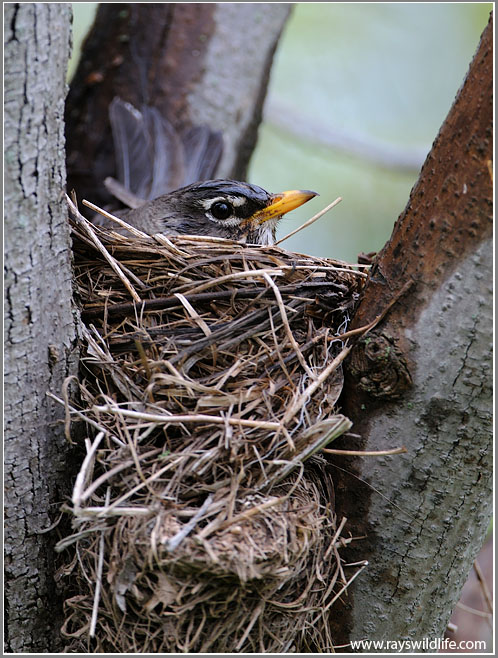
American Robin (Turdus migratorius) by Raymond Barlow
THE AMERICAN ROBIN.
“Come, sweetest of the feathered throng.”
UR American Robin must not be confounded with the English Robin Redbreast, although both bear the same name. It is the latter bird in whose praise so much has been written in fable and song. The American Robin belongs to the Thrush family; the Mocking bird, Cat-bird and Brown Thrush, or Thrasher, being other familiar children. In this family, bird organization reaches its highest development. This bird is larger than his English cousin the Redbreast and many think has a finer note than any other of the Thrush family.
The Robin courts the society of man, following close upon the plow and the spade and often becoming quite tame and domestic. It feeds for a month or two on strawberries and cherries, but generally on worms and insects picked out of the ground. It destroys the larvae of many insects in the soil and is a positive blessing to man, designed by the Creator for ornament and pleasure, and use in protecting vegetation. John Burroughs, the bird lover, says it is the most native and democratic of our birds.
It is widely diffused over the country, migrating to milder climates in the Winter. We have heard him in the early dawn on Nantucket Island welcoming the coming day, in the valleys of the Great and the little Miami, in the parks of Chicago, and on the plains of Kansas, his song ever cheering and friendly. It is one of the earliest heralds of Spring, coming as early as March or April, and is one of the latest birds to leave us in Autumn. Its song is a welcome prelude to the general concert of Summer.
“When Robin Redbreast sings,
We think on budding Springs.”
The Robin is not one of our most charming songsters, yet its carol is sweet, hearty and melodious. Its principal song is in the morning before sunrise, when it mounts the top of some tall tree, and with its wonderful power of song, announces the coming of day. When educated, it imitates the sounds of various birds, and even sings tunes. It must be amusing to hear it pipe out so solemn a strain as Old Hundred.
American Robin’s Song from xeno.canto by Mike Nelson
It has no remarkable habits. It shows considerable courage and anxiety for its young, and is a pattern of propriety when keeping house and concerned with the care of its offspring. Two broods are often reared out of the same nest. In the Fall these birds become restless and wandering, often congregating in large flocks, when, being quite fat, they are much esteemed as food.
The Robin’s nest is sometimes built in a corner of the porch, but oftener it is saddled on the horizontal limb of an orchard tree. It is so large and poorly concealed that any boy can find it, yet it is seldom molested. The Robin is not a skillful architect. The masonry of its nest is rough and the material coarse, being composed largely of leaves or old grass, cemented with mud. The eggs number four to six and are greenish blue in color.
An observer tells the following story of this domestic favorite:
“For the last three years a Robin has nested on a projecting pillar that supports the front piazza. In the Spring of the first year she built her nest on the top of the pillar—a rude affair—it was probably her first effort. The same season she made her second nest in the forks of an Oak, which took her only a few hours to complete.
“She reared three broods that season; for the third family she returned to the piazza, and repaired the first nest. The following Spring she came again to the piazza, but selected another pillar for the site of her domicile, the construction of which was a decided improvement upon the first. For the next nest she returned to the Oak and raised a second story on the old one of the previous year, but making it much more symmetrical than the one beneath. The present season her first dwelling was as before, erected on a pillar of the piazza—as fine a structure as I ever saw this species build. When this brood was fledged she again repaired to the Oak, and reared a third story on the old domicile, using the moss before mentioned, making a very elaborate affair, and finally finishing up by festooning it with long sprays of moss. This bird and her mate were quite tame. I fed them with whortleberries, which they seemed to relish, and they would come almost to my feet to get them.”
The amount of food which the young robin is capable of absorbing is enormous. A couple of vigorous, half-grown birds have been fed, and in twelve hours devoured ravenously, sixty-eight earth worms, weighing thirty-four pennyweight, or forty-one per cent more than their own weight. A man at this rate should eat about seventy pounds of flesh per day, and drink five or six gallons of water.
The following poem by the good Quaker poet Whittier is sweet because he wrote it, interesting because it recites an old legend which incidentally explains the color of the robin’s breast, and unique because it is one of the few poems about our American bird.
THE ROBIN.
My old Welsh neighbor over the way
Crept slowly out in the sun of spring,
Pushed from her ears the locks of gray,
And listened to hear the robin sing.
Her grandson, playing at marbles, stopped,
And—cruel in sport, as boys will be—
Tossed a stone at the bird, who hopped
From bough to bough in the apple tree.
“Nay!” said the grandmother; “have you not heard,
My poor, bad boy! of the fiery pit,
And how, drop by drop, this merciful bird
Carries the water that quenches it?
“He brings cool dew in his little bill,
And lets it fall on the souls of sin:
You can see the mark on his red breast still
Of fires that scorch as he drops it in.
“My poor Bron rhuddyn! my breast-burned bird,
Singing so sweetly from limb to limb,
Very dear to the heart of Our Lord
Is he who pities the lost like Him.”
“Amen!” I said to the beautiful myth;
“Sing, bird of God, in my heart as well:
Each good thought is a drop wherewith
To cool and lessen the fires of hell.
“Prayers of love like rain-drops fall,
Tears of pity are cooling dew,
And dear to the heart of Our Lord are all
Who suffer like Him in the good they do.”
Lee’s Addition:
Robins have always been special. I suppose it was one of the first birds that I knew by name. Not that I was a birdwatcher back in my youth. Wish I had started back then.
Like the article mentioned, the American Robin is actually in the Turdidae – Thrushes Family of Passerines which has 184 members. There is another family of Robins and they are in the Chats, Old World Flycatchers – Muscicapidae Family which has 297 species. Wikipedia has this to say about these Robins:
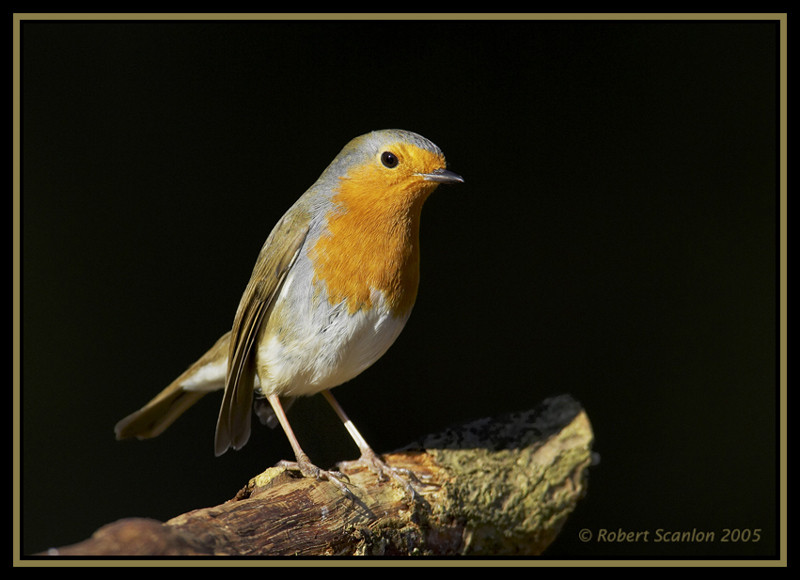
European Robin (Erithacus rubecula) by Robert Scanlon
“The European Robin (Erithacus rubecula), most commonly known in Anglophone Europe simply as the Robin, is a small insectivorous passerine bird that was formerly classed as a member of the thrush family (Turdidae), but is now considered to be an Old World flycatcher (Muscicapidae). Around 12.5–14.0 cm (5.0–5.5 in) in length, the male and female are similar in colouration, with an orange breast and face lined with grey, brown upperparts and a whitish belly. It is found across Europe, east to Western Siberia and south to North Africa; it is sedentary in most of its range except the far north.
The term Robin is also applied to some birds in other families with red or orange breasts. These include the American Robin (Turdus migratorius), which is a thrush, and the Australian red robins of the genus Petroica, members of a family whose relationships are unclear.” They are the Petroicidae – Australasian Robins Family with 46 species.
Scarlet Robin (Petroica boodang) by Ian
Hope you enjoy seeing the three different “Robin Families.” I am thankful the the Lord let at least three different continents have their very own “Robin.” He told the birds to multiply and fill up the earth. They seemed to have obeyed, were we that obedient.
Bring out with you every living thing of all flesh that is with you: birds and cattle and every creeping thing that creeps on the earth, so that they may abound on the earth, and be fruitful and multiply on the earth.” So Noah went out, and his sons and his wife and his sons’ wives with him. Every animal, every creeping thing, every bird, and whatever creeps on the earth, according to their families, went out of the ark. (Genesis 8:17-19 NKJV)
*
Birds Illustrated by Color Photograhy Vol 1 February 1897 No 2 – Cover
The above article is the first article in the monthly serial for February 1897 “designed to promote Knowledge of Bird-Live.” These include Color Photography, as they call them, today they are drawings. There are at least three Volumes that have been digitized by Project Gutenberg.
As previously reported, the Slide.Com is closing down as of March 6th. Unfortunately I have used a lot of the Slideshows from them on this site. I am busy kicking up dust behind the scenes and decided to share links to the articles as I get some of them finished. At least you will know I have not been “goofing off.” Besides that, many of these were produced sometime back and deserve a reminder of our many birds the Lord has created for His Glory and pleasure. Trust you like the new Slideshows that are being installed. They are taking a great effort on my part to learn the new procedure, but after quite a few mistakes, maybe I can get them out quicker now.
The works of the LORD are great, sought out of all them that have pleasure therein.(Psalms 111:2 KJV)
Having made known unto us the mystery of his will, according to his good pleasure which he hath purposed in himself: (Ephesians 1:9 KJV)
For it is God which worketh in you both to will and to do of his good pleasure. (Philippians 2:13 KJV)
Thou wilt shew me the path of life: in thy presence is fulness of joy; at thy right hand there are pleasures for evermore. (Psalms 16:11 KJV)
Thanks for your patience and your visits to this website. While I am working away, I am enjoying seeing articles that I had forgotten about.
As previously reported, the Slide.Com is closing down as of March 6th. Unfortunately I have used a lot of the Slideshows from them on this site. I am busy kicking up dust behind the scenes and decided to share links to the articles as I get some of them finished. At least you will know I have not been “goofing off.” Besides that, many of these were produced sometime back and deserve a reminder of our many birds the Lord has created for His Glory and pleasure. Trust you like the new Slideshows that are being installed. They are taking a great effort on my part to learn the new procedure, but after quite a few mistakes, maybe I can get them out quicker now.
The works of the LORD are great, sought out of all them that have pleasure therein.(Psalms 111:2 KJV) Having made known unto us the mystery of his will, according to his good pleasure which he hath purposed in himself: (Ephesians 1:9 KJV) For it is God which worketh in you both to will and to do of his good pleasure. (Philippians 2:13 KJV) Thou wilt shew me the path of life: in thy presence is fulness of joy; at thy right hand there are pleasures for evermore. (Psalms 16:11 KJV)
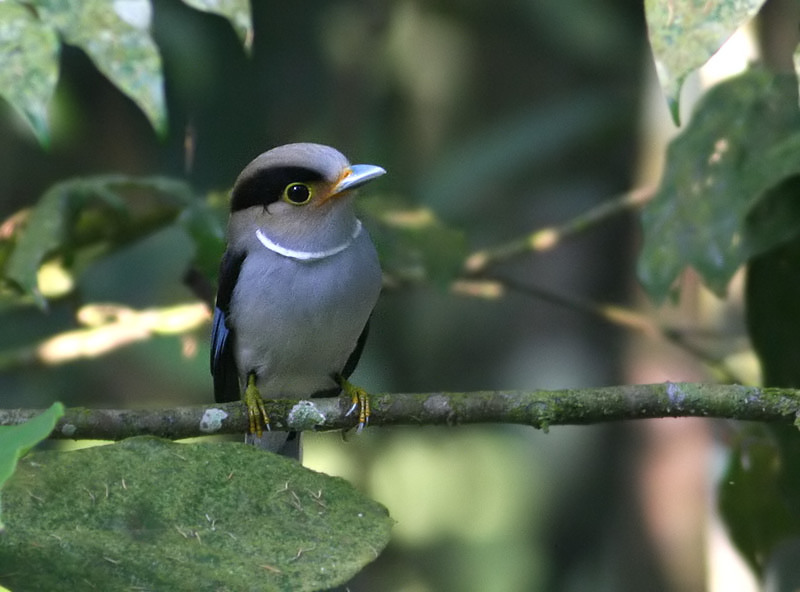
Thanks for your patience and your visits to this website. Completed: One of my favorite birds the Broadbill. Never heard of it until I started doing the Birds of the World. Aren’t they adorable?
Silver-breasted Broadbill (Serilophus lunatus) by Peter Ericsson
King Parrot – Birds Illustrated by Color Photography
Birds Illustrated by Color Photography – Revisited
Vol 1. February, 1897 No. 2
*
KING PARROT OR KING LORY.
ORY is the name of certain birds, mostly from the Moluccas and New Guinea, which are remarkable for their bright scarlet or crimson coloring, though also applied to some others in which the plumage is chiefly green. Much interest has been excited by the discovery of Dr. A. B. Meyer that the birds of this genus having a red plumage are the females of those wearing green feathers. For a time there was much difference of opinion on this subject, but the assertion is now generally admitted.
They are called “brush-tongued” Parrots. The color of the first plumage of the young is still unsettled. This bird is a favorite among bird fanciers, is readily tamed, and is of an affectionate nature. It can be taught to speak very creditably, and is very fond of attracting the attention of strangers and receiving the caresses of those whom it likes.
There are few things a parrot prefers to nuts and the stones of various fruits. Wood says he once succeeded in obtaining the affections of a Parisian Parrot, solely through the medium of peach stones which he always saved for the bird and for which it regularly began to gabble as soon as it saw him coming. “When taken freshly from the peach,” he says, “the stones are very acceptable to the parrot, who turns them over, chuckling all the while to show his satisfaction, and picking all the soft parts from the deep indentations in the stone.” He used to crack the stone before giving it to the bird, when his delight knew no bounds. They are fond of hot condiments, cayenne pepper or the capsicum pod. If a bird be ailing, a capsicum will often set it right again.
The parrot is one of the hardiest of birds when well cared for and will live to a great age. Some of these birds have been known to attain an age of seventy years, and one seen by Vaillant had reached the patriarchal age of ninety three. At sixty its memory began to fail, at sixty-five the moult became very irregular and the tail changed to yellow. At ninety it was a very decrepit creature, almost blind and quite silent, having forgotten its former abundant stock of words.
A gentleman once had for many years a parrot of seemingly rare intelligence. It was his custom during the summer to hang the parrot’s cage in front of his shop in a country village, where the bird would talk and laugh and cry, and condole with itself. Dogs were his special aversion and on occasions when he had food to spare, he would drop it out of the cage and whistle long and loud for them. When the dogs had assembled to his satisfaction he would suddenly scream in the fiercest accents, “Get out, dogs!” and when they had scattered in alarm his enjoyment of it was demonstrative. This parrot’s vocabulary, however, was not the most refined, his master having equipped him with certain piratical idioms.
According to authority, the parrot owner will find the health of his pet improved and its happiness promoted by giving it, every now and then, a small log or branch on which the mosses and lichens are still growing. Meat, fish, and other similar articles of diet are given with evil effects.
It is impossible for anyone who has only seen these birds in a cage or small inclosure to conceive what must be the gorgeous appearance of a flock, either in full flight, and performing their various evolutions, under a vertical sun, or sporting among the superb foliage of a tropical forest which, without these, and other brilliant tenants, would present only a solitude of luxuriant vegetation.
And he hath on his vesture and on his thigh a name written, KING OF KINGS, AND LORD OF LORDS. (Revelation 19:16 KJV)
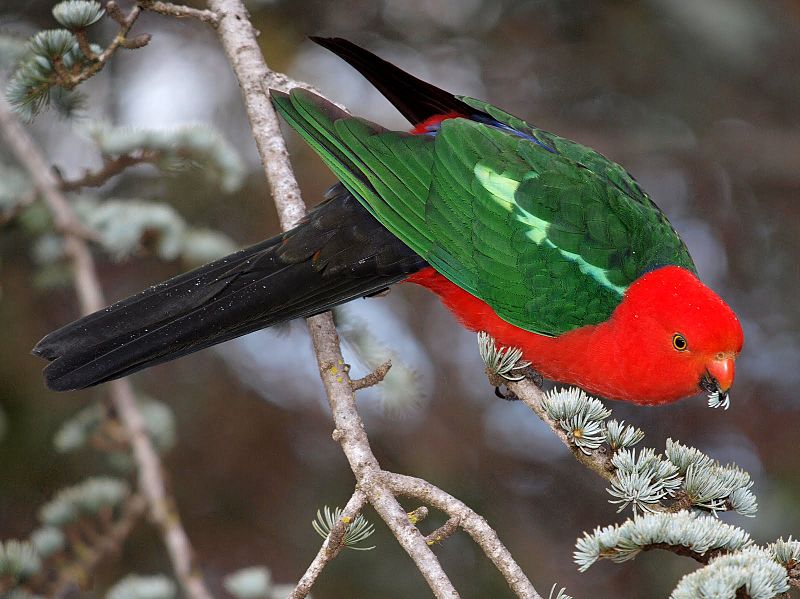
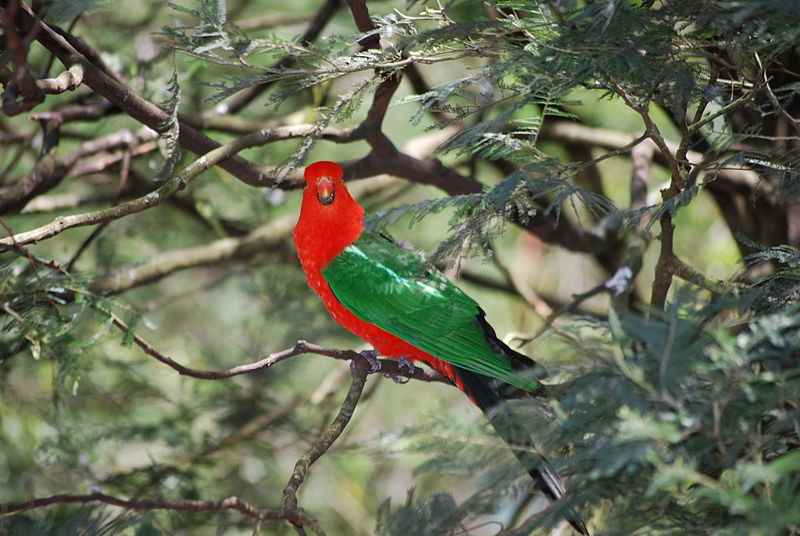
The king parrots are three species of medium-sized parrots in the genus Alisterus; the Australian King Parrot (Alisterus scapularis), the Papuan King Parrot (Alisterus chloropterus), and the Moluccan King Parrot (Alisterus amboinensis). The three species are found in Eastern Australia, New Guinea, and Indonesian islands including the Maluku islands respectively. Predominantly of red and green plumage, the long tailed parrots are related to the genera Aprosmictus and Polytelis.
Australian King Parrot (Alisterus scapularis) Female by Ian
King parrots are medium-sized parrots, 35–43 cm (14–17 in) in length with long-broad tails. They have relatively small beaks for their size. The beaks of the adults are two colours, blackish and orange-reddish, except for the subspecies buruensis of the Moluccan King Parrot which has a grey-black beak, and female Australian King Parrot which has a grey beak.
Wikipedia show this photo of a King Parrot, but somehow we missed it. The photo was taken in 2009, so it may no longer be there. The first and third photo favor the drawing, but I lean toward the Australian King Parrot. They are all closely related
The three species are forest-dwelling, and are found singly, in pairs, or in groups.[2] Australian King Parrots sometimes gather in groups of up to 30 or more around food sources, while Moluccan King Parrots sometimes form groups up to ten, and the Moluccan King Parrots may gather in groups of fives or sixes.[2]They generally feed on seeds, fruits and berries in trees.
The above article is the first article in the monthly serial for February 1897 “designed to promote Knowledge of Bird-Live.” These include Color Photography, as they call them, today they are drawings. There are at least three Volumes that have been digitized by Project Gutenberg.
Birds Illustrated by Color Photography – Revisited
Vol 1. February, 1897 No. 2
*
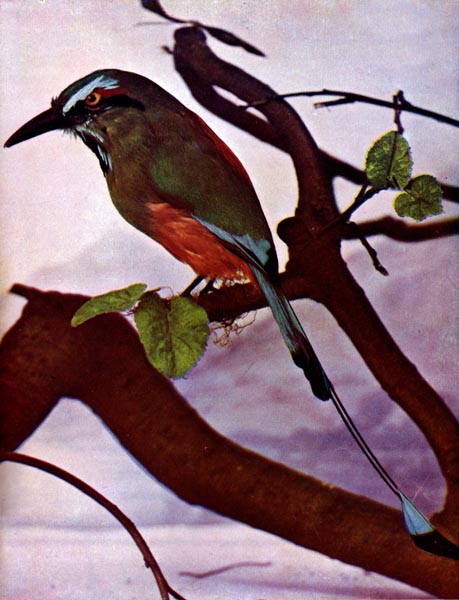
MEXICAN MOT MOT.
OT MOTS are peculiar to the new world, being found from Mexico throughout the whole of Central America and the South American continent. The general plumage is green, and the majority of the species have a large racket at the end of the center tail feathers, formed by the bird itself.
The Houton, (so called from his note,) according to Waterson, ranks high in beauty among the birds of Demerara. This beautiful creature seems to suppose that its beauty can be increased by trimming its tail, which undergoes the same operation as one’s hair in a barber shop, using its own beak, which is serrated, in lieu of a pair of scissors. As soon as its tail is fully grown, he begins about an inch from the extremity of the two longest feathers in it and cuts away the web on both sides of the shaft, making a gap about an inch long. Both male and female wear their tails in this manner, which gives them a remarkable appearance among all other birds.
To observe this bird in his native haunts, one must be in the forest at dawn. He shuns the society of man. The thick and gloomy forests are preferred by the Houton. In those far extending wilds, about day-break, you hear him call in distinct and melancholy tone, “Houton, Houton!” An observer says, “Move cautiously to the place from which the sound proceeds, and you will see him sitting in the underwood, about a couple of yards from the ground, his tail moving up and down every time he articulates “Houton!”.”
The Mot Mot lives on insects and berries found among the underwood, and very rarely is seen in the lofty trees. He makes no nest, but rears his young in a hole in the sand, generally on the side of a hill.
Mr. Osbert Salvin tells this curious anecdote: “Some years ago the Zoological Society possessed a specimen which lived in one of the large cages of the parrot house by itself. I have a very distinct recollection of the bird, for I used every time I saw it to cheer it up a bit by whistling such of its notes as I had picked up in the forests of America. The bird always seemed to appreciate this attention, for although it never replied, it became at once animated, hopped about the cage, and swung its tail from side to side like the pendulum of a clock. For a long time its tail had perfect spatules, but toward the end of its life I noticed that the median feathers were no longer trimmed with such precision, and on looking at its beak I noticed that from some cause or other it did not close properly, gaped slightly at the tip, and had thus become unfitted for removing the vanes of the feathers.”
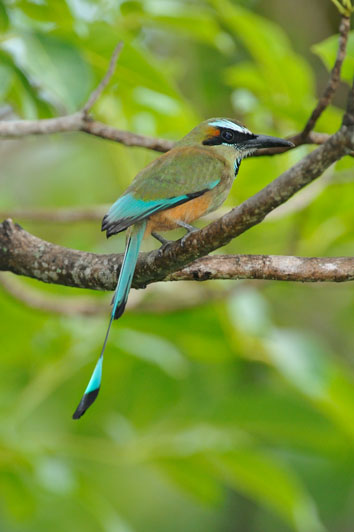
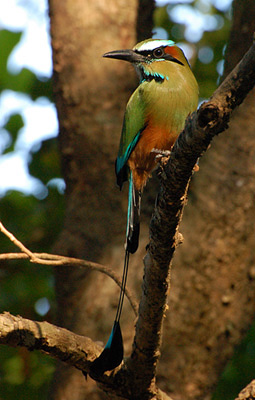
Turquoise-browed Motmot (Eumomota superciliosa) by Reinier Munguia
Lee’s Addition:
By them shall the fowls of the heaven have their habitation, which sing among the branches. (Psalms 104:12 KJV)
Here is a nice video of a Turquoise-browed Motmot from IBC. What a neat family of birds the Motmot – Momotidae’scontains. There are 14 fantastically created birds species of Motmots in 6 Genus. Our Turquoise-browed is the only one in the Eumomota genus, but at present their are 7 supspecies.
“The bird is approximately 13 in (4 cm) long and weighs about 1.2 oz (65 gr). It has a mostly green body with a rufous back and belly. There is a bright blue stripe above the eye and a blue-bordered black patch on the throat. The flight feathers and upperside of the tail are blue. The tips of the tail feathers are shaped like rackets and the bare feather shafts are longer than in other motmots. Although it is often said that motmots pluck the barbs off their tail to create the racketed shape, this is not true; the barbs are weakly attached and fall off due to abrasion with substrates and with routine preening.
Unlike most bird species, where only males express elaborate traits, the Turquoise-browed Motmot expresses the extraordinary racketed tail in both sexes. Research indicates that the tail functions differently for the sexes. Males apparently use their tail as a mating signal, as males with longer tails have greater pairing success and reproductive success. In addition to this function, the tail is used by both sexes in a wag-display, whereby the tail is moved back-and-forth in a pendulous fashion. The wag-display is performed in a context unrelated to mating: both sexes perform the wag-display in the presence of a predator, and the display is thought to confer naturally selected benefits by communicating to the predator that it has been seen and that pursuit will not result in capture. This form of interspecific communication is referred to as a pursuit-deterrent signal.” (Wikipedia-edited)
Birds Illustrated by Color Photograhy Vol 1 February 1897 No 2 – Cover
The above article is the first article in the monthly serial for February 1897 “designed to promote Knowledge of Bird-Live.” These include Color Photography, as they call them, today they are drawings. There are at least three Volumes that have been digitized by Project Gutenberg.
Was sent a link to this fantastic video of how birds camouflage their nests by BBC Wildlife. This shows some of the great instinct and capabilities given to the birds by their Creator.
All the birds of the heavens made their nests in its boughs; Under its branches all the beasts of the field brought forth their young; And in its shadow all great nations made their home. (Ezekiel 31:6 NKJV)
Trust will enjoy this as well.
*
*
Another parable He put forth to them, saying: “The kingdom of heaven is like a mustard seed, which a man took and sowed in his field, which indeed is the least of all the seeds; but when it is grown it is greater than the herbs and becomes a tree, so that the birds of the air come and nest in its branches.” (Matthew 13:31-32 NKJV)
P.S. I know this is a short post, but last night I just discovered that the Slide.Com, which I used for many slideshows on various blogs, is closing. That means I have tons of work to do behind the scenes while I fix all of those and use another slideshow program. Watch out for dust!
Updated 2 Hours later: Just finished one with the new style Slideshow. I kind of like the new style. What do you think?
We enjoyed our visit to Viera Wetlandslast week. Good thing we went then, because we are both sick this week. (Not from the trip.) But we are on the mend. “The wetlands are a popular site for birders, photographers, and eco-tourists. The entire wetland system is accessible by automobile, making the site popular among those who find the rigors of hiking trails and summer temperatures daunting. Even better, viewing the site from one’s automobile serves to screen visitors from birds and widlife, enhancing the experience.” They have 4 Cells and a Lake which have a berm around them. You drive on the berm and that gets you right up to the birds. (If they cooperate)
This was not our first visit to the wetlands, but it is 100 miles from home, so it is not something we do frequently. Other than a few different birds we have almost the same ones right here at the Circle B Bar Reserve (only 4 miles from home).
Here is a list of the birds turned in to eBird for the two days we visited the wetlands:
Hooded Merganser (Lophodytes cucullatus) with Hood up
Mottled Duck
Blue-winged Teal
Northern Shoveler
Ring-necked Duck
Hooded Merganser
Pied-billed Grebe
Wood Stork
Double-crested Cormorant
Anhinga Viera Wetlands
Great Blue Heron
Great Egret
Snowy Egret
Little Blue Heron
Tricolored Heron
White Ibis
Glossy Ibis
Black Vulture
Turkey Vulture
Osprey
Northern Harrier
Crested Caracara
Savannah Sparrow (Passerculus sandwichensis) by Lee at Viera Wetlands
Common Gallinule
American Coot
Limpkin
Sandhill Crane
Caspian Tern
Royal Tern
Belted Kingfisher
Fish Crow
Purple Martin
Tree Swallow
House Wren
European Starling
Palm Warbler
Yellow-rumped Warbler
Savannah Sparrow
Red-winged Blackbird
Eastern Meadowlark
Boat-tailed Grackle
39 total birds seen that I can identify. If I include the rest of the birds spotted there in Brevard County including the wild birds at the Zoo and Beach, then the count goes to 52. The additional birds include the Brown Pelican, Black and Turkey Vultures, Red-shouldered Hawk, Eurasian Collared Dove, Mourning Dove, Red-bellied and Downy Woodpeckers, Pine Warbler, Northern Cardinal and Brown-headed Cowbird. Other than the Caracara, Sanderling, and Ruddy Turnstone, I have seen the rest in Polk County, where we live.
Does that mean, I wouldn’t go back, NO WAY! I love going over there to the Wetlands because every time you go, there are different birds waiting for you to discover them. That is what birdwatching is all about. Also, Brevard County has the Merritt Island Wild Life Refuge and other great birding places.
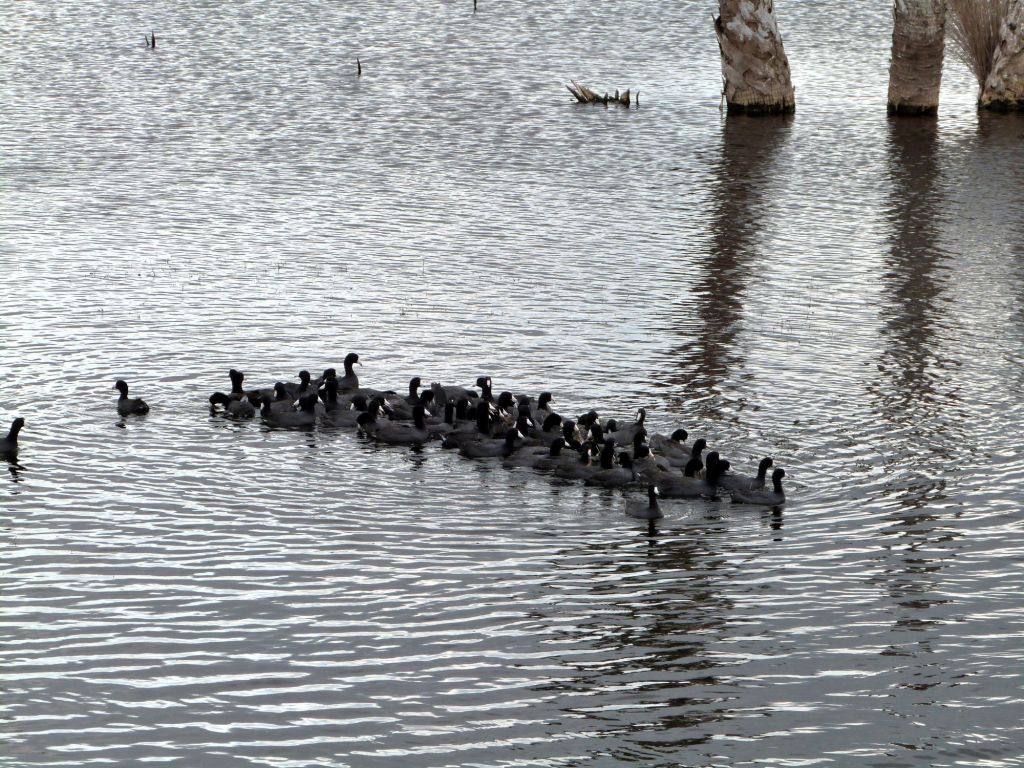
There had to be well over 1,000 American Coots out there. What amazed me was how they would all huddle together in long streams of them. This was just one of the smaller groups. Some were hundred of Coots long.
American Coots at Viera Wetlands
I am not sure what this Coot did, but it appears the Northern Shovelers are escorting him out of their area.
Coot Surrounded by Shovelers at Viera Wetlands
Managed to get a close-up of a Boat-tailed Grackle sitting on a sign.
Boat-tailed Grackle (Quiscalus major) at Viera by Lee
It seemed a little dryer than on previous visits. Looks like they could use some rain. It does make an effect on what birds are present by the water levels. Was a great visit.
I know all the birds of the mountains, And the wild beasts of the field are Mine. (Psalms 50:11 NKJV)
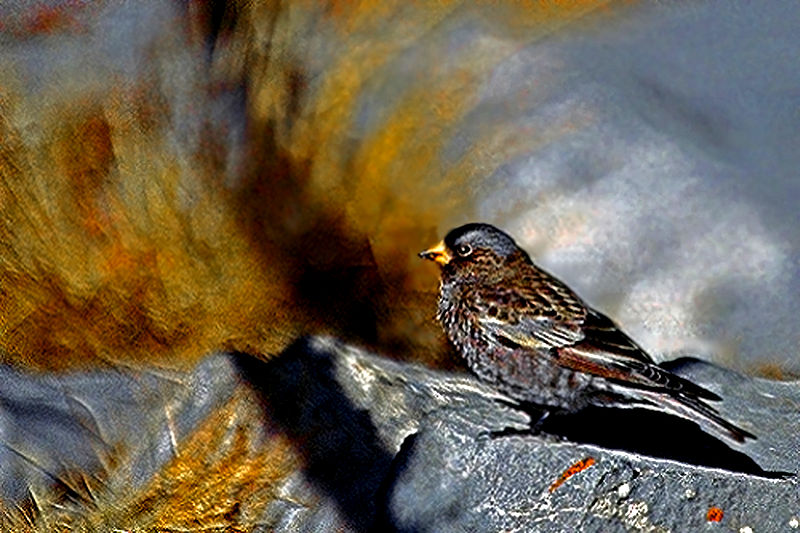
The Black Rosy-Finch breeds in the high mountains of the northern Great Basin. This encompasses the area from northeastern Nevada to southwestern Montana. It is not a long-distance migrant, but moves to lower elevations away from the breeding area as snow cover increases. In some winters these flights reach southward to Colorado, New Mexico, and rarely Arizona and California. Although population appears to be stable, it is uncommon over its very small breeding range.
The Black Rosy-finch breeds on the barren tundra of mountain summits, usually on rocky or grassy areas and near glaciers and continual snowfields. It winters at lower elevations in open areas such as fields, cultivated lands, roadsides, and human-made structures. Departure to higher elevations from the wintering grounds is by April. Nest building occurs between mid-June and mid-July, in a crevice or hole in near-inaccessible locations such as on vertical cliffs. The nest is made of grasses, moss, and sometimes feathers mixed with grass and animal hair, and contain four to five eggs on average. The diet consists of seeds of grasses and weeds except in summer when supplemented by insects.
These birds seem to know the secret of living in secret. They know that living on mountain summits, would be inaccessible for its predators. When the name of THE ROCK becomes our strong tower, it not only becomes inaccessible but also impossible for satan to even locate us.
The name of the LORD is a strong tower: the righteous runneth into it, and is safe. (Psalm 18:10)
There is not only protection on the rock, there is honey in its crevice too.
But he would feed you with the finest of the wheat, and with honey from the rock I would satisfy you. (Psalm 81:16)
The Black Rosy Finch builds a cup nest in a cavity on a cliff. Most birds migrate short distances to lower elevations and further south and return to the alpine areas in April. These birds forage on the ground, may fly to catch insects in flight. They mainly eat seeds from weeds and grasses and insects, often in areas where snow is melting, uncovering food items and new plant shoots.
God fed the Israelites with the dew wrapped Manna, bread of the angels.. God’s goodness is fresh each new morning and His goodness is like morning dew, underneath His dew lies our due. But do we seek for His dew every morning? Remember, as the sun goes up, the manna melts. His goodness too would melt if we don’t seek Him early in the morning isn’t it? When His dew melts our lives dry up..
O Ephraim, what shall I do unto thee? O Judah, what shall I do unto thee? for your goodness is as a morning cloud, and as the early dew it goeth away. (Hosea 6:4)
They often feed in small flocks, as the male will defend its female’s territory during breeding season, not just the nest but where ever she goes. This behavior is common with the rosy finches. When breeding both males and females develop throat pouches, known as gular pouches or gular skin, to carry food to their chicks.
God’s flock too is small, for He has promised to be present where two or three are gathered. These male birds remind us of how our Lord too defends our territories, though we haven’t yet taken steps to breed for the extension of His kingdom. We have an awesome God, who not only defends our territories but also followed us where ever we went and ended up giving His precious life for you and me.. What a mighty God we serve!!
Have I not commanded you? Be strong and courageous. Do not be afraid; do not be discouraged, for the LORD your God will be with you wherever you go. (Joshua 1:9)
Birds Illustrated by Color Photography – Revisited
Vol 1. February, 1897 No. 2
*
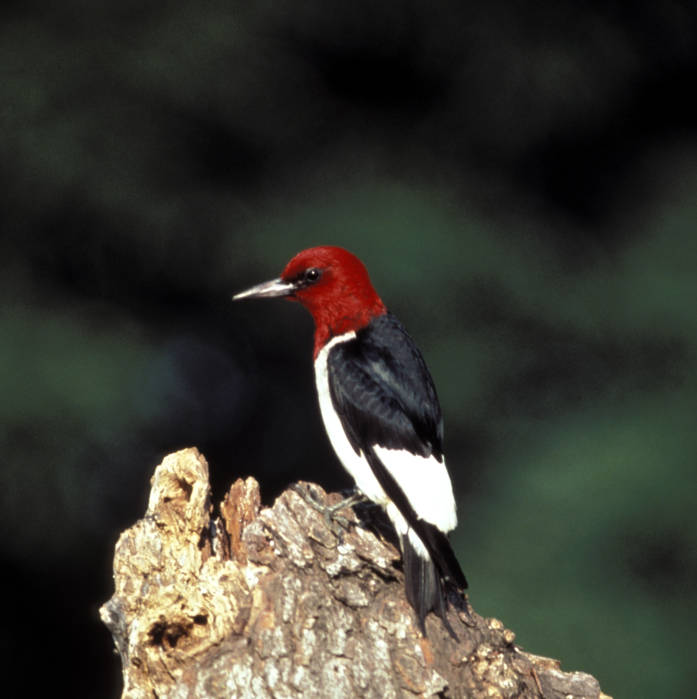
THE RED HEADED WOODPECKER.
ERHAPS no bird in North America is more universally known than the Red Headed Woodpecker. He is found in all parts of the United States and is sometimes called, for short, by the significant name of Red Head. His tri-colored plumage, red, white and black, glossed with steel blue, is so striking and characteristic, and his predatory habits in the orchards and cornfields, and fondness for hovering along the fences, so very notorious, that almost every child is acquainted with the Red Headed Woodpecker. In the immediate neighborhood of large cities, where the old timber is chiefly cut down, he is not so frequently found. Wherever there is a deadening, however, you will find him, and in the dead tops and limbs of high trees he makes his home. Towards the mountains, particularly in the vicinity of creeks and rivers, these birds are extremely numerous, especially in the latter end of summer. It is interesting to hear them rattling on the dead leaves of trees or see them on the roadside fences, where they flit from stake to stake. We remember a tremendous and quite alarming and afterwards ludicrous rattling by one of them on some loose tin roofing on a neighbor’s house. This occurred so often that the owner, to secure peace, had the roof repaired.
They love the wild cherries, the earliest and sweetest apples, for, as is said of him, “he is so excellent a connoisseur in fruit, that whenever an apple or pear is found broached by him, it is sure to be among the ripest and best flavored. When alarmed he seizes a capital one by striking his open bill into it, and bears it off to the woods.” He eats the rich, succulent, milky young corn with voracity. He is of a gay and frolicsome disposition, and half a dozen of the fraternity are frequently seen diving and vociferating around the high dead limbs of some large trees, pursuing and playing with each other, and amusing the passerby with their gambols. He is a comical fellow, too, prying around at you from the bole of a tree or from his nesting hole therein.
Though a lover of fruit, he does more good than injury. Insects are his natural food, and form at least two thirds of his subsistence. He devours the destructive insects that penetrate the bark and body of a tree to deposit their eggs and larvae.
About the middle of May, he begins to construct his nest, which is formed in the body of large limbs of trees, taking in no material but smoothing it within to the proper shape and size. The female lays six eggs, of a pure white. The young appear about the first of June. About the middle of September the Red Heads begin to migrate to warmer climates, travelling at night time in an irregular way like a disbanded army and stopping for rest and food through the day.
The black snake is the deadly foe of the Red Head, frequently entering his nest, feeding upon the young, and remaining for days in possession.
“The eager school-boy, after hazarding his neck to reach the Woodpecker’s hole, at the triumphant moment when he thinks the nestlings his own, strips his arm, launches it down into the cavity, and grasping what he conceives to be the callow young, starts with horror at the sight of a hideous snake, almost drops from his giddy pinnacle, and retreats down the tree with terror and precipitation.”
The man who told me to keep still and look pleasant while he took my picture said I might write you a letter to send with it. You say I always keep on the other side of the tree from you. That is because someone has told you that I spoil trees, and I am afraid that you will want to punish me for it. I do not spoil trees. The trees like to have me come to visit them, for I eat the insects that are killing them. Shall I tell you how I do this?
I cling to the tree with my strong claws so sharply hooked. The pointed feathers of my tail are stiff enough to help hold me against the bark. Then my breast bone is quite flat, so that I may press close to the tree. When I am all ready you hear my r-r-rap—just like a rattle. My head goes as quickly as if it were moved by a spring. Such a strong, sharp bill makes the chips fly! The tiny tunnel I dig just reaches the insect.
Then I thrust out my long tongue. It has a sharp, horny tip, and has barbs on it too. Very tiny insects stick to a liquid like glue that covers my tongue. I suppose I must tell you that I like a taste of the ripest fruit and grain. Don’t you think I earn a little when I work so hard keeping the trees healthy?
I must tell you about the deep tunnel my mate and I cut out of a tree. It is just wide enough for us to slip into. It is not straight down, but bent, so that the rain cannot get to the bottom. There we make a nest of little chips for our five white eggs.
I should like to tell you one of the stories that some boys and girls tell about my red head. You will find it on another page of the book. Now I must fly away to peck for more bugs.
Your loving friend,
Woodpecker.
Red-headed Woodpecker (Melanerpes erythrocephalus) by Daves BirdingPix
Lee’s Addition:
If a bird’s nest happens to be before you along the way, in any tree or on the ground, with young ones or eggs, with the mother sitting on the young or on the eggs, you shall not take the mother with the young; (Deuteronomy 22:6 NKJV)
Not much to add to this one. The writer has told much about this Woodpecker. They are part of the Picadae Family in thePiciformes Order. Most woodpeckers are heard before they are found. They are either making their calls or you can hear them chipping away at the trees or “metal.”
Birds Illustrated by Color Photograhy Vol 1 February 1897 No 2 – Cover
The above article is the first article in the monthly serial for February 1897 “designed to promote Knowledge of Bird-Live.” These include Color Photography, as they call them, today they are drawings. There are at least three Volumes that have been digitized by Project Gutenberg.
Swallow-tailed Indian Roller for Birds Illustrated by Color Photography – Vol 1-2
Birds Illustrated by Color Photography – Revisited
Vol 1. February, 1897 No. 2
*
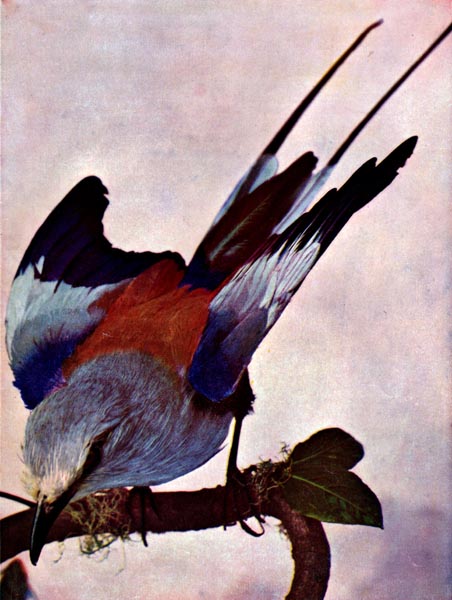
THE SWALLOW-TAILED INDIAN ROLLER.
WALLOW-TAILED Indian Rollers are natives of Northeastern Africa and Senegambia, and also the interior of the Niger district. The bird is so called from its way of occasionally rolling or turning over in its flight, somewhat after the fashion of a tumbler pigeon. A traveller in describing the habits of the Roller family, says:
“On the 12th of April I reached Jericho alone, and remained there in solitude for several days, during which time I had many opportunities of observing the grotesque habits of the Roller. For several successive evenings, great flocks of Rollers mustered shortly before sunset on some dona trees near the fountain, with all the noise but without the decorum of Rooks. After a volley of discordant screams, from the sound of which it derives its Arabic name of “schurkrak,” a few birds would start from their perches and commence overhead a series of somersaults. In a moment or two they would be followed by the whole flock, and these gambols would be repeated for a dozen times or more.
“Everywhere it takes its perch on some conspicuous branch or on the top of a rock, where it can see and be seen. The bare tops of the fig trees, before they put forth their leaves, are in the cultivated terraces, a particularly favorite resort. In the barren Ghor I have often watched it perched unconcernedly on a knot of gravel or marl in the plain, watching apparently for the emergence of beetles from the sand. Elsewhere I have not seen it settle on the ground.
“Like Europeans in the East, it can make itself happy without chairs and tables in the desert, but prefers a comfortable easy chair when it is to be found. Its nest I have seen in ruins, in holes in rocks, in burrows, in steep sand cliffs, but far more generally in hollow trees. The colony in the Wady Kelt used burrows excavated by themselves, and many a hole did they relinquish, owing to the difficulty of working it. So cunningly were the nests placed under a crumbling, treacherous ledge, overhanging a chasm of perhaps one or two hundred feet, that we were completely foiled in our siege. We obtained a nest of six eggs, quite fresh, in a hollow tree in Bashan, near Gadara, on the 6th of May.
“The total length of the Roller is about twelve inches. The Swallow-tailed Indian Roller, of which we present a specimen, differs from the Europeon Roller only in having the outer tail feathers elongated to an extent of several inches.”
Lee’s Addition:
Then God said, “Let the waters abound with an abundance of living creatures, and let birds fly above the earth across the face of the firmament of the heavens.” (Genesis 1:20 NKJV)
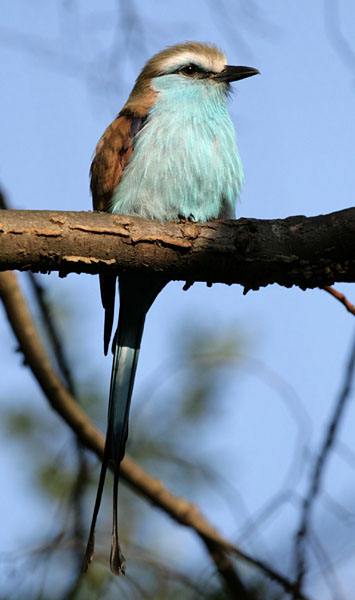
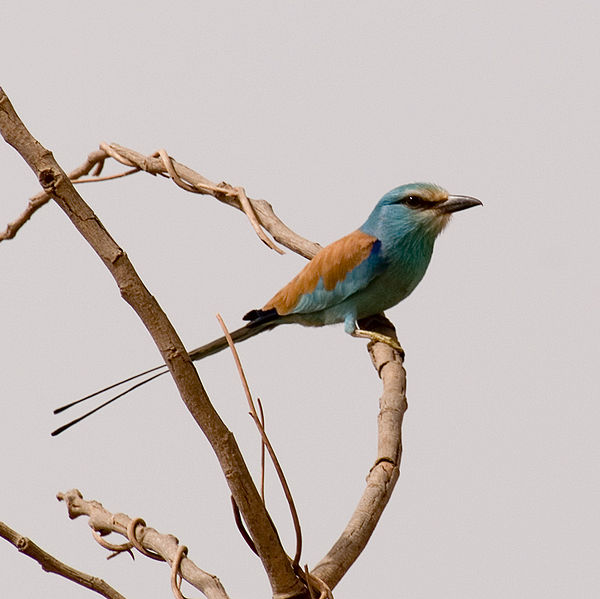
Currently there is not a bird named the Swallow-tailed Indian Roller. Looking at the “photograph,” it appears to be either the Lilac-breasted, Racket-tailed or Abyssinian Roller. Those three have the long tails, “swallow-tail” and they all have black beaks which is typical of the Coracias Genus of the Rollers. The Coraciidae – Rollers family has two Genus, the Coracias and the Eurystomus, which has various colored beaks. None of the three exactly match that drawing, but they are close and in the same family.
”
The rollers are an Old World family, Coraciidae, of near passerine birds. The group gets its name from the aerial acrobatics some of these birds perform during courtship or territorial flights. Rollers resemble crows in size and build, and share the colourful appearance of kingfishers and bee-eaters, blues and pinkish or cinnamon browns predominating. The two inner front toes are connected, but not the outer one.
They are mainly insect eaters, with Eurystomus species taking their prey on the wing, and those of the genus Coracias diving from a perch to catch food items from on the ground, like giant shrikes.
Lilac-breasted Roller (Coracias caudatus) by BirdingPix
According to Wikipedia, “the Lilac-breasted Roller (Coracias caudatus) is a member of the roller family of birds. It is widely distributed in sub-Saharan Africa and the southern Arabian Peninsula, preferring open woodland and savanna; it is largely absent from treeless places. Usually found alone or in pairs, it perches conspicuously at the tops of trees, poles or other high vantage points from where it can spot insects, lizards, scorpions, snails, small birds and rodents moving about at ground level. Nesting takes place in a natural hole in a tree where a clutch of 2–4 eggs is laid, and incubated by both parents, who are extremely aggressive in defence of their nest, taking on raptors and other birds. During the breeding season the male will rise to great heights, descending in swoops and dives, while uttering harsh, discordant cries. The sexes are alike in coloration. Juveniles do not have the long tail feathers that adults do. It is also the national bird of Botswana.”
“The Racket-tailed Roller (Coracias spatulatus) is a species of bird in the Coraciidae family. It is found in Angola, Botswana, Democratic Republic of the Congo, Malawi, Mozambique, Namibia, South Africa, Swaziland, Tanzania, Zambia, and Zimbabwe.
The Abyssinian Roller, Coracias abyssinicus, is a member of the roller family of birds which breeds across tropical Africa in a belt south of the Sahara, known as the Sahel. It is resident in the southern part of its range, but northern breeding populations are short-distance migrants, moving further south after the wet season.
Abyssinian Roller is striking in its strong direct flight, with the brilliant blues of the wings contrasting with the brown back and the long tail streamers trailing behind.
This is a common bird of warm open country with some trees, and has adapted to farmland and human habitation. These rollers often perch prominently on trees, posts or overhead wires, like giant shrikes, whilst watching for the large insects and rodents on which they feed. They will dash into the smoke of a forest fire for disturbed invertebrates. They are fearless, and will dive and roll at humans and other intruders.
The display of this bird is a lapwing-like display, with the twists and turns that give this group its English name. It nests in a scantily lined hole in a tree or building, and lays 3-6 eggs.
The call of Abyssinian Roller is a harsh crow-like gak sound, or a screeched aaaargh.
Birds Illustrated by Color Photograhy Vol 1 February 1897 No 2 – Cover
The above article is the first article in the monthly serial for February 1897 “designed to promote Knowledge of Bird-Live.” These include Color Photography, as they call them, today they are drawings. There are at least three Volumes that have been digitized by Project Gutenberg.

























 Lee's Birdwatching Adventures Plus