Birds of the Bible – Eagle Hair and Bird Claws

Bald Eagle at Lowry Park Zoo by Lee

Bald Eagle at Lowry Park Zoo by Lee

That very hour the word was fulfilled concerning Nebuchadnezzar; he was driven from men and ate grass like oxen; his body was wet with the dew of heaven till his hair had grown like eagles’ feathers and his nails like birds’ claws. (Daniel 4:33 NKJV)

This Birds of the Bible Scripture was mentioned over five years ago and it’s time to update and review. “Repetition aids learning” they say. Also, I am currently reading through Daniel again.

Many times the birds mentioned in the Bible are listed as “clean or unclean” or as an “object lesson” to teach some truth. This time the mention of Eagle feathers and birds’ claws are used as a description of a man’s appearance and there is a lesson to be learned here.

So, who was this man? It is actually a very important king, King Nebuchadnezzar of Babylon. The information about the King is found throughout the book of Daniel. To make the story short, the king had a dream and wanted an interpretation of that dream. Not only did he want his dreams interpreted, but he wanted the interpreter to tell him what the dream was about. The wise men and others told the king that was impossible, so the king commanded to kill them. Daniel prayed to God that He would reveal the dream and it’s interpretation to him so he could tell it to the King. God answered that prayer and Daniel was able to reveal it to King Nebuchadnezzar.

King Nebuchadnezzar was the first world ruler and God had given the king great power. Later on, the king’s pride takes over and he thinks he has made this kingdom and does not give God the credit. He even has a great statue made of himself and demands that all fall down and worship him.

Back to making this short. In Daniel chapter 4 the king has another dream and Daniel (Belteshazzar) prays for revelation and again interprets the dream. Daniel 4:9 to 4:18 tells the dream. (Birds are mentions several times in it.) Then Daniel interprets the dream in Daniel 4:19-33. Basically, the Most High is going to let the king learn humility and get rid of the pride that he has.

The king spoke, saying, “Is not this great Babylon, that I have built for a royal dwelling by my mighty power and for the honor of my majesty? (Daniel 4:30 NKJV, emphasis mine)

For seven years, or time periods, will his kingdom be departed from him. He will be out in the field, “eating grass like oxen” and “until you know that the Most High rules in the kingdom of men, and gives it to whomever He chooses.” It is during this time that his hair will grow like “eagles’ feathers and his nails like birds’ claws.”

Sea Eagle (Haliaeetus pelagicus) Feet by Lee at National Aviary

Sea Eagle (Haliaeetus pelagicus) Feet by Lee at National Aviary

That was the short version, now before we find out if the King learned from this, we will go a little further.

Summarized Bible – “Conclusion: God has power to humble the haughtiest of men who would in their pride act in competition with Him. Those so confident of their own sufficiency will be brought sooner or later to own God’s dominion over them and their own utter weakness. Many have been brought to themselves by being made beside themselves.”

Harpy Eagle (Harpia harpyja) by Lee at Zoo Miami 2014

Harpy Eagle (Harpia harpyja) by Lee at Zoo Miami 2014

Daniel & the Revelation by Uriah Smith: “The King’s Self-exaltation and Humiliation.–Nebuchadnezzar failed to profit by the warning he had received, yet God bore with him twelve months longer before the blow fell. All that time he cherished pride in his heart, and at length it reached a climax beyond which God could not suffer it to pass. The king was walking in the palace, and as he looked forth upon the splendors of that wonder of the world, great Babylon, the beauty of kingdoms, he forgot the source of all his strength, and greatness, and exclaimed, “Is not this great Babylon, that I have built?” Archaeologists have found the ruins of that ancient city, which Sir Frederic Kenyon describes in the following sentences:

“These confirmed the generally wrecked character of the site, but also revealed much as to its plan, architecture, and ornamentation. The buildings found were almost wholly the work of Nebuchadnezzar, who rebuilt the previous city most extensively, his own enormous palace (‘this great Babylon that I have build for the house of the kingdom by the might of my power and for the honor of my majesty’) being the most conspicuous building of all.” [3]

The time had come for Nebuchadnezzar’s humiliation. A voice from heaven again announced the threatened judgement, and divine providence proceeded immediately to execute it. His reason departed. No longer the pomp and glory of his great city charmed him. God with a touch of His finger took away his capability to appreciate and enjoy it. He forsook the dwellings of men, and sought a home and companionship among the beasts of the field.”
[3] Sir Frederic Kenyon, The Bible and Archaeology, p. 126.

Long nails like a bird's claws

Long nails like a bird’s claws

Day by Day by F. B. Meyer – “But how marvelous the contrast between those proud and vaunting words, and the ascriptions of humble homage and praise in Dan_4:34-37! If God could produce such a result on the haughty king of Babylon, is there any sinner He cannot subdue? May not the stern discipline to which some lives are subjected be intended to subdue their proud wills and bring them to similar confessions?”

Did King Nebuchadnezzar learn his lesson?

And at the end of the time I, Nebuchadnezzar, lifted my eyes to heaven, and my understanding returned to me; and I blessed the Most High and praised and honored Him who lives forever: For His dominion is an everlasting dominion, And His kingdom is from generation to generation. All the inhabitants of the earth are reputed as nothing; He does according to His will in the army of heaven And among the inhabitants of the earth. No one can restrain His hand Or say to Him, “What have You done?” At the same time my reason returned to me, and for the glory of my kingdom, my honor and splendor returned to me. My counselors and nobles resorted to me, I was restored to my kingdom, and excellent majesty was added to me. Now I, Nebuchadnezzar, praise and extol and honor the King of heaven, all of whose works are truth, and His ways justice. And those who walk in pride He is able to put down. (Daniel 4:34-37 NKJV)

May we all watch our pride and realize that:

“A man’s pride will bring him low, But the humble in spirit will retain honor.” (Proverbs 29:23 NKJV)

*

Birds of the Bible

Birds of the Bible – Hair Like Eagle’s Feathers – original

Changed From The Inside Out

*

Sunday Inspiration – Dippers, Leafbirds and Flowerpeckers

White-throated Dipper (Cinclus cinclus) by Ian 5

White-throated Dipper (Cinclus cinclus) by Ian

This week we have birds running around in the water, another family of birds that are mostly green and a group that loves nectar. Which ones are they?

Let’s start with the Cinclidae – Dippers family. There are only five members in the Cinclus genus. They get their name from their bobbing or dipping movements. They are unique among passerines for their ability to dive and swim underwater. What an ability the Lord gave this family of dippers. Watch!

***

Orange-bellied Leafbird (Chloropsis hardwickii) by W Kwong

Orange-bellied Leafbird (Chloropsis hardwickii) by W Kwong

Our next group belong to the Chloropseidae – Leafbirds Family and they have 11 species with many subspecies. They are small birds found in India, Sri Lanka and Southeast Asia. They are one of only three bird families that are entirely endemic to the Indomalayan ecozone.

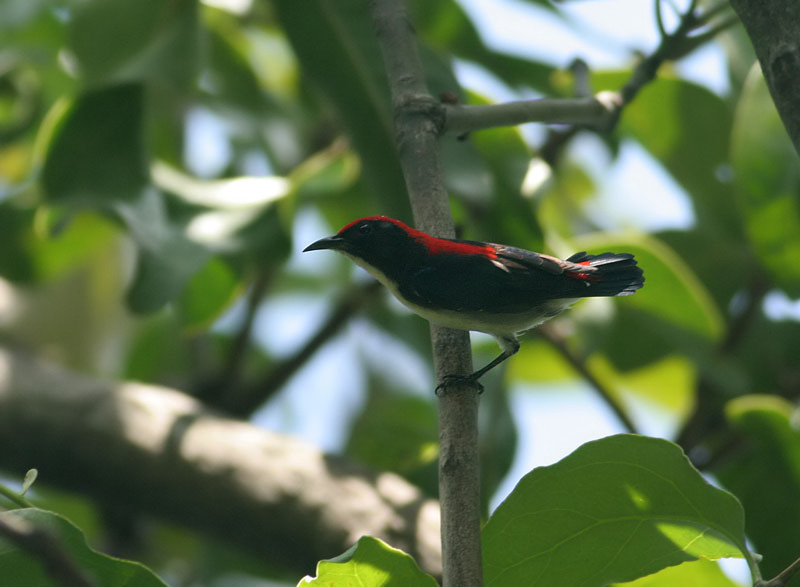
Scarlet-backed Flowerpecker (Dicaeum cruentatum) by Peter Ericsson

Scarlet-backed Flowerpecker (Dicaeum cruentatum) by Peter Ericsson

The flowers appear on the earth; The time of singing has come (Song of Solomon 2:12a NKJV)

This last family,  Dicaeidae – Flowerpeckers, has 48 species. The family is distributed through tropical southern Asia and Australasia from India east to the Philippines and south to Australia. The family is catholic in its habitat preferences, occupying a wide range of environments from sea level to montane habitats. Some species, such as the Mistletoebird of Australia, are recorded as being highly nomadic over parts of their range.

Nectar forms part of the diet, although they also take berries, spiders and insects. Mistletoes of 21 species in 12 genera have been found to be part of the diet of flowerpeckers, and it is thought that all species have adaptations (Creative design) to eat these berries and dispose of them quickly. (Wikipedia with modification)

This slideshow requires JavaScript.

“Faith Medley” ~ Faith Baptist Choir

*

Sunday Inspirations

Cinclidae – Dippers

Chloropseidae – Leafbirds

Dicaeidae – Flowerpeckers

Assurance: The Certainty of Salvation

*

Lord’s Avian Wonders – Some Zoo Critters

Thought I would share some more photos from the Zoo and a video that has challenged me. So far, in this new year the Lord is treating me well. I trust it is starting out alright for you also.

A land which the LORD thy God careth for: the eyes of the LORD thy God are always upon it, from the beginning of the year even unto the end of the year. (Deuteronomy 11:12 KJV)

Sacred Ibis Lowry Park Zoo 12-31-15 by Lee

Sacred Ibis Lowry Park Zoo 12-31-15 by Lee

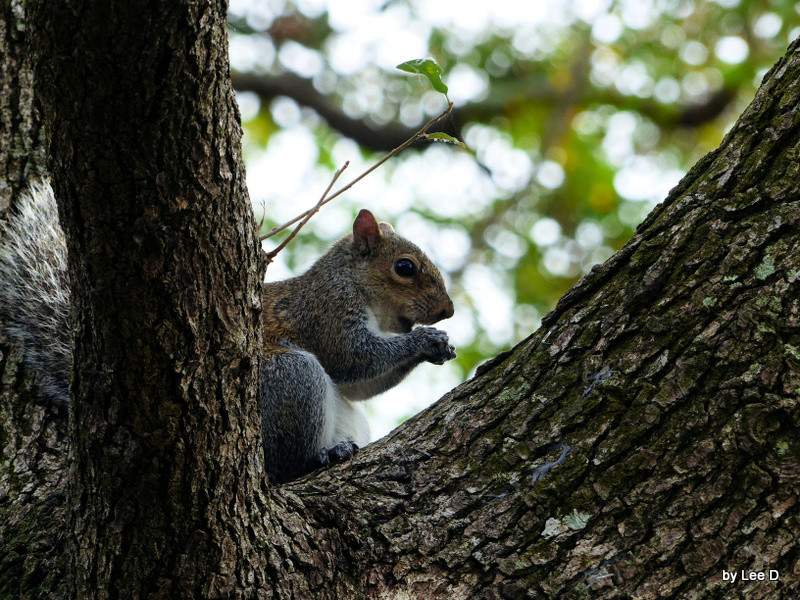
Squirrel Lowry Park Zoo 12-31-15 by Lee

Squirrel Lowry Park Zoo 12-31-15 by Lee

The fear of the LORD is the beginning of knowledge: but fools despise wisdom and instruction. (Proverbs 1:7 KJV)

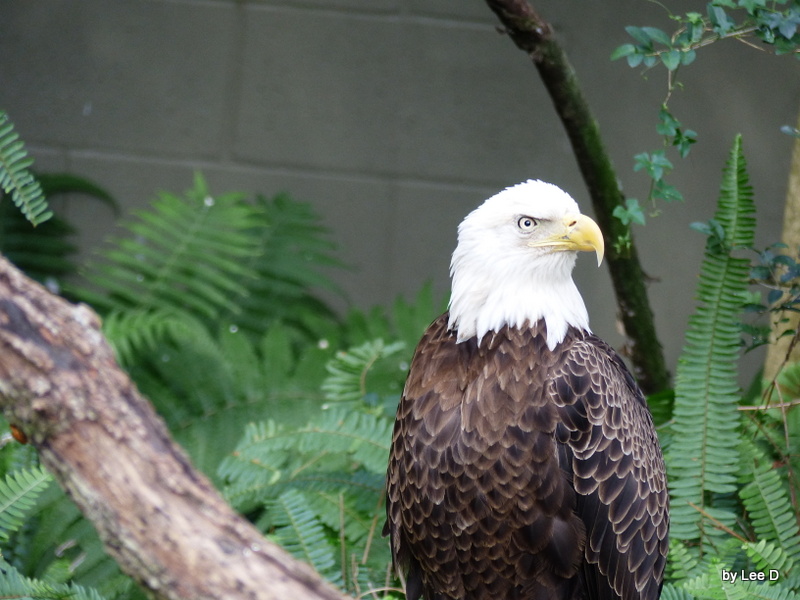
Bald Eagle Lowry Park Zoo 12-31-15 by Lee

Bald Eagle Lowry Park Zoo 12-31-15 by Lee

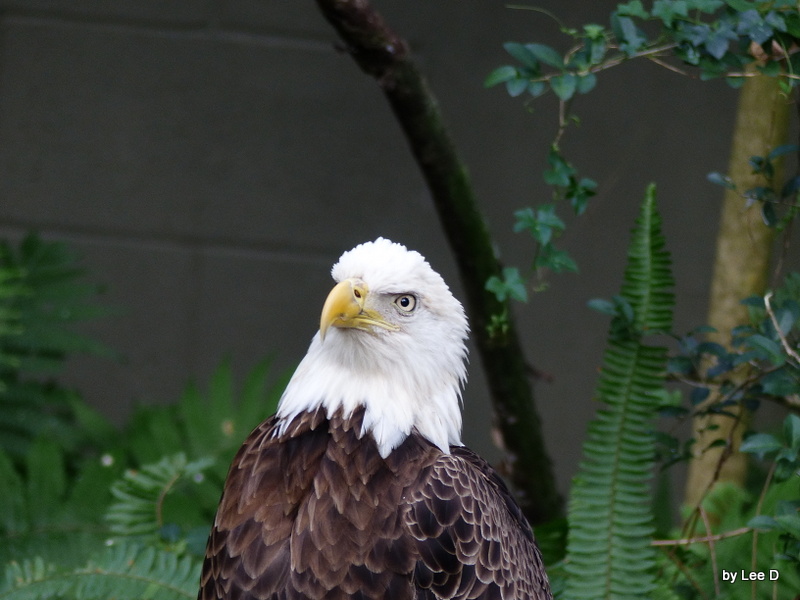
Bald Eagle Lowry Park Zoo 12-31-15 by Le

Bald Eagle Lowry Park Zoo 12-31-15 by Le

In the beginning was the Word, and the Word was with God, and the Word was God. The same was in the beginning with God. All things were made by him; and without him was not any thing made that was made. (John 1:1-3 KJV)

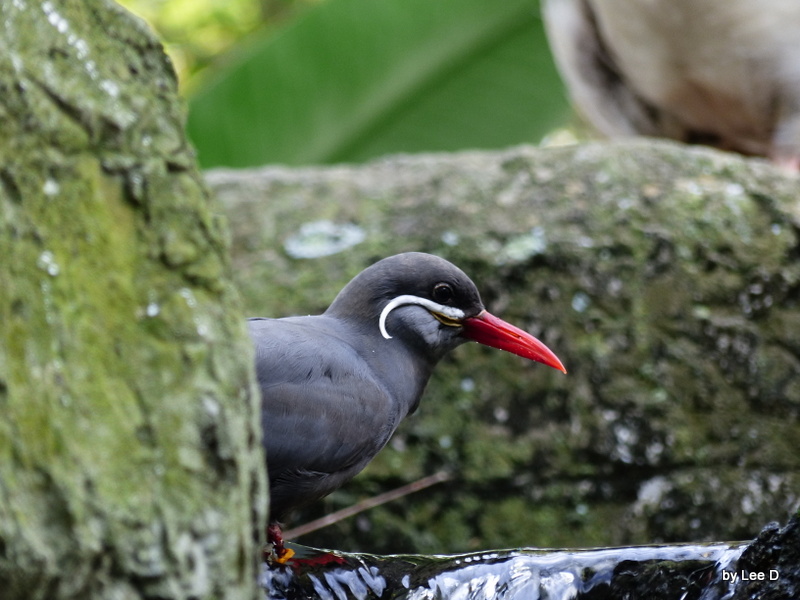
Inca Tern Lowry Park Zoo 12-31-15 by Lee

Inca Tern Lowry Park Zoo 12-31-15 by Lee

Inca Tern Lowry Park Zoo 12-31-15 by Lee

Inca Tern Lowry Park Zoo 12-31-15 by Lee

Thy word is true from the beginning: and every one of thy righteous judgments endureth for ever. (Psalms 119:160 KJV)

“Winning Life’s Battles” by Pastor Nathan Osborne was a great message that challenged for AD 2016. It is worth the time to watch. Our pastor’s messages are now being placed on the Faith Baptist Church website.

“Reach for the impossible” was one of his points that challenged my heart. I have some interesting challenges coming during this new year and the Lord has and is using this message to encourage me.

I can do all things through Christ which strengtheneth me. (Philippians 4:13 KJV)

Abide in me, and I in you. As the branch cannot bear fruit of itself, except it abide in the vine; no more can ye, except ye abide in me. I am the vine, ye are the branches: He that abideth in me, and I in him, the same bringeth forth much fruit: for without me ye can do nothing. (John 15:4-5 KJV)

I trust we will all have a productive new year. Whether it is accepting new challenges or just doing regular things like birdwatching and, then after finding the bird, trying to get a decent photo of it. :0)

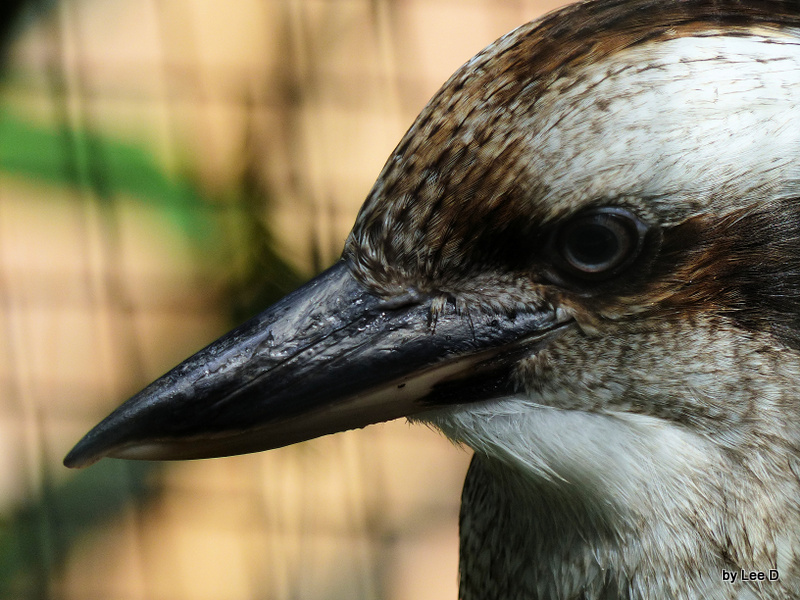
Kookaburra Lowry Park Zoo 12-31-15 by Lee

Kookaburra Lowry Park Zoo 12-31-15 by Lee

Kookaburra Lowry Park Zoo 12-31-15 by Lee

Kookaburra Lowry Park Zoo 12-31-15 by Lee

Better is the end of a thing than the beginning thereof: and the patient in spirit is better than the proud in spirit. (Ecclesiastes 7:8 KJV)

(Bolding in verses is mine)

*

*


Chats and Old World Flycatchers III

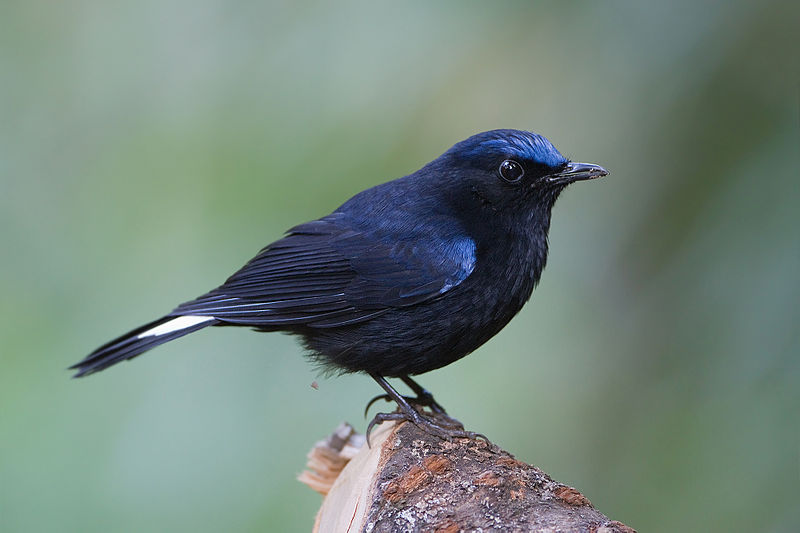
White-tailed Robin (Myiomela leucura) ©WikiC

White-tailed Robin (Myiomela leucura) ©WikiC

This third part of the Muscicapidae – Chats, Old World Flycatchers family starts with the White-tailed Robin (Myiomela leucura). What an amazing group of avian wonders from Our Lord, their Creator.

Part I and Part II of the Sunday Inspiration covered over half of the 321 member Chat and Old World Flycatcher family. This week, we should be able to finish up. Meagan Fee came back for the Christmas break (she was our summer intern at Faith) and played a fantastic violin piece for our offering last Sunday. It is fantastic and long enough, I hope, to cover the slideshow. :0)

Back to the flycatchers. The Genera covered this week are the Myiomela, Tarsiger, Enicurus, Myophonus, Cinclidium, Ficedula, Muscicapella, Phoenicurus, Monticola, Saxicola, Campicoloides, Emarginata, Pinarochroa, Thamnolaea, Myrmecocichla, Oenanthe, Pinarornis, Namibornis and Humblotia.

Old World flycatchers live in almost every environment with a suitable supply of trees, from dense forest to open scrub, and even the montane woodland of the Himalayas. The more northerly species migrate south in winter, ensuring a continuous diet of insects.

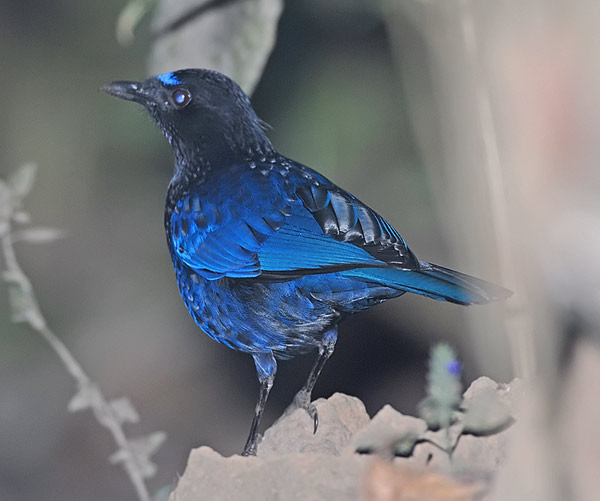
Malabar Whistling Thrush (Myophonus horsfieldii) by Nikhil Devasar

Malabar Whistling Thrush (Myophonus horsfieldii) by Nikhil Devasar

“I will whistle for them to gather them together, For I have redeemed them; And they will be as numerous as they were before. (Zechariah 10:8 NASB)

Whistling thrushes are mostly seen in hilly areas except during winter when they may descend to streams near the plains. They specialize in feeding on snails and their strong hooked bills are used to deal with them. They may choose a particular rock on which they crack the shells.

The whistling of a Malabar Whistling Thrush from xeno-canto by David Farrow.

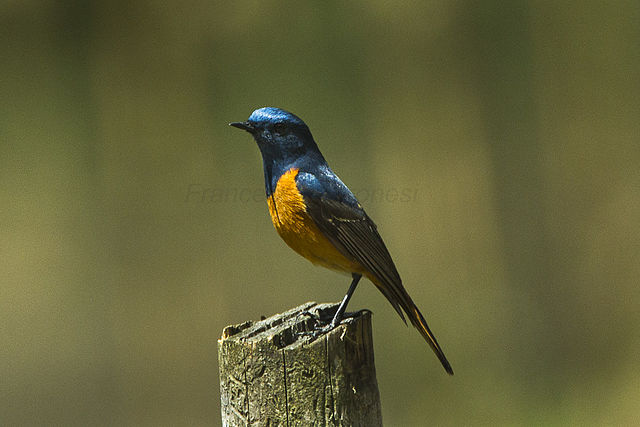
Blue-fronted Robin (Cinclidium frontale) ©WikiC

Blue-fronted Robin (Cinclidium frontale) ©WikiC

The Blue-fronted Robin (Cinclidium frontale) is a species of bird in the family Muscicapidae. It is the only species in the monotypic genus Cinclidium. It is found in Bhutan, China, India, Laos, Thailand, Vietnam, and possibly Nepal. Its natural habitat is temperate forests.

Northern Wheatear (Oenanthe oenanthe) Breeding male ©WikiC

Northern Wheatear (Oenanthe oenanthe) Breeding male ©WikiC

The Wheatears, Oenanthe, have characteristic black and white or red and white markings on their rumps or their long tails. Most species are strongly sexually dimorphic; only the male has the striking plumage patterns characteristic of the genus, though the females share the white or red rump patches.

This slideshow requires JavaScript.

Like a crane or a swallow, so did I chatter: I did mourn as a dove: mine eyes fail with looking upward: O LORD, I am oppressed; undertake for me. (Isaiah 38:14 KJV)

“O Come, O Come Emmanuel”  by Meagan Fee on Violin and Jill Foster accompanying

*

Sunday Inspiration – Chats and Old World Flycatchers I
Sunday Inspiration – Chats and Old World Flycatchers II
Muscicapidae – Chats, Old World Flycatchers

Gideon

*

Birds of the Bible – Nebuchadnezzar and Birds

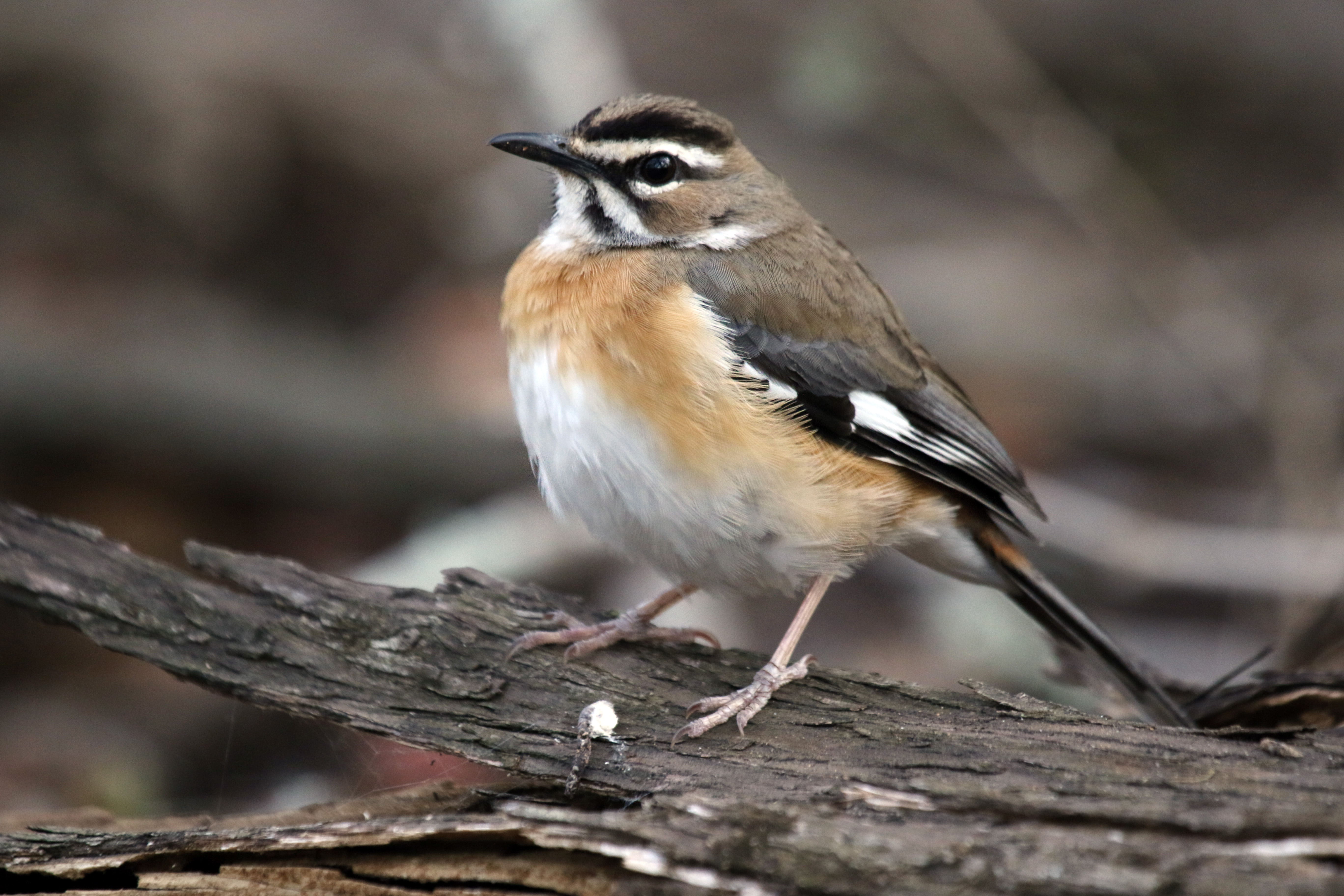
Bearded Scrub Robin (Cercotrichas quadrivirgata) ©WikiC

Bearded Scrub Robin (Cercotrichas quadrivirgata) ©WikiC

While reading Daniel chapter 2 today in the Bible, I was captivated by a passage that mentions birds. Here is that passage:

“This was the dream; now we will tell its interpretation before the king. “You, O king, are the king of kings, to whom the God of heaven has given the kingdom, the power, the strength and the glory; and wherever the sons of men dwell, or the beasts of the field, or the birds of the sky, He has given them into your hand and has caused you to rule over them all. You are the head of gold.” (Daniel 2:36-38 NASB) (emphasis mine)

Wow! Men, I can understand, but the birds being put under Nebuchadnezzar’s hand? This calls for some investigation.

First, if you are familiar with the book of Daniel, especially the first few chapters, you will recall that Daniel had been taken captive to Babylon when Nebuchadnezzer had captured Jerusalem. (Daniel 1) In Babylon, where Daniel was now one of the wise men, he was threatened with death unless the King’s dream could be interpreted. (Daniel 2:1-18) After praying with his three friend, the God of heaven reveals the dream and the interpretation to Daniel. Daniel tells him his dream and then gives the interpretation, where our verses above are found. Daniel 2:19-45)

Snowy Egret by Lee

Snowy Egret by Lee

Bible Knowledge Commentary – “Nebuchadnezzar’s rule was viewed as a worldwide empire, in which he ruled over all mankind as well as over beasts and birds. At the time of Creation the right to rule over the earth was given man who was to have dominion over it and all the creatures in it (Gen-1:26). Here Nebuchadnezzar by divine appointment was helping fulfill what God had planned for man.”

Cambridge – “the beasts of the field] i.e. wild animals (cf. in Heb. e.g. Exo 23:11; Exo 23:29). These and the birds are mentioned in order to represent Nebuchadnezzar’s rule as being as absolute as possible; the former are borrowed, no doubt, from Jer 27:6; Jer 28:14.”

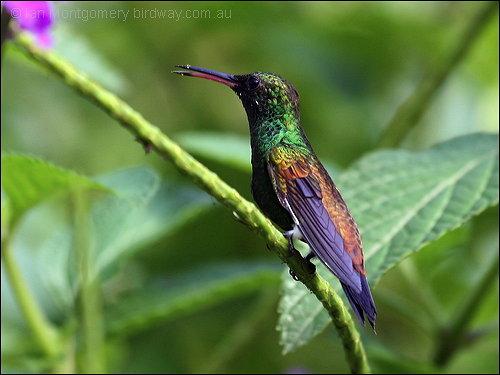
Copper-rumped Hummingbird (Amazilia tobaci) by Ian

Copper-rumped Hummingbird (Amazilia tobaci) by Ian

John Gill – “the beasts of the field, and the fowls of the heaven, hath he given into thine hand; all parks, chases, and forests (so that none might hunt or hawk without his permission), as well as the persons and habitations of men, were at his dispose; showing the despotic power and sovereign sway he had over his subjects:

and hath made thee ruler over all: men, beasts, and fowl: he not only conquered the Egyptians, Tyrians, and Jews, and other nations about them; but, according to Megasthenes (l) he exceeded Hercules in strength, and conquered Lybia and Iberia, and carried colonies of them into Pontus; and, as Strabo (m) says, carried his arms as far as the pillars of Hercules:

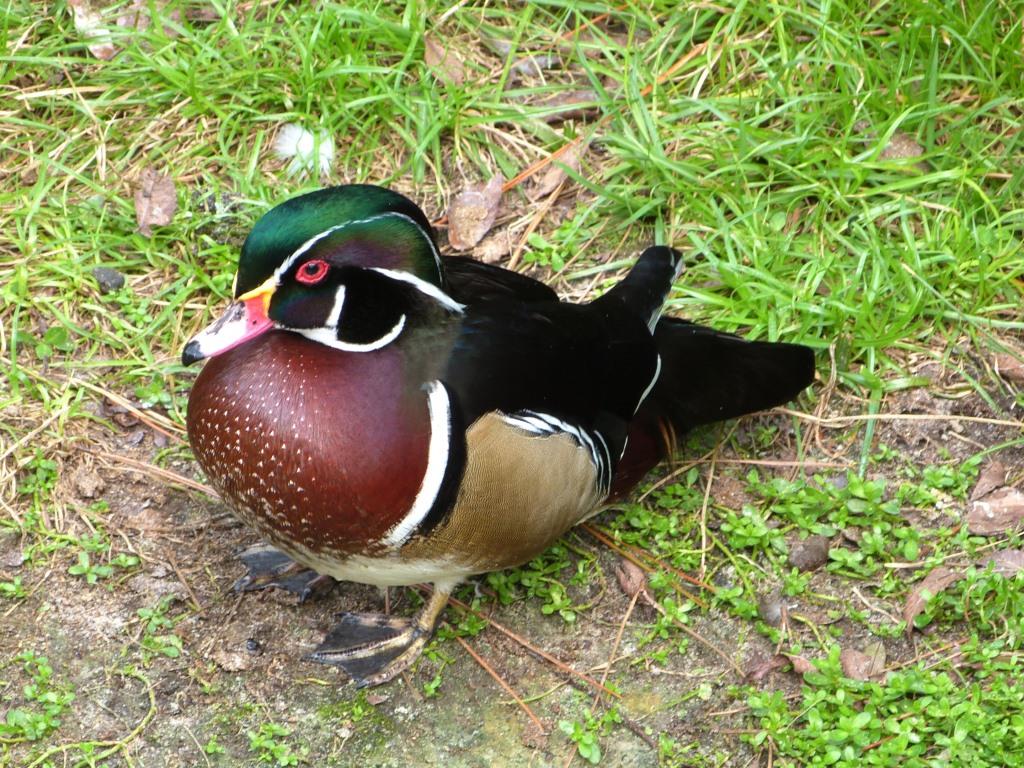
Wood Duck Brevard Zoo

Wood Duck Brevard Zoo by Lee

Henry – “The extent of his dominion is set forth (Dan 2:38), that wheresoever the children of men dwell, in all the nations of that part of the world, he was ruler over them all, over them and all that belonged to them, all their cattle, not only those which they had a property in, but those that were ferae naturae – wild, the beasts of the field and the fowls of the heaven. He was lord of all the woods, forests, and chases, and none were allowed to hunt or fowl without his leave.”

JFB – men … beasts … fowls — the dominion originally designed for man (Gen 1:28; Gen 2:19, Gen 2:20), forfeited by sin; temporarily delegated to Nebuchadnezzar and the world powers; but, as they abuse the trust for self, instead of for God, to be taken from them by the Son of man, who will exercise it for God, restoring in His person to man the lost inheritance (Psa 8:4-6).

Wesley – “Daniel 2:38  “Made thee ruler – He hath given thee absolute dominion of all creatures, men and beasts within the bounds of thy vast kingdom. Thou – He was first in order, as the head is before the other parts, and the vision began in him, and descended downwards to the other three monarchies. He was the head of gold, because of the vast riches wherein this monarchy abounded, and because it stood longest, five hundred years, and was fortunate and flourishing to the last.”

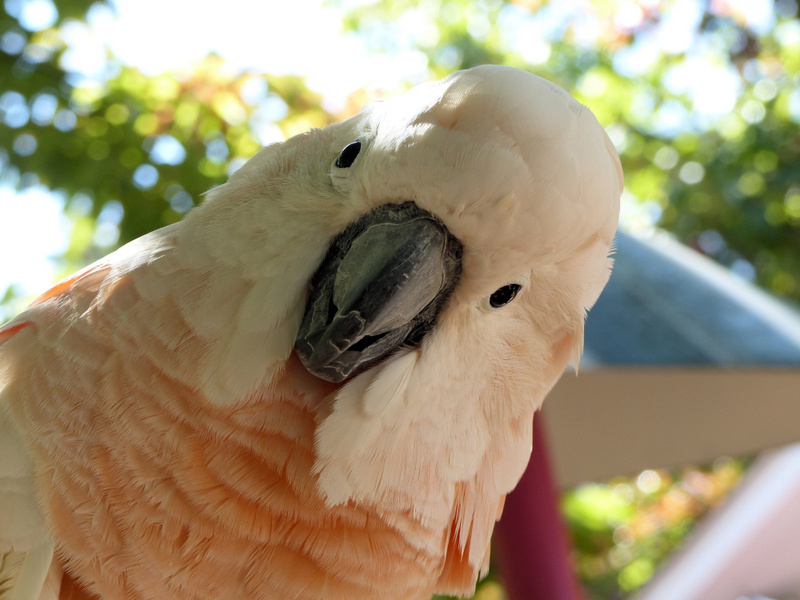
 Salmon-crested Cockatoo (Cacatua moluccensis) at Parrot Mtn by Lee

Salmon-crested Cockatoo (Cacatua moluccensis) at Parrot Mtn by Lee

Reading those commentaries, from my e-Sword, it appears from some that some are saying Nebuchadnezzer had all control of the birds as to when they could be hunted or hawked, etc. Others are saying that he was to be over the original dominion mandate given to man for the beast and birds which had been corrupted by man.

Peregrine Falcon (Falco peregrinus) by Ray

Peregrine Falcon (Falco peregrinus) by Ray

It is an interesting statement and trust you found it informing. I did. For me, I try to respect and help the birds when I can. Many are researching and finding ways to help the birds, even when making preserves to protect their habitat. The Lord created them and we should do what we can to help them. We can even help the birds when some teach they evolved, by countering that lie with the truth of God’s Word.

So God created great sea creatures and every living thing that moves, with which the waters abounded, according to their kind, and every winged bird according to its kind. And God saw that it was good. (Genesis 1:21 NKJV)

*

Birds of the Bible

Who Paints The Leaves?

*

Sunday Inspiration – Chats and Old World Flycatchers II

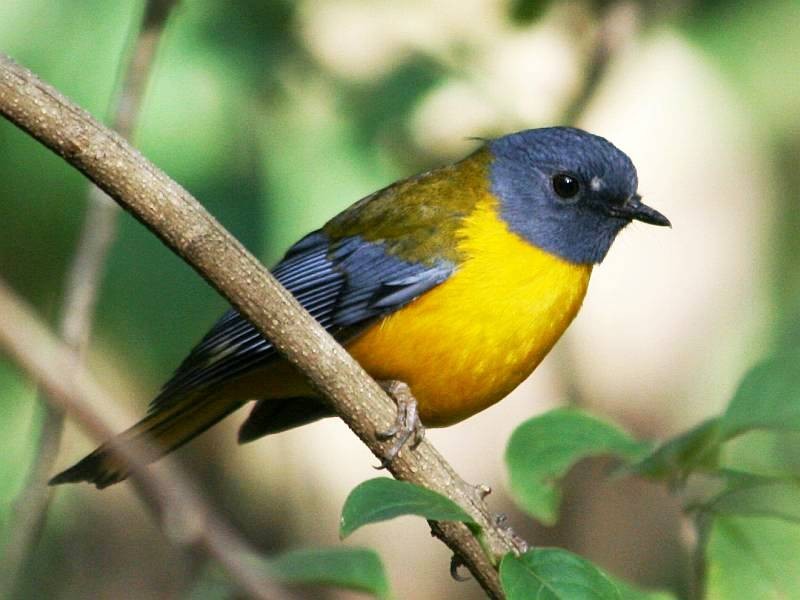
Rufous-bellied Niltava (Niltava sundara) by Nikhil Devasar

Rufous-bellied Niltava (Niltava sundara) by Nikhil Devasar

Out of the ground the LORD God formed every beast of the field and every bird of the sky, and brought them to the man to see what he would call them; and whatever the man called a living creature, that was its name. (Genesis 2:19 NASB)

Last week’s Sunday Inspiration – Chats and Old World Flycatchers covered the first part of the Muscicapidae Family. This week, we will show the some more of the Family. There are 321 Members that make up the Muscicapidae Family. What great looking birds from their Creator.

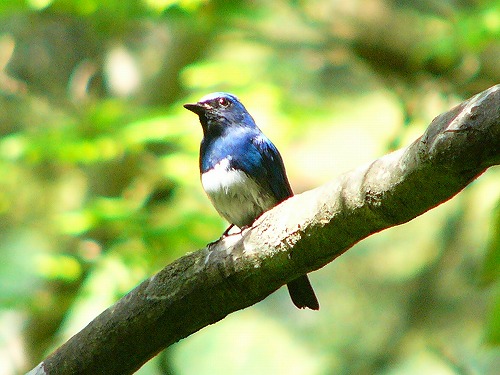
Blue-and-white Flycatcher (Cyanoptila cyanomelana) ©WikiC

Blue-and-white Flycatcher (Cyanoptila cyanomelana) ©WikiC

Chats (formerly sometimes known as “chat-thrushes”) are a group of small Old World insectivorous birds formerly classified as members of the thrush family Turdidae, but now are considered Old World flycatchers. The name is normally applied to the more robust ground-feeding flycatchers found in Europe and Asia and most northern species are strong migrants.

The Old World flycatchers, the Muscicapidae, are small passerine birds mostly restricted to the Old World (Europe, Africa and Asia). These are mainly small arboreal insectivores, many of which, as the name implies, take their prey on the wing.

White-starred Robin (Pogonocichla stellata) WikiC

White-starred Robin (Pogonocichla stellata) ©WikiC

The appearance of these birds is very varied, but they mostly have weak songs and harsh calls. They are small to medium birds, ranging from 9 to 22 cm in length. Many species are dull brown in colour, but the plumage of some can be much brighter, especially in the males. Most have broad, flattened bills suited to catching insects in flight, although the few ground-foraging species typically have finer bills.

Old World flycatchers live in almost every environment with a suitable supply of trees, from dense forest to open scrub, and even the montane woodland of the Himalayas. The more northerly species migrate south in winter, ensuring a continuous diet of insects.

Depending on the species, their nests are either well-constructed cups placed in a tree or cliff ledge, or simply lining in a pre-existing tree hole. The hole-nesting species tend to lay larger clutches, with an average of eight eggs, rather than just two to five.

White-browed Robin-Chat (Cossypha heuglini) by Daves BirdingPix

White-browed Robin-Chat (Cossypha heuglini) by Daves BirdingPix

Because this Muscicapidae family is so large, this week’s Sunday Inspiration and last week’s were divided. The reason for this is so the slideshow will not be too long. This divides them in taxonomic order in to several groups. I was going to divide this family in half, but there are so many photos available that I would have to find a symphony to provide enough music to show them all at once. ☺♪♫☺

Last week, the first 97-98 members were shown from these genera: Alethe, Cercotrichas, Copsychus, Fraseria, Myioparus, Melaenornis, Empidornis, Muscicapa, Anthipes, Cyornis.

This Slideshow of Muscicapidae in taxonomic order – Second Part (includes the genera- Niltava, Cyanoptila, Eumyias, Erithacus, Pseudalethe, Cossyphicula, Cossypha, Swynnertonia, Pogonocichla, Stiphrornis, Sheppardia, Cichladusa, Heinrichia, Leonardina, Heteroxenicus, Brachypteryx , Vauriella, Larvivora, Luscinia, Irania and Calliope.) 75 Species

Start with Niltava 

This slideshow requires JavaScript.

Let this mind be in you which was also in Christ Jesus, who, being in the form of God, did not consider it robbery to be equal with God, but made Himself of no reputation, taking the form of a bondservant, and coming in the likeness of men. And being found in appearance as a man, He humbled Himself and became obedient to the point of death, even the death of the cross. Therefore God also has highly exalted Him and given Him the name which is above every name, that at the name of Jesus every knee should bow, of those in heaven, and of those on earth, and of those under the earth, and that every tongue should confess that Jesus Christ is Lord, to the glory of God the Father. (Philippians 2:5-11 NKJV)

“The Birthday of a King” ~ by Dr. Richard Gregory, now in Glory.

*

Sunday Inspiration – Chats and Old World Flycatchers I

More Sunday Inspirations

Muscicapidae – Chats and Old World Flycatchers

Faith Baptist Church

Gospel Presentation

*

Good One – An Email

Peek-a-boo ©Flickr Kathy

Peek-a-boo ©Flickr Kathy

GOOD ONE
We were the only family with children in the restaurant. I sat Erik in a high chair and noticed everyone was quietly sitting and talking. Suddenly, Erik squealed with glee and said, ‘Hi.’ He pounded his fat baby hands on the high chair tray. His eyes were crinkled in laughter and his mouth was bared in a toothless grin, as he wriggled and giggled with merriment.
I looked around and saw the source of his merriment. It was a man whose pants were baggy with a zipper at half-mast and his toes poked out of would-be shoes. His shirt was dirty and his hair was uncombed and unwashed. His whiskers were too short to be called a beard and his nose was so varicose it looked like a road map.
We were too far from him to smell, but I was sure he smelled.. His hands waved and flapped on loose wrists.. ‘Hi there, baby; hi there, big boy. I see ya, buster,’ the man said to Erik.
My husband and I exchanged looks, ‘What do we do?’
Erik continued to laugh and answer, ‘Hi.’
Everyone in the restaurant noticed and looked at us and then at the man. The old geezer was creating a nuisance with my beautiful baby. Our meal came and the man began shouting from across the room, ‘Do ya patty cake? Do you know peek-a-boo? Hey, look, he knows peek- a-boo.’
Nobody thought the old man was cute. He was obviously drunk. My husband and I were embarrassed. We ate in silence; all except for Erik, who was running through his repertoire for the admiring skid-row bum, who in turn, reciprocated with his cute comments.
We finally got through the meal and headed for the door. My husband went to pay the check and told me to meet him in the parking lot. The old man sat poised between me and the door. ‘Lord, just let me out of here before he speaks to me or Erik,’ I prayed. As I drew closer to the man, I turned my back trying to sidestep him and avoid any air he might be breathing. As I did, Erik leaned over my arm, reaching with both arms in a baby’s ‘pick-me-up’ position. Before I could stop him, Erik had propelled himself from my arms to the man.
Suddenly a very old smelly man and a very young baby consummated their love and kinship. Erik in an act of total trust, love, and submission laid his tiny head upon the man’s ragged shoulder. The man’s eyes closed, and I saw tears hover beneath his lashes. His aged hands full of grime, pain, and hard labor, cradled my baby’s bottom and stroked his back. No two beings have ever loved so deeply for so short a time.
I stood awestruck. The old man rocked and cradled Erik in his arms and his eyes opened and set squarely on mine. He said in a firm commanding voice, ‘You take care of this baby.’
Somehow I managed, ‘I will,’ from a throat that contained a stone.
He pried Erik from his chest, lovingly and longingly, as though he were in pain. I received my baby, and the man said, ‘God bless you, ma’am, you’ve given me my Christmas gift.’
I said nothing more than a muttered thanks. With Erik in my arms, I ran for the car. My husband was wondering why I was crying and holding Erik so tightly, and why I was saying, ‘My God, my God, forgive me.’
I had just witnessed Christ’s love shown through the innocence of a tiny child who saw no sin, who made no judgment; a child who saw a soul, and a mother who saw a suit of clothes. I was a Christian who was blind, holding a child who was not.. I felt it was God asking, ‘Are you willing to share your son for a moment?’ when He shared His for all eternity. How did God feel when he put his baby in our arms 2000 years ago.
The ragged old man, unwittingly, had reminded me, ‘To enter the Kingdom of God , we must become as little children.’
If this has blessed you, please bless others by sending it on. Sometimes, it takes a child to remind us of what is really important. We must always remember who we are, where we came from and, most importantly, how we feel about others. The clothes on your back or the car that you drive or the house that you live in does not define you at all; it is how you treat your fellow man that identifies who you are.
This one is a keeper.
‘It is better to be liked for the true you, than to be loved for who people think you are……'(Amen! )
Old man and baby ©Flickr Gustavo Devito

Old man and baby ©Flickr Gustavo Devito

(Author Unknown)
*

Merry Christmas 2015

Merry Christmas

That which was from the beginning, which we have heard, which we have seen with our eyes, which we have looked upon, and our hands have handled, of the Word of life; (For the life was manifested, and we have seen it, and bear witness, and shew unto you that eternal life, which was with the Father, and was manifested unto us;) That which we have seen and heard declare we unto you, that ye also may have fellowship with us: and truly our fellowship is with the Father, and with his Son Jesus Christ. And these things write we unto you, that your joy may be full. (1 John 1:1-4 KJV)

I would like to share with you our Christmas Cantata presented on December 13, 2015 at Faith Baptist Church in Winter Haven, Florida. They all did fantastic and thought you would enjoy it also.

It was entitled, “Lord of Glory” Christmas Cantata

May the Lord bless you as you share Christmas with family and friends. Dan and I would both like to wish you a great Christmas day full of blessings from the Lord.

*


“Movie On Cwismus”

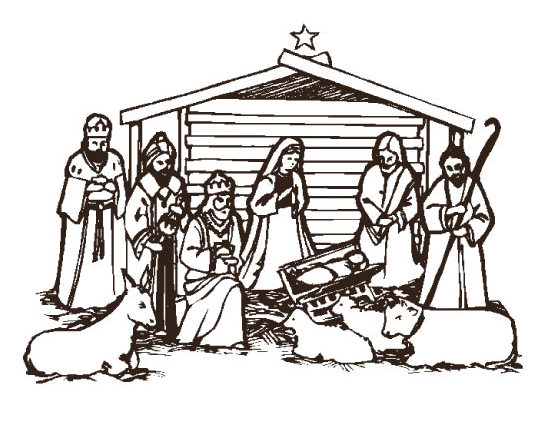
So it was, that while they were there, the days were completed for her to be delivered. And she brought forth her firstborn Son, and wrapped Him in swaddling cloths, and laid Him in a manger, because there was no room for them in the inn. (Luke 2:6-7 NKJV)

Here is a special video sent to me by James J. S. Johnson. It is about kids telling the story of Cwismus (Christmas) by the Mobberly Kids. Enjoy.

Good News

Birds in Christmas Hymns – Review

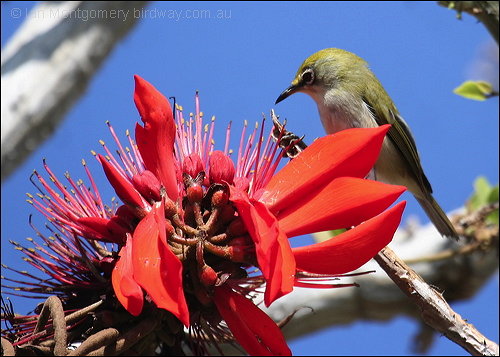
Christmas Island White-eye (Zosterops natalis) by Ian

Christmas Island White-eye (Zosterops natalis) by Ian

Birds in Christmas Hymns

Birds in Christmas Hymns

And when they had sung an hymn, they went out… (Mark 14:26a KJV)

Here are the Birds in Christmas Hymns from the Birds in Hymns Page. Many writers of these hymns must have enjoyed our beautiful created birds and included them in these Christmas Hymns.

Carol of Birds (Bird, Nightingale, Sparrow, Finch, Partridge, Nest), (Australian Birds)
Christmas Brings Joy To Every Heart – (Birds, Perch, Sparrow, Dove)
Hail to the Lord’s Anointed (Eagle, Dove, Wing, Pinion)
I Wonder As I Wander (Bird)
Joyful, Joyful, We Adore Thee – (Singing bird)
The Day The Christ-Child’s Tender Eyes – (Birds, Feather)
The Friendly Beasts – (Dove)
The Worcester Christmas Carol – (Bird)
This Endris Night – (Bird)
Thou Didst Leave Thy Throne –  (Bird, Nest)
Welcome To Christmas – (Dove, Wing)

*

O Holy Night – Card

That which was from the beginning, which we have heard, which we have seen with our eyes, which we have looked upon, and our hands have handled, of the Word of life; (1 John 1:1 KJV)

Please Click Here To See The Card

Here is the video they used with it:

*

A friend sent this to me and I trust you also are as moved by it as I am. Tears are still flowing as I type this.

Yes, I know the Wise Men showed up later, but enjoy the video.

Sunday Inspiration – Chats and Old World Flycatchers I

Bearded Scrub Robin (Cercotrichas quadrivirgata) ©WikiC

Bearded Scrub Robin (Cercotrichas quadrivirgata) ©WikiC

In all labor there is profit, But idle chatter leads only to poverty. (Proverbs 14:23 NKJV)

The Old World flycatchers are a large family (321 Members), the Muscicapidae, of small passerine birds mostly restricted to the Old World (Europe, Africa and Asia). These are mainly small arboreal insectivores, many of which, as the name implies, take their prey on the wing.

The appearance of these birds is very varied, but they mostly have weak songs and harsh calls. They are small to medium birds, ranging from 9 to 22 cm in length. Many species are dull brown in color, but the plumage of some can be much brighter, especially in the males. Most have broad, flattened bills suited to catching insects in flight, although the few ground-foraging species typically have finer bills.

Old World flycatchers live in almost every environment with a suitable supply of trees, from dense forest to open scrub, and even the montane woodland of the Himalayas. The more northerly species migrate south in winter, ensuring a continuous diet of insects.
Depending on the species, their nests are either well-constructed cups placed in a tree or cliff ledge, or simply lining in a pre-existing tree hole. The hole-nesting species tend to lay larger clutches, with an average of eight eggs, rather than just two to five.

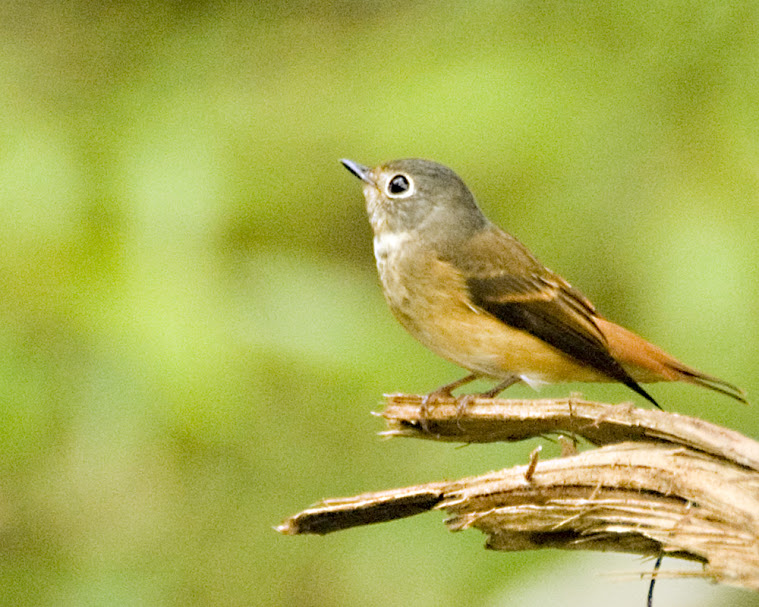
Ferruginous Flycatcher (Muscicapa ferruginea) by MAMuin

Ferruginous Flycatcher (Muscicapa ferruginea) by MAMuin

“For the wisdom of this world is foolishness with God. For it is written, “HE CATCHES THE WISE IN THEIR OWN CRAFTINESS”; (1 Corinthians 3:19 NKJV)

Because this Muscicapidae family is so large, this Sunday Inspiration and next week’s will be divided. The reason for this is so the slideshow is not too long. This will divide them in taxonomic order about half way.

Slideshow of Muscicapidae in taxonomic order – First Half

This slideshow requires JavaScript.

Now when Jesus was born in Bethlehem of Judaea in the days of Herod the king, behold, there came wise men from the east to Jerusalem, Saying, Where is he that is born King of the Jews? for we have seen his star in the east, and are come to worship him. (Matthew 2:1-2 KJV)

“Wise Men Still Seek Him” – Trio and Choir

*

“Heaven’s Announcement” – message by Pastor Osborne last Sunday. About the birth of Christ.

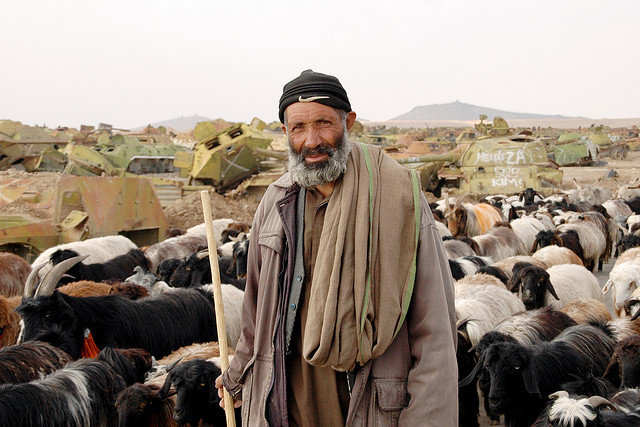
Shepherd ©Flickr

Shepherd ©Flickr

More Sunday Inspirations

Muscicapidae – Chats and Old World Flycatchers

Faith Baptist Church

*