Birds of the Bible – Goldfinches Are On The Way

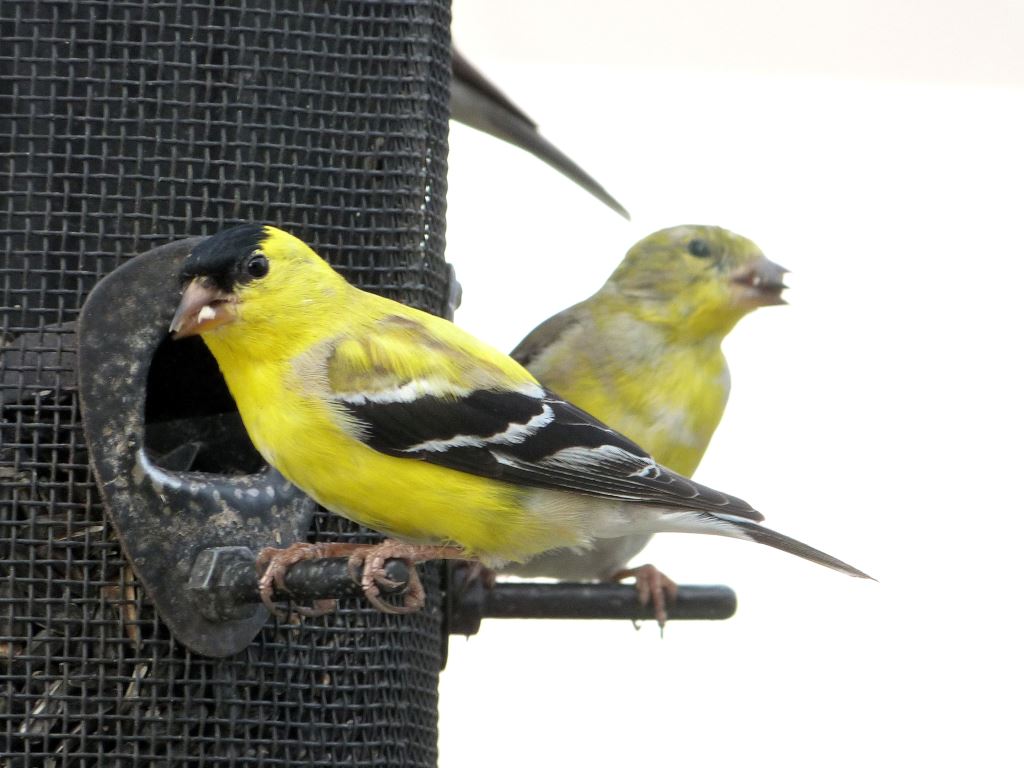
Goldfinches 4-1-13 No screen clean window (7)

Even the stork in the sky knows her seasons. The turtledove, swallow, and crane are aware of their migration, but My people do not know the requirements of the LORD. (Jeremiah 8:7 HCSB)

We have been having American Goldfinches at the feeders for the last few weeks. Don’t see them often, so was enjoying their presence. They kept building in numbers from 6 at first, then 12 about a week ago, then Easter Sunday there were at least 20 of them. It even motivated me to wash the window and take out the screen on Monday to get better photos of them.

Yesterday morning, Wednesday, I checked out the window to see how many there were now. Not a one! So throughout the morning I kept checking, NONE! When we went out, there was no singing in the trees that we have been hearing lately. Needless to say, I was a little disappointed, but it didn’t take long to figure out where they were. GONE!!!

Keep your eyes open up north, the Goldfinches are on the way. This is a spring occurrence down here. The birds fold up their lounge chairs, pack the bellies full of my sunflower seed and head back home. They have territories to claim, nest to build, broods to raise and give you now the pleasure of viewing them and listening to their songs. ENJOY!

It’s your turn to enjoy the Lord’s beautiful American Goldfinches as they migrate up to you. Treat them nice and when fall comes, send them back, please.

This slideshow requires JavaScript.

*
Birds of the Bible Articles

Bible Birds
*

New Project – Our Birdwatching Photos

Wood Duck - Lake Morton by Lee

Wood Duck – Lake Morton by Lee

O LORD, how manifold are thy works! in wisdom hast thou made them all: the earth is full of thy riches. (Psalms 104:24 KJV)

While working on Family pages, it dawned on me that very few of our photos have been used. We, Dan and I, do take quite a few photos while on our birdwatching adventures into the wild and at the zoos. Actually, I take about 4-5 more than he does on each adventure (more like 10-1). He spends his time trying to compose his shots and do all that sort of stuff. Me, I have a Program mode Panasonic Lumix that I shoot, shoot, shoot. Of course, his photos are always better and he knows how to prep them better, but I get more “action” photos. I have action of the bird moving (blurred), flying off (blurred), turning around (blurred), behind a fence (bird-blurred, fence-clear), in a tree (bird-blurred, branch with leaves-clear). Every once in a while I get a nice photo that isn’t too blurred that could be shared with you.

Another thing he has tried to teach me is the 1/3rd thing. Me, I want that bird right in the middle of my shot so that when I get home I can try to find it behind those clear fences and branches. To me, my photos are for “proof” that the bird was seen and also to try to figure out what it really was. You see, I am a “birdwatcher” and he is a “photographer.” There is a difference! You can blend the two, but there IS a different attitude at work here.

Yesterday the Our Birdwatching Photos page was created and a new tab was placed up at the top. Now, I am working on creating pages, by families, of our photos. Most will be mine, because I take more and he already has a website for his photos at Dan’s Pix. I will be copying some of his over here of course and maybe I can get some of his “unpublished” ones also.

Elegant Crested Tinamou (Eudromia elegans) Cloud Forest at Zoo Miami by Lee

Elegant Crested Tinamou (Eudromia elegans) at Zoo Miami by Lee

Don’t expect the greatest photos, because I am not a great photographer, but I enjoy “watching” the birds. The Lord has created so many birds that are just so beautiful and unique. The variety is amazing. The colors are  breathtaking at times. The birds are adorable, cute, ugly, big, little, tall, short, evasive, calm, fidgety, graceful, etc. They sing some of the most beautiful songs and some have terrible tunes, but don’t you just enjoy watching and listening to them?

O Lord, how many and varied are Your works! In wisdom have You made them all; the earth is full of Your riches and Your creatures. (Psalms 104:24 AMP)

O the depth of the riches both of the wisdom and knowledge of God! how unsearchable are his judgments, and his ways past finding out! (Romans 11:33 KJV)

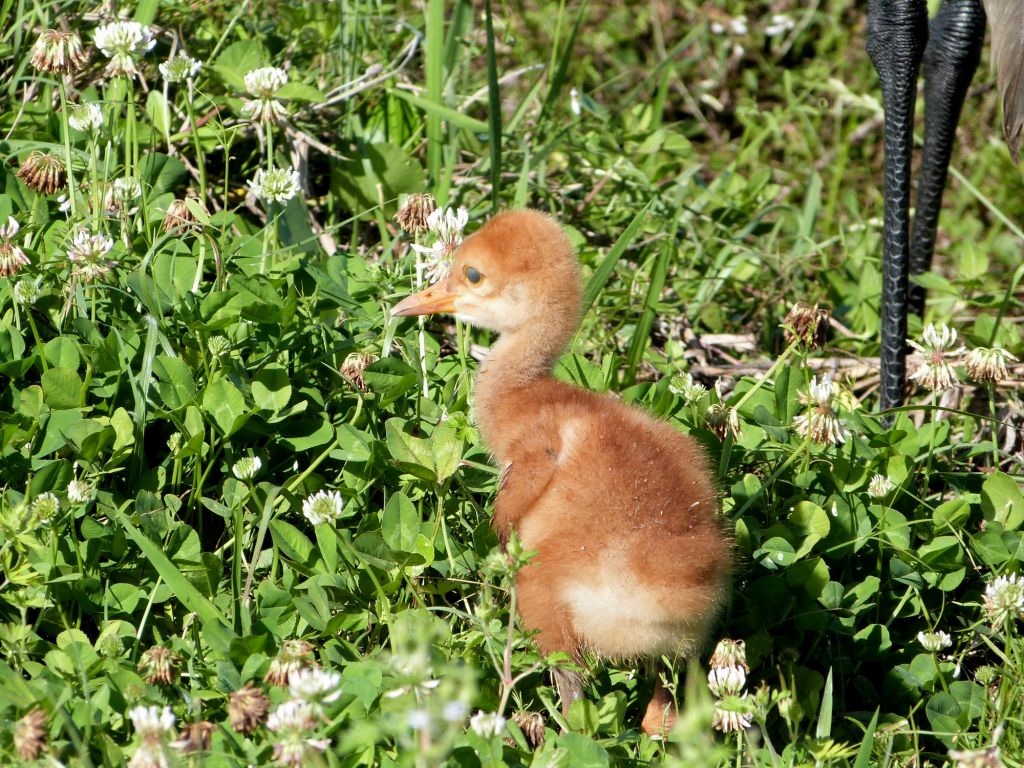
Blurred, but isn't it cute?

Sandhill Crane Chick at Circle B by Lee – Blurred, but isn’t it cute?

*

Our Birdwatching Photos

Dan’s Pix

*

Antbirds ~ An Interesting Family

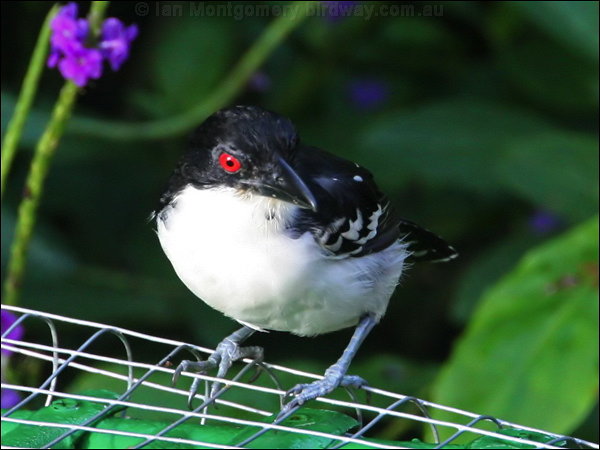
Great Antshrike (Taraba major) by Ian

Great Antshrike (Taraba major) by Ian

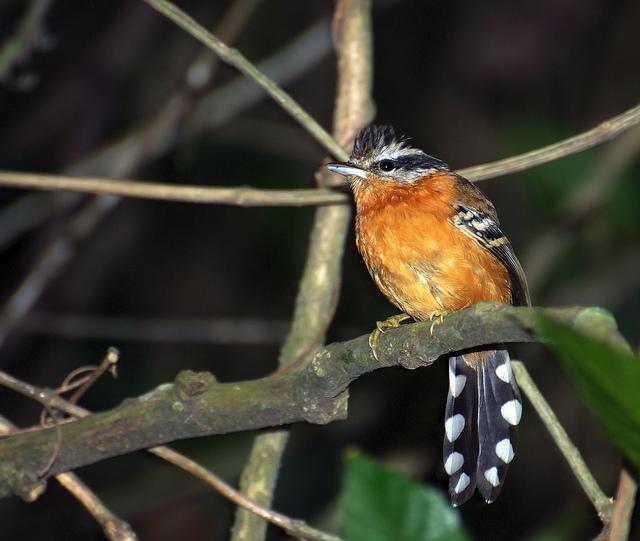
Just finished working on the Typical Antbird Family. (Thamnophilidae – Antbirds) Of the 228 species, there were only 21 links when I started a few day ago, after finishing the Tyrannidae – Tyrant Flycatchers Is Complete Minus One Bird family and article. Other than 4 species that are evading me, it is almost finished. I was side-lined Sunday evening and all day yesterday with some food poisoning. Perked up enough this evening to finish it up.

The little birds that are staying out of the camera lens are the:

If anyone knows where to find a photo of them, I would be obliged. Leave a comment if you know where they are hiding.

White-flanked Antwren (Myrmotherula axillaris) by Michael Woodruff

White-flanked Antwren (Myrmotherula axillaris) by Michael Woodruff

When you search the internet for photos, you have to be careful, I am finding out. Some searches show a picture on a page with the correct name, but the photo does not match the named bird. Won’t mention any names, but I will mention one of the more trusted sites that I use. IBC which is actually The Internet Bird Collection headed up, I believe by Josep del Hoyo. He and that group are quite experts in ornithology. They have been producing the Handbook of the Birds of the World. There are over 16 Volumes and counting. Their goal “has been to cover in detail and illustrate every species of bird in the world.” Now there is an undertaking, to say the least.

Ferruginous Antbird (Drymophila ferruginea) by Dario Sanches

Ferruginous Antbird (Drymophila ferruginea) by Dario Sanches

Back to the Antbirds. Wikipedia has this to say about them. ”

The antbirds are a large family, Thamnophilidae, of passerine birds found across subtropical and tropical Central and South America, from Mexico to Argentina. There are more than 200 species, known variously as antshrikes, antwrens, antvireos, fire-eyes, bare-eyes and bushbirds. They are related to the antthrushes and antpittas (family Formicariidae), the tapaculos, the gnateaters and the ovenbirds. Despite some species’ common names, this family is not closely related to the wrensvireos or shrikes.

Antbirds are generally small birds with rounded wings and strong legs. They have mostly sombre grey, white, brown and rufous plumage, which is sexually dimorphic in pattern and coloring.  Some species communicate warnings to rivals by exposing white feather patches on their backs or shoulders. Most have heavy bills, which in many species are hooked at the tip.

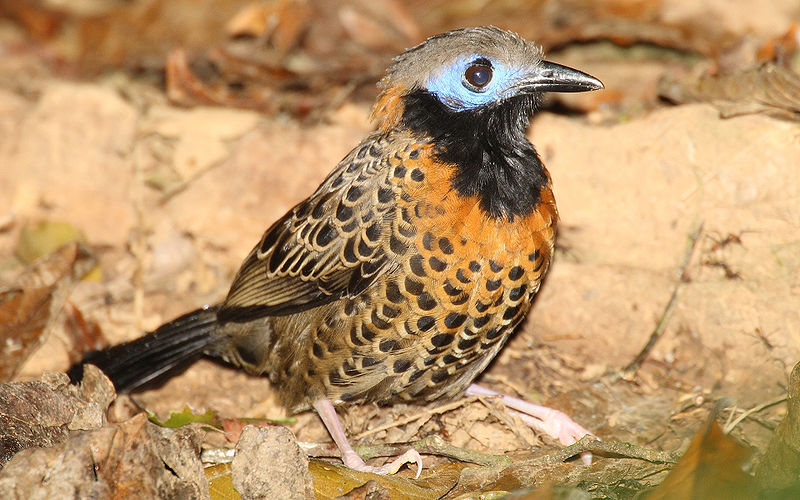
Ocellated Antbird (Phaenostictus mcleannani) ©WikiC

Ocellated Antbird (Phaenostictus mcleannani) ©WikiC

Members of this family have short rounded wings that provide good manoeuvrability when flying in dense undergrowth. The legs are large and strong, particularly in species that are obligate ant-followers. These species are well adapted to gripping vertical stems and saplings, which are more common than horizontal branches in the undergrowth, and thus the ability to grip them is an advantage for birds following swarms of army ants. The claws of these antbirds are longer than those of species that do not follow ants, and the soles of some species have projections that are tough and gripping when the foot is clenched. Tarsus length in antbirds is related to foraging strategy. Longer tarsi typically occur in genera such as the Thamnophilus antshrikes that forage by perch-gleaning (sitting and leaning forward to snatch insects from the branch), whereas shorter tarsi typically occur in those that catch prey on the wing, such as the Thamnomanes antshrikes.

Most antbirds have proportionately large, heavy bills. Several genera of antshrike have a strongly hooked tip to the bill, and all antbirds have a notch or ‘tooth’ at the tip of the bill which helps in holding and crushing insect prey. The two genera of bushbirds have upturned chisel-like bills.” (Wikipedia with editing)

Black-crested Antshrike (Sakesphorus canadensis) ©WikiC

Black-crested Antshrike (Sakesphorus canadensis) ©WikiC

It appears the Lord has created these birds with just what they need to survive in their environment. They may well be keeping the ant population in control, but some of the videos with the bird in the middle of an ant army swarm, makes you wonder who is winning.

But now ask the beasts, and they will teach you; And the birds of the air, and they will tell you; (Job 12:7 NKJV)

I know all the birds of the mountains, And the wild beasts of the field are Mine. (Psalms 50:11 NKJV)

The Bible has several things to say about the Ants:

The ants are a people not strong, Yet they prepare their food in the summer; (Proverbs 30:25 NKJV)

Go to the ant, you sluggard! Consider her ways and be wise, Which, having no captain, Overseer or ruler, Provides her supplies in the summer, And gathers her food in the harvest. How long will you slumber, O sluggard? When will you rise from your sleep? A little sleep, a little slumber, A little folding of the hands to sleep—So shall your poverty come on you like a prowler, And your need like an armed man. (Proverbs 6:6-11 NKJV)

Not being lazy and providing for yourself are two things one can learn. Also, He provides for the birds of this family by giving them an ample supply of ants and other insects, yet, they have to do the work of catching them. They are not fed directly by the Lord.

The Scripture tells us that “…my God shall supply all your need according to His riches in glory by Christ Jesus. (Philippians 4:19 NKJV). Are we suppose to sit back and just expect things to be provided for us? No, neither do the birds or animals. Yes, the Lord supplies our needs, for example, by having things grow, but they need to be picked and cooked or purchased and cooked. That is only one illustration from thousands.

White-plumed Antbird (Pithys albifrons) ©WikiC

White-plumed Antbird (Pithys albifrons) ©WikiC

Enjoy the ANTBIRD family. They are not the prettiest, but some are quite interesting.

Thamnophilidae – Antbirds

*

Tyrannidae – Tyrant Flycatchers Is Complete Minus One Bird

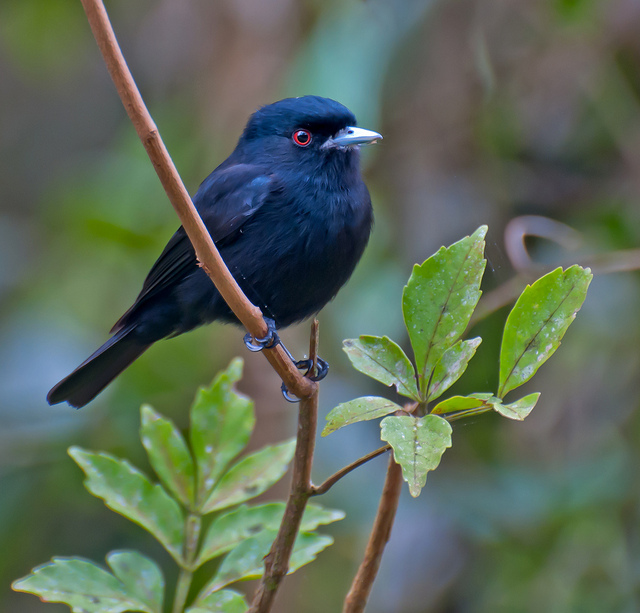
Blue-billed Black Tyrant (Knipolegus cyanirostris) by Dario Sanches

Blue-billed Black Tyrant (Knipolegus cyanirostris) by Dario Sanches

The Tyrannidae – Tyrant Flycatchers is complete minus one bird, the Spectacled BristleTyrant (Pogonotriccus orbitalis). Big deal you say? I decided to dig into that family and try to get the photos for it. I have been at it for about 3 days to find the missing 300 species. This is the largest bird family. There are 421 members there and I had already collected or found links to 121 of them.

I have searched high and low for that Spectacled Bristle Tyrant and the best I could find is a stamp with it’s photo on it. It is found in Bolivia, Colombia, Ecuador, and Peru. Its natural habitats are subtropical or tropical moist lowland forests and subtropical or tropical moist montane forests. It also referred to as the Spectacled Bristle-tyrant (Phylloscartes orbitalis) and it is said to be common. That may be true, but no one has posted a photo of that Spectacled bird.

“The tyrant flycatchers (Tyrannidae) are a clade of passerine birds which occur throughout North and South America. They are considered the largest family of birds on Earth, with more than 400 species. They are the most diverse avian family in every country in the Americas, except for the United States and Canada. As could be expected from a family this large, the members vary greatly in shape, patterns, size and colors. Some Tyrant flycatchers superficially resemble the Old World flycatchers which they are named after but are not related to. They are members of suborder Tyranni (suboscines), which do not have the sophisticated vocal capabilities of most other songbirds.” (Wikipedia)

Spectacled Tyrant (Hymenops perspicillatus) ©©Flickr Cláudio Timm

Spectacled Tyrant (Hymenops perspicillatus) ©©Flickr Cláudio Timm

That family also has another Spectacled bird, the Spectacled Tyrant (Hymenops perspicillatus).

Sometimes we are challenged to get the hardest projects finished first. This has been one of those times. Was it drudgery? No way! Even though these are not the prettiest birds, they have personality and expressions on their faces. The Lord created all these neat birds and I was enjoying seeing them. I had my internet radio playing, (Old Fashioned Christian Music Radio) and I just kept plugging away. (For hours!) Our attitudes can be enjoyable even when we are busy. I could have been “grumpy” and said, “there are too many birds to find, it will take forever” or, as I did, it was a joy to work on this page even though many bloggers will never see it.

I just kept making expressions as the various birds were viewed. I am always amazed at the variety that the Lord uses. What expression of surprise when I saw the Spectacled Tyrant above.  (He is not the one I need yet.)

And of course, Scripture comes to mind or you wonder how a word is used in His Word. These are called “tyrant” and sure enough, I found some verses with “tyrant” in them.

Eastern Kingbird (Tyrannus tyrannus) by Margaret Sloan Eating

Eastern Kingbird (Tyrannus tyrannus) by Margaret Sloan Eating

“an the prey be taken from the mighty man, Or the captives of a tyrant be rescued?” (Isaiah 49:24 NASB)

Surely, thus says the LORD, “Even the captives of the mighty man will be taken away, And the prey of the tyrant will be rescued; For I will contend with the one who contends with you, And I will save your sons. (Isaiah 49:25 NASB)

This prey in the mouth of the Tyrant family doesn’t look like he will escape.

It is always enjoyable when we finish a project. I still have about 50 Families yet to finish, but this was the largest and it feels good to accomplish something.

Praise the LORD! I will give thanks to the LORD with my whole heart, in the company of the upright, in the congregation. Great are the works of the LORD, studied by all who delight in them. Full of splendor and majesty is his work, and his righteousness endures forever. He has caused his wondrous works to be remembered; the LORD is gracious and merciful. (Psalms 111:1-4 ESV)

I will remember the works of the LORD: surely I will remember thy wonders of old. I will meditate also of all thy work, and talk of thy doings. (Psalms 77:11-12 KJV)

What better when all of life is over and we hear something like this verses

His master said to him, ‘Well done, good and faithful servant. You have been faithful over a little; I will set you over much. Enter into the joy of your master.’ (Matthew 25:21 ESV)

Enjoy looking through the Tyrannidae – Tyrant Flycatcher Family photos. There are some neat birds there to be viewed and enjoyed.

Wordless Birds

*

Margaret Sloan – New Photographer

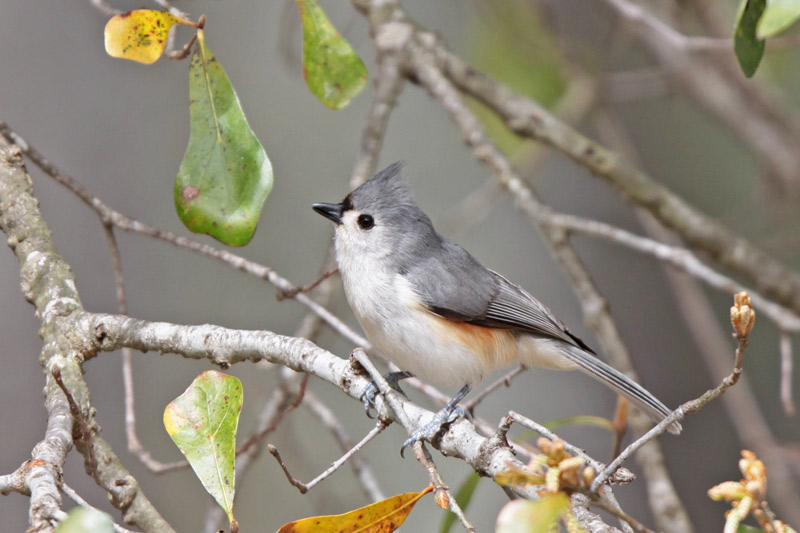
Tufted Titmouse (Baeolophus bicolor) by Margaret Sloan

Tufted Titmouse (Baeolophus bicolor) by Margaret Sloan

I would like to introduce our newest photographer to permit permission to use her photos. While searching for the Morningbird, which Margaret had one of the very few photos of the bird, I discovered her website. She has graciously given permission to use her photos.

Margaret Sloan has her photos on PBase at

http://www.pbase.com/laumakani

She is from Texas and has over 12,000 images online in over 1,100 galleries. Wow! It will take awhile to check it out, but what I have seen so far is very good. Please stop by her site and admire the photos of some amazing birds, plus places, spaces, and scenery. Lots to view and enjoy.

From her Birds of Costa Rica gallery:

Keel-billed Toucan (Ramphastos sulfuratus) by Margaret Sloan

Keel-billed Toucan (Ramphastos sulfuratus) by Margaret Sloan

From the Birds of Peru – Cotingas and Manakins gallery:

Andean Cock-of-the-rock (Rupicola peruvianus) by Margaret Sloan

Andean Cock-of-the-rock (Rupicola peruvianus) by Margaret Sloan

From the Birds of Southeast AsiaSunbirds, Flowerpeckers, Leafbirds:

Olive-backed Sunbird (Cinnyris jugularis) by Margaret Sloan

Olive-backed Sunbird (Cinnyris jugularis) by Margaret Sloan

Closer to home – Birds of North America:

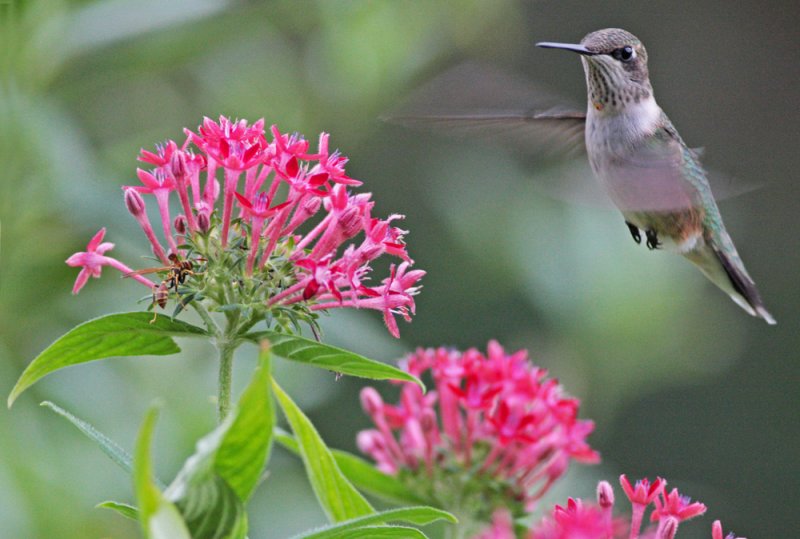
Hummingbird with Pentas by Margaret Sloan

Hummingbird with Pentas by Margaret Sloan

From her Nature Butterflies:

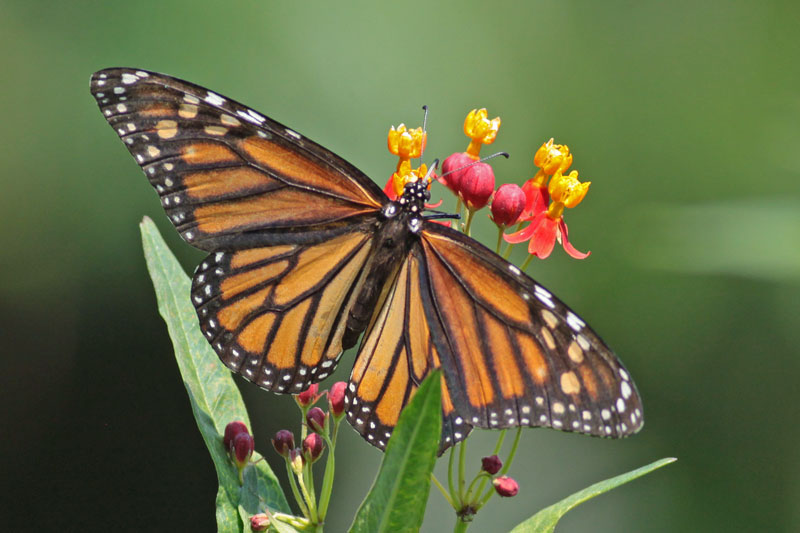
Monarch Butterfly (Danaus plexippus) by Margaret Sloan

Monarch Butterfly by Margaret Sloan

These are but a few of the numerous photos she has taken of the birds and beauty around her. Thank you, Margaret, for sharing with us what you have seen through your lens. May you find many more adventures that you can take photographs of and share with us.

Who is like You, O Lord, among the gods? Who is like You, glorious in holiness, awesome in splendor, doing wonders? (Exodus 15:11 AMP)

Many, O Lord my God, are the wonderful works which You have done, and Your thoughts toward us; no one can compare with You! If I should declare and speak of them, they are too many to be numbered. (Psalms 40:5 AMP)

*

Birds of the World – Furnariidae – Ovenbird Family

White-eyed Foliage-gleaner (Automolus leucophthalmus) by Dario Sanches

White-eyed Foliage-gleaner (Automolus leucophthalmus) by Dario Sanches

And thou shalt not glean thy vineyard, neither shalt thou gather every grape of thy vineyard; thou shalt leave them for the poor and stranger: I am the LORD your God. (Leviticus 19:10 KJV)

Yesterday you were introduced to the Firewood-gatherer from the Ovenbird – Furnariidae Family. Let’s look at some more things about this family. There are presently (IOC 3.3) 307 species assigned together, but it is such a diverse group. There are over 70 Genera listed. Number one, the Ovenbird, is not even a member of this family. You have to look for it in the Parulidae – New World Warblers to find it.

The Ovenbird name seems to be from the fact that many of these birds make an “oven style” nest or at least one that has an opening to enter or a covering, not the “cup type” of nest of many birds. Most are  insectivores that are mostly arboreal in nature. Insects form the majority of the diet, with some spiders, centipides, millipides and even lizards being taken as well.

They are sub-divided into subfamilies which help find them. It is the names of these birds that have caught my attention this time. Listen to these names:

Tawny-throated Leaftosser (Sclerurus mexicanus) by Michael Woodruff

Tawny-throated Leaftosser (Sclerurus mexicanus) by Michael Woodruff

Subfamily: Sclerurinae ~~ Miners and Leaftossers

Wedge-billed Woodcreeper (Glyphorynchus spirurus) by Michael Woodruff

Wedge-billed Woodcreeper (Glyphorynchus spirurus) by Michael Woodruff

Subfamily: Dendrocolaptinae ~~ Woodcreepers

  • Tribe: Sittasomini – “intermediate” woodcreepers
  • Tribe: Dendrocolaptini – “strong-billed” woodcreepers and scythebills
Rufous Hornero (Furnarius rufus) ©WikiC

Rufous Hornero (Furnarius rufus) ©WikiC

Subfamily: Furnariinae ~~ Neotropical ovenbirds and allies

  • Xenops and Palmcreeper
  • Tribe Pygarrhichini – Treerunner, Xenops, Earthcreeper
  • Tribe Furnariini – Horneros and allies (Tuftedcheeks, Barbtail, Earthcreeper, Cinclodes, Streamcreeper, Rushbird, Reedhaunter)
  • Tribe Philydorini – Foliage-gleaners and allies (Xenops, Treehunter, Canebrake, Woodhaunter)
  • Tribe Synallaxini – Spinetails and allies (Treerunners, Barbtails, Rayaditos, Wiretail, Canasteros, Reedhaunter,Softtails, Thorntails, Firewood-gatherer, Brushrunner, Prickletail, Plushcrown, Graytails, Graveteiro)

Just reading the names you can almost image what they do. Many of them are “creepers,” “runners,” “gleaners,” “haunters,” and then others have their tail described. The tails are Barb, Spine, Wire, Soft, Thorn, Prickle and Gray. The Runners are apparently running up Trees or in the Stream. Not sure what the Miners are digging for, but maybe they are trying to find insects in the ground, whereas the Leaf-tossers are probably looking under leaves for their lunch. They don’t appear to be a “lazy” bird family.

This is a family that I could see being named by what they were doing or how their tail looked. After the birds were created, the Lord brought them to Adam to see what he would call them. What ever he decided to call them, that was their name. Maybe this is how Adam named them by observing their behaviors. Others from another family may have had a different way he named them.

Out of the ground the LORD God formed every beast of the field and every bird of the air, and brought them to Adam to see what he would call them. And whatever Adam called each living creature, that was its name. So Adam gave names to all cattle, to the birds of the air, and to every beast of the field. But for Adam there was not found a helper comparable to him. (Genesis 2:19-20 NKJV)

Some interesting articles about this family:

Birds of Brazil – Woodpeckers, Woodcreepers and Foliage-gleaners by Mark George

*

Wordless Birds

*

Birds of the World ~ Toucan Family (Ramphastidae)

Toco Toucan (Ramphastos toco) ©WikiC

Toco Toucan (Ramphastos toco) ©WikiC

I know all the birds of the mountains, And the wild beasts of the field are Mine. (Psalms 50:11 NKJV)

While working on the Ramphastidae Family yesterday, I decided to share some of the beauty the Lord created in this group of birds. These are the Toucans, Toucanets, and Aracaris. They are just so appealing to see and wonder how the Lord comes up with so many designs and colors in His Creation. This family definitely show such variety.

This morning while reading my latest Acts & Facts, there was an article about Diversity by Dr. James J. S. Johnson, who did our guest article this week,( Bird Brains, Amazing Evidence of God’s Genius). Both are very interesting articles worth reading. But I want to quote Dr. Johnson about variety.

Two words summarize the answer: life and variety. Even in this after-Eden world, cursed and groaning as it is under the weight of sin and death, we still see a prolific and diversified creation.

Why did God design earth’s biodiversity the way that He did?

God loves life. God is the essence and ultimate origin of all forms and levels of life.1

God loves variety. God’s nature is plural, yet one, and He is the Creator of all biological diversity anywhere and everywhere on earth.2

This family catches your eye and causes a second look. Toco Toucans are familiar to many, and some of the others. (Even Toucan Sam is the cartoon mascot for Froot Loops breakfast cereal).   We had the privilege to meet “Gracie” a retired Chestnut-mandibled Toucan at the National Aviary. (National Aviary – Hospital, Breeding, and Kitchen Areas) Needless to say, that is the closest I have been to a Toucan.
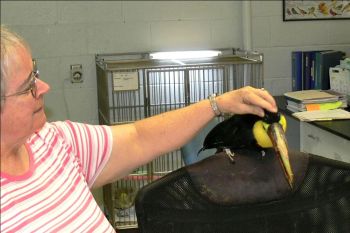
Gracie the retired Chestnut-mandibled Toucan (Ramphastos swainsonii)

Gracie the retired Chestnut-mandibled Toucan petted by Lee

The Ramphastidae Family has 5 or 6 genera, depending on sources, with Toucanets in the Aulacorhynchus and Selenidera, Mountain Toucans in the Andigena genus, Aracaris are Pteroglossus with the Saffron Toucanet added by some, and the Typical Toucans belong to the Ramphastos genus. The “Toucan” name of this bird group is derived from the Tupi word tukana, via Portuguese. They have large colorful and brightly marked bills.

Toucans range in size from the Lettered Aracari (Pteroglossus inscriptus), at 130 g (4.6 oz) and 29 cm (11.5 inches), to the Toco Toucan(Ramphastos toco), at 1.5 lb (680 g) and 29 inches (63 cm). Their bodies are short (of comparable size to a crow’s) and compact. The tail is rounded and varies in length, from half the length to the whole length of the body. The neck is short and thick. The wings are small, as they are forest-dwelling birds who only need to travel short distances.

The legs of the toucan are strong and rather short. Their toes are arranged in pairs with the first and fourth toes turned backward. The majority of toucans do not show any sexual dimorphism in their coloration.  However, the bills of female toucans are usually shorter, deeper and sometimes straighter, giving more of a “blocky” impression compared to male bills. The feathers in the genus containing the largest toucans are generally black, with touches of white, yellow, and scarlet. The underparts of the araçaris (smaller toucans) are yellow, crossed by one or more black or red bands. The toucanets have mostly green plumage with blue markings.

Toucans are native to Southern Mexico, Central and South America, and the Caribbean region. They generally live in tropical and sub-tropical regions. They make their nests in tree hollows and holes excavated by other animals such as woodpeckers—the toucan bill has very limited use as an excavation tool.

They mainly eat fruit, but will eat insects and small lizards if they become available. However, in their range, toucans are the dominant frugivores, and as such play an extremely important ecological role as vectors for seed dispersal of fruiting trees.
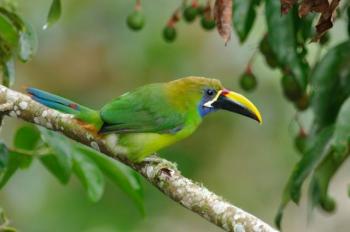
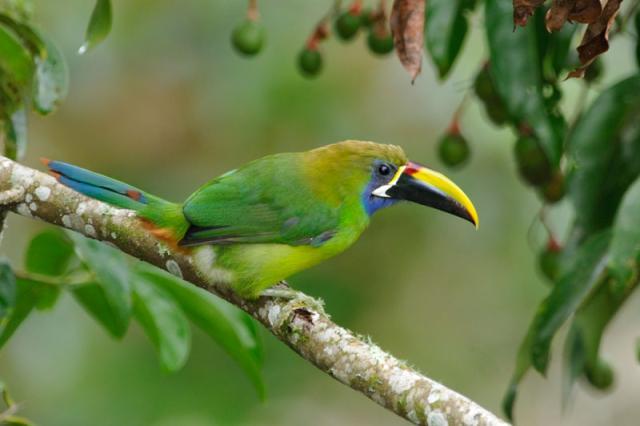
Emerald Toucanet (Aulacorhynchus prasinus) by Reinier Munguia

Emerald Toucanet (Aulacorhynchus prasinus) by Reinier Munguia

Toucanets

The green toucanets are birds from the genus Aulacorhynchus in the toucan family. They are native to Mexico, and Central and South America. All are found in humid forests and woodlands in highlands, but a few also occur in adjacent lowlands. They are relatively small toucans, 12–17 in (30–44 centimetres) long, with colorful, mainly green, plumage. They are typically seen in pairs or small groups, and sometimes follow mixed species flocks.

Wagler’s Toucanet (Aulacorhynchus wagleri)
Emerald Toucanet (Aulacorhynchus prasinus)
Blue-throated Toucanet (Aulacorhynchus caeruleogularis)
White-throated Toucanet (Aulacorhynchus albivitta)
Black-throated Toucanet (Aulacorhynchus atrogularis)
Groove-billed Toucanet (Aulacorhynchus sulcatus)
Chestnut-tipped Toucanet (Aulacorhynchus derbianus)
Tepui Toucanet (Aulacorhynchus whitelianus)
Crimson-rumped Toucanet (Aulacorhynchus haematopygus)
Yellow-browed Toucanet (Aulacorhynchus huallagae)
Blue-banded Toucanet (Aulacorhynchus coeruleicinctis)

Yellow-eared Toucanet (Selenidera spectabilis) ©WikiC

Yellow-eared Toucanet (Selenidera spectabilis) ©WikiC

Selenidera is a bird genus containing six species of dichromatic toucanets in the toucan family Ramphastidae. They are found in lowland rainforest (below 1,500 metres or 4,900 feet) in tropical South America with one species in Central America.

All the species have green upperparts, red undertail-coverts and a patch of bare blue or blue-green skin around the eye. Unlike most other toucans, the sexes are different in color. The males all have a black crown, nape, throat and breast and an orange/yellow auricular streak. The females of most species have the black sections in the male replaced by rich brown and a reduced/absent auricular streak,

Saffron Toucanet (Pteroglossus bailloni)
Yellow-eared Toucanet (Selenidera spectabilis)
Guianan Toucanet (Selenidera piperivora)
Golden-collared Toucanet (Selenidera reinwardtii)
Tawny-tufted Toucanet (Selenidera nattereri)
Gould’s Toucanet (Selenidera gouldii)
Spot-billed Toucanet (Selenidera maculirostris)
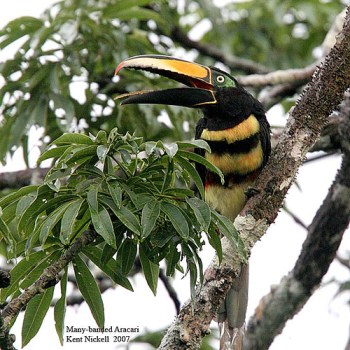
Many-banded Aracari (Pteroglossus pluricinctus) by Kent Nickel

Many-banded Aracari (Pteroglossus pluricinctus) by Kent Nickel

Aracari

An aracari or araçari is any of the medium-sized toucans that, together with the Saffron Toucanet, make up the genus Pteroglossus. They are brightly plumaged and have enormous, contrastingly patterned bills. These birds are residents in forests and woodlands in the Neotropics.

Green Aracari (Pteroglossus viridis)
Lettered Aracari (Pteroglossus inscriptus)
Red-necked Aracari (Pteroglossus bitorquatus)
Ivory-billed Aracari (Pteroglossus azara)
Brown-mandibled Aracari (Pteroglossus mariae)
Black-necked Aracari (Pteroglossus aracari)
Chestnut-eared Aracari (Pteroglossus castanotis)
Many-banded Aracari (Pteroglossus pluricinctus)
Collared Aracari (Pteroglossus torquatus)
Stripe-billed Aracari (Pteroglossus sanguineus)
Pale-mandibled Aracari (Pteroglossus erythropygius)
Fiery-billed Aracari (Pteroglossus frantzii)
Curl-crested Aracari (Pteroglossus beauharnaesii)

Plate-billed Mountain Toucan (Andigena laminirostris) by Michael Woodruff

Plate-billed Mountain Toucan (Andigena laminirostris) by Michael Woodruff

Mountain Toucans 

Andigena, the mountain toucans, is a genus of birds in the Ramphastidae family. They are found in humid highland forests in the Andes of South America, ranging from Bolivia to Venezuela. These medium-sized toucans all have olive-brown upperparts, a black crown, yellow rump, blue-grey underparts and a red vent.

Grey-breasted Mountain Toucan (Andigena hypoglauca)
Plate-billed Mountain Toucan (Andigena laminirostris)
Hooded Mountain Toucan (Andigena cucullata)
Black-billed Mountain Toucan (Andigena nigrirostris)
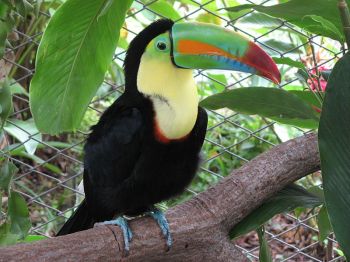
Keel-billed Toucan (Ramphastos sulfuratus) ©WikiC

Keel-billed Toucan (Ramphastos sulfuratus) ©WikiC

Toucans

Ramphastos is a genus of toucans, tropical and subtropical near passerine birds from Mexico, and Central and South America, which are brightly marked and have enormous, often colourful, bills.

This genus comprises the largest toucans, ranging from 17 to 24 in (42 to 61 centimetres) in length. All have black wings, tails and thighs, but the color of the remaining plumage depends on the exact species involved. All the species are basically fruit-eating, but will take insects and other small prey. They are arboreal and nest in tree holes laying 2–4 white eggs. They are essentially resident birds, but may take part in minor, local movements (e.g., to lower altitudes in the winter).

Green-billed Toucan (Ramphastos dicolorus)
Channel-billed Toucan (Ramphastos vitellinus)
Citron-throated Toucan (Ramphastos citreolaemus)
Choco Toucan (Ramphastos brevis)
Keel-billed Toucan (Ramphastos sulfuratus)
Toco Toucan (Ramphastos toco)
White-throated Toucan (Ramphastos tucanus)
Yellow-throated Toucan (Ramphastos ambiguus)

Enjoy the variety of these beautiful birds that have been placed here for their benefit and our enjoyment by their Creator. Clicking the links will reveal some that are at various websites besides the ones here.

And let the beauty of the LORD our God be upon us, And establish the work of our hands for us; Yes, establish the work of our hands. (Psalms 90:17 NKJV)

Splendor and majesty are before him; strength and beauty are in his sanctuary. (Psalms 96:6 ESV)

(Wikipedia and other internet sources)

See Also:

Toucan – Ramphastidae Family

Toucans (Ramphastidae) – IBC

Toucan – Ramphastidae – Wikipedia

  • Genus Aulacorhynchus—green toucanets (6–15 species)
  • Genus Selenidera—dichromatic toucanets (6 species)
  • Genus Andigena—mountain toucans (4 species)
  • Genus Pteroglossus—araçaris (14 species, incl. Saffron Toucanet)
  • Genus Ramphastos—Typical toucans (about 8 species)

Wordless Birds

*

This slideshow requires JavaScript.
“A Cardinal Sits With Me” ~ by Sandra Conner

“A Cardinal Sits With Me” by Sandra Conner (Re-post)

This is a delightful poem by Sandra.

*

A Cardinal Sits With Me

CARDINAL - HOLLINGSWORTH - BFPA Cardinal sits with me at end of day.
It is a bleak, unhappy time,
And I have lost my way.

He seems content to stay a while and rest,
And my front porch is cool with shade,
Sun moving to the west.
To read the rest of A Cardinal Sits With Me.

Fifth Blog Anniversary

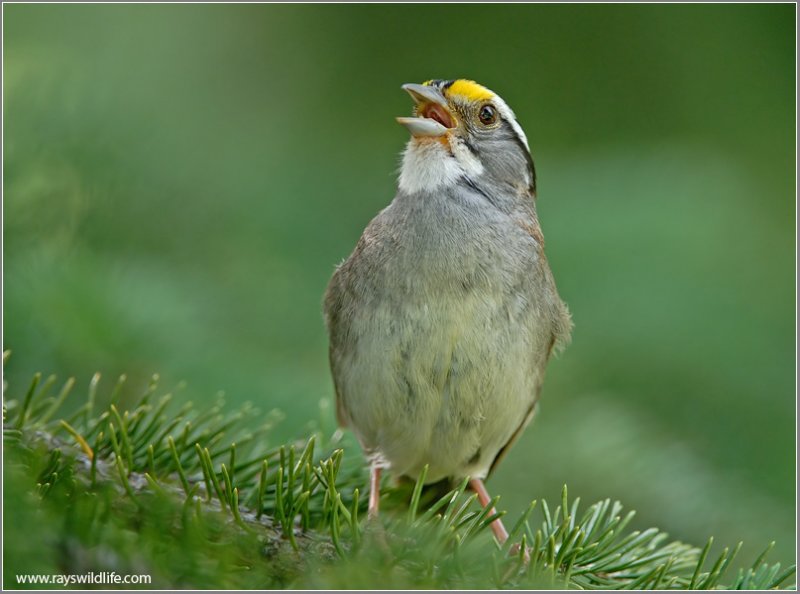
White-throated Sparrow by Ray

White-throated Sparrow by Ray Barlow

“Are not five sparrows sold for two copper coins? And not one of them is forgotten before God. (Luke 12:6 NKJV)

I just realized that this blog, Lee’s Birdwatching Adventures Plus, is now 5 years old. On February 15, 2008 I posted the first article on our church blog, The Fountain. At that time I began my own blog on Blogspot and then moved everything over here to WordPress and have been here since then. It was named Lee’s Birdwatching Adventures (original site) and later added the Plus as more articles about other topics were added.

The Fountain was a printed newsletter produced at church and it eventually became only an online version. It has developed over the years, just as this blog has. Stephen, our Assistant to the Pastor, is the reason that this blog exists. He invited me to write there and the rest is history.

When I brought the blog here, I moved all the originals also and this is that First article, Birds of the Bible Introduction. The One Year AnniversarySecond Anniversary of Blog,

In July of 2009, Ian Montgomery gave permission to reproduce his newsletters and also to use his photos. That started the Ian’s Bird of the Week series. In March of 2010, A J Mithra started doing articles for the blog. Ian is Australian and A J is Indian. We have other guest writers who add articles for the blog also.

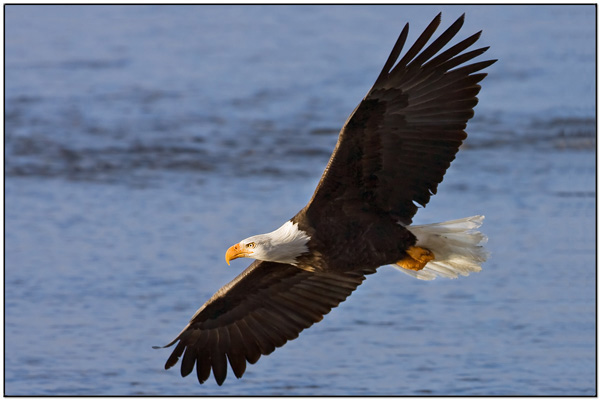
Bald Eagle flying by Dave's BirdingPix

Bald Eagle flying by Dave’s BirdingPix

Is it at your command that the eagle mounts up and makes his nest on high? (Job 39:27 ESV)

The other off-shoot blog:

The Birds of the Bible For Kids was begun in July of 2012 and is still developing. It has already had almost 5,800 views. My hearts desire is to get busy on this and show young people God’s Creative Hand though the Birds of the Bible, but written more to their level. (Update 10/3/14 – Move to Kid’s Section)

The Lord has blessed these sites way beyond what I ever imagined or prayed about when it began. The main site right now has had 868,500 views since moving it in July of 2008. All three of them added together is over a million views. Wow! Praise the Lord!

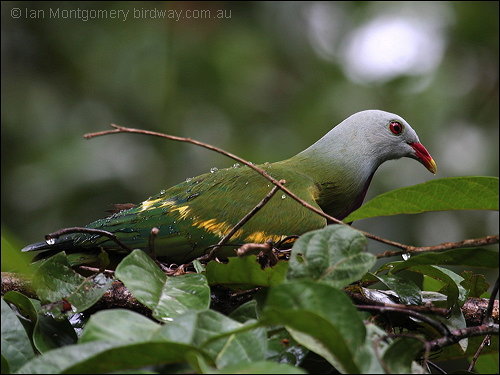
Wompoo Fruit-Dove (Ptilinopus magnificus) by Ian

Wompoo Fruit-Dove (Ptilinopus magnificus) by Ian

Though you lie down among the sheepfolds, You will be like the wings of a dove covered with silver, And her feathers with yellow gold. (Psalms 68:13 NKJV)

What about the future? Lord willing, I hope to keep finding neat things about the birds in the Bible and in the world to write about. Maybe some more writers will contribute to this adventure. Maybe more photographers and videographers will give their permission to use their images of these fantastic birds. (Of course, I really love one of my photographers, my husband, Dan) Only the Lord know the end from the beginning.

Without all of you, who stop by to read these articles and see the amazing birds, it would be useless. Thank you from the bottom of heart and may you receive a blessing from something you see and read.

I am so thankful that He has enabled me to write about His beautiful and delightful avian wonders.

give thanks in all circumstances; for this is the will of God in Christ Jesus for you. (1 Thessalonians 5:18 ESV)

Bible Birds – Swallow Introduction

Red-rumped Swallow (Cecropis daurica) by Nikhil Devasar

Red-rumped Swallow (Cecropis daurica) by Nikhil Devasar

Even the stork in the heavens Knows her appointed times; And the turtledove, the swift, and the swallow Observe the time of their coming. But My people do not know the judgment of the LORD. (Jeremiah 8:7 NKJV)

Previously, we introduced the Thrush and used the above verse. Today, we will look at that same verse, but from a different version of Scripture that translates the bird as a Swallow. Here is the same little Greek study for you: The Greek word (the OT was written mostly in Greek) gives the word (H5693) עגוּר -or – ‛âgûr (aw-goor’) An unused root meaning to twitter; probably the swallow: – swallow. Translations using the word Swallow, have more than one verse that refers to the bird. The New King James Version has these other verses:

Even the sparrow has found a home, And the swallow a nest for herself, Where she may lay her young— Even Your altars, O LORD of hosts, My King and my God. (Psalms 84:3 NKJV) Like a flitting sparrow, like a flying swallow, So a curse without cause shall not alight. (Proverbs 26:2 NKJV) Like a crane or a swallow, so I chattered; I mourned like a dove; My eyes fail from looking upward. O LORD, I am oppressed; Undertake for me! (Isaiah 38:14 NKJV)

So there are at least four verses with the Swallow listed. The Swallows belong to the Hirundinidae – Swallows, martins Family. There are 88 members in the family at present. Many times in the Bible they mention a bird‘s name and then say “after its kind.” For now, let’s just same that it means all of those species in that family. The Swallows also have Saw-wings and Martins in the family. They live on all the continents except Antarctica.

This family is known for their aerial feeding. taking flying insects on the wing. Swallows hunt insects on the wing because they were designed with a slender, streamlined body and long pointed wings, which allow great maneuverability and endurance, as well as frequent periods of gliding. Their body shape allows for very efficient flight, which costs 50-75% less for swallows than equivalent passerines of the same size. Swallows usually forage at around 18.6-25 mph (30–40 km/h), although they are capable of reaching speeds of between 31-40 mph (50–65 km/h) when traveling.

The legs are short, and their feet were created for perching rather than walking, as the front toes are partially joined at the base. Swallows are capable of walking and even running, but they do so with a shuffling, waddling gait. The leg muscles of the river martins (Pseudochelidon) are stronger and more robust than those of other swallows.

The most common plumage is glossy dark blue or green above and plain or streaked underparts, often white or rufous. Species which burrow or live in dry or mountainous areas are often matte brown above (e.g. Sand Martin and Crag Martin). The typical song of swallows is a simple, sometimes musical twittering.

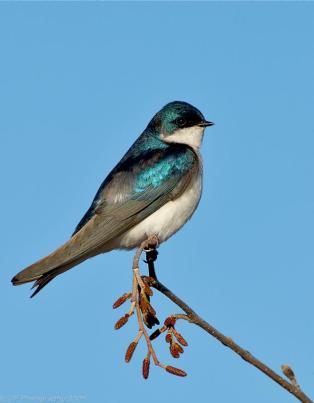
Tree Swallow (Tachycineta bicolor) by J Fenton

Tree Swallow (Tachycineta bicolor) by J Fenton

Our verse above mentions the birds and how they KNOW when it is time to migrate, but what about the end of the verse? The Lord uses birds and other critters as an example, BUT He is mainly trying to teach us something.

Let’s see what some of the different versions say about what we are supposed to learn from these birds.

(HCSB)  ”are aware of their migration, but My people do not know the requirements of the LORD.”

(MSG) …know when it’s time to move south for winter… know when it’s time to come back again. But my people? My people know nothing, not the first thing of GOD and his rule.

(NET) …knows when it is time to move on…recognize the normal times for their migration. But my people pay no attention to what I, the LORD, require of them.

Do you know what the Lord wants you to do? Do you know Him as your Savior? If you do, are you doing what the Bible tells us we should do? Are you obeying your parents? And doing what the Lord wants you to do?.

The Lord loves us, just as your parents do. When you obey them you are happier and blessed. When you do not obey, are you happy or sad? The same is true with obeying the Word that the Lord has given us through His Word, the Bible.

See:

*

Birdwatching – American Coot

Northern Flicker cropped

Northern Flicker at S. Lake Howard by Lee

Dan and I went birdwatching last week at South Lake Howard Nature Park here in Winter Haven. We just stopped by on the way home from an errand. Captured a Northern Flicker with the camera, but the video is of the Coot’s feet. I have trying to get a photo of them because they are so different from other bird’s feet. Their feet are not webbed, but sort of flattened out. We only see them down here in the winter. See the Wikipedia information below. Apparently it helps them walk on the land, but it seems that a soft soil just under the water would be “squishy” and that may help their footing. Isn’t it neat how the Lord, in Him wisdom, provided for them in such a way.

O LORD, how manifold are your works! In wisdom have you made them all; the earth is full of your creatures. (Psalms 104:24 ESV)

The American Coot (Fulica americana) is a bird of the Rallidae – Rails, Crakes & Coots Family. Though commonly mistaken to be ducks, American Coots come from a distinct family. Unlike ducks, Coots have broad lobes of skin that fold back with each step in order to facilitate walking on dry land. They live near water, typically inhabiting wetlands and open water bodies in North America. Groups of these black-feathered, white-billed birds are called covers or rafts. The oldest known Coot lived to be 22 years old.

The American coot is a migratory bird that occupies most of North American. They live in the Southwestern United States, Mexico, and the pacific coast year round, and only occupy the northeastern regions during the summer breeding season. In the winter they can be found as far south as Panama. They generally build floating nests and lay 8-12 eggs per clutch. American coots eat primarily algae and other aquatic plants but they do eat animals (both vertebrates and invertebrates) when available.

Much research has been done on the breeding habits of American Coots. Studies have found that mothers will preferentially feed offspring with the brightest plume feathers, a characteristic known as chick ornaments. American coots are also susceptible to conspecific brood parasitism, and identify which offspring are theirs and which are from parasitic females.

The American Coot measures 13–17 in (34–43 cm) in length and 23–28 in (58–71 cm) across the wings. Adults have a short thick white bill and white frontal shield, which usually has a reddish-brown spot near the top of the bill between the eyes. Males and females look alike, but females are smaller. Juvenile birds have olive-brown crowns and a gray body. They become adult-colored around 4 months of age

The American Coot has a variety of repeated calls and sounds. Male and female Coots make different types of calls to similar situations. Male alarm calls are “puhlk” while female alarm calls are “poonk”. Also, stressed males go “puhk-cowah” or “pow-ur” while females call “cooah”

See the Sounds page of All About Birds for the American Coot.

American Coots are found near water—reed-ringed lakes and ponds, open marshes, and sluggish rivers. They prefer freshwater environments, but may temporarily live in saltwater environments during the winter months.

The American Coot’s breeding habitat extends from marshes in southern Quebec to the Pacific coast of North America and as far south as northern South America. Birds from temperate North America east of the Rocky Mountains migrate to the southern United States and southern British Columbia. It is often a year-round resident where water remains open in winter. The number of birds that stay year-round near the northern limit of the species’ range seems to be increasing.

Autumn migration occurs from August to December, with males and non-breeders moving south before the females and juveniles. Spring migration to breeding ranges occurs from large February to mid-May, with males and older birds moving North first. There has been evidence of birds travelling as far north as Greenland and Iceland. It is a rare but regular vagrant to Europe. The American Coot is a highly gregarious species, particularly in the winter, when its flocks can number in the thousands. The picture below is just of one group of hundreds at Viera Wetlands that day (2012)

American Coot (Fulica americana) at Viera Wetlands by Lee

American Coot (Fulica americana) at Viera Wetlands by Lee

The American Coot can dive for food but can also forage and scavenge on land. It is omnivorous, eating plant material, arthropods, fish, and other aquatic animals. Its principal source of food is aquatic vegetation, especially algae. During breeding season, Coots are more likely to eat aquatic insects and mollusks—which constitute the majority of a chick’s diet.

The American Coot is a prolific builder and will create multiple structures during a single breeding season. It nests in well-concealed locations in tall reeds. There are three general types of structures: display platforms, egg nests and brood nests. Egg nests are typically 12 inches in diameter with a 12-15 inch ramp that allows the parents to enter and exit without tearing the sides of the nests. Coots will often build multiple egg nests before selecting one to lay their eggs in. Brood nests are nests that are either newly constructed or have simply been converted from old egg nests after the eggs hatch. They are simply larger egg nests. Egg and brood nests are actually elaborate rafts, and must be constantly added to in order to stay afloat. Females typically do the most work while building.

Females deposit one egg a day until the clutch is complete. Eggs are usually deposited between sunset and midnight. Typically, early season and first clutches average two more eggs than second nesting and late season clutches. Early season nests see an average of 9.0 eggs per clutch while late clutches see an average of 6.4 eggs per clutch. There is an inverse relationship between egg weights and laying sequence, wherein earlier eggs are larger than eggs laid later in the sequence. It is possible to induce a female Coot to lay more eggs than normal by either removing all or part of her clutch. Sometimes, a female may abandon the clutch if enough eggs are removed. Coots, however, do not respond to experimental addition of eggs by laying fewer eggs.

Incubation start time in the American Coot is variable, and can begin anywhere from the deposition of the first egg to after the clutch is fully deposited. Starting incubation before the entire clutch has been laid is an uncommon practice among birds. Once incubation starts it continues without interruption. Male and female Coots share incubation responsibility, but males do most of the work during the 21-day incubation period. Females will begin to re-nest clutches in an average of six days if clutches are destroyed during incubation.

Hatch order usually follows the same sequence as laying order. Regardless of clutch size, eight is the typical maximum size of a brood. Egg desertion is a frequent occurrence among Coots because females will often deposit more than eight eggs. Brood size limits incubation time, and when a certain number of chicks have hatched the remaining eggs are abandoned. The mechanism for egg abandonment has not yet been discovered. Food resource constraints may limit the number of eggs parents let hatch, or the remaining eggs may not provide enough visual or tactile stimulation to elicit incubation behavior. An American Coot can be forced to hatch more eggs than are normally laid. These additional offspring, however, suffer higher mortality rates due to inadequacy in brooding or feeding ability.

American Coot (Fulica americana) by Lee at Lk Morton

American Coot (Fulica americana) by Lee at Lk Morton

The American Coot, unlike other parasitized species, has the ability to recognize and reject conspecific parasitic chicks from their brood. Parents aggressively reject parasite chicks by pecking them vigorously, drowning them, preventing them from entering the nest, etc. They learn to recognize their own chicks by imprinting on cues from the first chick that hatches. The first-hatched chick is a reference to which parents discriminate between later-hatched chicks. Chicks that do not match the imprinted cues are then recognized as parasite chicks and are rejected.

Chick recognition reduces the costs associated with parasitism, and Coots are one of only three bird species in which this behavior has been observed. This is because hatching order is predictable in parasitized Coots—host eggs will reliably hatch before parasite eggs. In other species where hatching order is not as reliable, there is a risk of misimprinting on a parasite chick first and then rejecting their own chicks. In these species, the cost of accidentally misimprinting is greater than the benefits of rejecting parasite chicks.

The first evidence for parental selection of exaggerated, ornamental traits in offspring was found in American Coots. Black American Coot chicks have conspicuously orange-tipped ornamental plumes covering the front half of their body that are known as “chick ornaments” that eventually get bleached out after six days. This brightly colored, exaggerated trait makes Coot chicks more susceptible to predation and does not aid in thermoregulation, but remains selected for by parental choice. These plumes are not necessary for chick viability, but increased chick ornamentation increases the likelihood that a chick will be chosen as a favorite by the parents. Experimental manipulation of chick ornamentation by clipping the bright plumes have shown that parents show clear preferences for ornamented chicks over non-ornamented ones.

The American Coot is fairly aggressive in defense of its eggs and, in combination with their protected nesting habitat, undoubtedly helps reduce losses of eggs and young to all but the most determined and effective predators. American Crows, Black-billed Magpies and Forster’s Tern can sometime take eggs. Mammalian predators (including red foxes, coyotes, skunks and raccoons) are even less likely to predate coot nests, though nests are regularly destroyed in usurpation by muskrats. Conversely, the bold behavior of immature and adult coots leads to them falling prey with relative regularity once out of the breeding season. Regular, non-nesting-season predators include Great Horned Owls, Northern Harriers, Bald Eagles, Golden Eagles, American alligators, bobcats, Great Black-backed and California Gulls. In fact, Coots may locally comprise more than 80% of the Bald Eagle diet.

In culture – On the Louisiana coast, the Cajun word for coot is pouldeau, from French for “coot”, poule d’eau – literally “water hen”. Coot can be used for cooking; it is somewhat popular in Cajun cuisine, for instance as an ingredient for gumbos cooked at home by duck hunters.

(From Wikipedia and All About Birds with editing)

See also:

Birdwatching Trips

Rallidae – Rails, Crakes & Coots Family

American Coot – What Bird

American Coot – All About Birds

American Coot – Wikipedia

Birds of the World

*

Bible Birds – Cranes I

Sarus Crane (Grus antigone) by Lee at Wings of Asia

Sarus Crane (Grus antigone) by Lee at Wings of Asia

The 15 species of Cranes worldwide are: Black Crowned, Black-necked, Brolga, Demoiselle, Eurasian, Grey Crowned, Hooded, Red-Crowned, Sandhill, Sarus(tallest flying bird-6’ tall), Siberian, Wattled, White-naped, and the Whooping Crane (tallest N. American flying bird-5’ tall). The Cranes belong to the Gruidae – Cranes Family.

Cranes are tall birds from 3 to 6 feet tall, with wingspans over 6 feet. The tallest Crane is the Sarus and the shortest is the Demoiselle. They fly with their neck straight out and their long legs trailing. They chatter and call when flying. We have plenty of Sandhill Cranes here in Central Florida walking around the neighborhoods. They seem pretty tame sometimes and will eat out of your hand. They were bringing a small flock of Whooping Cranes to Florida every fall that followed an Ultra Light Aircraft from Wisconsin. We have a few non-migratory Whooping Cranes in the area that I have seen in a cow field off US 27.

Sandhill Cranes and Babies in yard

Sandhill Cranes and Babies in yard

There are only two verses in the Bible that mention the Crane.

Cranes migrate by following known paths taught them by their parents, or substitutes. Migrating birds know when and where to go and when to come. When God created them, He put that information in them.

Like a crane or a swallow, so did I chatter: I did mourn as a dove: mine eyes fail with looking upward: O LORD, I am oppressed; undertake for me. (Isaiah 38:14 KJV)

“So did I chatter – … The idea here is doubtless that of pain that was expressed in sounds resembling that made by birds – a broken, unmeaning unintelligible sighing; or quick breathing, and moaning. ” Barnes Commentary

Yea, the stork in the heaven knoweth her appointed times; and the turtle and the crane and the swallow observe the time of their coming; but my people know not the judgment of the LORD. (Jeremiah 8:7 KJV)

“The instinct of the migratory birds leads them with unfailing regularity to return every spring from their winter abodes in summer climes (Song of Solomon 2:12); but God’s people will not return to Him even when the winter of His wrath is past, and He invites them back to the spring of His favor.” Jameison, Faussett, and Brown Commentary

As you watch the following video notice that the two Bible verses are being demonstrated. Notice the chattering as they fly about and also that they are heading out for their migration to warmer climates. Migration means travel to another area. Usually here in America, the birds go south in the winter and then return north in the spring as it warms back up. This is God’s way of protecting birds that cannot survive in the cold.

Sandhill Cranes(grey) at the Plate River and some Whooping Cranes (white)

See:

On Our Main Site See:

*