Busy Hummingbirds, Oblivious to Spectators

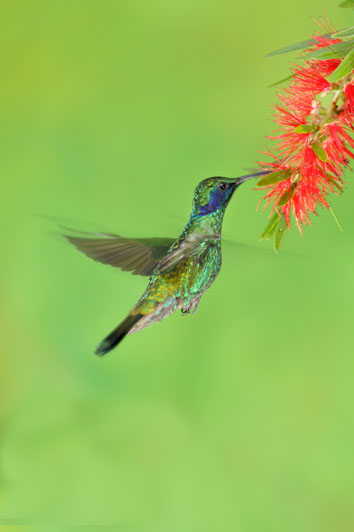
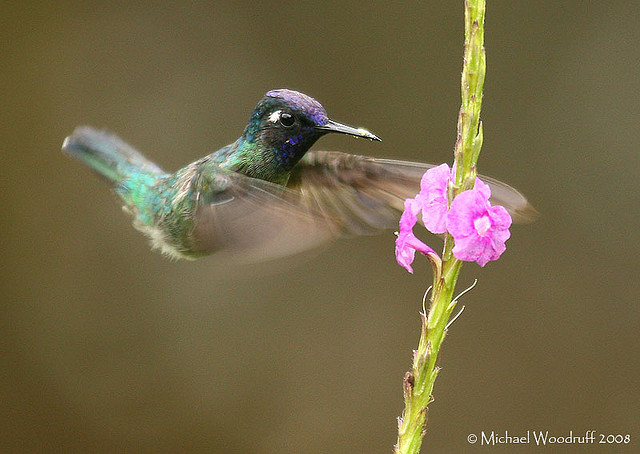
Violet-headed Hummingbird (Klais guimeti) by Michael Woodruff

Violet-headed Hummingbird (Klais guimeti) by Michael Woodruff

Busy Hummingbirds, Oblivious to Spectators

“Let your light so shine before men, that they may see your good works, and glorify your Father Who is in heaven.” (Matthew 5:16)

Luzon Bleeding-heart by Dan

Orni-Theology

As the cooling days of September fall from the calendar, like the abscission of colorful autumn leaves, the shelf-life of flower nectar nears its expiry date.  For just a few more days, the nectar pantries of bright-hued flowers are “open for business”, ready to feed the voracious appetites of neighborhood hummingbirds  —  those petite, iridescence-sparkled, blurry-winged wonders with super-sized metabolic fuel needs.  Floral nectar is a sweet resource!  Yet, as winter approaches, such fly-by “fast-food” opportunities cannot be taken for granted, especially if one is an energy-craving hummingbird.

Steely-vented Hummingbird by Wildstock Photos

Steely-vented Hummingbird by Wildstock Photos

Hummingbirds are famous for their (males’) jewel-like throats, their hovering and multi-directional flying, and their ability to change directions   —  stop, go, up, down, left, right, backward, forward, — using high-speed wings that whip figure-eight patterns faster than human eyes can follow, producing a humming sound (that explains their name) that almost sounds like a contented cat purring.   Hummingbirds, due to their speedy, darting movements, and their iridescent green colors, attract the eye.  So you see them  –  zip!  –  then you don’t.  Zip!  –  then you see them again.   The summer range of hummingbirds (such as the Ruby-throated Hummingbird, Archilochus colubris) is broad enough that most of us have seen hummingbirds, though it is unlikely that we ever see one relaxing!  No time to relax  —  their needle-like bills must sip up nectar where and when it is available!
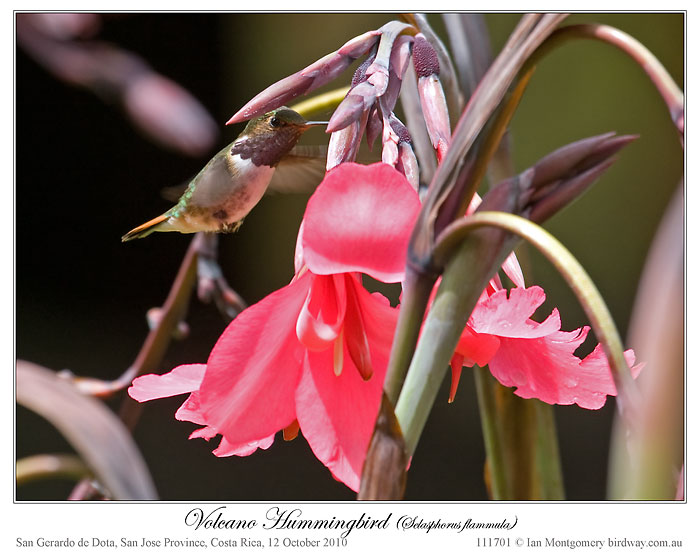
Volcano Hummingbird (Selasphorus flammula) by Ian

Volcano Hummingbird (Selasphorus flammula) by Ian

The business of a hummingbird’s life is so intense, so metabolically demanding, that slurping up available nectar is a lifestyle priority, requiring dietary focus and persistence:  “Get nectar, get more nectar, get even more nectar!  Hurry, hurry, hurry!”  Sugar substitutes are unacceptable for hummingbirds – they must have real sugar to thrive.  See Elizabeth Mitchell, Our Creator’s Sweet Design for Hummingbird Taste, with a link (in its Footnote #1) to video footage of hummingbird sugar consumption.  (Obviously hummingbirds are a living exhibit that refutes “natural selection” mythology  —  see Frank Sherwin, Hummingbirds at ICR”, Acts & Facts, 35(9), September 2006 issue.

What an enormous appetite for such a miniature bird!  The calories consumed and burned by hummingbirds, on a boy weight ratio, are comparable to a human eating more than a 1000 hamburgers every day, as body fuel needed for a day’s normal activities!  (See Denis Dreves, The Hummingbird:  God’s Tiny Miracle, subtitled “If you operated at this bird’s energy level, you would burst into flames!”.

It is no surprise, therefore, that a hungry hummingbird hovered by brilliant vermillion flowers, in a garden spot I casually visited, as he (or she) slurped up nectar from one flower, then another flower, then another, — without any (apparent) concern for my physical presence or proximity, only a few steps from him (or her).  Why was the buzzing hummer oblivious of me, the birdwatcher so close by?

The hungry hummer was too preoccupied with the pressing business of life, to notice me, a quiet spectator.  What a privilege it was, to watch – for a long time, actually – this sparkling-in-the-sunlight hummingbird, darting among the bright flowers.
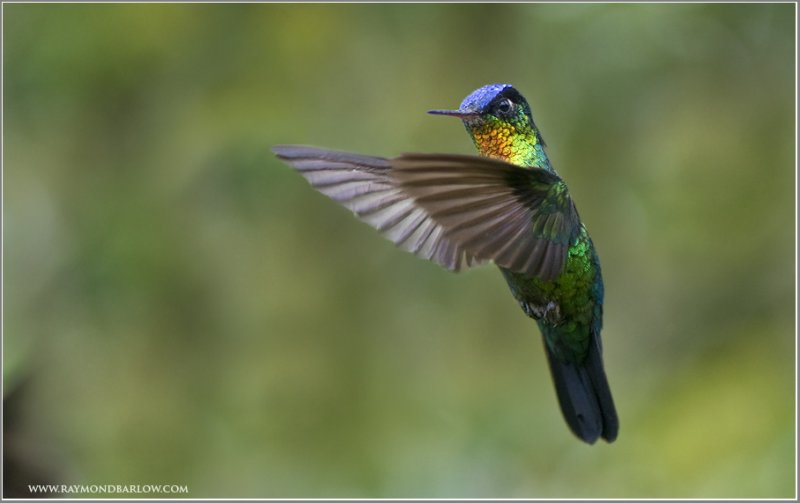
Fiery-throated Hummingbird (Panterpe insignis) by Raymond Barlow

Fiery-throated Hummingbird (Panterpe insignis) by Raymond Barlow

Yet are not our own lives, at least somewhat, like that busy hummingbird?  Are we not – day by day, hour by hour, minute by minute, moment by moment – preoccupied with the ever-pressing business of life, darting here-and-there, from this task to the next one, such that we often ignore the spectators, those watching eyes who observe and appreciate our lives – those who (hopefully) see God’s beauty and wisdom imaged in our own attitudes and actions?

Yes, we have audiences we should not be oblivious of.  As we live the moments of our fast-paced lives we should not forget three audiences, who watch us much more than we consciously realize.

First, there are many curious humans who watch our busy lives, especially those who are younger than us.  What kind of role-models are we?  Hopefully our Christian lives are like the Thessalonian believers whom Paul commended as examples to all of the believers in Macedonia and Greece (1st Thessalonians 1:7).  Who is watching us? Who is listening?  Who is evaluating the message(s) of our lives, comparing our “walk” to our “talk”?  Do our lives “shine” as God’s testifying “lights” (Matthew 5:16), such that our good deeds prompt spectators to glorify God our Heavenly Father?

Black-chinnedHummingbird (Archilochus alexandri) by S Slayton

Black-chinnedHummingbird (Archilochus alexandri) by S Slayton

Second, there are non-human spectators watching our lives:  angels!   Angels learn from watching the “spectacle” of human lives (1st Corinthians 4:9 & 11:10).  Indeed, the effect of God’s gospel of grace, in the earthly lives of redeemed humans, is something that angels can only learn about as spectators (1st Peter 1:12, since redemption is never experienced by angels.

Yet the most important audience we have, always, is the Lord Himself  (Jehovah-jireh, the God Who is and sees).  Our primary audience, always, is our omniscient and omnipresent Creator-God.  It is our wonderful Maker Who watches every sparrow’s avian lifespan, and we are of much greater value to God than the lives of many sparrows (Matthew 10:29-31; Luke 12:7).  As the Lord Jesus Christ’s vicarious death and resurrection has peremptorily proved, for all time and eternity, we are God’s favorite creatures.  God is caringly concerned with every detail of our busy lives (from creation to ultimate redemption), so let us not be oblivious to our most important Audience.  Do we live our earthly lives as ingrates, ignoring Him and His Word?  Or do we live life appreciative of Him and His Word, grateful that He created us and provided us with redemption in Christ?

Accordingly, with these three audiences in mind, as spectators of our busy lives, let us consider the prophet Ezekiel’s serious question (Ezekiel 33:10):  “how should we then live?”

By James J. S. Johnson

*

More Orni-Theology

Changed From the Inside Out

*
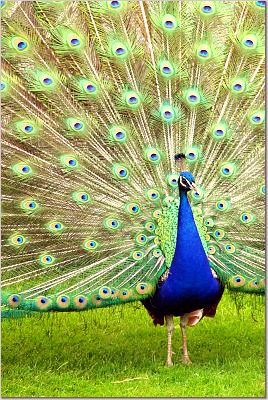
 

Peacock Tail Feathers Don’t Drag Them Down

Peacock

Peacock

Here is an interesting article from Answers in Genesis about whether the –

Peacock Tail Feathers Don’t Drag Them Down
Dr. Elizabeth Mitchell on October 2, 2014

The article is somewhat technical, but very interesting.

I like her closing thoughts, “God created all kinds of animals, plants, and the first two human beings in the space of just six days, about 6,000 years ago. They have for about 6,000 years varied and reproduced only within their created kinds, as we infer from Genesis chapter one He designed them to do. Protolife-to-peacock evolution cannot explain the beauty of the peacock’s feathers or its aerodynamic qualities, but what we read in the history book of all life—God’s Word—explains what we see in God’s world.

Of course we still don’t know why God designed such an over-the-top artistic wonder as the peacock. Perhaps He simply wanted His people to know that He is not only a great engineer but also to demonstrate that the Creator Himself appreciates beauty and wants us to do the same, admiring the handiwork of our God.”

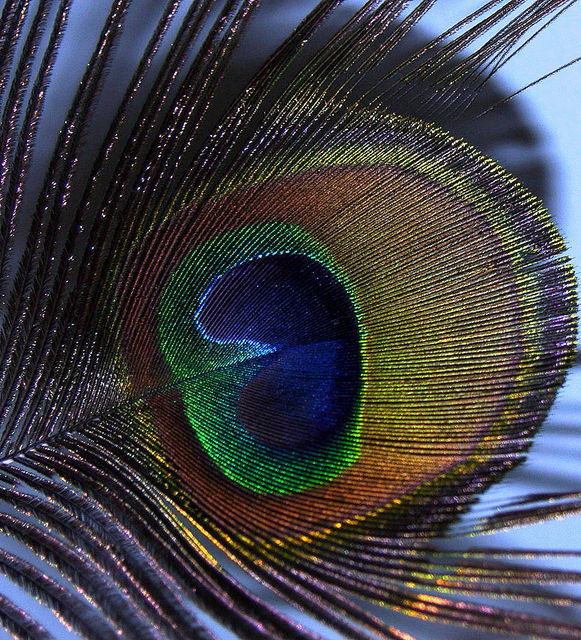
Peacock Feather

Peacock Feather

Gavest thou the goodly wings unto the peacocks? or wings and feathers unto the ostrich? (Job 39:13 KJV)

*
Answers in Genesis

Birds of the Bible – Peacocks

Bible Birds – Peacocks

*
Sunday Inspiration – I’ll Be A Friend

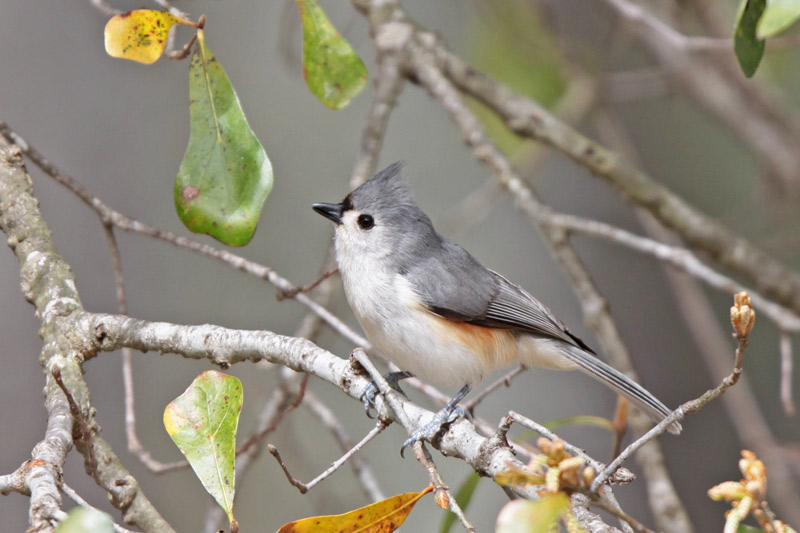
Tufted Titmouse (Baeolophus bicolor) by Margaret Sloan

Tufted Titmouse (Baeolophus bicolor) by Margaret Sloan

But I have trusted in thy mercy; my heart shall rejoice in thy salvation. I will sing unto the LORD, because he hath dealt bountifully with me. (Psalms 13:5-6 KJV)

The birds trust the Lord because they know He provides for them. We can have Jesus as a Friend that is even closer and provides our needs, especially Salvation.

****

This slideshow requires JavaScript.

“I’ll Be A Friend To Jesus” – Faith Baptist Quartet 2011

  1. They tried my Lord and Master,
    With no one to defend;
    Within the halls of Pilate
    He stood without a friend.

    • Refrain:
      I’ll be a friend to Jesus,
      My life for Him I’ll spend;
      I’ll be a friend to Jesus,
      Until my years shall end.
  2. The world may turn against Him,
    I’ll love Him to the end,
    And while on earth I’m living,
    My Lord shall have a friend.
  3. I’ll do what He may bid me;
    I’ll go where He may send;
    I’ll try each flying moment
    To prove that I’m His friend.
  4. To all who need a Savior,
    My Friend I’ll recommend;
    Because He brought salvation,
    Is why I am His friend.

May you enjoy your day, rejoicing in the Lord’s Great Salvation, and His beautiful birds He has created for His pleasure and our enjoyment.

If you haven’t received his salvation, remember:

John 3:14-19 KJV
(14) And as Moses lifted up the serpent in the wilderness, even so must the Son of man be lifted up:
(15) That whosoever believeth in him should not perish, but have eternal life.
(16) For God so loved the world, that he gave his only begotten Son, that whosoever believeth in him should not perish, but have everlasting life.
(17) For God sent not his Son into the world to condemn the world; but that the world through him might be saved.
(18) He that believeth on him is not condemned: but he that believeth not is condemned already, because he hath not believed in the name of the only begotten Son of God.
(19) And this is the condemnation, that light is come into the world, and men loved darkness rather than light, because their deeds were evil.

Gospel Message

More Sunday Inspirations

*


Pelican Learns to Fly – YouTube

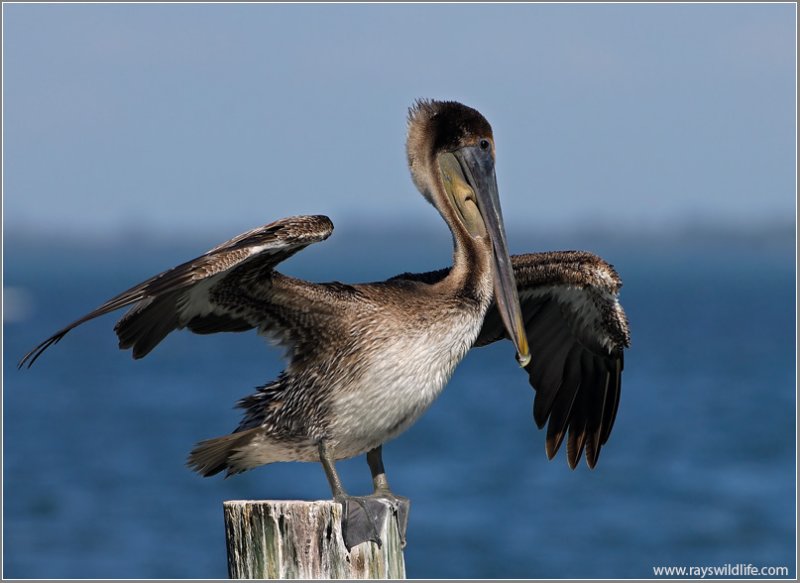
Brown Pelican (Pelecanus occidentalis) by Ray

Brown Pelican (Pelecanus occidentalis) by Ray

What an interesting video. Just had to share it.

I am like a pelican of the wilderness; I am like an owl of the desert. (Psalms 102:6 NKJV)

They are mentioned 3 times in Scripture. Isaiah 34:11 and Zephaniah 2:14 and the previous verse.

*

*

“Abandoned by his flock, Bigbird the pelican stumbled ashore after a storm and was taken in by the staff of Greystoke Mahale in Tanzania. Watch as Bigbird learns to fly for the first time.”

*

Bible Birds – Pelicans

*

(Found on Kid’s blog)

*

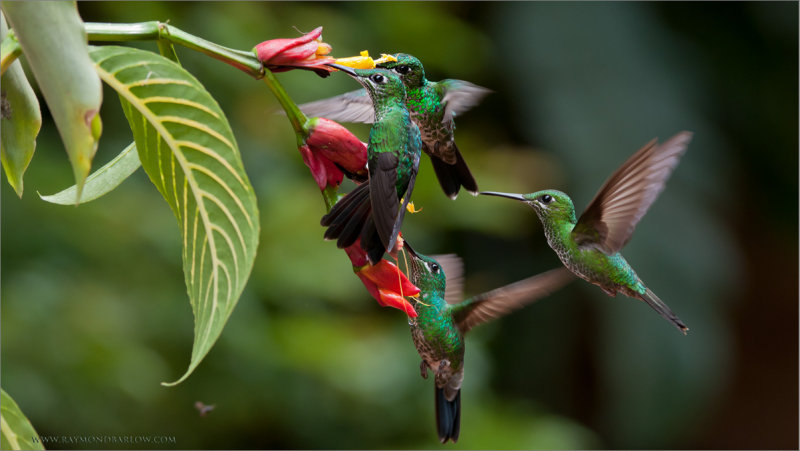
Green-crowned Brilliant (Heliodoxa jacula) ~ by Raymond Barlow

Green-crowned Brilliant (Heliodoxa jacula) by Raymond Barlow

Green-crowned Brilliant (Heliodoxa jacula) by Raymond Barlow


That I may publish with the voice of thanksgiving, and tell of all thy wondrous works. (Psalms 26:7 KJV)

Just wanted to share a really neat photo that Ray shared on his Facebook page. He is one of the first photographers that gave permission to use his photos.

Ray took this on one of his trips to Costa Rica. This is from his page:

2 Green-crowned Brilliant Hummingbirds sort out their problems in front of my guests during a photo-shoot in Costa Rica. Looks like mother and daughter here, we all wonder why nature needs to be so confrontational! (more with hummingbirds than any other of our planets species!)

I think the word “Mine” explains things.. :))

Special thanks to everyone for viewing my images!!

It is always so amazing to view more of the Lord’s Creation. He has also given Ray a great talent. Thanks, Ray.

Here’s another of those beautiful hummers.

Green-crowned Brilliant (Heliodoxa jacula) Females Feeding by Raymond Barlow

Green-crowned Brilliant (Heliodoxa jacula) Females Feeding by Raymond Barlow

*

Found this on the Kid’s Blog – I’m still kicking up dust. I have less than 80 of the 412 articles left to relocate over here. Already finished the 51 pages. Then I can start fixing some of the problems I have caused here on this blog.. :))
See:

*

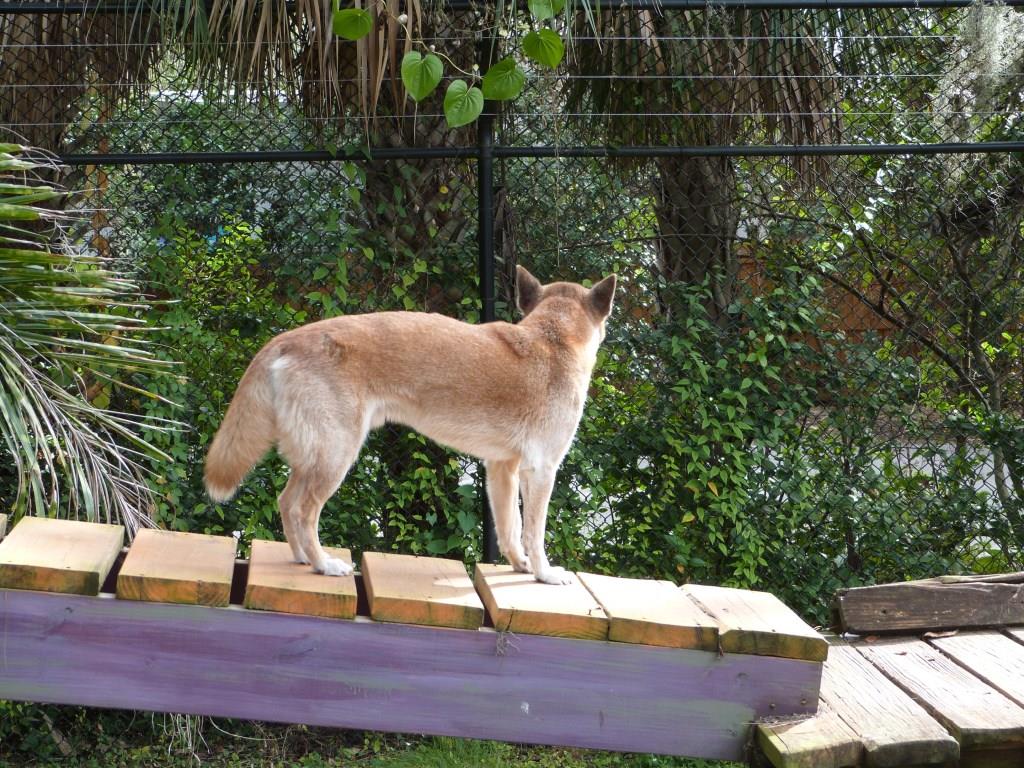
Singing Dogs at Lowry Park Zoo

Singing Dogs at Lowry Pk Zoo

Singing Dog at Lowry Pk Zoo

Serve the LORD with gladness: come before his presence with singing. (Psalms 100:2 KJV)

On one of our trips to the Lowry Park Zoo in Tampa, FL, the New Guinea Singing Dogs were enjoying themselves with a duet.

Here is the video of them chorus howling.


The whole earth is at rest, and is quiet: they break forth into singing. (Isaiah 14:7 KJV)

The dogs were mentioned in Bali Myna and Singing Dogs. It also contains a video taken that day.

The New Guinea singing dog (also known as the New Guinea dingo, Hallstrom dog, bush dingo, New Guinea wild dog, and singer) is a wild dog once found throughout New Guinea. New Guinea singing dogs are named for their unique vocalization. Little is known about New Guinea singing dogs in their native habitat. There are only two confirmed photographs of wild singing dogs. Current genetic research indicates that the ancestors of New Guinea dingoes were probably taken overland through present day China to New Guinea by travelers

Compared to other species in its genus, the New Guinea singing dog is described as relatively short-legged and broad-headed. These dogs have an average shoulder height of 12–18 in (31–46 centimetres) and weigh 20–31 lb (9–14 kilograms). They do not have rear dewclaws.

Singing Dog Sign LPZ by Lee

Singing Dog Sign LPZ by Lee

The limbs and spine of Singers are very flexible, and they can spread their legs sideways to 90°, comparable to the Norwegian Lundehund. They can also rotate their front and hind paws more than domestic dogs, which enables them to climb trees with thick bark or branches that can be reached from the ground; however their climbing skills do not reach the same level as those of the gray fox.

The eyes, which are highly reflective, are almond-shaped and are angled upwards from the inner to outer corners with dark eye rims. Eye color ranges from dark amber to dark-brown. Their eyes exhibit a bright green glow when lights are shown in at them in low light conditions. These two features allow singing dogs to see more clearly in low light, a trait which is unusual in canids.

New Guinea singing dogs have erect, pointed, fur-lined ears. As with other wild dogs, the ‘ears’ perk or lay forward, which is suspected to be an important survival features for the species. The ears can be rotated like a directional receiver to pick up faint sounds. Singer tails should be bushy, long enough to reach the hock, free of kinks, and have a white tip.

Singing Dogs at Lowry Pk Zoo

Singing Dog at Lowry Pk Zoo

New Guinea singing dogs are named for their distinctive and melodious howl, which is characterized by a sharp increase in pitch at the start and very high frequencies at the end. According to observations the howling of these dogs can be clearly differentiated from that of Australian dingoes, and differs significantly from that of grey wolves and coyotes.

An individual howl lasts an average of 3 seconds, but can last as long as 5 seconds. At the start, the frequency rises and stabilizes for the rest of the howling, but normally shows abrupt changes in frequency.

New Guinea singing dogs sometimes howl together, which is commonly referred to as chorus howling. During chorus howling, one dog starts and others join in shortly afterward. In most cases, chorus howling is well synchronized, and the howls of the group end nearly simultaneously. Spontaneous howling is most common during the morning and evening hours. When they are kept with dogs that bark, Singers may mimic the other dogs. (Wikipedia with editing)

Do you sing?

Speaking to yourselves in psalms and hymns and spiritual songs, singing and making melody in your heart to the Lord; (Ephesians 5:19 KJV)

*

See:

Birds Of The Bible – Joy And Laughter

Bali Myna at Lowry Park and Palm Beach Zoos

(Found this on the Kid’s Blog, never posted here.)

*

The Double Life of the Hummingbird ~ Creation Moments

GreenVioletear (Colibri thalassinus) Reinier Munguia

Green Violetear (Colibri thalassinus) Reinier Munguia

The Double Life of the Hummingbird ~ ©Creation Moments 2014

“I will both lay me down in peace, and sleep: for thou, LORD, only makest me dwell in safety.” Psalm 4:8

You might guess that the hummingbird, darting around from flower to flower with wings beating some 60 times a second, must burn a lot of energy to keep going. If a 65-pound boy burned up energy at the same rate, he would eat 100 pounds of chicken every day. The fact is, the hummingbird will die if it goes for more Green Violetear hummingbird than two hours without eating. You might wonder, if the hummingbird cannot go more than two hours without eating, when does it sleep? The fact is, the hummingbird does sleep a good eight hours every night. How does he do it?

God has given the hummingbird a most remarkable metabolism. During the day, the hummingbird’s heart must beat 10 times every second as it keeps its incredibly fast metabolism going. But when it goes to sleep, the hummingbird’s heart slows down to less than one beat per second – about the same as ours. And to further slow his metabolism, the hummingbird’s normal daytime temperature drops from 100 (F) degrees to the same temperature as the night air – 50 or 60 degrees. This drop in temperature would kill most warm-blooded animals. But all of this enables the hummingbird to go without food for a good eight-hour sleep.

The hummingbird provides more than enough evidence that the Creator really does care for His creatures, even when they are asleep.

Prayer:
Dear Father, I thank You that You care for me even when I am asleep and cannot protect myself. Comfort me with this truth, especially when I am fearful of the night. In Jesus’ Name. Amen.

Notes:
Bob Devine, Uncle Bob’s Animal Stories (Moody Press, Chicago, IL, 1986), pp. 38-39. Photo: Green Violetear hummingbird. Courtesy of Mdf. Licensed under the Creative Commons Attribution-Share Alike 3.0 Unported license. Creation Moments ©(Used with permission)

Vervain Hummingbird (Mellisuga minima) WikiC

Vervain Hummingbird (Mellisuga minima) WikiC

I always enjoy the articles from Creation Moments, especially the ones about our avian friends. Our Creator is definitely Omniscient (all-knowing). Such wisdom He used in providing for the various needs of the birds.

The Hummingbirds belong to the Trochilidae – Hummingbird Family.

Creation Moments

More Interesting Things from Creation Moments

*


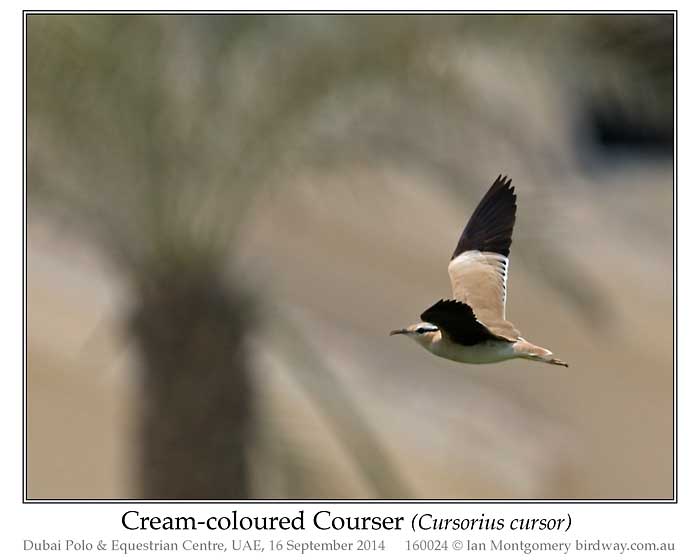
Ian’s Bird of the Week – Cream-coloured Courser

Ian’s Bird of the Week – Cream-coloured Courser ~ by Ian Montgomery

Newsletter – 9/27/14

A couple of weeks ago, I said that my two target birds in Dubai were Crab Plover – which featured last week – and Cream-coloured Courser. The latter had aroused my curiosity 50 years ago when I saw it on this page of the Field Guide to Birds of Britain and Europe. Tommy Pedersen (http://www.uaebirding.com) had said that the Coursers were “possible”, so there were no guarantees.

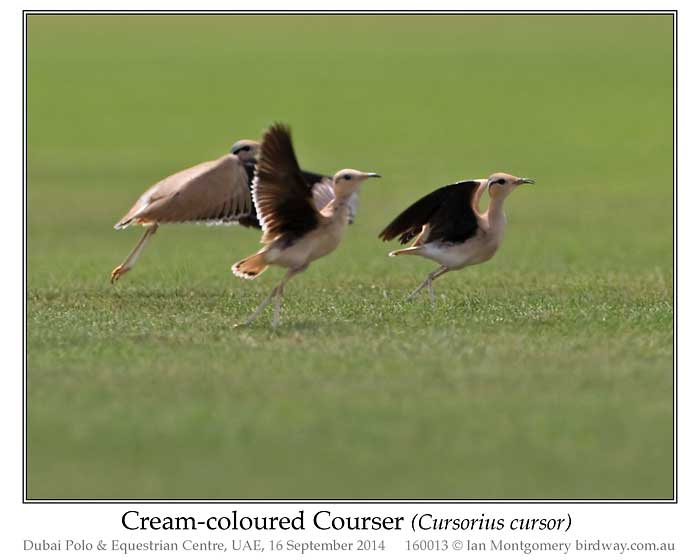
Cream-colored Courser (Cursorius cursor) by Ian

Cream-colored Courser (Cursorius cursor) by Ian

When we set off with Tommy, we had a few hours to fill in before the tide was optimal for the Crab Plovers, so we went first to the Dubai Polo and Equestrian Centre, then to the Al Asifa Endurance Stables to look for the Coursers. They were present at both, with over 30 at the Polo Centre and another 16 at the Stables. In fact, the first photo I took in Dubai was of a very distant Courser.

Cream-colored Courser (Cursorius cursor) by Ian

They were worth waiting 50 years for, and I think the illustration in the field guide didn’t do them justice. They’re called Coursers because they run rather than fly, second photo, the name being derived from the Latin verb currere, to run, and the generic name Cursorius means runner. The ‘sport’ of coursing – chasing hares, etc., on horse-back is derived from the same source, so there was a delightful irony in finding them at the two main equestrian locations in Dubai.​

Cream-colored Courser (Cursorius cursor) by Ian

When pressed they do take flight, third photo. In doing so, they show their striking dark wing tips and underwings and reveal similarity to pratincoles, the other members of the family Glareolidae. There is a photo of an Australian Pratincole in flight here if you want to compare them. The three taking off in the third photo seemed to be a family party as the bird in the centre is immature with patchy brown markings on the neck and only very pale stripes through the eye.

Cream-colored Courser (Cursorius cursor) by Ian

​Their preferred habitat is desert and semi-desert with or without sparse vegetation. Their breeding range includes much of North Africa and the Middle East. Many North African birds migrate across the Sahari to winter in the southern Sahara and at least part of the Middle East population migrates to Pakistan and NW India. They feed on insects and other invertebrates on the ground and will take locusts in flight. I couldn’t help but be struck by their resemblance both in colour and habitat to the Inland Dotterel of central Australia.

Cream-colored Courser (Cursorius cursor) by Ian

As promised a couple of weeks ago, I’ve started putting together a page on electronic books to provide assistance in choosing among different platforms. So far, I’ve finished the General Introduction. I still need to add more details on the actual process of purchasing ebooks from different vendors​ and I’ll let you know when that is available.

I’m still in Ireland. So far, I’ve been mainly catching up with family and friends. Next Tuesday we are going looking for Red Kites in Avoca, Co. Wicklow, so keep your fingers crossed for some photos! The Red Kite is one of the more successful Irish raptor reintroduction programs and there are now breeding populations in both the Republic, mainly Co. Wicklow south of Dublin, and in Co. Down in Northern Ireland. I do have a photo of one taken in Spain – but it would be good to get some genuine Irish ones, the real McCoy.

Greetings
Ian


Lee’s Addition:

He asked for water, she gave milk; She brought out cream in a lordly bowl. (Judges 5:25 NKJV)
He will not see the streams, The rivers flowing with honey and cream. (Job 20:17 NKJV)
When my steps were bathed with cream, And the rock poured out rivers of oil for me! (Job 29:6 NKJV)

Wow! I really like that color. It seems so rich. There are such neat birds in the Glareolidae family anyway. That last photo of the bird in flight looks like the Lord dipped its wings in paint. I am glad Ian was able to get these new photos and shared them with us.

Coloured or Colored? Again we have a difference in spelling. Ian uses one naming authority and here we use the I.O.C.’s naming. Same bird, same scientific name – Cursorius cursor. And the same beautiful bird from its Creator.

*

Ian’s Bird of the Week

Ian’s Glareolidae Family

Glareolidae – Coursers, Pratincoles

*

Sunday Inspiration – Creation

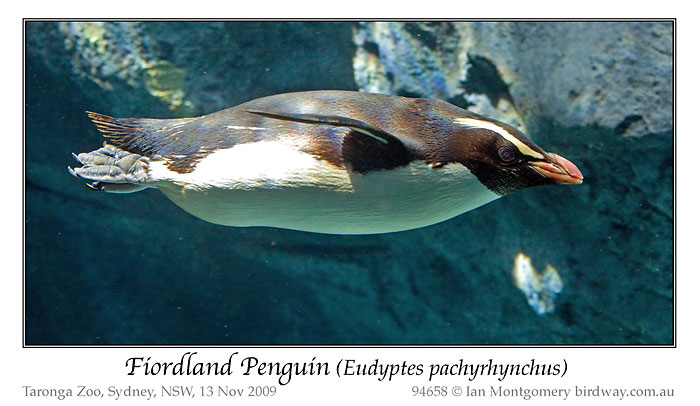
Fiordland Penguin (Eudyptes pachyrhynchus) by Ian

In the beginning God created the heaven and the earth. (Genesis 1:1 KJV)

Through faith we understand that the worlds were framed by the word of God, so that things which are seen were not made of things which do appear. (Hebrews 11:3 KJV)

For by him were all things created, that are in heaven, and that are in earth, visible and invisible, whether they be thrones, or dominions, or principalities, or powers: all things were created by him, and for him: (Colossians 1:16 KJV)

“This Is My Father’s World” – Music by Sean Fielder

Sean made this for the FX (Faith EXtreme) group to help visualize how awesome our God portrays Himself in creation.

*

More Sunday Inspiration

Sean Fielder’s YouTube Page

Is There a God?

*


Thought For The Day…. How much do we notice?

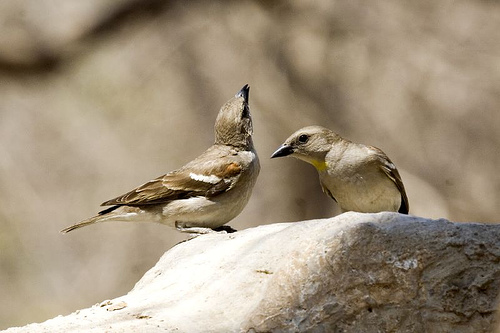
Yellow-throated Sparrow (Gymnoris xanthocollis) ©WikiC

Yellow-throated Sparrow (Gymnoris xanthocollis) ©WikiC

THOUGHT FOR THE DAY….  

How much do we notice as we go through a day?????

Lisa Beamer on Good Morning America – If you remember, she’s the wife of Todd Beamer who said ‘Let’s Roll!’ and helped take down the plane over Pennsylvania that was heading for Washington, DC back on 9/11.

She said it’s the little things that she misses most about Todd, such as hearing the garage door open as he came Home, and her children running to meet him.

Lisa recalled this story: “I had a very special teacher in high school many years ago whose husband died suddenly of a heart attack. About a week after his death, she shared some of her insight with a classroom of students. As the late afternoon sunlight came streaming in through the classroom windows and the class was nearly over, she moved a few things aside on the edge of her desk and sat down there.

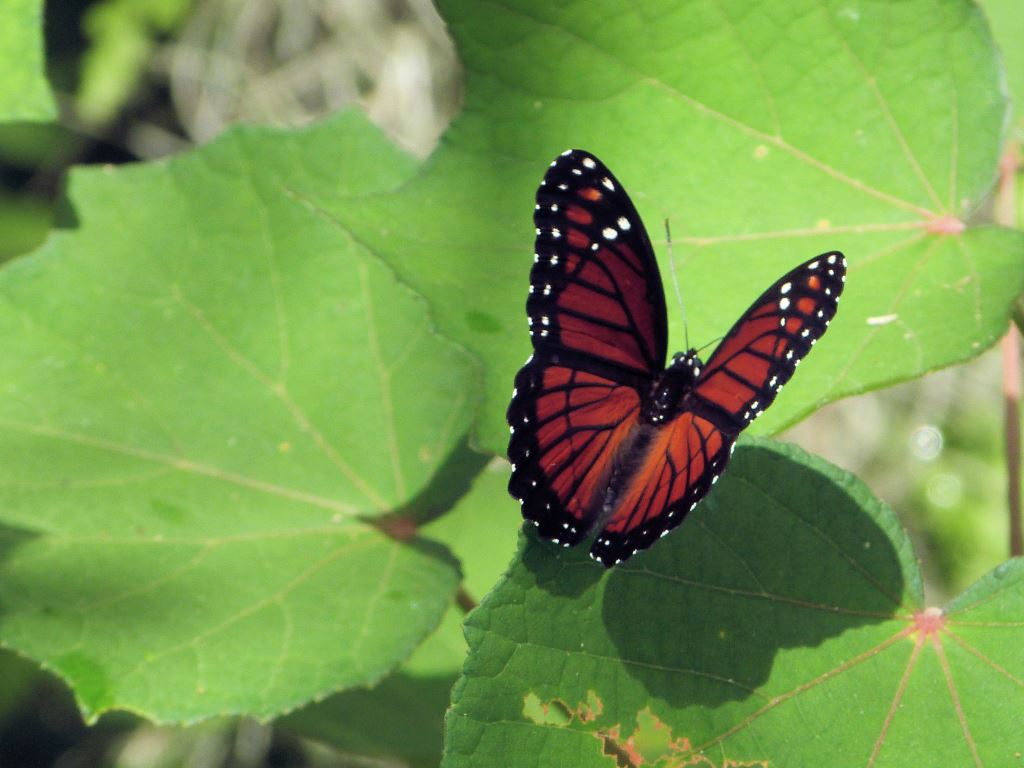
Butterfly Circle B by Lee 7-16-14

Butterfly Circle B by Lee 7-16-14

With a gentle look of reflection on her face, she paused and said, ‘Class is over, I would like to share with all of you, a thought that is unrelated to class, but which I feel is very important. Each of us is put here on earth to learn, share, love, appreciate and give of ourselves. None of us knows when this fantastic experience will end. It can be taken away at any moment.

Perhaps this is God’s way of telling us that we must make the most out of every single day. Her eyes, beginning to water, she went on, ‘So I would like you all to make me a promise. From now on, on your way to school, or on your way home, find something beautiful to notice.

Squirrel at a park in Daytona

Squirrel at a park in Daytona

It doesn’t have to be something you see, it could be a scent, perhaps of freshly baked bread wafting out of someone’s house, or it could be the sound of the breeze slightly rustling the leaves in the trees, or the way the morning light catches one autumn leaf as it falls gently to the ground. Please look for these things, and cherish them. For, although it may sound trite to some, these things are the “stuff” of life. The little things we are put here on earth to enjoy. The things we often take for granted.

The class was completely quiet. We all picked up our books and filed out of the room silently. That afternoon, I noticed more things on my way home from school than I had that whole semester. Every once in a while, I think of that teacher and remember what an impression she made on all of us, and I try to appreciate all of those things that sometimes we all overlook.

Take notice of something special you see on your lunch hour today. Go barefoot. Or walk on the beach at sunset. Stop off on the way home tonight to get a double dip ice cream cone. For as we get older, it is not the things we did that we often regret, but the things we didn’t do.

If you like this, please pass it on to a friend, If not just delete it and go on with your life!

Life is not measured by the number of breaths we take, but by the moments that take our breath away.”

Sunrise over Dayton Beach

Sunrise over Dayton Beach

HAVE A GREAT DAY!

GOD Bless you every day of your life.

The nicest place to be is in someone’s thoughts,

The safest place to be is in someone’s prayers,

and the very best place to be is….

In the hands of God.

(This was received in an email and thought I’d share it and add some photos.)

Who Paints The Leaves?

*

Birds of the Bible – Worry and Sparrows II

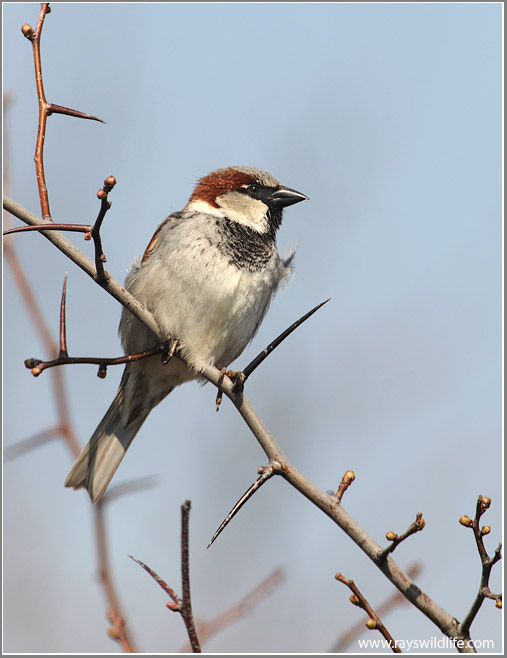
House Sparrow by Ray

House Sparrow by Ray

While listening to Wisdom For The Heart on BBN (Bible Broadcasting Network), I heard this message by Pastor Stephen Davey and wanted to share it. His message was “Better than the Birds” and of course it caught my attention. There are four parts, see the introduction and part 1 and now part two here.

Better than the Birds

Luke 12:6-31

2. Secondly, worry depreciates the higher value of mankind

He’s not finished with the birds yet – notice verse 7 again – the last part – Do not fear; you are more valuable than many sparrows.

Matthews account says, “Are you not worth much more than they?

In case we didn’t pick up on the lesson – in case we’re a little slow – God’s care of the lesser creation ensures His care of His highest creation.

Evidently Jesus thinks we just might be a little slow on the uptake here – or maybe find it hard to believe – so He circles back around to this subject again and adds another pearl to the string – look over at verse 24. Consider the ravens, for they neither sow nor reap, they have no store room nor barn, and yet God feeds them; how much more valuable you are than the birds!

Maybe Jesus repeated this lesson simply because He knew that billions of people one day would struggle with believing they were less valuable than animals.
Was God peering into the 21st century or what?

You sit through the average Animal Planet program or read the latest evolutionary textbook taught to middle schoolers and you’ll get the message loud and clear that human beings have messed up the circle of life; humans have interrupted the food chain; humans are in the way and if we’d only get out-of-the-way, the animals who evidently have the right to be on the planet – because they evolved first – would get what they deserve; if we’d just go back to living in caves, the animals would be able to enjoy their lives so much better.

That message is coming across loud and clear!

Whenever you remove the glory of God’s created order, Genesis 1 and 2, where mankind was made in the image of God and given the right to rule earth – to train and subjugate and benefit from the animal kingdom – you end up with a culture where animals ultimately matter more.

You now exist to serve them; you now live to make their lives more comfortable.

Now I’m not defending animal abuse, by the way. We’re to be good stewards of earth and the animal kingdom.

But go visit India today, and watch, as I did, sacred cows which have been given superior rights within their culture – watch them meander across busy roadways and down streets cluttered with starving children – and begging mothers with babies on their hips; where a child starving to death is less important than a cow having something to eat.

How do we know that human beings are more valuable than animals? How do we know that?

Apart from God, we don’t.

Apart from the words of Jesus Christ, the creator of all things (Colossians 1), we might be confused – look again at verse 24 – you are more valuable than the birds.

Is that radical news or what?

Thick-billed Raven (Corvus crassirostris) ©WikiC

Thick-billed Raven (Corvus crassirostris) ©WikiC

And this really got the attention of Jesus’ Jewish audience, by the way, because Jesus used ravens as an example here – ravens were considered unclean according to Mosaic Law (Leviticus 11:13-15).vii
The ravens were unclean birds.

I’m sorry for how that makes you Baltimore Ravens fans feel – I’m sorry you had to find that out – you’ve been cheering all along for unclean animals . . . you already knew that.

Here’s why this was so stunning an analogy for Christ to make: It’s one thing to be insignificant like a sparrow and be cared for by God – it’s another thing to be unclean and despised and be cared for by God.
And you know why I’m so glad Jesus added this illustration?

Because the enemy of our heart and spirit and joy will more than likely come and whisper in our ear – sparrows might be cheap, but at least they’re clean animals – no wonder God cares about them; but you’re more like an unclean bird . . . despised and unclean according to God’s holy law . . . you don’t deserve God’s attention.

You have very reason to worry about your life.

But notice – verse 24. God has managed to care for them too – He effectively feeds them too – and get this – “How much more valuable you are than the animal kingdom!”

Worry denies the gracious care of God

Worry depreciates the higher value of mankind.

(Copied with permission from Wisdom for the Heart and Pastor Stephen Davey.)

i John MacArthur, Matthew 1-7 (Moody Publishers, 1985), p. 419
ii Ibid
iii William Barclay, The Gospel of Luke (Westminster, 1975), p. p. 160
iv Bruce B. Barton, Life Application Bible: Luke (Tyndale, 1997), p. 314
v Barclay, p. 161
vi MacArthur, p. 119


Lee’s Addition:

Consider the ravens, for they neither sow nor reap, which have neither storehouse nor barn; and God feeds them. Of how much more value are you than the birds? (Luke 12:24 NKJV)

What a great encouragement not to worry. Thanks, Pastor Davey for part 2 of your great message.

See:

*

Wreathed Hornbills at Central Florida Zoo

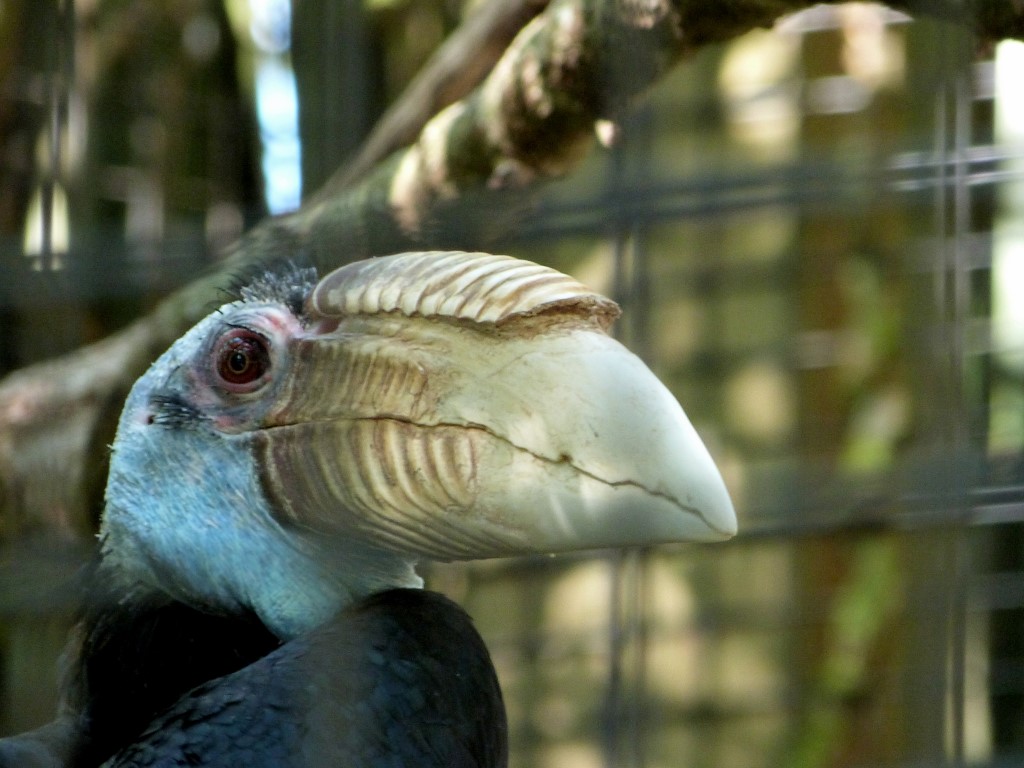
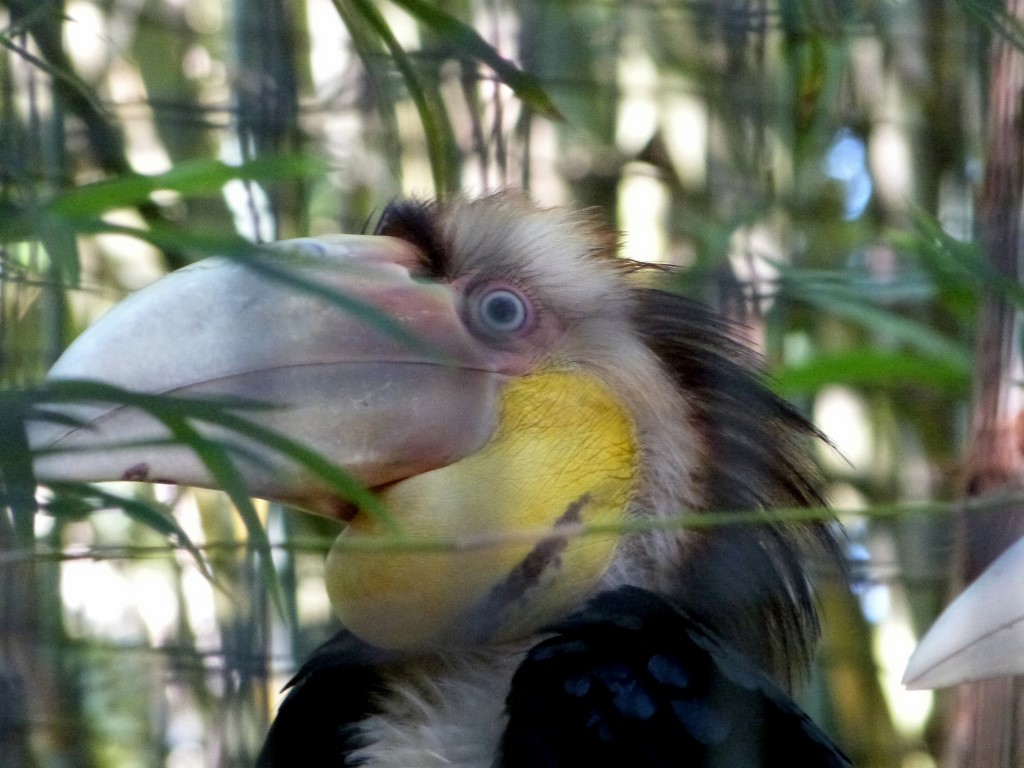
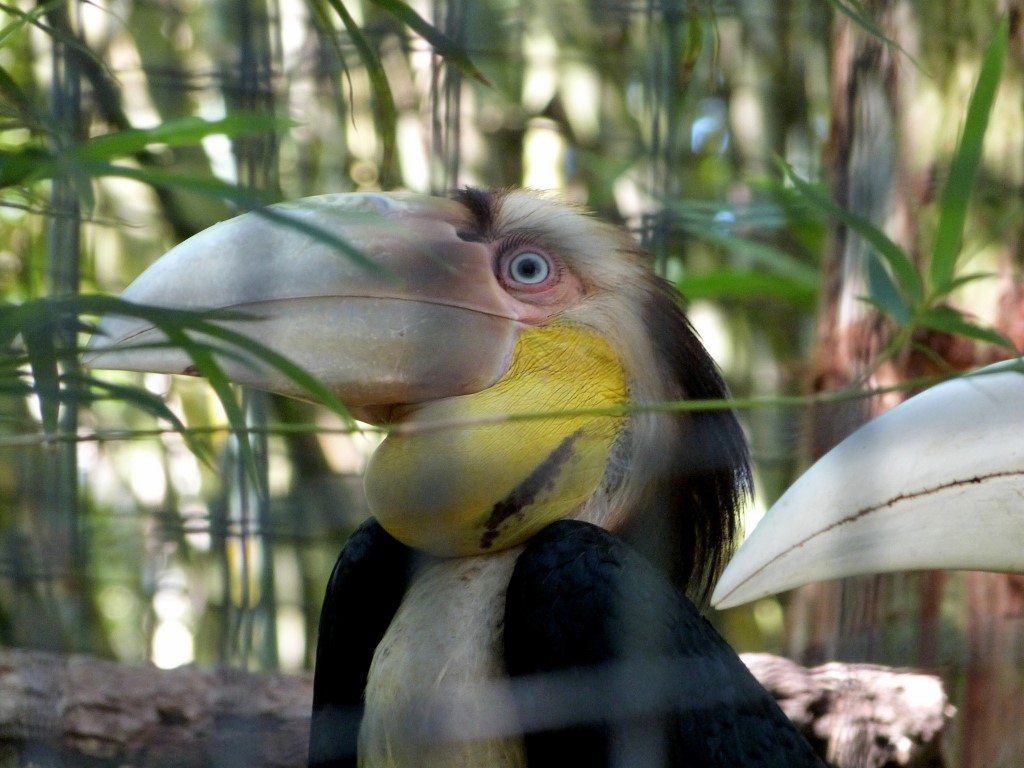
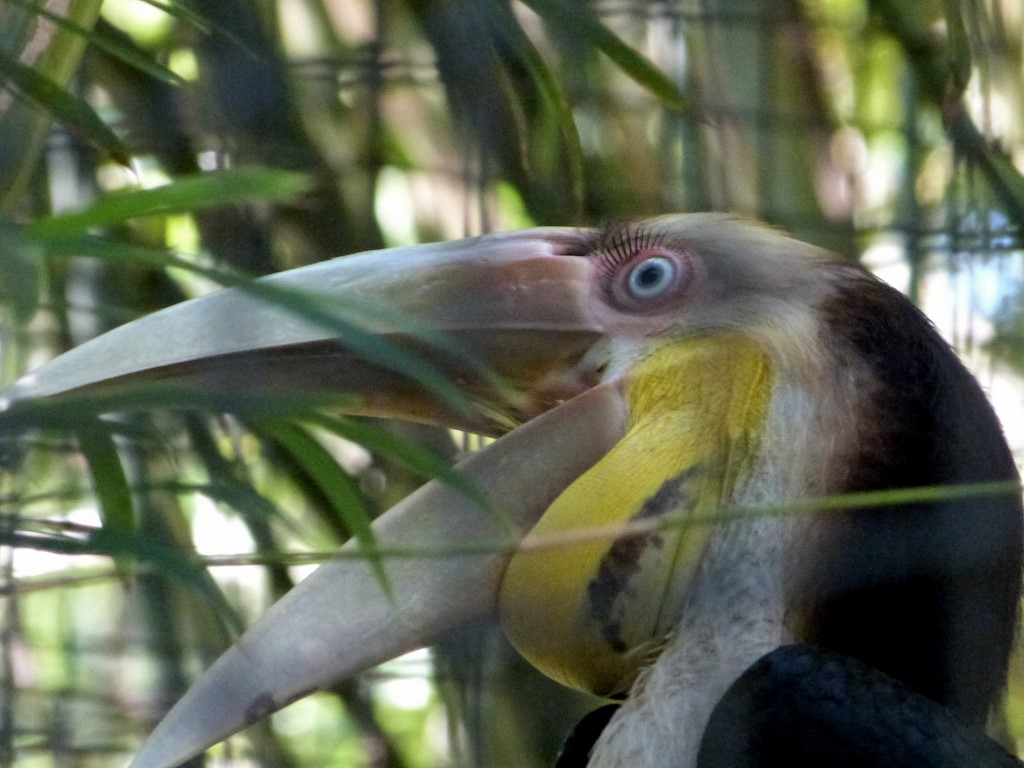
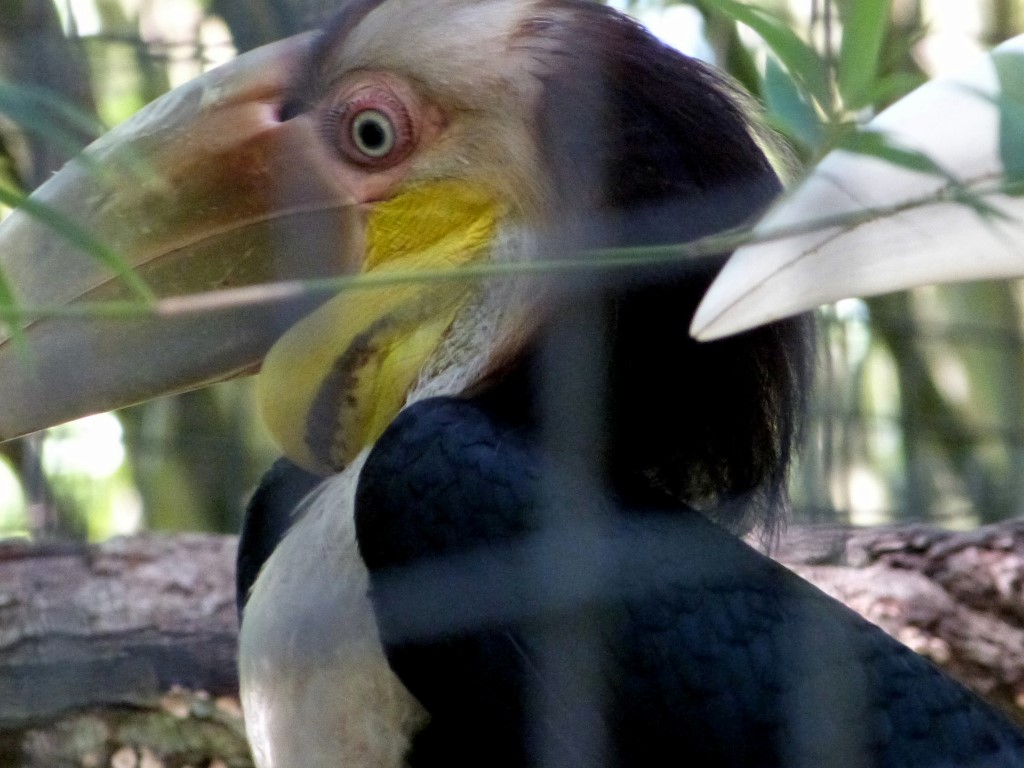
Wreathed Hornbill (Rhyticeros undulatus) Central Florida Zoo by Lee

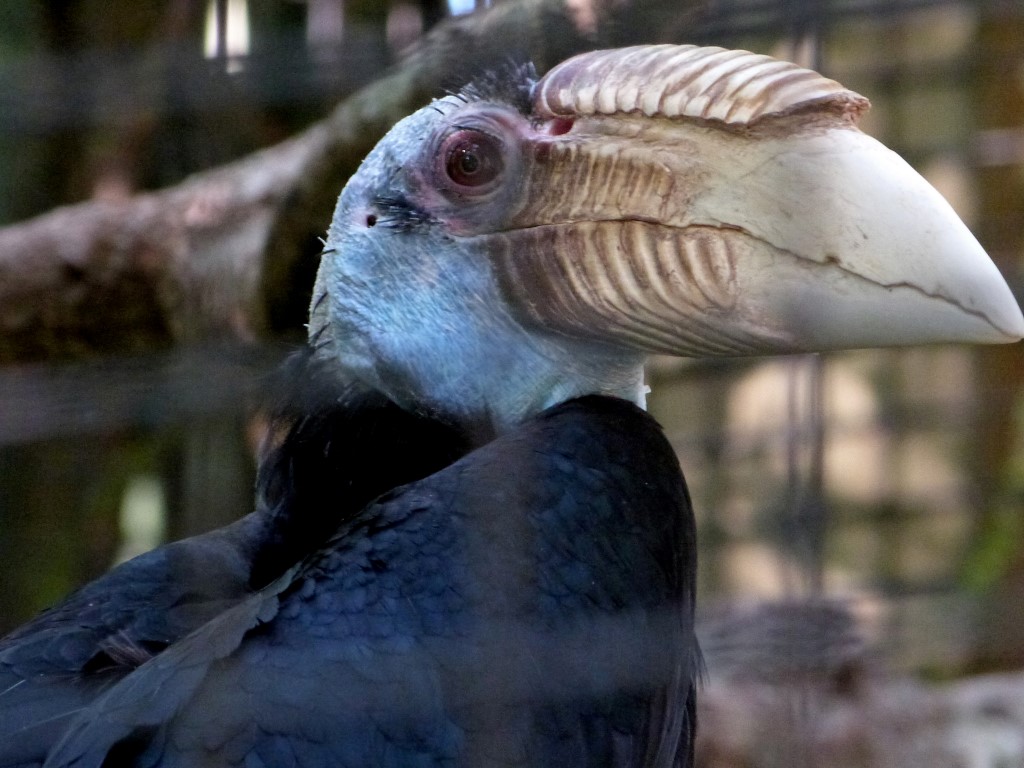
Wreathed Hornbill (Rhyticeros undulatus) Female Central Florida Zoo by Lee

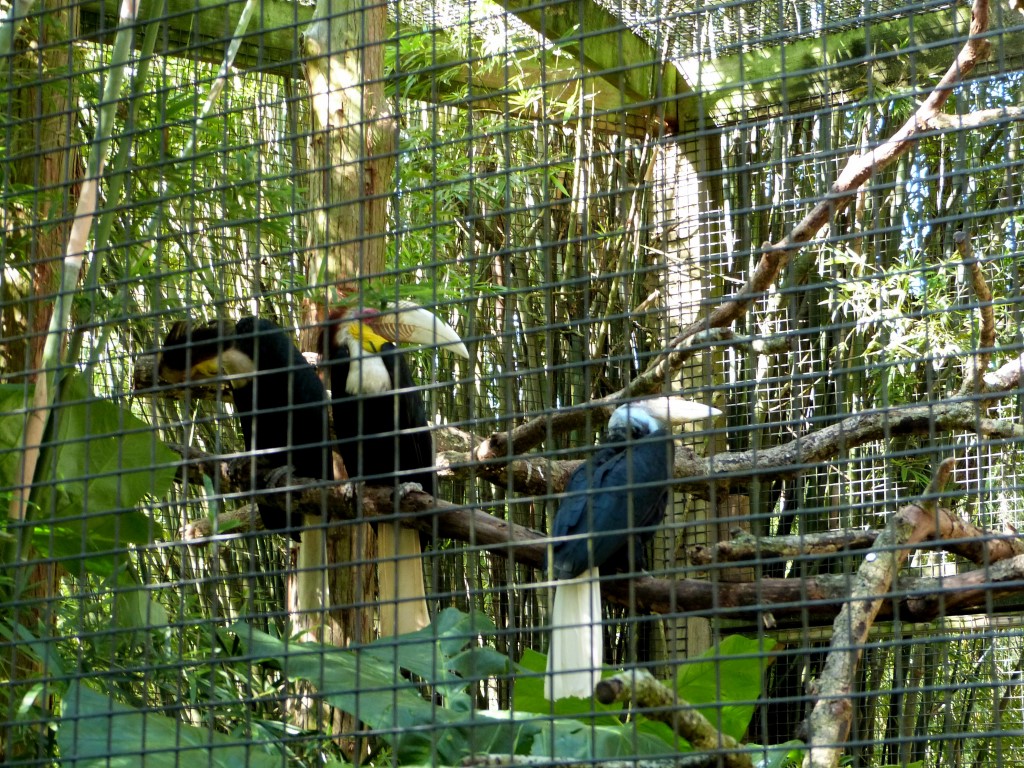
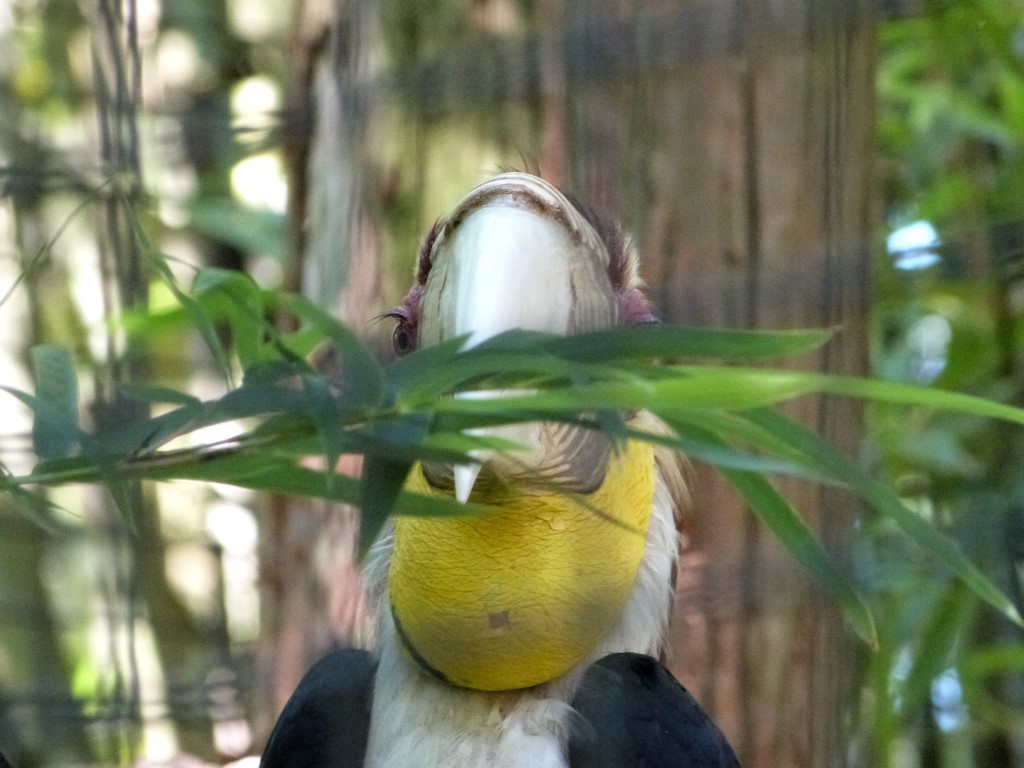
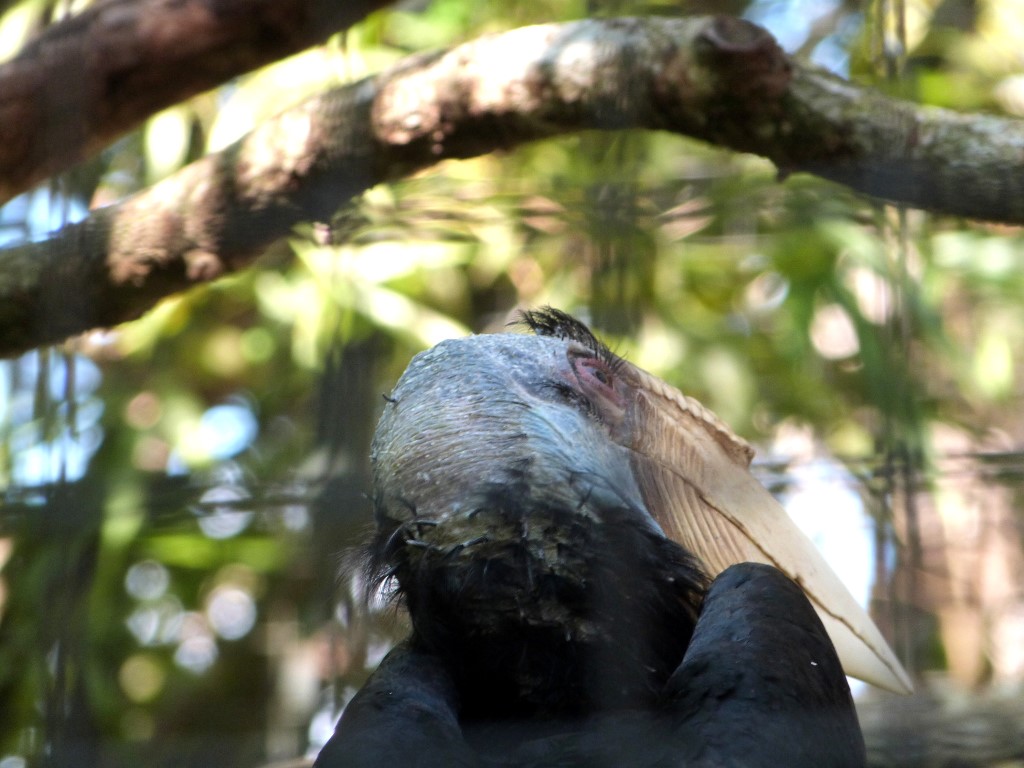
Last week on the way over to the retreat in Daytona Beach, we stopped by the Central Florida Zoo & Botanical Gardens. There were several interesting birds, especially the Wreathed Hornbill (Rhyticeros undulatus). There was a male, female and a juvenile male there. More unique creations from our Creator.

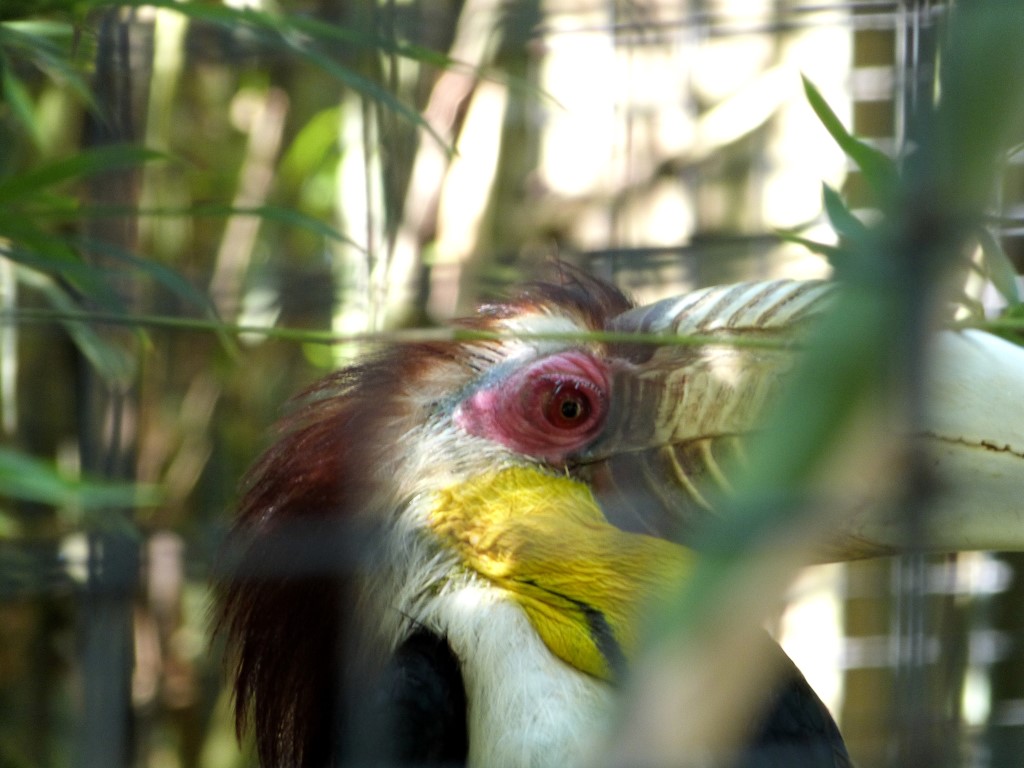
The Hornbill names can be confusing because there is a Wrinkled, Writhed, and the Wreathed Hornbills along with the others. The one here at Central Florida Zoo was the Wreathed..It was hard to get a decent photo because of the size of the fencing/wires on the cages. So, the photos were about a good as I could get shooting in Program mode. I tossed quite a few photos because of the fencing. :))

Wreathed Hornbill (Rhyticeros undulatus) Adult Male Central Florida Zoo by Lee

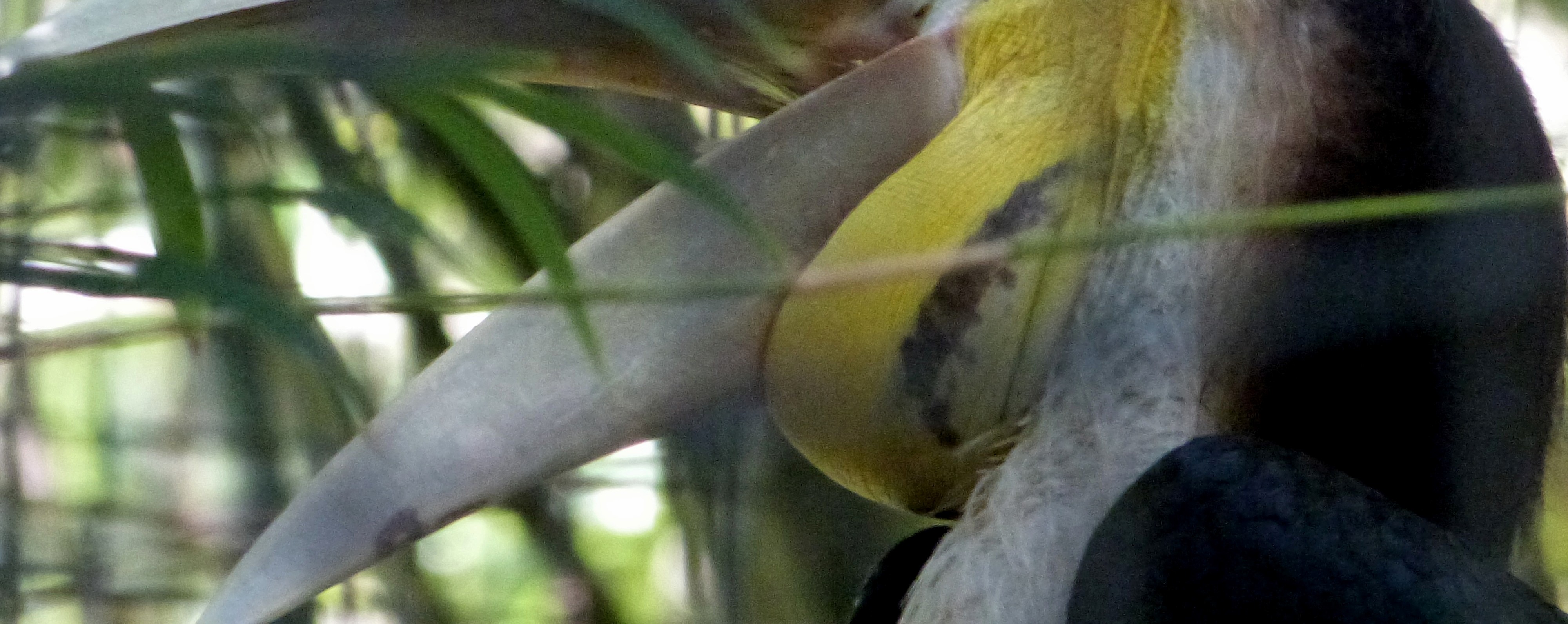
The Wreathed Hornbill (Rhyticeros undulatus), also known as the Bar-pouched Wreathed Hornbill because of the black line on the pouch or chin. It is a species of hornbill found in forests from far north-eastern India and Bhutan, east and south through mainland Southeast Asia and the Greater Sundas, except Sulawesi. It is 75–100 cm (30–39 in) long. Males weigh from 4.0 lb (1.8 kg) to 8.0 lb (3.65 kg), and females weigh from 3.0 lb (1.36 kg) to 6.0 lb (2.7 kg). Both sexes are similar to the respective sexes of the closely related plain-pouched hornbill, but the wreathed hornbill can be recognized by the dark bar on the lower throat (hence the alternative common name, bar-pouched). Though commonly considered monotypic, evidence suggests some geographical variation in the appearance. (Wikipedia with editing)

They belong to the Bucerotidae – Hornbills Family which has 59 species. “These birds have large down-curved bills and many have a large growth on the upper bill called a casque.  These bills come in many striking shapes and colors.  They also have what appears to be eyelashes, but they are not made of hair, they are small feathers that serve the same function.” (Central FL Zoo)

Fun Facts (From Zoo Atlanta)

Males can be easily distinguished from females by the color of their throats. The male’s throat skin is yellow; the female’s is blue. – Males and females pair for life. – The specialized knobs on the tops of the birds’ beaks are known as casques. These are believed to function as signals of dominance and gender.

 You shall take with you of every clean animal by sevens, a male and his female; and of the animals that are not clean two, a male and his female; also of the birds of the sky, by sevens, male and female, to keep offspring alive on the face of all the earth. (Genesis 7:2-3 NASB)

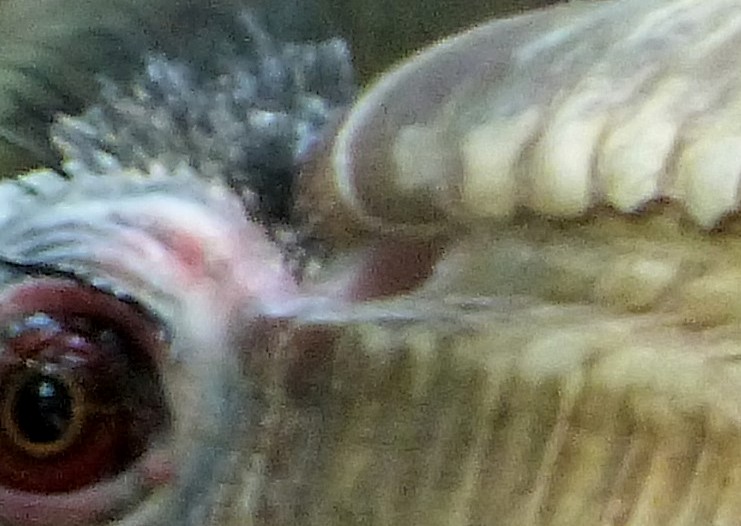
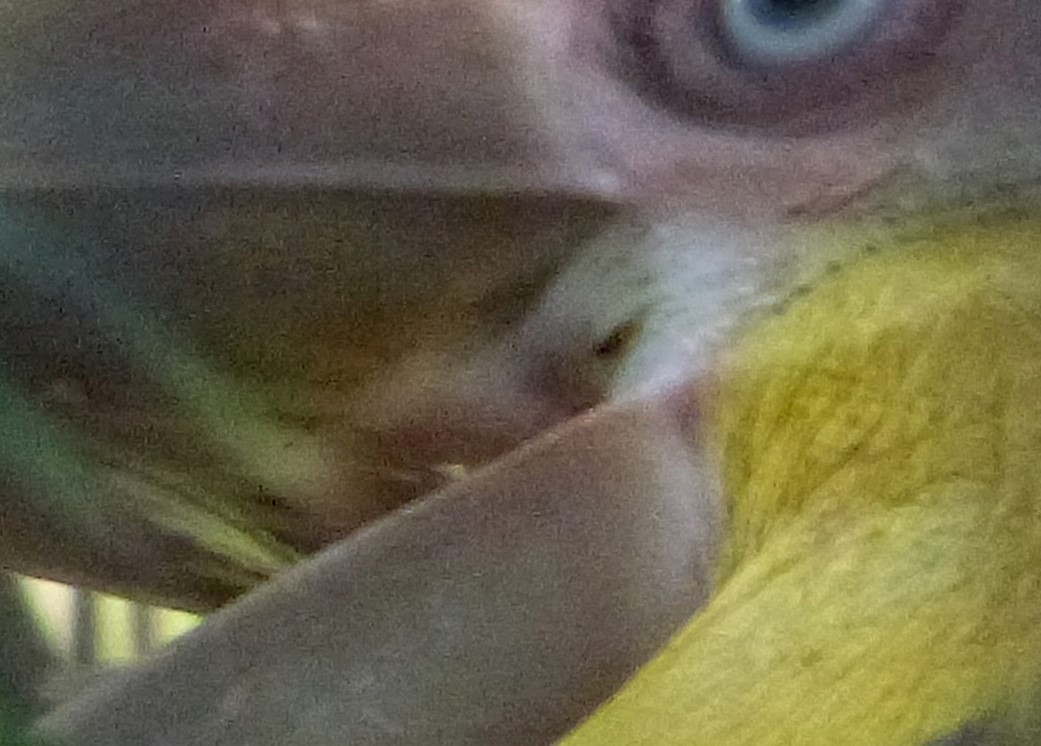
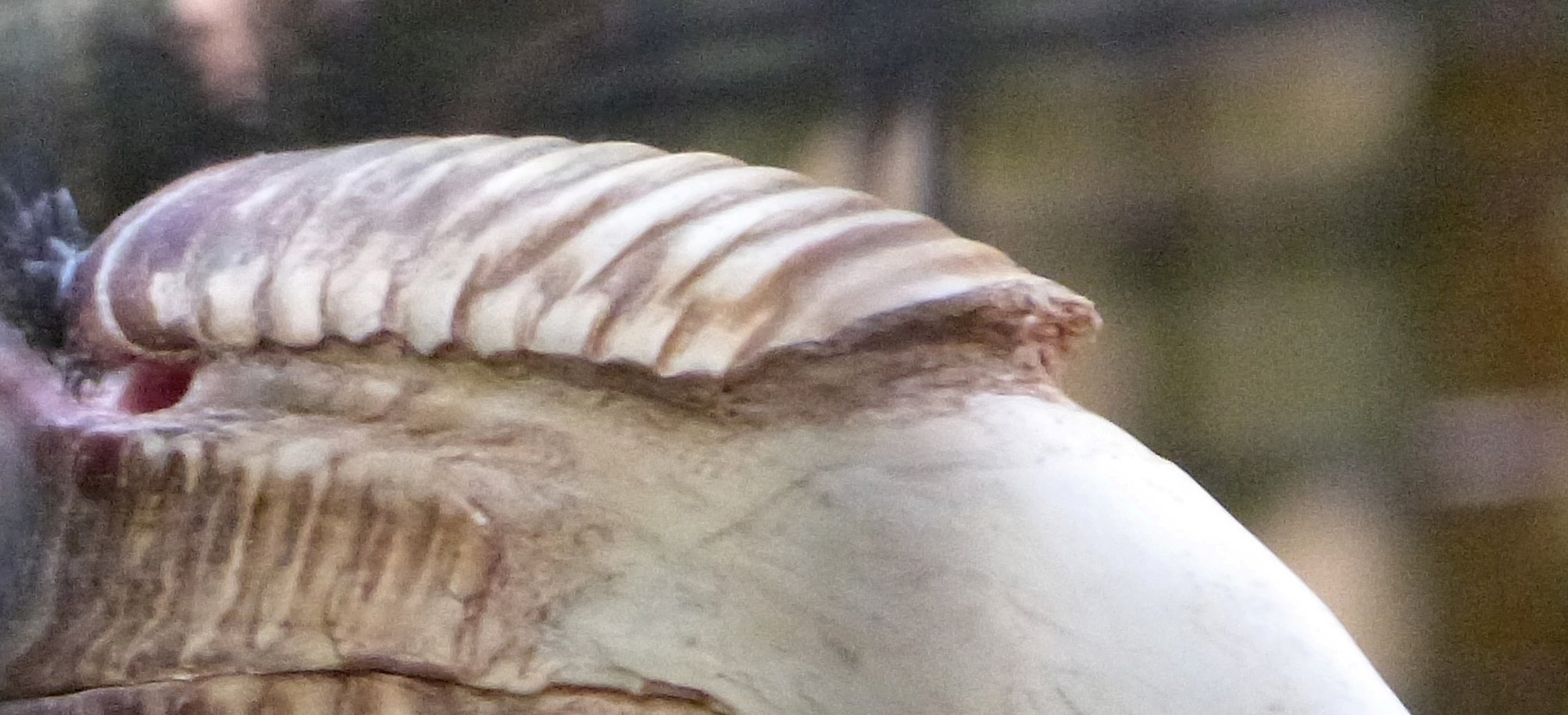
I find their beak so interesting. In light of yesterday’s article, Birdwatching Terms – About’s Bird Bill Parts, I have included some cropped photos pointing out the different parts of the beak. Also, I like their eyelashes which are actually feathers, but act like our eyelashes.

*

Bucerotidae – Hornbills

Central Florida Zoo & Botanical Gardens

Birds of the World

Wreathed Hornbill – Wikipedia

Wreathed Hornbill – Central Florida Zoo

Wreathed Hornbill –  AvianWeb

Is There A God?

*