But the dove found no rest for the sole of her foot, and she returned unto him into the ark, for the waters were on the face of the whole earth: then he put forth his hand, and took her, and pulled her in unto him into the ark. (Genesis 8:9 KJV)
And the work of righteousness shall be peace; and the effect of righteousness quietness and assurance for ever. And my people shall dwell in a peaceable habitation, and in sure dwellings, and in quiet resting places; (Isaiah 32:17-18 KJV)
Therefore my heart is glad, and my glory rejoiceth: my flesh also shall rest in hope. (Psalms 16:9 KJV)
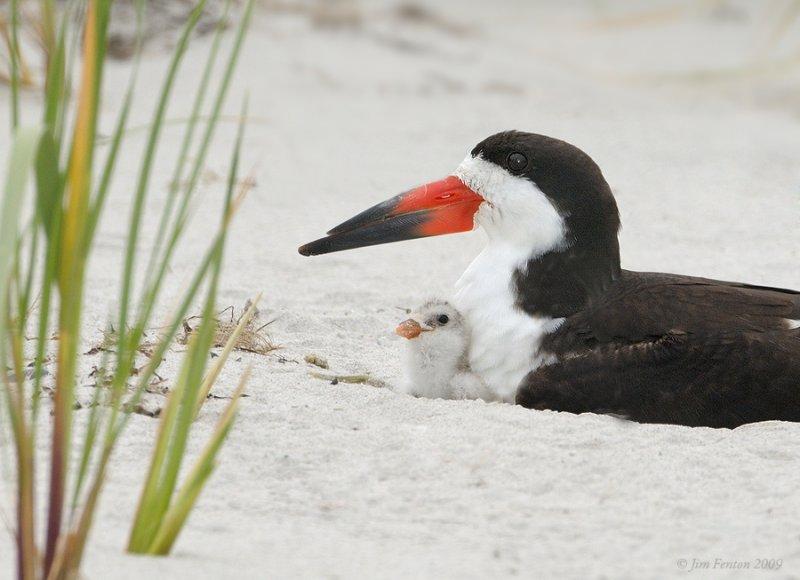
Black Skimmer (Rynchops niger) by J Fenton
And I said, Oh that I had wings like a dove! for then would I fly away, and be at rest. (Psalms 55:6 KJV)
Return unto thy rest, O my soul; for the LORD hath dealt bountifully with thee. (Psalms 116:7 KJV)
Come unto me, all ye that labour and are heavy laden, and I will give you rest. Take my yoke upon you, and learn of me; for I am meek and lowly in heart: and ye shall find rest unto your souls. (Matthew 11:28-29 KJV)
Are we resting like we should, knowing that God Is In Control?
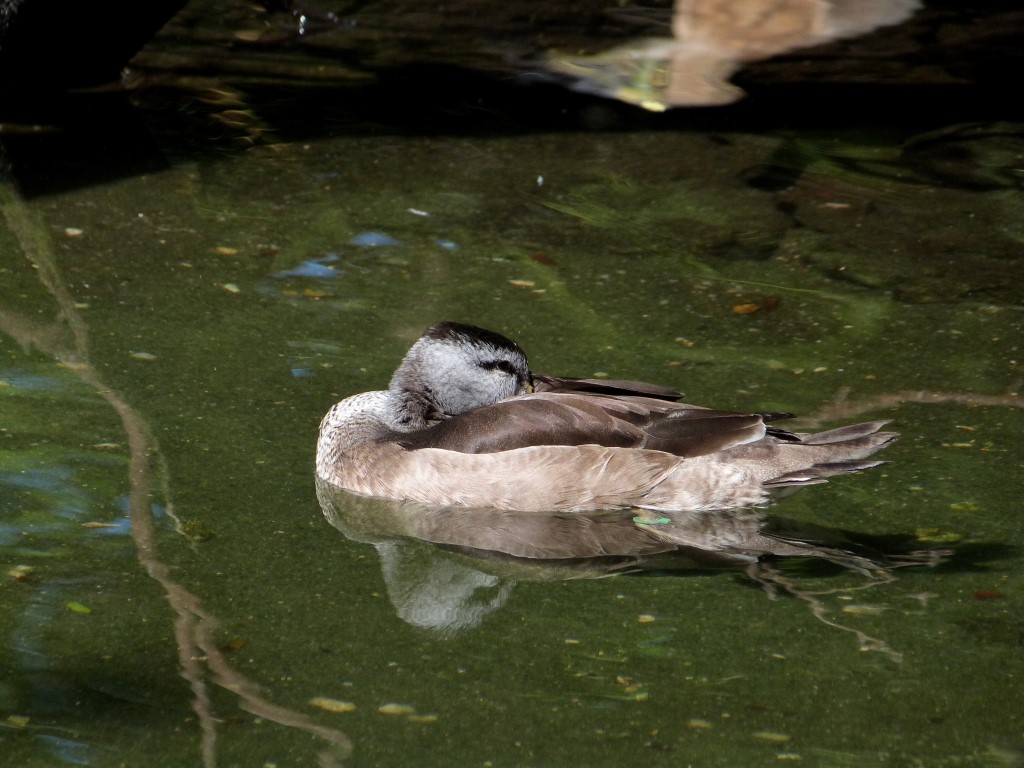
Cotton Pygmy Goose (Nettapus coromandelianus) at Wings of Asia by Lee
And he spake of trees, from the cedar tree that is in Lebanon even unto the hyssop that springeth out of the wall: he spake also of beasts, and of fowl, and of creeping things, and of fishes. (1 Kings 4:33 KJV)
Let me introduce you to another interesting avian friend from His Creator’s Hand. This is the Cotton Pygmy Goose or Cotton Teal (Nettapus coromandelianus) which is a small perching duck that breeds in Pakistan, India, Bangladesh, southeast Asia and south to northern Australia.
Small individuals of this species are the smallest waterfowl on earth, at as little as 5.6 oz (160 g) and 10 in (26 cm). White predominates in this bird’s plumage. Bill short, deep at base, and goose-like.
Cotton Pygmy Goose (Nettapus coromandelianus) PB Zoo by Lee
Male in breeding plumage is glossy blackish green crown, with white head, neck, and underparts; a prominent black collar and white wing-bar. Rounded head and short legs. In flight, the wings are green with a white band, making the male conspicuous even amongst the huge flying flocks of the lesser whistling duck, which share the habitat. Female paler, without either black collar and only a narrow or nonexistent strip of white wing-bar. In non-breeding plumage (eclipse) male resembles female except for his white wing-bar. Flocks on water bodies (jheels), etc.
The call is a peculiar clucking, uttered in flight
It is largely resident, apart from dispersion in the wet season, but Chinese birds make long-distance migrations to winter further south. It nests in tree holes, laying 8–15 eggs. The nesting season is July to September (SW. monsoon). Its nest is a natural hollow in a tree-trunk standing in or near water, sometimes lined with grass, rubbish and feathers. The eggs, are ivory white.
Cotton Pygmy Goose (Nettapus coromandelianus) at Wings of Asia by Lee
This is an abundant species in Asia, although the slightly larger Australian race appears to be declining in numbers.
Found on all still freshwater lakes (jheels), rain-filled ditches, inundated paddy fields, irrigation tanks, etc. Becomes very tame on village tanks wherever it is unmolested and has become inured to human proximity. Swift on the wing, and can dive creditably on occasion.[citation needed] Found in ponds and lakes in southern Pakistan . However numbers are declining and it is definitely endangered.
Its food is chiefly seeds and vegetable matter, especially water lilies; also insects, crustaceans, etc. (From Wikipedia with editing)
I enjoyed watching this female Pygmy Goose floating and took a short video of her.
I just made a page for Zoo Miami and the Wings of Asia under the Birdwatching Trips. There are most of the articles that have been written about our visits to the Zoo, but especially to the Wings of Asia Aviary. That is where we spend most of our time. This last trip was our fourth visit down to Miami to see those amazing birds.
Every day brought newcomers to the Old Orchard, and early in the morning there were so many voices to be heard that perhaps it is no wonder if for some time Peter Rabbit failed to miss that of one of his very good friends. Most unexpectedly he was reminded of this as very early one morning he scampered, lipperty-lipperty-lip, across a little bridge over the Laughing Brook.
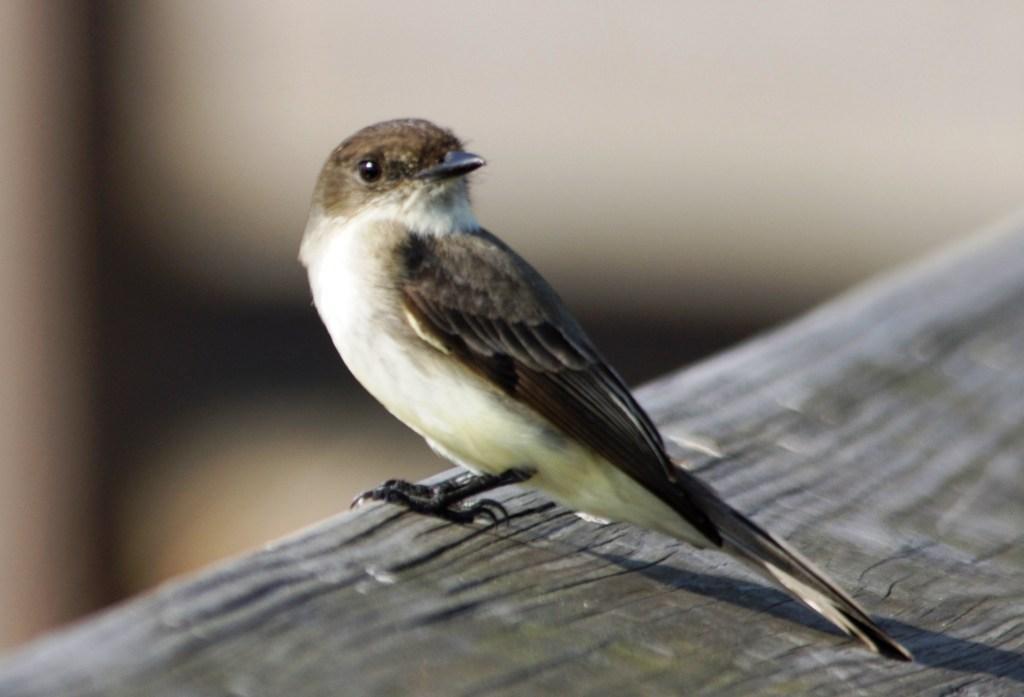
“Dear me! Dear me! Dear me!” cried rather a plaintive voice. Peter stopped so suddenly that he all but fell heels over head. Sitting on the top of a tall, dead, mullein stalk was a very soberly dressed but rather trim little fellow, a very little larger than Bully the English Sparrow. Above, his coat was of a dull olive-brown, while underneath he was of a grayish-white, with faint tinges of yellow in places. His head was dark, and his bill black. The feathers on his head were lifted just enough to make the tiniest kind of crest. His wings and tail were dusky, little bars of white showing very faintly on his wings, while the outer edges of his tail were distinctly white. He sat with his tail hanging straight down, as if he hadn’t strength enough to hold it up.
“Hello, Dear Me!” cried Peter joyously. “What are you doing way down here? I haven’t seen you since you first arrived, just after Winsome Bluebird got here.” Peter started to say that he had wondered what had become of Dear Me, but checked himself, for Peter is very honest and he realized now that in the excitement of greeting so many friends he hadn’t missed Dear Me at all.
Dear Me the Phoebe did not reply at once, but darted out into the air, and Peter heard a sharp click of that little black bill. Making a short circle, Dear Me alighted on the mullein stalk again.
“Did you catch a fly then?” asked Peter.
“Dear me! Dear me! Of course I did,” was the prompt reply. And with each word there was a jerk of that long hanging tail. Peter almost wondered if in some way Dear Me’s tongue and tail were connected. “I suppose,” said he, “that it is the habit of catching flies and bugs in the air that has given your family the name of Flycatchers.”
Dear Me nodded and almost at once started into the air again. Once more Peter heard the click of that little black bill, then Dear Me was back on his perch. Peter asked again what he was doing down there.
“Mrs. Phoebe and I are living down here,” replied Dear Me. “We’ve made our home down here and we like it very much.”
Peter looked all around, this way, that way, every way, with the funniest expression on his face. He didn’t see anything of Mrs. Phoebe and he didn’t see any place in which he could imagine Mr. and Mrs. Phoebe building a nest. “What are you looking for?” asked Dear Me.
“For Mrs. Phoebe and your home,” declared Peter quite frankly. “I didn’t suppose you and Mrs. Phoebe ever built a nest on the ground, and I don’t see any other place around here for one.”
Dear Me chuckled. “I wouldn’t tell any one but you, Peter,” said he, “but I’ve known you so long that I’m going to let you into a little secret. Mrs. Phoebe and our home are under the very bridge you are sitting on.”
“I don’t believe it!” cried Peter.
But Dear Me knew from the way Peter said it that he really didn’t mean that. “Look and see for yourself,” said Dear Me.
So Peter lay flat on his stomach and tried to stretch his head over the edge of the bridge so as to see under it. But his neck wasn’t long enough, or else he was afraid to lean over as far as he might have. Finally he gave up and at Mr. Phoebe’s suggestion crept down the bank to the very edge of the Laughing Brook. Dear Me darted out to catch another fly, then flew right in under the bridge and alighted on a little ledge of stone just beneath the floor. There, sure enough, was a nest, and Peter could see Mrs. Phoebe’s bill and the top of her head above the edge of it. It was a nest with a foundation of mud covered with moss and lined with feathers.
“That’s perfectly splendid!” cried Peter, as Dear Me resumed his perch on the old mullein stalk. “How did you ever come to think of such a place? And why did you leave the shed up at Farmer Brown’s where you have build your home for the last two or three years?”
“Oh,” replied Dear Me, “we Phoebes always have been fond of building under bridges. You see a place like this is quite safe. Then, too, we like to be near water. Always there are many insects flying around where there is water, so it is an easy matter to get plenty to eat. I left the shed at Farmer Brown’s because that pesky cat up there discovered our nest last year, and we had a dreadful time keeping our babies out of her clutches. She hasn’t found us down here, and she wouldn’t be able to trouble us if she should find us.”
“I suppose,” said Peter, “that as usual you were the first of your family to arrive.”
“Certainly. Of course,” replied Dear Me. “We always are the first. Mrs. Phoebe and I don’t go as far south in winter as the other members of the family do. They go clear down into the Tropics, but we manage to pick up a pretty good living without going as far as that. So we get back here before the rest of them, and usually have begun housekeeping by the time they arrive. My cousin, Chebec the Least Flycatcher, should be here by this time. Haven’t you heard anything of him up in the Old Orchard?”
“No,” replied Peter, “but to tell the truth I haven’t looked for him. I’m on my way to the Old Orchard now, and I certainly shall keep my ears and eyes open for Chebec. I’ll tell you if I find him. Good-by.”
“Dear me! Dear me! Good-by Peter. Dear me!” replied Mr. Phoebe as Peter started off for the Old Orchard.
Perhaps it was because Peter was thinking of him that almost the first voice he heard when he reached the Old Orchard was that of Chebec, repeating his own name over and over as if he loved the sound of it. It didn’t take Peter long to find him. He was sitting out on the up of one of the upper branches of an apple-tree where he could watch for flies and other winged insects. He looked so much like Mr. Phoebe, save that he was smaller, that any one would have know they were cousins. “Chebec! Chebec! Chebec!” he repeated over and over, and with every note jerked his tail. Now and then he would dart out into the air and snap up something so small that Peter, looking up from the ground, couldn’t see it at all.
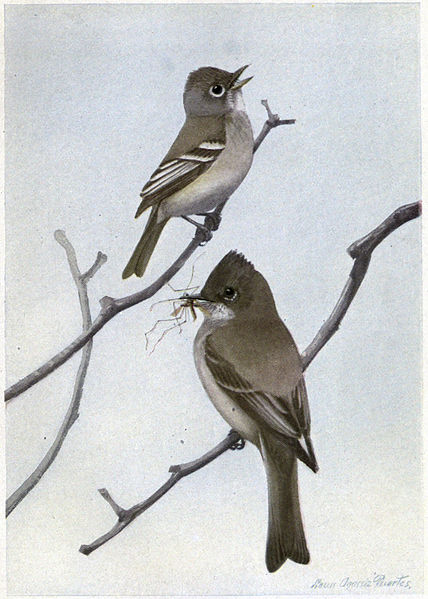
Least Flycatcher (Empidonax minimus) by Raymond Barlow
“Hello, Chebec!” cried Peter. “I’m glad to see you back again. Are you going to build in the Old Orchard this year?”
“Of course I am,” replied Chebec promptly. “Mrs. Chebec and I have built here for the last two or three years, and we wouldn’t think of going anywhere else. Mrs. Chebec is looking for a place now. I suppose I ought to be helping her, but I learned a long time ago, Peter Rabbit, that in matters of this kind it is just as well not to have any opinion at all. When Mrs. Chebec has picked out just the place she wants, I’ll help her build the nest. It certainly is good to be back here in the Old Orchard and planning a home once more. We’ve made a terribly long journey, and I for one am glad it’s over.”
“I just saw your cousins, Mr. and Mrs. Phoebe, and they already have a nest and eggs,” said Peter.
“The Phoebes are a funny lot,” replied Chebec. “They are the only members of the family that can stand cold weather. What pleasure they get out of it I don’t understand. They are queer anyway, for they never build their nests in trees as the rest of us do.”
“Are you the smallest in the family?” asked Peter, for it had suddenly struck him that Chebec was a very little fellow indeed.
Chebec nodded. “I’m the smallest,” said he. “That’s why they call me Least Flycatcher. I may be least in size, but I can tell you one thing, Peter Rabbit, and that is that I can catch just as many bugs and flies as any of them.” Suiting action to the word, he darted out into the air. His little bill snapped and with a quick turn he was back on his former perch, jerking his tail and uttering his sharp little cry of, “Chebec! Chebec! Chebec!” until Peter began to wonder which he was the most fond of, catching flies, or the sound of his own voice.
Presently they both heard Mrs. Chebec calling from somewhere in the middle of the Old Orchard. “Excuse me, Peter,” said Chebec, “I must go at once. Mrs. Chebec says she has found just the place for our nest, and now we’ve got a busy time ahead of us. We are very particular how we build a nest.”
“Do you start it with mud the way Welcome Robin and your cousins, the Phoebes, do?” asked Peter.
“Mud!” cried Chebec scornfully. “Mud! I should say not! I would have you understand, Peter, that we are very particular about what we use in our nest. We use only the finest of rootlets, strips of soft bark, fibers of plants, the brown cotton that grows on ferns, and perhaps a little hair when we can find it. We make a dainty nest, if I do say it, and we fasten it securely in the fork made by two or three upright little branches. Now I must go because Mrs. Chebec is getting impatient. Come see me when I’m not so busy Peter.”
Lee’s Addition:
The family that the Phoebe and the Least Flycatcher belong to is the Tyrant Flycatchers – TyrannidaeFamily. It is a very large family, but most do not live here in North America.
How does the story describe Dear Me the Phoebe?
What does he like to eat?
Where is his nest?
What is the nest made out of?
Why did he get back before the others in his family?
The Least Flycatcher is called Chebec. Do you know why?
Why did he get back later than Dear Me?
How is Chebec’s nest different from Dear Me’s?
Chebec is the largest or smallest member of the Flycatcher family?
*
The birds of the air have their resting-places by them (trees), and make their song among the branches. (Psalms 104:12 BBE)
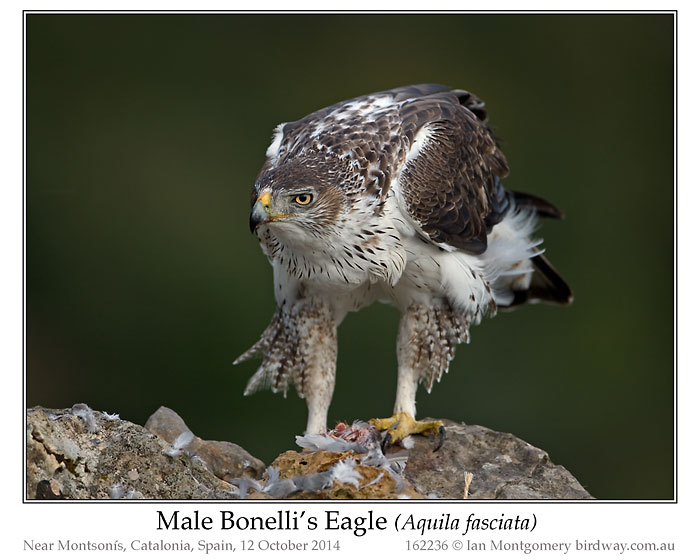
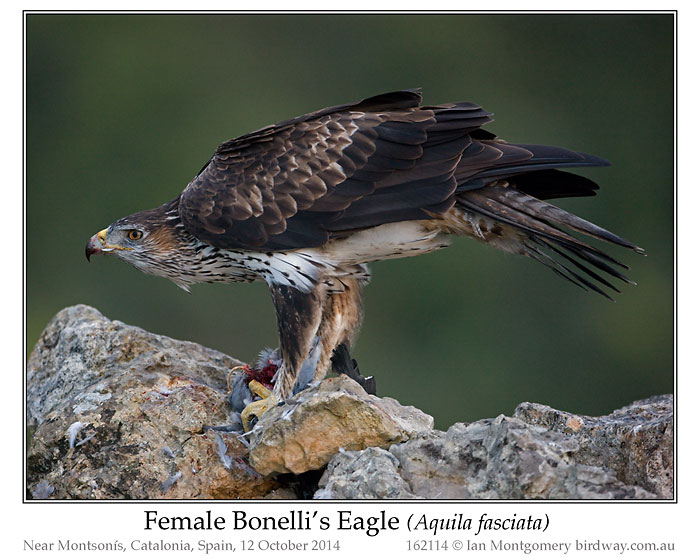
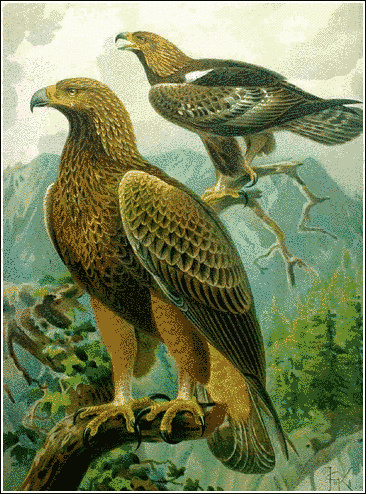
This is the last in this series of raptor photos from the Pyrenees: Bonelli’s Eagle taken at another feeding station managed by Birding in Spain. Like last week’s Northern Goshawk feral pigeons from a local council culling programme are used to attract the eagles. It’s brown and white plumage reminded me rather of the similarly sized Osprey particular that of the male, first photo, which is paler than the female. In size it has a length of up to 73cm/28in, a wingspan to 180cm/71in and weights up to 2.4kg/5.3lbs. That makes it much smaller than most of the other Aquila eagles, such as the Golden and Wedge-tailed but larger than the Little Eagle of Australia.
View From The Hide in Spain by Ian
There the resemblance to ospreys ends, as Bonelli’s Eagle is found in hilly or mountainous country in warm regions and eats mammals and birds – in Spain it eats mainly rabbits and partridges. The second photo shows the view from the hide. The stone wall on the left is where the food is tied in place, as is done with the goshawks to prevent them from carrying the food away. The bird arrived quite promptly after set up: you can see in the first photo that the reflection of the sun in its eye is just above the horizon.
The third photo is another one of the male with the remains of a pigeon. On the back just below the neck a white spot is visible – this is a diagnostic feature of adult Bonelli’s Eagles and fairly conspicuous in flight though the birds arrived and departed so quickly from the rocky ridge in front of the hide that I didn’t get any decent flight shots.
They were fast eaters too. The fourth photo was taken 25 minutes after the third: very little of the pigeon remains and the crop of the bird is quite full. The adult goshawk also took about half an hour to demolish a pigeon, but the immature goshawk took the best part of two hours and remained long after the adult had left. Despatching prey at speed would appear to be a skill that takes raptors a bit of practice. Both these photos show the feathered legs or ‘boots’, characteristic of ‘true’ eagles. They’re not exclusive to eagles though. The goshawks had impressive trousers too as do some falcons such as the Brown Falcon of Australia.
Once fed, the male seemed more aware of what was going on around it and in the fifth photo is peering at the hide, presumably in response to the sound of the camera shutter.
Meanwhile, the female, sixth and seventh photos, was getting stuck into the other pigeon. She was a fine-looking bird too, larger than the male, with hazel eyes and identifiable by much stronger streaks on the breast. The female had much darker trousers, seventh photo, but I don’t know whether that’s generally the case or peculiar to this bird.
Bonelli’s Eagle is widely but sparsely distributed through southern Europe, northern Africa, parts of the Middle East, South and Southeastern Asia as far east as Timor. The European population is about 900 pairs, of which about 700 are in Spain. They are sedentary, keeping to their large home ranges throughout the year. Satellite tracking in Spain has shown an average home range of 200sq km/77sq miles with a core range of about 45sq km/17 sq miles.
The generic name ‘fasciata’ comes from the Latin fascia meaning stripe, band or sash. It’s usually used in birds to refer to horizontal bands or barring but maybe Veillot, the taxonomist responsible, was referring to the barring on the ‘trousers’ rather than the streaks on the breast. Veillot, Jean Pierre that is, was an important French avian taxonomist, 1748-1831, who extended the three-level Linnaean classification of order-genus-species into order-tribe-family-genus-species in his Analyse d’une nouvelle Ornithologie Elémentaire (1816). Franco Andrea Bonelli was, unsurprisingly, an Italian ornithologist 1784-1830 and discovered both this eagle and Bonelli’s Warbler in 1815. He worked at the Natural History Museum in Paris 1810-11 before returning to Italy to take up the position of Professor of Zoology at the University of Turin. Interestingly, he published his main works in French.
They are passed away as the swift ships: as the eagle that hasteth to the prey. (Job 9:26 KJV)
Their horses also are swifter than the leopards, and are more fierce than the evening wolves: and their horsemen shall spread themselves, and their horsemen shall come from far; they shall fly as the eagle that hasteth to eat. (Habakkuk 1:8 KJV)
What an amazing set of photos of this magnificent Eagle. Thanks again, Ian, for sharing these fantastic glimpses of the Bonelli’s Eagle. Pretty fast eaters, it appears.
This Eagle is a member of the Accipitridae – Kites, Hawks and Eagles Family and a Bird of the Bible also. Eagles are mentioned over thirty times in the Bible, plus they are included in the various “birds of prey” verses.
Common Potoo (Nyctibius griseus) by Daves BirdingPix
“For he will hide me in his shelter in the day of trouble; he will conceal me under the cover of his tent; he will lift me high upon a rock. (Psalms 27:5 ESV)
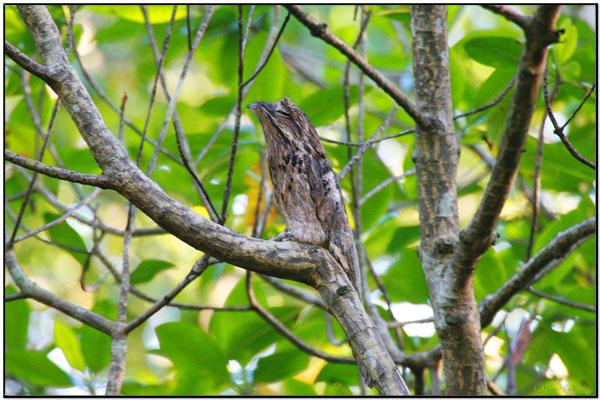
Considering yesterday’s blog, the song, “Hide Thou Me” came to mind. This song was used before, but it is so appropriate. Today’s Inspiration features the birds in the Frogmouth and Potoo families. You will see how the Lord has provided for them to HIDE through their behavior and coloration He has given them.
He who can no longer pause to wonder and stand rapt in awe is as good as dead; his eyes are closed. ~Albert Einstein
*
And God saw every thing that he had made, and, behold, it was very good. And the evening and the morning were the sixth day. (Genesis 1:31 KJV)
We will not hide them from their children, shewing to the generation to come the praises of the LORD, and his strength, and his wonderful works that he hath done. (Psalms 78:4 KJV)
This slideshow requires JavaScript.
*
But the LORD has been my defense, And my God the rock of my refuge. (Psalms 94:22 NKJV)
“Hide not thy face from me in the day when I am in trouble; incline thine ear unto me: in the day when I call answer me speedily. (Psalms 102:2 KJV)
Dan and I just returned from a three-day birdwatching adventure. With almost 1,000 photos and videos to sort, name, and clean-up, I’ll have plenty to post.
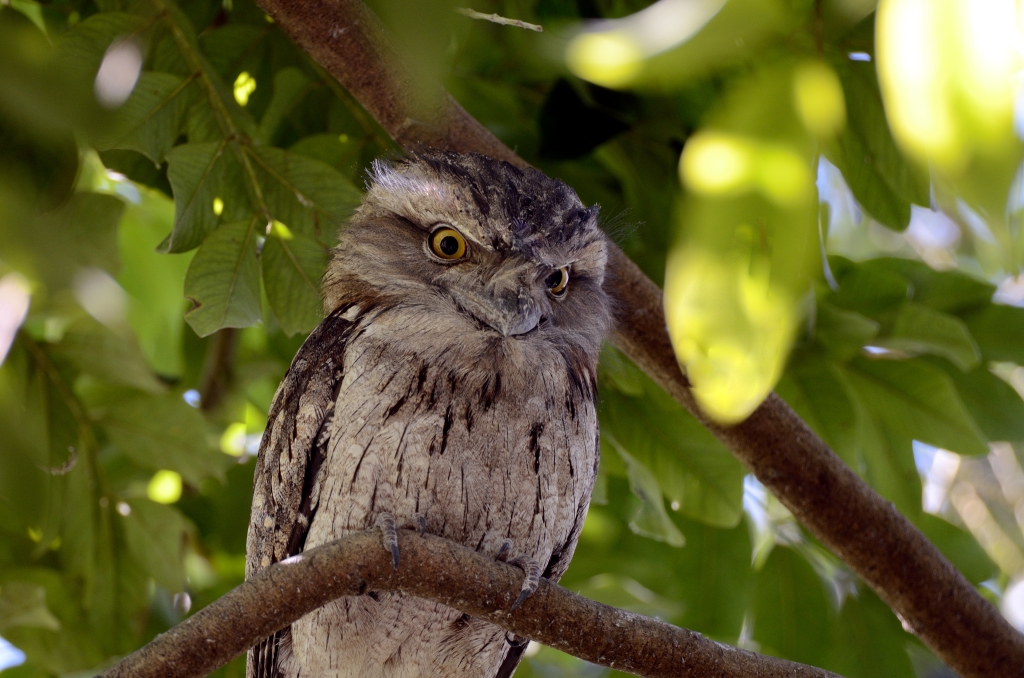
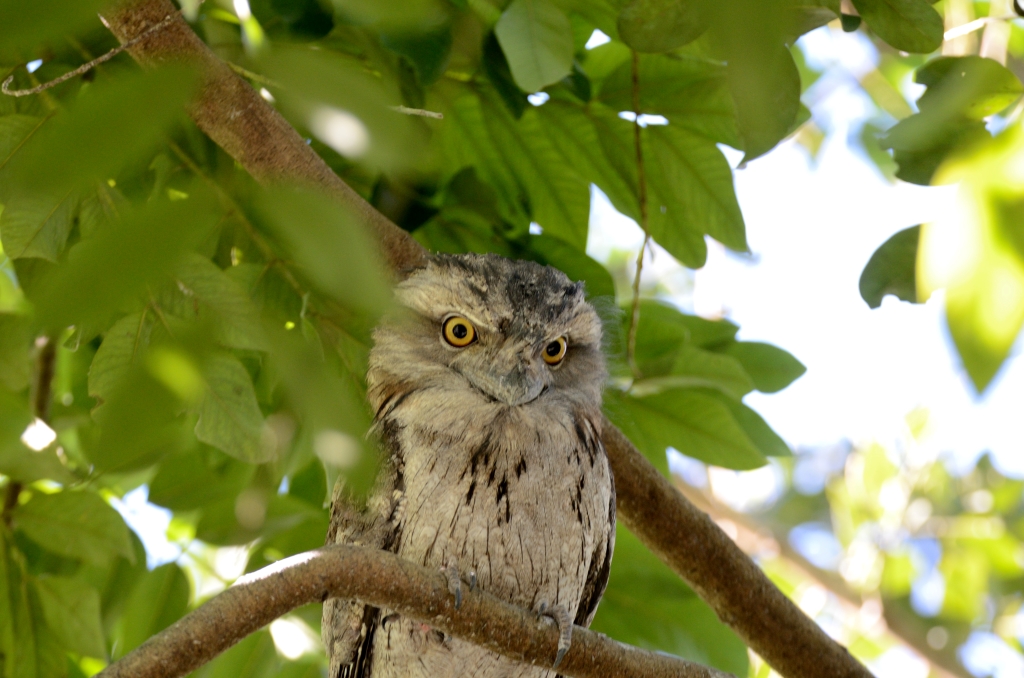
The Tawny Frogmouth (Podargus strigoides) is becoming a favorite of mine, because they are so hard to find. The Lord has given them such camouflage and an ability to freeze when threatened, they are a challenge. We were fortunate this time while visiting the Wings of Asia aviary at Zoo Miami. By following the feeder, that enjoys the birds as much as just working there, he helped us find the new Tawny Frogmouth. They now have two of them. This new one is more active and alert. Could it be that the feeder had a cup with 4 mice in it?
Tawny Frogmouth at Wings of Asia by Dan
We actually saw Tawny with his eyes open and I even got a short video of him opening that mouth that gives them their name.
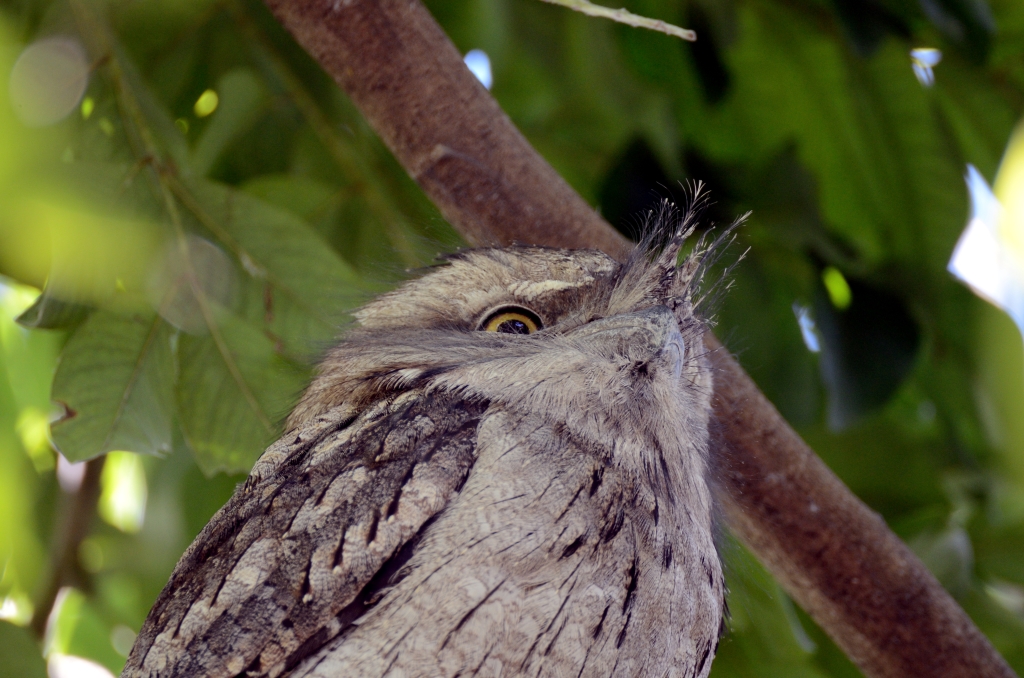
“Masters of Camouflage Related to Oilbirds, Whip-poor-wills, and Nighthawks, the Tawny Frogmouth’s excellent camouflage covering makes it look like dried leaves. When frightened, the bird freezes in plosition and, with its cryptic colorations, looks like broken bramches.” (Amazing Bird Facts and Trivia, p 135) Isn’t the Lord’s Wisdom fantastic?
Tawny Frogmouth at Wings of Asia by Dan
Another book, (National Geographic, Bird Coloration, p 150-151). says this: “Some birds hide not by being hard to discern, but by appearing not to be birds. The birds that best mimic inanimate objects are found in two groups of distantly related nightjars, the potoos in the Neotropics and the frogmouths in tropical Asia and Australia. Species in both of these groups hunt flying insects at night and rest during the day. Potoos and frogmouths use a strategy to hide during the day that differs … They hide conspicuously in view. The strategy…is to look exactly like an extension of a branch on which the bird sit.”
“Deliver me, O LORD, from mine enemies: I flee unto thee to hide me. (Psalms 143:9 KJV)
Tawny Frogmouth at Wings of Asia by Dan
“They are named for their large flattened hooked bills and huge frog-like gape, which they use to capture insects. Their flight is weak. Their longer bristles which may exist to protect the eyes from insect prey. Tawny frogmouths are large, big-headed birds that can measure from 13 to 21 in (34 to 53 cm) long….stocky and compact with rounded wings and short legs. They have wide, heavy olive-grey to blackish bills that are hooked at the tip and topped with distinctive tufts of bristles.Their eyes are large, yellow, and frontally placed, a trait shared by owls” (Wikipedia)
This slideshow requires JavaScript.
*
This video is of two segments. The keeper tried to get him to come down and then we came back a second time. Several photographers were waiting to get a photo of him coming down, but I guess this calls for another excuse to visit the Wings of Asia.
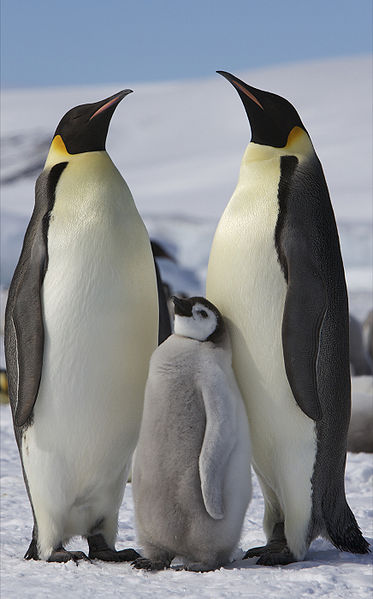
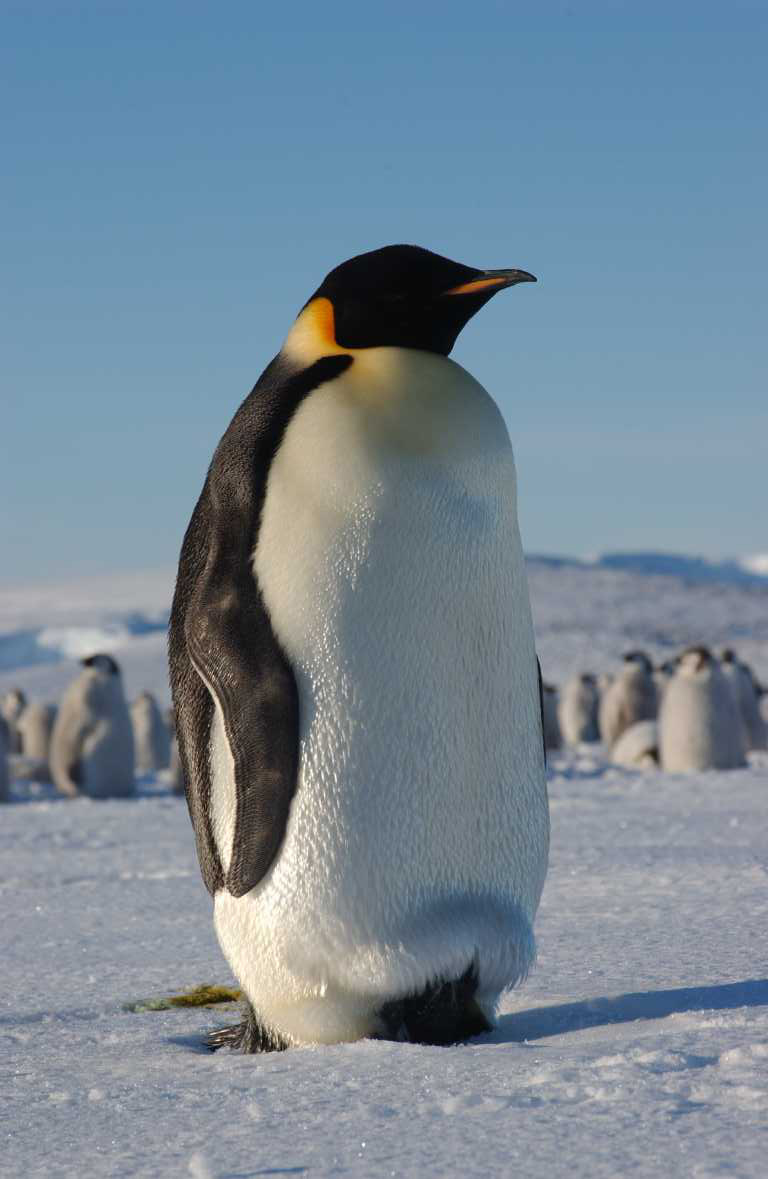
Once there was a penguin named Lizzy who lived with many other penguins in cold Antarctica.
As the penguins traveled through the winter, Lizzy watched with great interest all the eggs that lay on the penguin dad’s feet. Lizzy was too young to go fishing with all the mother penguins that year, so she was traveling with the father penguins to someplace slightly warmer.
Eventually all of the penguins came to an enormous, icy lake that was too large to go around. The penguin parents huddled together and decided to build a catapult out of some wood they brought with them to build their homes. The catapult would shoot penguins one at a time over the lake. The penguins decided this because the dad penguins could not cross the lake with eggs; and, if they all traveled across it at once, the ice might break. The penguins decided the eggs would be safe because there was a lot of snow on the other side of the lake which would cushion their landing.
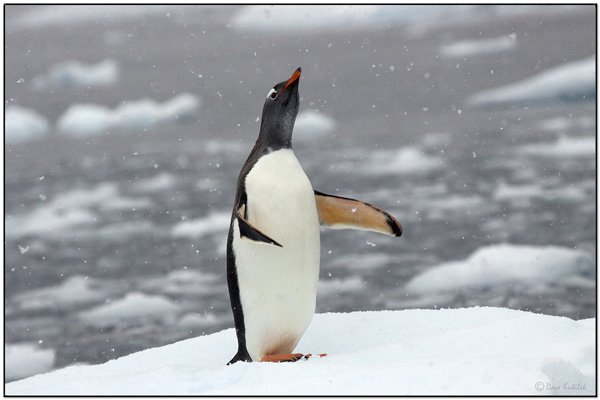
Gentoo Penguin – Paradise Bay
Lizzy helped build the catapult and it wasn’t long before it was finally completed.
The first penguin had to be launched by the catapult, but no penguin was willing to do it. Lizzy was a brave penguin and decided to go first.
The catapult was launched, and Lizzy flew through the air. She was actually flying!
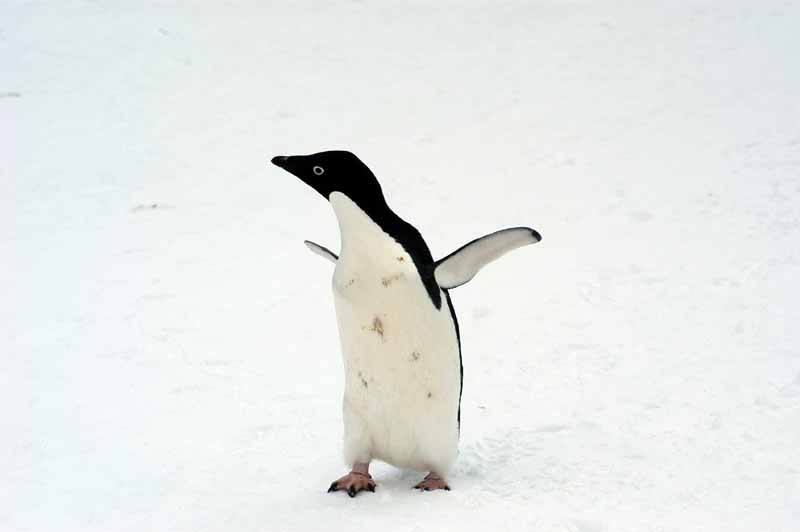
Adelie Penguin (Pygoscelis adeliae) by Bob-Nan
Lizzy landed softly and safely in the snow on the other side of the lake and waved to the other penguins. One by one, the rest of the penguins catapulted over the lake with the eggs. When they were all safely on the other side, they traveled to their new home.
The End
Lee’s Addition:
“Be anxious for nothing, but in everything by prayer and supplication, with thanksgiving, let your requests be made known to God; (Philippians 4:6 NKJV)
Thanks, Emma, for another delightful story. Lizzy is one brave little Penguin and also willing to help out.
I am sure the penguins, even though not humans, were thankful to their Creator for taking care of them.
“But now ask the beasts, and they will teach you; And the birds of the air, and they will tell you; Or speak to the earth, and it will teach you; And the fish of the sea will explain to you. Who among all these does not know That the hand of the LORD has done this, In whose hand is the life of every living thing, And the breath of all mankind? (Job 12:7-10 NKJV)
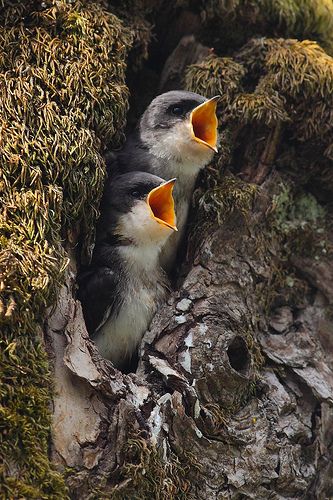
Tree Swallows Ridgefield National Wildlife Refuge by jeremyjonkman on Flickr From Pinterest
“Being enriched in every thing to all bountifulness, which causeth through us thanksgiving to God. (2 Corinthians 9:11 KJV)
While thinking about a post for this Thanksgiving, I looked back to see what had been written in the past. Wow! Had forgotten so many have been posted. From way back in 2008, the first year of the blog until last year when I got wound up and posted several. So, today, the day before Thanksgiving, it’s time to bring those back out to review. Part of Thanksgiving is remembering all our blessings from the past.
Happy Thanksgivingwas written in 2008. (I actually still had some color in my hair.) :))
I can see I am going to be challenged to come up with something for tomorrow. But the following verse assures me, there are still many blessings to recount. Your visits to the blog are a great blessings.
Through the LORD’s mercies we are not consumed, Because His compassions fail not. They are new every morning; Great is Your faithfulness. (Lamentations 3:22-23 NKJV)
Give thanks unto the LORD, call upon his name, make known his deeds among the people. Sing unto him, sing psalms unto him, talk ye of all his wondrous works. (1 Chronicles 16:8-9 KJV)
O give thanks unto the LORD; for he is good; for his mercy endureth for ever. (1 Chronicles 16:34 KJV)
As we enter into the Thanksgiving Holiday week, with visits with family and friends, meals to prepare and eat, parades and games to watch, don’t forget to be thankful for our Creator of all this. He is Worthy of our Thanksgiving and Worship.
I am thankful for all the fantastic friends we have met through this blog (you, the readers). I am also thankful for those that contribute to the blog, like James J. S. Johnson (Dr. Jim) and Golden Eagle (Baron Brown) with which we recently went on a birdwatching adventure. Thankful for our other contributors as well.
Finally cleaned up the photos from that adventure and many are in the slideshow. Definitely thankful for all the birds the Lord gave us. He is “Worthy of Worship”
This slideshow requires JavaScript.
“Worthy of Worship” ~ Faith Baptist Orchestra
WORTHY OF WORSHIP
(York/Blankenship)
Worthy of Worship, worthy of praise,
Worthy of honor and glory,
Worthy of all the glad songs we can sing,
Worthy of all of the offerings we bring.
You are worthy, Father, Creator.
You are worthy, Savior, Sustainer.
You are worthy, worthy and wonderful;
Worthy of worship and praise.
Worthy of reverence, worthy of fear,
Worthy of love and devotion;
Worthy of bowing and bending of knees,
Worthy of all this, and added to these…
You are worthy, Father, Creator.
You are worthy, Savior, Sustainer.
You are worthy, worthy and wonderful;
Worthy of worship and praise.
Almighty Father, Master, and Lord,
King of all kings and Redeemer,
Wonderful Counselor, Comforter, Friend,
Savior and Source of our life without end.
You are worthy, Father, Creator.
You are worthy, Savior, Sustainer.
You are worthy, worthy and wonderful;
Worthy of worship and praise.
CHAPTER 5. Peter Learns Something He Hadn’t Guessed.
Running over to the Old Orchard very early in the morning for a little gossip with Jenny Wren and his other friends there had become a regular thing with Peter Rabbit. He was learning a great many things, and some of them were most surprising.
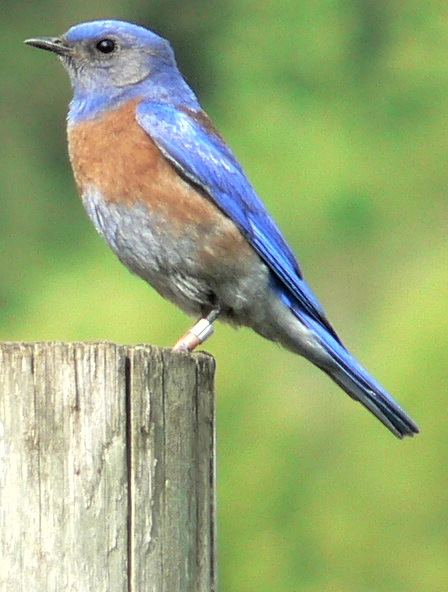
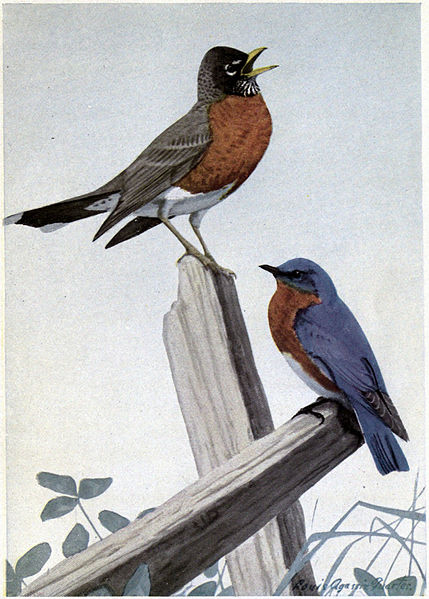
Now two of Peter’s oldest and best friends in the Old Orchard were Winsome Bluebird and Welcome Robin. Every spring they arrived pretty nearly together, though Winsome Bluebird usually was a few days ahead of Welcome Robin. This year Winsome had arrived while the snow still lingered in patches. He was, as he always is, the herald of sweet Mistress Spring. And when Peter had heard for the first time Winsome’s soft, sweet whistle, which seemed to come from nowhere in particular and from everywhere in general, he had kicked up his long hind legs from pure joy. Then, when a few days later he had heard Welcome Robin’s joyous message of “Cheer-up! Cheer-up! Cheer-up! Cheer-up! Cheer!” from the tiptop of a tall tree, he had known that Mistress Spring really had arrived.
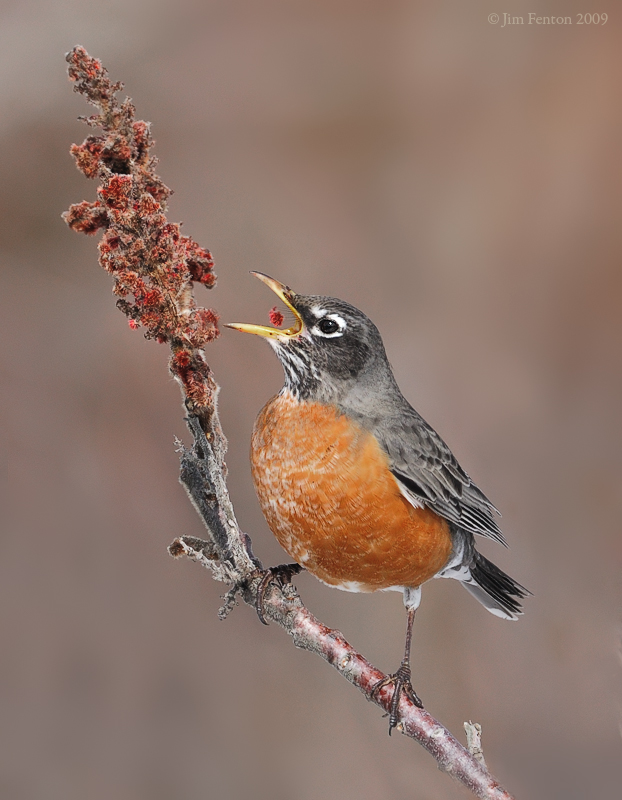
Robin Eating by Jim Fenton
Peter loves Winsome Bluebird and Welcome Robin, just as everybody else does, and he had known them so long and so well that he thought he knew all there was to know about them. He would have been very indignant had anybody told him he didn’t.
“Those cousins don’t look much alike, do they?” remarked Jenny Wren, as she poked her head out of her house to gossip with Peter.
“What cousins?” demanded Peter, staring very hard in the direction in which Jenny Wren was looking.
“Those two sitting on the fence over there. Where are your eyes, Peter?” replied Jenny rather sharply.
Peter stared harder than ever. On one post sat Winsome Bluebird, and on another post sat Welcome Robin. “I don’t see anybody but Winsome and Welcome, and they are not even related,” replied Peter with a little puzzled frown.
“Tut, tut, tut, tut, tut, Peter!” exclaimed Jenny Wren. “Tut, tut, tut, tut, tut! Who told you any such nonsense as that? Of course they are related. They are cousins. I thought everybody knew that. They belong to the same family that Melody the Thrush and all the other Thrushes belong to. That makes them all cousins.”
“What?” exclaimed Peter, looking as if he didn’t believe a word of what Jenny Wren had said. Jenny repeated, and still Peter looked doubtful.
Then Jenny lost her temper, a thing she does very easily. “If you don’t believe me, go ask one of them,” she snapped, and disappeared inside her house, where Peter could hear her scolding away to herself.
The more he thought of it, the more this struck Peter as good advice. So he hopped over to the foot of the fence post on which Winsome Bluebird was sitting. “Jenny Wren says that you and Welcome Robin are cousins. She doesn’t know what she is talking about, does she?” asked Peter.
Winsome chuckled. It was a soft, gentle chuckle. “Yes,” said he, nodding his head, “we are. You can trust that little busybody to know what she is talking about, every time. I sometimes think she knows more about other people’s affairs than about her own. Welcome and I may not look much alike, but we are cousins just the same. Don’t you think Welcome is looking unusually fine this spring?”
“Not a bit finer than you are yourself, Winsome,” replied Peter politely. “I just love that sky-blue coat of yours. What is the reason that Mrs. Bluebird doesn’t wear as bright a coat as you do?”
“Go ask Jenny Wren,” chuckled Winsome Bluebird, and before Peter could say another word he flew over to the roof of Farmer Brown’s house.
Back scampered Peter to tell Jenny Wren that he was sorry he had doubted her and that he never would again. Then he begged Jenny to tell him why it was that Mrs. Bluebird was not as brightly dressed as was Winsome.
“Mrs. Bluebird, like most mothers, is altogether too busy to spend much time taking care of her clothes; and fine clothes need a lot of care,” replied Jenny. “Besides, when Winsome is about he attracts all the attention and that gives her a chance to slip in and out of her nest without being noticed. I don’t believe you know, Peter Rabbit, where Winsome’s nest is.”
Peter had to admit that he didn’t, although he had tried his best to find out by watching Winsome. “I think it’s over in that little house put up by Farmer Brown’s boy,” he ventured. “I saw both Mr. and Mrs. Bluebird go in it when they first came, and I’ve seen Winsome around it a great deal since, so I guess it is there.”
“So you guess it is there!” mimicked Jenny Wren. “Well, your guess is quite wrong, Peter; quite wrong. As a matter of fact, it is in one of those old fence posts. But just which one I am not going to tell you. I will leave that for you to find out. Mrs. Bluebird certainly shows good sense. She knows a good house when she sees it. The hole in that post is one of the best holes anywhere around here. If I had arrived here early enough I would have taken it myself. But Mrs. Bluebird already had her nest built in it and four eggs there, so there was nothing for me to do but come here. Just between you and me, Peter, I think the Bluebirds show more sense in nest building than do their cousins the Robins. There is nothing like a house with stout walls and a doorway just big enough to get in and out of comfortably.”
Peter nodded quite as if he understood all about the advantages of a house with walls. “That reminds me,” said he. “The other day I saw Welcome Robin getting mud and carrying it away. Pretty soon he was joined by Mrs. Robin, and she did the same thing. They kept it up till I got tired of watching them. What were they doing with that mud?”
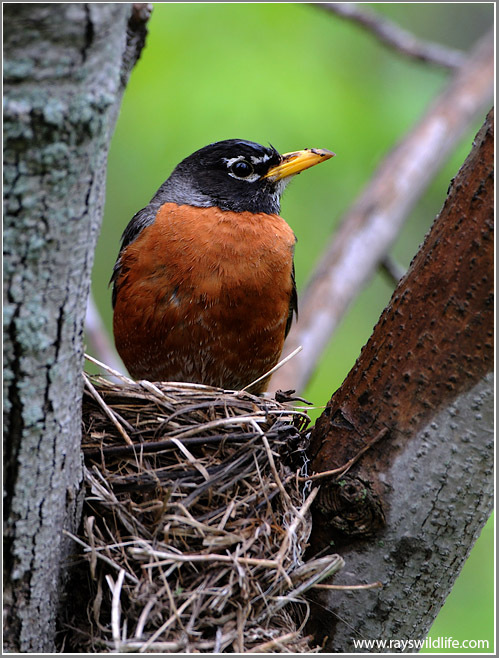
American Robin (Turdus migratorius) in nest by Ray
“Building their nest, of course, stupid,” retorted Jenny. “Welcome Robin, with that black head, beautiful russet breast, black and white throat and yellow bill, not to mention the proud way in which he carries himself, certainly is a handsome fellow, and Mrs. Robin is only a little less handsome. How they can be content to build the kind of home they do is more than I can understand. People think that Mr. Wren and I use a lot of trash in our nest. Perhaps we do, but I can tell you one thing, and that is it is clean trash. It is just sticks and clean straws, and before I lay my eggs I see to it that my nest is lined with feathers. More than this, there isn’t any cleaner housekeeper than I am, if I do say it.
“Welcome Robin is a fine looker and a fine singer, and everybody loves him. But when it comes to housekeeping, he and Mrs. Robin are just plain dirty. They make the foundation of their nest of mud,—plain, common, ordinary mud. They cover this with dead grass, and sometimes there is mighty little of this over the inside walls of mud. I know because I’ve seen the inside of their nest often. Anybody with any eyes at all can find their nest. More than once I’ve known them to have their nest washed away in a heavy rain, or have it blown down in a high wind. Nothing like that ever happens to Winsome Bluebird or to me.”
Jenny disappeared inside her house, and Peter waited for her to come out again. Welcome Robin flew down on the ground, ran a few steps, and then stood still with his head on one side as if listening. Then he reached down and tugged at something, and presently out of the ground came a long, wriggling angleworm. Welcome gulped it down and ran on a few steps, then once more paused to listen. This time he turned and ran three or four steps to the right, where he pulled another worm out of the ground.
“He acts as if he heard those worms in the ground,” said Peter, speaking aloud without thinking.
“He does,” said Jenny Wren, poking her head out of her doorway just as Peter spoke. “How do you suppose he would find them when they are in the ground if he didn’t hear them?”
“Can you hear them?” asked Peter.
“I’ve never tried, and I don’t intend to waste my time trying,” retorted Jenny. “Welcome Robin may enjoy eating them, but for my part I want something smaller and daintier, young grasshoppers, tender young beetles, small caterpillars, bugs and spiders.”
Peter had to turn his head aside to hide the wry face he just had to make at the mention of such things as food. “Is that all Welcome Robin eats?” he asked innocently.
“I should say not,” laughed Jenny. “He eats a lot of other kinds of worms, and he just dearly loves fruit like strawberries and cherries and all sorts of small berries. Well, I can’t stop here talking any longer. I’m going to tell you a secret, Peter, if you’ll promise not to tell.”
Of course Peter promised, and Jenny leaned so far down that Peter wondered how she could keep from falling as she whispered, “I’ve got seven eggs in my nest, so if you don’t see much of me for the next week or more, you’ll know why. I’ve just got to sit on those eggs and keep them warm.”
*
*
What bird family do the Bluebird and Robin belong to?
Why is it good that Mrs. Bluebird isn’t brightly dressed?
When the Robin runs and then stops, what is he doing? What might he find to eat?
What colors are the Robin’s head, breast, throat and bill?
What does the Robin’s song sound like?
Should we have an attitude like the Robin’s Song?
“Is anyone among you suffering? Then he must pray. Is anyone cheerful? He is to sing praises. (James 5:13 NASB)
“A joyful heart makes a cheerful face, But when the heart is sad, the spirit is broken. (Proverbs 15:13 NASB)
“Even the stork in the sky Knows her seasons; And the turtledove and the swift and the thrush Observe the time of their migration; But My people do not know The ordinance of the LORD. (Jeremiah 8:7 NASB)
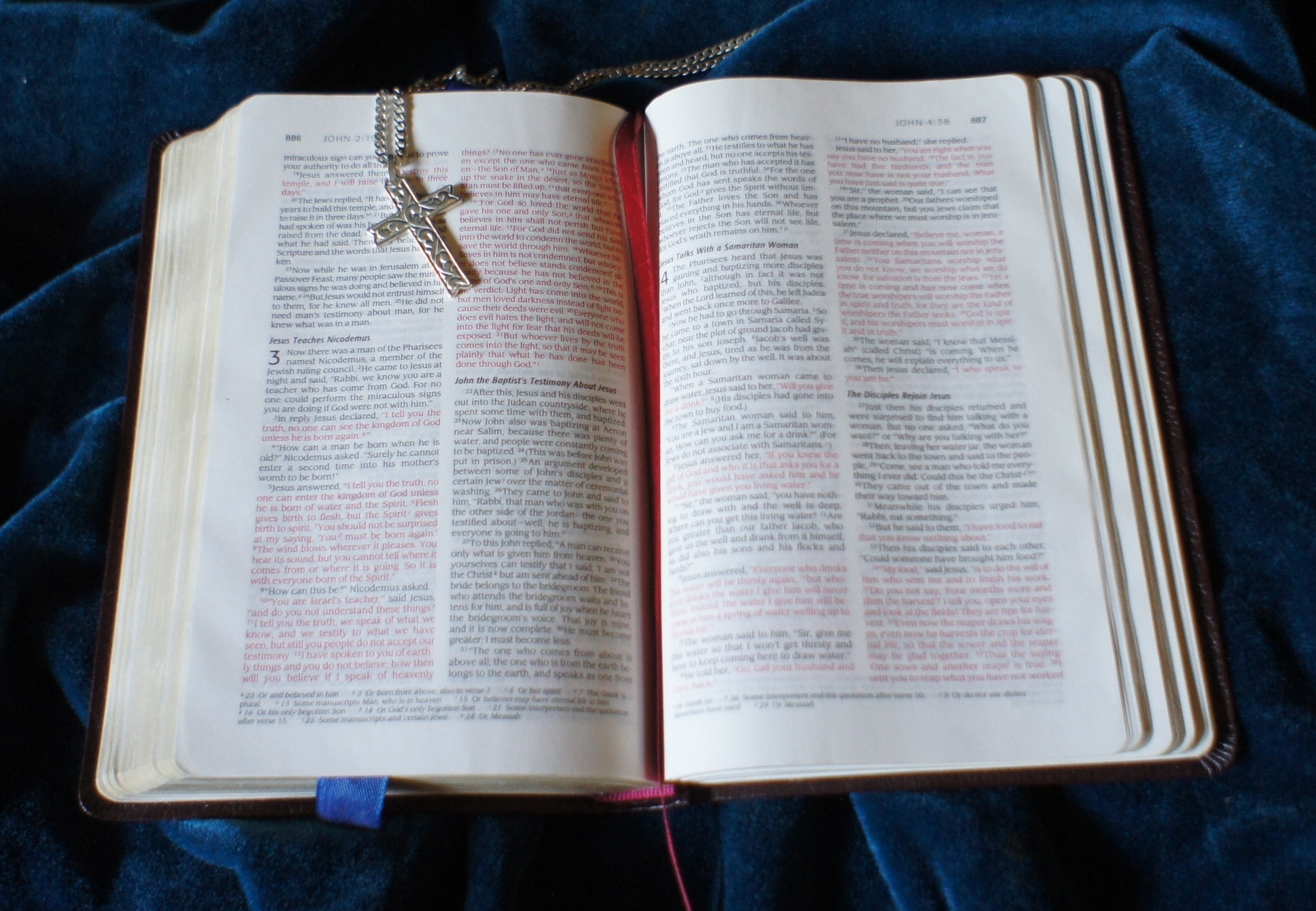
Boys and girls of all ages this is GOLDEN EAGLE circling in for a landing on this beautiful world that Jesus Christ created. To learn anything, to understand anything, we must have an open Bible! The other day, I heard of a 24 year-old lady that had never read the Word of God. She had no idea that the rainbow had any meaning whatsoever. Do you know the meaning behind the rainbow? Get your Bible out and open it to Genesis chapter 9. There you will find the meaning to the rainbow.
You humans should thank God that you can read and appreciate beauty. Although I write these things once in a while, you do know that birds cannot really write and read. However, God created you to do those things and so much more.
“Blessed (happy) is the man…his delight is in the law of the Lord; and in his law doth he meditate day and night. And he shall be like a tree planted by the rivers of water. that bringeth forth his fruit in his season; his leaf also shall not wither; and whatsoever he doeth shall prosper” Psalm 1:1-3
The Word of God will bring you true success. It is no accident that you are presently reading this article. I have chosen to write this and you have chosen to read it. However, even though we both have a free will and can do what we want to do, Jesus Christ is in control of every single thing that happens in the entire Universe. He is in control of everything that you and I do, say, and think! Why even a sparrow doesn’t fall out of a tree without the Heavenly Father.
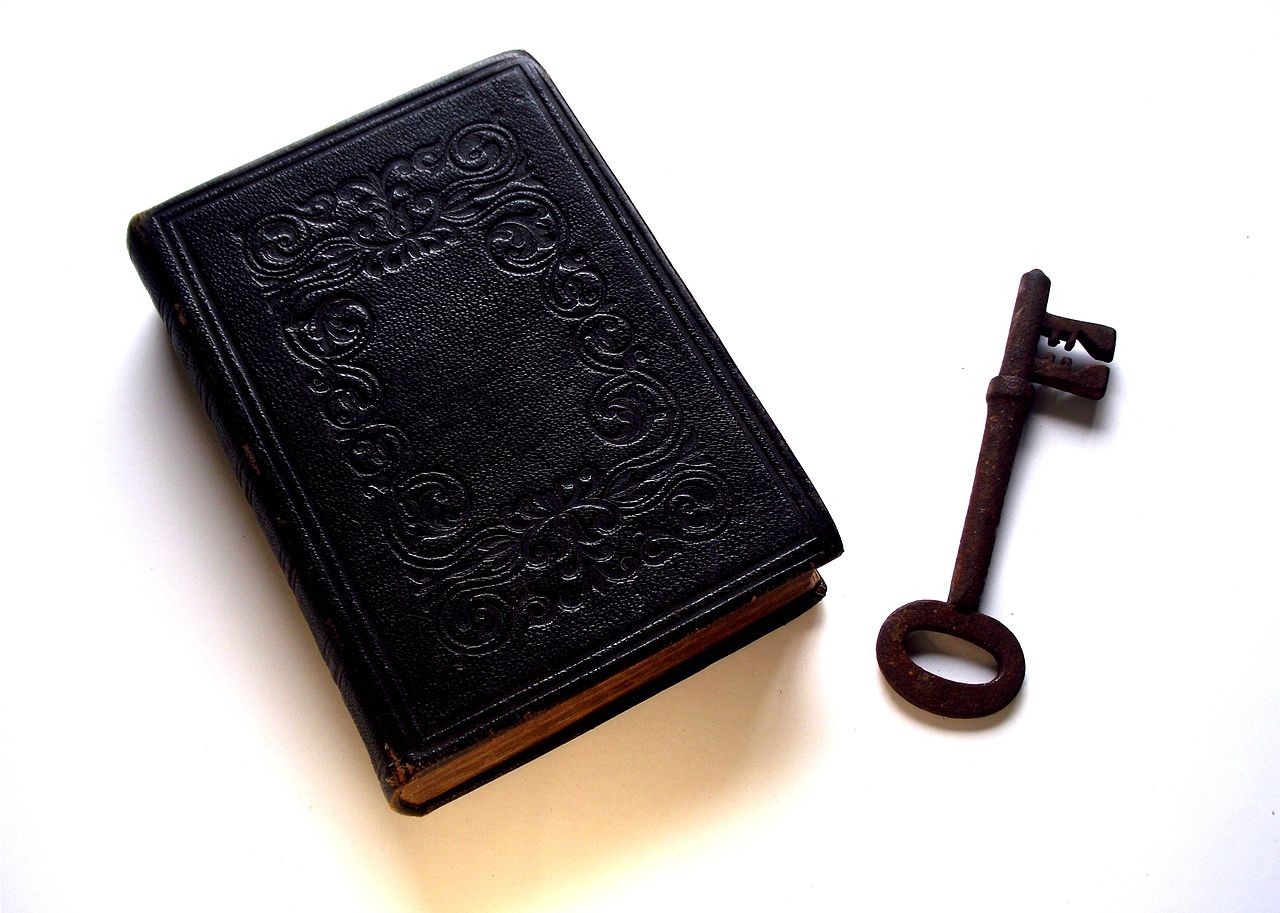
The Key to True Knowledge
The question for you to answer is this: ARE YOU SAVED? You are either saved or lost. This has nothing to do with are you good or bad because the Bible says that “all have sinned, and come short of the glory of God.” (Romans 3:23) You’re made in the “image of God” and you will live forever somewhere according to the Bible. You can go to Heaven if you trust Jesus Christ as your personal Saviour. When Jesus died on the cross, He shed His blood and paid for your sins as your substitute. He stood in our place and took the punishment from God the Father so that you could be forgiven! You must personally accept Jesus by faith. You know, no one can eat your breakfast for you. You individually eat your breakfast and then your body makes use of the food to give you energy for the day. You must personally receive Jesus into your life!
“But as many as received him, to them gave he power to become the sons of God, even to them that believe on his name…” (John 1:12)
Golden Eagle has learned a few things as I have soared over this planet. You must study things with an open Bible. The Bible tells us where the first humans came from! You know that scientist have landed a washing machine size robot on a comet the other day. That thing has been flying around for 10 years and just arrived at its destination! That shows us how big this universe is. The comet is over 300 million miles away from Earth. The people who sent that robot to the comet are trying to find out the answer to the question: WHERE DID WE COME FROM. And that is a great question. But, they will never find the answer until they open their Bibles and begin to read the first few chapters in the book of Genesis. God created Adam on the sixth day of Creation week. He took the elements in the earth, the dust of the earth and “breathed into his nostrils the breath of life; and man became a living soul.” (Genesis 2:7)
When you study Science or History or God or whatever, you need to open your Bible and see what God has to say!
The Earth rotates around the sun. We should rotate around Jesus Christ, the Son of God. The sun gives light to the earth and Jesus is the Light of the world. Tonight, you will fall asleep and in the morning you will wake up. That is God’s way of trying to teach us that sleep is like death, but you wake up in the morning and that is like the resurrection day!
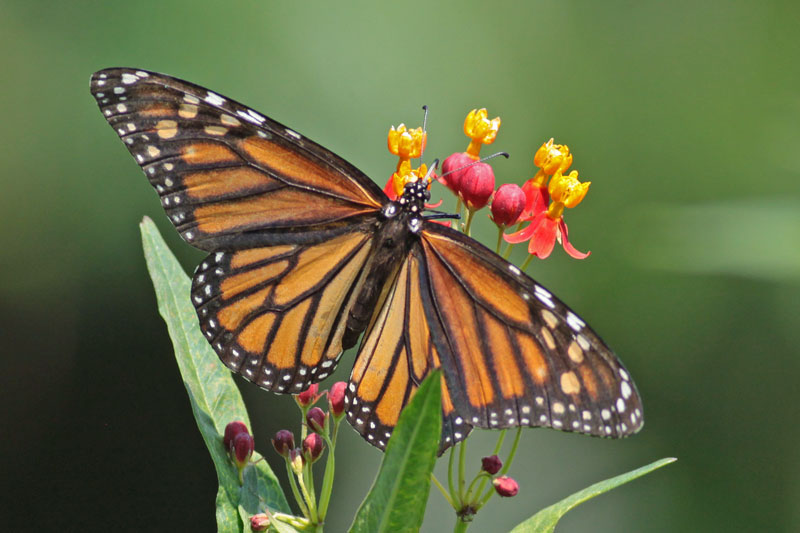
Monarch Butterfly by Margaret Sloan
A worm goes into a cocoon and comes out a beautiful butterfly! Metamorphosis, a change teaches us that Jesus Christ will give us a new body in the future if we are saved! Humans sweat because of Adam’s sin in the Garden of Eden! The Earth is covered with water because of Noah’s flood. In fact, four-fifths of the Earth is covered with water if you count the oceans, the seas, the rivers, the streams, and the lakes!
Every snowflake is different, every blade of grass is different, every bird is different! And each one of you are unique and different. That is how God has made you! We could talk about this forever! In fact, God’s people in Heaven will talk about this and learn about God and His Universe forever. You will have a real body and be in a real Heaven with real GOLDEN STREETS!
“AND THE BUILDING OF THE WALL OF IT WAS OF JASPER: AND THE CITY WAS PURE GOLD, LIKE UNTO CLEAR GLASS…AND THE STREET OF THE CITY WAS PURE GOLD, AS IT WERE TRANSPARENT GLASS. (Revelation 21)
The question you need to ask yourself is this: will you be in Heaven with Jesus Christ in that day? And remember we are only one heartbeat away from eternity. Why not ask Jesus to save you this very moment? “For whosoever shall call upon the name of the LORD shall be saved.” (Romans 10:13)
Thanks for flying with me. And thanks for having an open Bible! Read some of God’s Word today! I would love to fly to the comet later today, but I know I will not be able to get beyond the atmosphere, so I might just head back to my roost for the night and gaze into the starry heavens. You never know what you might see! Have a great one…
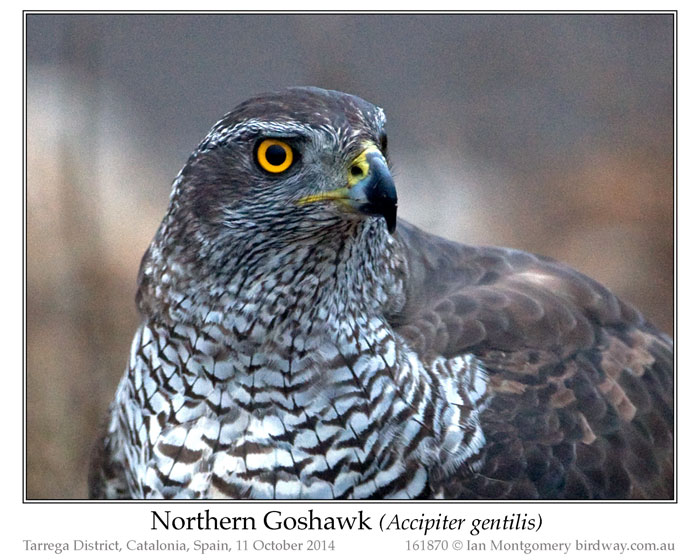
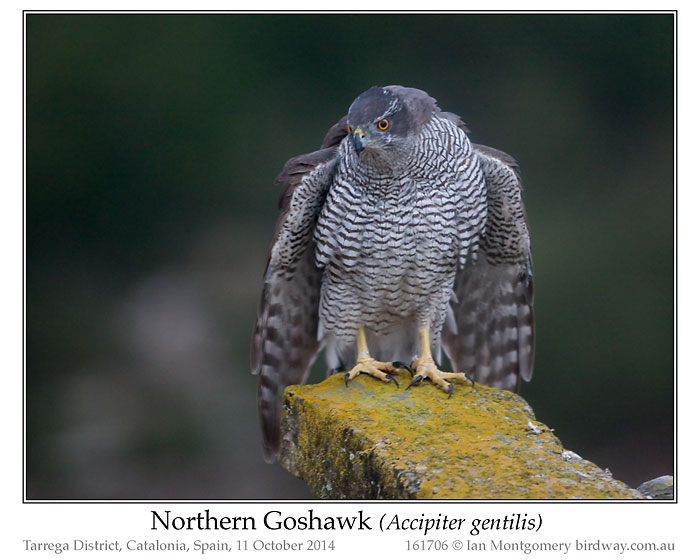
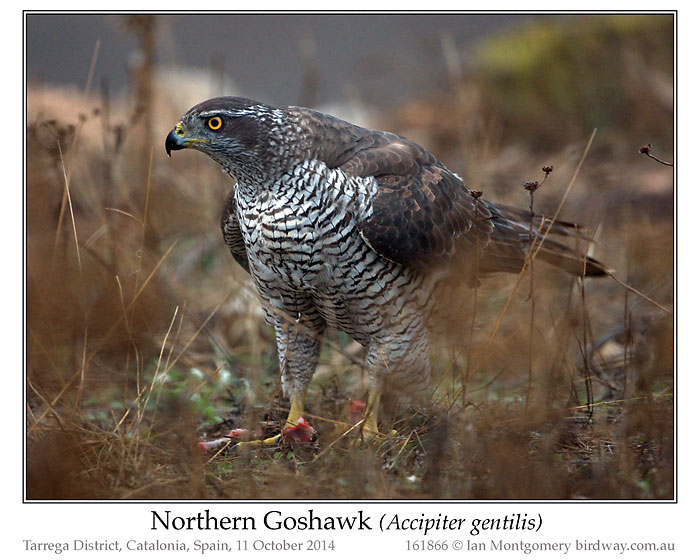
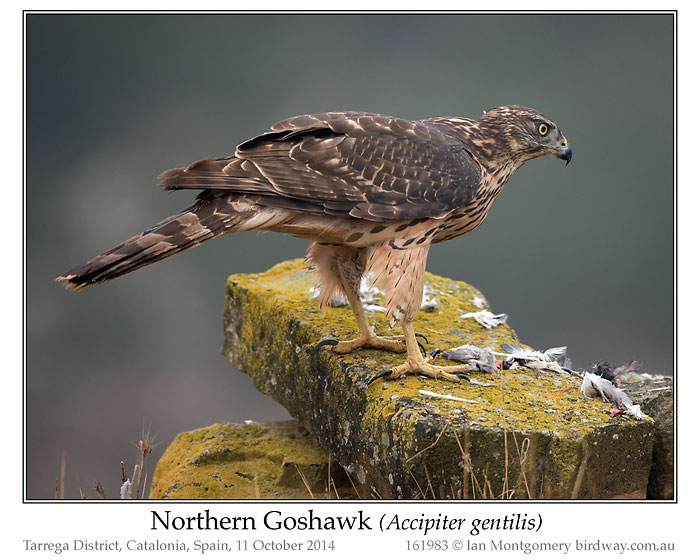
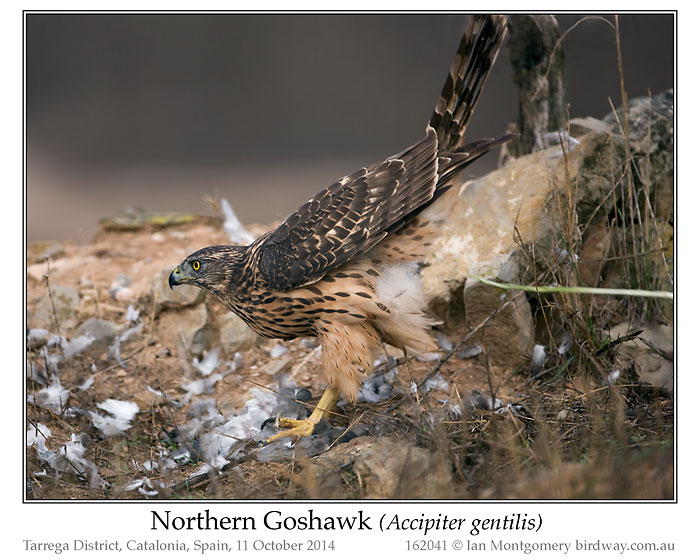
Ian’s Bird of the Week – Northern Goshawk by Ian Montgomery
Newsletter ~ 11/17/14
I got so absorbed in recounting my experiences in Catalonia, that I forgot to mention that I’ve been home in North Queensland for several weeks.
The piece about the effects of diclofenac prompted some interesting responses. It was pointed out that it causes kidney not liver failure in vultures, my apologies, and that a safe and effective substitute in both humans and livestock is the anti-inflammatory meloxicam. It’s sold here as Mobic, which I take sometimes when I wayward spinal disc misbehaves. I also received a link to this article by the Vulture Conservation Foundation which has managed to get the EU to do an investigation into the effects of diclofenac: http://www.4vultures.org/our-work/campaigning-to-ban-diclofenac-in-europe/.
On the second day of our stay in raptor country in the Pyrenees with Birding in Spain we – my sister Gillian joined me for this one – were taken by Steve West to a hide at a Northern Goshawk feeding station before sunrise – goshawks are earlier risers than I am normally and are shy. Here the goshawks are fed regularly on chicken carcasses and fresh pigeon, the product of a culling programme by the local council. It was a misty, chilly, gloomy morning – sunrise was the time of day rather than an event – and the first bird to arrive, the adult female in photos 1 and 2, was barely visible. The second photo was taken at 1/3 of a second exposure at 1600 ISO and my tripod, inconvenient for travel, proved its worth yet again.
Adult females are more strongly barred and much larger than males (to protect succulent-looking nestlings). This one is partially spreading its wings and tail near the food in a posture that looks like a rudimentary ‘mantling’ display. This is usually used by hawks as a threat display to discourage other ones from interfering with their prey. In this case, I suspect it was signalling the presence of food to the juvenile goshawk, third photo, who appeared shortly afterwards. First year juvenile Northern Goshawks are brown with buff, almost cinnamon underparts and are streaked rather than barred. Similar juvenile plumages occur in other close relatives in the Accipiter genus such as the Brown Goshawk (A. fasciatus) and Collared Sparrowhawk (A. cirrocephalus), both common in Australia; see http://www.birdway.com.au/accipitridae/brown_goshawk/source/brown_goshawk_32464.htm and http://www.birdway.com.au/accipitridae/collared_sparrowhawk/source/collared_sparrowhawk_62859.htm for examples of their juvenile plumage. Note, incidentally the ‘beetle-brow’ characteristic also of the Brown Goshawk that gives the larger goshawks their fierce expression.
The adult female moved aside and let the juvenile have the pigeon prey and the juvenile then adopted the possessive mantling display with spread wings and tail and fluffed-out feathers of the mantle, just below the neck.
Mother, I presume, tackled a piece of chicken carcass and carried it down onto the ground closer to the hide, but partially obscured by dried grass and other vegetation.
The sixth photo shows the juvenile somewhat later with the remains of the pigeon. This was a very large bird too, as you can perhaps judge from its appearance, so I concluded that it was female too. ‘Huge’ is perhaps a better description, as the Northern Goshawk is easily the world’s largest of the nearly 50 or so species of Accipiter – (typical hawks comprising larger goshawks and smaller sparrowhawks, though ‘hawk’ is also used in North America to name other raptors such as those in the genus Buteo aka ‘Buzzard’ in British English). The female is up to 65cm/26in in length with a wingspan of up to 120cm/47in and a weight of up to 2.0kg/4.5lb, comparable in size with many Buzzards. All the Accipiter hawks tackle relatively large prey, mainly birds and some mammals. They hunt by surprise and pursuit and have rounded wings, long tails and fast reflexes for great manoeuvrability in forests. I suspect that Linnaeus used the specific moniker ‘gentilis’ in the sense of ‘noble’ rather than ‘gentle’. ‘Goshawk’ comes from the Old English ‘göshafoc’ meaning goose hawk, no mere chicken hawk.
This was another species that had aroused my interest in my field guide as an Irish teenager, and hadn’t seen before this trip. It’s a very rare vagrant in Ireland and was then only an occasional breeder in Britain though widespread if uncommon elsewhere in temperate regions of the Northern Hemisphere. Since then it has become re-established in Britain with a breeding population of 300-400 pairs.
Both birds lightened their load, as many raptors do, before taking flight, as the juvenile is doing in the seventh photo. There’s a photo on the website of the female doing the same thing: http://www.birdway.com.au/accipitridae/northern_goshawk/source/northern_goshawk_161882.htm. Even nobles have to perform basic functions: don’t stand behind or below a well-fed raptor :-).
“And these you shall regard as an abomination among the birds; they shall not be eaten, they are an abomination: the eagle, the vulture, the buzzard, the kite, and the falcon after its kind; every raven after its kind, the ostrich, the short-eared owl, the sea gull, and the hawk after its kind; (Leviticus 11:13-16 NKJV)
What a beautiful family of birds. Ian always has such great photos and adventures to share with us. Thanks, Ian.















 Lee's Birdwatching Adventures Plus