Australian King Parrot by Bellamoon Nature

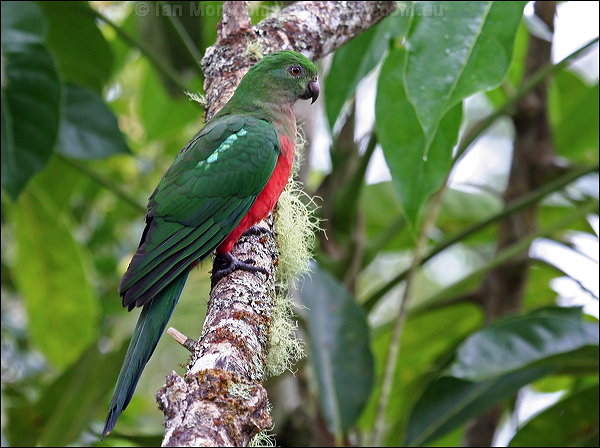
Australian King Parrot (Alisterus scapularis) Female by Ian

Australian King Parrot (Alisterus scapularis) Female by Ian

For God is the King of all the earth: sing ye praises with understanding. (Psalms 47:7 KJV)

Australian King Parrot by Bellamoonnature

*

KING PARROT – One of the most spectacular, brilliantly coloured of all parrots endemic to Eastern Australia. Male king parrots are the only Australian parrot with a completely red head, females have a green head and breast. Found in humid and heavily forested regions. Thank you for viewing Enjoy!

“Some birds are not meant to be caged, that’s all. Their feathers are too bright, their songs too sweet and wild. So you let them go, or when you open the cage to feed them they somehow fly out past you. And the part of you that knows it was wrong to imprison them in the first place rejoices, but still, the place where you live is that much more drab and empty for their departure.” – Stephen King.

“In order to see birds it is necessary to become part of the silence” – Robert Lynd

Australian King Parrots belong to the Psittacidae – Parrots Family.

Australian King Parrots range from North and Central to Southern Victoria. They are frequently seen in small groups with various species of rosella. Further from their normal eastern upland habitat, they are also found in Canberra during winter, the outer western suburbs and north shore of Sydney, and the Carnarvon Gorge in Central Queensland

There are three species of king parrots – medium-sized parrots in the genus Alisterus; the Australian King Parrot (Alisterus scapularis), the Papuan King Parrot (Alisterus chloropterus), and the Moluccan King Parrot (Alisterus amboinensis). The three species are found in Eastern Australia, New Guinea, and Indonesian islands including the Maluku islands respectively. Predominantly of red and green plumage, the long tailed parrots are related to the genera Aprosmictus and Polytelis.

(Information – Bellamoonnature and Wikipedia)


Moluccan King Parrot (Alisterus amboinensis) ©WikiC - Brevard_Zoo

Moluccan King Parrot (Alisterus amboinensis) ©WikiC – Brevard_Zoo

Let us come before his presence with thanksgiving, and make a joyful noise unto him with psalms. For the LORD is a great God, and a great King above all gods. (Psalms 95:2-3 KJV)

Lee’s Addition:

I trust you enjoy this video by Bellamoon. My computer is off line, in fact, not even set up. A new flooring is being installed in that room and it is getting a new coat of paint. So it will be down for several days. This is being scheduled ahead of time.

*

Bellamoonnature – YouTube

Ian’s Australian King Parrots

Psittacidae – Parrots Family

Australian King Parrot – Wikipedia

Birds of the World

*

Fawn-breasted Bowerbird at Zoo Miami

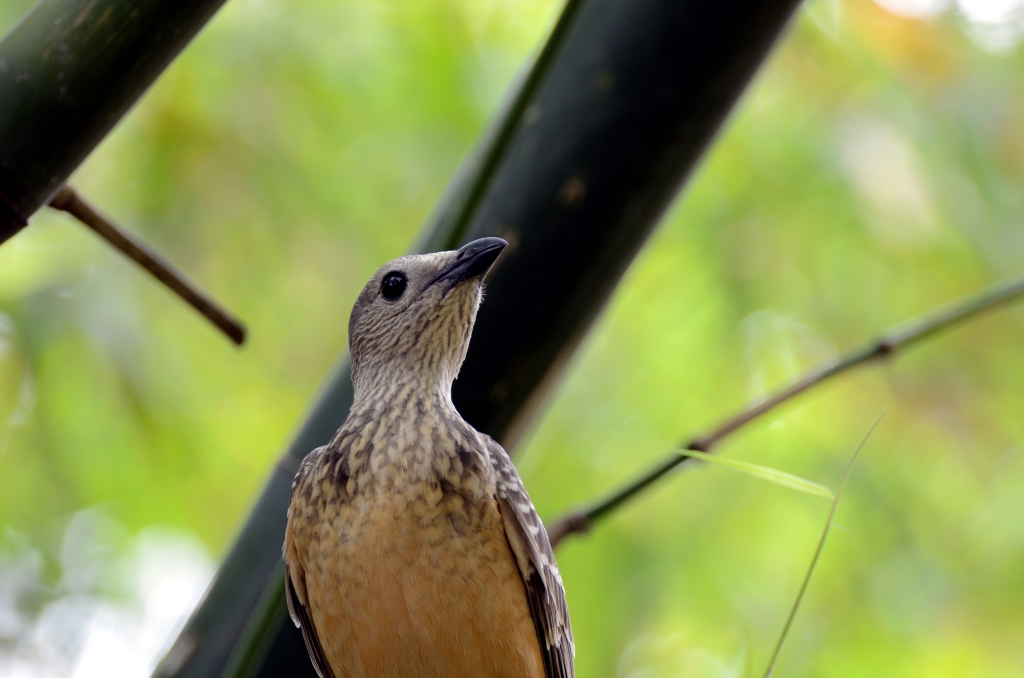
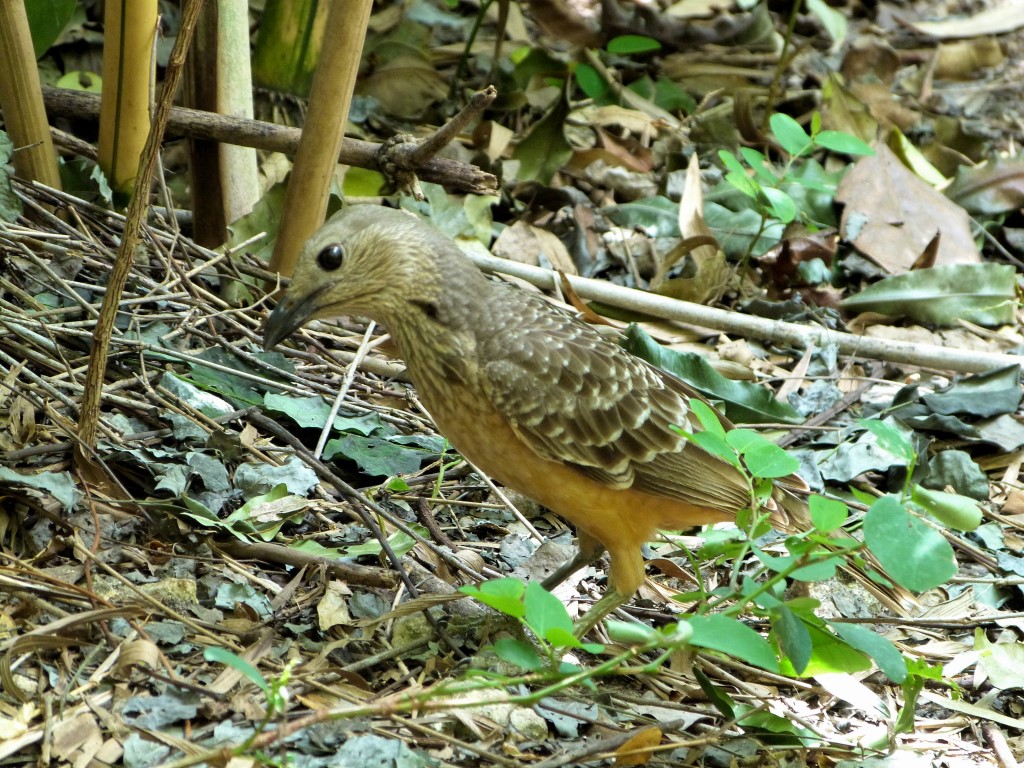
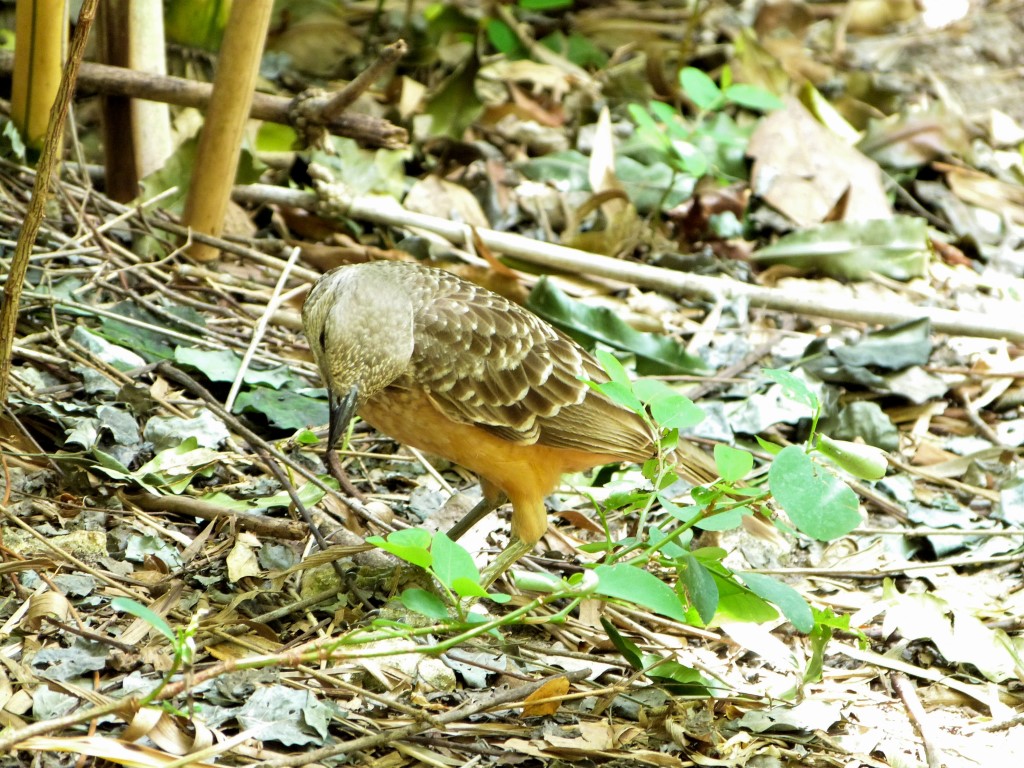
Fawn-breasted Bowerbird (Chlamydera cerviniventris) Zoo Miami by Lee

Fawn-breasted Bowerbird (Chlamydera cerviniventris) Zoo Miami by Lee

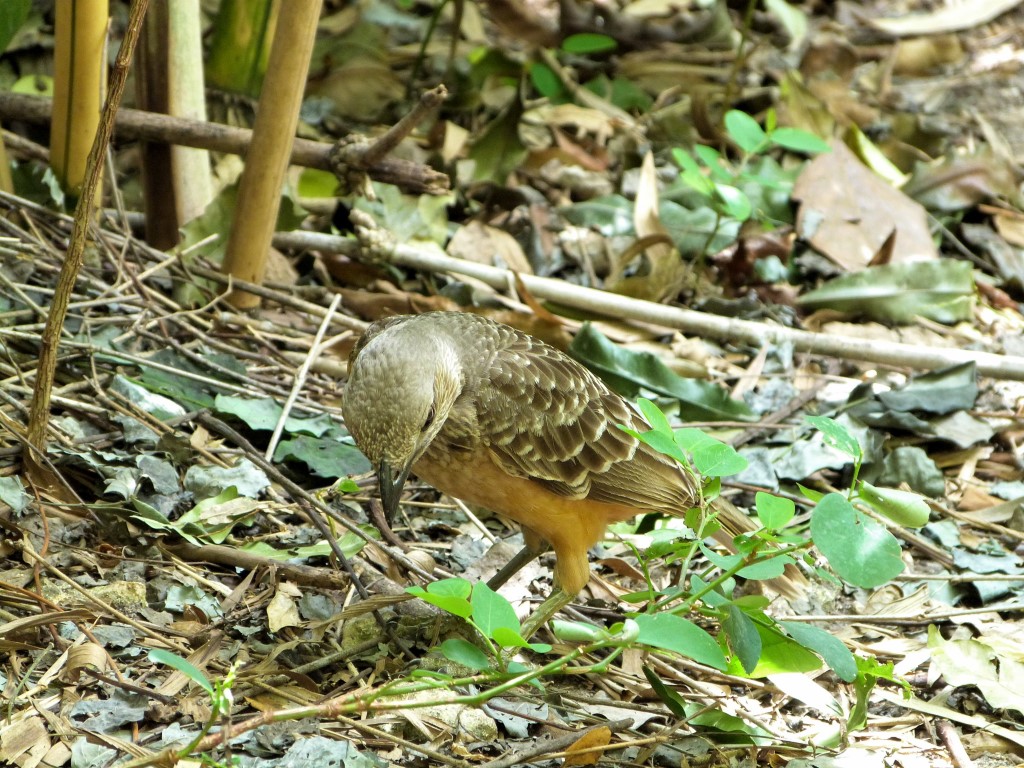
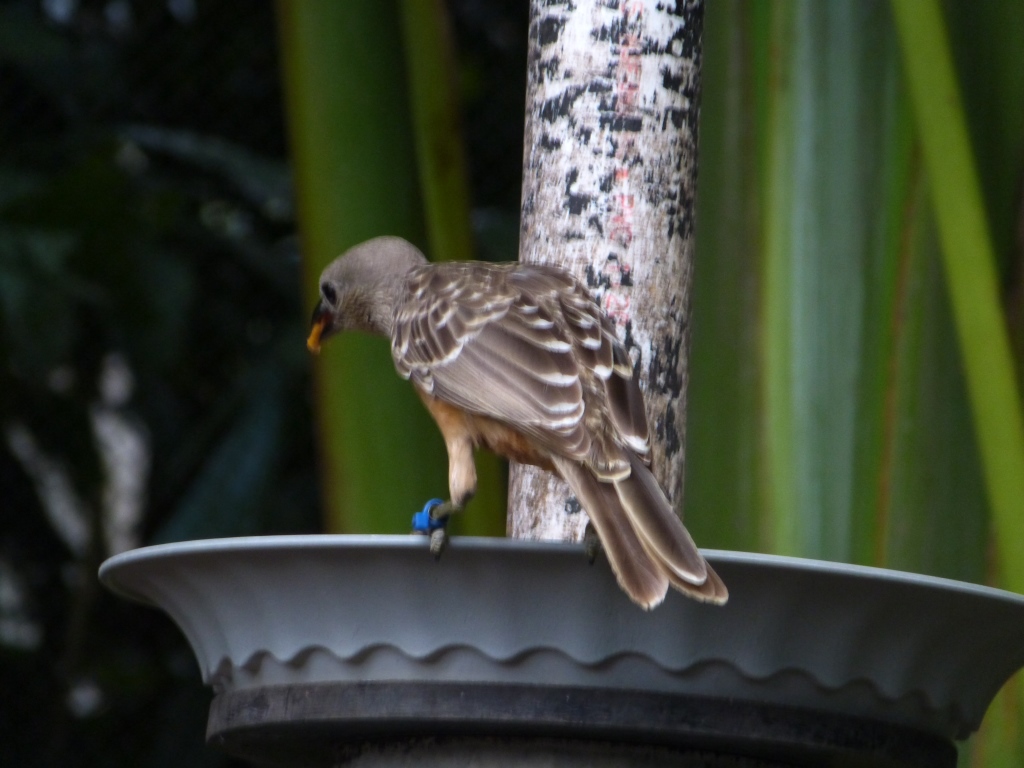
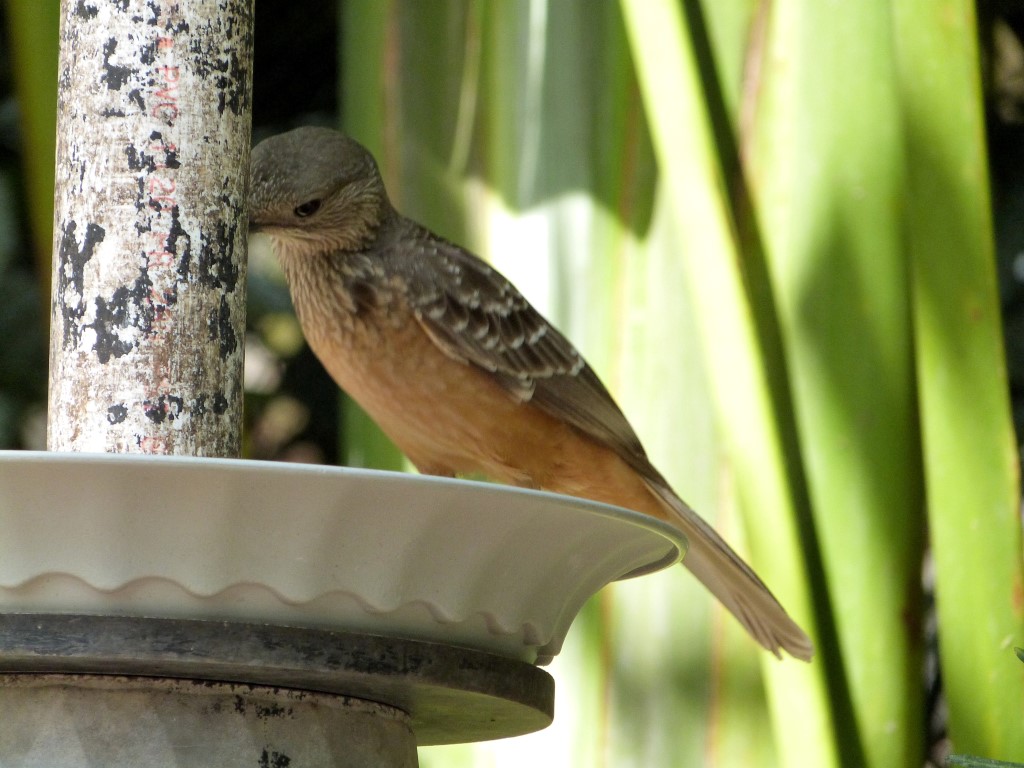
One of the neatest thing to watch on this last trip to the Wings of Asia Aviary at Zoo Miami was the Fawn-breasted Bowerbird working on his bower. “The bower itself is that of “avenue-type” with two sides of wall of sticks and usually decorated with green-colored berries.” In his case, he had green leaves laid out in front.

The Fawn-breasted Bowerbird (Chlamydera cerviniventris) is a medium-sized, up to 13 in (32 cm) long, bowerbird with a greyish brown spotted white plumage, a black bill, dark brown iris, yellow mouth and an orange buff below. Both sexes are similar. The female is slightly smaller than the male.

The Fawn-breasted Bowerbird is distributed in New Guinea and northern Australia, where it inhabits the tropical forests, mangroves, savanna woodlands and forest edges. Its diet consists mainly of figs, fruits and insects. The nest is a loose cup made of small sticks up in a tree. The bower itself is that of “avenue-type” with two sides of wall of sticks and usually decorated with green-colored berries. (Wikipedia with editing)

Fawn-breasted Bowerbird by Dan ZM

Fawn-breasted Bowerbird by Dan ZM

The Bowerbirds are in the Ptilonorhynchidae-Bowerbird Family. There are twenty species in the family, of which, 16 are Bowerbirds.

*

Here are two video clips of him working on the bower. Notice how he goes in and out the other end of the bower. Unfortunately we were only able to view it from the side. One shot he is actually placing the stick upright in the ground. (I recorded him for a bit and then Dan came along. As I was explaining it to him, I got tickled, so ignore the snorts.) I was absolutely amazed watching this bird, which the Lord created, knowing how to make his bower chamber.

*

*

Did you notice the birds chirping and singing in the background. It is so peaceful in that aviary. The birds have so much room and places to hang out. You actually “bird watch” there.

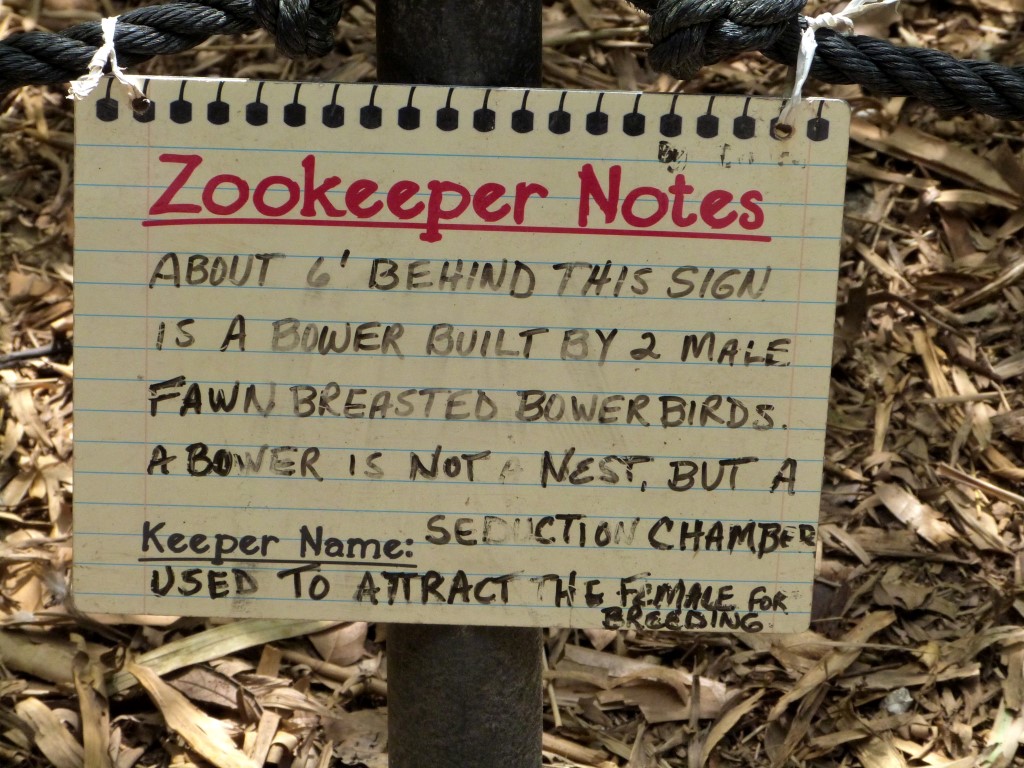
Fawn-breasted Bowerbird (Chlamydera cerviniventris) Sign Zoo Miami by Lee

Fawn-breasted Bowerbird (Chlamydera cerviniventris) Sign Zoo Miami by Lee

Bring out with you every living thing of all flesh that is with you: birds and cattle and every creeping thing that creeps on the earth, so that they may abound on the earth, and be fruitful and multiply on the earth.” (Genesis 8:17 NKJV)

This is the sign telling about the Bowerbird and their name for it; a “Seduction Chamber.” We know that the Lord commanded the birds to reproduce and this bird is only following instructions. He builds his bower to entice a female to be his mate.

We were discussing this and several verses came to our minds:

My son, if sinners entice you, Do not consent. (Proverbs 1:10 NKJV)

And you shall stone him with stones until he dies, because he sought to entice you away from the LORD your God, who brought you out of the land of Egypt, from the house of bondage. (Deuteronomy 13:10 NKJV)

And then if any man shall say to you, Lo, here is Christ; or, lo, he is there; believe him not: For false Christs and false prophets shall rise, and shall shew signs and wonders, to seduce, if it were possible, even the elect. (Mark 13:21-22 KJV)

And this is the promise that he hath promised us, even eternal life. These things have I written unto you concerning them that seduce you. (1 John 2:25-26 KJV)

The Fawn-breasted is fine in what he is doing, but we can learn by watching and taking heed for ourselves.

But ask now the beasts, and they shall teach thee; and the fowls of the air, and they shall tell thee: (Job 12:7 KJV)

*

*

Ptilonorhynchidae-Bowerbird Family

Fawn-breasted Bowerbird – Wikipedia

Bowerbirds – Wikipedia

*
Sunday Inspiration – Easter

Bleeding Heart Pigeons

Bleeding Heart Pigeons

Alleluia!

HE IS RISEN!

1 Corinthians 15:12-22 KJV

(12) Now if Christ be preached that he rose from the dead, how say some among you that there is no resurrection of the dead?
(13) But if there be no resurrection of the dead, then is Christ not risen:
(14) And if Christ be not risen, then is our preaching vain, and your faith is also vain.
(15) Yea, and we are found false witnesses of God; because we have testified of God that he raised up Christ: whom he raised not up, if so be that the dead rise not.
(16) For if the dead rise not, then is not Christ raised:
(17) And if Christ be not raised, your faith is vain; ye are yet in your sins.
(18) Then they also which are fallen asleep in Christ are perished.
(19) If in this life only we have hope in Christ, we are of all men most miserable.
(20) But now is Christ risen from the dead, and become the firstfruits of them that slept.
(21) For since by man came death, by man came also the resurrection of the dead.
(22) For as in Adam all die, even so in Christ shall all be made alive.

Christmas and Easter are the most important times of remembrance for those of us who have accepted the Lord Jesus Christ as our personal Savior. I made that decision 54 years ago and it has changed my life.

At Christmas we are reminded that the Creator of all these birds we write about, gave up His seat beside the Father and came to earth to take on human flesh. Perfect sinless human flesh.

Now Today, Easter, we remember and celebrate. We remember that He gave His life to die as the perfect sacrifice for our sins. We know the story of Him hanging on the cross, and crying out, “My God, My God, why hast thou forsaken me?”

And about the ninth hour Jesus cried out with a loud voice, saying, “Eli, Eli, lama sabachthani?” that is, “MY GOD, MY GOD, WHY HAVE YOU FORSAKEN ME?”
(Matthew 27:46 NKJV)

It is better to call today Resurrection Sunday. The Lord Jesus Christ did not stay dead in the tomb, but He AROSE! If He can create this world and all that is in it, does He not have the power to Come Forth From The Grave.

Do you know Him? Have you ever repented and accepted Him as your Savior?

For God so loved the world, that he gave his only begotten Son, that whosoever believeth in him should not perish, but have everlasting life. (John 3:16 KJV)

*

Music by Sean Fielder

*

Faith Baptist Orchestra playing at the Easter Service in 2012

*

More Sunday Inspiration

Gospel Presentation (narrated by our Pastor Osborne and music by Sean Fielder)

Gideon

*

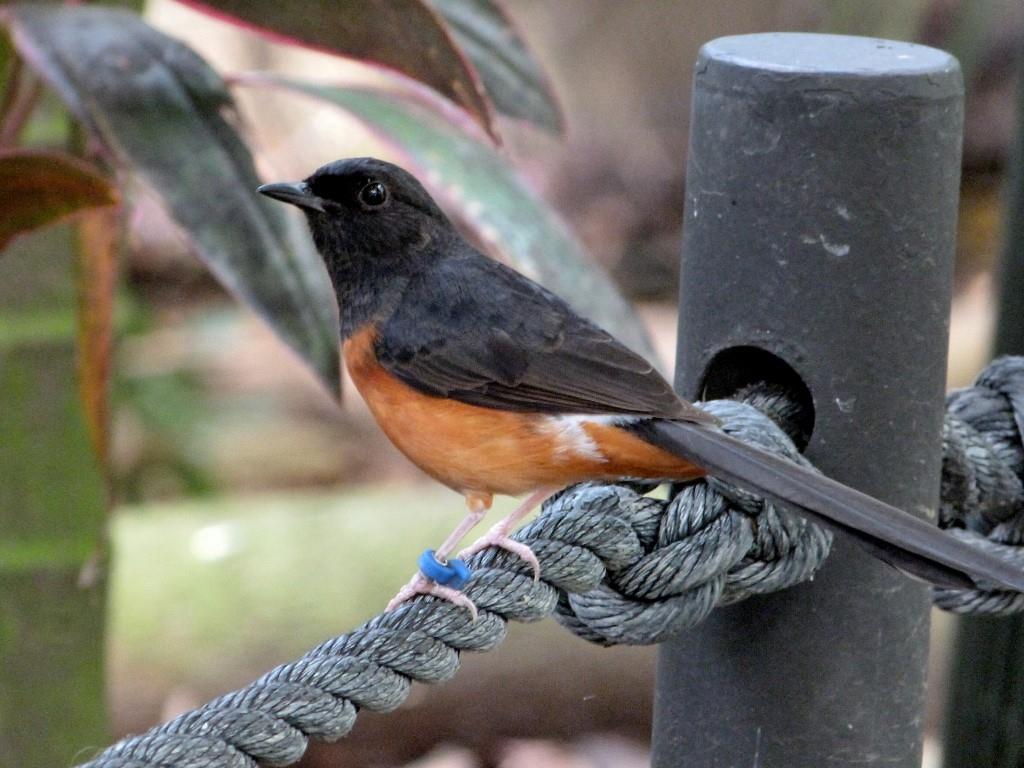
White-rumped Shama at Zoo Miami

White-rumped Shama (Copsychus malabaricus)  at Zoo Miami - Lee

White-rumped Shama (Copsychus malabaricus) at Zoo Miami – Lee

Even the stork in the sky Knows her seasons; And the turtledove and the swift and the thrush Observe the time of their migration; But My people do not know The ordinance of the LORD. (Jeremiah 8:7 NASB)

The White-rumped Shama (Copsychus malabaricus) is a small passerine bird of the family Muscicapidae. Native to densely vegetated habitats in the Indian Subcontinent and Southeast Asia, its popularity as a cage-bird and songster has led to it being introduced elsewhere.

It was formerly classified as a member of the thrush family, Turdidae, causing it to be commonly known as the White-rumped Shama Thrush or simply Shama Thrush.

They typically weigh between 28 and 34 g (1.0 and 1.2 oz) and are around 23–28 cm (9–11 in) in length. Males are glossy black with a chestnut belly and white feathers on the rump and outer tail. Females are more greyish-brown, and are typically shorter than males. Both sexes have a black bill and pink feet. Juveniles have a greyish-brown colouration, similar to that of the females, with a blotchy or spotted chest.

The voice of this species is rich and melodious which made them popular as cage birds in South Asia with the tradition continuing in parts of Southeast Asia. It is loud and clear, with a variety of phrases, and often mimics other birds. They also make a ‘Tck’ call in alarm or when foraging. One of the first recordings of a bird song that was ever made was of this species. This recording was made in 1889 from a captive individual using an Edison wax cylinder by Ludwig Koch in Germany. (Wikipedia)

Here is a video of the Shama singing the second day we were at the Wings of Asia aviary at the Zoo. The pair have a nest and I think the chicks have hatched. (Senior moment-I don’t remember what they told me.)

The LORD is my strength and my shield; my heart trusted in him, and I am helped: therefore my heart greatly rejoiceth; and with my song will I praise him. (Psalms 28:7 KJV)

I am kicking up dust again behind the scenes. The new IOC 4.2 list came out while we were at the zoo. So far I have 237 pages updated, all but the Lark family. They added a new family and are scrambling the Larks around. I am now preparing to do the indexes.  The new 4.2 count is 10,530 species in the world. Stay tuned.

Birds of the World – Families – done

Birds of the Bible – Thrush

White-rumped Shama – Wikipedia

*
Peru’s Marvellous Hummingbird – Updated

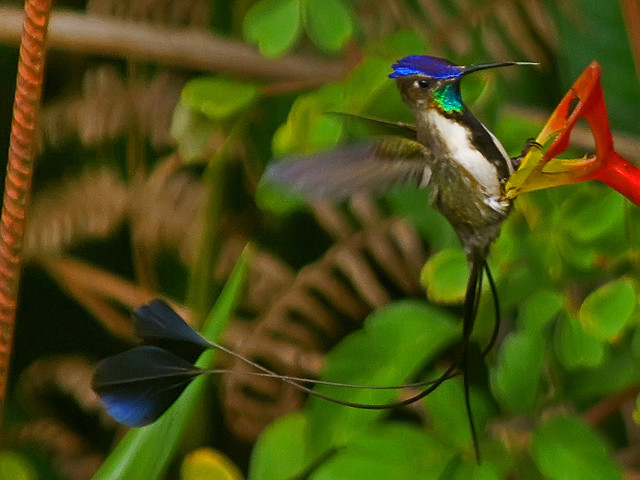
Marvelous Spatuletail (Loddigesia mirabilis)©©

Marvelous Spatuletail (Loddigesia mirabilis)©©

Peru’s Marvellous Hummingbird

(from Creation Moments)

In that day the LORD of hosts will be for a crown of glory and a diadem of beauty to the remnant of His people. (Isaiah 28:5)

In 1835, when scientists first saw Peru’s most unusual hummingbird, they were so overcome with its beauty that they gave it the name “Marvellous.” This little bird treats the eye to iridescent green, yellow, orange, and purple feathers. But its most unusual feature is its tail. While most birds have eight to twelve tail feathers, the Marvellous hummingbird has only four. Two of these are long, pointed, thorn-like feathers that don’t seem to help much in flying or landing. The other two feathers are truly marvellous. They are six inches long, three times the length of the bird’s two-inch body. On the end of these two long narrow feathers are large feather fans that nearly equal the surface area of its wings.

Marvelous Spatuletail (Loddigesia mirabilis) ©©

Marvelous Spatuletail (Loddigesia mirabilis) ©©

Astonishingly, the Marvelous hummingbird has complete control of these feathers. At rest, the bird perches with these two feathers hanging down an inch or so from its body, and then crossing them until they are horizontal. In flight and landing they provide remarkable maneuverability. During mating, the hummingbird moves them as semaphores. Interestingly enough, evolutionists admit that they are stumped as to why these unusual feathers should have evolved.

One look at our creation clearly shows that our Creator appreciates beauty. But even the beautiful Marvelous hummingbird is but a poor and cloudy hint of the beauty of our Creator Himself.

Prayer:
Dear Father, help me treat the beauty You have created as You would have me to do. Let me be filled with thanksgiving to You for it, and let it remind me that You are the source of all that is truly beautiful. In Jesus’ Name. Amen.
Notes:
Crawford H. Greenewalt. The Marvelous Hummingbird Rediscovered. National Geographic, Vol. 130, No. 1. P. 98-101.”

©Creation Moments 2014


*

Lee’s Addition:

This was originally done in 2010, but needs to be re-blogged again. Also, the YouTube above was added. It is astonishing to watch the little bird in action. Thanks to one of our readers who found the video to add to their site. See The Vine Vigil.

The Marvellous Hummingbird is now the Marvelous Spatuletail (Loddigesia mirabilis). It is in the Hummingbird Family (Trochilidae) and is part of the Apodiformes Order.

Marvelous Spatuletail (Loddigesia mirabilis) ©WikiC-Gould_Troch._pl._161

Marvelous Spatuletail (Loddigesia mirabilis) ©WikiC-Gould_Troch._pl._161

The Marvelous (also Marvellous) Spatuletail (hummingbird), Loddigesia mirabilis, is a medium-sized (up to 5.9 in/15 cm long) white, green and bronze hummingbird adorned with blue crest feathers, a brilliant turquoise gorget, and a black line on its white underparts. It is the only member of the monotypic genus Loddigesia.

A Peruvian endemic, this species is found in the forest edge of the Río Utcubamba region. It was first reported in 1835 by the bird collector Andrew Matthews for George Loddiges. The Marvellous Spatuletail is unique among birds, for it has just four feathers in its tail. Its most remarkable feature is the male’s two long racquet-shaped outer tail feathers that cross each other and end in large violet-blue discs or “spatules”. He can move them independently.

Information gathered from Creation Moments, Wikipedia, and YouTube.

Wordless Birds

Peru’s Marvellous Hummmingbird – The Vine Vigil

*

*


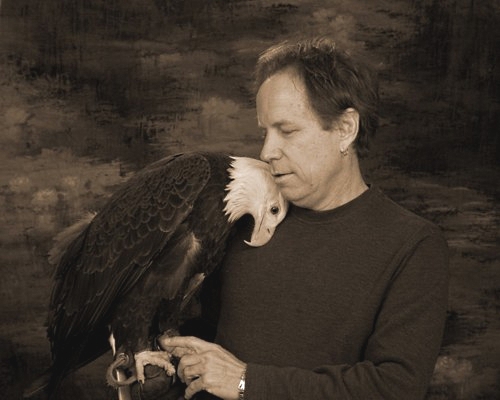
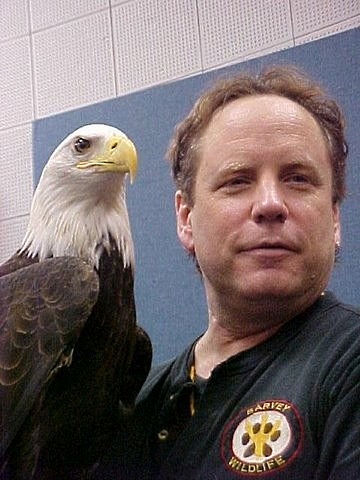
Jeff Guidry and His Eagle Named Freedom

(This was sent to me in an e-mail and thought I would share it. It’s been around awhile, but is new to me. Also, below is a video of the two of them.)

An Eagle Kiss

As an eagle stirs up its nest, Hovers over its young, Spreading out its wings, taking them up, Carrying them on its wings, (Deuteronomy 32:11 NKJV)

This is the kind of story you need when it seems like the world is spiraling out of control.. Not many people get a picture of this proud bird snuggled up next to them!

Freedom 1Freedom and Jeff

Freedom and I have been together 11 years this summer.  She came in as a baby in 1998 with two broken wings.  Her left wing doesn’t open all the way even after surgery, it was broken in 4 places. She’s my baby.

When Freedom came in, she could not stand and both wings were broken. She was emaciated and covered in lice. We made the decision to give her a chance at life, so I took her to the vet’s office. From then on, I was always around her. We had her in a huge dog carrier with the top off, and it was loaded up with shredded newspaper for her to lay in.

I used to sit and talk to her, urging her to live, to fight; and she would lay there looking at me with those big brown eyes. We also had to tube feed her for weeks. This went on for 4-6 weeks, and by then she still couldn’t stand. It got to the point where the decision was made to euthanize her if she couldn’t stand in a week. You know you don’t want to cross that line between torture and rehab, and it looked like death was winning.

She was going to be put down that Friday, and I was supposed to come in on that Thursday afternoon. I didn’t want to go to the center that Thursday, because I couldn’t bear the thought of her being euthanized; but I went anyway, and when I walked in everyone was grinning from ear to ear. I went immediately back to her cage; and there she was, standing on her own, a big beautiful eagle. She was ready to live. I was just about in tears by then.

That was a very good day. We knew she could never fly, so the director asked me to glove train her. I got her used to the glove, and then to jesses, and we started doing education programs for schools in western Washington. We wound up in the newspapers, radio (believe it or not) and some TV. Miracle Pets even did a show about us.

In the spring of 2000, I was diagnosed with non-Hodgkin’s lymphoma. I had stage 3, which is not good (one major organ plus everywhere), so I wound up doing 8 months of chemo. Lost the hair – the whole bit. I missed a lot of work.

When I felt good enough, I would go to Sarvey and take Freedom out for walks. Freedom would also come to me in my dreams and help me fight the cancer. This happened time and time again.

Fast forward to November 2000.  The day after Thanksgiving, I went in for my last checkup.  I was told that if the cancer was not all gone after 8 rounds of chemo, then my last option was a stem cell transplant. Anyway, they did the tests; and I had to come back Monday for the results. I went in Monday, and I was told that all the cancer was gone.

Freedom2

So the first thing I did was get up to Sarvey and take the big girl out for a walk. It was misty and cold. I went to her flight and jessed her up, and we went out front to the top of the hill. I hadn’t said a word to Freedom, but somehow she knew. She looked at me and wrapped both her wings around me to where I could feel them pressing in on my back (I was engulfed in eagle wings), and she touched my nose with her beak and stared into my eyes, and we just stood there like that for I don’t know how long.

That was a magic moment. We have been soul mates ever since she came in. This is a very special bird.

On a side note:  I have had people who were sick come up to us when we are out, and Freedom has some kind of hold on them. I once had a guy who was terminal come up to us and I let him hold her.  His knees just about buckled and he swore he could feel her power course through his body. I have so many stories like that.

I never forget the honor I have of being so close to such a magnificent spirit as Freedom.

Hope you enjoyed this!

*

*

Noah Movie Review: An Unbiblical Film

Ark with Animals ©CreationWiki

Ark with Animals ©CreationWiki

In the beginning God created the heavens and the earth. (Genesis 1:1 NKJV)

A group of Answers in Genesis staff attended the opening of Noah last night in a local movie theater. With all the Hollywood hype and news surrounding the controversial film, we were surprised at the low turnout, with only twelve other people in the theater. We had heard many negative reports but were hopeful, based on other comments, that there may have been some redeeming qualities of the film. However, those hopes were dashed against the rocks harder than Hollywood’s ark when it ran aground in the film. This point should be one that jars us to attention, realizing that our hope is not in a Hollywood film but in something infinitely more redeeming in quality: the person and work of Jesus Christ.

There are four elements from the biblical account …. Noah Movie Review: An Unbiblical Film

*


Gatorland – March 2014 ~ I

Gators at Gatorland

Gators at Gatorland

Then God said, “Let the earth bring forth the living creature according to its kind: cattle and creeping thing and beast of the earth, each according to its kind”; and it was so. (Genesis 1:24 NKJV)

Today we drove over to Gatorland in Orlando. We had heard that the “rookery” was hopping with birds making nest, courting, mating, and raising babies.Spring is in the air.

We were not disappointed. We were over there last year, Vol 2, #6 – The American Flamingo, and I showed some of the Flamingos. They are still there, plus lots of Gators. We saw one crocodile also. What was so neat about thsi trip was the “rookery” which I will share later. With over 500 photos to sort through, I decided to show some of the gators and a really neat video I made of some acting like taxis.

Gatorland has been there for many years and as a bird lover, it is a super place to visit. In fact, I went to Gatorland as a kid with my mother almost 60 years ago. Needless to say, it has changed over the years, but they still have lots of gators.

Jumperoo Show - Dan caught this one taking the chicken

Jumperoo Show – Dan caught this one taking the chicken

They have shows like the Jumparoo where they get the gators to jump up to get some chicken (dead of course). It is an interesting place to visit and reasonably priced.

Here are some of the photos from today of alligators.

This slideshow requires JavaScript.

*

I couldn’t believe these Great Egrets that were using the Alligators as a Taxi. They were even chasing one another off so they could catch a ride.

Gators at Gatorland - Great Egrets catching a ride by Lee

Gators at Gatorland – Great Egrets catching a ride

*

Here are some videos I made of them catching a “Taxi”

*

*

*

Birds in Hymns – Be Strong in the Lord

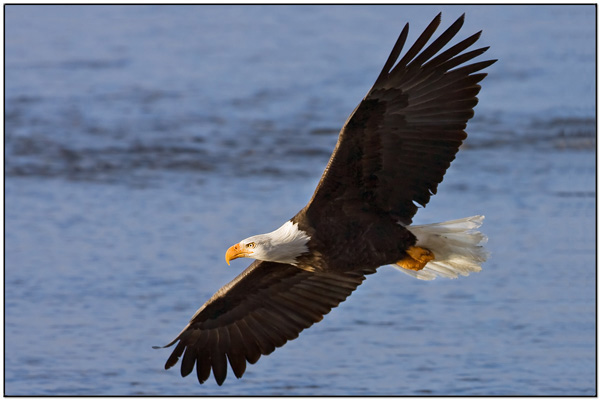
Bald Eagle flying by Dave's BirdingPix

Bald Eagle flying by Dave’s BirdingPix

Text: Be Strong in the Lord
Author: Linda Lee Johnson
Tune: FETTKE
Composer: Tom Fettke

Be strong in the Lord

Be strong in the Lord, and be of good courage;
Your mighty Defender is always the same.
Mount up with wings, as the eagle ascending;
Vict’ry is sure when you call on His name.

Be strong, be strong, be strong in the Lord;
And be of good courage, for He is your guide.
Be strong, be strong, be strong in the Lord;
And be of good courage, for He is your guide.
Be strong, be strong, be strong in the Lord;
And rejoice for the vict’ry is yours.

So put on the armour the Lord has provided;
And place your defense in His unfailing care.
Trust Him, for He will be with you in battle,
Lighting your path to avoid every snare.

Be strong, be strong, be strong in the Lord;
And be of good courage, for He is your guide.
Be strong, be strong, be strong in the Lord;
And be of good courage, for He is your guide.
Be strong, be strong, be strong in the Lord;
And rejoice for the vict’ry is yours.

Be strong in the Lord, and be of good courage;
Your mighty commander will vanquish the foe.
Fear not the battle, for the victory is always His;
He will protect you wherever you go.

Be strong, be strong, be strong in the Lord;
And be of good courage, for He is your guide.
Be strong, be strong, be strong in the Lord;
And be of good courage, for He is your guide.
Be strong, be strong, be strong in the Lord;
And rejoice for the vict’ry is yours.

*

*

More Birds in Hymns

Good News Tracts

*

Story of Jonah ~ by Mary Margaret

A friend sent me this link to a young girl telling the story of Jonah. It is amazing and she is doing all from memory. She looks as time as if she is reading, but she isn’t.

*

*

Now the word of the LORD came unto Jonah the son of Amittai, saying, Arise, go to Nineveh, that great city, and cry against it; for their wickedness is come up before me. But Jonah rose up to flee unto Tarshish from the presence of the LORD, and went down to Joppa; and he found a ship going to Tarshish: so he paid the fare thereof, and went down into it, to go with them unto Tarshish from the presence of the LORD. (Jonah 1:1-3 KJV)

*

Watched the Ken Ham vs Bill Nye Debate

Sorry I didn’t put a blog up last evening, but was occupied watching the Ken Ham vs Bill Nye Debate on Livestream. It was very interesting. Here is the YouTube of it, if you missed it. I believe it is only going to be available for a few days. (At least on Answers page)

In the beginning, God created the heavens and the earth. Genesis 1:1 ESV)

*

*

Here is another YouTube of a Post-debate Show by Creationtoday. It is a little shaky at first, but settles down after a minute or so.

*

*

Answers in Genesis

*

Birds of the Bible – Chestnut-breasted Malkoha

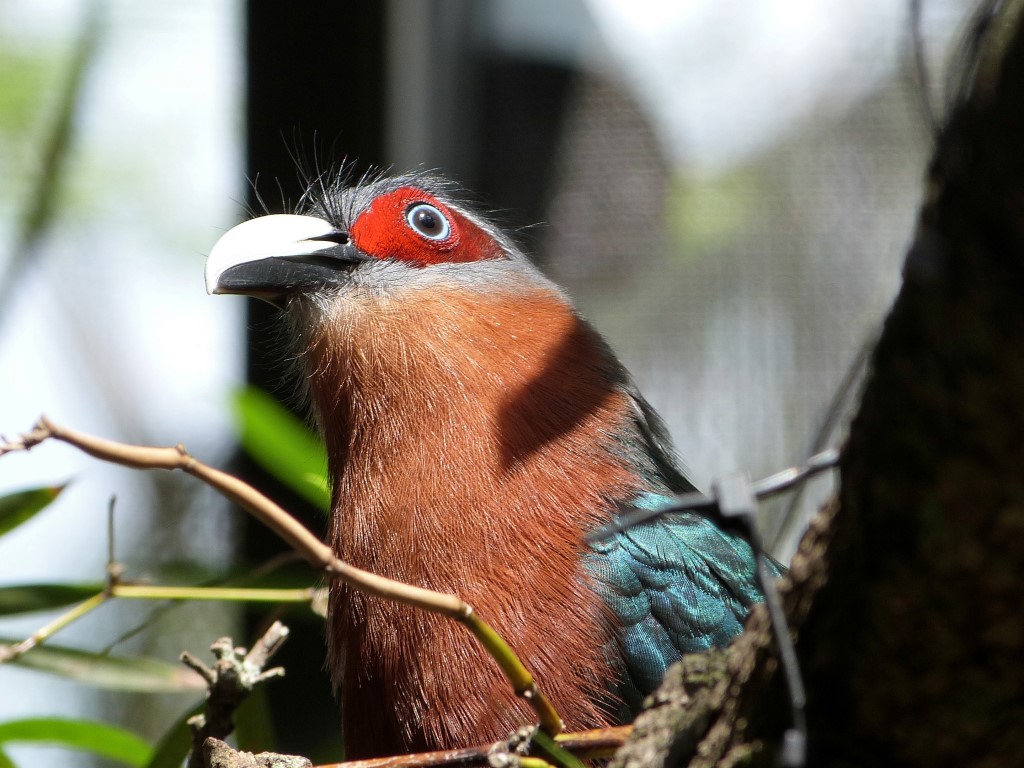
Chestnut-breasted Malkoha (Phaenicophaeus curvirostris) Palm Beach Zoo by Lee

Chestnut-breasted Malkoha (Phaenicophaeus curvirostris) Palm Beach Zoo by Lee

And the owl, and the night hawk, and the cuckoo, and the hawk after his kind, (Deuteronomy 14:15 KJV)
And the owl, and the night hawk, and the cuckoo, and the hawk after his kind, (Leviticus 11:16 KJV)

While we were on our trip last week, we stopped by the Palm Beach Zoo. I now have another bird that I have fallen in love with. The Chestnut-bellied Malkoha is a beautiful bird and we were able to see him (or her) up close.

They are members of the Cuculidae – Cuckoos Family. When that was realized, that gave another Bird of the Bible article. There have been other Cuckoo articles written:

In those articles the Cuckoos and the Couas were introduced. Now I want to introduce you to another group within the Cuculidae Family, the Malkohas.

Malkohas are large birds in the cuckoo family Cuculidae, all in the genus Phaenicophaeus. The group name is derived from the Sinhala word for the Red-faced Malkoha; Mal-Koha meaning flower-cuckoo. These are all Asian tropical species. The genus name is derived from the Ancient Greek phoiniko– “crimson”, and phaes “eyes” or “face”, referring to the Red-faced Malkoha. However, the ‘œ’ was mistranscribed as ‘æ’.

Raffles’s Malkoha (“P.” chlorophaeus) is a highly distinct species and may not even be as closely related to malkohas as long believed. Its placement in a monotypic genus Rhinortha is supported by a morphological, molecular and behavioral evidence.
The Green Malkoha or Yellowbill seems also distinct from the typical malkohas; it is placed in the monotypic genus Ceuthmochares. (Wikipedia)

We encountered the Chestnut-breasted Malkoha a few years ago when we visited Wings of Asia (Zoo Miami) and then again on this trip at both the Wings of Asia and Palm Beach Zoo. This time there is a video to share and some close-ups. What a beautiful creation from the Lord. I love the eyes especially. They remind me of the Egyptian painting with their eyes. Maybe they saw the Malkohas and painted their eyes like them. Oh, by the way, the Cuckoos are on the “do not list.” Who would want to eat a beautiful bird like these? According to this sign at Zoo Miami, it says the male has blue eyes and the female has yellow eyes.

Chestnut-breasted Malkoha (Phaenicophaeus curvirostris) Sign by Lee at ZM 2014

Chestnut-breasted Malkoha (Phaenicophaeus curvirostris) Sign by Lee at ZM 2014

This video was taken at the Palm Beach Zoo 2014.

*

Other Malkohas in the Cuckoo Family:

Raffles’s Malkoha (Rhinortha chlorophaea)
Blue Malkoha (Ceuthmochares aereus)
Green Malkoha (Ceuthmochares australis)
Sirkeer Malkoha (Taccocua leschenaultii)
Red-billed Malkoha (Zanclostomus javanicus)
Yellow-billed Malkoha (Rhamphococcyx calyorhynchus)
Chestnut-breasted Malkoha (Phaenicophaeus curvirostris)
Red-faced Malkoha (Phaenicophaeus pyrrhocephalus)
Chestnut-bellied Malkoha (Phaenicophaeus sumatranus)
Blue-faced Malkoha (Phaenicophaeus viridirostris)
Black-bellied Malkoha (Phaenicophaeus diardi)
Green-billed Malkoha (Phaenicophaeus tristis)
Rough-crested Malkoha (Dasylophus superciliosus)
Scale-feathered Malkoha (Dasylophus cumingi)

This slideshow requires JavaScript.

*

Gospel Presentation

*