Old Clothes and Old Houses – Chapter 8

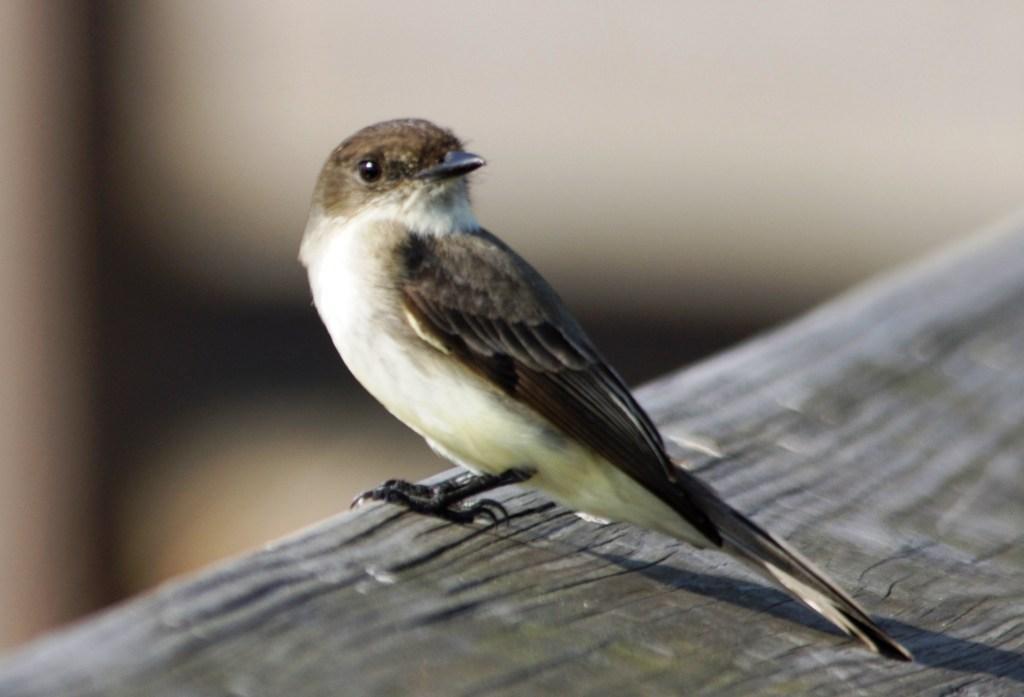
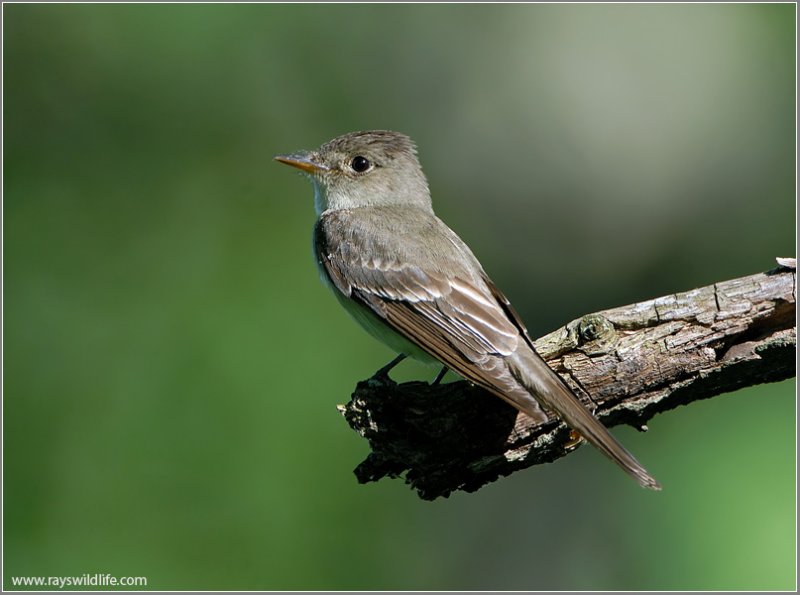
Eastern Wood Pewee (Contopus virens) by Raymond Barlow

Eastern Wood Pewee (Contopus virens) by Raymond Barlow

Old Clothes and Old Houses

The Wood Peewee and Some Nesting Places.

The Burgess Bird Book For Children

*

CHAPTER 8. Old Clothes and Old Houses.

Listen to the story read.

“I can’t stop to talk to you any longer now, Peter Rabbit,” said Jenny Wren, “but if you will come over here bright and early to-morrow morning, while I am out to get my breakfast, I will tell you about Cresty the Flycatcher and why he wants the cast-off clothes of some of the Snake family. Perhaps I should say WHAT he wants of them instead of WHY he wants them, for why any one should want anything to do with Snakes is more then I can understand.”

With this Jenny Wren disappeared inside her house, and there was nothing for Peter to do but once more start for the dear Old Briar-patch. On his way he couldn’t resist the temptation to run over to the Green Forest, which was just beyond the Old Orchard. He just HAD to find out if there was anything new over there. Hardly had he reached it when he heard a plaintive voice crying, “Pee-wee! Pee-wee! Pee-wee!” Peter chuckled happily. “I declare, there’s Pee-wee,” he cried. “He usually is one of the last of the Flycatcher family to arrive. I didn’t expect to find him yet. I wonder what has brought him up so early.”

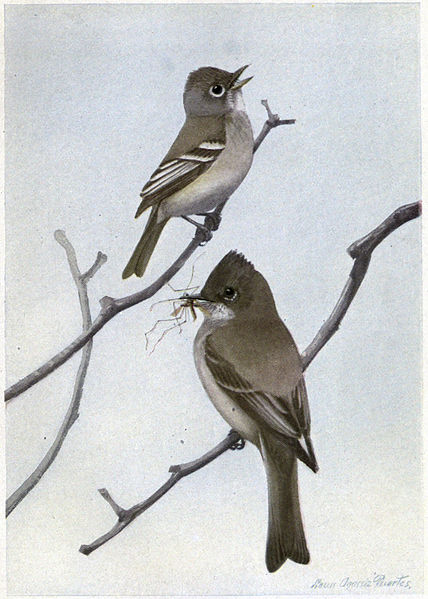
It didn’t take Peter long to find Pewee. He just followed the sound of that voice and presently saw Pewee fly out and make the same kind of a little circle as the other members of the family make when they are hunting flies. It ended just where it had started, on a dead twig of a tree in a shady, rather lonely part of the Green Forest. Almost at once he began to call his name in a rather sad, plaintive tone, “Pee-wee! Pee-wee! Pee-wee!” But he wasn’t sad, as Peter well knew. It was his way of expressing how happy he felt. He was a little bigger than his cousin, Chebec, but looked very much like him. There was a little notch in the end of his tail. The upper half of his bill was black, but the lower half was light. Peter could see on each wing two whitish bars, and he noticed that Pewee’s wings were longer than his tail, which wasn’t the case with Chebec. But no one could ever mistake Pewee for any of his relatives, for the simple reason that he keeps repeating his own name over and over.

Wood Pewee of Birds Illustrated by Color Photography, 1897

“Aren’t you here early?” asked Peter.

Pewee nodded. “Yes,” said he. “It has been unusually warm this spring, so I hurried a little and came up with my cousins, Scrapper and Cresty. That is something I don’t often do.”

“If you please,” Peter inquired politely, “why do folks call you Wood Pewee?”

Pewee chuckled happily. “It must be,” said he, “because I am so very fond of the Green Forest. It is so quiet and restful that I love it. Mrs. Pewee and I are very retiring. We do not like too many near neighbors.”

“You won’t mind if I come to see you once in a while, will you?” asked Peter as he prepared to start on again for the dear Old Briar-patch.

“Come as often as you like,” replied Pewee. “The oftener the better.”

Back in the Old Briar-patch Peter thought over all he had learned about the Flycatcher family, and as he recalled how they were forever catching all sorts of flying insects it suddenly struck him that they must be very useful little people in helping Old Mother Nature take care of her trees and other growing things which insects so dearly love to destroy.

But most of all Peter thought about that odd request of Cresty’s, and a dozen times that day he found himself peeping under old logs in the hope of finding a cast-off coat of Mr. Black Snake. It was such a funny thing for Cresty to ask for that Peter’s curiosity would allow him no peace, and the next morning he was up in the Old Orchard before jolly Mr. Sun had kicked his bedclothes off.

Jenny Wren was as good as her word. While she flitted and hopped about this way and that way in that fussy way of hers, getting her breakfast, she talked. Jenny couldn’t keep her tongue still if she wanted to.

“Did you find any old clothes of the Snake family?” she demanded. Then as Peter shook his head her tongue ran on without waiting for him to reply. “Cresty and his wife always insist upon having a piece of Snake skin in their nest,” said she. “Why they want it, goodness knows! But they do want it and never can seem to settle down to housekeeping unless they have it. Perhaps they think it will scare robbers away. As for me, I should have a cold chill every time I got into my nest if I had to sit on anything like that. I have to admit that Cresty and his wife are a handsome couple, and they certainly have good sense in choosing a house, more sense than any other member of their family to my way of thinking. But Snake skins! Ugh!”
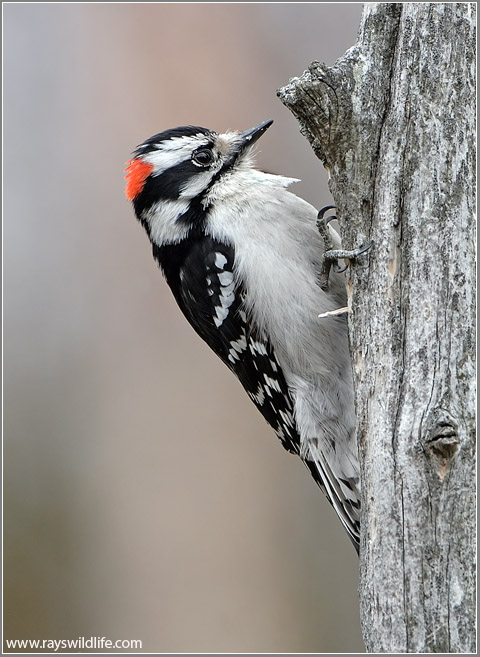
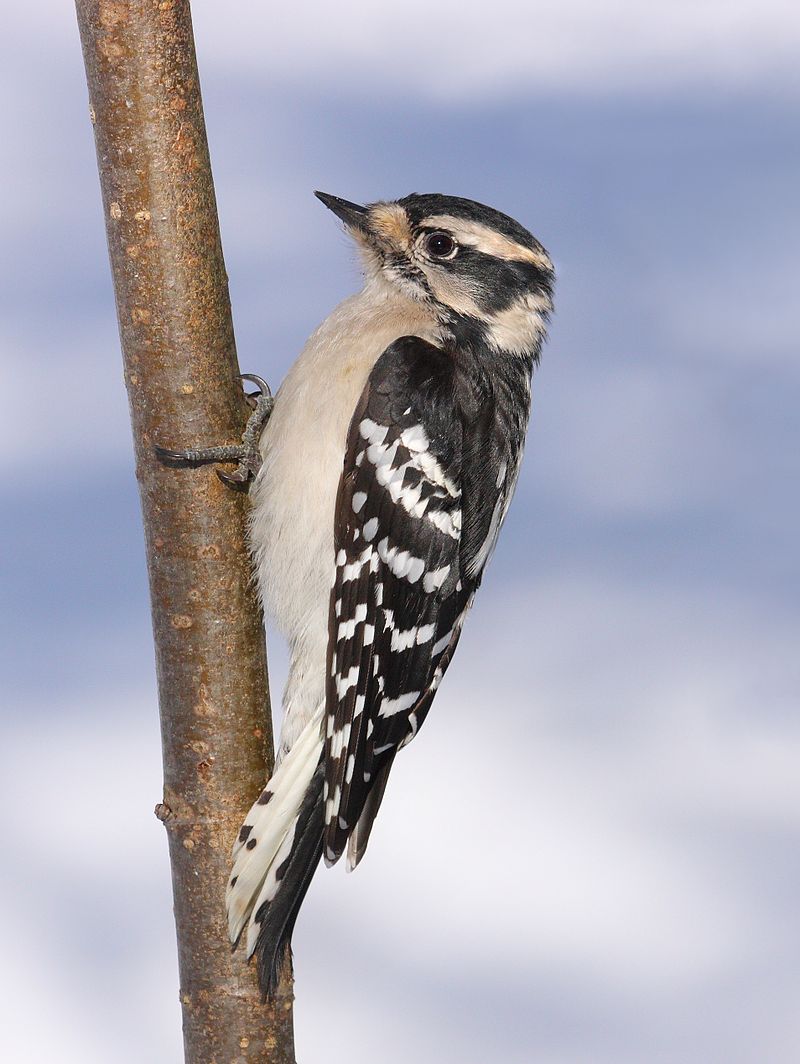
Downy Woodpecker (Picoides pubescens) by Raymond Barlow

Downy Woodpecker (Picoides pubescens) by Raymond Barlow

“By the way, where does Cresty build?” asked Peter.

In a hole in a tree, like the rest of us sensible people,” retorted Jenny Wren promptly.

Peter looked quite as surprised as he felt. “Does Cresty make the hole?” he asked.

“Goodness gracious, no!” exclaimed Jenny Wren. “Where are your eyes, Peter? Did you ever see a Flycatcher with a bill that looked as if it could cut wood?” She didn’t wait for a reply, but rattled on. “It is a good thing for a lot of us that the Woodpecker family are so fond of new houses. Look! There is Downy the Woodpecker hard at work on a new house this very minute. That’s good. I like to see that. It means that next year there will be one more house for some one here in the Old Orchard. For myself I prefer old houses. I’ve noticed there are a number of my neighbors who feel the same way about it. There is something settled about an old house. It doesn’t attract attention the way a new one does. So long as it has got reasonably good walls, and the rain and the wind can’t get in, the older it is the better it suits me. But the Woodpeckers seem to like new houses best, which, as I said before, is a very good thing for the rest of us.”

Who is there besides you and Cresty and Bully the English Sparrow who uses these old Woodpecker houses?” asked Peter.
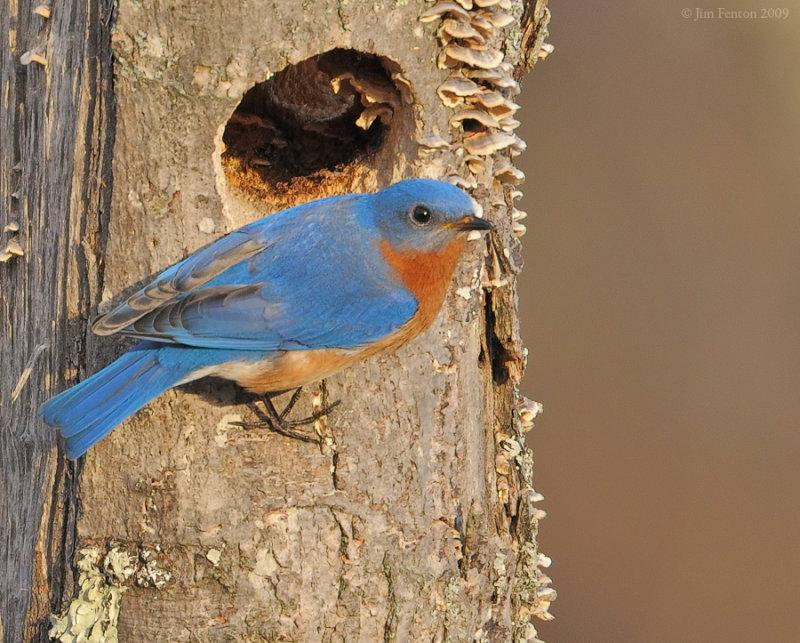
Eastern Bluebird (Sialia sialis) by J Fenton

Eastern Bluebird (Sialia sialis) by J Fenton

“Winsome Bluebird, stupid!” snapped Jenny Wren.

Peter grinned and looked foolish. “Of course,” said he. “I forgot all about Winsome.”

“And Skimmer the Tree Swallow,” added Jenny.

“That’s so; I ought to have remembered him,” exclaimed Peter. “I’ve noticed that he is very fond of the same house year after year. Is there anybody else?”

Again Jenny Wren nodded. “Yank-Yank the Nuthatch uses an old house, I’m told, but he usually goes up North for his nesting,” said she. “Tommy Tit the Chickadee sometimes uses an old house. Then again he and Mrs. Chickadee get fussy and make a house for themselves. Yellow Wing the flicker, who really is a Woodpecker, often uses an old house, but quite often makes a new one. Then there are Killy the Sparrow Hawk and Spooky the Screech Owl.”

Peter looked surprised. “I didn’t suppose THEY nested in holes in trees!” he exclaimed.

“They certainly do, more’s the pity!” snapped Jenny. “It would be a good thing for the rest of us if they didn’t nest at all. But they do, and an old house of Yellow Wing the Flicker suits either of them. Killy always uses one that is high up, and comes back to it year after year. Spooky isn’t particular so long as the house is big enough to be comfortable. He lives in it more or less the year around. Now I must get back to those eggs of mine. I’ve talked quite enough for one morning.”

“Oh, Jenny,” cried Peter, as a sudden thought struck him.

House Wren (Troglodytes aedon) by Ray

House Wren (Troglodytes aedon) by Ray

Jenny paused and jerked her tail impatiently. “Well, what is it now?” she demanded.

“Have you got two homes?” asked Peter.

“Goodness gracious, no!” exclaimed Jenny. “What do you suppose I want of two homes? One is all I can take care of.”

“Then why,” demanded Peter triumphantly, “does Mr. Wren work all day carrying sticks and straws into a hole in another tree? It seems to me that he has carried enough in there to build two or three nests.”

Jenny Wren’s eyes twinkled, and she laughed softly. “Mr. Wren just has to be busy about something, bless his heart,” said she. “He hasn’t a lazy feather on him. He’s building that nest to take up his time and keep out of mischief. Besides, if he fills that hollow up nobody else will take it, and you know we might want to move some time. Good-by, Peter.” With a final jerk of her tail Jenny Wren flew to the little round doorway of her house and popped inside.


Lee’s Addition:

“But now ask the beasts, and they will teach you; And the birds of the air, and they will tell you; (Job 12:7 NKJV)

*

  • What is Peter Rabbit still trying to find?
  • Has he found out why it is need for yet?
  • Who is our newest arrival?
  • Is he on time or early?
  • What does Pewee’s bill look like?
  • Is tail longer or shorter than his wings?
  • Can you find and name the birds listed that use tree holes?
  • Were the birds friendly and kind in this chapter?

A man who has friends must himself be friendly, But there is a friend who sticks closer than a brother. (Proverbs 18:24 NKJV)

“But now ask the beasts, and they will teach you; And the birds of the air, and they will tell you; (Job 12:7 NKJV)

Links:

*

Links:

Longbill the Woodcock - Burgess Bird Book ©©Thum


  Next Chapter (Longbill and Teeter.)


Burgess-Bird-Book-for-Children


Burgess Bird Book For Children


ABC’s Of The Gospel


Downy Woodpecker Building A Nest

Downy Woodpecker (Picoides pubescens) by Raymond Barlow

Downy Woodpecker (Picoides pubescens) by Raymond Barlow

The trees of the LORD are full of sap, The cedars of Lebanon which He planted, Where the birds make their nests; The stork has her home in the fir trees. (Psalms 104:16-17 NKJV)

This video was mentioned in a BRDBRAIN report. That is a bird reporting service at the Univ. of South Florida. It is so interesting that I wanted to share it and also find out a little more about our little Woodpecker friend.

Downy Woodpecker (Picoides pubescens) Male ©WikiC

Downy Woodpecker (Picoides pubescens) Male ©WikiC

This video was taken by Mark Vance in Sarasota, Florida. I am glad he shared it on YouTube.

So what is a Downy Woodpecker? They are the Woodpecker that we all confuse with a Hairy Woodpecker. In the books they show you the differences, which make sense, but when out in the field, that is another story. Especially if there isn’t one of each to compare with the other. (The joys of birdwatching!)

  • Downy Woodpecker are the one with the smaller bill, about half the size of its head, whereas the Woody’s bill is as long as it head size.
  • The Downy is about 6-7 inches, and the Woody is 9-11 inches.
  • The markings are almost identical and their ranges are almost the same, except the Downy is not in the Southwest and Mexico.
  • Downy are bolder and the Woody is shier.
  • Both downy and hairy woodpeckers are cavity nesting birds, and if you are fortunate to see a nesting hole it can be a clue toward the bird’s identity. Downy woodpeckers excavate smaller, round cavities while hairy woodpeckers have larger, more oval-shaped cavities.


Downy Woodpecker (Picoides pubescens) Female-lacks red patch on back ©WikiC

Downy Woodpecker (Picoides pubescens) Female-lacks red patch on back ©WikiC

From Sibley’s Website:

Downy Woodpecker (Picoides pubescens) Female ©WikiC

Downy Woodpecker (Picoides pubescens) Female ©WikiC

From Others:

Hairy Woodpecker (Picoides villosus) by Daves BirdingPix

Hairy Woodpecker (Picoides villosus) by Daves BirdingPix

*

Martha and the Go-Kart Race

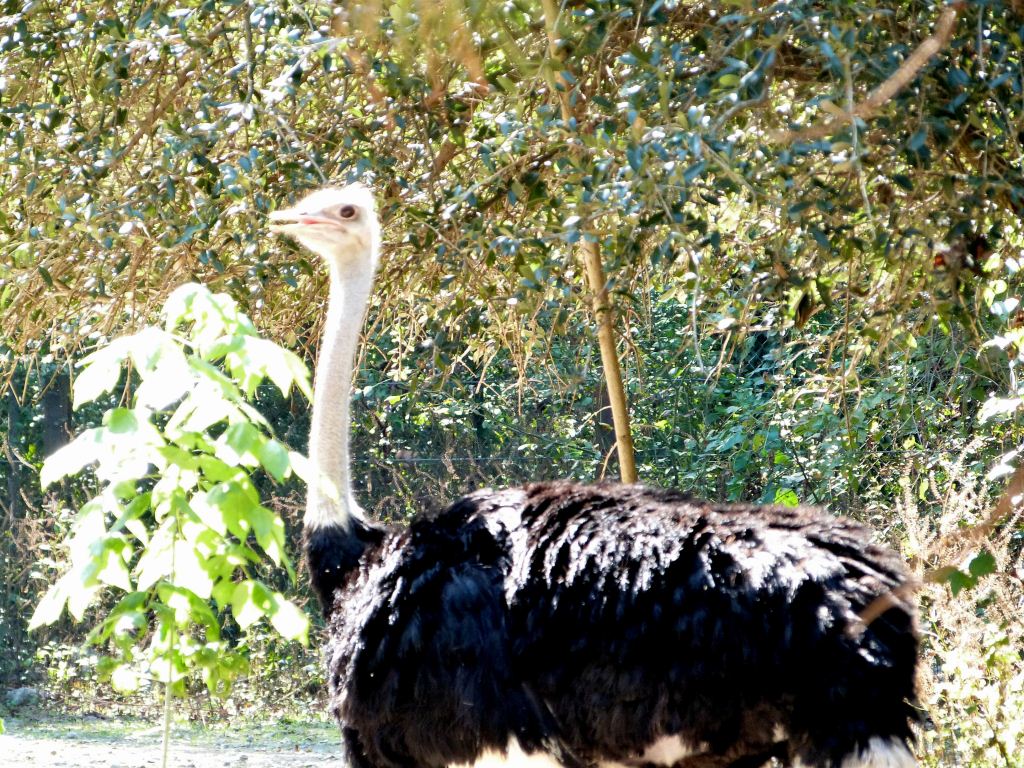
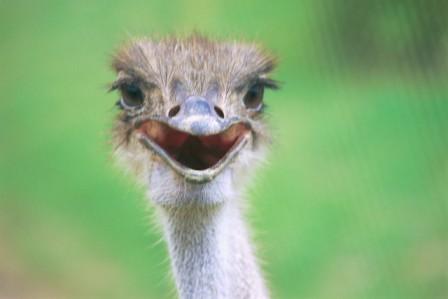
Common Ostrich (Struthio camelus) at Riverbanks Zoo SC by Lee

Common Ostrich (Struthio camelus) at Riverbanks Zoo SC by Lee

Martha and the Go-Kart Race ~ by Emma Foster

There was once an enormous ostrich named Martha who was extremely tall with a really long neck. She lived at the zoo and every day people would come there to look at her and all the strange and exotic animals. Many people came to look at Martha every day.

One day a flyer that had been left on the ground by a boy who was passing them out was blown in by the wind into Martha’s exhibit. She glanced down at the flyer. In big bold letters it said: GO-KART RACE THIS SATURDAY! The flyer went on to explain the instructions and it said that all ages were admitted. Martha decided right then and there she would enter the race.

That night, Martha sneaked out of her exhibit by climbing over the fence and sneaked into the shed in the back of the zoo. Finding some wooden boards, a hammer and nails, and a few other things, Martha set to work and eventually constructed her go-kart by Saturday.

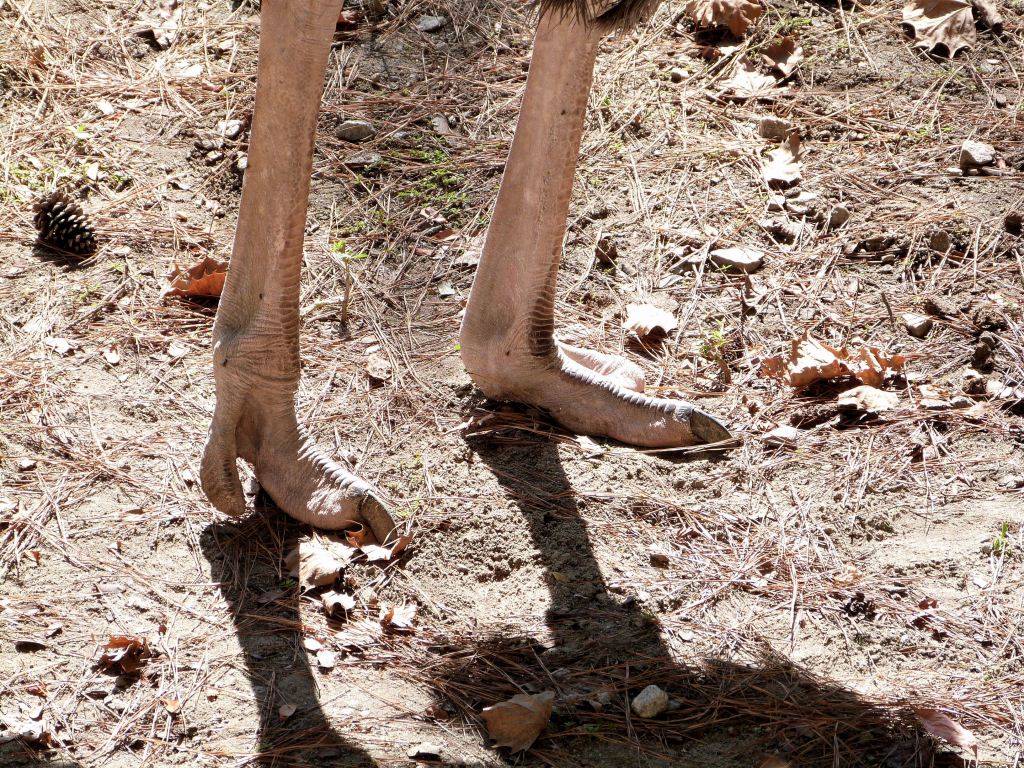
Common Ostrich (Struthio camelus) Foot at Riverfront Zoo SC by Lee

Common Ostrich (Struthio camelus) Foot at Riverfront Zoo SC by Lee

On the day of the race, Martha pushed her go-kart up to the starting line. All of the kids stared at her as she tried to get into the go-kart. It was difficult because of her long legs, but Martha eventually managed to get settled.

A man from the sideline swung a flag signaling to start the race. Martha zoomed down the road and turned a corner. After a few more turns Martha and the others drove over a bridge and eventually down a steep hill.

Ostrich

Ostrich

Martha spotted the finish line. She was in the lead. In a few seconds Martha crossed the finish line and won first place. Now every time someone at the zoo passed by Martha’s exhibit, they would see her first place trophy and her go-kart. The people at the zoo would always say they had never seen a better racer and the zoo keepers never figured out how she escaped from her exhibit.

The End


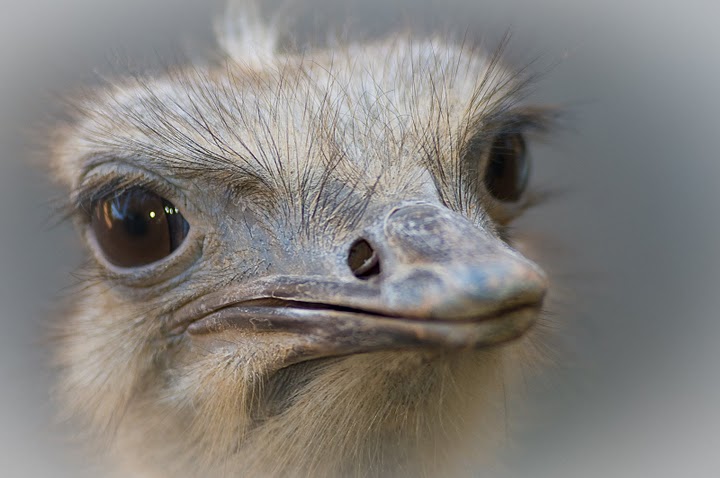
Common Ostrich (Struthio camelus) Closeup by WikiC

Common Ostrich (Struthio camelus) Closeup by ©WikiC

Lee’s Addition:

Gavest thou the goodly wings unto the peacocks? or wings and feathers unto the ostrich? (Job 39:13 KJV)

Well, our young writer has come up with another interesting Bird Tale. Emma continues to amaze me with her stories. Thanks, again, Emma. Keep up the good work. Lord Bless you as you continue to develop in wisdom and with the Lord.

See her other stories:

Also:

*

The Watchman of the Old Orchard – Chapter 7

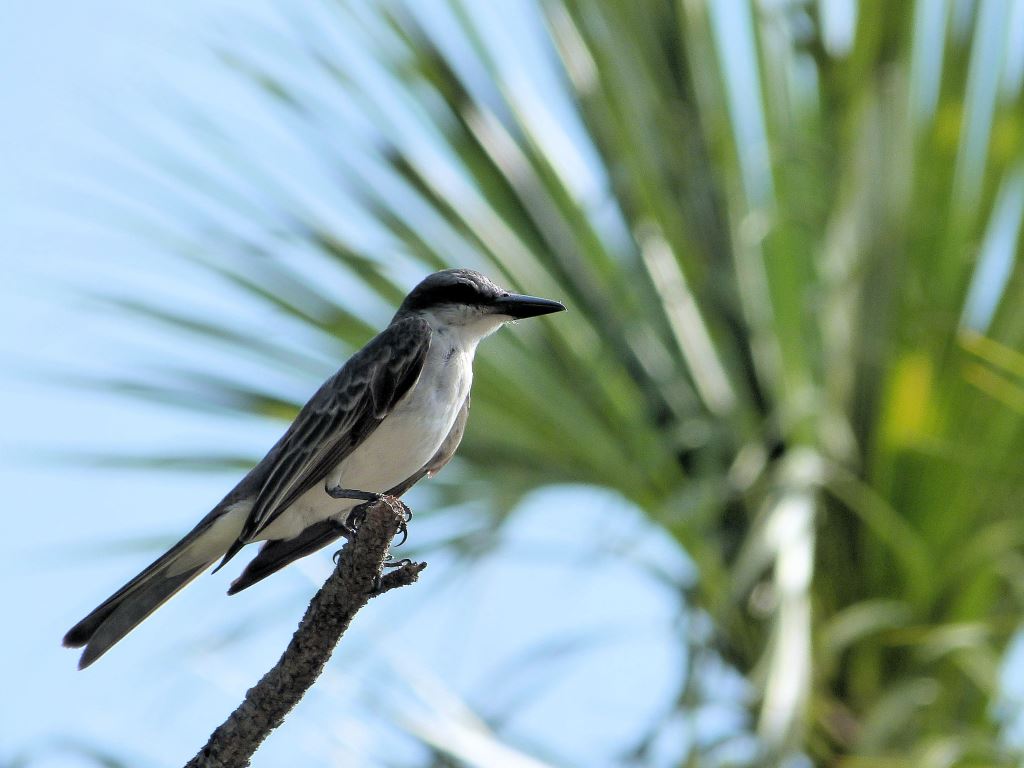
Grey Kingbird (Tyrannus dominicensis) by Lee at Honeymoon Is SP

The Watchman of the Old Orchard

The Kingbird and the Great Crested Flycatcher.

The Burgess Bird Book For Children
*

CHAPTER 7. The Watchman of the Old Orchard.

Listen to the story read.

A few days after Chebec and his wife started building their nest in the Old Orchard Peter dropped around as usual for a very early call. He found Chebec very busy hunting for materials for that nest, because, as he explained to Peter, Mrs. Chebec is very particular indeed about what her nest is made of. But he had time to tell Peter a bit of news.

“My fighting cousin and my handsomest cousin arrived together yesterday, and now our family is very well represented in the Old Orchard,” said Chebec proudly.

Slowly Peter reached over his back with his long left hind foot and thoughtfully scratched his long right ear. He didn’t like to admit that he couldn’t recall those two cousins of Chebec’s. “Did you say your fighting cousin?” he asked in a hesitating way.

“That’s what I said,” replied Chebec. “He is Scrapper the Kingbird, as of course you know. The rest of us always feel safe when he is about.

“Of course I know him,” declared Peter, his face clearing. “Where is he now?”

At that very instant a great racket broke out on the other side of the Old Orchard and in no time at all the feathered folks were hurrying from every direction, screaming at the top of their voices. Of course, Peter couldn’t be left out of anything like that, and he scampered for the scene of trouble as fast as his legs could take him. When he got there he saw Redtail the Hawk flying up and down and this way and that way, as if trying to get away from something or somebody.

For a minute Peter couldn’t think what was the trouble with Redtail, and then he saw. A white-throated, white-breasted bird, having a black cap and back, and a broad white band across the end of his tail, was darting at Redtail as if he meant to pull out every feather in the latter’s coat.

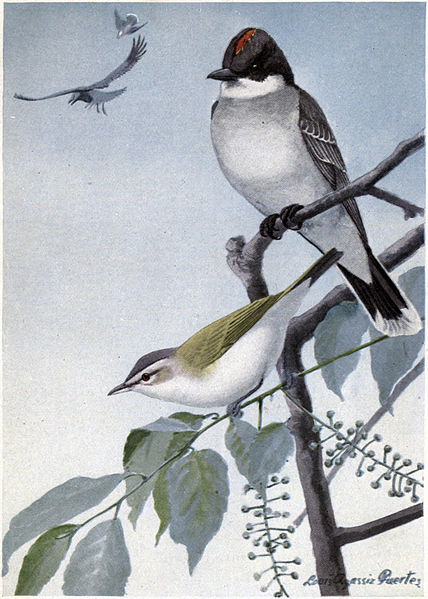
Scrapper the Kingbird, Redeye the Vireo - Burgess Bird Book ©©

Scrapper the Kingbird, Redeye the Vireo – Burgess Bird Book ©©

He was just a little smaller than Welcome Robin, and in comparison with him Redtail was a perfect giant. But this seemed to make no difference to Scrapper, for that is who it was. He wasn’t afraid, and he intended that everybody should know it, especially Redtail. It is because of his fearlessness that he is called Kingbird. All the time he was screaming at the top of his lungs, calling Redtail a robber and every other bad name he could think of. All the other birds joined him in calling Redtail bad names. But none, not even Bully the English Sparrow, was brave enough to join him in attacking big Redtail.

When he had succeeded in driving Redtail far enough from the Old Orchard to suit him, Scrapper flew back and perched on a dead branch of one of the trees, where he received the congratulations of all his feathered neighbors. He took them quite modestly, assuring them that he had done nothing, nothing at all, but that he didn’t intend to have any of the Hawk family around the Old Orchard while he lived there. Peter couldn’t help but admire Scrapper for his courage.

As Peter looked up at Scrapper he saw that, like all the rest of the flycatchers, there was just the tiniest of hooks on the end of his bill. Scrapper’s slightly raised cap seemed all black, but if Peter could have gotten close enough, he would have found that hidden in it was a patch of orange-red. While Peter sat staring up at him Scrapper suddenly darted out into the air, and his bill snapped in quite the same way Chebec’s did when he caught a fly. But it wasn’t a fly that Scrapper had. It was a bee. Peter saw it very distinctly just as Scrapper snapped it up. It reminded Peter that he had often heard Scrapper called the Bee Martin, and now he understood why.

“Do you live on bees altogether?” asked Peter.

Eastern Kingbird (Tyrannus tyrannus) by Margaret Sloan Eating

Eastern Kingbird (Tyrannus tyrannus) by Margaret Sloan Eating

“Bless your heart, Peter, no,” replied Scrapper with a chuckle. “There wouldn’t be any honey if I did. I like bees. I like them first rate. But they form only a very small part of my food. Those that I do catch are mostly drones, and you know the drones are useless. They do no work at all. It is only by accident that I now and then catch a worker. I eat all kinds of insects that fly and some that don’t. I’m one of Farmer Brown’s best friends, if he did but know it. You can talk all you please about the wonderful eyesight of the members of the Hawk family, but if any one of them has better eyesight than I have, I’d like to know who it is. There’s a fly ‘way over there beyond that old apple-tree; watch me catch it.”

Peter knew better than to waste any effort trying to see that fly. He knew that he couldn’t have seen it had it been only one fourth that distance away. But if he couldn’t see the fly he could hear the sharp click of Scrapper’s bill, and he knew by the way Scrapper kept opening and shutting his mouth after his return that he had caught that fly and it had tasted good.

“Are you going to build in the Old Orchard this year?” asked Peter.

“Of course I am,” declared Scrapper. “I—”

Just then he spied Blacky the Crow and dashed out to meet him. Blacky saw him coming and was wise enough to suddenly appear to have no interest whatever in the Old Orchard, turning away toward the Green Meadows instead.

Peter didn’t wait for Scrapper to return. It was getting high time for him to scamper home to the dear Old Briar-patch and so he started along, lipperty-lipperty-lip. Just as he was leaving the far corner of the Old Orchard some one called him. “Peter! Oh, Peter Rabbit!” called the voice. Peter stopped abruptly, sat up very straight, looked this way, looked that way and looked the other way, every way but the right way.

“Look up over your head,” cried the voice, rather a harsh voice. Peter looked, then all in a flash it came to him who it was Chebec had meant by the handsomest member of his family. It was Cresty the Great Crested Flycatcher. He was a wee bit bigger than Scrapper the Kingbird, yet not quite so big as Welcome Robin, and more slender. His throat and breast were gray, shading into bright yellow underneath. His back and head were of a grayish-brown with a tint of olive-green. A pointed cap was all that was needed to make him quite distinguished looking. He certainly was the handsomest as well as the largest of the Flycatcher family.

Great Crested Flycatcher (Myiarchus crinitus) by Margaret Sloan

Great Crested Flycatcher (Myiarchus crinitus) by Margaret Sloan

“You seem to be in a hurry, so don’t let me detain you, Peter,” said Cresty, before Peter could find his tongue. “I just want to ask one little favor of you.”

“What is it?” asked Peter, who is always glad to do any one a favor.

“If in your roaming about you run across an old cast-off suit of Mr. Black Snake, or of any other member of the Snake family, I wish you would remember me and let me know. Will you, Peter?” said Cresty.

“A—a—a—what?” stammered Peter.

“A cast-off suit of clothes from any member of the Snake family,” replied Cresty somewhat impatiently. “Now don’t forget, Peter. I’ve got to go house hunting, but you’ll find me there or hereabouts, if it happens that you find one of those cast-off Snake suits.”

Before Peter could say another word Cresty had flown away. Peter hesitated, looking first towards the dear Old Briar-patch and then towards Jenny Wren’s house. He just couldn’t understand about those cast-off suits of the Snake family, and he felt sure that Jenny Wren could tell him. Finally curiosity got the best of him, and back he scampered, lipperty-lipperty-lip, to the foot of the tree in which Jenny Wren had her home.

“Jenny!” called Peter. “Jenny Wren! Jenny Wren!” No one answered him. He could hear Mr. Wren singing in another tree, but he couldn’t see him. “Jenny! Jenny Wren! Jenny Wren!” called Peter again. This time Jenny popped her head out, and her little eyes fairly snapped. “Didn’t I tell you the other day, Peter Rabbit, that I’m not to be disturbed? Didn’t I tell you that I’ve got seven eggs in here, and that I can’t spend any time gossiping? Didn’t I, Peter Rabbit? Didn’t I? Didn’t I?”

“You certainly did, Jenny. You certainly did, and I’m sorry to disturb you,” replied Peter meekly. “I wouldn’t have thought of doing such a thing, but I just didn’t know who else to go to.”

“Go to for what?” snapped Jenny Wren. “What is it you’ve come to me for?”

“Snake skins,” replied Peter.

“Snake skins! Snake skins!” shrieked Jenny Wren. “What are you talking about, Peter Rabbit? I never have anything to do with Snake skins and don’t want to. Ugh! It makes me shiver just to think of it.”

“You don’t understand,” cried Peter hurriedly. “What I want to know is, why should Cresty the Flycatcher ask me to please let him know if I found any cast-off suits of the Snake family? He flew away before I could ask him why he wants them, and so I came to you, because I know you know everything, especially everything concerning your neighbors.”

Jenny Wren looked as if she didn’t know whether to feel flattered or provoked. But Peter looked so innocent that she concluded he was trying to say something nice.

*

Like birds flying about, So will the LORD of hosts defend Jerusalem. Defending, He will also deliver it; Passing over, He will preserve it.” (Isaiah 31:5 NKJV)

  • Who are the two birds featured in this tale?
  • Who is the larger of the two?
  • Which one has a yellow throat and which one has a white throat?
  • Why is Scrapper called a Kingbird
  • Does Scrapper only eat bees?
  • What was Cresty looking for? Why?
  • What is another name for Scrapper?
  • What was on the tip of their bills?

*

Out of the ground the LORD God formed every beast of the field and every bird of the air, and brought them to Adam to see what he would call them. And whatever Adam called each living creature, that was its name. (Genesis 2:19 NKJV)

Links:

*

Links:

Wood Pewee of Birds Illustrated by Color Photography, 1897


Next Chapter (Old Clothes and Old Houses)


Burgess-Bird-Book-for-Children


Burgess Bird Book For Children


Savannah Sparrow by Ray   Wordless Birds

*


‘The Rescue’ — A Christmas Story (Re-blogged)

An amazing story from Sandra Conner’s “In Love With Words” Take the time to read the heartwarming fiction story based on a true situation.

THE RESCUE

BOY FOR RESCUE - SHORTER YELLOWThe old woman knelt shivering before the tombstone as her husband pulled away a pile of decayed leaves that seemed to cling defiantly to its base in spite of the wind that whipped at them repeatedly. It wasn’t bitterly cold — at least not like it had been many other Decembers in this city. But the wind was always stronger up here at the cemetery, and today, with no sun smiling down its warmth, the chill just seemed to beat its way into their elderly bones. Of course, sorrow had its own chill, and sometimes it was hard to tell if the icy feeling came more from the weather or from the pain within.

The old man finished his work and then joined her, slowing sinking to his own knees and removing his warm felt hat. Tears glistened in his eyes, but he wouldn’t let them fall. He had to be strong for her right now. He glanced sideways at her, seeing the tears flowing freely down her cheeks. She kept pressing her handkerchief to her face, to try to stem the bitter stream, but it did no good.

It had been a year and a half now since they had lost their second son. He had followed his brother into military service and then into war … and, finally, into the grave.

The old man shuddered out a deep sigh. He had brought his new bride to this country just one year before their first son had been born, and it had been a time of promise and happy expectation. The Lord had blessed them with two handsome, healthy sons, and they had been the sweetest blessing life had to give. He sighed now as he thought back over the years of raising two strong-willed, but tender-hearted boys. They had all been so happy … until ….

For the Rest of this story.

*

Angels…….. as explained by Children

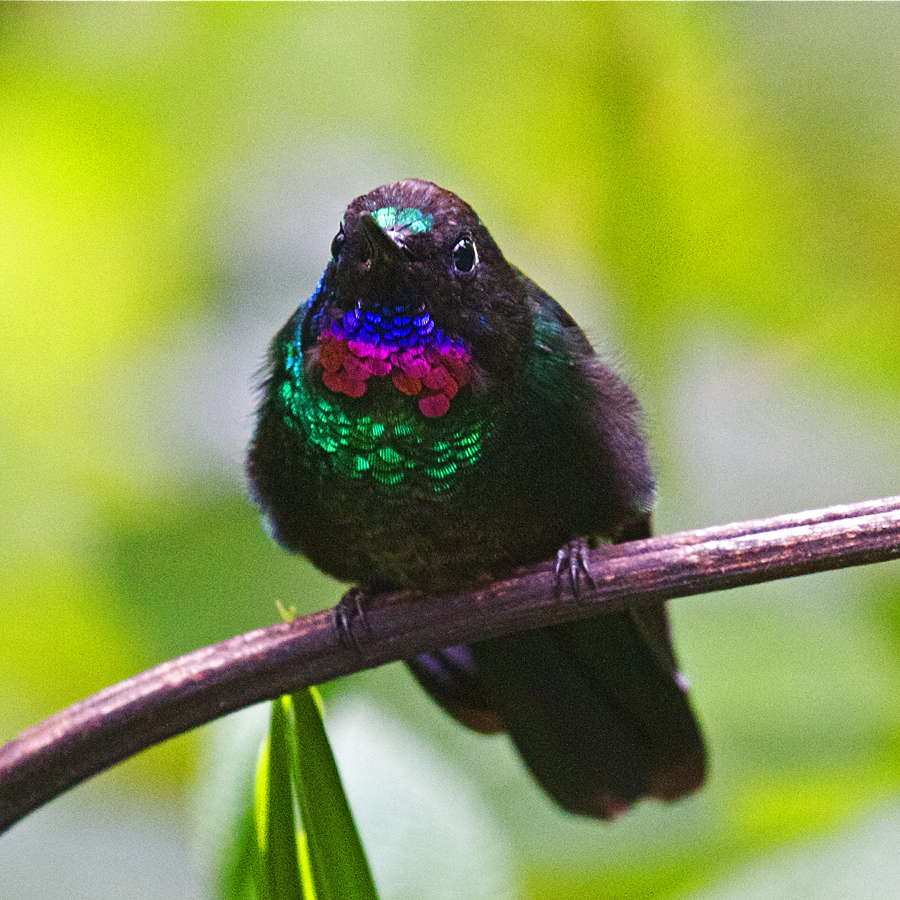
Gorgeted Sunangel (Heliangelus strophianus) by Ian

Gorgeted Sunangel (Heliangelus strophianus) by Ian

Praise ye him, all his angels: praise ye him, all his hosts. (Psalms 148:2 KJV)

Angels…….. as explained by Children.

I only know the names of two angels, Hark and Harold. – Gregory, age 5

Everybody’s got it all wrong. Angels don’t wear halos anymore. I forget why, but scientists are working on it – Olive, age 9

It’s not easy to become an angel! First, you die. Then you go to Heaven, and then there’s still the flight training to go through. And then you got to agree to wear those angel clothes. -Matthew, age 9

Angels work for God and watch over kids when God Has to go do something else. – Mitchell, age 7

My guardian angel helps me with math, but he’s not much good for science. – Henry, age 8

Angels don’t eat, but they drink milk from Holy Cows!!! – Jack, age 6

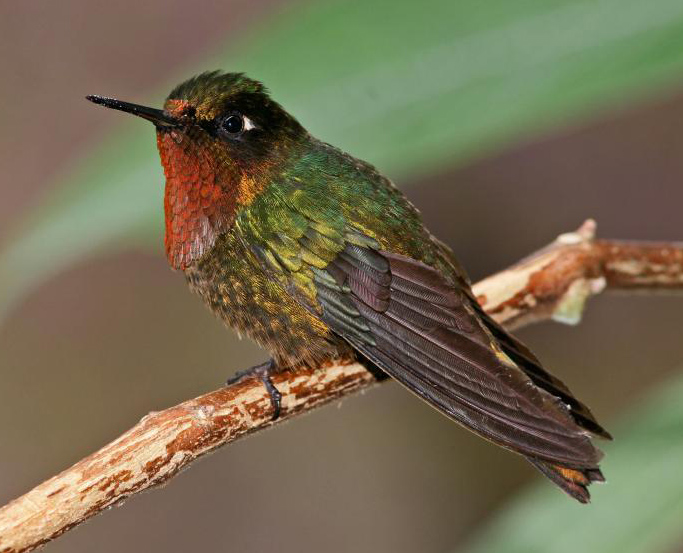
Tourmaline Sunangel (Heliangelus exortis) ©WikiC

Tourmaline Sunangel (Heliangelus exortis) ©WikiC

Take heed that ye despise not one of these little ones; for I say unto you, That in heaven their angels do always behold the face of my Father which is in heaven. (Matthew 18:10 KJV)

Angels talk all the way while they’re flying you up To heaven. The main subject is where you went wrong before you got dead. – Daniel, age 9

When an angel gets mad, he takes a deep breath and counts to ten. And when he lets out his breath again, somewhere there’s a tornado. – Reagan, age 10

Angels have a lot to do and they keep very busy. If you lose a tooth, an angel comes in through your window and leaves money under your pillow. Then when it gets cold, angels go south for the winter. – Sara, age 6

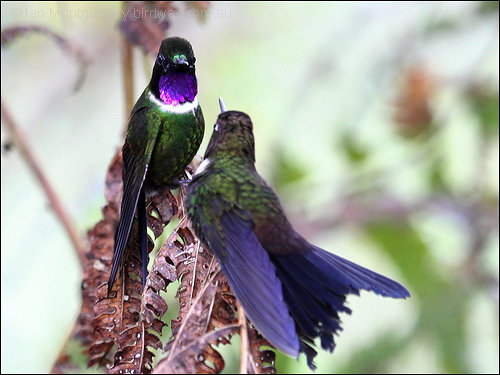
Orange-throated Sunangel ©WikiCl

Orange-throated Sunangel ©WikiCl

Bless the LORD, ye his angels, that excel in strength, that do his commandments, hearkening unto the voice of his word. (Psalms 103:20 KJV)

Angels live in cloud houses made by God and his Son, who’s a very good carpenter. – Jared, age 8

All angels are girls because they gotta wear Dresses and boys didn’t go for it. – Antonio, age 9

My angel is my grandma who died last year. She got A big head start on helping me while she was still down here on earth. – Ashley ~ age 9

Gorgeted Sunangel (Heliangelus strophianus) by Ian

Gorgeted Sunangel (Heliangelus strophianus) by Ian

For he shall give his angels charge over thee, to keep thee in all thy ways. (Psalms 91:11 KJV)

Some of the angels are in charge of helping heal Sick animals and pets. And if They don’t make the animals get better, they help the child get over it. – Vicki , age 8

What I don’t get about angels is why, when someone Is in love, they shoot arrows at them. – Sarah , age 7

How Could I Not Send This To All Of You ….. So Awesome!!!
…. And As they Say ……… No One Says it Better Than A Child

(From an e-mail)

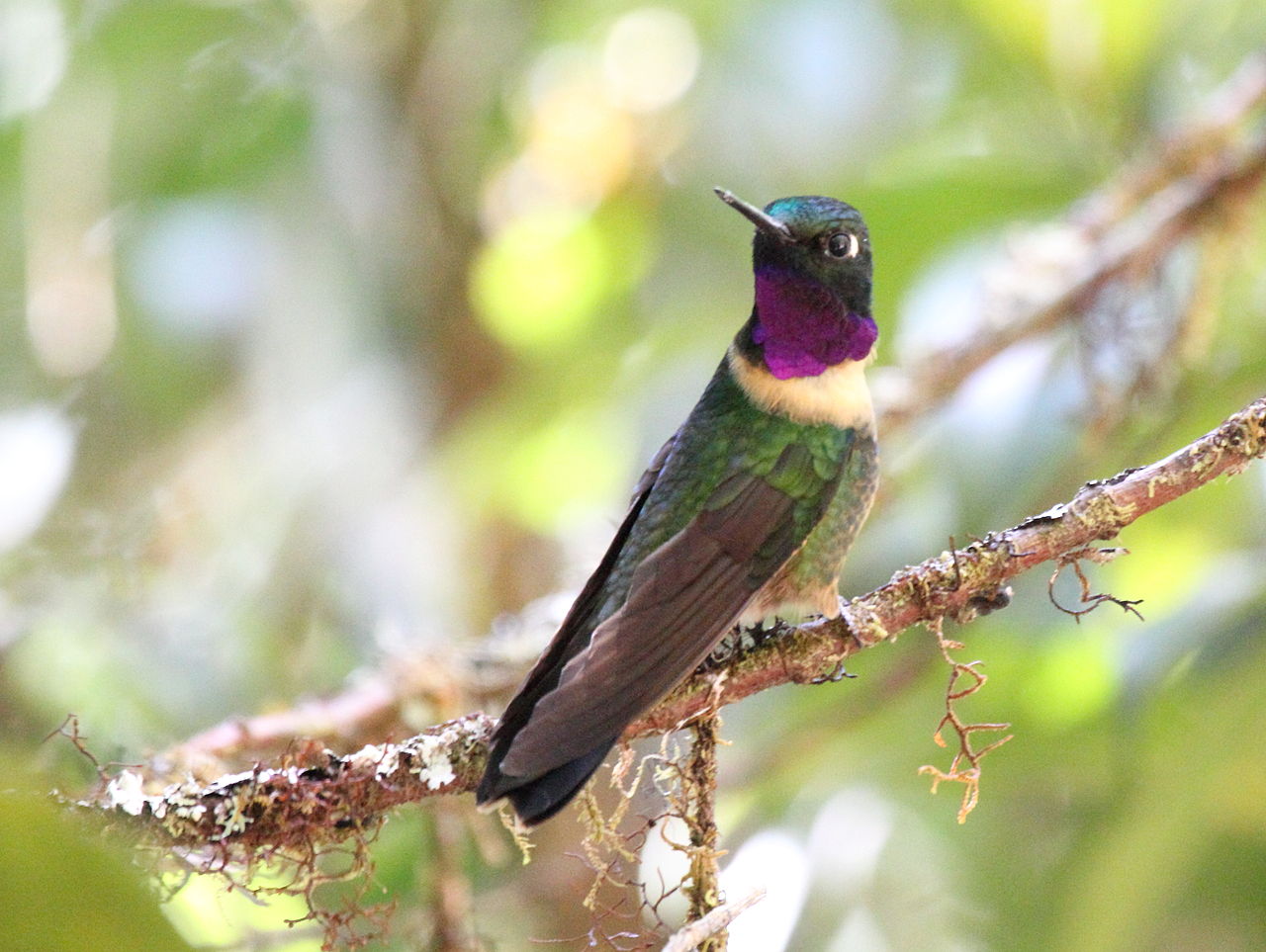
Amethyst-throated Sunangel (Heliangelus_amethysticollis) ©WikiC

Amethyst-throated Sunangel (Heliangelus_amethysticollis) ©WikiC

Likewise, I say unto you, there is joy in the presence of the angels of God over one sinner that repenteth. (Luke 15:10 KJV)

Haliangelus Subfamily of Sunangels 

Wordless Birds

*

An Old Friend In a New Home – Chapter 6

Eastern Phoebe (Sayornis phoebe) by Dan

Eastern Phoebe (Sayornis phoebe) by Dan

An Old Friend In a New Home

The Phoebe and the Least Flycatcher

The Burgess Bird Book For Children
*

CHAPTER 6. An Old Friend In a New Home.

Listen to the story read.

Every day brought newcomers to the Old Orchard, and early in the morning there were so many voices to be heard that perhaps it is no wonder if for some time Peter Rabbit failed to miss that of one of his very good friends. Most unexpectedly he was reminded of this as very early one morning he scampered, lipperty-lipperty-lip, across a little bridge over the Laughing Brook.

“Dear me! Dear me! Dear me!” cried rather a plaintive voice. Peter stopped so suddenly that he all but fell heels over head. Sitting on the top of a tall, dead, mullein stalk was a very soberly dressed but rather trim little fellow, a very little larger than Bully the English Sparrow. Above, his coat was of a dull olive-brown, while underneath he was of a grayish-white, with faint tinges of yellow in places. His head was dark, and his bill black. The feathers on his head were lifted just enough to make the tiniest kind of crest. His wings and tail were dusky, little bars of white showing very faintly on his wings, while the outer edges of his tail were distinctly white. He sat with his tail hanging straight down, as if he hadn’t strength enough to hold it up.

Chebec the Least Flycatcher, Dear Me the Phoebe - Burgess Bird Book ©©

Chebec the Least Flycatcher, Dear Me the Phoebe – Burgess Bird Book ©©

“Hello, Dear Me!” cried Peter joyously. “What are you doing way down here? I haven’t seen you since you first arrived, just after Winsome Bluebird got here.” Peter started to say that he had wondered what had become of Dear Me, but checked himself, for Peter is very honest and he realized now that in the excitement of greeting so many friends he hadn’t missed Dear Me at all.

Dear Me the Phoebe did not reply at once, but darted out into the air, and Peter heard a sharp click of that little black bill. Making a short circle, Dear Me alighted on the mullein stalk again.

“Did you catch a fly then?” asked Peter.

“Dear me! Dear me! Of course I did,” was the prompt reply. And with each word there was a jerk of that long hanging tail. Peter almost wondered if in some way Dear Me’s tongue and tail were connected. “I suppose,” said he, “that it is the habit of catching flies and bugs in the air that has given your family the name of Flycatchers.”

Dear Me nodded and almost at once started into the air again. Once more Peter heard the click of that little black bill, then Dear Me was back on his perch. Peter asked again what he was doing down there.

“Mrs. Phoebe and I are living down here,” replied Dear Me. “We’ve made our home down here and we like it very much.”

Peter looked all around, this way, that way, every way, with the funniest expression on his face. He didn’t see anything of Mrs. Phoebe and he didn’t see any place in which he could imagine Mr. and Mrs. Phoebe building a nest. “What are you looking for?” asked Dear Me.

“For Mrs. Phoebe and your home,” declared Peter quite frankly. “I didn’t suppose you and Mrs. Phoebe ever built a nest on the ground, and I don’t see any other place around here for one.”

Dear Me chuckled. “I wouldn’t tell any one but you, Peter,” said he, “but I’ve known you so long that I’m going to let you into a little secret. Mrs. Phoebe and our home are under the very bridge you are sitting on.”

“I don’t believe it!” cried Peter.

But Dear Me knew from the way Peter said it that he really didn’t mean that. “Look and see for yourself,” said Dear Me.

So Peter lay flat on his stomach and tried to stretch his head over the edge of the bridge so as to see under it. But his neck wasn’t long enough, or else he was afraid to lean over as far as he might have. Finally he gave up and at Mr. Phoebe’s suggestion crept down the bank to the very edge of the Laughing Brook. Dear Me darted out to catch another fly, then flew right in under the bridge and alighted on a little ledge of stone just beneath the floor. There, sure enough, was a nest, and Peter could see Mrs. Phoebe’s bill and the top of her head above the edge of it. It was a nest with a foundation of mud covered with moss and lined with feathers.

Eastern Phoebe (Sayornis phoebe) Nest ©WikiC

Eastern Phoebe (Sayornis phoebe) Nest ©WikiC

“That’s perfectly splendid!” cried Peter, as Dear Me resumed his perch on the old mullein stalk. “How did you ever come to think of such a place? And why did you leave the shed up at Farmer Brown’s where you have build your home for the last two or three years?”

“Oh,” replied Dear Me, “we Phoebes always have been fond of building under bridges. You see a place like this is quite safe. Then, too, we like to be near water. Always there are many insects flying around where there is water, so it is an easy matter to get plenty to eat. I left the shed at Farmer Brown’s because that pesky cat up there discovered our nest last year, and we had a dreadful time keeping our babies out of her clutches. She hasn’t found us down here, and she wouldn’t be able to trouble us if she should find us.”

“I suppose,” said Peter, “that as usual you were the first of your family to arrive.”

“Certainly. Of course,” replied Dear Me. “We always are the first. Mrs. Phoebe and I don’t go as far south in winter as the other members of the family do. They go clear down into the Tropics, but we manage to pick up a pretty good living without going as far as that. So we get back here before the rest of them, and usually have begun housekeeping by the time they arrive. My cousin, Chebec the Least Flycatcher, should be here by this time. Haven’t you heard anything of him up in the Old Orchard?”

“No,” replied Peter, “but to tell the truth I haven’t looked for him. I’m on my way to the Old Orchard now, and I certainly shall keep my ears and eyes open for Chebec. I’ll tell you if I find him. Good-by.”

“Dear me! Dear me! Good-by Peter. Dear me!” replied Mr. Phoebe as Peter started off for the Old Orchard.

Perhaps it was because Peter was thinking of him that almost the first voice he heard when he reached the Old Orchard was that of Chebec, repeating his own name over and over as if he loved the sound of it. It didn’t take Peter long to find him. He was sitting out on the up of one of the upper branches of an apple-tree where he could watch for flies and other winged insects. He looked so much like Mr. Phoebe, save that he was smaller, that any one would have know they were cousins. “Chebec! Chebec! Chebec!” he repeated over and over, and with every note jerked his tail. Now and then he would dart out into the air and snap up something so small that Peter, looking up from the ground, couldn’t see it at all.

Least Flycatcher (Empidonax minimus) by Raymond Barlow

Least Flycatcher (Empidonax minimus) by Raymond Barlow

“Hello, Chebec!” cried Peter. “I’m glad to see you back again. Are you going to build in the Old Orchard this year?”

“Of course I am,” replied Chebec promptly. “Mrs. Chebec and I have built here for the last two or three years, and we wouldn’t think of going anywhere else. Mrs. Chebec is looking for a place now. I suppose I ought to be helping her, but I learned a long time ago, Peter Rabbit, that in matters of this kind it is just as well not to have any opinion at all. When Mrs. Chebec has picked out just the place she wants, I’ll help her build the nest. It certainly is good to be back here in the Old Orchard and planning a home once more. We’ve made a terribly long journey, and I for one am glad it’s over.”

“I just saw your cousins, Mr. and Mrs. Phoebe, and they already have a nest and eggs,” said Peter.

“The Phoebes are a funny lot,” replied Chebec. “They are the only members of the family that can stand cold weather. What pleasure they get out of it I don’t understand. They are queer anyway, for they never build their nests in trees as the rest of us do.”

“Are you the smallest in the family?” asked Peter, for it had suddenly struck him that Chebec was a very little fellow indeed.

Chebec nodded. “I’m the smallest,” said he. “That’s why they call me Least Flycatcher. I may be least in size, but I can tell you one thing, Peter Rabbit, and that is that I can catch just as many bugs and flies as any of them.” Suiting action to the word, he darted out into the air. His little bill snapped and with a quick turn he was back on his former perch, jerking his tail and uttering his sharp little cry of, “Chebec! Chebec! Chebec!” until Peter began to wonder which he was the most fond of, catching flies, or the sound of his own voice.

Presently they both heard Mrs. Chebec calling from somewhere in the middle of the Old Orchard. “Excuse me, Peter,” said Chebec, “I must go at once. Mrs. Chebec says she has found just the place for our nest, and now we’ve got a busy time ahead of us. We are very particular how we build a nest.”

“Do you start it with mud the way Welcome Robin and your cousins, the Phoebes, do?” asked Peter.

“Mud!” cried Chebec scornfully. “Mud! I should say not! I would have you understand, Peter, that we are very particular about what we use in our nest. We use only the finest of rootlets, strips of soft bark, fibers of plants, the brown cotton that grows on ferns, and perhaps a little hair when we can find it. We make a dainty nest, if I do say it, and we fasten it securely in the fork made by two or three upright little branches. Now I must go because Mrs. Chebec is getting impatient. Come see me when I’m not so busy Peter.”


Lee’s Addition:

The family that the Phoebe and the Least Flycatcher belong to is the Tyrant Flycatchers – Tyrannidae Family. It is a very large family, but most do not live here in North America.

How does the story describe Dear Me the Phoebe?

  • What does he like to eat?
  • Where is his nest?
  • What is the nest made out of?
  • Why did he get back before the others in his family?

The Least Flycatcher is called Chebec. Do you know why?

  • Why did he get back later than Dear Me?
  • How is Chebec’s nest different from Dear Me’s?
  • Chebec is the largest or smallest member of the Flycatcher family?


*

The birds of the air have their resting-places by them (trees), and make their song among the branches. (Psalms 104:12 BBE)

Links:

*

Links:

Bully the English Sparrow, Chippy the Chipping Sparrow - Burgess Bird Book ©©


  Next Chapter (The Watchman of the Old Orchard.)


Burgess-Bird-Book-for-Children


Burgess Bird Book For Children


Savannah Sparrow by Ray


Wordless Birds – With Hummingbirds


*


Peter Learns Something He Hadn’t Guessed – Chapter 5

Western Bluebird (Sialia mexicana) ©WikiC

Western Bluebird (Sialia mexicana) ©WikiC

Peter Learns Something He Hadn’t Guessed

The Bluebird and the Robin

*

Listen to the story read.

CHAPTER 5. Peter Learns Something He Hadn’t Guessed.

Running over to the Old Orchard very early in the morning for a little gossip with Jenny Wren and his other friends there had become a regular thing with Peter Rabbit. He was learning a great many things, and some of them were most surprising.

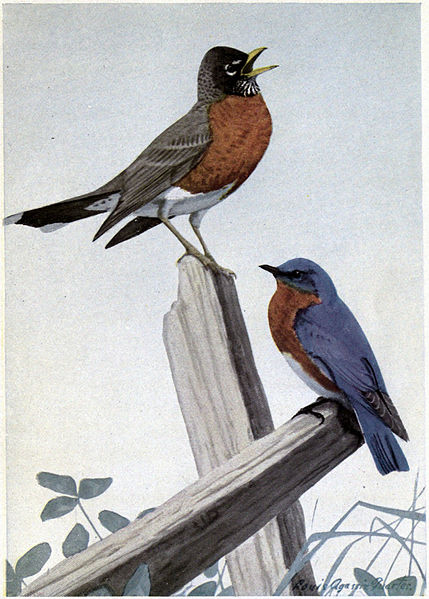
Now two of Peter’s oldest and best friends in the Old Orchard were Winsome Bluebird and Welcome Robin. Every spring they arrived pretty nearly together, though Winsome Bluebird usually was a few days ahead of Welcome Robin. This year Winsome had arrived while the snow still lingered in patches. He was, as he always is, the herald of sweet Mistress Spring. And when Peter had heard for the first time Winsome’s soft, sweet whistle, which seemed to come from nowhere in particular and from everywhere in general, he had kicked up his long hind legs from pure joy. Then, when a few days later he had heard Welcome Robin’s joyous message of “Cheer-up! Cheer-up! Cheer-up! Cheer-up! Cheer!” from the tiptop of a tall tree, he had known that Mistress Spring really had arrived.

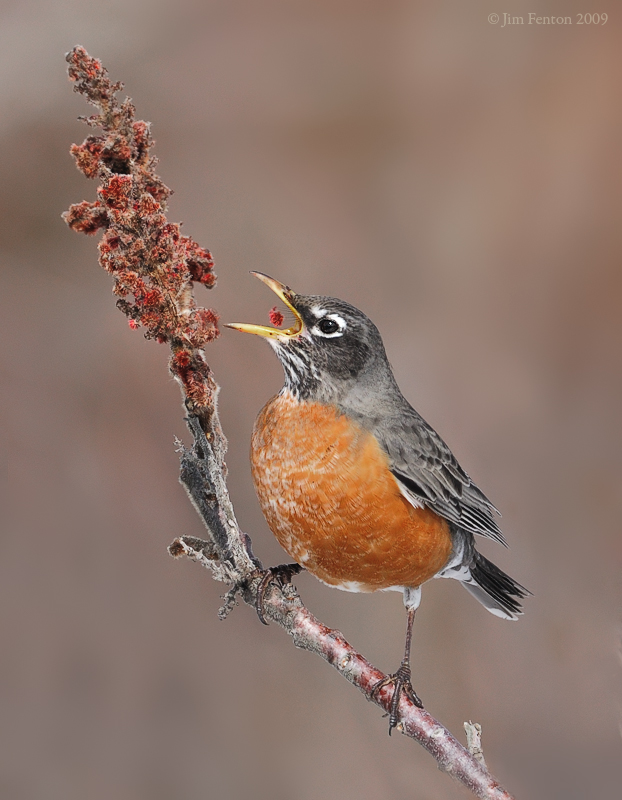
Robin Eating by Jim Fenton

Robin Eating by Jim Fenton

Peter loves Winsome Bluebird and Welcome Robin, just as everybody else does, and he had known them so long and so well that he thought he knew all there was to know about them. He would have been very indignant had anybody told him he didn’t.

“Those cousins don’t look much alike, do they?” remarked Jenny Wren, as she poked her head out of her house to gossip with Peter.

“What cousins?” demanded Peter, staring very hard in the direction in which Jenny Wren was looking.

“Those two sitting on the fence over there. Where are your eyes, Peter?” replied Jenny rather sharply.

Peter stared harder than ever. On one post sat Winsome Bluebird, and on another post sat Welcome Robin. “I don’t see anybody but Winsome and Welcome, and they are not even related,” replied Peter with a little puzzled frown.

“Tut, tut, tut, tut, tut, Peter!” exclaimed Jenny Wren. “Tut, tut, tut, tut, tut! Who told you any such nonsense as that? Of course they are related. They are cousins. I thought everybody knew that. They belong to the same family that Melody the Thrush and all the other Thrushes belong to. That makes them all cousins.”

“What?” exclaimed Peter, looking as if he didn’t believe a word of what Jenny Wren had said. Jenny repeated, and still Peter looked doubtful.

Then Jenny lost her temper, a thing she does very easily. “If you don’t believe me, go ask one of them,” she snapped, and disappeared inside her house, where Peter could hear her scolding away to herself.

The more he thought of it, the more this struck Peter as good advice. So he hopped over to the foot of the fence post on which Winsome Bluebird was sitting. “Jenny Wren says that you and Welcome Robin are cousins. She doesn’t know what she is talking about, does she?” asked Peter.

Winsome chuckled. It was a soft, gentle chuckle. “Yes,” said he, nodding his head, “we are. You can trust that little busybody to know what she is talking about, every time. I sometimes think she knows more about other people’s affairs than about her own. Welcome and I may not look much alike, but we are cousins just the same. Don’t you think Welcome is looking unusually fine this spring?”

“Not a bit finer than you are yourself, Winsome,” replied Peter politely. “I just love that sky-blue coat of yours. What is the reason that Mrs. Bluebird doesn’t wear as bright a coat as you do?”

“Go ask Jenny Wren,” chuckled Winsome Bluebird, and before Peter could say another word he flew over to the roof of Farmer Brown’s house.

Back scampered Peter to tell Jenny Wren that he was sorry he had doubted her and that he never would again. Then he begged Jenny to tell him why it was that Mrs. Bluebird was not as brightly dressed as was Winsome.

“Mrs. Bluebird, like most mothers, is altogether too busy to spend much time taking care of her clothes; and fine clothes need a lot of care,” replied Jenny. “Besides, when Winsome is about he attracts all the attention and that gives her a chance to slip in and out of her nest without being noticed. I don’t believe you know, Peter Rabbit, where Winsome’s nest is.”

Peter had to admit that he didn’t, although he had tried his best to find out by watching Winsome. “I think it’s over in that little house put up by Farmer Brown’s boy,” he ventured. “I saw both Mr. and Mrs. Bluebird go in it when they first came, and I’ve seen Winsome around it a great deal since, so I guess it is there.”

“So you guess it is there!” mimicked Jenny Wren. “Well, your guess is quite wrong, Peter; quite wrong. As a matter of fact, it is in one of those old fence posts. But just which one I am not going to tell you. I will leave that for you to find out. Mrs. Bluebird certainly shows good sense. She knows a good house when she sees it. The hole in that post is one of the best holes anywhere around here. If I had arrived here early enough I would have taken it myself. But Mrs. Bluebird already had her nest built in it and four eggs there, so there was nothing for me to do but come here. Just between you and me, Peter, I think the Bluebirds show more sense in nest building than do their cousins the Robins. There is nothing like a house with stout walls and a doorway just big enough to get in and out of comfortably.”

Peter nodded quite as if he understood all about the advantages of a house with walls. “That reminds me,” said he. “The other day I saw Welcome Robin getting mud and carrying it away. Pretty soon he was joined by Mrs. Robin, and she did the same thing. They kept it up till I got tired of watching them. What were they doing with that mud?”

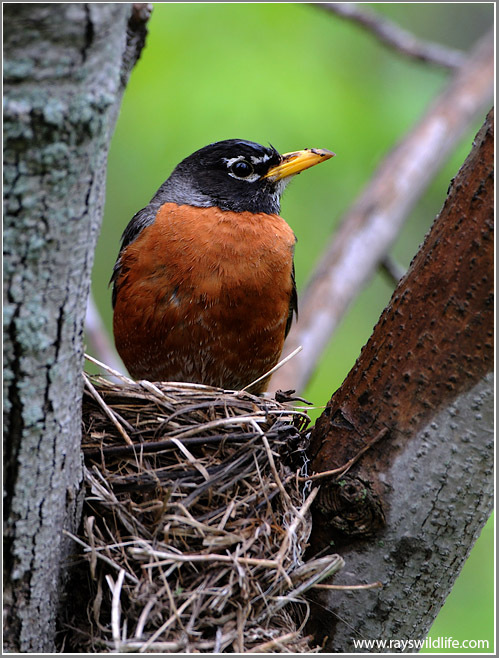
American Robin (Turdus migratorius) in nest by Ray

American Robin (Turdus migratorius) in nest by Ray

“Building their nest, of course, stupid,” retorted Jenny. “Welcome Robin, with that black head, beautiful russet breast, black and white throat and yellow bill, not to mention the proud way in which he carries himself, certainly is a handsome fellow, and Mrs. Robin is only a little less handsome. How they can be content to build the kind of home they do is more than I can understand. People think that Mr. Wren and I use a lot of trash in our nest. Perhaps we do, but I can tell you one thing, and that is it is clean trash. It is just sticks and clean straws, and before I lay my eggs I see to it that my nest is lined with feathers. More than this, there isn’t any cleaner housekeeper than I am, if I do say it.

“Welcome Robin is a fine looker and a fine singer, and everybody loves him. But when it comes to housekeeping, he and Mrs. Robin are just plain dirty. They make the foundation of their nest of mud,—plain, common, ordinary mud. They cover this with dead grass, and sometimes there is mighty little of this over the inside walls of mud. I know because I’ve seen the inside of their nest often. Anybody with any eyes at all can find their nest. More than once I’ve known them to have their nest washed away in a heavy rain, or have it blown down in a high wind. Nothing like that ever happens to Winsome Bluebird or to me.”

Jenny disappeared inside her house, and Peter waited for her to come out again. Welcome Robin flew down on the ground, ran a few steps, and then stood still with his head on one side as if listening. Then he reached down and tugged at something, and presently out of the ground came a long, wriggling angleworm. Welcome gulped it down and ran on a few steps, then once more paused to listen. This time he turned and ran three or four steps to the right, where he pulled another worm out of the ground.

“He acts as if he heard those worms in the ground,” said Peter, speaking aloud without thinking.

“He does,” said Jenny Wren, poking her head out of her doorway just as Peter spoke. “How do you suppose he would find them when they are in the ground if he didn’t hear them?”

“Can you hear them?” asked Peter.

“I’ve never tried, and I don’t intend to waste my time trying,” retorted Jenny. “Welcome Robin may enjoy eating them, but for my part I want something smaller and daintier, young grasshoppers, tender young beetles, small caterpillars, bugs and spiders.”

Peter had to turn his head aside to hide the wry face he just had to make at the mention of such things as food. “Is that all Welcome Robin eats?” he asked innocently.

“I should say not,” laughed Jenny. “He eats a lot of other kinds of worms, and he just dearly loves fruit like strawberries and cherries and all sorts of small berries. Well, I can’t stop here talking any longer. I’m going to tell you a secret, Peter, if you’ll promise not to tell.”

Of course Peter promised, and Jenny leaned so far down that Peter wondered how she could keep from falling as she whispered, “I’ve got seven eggs in my nest, so if you don’t see much of me for the next week or more, you’ll know why. I’ve just got to sit on those eggs and keep them warm.”

*

*

  1. What bird family do the Bluebird and Robin belong to?
  2. Why is it good that Mrs. Bluebird isn’t brightly dressed?
  3. When the Robin runs and then stops, what is he doing? What might he find to eat?
  4. What colors are the Robin’s head, breast, throat and bill?
  5. What does the Robin’s song sound like?
  6. Should we have an attitude like the Robin’s Song?

“Is anyone among you suffering? Then he must pray. Is anyone cheerful? He is to sing praises. (James 5:13 NASB)

“A joyful heart makes a cheerful face, But when the heart is sad, the spirit is broken. (Proverbs 15:13 NASB)

“Even the stork in the sky Knows her seasons; And the turtledove and the swift and the thrush Observe the time of their migration; But My people do not know The ordinance of the LORD. (Jeremiah 8:7 NASB)

Links:

*

Links:

Chebec the Least Flycatcher, Dear Me the Phoebe - Burgess Bird Book ©©


  Next Chapter – An Old Friend In a New Home. 


Burgess-Bird-Book-for-Children


Burgess Bird Book For Children


Green-billed Toucan (Ramphastos dicolorus) ©WikiC

Wordless Toucan


Wordless Birds – Toucan


*


Fly With An Open Bible

Golden Eagle (Aquila chrysaetos) Flying ©WikiC

Golden Eagle (Aquila chrysaetos) Flying ©WikiC

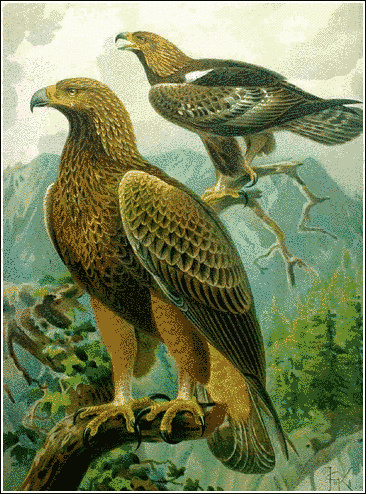
Fly With An Open Bible by Golden Eagle

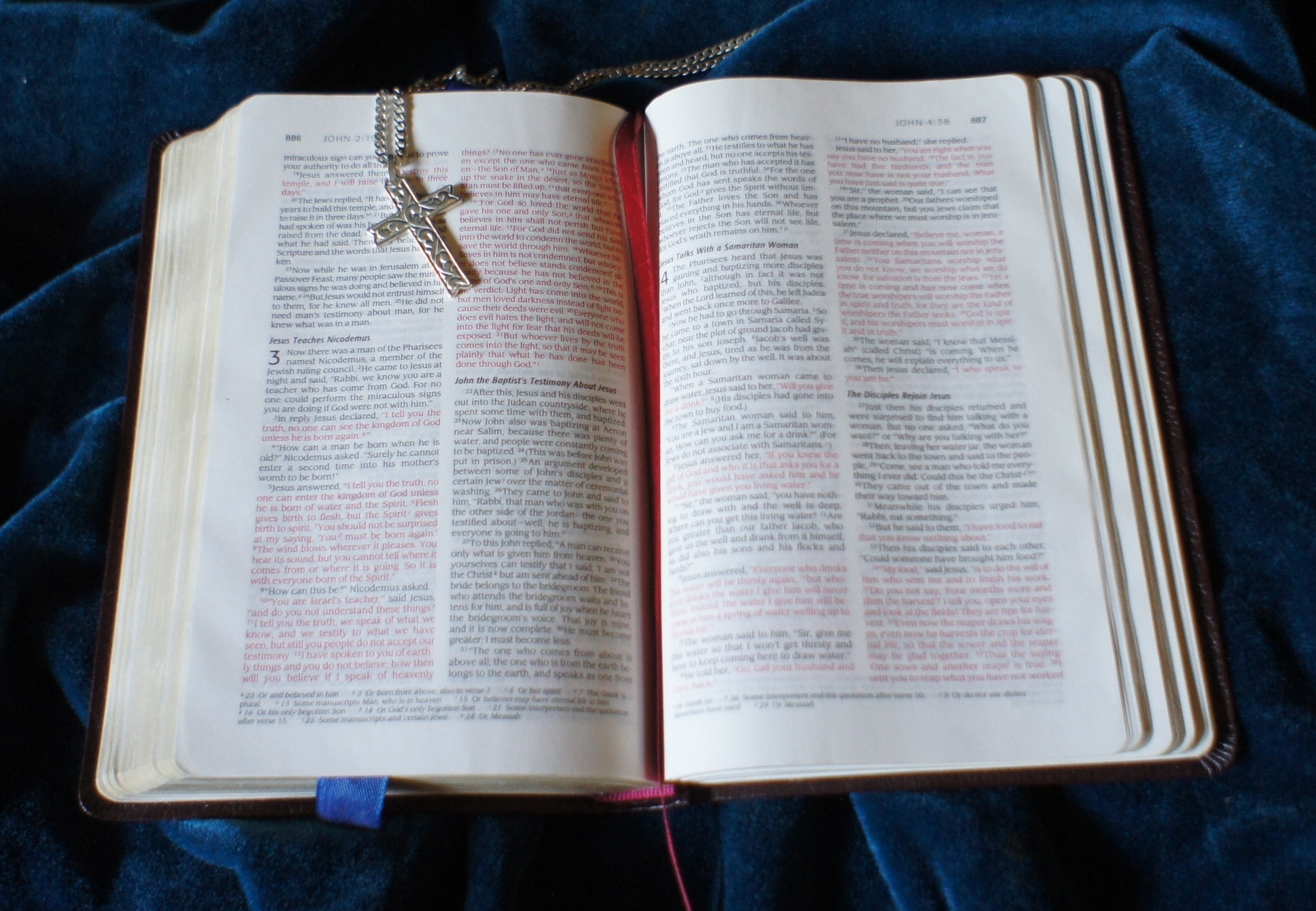
Boys and girls of all ages this is GOLDEN EAGLE circling in for a landing on Golden Eagle ©PDthis beautiful world that Jesus Christ created. To learn anything, to understand anything, we must have an open Bible! The other day, I heard of a 24 year-old lady that had never read the Word of God. She had no idea that the rainbow had any meaning whatsoever. Do you know the meaning behind the rainbow?  Get your Bible out and open it to Genesis chapter 9. There you will find the meaning to the rainbow.

You humans should thank God that you can read and appreciate beauty. Although I write these things once in a while, you do know that birds cannot really write and read. However, God created you to do those things and so much more.

“Blessed (happy) is the man…his delight is in the law of the Lord; and in his law doth he meditate day and night. And he shall be like a tree planted by the rivers of water. that bringeth forth his fruit in his season; his leaf also shall not wither; and whatsoever he doeth shall prosper” Psalm 1:1-3

The Word of God will bring you true success. It is no accident that you are presently reading this article. I have chosen to write this and you have chosen to read it. However, even though we both have a free will and can do what we want to do, Jesus Christ is in control of every single thing that happens in the entire Universe. He is in control of everything that you and I do, say, and think! Why even a sparrow doesn’t fall out of a tree without the Heavenly Father.

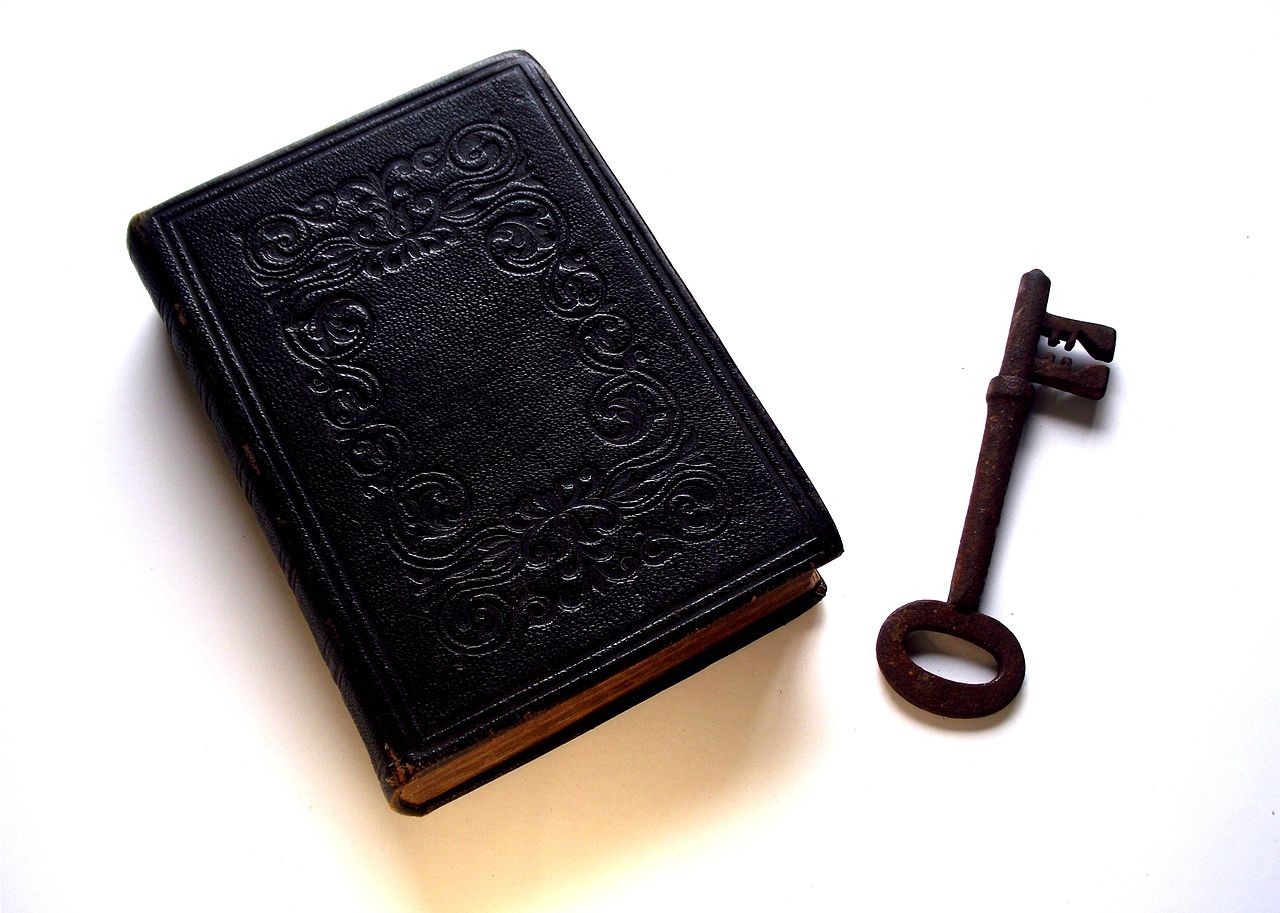
The Key to True Knowledge

The Key to True Knowledge

The question for you to answer is this: ARE YOU SAVED? You are either saved or lost. This has nothing to do with are you good or bad because the Bible says that “all have sinned, and come short of the glory of God.” (Romans 3:23) You’re made in the “image of God” and you will live forever somewhere according to the Bible. You can go to Heaven if you trust Jesus Christ as your personal Saviour. When Jesus died on the cross, He shed His blood and paid for your sins as your substitute. He stood in our place and took the punishment from God the Father so that you could be forgiven! You must personally accept Jesus by faith. You know, no one can eat your breakfast for you. You individually eat your breakfast and then your body makes use of the food to give you energy for the day. You must personally receive Jesus into your life!

“But as many as received him, to them gave he power to become the sons of God, even to them that believe on his name…” (John 1:12)

Golden Eagle has learned a few things as I have soared over this planet. You must study things with an open Bible. The Bible tells us where the first humans came from! You know that scientist have landed a washing machine size robot on a comet the other day. That thing has been flying around for 10 years and just arrived at its destination! That shows us how big this universe is. The comet is over 300 million miles away from Earth. The people who sent that robot to the comet are trying to find out the answer to the question: WHERE DID WE COME FROM. And that is a great question. But, they will never find the answer until they open their Bibles and begin to read the first few chapters in the book of Genesis. God created Adam on the sixth day of Creation week. He took the elements in the earth, the dust of the earth and “breathed into his nostrils the breath of life; and man became a living soul.” (Genesis 2:7)

When you study Science or History or God or whatever, you need to open your Bible and see what God has to say!

The Earth rotates around the sun. We should rotate around Jesus Christ, the Son of God. The sun gives light to the earth and Jesus is the Light of the world. Tonight, you will fall asleep and in the morning you will wake up. That is God’s way of trying to teach us that sleep is like death, but you wake up in the morning and that is like the resurrection day!

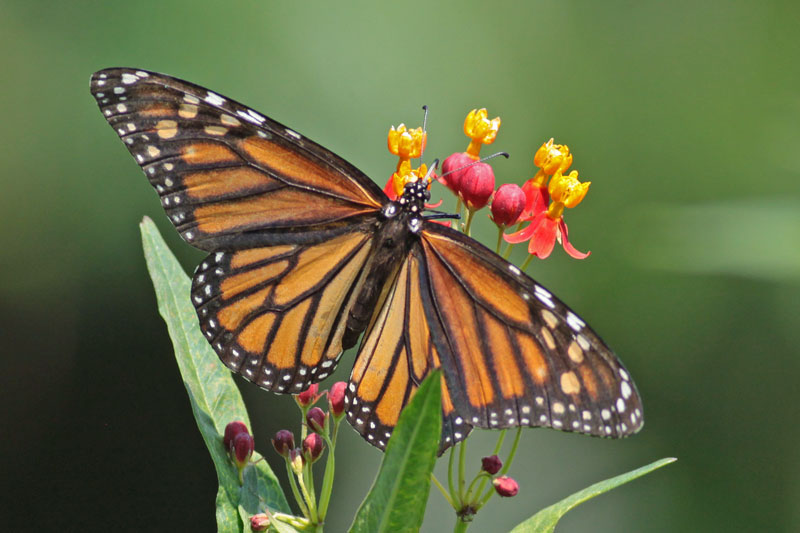
Monarch Butterfly (Danaus plexippus) by Margaret Sloan

Monarch Butterfly by Margaret Sloan

A worm goes into a cocoon and comes out a beautiful butterfly! Metamorphosis, a change teaches us that Jesus Christ will give us a new body in the future if we are saved! Humans sweat because of Adam’s sin in the Garden of Eden! The Earth is covered with water because of Noah’s flood. In fact, four-fifths of the Earth is covered with water if you count the oceans, the seas, the rivers, the streams, and the lakes!

Every snowflake is different, every blade of grass is different, every bird is different! And each one of you are unique and different. That is how God has made you! We could talk about this forever! In fact, God’s people in Heaven will talk about this and learn about God and His Universe forever. You will have a real body and be in a real Heaven with real GOLDEN STREETS!

“AND THE BUILDING OF THE WALL OF IT WAS OF JASPER: AND THE CITY WAS PURE GOLD, LIKE UNTO CLEAR GLASS…AND THE STREET OF THE CITY WAS PURE GOLD, AS IT WERE TRANSPARENT GLASS. (Revelation 21)

The question you need to ask yourself is this: will you be in Heaven with Jesus Christ in that day? And remember we are only one heartbeat away from eternity. Why not ask Jesus to save you this very moment? “For whosoever shall call upon the name of the LORD shall be saved.” (Romans 10:13)

Thanks for flying with me. And thanks for having an open Bible! Read some of God’s Word today! I would love to fly to the comet later today, but I know I will not be able to get beyond the atmosphere, so I might just head back to my roost for the night and gaze into the starry heavens. You never know what you might see! Have a great one…

*

Golden Eagle

Wordless Birds

*

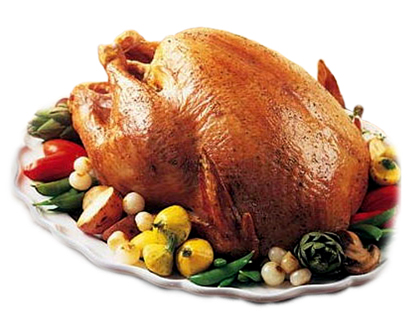
Reginald, Turkey Commander

Wild Turkey (Meleagris gallopavo) by Daves BirdingPix

Reginald – (Wild Turkey by Daves BirdingPix)

Reginald, Turkey Commander

By Emma Foster

There once was a turkey named Reginald who lived in the backwoods of Louisiana. Every year Reginald would band together with many other turkeys in a secret fortress underground to protect themselves from hunters hunting for turkeys to eat on Thanksgiving. Reginald and his friends had built the fortress a long time ago.

Reginald could tell it was Thanksgiving when one day he saw many hunters lurking in the backwoods searching for a turkey to eat on that special day. Reginald quickly went home to grab his Army helmet which he used as protection from gun shots, and called all his friends to their special underground fortress.

Many turkeys came prepared for the day. Most of them wore their Army helmets. Many other turkeys were there as well.  They had brought food for Thanksgiving.  Not just people celebrated Thanksgiving, turkeys did too, but without the turkey.

Soon there was a big party going on in the fortress. Not one hunter was aware that all the turkeys in the backwoods were in the underground fortress. The turkeys were joyously celebrating Thanksgiving. They were very thankful they were not “on the menu” that day.

turkey1

Reginald was happy that the hunters could not find any turkeys. All the hunters eventually had to go to the grocery store to get a turkey, and every hunter from the backwoods hates to go to the grocery store and buy a turkey.

Soon Thanksgiving was over, and all the turkeys rejoiced. Even so, Reginald always made sure his Army helmet was where he needed it in case a hunter was nearby.

The End


Lee’s Addition:

“… But every man hath his proper gift of God, one after this manner, and another after that. (1 Corinthians 7:7b KJV)

“Now there are diversities of gifts, but the same Spirit. (1 Corinthians 12:4 KJV)

Emma has given us another great Bird Tale. I have been holding this for a while, waiting to get closer to Thanksgiving, but it is too adorable to hold any longer. So, it’s a little early, but ENJOY!

I keep encouraging her to write a tale for us, because she is developing into a gifted author. May we all encourage our young people to develop whatever talent the Lord has given them.

Maybe we can get a follow-up on Reginald and his friends.

Reginald – (Wild Turkey by Daves BirdingPix)
Reginald, Turkey Commander
By Emma Foster

There once was a turkey named Reginald who lived in the backwoods of Louisiana. Every year Reginald would band together with many other turkeys in a secret fortress underground to protect themselves from hunters hunting for turkeys to eat on Thanksgiving. Reginald and his friends had built the fortress a long time ago.

Reginald could tell it was Thanksgiving when one day he saw many hunters lurking in the backwoods searching for a turkey to eat on that special day. Reginald quickly went home to grab his Army helmet which he used as protection from gun shots, and called all his friends to their special underground fortress.

Many turkeys came prepared for the day. Most of them wore their Army helmets. Many other turkeys were there as well.  They had brought food for Thanksgiving.  Not just people celebrated Thanksgiving, turkeys did too, but without the turkey.

Soon there was a big party going on in the fortress. Not one hunter was aware that all the turkeys in the backwoods were in the underground fortress. The turkeys were joyously celebrating Thanksgiving. They were very thankful they were not “on the menu” that day.

Reginald was happy that the hunters could not find any turkeys. All the hunters eventually had to go to the grocery store to get a turkey, and every hunter from the backwoods hates to go to the grocery store and buy a turkey.

Soon Thanksgiving was over, and all the turkeys rejoiced. Even so, Reginald always made sure his Army helmet was where he needed it in case a hunter was nearby.

The End

Lee’s Addition:

“… But every man hath his proper gift of God, one after this manner, and another after that. (1 Corinthians 7:7b KJV)

“Now there are diversities of gifts, but the same Spirit. (1 Corinthians 12:4 KJV)

Emma has given us another great Bird Tale. I have been holding this for a while, waiting to get closer to Thanksgiving, but it is too adorable to hold any longer. So, it’s a little early, but ENJOY!

I keep encouraging her to write a tale for us, because she is developing into a gifted author. May we all encourage our young people to develop whatever talent the Lord has given them.

Maybe we can get a follow-up on Reginald and his friends.

*

See All of Emma’s Stories

Interesting Things – A Few Questions For Evolutionists

Interesting Things from Smiley Central

“He taketh the wise in their own craftiness: and the counsel of the froward is carried headlong.” Job 5:13

Why do giraffes have long necks or kangaroos have pouches? Evolutionists answer that natural selection has favored the development of certain characteristics while discouraging and eliminating other features. But if this is what happened, we who believe in creation have a few questions.

Giraffe skeleton on exhibit at The Museum of Osteology, Oklahoma City, Oklahoma. (PD)

Giraffe skeleton on exhibit at The Museum of Osteology, Oklahoma City, Oklahoma. (PD)

Giraffes have long necks, say evolutionists, because conditions favored the development of long-necked creatures that could feed on higher parts of the tree. But then many other grazing animals live side by side with giraffes and manage to get by. The horse, according to evolutionary explanations, has crowned teeth in order to survive in its environment. And yet the cow, with its uncrowned teeth, survives quite well in the same environment.

Some evolutionists say that plants developed berries so that their seeds, inside the berries, would be carried far and wide by hungry birds, thus ensuring the plants’ survival. Why then did some plants develop poisonous berries? And if the maternal instinct evolved to preserve the next generation, why do creatures like the stickleback fish, seahorse, and midwife toad, to name a few, leave total care of the young to the male?

The truth is that natural selection does not offer a clear and consistent explanation for the living world. The diversity of the created world does not bear witness to evolutionary principles, but to the artistry of our Creator God.

Prayer:

Dear Father, You confound those who are wise in their own hearts and give wisdom and clear vision to those Whom You have made pure through the blood of Christ. Let the wisdom and vision I seek be that which You provide. In Jesus’ Name. Amen.

Notes:
Photo: Giraffe skeleton on exhibit at The Museum of Osteology, Oklahoma City, Oklahoma. (PD)
©Creation Moments 2014

Listen to this article from Creation Moments

*

Chippy, Sweetvoice, and Dotty – Chapter 4

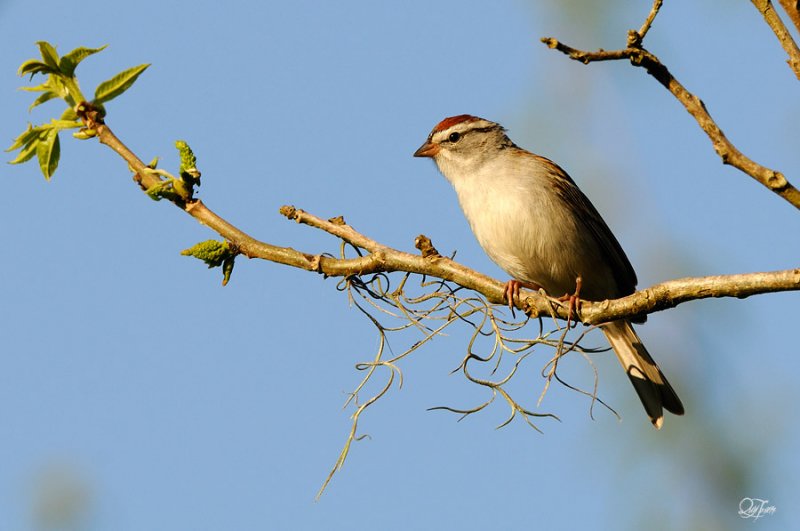
Chipping Sparrow (Spizella passerina) by Quy Tran

Chippy, Sweetvoice, and Dotty

The Chipping, Vesper and Tree Sparrows

The Burgess Bird Book For Children

*

Listen to the story read.

CHAPTER 4. Chippy, Sweetvoice, and Dotty.

For a while Jenny Wren was too busy to talk save to scold Mr. Wren for spending so much time singing instead of working. To Peter it seemed as if they were trying to fill that tree trunk with rubbish. “I should think they had enough stuff in there for half a dozen nests,” muttered Peter. “I do believe they are carrying it in for the fun of working.” Peter wasn’t far wrong in this thought, as he was to discover a little later in the season when he found Mr. Wren building another nest for which he had no use.

Finding that for the time being he could get nothing more from Jenny Wren, Peter hopped over to visit Johnny Chuck, whose home was between the roots of an old apple-tree in the far corner of the Old Orchard. Peter was still thinking of the Sparrow family; what a big family it was, yet how seldom any of them, excepting Bully the English Sparrow, were to be found in the Old Orchard.

“Hello, Johnny Chuck!” cried Peter, as he discovered Johnny sitting on his doorstep. “You’ve lived in the Old Orchard a long time, so you ought to be able to tell me something I want to know. Why is it that none of the Sparrow family excepting that noisy nuisance, Bully, build in the trees of the Old Orchard? Is it because Bully has driven all the rest out?”

Johnny Chuck shook his head. “Peter,” said he, “whatever is the matter with your ears? And whatever is the matter with your eyes?”

“Nothing,” replied Peter rather shortly. “They are as good as yours any day, Johnny Chuck.”

(Chipping Sparrow singing ©xeno-canto.org by Ian Cruickshank)

Johnny grinned. “Listen!” said Johnny. Peter listened. From a tree just a little way off came a clear “Chip, chip, chip, chip.” Peter didn’t need to be told to look. He knew without looking who was over there. He knew that voice for that of one of his oldest and best friends in the Old Orchard, a little fellow with a red-brown cap, brown back with feathers streaked with black, brownish wings and tail, a gray waistcoat and black bill, and a little white line over each eye—altogether as trim a little gentleman as Peter was acquainted with. It was Chippy, as everybody calls the Chipping Sparrow, the smallest of the family.

Chipping Sparrow (Spizella passerina) by Daves BirdingPix

Peter looked a little foolish. “I forgot all about Chippy,” said he. “Now I think of it, I have found Chippy here in the Old Orchard ever since I can remember. I never have seen his nest because I never happened to think about looking for it. Does he build a trashy nest like his cousin, Bully?”

Johnny Chuck laughed. “I should say not!” he exclaimed. “Twice Chippy and Mrs. Chippy have built their nest in this very old apple-tree. There is no trash in their nest, I can tell you! It is just as dainty as they are, and not a bit bigger than it has to be. It is made mostly of little fine, dry roots, and it is lined inside with horse-hair.”

“What’s that?” Peter’s voice sounded as it he suspected that Johnny Chuck was trying to fool him.

“It’s a fact,” said Johnny, nodding his head gravely. “Goodness knows where they find it these days, but find it they do. Here comes Chippy himself; ask him.”

Chippy and Mrs. Chippy came flitting from tree to tree until they were on a branch right over Peter and Johnny. “Hello!” cried Peter. “You folks seem very busy. Haven’t you finished building your nest yet?”

“Nearly,” replied Chippy. “It is all done but the horsehair. We are on our way up to Farmer Brown’s barnyard now to look for some. You haven’t seen any around anywhere, have you?”

Peter and Johnny shook their heads, and Peter confessed that he wouldn’t know horsehair if he saw it. He often had found hair from the coats of Reddy Fox and Old Man Coyote and Digger the Badger and Lightfoot the Deer, but hair from the coat of a horse was altogether another matter.

“It isn’t hair from the coat of a horse that we want,” cried Chippy, as he prepared to fly after Mrs. Chippy. “It is long hair from the tail or mane of a horse that we must have. It makes the very nicest kind of lining for a nest.”

Chippy and Mrs. Chippy were gone a long time, but when they did return each was carrying a long black hair. They had found what they wanted, and Mrs. Chippy was in high spirits because, as she took pains to explain to Peter, that little nest would not soon be ready for the four beautiful little blue eggs with black spots on one end she meant to lay in it.

“I just love Chippy and Mrs. Chippy,” said Peter, as they watched their two little feathered friends putting the finishing touches to the little nest far out on a branch of one of the apple-trees.

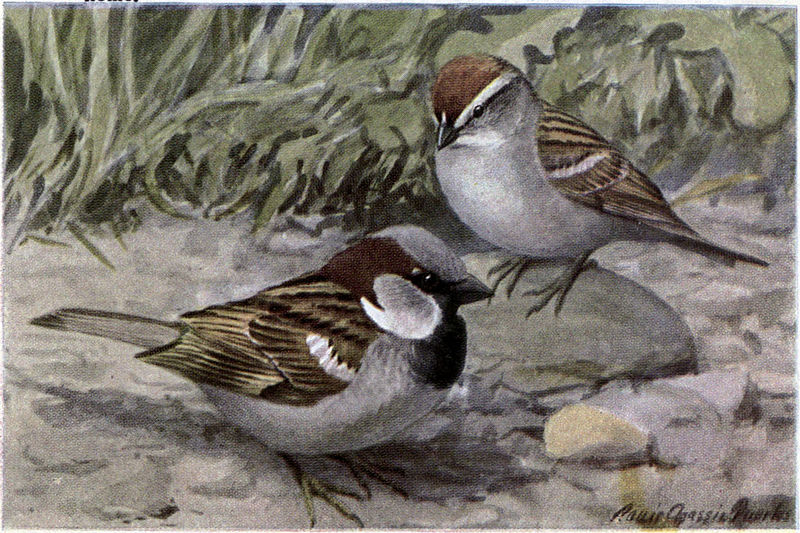
Bully the English Sparrow, Chippy the Chipping Sparrow - Burgess Bird Book ©©

Bully the English Sparrow, Chippy the Chipping Sparrow – Burgess Bird Book ©©

“Everybody does,” replied Johnny. “Everybody loves them as much as they hate Bully and his wife. Did you know that they are sometimes called Tree Sparrows? I suppose it is because they so often build their nests in trees?”

“No,” said Peter, “I didn’t. Chippy shouldn’t be called Tree Sparrow, because he has a cousin by that name.”

Johnny Chuck looked as if he doubted that, “I never heard of him,” he grunted.

Peter grinned. Here was a chance to tell Johnny Chuck something, and Peter never is happier than when he can tell folks something they don’t know. “You’d know him if you didn’t sleep all winter,” said Peter. “Dotty the Tree Sparrow spends the winter here. He left for his home in the Far North about the time you took it into your head to wake up.”

“Why do you call him Dotty?” asked Johnny Chuck.

“Because he has a little round black dot right in the middle of his breast,” replied Peter. “I don’t know why they call him Tree Sparrow; he doesn’t spend his time in the trees the way Chippy does, but I see him much oftener in low bushes or on the ground. I think Chippy has much more right to the name of Tree Sparrow than Dotty has. Now I think of it, I’ve heard Dotty called the Winter Chippy.”

“Gracious, what a mix-up!” exclaimed Johnny Chuck. “With Chippy being called a Tree Sparrow and a Tree Sparrow called Chippy, I should think folks would get all tangled up.”

“Perhaps they would,” replied Peter, “if both were here at the same time, but Chippy comes just as Dotty goes, and Dotty comes as Chippy goes. That’s a pretty good arrangement, especially as they look very much alike, excepting that Dotty is quite a little bigger than Chippy and always has that black dot, which Chippy does not have. Goodness gracious, it is time I was back in the dear Old Briar-patch! Good-by, Johnny Chuck.”

American Tree Sparrow by Ray

American Tree Sparrow by Ray

Away went Peter Rabbit, lipperty-lipperty-lip, heading for the dear Old Briar-patch. Out of the grass just ahead of him flew a rather pale, streaked little brown bird, and as he spread his tail Peter saw two white feathers on the outer edges. Those two white feathers were all Peter needed to recognize another little friend of whom he is very fond. It was Sweetvoice the Vesper Sparrow, the only one of the Sparrow family with white feathers in his tail.

“Come over to the dear Old Briar-patch and sing to me,” cried Peter.

Sweetvoice dropped down into the grass again, and when Peter came up, was very busy getting a mouthful of dry grass. “Can’t,” mumbled Sweetvoice. “Can’t do it now, Peter Rabbit. I’m too busy. It is high time our nest was finished, and Mrs. Sweetvoice will lose her patience if I don’t get this grass over there pretty quick.”

“Where is your nest; in a tree?” asked Peter innocently.

“That’s telling,” declared Sweetvoice. “Not a living soul knows where that nest is, excepting Mrs. Sweetvoice and myself. This much I will tell you, Peter: it isn’t in a tree. And I’ll tell you this much more: it is in a hoofprint of Bossy the Cow.”

“In a WHAT?” cried Peter.

“In a hoofprint of Bossy the Cow,” repeated Sweetvoice, chuckling softly. “You know when the ground was wet and soft early this spring, Bossy left deep footprints wherever she went. One of these makes the nicest kind of place for a nest. I think we have picked out the very best one on all the Green Meadows. Now run along, Peter Rabbit, and don’t bother me any more. I’ve got too much to do to sit here talking. Perhaps I’ll come over to the edge of the dear Old Briar-patch and sing to you a while just after jolly, round, red Mr. Sun goes to bed behind the Purple Hills. I just love to sing then.”

“I’ll be watching for you,” replied Peter. “You don’t love to sing any better than I love to hear you. I think that is the best time of all the day in which to sing. I mean, I think it’s the best time to hear singing,” for of course Peter himself does not sing at all.

(Vesper Sparrow singing ©xeno-canto.org by Chris Parrish)

That night, sure enough, just as the Black Shadows came creeping out over the Green Meadows, Sweetvoice, perched on the top of a bramble-bush over Peter’s head, sang over and over again the sweetest little song and kept on singing even after it was quite dark. Peter didn’t know it, but it is this habit of singing in the evening which has given Sweetvoice his name of Vesper Sparrow.

“Serve the LORD with gladness: come before his presence with singing.” (Psalms 100:2 KJV)

*

  • Who was the first new Sparrow we meet?
  • What were they busy doing?
  • Their nest was being built with what material?
  • What was the one thing needed to finish their nest?

*

  • Who was the next Sparrow that showed up?
  • Why did it confuse Johnny Chuck?
  • Why did the name “Dotty” fit for that sparrow?
  • Was Dotty or Chippy larger?

*

  • Sweetvoice is what kind of Sparrow?
  • What were these Sparrows making their nest out of?
  • Where was their nest?
  • When does Sweetvoice like to sing?

*

Are you busy doing the things that need to done? Do you sing? Most thought better of Chippy than Bully. Are more like Chippy or Bully?

Speaking to yourselves in psalms and hymns and spiritual songs, singing and making melody in your heart to the Lord; Giving thanks always for all things unto God and the Father in the name of our Lord Jesus Christ;
(Ephesians 5:19-20 KJV)

Links:

*

Links:

 Next Chapter –  Peter Learns Something He Hadn’t Guessed


Burgess-Bird-Book-for-Children


Burgess Bird Book For Children


 ABC’s of the Gospel


*

Burgess Bird Book For Children


*