The Wombat’s Backward Pouch (Re-post)

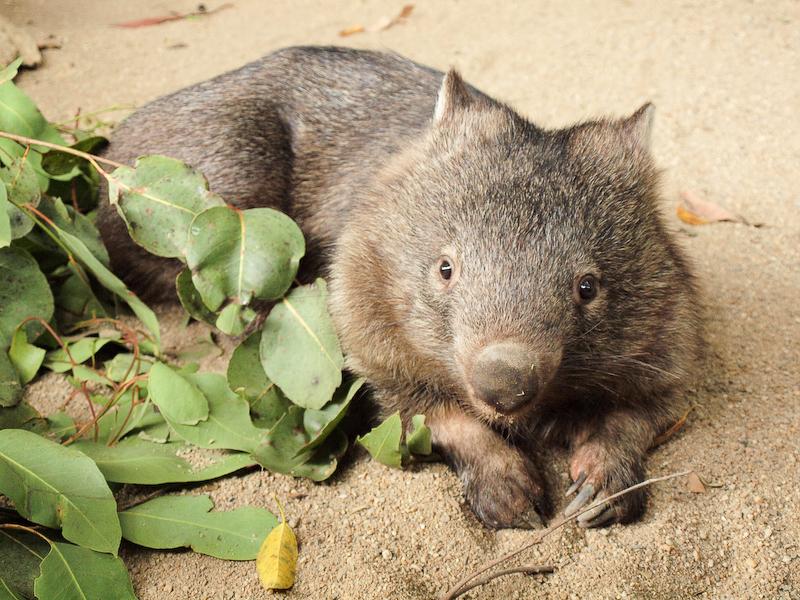
Common Wombat - Cairns CC

Common Wombat - Cairns CC

The Wombat’s Backward Pouch (Re-posted from Creation Moments)

Ephesians 2:10
For we are his workmanship, created in Christ Jesus unto good works, which God hath before ordained that we should walk in them.

Australia has many animals that are not found anywhere else in the world today. One of the most unique is the wombat, which looks like a small bear with brown fur. The wombat is a burrowing animal.

Like many of Australia’s animals, the wombat is a marsupial, having a pouch in which its prematurely born young complete their development. The pouches owned by most marsupials are open at the top toward the mother’s head. This works fine for the kangaroo and other marsupials – no one ever saw a kangaroo standing on its head.

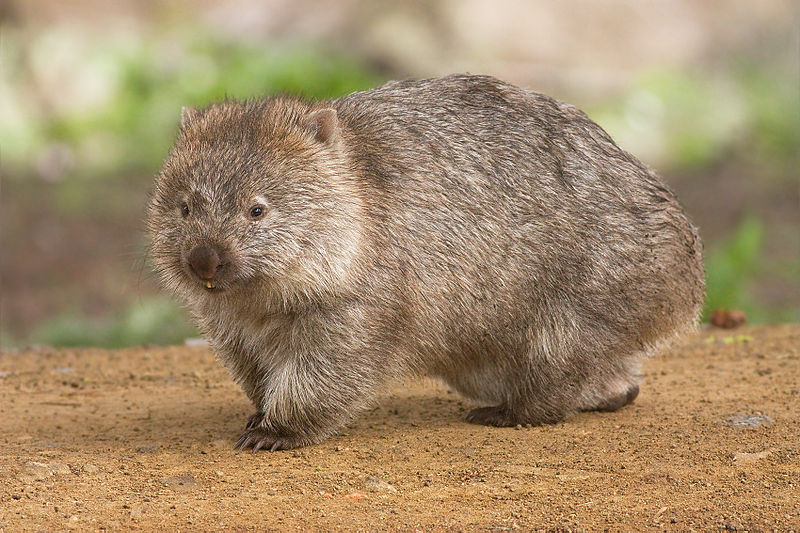
Common Wombat (Vombatus ursinus)-Maria Island National Park

Common Wombat (Vombatus ursinus)-Maria Island National Park

But the wombat is a burrowing animal. If its pouch opened toward the mother’s head, it would very quickly fill with dirt, which wouldn’t do the young wombat inside the pouch any good. So, unlike any other marsupial, the wombat’s pouch opens toward the animal’s hind legs – it points backward!

The marsupial’s pouch is a wondrous enough invention all by itself. But this pouch is a clear case of a specialized intelligent design for a unique situation. If the wombat’s backward pouch had been produced by mutations, how would baby wombats have gotten by during the millions of years of trial and error needed to redesign the pouch? It’s easy to see the wombat’s backward pouch as a humorous hint from the Creator that human theories simply cannot replace the account of creation that He has revealed to us in the Bible!

Prayer:
Lord, I thank You that You have so carefully planned every detail of the creation for the benefit of every creature. When things don’t seem to be going well in my life, comfort me with the fact that You are still in charge and that You care about the details of my life, too. Amen.
Notes:
Major, Trevor. 1989. “The backward wombat.” Reasoning from Revelation, August. p. 3.

©Creation Moments, 2012

*

Microraptor Controversy

Microraptor by durbed

News to Note for March 17, 2012, by Elizabeth Mitchell from Answers in Genesis, has an interesting article called, “Glossy black flirt by any other name is still a bird.” It is about the Microraptor that was discovered in China. It is supposedly a “four-winged” Microraptor from the Liaoning Providence. As usual, the evolutionist are claiming that it is a transitional species that is between the dinosaur and the birds. They have found the bird to have had the “iridescent black feathers of modern birds.”

As Christians that believe the Biblical account of creation, it is impossible that that can be true. God said that the birds were created on day five and than the land animals were created on day six.

Then God said, “Let the waters abound with an abundance of living creatures, and let birds fly above the earth across the face of the firmament of the heavens.” So God created great sea creatures and every living thing that moves, with which the waters abounded, according to their kind, and every winged bird according to its kind. And God saw that it was good. And God blessed them, saying, “Be fruitful and multiply, and fill the waters in the seas, and let birds multiply on the earth.” So the evening and the morning were the fifth day. Then God said, “Let the earth bring forth the living creature according to its kind: cattle and creeping thing and beast of the earth, each according to its kind”; and it was so. And God made the beast of the earth according to its kind, cattle according to its kind, and everything that creeps on the earth according to its kind. And God saw that it was good. … So the evening and the morning were the sixth day.” (Genesis 1:20-25, 31b NKJV)

Four-winged Microraptor

“God created “every winged bird according to its kind” (Genesis 1:21) on the fifth day of Creation week. He said, “Let birds fly above the earth across the face of the firmament of the heavens” (Genesis 1:20). The next day, God made each “beast of the earth, each according to its kind” (Genesis 1:24), including dinosaurs. Birds fully equipped to fly were flying the day before dinosaurs were even created.”

“Dinosaurs did not evolve into birds. Many anatomical differences between them make such a transition impossible. No genetic mechanism enabling an organism to acquire information to evolve into a completely new kind has ever been found. No evidence of feather evolution has been found in the fossil record or in this study. But thanks to this study, artists painting pictures of the world God made about 6,000 years ago can be reasonably confident as they make these birds shine in the sunlight of that first world.”

To see the whole article – Click Here.

*

Birds Vol 1 #3 – The Bobolink

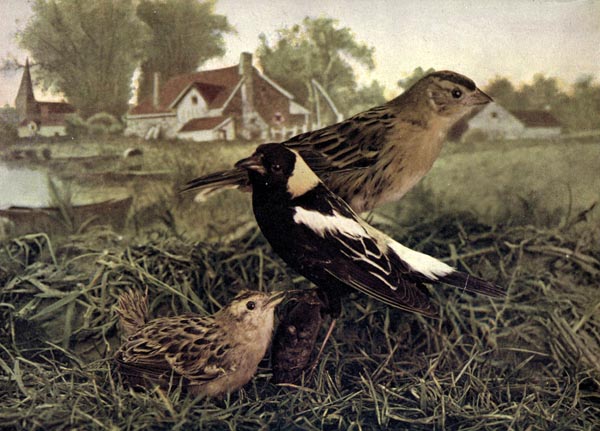
Bobolinks - for Birds Illustrated

Bobolinks – for Birds Illustrated

Birds Illustrated by Color Photography – Revisited

Vol 1. March, 1897 No. 3

*

THE BOBOLINK.

“When Nature had made all her birds,
And had no cares to think on,
She gave a rippling laugh,
And out there flew a Bobolinkon.”


imgn

O American ornithologist omits mention of the Bobolink, and naturalists generally have described him under one of the many names by which he is known. In some States he is called the Rice Bird, in others Reed Bird, the Rice or Reed Bunting, while his more familiar title, throughout the greater part of America, is Bobolink, or Bobolinkum. In Jamaica, where he gets very fat during his winter stay, he is called the Butter Bird. His title of Rice Troopial is earned by the depredations which he annually makes upon the rice crops, though his food “is by no means restricted to that seed, but consists in a large degree of insects, grubs, and various wild grasses.” A migratory bird, residing during the winter in the southern parts of America, he returns in vast multitudes northward in the early Spring. According to Wilson, their course of migration is as follows: “In April, or very early in May, the Rice Buntings, male and female, arrive within the southern boundaries of the United States, and are seen around the town of Savannah, Georgia, sometimes in separate parties of males and females, but more generally promiscuously. They remain there but a short time, and about the middle of May make their appearance in the lower part of Pennsylvania. While here the males are extremely gay and full of song, frequenting meadows, newly plowed fields, sides of creeks, rivers, and watery places, feeding on May flies and caterpillars, of which they destroy great quantities. In their passage, however, through Virginia at this season, they do great damage to the early wheat and barley while in their milky state. About the 20th of May they disappear on their way to the North. Nearly at the same time they arrive in the State of New York, spread over the whole of the New England States, as far as the river St. Lawrence, and from Lake Ontario to the sea. In all of these places they remain during the Summer, building their nests and rearing their young.”

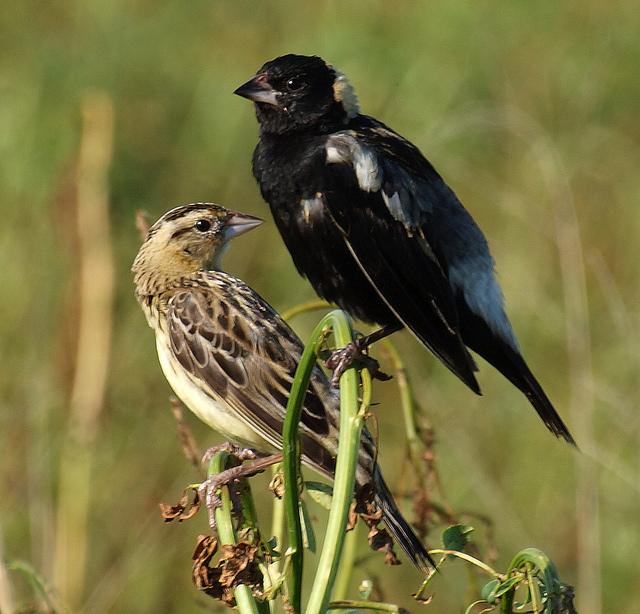
The Bobolink’s song is a peculiar one, varying greatly with the occasion. As he flys southward, his cry is a kind of clinking note; but the love song addressed to his mate is voluble and fervent. It has been said that if you should strike the keys of a pianoforte haphazard, the higher and the lower singly very quickly, you might have some idea of the Bobolink’s notes. In the month of June he gradually changes his pretty, attractive dress and puts on one very like the females, which is of a plain rusty brown, and is not reassumed until the next season of nesting. The two parent birds in the plate represent the change from the dark plumage in which the bird is commonly known in the North as the Bobolink, to the dress of yellowish brown by which it is known throughout the South as the Rice or Reed Bird.

His nest, small and a plain one, too, is built on the ground by his industrious little wife. The inside is warmly lined with soft fibers of whatever may be nearest at hand. Five pretty white eggs, spotted all over with brown are laid, and as soon

“As the little ones chip the shell
And five wide mouths are ready for food,
‘Robert of Lincoln’ bestirs him well,
Gathering seeds for this hungry brood.”

Bobolink (Dolichonyx oryzivorus) CC Pair ramendan

Bobolink (Dolichonyx oryzivorus) CC Pair ramendan

Other birds may like to travel alone, but when jolly Mr. Bobolink and his quiet little wife come from the South, where they have spent the winter, they come with a large party of friends. When South, they eat so much rice that the people call them Rice Birds. When they come North, they enjoy eating wheat, barley, oats and insects.

Mr. and Mrs. Bobolink build their simple little nest of grasses in some field. It is hard to find on the ground, for it looks just like dry grass. Mrs. Bobolink wears a dull dress, so she cannot be seen when she is sitting on the precious eggs. She does not sing a note while caring for the eggs. Why do you think that is?

Mr. Bob-Linkum does not wear a sober dress, as you can see by his picture. He does not need to be hidden. He is just as jolly as he looks. Shall I tell you how he amuses his mate while she is sitting? He springs from the dew-wet grass with a sound like peals of merry laughter. He frolics from reed to post, singing as if his little heart would burst with joy.

Don’t you think Mr. and Mrs. Bobolink look happy in the picture? They have raised their family of five. Four of their children have gone to look for food; one of them—he must surely be the baby—would rather stay with his mamma and papa. Which one does he look like?

Many birds are quiet at noon and in the afternoon. A flock of Bobolinks can be heard singing almost all day long. The song is full of high notes and low, soft notes and loud, all sung rapidly. It is as gay and bright as the birds themselves, who flit about playfully as they sing. You will feel like laughing as merrily as they sing when you hear it some day.

Bobolink (Dolichonyx oryzivorus) by J Fenton

Bobolink (Dolichonyx oryzivorus) by J Fenton


Lee’s Addition:

Even the birds in the sky know the right time to do things. The storks, doves, swifts, and thrushes know when it is time to fly to a new home. But my people don’t know what the LORD wants them to do. (Jeremiah 8:7 ERV)

The Bobolink (Dolichonyx oryzivorus) is a small New World blackbird and the only member of genus Dolichonyx. They are in the Icteridae – Oropendolas, Orioles & Blackbirds Family.

Adults are 16–18 cm (6–8 in) long with short finch-like bills. They weigh about 1 ounce (28 g).[1] Adult males are mostly black, although they do display creamy napes, and white scapulars, lower backs and rumps. Adult females are mostly light brown, although their coloring includes black streaks on the back and flanks, and dark stripes on the head; their wings and tails are darker. The collective name for a group of bobolinks is a chain.[2]
[edit]Distribution and movements

These birds migrate to Argentina, Bolivia and Paraguay. One bird was tracked flying 12,000 miles (19,000 km) over the course of the year, and up to 1,100 miles (1,800 km) in one day. They often migrate in flocks, feeding on cultivated grains and rice, which leads to them being considered a pest by farmers in some areas. Although Bobolinks migrate long distances, they have rarely been sighted in Europe—like many vagrants from the Americas, the overwhelming majority of records are from the British Isles.[citation needed] Each fall, Bobolinks gather in large numbers in South American rice fields, where they are inclined to eat grain. This has earned them the name “ricebird” in these parts. However, they are called something entirely different in Jamaica (Butterbirds) where they are collected as food, being that they are very fat as they pass through on migration.

Their breeding habitats are open grassy fields, especially hay fields, across North America. In high-quality habitats, males are often polygynous. Females lay 5 to 6 eggs in a cup-shaped nest, which is always situated on the ground and is usually well-hidden in dense vegetation. Both parents feed the young.

Bobolinks forage on, or near the ground, and mainly eat seeds and insects. Males sing bright, bubbly songs in flight; these songs gave this species its common name.

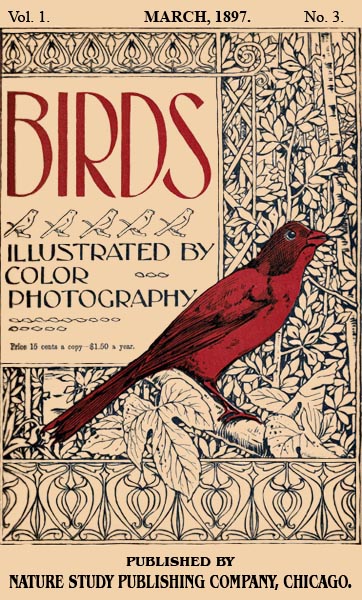
Birds Illustrated by Color Photograhy Vol 1 March 1897 No 3 - Cover

Birds Illustrated by Color Photography – Revisited – Introduction

The above article is the first article in the monthly serial for February 1897 “designed to promote Knowledge of Bird-Live.” These include Color Photography, as they call them, today they are drawings. There are at least three Volumes that have been digitized by Project Gutenberg.

To see the whole series of – Birds Illustrated by Color Photography – Revisited

*

(Information from Wikipedia and other internet sources)

Next Article – The Bobolink

Previous Article – The Japan Pheasant

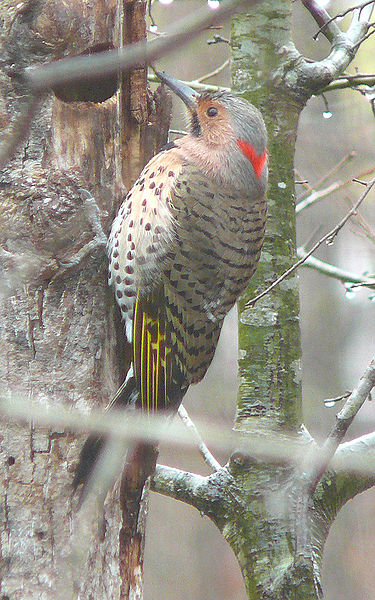
Wordless Birds

Links:

Birds of the World – Woodpeckers

Flicker – Wikipedia

Woodpecker – Wikipedia

*

Birds in Hymns – Bring, O Morn, Thy Music

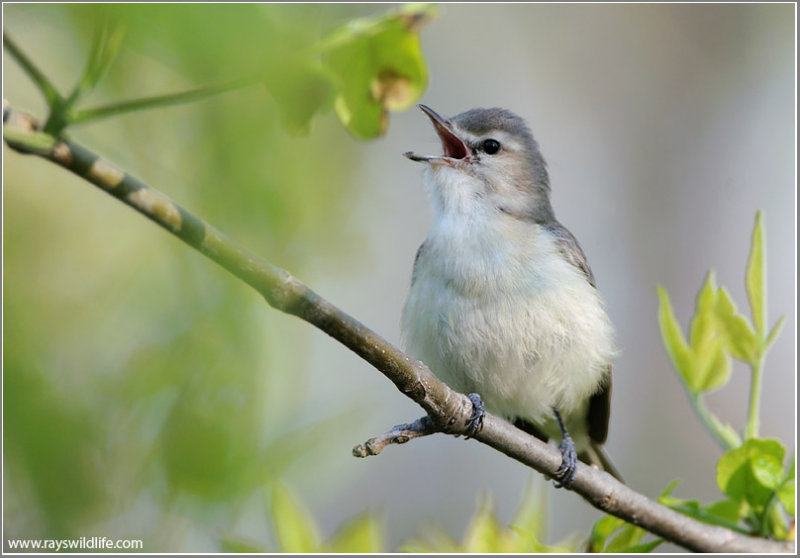
Warbling Vireo (Vireo gilvus) by Raymond Barlow

Warbling Vireo (Vireo gilvus) by Raymond Barlow

I am Alpha and Omega, the beginning and the ending, saith the Lord, which is, and which was, and which is to come, the Almighty. (Revelation 1:8 KJV)

Words: Will­iam C. Gan­nett, in A Chor­us of Faith, 1893.

Music: Nicaea, John B. Dykes, in Hymns An­cient and Mo­dern, 1861

Bring, O Morn, Thy Music

Bring, O morn, thy music! Night, thy starlit silence!
Oceans, laugh the rapture to the storm winds coursing free!
Suns and planets chorus, Thou art our Creator,
Who wert, and art, and evermore shalt be!

Life and death, Thy creatures, praise Thee, mighty Giver!
Praise and prayer are rising in Thy beast and bird and tree:
Lo! they praise and vanish, vanish at Thy bidding,
Who wert, and art, and evermore shalt be!

Light us! lead us! love us! cry Thy groping nations,
Pleading in the thousand tongues, but naming only Thee,
Weaving blindly out Thy holy, happy purpose,
Who wert, and art, and evermore shalt be!

Life nor death can part us, O Thou Love eternal,
Shepherd of the wandering star and souls that wayward flee!
Homeward draws the spirit to Thy Spirit yearning,
Who wert, and art, and evermore shalt be!

Most information from The Cyber Hymnal

*

YouTube by First Presbyterian Church of Berkeley, CA – Their Chancel Choir & Young Adult Choir

*

See more – Birds in Hymns

Wordless Birds

*

Birds Vol 1 #3 – The Flicker

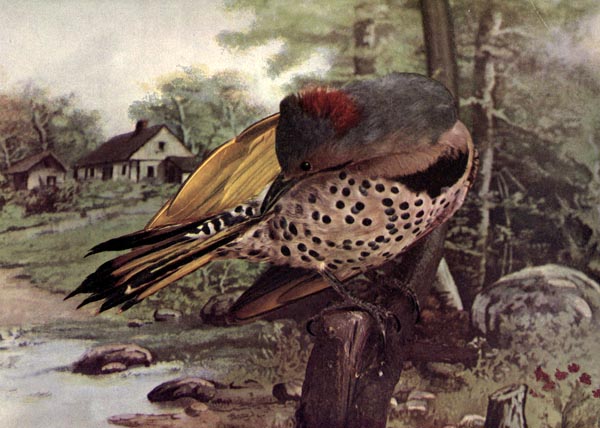
Flicker

Birds Illustrated by Color Photography – Revisited

Vol 1. March, 1897 No. 3

*

THE FLICKER.

imga1

GREAT variety of names does this bird possess. It is commonly known as the Golden Winged Woodpecker, Yellow-shafted Flicker, Yellow Hammer, and less often as High-hole or High-holer, Wake-up, etc. In suitable localities throughout the United States and the southern parts of Canada, the Flicker is a very common bird, and few species are more generally known. “It is one of the most sociable of our Woodpeckers, and is apparently always on good terms with its neighbors. It usually arrives in April, occasionally even in March, the males preceding the females a few days, and as soon as the latter appear one can hear their voices in all directions.”

The Flicker is an ardent wooer. It is an exceedingly interesting and amusing sight to see a couple of males paying their addresses to a coy and coquettish female; the apparent shyness of the suitors as they sidle up to her and as quickly retreat again, the shy glances given as one peeps from behind a limb watching the other—playing bo-peep—seem very human, and “I have seen,” says an observer, “few more amusing performances than the courtship of a pair of these birds.” The defeated suitor takes his rejection quite philosophically, and retreats in a dignified manner, probably to make other trials elsewhere. Few birds deserve our good will more than the Flicker. He is exceedingly useful, destroying multitudes of grubs, larvæ, and worms. He loves berries and fruit but the damage he does to cultivated fruit is very trifling.

The Flicker begins to build its nest about two weeks after the bird arrives from the south. It prefers open country, interspersed with groves and orchards, to nest in. Any old stump, or partly decayed limb of a tree, along the banks of a creek, beside a country road, or in an old orchard, will answer the purpose. Soft wood trees seem to be preferred, however. In the prairie states it occasionally selects strange nesting sites. It has been known to chisel through the weather boarding of a dwelling house, barns, and other buildings, and to nest in the hollow space between this and the cross beams; its nests have also been found in gate posts, in church towers, and in burrows of Kingfishers and bank swallows, in perpendicular banks of streams. One of the most peculiar sites of his selection is described by William A. Bryant as follows: “On a small hill, a quarter of a mile distant from any home, stood a hay stack which had been placed there two years previously. The owner, during the winter of 1889-90, had cut the stack through the middle and hauled away one portion, leaving the other standing, with the end smoothly trimmed. The following spring I noticed a pair of flickers about the stack showing signs of wanting to make it a fixed habitation. One morning a few days later I was amused at the efforts of one of the pair. It was clinging to the perpendicular end of the stack and throwing out clipped hay at a rate to defy competition. This work continued for a week, and in that time the pair had excavated a cavity twenty inches in depth. They remained in the vicinity until autumn. During the winter the remainder of the stack was removed. They returned the following spring, and, after a brief sojourn, departed for parts unknown.”

From five to nine eggs are generally laid. They are glossy white in color, and when fresh appear as if enameled.

The young are able to leave the nest in about sixteen days; they crawl about on the limbs of the tree for a couple of days before they venture to fly, and return to the nest at night.

Northern Flicker (Colaptes auratus) Red-shafted ©WikiC

Northern Flicker (Colaptes auratus) Red-shafted ©WikiC


Lee’s Addition:

A man that hath friends must shew himself friendly: and there is a friend that sticketh closer than a brother. (Proverbs 18:24 KJV)

The Northern Flicker (Colaptes auratus) is a medium-sized member of the woodpecker family. It is native to most of North America, parts of Central America, Cuba, the Cayman Islands, and is one of the few woodpecker species that migrate. There are over 100 common names for the Northern Flicker. Among them are: Yellowhammer, clape, gaffer woodpecker, harry-wicket, heigh-ho, wake-up, walk-up, wick-up, yarrup, and gawker bird. Many of these names are attempts at imitating some of its calls.

The Northern Flicker is part of the genus Colaptes which encompasses 12 New-World woodpeckers. There are two living and one extinct subspecies of Colaptes auratus species. The existing sub-species were at one time considered separate species but they commonly interbreed where ranges overlap and are now considered one species by the American Ornithologists Union. Whether or not they are separate species is a well-known example of the species problem.

Northern Flicker (Colaptes auratus) Yellow shafted ©WikiC

Northern Flicker (Colaptes auratus) Yellow shafted ©WikiC

The Yellow-shafted Flicker Colaptes auratus resides in eastern North America. They are yellow under the tail and underwings and have yellow shafts on their primaries. They have a grey cap, a beige face and a red bar at the nape of their neck. Males have a black moustache. Colaptes comes from the Greek verb colapt, to peck. Auratus is from the Latin root aurat, meaning “gold” or “golden” and refers to the bird’s underwing.

Under the name “Yellowhammer” it is the state bird of Alabama.

The Red-shafted Flicker Colaptes auratus cafer resides in western North America. They are red under the tail and underwings and have red shafts on their primaries. They have a beige cap and a grey face. Males have a red moustache.

According to the Audubon guide, “flickers are the only woodpeckers that frequently feed on the ground”, probing with their beak, also sometimes catching insects in flight. Although they eat fruits, berries, seeds and nuts, their primary food is insects. Ants alone can make up 45% of their diet. Other invertebrates eaten include flies, butterflies, moths, beetles, and snails. Flickers also eat berries and seeds, especially in winter, including poison oak and ivy, dogwood, sumac, wild cherry and grape, bayberries, hackberries, and elderberries, and sunflower and thistle seeds. Flickers often go after ants underground (where the nutritious larvae live), hammering at the soil the way other woodpeckers drill into wood. Their tongues can dart out 2 inches beyond the end of the bill to snare prey. As well as eating ants, flickers have a behavior called anting, during which they use the acid from the ants to assist in preening, as it is useful in keeping them free of parasites.

Campo Flicker (Colaptes campestris) by Dario Sanches

Campo Flicker (Colaptes campestris) by Dario Sanches

The Northern Flicker is in the Picidae – Woodpeckers Family of the Piciformes Order. There are 6 Flickers; the Northern, Gilded, Fernandina’s, Chilean, Andean, and Campo Flicker. The other subgenus of the Colaptes (Chrysoptilus) includes the Black-necked, Spot-breasted, Green-barred, Golden-olive, Gray-crowned, Bronze-winged, and the Crimson-mantled Woodpeckers. The whole Woodpecker family has 231 species.

Birds Illustrated by Color Photograhy Vol 1 March 1897 No 3 - Cover

Birds Illustrated by Color Photography – Revisited – Introduction

The above article is the first article in the monthly serial for February 1897 “designed to promote Knowledge of Bird-Live.” These include Color Photography, as they call them, today they are drawings. There are at least three Volumes that have been digitized by Project Gutenberg.

To see the whole series of – Birds Illustrated by Color Photography – Revisited

*

(Information from Wikipedia and other internet sources)

Next Article – The Bobolink

Previous Article – The Japan Pheasant

ABC’s of the Gospel

Links:

Birds of the World – Woodpeckers

Flicker – Wikipedia

Woodpecker – Wikipedia

*

Another Visit To Lowry Park Zoo – March 2012

Demoiselle Crane (Grus virgo) Preening by Lee

Demoiselle Crane Preening by Lee at LPZoo

Dan and I were able to get in a small visit to the Lowry Park Zoo in Tampa a few days ago. Our goal was to go to the Sulawesi, Free-Flight and the Lorikeet Landing Aviaries. Most of the birds we saw were busy preening that day. Probably the most feather fluffing seen by so many birds on the same day, by us at least. It was difficult to get a good photo of them.

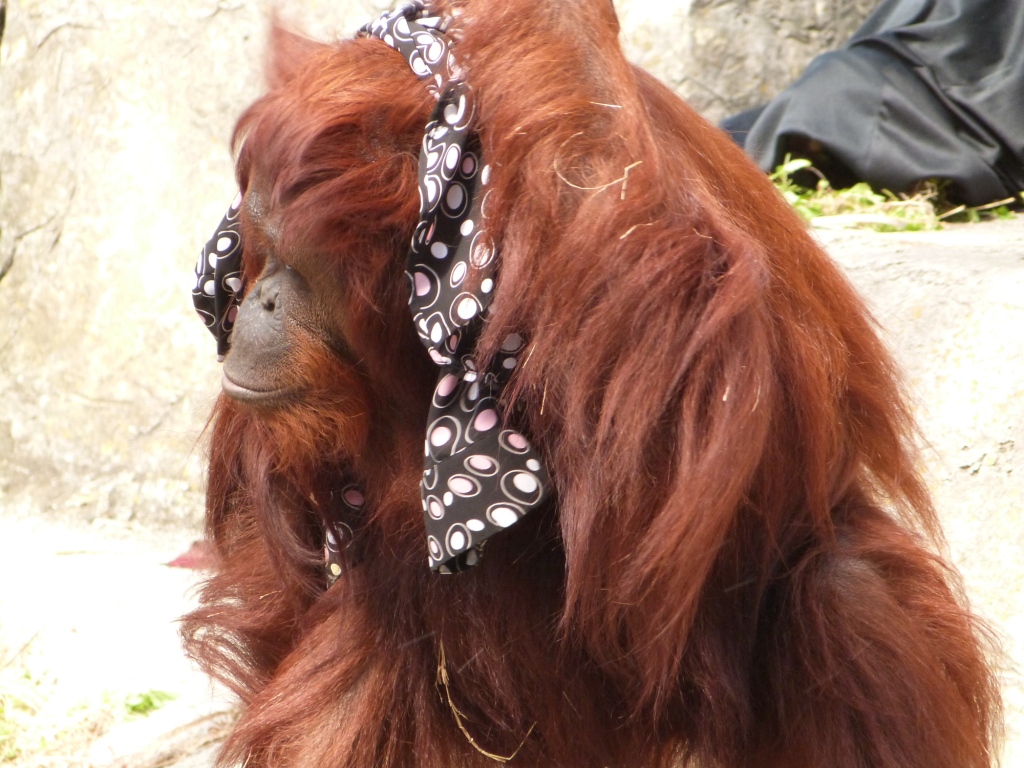
Bornean Orangutan at LPZoo 3-8-12

Bornean Orangutan at LPZoo 3-8-12

Never the less, it is always enjoyable to watch and observe their behaviors. Actually there were a couple of Bornean Orangutans displaying a behavior of covering their heads with cloths that can be quite funny. In the past, we have also seen them use cardboard as coverings.

Bornean Orangutan at LPZoo 3-8-12

Bornean Orangutan at LPZoo 3-8-12

Back to birdwatching. One of the highlights was getting to see the juvenile Sulawesi Hornbill maturing. The beak colors have not started developing yet.

Sulawesi Hornbill (Penelopides exarhatus) LPZoo 3-8-12

Sulawesi Hornbill (Penelopides exarhatus) LPZoo 3-8-12

“As this youngster ages the colors of the adult will become more pronounced. The Sulawesi Hornbill (Penelopides exarhatus), also known as the Sulawesi Tarictic Hornbill, Temminck’s Hornbill or Sulawesi Dwarf Hornbill, is a relatively small, approximately 45 cm (17.7 in) long, black hornbill. The male has a yellow face and throat, and black-marked yellowish-horn bill. The female has an all black plumage and a darker bill.

An Indonesian endemic, the Sulawesi Hornbill is distributed in the tropical lowland, swamps and primary forests of Sulawesi and nearby islands, from sea-level to altitude up to 1,100 metres. There are two subspecies of the Sulawesi Hornbill.

The Sulawesi Hornbill is a social species that lives in groups of up to 20 individuals. It is believed that only the dominant pair breeds, while the remaining members of the group act as helpers. The diet consists mainly of fruits, figs and insects. The female seals itself inside a tree hole for egg-laying. During this time, the male and helpers will provide food for the female and the young.” (Wikipedia)

Here is the adult male that was standing nearby the two youngsters.

Sulawesi Hornbill (Penelopides exarhatus) LPZoo 3-8-12 by Lee

Sulawesi Hornbill (Penelopides exarhatus)LPZoo by Lee

Below are some of the photos taken on this trip to the Zoo. It was another enjoyable day to observe the Lord’s creation up close.

The works of the LORD are great, sought out of all them that have pleasure therein. (Psalms 111:2 KJV)

This slideshow requires JavaScript.

*

Birds Vol 1 #3 – The Japan Pheasant

Japan Pheasant for Birds Illustrated

Japan Pheasant for Birds Illustrated

Birds Illustrated by Color Photography – Revisited

Vol 1. March, 1897 No. 3

*

THE JAPAN PHEASANT.

imgo

RIGINALLY the Pheasant was an inhabitant of Asia Minor but has been by degrees introduced into many countries, where its beauty of form, plumage, and the delicacy of its flesh made it a welcome visitor. The Japan Pheasant is a very beautiful species, about which little is known in its wild state, but in captivity it is pugnacious. It requires much shelter and plenty of food, and the breed is to some degree artificially kept up by the hatching of eggs under domestic hens and feeding them in the coop like ordinary chickens, until they are old and strong enough to get their own living.

The food of this bird is extremely varied. When young it is generally fed on ants’ eggs, maggots, grits, and similar food, but when it is full grown it is possessed of an accommodating appetite and will eat many kinds of seeds, roots, and leaves. It will also eat beans, peas, acorns, berries, and has even been known to eat the ivy leaf, as well as the berry.

This Pheasant loves the ground, runs with great speed, and always prefers to trust to its legs rather than to its wings. It is crafty, and when alarmed it slips quickly out of sight behind a bush or through a hedge, and then runs away with astonishing rapidity, always remaining under cover until it reaches some spot where it deems itself safe. The male is not domestic, passing an independent life during a part of the year and associating with others of its own sex during the rest of the season.

The nest is very rude, being merely a heap of leaves and grass on the ground, with a very slight depression. The eggs are numerous, about eleven or twelve, and olive brown in color. In total length, though they vary considerably, the full grown male is about three feet. The female is smaller in size than her mate, and her length a foot less.

The Japan Pheasant is not a particularly interesting bird aside from his beauty, which is indeed brilliant, there being few of the species more attractive.

Green Pheasant (Phasianus versicolor) ©WikiC

Green Pheasant (Phasianus versicolor) ©WikiC


Lee’s Addition:

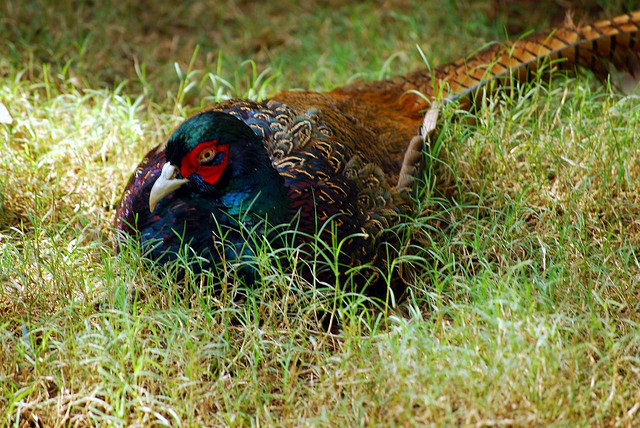
The Green Pheasant, Phasianus versicolor, also known as Japanese Pheasant, is native to the Japanese Archipelago, to which it is endemic. The male (cock) is distinguished from that species by its dark green plumage on the breast and mantle. The male also has an iridescent violet neck, red bare facial skin and purplish green tail. The female is smaller than male and has a dull brown plumage with dark spots.

This species is common and widespread throughout its native range. It frequents farmlands and is often seen close to human settlements; it also has been introduced in Hawaii and (unsuccessfully) in North America as a gamebird.

Some authorities consider the Green Pheasant a subspecies of the Common Pheasant. The Pheasant is in the Phasianidae – Pheasants, Fowl & Allies Family or the Galliformes Order. There are 181 members in the family.

Green Pheasant (Phasianus versicolor) ©©dhruvara

Green Pheasant (Phasianus versicolor) ©©dhruvara

It is the national bird of Japan. “It originally was designated as such in 1947 at the 81st Meeting of the National Bird Society of Japan. The Japanese pheasant was most likely selected because this green pheasant in unique to Japan,and futhermore because it appears in Japanese folk tales and so has become an integral part of the Japanese cultural landscape.”

Fagiano Okayama football club, a club based in Okayama, Okayama Prefecture, has a mascot based on the Green Pheasant.

*

Birds Illustrated by Color Photograhy Vol 1 March 1897 No 3 - Cover

Birds Illustrated by Color Photography – Revisited – Introduction

The above article is the first article in the monthly serial for February 1897 “designed to promote Knowledge of Bird-Live.” These include Color Photography, as they call them, today they are drawings. There are at least three Volumes that have been digitized by Project Gutenberg.

To see the whole series of – Birds Illustrated by Color Photography – Revisited

*

(Information from Wikipedia and other internet sources)

Next Article – The Flicker

Previous Article – The Brown Thrush

Sharing The Gospel

Links:

Green Pheasant – Wikipedia

Phasianidae – Wikipedia

Destinations, Green Pheasant

Video of Green Pheasant – from IBC

*

Ad from Article in 1897

Ad from Birds Illustrated by Photography, 1897

Ad from Birds Illustrated by Photography, 1897

Birds Vol 1 #3 – The Brown Thrush (Thrasher)

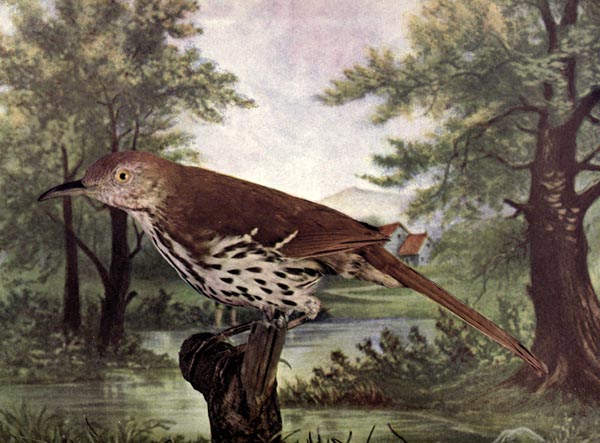
Brown Thrasher (Toxostoma rufum)

Brown Thrasher (Toxostoma rufum) – Birds Illustrated

Birds Illustrated by Color Photography – Revisited

Vol 1. March, 1897 No. 3

*

THE BROWN THRUSH.

“However the world goes ill,
The Thrushes still sing in it.”


imgt

HE Mocking-bird of the North, as the Brown Thrush (Brown Thrasher today) has been called, arrives in the Eastern and Middle States about the 10th of May, at which season he may be seen, perched on the highest twig of a hedge, or on the topmost branch of a tree, singing his loud and welcome song, that may be heard a distance of half a mile. The favorite haunt of the Brown Thrush, however, is amongst the bright and glossy foliage of the evergreens. “There they delight to hide, although not so shy and retiring as the Blackbird; there they build their nests in greatest numbers, amongst the perennial foliage, and there they draw at nightfall to repose in warmth and safety.” The Brown Thrasher sings chiefly just after sunrise and before sunset, but may be heard singing at intervals during the day. His food consists of wild fruits, such as blackberries and raspberries, snails, worms, slugs and grubs. He also obtains much of his food amongst the withered leaves and marshy places of the woods and shrubberies which he frequents. Few birds possess a more varied melody. His notes are almost endless in variety, each note seemingly uttered at the caprice of the bird, without any perceptible approach to order.

The site of the Thrush’s nest is a varied one, in the hedgerows, under a fallen tree or fence-rail; far up in the branches of stately trees, or amongst the ivy growing up their trunks. The nest is composed of the small dead twigs of trees, lined with the fine fibers of roots. From three to five eggs are deposited, and are hatched in about twelve days. They have a greenish background, thickly spotted with light brown, giving the whole egg a brownish appearance.

The Brown Thrush leaves the Eastern and Middle States, on his migration South, late in September, remaining until the following May.


THE THRUSH’S NEST.

“Within a thick and spreading hawthorn bush
That overhung a molehill, large and round,
I heard from morn to morn a merry thrush
Sing hymns of rapture while I drank the sound
With joy—and oft an unintruding guest,
I watched her secret toils from day to day;
How true she warped the moss to form her nest,
And modeled it within with wood and clay.
And by and by, with heath-bells gilt with dew,
There lay her shining eggs as bright as flowers,
Ink-spotted over, shells of green and blue:
And there I witnessed, in the summer hours,
A brood of nature’s minstrels chirp and fly,
Glad as the sunshine and the laughing sky.”


THE BROWN THRUSH.

Dear Readers:

My cousin Robin Redbreast told me that he wrote you a letter last month and sent it with his picture. How did you like it? He is a pretty bird—Cousin Robin—and everybody likes him. But I must tell you something of myself.

Folks call me by different names—some of them nicknames, too.

The cutest one of all is Brown Thrasher. I wonder if you know why they call me Thrasher. If you don’t, ask some one. It is really funny.

Some people think Cousin Robin is the sweetest singer of our family, but a great many like my song just as well.

Early in the morning I sing among the bushes, but later in the day you will always find me in the very top of a tree and it is then I sing my best.

Do you know what I say in my song? Well, if I am near a farmer while he is planting, I say: “Drop it, drop it—cover it up, cover it up—pull it up, pull it up, pull it up.”

One thing I very seldom do and that is, sing when near my nest. Maybe you can tell why. I’m not very far from my nest now. I just came down to the stream to get a drink and am watching that boy on the other side of the stream. Do you see him?

One dear lady who loves birds has said some very nice things about me in a book called “Bird Ways.” Another lady has written a beautiful poem about my singing. Ask your mamma or teacher the names of these ladies. Here is the poem:

There’s a merry brown thrush sitting up in a tree.
He is singing to me! He is singing to me!
And what does he say—little girl, little boy?
“Oh, the world’s running over with joy!
Hush! Look! In my tree,
I am as happy as happy can be.”

And the brown thrush keeps singing, “A nest, do you see,
And five eggs, hid by me in the big cherry tree?
Don’t meddle, don’t touch—little girl, little boy—
Or the world will lose some of its joy!
Now I am glad! now I am free!
And I always shall be,
If you never bring sorrow to me.”

So the merry brown thrush sings away in the tree
To you and to me—to you and to me;
And he sings all the day—little girl, little boy—
“Oh, the world’s running over with joy!
But long it won’t be,
Don’t you know? don’t you see?
Unless we’re good as good can be.”

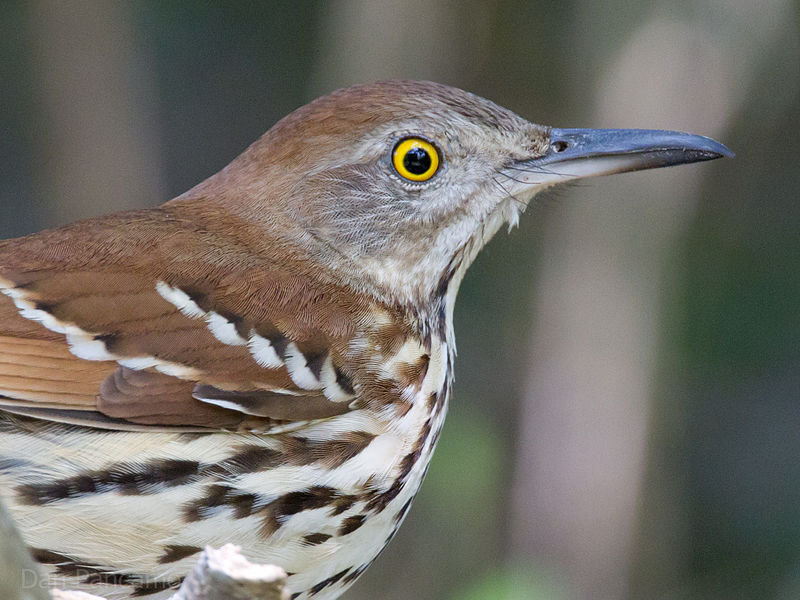
Brown Thrasher (Toxostoma rufum) By Dan'sPix

Brown Thrasher (Toxostoma rufum) By Dan’sPix


Lee’s Addition:

The Brown Thrush mentioned in this article is now known as the Brown Thrasher. They are members of the Mimidae – Mockingbirds, Thrashers Family. The family not only has the Thrashers (14) and Mockingbirds (16), but also Catbirds (2) and Tremblers (2).

The Brown Thrasher is bright reddish-brown above with thin, dark streaks on its buffy underparts. Its long, rufous tail is rounded with paler corners, and eyes are a brilliant gold. Adults average about 11.5 in (29 cm) long with a wingspan of 13 in (33 cm), and weigh 2.4 oz (68 g).

It is found in thickets and dense brush, often searching for food in dry leaves on the ground. It also enjoys the convergence of mowed to unmowed lawns, particularly if there are ample shrubs or shrubby trees, i.e., fruit orchards that the undergrowth is left undisturbed. It also enjoys perennial gardens and can be seen jumping from the ground to catch insects on flowers and foliage. Its breeding range includes the United States and Canada east of the Rocky Mountains. It is a partial migrant, with northern birds wintering in the southern USA, where it occurs throughout the year.

The female lays 3 to 5 eggs in a twiggy nest lined with grass. The nest is built in a dense shrub or low in a tree. Both parents incubate and feed the young. These birds raise two or three broods in a year. They are able to call in up to 3000 distinct songs. The male sings a series of short repeated melodious phrases from an open perch to defend his territory and is also very aggressive in defending the nest.

Brown Thrasher by Chris Parrish

The Brown Thrasher is the official state bird of Georgia, and was the inspiration for the name of Atlanta’s former National Hockey League team, the Atlanta Thrashers.(Wikipedia)

Brown Thrasher (Toxostoma rufum) ©WikiC

Brown Thrasher (Toxostoma rufum) ©WikiC

The flowers appear on the earth; the time of the singing of birds is come, and the voice of the turtle is heard in our land; (Song of Solomon 2:12 KJV)

Birds Illustrated by Color Photograhy Vol 1 March 1897 No 3 - Cover

Birds Illustrated by Color Photography – Revisited – Introduction

The above article is the first article in the monthly serial for February 1897 “designed to promote Knowledge of Bird-Live.” These include Color Photography, as they call them, today they are drawings. There are at least three Volumes that have been digitized by Project Gutenberg.

To see the whole series of – Birds Illustrated by Color Photography – Revisited

*

*

(Information from Wikipedia and other internet sources)

Next Article – The Japan Pheasant

Previous Article – The Swallow

ABC’s of the Gospel

Links:

Brown Thrasher – Wikipedia

Wood Thrush – WhatBird

*


Birds Vol 1 #3 – The Swallow

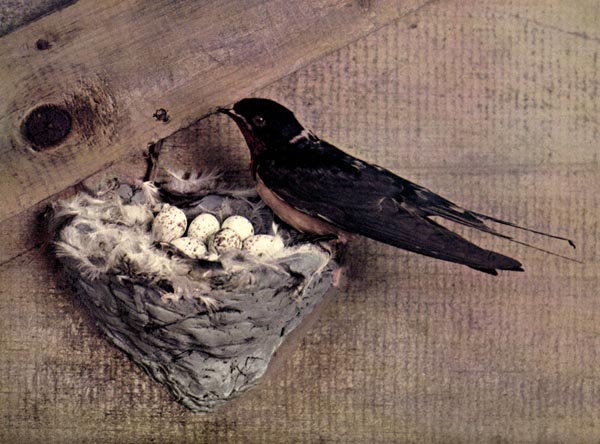
Barn Swallow

Barn Swallow by Birds Illustrated

Birds Illustrated by Color Photography – Revisited

Vol 1. March, 1897 No. 3

*

THE SWALLOW.

“Come, summer visitant, attach
To my reedroof thy nest of clay,
And let my ear thy music catch,
Low twitting underneath the thatch,
At the gray dawn of day.”


imgs

URE harbingers of spring are the Swallows. They are very common birds, and frequent, as a rule, the cultivated lands in the neighborhood of water, showing a decided preference for the habitations of man. “How gracefully the swallows fly! See them coursing over the daisy-bespangled grass fields; now they skim just over the blades of grass, and then with a rapid stroke of their long wings mount into the air and come hovering above your head, displaying their rich white and chestnut plumage to perfection. Now they chase each other for very joyfulness, uttering their sharp twittering notes; then they hover with expanded wings like miniature Kestrels, or dart downwards with the velocity of the sparrowhawk; anon they flit rapidly over the neighboring pool, occasionally dipping themselves in its calm and placid waters, and leaving a long train of rings marking their varied course. How easily they turn, or glide over the surrounding hedges, never resting, never weary, and defying the eye to trace them in the infinite turnings and twistings of their rapid shooting flight. You frequently see them glide rapidly near the ground, and then with a sidelong motion mount aloft, to dart downwards like an animated meteor, their plumage glowing in the light with metallic splendor, and the row of white spots on the tail contrasting beautifully with the darker plumage.”

The Swallow is considered a life-paired species, and returns to its nesting site of the previous season, building a new nest close to the old one. His nest is found in barns and outhouses, upon the beams of wood which support the roof, or in any place which assures protection to the young birds. It is cup-shaped and artfully moulded of bits of mud. Grass and feathers are used for the lining. “The nest completed, five or six eggs are deposited. They are of a pure white color, with deep rich brown blotches and spots, notably at the larger end, round which they often form a zone or belt.” The sitting bird is fed by her mate.

The young Swallow is distinguished from the mature birds by the absence of the elongated tail feathers, which are a mark of maturity alone. His food is composed entirely of insects. Swallows are on the wing fully sixteen hours, and the greater part of the time making terrible havoc amongst the millions of insects which infest the air. It is said that when the Swallow is seen flying high in the heavens, it is a never failing indication of fine weather.

A pair of Swallows on arriving at their nesting place of the preceding Summer found their nest occupied by a Sparrow, who kept the poor birds at a distance by pecking at them with his strong beak whenever they attempted to dislodge him. Wearied and hopeless of regaining possession of their property, they at last hit upon a plan which effectually punished the intruder. One morning they appeared with a few more Swallows—their mouths filled with a supply of tempered clay—and, by their joint efforts in a short time actually plastered up the entrance to the hole, thus barring the Sparrow from the home which he had stolen from the Swallows.

Barn Swallow by Dan


Lee’s Addition:

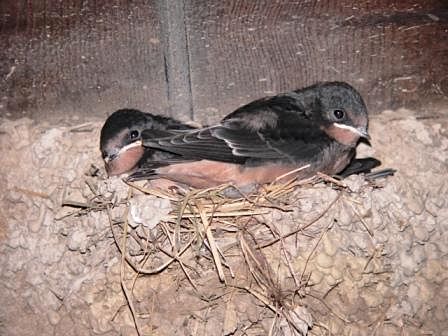
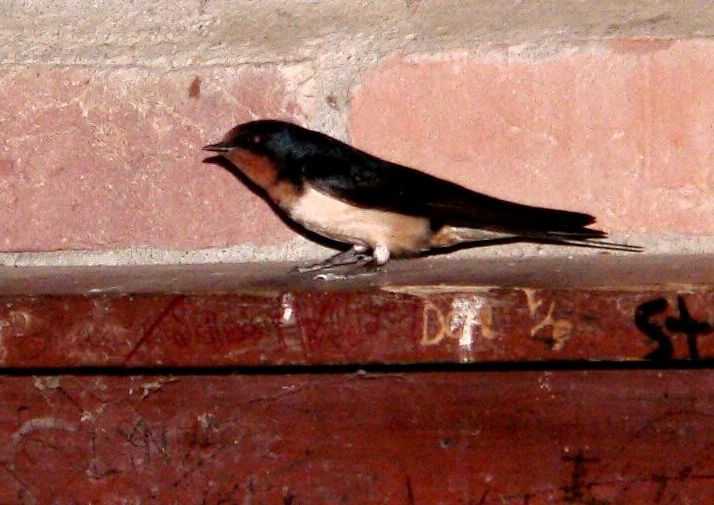
While visiting Cade’s Cove in the Smokey Mountains of Tennessee, found these Barn Swallows in an old house exhibit. We watched them, but they did not see alarmed by our being there. Having grown up in the city, this was my first experience being up close and personal with swallows.

Barn Swallow in Cades Cove by Dan

Barn Swallow in Cades Cove by Dan

Here are a couple of my attempts to capture the babies and then one of the parents that was sitting on the fireplace mantle keeping an eye on us. Guess they were making sure that we didn’t hurt their offspring.

Smoky-Cades Cove - Swallows in nest by Lee

Smoky-Cades Cove – Swallows in nest by Lee

And the adult (cropped):

Barn Swallow on Fireplace - Smoky-Cades Cove by Lee

Barn Swallow on Fireplace – Smoky-Cades Cove by Lee

Swallows are mentions several times in Scripture and therefore are one of the Birds of the Bible.

Yea, the sparrow hath found an house, and the swallow a nest for herself, where she may lay her young, even thine altars, O LORD of hosts, my King, and my God. (Psalms 84:3 KJV)
As the bird by wandering, as the swallow by flying, so the curse causeless shall not come. (Proverbs 26:2 KJV)
Like a crane or a swallow, so did I chatter: I did mourn as a dove: mine eyes fail with looking upward: O LORD, I am oppressed; undertake for me. (Isaiah 38:14 KJV)

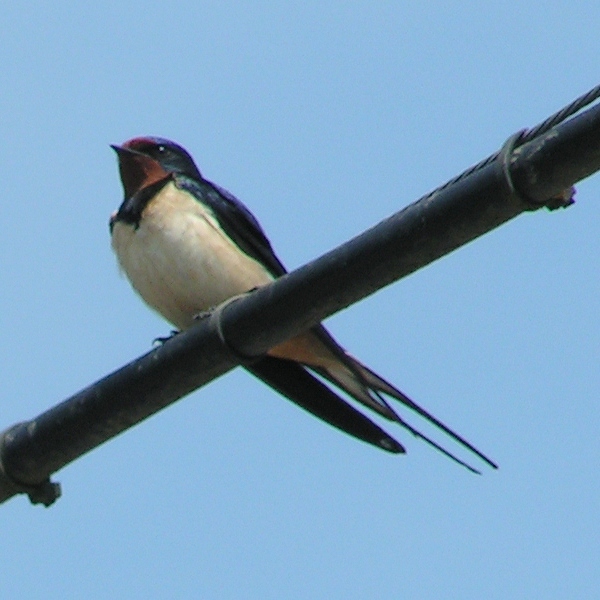
The Barn Swallow (Hirundo rustica) is the most widespread species of swallow in the world.] It is a distinctive passerine bird with blue upperparts, a long, deeply forked tail and curved, pointed wings. It is found in Europe, Asia, Africa and the Americas. In Anglophone Europe it is just called the Swallow; in Northern Europe it is the only common species called a “swallow” rather than a “martin”.

There are six subspecies of Barn Swallow, which breed across the Northern Hemisphere. Four are strongly migratory, and their wintering grounds cover much of the Southern Hemisphere as far south as central Argentina, the Cape Province of South Africa, and northern Australia. Its huge range means that the Barn Swallow is not endangered, although there may be local population declines due to specific threats, such as the construction of an international airport near Durban.

The Barn Swallow is a bird of open country which normally uses man-made structures to breed and consequently has spread with human expansion. It builds a cup nest from mud pellets in barns or similar structures and feeds on insects caught in flight. This species lives in close association with humans, and its insect-eating habits mean that it is tolerated by man; this acceptance was reinforced in the past by superstitions regarding the bird and its nest. There are frequent cultural references to the Barn Swallow in literary and religious works due to both its living in close proximity to humans and its conspicuous annual migration. The Barn Swallow is the national bird of Estonia.

Barn Swallow (Hirundo rustica) WikiC

Barn Swallow (Hirundo rustica) ©WikiC

The adult male Barn Swallow of the nominate subspecies H. r. rustica is 17–19 cm (6.7–7.5 in) long including 2–7 cm (0.8–2.8 in) of elongated outer tail feathers. It has a wingspan of 32–34.5 cm (12.6–13.6 in) and weighs 16–22 g (0.56–0.78 oz). It has steel blue upperparts and a rufous forehead, chin and throat, which are separated from the off-white underparts by a broad dark blue breast band. The outer tail feathers are elongated, giving the distinctive deeply forked “swallow tail.” There is a line of white spots across the outer end of the upper tail.

The female is similar in appearance to the male, but the tail streamers are shorter, the blue of the upperparts and breast band is less glossy, and the underparts more pale. The juvenile is browner and has a paler rufous face and whiter underparts. It also lacks the long tail streamers of the adult.

The song of the Barn Swallow is a cheerful warble, often ending with su-seer with the second note higher than the first but falling in pitch. Calls include witt or witt-witt and a loud splee-plink when excited.[5] The alarm calls include a sharp siflitt for predators like cats and a flitt-flitt for birds of prey like the Hobby. This species is fairly quiet on the wintering grounds.

The distinctive combination of a red face and blue breast band render the adult Barn Swallow easy to distinguish from the African Hirundo species and from the Welcome Swallow (Hirundo neoxena) with which its range overlaps in Australasia. In Africa the short tail streamers of the juvenile Barn Swallow invite confusion with juvenile Red-chested Swallow (Hirundo lucida), but the latter has a narrower breast band and more white in the tail. (Wikipedia)

*

Birds Illustrated by Color Photograhy Vol 1 March 1897 No 3 - Cover

Birds Illustrated by Color Photography – Revisited – Introduction

The above article is the first article in the monthly serial for February 1897 “designed to promote Knowledge of Bird-Live.” These include Color Photography, as they call them, today they are drawings. There are at least three Volumes that have been digitized by Project Gutenberg.

To see the whole series of – Birds Illustrated by Color Photography – Revisited

*

(Information from Wikipedia and other internet sources)

Next Article – The Brown Thrush

Previous Article – Little Boy Blue – The Blue Bird

Sharing The Gospel

Links:

Birds of the Bible – Swallow

Hirundinidae – Swallows, martins

Barn Swallow – Wikipedia

An Ad from the Publication:

Racycle Ad - Birds Illustrated - 1897

Racycle Ad – Birds Illustrated – 1897

Birds Vol 1 #3 – Little Boy Blue

Bluebird - Little Boy Blue

Bluebird – Little Boy Blue

Birds Illustrated by Color Photography – Revisited

Vol 1. March, 1897 No. 3

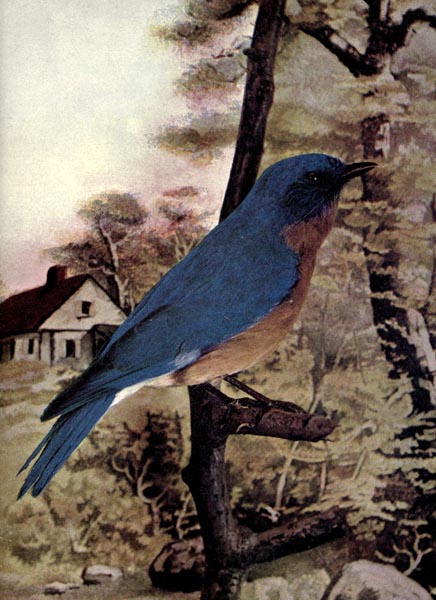
LITTLE BOY BLUE – THE BLUE BIRD

Boys and girls, don’t you think that is a pretty name? I came from the warm south, where I went last winter, to tell you that Springtime is nearly here.

When I sing, the buds and flowers and grass all begin to whisper to one another, “Springtime is coming for we heard the Bluebird say so,” and then they peep out to see the warm sunshine. I perch beside them and tell them of my long journey from the south and how I knew just when to tell them to come out of their warm winter cradles. I am of the same blue color as the violet that shows her pretty face when I sing, “Summer is coming, and Springtime is here.”

I do not like the cities for they are black and noisy and full of those troublesome birds called English Sparrows. I take my pretty mate and out in the beautiful country we find a home. We build a nest of twigs, grass and hair, in a box that the farmer puts up for us near his barn.

Sometimes we build in a hole in some old tree and soon there are tiny eggs in the nest. I sing to my mate and to the good people who own the barn. I heard the farmer say one day, “Isn’t it nice to hear the Bluebird sing? He must be very happy.” And I am, too, for by this time there are four or five little ones in the nest.

Little Bluebirds are like little boys—they are always hungry. We work hard to find enough for them to eat. We feed them nice fat worms and bugs, and when their little wings are strong enough, we teach them how to fly. Soon they are large enough to hunt their own food, and can take care of themselves.

The summer passes, and when we feel the breath of winter we go south again, for we do not like the cold.


THE BLUE BIRD.

I know the song that the Bluebird is singing
Out in the apple tree, where he is swinging.
Brave little fellow! the skies may be dreary,
Nothing cares he while his heart is so cheery.
Hark! how the music leaps out from his throat,
Hark! was there ever so merry a note?

Listen a while, and you’ll hear what he’s saying,
Up in the apple tree swinging and swaying.
“Dear little blossoms down under the snow,
You must be weary of winter, I know;
Hark! while I sing you a message of cheer,
Summer is coming, and springtime is here!”

“Dear little snow-drop! I pray you arise;
Bright yellow crocus! come open your eyes;
Sweet little violets, hid from the cold,
Put on our mantles of purple and gold;
Daffodils! daffodils! say, do you hear,
Summer is coming! and springtime is here!”

Eastern Bluebird (Sialia sialis) by S Slayton

Eastern Bluebird (Sialia sialis) by S Slayton


THE BLUE BIRD.

Winged lute that we call a blue bird,
You blend in a silver strain
The sound of the laughing waters,
The patter of spring’s sweet rain,
The voice of the wind, the sunshine,
And fragrance of blossoming things,
Ah! you are a poem of April
That God endowed with wings.E. E. R.

****

imgl

IKE a bit of sky this little harbinger of spring appears, as we see him and his mate househunting in early March. Oftentimes he makes his appearance as early as the middle of February, when his attractive note is heard long before he himself is seen. He is one of the last to leave us, and although the month of November is usually chosen by him as the fitting time for departure to a milder clime, his plaintive note is quite commonly heard on pleasant days throughout the winter season, and a few of the braver and hardier ones never entirely desert us. The Robin and the Blue Bird are tenderly associated in the memories of most persons whose childhood was passed on a farm or in the country village. Before the advent of the English Sparrow, the Blue Bird was sure to be the first to occupy and the last to defend the little box prepared for his return, appearing in his blue jacket somewhat in advance of the plainly habited female, who on her arrival quite often found a habitation selected and ready for her acceptance, should he find favor in her sight. And then he becomes a most devoted husband and father, sitting by the nest and warbling with earnest affection his exquisite tune, and occasionally flying away in search of food for his mate and nestlings.

The Blue Bird rears two broods in the season, and, should the weather be mild, even three. His nest contains three eggs.

In the spring and summer when he is happy and gay, his song is extremely soft and agreeable, while it grows very mournful and plaintive as cold weather approaches. He is mild of temper, and a peaceable and harmless neighbor, setting a fine example of amiability to his feathered friends. In the early spring, however, he wages war against robins, wrens, swallows, and other birds whose habitations are of a kind to take his fancy. A celebrated naturalist says: “This bird seems incapable of uttering a harsh note, or of doing a spiteful, ill-tempered thing.”

Nearly everybody has his anecdote to tell of the Blue Bird’s courage, but the author of “Wake Robin” tells his exquisitely thus: “A few years ago I put up a little bird house in the back end of my garden for the accommodation of the wrens, and every season a pair have taken up their abode there. One spring a pair of Blue Birds looked into the tenement, and lingered about several days, leading me to hope that they would conclude to occupy it. But they finally went away. Late in the season the wrens appeared, and after a little coquetting, were regularly installed in their old quarters, and were as happy as only wrens can be. But before their honeymoon was over, the Blue Birds returned. I knew something was wrong before I was up in the morning. Instead of that voluble and gushing song outside the window, I heard the wrens scolding and crying out at a fearful rate, and on going out saw the Blue Birds in possession of the box. The poor wrens were in despair and were forced to look for other quarters.”

THE BLUE BIRD.

“Drifting down the first warm wind
That thrills the earliest days of spring,
The Bluebird seeks our maple groves
And charms them into tasselling.”

“He sings, and his is Nature’s voice—
A gush of melody sincere
From that great fount of harmony
Which thaws and runs when Spring is here.”

“Short is his song, but strangely sweet
To ears aweary of the low
Dull tramps of Winter’s sullen feet,
Sandalled in ice and muffled in snow.”
*****
“Think, every morning, when the sun peeps through
The dim, leaf-latticed windows of the grove,
How jubilant the happy birds renew
Their old, melodious madrigals of love!
And when you think of this, remember, too,
’Tis always morning somewhere, and above
The awakening continents, from shore to shore,
Somewhere the birds are singing evermore.

“Think of your woods and orchards without birds!
Of empty nests that cling to boughs and beams
As in an idiot’s brain remembered words
Hang empty ’mid the cobwebs of his dreams!
Will bleat of flocks or bellowing of herds
Make up for the lost music, when your teams
Drag home the stingy harvest, and no more
The feathered gleaners follow to your door?”
From “The Birds of Killingsworth.”

*

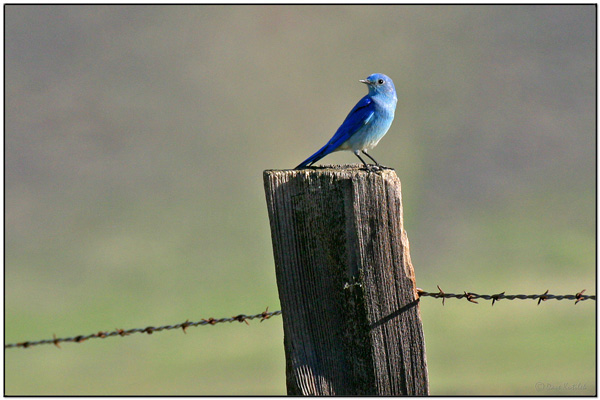
Mountain Bluebird (Sialia currucoides) by Daves BirdingPix

Mountain Bluebird (Sialia currucoides) by Daves BirdingPix


Lee’s Addition:

And he made the robe of the ephod of woven work, all of blue. (Exodus 39:22 KJV)

Another delightful story from the past. Who doesn’t like Bluebirds?

The bluebirds are a group of medium-sized, mostly insectivorous or omnivorous birds in the genus Sialia of the thrush family (Turdidae – Thrushes). Bluebirds are one of the few thrush genera in the Americas. They have blue, or blue and red, plumage. Female birds are less brightly colored than males, although color patterns are similar and there is no noticeable difference in size between sexes.
Species:

  • Eastern Bluebird, Sialia sialis
  • Western Bluebird, Sialia mexicana
  • Mountain Bluebird, Sialia currucoides
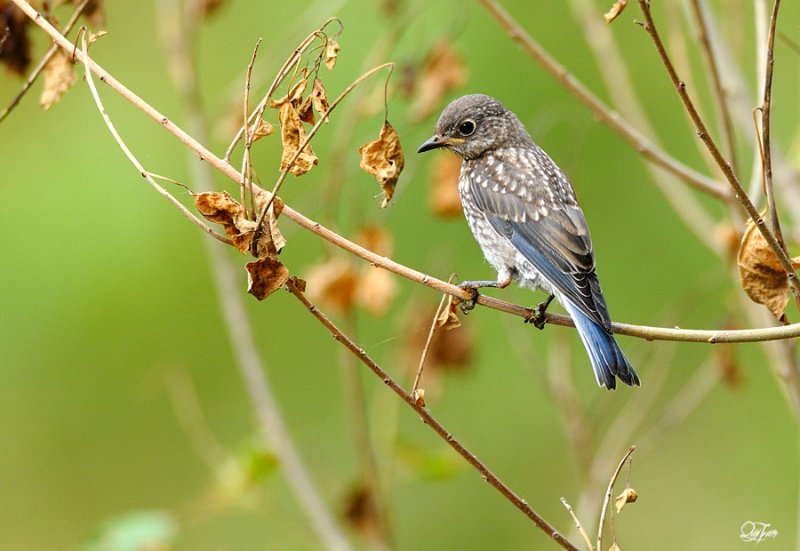
Western Bluebird (Sialia mexicana) juvenile by Quy Tran

Western Bluebird (Sialia mexicana) juvenile by Quy Tran

Bluebirds are territorial, prefer open grassland with scattered trees and are cavity nesters (similar to many species of woodpecker). Bluebirds can typically produce between two and four broods during the spring and summer (March through August in the Northeastern United States). Males identify potential nest sites and try to attract prospective female mates to those nesting sites with special behaviors that include singing and flapping wings, and then placing some material in a nesting box or cavity. If the female accepts the male and the nesting site, she alone builds the nest and incubates the eggs.

Bluebirds are attracted to platform bird feeders, filled with grubs of the darkling beetle, sold by many online bird product wholesalers as mealworms. Bluebirds will also eat raisins soaked in water. In addition, in winter bluebirds use backyard heated birdbaths. Of all the birds a gardener could choose to attract, the bluebird is the quintessential helpful garden bird. Gardeners go to extreme lengths to attract and keep them in the garden for their beneficial properties. Bluebirds are voracious insect consumers, quickly ridding a garden of insect pests.

By the 1970s, bluebird numbers had declined by estimates ranging to 70% due to unsuccessful competition with house sparrows and starlings, both introduced species, for nesting cavities, coupled with a decline in habitat. However, in late 2005 Cornell University’s Laboratory of Ornithology reported bluebird sightings across the southern U.S. as part of its yearly Backyard Bird Count, a strong indication of the bluebird’s return to the region. This upsurge can largely be attributed to a movement of volunteers establishing and maintaining bluebird trails.

While traveling full-time in our RV, one of our volunteer jobs was to clean the Bluebird houses of the “Trail” at the Avon Park Air Force Range in Avon Park, FL. There were 100 houses over a 78 mile distance. They were about 1/2 mile or so apart. Needless to say, it wasn’t done in one day. That year the Bluebirds had produced about 468 Bluebirds in those boxes. We were able to watch the Eastern Bluebirds quite frequently.

There are a few other “Bluebirds” around the world like the Asian Fairy-bluebird, Philippine Fairy-bluebird are in the Irenidae – Fairy-bluebird Family.

Birds Illustrated by Color Photograhy Vol 1 March 1897 No 3 - Cover

Birds Illustrated by Color Photography – Revisited – Introduction

The above article is the first article in the monthly serial for February 1897 “designed to promote Knowledge of Bird-Live.” These include Color Photography, as they call them, today they are drawings. There are at least three Volumes that have been digitized by Project Gutenberg.

To see the whole series of – Birds Illustrated by Color Photography – Revisited

*

(Information from Wikipedia and other internet sources)

Next Article – The Swallow

Previous Article – The American Red Bird

Sharing The Gospel

Links:

Bluebird – Wikipedia

FAIRY-BLUEBIRDS Irenidae

The Mountain Bluebird – The Zealous Bridegroom.. by ajmithra

Turdidae – Thrushes

Mountain Bluebirds – Vol 2, #6

*

Disclaimer About Bible Version Usage

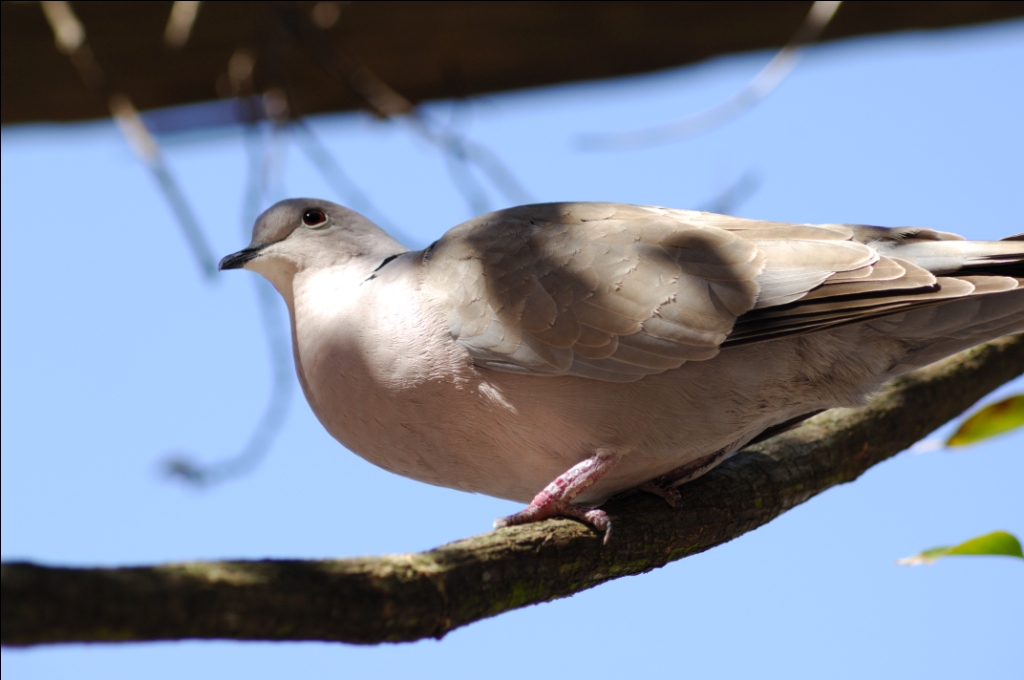
Eurasian Collared Dove (Streptopelia decaocto) by Dan

Eurasian Collared Dove (Streptopelia decaocto) by Dan

I would like to post a Disclaimer about the use of the different Bible versions that I use in my various blogs, especially the Birds of the Bible articles. Because I quote from different versions does not mean that I endorse them.  There are versions that translated God’s Word very faithfully by Godly men. There are some of the translations that are questionable as to “by whom” and “why” the translations were made.

When I do my Birds of the Bible articles, I like to “Compare” the different versions. I use e-Sword, a free Bible program from e-sword.net, and it has a “compare” mode that lets me see all the different versions of a verse I have loaded at the same time. I find it amazing that the different versions of Scripture translate a Greek or Hebrew word into so many different birds. When I do my articles, I write from an educational mode, an instructional mode and a spiritual mode.

Study to shew thyself approved unto God, a workman that needeth not to be ashamed, rightly dividing the word of truth. (2 Timothy 2:15 KJV)

Here is an example of what my “Compare” looks like with all the different versions I have loaded. I have some which I can’t even read, some are in Spanish, and I have the Latin Vulgate in here because many of the bird species use Latin in their names and I try to see if that will give me a clue as to which bird is intended.
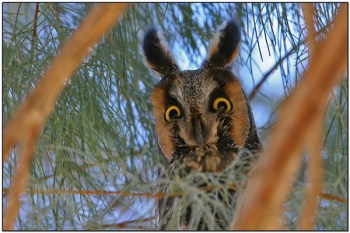
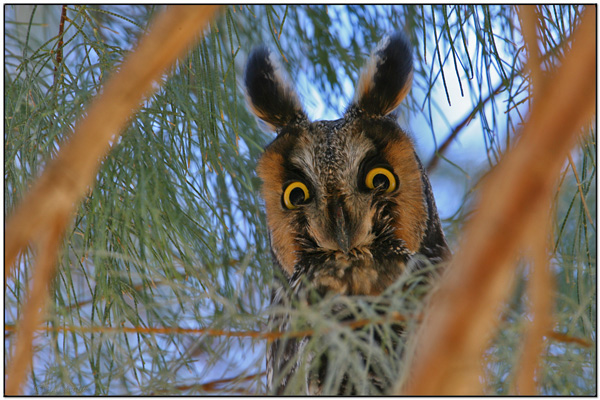
Long-eared Owl (Asio otus) by Daves BirdingPix

Long-eared Owl (Asio otus) by Daves BirdingPix

Leviticus 11:17

(ACV) and the little owl, and the cormorant, and the great owl,

(ABP+) AndG2532 long-eared owl,G3563.3 andG2532 cormorant,G2674.1 andG2532 ibis,G2395.1

(ABP-G+) καιG2532 νυκτικορακαG3563.3 καιG2532 καταρρακτηνG2674.1 καιG2532 ιβινG2395.1

(AKJV) And the little owl, and the cormorant, and the great owl,

(AMP) The owl, the cormorant, the ibis,

(ASV) and the little owl, and the cormorant, and the great owl,

(BBE) And the little owl and the cormorant and the great owl;

(Bishops) The Falcon, the Cormorant, the great Owle,

(Brenton) and the night-raven and the cormorant and the stork,

(CEV) (SEE 11:13)

(CJB) the little owl, the cormorant, the great owl,

(Darby) and the owl, and the gannet, and the ibis,

(DRB) The screech owl, and the cormorant, and the ibis.

(ERV) owls, cormorants, great owls,

(ESV) the little owl, the cormorant, the short-eared owl,

(Geneva) The litle owle also, and the connorant, and the great owle.

(GNB) (SEE 11:13)

(GW) little owls, cormorants, great owls,

(HCSB) the little owl, the cormorant, the long-eared owl,

(HOT+) ואתH853 הכוסH3563 ואתH853 השׁלךH7994 ואתH853 הינשׁוף׃H3244

(ISV) owl, cormorant, ibis,

(JPS) and the little owl, and the cormorant, and the great owl;

(KJV) And the little owl, and the cormorant, and the great owl,

(KJV+) And the little owl,H3563 and the cormorant,H7994 and the great owl,H3244

(KJV-1611) And the little Owle, and the Cormorant, and the great Owle,

(KJVA) And the little owl, and the cormorant, and the great owl,

(LBLA) el búho, el somormujo, el búho real,

(LITV) and the little owl, and the cormorant, and the eared owl;

(LXX+) καιG2532 CONJ νυκτικορακαN-ASM καιG2532 CONJ καταρρακτηνN-ASM καιG2532 CONJ ιβινN-ASF

(MKJV) and the little owl, and the cormorant, and the eared owl;

(MSG) owl, cormorant, ibis,

(NAS77) and the little owl and the cormorant and the great owl,

(NASB) and the little owl and the cormorant and the great owl,

(NASB+) and the littleH3563b owlH3563b and the cormorantH7994 and the N1greatH3244 owlH3244,

(NBLH) el búho, el somormujo, el búho real,

(NIrV) “‘They include little owls, cormorants and great owls.

(NIV) the little owl, the cormorant, the great owl,

(NKJV) the little owl, the fisher owl, and the screech owl;

(NRSV) the little owl, the cormorant, the great owl,

(NRSVA) the little owl, the cormorant, the great owl,

(RV) and the little owl, and the cormorant, and the great owl;

(SRV) Y el buho, y el somormujo, y el ibis,

(Translit+) . . kowcH3563 kowcH3563 . . shalakH7994 . . yanshuwphH3244 yanshuwphH3244

(Vulgate) bubonem et mergulum et ibin

(Webster) And the little owl, and the cormorant, and the great owl,

(YLT) and the little owl, and the cormorant, and the great owl,

________________________
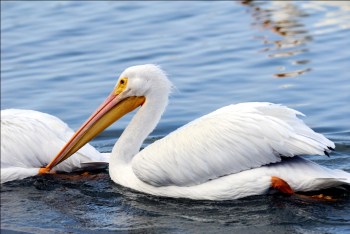
White Pelican at Lake Hollingsworth by Dan

White Pelican at Lake Hollingsworth by Dan

Or the next verse:

Leviticus 11:18

(ACV) and the horned owl, and the pelican, and the vulture,

(ABP+) andG2532 the purple-legged stork,G4209.2 andG2532 pelican,G3989.2 andG2532 swan,G2945.2

(ABP-G+) καιG2532 πορφυριωναG4209.2 καιG2532 πελεκαναG3989.2 καιG2532 κυκνονG2945.2

(AKJV) And the swan, and the pelican, and the gier eagle,

(AMP) The swan, the pelican, the vulture,

(ASV) and the horned owl, and the pelican, and the vulture,

(BBE) And the water-hen and the pelican and the vulture;

(Bishops) The Backe, the Pellicane, the Pye,

(Brenton) and the red-bill, and the pelican, and swan,

(CEV) (SEE 11:13)

(CJB) the horned owl, the pelican, the barn owl,

(Darby) and the swan, and the pelican, and the carrion vulture,

(DRB) And the swan, and the bittern, and the porphyrion.

(ERV) water hens, pelicans, carrion vultures,

(ESV) the barn owl, the tawny owl, the carrion vulture,

(Geneva) Also the redshanke and the pelicane, and the swanne:

(GNB) (SEE 11:13)

(GW) barn owls, pelicans, ospreys,

(HCSB) the white owl, the desert owl, the osprey,

(HOT+) ואתH853 התנשׁמתH8580 ואתH853 הקאתH6893 ואתH853 הרחם׃H7360

(ISV) water-hen, pelican, carrion,

(JPS) and the horned owl, and the pelican, and the carrion-vulture;

(KJV) And the swan, and the pelican, and the gier eagle,

(KJV+) And the swan,H8580 and the pelican,H6893 and the gier eagle,H7360

(KJV-1611) And the Swanne, and the Pellicane, and the Gier-eagle,

(KJVA) And the swan, and the pelican, and the gier eagle,

(LBLA) la lechuza blanca, el pelícano, el buitre común,

(LITV) and the barn owl, and the pelican and the owl-vulture;

(LXX+) καιG2532 CONJ πορφυριωναN-ASM καιG2532 CONJ πελεκαναN-ASM καιG2532 CONJ κυκνονN-ASM

(MKJV) and the barn owl, and the pelican, and the owl-vulture;

(MSG) water hen, pelican, Egyptian vulture,

(NAS77) and the white owl and the pelican and the carrion vulture,

(NASB) and the white owl and the pelican and the carrion vulture,

(NASB+) and the whiteH8580 owlH8580 and the N1pelicanH6893 and the carrionH7360 vultureH7360,

(NBLH) la lechuza blanca, el pelícano, el buitre común,

(NIrV) They include white owls, desert owls and ospreys.

(NIV) the white owl, the desert owl, the osprey,

(NKJV) the white owl, the jackdaw, and the carrion vulture;

(NRSV) the water hen, the desert owl, the carrion vulture,

(NRSVA) the water hen, the desert owl, the carrion vulture,

(RV) and the horned owl, and the pelican, and the vulture;

(SRV) Y el calamón, y el cisne, y el onocrótalo,

(Translit+) . . tanshemethH8580 . . qa’athH6893 . . rachamH7360 rachamH7360

(Vulgate) cycnum et onocrotalum et porphirionem

(Webster) And the swan, and the pelican, and the gier-eagle,

(YLT) and the swan, and the pelican, and the gier eagle,


e-Sword Home

*

Updating the Slideshows – Report # 3

As previously reported, the Slide.Com is closing down as of March 6th. Unfortunately I have used a lot of the Slideshows from them on this site. I am busy kicking up dust behind the scenes and decided to share links to the articles as I get some of them finished. At least you will know I have not been “goofing off.” Besides that, many of these were produced sometime back and deserve a reminder of our many birds the Lord has created for His Glory and pleasure. Trust you like the new Slideshows that are being installed. They are taking a great effort on my part to learn the new procedure, but after quite a few mistakes, maybe I can get them out quicker now.

The works of the LORD are great, sought out of all them that have pleasure therein.(Psalms 111:2 KJV) Having made known unto us the mystery of his will, according to his good pleasure which he hath purposed in himself: (Ephesians 1:9 KJV) For it is God which worketh in you both to will and to do of his good pleasure. (Philippians 2:13 KJV) Thou wilt shew me the path of life: in thy presence is fulness of joy; at thy right hand there are pleasures for evermore. (Psalms 16:11 KJV)

Thanks for your patience and your visits to this website. While I am working away, I am enjoying seeing articles that I had forgotten about. Completed:

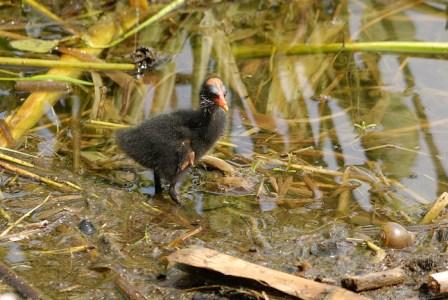
Baby Common Moorhen

Birdwatching Trip – Lake Hollingsworth 7-29-08

Anhinga (Anhinga anhinga) by Dan

Birdwatching Trip – Lake Hollingsworth 5/1/08

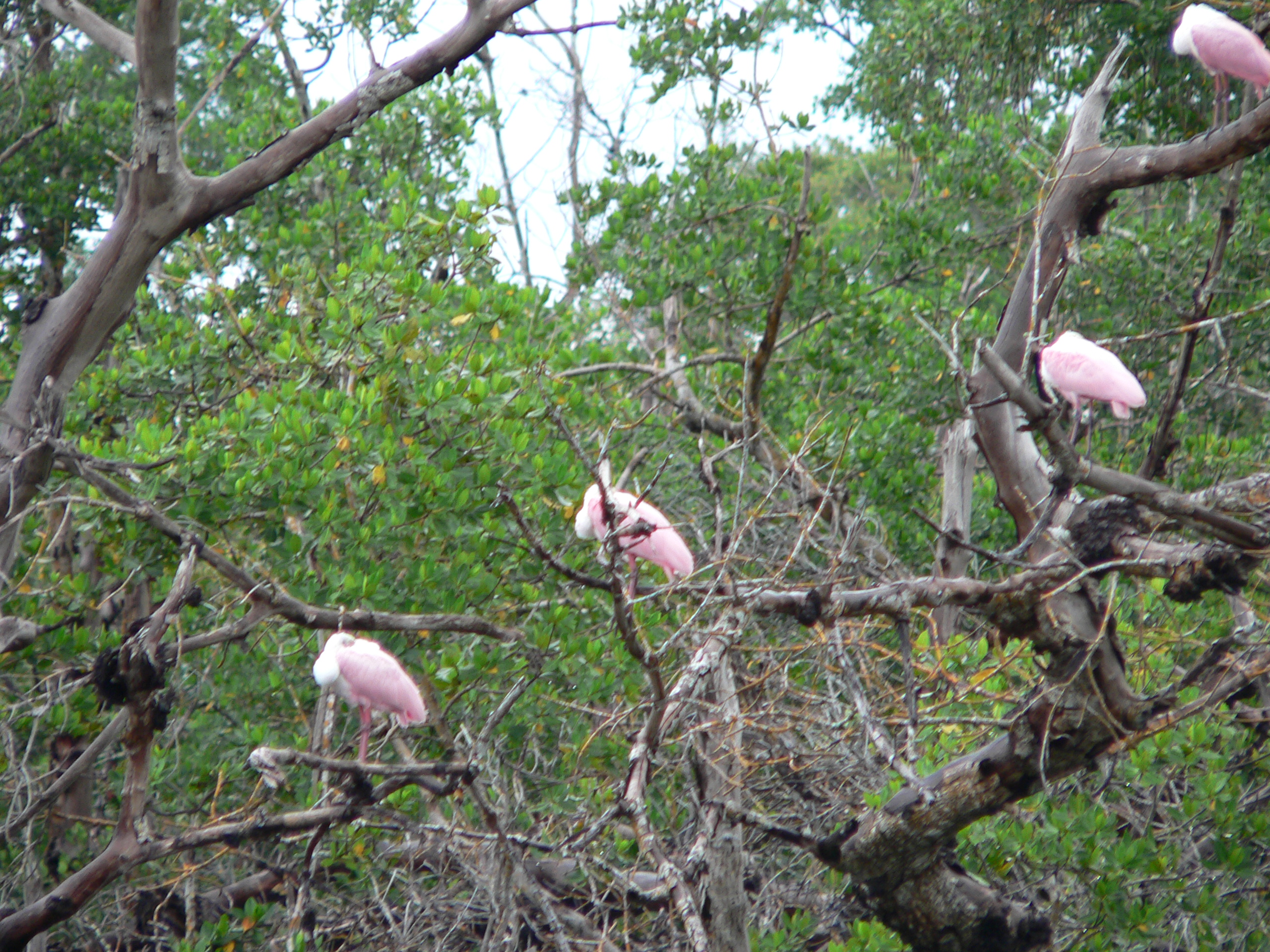
Roseate Spoonbills at Ding Darling

Birdwatching Trip – J. N. “Ding” Darling NWR – July 15, 2008

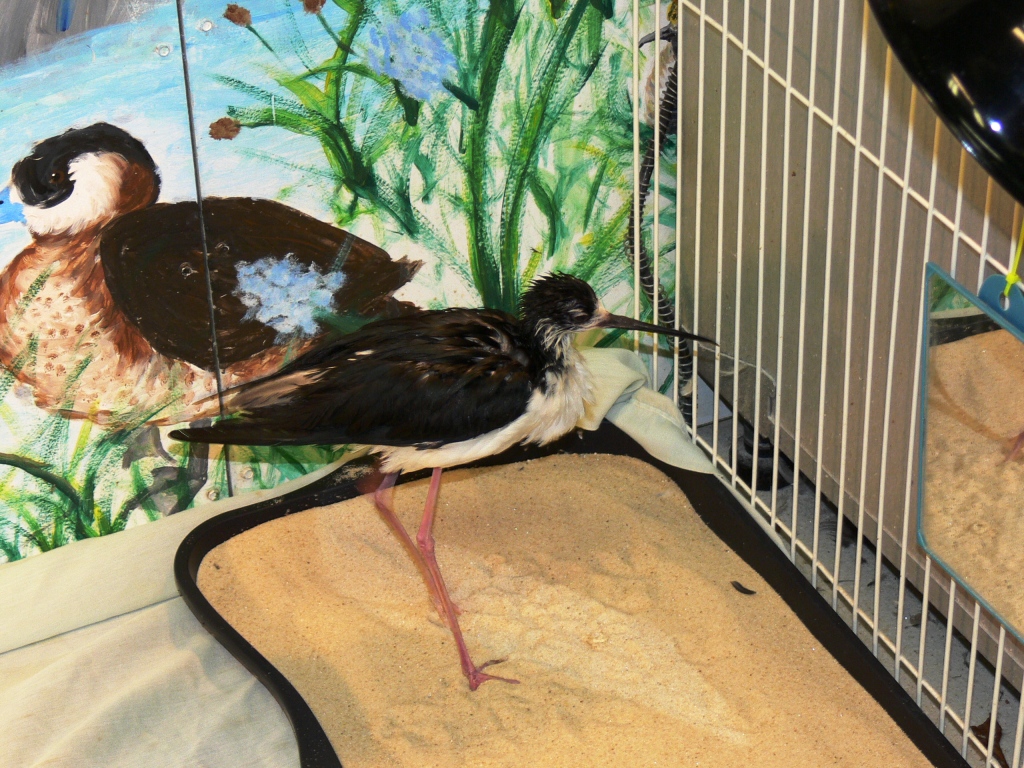
Black-necked Stilt - Skippy

"Skippy" - Black-necked Stilt

Happy Birthday – Skippy at National Aviary

Birdwatching at the National Aviary – Introduction

National Aviary – Hospital, Breeding, and Kitchen Areas

National Aviary – Penguin Encounter

Birds of the Bible – At the National Aviary

Birdwatching the National Aviary – Grasslands

Birdwatching the National Aviary – Tropical Forest

Also:

Scarlet Robin (Petroica boodang) by Ian

Scarlet Robin (Petroica boodang) by Ian

Birds of the Bible – Eye Hath Seen

Birdwatching at Lake Hollingsworth-June 1st

Birds of the Bible – Spain

Formed By Him – Birds of Peru and Chile – II

Also See:

Updating the Slideshows – Report # 1

Updating the Slideshows – Report # 2

*