Our Salute to the Veterans

Dan served 30 years in the Navy, regular and reserve. He along with the many men and women have served our country through the years. We salute you!

Today is the funeral for Dan’s mother, so I am not writing much. We saw Challenger on TV this morning and I remembered the blog I had done about him. So, I am re-posting the YouTube of the eagle in honor of our active and veteran men and women.

Amazing Flying Bald Eagle – Challenger – Article

Turn on your speakers and click on link below.”

Dan’s Mother In Glory

This afternoon Dan’s 94 year old mother went to glory. We have been with her for the last week as much as possible. Thank all of you who have been praying for her and us. We are sad, but also rejoicing because she accepted the Lord as her personal Savior several years ago. The Scriptures tell us:

Precious in the sight of the LORD is the death of his saints. (Psalms 116:15 KJV)

Therefore we are always confident, knowing that, whilst we are at home in the body, we are absent from the Lord: (For we walk by faith, not by sight:) We are confident, I say, and willing rather to be absent from the body, and to be present with the Lord. Wherefore we labour, that, whether present or absent, we may be accepted of him. (2 Corinthians 5:5-9 KJV)

We trust that you also know the Lord as your personal Savior.

John 3:15-21 KJV
(15)  That whosoever believeth in him should not perish, but have eternal life.
(16)  For God so loved the world, that he gave his only begotten Son, that whosoever believeth in him should not perish, but have everlasting life.
(17)  For God sent not his Son into the world to condemn the world; but that the world through him might be saved.
(18)  He that believeth on him is not condemned: but he that believeth not is condemned already, because he hath not believed in the name of the only begotten Son of God.
(19)  And this is the condemnation, that light is come into the world, and men loved darkness rather than light, because their deeds were evil.
(20)  For every one that doeth evil hateth the light, neither cometh to the light, lest his deeds should be reproved.
(21)  But he that doeth truth cometh to the light, that his deeds may be made manifest, that they are wrought in God.

Thank you, in advance, for your prayers as we go through the next few days and the funeral.

*

Birds of the Bible – Partridge II


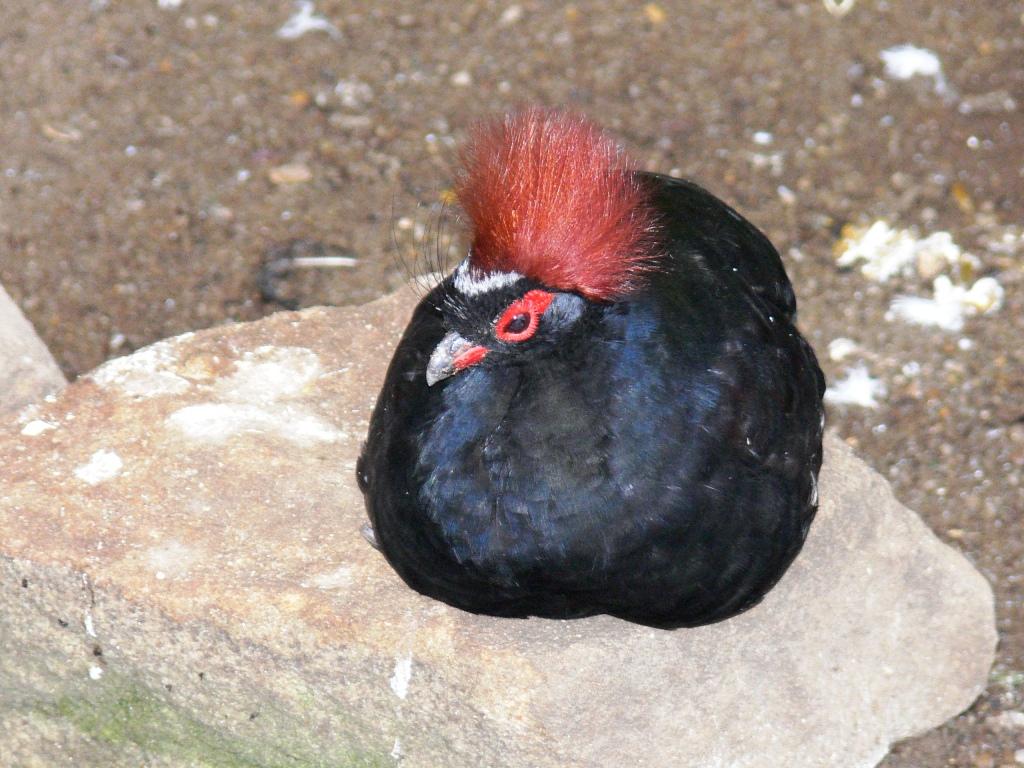
Crested Partridge (Rollulus rouloul) at NA by Lee

Crested Partridge (Rollulus rouloul) at National Aviary by Lee

Since the first Birds of the Bible – Partridge was written two and a half years ago a few facts have changed.

1.  At that time there were 155 species in the Phasianidae family. Now they are counting 181 members in the family and we have the Birds of the World listed here. Also, the blog was only a month or so old. I am not so sure that new birds were found as much as to how they classify the birds. Some lists count them one way and another counts them differently. As for this site, we use the I.O.C. list of world birds. The 2.6 Version shows 181 and so do we.

2.  The verse:

Now therefore, let not my blood fall to the earth before the face of the LORD: for the king of Israel is come out to seek a flea, as when one doth hunt a partridge in the mountains. (1 Samuel 26:20 KJV)

was not explained at all. I was still new to blogging and afraid to explain it. So now, let’s see what the verse is referring to with its reference to the partridge.

Chukar Partridge (Alectoris chukar) by Ian

Chukar Partridge (Alectoris chukar) by Ian

According to I Samuel 26, Saul, with his elite soldiers, was pursuing David to kill him. Saul and his army camped for the night and the Lord put them into a deep sleep. While asleep, David, sneaked in and took took the items, but would not kill Saul, even though he had the opportunity.

The LORD forbid that I should stretch forth mine hand against the LORD’S anointed: but, I pray thee, take thou now the spear that is at his bolster, and the cruse of water, and let us go. So David took the spear and the cruse of water from Saul’s bolster; and they gat them away, and no man saw it, nor knew it, neither awaked: for they were all asleep; because a deep sleep from the LORD was fallen upon them. (1 Samuel 26:11-12 KJV)

Later, after awaking, the two talk to each other across a great distance. (V.14) Saul recognizes David’s voice (V.17), and then starting in verse 18, David is asking why the King is pursuing him. David is not his enemy, is blameless, and not trying to cause the problem.

When we get to the 20th verse, his reference is to a bird that is a harmless, non-aggressive, non-confrontational bird – the partridge.
“as when one doth hunt a partridge in the mountains”
When hunted, a partridge will try to walk away. If that doesn’t work, the bird will fly a short distance and land, again trying to avoid the captor. To catch the bird, some keep this up until they wear the partridge down and then walk up to them and bludgeon them.

Barbary Partridge (Alectoris barbara)©WikiC

Barbary Partridge (Alectoris barbara)©WikiC

Matthew Henry says, “a poor game for the king of Israel to pursue. He compares himself to a partridge, a vert innocent harmless bird, which, when attempts are made upon its life, flies if it can, but makes no resistance. And would Saul bring the flower of his army into the field only to hunt one poor partridge? What a disparagement was this to his honour! What a stain would it be on his memory to trample upon so weak and patient as well as so innocent an enemy! James 5:6, You have killed the just, and he doth not resist you.”

Jamieson, Fausset, and Brown Commentary, “as when one doth hunt a partridge — People in the East, in hunting the partridge and other game birds, pursue them, till observing them becoming languid and fatigued after they have been put up two or three times, they rush upon the birds stealthily and knock them down with bludgeons [Shaw, Travels]. It was exactly in this manner that Saul was pursuing David. He drove him from time to time from his hiding-place, hoping to render him weary of his life, or obtain an opportunity of accomplishing his destruction.”

David later said in the Psalms:

But let all those that put their trust in thee rejoice: let them ever shout for joy, because thou defendest them: let them also that love thy name be joyful in thee. For thou, LORD, wilt bless the righteous; with favour wilt thou compass him as with a shield. (Psalms 5:11-12 KJV)

See also:
Partridge

*

The Cat and the Crow

Just received an email from a friend today with this YouTube Video. Thought I would share it. It is really amazing.

From ozricus

The wolf also shall dwell with the lamb, and the leopard shall lie down with the kid; and the calf and the young lion and the fatling together; and a little child shall lead them. And the cow and the bear shall feed; their young ones shall lie down together: and the lion shall eat straw like the ox. … They shall not hurt nor destroy in all my holy mountain: for the earth shall be full of the knowledge of the LORD, as the waters cover the sea. (Isaiah 11:6-9 KJV)

Birds of the Bible – Spain

Eurasian Hoopoe (Upupa epops) by Ian

Eurasian Hoopoe (Upupa epops) by Ian

I have enjoyed getting to know the Tim and Pam Darling, our missionaries, while they have been in transition from the field of Venezuela to Spain. We have all been praying for them to get their Resident Visas so they can get on over to Spain to start their new ministry. They now have the Visas in hand, which is a great answer to prayer. They are busy getting packed up and will go to Spain around the 10th of November.
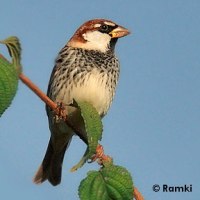
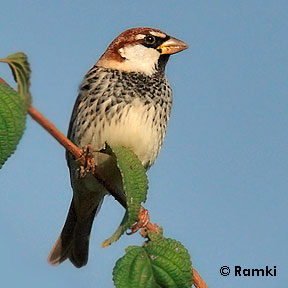
Spanish Sparrow (Passer hispaniolensis) by Nikhil Devasar

Spanish Sparrow (Passer hispaniolensis) by Nikhil Devasar

This blog is in honor of their friendship and to help them get to know the birds they may encounter in Spain. Thanks, Tim and Pam, for your friendship and our prayers will follow you as you travel and reach those in Spain for our Lord Jesus Christ.

Of course the Sparrows will be over there. The House Sparrow, Spanish Sparrow, Eurasian Tree Sparrow, Rock Sparrow and the White-throated Sparrows will help you to remember

Even the sparrow finds a home, and the swallow a nest for herself, where she may lay her young, at your altars, O LORD of hosts, my King and my God. Blessed are those who dwell in your house, ever singing your praise! Selah (Psalms 84:3-4 ESV)

Along with them you will get to meet the Eurasian Hoopoe. A favorite of mine. There will be Swifts – Common, White-rumped, Little, Pallid and Plain Swifts. Also the Swallows – Red-rumped and the Barn.

Yea, the stork in the heaven knoweth her appointed times; and the turtle(dove) and the crane and the swallow observe the time of their coming; but my people know not the judgment of the LORD. (Jeremiah 8:7 KJV)

Lots of Doves and Pigeons to be on the lookout for – Rock Dove (pigeon), Eurasian Collared-Dove, Oriental Turtle-Dove, Laughing Dove, European Turtle-Dove, Bolle’s Pigeon, Laurel Pigeon and a Stock Pigeon. Only found the Common Crane listed there.

There are 9 kinds of Owls, 10 in Falcon family, 3 Kites, 3 Bitterns, 2 Cormorants, 4 Herons, 3 Storks, 2 Hawks, 2 Lapwings, the Osprey, 3 Partridges, 2 Quails and the Bobwhite, and 4 Swans.

There is the Common Raven and you know what the Word says about the Ravens.

Consider the ravens: for they neither sow nor reap; which neither have storehouse nor barn; and God feedeth them: how much more are ye better than the fowls? (Luke 12:24 KJV)

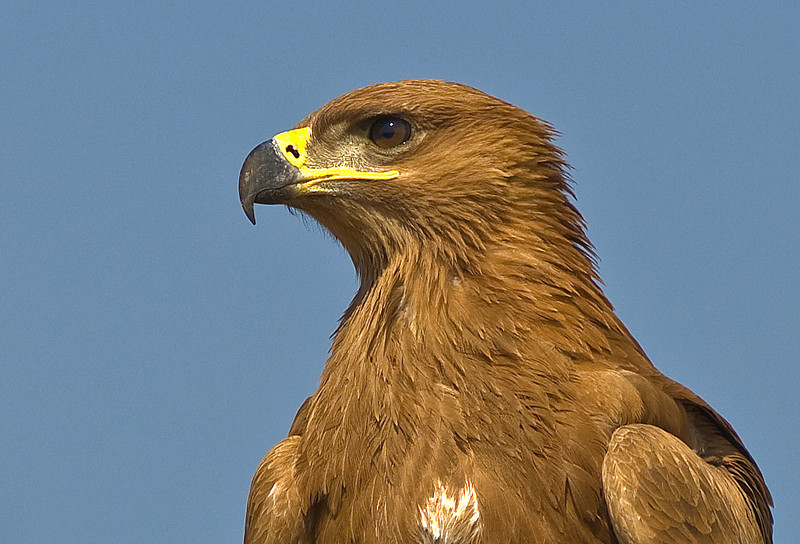
Tawny Eagle by Africaddict

Tawny Eagle by Africaddict

Saved the Eagles for last, not because they are bad, but because of the promises that use them as examples. In Spain they have the Adalbert’s, Golden, Greater Spotted, Imperial, Lesser Spotted, Tawny, Short-toed Snake-Eagle, White-tailed Eagle, Bonelli’s Eagle and the Booted Eagles.

Wilt thou set thine eyes upon that which is not? for riches certainly make themselves wings; they fly away as an eagle toward heaven. (Proverbs 23:5 KJV)

The Darling’s are definitely not going to Spain to obtain earthly gains, but to gain heavenly rewards.

But they that wait upon the LORD shall renew their strength; they shall mount up with wings as eagles; they shall run, and not be weary; and they shall walk, and not faint. (Isaiah 40:31 KJV)

Tim and Pam, our collective prayers will go with you.

(Updated 8-04-12) We have had the privilege of spending some time with Tim and Pam for the last few weeks while they have been on a short furlough. Her parents belong to our church and live in the area. I have tried to encourage them to send me some photos of the birds in Spain. Stay tuned, maybe we can have another update.)

*

This slideshow requires JavaScript.

*
New I.O.C. 2.6 Version is Out

Large Grey Babbler (Turdoides malcolmi) by Ian

Large Grey Babbler (Turdoides malcolmi) by Ian

The newest version of the I.O.C list of birds has been released. Version 2.6 has made quite a few changes. It was released on October 23rd and I have started making the changes to the Birds of the World pages. (One reason I haven’t posted much.) Also making “Kindle-friendly” changes (see below).

When I started with version 2.1 there were 10,340 birds and now they have 10,417 (up from 10,396-ver. 2.5) The families have been increasing also from 224 to 222 to now 233. The ornithologist love to change things around and split and lump the species. Now they have added a new Order (from 39 to 40).

They have already start planning for the 2.7 version. Talk about change. For every change they make every 3 months or so, I have to update this website. This new version is going to call for new pages to be made for that new Order and the new Families, plus the spelling changes. Not complaining, just explaining why the guest writers may be posting more than me.

As for the birds, they are for the most part, the same. It is just how the ornithologist look at them. Some grew a new colored feather and they gave it a new name, and some lost a feather and now it is put back into another group. (Just kidding.) They do work very hard in trying to figure what bird belongs where. The DNA studies that are ongoing are letting them see that the birds are related in different ways than they thought.

So God created … every winged bird according to its kind. And God saw that it was good. And God blessed them, saying, “Be fruitful and let birds multiply on the earth.” And there was evening and there was morning, the fifth day. (Genesis 1:21-23 ESV)

We do know that God told the birds to multiply and fill the earth and they are doing that within their kinds. Luckily, they don’t have to keep up with charts and list and web pages. They just keep looking for the next meal and raising their families.

Blue-footed Booby (Sula nebouxii) by Bob-Nan

Blue-footed Booby (Sula nebouxii) by Bob-Nan

The new Order is Suliformes which includes the Frigatebirds-Fregatidae; Gannets, Boobies-Sulidae; Cormorants, Shags-Phalacrocoracidae; and the Anhingas, Darters-Anhingidae Families. (As I make the pages, a link will be provided here)

Another major change is they divided the Babblers into 5 Families -(Timaliidae, Pellorneidae, Leiothrichidae, Sylviidae, Zosteropidae). So I will be busy making and changing pages for awhile. All together the IOC: added 22 species, deleted 1; made 19 English Name changes; changed 16 Ranges; and made 180 Taxonomy changes including the new Order and the new Families mentioned.

Also, as I am making changes, I am making the pages “Kindle-friendly.” I recently got a Kindle that has 3G on it and found out that it will not let you open links, photos, or articles in a New Tab or New Window. As the pages are reworked, I am fixing those links, photos, and articles that link (internal) to this site so that they will Open in the Same Window. All the new articles in the last week or so have also been made “Kindle-friendly.” There are over 1,000 blogs and pages here, so don’t expect it to be changed over night.

Birds of the World (Internal link)

I.O.C Worldbirdnames.org (Not internal link)

*

Birds of the Bible – Ostrich II

Common Ostrich (Struthio camelus) Memphis Zoo by Lee

Common Ostrich (Struthio camelus) Memphis Zoo by Lee

Even a mother wolf will nurse her cubs, but my people are like ostriches, cruel to their young. (Lamentations 4:3 GNB)
Even jackals nurse their young, but my people are like ostriches that abandon their own. (Lamentations 4:3 CEV)

The two versions of Lamentations 4:3 are interesting. In Birds of the Bible – Ostrich, the facts about the Ostriches behavior toward their young were mentioned. Her lack of interest in raising her young by putting them in a communal nest, her “big feet”, and her lack of knowledge.

This verse in Lamentations 4, again mentions how the ostriches are cruel to their young. This time the context is referring to the punishment of Israel and how they have gone from having much and now suffering with little or nothing. Verse 2 says,

These are Zion’s people, worth more than purest gold; yet they are counted worthless like dishes of clay.

May we serve the Lord with a clean heart and keep a “short list” of things that need to be confessed. May we never get so far away from the Lord that we have to have judgment come into our lives to “wake us up.”

Luckily, those of us who know the Lord as our personal Saviour, know:

Let your conversation be without covetousness; and be content with such things as ye have: for he hath said, I will never leave thee, nor forsake thee. (Hebrews 13:5 KJV)

Somali Ostrich (Struthio molybdophanes) by P Kwong

Somali Ostrich (Struthio molybdophanes) by P Kwong

The Ostrich, Struthio camelus, is actually an interesting bird that is flightless and native to Africa. It is the only living species of its family, Struthionidae and its genus, Struthio. Ostriches share the order Struthioniformes with the kiwis, emus, and other ratites. It is distinctive in its appearance, with a long neck and legs and the ability to run at maximum speeds of about 45 mph, the top land speed of any bird. The Ostrich is the largest living species of bird and lays the largest egg of any living bird (extinct elephant birds of Madagascar and the giant moa of New Zealand laid larger eggs).

Ostriches usually weigh from 63 to 130 kilograms (140–290 lb), with exceptional male Ostriches weighing up to 155 kilograms (340 lb). The feathers of adult males are mostly black, with white primaries and a white tail. However, the tail of one subspecies is buff. Females and young males are greyish-brown and white. The head and neck of both male and female Ostriches is nearly bare, with a thin layer of down.[4][6] The skin of the females neck and thighs is pinkish gray, while the male’s is blue-gray, gray or pink dependent on subspecies.
Claws on the wings

The long neck and legs keep their head 6 to 9 ft above the ground, and their eyes are said to be the largest of any land vertebrate – 50 millimetres (2.0 in) in diameter; they can therefore perceive predators at a great distance. The eyes are shaded from sun light falling from above.

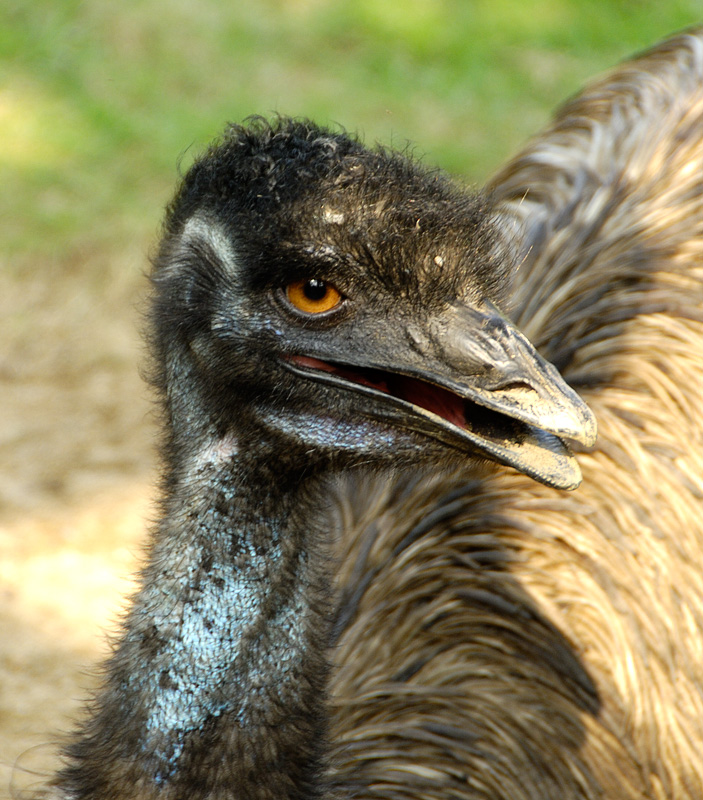
Emu Foot Lowry Pk Zoo

Emu Foot Lowry Pk Zoo

At sexual maturity (two to four years), male Ostriches can be from 5 ft 11 in to 9 ft 2 in in height, while female Ostriches range from 5 ft 7 in to 6 ft 7 in. During the first year of life, chicks grow 10 in per month. At one year of age, Ostriches weigh around 100 lb. Their lifespan is up to 40–45 years.

Yesterday, Dan and I were at the Lowry Park Zoo and were watching the Emu pair they have there. Took pictures of their feet and though smaller than the Ostrich, they have “big feet” also.

See Also:

Birds of the Bible – Ostrich

Ostrich

Struthionidae – Ostriches

Struthioniformes – Ostriches

*

Interesting Things – Similar Features Show Design

Gilbert Sturart's Portrait of George Washington©WikiC

Gilbert Sturart's Portrait of George Washington©WikiC

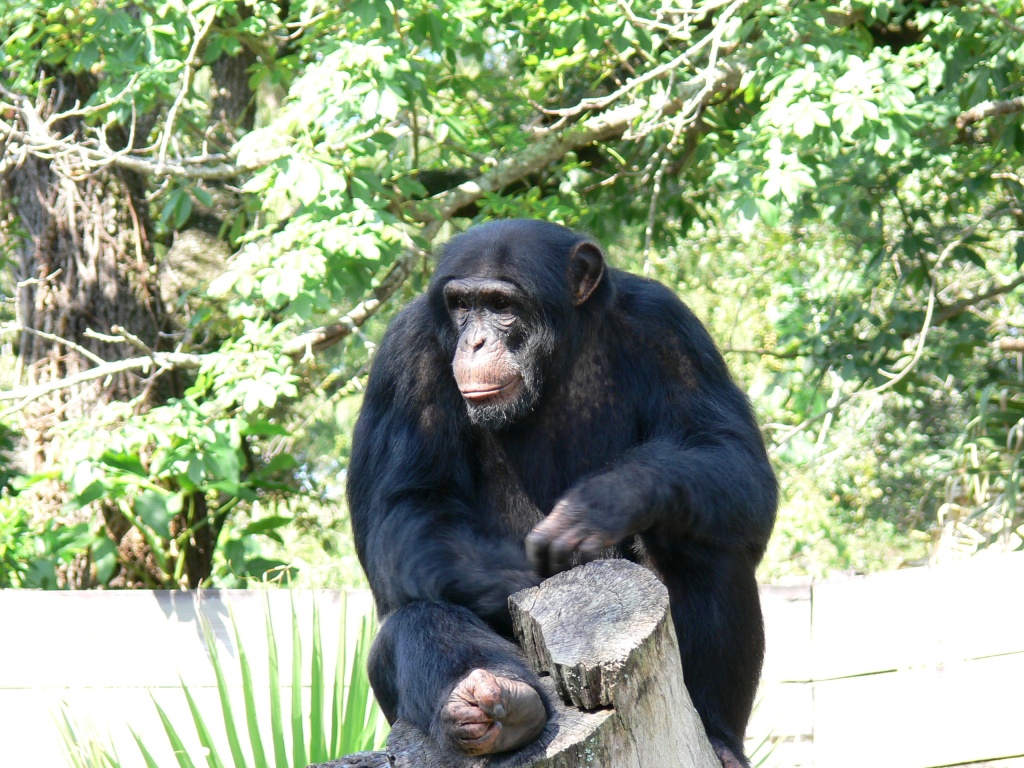
Chimpanzee at Lowry Park Zoo by Lee

Chimpanzee at Lowry Park Zoo

Similar Features Show Design, Not Universal Common Descent by Randy J. Guliuzza, P.E., M.D. is a very interesting article from the October issue of the Acts and Facts from Institute for Creation Research.

“I’m related to George Washington,” an acquaintance announced after searching his genealogical record. He also believes he is closely related to chimpanzees. Though he doesn’t really look like either, all three do share a lot of similar features.

So, are similar looks or features enough to establish whether these three are related closely, remotely, or not at all in regard to their ancestry? No. Similar looks and features can be very deceiving. A true relationship is actually a fact-based connection. A line of connected birth certificates is factual evidence that can be verified. Just comparing similar features—or even DNA—to determine related ancestry is always an inference with a probability of being right ranging from high to zero.

For the rest of the article – Click Here. It is a very good article.

*

Those Ugly Shirts

I don’t know if you were glued to your TV when the miners in Chile were taken up from their 69 day entrapment, but I was. I prayed for them that nothing would go wrong as they brought each one up and for them personally to know the Lord.

Today I received an email with a YouTube about the shirts that many were wearing. I too was curious as to what they said. Here is a great video that tells about those “ugly shirts.”

Video by iranmojdeh.

Wordless Birds

Today’s Birds of the Bible

Updated at 8:10 pm

They are all finished. Hope you enjoy reading them.

********

Today, instead of doing my regular Birds of the Bible article, I am going to try to finish the Scripture Alphabet of Animals series. I have all the birds finished and am working hard to finish the rest of the animals today. All throughout the day, new articles will be posted as they are completed. I will be updating the index to the article (below) as I finish each one.

I trust you have enjoyed reading them as much as I have as the articles are being “modernized.” Harriet N Cook was a very good writer and trust she would have approved of the way that they are being handled here.

Lee

Learning from the Birds – Overwhelmed

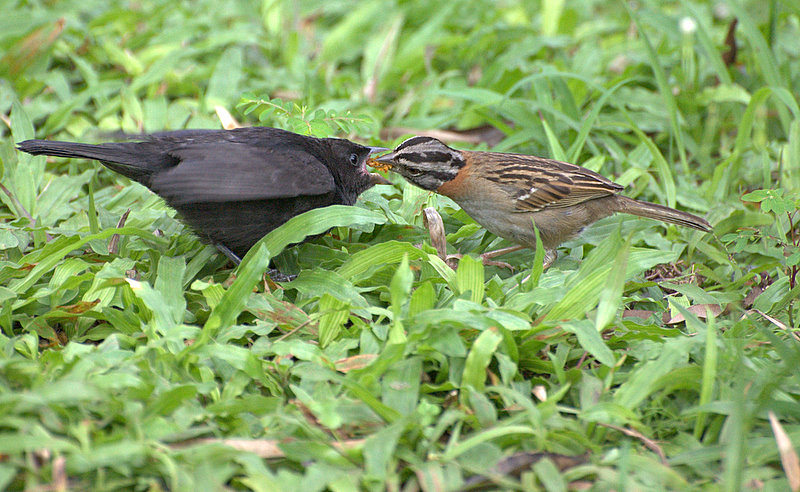
A Shiny Cowbird (Molothrus bonariensis) chick being fed by a Rufous-collared Sparrow (Zonotrichia Capensis)

A Shiny Cowbird (Molothrus bonariensis) chick being fed by a Rufous-collared Sparrow (Zonotrichia Capensis)

But now ask the beasts, and they will teach you; And the birds of the air, and they will tell you; (Job 12:7 NKJV)

Brood parasites are organisms that use the strategy of brood parasitism, found among birds, fish or insects, involving the manipulation and use of host individuals either of the same or different species to raise the young of the brood-parasite. This relieves the parasitic parent from the investment of rearing young or building nests, enabling them to spend more time foraging, producing offspring etc. Additionally, the risk of egg loss to raiders such as raccoons is mitigated, by having distributed the eggs amongst a number of different nests. As this behavior is damaging to the host, it will often result conflict between parasite and host.

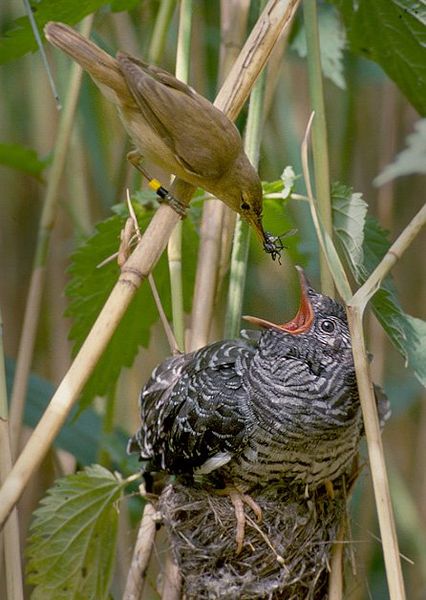
Common Cuckoo (Cuculus canorus) being raised by a Reed Warbler©WikiC

Common Cuckoo (Cuculus canorus) being raised by a Reed Warbler©WikiC

Interspecific brood-parasites include the Old World Cuckoos in Eurasia and Australia, Cowbirds and Black-headed Ducks in the Americas, and Indigobirds, Whydahs, and the Honeyguides in Africa.

Among specialist avian brood parasites, mimetic eggs are a nearly universal adaptation. There is even some evidence that the generalist Brown-headed Cowbird may have developed an egg coloration mimicking a number of their hosts.

Most avian brood parasites will remove a host egg when they lay one of their own in a nest. Depending upon the species, this can happen either in the same visit to the host nest or in a separate visit before or after the parasitism. This both prevents the host species from realizing their nest has been parasitized and reduces competition for the parasitic nestling once it hatches.

Most avian brood parasites have very short egg incubation periods and rapid nestling growth. This gives the parasitic nestling a head start on growth over its nestmates, allowing it to outcompete them. In cases where the host nestlings are significantly smaller than the parasite nestling, the host nestlings will often starve to death. Some brood parasites will eliminate all their nestmates shortly after hatching, either by ejecting them from the nest or killing them with sharp mandible hooks which fall off after a few days.

Whoa! This is NOT NICE! What is so amazing is that if not detected in time, many times the birds do find the intruding egg and toss it out, but most times, the unsuspecting parents raise this young bird as if it were it’s own.

What can we, as observers of this behavior, learn from the birds? I want to consider the host birds who have quite a challenge to face. They either fix the problem or they could be very “overwhelmed” with situation at hand.

My first thoughts were from a physical need. When faced with a health problem, we pray and visit the doctors and try to remedy the situation. Sometimes the ailment is not cured and we may be faced with an “overwhelming” need. Do we accept whatever the outcome and:

Not that I speak in regard to need, for I have learned in whatever state I am, to be content: (Philippians 4:11 NKJV)

Another lesson that could by learned by observing this “overwhelming” task might be in sharing the load. Often in churches, the ones who are willing to serve the Lord become very involved because of others not volunteering or helping. They keep taking on more responsibilities, not complaining, but in time they could become “overwhelmed.” We should find a way to:

Bear one another’s burdens, and so fulfill the law of Christ. (Galatians 6:2 NKJV)

Though one may be overpowered by another, two can withstand him. And a threefold cord is not quickly broken. (Ecclesiastes 4:12 NKJV)

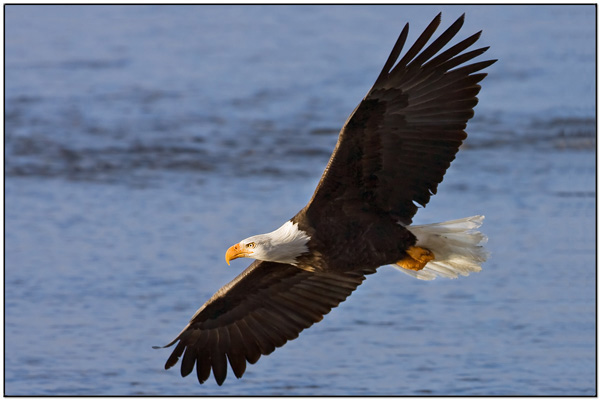
Bald Eagle flying by Dave's BirdingPix

Bald Eagle flying by Dave's BirdingPix

The host birds accept the situation and do the best they can to raise the young bird. How do they do that? One worm at a time! When we become “overwhelmed,” that is just what we need do. No! Not by catching worms, but by taking one step at a time and harkening to the following promises:

But ye, brethren, be not weary in well doing. (2 Thessalonians 3:13 KJV)

And let us not be weary in well doing: for in due season we shall reap, if we faint not. (Galatians 6:9 KJV)

I can do all things through Christ which strengtheneth me.
(Philippians 4:13 KJV)

But they that wait upon the LORD shall renew their strength; they shall mount up with wings as eagles; they shall run, and not be weary; and they shall walk, and not faint. (Isaiah 40:31 KJV)

(Some information from Wikipedia)
*

Harriet Newell Cook – Scripture Alphabet of Animals

Scripture Alphabet of Animals

Harriet Newell Cook (1814-1843) – author of Scripture Alphabet of Animals

Baudet Donkey - Shaky and Brown

Baudet Donkey – Shaky and Brown

While looking for the quoted thoughts by G. D. Watson, “Others May, You Cannot,” I found the Christian Articles Website. It is loaded with articles by numerous pastors and preachers, but also other Christian writers. That is where I found Harriet N. Cook’s “Scripture Alphabet of Animals.” Her works and the others on that website are in the public domain and usable. I have decided to use her as a guest writer and produce the bird sections (finished) she wrote about. The other sections are being done also. They are listed below. Also, her books are available on Google Books and can be read on the computer or one of the eBook readers.

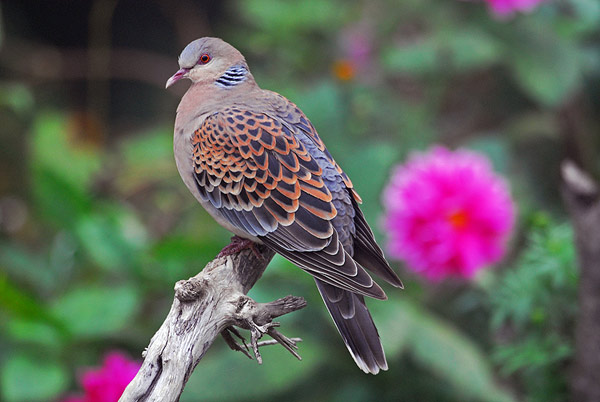
Oriental Turtle Dove (Streptopelia orientalis) by Nikhil

Oriental Turtle Dove (Streptopelia orientalis) by Nikhil

Harriet Newell Cook was born in 1814 and died in 1843. In her short 29 years of life she wrote several juvenile books and thought I would share parts of them here. “Her first volume for the young was one of Natural History, calculated to illustrate portions of the Bible, for the young, and entitled, “The Scripture Alphabet of Animals.” Nearly thirty thousand copies of the work have been printed in its English dress, and eight thousand of the German translation. The style of this work is eminently lucid…”

Her last very interesting work for the young —“The Trees, Flowers and Fruits of the Bible“– she was not permitted to finish, by reason of her death. It was completed by Miss F. M. Caulkins…” (From Memoir of Mrs. Harriet Newell Cook By Lydia Howard Sigourney, at Google Books)

Beasts, and all cattle; creeping things, and flying fowl: Kings of the earth, and all people; princes, and all judges of the earth: Both young men, and maidens; old men, and children: Let them praise the name of the LORD: for his name alone is excellent; his glory is above the earth and heaven. (Psalms 148:10-13 KJV)

It was difficult finding information about her personally. Also, I couldn’t find a picture of her. One thing was for certain, she appears to have loved the Lord greatly and wanted to serve Him through her writing.

See Also:

Scripture Alphabet of Animals: The Ant
Scripture Alphabet of Animals: The Ass (Donkey)
Scripture Alphabet of Animals: The Bear
Scripture Alphabet of Animals: The Bee
Scripture Alphabet of Animals: The Camel
Scripture Alphabet of Animals: The Dog
Scripture Alphabet of Animals: The Eagle
Scripture Alphabet of Animals: The Fox or Jackal
Scripture Alphabet of Animals: The Goat
Scripture Alphabet of Animals: The Hart and Hind
Scripture Alphabet of Animals: The Horse
Scripture Alphabet of Animals: The Ibex or the Wild Goat
Scripture Alphabet of Animals: The Jerboa or Mouse
Scripture Alphabet of Animals: The Kite
Scripture Alphabet of Animals: The Leopard
Scripture Alphabet of Animals: The Lion
Scripture Alphabet of Animals: The Locust
Scripture Alphabet of Animals: The Mole
Scripture Alphabet of Animals: The Night-Hawk
Scripture Alphabet of Animals: The Ostrich
Scripture Alphabet of Animals: The Peacock
Scripture Alphabet of Animals: The Quail
Scripture Alphabet of Animals: The Raven
Scripture Alphabet of Animals: The Roe or Gazelle
Scripture Alphabet of Animals: The Scorpion
Scripture Alphabet of Animals: The Sheep
Scripture Alphabet of Animals: The Stork
Scripture Alphabet of Animals: The Turtle-Dove
Scripture Alphabet of Animals: The Unicorn
Scripture Alphabet of Animals: The Vulture
Scripture Alphabet of Animals: The Whale
Scripture Alphabet of Animals: The Wolf

See:

Bible Birds

Birds of the Bible

Wordless Birds

*