According to Birds and Bloom magazine site, there are Birds of the Month.
“You’ve probably heard of birth month gemstones and birth month flowers, but have you heard of birth month birds? It might come as a surprise to learn every month of the year has not only a representative jewel and flower, but also a bird. From owls to ravens, here are the birds that represent everyone’s birthdays.”
More from Birds and Bloom:
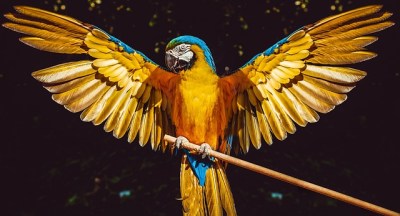
Spunky, smart, colorful and filled to the brim with personality, parrots always inspire smiles. While they’re perhaps most recognizable for sitting on pirates’ shoulders, there are more than 350 types of parrots in the world—and plenty of them live in the wild.
“I love this this bird because every single time my shutter would snap, he would pose. I took this picture at the Henry Doorly Zoo in Omaha, Nebraska,” says Katelyn Cheek.
Red-winged Parrot (Aprosmictus erythropterus) by Ian
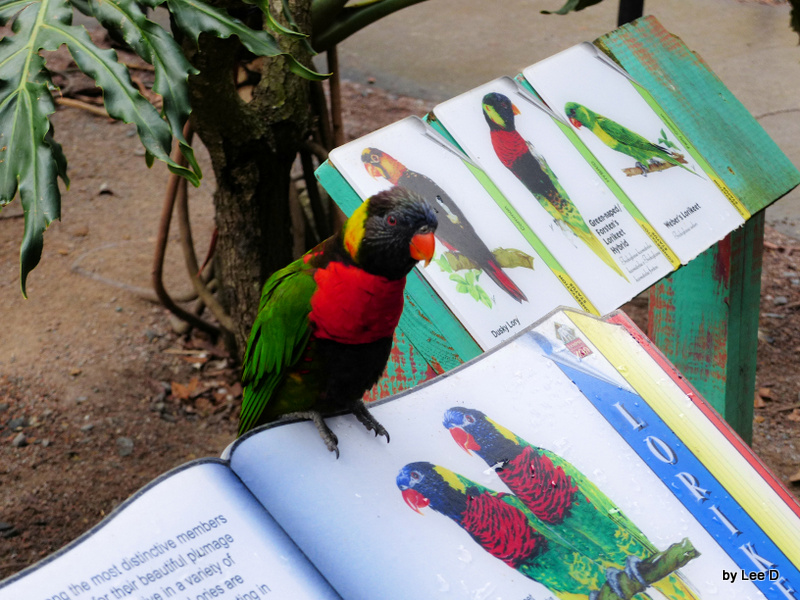
Salmon-crested Cockatoo (Cacatua moluccensis) at Parrot Mtn by Lee
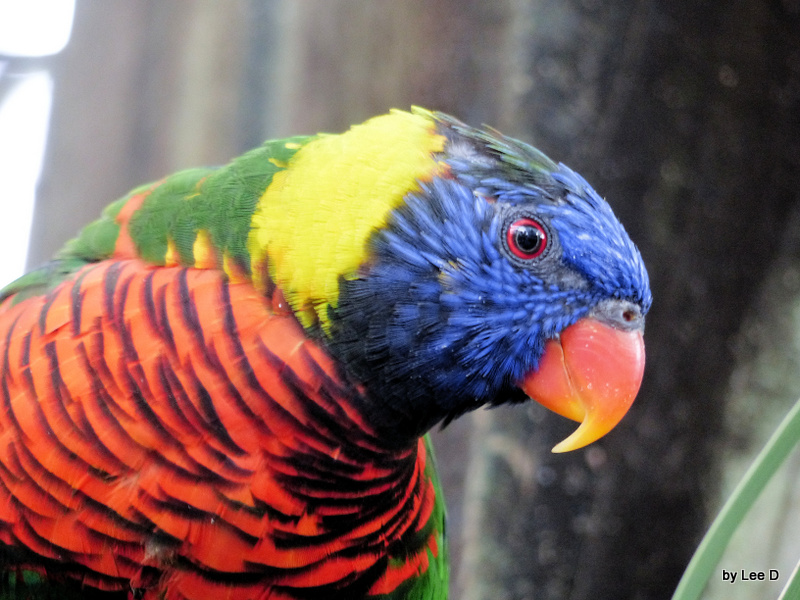
The rainbow shall be in the cloud, and I will look on it to remember the everlasting covenant between God and every living creature of all flesh that is on the earth.” (Genesis 9:16 NKJV)
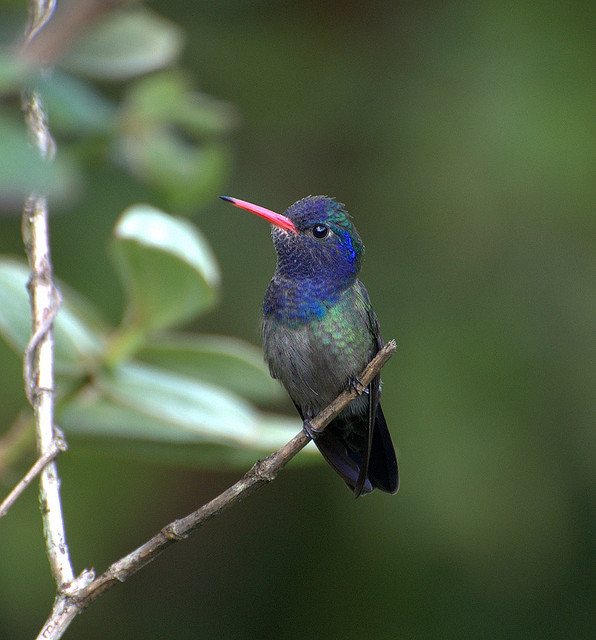
Did you know that there is a bird assigned to each month like they do stones? I was not aware of these for birds. September, which is my birthday month has a Saphire. I’ll reveal September’s when we get to that post.
According to Birds and Bloom magazine site, there are Birds of the Month.
“You’ve probably heard of birth month gemstones and birth month flowers, but have you heard of birth month birds? It might come as a surprise to learn every month of the year has not only a representative jewel and flower, but also a bird. From owls to ravens, here are the birds that represent everyone’s birthdays.”
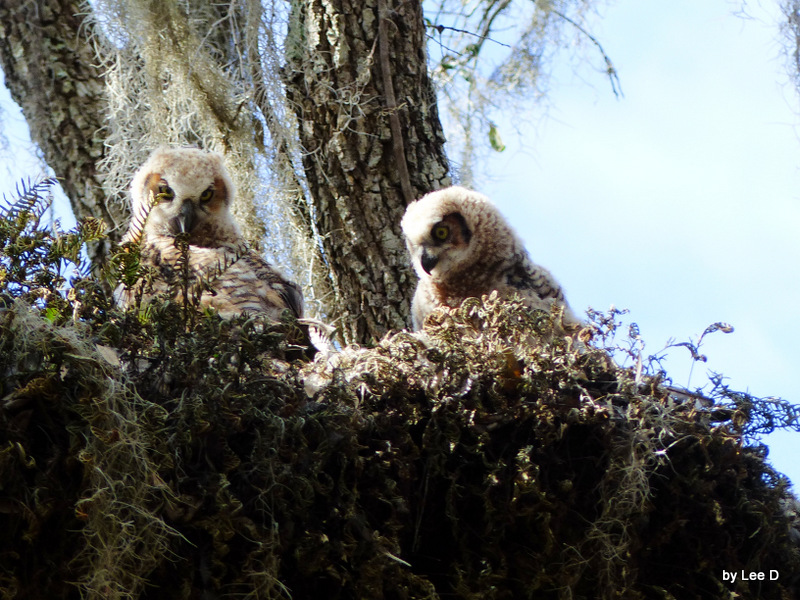
Great Horned Owl Youngsters at Circle B Bar Reserve by Lee
“January: Owl
Wise and formidable, owls preside over the woods at night. They’re commonly seen as a symbol of smarts, with great horned owls showing up on many a graduation card. Identify these January birth month birds by their large eyes, rounded heads and hooked beak. Listen for their hooting when the skies grow dark.”
They didn’t say which kind, so here are some of the articles we have done about Owls:
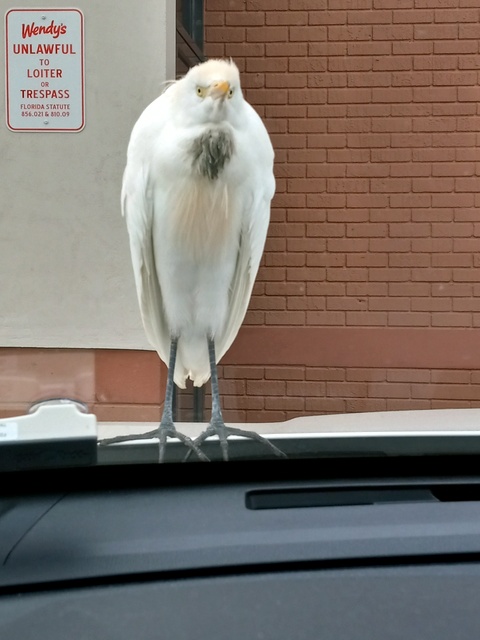
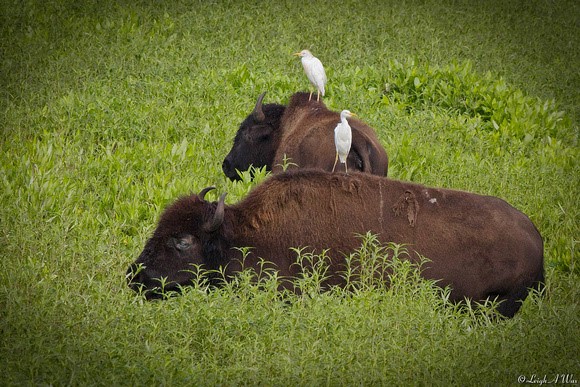
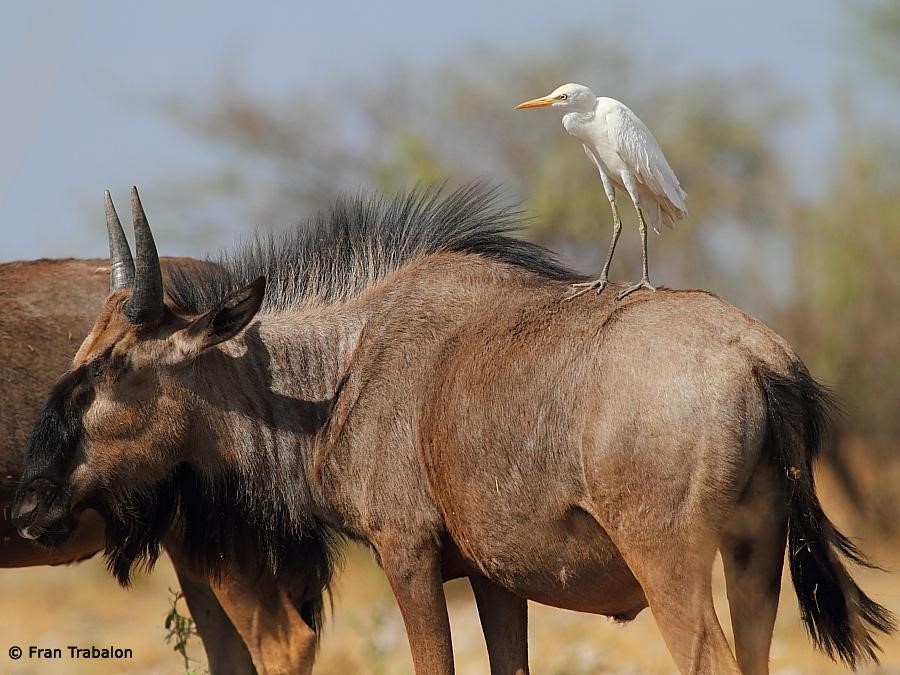
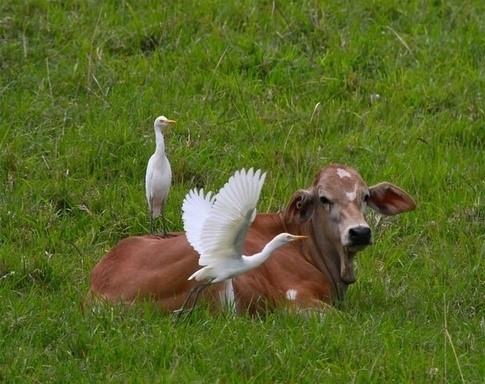
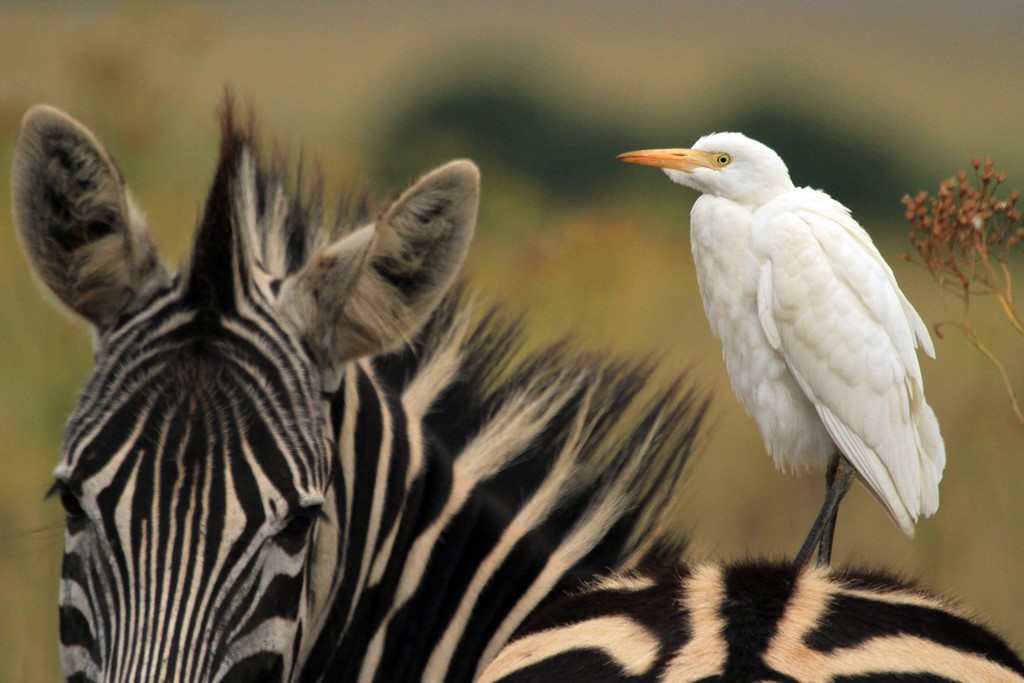
Adventurous Cattle Egret outside Wendy’s. When I pulled up to go into Wendy’s yesterday, this adventurous Cattle Egret decided to check my window. Later, as we were leaving, I noticed him riding on a man’s truck as he drove off. When the driver sped up, he finally hopped off.
If you notice the sign on the wall behind him/or her, it is Loitering.
Egret on Car in front of Wendy’s – no trespassing
We have written about these Cattle Egrets before, but this was a very close encounter. They love to ride on cattle or whatever critter they can catch a ride on and try to find food. Here are a few of previous photos of Cattle Egrets.
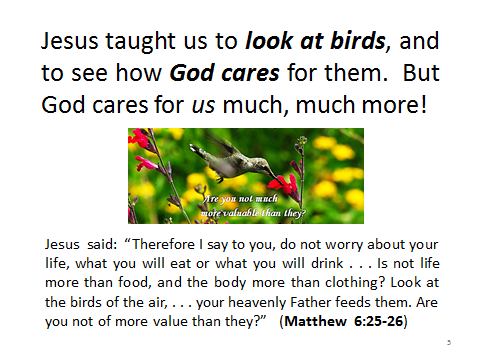
“Look at the birds of the air, for they neither sow nor reap nor gather into barns; yet your heavenly Father feeds them. Are you not of more value than they?” (Matthew 6:26 NKJV)
I haven’t been active here for several months. So, it’s time to start writing posts again. An explanation is due to those of you who follow this blog.
On October 17th, the love of my life went to heaven. “To be absent from the body is to be present with the Lord.” The Lord chose to take Dan on to be with him. Dan developed a brain bleed 10 days earlier and never regained consciousness.
Since Dan was our main photographer, I’ll either repost previous favorite photos or use other photographers. So, bear with me as I try to get back in the “Birding Saddle”, so to say.
This is Birdwatching really close
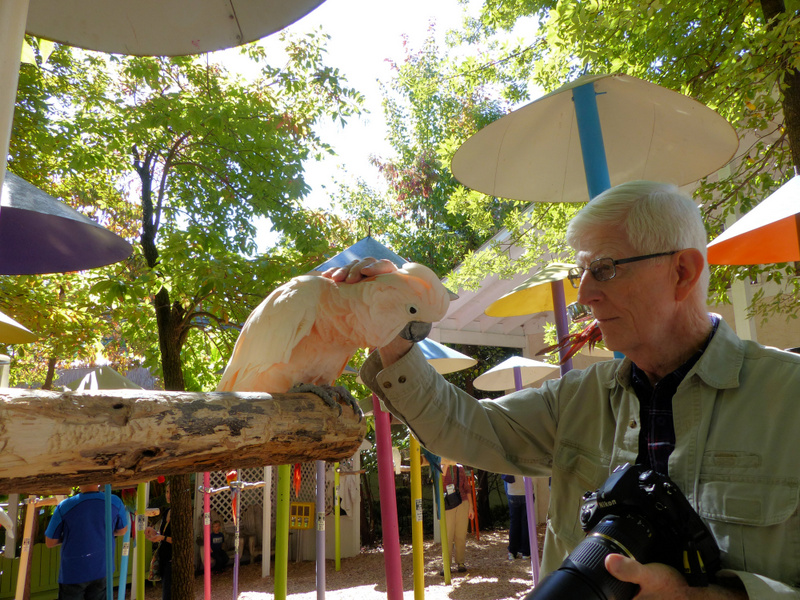
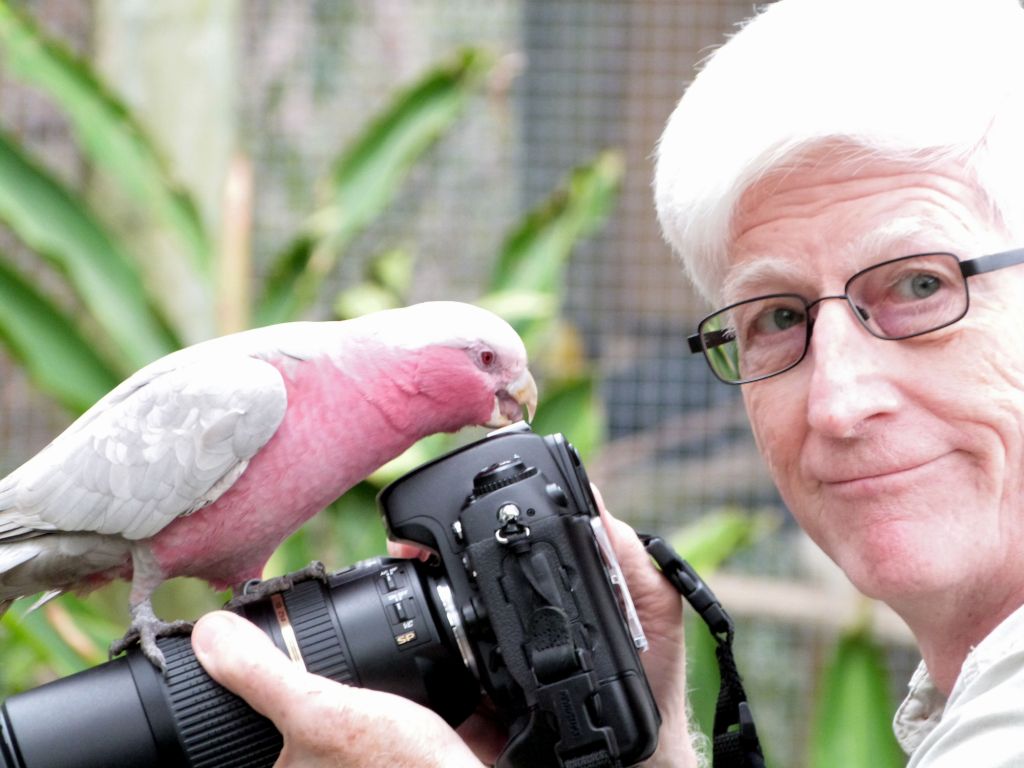
Galah (Eolophus roseicapilla) and Dan by Lee
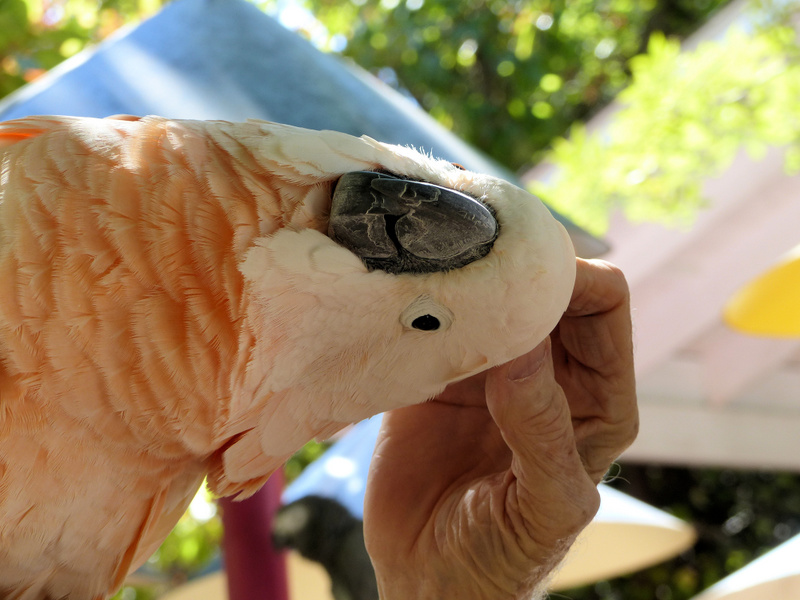
These last two pictures are my favorites as I caught the mischievous Galah checking out Dan’s camera and then Dan’s expression as he looked at me.
As for Dan, I’ll see him later. He, like me, accepted the Lord as his personal Savior when he was a youngster.
“For God so loved the world that He gave His only begotten Son, that whoever believes in Him should not perish but have everlasting life.”
(John 3:16 NKJV)
Have you accepted Him?
Seest thou a man diligent in his business? he shall stand before kings; he shall not stand before mean men. (Proverbs 22:29)
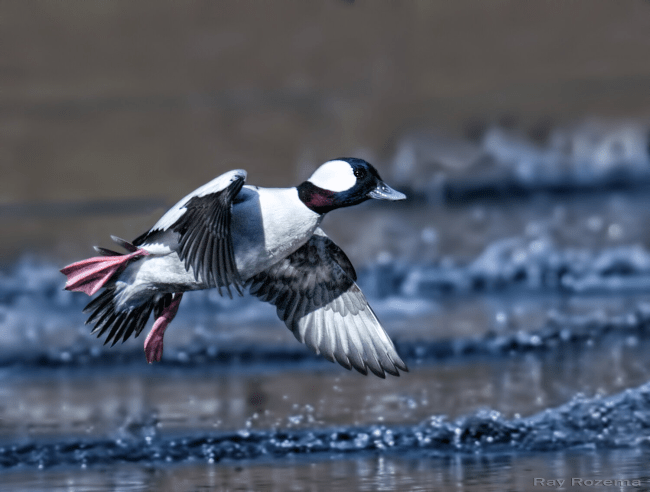
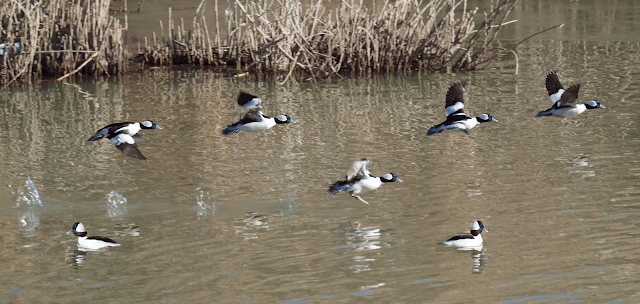
BUFFLEHEAD IN FLIGHT Sacramento Audubon Society / Ray Rozema photo credit
When I think of Bufflehead ducks (Bucephala albeola), I am reminded of the authoritative advice (“words of the wise”) of Proverbs 22:29, regarding reputations for dependable “diligence”. Why?
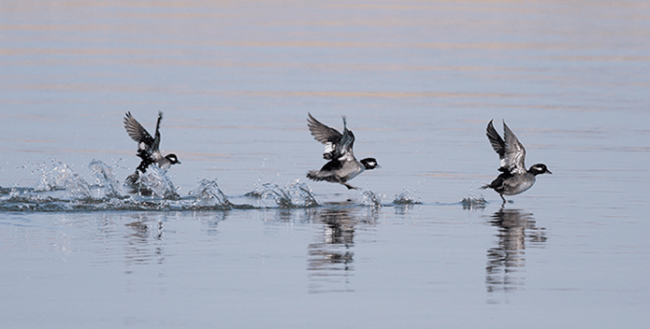
BUFFLEHEADS in migration Jonathan Maher Kresge / Chesapeake bay Foundation photo credit
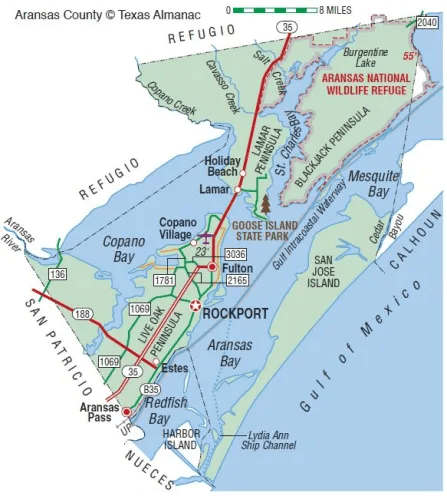
The first time that this author observed a Bufflehead, in the wild, was on March 11th of A.D.1996, while visiting the Texas Gulf Coast’s Aransas Bay (which is protected as Aransas Bay National Wildlife Refuge), as part of ornithological research (eventually) leading to a doctoral degree in creation science (applied to wildlife ecology). [See “Bufflehead Duck, One of Diverse Divers at Aransas Bay” (posted at https://leesbird.com/2018/01/26/bufflehead-duck-one-of-diverse-divers-at-aransas-bay/ .]
ARANSAS BAY MAP Aransas County in TEXAS ALMANAC image credit
What conspicuously beautiful ducks those Buffleheads were (and are)!
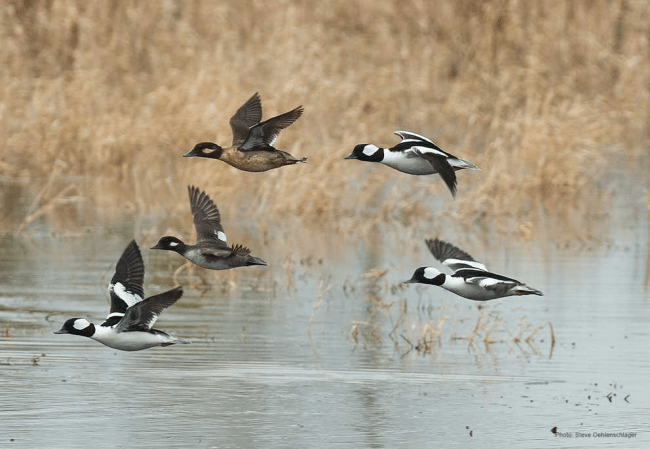
BUFFLEHEAD DUCK in flight Bill Bouton photo credit
Consider the reputation that the Bufflehead duck has, for dependability punctuality, as was recently observed by Alonso Abugattas, the Chesapeake Bay area’s “Capital Naturalist”:
The bufflehead is nothing if not punctual. Few other ducks are known to arrive in our neighborhood every winter within a few delays of the date they arrived the previous year. The smallest of North America’s diving ducks, the bufflehead … [can] nest in the tree cavities of woodpeckers, most commonly northern flickers, according to Canadian zoologist Gilles Gauthier. . . . .
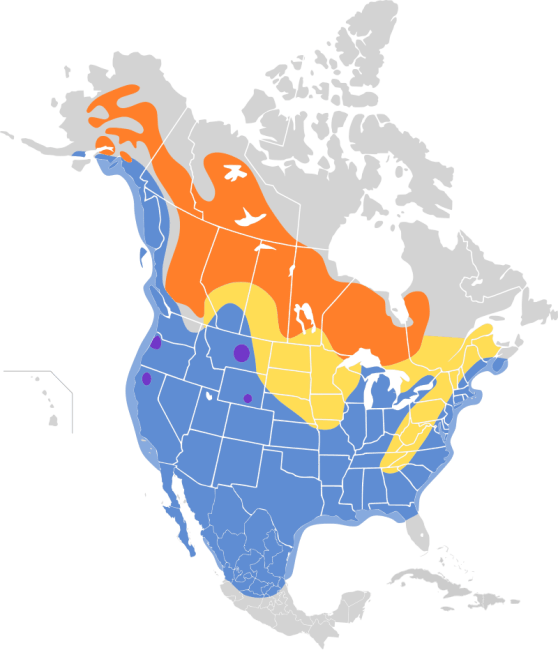
After forming their pair bonds over the winter, the birds head back to their breeding grounds in early April and early May, migrating at night. They’re among the last ducks to leave their winter territory. The greatest concentration of breeding grounds, according to abundance maps maintained by the Cornell Lab of Ornithology, are in northwestern Canada, in a wide swath crossing through Saskatchewan, Alberta and Northwest Territory… petering out in Alaska. . . .
Buffleheads start leaving [their breeding grounds] for the wintering grounds in October, settling mostly across [the U.S.A.’s Lower 48] but sometimes going as far [south] as Central America.
[Quoting CHESAPEAKE BAY JOURNAL, 34(8): 39 (November 2024).]
BUFFLEHEAD RANGE MAP (Cephas / BirdLife Internat’l / Wikipedia image credit)
So much for the Bufflehead’s predictable-because-dependable migration movements.
Yet is there a lesson for us humans, as we consider the Bufflehead’s phenological reliability? Yes, there is – especially if we look at the details of Proverbs 22:29.
BUFFLEHEADS in wetland habitat Robert Mortensen / BirdingIsFun.com composite photo credit
Of course, it is good to earn a reputation for dependable punctuality. In fact, that is similar to having a reputation for quickly fulfilling one’s responsibility — as opposed to having a reputation for dilatory procrastination. Some folks can be expected to do sloppy work – who needs that kind of “help”?
Yet other folks are famous for delivering extremely careful (almost perfectionist) work, but only in an all-too-often impractically slow response time, so slow that the perfectionist work is of diminished practical value (because the need for timely results was compromised and disappointed).
How is all that relevant to understanding Proverbs 22:29? That proverb is translated into English as follows:
Seest thou a man diligent in his business? he shall stand before kings; he shall not stand before mean men. (Proverbs 22:29)
In that sentence the phrase “man diligent” is a translation of ’îš mâhîr, with ’îš being a generic word for “man”—but what does the Hebrew word mâhîr (translated as “diligent” in the KJV) mean?
Consider that the masculine singular adjective mâhîr is translated by several English words in our English Bible. For example, mâhîr is translated “ready” in Ezra 7:6 and also in Psalm 45:1 (which is Psalm 45:2 in Hebrew verse numbering]). Also, mâhîr is translated “hasting” in Isaiah 16:5. But there is more to consider, because Hebrew adjectives are routinely related in meaning to similarly spelled nouns, verbs, and/or adverbs.
Therefore, to better understand what the Hebrew adjective mâhîr means, in Proverbs 22:29, consider also the following (non-exhaustive) listing of illustrative (etymologically related) verbs and adverbs:
[See generally George V. Wigram’s ENGLISHMAN’S HEBREW CONCORDANCE OF THE OLD TESTAMENT (Hendrickson’s 2001 reprint of the 1874 London-published 3rd edition), page 669.]
The listing above is incomplete—but the pattern is already clear—the adjective mâhîr denotes the trait of being speedy, swift, quick!
RAPIDLY RUNNING A RACE! Scottish Gov’t / Parent Club photo credit
In other words, a person who consistently and dependably does his or her work fastly is appreciated—and (eventually) will “stand before kings” (i.e., not be limited to serving before low-ranking individuals).
So, just as the phenological punctuality of the returning-from-winter Bufflehead duck is dependably predictable (as is also the migratory return of Israel’s faithful stork—see www.icr.org/article/lesson-from-stork — which is noted in Jeremiah 8:7), a truly diligent human will be prompt (i.e., give quick turnaround) in his or her work responsibilities.
Careful work is appreciated, yes, but only if it is contextually timely. Promptness is really appreciated!
As we read through our Bible, many times we end up birdwatching without even trying. In a passage your reading, you find a type of bird mentioned. Do you make a mental note or write down the bird’s name? Many of us “birdwatchers” have our eyes and ears perk up, and we become curious. Well, at least I do.
Looking back through previous post, I spotted this one: Birdwatching Without Birdwatching. We were just out driving and spotted four Eagles. That is what happens while reading scripture. Stay curious. Whether it’s birds, animals, truths about any topic, especially scriptural truths. Many times, using a concordance will help you find other references to that same topic. Compare scripture with scripture.
When this blog began in 2008 its purpose was to introduce the Birds of the Bible. Now, it’s time to look at these verses and birds again. New birdwatchers and Christians may wonder about God’s avian wonders mentioned in scripture. Or we may like to review. I personally have seen and learned more about birds since back then and am still amazed by their behavior and beauty.
So, come along as we look at the Birdwatching Thru the Bible now. This new series will have us looking at the Birds of the Bible again, but from a little different perspective.
***
“In the beginning God created the heavens and the earth. (Genesis 1:1)
On day one of creation, God created light and darkness which were called Day and Night (Gen 1:5)
On day two the heavens were created and the firmament in the midst of the waters divided. (Gen 1:7)
On day three the waters were gathered together and the dry land appeared. Then the grass, herbs that has seeds, fruit trees were created. (Gen 1:8-13)
On day four the stars, moon, etc. were added for signs, seasons, day and night with the sun and moon. (Gen 1:14-19)
Then on day five:
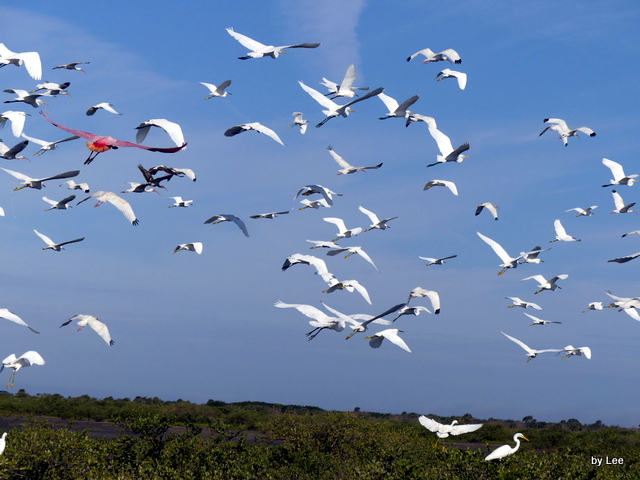
(20) Then God said, “Let the waters abound with an abundance of living creatures, and let birds fly above the earth across the face of the firmament of the heavens.” (21) So God created great sea creatures and every living thing that moves, with which the waters abounded, according to their kind, and every winged bird according to its kind. And God saw that it was good. (22) And God blessed them, saying, “Be fruitful and multiply, and fill the waters in the seas, and let birds multiply on the earth.” (23) So the evening and the morning were the fifth day.” (Genesis 1:20-23 NKJV)
WOW! What a Creator!! Did you notice how God had everything planned out? Each day provided more to make the earth livable for the creatures, and then us on the sixth day.
A few Birds of the Bible post about the beginning:
Yea, the sparrow hath found an house, and the swallow a nest for herself, where she may lay her young, even thine altars, O LORD of hosts, my King, and my God. (Psalms 84:3 KJV)
Then God said, “Let the waters abound with an abundance of living creatures, and let birds fly above the earth across the face of the firmament of the heavens.” (Genesis 1:20 NKJV)
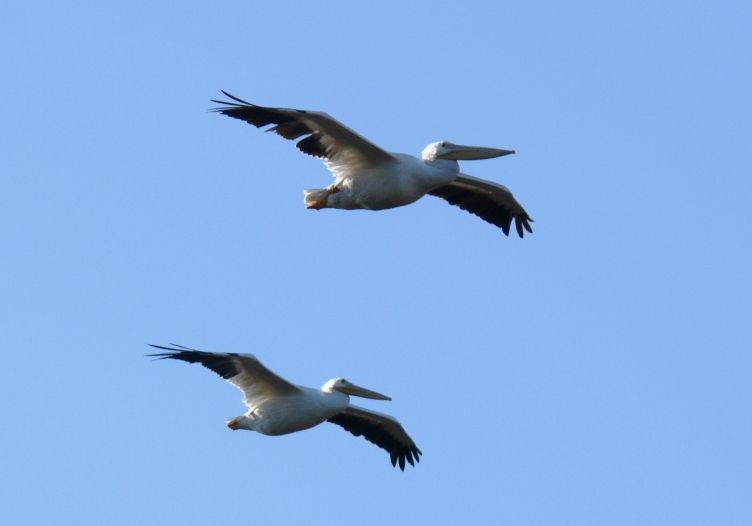
American White Pelican (Pelecanus erythrorhynchos) by Lee at Circle B Bar Reserve
When I Consider – Wednesdays will be reposts/updates to a series of articles that were posted back in the early days of this blog.
A Closer Look at the Evidence by Richard & Tina Kleiss is a devotional book that has bite size information about incredible evidence about creation.
Here is a part of the review of the book written by the Richard & Tina Kleis.
We have never seen such a unique and fascinating devotional book. It is one of a very few that we have used that tempts us to read on ahead! A Closer Look at the Evidence presents straightforward evidence, primarily scientific, for the existence of our Creator.
This book is organized into twenty-six different subject areas and draws from over fifty expert sources. Each of the 400+ pages highlights knowledge from a Biblical perspective. Each day’s devotion is a full page of concise, well-researched, factual information with reference material noted if you desire more specifics.
The authors, Rich and Tina Kleiss, former public school science teachers, discovered that scientific evidence overwhelmingly supports creation. But evolution continues to be presented as fact in the media and textbooks, even as the evidence for creation is being systematically excluded.
By daily using and discussing A Closer Look at the Evidence, your family should not only learn the credible reasons for your belief in the Creator but also be equipped to share this truth with others. Each page ends with a related Bible verse…..
Dan and I used it daily after our regular devotions. I have been wanting to share these articles for some time and have decided to do so in a series called, “When I Consider!” A quote from the book’s Dedication has encouraged me decide to do this.
God’s desire is that the knowledge of what He has done through both the cross and creation is for everyone. We must not keep this knowledge to ourselves. The evidence that He is our Creator is so overwhelming and encouraging that it is desperately needs to be shared in the world today. A Closer Look at the Evidence is designed to be an affordable resource to both reinforce our individual faith and facilitate sharing the reasons for this faith. Consider praying about how God could use you to utilize the truths found in these pages.“
Here is the first in the “When I Consider!” Series:
This was the first in the series called, “When I Consider! Please see the above article, “A Closer Look at the Evidence – Kleiss“, by Richard and Tina Kleiss, for an explanation of this new series. Not only will I use information from the Kleiss’ book, but other articles also. Since our main blog is about Bird’s, this seems like a good starting place.
“Evidence From Biology”
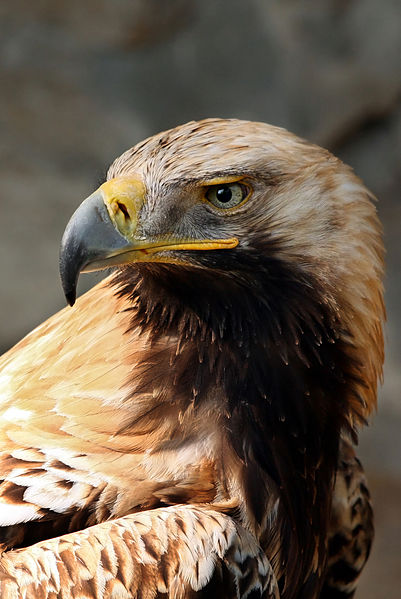
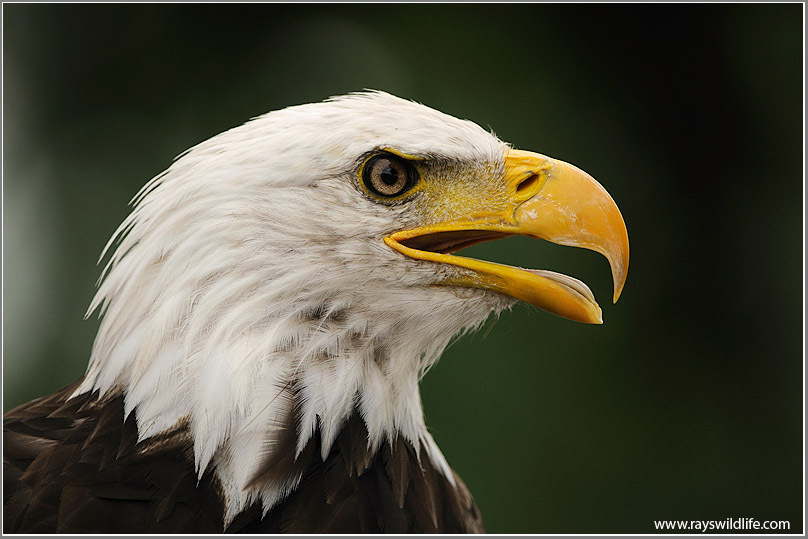
The eagle’s diving speed can exceed 100 miles per hour. At this speed, the eagle’s eyesight must be perfect in order to know exactly when to pull out of a dive. Its eyes are designed to spot a rabbit or fish up to one mile away. The eagle also has remarkably designed wings, each covered by over 12,000 feathers. Aircraft designers are still trying to copy this engineering marvel.
Besides the ability to climb to 10,000 feet withing minutes, the parent eagle also assists its young in flight. As it flies alongside the eaglet, whirlpools of air formed by its primary feathers provide the eaglet with additional lift.
In speaking of His protective care over the nation of Israel, God states, ‘..I bare you on eagle’s wings…’ (Exodus 19:4 KJV). The Hebrew word for ‘bare’ is nacah, and its primary rood means ‘to lift.’ This is exactly what the parent eagle does to help its young in flight.
The precise selection and meaning of words used in the Bible is a testimony to the accuracy and precision of the remarkable book.
Character Sketches, Vol.III, p171-174″
The above quote is from January 28, “A Closer Look at the Evidence,” by Richard and Tina Kleiss
This series will be based on:
Psalms 8:3-9 NKJV
“When I consider Your heavens, the work of Your fingers, The moon and the stars, which You have ordained, What is man that You are mindful of him, And the son of man that You visit him? For You have made him a little lower than the angels, And You have crowned him with glory and honor. You have made him to have dominion over the works of Your hands; You have put all things under his feet, All sheep and oxen– Even the beasts of the field, The birds of the air, And the fish of the sea That pass through the paths of the seas. O LORD, our Lord, How excellent is Your name in all the earth!
This is a repost of Heaven’s New Jerusalem and Birds – Sapphire. This series originally appeared in 2019. (With a little dusting and updating they will all be reposted in the coming days. Stay tuned.)
“And the foundations of the wall of the city were garnished with all manner of precious stones. The first foundation was jasper; the second, sapphire; the third, a chalcedony; the fourth, an emerald;” (Revelation 21:19 KJV)
For now, the first stone – “Jasper,” is being skipped. I am still researching what is the color or colors of the Jasper stone. Some have it all over the color spectrum. Also, there is no bird with the name “Jasper” in it. (Heaven’s New Jerusalem and Birds – Jasper II)
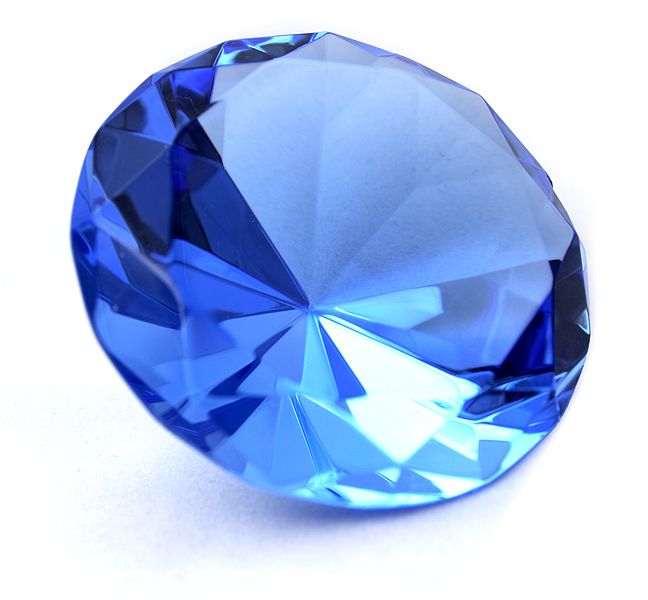
The Sapphire is beautiful and is typically blue but varies. Sapphire is also the stone used to represent those born in September. Yeah, my birth month. “Sapphire is the birthstone for September and the gem of the 45th anniversary. A sapphire jubilee occurs after 65 years.” [Wikipedia]
A rare variety of natural sapphire, known as color-change sapphire, exhibits different colors in different light. Color change sapphires are blue in outdoor light and purple under incandescent indoor light, or green to gray-green in daylight and pink to reddish-violet in incandescent light. Color change sapphires come from a variety of locations, including Thailand and Tanzania. The color-change effect is caused by the interaction of the sapphire, which absorbs specific wavelengths of light, and the light-source, whose spectral output varies depending upon the illuminant. Transition-metal impurities in the sapphire, such as chromium and vanadium, are responsible for the color change. [Wikipedia]
The sapphire is mentioned in nine verses in the King James version of the Bible.
“And they saw the God of Israel: and there was under his feet as it were a paved work of a sapphire stone, and as it were the body of heaven in his clearness.” (Exodus 24:10 KJV)
“And the second row shall be an emerald, a sapphire, and a diamond.” [The breastplate of judgment] (Exodus 28:18 and 39:11 KJV)
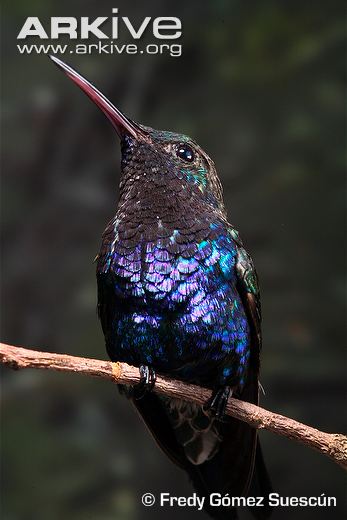
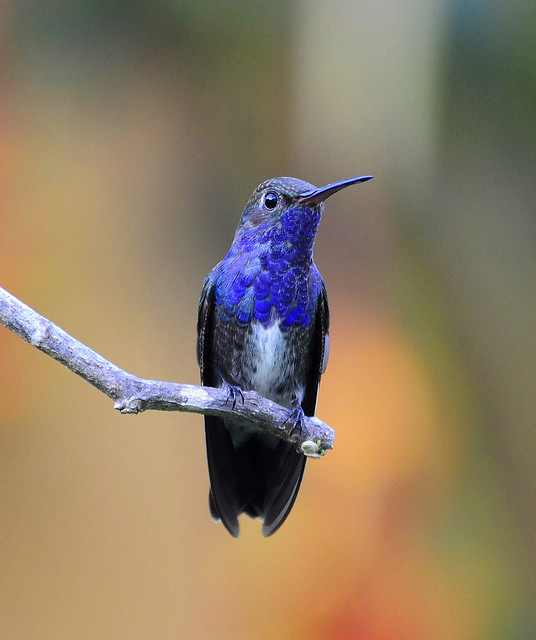
White-chinned Sapphire (Hylocharis cyanus) by Dario Sanches
“But where shall wisdom be found? and where is the place of understanding? Man knoweth not the price thereof; neither is it found in the land of the living. The depth saith, It is not in me: and the sea saith, It is not with me. It cannot be gotten for gold, neither shall silver be weighed for the price thereof. It cannot be valued with the gold of Ophir, with the precious onyx, or the sapphire.” (Job 28:12-16 KJV)
Unchanged:
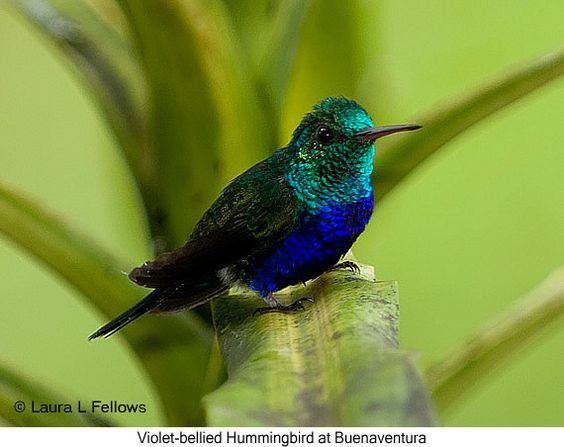
Sapphire-spangled Emerald (Amazilia lactea) by Dario Sanches
“And above the firmament that was over their heads was the likeness of a throne, as the appearance of a sapphire stone: and upon the likeness of the throne was the likeness as the appearance of a man above upon it.” (Ezekiel 1:26 KJV)
“Then I looked, and, behold, in the firmament that was above the head of the cherubims there appeared over them as it were a sapphire stone, as the appearance of the likeness of a throne.” (Ezekiel 10:1 KJV)
“Thou hast been in Eden the garden of God; every precious stone was thy covering, the sardius, topaz, and the diamond, the beryl, the onyx, and the jasper, the sapphire, the emerald, and the carbuncle, and gold: the workmanship of thy tabrets and of thy pipes was prepared in thee in the day that thou wast created.” (Ezekiel 28:13 KJV)
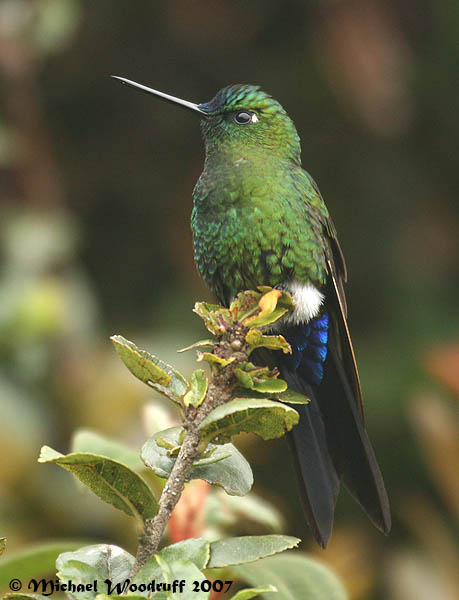
Sapphire-vented Puffleg (Eriocnemis luciani) by Michael Woodruff
I trust you enjoyed seeing some of the birds with Sapphire in their name as the various verses about sapphires were given.
Previous Blogs that used Verses with Sapphires in them:
This is a repost of Introduction to the Heaven’s New Jerusalem and Birds. This series originally appeared in 2019. (With a little dusting and updating they will all be reposted in the coming days. Stay tuned.)
I am currently attending a ladies Bible study class on Heaven. It is very interesting, and of course, when the mention of the various precious stones, with their beautiful colors came up, birds fluttered to mind. I have been accused of having a “bird brain.” [Always thinking about things in relation to birds.]
A huge question came to mind. Wonder if I could find birds whose names or colors closely reflected the names of those stones? Sounds like a simple premise. Right? Not so fast, as I am finding out.
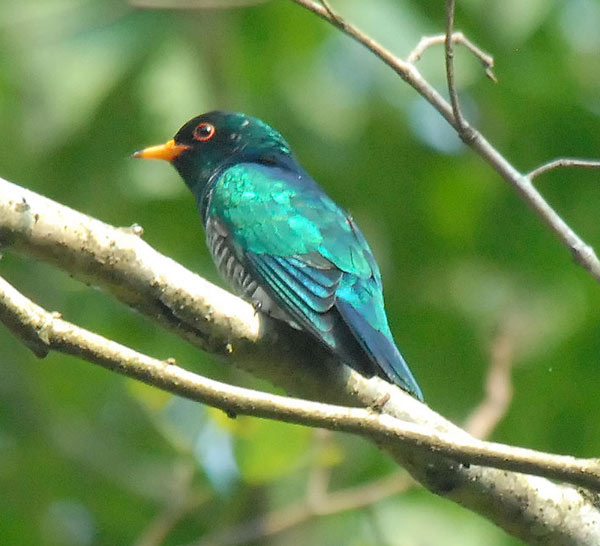
Asian Emerald Cuckoo (Chrysococcyx maculatus) by Nikhil Devasar
First some of the verses that we were reading from Revelation Chapter 21:
“10 And he carried me away in the spirit to a great and high mountain, and shewed me that great city, the holy Jerusalem, descending out of heaven from God, 18 And the building of the wall of it was of jasper: and the city was pure gold, like unto clear glass. 19 And the foundations of the wall of the city were garnished with all manner of precious stones. The first foundation was jasper; the second, sapphire; the third, a chalcedony; the fourth, an emerald; 20 The fifth, sardonyx; the sixth, sardius; the seventh, chrysolyte; the eighth, beryl; the ninth, a topaz; the tenth, a chrysoprasus; the eleventh, a jacinth; the twelfth, an amethyst.
21 And the twelve gates were twelve pearls: every several gate was of one pearl: and the street of the city was pure gold, as it were transparent glass. (KJV) [Yes, pearls are not stones]
Things go well with Gold, Jasper, Sapphire, Emerald, Topaz, Jacinth?, and Amethyst. What about chalcedony, sardonyx, sardius, chrysolyte, beryl [maybe], and chrysoprasus?
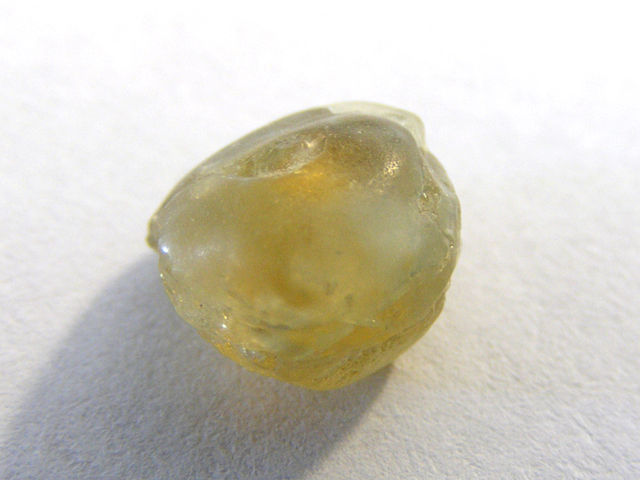
King James Study Bible 21:9–21. These verses describe the beauty and glory of the holy Jerusalem. It is called Christ’s bride (cf. v. 2), a reference perhaps to the church as the city’s principal inhabitant. It is an expression of the glory of God. The wall shows its security and protection. Its gates show accessibility. Saved Israel is also present. It has dimensions of approximately 1,500 miles cubed. The gold and precious stones may be earthly materials glorified (cf. 1 Cor. 15:50–54). They depict the glory, beauty, and eternal quality of the city. Jasper is green, sapphire is blue, chalcedonyis green, emerald is green, sardonyx is red and white, sardius is bloodred, chrysolyte is yellow or gold, beryl is green, topaz is greenish gold or yellow, chrysoprasus is green, jacinth is bluish purple, and amethyst is purple quartz. The effect is a magnificent city of brilliant gold adorned with gems of every color. There appears to be only one street (cf. 22:2), also made of pure, radiant gold.
Stones, Precious
“Precious stones are frequently alluded to in Scriptures; they were known and very highly valued in the earliest times. The Tyrians traded in precious stones supplied by Syria. Eze_27:16. The merchants of Sheba and Raamah in south Arabia, and , doubtless, India and Ceylon, supplied the markets of Tyre with various precious stones. The art of engraving on precious stones was known from the very earliest times. Gen_38:18.
The twelve stones of the breastplate were engraved, each one, with the name of one of the tribes. Exo_28:17-21. It is an undecided question whether the diamond was known to the early nations of antiquity. The Authorized Version gives it as the rendering of the Hebrew word, yahalom, but it is probable that the jasper is intended.
Precious stones are used in Scripture, in a figurative sense, to signify value, beauty durability, etc., in those objects with which they are compared. See Son_5:14; Isa_54:11-12; Lam_4:7; Rev_4:3; Rev_21:10; Rev_21:21. [Smith’s Bible Dictionary]
The Bible Knowledge Commentary says this of Revelation 21:19-21″
“The decorations of the foundations (with the apostles’ names inscribed on them) include 12 stones involving different colors. The color of the jasper is not indicated. The sapphire was probably blue; the chalcedony comes from Chalcedon, Turkey and is basically blue with stripes of other colors. The emerald is a bright green; the sardonyx is red and white; and the carnelian, called a “sardius” in the NASB, is usually ruby-red in color, though it sometimes has an amber or honey color. In Rev_4:3 the carnelian stone is coupled with the jasper to reflect the glory of God. The chrysolyte is a golden color, probably different from the modern chrysolyte stone which is pale green. The beryl is a sea green; the topaz is a transparent yellow-green; the chrysoprase is also green; the jacinth is violet in color; and the amethyst is purple. The stones together provide a brilliant array of beautiful colors. The gates resemble huge, single pearls, and the street of the city was of pure gold, like transparent glass (cf. Rev_21:18).
While the beauty of the city may have symbolic meaning, no clue is given as to the precise interpretation. Since it is reasonable to assume that the saints will dwell in the city, it is best to take the city as a literal future dwelling place of the saints and angels.”
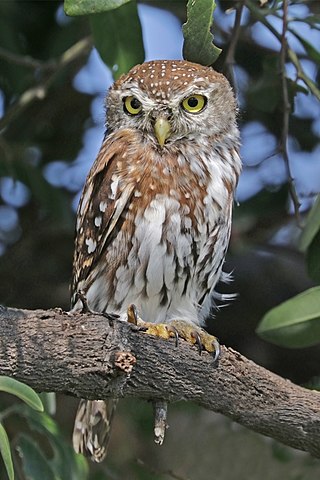
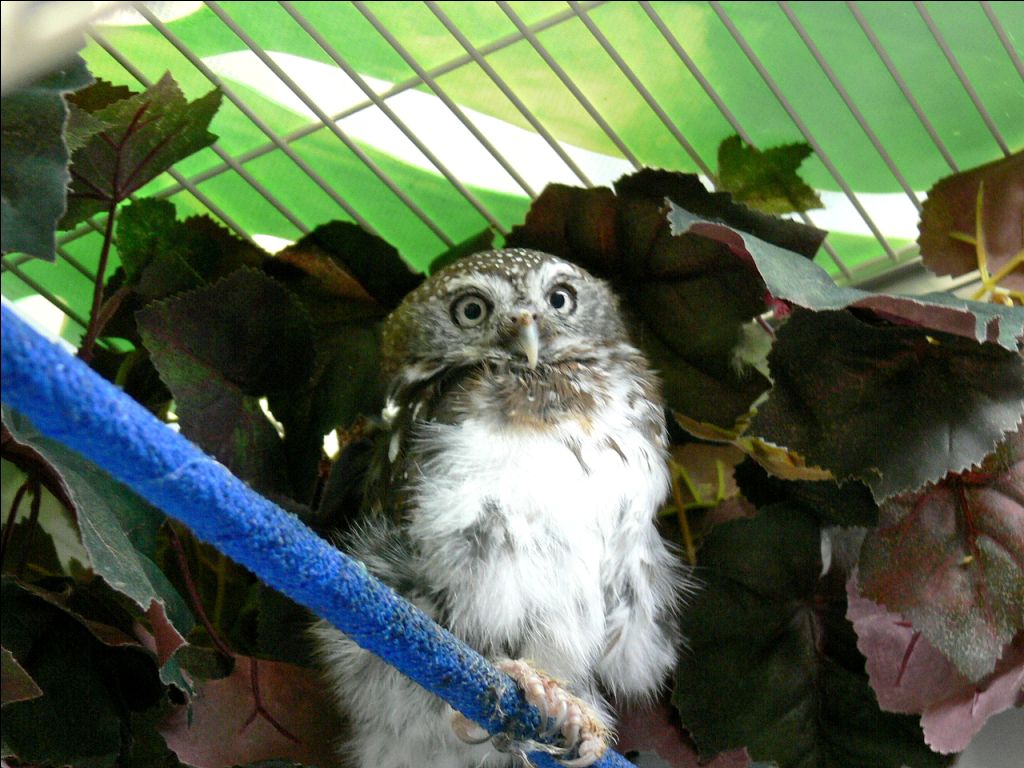
Pearl-spotted Owlet (Glaucidium perlatum) Breeding Room by Lee
As you can see, it is going to take a while to figure out some of these colors to find possible matching bird colors and names. A friend mentioned that the colors were maybe the same as the ones in the rainbow. Sounds reasonable. When the Lord created the birds, He knew about the rainbow that was going to be given as a promise after the flood. He also knew the colors of the foundations of the New Jerusalem. So, why would he not use those colors in birds when He created them?
“In the beginning was the Word, and the Word was with God, and the Word was God. The same was in the beginning with God. All things were made by him; and without him was not any thing made that was made.” (John 1:1-3 KJV)