Gambel’s Quail; Sweetwater Wetlands birding; Tucson, Arizona USA
Gambel’s Quail Chicks Drinking on a Hot Day – by James J. S. Johnson, or Dr. Jim, as I call him. He has just returned from an excursion through the Grand Canyon, and after he gets caught up, I’m sure he will tell us about that adventure.
In the meantime, he has asked that I show you this video:
“They give drink to every beast of the field: the wild asses quench their thirst.” (Psalm 104:11)
” O LORD, our Lord, How excellent is Your name in all the earth, Who have set Your glory above the heavens! Out of the mouth of babes and nursing infants You have ordained strength, Because of Your enemies, That You may silence the enemy and the avenger. When I consider Your heavens, the work of Your fingers, The moon and the stars, which You have ordained, What is man that You are mindful of him, And the son of man that You visit him? (5) For You have made him a little lower than the angels, And You have crowned him with glory and honor. (6) You have made him to have dominion over the works of Your hands; You have put all things under his feet, All sheep and oxen—Even the beasts of the field, The birds of the air, And the fish of the sea That pass through the paths of the seas. O LORD, our Lord, How excellent is Your name in all the earth!
When I was asked to do some articles about birds, way back in 2008, I never imagined that today, Lee’s Birdwatching Adventures (now with WordPress) would have:
2,513,166 visits as of today
3,857 articles posted
The Lord has truly blessed these efforts. But now? After prayer and much thought, A decision has been made!!
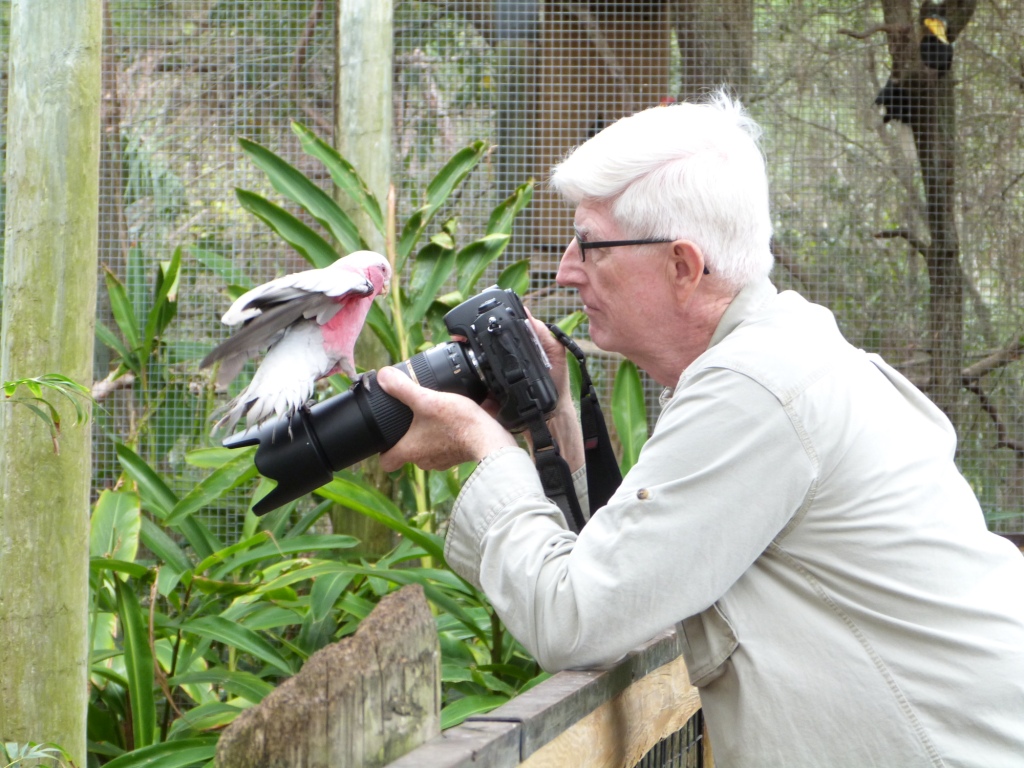
Galah (Eolophus roseicapilla) Hopping on Dan’s camera
LET’S CONTINE ON!!!!
I’ve paid the fees to continue. The Lord is about to allow me to turn 81 in a little over a week. Thank You Lord. We already have several great writers and photographer that can still add new articles here. The wealth of articles makes great resources for those seeking information about birds, especially home school students and others.
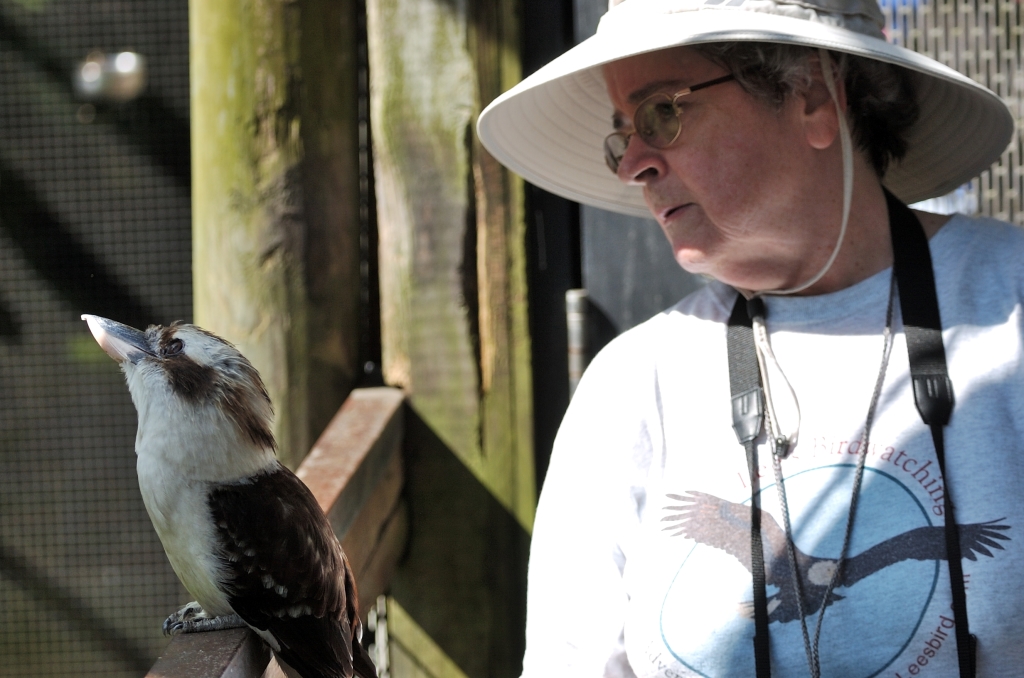
Golden Eagle and Dr Jim – Circle B by Lee
Dr. James J.S. Johnson from Institute for Creation Research,
William Wise a great photographer and writer, and
Golden Eagle, a.k.a. Dr. Baron Brown, are still birding.
ME?? I am planning to review and repost many of the great series of previous posts. I’ll check for broken link and missing photos.
In fact, tomorrow, the Heaven’s New Jerusalem and Birds – Foundation Stones series will begin. It’s one of my favorites.
Thank you for all the visits over the years and trust you’ll continue checking out these “oldies but goodies.” At my age, I forget things. :)
Praise the Lord for all these blessings that He has allowed us the share.
Merlin, the Squealing-Laughter Falcon of Saskatchewan
Dr. James J. S. Johnson
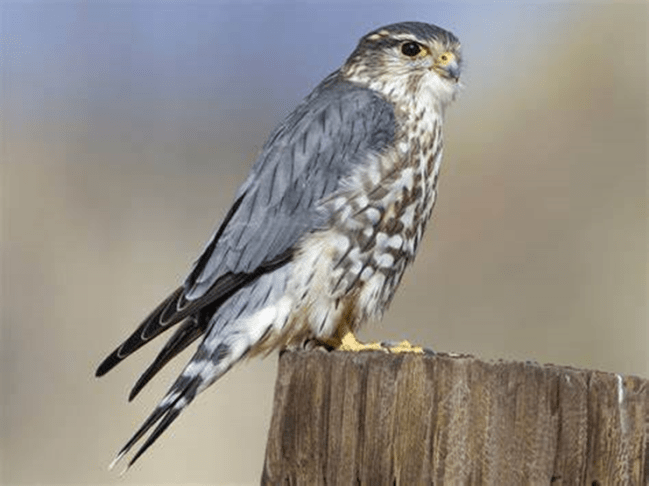
MERLIN perching (Animalia-life.club photo credit)
These things be of (the) fowls which ye shall not eat, and shall be eschewed of you (and shall be shunned by you); an eagle, and a gripe [i.e., gryphon], [and] an aliet [or “merlyon”, as in some early Wycliffite Bible copies of the late AD1380s]… (Leviticus 11:13)
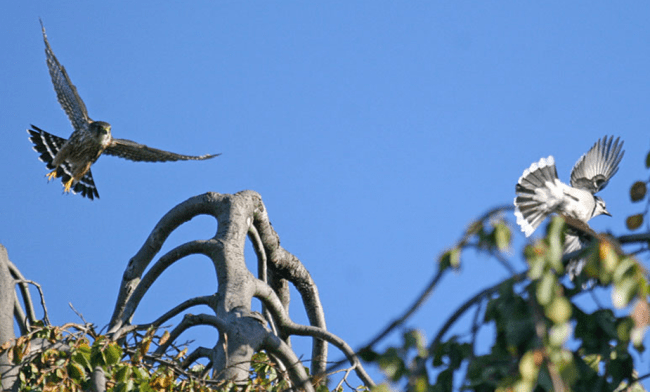
Merlin chasing Blue Jay (Wikipedia/John Harrison photo credit)
Saskatchewan (an interior province of Canada) is mostly a grassland, prairies (dominated by agriculture) with occasional hills and trees, here and there punctuated by lakes, ponds, and rivers – a wonderful habitat for birds — such as falcons.
Earlier this month (August 2-7th AD2024), by God’s grace, my wife and I attended a Christian family camp in Saskatchewan (near Fort Qu’Appelle), and the most memorable bird that I observed (on the 6th of August, AD2024), there, was a Merlin (Falco columbarius), a resident falcon also known as the Pigeon Hawk, who was circuitously flying near the lakeshore; it eventually landed upon a shoreline tree’s branch, conveniently perching there for me to see it, almost as if it was politely and patiently posing for me (as I compared its shape and plumage to my Saskatchewan bird chart).
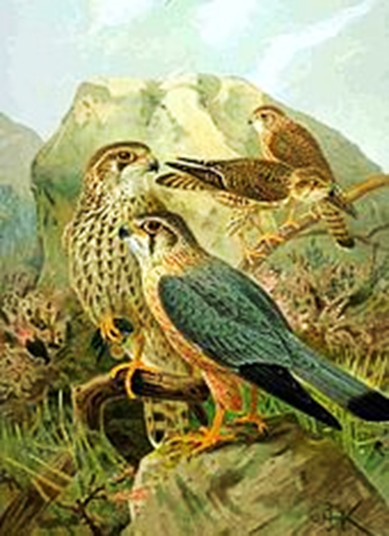
MERLINS portrayed in the wild (public domain image)
The merlin’s squeaking laughter-like call, which I heard on multiple days at that family camp property in Saskatchewan, reminded me of seagull laughter, although the Merlin’s calls seemed more repetitive – a staccato laughter — almost like rhythmic squealing.
The fancy scientific name for the Merlin is Falco columbarius, meaning “dove falcon” – perhaps because the Merlin is a falcon shaped (and colored) somewhat like an over-sized mourning dove or pigeon. The males have wingspans almost 2 feet wide; the females are slightly larger.
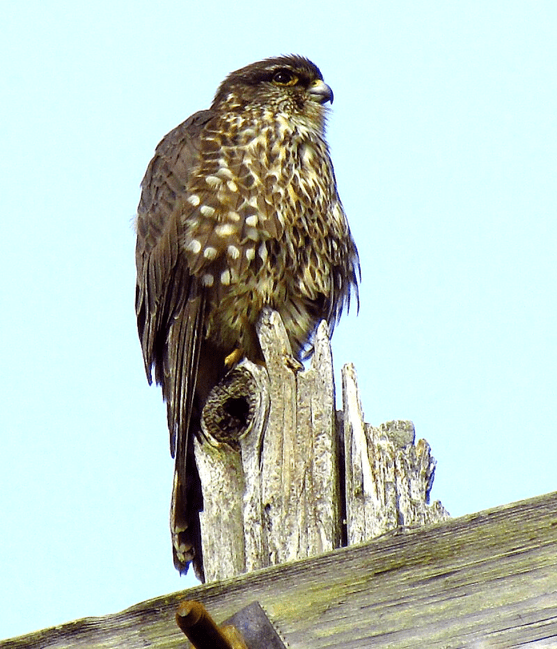
MERLIN juvenile (Wikipedia image credit)
But, from the perspective of prey seized by this falcon’s sickle-shaped talons, the Merlin is no laughing matter.
Merlins — like other falcons (e.g., peregrines), hawks, and kites — are feathered predators, zooming down upon their next meal with sudden bursts of aerial speed. Like “sparrow-hawks” (i.e., kestrels, which are also a type of falcon), merlins ambush and seize smaller birds, for food, some as little as sparrows and others as large as grouse. In the same cluster of trees, by the lakeside where the Merlin was perching, I repeatedly saw an American Robin, as well as several gulls (perhaps they were Ring-billed Gulls?). Hopefully that robin escaped the merlin’s hungry hunting.
Merlins are flexible in adapting to various ranges, with different biome habitats.
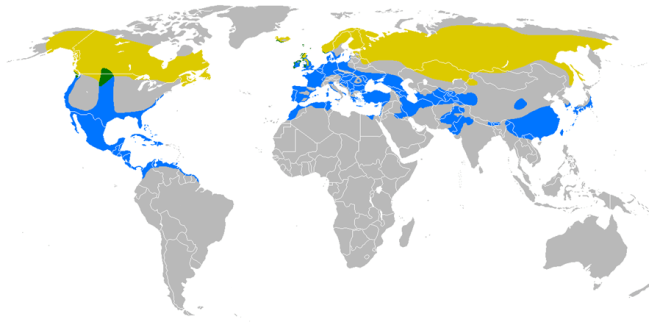
Merlins are often found in northern forests and grasslands, including birch scrubland country (e.g., in Saskatchewan’s birch-studded prairies) and willow-prominent wet woods, from sea level to timberline. Many of their summer breeding ranges are in North America’s boreal forests and prairies, as well as in Eurasia’s taiga forests and steppes. Most merlins migrate, seasonally, with warm winter ranges in mild grasslands, woodlands, and coastlands.
SUMMER & WINTER RANGES of Merlin migrants.
Laughter makes life more livable. And seeing a squealing-laughter-calling Merlin, as a “lifer”, while attending a precious Christian family camp in rural Saskatchewan, was an unexpected blessing, to say the least. (So was visiting the fish hatchery that serves Fort Qu’Appelle – but I digress.)
The Lord has many beautiful places on earth, plus many beautiful birds therein – and Saskatchewan’s Merlin illustrates that beauty. No surprise, because the ultimate source of all beauty is God Himself (Psalm 27:4).
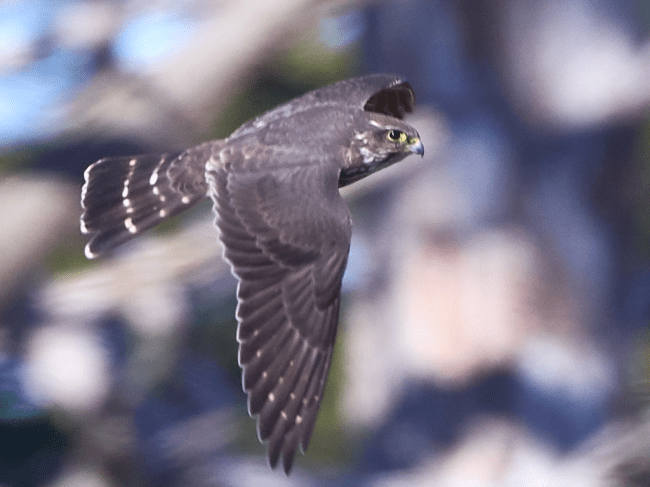
MERLIN in flight (U.S. National Park Service photo credit)
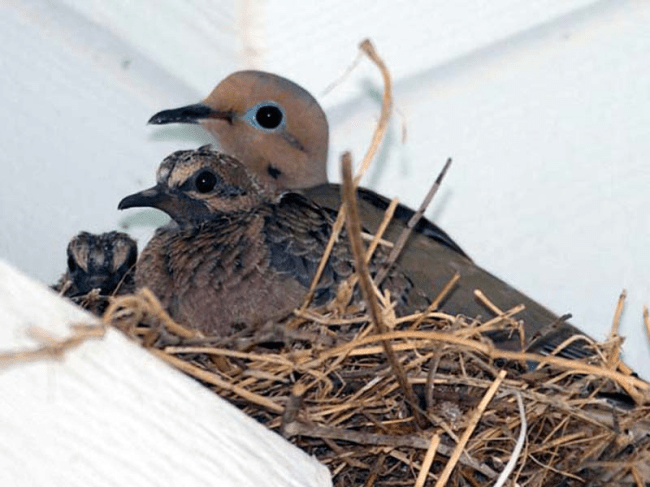
MOURNING DOVES in nest (Photo credit: DFWurbanWildlife.com)
And I said, Oh that I had wings like a dove! for then would I fly away, and be at rest.
(Psalm 55:6)
Doves are known for their fluttering flight (Psalm 55:6a), and their peaceful disposition (Matthew 10:16); yet they are also known for resting upon their nests (Psalm 55:6b & Jeremiah 48:28).
As recently noted (see my previous Leesbird.com blogpost, “Bird Nests are Important — the Bible Says So”, posted https://leesbird.com/2023/09/15/bird-nests-are-important-the-bible-says-so/ ), bird nests are very important–to nesting birds, and even to God Himself, because God chose to refer to bird nests several times in Scripture.
And, to human birdwatchers–such as Dr. Bill Boothe–nesting birds are worth watching, and nesting birds are worth photographing, too, so that other birdwatchers can appreciate these precious winged wonders that God chose to create.
For a recent example, see the nesting Mourning Doves at the residence of Dr. William (“Bill”) Boothe. Now that’s a precious Mourning Dove family! (No “gutter-man” jokes here.)
MOURNING DOVE family in nest on gutter (photograph by Dr. Bill Boothe, used by permission)
Dr. Boothe reports that his Mourning Dove family now includes 2 babies—-how wonderful! Hidden in plain view are so many of God’s “wonders without number” (Job 9:10).
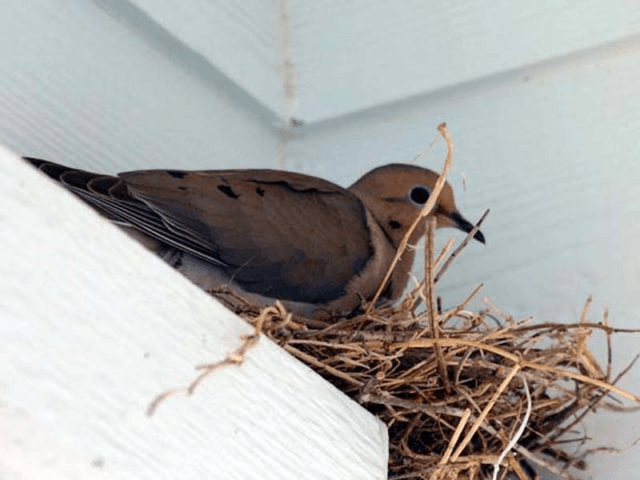
Mourning Doves have a habit of building their nests in sheltered areas, according to nest-building wisdom that God has programmed into them (see Jeremiah 48:28).
Of course, even when Mourning Doves are not seen, by humans, their mourning voices are often heard, which is how they got to be called “mourning” doves. Regarding how doves “mourn” (or “moan”), see Isaiah 38:14 & 59:11 (as well as Nahum 2:7 & Ezekiel 7:16). Providentially speaking, the doves’ mourning noises somewhat resemble the low hooting of owls, i.e., owls that prey on rodents—-rodents who are potential predators of doves—-so owl-like noises are an advantage to doves who benefit from scaring away hungry rodents. (See JJSJ, “The Ghost Army”, posted at http://www.icr.org/article/ghost-army .)
So, there you have it, hidden in plain view: Mourning Doves, in their own peaceful ways, just by being themselves, honor the Lord Jesus Christ, their Creator.
MOURNING DOVE on nest (photo credit: DFWurbanWildlife.com)
Cormorants are Great; Great Cormorants are Really Great!
Dr. James J. S. Johnson
“But the cormorant [shalak] and the bittern shall possess it [i.e., the land of Idumea, a/k/a Edom]; the owl also and the raven shall dwell in it; and He [i.e., the LORD, in judgment] shall stretch out upon it the line of confusion, and the stones of emptiness.“
Isaiah 34:11
GREAT CORMORANTS in flight (Minnesota) photo credit: Bryce Gaudian
In some contexts, CORMORANTS are not deemed as indicators of blessing — as in Isaiah 34;11, where it is prophetically mentioned as an indicator that the land of Edom is catastrophically destroyed. However, in many other contexts, these magnificent birds are recognized as wonderful creatures whom God has equipped to live by bodies of water, both freshwater and seawater.
GREAT CORMORANT aloft (Minnesota) photo credit: Bryce Gaudian
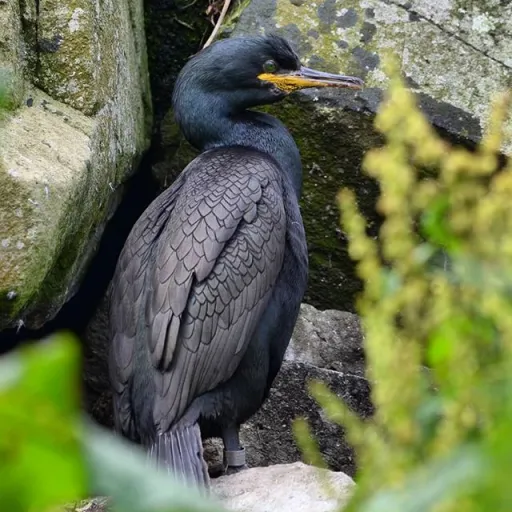
Cormorants love to live by bodies of water. Cormorants are found busy hunting — darting (befitting the Hebrew noun shalak, in Leviticus 11:17 & Deuteronomy 14:17, translated “cormorant”, which matches the darting-like targeting movements) for food over and near coastlines, including the coasts of islands, such as the Hebridean isle of Staffa, which was reported earlier (on this Christian birdwatching blog), in the report titled “Birdwatching at Staffa: Puffins, Shags, and more”, posted at https://leesbird.com/2019/07/22/birdwatching-at-staffa-puffins-shags-more/ (July 22nd A.D.2019), citing Isaiah 42:12. [Regarding “cormorants” in the Holy Bible, see George S. Cansdale, ALL THE ANIMALS OF THE BIBLE LANDS (Zondervan, 1976), at page 175.]
Cormorants constitute a large “family” of birds; the mix of “cousins” include Crowned Cormorant (Phalacrocorax coronatus), Brandt’s Cormorant (Phalacrocorax penicillatus), Galapagos Cormorant (Phalacrocorax harrisi), Bank Cormorant (Phalacrocorax neglectus), Neo-tropic Cormorant (Phalacrocorax brasilianus), Double-crested Cormorant (Phalacrocorax auritus), Indian Cormorant Phalacrocorax fuscicollis), Socotra Cormorant (Phalacrocorax nigrogularis), Cape Cormorant (Phalacrocorax capensis), Guanay Cormorant (Phalacrocorax bougainvillii, a/k/a Guanay Shag), Kerguelen Shag (Phalacrocorax verrucosus), Imperial Shag (Phalacrocorax atriceps), Antarctic Shag (Phalacrocorax bransfieldensis). South Georgia Shag (Phalacrocorax georgianus), Campbell Island Shag (Phalacrocorax campbelli), New Zealand King Shag (Phalacrocorax carunculatus), Bronze Shag (Phalacrocorax chalconous), Chatham Island Shag (Phalacrocorax onslowi), Auckland Island Shag (Phalacrocorax colensoi), Rock Shag (Phalacrocorax magellanicus), Bounty Island Shag (Phalacrocorax ranfurlyi), Red-faced Cormorant (Phalacrocorax urile, a/k/a Red-faced Shag), European Shag (Phalacrocorax aristotelis), Pelagic Cormorant (Phalacrocorax pelagicus, a/k/a Pelagic Shag), Red-legged Cormorant (Phalacrocorax gaimardi), Spotted Shag (Phalacrocorax punctatus), Pied Cormorant (Phalacrocorax varius), Great Cormorant (Phalacrocorax carbo), Japanese Cormorant (Phalacrocorax capillatus), Olivaceous Cormorant (Phalacrocoraxolivaceus, a/k/a Mexican Cormorant), and Pitt Island Shag (Phalacrocorax featherstoni).
That’s a lot of cormorant “cousins”, worldwide! [For details on each of these “cousins”, see pages 116-136 of Jim Enticott & David Tipling, SEABIRDS OF THE WORLD: THE COMPLETE REFERENCE (Stackpole Books, 1997).]
SHAG (a type of Cormorant), at Staffa, Hebrides (Scotland) photo credit: Public Insta
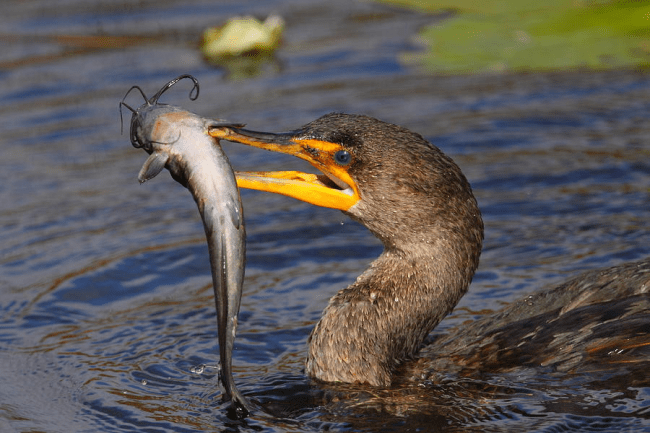
Cormorants are famous “fishermen” along ocean coastlines, yet cormorants also thrive in inland freshwater habitats, such as over and near ponds and lakes, such as the Double-crested Cormorants that frequent inland ponds in Denton County, Texas, where they catch “fish of the day”.
DOUBLE-CRESTED CORMORANT with fish photo credit: Bruce J. Robinson
Cormorants are generally described, by ornithologist Roger Tory Peterson, as follows:
Large, blackish, slender-billed water birds. Often confused with loons, but tail longer, bill hook-tipped. In flight, wing action is more rapid and axis of body and neck is tilted upward slightly (loon’s neck droops). Young birds are browner, with a pale or whitish breast. Flocks [of cormorants] fly in line or wedge formation very much like geese but they are silent. Cormorants often perch in uprightpositions on buoys or posts with neck in an S [posture]; sometimes strike a “spread eagle” pose. Swimming, they lie low like loons, but with necks more erect and snakelike, and bills tilted upward at an angle. Food: Fish (chiefly non-game). Nearly cosmopolitan [in range].
[Quoting Roger Tory Peterson, cited below]
[See Roger Tory Peterson, A FIELD GUIDE TO THE BIRDS OF TEXAS AND ADJACENT STATES (Houghton Mifflin, 1988), page 10.]
Specifically, the Double-crested Cormorant (Phalacrocorax auritis) is perhaps the most common winter migrant of the cormorants; also, the Double-crested Cormorant is often seen in the coastline areas of Texas’ Gulf of Mexico shores.
GREAT CORMORANTS descending (Minnesota) photo credit: Bryce Gaudian
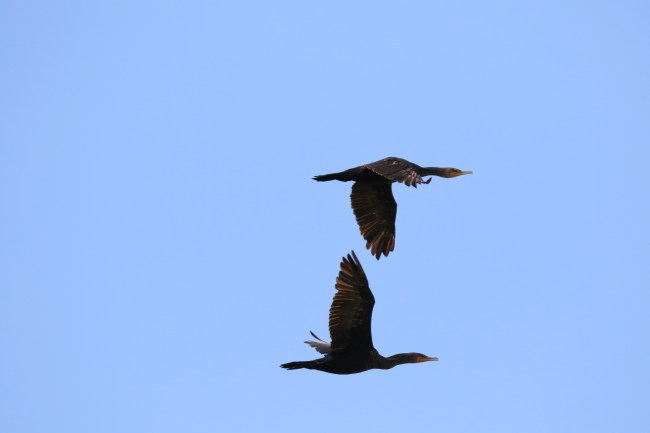
Have you ever watching a silhouetted cormorant — or two — or three — winging their way across the late afternoon sky? It is a wonder to behold!
GREAT CORMORANTS silhouetted against the sky photo credit: Bryce Gaudian
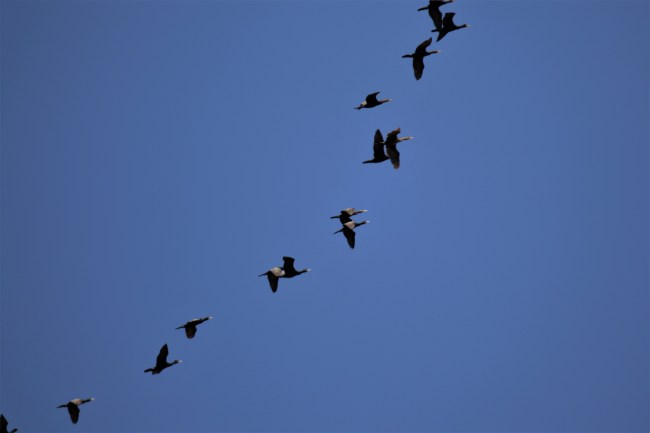
Now, try to imagine a dozen, or more, cormorants, flying in series. That’s a wondrous wonder to behold! That constitutes one of the “wonders without number” that Scripture refers to (in Job 9:10).
serial “line” of GREAT CORMORANTS in flight (Texas) photo credit: Bryce Gaudian
And now here is my closing limerick, about cormorants:
APPRECIATING HUMBLE CORMORANTS (AND SHAGS)
Cormorants are not known to brag,
If they’re so-called, or called “shag”;
They oft fly, in a line,
And on fish, they oft dine —
But cormorants aren’t known to brag.
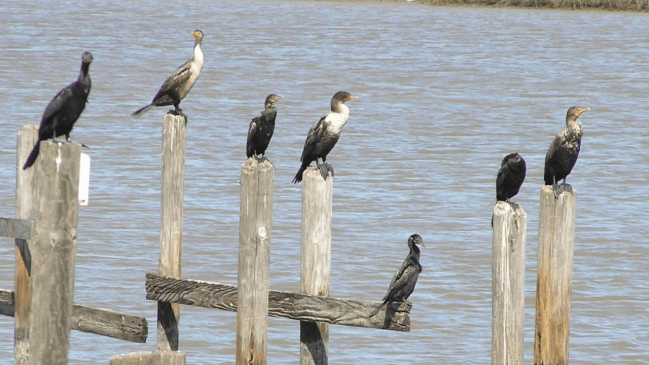
DOUBLE-CRESTED CORMORANTS perching on posts photo credit: Mark Eising Birding
(Dr. Jim Johnson formerly taught ornithology and avian conservation at Dallas Christian College, among other subjects, and he has served as a naturalist-historian guest lecturer aboard 9 international cruise ships, some of which sailed in seawaters frequented by cormorants and shags. Jim was introduced to Christian birdwatching as an 8-year-old, by his godly 2nd grade teacher, Mrs. Thelma Bumgardner.)
I would like to apologize for my lack of posting any articles since back in February of this year. (More explanation later.) What I am really thankful for is Dr. James J.S. Johnson, Dr. Jim, as Dan and I affectionately call him.
THANK YOU, DR. JIM!
Also a Hugh THANK YOU to all of you who have continued to stop by this blog. Many of you have read and commented of his articles and other previously published posts.
Black-bellied Whistling Ducks feeding in yard.
Back in February, a number of health problems began, and it seemed like about the time I improved, some other issue came up. It seems that it has just been one thing after another. Needless to say between Doctor visits, physical therapy, medical test, using cane or walker, etc. etc., birdwatching has come to a halt other than my view out the back door.
“God is faithful, by whom you were called into the fellowship of His Son, Jesus Christ our Lord.” (1 Cor. 1:9)
That top photo about describes the lack of birds lately. Like many of you around the country and parts of the world, we have had some very high heat indexes. Plus, the wintering birds have not arrived yet.
Other than Muscovy Ducks and the neighborhood Robins and Doves, there hasn’t been much going on.
Lord willing, I trust that there will be more post from me. Now that I’m improving some, I will try to at least write more about God’s amazingly Created Avian Wonders. Stay tuned!
Thanks again to all our visitors to this blog and “Dr. Jim” for keeping us blessed by his great articles.
What were the names of first bird species listed in the Bible? (Genesis 8:7, 8)
If you checked these verses, you know that they were the Raven and the Dove. The Raven was released from the Ark first. It flew back and forth until the waters were abated or dried up. It does not say that Noah brought it back into the Ark. My imagination is that it landed on the ark but stayed outside.
While looking through several of the books I showed you in the first post, some interesting facts come to light:
The Raven’s feeding habits:
They are resourceful
They like plants and seeds
They eat carrion
If you imagine the total destruction that the worldwide flood caused, there would still be some things floating on the surface of the water. As the waters receded, the Raven would eventually not need to return to Noah or the Ark.
From All About Birds:
“Common Ravens will eat almost anything they can get hold of. They eat carrion; small animals from the size of mice and baby tortoises up to adult Rock Pigeons and nestling Great Blue Herons; eggs; grasshoppers, beetles, scorpions, and other arthropods; fish; wolf and sled-dog dung; grains, buds, and berries; pet food; and many types of human food including unattended picnic items and garbage.”
There are many links to the articles, facts, and photos about the Raven from previous post. Also, by typing in the Search,,, box on the right side of the page, you will find many more posts about Ravens.
The Birds of the Bible are why Lee’s Birdwatching Adventures Plus was started. Now, 16 years later, do you or I remember what was posted?
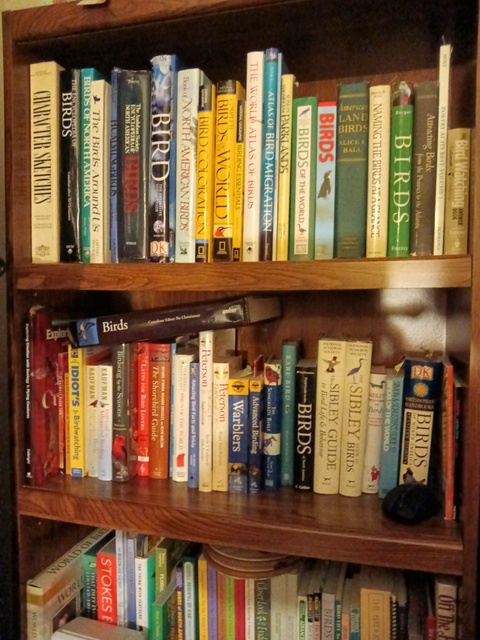
When we started this, we may have had one or two birdwatching books. Today, my bookshelves, at least three of them. have these books waiting on me to find new and interesting bird facts. I wonder what amazing information could be gleaned about God’s Creative Handiwork at work on the birds? Huh??
Bird Books in Library
We now have additional writers that would also be willing to contribute more articles. (I will invite them to join in this.)
When was the first bird created? (Genesis 1:20)
What day was that? (Genesis 1:23)
Who named the first birds? (Genesis 2:19)
What were the names of first bird species listed in the Bible? (Genesis 8:7, 8)
Did birds come from dinosaurs?
Do you know? Want to find out more? Leave me a comment. Stay tuned!
Drop a comment and help decide which to use. For today’s article, I stuck with “Looking Back.”
To begin this series, I found all the post that looked back over the Anniversaries of Lee’s Birdwatching Adventures Plus. If you scan through them, you will discover why it was started and how the Lord has been blessing it over the years. As different writers began adding articles, photographers gave permission to use their photos, and linked their websites, the blog has continued to grow.
As we head into the new year, 2023, many like to look back over the last year. They find many good memories and blessings, plus a few not so pleasant ones. Many of you liked and made remarks about the Christmas Bird Review series (that was just completed). It seems you do not mind looking back.
That thought started me thinking about a new series that we could begin. “Looking Back – “, “Reviving the Past – “, or some other name to give it. ANY IDEAS?
Hornbill at Brevard Zoo by Dan Aug-2014
Many of you have chosen to follow this blog through many years, and some have just begun following us.
How did this all begin? Purpose?
When did it begin?
What topics have we covered?
What Birds have we highlighted?
Who have been the writers and photographers over the years?
As many know, I have been dealing with medical issues which have slowed our birding adventures down considerably. I still watch birds, but on a more limited basis. Having just received a new computer, and trying to transfer photos over to it, I have been finding photos that could be used to update or enhance updates.
I especially am thinking about the original purpose, which was to show and thank the Lord for all the Birds of the Bible.
“I will give You thanks in the great assembly; I will praise You among many people.” (Psalm 35:18)
This is from the main page Menu. As of today (Dec 30, 2022), that number is:
2,371,257 visits
THANKS TO VISITORS
Moved to WordPress
00,000 – July 05, 2008
50,000 – Oct 10, 2009
100,000 – Apr 5, 2010
150,000 – Sep 6, 2010
200,000 – Dec 30, 2010
250,000 – Apr 9, 2011
300,000 – June 29, 2011
350,000 – Sep 19, 2011
400,000 – Nov 18, 2011
450,000 – Jan 21, 2012
500,000 – Mar 1, 2012
600,000 – May 24, 2012
700,000 – Sep 2, 2012
800,000 – Dec 16, 2012
900,000 – Ap 13, 2013
1,000,000 – Oct 20, 2013
2,200,000 – Jun 5, 2021
So, what are your thoughts? Please leave a comment, or at least a like. And even a suggestion for a series title.
Thanks for all your visits, likes, and remarks over the years.
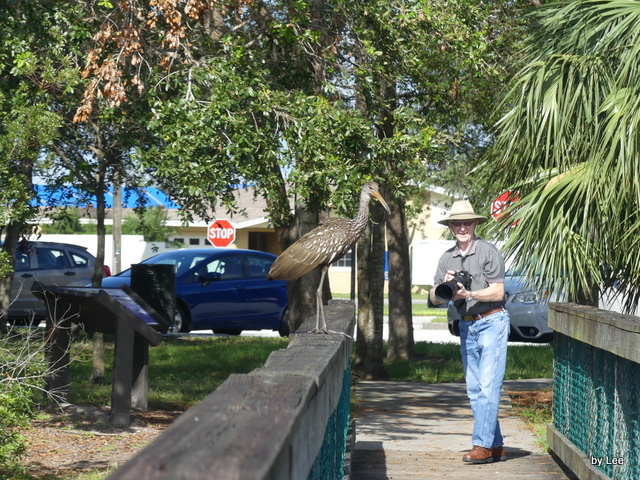
Limpkin and Dan at South Lake Howard Reserve – 2017
We believe it is time to rest from our labors at Lee’s Birdwatching Adventures Plus. This blog has attempted over the years to present the Lord’s Avian Wonders from many different perspectives. It has been a delight to present these fantastic birds in such different views, thanks to some very talented photographers. Also, to have different writers adding such information from so many places and ways of thinking about the birds of the world.
Is the blog shutting down? NO! NO! NO!
We have so many informative and useful posts to be explored that are great reading and references. (This is from remarks of our readers over the years.) I, Lee, am working behind the scenes trying to improve the Menu structures that was developed along the way. I’m trying to clean up broken links to sites that are no longer active, and make it easier to find information, photos, videos, and stories about our wonderfully created birds.
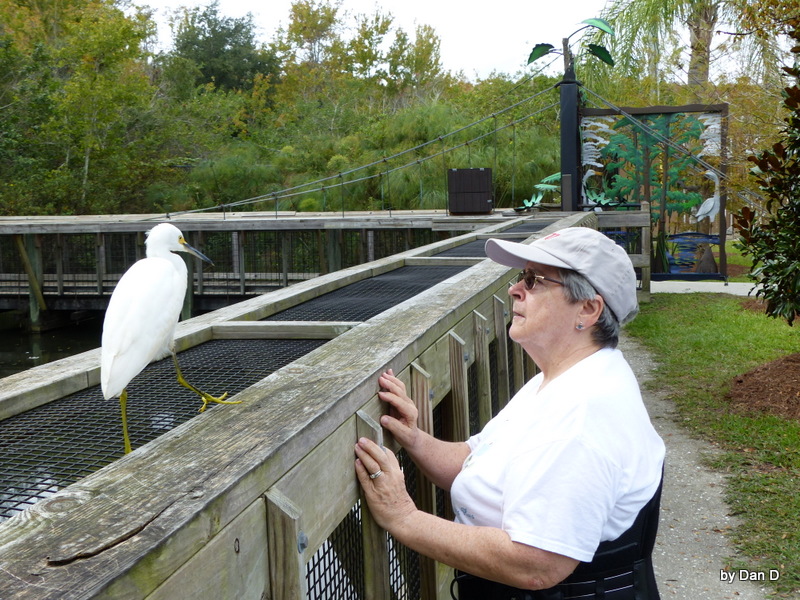
Snowy Egret and Lee Gatorland by Dan -2015
Also, Dan and I are getting older, 82 and 78, so we are starting to feel it. Our birdwatching adventures have just about slowed to a crawl. We do move a bit faster than that though. :) It’s time! We have tried to do our best in honoring our Savior, the Lord Jesus Christ, who is our Great Creator.
“I (we) have fought a good fight, I have finished my course, I have kept the faith:” (2 Timothy 4:7 KJV)
Thought you might like a look at a bit of the history of Lee’s Birdwatching Adventures. The blog was moved over here to WordPress on July 5. 2008 (almost 14 years ago). It had started a few months earlier on another platform.
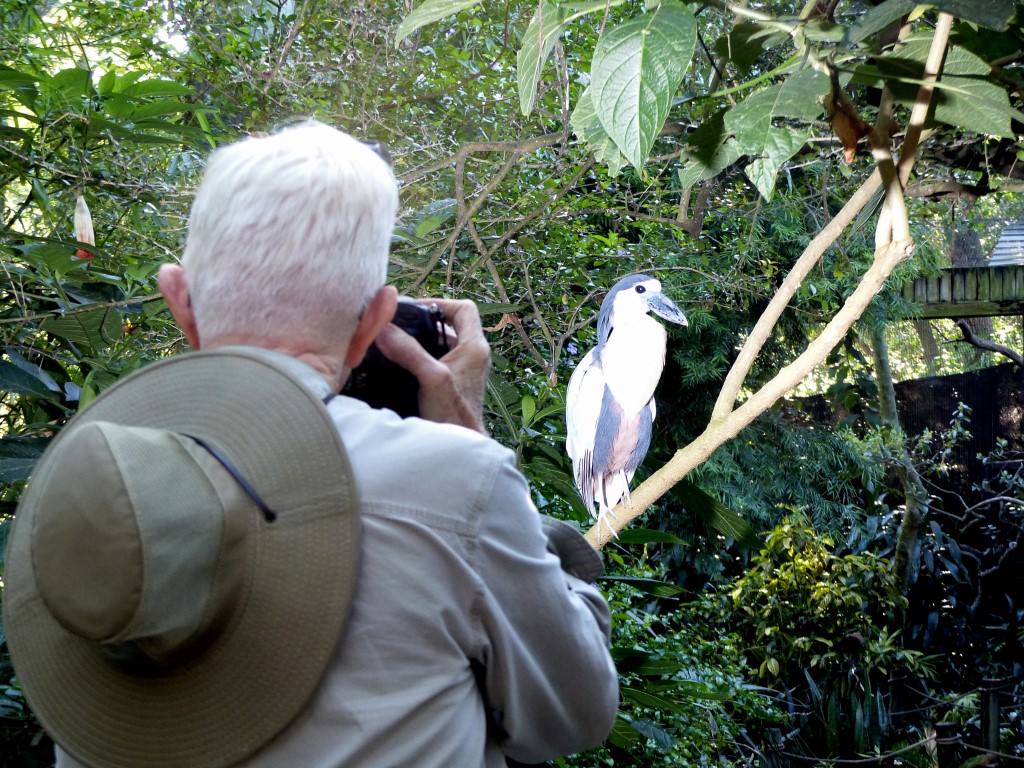
Boat-billed Heron over Dan’s Shoulder by Lee at LPZ
As of today, we have had almost 2,292,000 visitors. We have had 8-10 writers, besides myself, writing articles. I am so thankful for all of them, especially the regulars whom you can find in the side menu. Plus, all the photographers who have contributed so many fantastic photos to be used here.
Feeding White Ibises at Lake Morton [Dr. JJS Johnson, Baron (Golden Eagle), and Dan], by Lee – 2016
Here are some more statistics, if you are interested:
Comments – 8,201
Posts – 3945
Pages – 1207 (more to come as I work on the structure to help find information)
10.8 gigabytes of Media (photos, videos, music, etc.)
Branched out to make a Birds of the Bible for Kids blog and have now brought those articles back under this umbrella. (These are helpful for younger readers.)
Lee at Lake Morton by Dan – 2013
As I work through setting our blog up for the future, I trust you will continue to stop by and enjoy these posts, photos, and other blessings. [I used my most favorite picture of Dan for the featured image.]
This is not the last article coming out, but they will be less frequent than previously posted.
While working on updating the indexes to the Birds of the Bible-Sparrows, I came across an interesting question. How many Sparrows are mentioned in the Bible? I discovered a previous search I had started from the Bible Gateway website.
The Young’s Literal Translation found 6 verses mentioning Sparrows.
Psalm 84:3 – “a sparrow”
Hosea 11:11- “a sparrow”
Matthew 10:29 – “two sparrows”
Matthew 10:31 – “many sparrows”
Luke 12:6 – “five sparrows”
Luke 12:7 – “many sparrows”
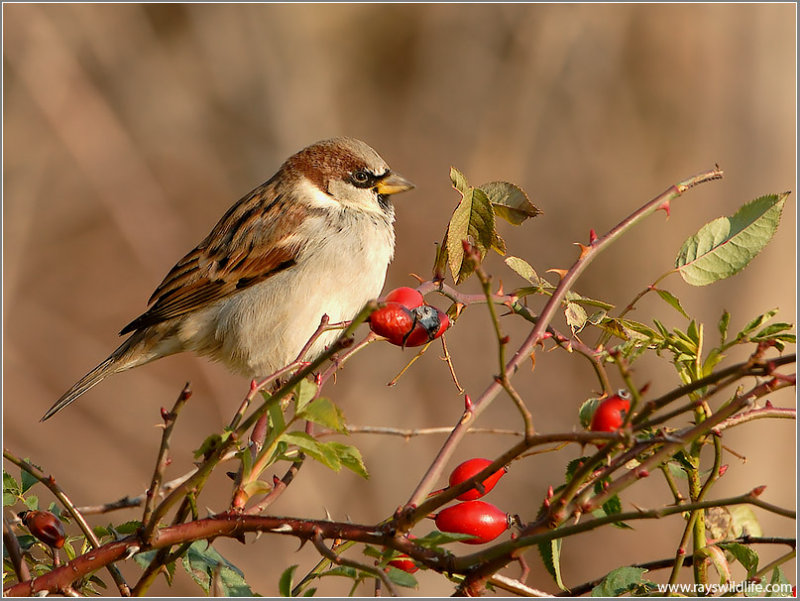
House Sparrows visiting NA Parrot Show Outside by Lee
Okay, so what, you might ask? One, it challenges you to actually study what’s in the Word of God. It is also nice to see what the Bible actually says about the Sparrows and how that impacts us. Try using a website like e-sword.net or Biblegateway.com, and do a little investigation of these questions:
In Psalm 84:3, where was the sparrow and what was she doing?
Hosea 11:22, why was the sparrow trembling?
Matthew 10:29 and 31, what assurance can we get from that verse?
Luke 12:6, who remembers the sparrows?
Luke 12:7, what has been numbered? What about fear?
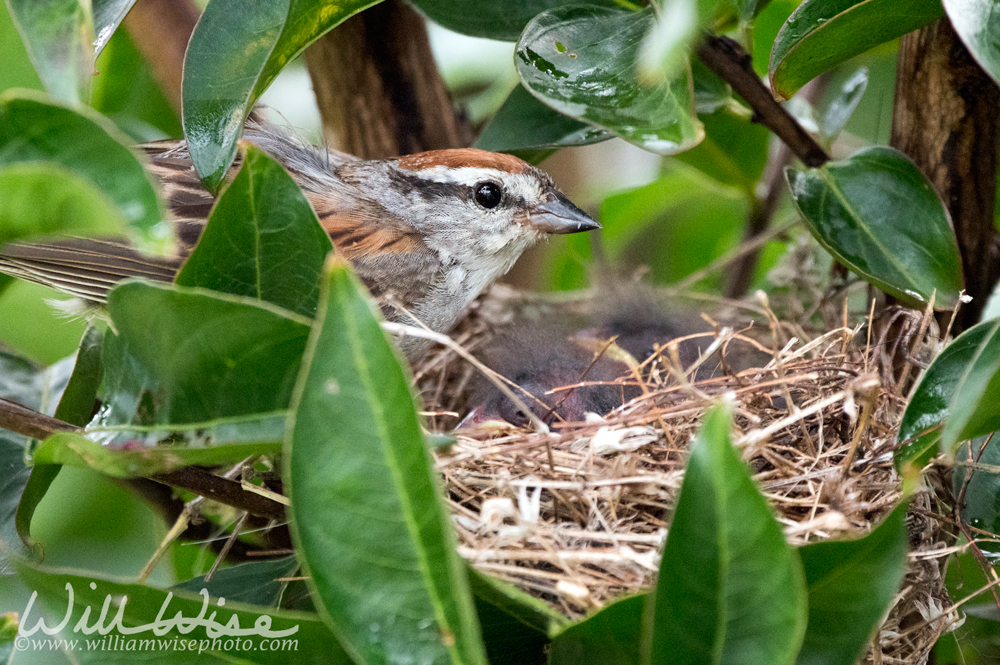
Female Chipping Sparrow bird feeding three baby Chipping Sparrow nestlings, Athens, Clarke County, GA. by William Wise
These are just some of the previous posts about these little Avian Wonders:








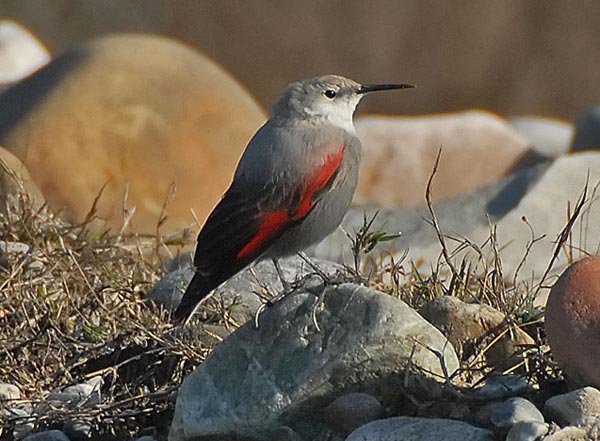

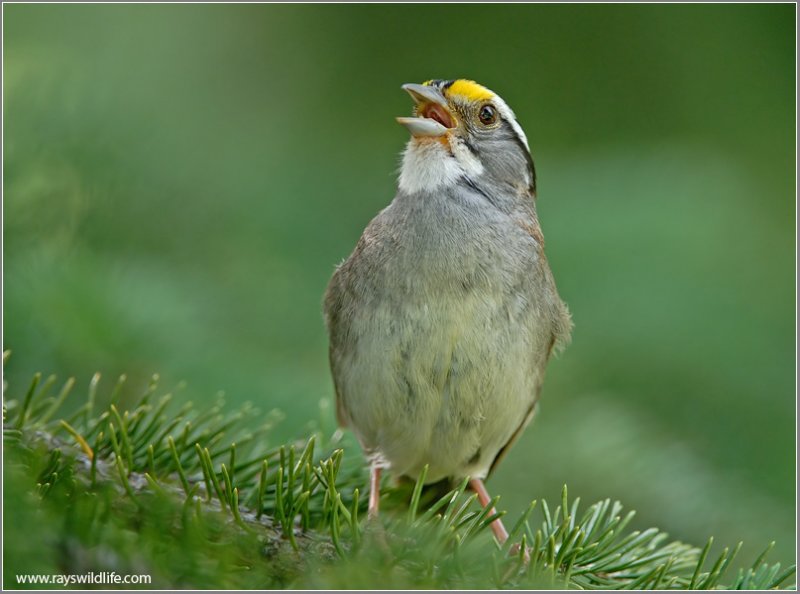
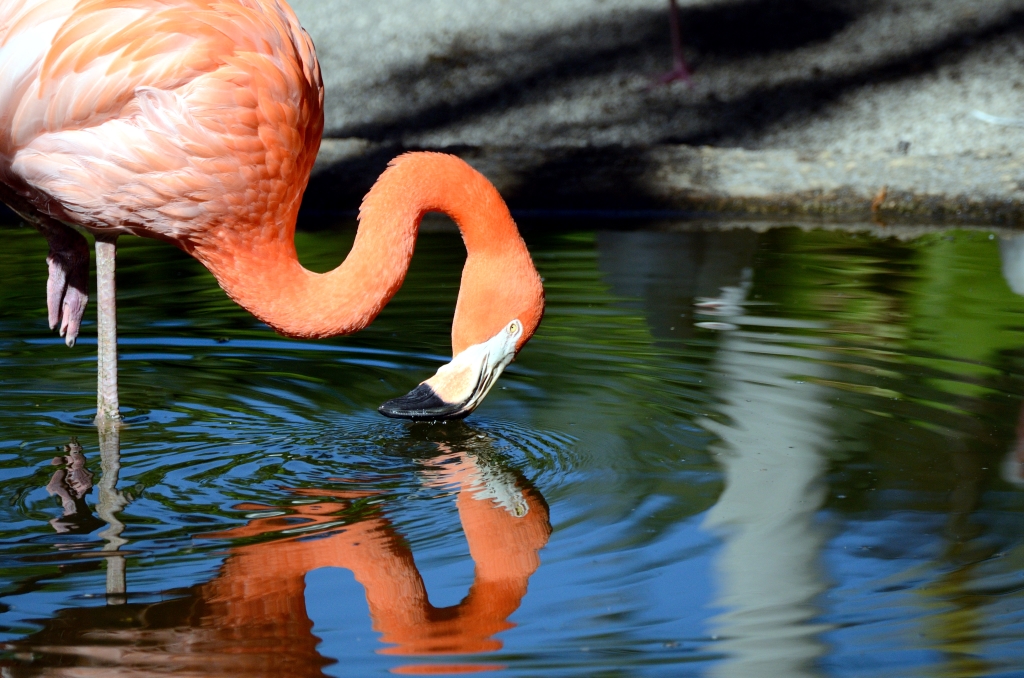

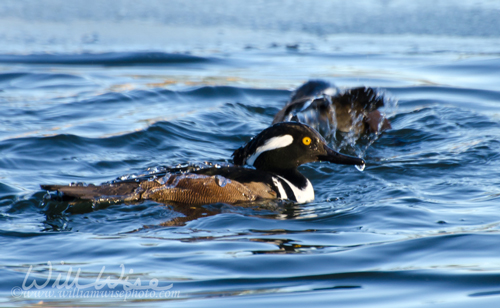




 Lee's Birdwatching Adventures Plus
Drop a comment and help decide which to use. For today’s article, I stuck with “Looking Back.”
To begin this series, I found all the post that looked back over the Anniversaries of Lee’s Birdwatching Adventures Plus. If you scan through them, you will discover why it was started and how the Lord has been blessing it over the years. As different writers began adding articles, photographers gave permission to use their photos, and linked their websites, the blog has continued to grow.