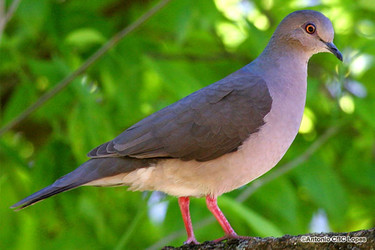
Endemic Treasures of the Cook Islands: Atiu Swiftlet and ‘Gospel Day’ Holidays

Endemic Treasures of the Cook Islands: 

Atiu Swiftlet and ‘Gospel Day’ Holidays

James J. S. Johnson

I thank my God upon every remembrance of you, always in every prayer of mine for you all making request with joy, for your fellowship in the Gospel from the first day until now, being confident of this very thing, that He Who has begun a good work in you will perform it until the day of Jesus Christ.  (Philippians 1:3-6)

Fair Use photo credit: https://en.wikipedia.org/wiki/Atiu_swiftlet#/media/File:Kopeka_bird.jpg

Atiu Swiftlet (Aerodramus sawtelli, a/k/a Kopeka) ©WikiC

The Atiu Swiftlet (Aerodramus sawtelli, a/k/a Sawtelli’s Swift), known locally as the “Kopeka”, is a small member of the swift family, only known to dwell on the Pacific island of Atiu, one of the Cook Islands.

Like other swifts it is sooty-brown in color, with its upper side being darker than its lower side.  Those who have studied the Atiu Swiftlet report that it nests in limestone caves, yet ranges over farmed lands and areas dominated by ferns.

Because it appears to only reside in one place, in the wild, it is said to be “endemic”, i.e., endemic to the island of Atiu.  However, some taxonomists think the Atiu Swiftlet is only an inbred variety of swift that is conspecific with  the Polynesian Swiftlet (Aerodramus leucophaeus, a/k/a Tahitian Swiftlet), the White-rumped Swiftlet (Aerodramus spodiopygius), and maybe even the Australian Swiftlet (Aerodramus terraereginae).  Regardless of taxonomic “lumping” or “splitting”, the Atiu Swiftlet is mainly distinguished from  other swifts by its troglodyte nesting habits and its limited range.)  But for now we may assume that the Atiu Swiftlet, as a separate “species” or as an endemic “subspecies”, is unique to the Cook Islands.  Most who read these sentences, before today, had never heard of an “Atiu Swiftlet” – but the Atiu Swiftlets are not worried  about their relative obscurity, because God’s caring providence is what they need (Matthew 5:26), not acclaim or fame from folks around the world.

In fact, the Cook Islands host another unusual, not-so-famous, “endemic” treasure – a set of “Gospel Day” holidays, commemorating how God provided the Gospel of Christ (via British missionaries) unto that group of islands in the South Pacific.

Fair Use credit_www.pacificresort.com_national-gospel-day-public-holiday-pacific-resort-rarotonga.jpeg

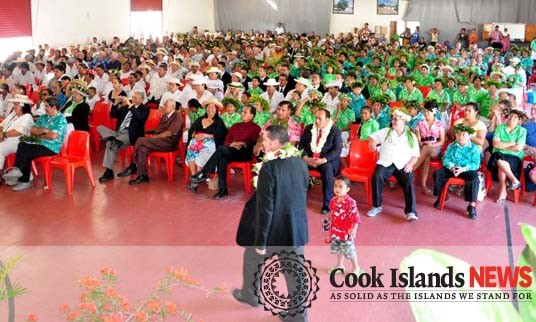
In particular, the Cook Islands – for many years – have officially celebrated, with pageantry and gratitude to God, the arrival of Bible-based Christianity (in the early AD1800s), with the various component islands having specific days for recognizing “Gospel Day” as a memorial of the British missionary outreach that blessed their respective islands.Cooks Island Map

Here are the days that have been (historically) celebrated as “Gospel Day” in the Cook Islands archipelago:  March 13th (Penrhyn Gospel Day); May 25th (Palmerston Gospel Day); June 15th (Mangaia Gospel Day); July 19th (Atiu Gospel Day, Mitiaro Gospel Day, and Mauke Gospel Day); August 8th (Manihiki Gospel Day), August 15th (Rakahanga Gospel Day); October 26th (Aitutaki Gospel Day); December 6th (Pukapuka Gospel Day); — plus there is a “National Gospel Day” collectively celebrated in the Cook Islands on October 27th.

Wow!  What godly tradition!  What other nations show such respect for Christ?

As part of celebrating Gospel Day, in the Cook Islands, elaborate and expressive “nuku” dramas are acted out, by actors wearing colorful costumes who dramatize mankind’s opportunity to be redeemed, in Christ, from sin (sometimes even enacting New York City’s 9/11 Twin Towers disaster, to illustrate the global war between good and evil).  Hymn singing – and lots of it! – and dancing and music-making dominate much of the day, as well as feasting (coconut, arrowroot, pawpaw fruit, chicken, salt-meat, etc.), prayer, and interactive Bible-based worship activities.

The missionary efforts of John Williams

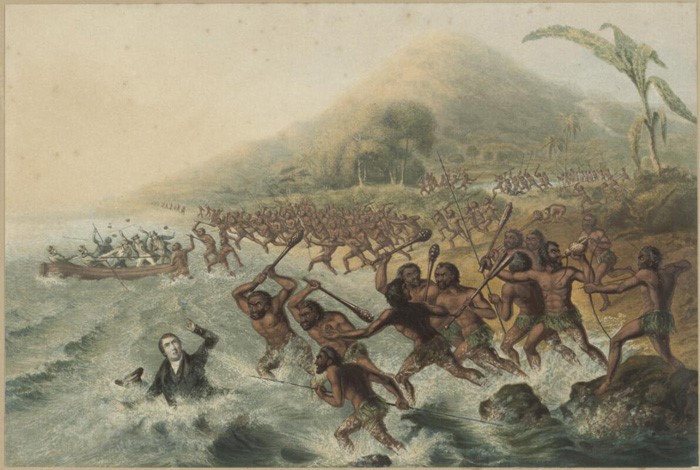
The missionary efforts of John Williams (“Apostle of the South Seas”, born near London), an English missionary to the Pacific, is recalled with thanksgiving, as well as the historic themes of Christianity.  John Williams (of the London Missionary Society) was murdered (and cannibalized) in AD1839 on the beach at Erromango, in Vanuatu, after a fruitful season of faithful missionary outreach to South Pacific islanders.
gospeldays 2

[For more details on how Gospel Day is celebrated in the Cook Islands, see http://www.cookislands.org.uk/gospelday.html and, especially for diary-like details, see youtube clip:  https://www.youtube.com/watch?v=IN9S9m1pNes .]

gospeldays 3

The tradition continues, although the calendaring aspects of this multi-island tradition have changed, in recent times, due to a governmental effort to standardize the holiday (for the Sunday closest to the original Gospel Day, for each island), and to coordinate with  a new public holiday called “Ra O Te Ui Airki” (on July 6th), according to a news report (dated October 19, 2011) saying:

“From next year, October 26 will be the only public holiday to celebrate Gospel Day as all individual outer island gospel days, including that of Rarotonga, will be celebrated on the closest Sunday to the date of Christianity arriving to the respective islands. The change in the public holiday status of the island Gospel Days is due to a new public holiday on July 6 to be known as the Ra O Te Ui Ariki out of respect for the countrys aronga mana, its ui ariki, ui mataiapo, ui rantagira and taunga [whatever that means!].  Next year churches will have the opportunity once again put their Bible story telling skills on display again when the nuku is organised to commemorate the national Gospel Day.”   [Quoting from http://www.cookislandsnews.com/item/32483-no-nuku-on-gospel-day/32483-no-nuku-on-gospel-day ].

Regardless of whatever day the arrival of the Christian Gospel is celebrated in each of the Cook Islands (as well as the historic day when each one of us, individually, received the Gospel), every day should be a day of appreciating the precious Gospel truth  —  and a time of joy (Luke 10:20) in knowing that God cares to reach and to forgive us, in His Son, the Lord Jesus (Philippians 1:3-6), if we willingly receive Him (John 1:12).   ><>  JJSJ
gospeldays 4

*
Photo Credits:

[ Fair Use photo credit:  https://en.wikipedia.org/wiki/Atiu_swiftlet#/media/File:Kopeka_bird.jpg ]

[Fair Use credit: http://www.pacificresort.com/Images/WhatsOn/national-gospel-day-public-holiday-pacific-resort-rarotonga.jpeg]

[Fair Use image credit: http://www.cookislands.org.uk/image/gospeldays-CORRECTED.jpg]

*

More:

*

Birds of the Bible – Foundation #3 Updated

Mourning Dove (Zenaida macroura) by Quy Tran

Mourning Dove (Zenaida macroura) by Quy Tran

We will continue on with the Birds of the Bible – Foundation series.

If you have not read the previous blogs:
Foundation #1 Updated
Foundation #2 Updated

In the last blog the “Fall” of Adam and Eve was mentioned and because of that, the “Curse” is now on them and all of God’s creation. Death comes on the scene, mankind now has sinned and now each person is born as a sinner. The ground is cursed and thorns and thistle now appear.

By Genesis Chapter 6, God has had it with the sins of man.

And GOD saw that the wickedness of man was great in the earth, and that every imagination of the thoughts of his heart was only evil continually. And it repented the LORD that he had made man on the earth, and it grieved him at his heart. And the LORD said, I will destroy man whom I have created from the face of the earth; both man, and beast, and the creeping thing, and the fowls of the air; for it repenteth me that I have made them. (Genesis 6:5-7 KJV)

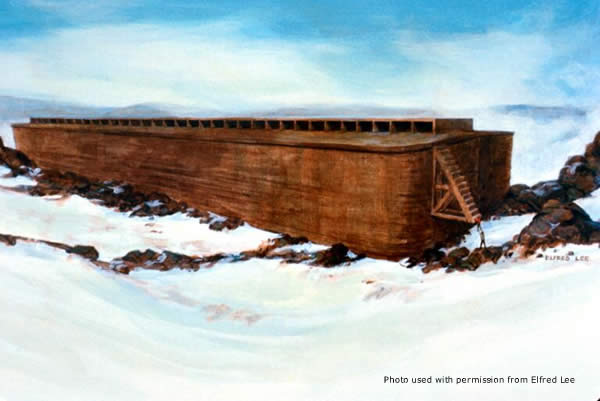
The Ark by Elfred Lee

The Ark by Elfred Lee

All is not lost because, “But Noah found grace in the eyes of the LORD.” (Genesis 6:8 KJV) Because of the grace found by Noah, the LORD gives him instructions about how to build an ark including the size, materials to use, who and what will be on board, and why the ark will be needed. God makes a covenant with Noah and tells him to come in with his wife and his sons and his son’s wives.

And of every living thing of all flesh, two of every sort shalt thou bring into the ark, to keep them alive with thee; they shall be male and female. Of fowls after their kind, and of cattle after their kind, of every creeping thing of the earth after his kind, two of every sort shall come unto thee, to keep them alive. (Genesis 6:19-20 KJV)

He was also to provide food for all of them. And Noah obeyed all that he was told. Noah spent over 100 years preparing the ark and trying to warn others of the coming judgment. There was plenty of room on the ark for more than the 8 people who boarded the ark. The others refused to repent.

Noah's Ark ©©Flickr elmada

Noah’s Ark ©©Flickr elmada

When we get to Chapter 7, the boarding of the ark takes place and the rain and flood begins. “And the LORD said unto Noah, Come thou and all thy house into the ark; for thee have I seen righteous before me in this generation. Of every clean beast thou shalt take to thee by sevens, the male and his female: and of beasts that are not clean by two, the male and his female. Of fowls also of the air by sevens, the male and the female; to keep seed alive upon the face of all the earth. For yet seven days, and I will cause it to rain upon the earth forty days and forty nights; and every living substance that I have made will I destroy from off the face of the earth. And Noah did according unto all that the LORD commanded him.” (Genesis 7:1-5)

Noah did not have to round up the animals, they came to him. Because not every animal we see today came on board but the main kinds (for instance the “bird kinds” may have had a “warbler kind” but not have black and white warblers, yellow-rumped warblers, hooded warbler, etc.), which ever ones they were, there was plenty of room for them. I have an idea that because the LORD sent the animals, birds, and critters, that their DNA’s were of the highest quality. (That is my opinion)

Dove in Israel

Doves in Israel

If you read the rest of Genesis 7, you will see that the global flood came and covered everything and only those who were in the ark survived, plus some of those that live in the water.

And all flesh died that moved upon the earth, both of fowl, and of cattle, and of beast, and of every creeping thing that creepeth upon the earth, and every man: All in whose nostrils was the breath of life, of all that was in the dry land, died. And every living substance was destroyed which was upon the face of the ground, both man, and cattle, and the creeping things, and the fowl of the heaven; and they were destroyed from the earth: and Noah only remained alive, and they that were with him in the ark. (Genesis 7:21-23)

In Foundation #4 we will find out about what the birds go through as they come off the ark and after.

Gospel Presentation

*

Choreographed Choir on the Wing: Birds of a Feather Flock Together

Choreographed Choir on the Wing: 

Birds of a Feather Flock Together

Not forsaking the assembling of ourselves together, as the manner of some is; but exhorting one another, and so much the more, as ye see the day approaching.   (Hebrews 10:25)

James J. S. Johnson

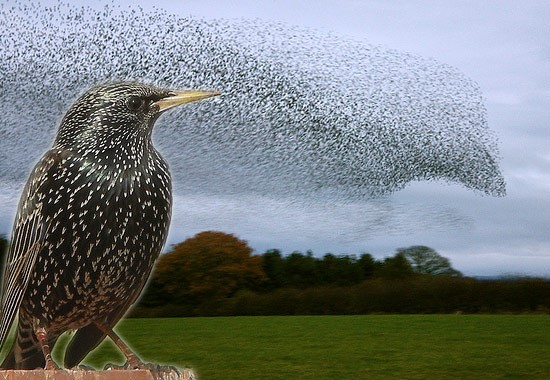
Starling and Murmuration

Starling and Murmeration 

[ Fair Use credit: https://files.allaboutbirds.net/wp-content/uploads/2013/02/starlings.jpg ]

Not only do “birds of a feather flock together”, people who belong together should get together.  And the orderly assembling of both people and birds can give us a preview of coming attractions – when the world that we now know is replaced by one redeemed (Romans 8:18-28), where we gather together in glory, as a harmonious heavenly host.

Accordingly, seeing hundreds (if not thousands) of European starlings, flying like a flexible fluid, in choreographed unison, provides an birdwatching foretaste of (someday) seeing the heavenly host in action.  But there are other notable types of gatherings-in-motion, of kindred spirits “flocking together”.

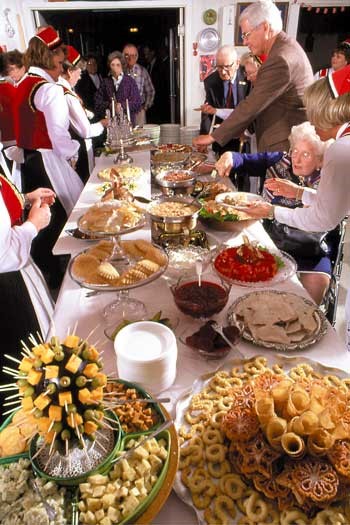
Serving line at Norse smörgåsbord, showing artistic presentation of Nordic cuisine

Serving line at Norse smörgåsbord, showing artistic presentation of Nordic cuisine

[serving line at Norse smörgåsbord, showing artistic presentation of Nordic cuisine  — Fair Use credit:   Smorgasbord.jpg ]

Last Saturday was a special event for my wife and me:  the annual Norwegian smörgåsbord hosted by the Women’s auxiliary of Our Savior’s Lutheran Church of Norse, Texas.  The event is so popular that you must (literally) “win the lottery” to be allowed to purchase tickets to the event!

announcement of 67th annual smörgåsbord hosted by Our Savior’s Lutheran Church of Norse, Texas

Copy of announcement of 67th annual smörgåsbord hosted by Our Savior’s Lutheran Church of Norse, Texas

This delightfully colorful and tasty feast, hosted by a rural Norwegian-immigrant-established rural congregation in the Texas “hill country” of Bosque County (located between Clifton and Cranfills Gap) is a multi-generational tradition of faith, food, fun, and fellowship – and a fundraiser for the more-than-a-century-old church (see http://oursaviorsnorse.org/ ).

hors d’ouvres served at Norse smörgåsbord

hors d’ouvres served at Norse smörgåsbord

[hors d’ouvres served at Norse smörgåsbord  —  Fair Use credit: http://oursaviorsnorse.org/smorgasbord.html ]

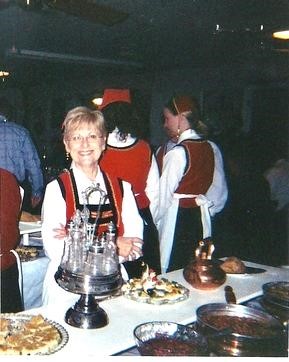
Church members dress in bunads (festive Norwegian costume of the AD1800s), as they usher attendees and/or serve attendees.  The feast begins with a Scripture-based devotional with bilingual music and table prayer, in the sanctuary, followed by a short walk to the fellowship hall, where the meal is served.

Serving line at Norse smörgåsbord, showing servers in bunad costumes

[serving line at Norse smörgåsbord, showing servers in bunad costumes  —  Fair Use credit: http://oursaviorsnorse.org/smorgasbord.html ]

The mix of delectable dishes, of Norwegian-American cuisine, is too many for me to mention here  —  however, I will mention just a few that I enjoyed:  pickled herring, salmon mold, Norwegian meatballs, ham, turkey, stuffed eggs (i.e., what many non-Norwegians call “deviled eggs”), several kinds of cheese (including gjetost, brunost, gamalost), lefse (i.e., Norwegian potato bread that looks like a flour tortilla), lingonberry jam, lima beans, beets, various breads (including Swedish rye), potato salad, outstanding coffee, and various cookies (including krumkaker, rosettes, sandbakkels, fattigman).  And more!

Dessert tray served at Norse smörgåsbord

[dessert tray served at Norse smörgåsbord  —  Fair Use credit: http://oursaviorsnorse.org/smorgasbord.html ]

The Lutheran church building itself, which includes modernized modifications of the original structure, is a reverent monument to the glory and worship of God  — the church was established by Norwegian immigrant settlers who came in AD1854.  The church building was begun in AD1875 and originally completed in AD1885.  The church sanctuary pews (and other chancel furniture) are original.

Our Savior’s Lutheran Church of Norse, in Bosque County, Texas

Our Savior’s Lutheran Church of Norse, in Bosque County, Texas

[Our Savior’s Lutheran Church of Norse, in Bosque County, Texas –  Fair Use credit:  NorseTexasOurSaviorsLutheranChurch1003BGibson.jpg ]
Bosque County’s Norwegian pioneers burial site in Norse

Bosque County’s Norwegian pioneers burial site in Norse

[ Bosque County’s Norwegian pioneers burial site in Norse  —  Fair Use credit: Norwegian.settlers.monument.jpg  ]

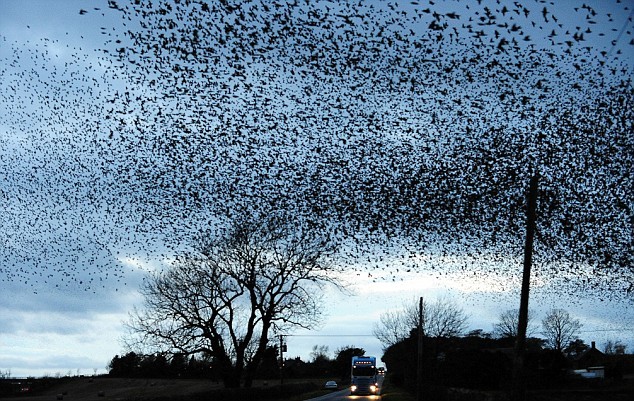
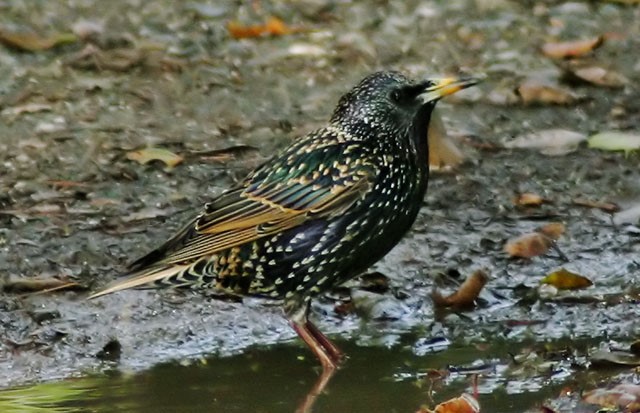
But more than that splendid kindred-spirit event, at the Lutheran Church last Saturday, reminded me of the phrase “birds of feather flock together”.  Why? Because en route to that wonderful event, which was about a 3-hour-drive (one way) for my wife and me, we were slowed down in our southward trek through construction-delayed traffic, along Interstate 35-W.  The construction activities on the west side of highway were reshaping the land surfaces and drainage patterns, enabling recent rainwater to collect in a large mud-puddle, by a large “blanket” of black that somehow quivered with motion.  Why was that black “blanket” moving?  It was a mob of star-spangle-jacketed European starlings (Sturnus vulgaris) congregated there – more than your eyes could count!  The pooled water had attracted a mega-flock of European starlings (which at first glance looked like a black blanket covering the ground), some of which drank water while others waited nearby, for their turns at the “watering hole”.

Murmuration by Dailymail

Murmuration by Dailymail

[Fair Use credit: http://i.dailymail.co.uk/i/pix/2008/Murmuration by Dailymail ]

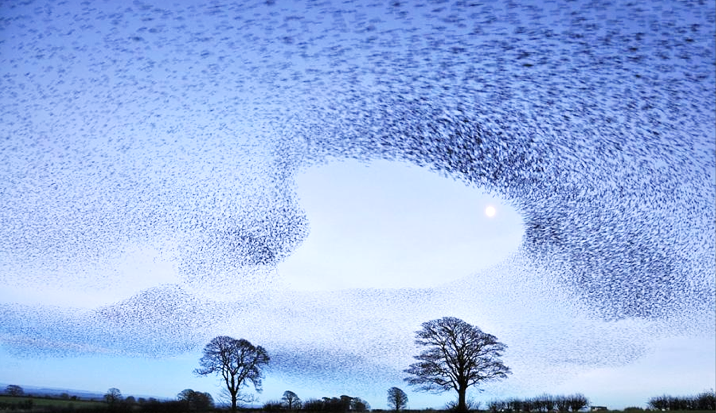
But more spectacular than these earth-bound  starlings (in and at the mud-puddle) were their swarming legions of cousins, swirling, and looping in the air above, — called a “murmuration” of starlings.  This fluid flock of aerial acrobats were graciously swirling, curving, arching, banking, spinning, irrupting, swerving, pouring, turning, dipping, spreading, blending, soaring – in harmony, each one perfectly synched to one another like a living fabric of black-winged wonders, dancing in the wind – a choreographed choir of chattering starlings.

 European Starling


European Starling

[ Fair Use credit: http://animalia-life.com/data_images/european-starling/european-starling2.jpg ]

There is nothing quite like watching a living, flowing, swirling cloud of European starlings, flying as a fluid flock – a harmonious team of airborne navigators – in numbers and motions that prevent spectator quantification.  The starlings’ murmuration is more than “birds of a feather flock together”; this is “birds of a feather fly like a fluid-fabric together!” – truly an amazing display of God’s handiwork in flying feathers.

As we watched in amazement, at the synchronized motions of these little black (and somewhat iridescent) marvels, we thought about the high-speed harmony God has directed these starlings to implement, in their humble little lives.  God-honoring harmony – what a concept!

Of course, if we “forsake the assembling of ourselves together” we cannot achieve any such choreography. And, when we do get together, we do well to focus on our unity in Christ, which means prioritizing and practicing  the truth in love.

Starling Flying Mob

Starling Flying Mob

[ Fair Use credit: http://mudfooted.com/images/murmuration-bird-flock.png]

Behold, how good and how pleasant it is for brethren to dwell together in unity(Psalm 133:1)

Starling Murmuration ©Flickr Donald Macauley

*

More Orni-Theology Articles

More of James J. S. Johnson’s Articles

*

Sunday Inspiration – Mockingbirds and Thrashers

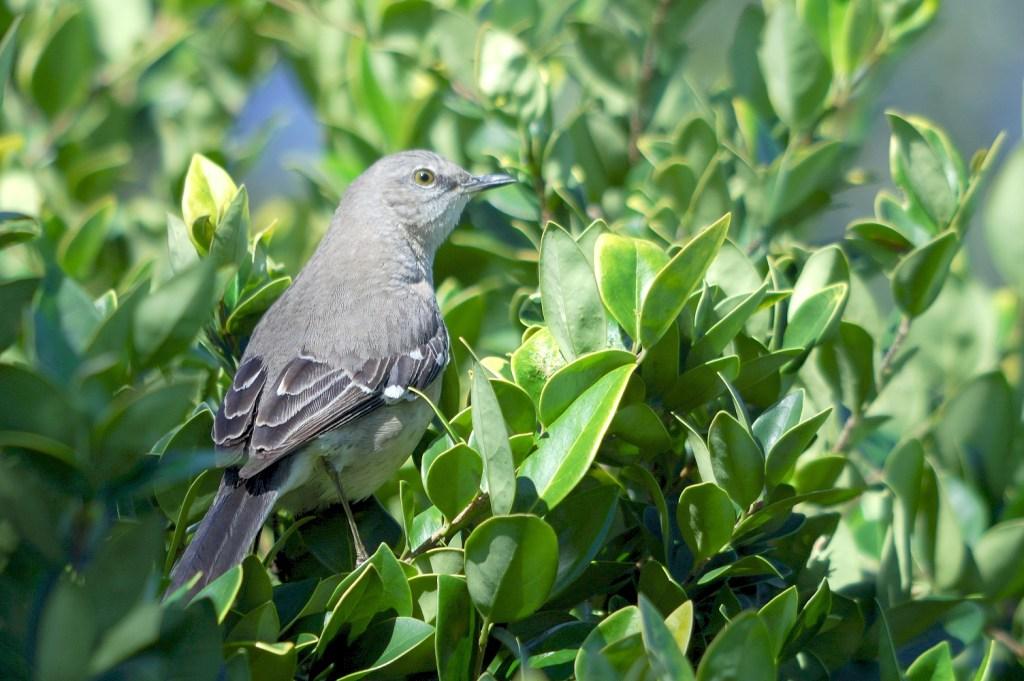
Northern Mockingbird (Mimus polyglottos) By Dan'sPix

Northern Mockingbird (Mimus polyglottos) By Dan (Dan’sPix)

“Do not curse the king, even in your thought; Do not curse the rich, even in your bedroom; For a bird of the air may carry your voice, And a bird in flight may tell the matter.” (Ecclesiastes 10:20 NKJV)

Mockingbirds have been one of my favorite birds. They used to nest in a bush outside our bedroom when we lived in Fort Lauderdale, FL. He used to sing, sing, and sing when they had their young. Only problem was sometimes he sang at 2 or 3 in the morning (outside our bedroom). Those are the times when you wished birds observed “quite hours.”

When the doors are shut in the streets, And the sound of grinding is low; When one rises up at the sound of a bird, And all the daughters of music are brought low. (Ecclesiastes 12:4 NKJV)

Brown Thrasher (Toxostoma rufum) By Dan'sPix

Brown Thrasher (Toxostoma rufum) By Dan’sPix

That said, let’s look at our bird family this week. The Mimidae are the New World family of passerine birds that includes thrashers, mockingbirds, tremblers, and the New World catbirds. As their name (Latin for “mimic”) suggests, these birds are notable for their vocalization, especially some species’ remarkable ability to mimic a wide variety of birds and other sounds heard outdoors.

Brown Trembler (Cinclocerthia ruficauda) ©WikiC

Brown Trembler (Cinclocerthia ruficauda) ©WikiC

There are 34 birds in this family which includes thrashers, mockingbirds, tremblers, and the New World catbirds. They tend towards dull grays and browns in their appearance, though a few are black or blue-gray, and many have red, yellow, or white irises. Many mimids have a rather thrush-like pattern: brown above, pale with dark streaks or spots below. They tend to have longer tails than thrushes (or the bigger wrens, which they also resemble) and longer bills that in many species curve downward.

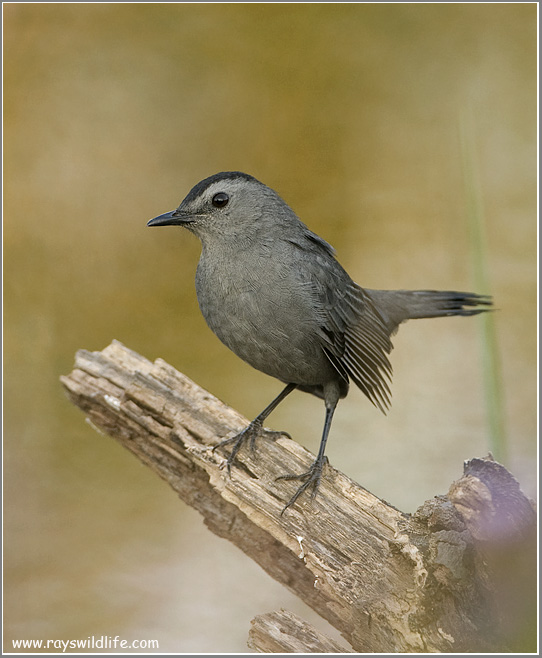
Grey Catbird (Dumetella carolinensis) by Raymond Barlow

Grey Catbird (Dumetella carolinensis) by Raymond Barlow

They have long, strong legs (for passerines) with which many species hop through undergrowth searching for arthropods and fruits to eat. Their habitat varies from forest undergrowth to scrub, high-altitude grasslands, and deserts. The two tremblers live in the atypical habitat of rain forests in the Lesser Antilles, and the Brown Trembler has the particularly atypical behavior of foraging while clinging to tree trunks. (With information from Wikipedia)

This slideshow requires JavaScript.

At that day ye shall know that I am in my Father, and ye in me, and I in you. He that hath my commandments, and keepeth them, he it is that loveth me: and he that loveth me shall be loved of my Father, and I will love him, and will manifest myself to him. (John 14:20-21 KJV)

“I Am Loved” ~ Faith Baptist Orchestra

More Sunday Inspirations

Mimidae – Mockingbirds, Thrashers

Sharing The Gospel

*

Happy Thanksgiving – 2015

Wild Turkey (Meleagris gallopavo) by Daves BirdingPix

Wild Turkey (Meleagris gallopavo) by Daves BirdingPix

Happy Thanksgiving!

Oh, give thanks to the LORD! Call upon His name; Make known His deeds among the peoples! (1 Chronicles 16:8 NKJV)

Today we celebrate Thanksgiving here in America. When I went back to see what had been posted in the past, there is not much more could be said. See the list of many previous posts for Thanksgiving over the years this blog has been going.

Cactus Wren (Campylorhynchus brunneicapillus) by Lee

Cactus Wren (Campylorhynchus brunneicapillus) by Lee

Or is there? 2015 was another great year and I am thankful for all the blessings the Lord has given us through out this last year. Our big trip to the West Coast was the highlight of the year. We are thankful for all the many miles we safely traveled and the many birds and interesting things we saw. Thankful to the Lord for His marvelous creations we saw.

“We give thanks to God always for you all, making mention of you in our prayers, remembering without ceasing your work of faith, labor of love, and patience of hope in our Lord Jesus Christ in the sight of our God and Father,” (1 Thessalonians 1:2-3 NKJV)

I am also thankful for all of you who have stopped by to visit and read the articles. Also, for the many comments you have left over the year, even the negative ones. That is called freedom of speech. Also, I am thankful for the almost 1.5 million visits here. Wow! It is getting close. I am also thankful for the writers who have contributed to help enhance the blog. James J. S. Johnson, Golden Eagle, Ian Montgomery, Emma Foster, Dottie Malcolm, and others have written many fine articles. Happy Thanksgiving to all of them.

“…and to everyone who works and labors with us.” (1 Corinthians 16:16b NKJV)

Most of all, I am thankful for my Savior and the Love and Blessings He has given to Dan and I. Even with hospital time and a slipped disc, He has never left us, nor forsaken us.

“Thanks be to God for His indescribable gift!” (2 Corinthians 9:15 NKJV)

Previous Thanksgiving Posts:

*

Enter Into His Gates With Thanksgiving

Enter into His gates with thanksgiving

James J. S. Johnson

Make a joyful noise unto the Lord, all ye lands.  Serve the Lord with gladness; come before His presence with singing.  Know ye that the Lord He is God; it is He Who hath made us, and not we ourselves; we are His people, and the sheep of His pasture.  Enter into His gates with thanksgiving, and into His courts with praise; be thankful unto Him, and bless His name.  For the Lord is good; His mercy is everlasting; and His truth endureth to all generations.  (Psalm 100)

Sometimes what you expect to find, is not what you find.  This is true of Grenada’s official bird, if you assume it matches Grenada’s official coat of arms.  This is also true if you imagine that the Thanksgiving holiday, as it is celebrated in Grenada, is like the Thanksgiving holiday as it is celebrated in America.

Fair Use credit: http://tolweb.org/tree/ToLimages/217681451_7e4971beab_o.250a.jpg

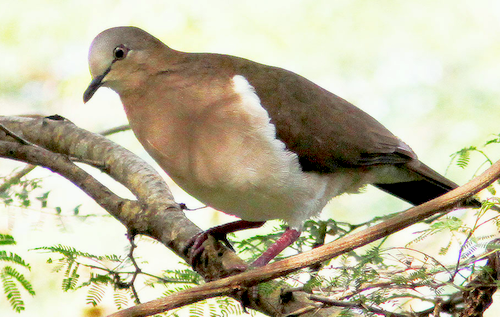
Grenada’s official coat of arms includes an Armadillo and a Grenada Dove (Leptotila wells  —  a/k/a Well’s dove or pea dove), positioned above the motto “Ever conscious of God, we aspire, build, and advance as one people.”   The Grenada Dove is endemic to Grenada – i.e., only on the island of Grenada is the Grenada Dove found in the wild, and even there it is critically “endangered” (i.e., close to extinction).   The dove’s coloring, as depicted on the Grenada coat of arms, however, does not closely match the actual coloring of the real bird.

(Grenada coat of arms – public domain)

(Grenada coat of arms – public domain)

The dove’s coloring, as depicted on the Grenada coat of arms, however, does not closely match the actual coloring of the real bird.  The actual Grenada Dove has little blue to it (depending on the lighting used to view it)  –  rather, brown and buff dominate its overall coloring.  One wonders why, therefore, the heraldic depiction shows indigo-blue and azure, with yellow highlighting.  Consider the more realistic depictions before, as shown by photographic and postage images.

Fair use credit:  grenada national archiveshttps://grenadanationalarchives.wordpress.com/tag/leptotila-wellis/ (from the website of the National Archives of Grenada)

(Grenada postage stamp issued in February of AD1974 – public domain)

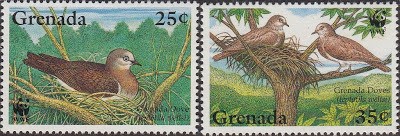
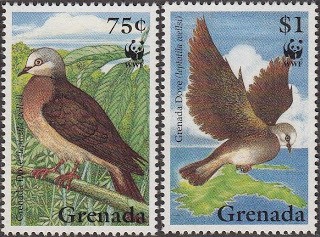
Consider also these special World Wildlife Fund-logo Grenada postage stamps,  showing Grenada Doves.

Grenada stamps 1

Grenada stamps 2

(Grenda postage stamps issued in January AD1995 – public domain)

The lesson here, apparently, is that heraldic coat-of-arms depictions of birds can (sometimes) be quite unrealistic – or else the artist might be depicting the wrong bird!

But Grenada’s coat of arms is not the only surprise in its national symbols.

Consider now the holiday we call “Thanksgiving”.

In the United States of America, for a contrasting example, the holiday of “Thanksgiving” (celebrated on the fourth Thursday in November) commemorates the gratitude of Plymouth Pilgrims, as pioneer survivors, who thanked God at harvest time in AD1621, for His providence — see “Strangers and Pilgrims (and the American Turkey)”, posted at https://leesbird.com/2014/11/25/strangers-and-pilgrims/ .  The Pilgrims’ survival and early successes, due to God’s providence, are also celebrated in the Netherlands, in Leiden, to commemorate how the Pilgrims lived in Holland during AD1609-AD1620.  A special Thanksgiving worship service is conducted, there, on the morning of America’s Thanksgiving, in Pieterskerk [“Peter’s church”], a Gothic church that was originally Roman Catholic (from its architectural beginning in AD1390), yet became Protestant during the Dutch Reformation, and became the burial site for John Robinson, pastor of the Pilgrims prior to their migratory journey to America.

Canadians observe a similar holiday, called l’Action de grâce in French, on the second Monday in October.

Norfolk Island, an external territory of Australia, celebrates Thanksgiving on the last Wednesday of November, so that Norfolk Island’s celebration of Thanksgiving occcurs either the day before, or six days after, the day when Americans celebrate Thanksgiving.

Saint Lucia, an island nation on the eastern edge of the Caribbean Sea, celebrates Thanksgiving on the first Monday in October.

Christians in Germany have a similar harvest-thanksgiving holiday, Erntedankfest, in early October, at about the same time that its Bavarians are celebrating Oktoberfest.

Thanksgiving is supposed to be focused on thanking God —  even the name of the holiday suggests as much.  However, although gratitude to God  –-  for harvest blessings  —  was the original reason for most harvest festival-oriented “thanksgiving” holidays, many Thanksgiving traditions have forgotten the historic importance of thanking God for His caring providences, by focusing more on distractive parades (e.g., Macy’s, IKEA’s, McDonald’s), football games, and feasting  —  with such festive celebrations discounted in slang as “Turkey Day”. (British Laird Bill Cooper was quite disappointed to learn of this trivialized secularization of what was originally a holy day/holiday.)

But how is Thanksgiving celebrated in Grenada, and why ?

First, consider where Grenada is located – Grenada is an island nation situated slightly east of South America, north of Venezuela.  Politically speaking, the nation of Grenada actually includes the main island (called “Grenada”) plus a few smaller islands, some but not all of “the Grenadines”, which are situated north of the Martinique Channel – with several of the other Grenadine islands (located south of the Martinique Channel) jurisdictionally belonging to the Caribbean nation called “St. Vincent and the Grenadines”.

grenada map

In AD1498 the main island of Grenada was visited by Christopher Columbus, who named it “Concepcion”.

Grenada was later visited by Britons, then French; it was eventually settled by French colonists. Later, as part of the Treaty of Paris (in AD1763), Grenada became a British colony.  Grenada shed its colonial status, however, in AD1974, as it then became officially independent of the United Kingdom, although it remained an affiliate of the British Commonwealth.

So far so good, it seemed, until AD1983, when a Communist military takeover occurred on the island, led by General Hudson Austin (who was politically backed by Cuba, and aided by Cuban soldiers), actually seized control from a prior Communist takeover (i.e., one Communist regime killed off the leadership of a prior Communist dictatorship).  American students were put in jeopardy so President Ronald Reagan authorized a military rescue operation, which included defeating the “New Jewel Movement” (i.e., the second Communist dictatorship).

Thus, beginning on October 25th of AD1983, the “New Jewel Movement” Communists, who had seized the country, were soon opposed by a coalition of rescue forces, comprised of the United States and several Caribbean allies (from six Caribbean nations, including Jamaica and Barbados), in a complicated military effort called “Operation Urgent Fury” – which included U.S. Army Rangers, U.S. Marines, Delta Force, 82nd Airborne paratroopers, and U.S. Navy SEALs.  Because the rescue operation was so successful – and peace was restored to Grenada (with the Cuban soldiers being expelled) a holiday of gratitude was established – October 25th became Thanksgiving Day for Grenada.

Operation Urgent Fury photograph

Operation Urgent Fury photograph (public domain, AD1983) M102 howitzers (320th Field Artillery Regiment) firing on Grenada island.

Bottom line:   we all  –  whether Americans or Grenadians or anyone else for whom Christ died  —  have a lot to be thankful for, on whatever day that we celebrate Thanksgiving (and on every other day of the year!).

In accord with Psalm 100 we should, daily, “enter into His gates with thanksgiving, and into His courts with praise; be thankful unto Him, and bless His name”.

Birds of the Bible – Foundation #2 Updated

We will continue with the Foundation from the Word of God (the Bible) about the creation of birds.

If you have not read “Birds of the Bible – Foundation #1 Updated Click Here

By the end of Genesis Chapter 1 the birds (fowls of the air):

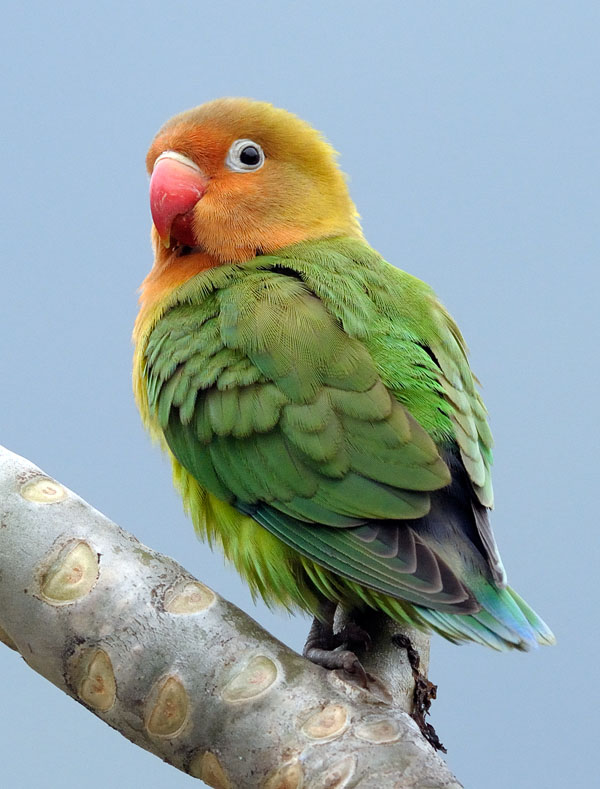
Fischers Lovebird by Phil Kwong

Fischers Lovebird by Phil Kwong

  • Created by the Lord on Day 5
  • Each according to its kind
  • Told to multiply and fill the earth
  • Were given every green herb for food (vegetarians)
  • Placed under the dominion of man
  • “God saw everything that He had made, and indeed it was very good.”

In Chapter 2, the birds are named by Adam. (v 19-20)

At this point, we know that the birds were at their best, they were eating fruits, seeds, herbs and not each other.  The birds had been named according to their kinds by Adam, who was created on Day 6. Their colors and features were at their grandest showing the Glory of God’s wisdom and omnipotence. They must have been fantastic to behold.

BUT WE COME TO GENESIS CHAPTER 3

When the serpent tempted Eve and caused her to question the Word of God, she not only questioned, but added to the Word of God.

Now the serpent was more subtle than any beast of the field which the LORD God had made. And he said unto the woman, Yea, hath God said, Ye shall not eat of every tree of the garden? And the woman said unto the serpent, We may eat of the fruit of the trees of the garden: But of the fruit of the tree which is in the midst of the garden, God hath said, Ye shall not eat of it, neither shall ye touch it, lest ye die. (Genesis 3:1-3 KJV

Most of you know the rest of what happened:

  • Eve ate of the tree of the knowledge of good and evil and gave Adam some also.
  • They were caught and tried to pass the blame.
  • The serpent was cursed. Adam and Eve become sinners and pass sin on to their offspring (us).
  • All God’s creation was cursed (Genesis 3:15-19)
  • Death (spiritual and physical) is now present, which had not been before.
  • Because of Adam’s sin, an animal had to die to make “coats of skins, and clothed them”, “God clothes them with a garment which covers their nakedness, a garment which had its origin in death (the death of another), which had come in, but which hid the effects of the sin that had introduced it.” (Darby’s Synopsis)
  • Sacrifices of the blood of animals and birds for man’s sin is begun. Not until the Lord Jesus Christ became the perfect sacrifice (Hebrews 9:12-14) did the need for those sacrifices end.

For God so loved the world, that he gave his only begotten Son, that whosoever believeth in him should not perish, but have everlasting life. For God sent not his Son into the world to condemn the world; but that the world through him might be saved. He that believeth on him is not condemned: but he that believeth not is condemned already, because he hath not believed in the name of the only begotten Son of God. And this is the condemnation, that light is come into the world, and men loved darkness rather than light, because their deeds were evil. For every one that doeth evil hateth the light, neither cometh to the light, lest his deeds should be reproved. But he that doeth truth cometh to the light, that his deeds may be made manifest, that they are wrought in God. (John 3:16-21)

Somewhere between the Fall of Adam and Eve and the cursing of them and all of creation, the birds, animals,  earth, man, etc. all begin to have changes in their behavior from God’s proclaiming that all was “very good.” By the time of the Flood (Foundation #3), that, “very good” is no longer true.

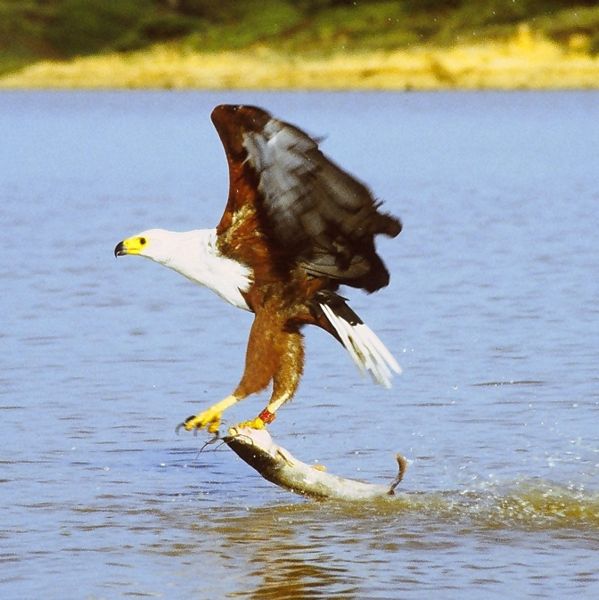
African Fish Eagle (Haliaeetus vocifer) ©WikiC

African Fish Eagle (Haliaeetus vocifer) ©WikiC

Several very interesting articles:

Different Kinds of Flesh, by Paul A. Bartz

Even Strange Animals Fit into Kinds, by Paul A. Bartz

Why Does God’s Creation Include Death & Suffering?, by Tommy Mitchell, January 31, 2008, From “The New Answers Book”, Answers in Genesis

How Did Defense/Attack Structures Come About?, by Andy McIntosh & Bodie Hodge, December 27, 2007, From “The New Answers Book”, Answers in Genesis

Why Did God Create Such Terrible Teeth? by Brian Thomas, M.S., Institute for Creation Research

Did Lions Roam the Garden of Eden? by Nathaniel T. Jeanson, Ph.D., Institute for Creation Research

*
*
 

I.O.C. Version 5.4 Updated on Blog

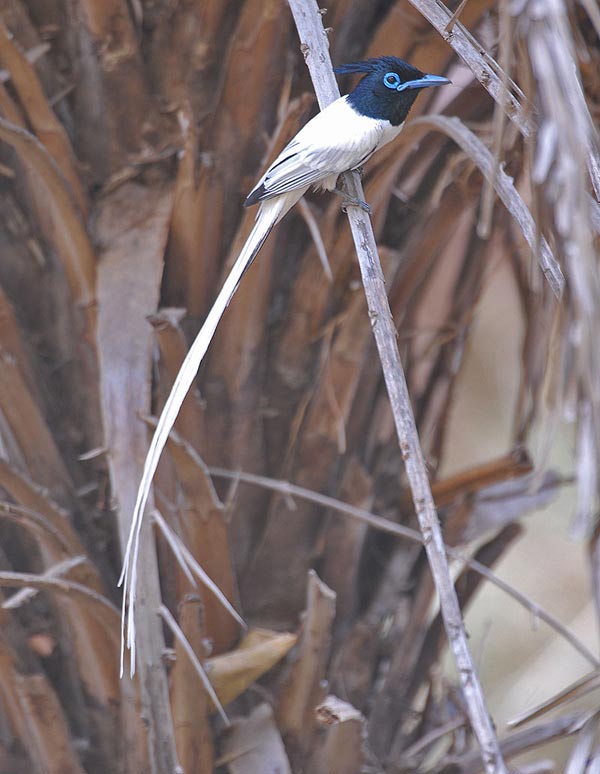
Amur Paradise Flycatcher (Terpsiphone incei) ©WikiC

Amur Paradise Flycatcher (Terpsiphone incei) ©WikiC

Out of the ground the LORD God formed every beast of the field and every bird of the air, and brought them to Adam to see what he would call them. And whatever Adam called each living creature, that was its name. So Adam gave names to all cattle, to the birds of the air, and to every beast of the field. But for Adam there was not found a helper comparable to him…. (Genesis 2:19-20 NKJV)

A couple of days ago this blog’s Birds of the World indexes were finally updated. With company, a memorial, travel, health, housework, etc., etc. it is finally up to date. In New Kingfisher Species, you were notified of the new 21 Kingfishers in the I.O.C. Version 5.4 update.

This Version now lists 10,612 extant species and 153 extinct species of birds of the world (Version 5.4), with subspecies (20,757) and annotations. There are 40 Orders, 239 Families (plus 2 Incertae sedis), 2282 Genera. The overall count was 33 new species added, including the 21 Kingfishers.

Here are the other 12 new Species added: (none were deleted this time)

Taiwan Bamboo Partridge (Bambusicola sonorivox) ©WikiC

Taiwan Bamboo Partridge (Bambusicola sonorivox) ©WikiC

“As a partridge that broods but does not hatch, So is he who gets riches, but not by right; It will leave him in the midst of his days, And at his end he will be a fool.” (Jeremiah 17:11 NKJV)

Taiwan Bamboo Partridge (Bambusicola sonorivox)
Subantarctic Shearwater (Puffinus elegans)
Desert Owl (Strix hadorami)
Roosevelt Stipple-throated Antwren (Epinecrophylla dentei)
Perija Tapaculo (Scytalopus perijanus)
Cryptic Treehunter (Cichlocolaptes mazarbarnetti)
Amur Paradise Flycatcher (Terpsiphone incei)
‘Blyth’s/Oriental’ Paradise Flycatcher (Terpsiphone affinis)
Papuan Scrub Robin (Drymodes beccarii)
North Island Robin (Petroica longipes)
Norfolk Robin (Petroica multicolor)
Highland Rush Warbler (Bradypterus centralis)

They also changed the English names of these birds:

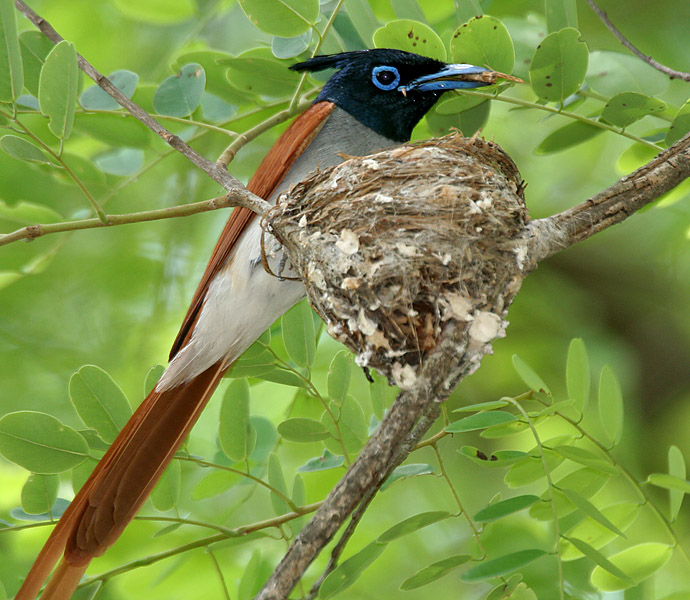
Indian Paradise Flycatcher (Terpsiphone paradisi) by Nikhil Devasar

Indian Paradise Flycatcher (Terpsiphone paradisi) by Nikhil Devasar

For the wisdom of this world is foolishness with God. For it is written, “HE CATCHES THE WISE IN THEIR OWN CRAFTINESS”; and again, “THE LORD KNOWS THE THOUGHTS OF THE WISE, THAT THEY ARE FUTILE.” (1 Corinthians 3:19-20 NKJV)

Rough-faced Shag (Leucocarbo carunculatus) – to – New Zealand King Shag
Bronze Shag (Leucocarbo chalconotus) – to – Stewart Shag
Paradise Parakeet (Psephotellus pulcherrimus) – to – Paradise Parrot
Hume’s Owl (Strix butleri) – to – Omani Owl
Tuamoto Kingfisher (Todiramphus gambieri) – to – Mangareva Kingfisher
Micronesian Kingfisher (Todiramphus cinnamominus) – to – Guam Kingfisher
Variable Dwarf Kingfisher (Ceyx lepidus) – to – Moluccan Dwarf Kingfisher
Silvery Kingfisher (Ceyx argentatus) – to – Southern Silvery Kingfisher
Asian Paradise Flycatcher (Terpsiphone paradisi) – to – Indian Paradise Flycatcher
New Zealand Robin (Petroica australis) – to – South Island Robin

They also made these species taxonomy changes:

Wedge-tailed Shearwater (Puffinus pacificus_Ardenna pacifica) by Ian

Wedge-tailed Shearwater (Puffinus pacificus to Ardenna pacifica) by Ian

“And God blessed them, saying, “Be fruitful and multiply, and fill the waters in the seas, and let birds multiply on the earth.” (Genesis 1:22 NKJV)

(Puffinus pacificus) to Wedge-tailed Shearwater (Ardenna pacifica)
(Puffinus bulleri) to Buller’s Shearwater (Ardenna bulleri)
(Puffinus griseus) to Sooty Shearwater (Ardenna grisea)
(Puffinus tenuirostris) to Short-tailed Shearwater (Ardenna tenuirostris)
(Puffinus creatopus) to Pink-footed Shearwater (Ardenna creatopus)
(Puffinus carneipes) to Flesh-footed Shearwater (Ardenna carneipes)
(Puffinus gravis) to Great Shearwater (Ardenna gravis)
(Petroica multicolor) to Pacific Robin (Petroica pusilla)
(Leucosticte sillemi) to Sillem’s Mountain Finch (Carpodacus sillemi)

*

Birds of the World

ORDERS

Families

Species Index

New Kingfisher Species – I.O.C. Version 5.4

I.O.C. Update 5.4 Version

Good News

*

Birds of the Bible – Foundation #1 – Updated

If you read my blog, Impact of the Answers in Genesis Conference, I stated that the Foundation of the Word of God needs to be emphasized. For the last year, the different Birds of the Bible have been introduced. Where did the birds come from? The byline of this blog is “Birdwatching from a Christian Perspective.”  What does God’s Word say about the bird’s Creation?

Scrub Jay by Mike Bader

Scrub Jay by Mike Bader

Most birdwatchers know that when they pick up a Bird Guide or Book, one of the first thing we read is:

“Having attained the power of flight more than 150 million years ago, birds might be …” (Smithsonian Handbooks, Birds of North America, Eastern Region, page 6)

“Feathered Dinosaurs?
For years biologists have half-jokingly referred to birds as “feathered reptiles.” In part, it is a ploy to annoy bird lovers with the thought that the objects of their fancy are just singing lizards wrapped in stretched-out scales called “feathers.” Yet the phrase reflects an important biological reality: birds are undeniably the modified descendants of reptiles, as their body structure and habit of laying eggs out of water clearly show.”
Archaeopteryx makes an ideal “missing link,” showing characteristics intermediate between reptiles and birds…..One view, still held by many paleontologists, suggests that about 200 million years ago its ancestral line split off from a group of reptiles, the thecodonts.” (The Birder’s Handbook, p. 31-33)

“The Implications of Flight / The central theme of bird evolution is flight. Most avian features can be related back to this fundamental adaptation. The avian forelimbs are dedicated almost entirely to aerial flight, for instance. To meet the diverse demands of survival without hands, birds have been subject to a fascinating evolutionary makeover.”  … “Birds have evolved compact….” (p. 15)  Section called Origins, Evolution, and Classification states – “Bird Are Reptiles – Before the discovery of Archaeopteryx” (“about 150 million years”),” taxonomists had already suggested a close relationship between birds and reptiles because of the large number of anatomical features shared by the two classes of animals.” Goes on to mention “missing link” (p. 39, The Sibley Guide to Bird Life & Behavior)

On and on it goes. They state as “undeniable facts” many things that come from a “theory.”

But the Word of God, our Bible says differently.

In the beginning God created the heaven and the earth. (Genesis 1:1)

Continuing through Chapter 1, you find that God, who is the “self-existent”, “three-in-one”, known as “I AM“, did the creation through the Lord Jesus Christ.

In the beginning was the Word, and the Word was with God, and the Word was God. The same was in the beginning with God. All things were made by him; and without him was not any thing made that was made. (John 1:1-3)

American White Pelican (Pelecanus erythrorhynchos) by Lee

American White Pelican (Pelecanus erythrorhynchos) by Lee

Day 1 – Light (Day) and darkness (Night)
Day 2 – Firmament (Heaven) in midst of the waters and divided them
Day 3 – Waters (Seas) gathered together and the dry land (Earth) appeared with grass, herbs and fruit after his kind
Day 4 – Sun, Moon, and Stars
Day 5 – Great whales and all water creatures after his kind and the winged fowls (birds) after his kind

And God said, Let the waters bring forth abundantly the moving creature that hath life, and fowl that may fly above the earth in the open firmament of heaven. And God created great whales, and every living creature that moveth, which the waters brought forth abundantly, after their kind, and every winged fowl after his kind: and God saw that it was good. And God blessed them, saying, Be fruitful, and multiply, and fill the waters in the seas, and let fowl multiply in the earth. And the evening and the morning were the fifth day. (Genesis 1:20-23)

Day 6 – Land animals, cattle, and creeping things after their kind

And God said, Let the earth bring forth the living creature after his kind, cattle, and creeping thing, and beast of the earth after his kind: and it was so. And God made the beast of the earth after his kind, and cattle after their kind, and every thing that creepeth upon the earth after his kind: and God saw that it was good. And God said, Let us make man in our image, after our likeness: and let them have dominion over the fish of the sea, and over the fowl of the air, and over the cattle, and over all the earth, and over every creeping thing that creepeth upon the earth. (Genesis 1:24-26 )

So God created man in his own image, in the image of God created he him; male and female created he them. And God blessed them, and God said unto them, Be fruitful, and multiply, and replenish the earth, and subdue it: and have dominion over the fish of the sea, and over the fowl of the air, and over every living thing that moveth upon the earth. And God said, Behold, I have given you every herb bearing seed, which is upon the face of all the earth, and every tree, in the which is the fruit of a tree yielding seed; to you it shall be for meat. (Genesis 1:27-29)

And to every beast of the earth, and to every fowl of the air, and to every thing that creepeth upon the earth, wherein there is life, I have given every green herb for meat: and it was so. And God saw every thing that he had made, and, behold, it was very good. And the evening and the morning were the sixth day. (Genesis 1:30-31)

Day 7 – God rested and blessed and sanctified all His work

Thus the heavens and the earth were finished, and all the host of them. And on the seventh day God ended his work which he had made; and he rested on the seventh day from all his work which he had made. And God blessed the seventh day, and sanctified it: because that in it he had rested from all his work which God created and made. (Genesis 2:1-3)

In Birds of the Bible – Foundation #2, I will bring out some more from the Word of God and articles written about the creation of birds. For now, let me make this observation. If the birds were created on Day 5 and the reptiles were created on Day 6, how did birds evolve from reptiles?

*

A friend suggested that, since she is a new follower, I should re-post/update some of the original Birds of the Bible articles. This series was posted back in 2009. I am updating some of the photos and material as needed.

Birds of the Bible

Original Birds of the Bible – Foundation #1

Original Birds of the Bible – Foundation #2

Wordless Birds

Sunday Inspiration – Nuthatches and Creepers

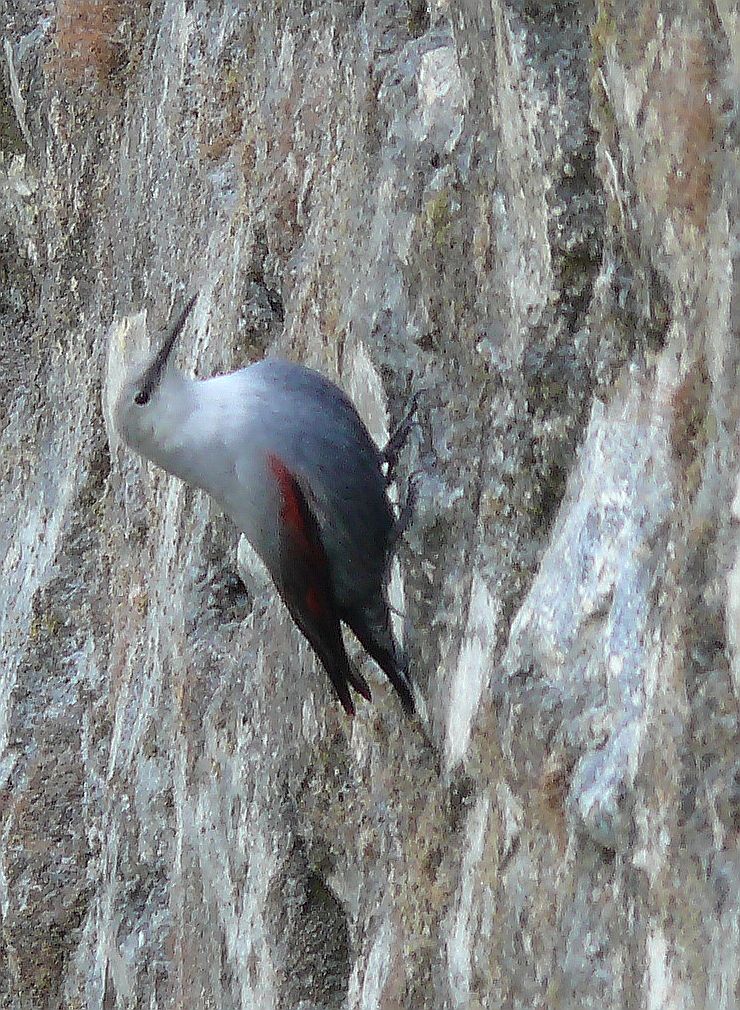
Wallcreeper (Tichodroma muraria) ©WikiC

Wallcreeper (Tichodroma muraria) ©WikiC

Every animal, every creeping thing, every bird, and whatever creeps on the earth, according to their families, went out of the ark. (Genesis 8:19 NKJV)

The Lord has created more little avian wonders in these three next families:

Red-breasted Nuthatch (Sitta canadensis) by Daves BirdingPix

Red-breasted Nuthatch (Sitta canadensis) by Daves BirdingPix

The 28 Nuthatches constitute a genus, Sitta, of small passerine birds belonging to the family Sittidae. Characterised by large heads, short tails, and powerful bills and feet, nuthatches advertise their territory using loud, simple songs. Most species exhibit grey or bluish upperparts and a black eye stripe.

Most nuthatches breed in the temperate or montane woodlands of the Northern Hemisphere, although two species have adapted to rocky habitats in the warmer and drier regions of Eurasia. However, the greatest diversity is in Southern Asia, and similarities between the species have made it difficult to identify distinct species. All members of this genus nest in holes or crevices. Most species are non-migratory and live in their habitat year-round, although the North American Red-breasted Nuthatch migrates to warmer regions during the winter.

Wallcreeper (Tichodroma muraria) by Nikhil Devasar

The Wallcreeper (Tichodroma muraria) is a small passerine bird found throughout the high mountains of Eurasia. It is the only member of the genus Tichodroma. (Wikipedia)

PAS-Clim Brown Treecreeper (Climacteris picumnus) ©WikiC 3

Brown Treecreeper (Climacteris picumnus) ©WikiC

The 11 Treecreepers are a family, Certhiidae, of small passerine birds, widespread in wooded regions of the Northern Hemisphere and sub-Saharan Africa. The family contains ten species in two genera, Certhia and Salpornis. Their plumage is dull-coloured, and as their name implies, they climb over the surface of trees in search of food.

This slideshow requires JavaScript.

Also, to every beast of the earth, to every bird of the air, and to everything that creeps on the earth, in which there is life, I have given every green herb for food”; and it was so. Then God saw everything that He had made, and indeed it was very good. So the evening and the morning were the sixth day. (Genesis 1:30-31 NKJV)

“How Deep Is Your Love?” – Played by Jill Foster (Faith Baptist)

*
More Sunday Inspirations

Sittidae – Nuthatches

Tichodromidae – Wallcreeper

Certhiidae – Treecreepers

Sharing The Gospel

*

Ian’s Bird of the Week – Crimson Rosella

Ian’s Bird of the Week – Crimson Rosella ~ by Ian Montgomery

Newsletter – 11/20/15

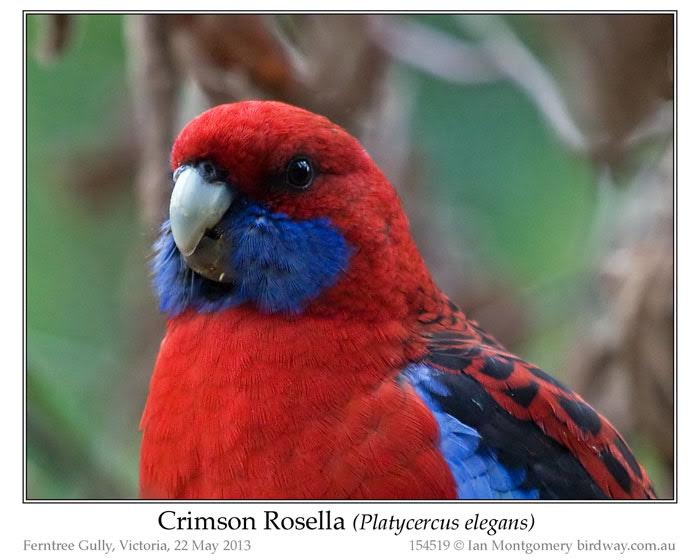
Some birds are very obvious choices for bird of the week because they are beautiful and popular. Ironically, I can overlook them for exactly that reason as I assume they’ve featured previously. Here is one such, the Crimson Rosella, an iconic and popular bird of the forests of eastern and southeastern Australia.

Crimson Rosella (Platycercus elegans) by Ian

Normally rather shy in its natural habitat and can become quite tame in parks and gardens. It’s popularity is reflected in the fact that it has been introduced to New Zealand and Norfolk Island and (unsuccessfully) to Lord Howe Island. It nests in tree hollows and is regarded by conservationists as a pest on Norfolk Island as it competes with the smaller, endangered Norfolk Parakeet for nest sites.

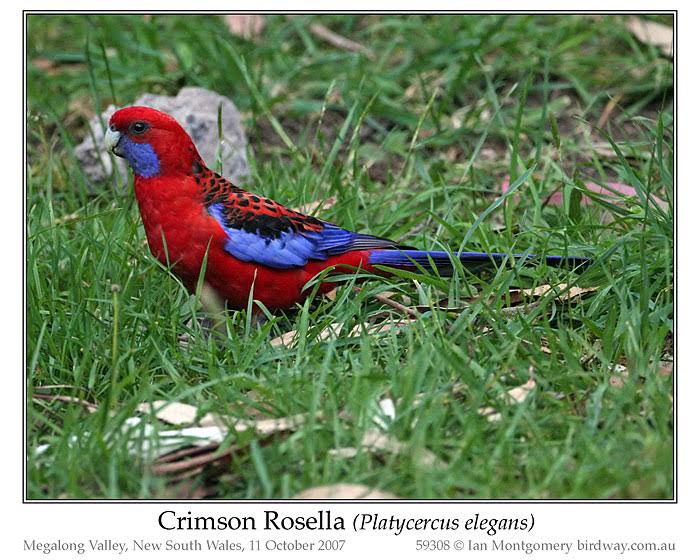
Crimson Rosella (Platycercus elegans) by Ian

It feeds mainly on the seeds and fruit of trees and will forage on the ground for the grass seed, like the bird in the third photo. It’s a very vocal species and its ringing calls are a characteristic sound of forests in eastern Australia. Out of the breeding season, it is found in small flocks but it is territorial when breeding and the pair bond is though to persist for several years or longer.

Crimson Rosella (Platycercus elegans) by Ian

Juvenile birds of the eastern nominate race are mainly olive green with blue cheeks and patches of red on the head, breast and undertail-coverts. The nominate race extends from Cooroy in Southeastern Queensland to about Kingston in eastern South Australia.

Crimson Rosella (Platycercus elegans) by Ian

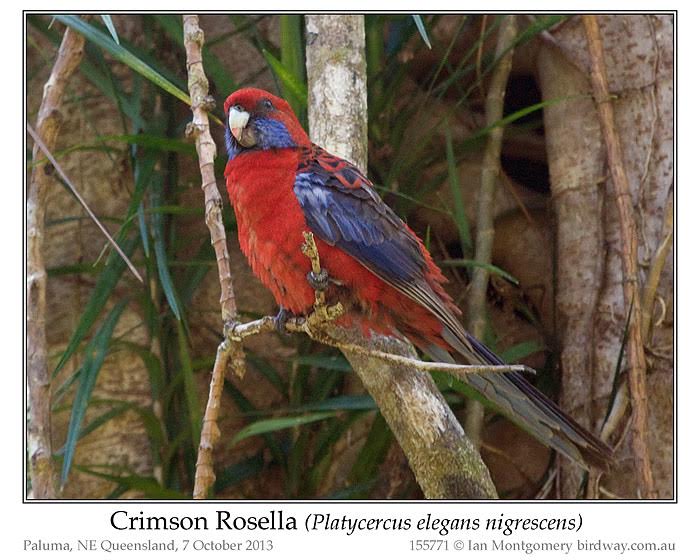
Farther north, an isolated population of the race nigrescens (‘blackish’) occurs from Eungella near Mackay north to the Atherton Tableland. This is smaller and darker than the nominate race, fifth photo, and is mainly a bird of highland rainforest.

Crimson Rosella (Platycercus elegans) by Ian

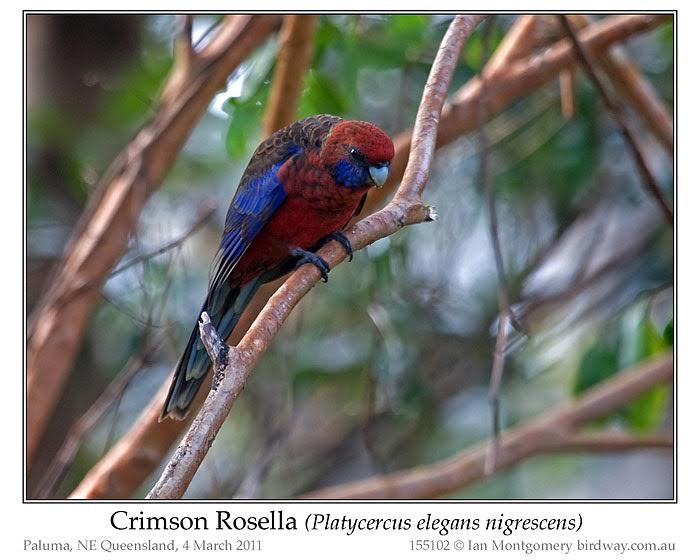
Juveniles of this northern race are much more like the adults than their southern relatives and have brownish-black feathers on the back instead of green (sixth photo).

Crimson Rosella (Platycercus elegans) by Ian

Crimson Rosella (Platycercus elegans) by Ian

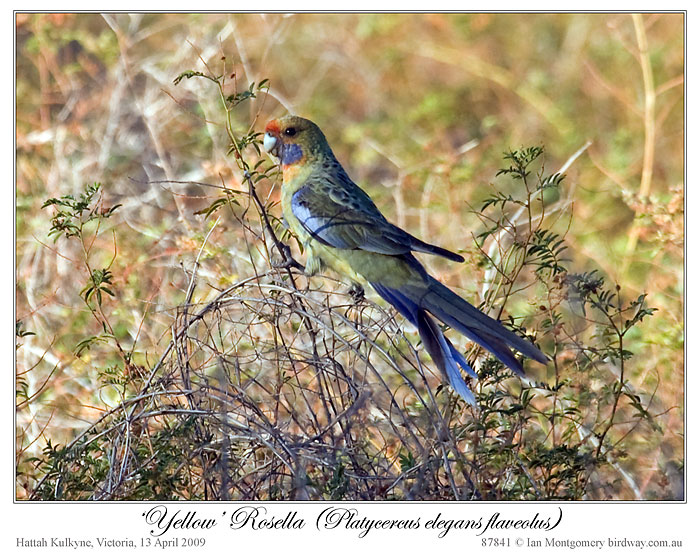
In southeastern Australia the populations of blue-cheeked Rosellas look very different and were for a long time treated as two different species, the Yellow Rosella, seventh photo, of the river systems of southern New South Wales and northern Victoria, and the orange-plumaged Adelaide Rosella of South Australia from the Flinders Ranges in the north to the Fleurieu Peninsula south of Adelaide (no photo). Yellow and Adelaide Rosellas interbreed where their ranges meet along the Murray River in South Australia. The two are now treated as races of the Crimson Rosella, flaveolus and adelaidae respectively.

Yellow Rosella (Platycercus elegans flaveolus) by Ian 4

Yellow Rosella (Platycercus elegans flaveolus) by Ian 4

The Yellow Rosella looks very like the other blue-cheeked Rosella, the Green Rosella of Tasmania. It is, however, retained as a separate species. I included this photo of the Yellow Rosella when the Green Rosella was bird of the week in March 2013.

Christmas is looming ever closer, so this wouldn’t be complete without the obligatory commercial. What do you give to the digitally-competent birder or nature-lover who has everything? An electronic book of course and both Apple and Kobo have facilities in their ebook stores for giving gifts. I’ve included a Giving Gifts section on the Publications page with help on how these stores let you give gifts. Google has facilities only for giving the equivalent of a gift token and not specific items. These book images are linked to the corresponding web pages:

Where To Find Birds - Ian

Ian's Book 2

Greetings
Ian

**************************************************
Ian Montgomery, Birdway Pty Ltd,
454 Forestry Road, Bluewater, Qld 4818
Tel 0411 602 737 ian@birdway.com.au
Bird Photos http://www.birdway.com.au/
Recorder Society  iTunes; Google Play Kobo Books


Lee’s Addition:

For the LORD God is a sun and shield; The LORD will give grace and glory; No good thing will He withhold From those who walk uprightly. (Psalms 84:11 NKJV)

Thanks again, Ian, for sharing some more avian wonders. I especially like the second photos. That little guy looks like he is walking with an attitude. :)

Cause me to hear Your lovingkindness in the morning, For in You do I trust; Cause me to know the way in which I should walk, For I lift up my soul to You. (Psalms 143:8 NKJV)

*

More Ian’s Bird of the Week

Ian’s Psittacidae – Parrots Family

Pale-headed Rosella ~ 8-24-14

Psittaculidae – Old World Parrots (Here)

Wordless Birds – Hummers

*

DON’T MESS WITH THE HOOPOE! (Re-post)

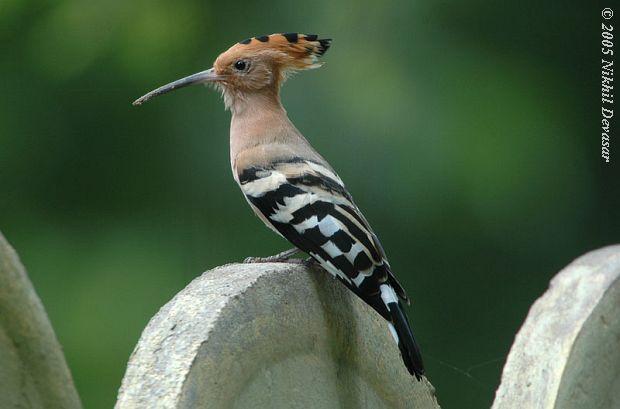
Eurasian Hoopoe (Upupa epops) by Nikhil

Eurasian Hoopoe (Upupa epops) by Nikhil

DON’T MESS WITH THE HOOPOE!

“But these are they of which ye shall not eat: the eagle, and the ossifrage, and the ospray … And the stork, and the heron after her kind, and the lapwing, and the bat.” (Deuteronomy 14:12, 18)

Don’t mess with the hoopoe – especially the female! Their Creator blessed this bird with an oil gland that produces a really foul-smelling liquid. When rubbed into their plumage, it smells like rotting meat and deters not only predators but parasites as well. In fact, it also acts as an antibacterial agent.

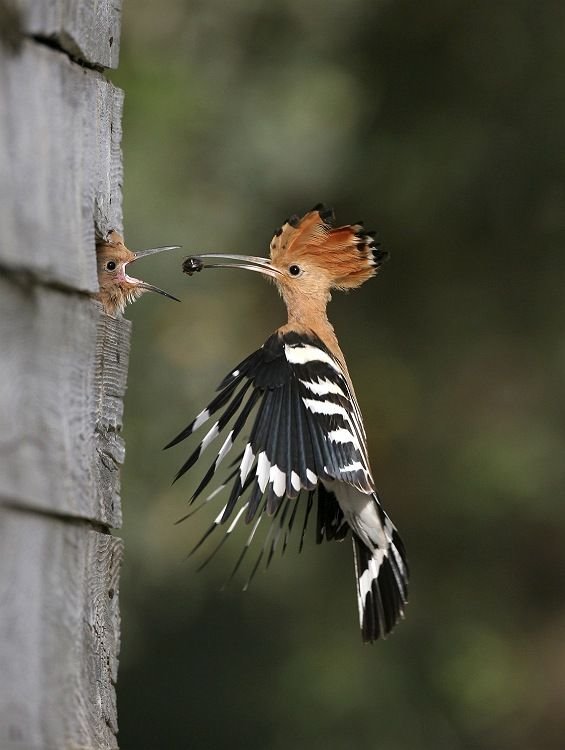
Hoopoe Feeding Young ©©Dvir Lotan from Israel

Hoopoe Feeding Young ©©Dvir Lotan from Israel

Thanks to this nasty-smelling liquid, most predators stay far away from the hoopoe’s nest. But even when a predator ignores the stench and comes looking for a meal while mama hoopoe is away, the nestlings are not defenseless. Even when they are just six days old, they can produce the same liquid and shoot it accurately into the face of predators.

With such an awful smell, perhaps it was a great blessing that God placed the hoopoe on His list of animals that were not to be eaten by His people. By the way, the King James version of the Bible refers to the hoopoe as the lapwing but we’re still talking about the hoopoe. Since this bird is listed in Deuteronomy as an unclean animal, isn’t it rather odd that the modern state of Israel would choose the hoopoe as their national bird?

Like the hoopoe, every person ever born is unclean in God’s sight. This is why Jesus Christ, the sinless lamb of God, submitted Himself to die on the cross as our substitute. He will make you clean in God’s sight when you repent of your sins and put your trust in Jesus!

Prayer:
Heavenly Father, I know that there’s nothing I can do to make myself clean and righteous. Thank You for sending Your Son, Jesus Christ, to die on the cross to make me acceptable in Your sight. Amen.

©Creation Moments 2015


Lee’s Addition:

the stork, the heron after its kind, and the hoopoe and the bat. (Deu 14:18)

Our Creator has again shown His perfect design and protection for another of His avian wonders. This time with the Hoopoe. They are a Bird of the Bible and have been features several times her on this blog.

Good News Tracts

*