Sunday Inspiration – I’ll Be A Friend

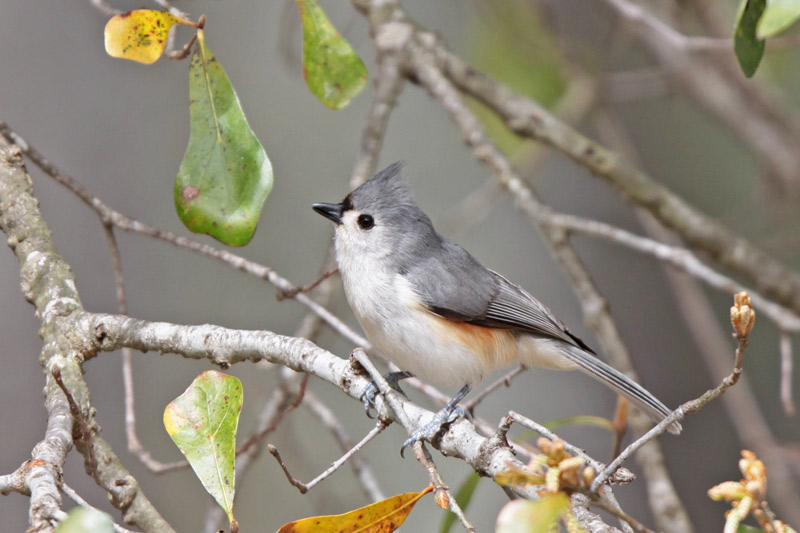
Tufted Titmouse (Baeolophus bicolor) by Margaret Sloan

Tufted Titmouse (Baeolophus bicolor) by Margaret Sloan

But I have trusted in thy mercy; my heart shall rejoice in thy salvation. I will sing unto the LORD, because he hath dealt bountifully with me. (Psalms 13:5-6 KJV)

The birds trust the Lord because they know He provides for them. We can have Jesus as a Friend that is even closer and provides our needs, especially Salvation.

****

This slideshow requires JavaScript.

“I’ll Be A Friend To Jesus” – Faith Baptist Quartet 2011

  1. They tried my Lord and Master,
    With no one to defend;
    Within the halls of Pilate
    He stood without a friend.

    • Refrain:
      I’ll be a friend to Jesus,
      My life for Him I’ll spend;
      I’ll be a friend to Jesus,
      Until my years shall end.
  2. The world may turn against Him,
    I’ll love Him to the end,
    And while on earth I’m living,
    My Lord shall have a friend.
  3. I’ll do what He may bid me;
    I’ll go where He may send;
    I’ll try each flying moment
    To prove that I’m His friend.
  4. To all who need a Savior,
    My Friend I’ll recommend;
    Because He brought salvation,
    Is why I am His friend.

May you enjoy your day, rejoicing in the Lord’s Great Salvation, and His beautiful birds He has created for His pleasure and our enjoyment.

If you haven’t received his salvation, remember:

John 3:14-19 KJV
(14) And as Moses lifted up the serpent in the wilderness, even so must the Son of man be lifted up:
(15) That whosoever believeth in him should not perish, but have eternal life.
(16) For God so loved the world, that he gave his only begotten Son, that whosoever believeth in him should not perish, but have everlasting life.
(17) For God sent not his Son into the world to condemn the world; but that the world through him might be saved.
(18) He that believeth on him is not condemned: but he that believeth not is condemned already, because he hath not believed in the name of the only begotten Son of God.
(19) And this is the condemnation, that light is come into the world, and men loved darkness rather than light, because their deeds were evil.

Gospel Message

More Sunday Inspirations

*
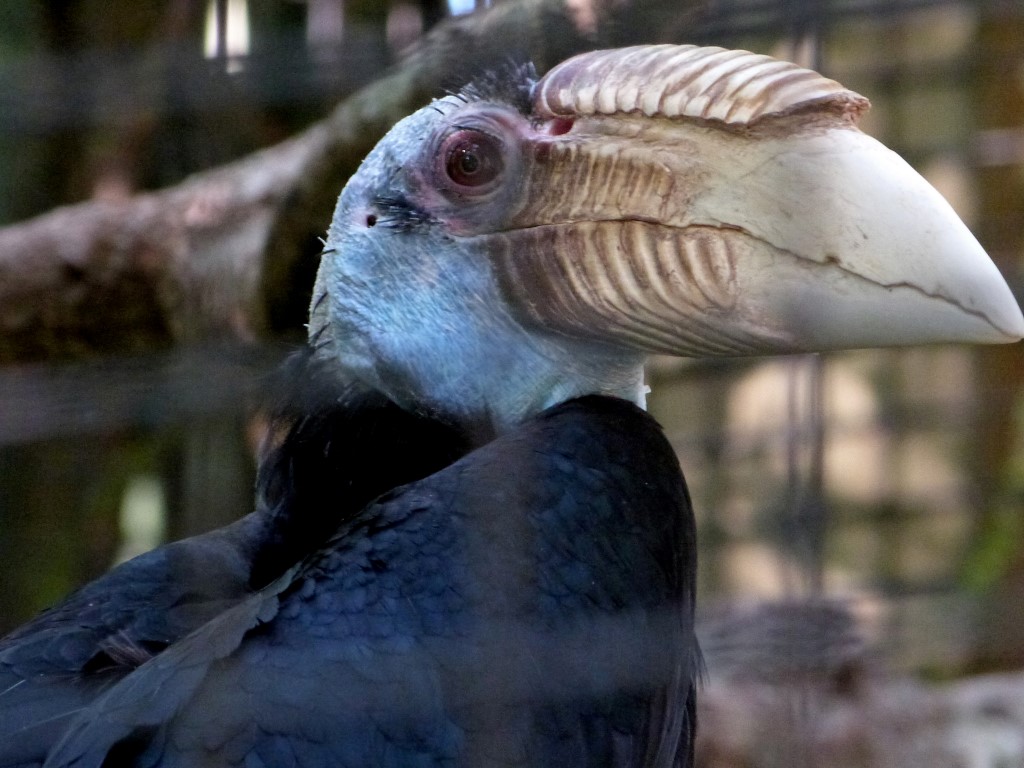
 

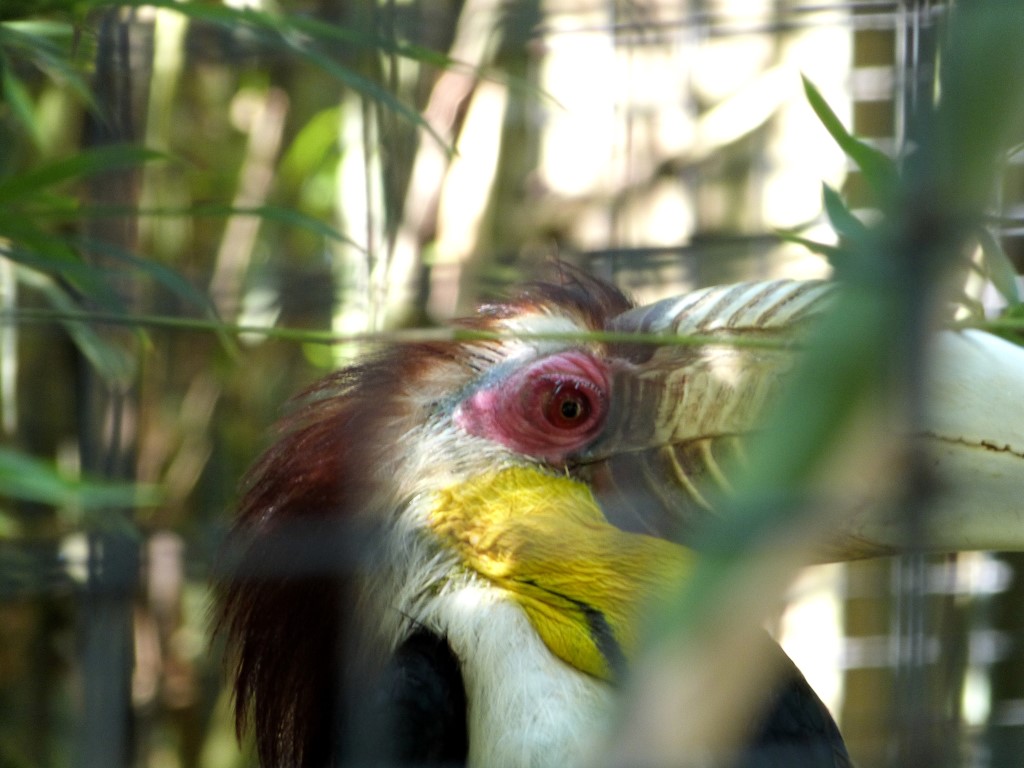
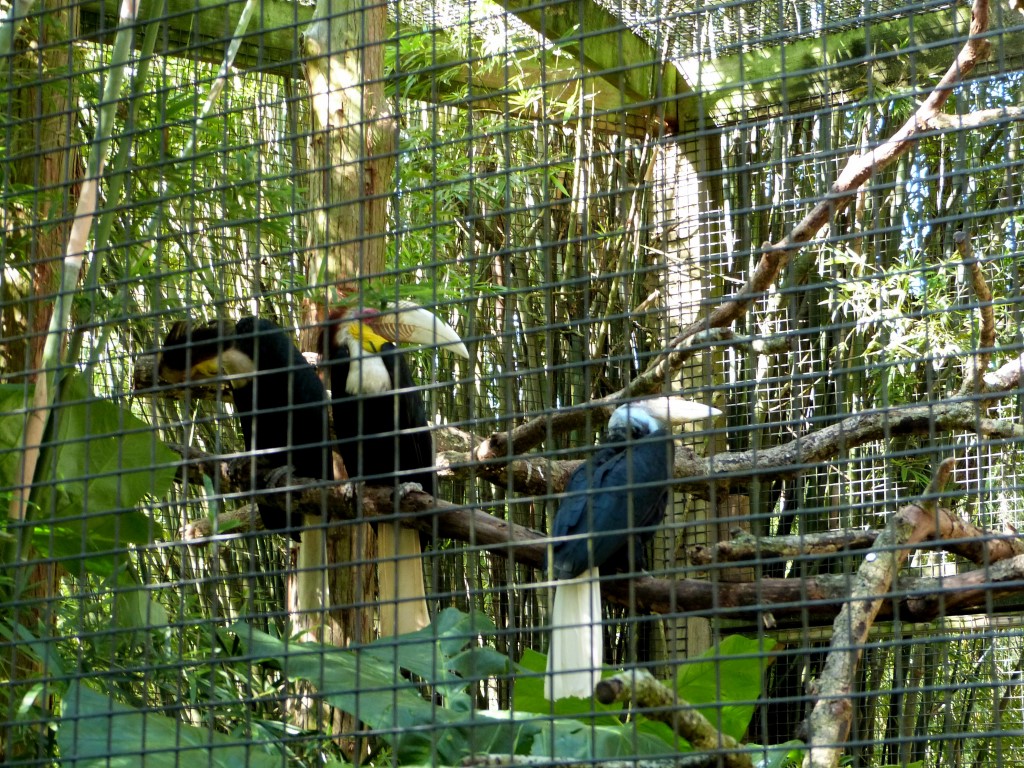
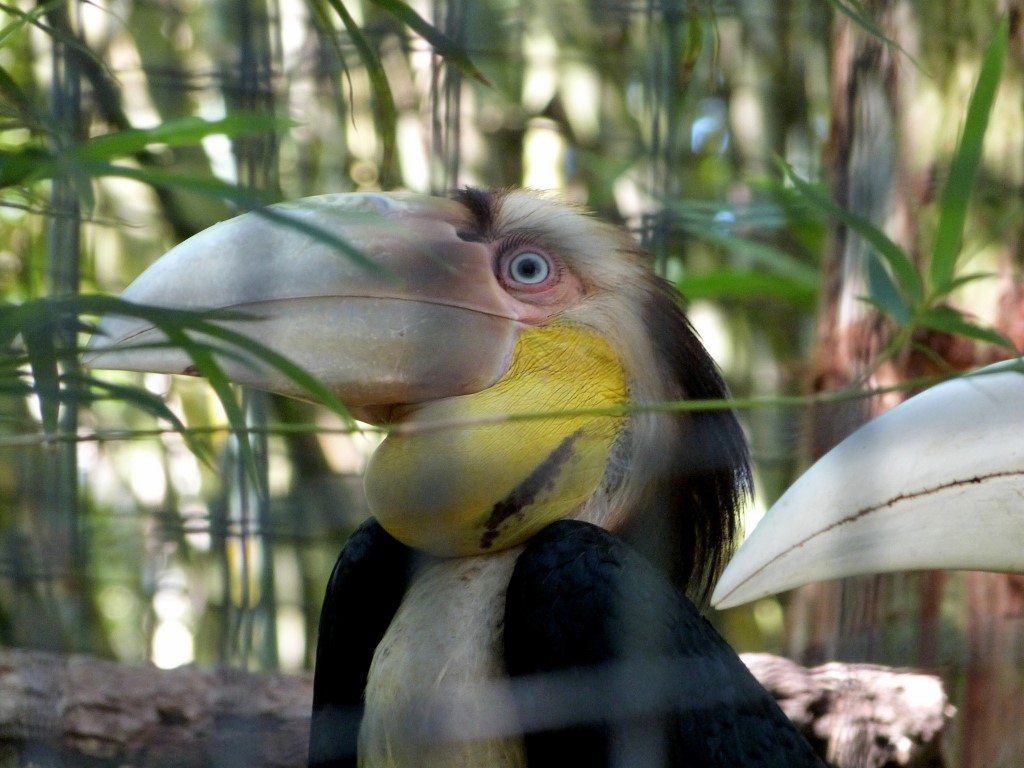
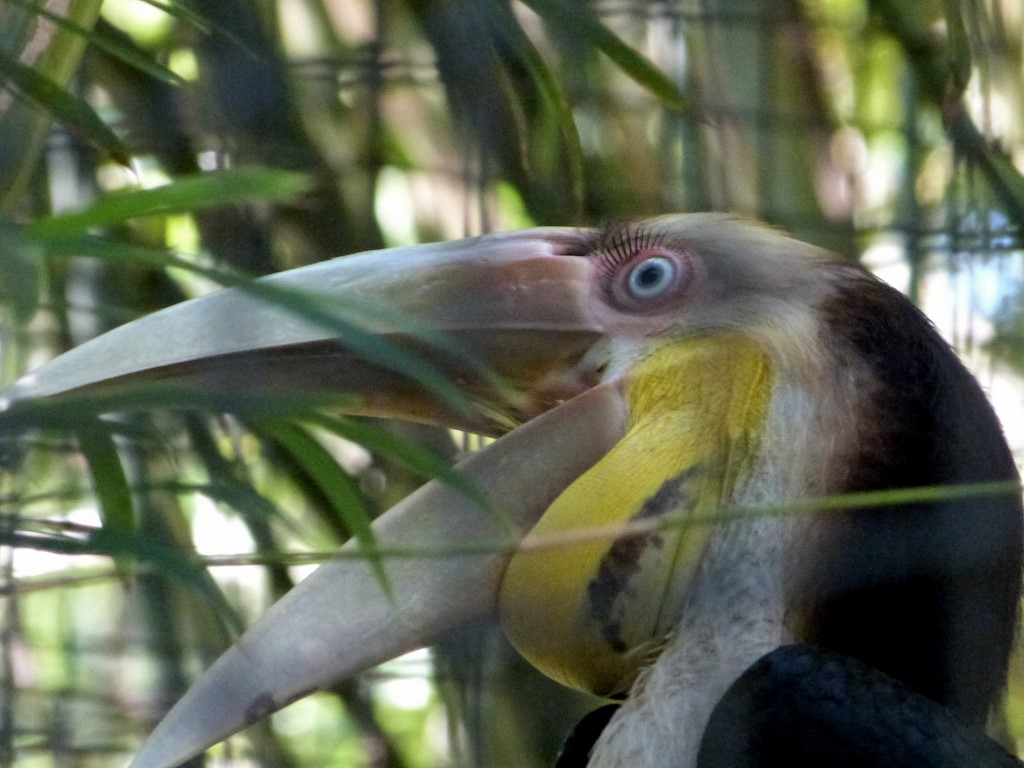
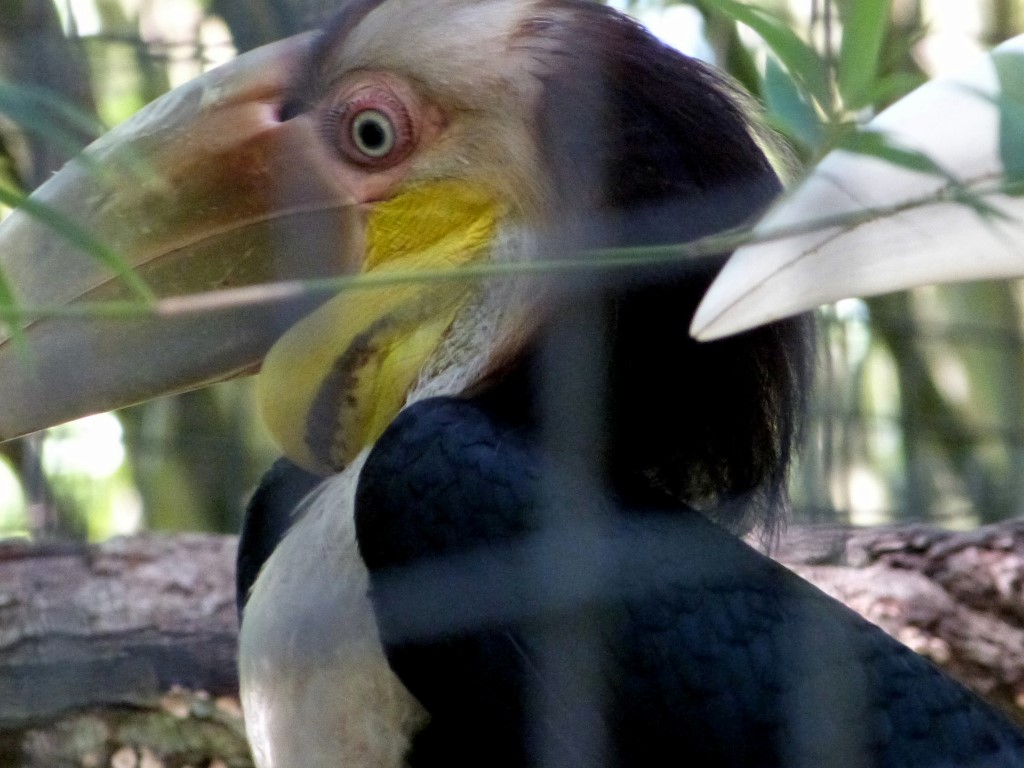
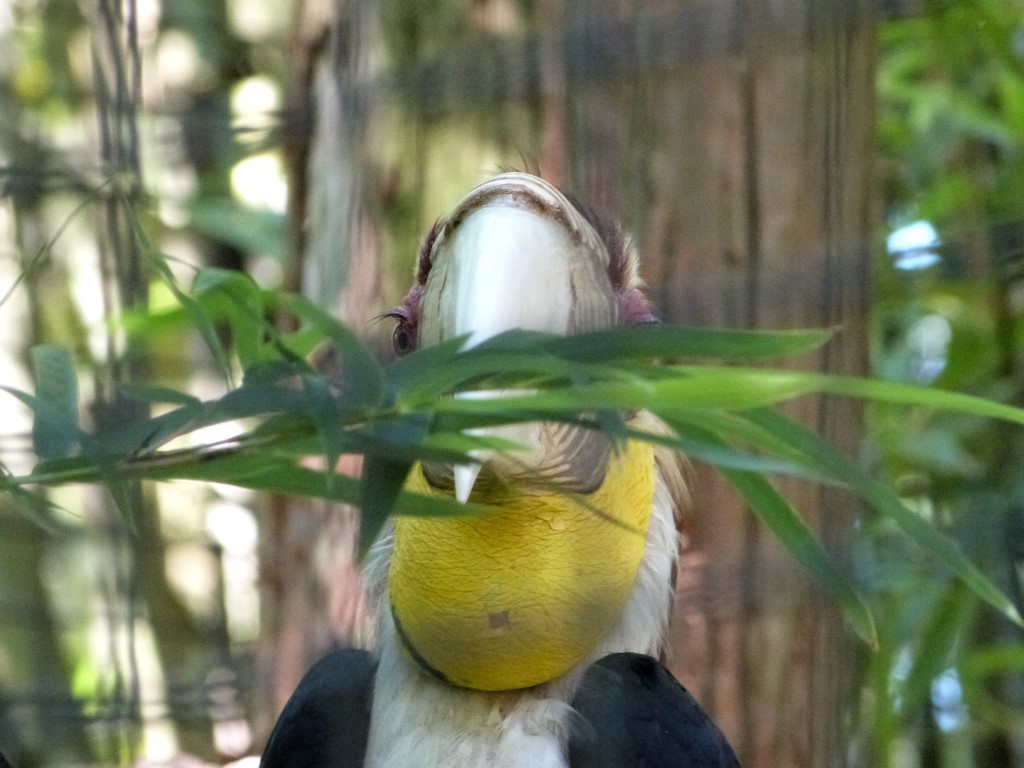
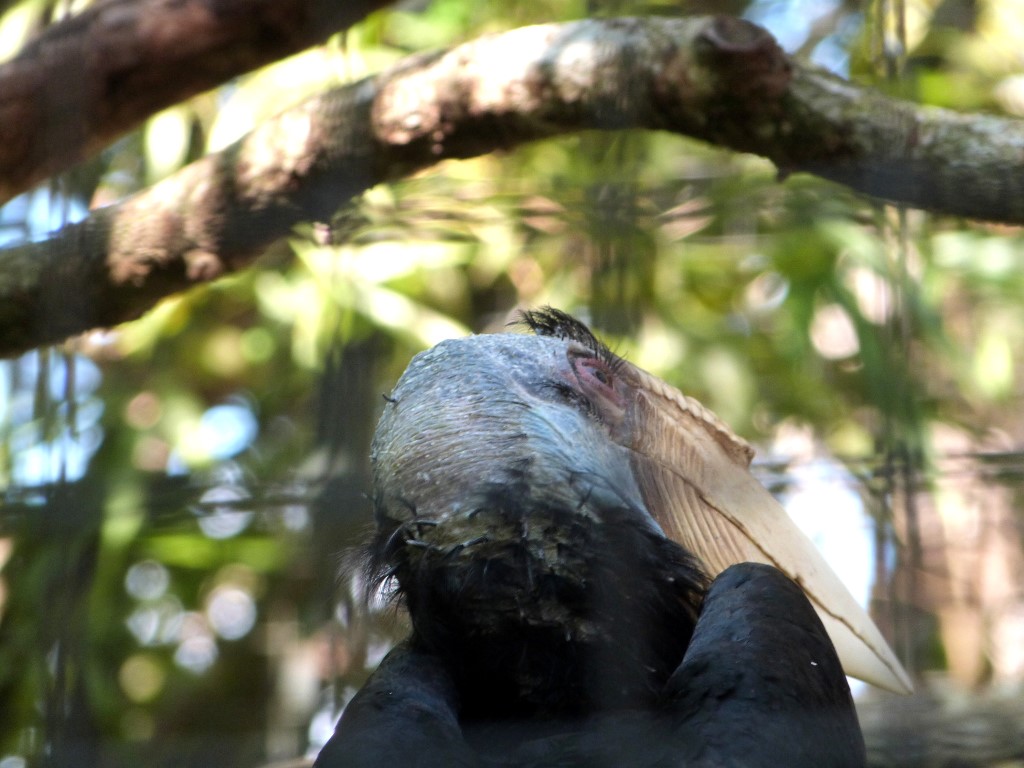
Wreathed Hornbills at Central Florida Zoo

Wreathed Hornbill (Rhyticeros undulatus) Central Florida Zoo by Lee

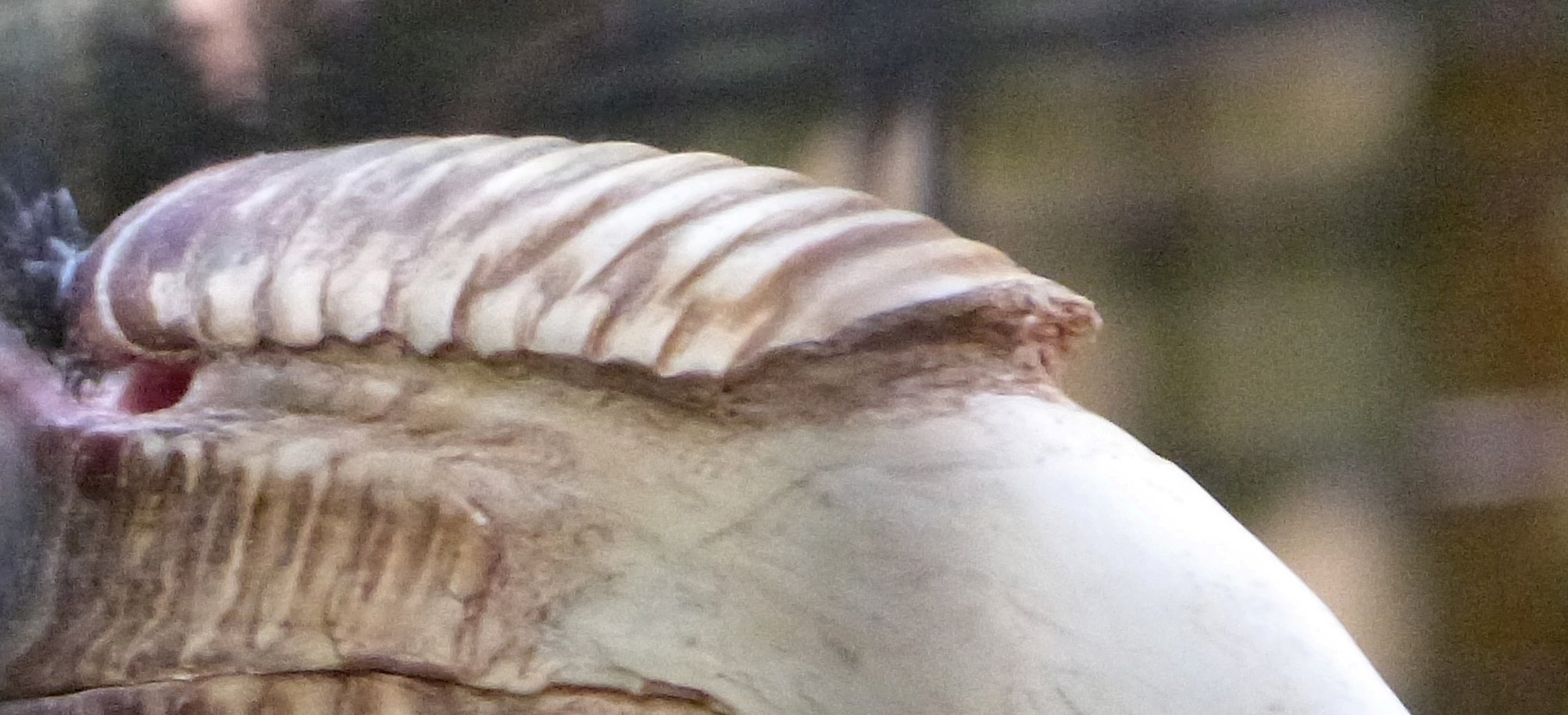
Wreathed Hornbill (Rhyticeros undulatus) Female Central Florida Zoo by Lee

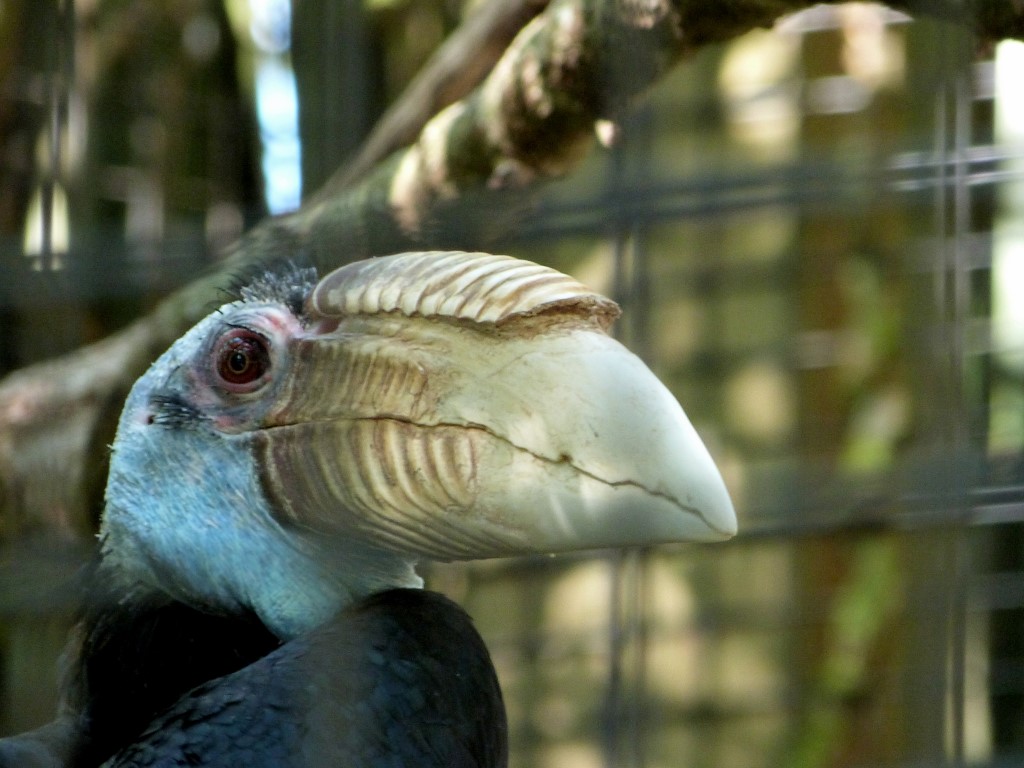
Last week on the way over to the retreat in Daytona Beach, we stopped by the Central Florida Zoo & Botanical Gardens. There were several interesting birds, especially the Wreathed Hornbill (Rhyticeros undulatus). There was a male, female and a juvenile male there. More unique creations from our Creator.

The Hornbill names can be confusing because there is a Wrinkled, Writhed, and the Wreathed Hornbills along with the others. The one here at Central Florida Zoo was the Wreathed..It was hard to get a decent photo because of the size of the fencing/wires on the cages. So, the photos were about a good as I could get shooting in Program mode. I tossed quite a few photos because of the fencing. :))

Wreathed Hornbill (Rhyticeros undulatus) Adult Male Central Florida Zoo by Lee

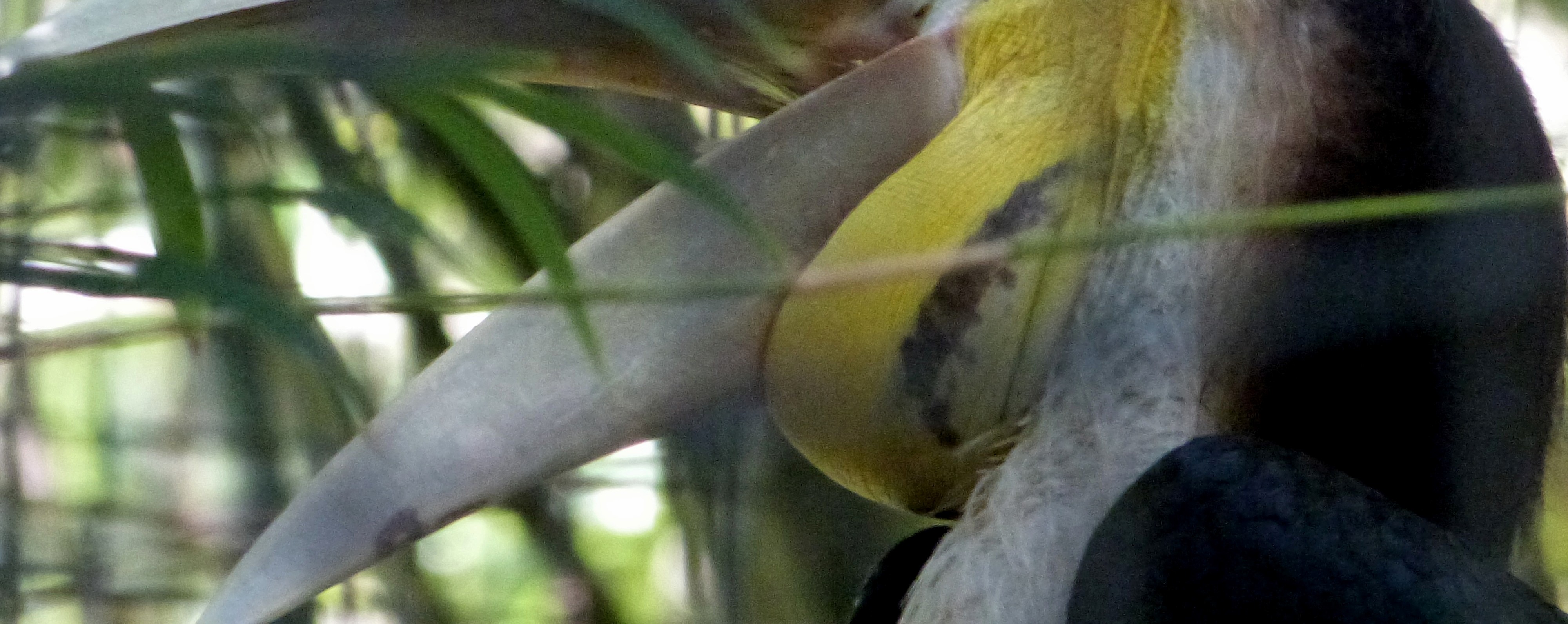
The Wreathed Hornbill (Rhyticeros undulatus), also known as the Bar-pouched Wreathed Hornbill because of the black line on the pouch or chin. It is a species of hornbill found in forests from far north-eastern India and Bhutan, east and south through mainland Southeast Asia and the Greater Sundas, except Sulawesi. It is 75–100 cm (30–39 in) long. Males weigh from 4.0 lb (1.8 kg) to 8.0 lb (3.65 kg), and females weigh from 3.0 lb (1.36 kg) to 6.0 lb (2.7 kg). Both sexes are similar to the respective sexes of the closely related plain-pouched hornbill, but the wreathed hornbill can be recognized by the dark bar on the lower throat (hence the alternative common name, bar-pouched). Though commonly considered monotypic, evidence suggests some geographical variation in the appearance. (Wikipedia with editing)

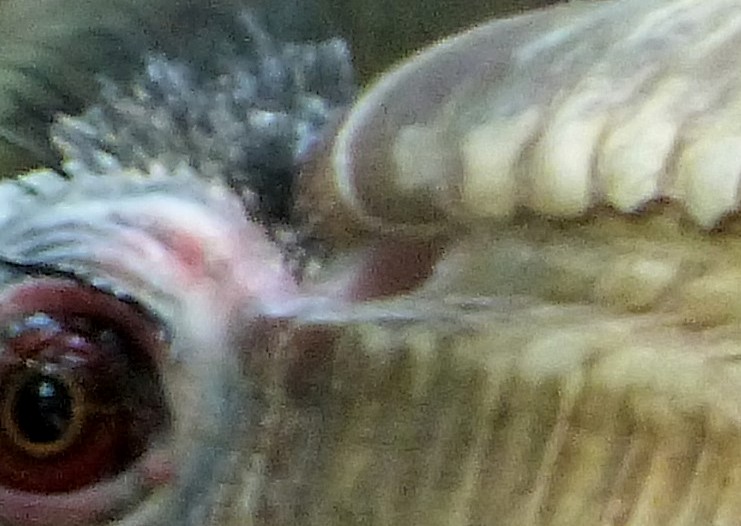
They belong to the Bucerotidae – Hornbills Family which has 59 species. “These birds have large down-curved bills and many have a large growth on the upper bill called a casque.  These bills come in many striking shapes and colors.  They also have what appears to be eyelashes, but they are not made of hair, they are small feathers that serve the same function.” (Central FL Zoo)

Fun Facts (From Zoo Atlanta)

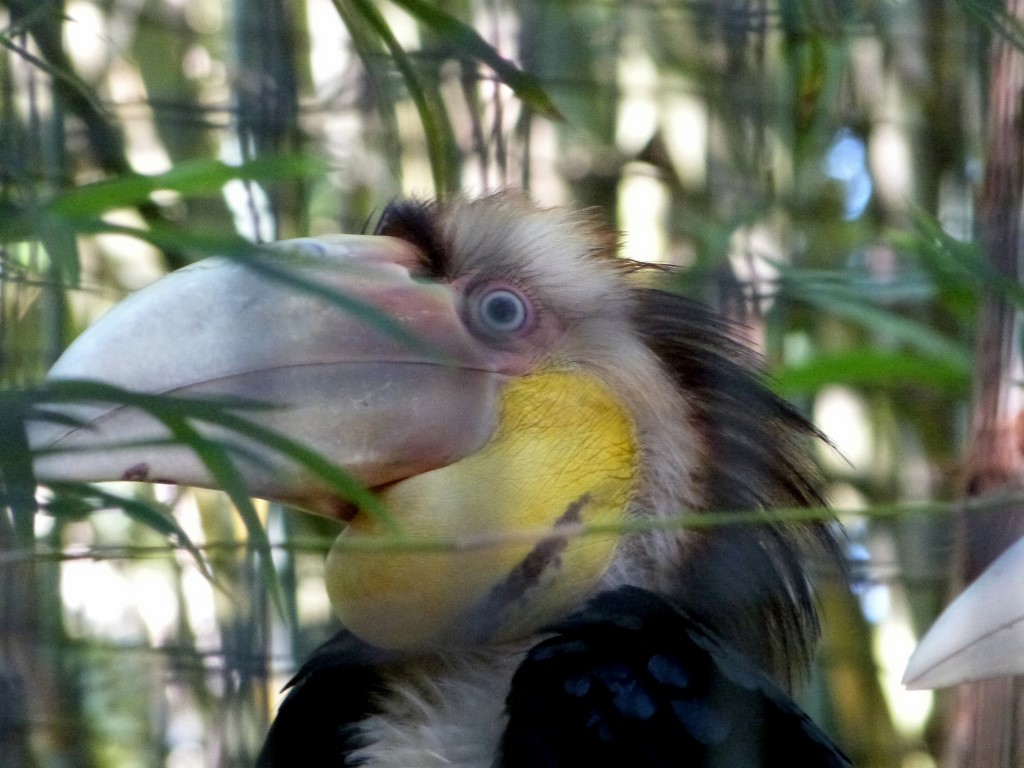
Males can be easily distinguished from females by the color of their throats. The male’s throat skin is yellow; the female’s is blue. – Males and females pair for life. – The specialized knobs on the tops of the birds’ beaks are known as casques. These are believed to function as signals of dominance and gender.

 You shall take with you of every clean animal by sevens, a male and his female; and of the animals that are not clean two, a male and his female; also of the birds of the sky, by sevens, male and female, to keep offspring alive on the face of all the earth. (Genesis 7:2-3 NASB)

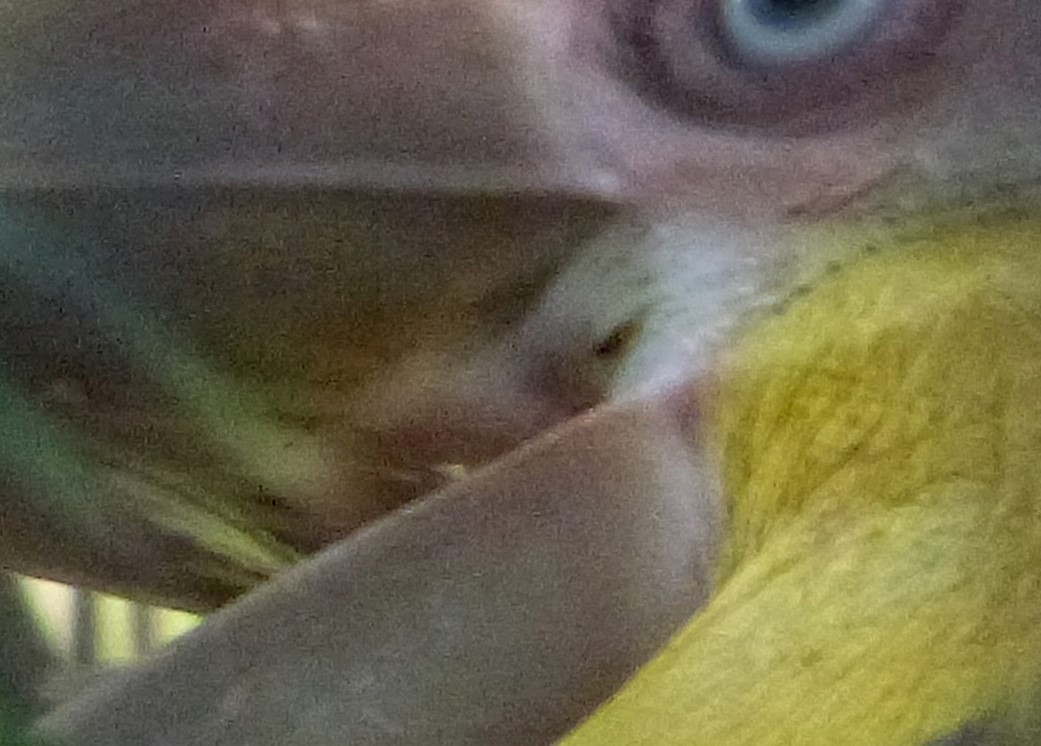
I find their beak so interesting. In light of yesterday’s article, Birdwatching Terms – About’s Bird Bill Parts, I have included some cropped photos pointing out the different parts of the beak. Also, I like their eyelashes which are actually feathers, but act like our eyelashes.

*

Bucerotidae – Hornbills

Central Florida Zoo & Botanical Gardens

Birds of the World

Wreathed Hornbill – Wikipedia

Wreathed Hornbill – Central Florida Zoo

Wreathed Hornbill –  AvianWeb

Is There A God?

*


Birdwatching Terms – About’s Bird Bill Parts

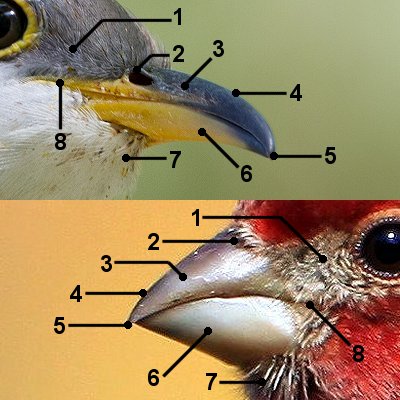
Bird Bill Parts From About

About's Bill-Parts ©Dan Pancamo/nigel

About’s Bill-Parts ©Dan Pancamo/nigel

Bird Bill Parts.  ©Dan Pancamo / nigel

The dove came to him toward evening, and behold, in her beak was a freshly picked olive leaf. So Noah knew that the water was abated from the earth. (Genesis 8:11 NASB)

A bird’s bill, also called a beak, is a critical piece of its anatomy, not only for foraging, defense, singing and other behaviors, but also for birders to make a proper identification. Depending on the bird, a bill can provide clues to far more than species: age, gender, diet and foraging behaviors can all be learned by studying a bill. By knowing the basic parts of a bill and the bird’s face and head immediately adjacent to the bill, birders can be better prepared to look for the subtle clues bills can reveal about every bird.

Overall Bill Features

Some of the most important aspects of a bird’s bill are not specific features, but the general jizz of the bill. When first studying bird bills, look for…

  • Size: How large does the bill appear in proportion to the bird’s head? Check for length as compared to the length of the head as well as the width of the bill and how that width may change along the bill’s length.
  • Shape: Bill shapes vary widely, from delicate triangles or thin, needle-like bills to thick, bulbous bills to sharply curved bills to radical shapes that include spoon-like tips or horny casques. When the shape is very unique, that can be a diagnostic clue for a bird’s identity even if other field marks cannot be seen.
  • Color: The color of a bill can be a clue for species, gender or age. Note the overall color as well as any specific markings, such as a colored tip or base, subterminal band or color differences between the top and bottom of the bill.

Specific Bill Parts

When birders can get a good look at a bill, there are a number of different parts that can yield clues about the bird’s identity, such as…

  1. Lores: While not part of the bill itself, the lores are the space between the base of a bird’s bill and the forward edge of its eyes. This area may be a different color or show a smudge or eye line that can be an identification clue.
  2. Nares: More commonly called the nostrils, the position of the nares as well as their size and shape are important to note for bird’s identities. In some types of birds, such as raptors, the nares are covered by a fleshy cere, while in others, such as many seabirds, elongated tube-like nares help filter seawater.
  3. Maxilla: Also called the upper mandible, the maxilla is the top half of a bird’s bill. Size, length and shape will vary, and some birds have knobs, fleshy wattles or other features that distinguish the maxilla.
  4. Culmen: Difficult to see on many bird species, the culmen is the center line drawn down the length of a bird’s maxilla. In some species, this can be a very distinct peak that divides the sides of the bill, while it may not be noticeable in other species.
  5. Tip: The tip of a bird’s bill may be different shapes, such as blunt or sharply pointed, depending on the bird’s general diet. Hooks are common at the tip of carnivorous birds’ bills, while many waterfowl have small bumps, called nails, on the tip of the maxilla.
  6. Mandible: The lower half of a bird’s bill is called the mandible or lower mandible. The color may vary from the maxilla either along the entire length or just at one end, and can be a great clue for identification. Some birds, such as many gulls, may show spots or other markings just on the mandible.
  7. Chin: Not directly part of the bill, the chin is the area of feathers immediately adjacent to the base of a bird’s mandible. In some species, the color of the chin may vary from the throat or face, providing a valuable identification clue.
  8. Gape: This is a fleshy area at the base of the bill where the upper and lower mandibles meet. In young birds, it is often enlarged or may seem so because the birds have not developed their mature feathers to help conceal it, and it may be brightly colored so their mouths are more noticeable when they beg for food. On some species, such as the bananaquit, the gape remains colorful on adult birds.
Bananaquit (Coereba flaveola) by Raymond Barlow

Bananaquit (Coereba flaveola) by Raymond Barlow

It can be difficult to see many of the subtle details of a bird’s bill, but understanding the different bill parts is a great way for birders to refine their identification skills and learn more about every bird they see.

Photo – Yellow-Billed Cuckoo (Above) © Dan Pancamo
Photo – House Finch (Below) © nigel

*

This is a good introduction to the bird’s bill. Look for more articles on the individual parts of the beak.

From About Birding/Wild Birds – Bird Identification

More Birdwatching Terms 

Birdwatching Tips

*


Why Use The Birds of the World?

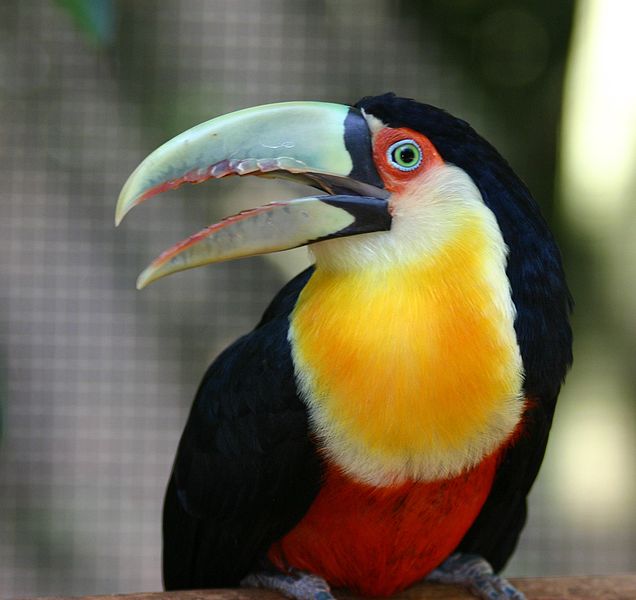
Green-billed Toucan (Ramphastos dicolorus) ©WikiC

Green-billed Toucan (Ramphastos dicolorus) ©WikiC

The list of all the Birds of the World are updated about every four months. Which we try to keep up with their (I.O.C.) newest lists.

You are probably wondering why you would need it. Let me share some things about it and then give you some ideas how it my be handy for one of your school projects.

The I.O.C. is actually the International Ornithological Committee. “Ornithological” basically means those who study birds or bird related. They maintain a list of all the birds around the world. They set standards of how to name them, what scientific classification to place the birds in, and divide them into Orders and Families, etc.

They are needed because we may call a bird by one name, yet someone in a different country or area may call it by a different name. They realize that those two names belong to the same bird. It is a very hard task to keep track of all those 10,000 plus birds, but that is what they try to do.

They give every bird an English name as a standard. Then they also want every one to spell the words the same. For instance, some people spell the “Grey” or “Gray” to mean the same color. To keep things simple, all the birds are spelled as “Grey.” That is just one example.

There are committees all over the world working on the birds of the area they live in, then those committees get together to combine all the list to make one big list. That is what was just updated.

On our Birds of the World section, you will find the birds listed by Orders (40 main classifications), then by Families (240 groups of closely related birds). The reason all of that is not duplicated here would be very time-consuming. There are hundreds of pages and thousands of photos on that site.

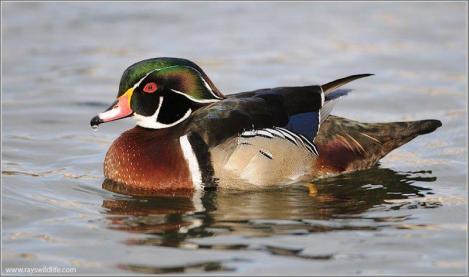
Wood Duck (Aix sponsa) by Dan

Wood Duck (Aix sponsa) by Dan

Projects for school or your own information:

You know the name of a bird’s name, but need to find  the Species name,  Go to the Species Index to find these choices:

If you know that it called Madagascan something, go to the First Name of Bird  index and choose the “M” page

If you know it is a Duck, go to the Last Name of Bird  index and choose the “D – Last Name” page.

The Families have four indexes to help you find the Families of birds.

When you find your bird in the right family, almost every bird has a link to a photo or video.

I will share more tips on how to use those indexes in another article.

Another reason is because we believe the Lord created all the beautiful birds and He should get all the credit.

In the beginning God created the heavens and the earth. (Genesis 1:1 NKJV)

So God created great sea creatures and every living thing that moves, with which the waters abounded, according to their kind, and every winged bird according to its kind. And God saw that it was good. (Genesis 1:21 NKJV)

*

Sandhill Crane Greeting

Sandhill Cranes in side yard

Sandhill Cranes in side yard

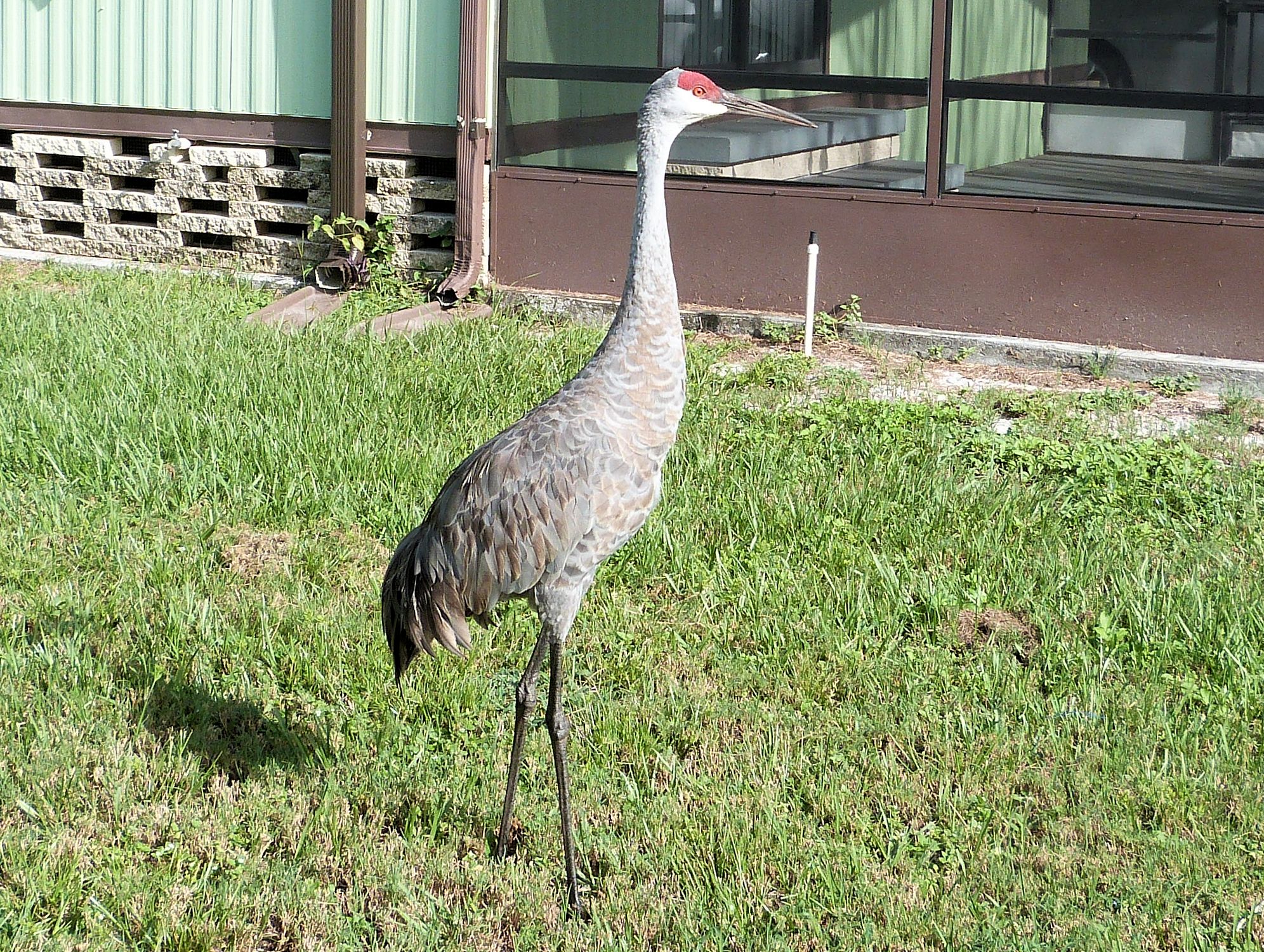
Today, when we looked out in our side yard, we were greeted by two Sandhill Cranes walking around. Grabbed the camera and here are some of the photos that I took. I have been so busy working on the blog, that we haven’t taken the time to go birdwatching. So, our great Lord just sent me some of His beauties.

O taste and see that the LORD is good: blessed is the man that trusteth in him. (Psalms 34:8 KJV)

Sandhill Standing Guard Crop

Sandhill Standing Guard Crop

They stroll through here from time to time, but haven’t seen them for a while. As usual, one stands guard, while one eats. Some how our flat feeder came off the hook and they found it. :))

Sandhill Cranes in side yard

Sandhill Cranes in side yard

He, the guard came over and was trying to encourage her to finish up.

Sandhill Cranes in side yard

Sandhill Cranes in side yard

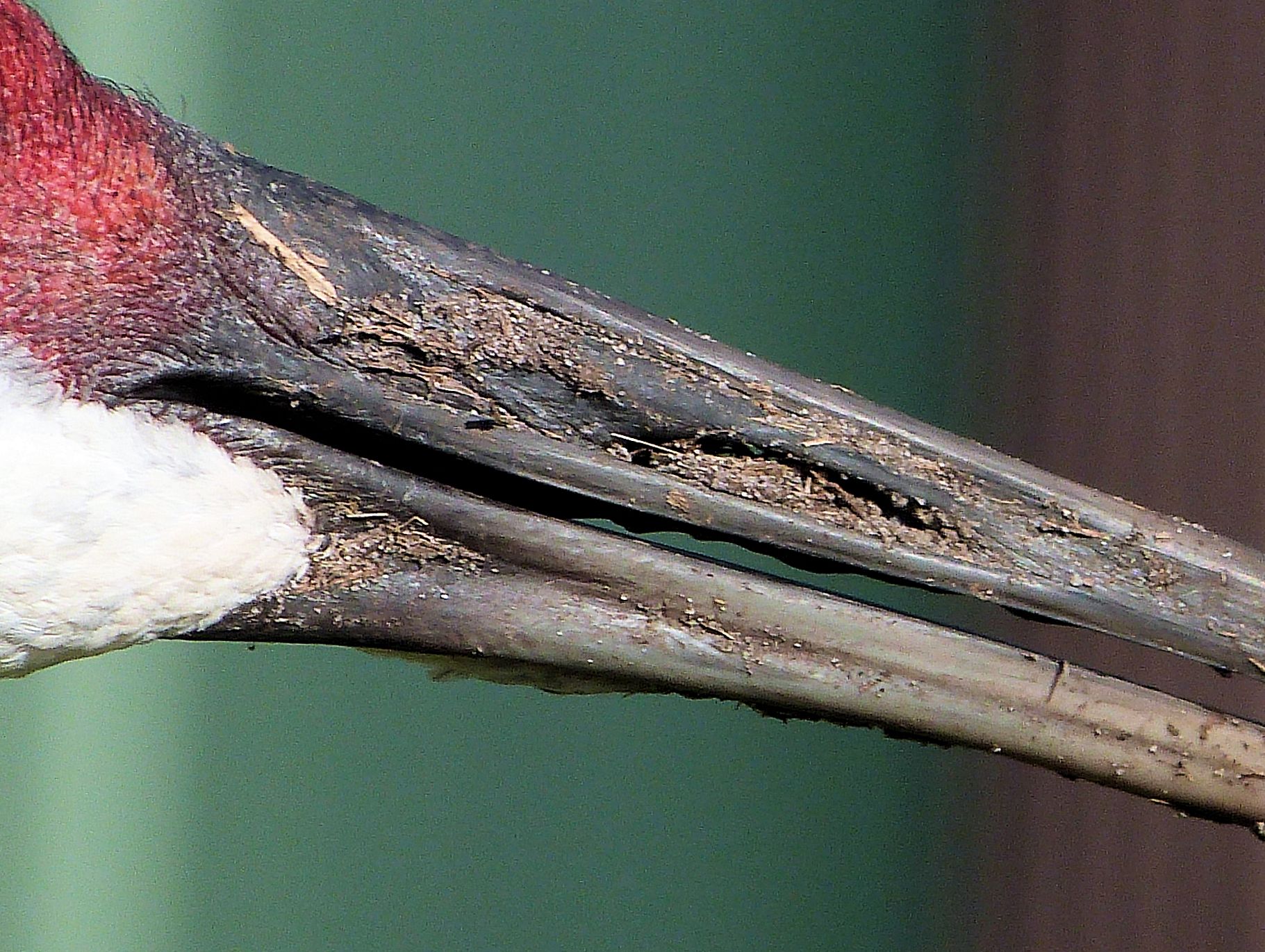
Zoomed in on his beak and was surprised to find so much dirt in it. They do a lot of probing in people’s yards and are considered pests by some. Not me, I love them coming to visit. They can probe all they want, just as long as they let me take their photo.

Sandhill Crane Beak Crop

Sandhill Crane Beak Crop


Here are the photos that were taken this morning.

This slideshow requires JavaScript.

Like a crane or a swallow, so did I chatter: I did mourn as a dove: mine eyes fail with looking upward: O LORD, I am oppressed; undertake for me. (Isaiah 38:14 KJV)

Yea, the stork in the heaven knoweth her appointed times; and the turtle and the crane and the swallow observe the time of their coming; but my people know not the judgment of the LORD. (Jeremiah 8:7 KJV)

Birds of the Bible – Cranes

*

Birdwatching Term – Frontal Shield

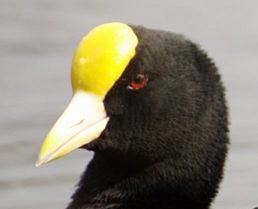
White-winged Coot (Fulica leucoptera) Cropped ©WikiC

White-winged Coot (Fulica leucoptera) Cropped ©WikiC

Frontal Shield

He shall cover thee with his feathers, and under his wings shalt thou trust: his truth shall be thy shield and buckler. (Psalm 91:4 KJV)

The Coot article  mentioned the shield. “Coots have prominent frontal shields or other decoration on the forehead…”

What is a “frontal shield”?

The place above the upper beak (upper mandible) has a platelike area. It is made of a fleshy material. When the Lord created those birds that have the shield, He gave them each a different looking shield. It is neat to see the variety that the shields have. I am sure that the bird uses them to know which are their kind.

Below are some photos of the various Frontal Shields on the birds. There are more birds that have shield, but this just a sample of these unique birds.

This slideshow requires JavaScript.

You have also given me the shield of your salvation: and your right hand has held me up, and your gentleness has made me great.
(Psalms 18:35 AKJV)

See:

*

Child’s Book of Water Birds – Re-visited

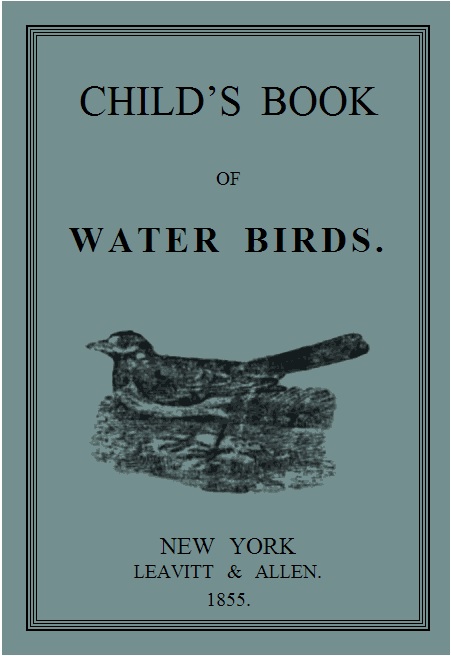
Child's Book of Water Birds - Book Cover

The Child’s Book of Water Birds

Revisited

An anonymous writer wrote the Child’s Book of Water Birds in 1855. You can see how Project Gutenberg published it as an e-book. (Public Domain) CLICK HERE

Below are the links to my “Re-visited” versions here. Moved these over from the Birds of the Bible for Kids blog and can be found in the Kid’s Section under Watching Birds.

The six different birds were written to a very young reader. I trust you will enjoy reading them for yourself or to your children or grand-children. They can be used to introduce you/them to birds.

Here are my versions of the Six Birds:

The Swan

Childs Bk of Water Birds swan

The Coot

Childs Bk of Water Birds coot

The Dabchick

Childs Bk of Water Birds dabchick

The Teal

Childs Bk of Water Birds teal

The Goose

Childs Bk of Water Birds goose

The Oystercatcher

Childs Bk of Water Birds oystercatcher

*

The Bible tells us that we are to

Train up a child in the way he should go: and when he is old, he will not depart from it. (Proverbs 22:6 KJV)

Introducing children to the amazing birds the Lord has created is a tiny step to help with that training. Introducing them to the Lord Jesus Christ, is the major step.

Wordless Birds

*

Keep A Journal

Keep A Journal

Wood Duck (Aix sponsa) by Ray3

Keep a Journal ~ by Ms. Lee

Out of the ground the LORD God formed every beast of the field and every bird of the air, and brought them to Adam to see what he would call them. And whatever Adam called each living creature, that was its name. (Genesis 2:19 NKJV)

Golden Eagle keeps telling you to write in your Journal. So, what is a journal?

A birdwatching journal is where you put down things about the bird you are looking at now or when you are at home. I keep a list of the birds I see every time I go birdwatching. It is a little 3X5 inch Memo Book (for my pocket) and a bigger one when I am at home. Here is what I put down in mine.

  • Date
  • Time
  • Where I am
  • Weather (sunny, cloudy, raining, windy and sometimes the temperature)
  • Name of the bird if I know it
  • How many
  • If I don’t know the name, I draw the beak or wing or whatever that will help me remember the bird)
When I get home I check my Bird Guide to see if I can find out what the bird is that I didn’t know.
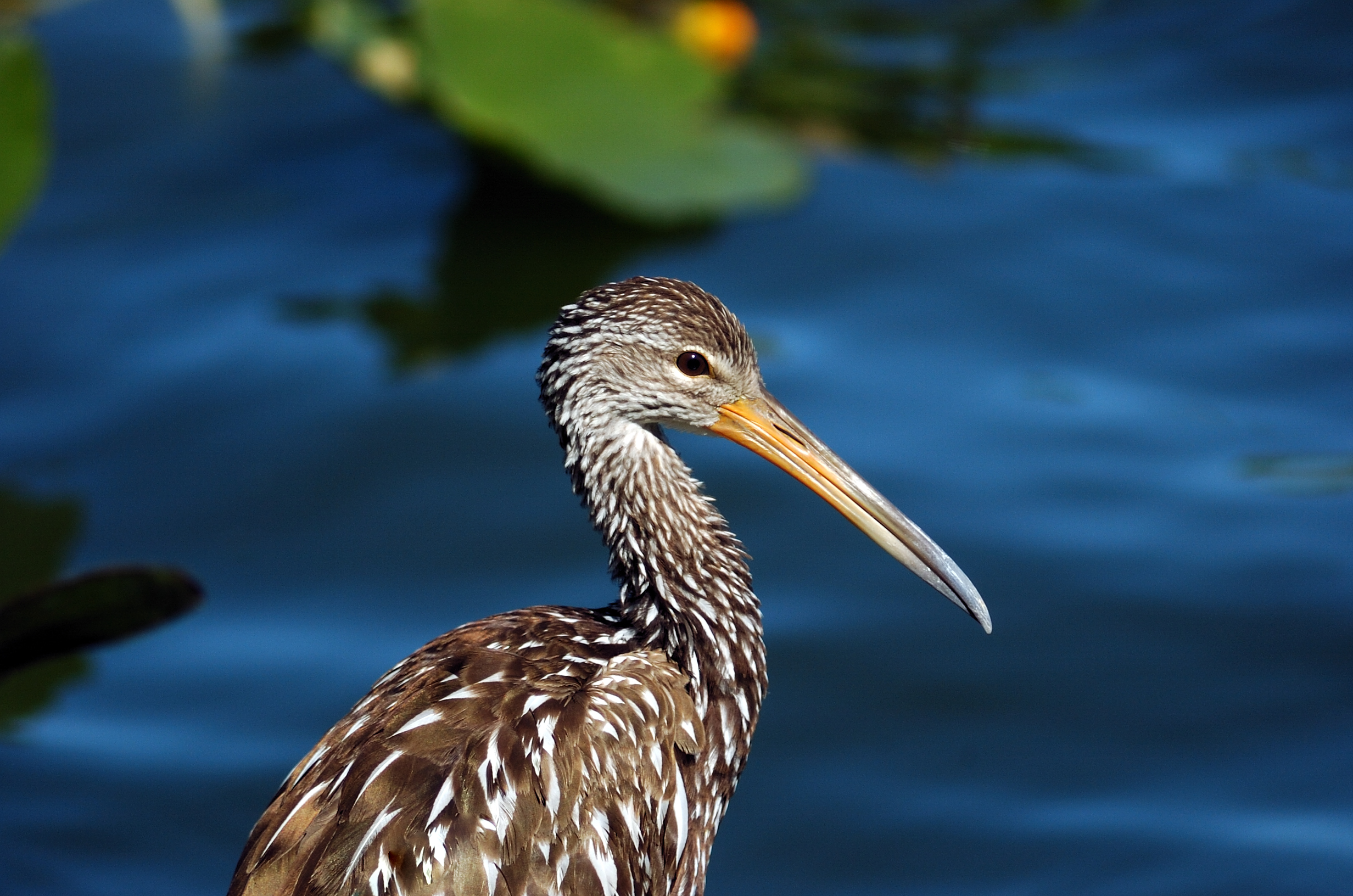
Limpkin (Aramus guarauna) Juvenile by Dan at Lake Morton

Limpkin (Aramus guarauna) by Dan at Lake Morton

Things to put in your journal:

Many write the item down and sometime draw the bird or something about it.

Outdoor Birds

  • What kind of bird (if you know)?
  • How big is it?
  • What color is it?
  • Shape? (duck, chicken, heron, sparrow,…)
  • Wings? (long, short, pointed, rounded,….)
  • Did it sing or make a noise? What did it sound like?
  • Date, time, and where you saw the bird

Bible Birds

  • Did you read the name in your Bible?
  • What was the name of the bird?
  • What verse?
  • What was said about the bird?

You can put other information in your journal. We will be telling you more about each thing. Everyone’s journal is different. Yours does not have to be like mine or Golden Eagles.

Why keep a list or journal?

Birdwatchers like to make lists. They keep some of these lists:

  • Life List (all the birds ever seen)
  • Year List (each years birds)
  • Trip List (a vacation or trip)
  • Park or Place List (Park, zoo, lake,…)
  • Whatever List (your list)

Most of us that are older wish we had kept a list of birds when we were young like you. We forget what we saw and then can’t put it on our life list. I have seen more birds than what is on my list, but I didn’t keep a journal when I was younger. Most people tell the truth and only list what they saw. Don’t make up birds you think you saw just so you have a long list. As you get older, your list will grow. The Lord has many birds for you to see and enjoy.

*

Read more:

Watching Birds

Kid’s Section

Bird-Watching Projects for Kids

Birdwatching For Beginners

How to Keep a Birdwatching Journal

Birdwatching

*

Bible Birds – Cuckoo Introduction

Guira Cuckoo (Guira guira) at NA by Dan at National Aviary

Guira Cuckoo (Guira guira) at NA by Dan at National Aviary

Bible Birds – Cuckoo’s Introduction

The “Cuckoo” or old English”Cuckow” is found in these verses:

and the owl, and the night-hawk, and the cuckoo, and the hawk after its kind, (Leviticus 11:16 YLT)

And the owl, and the night hawk, and the cuckow, and the hawk after his kind, (Deuteronomy 14:15 KJV)

The Old Testament was written in Hebrew and the word used has several meanings and so some Bibles call the bird a Cuckoo or Cuckow, some a Gull. For now, we are introducing you to Cuckoos.

1) a ceremonially unclean bird

  • 1a) cuckow, gull, seagull, sea-mew
  • 1b) maybe an extinct bird, exact meaning unknown

Did you think Cuckoos only live in Clocks?

No, there actually is a bird called a Cuckoo. It belongs to a family Cuculidae – Cuckoos. There are 149 species in the family. Not only Cuckoos, but Coucals, Anis, Couas, and Malkohas are family members.

Here are some descriptions of North American Cuckoos: (from Color Key to NA Birds)

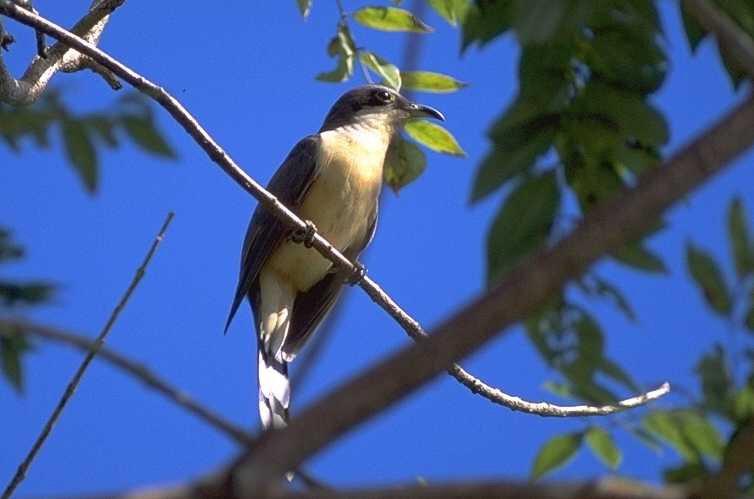
Mangrove Cuckoo

Mangrove Cuckoo

Mangrove Cuckoo (Coccyzus minor). Underparts uniformly rich buff; above grayish brown, crown grayer; ear-coverts black; tail black, outer feathers broadly tipped with white.

Range.—Northern South America, north through Central America, Mexico and Greater Antilles (except Porto Rico?) to Florida and Louisiana, migrating south in fall.

Maynard Cuckoo (C. m. maynardi). Similar to Mangrove Cuckoo, but underparts paler, the throat and forebreast more or less ashy white.

Range.—Bahamas and (eastern?) Florida Keys. (2012 Now Mangrove Cuckoo)

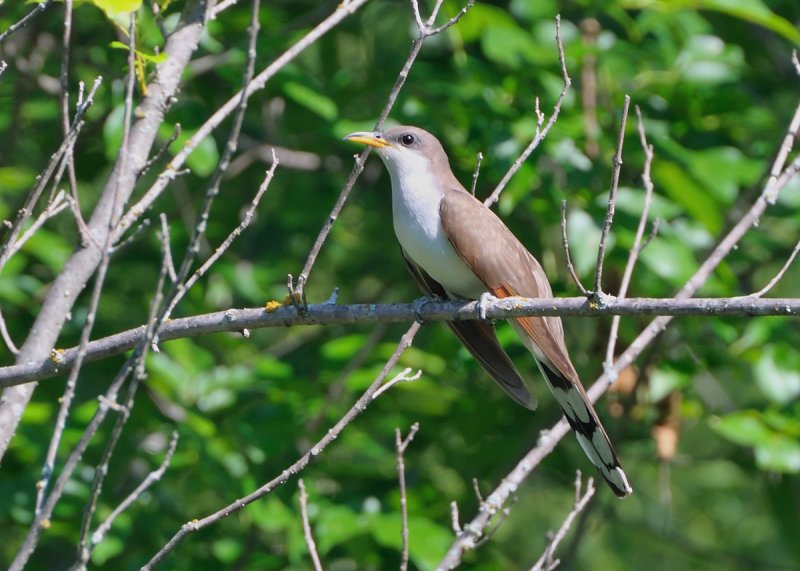
Yellow-billed Cuckoo (Coccyzus americanus) Neal Addy Gallery

Yellow-billed Cuckoo (Coccyzus americanus) Neal Addy Gallery

Yellow-billed Cuckoo (Coccyzus americanus). Length 12.2 in. Ads. Below white; lower mandible largely yellow, tail black, outer feathers widely tipped with white. Notes.Tut-tut, tut-tut, tut-tut, tut-tut, cl-uck, cl-uck, cl-uck, cl-uck, cl-uck, cl-uck, cow, cow, cow, cow, cow, cow, usually given in part.

Range.—Eastern North America; breeds from Florida to New Brunswick and Minnesota; winters in Central and South America.

California Cuckoo (C. a. occidentalis). Similar to Yellow-billed Cuckoo but somewhat grayer and larger; the bill slightly longer, 1.05 in.

Range.—Western North America; north to southern British Columbia; east to Western Texas; winters south into Mexico.

Black-billed Cuckoo (Coccyzus erythropthalmus) by Jim Fenton

Black-billed Cuckoo (Coccyzus erythropthalmus) by Jim Fenton

Black-billed Cuckoo (Coccyzus erythrophthalmus). Length 11.8. Ads. White below; bill black; tail, seen from below, grayish narrowly tipped with white; above, especially on crown, browner than Yellow-billed Cuckoo. Notes. Similar to those of Yellow-billed Cuckoo, but softer, the cow notes connected.

Range.—Eastern North America; west to Rocky Mountains; breeds north to Labrador and Manitoba; winters south of United States to Brazil.

Cuckoo Sound with Pictures (From Poland)

Sort of sounds like the clock doesn’t it?

We will tell you more about the Cuckoo in the next Bible Birds – Cuckoo article.

*

Kookaburra Encounter

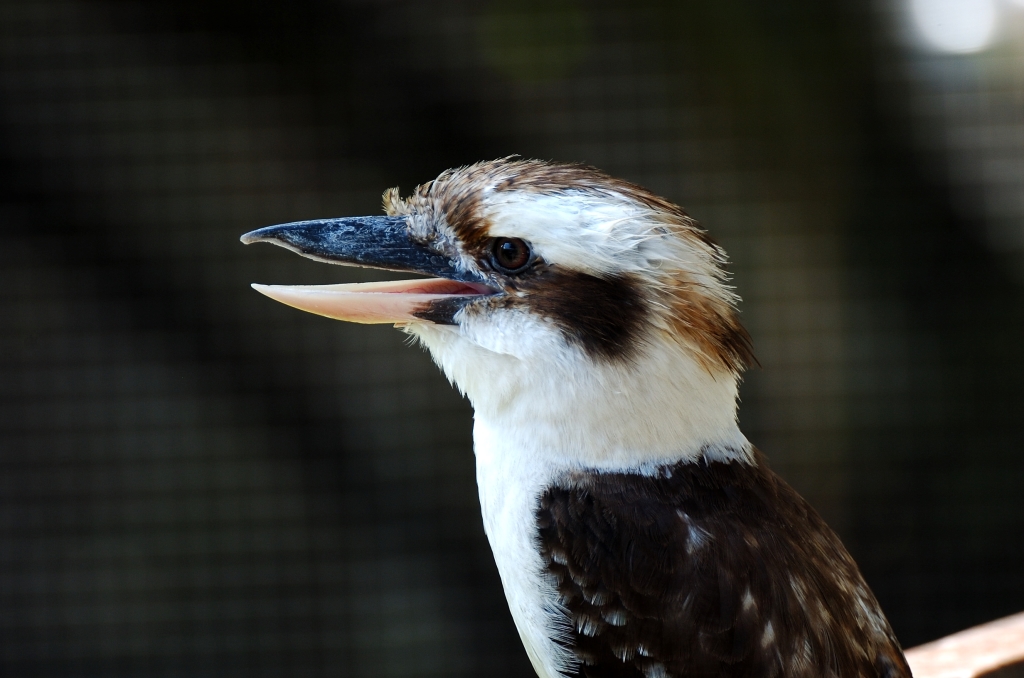
Laughing Kookabura by Dan

Laughing Kookabura by Dan

On our vacation several weeks ago we stopped back by the Brevard Zoo in Melbourne, Florida.  I had a neat Kookaburra Encounter.

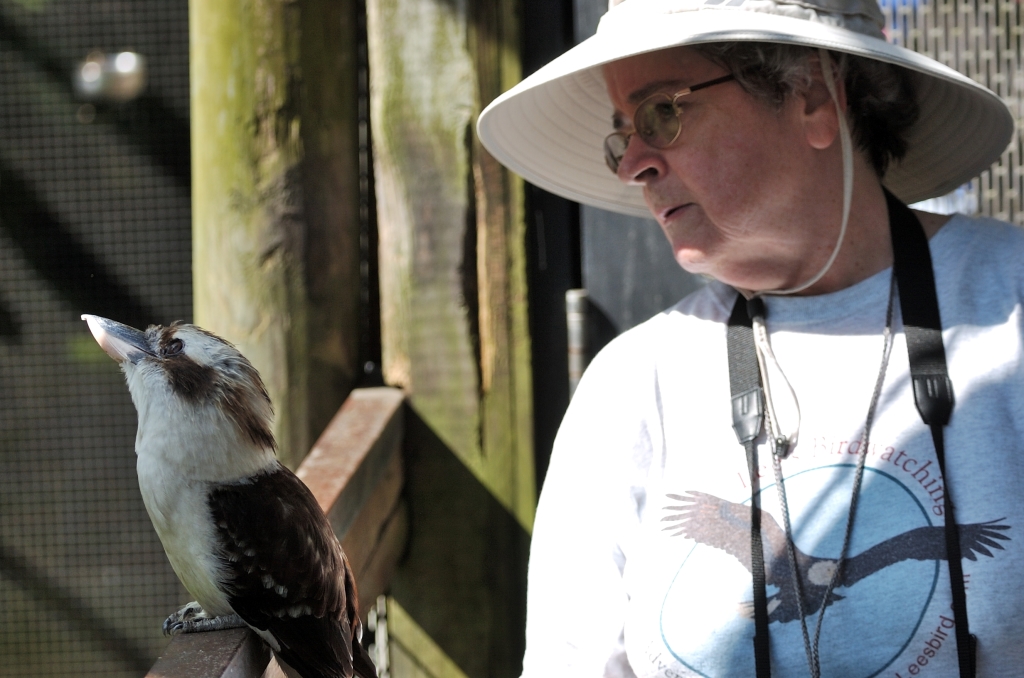
Lee with Laughing Kookabura at Brevard Zoo by Dan

Lee with Laughing Kookabura at Brevard Zoo by Dan

The Laughing Kookaburra is in the aviary where the Lorikeets, Galahs and other birds are kept. When I came through a door, right there on the rail sat a young Laughing Kookaburra. I have seen them before, but never as close as this one. I got within inches of him/or her. I could have touched it, but was afraid of that beak.

So God created great sea creatures and every living thing that moves, with which the waters abounded, according to their kind, and every winged bird according to its kind. And God saw that it was good. (Genesis 1:21 NKJV)

Here are some of the pictures we took.

Lee very close to Kookabura by Dan

Lee very close to Kookabura by Dan

I have to admit, I was thrilled. Just looking at one of the Lord’s creations so close. Wow! That one photo Dan took of me and the Kookaburra, my hand was within 5-6 inches from it. May I never lose my AWE at seeing and encountering the Lord’s critters.

*

Other Kookaburra encounters:
Birdwatching at the Cincinnati Zoo I
Birds Of The Bible – Joy And Laughter
Birdwatching Adventure to Brevard Zoo in Viera, FL
Birdwatching at the National Aviary – Introduction
Alcedinidae – Kingfishers – Family

*


Sunday Inspiration – Passerines

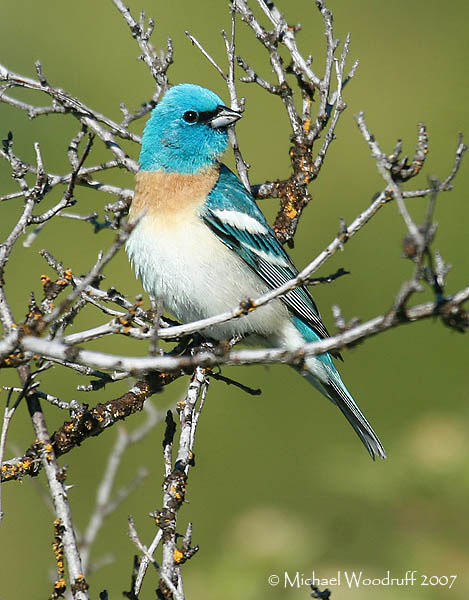
Lazuli Bunting (Passerina amoena) by Michael Woodruff

Lazuli Bunting (Passerina amoena) by Michael Woodruff

By them the birds of the heavens have their home; They sing among the branches. He waters the hills from His upper chambers; The earth is satisfied with the fruit of Your works. He causes the grass to grow for the cattle, And vegetation for the service of man, That he may bring forth food from the earth, (Psalms 104:12-14 NKJV)

A passerine is any bird of the order Passeriformes, which includes more than half of all bird species. A notable feature of passerines is the arrangement of their toes (three pointing forward and one back) which facilitates perching. Sometimes known as perching birds or, less accurately, as songbirds, the passerines form one of the most diverse terrestrial vertebrate orders, with over 5,000 identified species. It has roughly twice as many species as the largest of the mammal orders, the Rodentia. It contains more than 110 families, the second-most of any order of tetrapods (after Squamata, the scaled reptiles).

The names “passerines” and “Passeriformes” are derived from Passer domesticus, the scientific name of the eponymous species (the house sparrow) and ultimately from the Latin term passer for Passer sparrows and similar small birds.

This slideshow requires JavaScript.

*

“Sweet Hour of Prayer” by Sean Fielder (Faith Baptist)

Enjoy God’s creation as you watch and listen to Sean play. May we all pray and thank the Lord for all He has given from His Hand.

The LORD will command His lovingkindness in the daytime, And in the night His song shall be with me— A prayer to the God of my life. (Psalms 42:8 NKJV)

Be anxious for nothing, but in everything by prayer and supplication, with thanksgiving, let your requests be made known to God; (Philippians 4:6 NKJV)

*

Sunday Inspiration

PASSERIFORMES – Passerines

Sharing The Gospel

*

Peterson’s Field Guide Videos Updated

Peregrine Falcon (Falco peregrinus) by Ray

Peregrine Falcon (Falco peregrinus) by Ray

Give instruction to a wise man, and he will be yet wiser: teach a just man, and he will increase in learning. (Proverbs 9:9 KJV)

Peterson Field Guide-Videos

Finished updating the missing videos for the Peterson Field Guide videos. The Vodpod company stopped supporting its videos, which was unknown to me. All of these videos were on YouTube and are now working properly again.

They are very interesting and if you haven’t seen them or at least for a while, they are worth checking out. Here are some of the titles:

How-to Videos:

Give instruction to a wise man, and he will be yet wiser: teach a just man, and he will increase in learning. (Proverbs 9:9 KJV)

How to Identify Birds
Topography (Parts of the Bird)
Bird Songs and Sounds
Range Maps

Bird Families:

Common Loon
Atlantic Puffin
Ducks, Geese, Swans
Wood Duck
Shorebirds Overview
Shorebirds ID
Gulls and Terns
Heron, Egrets, Bitterns – Updated
Wild Turkey
Raptors Overview
Raptors ID
Bald Eagle
Peregrine Falcon
Owls
Greater Roadrunner
Hummingbirds
Woodpeckers
Red-Headed Woodpecker
Flycatchers
Northern Mockingbird
Thrushes
American Robin
Warblers
Meadowlarks
Finches
Northern Cardinal
Sparrows

Enjoy! Dust is still flying as I’m still searching for other broken Vodpod videos.

*