Drummers and Carpenters – Chapter 11

Downy Woodpecker (Picoides pubescens) Brevard Zoo by Dan

Is it a Downy or Hairy Woodpecker? Brevard Zoo by Dan

Drummers and Carpenters

The Downy, Hairy and Red-headed Woodpeckers.

The Burgess Bird Book For Children

*

Listen to the story read.

CHAPTER 11. Drummers and Carpenters.

Peter Rabbit was so full of questions that he hardly knew which one to ask first. But Yellow Wing the Flicker didn’t give him a chance to ask any. From the edge of the Green forest there came a clear, loud call of, “Pe-ok! Pe-ok! Pe-ok!”

“Excuse me, Peter, there’s Mrs. Yellow Wing calling me,” exclaimed Yellow Wing, and away he went. Peter noticed that as he flew he went up and down. It seemed very much as if he bounded through the air just as Peter bounds over the ground. “I would know him by the way he flies just as far as I could see him,” thought Peter, as he started for home in the dear Old Briar-patch. “Somehow he doesn’t seem like a Woodpecker because he is on the ground so much. I must ask Jenny Wren about him.”

It was two or three days before Peter had a chance for a bit of gossip with Jenny Wren. When he did the first thing he asked was if Yellow Wing is a true Woodpecker.

Northern Flicker (Colaptes auratus) red-shafted F-left M-right ©WikiC

Northern Flicker (Colaptes auratus) red-shafted F-left M-right ©WikiC

“Certainly he is,” replied Jenny Wren. “Of course he is. Why under the sun should you think he isn’t?”

“Because it seems to me he is on the ground more than he’s in the trees,” retorted Peter. “I don’t know any other Woodpeckers who come down on the ground at all.”

“Tut, tut, tut, tut!” scolded Jenny. “Think a minute, Peter! Think a minute! Haven’t you ever seen Redhead on the ground?”

Peter blinked his eyes. “Ye-e-s,” he said slowly. “Come to think of it, I have. I’ve seen him picking up beechnuts in the fall. The Woodpeckers are a funny family. I don’t understand them.”

Just then a long, rolling rat-a-tat-tat rang out just over their heads. “There’s another one of them,” chuckled Jenny. “That’s Downy, the smallest of the whole family. He certainly makes an awful racket for such a little fellow. He is a splendid drummer and he’s just as good a carpenter. He made the very house I am occupying now.”

Peter was sitting with his head tipped back trying to see Downy. At first he couldn’t make him out. Then he caught a little movement on top of a dead limb. It was Downy’s head flying back and forth as he beat his long roll. He was dressed all in black and white. On the back of his head was a little scarlet patch. He was making a tremendous racket for such a little chap, only a little bigger than one of the Sparrow family.

“Is he making a hole for a nest up there?” asked Peter eagerly.

“Gracious, Peter, what a question! What a perfectly silly question!” exclaimed Jenny Wren scornfully. “Do give us birds credit for a little common sense. If he were cutting a hole for a nest, everybody within hearing would know just where to look for it. Downy has too much sense in that little head of his to do such a silly thing as that. When he cuts a hole for a nest he doesn’t make any more noise than is absolutely necessary. You don’t see any chips flying, do you?”

“No-o,” replied Peter slowly. “Now you speak of it, I don’t. Is—is he hunting for worms in the wood?”

Jenny laughed right out. “Hardly, Peter, hardly,” said she. “He’s just drumming, that’s all. That hollow limb makes the best kind of a drum and Downy is making the most of it. Just listen to that! There isn’t a better drummer anywhere.”

But Peter wasn’t satisfied. Finally he ventured another question. “What’s he doing it for?”

“Good land, Peter!” cried Jenny. “What do you run and jump for in the spring? What is Mr. Wren singing for over there? Downy is drumming for precisely the same reason—happiness. He can’t run and jump and he can’t sing, but he can drum. By the way, do you know that Downy is one of the most useful birds in the Old Orchard?”

Just then Downy flew away, but hardly had he disappeared when another drummer took his place. At first Peter thought Downy had returned until he noticed that the newcomer was just a bit bigger than Downy. Jenny Wren’s sharp eyes spied him at once.

“Hello!” she exclaimed. “There’s Hairy. Did you ever see two cousins look more alike? If it were not that Hairy is bigger than Downy it would be hard work to tell them apart. Do you see any other difference, Peter?”
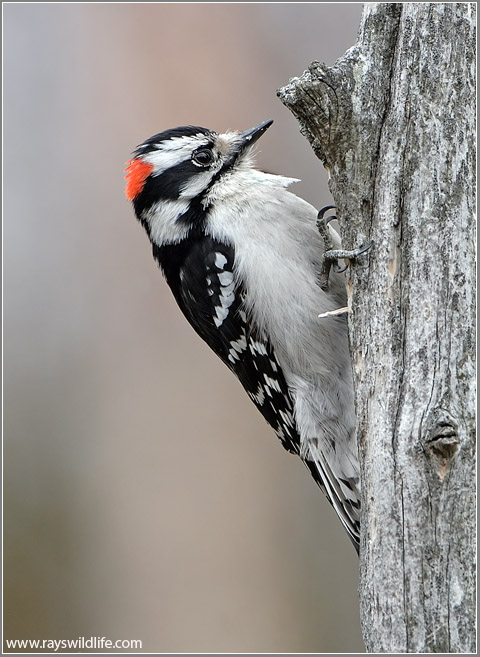
Downy Woodpecker (Picoides pubescens) by Raymond Barlow

Downy Woodpecker (Picoides pubescens) by Raymond Barlow

Peter stared and blinked and stared again, then slowly shook his head. “No,” he confessed, “I don’t.”

“That shows you haven’t learned to use your eyes, Peter,” said Jenny rather sharply. “Look at the outside feathers of his tail; they are all white. Downy’s outside tail feathers have little bars of black. Hairy is just as good a carpenter as is Downy, but for that matter I don’t know of a member of the Woodpecker family who isn’t a good carpenter. Where did you say Yellow Wing the Flicker is making his home this year?”

“Over in the Big Hickory-tree by the Smiling Pool,” replied Peter. “I don’t understand yet why Yellow Wing spends so much time on the ground.”

Ants,” replied Jenny Wren. “Just ants. He’s as fond of ants as is Old Mr. Toad, and that is saying a great deal. If Yellow Wing keeps on he’ll become a ground bird instead of a tree bird. He gets more than half his living on the ground now. Speaking of drumming, did you ever hear Yellow Wing drum on a tin roof?”

Peter shook his head.

“Well, if there’s a tin roof anywhere around, and Yellow Wing can find it, he will be perfectly happy. He certainly does love to make a noise, and tin makes the finest kind of a drum.”

Just then Jenny was interrupted by the arrival, on the trunk of the very next tree to the one on which she was sitting, of a bird about the size of Sammy Jay. His whole head and neck were a beautiful, deep red. His breast was pure white, and his back was black to nearly the beginning of his tail, where it was white.
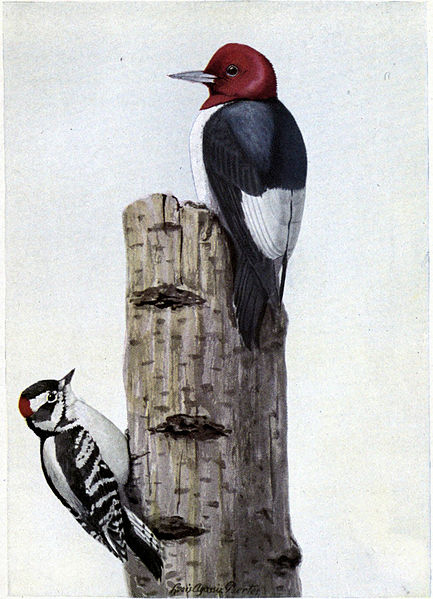
Redhead the Woodpecker, Downy the Woodpecker - Burgess Bird Book ©©

Redhead the Woodpecker, Downy the Woodpecker – Burgess Bird Book ©©

“Hello, Redhead!” exclaimed Jenny Wren. “How did you know we were talking about your family?”

“Hello, chatterbox,” retorted Redhead with a twinkle in his eyes. “I didn’t know you were talking about my family, but I could have guessed that you were talking about some one’s family. Does your tongue ever stop, Jenny?”

Jenny Wren started to become indignant and scold, then thought better of it. “I was talking for Peter’s benefit,” said she, trying to look dignified, a thing quite impossible for any member of the Wren family to do. “Peter has always had the idea that true Woodpeckers never go down on the ground. I was explaining to him that Yellow Wing is a true Woodpecker, yet spends half his time on the ground.”

Redhead nodded. “It’s all on account of ants,” said he. “I don’t know of any one quite so fond of ants unless it is Old Mr. Toad. I like a few of them myself, but Yellow Wing just about lives on them when he can. You may have noticed that I go down on the ground myself once in a while. I am rather fond of beetles, and an occasional grasshopper tastes very good to me. I like a variety. Yes, sir, I certainly do like a variety—cherries, blackberries, raspberries, strawberries, grapes. In fact most kinds of fruit taste good to me, not to mention beechnuts and acorns when there is no fruit.

Jenny Wren tossed her head. “You didn’t mention the eggs of some of your neighbors,” said she sharply.

Redhead did his best to look innocent, but Peter noticed that he gave a guilty start and very abruptly changed the subject, and a moment later flew away.

“Is it true,” asked Peter, “that Redhead does such a dreadful thing?”

Jenny bobbed her head rapidly and jerked her tail. “So I am told,” said she. “I’ve never seen him do it, but I know others who have. They say he is no better than Sammy Jay or Blacky the Crow. But gracious, goodness! I can’t sit here gossiping forever.” Jenny twitched her funny little tail, snapped her bright eyes at Peter, and disappeared in her house.

Bold points for questions at the bottom or for Christian traits.

*

For thou shalt eat the labour of thine hands: happy shalt thou be, and it shall be well with thee. (or your beak) (Psalms 128:2 KJV)

He that handleth a matter wisely shall find good: and whoso trusteth in the LORD, happy is he. (Proverbs 16:20 KJV)

Seems like these woodpeckers enjoy doing what that is a sign they are happy?

  • Who are the four members of the Woodpecker family mentioned?
  • How does a Woodpecker fly?
  • Which is the smallest member of the family?
  • Can you describe him?
  • Which Woodpecker is just a little bit larger?
  • What about its tail?
  • Which one likes to eat on the ground half the time?
  • What is he looking for?
  • What does Redhead like to eat?

Links:

Woodpeckers – Picidae Family

Woodpecker – All About Birds

Woodpecker – Wikipedia

*

Links:
Creaker the Purple Grackle, The Male Cowbird - Burgess Bird Book ©©Thum


  Next Chapter Some Unlikely Relatives


Burgess-Bird-Book-for-Children


Burgess Bird Book For Children


Robust Woodpecker (Campephilus robustus) by BirdPhotos_com


Wordless Birds

*

*


Quotes from C. S. Lewis

Grey-headed Canary-Flycatcher (Culicicapa ceylonensis) by W Kwong

Grey-headed Canary-Flycatcher (Culicicapa ceylonensis) by W Kwong

In today’s Creation Moments article, A WONDROUS BUT TERRIFYING CREATION, these quotes from C. S. Lewis caught my interest. The article is actually about Louie Zamperini’s experiences, especially with nature.

C.S. Lewis writes about how our experience with the creation awakens within us a sense that there is more – something other, something beyond the natural world. He writes in Mere Christianity, “If I find in myself a desire which no experience in this world can satisfy, the most probable explanation is that I was made for another world.”

Lewis also observes in his book Miracles that we can only savor this world for the wonder that it really is when we appreciate it as the creation of a supernatural God. “Only Super-naturalists really see Nature…. To treat Nature as God, or as Everything, is to lose the whole pith and pleasure of her. Come out, look back and then you will see … this astonishing cataract of bears, babies, and bananas; this immoderate deluge of atoms, orchids, oranges, cancers, canaries, fleas, gases, tornadoes, and toads. How could you have ever thought this was ultimate reality? … The “vanity” (futility) to which she was subjected was her disease not her essence.”

Like all of us, Nature – though wondrous and awesome – is in need of redemption. The “essence” of Nature points us to her Awesome Maker. And the “disease” within her – the futility, corruption, and harsh cruelty – instructs us to anxiously long for our full redemption. As the Bible puts it,

“…the sufferings of this present time are not worthy to be compared with the glory which shall be revealed in us. For the earnest expectation of the creature (the anxious longing of the creation) waits for the manifestation of the sons of God…. For we know that the whole creation groaneth and travaileth in pain together until now.” (Romans 8:18-19, 22)

To see that article …

Like yesterday’s I’m Little but…., the hawk would not be trying to catch and eat the squirrel had it not been for the curse and our fallen world. It will be great when things are made right. The main question is, are you prepared for when that takes place?

The Gospel Message

Yellow Canary (Crithagra flaviventris) Male ©WikiC

Yellow Canary (Crithagra flaviventris) Male ©WikiC

*

Redwing and Yellow Wing – Chapter 10

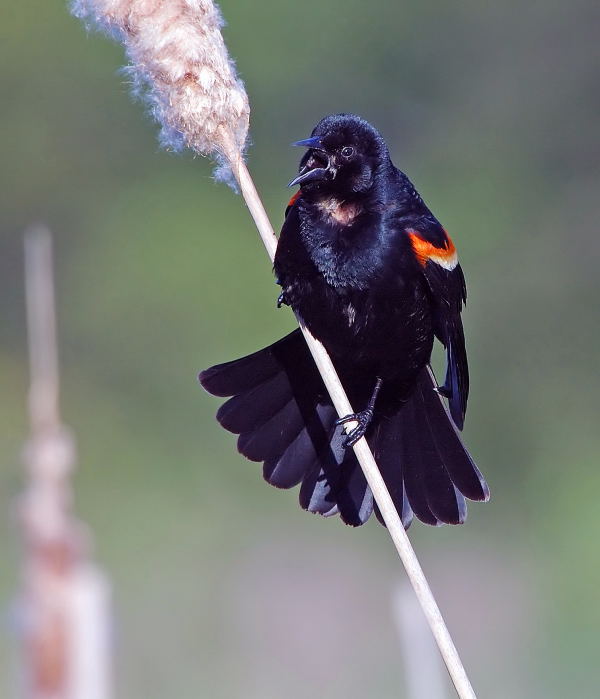
Red-winged Blackbird (Agelaius phoeniceus) by Ray

Redwing and Yellow Wing

The Red-winged Blackbird and the Golden-winged Flicker.

The Burgess Bird Book For Children

*

CHAPTER 10. Redwing and Yellow Wing.

Listen to the story read.

Peter had come over to the Smiling Pool especially to pay his respects to Redwing the Blackbird, so as soon as he could, without being impolite, he left Mrs. Teeter sitting on her eggs, and Teeter himself bobbing and bowing in the friendliest way, and hurried over to where the bulrushes grow. In the very top of the Big Hickory-tree, a little farther along on the bank of the Smiling Pool, sat some one who at that distance appeared to be dressed all in black. He was singing as if there were nothing but joy in all the great world. “Quong-ka-reee! Quong-ka-reee! Quong-ka-reee!” he sang. Peter would have known from this song alone that it was Redwing the Blackbird, for there is no other song quite like it.

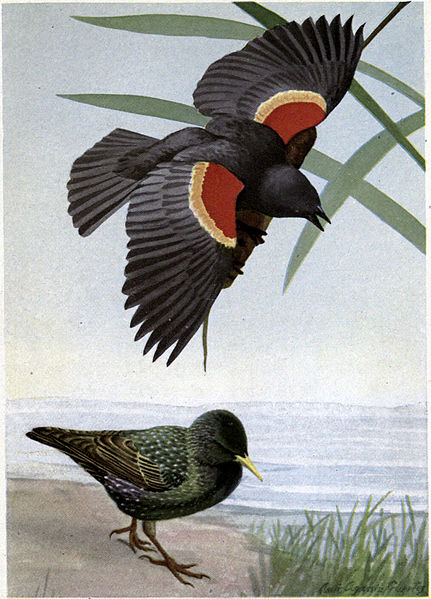
As soon as Peter appeared in sight Redwing left his high perch and flew down to light among the broken-down bulrushes. As he flew, Peter saw the beautiful red patch on the bend of each wing, from which Redwing gets his name. “No one could ever mistake him for anybody else,” thought Peter, “For there isn’t anybody else with such beautiful shoulder patches.”

“What’s the news, Peter Rabbit?” cried Redwing, coming over to sit very near Peter.

“There isn’t much,” replied Peter, “excepting that Teeter the Sandpiper has four eggs just a little way from here.”

Redwing chuckled. “That is no news, Peter,” said he. “Do you suppose that I live neighbor to Teeter and don’t know where his nest is and all about his affairs? There isn’t much going on around the Smiling Pool that I don’t know, I can tell you that.”

Peter looked a little disappointed, because there is nothing he likes better than to be the bearer of news. “I suppose,” said he politely, “that you will be building a nest pretty soon yourself, Redwing.”

Redwing chuckled softly. It was a happy, contented sort of chuckle. “No, Peter,” said he. “I am not going to build a nest.”

“What?” exclaimed Peter, and his two long ears stood straight up with astonishment.

“No,” replied Redwing, still chuckling. “I’m not going to build a nest, and if you want to know a little secret, we have four as pretty eggs as ever were laid.”

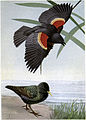
Redwing the Blackbird, Speckles the Starling - Burgess Bird Book ©©

Redwing the Blackbird, Speckles the Starling – Burgess Bird Book ©©

Peter fairly bubbled over with interest and curiosity. “How splendid!” he cried. “Where is your nest, Redwing? I would just love to see it. I suppose it is because she is sitting on those eggs that I haven’t seen Mrs. Redwing. It was very stupid of me not to guess that folks who come as early as you do would be among the first to build a home. Where is it, Redwing? Do tell me.”

Redwing’s eyes twinkled.

     "A secret which is known by three
      Full soon will not a secret be,"

said he. “It isn’t that I don’t trust you, Peter. I know that you wouldn’t intentionally let my secret slip out. But you might do it by accident. What you don’t know, you can’t tell.”

“That’s right, Redwing. I am glad you have so much sense,” said another voice, and Mrs. Redwing alighted very near to Redwing.

Peter couldn’t help thinking that Old Mother Nature had been very unfair indeed in dressing Mrs. Redwing. She was, if anything, a little bit smaller than her handsome husband, and such a plain, not to say homely, little body that it was hard work to realize that she was a Blackbird at all. In the first place she wasn’t black. She was dressed all over in grayish-brown with streaks of darker brown which in places were almost black. She wore no bright-colored shoulder patches. In fact, there wasn’t a bright feather on her anywhere. Peter wanted to ask why it was that she was so plainly dressed, but he was too polite and decided to wait until he should see Jenny Wren. She would be sure to know. Instead, he exclaimed, “How do you do, Mrs. Redwing? I’m ever so glad to see you. I was wondering where you were. Where did you come from?”

“Straight from my home,” replied Mrs. Redwing demurely. “And if I do say it, it is the best home we’ve ever had.”

Redwing chuckled. He was full of chuckles. You see, he had noticed how eagerly Peter was looking everywhere.

“This much I will tell you, Peter,” said Redwing; “our nest is somewhere in these bulrushes, and if you can find it we won’t say a word, even if you don’t keep the secret.”

Then Redwing chuckled again and Mrs. Redwing chuckled with him. You see, they knew that Peter doesn’t like water, and that nest was hidden in a certain clump of brown, broken-down rushes, with water all around. Suddenly Redwing flew up in the air with a harsh cry. “Run, Peter! Run!” he screamed. “Here comes Reddy Fox!

Peter didn’t wait for a second warning. He knew by the sound of Redwing’s voice that Redwing wasn’t joking. There was just one place of safety, and that was an old hole of Grandfather Chuck’s between the roots of the Big Hickory-tree. Peter didn’t waste any time getting there, and he was none too soon, for Reddy was so close at his heels that he pulled some white hairs out of Peter’s tail as Peter plunged headfirst down that hole. It was a lucky thing for Peter that that hole was too small for Reddy to follow and the roots prevented Reddy from digging it any bigger.

For a long time Peter sat in Grandfather Chuck’s old house, wondering how soon it would be safe for him to come out. For a while he heard Mr. and Mrs. Redwing scolding sharply, and by this he knew that Reddy Fox was still about. By and by they stopped scolding, and a few minutes later he heard Redwing’s happy song. “That means,” thought Peter, “that Reddy Fox has gone away, but I think I’ll sit here a while longer to make sure.”

Now Peter was sitting right under the Big Hickory-tree. After a while he began to hear faint little sounds, little taps, and scratching sounds as of claws. They seemed to come from right over his head, but he knew that there was no one in that hole but himself. He couldn’t understand it at all.

Finally Peter decided it would be safe to peek outside. Very carefully he poked his head out. Just as he did so, a little chip struck him right on the nose. Peter pulled his head back hurriedly and stared at the little chip which lay just in front of the hole. Then two or three more little chips fell. Peter knew that they must come from up in the Big Hickory-tree, and right away his curiosity was aroused. Redwing was singing so happily that Peter felt sure no danger was near, so he hopped outside and looked up to find out where those little chips had come from. Just a few feet above his head he saw a round hole in the trunk of the Big Hickory-tree. While he was looking at it, a head with a long stout bill was thrust out and in that bill were two or three little chips. Peter’s heart gave a little jump of glad surprise.

Northern Flicker (Colaptes auratus) yellow-shafted ©WikiC

Northern Flicker (Colaptes auratus) yellow-shafted ©WikiC

Yellow Wing!” he cried. “My goodness, how you startled me!”

The chips were dropped and the head was thrust farther out. The sides and throat were a soft reddish-tan and on each side at the beginning of the bill was a black patch. The top of the head was gray and just at the back was a little band of bright red. There was no mistaking that head. It belonged to Yellow Wing the Flicker beyond a doubt.

“Hello, Peter!” exclaimed Yellow Wing, his eyes twinkling. “What are you doing here?”

“Nothing,” replied Peter, “but I want to know what you are doing. What are all those chips?”

“I’m fixing up this old house of mine,” replied Yellow Wing promptly. “It wasn’t quite deep enough to suit me, so I am making it a little deeper. Mrs. Yellow Wing and I haven’t been able to find another house to suit us, so we have decided to live here again this year.” He came wholly out and flew down on the ground near Peter. When his wings were spread, Peter saw that on the under sides they were a beautiful golden-yellow, as were the under sides of his tail feathers. Around his throat was a broad, black collar. From this, clear to his tail, were black dots. When his wings were spread, the upper part of his body just above the tail was pure white.

“My,” exclaimed Peter, “you are a handsome fellow! I never realized before how handsome you are.”

Yellow Wing looked pleased. Perhaps he felt a little flattered. “I am glad you think so, Peter,” said he. “I am rather proud of my suit, myself. I don’t know of any member of my family with whom I would change coats.”

A sudden thought struck Peter. “What family do you belong to?” He asked abruptly.

“The Woodpecker family,” replied Yellow Wing proudly.

*

Nevertheless if you warn the righteous man that the righteous should not sin, and he does not sin, he shall surely live because he took warning; also you will have delivered your soul.” (Ezekiel 3:21 NKJV)

I do not write these things to shame you, but as my beloved children I warn you. (1 Corinthians 4:14 NKJV)

That was mighty nice of Redwing to warn Peter Rabbit. We need to listen when others warn us. Like, “don’t get too close to the fire” or “watch out for the cars!” We should also help others by warning them so they don’t get hurt. We need to tell others about Christ and warn them to not ignore His teaching.

Some questions to see if you remember the tale:

  • Who is our newest bird?
  • What does he have on his shoulders?
  • What does his song sound like?
  • Does Mrs. Redwing look like him? Describe her.
  • Why did Redwing warn Peter Rabbit?
  • What family does the Yellow Wing belong to?

Links:

*

Links:


  Next Chapter (Drummers and Carpenters)


Burgess-Bird-Book-for-Children


Burgess Bird Book For Children


Wordless Birds – Toucan


*

Sunday Inspiration – Big Mighty God

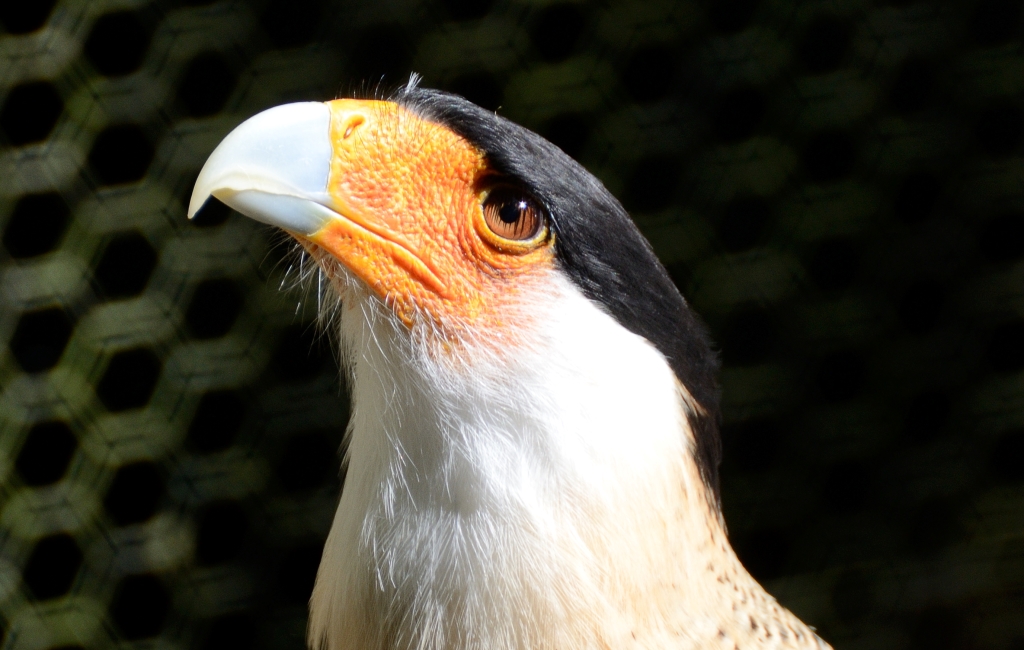
Caracara - Dan's Flamingo Gardens Photos

Caracara – Dan’s Flamingo Gardens Photos

“keep yourselves in the love of God, looking for the mercy of our Lord Jesus Christ unto eternal life. (Jude 1:21 NKJV)

“looking unto Jesus, the author and finisher of our faith, who for the joy that was set before Him endured the cross, despising the shame, and has sat down at the right hand of the throne of God. (Hebrews 12:2 NKJV)

Last Sunday, our Music Director of 31 years “semi” retired. The music all day was fantastic, even more so than normal. So with new music to use for the blog, today’s selection, “Big Mighty God” caused me to start formulating this blog while they were still singing it.

We do have a Big Mighty Creator that has formed all these gorgeous and not so gorgeous birds. In His wisdom, each avian creation was given just what they need to provide for themselves, find a mate, raise new generations, and sing and just be there for us to enjoy.

As you listen and watch the birds (and a few friends), I trust you realize that the Lord Jesus Christ, the Creator, has provided just as well and even better for you.

This slideshow requires JavaScript.

Click to Listen

“Big Mighty God” –  3+1 – Pastor Jerry, Reagan Osborne, Caleb & Jessie Padgett (Reagan flew in from Calif. for the special day)

*

Sunday Inspirations
Pastor Jerry Smith – Testimony
Good News

*

Longbill and Teeter – Chapter 9

American Woodcock (Scolopax minor) ©WikiC

American Woodcock (Scolopax minor) ©WikiC

Longbill and Teeter

The Woodcock and the Spotted Sandpiper.

The Burgess Bird Book For Children

*

CHAPTER 9. Longbill and Teeter.

Listen to the story read.

From the decided way in which Jenny Wren had popped into the little round doorway of her home, Peter knew that to wait in the hope of more gossip with her would be a waste of time. He wasn’t ready to go back home to the dear Old Briar-patch, yet there seemed nothing else to do, for everybody in the Old Orchard was too busy for idle gossip. Peter scratched a long ear with a long hind foot, trying to think of some place to go. Just then he heard the clear “peep, peep, peep” of the Hylas, the sweet singers of the Smiling Pool.

“That’s where I’ll go!” exclaimed Peter. “I haven’t been to the Smiling Pool for some time. I’ll just run over and pay my respects to Grandfather Frog, and to Redwing the Blackbird. Redwing was one of the first birds to arrive, and I’ve neglected him shamefully.”

When Peter thinks of something to do he wastes no time. Off he started, lipperty-lipperty-lip, for the Smiling Pool. He kept close to the edge of the Green Forest until he reached the place where the Laughing Brook comes out of the Green Forest on its way to the Smiling Pool in the Green Meadows. Bushes and young trees grow along the banks of the Laughing Brook at this point. The ground was soft in places, quite muddy. Peter doesn’t mind getting his feet damp, so he hopped along carelessly. From right under his very nose something shot up into the air with a whistling sound. It startled Peter so that he stopped short with his eyes popping out of his head. He had just a glimpse of a brown form disappearing over the tops of some tall bushes. Then Peter chuckled. “I declare,” said he, “I had forgotten all about my old friend, Longbill the Woodcock. He scared me for a second.”

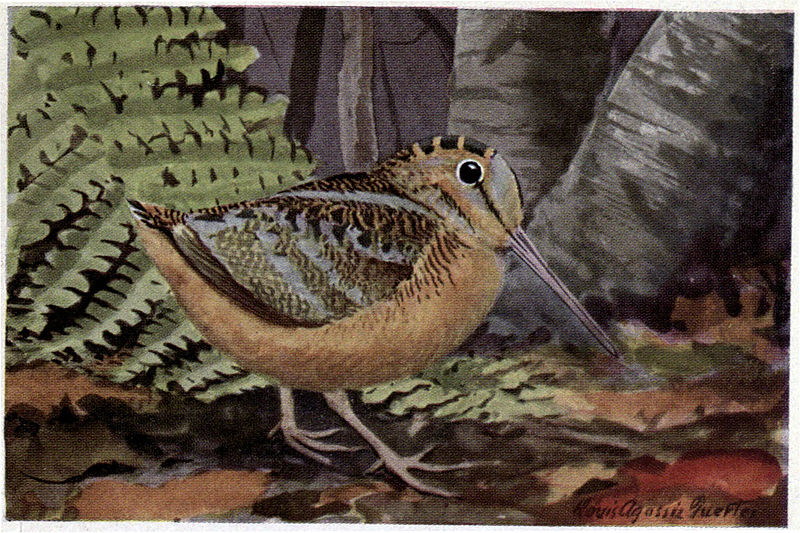
Longbill the Woodcock - Burgess Bird Book ©©

Longbill the Woodcock – Burgess Bird Book ©©

“Then you are even,” said a voice close at hand. “You scared him. I saw you coming, but Longbill didn’t.”

Peter turned quickly. There was Mrs. Woodcock peeping at him from behind a tussock of grass.

“I didn’t mean to scare him,” apologized Peter. “I really didn’t mean to. Do you think he was really very much scared?”

“Not too scared to come back, anyway,” said Longbill himself, dropping down just in front of Peter. “I recognized you just as I was disappearing over the tops of the bushes, so I came right back. I learned when I was very young that when startled it is best to fly first and find out afterwards whether or not there is real danger. I am glad it is no one but you, Peter, for I was having a splendid meal here, and I should have hated to leave it. You’ll excuse me while I go on eating, I hope. We can talk between bites.”

“Certainly I’ll excuse you,” replied Peter, staring around very hard to see what it could be Longbill was making such a good meal of. But Peter couldn’t see a thing that looked good to eat. There wasn’t even a bug or a worm crawling on the ground. Longbill took two or three steps in rather a stately fashion. Peter had to hide a smile, for Longbill had such an air of importance, yet at the same time was such an odd looking fellow. He was quite a little bigger than Welcome Robin, his tail was short, his legs were short, and his neck was short. But his bill was long enough to make up. His back was a mixture of gray, brown, black and buff, while his breast and under parts were a beautiful reddish-buff. It was his head that made him look queer. His eyes were very big and they were set so far back that Peter wondered if it wasn’t easier for him to look behind him than in front of him.

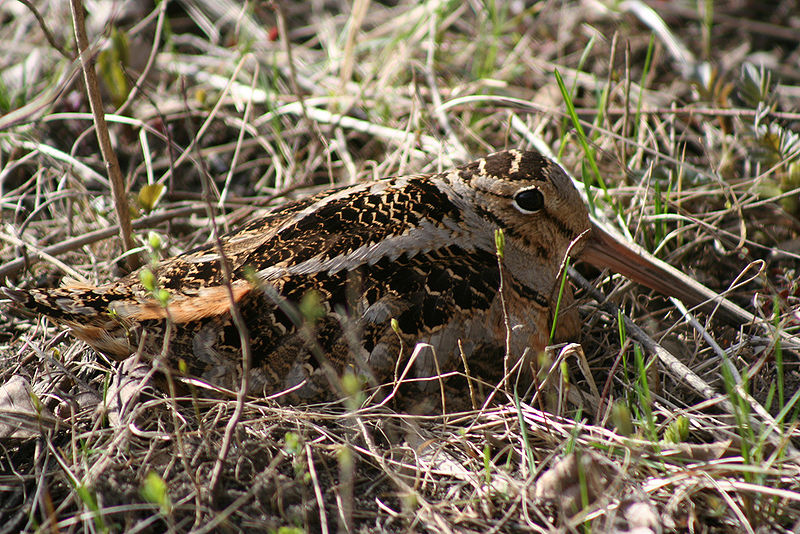
American Woodcock (Scolopax minor) on nest © USFWS

American Woodcock (Scolopax minor) on nest © USFWS

Suddenly Longbill plunged his bill into the ground. He plunged it in for the whole length. Then he pulled it out and Peter caught a glimpse of the tail end of a worm disappearing down Longbill’s throat. Where that long bill had gone into the ground was a neat little round hole. For the first time Peter noticed that there were many such little round holes all about. “Did you make all those little round holes?” exclaimed Peter.

“Not at all,” replied Longbill. “Mrs. Woodcock made some of them.”

“And was there a worm in every one?” asked Peter, his eyes very wide with interest.

Longbill nodded. “Of course,” said he. “You don’t suppose we would take the trouble to bore one of them if we didn’t know that we would get a worm at the end of it, do you?”

Peter remembered how he had watched Welcome Robin listen and then suddenly plunge his bill into the ground and pull out a worm. But the worms Welcome Robin got were always close to the surface, while these worms were so deep in the earth that Peter couldn’t understand how it was possible for any one to know that they were there. Welcome Robin could see when he got hold of a worm, but Longbill couldn’t. “Even if you know there is a worm down there in the ground, how do you know when you’ve reached him? And how is it possible for you to open your bill down there to take him in?” asked Peter.

Longbill chuckled. “That’s easy,” said he. “I’ve got the handiest bill that ever was. See here!” Longbill suddenly thrust his bill straight out in front of him and to Peter’s astonishment he lifted the end of the upper half without opening the rest of his bill at all. “That’s the way I get them,” said he. “I can feel them when I reach them, and then I just open the top of my bill and grab them. I think there is one right under my feet now; watch me get him.” Longbill bored into the ground until his head was almost against it. When he pulled his bill out, sure enough, there was a worm. “Of course,” explained Longbill, “it is only in soft ground that I can do this. That is why I have to fly away south as soon as the ground freezes at all.”

“It’s wonderful,” sighed Peter. “I don’t suppose any one else can find hidden worms that way.”

“My cousin, Jack Snipe, can,” replied Longbill promptly. “He feeds the same way I do, only he likes marshy meadows instead of brushy swamps. Perhaps you know him.”

Wilson's Snipe (Gallinago delicata) at Circle B by Dan

WWilson’s Snipe (Gallinago delicata) at Circle B by Dan

Peter nodded. “I do,” said he. “Now you speak of it, there is a strong family resemblance, although I hadn’t thought of him as a relative of yours before. Now I must be running along. I’m ever so glad to have seen you, and I’m coming over to call again the first chance I get.”

So Peter said good-by and kept on down the Laughing Brook to the Smiling Pool. Right where the Laughing Brook entered the Smiling Pool there was a little pebbly beach. Running along the very edge of the water was a slim, trim little bird with fairly long legs, a long slender bill, brownish-gray back with black spots and markings, and a white waistcoat neatly spotted with black. Every few steps he would stop to pick up something, then stand for a second bobbing up and down in the funniest way, as if his body was so nicely balanced on his legs that it teetered back and forth like a seesaw. It was Teeter the Spotted Sandpiper, an old friend of Peter’s. Peter greeted him joyously.

“Peet-weet! Peet-weet!” cried Teeter, turning towards Peter and bobbing and bowing as only Teeter can. Before Peter could say another word Teeter came running towards him, and it was plain to see that Teeter was very anxious about something. “Don’t move, Peter Rabbit! Don’t move!” he cried.

“Why not?” demanded Peter, for he could see no danger and could think of no reason why he shouldn’t move. Just then Mrs. Teeter came hurrying up and squatted down in the sand right in front of Peter.

“Thank goodness!” exclaimed Teeter, still bobbing and bowing. “If you had taken another step, Peter Rabbit, you would have stepped right on our eggs. You gave me a dreadful start.”

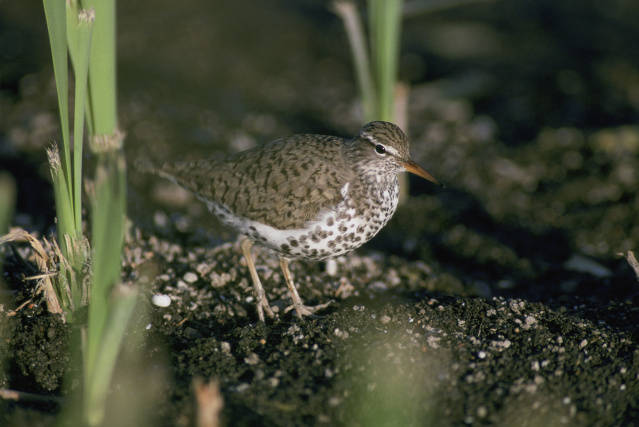
Spotted Sandpiper (Actitis macularius) ©USFWS

Spotted Sandpiper (Actitis macularius) ©USFWS

Peter was puzzled. He showed it as he stared down at Mrs. Teeter just in front of him. “I don’t see any nest or eggs or anything,” said he rather testily.

Mrs. Teeter stood up and stepped aside. Then Peter saw right in a little hollow in the sand, with just a few bits of grass for a lining, four white eggs with big dark blotches on them. They looked so much like the surrounding pebbles that he never would have seen them in the world but for Mrs. Teeter. Peter hastily backed away a few steps. Mrs. Teeter slipped back on the eggs and settled herself comfortably. It suddenly struck Peter that if he hadn’t seen her do it, he wouldn’t have known she was there. You see she looked so much like her surroundings that he never would have noticed her at all.

“My!” he exclaimed. “I certainly would have stepped on those eggs if you hadn’t warned me,” said he. “I’m so thankful I didn’t. I don’t see how you dare lay them in the open like this.”

Mrs. Teeter chuckled softly. “It’s the safest place in the world, Peter,” said she. “They look so much like these pebbles around here that no one sees them. The only time they are in danger is when somebody comes along, as you did, and is likely to step on them without seeing them. But that doesn’t happen often.”


Spotted Sandpiper (Actitis macularius) Eggs ©WikiC

Lee’s Addition:

“You shall hide them in the secret place of Your presence From the plots of man; You shall keep them secretly in a pavilion… (Psalms 31:20 NKJV)

“Hide me from the secret plots of the wicked,… (Psalms 64:2a NKJV)

Our Lord created these birds with a neat bills to help them feed and also great colors to help them stay hidden from danger.

These birds all belong to the Scolopacidae – Sandpipers, Snipes Family. There are 96 species in this family.

Questions to answer:

  • What is Longbill’s first reaction at danger?
  • Can you describe Longbill’s tail, neck and eyes?
  • What is special about his bill?
  • Who is Longbill’s cousin?
  • Where does he like to catch worms?
  • Who is Tweeter?
  • Why did she stop Peter Rabbit?

Links:


*

Links:

Redwing the Blackbird, Speckles the Starling - Burgess Bird Book ©©Thum


  Next Chapter Redwing and Yellow Wing


Burgess-Bird-Book-for-Children


Burgess Bird Book For Children


ABC’s Of The Gospel

*


Bird-watching Devotional Activity

Philippine Eagle-Owl (Bubo philippensis) by Bob Kaufman

Philippine Eagle-Owl (Bubo philippensis) by Bob Kaufman

“By them the birds of the heavens have their home; They sing among the branches. (Psalms 104:12 NKJV)

Myra has become a dear friend through this blog. She lives in the Philippines and enjoys birdwatching. She used some of this blog’s information several years ago for a class in birdwatching at a Christian Camp there. Now, she has written a Birdwatching Devotional and I asked if I could share it with you. Of course, no problem.

Here is an excerpt from her e-mail that tells about it.

Just want to share something I wrote.  I was in a southern province recently to cover the opening of a retreat center run by the organization I work for (http://cctmalungon.blogspot.com/).  I got to bird watch the next morning during my quiet time, and started writing a devotional activity.  I finished writing it yesterday.
I am praying the management of the retreat center will be interested in my suggestions to promote bird watching there, and hoping the attached devotional will be printed out and placed inside each room.

*

MRTC Bird-watching Devotional Activity 1

It is often easier to hear birds than to see them, so for this devotional activity, we will simply listen to the sounds they make.  Bring your Bible, a pen, and this sheet. Find a quiet, shady spot. Read Psalm 104:1 – 17, 24 – 28. Notice that the psalmist mentions birds singing among the branches (v.12).  Now close your eyes and listen to the bird sounds around you.

In the space below use tally marks (four vertical and one diagonal line like those used to score games) to make a record of the different kind of bird sounds you hear:

_

_

_

_

_

_

Which of the following sounds did you hear?

_____Chirp

_____Tweet

_____Peep

_____Warble

_____Cheep

_____Hoot

_____Whoop

_____Trill

_____Whistle

_____Squawk

_____Caw

_____Coo

These are all English words based on sounds made by birds. In the spaces below, write how some of the bird sounds sound to you.  Use your own spelling – spell them the way they sound to you!  For example, “Wit-hooooooo! Wit-hoooooooo! Wit-hooo-tu-ri-ri!

_________________________

_________________________

_________________________

_________________________

_________________________

_________________________

Now reread Psalm 104:12 & 24.  The bird sounds you heard tell us of the wisdom and the infinite creativity with which God made the world. What fun He must have had assigning birds to sing high notes and low notes, long notes and short notes, to make soft sounds or loud sounds and an endless combination of these! Some birds make lovely, melodic sounds, while others are madakdak! Imagine the bird sounds and bird songs Adam and Eve heard in the Garden of Eden. But songs and sounds are just one aspect birds. God gave them feathers of different colors; He gave them beaks and feet of different shapes and sizes for a lot of different uses.  He gave them the wonderful gift of flight.  Praise God for His wisdom!

Now reread Psalm 27 & 28, as well as Matthew 6:25 – 27.   God paid detailed attention to birds when He made them.  Up until today, our Heavenly Father feeds them. When He opens His hands “they are filled with good things.” We, His children, are so much more important to Him than birds.  Rejoice in the attention God pays to the details of your life!  Thank Him for his loving care and faithful provision.

Dear Father, thank you for the birds.  I praise you for the wisdom with which you made them.  I bow in awe and amazement at your infinite creativity. Forgive me Father when I forget that you love me more than you love the birds.  Help me to always remember that to You,  I am more valuable than they. Thank you for your care and provision, for your nearness and presence.  I love you! In Jesus Name, Amen.

Myra Gaculais del Rosario

Malungon, Sarangani – December 13, 2014

Taytay, Rizal – January 8, 2015

“O LORD, how manifold are Your works! In wisdom You have made them all. The earth is full of Your possessions—This great and wide sea, In which are innumerable teeming things, Living things both small and great. There the ships sail about; There is that Leviathan Which You have made to play there. These all wait for You, That You may give them their food in due season. What You give them they gather in; You open Your hand, they are filled with good. (Psalms 104:24-28 NKJV)


What a gorgeous place to go birdwatching.

What a gorgeous place to go birdwatching. Malungon Retreat and Community Resource Center

Lee’s Addition:

In the multitude of my thoughts within me thy comforts delight my soul. (Psalms 94:19 KJV)

One of the reasons to share this is that you or some of the Camp and Home-school groups could use it. Also, it could be a start to writing some of your own devotionals along this line.

You can download the file by clicking this link:

MRTC Bird Watching Devotional Activity 1 by Myra Gaculais del Rosario

*

Birds of the Bible – Church Camp In Philippines

*


Old Clothes and Old Houses – Chapter 8

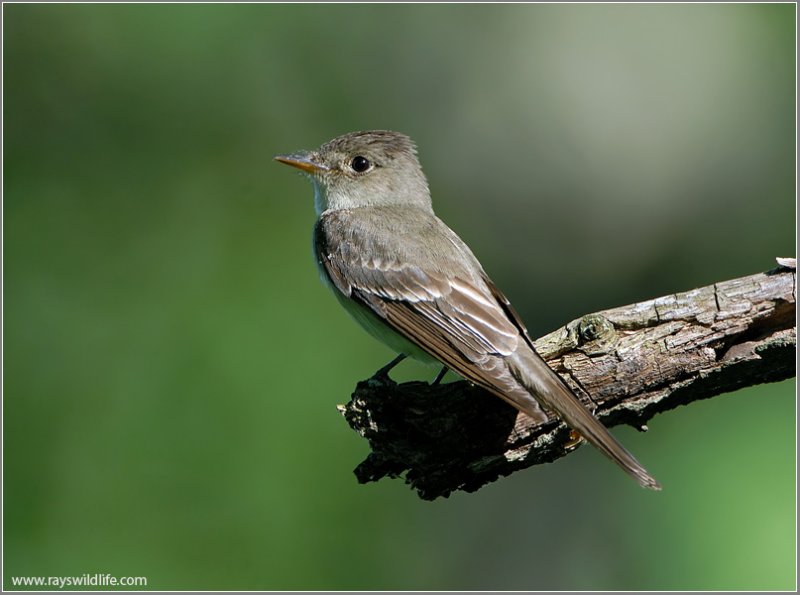
Eastern Wood Pewee (Contopus virens) by Raymond Barlow

Eastern Wood Pewee (Contopus virens) by Raymond Barlow

Old Clothes and Old Houses

The Wood Peewee and Some Nesting Places.

The Burgess Bird Book For Children

*

CHAPTER 8. Old Clothes and Old Houses.

Listen to the story read.

“I can’t stop to talk to you any longer now, Peter Rabbit,” said Jenny Wren, “but if you will come over here bright and early to-morrow morning, while I am out to get my breakfast, I will tell you about Cresty the Flycatcher and why he wants the cast-off clothes of some of the Snake family. Perhaps I should say WHAT he wants of them instead of WHY he wants them, for why any one should want anything to do with Snakes is more then I can understand.”

With this Jenny Wren disappeared inside her house, and there was nothing for Peter to do but once more start for the dear Old Briar-patch. On his way he couldn’t resist the temptation to run over to the Green Forest, which was just beyond the Old Orchard. He just HAD to find out if there was anything new over there. Hardly had he reached it when he heard a plaintive voice crying, “Pee-wee! Pee-wee! Pee-wee!” Peter chuckled happily. “I declare, there’s Pee-wee,” he cried. “He usually is one of the last of the Flycatcher family to arrive. I didn’t expect to find him yet. I wonder what has brought him up so early.”

It didn’t take Peter long to find Pewee. He just followed the sound of that voice and presently saw Pewee fly out and make the same kind of a little circle as the other members of the family make when they are hunting flies. It ended just where it had started, on a dead twig of a tree in a shady, rather lonely part of the Green Forest. Almost at once he began to call his name in a rather sad, plaintive tone, “Pee-wee! Pee-wee! Pee-wee!” But he wasn’t sad, as Peter well knew. It was his way of expressing how happy he felt. He was a little bigger than his cousin, Chebec, but looked very much like him. There was a little notch in the end of his tail. The upper half of his bill was black, but the lower half was light. Peter could see on each wing two whitish bars, and he noticed that Pewee’s wings were longer than his tail, which wasn’t the case with Chebec. But no one could ever mistake Pewee for any of his relatives, for the simple reason that he keeps repeating his own name over and over.

Wood Pewee of Birds Illustrated by Color Photography, 1897

“Aren’t you here early?” asked Peter.

Pewee nodded. “Yes,” said he. “It has been unusually warm this spring, so I hurried a little and came up with my cousins, Scrapper and Cresty. That is something I don’t often do.”

“If you please,” Peter inquired politely, “why do folks call you Wood Pewee?”

Pewee chuckled happily. “It must be,” said he, “because I am so very fond of the Green Forest. It is so quiet and restful that I love it. Mrs. Pewee and I are very retiring. We do not like too many near neighbors.”

“You won’t mind if I come to see you once in a while, will you?” asked Peter as he prepared to start on again for the dear Old Briar-patch.

“Come as often as you like,” replied Pewee. “The oftener the better.”

Back in the Old Briar-patch Peter thought over all he had learned about the Flycatcher family, and as he recalled how they were forever catching all sorts of flying insects it suddenly struck him that they must be very useful little people in helping Old Mother Nature take care of her trees and other growing things which insects so dearly love to destroy.

But most of all Peter thought about that odd request of Cresty’s, and a dozen times that day he found himself peeping under old logs in the hope of finding a cast-off coat of Mr. Black Snake. It was such a funny thing for Cresty to ask for that Peter’s curiosity would allow him no peace, and the next morning he was up in the Old Orchard before jolly Mr. Sun had kicked his bedclothes off.

Jenny Wren was as good as her word. While she flitted and hopped about this way and that way in that fussy way of hers, getting her breakfast, she talked. Jenny couldn’t keep her tongue still if she wanted to.

“Did you find any old clothes of the Snake family?” she demanded. Then as Peter shook his head her tongue ran on without waiting for him to reply. “Cresty and his wife always insist upon having a piece of Snake skin in their nest,” said she. “Why they want it, goodness knows! But they do want it and never can seem to settle down to housekeeping unless they have it. Perhaps they think it will scare robbers away. As for me, I should have a cold chill every time I got into my nest if I had to sit on anything like that. I have to admit that Cresty and his wife are a handsome couple, and they certainly have good sense in choosing a house, more sense than any other member of their family to my way of thinking. But Snake skins! Ugh!”

Downy Woodpecker (Picoides pubescens) by Raymond Barlow

Downy Woodpecker (Picoides pubescens) by Raymond Barlow

“By the way, where does Cresty build?” asked Peter.

In a hole in a tree, like the rest of us sensible people,” retorted Jenny Wren promptly.

Peter looked quite as surprised as he felt. “Does Cresty make the hole?” he asked.

“Goodness gracious, no!” exclaimed Jenny Wren. “Where are your eyes, Peter? Did you ever see a Flycatcher with a bill that looked as if it could cut wood?” She didn’t wait for a reply, but rattled on. “It is a good thing for a lot of us that the Woodpecker family are so fond of new houses. Look! There is Downy the Woodpecker hard at work on a new house this very minute. That’s good. I like to see that. It means that next year there will be one more house for some one here in the Old Orchard. For myself I prefer old houses. I’ve noticed there are a number of my neighbors who feel the same way about it. There is something settled about an old house. It doesn’t attract attention the way a new one does. So long as it has got reasonably good walls, and the rain and the wind can’t get in, the older it is the better it suits me. But the Woodpeckers seem to like new houses best, which, as I said before, is a very good thing for the rest of us.”

Who is there besides you and Cresty and Bully the English Sparrow who uses these old Woodpecker houses?” asked Peter.

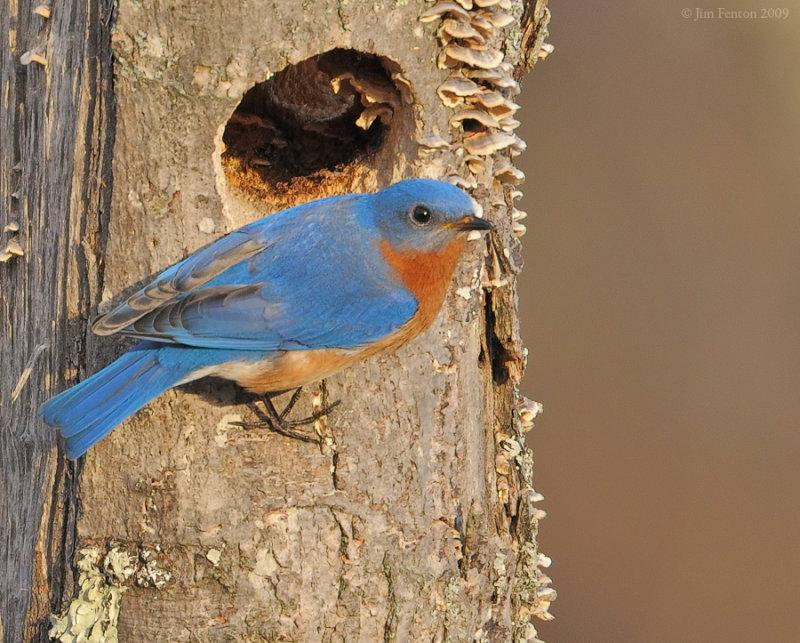
Eastern Bluebird (Sialia sialis) by J Fenton

Eastern Bluebird (Sialia sialis) by J Fenton

“Winsome Bluebird, stupid!” snapped Jenny Wren.

Peter grinned and looked foolish. “Of course,” said he. “I forgot all about Winsome.”

“And Skimmer the Tree Swallow,” added Jenny.

“That’s so; I ought to have remembered him,” exclaimed Peter. “I’ve noticed that he is very fond of the same house year after year. Is there anybody else?”

Again Jenny Wren nodded. “Yank-Yank the Nuthatch uses an old house, I’m told, but he usually goes up North for his nesting,” said she. “Tommy Tit the Chickadee sometimes uses an old house. Then again he and Mrs. Chickadee get fussy and make a house for themselves. Yellow Wing the flicker, who really is a Woodpecker, often uses an old house, but quite often makes a new one. Then there are Killy the Sparrow Hawk and Spooky the Screech Owl.”

Peter looked surprised. “I didn’t suppose THEY nested in holes in trees!” he exclaimed.

“They certainly do, more’s the pity!” snapped Jenny. “It would be a good thing for the rest of us if they didn’t nest at all. But they do, and an old house of Yellow Wing the Flicker suits either of them. Killy always uses one that is high up, and comes back to it year after year. Spooky isn’t particular so long as the house is big enough to be comfortable. He lives in it more or less the year around. Now I must get back to those eggs of mine. I’ve talked quite enough for one morning.”

“Oh, Jenny,” cried Peter, as a sudden thought struck him.

House Wren (Troglodytes aedon) by Ray

House Wren (Troglodytes aedon) by Ray

Jenny paused and jerked her tail impatiently. “Well, what is it now?” she demanded.

“Have you got two homes?” asked Peter.

“Goodness gracious, no!” exclaimed Jenny. “What do you suppose I want of two homes? One is all I can take care of.”

“Then why,” demanded Peter triumphantly, “does Mr. Wren work all day carrying sticks and straws into a hole in another tree? It seems to me that he has carried enough in there to build two or three nests.”

Jenny Wren’s eyes twinkled, and she laughed softly. “Mr. Wren just has to be busy about something, bless his heart,” said she. “He hasn’t a lazy feather on him. He’s building that nest to take up his time and keep out of mischief. Besides, if he fills that hollow up nobody else will take it, and you know we might want to move some time. Good-by, Peter.” With a final jerk of her tail Jenny Wren flew to the little round doorway of her house and popped inside.


Lee’s Addition:

“But now ask the beasts, and they will teach you; And the birds of the air, and they will tell you; (Job 12:7 NKJV)

*

  • What is Peter Rabbit still trying to find?
  • Has he found out why it is need for yet?
  • Who is our newest arrival?
  • Is he on time or early?
  • What does Pewee’s bill look like?
  • Is tail longer or shorter than his wings?
  • Can you find and name the birds listed that use tree holes?
  • Were the birds friendly and kind in this chapter?

A man who has friends must himself be friendly, But there is a friend who sticks closer than a brother. (Proverbs 18:24 NKJV)

“But now ask the beasts, and they will teach you; And the birds of the air, and they will tell you; (Job 12:7 NKJV)

Links:

*

Links:

Longbill the Woodcock - Burgess Bird Book ©©Thum


  Next Chapter (Longbill and Teeter.)


Burgess-Bird-Book-for-Children


Burgess Bird Book For Children


ABC’s Of The Gospel


2014 in Review

The WordPress.com stats helper monkeys prepared a 2014 annual report for this blog.

Here’s an excerpt:

The Louvre Museum has 8.5 million visitors per year. This blog was viewed about 220,000 times in 2014. If it were an exhibit at the Louvre Museum, it would take about 9 days for that many people to see it.

Click here to see the complete report.

Thank you for all your visits to this blog during 2014. This is encouraging and keeps us motivated to “keep on keeping on.” May we all have a great 2015!

“That I may publish with the voice of thanksgiving, and tell of all thy wondrous works. (Psalms 26:7 KJV)

Lord Bless You In 2015!

Happy New Year!

*

1,300-Year Old Recording Discovered? – Re-post

1,300-YEAR OLD RECORDING DISCOVERED?

©©Creation Moments 2014

“And his brother’s name was Jubal: he was the father of all such as handle the harp and organ.” Genesis 4:21
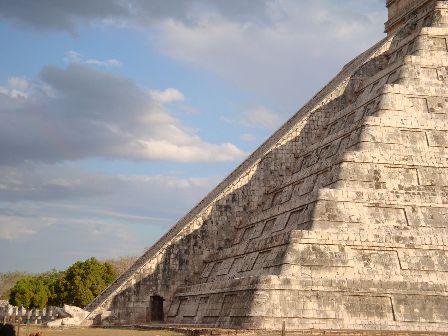
If you’ve ever seen any photographs of Mayan pyramids, you will probably remember that they typically have a large set of stairs going to the top. Now an acoustics expert offers some interesting evidence that these steps may in fact be the world’s oldest recording.

Pyramid of Kukulkan at Chichen Itza, Mexico

Pyramid of Kukulkan at Chichen Itza, Mexico

If you stand before the stairway of the Pyramid of Kukulkan at Chichen Itza, Mexico, and clap your hands, you will hear a curious, descending echo. If you are familiar with the quetzal, whose feathers the ancient Mayans treasured, the echo will remind you of the call of this bird. The bright green and red quetzal has long tail feathers that can be over two feet long. When sonograms of its call were compared to sonograms of the echo returning off the steps of this pyramid, they were surprisingly close. Both begin at a frequency of about 1,500 hertz and fall at the same rate to less than 1,000 hertz! Making this even more interesting is the fact that the pyramid itself has a picture of Quetzalcoatl wearing a coat of quetzal feathers. According to legend, Quetzalcoatl was half quetzal. Traditional Mayan scholars don’t doubt that the Mayans were clever enough to have purposely built the pyramid to provide this echo, and acoustics experts have found a similar echo at a temple in Uxmal, Mexico.

The Bible tells us that by the eighth generation of human beings musical instruments were in use. This pyramid may be evidence that we were created with the aptitude to understand and use sound, just as the Bible depicts in its opening chapters.

Prayer:

I thank You for the gift of sound and music, dear Father. Let me always be filled with praises for You. Amen.

Notes:

Peter Weiss, “Singing Stairs”, Science News, 1/16/99, v. 155, p. 44. Photo: Pyramid of Kukulkan at Chichen Itza, Mexico. (PD)


Resplendent Quetzal (Pharomachrus mocinno) Reinier Munguia

Resplendent Quetzal (Pharomachrus mocinno) Reinier Munguia

Lee’s Addition:

“They sing to the tambourine and harp, And rejoice to the sound of the flute”. (Job 21:12 NKJV)

Quetzels are members of the Trogonidae – Trogons Family. There are 6 Quetzels among the 43 members of the family. They are beautiful birds and I find this article very interesting.

Here is a recording of a Quetzal from xeno-canto:

*

Trogonidae – Trogons Family

Creation Moments

*

The Watchman of the Old Orchard – Chapter 7

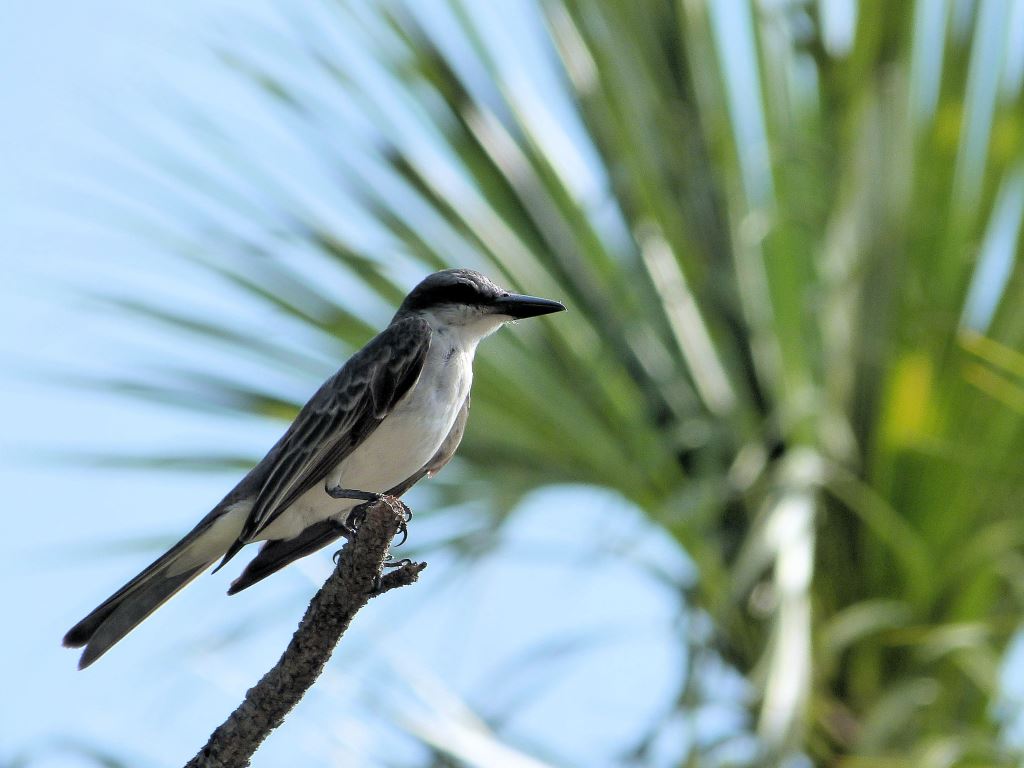
Grey Kingbird (Tyrannus dominicensis) by Lee at Honeymoon Is SP

The Watchman of the Old Orchard

The Kingbird and the Great Crested Flycatcher.

The Burgess Bird Book For Children

*

CHAPTER 7. The Watchman of the Old Orchard.

Listen to the story read.

A few days after Chebec and his wife started building their nest in the Old Orchard Peter dropped around as usual for a very early call. He found Chebec very busy hunting for materials for that nest, because, as he explained to Peter, Mrs. Chebec is very particular indeed about what her nest is made of. But he had time to tell Peter a bit of news.

“My fighting cousin and my handsomest cousin arrived together yesterday, and now our family is very well represented in the Old Orchard,” said Chebec proudly.

Slowly Peter reached over his back with his long left hind foot and thoughtfully scratched his long right ear. He didn’t like to admit that he couldn’t recall those two cousins of Chebec’s. “Did you say your fighting cousin?” he asked in a hesitating way.

“That’s what I said,” replied Chebec. “He is Scrapper the Kingbird, as of course you know. The rest of us always feel safe when he is about.

“Of course I know him,” declared Peter, his face clearing. “Where is he now?”

At that very instant a great racket broke out on the other side of the Old Orchard and in no time at all the feathered folks were hurrying from every direction, screaming at the top of their voices. Of course, Peter couldn’t be left out of anything like that, and he scampered for the scene of trouble as fast as his legs could take him. When he got there he saw Redtail the Hawk flying up and down and this way and that way, as if trying to get away from something or somebody.

For a minute Peter couldn’t think what was the trouble with Redtail, and then he saw. A white-throated, white-breasted bird, having a black cap and back, and a broad white band across the end of his tail, was darting at Redtail as if he meant to pull out every feather in the latter’s coat.

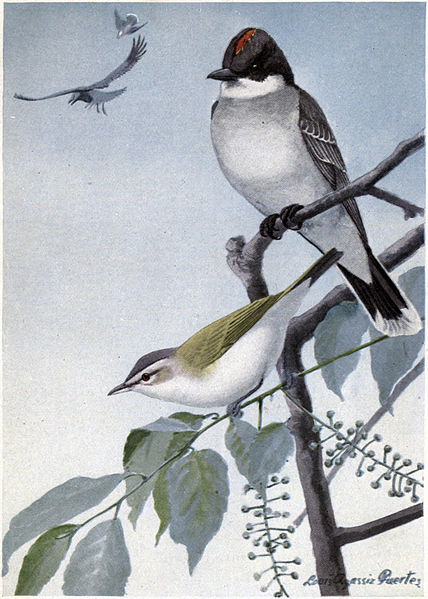
Scrapper the Kingbird, Redeye the Vireo - Burgess Bird Book ©©

Scrapper the Kingbird, Redeye the Vireo – Burgess Bird Book ©©

He was just a little smaller than Welcome Robin, and in comparison with him Redtail was a perfect giant. But this seemed to make no difference to Scrapper, for that is who it was. He wasn’t afraid, and he intended that everybody should know it, especially Redtail. It is because of his fearlessness that he is called Kingbird. All the time he was screaming at the top of his lungs, calling Redtail a robber and every other bad name he could think of. All the other birds joined him in calling Redtail bad names. But none, not even Bully the English Sparrow, was brave enough to join him in attacking big Redtail.

When he had succeeded in driving Redtail far enough from the Old Orchard to suit him, Scrapper flew back and perched on a dead branch of one of the trees, where he received the congratulations of all his feathered neighbors. He took them quite modestly, assuring them that he had done nothing, nothing at all, but that he didn’t intend to have any of the Hawk family around the Old Orchard while he lived there. Peter couldn’t help but admire Scrapper for his courage.

As Peter looked up at Scrapper he saw that, like all the rest of the flycatchers, there was just the tiniest of hooks on the end of his bill. Scrapper’s slightly raised cap seemed all black, but if Peter could have gotten close enough, he would have found that hidden in it was a patch of orange-red. While Peter sat staring up at him Scrapper suddenly darted out into the air, and his bill snapped in quite the same way Chebec’s did when he caught a fly. But it wasn’t a fly that Scrapper had. It was a bee. Peter saw it very distinctly just as Scrapper snapped it up. It reminded Peter that he had often heard Scrapper called the Bee Martin, and now he understood why.

“Do you live on bees altogether?” asked Peter.

Eastern Kingbird (Tyrannus tyrannus) by Margaret Sloan Eating

Eastern Kingbird (Tyrannus tyrannus) by Margaret Sloan Eating

“Bless your heart, Peter, no,” replied Scrapper with a chuckle. “There wouldn’t be any honey if I did. I like bees. I like them first rate. But they form only a very small part of my food. Those that I do catch are mostly drones, and you know the drones are useless. They do no work at all. It is only by accident that I now and then catch a worker. I eat all kinds of insects that fly and some that don’t. I’m one of Farmer Brown’s best friends, if he did but know it. You can talk all you please about the wonderful eyesight of the members of the Hawk family, but if any one of them has better eyesight than I have, I’d like to know who it is. There’s a fly ‘way over there beyond that old apple-tree; watch me catch it.”

Peter knew better than to waste any effort trying to see that fly. He knew that he couldn’t have seen it had it been only one fourth that distance away. But if he couldn’t see the fly he could hear the sharp click of Scrapper’s bill, and he knew by the way Scrapper kept opening and shutting his mouth after his return that he had caught that fly and it had tasted good.

“Are you going to build in the Old Orchard this year?” asked Peter.

“Of course I am,” declared Scrapper. “I—”

Just then he spied Blacky the Crow and dashed out to meet him. Blacky saw him coming and was wise enough to suddenly appear to have no interest whatever in the Old Orchard, turning away toward the Green Meadows instead.

Peter didn’t wait for Scrapper to return. It was getting high time for him to scamper home to the dear Old Briar-patch and so he started along, lipperty-lipperty-lip. Just as he was leaving the far corner of the Old Orchard some one called him. “Peter! Oh, Peter Rabbit!” called the voice. Peter stopped abruptly, sat up very straight, looked this way, looked that way and looked the other way, every way but the right way.

“Look up over your head,” cried the voice, rather a harsh voice. Peter looked, then all in a flash it came to him who it was Chebec had meant by the handsomest member of his family. It was Cresty the Great Crested Flycatcher. He was a wee bit bigger than Scrapper the Kingbird, yet not quite so big as Welcome Robin, and more slender. His throat and breast were gray, shading into bright yellow underneath. His back and head were of a grayish-brown with a tint of olive-green. A pointed cap was all that was needed to make him quite distinguished looking. He certainly was the handsomest as well as the largest of the Flycatcher family.

Great Crested Flycatcher (Myiarchus crinitus) by Margaret Sloan

Great Crested Flycatcher (Myiarchus crinitus) by Margaret Sloan

“You seem to be in a hurry, so don’t let me detain you, Peter,” said Cresty, before Peter could find his tongue. “I just want to ask one little favor of you.”

“What is it?” asked Peter, who is always glad to do any one a favor.

“If in your roaming about you run across an old cast-off suit of Mr. Black Snake, or of any other member of the Snake family, I wish you would remember me and let me know. Will you, Peter?” said Cresty.

“A—a—a—what?” stammered Peter.

“A cast-off suit of clothes from any member of the Snake family,” replied Cresty somewhat impatiently. “Now don’t forget, Peter. I’ve got to go house hunting, but you’ll find me there or hereabouts, if it happens that you find one of those cast-off Snake suits.”

Before Peter could say another word Cresty had flown away. Peter hesitated, looking first towards the dear Old Briar-patch and then towards Jenny Wren’s house. He just couldn’t understand about those cast-off suits of the Snake family, and he felt sure that Jenny Wren could tell him. Finally curiosity got the best of him, and back he scampered, lipperty-lipperty-lip, to the foot of the tree in which Jenny Wren had her home.

“Jenny!” called Peter. “Jenny Wren! Jenny Wren!” No one answered him. He could hear Mr. Wren singing in another tree, but he couldn’t see him. “Jenny! Jenny Wren! Jenny Wren!” called Peter again. This time Jenny popped her head out, and her little eyes fairly snapped. “Didn’t I tell you the other day, Peter Rabbit, that I’m not to be disturbed? Didn’t I tell you that I’ve got seven eggs in here, and that I can’t spend any time gossiping? Didn’t I, Peter Rabbit? Didn’t I? Didn’t I?”

“You certainly did, Jenny. You certainly did, and I’m sorry to disturb you,” replied Peter meekly. “I wouldn’t have thought of doing such a thing, but I just didn’t know who else to go to.”

“Go to for what?” snapped Jenny Wren. “What is it you’ve come to me for?”

“Snake skins,” replied Peter.

“Snake skins! Snake skins!” shrieked Jenny Wren. “What are you talking about, Peter Rabbit? I never have anything to do with Snake skins and don’t want to. Ugh! It makes me shiver just to think of it.”

“You don’t understand,” cried Peter hurriedly. “What I want to know is, why should Cresty the Flycatcher ask me to please let him know if I found any cast-off suits of the Snake family? He flew away before I could ask him why he wants them, and so I came to you, because I know you know everything, especially everything concerning your neighbors.”

Jenny Wren looked as if she didn’t know whether to feel flattered or provoked. But Peter looked so innocent that she concluded he was trying to say something nice.

*

Like birds flying about, So will the LORD of hosts defend Jerusalem. Defending, He will also deliver it; Passing over, He will preserve it.” (Isaiah 31:5 NKJV)

  • Who are the two birds featured in this tale?
  • Who is the larger of the two?
  • Which one has a yellow throat and which one has a white throat?
  • Why is Scrapper called a Kingbird
  • Does Scrapper only eat bees?
  • What was Cresty looking for? Why?
  • What is another name for Scrapper?
  • What was on the tip of their bills?

*

Out of the ground the LORD God formed every beast of the field and every bird of the air, and brought them to Adam to see what he would call them. And whatever Adam called each living creature, that was its name. (Genesis 2:19 NKJV)

Links:

*

Links:

Wood Pewee of Birds Illustrated by Color Photography, 1897


Next Chapter (Old Clothes and Old Houses)


Burgess-Bird-Book-for-Children


Burgess Bird Book For Children


Savannah Sparrow by Ray   Wordless Birds

*


‘The Rescue’ — A Christmas Story (Re-blogged)

An amazing story from Sandra Conner’s “In Love With Words” Take the time to read the heartwarming fiction story based on a true situation.

THE RESCUE

BOY FOR RESCUE - SHORTER YELLOWThe old woman knelt shivering before the tombstone as her husband pulled away a pile of decayed leaves that seemed to cling defiantly to its base in spite of the wind that whipped at them repeatedly. It wasn’t bitterly cold — at least not like it had been many other Decembers in this city. But the wind was always stronger up here at the cemetery, and today, with no sun smiling down its warmth, the chill just seemed to beat its way into their elderly bones. Of course, sorrow had its own chill, and sometimes it was hard to tell if the icy feeling came more from the weather or from the pain within.

The old man finished his work and then joined her, slowing sinking to his own knees and removing his warm felt hat. Tears glistened in his eyes, but he wouldn’t let them fall. He had to be strong for her right now. He glanced sideways at her, seeing the tears flowing freely down her cheeks. She kept pressing her handkerchief to her face, to try to stem the bitter stream, but it did no good.

It had been a year and a half now since they had lost their second son. He had followed his brother into military service and then into war … and, finally, into the grave.

The old man shuddered out a deep sigh. He had brought his new bride to this country just one year before their first son had been born, and it had been a time of promise and happy expectation. The Lord had blessed them with two handsome, healthy sons, and they had been the sweetest blessing life had to give. He sighed now as he thought back over the years of raising two strong-willed, but tender-hearted boys. They had all been so happy … until ….

For the Rest of this story.

*

Merry Christmas 2014

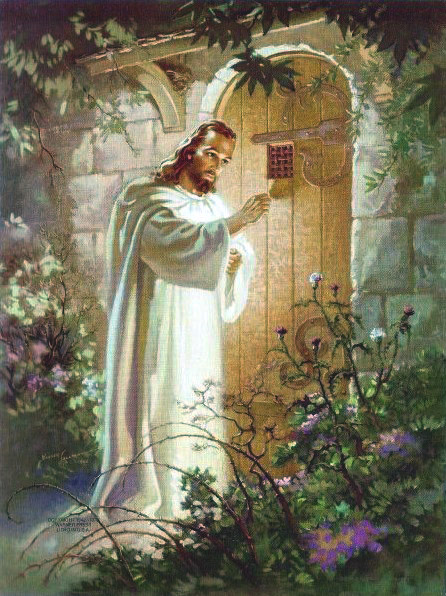
Jesus Knocking at Door

“Behold, I stand at the door, and knock: if any man hear my voice, and open the door, I will come in to him, and will sup with him, and he with me. (Revelation 3:20 KJV)”

Merry Christmas to all our readers, visitors and writers of Lee’s Birdwatching Adventures Plus. I am no longer the only writer and all of us who are involved wish you the best Christmas ever.

My thanks go to Ian, Baron Brown (Golden Eagle), James J. S. Johnson, Emma Foster, Dottie Malcolm, and other guest writers. Also, thanks to Dan, of course, and for all the photographers who have given permission to use their fantastic photos.

The best Christmas present you can ever receive is to accept Jesus Christ as your Savior. Have you put your faith and trust in the Lord and accepted Him?

*

*

Jesus saith unto him, I am the way, the truth, and the life: no man cometh unto the Father, but by me. (John 14:6 KJV)

(This video is narrated by Pastor Nathan Osborne and the music is played by Sean Fielder)

See:

Sharing the Gospel

Gideon

*