BEMA Birds by Emma Foster

BEMA Birds by Emma Foster

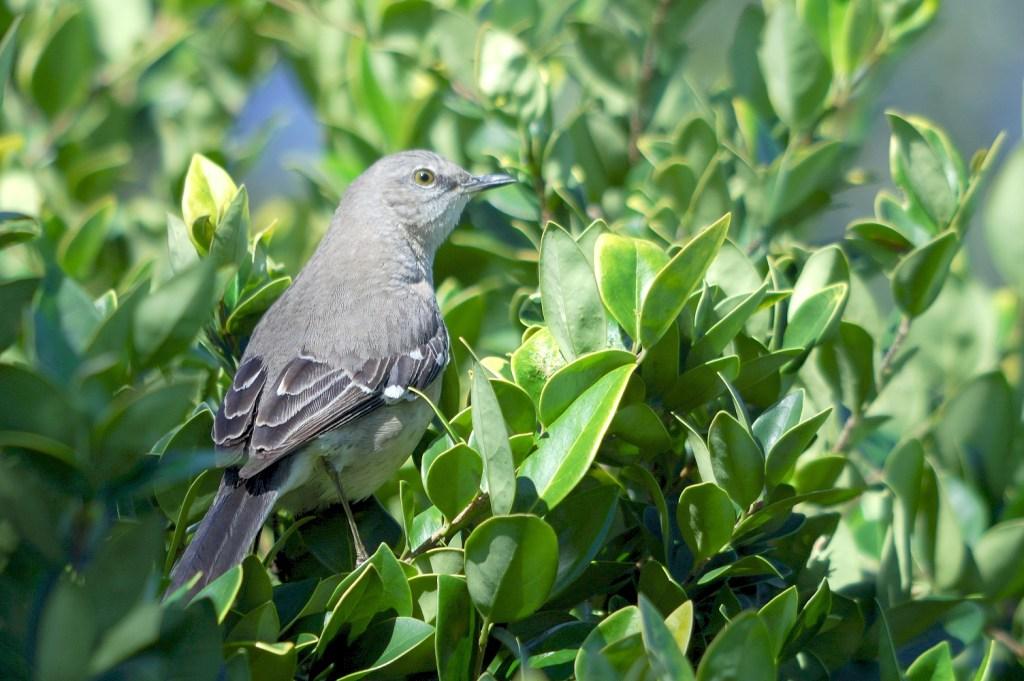
Northern Mockingbird (Mimus polyglottos) By Dan'sPix

Northern Mockingbird (Mimus polyglottos) By Dan’sPix

Once there was a mockingbird named Carl who was a member of BEMA, the Bird Emergency Management Agency. Whenever a hurricane or other natural disaster was about to occur, Carl was in charge of helping other birds find a place to hide. Because he and several other birds that worked for BEMA lived in Florida, they were mainly in charge of helping other birds fly north.

One day Carl flew to a meeting that took place in a hollowed oak tree in the central area of Florida. Many of the birds that lived in Florida and were members of BEMA attended the meeting because of rumors that a hurricane was growing in the Atlantic Ocean. At the meeting, Carl received an alert that a hurricane was nearing Florida and it was going to cross the state.

Carl and many other birds who had come to the meeting were sent to different areas of Florida in order to hide birds from the weather and keep them safe. Most of them would fly north, and Carl and the other birds would help lead them to different places that BEMA thought safe.

Carl quickly flew down to the south of Florida after hearing that the hurricane was estimated to come in three days. He landed in the Florida Keys in an area where he had been assigned and where he knew there would be many birds ready to relocate for the storm. As Carl traveled down south, the winds began to pick up, making it more difficult for him to fly.

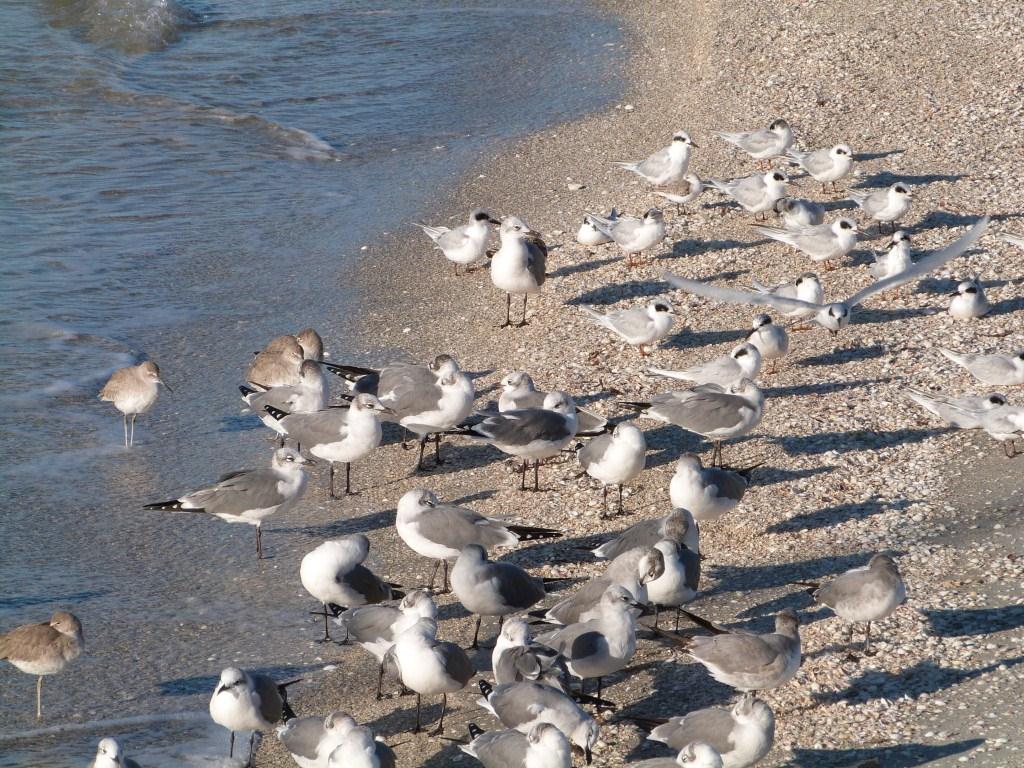
Willit - Laughing Gull - Forster's Tern at Ft DeSoto 11-22-12 Thanksgiving

Willit – Laughing Gull – Forster’s Tern at Ft DeSoto 11-22-12 Thanksgiving

When Carl arrived at the Keys, a large group of birds had gathered near a hotel. Most of them were seagulls and ibises. Carl quickly explained that they were heading north and that they had to stay together while flying. He told the nervous birds that he would guide them back to where they lived once the hurricane had passed. Before they took off, Carl took a quick head count and counted fifteen birds in his group.

Carl immediately began flying north, the other birds flying behind him. He made sure they flew in a formation that made them fly with the wind to make it easier for the smaller birds. The winds were moving faster now, and the rain was making it hard for some of the birds to fly.

After a few hours, Carl flew lower toward an area with many bushes and trees. The group of birds landed underneath the bushes to keep safe and warm. Carl took another head count, but realized that there were only fourteen birds that were now hiding in the bushes. Just as Carl was about to turn back and look for the other seagull, the rain began coming down hard, so Carl was forced to take shelter with the other birds.

The rain lasted for a few days. Every now and then Carl would come out of the bushes to search for something to eat for him and the other birds, finding worms on the ground because of the rain. Eventually, the stormed passed over them, and even though it was still raining Carl was able to take the other birds back to the Keys.

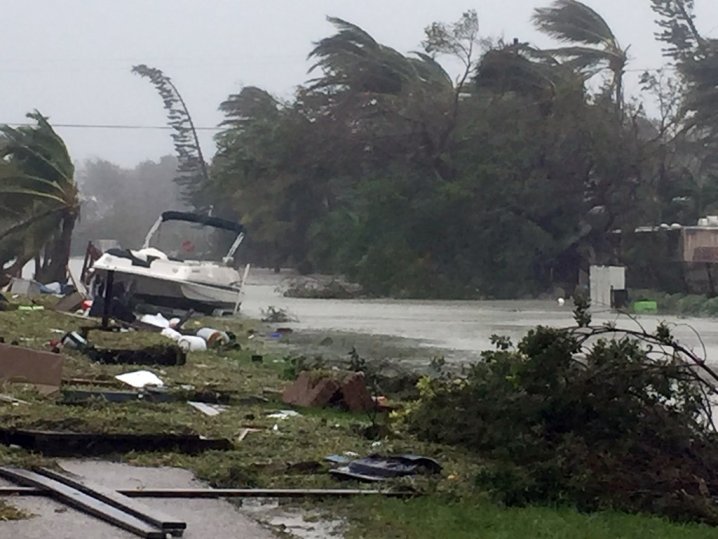
Damage in Keys ©Peninsula Qatar

When Carl and the other birds came back they found their nests and many other homes destroyed, but they knew they would be able to rebuild their nests with time. They mourned the loss of the one seagull that didn’t make it with them, holding a small funeral by where the bird’s nest used to be. Afterward, Carl said goodbye and flew back home. The next day BEMA held another meeting that laid out a plan to help the birds fix their homes and get rid of the debris that was now scattered everywhere.


Thanks, Emma. It is great to know that the birds have a BEMA organization to help them to recover after hurricanes. Emma, like the rest of us here in Central Florida, is aware of the help FEMA provides for humans. When Hurricane Irma came up through the state, from Key West up past us, many have had repairs to perform. Also, like the seagull that didn’t survive, there are many reports of birds and other critters that lost their lives in the hurricane.

“Are not two sparrows sold for a copper coin? And not one of them falls to the ground apart from your Father’s will.” (Matthew 10:29 NKJV)

I know the Lord, when He created birds, gave them the resilience to rebuild and continue to multiply.

Then God said, “Let the waters abound with an abundance of living creatures, and let birds fly above the earth across the face of the firmament of the heavens.” So God created great sea creatures and every living thing that moves, with which the waters abounded, according to their kind, and every winged bird according to its kind. And God saw that it was good. And God blessed them, saying, “Be fruitful and multiply, and fill the waters in the seas, and let birds multiply on the earth.” (Genesis 1:20-22 NKJV)


More of Emma’s Stories

*


Avian And Attributes – Willing

Avian And Attributes – Willing

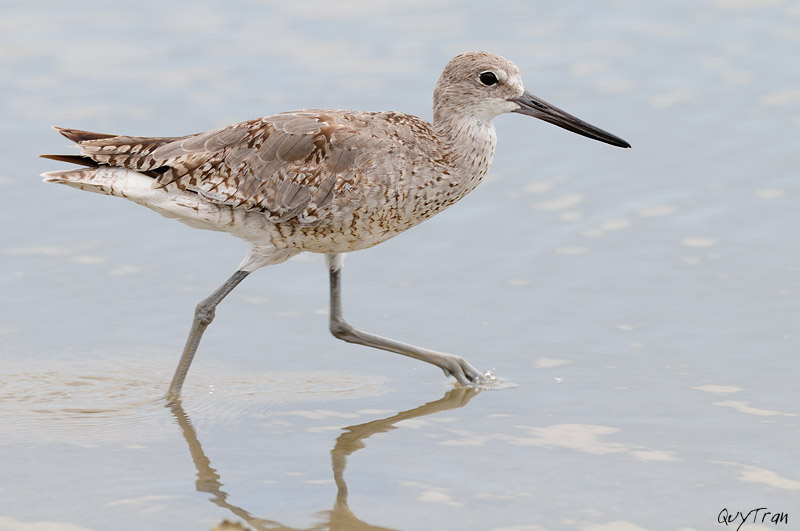
Willet (Tringa semipalmata) by Quy Tran

“Wherein God, willing more abundantly to shew unto the heirs of promise the immutability of his counsel, confirmed it by an oath:” (Hebrews 6:17 KJV)

The Lord is not slack concerning his promise, as some men count slackness; but is longsuffering to us-ward, not willing that any should perish, but that all should come to repentance.
(2 Peter 3:9 KJV)


Avian and Attributes – Willing

WILLING, ppr.
1. Determining; resolving; desiring.
2. Disposing of by will.
WILLING, a.

1. Free to do or grant; having the mind inclined; disposed; not averse. Let every man give, who is able and willing.
2. Pleased; desirous.
Felix, willing to show the Jews a pleasure. Acts 24.
3. Ready; prompt.
He stoopd with weary wings and willing feet.
4. Chosen; received of choice or without reluctance; as, to be held in willing chains.
5. Spontaneous.
6. Consenting.


Eastern Willet by Jim Fenton

Willet (Tringa semipalmata)

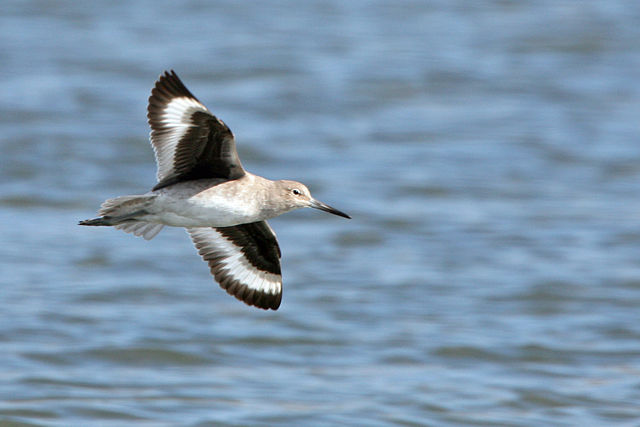
The Willet (Tringa semipalmata), formerly in the monotypic genus Catoptrophorus as Catoptrophorus semipalmatus, is a large shorebird in the sandpiper family. It is a relatively large and robust member sandpiper, and is the largest of the species called “shanks” in the genus Tringa. Its closest relative is the lesser yellowlegs, a much smaller bird with a very different appearance apart from the fine, clear, and dense pattern of the neck, which both species show in breeding plumage. It breeds in North America and the West Indies and winters in southern North America, Central America, the West Indies and South America.

The Willet’s name is onomatopoeic and refers to it loud peircing “pill-will-willet” territorial song., which is higherpicjed and repeated at a faster rate in Eastern willets than in Western birds. Other calls include a predator response call given by breeding birds which is a repeated, staccato “kleep“, while non breeding birds alarms include a high, pitched anxious “kip-kip=viek” call and a “kreei” call. They also have a distinctive call when crossing another willet’s territory and this “klay-dir” call is also used as a contact call when willets are migrating

Willet (Tringa semipalmata) ©WikiC

(Scolopacidae – Sandpipers, Snipes Family) (Willet – Wikipedia)


More Avian and Attributes

Birds whose first name starts with “W”

Good News

*
[Definitions from Webster’s Dictionary of American English (1828), unless noted. Bird info from Wikipedia plus.]
Avian And Attributes – (No) Variableness

Avian And Attributes – (No) Variableness

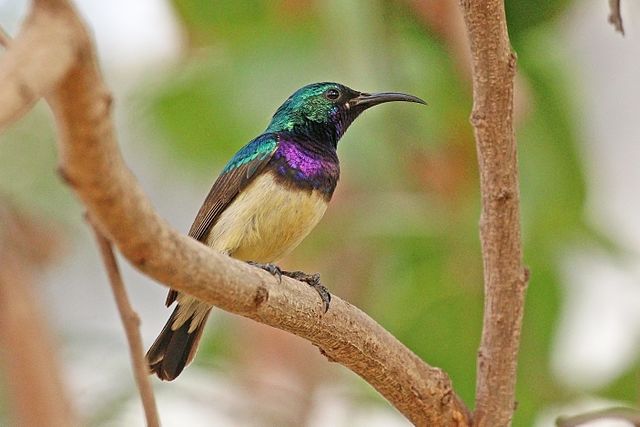
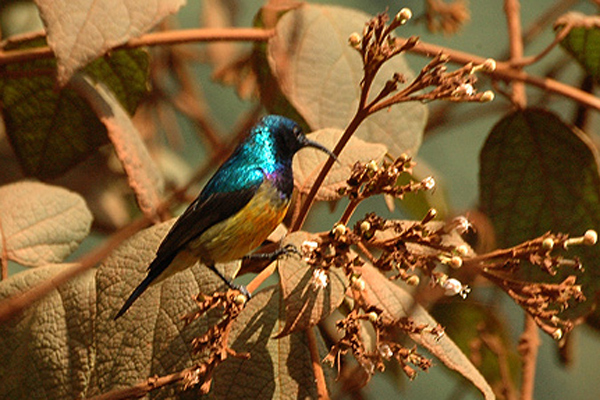
Variable Sunbird (Cinnyris venustus) Male ©WikiC

“Every good gift and every perfect gift is from above, and cometh down from the Father of lights, with whom is no variableness, neither shadow of turning.” (James 1:17 KJV)


Avian and Attributes – (No) Variableness

VA’RIABLENESS, n.
1. Susceptibility of change; liableness or aptness to alter; changeableness; as the variableness of the weather.
2. Inconstancy; fickleness; unsteadiness; levity; as the variableness of human passions.


Variable Sunbird (Cinnyris venustus) by TomTarrant

Variable Sunbird

The Variable Sunbird (or yellow-bellied sunbird), Cinnyris venustus (formerly Nectarinia venusta), is a sunbird. The sunbirds are a group of small Old World passerine birds which feed largely on nectar, although they will also take insects, especially when feeding young. Flight is fast and direct on their short wings. Most species can take nectar by hovering like a hummingbird, but usually perch to feed most of the time.

The variable sunbird is a fairly common resident breeder in equatorial Africa. Two eggs are laid in a suspended nest in a tree. This species is found in open woodland and cultivation.

Variable sunbirds are small, only 10 cm long. They have medium-length thin down-curved bills and brush-tipped tubular tongues, both adaptations to their nectar feeding from their Creator.

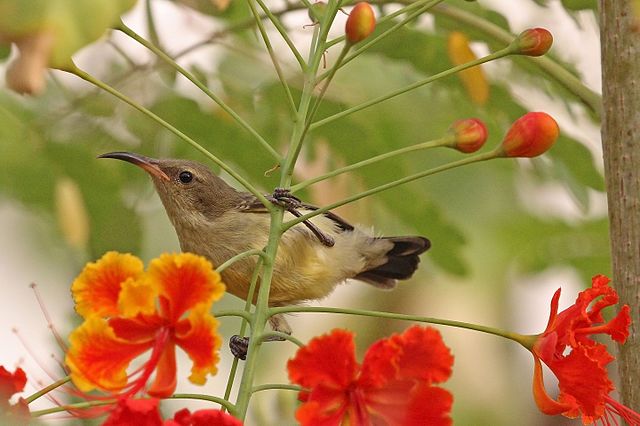
Variable Sunbird (Cinnyris venustus) Female ©WikiC

(Variable Sunbird – Wikipedia, with editing) (Nectariniidae – Sunbirds Family)


More Avian and Attributes

Birds whose first name starts with “V”

Good News

*
[Definitions from Webster’s Dictionary of American English (1828), unless noted. Bird info from Wikipedia plus.]
Avian And Attributes – Unreprovable

Avian And Attributes – Unreprovable

Unspotted Saw-whet Owl (Aegolius ridgwayi) ©WikiC

“And you, that were sometime alienated and enemies in your mind by wicked works, yet now hath he reconciled In the body of his flesh through death, to present you holy and unblameable and unreproveable in his sight:” (Colossians 1:21-22 KJV)


Avian and Attributes – Unreproveable

Unreproveable
Col_1:22 (a) This word has a very interesting meaning for the Christian. It means that there will be no final examinations at the end of the journey. Our Lord JESUS is so effective in His work in the soul that the person is completely prepared in this life for the entrance into GOD’s presence. The Christian does not get an examination, when he dies, to see where he is going. That point is settled the moment JESUS CHRIST becomes the Lord and the Saviour of the believer.


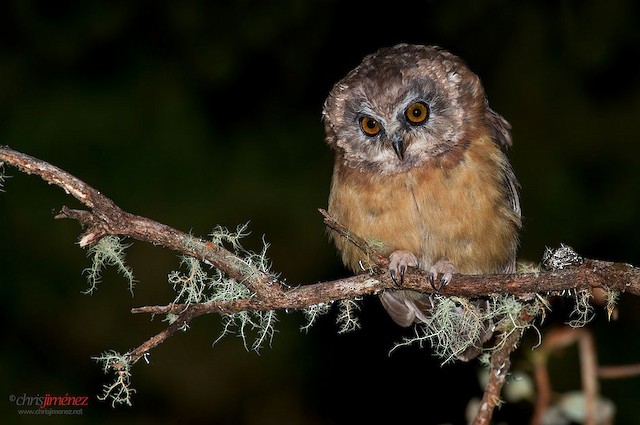
Unspotted Saw-whet Owl (Aegolius ridgwayi) Juvenile ©Chris Jimenez – Macaulay Library

Unspotted Saw-whet Owl

The unspotted saw-whet owl (Aegolius ridgwayi) is a small owl. It is a resident breeder in the highlands of Central America from southern Mexico south to western Panama, mainly above 2500 m. it has occasionally been considered conspecific with the northern saw-whet owl.

This nocturnal bird breeds in open mountain forests, in both the cloud forest and the higher oak woodland, laying its eggs in a tree hole. It takes rodents, shrews and other small mammals as its main prey, but will also feed on birds, bats and insects.

The unspotted saw-whet owl is a small, dumpy, short-tailed and broad-winged owl, 18 cm long and weighing 80 g. It is dark brown above with white markings on the wings. The underparts are unstreaked buff, becoming darker on the upper chest and facial disc. The head is large, with yellow eyes and a white-edged facial disc. The flight is fluttery and agile.

The voice of the unspotted saw-whet owl is a series of rhythmic toots. Reports of this owl at lower altitudes are invariably due to the extremely similar call of an Anotheca tree frog.

The scientific species name is for the American ornithologist Robert Ridgway.

Unspotted Saw-whet Owl (Aegolius ridgwayi) ©Knut Eisermann – Macaulay Library

(Strigidae – Owls Family) (Unspotted Saw-whet Owl – Wikipedia)

Extra

Unspotted
Jam_1:27 (b) This is a picture of the defilement which the Christian may encounter during his day’s duties as he mingles and mixes in a world filled with sin. The Lord would have us guard our lives daily lest we be contaminated by the evils that surround us.

“Pure religion and undefiled before God and the Father is this, To visit the fatherless and widows in their affliction, and to keep himself unspotted from the world.” (James 1:27 KJV)


More Avian and Attributes

Birds whose first name starts with “U”

Good News

*
[Definitions from Webster’s Dictionary of American English (1828), unless noted. Bird info from Wikipedia plus.]
Avian And Attributes – Three (in One)

Avian And Attributes – Three (in One)

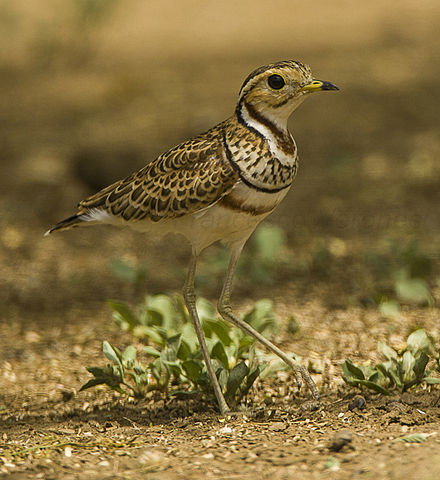
Three-banded Courser (Rhinoptilus cinctus) ©WikiC

“This is he that came by water and blood, even Jesus Christ; not by water only, but by water and blood. And it is the Spirit that beareth witness, because the Spirit is truth. For there are three that bear record in heaven, the Father, the Word, and the Holy Ghost: and these three are one.” (1 John 5:6-7 KJV)


Avian and Attributes – Three (in One)

Three [From Wilson’s Dictionary of Bible Types]
(c) The threes of the Bible represent triads of completeness.

Sometimes it is a triad of good, and sometimes of evil.

– the Trinity of Heaven is the Father, the Son and the Holy Spirit.
– the trinity of evil is the devil, the antichrist and the false prophet.
– the trinity of blessing is grace, mercy and peace.
– the trinity of wickedness is the world, the flesh and the devil.

It is interesting to note that the books of first and second Thessalonians are built largely around three-fold statements.

Chapter 1:3, “The work of faith, and labor of love, and patience of hope.”
Chapter 1:5, “in word . . . in power, and in the Holy Spirit.”
Chapter 1:9, 10, “ye turned . . . to serve . . . and to wait.”
Chapter 2:10, “Holily, justly and unblameably.”


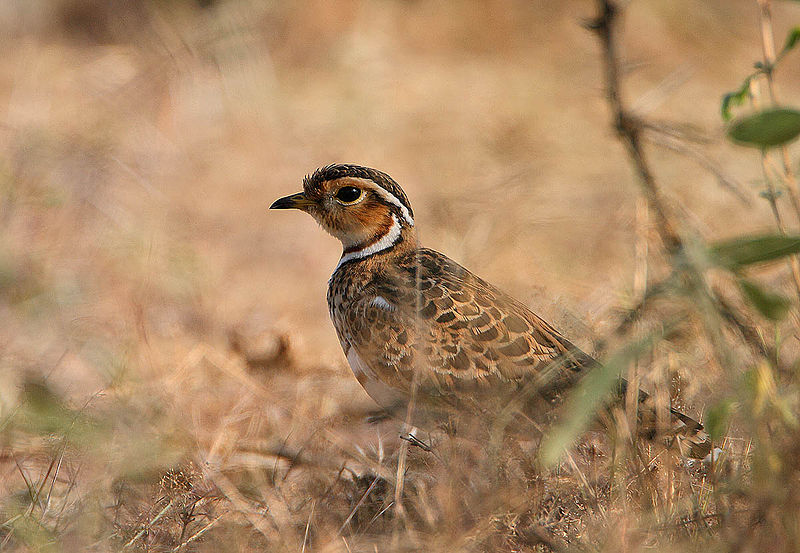
Three-banded Courser (Rhinoptilus cinctus) ©WikiC

Tree-banded Courser

The Tree-banded Courser (Rhinoptilus cinctus) is a species of bird in the Glareolidae family. It is found in Angola, Botswana, Ethiopia, Kenya, Namibia, Rwanda, Somalia, South Africa, South Sudan, Tanzania, Uganda, Zambia, and Zimbabwe.

Three-banded Courser (Rhinoptilus cinctus) F-L * M-R ©WikiC

(Three-banded Courser – Wikipedia) (Charadriidae – Plovers Family)


More Avian and Attributes

Birds whose first name starts with “T”

Good News

*
[Definitions from Webster’s Dictionary of American English (1828), unless noted. Bird info from Wikipedia plus.]

Birds Taking A Sabbath Rest? – from Creation Moments

DO BIRDS TAKE A SABBATH REST? from Creation Moments

Re-posted from Creation Moments

“And God blessed the seventh day, and sanctified it: because that in it he had rested from all his work which God created and made.” Genesis 2:3

Myles Willard is an avid bird watcher, award-winning nature photographer and long-time friend of Creation Moments. Myles has given us hundreds of breathtaking nature photos, one of which accompanies the printed transcript of today’s program at the Creation Moments website.

The reason I’m telling you about him today is because of an unexpected discovery he made while looking out the window of his home in Michigan. Each fall he meticulously tracks and logs the number of migrating warblers that stop by for a rest in the big cedar tree in his yard. After tracking the activity of over 1,500 warblers for 18 years, he was surprised to see a statistically significant dip in the number of birds stopping by that occurred on every seventh day!

Did these migrating birds have a built-in instinct that somehow made them follow the biblical principle of a Sabbath rest? We are not saying, of course, that the warblers were knowingly obeying God’s fourth commandment. However, if God worked for six days and then rested on the seventh, why would it be hard to believe that God gave these birds a cycle of six days of work followed by a seventh day of rest?

According to the account given in the book Inspired Evidence: Only One Reality, “It would seem that Myles Willard, science teacher, nature photographer and bird watcher, has found and documented such a pattern.”

Prayer:
Oh Lord, thank You for doing all the work necessary for our salvation so we can rest securely in the knowledge that – by grace through faith – we can have eternal life! Amen.
Notes:
Myles Willard, The Rest Is History, monograph, 2008. Cited in Inspired Evidence: Only One Reality by Julie Von Vett and Bruce Malone, April 29 (Search for the Truth Publications, 2012). Photo: One of Myles Willard’s superb photos. Used with permission.

©Creation Moments 2017 – Used with permission

See:

More Interesting Things from Creation Moments

*

Avian And Attributes – Song

Avian And Attributes – Song

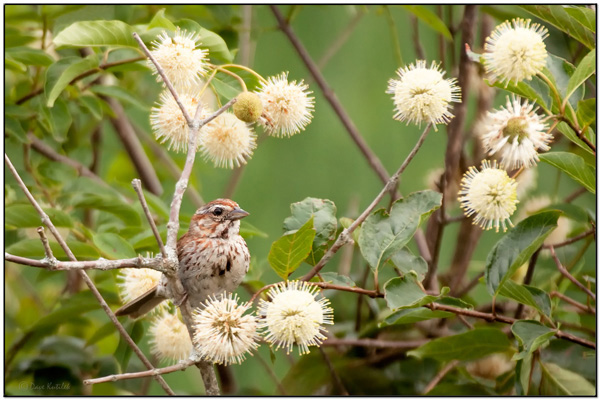
Song Sparrow in white flowers by Daves BirdingPix

Song Sparrow in white flowers by Daves BirdingPix

“The LORD is my strength and song, and he is become my salvation: he is my God, and I will prepare him an habitation; my father’s God, and I will exalt him.” (Exodus 15:2 KJV)

Behold, God is my salvation; I will trust, and not be afraid: for the LORD JEHOVAH is my strength and my song; he also is become my salvation.” (Isaiah 12:2 KJV)


Avian and Attributes – Song

SONG, n.
1. In general, that which is sung or uttered with musical modulations of the voice, whether of the human voice or that of a bird.
2. A little poem to be sung, or uttered with musical modulations; a ballad. The songs of a country are characteristic of its manners. Every country has its love songs, its war songs, and its patriotic songs.
3. A hymn; a sacred poem or hymn to be sung either in joy or thanksgiving, as that sung by Moses and the Israelites after escaping the dangers of the Arabian gulf and of Pharaoh; or of lamentation, as that of David over the death of Saul and Jonathan. Songs of joy are represented as constituting a part of heavenly felicity. [edited]

“Yet the LORD will command his lovingkindness in the daytime, and in the night his song shall be with me, and my prayer unto the God of my life.” (Psalms 42:8 KJV)


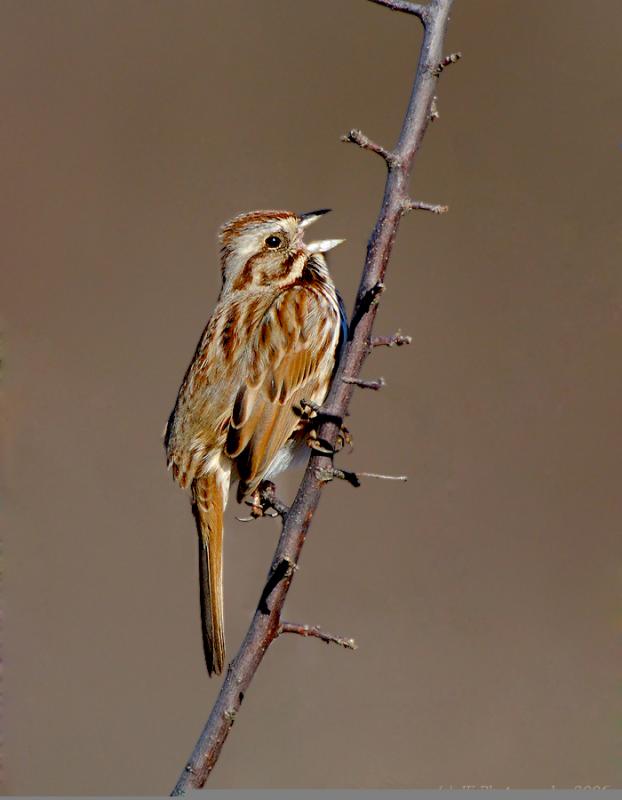
Song Sparrow (Melospiza melodia) by J Fenton

Song Sparrow

The Song Sparrow (Melospiza melodia) is a medium-sized American sparrow. Among the native sparrows in North America, it is easily one of the most abundant, variable and adaptable species.

Though a habitat generalist, the Song sparrow favors brushland and marshes, including salt marshes, across most of Canada and the United States. They also thrive in human dominated areas such as in suburbs, agricultural fields, and along roadsides. Permanent residents of the southern half of their range, northern populations of the song sparrow migrate to the southern United States or Mexico during winter and intermingle with the native, non-migratory population. The song sparrow is a very rare vagrant to western Europe, with a few recorded in Great Britain and Norway.

These birds forage on the ground, in shrubs or in very shallow water. They mainly eat insects and seeds. Birds in salt marshes may also eat small crustaceans. They nest either in a sheltered location on the ground or in trees or shrubs.

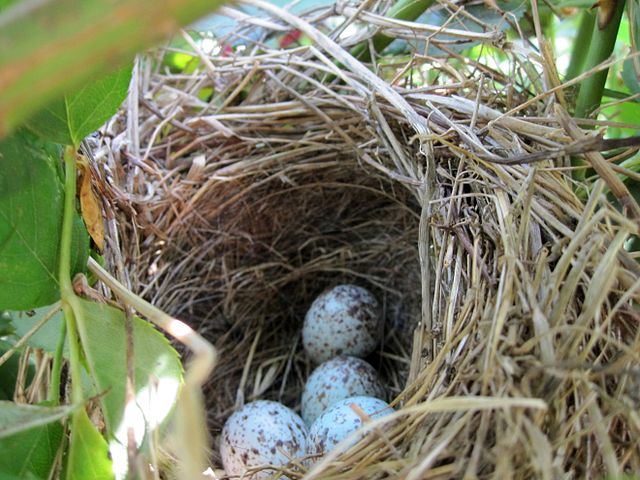
Song Sparrow (Melospiza melodia) Nest ©WikiC

The sparrow species derives it name from its colorful repertoire of songs. Enthusiasts report that one of the songs heard often in suburban locations closely resembles the opening four notes of Ludwig van Beethoven’s Symphony No. 5. The male uses a fairly complex song to declare ownership of its territory and attract females.

Singing itself consists of a combination of repeated notes, quickly passing isolated notes, and trills. The songs are very crisp, clear, and precise, making them easily distinguishable by human ears

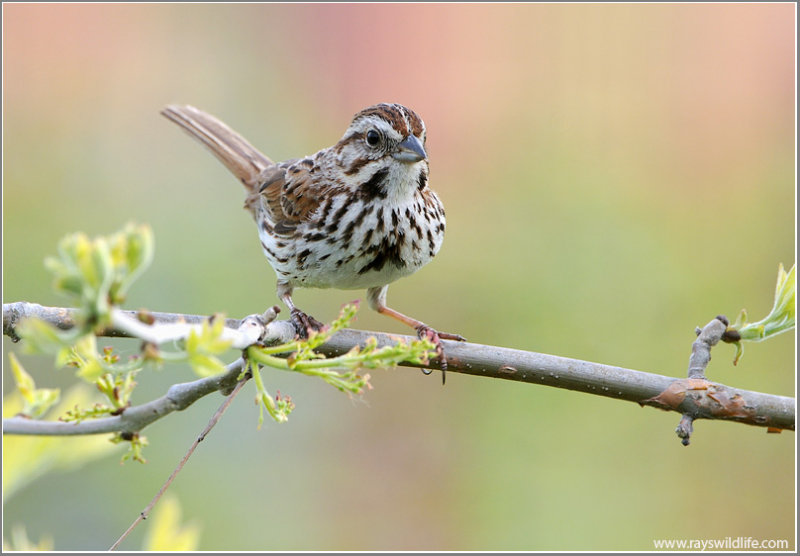
Song Sparrow by Ray

Song Sparrow by Ray

(Emberizidae – Buntings, New World Sparrows & Allies Family) (Song Sparrow – Wikipedia)


More Avian and Attributes

Birds whose first name starts with “S”

Good News

*
[Definitions from Webster’s Dictionary of American English (1828), unless noted. Bird info from Wikipedia plus.]
Avian And Attributes – Rock

Avian And Attributes – Rock

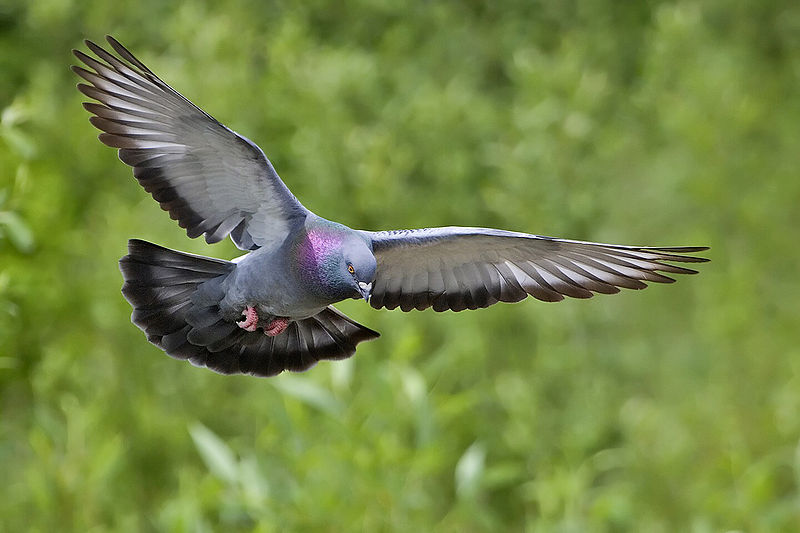
Rock Dove (Columba livia) ©WikiC

Rock Dove (Columba livia) ©WikiC

“Because I will publish the name of the LORD: ascribe ye greatness unto our God. He is the Rock, his work is perfect: for all his ways are judgment: a God of truth and without iniquity, just and right is he.” (Deuteronomy 32:3-4 KJV)

And did all drink the same spiritual drink: for they drank of that spiritual Rock that followed them: and that Rock was Christ.
(1 Corinthians 10:4 KJV)


Avian and Attributes – Rock

ROCK, n. [Gr., L. rupes, from the root of rumpo, to break or burst. If this is not the origin of rock, I know not to what root to assign it.]
1. A large mass of stony matter, usually compounded of two or more simple minerals, either bedded in the earth or resting on its surface. Sometimes rocks compose the principal part of huge mountains; sometimes hugh rocks lie on the surface of the earth, in detached blocks or masses. Under this term, mineralogists class all mineral substances, coal, gypsum, salt, &c.
2. In Scripture, figuratively, defense; means of safety; protection; strength; asylum.
The Lord is my rock. 2 Sam 22.
3. Firmness; a firm or immovable foundation. Psa 28.
Mat 7. Mat 16.
4. A species of vulture or condor.
5. A fabulous bird in the Eastern tales.

ROCK, v.t.
1. To move backward and forward, as a body resting on a foundation; as, to rock a cradle; to rock a chair; to rock a mountain. It differs from shake, as denoting a slower and more uniform motion, or larger movements. It differs from swing, which expresses a vibratory motion of something suspended.
A rising earthquake rock’d the ground.
2. To move backwards and forwards in a cradle, chair, &c.; as, to rock a child to sleep.
3. To lull to quiet.

ROCK, v.i. To be moved backwards and forwards; to reel.
The rocking town supplants their footsteps.


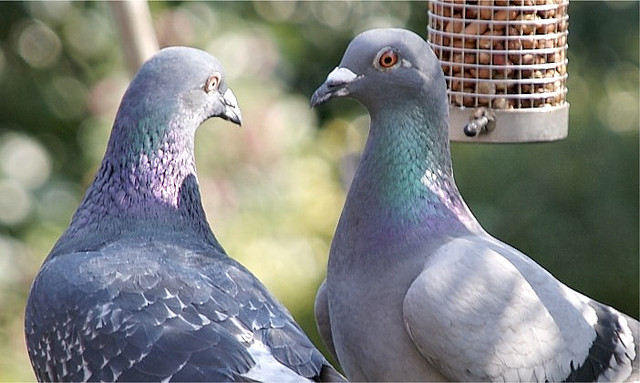
Rock Dove (Columba livia) ©Flickr Edward Townend

Rock Dove

The Rock Dove or Rock Pigeon (Columba livia) is a member of the bird family Columbidae (doves and pigeons). In common usage, this bird is often simply referred to as the “pigeon”.

The species include the domestic Pigeon, including the Fancy Pigeon. Escaped domestic Pigeons have raised the populations of feral Pigeons around the world.

Wild rock doves are pale grey with two black bars on each wing, while domestic and feral pigeons are very variable in colour and pattern. Few differences are seen between males and females.[6] The species is generally monogamous, with two squabs (young) per brood. Both parents care for the young for a time.

Habitats include various open and semi-open environments. Cliffs and rock ledges are used for roosting and breeding in the wild. Originally found wild in Europe, North Africa, and western Asia, pigeons have become established in cities around the world. The species is abundant, with an estimated population of 17 to 28 million feral and wild birds in Europe.

(Columbidae – Pigeons, Doves Family) (Wikipedia – Rock Dove)

Probably one of the most recognized birds around the world. It is a mentioned in Scripture, therefore making it one of the Birds of the Bible.

“And John bare record, saying, I saw the Spirit descending from heaven like a dove, and it abode upon him.” (John 1:32 KJV)

Rock Dove/Pigeon – Lake Morton by Lee


More Avian and Attributes

Birds whose first name starts with “R”

Birds of the Bible – Doves and Pigeons

Good News

*
[Definitions from Webster’s Dictionary of American English (1828), unless noted. Bird info from Wikipedia plus.]
After the Storm – Zoos

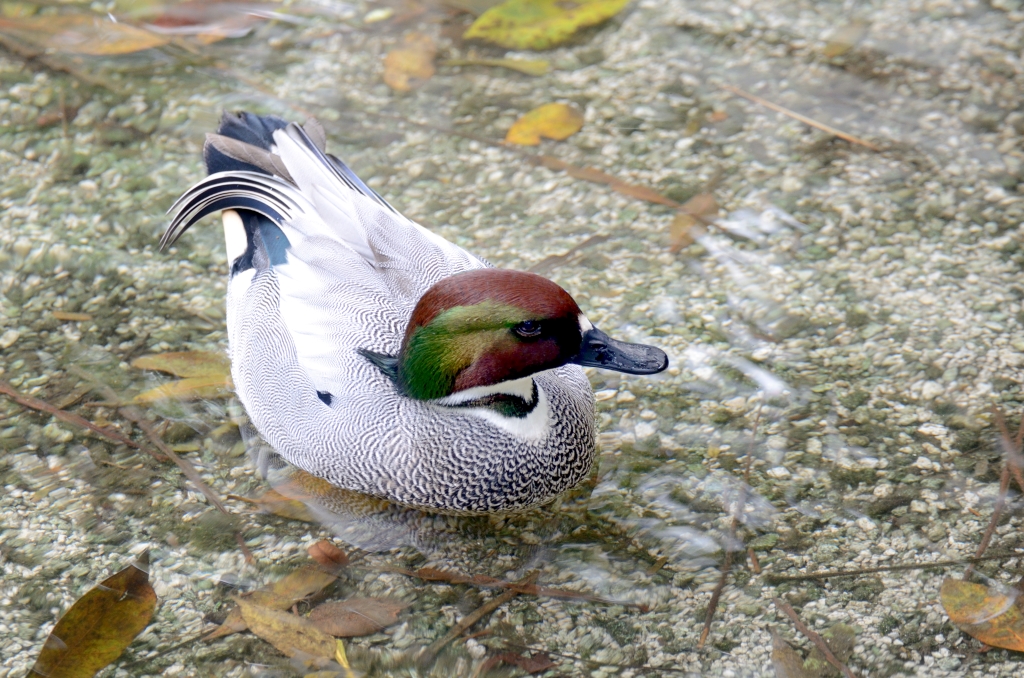
Falcated Duck (Anas falcata) by Dan at Zoo Miami

“A righteous man regardeth the life of his beast: but the tender mercies of the wicked are cruel.” (Proverbs 12:10 KJV)

“Thy righteousness is like the great mountains; thy judgments are a great deep: O LORD, thou preservest man and beast.” (Psalms 36:6 KJV)

If you will recall, before Hurricane Irma attacked our state, we shared this blog with you: Hurricane Irma and the Animals at the Zoos

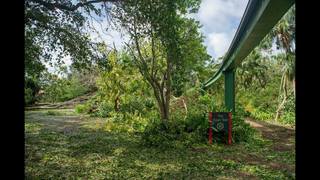
I was checking around the state to see what was being done to prepare for the Hurricane. Now, almost two months later, how did the Zoos do during and after the storm. We were discussing maybe visiting one of the zoos in a month or so, and I was wondering how much damage they received. Actually, one of our favorite birding places here in Lakeland, the Circle B Bar Reserve, just re-opened today, October 13, 2017. They had numerous downed trees and flooding.

While checking out my most favorite birding place at a Zoo, Zoo Miami, they are actually opening back up tomorrow, October 14th for the first time since Hurricane Irma.

Here are some articles and video that you might find informative as to how they did and how they protected their animals.


***

Zoo Miami to Open Oct. 14, after Hurricane Irma
In the article, you will see a photo like this. Click it and the photos will open. Click through them to see some of the damage. WPLG1 of 62 PHOTOS: Ron Magill shares photos of Zoo Miami after Hurricane Irma

“We greatly look forward to opening Zoo Miami again,” Zoo Miami director Carol Kruse said.

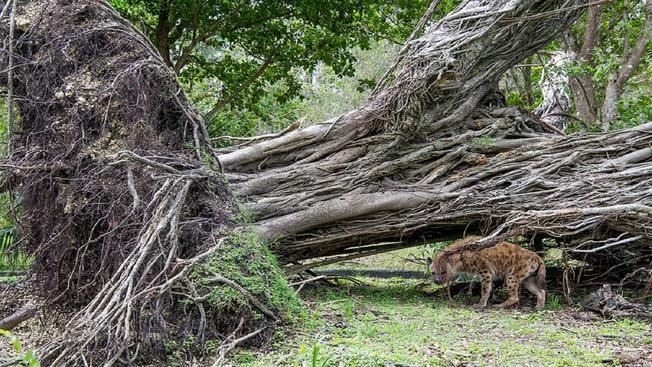
Huge Ficus Tree at Zoo Miami ©RonMagill

Zoo Miami’s Massive Ficus, Downed by Irma, to Remain as Hyena ‘Furniture’

Go to Google and search: “Zoo Miami irma” and you will find many photos of the protected animals and damage around the Zoo. Most of these are Copyrighted and can not be shared here.

Here one more interesting article:

Hurricane Irma: survival stories from 27 zoos & sanctuaries 

***

Birdwatching Trips


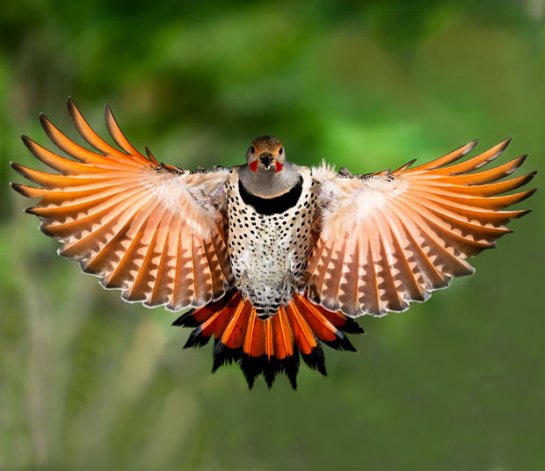
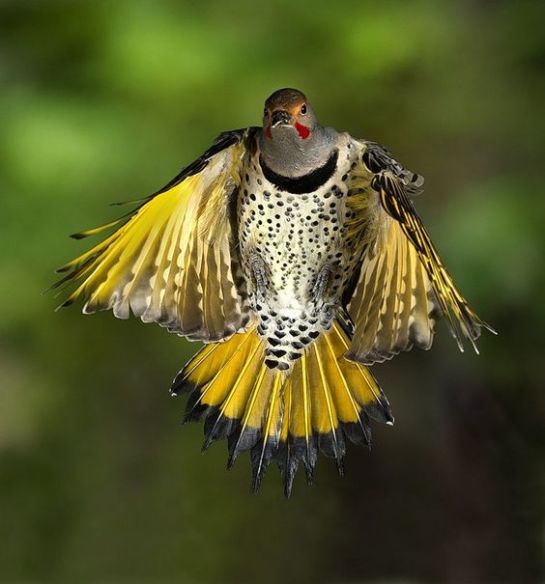
Northern Flickers: Red-shafted, Yellow-shafted, Whatever

Northern Flickers: Red-shafted, Yellow-shafted, Whatever

(Blending Biomes and Transitional Taxonomy)

Dr. James J. S. Johnson

But ye shall receive power, after that the Holy Ghost is come upon you: and ye shall be witnesses unto me both in Jerusalem, and in all Judaea, and in Samaria, and unto the uttermost part of the earth. (Acts 1:8)

Was that a Red-shafted Flicker, or a Yellow-shafted Flicker, or a mix of them?

(Regarding Northern Flickers in Colorado, see “Want a Home in the Mountains? Some Birds Have One”, posted at https://leesbird.com/2015/09/24/want-a-home-in-the-mountains-some-birds-have-one/– the discussion notes the difference between the “Red-shafted” and “Yellow-shafted” varieties.)

Northern-Flicker-redshafted.Evergreen-edu

NORTHERN FLICKER (red-shafted form) photo credit: Evergreen State College

Hybrids don’t fit squarely into the category boxes that we use for convenience. The missionary mandate of Acts 1:8, given by the resurrected Christ, refers to outreach—to Jews and Gentiles, and a hybrid category: Samaritans.  In effect, Samaritans were a hybrid people, part Jew and part Gentile.

That reminds me of how birdwatching has its own taxonomy challenges, when “splitters” are forced to yield to “lumpers”, especially in transitional habitats.

NorthernFlicker-yellowshafted.BioQuick-News

NORTHERN FLICKER (yellow-shafted form) photo credit: BioQuick News

Have you ever seen a bird that looks partially like a particular subspecies, yet also like its “cousin” subspecies? Maybe you were looking at a hybrid.  After all, avian subspecies have shared ancestries, tracing back (through the Ark) to Day # 5 of Creation Week (Genesis 1:21).

When a gene pool is separated by geographic barriers the foreseeable result is geography-correlated phenotype pattern, illustrating recessive genes within the geographically isolated gene pool. Breaks in such geographic barriers, however, provide for transitional blending — of both biome-based habitats and of the communities of animals that inhabit those regions.  These “border” zones are sometimes called ecotones: expect to see (there) blended gene pool patterns.

“An ecotone is a boundary area between two kinds of habitats, or ecosystems. The transition between eastern deciduous forest and Great Plains prairie grassland forms one of the broadest and geographically largest ecotones in North America.  The separation between forest and prairie is a gradual one.  Remnant patches of prairie exist in Mississippi, Ohio, Indiana, Illinois, Wisconsin, Minnesota, and other states, extending into southern Manitoba.  The farthest route of penetration of eastern deciduous forest into the west is provided by rivers:  the mighty Platte, Missouri, and Arkansas Rivers, and their many tributaries.  The forests that line these rivers usually flood in the spring when [snow-fed] meltwater brings the river to crest.  The floods are followed by summer drought, when evaporation tends to exceed precipitation, and the water level drops.  Because of this annual cycle, western riparian forests tend to have broad, fertile floodplains, where sediment is deposited as waters recede. ….

For the birder, the prairie riparian forest offers a unique mixture of eastern and western species and subspecies. Both Rose-breasted and Black-headed grosbeaks may be encountered in the same cottonwood grove [although usually the Rose-breasted Grosbeak lives in Eastern forests, while the Black-headed Grosbeak lives in Western forests].  Indigo and Lazuli buntings may sing from willows on opposite sides of a river [although usually the Indigo Bunting lives in Eastern forests, while the Lazuli Bunting lives in Western forests].  Eastern and Western kingbirds may sit side by side on utility wires.  A pendulous oriole’s nest may be inhabited by a pair of the [Western forest] “Bullock’s” subspecies of Northern Oriole, or a pair of the [Eastern forest] “Baltimore” subspecies—or a female “Baltimore” and male “Bullock’s”!  A Northern Flicker may prove to be a member of the [Western forest] “Red-shafted” subspecies, the [Eastern forest] “Yellow-shafted” subspecies, or a hybrid between them.”

[Quoting John C. Kricher, A FIELD GUIDE TO THE ECOLOGY OF WESTERN FORESTS (Houghton Mifflin,1993), pages 88-90.]

So, if you want to challenge your birdwatching taxonomy skills, go visit an ecotone — an don’t be surprised if you see a hybrid version of some bird that is otherwise known of regional subspecies.

And don’t be fooled by the fake-science baloney that often flies under the bait-and-switch flag called “speciation”  —  a lot of “‘science’ falsely so-called” has been pushed under the name “speciation” (see 1st Timothy 6:20).  The reality is a mix of biogenetic compatibility, limited by geographic barriers to the gene pool —  I.e., if the biogenetically compatible birds can mix, in time and space, those same birds can mate, assuming they all descend (biogenetically) from the same ancestors whom created by God on Day # 5!

Avian And Attributes – Quiets Our Fears

Avian And Attributes – Quiets Our Fears

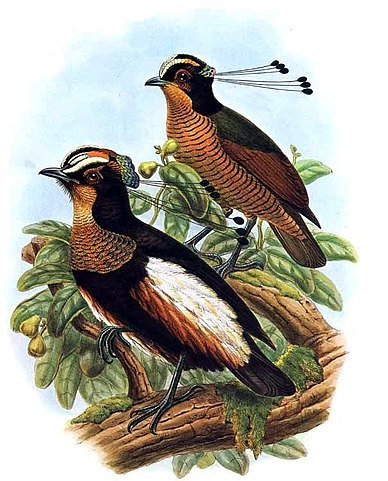
Queen Carola’s Parotia (Parotia carolae) ©Drawing WikiC

“But whoso hearkeneth unto me shall dwell safely, and shall be quiet from fear of evil.” (Proverbs 1:33 KJV)


Avian and Attributes – Quiet

QUI’ET, a. [L. quietus.]
1. Still; being in a state of rest; now moving. Judg 16.
2. Still; free from alarm or disturbance; unmolested; as a quiet life.
3. Peaceable; not turbulent; not giving offense; not exciting controversy, disorder or trouble; mild; meek; contented.
The ornament of a meek and quiet spirit. 1 Pet 3., 1 Th 4.
5. Smooth; unruffled.
6. Undisturbed; unmolested; as the quiet possession or enjoyment of an estate.
7. Not crying; not restless; as a quiet child.
QUI’ET, n. [L. quies.]
1. Rest; repose; stillness; the state of a thing not in motion.
2. Tranquility; freedom from disturbance or alarm; civil or political repose. Our country enjoys quiet.
3. Peace; security. Judg 18.
QUI’ET, v.t.
1. To stop motion; to still; to reduce to a state of rest; as, to quiet corporeal motion.
2. To calm; to appease; to pacify; to lull; to tranquilize; as, to quiet the soul when agitated; to quiet the passions; to quiet the clamors of a nation; to quiet the disorders of a city or town. [Edited]


Queen Carola’s Parotia

The Queen Carola’s Parotia (Parotia carolae) also known as Queen Carola’s six-wired bird-of-paradise is a species of bird-of-paradise.

One of the most colorful Parotias, the Queen Carola’s Parotia inhabits the mid-mountain forests of central New Guinea. The diet consists mainly of fruits and arthropods. The stunning courtship dance of this species was described in detail by Scholes (2006). It is similar to that of Lawes’s Parotia, but modified to present the iridescent throat plumage and the flank tufts to best effect.

The name commemorates Queen Carola of Vasa, the wife of King Albert I of Saxony. The king was honoured with the King of Saxony bird-of-paradise.

Due to copyrights, there are currently no photos that I can use. The video is of a male Queen Carola’s Parotia showing off for the ladies. [He is definitely not “Quiet”]

[A link to a photo of the Parotia] (Paradisaeidae – Birds-of-paradise Family) (Wikipedia article)


More Avian and Attributes

Birds whose first name starts with “Q”

Good News

*
[Definitions from Webster’s Dictionary of American English (1828), unless noted. Bird info from Wikipedia plus.]
Gila Woodpeckers and Saguaro Cactus, Illustrating Neighborliness

Gila Woodpeckers and Saguaro Cactus, Illustrating Neighborliness

Dr. James J. S. Johnson

Thine own friend, and thy father’s friend, forsake not; neither go into thy brother’s house in the day of thy calamity: for better is a neighbor that is near than a brother far off.  (Proverbs 27:10)


GilaWoodpecker-SaguaroCactus.NorthMountainVisitorCenter
[Gila Woodpeckers in Saguaro /  photo credit: North Mountain Visitor Center]

Like friends who help each other, the Gila Woodpecker and the Saguaro Cactus (Carnegiea giganteus, f/k/a Cereus giganteus)make good neighbors.

A photogenic icon of the hot desert, the Saguaro Cactus,  thrives in America’s arid Southwest – is what ecologists call a “keystone” member of that hot desert community. For example, the Sonoran Desert (which overlaps Arizona, California, and parts of Mexico) hosts the equivalent of “forests” of these jolly green giants, growing amidst other succulents, xerophytic shrubs, and ephemeral flowers.

SaguaroNP-Arizona.JoeParks

[ Saguaro National Park, Arizona, near Tucson   /  photograph by Joe Parks ]

But, looking at Saguaro Cactus from a distance, would you guess that these prickly-spined tree-like columns provide homes for many desert denizens, including a variety of birds? They do!

The Saguaro cactus is in every way a keystone species on the Sonoran Desert’s bajadas [drainage-slope terrains]. Without it, much of the [desert neighborhood’s] richness of species would soon be dramatically reduced. For instance, many of the birds of the bajada either feed or nest (or both) on Saguaros. Gila Woodpeckers, Ladder-backed Woodpeckers, and Northern (Gilded) Flickers hollow our nest cavities that are later used by American Kestrels, Elf Owls, Western Screech-Owls, Purple Martins, and Brown-crested and Ash-throated flycatchers, as well as various species of bats.

Approximately 30 bird species, most recently the European Starling, have been documented to nest in woodpecker-carved Saguaro cavities. House Finches, Chihuahuan Ravens, Harris’s and Red-tailed hawks, and Great Horned Owls use the tall cactus arms as nest sites. Saguaro blossoms are fed upon by White-winged, Mourning, and Inca doves, Scott’s and Hooded orioles, House Finches, Cactus Wrens, and Curve-billed Thrashers. Sparrows and finches consume the [Saguaro] seeds.

[Quoting John C. Kricher, A FIELD GUIDE TO THE ECOLOGY OF WESTERN FORESTS (Houghton Mifflin, 1993), pages 279-280.]

Interestingly, the Saguaro Cactus is sometimes helped by its Sonoran Desert “neighbors”, in situations that ecologists call “mutual aid” relationships—with neighbors being neighborly. One example of this “mutual aid” is seen in the behavior of the non-migratory Gila Woodpecker.  (Like a good neighbor, Gila Woodpecker is “there”.)

A Saguaro whose stem is injured is subject to rapid and fatal necrosis from bacterial invasion. However, the site of the injury is an ideal place for a Gila Woodpecker to begin excavating a nest cavity. In doing so, the woodpecker may remove all of the diseased tissue [i.e., bacteria-infected soft tissue], essentially curing the cactus of what might have [become] a fatal bacterial infection.

[Quoting John C. Kricher, A FIELD GUIDE TO THE ECOLOGY OF WESTERN FORESTS (Houghton Mifflin, 1993), page 280.] Now that’s an appreciative neighbor, giving help when needed, returning good for good!  “For better is a neighbor that is near than a brother far off.”  (Proverbs 27:10b)

GilaWoodpecker-by-Saguaro.BrianSmall

[Gila Woodpecker approaching Saguaro Cactus, Arizona /  Photo credit: Brian Small]