Bible Birds – Owl Introduction


Northern Barred Owl (Strix varia) by Reinier Munguia

Northern Barred Owl (Strix varia) by Reinier Munguia

The beast of the field shall honour me, the dragons and the owls: because I give waters in the wilderness, and rivers in the desert, to give drink to my people, my chosen. (Isaiah 43:20 KJV)

“Owl” is mentioned in 8 verses in the KJV and the word “Owls” is in 6 verses.

  • The owls, little owls, great owls, and screech owls are in the Bible.
  • Other versions list – horned owls, eagle owl, short-eared, long-eared owl, barn owl and a white owl.
Great Horned Owl (Bubo virginianus) by Bob-Nan

Great Horned Owl (Bubo virginianus) by Bob-Nan

The first mention of owls in the Bible is in Leviticus and Deuteronomy that list the unclean birds that are not to be eaten.

And the owl, and the night hawk, and the cuckow, and the hawk after his kind, And the little owl, and the cormorant, and the great owl, (Leviticus 11:16-17 KJV)

And the owl, and the night hawk, and the cuckow, and the hawk after his kind, The little owl, and the great owl, and the swan,
(Deuteronomy 14:15-16 KJV)

Little Owl (Athene noctua) by Raymond Barlow

Little Owl (Athene noctua) by Raymond Barlow

Owls are divided into two (2) families.

The Barn Owls (Tytonidae Family) are medium to large-sized owls with large heads and characteristic heart-shaped faces. They have long, strong legs with powerful talons (claws). They also differ from the Typical Owls (Strigidae Family) in the sternum (breast) and feet.

They live in a wide range of habitats from deserts to forests, and from temperate latitudes to the tropics. Little is known of many of them. The barn-owls are mostly nocturnal (active at night), and generally non-migratory, living in pairs or singly.

The barn-owls’ main characteristic is the heart-shaped facial disc, formed by stiff feathers which serve to amplify and locate the source of sounds when hunting. Their wing feathers were created to eliminate sound caused by flying, aiding both the hearing of the owl listening for hidden prey and keeping the prey unaware of the owl. Barn-owls overall are darker on the back than the front, usually an orange-brown colour, the front being a paler version of the back or mottled, although there is considerable variation even amongst species. The bay-owls closely resemble the Tyto owls but have a divided facial disc, ear tufts, and tend to be smaller.

Western Screech Owl (Megascops kennicottii)(captive) by Raymond Barlow

Western Screech Owl (Megascops kennicottii)(captive) by Raymond Barlow

The Typical Owls (Strigidae Family) is a large family that comprises around 189 living species in 25 genera. The typical owls have a cosmopolitan distribution and are found on every continent except Antarctica.

While typical owls vary greatly in size, with the smallest species, the Elf Owl, being a hundred times smaller than the largest, the Eurasian Eagle-Owl and Blakiston’s Fish Owl, owls generally share an extremely similar body plan. They tend to have large heads, short tails, cryptic plumage and round facial discs around the eyes. The family is generally arboreal (live in trees) (with a few exceptions like the Burrowing Owl) and obtain their food on the wing. The wings are large, broad, rounded and long.

Owls are generally nocturnal and spend much of the day roosting. They are often perceived as tame since they will allow people to approach quite closely before taking flight, but they are instead attempting to avoid detection. The cryptic plumage (help camouflage them) and inconspicuous locations (not likely to be seen or noticed) adopted are an effort to avoid predators and mobbing by small birds.

We will learn more about these beautifully created birds in other Bible Birds – Owls articles.

See:

*

Birds of the Bible – Bird-Nesting (Hastings)

American Robin (Turdus migratorius) with young in nest

American Robin (Turdus migratorius) with young in nest

If a bird’s nest should chance to be before you in the way, in any tree or on the ground, with young ones or eggs, and the mother bird is sitting on the young or on the eggs, you shall not take the mother bird with the young. You shall surely let the mother bird go, and take only the young, that it may be well with you and that you may prolong your days. (Deuteronomy 22:6-7 AMP)

Bird-Nesting

(Just found this interesting Commentary for Children – Children’s Great Texts of the Bible by James Hastings for my e-Sword.)

If a bird’s nest chance to be before thee in the way, in any tree or on the ground, with young ones or eggs, and the dam sitting upon the young, or upon the eggs, thou shalt not take the dam with the young: thou shalt in any wise let the dam go, but the young thou mayest take to thyself; that it may be well with thee, and that thou mayest prolong thy days.—Deu_22:6-7.

You think of the children of Israel, don’t you, as having lived far back in the dark ages? But here is one of the commandments which God gave to them—a little one about a bird’s nest—and the words of it make us feel that those wanderers were just big boys and girls with the same inclinations as we ourselves have today.

We learn from the words that the birds that flew about the Israelites as they journeyed were, in many cases, birds such as those we have now. The people must have been robbing their nests too, else we should not have had this verse at all. Naturally enough, in their wanderings they often came upon a nest by the wayside.

Northern Lapwing (Vanellus vanellus) by Nikhil Devasar

Northern Lapwing (Vanellus vanellus) by Nikhil Devasar

It may be that the Israelitish boys knew the little bird nests which are found in a hollow by the side of a marsh. Perhaps they thoughtlessly scattered the eggs, or perhaps Mr. Lapwing—artful little bird that he is!—lured them away from it with the wonderful antics with which he and his ancestors, generation after generation, have protected their nests. For Mr. Lapwing is the real defender of his nest. The mother bird is generally so frightened that she flies away. But when an enemy approaches the male lapwing practices the tricks his father taught him. Gradually moving farther and farther away from where the precious eggs are, he turns a number of somersaults, or he does other equally extraordinary things. The onlooker becomes so interested that the nest is forgotten.

Mourning Dove (Zenaida macroura) by Reinier Munguia

Mourning Dove (Zenaida macroura) by Reinier Munguia

You remember Noah’s clever scout bird, the dove? She, too, would be known to the Israelites. The dove has a very mournful note. No wonder! Her family has ancient legends of how large numbers of them used to be trapped and taken captive to Jerusalem and then killed. Sacrifice had no meaning to them. It was all a mystery, and they just mourned.

What made me think of the text this morning? Why, just the fact that it is May! And May is the great month for birds’ nests. It is the birds’ busy time.
In trees, in bushes, on house-tops, or on the ground, they have built their little homes. What wonderful architects many of them are. One bird has woven twigs together into a building like an old Gothic church; another has built his house in the shape of a bottle; while one we all love lives in a dear little house made of mud. They were very patient while they gathered their building materials; and when they selected a site for their nest, by some strange instinct they chose it as far out of the reach of boys and girls as possible. But in spite of all their wonderful wisdom, somehow—and I feel ashamed to say it—there are always boys ready to climb up and destroy the little houses on which so much thoughtful care has been bestowed.

Common Starling (Sturnus vulgaris) at Nest  by Anthony747

Common Starling (Sturnus vulgaris) at Nest by Anthony747

Now I am to give you three reasons why I want you not to disturb a bird’s nest while it’s being used.

1. Because it is cruel and cowardly.—What would you think if anyone were to break open the door of your home and run away with your bed? Think of your mother going out one day and coming home to find that someone had been there and stolen you away! Yet, how often does the poor mother bird come home to find all her children taken from her? If you rob a nest, it is a case of the strong taking advantage of the weak —a cowardly action under any circumstances—you know it is.

2. Because the birds have rights.—Any creature that suffers has rights. Theodore Parker, the great American preacher, when a lad, saw a turtle on a log, and, with stone in hand, he crept up and was about to throw it, when he heard a voice within which made him desist. He asked his mother about it. She told him that it was the protest of the doctrine of rights— the voice of God. Killing an animal for food or clothing is a part of life. But killing an animal for “fun” or “sport” is wrong.

3. Because we ought to love the birds, and love never willfully hurts what it loves. Love was Christ’s great commandment—love in little as well as in big things. God is great, yet He cares for the birds. “Are not two sparrows sold for a farthing? and one of them shall not fall on the ground without your Father.”
What has the song of birds’ not done for many a man and woman? It has cheered them, it has inspired them, it has given them new courage. It has even led them to God.

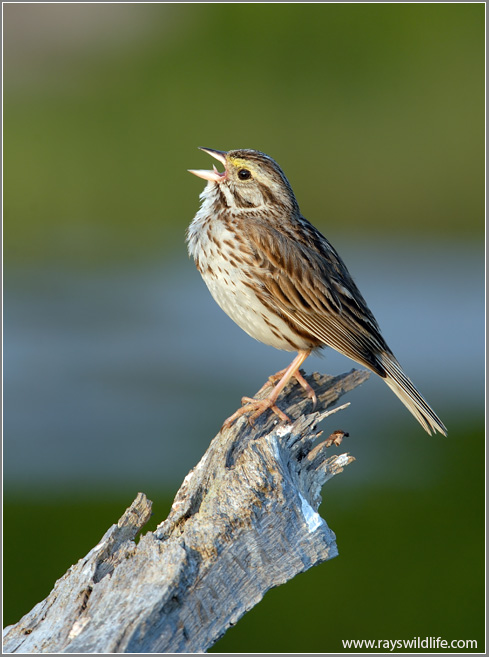
Savannah Sparrow Fifty Point-Canada by Ray Barlow

Savannah Sparrow Fifty Point-Canada by Ray Barlow

Here are some beautiful verses, by the poet George Macdonald, which tell what the song of a bird did for the heart of a man.

A brown bird sang on a blossomy tree,
Sang in the moonshine, merrily,
Three little songs, one, two, and three,
A song for his wife, for himself, and me.

He sang for his wife, sang low, sang high,
Filling the moonlight that filled the sky;
“Thee, thee, I love thee, heart alive!
Thee, thee, thee, and thy round eggs five!”

He sang to himself, “What shall I do
With this life that thrills me through and through!
Glad is so glad that it turns to ache!
Out with it, song, or my heart will break!”

He sang to me, “Man, do not fear
Though the moon goes down and the dark is near
Listen my song and rest thine eyes;
Let the moon go down that the sun may rise!”

I folded me up in the heart of his tune,
And fell asleep with the sinking moon;
I woke with the day’s first golden gleam,
And, lo, I had dreamed a precious dream!

*

By James Hastings’ Children’s Great Texts of the Bible

(I normally do a Birds of the Bible here and adapt it for the Birds of the Bible For Kids website. This time I am sharing one I posted on their site first.)

Birds of the Bible – Here

*

Birds of the Bible – Flying

African Fish Eagle (Haliaeetus vocifer) by Africaddict

African Fish Eagle (Haliaeetus vocifer) by Africaddict

Wilt thou set thine eyes upon that which is not? for riches certainly make themselves wings; they fly away as an eagle toward heaven. (Proverbs 23:5)

Using e-Sword’s search for just the word “fly,” there are 15 verses in the AMP, 16 in the ESV, and 25 in the KJV. They can’t all refer to a bird flying around, so let’s see how many actually refer to the birds.

Here are the verses from the KJV:

And God said, Let the waters bring forth abundantly the moving creature that hath life, and fowl that may fly above the earth in the open firmament of heaven. (Gen_1:20)

Wherefore then didst thou not obey the voice of the LORD, but didst fly upon the spoil, and didst evil in the sight of the LORD? (1Sa_15:19)

And he rode upon a cherub, and did fly: and he was seen upon the wings of the wind. (2Sa_22:11)

Yet man is born unto trouble, as the sparks fly upward. (Job_5:7)

He shall fly away as a dream, and shall not be found: yea, he shall be chased away as a vision of the night. (Job_20:8)

Doth the hawk fly by thy wisdom, and stretch her wings toward the south? (Job_39:26)

And he rode upon a cherub, and did fly: yea, he did fly upon the wings of the wind. (Psa_18:10)

And I said, Oh that I had wings like a dove! for then would I fly away, and be at rest. (Psa_55:6)

The days of our years are threescore years and ten; and if by reason of strength they be fourscore years, yet is their strength labour and sorrow; for it is soon cut off, and we fly away. (Psa_90:10)

Wilt thou set thine eyes upon that which is not? for riches certainly make themselves wings; they fly away as an eagle toward heaven. (Pro_23:5)

Above it stood the seraphims: each one had six wings; with twain he covered his face, and with twain he covered his feet, and with twain he did fly. (Isa_6:2)

And it shall come to pass in that day, that the LORD shall hiss for the fly that is in the uttermost part of the rivers of Egypt, and for the bee that is in the land of Assyria. (Isa_7:18)

But they shall fly upon the shoulders of the Philistines toward the west; they shall spoil them of the east together: they shall lay their hand upon Edom and Moab; and the children of Ammon shall obey them. (Isa_11:14)

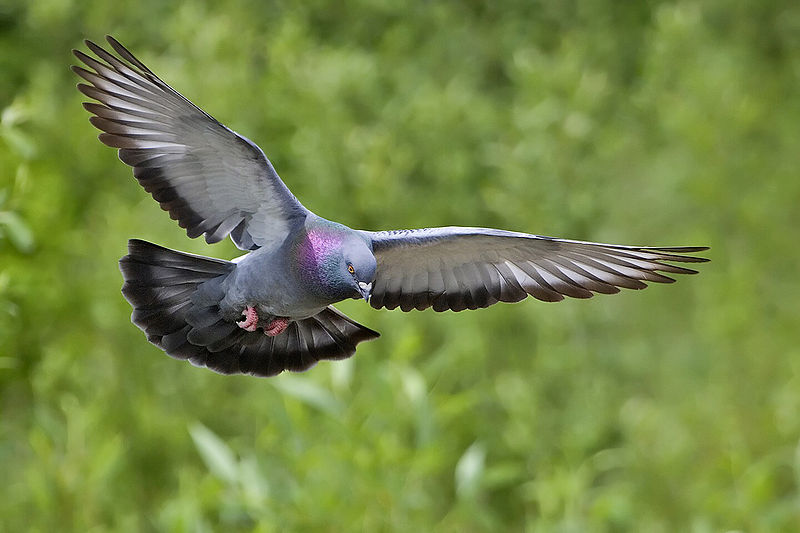
Rock Dove (Columba livia) ©WikiC

Rock Dove (Columba livia) ©WikiC

Who are these that fly as a cloud, and as the doves to their windows? (Isa_60:8)

For thus saith the LORD; Behold, he shall fly as an eagle, and shall spread his wings over Moab. (Jer_48:40)

Behold, he shall come up and fly as the eagle, and spread his wings over Bozrah: and at that day shall the heart of the mighty men of Edom be as the heart of a woman in her pangs. (Jer_49:22)

Wherefore thus saith the Lord GOD; Behold, I am against your pillows, wherewith ye there hunt the souls to make them fly, and I will tear them from your arms, and will let the souls go, even the souls that ye hunt to make them fly. (Eze_13:20)

Yea, whiles I was speaking in prayer, even the man Gabriel, whom I had seen in the vision at the beginning, being caused to fly swiftly, touched me about the time of the evening oblation. (Dan_9:21)

As for Ephraim, their glory shall fly away like a bird, from the birth, and from the womb, and from the conception. (Hos_9:11)

Their horses also are swifter than the leopards, and are more fierce than the evening wolves: and their horsemen shall spread themselves, and their horsemen shall come from far; they shall fly as the eagle that hasteth to eat. (Hab_1:8)

And to the woman were given two wings of a great eagle, that she might fly into the wilderness, into her place, where she is nourished for a time, and times, and half a time, from the face of the serpent. (Rev_12:14)

And I saw another angel fly in the midst of heaven, having the everlasting gospel to preach unto them that dwell on the earth, and to every nation, and kindred, and tongue, and people, (Rev_14:6)

And I saw an angel standing in the sun; and he cried with a loud voice, saying to all the fowls that fly in the midst of heaven, Come and gather yourselves together unto the supper of the great God; (Rev_19:17)

How many do you think directly relate to birds? Some refer to their speed of flying. How many birds were actually named?

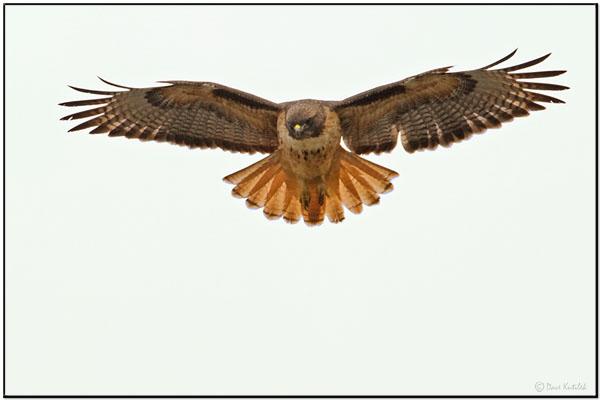
Red-tailed Hawk (Buteo jamaicensis) by Daves BirdingPix

Red-tailed Hawk (Buteo jamaicensis) by Daves BirdingPix

I trust you enjoy digging into God’s Word more than just reading it. If you have a program like e-Sword (free) or something similiar or a good concordance, you can do these type of searches.

Back to the questions – which verses have birds mentioned?

fowl that may fly above the earth (Gen_1:20)

hawk fly (Job_39:26)

dove! for then would I fly away, and be at rest. (Psa_55:6)

fly away as an eagle toward heaven. (Pro_23:5)

fly as a cloud, and as the doves to their windows? (Isa_60:8)

shall fly as an eagle, and shall spread his wings over Moab. (Jer_48:40)

fly as the eagle, and spread his wings over Bozrah (Jer_49:22)

their glory shall fly away like a bird, (Hos_9:11)

fly as the eagle that hasteth to eat. (Hab_1:8)

two wings of a great eagle, that she might fly into the wilderness (Rev_12:14)

all the fowls that fly in the midst of heaven (Rev_19:17)

The Bible tells us:

But now ask the beasts, and they will teach you; And the birds of the air, and they will tell you; (Job 12:7 NKJV)

If you had never watched a bird fly, would any of those verses above make sense to you? The Lord not only has given all the numerous birds for us to enjoy, but also to teach us lessons.

Would you understand “…for riches certainly make themselves wings; they fly away as an eagle toward heaven. (Proverbs 23:5) if you had not seen how fast an eagle flies? How fast can we waste our riches?

Thinking about how birds fly, reread the verses above, even the ones that do not mention birds and see if that doesn’t help explain parts of the verse.

See:

*

One of my favorite videos.

*

Birds of the Bible – Worry and Ravens

Northern Raven (Corvus corax) by Ray

Northern Raven (Corvus corax) by Ray

Better than the Birds

Luke 12:6-31

Birds of the Bible – Worry and Sparrows was the introduction to the “Better Than The Birds” message by Pastor Stephen Harvey. We were told that “1. Worry denies the gracious care of God.”

Now for part II:

2. Secondly, worry depreciates the higher value of mankind

He’s not finished with the birds yet – notice verse 7 again – the last part – Do not fear; you are more valuable than many sparrows.

Matthews account says, “Are you not worth much more than they?

In case we didn’t pick up on the lesson – in case we’re a little slow – God’s care of the lesser creation ensures His care of His highest creation.

Evidently Jesus thinks we just might be a little slow on the uptake here – or maybe find it hard to believe – so He circles back around to this subject again and adds another pearl to the string – look over at verse 24. Consider the ravens, for they neither sow nor reap, they have no store room nor barn, and yet God feeds them; how much more valuable you are than the birds!

Maybe Jesus repeated this lesson simply because He knew that billions of people one day would struggle with believing they were less valuable than animals.

Was God peering into the 21st century or what?

You sit through the average Animal Planet program or read the latest evolutionary textbook taught to middle schoolers and you’ll get the message loud and clear that human beings have messed up the circle of life; humans have interrupted the food chain; humans are in the way and if we’d only get out of the way, the animals who evidently have the right to be on the planet – because they evolved first – would get what they deserve; if we’d just go back to living in caves, the animals would be able to enjoy their lives so much better.

That message is coming across loud and clear! Whenever you remove the glory of God’s created order, Genesis 1 and 2, where mankind was made in the image of God and given the right to rule earth – to train and subjugate and benefit from the animal kingdom – you end up with a culture where animals ultimately matter more.

You now exist to serve them; you now live to make their lives more comfortable.

Now I’m not defending animal abuse, by the way. We’re to be good stewards of earth and the animal kingdom.

But go visit India today, and watch, as I did, sacred cows which have been given superior rights within their culture – watch them meander across busy roadways and down streets cluttered with starving children – and begging mothers with babies on their hips; where a child starving to death is less important than a cow having something to eat.

How do we know that human beings are more valuable than animals? How do we know that?

Apart from God, we don’t.

Apart from the words of Jesus Christ, the creator of all things (Colossians 1), we might be confused – look again at verse 24 – you are more valuable than the birds.

Is that radical news or what?

And this really got the attention of Jesus’ Jewish audience, by the way, because Jesus used ravens as an example here – ravens were considered unclean according to Mosaic Law (Leviticus 11:13-15).vii

The ravens were unclean birds.

I’m sorry for how that makes you Baltimore Ravens fans feel – I’m sorry you had to find that out – you’ve been cheering all along for unclean animals . . . you already knew that.

Here’s why this was so stunning an analogy for Christ to make: It’s one thing to be insignificant like a sparrow and be cared for by God – it’s another thing to be unclean and despised and be cared for by God.

And you know why I’m so glad Jesus added this illustration?

Because the enemy of our heart and spirit and joy will more than likely come and whisper in our ear – sparrows might be cheap, but at least they’re clean animals – no wonder God cares about them; but you’re more like an unclean bird . . . despised and unclean according to God’s holy law . . . you don’t deserve God’s attention.

You have very reason to worry about your life.

But notice – verse 24. God has managed to care for them too – He effectively feeds them too – and get this – “How much more valuable you are than the animal kingdom!”

Worry denies the gracious care of God

Worry depreciates the higher value of mankind.

Brown-necked Raven of Israel

Brown-necked Raven, Israel ©WikiC

(Copied with permission from Wisdom for the Heart and Pastor Stephen Davey.)

vii MacArthur, p. 140


Lee’s Addition:

‘And these you shall regard as an abomination among the birds; they shall not be eaten, they are an abomination: the eagle, the vulture, the buzzard, the kite, and the falcon after its kind; every raven after its kind, (Leviticus 11:13-15 NKJV)

Consider the ravens, for they neither sow nor reap, which have neither storehouse nor barn; and God feeds them. Of how much more value are you than the birds? (Luke 12:24 NKJV)

Another great encouragement not to worry. Thanks, Pastor Davey, for a great message.

See:

*

Birds of the Bible – Review II

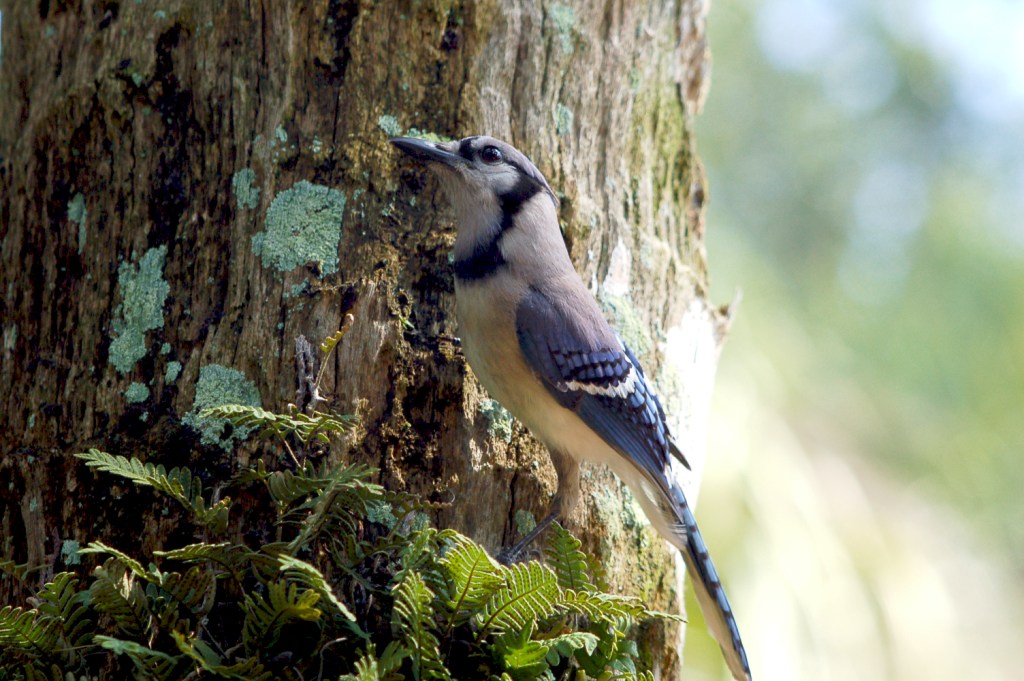
Blue Jay at Bok Tower by Dan's Pix

Blue Jay II at Bok Tower by Dan’s Pix

I will remember the works of the LORD: surely I will remember thy wonders of old. I will meditate also of all thy work, and talk of thy doings. (Psalms 77:11-12 KJV)

In 2008 Birds of the Bible – Review was written. Needless to say, many more articles have been added since then. Please take some time over the next few days and check out articles that you may have missed or you are new and didn’t know of their existence.

Scripture tells us to remember the Lord’s blessings and all His benefits. I consider watching birds one of the Lord’s great blessings. The previous articles were written in an attempt to honor the Lord through telling about His birds. I trust you will dig around and discover some interesting new or old avian friends to read and learn about.

Another reason for this blog is to ask for prayer for me. On Wednesday last week, I had a Squamous Cell Cancer removed from my neck, just under my chin. They attempted to remove it 6 months ago, but didn’t get it all. This time, he cut it out and I have an inch and half row of stitches. On Saturday, it started turning red and irritating me. Monday when I went back to have it looked at, it was infected. So, now I am on an antibiotic, which makes me sort of  drowsy. It hurts to lift my head up to look at the monitor (it pulls on the stitches), so the blogs have slowed down. My stitches are supposed to come out next Tuesday, the 8th of October.

Praise the Lord, with over 1,500 articles and 1,100 pages of material, surely there is something you haven’t read before. There are tabs or menus along the top which help you find different topics. Check them out. By you reading, it will also help my page view counts while I am in a “coasting” mode. Thank you.

Here are the Birds of the Bible Topics:

Birds of the Bible

Miscellaneous articles:

Names of Birds Study


Harriet Newell Cook – The Scripture Alphabet of Animals

Disclaimer About Bible Version Usage

*

Birds of the Bible – Worry and Sparrows

House Sparrows visiting National Aviary Parrot Show by Lee

House Sparrows at National Aviary by Lee

While listening to Wisdom For The Heart on BBN (Bible Broadcasting Network) last week, I heard this message by Pastor Stephen Davey and wanted to share it. His message was “Better than the Birds” and of course it caught my attention. There are four parts, but I am only sharing the introduction and part one here.

Better than the Birds

Luke 12:6-31

I have read that a dense fog – so extensive that it covers seven city blocks a hundred feet deep is actually composed of no more than one glass of water; water, of course that’s divided into more than 60 billion droplets of water.i

Just a couple gallons of water can cripple an entire city.

In many ways, this perfectly illustrates the substance of worry. Just a little bit of it can spread and deepen and ultimately cripple the mind and the heart of even believers.

One author put it this way when he wrote, “Worry is a thin stream of fear that trickles through the mind, which, if encouraged, will cut a channel so wide that all other thoughts will be drained out.”ii

I find it extremely gracious of our Lord that whenever He addressed the subject of worry, and He did on several occasions, He went much further than simply saying, “You know better than that . . . worrying isn’t good for you . . . it’ll mess up your mind . . . isn’t right . . . stop worrying right now!”

Instead, Jesus graciously causes us to think through this vaporous substance of worry; He gives us several reasons to stop worrying and He even condescends in His patience to give us illustrations – effectively – giving us principles to teach us why we really don’t ever need to worry.

And several of His key principles are the form of questions.

Let me invite you to Luke chapter 12 where Jesus asks some profound questions.

He’s teaching His disciples – this chapter in Luke corresponds to His sermon in Matthew’s Gospel.

Now if you’ve ever read His sermon, you’ll notice that He goes from one subject to the next – almost randomly touching on a series of different topics.

Jesus is actually employing a Jewish teaching style called Charaz – which means, stringing pearls.iii

In other words, Jesus will string pearls of wisdom on a number of subjects, like someone might string together a rare necklace of pearls.

And one of the pearls He adds to his string of pearls is this subject of worry.

Let me give you four principles in this regard as we work through His comments on overcoming worry.

The first principle to understand is that:

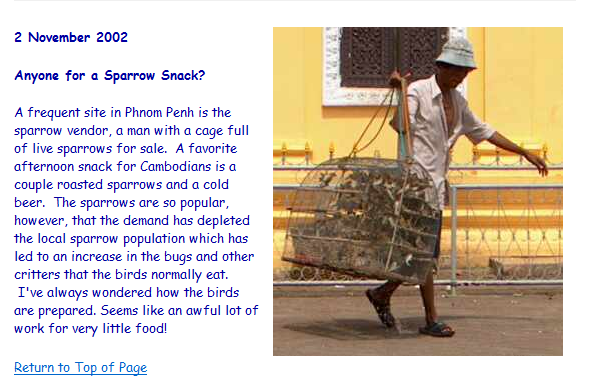
Anyone for a Sparrow Snack?

Anyone for a Sparrow Snack?

   1. Worry denies the gracious care of God

And He proves His point by asking two questions – notice His first question at verse 6. Are not five sparrows sold for two cents? Yet not one of them is forgotten before God.

Now if you compared this account with Matthews account, we’re told that 2 sparrows were sold for 1 penny.

The Greek term for this coin refers to a small brass coin worth about 1/10th of a day’s wage for a working laborer.

Which is a long way of saying, sparrows were the cheapest meat sold in the marketplace.iv

They were the food of the poorest of the poor. You barely got a mouthful of meat from a little sparrow.

In fact, Matthew’s Gospel tells us that you can buy 2 sparrows for a penny and Luke here tells us that you can get 5 sparrows for 2 penny’s; how’s that add up?

Well, we know from history that during the days of Christ, sparrows were so abundant and so cheaply sold to the poor that if you bought 4, you got one thrown in for nothing.

And that’s what Luke alludes to here – are not five sparrows sold for two cents? Yet not one of them is forgotten before God.

Now watch this – Luke is effectively saying, even the free sparrow is not forgotten by God. Even the sparrow that got thrown in for nothing matters to God.

You want to know why you never need to worry? Because to God you are never lost in the crowd.v

Not only does God not lose track of even one sparrow – he doesn’t even lose track of one single hair from your head.

Notice further in verse 7. Indeed the very hairs of your head are all numbered.

I’ve read that the average person’s head holds more than 100,000 hairs. Some of us are down to a few hundred.vi

A few dozen . . .

Now some commentators don’t think Jesus is being serious here – that He’s just exaggerating to make a point.

I mean, come on . . . He counts the number of the hairs on our heads? That number changes daily. Surely God doesn’t bother with that kind of detail. Gary Hallquist – 60,000; Dr. Burggraff – 12 . . . hundred.

No, I think that’s exactly His point. The glory of God revealed here is that He actually does know!

Jesus is effectively asking us, “Look, do you really think you can slip out of your Heavenly Father’s care – that you can somehow slip out from underneath the radar of His divine omniscience? Do you think He’s forgotten about you or that your problems are too numerous to keep up with?

I mean if He can keep track of 100,000 hairs on somebody’s head of hair, do you think He’ll get frustrated with you coming to Him over and over again to give Him your worries?

Do you think He’s going to say, “Look, there’s only so much room on my ledger and you’ve already been here a dozen times today . . . I just can’t keep track.”

Listen, if God is actually such a gracious, omniscient God – that He doesn’t overlook a single sparrow – even the one that gets thrown in for free – He will never overlook you either.

Worry denies the gracious care of God

Savannah Sparrow singing by Ray

Savannah Sparrow singing by Ray

(Copied with permission from Wisdom for the Heart and Pastor Stephen Davey.)

i John MacArthur, Matthew 1-7 (Moody Publishers, 1985), p. 419
ii Ibid
iii William Barclay, The Gospel of Luke (Westminster, 1975), p. p. 160
iv Bruce B. Barton, Life Application Bible: Luke (Tyndale, 1997), p. 314
v Barclay, p. 161
vi MacArthur, p. 119


Lee’s Addition:

Are not five sparrows sold for two farthings, and not one of them is forgotten before God? But even the very hairs of your head are all numbered. Fear not therefore: ye are of more value than many sparrows. (Luke 12:6-7 KJV)

What a great encouragement not to worry. Thanks, Pastor Davey for a great message.

See:

See Worry and Sparrows – Part II

*

Bible Birds – Bittern II

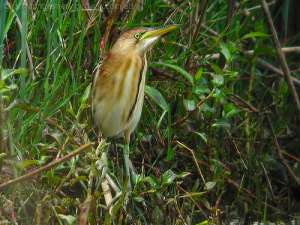
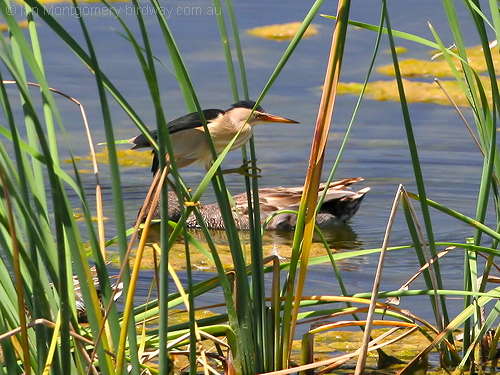
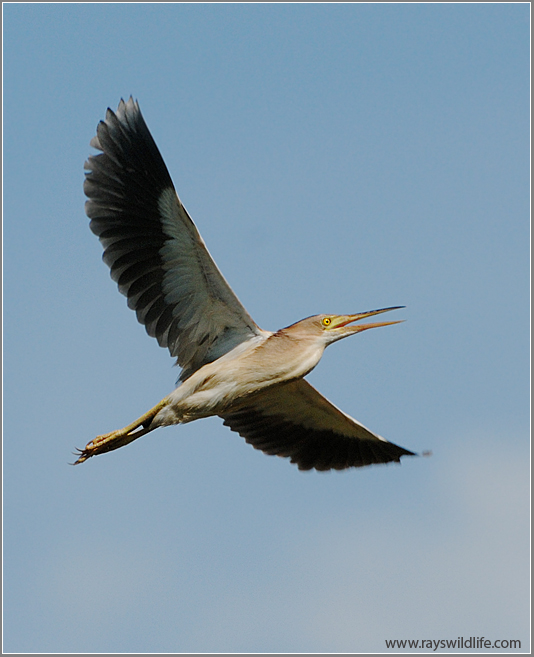
Little Bittern (Ixobrychus minutus) by Ian

Little Bittern (Ixobrychus minutus) by Ian

I will also make it a possession for the bittern, and pools of water: and I will sweep it with the besom of destruction, saith the LORD of hosts. (Isaiah 14:23 KJV)

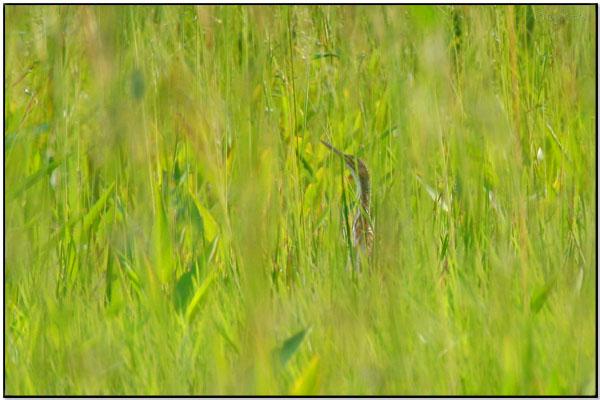
I introduced the Bittern in the first Birds of the Bible – Bittern and now I want to add some more information about them. The Bitterns belong to the Order called Pelecaniformes which includes Ibises, Spoonbills, Herons, Bitterns, Frigatebirds, Hamerkop, Shoebills, Pelicans, Gannets, Boobies, Cormorants, Anhingas, and Darters. All of these birds like to hang out around watery places and are related. Within the Pelecaniformes order, there are different families. The Bittern is in the Ardeidae family. Below is a list of the Bitterns within this family.

Belonging to the Ardeidae family, they also have the usual long legs, long necks, and are wading birds. They are associated with water, especially in breeding season. Whereas the herons and egret stand out in the open, the bitterns like to conceal themselves in cattail and sedge marshes, bulrushes, etc. They also have shorter legs and a heavier body. Their “cryptic plumage and upright poses helps to merge with the brown upright reeds…” I’ve had the privilege to see a few of them, and they are hard to find. God has provided them with this protection and it helps them in finding their food. Fish is their favorite food, but they will also consume frogs, small snakes, and other things that pass by.

Here in North America, we only have the American and Least Bitterns. I sometimes confuse them with the smaller herons, like a Green Heron. You can tell they are in the same family (ardeidae).

Here is the sounds of an American Bittern and a Least Bittern from Stokes Bird Songs

But the cormorant and the bittern shall possess it; the owl also and the raven shall dwell in it: and he shall stretch out upon it the line of confusion, and the stones of emptiness. (Isaiah 34:11)


CLASS – AVES, Order – PELECANIFORMES, Family – ArdeidaeHerons, Bitterns

Australian Little Bittern (Ixobrychus dubius) by Ian

Australian Little Bittern (Ixobrychus dubius) by Ian

Herons, Bitterns – Ardeidae Family
Zonerodius
Forest Bittern (Zonerodius heliosylus) IBC
Botaurus
Eurasian Bittern (Botaurus stellaris) – Video
Australasian Bittern (Botaurus poiciloptilus) by Ian
American Bittern (Botaurus lentiginosus) – Video – Video2
Pinnated Bittern (Botaurus pinnatus) by Daves BirdingPix  – Video
Ixobrychus
Stripe-backed Bittern (Ixobrychus involucris) IBC
Least Bittern (Ixobrychus exilis) by Jim Fenton – Video
Little Bittern (Ixobrychus minutus) by Ian
Black-backed Bittern (Ixobrychus dubius)
New Zealand Bittern (Ixobrychus novaezelandiae †) Extinct ©WikiC Drawing
Yellow Bittern (Ixobrychus sinensis) by Ray Barlow – Video
Von Schrenck’s Bittern (Ixobrychus eurhythmus) ©WikiC
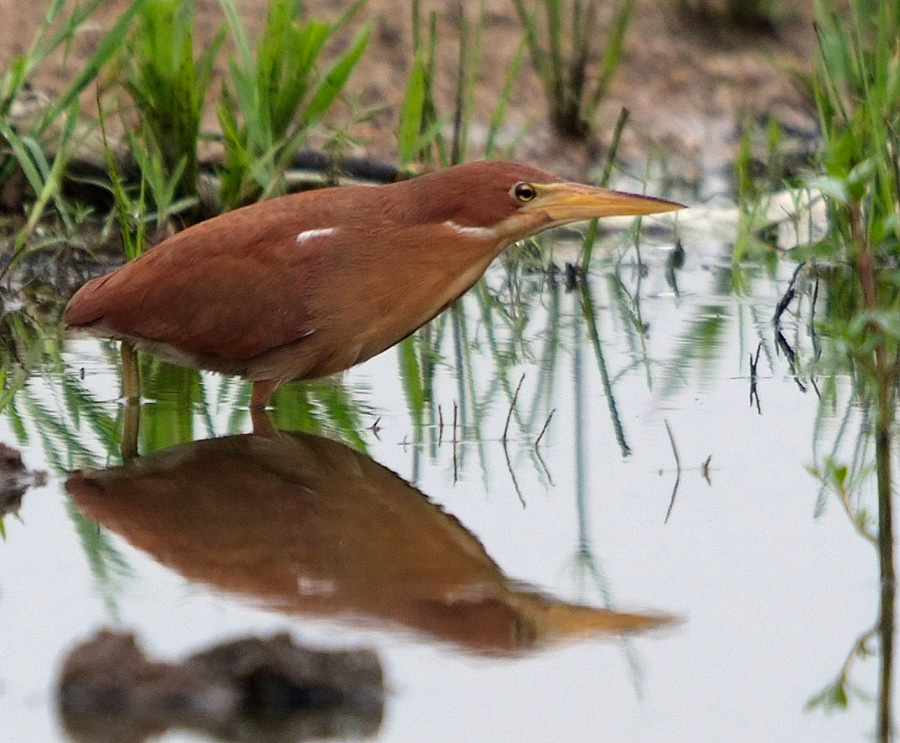
Cinnamon Bittern (Ixobrychus cinnamomeus) by Phil Kwong – Video
Dwarf Bittern (Ixobrychus sturmii) ©WikiC
Dupetor
Black Bittern (Dupetor flavicollis) by Nikhil Devasar – Video

Different Family
Sunbittern – Eurypygidae Family
Eurypyga
Sunbittern (Eurypyga helias) – Video – Video2

“Recent DNA evidence suggests that this family may in fact belong to the Pelecaniformes. From Wikipedia  They used to be in the Ciconiformes family, where most older guide books still have them. My list are from the IOC’s World Lists, 3.1 version.


Family#26 – Ardeidae

*

*

Bible Birds – Bittern I

In North America we have the American Bittern (23” with a 42-50” wingspan) and Least Bittern (11-14” with a 16-18” wingspan). Both dwell in marsh or wetland habitats and are very difficult to find. God has designed them with plumage and behavior (standing very still with the head pointing up) that helps camouflage them. They eat frogs, small fish, snakes and bugs, etc.

Today there are 15 Bitterns around the world. The bittern is an interesting find in the Bible.

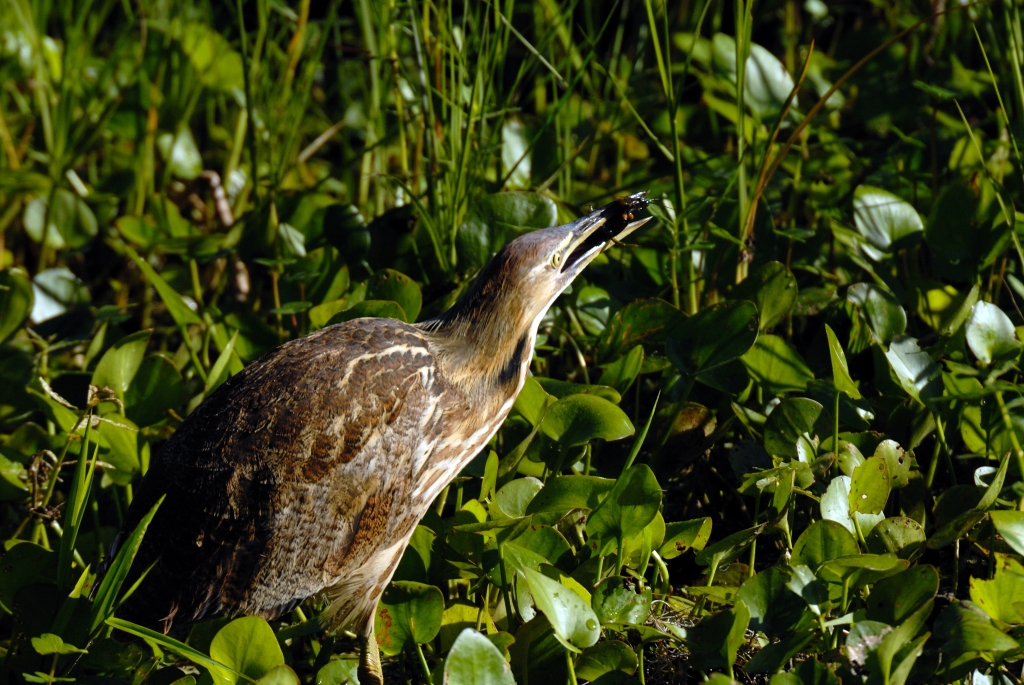
American Bittern (Botaurus lentiginosus) by Daves BirdingPix

American Bittern (Botaurus lentiginosus) by Daves BirdingPix

I will also make it a possession for the bittern, and pools of water: and I will sweep it with the besom of destruction, saith the LORD of hosts. (Isa 14:23)

Again judgment is being given and the names of the new inhabitants are given. Only the birds will dwell there.

But the cormorant and the bittern shall possess it; the owl also and the raven shall dwell in it: and he shall stretch out upon it the line of confusion, and the stones of emptiness. (Isa 34:11)
Ninevah will be barren and the bittern and pelican will be singing from the vacant windows. The herds shall lie down in her midst, Every beast of the nation. Both the pelican and the bittern Shall lodge on the capitals of her pillars; Their voice shall sing in the windows; Desolation shall be at the threshold; For He will lay bare the cedar work. (Zep 2:14)

Those verse will be explained further in future Bible Bird – Bittern articles.
_
A YouTube of a Eurasian Bittern (Botaurus stellaris). I do not know the language, but it shows how it is camouflaged so well.
*
*

See More Bible Birds

Bible Birds – Bitterns

*
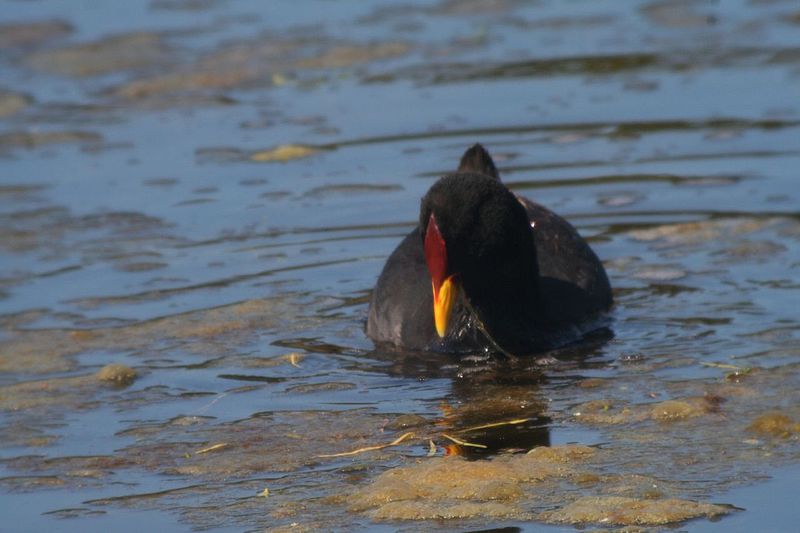
CLASS – AVES, Order –PELECANIFORMES, Family – Ardeidae – Herons, Bitterns


*

Birds of the Bible – Swift Eagles

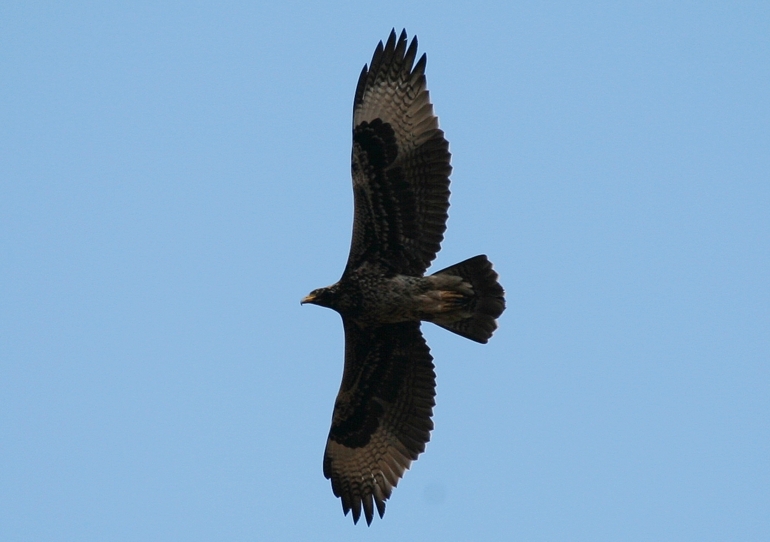
Verreaux’s Eagle (Aquila verreauxii) ©WikiC2

Verreaux’s Eagle (Aquila verreauxii) ©WikiC2

Saul and Jonathan were beloved and pleasant in their lives, And in their death they were not divided; They were swifter than eagles, They were stronger than lions. (2 Samuel 1:23 NKJV)

In my reading today of II Samuel 1, David was told of the death of King Saul and his son Jonathan. They were killed in battle with the Philistines in the last chapter (31) of I Samuel.

David takes up a lament starting in II Samuel 1:17. Even though Saul had tried to kill David on many occasions, David never desired to harm Saul, because he knew that the King was the Lord’s anointed one. Jonathan and David were the best of friends.

In verse 23, David refers to Saul and Jonathan, father and son, were together even in the battles and both were very skilled in battle. They were “stronger than lions” and won many victories. Being “swifter than eagles” could well refer to their ability to dodge the swords and arrows of battle and to come quickly to the place of the fight.

David’s use of the Eagle was because of his familiarity of them. As a shepherd, he must have watched them flying over with great speed and agility. The following Eagles are all seen in Israel and may well have been some of the ones that David was observed speeding through the sky on the way to catch a prey.

Gill – “they were swifter than eagles; in the quick dispatch of business, in hasting to the relief of the distressed, as Saul to the men of Jabeshgilead, and in the pursuit of their enemies, as of the Philistines, more than once:”

K & D  – “The light motion or swiftness of an eagle (cf. Hab_1:8), and the strength of a lion (vid., 2Sa_17:10), were the leading characteristics of the great heroes of antiquity.”

Poole – “Swifter than eagles; expeditious and nimble in pursuing their enemies, and executing their designs; which is a great commendation in a prince and in a soldier.

Stronger than lions, in regard of their bodily strength and the courage of their minds.”

Wesley – “2 Samuel 1:23

Lovely – Amiable, and obliging in their carriage and conversation, both towards one another, and towards their people: for, as for Saul’s fierce behaviour towards Jonathan, it was only a sudden passion, by which his ordinary temper was not to be measured; and for his carriage towards David, that was from that jealousy and reason of state which usually engageth even well – natured princes, to the same hostilities. But it is observable, that David speaks not a word here of his piety; but only commends him for those things which were truly in him…. Swifter, &c. – Expeditious in pursuing their enemies, and executing their designs; which is a great commendation in a prince, and in a soldier. Stronger, &c. – In regard of their bodily strength, and the courage of their mind.”

Here is a list of the Eagles seen in Israel:

This slideshow requires JavaScript.

See:

*

The Forgetful Kingfisher

Pied Kingfisher (Ceryle rudis) by Ian

Pied Kingfisher (Ceryle rudis) by Ian

The Forgetful Kingfisher ~ from The Curious Book of Birds

THE FORGETFUL KINGFISHER

Cur Book of Birds letter-iN these days the Kingfisher is a sad and solitary bird, caring not to venture far from the water where she finds her food. Up and down the river banks she goes, uttering a peculiar plaintive cry. What is she saying, and why is she so restless? The American Kingfisher is gray, but her cousin of Europe is a bird of brilliant azure with a breast of rusty red. Therefore it must have been the foreign Kingfisher who was forgetful, as you shall hear.

Long, long after the sorrows of Halcyone, the first Kingfisher, were ended, came the great storm which lasted forty days and forty nights, causing the worst flood which the world has ever known. That was a terrible time. When Father Noah hastened to build his ark, inviting the animals and birds to take refuge with him, the Kingfisher herself was glad to go aboard. For even she, protected by Æolus from the fury of winds and waters, was not safe while there was no place in all the world for her to rest foot and weary wing. So the Kingfisher fluttered in with the other birds and animals, a strange company! And there they lived all together, Noah and his arkful of pets, for many weary days, while the waters raged and the winds howled outside, and all the earth was covered fathoms deep out of sight below the waves.

But after long weeks the storm ceased, and Father Noah opened the little window in the ark and sent forth the Dove to see whether or not there was land visible on which the ark might find rest. Now after he had sent out the Dove, Noah looked about him at the other birds and animals which crowded around him eagerly, for they were growing very restless from their long confinement, and he said, “Which of you is bravest, and will dare follow our friend the Dove out into the watery world? Ah, here is the Kingfisher. Little mother, you at least, reared among the winds and waters, will not be afraid. Take wing, O Kingfisher, and see if the earth be visible. Then return quickly and bring me faithful word of what you find out yonder.”

Day was just beginning to dawn when the Kingfisher, who was then as gray as gray, flew out from the little window of the ark whence the Dove had preceded her. But hardly had she left the safe shelter of Father Noah’s floating home, when there came a tremendous whirlwind which blew her about and buffeted her until she was almost beaten into the waves, which rolled endlessly over the face of the whole earth, covering the high hills and the very mountains. The Kingfisher was greatly frightened. She could not go back into the ark, for the little window was closed, and there was no land anywhere on which she could take refuge. Just think for a moment what a dreadful situation it was! There was nothing for her to do but to fly up, straight up, out of reach from the tossing waves and dashing spray.

The Kingfisher was fresh and vigorous, and her wings were strong and powerful, for she had been resting long days in the quiet ark, eating the provisions which Father Noah had thoughtfully prepared for his many guests. So up, up she soared, above the very clouds, on into the blue ether which lies beyond. And lo! as she did so, her sober gray dress became a brilliant blue, the color caught from the azure of those clear heights. Higher and higher she flew, feeling so free and happy after her long captivity, that she quite forgot Father Noah and the errand upon which she had been sent. Up and up she went, higher than the sun, until at last she saw him rising far beneath her, a beautiful ball of fire, more dazzling, more wonderful than she had ever guessed.

“Hola!” she cried, beside herself with joy at the sight. “There is the dear sun, whom I have not seen for many days. And how near, how beautiful he is! I will fly closer still, now that I have come so near. I will observe him in all his splendor, as no other bird, not even the high-flying, sharp-eyed Eagle, has ever seen him.”

And with that the foolish Kingfisher turned her course downward, with such mad, headlong speed that she had scarcely time to feel what terrible, increasing heat shot from the sun’s rays, until she was so close upon him that it was too late to escape. Oh, but that was a dreadful moment! The feathers on her poor little breast were scorched and set afire, and she seemed in danger not only of spoiling her beautiful new blue dress but of being burned into a wretched little cinder. Horribly frightened at her danger, the Kingfisher turned once more, but this time toward the rolling waters which covered the earth. Down, down she swooped, until with the hiss of burning feathers she splashed into the cold wetness, putting out the fire which threatened to consume her. Once, twice, thrice, she dipped into the grateful coolness, flirting the drops from her blue plumage, now alas! sadly scorched.

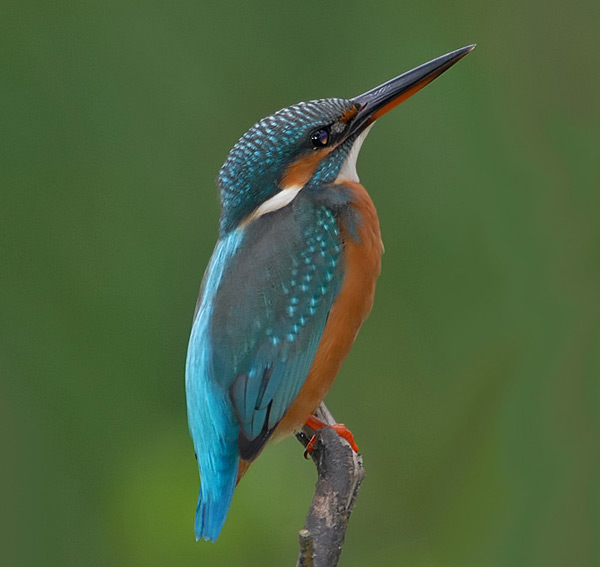
Common Kingfisher (Alcedo atthis) by W Kwong

Common Kingfisher (Alcedo atthis) by W Kwong

When the pain of her burns was somewhat relieved she had time to think what next she should do. She longed for rest, for refuge, for Father Noah’s gentle, caressing hand to which she had grown accustomed during those stormy weeks of companionship in the ark. But where was Father Noah? Where was the ark? On all the rolling sea of water there was no movement of life, no sign of any human presence. Then the Kingfisher remembered her errand, and how carelessly she had performed it. She had been bidden to return quickly; but she had wasted many hours—she could not tell how many—in her forgetful flight. And now she was to be punished indeed, if she could not find her master and the ark of refuge.

The poor Kingfisher looked wildly about. She fluttered here and there, backward and forward, over the weary stretch of waves, crying piteously for her master. He did not answer; there was no ark to be found. The sun set and the night came on, but still she sought eagerly from east to west, from north to south, always in vain. She could never find what she had so carelessly lost.

The truth is that during her absence the Dove, who had done her errand faithfully, returned at last with the olive leaf which told of one spot upon the earth’s surface at last uncovered by the waves. Then the ark, blown hither and thither by the same storm which had driven the Kingfisher to fly upward into the ether-blue, had drifted far and far to Mount Ararat, where it ran aground. And Father Noah, disembarking with his family and all the assembled animals, had broken up the ark, intending there to build him a house out of the materials from which it was made. But this was many, many leagues from the place where the poor Kingfisher, lonely and frightened, hovered about, crying piteously for her master.

And even when the waters dried away, uncovering the earth in many places, so that the Kingfisher could alight and build herself a nest, she was never happy nor content, but to this day flies up and down the water-ways of the world piping sadly, looking eagerly for her dear master and for some traces of the ark which sheltered her. And the reflection which she makes in the water below shows an azure-blue body, like a reflection of the sky above, with some of the breast-feathers scorched to a rusty red. And now you know how it all came about.


Common Kingfisher (Alcedo atthis) by Nikhil Devasar

Common Kingfisher (Alcedo atthis) by Nikhil Devasar

Lee’s Addition:

An enjoyable Bird Tale from The Curious Book of Birds. Kingfishers belong to the Alcedinidae – Kingfishers Family.

We know the Lord created Kingfishers and gave them their colors, but it is fun to read stories about them, even if they are make-believe. The flood and the ark were true, but that is not quite how they came to fly up and down the waterways.

That they may set their hope in God, And not forget the works of God, But keep His commandments; (Psalms 78:7 NKJV)

My son, do not forget my law, But let your heart keep my commands; (Proverbs 3:1 NKJV)

Get wisdom! Get understanding! Do not forget, nor turn away from the words of my mouth. (Proverbs 4:5 NKJV)

Kingfishers have been created by a loving Creator just as we have been. We differ from the birds because we were made in God’s image. Therefore, we need to remember our teachings about God and Christ and not forget them. That also includes what your parents ask you to do also.

(Photos added by me.)

Links:

White-throated Kingfisher (Halcyon smyrnensis) by Nikhil Devasar


  Alcedinidae – Kingfishers Family


Painted Bunting (Passerina ciris) ©©Flickr


  Bird Tales


Curious Book of Birds - Cover


  The Curious Book of Birds


Spanish Sparrow (Passer Hispaniolensis) female ©WikiC


  Wordless Birds


*

Birds of the Bible – The Bat Revisited

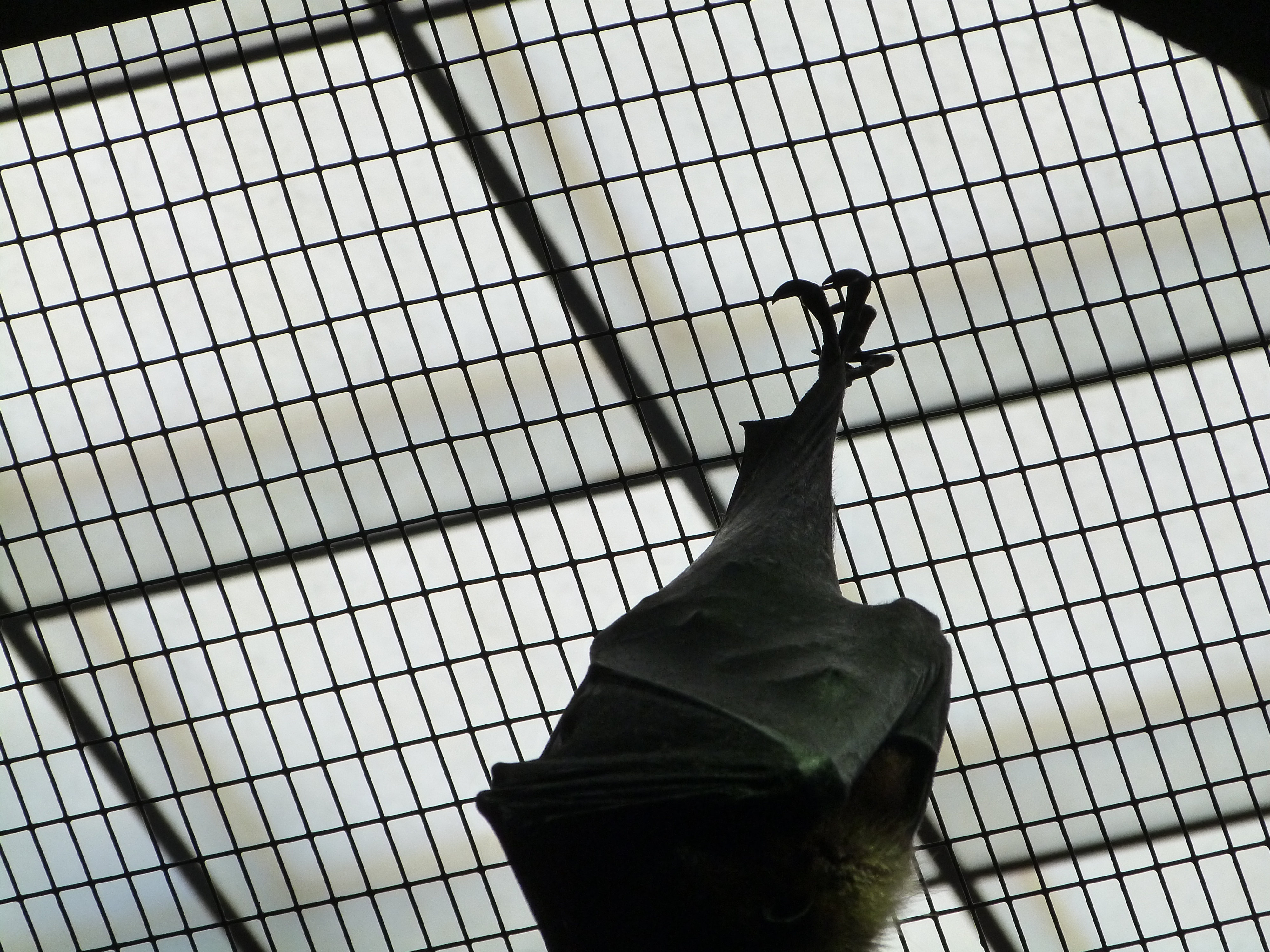
Giant Fruit Bat at Cincinnati Zoo 9-5-13 by Dan

Giant Fruit Bat at Cincinnati Zoo by Dan

And the stork, the heron after her kind, and the lapwing, and the bat. All fowls that creep, going upon all four, shall be an abomination unto you. Yet these may ye eat of every flying creeping thing that goeth upon all four, which have legs above their feet, to leap withal upon the earth; Even these of them ye may eat; the locust after his kind, and the bald locust after his kind, and the beetle after his kind, and the grasshopper after his kind. But all other flying creeping things, which have four feet, shall be an abomination unto you.
(Leviticus 11:19-23 KJV)

While we were at the Cincinnati Zoo, we were able to see and photograph several Bat species. They were really cool and I wanted to share them with you.

Giant Fruit Bat at Cincinnati Zoo 9-5-13 by Lee

Giant Fruit Bat at Cincinnati Zoo by Lee

Then I remembered that I had written about them in Birds of the Bible – The Bat?, in 2010. In that article, the controversy over whether a Bat is a Bird was mentioned, with several commentary comments. This time, I am mainly sharing the photos of the Bats that are there at the Zoo and comments about them. Just one personal observation about the above verses. The use of “fowl” in the King James Version and some of the others seems to refer to any creature that had wings and flies. I quoted the whole context because; 1) The verse and chapter separations were inserted later, 2) Birds, bats, and insects all seem to be referred to with the same collective term, “fowl.” I do not have a problem with the bat. It is not a bird.

The only other verses using “bat” or “bats” are:

And the stork, and the heron after her kind, and the lapwing, and the bat. (Deuteronomy 14:18 KJV)

In that day a man shall cast his idols of silver, and his idols of gold, which they made each one for himself to worship, to the moles and to the bats; (Isaiah 2:20 KJV)

The bats we saw at the Cincinnati Zoo were the Giant Fruit Bats and the Vampire Bats. They are amazing creatures of design and creation from their Creator, the Lord.

*

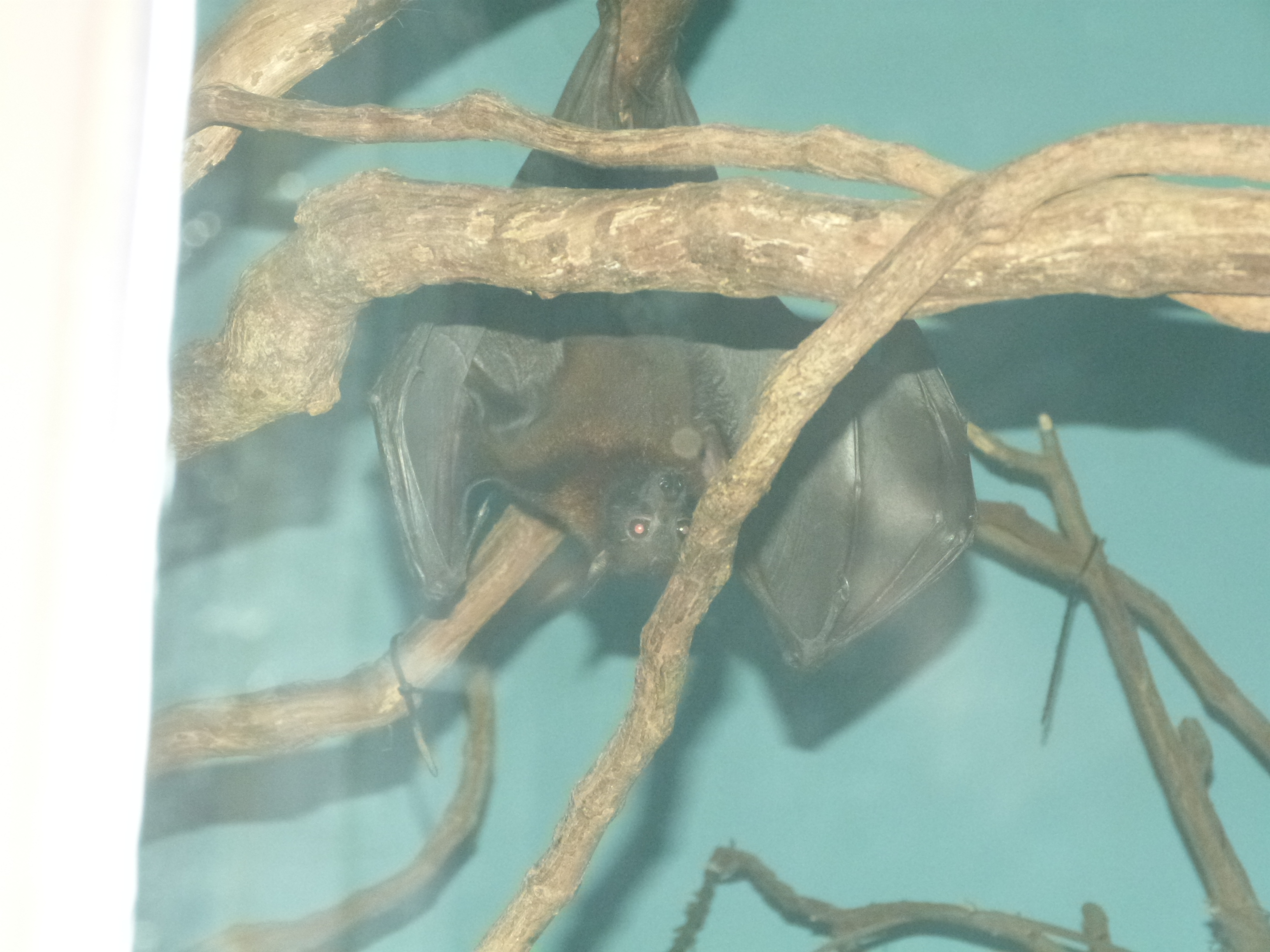
Giant Fruit Bat at Cincinnati Zoo 9-5-13 by Lee

Giant Fruit Bat’s Foot amazed me

Giant Fruit Bat (Pteropus giganteus) or Indian Flying Fox is found in Bangladesh, China, India, the Maldives, Nepal, Pakistan, and Sri Lanka. Also known as the greater Indian fruit bat, it lives in mainly forests. It is a very large bat with a wingspan between 3 ft 10 in and 4 ft 10 in (1.2 and 1.5 m). It is nocturnal and feeds mainly on ripe fruits, such as mangoes and bananas, and nectar. This bat is gregarious and lives in colonies which can number a few hundred. Their offspring have no specific name besides ‘young’. They have one to two young.

The Indian flying fox lives in tropical forests and swamps, where a large body of water is nearby.

The way they were hanging up there amazed me. I zoomed in and took a photo of its foot. Also, they almost looked like a large cocoon hanging up there with the wings wrapped around them. The first photo, Dan caught one of them stretching.

*

*

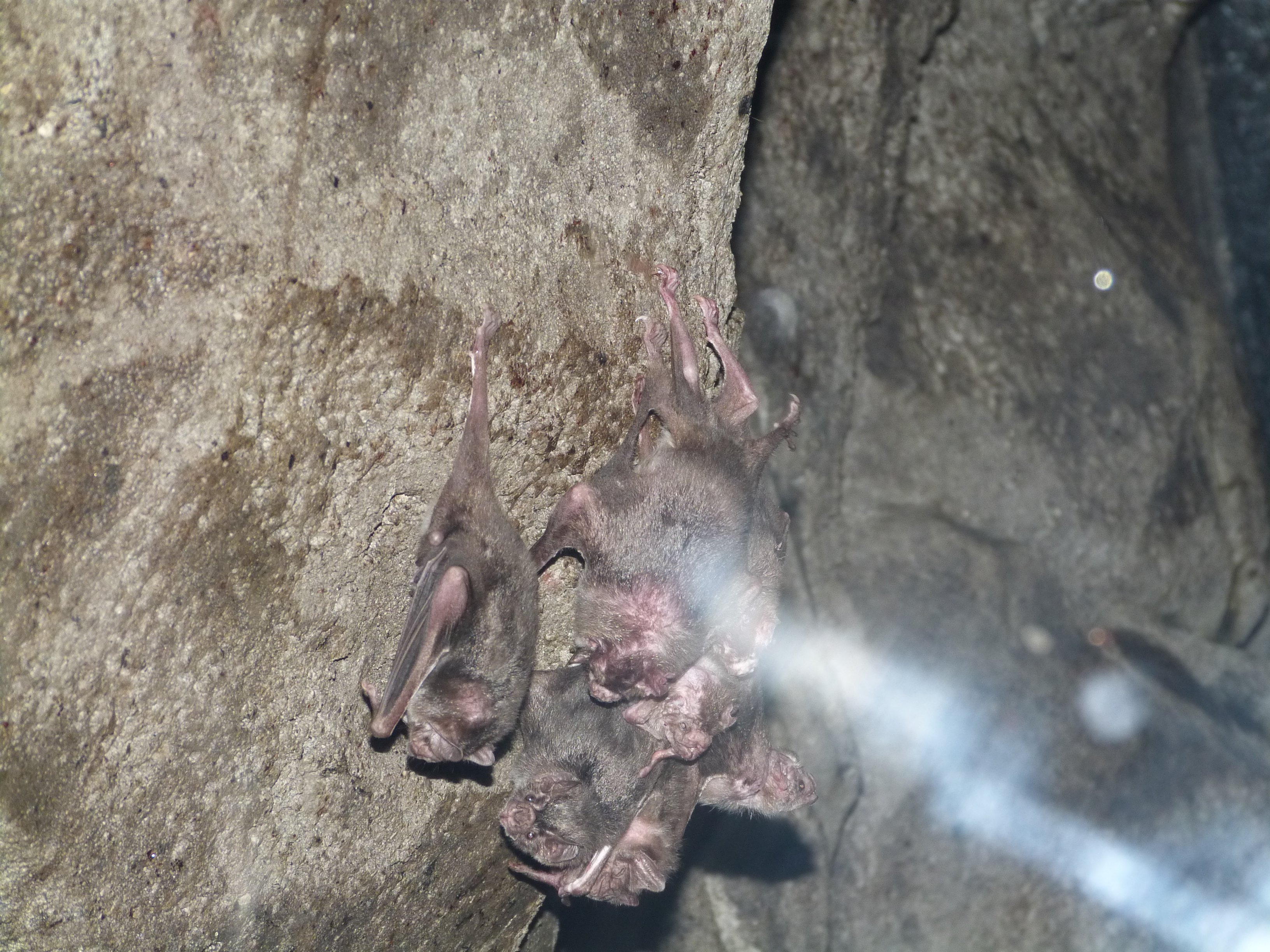
Common Vampire Bat (Desmodus rotundus) Cincinnati Zoo 9-5-13 by Lee

Common Vampire Bat Cincinnati Zoo by Lee (Shot through glass into a dark exhibit)

(Common) Vampire Bat (Desmodus rotundus) – The common vampire bat mainly feeds on the blood of livestock, approaching its prey at night while they are sleeping. It uses its razor-sharp teeth to cut open the skin of its hosts and laps up their blood with its long tongue. They are native to the New World, ranging from Mexico to Brazil, Chile, and Argentina.

The common vampire bat is short-haired, with silver-gray fur on its undersides, sharply demarcated from the darker fur on its back. It has small, somewhat rounded ears, a deeply grooved lower lip, and a flat, leaf-shaped nose. A well-developed, clawed thumb on each wing is used to climb onto prey and to assist the animal in take-off. The bat averages about 3.5 in (9 cm) long with a wingspan of 7 in (18 cm). It commonly weighs about 2 oz (57 grams), but its weight can double after a single feeding. The braincase is relatively large, but the snout is reduced to accommodate large incisors and canines. It has the fewest teeth among bats.

Common Vampire Bat - Cincinnati Zoo by Lee

Common Vampire Bat – Cincinnati Zoo by Lee

Common vampire bats have good eyesight. They are able to distinguish different optical patterns and may use vision for long-range orientation. These bats also have well-developed senses of smell and hearing: the cochlea is highly sensitive to low-frequency acoustics, and the nasal passages are relatively large. They emit echolocation signals orally, and thus fly with their mouths open for navigation.

Common Vampire Bat - Cincinnati Zoo by Lee

Common Vampire Bat – Cincinnati Zoo by Lee

*

(Wikipedia with editing)

*

*

Links:

Cincinnati Zoo

Giant Fruit Bats – Cincinnati Zoo

Indian Flying Fox – Wikipedia

Vampire Bats – Cincinnati Zoo

Common Vampire Bat – Wikipedia

Birds of the Bible – The Bat?

Birds of the Bible

*

Birds of the Bible – Shield

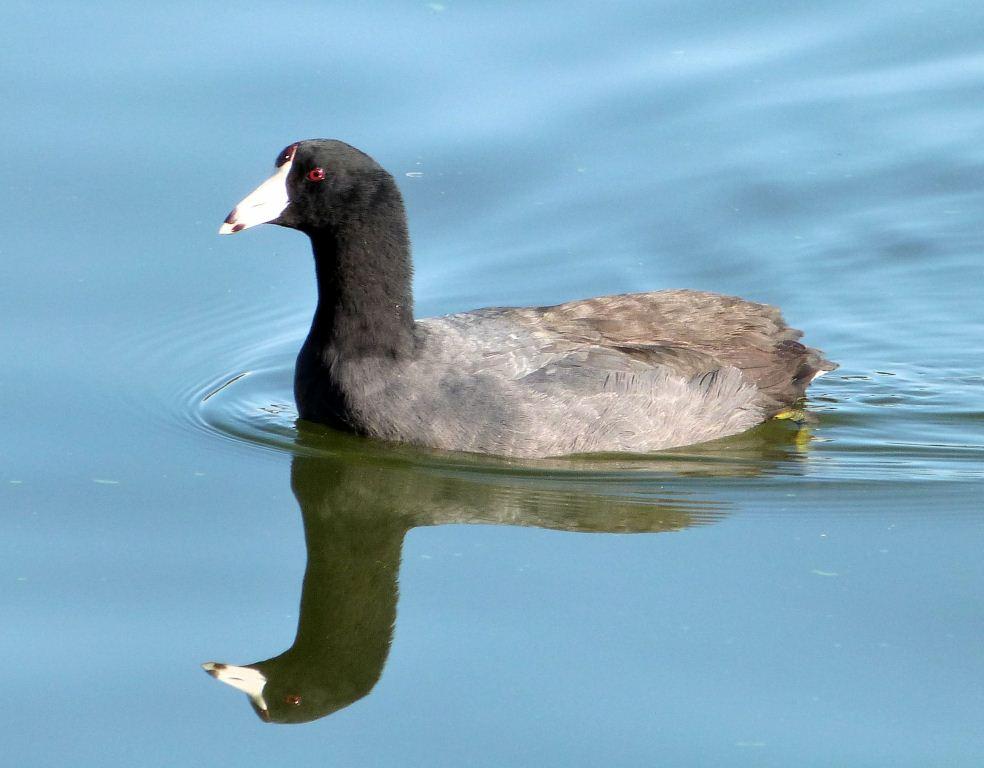
American Coot (Fulica americana) by Lee at Lk Morton

American Coot (Fulica americana) by Lee at Lk Morton

He shall cover thee with his feathers, and under his wings shalt thou trust: his truth shall be thy shield and buckler. (Psalm 91:4 KJV)

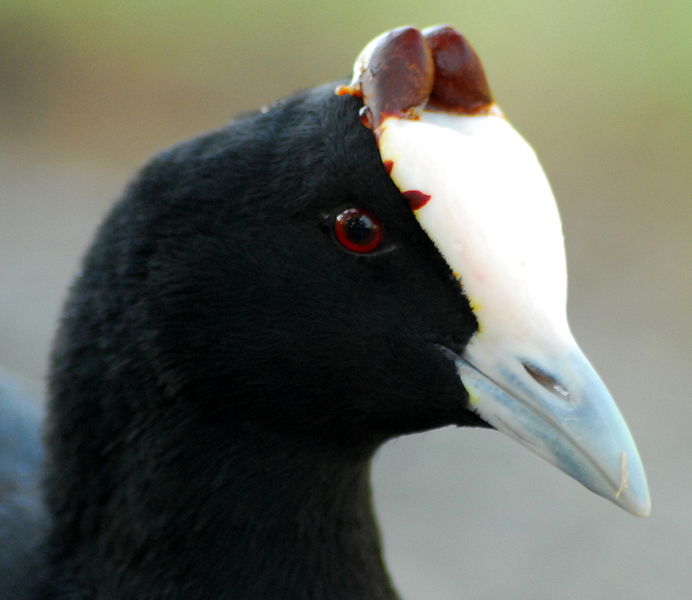
While working on the Coot article, the shield was mentioned. “Coots have prominent frontal shields or other decoration on the forehead…”

When the Lord created the Coots and many of the birds in the Rallidae – Rails, Crakes & Coots family, He gave them a frontal shield. Some Jacanas (Jacanidae – Jacanasalso have shields.

The Merriam-Webster Dictionary gives this definition: “a platelike prolongation of the base of the upper mandible over the forehead that is a characteristic feature of the coots and gallinules.”  A few coots and gallinules have a frontal shield, which is a fleshy rearward extension of the upper bill. The most complex frontal shield is found in the Horned Coot.

This slideshow requires JavaScript.


*
As you can see by the different photos, each species has a different shield, some similar, but others quite different.

Wikipedia says, “A shield is a type of personal armor, meant to intercept attacks, either by stopping projectiles such as arrows or redirecting a hit from a sword, mace, battle axe or similar weapon to the side of the shield-bearer.

Shields vary greatly in size, ranging from large panels that protect the user’s entire body to small models (such as the buckler) that were intended for hand-to-hand-combat use. Shields also vary a great deal in thickness; whereas some shields were made of relatively deep, absorbent, wooden planking to protect soldiers from the impact of spears and crossbow bolts, others were thinner and lighter and designed mainly for deflecting blade strikes.

Often shields were decorated with a painted pattern or an animal representation and these designs developed into systematized heraldic devices during high-medieval times for purposes of battlefield identification. ”

Ceremonial shield with mosaic decoration- Aztec or Mixtec-AD 1400-1521-In the British Museum ©WikiC

Ceremonial shield with mosaic decoration- Aztec or Mixtec-AD 1400-1521-In the British Museum ©WikiC

For our birds, I would think the decorated shields for identification seems the most logical. Since the Lord enjoys so much variety, we see it again displayed in these frontal shields.

At least 54 verses (depending on version) mention the word “shield” in the Bible. Psalm 91:4 above is providing refuge under feathers and wings and is protecting us with a shield of truth and faithfulness. Let’s look at some of the verses and just let His word encourage and challenge us to serve Him more.

The God of my rock; in him will I trust: he is my shield, and the horn of my salvation, my high tower, and my refuge, my saviour; thou savest me from violence. (2 Samuel 22:3 KJV)

But You, O LORD, are a shield about me, My glory, and the One who lifts my head. (Psalms 3:3 NASB)

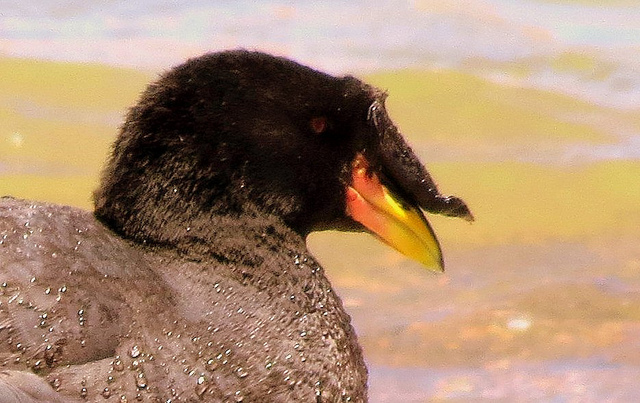
Horned Coot (Fulica cornuta) ©©Flickr Gunnar Engblom

Horned Coot (Fulica cornuta) ©©Flickr Gunnar Engblom

Thou hast also given me the shield of thy salvation: and thy right hand hath holden me up, and thy gentleness hath made me great. (Psalms 18:35 KJV)

Our soul waiteth for the LORD: he is our help and our shield. (Psalms 33:20 KJV)

Red-knobbed Coot (Fulica cristata) Breeding ©WikiC

Red-knobbed Coot (Fulica cristata) Breeding ©WikiC

For the LORD God is a sun and shield: the LORD will give grace and glory: no good thing will he withhold from them that walk uprightly. (Psalms 84:11 KJV)

Ye that fear the LORD, trust in the LORD: he is their help and their shield. (Psalms 115:11 KJV)

Red-fronted Coot (Fulica rufifrons) ©WikiC

Red-fronted Coot (Fulica rufifrons) ©WikiC

Above all, taking the shield of faith, wherewith ye shall be able to quench all the fiery darts of the wicked. (Ephesians 6:16 KJV)

Are others able to identify us by our shield?

*

Wordless Birds

*

See:

Birds of the Bible

Rallidae – Rails, Crakes & Coots Family

Jacanidae – Jacanas Family

Birdwatching Term – Frontal Shield

*