“But the LORD said unto Samuel, Look not on his countenance, or on the height of his stature; because I have refused him: for the LORD seeth not as man seeth; for man looketh on the outward appearance, but the LORD looketh on the heart.” (1 Samuel 16:7 KJV)
Pheasants and their cousins have kept us interested for four weeks already. Today, even though there are 54 of these Avian Creations from our Lord left in this family, we will finish. The Pheasants and allies – Phasianidae Family has interesting and colorful members. With Partridges, Pheasants, Peafowls, Tragopan, Monals, and other members, the similarities are obvious, yet they all have their differences. One thing about their Creator, He enjoys variety. The Partridge is one of the many Birds of the Bible as listed in I Samuel 26:20 and Jeremiah 17:11. They are also on the clean fowl and are permissible to be eaten. I trust you have enjoyed seeing this large family of 187 members.
Painted Spurfowl (Galloperdix lunulata) by Nikhil
Galloperdixis a genus of three species of birds in the pheasant family, Phasianidae. These terrestrial birds are restricted to the Indian Subcontinent, with the Red Spurfowl and Painted Spurfowl in forest and scrub in India, and the Sri Lanka Spurfowl in forests of Sri Lanka. They share the common name “spurfowl” with the African members of the genus Pternistis.
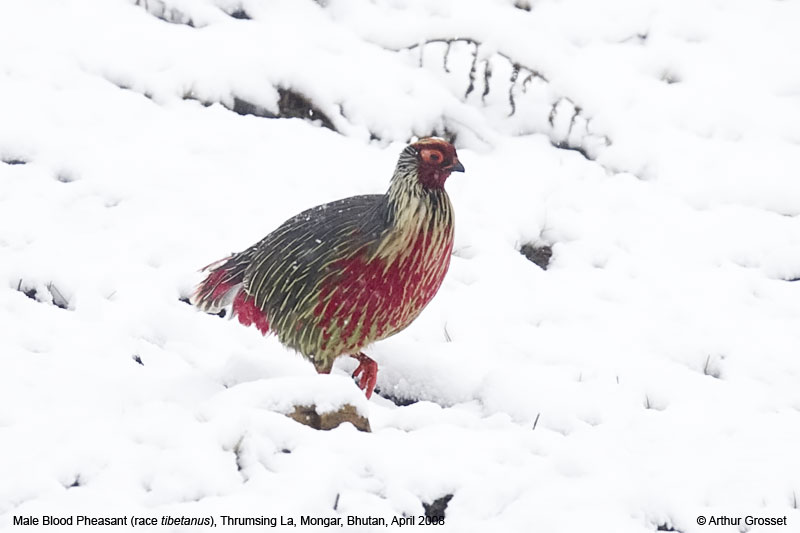
The blood pheasant (Ithaginis cruentus) is the only species in genus Ithaginis of the pheasant family. This relatively small, short-tailed pheasant is widespread and fairly common in the eastern Himalayas, ranging across India, Nepal, Bhutan, and China. The blood pheasant is the state bird of the Indian state of Sikkim.
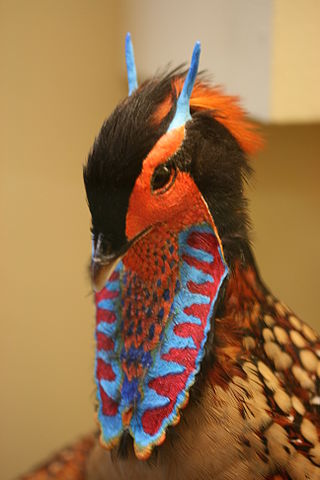
Tragopanis a genus of bird in the family Phasianidae. These birds are commonly called “horned pheasants” because of two brightly colored, fleshy horns on their heads that they can erect during courtship displays. The scientific name refers to this, being a composite of tragus (billy goat) and the ribald half-goat deity Pan (and in the case of the satyr tragopan, adding Pan’s companions for even more emphasis). Their habit of nesting in trees is unique among phasianids.
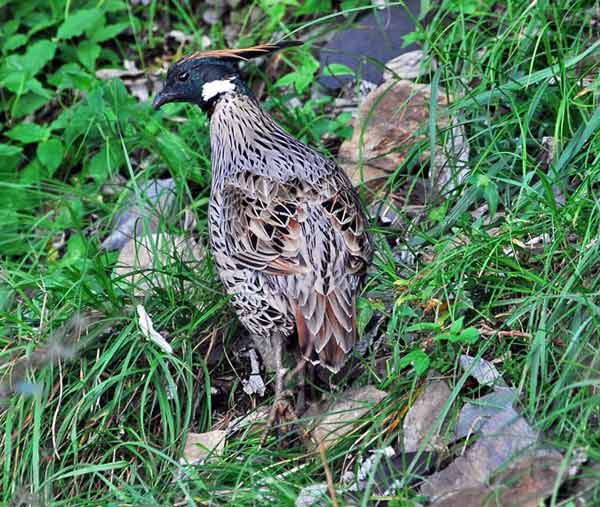
Koklass Pheasant (Pucrasia macrolopha) by Nikhil Devasar
The koklass pheasant is a medium-sized elusive bird confined to high altitude forests from Afghanistan to central Nepal, and in northeastern Tibet to northern and eastern China. Upper parts of male koklass pheasant are covered with silver-grey plumage streaked velvety-black down the centre of each feather, and it has the unique feature of a black head, chestnut breast and prominent white patches on the sides of the neck.
A monal is a bird of genus Lophophorus of the pheasant family, Phasianidae. There are three species and several subspecies: Himalayan Monal, Sclater’s Monal, and the Chinese Monal.
Junglefowl are the four living species of bird from the genus Gallus in the Gallinaceous bird order, which occur in India, Sri Lanka and Southeast Asia. These are large birds, with colourful male plumage, but are nevertheless difficult to see in the dense vegetation they inhabit. As with many birds in the pheasant family, the male takes no part in the incubation of the egg or rearing of the precocial young. These duties are performed by the drab and well-camouflaged female. The junglefowl are seed-eaters, but insects are also taken, particularly by the young birds.
One of the species in this genus, the red junglefowl, is of historical importance as the likely ancestor of the domesticated chicken, although it has been suggested the grey junglefowl was also involved. The Sri Lankan junglefowl is the national bird of Sri Lanka.
Siamese Fireback (Lophura diardi) at Wings of Asia by Dan
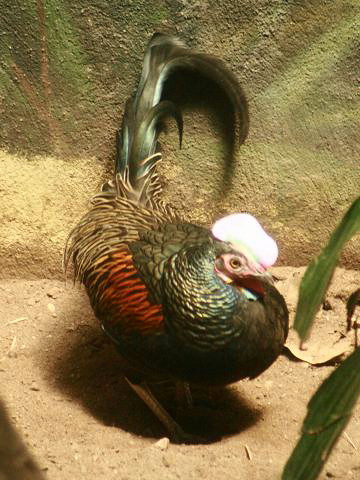
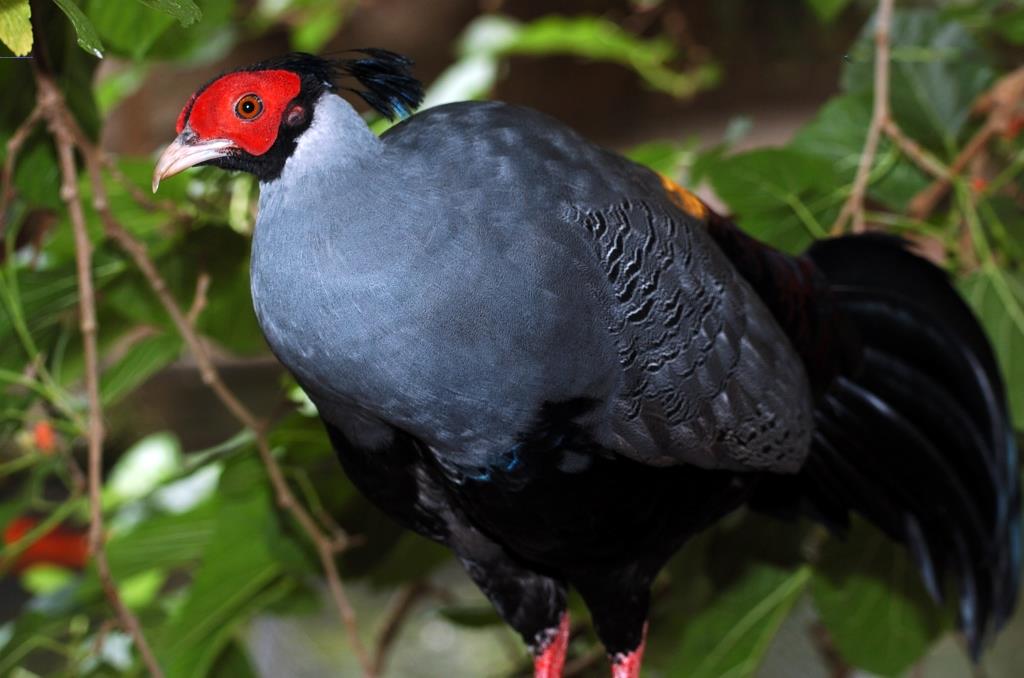
The gallopheasants (genus Lophura) are pheasants of the family Phasianidae. The genus comprises 12 species and several subspecies.
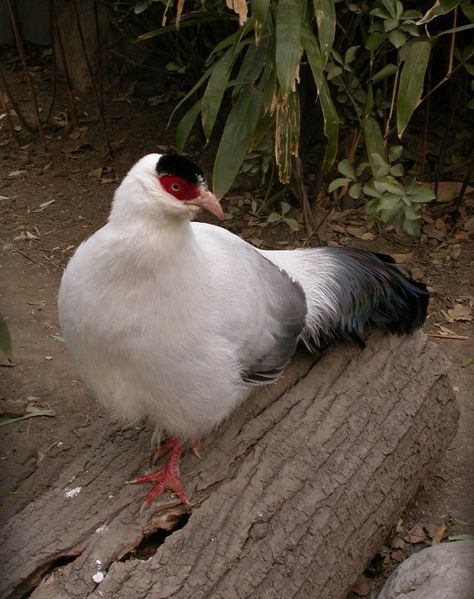
The name Crossoptilonis a combination of the Greek words krossoi, meaning “fringe” and ptilon, meaning “feather”— a name Hodgson felt particularly applied to the white eared pheasant “distinguished amongst all its congeners by its ample fringe-like plumage, the dishevelled quality of which is communicated even to the central tail feathers”. All are large, sexually monomorphic and found in China.
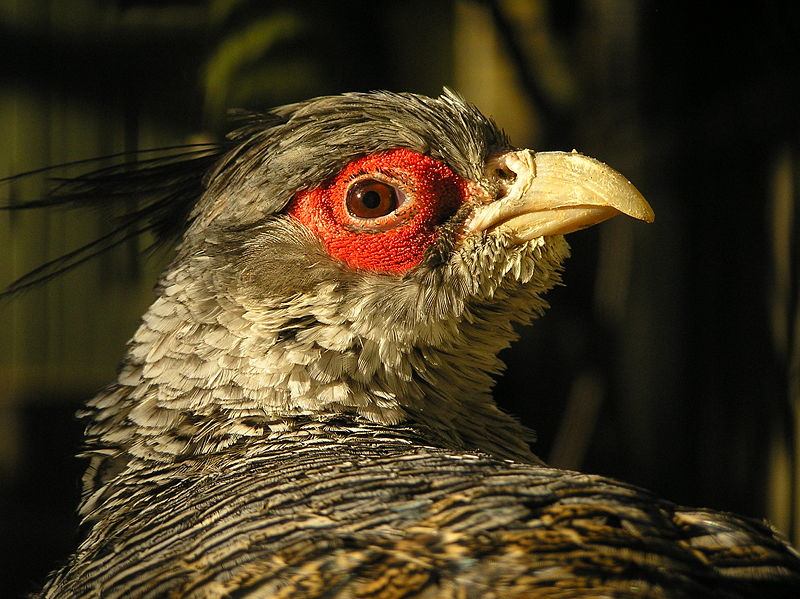
Cheer Pheasants lack the color and brilliance of most pheasants, with buffy gray plumage and long gray crests. Its long tail has 18 feathers and the central tail feathers are much longer and the colour is mainly gray and brown. The female is slightly smaller in overall size.
Reeves’s Pheasant (Syrmaticus reevesii) Memphis Zoo by Dan
The genus Syrmaticus contains the five species of long-tailed pheasants. The males have short spurs and usually red facial wattles, but otherwise differ wildly in appearance. The hens (females) and chicks pattern of all the species have a rather conservative and plesiomorphic drab brown color pattern
Common Pheasant (Phasianus colchius) by Robert Scanlon
The “typical” pheasant genus Phasianus in the family Phasianidae consists of twp species. The genus name comes from Latin phasianinus “pheasant-like” (from phasianus, “pheasant”).[1] Both Phasianus and “pheasant” originally come from the Greek word phāsiānos, meaning “(bird) of the Phasis”. Phasis is the ancient name of the main river of western Georgia, currently called the Rioni.
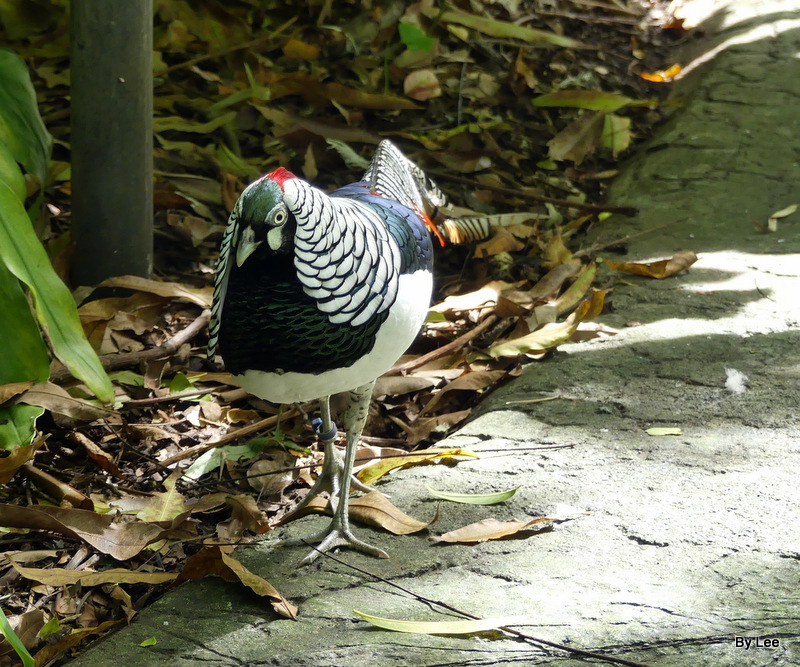
Lady Amherst’s Pheasant (Chrysolophus amherstiae) Zoo Miami by Lee
The genus name is from Ancient Greek khrusolophos, “with golden crest”. These are species which have spectacularly plumaged males. The golden pheasant is native to western China, and Lady Amherst’s pheasant to Tibet and westernmost China, but both have been widely introduced elsewhere.
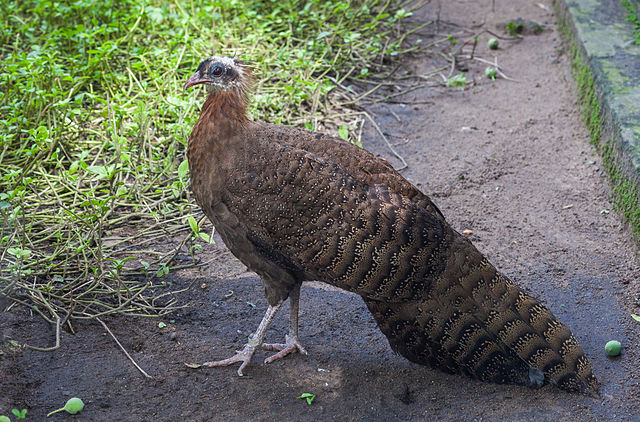
The peacock-pheasants are a bird genus, Polyplectron, of the family Phasianidae, consisting of eight species. They are colored inconspicuously, relying on heavily on crypsis to avoid detection. When threatened, peacock-pheasants will alter their shapes utilising specialised plumage that when expanded reveals numerous iridescent orbs. The birds also vibrate their plume quills further accentuating their aposematism. Peacock-pheasants exhibit well-developed metatarsal spurs. Older individuals may have multiple spurs on each leg. These kicking thorns are used in self-defense.
Little is known about this species in the wild. A shy and elusive bird, the crested argus is found in submontane Vietnam, Laos, and Malaysia in Southeast Asia. The diet consists mainly of invertebrates, mollusks, amphibians, small reptiles, bamboo shoots, leaves, fruits, and fungi
The scientific name of the Great Argus was given by Carl Linnaeus in reference to the many eyes-like pattern on its wings. Argus is a hundred-eyed giant in Greek mythology. There are two subspecies recognized: Nominate argus of the Malay peninsula and Sumatra, and A. a. grayi of Borneo. William Beebe considered the two races to be distinct species, but they have since been lumped.
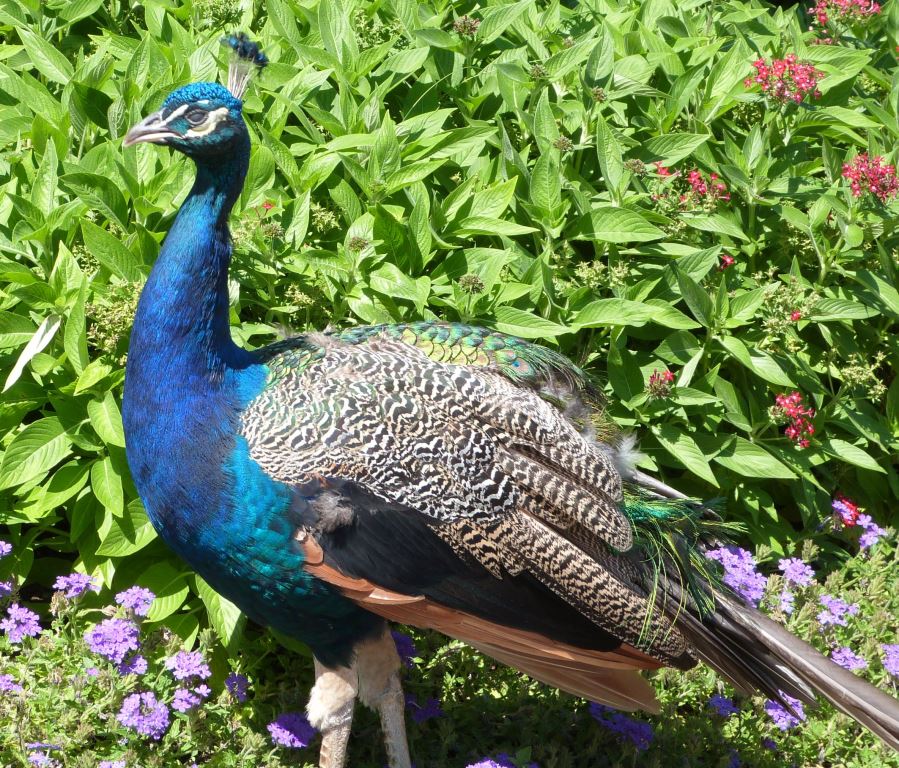
Indian Peafowl (Pavo cristatus) at Cincinnati Zoo by Lee
Pavo is a genus of two species in the pheasant family. The two species, along with the Congo peacock, are known as peafowl.
The Congo peafowl (Afropavo congensis), known as the mbulu by the Congolese, is a species of peafowl native to the Congo Basin. It is one of three extant species of peafowl, the other two being the Indian peafowl (originally of India and Sri Lanka) and the green peafowl (native to Burma and Indochina).
(Information from Wikipedia, with editing)
This slideshow requires JavaScript.
“Let the word of Christ dwell in you richly in all wisdom, teaching and admonishing one another in psalms and hymns and spiritual songs, singing with grace in your hearts to the Lord.” (Colossians 3:16 NKJV)
“How Can I Keep From Singing” ~ Three + One Quartet (Pastor Smith, Reagan, Jessie, and Caleb)
Once there was a duck named Pete who was taking his usual morning route around the pond in which he lived. It was Saturday and the weather was cool and breezy. On this morning Pete noticed a large group of people gathered inside a huge patch of soft green grass. Most of the people were children and they all wore matching colored uniforms.
Pete grew curious and decided to flap up and peer through the fence to see what was going on. All around Pete people were cheering as the children ran back and forth with some kind of black and white ball. At one point, Pete watched one of the children kick the black and white ball into a small net and he listened to everyone cheer ecstatically. A man wearing a black and white-striped shirt blew a whistle loudly and the team members who wore the same green uniform as the boy who scored the goal ran back to the bench cheering. Apparently, whatever game they were playing was over and Pete guessed that the green team had won something.
Pete became very interested in this game and how it worked. He decided to stay and watch another game to understand the rules. The more Pete watched from the sidelines the more interesting the game became. Eventually, he realized that the name of the game was soccer, the black and white ball was called a soccer ball, and the players could not touch the ball with their hands.
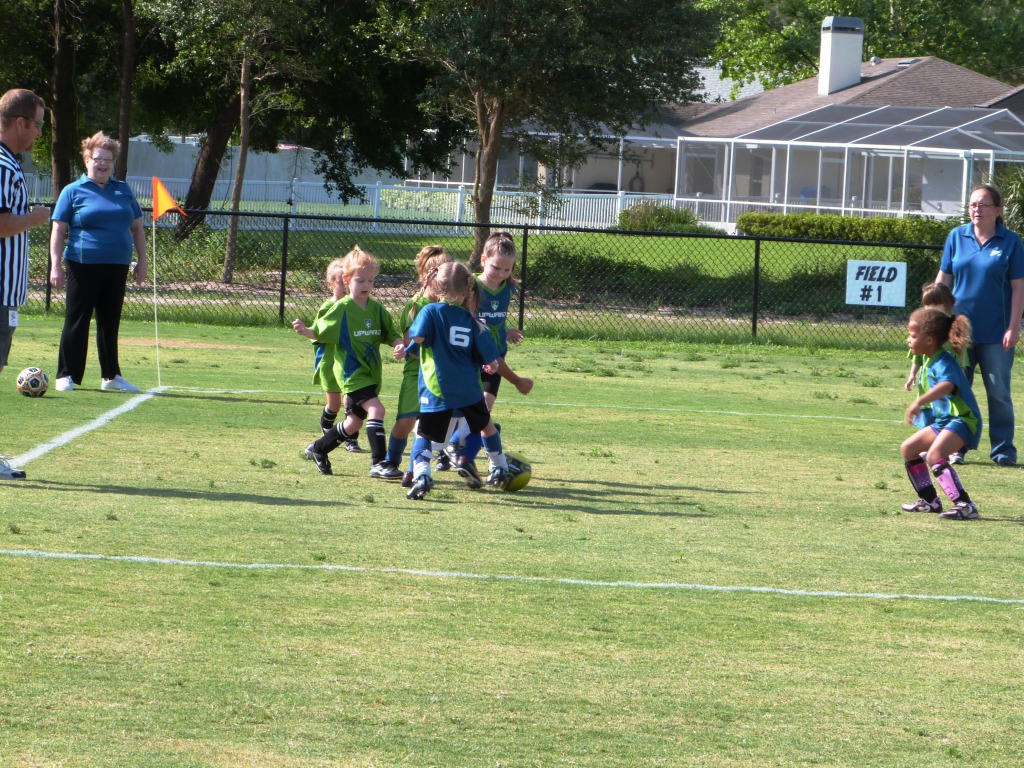
Upward Soccer 4-5 yr olds.
As Pete looked around, carefully taking in every detail, he noticed a shed that stood near the edge of the field. Glancing inside, Pete found an assortment of cones, soccer balls, and uniforms. Pete automatically decided to get into the spirit of things and pulled a green uniform out of a box and put it on. Shoving his head into the shirt, Pete wriggled and pushed his head through one of the arm sleeves. This seemed to work, but he found it difficult. Despite this difficulty, he made sure not to touch the ball with his wings just like the players.
Eventually, Pete waddled out of the shed in his green uniform with the soccer ball. He attempted to kick it again but only succeeded in rolling it onto the middle of the field. Pete flew after it to try to bring the ball back. Suddenly the referee blew his whistle and stopped the game. Embarrassed, Pete kicked the ball as best he could off the field. All of the players, however, were impressed that Pete was able to kick it so well because he was a duck. Since the team with green uniforms was short a player they were able to convince the referee to let Pete play even though his uniform was not quite right. The referee called Pete over, and Pete happily flapped back onto the field to finish the game.
Pete did his best to waddle back and forth and catch up with the other players. Every now and then he was able to kick the ball to another player. The game was tied because each team had scored one goal.
As time began to run out and there were only a few minutes left, one of the players suddenly passed the ball to Pete. Because Pete was close to the other team’s goal he quickly waddled down the field with the ball, trying not to fly.
Once Pete reached the goal he did his best to kick the ball. He kicked the ball as hard as he could and was surprised when the ball sailed over the goalie’s head into the net. The entire crowd cheered for Pete because he had helped the green team win the game. Pete had never been so happy until that moment when he scored the goal, and the team was very grateful that Pete had been there to help them. From then on, Pete watched every single game that the people played, and always wore the green uniform he had found in the shed just in case the green team was short a player.
“… to be ready to every good work,” (Titus 3:1b KJV)
Lee’s Addition:
Another great story from Emma Foster. I felt since our Duck Pete was small, he may have played with our youngest Upper Soccer team.
You might enjoy these videos I found to help show off Emma’s Soccer Duck.
Crimson Finch featured as bird of the week a little over eight years ago, but I’ve decided to have it again as a pair appeared in my backyard several weeks ago, the first time I’ve seen any in Bluewater.
Shortly earlier, I’d seen what looked like a female Satin Flycatcher having a splash in the pool. Satin Flycatchers are rare in North Queensland, though they do show up sometimes on migration. This one didn’t hang around for a photo while I got the camera, so I headed off around the property looking for it. Female Satin Flycatchers are notorious difficult to separate from their slightly duller cousins, female Leaden Flycatchers, so a photograph is essential not only for identification but also to convince anyone else.
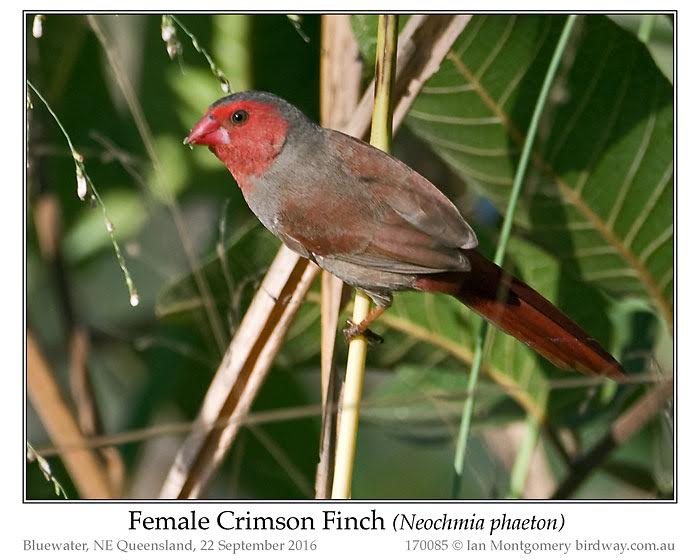
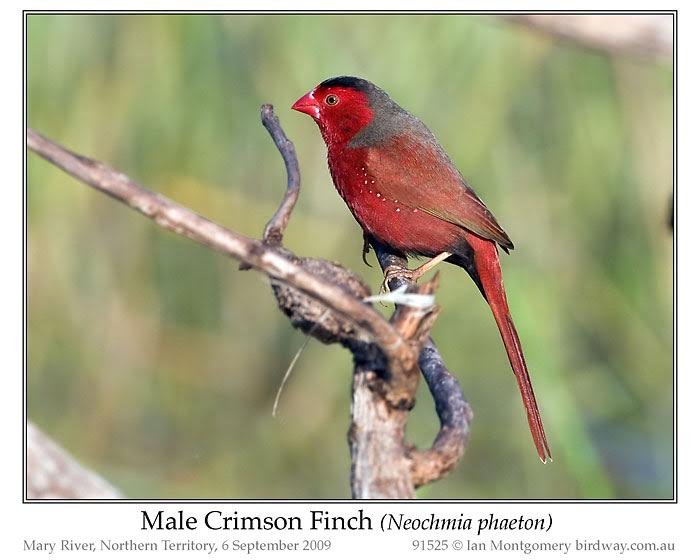
I didn’t find the Flycatcher, but I found the Crimson Finches, male in the first photo and female in the second, feeding on some unseasonable Guinea Grass. We’ve had an odd dry season with not much but sufficient rain at intervals to confuse some of the local plants – Guinea Grass usually seeds here at the end of the wet season (April). In North Queensland, Crimson Finches are usually found in dense grassland near wetlands, and these two were only about 50m from Bluewater Creek, which was still running at the time.
A couple of weeks later I photographed this very young Crimson Finch at the Townsville Town Common. When I approached, it was being fed by an adult male, who flew off leaving the young bird to its fate. You can see the very pale gape, typical of very young birds. Young Crimson Finches just have a reddish flush in the wings and tail.
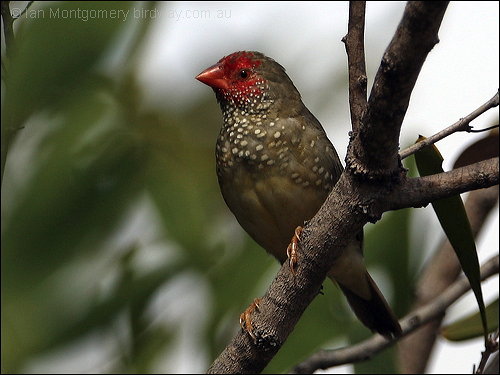
A few days after seeing the pair of Crimson Finches in the backyard, a male Crimson Finch obligingly appeared beside the pool when I was having a swim. I thought the plumage was more intensely coloured and with strong white spots on the flanks than the male member of the earlier pair – more like the one in the fourth photo. I wondered whether they were different individuals, with the first one being younger than the second. The one in the fourth photo was taken on a trip to the Northern Territory and northern Western Australia in 2009.
I don’t really keep a yard list as such. If I did, the day I found the Crimson Finches would have been notable. Apart from the possible Satin Flycatcher, later that afternoon I flushed a female King Quail. This time I was armed not with the camera but a brush cutter as part of the fire season preparations.
Several weeks later I had the rest of the long grass cut by a man with a tractor. After he had finished, I went down to inspect the result and spotted a Blue-winged Kookaburra pouncing on something in the cut grass. This proved to be the King Quail, which flew off a high speed pursued by the Kookaburra. The Quail landed safely in some long grass and the Kookaburra perched in a nearby tree. If you ever tried to flush a quail a second time, you’ll know how elusive they are on the ground, so I hope the Kookaburra didn’t have quail for lunch.
Greetings
Ian
*
His other birds mentioned:
Star Finch (Neochmia ruficauda) by Ian
*
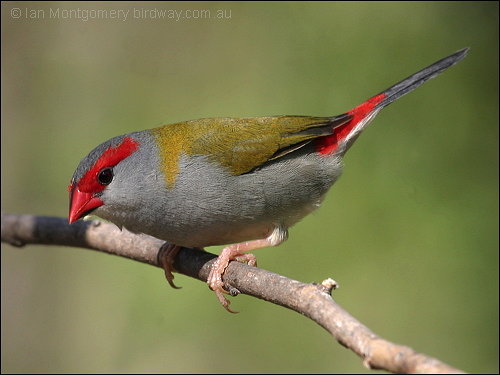
Red-browed Finch (Neochmia temporalis) by Ian
*
*
Lee’s Addition:
“Come now, and let us reason together, saith the LORD: though your sins be as scarlet, they shall be as white as snow; though they be red like crimson, they shall be as wool.” (Isaiah 1:18 KJV)
I decided to put a photo of the three other finches mentioned in Ian’s newsletter. They all seem so colorful for a nice Christmas Eve day. Thanks, Ian, for sharing your photos with us and for a Christmas photo present. Trust you eyes are improving. We miss your newsletters.
Ian’s Bird of the Week – Crimson Finch ~ by Ian Montgomery
Newsletter – 11/10/16
Crimson Finch featured as bird of the week a little over eight years ago, but I’ve decided to have it again as a pair appeared in my backyard several weeks ago, the first time I’ve seen any in Bluewater.
Shortly earlier, I’d seen what looked like a female Satin Flycatcher having a splash in the pool. Satin Flycatchers are rare in North Queensland, though they do show up sometimes on migration. This one didn’t hang around for a photo while I got the camera, so I headed off around the property looking for it. Female Satin Flycatchers are notorious difficult to separate from their slightly duller cousins, female Leaden Flycatchers, so a photograph is essential not only for identification but also to convince anyone else.
I didn’t find the Flycatcher, but I found the Crimson Finches, male in the first photo and female in the second, feeding on some unseasonable Guinea Grass. We’ve had an odd dry season with not much but sufficient rain at intervals to confuse some of the local plants – Guinea Grass usually seeds here at the end of the wet season (April). In North Queensland, Crimson Finches are usually found in dense grassland near wetlands, and these two were only about 50m from Bluewater Creek, which was still running at the time.
A couple of weeks later I photographed this very young Crimson Finch at the Townsville Town Common. When I approached, it was being fed by an adult male, who flew off leaving the young bird to its fate. You can see the very pale gape, typical of very young birds. Young Crimson Finches just have a reddish flush in the wings and tail.
A few days after seeing the pair of Crimson Finches in the backyard, a male Crimson Finch obligingly appeared beside the pool when I was having a swim. I thought the plumage was more intensely coloured and with strong white spots on the flanks than the male member of the earlier pair – more like the one in the fourth photo. I wondered whether they were different individuals, with the first one being younger than the second. The one in the fourth photo was taken on a trip to the Northern Territory and northern Western Australia in 2009.
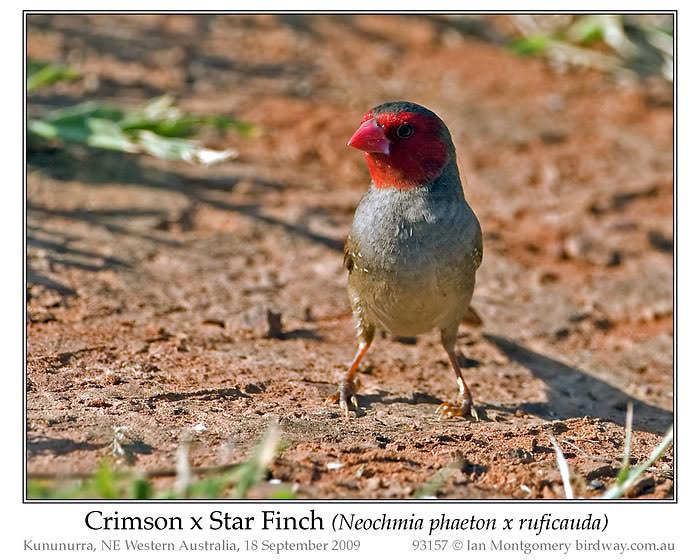
On that same trip, I photographed this odd-looking individual at Kununurra. We decided that it was a hybrid between a Crimson Finch and a Star Finch, both of which were present at the time and both of which belong to the same genus, Neochmia, which includes two other Australian species: Red-browed and Plum-headed Finches.
I don’t really keep a yard list as such. If I did, the day I found the Crimson Finches would have been notable. Apart from the possible Satin Flycatcher, later that afternoon I flushed a female King Quail. This time I was armed not with the camera but a brush cutter as part of the fire season preparations.
Several weeks later I had the rest of the long grass cut by a man with a tractor. After he had finished, I went down to inspect the result and spotted a Blue-winged Kookaburra pouncing on something in the cut grass. This proved to be the King Quail, which flew off at high speed pursued by the Kookaburra. The Quail landed safely in some long grass and the Kookaburra perched in a nearby tree. If you ever tried to flush a quail a second time, you’ll know how elusive they are on the ground, so I hope the Kookaburra didn’t have quail for lunch.
Greetings
Ian
Lee’s Addition:
“Which indeed is the least of all seeds: but when it is grown, it is the greatest among herbs, and becometh a tree, so that the birds of the air come and lodge in the branches thereof.” (Mat 13:32 KJV)
Thanks again, Ian for another beautiful avian wonder for us to enjoy. That hybrid is quite interesting also. We have seen the Star Finch before, but this is an interesting mix. Also, glad you are putting these Birds of the Week out again.
Once there was an owl who lived in the attic of a library. His name was Leonard and his cousin’s name was Art. One day Leonard received a letter from Art telling him that Art had just published his own book.
Leonard watched people come and go to and from the library every day checking out different kinds of books. Leonard decided that it would be a great idea to have his own library. Then he could watch people check out books every day, and Art’s book could be checked out every day as well.
Leonard had to find some land for sale first. He flew to the library Art lived in, and asked for his help. Art told him how the librarian who owned the library he lived in was retiring and had already put the place up for sale. If Leonard couldn’t buy this library, Art wouldn’t have any place to live.
So Leonard went to the librarian. The librarian, Frank, said that he was going to retire and someone else would have to buy the property because he was in so much debt.
Leonard and Art got together and decided to hold a fundraiser to save the library. They began by posting flyers all over town. The fundraiser would be held that Saturday at the library. Leonard and Art decided that they would have a race to raise money for it. Many people who lived nearby, saw the sign, and decided they would run in the race.
On that Saturday, all the people, including many birds, made their way to the starting line to start running the race. Everyone would run or fly around the entire library and down several streets downtown nearby.
Art blew the whistle and Leonard watched excitedly s everyone started running as fast as they could. The birds flew up above the buildings to watch everyone run around the library and up the next street. They flew above them to cheer the runners on.
Leonard was excited to see how much money they had raised at the end of the day, so the race seemed to take a really long time. When the first runners ran around the corner to the finish line, Leonard flew after them for the rest if the day.
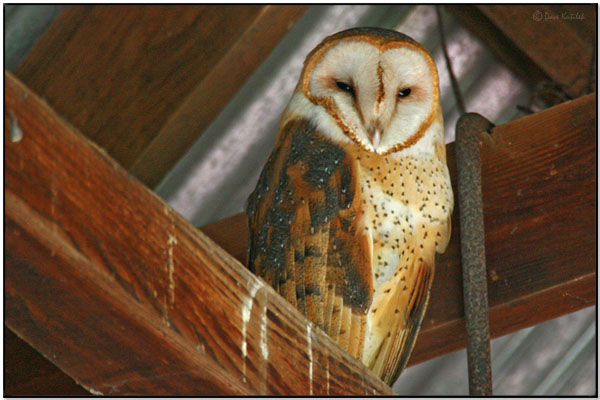
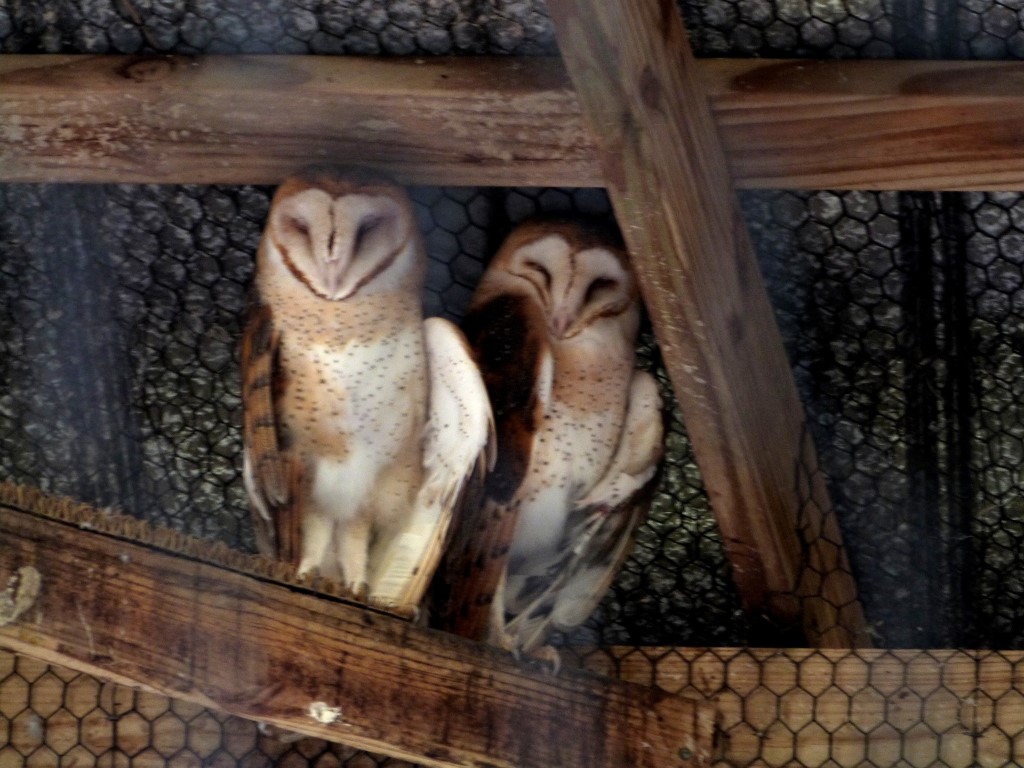
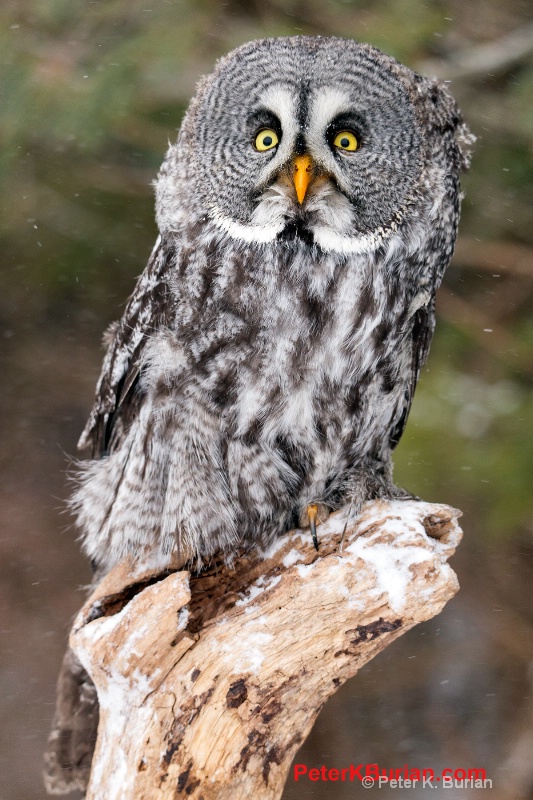
Barn Owl at Flamingo Gardens by Lee
Everyone cheered when Leonard flew past the finish line with the first runner. When all of the donations were counted up, the total was ten thousand dollars, which was more than enough to keep the library open.
Frank decided that he would still retire, but since Leonard was so excited about keeping the library open, he decided to let Leonard run the library for him when he retired.
Leonard was really happy to run the library, and Art was happy that he would be living in the same library. Every day, Leonard would help people check out books while Art continued to write more books. Both Leonard and Art couldn’t have been happier, especially since they were able to save the library.
***
And unto man he said, Behold, the fear of the Lord, that is wisdom; and to depart from evil is understanding. (Job 28:28 KJV)
O LORD, how manifold are thy works! in wisdom hast thou made them all: the earth is full of thy riches. (Psalms 104:24 KJV)
Well, Emma has given us another enjoyable story to enjoy. I assume that since Leonard and Art will both be living in the library, they will become even “Wiser Owls.”
I was contacted by Shelton Interactive on behalf of Callie Grant, the founder of Graham Blanchard, asked if I would review a children’s book by the title: Jesus Helps Me. She knew this blog is Christian based and about birds.
Jesus Helps Me is Christian and about birds. This book is another one in their Knowing My God series.
To begin with, the book is made to be handled by young children. The pages are very colorful, the photos of the bird are great. The verses are simple enough that a child can understand them, and are teaching good Biblical Truths.
As you turn the well made pages (thick, that can be handled by a youngster without tearing); they are colorful, have a bird photo and a simple description or information about the bird, and have a verse or partial verse that is spread over several pages. The page color is different each time you turn a page. That is for teaching colors to the young children.
The book is for babies, toddlers and young children. They suggested reading to babies because they thrive “just hearing your voice as you read the Bible passage in this book.” Toddlers can be shown and told about the birds and colors as a learning tool, besides the verses. As the children advance in age, they can be taught more about those verse to increase their knowledge.
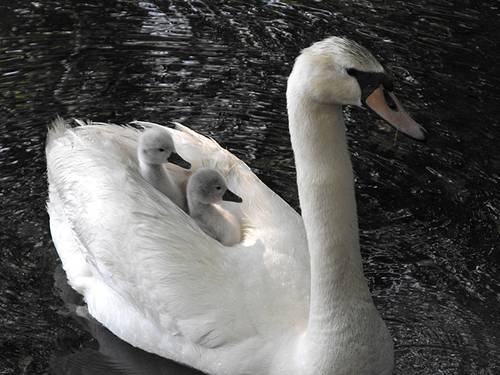
Mute Swan
As I was reviewing this book, besides the book teaching the little ones about verses, birds, colors, etc., I had another thought. What a great way to start training “new birdwatchers.” And, from a Christian perspective, no less. :)
Jesus mentioned the “little children” in many verses. In Matthew 18:2-5, Jesus taught this lesson:
“And Jesus called a little child unto him, and set him in the midst of them, And said, Verily I say unto you, Except ye be converted, and become as little children, ye shall not enter into the kingdom of heaven. Whosoever therefore shall humble himself as this little child, the same is greatest in the kingdom of heaven. And whoso shall receive one such little child in my name receiveth me. (Matthew 18:2-5 KJV)”
I am currently taking a Ladies Bible study, “Disciples Prayer Life.” One of our lessons suggested using some of the different names of God while praying. There is quite a list of God’s names in our lesson. Some of them are:
God (Elohim) – Sovereign, Power, Creator
Lord (Adonai) – Master, Ruler, Owner
Jehovah (the self-existing Lord) – eternal, changeless, faithful
The Lord our Provider (Jehovah-Jireh)
The Lord our Peace (Jehovah-Shalom)
The Lord who is there (Jehovah-Shammah)
It is this last one, Jehovah-Shammah, that has really caught my interest. As you can see, it means “The Lord who is there.”
When we read Genesis 1:1, it begins with “In the beginning, God…” The word for God here is Elohim – אֱלֹהִים , ‘ĕlôhı̂ym, el-o-heem’ There is much to be said about this, but, for now, that is not my purpose. The Lord God is the Creator, Sovereign and all-powerful. God has no beginning, or ending, He is the Alpha and the Omega.
Because God has always been, the word, Jehovah-Shammah, “The Lord who is there” is also true. God’s Word chose not to use that word here.
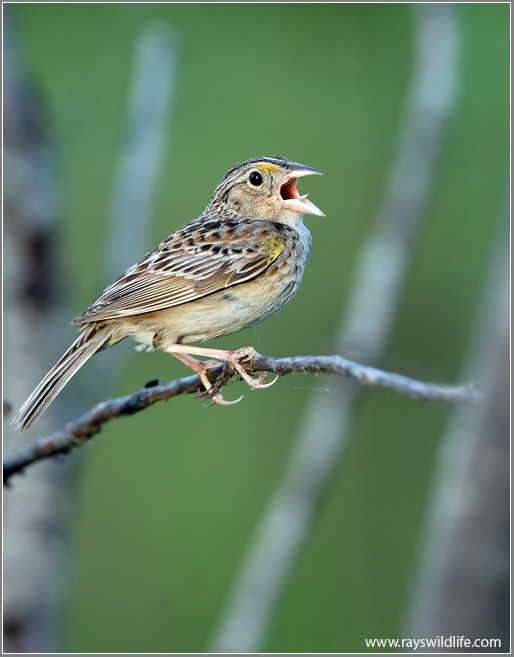
Grasshopper Sparrow (Ammodramus savannarum) by Ray
All of this to explain a passage about the sparrows, which I have used many times before, that could have used the word ” Jehovah-Shammah.”
“Are not two sparrows sold for a farthing? and one of them shall not fall on the ground without your Father. But the very hairs of your head are all numbered. Fear ye not therefore, ye are of more value than many sparrows.” (Matthew 10:29-31 KJV) (emphasis mine)
When a sparrow or any bird falls and/or dies, their Father, knows all about it because HE IS THERE.
If a fallen sparrow is noticed by the Father, who is there, should we not receive comfort from knowing that our Lord God knows and sees us also. As that passage goes on, there is comfort given to us because we are of more value than the birds. We, mankind, were made in the image of God, animals and birds were not. Because of sin, the Lord Jesus Christ, God’s Son, provided salvation for us. It cost the Lord His blood to save us from our sins. We have a choice whether to receive that Sacrifice or not.
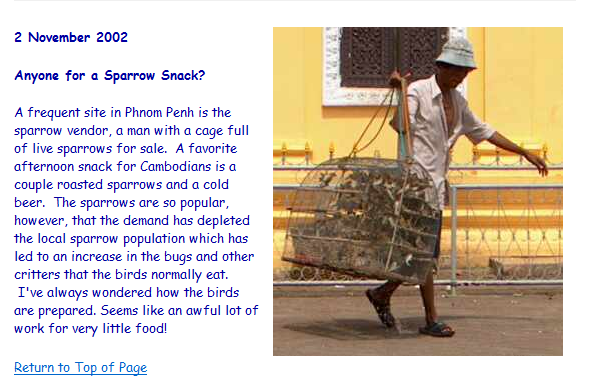
Anyone for a Sparrow Snack?
Every since I saw this photo, Matthew 10:29, has meant more to me than just a bird dying of old age. That whole cage is packed with sparrows to be eaten. That sickens me, but maybe I eat things that sicken others in another culture. I just found another photo of a roasted sparrow. I refuse to post it.
I love Sparrows of all kinds and the other birds. Most of all, I am thankful for a Creator God who cares for those birds and for us. When we KNOW that the Lord IS THERE, we can have comfort knowing we can pray and bring our requests to the Lord, knowing that He cares and already knows all about our needs.
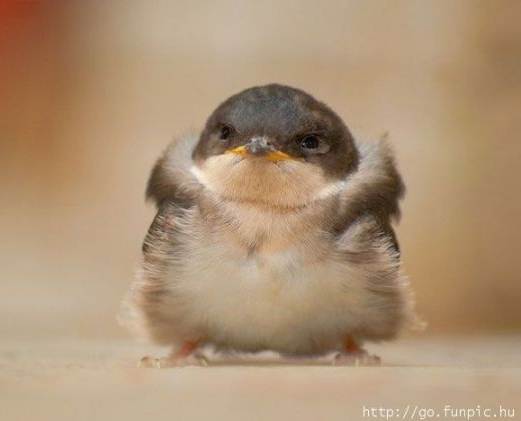
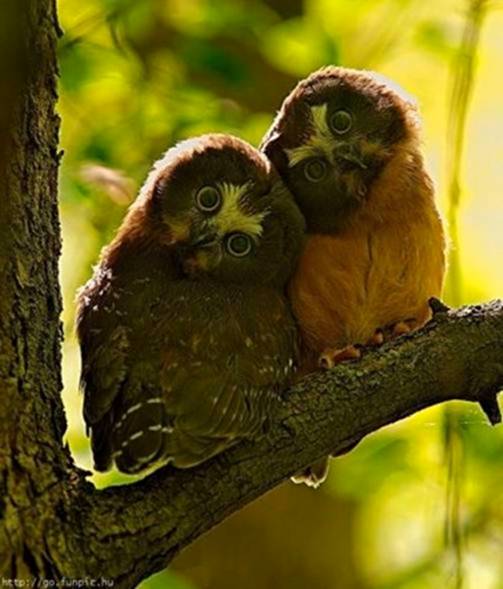
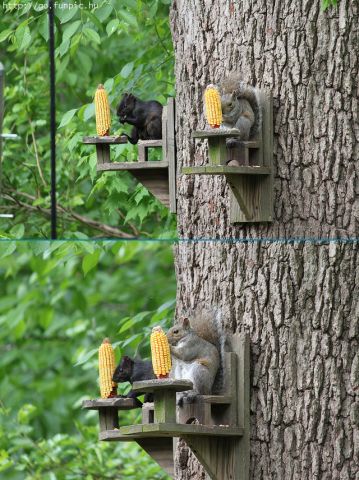
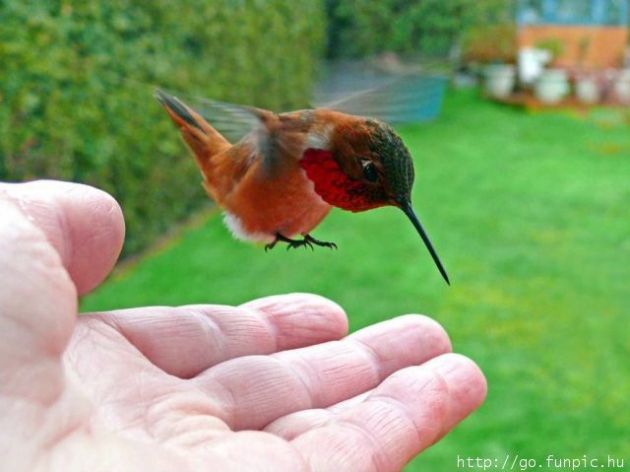
My friend, Jeanie, who wrote the poem, Hummingbird, sent me these photos. Enjoy!
The photography is amazing, but the captions are priceless !!!!!
I hate it when he plays “Mount Everest …”
Who is “Sugar Lips”?
Those brownies were Far Out!!
NO! We Don’t want any Magazine Subscriptions!
There’s a ringer competing in the Hogtown Olympics.
I’m not Over-Weight, I’m Under-Height!!
You do have an odd perspective on things.
Lunchtime at the Corncob Cafe
Okay, I caught him, now what do I do with him?
I hate this game.
Flight ‘Hum-One’ coming in for a landing.
Just act natural and blend in.
Where’s my Coffee?
Whooo loves ya, Baby?
But above all these things put on love, which is the bond of perfection. And let the peace of God rule in your hearts, to which also you were called in one body; and be thankful. Let the word of Christ dwell in you richly in all wisdom, teaching and admonishing one another in psalms and hymns and spiritual songs, singing with grace in your hearts to the Lord. And whatever you do in word or deed, do all in the name of the Lord Jesus, giving thanks to God the Father through Him.
(Colossians 3:14-17 NKJV)
As we continue through our Passerines, we come to seven families that have very few members in them. Just because their numbers are few, their Creator has not failed to give each a niche to fill and the ability and design to do so. They are all small birds, like the song, “His Eye Is On The Sparrow,” these bird are no less ignored by the Lord.
I am weary with my crying; My throat is dry; My eyes fail while I wait for my God. (Psalms 69:3 NKJV)
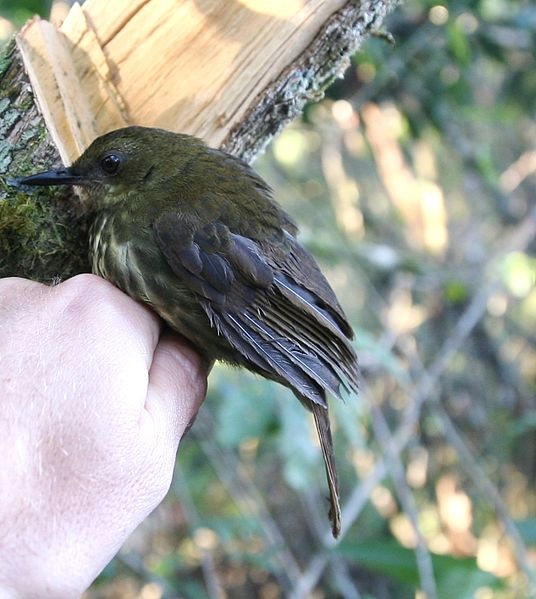
The Dapple-throat and allies – Modulatricidae family only has three species; Spot-throat, Dapple-throat and the Grey-chested Babbler. Internet says they are from Africa and that its natural habitat is subtropical or tropical moist montane forests. That is about the only information given.
More to be desired are they than gold, Yea, than much fine gold; Sweeter also than honey and the honeycomb. (Psalms 19:10 NKJV)
The Sugarbirds make up a small family, Promeropidae, of passerine birds which are restricted to southern Africa. The two species of sugarbird make up one of only two bird families restricted entirely to southern Africa, the other being the rock-jumpers Chaetopidae. In general appearance as well as habits they resemble large long-tailed sunbirds, but are possibly more closely related to the Australian honeyeaters. They have brownish plumage, the long downcurved bill typical of passerine nectar feeders, and long tail feathers.
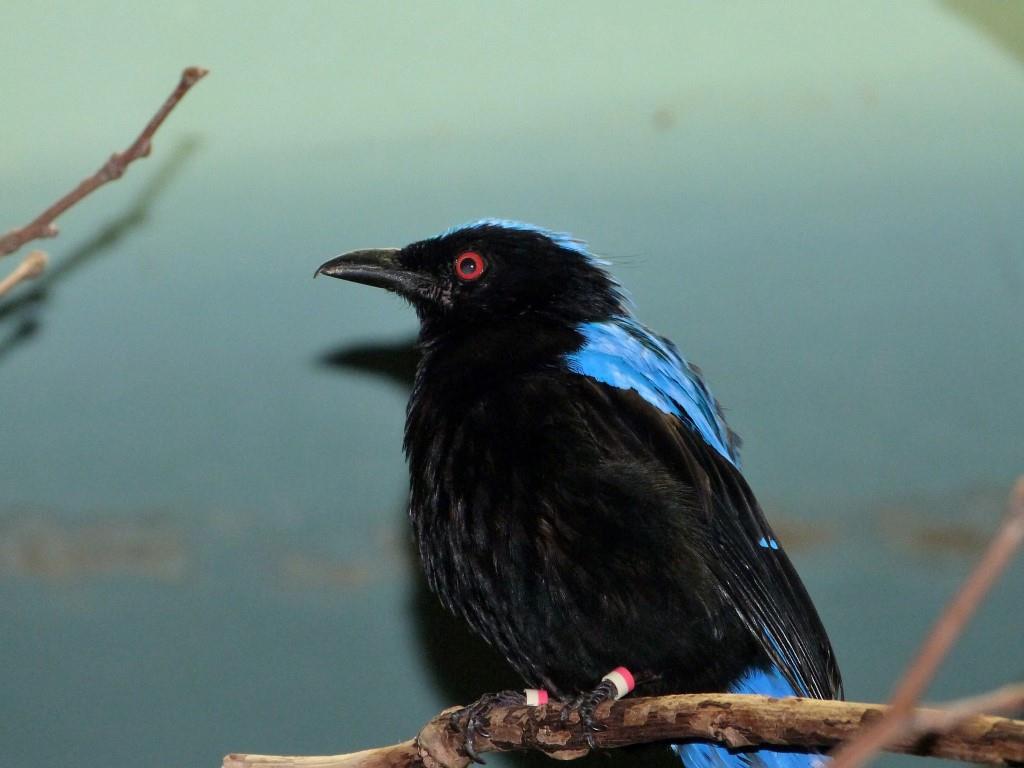
Asian Fairy-bluebird (Irena puella) at Cincinnati Zoo by Lee
“You shall make the robe of the ephod all of blue.” (Exodus 28:31 NKJV)
The two Fairy-bluebirds are small passerine bird species found in forests and plantations in tropical southern Asia and the Philippines. They are the sole members of the genus Irena and family Irenidae, and are related to the ioras and leafbirds.
These are bulbul-like birds of open forest or thorn scrub, but whereas that group tends to be drab in colouration, fairy-bluebirds are sexually dimorphic, with the males being dark blue in plumage, and the females duller green.
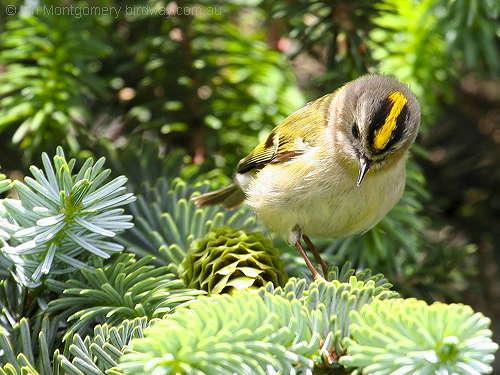
Goldcrest (Regulus regulus) by Ian
And thou shalt overlay it with pure gold, and make thereto a crown of gold round about. (Exodus 25:24 KJV)
Regulidae – Goldcrests, kingletsfamily has only six members. The kinglets or crests are a small group of birds sometimes included in the Old World warblers, but are frequently given family status because they also resemble the titmice. The scientific name Regulidae is derived from the Latin word regulus for “petty king” or prince, and comes from the coloured crowns of adult birds. This family has representatives in North America and Eurasia.
The Spotted Elachura (Elachura formosa (Elachuridae) is the only bird in its family they discovered recently through DNA studies. It is found in Bangladesh, Bhutan, China, India, Laos, Myanmar, Nepal, and Vietnam. Its natural habitat is subtropical or tropical moist montane forests. This species is found in undergrowth and dense thickets of this type of forest, with a preference for thick fern ground cover, mossy rocks and decaying trunks of fallen trees and brushwood (often near stream or creek) long grass and scrub.
Hyliotidae – Hyliota found in Angola, Cameroon, Democratic Republic of the Congo, Kenya, Malawi, Mozambique, South Africa, Tanzania, Uganda, Zambia, and Zimbabwe. Its natural habitats are subtropical or tropical moist lowland forests, subtropical or tropical moist montane forests, and plantations. It is threatened by habitat loss.
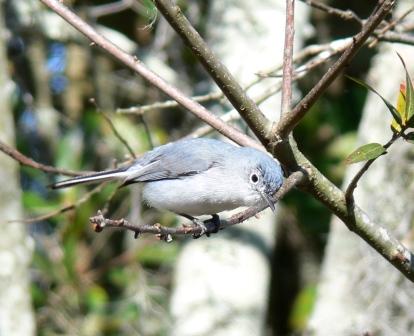
Blue-Gray Gnatcatcher at Circle B Reserve by Lee
Lift up your eyes to the heavens, and look upon the earth beneath; for the heavens shall be dissolved and vanish away like smoke, and the earth shall wax old like a garment, and they that dwell therein shall die in like manner [like gnats]. But My salvation shall be forever, and My rightness and justice [and faithfully fulfilled promise] shall not be abolished. [Matt. 24:35; Heb. 1:11; II Pet. 3:10.] (Isaiah 51:6 AMP)
(Wrens skipped until next week ) Our last group of very small birds are from the Polioptilidae – Gnatcatchers. The 18 species of small passerine birds in the gnatcatcher family occur in North and South America (except far south and high Andean regions). Most species of this mainly tropical and subtropical group are resident, but the Blue-gray Gnatcatcher of the USA and southern Canada migrates south in winter. They are close relatives of the wrens. (Wikipedia)
Please re-check the last article I posted this evening. I went to fix one thing and it wiped out most of the article. It is now the way is was supposed to be.
Wherefore, holy brethren, partakers of the heavenly calling, consider the Apostle and High Priest of our profession, Christ Jesus;Who was faithful to him that appointed him, as also Moses was faithful in all his house. For this man was counted worthy of more glory than Moses, inasmuch as he who hath builded the house hath more honour than the house. For every house is builded by some man; but he that built all things is God. (Hebrews 3:1-4 KJV)
The Black-capped Donacobius (Donacobius atricapilla) is a conspicuous, vocal South American bird. It is found in tropical swamps and wetlands in Argentina, Bolivia, Brazil, Colombia, Ecuador, French Guiana, Guyana, Paraguay, Peru, Suriname, and Venezuela; also Panama of Central America. They are common in a wide range of Amazonian wetlands, including oxbow lakes, riparian zones, and other areas with tall dense aquatic or semi-aquatic vegetation.
Mating for life, pairs of Black-capped Donacobiuses can be seen frequently and throughout the day atop thickets of dense lakeside or streamside vegetation. They often will engage in antiphonic dueting. Adult offspring will remain with their parents and help raise siblings from subsequent nesting periods in a system of cooperative breeding. (Wikipedia)
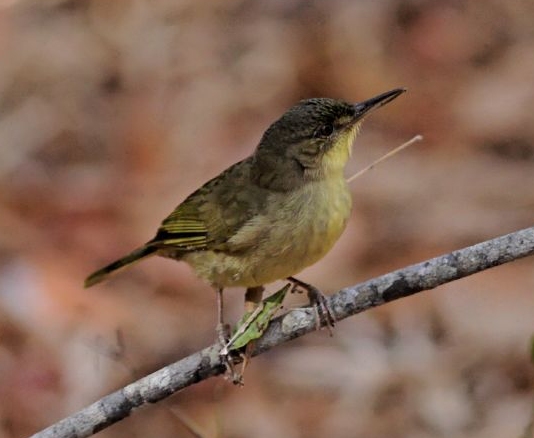
The Malagasy warblers are a newly validated clade of songbirds. They were formally named Bernieridae in 2010. The family consists of 11 species of small forest birds and is endemic to Madagascar. (Wikipedia)
Our last family has Scimitar Babblers and some of the various Babblers.
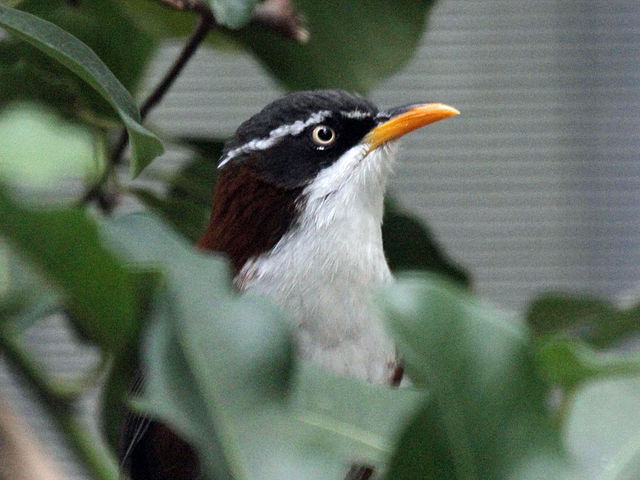
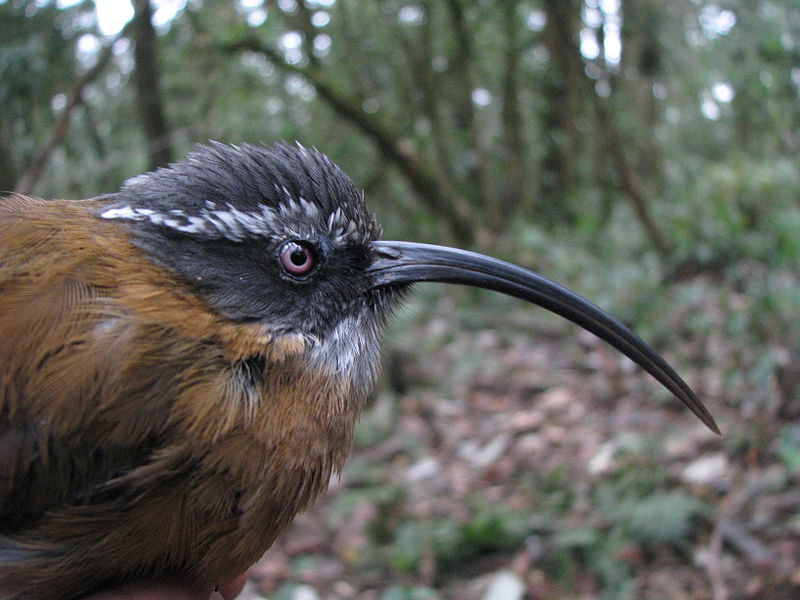
The genus Pomatorhinus of scimitar babblers are jungle birds with long downcurved bills. These are birds of tropical Asia, with the greatest number of species occurring in hills of the Himalayas. They are medium-sized, floppy-tailed landbirds with soft plumage. They are typically long-tailed, dark brown above, and white or orange-brown below. Many have striking head patterns, with a broad black band through the eye, bordered with white above and below.
Spelaeorni genusthe typical wren-babblers, is a bird genus in the family Timaliidae. Among this group, the typical wren-babblers are quite closely related to the type species, the chestnut-capped babbler (Timalia pileata). Typical babblers live in communities of around a dozen birds, jointly defending a territory. Many even breed communally, with a dominant pair building a nest, and the remainder helping to defend and rear their young. Young males remain with the group, while females move away to find a new group, and thus avoid inbreeding. They make nests from twigs, and hide them in dense vegetation. (Info from Wikipedia)
This slideshow requires JavaScript.
Saying with a loud voice, Worthy is the Lamb that was slain to receive power, and riches, and wisdom, and strength, and honour, and glory, and blessing. (Revelation 5:12 KJV)