Birds of the Bible – Job 38 – 39

Common Ostrich (Struthio camelus) Memphis Zoo by Lee

Common Ostrich (Struthio camelus) Memphis Zoo by Lee

Dan and I have been reading through Job for our devotions. Today was Job 38 and 39. Wow! All of Job’s “friends” have been trying to persuade Job how wrong and unrighteous he is and Job has been trying to figure out why he is being punished, yet defending his righteousness.

Finally in Job 38, God speaks. Job has been asking to speak to God about his situation. (From the Today in the Word, Vol II, Day 28) “So, when Job finally gets the audience with the Lord that he requested, he is not the one asking the questions!  Instead, like a prosecuting attorney, the Lord fires off the questions and informs Job ‘You will answer me’ (38:3). God challenges Job’s insinuation that He wasn’t administering justice fairly. This interrogation covers Job 38 and 39, but it could be paraphrased in this one penetrating question: ‘Were you present at creation?’ ”

If you haven’t read Job lately and especially Chapter 38 and 39, it worth reading.

Northern Raven (Corvus corax) by Ray

Northern Raven (Corvus corax) by Ray

Anyway, within those two chapters, God mentions the Raven and the Ostrich.

Can you hunt the prey for the lion, or satisfy the appetite of the young lions, when they crouch in their dens or lie in wait in their thicket? Who provides for the raven its prey, when its young ones cry to God for help, and wander about for lack of food? (Job 38:39-41 ESV)

Then in the next chapter God tells about the Ostrich that He created:

The wings of the ostrich wave proudly, but are they the pinions and plumage of love? For she leaves her eggs to the earth and lets them be warmed on the ground, forgetting that a foot may crush them and that the wild beast may trample them. She deals cruelly with her young, as if they were not hers; though her labor be in vain, yet she has no fear, because God has made her forget wisdom and given her no share in understanding. When she rouses herself to flee, she laughs at the horse and his rider. (Job 39:13-18 ESV)

Both of these birds have been covered in other Birds of the Bible articles, but just wanted to share them with you again. We know that God provides for the birds and He has promised to provide for His own, Christians. He also, makes birds different, at His will. Who are we to question His knowledge and wisdom. The same is true with us who know the Lord. He gives each of us different talents and abilities. We are not to question why He made us thus.

Birds of the Bible

Birds of the Bible – Ravens

Birds of the Bible – Ostrich

The Gospel Message

*

King of the Birds

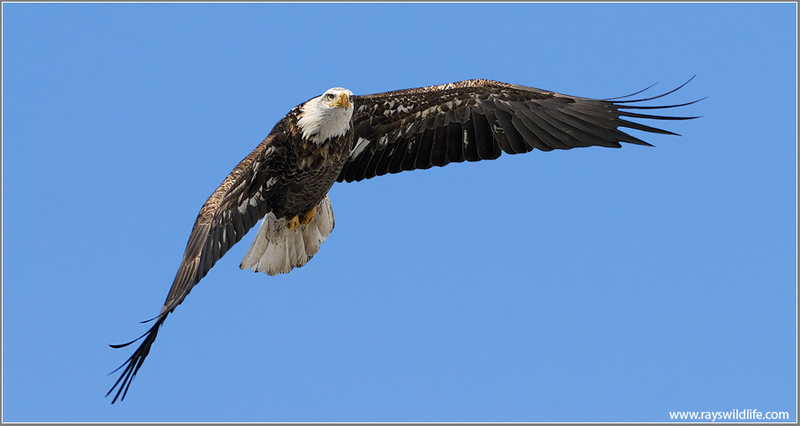
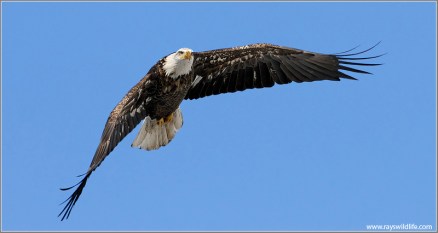
Bald Eagle (Haliaeetus leucocephalus) by Ray

Bald Eagle (Haliaeetus leucocephalus) by Ray

King of the Birds ~ from The Curious Book of Birds

KING OF THE BIRDS

Cur Book of Birds letter-oNCE upon a time, when the world was very new and when the birds had just learned from Mother Magpie how to build their nests, some one said, “We ought to have a king. Oh, we need a king of the birds very much!”

For you see, already in the Garden of Birds trouble had begun. There were disputes every morning as to which was the earliest bird who was entitled to the worm. There were quarrels over the best places for nest-building and over the fattest bug or beetle; and there was no one to settle these difficulties. Moreover, the robber birds were growing too bold, and there was no one to rule and punish them. There was no doubt about it; the birds needed a king to keep them in order and peace.

So the whisper went about, “We must have a king. Whom shall we choose for our king?”

They decided to hold a great meeting for the election. And because the especial talent of a bird is for flying, they agreed that the bird who could fly highest up into the blue sky, straight toward the sun, should be their king, king of all the feathered tribes of the air.

Therefore, after breakfast one beautiful morning, the birds met in the garden to choose their king. All the birds were there, from the largest to the smallest, chirping, twittering, singing on every bush and tree and bit of dry grass, till the noise was almost as great as nowadays at an election of two-legged folk without feathers. They swooped down in great clouds, till the sky was black with them, and they were dotted on the grass like punctuation marks on a green page. There were so many that not even wise Mother Magpie or old Master Owl could count them, and they all talked at the same time, like ladies at an afternoon tea, which was very confusing.

Little Robin Redbreast was there, hopping about and saying pleasant things to every one, for he was a great favorite. Gorgeous Goldfinch was there, in fine feather; and little Blackbird, who was then as white as snow. There were the proud Peacock and the silly Ostrich, the awkward Penguin and the Dodo, whom no man living has ever seen. Likewise there were the Jubjub Bird and the Dinky Bird, and many other curious varieties that one never finds described in the wise Bird Books,—which is very strange, and sad, too, I think. Yes, all the birds were there for the choosing of their king, both the birds who could fly, and those who could not. (But for what were they given wings, if not to fly? How silly an Ostrich must feel!)

Now the Eagle expected to be king. He felt sure that he could fly higher than any one else. He sat apart on a tall pine tree, looking very dignified and noble, as a future king should look. And the birds glanced at one another, nodded their heads, and whispered, “He is sure to be elected king. He can fly straight up toward the sun without winking, and his great wings are so strong, so strong! He never grows tired. He is sure to be king.”

Thus they whispered among themselves, and the Eagle heard them, and was pleased. But the little brown Wren heard also, and he was not pleased. The absurd little bird! He wanted to be king himself, although he was one of the tiniest birds there, who could never be a protector to the others, nor stop trouble when it began. No, indeed! Fancy him stepping as a peacemaker between a robber Hawk and a bloody Falcon. It was they who would make pieces of him. But he was a conceited little creature, and saw no reason why he should not make a noble sovereign.

Cobb's Wren (Troglodytes cobbi) ©WikiC

Cobb’s Wren (Troglodytes cobbi) ©WikiC

“I am cleverer than the Eagle,” he said to himself, “though he is so much bigger. I will be king in spite of him. Ha-ha! We shall see what we shall see!” For the Wren had a great idea in his wee little head—an idea bigger than the head itself, if you can explain how that could be. He ruffled up his feathers to make himself as huge as possible, and hopped over to the branch where the Eagle was sitting.

“Well, Eagle,” said the Wren pompously, “I suppose you expect to be king, eh?”

The Eagle stared hard at him with his great bright eyes. “Well, if I do, what of that?” he said. “Who will dispute me?”

“I shall,” said the Wren, bobbing his little brown head and wriggling his tail saucily.

“You!” said the Eagle. “Do you expect to fly higher than I?”

“Yes,” chirped the Wren, “I do. Yes, I do, do, do!”

“Ho!” said the Eagle scornfully. “I am big and strong and brave. I can fly higher than the clouds. You, poor little thing, are no bigger than a bean. You will be out of breath before we have gone twice this tree’s height.”

“Little as I am, I can mount higher than you,” said the Wren.

“What will you wager, Wren?” asked the Eagle. “What will you give me if I win?”

“If you win you will be king,” said the Wren. “But beside that, if you win I will give you my fat little body to eat for your breakfast. But if I win, Sir, I shall be king, and you must promise never, never, never, to hurt me or any of my people.”

“Very well. I promise,” said the Eagle haughtily. “Come now, it is time for the trial, you poor little foolish creature.”

The birds were flapping their wings and singing eagerly, “Let us begin—begin. We want to see who is to be king. Come, birds, to the trial. Who can fly the highest? Come!”

Then the Eagle spread his great wings and mounted leisurely into the air, straight toward the noonday sun. And after him rose a number of other birds who wanted to be king,—the wicked Hawk, the bold Albatross, and the Skylark singing his wonderful song. The long-legged Stork started also, but that was only for a joke. “Fancy me for a king!” he cried, and he laughed so that he had to come down again in a minute. But the Wren was nowhere to be seen. The truth was, he had hopped ever so lightly upon the Eagle’s head, where he sat like a tiny crest. But the Eagle did not know he was there.

Black-browed Albatross (Thalassarche melanophris) by Bob-Nan

Black-browed Albatross (Thalassarche melanophris) by Bob-Nan

Soon the Hawk and the Albatross and even the brave little Skylark fell behind, and the Eagle began to chuckle to himself at his easy victory. “Where are you, poor little Wren?” he cried very loudly, for he fancied that the tiny bird must be left far, far below.

“Here I am, here I am, away up above you, Master Eagle!” piped the Wren in a weak little voice. And the Eagle fancied the Wren was so far up in the air that even his sharp eyes could not spy the tiny creature. “Dear me!” said he to himself. “How extraordinary that he has passed me.” So he redoubled his speed and flew on, higher, higher.

Presently he called out again in a tremendous voice, “Well, where are you now? Where are you now, poor little Wren?”

Once more he heard the tiny shrill voice from somewhere above piping, “Here I am, here I am, nearer the sun than you, Master Eagle. Will you give up now?”

Of course the Eagle would not give up yet. He flew on, higher and higher, till the garden and its flock of patient birds waiting for their king grew dim and blurry below. And at last even the mighty wings of the Eagle were weary, for he was far above the clouds. “Surely,” he thought, “now the Wren is left miles behind.” He gave a scream of triumph and cried, “Where are you now, poor little Wren? Can you hear me at all, down below there?”

But what was his amazement to hear the same little voice above his head shrilling, “Here I am, here I am, Sir Eagle. Look up and see me, look!” And there, sure enough, he was fluttering above the Eagle’s head. “And now, since I have mounted so much higher than you, will you agree that I have won?”

“Yes, you have won, little Wren. Let us descend together, for I am weary enough,” cried the Eagle, much mortified; and down he swooped, on heavy, discouraged wings.

“Yes, let us descend together,” murmured the Wren, once more perching comfortably on the Eagle’s head. And so down he rode on this convenient elevator, which was the first one invented in this world.

When the Eagle nearly reached the ground, the other birds set up a cry of greeting.

“Hail, King Eagle!” they sang. “How high you flew! How near the sun! Did he not scorch your Majesty’s feathers? Hail, mighty king!” and they made a deafening chorus. But the Eagle stopped them.

“The Wren is your king, not I,” he said. “He mounted higher than I did.”

“The Wren? Ha-ha! The Wren! We can’t believe that The Wren flew higher than you? No, no!” they all shouted. But just then the Eagle lighted on a tree, and from the top of his head hopped the little Wren, cocking his head and ruffling himself proudly.

“Yes, I mounted higher than he,” he cried, “for I was perched on his head all the while, ha-ha! And now, therefore, I am king, small though I be.”

Now the Eagle was very angry when he saw the trick that had been played upon him, and he swooped upon the sly Wren to punish him. But the Wren screamed, “Remember, remember your promise never to injure me or mine!” Then the Eagle stopped, for he was a noble bird and never forgot a promise. He folded his wings and turned away in disgust.

“Be king, then, O cheat and trickster!” he said.

“Cheat and trickster!” echoed the other birds. “We will have no such fellow for our king. Cheat and trickster he is, and he shall be punished. You shall be king, brave Eagle, for without your strength he could never have flown so high. It is you whom we want for our protector and lawmaker, not this sly fellow no bigger than a bean.”

So the Eagle became their king, after all; and a noble bird he is, as you must understand, or he would never have been chosen to guard our nation’s coat of arms. And besides this you may see his picture on many a banner and crest and coin of gold or silver, so famous has he become.

But the Wren was to be punished. And while the birds were trying to decide what should be done with him, they put him in prison in a mouse-hole and set Master Owl to guard the door. Now while the judges were putting their heads together the lazy Owl fell fast asleep, and out of prison stole the little Wren and was far away before any one could catch him. So he was never punished after all, as he richly deserved to be.

The birds were so angry with old Master Owl for his carelessness that he has never since dared to show his face abroad in daytime, but hides away in his hollow tree. And only at night he wanders alone in the woods, sorry and ashamed.


Lee’s Addition:

No one who trusts in you will be disappointed. But disappointment will come to those who try to deceive others. They will get nothing. (Psalms 25:3 ERV)

We are not supposed to cheat or deceive others.

The wise accept instruction, but fools argue and bring trouble on themselves. Honest people can always feel secure, but lying cheaters will be caught. (Proverbs 10:8-9 ERV)

(Photos added by me.)

Links:

Bald Eagle (Haliaeetus leucocephalus) by Quy Tran


  Accipitridae – Family (Kites, Hawks & Eagles) Family


Painted Bunting (Passerina ciris) ©©Flickr


  Bird Tales


Curious Book of Birds - Cover


  The Curious Book of Birds


Spanish Sparrow (Passer Hispaniolensis) female ©WikiC


  Wordless Birds


*

Birds and Hurricanes

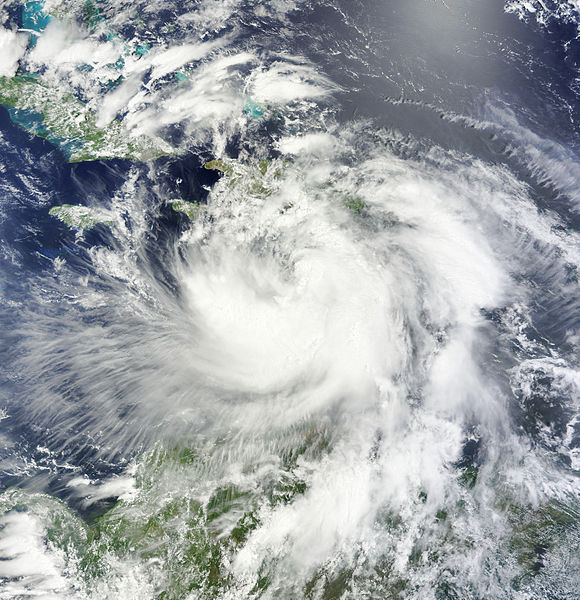
Isaac Aug 24, 2012 - Satellite

Isaac Aug 24, 2012 – Satellite

We here in central Florida are keeping an eye to the south of us as Tropical Storm Isaac marches up this way. They are predicting it to become a hurricane before it gets in this area. We expect rain, but not a direct hit. But! As I told Dan, “until the storm parks at the end of its journey, anything goes.” Do we worry, no, not as Christians. Do we prepare? Yes.

I just filled the feeders extra full for the birds to get a nice meal before they hunker down for what ever passes our way. Where will they go? What will they do? Those are some interesting questions. Let’s see what has been written about that.

How Birds Stay Safe During Hurricanes, “Where Do Birds Go During Hurricanes?” is an interesting article from Birding.com. They tell about the “a sharp drop in barometric pressure” that warns the birds of coming storms. God has given them senses and instincts to prepare.

If they don’t have babies or nest, they are likely to fly to safer regions. Larger birds can stay ahead of the storm. Others have to fly hard, or land and take cover. When the Lord created the birds, He gave them a locking mechanism on their legs and feet. When they perch, their feet sort of lock and that keeps them from falling off while sleeping or from being blown away. Of course, a 80 mph wind or more will get to a point that even they can’t hold on. They also have the chance the tree could be toppled. They also mention that shorebirds tend to go inland.

What Happens To Birds When Hurricanes Hit? from eNature.com says, “Numbers are hard to come by, but it’s clear that many birds are killed outright by hurricanes. This is especially true of seabirds, which have nowhere in which to seek shelter from these storms. Beaches may be littered with seabird carcasses following major storm events. Most Atlantic hurricanes occur in late summer and early fall—and fall storms coincide with bird migration and may disrupt migration patterns severely.” So, the outcome is not always good. One thing we do know from Scripture:

Are not five sparrows sold for two farthings, and not one of them is forgotten before God? But even the very hairs of your head are all numbered. Fear not therefore: ye are of more value than many sparrows. (Luke 12:6-7 KJV)

Are not two sparrows sold for a farthing? and one of them shall not fall on the ground without your Father. But the very hairs of your head are all numbered. Fear ye not therefore, ye are of more value than many sparrows. (Matthew 10:29-31 KJV)

The Lord know all about the deaths, but when they were created, they were given abilities, like above, to protect themselves as best they can.

So God created the great sea creatures and every living creature that moves, with which the waters swarm, according to their kinds, and every winged bird according to its kind. And God saw that it was good. And God blessed them, saying, “Be fruitful and multiply and fill the waters in the seas, and let birds multiply on the earth.” And there was evening and there was morning, the fifth day. (Genesis 1:21-23 ESV)

He has blessed them and told them to reproduce. Would He let them all be wiped out? I don’t think so. Yes, a few will fall.

Hurricane Charley damage at Captiva, Trees stripped.

Hurricane Charley damage at Captiva, Trees stripped.

After the storm, the birds have problems especially if the fruits and vegetables are destroyed. Also, trees, which provide shelter and places for nest might be in short supply. For those of who feed birds, after the storm, if you still have any feeders, they need to be filled up. Also, clean water needs to be provided.

One plus from a storm is that the Life List of birdwatchers could be increased. Many times birds are blown out of their area or off course. This provides a chance to see birds not normally seen. Seabirds can get caught up in the Eye of the storm and carried inland. Thus giving birdwatchers rare treats to see birds.

You can read those and other articles about the birds in a storm on the internet. I am no expert, nor do I claim to be. What I do know is that God loves them, maybe not with the same love He has for us, but He Cares. If He Cares for them, you can rest assured, we are more valuable in His Sight. He will help us humans as we go through the Hurricanes also.

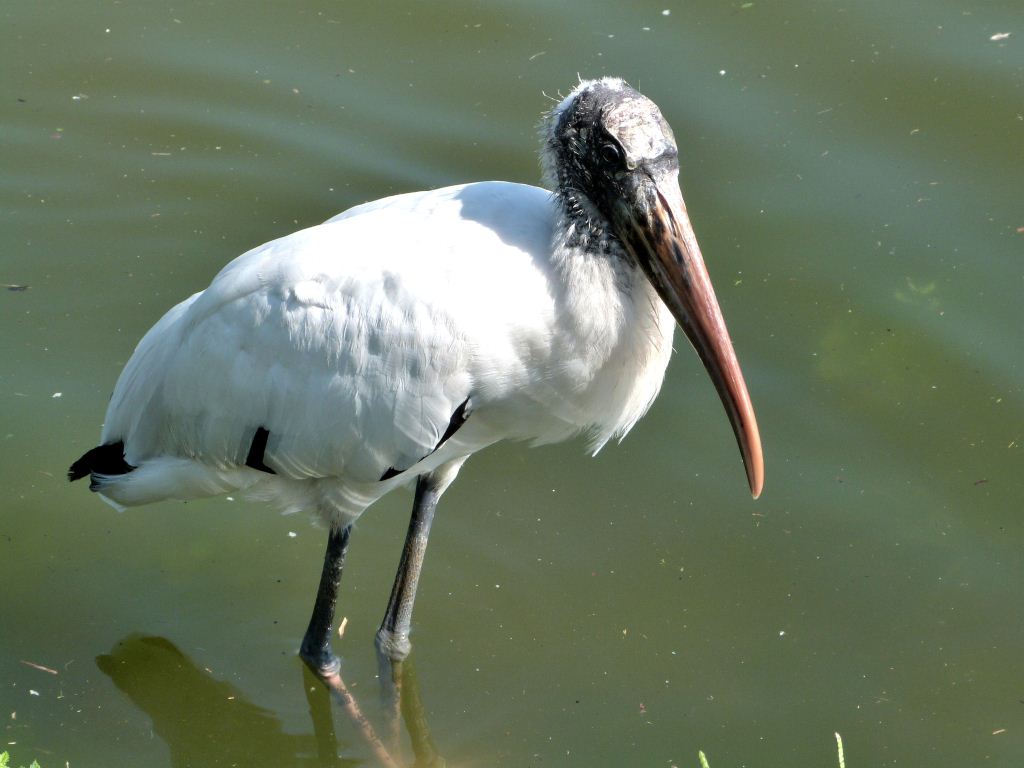
Wood Stork - Lake Morton 6-28-12 by Lee (105)

Wood Stork – Lake Morton 6-28-12 by Lee (105)

Links:

How Birds Stay Safe During Hurricanes

What Happens To Birds When Hurricanes Hit?

Birds Versus Hurricanes – Here

What Happens to Birds in Hurricanes

Seven Things to Know About How Hurricanes Affect Wildlife – NWF

How Do Hurricanes Affect Birds – Audubon

Signs That Animals Show Before a Natural Disaster

Signs That Animals Show Before a Natural Disaster – eHow

Even the birds in the sky know the right time to do things. The storks, doves, swifts, and thrushes know when it is time to fly to a new home. But my people don’t know what the LORD wants them to do. (Jeremiah 8:7 ERV)

*

Birds Vol 2 #2 – The Sora Rail

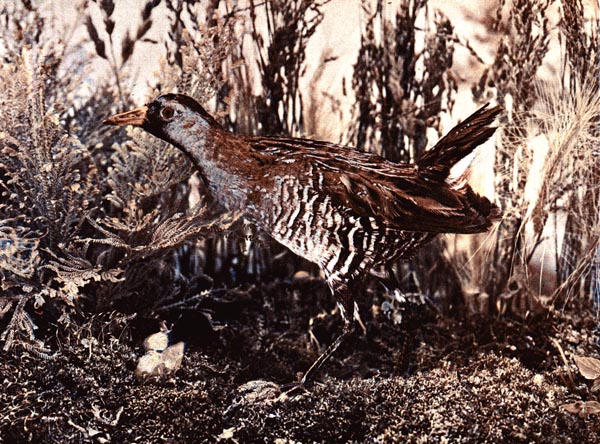
Sora - for the Birds Illustrated by Color Photography, 1897

Sora – for the Birds Illustrated by Color Photography, 1897

THE SORA RAIL.

imgv

ARIOUS are the names required to distinguish the little slate-colored Carolina Rail from its brethren, Sora, Common Rail, and, on the Potomac river, Ortolan, being among them. He is found throughout temperate North America, in the weedy swamps of the Atlantic states in great abundance, in the Middle states, and in California. In Ohio he is a common summer resident, breeding in the extensive swamps and wet meadows. The nest is a rude affair made of grass and weeds, placed on the ground in a tussock of grass in a boggy tract of land, where there is a growth of briers, etc., where he may skulk and hide in the wet grass to elude observation. The nest may often be discovered at a distance by the appearance of the surrounding grass, the blades of which are in many cases interwoven over the nest, apparently to shield the bird from the fierce rays of the sun, which are felt with redoubled force on the marshes.

The Rails feed on both vegetable and animal food. During the months of September and October, the weeds and wild oats swarm with them. They feed on the nutritious seeds, small snail shells, worms and larvae of insects, which they extract from the mud. The habits of the Sora Rail, its thin, compressed body, its aversion to take wing, and the dexterity with which it runs or conceals itself among the grass and sedge, are exactly similar to those of the more celebrated Virginia Rail.

The Sora frequents those parts of marshes preferably where fresh water springs rise through the morass. Here it generally constructs its nest, “one of which,” says an observer, “we had the good fortune to discover. It was built in the bottom of a tuft of grass in the midst of an almost impenetrable quagmire, and was composed altogether of old wet grass and rushes. The eggs had been flooded out of the nest by the extraordinary rise of the tide in a violent northwest storm, and lay scattered about the drift weed. The usual number of eggs is from six to ten. They are of a dirty white or pale cream color, sprinkled with specks of reddish and pale purple, most numerous near the great end.”

When on the wing the Sora Rail flies in a straight line for a short distance with dangling legs, and suddenly drops into the water.

The Rails have many foes, and many nests are robbed of their eggs by weasels, snakes, Blackbirds, and Marsh Hawks, although the last cannot disturb them easily, as the Marsh Hawk searches for its food while flying and a majority of the Rails’ nests are covered over, making it hard to distinguish them when the Hawk is above.


Sora(Porzana carolina) 4 by Bob-Nan

Sora(Porzana carolina) 4 by Bob-Nan

THE SORA RAIL.

This is one of our fresh-water marsh birds. I show you his picture taken where he spends most of his time.

If it were not for the note calls, these tall reeds and grasses would keep from us the secret of the Rail’s home.

Like most birds, though, they must be heard, and so late in the afternoon you may hear their clear note, ker-wee.

From all parts of the marsh you will hear their calls which they keep up long after darkness has set in.

This Rail was just about to step out from the grasses to feed when the artist took his picture. See him—head up, and tail up. He steps along carefully. He feels that it is risky to leave his shelter and is ready at the first sign of danger, to dart back under cover.

There are very few fresh-water marshes where the Rail is not found.

When a boy, I loved to hear their note calls and would spend hours on the edge of a marsh near my home.

It seemed to me there was no life among the reeds and cat-tails of the marsh, but when I threw a stone among them, the Rails would always answer with their peeps or keeks.

And so I used to go down to the marsh with my pockets filled with stones. Not that I desired or even expected to injure one of these birds. Far from it. It pleased me to hear their calls from the reeds and grass that seemed deserted.

Those of you who live near wild-rice or wild-oat marshes have a good chance to become acquainted with this Rail.

In the south these Rails are found keeping company with the Bobolinks or Reed-birds as they are called down there.


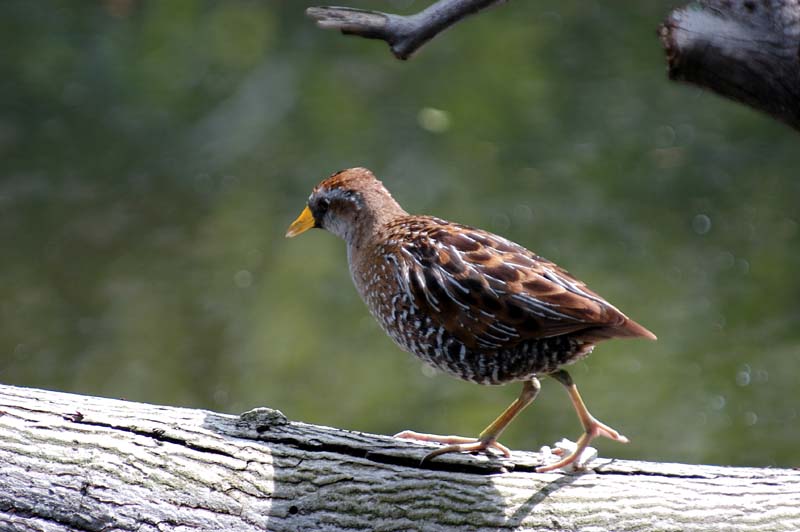
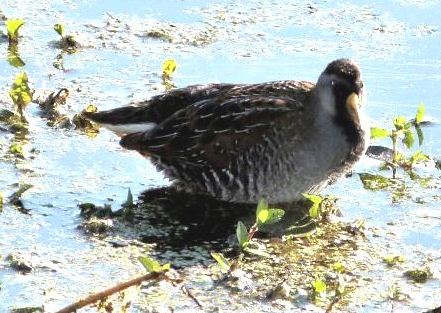
Sora(Porzana carolina)

Sora (Porzana carolina) by Lee at Circle B

Lee’s Addition:

Can the papyrus grow up without a marsh? Can the reeds flourish without water? (Job 8:11 NKJV)

Under the lotus plants he lies, in the shelter of the reeds and in the marsh. (Job 40:21 ESV)

Soras are in the Rallidae – Rails, Crakes & Coots Family. At present there are 151 species in the family. Sometimes the Sora has Rail or Crake attached to Sora. They spend most of their time in marshes.

Adult Soras are 7.5–12 in (19–30 cm) long, with dark-marked brown upperparts, a blue-grey face and underparts, and black and white barring on the flanks. They have a short thick yellow bill, with black markings on the face at the base of the bill and on the throat. Sexes are similar, but young Soras lack the black facial markings and have a whitish face and buff breast. They weigh about 1.7–4.0 oz (49–112 g).

The Sora’s breeding habitat is marshes throughout much of North America. They nest in a well-concealed location in dense vegetation. The female usually lays 10 to 12 eggs, sometimes as many as 18, in a cup built from marsh vegetation. The eggs do not all hatch together. Both parents incubate and feed the young, who leave the nest soon after they hatch and are able to fly within a month.

They migrate to the southern United States and northern South America. Sora is a very rare vagrant to western Europe, where it can be confused with Spotted Crake. However, the latter species always has spotting on the breast. a streaked crown stripe, and a different wing pattern.

Soras forage while walking or swimming. They are omnivores, eating seeds, insects and snails. Although Soras are more often heard than seen, they are sometimes seen walking near open water. They are fairly common, despite a decrease in suitable habitat in recent times. The call is a slow whistled ker-whee, or a descending whinny. The use of call broadcasts greatly increases the chances of hearing a Sora. Call broadcasts can also increase the chances of seeing a Sora, as they will often investigate the source of the call.

Interesting photo of a Sora defending it’s nest from a snake. (by nsxbirder)

*

Birds Illustrated by Color Photography – Revisited – Introduction

The above article is the first article in the monthly serial that was started in January 1897 “designed to promote Knowledge of Bird-Live.” These include Color Photography, as they call them, today they are drawings. There are at least three Volumes that have been digitized by Project Gutenberg.

To see the whole series of – Birds Illustrated by Color Photography – Revisited

*

(Information from Wikipedia and other internet sources)

Next Article – The Kentucky Warbler

The Previous Article – The American Osprey

ABC’s Of The Gospel

Links:

Sora (bird) – Wikipedia

Sora – All About Birds

*

Mother Magpie’s Kindergarten

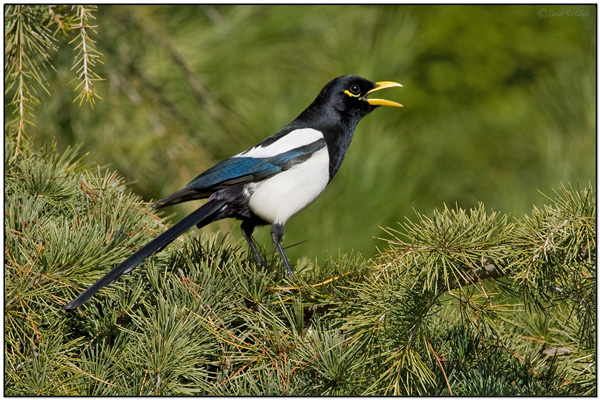
Yellow-billed Magpie (Pica nuttalli) by Daves BirdingPix

Yellow-billed Magpie (Pica nuttalli) by Daves BirdingPix

Mother Magpie’s Kindergarten ~ from The Curious Book of Birds

MOTHER MAGPIE’S KINDERGARTEN

Cur Book of Birds letter-dID you ever notice how different are the nests which the birds build in springtime, in tree or bush or sandy bank or hidden in the grass? Some are wonderfully wrought, pretty little homes for birdikins. But others are clumsy, and carelessly fastened to the bough, most unsafe cradles for the feathered baby on the treetop. Sometimes after a heavy wind you find on the ground under the nest poor little broken eggs which rolled out and lost their chance of turning into birds with safe, safe wings of their own. Now such sad things as this happen because in their youth the lazy father and mother birds did not learn their lesson when Mother Magpie had her class in nest-making. The clumsiest nest of all is that which the Wood-Pigeon tries to build. Indeed, it is not a nest at all, only the beginning of one. And there is an old story about this, which I shall tell you.

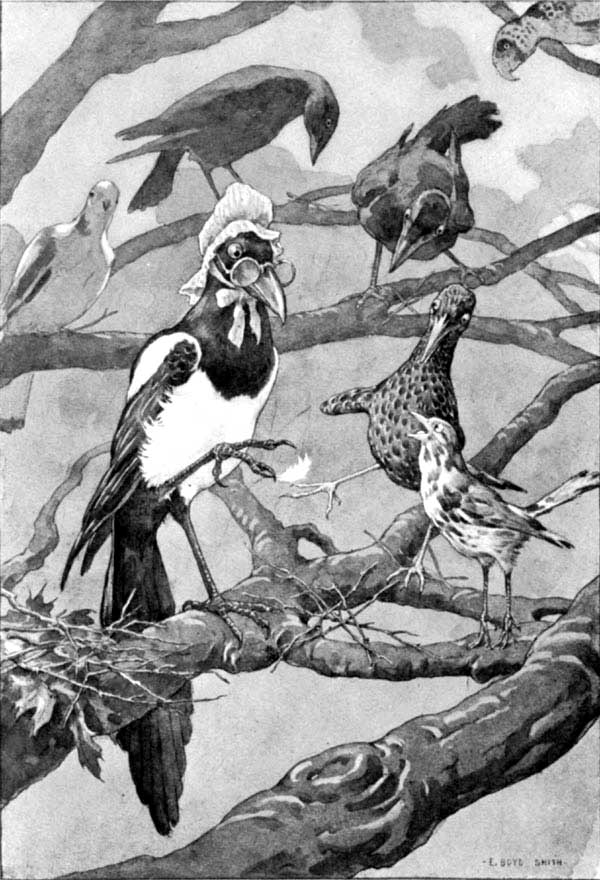
In the early springtime of the world, when birds were first made, none of them—except Mother Magpie—knew how to build a nest. In that lovely garden where they lived the birds went fluttering about trying their new wings, so interested in this wonderful game of flying that they forgot all about preparing a home for the baby birds who were to come. When the time came to lay their eggs the parents knew not what to do. There was no place safe from the four-legged creatures who cannot fly, and they began to twitter helplessly: “Oh, how I wish I had a nice warm nest for my eggs!” “Oh, what shall we do for a home?” “Dear me! I don’t know anything about housekeeping.” And the poor silly things ruffled up their feathers and looked miserable as only a little bird can look when it is unhappy.

All except Mother Magpie! She was not the best—oh, no!—but she was the cleverest and wisest of all the birds; it seemed as if she knew everything that a bird could know. Already she had found out a way, and was busily building a famous nest for herself. She was indeed a clever bird! She gathered turf and sticks, and with clay bound them firmly together in a stout elm tree. About her house she built a fence of thorns to keep away the burglar birds who had already begun mischief among their peaceful neighbors. Thus she had a snug and cosy dwelling finished before the others even suspected what she was doing. She popped into her new house and sat there comfortably, peering out through the window-slits with her sharp little eyes. And she saw the other birds hopping about and twittering helplessly.

“What silly birds they are!” she croaked. “Ha, ha! What would they not give for a nest like mine!”

But presently a sharp-eyed Sparrow spied Mother Magpie sitting in her nest.

“Oho! Look there!” he cried. “Mother Magpie has found a way. Let us ask her to teach us.”

Then all the other birds chirped eagerly, “Yes, yes! Let us ask her to teach us!”

So, in a great company, they came fluttering, hopping, twittering up to the elm tree where Mother Magpie nestled comfortably in her new house.

“O wise Mother Magpie, dear Mother Magpie,” they cried, “teach us how to build our nests like yours, for it is growing night, and we are tired and sleepy.”

The Magpie said she would teach them if they would be a patient, diligent, obedient class of little birds. And they all promised that they would.

She made them perch about her in a great circle, some on the lower branches of the trees, some on the bushes, and some on the ground among the grass and flowers. And where each bird perched, there it was to build its nest. Then Mother Magpie found clay and bits of twigs and moss and grass—everything a bird could need to build a nest; and there is scarcely anything you can think of which some bird would not find very useful. When these things were all piled up before her she told every bird to do just as she did. It was like a great big kindergarten of birds playing at a new building game, with Mother Magpie for the teacher.

She began to show them how to weave the bits of things together into nests, as they should be made. And some of the birds, who were attentive and careful, soon saw how it was done, and started nice homes for themselves. You have seen what wonderful swinging baskets the Oriole makes for his baby-cradle? Well, it was the Magpie who taught him how, and he was the prize pupil, to be sure. But some of the birds were not like him, nor like the patient little Wren. Some of them were lazy and stupid and envious of Mother Magpie’s cosy nest, which was already finished, while theirs was yet to do.

As Mother Magpie worked, showing them how, it seemed so very simple that they were ashamed not to have discovered it for themselves. So, as she went on bit by bit, the silly things pretended that they had known all about it from the first—which was very unpleasant for their teacher.

Mother Magpie took two sticks in her beak and began like this: “First of all, my friends, you must lay two sticks crosswise for a foundation, thus,” and she placed them carefully on the branch before her.

“Oh yes, oh yes!” croaked old Daddy Crow, interrupting her rudely. “I thought that was the way to begin.”

Mother Magpie snapped her eyes at him and went on, “Next you must lay a feather on a bit of moss, to start the walls.”

Western Jackdaw (Coloeus monedula) ©WikiC

Western Jackdaw (Coloeus monedula) ©WikiC

“Certainly, of course,” screamed the Jackdaw. “I knew that came next. That is what I told the Parrot but a moment since.”

Mother Magpie looked at him impatiently, but she did not say anything. “Then, my friends, you must place on your foundation moss, hair, feathers, sticks, and grass—whatever you choose for your house. You must place them like this.”

“Yes, yes,” cried the Starling, “sticks and grass, every one knows how to do that! Of course, of course! Tell us something new.”

"Next you must lay a feather"

“Next you must lay a feather”

Now Mother Magpie was very angry, but she kept on with her lesson in spite of these rude and silly interruptions. She turned toward the Wood-Pigeon, who was a rattle-pated young thing, and who was not having any success with the sticks which she was trying to place.

“Here, Wood-Pigeon,” said Mother Magpie, “you must place those sticks through and across, criss-cross, criss-cross, so.”

“Criss-cross, criss-cross, so,” interrupted the Wood-Pigeon. “I know. That will do-o-o, that will do-o-o!”

Mother Magpie hopped up and down on one leg, so angry she could hardly croak.

“You silly Pigeon,” she sputtered, “not so. You are spoiling your nest. Place the sticks so!”

“I know, I know! That will do-o-o, that will do-o-o!” cooed the Wood-Pigeon obstinately in her soft, foolish little voice, without paying the least attention to Mother Magpie’s directions.

Common Wood Pigeon (Columba palumbus) with newly hatched young ©WikiC

Common Wood Pigeon (Columba palumbus) with newly hatched young ©WikiC

“We all know that—anything more?” chirped the chorus of birds, trying to conceal how anxious they were to know what came next, for the nests were only half finished.

But Mother Magpie was thoroughly disgusted, and refused to go on with the lesson which had been so rudely interrupted by her pupils.

“You are all so wise, friends,” she said, “that surely you do not need any help from me. You say you know all about it,—then go on and finish your nests by yourselves. Much luck may you have!” And away she flew to her own cosy nest in the elm tree, where she was soon fast asleep, forgetting all about the matter.

But oh! What a pickle the other birds were in! The lesson was but half finished, and most of them had not the slightest idea what to do next. That is why to this day many of the birds have never learned to build a perfect nest. Some do better than others, but none build like Mother Magpie.

But the Wood-Pigeon was in the worst case of them all. For she had only the foundation laid criss-cross as the Magpie had shown her. And so, if you find in the woods the most shiftless, silly kind of nest that you can imagine—just a platform of sticks laid flat across a branch, with no railing to keep the eggs from rolling out, no roof to keep the rain from soaking in—when you see that foolishness, you will know that it is the nest of little Mistress Wood-Pigeon, who was too stupid to learn the lesson which Mother Magpie was ready to teach.

And the queerest part of all is that the birds blamed the Magpie for the whole matter, and have never liked her since. But, as you may have found out for yourselves, that is often the fate of wise folk who make discoveries or who do things better than others.


Lee’s Addition:

Let the wise hear and increase in learning, and the one who understands obtain guidance, (Proverbs 1:5 ESV)

(Photos added by me.)

Links:

Black-billed Magpie (Pica hudsonia) ©USFWS


  Corvidae – Crows, Jays, Ravens Family


Painted Bunting (Passerina ciris) ©©Flickr


  Bird Tales


Curious Book of Birds - Cover


  The Curious Book of Birds


Spanish Sparrow (Passer Hispaniolensis) female ©WikiC


  Wordless Birds


*

The Disobedient Woodpecker

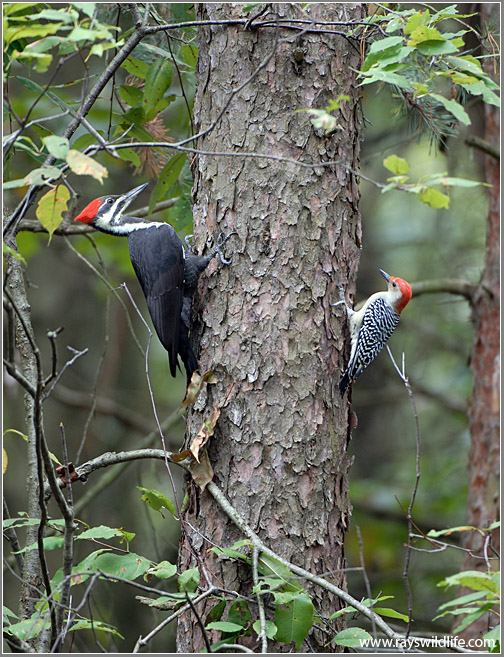
Pileated and Red-bellied Woodpecker on same tree by Ray

Pileated and Red-bellied Woodpecker on same tree by Ray

The Disobedient Woodpecker ~ from The Curious Book of Birds

THE DISOBEDIENT WOODPECKER

Cur Book of Birds letter-lONG, long ago, at the beginning of things, they say that the Lord made the world smooth and round like an apple. There were no hills nor mountains: nor were there any hollows or valleys to hold the seas and rivers, fountains and pools, which the world of men would need. It must, indeed, have been a stupid and ugly earth in those days, with no chance for swimming or sailing, rowing or fishing. But as yet there was no one to think anything about it, no one who would long to swim, sail, row, and fish. For this was long before men were created.

The Lord looked about Him at the flocks of newly made birds, who were preening their wings and wondering at their own bright feathers, and said to Himself,—

“I will make these pretty creatures useful, from the very beginning, so that in after time men shall love them dearly. Come, my birds,” He cried, “come hither to me, and with the beaks which I have given you hollow me out here, and here, and here, basins for the lakes and pools which I intend to fill with water for men and for you, their friends. Come, little brothers, busy yourselves as you would wish to be happy hereafter.”

Then there was a twittering and fluttering as the good birds set to work with a will, singing happily over the work which their dear Lord had given them to do. They pecked and they pecked with their sharp little bills; they scratched and they scratched with their sharp little claws, till in the proper places they had hollowed out great basins and valleys and long river beds, and little holes in the ground.

Then the Lord sent great rains upon the earth until the hollows which the birds had made were filled with water, and so became rivers and lakes, little brooks and fountains, just as we see them to-day. Now it was a beautiful, beautiful world, and the good birds sang happily and rejoiced in the work which they had helped, and in the sparkling water which was sweet to their taste.

All were happy except one. The Woodpecker had taken no part with the other busy birds. She was a lazy, disobedient creature, and when she heard the Lord’s commands she had only said, “Tut tut!” and sat still on the branch where she had perched, preening her pretty feathers and admiring her silver stockings. “You can toil if you want to,” she said to the other birds who wondered at her, “but I shall do no such dirty work. My clothes are too fine.”

Now when the world was quite finished and the beautiful water sparkled and glinted here and there, cool and refreshing, the Lord called the birds to Him and thanked them for their help, praising them for their industry and zeal. But to the Woodpecker He said,—

“As for you, O Woodpecker, I observe that your feathers are unruffled by work and that there is no spot of soil upon your beak and claws. How did you manage to keep so neat?”

The Woodpecker looked sulky and stood upon one leg.

“It is a good thing to be neat,” said the Lord, “but not if it comes from shirking a duty. It is good to be dainty, but not from laziness. Have you not worked with your brothers as I commanded you?”

“It was such very dirty work,” piped the Woodpecker crossly; “I was afraid of spoiling my pretty bright coat and my silver shining hose.”

“Oh, vain and lazy bird!” said the Lord sadly. “Have you nothing to do but show off your fine clothes and give yourself airs? You are no more beautiful than many of your brothers, yet they all obeyed me willingly. Look at the snow-white Dove, and the gorgeous Bird of Paradise, and the pretty Grosbeak. They have worked nobly, yet their plumage is not injured. I fear that you must be punished for your disobedience, little Woodpecker. Henceforth you shall wear stockings of sooty black instead of the shining silver ones of which you are so proud. You who were too fine to dig in the earth shall ever be pecking at dusty wood. And as you declined to help in building the water-basins of the world, so you shall never sip from them when you are thirsty. Never shall you thrust beak into lake or river, little rippling brook or cool, sweet fountain. Raindrops falling scantily from the leaves shall be your drink, and your voice shall be heard only when other creatures are hiding themselves from the approaching storm.”

It was a sad punishment for the Woodpecker, but she certainly deserved it. Ever since that time, whenever we hear a little tap-tapping in the tree city, we know that it is the poor Woodpecker digging at the dusty wood, as the Lord said she should do. And when we spy her, a dusty little body with black stockings, clinging upright to the tree trunk, we see that she is creeping, climbing, looking up eagerly toward the sky, longing for the rain to fall into her thirsty beak. She is always hoping for the storm to come, and plaintively pipes, “Plui-plui! Rain, O Rain!” until the drops begin to patter on the leaves.


Rufous-bellied Woodpecker (Dendrocopos hyperythrus) by Nikhil Devasar

Rufous-bellied Woodpecker (Dendrocopos hyperythrus) by Nikhil Devasar

Lee’s Addition:

Children, obey your parents in the Lord: for this is right. Honour thy father and mother; (which is the first commandment with promise;) That it may be well with thee, and thou mayest live long on the earth. (Ephesians 6:1-3 KJV)
Children, obey your parents in all things: for this is well pleasing unto the Lord. (Colossians 3:20 KJV)

Apparently the Woodpecker had not learned to obey. I trust you are obeying your parents. You are also to honor or give respect to your father and mother.

Now don’t think unkindly about the real Woodpeckers, because of course this is only a story. I think Woodpeckers are really neat birds and the Lord has provided them with just the right beak so it can make holes for a nest and for digging out worms.

Links:


  Picidae – Woodpeckers Family


Painted Bunting (Passerina ciris) ©©Flickr


  Bird Tales


Curious Book of Birds - Cover


  The Curious Book of Birds


Spanish Sparrow (Passer Hispaniolensis) female ©WikiC


  Wordless Birds


*

The Gorgeous Goldfinch – from The Curious Book of Birds

American Goldfinch (Carduelis tristis) on Thistle by Fenton

American Goldfinch (Carduelis tristis) on Thistle by Fenton

The Gorgeous Goldfinch ~ from The Curious Book of Birds

THE GORGEOUS GOLDFINCH

Cur Book of Birds letter-tHE Goldfinch who lives in Europe is one of the gaudiest of the little feathered brothers. He is a very Joseph of birds in his coat of many colors, and folk often wonder how he came to have feathers so much more gorgeous than his kindred. But after you have read this tale you will wonder no longer.

You must know that when the Father first made all the birds they were dressed alike in plumage of sober gray. But this dull uniform pleased Him no more than it did the birds themselves, who begged that they might wear each the particular style which was most becoming, and by which they could be recognized afar.

So the Father called the birds to Him, one by one, as they stood in line, and dipping His brush in the rainbow color-box painted each appropriately in the colors which it wears to-day. (Except, indeed, that some had later adventures which altered their original hues, as you shall hear in due season.)

But the Goldfinch did not come with the other birds. That tardy little fellow was busy elsewhere on his own affairs and heeded not the Father’s command to fall in line and wait his turn for being made beautiful.

So it happened that not until the painting was finished and all the birds had flown away to admire themselves in the water-mirrors of the earth, did the Goldfinch present himself at the Father’s feet out of breath.

“O Father!” he panted, “I am late. But I was so busy! Pray forgive me and permit me to have a pretty coat like the others.”

“You are late indeed,” said the Father reproachfully, “and all the coloring has been done. You should have come when I bade you. Do you not know that it is the prompt bird who fares best? My rainbow color-box has been generously used, and I have but little of each tint left. Yet I will paint you with the colors that I have, and if the result be ill you have only yourself to blame.”

The Father smiled gently as He took up the brush which He had laid down, and dipped it in the first color which came to hand. This He used until there was no more, when He began with another shade, and so continued until the Goldfinch was completely colored from head to foot. Such a gorgeous coat! His forehead and throat were of the most brilliant crimson. His cap and sailor collar were black. His back was brown and yellow, his breast white, his wings golden set off with velvet black, and his tail was black with white-tipped feathers. Certainly there was no danger of his being mistaken for any other bird.

When the Goldfinch looked down into a pool and saw the reflection of his gorgeous coat, he burst out into a song of joy. “I like it, oh, I like it!” he warbled, and his song was very sweet. “Oh, I am glad that I was late, indeed I am, dear Father!”

But the kind Father sighed and shook His head as He put away the brush, exclaiming, “Poor little Goldfinch! You are indeed a beautiful bird. But I fear that the gorgeous coat which you wear, and which is the best that I could give you, because you came so late, will cause you more sorrow than joy. Because of it you will be chased and captured and kept in captivity; and your life will be spent in mourning for the days when you were a plain gray bird.”

And so it happened. For to this day the Goldfinch is persecuted by human folk who admire his wonderful plumage and his beautiful song. He is kept captive in a cage, while his less gorgeous brothers fly freely in the beautiful world out of doors.

Cur Book of Birds img4-full

Such a gorgeous coat!

Such a gorgeous coat!


Lee’s Addition:

Then God said, “Let the waters abound with an abundance of living creatures, and let birds fly above the earth across the face of the firmament of the heavens.” So God created great sea creatures and every living thing that moves, with which the waters abounded, according to their kind, and every winged bird according to its kind. And God saw that it was good. And God blessed them, saying, “Be fruitful and multiply, and fill the waters in the seas, and let birds multiply on the earth.” So the evening and the morning were the fifth day. (Genesis 1:20-23 NKJV)

This is the first story to be published here from the Curious Book of Birds by Abbie Farwell Brown. This was published in 1903 and is in the public domain. The stories are cute and enjoyable to read. They will be under “From the Past” authors.

They are good stories, but not all the facts are right. 
Just enjoy them anyway. 
(Lee)
European Goldfinch (Carduelis carduelis) by W Kwong

European Goldfinch (Carduelis carduelis) by W Kwong

Links:

European Goldfinch (Carduelis carduelis) by W Kwong


   Fringillidae – Finches Family


Painted Bunting (Passerina ciris) ©©Flickr


  Bird Tales


Curious Book of Birds - Cover


  The Curious Book of Birds


Spanish Sparrow (Passer Hispaniolensis) female ©WikiC


  Wordless Birds


*

Nuggets Plus – To Breathe Life Eternal

Nuggets Plus

Nuggets Plus

Nuggets Plus – To Breathe Life Eternal ~ by a j mithra

Tiny pores in bird eggshells
allow the embryo to breathe.
Domestic hen’s egg has around 7500 pores.
The pores all over the body
that Jesus got from the lashes,
three nails,
a crown of thorns
and the spear on His rib
allows humanity to breathe life eternal…
Oh! What a loving God we serve!!
 

But he was wounded for our transgressions,
he was bruised for our iniquities:
the chastisement of our peace was upon him;
>and with his stripes we are healed. (Isaiah 53:5)

To See Photo of an Eggshell Pore:

http://www.tailfeathersnetwork.com/community/showthread.php/35653-Egg-shell-pore-pictures

Yours in YESHUA,

a j mithra

Please visit us at:

ajmithra21

*

Birds Vol 2 #1 – The Snowy Heron

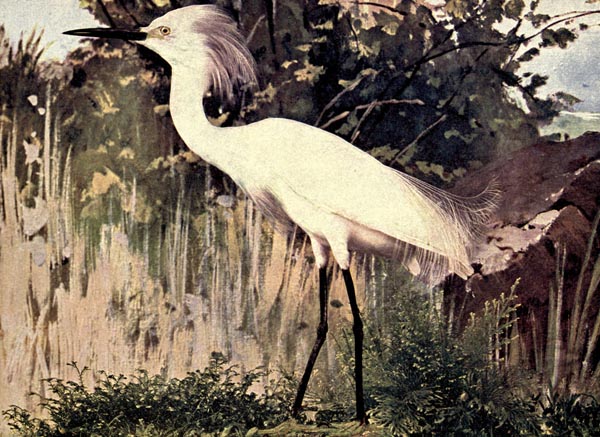
snowy heron or little egret

THE SNOWY HERON.

“What does it cost this garniture of death?
It costs the life which God alone can give;
It costs dull silence where was music’s breath,
It costs dead joy, that foolish pride may live.
Ah, life, and joy, and song, depend upon it,
Are costly trimmings for a woman’s bonnet!”
—May Riley Smith.

imgt
EMPERATE and tropical America, from Long Island to Oregon, south to Buenos Ayres, may be considered the home of the Snowy Heron, though it is sometimes seen on the Atlantic coast as far as Nova Scotia. It is supposed to be an occasional summer resident as far north as Long Island, and it is found along the entire gulf coast and the shores of both oceans. It is called the Little White Egret, and is no doubt the handsomest bird of the tribe. It is pure white, with a crest composed of many long hair-like feathers, a like plume on the lower neck, and the same on the back, which are recurved when perfect.

Snowy Herons nest in colonies, preferring willow bushes in the marshes for this purpose. The nest is made in the latter part of April or early June. Along the gulf coast of Florida, they nest on the Mangrove Islands, and in the interior in the willow ponds and swamps, in company with the Louisiana and Little Blue Herons. The nest is simply a platform of sticks, and from two to five eggs are laid.

Alas, plume hunters have wrought such destruction to these lovely birds that very few are now found in the old nesting places. About 1889, according to Mr. F. M. Woodruff, this bird was almost completely exterminated in Florida, the plume hunters transferring their base of operation to the Texas coast of the Gulf, and the bird is now in a fair way to be utterly destroyed there also. He found them very rare in 1891 at Matagorda Bay, Texas. This particular specimen is a remarkably fine one, from the fact that it has fifty-two plumes, the ordinary number being from thirty to forty.

Nothing for some time has been more commonly seen than the delicate airy plumes which stand upright in ladies’ bonnets. These little feathers, says a recent writer, were provided by nature as the nuptial adornment of the White Heron. Many kind-hearted women who would not on any account do a cruel act, are, by following this fashion, causing the continuance of a great cruelty. If ladies who are seemingly so indifferent to the inhumanity practiced by those who provide them with this means of adornment would apply to the Humane Education Committee, Providence, R. I., for information on the subject, they would themselves be aroused to the necessity of doing something towards the protection of our birds. Much is, however, being done by good men and women to this end.

The Little Egret moves through the air with a noble and rapid flight. It is curious to see it pass directly overhead. The head, body and legs are held in line, stiff and immovable, and the gently waving wings carry the bird along with a rapidity that seems the effect of magic.

An old name of this bird was Hern, or Hernshaw, from which was derived the saying, “He does not know a Hawk from a Hernshaw.” The last word has been corrupted into “handsaw,” rendering the proverb meaningless.

Summary SNOWY HERON.Ardea candidissima. Other names: “Little Egret,” “White-crested Egret,” “White Poke.”

Range—Tropical and temperate America.

Nest—A platform of sticks, in bushes, over water.

Eggs—Three to five; pale, dull blue.


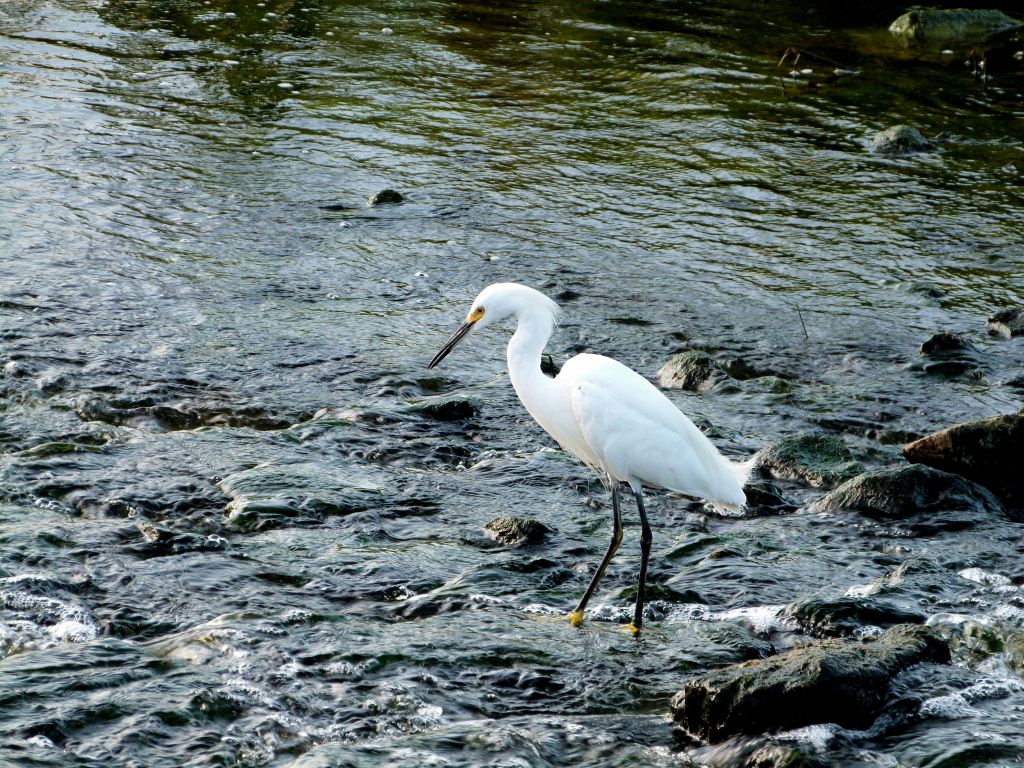
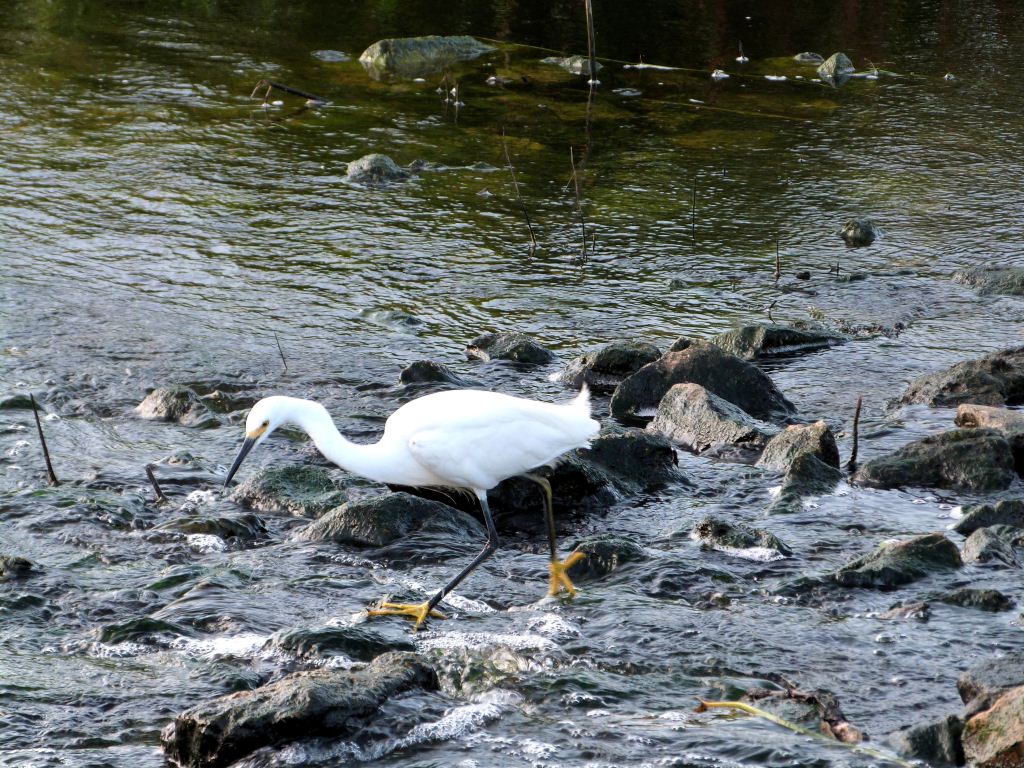
Snowy Egret Circle B by Lee

Snowy Egret Circle B by Lee

Lee’s Addition:

And the stork, the heron after her kind, and the lapwing, and the bat. (Leviticus 11:19 KJV)

American Ornithologists’ Union 1st edition (1886):
Snowy Heron ( Ardea candidissima)

was later changed to  

American Ornithologists’ Union 2nd edition (incl. 15th suppl.): 1895
Snowy Egret ( Egretta candidissima)

then finally changed to the current with the

American Ornithologists’ Union 4th edition (1931):
Snowy Egret ( Egretta thula)

We have another case where the name and the scientific name has changed over time. The above give how the American Ornithologists’ Union progressed in the re-naming. I thoroughly enjoy watching the Snowys here. I think it is their yellow feet that amuses me so much. I am always trying to get a photo of the feet.

They are smaller than our Great Egret and I have been able to distinguish them from the Great and the Cattle Egrets finally. Once that yellow foot comes in sight, it’s a “no-brainer.”

Snowy Egret Circle B 8-3-12 by Lee

Snowy Egret Circle B 8-3-12 by Lee

They are a medium-sized Heron that is all white. It has the yellow feet attached to its black legs. Their bill is dark and it pointed like most in the Heron families. That Family is the Ardeidae – Herons, Bitterns and also a Bible Bird. They and their kind are listed in the “do not eat” section for the Israelites. Even today, they are too much fun to watch than to eat.

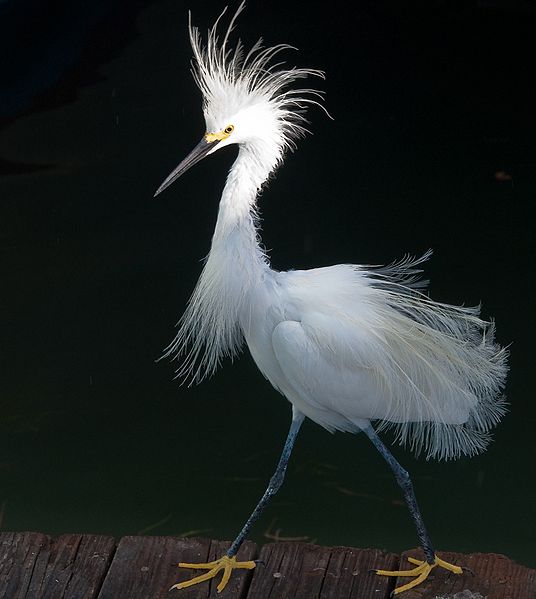
As stated above, their plumage was used a lot before that practice was stopped. Here is a photo from Wikipedia of the feathers displayed.

Snowy Egret (Egretta thula) Plumage ©WikiC

Snowy Egret (Egretta thula) Plumage ©WikiC

Their breeding habitat is large inland and coastal wetlands from the lower Great Lakes and southwestern United States to South America. The breeding range in eastern North America extends along the Atlantic and Gulf Coasts from Maine to Texas, and inland along major rivers and lakes. They nest in colonies, often with other waders, usually on platforms of sticks in trees or shrubs. Their flat, shallow nests are made of sticks and lined with fine twigs and rushes. Three to four greenish-blue, oval eggs are incubated by both adults. The young leave the nest in 20 to 25 days and hop about on branches near the nest before finally departing.

In warmer locations, some Snowy Egret are permanent residents; northern populations migrate to Central America and the West Indies. They may wander north after the breeding season, very rarely venturing to western Europe—the first bird sighted in Britain wintered in Scotland from 2001–2002.

The birds eat fish, crustaceans, insects and small reptiles. They stalk prey in shallow water, often running or shuffling their feet, flushing prey into view, as well “dip-fishing” by flying with their feet just over the water. Snowy Egrets may also stand still and wait to ambush prey, or hunt for insects stirred up by domestic animals in open fields.

Birds Illustrated by Color Photography – Revisited – Introduction

The above article is the first article in the monthly serial that was started in January 1897 “designed to promote Knowledge of Bird-Live.” These include Color Photography, as they call them, today they are drawings. There are at least three Volumes that have been digitized by Project Gutenberg.

To see the whole series of – Birds Illustrated by Color Photography – Revisited

*

(Information from Wikipedia and other internet sources)

Next Article – Old Abe

The Previous Article – The American Scoter

ABC’s Of The Gospel

Links:

Bible Birds – Herons

Snowy Heron– Audubon

Snowy Egret – Wikipedia

Snowy Egret – All About Birds

Birds of the Bible – Herons

*
Birds of the Bible – Jeremiah 8:7

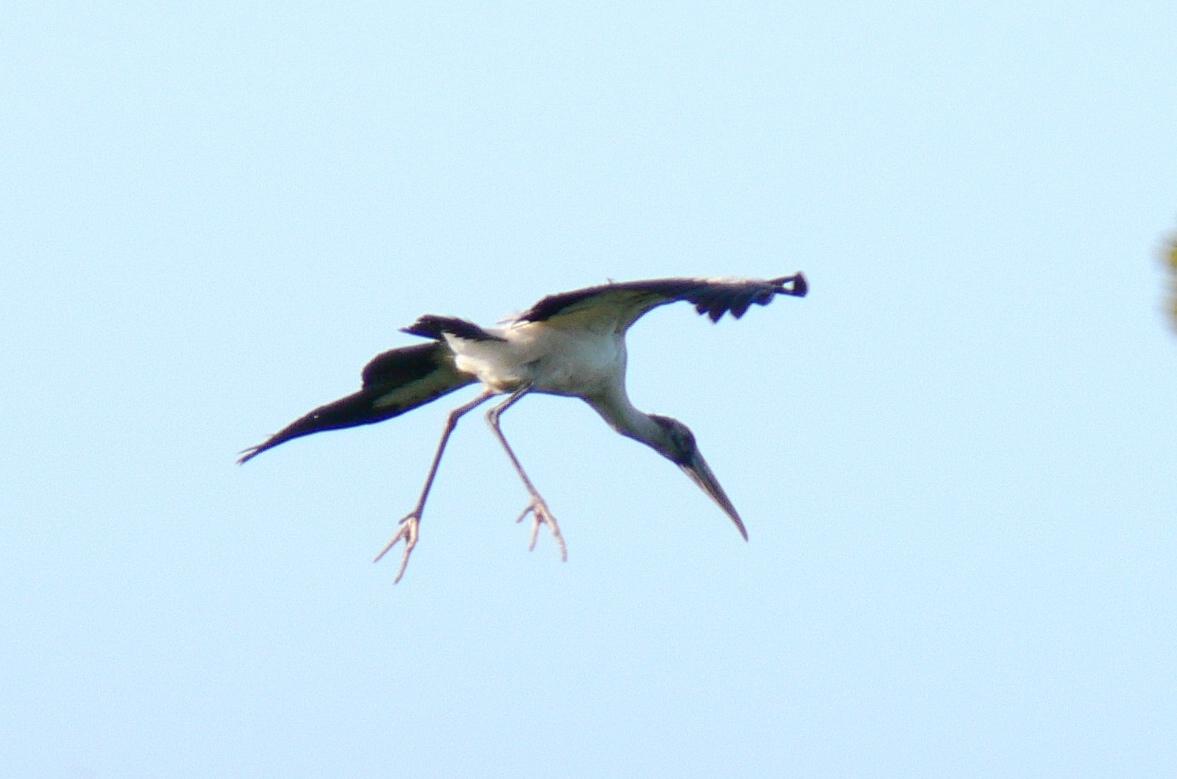
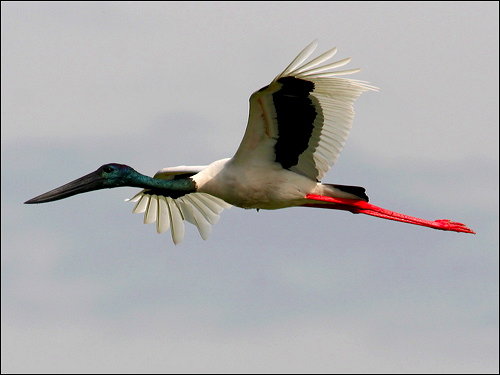
Wood Stork with landing gear down

Wood Stork with landing gear down

Jeremiah 8:7 has been used in several Birds of the Bible articles before. See Birds of the Bible:

So what else can be found out about that verse? Those of you that follow this blog know that I enjoy digging into the Bible with my e-Sword program. It is a free program that can be downloaded. It has different versions of the Bible that can be downloaded free or some with a small fee. Also available are dictionaries, commentaries, maps, notes, references and STEP additions. For the price, FREE, it is hard to beat. There are also links to other sites to get even more add-ons. Check out their LINKS page. Two favorites of mine are the ESS and the Bible Support sites.

The Bible tells us to study the Bible and we should. I try to read several chapters every day and meditate on what I read. Then along with that I like to dig deeper into Scripture and mine some great promises and truths out. Then other times, like this article, I am just digging out the birds mentioned in the different versions of this verse. I don’t endorse every version I have loaded on my e-Sword, but I do like to compare all of them.

But continue thou in the things which thou hast learned and hast been assured of, knowing of whom thou hast learned them; And that from a child thou hast known the holy scriptures, which are able to make thee wise unto salvation through faith which is in Christ Jesus. All scripture is given by inspiration of God, and is profitable for doctrine, for reproof, for correction, for instruction in righteousness: That the man of God may be perfect, throughly furnished unto all good works. (2 Timothy 3:14-17 KJV)

Well, back to Jeremiah 8:7. Here’s the verse:

Yea, the stork in the heaven knoweth her appointed times; and the turtle and the crane and the swallow observe the time of their coming; but my people know not the judgment of the LORD. (Jeremiah 8:7 KJV)

Using the “Compare” mode, let’s see which birds are mentioned. Most mention the Stork, Turtle or Turtle-dove, Swallow, and the Crane. It is referring to them having the knowledge to know when to migrate, but “but my people know not the rules of the LORD.” (ESV) See the other articles for more details.

*
Black-necked Stork (Jabiru) (Ephippiorhynchus asiaticus) by Ian

Black-necked Stork (Jabiru) (Ephippiorhynchus asiaticus) by Ian

The H####’s are from Strong’s Hebrew and Greek Dictionaries. Using the KJV+ for the numbers.
H2624
חסידה
chăsı̂ydâh
khas-ee-daw’
Feminine of H2623; the kind (maternal) bird, that is, a stork: – X feather, stork.

Stork or storks – every version except two – DRB (kite), MSG (see bottom)
*

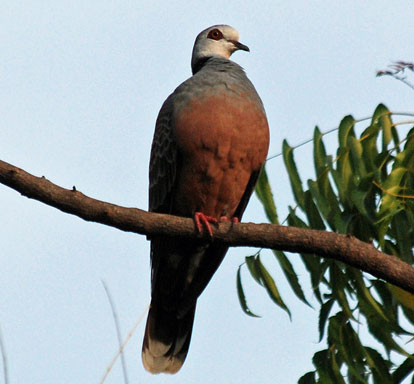
Adamawa Turtle Dove (Streptopelia hypopyrrha) ©WikiC

Adamawa Turtle Dove (Streptopelia hypopyrrha) ©WikiC

H8449
תּר תּור
tôr tôr
tore, tore
Probably the same as H8447; a ring dove, often (figuratively) as a term of endearment: – (turtle) dove.

Dove, Turtle, Turtle-doves, Mourning Doves – same family, no problem
*

Welcome Swallow (Hirundo neoxena) by Ian

Welcome Swallow (Hirundo neoxena) by Ian

H5693
עגוּר
‛âgûr
aw-goor’
Passive participle (but with active sense) of an unused root meaning to twitter; probably the swallow: – swallow.

Swallow – most versions
Swift – instead of Swift – ERV, NASB, NAS77, NIV, NIrV
Swift and Swallow – NKJV
The Swift and the Swallow both behave alike in some ways even though they are not in the same family. I even confuse them at times.
*

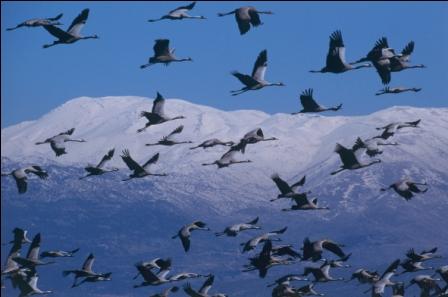
Crane Migration over Israel

Crane Migration over Israel

H5483
סס סוּס
sûs sûs
soos, soos
From an unused root meaning to skip (properly for joy); a horse (as leaping); also a swallow (from its rapid flight): – crane, horse ([-back, -hoof]).
Now we see where two different birds could be used. From here on the different versions begin to differ.

Crane – Most use Crane, but here are some of the differences
Sparrows – APB, Brenton
Thrushes – CEV, ERV, ECB, GNB, LITV, NAS77, NASB
Quite a difference in the birds here.
*

Eastern Bluebird (Sialia sialis) by S Slayton

Eastern Bluebird (Sialia sialis) by S Slayton

I saved the most interesting translation till last. Actually, it is a paraphrase and not a true translation. It does give me three more named birds. So far I haven’t seen them anywhere else, so for now they will not get their own page.

Cranes know when it’s time to move south for winter. And robins, warblers, and bluebirds know when it’s time to come back again. But my people? My people know nothing, not the first thing of GOD and his rule. (Jeremiah 8:7 MSG)

Does it matter if there is a difference in these versions? Yes and no. Yes, the Bible should be translated as close to the original as possible. No, in the sense that all these birds were given the knowledge to migrate by the Lord. And the truth of people not knowing the truth about God and what He wants for their lives. The birds obey, man doesn’t.

See More Birds of the Bible

Thought:

The method I used to study this verse can be applied to any verse or passage you wish to dig into. I used the Strong’s Hebrew and Greek because, of course, I have no clue as to what those word are. But using those help me/you understand the meaning of the word as it was originally written or as close as we can get to it. As our language has changed over the years, our meanings have also changed. It helps to read other versions when studying the Bible. I know some don’t agree and I won’t go there. The Lord has many truths to find in His Word. Maybe you like plants or animals, or like to study one person at a time, or a promise and the different ways it is presented, whatever. Study.

Gospel Message

*

Birds Vol 2 #1 – The American Scoter

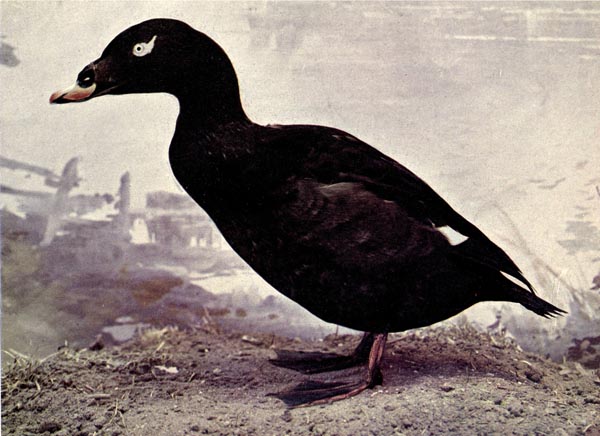
Black or American Scoter (Melanitta americana), From Birds Illustrated by Color Photography, 1897

White-winged Scoter, From Birds Illustrated by Color Photography, 1897

THE AMERICAN SCOTER.

imgt

HE specimen we give of the American Scoter is one of unusual rarity and beauty of plumage. It was seen off the government pier, in Chicago, in November, 1895, and has been much admired.

The Scoter has as many names as characteristics, being called the Sea Coot, the Butter-billed, and the Hollow-billed Coot. The plumage of the full grown male is entirely black, while the female is a sooty brown, becoming paler below. She is also somewhat smaller.

This Duck is sometimes found in great numbers along the entire Atlantic coast where it feeds on small shell fish which it secures by diving. A few nest in Labrador, and in winter it is found in New Jersey, on the Great Lakes, and in California. The neighborhoods of marshes and ponds are its haunts, and in the Hudson Bay region the Scoter nests in June and July.

The nest is built on the ground near water. Coarse grass, feathers, and down are commonly used to make it comfortable, while it is well secreted in hollows in steep banks and cliffs. The eggs are from six to ten, of a dull buff color.

Prof. Cooke states that on May 2, 1883, fifty of these ducks were seen at Anna, Union county, Illinois, all busily engaged in picking up millet seed that had just been sown. If no mistake of identification was made in this case, the observation apparently reveals a new fact in the habits of the species, which has been supposed to feed exclusively in the water, and to subsist generally on fishes and other aquatic animal food.

From col. F. M. Woodruff.
Summary

WHITE-WINGED SCOTER.Oidemia deglandi. Other names: “American Velvet Scoter,” “White-winged Coot,” “Uncle Sam Coot.”

Range—Northern North America; breeding in Labrador and the fur countries; south in winter.

Nest—On the ground, beneath bushes.

Eggs—Six to ten; pale, dull buff.


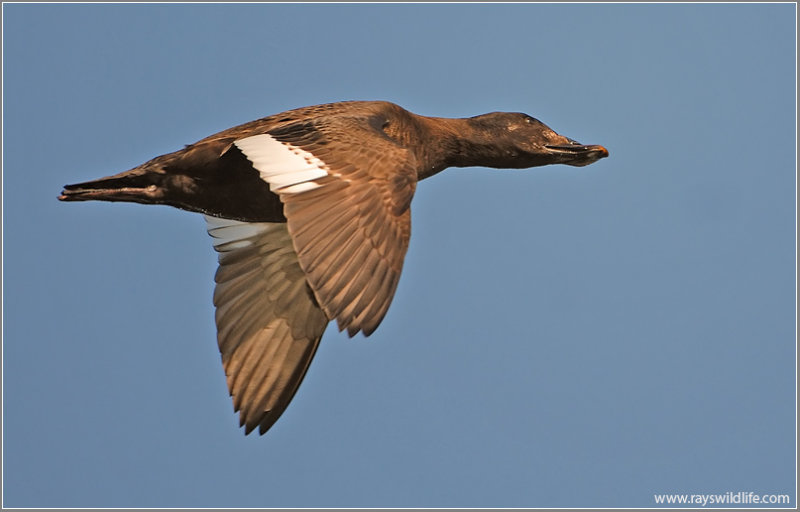
White-winged Scoter (Melanitta deglandi) by Ray

White-winged Scoter (Melanitta deglandi) by Ray

Lee’s Addition:

I have been hunted like a bird by those who were my enemies without cause; (Lamentations 3:52 ESV)

Look at the birds of the air: they neither sow nor reap nor gather into barns, and yet your heavenly Father feeds them. Are you not of more value than they? (Matthew 6:26 ESV)

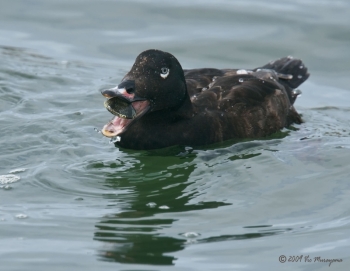
The article is titled “American Scoter” but the photos and information is mostly about the “White-winged Scoter”. I have provided information on both of those Scoters. I have never seen any of the Scoters that I remember. They are in the Anatidae – Ducks, Geese & Swans family. I love those eyes of the White-winged Scoter.

The scoters are stocky seaducks in the genus Melanitta. The drakes are mostly black and have swollen bills. Females are brown.

They breed in the far north of Europe, Asia and North America, and winter further south in temperate zones of those continents. They form large flocks on suitable coastal waters. These are tightly packed, and the birds tend to take off together.

Their lined nests are built on the ground close to the sea, lakes or rivers, in woodland or tundra. These species dive for crustaceans and molluscs.

There are five species, grouped into two subgenera:

  • subgenus Oidemia (Black and Common Scoters)
  • subgenus Melanitta (Surf, Velvet and White-winged Scoters)

The presumed fossil “scoter” Melanitta ceruttii which lived in California is now placed in the genus Histrionicus.

The adult female Black or American Scoter averages about 2.1 lbs.(980 grams ) and 18 inches (45 cm) in length, while the adult male is on average 2.4 lbs. (1100 grams) and 19 inches (49 cm) in length. It is characterized by its bulky shape and large bill. The male is all black with a very bulbous bill which is mostly yellow,a good relation with the common scoter. The female is a brown bird with pale cheeks, very similar to female Common Scoter. This is America’s only black duck, although the female may have some yellow around the nostrils.

This species can be distinguished from other scoters, apart from Common, by the lack of white anywhere on the drake, and the more extensive pale areas on the female.

Black Scoter and Common Scoter have diagnostically distinct vocalisations

The lined nest is built on the ground close to the sea, lakes or rivers, in woodland or tundra. 5-7 eggs are laid. Each eggs weighs from 2-2.6 oz (60-74 grams), or 8% of the females body weight. The incubation period may range from 27 to 31 days. Females brood their young extensively for about 3 weeks, after which the still flightless young must fend for themselves.

The White-winged Scoter (Melanitta deglandi) or (Melanitta fusca deglandi) is a large sea duck.It is characterised by its bulky shape and large bill. This is the largest species of scoter. Females range from 2.1-4.2 lb (950-1950 grams) and 19-22 inches (48–56 cm), averaging 2.6 lb (1180 grams) and 21 inches (52.3 cm). She is brown with pale head patches. The male ranges from 3-4.7 lb (1360-2128 grams) and from 21-24 inches (53–60 cm), averaging 3.6 lb (1380 grams) and 22 inches (55 cm). He is all black, except for white around the eye and a white speculum. This scoter’s bill has a black base and a large knob.

The white patches are visible but not conspicuous when the wings are folded.

There are a number of differing characteristic of the Eastern Siberian race and the American race from Alaska and Canada to west of the Hudson Bay. Males of the American subspecies have browner flanks, dark yellow coloration of most of the bill and a less tall bill knob, approaching the Velvet Scoter. The Asian form has a very tall knob at the base of its mostly orange-yellow bill. Females are identical in the field.

The White-winged Scoter was named for French zoologist Dr. Côme-Damien Degland (1787–1856).

It was formerly considered to be conspecific with the Velvet Scoter, and some taxonomists still regard it as so. These two species, and the Surf Scoter, are placed in the subgenus Melanitta, distinct from the subgenus Oidemia, Black and Common Scoters.

The White-winged Scoter breeds over the far north of Asia east of the Yenisey Basin, and North America. It winters further south in temperate zones, on the Great Lakes, the coasts of the northern USA and the southern coasts of Canada, and Asia as far south as China. It forms large flocks on suitable coastal waters. These are tightly packed, and the birds tend to take off together.

White-winged Scoter (Melanitta deglandi) ©BirdPhotos

White-winged Scoter (Melanitta deglandi) ©BirdPhotos

Birds Illustrated by Color Photography – Revisited – Introduction

The above article is the first article in the monthly serial that was started in January 1897 “designed to promote Knowledge of Bird-Live.” These include Color Photography, as they call them, today they are drawings. There are at least three Volumes that have been digitized by Project Gutenberg.

To see the whole series of – Birds Illustrated by Color Photography – Revisited

*

(Information from Wikipedia and other internet sources)

Next Article – The Snowy Heron

Previous Article – The American Woodcock

Wordless Birds

Links:

Anatidae – Ducks, Geese & Swans

Scoters – Wikipedia

Black or American Scoter – Wikipedia

White-winged Scoter – Wikipedia

*

Birds Vol 2 #1 – American Woodcock

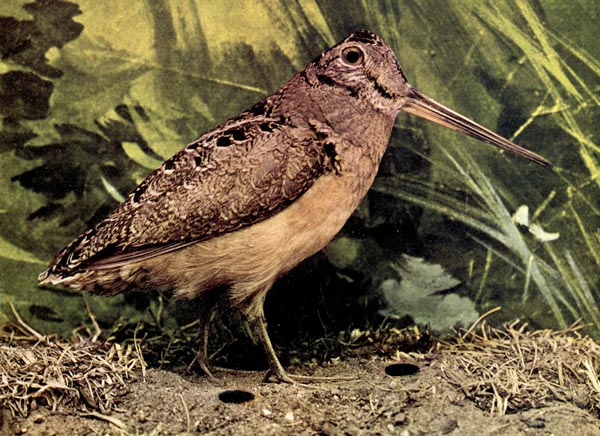
American Woodcock (Scolopax minor)

American Woodcock from Birds Illustrated by Color Photography, 1897 From col. Chi. Acad. Sciences.

THE AMERICAN WOODCOCK.

imgi
SN’T this American Woodcock, or indeed any member of the family, a comical bird? His head is almost square, and what a remarkable eye he has! It is a seeing eye, too, for he does not require light to enable him to detect the food he seeks in the bogs. He has many names to characterize him, such as Bog-sucker, Mud Snipe, Blind Snipe. His greatest enemies are the pot hunters, who nevertheless have nothing but praise to bestow upon him, his flesh is so exquisitely palatable. Even those who deplore and deprecate the destruction of birds are not unappreciative of his good qualities in this respect.

The Woodcock inhabits eastern North America, the north British provinces, the Dakotas, Nebraska and Kansas, and breeds throughout the range.

Night is the time when the Woodcock enjoys life. He never flies voluntarily by day, but remains secluded in close and sheltered thickets till twilight, when he seeks his favorite feeding places. His sight is imperfect by day, but at night he readily secures his food, assisted doubtless by an extraordinary sense of smell. His remarkably large and handsome eye is too sensitive for the glare of the sun, and during the greater part of the day he remains closely concealed in marshy thickets or in rank grass. In the morning and evening twilight and on moonlight nights, he seeks his food in open places. The early riser may find him with ease, but the first glow from the rays of the morning sun will cause his disappearance from the landscape.

He must be looked for in swamps, and in meadows with soft bottoms. During very wet seasons he seeks higher land—usually cornfields—and searches for food in the mellow plowed ground, where his presence is indicated by holes made by his bill. In seasons of excessive drought the Woodcock resorts in large numbers to tide water creeks and the banks of fresh water rivers. So averse is he to an excess of water, that after continued or very heavy rains he has been known suddenly to disappear from widely extended tracts of country.

A curious habit of the Woodcock, and one that is comparatively little known, is that of carrying its young in order to remove them from danger. So many trustworthy naturalists maintain this to be true that it must be accepted as characteristic of this interesting bird. She takes her young from place to place in her toe grasps as scarcity of food or safety may require.

As in the case of many birds whose colors adapt them to certain localities or conditions of existence, the patterns of the beautiful chestnut parts of the Woodcock mimic well the dead leaves and serve to protect the female and her young. The whistle made by their wings when flying is a manifestation of one of the intelligences of nature.

The male Woodcock, it is believed, when he gets his “intended” off entirely to himself, exhibits in peculiar dances and jigs that he is hers and hers only, or rises high on the wing cutting the most peculiar capers and gyrations in the air, protesting to her in the grass beneath the most earnest devotion, or advertising to her his whereabouts.

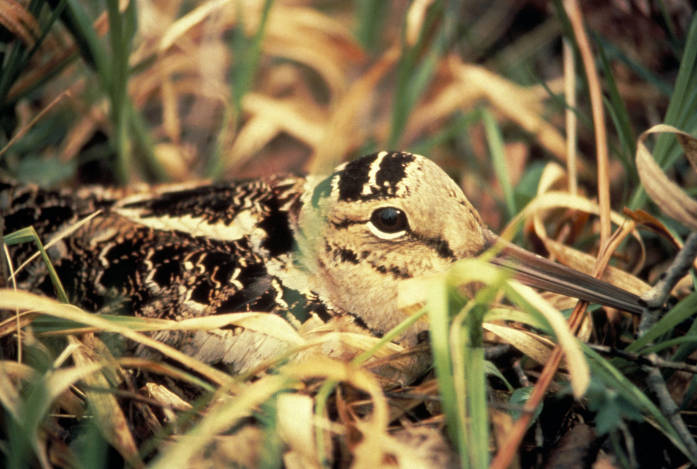
American Woodcock (Scolopax minor) on nest © USFWS

American Woodcock (Scolopax minor) on nest © USFWS

THE WOODCOCK.

Here is a bird that is not often seen in the daytime. During the day he stays in the deep woods or among the tall marsh grasses.

It is at twilight that you may see him. He then comes out in search of food.

Isn’t he an odd-looking bird? His bill is made long so that he can bore into the soft ground for earthworms.

You notice his color is much like the Ruffed Grouse in June “BIRDS.” This seems to be the color of a great many birds whose home is among the grasses and dried leaves. Maybe you can see a reason for this.

Those who have watched the Woodcock carefully, say that he can move the tip end of the upper part of his bill. This acts like a finger in helping him to draw his food from the ground.

What a sight it must be to see a number of these weird-looking birds at work getting their food. If they happen to be in a swampy place, they often find earthworms by simply turning over the dead leaves.

If there should be, near by, a field that has been newly plowed, they will gather in numbers, at twilight, and search for worms.

The Woodcock has short wings for his size. He seems to be able to fly very fast. You can imagine how he looks while flying—his long bill out in front and his legs hanging down.
Summary

AMERICAN WOODCOCK.Philohela minor. Other names: “Bog-sucker,” “Mud Snipe,” “Blind Snipe.”

Range—Eastern North America, breeding throughout its range.

Nest—Of dried leaves, on the ground.

Eggs—Four; buffy, spotted with shades of rufous.

***************
Lee’s Addition:

You will seek me and find me, when you seek me with all your heart. (Jeremiah 29:13 ESV)

For the gate is narrow and the way is hard that leads to life, and those who find it are few. (Matthew 7:14 ESV)

That they should seek the Lord, if haply they might feel after him, and find him, though he be not far from every one of us: (Acts 17:27 KJV)

Thinking about how the Woodcock is protected by the way the Lord created it to blend in to the leaves and bark reminded me of trying to find something. The above verses came to mind. I trust we are all seeking the Lord, His Salvation and His Blessings.

The American Woodcock (Scolopax minor), sometimes colloquially referred to as the Timberdoodle, is a small chunky shorebird species found primarily in the eastern half of North America. Woodcock spend most of their time on the ground in brushy, young-forest habitats, where the birds’ brown, black, and gray plumage provides excellent camouflage.

Because of the male Woodcock’s unique, beautiful courtship flights, the bird is welcomed as a harbinger of spring in northern areas. It is also a popular game bird, with about 540,000 killed annually by some 133,000 hunters in the U.S.

The American Woodcock is the only species of Woodcock inhabiting North America. Although classified with the sandpipers and shorebirds in Family Scolopacidae, the American Woodcock lives mainly in upland settings. Its many folk names include timberdoodle, bogsucker, night partridge, brush snipe, hokumpoke, and becasse.

The American Woodcock has a plump body, short legs, a large, rounded head, and a long, straight bill. Adults are 10 to 12 inches (25 to 30 cm) long and weigh 5 to 8 ounces (140 to 230 g). Females are considerably larger than males. The bill is 2.5 to 2.75 inches (6.3 to 7.0 cm) long.

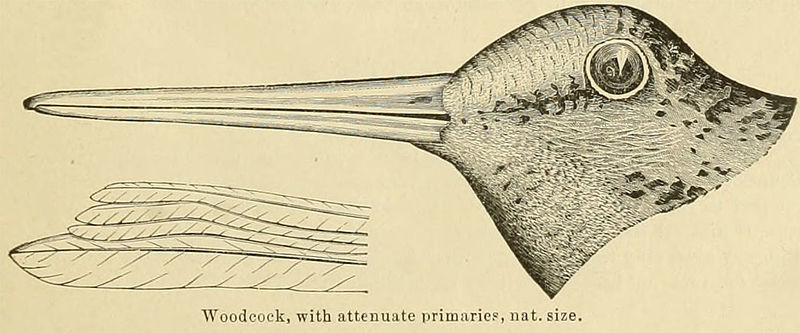
American Woodcock (Scolopax minor) 1891 ©WikiC

American Woodcock (Scolopax minor) 1891 ©WikiC

“Woodcock, with attenuate primaries, nat. size.” 1891.

The plumage is a cryptic mix of different shades of browns, grays, and black. The chest and sides vary from yellowish white to rich tans. The nape of the head is black, with three or four crossbars of deep buff or rufous. The feet and toes, which are small and weak, are brownish gray to reddish brown.

Woodcock have large eyes located high in the head, and their visual field is probably the largest of any bird, 360° in the horizontal plane and 180° in the vertical plane.

The Woodcock uses its long bill to probe in the soil for food, mainly invertebrates and especially earthworms. A unique bone-and-muscle arrangement lets the bird open and close the tip of its upper bill, or mandible, while it is sunk in the ground. Both the underside of the upper mandible and the long tongue are rough-surfaced for grasping slippery prey.

Color Key – Many of the members of the family Scolopacidæ are probing Snipe. The Woodcock, Wilson Snipe, and Dowitcher are good examples. Their bill is long and sensitive and they can curve or move its tip without opening it at the base. When the bill is thrust into the mud the tip may therefore grasp a worm and it thus becomes a finger as well as a probe.

Besides the American Woodcock, there are these: (Photos from IBC)

Eurasian Woodcock (Scolopax rusticola)
Amami Woodcock (Scolopax mira)
Javan Woodcock (Scolopax saturata) or Dusky
New Guinea Woodcock (Scolopax rosenbergii)
Bukidnon Woodcock (Scolopax bukidnonensis)
Sulawesi Woodcock (Scolopax celebensis)
Moluccan Woodcock (Scolopax rochussenii)
American Woodcock (Scolopax minor)

Birds Illustrated by Color Photography – Revisited – Introduction

The above article is the first article in the monthly serial that was started in January 1897 “designed to promote Knowledge of Bird-Live.” These include Color Photography, as they call them, today they are drawings. There are at least three Volumes that have been digitized by Project Gutenberg.

To see the whole series of – Birds Illustrated by Color Photography – Revisited

*

(Information from Wikipedia and other internet sources)

Next Article – The American Scoter

The Previous Article – The Anhinga Or Snake Bird

ABC’s Of The Gospel

Links:

Scolopacidae – Sandpipers, Snipes

American Woodcock – All About Birds

American Woodcock – Wikipedia

*