Birds of the Bible – Roseate Spoonbill

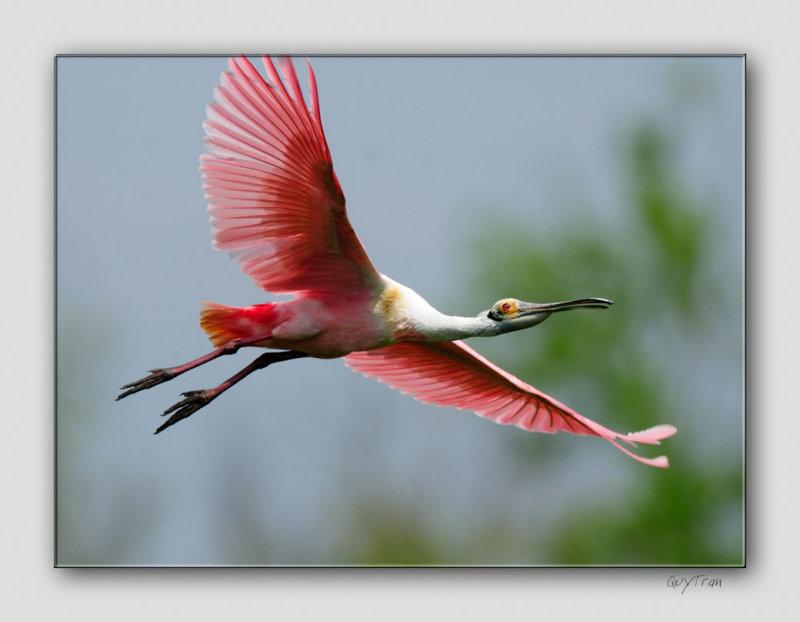
Roseate Spoonbill (Platalea ajaja) by Quy Tran

Roseate Spoonbill (Platalea ajaja) by Quy Tran

Birds of the Bible – Roseate Spoonbill

The Roseate Spoonbill is a member of the Threskiornithidae – Ibises, Spoonbills Family. We see them quite often in this area, especially in the Fall and Winter time.  I am always thrilled when we come upon them in our birdwatching adventures. Their cousins, Ibises, are a Bird of the Bible.

Then God said, “Let the waters abound with an abundance of living creatures, and let birds fly above the earth across the face of the firmament of the heavens.” So God created great sea creatures and every living thing that moves, with which the waters abounded, according to their kind, and every winged bird according to its kind. And God saw that it was good. And God blessed them, saying, “Be fruitful and multiply, and fill the waters in the seas, and let birds multiply on the earth.” So the evening and the morning were the fifth day. (Genesis 1:20-23 NKJV)

Since the Lord created all the birds, this is one of His neater creations, at least in my opinion. Their spoon-shaped bill is sort of unique to the birds. There are actually five other Spoonbills besides the Roseate.

The Roseate Spoonbill is 28–34 in (71–86 cm) long, with a  47–52 in (120–133 cm) wingspan and a weigh 2.6–4.0 lb (1.2–1.8 kg). The legs, bill, neck and spatulate bill all appear elongated. Adults have a bare greenish head (“golden buff” when breeding) and a white neck, back, and breast (with a tuft of pink feathers in the center when breeding), and are otherwise a deep pink. The bill is grey. There is no significant sexual dimorphism.

Like the American Flamingo, their pink color is diet-derived, consisting of the carotenoid pigment canthaxanthin. Another carotenoid, astaxanthin, can also be found deposited in flight and body feathers. The colors can range from pale pink to bright magenta, depending on age and location. Captive Spoonbill are fed their normal diets, plus some include juices made from carrots.

Unlike herons, spoonbills fly with their necks outstretched. They alternate groups of stiff, shallow wingbeats with glides.

Spoonbills feeding in a pond by the school. Cloudy day. Not the best, but you can see their eating behavior. Taken by me.

This species feeds in shallow fresh or coastal waters by swinging its bill from side to side as it steadily walks through the water, often in groups. The spoon-shaped bill allows it to sift easily through mud. It feeds on crustaceans, aquatic insects, frogs, newts and very small fish ignored by larger waders. In the United States a popular place to observe Roseate Spoonbills is “Ding” Darling National Wildlife Refuge in Florida. (Also at Circle B Bar Reserve as you can see by the list below of some of my sighting on e-Bird) Roseate Spoonbills must compete for food with Snowy Egrets, Great Egrets, Tricolored Herons, and American White Pelicans.

We came upon a group of them roosting at Ding” Darling National Wildlife Refuge. It was the first time I had seen that many in one place and so close to us.

Enlarge - Count at least 20 Spoonbills

Roseate Spoonbills at Ding Darling NWR – Dan at work.

The Roseate Spoonbill nests in shrubs or trees, often mangroves, laying 2 to 5 eggs, which are whitish with brown markings. Immature birds have white, feathered heads, and the pink of the plumage is paler. The bill is yellowish or pinkish.

Here is one I caught in a tree at Circle B Bar Reserve:
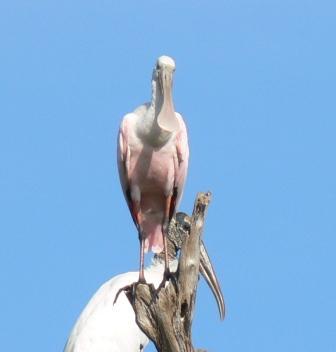
Roseate Spoonbill and Wood Stork by Lee

Roseate Spoonbill and Wood Stork by Lee

What prompted writing about one of the bird friends I always enjoy seeing, is an article about the Roseate Spoonbill in one of my latest additions of BirdWatching. It’s a great magazine and I am not condemning it. I am used to “reading around the evolutionary influences” in articles about birds. But I was offended by this remark, “It’s hard not to look at the Roseate Spoonbill in the Everglades and think, ‘What happened here:’ Amid the herons and cormorants, the spoonbill seems like an evolutionary hiccup, a failed experiment.

One, the Roseate Spoonbill is far from an “evolutionary hiccup!” It hasn’t evolved, it was created by a loving all knowing Creator, that knew exactly what He was doing. Two, it definitely was not a “failed experiment.” The way the bill is designed and the sensitivity of its touch is amazing. The Lord promised to provide for all His creatures as well as His own people. Nor are we “hiccups.” We are all created by him, but there are differences and varieties in the birds just as there is in our talents and abilities.

I know all the birds of the mountains, And the wild beasts of the field are Mine. (Psalms 50:11 NKJV)

Look at the birds of the air, for they neither sow nor reap nor gather into barns; yet your heavenly Father feeds them. Are you not of more value than they? (Matthew 6:26 NKJV)

All the birds of the heavens made their nests in its boughs; Under its branches all the beasts of the field brought forth their young; And in its shadow all great nations made their home. (Ezekiel 31:6 NKJV)

(Wikipedia and other internet resources consulted)

See:

Birds of the Bible

Birds of the Bible – Ibises

Bible Birds – Ibises

Birds of the Bible – Isaiah 34:11

Birds of the World – Threskiornithidae – Ibises, Spoonbills

World – Life Observations – Roseate Spoonbill

  Location Date
1 Roseate Spoonbill Corpus Christi 8-Nov-01
2 Roseate Spoonbill Circle B Bar Reserve 9-Feb-07
3 Roseate Spoonbill Viera Wetlands 20-Nov-07
4 Roseate Spoonbill Merritt Island NWR–Black Point Wildlife Dr. 22-Nov-07
5 Roseate Spoonbill Circle B Bar Reserve 10-May-08
6 Roseate Spoonbill Lake John Rookery 15-May-08
7 Roseate Spoonbill J. N. Ding Darling NWR 15-Jul-08
8 Roseate Spoonbill Circle B Bar Reserve 1-Nov-08
9 Roseate Spoonbill 6 Circle B Bar Reserve 28-Nov-08
10 Roseate Spoonbill 16 Merritt Island NWR–Black Point Wildlife Dr. 20-Jan-09
11 Roseate Spoonbill 3 Circle B Bar Reserve 24-Feb-09
12 Roseate Spoonbill 4 Circle B Bar Reserve 10-Mar-09
13 Roseate Spoonbill 15 Circle B Bar Reserve 24-Oct-09
14 Roseate Spoonbill 15 Circle B Bar Reserve 23-Dec-09
15 Roseate Spoonbill 5 Hillsborough 4-Feb-10
16 Roseate Spoonbill 1 MacDill AFB 31-Jan-11
17 Roseate Spoonbill 1 Lake Parker Park 7-Jan-12
18 Roseate Spoonbill 3 Circle B Bar Reserve 16-Jan-12
19 Roseate Spoonbill 2 Picnic Island Beach 24-Jan-12
20 Roseate Spoonbill 1 Lake Hollingsworth 26-Jan-12
21 Roseate Spoonbill 3 MacDill AFB 16-Aug-12
22 Roseate Spoonbill 3 Circle B Bar Reserve 10-Nov-12

*
Bible Birds – Eyes and Birds

Birds on Shore of Tampa Bay

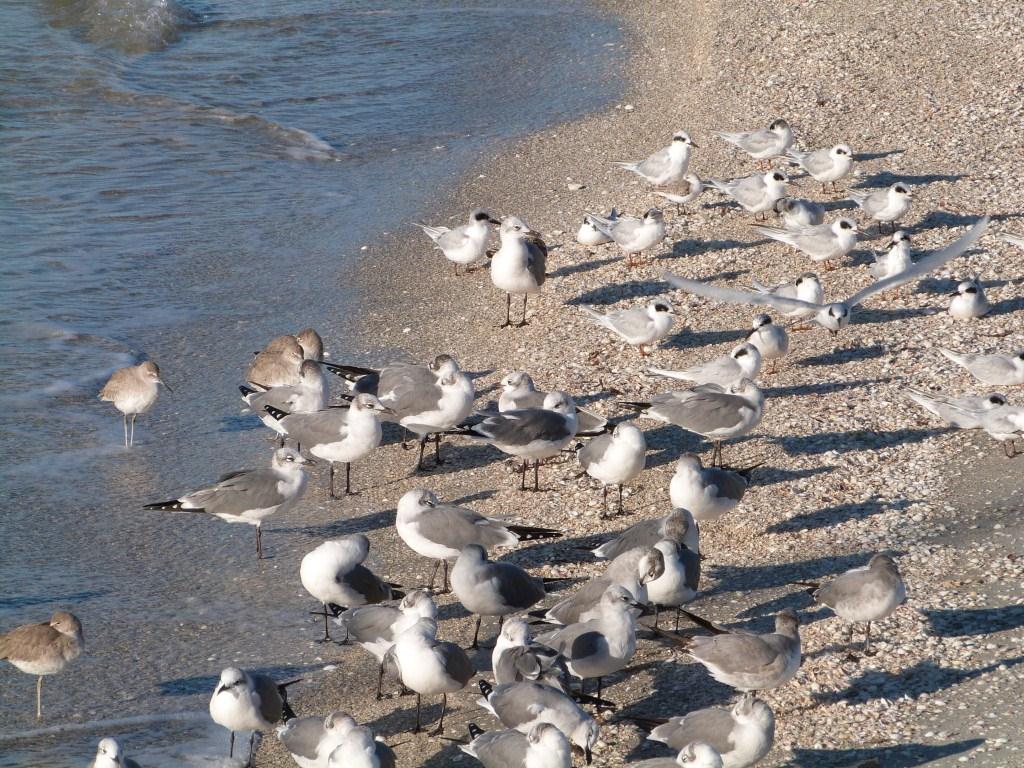
Birds on Shore of Tampa Bay – 11/23/12 by Lee

As many of you know I have just gone through eye surgery this last Thursday. (Prayer for Eye Surgery) Today, Monday, I am getting clearer vision daily, but my activities are still limited. I was able to attend church last evening and even went out afterwards with our friends. The Doctor said it was “his easiest surgery of the day and every thing went just like it should.” (I was his last patient) also told me I was his “best patient of the day.” When he walk out I told the nurses that were with me that he probably tell all his patients that. They told me that they had never heard him say that to anyone.

I told you all of that to thank you for your prayers for my Doctor and for my nervousness. Both were answered mightily. The Lord helped direct his hand and since I had to be awake, helped me stay still. They can’t put you out because you must have your eyes open. My eye was numbed, but I saw part of what was going on.

Well, guess where my mind went yesterday? I started wondering how many times “eye” and some “bird” showed up in the same verse. With enlarged type, my search found around 20 verses. Some of my upcoming Bible Bird blogs will investigate these verses. Have you ever searched your Bible to find out about a certain word or words? There are over 600 verses which have “Eye” in it. I enjoy using my “e-Sword” search and compare modes. Makes for some interesting topics to study from God’s Word.

In fact, some articles that have already been written on the main blog. (These are just a few of them)

Birds of the Bible – Vulture Eyesight – Job 28:7

When I Consider! – Turkey Vulture – Job 28:7

Birds of the Bible – Hawks – Job 28:7 and 39:26-30

Birds of the Bible – God’s Providence To His Creatures

The eyes of all wait upon thee; and thou givest them their meat in due season. (Psalms 145:15 KJV)

Birds of the Bible – Eagles and Riches 

Wilt thou set thine eyes upon that which is not? for riches certainly make themselves wings; they fly away as an eagle toward heaven. (Proverbs 23:5 KJV)

There are more and will be covered later.

Keep me as the apple of the eye, hide me under the shadow of thy wings, (Psalms 17:8 KJV)

Interesting verses, but not directly related to birds:

He that planted the ear, shall he not hear? he that formed the eye, shall he not see? (Psalms 94:9 KJV) (Our Creator)

The hearing ear, and the seeing eye, the LORD hath made even both of them. (Proverbs 20:12 KJV)

Open thou mine eyes, that I may behold wondrous things out of thy law. (Psalms 119:18 KJV)

I will instruct thee and teach thee in the way which thou shalt go: I will guide thee with mine eye. (Psalms 32:8 KJV) (How?)

Again, thank you for your prayers. I still have several weeks of recovery ahead of me, so please remember me in your prayers as you think about it. Prayer is felt when it is being answered.

*

Birds of the Bible – Loading the Ark

Snowy Egret - Wind Blown at Ft DeSoto 11-22-12 Thanksgiving

Snowy Egret – Wind Blown at Ft DeSoto 11-22-12 Thanksgiving

Dan and I just got back from a trip to Tampa for just 2 nights for the Thanksgiving holiday. My brother had a knee replacement on Wednesday (he’s doing fine), so we tied visiting him and doing some birdwatching in that area. Do you know how much we carried with us for just three days? Of course we carried our binoculars, cameras, tripod, laptop, plus clothes. Plus…

I also am starting my reading cycle through the Bible again and just read about Noah and the Ark. Because the earth had become so corrupt and violent, God said He was going to  destroy man, beast, creeping things and birds.

So the LORD said, “I will destroy man whom I have created from the face of the earth, both man and beast, creeping thing and birds of the air, for I am sorry that I have made them.” But Noah found grace in the eyes of the LORD. This is the genealogy of Noah. Noah was a just man, perfect in his generations. Noah walked with God. (Genesis 6:7-9 NKJV)

And God said to Noah, “The end of all flesh has come before Me, for the earth is filled with violence through them; and behold, I will destroy them with the earth. (Genesis 6:13 NKJV)

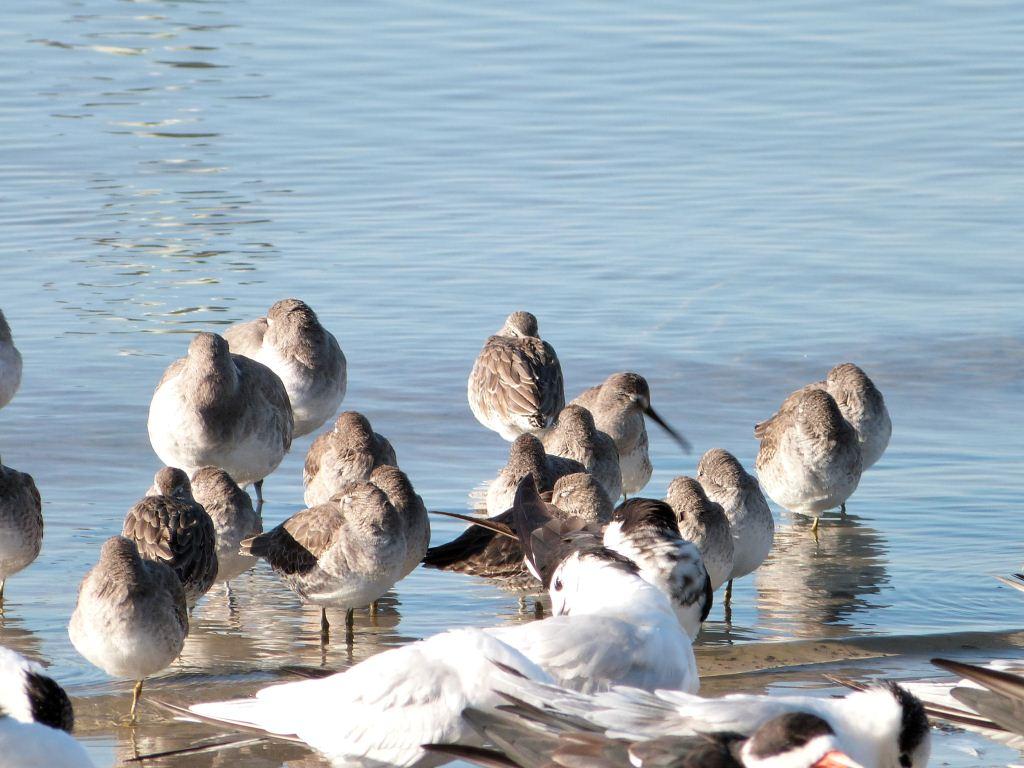
Willit - Laughing Gull - Forster's Tern at Ft DeSoto 11-22-12 Thanksgiving

Willit – Laughing Gull – Forster’s Tern at Ft DeSoto 11-22-12 Thanksgiving

Most of us know this history in the Word. Through Genesis 6, the Ark is built and Noah keeps trying to tell others to repent, but eventually the time comes and it is time to “Load the Ark.”

And of every living thing of all flesh you shall bring two of every sort into the ark, to keep them alive with you; they shall be male and female. Of the birds after their kind, of animals after their kind, and of every creeping thing of the earth after its kind, two of every kind will come to you to keep them alive. And you shall take for yourself of all food that is eaten, and you shall gather it to yourself; and it shall be food for you and for them.” Thus Noah did; according to all that God commanded him, so he did. (Genesis 6:19-22 NKJV)

Noah didn’t need to worry about taking cameras and laptops, but they had a whole lot more to get loaded on the Ark. We have all taken trips and know how long it takes to get everything in the car or van. Can you imagine when the LORD finally said that it was time to “start loading.” Noah and his family had been preparing and gathering the food, water, and supplies. If I read the first few verses of Genesis 7 correctly, they had a week (seven days) to put that in and the animals and birds. Those came to Noah, but they still had to arrange them into the different places on board the Ark. Whew! Some of us have enough trouble just loading the trunk.

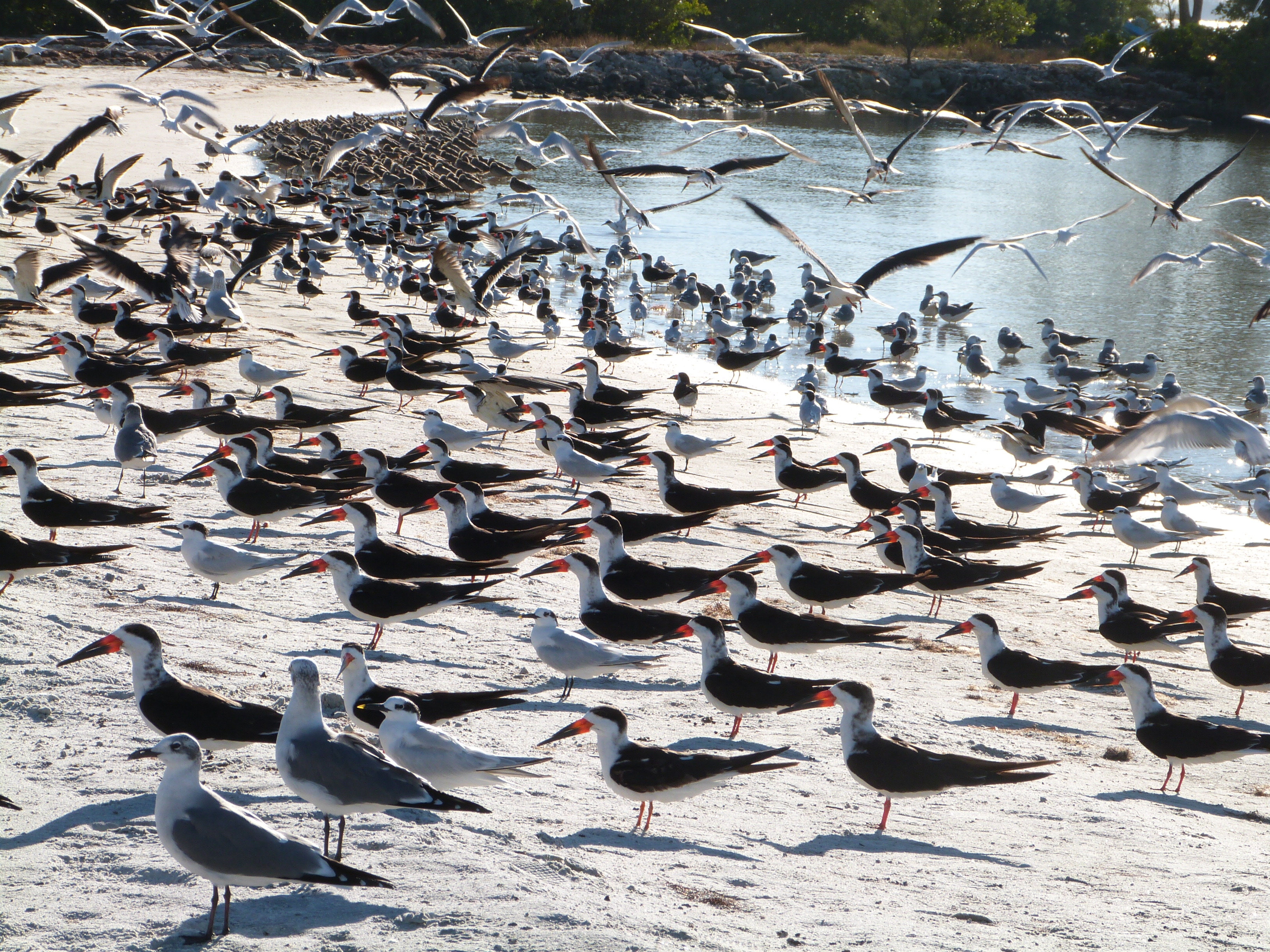
Shorebirds at MacDill AFB shore 11-23-12

Many believe the Critters rested most of the time while on board.

I am thankful that Noah and his family lived righteously and that they found grace. If not, I wouldn’t be writing this blog, nor would I be enjoying all the things the Lord created, especially the birds I love to write about.

Praise the Lord!

*

Other Birds of the Bible articles about this:

The Lord Provides For Them

Seven By Seven

God’s Commands and Promises To Them – Part I

Leaving the Ark

*

Birds of the Bible – Birds and Names?

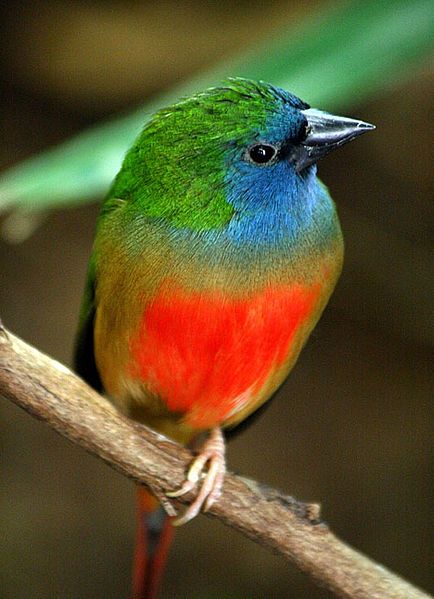
Pin-tailed Parrotfinch (Erythrura prasina) ©WikiC

Pin-tailed Parrotfinch (Erythrura prasina) ©WikiC

The devotional a few days ago from Days of Praise had one called The Names of Men. They were referring to the many list of names of people in the Bible and how many of them are unknowns. Why are they listed? The article gives a good answer to that, but here is the main point of it:

And these are the names of the men that shall stand with you: of the tribe of Reuben; Elizur the son of Shedeur. (Numbers 1:5 KJV)

“He wants to assure us that He is interested not only in the Abrahams, Daniels, Pauls, and other great men in His kingdom, but also in the Elizurs and Shedeurs and Bills and Kates in His spiritual family.

There are many millions of names “written in the Lamb’s book of life” and the heavenly Lamb–the Lord Jesus Christ–is also the Good Shepherd that “calleth his own sheep by name” The names in His book here on earth are an assurance that He knows and calls us by each of our names in His book in heaven. ”

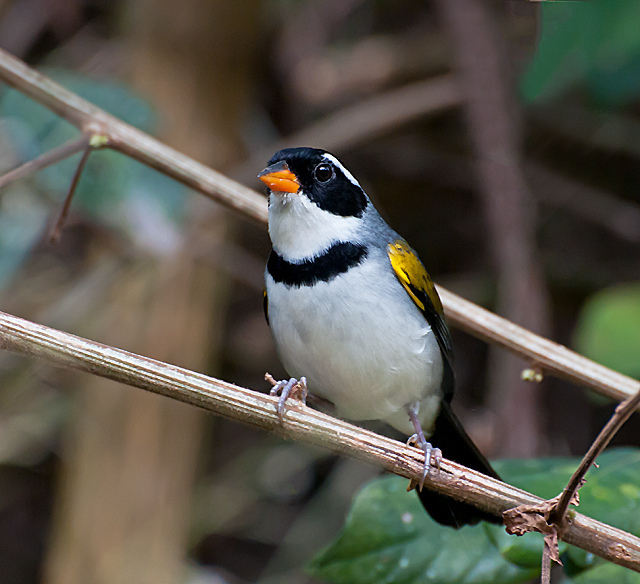
Saffron-billed Sparrow (Arremon flavirostris) by Dario Sanches

Saffron-billed Sparrow (Arremon flavirostris) by Dario Sanches

How does this tie in with birds? We know that the Lord knows the birds because the Word tells us that not a one falls without His knowledge.

I know all the birds of the mountains, And the wild beasts of the field are Mine. (Psalms 50:11 NKJV)

Consider the ravens, for they neither sow nor reap, which have neither storehouse nor barn; and God feeds them. Of how much more value are you than the birds? (Luke 12:24 NKJV)

Who teaches us more than the beasts of the earth, And makes us wiser than the birds of heaven?’ (Job 35:11 NKJV)

Are not two little sparrows sold for a penny? And yet not one of them will fall to the ground without your Father’s leave (consent) and notice. (Matthew 10:29 AMP)

If the Lord knows every birds need, cares about them and knows when they fall, do you not think we are noticed? He knows all of our names and if you know Him as your personal Saviour, your name has been written in the Book of Life.

Gospel Message

More Birds of the Bible

*

Birds of the Bible – Shelter in the Storm

Under His Wings - ( Male Pink-necked Green Pigeon by Rik Seet)

Under His Wings – ( Male Pink-necked Green Pigeon by Rik Seet)

Be merciful to me, O God, be merciful to me! For my soul trusts in You; And in the shadow of Your wings I will make my refuge, Until these calamities have passed by. (Psalms 57:1 NKJV)

In our devotions this morning, we read Psalm 57. The first verse caught my attention because of the shelter from the wings of a bird. Also, I just received again the above picture in an e-mail. Only about the 30th time I have received it. Apparently it is as precious to others as it is to me.

With the Hurricane – Superstorm Sandy just passing by the last few days, this is a good time to remember to put and keep our trust in the Lord.

The beginning of that verse has this title attached: “To the Chief Musician. Set to “Do Not Destroy.” a Michtam of David When He Fled from Saul into the Cave.” David was trying to hide from Saul, just as those up north have been trying to hide from that storm.

“David took refuge under the shelter of God’s wings. He stood “steadfast,” a term indicating firmness, certainty, and determination (v.7). His faith was not blown about by the wind. He clung tenaciously to God. That is why today’s psalm spends more time on the character off God than on the writer’s circumstances.’ (Today in the Word, Day 16, Psalms)

My heart is steadfast, O God, my heart is steadfast; I will sing and give praise. (Psalms 57:7 NKJV)

Another quote, “the prayer (vv 1-4) emphasizes God’s character. He is merciful, protecting, caring, just, and faithful. The enemy may be “ravenous beasts,” but the psalmist can hide beneath His wings as a chick hides beneath a mother bird.”

Be merciful to me, O God, be merciful to me! For my soul trusts in You; And in the shadow of Your wings I will make my refuge, Until these calamities have passed by. I will cry out to God Most High, To God who performs all things for me. He shall send from heaven and save me; He reproaches the one who would swallow me up. Selah. God shall send forth His mercy and His truth. My soul is among lions; I lie among the sons of men Who are set on fire, Whose teeth are spears and arrows, And their tongue a sharp sword.  (Psalms 57:1-4 NKJV)

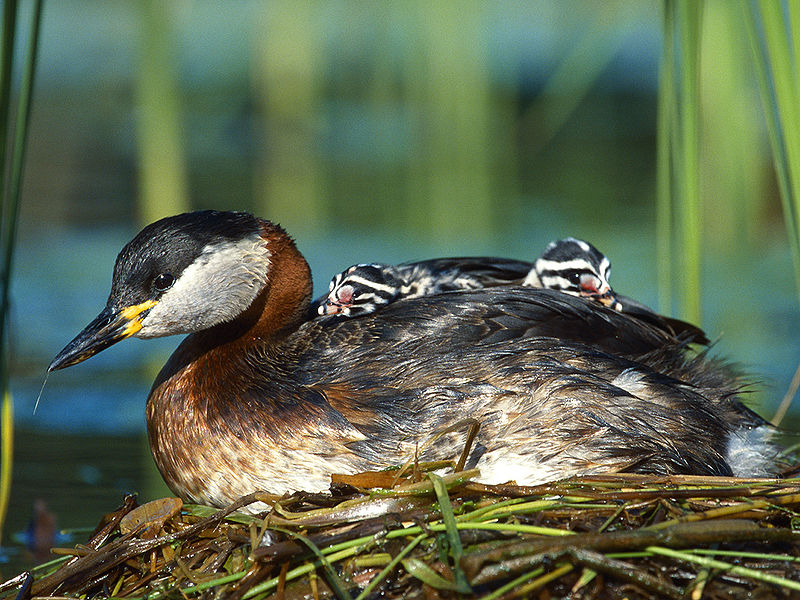
Great Crested Grebe (Podiceps cristatus) babies ©WikiC (Lukasz_Lukasik)

Great Crested Grebe (Podiceps cristatus) babies ©WikiC (Lukasz_Lukasik)

Verses 5 and 11 “focuses our attention on God’s chief attribute–His glory and worthiness to be worshiped”

Be exalted, O God, above the heavens; Let Your glory be above all the earth. (Psalms 57:5 NKJV)

Our prayers and thoughts are with those going through this storm. We have been there in the midst of hurricanes before (Andrew, Charlie, Jean, Frances and those that passed near) and we know it is hard, but there is always a peace that only the Lord can give to get you through. Look to Him.

Wordless Birds

Birds of the Bible

*

Birds of the Bible – The Common Ostrich


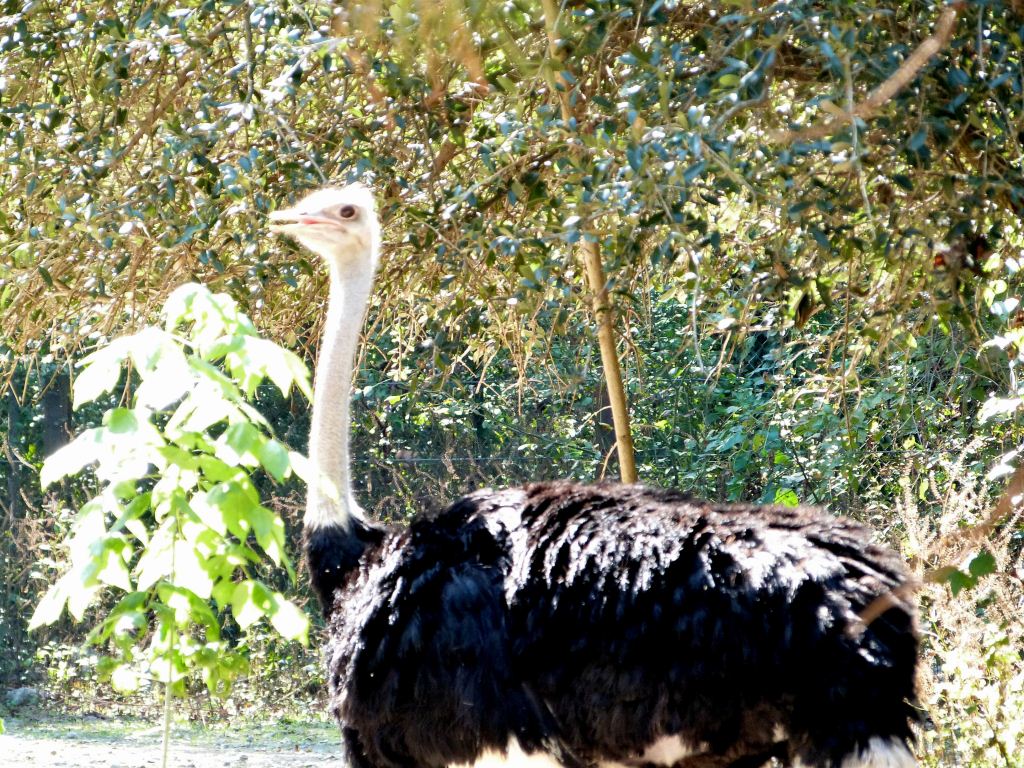
Common Ostrich (Struthio camelus) at Riverbanks Zoo SC by Lee

Common Ostrich (Struthio camelus) at Riverbanks Zoo SC by Lee

Dan and I just recently were on vacation and stopped by the Riverbanks Zoo and Gardens in Columbia, SC. I have see Ostriches before, but it has been awhile. We see the Emus at Zoo Tampa often, but they are not nearly as tall as the Ostrich. I had forgotten that the Lord had created such a huge bird.

The wings of the ostrich wave proudly, But are her wings and pinions like the kindly stork’s? For she leaves her eggs on the ground, And warms them in the dust; She forgets that a foot may crush them, Or that a wild beast may break them. She treats her young harshly, as though they were not hers; Her labor is in vain, without concern, Because God deprived her of wisdom, And did not endow her with understanding. When she lifts herself on high, She scorns the horse and its rider. (Job 39:13-18 NKJV)

The Ostrich does belong to the Struthionidae Family. Currently there are two; the Common Ostrich (Struthio camelus) and the Somali Ostrich (Struthio molybdophanes). The one we saw was the Common. The Ostrich is the largest bird in the world! They are omnivorous flightless birds but make up for their inability to fly with the powerful legs they possess. These birds were built for speed. That is why the reference to the horse and rider. Ostriches can give a horse competition for at least a burst of speed.

Common Ostrich (Struthio camelus) Foot at Riverbanks Zoo SC by Lee

Common Ostrich (Struthio camelus) Foot back at Riverbanks Zoo SC by Lee

“Ostriches usually weigh from 140–320 lb (63 to 145 kilograms), Ostriches of the East African race (S. c. massaicus) averaged 250 lb (115 kg) in males and 220 lb (100 kg) in females, while the nominate subspecies was found to average 240 lb (111 kg) in unsexed adults. At sexual maturity (two to four years), male ostriches can be from 6 ft 11 in to 9 ft 2 in (2.1 to 2.8 m) in height, while female ostriches range from 5 ft 7 in to 6 ft 7 in (1.7 to 2 m) tall. New chicks are fawn with dark brown spots. During the first year of life, chicks grow about 10 in (25 cm) per month. At one year of age, ostriches weigh around 100 lb (45 kilograms). Their lifespan is up to 40 or 45 years.” (Wikipedia with editing)

Common Ostrich (Struthio camelus) Foot at Riverbanks Zoo SC by Lee

Common Ostrich (Struthio camelus) Foot front at Riverbanks Zoo SC by Lee

I am not sure how tall these were, but they had to be close to 8 feet. As I was observing them, I was trying to remember all that the verses said about them. That is one reason I took pictures of their feet. I knew that their feet and legs helped  them run, but also that those same feet were a danger to their young ones. They do have big feet and with an interesting shape as you can see from the photos.

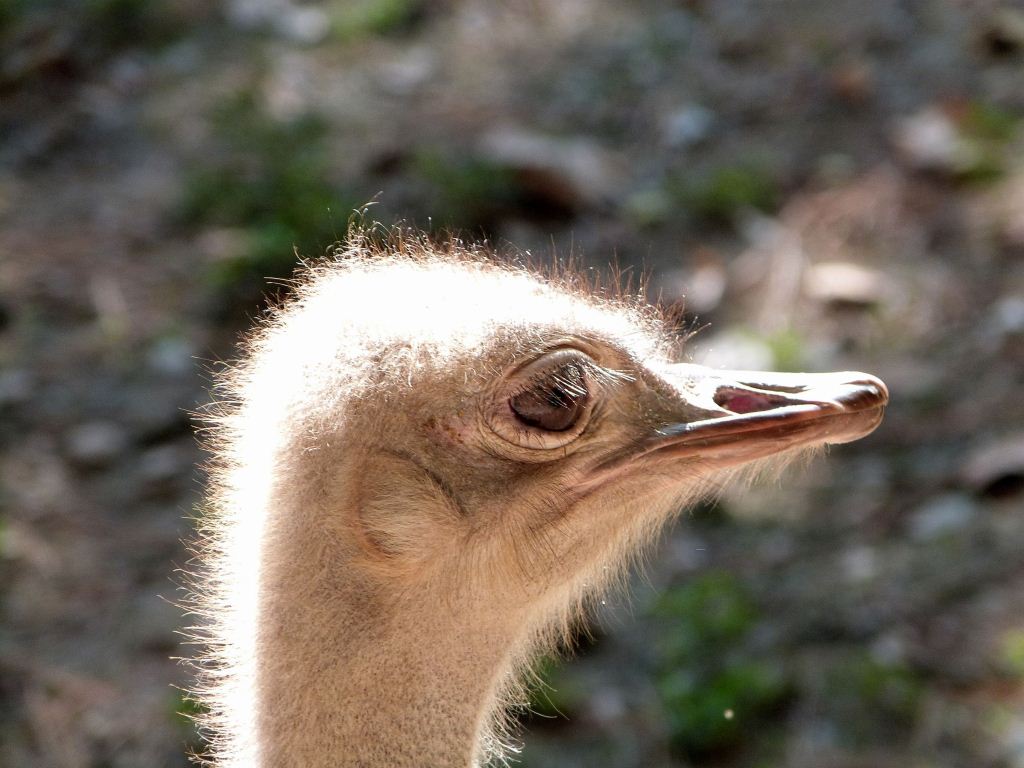
If you notice the size of their head to their body, maybe that is how the Lord “did not endow her with understanding.” The head is interesting though because they are one of the few birds that have eyelashes. They have acute eyesight and hearing, the long neck and legs keep their head up to 9 ft (2.8 m) above the ground, and their eyes are said to be the largest of any land vertebrate – 2.0 in (50 mm) in diameter; they can therefore perceive predators at a great distance. The eyes are shaded from sun light falling from above. However, the head and bill are relatively small for the birds’ huge size”

Common Ostrich (Struthio camelus) Head at Riverbanks Zoo SC by Lee

Common Ostrich (Struthio camelus) Head at Riverbanks Zoo SC by Lee

Oh, sing to the LORD a new song! Sing to the LORD, all the earth. Sing to the LORD, bless His name; Proclaim the good news of His salvation from day to day. Declare His glory among the nations, His wonders among all peoples. For the LORD is great and greatly to be praised; He is to be feared above all gods. (Psalms 96:1-4 NKJV)

Links:

Birds of the Bible – Ostrich

Bible Birds – Ostrich

Struthionidae – Ostriches

Ostrich – Creation Wiki

Ostrich – Wikipedia

Ostrich – The Largest Bird with the Biggest Eyes

*

The Robins Come To The Rescue

THE ROBINS COME TO THE RESCUE


Saving the Little Birds from Danger.

Saving the Little Birds from Danger.


The honeysuckles were beginning to bud. Already the humming-birds were hovering near and had built a nest right in the heart of the vine. This vine was in a nice old-fashioned garden, but near by there was a vacant lot which was very swampy.

“You know the garden by the vacant lot?” began daddy.

“Yes,” replied both children, “are you going to tell us a story about that garden?”

“I am going to tell you,” said daddy, “about the mother humming-bird whose little ones were attacked by a cruel snake when they were rescued by the brave robins.

“The snake had come over from the vacant field and had crawled up the honeysuckle vine as the mother humming-bird had gone off for some food. Some robins hovering near had seen the awful snake. They had cried out in terror and had flown over to the nest.

“The mother humming-bird heard the cries and hurried back, but the robins had frightened off the snake. The snake was not a very large one, and really he had been frightened by all the noise the robins had made, and when he saw so many birds flying toward him he got away very quickly.

“The mother humming-bird got back just as the snake was leaving the nest.

“She couldn’t thank the robins enough for flying to the rescue and saving her beloved little ones, but the robins didn’t want any thanks. They were thankful, too, that the dear little birds had been saved, for birds are very loyal to one another and will risk any danger to save each other.”

“I am so glad,” said Evelyn, “that the little humming-birds were saved, for I love to see them having such a good time in the honeysuckle vines, and the more there are of them the nicer it makes the summer seem.”

“It was brave of the robins to come to the rescue, though, wasn’t it, daddy?”

“Indeed it was,” said daddy; “but almost all animals and birds will do anything they can to help one another, and they seem to forget that there is such a thing as being afraid if they see any creature in danger or distress.

“After the mother humming-bird had recovered from the awful fright, and after the little ones had shown that they were perfectly well and strong, with no ill effects from their fright, the mother humming-bird invited the robins to partake of the delicious meal she had succeeded in getting before the cries came from the robins.”

Daddys Bedtime Story Images (34)

“THE MOTHER HUMMING-BIRD HURRIED BACK.”


Lee’s Addition:

Then shalt thou walk in thy way safely, and thy foot shall not stumble. (Pro 3:23)

Did the Robin brag about what they did? No. Was the Humming-bird thankful? Yes. Were they friends, yes. What can we learn from this story?

We should be willing to watch out for our friends and we should not forget to appreciate and thank those who do things for us. Also, the Lord said that He knows about the birds (Sparrows) and cares about them and us. The Lord cares more about you than the birds.

Are not five sparrows sold for two farthings, and not one of them is forgotten before God? But even the very hairs of your head are all numbered. Fear not therefore: ye are of more value than many sparrows. (Luk 12:6-7)

*

Another Bird Tales

From

Daddy’s Bedtime Bird Stories – Gutenberg ebooks

By

Mary Graham Bonner

With four illustrations in color by
Florence Choate and Elizabeth Curtis

Daddys Bedtime Story Images


These stories first appeared in the American Press Association Service and the Western Newspaper Union.


Many of the sketches in this volume are the work of Rebecca McCann, creator of the “Cheerful Cherub,” etc.

Daddy's Bedtime Bird Stories by Mary Graham Bonner - 1917

*
Daddy’s Bedtime Bird Stories by Mary Graham Bonner – 1917

*

Links:

Painted Bunting (Passerina ciris) ©©Flickr


  Bird Tales


  Daddy’s Bedtime Bird Stories


Spanish Sparrow (Passer Hispaniolensis) female ©WikiC


  Wordless Birds


*

American Robin (Turdus migratorius) eating by Jim Fenton


  Turdidae – Thrushes Family


*

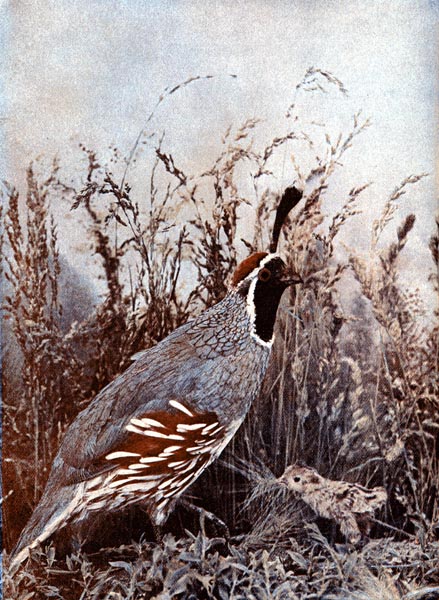
Vol 2 #2 – Gambel’s Partridge

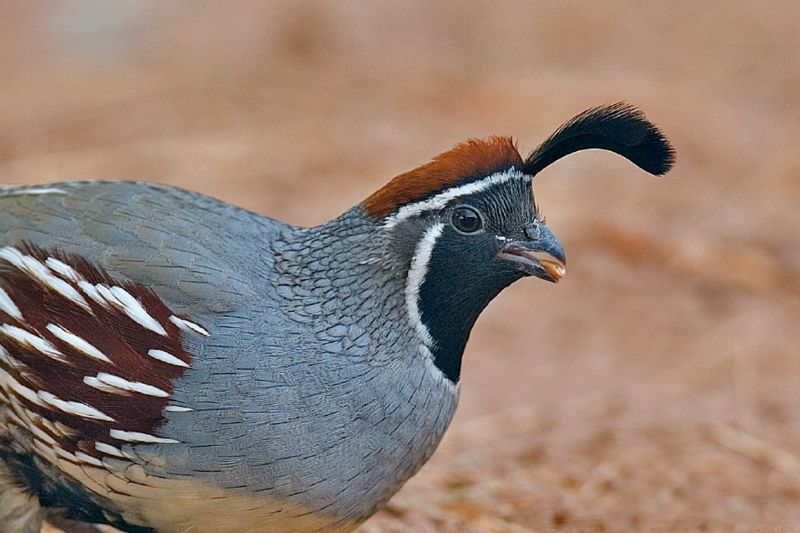
Gambel's Quail (Callipepla gambelii)

Gambel’s Partridge by Birds Illustrated by Color Photography

From col. F. M. Woodruff.

GAMBEL’S PARTRIDGE.

imgg

AMBEL’S PARTRIDGE, of which comparatively little is known, is a characteristic game bird of Arizona and New Mexico, of rare beauty, and with habits similar to others of the species of which there are about two hundred. Mr. W. E. D. Scott found the species distributed throughout the entire Catalina region in Arizona below an altitude of 5,000 feet. The bird is also known as the Arizona Quail.

The nest is made in a depression in the ground sometimes without any lining. From eight to sixteen eggs are laid. They are most beautifully marked on a creamy-white ground with scattered spots and blotches of old gold, and sometimes light drab and chestnut red. In some specimens the gold coloring is so pronounced that it strongly suggests to the imagination that this quail feeds upon the grains of the precious metal which characterizes its home, and that the pigment is imparted to the eggs.

After the nesting season these birds commonly gather in “coveys” or bevies, usually composed of the members of but one family. As a rule they are terrestrial, but may take to trees when flushed. They are game birds par excellence, and, says Chapman, trusting to the concealment afforded by their dull colors, attempt to avoid detection by hiding rather than by flying. The flight is rapid and accompanied by a startling whirr, caused by the quick strokes of their small, concave, stiff-feathered wings. They roost on the ground, tail to tail, with heads pointing outward; “a bunch of closely huddled forms—a living bomb whose explosion is scarcely less startling than that of dynamite manufacture.”

The Partridge is on all hands admitted to be wholly harmless, and at times beneficial to the agriculturist. It is an undoubted fact that it thrives with the highest system of cultivation, and the lands that are the most carefully tilled, and bear the greatest quantity of grain and green crops, generally produce the greatest number of Partridges.

Summary:

GAMBEL’S PARTRIDGE.Callipepla gambeli.

Range—Northwestern Mexico, Arizona, New Mexico, southern Utah, and western Utah and western Texas.

Nest—Placed on the ground, sometimes without any lining.

Eggs—From eight to sixteen.


Gambel's Quail (Callipepla gambelii) by S Slayton

Gambel’s Quail (Callipepla gambelii) by S Slayton

Lee’s Addition:

Partridges are mentioned in two verses, thus making it a Bible Bird. Of course, the Gambel’s is not mentioned, only his family. They belong to the Galliformes order and are now called the Gambel’s Quail. They are in the Odontophoridae – New World Quail Family along with 33 other species (3.1 IOC).

Now therefore, let not my blood fall to the earth away from the presence of the LORD, for the king of Israel has come out to seek a single flea like one who hunts a partridge in the mountains. (1 Samuel 26:20 ESV)

Like the partridge that gathers a brood that she did not hatch, so is he who gets riches but not by justice; in the midst of his days they will leave him, and at his end he will be a fool. (Jeremiah 17:11 ESV)

Since they are now known as Quails, that species also appears in Scripture four times. Exodus 16:13, Numbers 11:31-32, and Psalms 105:40 all mention quail as a provision for His people. We were privileged to see the Gambel’s Quail in California in 1999. They are so neat walking around with that top knot bobbing along.

In the evening quail came up and covered the camp, and in the morning dew lay around the camp. (Exodus 16:13 ESV)

Then a wind from the LORD sprang up, and it brought quail from the sea and let them fall beside the camp, about a day’s journey on this side and a day’s journey on the other side, around the camp, and about two cubits above the ground. And the people rose all that day and all night and all the next day, and gathered the quail. Those who gathered least gathered ten homers. And they spread them out for themselves all around the camp. (Numbers 11:31-32 ESV)

They asked, and he brought quail, and gave them bread from heaven in abundance. (Psalms 105:40 ESV)

Gambel's Quail (Callipepla gambelii) ©WikiC

Gambel’s Quail (Callipepla gambelii) ©WikiC

“The Gambel’s Quail, Callipepla gambelii, is a small ground-dwelling bird in the New World quail family. It inhabits the desert regions of Arizona, California, Colorado, New Mexico, Nevada, Utah, Texas, and Sonora; also New Mexico-border Chihuahua and the Colorado River region of Baja California. The Gambel’s quail is named in honor of William Gambel, a 19th century naturalist and explorer of the Southwestern United States.” (Wikipedia)

*

Birds Illustrated by Color Photography – Revisited – Introduction

The above article is the first article in the monthly serial that was started in January 1897 “designed to promote Knowledge of Bird-Live.” These include Color Photography, as they call them, today they are drawings. There are at least three Volumes that have been digitized by Project Gutenberg.

To see the whole series of – Birds Illustrated by Color Photography – Revisited

*

(Information from Wikipedia and other internet sources)

Next Article – The Yellow Warbler

The Previous Article – To A Water-Fowl

ABC’s Of The Gospel

Links:

Odontophoridae – New World Quail Family

GALLIFORMES – Fowl, Quail, Guans, Currasows, Megapodes Order

Gambel’s Quail – Wikipedia

Gambel’s Quail – All About Birds

*


Vol 2 #2 – To A Water-Fowl

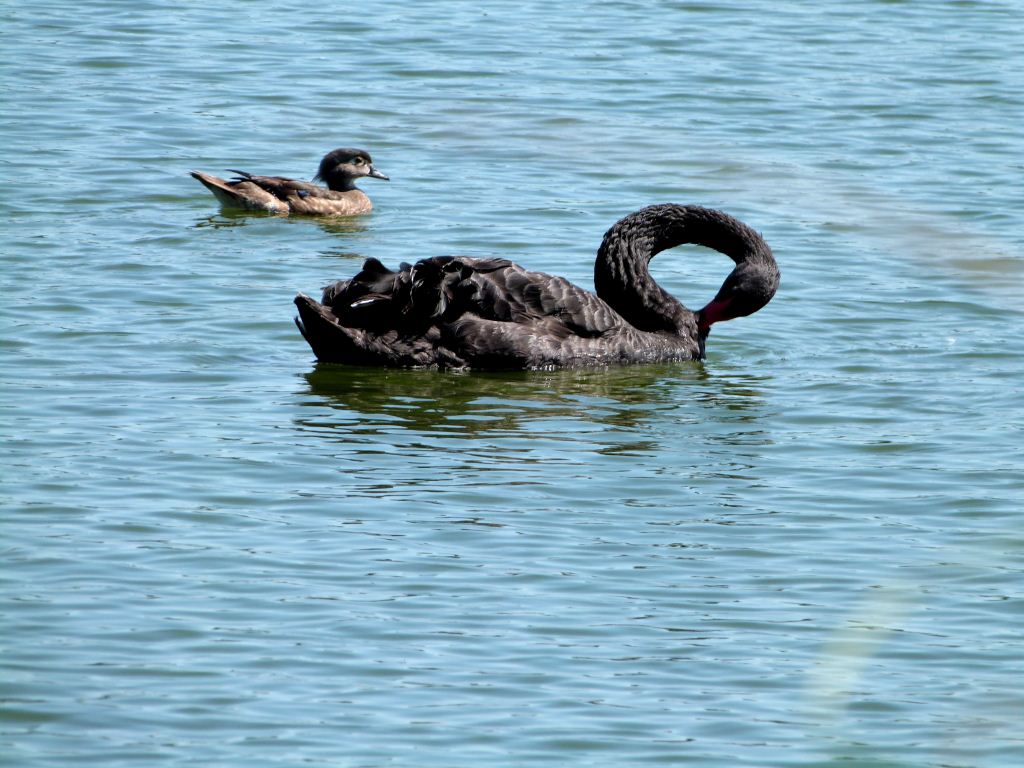
Black Swan and Wood Duck female - Lake Morton 6-28-12 by Lee

Black Swan and Wood Duck female

TO A WATER-FOWL

Whither, ’midst falling dew
While glow the heavens with the last steps of day,
Far through their rosy depths dost thou pursue
Thy solitary way?

Vainly the fowler’s eye
Might mark thy distant flight to do thee wrong,
As, darkly painted on the crimson sky,
Thy figure floats along.

Seek’st thou the plashy brink
Of weedy lake, or marge of river wide,
Or where the rocky billows rise and sink
On the chafed ocean side.

There is a Power whose care
Teaches thy way along that pathless coast—
The desert and illimitable air—
Lone wandering, but not lost.

All day thy wings have fanned,
At that far height, the cold thin atmosphere,
Yet stoop not, weary, to the welcome land
Though the dark night is near.

And soon that toil shall end;
Soon shalt thou find a summer home, and nest,
And scream among thy fellows; reeds shall bend,
Soon o’er thy sheltered nest.

Thou’rt gone, the abyss of heaven
Hath swallowed up thy form; yet on my heart
Deeply has sunk the lesson thou hast given,
And shall not soon depart.

He who from zone to zone,
Guides through the boundless sky thy certain flight,
In the long way that I must tread alone,
Will lead my steps aright.

William Cullen Bryant.


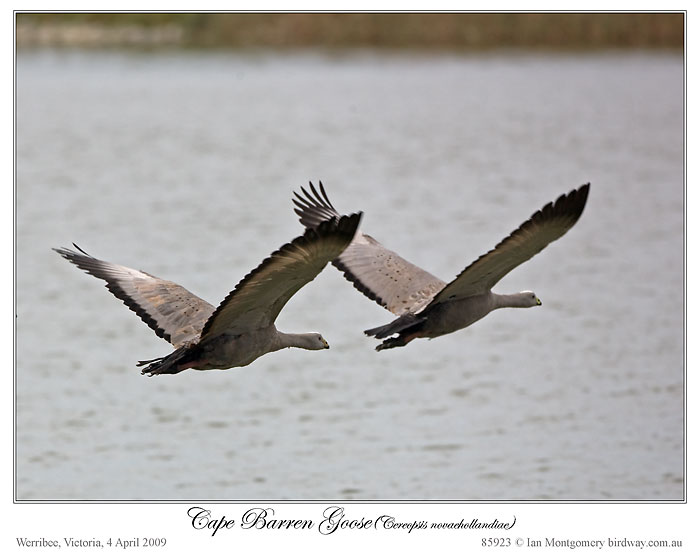
Cape Barren Goose (Cereopsis novaehollandiae) by Ian

Cape Barren Goose (Cereopsis novaehollandiae) by Ian

Lee’s Addition:

Storks know when to fly south. So do doves, swifts and thrushes. But my people do not know what I require them to do. (Jeremiah 8:7 NIrV)

“But now ask the beasts, and they will teach you; And the birds of the air, and they will tell you; (Job 12:7 NKJV)

Wikipedia say this of Waterfowl They “are certain wildfowl of the order Anseriformes, especially members of the family Anatidae, which includes ducks, geese, and swans.
They are strong swimmers with medium to large bodies. They have historically been an important food source, and continue to be hunted as game, or raised as poultry for meat and eggs. The domestic duck is sometimes kept as a pet.

Some definitions of the term ‘waterfowl’ include the saltwater shorebirds or waders, gulls, pelicans, and herons, as well as seabirds such as the albatross, but ‘fowl’ especially refers to birds used by humans for game.

*

Birds Illustrated by Color Photography – Revisited – Introduction

The above article is the first article in the monthly serial that was started in January 1897 “designed to promote Knowledge of Bird-Live.” These include Color Photography, as they call them, today they are drawings. There are at least three Volumes that have been digitized by Project Gutenberg.

To see the whole series of – Birds Illustrated by Color Photography – Revisited

*

(Information from Wikipedia and other internet sources)

Next Article –  Gambel’s Partridge

The Previous Article – The Turkey Vulture

Wordless Birds

Links:

Anseriformes Order

Anatidae Family

*

Vol 2 #2 – The Turkey Vulture

Turkey Vulture Tree at Saddle Creek by Lee

Turkey Vulture Tree at Saddle Creek by Lee

THE TURKEY VULTURE.

This bird is found mostly in the southern states. Here he is known by the more common name of Turkey Buzzard.

He looks like a noble bird but he isn’t. While he is well fitted for flying, and might, if he tried, catch his prey, he prefers to eat dead animals.

The people down south never think of burying a dead horse or cow. They just drag it out away from their homes and leave it to the Vultures who are sure to dispose of it.

It is very seldom that they attack a live animal.

They will even visit the streets of the cities in search of dead animals for food, and do not show much fear of man. Oftentimes they are found among the chickens and ducks in the barn-yard, but have never been known to kill any.

One gentleman who has studied the habits of the Vulture says that it has been known to suck the eggs of Herons. This is not common, though. As I said they prefer dead animals for their food and even eat their own dead.

The Vulture is very graceful while on the wing. He sails along and you can hardly see his wings move as he circles about looking for food on the ground below.

Many people think the Vulture looks much like our tame turkey.

If you know of a turkey near by, just compare this picture with it and you won’t think so.

See how chalk-white his bill is. No feathers on his head, but a bright red skin.

What do you think of the young chick? It doesn’t seem as though he could ever be the large, heavy bird his parent seems to be.

Now turn back to the first page of July “Birds” and see how he differs from the Eagle.

THE TURKEY VULTURE

THE TURKEY VULTURE

From col. F. M. Woodruff.


THE TURKEY VULTURE.

imgt

URKEY BUZZARD is the familiar name applied to this bird, on account of his remarkable resemblance to our common Turkey. This is the only respect however, in which they are alike. It inhabits the United States and British Provinces from the Atlantic to the Pacific, south through Central and most of South America. Every farmer knows it to be an industrious scavenger, devouring at all times the putrid or decomposing flesh of carcasses. They are found in flocks, not only flying and feeding in company, but resorting to the same spot to roost; nesting also in communities; depositing their eggs on the ground, on rocks, or in hollow logs and stumps, usually in thick woods or in a sycamore grove, in the bend or fork of a stream. The nest is frequently built in a tree, or in the cavity of a sycamore stump, though a favorite place for depositing the eggs is a little depression under a small bush or overhanging rock on a steep hillside.

Renowned naturalists have long argued that the Vulture does not have an extraordinary power of smell, but, according to Mr. Davie, an excellent authority, it has been proven by the most satisfactory experiments that the Turkey Buzzard does possess a keen sense of smell by which it can distinguish the odor of flesh at a great distance.

The flight of the Turkey Vulture is truly beautiful, and no landscape with its patches of green woods and grassy fields, is perfect without its dignified figure high in the air, moving round in circles, steady, graceful and easy, and apparently without effort. “It sails,” says Dr. Brewer, “with a steady, even motion, with wings just above the horizontal position, with their tips slightly raised, rises from the ground with a single bound, gives a few flaps of the wings, and then proceeds with its peculiar soaring flight, rising very high in the air.”

The Vulture pictured in the accompanying plate was obtained between the Brazos river and Matagorda bay. With it was found the Black Vulture, both nesting upon the ground. As the nearest trees were thirty or forty miles distant these Vultures were always found in this situation. The birds selected an open spot beneath a heavy growth of bushes, placing the eggs upon the bare ground. The old bird when approached would not attempt to leave the nest, and in the case of the young bird in the plate, the female to protect it from harm, promptly disgorged the putrid contents of her stomach, which was so offensive that the intruder had to close his nostrils with one hand while he reached for the young bird with the other.

The Turkey Vulture is a very silent bird, only uttering a hiss of defiance or warning to its neighbors when feeding, or a low gutteral croak of alarm when flying low overhead.

The services of the Vultures as scavengers in removing offal render them valuable, and almost a necessity in southern cities. If an animal is killed and left exposed to view, the bird is sure to find out the spot in a very short time, and to make its appearance as if called by some magic spell from the empty air.

“Never stoops the soaring Vulture
On his quarry in the desert,
On the sick or wounded bison,
But another Vulture, watching,
From his high aerial lookout,
Sees the downward plunge and follows;
And a third pursues the second,
Coming from the invisible ether,
First a speck, and then a Vulture,
Till the air is dark with pinions.”

Summary:

TURKEY VULTURE.Catharista Atrata.

Range—Temperate America, from New Jersey southward to Patagonia.

Nest—In hollow stump or log, or on ground beneath bushes or palmettos.

Eggs—One to three; dull white, spotted and blotched with chocolate marking.


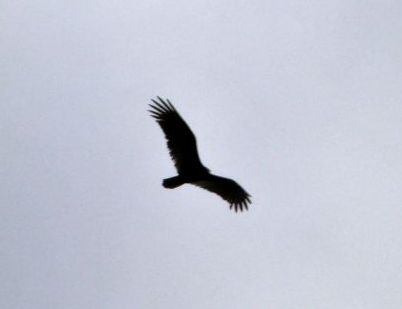
Turkey Vulture flying by - LPP

Turkey Vulture flying by – LPP

Lee’s Addition:

There is a path which no fowl knoweth, and which the vulture’s eye hath not seen: (Job 28:7 KJV)

We see Turkey and Black Vulture quite frequently here. I only disagree with one part of the article. “The Vulture is very graceful while on the wing. He sails along and you can hardly see his wings move as he circles about looking for food on the ground below.”

The way I distinguish the Turkey and Black Vultures apart is that the Black (BV) is steady on the wing, but the Turkey TV) is wobbly on the wing. They have a rocking motion, even when it is not windy. Another way to tell the two apart is the V of the Turkey and the flatter wings of the Black, who also has white on the tips of their wings.

They belong to the Cathartidae – New World Vultures Family. There are 7 Vultures and 2 Condors in that family.

*

Birds Illustrated by Color Photography – Revisited – Introduction

The above article is the first article in the monthly serial that was started in January 1897 “designed to promote Knowledge of Bird-Live.” These include Color Photography, as they call them, today they are drawings. There are at least three Volumes that have been digitized by Project Gutenberg.

To see the whole series of – Birds Illustrated by Color Photography – Revisited

*

(Information from Wikipedia and other internet sources)

Next Article – To A Water-Fowl

The Previous Article – The Evening Grosbeak

ABC’s Of The Gospel

Links:

Birds of the Bible – Vulture

Birds of the Bible – Gathering of Vultures or Eagles

Birds of the Bible – Griffon Vulture

Scripture Alphabet of Animals: The Vulture

Birds of the Bible – Vulture Eyesight

When I Consider! – Turkey Vulture

Turkey Vulture – Wikipedia

*

Vol 2 #2 – The Evening Grosbeak

The Evening Grosbeak by Birds Illustrated by Bird Photography, 1897

The Evening Grosbeak by Birds Illustrated by Bird Photography, 1897

THE EVENING GROSBEAK.

imgh

ANDSOMER birds there may be, but in the opinion of many this visitant to various portions of western North America is in shape, color, and markings one of the most exquisite of the feather-wearers. It has for its habitation the region extending from the plains to the Pacific ocean and from Mexico into British America. Toward the North it ranges further to the east; so that, while it appears to be not uncommon about Lake Superior, it has been reported as occuring in Ohio, New York, and Canada. In Illinois it was observed at Freeport during the winter of 1870 and 1871, and at Waukegan during January, 1873. It is a common resident of the forests of the State of Washington, and also of Oregon. In the latter region Dr. Merrill observed the birds carrying building material to a huge fir tree, but was unable to locate the nest, and the tree was practically inaccessable. Mr. Walter E. Bryant was the first to record an authentic nest and eggs of the Evening Grosbeak. In a paper read before the California Academy of Sciences he describes a nest of this species containing four eggs, found in Yolo county, California. The nest was built in a small live oak, at a height of ten feet, and was composed of small twigs supporting a thin layer of fibrous bark and a lining of horse hair. The eggs are of a clear greenish-ground color, blotched with pale brown. According to Mr. Davie, one of the leading authorities on North American birds, little if any more information has been obtained regarding the nests and eggs of the Evening Grosbeak.

As to its habits, Mr. O. P. Day says, that about the year 1872, while hunting during fine autumn weather in the woods about Eureka, Illinois, he fell in with a number of these Grosbeaks. They were feeding in the tree tops on the seeds of the sugar maple, just then ripening, and were excessively fat. They were very unsuspicious, and for a long time suffered him to observe them. They also ate the buds of the cottonwood tree in company with the Rose-Breasted Grosbeak.

The song of the Grosbeak is singularly like that of the Robin, and to one not thoroughly familiar with the notes of the latter a difference would not at first be detected. There is a very decided difference, however, and by repeatedly listening to both species in full voice it will be discovered more and more clearly. The sweet and gentle strains of music harmonize delightfully, and the concert they make is well worth the careful attention of the discriminating student. The value of such study will be admitted by all who know how little is known of the songsters. A gentleman recently said to us that one day in November the greater part of the football field at the south end of Lincoln Park was covered with Snow Birds. There were also on the field more than one hundred grammar and high school boys waiting the arrival of the football team. There was only one person present who paid any attention to the birds which were picking up the food, twittering, hopping, and flying about, and occasionally indulging in fights, and all utterly oblivious of the fact that there were scores of shouting school boys around and about them. The gentleman called the attention of one after another of ten of the high school boys to the snow birds and asked what they were. They one and all declared they were English Sparrows, and seemed astounded that any one could be so ignorant as not to know what an English Sparrow was. So much for the city-bred boy’s observation of birds.


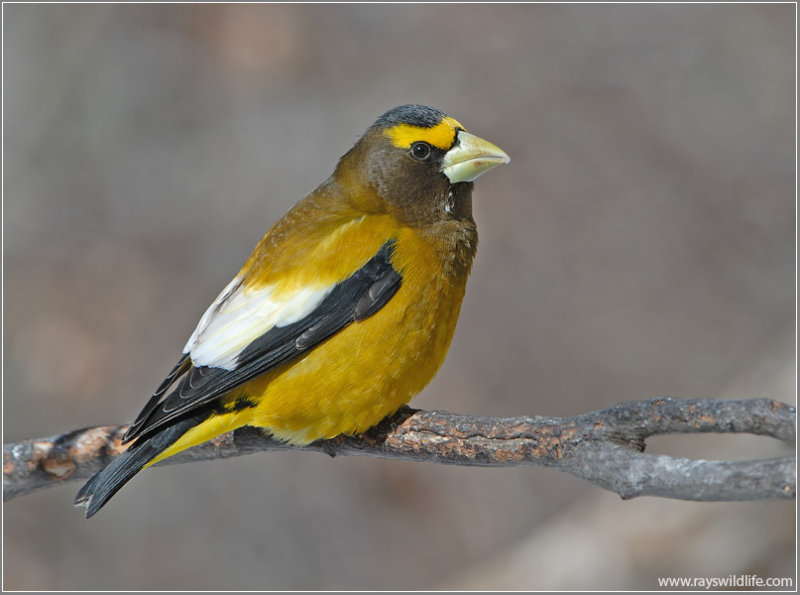
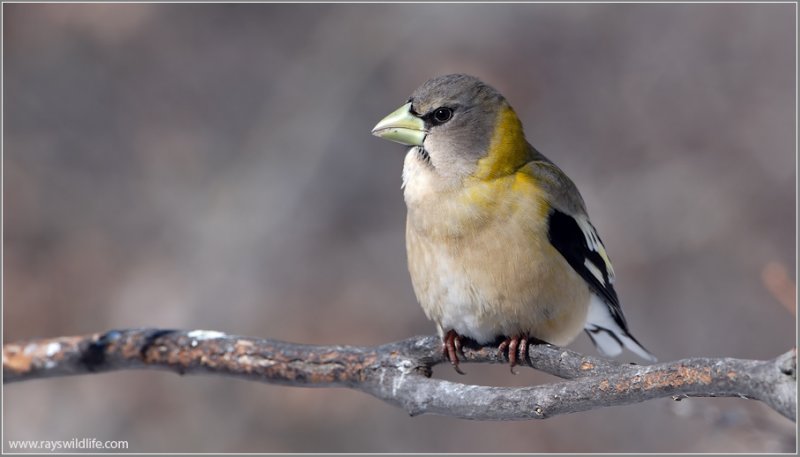
Evening Grosbeak (Hesperiphona vespertina) male by Raymond Barlow

Evening Grosbeak (Hesperiphona vespertina) male by Raymond Barlow

THE EVENING GROSBEAK.

In the far Northwest we find this beautiful bird the year around. During the winter he often comes farther south in company with his cousin, the Rose-Breasted Grosbeak.

What a beautiful sight it must be to see a flock of these birds—Evening Grosbeaks and Rose-Breasted in their pretty plumage.

Grosbeaks belong to a family called Finches. The Sparrows, Buntings, and Crossbills belong to the same family. It is the largest family among birds.

You will notice that they all have stout bills. Their food is mostly grains and their bills are well formed to crush the seeds.

Look at your back numbers of “Birds” and notice the pictures of the other Finches I have named. Don’t you think Dame Nature is very generous with her colors sometimes?

Only a few days ago while strolling through the woods with my field glass, I saw a pretty sight. On one tree I saw a Redheaded Woodpecker, a Flicker, an Indigo Bunting, and a Rose-Breasted Grosbeak. I thought then, if we could only have the Evening Grosbeak our group of colors would be complete.

Have you ever wondered at some birds being so prettily dressed while others have such dull colors?

Some people say that the birds who do not sing must have bright feathers to make them attractive. We cannot believe this. Some of our bright colored birds are sweet singers, and surely many of our dull colored birds cannot sing very well.

Next month you will see the pictures of several home birds. See if dull colors have anything to do with sweet song.


Lee’s Addition:

Evening Grosbeak (Hesperiphona vespertina) female by Raymond Barlow

Evening Grosbeak (Hesperiphona vespertina) female by Raymond Barlow

By awesome deeds you answer us with righteousness, O God of our salvation, the hope of all the ends of the earth and of the farthest seas; the one who by his strength established the mountains, being girded with might; who stills the roaring of the seas, the roaring of their waves, the tumult of the peoples, so that those who dwell at the ends of the earth are in awe at your signs. You make the going out of the morning and the evening to shout for joy. (Psalms 65:5-8 ESV)

What a beautiful bird the Lord created in the Evening Grosbeak. The Grosbeaks are in the Cardinalidae – Grosbeaks, Saltators & Allies Family. There are 17 Grosbeaks in the family and are found in 9 genera. The Evening Grosbeak is in the

The Evening Grosbeak (Coccothraustes vespertinus) is a large finch. In the past, it was treated in a genus of its own as Hesperiphona vespertina, but is now usually placed in the same genus as the Hawfinch of Eurasia.

The breeding habitat is coniferous and mixed forest across Canada and the western mountainous areas of the United States and Mexico. It is an extremely rare vagrant to the British Isles, with just two records so far. The nest is built on a horizontal branch or in a fork of a tree.

The migration of this bird is variable; in some winters, it may wander as far south as the southern U.S.

The Evening Grosbeak is similar in appearance to the Eurasian Hawfinch, both being bulky, heavily built finches with large bills and short tails. The Evening Grosbeak ranges in length from 6.3 to 8.7 in (16 to 22 cm) in length and spans 12 to 14 in (30 to 36 cm) across the wings. In a large sampling of grosbeaks in Pennsylvania during winter, males weighed from 1.37 to 3.04 oz (38.7 to 86.1 g), with an average of 2.1 oz (60 g), while females weighed from 1.52 to 2.59 oz (43.2 to 73.5 g), with an average of 2.07 oz (58.7 g). The adult has a short black tail, black wings and a large pale bill. The adult male has a bright yellow forehead and body; its head is brown and there is a large white patch in the wing. The adult female is mainly olive-brown, greyer on the underparts and with white patches in the wings.

These birds forage in trees and bushes, sometimes on the ground. They mainly eat seeds, berries and insects. Outside of the nesting season they often feed in flocks. Sometimes, they will swallow fine gravel.

The range of this bird has expanded far to the east in historical times, possibly due to plantings of Manitoba maples and other maples and shrubs around farms and the availability of bird feeders in winter.

“Calls from a large flock visiting a feeder” – from xeno-canto

*

Birds Illustrated by Color Photography – Revisited – Introduction

The above article is the first article in the monthly serial that was started in January 1897 “designed to promote Knowledge of Bird-Live.” These include Color Photography, as they call them, today they are drawings. There are at least three Volumes that have been digitized by Project Gutenberg.

To see the whole series of – Birds Illustrated by Color Photography – Revisited

*

(Information from Wikipedia and other internet sources)

Next Article – The Turkey Vulture

The Previous Article – Wilson’s Phalarope

Wordless Birds

Links:

Cardinalidae – Grosbeaks, Saltators & Allies Family

Evening Grosbeak Wikipedia

Evening Grosbeak All About Birds

Evening Grosbeak Sounds – xeno-canto

*

Vol 2 #2 – Wilson’s Phalarope

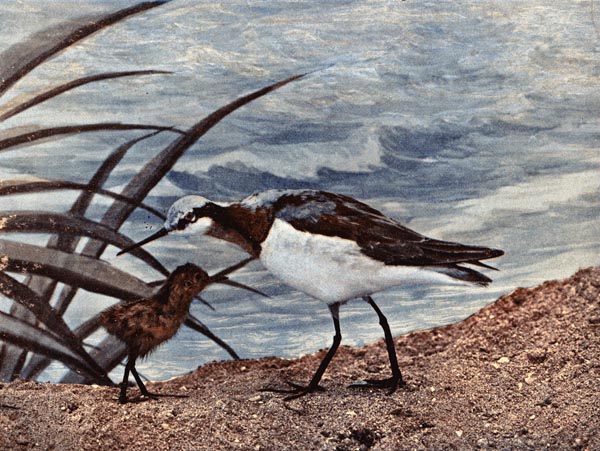
Wilson's Phalarope for Birds Illustrated by Color Photography

Wilson’s Phalarope for Birds Illustrated by Color Photography

WILSON’S PHALAROPE.

imgpERHAPS the most interesting, as it is certainly the most uncommon, characteristic of this species of birds is that the male relieves his mate from all domestic duties except the laying of the eggs. He usually chooses a thin tuft of grass on a level spot, but often in an open place concealed by only a few straggling blades. He scratches a shallow depression in the soft earth, lines it with a thin layer of fragments of old grass blades, upon which the eggs, three or four, are laid about the last of May or first of June. Owing to the low situation in which the nest is placed, the first set of eggs are often destroyed by a heavy fall of rain causing the water to rise so as to submerge the nest. The instinct of self preservation in these birds, as in many others, seems lacking in this respect. A second set, numbering two or three, is often deposited in a depression scratched in the ground, as at first, but with no sign of any lining.

Wilson’s Phalarope is exclusively an American bird, more common in the interior than along the sea coast. The older ornithologists knew little of it. It is now known to breed in northern Illinois, Iowa, Wisconsin, Minnesota, the Dakotas, Utah, and Oregon. It is recorded as a summer resident in northern Indiana and in western Kansas. Mr. E. W. Nelson states that it is the most common species in northern Illinois, frequenting grassy marshes and low prairies, and is not exceeded in numbers even by the ever-present Spotted Sandpiper. While it was one of our most common birds in the Calumet region it is now becoming scarce.

The adult female of this beautiful species is by far the handsomest of the small waders. The breeding plumage is much brighter and richer than that of the male, another peculiar characteristic, and the male alone possesses the naked abdomen. The female always remains near the nest while he is sitting, and shows great solicitude upon the approach of an intruder. The adults assume the winter plumage during July.


Wilson's Phalarope (Phalaropus tricolor) by J Fenton

Wilson’s Phalarope (Phalaropus tricolor) by J Fenton

Lee’s Addition:

Out of the ground the LORD God formed every beast of the field and every bird of the air, and brought them to Adam to see what he would call them. And whatever Adam called each living creature, that was its name. So Adam gave names to all cattle, to the birds of the air, and to every beast of the field. But for Adam there was not found a helper comparable to him. (Genesis 2:19-20 NKJV)

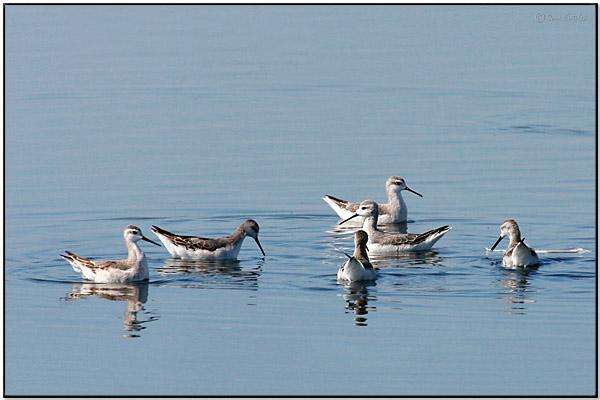
What another fantastically created bird. The Phalaropes belong to the Scolopacidae – Sandpipers, Snipes family. There are 96 species in the family, with 3 of those in the Phalaropus genus; the Wilson’s, Red-necked and Red Phalaropes. Phalarope are sometimes called “wadepipers.” They are especially notable for two things: their unusual nesting behavior (see above), and their unique feeding technique. When feeding, a phalarope will often swim in a small, rapid circle, forming a small whirlpool. This behavior is thought to aid feeding by raising food from the bottom of shallow water. The bird will reach into the center of the vortex with its bill, plucking small insects or crustaceans caught up therein.

The Wilson’s Phalarope, Phalaropus tricolor, is a small wader. This bird, the largest of the phalaropes, breeds in the prairies of North America in western Canada and the western United States. It is migratory, wintering around the central Andes in South America. They are passage migrants through Central America around March/April and again during September/October. The species is a rare vagrant to western Europe.

This species is often very tame and approachable. Its common name commemorates the American ornithologist Alexander Wilson. Sometimes, it is placed in a monotypic genus Steganopus.

Wilson's Phalarope (Phalaropus tricolor) by Daves BirdingPix

Wilson’s Phalarope (Phalaropus tricolor) by Daves BirdingPix

Wilson’s Phalarope is slightly larger than the Red Phalarope at about 9.1 in (23 cm) in length. As are all 3 phalaropes, it is a unique, dainty shorebird with lobed toes and a straight fine black bill. The breeding female is predominantly gray and brown above, with white underparts, a reddish neck and reddish flank patches. The breeding male is a duller version of the female, with a brown back, and the reddish patches reduced or absent. In a study of breeding phalaropes in Saskatchewan Providence in Canada, females were found to average around 10% larger in standard measurements and to weigh around 30% more than the males. Females weighed from 68 to 79 g (2.4 to 2.8 oz), whereas the males average 1.83 oz (51.8 g).

Young birds are grey and brown above, with whitish underparts and a dark patch through the eye. In winter, the plumage is essentially grey above and white below, but the dark eyepatch is always present.

*

Birds Illustrated by Color Photography – Revisited – Introduction

The above article is the first article in the monthly serial that was started in January 1897 “designed to promote Knowledge of Bird-Live.” These include Color Photography, as they call them, today they are drawings. There are at least three Volumes that have been digitized by Project Gutenberg.

To see the whole series of – Birds Illustrated by Color Photography – Revisited

*

(Information from Wikipedia and other internet sources)

Next Article – The Evening Grosbeak

The Previous Article – The Skylark

ABC’s Of The Gospel

Links:

*

Scolopacidae – Sandpipers, Snipes Family

Wilson’s Phalarope Wikipedia

Phalarope – Wikipedia

*