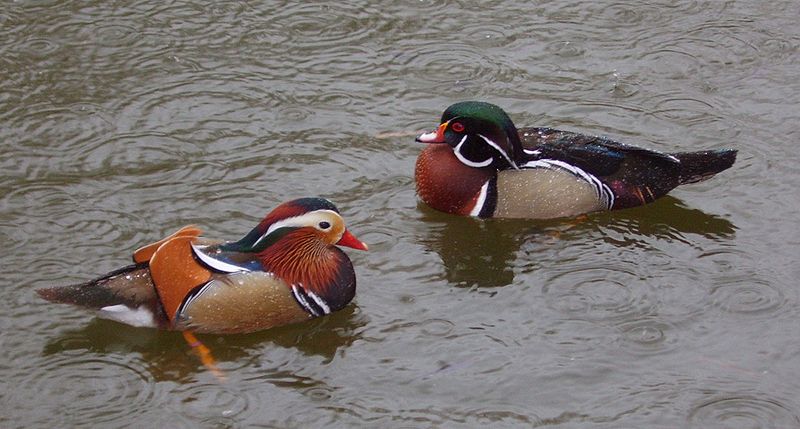
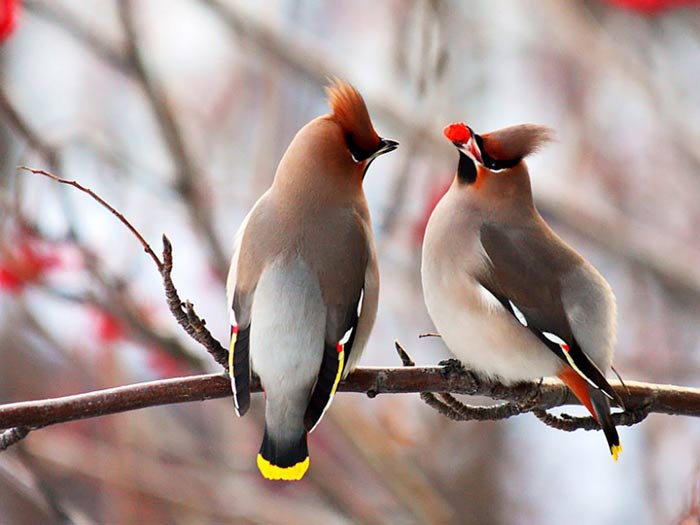
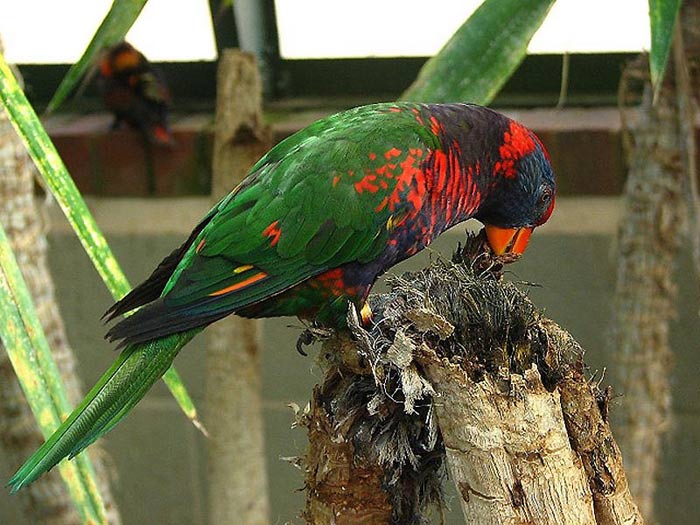
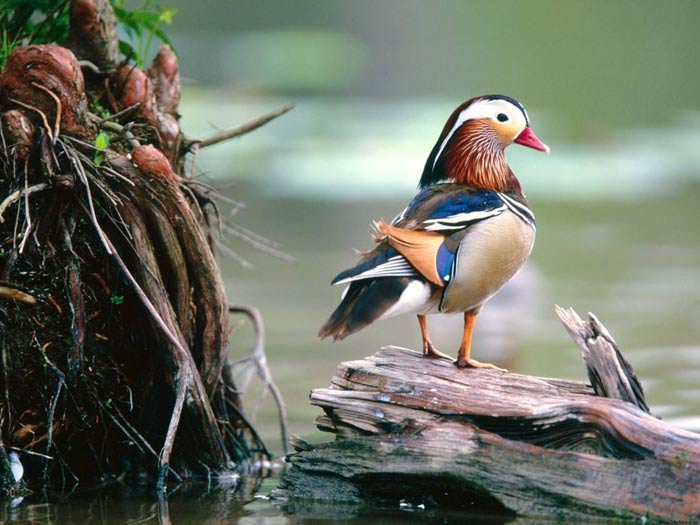
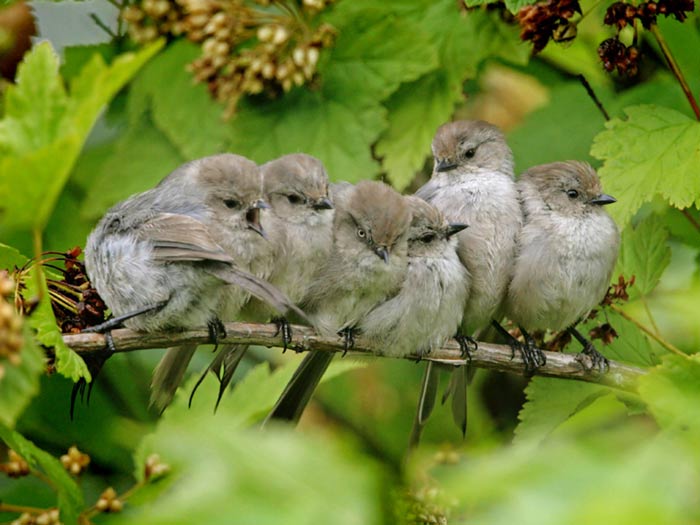
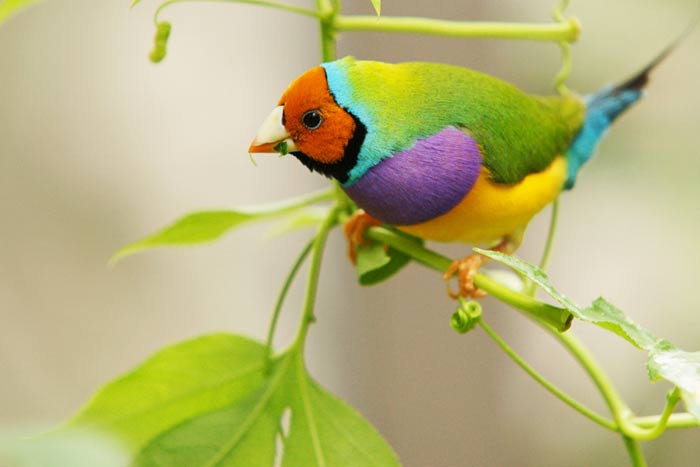
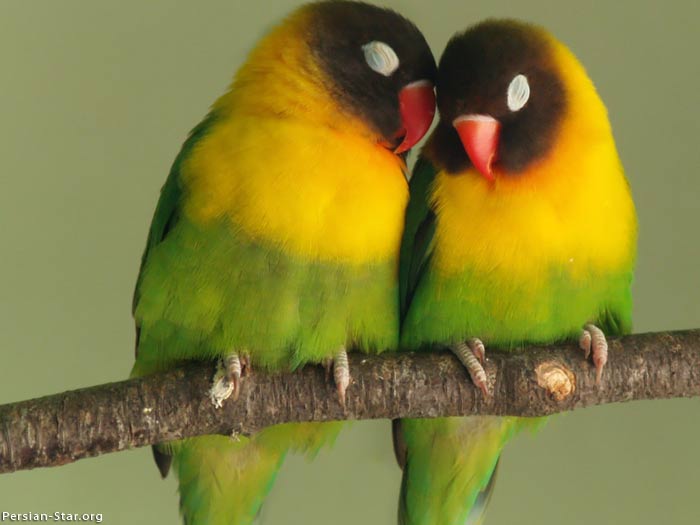
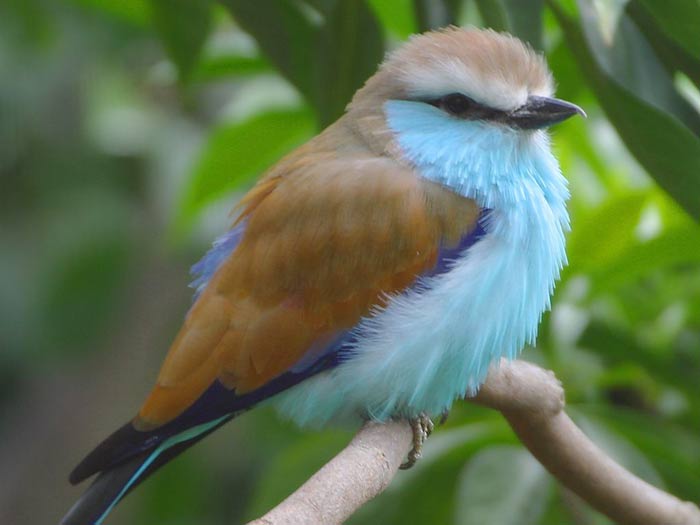
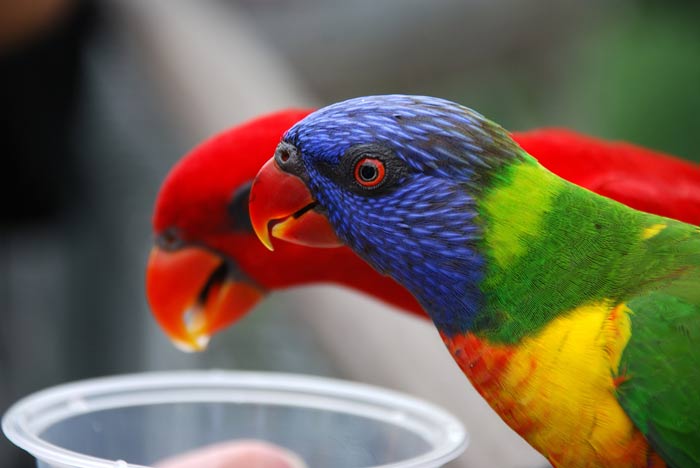
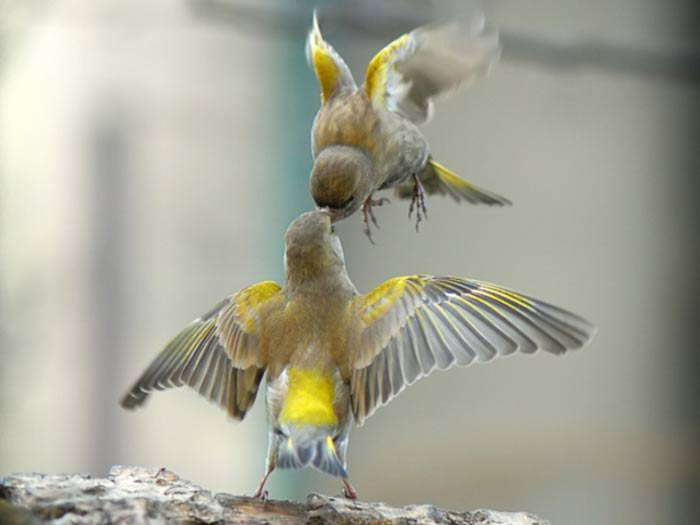
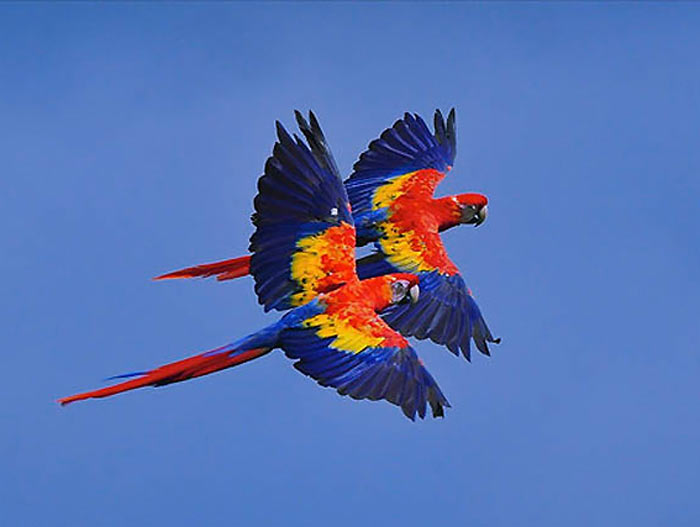
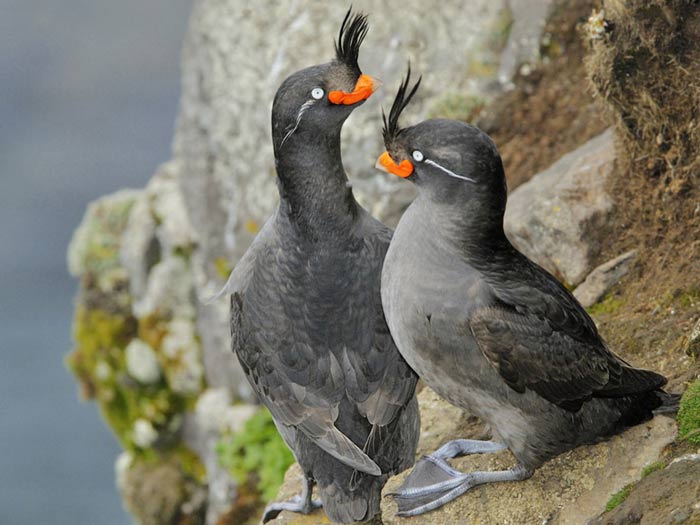
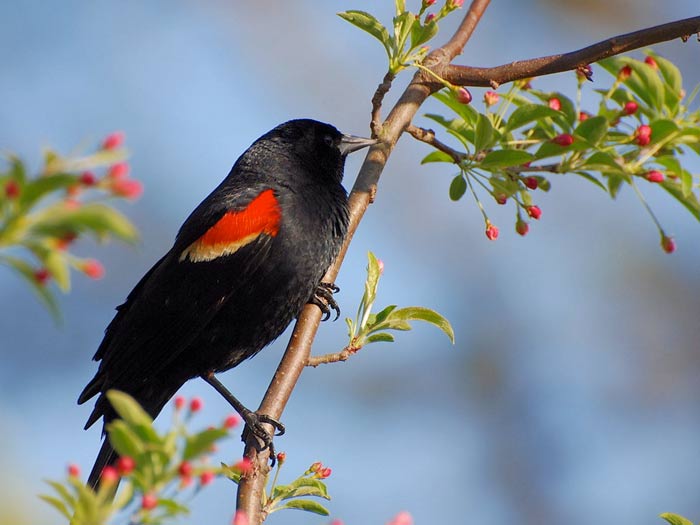
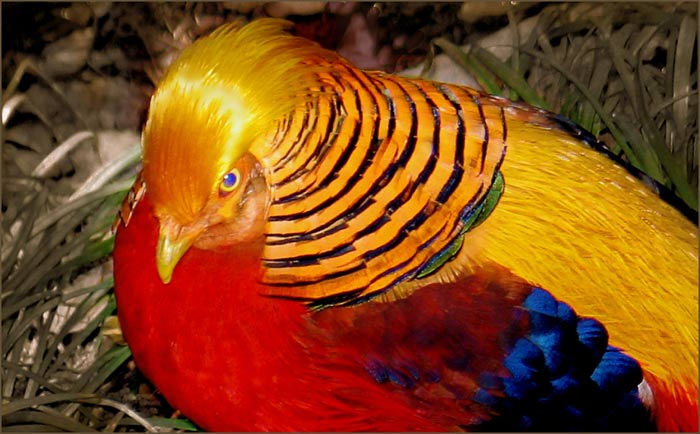
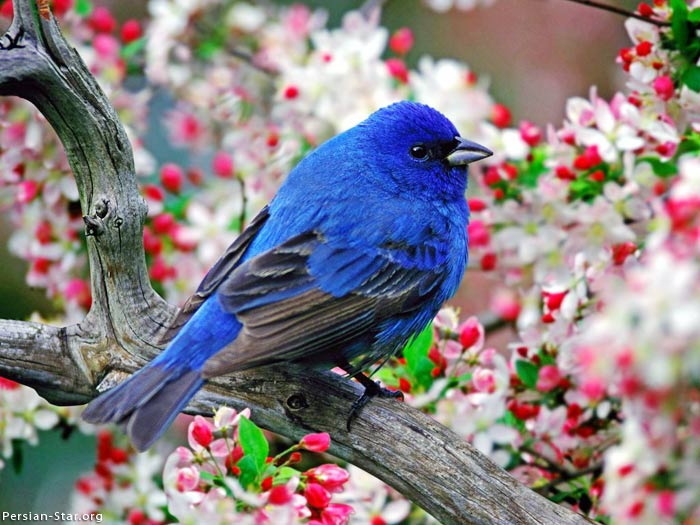
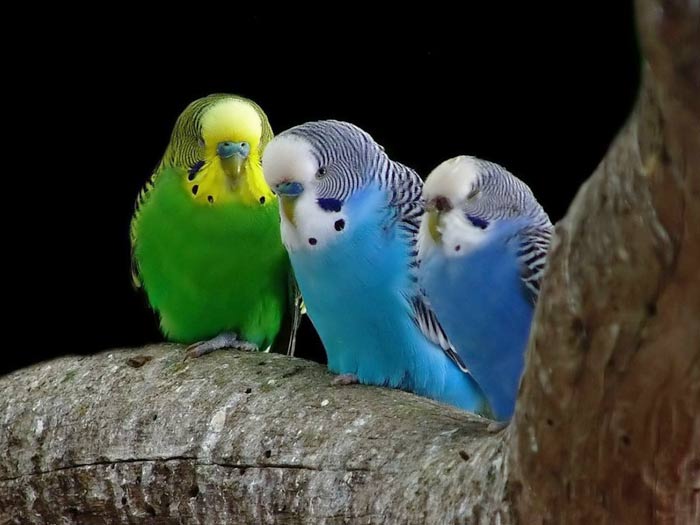
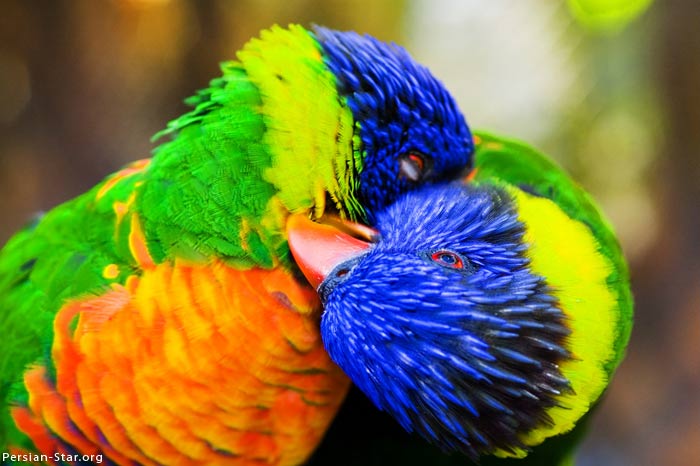
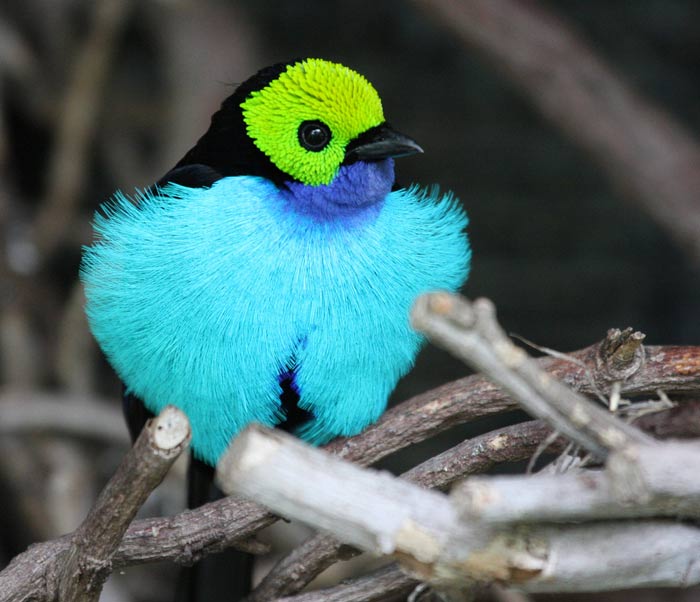
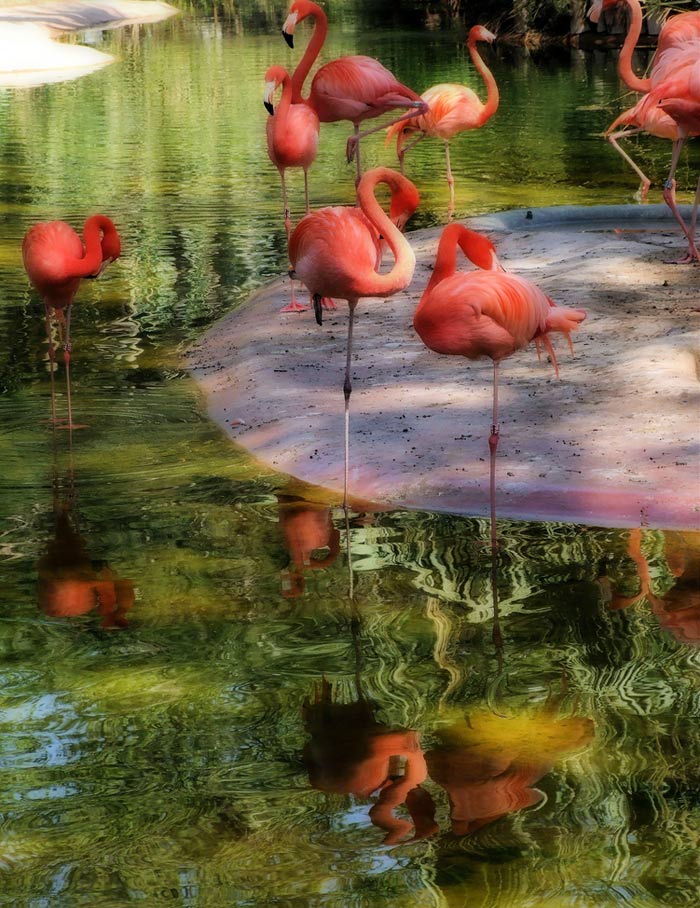
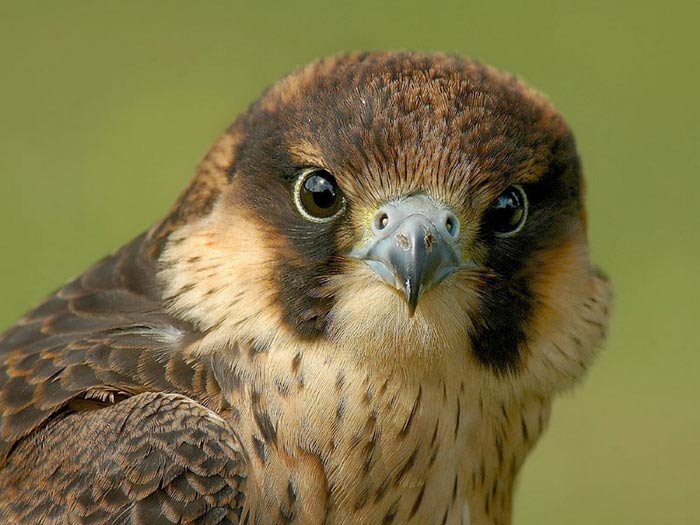
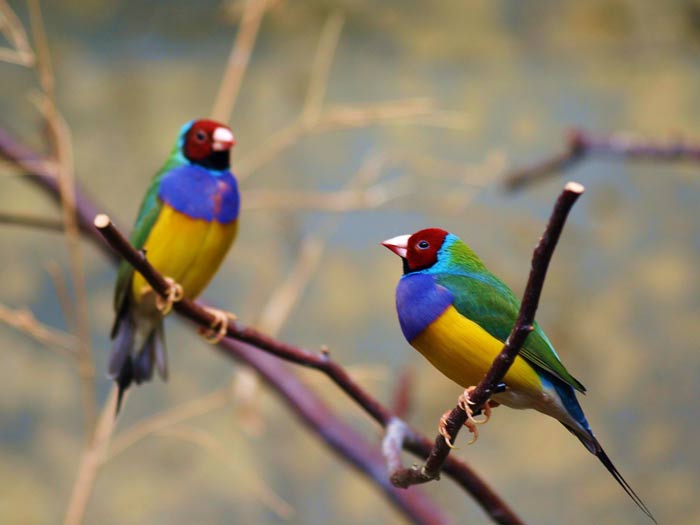
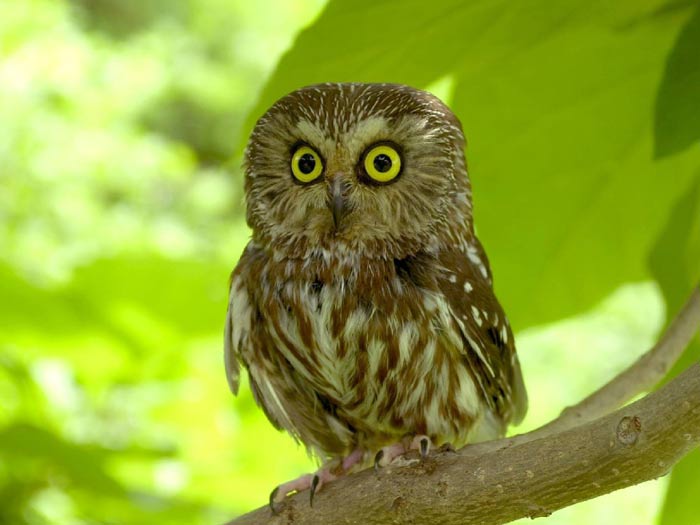
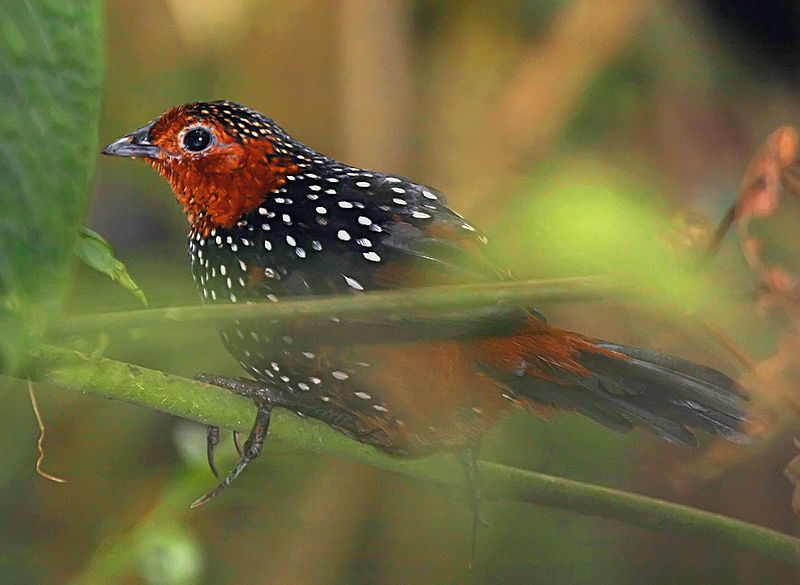
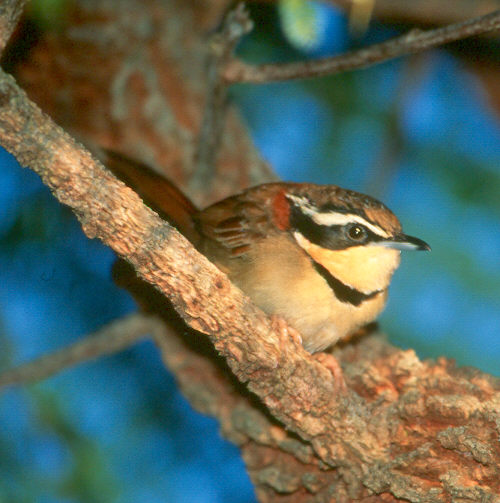
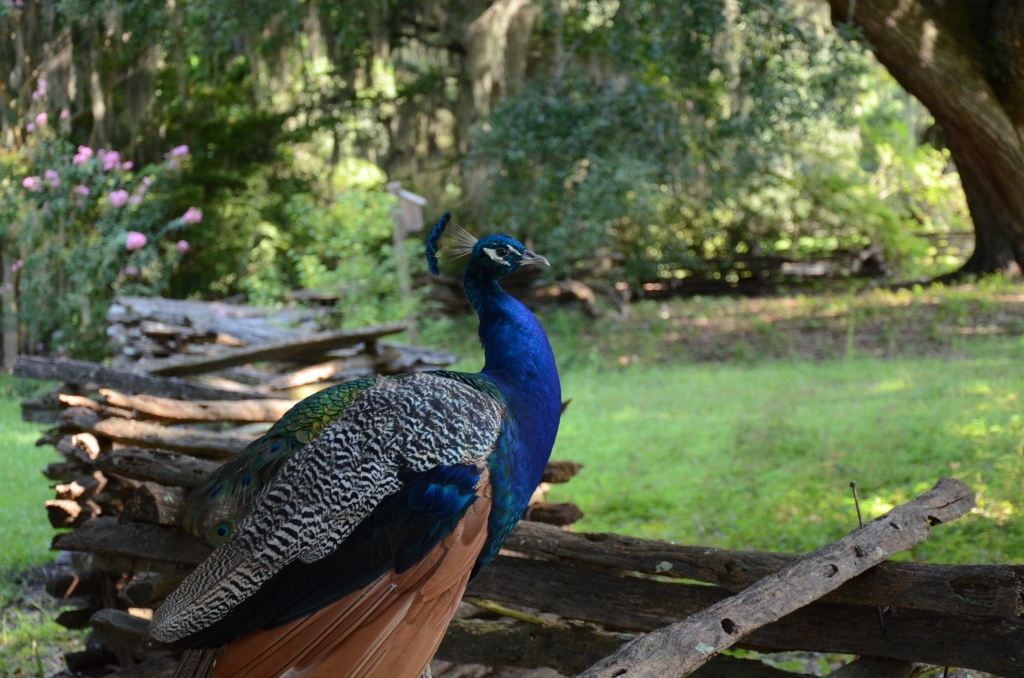
COLOR THAT MAN DID NOT (COULD NOT) CREATE… ONLY THE MASTER CREATOR COULD
Received this in an email and thought I would share it. Not sure of the source of the photos, but absolutely know who the Master Creator was.
So God created great sea creatures and every living thing that moves, with which the waters abounded, according to their kind, and every winged bird according to its kind. And God saw that it was good. And God blessed them, saying, “Be fruitful and multiply, and fill the waters in the seas, and let birds multiply on the earth.” So the evening and the morning were the fifth day. (Genesis 1:21-23 NKJV)
Before the mountains were brought forth, or ever thou hadst formed the earth and the world, even from everlasting to everlasting, thou art God. (Psalms 90:2 KJV)
Hast thou not known? hast thou not heard, that the everlasting God, the LORD, the Creator of the ends of the earth, fainteth not, neither is weary? there is no searching of his understanding. (Isaiah 40:28 KJV)
Since I have been going down the list of Passerines, might as well keep going. Today’s birds are from Gnateaters (Conopophagidae), Tapaculos (Rhinocryptidae), Crescentchests (Melanopareiidae) and part of the Tyrant Flycatchers (Tyrannidae). There are over 400 members in the last family, so will add more later.
As you can see, most of these are fairly small birds and rather non-descript. Their Creator has given them a nice look, but has them protected by letting them blend in with their surroundings. Another show of love for His creation.
The gnateaters are a bird family, consisting of ten small passerine species in two genera, which occur in South and Central America. The members of this family are very closely related to the antbirds and less closely to the antpittas and tapaculos. Due to their remote and dim habitat, gnateaters are a little-studied and poorly known family of birds. They are round, short-tailed, and long-legged birds, about 12–19 cm (5–7½ inches) in length. They are quite upright when standing. Most Conopophaga species have a white tuft behind the eye.
The tapaculos (pronounced ta-pa-COO-lo) are found mainly in South America and with the highest diversity in the Andean regions. Three species (Chocó, Tacarcuna, and the silvery-fronted) are found in southern Central America. Tapaculos are small to medium-sized birds, with a total length ranging from 10–24 cm (4–9½ in). These are terrestrial species that fly only poorly on their short wings. They have strong legs, well-suited to their habitat of grassland or forest undergrowth. The tail is cocked and pointed towards the head, and the name tapaculo possibly derives from Spanish for “cover your behind”.
The crescentchests are birds from South America. The crescentchests range in length from 14 to 16 cm (5.5–6.3 in), in weight from 16 to 23 g (0.56–0.81 oz) and have relatively long tails compared to the tapaculos. The plumage is striking with a distinctive band across the chest that gives the group their name.
Scale-crested Pygmy Tyrant (Lophotriccus pileatus) by Michael Woodruff
The tyrant flycatchers are birds which occur throughout North and South America. They are considered the largest family of birds, with more than 400 species. They are the most diverse avian family in every country in the Americas, except for the United States and Canada. As could be expected from a family this large, the members vary greatly in shape, patterns, size and colors. Most, but not all, species are rather plain, with various hues of brown, gray and white commonplace. Obvious exceptions include the bright red vermilion flycatcher, blue, black, white and yellow many-colored rush-tyrant and some species of tody-flycatchers or tyrants, which are often yellow, black, white and/or rufous.
The smallest family members are the closely related short-tailed pygmy tyrant and black-capped pygmy tyrant. These species reach a total length of 6.5–7 cm (2.5–2.8 in) and a weight of 4–5 grams. By length, they are the smallest passerines on earth, although some species of Old World warblers apparently rival them in their minuscule mean body masses if not in total length. The minuscule size and very short tail of the Myiornis pygmy tyrants often lend them a resemblance to a tiny ball or insect. The largest tyrant flycatcher is the great shrike-tyrant at 29 cm (11.5 in) and 99.2 grams (3.5 oz).
This slideshow requires JavaScript.
Now to him that is of power to stablish you according to my gospel, and the preaching of Jesus Christ, according to the revelation of the mystery, which was kept secret since the world began, But now is made manifest, and by the scriptures of the prophets, according to the commandment of the everlasting God, made known to all nations for the obedience of faith: To God only wise, be glory through Jesus Christ for ever. Amen. Written to the Romans from Corinthus, and sent by Phebe servant of the church at Cenchrea. (Romans 16:25-27 KJV)
Is it a Downy or Hairy Woodpecker? Brevard Zoo by Dan
Drummers and Carpenters
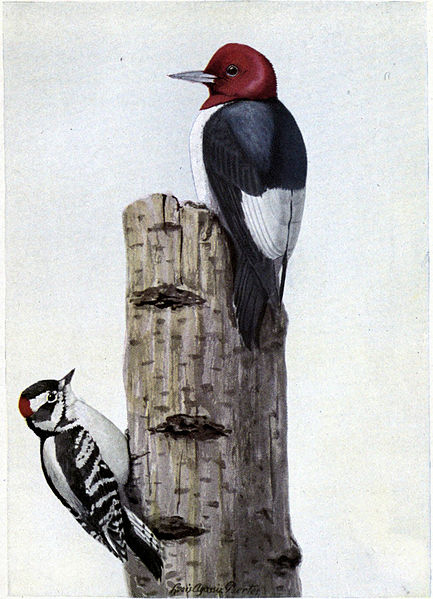
The Downy, Hairy and Red-headed Woodpeckers.
The Burgess Bird Book For Children
*
Listen to the story read.
CHAPTER 11. Drummers and Carpenters.
Peter Rabbit was so full of questions that he hardly knew which one to ask first. But Yellow Wing the Flicker didn’t give him a chance to ask any. From the edge of the Green forest there came a clear, loud call of, “Pe-ok! Pe-ok! Pe-ok!”
“Excuse me, Peter, there’s Mrs. Yellow Wing calling me,” exclaimed Yellow Wing, and away he went. Peter noticed that as he flew he went up and down. It seemed very much as if he bounded through the air just as Peter bounds over the ground. “I would know him by the way he flies just as far as I could see him,” thought Peter, as he started for home in the dear Old Briar-patch. “Somehow he doesn’t seem like a Woodpecker because he is on the ground so much. I must ask Jenny Wren about him.”
It was two or three days before Peter had a chance for a bit of gossip with Jenny Wren. When he did the first thing he asked was if Yellow Wing is a true Woodpecker.
“Certainly he is,” replied Jenny Wren. “Of course he is. Why under the sun should you think he isn’t?”
“Because it seems to me he is on the ground more than he’s in the trees,” retorted Peter. “I don’t know any other Woodpeckers who come down on the ground at all.”
“Tut, tut, tut, tut!” scolded Jenny. “Think a minute, Peter! Think a minute! Haven’t you ever seen Redhead on the ground?”
Peter blinked his eyes. “Ye-e-s,” he said slowly. “Come to think of it, I have. I’ve seen him picking up beechnuts in the fall. The Woodpeckers are a funny family. I don’t understand them.”
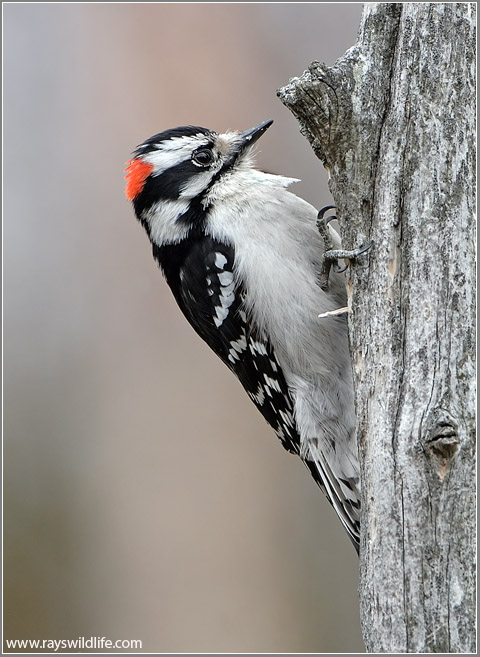
Just then a long, rolling rat-a-tat-tat rang out just over their heads. “There’s another one of them,” chuckled Jenny. “That’s Downy, the smallest of the whole family. He certainly makes an awful racket for such a little fellow. He is a splendid drummer and he’s just as good a carpenter. He made the very house I am occupying now.”
Peter was sitting with his head tipped back trying to see Downy. At first he couldn’t make him out. Then he caught a little movement on top of a dead limb. It was Downy’s head flying back and forth as he beat his long roll. He was dressed all in black and white. On the back of his head was a little scarlet patch. He was making a tremendous racket for such a little chap, only a little bigger than one of the Sparrow family.
“Is he making a hole for a nest up there?” asked Peter eagerly.
“Gracious, Peter, what a question! What a perfectly silly question!” exclaimed Jenny Wren scornfully. “Do give us birds credit for a little common sense. If he were cutting a hole for a nest, everybody within hearing would know just where to look for it. Downy has too much sense in that little head of his to do such a silly thing as that. When he cuts a hole for a nest he doesn’t make any more noise than is absolutely necessary. You don’t see any chips flying, do you?”
“No-o,” replied Peter slowly. “Now you speak of it, I don’t. Is—is he hunting for worms in the wood?”
Jenny laughed right out. “Hardly, Peter, hardly,” said she. “He’s just drumming, that’s all. That hollow limb makes the best kind of a drum and Downy is making the most of it. Just listen to that! There isn’t a better drummer anywhere.”
But Peter wasn’t satisfied. Finally he ventured another question. “What’s he doing it for?”
“Good land, Peter!” cried Jenny. “What do you run and jump for in the spring? What is Mr. Wren singing for over there? Downy is drumming for precisely the same reason—happiness. He can’t run and jump and he can’t sing, but he can drum. By the way, do you know that Downy is one of the most useful birds in the Old Orchard?”
Just then Downy flew away, but hardly had he disappeared when another drummer took his place. At first Peter thought Downy had returned until he noticed that the newcomer was just a bit bigger than Downy. Jenny Wren’s sharp eyes spied him at once.
“Hello!” she exclaimed. “There’s Hairy. Did you ever see two cousins look more alike? If it were not that Hairy is bigger than Downy it would be hard work to tell them apart. Do you see any other difference, Peter?”
Downy Woodpecker (Picoides pubescens) by Raymond Barlow
Peter stared and blinked and stared again, then slowly shook his head. “No,” he confessed, “I don’t.”
“That shows you haven’t learned to use your eyes, Peter,” said Jenny rather sharply. “Look at the outside feathers of his tail; they are all white. Downy’s outside tail feathers have little bars of black. Hairy is just as good a carpenter as is Downy, but for that matter I don’t know of a member of the Woodpecker family who isn’t a good carpenter. Where did you say Yellow Wing the Flicker is making his home this year?”
“Over in the Big Hickory-tree by the Smiling Pool,” replied Peter. “I don’t understand yet why Yellow Wing spends so much time on the ground.”
“Ants,” replied Jenny Wren. “Just ants. He’s as fond of ants as is Old Mr. Toad, and that is saying a great deal. If Yellow Wing keeps on he’ll become a ground bird instead of a tree bird. He gets more than half his living on the ground now. Speaking of drumming, did you ever hear Yellow Wing drum on a tin roof?”
Peter shook his head.
“Well, if there’s a tin roof anywhere around, and Yellow Wing can find it, he will be perfectly happy. He certainly does love to make a noise, and tin makes the finest kind of a drum.”
Just then Jenny was interrupted by the arrival, on the trunk of the very next tree to the one on which she was sitting, of a bird about the size of Sammy Jay. His whole head and neck were a beautiful, deep red. His breast was pure white, and his back was black to nearly the beginning of his tail, where it was white.
“Hello, Redhead!” exclaimed Jenny Wren. “How did you know we were talking about your family?”
“Hello, chatterbox,” retorted Redhead with a twinkle in his eyes. “I didn’t know you were talking about my family, but I could have guessed that you were talking about some one’s family. Does your tongue ever stop, Jenny?”
Jenny Wren started to become indignant and scold, then thought better of it. “I was talking for Peter’s benefit,” said she, trying to look dignified, a thing quite impossible for any member of the Wren family to do. “Peter has always had the idea that true Woodpeckers never go down on the ground. I was explaining to him that Yellow Wing is a true Woodpecker, yet spends half his time on the ground.”
Redhead nodded. “It’s all on account of ants,” said he. “I don’t know of any one quite so fond of ants unless it is Old Mr. Toad. I like a few of them myself, but Yellow Wing just about lives on them when he can. You may have noticed that I go down on the ground myself once in a while. I am rather fond of beetles, and an occasional grasshopper tastes very good to me. I like a variety. Yes, sir, I certainly do like a variety—cherries, blackberries, raspberries, strawberries, grapes. In fact most kinds of fruit taste good to me, not to mention beechnuts and acorns when there is no fruit.”
Jenny Wren tossed her head. “You didn’t mention the eggs of some of your neighbors,” said she sharply.
Redhead did his best to look innocent, but Peter noticed that he gave a guilty start and very abruptly changed the subject, and a moment later flew away.
“Is it true,” asked Peter, “that Redhead does such a dreadful thing?”
Jenny bobbed her head rapidly and jerked her tail. “So I am told,” said she. “I’ve never seen him do it, but I know others who have. They say he is no better than Sammy Jay or Blacky the Crow. But gracious, goodness! I can’t sit here gossiping forever.” Jenny twitched her funny little tail, snapped her bright eyes at Peter, and disappeared in her house.
Bold points for questions at the bottom or for Christian traits.
*
For thou shalt eat the labour of thine hands: happy shalt thou be, and it shall be well with thee. (or your beak) (Psalms 128:2 KJV)
He that handleth a matter wisely shall find good: and whoso trusteth in the LORD, happy is he. (Proverbs 16:20 KJV)
Seems like these woodpeckers enjoy doing what that is a sign they are happy?
Who are the four members of the Woodpecker family mentioned?
How does a Woodpecker fly?
Which is the smallest member of the family?
Can you describe him?
Which Woodpecker is just a little bit larger?
What about its tail?
Which one likes to eat on the ground half the time?
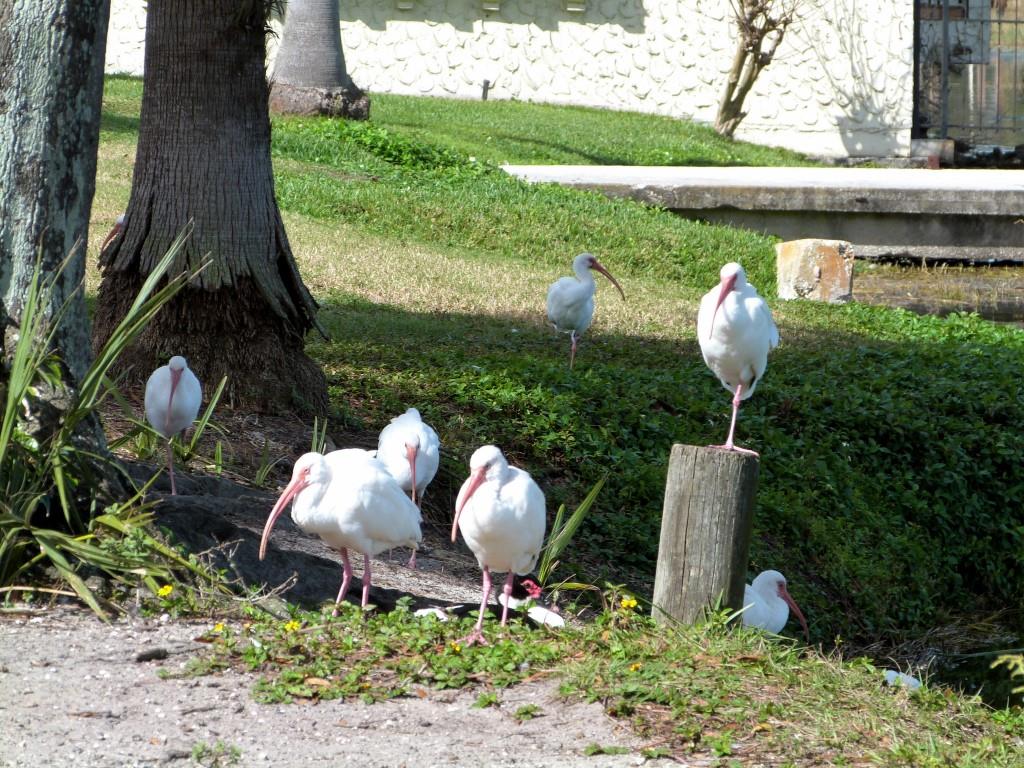
Once there was a little boy who had short brown hair and was kind of short for his age. Every week, his parents would take him to a small park by a big lake.
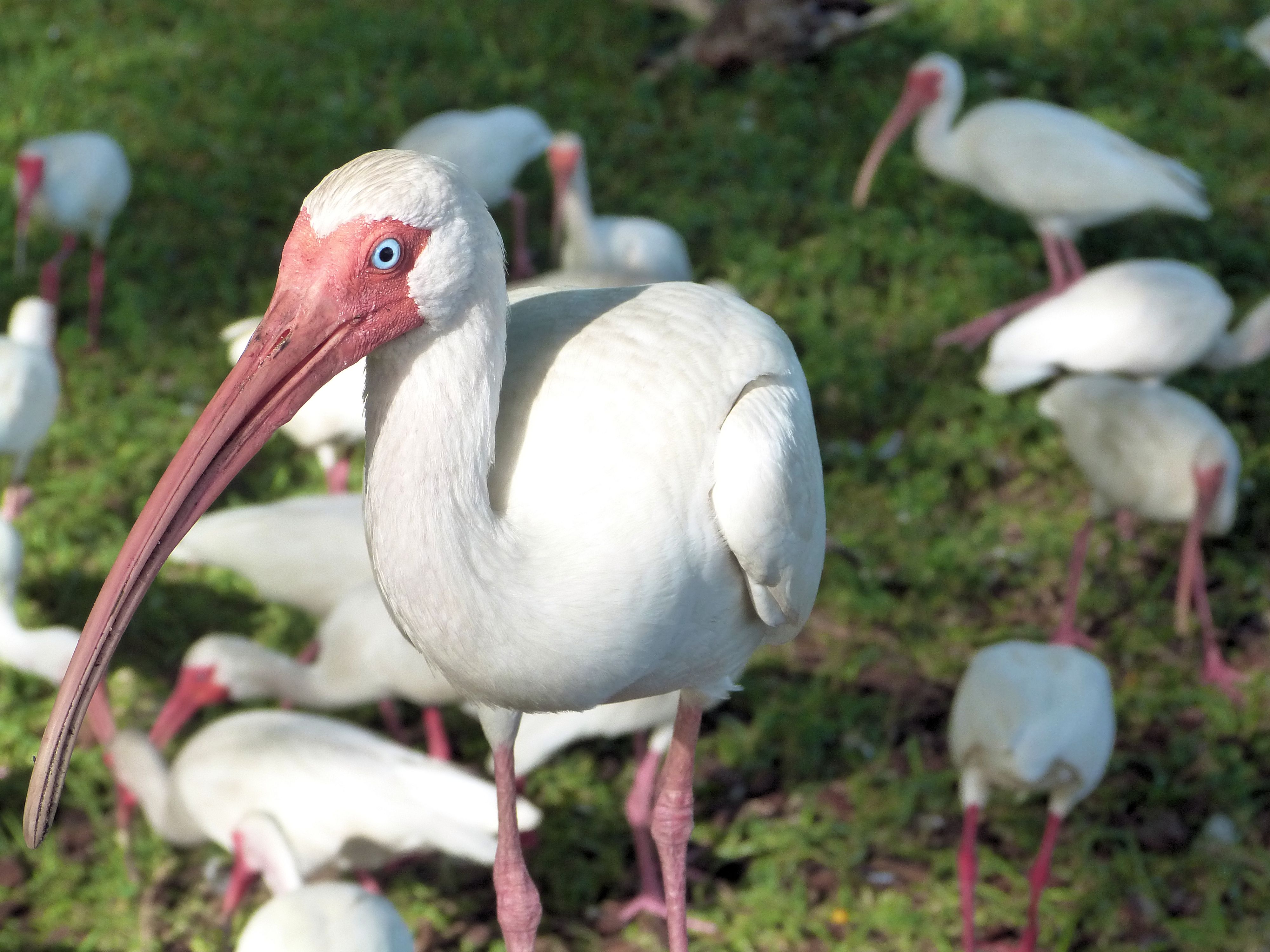
When they arrived, the little boy fed the ibises bread and talked to them about how he was about to start school. The ibises ate as much bread as they could hold and decided they liked hearing the little boy talk.
Several years passed and the little boy became a teenager. He started having problems with his grades. After failing another math test, the boy drove down to the park with some bread. Watching the ibises fly over and eat the bread made the boy feel a lot better and the ibises listened patiently as he told them all about how he could not get his grades to improve.
Eventually the teenage boy became a man and got married. The ibises started to multiply. A few years later, the man brought his children to the park. The ibises did the same. The man and his wife watched as their kids fed the ibises and as the ibises showed their children how to eat the bread with them. The man also taught his children how to talk to them.
White Ibis on Table Listening by Lee
Many years passed and all the man’s children grew up and moved away. The man grew old, but he still drove to the park every week to feed the ibises.
Finally, one day, the old man grew too old to drive. He took one last drive to the park however. The ibises came as usual. The old man told the ibises that he wouldn’t be able to come and see them anymore because he couldn’t drive much longer. The ibises were very sad when they heard this statement. As the old man drove home, the ibises decided to fly after his car and follow him home. Soon there was a great flock of birds following the old man’s car.
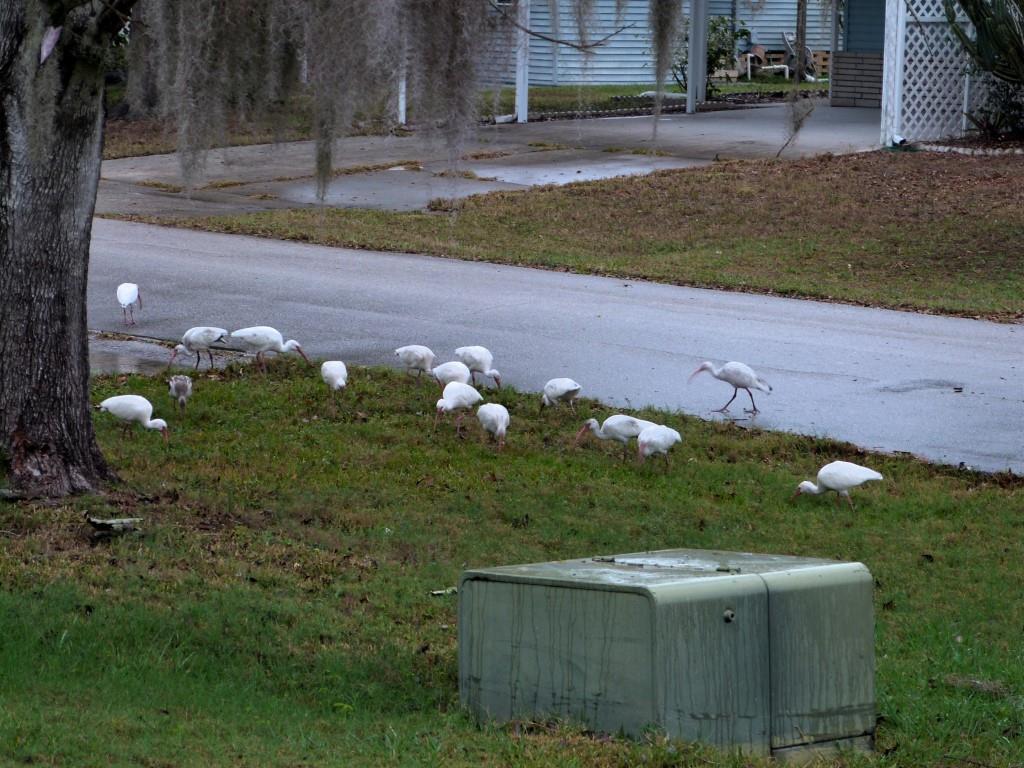
The next day the old man opened his front door to get the mail and found the flock of ibises. The old man was very happy about the ibises coming to his house every day. From that day on, the ibises flew to the old man’s’ house so he could feed them bread.
American White Ibis (Eudocimus albus) coming to the yard by Lee
The End
Lee’s Addition:
Put on therefore, as the elect of God, holy and beloved, bowels of mercies, kindness, humbleness of mind, meekness, longsuffering; (Colossians 3:12 KJV)
Emma has written another fine Bird Tale for us. It is enjoyable to watch as she is developing her writing skills. Each tale is better than the one before. This one is very heart touching. (Maybe it meant a lot because I wonder if the birds will come “people-watching” here when I can no longer go watch them.)
A man that hath friends must shew himself friendly: and there is a friend that sticketh closer than a brother. (Proverbs 18:24 KJV)
To shew forth thy lovingkindness in the morning, and thy faithfulness every night, (Psalms 92:2 KJV)
There is much friendliness and kindness shown in this story.
A glad heart makes a cheerful countenance, but by sorrow of heart the spirit is broken. (Proverbs 15:13 AMP)
Sandra Connor has again come out with a challenge. This time she is calling it “Tickle Me Tuesday,” so here is my first attempt.
This video is of Attenborough trying to film a sequence about a Greater Bird of Paradise. The bird keeps stealing the script and writing his own. It is a series of takes where the bird shows off and quiets David. From BBC.
Bird interrupts David Attenborough – Attenborough’s Paradise Birds – BBC Two
A happy heart is good medicine and a cheerful mind works healing, but a broken spirit dries up the bones. (Proverbs 17:22 AMP)
If you would like to take up the challenge, check out Sandra’s page, or you can leave a comment here with a link to your “Tickle” article. Or Both!
Ian’s Bird of the Week – Common/Black-billed Magpie ~ by Ian Montgomery
Newsletter ~ 2/9/2015
The Australian Magpie of last week generated quite some interesting correspondence, about both it being an iconic species and bird names and their derivation. I also got a request for a BotW on Butcherbirds, which I’ll do soon, but in the meantime here is the original Magpie of the the Northern Hemisphere. It is, incidentally, on the Australian list, a record from Port Hedland in May 2007 having been accepted by the rarities committee. This species is quite sedentary, the nearest place it occurs naturally is China and Port Hedland is an iron ore port so you don’t have to be Sherlock Holmes to work out how it got there.
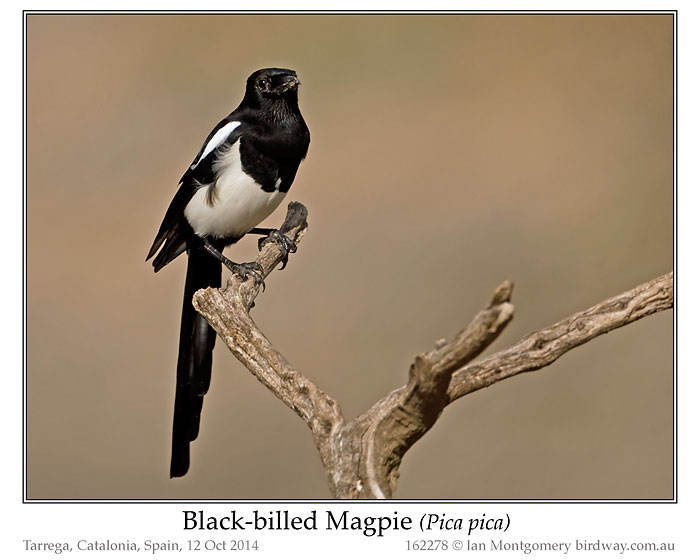
This, unlike the Australian Magpie, is a member of the crow family, Corvidae, and I think you’ll agree that the resemblance between the two species is fairly superficial, not that that ever got in the way of names. The Common or Black-billed Magpie – I’ll get back inevitably to names shortly – has beautifully iridescent wings and tail which can appear blue or green under different lighting conditions, which tells us that the colour is due to the prismatic microscopic structure of the feather rather than coloured pigment. The first photo shows one on a garden wall in suburban Dublin.
The second one was taken in Catalonia at the Northern Goshawk site. Like their cousins the Common Ravens the Magpies were quite brazen and prepared to steal a morsel of food from under the noses of much larger raptors. Also like the Ravens and unlike the raptors, the Magpies noticed the sound of the camera shutter and you can see this one peering warily at the hide. This photo shows the extremely wedged-shaped tail, which is very obvious in flight. The third photo shows a juvenile one in Ireland, very similar to the adult plumage but it still has the slightly swollen gape of a very young bird and, maybe I’m imagining it, an atypically innocent expression.
Common Magpies are iconic too, and as kids in Ireland we attached great significance to the number seen together, according to the nursery rhyme ‘One for sorrow, Two for joy …’ http://en.wikipedia.org/wiki/One_for_Sorrow_(nursery_rhyme). Magpies, and other crows, have long been considered birds of ill-omen.
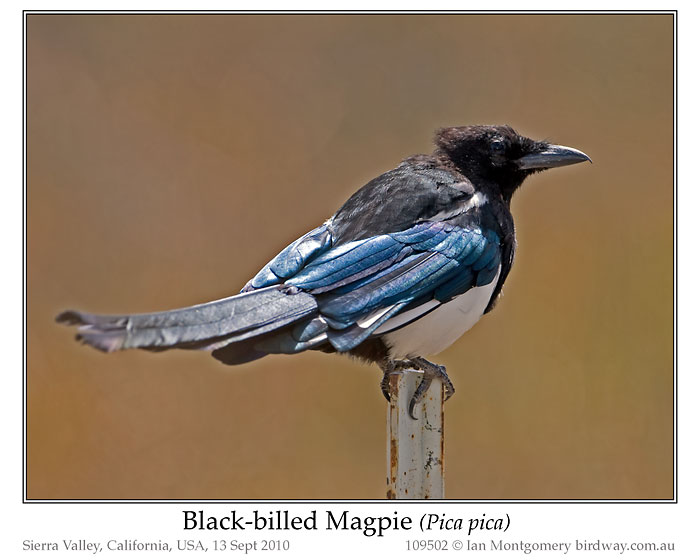
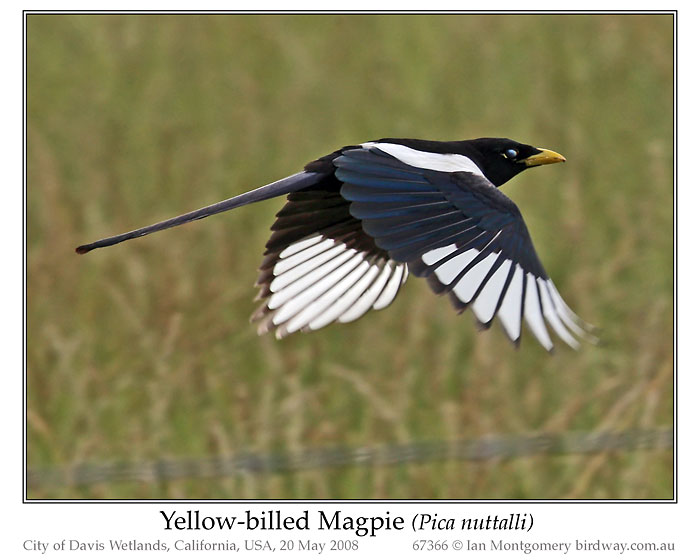
Back then, we called them just ‘Magpies’. In later decades, I became aware that, like The Kittiwake and for similar reasons, it acquired a coloured qualification ‘Black-billed’. In the case of the Kittiwake this was to distinguish the black-legged Eurasian one from the Red-legged Kittiwake of the eastern Bering Sea; in the case of the Magpie, it was because of the Yellow-billed Magpie of California, fifth photo, having a very restricted range that overlaps with the much more widespread Black-billed Magpie (fourth photo). The fifth photo, incidentally gives a good idea what the very similar Common/Black-billed Magpie looks like in flight and the white patches on the wing are very striking.
Plus ça change … as they say. I discovered while researching this BotW that Handbook of Birds of the World (HBW) and Birdlife International have accepted the split of the Black-billed/Common into three species: the Common Magpie (Pica pica) of Eurasia, the Black-billed Magpie of North America (Pica hudsonii) – fourth photo – and the Arabian Magpie (Pica asirensis), restricted to a tiny range in SW Saudi Arabia. So the European bird is back to where it started from.
I’m losing patience with avian taxonomists. Molecular studies over the past thirty years have led to countless changes in classification and naming, and not just at the species level. The 2014 HBW Checklist of Birds of the World, volume 1 (non-passerines) has many changes at every level up to order. I’ll repeat what I’ve said before that Linnaeus – he who tried to impose order on chaos – must be turning in his grave. Maybe he is just laughing, and perhaps that’s the right approach.
I used to think what the latest taxonomists said – starting with Sibley and Monroe in 1990 – was the gospel truth and a huge advance in our understanding. I don’t think that anymore! Here is a quote from Birdlife International on the fate of the Rainbow and Red-collared Lorikeets: Trichoglossus haematodus, … T. rubritorquis… (del Hoyo and Collar 2014) were previously lumped as T. haematodus following Christidis and Boles (1994), and before then were split as T. haematodus and T. rubritorquis following Sibley and Monroe (1990, 1993): Lump, split, lump, split!
On a lighter note, I’m giving a talk on ‘Australia: Land of Parrots?’ at the BirdLife Townsville AGM next Saturday 14 February at 2:00pm in the Sound Shell meeting room at Thuringowa. If you’re a local, and even if you’re not, it would be great to see you there. The talk is about parrot diversity and bio-geography – all the Gondwanaland stuff.
Greetings
Ian
**************************************************
Ian Montgomery, Birdway Pty Ltd,
454 Forestry Road, Bluewater, Qld 4818
Tel 0411 602 737 ian@birdway.com.au
Bird Photos http://www.birdway.com.au/
Lee’s Addition:
I know and am acquainted with all the birds of the mountains, and the wild animals of the field are Mine and are with Me, in My mind. (Psalms 50:11 AMP)
Ha! Ha! Ha! Thanks Ian for saying what I have been feeling. Sounds like we both agree on all the renaming, splitting, re-shuffling and “Lump, split, lump, split!” (Birds, People and DNA)
The Magpies above are neat and I especially like that expression of the juvenile one. He (or she) still has the gape of an immature bird.
The Corvidae Family Crows, Jays, Ravens is where you will find the Magpies placed. (at this time). There are 130 members that make up this family.
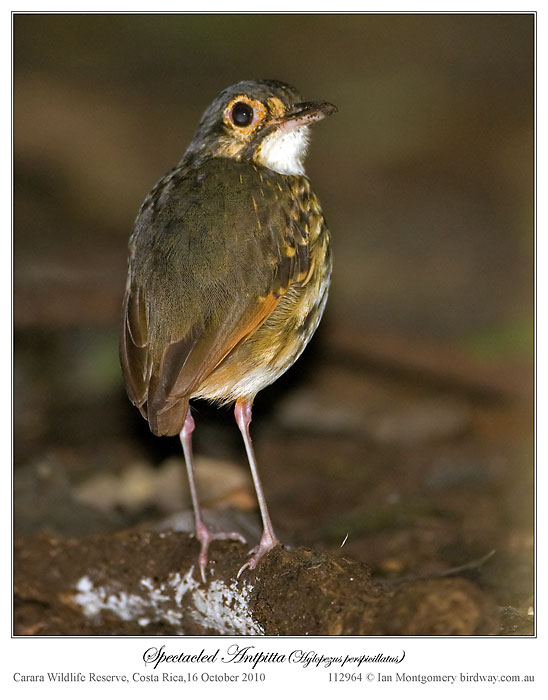
Streak-chested (Spectacled) Antpitta (Hylopezus perspicillatus) by Ian
The ants are a people not strong, yet they prepare their meat in the summer; (Proverbs 30:25 KJV)
Go to the ant, thou sluggard; consider her ways, and be wise: Which having no guide, overseer, or ruler, Provideth her meat in the summer, and gathereth her food in the harvest. (Proverbs 6:6-8 KJV)
Last week’s Sunday Inspiration featured the “first four bird families, taxonomically, in the Passeriformes Order (Songbirds)” This week we will continue with the next three families. They all have “ant” birds in them; Antshrikes, Antwrens, Antbirds, Antthrushes and Antpittas.. The Thamnophilidae – Antbirds family does have a few Bare-eyes.
For thus says the LORD: “Behold, one will fly swiftly like an eagle And spread out his wings against Moab. (Jeremiah 48:40 NASB)
Creation Moments articles have been used here many times. Now they have a YouTube Channel called Creation Moments TV.
While checking out their new videos, I found this one about birds and thought you might enjoy seeing it. Watching instead of reading is more enjoyable at times. Though reading is still good for us or else those of us who do blogs would be out of business.
God created the great sea monsters and every living creature that moves, with which the waters swarmed after their kind, and every winged bird after its kind; and God saw that it was good. (Genesis 1:21 NASB)
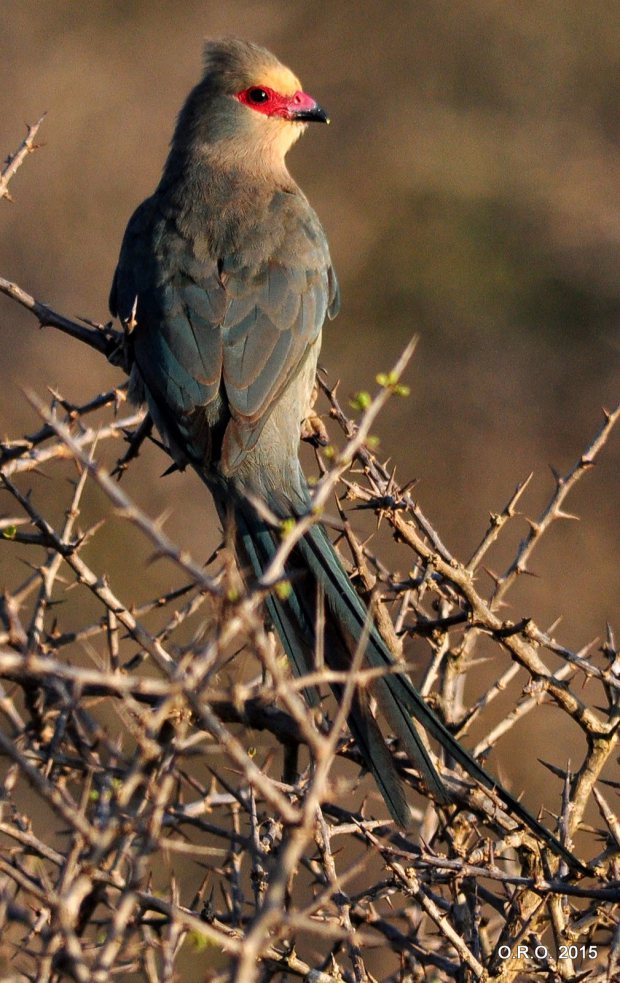
Endemic to Africa, about the size of a normal sparrow, crested head and beautiful cinnamon colored breast and strawberry red mask and bill. They are especially beautiful in the early morning sun. Their general body color is blue-grey or slate-ish.
With its long tail, about the same length as the body, they look like mice when they climb around in trees, therefore the name. Their outside toes are reversed to allow them to do just that, moving forward and backward as they climb around in the trees. They are more nervous of people than especially the Speckled Mousebird, which we have done before….. (To see the rest of the article – click here)
Lee’s Addition:
The shield of his mighty men is made red, the valiant men are in scarlet: … (Nahum 2:3a KJV)
Strawberry (Red-faced) Mousebird – Urocolius Indicus is re-blogged and was written on one of the blogs I follow, Our Rumbling Ocean. It is produced in South Africa.
Anyway, I wanted to share these beautiful Mousebirds with you.
Mousebirds are members of the Mousebirds – Coliidae Family and consist of only six species. And, no, the plural of Mousebird is not “Micebirds.”
The little owl, and the great owl, and the swan, (Deuteronomy 14:16 KJV)
There shall the great owl make her nest, and lay, and hatch, and gather under her shadow: there shall the vultures also be gathered, every one with her mate. (Isaiah 34:15 KJV)
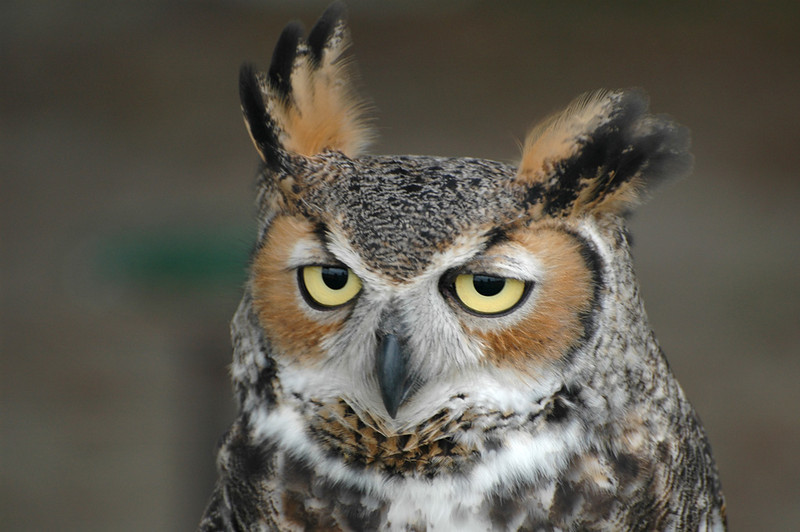
Are you aware of the Live Cameras that All About Birds are sharing? They are very interesting to watch. The latest that was shared with me is a Great Horned Owl nest Cam in Savannah, GA.
Take a look”
Here is a link that shows more about the Great Horned Owls there.
Aren’t these amazing? It is alway great to watch the Lord’s amazing creations, but to get to see them at the nest or at feeders is neat with today’s technology.
If you would like to see all the current Cams from All About Birds click this link. Not all the camera are operating all the time, but this page will help you find the live one as the current time.
So God created great sea creatures and every living thing that moves, with which the waters abounded, according to their kind, and every winged bird according to its kind. And God saw that it was good. And God blessed them, saying, “Be fruitful and multiply, and fill the waters in the seas, and let birds multiply on the earth.” (Genesis 1:21-22 NKJV)
Recently, I have been interested in genealogy. I have been working on our ancestry while staying home since I have been “under the weather.” It is really fun and exciting finding out about my previous generations. It also can be time-consuming and addictive, if you let it.
I can only imagine how those that are working on the DNA of our avian friends feel. If you have been following this blog very long, you know that I keep updating my Birds of the World when a new version comes out. When the Ver. 4.2 came out I.O.C. Version 4.2 Updated, I wrote this:
“They (the birds) are still doing as commanded by the Lord to reproduce and keeping the ornithologist busy naming, renaming, and rearranging them.
This time they renamed one and moved it to a new family just for it. The Spotted Wren-Babbler (Spelaeornis formosus) was in the Timaliidae Family. It has been renamed the Spotted Elachura (Elachura formosa) and placed in its own Elachuridae Family. (I do not have permission yet to post a photo.)
Version 4.2 also took the Lark Family and tossed it up in the air and rearranged it. See the Alaudidae – Larks Family. The DNA researches are keeping them busy keeping up with how the birds bred. Some of the scientific names were changed:”
Tawny-throated Leaftosser (Sclerurus mexicanus) by Michael Woodruff
Maybe the DNA Bird Researchers could hire this Leaftosser to help them out. Not sure if the next version coming out soon will toss another family up in the air or not.
Of course, we believe that God created these beautiful, and not so beautiful, birds and not by evolution over millions of years. Yes, they did inter-breed over the years and you have different looks and songs within the families. But they are still birds and the Lord has wonderfully made DNA that helps trace that.
Today, you can trace your own ancestors through DNA. I don’t understand much about it, but what I do know is this:
I will praise You, for I am fearfully and wonderfully made; Marvelous are Your works, And that my soul knows very well. (Psalms 139:14 NKJV)
Here are some interesting articles that do discuss DNA from a Christian Perspective:
(From this article) But nowhere does the Bible say that species cannot change! Instead, it seems that they would have to change—within the limits of their own interbreeding kind—in order to fulfill God’s command in Genesis 1 for His living creatures to fill the earth and its many changing environments.
Darwin insisted that animals slowly change between kinds. In contrast, seedeater birds have shown that they rapidly changed within their kind. Despite Campagna’s touting of Darwin’s “accomplishments,” these birds display programmed variation, not evolution.
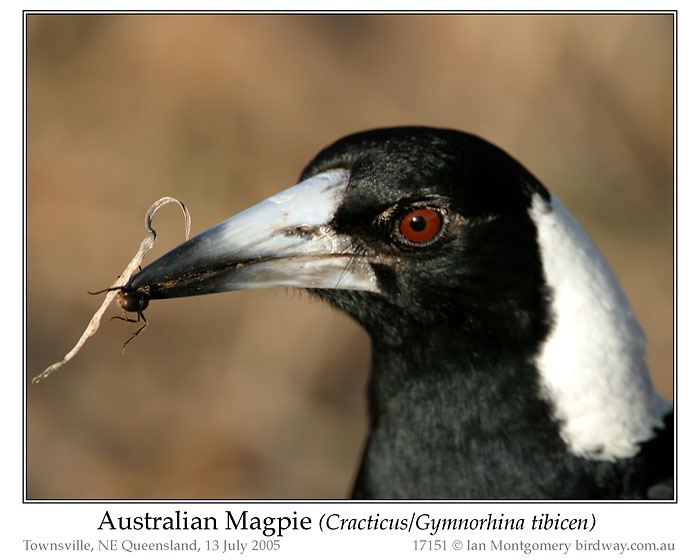
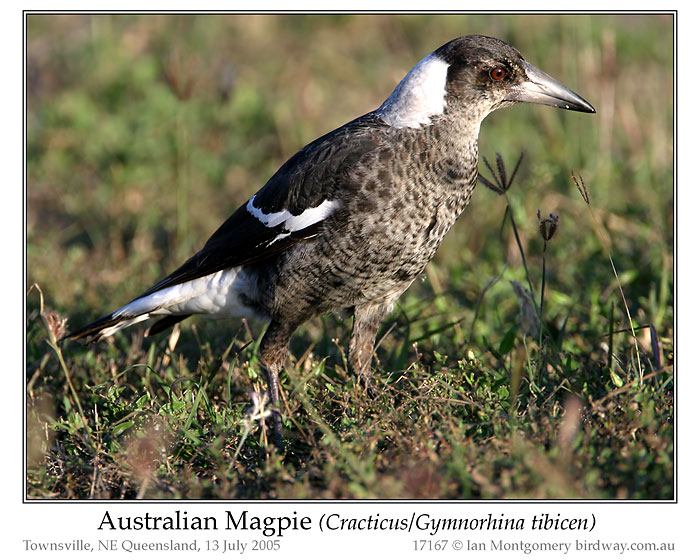
National days are occasions in which icons play a big, maybe dominant or even overpowering role, and Australia’s, January 26th, is no exception. So here is the Australian Magpie. It’s not strictly a Magpie in the Northern Hemisphere sense and it’s not strictly Australian, as it also occurs naturally in southern Papua New Guinea and has been introduced to both the main islands of New Zealand.
It is, however, certainly iconic, and not just in the sense of something that is typical of Australia. It was incorporated in various South Australian insignia just after Federation, and features “displayed proper” against the risen sun of federation. All six state coat of arms were incorporated into the Australian coat of arms in 1912, so the magpie, along with the Black Swan of Western Australia, made it to the national coat of arms. The bird referred to in the original South Australian design documents is called the “Piping Shrike” but the Australian Magpie has had various names including “Piping Crow-shrike” (Charles Sturt, explorer, 1840).
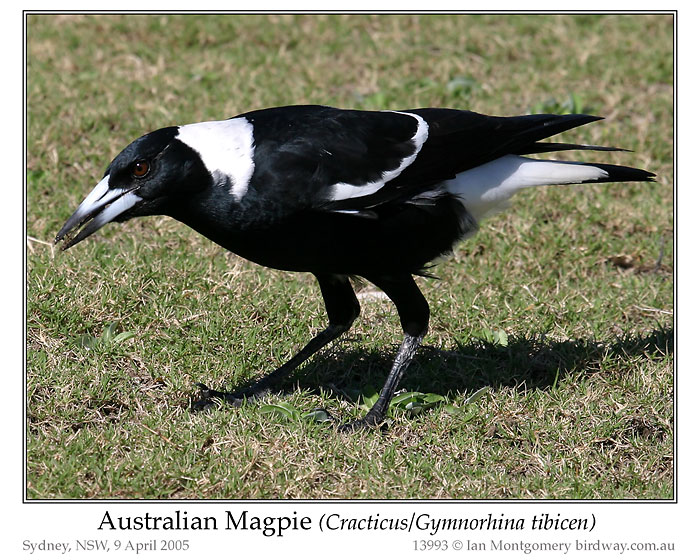
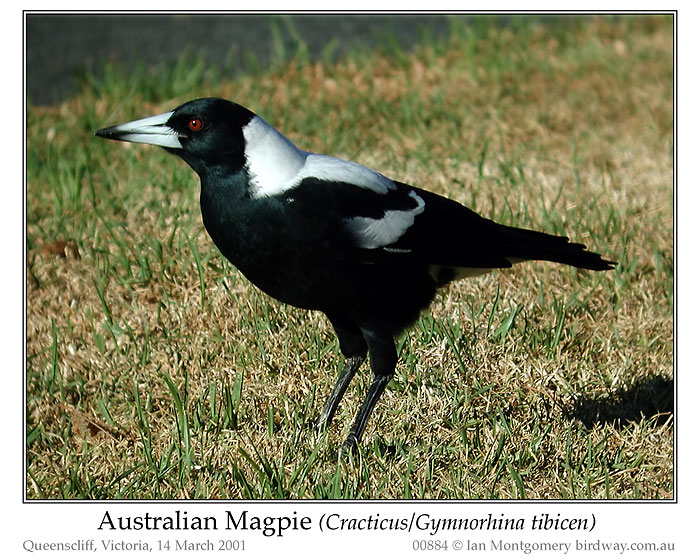
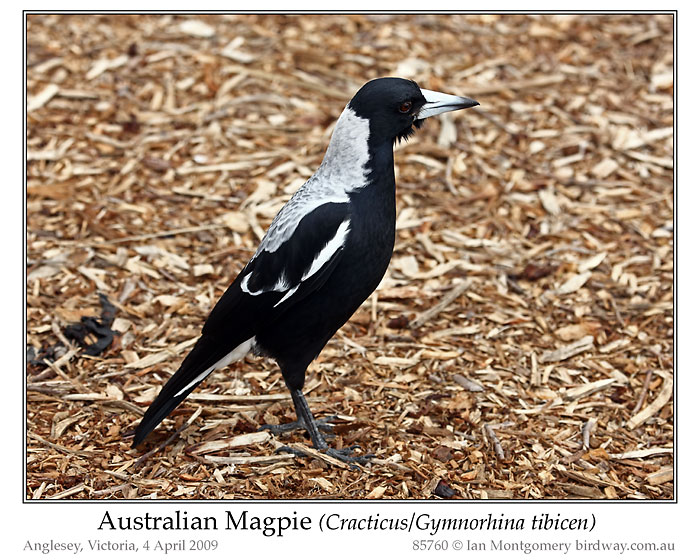
There are several races of the Magpie and I thought it would be easy to describe and illustrate them as part of this bird of the week. In fact, the descriptions, delineations and ranges of the various races are both messy and vague so I’ve settled for three easily recognised categories based on the colouration of their backs between the universally white (or pale grey) nape and rump: Black-backed, White-backed and Western.
The Black-backed group, first and second photos, is the most widespread occurring everywhere except in SW Western Australia and SE Australia and Tasmania. The nominate race ‘tibicen’ of eastern Australia is Black-backed and the name is derived from the Latin for ‘trumpeter’: tubicen. Male and female Black-backed have similar patterning except that the females have greyish tinge to the white and the black is less intense.
The familiar Magpie of Victoria, Tasmania and South Australia is the White-backed. The bird in the third photo is a male, while the one in the fourth photo is a female. The grey tinge and scalloping on her nape and back is quite obvious.
The male of the Western Magpie in SW Western Australia is like the male White-backed. The female, however, has very dark scalloping on the back to the point where it is almost black, fifth photo.
Australian Magpies have group territories with the group varying in size from a pair of adults to several adults and juveniles of varying ages. Usually only one pair in the group actually nests with the female doing the nest-building and most of the incubation. The young are fed by the female, often with help from her male partner and sometimes from other group members. Magpies can be aggressive towards people near the nest, and many Australians can recount stories of being attacked when cycling to or from school. Juveniles have greyish rather than black plumage, like the juvenile Black-backed in the sixth photo.
Australian Magpies, and their close relatives the Butcherbirds, are candidates for being the finest song birds in Australia. The Magpie has a varied and complex repertoire and is well-known for its flute-like choruses by a pair or group. It is usually started by the senior male or female in the group with other members, including juveniles, joining in. Less intense warbling songs are done by individuals, often for long periods, contain elements of the choral singing and mimicry. The New Zealand Poet, Denis Glover, in his best known poem, The Magpies, rendered the song as ‘and Quardle oodle ardle wardle doodle/The magpies said’.
The flute-like quality of the voice features in various European names for the Australian Magpie: Cassican flûteur (F), Flötenvogel (G) and Verdugo Flautista (Sp). I think the Germans have got it right with their Fluting-bird – much better than naming it after some unrelated Northern Hemisphere bird that it vaguely resembles. Maybe we should launch a new name for it next Australia Day. Now that would be a fitting Australia Day honour.
Greetings
Ian
**************************************************
Ian Montgomery, Birdway Pty Ltd,
454 Forestry Road, Bluewater, Qld 4818
Tel 0411 602 737 ian@birdway.com.au
Bird Photos http://www.birdway.com.au/
Where to Find Birds in Northern Queensland: iTunes; Google Play Kobo Books
Recorder Society http://www.nqrs.org.au
Lee’s Addition:
He (Solomon) spoke of trees, from the cedar that is in Lebanon even to the hyssop that grows on the wall; he spoke also of animals and birds and creeping things and fish. (1 Kings 4:33 NASB)
Ian, thanks again for sharing your Magpies from Australia. Seeing that he travels all around, he gets to see these different Magpies as he goes off on his birdwatching adventures. Their expressions give a look of intelligence to them.