Ian’s Bird of the Week – Bower’s Shrike-thrush

Bower's Shrikethrush (Colluricincla boweri) by Ian 1

Bower’s Shrikethrush (Colluricincla boweri) by Ian

Bird of the Week – Bower’s Shrike-thrush ~ by Ian Montgomery

Newsletter ~ 12-09-13

We spent several days last week camping on the Atherton Tableland at Malanda Falls Caravan Park. It’s a great caravan park incidentally as it borders on rainforest and is within walking distance of both Malanda Falls and the Conservation Park across the road. My aim was to photograph locations for the book Where to Find Birds in NE Queensland but I was of course on the lookout for any obliging birds, in particular the wet tropic endemic Bower’s Shrike-thrush and the local race of the Yellow-throated Scrubwren, both of which I’d found uncooperative in the past.

One of the spots I visited was Mobo Creek Crater about 10km along the Danbulla Forest Drive from the Gillies Highway end. I hadn’t been there before and found it a delightful spot as the path twice crosses the creek near the crater. I spent some time photographing the local resident, rather dark race of the Grey Fantail (we get the southern race here as a visitor in winter). While, I was doing so, a Bower’s Shrike-thrush came to the creek for a swim. The first photo shows her checking out a small pool from a rock in the creek.

Bower's Shrikethrush (Colluricincla boweri) by Ian 2

Bower’s Shrikethrush (Colluricincla boweri) by Ian

She then jumped into the creek and had a good swim, before jumping back out on the original rock, photos 2 and 3.

Bower's Shrikethrush (Colluricincla boweri) by Ian 3

Bower’s Shrikethrush (Colluricincla boweri) by Ian

Then a good shake, fourth photo, and a rather bedraggled but satisfied-looking bird returned to the rainforest. You can tell it’s a female from the grey bill with a pinkish tinge and the buff eye-ring, lores and eyebrow. Males have black bills and grey eye-ring, lores and eyebrow.

Bower's Shrikethrush (Colluricincla boweri) by Ian 4

Bower’s Shrikethrush (Colluricincla boweri) by Ian

Bower’s Shrike-thrush is one of the 12 species endemic to the Wet Tropics of northeastern Queensland. It is found in highland rainforest above 400m from just south of Cooktown to just north of Townsville and is reasonably common within this relatively restricted range.

Shrike-thrushes get their name from their slightly hooked shrike-like bills and their thrush-like appearance and melodious songs. Bower’s Shrike-thrush has a distinctive whistling song that sounds to me like ‘we you you cha cha cha’ and we heard them at a number of sites during our stay. They are related to Whistlers and are sometimes placed in the same family, Pachycephalidae – ‘thick-heads’ as you may remember from the Rufous Whistler bird of the week last month – or placed in their own family the Colluricinclidae.
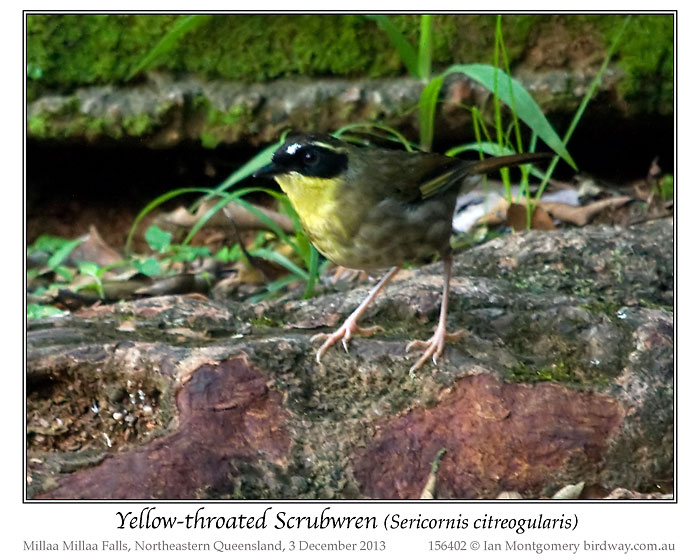
Yellow-throated Scrubwren (Sericornis citreogularis) by Ian

Yellow-throated Scrubwren (Sericornis citreogularis) by Ian

Here, incidentally, is a male of the local race of the Yellow-throated Scrubwren that I wanted also for the book. A pair of them emerged into the car park at Millaa Millaa Falls after the last tourist buses had departed.

Best wishes
Ian

**************************************************
Ian Montgomery, Birdway Pty Ltd,
454 Forestry Road, Bluewater, Qld 4818
Tel 0411 602 737 ian@birdway.com.au
Bird Photos http://www.birdway.com.au/
Recorder Society http://www.nqrs.org.au


Lee’s Addition:

For the LORD your God is bringing you into a good land–a land with brooks, streams, and deep springs gushing out into the valleys and hills; (Deuteronomy 8:7 NIV)

He shall drink of the brook in the way: therefore shall he lift up the head. (Psalms 110:7 KJV)

Thanks again, Ian. We don’t get to see birds taking a bath that frequently. At least, not in a stream. Dippers do that, but take a dive also.

Here is the sound of the Shrike-thrush from xeno-canto. It really is neat.

As Ian mentioned in his newsletter, the Shrikethrush belong to the Pachycephalidae – Whistlers and Allies Family (IOC), which is where we have it here, or the Colluricinclidae Family. which is where Ian has it listed. He also uses Shrike-thrush, whereas the IOC uses Shrikethrush.

See:

*

Thankful For The Birds

Painted Bunting (Passerina ciris) ©©Flickr

Painted Bunting (Passerina ciris) ©©Flickr
Saw my first one at my feeder

For by him were all things created, that are in heaven, and that are in earth, visible and invisible, whether they be thrones, or dominions, or principalities, or powers: all things were created by him, and for him: (Colossians 1:16 KJV)

All week I have been posting articles of Thanksgiving, since yesterday was Thanksgiving Day here in the United States. So today, in that same thankful attitude, I am just going to share some of my most favorite birds. These are not necessarily birds we have seen, but super birds that the Lord created. I am especially thankful for my husband who enjoys our avian friends as well as I do.

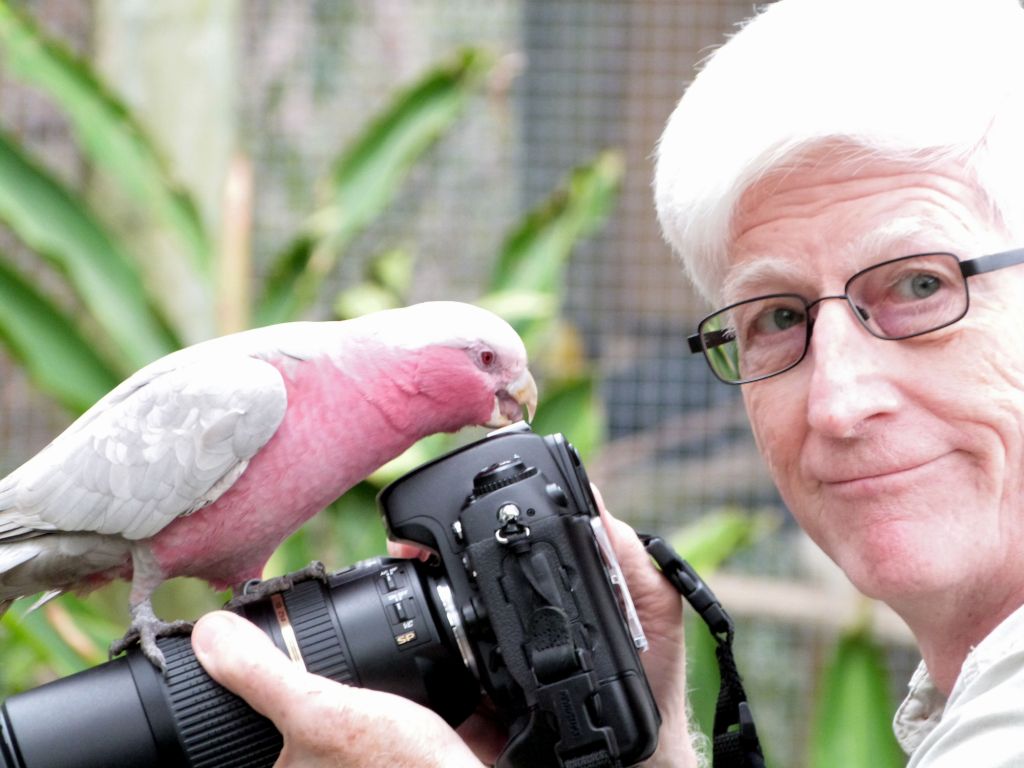
Galah (Eolophus roseicapilla) and Dan at Brevard Zoo

Galah (Eolophus roseicapilla) and Dan
Taken at the Brevard Zoo

In the beginning was the Word, and the Word was with God, and the Word was God. The same was in the beginning with God. All things were made by him; and without him was not any thing made that was made. (John 1:1-3 KJV)

Rufous-tailed Hummingbird (Amazilia tzacatl) by Judd Patterson

Rufous-tailed Hummingbird (Amazilia tzacatl) by Judd Patterson
I love all the birds in the Hummingbird family

Thou art worthy, O Lord, to receive glory and honour and power: for thou hast created all things, and for thy pleasure they are and were created. (Revelation 4:11 KJV)

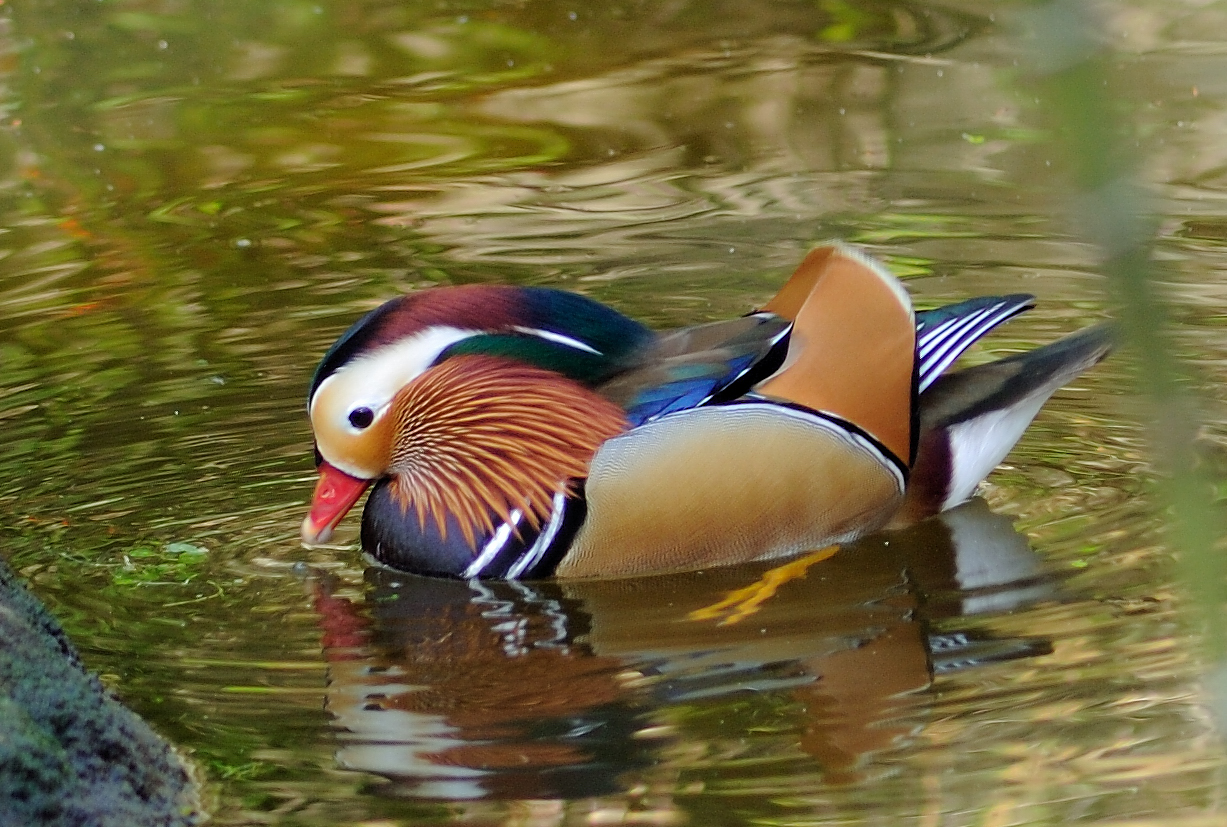
Mandarin Duck (Aix galericulata) by

Mandarin Duck (Aix galericulata) by Dan
What a paintbrush the Lord must have!

For every creature of God is good, and nothing to be refused, if it be received with thanksgiving: (1 Timothy 4:4 KJV)

Andean Cock-of-the-rock (Rupicola peruvianus) by ©Wiki Closeup

Andean Cock-of-the-rock (Rupicola peruvianus) by ©Wiki Closeup
Where is the beak?

For the invisible things of him from the creation of the world are clearly seen, being understood by the things that are made, even his eternal power and Godhead; so that they are without excuse: (Romans 1:20 KJV)

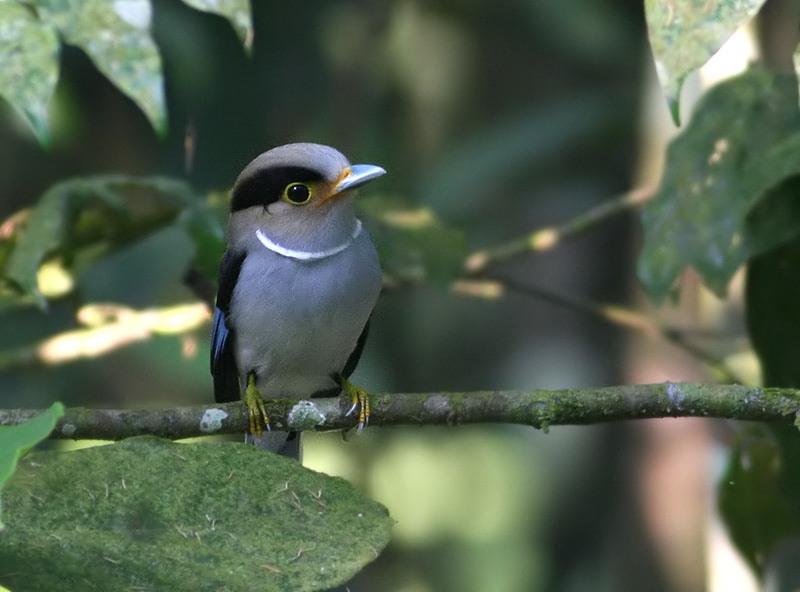
Wattled Broadbill (Sarcophanops steerii) ©WikiC fveronesi1

Wattled Broadbill (Sarcophanops steerii) ©WikiC fveronesi1
That bird is clean-cut and cute!

“But now ask the beasts, and let them teach you; And the birds of the heavens, and let them tell you. (Job 12:7 NASB)

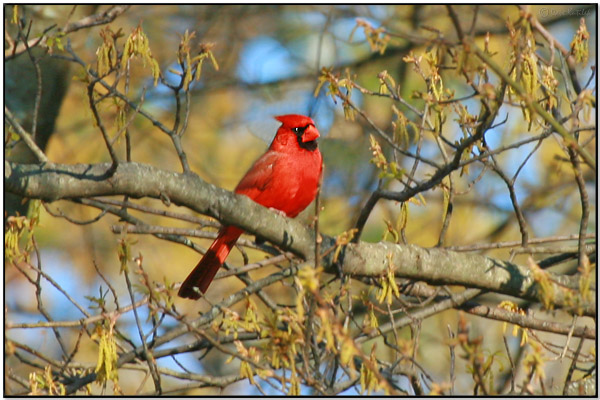
Northern Cardinal (Cardinalis cardinalis) by Daves BirdingPix

Northern Cardinal (Cardinalis cardinalis) by Daves BirdingPix
You can’t be from Indiana and not like Cardinals!

the stork, and the heron in their kinds, and the hoopoe and the bat. (Deuteronomy 14:18 NASB)

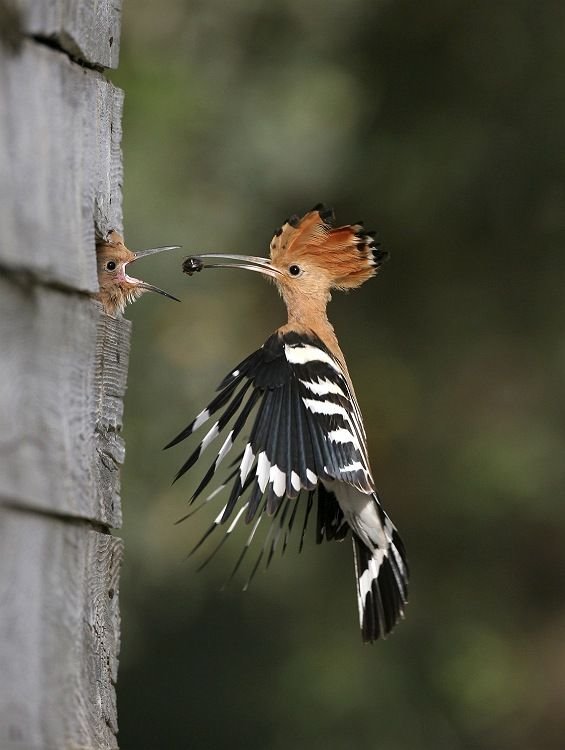
Hoopoe Feeding Young ©©Dvir Lotan from Israel

Hoopoe Feeding Young ©©Dvir Lotan from Israel

There are just too many, so I am adding a slideshow for you to enjoy a few more of them.

*

This slideshow requires JavaScript.

There are around 10,600 named birds that I love and am thankful for each one of them.

* See:

*

Birdwatching at Lake Morton – 11/22/13

Various birds at Lake Morton by Lee

Various birds at Lake Morton by Lee

This is the day which the LORD hath made; we will rejoice and be glad in it. (Psalms 118:24 KJV)

Today we finally were able to get a little birdwatching in. I have been sick for the last 3 weeks fighting bronchitis and felt well enough to enjoy some time with our avian friends at Lake Morton. Lake Morton is in Lakeland, Florida. It is one of the few places around where people feed the birds. You can hardly get out of your car and cross the street before they start heading your way. The local birds have been “well-trained.”

Lee at Lake Morton by Dan

Lee at Lake Morton by Dan

Off we went, with a few tidbits in hand and my new hat. Since the skin cancer cells were removed from my neck recently, I was told to stay out of the direct sunlight.

Most of the normal residents were hanging out. There were lots of Mallards, American White Ibises, Boat-tailed Grackles, plus some Great Blue Herons, Anhingas, Great Egrets, Mute and Black Swans, and the Bald Eagle made His appearance.

 Bald Eagle (Haliaeetus leucocephalus) at Lake Morton by Lee

Bald Eagle (Haliaeetus leucocephalus) at Lake Morton by Lee

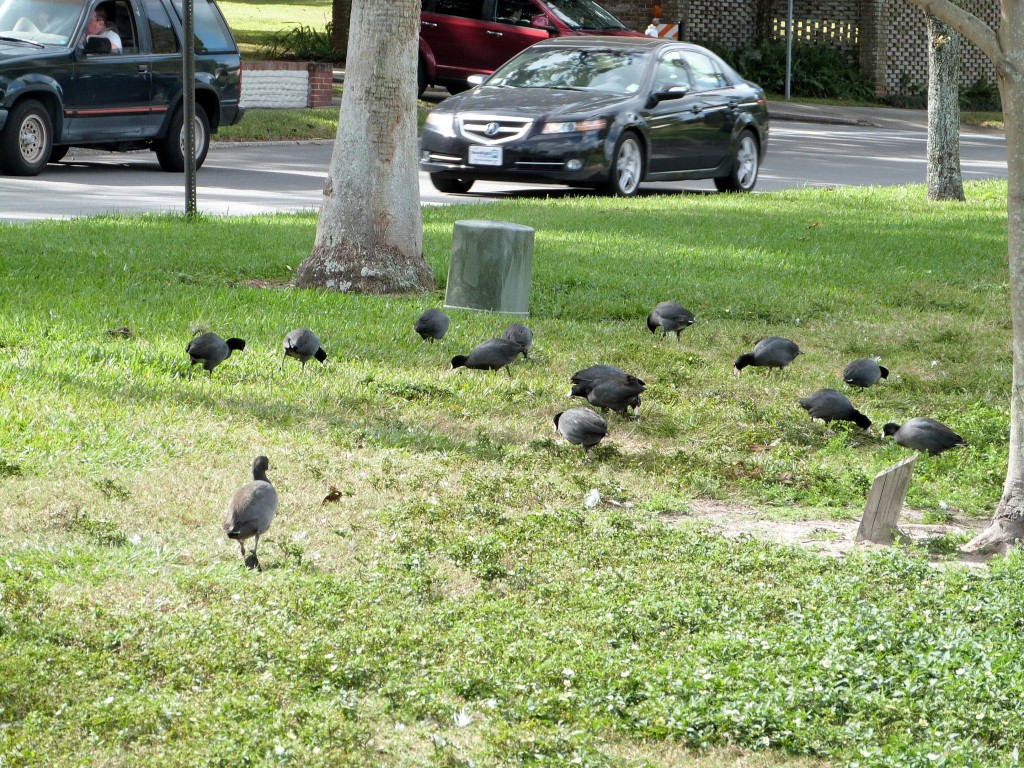
Some of our winter visitors were hanging out also. There were lots of American Coots

American Coot (Fulica americana) at Lake Morton by Lee

American Coot (Fulica americana) at Lake Morton by Lee

There were many Ring-necked Ducks – The Male

Ring-necked Duck (Aythya collaris) Male at Lake Morton by Lee

Ring-necked Duck (Aythya collaris) Male at Lake Morton by Lee

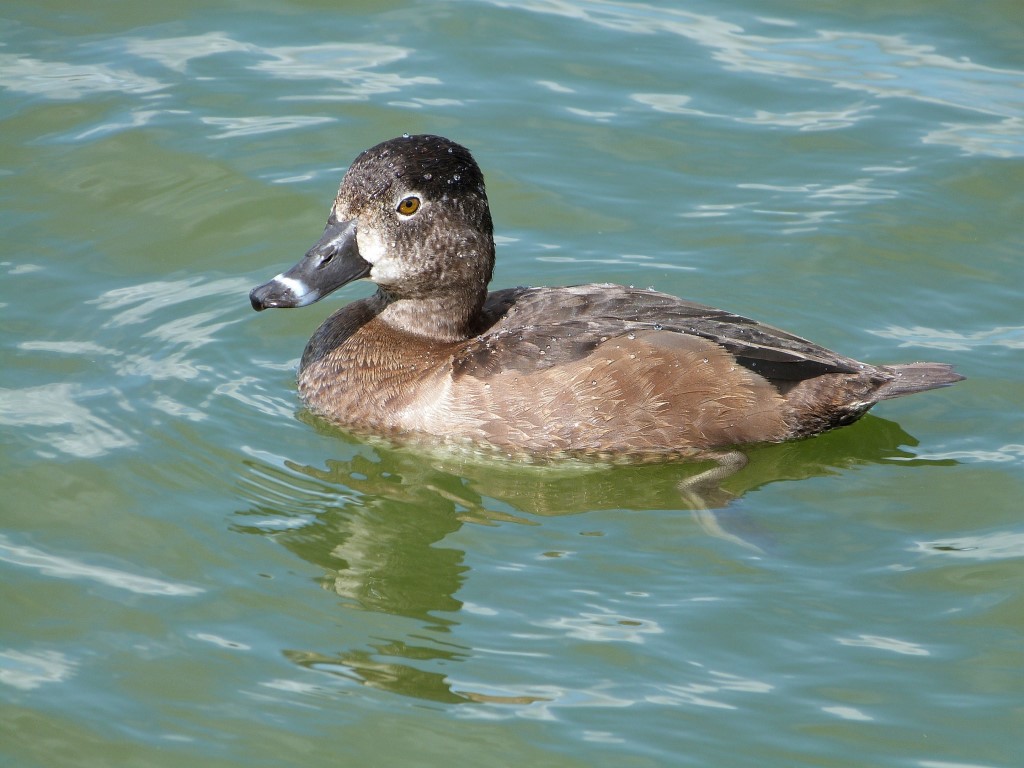
And the Female

Ring-necked Duck (Aythya collaris) at Lake Morton by Lee

Ring-necked Duck (Aythya collaris) Female at Lake Morton by Lee

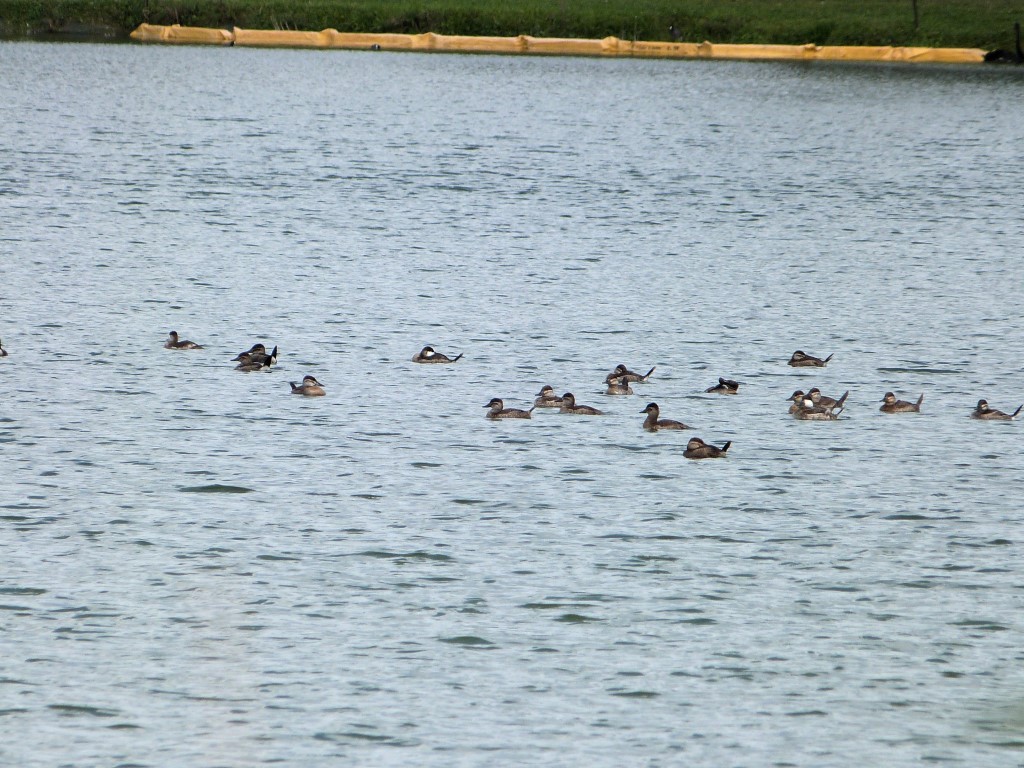
If you look at that first photo up close, way out in the middle of the lake you will see small ducks. This is a good as I could zoom in on them. They were Ruddy Ducks. Well over 50 of them on the lake floating around.

Ruddy Duck (Oxyura jamaicensis) at Lake Morton by Lee

Ruddy Duck (Oxyura jamaicensis) at Lake Morton by Lee

Also, way off across the lake were two American White Pelicans with the usual Double-crested Cormorants swimming along with them. Again, this is zoomed way in.

American White Pelican (Pelecanus erythrorhynchos) with DC Cormorants at Lake Morton by Lee

American White Pelican (Pelecanus erythrorhynchos) with DC Cormorants at Lake Morton by Lee

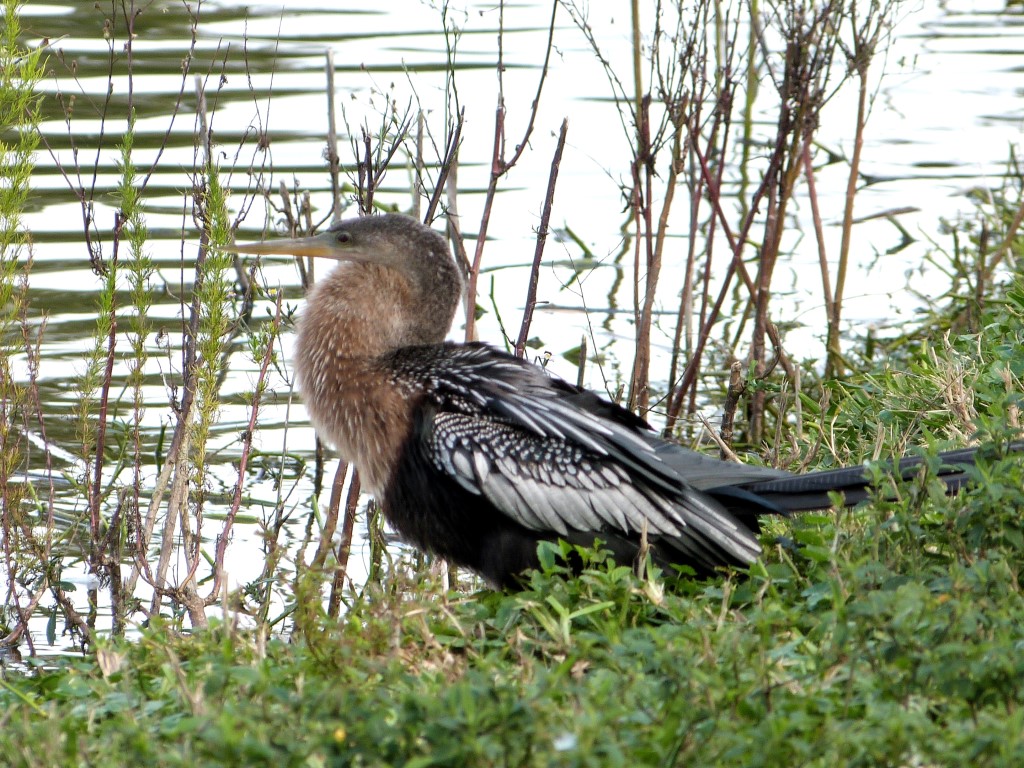
I also caught an Anhinga setting along the shore.

Anhinga (Anhinga anhinga) at Lake Morton by Lee

Anhinga (Anhinga anhinga) at Lake Morton by Lee

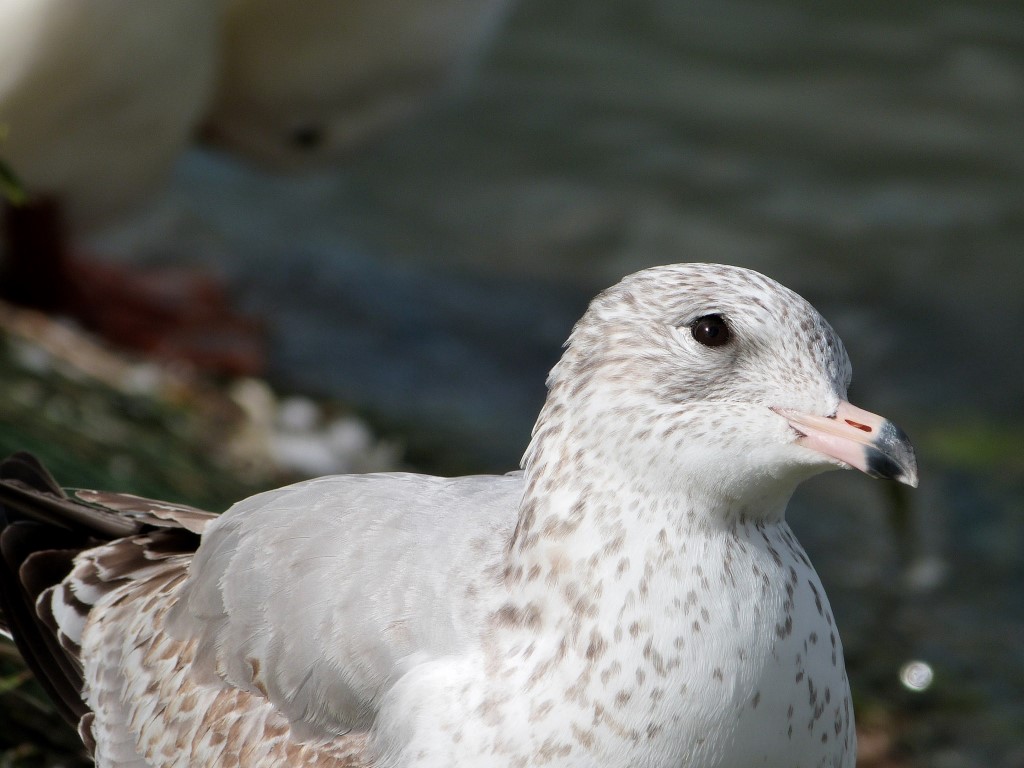
The Ring-billed Gulls are back down and this one seems to be a younger one.

Ring-billed Gull (Larus delawarensis) at Lake Morton by Lee

Ring-billed Gull (Larus delawarensis) at Lake Morton by Lee

All in all, for about a 35-40 minute visit to the lake, we enjoyed checking out these and several more I didn’t mention. The Lord gave us good weather until it started sprinkling. Then I made a fast retreat to the car. No since getting sick again.

For as the rain cometh down, and the snow from heaven, and returneth not thither, but watereth the earth, and maketh it bring forth and bud, that it may give seed to the sower, and bread to the eater: (Isaiah 55:10 KJV)

See:
Birdwatching Trips
Lake Morton Trips

*

Hide Me

Do you see me?

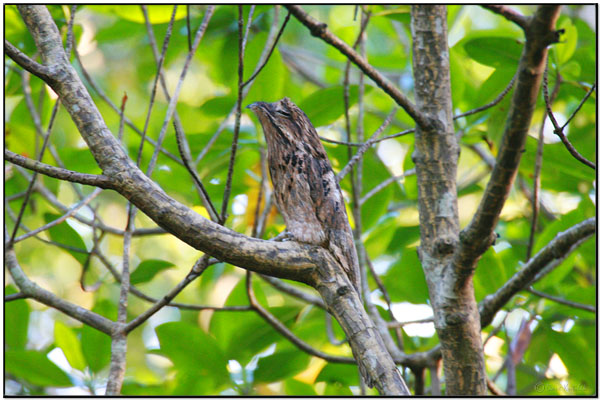
Common Potoo (Nyctibius griseus) by Daves BirdingPix

And David said to Jonathan, “Indeed tomorrow is the New Moon, and I should not fail to sit with the king to eat. But let me go, that I may hide in the field until the third day at evening. (1 Samuel 20:5 NKJV)

Andean Potoo (Nyctibius maculosus) on a branch ©WikiC

Andean Potoo (Nyctibius maculosus) on a branch ©WikiC

Keep me as the apple of the eye, hide me under the shadow of thy wings, (Psalms 17:8 KJV)

Northern Potoo (Nyctibius jamaicensis) ©©jerryoldenettel

Northern Potoo (Nyctibius jamaicensis) ©©jerryoldenettel

For in the time of trouble he shall hide me in his pavilion: in the secret of his tabernacle shall he hide me; he shall set me up upon a rock. (Psalms 27:5 KJV)

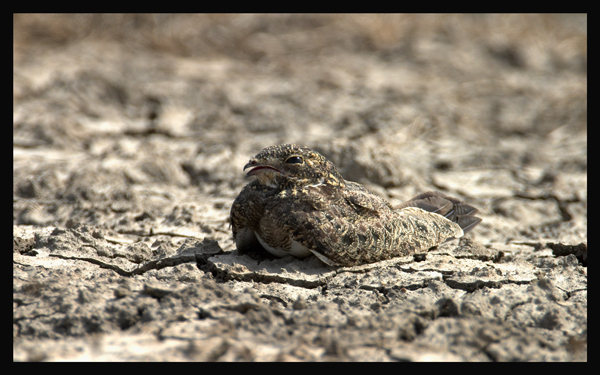
Nacunda Nighthawk (Podager nacunda) by R Scanlon

Nacunda Nighthawk (Podager nacunda) by R Scanlon

And do not hide Your face from Your servant, For I am in trouble; Hear me speedily. (Psalms 69:17 NKJV)

Australian Owlet-nightjar (Aegotheles cristatus) by Ian

Australian Owlet-nightjar (Aegotheles cristatus) by Ian

Deliver me, O LORD, from mine enemies: I flee unto thee to hide me. (Psalms 143:9 KJV)

Collared Nightjar(Caprimulgus enarratus) by Dave's BirdingPix

Collared Nightjar(Caprimulgus enarratus) by Dave’s BirdingPix

And when Absalom’s servants came to the woman to the house, they said, Where is Ahimaaz and Jonathan? And the woman said unto them, They be gone over the brook of water. And when they had sought and could not find them, they returned to Jerusalem. (2 Samuel 17:20 KJV)

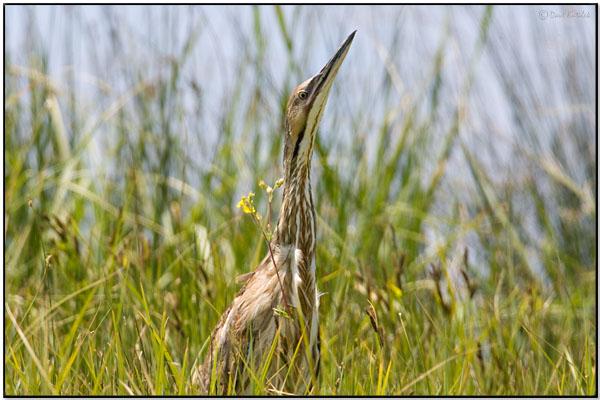
American Bittern (Botaurus lentiginosus) by Daves BirdingPix

American Bittern (Botaurus lentiginosus) by Daves BirdingPix

Then shall they call upon me, but I will not answer; they shall seek me early, but they shall not find me: For that they hated knowledge, and did not choose the fear of the LORD: They would none of my counsel: they despised all my reproof. (Proverbs 1:28-30 KJV)

Oilbird (Steatornis caripensis) ©©Flickr - dominic sherony

Oilbird (Steatornis caripensis) ©©d.sherony

Thou shalt seek them, and shalt not find them, even them that contended with thee: they that war against thee shall be as nothing, and as a thing of nought. (Isaiah 41:12 KJV)

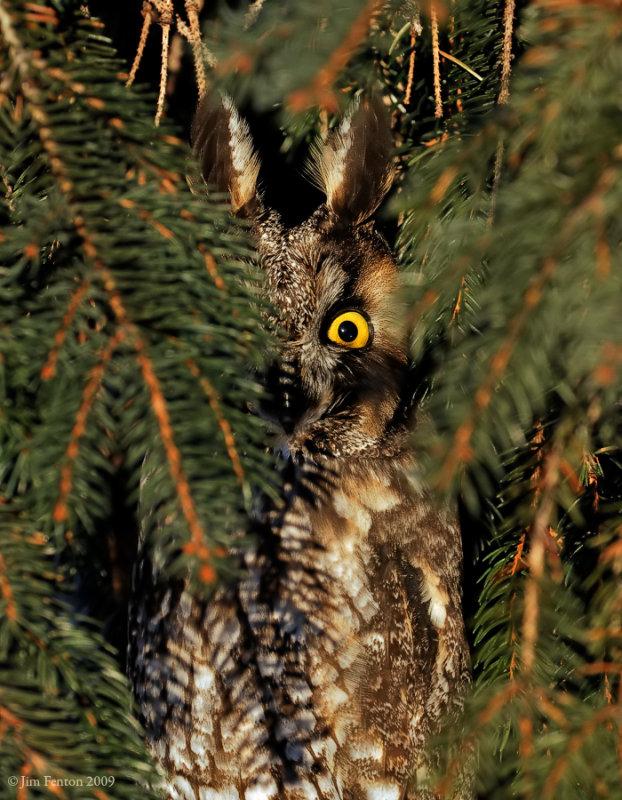
Long-eared Owl (Asio otus) by J Fenton

Long-eared Owl (Asio otus) by J Fenton

Behold, the days come, saith the Lord GOD, that I will send a famine in the land, not a famine of bread, nor a thirst for water, but of hearing the words of the LORD: And they shall wander from sea to sea, and from the north even to the east, they shall run to and fro to seek the word of the LORD, and shall not find it. (Amos 8:11-12 KJV)

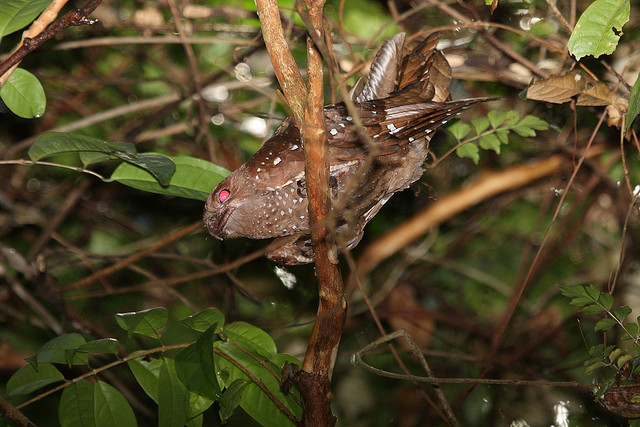
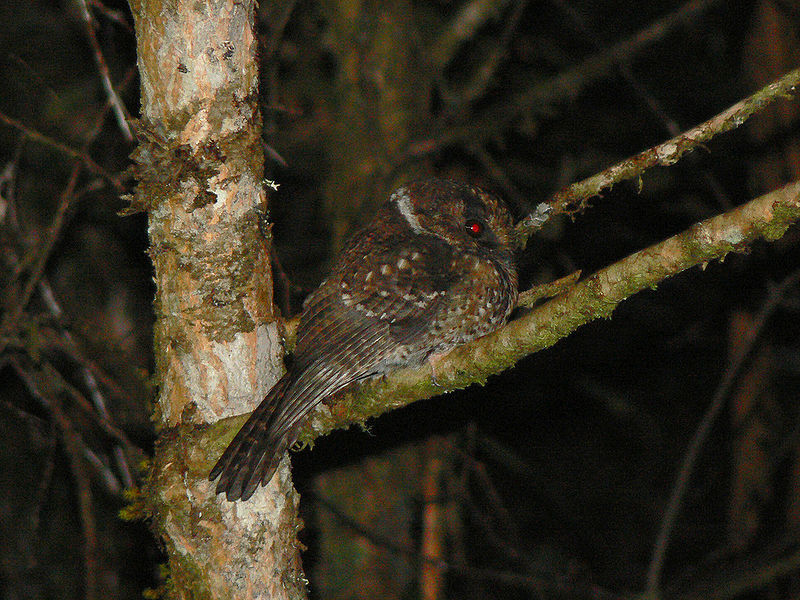
Mountain Owlet-nightjar (Aegotheles albertisi) ©WikiC

Mountain Owlet-nightjar (Aegotheles albertisi) ©WikiC

What man of you, having an hundred sheep, if he lose one of them, doth not leave the ninety and nine in the wilderness, and go after that which is lost, until he find it? (Luke 15:4 KJV)

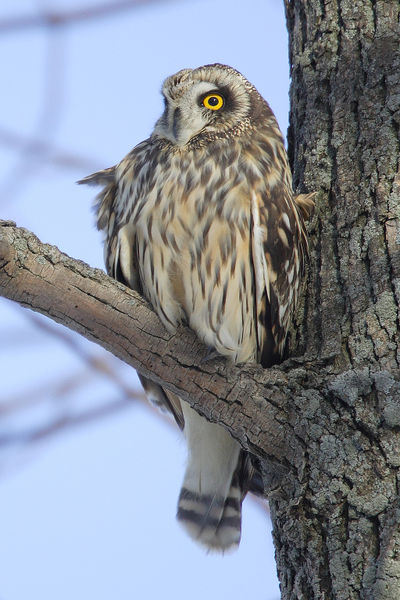
Short-eared Owl ©WikiC

Short-eared Owl ©WikiC

Either what woman having ten pieces of silver, if she lose one piece, doth not light a candle, and sweep the house, and seek diligently till she find it? And when she hath found it, she calleth her friends and her neighbours together, saying, Rejoice with me; for I have found the piece which I had lost. Likewise, I say unto you, there is joy in the presence of the angels of God over one sinner that repenteth. (Luke 15:8-10 KJV)

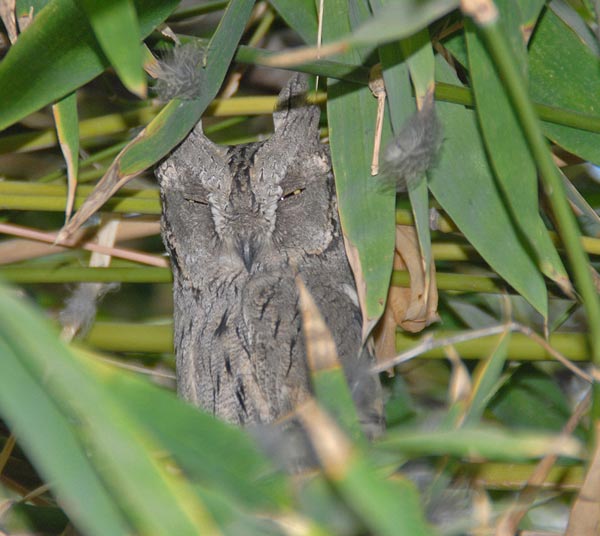
Pallid Scops Owl (Otus brucei) by Nikhil Devasar

Pallid Scops Owl (Otus brucei) by Nikhil Devasar

Ye shall seek me, and shall not find me: and where I am, thither ye cannot come. (John 7:34 KJV)

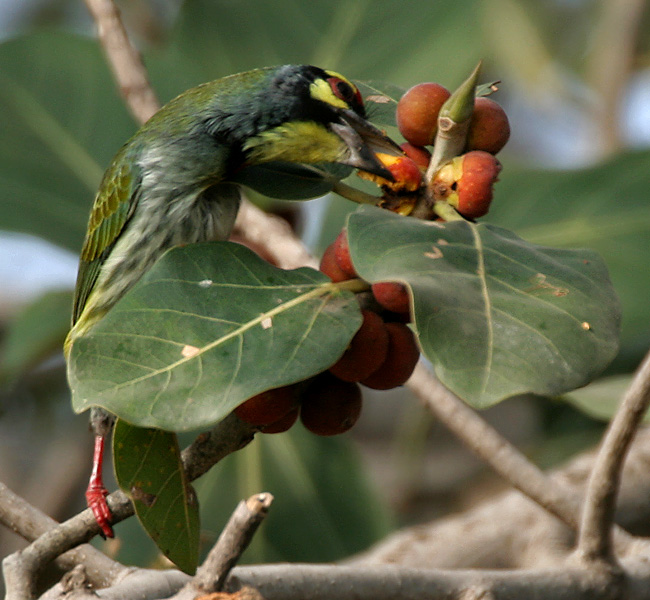
Coppersmith Barbet (Megalaima haemacephala) ©WikiC Feeding

Coppersmith Barbet (Megalaima haemacephala) ©WikiC Feeding

That they should seek the Lord, if haply they might feel after him, and find him, though he be not far from every one of us: (Acts 17:27 KJV)

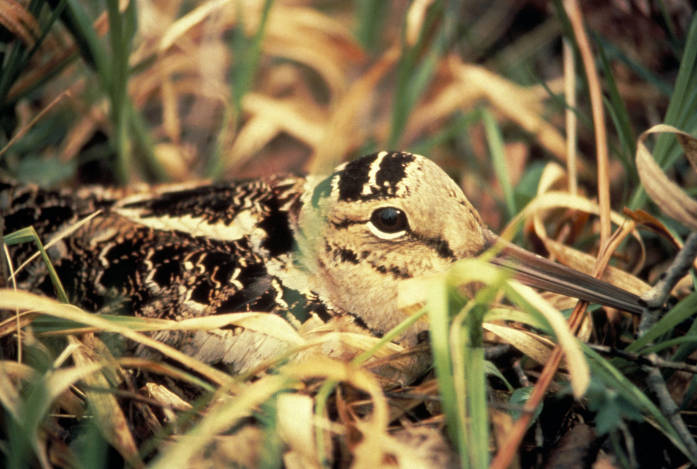
American Woodcock (Scolopax minor) on nest © USFWS

American Woodcock (Scolopax minor) on nest © USFWS

For I know that in me (that is, in my flesh,) dwelleth no good thing: for to will is present with me; but how to perform that which is good I find not. (Romans 7:18 KJV)

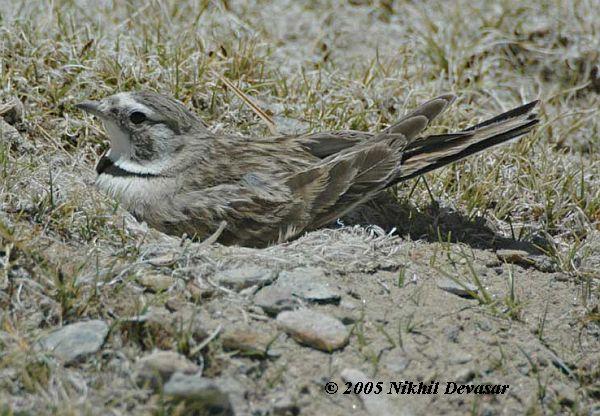
Horned Lark (Eremophila alpestris) on nestby Nikhil Devasar

Horned Lark (Eremophila alpestris) on nestby Nikhil Devasar

If thou shalt hearken unto the voice of the LORD thy God, to keep his commandments and his statutes which are written in this book of the law, and if thou turn unto the LORD thy God with all thine heart, and with all thy soul. For this commandment which I command thee this day, it is not hidden from thee, neither is it far off. (Deuteronomy 30:10-11 KJV)

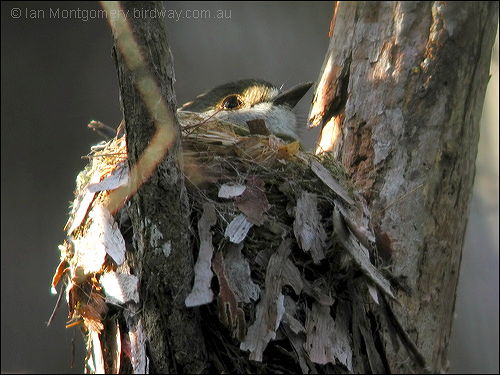
Pale-yellow Robin (Tregellasia capito) in nest by Ian

Pale-yellow Robin (Tregellasia capito) in nest by Ian

And I will give thee the treasures of darkness, and hidden riches of secret places, that thou mayest know that I, the LORD, which call thee by thy name, am the God of Israel. (Isaiah 45:3 KJV)

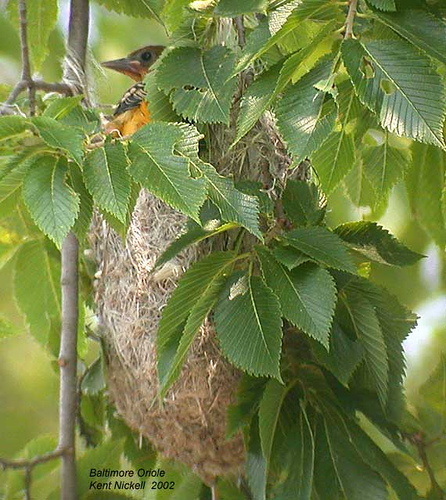
Baltimore Oriole (Icterus galbula) on nest by Kent Nickell

Baltimore Oriole (Icterus galbula) on nest by Kent Nickell

Thou hast heard, see all this; and will not ye declare it? I have shewed thee new things from this time, even hidden things, and thou didst not know them. (Isaiah 48:6 KJV)

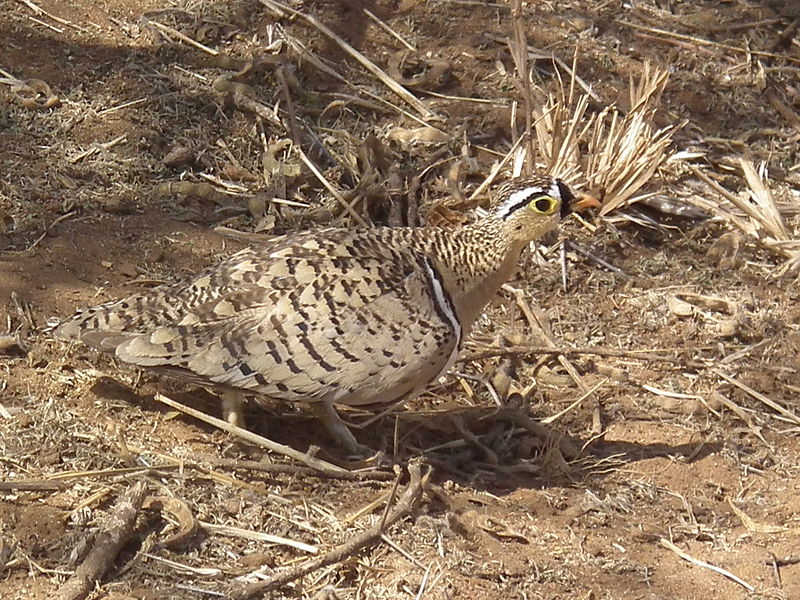
Black-faced Sandgrouse (Pterocles decoratus) ©WikiC

Black-faced Sandgrouse (Pterocles decoratus) ©WikiC

But we speak the wisdom of God in a mystery, even the hidden wisdom, which God ordained before the world unto our glory: (1 Corinthians 2:7 KJV)

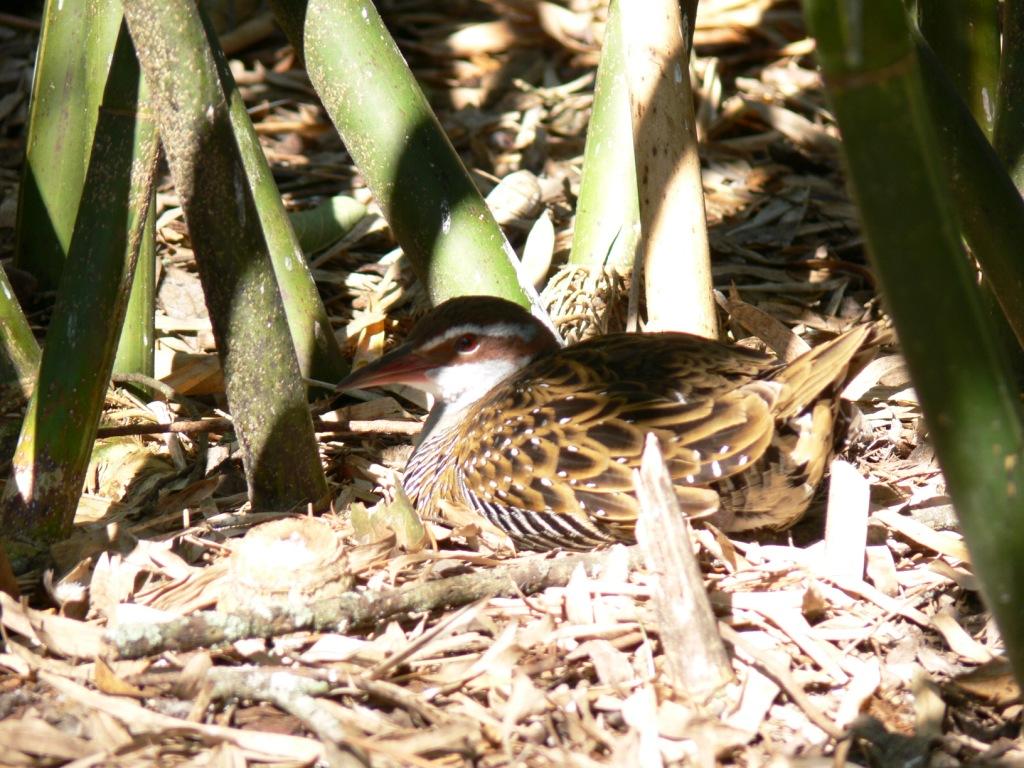
Buff-banded Rail (Gallirallus philippensis) by Lee

Buff-banded Rail (Gallirallus philippensis) by Lee

rather let it be the hidden person of the heart, with the incorruptible beauty of a gentle and quiet spirit, which is very precious in the sight of God. (1 Peter 3:4 NKJV)

***

When the Lord created the birds, some of them he made very beautiful to look at, others he made very hard to find. He did that for their protection. Either way, He loves them and cares for them. How much more does he care for us, love us and protect us?

*

Plus – Our Created Birds

Following is a YouTube from Ian Juby about the creation of our birds. This is from his

Our Created Birds – this is Genesis Week episode 10, season 3

*

To see all of the video click on YouTube symbol or go to wazooloo for more of his videos.

Then God said, “Let the waters teem with swarms of living creatures, and let birds fly above the earth in the open expanse of the heavens.” God created the great sea monsters and every living creature that moves, with which the waters swarmed after their kind, and every winged bird after its kind; and God saw that it was good. God blessed them, saying, “Be fruitful and multiply, and fill the waters in the seas, and let birds multiply on the earth.” (Genesis 1:20-22 NASB)

Creation pages

*

Bird Tales – The Woodpeckers Bird Band

Hairy Woodpecker (Picoides villosus) by Daves BirdingPix

Hairy Woodpecker (Picoides villosus) by Daves BirdingPix


The Woodpeckers Bird Band

The Woodpecker family were around on various trees drumming, drumming on the bark. Mr. Hairy Woodpecker, Mr. Downy Woodpecker, and Mr. Red-Headed Woodpecker were hard at work.

Downy Woodpecker (Picoides pubescens) by Raymond Barlow

Downy Woodpecker (Picoides pubescens) by Raymond Barlow

“Let’s start a band,” suggested Mr. Hairy Woodpecker.

Red-headed Woodpecker (Melanerpes erythrocephalus) ©USFWS

Red-headed Woodpecker (Melanerpes erythrocephalus) ©USFWS

“What’s that you say?” asked Mr. Red-Headed Woodpecker, who had been so busy at work that he had not heard what Mr. Hairy Woodpecker had been suggesting. “A band,” repeated Mr. Hairy Woodpecker. “What sort of a band?” asked Mr. Red-Headed Woodpecker. “In the first place,” continued Mr. Hairy Woodpecker, “our bills are not only fine tools for the work we have to do getting the insects from the trees, and burrowing for our nests, but they would be splendid to use in beating the drums in a band.” “Where would we get the drums?” asked Mr. Red-Headed Woodpecker. “The trees, of course, you silly!” said Mr. Hairy Woodpecker. “Oh yes, yes,” agreed Mr. Red-Headed Woodpecker. And Mr. Downy Woodpecker said, “Of course, of course. The trees will be our drums.”

American Goldfinch (Carduelis tristis) on Thistle by Fenton

American Goldfinch (Carduelis tristis) on Thistle by Fenton

“We’ll get the other birds,” said Mr. Hairy Woodpecker, “to help us. We need something in a band besides the drums. We will ask the goldfinches, the mocking-birds, the bobolinks, the phœbe and chickadee families, all of the warbler and vireo families, and the robins of course. Then I think we’ll ask the orioles, the whippoorwills, the thrush family, and the song sparrows.”

Carolina Chickadee (Poecile carolinensis) by Daves BirdingPix

Carolina Chickadee (Poecile carolinensis) by Daves BirdingPix

“Oh,” said Mr. Downy Woodpecker, “that will make a perfect band. We’d better get started right away.” And the woodpeckers began to practise. They made such a noise that the birds came from far and near to see what they were doing. Mr. Sapsucker, Mr. Crested Woodpecker, and Mr. Flicker Woodpecker had all joined in beating the drums too!

Yellow-bellied Sapsucker (Sphyrapicus varius) by Raymond Barlow

Yellow-bellied Sapsucker (Sphyrapicus varius) by Raymond Barlow

“Why are you making so much noise?” asked the birds as they flew around to the nearby trees to talk to the woodpeckers. “Oh,” said Mr. Hairy Woodpecker, “we were just going to ask you all to join our band. We will beat the drums.”

American Robin (Turdus migratorius) by Daves BirdingPix

American Robin (Turdus migratorius) by Daves BirdingPix

“And just what do you want us to do?” asked Mr. Robin Redbreast, who was always eager to help. “You must all sing.”

Song Sparrow (Melospiza melodia) by J Fenton

Song Sparrow (Melospiza melodia) by J Fenton

“But we all sing differently,” chirped a song sparrow. “We know different tunes and different songs.” “Oh,” said Mr. Hairy Woodpecker, “I never thought about that. But never mind, you can have little parts to sing alone, and other choruses where you will all sing together. I’m sure it will be a very fine band after we have practised.” And they began pounding the drums again. “Well,” said Mr. Robin Redbreast, “if the bird band isn’t to be the finest in the land, at least we’ll make a cheerful noise!”

Bobolink (Dolichonyx oryzivorus) by J Fenton

Bobolink (Dolichonyx oryzivorus) by J Fenton

* Another Bird Tale From

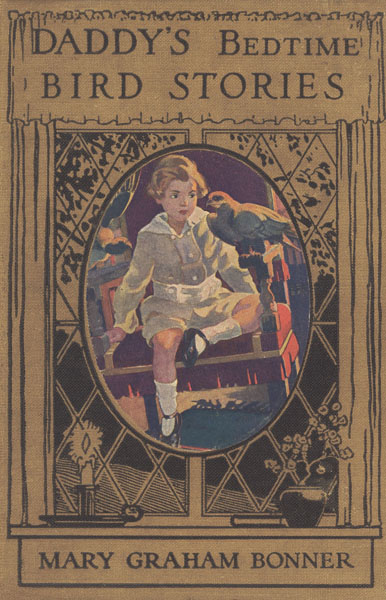
Daddy’s Bedtime Bird Stories – Gutenberg ebooks

By

Mary Graham Bonner

With four illustrations in color by Florence Choate and Elizabeth Curtis

Daddys Bedtime Story Images

These stories first appeared in the American Press Association Service and the Western Newspaper Union.


Many of the sketches in this volume are the work of Rebecca McCann, creator of the “Cheerful Cherub,” etc.

Daddy's Bedtime Bird Stories by Mary Graham Bonner - 1917

Daddy’s Bedtime Bird Stories by Mary Graham Bonner – 1917


Lee’s Addition:

Psalms 98:4-8 KJV (4) Make a joyful noise unto the LORD, all the earth: make a loud noise, and rejoice, and sing praise. (5) Sing unto the LORD with the harp; with the harp, and the voice of a psalm. (6) With trumpets and sound of cornet make a joyful noise before the LORD, the King. (7) Let the sea roar, and the fulness thereof; the world, and they that dwell therein. (8) Let the floods clap their hands: let the hills be joyful together

Meet the whole band: (a few missed the photo session)

This slideshow requires JavaScript.


*

*

April Lorier With The Lord

April Lorier Adventuring With God

April Lorier Adventuring With God

Therefore we are always confident, knowing that, whilst we are at home in the body, we are absent from the Lord: (For we walk by faith, not by sight:) We are confident, I say, and willing rather to be absent from the body, and to be present with the Lord. (2 Corinthians 5:6-8 KJV)

A well know writer and friend has gone to be with Her Lord. April Lorier became a friend and has written several articles on this blog. April was the author of God’s Battered Child: Journey From Abuse to Leader. Here are the blogs she produced April Lorier Perspective – God Woman Blog – Christian Nature. They have all been made inactive. She also contributed to Nature Blog Network

Here is an excerpt from Yahoo:

April Lorier, Author and Encourager

Inspirational author, poet, writer and Christian blogger. Children’s rights activist who successfully fought for the Child Abuse and Neglect Reporting Act (CANRA) which was signed into law by Ronald Reagan. Encourager of Christian believers worldwide.

I know that she has been ailing for sometime and I do not have details about her death. Her websites have been removed, but we still have some of her articles here. It may take a day or two to find all the links to her sites, but they will be corrected.

April found my blog not long after I started it up. She began giving me tips on how to raise my ratings and just encouraged me to continue to develop this blog by honoring Our Lord. We exchanged many phone calls and became good friends. Never met her, she lived in California and I am here in Florida, but distance didn’t get between our friendship. She allowed me to repost several of her blogs and she shared links to my articles on her blog.

Now her blogs have been removed and I am glad some of her articles are still here to be enjoyed. But as for April, she could care less about what is going on here. She is in the presence of Her Lord, whom she loved. Her faith has become site.

April, you will be missed.

Here are some links to her articles:

April Lorier’s Page

Her book God’s Battered Child on Amazon

*

Mnemonics – What is That?


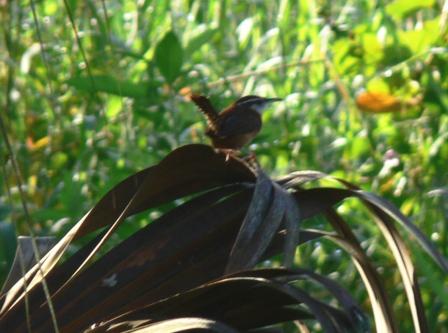
Carolina Wren (Thryothorus ludovicianus) by Lee at Circle B

Carolina Wren (Thryothorus ludovicianus) by Lee at Circle B

Mnemonics – What is That?

When birdwatchers want to identify a bird, many times all they are able to do is hear it. Can you listen to a bird and know what kind it is? Some birders use a help called “mnemonics.”

hen birdwatchers want to identify a bird, many times all they are able to do is hear it. Can you listen to a bird and know what kind it is? Some birders use a help called “mnemonics.”

(Definition of mnemonics from Kids Wordsmyth)

mne·mon·ics
pronunciation: ni ma nihks [or] nih ma nihks
part of speech: plural noun
definition: a process, system, or technique used to aid and improve the memory.

Eastern Wood Pewee (Contopus virens) by Raymond Barlow

Eastern Wood Pewee (Contopus virens) by Raymond Barlow

Many birds say their name, like a Eastern Wood Pewee.

Carolina Chickadee (Poecile carolinensis) by Daves BirdingPix

Carolina Chickadee (Poecile carolinensis) by Daves BirdingPix

Carolina Chickadee – “feebee feebay, chick’adee-dee-dee”

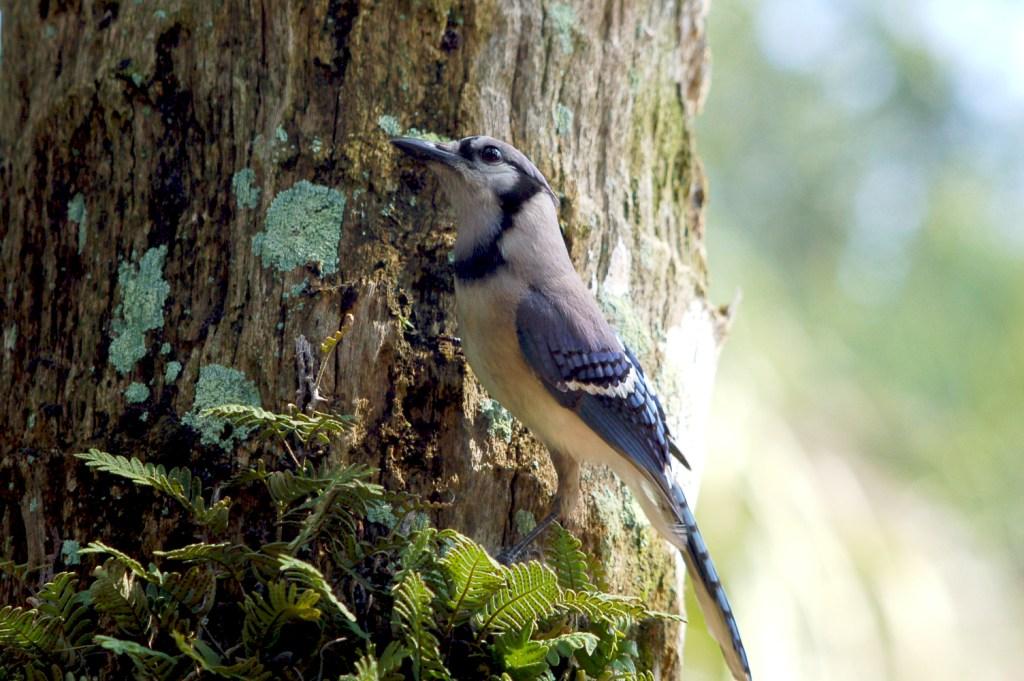
Blue Jay by Dan at Bok Tower

Blue Jay by Dan at Bok Tower

Blue Jay – -“jay”

Another way mnemonics are used is to make up a phrase or saying of what the bird sounds like.

Carolina Wren (Thryothorus ludovicianus) by Quy Tran

Carolina Wren (Thryothorus ludovicianus) by Quy Tran

Carolina Wren – “teakettle, teakettle, teakettle”

Eastern Towhee (Pipilo erythrophthalmus) by Ray

Eastern Towhee (Pipilo erythrophthalmus) by Ray

Eastern Towhee – “drink-your-teeee”

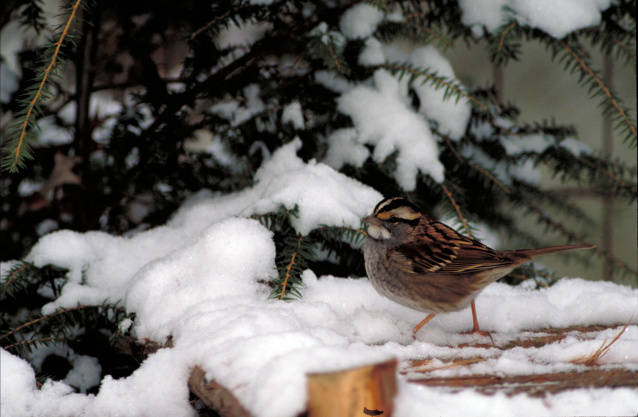
White-throated Sparrow (Zonotrichia albicollis) ©USFWS

White-throated Sparrow (Zonotrichia albicollis) ©USFWS

White-Throated Sparrow – “poor Sam Pea’body, Pea’body, Pea’body”

This is just an introduction to using “mnemonics” to help you find out what that neat bird your listening to is called. We will cover more birds later. The Lord has given us so many beautiful birds to watch and listen to. Each bird has it’s own songs and calls, but there are so many. How do we figure out who is who? Using this method is just one more way to help.

Hear instruction and be wise, and do not neglect it. (Proverbs 8:33 ESV)

Let the wise hear and increase in learning, and the one who understands obtain guidance, (Proverbs 1:5 ESV)

See:

Ian’s Bird of the Week – Rufous Whistler

Rufous Whistler (Pachycephala rufiventris) by Ian

Bird of the Week #493: Rufous Whistler ~ by Ian Montgomery

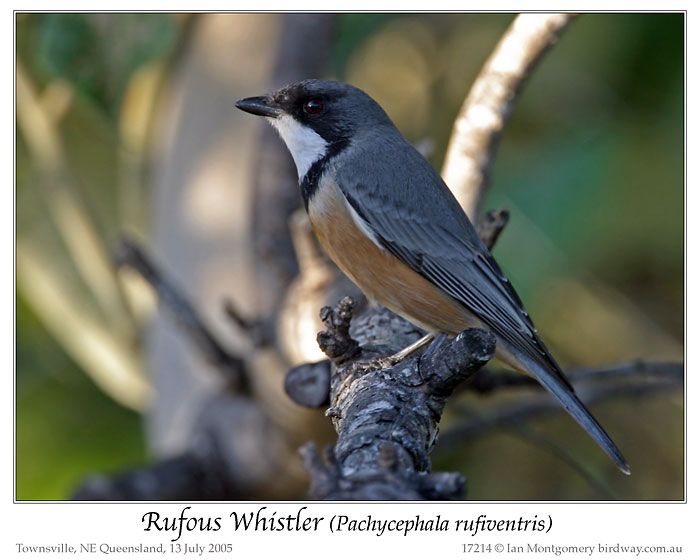
Here’s another good candidate for bird of the week that has slipped through the cracks. It’s a good candidate because it’s an attractive bird that sounds beautiful as well. Males are grey and black with a rufous belly, white throat and black breast band and look very dapper. The bird in the first two photos belongs to the nominate race rufiventris, widespread through most of mainland Australia but absent from Tasmania. Males of the nominate race have black eyebrows and lores (the area between the eye and the bill), more obvious in the first photo.

Rufous Whistler (Pachycephala rufiventris) by Ian

Rufous Whistlers are very vocal with a rich vocabulary which includes loud calls with a Whipbird-like finish – probably territorial between males – repeated ‘joey-joey-joey’ song and trills. The ‘joey’ song note, repeated up to 30 times, is sung by both sexes alternating and accompanied by a seesawing dancing motion of the body. This is wonderful to watch, and the male in the second photo is in mid-performance. The trills are apparently only made by the male.

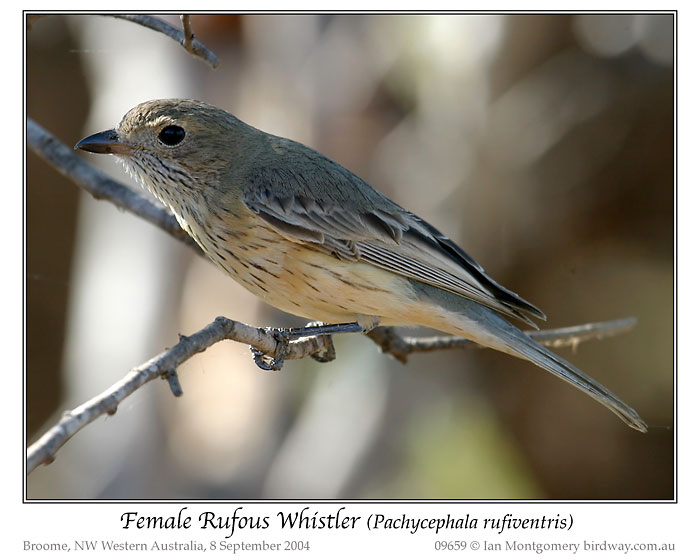
The third photo shows a female with grey back and rufous belly and streaked throat and breast.

Rufous Whistler (Pachycephala rufiventris) Female by Ian

Rufous Whistler (Pachycephala rufiventris) Female by Ian

Juveniles are similar to females, but with browner upper-parts, heavier streaks, bills with a pale base, and rufous edges to the flight feathers (as do immatures of other species such as the Golden Whistler), fourth photo.

Rufous Whistler (Pachycephala rufiventris) Juvenile by Ian

Rufous Whistler (Pachycephala rufiventris) Juvenile by Ian

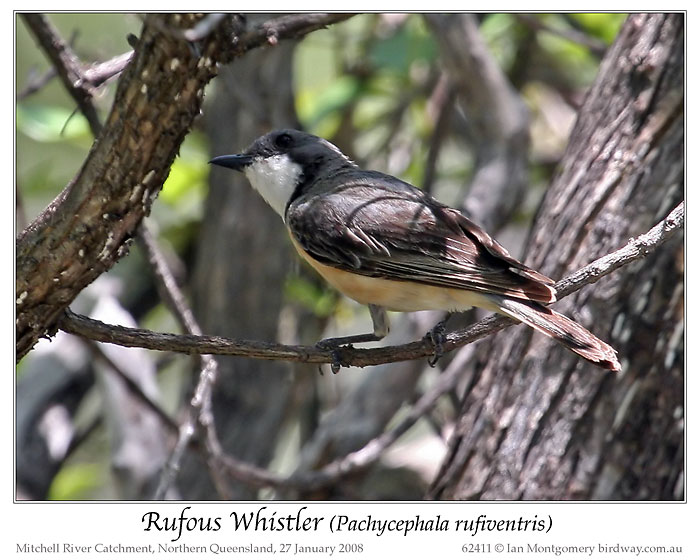
Several other races have been described in Northern Australia, and the males of these generally lack the black eyebrow, see the fifth photo. This bird belongs to perhaps the most distinctive race pallida which has a much paler belly, and this race is found in Cape York, e.g. the Mitchell River Catchment, and Northwestern Queensland.

Rufous Whistler (Pachycephala rufiventris pallida) by Ian

Rufous Whistler (Pachycephala rufiventris pallida) by Ian

The large heads of the Whistlers gives the genus the unflattering name Pachycephala (‘thick-head’) and the family the name Pachycephalidae – http://www.birdway.com.au/pachycephalidae/index.htm.

Best wishes
Ian

**************************************************
Ian Montgomery, Birdway Pty Ltd,
454 Forestry Road, Bluewater, Qld 4818
Tel 0411 602 737 ian@birdway.com.au
Bird Photos http://www.birdway.com.au/
Recorder Society http://www.nqrs.org.au


Lee’s Addition:

He will raise a signal for nations far away, and whistle for them from the ends of the earth; and behold, quickly, speedily they come! (Isaiah 5:26 ESV)

Xeno-canto Rufous Whistlers

What a beautiful sound that Whistler is making. Must be nice to hear them in person. The bird is also an attractive bird. They belong to the Pachycephalidae – Whistlers and Allies Family which has 52 species in it. Predominantly a reddish-brown and grey bird, it makes up for its subdued plumage with its song-making ability. Like many other members of the Pachycephalidae, it has a variety of musical calls.

The family Pachycephalidae, collectively the whistlers, includes the whistlers, shrike-thrushes, shrike-tits, pitohuis and Crested Bellbird, and is part of the ancient Australo-Papuan radiation of songbirds. Its members range from small to medium in size, and occupy most of Australasia.

The whistlers are stout birds with strong bills, and the group was once known as the thickheads due to the large rounded heads of many species. Their plumage is rufous, brown, or grey in the majority of species. Nevertheless a few species, particularly the Golden Whistler and its close relatives, have bright plumage. One of the more unusual traits of this family is found in the feathers of some of the pitohuis, which have toxins. These toxins are probably a deterrent to parasites and may also serve to dissuade predators from taking the birds. (Wikipedia)

See:

Ian’s Pachycephalidae Family

Pachycephalidae – Whistlers and Allies Family – Here

Ian’s Bird of the Week

*

How The Little Redbird Became Red

Northern Cardinal (Cardinalis cardinalis) - ©WikiC

Northern Cardinal (Cardinalis cardinalis) – ©WikiC

HOW THE LITTLE REDBIRD BECAME RED

Daddys Bedtime Story

A Gray Bird Was Flying Overhead.

Jack and Evelyn had been playing circus all day. Jack had been the big man who stands in the middle of the ring and cracks his whip, while Evelyn had turned somersaults and made pretty bows. They told daddy all about it when he came home that evening, so he said:

“As you’re so fond of circus performing I will certainly have to tell you about the circus the animals gave.

“Cub Bear got it all up, and every animal who went to it had to first agree to do something. And it really was a most marvelous circus. They all marched around in a parade, while the little bears beat the drums. The rabbits rode on the backs of the possums, and the monkeys rode on the backs of the elephants. The chipmunks drove chariots which were drawn by the gray squirrels, and the clowns were the frogs. The rest of the animals caught hands and followed in the march. They laughed and shouted and enjoyed themselves immensely.

“Then all took their seats and one by one did some sort of an act. The monkeys won a great deal of applause by their trapeze acting. Cub Bear walked a rope and danced around on his hind legs. The bunnies rode bicycles, but that ended sadly, as one of them—a son of old Peter Rabbit, who was renowned for his bicycle riding—in trying to show off, fell and skinned his nose. All the other animals gathered around to see what they could do, while the bunny moaned and moaned.

“A gray bird flying over the tent heard the sound of moans and cries and flew in to see what the trouble was, for he was a very kind-hearted bird. He saw that the bunny was really more frightened than hurt, and with his wings he wiped off the blood from the rabbit’s face. The blood-stain never got off the wings of the bird, so ever after he and his family became known as the redbirds.

“The bunny fully recovered and once more felt like himself; but, of course, after the accident, the animals didn’t care to go on performing, so they all sat around the center of the tent and had a most glorious picnic. Refreshments of all kinds were passed around.

“They had pink lemonade, peanuts, popcorn, ice-cream cones, and water taffy. After they’d finished eating they sang all the old-time songs and frisked about, playing and dancing. Bunny Rabbit, who felt quite spry again, frisked about too, and the redbird flew overhead, flapping his wings with joy, for he was so glad everything had turned out so merrily.

“The circus proved such a success and the animals were in such high spirits that they then and there decided to have a circus every year.”


Lee’s Addition:

But a certain Samaritan, as he journeyed, came where he was: and when he saw him, he had compassion on him, (Luke 10:33 KJV)

When we see someone in need, do we help them? Do we care enough to get involved?

Summer Tanager by Beedie Savage

Summer Tanager by Beedie Savage

We don’t know from the story which kind of “redbird” it was, but Cardinals belong to the Cardinalidae – Grosbeaks, Saltators & Allies Family. If it was a Summer or Scarlet Tanager, then they would have been in the Thraupidae – Tanagers and Allies Family which has several “Redbirds.”

*

Another Bird Tales

From

Daddy’s Bedtime Bird Stories – Gutenberg ebooks

By

Mary Graham Bonner

With four illustrations in color by
Florence Choate and Elizabeth Curtis

Daddys Bedtime Story Images


These stories first appeared in the American Press Association Service and the Western Newspaper Union.


Many of the sketches in this volume are the work of Rebecca McCann, creator of the “Cheerful Cherub,” etc.

Daddy's Bedtime Bird Stories by Mary Graham Bonner - 1917

*
Daddy’s Bedtime Bird Stories by Mary Graham Bonner – 1917

*

Links:

Painted Bunting (Passerina ciris) ©©Flickr


  Bird Tales


  Daddy’s Bedtime Bird Stories


Spanish Sparrow (Passer Hispaniolensis) female ©WikiC


  Wordless Birds


Northern Cardinal (Cardinalis cardinalis) - ©WikiC


  Cardinalidae – Grosbeaks, Saltators & Allies Family


Vermilion Tanager (Calochaetes coccineus) ©Nick Athanas


 Thraupidae – Tanagers and Allies Family


*
Birds of the Bible – Solomon’s Wisdom About Birds I

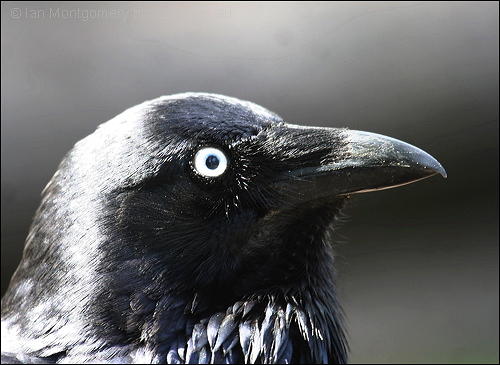
Australian Raven (Corvus coronoides) by Ian

Australian Raven (Corvus coronoides) by Ian

Also he spoke of trees, from the cedar tree of Lebanon even to the hyssop that springs out of the wall; he spoke also of animals, of birds, of creeping things, and of fish. (1 Kings 4:33 NKJV)

In my daily reading from Scripture recently, I came across I Kings 4:33 again. The article Birds of the Bible – Solomon’s Birds, discusses how some of the lessons Solomon had learned were applied. Now let’s look at how Solomon might have attained those illustrations and how we can apply them.

More questions come to my mind, in no set order, like:

  • What kind of birds did he have to observe?
  • What did he learn about the birds?
  • Did he write any of his bird observations out?
  • The Lord gave him the wisdom, so how did he apply it?
  • What can we learn from Solomon about birds?

We know from the Bible that Solomon asked for wisdom to be able to know right and wrong and how to rule the people. God granted Solomon his request and gave him more besides. See I Kings 3.

Checking with my e-Sword commentaries and helps, here are some interesting thoughts. (Italics are mine)

Oriental Bay Owl (Phodilus badius) by Peter Ericisson

Oriental Bay Owl (Phodilus badius) by Peter Ericisson

Matthew Henry’s Concise Commentary

Solomon’s wisdom was more his glory than his wealth. He had what is here called largeness of heart, for the heart is often put for the powers of the mind. He had the gift of utterance, as well as wisdom. It is very desirable, that those who have large gifts of any kind, should have large hearts to use them for the good of others. What treasures of wisdom and knowledge are lost! But every sort of knowledge that is needful for salvation is to be found in the holy Scriptures. There came persons from all parts, who were more eager after knowledge than their neighbours, to hear the wisdom of Solomon. Solomon was herein a type of Christ, in whom are hid all treasures of wisdom and knowledge; and hid for us, for he is made of God to us, wisdom. Christ’s fame shall spread through all the earth, and men of all nations shall come to him, learn of him, and take upon them his easy yoke, and find rest for their souls.

Indian Peafowl (Pavo cristatus) by Nikhil Devasar

Indian Peafowl (Pavo cristatus) by Nikhil Devasar

Gill

he spake also of beasts, and of fowls, and of creeping things, and of fishes; he understood the nature of all sorts of animals in the earth, air, and sea, and discoursed of their names, kinds, qualities, and use, with the greatest ease and perspicuity; the Jews fancy that Aristotle’s History of Animals is his, which that philosopher came upon, and published it in his own name. …

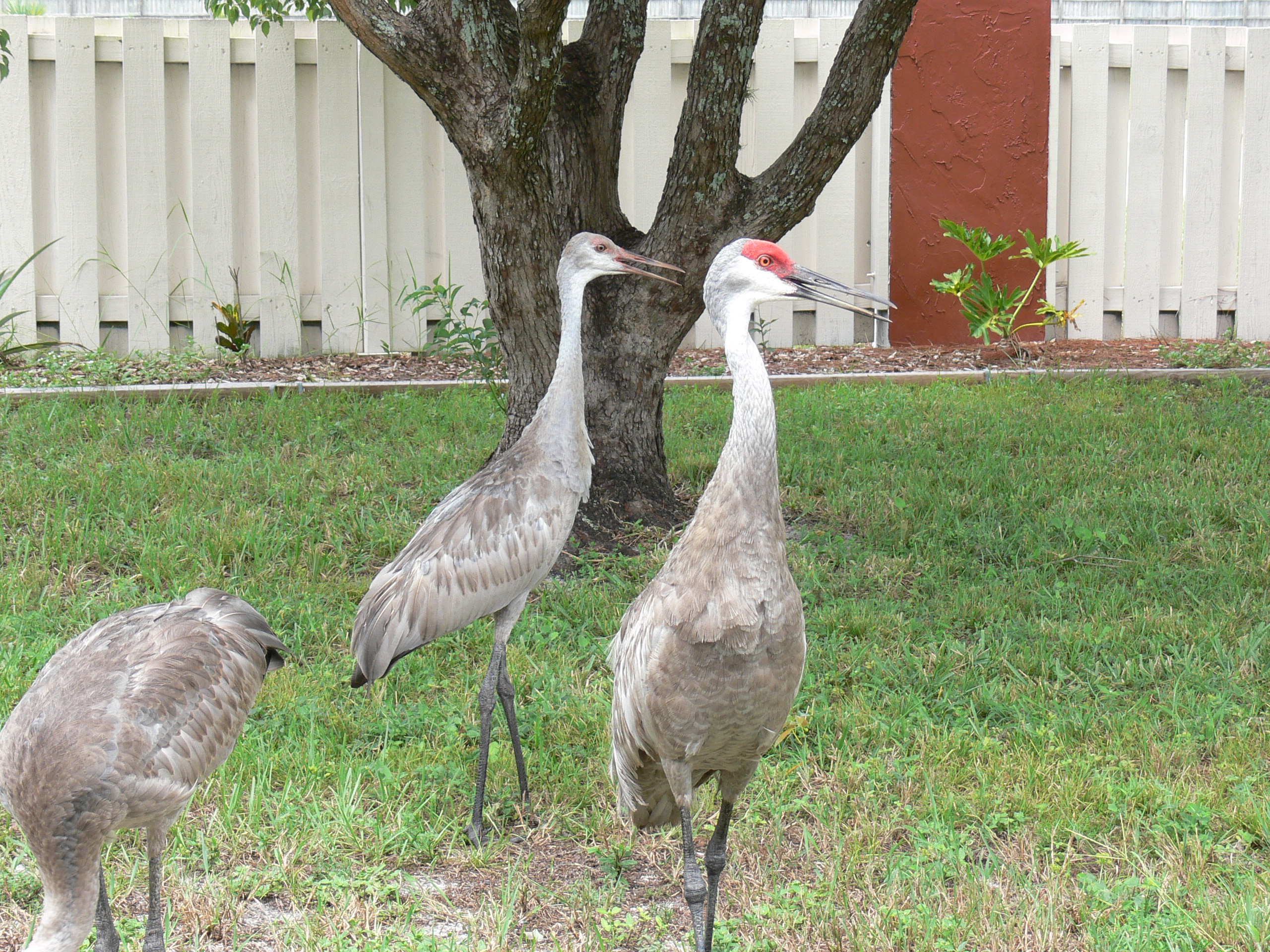
Sandhill Cranes - Adult and Juvenile in yard 8/27/10

Sandhill Cranes – Adult and Juvenile in yard 8/27/10

MacLaren

But the main thing to notice is that in Solomon we see exemplified the normal relation between religion and intellectual power and learning. Judge, artist, scientist, and all other thinkers and students, draw their power from God, and should use it for Him. And, on the other hand, Solomon’s example is a rebuke to those …Christians who look askance at men of learning, letters, or science, as well as to those … who think that science and religion must be sworn foes. If our religion is what it should be, it will widen our understanding all round.
‘Let knowledge grow from more to more, But more of reverence in us dwell.’

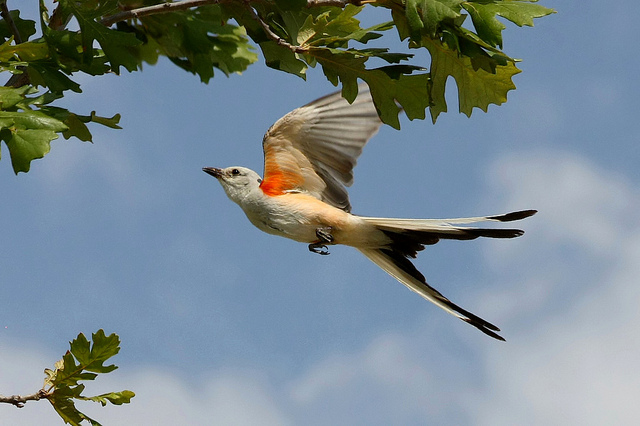
Scissor-tailed Flycatcher (Tyrannus forficatus) ©TexasEagle

Scissor-tailed Flycatcher (Tyrannus forficatus) ©TexasEagle

Barnes

Of beasts, and of fowls, and of creeping things, and of fishes – This is the usual Biblical division of the animal kingdom Gen_1:26; Gen_9:2; Psa_148:10.

Believer’s Bible Commentary

Verse 33 means that his wide knowledge of many sciences enabled him to use object lessons from nature in expounding his wisdom. People traveled from afar to hear him.

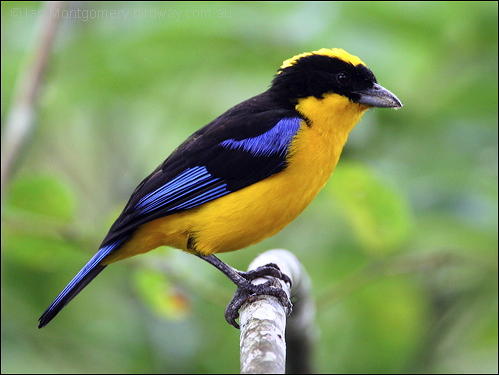
Blue-winged Mountain Tanager (Anisognathus somptuosus) by Ian

Blue-winged Mountain Tanager (Anisognathus somptuosus) by Ian

Bible Knowledge Commentary

1 Kings 4:32-34

Several hundred of Solomon’s 3,000 proverbs have been preserved in the Book of Proverbs as well as a few in Ecclesiastes. One of his 1,005 songs is the Song of Songs. Solomon’s literary output was extremely prolific. He became an authority in botany and zoology too. … He was recognized as the wisest man of his day as God had promised he would be.

Under His Wings - (Dove - photographer unknown)

Under His Wings – (Dove – photographer unknown)

Biblical Illustrator

The study of Nature
It is said of Wordsworth that a stranger having on one occasion asked to see his study, the maid said, “This is master’s room, but he studies in the fields.” In doing so the poet followed a venerable example. We read that Isaac went out to meditate in the field at eventide, where in the margin “to pray” is put for “to meditate.” Nor could there be a better place either for prayer or for study than the fields. The Word of God is written very clearly for His seers in the green book of Nature. Wordsworth’s study is one that we can all use, however small our house may be. (Quiver.)

The world is worth seeing
Men must not live under a bushel. A gentleman once met a French priest on board an Atlantic liner. They entered into conversation, and the priest said that months ago he had a dream. He dreamt that he was dead, and that God asked him how much of the world he had seem His answer was that he had seen only a very little of it, for he had been so long in preparing for death, and in helping other people to die, that he had no time to see the world. He saw that God was displeased, and on awakening he resolved to see as much of this beautiful world as he could. It was a wise resolve. The earth is the Lord’s and not the devil’s, and we have no right to ignore it. Nature is a temple of God, and we must ever walk through it in a sacramental mood. (Sunday Circle.).

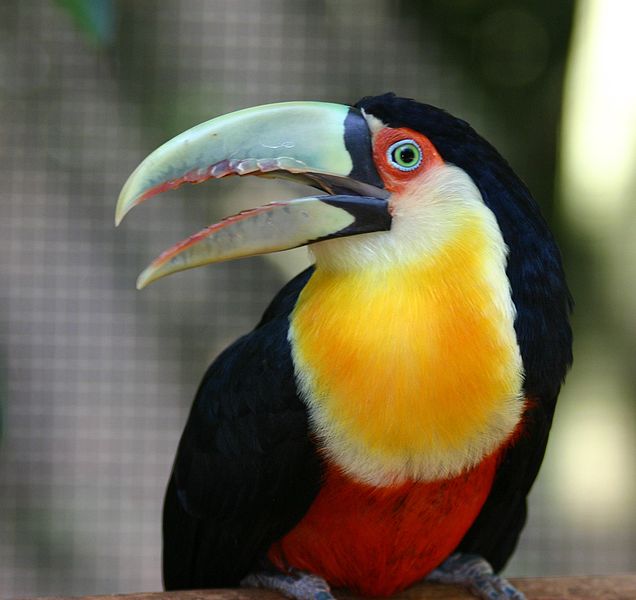
Green-billed Toucan (Ramphastos dicolorus) ©WikiC

Green-billed Toucan (Ramphastos dicolorus) ©WikiC

K & D

“And of beasts and birds, of creeping things and fishes;” the four principal classes into which the Hebrews divided the animal kingdom. Speaking of plants and animals presupposes observations and researches in natural science, or botanical and zoological studies.

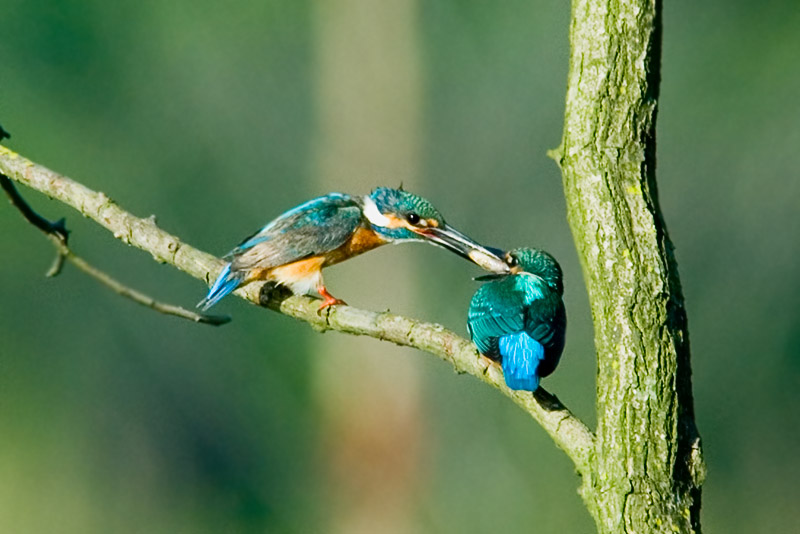
Kingfisher Feeding Young by Phil Kwong

Kingfisher Feeding Young by Phil Kwong

McGee

We are told that Solomon spoke three thousand proverbs. We have only a few hundred recorded in the Bible. His songs were a thousand and five. Believe me, he was a song writer. We have only one of his songs, The Song of Solomon. Solomon was a dendrologist—”He spake of trees, from the cedar tree that is in Lebanon even unto the hyssop that springeth out of the wall.” The hyssop is a humble little plant that grows on rocks. Solomon was also a zoologist—”he spake also of beasts”—and an ornithologist since he spoke of birds. He was an entomologist: he spoke of creeping things, or insects. He was an ichthyologist: he spoke of fishes. He spoke of these things because he had studied them and was an authority in these particular realms. This, apparently, is the beginning of the sciences. Solomon was interested in these things.

Some Answers

I have another Commentary to share thoughts from, but will save it for Part II. For now, let’s see if any of the first questions were answered.

The first two questions are unanswered for now. We will dig into that later. The next three seem to have some answers.

  • What kind of birds did he have to observe?
  • What did he learn about the birds?
  • Did he write any of his bird observations out?
  • The Lord gave him the wisdom, so how did he apply it?
  • What can we learn from Solomon about birds?

Solomon observed the birds and seems to have learned lessons and applications from them which are seen in Proverbs, Song of Solomon and some Psalms. So he recorded his findings. He gained his knowledge from the Lord, but he used his senses and observational skills to gain more knowledge. That is something we can do also with the Lord’s help. If we don’t apply ourselves to a topic, the knowledge is not going to just “pop” into our heads.

See:

*

How A Flicker Feeds Her Young – The Woodpeckers

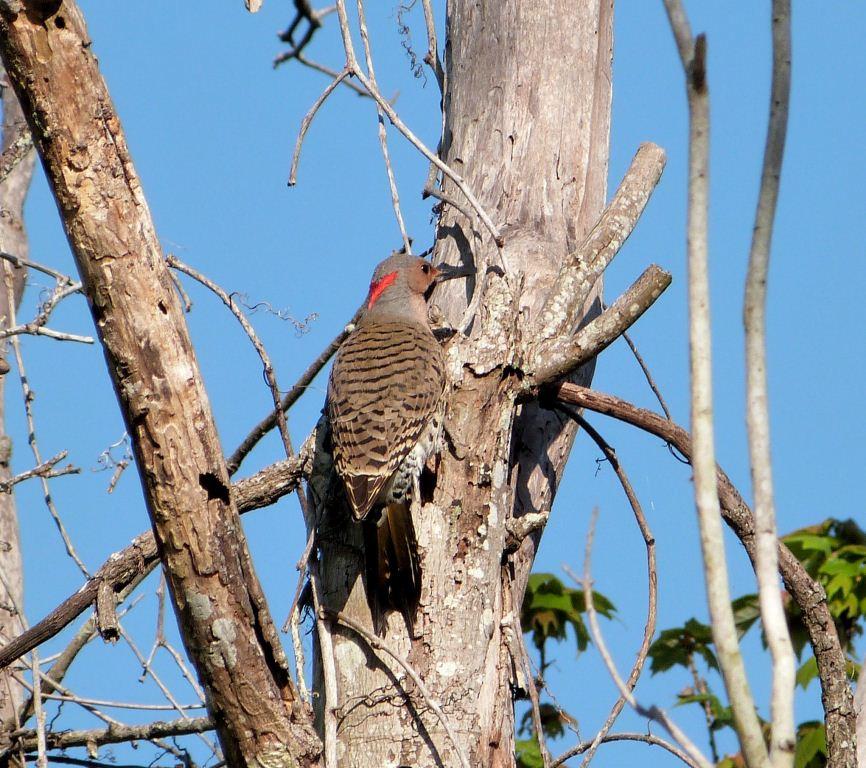
Northern Flicker cropped by Lee at S. Lk Howard Ntr Pk

Northern Flicker by Lee at S. Lk Howard Nature Pk

V

HOW A FLICKER FEEDS HER YOUNG

Based upon the observations of Mr. William Brewster.

As the house of the woodpecker has no windows and the old bird very nearly fills the doorway when she comes home, it is hard to find out just how she feeds her little ones. But one of our best naturalists has had the opportunity to observe it, and has told what he saw.

A flicker had built a nest in the trunk of a rather small dead tree which, after the eggs were hatched, was accidentally broken off just at the entrance hole. This left the whole cavity exposed to the weather; but it was too late to desert the nest, and impossible to remove the young birds to another nest.

When first visited, the five little birds were blind, naked, and helpless. They were motherless, too. Some one must have killed their pretty mother; for she never came to feed them, and the father was taking all the care of his little family. When disturbed the little birds hissed like snakes, as is the habit of the callow young of woodpeckers, chickadees, and other birds nesting habitually in holes in trees. When they were older and their eyes were open, they made a clatter much like the noise of a mowing-machine, and loud enough to be heard thirty yards away.

The father came at intervals of from twenty to sixty minutes to feed the little ones. He was very shy, and came so quietly that he would be first seen when he alighted close by with a low little laugh or a subdued but anxious call to the young. “Here I am again!” he laughed; or “Are you all right, children?” he called to them. “All right!” they would answer, clattering in concert like a two-horse mower.

As soon as they heard him scratching on the tree-trunk, up they would all clamber to the edge of the nest and hold out their gaping mouths to be fed. Each one was anxious to be fed first, because there never was enough to go round. There was always one that, like the little pig of the nursery tale, “got none.” When he came to the nest, the father would look around a moment, trying to choose the one he wanted to feed first. Did he always pick out the poor little one that had none the time before, I wonder?

After the old bird had made his choice, he would bend over the little bird and drive his long bill down the youngster’s throat as if to run it through him. Then the little bird would catch hold as tightly as he could and hang on while his father jerked him up and down for a second or a second and a half with great rapidity. What was he doing? He was pumping food from his own stomach into the little one’s. Many birds feed their young in this way. They do not hold the food in their own mouths, but swallow and perhaps partially digest it, so that it shall be fit for the tender little stomachs.

While the woodpecker was pumping in this manner his motions were much the same as when he drummed, but his tail twitched as rapidly as his head and his wings quivered. The motion seemed to shake his whole body.

In two weeks from the time when the little birds were blind, naked, helpless nestlings they became fully feathered and full grown, able to climb up to the top of the nest, from which they looked out with curiosity and interest. At any noise they would slip silently back. A day or two later they left the old nest and began their journeys.

No naturalist has been able to tell us whether other woodpeckers than the golden-winged flicker feed their young in this way; and little is known of the number of kinds of birds that use this method, but it is suspected that it is far more common than has ever been determined. If an old bird is seen to put her bill down a young one’s throat and keep it there even so short a time as a second, it is probable that she is feeding the little one by regurgitation, that is, by pumping up food from her own stomach. Any bird seen doing this should be carefully watched. It has long been known that the domestic pigeon does this, and the same has been observed a number of times of the ruby-throated hummingbird. A California lady has taken some remarkable photographs of the Anna’s hummingbird in the act, showing just how it is done.


Lee’s Addition:

And Jesus saith unto him, The foxes have holes, and the birds of the air have nests; but the Son of man hath not where to lay his head. (Matthew 8:20 KJV)

This is Chapter V from The Woodpeckers book. Our writer, Fannie Hardy Eckstorm, wrote this in 1901. There are 16 chapters, plus the Forward, which are about the Woodpecker Family here in America. All the chapters can be found on The Woodpeckers page. I added photos to help enhance the article. In 1901, photography was not like today.

Woodpeckers belong to the Picidae – Woodpeckers Family.

The Northern Flicker (Colaptes auratus) is a medium-sized member of the woodpecker family. It is native to most of North America, parts of Central America, Cuba, the Cayman Islands, and is one of the few woodpecker species that migrate. There are over 100 common names for the Northern Flicker. Among them are: Yellowhammer, clape, gaffer woodpecker, harry-wicket, heigh-ho, wake-up, walk-up, wick-up, yarrup, and gawker bird. Many of these names are attempts at imitating some of its calls.

Check out their sounds at Northern Flicker – All About Birds

Their breeding habitat consists of forested areas across North America and as far south as Central America. They are cavity nesters who typically nest in trees but they will also use posts and birdhouses if sized and situated appropriately. They prefer to excavate their own home although they will reuse and repair damaged or abandoned nests. Abandoned Flicker nests create habitat for other cavity nesters. Flickers are sometimes driven from nesting sites by another cavity nester, European starlings.

It takes about 1 to 2 weeks to build the nest which is built by both sexes of the mating pairs. The entrance hole is roughly 5 to 10 cm (2.0 to 3.9 in) wide.

A typical clutch consists of 6 to 8 eggs whose shells are pure white with a smooth surface and high gloss. The eggs are the second largest of the North American woodpecker species, exceeded only by the Pileated Woodpecker’s. Incubation is by both sexes for approximately 11 to 12 days. The young are fed by regurgitation and fledge about 25 to 28 days after hatching. (Wikipedia)

*

See:

Picidae – Woodpeckers Family

The Woodpeckers by Fannie Hardy Eckstorm

Wordless Birds

*

Other Flickers around the World:

  • Northern Flicker (Colaptes auratus) 
  • Gilded Flicker (Colaptes chrysoides) 
  • Fernandina’s Flicker (Colaptes fernandinae) 
  • Chilean Flicker (Colaptes pitius)
  • Andean Flicker (Colaptes rupicola)

Interesting link to a reader’s photos – Wonderful Woodpecker Family

*